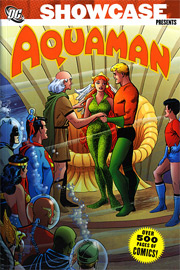
Showcase Presents Aquaman volume 2


By Jack Miller, Bob Haney, Dave Wood, Ramona Fradon, Nick Cardy & various (DC Comics)
ISBN: 978-1-4012-1712-9 (TPB)

Win’s Christmas Gift Recommendation: Festive Fluid Fun and Thrills… 8/10

Aquaman was another rare superheroes to survive the collapse at the end of the Golden Age: a rather nondescript and generally bland looking guy who solved maritime crimes and mysteries when not rescuing fish and people from sub-sea disasters.

He was created by Mort Weisinger & Paul Norris in the wake of Timely Comics’ Sub-Mariner, launching in More Fun Comics #73 (1941). Strictly a second stringer for most of his career, he nevertheless continued long beyond many stronger features, illustrated by Norris, Louis Cazaneuve and Charles Paris, until young Ramona Fradon took over the art chores in 1954, by which time Aquaman had moved to a regular back-up slot in Adventure Comics. She was to draw every single adventure until 1960.

In 1956, Showcase #4 rekindled the public’s imagination and zest for costumed crime-fighters and, as well as re-imagining many departed Golden Age stalwarts, DC also updated its isolated survivors. Records are incomplete, sadly, so often we don’t know who wrote what, but after the initial revamp better records survive and this second collection of the King of the Seven Seas poses far fewer creative credit conundrums.

Although now the star of his own title, Aquaman continued as a back-up feature in World’s Finest Comics until 1964 and this monochrome chronological compilation includes those tales (issues #130-133, 135, 137, 139), his Brave and the Bold team-up with Hawkman (#51) and the contents of Aquaman #7-23, comprehensively covering December 1962 through September-October 1965: a period that led directly into the King of the Seven Seas becoming one of DC’s earliest TV stars as part of the animated Superman/Aquaman Hour of Adventure.

The major writers from those years were Jack Miller and Bob Haney and – although some records are lost and a few later scripts remain unattributed – recognizing artists is far less troubling. The World’s Finest yarns were Fradon’s last: captivatingly clean, economical lines bringing to unique life charming little adventure and mystery vignettes which always were and still are a joy to behold.

Thereafter, apart from a memorable and brief return to co-create Metamorpho the Element Man, she left comics until 1972 to raise her daughter.

We begin with ‘King of the Land Beasts’ (WFC #130, by Haney & Fradon) is a typically high-quality teaser about an alien Aquaman whilst ‘The Sea Beasts from Atlantis’ (Aquaman #7 by Miller & Nick Cardy) pitted the Sea Lord and Aqualad against sub-sea monsters and a plot to overthrow the government of the lost city, abetted if not quite aided by mystical sea imp Quisp.

‘The Man Who Controlled Water’ (World’s Finest # 131, Miller & Fradon) saw them tackle a scientist who could solidify liquids into fearsome weapons, whilst in issue #8 of their own magazine, Miller & Cardy revealed ‘The Plot to Steal the Seas’ with the oceanic adventurers battling far out of their comfort zone to thwart marauding aliens.

Dave Wood scripted quirky thriller ‘The Fish in the Iron Mask’ (WFC #132) wherein faithful octopus Topo is possessed by a sinister helmet and ‘The Secret Mission of King Neptune’ (Aquaman #9, Miller & Cardy) seemingly brings the heroes into bombastic contention with the God of the Oceans – but is he all he seems?

World’s Finest Comics #133 briefly introduces ‘Aquaman’s New Partner – Aqua-Girl’, but Miller & Fradon’s creation was strictly a one shot deal, whereas ‘War of the Water Sprites’ (Aquaman #10, Miller & Cardy) introduced an evil band of Quisp’s fellow imps who eerily presaged a tale of the JSA decades later…

Miller & Fradon’s ‘The Creatures that Conquered Aquaman’ (WFC #135) is another alien invasion extravaganza whilst Aquaman #11 features the landmark introduction of the Sea King’s future wife Mera in Miller & Cardy’s extravaganza ‘The Doom from Dimension Aqua’, whilst #12 present two shorter thrillers from Haney, ‘The Menace of the Land-Sea Beasts’ – with mutated jungle animals wreaking sub-sea havoc – and ‘The Cosmic Gladiators!’, wherein the seaborne sentinels are press-ganged into an intergalactic cage-fight contest.

Miller provided the penultimate World’s Finest outing ‘The Day Aquaman Lost his Powers’ in #137 and Haney scripted a manic tale of team-up terror for superb veteran artist Howard Purcell in ‘Fury of the Exiled Creature’ (The Brave and the Bold #51, December 1963-January 1964) in which the fearsome Outcast of Atlantis turns mutational powers against not just Aquaman but also new DC superstars Hawkman and Hawkgirl.

Aquaman #13 then sees Mera return in the Miller-penned ‘Invasion of the Giant Reptiles’ as the tide-crossed lovers unite to defeat criminals from the future. Fradon & Miller wrap up his World’s Finest tenure in high style with #139’s taut thriller ‘The Doom Hunters’, leaving Cardy as sole Aquaman artist. His work gradually became more representational and realistic, although Miller’s ‘Aquaman’s Secret Powers!’ still held plenty of fantastic fantasy as a dying derelict curses the Sea King with incredible new abilities, whilst the second tale in #14 – ‘The Tyrant Ruler of Atlantis’ – finds the temporarily deranged hero seizing the throne of the sunken city. Within scant months he would be legitimately offered the crown…

Miller wrote the next four issues, beginning with sinister scientific tragedy ‘Menace of the Man-Fish’, #16’s ‘The Duel of the Sea Queens!’ – as Mera battled an alien siren who set her tentacled cap for Aquaman – and #17’s ‘The Man who Vanquished Aquaman’, wherein the god Poseidon abducted Mera.

All this romantic tension and concentration was for a purpose. The next issue featured ‘The Wife of Aquaman’ wherein the Sea King marries his extra-dimensional beloved in one of the first superhero weddings of the Silver Age. Talk about instant responsibilities…

None of the remaining tales have a credited scripter, but that doesn’t affect their wonderful readability nor Cardy’s better-every-panel artwork, beginning with #19’s ‘Atlanteans For Sale’ as new bride Mera slowly goes bonkers due to her husband’s neglectful super-hero schedule. Cue the arrival of merman man-candy Nikkor who insinuates himself into her affections… and the throne!

This surprisingly adult tale is followed by #20’s ‘The Sea King’s Double Doom’, as an old friend and shape-changing monster both hit Atlantis at the same time. Coincidence? We think not…

Super-villain the Fisherman debuts in #21’s ‘The Fearful Freak from Atlantis’ with the Sea King transformed into a sea monster, whilst ‘The Trap of the Sinister Sea Nymphs’ introduces Mera’s wicked twin sister before this splendidly engaging volume concludes on another groundbreaking high-note with issue #23’s ‘The Birth of Aquababy’. Unfortunately, the happy couple’s newborn child displays uncanny powers (and yes, you nit-picking gossips, it was nine months later… exactly nine months).

One of the greatest advantages of these big value black-&-white compendiums was the opportunity they provided whilst chronologically collecting a character’s adventures to include crossovers and guest spots from other titles. When the star is as long-lived and incredibly peripatetic as DC’s King of the Seven Seas, that’s an awful lot of extra appearances for a fan to find…

DC has a long and comforting history of gentle, innocuous yarn-spinning with quality artwork. Ramona Fradon’s Aquaman is one of the most neglected runs of such accessible material, and it’s a pleasure to discover just how readable they still are. When the opportunity arises to compare her wonderful work to the exponentially improving superhero work of such a stellar talent as Nick Cardy, this book becomes another fan’s must-have item. More so when all the stories are still suitable for kids of all ages.

Hopefully the current editorial administration will soon get around to revisiting them in new archival chronicles and digital editions, but until then why not treat yourself and your youngsters to a timeless dose of whimsy and adventure? You won’t regret it.
© 1962, 1963, 1964, 1965, 2008 DC Comics. All Rights Reserved.
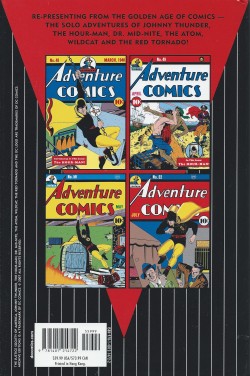
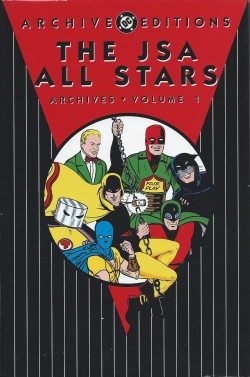
The JSA All Stars Archives volume 1


By John Wentworth, Ken Fitch, Bill O’Connor, Sheldon Mayer, Charles Reizenstein, Bill Finger, Stan Aschmeier, Bernard Baily, Ben Flinton & Leonard Sansone, Howard Purcell, Hal Sharp, Irwin Hasen & various (DC Comics)
ISBN: 978-1-4012-1472-2 (HB)

Win’s Christmas Gift Recommendation: Golden Aged But Evergreen Enjoyment… 8/10

In their anniversary year, here’s yet another DC classic collection long overdue for revival and digital return. Until then – and if you can find it – this hardback will make a perfect present for you or yours…

After the actual invention of the comic book superhero – indisputably the Action Comics debut of Superman in June 1938 – the most significant event in the industry’s history was the combination of individual sales-points into a group.

Thus what seems blindingly obvious to us with the benefit of four-colour hindsight was proven: consumers couldn’t get enough of garishly-hued mystery men and combining a multitude of characters inevitably increases readership. Plus, of course, a mob of superheroes is just so much cooler than one…or one-and-a-half if there’s a sidekick involved…

The creation of the Justice Society of America in 1941 utterly changed the shape of the budding business. However, before that team of all-stars could unite they had to become popular enough to qualify, and this superb hardcover sampler gathers the debut adventures of a septet of beloved champions who never quite made it into the first rank but nonetheless scored enough to join the big team and maintain their own solo spots for much of the Golden Age of American Comics.

Whilst the most favoured 1940s stalwarts have all won their own DC Archive collections (some even making it into digital modern editions this century), this particular tome bundles a bunch of lesser lights – or at least those who never found as much favour with modern fans and revivalists – and features the first 5 appearances of 7 of the JSA‘s “secondary” mystery men: all solid supporting acts in their own anthology homes who were potentially so much more…

Gathered here are short, sharp, stirring tales from Flash Comics #1-5; Adventure Comics #48-52; All-American Comics #19-29 and Sensation Comics #1-5, collectively spanning January 1940 to May 1942. They are preceded a sparkling, informative and appreciative Foreword Golden Age aficionado and advocate Roy Thomas.

The vintage vim and vigour begins with a character equally adored and reviled in modern times. Johnny Thunderbolt – as he was originally dubbed – was an honest, well-meaning, courageous soul who was also a grade “A” idiot. However, what he lacked in smarts he made up for with sheer luck, unfailing pluck and the unconscious (at least at first) control of an irresistible magic force.

The series was played for action-packed laughs, but there was no getting away from it: Johnny was, quite frankly, a simpleton in control of an ultimate weapon. At least his electric genie was more plausible than an egomaniacal orange-toned cretin in control of America’s nuclear arsenal…

John Wentworth & Stan Aschmeier introduced the happy sap in ‘The Kidnapping of Johnny Thunder’, from the first monthly Flash Comics (#1, January 1940) in a fantastic origin which detailed how, decades previously, the infant seventh son of a seventh son was abducted by priests from the mystic island of Badhnisia. He was to be raised as the long-foretold wielder of a fantastic magical weapon, all by voicing the eldritch command “Cei-U” – which sounds to western ears awfully like “say, you”…

Ancient enemies on neighbouring isle Agolea started a war before ceremonial indoctrination could be completed and at age seven the lad, through that incomprehensible luck, returned to his parents to be raised in the relative normality of the Bronx.

Everything was fine until Johnny’s 17th birthday when the ancient rite finally came to fruition and – amid bizarre weather conditions – the Badhnisians intensified the search for their living weapon…

By the time they tracked him down, he was working in a department store and had recently picked up the habit of blurting out the phrase “say you”. It generally resulted in something very strange happening. One example being a bunch of strange “Asiatics” attacking him and being blown away by a mysterious pink tornado…

The pattern was set. Each month Johnny looked for gainful employment, stumbled into a crime or crisis where his voluble temperament would result in an inexplicable unnatural phenomenon that solve the problem but left him no better off. It was a winning theme that lasted until 1947 – by which time the Force had resolved into a wisecracking thunderbolt-shaped genie – while Johnny was slowly ousted from his own strip by sexy new crimebuster Black Canary…

Flash Comics #2 featured ‘Johnny Becomes a Boxer’. After stepping in to save a girl from bullies, he somehow convinced vivacious Daisy Darling to be his girlfriend. He than became Heavyweight Champion, leading to his implausibly winning a fixed bout in #3’s ‘Johnny versus Gunpowder Glantz’. Only now Daisy refused to marry a brute who lived by hitting others…

The solution came in ‘Johnny Law’ when kidnappers tried to abduct Daisy’s dad. Following his sound thrashing of the thugs, and at his babe’s urging, Johnny then joined the FBI …

This tantalising taste of times past concludes with ‘G-Man Johnny’ (#5 May 1940) as the kid’s first case involves him in a bank raid resulting in his own dad being taken hostage…

Although he eventually joined the JSA, and despite the affable, good-hearted bumbling which carried him through the war, the peace-time changing fashions found no room for a hapless hero anymore and when he encountered a sultry masked female Robin Hood who stole from crooks, the writing was on the wall. Nevertheless, fortuitously imbecilic Johnny Thunder is fondly regarded by many modern fans and still has lots to say and a decidedly different way of saying it…

Ken Fitch & Bernard Baily’s Hourman was a far more serious proposition who actually had a shot at stardom. He began by supplanting the Sandman as cover feature on Adventure Comics #48 (March 1940). Here, his exploits run through issue #52 (July) establishing the unique and gripping methodology which made him such a favourite of later, more sophisticated fans…

In an era where origins were never as important as action, mood and spectacle, ‘Presenting Tick-Tock Tyler, the Hour-Man’ begins with a strange classified ad offering assistance to any person in need. Chemist Rex Tyler has invented “Miraclo”: a drug super-energising him for 60 minutes at a time and his first case sees him help a wife whose man was being dragged back into criminal endeavours by poverty and bad friends…

‘The Disappearance of Dr. Drew’ finds Tyler locating a missing scientist kidnapped by thugs whilst ‘The Dark Horse’ has the Man of the Hour crush a crooked, murderous bookie who had swiped both horse and owner before a key race.

Mad science and a crazy doctor employing ‘The Wax-Double Killers’ adds scary thrills and super-villain cachet for the timely hero to handle, whilst ‘The Counterfeit Hour-Man’ – which concludes the offerings here – sees him again battling Dr. Snegg in a scurrilous scheme to frame the hooded hero.

Hourman always looked great and his adventures developed into a tight and compulsive feature, but he never caught on: timed out at the beginning of 1943 (#83).

Next second string star is Calvin College student Al Pratt: a diminutive but determined lad fed up with being bullied by jocks who remade himself into a pint-sized, two-fisted mystery man ready for anything.

One of the longest lasting Golden Age greats, The Mighty Atom was created by writer Bill O’Connor and rendered by Ben Flinton & Leonard Sansone. He debuted in All-American Comics #19 and eventually transferring to Flash Comics in February 1947. He sporadically appeared until the last issue (Flash #104, February 1949) and was last seen in the final JSA tale in All Star Comics#57 in 1951.

The tales here span #19-23 (October 1940-February 1941), beginning by ‘Introducing the Mighty Atom’ as the bullied scholar hooks up with down-and-out trainer Joe Morgan, whose radical methods soon have the kid in the very peak of physical condition and well able to take care of himself.

However, when Al’s hoped-for girlfriend Mary is kidnapped, the lad eschews fame and potential sporting fortune to bust her loose and then opts for a new extra-curricular activity…

He sported a costume for his second exploit, going into ‘Action at the College Ball’  to foil a hold-up and then tackling ‘The Monsters from the Mine’ who were enslaved by a scientific mania intent on conquest. The college environment offered plentiful plot opportunities. In ‘Truckers War’ the Atom crushes hijackers who had bankrupted a fellow student and football star’s father. The episodes conclude here with ‘Joe’s Appointment’ as the trainer is framed for spying by enemy agents and needs a little atomic aid…

Although we think of the Golden Age as a superhero wonderland, the true watchword was variety, and flagship anthologyAll-American Comics offered everything from slapstick comedy to aviation adventure on its four-colour pages. One of the very best humour strips featured the semi-autobiographical exploits of Scribbly Jibbet: a boy who wanted to draw. Created by real-life comics wonder boy Sheldon Mayer, Scribbly: Midget Cartoonist debuted in the first issue (April 1939) and soon built a sterling rep for himself beside star reprint features like Mutt and Jeff and all-new adventure serial Hop Harrigan, Ace of the Airways.

However, contemporary fashions soon demanded a humorous look at mystery men, and in #20 (November 1940) Mayer’s long-term comedy feature evolved into a delicious spoof of the trend when Scribbly’s formidable landlady Ma Hunkeldecided to do something about crime in her neighbourhood – so she dressed up as a husky male masked hero.

‘The Coming of the Red Tornado’ sees her don cape, woollen long-johns and a saucepan for a identity-obscuring helmet to crush gangster/kidnapper Tubb Torponi. The mobster had made the mistake of snatching her terrible nipper Sisty and Scribbly’s little brother Dinky (they would later become her masked sidekicks) and Ma was determined to see justice done…

An ongoing serial rather than specific episodes, the dramedy concluded in ‘The Red Tornado to the Rescue’, with the irate, inept cops deciding to pursue the mysterious new vigilante, but the ‘Search for the Red Tornado’ only made them look (more) stupid.

With the scene set for outrageous parody ‘The Red Tornado Goes Ape’ pits the parochial masked manhunter against a zoo full of critters before this superb selection ends with ‘Neither Man nor Mouse’ (All-American Comics #24) with the hero apparently retiring and crime resurging… until Dinky and Sisty become the Cyclone Kids…

A far more serious and sustainable contender debuted in the next issue, joining a growing host of grim masked avengers.

‘Dr. Mid-Nite: How He Began’ by Charles Reizenstein & Aschmeier (All-American Comics #25, April 1941) revealed how surgeon Charles McNider is blinded by criminals but subsequently discovers he can see perfectly in the dark. The maimed physician becomes an outspoken criminologist but also devises blackout bombs and other night paraphernalia to wage secret war on gangsters from the darkness, aided only by his new pet owl Hooty…

After catching his own assailant, he smashes river pirates protected by corrupt politicians in ‘The Waterfront Mystery’ and rescues innocent men blackmailed into serving criminals’ sentences in jail in ‘Prisoners by Choice’ (#27 and guest illustrated by Howard Purcell).

With Aschmeier’s return, Mid-Nite crushes aerial wreckers using ‘The Mysterious Beacon’ to down bullion planes and then smashes ‘The Menace of King Cobra’: a secret society leader lording it over copper mine workers…

The Master of Darkness also lasted until the era’s end and appeared in that last JSA story. Since his 1960s return he’s become one of the most resilient and mutable characters in DC’s pantheon of Golden Age revivals, but the next nearly-star was an almost forgotten man for decades…

When Sensation Comics launched in January 1942 all eyes were rightly glued to the uniquely eye-catching Wonder Woman who hogged all the covers and unleashed a wealth of unconventional adventures every month. However, like all anthologies of the time, her exploits were carefully balanced by other features. Sensation #1-5 (January to May 1942) also featured a pugnacious fighter who was the quintessence of manly prowess and a quiet, sedate fellow problem solver who was literally a master of all trades.

Crafted by Charles Reizenstein & Hal Sharp, ‘Who is Mr. Terrific?’ introduced Terry Sloane: a physical and mental prodigy who so excelled at everything he touched, that by the time of the opening tale he was planning his own suicide to escape terminal boredom.

Happily, on a very high bridge he found Wanda Wilson, a girl with the same idea. By saving her, Sloane found purpose: crushing the kinds of criminals who had driven her to such despair…

Actively seeking out villainy of every sort, he performed ‘The One-Man Benefit Show’ after thugs sabotaged performers, travelled to the republic of Santa Flora to expose ‘The Phony Presidente’ and helped a rookie cop pinch an “untouchable” gang boss in ‘Dapper Joe’s Comeuppance’.

His last showing here finds him at his very best, carefully rooting out political corruption and exposing ‘The Two Faces of Caspar Crunch’…

Closing out this stunning hardback extravaganza is another quintet from Sensation #1-5, this time by Bill Finger & Irwin Hasen: already established stars for their work on Batman and Green Lantern.

‘This is the Story of Wildcat’ premieres one the era’s most impressive “lost treasures” and a genuine comicbook classic in the tale of boxer Ted Grant who is framed for the murder of his best friend. Inspired by a kid’s worship for Green Lantern, Grant clears his name by donning a feline mask and costume and ferociously stalking the real killers.

Finger & Hasen captured everything which made for perfect rollercoaster adventure in their explosive sports-informed yarns. Mystery, drama and action continued unabated in the sequel ‘Who is Wildcat?’ as Ted retires his masked identity to contest for the vacant world boxing title, but cannot let innocents suffer as crime and corruption befoul the city…

‘The Case of the Phantom Killers’ sees Wildcat track down mobsters seemingly striking from beyond the grave, before his adventures alter forever with the introduction of hard-hitting hillbilly hayseed ‘Stretch Skinner, Dee-teca-tif!’ He came to the big city to be a private eye and instead became Ted Grant’s foil, manager and crime-busting partner…

The comic craziness concludes here with a rousing case of mistaken identity and old-fashioned framing, as Wildcat saves his new pal from a killer gambler in ‘Chips Carder’s Big Fix’…

These eccentric early adventures might not suit some modern fan’s tastes but they stand as an impressive and joyous introduction to the fantastic worlds and exploits of the World’s (not so) Greatest Superheroes. If you have an interest in the way things were and a hankering for simpler times, less complicated or angsty adventure and fun at every turn, this may well be a book you’ll cherish forever…
© 1940, 1941, 1942, 2007 DC Comics, Inc. All Rights Reserved.

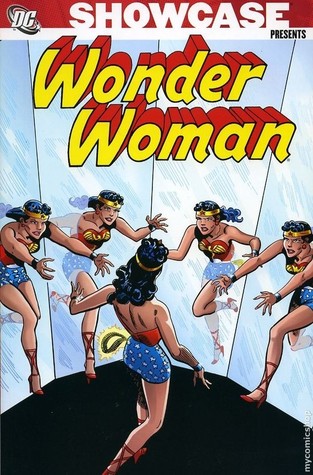
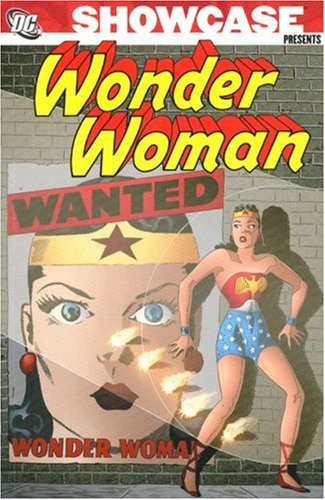
Showcase Presents Wonder Woman volume 2


By Robert Kanigher, Ross Andru & Mike Esposito & various (DC Comics)
ISBN: 978-1-4012-1373-2 (TPB)

Win’s Christmas Gift Recommendation: Silly Sagas and Some Socially Forbidden Fruits… 8/10

Until DC finally get around to republishing and digitally releasing their vast untapped comic treasures, I’m reduced to recommending some of their superb past printed glories whenever I feel like celebrating a key anniversary of the world’s preeminent female superhero who first caught the public’s attention in October 8 decades ago…

Wonder Woman was created by polygraph pioneer William Moulton Marston – apparently at the behest of his remarkable wife Elizabeth and their life partner Olive Byrne. The vast majority of the outlandish adventures they collectively penned were limned by classical illustrator Harry G. Peter.

The Astounding Amazon debuted in All Star Comics #8 (cover-dated December 1941) before gaining her own series and the cover-spot in new anthology title Sensation Comics a month later. She was an instant hit, and won her own eponymous title in late Spring of that year (Summer 1942).

Using the nom de plume Charles Moulton, Marston & Co – the women unacknowledged and uncredited for decades – scripted all the Amazing Amazon’s many and fabulous exploits until his death in 1947, whereupon Robert Kanigher took over the writer’s role. The venerable H.G. Peter continued until his own death in 1958. Wonder Woman #97 – in April of that year – was his last hurrah and the end of an era. Ross Andru & Mike Esposito had debuted as cover artists 3 issues earlier, but with the opening inclusion of Wonder Woman #98, took over the visual component as Robert Kanigher reinvented much of the old mythology and even tinkered with her origins.

This second economical monochrome Showcase collection covers issues #118-137: spanning November 1960 to April 1963, a period of increased fantasy frolics and wildly imaginative excess which still divides fans into violently opposing camps…

With the exception of Superman, Batman, Wonder Woman and a few anodyne back-up features, costumed heroes went extinct at the beginning of the 1950s, replaced by merely mortal champions in a welter of anthologised genre titles. When Showcase #4 rekindled the public’s interest in costumed crime-busters with a new iteration of The Flash in 1956, the fanciful floodgates opened wide once more…

Whilst re-inventing Golden Age Greats such as Green Lantern, Atom and Hawkman, National/DC also updated those hoary survivors who had weathered the backlash – especially the Man of Steel, Caped Crusader and ever-resilient Amazing Amazon…

The fanciful blend of girlish whimsy, rampant sexism, untrue romance, alien invasion, monster-mashing and all-out surreal (some would say-stream-of-consciousness) storytelling continues unabated here from the get-go beginning with ‘Wonder Woman’s Impossible Decision!’ (#118) seeing the comely champion constantly distracted from her mission to wipe out injustice by the antics of her savagely-sparring suitors Colonel Steve Trevor and Manno the merman.

Amazon science (and the unfettered imagination of Kanigher, for whom slavish continuity, consistency or rationality were never as important as strong plots or breathtaking visuals) had already enabled readers to share the adventures of Wonder Girl and latterly Wonder Tot – the Princess of Power as teen and toddler – both in their appropriate time-zones and, on occasion, teamed together on “Impossible Days”.

WW #119 opened with a tale of the Titanic Teen. ‘Mer-Boy’s Secret Prize!’ sees the besotted undersea booby repeatedly risk his life to win his intended inamorata a flashy treasure, whilst in ‘Three Wishes of Doom!’, a capable but arrogant young girl wins a competition and claims Wonder Woman’s Bracelets, Lasso and Tiara with the disastrous notion of using them to out-do the Amazing Amazon…

Issue #120’s ‘The Secret of Volcano Mountain! pits teen and adult Dianas – a decade apart – against the same terrifying threat as an alien elemental twice attempts to conquer the world, after which an “Impossible Day” event sees Wonder Girl, her older self and their mother Queen Hippolyta unite to defeat the monstrous peril of ‘The Island Eater!’

‘The Skyscraper Wonder Woman’ introduces Diana’s pre-schooler incarnation as the Sinister Seer of Saturn seeks to invade Earth with a colossal robot facsimile whilst simultaneously de-aging the Amazon to her younger – but crucially, no less competent – adolescent and pre-adolescent incarnations…

Wonder Woman #123 offered a glimpse of the ‘Amazon Magic-Eye Album!’ as Hippolyta reviewed some of the crazy exploits of her daughter as Tot, Teen and adult, whilst the issue after contrived to team them all together against shape-shifting nuclear threat Multiple Man on ‘The Impossible Day!’

Steve and Manno resumed their war for the princess’ hand in marriage in #125’s ‘Wonder Woman… Battle Prize!’ with the improbable romantic triangle ending up marooned on a beast-&-alien amoeba-men-infested Blue Lagoon…

‘Wonder Tot and Mister Genie!’ was the first of two tales in #126, depicting what might happen when an imaginative super-kid is left on her own, whilst exasperated US Air Force lieutenant Diana Prince gets steamed at being her own romantic rival for Trevor in ‘The Unmasking of Wonder Woman!

The next issue sees her stopping another extraterrestrial assault in ‘Invaders of the Topsy-Turvy Planet’ before ‘Wonder Woman’s Surprise Honeymoon!’ gives usually incorrigible Trevor a terrifying foretaste of what married life with his Amazon Angel might be like…

WW#128 revealed the astounding and charming ‘Origin of the Amazing Robot Plane!’ before things turn (a bit) more serious when the Amazon endures the deadly ‘Vengeance of the Angle Man!’

In #129, another spectacular Impossible Day sees the entire Wonder Woman Family (that would be just her at three different ages with mum alongside to save the day) in ‘The Vengeance of Multiple Man!’ whilst #130 opens with Wonder Tot discovering the ‘Secret of Mister Genie’s Magic Turban!’ and closes with an outrageous and embarrassing attack by Angle Man on her mature self in ‘The Mirage Mirrors!’

WW #131’s, ‘The Proving of Wonder Woman!’ details the origins of her unique epithets (such as “Thunderbolts of Jove”, “Neptune’s Trident” and “Great Hera”) before back-up ‘Wonder Woman’s Surprise Birthday Gift!’ has indefatigable, incorrigible Manno risk all manner of maritime monstrosity to find her a dazzling bauble, whilst the Amazon herself was trying to find her mother a present.

‘Wonder Tot and the Flying Saucer!’ sees the adult Amazon turn herself into a toddler to converse with a baby and discover the secret of a devastating alien atomic attack, whilst a second story reveals ancient romantic encounters which occurred when ‘Wonder Queen Fights Hercules!’

Wonder Woman #133 cover-featured the Impossible Tale of ‘The Amazing Amazon Race!’ wherein Tot, Teen, Woman and Queen compete in a fraught athletic contest with deadly consequences, whilst in Man’s World, Diana Prince takes centre-stage to become ‘Wonder Woman’s Invincible Rival… Herself!’ when a movie-project went dangerously awry.

‘Menace of the Mirror Wonder Women!’ pits her and Steve against the Image-Maker: a deadly other-dimensional mastermind able to animate and enslave reflections, before #134 closes with another disastrous sub-sea date for Wonder Girl when she must prevent ‘The Capture of Mer-boy!’

It was one more time for Multiple Man as he/it returned to battle the Wonder Family in #135’s Impossible Day drama ‘Attack of the Human Iceberg!’, whilst #136 had the Female Fury transformed into a ravenous, colossal threat to humanity after alien machine men infect her with a growth-agent to become ‘Wonder Woman… World’s Greatest Menace!’

This compendium concludes with #137’s classic duel on an ersatz Earth, where mechanical replicas of humanity and metal facsimiles of the Amazons run amok. Here, Earth’s foremost female defender must overcome ‘The Robot Wonder Woman!’

By modern narrative standards these exuberant, effulgent fantasies are usually illogical and occasionally just plain bonkers, but in those days far less attention was paid to continuity and shared universes: adventure in the moment was paramount and these strangely infectious romps simply sparkled then and now with fun, thrills and sheer spectacle.

Wonder Woman is rightly revered as a focus of female strength, independence and empowerment, but the welcoming nostalgia and easy familiarity of such innocuous costumed fairy tales must be a delight for unbiased readers, whilst the true, incomparable value of such stories is the incredible quality entertainment they still offer.
© 1960-1963, 2008 DC Comics, Inc. All Rights Reserved.

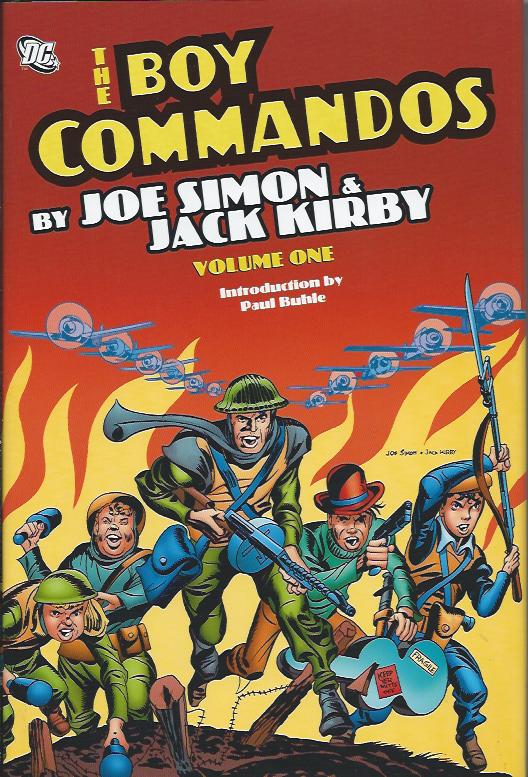
Boy Commandos volume 1


By Joe Simon & Jack Kirby & various (DC Comics)
ISBN:  978-1-4012-2921-4 (HB)

Win’s Christmas Gift Recommendation: Ideal for Fanboys, Superhero Purists and Lovers of Sheer Comic Exuberance… 9/10

Just as the Golden Age of comics was kicking off two young men with big hopes met up and began a decades-long association that was always intensely creative, immensely productive and spectacularly in tune with popular tastes.

Joe Simon was a sharp-minded, talented gentleman with 5-years-experience in “real” publishing, working from the bottom up to art director on a succession of small newspapers such as the Rochester Journal American, Syracuse Herald and Syracuse Journal American before moving to New York City and a life of freelancing as an art/photo retoucher and illustrator. Recommended by his boss, Simon joined Lloyd Jacquet’s pioneering Funnies Inc., a comics production “shop” generating strips and characters for a number of publishing houses eager to cash in on the success of Action Comics and its stellar attraction Superman.

Within days Simon created The Fiery Mask for Martin Goodman of Timely (now Marvel) Comics and met young Jacob Kurtzberg, a cartoonist/animator just hitting his imaginative stride with Blue Beetle for the Fox Feature Syndicate.

Together Simon and Kurtzberg (who went through a battalion of pen-names before settling on Jack Kirby) enjoyed stunning creative empathy and synergy which galvanized an already electric neo-industry with a vast catalogue of features and even genres.

At a rocket-pace they produced the influential Blue Bolt, Captain Marvel Adventures #1 and – after Martin Goodman appointed Simon editor at Timely – a host of iconic characters such as Red Raven, Marvel Boy, Hurricane, The Vision, The Young Allies and a scene-stealing guy named Captain America.

When Goodman failed to make good on his financial obligations, Simon & Kirby jumped ship to National/DC, who welcomed them with open arms and an large chequebook. Initially an uncomfortable fit, bursting with ideas the company were not comfortable with, the pair were soon handed two failing strips to play with until they found their creative feet.

Soon after establishing themselves with The Sandman and Manhunter, they were left to their own devices and promptly returned to the “Kid Gang” genre they had created with The Young Allies for a unique juvenile Foreign Legion entitled The Boy Commandos.

These bellicose brats initially shared – or stole – some of the spotlight from Batman & Robin in flagship title Detective Comics before and whilst their solo title became one of the company’s top three sellers.

Boy Commandos was such a success – often cited as the biggest-selling American comic book in the world at that time that the editors – knowing “The Draft” was lurking – green-lit the completion of a wealth of extra material to lay away for when their star creators were called up. S&K and their studio team produced so much four-colour magic in a phenomenally short time that Publisher Jack Liebowitz eventually suggested they retool some of it into adventures of a second kid gang… and thus was born The Newsboy Legion (and their tag-along super-heroic mentor The Guardian)…

Those guys we’ll get to some other time, but today let’s applaud this splendidly sturdy full-colour hardback compilation (still regrettably unavailable in digital formats), re-presenting the first 10 months of the courageous child soldiers as seen in Detective Comics #64-72; World’s Finest Comics #8-9; Boy Commandos #1-2 (spanning June 1942 to March 1943): a barrage of bombastic blockbusters at once fervently patriotic morale-boosters, rousing action-adventures and potent satirical swipes and jibes by creators who were never afraid to show that good and evil was never simply just “us & them”…

Following a scholarly Introduction from respected academic Paul Buhle, the vintage thrills and spills commence with a spectacular introduction to the team as only S & K could craft it: a masterpiece of patriotic fervour eschewing lengthy explanations and origins in favour of immediate action. ‘The Commandos are Coming!’ cleverly follows the path of a French Nazi collaborator who finds the courage to fight against his country’s conquerors after meeting the unconventional military unit.

We never learn how American Captain Rip Carter got to command a British Commando unit nor why he was allowed to bring a quartet of war-orphans with him on a succession of deadly sorties into “Festung Europa”, North Africa, the Pacific or Indo-Chinese theatres of war. All we had to do was realise that cockney urchin Alfy Twidgett, French lad Pierre – latterly and unobtrusively renamed AndreChavard, little Dutch boy Jan Haasen and rough, tough little lout Brooklyn were fighting the battles we would, if we only had the chance…

From the start the yarns were strangely exotic and bizarrely multi-layered, adding a stratum of mythmaking and fantasy to the grimly grisly backdrop of a war fought from the underdog’s position. Detective Comics #66 (featuring a stunning art-jam cover by Jerry Robinson and Simon & Kirby, with the Caped Crusaders welcoming the squad to their new home) saw the exploits of the juvenile warriors related by a seer to feudal Queen Catherine of France in ‘Nostrodamus Predicts’.

She saw and drew comfort from Carter’s attempt to place the kids in a posh boarding school, only to uncover a traitor in educator’s clothing which led to a shattering raid right in the heart of the occupier’s defences…

The locale shifted to Africa and time itself got bent when ‘The Sphinx Speaks’ reveals how a reporter in the year 3045 AD interviews a mummy with a Brooklyn accent. The seeming madness materialised after the Commando “mascots” arrived in Egypt in 1942 to liberate a strategically crucial village to unearth a Nazi radio post inside an ancient edifice. Whilst they were causing their usual corrective carnage, one of the lads had a strange meeting with the rocky pile’s oldest inhabitant…

Another esoteric human interest tale began back in Manhattan where hoods Horseshoes Corona and his best pal Buttsy Baynes barely avoid a police dragnet and ‘Escape to Disaster!’ by heading out into the open ocean… and straight into the sights of a U-boat. The sight of the gloating Nazis laughing as his friend perishes has a marked effect on one heartless gangster…

When badly wounded Horseshoes is later picked up by Carter’s crew, he immediately has a negative influence on impressionable, homesick Brooklyn, but turns his life around in its final moments after the Allied vessel attacks an apparently impregnable German sea-base…

Detective #68 exposes ‘The Treachery of Osuki!’ as an aerial dogfight dumps the boys and a Japanese pilot in the same life-raft. Once they hit land, the obsequious flier begins grooming the simple island natives who rescued them, but ultimately can’t mask his fanatical urge to conquer and kill. Next, an epic of East-West cooperation sees the army urchins battling Nazis beside desperate Russian villagers at ‘The Siege of Krovka!’, determined to make the invaders pay for every frozen inch of Soviet soil in a blockbusting tale of heroism and sacrifice.

Another odd episode finds contentious, argument-addicted New York cabbie Hack Hogan drafted and – protesting all the way – slowly transformed into a lethal force of nature sticking it to the Nazis in the heart of their homeland, with the kids reduced to awestruck observers in ‘Fury Rides a Taxicab!’

An astounding hit, the kids became a fixture in premier all-star anthology World’s Finest Comics with #8’s (Winter 1942-1943) ‘The Luck of the Lepparts’ wherein an utter cad and bounder battles to beat a curse which has destroyed three previous generations of his family of traitors. Is it fate, ill fortune or the arrival of the Boy Commandos in the Burmese stronghold he planned to sell out that seals his fate?

That same month saw the inevitable launch of Boy Commandos #1 which explosively opens with ‘The Town that Couldn’t be Conquered!’ Here, Rip leads the lads back to Jan’s home village to terrify the rapacious occupiers and start a resistance movement, after which ‘Heroes Never Die’ fancifully finds the team in China where they meet a dying monk.

This aged sage remembers his childhood when a white pirate and four foreign boys led a bandit army against imperial oppression. He has waited for their prophesised return ever since the Japanese invaded…

This period of furious productivity resulted in some of Simon & Kirby’s most passionate yet largely unappreciated material. As previously stated, Boy Commandos regularly outsold Superman and Batman during WWII, and the moody ‘Satan Wears a Swastika’ clearly shows why, blending patriotic fervour with astonishing characterisation and a plot of astonishing sophistication.

When news comes of the team’s death, official scribes Joe & Jack convene with the Sandman and Newsboy Legion on how to handle the morale-crushing crisis. While the Homefront heroes debate, across the ocean, answers unravel. The confusing contretemps had begun when a quartet of wealthy little people decided that despite their medical deficiencies they would not be cheated of their chance to fight fascism. Accompanied by their tall, rangy butler, they set up as a private combat unit and plunged into the bowels of Berlin, even as the real Commando kids were being run ragged by the Germans’ most deadly operative Agent Axis…

That epochal initial issue ends with a weird war story as the boys keep meeting French soldier Francois Girard who shares snippets of useful intel as they prepare for their most audacious mission: kidnapping Hitler…

Even though the sortie eventually comes up short, the blow to the enemy’s morale and prestige is enormous, but on returning home the codenamed ‘Ghost Raiders’ shockingly learn that for one of their number, the title is not metaphorical…

Back in Detective #71 (January 1943) ‘A Break for Santa’ offers a stellar change of pace as the boys organise a treat for orphans and opt – even if they are cashiered for it – to rescue one lad’s dad from a concentration camp as a Christmas treat…

The next issue saw them uncover a devilish espionage/sabotage ring operating out of a florist’s shop in ‘Petals of Peril’whilst #73 revealed ‘The Saga of the Little Tin Box’ with Rip dragging the kids through hellish African jungles ahead of a cunning and supremely competent Nazi huntsman; watching them slowly psychologically unravel as they become increasing obsessed with a pointless trinket…

That mystery successfully solved and survived, the action switched to Europe for World’s Finest Comics #9 with the kids going undercover as circus performers cautiously recruiting a cadre of operatives to strike against the oppressors from within, culminating in ‘The Battle of the Big Top!’

This stunning collection concludes with the contents of Boy Commandos #2 (Spring 1943), leading with ‘The Silent People Speak’ as two Danish brothers – one on each side of the conflict – resolve years of jealousy and hatred after the Commandos stage an incursion into their strategically crucial village. Mordant black comedy then resurfaces as wastrel nobleman Lord Tweedbrook is drafted and his butler becomes his drill-sergeant. Happily, the young lions are on hand to stop the suffering scion absconding and ensure the turbulent toff’s transition to fighting tiger in ‘On the Double, M’Lord!’

Another tantalising twice-told tale has Rip and the boys invade fairy tale European kingdom Camelon to rescue a sleeping Queen (from magic spells or Nazi drugs?) in ‘The Knights Wore Khaki’, before this first wave of yarns culminates with a gloriously sentimental romp as the kids adopt a battered and bloody bomb crater kitten, smuggling him onto a vital mission. Things look bad until even little “Dodger” proves he would give ‘Nine Lives for Victory’…

Although I’ve concentrated on the named stars it’s important to remember – especially in these more enlightened times still plagued with the genuine horror of children forcibly swept up in war they have no stake in – that the Boy Commandos, even in their ferociously fabulous exploits, were symbols as much as combatants, usually augmented by huge teams of proper soldiers doing most of the actual killing.

It’s not much of a comfort but at least it proves that Simon & Kirby were not simply caught up in a Big Idea without considering all the implications…

Brilliantly blockbusting and astoundingly appetising, these superb fantasies from the last “Good War” are a superb and spectacular example of comics giants at their most creative. No true believer or dedicated funnybook aficionado should be denied this book.
© 1942, 1943, 2010 DC Comics. All Rights Reserved.

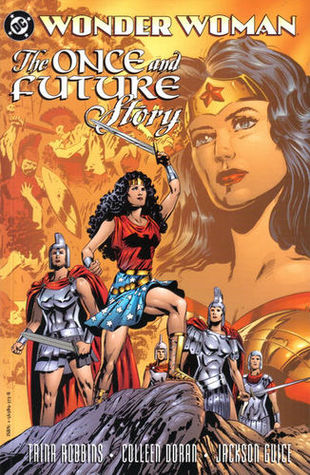
Wonder Woman – The Once and Future Story


By Trina Robbins, Colleen Doran, Jackson Guice & various (DC Comics)
ISBN: 978-1-56389-373-5 (TPB)

Win’s Christmas Gift Recommendation: Star of Wonder, Star so Bright… 9/10

Until DC fully republish and digitally release their vast comic treasure reserves, I’m reduced to regularly recommending some of their superb past printed glories whenever I feel like celebrating a key anniversary such as that of the world’s preeminent female superhero. She first caught the public’s attention 8 decades ago and has broken out of fiction to shake the real world over and over again, just like here…

Every so often the earnest intention to do some good generates an above-average comics product, such as this stunning one-shot created to raise awareness of domestic violence. A hugely important but constantly ignored issue – and one far too many unfortunate children are cruelly aware of from an early age – it is also one of the oldest “social” topics in comic book history. Superman memorably dealt out rough justice to a “wife-beater” in his very first adventure (Action Comics#1, June 1938). It’s a true shame that we’re still trying to address let alone fix this vile situation…

Less visceral – and far more even-handed regarding such a complex issue than I would have thought possible – The Once and Future Story is a beautiful and subtle tale-within-a-tale from Trina Robbins, illustrated by Colleen Doran & Jackson Guice. It opens as Wonder Woman is summoned to an archaeological dig in Ireland by a husband-&-wife research team who hope their guest can verify the findings hidden within a 3000-year-old tomb containing the body and burial trappings of a princess from the fabled island of Themyscira…

As she translates the scrolls – detailing the story of Princess Artemis of Ephesus, daughter of Queen Alcippe, who was taken as a slave by legendary Greek hero TheseusDiana slowly realizes that the animosity of dig-chief James Kennealyis perhaps more than professional jealousy, and that his wife’s Moira’s defensive attitude and constant apologies may mask a dark secret.

Artemis’s brutal, painful quest to rescue her mother mirrors Moira’s journey to awareness as both women – separated by three millennia – ultimately take control of their so different, yet tragically similar, lives…

Challenging, powerful but still wonderfully entertaining, this is a tale both worthy and worthwhile, and one far too long overlooked. Now what does that remind me of?
© 1998 DC Comics. All Rights Reserved.
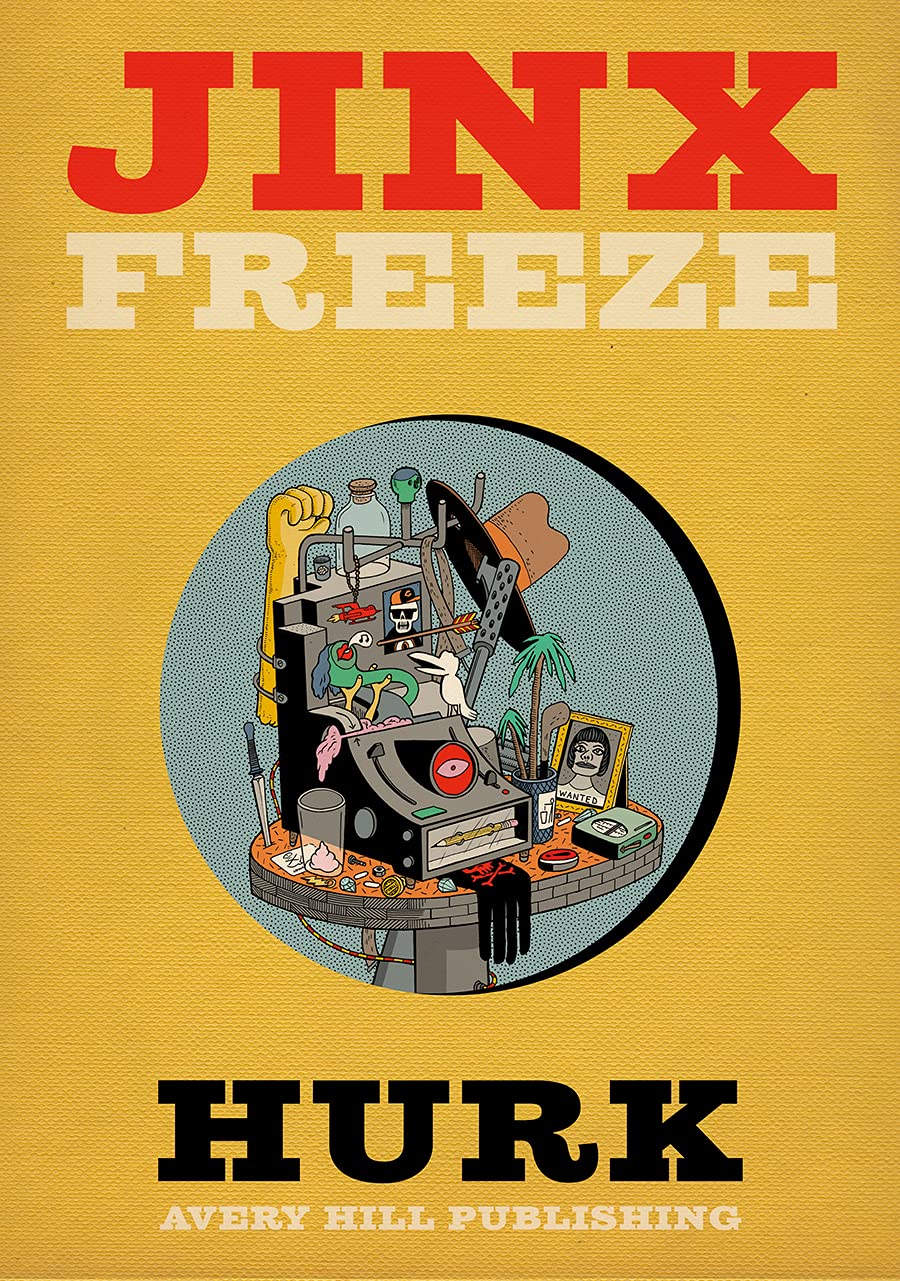
Jinx Freeze


By Hurk (Avery Hill Publishing)
ISBN: 978-1-910395-59-2 (TPB)

Win’s Christmas Gift Recommendation: A Cunning Conundrum of Cartoon Classicism … 8/10

Human beings are powerfully prone to the potent seductions of the past. Nostalgia used to be classed as a sickness. Go’wan, look it up, I dares ya…

Even more overwhelming in some folk – usually the most creative sorts – is a Puckish drive to celebrate the past through good-natured mockery and clever spoofing: what the beloved Kenneth Williams referred to as “messing about”…

Pictorially active since the turn of the century – this one, just to be clear – (Lord) Hurk is local born and bred – literally and geographically to me but culturally and societally to anybody growing up British in the last sixty years and reared on too much television, tabloid publishing and comics. He and has contributed to comics projects all over the globe. Now that your interests are piqued, you might want to check out 2016’s Ready for Pop, and work done for The Fancy Butcher, The Comix Reader, Italy’s Puck, Slovenia’s Stripburger, Off Life, Your Days Are Numbered, Hive, and The Mammoth Book of Skulls.

Jinx Freeze is his first full-colour solo vehicle, channelling his wildly freewheeling targeted whimsy in the manner of Dan Clowes and Peter Bagge, whilst referencing such outré past entertainments as Scales of Justice, Prisoner: Cellblock H and Emergency Ward 10, lost minor “celebrities” such as Thora Hird, Parsley the Lion and Edgar Lustgarten!, fab and groovy movies, arcane music references and a wealth of cartooning styles.

The entire farrago is delivered in devilishly enticing micro-instalments patterned on the varied pages of British anthology comics like Leo Baxendale and Ken Reid-era Smash! and Pow! Hurk tracks the progress of a broad and bizarre cast of good guys, bad guys, femme fatales, mad scientists and other oddly-familiar brand-new archetypes in a seditiously wry Pop Culture medley enrobed in and masquerading as a cunning murder mystery.

Somewhere in time there is chaos on the plutocratic playground of the Riviera. A portion of a golden statue on loan from the prestigious Gurgleheim Museum has been shamefully pilfered, sparking a manic race to recover it embroiling all manner of unique individuals on every side of the Law. As the chase unfolds the scenario expands into psychedelic psychodrama amidst the baffling environs of The Great Exhibition of 11851 where alien ploys, criminal blags and sinister, uncanny enigmas entwine and overlap for frontrunners Marge Large, Riviera Chief of Police Dick Bosse, Modern Tahzrn, King Gianthead Fighter Policeman 0.X, The Thor Gang Four, King of Poetry, Danny Kildare the Space Priest and less reliable champions: all competitively hunting for the prize and glory…

A delightful “easter-egg”-laden tribute to the good old days, pirated from television, print media and blurred memories, this is a sublimely entertaining romp you must not miss.
© Hurk, 2021.

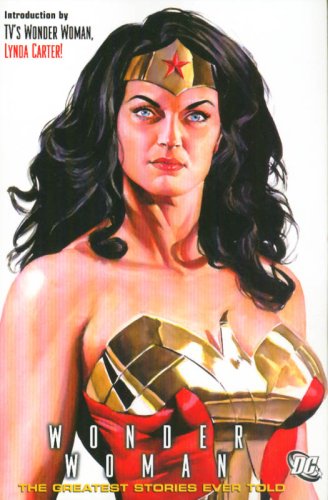
Wonder Woman – The Greatest Stories Ever Told


By Charles Moulton & HG Peter with Elizabeth Moulton and Olive Byrne, Robert Kanigher, Ross Andru & Mike Esposito, Paul Dini & Alex Ross, Mike Sekowsky & Denny O’Neil, Elliot S! Maggin & Curt Swan, Kanigher & Jose Delbo, George Pérez, Phil Jimenez & various (DC Comics)
ISBN: 978-1401212162 (TPB)

Win’s Christmas Gift Recommendation: Star of Wonder, Star so Bright… 9/10

Until DC finally get around to republishing and digitally releasing their vast untapped comic treasures reserves, I’m reduced to recommending some of their superb past printed glories whenever I feel like celebrating a key anniversary of the world’s preeminent female superhero who first caught the public’s attention 8 decades ago…

Wonder Woman was created by polygraph pioneer William Moulton Marston – apparently at the behest of his remarkable wife Elizabeth and their life partner Olive Byrne. The vast majority of the outlandish adventures were limned by classical illustrator Harry G. Peter. She debuted in All Star Comics #8 (cover-dated December 1941) before gaining her own series and the cover-spot in new anthology title Sensation Comics one month later. She was an instant hit, and gained her own eponymous title in late Spring of that year (Summer 1942).

Using the nom de plume Charles Moulton, Marston & Co scripted all the Amazing Amazon’s many and fabulous exploits until his death in 1947, whereupon Robert Kanigher took over the writer’s role. The venerable H.G. Peter continued until his own death in 1958. Wonder Woman #97 – in April of that year – was his last hurrah and the end of an era.

Sadly, for long periods of publishing, Wonder Woman’s material failed to live up to her heritage or status, but this curated anthology offers a good sampling for casual readers and interested parties to start their comic book addiction with.

The mandatory origin is taken from 2001’s graphic album Wonder Woman: Spirit of Truth, by Paul Dini & Alex Ross. Hidden from the eyes of man, a race of immortal superwomen has prospered in all fields of science and art, secure in their isolation and the protection of their Hellenic Gods. This all abruptly ends when global war forces US air-force pilot SteveTrevor down on their secluded home.

Nursing him, Diana, young daughter of the queen – I know there’s no men, but don’t ask, just read the book – falls in love, and determines to return with him to ‘Man’s World’ to fight evil and be near him.

Following on from that is the character’s second ever appearance, taken from Sensation Comics #1 (January 1942). Here pop psychologist Marston and artist H.G. Peter reprise how the Amazon Princess returns wounded aviator Trevor to the modern world and chooses to remain, adopting a human identity to be near him in ‘Wonder Woman Comes to America’.

By the same team, ‘Villainy Incorporated!’ comes from 1948 (Wonder Woman #28): an epic-length tale of revenge as eight of her greatest enemies escape from attitude-altering Transformation Island where they were imprisoned, to seek the Amazon’s destruction.

Another team with long experience of our heroine was writer Robert Kanigher and artists Ross Andru & Mike Esposito. Their work is represented here by ‘Top Secret’ (Wonder Woman #99, 1958) wherein Steve tries to trick her into marriage – something the creep tried a lot back then – and ‘Wanted – Wonder Woman’ (#108, 1959), as Flying Saucer aliens frame her for heinous crimes as a precursor to a planetary invasion.

In the mid-1960s, many attempts were made to boost ever-diminishing sales and the profile of the iconic star, and Kanigher, Andru & Esposito began recycling the stories and even style of Marston & Peter. From that period comes ‘Giganta – the Gorilla Girl’ (Wonder Woman #163, 1966), as an evolutionary experiment transforms a great ape into a 7-foot tall, blonde human bombshell with the hots for Steve.

Even greater evolutions and contortions were in store for Princess Diana. With the arrival of Mike Sekowsky and young scripter Denny O’Neil, the Amazon lost her powers, compelled to rely on human skills an determination: evolving into an Emma Peel/Modesty Blaise-like character, fighting evil with nothing but her wits, martial arts and the latest Carnaby Street outfits. From Wonder Woman #178 (1968) comes ‘Wonder Woman’s Rival’, the prequel to that big change and the new team’s first work on the character in a tale of blackmail, murder – and fashion!

Eventually Ms. Prince regained her powers and petitioned to rejoin the Justice League of America. To reassure herself, Diana set twelve tasks to prove her competence and asked for a different JLA-er to monitor each one. Wonder Woman#212, from 1974, saw her saving the world from nuclear Armageddon with Green Lantern along for the ride. ‘Wish Upon a Star’ is a relatively shock-free romp courtesy of Elliot Maggin, but has lovely art from Curt Swan & Frank Giacoia.

Kanigher returned for the sentimental but endearing. ‘Be Wonder Woman… And Die’ (#286, 1981), illustrated by Jose Delbo & Dave Hunt, as much the tale of a dying actress as the Awesome Amazon.

After the Crisis on Infinite Earths maxi-event of 1985, Wonder Woman was re-imagined for the brand-new, stripped-down DC Universe, and her comic book started again with a new #1. From issue #20 of that run comes ‘Who Killed Myndi Mayer’ (1988) by writer/artist George Pérez and inked by Bob McCloud: an intriguing mystery concerning the shooting of the Amazon’s controversial publicist.

This sparkling primer concludes with a pretty but rather slow “day-in-the-life” tale as top-flight journalist Lois Laneinterviews the princess and cultural ambassador to Man’s’ World, providing readers with valuable insights into the hero and the woman. ‘She’s a Wonder’ (Wonder Woman volume 2, #170, 2001) is written and drawn by Phil Jimenez with inks by Andy Lanning: providing a cosy way to wrap up proceedings.

Wonder Woman is a global presence of comic fiction, and set to remain one. This unchallenging collection is a solid representation of what makes her so .
© 1942, 1948, 1958, 1959, 1966, 1968, 1974, 1981, 1988, 2001, 2007 DC Comics. All Rights Reserved.
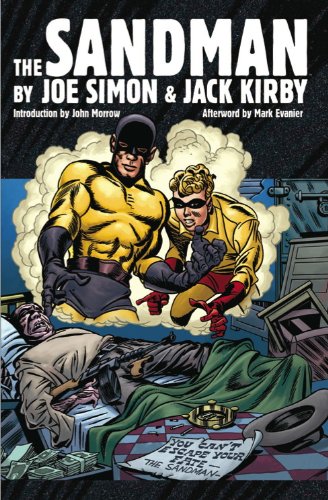
The Sandman by Joe Simon and Jack Kirby


By Joe Simon & Jack Kirby, with Mike Royer & others (DC Comics)
ISBN: 978-1-4012-2299-4 (HB)

In the early days of the American comicbook the fledgling industry was awash with chancers, double-dealers, slick operators and outright crooks. Many creative types fell foul of this publishing free-for-all but a rare few took to the cut and thrust and managed not only to survive but also to prosper.

Just as the Golden Age of comics was beginning, two young men with big hopes met up and began a decades-long association that was always intensely creative, immensely productive and spectacularly in tune with popular tastes. Joe Simon was a sharp-minded, talented young man with 5 years’ experience in “real” publishing, working from the bottom up to art director on a succession of small papers such as the Rochester Journal American, Syracuse Herald and Syracuse Journal American before moving to New York City and a life of freelancing as an art/photo retoucher and illustrator. Recommended by his boss, Simon joined Lloyd Jacquet’s pioneering Funnies Inc., a comics production “shop” generating strips and characters for a number of publishing houses eager to cash in on the success of Action Comics and its stellar attraction Superman.

Within days Simon created The Fiery Mask for Martin Goodman of Timely Comics (now Marvel) and met young Jacob Kurtzberg, a cartoonist and animator just hitting his stride with the Blue Beetle for the Fox Feature Syndicate.

Together Simon and Kurtzberg (who went through a legion of pen-names before settling on Jack Kirby) enjoyed a stunning creative empathy and synergy which galvanized an already electric neo-industry with a vast catalogue of features and even sub-genres. They produced the influential Blue Bolt, Captain Marvel Adventures (#1) and, when Martin Goodman made Simon the editor of Timely, created a host of iconic characters such as Red Raven, the first Marvel Boy, The Vision, Young Allies and of course million-selling mega-hit Captain America.

Famed for his larger than life characters and colossal cosmic imaginings, “King” Kirby was an astute, spiritual hard-working family man who lived through poverty, gangsterism, the Depression and World War II. He had seen Post-War optimism, Cold War paranoia, political cynicism and the birth and death of peace-seeking counter-cultures. He was open-minded, always saw the best in people and was utterly wedded to the making of comics stories on every imaginable subject.

When Goodman failed to make good on his financial obligations, Simon & Kirby jumped ship to National/DC, who welcomed them with open arms and a big chequebook. Initially an uncomfortable fit, bursting with ideas the company were not comfortable with, the pair were handed two strips languishing in the doldrums, to tide them over until they found their creative feet.

Settled and left to their own devices, they consolidated their “Kid Gang” genre innovation with The Newsboy Legion(and super-heroic mentor The Guardian) and a unique international army – The Boy Commandos – who shared the spotlight with Batman in Detective Comics (and whose own solo title became frequently the company’s third best seller).

Those moribund strips they were first unleashed upon were a big game hunter feature called Paul Kirk, Manhunter, which they overnight turned into a darkly manic, vengeful superhero strip, and one of comics’ first masked mystery-men – The Sandman.

This superb hardback collection – also available in digital editions – reprints all the S&K tales, including covers produced for issues they didn’t craft; lost art pages, original art reproductions as well as informative text articles from Kirby historian John Morrow and writer Mark Evanier. It even includes Simon & Kirby’s reunion reinvention of Sandman from 1974 (which in turn spawned one of Kirby’s last series for DC).

Created by Gardner Fox and first illustrated by Bert Christman, the Sandman premiered in either Adventure Comics#40 July 1939 (two months after Batman debuted in Detective Comics #27) or two weeks earlier in New York World’s Fair Comics 1939, depending on whether some rather spotty distribution records can be believed.

Face utterly obscured by a gasmask, caped and business-suited millionaire adventurer Wesley Dodds wielded a sleeping-gas gun to battle a string of crooks and spies, accompanied by his paramour Dian Belmont, before gradually losing the readers’ interest and slipping from cover-spot to last feature in Adventure Comics, just as the cloaked pulp-hero avengers he emulated slipped from popularity in favour of more flamboyant fictional fare.

Possessing a certain indefinable style, eerie charm but definitely no pizzazz, the feature was on the verge of being dropped when he abruptly switched to a skintight yellow and purple costume, complete with billowing cape. He also gained a teenaged sidekick in Sandy the Golden Boy (Adventure Comics #69, December 1941, by Mort Weisinger & Paul Norris), presumably to move closer to the overwhelmingly successful Batman model.

It didn’t help much.

So, when Simon & Kirby came aboard with #72, the little banner above the logo on the Jack Burnley Starman cover gave no hint of the pulse-pounding change that had occurred. ‘Riddle of the Slave Market’ saw a sleek, dynamic pair of gleaming golden lions explode across 11 pages of graphic fury as the Sandman – sans daft cape – crushed a white-collar criminal with a nasty line in illicit indentured servitude. Moreover, the character had overnight acquired his unique gimmick: Sandman’s crusades against crime were presaged by the perpetrator suffering nightmares of imminent retribution…

This semi-supernatural element and fascination with the world of dreams (revisited by S&K a decade later in their short-lived experimental suspense series The Strange World of Your Dreams) added a conceptual punch to equal the kinetic fury of their art, and when #73 (with S&K’s Manhunter now hogging the cover) Sandman strip ‘Bells of Madness!’ramped up the tension with another spectacular action epic wherein the Dream Warriors expose a cunning murder plot.

With Adventure #74 Sandman and Sandy took back the cover spot (only their third since #51), keeping it until the feature ended. Only once did Sandman not appear on the cover – #99: another S&K Manhunter classic. From #103 the magazine underwent a complete overhaul with new feature Superboy headlining established regulars Green Arrow, Aquaman, Shining Knight and Johnny Quick parachuted in from other magazines.

The story in #74 was an eerie instant classic: ‘The Man Who Knew All the Answers’ was a small-town professor who artificially increased his intellect – but not his ethics. When his perfectly planned crimes bring him into conflict with the heroes, it proves that his brain enhancer did nothing for common sense either.

‘The Villain From Valhalla!’ (Adventure Comics #75 June 1942) pits the galvanic heroes against a hammer-wielding Norse god in a cataclysmic Battle Royale, followed here by an equally astounding clash with sinister floral villain Nightshade. ‘The Adventure of the Magic Forest’ stemmed from World’s Finest Comics #6 (Summer 1942), one of two S&K exploits in that legendary anthology.

Sandman was also a founding member of the Justice Society of America, appearing in many issues of All-Star Comics. A number of the pertinent chapters were also generated by Joe & Jack, but are sadly not included in this otherwise comprehensive compendium: completists will need to track down the superb All-Star Archives (volumes 4 and 5) for those dynamic classics.

Adventure #76 again heavily emphasised foreboding oneiric elements in ‘Mr. Noah Raids the Town!’ as a soothsaying mastermind unleashes preposterously intelligent animals to steal and kill, whilst #77’s ‘Dreams of Doom!’ finds an innocent man plagued by nightmares and compelled to solicit the aid of the Master of Dreams… and only just in time!

A sinister Swami is exposed in ‘The Miracle Maker!’ before the final World’s Finest guest-shot (#7, Fall 1942) dips heavily into exotic fantasy for ‘A Modern Arabian Nightmare!’ Adventure #79 then bangs the patriotic drum in eerie temporal-trap mystery ‘Footprints in the Sands of Time!’

It’s back to thrill-a-minute manic crime mayhem in #80’s ‘The Man Who Couldn’t Sleep!’, but ‘A Drama in Dreams’presents a baffling conundrum for Sandy to solve alone, after which the creators indulge in some seasonal shocks in madcap Yule yarn ‘Santa Fronts for the Mob.’

Issue #83 led with a blockbusting boxing romance as the heroes aid ‘The Lady and the Champ!’ while including a gloriously over-the-top Boy Commandos ad featuring Hitler, Mussolini and Tojo as only Jack and Joe could defame them. Next comes a gloriously Grand Guignol saga – ‘Crime Carnival’ and delightfully wry romp ‘The Unholy Dreams of Gentleman Jack’, before S&K return to a favourite theme of childhood poverty in ‘The Boy Who Was Too Big for his Breeches.’

The war was progressing and soon both Joe and Jack would be full-time servicemen, so perhaps the increasingly humanistic tales of their latter run were only to be expected. The shift in emphasis certainly didn’t affect the quality of such gems as ‘I Hated the Sandman!’ from #87 wherein narcoleptic Silas Pettigrew learns a salutary lesson, or heartwarming, exuberant childhood fantasy ‘The Cruise of the Crescent’, whilst #89’s kidnap drama ‘Prisoner of his Dreams’ and the boisterous ‘Sleepy Time Crimes!’ proved that whatever else happened, action and excitement would always series watchwords.

In the months prior to their induction, Simon & Kirby went into overdrive, building up a vast reserve of inventory stories for their strip commitments, but even so relentless publishing deadlines soon ate them up. Adventure Comics #91 featured the last S&K yarn for a year and a half, long after Kirby had shipped out to fight in Europe and Simon had begun his service with the US Coast Guard.

‘Courage a La Carte’ has precious little – if indeed any – Kirby art in it, but is nonetheless a sterling saga of malice unmasked and justice triumphant, after which only the covers of Adventure #92-97 kept the artist’s light burning in the heart of fans.

The star creators returned for issue #100 (October/November 1945) with tempestuous crime caper ‘Sweets for Swag!’, the cover of #101and again inside #102 with swansong drama ‘The Dream of Peter Green!’, as Sandman and Sandy expose shoddy dealings in city contracting before ensuring ghetto kids had decent playgrounds to grow fit and healthy in.

National Comics was no longer a welcoming place for the reunited duo. By 1947 they formed their own studio, beginning a long and productive relationship with Harvey Comics (Stuntman, Boy’s Ranch, Captain 3-D, Lancelot Strong: The Shield, The Fly, The Three Rocketeers and others) and created a stunning variety of genre features for Crestwood/Pines (supplied by their Essankay/Mainline studio shop). These included Justice Traps the Guilty, Black Magic, Fighting American, Bullseye, Foxhole and landmark innovation Young Romance amongst many more (see the superb Best of Simon and Kirby for a salient selection of these classic creations).

As comics went through bad times the pair eventually went their separate ways but were reunited for one last hurrah in 1974 whilst both working once more for DC. The result was a re-imagined Sandman: now a fully fantastic scientific master of the metaphysical, policing the nightmares of humanity from a citadel deep in “The Dream-Stream.”

‘The Sandman’ (scripted by Joe, drawn/edited by Jack and inked by Mike Royer) is pure escapist delight, describing how young Jed Paulsen taps into the oneiric horrors of villainous cybrid General Electric as he attempts to conquer the World of Our Dreams. When all hope seems exhausted, Jed is rescued and befriended by the omniscient Lord of Sleep and his ghastly assistants Brute and Glob…

This rambunctious romp is a great place to end our volume but since six further adventures of this Weaver of Dreams were completed (albeit with no Simon and varying degrees of Kirby) perhaps one day they too will make the jump to graphic novel immortality…

After years of neglect the glorious wealth of Kirby material available these days is a true testament to his influence and legacy, so this magnificent collection of his collaborations with fellow pioneer Joe Simon is a gigantic box of delights perfectly illustrating the depth, scope and sheer thundering joy of the early days of comics: something no amount of corporate shoddy behaviour can ever diminish.
© 1942, 1943, 1944, 1945, 1946, 1974, 2009 DC Comics. All Rights Reserved.
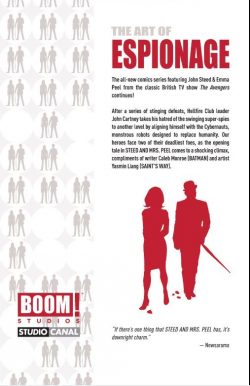
Steed and Mrs Peel volume 3: The Return of the Monster


By Caleb Monroe, Steve Bryant, Will Sliney, Yasmin Liang & Chris Rosa (Boom! Studios)
ISBN: 978-1-60886-363-1 (TPB) eISBN: 978-1-61398-363217-4

The (British) Avengers was an astoundingly stylish, globally adored TV show glamorously blending espionage with arch comedy and deadly danger with technological extrapolation from swinging Sixties through to the beginning of the 1980s. A phenomenal cult hit, it and sequel The New Avengers call up pangs of Cool Britannia style, cheeky action-adventure, kinky quirkiness, mad gadgetry, dashing heroics, bizarrely British festishistic attire, surreal suspense and the wholly appropriate descriptive phrase “Spy Fi”.

Enormously popular everywhere, the show evolved from 1961’s gritty crime thriller Police Surgeon into a paragon of witty, thrilling and sophisticated adventure lampoonery with suave, urbane British Agent John Steed and dazzlingly talented amateur sleuth Mrs. Emma Peel battling spies, robots, criminals, secret societies, monsters and even “aliens” with tongues very much in cheeks and always under the strictest determination to remain calm, dashingly composed and exceedingly eccentric…

The format was a winner. Peel, as played by Dame Diana Rigg, and replacing landmark character Cathy Gale – the first hands-on fighting female on British TV history – took the show to even greater heights of success. Emma Peel’s connection with viewers cemented the archetype of a powerful, clever, competent woman into the nation’s psyche: largely banishing the screaming, eye-candy girly-victim to the dustbin of popular fiction.

Rigg left in 1967, herself replaced by another feisty female: Tara King (Linda Thorson) who carried the series to its demise in 1969. Continued popularity in more than 90 countries led to a revival in the late 1970s. The New Avengers saw glamorous Purdey (Joanna Lumley) and manly Gambit (Gareth Hunt) as partners and foils to the agelessly debonair but deadly Steed…

The show remains an enduring cult icon, with all the spin-off that entails. During its run and beyond, The Avengers spawned toys, games, collector models, a pop single and stage show, radio series, audio adventures, posters, books and all the myriad merchandising strands that inevitably accompany a media sensation. The one we care most about is comics and, naturally, the popular British Television program was no stranger there either.

Following an introductory strip starring Steed & Gale in listings magazines Look Westward and The Viewer – plus the Manchester Evening News – (September 1963 to the end of 1964), legendary children’s staple TV Comic launched its own Avengers strip in #720 (October 2nd 1965) with Emma Peel firmly ensconced.

This ran until #771 (September 24th 1966) and the dashing duo also starred in TV Comic Holiday Special, whilst a series of young Emma Peel adventures featured in June & Schoolfriend, before transferring to DC Thomson’s Diana until 1968 whereupon it returned to TV Comic with #877, depicting Steed and Tara King until #1077 in 1972.

In 1966 Mick Anglo Studios unleashed a one-off, large-sized UK comicbook, and two years later in America, Gold Key’s Four-Color series published a try-out book using recycled UK material as John Steed/Emma Peel – since Marvel had secured an American trademark for comics with the name “Avengers”…

A constantly evolving premise, fans mostly fixate on the classic pairing of Steed and Peel – which is handy as the Avengers title is embargoed up the wazoo now

There were wonderful, sturdily steadfast hardback annuals for the British Festive Season trade, beginning with 1962’s TV Crimebusters Annual and thereafter pertinent TV Comic Annuals before a run of solo editions graced Christmas stockings from 1967-1969: supplemented by a brace of New Avengers volumes for 1977 and 1978.

Eclipse/ACME Press produced a trans-Atlantic prestige miniseries between 1990 and 1992. Steed & Mrs. Peel was crafted by Grant Morrison & Ian Gibson with supplementary scripts from Anne Caulfield. That tale was reprinted in 2012 by media-savvy publishers Boom! Studios: a kind of pilot for the later iteration under review here.

The Adventures of Steed and Mrs. Peel began with issue #0 (August 2012), reintroducing the faithful and newcomers to a uniquely British phenomenon, and terminate here with #8-11, as Caleb Monroe, Yasmin Liang, Ron Riley and letterer Ed Dukeshire conclude the sparkling revival with a quartet of fabulous missions, beginning with ‘The Art of Resurrection’.

A long-delayed sequel to 1966 TV episode ‘A Touch of Brimstone’ sees the demented offspring of Hellfire Club Supremo the Honorable John Cleverly Cartney rescue their barely-alive sire and begin a campaign of vengeance decked out as doppelgangers of Steed and Peel.

The manic scheme takes a darker twist as daddy dearest’s personality is installed in a robotic body for ‘The Clothes Make the Cybernaut’ (who featured in three small screen episodes). His progeny might be no match for our True Brits, but Cartney 2.0 is far more formidable, easily subduing the agents when they track down the mad malefactors…

However, the perfidious plan unravels in ‘Punchlines and Proposals’ when the wicked kids accidentally discover their daddy never had any children and still intends on making Mrs Peel his bride…

The madness and mayhem spectacularly wrap up in wedding issue ‘What They Do’, with the reunited operatives firing on all cylinders to thwart all the treacherous plots and counterplots before enjoying a spot of bubbly and another splendid sunset…

Wry, arch and wickedly satisfying, this closing salvo of the reborn franchise is a delight for staunch fans and curious newcomers alike and includes a covers and variants gallery by Joseph Michael Linsner, Joe Corroney & Brian Miller, and Dan Davis & Vladimir Popov to charm the eyes whilst the story salves the senses…
© 2014 Studio Canal S.A. All rights reserved.

Showcase Presents Wonder Woman volume 1


By Robert Kanigher, Ross Andru & Mike Esposito & various (DC Comics)
ISBN: 978-1-4012-1373-2 (TPB)

Until DC finally get around to republishing and digitally releasing their vast untapped comic treasures, I’m reduced to recommending some of their superb past printed glories whenever I feel like celebrating a key anniversary of the world’s preeminent female superhero who first caught the public’s attention in October 8 decades ago…

Wonder Woman was created by polygraph pioneer William Moulton Marston – apparently at the behest of his remarkable wife Elizabeth and their life partner Olive Byrne. The vast majority of the outlandish adventures were limned by classical illustrator by Harry G. Peter. She debuted in All Star Comics #8 (cover-dated December 1941) before gaining her own series and the cover-spot in new anthology title Sensation Comics a month later. She was an instant hit, and won her own eponymous title in late Spring of that year (Summer 1942).

Using the nom de plume Charles Moulton, Marston & Co scripted all the Amazing Amazon’s many and fabulous exploits until his death in 1947, whereupon Robert Kanigher took over the writer’s role. The venerable H.G. Peter continued until his own death in 1958. Wonder Woman #97 – in April of that year – was his last hurrah and the discrete end of an era.

This first cheap and cheerful monochrome Showcase collection covers what came next: specifically issues #98-117, spanning May 1958-October 1960.

With the notable exception of Superman, Batman, Wonder Woman and inoffensive back-up B-listers Aquaman and Green Arrow (plus – arguably – Johnny Quick, who held on until December 1954 and cowboy crimebuster Vigilante who finally bit the dust a month earlier), costumed heroes died out at the beginning of the 1950s, replaced by a plethora of merely mortal champions and a welter of anthologised genre titles.

When after almost no time at all, Showcase #4 rekindled the readership’s imagination and zest for masked mystery-men with a new iteration of The Flash in 1956, the fanciful floodgates opened wide once more. As well as re-imagining Golden Age stalwarts such as Green Lantern, The Atom and Hawkman, National/DC consequently updated all its hoary survivors such as the aforementioned Emerald Archer and Sea King. Also included in that revitalising agenda were the company’s High Trinity: Man of Steel, Caped Crusader and the ever-resilient Princess of Power…

Artists Ross Andru & Mike Esposito had debuted as cover artists 3 issues earlier, but with opening inclusion Wonder Woman #98 they took over the entire comic book as Robert Kanigher reinvented much of the old mythology and even tinkered with her origins in ‘The Million Dollar Penny!’ when goddess Athena visits an island of super-scientific immortal women, informing Queen Hippolyta that she must send an emissary and champion of justice to crime-ridden “Man’s World.”

Declaring an open competition for the job, the queen isn’t surprised when her daughter Diana wins and is given the task of turning a penny into a million dollars in a day – all profits going to children’s charities, of course…

Just as the new Wonder Woman begins her coin chore, American airman Steve Trevor bails out of his malfunctioning jet high above the magically hidden isle, unaware that should any male set foot on Amazon soil the immortals would lose all their powers. Promptly thwarting impending disaster, Diana and Steve team up to accomplish her task, encountering along the way ‘The Undersea Menace’ before building ‘The Impossible Bridge!’

Issue #99 opened in similar bombastic fashion with ‘Stampede of the Comets!’ as Trevor is lost undertaking a pioneering space mission and Wonder Woman goes to his rescue thanks to incredible Amazon engineering ingenuity. After foiling an alien attack against Earth, the reunited lovers return in time for the introduction of the Hellenic Heroine’s new covert identity as Air Force Intelligence Lieutenant Diana Prince in ‘Top Secret!’ – beginning a decade of tales with Steve perpetually attempting to uncover her identity and make the most powerful woman on Earth his blushing bride, whilst his bespectacled, glorified secretary stands unnoticed, exasperated and ignored right beside – or slightly behind – him…

The 100th issue was a spectacular battle saga commencing with ‘The Challenge of Dimension X!’ and an alternate Earth Wonder Woman competing with the Amazing Amazon for sole rights to the title: all culminating with a deciding bout in ‘The Forest of Giants!’, whilst ‘Wonder Woman’s 100th Anniversary!’ deals with the impossibility of capturing the far-too-fast and furious Amazon’s exploits on film for Paradise Island’s archives…

‘The Undersea Trap!’ opened #101, with Steve tricking his “Angel” into agreeing to marry him if she has to rescue him three times in 24 hours (just chalk it up to simpler times, or you’ll pop a blood vessel, OK?) after which the odd couple are trapped by a temporal tyrant in ‘The Fun House of Time!’

Steve’s affection and wits are tested by an alien giant in ‘The Three Faces of Wonder Woman’ when he’s forced to pick out his true love from a trio of identical duplicates to save the world in #102, before ‘The Wonder Woman Album’ returns to the previously explored “impossible-to-photograph” theme in #103, but devotes most space to sinister thriller ‘The Box of Three Dooms!’ wherein the murderous Gadget Maker attempts to destroy the Amazon with a booby-trapped gift.

‘Trial By Fire’ pits Diana Prince against a host of deadly traps only Wonder Woman could survive after which ‘Key to Deception!’ closes #104 by reintroducing Golden Age villain the Duke of Deception as a militaristic Martian marauder in a gripping interplanetary caper.

Issue #105 debuted Wonder Girl in the ‘Secret Origin of Wonder Woman’, revealing how centuries ago the gods and goddesses of Olympus bestowed unique powers on the daughter of Queen Hippolyta and how – as a mere teenager – the indomitable Diana brought the Amazons to Paradise Island. Continuity – let alone consistency and rationality – were never as important to Kanigher as strong story or breathtaking visuals, and this eclectic odyssey is a great yarn that simply annoyed the heck out of a lot of fans… but not as much as the junior Amazon would in years to come…

Second feature ‘Eagle of Space’ is a more traditional tale of predatory space Pterodactyls and a dinosaur planet where Steve and Diana lend a civilising hand to the indigenous caveman population.

‘The Human Charm Bracelet!’ in #106 sees Wonder Woman battling an unbeatable extraterrestrial giant who wants Earth for his plaything, and her younger self encounters a chameleonic lass in ‘The Invisible Wonder Girl!’

The high fantasy adventures of the junior heroine clearly caught somebody’s fancy as they started coming thick and fast: ‘Wonder Woman – Amazon Teen-Ager!’ opened #107 as the youngster finds a romantic interest in merboy Ronno, undergoing a quest to win herself a superhero costume, whilst her adult self is relegated to a back-up battle against ‘Gunslingers of Space!’

‘Wanted… Wonder Woman!’ features Flying Saucer aliens framing our heroine for heinous crimes as a precursor to a planetary invasion and ‘The Stamps of Doom!’ offers a plot by another murderous inventor to kill the Princess in #108, before the next issue steps back in time to feature ‘Wonder Girl in Giant Land’ with the nubile neophyte easily overcoming ambush by colossal aliens. Her mature self is represented by ‘The Million Dollar Pigeon!’ wherein gangsters think they’ve found a foolproof method of removing the Amazing Amazon from their lives…

Wonder Woman #110 was a full-length saga with the indomitable warrior maid searching Earth for a missing alien princess in ‘The Bridge of Crocodiles!’ If the wanderer can’t be found, her concerned family intend laying waste the entire planet…

In #111, ‘The Robot Wonder Woman’ commissioned by gangsters provides no competition for the genuine article, whilst ‘Battle of the Mermen!’ sees Wonder Girl drawn into a sub-sea rumble between competing gangs of teenaged fish-boys…

The youthful incarnation led off the next issue. ‘Wonder Girl in the Chest of Monsters!’ takes the concept to unparalleled heights of absurdity as, in contemporary times, a heroic girl is rewarded with three Amazon wishes and travels back in time for an adventure with Wonder Woman’s younger self, whilst #113 return to relatively straight action with ‘The Invasion of the Sphinx Creatures!’ with the Adult Amazon battling the ancient weapons of a resurrected Pharoah-Queen, before ‘Wonder Girl’s Birthday Party!’ recounts how each anniversary event seems to coincide with geological disaster, mythological menace or uncanny event…

Aliens once more attack in #114’s ‘The Monster Express!’, turning parade balloons into ravening monsters until Diana and Steve intercede, after which ‘Wonder Girl’s Robot Playmate!’ demonstrate how hard it is growing up special…

Old enemy Angle Man returns revamped for the Silver Age in #115’s ‘Graveyard of Monster Ships!’ whilst ‘Mer-Boy’s Undersea Party!’ proves that above or below the waves Wonder Girls just don’t want to have fun, whilst in #116 both Ronno and Young Diana prove capable of serious heroism in ‘The Cave of Secret Creatures!’, before the Adult Amazon finally stops a millennial menace to mankind in ‘The Time -Traveller of Terror!’

This initial enchanting epistle concludes with Wonder Woman #117 wherein ‘The Fantastic Fishermen of the Forbidden Sea!’ revive Golden Age stars Etta Candy and the Holliday Girls – in modernised, marginally less offensive incarnations – for a fantastic tale of aquatic invaders before Amazon time-travel techniques allow the impossible to occur when ‘Wonder Girl Meets Wonder Woman!’… or do they?

By modern standards these exuberant, effulgent fantasies are all-out crazy, but as examples of the days when less attention was paid to continuity and concepts of shared universes and adventure in the moment were paramount, these outrageous romps simply sparkle with fun, thrills and sheer spectacle.

Wonder Woman is rightly revered as a focal point of female strength, independence and empowerment, but the welcoming nostalgia and easy familiarity of these costumed fairy tales remain a delight for all open-minded readers with the true value of these exploits being the incredible quality of entertainment they provide.
© 1958-1960, 2007 DC Comics, Inc. All Rights Reserved.