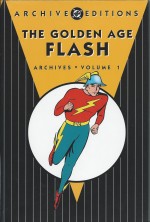
Golden Age Flash Archives Volume I


By Gardner F. Fox, Harry Lampert, E.E. Hibbard, Hal Sharp & various (DC Comics)
ISBN: 978-1-4012-0784-7

The innovative fledgling company that became DC published the first comicbook super-speedster and over the decades has constantly added more to its pantheon of stars. Devised, created and written by Gardner Fox and first realised by Harry Lampert, Jay Garrick debuted as the very first Monarch of Motion in Flash Comics #1 and quickly – of course – became a veritable sensation.

“The Fastest Man Alive” wowed readers of anthologies like Flash Comics, Comics Cavalcade, All Star Comics and other titles – as well as solo vehicle All-Flash Quarterly – for just over a decade before changing tastes benched him and most other first-generation costumed heroes in the early1950s.

His invention as a strictly single-power superhero created a new trend in the burgeoning action-adventure funnybook marketplace, and his particular riff was specifically replicated many times at various companies where myriad Fast Furies sprang up such as Johnny Quick , Hurricane, Silver Streak, the Whizzer, Quicksilver and Snurtle McTurtle, the Terrific Whatzit amongst so many others…

After half a decade of mostly interchangeable cops, cowboys and cosmic invaders, the concept of human speedsters and the superhero genre in general was spectacularly revived in 1956 by Julie Schwartz in Showcase #4 when police scientist Barry Allen became the second hero to run with the concept. We’ve not looked back since – and if we did it would all be a great big blur…

This oddly beguiling deluxe Archive edition collects the first year and a half – January 1940 to May 1941 – of the irrepressible Garrick’s whimsically eccentric exploits in seventeen (regrettably untitled) adventures from the anthology Flash Comics, revealing

an appealing rawness, light-hearted whimsy and scads of narrative experimentation in the tales of brilliant nerd but physical sad-sack who became a social crusader and justice-dispensing human meteor.

Following a fulsome Foreword from contemporary Flash scribe Mark Waid, the fast fictions begin with his very first appearance as ‘The Fastest Man Alive’ which speedily delivered in a mere 15 pages an origin, introduced a returning cast and a carried out a classic confrontation with a sinister gang of gangsters.

It all started some years previously when college student Garrick passed out in the lab at MidwesternUniversity, only to awaken hyper-charged and the fastest creature on Earth thanks to the “hard water fumes” he had inhaled whilst unconscious.

After weeks recovering in hospital, the formerly-frail apprentice chemist realised the exposure had given him super-speed and endurance, so he promptly sought to impress his sort-of girlfriend Joan Williams by becoming an unstoppable football player…

Time passed, the kids graduated and Garrick moved to New York where, appalled by the rampant crime, he decided to do something about it. The Flash operated mostly in secret until one day, whilst idly playing tennis with himself, Jay met Joan again, just as mobsters tried to kill her in a drive-by shooting.

Catching the bullets, Jay gets reacquainted with his former paramour and discovers that she is a target of criminal combine the Faultless Four, master criminals set on obtaining her father’s invention the Atomic Bombarder. In the blink of an eye Flash has crushed the sinister schemes of the gang and their diabolical leader Sieur Satan, saving Joan’s life whilst revelling in the sheer liberating fun and freedom of being gloriously unstoppable…

In his second appearance The Flash stumbled upon a showgirl’s murder and discovered that yankee mobster Boss Goll and British aristocrat Lord Donelin planned to take over the entire entertainment industry with their ruthless strong-arm tactics. The speedster was as much hindered as helped by wilful, headstrong Joan who began her own lifetime-obsession of pesky do-gooding here…

Everett E. Hibbard began his decade long association with the Flash in issue #3 when, in a rare display of continuity, Major Williams’ Atomic Bombarder became the target of foreign spies and the elderly boffin was framed for treason, once more prompting Garrick to come to his future father-in-law’s aid, after which Jay and Joan combined to smash an off-shore gambling ring which had graduated to kidnapping and blackmail in #4.

During these early adventures, the Flash seldom donned his red, blue and yellow outfit, usually operating invisibly or undercover and playing super-speed pranks with merciless, puckish glee, but that began to change in #5, when the speedster saved an elderly artist from hit-men to foil mad collector Vandal who used murder to increase the market value of his purchases.

Flash Comics #6 found Jay and Joan foiling a scheme to dope athletes trying to qualify for the Olympics at old Alma Mater Midwestern, before #7 revealed how a stopover in Duluth led to the foiling of gambler Black Mike who was fixing motorcar races with a metal melting ray. For #8, the Vizier of Velocity tracked down seemingly corrupt contractors building shoddy, dangerous buildings only to find the graft and skulduggery went much further up the financial food chain…

In issue #9, gangsters got hold of a scientist’s invention and the Flash found himself battling a brigade of giant Gila Monsters, after which #10 depicted the speedy downfall of a cabal of politicians in the pocket of gangster Killer Kelly and stealing from the schools they administered, whilst in #11, Garrick met his first serious opponent in kidnap racketeer The Chief, whose brilliance enabled him to devise stroboscopic glasses which could track and target the invisibly fast crime-crusher…

With the threat of involvement in the “European War” a constant subject of American headlines, Flash Comics #12 (December 1940) had the heroic human hurricane intervene to save tiny Ruritanian nation Kurtavia from ruthless invasion. His spectacular lightning war saw Garrick sinking submarines, repelling land armies and crushing airborne blitzkriegs for a fairytale happy ending here, but within a year the process would become a patriotic morale booster repeated ad infinitum in every American comicbook as the real world brutally intruded on the industry and nation…

Back in the USA for #13, Garrick went to aid old friend Jim Carter in cowboy country where the young inheritor of a silver mine was gunned down by murdering owlhoots, before Jay heading back east to crush a criminal combine sabotaging city subway construction in #14 and saving a circus from robbery, sabotage and poor attendances in #15.

Throughout all these yarns Jay had paid scant attention to preserving any kind of secret identity – a fact that would soon change – but as Hal Sharp took over the illustration with #16 (Hibbard presumably devoting his energies to the contents of the forthcoming 64-page All-Flash Quarterly #1 – to be seen in the succeeding Archive collection), Joan was kidnapped by Mexican mobsters aware of her connection to The Flash.

Rushing to her rescue Garrick was forced to battle a small army, but not only saved his girlfriend but even managed to reform bandit chief José Salvez.

This first high-energy compilation ends with another light-hearted sporting escapade as the speedster intervenes in a gambling plot, saving a moribund baseball team from sabotage even as Jay Garrick – officially “almost as fast as the Flash” – becomes the Redskins’ star player to save them from lousy performances…

With covers by Sheldon Moldoff, Dennis Neville, George Storm, Jon L. Blummer, Hibbard and Sharp, this book is a sheer delight for lovers of the early Fights ‘n’ Tights genre: amazing, exciting and funny, although certainly not to every modern fan’s taste. Of course, with such straightforward thrills on show any reader with an open mind could find his opinion changed in a flash.
© 1940, 1941, 1999 DC Comics. All Rights Reserved.
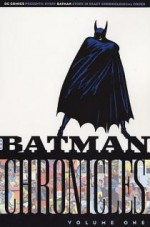
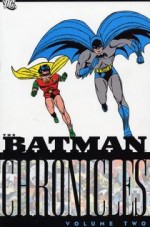
Batman Chronicles volumes 1 & 2

New, Revised Review

By Bob Kane, Bill Finger, Gardner Fox, Sheldon Moldoff, Jerry Robinson, George Roussos & various (DC Comics)
ISBN: 978-1-4012-0445-7 & 978-1-4012-0790-8

For anyone who’s read more than a few of these posts, my tastes should be fairly apparent, but in case you’re in any doubt, here’s a flat-out confession: I’m that shabby, crazy old geezer muttering at the bus stop about how things were better before, and all new things are crap and not the same and…

You get the picture. Now, ignore all that. It’s true but not relevant.

Batman Chronicles is one of many formats re-presenting the earliest Batman stories. The series does so in original, chronological order, foregoing glossy and expensive high-definition paper and reproduction techniques in favour of newsprint-like paper, and the same flat, bright-yet-muted colour palette which graced the originals.

There’s no fuss, fiddle or Foreword, and the book steams straight into the meat of the matter with Volume 1 re-presenting the stunning covers and all Dark Knight material from Detective Comics #27 through #38, (which introduced Robin, The Boy Wonder), and then the landmark Batman #1 covering May 1939-April 1940.

Detective Comics #27 introduced “The Bat-Man” and playboy/dilettante criminologist in ‘The Case of the Chemical Syndicate’ by Bob Kane & collaborator Bill Finger, wherein a cabal of sinister industrialists were successively murdered until an eerie human bat intruded on Police Commissioner Gordon‘s stalled investigation and ruthlessly dealt with the hidden killer.

Issue #28 saw the fugitive vigilante return to crush ‘Frenchy Blake’s Jewel Gang’ before encountering his very first psychopathic killer. ‘The Batman Meets Doctor Death’ was a deadly duel of wits with deranged, greedy General Practitioner Karl Hellfern and his assorted instruments of murder…

Confident of their new character’s potential, Kane & Finger revived the mad medic for the very next instalment and ‘The Return of Doctor Death’, before Gardner Fox scripted a 2-part shocker which introduced the first bat-plane, Bruce’s girlfriend Julie Madison and undead horror The Monk for an expansive spooky saga ‘Batman Versus The Vampire‘. The gripping yarn then concluded in an epic chase across Eastern Europe and a spectacular climax in a monster-filled castle in issue #32.

Detective Comics #33 featured ‘The Batman Wars Against the Dirigible of Doom’: a blockbusting disaster thriller which just casually slipped in the secret origin of the Gotham Guardian, as prelude to the air-pirate action, after which Euro-trash dastard Duc D’Orterre found his uncanny science and unsavoury appetites no match for the mighty Batman in ‘Peril in Paris’.

Scripter Bill Finger returned in issue #35, pitting the Cowled Crusader against crazed cultists murdering everyone who had seen their sacred jewel in ‘The Case of the Ruby Idol’, although the many deaths were caused by a far more prosaic villainy, after which grotesque criminal genius ‘Professor Hugo Strange’ (inked by new kid Jerry Robinson) debuted with his murderous man-made fog and lightning machine in #36, and all-pervasive ‘The Spies’ ultimately proved no match for the vengeful masked Manhunter in #37.

Detective Comics #38 (April 1940) changed the landscape of comicbooks forever with the introduction of ‘Robin, The Boy Wonder’: child trapeze artist Dick Grayson whose parents were murdered before his eyes and who joined Batman in a lifelong quest for justice, by bringing to justice mobster Boss Zucco…

After the Flying Grayson‘s killers were captured, Batman #1 (Spring 1940) opened proceedings with a recycled origin culled from portions of Detective Comics #33 and 34. ‘The Legend of the Batman – Who He Is and How He Came to Be!’ by Fox, Kane & Moldoff offered in two perfect pages what is still the best ever origin of the character, after which ‘The Joker’ (Finger, Kane & Robinson – who produced all the remaining tales in this astonishing premiere issue) introduced the greatest villain in DC’s entire rogues’ gallery via a stunning tale of extortion and wilful wanton murder.

‘Professor Hugo Strange and the Monsters’ followed as the old adversary returned with laboratory-grown hyperthyroid horrors to rampage through the terrified city, and ‘The Cat’ – who later added the suffix ‘Woman’ to her name to avoid any possible doubt or confusion – plied her felonious trade of jewel theft aboard the wrong cruise-liner and fell foul for the first time of the dashing Dynamic Duo.

The initial issue and the first Chronicles edition ended with the ‘The Joker Returns’ as the sinister clown broke jail and resumed his terrifying campaign of murder for fun and profit before “dying” in mortal combat with the Gotham Guardian.


Volume 2 featured more masterpieces from the dawn of comic-book time, re-presenting Detective Comics #39 through to #45, a story from New York World’s Fair Comics 1940, and Batman #2-3, covering May to November 1940 in original publishing order. Following a superb pin-up of the Dynamic Duo by Kane, the tense suspense and all-out action opens with The Horde of the Green Dragon” – oriental Tong killers in Chinatown – from Detective #39 by Finger, Kane & Robinson, before ‘Beware of Clayface!’ found the Dynamic Duo solving a string of murders on a film set which almost saw Julie Madison become the latest victim of a monstrous movie maniac…

Batman and Robin solved the baffling mystery of a kidnapped boy in Detective #41’s ‘A Master Murderer’ before enjoying their second solo outing in four comics classics from Batman #2 (Summer 1940).

It all began with ‘Joker Meets Cat-Woman‘ (by Finger, Kane, Robinson & extremely impressive new find George Roussos) wherein svelte thief, homicidal jester and a crime syndicate all tussled for the same treasure with the Caped Crusaders caught in the middle.

‘Wolf, the Crime Master’ was a fascinating take on the classic Jekyll and Hyde tragedy after which an insidious  and ingenious murder-mystery ensued in ‘The Case of the Clubfoot Murderers’ before Batman and Robin faced uncanny savages and ruthless showbiz promoters in a poignant monster story ‘The Case of the Missing Link’.

‘Batman and Robin Visit the New York World’s Fair’ from New York World’s Fair Comics which vintage wonderment – by Finger, Kane & Roussos – then followed the vacationing Dynamic Duo as they tracked down a maniac mastermind with a metal-dissolving ray, after which Detective Comics #42 again found the heroes ending another murder maniac’s rampage in ‘The Case of the Prophetic Pictures!’ before clashing with a corrupt mayor in #43’s ‘The Case of the City of Terror!’

An unparallelled hit, the stories perforce expanded their parameters in #44 with the dreamy fantasy of giants and goblins ‘The Land Behind the Light!’, after which Batman #3 (Fall 1940) saw Finger, Kane, Robinson & Roussos rise to even greater heights, beginning with ‘The Strange Case of the Diabolical Puppet Master’: an eerie episode of uncanny mesmerism and infamous espionage…

Next up was a grisly scheme wherein innocent citizens were mysteriously transformed into specimens of horror and artworks destroyed by the spiteful commands of ‘The Ugliest Man in the World’ before ‘The Crime School For Boys!!’ saw Robin infiltrate a gang who had a cruel and cunning recruitment plan for dead-end kids…

‘The Batman vs. The Cat-Woman’ found the larcenous burglar in well over her head when she stole for – and from – the wrong people, and the issue also included a magical Special Feature as ‘The Batman Says’ presented an illustrated prose Law & Order pep-talk crafted by Whitney Ellsworth and Robinson.

This second terrific tome then concludes with a magnificent and horrific Joker jape from Detective Comics #45 with ‘The Case of the Laughing Death’ wherein the Harlequin of Hate devised a campaign of macabre murder against everyone who had defied or offended him…

Bob Kane, Jerry Robinson and their compatriots created an iconography which carried the Batman feature well beyond its allotted life-span until later creators could re-invigorate it. They added a new dimension to children’s reading… and their work is still captivatingly accessible.

Moreover, these early stories set the standard for comic superheroes. Whatever you like now, you owe it to these stories. Superman gave us the idea, but writers like Finger and Fox refined and defined the meta-structure of the costumed crime-fighter. Where the Man of Steel was as much Social Force and wish fulfilment as hero, Batman and Robin did what we ordinary mortals wanted to do. They taught bad people the lesson they deserved.

These are tales of elemental power and joyful exuberance, brimming with deep mood and addictive action. Comic book heroics simply don’t come any better.

The history of the American comicbook industry in almost every major aspect stems from the raw, vital and still powerfully compelling tales of twin icons published by DC/National Comics: Superman and Batman. It’s only fair and fitting that both those characters are still going strong and that their earliest adventures can be relived in chronological order in a variety of formats from relatively economical newsprint paperbacks to stunning, deluxe hardcover commemorative Archive editions.

One final thing: I’m still that guy in paragraph one, right? I’ve read these stories many, many times, in every format imaginable, and I’d like to thank whoever decided that they should also be available in as close a facsimile to the originals as we can get these days.

More than anything else, this serves to perfectly recapture the mood and impact of that revolutionary masked avenger and, of course, delights my heavily concealed inner child no end.
© 1939, 1940, 2005 DC Comics and © 1940, 2006 DC Comics. All Rights Reserved.
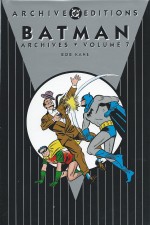
Golden Age Hawkman Archives volume I


By Gardner F. Fox, Dennis Neville, Sheldon Moldoff & various (DC Comics)
ISBN: 978-1-4012-0418-1

Although perhaps one of DC’s most long-lived and certainly their most visually iconic character, the various iterations of Hawkman have always struggled to find enough of an audience to sustain a solo title. From his beginnings as one of the assorted B-features in Flash Comics (the others being Cliff Cornwall, The King, The Whip and Johnny Thunder, all adding lustre to the soaraway success of the eponymous speedster at the helm of the comicbook), Winged Wonder Carter Hall has struggled through assorted engaging, exciting but always short-lived reconfigurations.

Over decades from ancient hero to re-imagined alien space-cop and post-Crisis on Infinite Earths freedom fighter (both named Katar Hol – see Showcase presents Hawkman volumes 1-2 and Hawkworld respectively) or the seemingly desperate but highly readable bundling together of all previous iterations into the reincarnating immortal berserker-warrior of today, the Pinioned Paladin has performed exemplary service without ever really making it to the big time.

Where’s a big-time movie producer/fan when you need one?

Created by Gardner Fox and Dennis Neville, Hawkman premiered in Flash Comics #1 (January 1940) and stayed there, growing in quality and prestige until the title died, with the most celebrated artists to have drawn the Winged Wonder being Sheldon Moldoff and Joe Kubert, whilst a young Robert Kanigher was justly proud of his later run as writer.

Together with his partner Hawkgirl/Hawkwoman, the gladiatorial mystery-man countered fantastic arcane threats and battled modern crime and tyranny with weapons of the past for over a decade before vanishing with the bulk of costumed heroes as the 1950s began.

His last appearance was in All Star Comics #57 (1951) as leader of the Justice Society of America, but the husband-and-wife hellions were revived and re-imagined nine years later as Katar Hol and Shayera Thal of planet Thanagar by Julie Schwartz’s crack creative team Gardner Fox and Joe Kubert – a space-age interpretation which even survived 1985’s winnowing Crisis on Infinite Earths. Their long career, numerous revamps and perpetual retcons ended during the 1994 Zero Hour crisis, but they’ve reincarnated and returned a couple of times since then too…

However, despite being amongst DC’s most popular and picturesque strips over the years, Hawkman (and Hawkwoman) always struggled to find sufficient audience to sustain their numerous solo titles.

This spectacular deluxe hardcover re-presentation of the formative years (collecting appearances from Flash Comics #1-22, January 1940 – October 1941) begins with a fond reminiscence by artist Moldoff in the ‘Foreword’ before the magic begins as it should with ‘The Origin of Hawkman’ by Fox & Neville.

In his first epochal episode Carter Hall is a playboy scientific tinkerer and part-time archaeologist with a penchant for collecting old, rare weapons, whose dormant memory is unlocked by an ancient crystal dagger purchased for his collection. Through dreams the dilettante realises that once he had been Prince Khufu of ancient Egypt, murdered with his lover Shiera by Anubis’ High Priest Hath-Set.

Moreover, with his newly returned memories Hall knows that the eternal struggle is primed to play out once more…

As if pre-destined, he bumps into the equally reincarnated and remembering Shiera Sanders just a terrifying electrical menace turns New York’s Subway into a killing field and they realised the deadly Doctor Hastor is their ancient nemesis reborn. Fashioning an outlandish uniform and anti-gravity harness of mystic Egyptian “Ninth Metal”, Hall hunts the deranged electrical scientist to his lair in time to save the mesmerised Shiera from a second death by sacrifice and mercilessly ends the cycle – at least for now…

In Flash #2, ‘The Globe Conquerors’ concentrated on fantastic science as Hall and Shiera tackled a modern Alexander the Great who built a gravity-altering machine in his ruthless quest to conquer the world, whilst ‘The Secret of Dick Blendon’ in #3 saw “The Hawk-Man” expose a wicked scheme by insidious slavers turning brilliant men into zombies for profit to gather riches and find the secret of eternal life.

Sheldon Moldoff debuted as artist in Flash Comics #4 (April 1940), illustrating a splendidly barbarous thriller wherein the Winged Warrior clashed with ‘The Thought Terror’, a sinister mesmerist enslaving the city’s wealthy citizens, whilst ‘The Kidnapping of Ione Craig’ in #5 pitted the crime-fighting phenomenon against Asiatic cultists led by legendary assassin Hassan Ibn Saddah, determined to stop a pretty missionary and secret agent from investigating distant Araby.

Moldoff has received overly unfair criticism over the years for his frequent, copious but stylishly artistic swipes from newspaper strips by master craftsmen Alex Raymond and Hal Foster in his work of this period, but one look at the stunning results here as the feature took a quantum leap in visual quality should silence those quibblers for good…

Maintaining the use of exotic locales, the story extended in issue #6 as Hall and Ione struggled to cross burning Saharan sands to the African coast before defeating Arab slavers and their deadly ‘Sheba, Queen of the Desert’…

Issue #7 further explored the mystical and supernatural underpinnings of the strip which easily lent themselves to spooky tales of quasi-horror and barbaric intensity. “The Eerie Unknown” and deluded dabblers in darkness were much-used elements in Hawkman sagas, as seen in ‘Czar, the Unkillable Man’ wherein the Avian Avenger, back in America and reunited with Shiera, clashed with a merciless golem animated by a crazed sculptor determined to get rich at any cost.

Flash Comics #8 featured another deranged technologist as ‘The Sunspot Wizard’ Professor Kitzoff altered the pattern and frequency of the solar blemishes and created riot, madness and chaos on Earth until the Winged Wonder intervened, whilst in ‘The Creatures from the Canyon’ Hawkman foiled aquatic invaders living in the deeps 5,000 feet below Manhattan Island who decided to expand their ancient empire upwards…

Bidding for an old firearm at an auction in #10, Hall was inexorably drawn into a murder-mystery and the hunt for a lost Colorado goldmine in ‘Adventures of the Spanish Blunderers’, before ‘Trouble in Suburbia’ manifested after a hit-and-run accident drew plucky Shiera into a corrupt and convoluted property-scam. Boyfriend Carter Hall was quite prepared to stand back and let her deal with the villains – even if Hawkman did exert a little surreptitious brawn to close the case…

Another murderous scam involved an old society chum as ‘The Heart Patient’ revealed how a pretty gold-digger and rogue doctor serially poisoned healthy young men and fleeced them for a cure, whilst in #13 ‘Satana, the Tiger Girl’ preyed on admirers for far more sinister reasons, pitting Hawkman and Shiera against scientifically hybridised killer-cats, after which ‘The Awesome Alligator’ saw an elder god return to Earth to inspire and equip a madman in a plot to conquer America with ancient secrets and futuristic super-weapons. None of those incredible threats could withstand cold fury and a well-wielded mace, however…

At this time the Pinioned Paladin usually dispatched foes of humanity with icy aplomb and single-minded ruthlessness, and such supernatural thrillers as #15’s ‘The Hand’ gave Fox & Moldoff ample scope to display the reincarnated warrior’s savage efficiency when he tracked down a sentient severed fist which stole and slaughtered at its inventive master’s command, whilst ‘The Graydon Expedition’ in #16 reinforced the hero’s crusading credentials when Shiera went missing in Mongolia, and the Winged Wonder undertook a one-man invasion of a fabulous lost kingdom to save her.

In Flash Comics #17, ‘Murder at the Opera’ put the bold birdman on the trail of an arcane Golden Mummy Sect with a perilously prosaic origin and agenda, whilst #18 found him investigating skulduggery in the Yukon when Shiera rushed north to offer aid to starving miners during ‘The Gold Rush of ’41’.

Evidently capable of triumphing in any environment or milieu, Hawkman next thwarted deranged physicist Pratt Palmer in #19, when that arrogant savant attempted to become the overlord of crime using his deadly ‘Cold Light’. ‘The Mad Bomber’ in #20 then found the Avian Ace allied with a racketeer to stop mad scientist Sathan destroying their city with remote-controlled aerial torpedoes, after which Hawkman was forced to end the tragically lethal rampage of an alien foundling raised by a callous rival for Shiera’s affections in ‘Menace from Space’…

This first high-flying archive compilation concludes with October 1941’s Flash Comics #22 and ‘The Adventure of the Killer Gang’ as headstrong Shiera witnesses a bloody hijacking and determines to make the bandits pay. Although she again helped Hawkman deal with the murderous vermin as a civilian here, big changes were in store for the feisty, capable heroine.

Already in All Star Comics #5 (July 1941) she had first worn wings and a costume of her own, and in Flash Comics #24 (December 1941) she would at last become an equal partner in peril and fully-fledged heroine: Hawkgirl… but sadly that’s a tale for another volume…

Exotic, engaging and fantastically inviting, these Golden Age adventures are a true high-point of the era and still offer astonishing thrills and chills. When all’s said and done it’s all about the heady rush of nostalgia: trying to recapture that magical full-sensorium burst of smell and feel and imagination-overload that finds kids at a perfect moment and provokes something visual and conceptual that almost literally blows the mind…

We re-read stories hoping to rekindle that instantly addictive buzz and constantly seek out new comics desperately hoping to recapture that pure, halcyon burst, and these lost mini-epics are phenomenally imbued with everything fans need to make that breathtaking moment happen…
© 1940, 1941, 2005 DC Comics. All Rights Reserved.
Golden Age Sandman Archives volume 1

Sandman Arc front
By Bert Christman, Gardner F. Fox, Creig Flessel, Chad Grothkopf, Ogden Whitney & various (DC Comics)
ISBN: 978-1-4012-0155-5

Probably created by and originally illustrated and scripted by multi-talented all-rounder Bert Christman (with the assistance of young scripting star Gardner Fox), The Sandman premiered in either Adventure Comics #40 July 1939 (two months after Batman debuted in Detective Comics #27) or two weeks earlier in New York World’s Fair Comics 1939, depending on which distribution records you choose to believe.

Intriguingly, the Dark Knight didn’t make the cut for the legendary commemorative comicbook and only appeared in New York World’s Fair Comics #2 in Summer 1940…

Head utterly obscured by a gas-mask and slouch hat; caped, business-suited millionaire adventurer Wesley Dodds was cut from the radio drama and pulp fiction mystery-man mould that had made The Shadow, Green Hornet, The Lone Ranger, Phantom Detective, Black Bat, Spider, Avenger and so many more household names big hits of early mass-entertainment and periodical publication.

Wielding a sleeping-gas gun and haunting the night to hunt a host of killers, crooks and spies, he was eventually joined and accompanied by plucky paramour Dian Belmont, before gradually losing the readers’ interest and slipping from cover-spot to last feature in Adventure Comics, just as the shadowy, morally ambiguous avengers he emulated slipped from popularity in favour of more flamboyant and true-blue fictional fare.

This splendidly sturdy, moodily atmospheric Archive edition re-presents the landmark early appearances from both New York World’s Fair Comics, (1939 and 1940) and the rip-roaring exploits from Adventure Comics #40-59 – July 1939-February 1941 – a period when Detective Comics Incorporated frantically sought to follow up Superman and Batman with the Next Big Thing in Comicbooks…

Following an erudite appreciation from historian and comics all-star Jim Amash, the adventure begins here with the fast-paced thriller from the groundbreaking, pioneering comics premium New York World’s Fair Comics #1 as Christman & Fox introduced ‘Sandman at the World’s Fair’…

In those long-lost days, origins and back story were not nearly as important as action and spectacle so we’re quickly plunged into a fast-paced yarn as wealthy, rugged playboy scientist Dodds visits the global festival with the plans for a new ray-gun and encounters spies and a traitor within his own company. Already active as The Sandman -and sought by the cops for it – the vigilante quickly and beguilingly tracked down and dealt with the pre-war enemies of America…

Over in Adventure Comics #40, at about the same time, the cover-featured crusader was on hand to save kidnapped actress Vivian Dale when ‘The Tarantula Strikes’ (Christman & Fox) in a rousing romp reminiscent of the High Society hi-jinks of movie marvels the Saint, Falcon or Lone Wolf; prowling allies and rooftops, breaking into criminals’ lairs, rifling safes and dealing as much death as dream gas. He also had a unique calling card: sprinkled sand to proclaim and terrify wherever he had silently been and gone…

Christman wrote and drew many of the early thrillers such as #41’s ‘On the Waterfront’ wherein plucky reporter Janice Blue inadvertently stumbled into a dockside narcotics ring just as murderous seadog Captain Wing made a fateful takeover bid. Luckily for her the stealthy Sandman was already on the case…

Adventure #42 highlighted Christman’s love of aviation in ‘The Three Sandmen’ as Wes Dodds met up with a couple of his old Navy Flying Corps buddies to solve a string of murders. Somebody was rubbing out all the members of the old squadron…

Allen Bert Christman first came to public attention by following the near-mythic Noel Sickles on seminal newspaper strip Scorchy Smith. A dedicated patriot and flyer, Christman entered the Naval Air School in 1940 and joined Claire Lee Chennault’s 1st American Volunteer Group, known as the legendary fighter squadron the Flying Tigers.

These volunteers began fighting the Japanese in China long before America officially entered WWII on December 8th 1941, and Christman – officially designated a Colonel in the Chinese Air Force – used his artistic talents to personalise and decorate many of the  planes in his Flight.  He was shot down and died in horrific circumstances on January 23rd 1942.

Issue #43 featured his last official story as Dodds went on a South Seas flying vacation and became embroiled in an ‘Island Uprising’, spectacularly saving embattled white pearl hunters from natives enraged to fury by latter-day pirate Red Hatch…

In Adventure #44 (November 1939), Fox & Creig Flessel stepped into the breach left by Christman as ‘The Sandman Meets the Face’ found the playboy back in civilisation and aiding a down-and-out old friend against a mercurial disguise artist and mob boss terrorising the city. This splendid blood-&-thunder caper also saw the feature’s page count rise from six to ten as the Sandman finally found his lurking, moody metier…

‘The Golden Gusher’ (#45 by Fox & Flessel) was nightclub singer Gloria Gordon, threatened with kidnap or worse until the Master of Sleep intervened, whilst #46 ‘The Sandman Meets with Murder’ saw rising talent Ogden Whitney step into the artistic hot seat when the slaying of an old Dodds pal led into a deliciously convoluted murder-mystery involving beautiful twins, counterfeiting and a macabre cross-dressing killer…

A huge step in continuity occurred in #47 as District Attorney Belmont agreed to an unofficial truce with the Sandman following the assassination of a prominent banker. Simultaneously, Wesley Dodds caught a wily thief trying to crack his safe and became unwilling partner to the ‘Lady in Evening Clothes’ (Fox & Whitney) after she discovered his secret identity.

A celebrated cat-burglar, the sophisticated she-devil was plagued by not knowing who her parents were but happily went straight(ish) in return for Dodd’s pledge to help her…

Revealed as long-lost Dian Belmont she became a regular cast addition in #48 as ‘Death to the D.A.’ found her newly-restored father under threat from gangsters and far less obvious killers on a palatial island retreat after which ‘Common Cold – Uncommon Crime’ (#49 by Fox, Flessel & perhaps Chad Grothkopf on inks) found the mystery-man tracking killers who were eradicating the scientists who refused to hand over their cure for one of our most unforgiving ailments.

With a year gone by and global war looming, the “World of Tomorrow” exhibition was slowly closing but there was still time for New York World’s Fair Comics #2, where this time ‘Sandman Goes to the World’s Fair’ (by Fox & Grothkopf on pencils and inks) delivered a blistering crime caper wherein Wesley and Dian got stuck babysitting her maiden Aunt Agatha around the fair and were targeted by ambitious but exceedingly unwise kidnapper Slugger Slade…

In Adventure Comics #50 ‘Tuffy and Limpy’s Revenge Plot’, by Fox & Flessel, covered similar ground as a murderous campaign of apparently unrelated deaths eventually pointed to another scheme to get rid of the dauntless DA and led Sandman and Dian into a blockbusting battle against ruthless rogues, whilst in #51 (June 1940, by Fox & Flessel and previously reprinted elsewhere as ‘The Pawn Broker’) ‘The Van Leew Emeralds’ provided a fascinating detective mystery romp for the romantically inclined crimebusters to solve in fine style and double-quick time…

A burglary at the Belmont residence only netted a pair of gloves in #52’s ‘Wanted! Dead or Alive’ but inexorably led to a perplexing scavenger hunt with sinister overtones and a deadly pay-off when scandalous Claudia Norgan tried to frame her best gal-pal Dian for the Amber Apple Gang‘s crimes, after which in #53 ‘The Loan Sharks’ unwisely aroused the ire of the dynamic dream-maker when they graduated from simple leg-breaking to murder to enforce their demands. They almost ended the Sandman too before he finally got the better of them…

In issue #54 ‘The Case of the Kidnapped Heiress’ found Wes and Dian witnesses to a bold snatch-and-grab but their frenzied pursuit only resulted in both the DA’s daughter and millionairess Nana Martin being abducted together. Fury-filled and frantic, the Sandman tracked down the ransoming rogues only to find himself in the unexpected role of Cupid.

When the legendary jewel ‘The Star of Singapore’ was stolen in #55, the trail led to a ever increasing spiral of death and destruction until the Man of Dreams finally recovered it, whilst in the next issue ‘The Crook Who Knew the Sandman’s Identity’ (Fox, Flessel & Grothkopf) learned to his eternal regret that it just wasn’t so, thanks to some delightfully imaginative improvisation from Dian…

The mystery and general skulduggery gave way to world-threatening science fiction in #57 when the Sandman battled a mad scientist who had devised a deadly atom-smasher for blackmail and ‘To Hammer the Earth’, after which some macabre murders pointed the dream-team towards spies and killers profiting from ‘Orchids of Doom’, before this stylish selection of outré crime-thrillers concludes with Adventure #59’s ‘The Story of the Flaming Ruby’ as a cursed gem enabled a hypnotic horror to turn honest men into thieves and Dian into a mindless assassin…

Possessing a certain indefinable style and charm but definitely dwindling pizzazz, the feature was on the verge of being dropped when The Sandman abruptly switched to a skin-tight yellow-and-purple costume – complete with billowing cape for two issues – and gained a boy-sidekick, Sandy the Golden Boy (in Adventure Comics #69, December 1941, courtesy of Mort Weisinger & Paul Norris), presumably to emulate the overwhelmingly successful Batman and Captain America models currently reaping such big dividends. It didn’t help much at first but when Joe Simon & Jack Kirby came aboard with #72 that all spectacularly changed.

A semi-supernatural element and fascination with the world of dreams (revisited by S&K a decade later in their short-lived experimental suspense series The Strange World of Your Dreams) added a moody conceptual punch to equal the kinetic fury of their art, as Sandman and Sandy became literally the stuff of nightmares to the bizarre bandits and murderous mugs they stalked. Those spectacular but decidedly different adventures can be found in The Sandman by Joe Simon & Jack Kirby if you dare…

With covers by Sheldon Mayer, Jack Burnley and Flessel, these raw, wild and excessively engaging comics capers are actually some of the best but most neglected thrillers of the halcyon Golden Age. Modern tastes too have moved on and these yarns are probably far more in tune with contemporary mores, making this a truly unmissable treat for fans of mystery, murder and stylish intrigue…
© 1939, 1940, 1941, 2004 DC Comics. All Rights Reserved.
Batman Archives volume 7

Bat Arc 7 bk
By Bob Kane, Bill Finger, Lew Sayre Schwartz, Win Mortimer, Jim Mooney, Charles Paris & various (DC Comics)
ISBN: 978-1-4012-1493-7

Debuting a year after Superman, “The Bat-Man” (joined eventually by Robin, the Boy Wonder) cemented DC/National Comics as the market and conceptual leader of the burgeoning comicbook industry. Having established the parameters of the metahuman in their Man of Tomorrow, the physical mortal perfection and dashing derring-do of the strictly human-scaled adventures starring the Dynamic Duo rapidly became the swashbuckling benchmark by which all other four-colour crimebusters were judged.

By the time of the tales in this sublime seventh deluxe hardback compilation (collecting Batman’s cases from Detective Comics #136-154, cover-dates June 1948 – December 1949) the Gotham Gangbusters were one of the few superhero features to buck the declining trend that was slowly sounding the death knell for flamboyant costumed crusaders.

Just as “real life” headline-grabbers were overtaking sheer escapist fantasy, named creator Bob Kane was cutting back. Most of the work here is the fruit of unsung and uncredited super-stars Bill Finger and Dick Sprang – usually inked by the superb Charles Paris – and this period of more realist wonders saw the creation of one last great themed villain and the beginning of real life celebrity guest-stars as the re-emergence and dominance of tough, clever mobsters became the order of the day.

During these years the comics landscape would radically alter with masks and capes drowning under a tidal wave of business suits, Stetsons, space-ships, fighter-jets and tanks as genre tales of gangsters, cowboys, spacemen, ghosts and soldiers supplanted most mystery-men for nearly a decade – an entire comics-buying generation.

Some of these stories’ authors are still unknown to us, although most are correctly attributed to the transcendent Finger. My own humble guesses would be either Edmond Hamilton or Don Cameron – although Alvin Schwartz, David Vern Reed, Ed “France” Herron and Jack Schiff are also potential contributors at this time – but sadly, it’s unlikely that we’ll ever really know.

Following an effulgent and educational Foreword from industry insider and historian Jim Amash, the drama commences in ‘The Dead Man’s Chest!’ (from Detective #136, with Sprang inking his own pencils) as Gotham Museum trustee Bruce Wayne examined a 17th century pirate map and recognised his own handwriting disclosing the route to Henry Morgan‘s buried treasure! Soon the millionaire and his ward Dick Grayson were consulting time travel pioneer Professor Carter Nichols and whirling back to the age of buccaneers to solve an incredible mystery in stunning style…

The most popular villain of this period was still the Joker and in #137 the Harlequin of Hate again attempted to dumbfound the Dynamic Duo: this time with the perpetration of ‘The Rebus Crimes!’, and Charles Paris inking the scintillating Sprang on a tour de force of comics crime-busting.

The Mountebank of Mirth was back in the very next issue forcing scientist Walter Timmins to commit ‘The Invisible Crimes!’ and running Joker wild until Batman finally crushed his scheme, after which #139’s ‘The Crimes of Jade!’ found the Gotham Guardians infiltrating the city’s exotic Chinatown district in search of bandit/smugglers and an apparently oriental mastermind.

Detective Comics #140 introduced ‘The Riddler!’ (Finger, Sprang & Paris) as cheating carnival con-man Edward Nigma took his obsession with puzzles to a perilous extreme by becoming a costumed criminal and matching wits with the brilliant Batman in a contest that threatened to set the entire city ablaze.

It was back to basics in #141 as ‘Gallery of Public Heroes!’ (illustrated by Bob Kane’s protégé and ghost Lew Sayre Schwartz & the ever-appealing Paris) revealed how Public Enemy Blackie Nason tried to expose and eliminate all undercover cops through his gang of insidious investigators. His biggest target and eventual downfall was that undisputed master of disguise Batman…

Riddler returned in #142, fomenting chaos with ‘Crime’s Puzzle Contest!’ (Sprang & Paris) until the Team Supreme scuppered his hidden scheme to plunder a treasure of the ages, whilst in #143 the crazed crime spree of a tobacconist utterly obsessed with smoking paraphernalia and all forms of pipes blew up in the face of ‘The Pied Piper of Peril!’ (art by Jim Mooney & Paris).

The late 1940’s saw the first slow rise of media-fuelled celebrity culture and fast fading fads and #144 featured a popular bandleader and radio/movie star in ‘Kay Kyser’s Mystery Broadcast!’ by Sprang &Paris. The popular entertainer (just Google Kay Kyser’s Kollege of Musical Knowledge to learn more) was touring in Gotham when a ruthless killer forcibly insinuated himself into his band – forcing the musical sharpie to seek help from Batman and Robin by the most convoluted means imaginable…

‘Robin, the Boy Failure!’ in #145 saw the torrid teen suffer a work-related injury and temporary amnesia, and even after recovery the kid had no memory of his alter ego. Confidence shattered, his mentor took extraordinary steps to effect a full recovery to fighting fettle for the lad, just in time to find that ‘Three’s a Crime’ (another all-Sprang extravaganza) when small-time hood and inveterate gambler Carl C. Cave graduated to big-time crime after seemingly discovering his own unbeatable lucky number…

Undersea adventure and a close brush with death was the result of the Dynamic Duo intruding in the domain of costumed pirate ‘Tiger Shark!’ (Sprang & Paris) in #147, but the fishy felon’s alter ego held a shocking secret for socialite Bruce Wayne, after which bold science fiction thrills resulted from #148’s ‘The Experiment of Professor Zero’ (Finger, Sprang & Paris) as a peek into Batman’s crime casebook and trophy room revealed how a mad scientist almost reduced the Gotham Guardians to fatal insignificance with a shrinking gimmick…

The Joker crashed back into action in #149 undertaking another potty plot to plunder the city with ‘The Sound-Effect Crimes!’ (Finger & Sprang), whilst in #150 ‘The Ghost of Gotham City!’ (Paris inks) seemed to see judge and jury hunted by the spirit of a wrongly convicted man they had sent to the electric chair. The phantom’s short reign of terror only ended after the Dark Knight unravelled an incredible truth…

With eye-catching, flamboyant villains in decline, creators were compelled to concoct clever stories such as #151’s (all Sprang) delight wherein a string of close calls and rescues of businessmen revealed a character saving lives and collecting promises of future reciprocation in ‘I.O.U. My Life!’ The reasons behind Ben Kole‘s peculiar predilection were both chilling and spellbindingly complex…

An even more devious Detective tale featured in #152 as ‘The Goblin of Gotham City!’ (with art from Sayre Schwartz & Paris) temporarily halted his campaign of crime after photographer Vicki Vale took a photo which threatened to expose his secret. Unfortunately nobody, including Batman, knew exactly what they had, even after the villain began ruthlessly rubbing out anyone who had seen the snap…

Fantastic fantasy informed #153 as an incredible invention enabled the Caped Crusader to become ‘The Flying Batman!’ (Sprang & Paris), but the phenomenal exploits of the new Dark Knight had a pitifully prosaic explanation, after which this superb seventh deluxe hardback compilation concludes with the ‘The Underground Railroad of Crime!’ (#154 and drawn by Sayre Schwartz & Paris) wherein an impossible series of escapes from State Prison led an undercover Batman to an ingenious and perfidious program of extortion and plunder as well as the welcome redemption of a hopeless career criminal…

With glorious covers by Sprang, Bob Kane, Win Mortimer, Jim Mooney and Charles Paris, this is another superb package of timeless masterpieces from a crucial yet long-neglected period which saw a careful repositioning and reformatting of the heroes, as publishers cautiously toned down all things bombastic, macabre and outlandish in favour of a wide variety of mundane mobsters and petty criminals, clever mysteries and personally challenging situations – although there was always some room for the most irrepressibly popular favourites such as Penguin and The Joker.

Thrilling, dazzling and spectacularly swashbuckling, this action-packed compendium provides another perfect snapshot of the Batman’s amazing range from moody avenger to suave swashbuckler to sophisticated Devil-May-Care Detective, in tales which have never lost their edge or their power to enthral and enrapture. Moreover, these sublimely sturdy Archive Editions are without doubt the most luxuriously satisfying way to enjoy them over and over again.
© 1948, 1949, 2007 DC Comics. All Rights Reserved.

Wonder Woman Archives volume 4

WW arc 4 front
By Charles Moulton (William Moulton Marston & Harry G. Peter) (DC Comics)
ISBN: 1-4012-0145-8

Wonder Woman was conceived by polygraph pioneer William Moulton Marston and illustrated by Harry G. Peter in a calculated attempt to offer girls a positive and forceful role model and, on Editor M.C. Gaines’ part, sell funnybooks.

The Princess of Paradise debuted as a special feature in All Star Comics #8 (December 1941), before springing into her own series and the cover-spot of new anthology title Sensation Comics a month later. An astonishing instant hit, the Amazing Amazon quickly won her own eponymous supplemental title in late Spring of that year (cover-dated Summer 1942).

Once upon a time on a hidden island of immortal super-women, American aviator Steve Trevor of US Army Intelligence crashed to Earth. Near death, he was nursed back to health by young and impressionable Princess Diana.

Fearing her growing obsession with the creature from a long-forgotten and madly violent world, her mother Queen Hippolyte revealed the hidden history of the Amazons: how they were seduced and betrayed by men but rescued by the goddess Aphrodite on condition that they isolated themselves from the rest of the world and devoted their eternal lives to becoming ideal, perfect creatures.

However when goddesses Athena and Aphrodite subsequently instructed Hippolyte to send an Amazon back with the American to fight for global freedom and liberty, Diana overcame all other candidates and became their emissary – Wonder Woman.

On arriving in America she bought the identity and credentials of lovelorn Army nurse Diana Prince, elegantly allowing the Amazon to be close to Steve whilst enabling the heartsick medic to join her own fiancé in South America. Soon Diana also gained a position with Army Intelligence as secretary to General Darnell, ensuring she would always be able to watch over her beloved. She little suspected that, although the painfully shallow Steve only had eyes for the dazzling Amazon superwoman, the General had fallen for the mousy but superbly competent Lieutenant Prince…

Using the nom de plume Charles Moulton, Marston (with some help in later years from assistant Joye Murchison) scripted almost all of the Amazing Amazon’s many and fabulous adventures until his death in 1947, whereupon Robert Kanigher took over the writer’s role. Venerable veteran illustrator and co-creator H.G. Peter performed the same feat, limning practically every titanic tale until his own death in 1958.

This fourth lavishly deluxe full-colour hardback edition collects the increasingly fanciful and intoxicating adventures from Wonder Woman #8-9 and Sensation Comics #25-32 spanning cover-dates January to August 1944. After an appreciative Foreword from comics journalist and historian Maggie Thompson who outlines the landmarks and catalogues the achievements of the Amazing Amazon, the war-woven epics and imaginatively inspirational dramas begin with Sensation #25 and the ‘Adventure of the Kidnapers of Astral Spirits’ as Diana Prince witnesses a murder. However the killer was asleep at home in bed at the time and soon more impossible killings occur, drawing Wonder Woman into an incredible adventure beyond the Walls of Sleep into uncanny realms where even her gifts are useless and only determination and rational deduction can save the day…

Far less outré but no less deadly was the menace of ‘The Masquerader’ who replaced the Amazing Amazon in #26, following an unshakeable prophecy which saw the champion of Love and Freedom murdered by merciless racketeer Duke Dalgan. It took the covert intervention of Aphrodite and a Girl’s Best Friend to thwart that dire fate, but Diana never knew just who took her place…

When the Amazon, Etta Candy, her sorority Holliday Girls and former convict Gay Frollik resolved to raise a billion dollars for ‘The Fun Foundation’, they never expected their most trusted advisor to turn against them, but his greed led to his downfall and the clearing of a framed woman’s name in Sensation #27, after which Wonder Woman #8 offered another novel-length triumph of groundbreaking adventure.

The drama opened with ‘Queen Clea’s Tournament of Death’ as Steve, on an undercover mission, was snatched by a giant barbarian woman. Hot on his trail, Diana discovered her beau a captive of undersea Amazons from lost Atlantis, living in colossal caverns below the oceans.

Diana soon found herself embroiled in a brutal civil war battling the forces of usurping conqueror Clea of belligerent state Venturia and trying to restore the rightful ruler Eeras to peaceful, beleaguered Aurania. Should she fail, Clea intended to invade the upper world, looking for husky men like Steve to replace the depleted, worn-out puny males of her own realm…

After restoring order in Atlantis, the Amazon returned to her military job and civilian identity until a little girl begged for aid in finding her missing father. Closer investigation revealed that Clea’s forces had been capturing sailors and airmen but with the rebel queen imprisoned as ‘The Girl with the Iron Mask’, who could the leader of the raids possibly be?

After another fearsome subterranean clash the status quo was re-established, but when Diana later met a huge a powerful student at Holliday College she realised that the adventure was still not over as ‘The Captive Queen’ infiltrates Paradise Island and captures both Wonder Woman and Eeras’ wayward daughter Octavia.

Even after defeating her ponderous perpetual foe the action doesn’t end for the Princess of Power as her return to the land beneath the sea is interrupted by another revolution.

This time the ineffectual Atlantean men had used the constant distractions and American modern weapons to enslave the women, making the sub-sea empire a brutal, domineering patriarchy…

But not for long, as Diana and Steve led a brilliant counter-offensive…

In Sensation Comics #28 ‘The Malice of the Green Imps’ offered a welcome dose of metaphysical suspense as jealous thought and impulses were made manifest and drove gangsters and even good folks to attack the recently opened Fun Foundation Clinics sponsored by Diana and Gay Frollik, after which #29 saw another Amazon in Man’s World in the ‘Adventure of the Escaped Prisoner’. After imprisoning gambling racketeer and blackmailer Mimi on the Amazon’s prison island, Wonder Woman was unaware that the harridan’s subsequent escape also brought confused and naively curious fellow warrior Mala to New York where she quickly fell in with the wrong crowd…

Marston’s psychiatric background provided yet another weirdly eccentric psychic scenario in #30’s ‘The Blue Spirit Mystery’ as Steve, Etta Candy and Diana investigated Anton Unreal, a mystic and mentalist who offered to send his client to the heavenly Fourth Dimension – for a large fee, of course…

Unfortunately – although a crook – Unreal was no charlatan and the “ascended ones” certainly found themselves in a realm utterly unearthly, but definitely no paradise until Steve and Diana followed and took matters into their own immaterial hands…

Wonder Woman #9 saw the origins of one of the Amazon’s most radical foes and bizarre adventures. ‘Evolution Goes Haywire’ began with zoo gorilla Giganta stealing Steve’s little niece before the Amazon effected a rescue, after which crazy scientist Professor Zool used his experimental Hyper-Atomic Evolutionizer to transform the hirsute simian into an gorgeous 8-foot tall Junoesque human beauty. Sadly the artificial Amazon retained her bestial instincts and, battling Wonder Woman, managed to damage Zool’s machine, resulting in the entire region being devolved back to the days of cavemen and dinosaurs…

With even Diana converted to barbarism it was an uphill struggle to rerun the rise to culture and civilisation sufficiently to achieve a primitive Golden Age in ‘The Freed Captive’, but eventually the twisted time-travel tale took them back to where they had started, even if only after ‘Wonder Woman vs. Achilles’ – a deranged diversion to save her own mother and people from male oppression by the legendary warrior king…

Sensation Comics #31, by contrast, offered delicious whimsy and biting social commentary when the Princess of Power visited ‘Grown-Down Land’. When a wealthy socialite mother neglected her children the tykes ran away and almost died. Rescued by Wonder Woman, they told her of a dream world far better and happier than reality and next morning, when the kids can’t be awoken from a deep sleep, Diana realises they have chosen to stay in their topsy-turvy imaginary country. However when she enters their dream she finds genuine peril of a most unexpected kind…

This glorious tome of treasures then concludes with #32’s ‘The Crime Combine’ as Wonder Woman finds herself at the top of the American underworld’s hit-list. To scotch the scheme Diana asks fully reformed ex-Nazi and trainee Amazon Baroness Paula von Gunther to leave ParadiseIsland and infiltrate the hierarchy of hate, but it quickly seems that the temptations of Man’s World and allure of evil have seduced the villainess back to her wicked ways…

Seen through modern eyes there’s a lot that might be disturbing in theses old comics classics, such as the plentiful examples of apparent bondage, or racial stereotypes from bull-headed Germans to caricatured African Americans, but there’s also a vast amount of truly groundbreaking comics innovation.

The skilfully concocted dramas and incredibly imaginative story-elements are drawn from hugely disparate and often gratifyingly sophisticated sources, but the creators never forget they’re in the business of entertaining as well as edifying the young. There’s huge amounts of action, suspense, contemporary reflection and loads of laughs to be found here, and always the message is: girls are as good as boys and can even be better if they want to…

Wonder Woman influenced the entire nascent superhero genre as much as Superman or Batman and we’re all the richer for it. Even better, this exemplary book of past delights is a triumph of exotic, baroque, beguiling and uniquely exciting adventure, and these Golden Age exploits of the World’s Most Marvellous Warrior Maiden are timeless, pivotal classics in the development of the medium and still offer astounding amounts of fun and thrills for anyone interested in a grand nostalgic read.
© 1944, 2003 DC Comics, Inc. All Rights Reserved.

Plastic Man Archives volume 3


By Jack Cole (DC Comics)
ISBN: 1-56389-847-0

As recounted by Playboy‘s Cartoon Editor Michelle Urry in her Foreword to this third beguiling Deluxe Archive collection, Jack Cole was one of the most uniquely gifted talents of America’s Golden Age of Comics.

Before moving into the magazine and gag markets he originated landmark tales in horror, true crime, war, adventure and especially superhero comicbooks, and his incredible humour-hero Plastic Man remains an unsurpassed benchmark of screwball costumed hi-jinks: frequently copied but never equalled.

In 1954 Cole quit comics for mature cartooning, becoming a household name when his brilliant watercolour gags and stunningly saucy pictures began running in Playboy from the fifth edition. Cole eventually moved into the lofty realms of newspaper strips and, in May 1958, achieved his life-long ambition by launching a syndicated newspaper strip, the domestic comedy Betsy and Me.

On August 13th 1958, at the moment of his greatest success he took his own life. The reasons remain unknown.

Without doubt – and despite other triumphal comicbook innovations such as Silver Streak, Daredevil, The Claw, Death Patrol, Midnight, Quicksilver, The Barker, The Comet and a uniquely twisted take on the crime and horror genres – Cole’s greatest creation and contribution was the zany Malleable Marvel who quickly grew from a minor back-up character into one of the most memorable and popular heroes of the era. “Plas” was the wondrously perfect fantastic embodiment of the sheer energy, verve and creativity of an era when anything went and comics-makers were prepared to try out every outlandish idea…

Eel O’Brian was a brilliant career criminal wounded during a factory robbery, soaked by a vat of spilled acid and callously abandoned by his thieving buddies. Left for dead, he was saved by a monk who nursed him back to health and proved to the hardened thug that the world was not just filled with brutes and vicious chisellers after a fast buck.

His entire outlook altered and now blessed with incredible malleability, Eel resolved to put his new powers to use: cleaning up the scum he used to run with.

Creating a costumed alter ego he began a stormy association with the New York City cops before being recruited as a most special agent of the FBI…

He soon picked up the most unforgettable comedy sidekick in comics history. Woozy Winks was a dopey indolent slob and utterly amoral pickpocket who accidentally saved a wizard’s life and was gifted in return with a gift of invulnerability: all the forces of nature would henceforth protect him from injury or death – if said forces felt like it.

After failing to halt the unlikely superman’s impossible crime spree, Plas appealed to his sentimentality and better nature and, once Woozy tearfully repented, was compelled to keep him around in case he strayed again. The oaf was slavishly loyal but perpetually sliding back into his old habits…

Equal parts Artful Dodger and Mr. Micawber, with the verbal skills and intellect of Lou Costello’s screen persona or the over-filled potato sack he resembled, Winks was the perfect foil for Plastic Man: a lazy, greedy, ethically challenged reprobate with perennially sticky fingers who got all the best lines, possessed an inexplicable charm and had a habit of finding trouble. It was the ideal marriage of inconvenience…

This lavish, full-colour hardback barely contains the exuberant exploits of the premier polymorph from Police Comics #31-39 and Plastic Man #2 stretching from June 1944 to February 1945, and opens with an outrageous examination of current affairs as the chameleonic cop investigated ‘The Mangler’s Slaughter Clinic’ wherein fit and healthy draft-dodgers could go to get brutalised, broken and guaranteed unfit for active duty. The biggest mistake these canny crooks made was kidnapping Woozy and trying their limb-busting procedures on a man(ish) protected by the forces of nature …

Police Comics #32 then detailed ‘The La Cucaracha Caper’ wherein ultra-efficient Plas was forcibly sent on vacation to give the cops and FBI a break and some time to process all the crooks the Ductile Detective had corralled. What no-one expected was that the last gangsters left un-nabbed would also head south of the border to escape their nemesis and Plas and Woozy found far more than Sun, Senoritas and Bullfights in the sleepy Mexican resort…

In #33’s ‘Deathtrap for Plastic Man’ a crazed saboteur stretched our hero’s resources and reason in his mad mission destroy a vital prototype plane for the most implausible of reasons before Plastic Man #2 (August 1944) offered a quartet of brilliant yarns, beginning with ‘The Gay Nineties Nightmare’, wherein Plas and Woozy trailed the worst rats in the underworld to a hidden corner of America where they couldn’t be touched.

No Place, USA, due to clerical errors, had been left off all official maps and withdrawn from the Union in a huff in the 1890s. The FBI couldn’t enforce justice there but maybe two good men – or one and Woozy – could…

Satire was replaced by outrageous slapstick as mild-mannered Elmer Body became ‘The Man Who Could Switch Bodies’, using his newfound gift to experience all the joys and thrills his dull life had denied him. When Plas realised he couldn’t catch or hold the identity thief, all he could do was offer better candidates for possession…

In hot pursuit of Fargo Freddie the stretchable sleuth accidentally chased the killer into a Mexican volcano. Thinking the case closed the hero headed home but was unaware that a miraculous circumstance had transformed his target into The Lava Man’, whose resultant revenge rampage set the nation ablaze until Plas resorted to brains and not bouncy brawn. The issue closed with tale of urban horror as Plas and Woozy were dispatched to a quiet little town where everybody had been driven crazy – even the medics and FBI agents sent in to investigate ‘Coroner’s Corners’…

Police Comics #34 introduce a well-meaning if screwball campaigner determined to end Plas’ maltreatment of malefactors by organising ‘Serena Sloop’s Society for the Prevention of Cruelty to Criminals’, although the old biddy’s philanthropy took a big hit after she actually met some of the crooks she championed, whilst ‘The Confession of Froggy Fink’ in #35 threatened to tear the entire underworld apart, if Plas got hold of it before the many concerned members of the mastermind’s gang did. Cue frantic chases, and lots of double-dealing back-stabbing violence…

In #36 a gang of brutal thieves hid out in the isolated, idyllic paradise of ‘Dr. Brann’s Health Clinic’ turning the unprofitable resort into a citadel of crime until Plas and Woozy decided to take a rest cure themselves, after which ‘Love Comes to Woozy’ offered the unlikely sight of a sultry seductive siren falling for the wildly unappealing Mr. Winks just as the corpulent crime-crusher and his boss were closing in on a gang stealing widows’ and veterans’ welfare cheques…

The big bosses of criminality had finally had enough by #38, offering ‘One Million Dollars for Plastic Man’s Death’. They also included top criminologist Professor Zwerling on their shopping list but even he was too much for the horde of would-be assassins and even diminutive murder mastermind Rocky Goober soon found his reach far exceeded his grasp…

This classic collection then concludes with a riotous rollercoaster romp as ‘His Lordship Woozy Winks’ is improbably tapped as the lost heir to a fancy British estate. Of course Bladau Castle boasts a murderous ghost and rather more prosaic elements determined to ensure the owlish oaf doesn’t inherit…

Always exciting, breathtakingly original, thrilling, funny, scary and still visually intoxicating over seventy years later, Jack Cole’s Plastic Man is a truly unique creation that has only grown in stature and appeal. This is a magical comics experience fans would be crazy to deny themselves.
© 1944, 1945, 2001 DC Comics. All Rights Reserved.
Marvel Masterworks volume 36: Golden Age Marvel Comics 1-4


By Carl Burgos, Bill Everett, Paul Gustavson, Ben Thompson & others (Marvel)
ISBN: 0-7851-1624-9

Whereas a vast percentage of DC’s Golden Age archive is still readily readable today, a great deal of  Marvel Comics’ Timely and Atlas output is, for most modern tastes, dated and quite often painfully strident – maybe even offensive to 21st century eyes and sensibilities.

Nevertheless, I’d rather have the raw historical form rather than any bowdlerised or censored reworking and even in their most jingoistic and populist excesses there are usually individual nuggets of gold amidst the shocking or – horror of horrors – badly crafted yarns from the House of Ideas’ antediluvian antecedents.

Moreover, there’s quite a lot to be said for putting the material in lavish and expensive hardbound volumes for those early comic adventures and I must admit that when they were good the individual efforts were very good indeed.

Marvel took quite some time before producing expensive deluxe volumes featuring their earliest comic adventures and this collection of the first four issues of the anthology title which started it all for Timely/Marvel/Red Circle/Atlas (before eventually settling on Marvel Comics), despite re-presenting some of the most revered adventures of the Golden Age, clearly shows why.

Perhaps I’m being overly harsh and hyper-critical: I have to admit that there’s a lot of material here that I spent much of my early life lusting after. I am however a complete comics nut with broad tastes and flexible standards. There are shameful horrors and truly pitiful examples of the medium lurking in my dusty comics boxes. I am not a new, casual or particularly discriminating punter.

Hi – I’m Win and I actually adore old comics…

After a rather shaky start in 1936, the invention of Superman paved the way for explosive expansion and saved the fledgling comicbook industry. By 1939 the new kids on the block were in a frantic flurry of creative frenzy and every publisher was trying to make and own the Next Big Thing. The Goodman pulp fiction outfit leapt into the new marketplace and scored big with their initial offering Marvel Comics: released late in the year before inexplicably switching to the marginally less euphonious Marvel Mystery Comics with the second issue.

During the early days ofAmerica’s Golden Age, novel ideas, raw ambition and sheer exuberance could take you far and, as most alternative means of entertainment escapism for kids were severely limited, it just wasn’t that hard to make a go of it as a comicbook publisher. Combine that with a creative work-force which kept being drafted, and it’s clear to see why low and declining standards of story and art didn’t greatly affect month-to-month sales during the years of World War II.

However once hostilities ceased a cascade-decline in super-hero strips began almost as soon as GI boots hit US soil again. Those innocent kids had seen a lot and wanted something more than brashness, naivety and breakneck pace from their funnybooks now…

Both The Human Torch and Sub-Mariner quickly won immediate favour with the burgeoning, fickle readership but the rest of the stories were soon acknowledged to be pure filler material and thus subject to immediate replacement. Still, two out of seven was pretty good: Action and Detective Comics only had the one super-star apiece…

Another holdover from the pre-comics phase of the company was a predilection to treat the instalments as serial chapters; always promising more and better if you’d just come back next month…

Before the years was out the “Big Two” would clash; frequently and repeatedly battling like elemental gods in the skies above the city…

Goodman seemed to favour and push Ka-Zar and The Angel: characters that devolved from his own stable of pulp genre stars. Sadly neither the generic jungle adventures of the company’s premiere Tarzan knockoff or the thud-and-blunder “Crime-busting Rogue” potboilers – which owed so much to Charteris’ iconic Saint – just didn’t appeal to kids as much as the graphic histrionics of the anarchic Fire and Water anti-heroes when transformed into comic strips…

An editorial policy of rapid expansion was quickly adopted: release a new book filled with whatever the art and script monkeys of the comics “shop” (freelance creative types who packaged material on spec for publishing houses: Martin Goodman bought all his product from Lloyd Jacquet’s Funnies Inc.) dreamed up, keep the popular hits and disregard everything else.

Timely Comics – or Red Circle- as the company occasionally called itself, had a huge turnover of characters who only made one or two appearances before vanishing, never to be seen again until variously modern revivals or recreations produced new improved versions of characters such as Angel, Ka-Zar or Electro.

After a knowledgeable and informative – although perhaps tad apologist – introduction by Golden Age Guru Roy Thomas, the hot-dogging begins with the landmark Marvel Comics #1 which sported a cover by pulp illustrator Frank R. Paul introducing to the gasping populace Carl Burgos’ landmark conception of ‘The Human Torch’ …

The Fiery Fury led off the parade of wonderment, bursting into life as a malfunctioning humanoid devised by Professor Phineas Horton. Igniting into an uncontrollable blazing fireball whenever exposed to air, the artificial innocent was consigned to entombment in concrete but escaped to accidentally imperil the metropolis until it/he fell into the hands of a gangster named Sardo.

When the crook’s attempts to use the android as a terror weapon dramatically backfired the hapless newborn was left a misunderstood fugitive – like a modern day Frankenstein’s monster. Even his creator only saw the creation as a means of making filthy money…

The opening episode of ‘The Angel’, by Paul Gustavson, owed a criminally large debt to the 1938 Louis Hayward film The Saint in New York. Although dressed like a superhero, the do-gooder was a blend of Charteris’s iconic well-intentioned scoundrel and The Lone Wolf (Louis Vance’s urbane two-fisted hero who was the subject of 8 books and 24 b-movies between 1917 and 1949), but the four-colour paladin’s foes soon tended towards only the spooky, the ghoulish and the just plain demented.

He also seemed able to cast a giant shadows in the shape of an angel. Not the greatest aid to cleaning up the scum of the Earth but he seemed to manage in this initial enterprise where he is asked to clean up New York: then suffering from the deadly depredations of a crime syndicate dubbed ‘the Six Big Men’…

Appalling reproduced in this volume, ‘The Sub-Mariner’ by Bill Everett, was actually an expanded reprint of a beautiful black and white strip from Motion Picture Funnies.  Prince Namor was the scion of an aquatic race that lived under the South Pole. These advanced folk had been decimated by American mineral exploration a generation previously, and the Sub-Mariner’s mother Fen had been dispatched to spy upon the invaders. She had gotten too close, falling pregnant by one of the interlopers, and twenty years later her son was an amphibious mutant superman determined to exact revenge on the air-breathers – which he promptly began by attacking New York City…

Cowboy Jim Gardley was framed by ruthless cattle-baron Cal Brunder and found the only way to secure a measure of justice was to become ‘The Masked Raider’, dispensing six-gun law. Al Anders’ Lone Ranger riff was competent but uninspired, lasting until the twelfth issue of Marvel Mystery.

Offering a complete thrill, ‘Jungle Terror’, by Tohm Dixon, followed gentlemen explorers Ken Masters and Tim Roberts (visually based on Caniff’s Pat Ryan and Terry Lee) battling savages in the Amazon to find cursed diamonds before a brief prose vignette – a staple of early comics – recounted a racing car drama of ‘Burning Rubber’ by Ray Gill, before the aforementioned ‘Adventures of Ka-Zar the Great’ saw Ben Thompson adroitly adapt Bob Byrd’s pulp novel King of Fang and Claw to strip form. In the first part South African diamond miner John Rand and his wife crashed their plane into the Belgian Congo where their son David grew up amidst jungle splendour and became brother to the King of Lions Zar. An idyllic life was only marred years later when murderous explorer Paul De Kraft killed old John, leaving young David to seek vengeance as the mighty brother of lions…

Behind a Claire Moe Angel cover, the abruptly re-titled Marvel Mystery Comics #2 (December 1939) again offered ‘The Human Torch’ by Burgos, wherein the fiery fugitive had attained a degree of sophistication and control before stumbling onto a murderous racing car racket where gangster Blackie Ross ensured his drivers always won by strafing other contestants from an airplane, until the big-hearted, outraged Torch stepped in…

Gustavson then despatched ‘The Angel’ to Hong Kong to save museum researcher Jane Framan from falling victim to a curse.

This time the dangers of the Lost Temple of Alano proved to be caused by greedy men not magical spirits, whilst ‘The Sub-Mariner’ himself was the threat in Everett’s second chapter as the Marine Marvel went berserk in a city powerhouse before showing his true colours by chivalrously saving a pretty girl caught in a conflagration.

‘The Masked Raider’ by Anders broke up an entire lost town of outlaws, after which the debuting ‘American Ace’ by Paul Lauretta (clearly patterned on Roy Crane’s soldier of fortune Wash Tubbs) found Yankee aviator Perry Wade flying straight into danger when the woman who caused the Great War returned to start WWII by attacking innocent European nations with her hidden armies…

‘The Angel’ then starred in an implausible, jingoistic prose yarn by David C. Cooke illustrated by Moe, single-handedly downing a strafing ‘Death-Bird Squadron’ before Thompson introduced fresh perils – including a marauding malicious ape named Chaka to plague young David in more ‘Adventures of Ka-Zar the Great’.

Marvel Mystery Comics #3 (January 1940 and sporting an Angel cover by Alex Schomburg) saw ‘The Human Torch’ slowly evolving into a recognisable superhero series as he battled a ruthless entrepreneur trying to secure the formula for a super-explosive so that he could sell it to Martians, whilst ‘The Angel’ battled a bloodthirsty death-cult sacrificing young women, before ‘The Sub-Mariner’ took a huge leap in quality after policewoman Betty Dean entrapped and then successfully reasoned with the intractably belligerent sub-sea invader.

With global war looming ever closer, opinions and themes were constantly shifting andEverettreacted brilliantly by turning Namor into a protector of all civilians at sea: spectacularly preying on any war-like nation sinking innocent shipping. Naturally, even before America officially joined the fray, that meant mostly Nazis got their subs and destroyers demolished at the antihero’s sinewy hands…

When gold and oil where discovered under ranch land, ‘The Masked Raider’ stepped in to stop greedy killers from driving off the settlers in a timeless tale of western justice, but current events overtook the ‘American Ace’, who faded out after this tale of Blitzkrieg bombings, in a picturesque Ruritanian nation. Even Cooke & Everett’s text thriller ‘Siegfried Suicide’ was naming and shaming the Axis directly now in a yarn where a lone yank saved a bunch of French soldiers from German atrocity, but under African skies the ‘Adventures of Ka-Zar the Great’ saw the boy hero rescue his animal friends from a well-meaning zoo hunter in a yarn which revealed hints of a Jungle Book style congress of animals…

The final inclusion in this volume – Marvel Mystery Comics #4, February 1940 – has a Schomburg cover depicting Sub-Mariner smashing a Nazi U-Boat leading into another Burgos epic for ‘The Human Torch’ wherein the android gains a secret identity as Jim Hammond and returns to New York to battle a criminal genius terrorising the city with warriors cloaked in deadly, sub-zero ‘Green Flame’.

‘The Angel’ too was in the Big Apple, grappling with a small-time hood who had manipulated a monstrous hyper-thyroid case named ‘Butch the Giant’ – impervious to pain and able to punch through brick walls – into being his slavish meal ticket, whilst ‘The Sub-Mariner Goes to War’ saw the passionate Prince return to his Polar people and rally them and their advanced technology into a taskforce to enforce his Pax Namor upon the surface world’s assorted war mongers…

Even by its own low standards, ‘The Masked Raider’ tale of claim-jumping was far from exemplary, but prose crime puzzler ‘Warning Enough’ (by Cooke & H. Ramsey) was a rather enthralling change of pace tale.

‘Electro, the Marvel of the Age’ by Steve Dahlman, introduced the brilliant Professor Philo Zog who constructed a wonder robot and then formed a secret society of undercover operatives who sought out uncanny crimes and great injustices for the automaton to fix. The first case involved retrieving a kidnapped child actress…

Another debut was ‘Ferret, Mystery Detective’ by Stockbridge Winslow & Irwin Hasen, which saw the eponymous crime writer and his faithful assistants solve the case of a corpse dropped on the authors doorstep, before the increasingly impressive ‘Adventures of Ka-Zar the Great’ saw the return of the despised De Kraft and the beginning (but not the end: that’s frustratingly left to the next issue and volume) of the jungle lord’s just vengeance…

Despite all the problems I’ve whinged about, I’m constantly delighted with this substantial chronicle, warts and all, but I can fully understand why anyone other than a life-long comics or Marvel fan would baulk at the steep price-tag in these days of grim austerity, with a wealth of better quality and more highly regarded comics collections available. Nevertheless, value is one thing and worth another and the sheer vibrant, ingenious rollercoaster rush and vitality of the material, even more than its historical merit, is just so overwhelming that if you like this sort of thing you’ll love this sort of thing. Although the stories might be of variable quality and probably not to the tastes of modern fans, for devotees of super-heroes, aficionados of historical works and true Marvel Zombies there’s still lots to offer here.

As always, in the end, it’s up to you…
© 1939, 1940, 2004 Marvel Characters, Inc. All rights reserved.

Plastic Man Archives volume 2


By Jack Cole (DC Comics)
ISBN: 1-56389-621-4

Jack Cole was one of the most uniquely gifted talents of American Comics’ Golden Age, crafting landmark tales in horror, true crime, war, adventure and especially superhero genres. His incredible humour-hero Plastic Man remains an unsurpassed benchmark of screwball costumed hi-jinks: frequently copied but never equalled. In 1954 Cole quit comics for gag and glamour cartooning, becoming a household name when his brilliant watercolour gags and stunningly saucy pictures began running in Playboy with the fifth issue. Cole eventually moved into the lofty realms of newspaper strips and, in May 1958, achieved his life-long ambition by launching a syndicated newspaper strip, the domestic comedy Betsy and Me.

OnAugust 13th 1958, at the moment of his greatest success he took his own life. The reasons remain unknown.

Without doubt – and despite his other comicbook innovations and triumphs such as Silver Streak, Daredevil, The Claw, Death Patrol, Midnight, Quicksilver, The Barker and The Comet as well as through a uniquely twisted take on the crime and horror genres – Cole’s greatest creation was the zany, malleable Plastic Man who quickly grew from a minor back-up character into one of the most memorable and popular heroes of the Golden Age. “Plas” was the wondrously perfect fantastic embodiment of the sheer energy, verve and creativity of an era when anything went and comics-makers were prepared to try out every outlandish idea…

This second superbly lavish full-colour deluxe hardback reprints Plastic Man #1 and the cover-featured lead tales from Police Comics #21-30, covering August 1943 to May 1944 and sees, after a convivial commentary in the Foreword by author, strip writer and historian Ron Goulart, the Stretchable Sleuth’s meteoric rise, fully converting from hilariously edgy benevolent rogue to malleable super straight man as his comedy relief sidekick increasingly stole the show in a series of explosive exploits which shaped the early industry every inch as much as Superman, Batman, Wonder Woman or the “Shazam” shouting Captain Marvel…

Eel O’Brian was a career criminal wounded during a factory robbery, soaked by a vat of spilled acid and callously abandoned by his thieving buddies. Crawling away to die, O’Brian was found by a monk who nursed him back to health and proved to the hardened thug that the world was not just filled with brutes and vicious chisellers after a fast buck.

His entire outlook altered and, gifted with incredible malleability (he surmises it was the chemical bath mingling with his bullet wounds), Eel resolved to put his new powers to use in cleaning up the scum he used to run with.

Creating a costumed alter ego he began a stormy association with theNew York Citycops before being recruited as a most special agent of the FBI…

Shortages and government rationing were gripping the country at this time. For publishers it was lack of paper that particularly plagued and Plastic Man #1 was released (a Summer 1943 cover-date) through a subsidiary company Vital Books, rather than as a straight addition to Quality Comics’ prestigious line of stars.

Irrespective of the name on the masthead, the mammoth 64 page tome offered a quartet of stunning tales of humour, heroic hi-jinks and horror, beginning with cover-featured ‘The Game of Death’ in which Plas and his inimitable, often unwanted assistant set upon the trail of an engrossing mystery and incredible threat posed by a rich man’s gambling club which concealed a sadistic death cult using games of chance to recruit victims …and new disciples…

Said assistant Woozy Winks was an indolent slob, paltry pickpocket, utterly venal yet slavishly loyal oaf who accidentally saved a wizard’s life and was gifted in return with a gift of invulnerability: all the forces of nature would henceforth protect him from injury or death – if said forces felt like it.

After failing to halt the thief’s impossible crime spree, Plas appealed to his sentimentality and better nature and, once Woozy tearfully repented, was compelled to keep him around in case he strayed again…

Winks – equal parts Artful Dodger and Mr. Micawber, with the verbal skills and intellect of Lou Costello’s screen persona or the over-filled potato sack he resembled – was the perfect foil for Plastic Man: a lazy, greedy, ethically challenged reprobate with perennially sticky fingers who got all the best lines, possessed an inexplicable charm and had a habit of finding trouble. It was the perfect marriage of inconvenience…

In ‘Now You See it, Now You Don’t’ the rotund rogue got involved with a goofy Professor and became the greedy owner of an invisibility spray. He wanted to sell it to the Army but Japanese spies captured both the formula and Plastic Man, and dispatched them toTokyo for disposal.

Of course this simply allowed the Man of a Thousand Shapes to deliver such a sound and vicariously joyful thrashing to the Dishonourable Sons of Nippon that it must have had every American kid who saw it jumping for joy.

Cole then touched the heartstrings with the tragic tale of ‘Willie McGoon, Dope’ as a hulking yet gentle simpleton disfigured by neighbourhood kids became the embittered pawn of a career criminal. The duo’s terrifying crime-wave paralysed the city until Plas and Woozy stepped in.

The stunning solo package closed with ‘Go West Young Plastic Man, Go West’ after Woozy bought a gold mine from a guy in a bar and greedily galloped to Tecos Gulch to make his fortune. By the time Plas arrived to save him from his folly the corpulent clown had been framed for rustling and murder…

Police Comics #21 featured conspiracy by a financial cabal attempting to corner the travel and shipping routes of the nation. Only one man could counter the impending monopoly but he was missing, seduced by the prognostications of a circus fortune teller. If Plas couldn’t rescue Sylvester Smirk from ‘The Menace of Serpina’ the entire country would grind to a standstill…

In #22, ‘The Eyes Have It!’ pitted Plas and Woozy against a child-trafficking human horror dubbed The Sphinx who was exercising all his resources to regain possession of a little mute boy who had seen too much, whilst #23’s purportedly supernatural thriller saw the Stretchable Sleuth prove ‘The Ghost Train’ to be no such thing, but only a scam by a shareholder trying to buy up a rail line the Government needed to acquire for vital war work.

A rash of tire thefts (also severely rationed during war time) in Police #24 had a sinister purpose as gangsters and a mad scientist joined forces to synthesise evil knock-offs of their greatest enemy in ‘The Hundred Plastic Men’ after which Woozy again stole the show – and sundry other items – when his addiction to mystery stories led him and Plastic Man on a deadly chase to discover the culprit and cause of ‘The Rare Edition Murders’ in #25.

Over and above his artistic virtuosity, Jack Cole was an astonishing adept writer. His regular 15-page adventures were always packed with clever, innovative notions, sophisticated character shtick and far more complex plots than any of his competitors. In #26’s ‘Body, Mind and Soul’ he starts with Plas’ FBI boss discovering his shady past, and builds on it as the exposed O’Brian agrees to a take on three impossible cases to prove he really has reformed. From there it’s all rollercoaster action as the Pliable Paladin rounds up brutish Slugger Crott, ferrets out the true identity of the city’s smartest mob boss and ends the depredations of a tragically cursed werewolf…

The rotund rascal again took centre stage – and even the cover – in #27 as ‘Woozy Winks, Juror’ hilariously endangered the very nature and sacred process of jurisprudence after being excluded from jury duty. After all, he only had a small criminal record and the impish imbecile was determined to serve so when a sharp operator gave him a few tips Woozy was so grateful that he…

The star-struck schmuck dominated again in #28 as Hollywoodcalled and the Flexible Fed agreed to star in a film. However with Mr. Winks as his manager it was inevitable that ‘Plastic Man – the Movie’ would start with intrigue, sex and murder but as usual end as a furious fun-filled fiasco.

The trail of America’s biggest tax-evader drew Plastic Man to ‘Death in Derlin’s Castle’ as the FBI’s Odd Couple followed the absence of money to an historic pile and a nefarious scheme with moody movie echoes of Citizen Kane and The Cat and the Canary, before this sublime Archive selection ceases with the outrageously odd and supremely surreal ‘Blinky Winks and Gooie Louie’ from Police Comics #30.

Plas and Woozy are drawn into incredible peril when ruthless butter-leggers begin supplying illicit spreads to the city’s dairy-deprived (rationing again) denizens. Even dedicated crime-busters like Woozy found it hard to resist the lure of the lard and when the creamy trail unfortunately led to Woozy’s uncle Blinky justice had to be done. Of course there was always lots of hard-to-find food to be found on a farm but that was just a happy coincidence…

Always exciting, breathtakingly original, thrilling, funny, scary and still visually intoxicating seventy years later, Jack Cole’s Plastic Man is a truly unique creation that has only grown in stature and appeal. This is a magical, unique comics experience fans would be crazy to deny themselves.
© 1943, 1944, 2000 DC Comics. All Rights Reserved.

Superman Archives volume 7


By Jerry Siegel, Joe Shuster, Don Cameron, Bill Finger, Ed Dobrotka, George Roussos, Sam Citron, Ira Yarbrough, Wayne Boring, Fred Ray & various (DC Comics)
ISBN: 978-1-4012-1051-9

It’s almost incontrovertible: the American comicbook industry – if it existed at all – would have been an utterly unrecognisable thing without Superman. His unprecedented invention and adoption by a desperate and joy-starved generation quite literally gave birth to a genre if not an actual art form.

Spawning an impossible army of imitators and variations, within three years of his 1938 debut, the intoxicating blend of eye-popping action and social wish-fulfilment which hallmarked the early Man of Steel had grown to encompass cops-and-robbers crime-busting, socially reforming dramas, science fiction, fantasy, whimsical comedy and, once the war in Europe and the East embroiled America, patriotic relevance for a host of gods, heroes and monsters, all dedicated to profit through exuberant, eye-popping excess and vigorous dashing derring-do.

In comicbook terms at least Superman was master of the world, having already utterly changed the shape of the fledgling industry. There was the phenomenally popular newspaper strip, a thrice-weekly radio serial, games, toys, as much global syndication as the war would allow and the perennially re-run Fleischer studio’s astounding animated cartoons.

Despite all the years tat have passed since then, I – and so many others – still believe that superhero comics were never more apt or effective than when they were whole-heartedly combating the agents of Fascism (and yes by heck, even the dirty, doggone, Reds-Under-the-Beds Commies, who took their place in the 1960s too!) with explosive, improbable excitement and mysterious masked marvel men.

The most evocative and breathtaking moments of the genre seem to come when those gaudy gladiators soundly thrashed – and please forgive the offensive contemporary colloquialism – “Nips and Nazis”. However, even in those long-ago dark days, comics creators were wise enough to augment their tales of espionage and invasion with a range of gentler, more whimsical four-colour fare. By the time of the tales in this stunning seventh Superman coterie of classics – collecting #25-29 (November/December 1943 to July/August 1944) of the Man of Tomorrow’s solo title – the intense apprehension of the early war years had been replaced with eager anticipation of tyranny’s forces were being rolled back on every Front.

Superman was the premier, vibrant, vital role model whose startling abilities and take-charge, can-do attitude had won the hearts of the public at home and the troops across the war-torn world. Now, although the shooting was far from over, the stirring, morale-boosting covers were being phased out in favour of gentler and even purely comedic themes. After an informative Foreword: Siegel, Shuster & Associates by author and historian Ron Goulart (offering commentary and scrupulously detailing the working secrets of the Superman Studio at that troubled time), the only cover by Jack Burnley in this book shows Superman teaching kids to draw, before the quartet of thrillers behind that front image commenced with a full-on patriotic call to arms.

The Man Superman Refused to Help!’ by Jerry Siegel, Ira Yarbrough & George Roussos exposed the American Nazi Party – dubbed the “101% Americanism Society” – whilst offering a rousing tale of social injustice as an American war hero is wrongly implicated in the fascists’ scheme… until the Man of Steel investigated.

This is followed by a much reprinted and deservedly lauded patriotic classic.

‘I Sustain the Wings!’ by Mort Weisinger & Fred Ray, was created in conjunction with the Army Air Forces Technical Training Command under Major General Walter R. Weaver and designed to boost enlistment in the maintenance services of the military. In it Clark Kent attends a Technical Training Command school as part of the Daily Planet’s attempt to address a shortfall in vital services recruitment – a genuine problem at this time in our real world – but still finds time to delightfully play cupid to a love-struck kid who really wants to be a hot shot pilot not a mere “grease monkey”…

Siegel, co-creator Joe Shuster & Yarbrough then gloriously bit the hand that fed them by spoofing the budding superhero genre with the ‘King of the Comic Books’ as a disenchanted cartoonist is taught to value the worth of his mighty creation Geezer. Good thing too, as Adolf Hitler, totally fed up with being lampooned by the strip, had dispatched his best assassins to shut up the Verdammte artist for goot – sorry – good…

The issue ended with an exceptional crime thriller by Bill Finger, Ed Dobrotka & Roussos wherein the Metropolis Marvel tangled with ‘Hi-Jack – Jackal of Crime!’: an arrogant maniac determined to make a lasting name in the annals of villainy. But, as was so often the case, there was far more to the mastermind than first appeared…

Wayne Boring & Roussos provided a stunning anti-Nazi cover for #26 with the Man of Might giving the enemy propaganda minister a sound slapping, before ‘The Super Stunt Man!’ (Finger, Shuster, Yarbrough & Roussos) saw the Kryptonian Crimebuster restore the nerve, prospects and humour of a disgraced circus daredevil, whilst in ‘Comedians’ Holiday!’ by Don Cameron & Yarbrough, an aging vaudevillian film troupe gets a boost and new lease on life when Lois and Clark investigate their manager – a shady cove named J. Wilbur Wolfingham.

The scurvy scoundrel – a magnificent pastiche of W. C. Fields as an utterly heartless Mr. Micawber – would return over and over again to bedevil honest folk and greedy saps…

Andy Hoops was a no-good kid capitalising on an honest man’s tale of woe. When he blackmailed the Action Ace, ‘Superman’s Master!’ (by Siegel, Yarbrough & Roussos) tragically overstepped the mark and too late learned a very final lesson in decency, whilst ‘The Quicksilver Kid!’ (Cameron, Sam Citron & Roussos) pitted Superman against a revived and utterly amoral god Mercury who only wanted a little fun and exercise, but couldn’t handle their persistent alien protector…

Boring & Roussos depicted Superman cheekily teaching Lois to type on the cover of #27, whilst Cameron & Dobrotka produced all the interior wonders beginning the murderous Toyman‘s roguish return to bedevil honest citizens of Metropolis with ‘The Palace of Perilous Play!’ – a novelty arcade with perilous purpose. It wasn’t Superman-proof though…

Stuck in the woods pursuing a story, Lois and Clark met old lumberjacks and heard what happened after legendary logger Paul Bunyan met the Man of Steel in ‘When Giants Meet!’ after which, safely back in civilisation, Superman came to the aid of hayseed farmer Hiram Pardee who came to Metropolis to collect his millionaire inheritance and fell foul of shysters and brigands in the ‘Robber’s Roost!’ before ‘Dear Diary’ blended the journal-keeping habits of ambitious financier Randall Rocksell, gang-boss and conman Goldie Gates and Lois Lane in a heart-warming cautionary tale of greed and redemption, courtesy of a uniquely Kryptonian brand of problem-solving…

The cover of Superman #28 (May/June 1944) saw Boring & Stan Kaye combine to comedically compare the Metropolis Marvel with mythical monoliths Hercules and Atlas whilst the interior opened with the return of a certain swindling charlatan in ‘Lambs versus Wolfingham!’ (Cameron, Yarbrough & Roussos) which saw Clark, his alter ego and Lois save a town of sheepherders from the unscrupulous land-grabbing attentions of the roguish reprobate, simultaneously dispensing a hard lesson in business ethics to the shameless schemer, whilst Sam Citron pencilled ‘The Golden Galleons!’ in which a model-building competition in the Daily Planet led to bullying, cheating, skulduggery and even attempted murder amongst the poorest faction of Metropolitan society…

Scripted by an anonymous author and fully realised by Roussos, ‘Be a Magician – Turn Waste Paper into War Weapons!’ offered sage patriotic public service advice to the readership before Cameron & Dobrotka inaugurated a radical new series with ‘Lois Lane, Girl Reporter: The Suicidal Swain’.

In those turbulent times the interpretation of the plucky news-hen was far less derogatory than the post-war sneaky minx of the 1950s and 1960s. Lois might have been ambitious and life-threateningly precipitate but it was always to advance her own career, help underdogs and put bad guys away, not trap a man into marriage.

This premier 4-page vignette offered a breathless, fast-paced screwball comedy-thriller wherein the canny lass fails to talk a crazed jumper down from a ledge but still saves his life in a far more flamboyant manner, reaping the just reward of a front page headline.

The issue the ended with ‘Stand-In for Hercules!’ by Siegel, Yarbrough & Roussos, in which Superman travelled back to Ancient Greece to help out a dying scientist and ended up carrying out a dozen good deeds for an ailing legend. Of course the tale had a solidly humorous basis and a sneaky sting included…

Issue #29’s cover was a peacefully patriotic one as Boring & Roussos showed Lois entertaining “her Supermen” – a Soldier, Sailor and Marine – after which malign mischief-maker The Prankster became ‘The Wizard of Wishes!’, exploiting people’s dreams for personal profit until Superman put his foot down in a classy thriller by Cameron & Dobrotka.

Bill Finger then scripted ‘The Tycoon of Crime!‘ for Dobrotka, in which the Action Ace tackled a retired and very bored businessman who turned gangster to alleviate his ennui and managed to mass market villainy after he hypnotised the Man of Steel, after which

‘Lois Lane, Girl Reporter: The Bakery Counterfeiters’ by Cameron, Dobrotka & Roussos, found the peerless newshound turn her demotion to the women’s cookery pages into another blockbusting scoop.

This convivial collection then concludes with a cleverly moving yarn by Joe Samachson & Dobrotka wherein Clark is mistaken for a missing heir and incurs the wrath of a host of greedy, frustrated relatives eager to get rid of ‘The Pride of the Kents’…

As fresh and thrilling now as they ever were, these endlessly re-readable epics are perfectly situated in these glorious hardback Archive Editions; a worthy, long-lasting vehicle for the greatest and most influential comics stories the art form has ever produced.

So what are you waiting for…?
© 1943, 1944, 2006 DC Comics. All Rights Reserved.