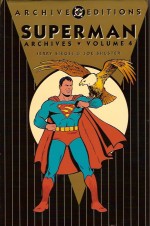
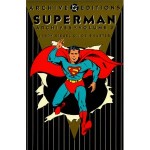
Superman Archives volume 4


By Jerry Siegel, Joe Shuster, Fred Ray John Sikela & Leo Nowak (DC Comics)
ISBN: 1-56389-107-7

By the middle of 1942 fresh and vibrant young superstar Superman had been thoroughly embraced by the panting public, rapidly evolving into a patriotic tonic for the troops and the ones they had left behind. This fourth classic hardcover compendium (collecting Superman #13-16 November-December 1941 to May/June 1942) shows the Man of Steel in all his morale-boosting glory as America shifted onto a war-footing and crooks and master-criminals were slowly superseded by sinister spies and vicious invaders… at least on all the rousing, iconic covers by master artist Fred Ray.

Following a Foreword by film critic Leonard Maltin the action begins with a stunning Nazi-busting example up front on #13 after which artist Leo Nowak illustrated three captivating yarns beginning with ‘The Light’ wherein an implacable old foe tried in a new super-scientific guise and gimmick, whilst ‘The Archer’ pitted the Metropolis Marvel against his first true costumed villain, a psychopathic killer with a self-evident murderous modus operandi…

Scripter Jerry Siegel was on top form throughout this period and ‘Baby on the Doorstep’ offered him  a rare opportunity for foolish fun and the feel-good factor as Clark Kent became a temporary and unwilling parent in a tale involving stolen military battle plans before ‘The City Beneath the Earth’ (illustrated by John Sikela) returned to the serious business of blockbuster adventure and sheer spectacle as the Action Ace discovered a subterranean kingdom hidden since the hoary height of the Ice Age.

Superman #14 (January/February 1942) was again primarily a Nowak art affair beginning with ‘Concerts of Doom’ wherein a master pianist discovered just how mesmerising his recitals were and joined forces with unpatriotic thieves and dastardly  saboteurs, after which the tireless Man of Tomorrow was hard-pressed to cope with the reign of destruction caused by ‘The Invention Thief’.

John Sikela inked Nowak’s pencils in the frantic high fantasy romp when the Man of Steel discovered a friendly mermaid and malevolent fishmen living in ‘The Undersea City’ before more high tension and catastrophic graphic destruction signalled Superman’s epic clash with sinister electrical savant ‘The Lightning Master’.

Issue #15 ‘The Cop who was Ruined’ (illustrated by Nowak) found the Metropolis Marvel clearing the name of framed detective Bob Branigan – a man who believed himself guilty – whilst scurvy Orientals menaced the nation’s Pacific fleet in ‘Saboteurs from Napkan’ with Sikela again lending his pens and brushes to Nowak’s pencil art. Thinly veiled fascist oppression and expansion was spectacularly nipped in the bud in ‘Superman in Oxnalia’ – an all-Sikela art job, but Nowak was back on pencils for a concluding science fiction thriller ‘The Evolution King’ with a malignant mastermind artificially aging his wealthy, prominent victims until the invulnerable Action Ace stepped in…

Sikela flew solo on all of Superman #16, beginning with ‘The World’s Meanest Man’ as a mobster attempted to fleece a scheme to give deprived slum-kids a holiday in the countryside, then moved on to depict the Man of Tomorrow’s battle with an astrologer happy to murder his clients to prove his predictions in ‘Terror from the Stars’, after which ‘The Case of the Runaway Skyscrapers’ pitted the Caped Kryptonian against Mister Sinister, a trans-dimensional tyrant who could make buildings vanish.

The power-packed perilous periodical then concluded with a deeply satisfying and classic war on organised crime as Superman crushed the ‘Racket on Delivery’.

Endlessly re-readable, these epic hardback DC Archive Editions fabulously frame some of the greatest and most influential comics stories ever created, and taken in unison form a perfect permanent record of breathtaking wonder and groundbreaking excitement, which no dedicated fan could afford to do without
© 1942, 2000 DC Comics. All Rights Reserved.

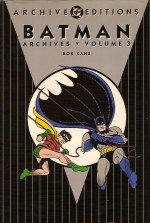
Batman Archives volume 3


By Bob Kane, Bill Finger, Don Cameron, Joe Samachson, Joseph Greene, Jerry Robinson, George Roussos, Jack Burnley & various (DC Comics)
ISBN: 1-56389-099-2

With the Dynamic Duo fully developed and storming ahead of all competition in these stories (originally published in Detective Comics #71-86 between January 1943 and April 1944), the creative chores finally grew too large for the original team. As the characters’ popularity grew exponentially, new talent was hired to supplement Bob Kane, Bill Finger and their assistants Jerry Robinson & inker, colourist and letterer George Roussos. Batman and Robin had become a small industry, just like Superman.

During this period more scripters joined the team and another soon to be legendary artist began adding to the inimitable legend of the Dark Knight…

After a lengthy and thought-provoking Foreword from veteran creator and celebrated cartoonist Jerry Robinson, this third deluxe hardback celebration of the Gotham Guardians’ incredible early exploits begins with ‘A Crime a Day!’ (by Finger, Kane & Robinson) from premiere crime anthology Detective Comics #71, possibly the most memorable and thrilling Joker escapade of the period, after which issue #72 found our heroes crushing murderous con-men in ‘License for Larceny’ by Joe Samachson, Kane & Robinson.

In Detective Comics #73 (March 1943) Don Cameron, Kane & Robinson went back to spooky basics with brutal efficiency when ‘The Scarecrow Returns’, after which moody chiller #74 introduced a pair of fantastically grotesque criminal psychopaths in the far from comical corpulent forms of the Deever cousins, alias ‘Tweedledum and Tweedledee!’ in a stirring yarn by Cameron & Robinson with inks by Kane, Roussos and Charles Paris.

Detective #75 presented a new aristocrat of crime in the pompous popinjay ‘The Robber Baron!’ (Cameron, Jack Burnley & Roussos) and the Joker resurfaced in #76 to ‘Slay ’em With Flowers’ in a graphic chiller by Horace L. Gold, Robinson & Roussos whilst Bill Finger, Kane & Roussos introduced a fascinating new wrinkle to villainy with the conflicted doctor who ran ‘The Crime Clinic’ in #77. Crime Surgeon Matthew Thorne would return many times over the coming decades…

Issue #78 (August 1943) pushed the patriotic agenda when ‘The Bond Wagon’ (Joseph Greene, Burnley & Roussos) to raise war funds was targeted by Nazi spies and sympathisers whilst ‘Destiny’s Auction’ by & Robinson, offered another sterling human interest drama as a fortune teller’s prognostications lead to fame, fortune and deadly danger for a failed actress, has-been actor and superstitious gangster…

Detective #80 saw the fateful fate of Harvey Kent finally resolved in epic manner with ‘The End of Two-Face!’ by Finger, Kane, Robinson & Roussos after which Cameron, Kane & Roussos introduced another bizarre and baroque costumed crazy with ‘The Cavalier of Crime!’ in #81 and explored the dark side of American Football with the explosive downfall of the ‘Quarterback of Crime!’ in #82.

Portly butler Alfred’s diet regime led the Gotham Guardians to a murderous mesmerising medic and criminal insurance scam in ‘Accidentally on Purpose!’ (Cameron, Kane & Roussos again) before ‘Artists in Villainy’ (#84 by Mort Weisinger & Dick Sprang, with layouts by Ed Kressy) pitted the Partners in Peril against an incredible Underworld University.

Detective #85, by Finger, Kressy & Sprang, was the artist’s first brush with the Clown Prince of Crime and one of the most madcap moments in the canon as Batman and his arch-foe both hunted ‘The Joker’s Double’ and this compelling chronicle concludes in high style with #86 as Cameron & Sprang recount how a sleuthing contest between Bruce Wayne, Dick Grayson and Alfred leads to a spectacular battle against sinister smugglers in ‘Danger Strikes Three!’

With glorious covers from Kane, Robinson, Burnley and Sprang this terrific tome is another irresistible box of classic delights that no fan of the medium can afford to miss.
© 1942-1944 DC Comics. Renewed 1971-73. Compilation © 1994 DC Comics. All Rights Reserved.

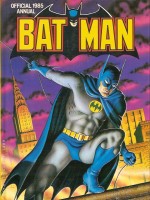
Official Batman Annual 1985


By Gerry Conway, Don Kraar, Roy Thomas, Alan Moore, Jamie Delano, José Luis García-López, Alan Davis, Garry Leach & various (London Editions)
ISBN: 7235-6733-6

Generally I save the Christmas annuals for the nostalgia-drenched Festive Season but this is a little gem I recently re-examined and found to be an item which I had no illogical or purely emotional attachment to. It’s simply an extremely good-looking, thoroughly entertaining package which might be unknown to and of some interest to fans and collectors.

By the end of the 1970s the Superman and Batman Christmas books were a slim and slight shadow of their former bumper selves, but during the mid 1980s a new crop of editors and designers found a way to invigorate and add value to the tired tomes.

Now full-colour throughout but reduced to 64 pages this example stems from the days when I was just starting out in the business and a few of my more talented and famous colleagues and acquaintances on groundbreaking independent comic Warrior, star-studded 2000AD and at gradually expanding Marvel UK were offered a little side-work from Manchester-based London Editions Comics…

Behind the Bryan Talbot cover, ‘The Falcons Lair!’ written by Don Kraar and illustrated by Adrian Gonzales & Mike DeCarlo (originally seen in US comicbook Brave and the Bold #185, April 1982) opened proceedings with a boisterous action-romp teaming the Caped Crusader and Emerald Archer Green Arrow against the wiliest of criminal birds The Penguin, after which a brief prose piece by Jamie Delano lavishly illustrated by Alan & Damian Davis tantalisingly whetted the Fights ‘n’ Tights taste-buds with the wry and salutary tale of a foredoomed pickpocket ”Birdsong’ Mickey’s Day Out’…

The editors were equally canny in selecting the US reprints. ‘Last Laugh!’ first appeared in Batman #353 (November 1982): a dynamite stand alone tale pitting the Gotham Guardian against the archest of villains The Joker; a spectacular and audacious thriller by Gerry Conway magnificently illustrated by the incredibly talented and inexplicably underrated José Luis García-López.

Possibly one of the neatest and most impressive text tales in UK Annuals history ‘The Gun’ reunited Marvelman co-conspirators Alan Moore & Garry Leach (who painted the beguiling pictures which accompany the twisted trail of the weapon which killed Thomas and Martha Wayne) and the seasonal sensationalism concluded with ‘Where Walks a Snowman!’ (Batman #337, July 1981) wherein Gerry Conway& Roy Thomas recounted the horrific history of a chilling killer stalking Gotham in another lost art-masterpiece by García-López & Steve Mitchell.

Being a British Christmas book there’s even a traditional send-off with a brace of

‘Batman’s Puzzles’ pages comprising word games and “spot the difference” panels.

This impressive tome might well be of more interest to comics completists than chronic nostalgists like me, but such items often turn up in jumble sales and charity shops and are frequently well worth the price of admission

© 1984 DC Comics Inc. and London Editions Limited. All characters © 1984 DC Comics Inc.

Superman in Action Archive Edition volume 3


By Jerry Siegel, Joe Shuster & the Superman Studio (DC Comics)
ISBN: 1-56389-710-5

In this third tumultuous deluxe hardback collection of the Man of Tomorrow’s earliest groundbreaking monthly adventures, (reprinted from issues #37-52 of epochal anthology Action Comics and spanning June 1941 – September 1942), the never-ending battle for Truth, Justice and the American Way expanded to cover the struggle against Global Tyranny with the war that had been ripping apart the outer world finally spreading to isolationist America.

When these tales first saw print Superman was a bona fide but still fresh phenomenon who had utterly changed the shape of the fledgling comicbook industry. There was a popular newspaper strip, foreign and overseas syndication and the prestigious Fleischer studio was producing some of the most expensive – and best – animated cartoons ever produced.

Thankfully the quality of the source material was increasing with every four-colour release and the energy and enthusiasm of Shuster and Siegel (who was particularly on fire as scripter) had infected the burgeoning group of studio juniors who had been hired to cope with the relentless demand.

After a fulgent and informed Foreword by Producer, author, historian and fan Michael Uslan, the Never-ending Adventure resumed in Action Comics #37 and ‘Commissioner Kent’ (with art by Paul Cassidy): a return to tales of graft, crime and social injustice wherein the timid alter-ego of the Man of Steel was forced to run for the job of top cop in Metropolis, whilst #38 – illustrated by Leo Nowak & Ed Dobrotka – saw a mastermind exert ‘Radio Control’ on citizens and cops in a spectacular battle against a sinister hypnotist.

Horrific mad science was behind the spectacular thriller ‘The Radioactive Man’ (by Nowak and the shop) whilst Action #40 featured ‘The Billionaire’s Daughter’ (John Sikela) wherein the mighty Man of Tomorrow needed all his wits to set straight a spoiled debutante.

Stories of crime, corruption and social iniquity gradually gave way to more earth-shattering fare and with war in the news and clearly on the horizon, the tone and content of Superman’s adventures changed too: the scale and scope of the stunts became more important than the motive. The raw passion and sly wit still shone through in Siegel’s stories but as the world grew more dangerous the Metropolis Marvel simply grew mightier to cope with it all and Shuster and Co stretched and expanded the iconography in ways that all others would follow.

‘The Saboteur’ (Action Comics #41, October 1941) told a terse tale of a traitor motivated by greed rather than ideology, whilst ‘City in the Stratosphere’ in #42 (both illustrated by Sikela) revealed how a troubles-free secret paradise floating above Metropolis had been subverted by an old enemy, whilst ‘The Crashing Planes’ (illustrated by Nowak, from the December Action Comics) actually had Superman attacking Nazi paratroopers on the cover and found the Man of Steel smashing a plot to destroy a commercial airline.

Even though war was as yet undeclared, DC and many other publishers had struck their colours well before December 7th 1941. When the Japanese attack finally filtered through to the gaudy pages the patriotic indignation and desire for retribution would generate some of the very best art and stories the budding art-form would ever see.

Action #44 (drawn by Nowak) featured a frozen ‘Dawn Man’ who thawed out and went wild in the crime-ridden Metropolis, whilst the next issue saw ‘Superman’s Ark’ girdle the globe to repopulate a decrepit and nigh-derelict Zoo and Action #46 featured ‘The Devil’s Playground’ (Ed Dobrotka) wherein masked murderer The Domino stalked an amusement park wreaking havoc and instilling terror.

A blockbusting, no-holds-barred battle ensued in Action #47 (Sikela) when Lex Luthor gained incredible abilities after acquiring the incredible ‘Powerstone’, whilst #48 found the Man of Tomorrow toppling an insidious gang of killers in ‘The Adventure of the Merchant of Murder!’ before outwitting a despicable and deadly maniac dubbed ‘The Puzzler!’ in #49 (Dobrotka & Sikela).

Action Comics #50 saw Clark Kent and Lois Lane despatched to Florida to scope out Baseball skulduggery in a light-hearted tale illustrated by Nowak before ‘The Case of the Crimeless Crimes’ introduced the canny faux-madness of practical-joking bandit The Prankster (#51, by Dobrotka & Sikela, who also illustrated the last tale in this tome).

The glorious indulgence concludes with the ‘The Emperor of America!’ wherein an invading army were welcomed with open arms by all but the indignant and suspicious Action Ace who single-handedly liberated America in a blistering, rousing call-to-arms classic.

The raw passion and sly wit of Siegel’s stories and the rip-roaring energy of Shuster and his team were now galvanised by the parlous state of the world and Superman simply became better and more flamboyant to deal with it all. These Golden Age tales are timeless, priceless enjoyment. How can anyone possibly resist them?
© 1941, 1942, 2001 DC Comics. All Rights Reserved.

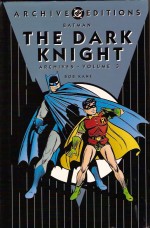
Batman: the Dark Knight Archives volume 3


By Bob Kane, Bill Finger, Jerry Robinson & George Roussos & various (DC Comics)
ISBN: 1-56389-615-X

With this third magnificent compilation of the epochal early Batman, the Dark Knight entered his fourth year of publication and the expanded creative team truly hit their stride, providing spectacular escapist thrills and chills for readers on the home front and even in the far-and-widely deployed armed services as 1942 brought America fully into the war and deadly danger never seemed closer…

This full-colour deluxe hardback tome (collecting the classic contents of Batman #9-12 from February/March to August/September 1942) opens with an expansive introduction from modern Bat-scribe Mike W. Barr, and also saw the introduction of an extensive contents section and detailed biographies for those talented folk who crafted these Golden Age greats.

The Dynamic Duo were popular sensations whose heroic exploits not only thrilled millions of eager readers but also provided artistic inspiration for a generation of comics creators and with America wholeheartedly embracing World War II by this period and the stories – especially the patriotic covers – went all-out to capture the imagination, comfort the down-hearted and bolster the nation’s morale.

Batman #9 is regarded as one of the greatest single issues of the Golden Age and is still a cracking parcel of joy today. Due to the unique “off-sale” dating system of the USA the issue hit the newsstands in time for Christmas 1941, with all the stories written by Bill Finger and illustrated by Bob Kane, Jerry Robinson & George Roussos. Moreover the issue sports possibly the most reproduced Batman cover ever; crafted by the brilliant Jack Burnley.

Within those pages the action began with ‘The Four Fates!’: a dark and moving human interest drama featuring a quartet of fore-doomed mobsters, after which our heroes ship out in ‘The White Whale!’, a mind-bending maritime crime saga loosely based on the classic Moby Dick, followed by another unforgettable Joker yarn ‘The Case of the Lucky Law-Breakers’ and the birth of a venerable tradition in an untitled story called here for expediency’s sake ‘Christmas’.

Over the decades many of the Dynamic Duo’s best and finest adventures have had a Christmas theme (and why there’s never been a Greatest Batman Christmas Stories volume is a mystery I’ve pondered for years) and this touching – even heart-warming – story of absent fathers, petty skulduggery and little miracles is where it all really began. There’s not a comic fan alive who won’t dab away a tear…

Following a stunning, whimsical and fourth-wall busting cover by Fred Ray & Robinson Batman #10 commences with another four classics. ‘The Isle that Time Forgot’ written by Joseph Greene, finds the Dynamic Duo impossibly trapped in a land of dinosaurs and cavemen, whilst ‘Report Card Blues’ also with Greene scripting, has the heroes inspire a wayward kid to return to his studies by crushing the mobsters he’s ditched school for. Jack Schiff typed the words for the classy jewel-heist caper (oh, for those heady days when Bats wasn’t too grim and important to stop the odd robbery or two!) ‘The Princess of Plunder’ starring everyone’s favourite Feline Femme Fatale Catwoman, and the boys finished up by heading way out West where the Gotham Guardian became ‘The Sheriff of Ghost Town!’ in a bullet-fast blockbuster scripted by Bill Finger.

Batman’s unsung co-creator also wrote three of the four epic adventures in Batman #11, beginning with the cover-featured shocker ‘The Joker’s Advertising Campaign’ wherein the Clown prince took ideas for big crimes from the small ads section of the papers whilst ‘Payment in Full’ related a touching melodrama about the District Attorney and the vicious criminal to whom he owed his life. Pulp sci fi author Edmond Hamilton wrote the mystery ‘Bandits in Toyland’ wherein a gang of high-powered burglars and bandits only stole dolls and train-sets from kids before Finger returned to concoct ‘Four Birds of a Feather!’ with Batman in Miami to scotch the Penguin’s dreams of a crooked gambling empire.

Batman #12 (Aug/Sept 1942) promptly follows with another four instant classics. ‘Brothers in Crime’ by Don Cameron & Jerry Robinson, captivatingly revealed the tragic – positively Shakespearean – fates of a criminal family who had every chance to change their ways whilst the Joker returned in ‘The Wizard of Words’ by Finger, Kane, Robinson & Roussos with the Green Haired Horror applying his homicidal mind to murderously making homilies and folk phrases chillingly literal…

Finger also scripted the final two tales in this issue and the volume, with Jack Burnley illustrating the major portion of the spectacular crime thriller about daredevil stuntmen ‘They Thrill to Conquer’ whilst Kane, Robinson & Roussos wrapped it all up with ‘Around the Clock with Batman’ – a “typical” day in the life of the Dynamic Duo complete with blazing guns, giant statues and skyscraper near-death experiences.

These are stories which forged the character and success of Batman. The works of co-creators Finger and Kane and such multi-talented assistants as Robinson, Roussos, Ray, Burnley and the rest are spectacular and timeless examples of perfect superhero fiction. Put them in a lavish deluxe package like this and include the pop art masterpieces that were the covers of those classics and you have pretty much the perfect comicbook book.
© 1942, 2000 DC Comics. All Rights Reserved.

Johnny Hazard: Mammoth Marches On


By Frank Robbins (Pacific Comics Publications)
No ISBN

Johnny Hazard was a newspaper strip created in answer to and in the style and manner of Terry and the Pirates, but in many ways the steely-eyed hero most resembles – and indeed presages – Milton Caniff’s second magnum opus Steve Canyon.

Unbelievably, until last year this stunningly impressive and enthralling adventure strip has never been comprehensively collected in graphic novels – at least in English – although selected highlights had appeared in nostalgia magazines such as Pioneer Comics and Dragon Lady Press Presents.

However, sporadic compendiums of the full-colour Sunday pages have popped up over the years, such as this glorious and huge (340 x 245mm) landscape tabloid produced by re-translating a collected Italian edition back into English, courtesy of the Pacific Comic Club.

Frank Robbins was a brilliant all-around cartoonist whose unique artistic and lettering style lent themselves equally to adventure, comedy and superhero tales and his stunning cunning storytellers mind made him one of the best writers of three generations of comics.

He first came to fame in 1939 when he took over the Scorchy Smith newspaper strip from the legendary Noel Sickles and created a Sunday page for the feature in 1940. He was offered the prominent Secret Agent X-9 but instead created his own lantern jawed, steely-eyed man of action. A tireless and prolific worker, even whilst producing a daily and Sunday Hazard (usually a separate storyline for each) Robbins freelanced as an illustrator for The Saturday Evening Post, Look, Life and a host of other mainstream magazines.

In the 1960s and 1970s he moved into comicbooks, becoming a key contributor to Batman, Batgirl, Detective Comics (where he created Man-Bat with Neal Adams), The Shadow and DC’s mystery anthologies before settling in as an artist at Marvel on a variety of titles including Captain America, Daredevil, Ghost Rider, Morbius, Human Fly, Man from Atlantis, Power Man and The Invaders, which he co-created with Roy Thomas.

When the strip launched on Monday June 5th 1944, Johnny Hazard was an aviator, in the United States Army Air Corps and when hostilities ceased became for a while a freelance charter pilot and secret agent before settling into the bombastic life of a globe-girdling troubleshooter, mystery-solver and modern day Knight Errant babe-magnet.

The strip ended in 1977: another victim of diminishing panel-sizes and the move towards simplified, thrill-free, family-friendly gag-a-day graphic fodder to wrap around small-ads.

With the release at long last of a dedicated collection of the black and white Daily strips, I thought I’d spotlight a few of those fabulous landscape tomes which kept Johnny Hazard alive in fans hearts during years after it ceased publication beginning with the thoroughly captivating Mammoth Marches On and subsequent sequences which first appeared in American Sunday Supplements between January 27th 1952 to April 12th 1953.

In the steaming jungle heat of French Indo-China the pilot is transporting famed Movie Director Grippman of Mammoth Studios, and his star attraction Cerise to the heart of the rain forest on a location-shoot is stricken with malaria. Forced to land at a Military field they make the fortuitous acquaintance of our hero and his friends Brandy and Blitz Martin; all currently without a plane of their own…

Also in tow are an entire film crew, assorted extras and a baby Elephant, all destined for a distant abandoned temple and village of unsuspecting natives. Short of cash and with nothing to do, Johnny lets himself be talked into taking the pilot’s place whilst wandering journalist Brandy agrees to act as the haughty Cerise’s stand-in and body double… to limit the star’s exposure to sun, insects and peasants…

Amidst all the drama and passion such events always generate, Johnny warily keeps aloof. The big scene involves an ancient idol for which Grippman has brought a fist-sized hunk of glass to replace the legendary lost diamond eye it boasted until white explorers first appeared a century ago…

When Cerise makes a play for Hazard and is rebuffed she storms into the temple and falls into a secret chamber, finding the genuine lost sparkler. In a fit of greedy pique she replaces the fake with the real thing…

The trained baby elephant Mammoth has seen it all and Cerise determines to get rid of the four-footed witness in an increasing dangerous series of arranged accidents…

Things come to head when the monsoon hits early and disaster strikes for the greedy starlet…

The strip then effortlessly segues into blistering criminal action with ‘The Hunted’ as Johnny ferries the film crew on to Tokyo where old pal Blitz buys a souvenir samurai sword from a street vendor. Of course nobody realised that the katana was a thousand year old relic most recently owned by Baron Takana: a big shot in the recent war and a fugitive war criminal ever since.

When the sword is stolen and a venerated historical expert murdered, suspicion rests equally on the elusive Takana and Hazard’s sexy femme fatale foe Baroness Flame, but as the hunt continues the drama escalates into full-blown crisis when the fugitive Baron is cornered and threatens to detonate a stolen atomic weapon…

The fabulous frantic fun and thrills conclude with ‘Scavengers’ as Johnny is asked by his old boss Lisbeth Manning to investigate a series of mysterious plane crashes and cargo thefts. With typical savvy Hazard deduces the method and tracks the gang of highly sophisticated bandits to a deadly confrontation in the jungles between Vietnam and Cambodia, before this stunning old-fashioned romp ends with the thieves in custody and the tantalising opening pages of the next mind-boggling yarn ‘Ceiling Zero-Minus’.

To be continued…

These exotic action romances perfectly capture the mood and magic of a distant but so incredibly familiar time; with cool heroes, hot dames and very wicked villains decorating captivating locales and stunning scenarios, all peppered with blistering tension, mature humour and visceral excitement.

Johnny Hazard is a brilliant two-fisted thriller strip and even if you can’t easily locate these fantastic full-colour chronicles, at least the prospect of an eventual new Sunday strip collection is a little closer at last…
© 1952-1953 King Features Syndicate. © 1979 Pacific C.C.

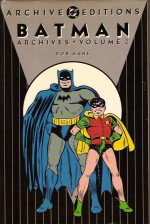
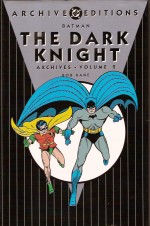
Batman Archives volume 2


By Bob Kane, Bill Finger, Jerry Robinson, George Roussos & various (DC Comics)
ISBN: 0-930289-60-9

The history of the American comicbook industry in most ways stems from the raw, vital and still completely compelling tales of two iconic creations published by DC/National Comics: Superman and Batman. It’s only fair and fitting that both those characters are still going strong and that their earliest adventures can be relived in chronological order in both relatively cheap softcover chronicles and magnificently lavish hardback compilations.

This second sturdy deluxe edition of Batman’s classic crime-busting Detective Comics cases spans the period from May 1941-December 1942 and features all his exploits from issues #51-70. The majority of the stories were written by Bill Finger and the art chores shared out between Bob Kane, Jerry Robinson & George Roussos. Those necessary details dealt with, what you really need to know is that this is a collection of Batman yarns which see the character grow into an icon who would inspire so many: all whilst developing the resilience and fan-dedication to survive the many cultural vicissitudes the coming decades would inflict upon him and his partner, Robin.

As with many of these first print Archive collections, there are no contents pages or creator credits, so for the sake of expediency I’ve again used information and story-titles from later collections to facilitate the review.

After an overview and Foreword from crime novelist and sometime Batman scripter Max Allan Collins, the excitement is unleashed with ‘The Case of the Mystery Carnival’ as the Dynamic Duo liberated a circus from crooks who had taken it over, after which they tackled the insidious terror of Chinese Tongs in ‘The Secret of the Jade Box’ (Detective Comics #52) and solved the tragic problems of suicidal actress ‘Viola Vane’: all mood-soaked set-pieces featuring commonplace human-scaled heroes and villains.

‘Hook Morgan and his Harbor Pirates’ saw the Dynamic Duo spectacularly clean up the evil-infested city docks whilst Detective #55 took them back to fantasy basics with the spectacular mad scientist thriller ‘The Brain Burglar’ after which a quick vacation visit to a ghost-town resulted in a stunning confrontation with a rampaging monster in the eerie action-romp ‘The Stone Idol’.

Detective #57 featured ‘Twenty-Four Hours to Live’, a tale of poisonings and Crimes of Passion, whilst the perfidious Penguin debuted in the next issue to make our heroes the victims of ‘One of the Most Perfect Frame-Ups’ before cropping up again in #59, making a play to control Mississippi; turning his formidable talents to bounty-hunting his fellow criminals in ‘The King of the Jungle!’

That tale was written by Joseph Greene and Jack Schiff, who had a long and auspicious career as an editor at DC, scripted ‘The Case of the Costume-Clad Killers’ from Detective Comics #60, another excursion into larcenous mania with the Joker again stealing the show – and everything else.

‘The Three Racketeers’ is a magnificent story gem and much-reprinted classic (aren’t they all?) from an era packed with both explosive thrillers and tense human dramas. This perfect example of the latter saw a trio of criminal big-shots swap stories of the Gotham Guardians over a quiet game of cards and has a sting-in-the-tail that still hits home more than fifty years later.

It’s followed Finger, Kane & Robinson’s epic clash ‘Laugh, Town Laugh!’ (Detective #62) wherein the diabolical Joker went on a terrifying murder-spree to prove to the nation’s comedians and entertainers who truly was “King of Jesters”.

Those creative giants also produced ‘A Gentleman in Gotham’ for Detective Comics #63, as the Caped Crusader had to confront tuxedoed International Man of Mystery Mr. Baffle, after which the Crime Clown again reared his tousled viridian head in ‘The Joker Walks the Last Mile’ (#64, June 1942).

Each tale here is preceded by the stunning cover of the issue and Detective Comics #65 was a particularly superb patriotic example by Jack Kirby & Joe Simon with Batman and Robin welcoming the Boy Commandos to the title – even though they had actually begun thrashing the Hun a month earlier. The mesmerising Dark Knight tale for the issue featured art by Jack Burnley & George Roussos illustrating Greene’s poignant and powerful North Woods thriller ‘The Cop who Hated Batman!’

The tales produced during the darkest days of World War II were among the very best of the Golden Age and it’s no coincidence that many of these vintage treasures are also some of most reprinted tales in the Batman canon. With chief writer Bill Finger at a peak of creativity and production, everybody on the Home Front was keen to do their bit – even it that was simply making kids of all ages forget their troubles for a brief while…

‘The Crimes of Two-Face’, (Detective #66, August 1942, by Finger, Kane & Robinson) was a classical tragedy in crime-caper guise as Gotham District Attorney Harvey Kent (the name was later changed to Dent) was brutally disfigured whilst in court and went mad – becoming the conflicted villain who remains one of the Caped Crusader’s greatest and most compelling foes to this day.

Detective #67 featured the Penguin who gained his avian Modus Operandi and obsession as ‘Crime’s Early Bird!’ after which Two-Face’s personal horror-story continued in ‘The Man Who Led a Double Life’ as the conflicted fallen idol attempted – and failed – to win back his ideal lost life, following which Joseph Greene scripted the Joker’s final escapade of this volume with perilous pranks and menace aplenty in the calamitous case of ‘The Harlequin’s Hoax!’

The fantastic fantasy and gritty melodrama concludes with the decidedly different threat of ‘The Man Who Could Read Minds!’ an off-beat psycho-thriller from Don Cameron which saw Batman risk his secret identity to stop a merciless, bloodthirsty telepath in a dynamic masterpiece which premiered in Detective Comics #70.

The stories here show the creators and characters at their absolute peak and they’re even more readable now that I don’t have to worry if I’m wrecking an historical treasure simply by turning a page.

These stories cemented the popularity of Batman and Robin and brought a modicum of joy and relief to millions during a time of tremendous hardship and crisis. Even if these days aren’t quite as perilous or desperate, the power of such work to arouse and charm is still potent and just as necessary.
© 1941, 1942, 1991 DC Comics. All Rights Reserved.

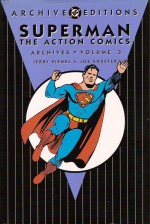
Superman Archives volume 3


By Jerry Siegel & Joe Shuster with Leo Nowak and the Superman Studio (DC Comics)
ISBN: 978-1-56389-002-4

By 1941 the intoxicating blend of eye-popping action and social crusading which hallmarked the early exploits of the Man of Tomorrow had grown to encompass cops-and-robbers crime-busting, science fiction, fantasy and even whimsical comedy.

With a thrice-weekly radio serial, games, toys, a newspaper strip and a growing international media presence, Superman was definitely everybody’s hero, as confirmed in this classic compendium, gathering in their entirety issues #5-8 of his landmark solo title.

This first-edition deluxe hardback opens with an enchanting reminiscence from star artist and early contributor Jack Burnley, but once more no contents page or creator credits, so for the sake of expediency I’ve again used information and story-titles from later collections to facilitate the review. Besides, if you just buy this brilliant, lavish, full-colour hardback treasure-trove, you’ll be too busy reading the glorious stories to worry over such minor details…

Superman #9 (March/April 1941) was another four-star thriller with all the art credited to Cassidy and the Shuster Studio. ‘The Phony Pacifists’ is an enthralling espionage thriller that capitalised on increasing US tensions over “the European War”, followed by a bulletin to members of the Supermen of America club, gag strip Henrietta and a page spotlighting Sports veterans before ‘Joe Gatson, Racketeer’ details the sorry end of a hot-shot blackmailer and kidnapper.

‘Mystery in Swasey Swamp’ pits the Man of Steel against a wave of eerie happenings and ruthless spies, whilst Frank Cooper’s prose vignette recalls the exploits of WWI in ‘A Bombing Flight’ and ‘Super-Strength by Superman’ advocated the benefits of regular exercise before ‘Jackson’s Murder Ring’ pitted the Metropolis Marvel against an ingenious gang of killers-for-hire.

Siegel & Shuster had created an unstoppable juggernaut and were constantly struggling to cope with it. All the Superman stories in issue #10 (May/June 1941) were scripted by Siegel, but illustrated by Studio stalwarts. ‘The Invisible Luthor’ (drawn by Leo Nowak) saw the malevolent mastermind contrive a devastating campaign of terror, and after the humorous fact-page ‘Calling All Cars’ the similarly illustrated adventure ‘The Talent Agency Fraud’ saw Superman and Lois Lane bust a gang of blackmailing thugs preying on star-struck girls.

Wayne Boring & the shop handled the last two Superman stories, beginning by exposing a scurrilous swami in ‘The Spy Ring of Righab Bey’ and, after text-tale ‘Big Leaguer’ by George Shute and Bolty’s (Henry Boltioff) factual frolics ‘It’s True!’ ,‘The Dukalia Spy Ring’ saw the Action Ace trounce thinly-veiled Nazis at a propaganda sports festival (topical and exotic themes of suspense were still necessarily oblique then, since at this time America was still officially neutral in the “European war.”).

Superman #11 (July/August 1941) was an all-Nowak affair, beginning with ‘Zimba’s Gold Badge Terrorists’, as more thinly disguised Nazis “blitzkrieged” the USA, whilst after more gags and Boltinoff ‘Facts…’ the Man of Tomorrow battled rampaging giant animals in ‘The Corinthville Caper’, before scouring the world seeking a cure for ‘The Yellow Plague’. After Nelson Edwards’ nautical prose tale ‘Timely Rescue’ and yet more Boltinoff info-gags in ‘It’s So…’ Superman dashed home in time to foil ‘The Plot of Count Bergac’ and crushed a coterie of High Society gangsters.

Even though spies and sabotage plots were already a trusty part of the narrative currency of the times and many in America felt war was inevitable (patriotic covers were beginning to appear on many comic books), they were still a distant problem, impersonal and at one remove from daily life as experienced by the kids who were the perceived audience for these four-colour fantasies. That would change radically in the months to come…

For the meantime though, these final four yarns from Superman #12 (September/October 1941) are amongst the last pre-war stories of the Man of Tomorrow. Once again they were all scripted by Siegel with Leo Nowak drawing most of the comic output at this time. He’s responsible for the first two here…

‘Peril on Pogo Island’ found Lois and Clark at the mercy of rampaging tribesmen, although spies from a certain foreign power are at the back of it all, whilst ‘The Suicide Murders’ saw the plucky journalists facing a particularly grisly band of gangsters. After a Books Worth Reading feature and a gag page, John Sikela inked ‘The Grotak Bund’ wherein seditionists attempted to destroy vital US industries and, following Boltinoff’s ‘Kid Stuff’ and Roger Forrest’s prose crime-vignette ‘Safe Job’, fully illustrated the final tale as an old and indefatigable foe reared his shiny slaphead once more in ‘The Beasts of Luthor’, targeting far-flung Baracoda Island with a spectacular array of giant monsters.

Augmented by a host of delightfully mesmerising contemporary ads for cool toys and the company’s burgeoning line of comics super-stars, these Golden Age tales are priceless enjoyment, a fantastic window on comfortingly simpler times and some of the greatest Fights and Tights adventures ever crafted.

How can you possibly resist them?
© 1941, 1991 DC Comics. All Rights Reserved.

Batman: the Dark Knight Archives volume 2


By Bob Kane, Bill Finger, Jerry Robinson & George Roussos (DC Comics)
ISBN: 1-56389-183-2

By the time of the spectacular action, adventure and mystery classics contained in this magnificent full-colour hardback tome (re-presenting the classic contents of Batman #5-8, Spring 1941 to December 1941/January 1942), the Dynamic Duo were bona fide sensations whose heroic exploits not only thrilled millions of eager readers but also provided artistic inspiration for a generation of comics creators – both potential and actually working then and there…

Scripted by Bill Finger, with art from Bob Kane aided and abetted by Jerry Robinson & George Roussos (who also lettered many of the stories and even provided the effulgent introductory interview with historian Joe Desris which opens this volume) these stories are key moments in the heroes’ careers and still stunningly compelling examples of comics storytelling at its very best.

The magic commences with ‘The Riddle of the Missing Card!’ wherein the ever-deadly Joker rises from the dead once more and embarks on a grisly spree of gambling crimes based on playing cards and the poor unfortunate souls who rescued him, whilst ‘Book of Enchantment’ finds the Gotham Gangbusters scientifically teleported into a fantastic dimension of fairytale horrors. ‘The Case of the Honest Crook’ is the kind of humanistic mystery/second-chance story of redemption earned that Finger excelled at: Batman tackles bandit Joe Sands who has just robbed a store of $6 when he could have taken hundreds. His hard luck story soon leads to real bad guys though…

The last story from Batman #5 ‘Crime Does Not Pay’ deals with the perennial problem of good kids going bad and once again salvation is at hand after a mind-boggling amount of action and mayhem…

Issue #6 saw the title achieve bi-monthly status as the ravenous fans clamoured for more, more, more masked mystery-man madness. ‘Murder on Parole’ saw Batman and Robin hunt down a prominent citizen who was freeing criminals to work as his part-time criminal army after which ‘The Clock Maker’ gave them a deadly old time as he maniacally murdered the people who purchased his fine chronometers before the City Crime-crushers headed for the Texas oil-fields and waded hip-deep in murder and robbery to solve ‘The Secret of the Iron Jungle’. This magnificent romp led inexorably to an undercover case as Bruce Wayne investigated Gotham’s ‘Suicide Beat!’ where three policemen had already died whilst on patrol…

Batman #7 (October/November 1941) began with ‘Wanted: Practical Jokers’ and naturally starred the scene-stealing psychotic Clown Prince of Crime, who had unleashed a host of deadly body-doubles to play hob with the terrified citizenry, whilst ‘The Trouble Trap’ found the Dynamic Duo soundly smashing a Spiritualist racket. They then headed for the Deep Forests to clear up ‘The North Woods Mystery’ of a murdered lumber tycoon.

The last tale in this issue is something of a landmark case, as well as being a powerful and emotional melodrama. ‘The People vs. the Batman’ had Bruce Wayne framed for murder and the Caped Crusaders finally sworn in as official police operatives. They would not be vigilantes again until the grim and gritty 1980’s…

Eight weeks later Batman #8 came out, cover dated December 1941-January 1942. Such a meteoric rise and expansion during a time of extreme paper shortages gives heady evidence to the burgeoning popularity of the characters. Behind a superbly evocative “Infinity” cover by Fred Ray and Jerry Robinson lurked four striking tales of astounding bravura adventure.

‘Stone Walls Do Not A Prison Make’ was a brooding prison drama, with Batman breaking into jail to battle a Big Boss who ruled the city from his cell, followed by a rare foray into science fiction as a scientist abused by money-grubbing financial backers turned himself into a deadly radioactive marauder in ‘The Strange Case of Professor Radium’ (this tale was radically revised and recycled by Finger & Kane as a sequence of the Batman daily newspaper strip from September 23rd to November 2nd 1946).

‘The Superstition Murders’ is still a gripping and textbook example of the “ABC Murders” plot, far better read than read about and ‘The Cross Country Crimes’ perfectly ends this trip to the vault of comic treasures with a tale of the Joker rampaging across America in a dazzling blend of larceny and lunacy whilst trying to flee from the vengeful Gotham Guardians.

These are the stories that forged the character and success of Batman. The works of co-creators Finger and Kane and the multi-talented assistants Robinson & Roussos are spectacular and timeless examples of perfect superhero fiction. Put them in a lavish deluxe package like this, include the pop art masterpieces that were the covers of those classics plus handy creator biographies, and you have pretty much the perfect comic book.
© 1940-1941, 1995 DC Comics. All Rights Reserved.

Merry Christmas, Boys and Girls!

In keeping with my self-created venerable Holiday tradition here’s another selection of British Annuals which fundamentally contributed to making me the way I am today, selected not just for nostalgia’s sake but because they are still, interesting, eminently palatable and worthy of your attention, even under here in the disconcertingly futurist yet disappointingly dreary 21st Century (and yes, I am still eagerly anticipating my personal jet-pack and robot-butler under the tree this year…)

After decades when only American comics and nostalgia items were considered collectable or worthy, of late there’s been a welcome resurgence of interest in home-grown comics and stories. If you’re lucky enough to stumble across a vintage volume, I hope my words can convince you to acquire it. However, the best of all worlds would be further collections from those fans and publishers who have begun to rescue this magical material from print limbo in affordable new collections…

Great writing and art is rotting in boxes and attics or the archives of publishing houses, when it needs to be back in the hands of readers once again. On one level the tastes of the public have never been broader than today and a selective sampling of our popular heritage will always appeal to some part of the mass consumer base. Let’s all continue to reward publishers for their efforts and prove that there’s money to be made from these slices of our childhood.

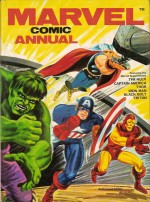
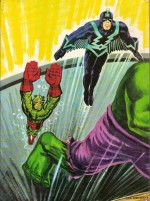
Marvel Comicbook Annual 1970
By various (World Distributors, Ltd.)
No ISBN – Standard Book Number: 7235-0072-X

When Stan Lee stormed the American comic-book industry in the early 1960s, his greatest weapon wasn’t the compact and brilliant talent pool available nor even the proverbial idea whose time had come, but rather his canny hucksterism and grasp of marketing and promotion. DC, Dell/Gold Key and Charlton all had limited overseas licenses (usually in dedicated black-and-white anthologies like Alan Class Comics such as Suspense) but Lee went further, reselling Marvel’s revolutionary early efforts all over the world.

In Britain the material appeared in the aforementioned Class Comics and reformatted in weeklies like Pow, Wham, Smash and even the venerable Eagle. There were two almost wholly Marvel-ised papers, Fantastic and Terrific, which ran from 1967 to 1968 with only one UK originated strip in each. These slick format comics mimicked Marvel’s US “split-books” and originally featured three key Marvel properties in each. Appearing every seven days, however quickly exhausted the company’s back catalogue.

After years of guesting in other publications, Marvel secured their own UK Annuals at the end of the 1960s through the publishing arm of World Distributors and this second sparkling collection from 1969 is one of the very best – and worst!

Gone are the text stories, quizzes and game pages which traditionally padded out most British Christmas books, replaced with cover-to-cover superhero action produced by the emergent House of Ideas at the very peak of its creative powers. Moreover it’s in full colour throughout – an almost unheard of largesse at the time.

Behind the delightful painted wraparound cover the enchantment commences with a magnificent but ultimately frustrating Thor tale (from issue #165 June 1969) from Lee, Jack Kirby & Vince Colletta wherein the Thunder God tackled genetically engineered future man ‘Him!’, before dissolving into a maniacal rage in the first of a two-part tale from his own American comicbook. The story and art are of course, incredible, but – even worse than no batteries on Christmas morning – the concluding instalment isn’t included in this volume. AARRGH!

From Captain America #100, April 1968 ‘This Monster Unmasked!’ by Lee, Kirby & Syd Shores, was the final chapter of an epic adventure (running in Tales of Suspense #97-99 and also not included here) which found the Sentinel of Liberty, his new girlfriend Agent 13 and the Black Panther riotously recapping the hero’s origin whilst battling a resurrected Baron Zemo to save the planet from utter destruction…

‘The Warrior and the Whip!’ by Lee, Gene Colan & Frank Giacoia and ‘At the Mercy of the Maggia’ by Archie Goodwin, Colan & Johnny Craig (Tales of Suspense #98-99, February and March 1968) are less satisfying. Not because the individual episodes are in any way deficient, but because the extended combat between Iron Man, gangsters, AIM Agents and super-creeps constitutes only chapters two and three of a four-part yarn and once again ends on a chilling cliffhanger…

In deference to tradition there is a single-page fact-feature. ‘Triton’s World’, illustrated with traced Kirby fish drawings from various comics, spotlighting a number of outrageous but actual sea-dwellers before the aquatic Inhuman joins the rest of the Royal Family of Attilan in ‘Silence or Death!’ (a Tales of the Inhumans back-up from Thor #149, February 1968) introducing young Prince Black Bolt in a superb and compelling, COMPLETE, five-page clash with Maximus the Mad by Lee, Kirby & Joe Sinnott.

At least the Marvel mayhem ends on a blockbusting high-note with ‘Monster Triumphant!’ from Incredible Hulk #108, October 1968 by Lee, Herb Trimpe & John Severin which, although another concluding chapter, had the decency to nominally recap proceedings before the Green Goliath, Nick Fury Agent of S.H.I.E.L.D. and his soviet counterpart Yuri Brevlov spectacularly scotched the sinister plans of Oriental oligarch the Mandarin to bring this book to a crunchingly cathartic close…

Inexplicably, despite how annoying re-reading these oft-reprinted tales felt today, the pint-sized me (well, quart-sized if I’m totally honest) really loved this collection – the fantastic resilience of youth, I suppose – and I will admit the art has never looked better than on the 96 reassuringly solid extra-large pages here: bold heroes and dastardly villains going wild and forever changing the sensibilities of a staid nation’s unsuspecting, extremely forgiving children. Miraculous, Marvellous Magic!
© 1970 Marvel Comics Group. All rights reserved.

In future years UK Marvel Annuals would provide full colour reprint strip extravaganzas, but in 1966 the material just wasn’t there. Thus this peculiar novelty: a comforting 96 sturdy pages of bold illustrations, games, puzzles and prose stories featuring Marvel’s mightiest in exceedingly British tales of skulduggery and derring-do.

Another factor to consider was the traditions of the UK market. US comics had been primarily strip based since the 1930s, but British weeklies had long provided Boy’s and Girl’s “papers” that were prose-based. In fact DC Thompson had persevered with illustrated text periodicals until well into the 1960s. So the seasonal annuals provided a vital sales peak of the publishing year and a guaranteed promotional push (see Alan Clark’s superb The Children’s Annual for more information). Any comic worth its salt needed a glossy hardback on the shelves over the Christmas period…

Released Christmas 1969, perfectly portioned out to fit into a book intended for a primarily new and young audience.

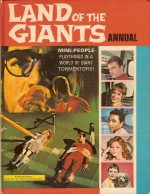
Land of the Giants Annual 1969
By Tom Gill & various (World Distributors {Manchester} Ltd.)
No ISBN

British Comics have always fed heavily on other media and as television grew during the 1960s – especially the area of children’s shows and cartoons – those programmes increasingly became a staple source for the Seasonal Annual market. There would be a profusion of stories and strips targeting not readers but young viewers and more and more often the stars would be American not British.

Much of this stuff wouldn’t even be as popular in the USA as here, so whatever comic licenses existed usually didn’t provide enough material to fill a hardback volume ranging anywhere from 64 to 160 pages. Thus many Annuals such as Daktari, Champion the Wonder Horse, Lone Ranger and a host of others required original material or, as a last resort, similarly themed or related strips.

Land of the Giants debuted in America in September 1968, the fourth of producer Irwin Allen’s incredibly successful string of TV fantasy series which also included Lost in Space, Voyage to the Bottom of the Sea and The Time Tunnel. The premise was that in the far-future of 1983 the occupants of Sub-Orbital Space-liner flight 703 from Los Angeles to London fell through a space-warp and landed in an incredible world twelve times larger than ours (mimicking the dimensions of the Brobdingnagians in Gulliver’s Travels) but closely paralleling Earth in the primitive era of the mid 1960s.

The motley and disparate passengers and crew of the ailing Spindrift thus had to survive and seek a way to return home whilst giant beasts, agents of the totalitarian government of that colossal planet, greedy opportunists and their own perverse natures all conspired against them…

The TV series generated 51 episodes and ran until 1970, spawning a Viewmaster reel and book, comics, toys and a string of novels by Murray Leinster. Since only one issue of the Gold Key comicbook had been released by the time of publication, (also providing the photo-cover above) this British Land of the Giants Annual compiled in late 1968 for the Christmas market relied heavily on criminally uncredited British filler – in the traditional form of text stories and features.

This book was produced in the standard UK format of full-colour for the American comics reprints and certain sections balanced with the more economical black and one other colour (blue, green brown or purple for the remainder, either brief prose stories or puzzles, games or fact-features on related themes. As for the writers and artists of the originated material your guess is, sadly, as good as or better than mine, but almost certainly generated by the wonderful Mick Anglo’s publishing/packaging company Gower Studios (although much of the innovative and edgily evocative illustration reminds me of Paul Neary’s 1970 Hunter strip in Warren’s Eerie)…

As the book is aimed at youngsters most of the British material is told from the viewpoint of Barry Lockridge – and dog Chipper – travelling unaccompanied to meet his parents in London. The mayhem and mystery begins with the novelette ‘Crash into the Unknown’ recapping the terrifying crash-landing in the Land of the Giants and offering a few hints into the possibly man-made nature of the space-warp which trapped them before the quiz ‘The Name’s the Same’ lightens the mood before ‘The Happy Return’ found the diminutive castaways battling a rogue warp-scientist and Secret Police and the fact-feature ‘Giants of Earth’ recounted a selection of geological behemoths.

The science bits continued with ‘Other Days: Other Giants’ which spotlighted dinosaurs and prehistoric beasts whilst ‘The Bigger They Are’ enumerated historical heroes who battled overwhelming odds. The fantasy adventure resumed in ‘The Toy Trap’ with giant terrorists using remote controlled models to deliver bombs – clockwork vehicles the puny Earthlings desperately needed in this vast expanse of a new world…

After some mind-boggling astronomical ‘Star-Facts’ the US comic strip adventure ‘The Mini-Criminals’ Part I, (illustrated by Tom Gill and perhaps scripted by Paul S. Newman) opened with ‘The Power-Stealers’ as the crew’s perpetual search for fuel sources to re-energise the Spindrift led to their capture by an opportunistic and imaginative thief. In this action-oriented strip the focus was very much on passengers Mark Wilson and fugitive conman Fitzhugh plus he-men crew members Captain Steve Burton and co-pilot Dan Erickson…

‘Barry and the Bankrobbers’ returned to British prose episodes as the boy and his dog stumbled into a bold daylight robbery before ‘The Mini-Criminals’ tempestuously terminated in an explosive showdown after ‘The Torch is Lit’, quickly followed by a themed literary and historical quiz ‘All About Giants’.

The girls got to hog the spotlight in ‘The Lost One’ as stewardess Betty Hamilton and flighty socialite Valerie Scott encountered an Earth astronaut who had been stranded in the Land of the Giants for 32 years whilst, after technological/industrial fact-feature ‘Man-made Monsters’, ‘The Bargain’ found little Barry and a giant toddler saving the day when Herculean fire-fighters extinguished a small grass blaze and inadvertently washed the Spindrift and crew into a sewer grate.

Lemuel Gulliver’s trip to Brobdingnag was reviewed in the article ‘Points of View’ (illustrated by somebody named “Fryer”) whilst the novelette ‘Nightmare in Giantland’ had the crew fall into a fairground only to become a puppet attraction, after which the double-page board-game ‘Terror in the Woods’ offered a few moments of post-Christmas dinner family interaction – as long as you could find some dice – before the adventures culminated in Secret Police espionage and intrigue as the Earthlings became ‘The Mini-Spies’ for an anti-government scientist and this big book of fun, fact and thrills ended educationally with ‘The Giant One’; a visually impressive animal comparison chart matching up Elephants, Rhinos, Buffalo, Brontosauruses (still believed to be real back then, remember?) against the incredible Blue Whale.

These yearly slices of screen-to-page magic were an intrinsic part of growing up in Britain for generations and still occur every year with only the stars/celebrity/shows changing, not the package. The show itself has joined the vast hinterland of fantasy fan-favourites and, if you want to see more, in 2010 Hermes Press collected the material from all five US Land of the Giants comicbooks into one sparkling hardback Land of the Giants the Complete Series which I’ll get around to reviewing one day (so many books, so little time or budget)…
© 1969 Twentieth Century-Fox Television, Inc. and Kent Productions. Inc. All rights reserved throughout the world.

Superman Bumper Book
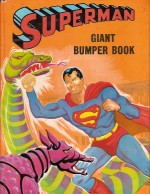
By various (Top Sellers)
No ISBN: ASIN B000RFBZYI

By the end of the 1960s I was an unashamed addict for all things comic. Whether home grown material targeting every market from football strips in Lion, Tiger or Victor to adapted literary classics in Look and Learn, foreign strip-books such as Asterix and Tintin or the comparatively diminutive American imports from DC, Marvel, Archie, Harvey, Gold Key and Charlton, I wanted them all and relished every graphic moment.

Even re-reading the same stories wasn’t important, as this sparkling book, still riding the coattails of the late 1960s superhero boom sparked in the UK by the live action Batman TV show and the Superman/Superboy animated cartoon show, will attest.

Released for the Christmas market this Superman Bumper Book combined text-stories and puzzle material generated by the Mick Anglo studio with a selection of relatively recent or reprinted Man of Steel yarns, all outrageously re-coloured in the flat yet beguiling full-colour process which graced most Top Seller Annuals.

I suspect the text features were intended for or left over from the 1967-1968, black and white TV Tornado weekly…

The extravaganza opens with an Editorial Direct Current feature exploring the bizarre preponderance of “LL” names in the character’s mythology after which ‘When Superman Killed his Friends’ (by E. Nelson Bridwell & Pete Costanza from Superman #203, January 1968) offered an eerie alien menace and a seemingly impossible dilemma for the Action Ace. This was followed by a prose Batman adventure ‘Mr. Kronos Gets Bats in His Belfry’ probably by Anglo himself and very much in the manner of the Adam West/Burt Ward TV series, after which ‘The Fortress of Fear’ pitted Superman against his own suddenly sentient arctic sanctuary in a chilling thriller originally seen in #204 by Cary Bates & Al Plastino.

Bracketed by a brace of ‘Laugh-In’ pages of spot-gags ‘The Jolly Jailhouse’ (Superman 139, August 1960 by Jerry Coleman & Plastino) provided a light-hearted clash between a would-be dictator and World’s Most Uncooperative political prisoner Clark Kent, after which Special Agent Clint Cutter travelled to the Middle East to squelch a deadly arms race in the prose vignette ‘Guns For Sale’.

Mr. Mxyzptlk was looking for trouble when he manifested a ‘Trio of Steel’ (Superman #135, February 1960, by Jerry Siegel & Plastino) after which the photo-feature ‘Super Tec!’ examined the then current Sexton Blake TV series before Superman returned and was almost killed by the foppish and ludicrously lethal ‘Captain Incredible’ (Action Comics #354, September 1967 and courtesy of Bates & Plastino).

‘Challenge to Superman’ was another Anglo-originated prose short-story after which two more Plastino yarns appeared. ‘Superman’s Black Magic’ (scripted by Siegel for Superman #138, July 1960) saw the hero impersonate the Devil to scam some crooks whilst ‘The Great Mento’ (by Robert Bernstein, #147, August 1961) found the hero apparently helpless against a mind-reading blackmailer. Those comic classics were separated by a cartoon adventure of ‘The Friendly Soul’ by cartoonist and acclaimed industry historian Denis Gifford.

Following a Henry Boltinoff Cap’s Hobby Hints and a photo-feature on ocean-going ‘Super ships’ the seasonal sensationalism wrapped up with a gloriously arch yarn of romantic double-dealing as Lois Lane seemingly became ‘The Bride of Futureman’ in a brilliant piece of fluff from Coleman & Kurt Schaffenberger from Superman #121 (May 1958) or more likely Superman Annual #4 where it was latterly reprinted.

Perhaps their only true value now is as beloved nostalgic icons of times past, but surely that’s the whole point of books like this and comics and toys in general…
© 1970 National Periodical Publications, Inc., USA. Published by Top Sellers, Ltd. All rights reserved.

The Beano Book 1970
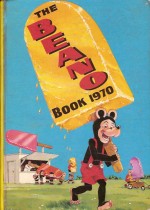
By various (DC Thomson)
Retroactively awarded ISBN: 978-0851160078

For many British readers and fans Christmas means The Beano Book (although Scots worldwide have a pretty fair claim that the season belongs to them with collections of The Broons and Oor Wullie making every December 25th massively magical) so I’ve chosen another exquisite edition to encapsulate and epitomise my personal seasonal sympathies. As ever my shamefully meagre knowledge of the creators involved forces me to a few guesses in the hope that someone with better knowledge will correct me whenever I get it embarrassingly wrong again…

This uncharacteristically summery tome opens with a double-page splash of the Bash Street Cats and Dogs (by Gordon Bell, I think) after which Roger the Dodger, Biffo the Bear and the (technically, at least) human Bash Street Kids welcome one and all to this year’s comic masterpiece.

The stories proper begin with a David Sutherland Biffo strip wherein the overworked cover-star goes for a less than restful holiday, whilst the Bash Street Kids find themselves the reluctant owners of an Elephant and the capable Kevin and Kenneth Knight discover action and adventure on a safari to Africa in their wondrous vehicle The Hovertank – a marvellous thriller from (I suspect) Sandy Calder.

Ronald Spencer’s painfully un-PC but exceedingly hilarious Little Plum follows and after puzzle pages ‘Spot the Spots!’ Dennis the Menace makes his first appearance courtesy of David Sutherland, after which ‘Plugorama’ examines notable moments in the life of the Planet’s Ugliest Boy – complete with puzzle page – and Lord Snooty (one of the longest running strips in the comic’s history) is introduced to the world of fashion in a canny yarn from Robert Nixon.

“Fastest boy on Earth” Billy Whizz by Malcolm Judge speeds into the surreal Zone, before Minnie the Minx learns to love and hate ballet lessons in a stunning piece from Jim Petrie after which the two-page Who’s Who quiz is followed by Pups Parade starring the Bash Street Pups (the unlovely pets of those unlovely kids) by Gordon Bell.

Robert Nixon’s Roger the Dodger features a long look at his library of scams and dodges and Snooty returns, testing the shrink-ray of Professor Screwtop, before Dennis spreads his net to terrorise anglers and ‘Here Come the Q-Bikes’ dedicates 16 pages to the adventures of the plucky cyclists and their weaponised velocipedes complete with tests and puzzles from Andy Hutton. The Q-Bikes were a team of young adventurers with technologically advanced push-bikes who always found danger and excitement wherever they pedalled.

Toots of the Bash Street Kids had a solo spot this year combining girly things like cooking and cleaning with malevolence and mayhem after which Biffo visited his voracious cousins The Three Bears in America and came home with a whole new and wholly unwelcome physique. Billy Whizz then revealed the secret of his unique hair-do and Minnie suffered surreal torture at the hands of a hidden hapless enemy…

Smiffy and Billy Whizz revealed some cunning Trick Pics before The Bash Street Cats, Dogs and Kids all failed to take over the Beano Book whilst Roger the Dodger outsmarted himself and The 3 Bears lost out to arch rival Grizzly Gus but still got to gobble all the vittles in a smart yarn by Bob McGrath.

Boy superhero Billy the Cat saved Christmas in a smart thriller by Sandy Calder after which Little Plum was hard pushed to cope with a heavy snowfall and, after a make-your-own-picture-dice page entitled ‘Ma Whizz, the Dodging Bear’, we spend a ‘Weekend with Alfie’ (Billy Whizz’s Kid Brother) thanks to the ever impressive Malcolm Judge and The Three Bears then fail in their attempt to invade the local general store…

An extended Bash Street Kids plumbing fiasco follows that, after which Dennis the Menace brings the fun to a full stop even whilst plugging his own dedicated Christmas Special…

These annuals were traditionally produced in the wonderful “half-colour” British publishers used to keep costs down. This was done by printing sections of the books with only two plates, such as blue/Cyan and red/Magenta: The versatility and colour range this provided was astounding. Even now this technique inescapably screams “Holiday extras” for me and my contemporaries.

This is another astoundingly compelling edition, and even in the absence of legendary creators such as Dudley Watkins, Leo Baxendale and Ken Reid there’s no appreciable decline in the mayhem and anarchy quotas and so much merriment on offer I can’t believe this book is over forty years old. If ever anything needed to be issued as commemorative collections it’s these fabulous DC Thomson annuals…

Divorcing the sheer quality of this brilliant book from nostalgia may be a healthy exercise – perhaps impossible, but I’m perfectly happy to simply wallow in the magical emotions this ‘almost-colourful’ annual still stirs. It’s a fabulous laugh-and-thrill-packed read, from a magical time and turning those stiffened two-colour pages is always an unmatchable Christmas experience, which is still relatively easy to find these days.

Can I interest you in a little slice, perhaps…?
© 1969 DC Thomson & Co., Ltd.