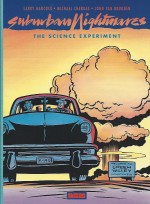
Suburban Nightmares: the Science Experiment


By Larry Hancock, Michael Cherkas, John van Bruggen & various (NBM)
ISBN: 978-0-91834-880-7

The huge outpouring of new comics which derived from the birth of American comicbooks’ Direct Sales revolution produced a plethora of innovative titles and creators – and, let’s be fair here – a host of appalling, derivative, knocked-off, banged-out plain and simple tat too.

Happily it’s my party and I choose to focus on the good and even great stuff…

The 1980s were an immensely fertile time for English-language comics-creators. In America an entire new industry had started with the birth of dedicated comics shops and, as innovation-geared specialist retail outlets sprung up all over the country, operated by fans for fans, new publishers began to experiment with format and content, whilst eager readers celebrated the happy coincidence that everybody seemed to have a bit of extra cash to play with.

Consequently those new publishers were soon aggressively competing for the attention and cash of punters who had grown resigned to getting their on-going picture stories from DC, Marvel, Archie and/or Harvey Comics. European and Japanese material began creeping in and by 1983 a host of young companies such as WaRP Graphics, Pacific, Eclipse, Capital, Now, Comico, Dark Horse, First and many others had established themselves and were making impressive inroads.

New talent, established stars and fresh ideas all found a thriving forum to try something a little different both in terms of content and format. Even smaller companies and foreign outfits had a fair shot at the big time and a lot of great material came – and, almost universally, as quickly went – without getting the attention or success they warranted.

Most importantly, by avoiding the traditional family sales points such as newsstands, more mature material could be produced: not just increasingly violent and with nudity but also far more political and intellectually challenging too.

Moreover, much of the “kid’s stuff” stigma had finally dissipated and America was catching up to the rest of the world in acknowledging that sequential narrative might just be a for-real actual art-form, so the door was wide open for gosh-darned foreigners to make a few waves too…

One of the most critically acclaimed and just plain fun features came from semi-Canadian outfit Renegade Press which, spun out by a torturous and litigious process from Dave Sim’s Canadian Aardvark-Vanaheim publishing outfit, set up shop in the USA and began publishing at the very start of the black and white comics bubble in 1984, picking up a surprisingly strong line of creator-based properties and some genuinely remarkable and impressive new series such as Ms. Tree, Journey: The Adventures of Wolverine MacAlistaire, Normalman, Flaming Carrot, the first iteration of Al Davison’s stunning Spiral Cage and the compulsive, stylish Cold War, flying-saucer paranoia-driven series The Silent Invasion amongst many others.

This stunningly stylish saga – which I simply must get around to soon – welded 1950s homeland terrors (invasion by Reds, invasion by aliens, invasion by new ideas…) with film noir and 20-20 hindsight and was a truly fresh and enticing concept in the Reagan-era Eighties, but of equal if not greater interest was the inclusion of ancillary back-up tales utilising the same milieu and themes which proved popular enough to springboard into their own short-lived title…

This first superbly oversized monochrome tome – a whopping 280 x 205mm – gathers that stand-alone material from The Silent Invasion and Suburban Nightmares with the three creators Larry Hancock, Michael Cherkas, John van Bruggen, and a few invited guests, playfully swapping jobs and pilfering/homaging other stylisations and forms to produce a delightful wealth of twisted tales and shocking stories that will, even now, astound fans of many classic genres such as sci-fi, horror, conspiracy theory, crime, romance and even comedy…

The 1950s in American was a hugely iconic and paradoxical time. Incredible scientific and cultural advancements and great wealth inexplicably arose amidst an atmosphere of immense social, racial, sexual and political repression with an increasingly paranoid populace seeing conspiracy and subversive attacks in every shadow and corner of the rest of the world.

Such an insular melting pot couldn’t help but be fertile soil for imaginative outsiders to craft truly incisive and evocative tales, especially when wedded to the nation’s fantastic –and ongoing – obsessions with rogue science, flying saucers, gangsterism and espionage…

In 1983 the temptation was clearly too much for the USA’s less panicky northern neighbours, and Hancock, Cherkas & Van Bruggen brilliantly mined the era for these stunning, stylish and clever yarns, subsequently pulling off the impossible trick of re-capturing a fleeting zeitgeist…

The macabre, mirth, mood and menace commences with the eponymous 4-part thriller ‘The Science Experiment’ (script by Hancock, pencils Van Bruggen, inks and letters from Cherkas) set in the early boom years of the 1950s, wherein an idyllic new town built on the edge of an operational government atomic bomb testing site slowly reveals its terrible dark secret…

In ‘Welcome to Green Valley’ the latest ultra-modern planned community in Nevada accepts new school science teacher Sam Donaldson and his wife Ruth with open arms. They’re the perfect nuclear family with son Rusty already making friends at Hoover High and another baby on the way. Soon they’re all getting on famously with everybody – or at least the adults are…

However, soon after flirtatious neighbour Theresa Morrow confides to Ruth that she’s also expecting, the poor thing has a minor fall. When the concerned Donaldsons warn the doctor, they receive the tragic but impossible news that Theresa has inexplicably died, but was “never pregnant”…

In the shadow of a fresh mushroom cloud, ‘An Ill Wind blows in Green Valley’ sees bereft Barry Morrow turning to drink whilst Sam meets Hospital administrator Dr. Stewart Carver; a keen fan and follower of the regular nuclear spectacle occurring fifty miles outside his office window…

Still unsettled, Sam checks out a few books about radiation from the local library, unaware that by doing so he’s made it onto a very special and secret list…

His concern increases when he inadvertently learns that his predecessor at Hoover High consulted the same tomes before mysteriously quitting and disappearing, but it’s Principal Daniels who panics when Donaldson finds that some of old Charlie Simmer‘s notes and school journals are languishing in a box at school secretary Madge‘s house…

Too busy and wrapped up to help his son Rusty with his science project, Sam goes to Madge’s house only to find she’s been burgled. Although the place has been ransacked the only thing missing is Simmer’s journals, but before he can process it all, Barry attacks Sam, accusing Donaldson of having had an affair with Theresa…

‘Dark Secrets of Green Valley’ finds Sam barracked by Principal Daniels, another atomic apologist who can’t contemplate any thought that radioactive fallout might be harmful. Whilst Ruth is having an ante-natal check-up, Carver confronts Sam and accuses him of scaremongering, confiding also that the hospital has been running a government-sponsored survey into radiation for years and that the atomic tests are categorically harmless…

Sam is unconvinced, especially as he has noticed how few young children live in the bustling town. Dwelling on the fact that the Hospital’s huge maternity unit has only one baby in it, he leaves with Ruth but all such thoughts are driven from him when Barry tries to run them down in the parking lot…

Horrific answers are forthcoming in the shocking conclusion when the now rational and repentant Barry meets the Sam and discloses his own part in a shocking conspiracy to cover-up what radiation does to foetuses and the outrageous and draconian steps taken by a panicking government desperate not to lose face…especially after spending so much money building the perfect City of Tomorrow…

The mysteriously low conception rate is explained at last but when Sam points out how Barry is still deluding himself and underestimating the lengths Carver has gone to, ‘The Fate of Green Valley’ inevitably culminates in a welter of blood and death…

After the compelling tension and trauma of the title tale, ‘Be Home Before it gets Dark!’ (scripted by Hancock and printed from Van Bruggen’s unlinked pencils) switches tone if not time-period as a little lad desperate to prove his bravery stays out late with the big kids and learns that sometimes there really are monsters in the night, after which ‘Buster Takes a Nap’ describes the problems that occur when a provident, prudent and friendly family promise too many friends and neighbours a place in their brand new bomb shelter. Of course they’ll never really have to honour those pledges, will they…?

‘The Inheritance’, with Cherkas tackling all the art chores, recounts a little boy’s tale about the scary man next door. We all know about those grouches; shouting, cursing, destroying kid’s toys and digging the gardens in the middle of the night, but this one was really mean. Perhaps that’s why so many kids ran away from home and were never seen again…

Stanley Morrison was ‘Just another Joe’ (script by Hancock, pencils Van Bruggen, inks Cherkas); a decent, loyal American in suburban Apple Hill who sold insurance and spent his spare time denouncing colleagues and neighbours to the FBI for un-American activities. It was mere coincidence that they all just happened to be more successful or popular than him. Of course, a guy like that is really hard to live with, but his long-suffering wife was a decent, loyal American too…

Veteran inker Bob Smith joined Van Bruggen & Hancock for the paranoid tribute to the earth-shattering advent of Rock ‘n’ Roll as Mrs. Ellen Nelson ruminates on why her son is acting so weird. What makes him hide in his room for hours at a time? It might be Martian abduction, atomic mutation, government meddling, commie mind-manipulation or something even worse ‘For all we Know’…

Bob Nevin always took the 7:13 train to his job in the city but his tidy, happy life began to instantly and inexplicably unravel the day he caught ‘The Seven-Thirty-Three’ in a surreal and chilling homage to the Twilight Zone pencilled by Cherkas and inked by Van Bruggen, whilst the edgily sardonic ‘Suburban Blight’ saw the illustrators trade places to recount the all-out war between a man and the dandelions that desecrated his otherwise perfect lawn before this splendid initial collection concludes with the Hancock & Cherkas fantasy ‘June 1953’ wherein diligent and hard-working Larry Hillman doesn’t come home one night…

When he turns up the next day Larry is a changed man. Now happy, calm and friendly, he quits his job, ignores all his responsibilities and begs his family to come with him when the aliens who abducted him return in a month to take them all to the perfect world of Alpha Centauri…

Crafted in a boldly adventurous range of visual styles and long-overdue for a modern revival, these beguiling and enthralling Suburban Nightmares are an unforgettable gateway to a eerily familiar yet comfortably exotic era and one no fan of thriller fiction can afford to ignore.
Suburban Nightmares: the Science Experiment ©1990 Michael Cherkas, Larry Hancock and John van Bruggen. Other stories © 1986, 1987, 1988 Michael Cherkas, Larry Hancock and John van Bruggen. All rights reserved. NBM Publishing
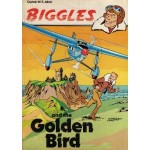
W.E. Johns’ Biggles and the Golden Bird


By Björn Karlström, translated by Peter James (Hodder and Stoughton)
ISBN: 978-0-34023-081-7 (hb) 0-340-23081-9 (pb)

Although one of the most popular and enduring of all True Brit heroes, air detective Squadron Leader James Bigglesworth – immortally known as “Biggles” – has never been the star of British comics you’d reasonably expect.

Whilst the likes of Sherlock Holmes, Dick Turpin, Sexton Blake, Dick Barton and others have regularly made the jump to sequential pictorials, as far as I can determine the only time Biggles hit the funny pages was as a beautiful strip illustrated firstly by Ron Embleton and later Mike Western for the lush, tabloid-sized photogravure weekly TV Express (issues 306-376, 1960-1962). Even then the strip was based on the 1960 television series rather than the armada of books and short stories generated over Johns’ 56-year career.

Much of this superb stuff has been reprinted in French editions but remains criminally uncollected in the UK. Indeed Biggles is huge all over the Continent, particularly Holland, Belgium and France, which makes it doubly galling that only a short-lived Swedish interpretation of Biggles has ever made the transition back to Blighty…

Created by World War 1 flying veteran and aviation enthusiast William Earl Johns (February 5th 1893-June 21st 1968), the airborne adventures of Biggles, his cousin the Hon. Algernon Montgomery Lacey AKA “Algy”, Ginger Hebblethwaite and their trusty mechanic and dogsbody Flight Sergeant Smyth ran as prose thrillers in the magazines Modern Boy, Popular Flying and Flying – periodicals which he designed, edited and even illustrated for.

Initially aimed at an older audience, the Biggles stories quickly became a staple of boy’s entertainment in anthology and full novels (nearly 100 between 1932 and 1968) and a true cultural icon. Utilising the unique timeless quality of proper heroes, Biggles and Co. have waged their dauntless war against evil as combatants in World Wars I and II, as Special Air Detectives for Scotland Yard in the interregnum of 1918-1939 and as freelance agents and adventurers in the Cold War years…

“Captain” W.E. Johns was one of the most prolific writers of the 20th century and wrote over 160 books in total as well as innumerable features and articles ranging from gardening to treasure-hunting, aviation, crime fiction, pirates and historical fact and fiction.

He created many heroic novel series which shared the same continuity as Biggles: 6 Steeley novels starring Deeley Montfort Delaroy, a WWI fighter ace-turned-crimebuster between 1936-1939, 10 volumes of commando Captain Lorrington King AKA Gimlet (1943-1954) and a 10 volume science fiction saga starring retired RAF Group Captain Timothy ‘Tiger’ Clinton, his son Rex and boffin Professor Lucius Brane who voyaged to the stars in a cosmic ray powered spaceship between 1954 and 1963.

Although much of his work is afflicted with the parochial British jingoism and racial superiority that blights much of the fiction of the early 20th century, he was certainly ahead of his time in areas of class and gender equality. Although Algy is a purely traditional plucky Toff, working class Ginger is an equal partner and participant in all things, whilst Flight Officer Joan Worralson was a WAAF pilot who starred in 11 Worrals novels between 1941 and 1950, commissioned by the Air Ministry to encourage women to enlist in the Women’s Auxiliary Air Force.

In 1977, veteran Swedish author and cartoonist Björn Karlström returned to comics when publisher Semics commissioned him to produce four new Biggles adventures; ‘Het Sargasso mysterie’, ‘Operatie goudvis’, ‘De tijger bende’ and ‘Ruimtestation Aries’ (The Sargasso Mystery, Operation Goldfish, The Tiger Gang and Space Station Aries, respectively) which were picked up by Hodder and Stoughton in 1978, deftly translated by Peter James and released as Biggles and the Sargasso Triangle, Biggles and the Golden Bird, Biggles and the Tiger and Biggles and the Menace from Space.

Although deeply mired in the stylisation and tone of Hergé’s Tintin, to my mind the most authentic-seeming to Johns’ core concept was the second, which I’ve chosen for today’s international festival.

Swedish designer, author and aviation enthusiast Björn Karlström began working in comics for the vast Scandinavian market in 1938, producing scale-model plans and drawings for the magazine Flygning. In 1941 he created the adventure strip ‘Jan Winther’ for them before devising international speculative fiction hit ‘Johnny Wiking’ and followed up with another SF classic which closely foreshadowed the microscopic missionaries of (Otto Klement, Jerome Bixby and Isaac Asimov’s) Fantastic Voyage in ‘En Resa i Människokroppen’ (1943-1946), before taking over Lennart Ek’s successful super-heroine strip ‘Dotty Virvelvind’ in 1944.

Karlström left comics at the end of the war and returned to illustration and commercial design, working on jet fighters for Saab and trucks for Scania.

Whereas most of his earlier comics were rendered in a passable imitation of Alex Raymond’s Flash Gordon, when he was convinced to produce the Biggles books Karlström adopted a raw, lean version of Hergé’s Ligne Claire style which adds a welcome sense of period veracity to the tales but often offends and upsets Tintin purists…

Biggles and the Golden Bird is set in the early 1930s and begins when the aerial paladins are asked to pilot a new super plane in an attempt to break the world long-distance flying record. Fact freaks might be intrigued to discover that the Fairview of this story is closely based on the record-smashing Fairey Long Range Monoplane, which stars in a cool plans and diagrams section at the back that also includes the DeHavilland C-24 Autogiro which also features prominently in this ripping yarn…

When mysterious intruders brazenly steal the Fairview, intelligence supremo General Raymond dispatches Biggles, Algy and Ginger to track them down and retrieve the prototype air-machine. A crashed light plane and a rustic witness point the trio in the direction of Scotland and dashing North in a ministry-provided autogiro (that’s a cross between a plane and an early kind of helicopter) they rendezvous with a fishing boat whose captain also witnessed strange sky shenanigans only to be attacked and overcome…

Their enigmatic adversaries had anticipated the pursuit and laid a trap, but with a typical display of pluck and fortune Ginger turns the tables and drives off the thugs. The real Captain Gilbert then imparts his information and the autogiro brings them to a desolate ruined castle on a rocky headland, where Ginger and Algy are captured by an armed gang whilst poor Biggles plunges over a cliff to certain doom…

Naturally the Ace Aviator saves himself at the last moment and subsequently discovers a sub-sea cavern and deep-sea diving operation just as his pals cunningly escape captivity. Fortuitously meeting up the trio follow their foes and find a sunken U-Boat full of gold…

The uncanny reason for the theft of the Fairview and the mastermind behind it all is revealed when arch-enemy and all-around blackguard Erich von Stalhein arrives to collect the recovered bullion and flee to a new life in distant lands, leading to a blistering battle and spectacular showdown…

Fast and furious, full of fights and hairsbreadth chases – although perhaps a touch formulaic and too steeped in the old-fashioned traditions for grizzled purists – this light and snappy tale would delight newer readers and general action fans and is readily available in both hardback and softcover editions, since the books were re-released in 1983 in advance of the star-studded but controversial British film-flop Biggles: Adventures in Time.
Characters © W.E. Johns (Publications). Text and pictures © 1978 Björn Karlstrm. English text © 1978 Hodder and Stoughton Ltd.

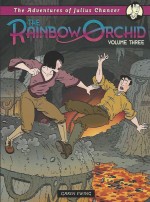
The Rainbow Orchid Volume 3 (the Adventures of Julius Chancer)


By Garen Ewing (Egmont UK)
ISBN: 978-1-4052-5599-8

Plucky True Brit Julius Chancer and his fellow daredevil travellers began popping up around 2003 in self-published mini-comics and small press publications  – I wish there was a less loaded or pejorative term for magazines produced by devoted, if unpaid, creators – before migrating online (see www.rainboworchid.co.uk) to rapturous praise from industry and public alike.

Tintin publisher Egmont sagaciously picked up the series and in 2009 released the first part of the rousing trilogy which fabulously referenced old world fantasy romances for this new yarn of gripping globe-girdling, treasure-seeking derring-do, which has quickly become a notable addition to the ranks of magnificent all-ages full-colour adventure albums.

Splendidly extending the appeal of period dramas and classic adventures tales such as Rider Haggard’s safari sagas and Conan Doyle’s Professor Challenger stories, and set in the fabled and fabulous Roaring Twenties, the first two books of the trilogy detailed how Chancer, young but capable assistant to renowned historical researcher and gentleman breeder of orchids Sir Alfred Catesby-Grey, undertook a mission to the wilds of the East in search of a legendary bloom mentioned in legends dating back to Alexander the Great.

Sir Alfred had been approached by Lord Reginald Lawrence, scion of an ancient and noble house, who was duped into an impossible wager by repellent entrepreneur Urkaz Grope. At stake was the “Trembling Sword of Tybalt Stone”; a priceless antique and the seat of the family’s honour since 1445, without which Lord Lawrence would have to surrender all his estates and titles…

To win the wager Lawrence needed an example of Iriode Orchino or the rainbow orchid, a mythical bloom last seen by Alexander over two thousand years ago. Although Catesby-Grey initially pooh-poohed the whole story, Julius was keen to investigate, perhaps as tempted by the prospect of adventure and a large fee as by the urgings of plucky Lady Lily, Lawrence’s daughter and a silent film actress recently returned from Hollywood to the heart of the Empire.

Grope had a highly secret agenda of his own and no principles at all, whilst the vulgarly intrusive journalist William Pickle had no scruples and definitely no fear as he sniffed out news and controversy like an obsessed bloodhound.

Moreover Lily’s Movie Publicity Agent Nathaniel Crumpole always seemed in the thick of whatever trouble was brewing – could even an American be that determinedly naive?

Chancer determined to risk all in tracking down the orchid and, despite a series of viciously calculated ploys by Grope and his gang of cutthroats, set off with Lily and Crumpole for Karachi and the fantastic flower’s last reported whereabouts…

Catesby-Grey once ran a very hush-hush government artefact-hunting department dubbed the Empire Survey Branch, but that ultra-discreet body had fallen upon hard times. When he pursued some enquires amongst his old clandestine colleagues, Sir Alfred found that lack of funding had placed them under the aegis of the military and twisted their working philosophy into a rabid hunt for ancient weapons of mass destruction…

After some deadly clashes with Grope’s murderous fixer Evelyn Crow and her hired thugs, Julius, Lily, Crumpole and pilot Benoit Tayaut reached India, narrowly escaping blazing doom as their aeroplane crashed. Rendezvousing with British Civil Servant Major Fraser-Tipping the explorers began the next stage of their trek with Crow and cronies in hot pursuit…

In England, Pickle, who had first broken the story of the orchid wager, was taken prisoner by an influential and affluent secret society, although his newshound colleague George Scrubbs diligently stayed on his trail whilst Grope’s plans to bully and buy his way into the upper echelons of English Society proceeded apace.

In India, after another brutal attack by Crow’s goons, the voyagers found an ally in Meru, manservant of incredibly aged missionary Father Pinkleton who claimed to have seen an actual rainbow orchid.

Heading into the wastes of Hasan Wahan, Julius and his enlarged party were unaware that they had a traitor in their group. After making one more incredibly lucky and fantastic discovery and nearing the end of their quest, Crow launched another murderous assault and one of our plucky heroes seemingly plunged to his death…

This final instalment opens with the survivors of Chancer’s party recuperating in a native village, when Crumpole – who hadn’t fallen far after hurtling over a cliff – wanders in, accompanied by Sir Alfred and Mr. Drubbin, an agent of the Empire Survey Branch. The pair have rushed to Asia in a desperate hope of finding something valuable enough to save the ESB from closure…

They are stalked by the remorseless Crow who, despite her wounds, is obsessively determined to complete her mission at all costs…

Following Pinkleton’s map the united expedition trudges off into the wilds and eventually reaches the mountainous region of Uskandagadri, from whence Meru originated years before. Drubbin then informs the explorers that they are being followed. Lying in wait, Chancer and Drubbin ambush and capture Crow as in England, Scrubbs – with the grudging assistance of Grope’s disgraced and discharged botanist Newton – infiltrates a meeting of the Black Lion secret society in a disastrous attempt to rescue Pickle and fellow prisoner Eloise Tayaut …

After seven days in the mountains, Chancer’s party find millennial clues left by Alexander and then stumble into a terrifying whirlpool before fortuitously washing up in a lost land of fantastic creatures and small levitating castles.

Unfortunately the warriors manning the flying fort recognise Meru and it’s clear that he is far from welcome…

Once the tragic hidden history of Meru and the incredibly ancient, super-scientific lost kingdom comes out, the explorers decide to escape but become embroiled in unrest caused by Meru’s return. Moreover, Evelyn is still trying to murder Julius. Drubbin, with an agenda of his own, takes the opportunity to pilfer knowledge and weapons from the city’s Great Library – secrets which caused the ultimate destruction of the magnificent civilisation eons ago…

As the explorers flee through subterranean caverns, Julius finally finds the rare bloom he’s been searching for and clashes with Crow one last time.

With the deadline for the wager fast-approaching and the Trembling Sword of Tybalt Stone seemingly lost to Lily and her father, the adventurers pile aboard a flying keep and head for Britain, unaware of the full scope of Grope’s plans.

Luckily Julius picked up a vital scrap of information in his climactic duel with Crow and after crashing to Earth at the British Empire Exhibition – and the moment of Grope’s ultimate triumph – delivers a nasty surprise which completely scuppers the monstrous usurper and resoundingly saves the day…

Enchanting, beguiling, astonishingly authentic and masterfully illustrated in the seductive Ligne Claire style, Garen Ewing’s stunning pastiche of the genre pioneered by Hergé and E.P. Jacobs places this magical yarn amongst the very best of graphic narratives, and in these books he has managed to synthesise something vibrant, vital, fresh and uniquely entertaining for modern readers of all ages.

Pure comics mastery – and where else could you get hot, fresh, thrill-a-minute nostalgia, just like your granddad used to love?

I can’t wait for more – and isn’t that the best test of a perfect book?
© 2012 Garen Ewing. All Rights Reserved.

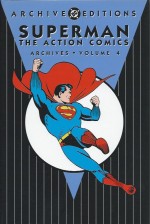
Superman: the Action Comics Archives volume 4


By Jerry Siegel & Joe Shuster, Don Cameron, John Sikela, Ed Dobrotka, Sam Citron, Ira Yarbrough, Jack Burnley & Stan Kaye (DC Comics)
ISBN: 1-56389-710-5

Without doubt the creation of Superman and his unprecedented adoption by a desperate and joy-starved generation quite literally gave birth to a genre if not an actual art form.

Within three years of his 1938 debut the intoxicating blend of eye-popping action and social wish-fulfilment which hallmarked the early exploits of the Man of Tomorrow had grown to encompass cops-and-robbers crime-busting, reforming dramas, science fiction, fantasy and even whimsical comedy, but once the war in Europe and the East snared America’s consciousness, combat themes and patriotic imagery dominated most comicbook covers if not interiors.

In comic book terms at least Superman was master of the world, and had already utterly changed the shape of the fledgling industry. There was the popular newspaper strip, a thrice-weekly radio serial, games, toys, foreign and overseas syndication and the Fleischer studio’s astounding animated cartoons.

Thankfully the quality of the source material was increasing with every four-colour release and the energy and enthusiasm of Jerry Siegel and Joe Shuster had informed and infected the burgeoning studio that grew around them to cope with the relentless demand.

Superman was definitely every kid’s hero, as confirmed in this classic compendium, and the raw, untutored yet captivating episodes reprinted here had also been completely embraced by the wider public, as comicbooks became a vital tonic for the troops and all the ones they had left behind…

Due to the exigencies of periodical publishing, although the terrific tales collected in this fourth hardback tome putatively take the Man of Steel to January 1944, since cover-dates described return-by, not on-sale dates they were all prepared well in advance, and real-world events and reactions took a little time to filter through to the furious four-colour pages, so many of the stories have a tinge of uncertainty and foreboding that was swiftly fading from the minds of the public as the far more immediate movie-newsreels showed an inexorable turning of the tide in the Allies’ favour…

Nevertheless since invaders, spies and saboteurs had long been a tried-and-true part of the narrative currency of the times, patriotic covers – which had been appearing on many comicbooks since the end of 1940 – piled on the galvanising pressure and resulted here in some of the most striking imagery in Superman’s entire history.

Spanning October 1942 to January 1944, this fourth delicious deluxe hardcover collection of the Man of Tomorrow’s exploits reprints the lead strip from issues #53-68 of totemic, groundbreaking anthology Action Comics, following the never-ending battle for Truth, Justice and the American Way to a point where War’s end was perhaps in sight and readers could begin considering a life without potential invasion and subjugation, seen here by an almost imperceptible shift from a war footing to stories of home-grown domestic dooms and even some whimsically fun moments…

Co-creator Jerry Siegel was finally called up in 1943 and his prodigious scripting output was somewhat curtailed, necessitating more and more contributions from the ingenious and multi-faceted Don Cameron and with Shuster – increasingly debilitated by failing eyesight and tied up in producing the newspaper strip, the trusty, ever-changing stalwarts of the Superman Studio were drawing most of the comicbook output at this time. Following a fulsome Foreword from publisher and long-time fan Bill Schelly the wonderment commences with Action Comics #53 and Siegel & John Sikela’s fantastic thriller ‘The Man Who put Out the Sun!’ wherein bird-themed menace Night-Owl uses “black light” technology and ruthless gangsters to plunder at will until the Man of Steel takes charge. In #54 ‘The Pirate of Pleasure Island!’ followed the foredoomed career of upstanding citizen Stanley Finchcomb, a seemingly civilised descendent of ruthless buccaneers, who succumbed to madness and became a ruthless marine marauder. Or perhaps he truly was possessed by the merciless spirit of his ancestor Captain Ironfist in this enchanting supernatural thriller by Siegel & Sikela…

Ed Dobrotka stepped in to ink the whimsical Li’l Abner spoof ‘A Goof named Tiny Rufe’ as the desperate cartoonist Slapstick Sam began to plagiarise – and ruin – the simple lives of a couple of naïve hillbillies until Superman interceded, whilst ‘Design for Doom!’ in Action #56, by Siegel & Sikela, pitted the Man of Tomorrow against a deranged architect who created global, city-wrecking catastrophes simply to prove the superiority of his own creations.

Superman was pitifully short on returning villains in the early days so #57’s return of the Prankster as ‘Crime’s Comedy King’ made a welcome addition to the Rogues Gallery, especially as the Macabre Madcap seemed to have turned over a new philanthropic leaf. Of course there was malevolence and a big con at the heart of his transformation, after which the Action Ace stepped into Batman territory for #58’s gruesome drama ‘The Face of Adonis!’ (illustrated by Sam Citron & the Superman Studio) which saw a rogue plastic surgeon transform an aging movie star into a grisly grotesque, holding his face hostage and turning the celluloid hero into his personal thief. Even Superman could not prevent this dark drama from ending in tragedy…

Sheer fanciful fantasy featured in 59#s ‘Cinderella – a la Superman’ (Sikela) as in an early experiment in continuity-busting, Clark Kent had to babysit Lois’ niece Susie Tomkins and dreamed his heroic alter ego into becoming the Fairy Godmother in a witty and imaginative re-enactment of the classic tale. Susie would return over and again as a pestiferous foil for both Clark and Superman…

A different kind of prototype Imaginary Tale was seen in #60 with ‘Lois Lane – Superwoman!’ wherein the hospitalised and concussed go-getter dreamed that she developed abilities equal to the Metropolis Marvel’s after a blood transfusion from the Man of Steel. Despite proving her worth over and again as a costumed crusader, in the end Lois fell into cliché by cornering Superman and demanding they marry…

Siegel & Sikela ended their Action Comics partnership in #61 with ‘The Man they Wouldn’t Believe!’ as Lois seemingly fell for a flamboyant playboy and Clark was panicked into revealing his secret identity in a vain attempt to win her back. Typically she refused to believe him and every effort Kent made to prove his Kryptonian mettle ended in humiliating disaster. How fortunate, since Lois was playing a part to expose a ruthless criminal…

Don Cameron took over as scripter with #62, kicking off a fine run with the utopian future shocker ‘There’ll Always be a Superman!’ (with art by Dobrotka) as an aged sage in 2143AD regaled his grandchildren with tales of how the ancient Man of Tomorrow polished off Nazis who had enslaved their ancestor as part of a plan to build U-Boat bases under America – an old sea yarn confirmed by the storyteller’s other houseguest, Superman himself…

Shifting gears to nail-biting suspense, Action #63 revealed ‘When Stars Collide!’ (Cameron & Ira Yarbrough), the cosmic calamity that caused Superman to lose his memory and fall under the sway of devious and manipulative crooks. As if that wasn’t enough, the debris from the stellar smash was falling inexorably to Earth and the only man who could save us had no idea what to do until Lois shook his wits clear…

Another returning villain debuted in #64 in the Dobrotka- illustrated classic ‘The Terrible Toyman’, wherein an elderly inventor of children’s novelties and knick-knacks began a spectacular spree of high-profile and potentially murderous robberies, with Lois as his unwilling muse and accessory after which ‘The Million-Dollar Marathon!’ purloined the venerable plot of George Barr McCutcheon’s 1902 novel Brewster’s Millions (and filmed four times – 1915, 1921, 1926 & 1935 – before Action Comics #65 made it the subject of the October 1943 issue) to show Superman helping a poor doctor spend $1,000,000 in twenty-four hours to inherit twice that amount for a children’s hospital. Trying to queer the deal was the poor medic’s rascally cousin and a pack of very violent thugs…

Heartstrings were further tugged in #66 when an elderly blind millionaire was reunited with his long-lost grandson in ‘The Boy who Came Back!’ Even after Superman reluctantly exposed the cruel scam there was still a shocking (and still surprising today) twist in the tale, whilst ‘Make Way for Fate!’ (#67 and illustrated by Citron) saw the Man of Steel turn back time and reunite stubborn lovers separated for decades as part of a larger plan to build a new Officer Training School in Metropolis…

This spectacular collection closes with ‘Superman Meets Susie!’ (Yarbrough & Stan Kaye) as little Miss Tomkins returned as a teller of huge fibs, which the Man of Tomorrow undertook to make real, all in an attempt to teach Lois a little patience. However the incorrigible brat goes too far when she starts reporting her fantasies to the papers and crooks take advantage…

The main bulk of the stunning covers in this collection were by Jack Burnley and almost exclusively war-themed (excluding The Prankster on #57) until the Toyman’s launch in #64, after which the overseas struggle quickly gave way to scenes of homeland crime and fantastic adventure, with artists John Sikela, Ed Dobrotka & Stan Kaye generally taking that lead spot.

These Golden Age tales offer irresistible and priceless enjoyment at an absurdly affordable price and this superbly robust and colourful format has inestimably advanced the prestige and social standing of the medium itself as well as preserving a vital part of American popular culture.

Still some of the very best Fights ‘n’ Tights any fan could ever find, these tales belong on your bookshelf in a prideful place you can easily reach for over and over again.
© 1942, 1943, 1944, 2005 DC Comics. All Rights Reserved.

Plastic Man Archives volume 1


By Jack Cole (DC Comics)
ISBN: 1-56389-468-8

Jack Cole was one of the most uniquely gifted talents of American Comics’ Golden Age, crafting landmark tales in horror, true crime, war, adventure and especially superhero genres. His incredible humour-hero Plastic Man remains an unsurpassed benchmark of screwball costumed hi-jinks: frequently copied but never equalled. As the Golden Age faded, Cole could see the writing on the wall and famously jumped into gag and glamour cartooning, becoming a household name when his brilliant watercolour gags and stunningly saucy pictures began running in Playboy with the fifth issue. Ever-restless, Cole eventually moved into the lofty realms of newspaper strips and, in May 1958, achieved his life-long ambition by launching a syndicated newspaper strip, the domestic comedy Betsy and Me.

On August 13th 1958 at the moment of his biggest break he took his own life.

The unexplained reasons for his death are not as important as the triumphs of Cole’s artistic life and this captivating paperback (reprinting a rare hardback compilation from 2004) provides a fascinating insight into a transitional moment in his artistic development.

Without doubt – and despite great successes with other heroic characters as well as in the crime and horror genres – Cole’s greatest creation was the zany, malleable Plastic Man who quickly grew from a minor B-character into one of the most memorable and popular heroes of the Golden Age and seemed to be the perfect fantastic embodiment of the sheer energy, verve and creativity of that era when anything went and comics-makers were prepared to try out every outlandish idea…

This premier deluxe hardback collection reprints the first twenty episodes of the Stretchable Sleuth’s astounding exploits from anthology title Police Comics covering the period August 1941- June 1943, culled from a time when nobody really knew the rules, creators, publishers and readers were prepared to try literally anything and by sheer Darwinian processes the cream of the crop always rose to the top…

After a fulsome Foreword by legendary comics genius Will Eisner and the appreciative Introduction ‘Plastic Man and Jack Cole’, the magic begins with the first of twenty stories, most of which originally appeared without individual titles.

The debut and origin of Plastic Man happened in the middle of Police Comics #1, a brief but beguiling six-pager which introduced mobster Eel O’Brian, shot during a factory robbery, soaked by a vat of acid and instantly, callously, abandoned by his partners in crime. Crawling away, Eel was found by a monk who nursed him back to health and proved to the hardened thug that the world was not just filled with brutes and vicious chisellers all after a fast buck.

His entire outlook altered and somehow gifted with incredible malleability (he surmises it was the chemical bath mingling with his bullet wounds), Eel decides to put his new powers to use cleaning up the scum he used to run with. Creating the identity of Plastic Man he thrashes his own gang and begins his stormy association with the New York City cops…

Police #2 saw Plas apply for a job with the cops and only to be told he could join up if he accomplished the impossible task of capturing the notorious and slippery Eel O’Brian, currently the Most Wanted crook in eight states… Ever wily, the Rubber-Band Man bided his time and won the position anyway by cracking an international dope racket (that’s illegal narcotics, kids) reaching from Canada to Chinatown, whilst in #3 he fully capitalised on his underworld reputation and connections to bust up a Pinball Racket led by a cunning crook with ears inside the Police Department itself.

‘Madame Brawn’s Crime School for Delinquent Girls’ pitted the Silly Putty Paladin against a brutal babe intent on taking over the City’s mobs, and despite getting a thorough trouncing she and her gang of gal gorillas returned in the next issue, having turned her burly hand to a spot of piracy.

Police Comics #5 (December 1942) also marked a major turning point for Plastic Man as with that issue he took the cover-spot away from fellow adventurer and failed superstar Firebrand, a position he would hold until costumed heroes faded from popularity at the end of the 1940s.

In issue #6 Plas’ burgeoning popularity was graphically reflected in a spooky mystery involving murderous disembodied hands, in #7 – as Eel – he infiltrated and dismantled the massed forces of the ‘United Crooks of America!’ whilst #8 found the hero seriously outmatched but still triumphant when he battled a colossal, city-crushing giant ‘Eight Ball!’ and its decidedly deranged inventor, and #9 reached an early peak of macabre malevolence as Plastic Man foiled a traitorous little mutant dubbed Hairy Arms in ‘Satan’s Son Sells Out to the Japs!’, a darkly bizarre thriller which saw the regular story-length jump from six to nine pages.

The carnival of cartoon grotesques continued in #10 as hayseed wannabe-cop Omar McGootch accidentally involved the Malleable Mystery-man in a Nazi plot to steal a new secret weapon, whilst #11 found Plastic Man in mortal combat with the spirit of a 17th century London alchemist whose brain was unearthed and accidentally transplanted into a wounded spitfire pilot, suddenly gaining incredible mystic powers in the process…

In Police #11 a desperate blackmailer joined forces with a criminal astrologer who predicted perpetual failure unless Plastic Man was killed, before Cole introduced his second most memorable character in #13’s ‘The Man Who Can’t be Harmed’…

Woozy Winks was an indolent slob who accidentally saved a wizard’s life and was gifted in return with a gift of invulnerability: all the forces of nature would henceforth protect him from injury or death. Flipping a coin the oaf decided to get rich quick with his power. Unable to stop him Plas was forced to appeal to his sentimentality and better nature and, once Woozy repented, was compelled to keep him around in case he strayed again…

Unlike Omar, Woozy Winks – equal parts Artful Dodger and Mr. Micawber, with the verbal skills and intellect of Lou Costello’s screen persona – would prove to be a perfect foil for Plastic Man: the lazy, venal, ethically fluid reprobate with sticky fingers who got all the best lines, possessed an inexplicable charm and had a habit of finding trouble. It was the perfect marriage of inconvenience…

As the page count jumped to 13, they were soon on the trail of Eel O’Brian himself in issue #14, but during the chase Woozy stumbled onto a slavery racket which soon foundered against his insane luck and Plastic Man’s ingenuity. In a hilarious twist Plas then let Woozy arrest him, but then escaped from under the smug cops’ very noses…

When war scientists investigated Plastic Man and Woozy’s uncanny abilities in #15 it led to murder, a hot pursuit to Mexico City and almost a new Ice Age, whilst in #16 disgruntled Native Americans organised a ‘Revolt against the USA’ and a movie cast succumbed one by one to a murderous madman in #17 before the hilarious #18 revealed what happened after ‘Plastic Man is Drafted’…

The blockbusting dilemma of all branches of the Armed Services fighting to recruit him was only solved when the President seconded Plas to the FBI, and his first case – with Woozy in tow – found the Stretchable Sleuth investigating ‘The Forest of Fear!’ in a 15 page terror-tale involving a cabal of killers and an army of animated oaks.

This initial deluxe outing ends with #20 and the ‘Woozy Winks Detective Agency’ as, with Plastic Man temporarily laid up wounded, the rotund rascal took centre stage to solve a robbery in a frantic, madcap and surreal extravaganza reminiscent of the screwball antics of the movie Hellzapoppin’ and the anarchic shtick of the Marx Brothers…

Exciting, innovative, thrilling, funny, scary and still visually intoxicating over seven decades later, Jack Cole’s Plastic Man is a truly unique creation that has only grown in stature and appeal. This is a pure comics experience that no fans should deny themselves.
© 1941, 1942, 1943, 1998 DC Comics. All Rights Reserved.

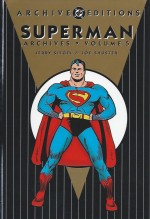
Superman Archive volume 5


By Jerry Siegel, Joe Shuster, Fred Ray John Sikela & Leo Nowak, Ed Dobrotka & various (DC Comics)
ISBN: 1-56389-602-8

By the time of the tales re-presented in this fifth classic hardcover compendium (collecting Superman #17-20, July/August 1942 to January/February 1943), the Man of Tomorrow had evolved into a thrilling and vibrant media icon and spawned a host of imitators, a genre and an industry. His antics and take-charge can-do attitude had won the hearts of the public at home and he was embraced as a patriotic tonic for the troops across the war-torn world.

Behind the stunning covers by Fred Ray and Jack Burnley – depicting Superman thrashing scurrilous Axis War-mongers and reminding readers what we were all fighting for – scripter Jerry Siegel was producing some of the best stories of his career, showing the Man of Steel in all his morale-boosting glory, thrashing thugs, spies and masters of bad science whilst America kicked the fascists in the pants…

Co-creator Joe Shuster, although plagued by crushing deadlines and rapidly failing eyesight, was still fully involved in the process, overseeing the stories and drawing character faces whenever possible, but as the months passed the talent pool of the “Superman Studio” increasingly took the lead as the demands of the media superstar grew and grew…

Following a fulsome Foreword by scribe/editor Mike Carlin describing the lengthy list of “Firsts” ascribed to the ever-growing heroic legend, the action begins with the splendid contents of Superman #17 and ‘Man or Superman?’ illustrated by John Sikela, wherein Lois Lane began to put snippets of evidence together, at last sensing that Clark Kent might be hiding a Super-secret whilst the subject of her researches tangled with sinister saboteur The Talon, after which in ‘The Human Bomb’, with art from Leo Nowak, a criminal hypnotist turned innocent citizens into walking landmines until the Action Ace scotched his wicked racket.

In ‘Muscles for Sale!’ the Fortress of Solitude and Trophy Room debuted as the Man of Steel battled another mad mesmerist who turned ordinary men into dangerously overconfident louts, bullies and thieves whilst ‘When Titans Clash!‘ saw a frantic and spectacular duel of wits and incredible super-strength when Luthor regained the mystic Power Stone and became Superman’s physical master (both illustrated by Sikela)…

Issue #18 led with Sikela’s ‘The Conquest of a City’ wherein Nazi infiltrators used a civil defence drill to infiltrate the National Guard and conquer Metropolis in the Fuehrer’s name until Superman single-handedly led the counter-attack, whilst in Nowak’s ‘The Heat Horror’ an artificial asteroid threatened to burn the city to ashes until the Metropolis Marvel defeated its ingenious master.

‘The Man with the Kane’ provided a grand old-fashioned and highly entertaining espionage murder mystery for Ed Dobrotka & Sikela to illustrate before Superman battled his first fully costumed super-villain as ‘The Snake’ perpetrated a string of murders during construction of a river tunnel in a moody masterpiece drawn by Nowak.

A classic (and much reprinted) fantasy shocker opened Superman #19 as the ‘Case of the Funny Paper Crimes’ (by Dobrotka & Sikela) saw the bizarre Funnyface bring the larger-than-life villains of the Daily Planet’s comics page to terrifying life in a grab for loot and power, after which ‘Superman’s Amazing Adventure’ (Nowak) found him battling incredible creatures in an incredible extra-dimensional realm – but all was not as it seemed…

Some of the city’s most vicious criminals were commanded to kill a stray dog by the infamous Mr. Z in ‘The Canine and the Crooks’ (Nowak again) and it took all of Clark and Lois’ detective skills to ascertain why before ‘Superman, Matinee Idol’ broke the fourth wall for readers when the reporters went to the cinema to see a Superman cartoon in a shameless but exceedingly inventive and thrilling “infomercial” plug for the Fleischer Bros cartoons then currently astounding movie-goers, perfectly limned by the marvellous Dobrotka & Sikela.

That sterling art team drew all but one story in issue #20, starting with ‘Superman’s Secret Revealed!’ as Lois plays a joke on Clark and her fake headline accidentally exposes the Man of Steel’s alter ego to the World. Forced to extraordinary measures to fix the problem, Superman even manages to capture a gang of robbers, and this sharp and witty face-saving yarn also includes the first cameo appearance of Bruce Wayne and Dick Grayson…

Hitler himself ordered the dastardly Herr Fange to unleash an armada of marine monstrosities on Allied shipping and coastal towns in the blistering ‘Destroyers from the Depths’, but they proved no match for the mighty Man of Steel, whilst the Sikela illustrated ‘Lair of the Leopard!’ pitted our hero against a feline themed criminal genius, whilst his attention was distracted by a buffoonish but well-intentioned copycat dubbed Herman the Heroic…

This volume concludes with a genuinely chilling murder spree as old foe The Puzzler returns in ‘Not in the Cards’, by Dobrotka & Sikela, to fiendishly slaughter gamesmen and champions who had the temerity to beat him in competition, with the Action Ace forced into playing a deadly game of catch-up…

Ageless and evergreen, endlessly re-readable, these epic hardback Archive Editions fabulously frame some of the greatest and most influential comics stories ever created, and taken in unison form a perfect permanent record of breathtaking wonder and groundbreaking excitement. How can any dedicated fan resist them?
© 1942, 1943, 2000 DC Comics. All Rights Reserved.

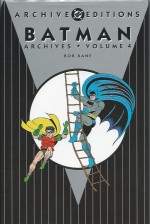
Batman Archives volume 4


By Bill Finger, Don Cameron, Joseph Greene, Dick Sprang & various (DC Comics)
ISBN: 1-56389-414-9

Debuting a year after Superman, “The Bat-Man” (and later Robin, the Boy Wonder) cemented National Comics as the market and genre leader of the nascent comicbook industry, becoming the epitome of swashbuckling derring-do and keen human-scaled adventure.

This fourth scintillating deluxe hardback chronicles Batman yarns from Detective Comics #87-102 (cover-dated May 1944-August 1945) and is particularly special since it almost exclusively features the artwork of unsung genius Dick Sprang, revealing how he slowly developed into the character’s primary and most well-regarded illustrator during a period when most superhero features experienced a gradual downturn and eventual – albeit temporary – extinction.

Sprang even drew the lion’s share of the stunning covers reproduced here – the remainder being divided between Jerry Robinson, Bob Kane, Jack Burnley and inker George Roussos…

No less crucial to the Dynamic Duo’s ever-burgeoning popularity were the sensitive, witty, imaginative and just plain thrilling stories from an exceedingly talented stable of scripters such as Joe Greene, Don Cameron, Edmund Hamilton, Mort Weisinger, Alvin Schwartz and original co-creator Bill Finger: all diligently contributing as Batman and Robin grew into a hugely successful media franchise.

One final point of possible interest: Sprang actually began drawing Batman tales in 1941 and editor Whitney Ellsworth, cognizant of his new find’s talent and the exigencies of the war effort, had the 26-year old former Pulp illustrator frantically drawing as many stories as he could handle, which were then stockpiled against the possibility of one, some or all of his artists being called up.

Thus many yarns were published “out of order”, and when read now it might seem as if Sprang’s style occasionally advanced and regressed. It’s no big deal – I just thought you’d like to know…

Sprang pencilled, inked, lettered and coloured most of his assignments during this period, aided and abetted by his wife Lora, who used the professional pseudonym Pat Gordon for her many lettering and colouring jobs on Superboy, Superman and Batman stories.

After a fond reminiscence from Sprang himself in the Foreword, the dramas begin to unfold in Detective #87’s ‘The Man of a Thousand Umbrellas’ written by Joseph Greene.

The Penguin had a bizarre appeal and the Wicked Old Bird had his own cover banner whenever he resurfaced, as in this beguiling crime-spree highlighting his uncanny arsenal of weaponised parasols, brollies and bumbershoots.

As World War II staggered to a close and home-front fears subsided, spies gradually gave way to more home-grown threats and menaces. Issue #88 offered a nasty glimpse at true villainy when ‘The Merchants of Misery’ – also by Greene – pitted the Dynamic Duo against merciless and murderous loan sharks preying on poverty-stricken families, whilst ‘Laboratory Loot!’ by Don Cameron in #89, saw the return of flamboyant crime enthusiast The Cavalier, forced to join temporarily forces with Batman to thwart petty gangsters stealing loot he’d earmarked as his own…

Detective Comics #90 featured ‘Crime Between the Acts!’ (Greene) as the Caped Crusaders followed a Mississippi Riverboat full of crooked carnival performers from one plundered town to another, before Edmond Hamilton scripted a terrifically twisty tale in ‘The Case of the Practical Joker’, wherein some crazy and wisely anonymous prankster began pulling stunts and have fun at the Harlequin of Hate’s expense.

Greene revealed ‘Crime’s Manhunt’ in #92, with a particularly nasty band of bandits turning to bounty hunting and turning in all their friends and associates for hefty rewards. Once they’d run out of pals to betray they simply organised jailbreaks to provide more crooks to catch: a measure the Dark Knight took extreme umbrage with…

Bill Finger scripted the next two issues beginning with ‘One Night of Crime!’ in #93. Ed Kressy laid out the art – which leads me to suspect that this was one of the earlier Sprang inventory tales – and the story itself is a cracker: a portmanteau human interest yarn in actuality starring the ordinary folk who got on a Gotham Tour Bus just before it was hijacked by brutally casual killers. Cue Batman and Robin…

‘No One Must Know!’ in #94 was another poignant and moving melodrama with the Gotham Gangbusters tracking a pack of thugs to the little hamlet of Meadowvale, where they recognised the village’s most decent, beloved and respected patriarch as an escaped convict…

Next comes an originally untitled yarn here dubbed ‘The Blaze’, written by Mort Weisinger and outlining the short and fantastically impressive career of a brilliant criminal mastermind who organised all Gotham’s gangsters and almost outsmarted Batman. Almost…

In #96 Cameron and Sprang showed their flair for light comedy with ‘Alfred, Private Detective!’ as Bruce Wayne’s dedicated manservant finally realised his ambition to set up as a crime-busting Private Eye – with bombastically mixed success – whilst in #97 ‘The Secret of the Switch!’, by Greene, offered a baffling mystery when a dead criminal confessed from beyond the grave and led the Caped Crusaders into a deadly trap.

A bored banker tried to become an idle philanthropist in #98’s ‘The King of the Hoboes!’ (Cameron) but found that his money was too big a lure for a couple of crafty conmen – until Batman stepped – in whilst the perfidious Penguin’s cool, cruel and preposterous scheme to commit ‘The Temporary Murders!’ (#99 and Cameron again) proved once more that the Darknight Detective was far too slick for him…

Issue #100 featured ‘The Crow’s Nest Mystery!’ by Cameron, Jack Burnley & Charles Paris (although the art seems more reminiscent of young Winslow Mortimer to me) with Batman and Robin exposing a cunning smuggling scam in a spooky old house, after which a desperate mother left her appallingly badly-behaved babies with Bruce and Dick in ‘The Tyrannical Twins!’

The hilarious result was the exposure and capture of a gang of ruthless jewel thieves and a near nervous breakdown for long-suffering babysitter Alfred in a wry cracker from Cameron and Sprang before the Joker returned to close this volume on a spectacular high note in #102’s ‘The House that was Held for Ransom!’ (written by Alvin Schwartz) wherein the Clown Prince of Crime astoundingly abducted a recluse’s mansion, lock stock and barrel, and led Batman a merry chase to near disaster before his eventual, inevitable defeat…

These spectacular yarns provide a perfect snapshot of the Batman’s amazing range from bleak moody avenger to suave swashbuckler, from remorseless Agent of Justice to best pal to sophisticated Devil-may-care Detective in timeless tales which have never lost their edge or their power to enthral and beguile. Moreover, this supremely sturdy Archive Edition is indubitably the most luxurious and satisfying way to enjoy them over and over again.
© 1944, 1945, 1998 DC Comics. All Rights Reserved.

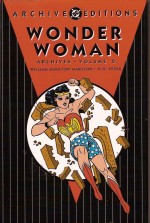
Wonder Woman Archive Editions volume 2


By Charles Moulton (William Moulton Marston & Harry G. Peter) & Frank Godwin (DC Comics)
ISBN: 1-56389-594-3

Wonder Woman was conceived by polygraph pioneer William Moulton Marston and illustrated by Harry G. Peter in an attempt to offer girls a positive and forceful role model. She debuted as a special feature All Star Comics #8 (December 1941), before springing into her own series and the cover-spot of new anthology title Sensation Comics a month later. An instant hit the Amazing Amazon quickly won her own eponymous supplemental title in late Spring of that year (cover-dated Summer 1942).

Once upon a time on a hidden island of immortal super-women, an American aviator crashed to Earth. Near death, Steve Trevor of US Army Intelligence was nursed back to health by young Princess Diana. Fearing her growing obsession with the man, her mother Queen Hippolyte revealed the hidden history of the Amazons: how they were seduced and betrayed by men but rescued by the goddess Aphrodite on condition that they isolated themselves from the rest of the world and devoted their eternal lives to becoming ideal, perfect creatures.

When goddesses Athena and Aphrodite instructed Hippolyte to send an Amazon warrior back with the American to fight for freedom and liberty, Diana overcame all other candidates and became the emissary Wonder Woman. On arriving in America she bought the identity and credentials of love-lorn Army nurse Diana Prince, elegantly allowing the Amazon to be close to Steve whilst enabling the heartsick medic to join her own fiancé in South America. Soon Diana also gained a position with Army Intelligence General Darnell as his secretary to ensure that she would always be close to her beloved. She little suspected that, although the painfully shallow Steve only had eyes for the dazzling Amazon superwoman, the General had fallen for the mousy but superbly competent Diana Prince…

Using the nom de plume Charles Moulton, Marston scripted all the Amazing Amazon’s many and fabulous adventures until his death in 1947, whereupon Robert Kanigher took over the writer’s role whilst venerable veteran co-creator H.G. Peter illustrated almost every WW tale until his own death in 1958.

This second superb full-colour deluxe hardback edition collects her every groundbreaking adventure from Wonder Woman #2-4 and Sensation Comics #13-17 from Fall 1942 to April 1943, and commences, after an appreciative Foreword from star comics editor Diane Schutz, with the epochal Wonder Woman #2.

After a photo-feature about ‘The Men Behind Wonder Woman’ and an illustrated prose piece about ‘The God of War’, a four-part epic introduces the Amazing Amazon’s greatest enemy in ‘Mars, God of War’ who instigated the World War from his HQ on the distant red planet and was chafing at the lack of progress since Wonder Woman entered the fray on the side of the peace-loving allies. Now he decides to take direct action rather than trust his earthly pawns Hitler, Mussolini and Hirohito…

When Steve went missing Diana allowed herself to be captured and transported to Mars where she began to disrupt the efficient working of the war-god’s regime and fomented unrest amongst the slave population, before rescuing Steve and heading home to Earth.  ‘The Earl of Greed’, one of Mars’ trio of trusted subordinates, took centre stage in the second chapter with orders to recapture Steve and Diana at all costs.

As the bold duo attempt to infiltrate Berlin, Greed used his influence on Hitler to surreptitiously direct the German war effort, using Gestapo forces to steal all the USA’s gold reserves.

When Steve was gravely injured, the Amazon returned to America and whilst her paramour recuperated she uncovered and foiled the Ethereal Earl’s machinations to prevent much-needed operating funds from reaching Holliday College where young girls learned to be independent free-thinkers…

With Greed thwarted, Mars next dispatched ‘The Duke of Deception’ to Earth where the spindly phantom impersonated Wonder Woman and framed her for murder. Easily escaping from prison the Princess of Power not only cleared her name but also found time to foil a Deception-inspired invasion of Hawaii, leaving only ‘The Count of Conquest’ free to carry out Mars’ orders.

His scheme was simple: through his personal puppet Mussolini, the Count attempted to physically overpower the Hellenic Heroine with a brutal giant boxing champion whilst Italian Lothario Count Crafti tried to woo and seduce her. The latter’s wiles actually worked too, but capturing and keeping the Amazing Amazon were two different things entirely and after breaking free on the Red Planet, Diana delivered a devastating blow to the war-machine of Mars…

This issue then ends with a sparkling double page patriotic plea when ‘Wonder Woman Campaigns for War Bonds’…

Sensation Comics #13 (January 1943) follows with ‘Wonder Woman is Dead’ as a corpse wearing the Amazon’s uniform was discovered and the astounded Diana Prince discovered her alter ego’s clothes and the irreplaceable magic lasso were missing…

The trail led to a cunning spy-ring working out of General Darnell’s office and an explosive confrontation in a bowling alley, whilst ‘The Story of Fir Balsam’ in Sensation #14 offered a seasonal tale concerning lost children, an abused mother and escaped German aviators which was all happily resolved around a lonely pine tree…

Wonder Woman #3 dedicated its entirety to the return of an old foe and began with ‘A Spy on Paradise Island’ as the plucky fun-loving gals of the Holliday College for Women and their chubby, chocolate-gorging Beeta Lamda sorority chief Etta Candy were initiated into some pretty wild Amazon rites on Paradise Island, inadvertently allowing an infiltrator to gain access and pave the way for an invasion by Japanese troops.

Naturally Wonder Woman and the Amazon prevailed on the day but the sinister mastermind behind it all was revealed and quickly struck back in ‘The Devilish Devices of Baroness Paula von Gunther.’

Whilst the on-guard Amazons built a women’s prison that would be known as “Reform Island”, acting on information received by the new inmates, Wonder Woman trailed Paula and was in time to crush her latest scientific terror – an invisibility ray…

‘The Secret of Baroness von Gunther’ offered a rare peek at a villain’s motivation as the captured super-spy reveals how her little daughter Gerta had been a hostage of the Nazis for years and a goad to ensure total dedication to the German cause. Naturally, the Amazing Amazon instantly determined to reunite mother and child at all costs after which ‘Ordeal by Fire’ found the Baroness aiding Diana and Steve in dismantling the spy network and slave-ring the Nazis had spent so long building in America, but only at great personal and physical cost to the repentant Paula…

Over in Sensation #15 (March 1943) ‘Victory at Sea’ pitted Diana and Steve against murderous saboteurs determined to halt military production and working with shady lawyers whilst in #16 ‘The Masked Menace’ was one of very few stories not illustrated by H.G. Peter but the work of illustrator and strip cartoonist Frank Godwin, stepping in as the crushing workload of an extra 64-page comicbook every couple of months piled the pressure on WW’s artistic director.

The tale saw steadfast Texan Etta about to elope with slick and sleazy Euro-trash Prince Goulash, until Diana and Steve crashed the wedding party to uncover spies infiltrating across the Mexican border and a plot to blow up the invaluable Candy family oil-wells…

The inescapable war-fervour was tinged with incredible fantasy in Wonder Woman #4 which opened with ‘Man-Hating Madness!’ wherein a Chinese refugee from a Japanese torture camp reached America and drew the Amazon into a terrifying plan to use biological weapons on the American Home-Front after which cruel and misogynistic ‘Mole Men of the Underworld’ kidnapped the Holliday girls and Diana and the reformed and recuperated Paula rescued them, freed a race of female slaves and secured America’s deepest border from attack.

Then ‘The Rubber Barons’ provided a rousing, romp which saw greedy corporate profiteers attempt to hold the Government and war effort to ransom with a new rubber manufacturing process in a high-tech tale involving mind-control, gender role-reversal and behaviour modification as only a trained and passionate psychologist could promote them…

The issue but not this book then concluded with an untitled saga as Paula, now fully accepted into Amazon society, was attacked by Mavis, one of her erstwhile spy-slaves. The traumatised victim then abducted her ex-mistress’ little Gerta and Wonder Woman, burdened with responsibility, was compelled to hunt her down…

This sterling deluxe book of nostalgic delights ends with a famed classic in Sensation #17’s ‘Riddle of the Talking Lion’ (also probably drawn by Godwin) wherein Diana Prince visited an ailing friend and discovered that Sally’s kids had overheard a Zoo lion speaking – and revealing strange secrets…

Although Steve and Diana dismissed the tall tale, things take a peculiar turn when the beast is stolen and the trail leads to Egypt and a plot by ambitious Nazi collaborator Princess Yasmini…

Too few people seem able to move beyond the posited subtexts and definite imagery of bondage and subjugation in Marston’s tales – and frankly there really are a lot of scenes with girls tied up, chained or about to be whipped – but I just don’t care what his intentions might have been: I’m more impressed with the skilful drama and incredible imaginative story-elements that are always wonderfully, intriguingly present: I mean, just where do such concepts as giant battle kangaroo steeds or sentient Christmas trees stem from…?

Exotic, baroque, beguiling and uniquely exciting these Golden Age adventures of the World’s Most Famous female superhero are timeless and pivotal classics in the development of comics books and still provide lashings of fun and thrills for anyone looking for a great nostalgic read.
© 1942, 1943, 2000 DC Comics, Inc. All Rights Reserved.

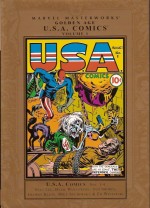
Marvel Masterworks: Golden Age USA Comics Nos.1- 4


By Al Avison, Al Gabriel, Basil Wolverton, Syd Shores, George Klein & various (Marvel)
ISBN: 978-0-7851-2478-8

Whereas much of DC’s Golden Age archive is still readily readable today, a great deal of  Marvel Comics’ Timely and Atlas output is both dated and quite often painfully strident, and even offensive to modern eyes and sensibilities.

Even so, I’d rather have the raw historical form rather than any bowdlerised or censored reworking and even in their most jingoistic and populist excesses there are usually individual nuggets of gold amidst the shocking or – horror of horrors! – badly crafted yarns from the House of Ideas’ antediluvian antecedents.

Moreover, there’s quite a lot to be said for putting the material in lavish and expensive hardbound volumes for those early comic adventures and I must admit that when they were good the individual efforts could be very good indeed.

The quarterly USA Comics launched with an August 1941 cover-date and the four complete issues reprinted in this sturdy deluxe hardback reveal a period of intense experimentation and constant change as the eager publishers weaned themselves away from the “comics shop” freelancers-for-hire production system and began to build a stable – or bullpen – of in-house creators.

Since these stories come from a time of poor record-keeping, frantic scrabbling to fill pages and under the constant threat of losing staff and creators to the war-effort, the informative introduction discussing the lack of accurate creator detail and best-guess attributions from comics historian Dr. Michael J. Vassallo is a godsend for interested fans, and with covers and House ads reproduced throughout, the World War Wonderment and Patriotic Perils begin with The Defender illustrated by Al Avison, Al Gabriele, Joe Simon and diverse unknown hands (who might or might not have been Sam Cooper, Al Fagaly, George Klein & Charles Wojtkoski AKA “Charles Nicholas”); another flag-clad patriotic mystery-man, who, with designated boy sidekick Rusty, smashed a band of Nazi-backed river pirates plaguing Manhattan’s waterways.

Next comes the utterly outrageous origin of The Whizzer (by Avison & Gabriele) which saw young Bob Frank gain super-speed after his dying father injected him with mongoose blood to counteract jungle fever and snakebite.

Orphaned and vengeful, the young man thereafter dedicated his life to stopping criminals such as the thugs who had forced his ailing parent to hide and die in such a hellhole…

‘Mr. Liberty debuted in ‘The Spirits of Freedom’ by Phil Sturm, Syd Shores, & Klein, as with war erupting everywhere, history Professor John Liberty was visited by the ghosts of American patriots who offered him supernatural assistance to stamp out all threats to democracy.

After Arthur Cazeneuve’s prose crime-thriller ‘Haunted Fireplace’ the astonishing Rockman: Underground Secret Agent blazed into action in ‘The Tunnel That Led to Death’ by the incomparable Basil Wolverton – but with a splash page drawn by Nicholas – which introduced a patriot from super-scientific kingdom Abysmia; miles below American soil, determined to safeguard his upstairs neighbours from tyranny…

Howard Purcell working as Michael Robard then stylishly introduced ‘Young Avenger’ a junior superman summoned by mystic voices to battle spies and saboteurs, before arctic elemental ‘Jack Frost’ sprang to life to avenge a murder on ice in a classy origin yarn by Stan Lee & Nicholas. The polar opposite to the Human Torch (I’m such a wag, me) travelled to New York and soon occupied the same well-intentioned/hunted menace/anti-hero niche pioneered by both the blazing android and the Sub-Mariner: a much-used formula still effective to this day…

USA #2 (November 1941) led with a new nautical costumed crusader in ‘Captain Terror Battles the Fiends of the Seas’ (by Mike Suchorsky) as retired gentleman adventurer Dan Kane returned to the masked identity he had adopted during the Spanish War to hunt down a Nazi destroyer haunting American waters in an action-packed, extra-long exploit. With the Allied effort increasing on all fronts civilian “Mr.” became ‘Major Liberty’ to crush a monster-making Nazi who turned a peaceful Caribbean resort into ‘The Island Menace!’ (Shores & Klein).

Ed Winiarski then introduced Assistant District Attorney Murphy who chose to crush Home Front racketeers disguised as gaudy tramp Chauncey Throttlebottom III AKA ‘The Vagabond’ after which ‘The Defender’ (by Klein) took Rusty South of the Border to stop a plan to destabilise the nation’s South American allies. The text piece describing ‘When USA Heroes Meet!’ by Stan Lee was swiftly followed by another Wolverton Rockman stunner wherein the Subterranean Supremo tackled Zombo the Hypnotist whose mesmeric powers made men into slavish ‘Killers of the Sea’.

After which an uncredited ‘Jack Frost’ exploit found the freezing fugitive avoiding cops but still destroying a marauding robot octopus ship, ‘The Whizzer’ – also unattributed – ended a string of murders by jockey-fixers ruining the horse-racing industry.

USA Comics #3 (January 1942) opened with ‘Captain Terror and the Magic Crystal of Death’ (Suchorsky) as the bold buccaneer spectacularly smashed a sabotage ring organised by wicked ersatz gypsies, after which Major Liberty faced – or rather didn’t, if you get my point – a cunning killer masquerading as ‘The Headless Horseman’ (by Shores & and an unnamed assistant) whilst Winiarski’s Vagabond demolished yet another would-be kingpin of crime.

Once The Defender had finished a hyperthyroid maniac dubbed ‘The Monster Who Couldn’t be Stopped!’ (Klein), Lee’s prestidigitation prose piece ‘Quicker than the Eye!’ gave way to the latest Rockman instalment which he’d scripted for Nicholas to illumine; a broad fantasy set in Jugoslavia where evil pixies had abducted the beauteous Princess Alecia. Object: Matrimony!

Young wannabes Frank Giacoia & Carmine Infantino got a big boost to their careers when they illustrated the anonymously scripted Jack Frost yarn involving strong-arm thugs forcing hospitals to buy their adulterated black market drugs and, after an engaging ‘Unsolved Mysteries’ feature page (which included who had produced it), Winiarski then contributed Tom ‘Powers of the Press’ – a reporter and refreshingly plainclothes hero who, with the aid of diminutive photographer Candid Kenny Roberts, tracked down murderous payroll bandits to explosively end the third issue.

Major Liberty made the cover and lead spot in USA #4 (May 1942), using his ghostly gifts to smash a gang of spies and infiltrators terrorising German-born Americans in a breathtaking romp from Shores & his unknown collaborator, whilst Jack Frost battled mad cryogenics researchers in ‘The Adventure of the Frozen Corpses’ – attributed to Pierce Rice & Louis Cazeneuve – and The Defender stopped the maker of a deadly artificial fog assisted as ever by Rusty and the skilled artistic endeavours of George & Klein and others.

The Vagabond (by Winiarski and an unknown assistant) found the Faux Hobo exorcising a haunted castle in pursuit of a Mad Monk and loot from a decades-old cold case, after which the anonymously-penned text thriller ‘Diamond of Juba’ was followed by another Suchorsky Captain Terror tale, which saw the seaborne stalwart smashing a Nazi plot to starve Britain into submission.

The uncredited Rockman story then saw the Underworld Agent stop murder and banditry in Alaska, after which the equally unattributed Corporal Dix debuted in the stirring tale of a soldier on leave who still found the time to clear up a gang of cheap hoods and set his own wastrel brother on the right and patriotic path…

This premier collection then ends on a riotous high note as The Whizzer (by Howard James) finally came up to full speed in a rocket-paced action romp with the Golden Rocket crushing a gang of thieves targeting a brilliant boy-inventor.

I’m delighted with this substantial chronicle, warts and all, but I can fully understand why anyone other than a life-long comics or Marvel fan would baulk at the steep price-tag in these days of austerity, with a wealth of better-quality and more highly regarded Golden Age material available. Still, value is one thing and worth another, so in the end the choice, as always, is yours…
© 1941, 1942, 2007 Marvel Characters, Inc. All rights reserved.

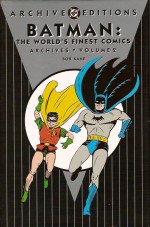
Batman: the World’s Finest Comics Archives volume 2


By Bob Kane, Bill Finger, Don Cameron, Joe Samachson, Norman Fallon, Dick Sprang, Win Mortimer, Ray Burnley, & various (DC Comics)
ISBN: 1-4012-0163-6

The creation of Superman propelled National Comics to the forefront of their fledgling industry and in 1939 the company was licensed to produce a commemorative comicbook celebrating the start of the New York World’s Fair, with the Man of Tomorrow prominently featured among the four-colour stars of the appropriately titled New York World’s Fair Comics.

A year later, following the birth of Batman and Robin, National combined Dark Knight, Boy Wonder and Man of Steel on the cover of the follow-up New York World’s Fair 1940. The spectacular 96 page anthology was a huge hit and the format was retained as the Spring 1941 World’s Best Comics #1, before finally settling on the now legendary title World’s Finest Comics from #2, beginning a stellar 45-year run which only ended as part of the massive clear-out and de-cluttering exercise that was Crisis on Infinite Earths.

Until 1954 and the swingeing axe-blows of rising print costs, the only place Superman and Batman ever met was on the stunning covers by the likes of Jack Burnley, Fred Ray and others. Between those sturdy card covers, the heroes maintained a strict non-collaboration policy…

This second glorious deluxe hardback dedicated to the Gotham Gangbusters’ early appearances reprints the Batman tales from World’s Finest Comics #17-32 (Spring 1945 – January/February 1948), in gleaming, glossy full-colour and also includes a fascinating Foreword by author and fan Bill Schelly and concludes with brief biographies of all the creators involved in these early masterpieces.

In between those text titbits there is unbridled graphic enchantment beginning with ‘Crime Goes to College’ by Bill Finger, Norman Fallon & Dick Sprang, wherein the Dynamic Duo tracked down a cracked academic determined to prove that he could make crime pay whilst ‘Specialists in Crime’ scripted by Don Cameron, pitted the heroes against a wily team who seemed to have the right man for every job they pulled…

In #19 the Joker organised ‘The League for Larceny’ (Joe Samachson, Bob Kane & Ray Burnley) to promote the finer points of criminality until Batman and Robin stepped in whilst in #20 (Winter 1946, and the last quarterly edition: from the next issue the comicbook would appear every two months) benign numismatist Mark Medalion turned out to have a very sinister other face as ‘The King of Coins’, a clever and exotic thriller from Cameron & Win Mortimer.

WF #21 (March/April 1946, illustrated by Mortimer and the uncredited writer is probably Cameron) introduced ‘Crime’s Cameraman’ Sam Garth, a keen shutterbug whose unwitting enthusiasm masked a deadly secret, whilst ‘A Tree Grows in Gotham City’ (written by Alvin Schwartz?) spoofed the infamous novel by pitting the Dynamic Duo against a gang of thugs determined to dig up an elderly oak belonging to an equally elderly gent… but why?

‘Champions Don’t Brag’ (William Woolfolk & Mortimer) focussed on Dick Grayson’s understandable desire to excel at sports: a wish constantly thwarted by the need to keep his Robin alter ego secret. When his school’s best athlete was kidnapped the fear proved justified since the abductors then tried to ransom the “Boy Wonder” they sincerely believed they had captured…!

The unknown writer of ‘The Case of the Valuable Orphans’ told a powerful tale of cruel criminality as thugs exploited carefully placed adopted children to case potential burglary jobs, whilst ‘The Famous First Crimes’ by Cameron, Mortimer & Howard Sherman in #25, found Batman and Robin helping an enterprising inventor whilst battling bandits determined to steal historical scientific breakthroughs and ‘His Highness, Prince Robin’ (by anonymous & Mortimer) saw the Boy Wonder pinch-hitting for a wayward royal absconder in a clever twist on the classic Prince and the Pauper plot.

In WF #27 ‘Me, Outlaw’ revealed the big mistake of car thief and murderer Wheels Mitchum in a tense and salutary courtroom drama by Finger & Jim Mooney, whilst ‘Crime Under Glass’ depicted the horrific and grisly murder spree of the chilling Glass Man in a taut mystery illustrated by Sprang by Fallon and #29 offered ‘The Second Chance’ to freshly released convict Joel Benson who increasingly found life out of prison temptation beyond endurance in a classy human drama by Cameron & Mortimer.

Most later Batman tales feature a giant coin in the Batcave and World’s Finest #30 is where that spectacular prop first appeared; spoils of a successful battle between the Caped Crusaders and the vicious gang of Joe Coyne and ‘The Penny Plunderers!’ (Finger, Kane & Burnley), after which ‘The Man with the X-Ray Eyes!’ (scripted by Cameron) saw the heroes struggling to save from unscrupulous thugs a tragic artist cursed with the ability to see through anything – including their masks…

This superb collection of Dark Knight Dramas ends with ‘The Man Who Could Not Die’ (Finger, Kane & Burnley from #32) a deliciously fearsome fable wherein petty gunman Joe “Lucky” Starr got a twisted horoscope reading and believed that he knew the day he would be killed. Of course, until then, he could commit any crime without possibility of harm – even if Batman and Robin interfered…

These spectacular yarns provide a perfect snapshot of the Batman’s amazing development from bleak moody avenger and vigilante agent of revenge to dedicated, sophisticated Devil-may-care Detective in timeless tales which have never lost their edge or their power to enthral and beguile, and this superbly sturdy Archive Edition is indubitably the most luxurious and satisfying of ways to enjoy them over and over again.

So why don’t you…
© 1945, 1946, 1947, 1948, 2004 DC Comics. All Rights Reserved.