Archie’s Pal Kevin Keller


By Dan Parent, Rich Koslowski, Jack Morelli & Digikore Studios (Archie Comics)
ISBN: 978-1-87979-493-1 (HC)

Following the debut of Superman, MLJ were one of many publishers to jump on the “mystery-man” bandwagon, concocting their own small but inspired pantheon of gaudily clad crusaders. In November 1939 they launched Blue Ribbon Comics, promptly following up with Top-Notch and Pep Comics. The content was the standard mix of masked champions, two-fisted adventurers, prose pieces and gags.

Not long after, Maurice Coyne, Louis Silberkleit and John Goldwater (hence MLJ) saw a gap in the blossoming yet crowded market and in December 1941 the Fights ‘n’ Tights, He-Man crowd were gently nudged aside by a far less imposing hero; an ordinary teenager having ordinary adventures just like the readership, but with the laughs, good times, romance and slapstick emphasised.

Goldwater developed the youthful everyman protagonist concept and tasked writer Vic Bloom & artist Bob Montana with making it work. Inspired by and referencing the popular Andy Hardy movies starring Mickey Rooney, their new notion premiered in Pep Comics #22. The unlikely star was a gap-toothed, freckle-faced red-headed kid obsessed with impressing the pretty blonde next door.

A 6-page untitled tale introduced hapless boob Archie Andrews and wholesomely fetching Betty Cooper. The boy’s unconventional best friend and confidante Jughead Jones also debuted in that vignette, as did idyllic small-town utopia Riverdale. It was a huge hit and by the winter of 1942 the kid had won his own title.

Archie Comics #1 was MLJ’s first non-anthology magazine and with it began an inexorable transformation of the entire company. With the introduction of ultra-rich, raven-haired Veronica Lodge, all the pieces were in play for the industry’s second Genuine Phenomenon…

By 1946 the kids were in charge, and MLJ officially became Archie Comics, retiring most of its costumed characters years before the end of the Golden Age and becoming, to all intents and purposes, a publisher of family-friendly comedies. The hometown settings and perpetually fruitful premise of an Eternal Romantic Triangle – with girl-hating Jughead to assist or deter and scurrilous love-rat rival Reggie Mantle to test, duel and vex our boy in their own unique ways – the scenario was one that not only resonated with fans but was infinitely fresh…

Archie’s success, like Superman’s, forced a change in content at every other publisher (except Gilberton’s Classics Illustrated) and created a culture-shifting multi-media brand which encompassed TV, movies, newspaper strips, toys and merchandise, a chain of restaurants and, in the swinging sixties, a pop music sensation when Sugar, Sugar – from the animated TV cartoon – became a global summer smash hit.

Clean and decent garage band “The Archies” has been a fixture of the comics ever since…

The perennial eternal triangle has generated thousands of charming, raucous, gentle, frenetic, chiding and even heart-rending humorous dramas ranging from surreal wit to frantic slapstick, with the kids and a constantly expanding cast of friends (boy genius Dilton Doily, genial giant jock Big Moose and occasional guest Sabrina the Teenage Witch amongst many others), growing into an American institution and part of the American cultural landscape.

The feature has thrived by constantly refreshing its core archetypes; boldly and seamlessly adapting to the changing world outside its bright and cheerful pages, shamelessly co-opting youth, pop culture, fashion trends and even topical events into its infallible mix of slapstick and young romance.

Each and every social revolution has been painlessly assimilated into the mix and over the decades the company has confronted most social issues affecting youngsters in a manner both even-handed and tasteful.

Constant addition of new characters such as African-American Chuck and his girlfriend Nancy, fashion-diva Ginger, Hispanic couple Frankie and Maria and spoiled home-wrecker-in-waiting Cheryl Blossom all contributed to a wide and refreshingly broad-minded scenario, and in 2010 Archie jumped the final hurdle when openly gay student Kevin Keller became an admirable advocate capably tackling and dismantling the last major taboo in mainstream comics.

Created by writer/artist Dan Parent and inker Rich Koslowski (lettered by Jack Morelli and coloured by Digikore Studios), Kevin debuted in Veronica #202 (September 2010). It was the first comicbook in the company’s long history to go into a second printing…

Also collected in this landmark debut compendium is the sequel tale from Veronica #205 and the 4-issue Kevin Keller miniseries which cemented the new star’s popularity.

It begins with context-establishing essay ‘Get to Know Kevin Keller’ before comic introductions are made in ‘Isn’t it Bro-Mantic’ as Veronica encounters a charming, good-looking and exceeding together lad who utterly bowls her over.

She is totally smitten with him even though he can out-eat human dustbin Jughead and loves sports. Although he inexplicably loves hanging out with the ghastly Jones boy she is determined to make him exclusively hers. Jughead is truly cool with his new pal, and he soon sees a way to pay Ronnie back for many of the mean things she has said and done over the years…

When Kevin finally explains to Veronica why she is wasting her time, she takes it well and soon they are hanging out as best buds. After all they have so much in common: chatting, stylish clothes, shopping, boys…

Immensely popular from the outset, Kevin struck a chord with the readership and returned a few months later in ‘The Buddy System’, with Veronica’s bombastic dad giving the perfect new student the all-clear to monopolise his daughter’s time. The following fun-filled days do have one major downside however, as poor Betty is increasingly neglected.

You’d think Archie would be jealous too, but he’s just glad that someone safe is keeping other guys away from his Ronnie. It seems the perfect scenario for everyone but Betty, but then man-hunting rich and entitled princess Cheryl Blossom hits town and puts everything back into perspective…

The guest shots rapidly evolved into a miniseries, expanding Kevin’s role whilst answering many questions about his past. It started with ‘Meet Kevin Keller’ where we learned he was an army brat, born in Britain but raised all over the world, and now lived in Riverdale with his dad (retired and invalided army colonel) Thomas, mum Kathy and feisty sisters Denise and Patty.

It also revealed he loved practical jokes as much as food and sports…

Whilst sharing these facts with Betty and Ronnie he also let slip some less impressive details: how he was a nerdy, braces-wearing late developer who was frequently the target of bullies…

‘The Write Stuff’ is set during the build-up to his father’s surprise birthday party and discloses how Kevin plans to serve in the army before becoming a journalist, whilst also showing the gentle hero’s darker side after he is compelled to intervene and stop the persecution of a young Riverdale student by bullies…

In ‘Let’s Get it Started’ the newcomer is ambushed and pressganged by his new friends into participating in a scholastic TV quiz show where his nerves almost get the better of him. Happily, Ronnie inadvertently breaks his paralysing stage-fright with a humiliating gaffe, but that’s just a palate cleanser for a potent object lesson in the concluding chapter…

As Kevin steps in to shelter and help one of the kids who used to torment him long ago, ‘Taking the Lead!’ also finds him reluctantly running for Class President at the insistent urging of Ronnie and the gang.

It’s not that he wants the position particularly, but when bigoted jock and star quarterback David Perkins starts a campaign based on intolerance, innuendo and intimidation, Kevin feels someone has to confront the smugly-macho, “real man” most popular boy in school…

And despite a smear campaign and dirty tactics any Presidential candidate would be proud of, truth, justice and decency win out…

This breezy and engaging collection concludes with ‘An Interview with Kevin Keller’ offering further background direct from the horse’s mouth and also includes a host of covers, variants and remastered classic Archie images retrofitted to suit our 21st century star.

Archie’s Pal Kevin Keller is a superb, hilarious and magically inclusive collection for you, your kids and grandparents to enjoy over and over again.
© 2012 Archie Comics Publications, Inc. All rights reserved.

Jinx


By J. Torres, Rick Burchett & Terry Austin (Archie Comics)
ISBN: 978-1-93697-500-6 (HC)        : 978-1-87979-491-7 (PB)

Despite tremendous advances in the last decade or so, for most people, when we say comicbooks, thoughts either turn to outrageously buff men and women in garish tights or leather hitting each other and lobbing cars about, or stark, nihilistic crime, horror or science fiction sagas aimed at an extremely mature and sophisticated readership of already-confirmed fans.

For American comics these days that is indeed the norm. Over the years though (and throughout the rest of the world still), other forms and genres have continued to wax and wane.

One US company which has steadfastly held its ground against the tide over the decades – supported by a thriving spin-off TV and movie franchise – is a teen-comedy powerhouse which created a genre through the exploits of carrot-topped Archie Andrews and the two girls he could never choose between – Betty Cooper and Veronica Lodge.

For far too many years, other companies largely ignored the fact that girls read comics too and, in their frantic, slavish pursuit of the spandex dollar, lost half their potential audience. Girls simply found other ways to amuse themselves until, in the 1990s, the rise of manga painfully proved to comics publishers what Archie Comics had always known.

Ever since that pivotal moment Editors have attempted to recapture that vast missing market: creating worthy titles and imprints dedicated to material for the teen/young adult audience (since not all boys thrive on a steady diet of cosmic punch-ups and vengeful vigilantes) which had embraced European classics like Tintin and Asterix, manga material, momentous comics epics like Maus and Persepolis or the abundant and prolific prose serials which produced such pop phenomena as Twilight, The Hunger Games and Harry Potter.

Archie thrived by never abandoning its female readership and by constant reinvention of its core characters, seamlessly adapting to the changing world outside its bright, flimsy pages: shamelessly co-opting pop music, youth culture and fashion trends into its infallible mix of slapstick and romance.

Each and every social revolution has been painlessly assimilated into the mix (the company has managed to confront a number of major issues affecting the young in a manner both even-handed and tasteful over the years), and the constant addition of timely characters such as African-American Chuck and his girlfriend Nancy, fashion-diva Ginger, Hispanic couple Frankie and Maria and a host of others – such as spoiled home-wrecker-in-waiting Cheryl Blossom – all contributed to a broad and refreshingly broad-minded scenario.

There are non-sensationalised interracial romances, and in 2010 Archie jumped the final hurdle for a family-entertainment medium with the rapturously well-received introduction of Kevin Keller; an openly gay and proud young man who was a clear-headed advocate capably tackling and dismantling the last major taboo in mainstream kids’ comics.

Where once cheap, prolific and ubiquitous, comics magazines in the 21st century are extremely cost-intensive and manufactured for a highly specific – and dwindling – niche market. Moreover the improbably beguiling and bombastic genres that originally fed and nurtured comicbooks are increasingly being supplanted by TV, movies and assorted interactive games media.

Happily, old-school prose publishers and the graphic novel industry have a different business model and far more sustainable long-term goals, so the magazine makers’ surrender has been turned into a burgeoning victory, as solid and reassuringly sturdy Comics-as-Books increasingly buck the slowly perishing pamphlet/papers trend.

Publishers like Archie…

Jinx was another barely-noticed landmark which saw one of the company’s venerable and long-lived child-stars given a stunning makeover and refit courtesy of a multi award-winning creative team.

Writer J. Torres (Teen Titans Go!, Degrassi: the Next Generation, Alison Dare, Days Like This, Lola – a Ghost Story and others) in conjunction with celebrated artists Rick Burchett (Batman Adventures, American Flagg!, Blackhawk, Black Hood) & Terry Austin (X-Men, Superman, Batman, Cloak and Dagger) are responsible for turning adorable six-year old tomboy Li’l Jinx into a genuine icon of, if not role-model for, modern teenaged girls in a style and manner at once astonishingly accessible and classically captivating.

If you qualify as an Ancient One like me, you might be familiar with precocious, feisty Li’l Jinx who debuted in Pep Comics #62 (cover-dated July 1947). Created by Joe Edwards, she debuted as the publisher began dropping superheroes such as the Shield and Black Hood to specialise in kid-friendly humour features. Over the coming decades she appeared in her own title, as well as Li’l Jinx Giant Laugh-Out and assorted anthologies such as Pep and Archie Giant Series Magazine.

Like Edwards’ own son, her birthday was on Halloween and the writer/artist put much of himself into the strip. A boisterous, basically decent, sports-loving, mischievous tyke (in the manner of our Minnie the Minx), when not romping, cavorting and tussling with other kid pals Gigi, Greg, Charley Hawse, Russ, Roz and Mort the Worry Wart, Jinx almost exclusively interacted with her long-suffering dad Hap Holliday.

Her mother was seldom seen. The kid’s Christian name is lost to history: apparently so screamingly embarrassing that to utter it was to invite battered ear drums and mangled limbs…

Li’l Jinx faded away gradually during the 1980s as fashionista-teenagers and Mutant Turtles supplanted the pesky kid characters in Archie’s increasingly “young adult” oriented stable.

Jinx Holliday was revived and given a thorough 21st century upgrade for a new serial in Life With Archie (#7-11, March-June 2011); a growing girl just starting big school. The former tomboy hadn’t lost all her rough edges though…

This volume collects the serialised story of her beginning the inescapable if deplorable process of becoming responsible – with all the scary changes that entails…

After a handy ‘Cast of Jinx’ page, the dramatic comedy (available in both paperback and hardcover editions) opens with 4-part tale ‘Little Jinx Grows up’ – as serialised in Life With Archie – with the nervous Californian 14-year old starting at Rose Valley High School where she immediately falls foul of draconian martinet Principal Mr. Vernon.

At least many of her oldest friends are starting too, but they all seem so changed and grown up since summer vacation…

As they settle in, Jinx is oblivious to the fact that more than one of the boys she used to wrestle and play football with now treat her differently…

She’s just starting to hate the place and its stupid rules when Greg points out the final straw: Freshman Baseball – in fact all her favourite sports – are for boys only. Former child model Gigi is typically smug about it, hinting again that it’s time Jinx began acting like a girl, but that only provokes the incensed tomboy to break another rule…

Everybody is talking about Jinx after she extremely publicly signs up for Football Tryouts, and neither a barracking from Mr. Vernon or some heavy-handed bullying of Greg by the senior Football squad can change her mind.

The Principal thinks he has the final word after making Jinx take a permission slip home to her dad, but after Hap Holliday absolutely refuses to let his little girl get crippled by teenaged Neanderthals, Jinx simple forges his signature…

The tryouts are a disaster, but at least Greg is honestly trying to help her. Surly Charley, however, delivers a tackle that results in her being stretchered off, and when dad is called to school all hell breaks loose…

While she’s grounded and recovering, BFF Roz starts dropping hints about Greg and romance, promptly going into snoopy overdrive when a mystery caller leaves a large bouquet of flowers…

For the first time Jinx realises High School is just one big stew of frustrated hormones which only adds to her worries. So preoccupied is she that, when Greg timidly asks her to a dance, she doesn’t realise what he’s saying and shoots him down without even noticing. The mystery flower-sender – covertly watching – does, however, and seethes…

Flustered, confused and determined to end the turmoil in her head, Jinx then ambushes and pre-emptively kisses Greg, but the result is something neither of them nor their secret stalker expected…

The grand gesture completely destabilises Jinx who goes into a spiral of angry depression and tetchy acting-up. Baffled Hap is hopeless to cope, and, with Halloween approaching, throws himself into organising her birthday costume party: a tradition they’ve enjoyed since she was a toddler. He has no idea how much his little girl has changed and that the prospect of a party sounds like torture to her…

And thus the scene is set for a showdown nobody will ever forget…

All dramatic foreboding aside, this clever, warm tale ends well and promises much more for the future. Smart, witty and intoxicatingly engaging, Jinx is a superb example of what can be accomplished in comics if you’re prepared to portray modern kids on their terms and address their issues and concerns.

Without ever resorting to overblown soap melodrama or angst-ridden teen clichés, Torres has delivered a believable cast of young friends who aren’t stupid or selfish, but simply trying to find their own tentative ways to maturity. The art by Burchett and Austin is semi-realistic and mesmerisingly effective.

This terrific turbulent tome includes many bonus features such as a ‘Football Pinup’, J. Torres’ thoughts and commentary on the story as described in ‘The Voice of Jinx’ and a fascinating, picture-packed peek behind the scenes in ‘The Concept Art of Jinx’.

More production secrets are revealed by Editor Suzannah Rowntree, describing how the project was conceived and created in ‘The Story of Teen Jinx’ and there’s even a smart selection of one-page Short Comics treats to wrap up the fun.

‘Fitting In’, ‘It’s Complicated’, ‘Frenemy of the State’, ‘The Dating Game’ and ‘Chat Fight’ all combine to prove that although they might be growing up, the cast are still kids at heart…

Compellingly funny, gently heart-warming and totally absorbingly, this book will resonate with kids and parents, offering genuine human interactions rather than repetitively manufactured atom-powered fistfights to hold your attention. It especially gives women a solid reason to give comics another try.

Sheer exuberant fun; perfectly crafted and utterly irresistible…
© 2012 Archie Comics Publications, Inc. All rights reserved.

Sand Chronicles volume 1 – the Shojo Beat Manga Edition


By Hinako Ashihara, adapted and translated by John Werry & Kinami Watabe (Viz Media)
ISBN: 978-1-4215-1477-2

It’s never too late to take another look at first love and this subtly potent and marvellously engaging traditional romance proves once and for that all humans are basically the same when the lightning bolts hit…

Crafted by Hinako Ashihara, nostalgic, introspective love story Sunadokei (“Hourglass”) was serialised in Japan’s Betsucomi from 2003-2005; a beguiling and forthright exploration of how kids actually grow up…

It appeared in translation in 2007’s Shojo Beat magazine #26-29 before being gathered up in ten collected digest-sized manga volumes. The tale also spawned a TV series and a movie.

The story starts at ‘Age 12, Winter: Making a Wish’ as self-conscious big-city kid Ann Uekusa angrily packs a few of her most precious belongings before leaving for a scary – and probably deadly dull – existence with her mother for the country. The child is still ashamed and reeling from her parents’ divorce and blames her mother. Miwako Uekusa seems to have been dealt a mortal blow by her dream life’s ending…

One odd knickknack which somehow ends up in Ann’s bag is a little hourglass her mum got at the Sand Museum years ago when she was her daughter’s age. The memories it shakes up are powerful and painful and indicate that – in terms of love and marriage – this family seems destined to repeat its mistakes…

Her grandmother in rural, bucolic snow-stifled Shimane is a harsh-tongued woman keen to share her feelings of deep disappointment. Ann feels even more alone after meeting all the weird-talking yokel kids but eventually starts to adapt to the new situation. For one brief second the icy wastes warm for her as she almost befriends a cute bunny, but the moment ends when a boy – just as cute but in a different way – galumphs into view through the snow. He helps her catch the rabbit but then tells her it will be tonight’s dinner…

Daigo Kitamura will remember that meeting for years. Even after he became part of the school judo team years later, nobody ever left him as bruised and battered as the crazy town girl…

Seeking an escape from Grandmother Misayo‘s harsh carping, Ann delivers a gift from the old lady to the wealthy Tsukishima household and subsequently sees how a proper family acts. The annoying lummox Daigo goes with her and somehow takes most of her attention…

Shika Tsukishima is Ann’s age and rather nice and her parents are wonderfully warm and welcoming. The nervous townie barely notices Shika’s quiet, studious older brother Fuji… but he notices her…

They join the family for a sumptuous meal but the repast is ruined when hasty word comes that Miwako has collapsed. Her mother’s problems are both physical and psychological. The matron has strived incessantly to provide for her child, to the permanent detriment of her health, but the shame of abandonment and divorce has broken her spirit…

To help, Ann takes a menial job with the Tsukishimas and is soon beavering away, blithely unaware of the shy attention Fuji is paying her…

Increasingly depressed, ailing Miwako takes Ann to the shrine she attended years previously and tries to get her reluctant daughter to make a votive wish for the future. It only reminds the troubled divorcee how badly her own heartfelt prayer failed to come true…

The episode tragically, horrifically ends the only way it can and in the awful aftermath Ann is stuck living alone with her mean but deeply chastened grandmother…

Following light-hearted and informative featurette ‘About the World’s Biggest One-Year Hourglass’, the drama resumes two years later.

‘Age 14, Summer: Thunder, Get Over It’ Ann and Daigo are much closer: genuine friends who enjoy being together. The little town girl has blossomed and integrated, attending the junior high school with her hulking first friend, who has turned into a human monolith and star of the judo team.

One unexpected consequence of their friendship is that female judoka Ayuma Narasaki has inexplicably become a pervasive pest: taking every opportunity to have a go at Ann, from snarky comments all the way to physical assaults. Ann can’t understand why…

The semester is ending and the entire school is buzzing with talk of the forthcoming summer camp. Feeling pressurised from all sides, Ann can’t decide whether to go or not. Grandmother is no help. She keeps going on about pointless cost and worrying about her granddaughter’s periods. The girl had just started before Miwako died, but there’s been nothing since. It’s like she’s going backwards as a woman…

In the end it’s easier to attend the gathering than stay behind and, apart from Ayuma’s constant veiled attacks, Ann actually has fun. She even takes Shika into her confidence over her problems – social, physical and especially emotional – but as the kids all boisterously let their hair down she again begins to feel the crushing pressure of her mother’s mistakes.

Dejected, Ann wanders off to be alone, straying too near a dangerous precipice which seems to call to her – just as had happened to her mother. She’s shaken out of her bleak reverie by Fuji Tsukishima who guides her back to the others.

A major storm is forecast and the supervising adults hurriedly gather the kids under shelter and bed them down for the night. Fuji however is restless. He pensively recalls the stormy night as a little boy when he caught his mother in bed with a man not his father… and what followed…

Wandering the vast cabins he meets Ann again. She too is overwrought, now obsessively thinking about Daigo. To calm her Fuji takes the agitated girl to a place of startling natural wonder and she briefly forgets her beloved lummox and everything else….

And then the worst thunderstorm in living memory suddenly erupts around her…

One of the activities planned for the campers was a huge scavenger hunt and now jealous Ayuma takes advantage of it: stealing Ann’s precious hourglass and sending her out in the storm, chasing clues to retrieve it…

By the time furious Fuji and Daigo find her, Ann is clinging to her life by a thread, but she only notices her wonderful lummox…

To Be Continued…

Fun, tense and suspenseful it also includes witty asides by the author and a full ‘Glossary’ providing cultural background and perspective.

Sharp, beguiling and strikingly illustrated, this charming tale about humanity’s most common shared experiences manages to be mature yet charming, fresh yet potently foreboding.

This book is printed in ‘read-from-back-to-front’ manga format.
© 2003 Hinako Ashihara/Shogakukan Inc. All rights reserved.

Queen Margot volume 1: The Age of Innocence


By Olivier Cadic, François Gheysens & Juliette Derenne, coloured by Sophie Barroux and translated by Luke Spears (Cinebook)
ISBN: 978-1-90546-010-6

Although not so well known in Britain as his other novels, on the Continent Alexandre Dumas père’s historical romance La Reine Margot is an extremely popular and well-regarded fictionalisation of the life of Marguerite de Valois.

This unlucky historical figure was the daughter of Henry VII of France and infamously diabolical arch-plotter Catherine de Medici and spent most of her early life as a bargaining chip in assorted convoluted dynastic power-games.

We don’t see a lot of proper historical romance in English-language comics; which is a shame as the stylish intrigue, earthy humour, elegant violence and brooding suspense (just think Game of Thrones without the excessive sex and violence… or dragons) of this one would certainly attract legions of fans in other sectors of artistic endeavour.

This substantial yet enchanting treatment of the events and uncorroborated legends of the girl who eventually became the wife of Henri IV, Queen Consort of France twice-over and the most powerful, influential and infamous woman in Europe is well worth a look-see, especially as most of what we know about her comes first-hand.

Queen Margot related the events of the times and her life – in exquisite, penetrating detail – through an infamous series of memoirs published posthumously in 1628…

Co-scripted by publisher, politician, computer entrepreneur, historian and statesman Olivier Cadic and François Gheysens, illustrated with intensely evocative passion and potently authentic lyricism by Juliette Derenne (Les Oubliés, Le 22e jour de la Lune) and enlightened through the graceful colours of Sophie Barroux; the first chapter appeared in 2006 as La Reine Margot: Le Duc de Guise and opens here with a spiffy gate-fold cover offering a potted history and run-down of the major players before the intrigue unfolds…

In August 1569, sixteen year old Margot and her Lady-in-waiting/governess Madame Mirandole arrive at castle of Plessis-lez-Tours. In the ongoing wars between Papists and Huguenots, Margot’s ailing brother Charles might be King of Catholic France, but her other brother Henri, Duke of Anjou is the darling of the court: a veritable Adonis and glorious war-hero smiting the Protestant foe. Anjou is also a sibling she adores and worships like a schoolgirl…

What little brotherly love there was stood no chance against a sea of popular feeling and cruel, envious unstable, hypochondriac Charles is determined to see it end and all Henri’s growing power and inherent glamour with it. Naturally, his dynastically-obsessed mother has plans to fix everything, but they never extend to showing her practically worthless daughter the slightest hint of kindness or approval.

Although young, Margot (who prefers the familiar name “Marguerite”) knows well that she’s nothing more than a disposable piece in a grand game, but briefly forgets her inevitable fate as Henri bedazzles the Court with his tales of martial triumph. Later he shares his own ambitions and misgivings with her. He dreads jealous, inept Charles taking the role of military commander for his own, and does not want to be married off to the Arch-Duchess of Austria…

Marguerite has problems of her own: Henri’s most trusted lieutenant; the appalling Lord Du Guast, tries to force himself upon her whilst making the most disgusting suggestions and veiled accusations before she can escape…

Worst of all, her mother – steeped in five generations of Machiavellian Medici manipulation and inspired by the bizarre prognostications of her personal seer Ruggieri – has begun setting her plans for the potentially invaluable, royally connected daughter.

Margot can do nothing against her mother’s wishes but, with the aid of drugged wine, she repays Du Guast’s affront with a public humiliation she will come to regret…

Everything changes when charismatic Henri, Duke of Guise and hero of the Siege of Poitiers arrives. He and Marguerite were childhood friends and now that they are both grown, their mutual attraction is clear to all. Instantly, his family sense a chance to advance themselves through a love match and quick marriage…

The kids themselves are only dimly aware of alliances. They want each other and even an entire gossiping, constantly watching Court is not enough to deter them…

As the war progresses into slow and depressing attrition, Anjou doggedly pursues victory and awaits his inevitable ousting, whilst Du Guast lays his plans to destroy and possess Marguerite.

News of her dalliance with Guise is of great worth to him and even though Catherine has organised a tentative betrothal to the Catholic king of Portugal, the vile seducer has ways and means of spoiling the proposed match. He’s even inadvertently aided by Marguerite herself, who tries many stratagems to disrupt the regal deal…

The constant in-fighting and subterfuge turns Anjou against his sister and when “proof” of her affair with Guise reaches Catherine the old queen moves swiftly.

Marguerite is compelled to capitulate to save Guise from Charles’ insane wrath and grimly faces the prospect of never seeing him again: cushioned in despised luxury and once more the pliable prize and powerless pawn in a game she cannot escape, avoid or win…

To Be Continued…

Colourful, intoxicating and powerfully compelling, The Age of Innocence is a beguiling view of eternal passions and human intrigue to delight the hardest of hearts and the most finicky of comics aficionados.
Original edition © 2006 Cinebook Ltd/Cadic – Gheysens. All rights reserved. English translation 2006 © Cinebook Ltd.

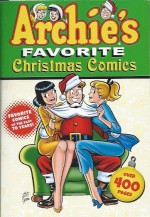
Archie’s Favorite Christmas Comics


By many and various (Archie Comics)
ISBN: 978-1-936975-80-8

Win’s Christmas Gift Recommendation: For All Good Girls & Boys Who’ve Been Nice This Year 9/10

As long-term readers might recall, my good lady wife and I have a family ritual we’re not ashamed to share with you. Every Christmas we barricade the doors, draw the shutters, stockpile munchies and stoke up the radiators before settling down with a huge pile of seasonal comics from yesteryear.

There’s a few older DC’s, loads of Disney’s and some British annuals, but the vast preponderance is Archie Comics. From the earliest days this too-often neglected comics institution has quite literally “owned Christmas” with a gloriously funny, charming, nostalgically sentimental barrage of cannily-crafted stories capturing the spirit of the season through a range of comicbooks running from Archie to Veronica, Betty to Sabrina and Jughead to Santa himself…

For most of us, when we say comicbooks people’s thoughts turn to buff men and women in garish tights hitting each other, bending lampposts and lobbing trees or cars about, or stark, nihilistic crime, horror or science fiction sagas aimed at an extremely mature and sophisticated readership of confirmed fans – and indeed that has been the norm of late.

Throughout the years though, other forms and genres have waxed and waned but one that has held its ground over the years – although almost completely migrated to television these days – is the genre of teen-comedy begun by and synonymous with a carrot topped, homely (at first just plain ugly) kid named Archie Andrews.

MLJ were a small publisher who jumped on the “mystery-man” bandwagon following the debut of Superman. In November 1939 they launched Blue Ribbon Comics, promptly following-up with Top-Notch and Pep Comics. The content was the common blend of funny-book costumed heroes and two-fisted adventure strips, although Pep did make a little history with its first lead feature The Shield, who was the American industry’s first superhero to be clad in the flag (see America’s 1st Patriotic Hero: The Shield)

After initially revelling in the benefits of the Fights ‘N’ Tights game, Maurice Coyne, Louis Silberkleit and John Goldwater (MLJ, duh!) spotted a gap in their blossoming market and in December 1941 the costumed cavorters and two-fisted adventurers were gently nudged aside – just a fraction at first – by a wholesome, improbable and far-from-imposing new hero; an unremarkable (except, perhaps, for his teeth) teenager who would have ordinary adventures just like the readers, but with the laughs, good times, romance and slapstick emphasised.

Almost certainly inspired by the hugely popular Andy Hardy movies, Goldwater developed the concept of a youthful everyman protagonist and tasked writer Vic Bloom & artist Bob Montana with the job of making it work. Their precocious new notion premiered in Pep #22: a gap-toothed, freckle-faced, red-headed kid obsessed with impressing the pretty blonde girl next door.

A 6-page untitled tale introduced hapless boob Archie Andrews and wholesomely pretty Betty Cooper. The boy’s unconventional best friend and confidante Jughead Jones also debuted in the first story as did idyllic small-town utopia Riverdale. It was a huge hit and by the winter of 1942 the kid had won his own title.

Archie Comics #1 was MLJ’s first non-anthology magazine and with it began the slow transformation of the entire company. With the introduction of ultra-rich, raven-haired Veronica Lodge, all the pieces were in play for the industry’s second Genuine Phenomenon…

By 1946 the kids were in charge, so MLJ became Archie Comics, retiring most of its costumed characters years before the end of the Golden Age to become, to all intents and purposes, a publisher of family-friendly comedies. The hometown settings and perpetually fruitful premise of an Eternal Romantic Triangle – with girl-hating best bud Jughead Jones and scurrilous rival Reggie Mantle to test, duel and vex our boy in their own unique ways – the scenario was one that not only resonated with the readership but was infinitely fresh…

Archie’s success, like Superman’s, forced a change in content at every other publisher (except perhaps Gilberton’s Classics Illustrated) and led to a multi-media brand which encompasses TV, movies, newspaper strips, toys and merchandise, a chain of restaurants and, in the swinging sixties, a pop music sensation when Sugar, Sugar – from the animated TV cartoon – became a global pop smash. Clean and decent garage band “The Archies” has been a fixture of the comics ever since…

That Andrews boy is good-hearted, impetuous and lacking common sense, Betty his sensible, pretty girl next door who loves the ginger goof, and Veronica is rich, exotic and glamorous: only settling for our boy if there’s nobody better around. She might actually love him too, though. Archie, of course, is utterly unable to choose who or what he wants…

The unconventional, food-crazy Jughead is Mercutio to Archie’s Romeo, providing rationality and a reader’s voice, as well as being a powerful catalyst of events in his own right. That charming triangle (and annexe) has been the rock-solid foundation for seven decades of funnybook magic. Moreover the concept is eternally self-renewing…

This eternal triangle has generated thousands of charming, raucous, gentle, frenetic, chiding and even heart-rending humorous dramas ranging from surreal wit to frantic slapstick, with the kids and a constantly expanding cast of friends (boy genius Dilton Doily, genial giant jock Big Moose and aspiring comicbook cartoonist Chuck amongst many others) growing into an American institution and part of the nation’s cultural landscape.

The feature has thrived by constantly re-imagining its core archetypes; seamlessly adapting to the changing world outside its bright, flimsy pages, shamelessly co-opting youth, pop culture and fashion trends into its infallible mix of slapstick and young romance. Each and every social revolution has been painlessly assimilated into the mix and, over the decades, the company has confronted most social issues affecting youngsters in a manner always both even-handed and tasteful.

Constant addition of new characters such as African-American Chuck and his girlfriend Nancy, fashion-diva Ginger, Hispanic couple Frankie and Maria and spoiled home-wrecker-in-waiting Cheryl Blossom have contributed to a wide and appealingly broad-minded scenario. In 2010 Archie jumped the final hurdle when openly gay Kevin Keller became an admirable advocate capably tackling and dismantling the last major taboo in mainstream Kids’ comics.

One of the most effective tools in the company’s arsenal has been the never-failing appeal of the seasons and holiday traditions. In Riverdale it was always sunny enough to surf at the beach in summer and it always snowed at Christmas…

The Festive Season has never failed to produce great comics stories. DC especially have since their earliest days perennially embraced the magic of the holiday with a decades-long succession of stunning and sentimental Batman thrillers – as well as many other heroic team-ups incorporating Santa, Rudolph and all the rest.

Archie too started early and kept on producing year-end classics. The stories became so popular and eagerly anticipated that in 1954 the company created a specific title – Archie’s Christmas Stocking – to cater to the demand, even as it kept the winter months of its other periodicals stuffed with assorted tales of elves and snow and fine fellow-feeling…

This splendidly appealing, cheap-&-cheerful full-colour pocket-digest (as long as your pockets are both deep and strong), gathers and re-presents a superb selection of cool Yule extravaganzas of ancient and relatively recent vintages which begins, after jolly, informative Introduction ‘Christmas in Riverdale!’ from Paul Castiglia, with a selection from ‘The Early Years’.

It naturally kicks off with ‘Archie Andrews’ Christmas Story’ by Montana (from Jackpot Comics #7 1942) wherein our hapless boy wonder is even more obvious than usual and ends up with a surfeit of the same present from everybody he cares about. His antics to offload the unwanted extras lead to a painful comeuppance…

Also from 1942 and Montana, ‘The Case of the Missing Mistletoe’ debuted Archie #1, and found Archie and Jughead at loggerheads after unknowingly taking identical twins to a party whilst a few unchanging years later ‘Christmas Cheers’ (Pep Comics #46, 1944, by Harry Sahle, Ed Goggin & Ginger) saw the red-headed fool in deep trouble after losing his diligently deliberated present list – and all his savings…

The next two tales originate from Archie Giant Series #5, 1958, and are both by Dan DeCarlo, Rudy Lapick & Vincent DeCarlo, beginning with ‘Generous to a Fault’ wherein Betty and Veronica convince all the boys in town to elect the most “giving” among them from over the last year and instigate a major riot, whilst ‘Seasonal Smooch’ sees Reggie abusing mistletoe privileges with agonising consequences…

The theme of ‘Christmas Trees and Decorations’ opens with ‘A Christmas Tale’ (Life With Archie #33, 1965 by Frank Doyle, Bob White & Marty Epp) as arch-rivals Andrews and Mantle try to establish the manly pecking order by competing to cut down the best tree before ‘ ‘Tis the Season for Extreme Decorating’ (Betty & Veronica Spectacular #80 2007, by Dan Parent, Rich Koslowski, Barry Grossman & Jack Morelli) finds the distaff competitors succumbing to another bout of insane one-upmanship over who can spruce up and illuminate a home best…

When loaded Mr. Lodge hires ‘Tree Experts’ (Veronica #191, 2009 by Mike Pellowski, Parent, Jim Amash, Grossman & Morelli) to trim the Mansion’s huge pine, Archie’s wistful nostalgia produces a sentimental change of heart before ‘Price Clubbed’ (Archie Digest #248, 2008, Pellowski, Randy Elliott & Bob Smith) finds him and his own dad spending special time obtaining their tree. The chapter concludes with Betty & Veronica one-pager ‘Snow Flakes’ featuring some punishingly accurate satirical snowmen…

‘Gifts and Giving’ opens with a ‘Holiday Rush’ (Holiday Fun Digest #11 2006 from Pellowski, Tim Kennedy, Koslowski, Grossman & Morelli) as Betty and Veronica bemoan the early advent of Xmas overload, ‘Gift Exchange’ (Betty & Veronica #87 1965, Doyle, Dan & Vincent DeCarlo) then deals with the repercussions of the little rich girl giving her friends away – as presents – and ‘Christmas Misgivings’ (Veronica #60 1997, Barbara Slate, Jeff Shultz, Rudy Lapick, Grossman & Bill Yoshida) sees her friends reactions after they all sneak a peek in Ronnie’s shopping bags and reach all the wrong conclusions about who’s getting what…

‘Stamp of Approval’ (Archie Giant Series #6 1959 by Doyle, Dan DeCarlo, Lapick Sheldon Brodsky & Vincent DeCarlo) sees Betty obsessed with collecting Green Stamps to offset her regular lack of funds for presents whilst ‘Gift Exchange’ (Holiday Fun Digest #11 2006 by Pellowski, Tim Kennedy & Al Nickerson) finds Chuck and Big Moose inadvertently selecting perfect prezzies for their girlfriends by mixing up their purchases…

‘Snuggle Up’ (Betty & Veronica #244, 2009 by Parent, Shultz, Koslowski, Grossman & Morelli) then reveals how the loaded Lodge lass really feels about the hideous thing Archie got for her when left all alone…

‘Fit to be Yuletide’ (Jughead #125, by Craig Boldman, Rex Lindsey, Koslowski, Grossman & Morelli from 2000) follows snide sidekick Juggy as he goes to extraordinary lengths to find the perfect present for his arch-enemy Trula Twist after which selfish, conceited Reggie surprises everyone when they follow to see how he actually spends his holidays in ‘The Gift Horse Laugh!’ from Archie Digest #248, (2008 by Pellowski, Pat Kennedy & Ken Selig).

The next selection concentrates on ‘Playing Santa’, opening with ‘Wanted: Santa Claus’ (Archie and Me #26 from 1969, by Joe Edwards & Jon D’Agostino) wherein long-suffering School Principal Mr. Weatherbee pines for the annual dress-up role he claims to despise and ‘Santa Claws’ (Archie Digest #248, 2008 from Bill Golliher, Pat Kennedy & Amash) sees our red-headed loon deeply regretting accepting the opportunity to make extra cash by being the Santa in a pet shop.

Even more upset is the raven-haired rich girl when she inveigles the position of ‘Santa’s Little Helper’ (Veronica #176, 2007 Parent, Amash, Grossman & Teresa Davidson) to be near Archie yet ends up as elf assistant to a creepy stalker-nerd before enjoying a jumbo crop of jolly red fellows after announcing there’s a ‘Santa Shortage’ (Betty & Veronica #231, 2008 by Pellowski, Shultz & Al Milgrom) at a party for needy kids. The chapter concludes with a vivacious pin-up of ‘Veronica’s Christmas Card’…

‘Santa and His Elves’ opens with ‘Playing Santa’ from Jughead & Friends Digest #35 (2010 by Pellowski, Fernando Ruiz, Milgrom, D’Agostino & Grossman) as a posse of pixies pressgang laconic young Mr. Jones into making the all-important delivery run as St. Nick is out of action, after which elfin Lisa seemingly spoils the Season of Giving with her new-fangled online ordering website to replace letters to Santa. Oddly, things work out fine anyway, as everyone gets ‘Surprise Presents’ (Archie Digest #248, 2008 by George Gladir, Shultz, Koslowski, Morelli & Grossman)…

‘Pizza and Good Cheer’ (Jughead’s Double Digest #145, 2009 from Pellowski, Ruiz, Nickerson, Morelli & Grossman) displays Jughead at his most engaging when the greedy goof wins a year’s worth of pies and hands them out to Riverdale’s destitute, unaware that the ever-watching little people have had a hand in his generous gesture…

This section then slapsticks to a sharp stop via a typically rambunctious pin-up of ‘Archie’s Christmas Card’…

Jingles the Elf has been an Archie regular for decades and ‘Santa’s Sprites’ raids the archives for some of his best moments, beginning with first appearance ‘A Job for Jingles’ from Archie Giant Series #10 (1961 by Doyle, Dan DeCarlo, Lapick & Vincent DeCarlo) as the playful imp – who cannot be seen by adults – spends his day off just like any normal kid.

He resurfaced in ‘Return of Jingles’ (Archie Giant Series #20, 1963 by the same creative team) but found himself upstaged by a brace of his workbench associates who wanted to see for themselves how much fun humans have, but in ‘Season of Magic’ (Archie Giant Series #158, 1969, Doyle, White & Yoshida) Jingles met his puckish, pranksterish match when Reggie decided to teach him a lesson…

Perhaps it was in retaliation for ‘Treed’ (Archie Giant Series #150, 1968 Doyle, Al Hartley & Yoshida) wherein Jingles aided and abetted Archie in the yearly ritual of impressing Ronnie by chopping down a Christmas fir for the Lodge Mansion…

Rivalry resulted in sweet music in ‘Jingles Rocks’ (Archie & Friends #21, 2012 by Golliher, Lapick, Grossman & Yoshida) when the showy sprite tried out as lead singer in Archie’s band but had to make some radical wardrobe changes to be seen and heard by the over-21s…

Always adept at seeing issues from the female point of view, the editors soon added a feminine counterpart to Jingles; someone with the same magical powers and festive mission, but a bitter despised rival – and in a miniskirt…

‘Some Things Never Change’ (Betty & Veronica #156, 2001 by Kathleen Webb, Shultz & Henry Scarpelli) saw effusive Sugar Plum Fairy pop in for her annual visit only to find the too-cool kids already out of Christmas cheer. Her solution is carol singing…

Another year and Webb, Dan DeCarlo, Grossman & Yoshida crafted ‘Visions of a Sugar Plum’ (Betty & Veronica #108, 1997). Now it was the twinkly sprite who couldn’t catch the mood – until B & R convinced her to turn human-sized and come shopping. Everything was fine until hunky elf boyfriend Troll – the cause of her Yule blues – came to Riverdale to find her and made a lasting impression on the town’s available young ladies…

In ‘Tis the Season to be Jolly’ (Betty & Veronica #120, 1998, Webb, Dan DeCarlo, Alison Flood, Grossman & Yoshida) Sugar Plum brought flu-ridden Ronnie a stolen dose of Santa’s special pick-me-up – and the cure proved worse than the ailment – whilst in ‘She’s So Gifted’ (Veronica #191, 2009 by Parent & Amash) the fairy comforted our spoiled heiress after everybody decided to make presents and Ronnie found she had no talent for anything. At least that’s what she thought until Sugar Plum pointed out the obvious thing she’s overlooked…

Santa himself sent Sugar to sort out a depletion of seasonal cheer afflicting B & V in ‘The Gifted’ (Betty & Veronica #169, 2002 Webb, Shultz, Scarpelli, Yoshida &Grossman) whilst an all-out magic war broke out in Riverdale when ‘Holiday Watch’ (Betty & Veronica #244, 2009 by Parent, Shultz, Koslowski, Morelli & Grossman) saw the Fairy and Jingles vying for the young mortals’ attentions before ‘Jingles All the Way’ (Betty & Veronica Spectacular #86, 2009 by Parent, Koslowski, Rosario “Tito” Peña & Morelli) proves an old truism when the elfin enemies – thanks to Betty, Ronnie and Archie – are convinced to quit hissing and start kissing…

The merriment then concludes with manga-styled ‘The Naughty Clause’ (Archie #639, 2013 by Alex Segura, Gisele, Koslowski, Digikore Studios & Morelli) as Jingles takes the entire gang to the North Pole so Santa can give Reggie a little personal attitude adjustment…

‘Once upon a Yuletide’ focuses on the odder ends of Archie history with ‘A Children’s Story’ coming from The Adventures of Little Archie #29, (Winter 1963-64 by amazing one-man band Dexter Taylor) which see the little red-headed scamp entertain a lost Santa Claus from a strange other world whilst ‘Let it Snow’ (from Archie’s Weird Mysteries #18, 2002 by Paul Castiglia, Ruiz, Koslowski, Stephanie Vozzo & Vickie Williams) introduces a quartet of seasonal superheroes to while away a quiet night of tale-telling. The fanciful feast finishes with two half-page gag-fests starring Dan DeCarlo’s Sabrina the Teenage Witch enduring a ‘Hanging Hang-Up’ and experiencing ‘Foto Fun’…

A selection of ‘Winter Wonderland’ escapades starts with ‘Ski-Cart Catastrophe’ from Laugh Comics #300 (1976, by George Gladir, Sal Amendola, D’Agostino, Grossman & Yoshida) wherein the lads covert a shopping cart into an idiot-powered ski-mobile, resulting in many pains for them and pained looks from the girls after which golden greats of slapstick Frank Doyle & Harry Lucey treat us to a ‘Slay Ride’ (Archie Giant Series #5, 1958) wherein Archie and a borrowed horse make much manic mischief in the Lodge Mansion…

‘Frosty Fairy Tales’ (Betty & Veronica #120, 1998 by Pellowski, Dan DeCarlo, Grossman & Yoshida) sees Betty get the good-looking guy – but not Archie – when she and Ronnie go skiing and it all concludes with a silent romantic interlude involving ‘Snowmobile Snuggles’…

‘Holiday Party Time’ shows the gang at their best and worst starting with ‘Party Time’ (Betty & Veronica Double Digest #176, 2010 by Gladir, Shultz & D’Agostino) as Ronnie refuses to give up a long planned-for ball by merging it with a charity supper after her guests all decide to help the needy…

Her soiree for the town’s pets is much less of a hit with the ‘Party Dogs’ (Betty & Veronica #222, 2007, Gladir, Shultz & Milgrom) but some ‘Give and Take’ (Archie Digest #258, 2009, Parent, Amash & Grossman) turns a pot-luck shindig into the roaring success of the season. After voracious Jughead accidentally eats all the treats intended for Riverdale Orphanage he pulls out all the stops to ensure ‘The Party’ (Betty & Veronica Digest #189, 2009, Gladir, Shultz & D’Agostino, Morelli & Grossman) is still a howling hit…

Closing out this epic tome is a hearty heaping of ‘Christmas Spirit’ beginning with ‘You’re Cooked’ (Veronica #176, 2007 by Parent, Amash, Grossman& Teresa Davidson) as Betty teaches infamous Anti-chef Ronnie how to cook something festive – and Juggy descends like a locust – whilst ‘She Needs a Little Christmas’ (Betty & Veronica #132, 1999, Webb, Dan DeCarlo, Scarpelli, Grossman & Yoshida) finds him teaching the rich miss a few things about flaunting her wealth…

Ronnie’s social credibility takes a mortal hit when the true origin of the hyper-prestigious and ultra-exclusive Lodge family Christmas confection is revealed in ‘A Couple of Fruitcakes’ from Betty & Veronica #169 (2002 by Webb, Shultz & Scarpelli) and an impromptu sing-along turns into an inclusive town event in ‘Here We Come A-Caroling’ (Holiday Fun Digest #8, 2003, by Greg Crosby, Tim Kennedy, Lapick & Yoshida) before all the graphic good will pops to a stop with a deep dip into ‘Archie’s Holiday Fun Scrapbook’ (Holiday Fun Digest #12, 2007, by Parent) offering revealing glances at the Riverdale gang over many happy years.

These are perfect stories for young and old alike, crafted by a host of Santa’s most talented Helpers, epitomising the magic of the Season and celebrating the perfect wonder of timeless children’s storytelling. What kind of Grinch could not want this book in their kids’ stocking (from where it can most easily be borrowed)?
© 2014 Archie Comics Publications, Inc. All rights reserved.

The Story of Lee volume 2


By Seán Michael Wilson & Nami Tamura (NBM/ComicsLit)
ISBN: 978-1 56163-973-1

Win’s Christmas Recommendation: A Fine Tale of Families Far Apart… 8/10

After far too long a wait here’s a supremely engaging sequel to an endearing romantic confection which delighted readers in 2011: a sweet transatlantic/transpacific shojo manga, which like its subject matter and stars was the happy product of more than one country…

As written by Scottish émigré and current resident of Japan Seán Michael Wilson and illustrated by Manga Shakespeare artist Chie Kutsuwada, The Story of Lee detailed the growing relationship of a restless Hong Kong girl who fell for a young celtic poet and teacher.

Lee endured frustrated dreams dutifully working in her father’s shop. The situation was uncomfortable: although the elder meant well, he disapproved of almost everything Lee did and never stinted in telling her so. His disparagement and constant pushing for her to achieve something (becoming a dentist) whilst staying true to his old-fashioned ideas was tearing her apart, and Wang, the nice, proper Chinese boy he perpetually forced upon her, was a really creepy turn-off.

What they never realised was that Lee was a closet poet and pop music junkie besotted with western culture, particularly myth-laden London. In those unwelcome fascinations she was clandestinely supported by her frail, aging grandmother and unconventional Uncle Jun, a globe-trotting playboy who long ago abandoned convention and tradition to follow his own dreams to America…

At 24 Lee was being gradually eroded away until she met gorgeous temporary teacher Matt MacDonald. Exotically Scottish, he was polite and charming: a sensitive, talented poet…

Lee quietly defied her father and her relationship with Matt deepened, but when tragedy struck and grandmother was no longer a factor, further upheaval occurred when Matt announced that he was returning to his home thousands of miles away.

…And then he dropped his bombshell and asked her to go with him…

With the second instalment – illustrated by British-based Japanese artist Nami Tamura – the tale resumes with the lovers in flight for the UK and, after a whirlwind tour of London, on a long and gloriously picturesque train journey to Edinburgh where Lee will study for a year on a student visa. It also happens to be Matt’s home town.

A minor skirmish with rude, rowdy but generally harmless lads travelling to Newcastle is not as distressing to the sheltered, culture-shocked waif as the baffling array of accents, dialects and slang which constantly overwhelm her plainly inadequate textbook understanding of English…

The city itself is a revelation: so many old and beautiful buildings, unlike HK where everything is always being torn down and rebuilt, and perhaps it’s just that dizzying cultural adjustment which makes her feel Matt is acting a little differently now that he’s in his on his own turf again…

Or maybe it’s the oddly intimate relationship he has with the old college chum they’re crashing with? Richard is warm, welcoming and coolly into all the right music, but she can’t shake the feeling that his relationship with her man might go beyond the bonds of friendship…

Over following days Lee’s apprehensions increase as Matt gleefully shows her around the nostalgic landmarks of his past and apparent proofs of Richard’s feelings begin to emerge. Moreover, her charming man seems to be changing too: his gentle patience evaporates; he’s snappish and even reacts jealously when other students – and even the local musicians she slavishly seeks out – pay attention to her…

One thing she cannot adjust to is the undercurrent of hostility and casual aggression expressed by the young men in Scotland…

Lee has never felt more vulnerable. She is a world away from home and security and increasingly wonders if she’s made the biggest mistake of her life. As tensions rise and the nurturing warmth the lovers shared deteriorates further, unexpected aid appears in the form of Uncle Jun who pops up for a visit and offers some startling advice…

Things boil over after a particularly savage argument and the boys steam off together to a party but what Lee sees when she returns and finds them together is beyond comprehension and seems to confirm all her worst fears…

To Be Continued…

Supplemented by a copious Glossary and Notes section defining the specific vagaries of accent and slang whilst offering geographical and historical perspective on the many actual locations depicted, this is a deliciously compelling drama playing with well-established conventions and idioms of romantic fiction and teen soap opera.

With beguiling subtlety The Story of Lee uses powerful themes of cultural differences, mixed-race-relationships, family and friendship pressures and the often insurmountable barrier of different childhood experiences and expectations to weave an enchanting tale of independence, interdependence and isolation.

It all ends on a gentle cliffhanger and I can’t wait to see how it all resolves in the next volume… and so will you when you pick up on this evocative, addictive story of cultures in conflict and union…
© 2015 Seán Michael Wilson & Nami Tamura.

Fires Above Hyperion


By Patrick Atangan (NBM/Comics/Lit)
ISBN: 978-1561639861

It’s long been an aphorism – if not outright cliché – that Gay (or more contemporarily LGBTQ) comics are the only place in the graphic narrative game where real romance still exists.

As far as I can see though it’s actually true; an artefact, I suppose, of a society which seems determined to demarcate and separate sex and love as two utterly different – and even opposite – things.

I’d prefer to think that here in the 21st century – or at least in the more civilised bits which actually acknowledge and welcome that times have changed – we’ve outgrown the juvenile, judgemental, bad old days and can simply appreciate powerful, moving, wistful, sad and/or funny comics about ordinary people without any kind of preconception, but that battle’s still not completely won yet. Hopefully, thoughtful, inspirational memoirs such as this will aid that transition…

Californian Patrick Atangan (Songs of Our Ancestors, Invincible Days) is a multi-talented Filipino-American creator with many strings to his creative bow: as deft and subtle in his computer-generated comic tales and retellings of Asian myths as with the tools he uses to craft high-end designer furniture.

Now he’s added a wry, charming yet deeply moving collection of short intimate musings and recollections on his “romantic gaffes and failures” to his printed canon for youngsters and the results are enough to make the toughest cookie crumble…

Posited as if “Sex and the City had been created by a gay Charlie Brown” these utterly compelling, seditiously humorous slices of a life lived a little too much inside one’s own head kick off with chronological logic with the still-closeted Patrick attending his ‘Junior Prom’ as escort to obsessive beard Mildred, whose attention to detail and determination to make the event absolutely perfect cannot help but fail. At least the string of disasters the fervent Prom-zilla endures take the spotlight off his own failings, petty jealousies and perceived inadequacies…

‘Secrets’ skips ahead to the liberation of college as the introvert resolves to reinvent himself and begins an ongoing process of Outing which gradually encompasses friends, family and everybody new in his life. Sadly that in turn leads to a sort-of romance with Calvin who never really comes to terms with his own sexual identity…

On leaving academe, another character-building debacle involves ‘Gary’; someone our author considered far too lovely for a dweeb like him – and therefore something of a self-fulfilling prophecy – before eponymous vignette ‘The Fires Above Hyperion’ finds Patrick coolly contemplating the now-annual forest fires threatening Los Angeles whilst foolishly attempting to rekindle or reinvent the three-year relationship he has just ended with Roger…

Eschewing his usual ‘New Year’s Eve’ ritual, the narrator attends a big party and suffers inebriation, gastric trauma and the humiliation of mistakenly putting the moves on a chain-smoking straight guy whilst ‘APE Shit’ reveals the sorry fallout of a trip to San Francisco to attend his first Alternative Press Expo in a decade: a concatenation of domestic disasters comprising old friends with new children, commuter congestion and a total change in the way Indy comics are sold. At least he connects with the gorgeous, seemingly ideal Bryan – before Fate and Patrick’s own conscience play a few pranks to spoil what might have been a perfect moment…

More notionally self-inflicted grief comes out of ignoring the custom of a lifetime and attending a wedding as a ‘Plus One’. Naturally he didn’t mind his “date” Julia going off with a guy, but when Patrick zeroes in on wonderful, apparently available Peter, events and the author’s own treacherous tuxedo conspire to make the soiree memorable for all the wrong reasons.

A heartbreakingly harsh assessment of Patrick’s failings then lead him to the dire conclusion that he is ‘Nobody’s Type’ before the excoriating romantic recriminations end with another ill-fated, self-sabotaged first date that founders because of too much introspection and an accumulation of ‘Baggage’…

Insightful, penetrating, invitingly self-deprecating, guardedly hopeful and never afraid to be mistaken for morose when occasion demands, this collection of misjudged trysts and missed chances offers a charming glimpse at the eternally hopeful way most folks live their love-lives and the result is magical and unforgettable.

Atangan has stated that he is contemplating quitting comics, but after seeing this beguiling confection I’m sure a legion of fans hungry for more of his slick, stylish and earnest entertainments will be determined to change his mind…
© 2015 Patrick Atangan.

Heart in a Box


By Kelly Thompson & Meredith McClaren (Dark Horse)
ISBN: 978-1-61655-694-5

Win’s Christmas Gift Recommendation: A Fearsome Mature Fable for the Family Season… 8/10

Let’s face it kids, Love Hurts and this mesmerising modern parable demonstrates that maxim with stunning audacity and devilish charm as author Kelly Thompson (Storykiller, The Girl Who Would be King, Jem and the Holograms) and illustrator Meredith McClaren (Hinges) take a young woman on a harsh yet educative road trip to learn a life lesson regarding ill-considered wishes and Faustian bargains…

After young Emma had her heart broken by her unforgettable “Man with No Name” she foolishly listens to an insistent stranger who promises to make the shattering pain go away forever.

He’s as good as his word, too, but within nine days Emma realises that what she feels after he’s worked his magic is absolutely nothing at all and that’s even worse than the agony of loss and betrayal which nearly ended her…

The aggravating Mephistophelean advisor – she calls him “Bob” – is still popping in however, and promptly offers her a way to can reclaim the seven shards of sentiment/soul she threw away. There will of course be a few repercussions: as much for her as those folks who have been enjoying the use of a little feeling heart ever since Emma so foolishly dispensed with it and might not want to relinquish that additional loving feeling…

But as she doggedly travels across America, hunting down those mystically reassigned nuggets of passion, she discovers not only how low she’ll stoop to recover what’s hers but also where and when all the moral boundaries she never thought she had can’t be bent, bartered or broken…

A dark delight, Emma’s literal emotional journey takes her into deadly danger, joyous cul-de-sacs and life-changing confrontations with her past and future in a clever reinvigoration of one of literature’s oldest plots and probably mankind’s most potent and undying philosophical quandaries…

Funny, sad, scary and supremely uplifting Heart in a Box is a beguiling rollercoaster ride to delight modern lovers and every grown-up too mature to ever be lonely or dependent…
© 2013, 1979 Semi-Finalist Inc. & Meredith McClaren. All rights reserved.

Young Romance: The Best of Simon & Kirby’s Romance Comics


By Joe Simon & Jack Kirby, restored & edited by Michael Gagné (Fantagraphics Books)
ISBN: 978-1-60699-502-0

Simon & Kirby presaged and ushered in the first American age of mature comics – not just with the Romance genre, but with all manner of challenging modern material of real people in extraordinary situations – before seeing it all disappear again in less than eight years. Their small stable of magazines produced for the loose association of companies known as Prize/Crestwood/Pines blossomed and wilted as the industry contracted throughout the 1950s.

As the popularity of flamboyant escapist superheroes waned after World War II, newer yet more familiar genres such as Crime and Horror came to the fore in American comics, as audiences increasingly rejected upbeat fantasy for grittier, more sober older themes in mass entertainment.

Some, like Westerns and Funny Animal comics, hardly changed at all, but gangster and detective tales were utterly radicalised by the temperament of the post-war world.

Stark, uncompromising, cynically ironic novels and socially aware, mature-themed B-movies that would become categorised as Film Noir offered the new civilian society a bleakly antiheroic worldview that often hit too close to home and set fearful, repressive, middle-class parent groups and political ideologues howling for blood.

Naturally the new forms and sensibilities seeped into comics, transforming good-natured, two-fisted gumshoe and Thud-&-Blunder cop strips of yore into darkly intriguing, even frightening tales of seductive dames, big pay-offs and glamorous thugs.

Sensing imminent Armageddon, the moral junkyard dogs bayed even louder as they saw their precious children’s minds under seditious attack…

Concurrent to the demise of masked mystery-men, industry giants Joe Simon & Jack Kirby – who were already capitalising on a True Crime boom – legendarily invented the comicbook Romance genre with mature, beguiling, explosively contemporary social dramas equally focussed on the changing cultural scene and adult-themed relationships. They also, with very little shading, discussed topics of a sexual nature…

Beginning with the semi-comedic prototype My Date for Hillman in early 1947, S&K plunged in full force with Young Romance #1 in September of that year for Crestwood Publications: a minor outfit which had been creating interesting but not innovative comics since 1940 as Prize Comics.

Following Simon’s plan to make a new marketplace from the grievously uncatered-for older girls of America, they struck gold with stories addressing serious issues and hazards of relationships…

Not since the invention of Superman had a single comicbook generated such a frantic rush of imitation and flagrant cashing-in. Young Romance #1 was a monumental hit and the team acted accordingly: swiftly expanding they releasing spin-offs Young Love (February 1949), Young Brides and In Love under a unique profits-sharing deal that quickly paid huge dividends to the publishers, creators and a growing studio of specialists.

All through that turbulent period comicbooks suffered impossibly biased oversight and hostile scrutiny from hidebound and panicked old guard institutions such as church groups, media outlets and ambitious politicians.

A number of tales and titles garnered especial notoriety from those social doomsmiths and when the industry buckled and introduced a ferocious Comics Code, it castrated the creative form just when it most needed boldness and imagination. Comics endured more than a decade and a half of savagely doctrinaire self-imposed censorship until changing society and plummeting profits forced the art form to adapt, evolve or die.

Those tales from a simpler time, exposing a society in meltdown and suffering cultural PTSD, are mild by modern standards of behaviour but the quality of art and writing make those pivotal years a creative highpoint long overdue for a thorough reassessment.

In 1947 fictionalising True Crime Cases was tremendously popular at the time, and of the assorted outfits that generated such material nobody did it better than S&K. That technique of first-person confession also naturally lent itself to the just-as-hard-hitting personal sagas of a succession of archetypal women and girls who populated their new comicbook smash.

Although their output as interchangeable writers/pencillers/inkers (aided by Joe’s brother-in-law Jack Oleck in the story department) was prodigious and astounding, other hands frequently pitched in, so although these tales are all credited to S&K, art-aficionados shouldn’t be surprised to detect traces of Bill Draut, Mort Meskin, Al Eadeh, George Roussos or other stalwarts lurking in the backgrounds…

Michelle Nolan’s ‘Introduction’ deftly analyses the scope and impact trajectory of the innovation and its impact on the industry before the new era opens with ‘Boy Crazy’ from Young Romance #2 (1947) wherein a flighty teenager with no sense of morality steals her aunt’s man with appalling consequences after which ‘Her Tragic Love’ – from the same issue – delivers a thunderbolt of melodrama as a lovers’ triangle encompassing a wrongly convicted man on death row presented one woman with no solution but the final one…

Scripted by Oleck ‘Fraulein Sweetheart…’ (YR #4, 1948) reveals dark days but no happy endings for two German girls eking out existence in the American-occupied sector of post-war Marburg whilst ‘Shame’ from issue #5 dealt with a high flying young lady too proud to acknowledge her own scrub-woman mother whenever her flashy boyfriend was around.

Next is ‘The Town and Toni Benson’ from Young Romance #11 and contemporarily designated volume 2, #5, 1949, which offered a sequel to ‘I Was a Pick-Up’ from the premiere issue (which is confusingly included in the sequel to this volume Young Romance 2: the Early Simon & Kirby).

Here S&K cleverly built on that original tale creating a soap opera environment which could so easily have spawned a series as the now-newlywed couple struggle to make ends meet under a wave of hostile public scrutiny…

On a roll the creative geniuses began mixing genres and Western Love #2, 1948 offered ‘Kathy and the Merchant of Sunset Canton!’ as a city slicker found his modern mercenary management style made him no friends in cowboy country until one proud girl took the chance on getting to know him whilst ‘Sailor’s Girl!’ (Young Romance #13/Vol. 3, #1 1949) explores the troubles of an heiress who marries a dauntless sea rover who works for daddy, confident that she can tame his wild free spirit…

We head out yonder once more to meet ‘The Perfect Cowboy!’(Real West Romances # 4 1949) – at least on set – and the simple sagebrush lass whose head he briefly turned before social inequality and petty envy inform the brutally heavy-handed ‘I Want Your Man’ Young Romance #21/Vol. 3, #9 1950 wherein a young woman of meagre means realises almost too late the cost of her vendetta against a pretty little rich girl…

‘Nancy Hale’s Problem Clinic’ (Young Romance #23/Vol. 3, #11, 1950) offers a brief dose of sob-sister advice as “treatment for the troubled heart” before the magnificent melodramas resume with ‘Old Fashioned Girl’ (YR #34/Vol. 4, #10 1951) as a forceful young woman raised by her grandmother slowly has her convictions about propriety challenged by intriguing men and her own barely subsumed passions, whereas ‘Mr. Know-It-All Falls in Love’ (Young Love #37/Vol. 7, #10 1952) takes a rare opportunity to use a male narrator’s voice when a buttoned-down control freak decides that with his career in order it’s time to marry. But who’s the best prospect?

Another of those pesky triangles then results in one marriage, one forlorn heartbreak, war, vengeance and a most perfect ‘Wedding Present!’ (Young Love #50/Vol. 5, #8 1953) before this cleverly conceived chronicle takes a conceptual diversion after one last tale from the same issue, detailing the all-business affair of ‘Norma, Queen of the Hot Dogs’ and her (at first) strictly platonic partner…

In 1955 the Comics Code Authority began its draconian anodyneing of the industry’s more mature efforts and the Romance titles especially took a big conceptual hit. The edgy stories became less daring and almost every ending was a happy one – for the guy or the parents at least.

Following a superbly extensive ‘Cover Gallery’ featuring a dozen of the most evocative images from those wild and free early years ‘The Post-Code Era’ re-presents the specific conditions affecting romantic relations from the censorious document, followed by a selection of the yarns S&K and their team were thereafter reduced to producing.

Even the art seems less enthusiastic for the wholesome unchallenging episodes which begin with ‘Old Enough to Marry!’ (Young Romance #80/Vol. 8, #8, 1955) as a young man confronts his grizzled cop dad who has no intention of letting his son make a mess of his life, after which a maimed farmer tries to sabotage the budding romance between his once-faithful girlfriend and the brilliant good-looking doctor who cured him in ‘Lovesick’ from the same issue.

The next four tales all originated in Young Romance #85/Vol. 10, #1 1956, beginning with ‘Lizzie’s Back in Town’ as a strong, competent girl returns home to let daddy pick her husband for her (no, really!); two guys fight and the winner gets the girl in ‘Lady’s Choice’ whilst another, less frenzied duel results in a ‘Resort Romeo’ wedding the girl of everybody’s dreams even as ‘My Cousin from Milwaukee’ exposes a gold-digger and reserves her handsome relative for herself…

The bowdlerised tales mercifully conclude with ‘The Love I Lost!’ (Young Romance #90/Vol. 12, #3, 1959) wherein another hospital case realises just in time that the man she wants is not the man she deserves…

This emotional rollercoaster is supplemented with a number of well-illustrated bonus features including ‘Why I Made this Book’, ‘Simon and Kirby’s Romance Comics: A Historical Overview’, a splendid selection of S&K’s pioneering ‘Photo Covers’ (18 in all) and a fascinating explanation of the process of artwork-rehabilitation in ‘About the Restoration’ before everything wraps up with the now-traditional ‘Biographies’ section.

Simon & Kirby took much of their tone if not actual content from movie melodramas of the period (such as Mr. Skeffington, All About Eve or Mildred Pierce and Noir romances like Blonde Ice or Hollow Triumph) and, unlike what we might consider suitable for romantic fiction today, their stories crackled with tension, embraced violent action and were infested with unsavoury characters and vicious backstabbing, gossiping hypocrites.

Happily those are the tales which fill most of this book, making for an extremely engaging, strikingly powerful and thoroughly addictive collection of great stories by brilliant masters of the comics arts and one no lover of the medium should miss…
Young Romance: the Best of Simon & Kirby’s Romance Comics © 2012 Fantagraphics Books Inc. Introduction © 2012 Michelle Nolan Schelly. All rights reserved.

Young Romance 2: the Early Simon & Kirby


By Joe Simon & Jack Kirby,restored by Chris Fama & edited by Michael Gagné (Fantagraphics Books)

ISBN: 978-1-60699-732-1

As the popularity of flamboyant escapist superheroes waned after World War II, newer yet more familiar genres such as Crime and Horror came to the fore in American comics, as audiences increasingly rejected upbeat fantasy for grittier, more sober older themes in mass entertainment.

Some, like Westerns and Funny Animal comics, hardly changed at all, but gangster and detective tales were utterly radicalised by the temperament of the post-war world.

Stark, uncompromising, cynically ironic novels and socially aware, mature-themed B-movies that would become categorised as Film Noir offered the new civilian society a bleakly antiheroic worldview that often hit too close to home and set fearful, repressive, middleclass parent groups and political ideologues howling for blood.

Naturally the new forms and sensibilities seeped into comics, transforming good-natured, two-fisted gumshoe and Thud-&-Blunder cop strips of yore into darkly beguiling, even frightening tales of seductive dames, big pay-offs and glamorous thugs.

Sensing imminent Armageddon, the moral junkyard dogs bayed even louder as they saw their precious children’s minds under seditious attack…

Concurrent to the demise of masked mystery-men, industry giants Joe Simon & Jack Kirby – who were already capitalising on the True Crime boom – famously invented the comicbook Romance genre with mature, beguiling, explosively contemporary social dramas that equally focussed on the changing cultural scene and adult-themed relationships. They also, with very little shading, discussed topics of a sexual nature…

Beginning with the semi-comedic prototype My Date for Hillman in early 1947, S & K plunged in full force with Young Romance #1 in September of that year for Crestwood Publications: a minor outfit that had been creating interesting but not innovative comics since 1940 as Prize Comics.

Here, however, following Simon’s plan to make a new market out of the grievously uncatered-for older girls of America, they struck gold with stories addressing the serious issues and hazards of relationships…

Simon & Kirby presaged and ushered in the first American age of mature comics – not only with the creation of the Romance genre, but with challenging modern tales of real people in extraordinary situations – before seeing it all disappear again in less than eight years. Their small stable of magazines produced for the loose association of companies known as Prize/Crestwood/Pines blossomed and wilted as the industry contracted throughout the 1950s.

Not since the invention of Superman had a single comicbook generated such a frantic rush of imitation and flagrant cashing-in. Young Romance #1 was a monumental hit and the team swiftly expanded: releasing spin-offs Young Love (February 1949), Young Brides and In Love under a unique profits-sharing deal that quickly paid huge dividends to the creators and their growing studio of specialists as well as the publisher.

All through that turbulent period comicbooks suffered impossibly biased oversight and hostile scrutiny from hidebound and panicked old guard institutions such as church groups, media outlets and ambitious politicians.

A number of tales and titles garnered especial notoriety from those social doomsmiths and when the industry buckled and introduced a ferocious Comics Code, it castrated the creative form just when it most needed boldness and imagination. Comics endured more than a decade and a half of savagely doctrinaire self-imposed censorship until changing society and plummeting profits forced the art form to adapt, evolve or die.

Those tales from a simpler time, exposing a society in meltdown and suffering cultural PTSD, are mild by modern standards of behaviour but the quality of art and writing make those pivotal years a creative highpoint long overdue for a thorough reassessment.

In 2012 Fantagraphics released Young Romance: the Best of Simon & Kirby’s Romance Comics and that superb compilation, unable to do justice to the sheer volume of breakthrough material, has happily spawned this magnificent sequel, dedicated to the master creators’ first bold experiments with their astonishingly adult new genre.

Fictionalising “True Crime Cases” was tremendously popular at the time, and of the assorted outfits that generated such material nobody did it better than S&K. That technique of first-person confession also naturally lent itself to the just-as-hard-hitting personal sagas of a succession of archetypal women and girls who populated their new comicbook smash.

Although their output as interchangeable writers/pencillers/inkers (possibly aided by Joe’s brother-in-law Jack Oleck in the story department) was prodigious and astounding, other hands frequently pitched in, so although these tales are all credited to S & K, art-aficionados shouldn’t be surprised to detect traces of Bill Draut, Mort Meskin, Al Eadeh, George Roussos or other stalwarts lurking in the backgrounds…

‘Introduction: A New Comic Book Genre Begins’ by Bill Schelly scrupulously traces the trajectory of the innovation and its impact on the industry before the shocking revelations begin with ‘I was a Pick-Up!’ from Young Romance #1 (September/October1947).

Here discontented teenager Toni Benson relates the circumstances that led to her being dumped by a sleazy rich kid in an underworld dive and of the sullied knight who saved her from a nasty end, whilst from the same issue ‘Misguided Heart’detailed how factory worker June Collins was slowly seduced by sleazy owner’s son Karl Barton until shy, self-effacing blue-collar Sherman could stand it no longer…

Story length varied from seven to fifteen pages and ‘Marriage Contract!’(YR #3, January/February 1948) took a gloriously expansive time to detail how destitute but proud slum-dweller Kitty Burke escaped parental pressure if not poverty by refusing to wed the career criminal her dad brokered for her, eventually finding happiness with a decent man prepared to honestly work his way to success, whilst the 8-page ‘Her Best Friend’s Sweetheart!’from the same issuetook a more light-hearted tone to detail how a soldier’s buddy sneakily put the moves on the girl he was supposed to be watching over…

Young Romance #4 revealed how excessively hard to please Nancy Hunter finally and painfully learned she would never find true love by only being a ‘Blind Date!’after which a brace of yarns from Young Romance #5 (May/June 1948) begins with ‘I Fell in Love With My Star Pupil!’:a fascinating study in small-town prejudice which found newly qualified teacher Mary Temple slandered, shunned and censured by petty, dirty minds in rural Pinesville when she began teaching an illiterate full-grown man the knowledge he needed to better himself. ‘Gold Digger’thensaw spoiled, avaricious Rusty Taylor taken down a peg or two when the boys she’d been exploiting brought in a ringer to teach her a much-needed lesson…

Simon & Kirby took much of their tone if not content from the movie melodramas of the period such as Smash-Up; the Story of a Woman or Johnny Belinda and Noir romances like Blonde Ice or Hollow Triumph and, unlike what we might consider suitable for romantic fiction today, their comicbook stories crackled with tension, embraced violent action and oozed unsavoury characters and vicious backstabbing, gossiping hypocrites.

‘Disgrace!’in #6 featured coal miner’s daughter Katie Markos who despised the raw brutal violence of boxing which offered her brother his only escape from poverty, but she was horrified at the relentless attraction she felt for his next opponent “Killer” Grant…

The creators were not afraid of complex plots either. ‘War Bride’,the first of two selections from Young Romance #7 (September/October 1948), saw French miss Janine Arday brought to America to marry her man, only to see him die on the docks as she debarked.

Stuck without a man to guarantee her citizenship, she desperately accepted a pre-proposal from wealthy French émigré Aristide Renault but after moving onto his estate found herself increasingly attracted to freewheeling idler Tony, son of the housekeeper Mrs. Cummings.

This tale would be considered mature even by today’s sophisticated standards…

The second tale reversed the standard format as male confessor Frank Craig revealed ‘I Stole for Love!’and catalogued the foolish thoughts which forced him to embezzle funds for a devoted bride who only wanted him, not useless trinkets…

A couple from Young Romance #8 lead with ‘Love or Pity’wherein eager bride-to-be Ginny Harlan finds her perfect life destroyed by vicious gossip when her brother is erroneously implicated in mail fraud. Happily her man Ken is a decent straight shooter…

By contrast ‘Love Can Strike So Suddenly’offers a lavish exotic adventure wherein manipulative, ambitious Evie injects herself as a chaperone into her older sister’s life: accompanying the serious Ann on a business trip to India organised by dreamy tycoon Warren Wright.

The kid’s aplomb and composure swiftly dissipate once she meets the unflappable pilot/guide Bascomb Fuller who preferred the moody soubriquet “Deadeye”…

‘Was Love to be My Sacrifice!’ from Young Romance #9 (January/February 1949) took a hard look at careers as Chris Lorraine increasingly rebelled at being one half of a sister-act – the part that wanted nothing to do with her mother’s ruthless dream of stardom by proxy. Despondent, frustrated Chris was far more interested in marriage to their long-suffering agent Sam…

With Young Romance a runaway success, the first spin-off debuted in February 1949 and from Young Love #1 comes the complex and intriguing ‘The Man I Loved Was a Woman-Hater’wherein vacationing Karen Nelson was saved from drowning by a reclusive artist who promptly ignored her thereafter. Unable to leave well enough alone she soon discovered a manipulative vixen who still had a ferocious financial and moral hold upon the surly but magnificent Pete Lewis…

Young Romance #10 (March/April 1949) provides two more challenging melodramas beginning with ‘This Man I Loved was a Mama’s Boy!’as Julie Decker finally meets her prospective mother-in law and realises how completely under her thumb brilliant young doctor Orin Fleming truly is.

It takes a deadly family joyride with her wild, juvenile delinquent brother-in-law-to-be before everybody is horrifyingly shaken out of their cloying, smothered roles…

‘Unwanted!’meanwhile focuses on a young girl fresh out of prison unwillingly drawn back towards her old life by controlling boyfriend and gangster Joe Crane.

When a well-meaning bank clerk steps in to save her, the bandit plans a savage revenge…

This sublime ride back to a time of hungry hearts and dark desires ends with ‘Too Wise for Romance!’from Young Love #2 wherein a star-struck but luckless performer descends into a tawdry life as a bar-hostess and taxi-dancer, blithely unaware that the boy she casually spurned has never forgotten her…

Augmenting this parade of earthy fantasy is a beguiling feature ‘About the Restoration’ needed to compile this full-colour wonder and ‘Biographies’ of the canny creatives involved.

This is an extremely engaging, strikingly powerful and thoroughly addictive collection of great stories by brilliant masters of the comics arts and one no lover of the medium should miss…

Young Romance 2 © 2014 Fantagraphics Books Inc. Introduction © 2014 Bill Schelly. Restored comics © 2014 Chris Fama. All rights reserved.