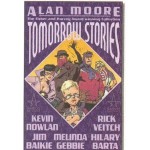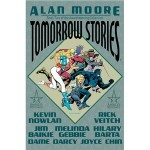
Tomorrow Stories Books 1 & 2


By Alan Moore & various (America’s Best Comics)

ISBN: 978-1-56389-985-0 and 978-1-4012-0166-1

Alan Moore revolutionised American Comics with a series of stunningly well-crafted series and shorter stories featuring characters created by others and in the late 1990s began working for Jim Lee’s Wildstorm outfit. Initially writing for the imprint’s reductive and post-modern line of superheroes (see Alan Moore’s Complete WildC.A.T.s and Alan Moore: Wild Worlds) he gradually began constructing his own universe, loosely based on a number of perennial concepts, genre archetypes and the visual likenesses of some Golden-Age characters long unused – and unclaimed – by copyright farmers…

In 1999 he deftly injected some fun back into a medium plagued and overwhelmed by grim tales of assorted vengeances and mind-numbing violence. The stories also found room to intellectually challenge as well as play with the readership. Moore and a selection of his very talented friends employed all the vast benefits of a shared continuity without getting bogged down in histrionics and shallow bombast, producing a line of clever, witty, beautifully illustrated adventures aimed at those adults grown from the Baby-boomers who had fed the Silver-Age comics revolution and only to be somehow deprived of their fundamental fascination by an industry increasingly devoted to fads and short-term profits.

The most perfect example of this erudite graphic philosophy was undoubtedly Tomorrow Stories, a series designed as a themed anthology title and the greater part of which has been collected in two splendidly whacky volumes of action, suspense, adventure, mystery and imagination.

Volume one, fully scripted throughout by Moore, led with the introduction of Jack B. Quick – Boy Inventor illustrated by the incredibly talented Kevin Nowlan who introduced a junior Edison in ‘Smalltown Stardom.’ The juvenile super-genius, resident on a farm in rural Queerwater Creek, rashly created a miniature sun in the back pasture and had to deal with the diminutive solar system that develops – causing traffic chaos and concomitant conniptions amongst the townsfolk and livestock…

Blending cutting edge science with wondrous surreality this feature always concealed an uplifting laugh amongst its conceptually challenging wonders…

Rick Veitch illustrated Greyshirt (a fulsome tribute to Will Eisner’s urbane detective the Spirit) and the feature began here with ‘Amnesia’ a tale of stylish murder whilst Jim Baikie slipped comfortably into broad parody and biting satire with the patriotic wonders The First American and U.S.Angel; battling Nazis, aliens and daytime television audiences in ‘Dumbsday!’

The first issue closed with ‘The Cobweb’ an exotic pastiche of such (scantily) costumed Golden-Age mystery women as Phantom Lady and Tarpe Mills’ Miss Fury in a plethora of artistic styles provided by Melinda Gebbie. This crusading feminist Lady of the Night starred in a thought-provokingly whimsical yet sinister tale of scandalous delights and forbidden horrors wherein the Amorous Avenger battled a mad scientist who literally turned women into toys and playthings…

Issue #2 opened with Greyshirt in a visually arresting generational yarn of four stories in a building’s life. ‘How Things Work Out’ (illustrated by Veitch) played with Time, Space and vertical altitude to define how crime affects people over the course of decades whilst physics got another well-honed kicking from Jack B. Quick in ‘The Unbearableness of Being Light’ as the brainy boy determined that photons in Queerwater had been over-imbibing intoxicants…

It was ‘Waltztime’ for Cobweb when she encountered dancing alien phantoms in the asteroid belt whilst the First American crushed a backwards-looking felon wielding a deadly Nostalgitator in ‘The Curse of the Reverse!’ to close the proceedings.

Quick’s ‘Pet Theory’ is a triumph of bad-taste: an animal-testing black comedy that tips a cocky hat to Orwell’s Animal Farm; the ever experimental Moore & Gebbie pulled off an illustrated prose thriller-tragedy in the Cobweb fragment ‘Eurydice: A Retrospective’ and First American took a painful look at youth culture and juvenile crime in ‘The Peril of the Pediatric Perpetrators’ before the smoke-coloured man of mystery once more stole the show in ‘The Making of Greyshirt’: a different kind of origin from Moore & Veitch.

The President Clinton/Ken Starr clash got a jovial shout-out in #4’s First American micro-saga as ‘The Bitter Crumbs of Defeat!?!’ almost saw the Patriotic Poltroon investigated and legislated out of business whilst ‘Li’l Cobweb’ married the innocent charms of childhood with a more sordid look at modern relationships and ‘Tempus Fugitive’ pitted Greyshirt against a conceptually inept time-bandit, after which Jack B. Quick hilariously, confoundingly also got the chronal itch as he underwent ‘A Quick Geography of Time’.

Musical explorer ‘Dr. Crescendo!’ paid an ultimate price for his virtuosity in the Greyshirt tale that opened issue #5 whilst Cobweb slipped into moody old territory with the fabulous old Romance fragment ‘La Toile dans le Chateau des Larmes’ a gothic triumph hinting at the true vintage of the spidery siren and first American got in the festive spirit just in time for ‘A Christmas Cop-Out’.

The premiere volume closed with #6 and a Greyshirt saga entitled ‘Day Release’ wherein the supernatural supplanted the grimly urban blight of crime and First American manfully resisted any urge to get all “Touchy-Feely” in the impressively brusque ‘Lo! There Shall Come a Closeness and Commitment!’ with the ever-ambivalent U.S.Angel dragged along for the ride, after which Cobweb found herself distressingly confined with an arachnid opponent who left her ‘Shackled in Silk!’

The final tale is a debut, as an old champion awakened to a world that had pretty much outgrown him. Inky Idol Splash Brannigan: Indelible Avenger made a long-overdue first reappearance in ‘The Return of the Remarkable Rivulet!’ by Moore and Hilary Barta, wherein a downtrodden comics artist accidentally freed an ebullient liquid asset to fight crime and crush her intolerable deadlines…

The hardcover tome under review here also includes all the covers, a selection of sketches and artwork by Nowlan, Veitch, Gebbie and Barta and a copious informative biographies section.

The second volume (reprinting issues #7-12) was also fully written by Moore and riotously opened with the Barta limned Splash Brannigan romp ‘A Bigger Splash!’ as the Dark Stain and Miss Daisy Screensaver stumbled into the atrocity of the modern art market, after which Melinda Gebbie revealed the Maid of Mysteries’ flower-power experiences in the trippy flashback ‘Grooveweb’ and First American selectively recalled recent history from an ideal perspective in ‘The 20th Century: My Struggle’ before Veitch again stole the show with the compulsive Greyshirt thriller ‘How’s My Driving?’

First American muffed the chance to tell his story as a docu-soap in the biting ‘Justice in Tights!’, that Brannigan chap endured horror beyond description when he attended a comics convention and battled ‘Testostor the Terrible!’, Cobweb fans got a rare treat with the uncovering of rare (and faux) newspaper strips featuring her and bosom buddy Clarice clashing with a lost tribe of jungle women, and Greyshirt’s ever-varying cast examined their own interior monologues in the innovative ‘Thinx’.

Alternative Comics darling Dame Darcy illustrated Cobweb’s hardboiled fairytale detective yarn ‘Farewell, My Lullabye’, but series regular Jim Baikie stayed the course to mistreat us to ‘The Origin of the First American’ and Rick Veitch went for the gusto in the show-stopping ‘Greyshirt: The Musical!’ before Splash Brannigan ended the issue with a heartfelt parody parable in ‘Splash of Two Worlds!’

Jack B. Quick triumphantly returned in #10 to solve the mystery of Manure Circles in an alien extravaganza of bovine bombast ‘Why the Long Face?’, ably complimented by the fast-paced Greyshirt thriller ‘…For a Blue Lady’ whilst First American was inaugurated for his ultimate role in the uproarious ‘What We Probably Inhaled at the Toilet’s Last Cleaning!’ and Dame Darcy again enthralled in the quirky travelogue ‘Cobweb of the Future!’.

Splash Brannigan left an inky residue on the pristine world of Pop music in ‘Splash City Rocker!’, Greyshirt went all monster-hunter in the cleverly crafted ‘Vermin’ and we had a behind-the-scenes glimpse of super-patriotic life in ‘Being the First American’ before Joyce Chin illustrated the eerie Cobweb period-piece ‘Bedsheets & Brimstone!’.

This volume and the original series concluded with #12 (although a couple of Specials were later released) so Moore and Veitch celebrated the wind-up in grand style with a Greyshirt/Cobweb team-up ‘Strands of Desire’ wherein the Sultry Sleuth and Man of Smoke and Mirrors set out to catch the sinister, sexy Moneyspider, concluding in the evocative ‘Shades of Grey’ after which Jack B. Quick took one last chance to shock and amaze with the hilariously straight-faced vignette ‘The Facts of Life!!’, leaving the Flag-Draped Fool to close the comics experimentation with an audacious homage to the breadth of comics imagination in ‘The Death/Marriage/Son of the First American of the Future!’ neatly revering and skewering it and ourselves in one swell foop.

Bold, insightful, witty and not at all precious Tomorrow Stories was a brave attempt at being fresh with archetypes whilst asking audiences to respond with brain as well as gut. Comics fans alternatively love it, hate or don’t get it: I really hope you get it (them, they, whatever…)

© 1999, 2000, 2001, 2002, 2004 America’s Best Comics, LLC. All rights reserved.

On Stage


By Leonard Starr (Blackthorne Publishing)
ISBN: 0-932629-11-3

Leonard Starr was born in 1925 and began his long and illustrious creative career in the Golden Age of American comic-books working for the crucially important Harry A. Chesler “Shop” at the dawn of the Golden Age. He moved for a period into the lucrative field of advertising before returning to creative pictorial narrative, settling in the gruelling arena of newspaper strips. He comicbook credits include Sub-Mariner, the Human Torch and the immensely popular but now all-but forgotten Don Winslow of the Navy during the 1940s, drew love stories for Simon and Kirby’s landmark Romance line and crime stories for EC, and freelanced extensively for ACG and DC Comics, where he worked on lost gems such as Pow-Wow Smith, Dr.13, the Ghost-Breaker and Gang Busters among many others until he left the industry for Madison Avenue. He returned to graphic narrative in 1955 when he began “ghosting” Flash Gordon.

In 1957 he created On Stage, a soap-opera strip starring aspiring actress Mary Perkins for the Chicago Tribune. After an astonishing and beautiful 22-year run, he left the globally syndicated feature in 1979 to revive Harold Gray’s legendary Little Orphan Annie (which he continued until his retirement in 2000), simultaneously creating the series ‘Cannonball Carmody’ for Belgium’s Tintin magazine. An experienced TV scripter since 1970 Starr worked as head writer on Thundercats, and briefly returned to comic-books in the 1980s. He received the National Cartoonist’s Society Story Comic Strip Award for On Stage in 1960 and 1963, and their Reuben Award in 1965. In collaboration with like-minded veteran Stan Drake he produced one of the best female action characters of the 1980s: Kelly Green.

Since I haven’t yet managed to lay hands on the Classic Comics Press reprint series (chronologically collecting all the adventures of career actress Mary Perkins), I’m reviewing this tempting and impressive little package from pioneering reprint publisher Blackthorne.

The feature began as On Stage with a Sunday page dated in February 10th 1957, at the height of the American fascination with movie stars and Hollywood celebrity, in papers subscribing to the Chicago-Tribune/New York News Syndicate, and detailed a warts-and-all tale of aspiring actress Mary Perkins. Starr sensibly opted to make his young ingénue a jobbing New York thespian seeking the lights on Broadway rather than taking the easy but limited Tinseltown glamour-puss route, allowing his starlet plenty of opportunity to meet and interact with real people and authentic situations: at least by soap opera standards…

In 1959 she married her photographer boy-friend Pete Fletcher and in 1961 she finally got star-billing when the strip was renamed Mary Perkins On Stage (naturally she had kept her stage name) and gradually added movies and television to her resume. She even made it to Hollywood…

Starr combined his narrative skills with beautiful clean-lined drawing and imaginative design and layouts that dipped heavily into his previous experiences as a comicbook action artist and that was never more apparent than in the first of the two sequences that make up this book.

Taken from the mid-1960s the book opens with ‘Captain Virtue Strikes Back’ as Mary is hired by a TV studio to coach a hunky school custodian who saved some kids and was offered a job of a comicbook hero being adapted for a prime-time television show. Holy Coincidences, B*tm*n!

Unfortunately Brooklyn boy Bernie Kibble comes with a little baggage. He’s big, goofy, uneducated and totally subordinate to his weaselly pal Al Gordon, a cunning, ambitious runt who knows a solid gold meal ticket when he sees one…

The Captain Virtue Show is a blockbuster success and with Mary’s coaching Bernie blossoms; even getting a girlfriend despite Al’s attempts to keep the lug dumb and under his thumb, but as is so often the case fame and fortune don’t necessarily lead to happiness…

The second tale is an intriguing Cold War Thriller that puts the actress and her loved ones in unusual peril, and gives the strong supporting cast a far more extensive role. In the years since his debut, husband Pete had become a roving photojournalist meeting the great and the good on seven continents. One of these, Morgana D’Alexius had developed an unhealthy attraction for the clean-living hunk and spent uncounted hours and millions trying to lure him away from his beloved Mary,

The romantic simpleton was completely oblivious to it all: thinking the richest woman in the world kept inviting him on holidays whilst Mary was working because she wanted to be friends. The erstwhile Miss Perkins, however, veteran of stage, screen and melodrama was not fooled…

‘Escape From Russia’ sees a turning point in this bizarre triangle when Mary is invited by the Soviet government to attend a rather unique cultural exchange as the star of the Moscow Film Festival. Meanwhile Major Grigori Volkov, charismatic hero of the Soviet Republics, is calling on his old friend Mike Fletcher to invite him for a visit to the USSR…

It soon transpires that Morgana has influence in the highest echelons of the Communist state and the entire event is a plan to separate Mike and Mary long enough for the amorous autocrat to work her wiles on the hapless photographer.

With Mike innocently touring secret Soviet factories built by Morgana, Mary is abducted to Volkov’s Dacha, but the plucky, smart American son turns the tables and co-opts the Russian hero who helps her flee across the country to safe-haven and a final confrontation with Morgana in Trieste.

At a time when the Evil Empire could do no right, the depiction of suave, bold, heroic Volkov as a human and moral person must have been a controversial revelation to the American public and his transformation from beastly kidnapper to likeably roguish road-buddy is a delight, as is the final comeuppance of Morgana. This light frothy thriller is a splendid example of the magical blend of humour, romance, family-values and exoticism Starr could command in a few simple panels…

This superb black and white compilation also contains an early and provocative early Sunday page, photos of the creator and an insightful interview with Starr conducted by comic strip historian Shel Dorf.
© 1985 Tribune Media Services. All rights reserved.

Networked: Carabella on the Run


By Gerard Jones & Mark Badger (Privacy Activism/NBM)
ISBN: 978-1-56163-586-3

Comics are an immensely effective teaching tool and not just for youngsters, either. The organisation Privacy Activism is a non-profit organisation which seeks to educate and inform the public about online safety, democratic principles in a global commercial environment and personal information protection through a variety of methods and after a couple of video game projects has worked here with comicbook creators Gerard Jones and Mark Badger and publisher NBM to produce a graphic novel starring their proprietary character Carabella; a blue-skinned teenaged girl from someplace stranger and nastier than here…

In Networked: Carabella on the Run the defensive, secretive lass is starting college and horrified at how easily her anonymity can be destroyed by even well-meaning friends through online social networking and messaging. Even her picture is soon being beamed all over the planet – all without her permission or knowledge.

Still, it’s not as if she has anything to hide, is it?

She soon strikes up a tentative relationship with Nick, an engineering student who has invented shoes which can film and monitor the wearer’s movement’s, record and broadcast physical responses and generally turn each owner into a walking market research report. Of course that wasn’t his intention – he just though it would be cool for friends to share their lives with others…

Unfortunately where Carabella comes from such information has long been used to oversee, segregate, program and control the population, so when hunters seeking her return align themselves with aggressive venture capitalists and sections of the Government she realises that the privacy, liberty and choices available to her and her friends might become just as obsolete as on her own world…

Combining a sensible, well-reasoned argument for common sense and practical personal protection with solid adventure-thriller plotting and the requisite amount of romance, action and fun, this is a great read with an important message that doesn’t overload the necessity to keep things interesting and enjoyable.

Most of Networked is available online in a slightly altered form if you want a peek, and the printed form is a perfect and potentially reassuring gift for parents to buy their kids alongside the mobile-phones and think-pods they’ll be clamouring for this year.

© 2010 Privacy Activism.

Elephant Man


By Greg Houston (NBM)
ISBN: 978-1-56163-588-7

Cartoonist, caricaturist, designer, educator, actor and big fan of old movies Greg Houston delights in the baroque and comically grotesque; positively revelling in taking taste-free pot-shots at societal and popular culture icons (see Vatican Hustle for more of his measured, manic musings) and his latest brilliant black and white book has a go at the very bedrock of our medium by parodying and pastiching the classic superhero scenario.

Baltimore has its own Costumed Crusader and he is the perfect symbol of a city with so little to recommend it. He doesn’t have any proper powers, but the people love him and on the fifth anniversary of his first appearance the minor metropolis is holding a week of commemorative events.

Local paper the Daily Crab is following events, particularly feisty journo Tracie Bombasso, cub reporter Dud Cawley and mild-mannered, colonically-challenged reporter Jon Merrick (yes, that kind of Elephant Man), despite the rantings of unpopular on-air TV presenter Handsome Dick Denton – but he’s just jealous, right?

Also determined to spoil everything is sinister conjoined villain The Priest, the Rabbi and the Duck, twisted victim of an old joke and a tragic accident involving alcohol and science…

Can Merrick keep his identity secret from his fellow reporters, foil the machinations of Denton and stop the three-headed Hydra of Pique? Of course he can, but along the way there’s bizarre characters old and new (keep your eyes peeled for cameos from Boss Karate Black Guy Jones and other Vatican Hustle alumni), cripplingly painful embarrassing moments and enough ugly hilarity to have a very good time indeed.

And lest you think we’re being unkind to the place let me reveal that Houston is Baltimore born-and-bred…

Beneath the outrageous parody and extreme mock-heroics is another witty and genuinely funny adult romp which pokes edgy fun at everything from politicians to donuts, weathermen to beauticians, making some telling observations about heroes and how to treat them, all rendered in a busy, buzzy, black and white line that appeals and appals in equal amounts.

Warning: this book contains Six-foot talking flies and shaved, car-racing monkeys.

© 2010 Greg Houston. All rights reserved.

Will Eisner Color Treasury


By Will Eisner, written by Catherine Yronwoode (Kitchen Sink Press)
ISBN: 0-87816-006-X

It is pretty much accepted today that Will Eisner was one of the key creative forces who shaped the American comic book industry, with most of his graphic works more or less permanently in print – as they should be. But as far as I know at least one of his milestones has generally escaped public attention.

From 1936 to 1938 Eisner worked as a jobbing cartoonist in the comics production firm known as the Eisner-Eiger Shop, creating strips to be published in both domestic US and foreign markets. Using the pen-name Willis B. Rensie he created and drew the opening instalments of a huge variety of characters ranging from funny animal to historical sagas,

Westerns, Detectives, aviation action thrillers… and superheroes – lots of superheroes …

In 1940 Everett “Busy” Arnold, head honcho of the superbly impressive Quality Comics outfit, invited Eisner to take on a new challenge. The Register-Tribune newspaper syndicate wanted a 16-page weekly comicbook insert to be given away with the Sunday editions. Eisner jumped at the opportunity, creating three strips which would initially be handled by him before two of them were handed off to his talented assistants. Bob Powell inherited Mr. Mystic and distaff detective Lady Luck fell into the capable hands of Nick Cardy (then still Nicholas Viscardi) and later the inimitable Klaus Nordling.

Eisner kept the lead strip for himself, and over the next twelve years The Spirit became the most impressive, innovative, imitated and talked-about strip in the business. In 1952 the venture folded and Eisner moved into commercial, instructional and educational strips, working extensively for the US military in manuals and magazines like P*S, the Preventative Maintenance Monthly, generally leaving comics books behind.

In the wake of “Batmania” and the 1960s superhero craze, Harvey Comics released two giant-sized reprints with a little material from the artist, which lead to underground editions and a slow revival of the Spirit’s fame and fortune via black and white newsstand reprint magazines. Initially Warren Publishing collected old stories, even adding colour sections with painted illumination from such contemporary luminaries as Rich Corben, but with #17 the title reverted to Kitchen Sink, who had produced the first two underground collections.

Eisner found himself re-enamored with graphic narrative and saw a willing audience eager for new works. From producing new Spirit covers for the magazine (something the original newspaper insert had never needed) he became increasingly inspired. American comics were evolving into an art-form and the restless creator finally saw a place for the kind of stories he had always wanted to tell.

He began crafting some of the most telling and impressive work the industry had ever seen: first in limited collector portfolios and eventually, in 1978, with the groundbreaking graphic novel A Contract With God.

If Jack Kirby is the American comicbook’s most influential artist, Will Eisner is undoubtedly its most venerated and exceptional storyteller. Contemporaries originating from strikingly similar Jewish backgrounds, each used comic arts to escape from their own tenements, achieving varying degrees of acclaim and success, and eventually settling upon a theme to colour all their later works. For Kirby it was the Cosmos, what Man would find there, and how humanity would transcend its origins in The Ultimate Outward Escape. Will Eisner went Home, went Back and went Inward.

This fictionalised series of tales about the Jewish immigrant experience led to a wonderful succession of challenging, controversial and breathtakingly human stories for adults which changed how comics were perceived in America… and all because the inquisitive perfectionist was asked to produce some new covers for old stories.

This glorious oversized hardback (still available through internet retailers) features two full Spirit adventures, fully re-coloured by the master (who was never particularly pleased with how his strips were originally limned), pencil sketches and a magnificent confection of those aforementioned covers – plus some really rare extras.

The eerie 1948 chiller ‘Lorelei of Odyssey Road’ leads off this tome followed by a barely seen science fiction Spirit story. ‘The Invader’ – produced in the 1970s as the result of a teaching gig Eisner had at Sheridan College in Canada.

Eisner created the first page in class to show students the fundamentals of comics creation, and after months of coaxing was convinced to complete the tale, which was published in an extremely limited edition as the Tabloid Press Spirit in 1973. The action and sly, counter-culture comedy is impressively compact and well coordinated: ‘The Invader’ comfortably fits 57 panels into its five pages whereas the old eight-page yarns used to average a mere 50 frames…

Following two gloriously lush wraparound Kitchen Sink covers (complete with a pencil rough) and the hilarious cover to underground anthology Snarf #3, the single page Warren pieces commence. Originally seen on issues #2 through 10 they have all been re-mastered by Eisner and are simply stunning.

After these come the fully-painted wraparounds (all magnificently presented as double-page spreads) that graced the Kitchen Sink Spirit issues #18,-24, #27-29 and #31 and then the rare 1977 Spirit Portfolio is reproduced in the same generous proportions: eleven stunning paintings encapsulating key moments in the masked detective’s astonishing career.

‘The Hideaway’, ‘The Scene of the Crime’, ‘The Women’, ‘The Duel’, ‘Dead End’, ‘The Convention’, ‘The Rescue’, ‘The Chase’, ‘The Capture’ and ‘The City’ plus the portfolio cover are followed by the contents of 1980’s ‘City: a Narrative Portfolio’ a series of evocative black line and sepia ghetto images with obverse blank verse and cameo images dealing with the eternal themes that shape man as a metropolitan dweller. Once more including the cover image, ‘The Spark’, ‘The City’, ‘Predators’, ‘Mugger’, ‘Family’ and ‘Life’ are powerfully moving and magically rendered one-frame stories that presage his growing use of the urban landscape as an integral character in his later works.

With a fascinating biography and commentary from historian and publisher Cat Yronwoode this book is a lavish treat for Eisner aficionados, but the treats still aren’t exhausted: there are also rare colour works and illustrations from Cosmos magazine and Esquire, plus poster art, unpublished Spirit paintings and a preview of his then forthcoming book Big City…

Will Eisner is rightly regarded as one of the greatest writers in American comics but it is too seldom that his incredible draughtsmanship and design sense get to grab the spotlight. This book is a joy no fan or art-lover can afford to be without.
© 1981 Will Eisner. All rights reserved.

Ding Dong Daddy From Dingburg (Zippy Annual #10)


By Bill Griffith (Fantagraphics Books)
ISBN: 978-1-60699-389-7

Starting life as an underground cartoon in 1971, Bill Griffith’s absurdist commentary on American society has grown into such a prodigious and pervasive counter-culture landmark that it’s almost a bastion of the civilisation it constantly scrutinises. Almost: there’s still a lot of Americans who don’t like and certainly don’t get Zippy the Pinhead.

Legendarily based on the microcephalic Schlitzie from Tod Browning’s controversial 1932 film “Freaks” and P.T. Barnum’s carnival attraction Zip the Pinhead, Griffith’s Muu-Muu clad simpleton first appeared in Real Pulp Comix #1 (March 1971) and other scurrilous home-made commix before winning a regular slot in the prominent youth culture newspaper The Berkley Barb in 1976. Soon picking up syndication across America and the world, Zippy “dropped in” when in 1985 King Features began syndicating the strip, launching it in the San Francisco Examiner.

Zippy’s ruminations and dada-ist anti-exploits have expanded over the years to include his own nuclear family and cat, a peculiar cast of iconic semi regulars like Mr. The Toad, embodiment of Capitalism, Griffy (an analogue of the cartoonist creator) and brother Lippy (a conceptual and ideological opposite in the grand tradition of Happy Hooligan’s sibling Gloomy Gus: Lippy is the epitome of the average mainstream US citizen) plus an entire town of like-minded pinheads – Dingburg.

The strip follows few conventions although it is brilliantly drawn. Plot-lines and narratives, even day to day traditional gags are usually eschewed in favour of declamatory statements of absurdist, quasi-philosophical and often surreal concept-strings that resemble word (and occasionally picture) association or automatic writing, all highlighting the ongoing tsunami of globalisation as experienced by every acme of our modern culture from the latest fad in consumer electronics to celebrity fashion and “newsfotainment”.

The strip is the home of the damning non-sequitur and has added to the global lexicon such phrases as “Yow!” and “Are we having fun yet?”

Being free of logical constraint and internal consistency, Zippy’s daily and Sunday forays against The Norm can encompass everything from time travel, talking objects, shopping lists, radical philosophy, caricature, packaging ingredients, political and social ponderings and even purely visual or calligraphic episodes. It is weird and wonderful and not to everybody’s tastes…

This current volume (16 and counting) is broken into themed segments beginning with an extended tour of his home town: meeting the everyday folk and getting to know them in ‘Back to Dingburg’, which is followed by a selection of informed conversations with three dimensional commercial signage and advertising statuary in ‘Roadside Attractions’.

The central section reprints a selection of ‘Sunday Color’ strips, followed by a collection of muses and meanderings between character and creators via ‘Zippy and Griffy’ cunningly counter-pointed by a extended sequence of existential ripostes, spiritual revelations and biblical revisions when ‘God’ comes for an uninvited visit to Dingburg.

‘The Usual Suspects’ introduces new readers to such luminaries as Mr. The Toad, and recurring topics such as the spoof comic-strip-within-a-strip Fletcher and Tanya, before the book concludes with a brief but illuminating conglomeration of strips featuring the pinhead as a boy in the pastiche-frenzied  ‘Little Zippy.’

The collected musings of America’s most engaging Idiot-Savant have all the trappings of the perfect cult-strip and this latest volume finds cretin and creator on absolute top form. If you like this sort of stuff you’ll adore this enticing slice of it. Yow!

© 2008, 2009, 2010 Bill Griffith. All rights reserved.

Dr. Watchstop: Adventures in Time and Space


By Ken Macklin (Eclipse Books)
ISBN: 0-913035-85-8

Before becoming a successful games artist for LucasArts graphic adventure games (I don’t actually grok push-button fun but I gather that Maniac Mansion, Loom, the second and third Monkey Island contraptions and the character Bubsy the bobcat number among his electronic hits) Ken Macklin was an underground/small press creator who delighted in cleverly whimsical and witty funny animal strips during the late 1970s in indy publications such as Quack!

Married to equally talented anthropomorphic raconteur Lela Dowling, he assisted and contributed to her marvelously manic Weasel Patrol tales, which were published in the lost and long-lamented sci-fi anthology Fusion whilst producing his own diabolically wonderful one-shot space opera romp Contractors and the stimulating vignettes gathered here.

As well as a talented designer and illustrator Macklin is a gifted painter and slyly devious writer and in 1982 he began selling brief, luxurious mini-epics starring an astonishingly brilliant but outrageous innocent multi-discipline savant named Dr. Watchstop to Epic Illustrated and Fusion: high quality graphic fantasy magazines aimed at older readers.

In an era where science fiction was synonymous with and indistinguishable from cops and cowboys with blasters, Watchstop’s antics were contemplative, slapstick, wickedly ironic, eyes wide-open wonderments that only saw the ridiculous side of technology and the future cosmos…

Still readily available this oversized compilation gathers all those marvelously intellectual, winningly funny spoofs and japes, opening in glorious painted colour with ‘Dr. Watchstop Faces the Future’ (Epic #10 February 1982), possibly the last word in time paradox tales, followed by an amoebic dalliance ‘One Cell at a Time’ before demonstrating the downside of ancient alien artifacts in ‘Time Bomb’ (Epic #14 and #17 respectively).

If possible Macklin’s art is even better as monochrome tonal washes, as perfectly illustrated in the hilarious ‘Unique Specimen’ (Fusion #1, January 1987), life-through-a-lens fable ‘Modern Culture’ (Fusion #3) and natural history segments ‘Right Stuff’ (Fusion #7) and ‘Bugs’ (Fusion #5).

‘Relic’ (Fusion #2) is pure Future Shock whilst full-colour ‘The Single Electron Proof’ from Epic #21(September 1983, and with the timely assistance of Toren Smith) will stretch the higher mathematics prodigies amongst us with a little metaphysical tomfoolery.

Epic #29 provided a first home for ‘In Search of Ancient Myths’, #33 both ‘Reaching Out’ and ‘Beating the Heat’ whilst the last colour cosmic conundrum ‘Wasting Time’ debuted in #34. The remainder of this collection features more black and white antics from Fusion, beginning with the vaudevillian ‘Gone Fishing’ (#4), moving adroitly into ‘Xlerg’s Fossil Emporium’ (#8) and anarchically culminating in a riotous Weasel Patrol collaboration enigmatically entitled ‘The Weasels Fill In’ from Fusion #9 (May 1988)

Sheer artistic ability and incisive comedy for smart people is never going to be out of style and this stellar compilation will be a constant joy for any fan smart enough to unearth it.
© 1989 Ken Macklin, and where appropriate Raymond E. Feist, Toren Smith, Lela Dowling and LX Ltd. All rights reserved.

Too Soon?: Famous/Infamous Faces 1995-2010


By Drew Friedman (Fantagraphics Books)
ISBN 13: 978-1-60699-537-6

Technically, this isn’t a graphic novel or trade collection, it’s a picture book – but it is an absolutely stunning one, collecting some of the best and most trenchantly funny illustrations by a contender for the title of America’s Greatest Living Caricaturist in a lavish, full-colour hardback.

Drew Friedman began drawing commercially in the late 1970s. His meticulous, stippled monochrome satirical and socially biting cartoons of celebrities – and the rare comic strip – appearing in RAW, Screw, High Times, Weirdo, Comical Funnies, Heavy Metal, National Lampoon and the Holy of Holies MAD Magazine.

Gradually he moved into the publishing mainstream, and the phizzogs and foibles of the Rich and Famous gathered here are culled from a number of eclectic sources including Time, Newsweek, The New Yorker, GQ Magazine, The Wall Street Journal, New York Observer, New York Times, Rolling Stone, The Washington Post, Entertainment Weekly, Village Voice, Mojo, The New Republic, The Los Angeles Times, The Weekly Standard, Blab!, Maximum Golf and even the gun-totin’ sports organ Field & Stream among many others – an hilarious cavalcade of covers and spot illustrations by a master of the graphic ideal moment.

After a funny and extremely informative potted history the mostly painted (but with occasional pen, wash, tone and even charcoal examples), staggeringly cruel, cutting and insightful images are unleashed, beginning with a section covering political and business highflyers.

The period 1995 to 2010 turned up an unenviable horde of risible leaders and manipulative malcontents and included here are 107 cartoon snapshots of such luminaries as the Clintons, Monica Lewinsky, Helmut Kohl, George W. Bush, Barack Obama, Al Gore, Ross Perot, Sarah Palin, “Mayor Mike” Bloomberg, John McCain, Rudy Giuliani, Dick Cheney and many other domestic demagogues as well as such international ideologues as Tony Blair, Yasser Arafat, Mother Theresa, Jacques Chirac and Osama Bin Laden among many others.

The second section deals with Showbiz types ancient and modern, an includes a couple of astonishingly grand panoramic gatefold fold outs amidst the 140+ illustrations featuring super-stars and should-have-beens from sports, music, acting, the media and that nebulous twilight world of people who are famous without actually doing or achieving anything.

The roster includes Tiny Tim, Dean Martin, Sinatra, John Lennon, Michael Jackson (lots of him at various stages of his life-long metamorphosis), Tommy Lee, Madonna, Fred MacMurray, Judy Garland, Jackie Chan, Bob Dylan, Brando, De Niro, Woody Allen, Stallone, Will Smith, Tiger Woods, Mike Tyson, Jack Nicholson and so many others. The volume also includes some book and CD covers and private commissions, and also a fresh selection of the artist’s favourite artistic subjects: sideshow freaks and obscure Jewish and vintage comedians.

Friedman is a master craftsman who can draw and paint with breathtaking power, and his work is intrinsically funny. It’s relatively simple to make Blair, Bush or Bin Laden look like buffoons but try it with Rod Serling, Marilyn Manson, Mother Theresa or Salman Rushdie…

His caricatures are powerful, resonant and joyful, but without ever really descending to the level of graphic malice preferred by such luminaries as Ralph Steadman or Gerald Scarfe. Too Soon? is a book for art lovers, celebrity stalkers and anyone who enjoys a pretty, good laugh.

© 2006 Drew Friedman. All Rights Reserved.

You can see sample pages on the arts website www.Drawger.com

Prison Pit Book Two


By Johnny Ryan (Fantagraphics Books)
ISBN: 978-1-60699-383-5

Johnny Ryan is a cartoonist with an uncompromising vision and an avowed intention of producing shock and even revulsion whenever he wants to. In Prison Pit he pushed the limits of taste with a brutal, primitive cascade of casual violence that sprung, teeth bared and claws extended, from his apparent obsession with casual violence, social decay and the mythology of masked wrestling, as well as his obvious fascination in the “berserk” manga strips of Kentaro Miura.

That initial volume presented a disturbingly child-like view of a science fictional Hell: an extra-dimensional purgatory where the most violent felons were dumped to live or die by a society that had no place for them. This barren landscape was littered with grotesque monsters, vile organisms and the worst specimens of humanity ever captured by the forces of civilisation. C.F., a masked wrestler, was dumped there and told to fight or die…

What followed was non-stop excessive force and graphic carnage: a never-ending Darwinian struggle which saw the wrestler damaged beyond comprehension, altered by horrors internal and external, but nevertheless still clawing his way to the top of the gory, scatological heap…

Unbelievably Ryan has gone even further in this second volume as the wrestler defeats what he had assumed to be the king of the heap, aided by a biological travesty that then turns on him, before being kidnapped by a robotic Dr. Moreau, who transforms the wrestler’s most intimate man-parts into a weapon of interpersonal destruction and sends him off violate a monster. Typically, nobody here is doing anything for anyone else’s benefit…

Man’s oldest gynophobic horrors and most simplistic delight in sheer physical dominance are savagely delineated in this primitive, appalling, cathartic and blackly funny campaign of cartoon horror. Resplendent, triumphant juvenilia is adroitly shoved beyond all ethical limits into the darkest depths of absurdist comedy. Not for children, the faint-hearted or weak-stomached, this is another non-stop rollercoaster of extreme violence, profanity and cartoon shock and awe at its most visceral and compelling.

And now that we’ve put off the intellectual and moral stuck-up sticky-beaks who just love to whine and complain, I’ll let you into a secret: this book is all-out over the top and flat out hilarious. Buy and see if you’re broad-minded, fundamentally honest and purely in need of ultra-adult silliness…

© 2010 Johnny Ryan. All rights reserved.

David Boring


By Daniel Clowes (Jonathan Cape)
ISBN: 978-10-22406-323-4

One of the greatest assets of the comics medium is the ostensibly straightforward nature of its storytelling. With pictures wedded to text what you see is so clearly what you get. So whenever a master creator deliberately subverts that implicit convention the result might be occasionally obscure or confusing, but always utterly engrossing.

At the forefront of comics storytelling for nearly three decades Daniel Clowes is, for many, an acquired taste but once he’s in your brain there’s certainly no shaking the things he can do with pen and ink, motive, character and the special kind of situational magic that inhabits the world of pictures and word on paper.

Born in Chicago in 1961 he began his career as a cartoonist with humour magazine Cracked before creating uniquely skewed short comic tales for Fantagraphics. His first piece debuted in Love and Rockets # 13 (September 1985), an introductory prelude to his retro-chic detective magazine Lloyd Llewellyn which launched soon after, running in various incarnations for three years.

In 1989 he created the anthology vehicle Eightball and began producing a variety of tales – short and serial-lengths – ranging from social satire, nostalgic absurdist anthropomorphic yarns to surreal, penetrating human dramas, all viewed through the lens of iconic popular cultures and social motifs. All that material has since been collected into graphic novels and two of these, Ghost World and Art School Confidential, have been adapted into critically acclaimed feature films.

His experiences in Hollywood combined with deep-seated childhood influences of noir movies and comics books combined and resulted in ‘David Boring’ which originally ran in Eightball #19-21, before being collected by Pantheon Books in America and this British edition.

David Boring is the narrator of his own story, living a life of unsatisfactory gratification, harassed by his mother and obsessed by his absentee father, a second rate cartoonist and comic book artist who disappeared decades previously. He spends his days with his only real friend, a lesbian named Dot he has known since High School. David is listlessly indulging in his life’s work by searching for his perfect woman when an old friend suddenly shows up and triggers a series of bizarre events that should make his life a living action movie, but instead it all just steers him into increasingly unpalatable and mundane tragedies and horrors…

Set against a backdrop of impending catastrophes, ranging from murder to the end of the world, David’s progress is trenchantly plebeian and low-key: an odyssey rendered drama-free by the protagonist’s relentless lack of – or rather resistance to – passion and unwillingness to fully engage in the events occurring around him. His world is full of sexual encounters, assaults, murders, chases and even global holocausts but he passively accepts and adapts to it all.

Clowes has stated that he crafted this stunningly engaging and challenging tale as an exercise in writing an un-filmable comic. He has, but it’s still been optioned by Hollywood…

This is another of those too-rare productions that shouldn’t really be reviewed, just read, with themes of adolescence, maturity, the quest for self and the impending end of life delivered via a landscape of comics, film noir, mock-heroics and the irreducible knowledge that families make individuals combining to make a truly personal experience for every reader.

But be warned: the most telling narrative device used here is uncertainty. A tremendous amount of the story is left unstated: this is a saga littered with the reader’s conclusions not the characters’ actions. Events are set in motion, consequences are noted but the course of intervening actions if not experienced by David can only be surmised or extrapolated: David is a protagonist with few of the overt trope/meme drives of a standard narrative vehicle hero and his story is one that can’t happen to any one of us…

Brilliant, compelling and utterly wonderful? That’s up to you…

© 2000, 2002 Daniel Clowes. All rights reserved.