
Steel Commando: Full Metal Warfare


By Frank S. Pepper, Alex Henderson, Vince Wernham & various (Rebellion)
ISBN: 978-1-78108-681-0 (Digest PB)

UK comics readers have always loved robots. A veritable battalion of bronzed (ironed, steeled, coppered, etc.) Brit-built battlebots and Caledonian comedic constructions have graced our strips since the earliest of times. Surely, every old kid fondly remembers amazing artificial all-stars such as Brassneck, the Juggernaut from Planet Z, Rebbel Robot, Klanky, Robot Archie, the Iron Teacher, the Smasher, the Iron Major, Mr. Syrius Thrice or any of the host of mechanoid marvels populating the pages of 2000AD.

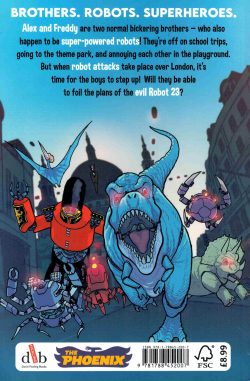
Our fascination remains strong and entices all ages, as recently seen in new junior star Freddy from the Phoenix’s Mega Robo Bros – 21st century Britain’s response to the mighty Astro Boy…

This dinky, mostly monochrome paperback and digital digest collects strips from Thunder (specifically, 17th October 1970 to 27th February 1971); Lion & Thunder (20th March 1970-16th December 1972); Valiant & Lion (25th May- 22ndJune 1974) and further fun material from Thunder Annual 1972, 1973 and 1974, reviving classic comedy combat capers in a beloved favourite theme: war robots who aren’t what they’re cracked up to be…

In 1970 grand marshal of English comics Frank S. Pepper (Rockfist Rogan; Roy of the Rovers; Captain Condor; Dan Dare; Jet-Ace Logan; The Spellbinder and countless others) first mixed slapstick humour, war stories and fantasy in the cheekily wry exploits of a WWII British secret weapon with a mind of his own and a handy habit of crushing enemy schemes…

During WWII, shiftless slacker Ernie “Excused Boots” Bates is accorded the dubious accolade of “the laziest soldier in the British Army”, but as seen in the first episode from Pepper and illustrators Alex Henderson, becomes the most important individual ever to be called up…

While the slob is stuck spud-bashing on a secret British base, he encounters a hulking metal monster called the Mark 1 Indestructible Robot. The super-strong, humanoid tank is fully expected to win the war, but nobody can make it work…

However, when it blunders into the kitchens, Ernie orders it to stop and it happily – and quite chattily – complies. It’s a feat no one else can copy. Still unable to find the programming fault, the top brass negotiates and compels the slacker into become the war machine’s handler. Unluckily and all too soon and for newly promoted Lance-Corporal Bates, that means a few extra treats, but also personally visiting every battle hot-spot the military can think of, such as a French coastal radar base where the Steel Commando strikes terror into the hearts of the horrified Hun…

The tone of the times was frequently appallingly racist by today’s standards – but no more so than such still-popular TV shows like Dad’s Army – and over the weeks to come, dodgy Ernie and his mighty metal mate faced countless ill-prepared enemies and the bonkers bureaucracy of the British Army in short complete and satisfying episodes. Channelling the post-Sixties era of working-class whimsical irony, and discontented but laconic world-weariness, this strip places an unstoppable force for change in the hands of an Andy Capp style shirker who can’t even be bothered to exploit the power he has beyond securing permission to don comfortable footwear (plimsolls and flipflops)…

Illustrated by Henderson and Vince Wernham, the unlikely duo perpetually faced enemy action in Europe, Africa and the Pacific, whilst failing to dodge unwelcome duties (like playing on the base football team or PT exercises) with stoic reluctance and applied anarchy. All the while though – and despite recurring brain glitches – the odd couple always triumphed: destroying enemy bases, sinking ships, learning (almost) to fly, wrecking trains and whatever else the boffins and generals could think of to test their terrible toy. They even outsmarted German scientists who captured the Commando to jump-start their own Nazi robot project and a truly daft Allied enterprise to create a superior, officer-class British droid – the appalling “Metal Major”…

As weeks passed, however, Ernie began to gel as the archetypal “little man” at war with authority. Always agitating for his pal to be treated as human, he made the boffins teach their creation to read, and even successfully won regular home leave for the Steel Commando. It didn’t go well when they got back to Blighty, but at least they got what all soldiers deserved…

Many episodes see the heroes dealing with temporary malfunctions such as robotic deafness, becoming super-magnetic, falling in love (with a railway station weighing machine) or parenthood (don’t ask, just read!) and even Ernie losing his voice to toffee, but always emphasising the burdens of the lowly, charming absurdity and excessive cartoon action.

However, tastes change quickly in weekly comics and even the perennial guilty pleasures of manic situation, comedy accents and mass carnage ultimately palled. Thus, following 29 complete weekly episodes is a truly deranged sequence of five team-ups between ‘Captain Hurricane and Steel Commando’ which finds the disturbingly “outspoken” (you can say culturally dismissive and jingoistic if you want) super-strong Marine commando a not-so-friendly rival of the mechanical marvel.

These come from Valiant & Lion (25th May-22nd June 1974) and find hyper-aggressive Hurricane frantically attempting to outmatch the Steel Substitute as they are despatched against a German army in retreat. …

Filling out the collection are three longer tales from assorted Annuals, beginning with a rescue mission to an Italian town where “our boys” are battling German soldiers and their own haughtily useless commanding officer.

Next up is a sly tale wherein an upgrade accidentally infests and afflicts the Commando with a Nazi boffin’s pre-recorded personality before everything winds up with a full-colour romp seeing old Ironsides getting soused on super-fuel and drunkenly attacking Nazi super-tanks well out of his league…

The colour section also includes the multihued covers for Thunder Annual 1973, Lion Holiday Special 1974, and Lion Annual 1977: a wondrous window onto simpler times that still offer fascinating fun for the cautiously prepared reader. Why not sign up for a few classic encounters?
© 1970, 1971, 1972, 1973, 1974, 2019 Rebellion Publishing Ltd.

Machine Man: The Complete Collection by Kirby and Ditko


By Jack Kirby, Steve Ditko, with Marv Wolfman, Tom DeFalco, Roger Stern, Mike Rockwitz, Sal Buscema & various (Marvel)
ISBN: 978-0-7851-9577-1 (TPB)

Jack Kirby was – and nearly 30 years after his death, remains – the most important single influence in the history of American comics. There are innumerable accounts of and testaments to what the man has done and meant, and you should read those if you are at all interested in our medium.

Off course, I’m now adding my own tenpence’s worth, pointing out what you probably already know: Kirby was a man of vast imagination who translated big concepts into astoundingly potent and accessible symbols for generations of fantasy fans. If you were exposed to Kirby as an impressionable child you were his for life. To be honest, the same probably applies whatever age you jump aboard the “Kirby Express”…

For those of us who grew up with Jack, his are the images which furnish and clutter our interior mindsets. Close your eyes and think “robot” and the first thing that pops up is a Kirby creation. Every fantastic, futuristic city in our heads is crammed with his chunky, towering spires. Because of Jack we all know what the bodies beneath those stony-head statues on Easter Island look like, we are all viscerally aware that you can never trust great big aliens parading around in their underpants and, most importantly, we know how cavemen dressed and carnosaurs clashed…

In the late 1930s, it took a remarkably short time for Kirby and his creative collaborator Joe Simon to become the wonder-kid dream-team of the new-born comicbook industry. Together they produced a year’s worth of the influential monthly Blue Bolt, dashed off Captain Marvel Adventures (#1) for overstretched Fawcett and, after Martin Goodman appointed Simon editor at Timely Comics, co-created a host of iconic characters such as Red Raven, the original Marvel Boy, Mercury, Hurricane, The Vision, Young Allies and of course million-selling mega-hit Captain America.

When Goodman failed to make good on his financial obligations, Simon & Kirby were snapped up by National/DC, who welcomed them with open arms and a fat chequebook. Bursting with ideas the staid industry leaders were never really comfortable with, the pair were initially an uneasy fit, and awarded two moribund strips to play with until they found their creative feet: Sandman and Manhunter.

They turned both around virtually overnight and, once established and left to their own devices, switched to the “Kid Gang” genre they had pioneered at Timely. Joe & Jack created wartime sales sensation Boy Commandos and a Homefront iteration dubbed the Newsboy Legion before being called up to serve in the war they had been fighting on comic book pages since 1940.

Once demobbed, they returned to a very different funnybook business, and soon after left National to create their own little empire…

Simon & Kirby heralded and ushered in the first American age of mature comics – not just by inventing the Romance genre, but with all manner of challenging modern material about real people in extraordinary situations – before seeing it all disappear again in less than eight years.

After years of working for others, Simon & Kirby had finally established their own publishing house, producing comics for a far more sophisticated audience, only to find themselves in a sales downturn and awash in public hysteria generated by an anti-comicbook pogrom. Their small stable of magazines – generated for the association of companies known as Prize, Crestwood, Pines, Essenkay and/or Mainline Comics – blossomed and as quickly wilted when the industry abruptly contracted throughout the 1950s.

Hysterical censorship-fever spearheaded by US Senator Estes Kefauver and opportunistic pop psychologist Dr. Frederic Wertham led to witch-hunting Senate hearings. Caving in, most publishers adopted a castrating straitjacket of draconian self-regulatory rules. Horror titles produced under the aegis and emblem of the Comics Code Authority were sanitised and anodyne affairs in terms of Shock and Gore, even though the market’s appetite for suspense and the uncanny was still high. Crime comics vanished and mature themes challenging an increasingly stratified and oppressive society were suppressed…

Simon quit the business for advertising, but Jack soldiered on, taking his skills and ideas to a number of safer, more conventional and less experimental, companies. As the panic abated, Kirby returned briefly to DC Comics where he worked on mystery tales and Green Arrow (at that time a mere back-up page-filler in Adventure Comics and World’s Finest Comics) whilst concentrating on his passion project: newspaper strip Sky Masters of the Space Force.

During that period Kirby also re-packaged an original super-team concept that had been kicking around in his head since he and Joe Simon had closed their innovative, ill-timed ventures. At the end of 1956 Showcase #6 premiered the Challengers of the Unknown…

After three more test issues they won their own title with Kirby in command for the first eight. Then a legal dispute with Editor Jack Schiff exploded and the King was gone…

He found fresh fields and an equally hungry new partner in Stan Lee at the ailing Atlas Comics outfit (which had once been mighty Timely) and there created a revolution in superhero comics storytelling…

After a decade of never-ending innovation and crowd-pleasing wonderment, Kirby felt increasingly stifled. His efforts had transformed the little publisher into industry-pioneer Marvel but now felt trapped in a rut. Thus, he moved back to DC for another burst of sheer imagination and pure invention.

Kirby always understood the fundamentals of pleasing his audience and strived diligently to combat the appalling state of prejudice about the comics medium – especially from industry insiders and professionals who despised the “kiddies world” they felt trapped in.

After his controversial, grandiose Fourth World titles were cancelled, Kirby looked for other projects that would stimulate his own vast creativity yet still appeal to a market growing ever more fickle. These included science fictional heroes Kamandi and OMAC, supernatural star The Demon, war stories starring The Losers, and even a new Sandman– co-created with old Joe Simon – but although the ideas kept coming (Atlas, Kobra, Dingbats of Danger Street), once again editorial disputes increased. Reluctantly, he left again choosing to believe in promises of more creative freedom elsewhere…

His return to Marvel in 1976 was much hyped and eagerly anticipated at the time, but again turned controversial. New works such as The Eternals and Devil Dinosaur found friends rapidly, but his return to earlier creations Captain America and Black Panther divided the fanbase.

Kirby was never slavishly wedded to tight continuity, and preferred, in many ways, to treat his stints on titles as a “Day One”: a policy increasing at odds with the close-continuity demanded by a strident faction of the readership…

Kirby was fascinated by the evolution of humanity and how it was ultimately defined. Gods, devils, ascension, devolution and especially artificial intelligence were themes he regularly revisited. As early as 1957, in his second Challengers of the Unknown yarn, tragic Ultivac was a misunderstood mechanoid built by war criminals who spontaneously achieved sentience, sapience and a profound sense of self-preservation. This concept of machine soul re-emerged constantly in characters as diverse as King Kra, Recorder 211, Torgo, Mother Box and many others but found its greatest expression in a strip spun off from licensed property 2001: A Space Odyssey.

Although not included here, Machine Man actually debuted in July to September 1977 in #8-10 of that series – so Marvel are being a tad generous with the term “complete” in this epic trade paperback and digital compilation. X-51/Aaron Stack/Mister Machine was a government-built war droid who achieves passionate, unique self-actualisation after an encounter with the enigmatic alien Monolith of Kubrick and Clarke’s movie classic. When the publishing license expired, Jack’s metal miracle catapulted into his own eccentric series and a little slice of history was made…

Collecting the 19-issue run of Machine Man spanning April 1978 to January 1989, and including material from Incredible Hulk #234-237 and Marvel Comics Presents #10, this canny compilation offers a rare chance to see how a single character can fare under the widely differing and unique artistic visions of the visual founders of the Marvel Universe.

Brushing over the embargoed origins, a fully sentient but unschooled and inexperienced ‘Machine Man’ exploded into the Marvel Universe in his first issue (April 1978, by Kirby & Mike Royer), on the run from the US Army.

As X-51, he had been condemned to eradication when his 50 predecessors malfunctioned, attacking the soldiers they were designed to replace. “Aaron” was different, however, reared as a human in the household of psychologist Dr. Abel Stack. When the official order came to scrap all X-models, Stack gave his life to remove his “son’s” self-destruct trigger, sending the innocent out to find his place in the world. On his trail was veteran warrior Colonel Kragg, maimed sole survivor of a brutal X robot assault…

On the run and plagued by nightmares, Aaron makes friends easily in the easy-going, post-Hippie region around Central City, California, and holes up in the asylum run by psychiatrist Dr. Peter Spalding. As they debate the nature of existence, soldiers close in and a fresh crisis is triggered in the ‘House of Nightmares’ when an inmate psionically connects to an alien being about to die countless light years away…

Stack’s on-board technologies confirm the contact is no delusion, and empathy moves the assembled earthlings to open a door for the dying stranger. Sadly, ‘Ten-For, the Mean Machine’ is a devious, arrogant professional world-conqueror who believes his kind of mechanical life superior to organics and sets about adding Earth to the Autochron empire, just as Kragg’s forces breach the building…

The Colonel is no fan of artificial beings but is soon overwhelmed, leaving Machine Man to ‘Battle on a Very Busy Street’, before briefly abandoning humanity and questioning the point of his tormented existence. His status as a despised ‘Non-Hero’ changes after attending a wild party and meeting empathetic communications executive Tracy Warner, who inspires Aaron to defeat the rapidly-approaching invasion fleet with a ‘Quick Trick’…

Issue #7 opens in the aftermath as a Special Congressional Committee convenes to rule on the robot’s autonomy and continued existence. ‘With a Nation Against Him!’ shows humanity’s prejudices and willingness to exploit Aaron, and when Spalding is kidnapped, Congressman Miles Brickman sees a way to ride that bigotry all the way to the White House…

As Aaron seeks to save Peter from nefarious capitalist criminals The Corporation, Kragg undergoes a change of heart and helps foil their plans to mass-produce X-Units, resulting in a spectacular ‘Super-Escape’ and a tenuous détente between mankind and Machine Man when they cooperate ‘In Final Battle!’ (Machine Man #9, December 1978)…

The series ended there, with the unresolved issues carrying over to a story arc in Incredible Hulk. Here a 6-page extract from #234’s ‘Battleground: Berkeley’ (April 1979 by Roger Stern, Sal Buscema & Jack Abel) sees Corporation high flyer Mr. Jackson frame Machine Man for kidnapping the Hulk’s friend Trish Starr, and lure the Jade Juggernaut to Central City…

Followed by the entirety of #235-237, the resultant clash gears up the metal marvel for a fresh run, opening with ‘The Monster and the Machine’ (Stern, Sal Buscema & Mike Esposito) as the Hulk runs amok and shreds the real Aaron Stack, whilst in Washington DC, opportunistic Brickman is elevated to the Senate…

The rematch in #236 furiously escalates in ‘Kill or Be Killed!’, but by the time the truth has emerged, the Hulk is beyond all reason and turns his wrath on Jackson with horrific effect in concluding chapter ‘When a City Dies!’ (by Stern, S Buscema & Abel)…

One month later Machine Man returned to his own title but it couldn’t have been more different…

In an industry and medium packed with imaginative graphic iterations of mechanoid marvels and malcontents, nobody ever drew robots like Steve Ditko…

He was one of comics’ greatest and most influential talents and – during his lifetime – probably America’s least lauded. Reclusive and reticent by inclination, his fervent desire was always to just get on with his job, telling stories the best he could: letting his work speak for him.

Whilst the noblest of aspirations, that attitude was a minor consideration – and even actual stumbling block – for the commercial interests which controlled comics production and still exert overwhelming influence upon the bulk of comic industry’s output.

In 1966, after Ditko’s legendary disagreements with Stan Lee led to the artist quitting Marvel, he found work at Warren Comics and resumed a career-long association with Charlton Comics. That company’s casual editorial attitudes had always offered the most creative freedom, if not financial reward, but in 1968 their wünderkind editor Dick Giordano was poached by rapidly-slipping industry leader National Comics. He took his key creators with him, but whilst Jim Aparo, Steve Skeates, Frank McLaughlin and Denny O’Neil found a new home, Ditko began only a sporadic – if phenomenally productive – association with DC.

It was during that heady, unsettled period that the first strips stemming from Ditko’s interpretation of Ayn Rand’s Objectivist philosophy began appearing in indie publications like Witzend and The Collector, whilst for the “over-ground” publishing colossus, he devised cult classics The Hawk and the Dove and Beware the Creeper. Later efforts included Shade, the Changing Man, Stalker and The Odd Man, plus anthological Sci Fi and horror yarns; truly unique interpretations of Man-Bat, Kirby’s The Demon, Legion of Super-Heroes and many more…

In 1979, Ditko grudgingly returned to Marvel to work on Micronauts, Captain Marvel, Fantastic Four, Captain Universe, licensed properties and new characters like Speedball, Squirrel Girl and the automaton in question…

MM #10 offered ‘Renewal!’ courtesy of Marv Wolfman & Steve Ditko. Severely damaged in combat, the artificial avenger is frantically rebuilt by Spalding and X-Project originator Dr. Broadhurst, at the cost of much of his awesome armament. This arbitrary adjustment forces Aaron to reassess his status and condition, and after finding a message from Abel Stack, he resolves to chart a fresh course as part of the human race.

Even after Aaron saves the Senator from certain death, Brickman pins his future career on capturing the mechanical “menace”, but the robot perseveres and a battle with a high-tech thief in ‘Byte of the Binary Bug!’ leads to a new cover secret identity as an insurance investigator, a new confidante in businessman Byron Benjamin and a new nemesis in exotic millionaire Khan of Xanadu…

When a freak accident turns ordinary mortals into ascendant angels in #12’s ‘Where Walk the Gods!’ Aaron is forced to confront his own biases and moral imperatives to save his life, and learns the value of mercy from a small child, before Khan returns in ‘Xanadu!‘, determined to achieve immortality by occupying Aaron’s mechanical body…

Wolfman & Ditko sought to humanise Machine Man through a cast of fellow workers at Delmar Insurance, such as freeloading lazy moocher Eddie Harris and office vamp Maggie Jones, but the real counterbalance to Aaron is Brickman who announces his run for the White House based on a publicity pogrom against the synthetic superhero in #14. Here, the action stems from ‘The Man Who Could Walk Through Walls’: a tragic scientist accidentally turned super-dense and hired by the Senator’s assistants to impersonate and defame the robot champion…

Further inroads into mainstream continuity come as Tom DeFalco joins Ditko from #15 onwards. Transformed into a cloud of energized gas, Dr. Voletta Todd calls herself Ion and – demanding ‘Kill Me or Cure Me’ – crushes Machine Man. As the robot is repaired by garrulous blue collar engineering savant Gears Garvin, the Thing and Human Torch tackle the deranged suicidal monster but are grateful for Aaron’s last-minute save…

Issue #16 introduces the first in a string of maniacal baddies as ‘Baron Brimstone and His Sinister Satan Squad!’ go on a magic-backed crime spree, after which #17 debuts evil industrialist Sunset Bain and macabre Madame Menace who seek to profit from selling Aaron’s stolen limbs in ‘Arms and the Robot!’

Brickman makes his move in #18, using dubious political connections and outright lies to trick Canadian super-agents Sasquatch, Aurora and Northstar into attacking the metal marvel who stands ‘Alone Against Alpha Flight!’ before the quirky series ends with #19 (February 1981) and a brutal battle against a manic mercenary: a cruel clash that leaves Aaron dejected, deformed and dispirited after being ‘Jolted by Jack O’Lantern!’

Marvel Comics Presents #10 (January 1989) then offers one last hurrah as – written by Ditko & Mike Rockwitz with Dave Cockrum inking the abstract master’s compelling pencils – ‘Machine Man Meets the F.F…Failure Five’ finds Aaron Stack targeted by a robot fiasco determined to continue his own existence by occupying the astounding X-51 frame… irrespective of who might already be using it…

With extras including a complete cover gallery by Kirby, Ditko, Royer, Al Milgrom, Frank Giacoia, Dan Green, Joe Sinnott, Steve Leialoha, Walter Simonson, John Byrne, Rich Buckler & Frank Miller, plus a quartet of ‘Machine Mail’editorials by Kirby; house ads; original art pages by both titans and unused cover art from the period and full biographies of the founding titans, this compilation is a dose of utter, uncomplicated comics magic: bold, brash, and completely compelling. How can you possibly resist the clarion call of sheer eccentric escapism?
© 2016 Marvel Characters, Inc. All rights reserved.

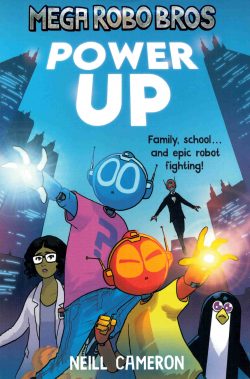
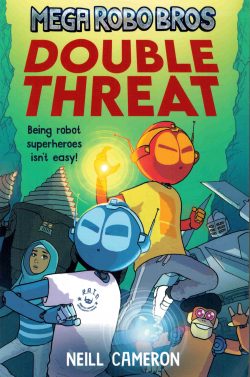
Freddy and the New Kid (The Awesome Robot Chronicles volume 2)


By Neill Cameron (David Fickling Books)
ISBN: 978-1-78845-164-2 (PB)

Neill Cameron (Bulldog Empire; Judge Dredd Megazine; Henry V; The DFC) knows how to charm and enthral kids of all ages, particularly with his work in the picture-perfect pages of wonderful weekly The Phoenix: strips like Tamsin of the Deep; How to Make Awesome Comics and Pirates of Pangea.

To my mind, the best of the proud bunch is Mega-Robo Brothers, set in a futuristic London (at least 3 months from now, but with flying buses…) with a pair of marvellous metal-&-plastic paladins who are not like other schoolkids – no matter how much they try…

Cameron became a stalwart of proper literature after migrating the younger of his artificial wonders to the prose pages of proper books in the grand manner of Just William or Billy Bunter – albeit heavily illustrated, cartoon stuffed ones – with Freddy Vs. School. Here he cracks on with a splendid sequel…

Welcome to the Future!

In a London much cooler than ours Alex Sharma and younger brother Freddy are (mostly) typical kids: boisterous, fractious, argumentative but devoted to each other… and not too bothered that they’re adopted. It’s no big deal for them that they were originally built by mysterious Dr. Roboticus before he vanished, or that they are considered by those in the know as the most powerful robots on Earth.

That includes Mum and Dad. Mr Sharma may be just your average working guy, but Mum is actually a bit extraordinary herself. A renowned boffin, Dr. Nita Sharma carries some surprising secrets of her own, and occasionally allows her boys to be super-secret agents for R.A.I.D. (Robotics Analysis Intelligence and Defence).

It’s enough for the digital duo that they’re loved, even though they are more of a handful than most kids. They try to live as normal a life as possible; going to school, making friends, putting up with bullies and hating homework: it’s all part of Mega Robo Routine to blend boring lessons, fun with friends, games-playing, TV-watching and training in covert combat caverns under R.A.I.D. HQ…

When occasion demands, the lads undertake missions, but mostly it’s just home, games, homework and School. At least that’s how it seems to Freddy: a typical 10-year-old (well, except for the built-in super-powers).

Alex is at the age when self-doubt and anxiety take hold and counters the anxiety by trying to fit in, but Freddy is still insufferably exuberant and over-confident. It leads to frequent confrontations with unreasonable, unliked Deputy Head Mr. Javid and resulted in a specific set of school rules that apply only to the robot boy: a draconian Code of Conduct forbidding any students from using super-strength, booster rockets or lasers on school property…

Even when Freddy sticks to the rules, trouble just seems to go looking for him. He’s wilful and easily led, especially by best friend Fernando who also hates boring learning and loves excitement. Dr. Sharma calls him an “instigator”, but believes the influence of sporty Anisha, quiet swot Riyad and even (mostly) reformed bully Henrik can modify Freddy’s inability to do what he’s told…

Sadly, that was before ultra-competitive new girl Aoife arrived. She’s good at all subjects, a superstar on the sports field and quite likable, but for some reason hates and despises robots. All too soon, she and Freddy are arch enemies, engaged in a duel to prove whether humans or machines are best. The contest divides the school, separates Freddy from his friends and leads to a destructive plague of betting in the school…

Cash-strapped and cost obsessed, Mr Javid exacerbates the situation by systematically laying off human teachers and replacing them with low grade robots. It starts in the sports department but gradually the cheap mechanoids encroach on actual lessons, and all too soon Aoife has taught the students how to modify and reprogram them…

As the rivals strive to prove their point of view, chaos descends on the school. Lessons are affected; relationships shift; the remaining staff revolt and the robot replacements go berserk. Soon it’s time for lasers and rockets and maybe even some necessary explosions…

Somehow amidst all the madness, Freddy and Aoife start to see each other’s point of view, tone down their aggression and even properly get on. Now all they have to do is calm down the rioting kids, turn off the rebellious techno-teaching assistants, safely dismantle the gambling cabal and get their former friends to talk to them again…

Stuffed with monochrome cartoons and bouncy graphics, this is unmissable entertainment for all ages and vintages: a splendidly traditional potent school days comedy romp, amped up on sci fi and superhero riffs and carrying a powerful message that competition has a downside. Freddy and the New Kid is another amazing adventure for younger readers that you’ll adore too.
Text and illustrations © Neill Cameron 2021. All rights reserved.

Golden Age Starman Archives volume 1


By Jack Burnley, Gardner Fox, Alfred Bester, Ray Burnley & various (DC Comics)
ISBN: 978-1-56389-622-4 (HB)

After the staggering success of Superman and Batman, National Comics/DC rapidly launched many new mystery-men in their efforts to capitalise on the phenomenon of superheroes, and – from our decades-distant perspective – it’s only fair to say that by 1941 the editors had only the vaguest inkling of what they were doing.

Since newest creations The 6Sandman, The Spectre and Hourman were each imbued with equal investments of innovation, creativity and exposure, the editorial powers-that-be were rather disappointed that these additions never took off to the same explosive degree.

Publishing partner but separate editorial entity All American Comics had meanwhile generated a string of barnstorming successes like The Flash, Green Lantern, Hawkman and radio sensation Hop Harrigan and would imminently produce the only rival to Superman and Batman’s status when Wonder Woman debuted late in the year.

Of course, AA had the brilliantly “in-tune” creative and editorial prodigy Sheldon Mayer to filter all their ideas through …

Thus, when Starman launched in the April 1941 issue of Adventure Comics (relegating Sandman to a back-up role in the venerable heroic anthology), National/DC trusted in craft and quality rather than some indefinable “pizzazz”. The editors were convinced the startlingly realistic, conventionally dramatic illustration of Hardin “Jack” Burnley would propel their newest concept to the same giddy heights of popularity as the Action Ace and Gotham Guardian.

Indeed, the strip – always magnificently drawn and indisputably one of the most beautiful of the period – was further blessed with mature and compelling scripts by Gardner Fox and Alfred Bester: compulsive and brilliant thrillers and even by today’s standards some one of the very best comics ever produced.

However – according to the artist in his Foreword to this stunning deluxe hardback collection – that was possibly the problem. Subtle, moody, slower-paced stories just didn’t have the sheer exuberance and kinetic energy of the most popular series, which all eschewed craft and discipline for spectacle and all-out action.

Happily, these days with an appreciably older and more discerning audience, Starman‘s less-than-stellar career in his own time can be fully seen for the superb example of Fights ‘n’ Tights wonderment it truly is, and – in his anniversary years – cries out for a definitive archival collection… especially since his legacy descendant Stargirl is a big shot TV sensation…

This epic collection reprints the earliest astounding exploits of the Astral Avenger from Adventure Comics #61-76 (spanning April 1941- July 1942), including some of the most iconic covers of the Golden Age, by Burnley and, latterly, wonder-kids Joe Simon & Jack Kirby.

Burnley came up with the Starman concept but, as was often the case, a professional writer was assigned to flesh out and co-create the stories. In this case said scribe was the multi-talented Gardner Fox who wrote most of them. The illustrator also liberally called on the talents of his brother Dupree “Ray” Burnley as art assistant, and sister Betty as letterer to finish the episodes in sublimely cinematic style.

In those simpler times origins were far less important than today, and the moonlit magic here begins with ‘The Amazing Starman’ from #61 as America suddenly suffers a wave of deadly electrical events. Appalled and afraid, FBI chief Woodley Allen summons his latest volunteer operative. Bored socialite Ted Knight promptly abandons his irate date Doris Lee to assume his mystery man persona, flying off to stop the deranged scientist behind all the death and destruction.

Almost as an aside we learn that secret genius Knight had previously discovered a way to collect and redirect the energy of Starlight through an awesome handheld device he calls a “gravity rod” and resolved to do only good with his discoveries…

The intrepid adventurer tracks diabolical Dr. Doog to his mountain fortress and spectacularly decimates the subversive Secret Brotherhood of the Electron.

In #62 the Sidereal Sentinel met another deadly deranged genius who had devised a shrinking ray. It even briefly diminishes Starman before the sky warrior extinguishes ‘The Menace of the Lethal Light’, after which ‘The Adventure of the Earthquake Terror’ (#63) depicts the nation attacked by foreign agent Captain Vurm, using enslaved South American tribesmen to administer his grotesque ground-shock engines. He too falls before the unstoppable cosmic power of harnessed starlight. America was still neutral at this time, but the writing was on the wall and increasingly villains sported monocles and Germanic accents…

Adventure Comics #64 pits the Astral All-Star against a sinister mesmerist who makes men slaves in ‘The Mystery of the Men with Staring Eyes’, after which – behind a stunning proto-patriotic cover – Starman solves ‘The Mystery of the Undersea Terror’, wherein the ship-sinking League of the Octopus proves another deadly outlet for the greedy genius of The Light…

‘The Case of the Camera Curse’ in #66 layered a dose of supernatural horror into the high-tech mix as Starman tackles a crazed photographer employing a voodoo lens to enslave and destroy his subjects, before #67’s ‘The Menace of the Invisible Raiders’ introduced the Astral Avenger’s greatest foe. The Mist devised a way to make men and machines imperceptible and would have conquered America with his unseen air force had not the Starry Knight stopped him…

Alfred Bester provides a searing patriotic yarn for #68 as ‘The Blaze of Doom’ sees Starman quenching a forest fire and uncovering a lumberjack gang intent on holding America’s Defence effort to ransom, after which Fox was back for #69’s ‘The Adventure of the Singapore Stranglers’ in which the heavenly hero stamps out a sinister cult. In actuality, the killers were sadistic saboteurs of a certain aggressive Asiatic Empire. American involvement in WWII was mere months away…

The martial tone continued in ‘The Adventure of the Ring of Hijackers’ as Starman battles Baron X, whose deadly minions are wrecking American trains carrying munitions and supplies to embattled British convoy vessels, although a welcome change of pace came in #71 when ‘The Invaders from the Future’ strike. Brigands from Tomorrow are bad enough, but when Starman discovers one of his old enemies had recruited them, all bets are off…

In #72, an Arabian curse seems the reason explorers are dying of fright, but the ‘Case of the ‘Magic Bloodstone’ proves to have a far more prosaic – if no less sinister – cause…

With Adventure Comics #73, Starman surrendered the cover-spot, as dynamic duo Simon & Kirby took over ailing strips Paul Kirk, Manhunter and Sandman. However, ‘The Case of the Murders in Outer Space’ proved the Knight Errant was not lacking in imagination or dynamic quality, as he matches wits with a brilliant mastermind murdering heirs to a Californian fortune by an unfathomable method before disposing of the bodies in an utterly unique manner…

Sinister science again reigned in #74 as ‘The Case of the Monstrous Animal-Men’ finds the Starlight Centurion tragically battling ghastly pawns of a maniac who turns men into beasts, whilst #75’s ‘The Case of the Luckless Liars’ details how Ted Knight’s initiation into a millionaires’ fibbing society leads to Starman becoming a hypnotised terror tool of deadly killer The Veil…

This initial foray into darkness ends with a rollicking action riot in ‘The Case of the Sinister Sun’ wherein cheap thugs of the Moroni Gang upgrade their act with deadly gadgets: patterning themselves after the solar system in a blazing crime blitz until Starman eclipses them all…

Enthralling, engaging and fantastically inviting, these Golden Age adventures are a lost high-point of the era – even if readers of the time didn’t realise it – and offer astonishing thrills and amazing chills for today’s sophisticated readership. Starman’s exploits are some of the best but most neglected thrillers of those halcyon days, but modern tastes will find them are far more in tune with contemporary mores. This book is a truly terrific treat for fans of mad science, mystery, murder and stylish intrigue…
© 1941, 1942, 2000 DC Comics. All Rights Reserved.

Bunny vs Monkey and the League of Doom!


By Jaimie Smart, with Sammy Borras (David Fickling Books)
ISBN: 978-1-78845-230-4 (TPB)

Bunny vs. Monkey has been a fixture of British comics phenomena The Phoenix since the very first issue in 2012: recounting a madcap vendetta gripping animal arch-enemies set amidst an idyllic arcadia masquerading as more-or-less mundane English woodlands.

Concocted with gleefully gentle mania by cartoonist, comics artist and novelist Jamie Smart (Fish Head Steve!; Looshkin; Flember), his trend-setting, mind-bending yarns have recently been retooled as graphic albums available in remastered, double-length digest editions such as this one. In case you’re wondering, the fabulous fun found here originally inhabited volumes 5 & 6, then entitled Destructo and Apocalypse…

All the tail-biting tension and animal argy-bargey began after an obnoxious little beast popped up in the wake of a disastrous British space shot. Having crash-landed in Crinkle Woods – scant miles from his launch site – lab animal Monkey believed himself the rightful owner of a strange new world, despite sustained efforts of reasonable, sensible, genteel, contemplative Bunny to dissuade him. For all his patience, propriety and good breeding, the laid-back lepine just could not contain the incorrigible idiot ape, who was – and is – a rude, noise-loving, chaos-creating troublemaker…

The original collected volumes dispensed disaster-drenched doses of daftness in six-month courses of ill-treatment, but this new compilation covers Year Three from Winter to Winter as first enjoyed in Destructo and Other Ridiculous Stories! and Apocalypse and Other Surprising Stories!.

Here – with artistic assistance from Sammy Borras – the war of nerves and mega-weapons resumes and intensifies. The unruly assortment of odd critters littering and loitering around the bucolic paradise,p finally pick a side: shifting and twisting into bipartisan factionalism. They all seem to have forgotten that rapidly encroaching Hyoomanz are now well underway in building something called a “motorway” right through the sylvan glades and (apparently) unprotected parks…

It all resumes with tiny terror Monkey manifesting more mayhem and almost turning his own stomach inside out whilst attempting to weaponise some very nasty stuff he finds under his feet in ‘Gross!’

With snow on the ground Monkey finds a way to spoil the Great Sled-Off in ‘Tobog-Gone!’ and latterly sets back mammal-robot relations by picking on newcomer ‘Metal Steve 2!’, before a new menace manifests to worry the woodland folk in the dark guise of evil arch-villain ‘Destructo!’

When the weather clears up, Monkey’s Double-Barrelled Supercharged Snow-Cannon-Tank is suddenly deprived of ammo… until the pest repurposes his toy to fire chutney. Sadly, even this resultant chaos is insufficient to his comprehending ‘The Message!’…

A brief and sudden return of evil genius ‘Skunky!’ only leads to disappointment, but his crazed influence remains to monsterize the ‘Pretty Flowers!’, whilst the debut of cyborg bounty hunter ‘Alan!’ (Armoured Locating Armadillo Network) threatens to destabilise the ongoing conflict until the big bully gets on the wrong side of gentle, peace-loving Pig‘s ice cream…

Too much of the good life eventually slows down our friends so they convince eco-warrior Le Fox to help them ‘Get Fit!’just in time for the awful ape to celebrate (or desecrate) Easter by eating all ‘The Wrong Eggs!’

As Spring unfolds, the wee woodlanders face Skunky’s robotic Vulturaptors in ‘Terror from the Skies’, but when night falls, huge ‘Bobbles!’ from the sky spark fears of alien invasion…

The good guys then try to infiltrate ‘The Temple!’ (Skunky’s new high-tech citadel of evil), just in time for ‘The Audition!’ to join the musky mastermind’s new gang the League of Doom. Sadly, the only one making the grade is meek misfit Pig in his new gruesome guise of ‘Pigulus!’…

History horrifically repeats itself when another crashed space capsule ejects an even more destructive newcomer in ‘The Evil Monkey!’ – which only incites the previous incumbent to up his aggravating game…

When the genteel inhabitants of the wood start enjoying ‘Picnics!’, they have no conception the day will end in chaos after Skunky’s escaped Grasshopalong induces the mechanic maverick to attempt recapture with his giant Tarsier…

Occasional ally Le Fox cultivates an air of mystery, but when the League of Doom unleashes a deadly custard assault his annoying old ‘Uncle Fox!’ soon proves to be the real superspy deal, just as Monkey’s latest property deal lands Bunny with an obnoxious ‘Bad Neighbour!’ in the form of musician Bert Warthog.

…But not for long…

When Skunky unleashes his devastating colossal De-Forester 9000, the unthinkable occurs as Bunny and Monkey declare ‘The Truce!’, leading to the mega-machine’s demise, but by the time brain-battered, bewildered former stuntman Action Beaver becomes ‘The Messenger!’ for the skunk’s poison letters, all bets are off again and it’s every critter for himself…

More mad science sees the launch of a weather station and an unseasonal snow barrage, but Skunky’s malignant fun is ruined after Weenie Squirrel demonstrates astounding piste pizazz in ‘Ski-Daddle!’, before a lost little skunk destabilises the wicked stinker. Thomas is unmoved by monster robots like the rampaging Octobosh and truly gets to the emotional soft side of his newfound ‘Uncle Skunky!’…

Perhaps that episode is what prompts his invention of ‘The Truthometer!’, but when Skunky hears what the woodlanders actually think about him, he regrets ever thinking of it…

His Quantum Bibble Fobbulator also goes wrong, tearing ‘Wormholes!’ in the forest fabric, but the rustic residents make the best of the situation, whilst the skunk’s size-changing ray only makes his victims too tall to tackle in ‘The Embiggening!’

The rural riot the escalates with a frankly disturbing insight into the simian star’s softer side as he administers first aid to ailing Bunny and subsequently descends into megalomania as the truly terrifying ‘Nurse Monkey!’…

Easing effortlessly into the middle of the year, ‘The Importance of Being Monkey’ layers on the intrigue as the human scientists who originally rocketed the simian sod – and his evil successor – into paradise come looking for their property – accidentally revealing a deeper plot and properly mad doctor in charge. At least, Monkey has finally been allowed to join the League of Doom…

The deployment of ‘Poop!’ bins outrages and baffles the woods-folk, leading to a disastrous attempt to excise the humans’ daft innovations, after which human child Elouise reclaims her old toy Metal Steve, unaware that Skunky’s “improvements” will soon lead to them all needing ‘A New Home’…

Careless and catastrophic piloting of cetacean construct ‘Wahey-Ell’ reveals Monkey’s astigmatism whilst a new sinister faction targets Bunny in ‘The Order of the Woods’ but events take a deeply disturbing turn when Skunky’s new submersible uncovers a fantastic sunken kingdom ‘Beneath the Waves’ and affable nutter ‘Super Action Beaver’ gets a handy superhero makeover, but nothing prepares the woodlanders for Monkey’s weaponisation of concrete in ‘Stone Cold’…

A beloved hero embraces his evil side in ‘The Crimson Gobbler!’ while Skunky initiates Monkey into the secrets of ‘The Destroy-o-torium’, but wickedness is not restricted to the League as Terence the evil Anti-Bunny cruelly meddles with his good twin’s downtime in ‘Bunny TV’. Having said that, there’s no substitute for the real thing as seen when ‘Monkey with a Flame Thrower’ depicts what happens when the meddler gats access to Skunky’s Cannon Barrel…

The truth behind the chaos and super-science mayhem is revealed in ‘An Important Message’, but as Le Fox leaves it with Weenie and Pig, it’s as good as lost before he’s finished speaking, leaving Skunky and Robot Steve to slice, dice and splice animal DNA and make mockery of nature in ‘Mixey-matosis’…

As Autumn falls, Action Beaver’s inner monologue is explored in ‘Noises’ before Bunny learns never ever to go ‘Camping’ with Pig and Squirrel even as Skunky’s brilliance in stealing all Earth’s colours with ‘The Mono-Chromatron!’ founders on the rocks of sheer idiocy…

The grand design of sinister humans running MeanieCorp Laboratories, the origins of ultimate destroyer the Moshoggothand the truth about Monkey are then systematically exposed in a time-bending extended epic beginning with ‘The Last Broadcast’. The daft drama is expanded upon in ‘To Destinyyy’ and ‘Find the Monkey’ before a valiant defender risks everything to save the Woods, the world and all reality, beginning with ‘Sabotage’; navigating the alternate timeline terrors of ‘Monkey in Charge’ and closing in Winter as the sinister schemes and cosmic carnage affect the memories of those who barely survived in ‘Onwards to Skunky’…

It’s not all safe and fine yet, however, and a final sacrifice is called for as ‘The Monstrous Below’ liberates the Moshoggoth and activates a Reality Discombobulator. Thankfully,
‘Fantastic Le Fox’ is on hand and ensures there’s enough of creation left to carry on by ‘Remembering Friends’…

Adding lustre and fun, this superb treat includes detailed instructions on How to Draw Action Beaver’ and ‘How to Draw Le Fox’, so, as well as beguiling your young ‘uns with stories, you can use this book to teach them a trade…

The absolute acme of absurdist adventure, Bunny vs Monkey is weird wit, brilliant invention, potent sentiment and superb cartooning all in one eccentric package: providing irresistible joy for grown-ups of every vintage, even those who claim they only get it for their kids. This is the kind of comic parents beg kids to read to them. Is that you yet?
Text and illustrations © Jamie Smart 2021. All rights reserved.

Steed and Mrs Peel volume One: A Very Civil Armageddon


By Mark Waid, Caleb Monroe, Steve Bryant, Will Sliney, Yasmin Liang & Chris Rosa & various (Boom! Studios/Titan Books)
ISBN: 987-1-60886-306-8 (TPB)

Generally, when I write about the Avengers, we’re all thinking about an assembled multitude of Marvel superheroes, but – until the blockbuster movie franchise stormed the 21st century world – for most non-comics civilians that name usually conjured up images of dashing heroics, old world charm, incredible, implausible adventure and true British style – not to say bizarrely fetishistic attire. It’s easy to see how that might lead to some consumer confusion…

In this anniversary year for the TV show, I thought we’d revisit some of the many comics outings of the English iteration, so we’re starting here. Be prepared for a sparkling variety of follow-up treats in the months ahead…

The (other) Avengers was a stylish, globally popular crime/spy TV show made in Britain: glamorously and seductively blending espionage thrills with arch, knowing comedy. After a grim-‘n’-gritty start in 1961, it gradually combined deadly danger with elements of technological fantasy, capturing the mood of two distinct eras, A phenomenal cult hit, the show and its1980s sequel The New Avengers are best remembered now for Cool Britannia-styled action, kinky quirkiness, mad gadgetry, surreal suspense and the wholly appropriate descriptive phrase “Spy Fi”.

The legacy of the series is apparent in many later shows like The Invisible Man (both TV spy iterations); Chuck, the Mission: Impossible movie franchise and Marvel’s Agents of S.H.I.E.L.D.

Enormously popular across the globe – even Warsaw Pact Poland was crazy for Rewolwer i melonik (“A Revolver and a Bowler Hat”) – the show evolved from bleak vengeance thriller Police Surgeon (September-December 1961) into the epitome of wittily sophisticated adventure lampoonery with suave, urbane British Agent John Steed partnering with a succession of dazzlingly talented women displaying the true meaning of the term “agency”.

Most revered was amateur sleuth Mrs. Emma Peel who battled spies, supervillains, robots, criminals, secret societies, monsters and even “aliens” with tongue very much in cheek and always under the strictest determination to remain cool, dashingly composed and exceedingly eccentric…

The format was a winner. Peel, as played by (Dame) Diana Rigg, had been a replacement for landmark and breakthrough character Cathy Gale – the first hands-on fighting female in British television history. She left the show in 1964 to become Bond Girl Pussy Galore (in Goldfinger), but her replacement with Rigg took the show to even greater heights of success. The role of recently bereaved Emma Peel hit a chord with viewers and cemented the archetype of a powerful, clever, competent woman into the nation’s psyche: forever countering – if not quite abolishing – the screaming, eye-candy girly-victim to the dustbin of popular fiction.

Rigg left in 1967 (to marry James Bond in On Her Majesty’s Secret Service) and another feisty female was found in the person of Tara King (Linda Thorson) to carry the series to its demise in 1969. Its continued popularity in more than 90 countries eventually resulted in a revival during the late 1970s. The New Avengers saw glamorous “Sloane Ranger” Purdey (Joanna Lumley) and brutishly manly Gambit (Gareth Hunt) acting as partners and foils to the agelessly debonair and deadly Steed…

The show has remained a hugely enticing cult icon. There was a rather ill-conceived major motion picture in 1998, but the television version regularly features in Top 20 rankings for assorted polls assessing Cult TV Shows. During its run and beyond, the internationally adored series has spawned toys; games; collector models; a pop single and stage show; radio series; posters and books plus all the myriad merchandising strands that inevitably accompany an evergreen media sensation.

Naturally, as a popular British Television program these Avengers were no stranger to our comics pages either.

Following an introductory cartoon strip starring Steed & Gale in listings magazines Look Westward, The Viewer and Manchester Evening News (September 1963 to the end of 1964), legendary children’s staple TV Comic launched its own Avengers strip in #720 (October 2nd 1965) with Emma Peel firmly ensconced and crushing crime.

This serial ran until #771 (September 24th 1966), with the dashing duo also starring in TV Comic Holiday Special, whilst a series of young Emma Peel adventures featured in June & Schoolfriend. This feature transferred to DC Thomson’s Diana, running until 1968 whereupon it returned to TV Comic (from #877): now depicting Steed and Tara King until 1972 (#1077).

In 1966 there was a one-off, large-sized UK comicbook from Mick Anglo Studios whilst in America, Gold Key’s Four-Color series published a try-out book in 1968 using recycled UK material under the rather obvious title John Steed/Emma Peel – since Marvel had already secured an American trademark for comics with the name “Avengers”.

There were also a number of wonderful, sturdily steadfast hardback annuals for the British Festive Season trade, beginning with 1962’s TV Crimebusters Annual and thereafter pertinent TV Comic Annuals after which a run of solo editions graced Christmas stockings from 1967-1969, augmented by plus a brace of New Avengers volumes for 1977 and 1978.

Between 1990 and 1992, Eclipse Comics and the UK’s ACME Press produced a trans-Atlantic prestige miniseries, Steed & Mrs. Peel: crafted by Grant Morrison, Anne Caulfield & Ian Gibson. Stay tuned for a review of that one too…

Repackaged and reprinted in 2012 by media-savvy publishers Boom! Studios, that event acted as a pilot for a fresh iteration, the first compilation of which is under review here. Wisely set in the series’ Swinging Sixties Britain heyday, this volume of Steed and Mrs. Peel collects issues #0-3 (August-December 2012): a worthy reintroduction for the faithful and happily accessible introduction for notional newcomers as the dedicated followers of felons return for another clash with memorable TV antagonists The Hellfire Club.

These baroque bounders appeared in episode ‘A Touch of Brimstone’ and so warped the maturing personalities of young Chris Claremont & John Byrne that they later created their own version for a comic book they were working on – the Uncanny X-Men…

The drama here opens in ‘A Very Civil Armageddon: Prologue’ (written by Boom! chief creative guru Mark Waid and illustrated by Steve Bryant) as, way back then, our heroes are called upon to investigate ‘The Dead Future’, as an active – albeit murdered – agent seemingly ages decades overnight.

The situation reminds Mrs. Peel of the mind-bending, lethally effective fun-&-games perpetrated by the insidious Hellfire Club and its now-defunct leader the Honourable John Clever-Cartney…

Further inquiries take them to the latest incarnation of the ancient Gentleman’s Club where avowed futurist Ian Lansdowne Dunderdale Cartney disavows any knowledge of the matter… or his dad’s old antisocial habits. In fact, the current scion is far more absorbed with the World of Tomorrow than the embarrassing peccadilloes of the past. However, it’s all a trap and whilst Mrs Peel is attacked by a killer robot maid, Steed is ambushed – only to awaken as a doddering old man 35 years later in the year 2000AD!

Forever undaunted, the temporarily separated Derring-Duo refuse to accept the improbable, impeccably and individually striking back to uncover the incredible answer to an impossible situation…

The main event – by Waid & Caleb Monroe with art from Will Sliney – depicts ‘London Falling’ as long-anticipated and dreaded nuclear Armageddon finally happens, leaving Steed, Peel and a swarm of politicians, Lords and civil servants as the only survivors, hunkered down in a battered atomic bunker beneath the utterly devastated Houses of Parliament.

The shattered, shaken remnants of Empire and Civilisation soon discover that the only other survivors are ghastly atomic mutants and a coterie of exceptionally well-stocked and fully prepared members of the Hellfire Club…

‘Life in Hell’ finds the former foes joining forces and combining resources, but Steed and Peel are convinced something is “not kosher”. For one thing, former members of once-important political committees and knowledgeable generals keep disappearing, but – most importantly – Ian Cartney and his deplorable sister Dirigent are now known to be masters of their father’s dark arts of illusion, trickery and brainwashing…

Almost too late, Steed rumbles the nature of an audaciously cunning Psy-Ops espionage scheme as Emma is once more transformed into a ferocious, whip-wielding bondage nightmare for concluding instalment ‘Long Live the Queen’. Of course, a good spy, like a boy scout, is always prepared, and the dapper detective adroitly turns the tables on his foes just in time for a rollicking, explosively old-fashioned comeuppance…

Wry, arch and wickedly satisfying, this opening salvo in the reborn franchise remains a delight for staunch fans and curious newcomers alike. This volume includes a vast (28) gallery of covers and variants by Joseph Michael Linsner, Phil Noto, Joshua Covey & Blond, Mike Perkins & Vladimir Popov and Drew Johnson to astound the eyes as much as the story assaults the senses…

…And the best is yet to come…
© 2013 StudioCanal S.A. All rights reserved.

Blake and Mortimer: S.O.S. Meteors


By Edgar P. Jacobs, translated by Jerome Saincantin (Cinebook)
ISBN: 978-1-905460-97-7 (Album PB)

Not all of 2021’s comics milestones are Anglo-American affairs. These guys are celebrating 75 glorious years of uncanny exploits and still going strong. Bon Anniversaire, mes amis …

Master storyteller Edgar P. Jacobs pitted his distinguished duo of Scientific Adventurers Professor Philip Mortimer and Captain Francis Blake against a wide variety of perils and menaces in stunning yarns combining science fiction scope, detective mystery suspense and supernatural thriller action, rendered in the same ageless and inviting Ligne Claire style which first made intrepid boy reporter Tintin into a global sensation.

The strip debuted in the premier issue of Le Journal de Tintin (dated 26th September 1946): an international anthology comic with multi-language editions in Belgium, France and Holland. The magazine was edited by Hergé himself, with his eponymous star ably supplemented by a host of new heroes and features designed to inspire young readers of the post-war world…

S.O.S. Météores began serialisation in the January 8th 1958 issue: running until April 22nd 1959 before being subsequently collected six months after the conclusion as the 8th album of the drama-drenched epic escapade. It was just in time for the Christmas rush.

In 2009 the tale was translated into English as Cinebook’s 6th Blake and Mortimer release, and – subtitled ‘Mortimer in Paris’ – opens here with the incomparable boffin in the City of Lights, answering a Gallic colleague’s pleas for assistance.

Like all his unhappy ilk, meteorologist Professor Labrousse is shouldering the brunt of public ire over freak weather events which are systematically bringing France to its knees. When Mortimer arrives, he experiences for himself the chaos tumultuous storms are inflicting upon the traffic-heavy metropolis. Thankfully, the embattled weatherman has despatched a taxi to collect the weary Englishman and bring him to the relative calm of suburban enclave Jouy.

Both driver and passenger are unaware of a flashy American car covertly dogging them. As conditions steadily worsen, the ride becomes truly hazardous, leading to an inevitable crash. Separated from the driver and blindly wandering in the storm, Mortimer plunges into a lake and barely manages to scrabble to safety.

Finding his way back to the road, the exhausted scientist thumbs a lift to Labrousse’s house and is warmly welcomed. Of the taxi driver, however, there is no trace…

The old chums discuss the catastrophic conditions and uncanny events long into the night, but the next morning further deliberations are curtailed when the police arrive, eager to interview the Englishman about a certain cab driver’s disappearance…

Deeply troubled, the learned men attempt to retrace Mortimer’s steps and discover the terrain is completely different from Englishman’s memories. They also encounter a thug and his immense dog going over the same sodden ground. The strangers are clearly following the orders of a boss who keeps well hidden, and a violent altercation is barely avoided with a simple whistle from the unseen voyeur…

Eventually the lifetime experience of the local postman enables the baffled British boffin to solve his geographical conundrum, and a recovered trail leads to a nearby estate with huge walls patrolled by the same terrifying hound he met earlier. Well-versed in surveillance procedure, Mortimer prepares to probe further but is distracted when a sudden snowstorm begins. Determinedly he returns later, well-prepared and using the blizzard as cover to investigate the estate. It proves to be a tremendous mistake…

Next morning in Paris, Divisional Commissioner Pradier of French Intelligence welcomes a counterpart from Great Britain, looking into an espionage ring at work in France. Captain Francis Blake’s keen insight quickly scores a hit: opening up new leads that seemly connect to the weather conditions tormenting the nation. However, on meeting hastily-summoned Labrousse, Blake learns old comrade Mortimer has vanished after announcing that the aberrant meteorology is man-made…

Travelling to Jouy with the horrified weatherman, Blake makes a shocking impression on Labrousse’s usually-affable neighbour as the strange atmospheric conditions are abruptly compounded with odd little accidents and frustrations that can only be seen in total as concerted enemy action…

The saga kicks into high gear when Blake recognises old – and presumed dead – enemies and is chased through unrelenting arctic conditions back to Paris in a deadly, hair-raising game of cat-&-mouse which culminates in another confrontation with his most implacable foe…

Assisted by Pradier’s forces, Blake soon has the villains on the run, spectacularly fleeing over Parisian rooftops, but the big fish again escapes, and our heroes face the fact that they may never know what has become of Mortimer…

In Jouy, however, the irascible researcher has made good use of his time. Incarcerated with diabolical Professor Milosh Georgevich – who has used the vast resources of an aggressor nation to weaponise weather in advance of an audacious scheme to invade France for the third time in a century – Mortimer acts alone and escapes his jailers. Picking up an unexpected ally as he tries to sabotage the colossal climate engines, the Prof is utterly unaware that his greatest friend has picked up new clues and is closing in on the plotters…

Moody and comparatively low-key until the final act – when tensions build to explosive heights and a Bond-Movie finish – S.O.S. Meteors is a splendid romp packed with astounding action, scads of sinister deviltry and a blockbuster climax to delight spy-buffs and all devotees of the Distinguished Duo.

Addictive and absorbing in the truest tradition of pulp sci-fi and Boy’s Own Adventures, Blake and Mortimer are the epitome of dogged heroic determination and the natural successors to such heroic icons as Professor Challenger, Bulldog Drummond and Richard Hannay, delivering grand Blood-&-Thunder thrills, chills and spills in timeless fashion and with a mesmerising visual punch.

Any kid able to suspend modern mores and cultural disbelief (call it alternate earth history or bakelite-punk if you want) will enjoy the experience of their lives…

This Cinebook edition – available in paperback and digital editions – also includes excerpts from two other B&M albums plus a short biographical feature and publication chart of Jacobs’ and his successors’ efforts.
Original edition © Editions Blake & Mortimer/Studio Jacobs (Dargaud-Lombard S. A.) 1989 by E.P. Jacobs. All rights reserved. English translation © 2009 Cinebook Ltd.

Spirou & Fantasio volume 17 – The Marsupilamis’ Nest


By André Franquin, translated by Jerome Saincantin (Cinebook)
ISBN: 978-1-84918-533-2 (Album PB)

Spirou (whose name translates as “squirrel”, “mischievous” and “lively kid” in the language of Walloons) was created by French cartoonist François Robert Velter – AKA Rob-Vel – for Belgian publisher Éditions Dupuis. The evergreen star was a response to the success of Hergé’s Tintin at rival outfit Casterman. At first, the character Spirou was a plucky bellboy/lift operator employed by the Moustique Hotel (an in-joke reference to Dupuis’ premier periodical Le Moustique) whose improbable adventures with his pet squirrel Spip evolved into astounding and often surreal comedy dramas.

The other red-headed lad debuted on April 21st 1938 in an 8-page, French-language tabloid magazine that bears his name to this day. Fronting a roster of new and licensed foreign strips – Fernand Dineur’s Les Aventures de Tif (latterly Tif et Tondu) and US newspaper imports Red Ryder, Brick Bradford and Superman – the now-legendary anthology Le Journal de Spirou grew exponentially: adding Flemish edition Robbedoes on October 27th 1938, increasing page count and adding compelling action, fantasy and comedy features until it was an unassailable, unmissable necessity for Franco-Belgian kids.

Spirou and chums spearheaded the magazine for most of its life, with many impressive creators building on Velter’s work, beginning with his wife Blanche “Davine” Dumoulin, who took over the strip when her husband enlisted in 1939. She was aided by Belgian artist Luc Lafnet until 1943, when Dupuis purchased all rights to the feature, after which comic-strip prodigy Joseph Gillain (“Jijé”) took over.

In 1946, Jijé‘s assistant André Franquin inherited the feature. Gradually, he retired traditional short gag-like vignettes in favour of longer adventure serials, introducing a wide and engaging cast of regulars. He ultimately devised a phenomenally popular nigh-magical animal dubbed Marsupilami, who debuted in 1952’s Spirou et les héritiers.

Jean-Claude Fournier succeeded Franquin: overhauling the feature over nine stirring serial adventures between 1969-1979 which tapped into the rebellious, relevant zeitgeist with tales of environmental concern, nuclear energy, drug cartels and repressive regimes.

By the 1980s, the series seemed stalled, with three different creative teams alternating on the serial: Raoul Cauvin & Nic Broca, Yves Chaland, and Philippe Vandevelde – writing as “Tome” & artist Jean-Richard Geurts AKA Janry.

These last reverently referenced the still-beloved Franquin era: reviving the feature’s fortunes in 14 wonderful albums between 1984-1998. After their departure the strip diversified into parallel strands: Spirou’s Childhood/Little Spirou and guest-creator specials A Spirou Story By…

Efforts by Lewis Trondheim and the teams of Jean-Davide Morvan & Jose-Luis Munuera and Fabien Vehlmann & Yoann brought the official album count to nearly 80 (if you include specials, spin-offs series and one-shots, official and otherwise), but there are still plenty of the older vintages uncollected, just waiting for another nostalgia wave to revive them (perhaps in Complete Collections as has been done with Lucky Luke and Valerian and Laureline…?)

Cinebook have been publishing Spirou & Fantasio’s exploits since October 2009, mostly concentrating on translating Tome & Janry’s superb pastiche/homages of Franquin, but for this manic marvel (available in paperback and digitally) we hark all the way back to 1960 for pure Franquin-formulated furore and fiasco.

The contents are actual two separate yarns, originally serialised in LJdS #699-991 (1956-1957) and #1034-1045 (1958) before being collected in 1960 as 12th European album Le nid des Marsupilamis. It’s brought to you as The Marsupilamis’ Nest…

In 1952’s Spirou et les héritiers, intrepid heroes Spirou and Fantasio encountered an incredible elastic-tailed anthropoid in the jungles of Central American nation Palombia: ultimately bringing the fabulous, affable creature back to civilisation and a string of bizarre and absurd adventures.

Franquin had assumed all creative responsibilities for Dupuis’ flagship strip part-way through Spirou et la maison préfabriquée (LJdS #427, June 20th 1946). He ran wild and prospered for two decades, enlarging the scope and horizons of the stories until the feature became purely his own.

As the Bellboy became a globe-trotting journalist, fans continuously met startling new characters such as comrade/rival reporter Fantasio; crackpot inventor Count of Champignac and inept colleague Gaston Lagaffe (known in Britain as Gomer Goof). Travelling to exotic places, they uncovered crimes, challenged the fantastic unknown and clashed with nefarious arch-enemies such as Zorglub and Zantafio. They also competed with one of the first strong female characters in European comics – rival journalist Seccotine (renamed Cellophine in the current English translation).

In this compilation, the eponymous lead story sees the enquiring lads lose out on a prestigious film-&-lecture gig to Cellophine, who has truly scooped them by penetrating the Palombian rain forest to create a compelling documentary of the language, mating habits and daily life of Marsupilamis…

Dramatic, action-packed, romantic, passionate and utterly hilarious, the tale depicts the earliest moments of the manic monkey’s adorable triplets and was apparently crafted by Franquin as his wife Liliane was carrying their first child…

The joys of the wilderness are counterbalanced by an enthralling graphic essay on civilisation and human nature as La foire aux gangsters AKA ‘The Gangster Fair’ sees Spirou and Fantasio – after some spectacular initial resistance – trained in the martial arts by innocuous-seeming Yudai Nao.

The aging oriental gentleman is the dutiful bodyguard of Yankee oil tycoon John P. Nutt, whose upcoming visit to Europe has afforded gangster Lucky Caspiano a chance to extract money and exact vengeance on a despised old enemy. Our heroes’ training is intended to create unsuspected back-up for the sentinel, but when the villains brutally remove Mr Nao and kidnap Nutt’s infant son, the likely lads find themselves on their own and painfully probing a sordid street fair for clues. Eventually their investigations centre on an all-comer’s boxing booth…

Happily, the reporters have unexpected allies – such as hapless office intern Gomer Goof and a thug with a conscience – but as the caper devolves into a manic, violent chase, Spirou deduces that they have been lied to, and that not every player in this game is on the side of the angels…

The Marsupilamis’ Nest offers the kind of lightly-barbed, comedy-thriller that delights readers fed up with a marketplace far too full of adults-only carnage, testosterone-fuelled breast-beating, teen-romance monsters or sickly-sweet fantasy.

Easily accessible to readers of all ages and rendered with the beguiling style and seductively wholesome élan which makes Asterix, Lucky Luke, and Iznogoud so compelling, this is a delicious tale from a long line of superb exploits that cries out to be a household name as much as those series – and even that other kid with the white dog…
Original edition © Dupuis, 1960 by Franquin. All rights reserved. English translation 2020 © Cinebook Ltd.

O Human Star volume One


By Blue Delliquanti (Blue Delliquanti)
ISBN: 978-0-9909956-0-9 (TPB)

Sexuality and identity appear to be inextricably conjoined. We’re not quite there yet in the disappointingly real world, but fiction and fantasy have extensively explored the potential ramifications and repercussions of the topic, and none more so or as stylishly as self-identified non-binary creator Blue Delliquanti (Meal; Smut Peddler; The Sleep of Reason & Beyond) in compelling voyage of personal discovery O Human Star.

The epic tale launched as a weekly webcomic on January 25th 2012 and ran until 27th August 2020, with the first collection (compiling chapters 1-3 in paperback and digital formats) released in book and digital formats in 2015.

The plot premise is potently simple and delivered through a complex network of enticingly engaging characters, beginning as mystery with ‘His Own Image’ wherein inventor Alastair Sterling dies alone and wakes up 16 years later. In the future, robotic lifeforms are simply part of the world, “Synthetic Beings” who comprise everything from simple manufacturing tools to fully autonomous independent individuals.

Apparently, Sterling’s discoveries changed everything and now his personality has been installed in a fully-artificial replica of his failed body. The creatures who greet him on awakening seem benevolent, and inform that his return has been commissioned by the estate of his former protégé, assistant beneficiary and lover Brendan Pinsky.

Bizarrely, after a fraught reunion with the angry, confused middle-aged guardian and administrator of his legacy, Alastair realises he’s been lied to. Of course, Brendan has tried to revive Sterling in the past, but without success. The who, how and why of the unasked-for true return is a complete – and very suspicious – mystery…

Part of the reason for Brendan’s reticence becomes apparent when a precocious young female synthetic flies into the compound and, with a storm of inexpressible emotions, Alastair realises Sulla is a teenaged girl version of himself…

She didn’t start out that way, though. Originally, the body was a gradually, methodically constructed boy child, but three years previously she chose to become female…

With no place to go, Alastair settles in and attempts to come to terms with an incredible new world, new lives and disappointment and confusion beyond belief…

Chapter Two ‘In the Morning of the Magicians’ finds the aggrieved resurrected man still bewildered as Sulla – desperately seeking his approval – appoints herself his guide and protector. This causes ructions with notional father Brendan who has spent his years trying to restore Alastair, while turning their company – Sterling Inc. – into one of the most powerful organisations on Earth. He also cannot navigate the situation as a flashback draws him back to the day when a shy young MIT graduate first met maverick inventor Alastair Sterling and sparks first flew…

Ostensibly trapped in the big house with his memories and constant unbelievable new experiences, Sterling relives his relationship with Brendan and seeks shards of himself in Sulla until eventually everyone agrees it’s time for him to explore the world his ideas built in concluding chapter ‘Mansions of the Soul’…

When corporate duties call Brendan away, Alastair is left with Sulla who treats his growing future shock with rowdy enthusiasm as they tour the city. Dumbfounded, Sterling thinks back to the moment of his greatest breakthroughs, but still cannot decide if that was opening his protective emotional shell and accepting young Brendan as a lover or finding ways to liberate robotic consciousness.

A possible clue then presents itself when he uncharacteristically convinces Sulla to go and join a group of similarly aged human kids and talk to one who has particularly caught her attention…

After an eventful day all around, human and synthetics head home to the safety of the mansion compound, each profoundly changed by their recent interactions and all terrified that further revelations cannot help but spark further transformations…

Powerfully but subtly gripping, and rendered in a mesmerising, manga-influenced style, O Human Star is fundamentally a love story that explores notions of identity, perception, inclusion, gender and the drive to belong via the comfortably familiar cultural neutral zones of science fiction standards and landscapes. It also powerfully pulverises the concept of what “normal” means: using emotional conflict and the apparent quest for factual knowledge to unearth the spiritual data that makes humanity universal.

The series concluded last year and has been collected in three volumes which – just like this one – also offer story extras; behind-the-scenes notes; commentary and design sketches.

Absolutely one of the best graphic novels you’ll ever read, so don’t let this star pass you by.
© 2015 Blue Delliquanti. All rights reserved.

Y: The Last Man Book Four


By Brian K. Vaughan, Pia Guerra, Goran Sudžuka, José Marzán Jr. & various (DC/Vertigo)
ISBN: 978-1-4012-2888-0 (HB) 978-1-4012-6168-9 (TPB)

Back in 2002, an old, venerable and cherished science fiction concept got a smart and satirical updating in Vertigo comic book series Y: The Last Man. These days it’s more relevant than ever as the premise explores the aftermath and consequences of a virulent global plague.

Fresh, pithy and wry, the Vertigo Comics version begins with a mystery plague destroying every male mammal on Earth, along with all the foetuses.

If it had a Y chromosome it croaked, except, somehow, for college-boy slacker and amateur escapologist Yorick Brown – and his pet monkey Ampersand. One night the guy goes to bed pining for his absent girlfriend Beth DeVille (an anthropology grad on a dig in Australia) and the next day Ampersand is the only male animal on Earth and he’s the last man alive…

Yorick’s mum, part of the new (for which read Still Standing after a failed power-grab by the assembled widows of Republican Congressmen) Presidential Cabinet, is by default a Leader of the Free World until the New President can get to Washington to take office.

Yorick made his way to her through a devastated urban landscape (the plague hit during rush-hour on the East Coast and we all know that chicks can’t even parallel park let alone wrestle the controls from the hands of a dead bus driver, subway steersman or airline pilot…) but had to escape from her half-hearted attempt to lock him in a bunker. Forthwith the lad immediately set off for the Land Down Under and his one true love.

Over three years, he made his peril-packed way from the East Coast overland to California, getting ever closer to his fiancée, who he assumed had been stranded in Oz since civilisation ended. Accompanying him on his westward trek were secret agent/bodyguard 355 and geneticist Dr. Allison Mann, who sought to solve his mysteriously continued existence whilst secretly suspecting she might have caused the plague by giving birth to the world’s first parthenogenetic human clone.

Also out to stake their claim and add to the general tension were a crack squad of Israeli commandos led by the steely-willed General Tse’Elon, equipped with the latest high-powered weapons and a hidden agenda, plus post-disaster cult Daughters of the Amazon who want to ensure there really are no more men left to mess up the planet.

To further complicate matters, for much of that journey Yorick’s occasionally insane sister, Hero, was stalking them across the ultra-feminised, ravaged and now generally dis-United States.

On finally arriving in San Francisco, Agent 355 and Dr. Mann discover the truth of Yorick’s immunity but before they can capitalise on it, Ampersand is snatched by a ninja. Apparently, all along the monkey had held the secret to the plague which killed all us mouth-breathing, unsanitary louts…

Following a violently revelatory time and lots of aggravation, this fourth grand compilation – available in hardcover, trade paperback and eBook formats – collects issues #37-48, spanning November 2005 to October 2006, and opens with a 3-parter by originators and co-creators Brian K. Vaughan & Pia Guerra with additional pencils by Goran Sudžuka. In case you were wondering, the entire book is inked by José Marzán Jr, coloured by Zylonol and lettered by Clem Robbins.

Originally published in #37-39, ‘Paper Dolls’ (pencilled by Guerra & Sudžuka) introduces hard-bitten reporter Paloma West, haunting Sydney docks, seeking to verify rumours that a living man has been sighted. Whilst 355 and Mann are insistent that they travel on to Japan where Ampersand has been spotted, all Yorick can think of is that after years of struggle he’s finally where he needs to be…

Technically under arrest themselves, the determined but well-intentioned custodians succumb to Yorick’s whining, granting him 24 hours to find Beth. It’s not much of a chance but love will find a way… Nobody, however, takes Paloma seriously, and that’s a big, big mistake…

With his existence about to be made globally public, Yorick learns a few tantalising secrets about enigmatic Agent 355 before they confront West. The bodyguard wants her dead, but the reporter claims to know where Yorick’s beloved is right now…

With Time Up, the last man and his minders follow Ampersand to Japan and the secret of the plague, even though Beth has left on an epic trek to Paris – the French one…

Meanwhile in Washington, Yorick’s mother and General Tse’Elon have a fatal confrontation before the scene shifts to the Midwest for ‘The Hour of Our Death’ (rendered by Sudžuka & Marzán Jr.). Here, Hero meets one of her brother’s past indiscretions and realises she’s about to become an aunt, just as a band of Vatican-despatched nuns arrive to grab what might be the last child ever born. Seems they’re in the market for a new Madonna and Child…

‘Buttons’ finally focuses on the tragic past of 355, exposing how she became an agent of the insidious Culper Ring, whilst our unhappy voyagers flee from savages in New Guinea. Craftily shifting scenes to follow that darn monkey, ‘1,000 Typewriters’ details exactly how the male-specific mass-extinction came about, just as the cast reach Japan and the dramatic last act is set to open…

With Pia Guerra back on pencils for #43-46, Yorick and his extremely tolerant minders reach Japan, following the ninja who stole his crucially important monkey. ‘Kimono Dragons’ finds the wanderers in Yokogata Port, joined by Rose, a ship’s captain who befriends them on their voyage. They soon split up though, when Ampersand’s tracking device starts working again: Yorick and 355 follow it to Tokyo, whilst Rose and Dr. Mann explore a different path.

Allison Mann is a brilliant scientist, but nowhere near as smart as her parents – both radical geneticists with major personal issues. Allison is convinced her mother had something to do with the plague and Ampersand’s abduction. She’s right too, but as she and Rose approach the elder Doctor’s rural laboratory, they have no idea the pesky little simian has already escaped and is loose somewhere in Tokyo. They are equally unaware the lethally ruthless ninja is also hunting the lost capuchin…

Meanwhile, heavily disguised Yorick and 355 roam Tokyo with relative ease. It is a city seemingly unchanged by the disaster, but appearances can be horrifyingly deceiving…

Back in Kansas though, Yorick’s sister finds a hidden enclave where she sees proof that he is no longer the last male alive (see Y: The Last Man Book Two)…

Ampersand’s trail draws Yorick and 355 into conflict with the now all-female Yakuza gangs. They find an ally in undercover cop You, but her plan doesn’t inspire much confidence…

…And when Allison’s mother – let’s capriciously call her Dr. Matsumori – finally appears, Rose and Allison are too slow to prevent a bloody assault. As the aging doctor works to save a life, she reveals the hidden agendas and reasons why American politicians, Israeli soldiers and greedy opportunists around the globe have been hunting Yorick and Ampersand for the last four years…

In Tokyo, the scheme to recover Ampersand has also gone brutally awry, but the big surprise is in Yokogata, where Allison learns who employed the Ninja and orchestrated the whole affair… and who designed and released the plague…

As renegade General Tse’Elon invades the Kansas enclave where Hero Brown is helping raise the last children born on Earth, ‘Tin Man’ (rendered by Sudžuka & Marzán Jr.) traces the convoluted history of Allison Mann as her parents shattered scientific barriers, ethical codes and each other’s hearts fighting over her affections. It also reveals implications of the broken family’s genetic meddling, before closing with ‘Gehenna’, an equally illuminating examination of Tse’Elon’s past: what fuelled her rise to power before the fall of man, and how far she’ll go to achieve her ends, ending the book on a chilling cliffhanger…

Before that close, however, devotees and wannabes can bask in behind-the-scenes revelations as ‘Y: The Script’ reprints Vaughn’s full script for #42’s ‘1,000 Typewriters’.

By crafting their slow-burning saga to highlight carefully sculpted, credible characters and probable situations, Vaughan & Guerra built an intellectually seductive soap-opera fantasy of telling power. As the impressive conclusion neared, this enchantingly-paced, dryly ironic, chilling, moving and clever tale blossomed into a very special epic to delight and beguile any fan of mature fiction. Bear down, the best is yet to come…
© 2006 Brian K Vaughan & Pia Guerra. All Rights Reserved.