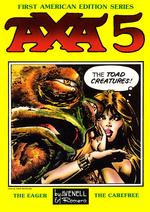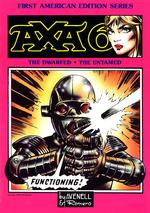
Axa volumes 3 and 4


By Donne Avenell & Enrique Badia Romero (Ken Pierce Books)
Vol. 3 No ISBN: 0-912277-00-9  Vol. 4 no ISBN: 0-912277-00-9

During the 1970s British newspapers radically altered much of their style and content to varying degrees in response to the seemingly inexorable move towards female social emancipation and sexual equality. Nevertheless, this somehow allowed newspaper editors to squeeze in even more undraped women, who finally escaped from the perfectly rendered comics strips and onto the regular pages, usually the third one, the centre-spreads and into the fashion features…

The only place where truly strong female role-models were taken seriously was the aforementioned cartoon sections but even there the likes of Modesty Blaise, Danielle, Scarth, Amanda and all the other capable ladies who walked all over the oppressor gender, both humorously and in straight adventure scenarios, lost clothes and shed undies repeatedly, continuously and in the manner they always had…

Nobody complained (no one important or who was ever taken seriously): it was just tradition and the idiom of the medium… and besides, artists liked to draw bare-naked ladies as much as blokes liked to see them and it was even educational for the kiddies – who could buy any newspaper in any shop without interference even if they couldn’t get into cinemas to view Flashdance, Trading Places, Octopussy or Spacehunter: Adventures in the Forbidden Zone without an accompanying adult…

Sales kept going up…

Take-charge chicks were almost commonplace when the Star Wars phenomenon reinvigorated public interest in science fiction and the old standby of scantily-clad, curvy amazons and post-apocalyptic wonderlands regained their sales-appeal. Thus The Sun hired Enrique Badia Romero and Donne Avenell to produce just such an attention-getter for their already well-stacked cartoon section.

Romero had begun his career in Spain in 1953, producing everything from westerns, sports, war stories and trading cards, often in conjunction with his brother Jorge Badía Romero. He even formed his own publishing house. “Enric” began working for the higher-paying UK market in the 1960s on strips such as ‘Cathy and Wendy’, ‘Isometrics’ and ‘Cassius Clay’ before successfully assuming the drawing duties on the high-profile Modesty Blaise strip in 1970 (see Modesty Blaise: The Hell Makers and Modesty Blaise: The Green Eyed Monster), only leaving when this enticing new prospect appeared.

In 1986 political and editorial intrigue saw Axa cancelled in the middle of a story and Romero returned to the bodacious Blaise until creator/writer Peter O’Donnell retired in 2001. Since then he has produced Modesty material for Scandinavia and a number of projects such as Durham Red for 2000AD.

Axa ran in The Sun Monday to Saturday from 1978 to her abrupt disappearance in 1986 and other than these slim volumes from strip historian Ken Pierce has never been graced with a definitive collection. It should be noted also that at the time of these books the strip was still being published to great acclaim.

In the first two volumes Axa, a pampered citizen of a sterile, domed community in 2080AD, rebelled against her antiseptic society’s cloying strictures and escaped to the ravaged, mutant-infested post apocalyptic wilderness to be free. Her journeys took her across the ravaged planet, discovering lost enclaves and encountering bizarre new tribes and cultures.

The third volume opens with an avid appreciation by C.C. Beck, the “Crusty Curmudgeon” most celebrated as co-creator of the Shazam!-shouting Captain Marvel before the nubile nomad resumed her explorations in ‘Axa the Brave’ with her latest companion Jason Arkady in tow. Crossing a frozen wasteland reclaimed by wolves after man’s Great Contamination excised human civilisation, the pair stagger into a lush tropical valley populated by dinosaurs and cavemen.

The historical anomalies are disturbing and dangerous enough, but when they were invited to join the new stone-agers they uncovered an even greater enigma: the cave-walls were covered in paintings of robots and weird machines… The secret of the hidden valley is yet another example of the brilliance and folly of the lost human civilisation and leads the unstoppable freedom-seeker to a swamp-city where an enclave of scientists had survived the disaster…

The hidden sages had a big plan to reshape the world and wanted Axa aboard, so they built her the perfect companion: a faithful, semi-sentient laser-wielding robot dubbed Mark 10 who instantly aroused the jealous ire of Jason. As so often the case however, Axa’s male benefactors had hidden plans for her but the scientists had built too well and the utterly devoted Mark came rattling rapidly to her rescue…

In ‘Axa the Gambler’ the winsome wanderer, with Mark and Jason faithfully following, stumbled onto a community where wagering was the basis for existence and pilgrims came from miles around to bet with the fervour of religious zealots.

In The City of Hope patrons worshipped Las Vegan relics, seeking instant gratification for their greedy, hungry prayers. Soon Jason had caught the bug and gambled away all their meager possessions including the magnificent ancient sword Axa had carried since her first escape from the Domed City.

Of course the game was fixed, but with Mark’s cybernetic intervention Axa recouped all their losses, narrowly escaping the hidden penalty that underpinned the barter-economy of the City: when you don’t have any more goods to wager with, you become the property of the house…

When Jason discovered a historic family link to big boss Mr. Nero he switched allegiance and Axa ended up fighting for her life and liberty in the gladiatorial arena beside motorcycle warrior Dirk. With freedom her greatest love, Axa inevitably engineered Nero’s bloody fall, but lost Jason to the lure of greed and an idle life of pleasure…

Axa 4 begins with an appreciation and “previously on…” by publisher Bernie McCarty before ‘Axa the Earthbound’ saw the blonde bombshell and Dirk hunting the missing mechanical Mark 10 through a haunted, monster-haunted swamp until they stumbled upon a lost oasis of beauty – a veritable paradise amidst the ruins of the world.

In a ramshackle old house lived aged Joy Eden who happily welcomed the wanderers to stay. Axa was subtly drawn to the aged free spirit’s talk of Mother Earth and pagan renewal but Dirk had his suspicions: did the old lady thrive despite the mutants and mud-monsters… or because of them?

Deeply steeped in Earth-magic and transformative mysticism, did the lonely old crone have another reason for keeping Dirk and Axa within the tumbledown walls of her “Seventh Heaven”… and just what did happen to the coldly technological but absolutely loyal Mark?

Ending as always in bitter revelation, chilling conflict and spectacular conflagration the denouements led the explorers back into the desert wastes in ‘Axa the Tempted’. Their trek brought them to the coast where mutated seaweed and giant sea-life threatened to end their trials for ever and whilst fleeing giant land-crustaceans the couple found an ancient beached ocean-liner from where inbred pirates raided other coastal settlements for slaves, provisions and “Old People” technological artifacts.

Escaping from “The Crewmen”, Axa and Dirk allied themselves with the united sea-villagers and the heroic Cap, King of the Coast, who protects the scattered communities from pirate depredations. The wily wild-girl was strangely attracted to the larger-than-life champion and his luxurious life of adventure, excitement and bold deeds, but Dirk had mysteriously vanished and something just didn’t ring true about the magnanimous warrior-king…

Once more bitter disappointment and righteous indignation awaited Axa as she once more learned that no matter where she roamed men were all the same whilst greed and depravity had not vanished with the Old Ones and their Great Contamination.

These tales are superb examples of the uniquely British newspaper strip style: lavishly drawn, subversively written, expansive in scope and utterly enchanting in their basic simplicity – with lots of flashed flesh, emphatic action and sly humour. Eminently readable and re-readable (and there’s still that dwindling promise of a major motion picture) Axa is long overdue for a definitive collection. so here’s hoping there’s a bold publisher out there looking for the next big thing…

© 1983 Express Newspapers, Ltd. First American Collectors Edition Series ™ & © 1983 Ken Pierce, Inc.

StormWatch: Final Orbit


By Warren Ellis, Bryan Hitch & Paul Neary, Michael Ryan & Luke Rizzo and Chris Sprouse & Kevin Nowlan (WildStorm/ DC Comics/Dark Horse Comics)
ISBN: 978-1-84023-381-0

One era ended and another began with the brace of tales collected in this slim tome: a rare positive example of the often vilified (by me particularly) movie property/comicbook crossover events and one which actually impinges on and affects the continuity of one if not both partners in the enterprise.

StormWatch was the UN’s Special Crisis Intervention unit; created to manage global threats and superhuman menaces with international ramifications. From their Skywatch satellite in orbit above Earth they observed, waiting for a member nation to call for help…

The multinational mini-army comprised surveillance and intelligence specialists, tech support units, historians, researchers, detention facilities, combat analysts, divisions of uniquely trained troops, a squadron of state-of-the-art out-atmosphere fighter planes and a band of dedicated superheroes for front-line situations beyond the scope of mere mortals. In the pilot’s seat was the incorruptible overseer codenamed “Weatherman”.

The title was part of the 1990s comics revolution which saw celebrated young creators abandon major “work-for-hire” publishers to set up their own companies and titles – with all the benefits and drawbacks that entailed. Like most of those glossy, formulaic, style-over-content, painfully derivative titles, it started with honest enthusiasm but soon bogged down for lack of ideas.

Warren Ellis took over the moribund morass with issue #37 (collected in assorted graphic novels and reviewed in here recently) and immediately began kicking some life into the title. Soon the series became an edgy, unmissable treatise on modern heroism and the uses and abuses of power. Making the book unquestionably his plaything Ellis slowly evolved StormWatch out of existence, to be reborn as the no-rules-unbroken landmark The Authority.

This volume collects the concluding issues of the comic’s second volume (#11-12) between which a WildC.A.T.s/Aliens one-shot neatly slotted in to change that particular fictional universe forever.

It all begins with ‘No Reason’ (illustrated by Bryan Hitch & Paul Neary and Michael Ryan & Luke Rizzo) as the assembled heroes and foot-soldiers of the UN Crisis Intervention organisation detect an odd asteroid moving towards Earth. Dispatching two shuttles to examine and divert the giant rock before it can fall into our planet’s gravity-well, the explorers soon realise it’s a vessel of unknown origins.

When contact is lost the assorted tensions rise, but the re-routing of the ominous astral intruder goes off as planned and the mysterious moonlet is soon heading into the sun. However only one ship is returning to Skywatch and they aren’t answering the radio…

WildC.A.T.s/Aliens (Ellis, Chris Sprouse & Kevin Nowlan) opens with a StormWatch life-pod crashing into Manhattan: its few battered survivors telling of an alien attack by creatures all fangs and rage and spitting acid. The creatures were unstoppable and as soon as the refugees had escaped Weatherman sealed the space-station in an unbreakable quarantine…

Rogue heroes WildC.A.T.S, fearing the aliens are their marauding Daemonite enemies, decide to break the global protocols and investigate the locked down StormWatch citadel. But the beasts they find there are like nothing they have ever experienced before…

In one of the few comics situations where Ridley Scott and James Cameron’s Aliens truly worked and fully displayed their awesome ferocity, the WildC.A.T.S only just rescue the scant survivors of StormWatch’s 500+ compliment of mortals and metahumans, before sending the irreparably contaminated space station plunging into the sun after the star-rock that brought the Aliens to our doorstep…

With the immediate threat to Earth averted, ‘No Direction Home’ wraps up the tale and the saga of StormWatch as the organisation’s Black Ops unit Jenny Sparks, Jack Hawksmoor and Swift go deep undercover to tie-up all the loose ends preparatory to re-emerging as The Authority…

Combining low key drama and oppressive tension with staggering action and adventure this chilling tale was the perfect palate-cleanser before the landmark step-change of The Authority and their in-your-face, unconventional, uncompromising solutions to traditional costumed crusader problems.

StormWatch: Final Orbit – although certainly not to everybody’s taste – perfectly closes one chapter of the post-modern superhero saga: solidly in tune with the cynical, world-weary predilections of many older fans and late-comers to the medium.

© 1998 WildStorm Productions, an imprint of DC Comics, and Dark Horse Comics. Compilation © 2001 WildStorm Productions, an imprint of DC Comics, and Dark Horse Comics All Rights Reserved.

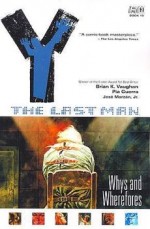
Y- The Last Man: volume 8 Kimono Dragons


By Brian K Vaughan, Pia Guerra Goran Sudžuka & José Marzán (Vertigo)
ISBN: 978-1-84576-358-9

When a plague killed every male on Earth, only Yorick Brown and his pet monkey Ampersand survived in a world made instantly utterly all-girl. With a government agent and a geneticist escorting him across the devastated American continent to a Californian bio-lab, all the young man could think of was re-uniting with his girlfriend Beth, trapped in Australia when the disaster struck.

The romantic fool trekked from Washington DC overland to California, getting ever closer to his fiancée, whom he presumed had been stranded in Oz since civilisation ended. His reluctant companions were secret agent 355 and Dr. Allison Mann, who was trying to solve the mystery of his continued existence. The latter feared she might have actually caused the plague by giving birth to the world’s first parthenogenetic human clone.

Also out to stake their claim and add to the general tension were a crack squad of Israeli commandos led by the steely-willed General Tse’Elon, plus post-disaster cult Daughters of the Amazon who wanted to make sure that there really were no more men left to mess up the planet. To further complicate matters, for much of that journey Yorick’s occasionally insane sister, Hero, was also stalking them across the ultra-feminised, ravaged and now utterly dis-United States.

After four years and some incredible adventures Yorick (a mediocre student but a rather proficient amateur magician and escapologist) and entourage made it to Australia, only to discover Beth had set off for Paris a year previously. Along the way Dr. Mann had discovered the truth: the reason Yorick was alive was that Ampersand was inexplicably immune and had the disgusting habit of “sharing” his waste products – if Yorick couldn’t duck fast enough…

As this book opens (reprinting issues #43-48 of the award-winning comics series) the lad and his extremely tolerant lasses have reached Japan, following a ninja who had stolen the crucially important monkey. ‘Kimono Dragons’ (illustrated by Pia Guerra & José Marzán Jr.) finds the wanderers in Yokogata Port, joined by Rose, the ship’s captain who befriended them. They soon split up though, when Ampersand’s tracking device starts working again: Yorick and 355 follow it to Tokyo, whilst Rose and Allison explore a different path.

Dr. Mann is a brilliant scientist, but not as smart as her parents: both radical geneticists with major personal issues. She is convinced that her mother had something to do with the plague and Ampersand’s abduction. She’s right too, but as she and Rose reach the elder Doctor’s rural laboratory they have no idea that the pesky little simian has escaped and is loose in Tokyo somewhere. They are equally unaware that the lethally ruthless ninja is searching for the lost capuchin too…

Meanwhile, the heavily disguised Yorick and 355 have reached Tokyo, a city seemingly unchanged by the disaster… but appearances can be horrifyingly deceiving…

…And in Kansas, Yorick’s sister finds a hidden enclave where she sees proof that he is no longer the last male alive (See Y The Last Man volume 3: One Small Step)…

Ampersand’s trail has led Yorick and 355 into conflict with the now all-women Yakuza. They find an ally in undercover cop You, but her plan doesn’t inspire much confidence…

…And when Allison’s mother – let’s call her Dr. Matsumori – finally appears, Rose and Allison are too slow to prevent a bloody assault. As the aging doctor works to save a life, she reveals the hidden agendas and reasons why American politicians, Israeli soldiers and greedy opportunists around the globe have been hunting Yorick and Ampersand for the last four years…

In Tokyo the raid to recover the monkey has also gone brutally awry, but the big surprise occurs in Yokogata, as Allison learns who the Ninja actually works for and who has orchestrated the whole affair… the family member who actually designed and released the plague…

As renegade Israeli General Tse’Elon invades the Kansas enclave where Hero Brown is helping to raise the last children born on Earth, ‘Tin Man’ (with art from Goran Sudžuka& José Marzán Jr.) traces the convoluted history of Dr. Allison Mann as her biologist parents broke scientific barriers, ethical codes and each other’s hearts fighting over her affections and reveals the implications of the broken family’s genetic meddling,  before this volume closes with ‘Gehenna’ (Sudžuka& Marzán Jr.), an equally illuminating examination of General Tse’Elon’s past: how she rose to power before the fall of man, and how far she’ll go to achieve her ends, ending the book on a chilling cliffhanger…

By crafting his slow-burning saga with carefully sculpted, credible characters and situations Vaughan built an intellectually seductive soap-opera fantasy of telling power. As the impressive conclusion neared, this well-paced, dryly ironic, moving and clever tale blossomed into a very special tale that should delight any fan of mature fiction. Bear down, the best is yet to come…
© 2006 Brian K Vaughan & Pia Guerra. All Rights Reserved.

StormWatch: Change or Die


By Warren Ellis, Oscar Jimenez, Tom Raney, & various (DC/WildStorm)
ISBN: 978-1-84023-631-6

StormWatch was the UN’s Special Crisis Intervention unit; created to manage global threats and superhuman menaces with international ramifications. From their Skywatch satellite in orbit above Earth they observed, waiting for a member nation to call for help…

The multinational mini-army comprised surveillance and intelligence specialists, tech support units, historians, researchers, detention facilities, combat analysts, divisions of uniquely trained troops, a squadron of state-of-the-art out-atmosphere fighter planes and a band of dedicated superheroes for front-line situations beyond the scope of mere mortals. In the pilot’s seat was incorruptible overseer Henry Bendix – “The Weatherman”.

The title sprang from the comics revolution which saw celebrated young creators abandon major “work-for-hire” publishers to set up their own companies and titles – with all the benefits and drawbacks that entailed. As with most of those glossy, formulaic, style-over-content, almost actionably derivative titles, it started with honest enthusiasm but soon bogged down for lack of ideas.

Warren Ellis took over the moribund morass with issue #37 (see the previous collection StormWatch: Force of Nature) and immediately began beating life into the title. Soon “just another high-priced team-book” became an edgy, unmissable treatise on practical heroism and the uses and abuses of power. Making the book unquestionably his plaything Ellis slowly evolved StormWatch out of existence, to be reborn as the no-rules-unbroken landmark The Authority.

This volume collects and concludes the comicbook’s first volume with issues #48-50 and bridges the gap to the second volume’s issues #1-3 with the extremely rare – and short – StormWatch Preview edition, all scripted by Ellis as he re-redefined the masked hero for a new millennium.

The action and suspense begins with ‘Change or Die’ (with art from Tom Raney & Randy Elliott) as the StormWatch team are targeted by a ruthless band of superhumans, led by a long dormant superman who first began fighting social injustice before World War II. After years of planning these underground wonder warriors are boldly using their powers to wipe out all the inequities of the old World Order and build a better world. Of course that means doing away with armies, politicians, all governments and any superheroes who don’t agree with them…

This more than any other is the tale which introduced The Authority – in concept at least – to the comics world, as the ambitious but completely best-intentioned team (including prototype versions of both The Doctor and The Engineer) strike on many fronts, turning deserts into gardens, brutally wiping out brutal dictatorships and revealing all those dirty little secrets to the global populace…

In a bid to save “human civilisation” Weatherman authorises all of StormWatch for a kill mission… but even as Bendix’s true character and plans are revealed the poor suckers on the front line – and even their idealistic antagonists – discover amidst bloody, spectacular battle that the real enemy in the way of a global paradise is, always, human nature…

Following the apocalyptic events which wrapped up the first series ‘Terminal Zone’ (illustrated by Oscar Jimenez & Chuck Gibson) opens with new Weatherman Jackson King and the surviving team members going through their paces in a rather subversive public relations exercise before ‘Strange Weather’ (rendered by the mob-handed art-horde of Jimenez, Michael Ryan, Jason Gorder, Mark McKenna, Richard Friend, Eduardo Alpuente & Homage Studios) launches the new adventures as StormWatch metahumans raid a clandestine US facility illegally weaponising US troops and other lethal biological materials.

It appears that America is willfully breaking UN Resolutions restricting the creation of super-soldiers; but is this the work of militant terrorists and disaffected renegades or does the chain of command reach higher – perhaps to the White House itself?

The team is soon hip-deep in DNA horrors and official hypocrisy when they infiltrate a sleepy Alabama town and the Federal government declares war on StormWatch…

Dark, scary and rabidly political, the tension and intrigue are ramped up to overload, but as always the hip and cynical message is leavened with spectacular action, mind-blowing big science thrills and magically vulgar humour.

Mixing tradition with iconoclastic irreverence this volume cleared the way and set the scene for the landmark step-change of The Authority and although certainly not to everybody’s taste, these perfect post-modern superhero sagas definitely deliver a blast of refreshing cool air for the jaded, world weary older fan.
© 1997, 1998, 1999 WildStorm Productions, an imprint of DC Comics. All Rights Reserved.

The Return of Mister X


By Gilberto, Mario & Jaime Hernandez, Dean Motter & others (Graphitti Designs)
ISBN: 0-936211-03-2

It’s the same old story.

Sometimes chaos and acrimony can produce something uniquely beautiful. At the height of the 1980s independent comics explosion a group of very talented individuals briefly got on long enough to produce a visual masterpiece that perfectly captured the tone of the times, before personalities, fame, money and conflicting ideas brought everything down in disaffection and anger.

In 1983 illustrator and designer Dean Motter created an iconic visual image of a trench-coated bald man in smoked glasses. That evocative beginning grew into the concept of a tormented genius, drawn back to atone for his greatest creation – an incredible retro-futuristic metropolis. It was the 1980’s: the era of style over substance and fortunes and careers had been built on so much less…

Motter took the concept to Canadian indie publisher Vortex and brought in more experienced comics artists Paul Rivoche and Klaus Schönefeld to further develop the series. After an initial appearance in the company’s anthology Vortex #2 and a stunning poster campaign by Rivoche a new comicbook debuted. Already creative differences were pulling the team apart. Some session creators were needed to finish the job…

‘The Return of Mr. X’, scripted by Gilberto and Mario Hernandez with Motter, illustrated in a slick and compelling celebration of pure, synthesised-and-street-ready nostalgia by the inimitable Jaime Hernandez (all lavishly coloured by Rivoche and Schönefeld) blended a veritable bucket-load of cool influences into a staggeringly impressive melange of German Expressionism and American Film Noir, referencing also elements of pop science fiction, gangster movies, Art Deco, Bauhaus architectural design, LA street culture and the budding lexicon of graphic imagery from a brand new phenomenon – the music video…

Although Los Bros departed after completing the first story-arc in issue #4, citing payment disputes, the series carried on until 1985 with another ten issues by Motter and artist Seth rounding out volume 1: after which a second, black and white volume by writer Jeffrey Morgan illustrated by Shane Oakley, D’Iraeli and Ken Holewczynski was released in 1989. Since then the character has appeared sporadically under diverse hands including Motter, Bill Sienkiewicz, Neil Gaiman, Dave McKean and others. Most recently Dark Horse revived Mr. X in 2008.

Once upon a time an inspired architect designed the perfect city. With a brilliant mathematician as his partner they proposed the glorious concept of Radiant City, man-made paradise and City of Tomorrow. But as the city grew the scientist killed himself and the artist went mad: pushed by the drug he had invented to stave off time-wasting sleep. Perhaps the real reason was all the betrayals by friends, associates and his lover…

His brains scrambled, Walter Eichmann abandoned his “City of Dreams” allowing others to short-cut, adulterate and bastardize his unique mind-massaging “psychetecture” into something not soothing and beneficial but subtly dangerous. In his absence the rooms and buildings became twisted. The dwellings slowly poisoned the minds and souls of the citizens who occupied them. Le Corbusier called houses “machines for living” and the demented Eichmann had allowed them to become psychological war machines…

Years later, clean, relatively sane, cadaverous and hungry for redemption the mysterious Mr. X comes back to his city, now a gaudy, forbidding, vile and corrupted metropolis. He is armed with the intimate secrets of its genesis and determined to make amends, but to repair the mind-altering topography of the dark Somnopolis he will have to face all his old friends – men and women tainted by years dwelling in his creation and even more greedy, violent and ruthless than they were…

This material has been collected numerous times, but I’m concentrating on the first time: a sleek, luxurious tome which gathered those landmark first four issues – and more specifically the glorious signed, numbered hardback edition produced by high-end specialist printer/publisher Graphitti Designs.

In addition to the wonderful classic adventure this chronicle also includes a full colour by plate-page by Jaime, signed by all concerned, a huge designs, page-roughs and sketches section dubbed the X-files (that’s a catchy title: somebody should do something with that…) plus superbly pithy, short graphic sidebar novelettes entitled Tales From Somnopolis by Gilbert and Mario.

There’s also a tipped in colour plate reproducing Motter’s very first image of Mr. X (originally the cover for Patrick Cowley’s album Megatron Man).

Sexy, scary and funny, compelling and visually astounding, this tale – and this particular edition of it – absolutely captured and epitomised an era where how you looked was as or even more important than what you did – and the very special saga subsequently influenced a generation of comics creators, movie directors and video makers.

Whichever version you read The Return of Mr. X is a saga you must not miss.
© 1986 Vortex Comics Incorporated. All Tights Reserved. This edition © 1986 Graphitti Designs.

Y: The Last Man: vol. 7 Paper Dolls


By Brian K. Vaughan, Pia Guerra, Goran Sudžuka & José Marzán Jr. (Vertigo)
ISBN: 978-84576-241-4

A venerable old science fiction concept got a new, pithy and wry updating in the Vertigo series Y: The Last Man when a mystery plague destroyed every male mammal on Earth and even all the sperm and foetuses.

If it had a Y chromosome it croaked, except, somehow, for college-boy slacker and amateur escapologist Yorick Brown – and his pet monkey Ampersand. One night the guy goes to bed pining for his absent girlfriend Beth DeVille (an anthropology grad on a dig in Australia) and the next day Ampersand is the only male animal on Earth and he’s the last man alive…

Yorick’s mum, part of the new (for which read Still-Standing after a failed power-grab by the assembled widows of Republican Congressmen) Presidential Cabinet, is by default a Leader of the Free World until the New President can get to Washington to take office.

Yorick made his way to her through a devastated urban landscape (the plague hit during rush-hour on the East Coast and we all know that chicks can’t even parallel park let alone wrestle the controls from the hands of a dead bus driver, subway steersman or airline pilot…) but had to escape from her half-hearted attempt to lock him a bunker. Forthwith the lad immediately set off for the Land Down Under and his one true love.

Over the course of three years he made his peril-packed way from the East Coast overland to California, getting ever closer to his fiancée, who he assumed had been stranded in Oz since civilisation ended. Accompanying him on his trek westward was secret agent/bodyguard 355 and geneticist Dr. Allison Mann, who has been trying to solve his mysteriously continued existence and who believes she might have caused the plague by giving birth to the world’s first parthenogenetic human clone.

Also out to stake their claim and add to the general tension were a crack squad of Israeli commandos led by the steely-willed General Tse’Elon, equipped with the latest high-powered weapons and a hidden agenda, plus post-disaster cult Daughters of the Amazon who wanted to make sure that there really were no more men left to mess up the planet.

To further complicate matters, for much of that journey Yorick’s occasionally insane sister, Hero, was stalking them across the ultra-feminised, ravaged and now generally dis-United States.

When they finally arrived in San Francisco, Agent 355 and Dr. Mann actually discovered the secret of Yorick’s immunity but before they could capitalise on it Ampersand was snatched by a ninja. Apparently, all along the monkey had held the secret to the plague which killed all us mouth-breathing, unsanitary louts…

After a violently revelatory time and lots of aggravation (see Y: the Last Man: Girl on Girl) this seventh volume (collecting issues # 37-42 of the award-winning Vertigo comicbook) at last finds our hero in the place he’s been aiming for, but Australia has undergone a few changes…

The eponymous ‘Paper Dolls’ (illustrated by Pia Guerra, Goran Sudžuka & José Marzán Jr.) introduces hard-bitten reporter Paloma West, haunting the Sydney docks and trying to verify rumours that a living man has been sighted. Whilst 355 and Mann are insistent that they travel on to Japan where Ampersand has been spotted, all Yorick can think of is that after years of struggle he’s finally where he needs to be…

Technically under arrest themselves, the well-intentioned but determined ladies bow to Yorick’s whining and give him 24 hours to find his long lost Beth. It’s not much of a chance but love will find a way… Nobody however, took Paloma West seriously and that was a big mistake…

With his existence about to be made globally public Yorick learns a few tantalising secrets about the mysterious Agent 355 before they confront West. The bodyguard wants her dead but the reporter claims to know where Yorick’s beloved Beth is now…

Time up, the man and his minders have to follow Ampersand to Japan and the secret of the plague, even though Beth has left on an epic trek to Paris – the French one…

Meanwhile in Washington, Yorick’s mother and Tse’Elon have a deadly confrontation before the scene shifts to the Midwest for ‘The Hour of Our Death’ as Hero meets one of her brother’s past indiscretions and realises she’s about to become an aunt just as a band of Vatican-sent nuns arrive to grab what might be the last child ever born. Seems they’re in the market for a new Madonna and Child…

‘Buttons’ (with art from Sudžuka & Marzán Jr.) focuses on the tragic story of 355 and how she became an agent of the insidious Culper Ring all whilst the unhappy voyagers flee from savages in New Guinea and this volume concludes by shifting scenes to follow that darn monkey in ‘1,000 Typewriters’ (Sudžuka & Marzán Jr. again), finally revealing exactly how this male-extinction mess came about, just as the cast reach Japan and the dramatic last act is set to begin…

By stocking this hoary old premise with carefully crafted, credible characters and situations Vaughan built an intellectually seductive soap-opera fantasy of distinctive power with the narrative thread consistently advancing to the point that this less than avid original reader was eventually fearfully avid to see where and how it would all end.

Marvelously well-paced, dryly ironic, moving and clever Y: the Last Man makes an old idea new and compulsively relevant: This delightful pot-boiler of a tale best is consumed in large chunks, however, so be prepared to invest in the entire run of volumes. Trust me, it’s well worth it.

© 2006 Brian K Vaughan & Pia Guerra. All Rights Reserved.

Stormwatch: Lightning Strikes


By Warren Ellis, Tom Raney, Jim Lee & various (DC/WildStorm)
ISBN: 978-1-84023-617-0

StormWatch was a paramilitary Special Crisis Intervention unit tasked with managing global threats and superhuman menaces with international ramifications; operating under the oversight of a UN committee. From their “Skywatch” satellite in geosynchronous orbit above Earth they observed, waiting until a member nation called for help…

The multinational taskforce comprised surveillance and intelligence specialists, tech support units, historians, researchers, detention facilities, combat analysts, divisions of uniquely trained troops, a squadron of state-of-the-art out-atmosphere fighter planes and a band of dedicated superheroes for front-line situations beyond the scope of mere mortals. In the pilot’s seat was incorruptible overseer Henry Bendix – “The Weatherman”.

StormWatch was born during the comics revolution which saw celebrated young creators abandon major “work-for-hire” publishers to set up their own companies and titles – with all the benefits and drawbacks that entailed. As with most of those glossy, formulaic, style-over-content, almost actionably derivative titles, it started with an honest hectic enthusiasm but soon bogged down for lack of ideas.

Warren Ellis took over the ponderous feature with issue #37 (see the previous collection StormWatch: Force of Nature) and immediately began beating life into the title. Soon “just another high-priced team-book” became an edgy, unmissable treatise on practical heroism and the uses and abuses of power. Making the book unquestionably his plaything Ellis slowly evolved StormWatch out of existence, to be reborn as the no-rules-unbroken landmark The Authority.

StormWatch: Lightning Strikes collects issues #43-47 of the comicbook, taking short, hard looks at individual cast members and also features a spectacular gallery of covers and variant-covers by Tom Raney & Randy Elliot, Mark Irwin, Gil Kane and Jim Lee.

The incisive explorations begin with ‘Jack Hawksmoor’, a human subjected to decades of surgical manipulation by aliens to become the avatar of cities. Drawn to the scene of a serial killer’s grotesque excesses Jack uncovers a festering government cover-up which reaches deep into the soul of America’s most revered idols and threatens to rip the country apart if exposed.

But the apparently untouchable murderer will never cease his slaughter-campaign unless someone stops him…

‘Jenny Sparks’ follows the cynical Englishwoman whose electrical powers were an expression of her metaphysical status as incarnate “Spirit of the Twentieth Century”: a captivating pastiche of fantasy through the last hundred years as the jaded hero recounts her life story (see also Jenny Sparks: The Secret History of the Authority) in a dazzling series of pastiches referencing Siegel & Shuster, Frank Hampson’s Dan Dare, Kirby, Crumb and the horrors of Thatcherite Britain in a gripping tale of betrayal, whilst the terse thriller ‘Battalion’ sees StormWatch’s normally non-operational, behind-the-scenes trainer fall into a supremacist terror-plot whilst on leave in Alabama and forced to call on skills and abilities he never thought he’d need again…

‘Rose Tattoo’ was a mute and mysterious sexy super psycho-killer recruited by Bendix as a walking ultimate sanction. When her super-powered team-mates go on a hilarious alcoholic bonding exercise she finally shows her true nature in a tale which foreshadows an upcoming crisis for the entire team… and planet.

Following Raney & Randy Elliot’s sterling run of the previous four tales Jim Lee & Richard Bennett illustrate the concluding ‘Assembly’ as Bendix sends his core-team into the very pits of Hell in a bombastic action-packed shocker that acts as a “jumping-on point” for new readers and a reminder of what StormWatch is and does… preparatory to Ellis kicking the props out from under the readership in the next volume…

One again skilfully mixing the traditional with the outrageous these episodes offered a fresh take on the costumed catastrophe genre that energised once-jaded readers and paved the way for the graphic phenomenon of the Authority. Darkly anarchic, funny and frightening these tales celebrate the best of what has gone before whilst kicking in the doors to a bleaker more compelling tomorrow.

© 1996, 1997, 2000 WildStorm Productions, an imprint of DC Comics. All Rights Reserved.
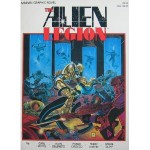
The Original Adventures of Cholly and Flytrap – A Marvel Graphic Novel


By Arthur Suydam (Marvel)
ISBN: 0- 87135-734-8

Scantily clad hot chicks swinging swords have been a staple of fantasy comics from their very inception, but there are none of those on view in this beautifully realised collection from illustrator, designer, screenwriter and musician Arthur Suydam, whose anarchically humorous, offbeat confections and magical renderings have graced such disparate products as magazines Heavy Metal, National Lampoon, Penthouse Comix and Epic Illustrated (where these brutally madcap little graphic novellas first appeared – specifically issues #8, 10, 13, 14 and 34), comicbooks like Tarzan, Conan, Batman, House of Mystery and Marvel Zombies and movie spin-offs Aliens and Predator.

He has also well as produced covers for novels including Max Allan Collins and Mickey Spillane’s collaborative Dead Street and Game box-art for Touch the Dead. Periodically Suydam returns to his own uniquely creative projects such as Mudwogs and the military muck-ups of Cholly and Flytrap, teasingly releasing another snippet every so often…

This then is the other sort of fantasy: lavishly grotesque, manically arch and surreptitiously satirically subversive; a lavish blend of dryly witty pastiches combining elements of Moebius’ Arzach, the imaginative  sci-fi earthiness of Vaughn Bode and a surreal anti-war temperament that imbues the blackly comic ultra-violence with a hauntingly tragic undertone.

Long ago the space-barge Exodus II crashed on an uncharted world. After untold ages the survivors have bred but never prospered, locked as they are in the constant struggle for survival. It’s not that the planet is particularly inhospitable… it’s just that the denizens -indigenous and not – adore war-making and love killing…

Apparently Cholly began life as a bat-riding warrior: an image for the poster advertising the animated Heavy Metal movie, but he was mysteriously transformed into a hot chick on a pterodactyl after acceptance (this sort of inexplicable conceptual metamorphosis happens a lot in film-land) leaving Suydam with a cool-looking visual and a lot of ideas…

Time passed, Marvel started a creator-owned, rights-friendly fantasy periodical in response to the success of Heavy Metal and a reinvented bat-riding, goggles-wearing icon of conflict began appearing. Of course, he had evolved slightly and the chiropteran had become a colossal, naked, bald fat man. Cholly still rode him like a seasoned veteran though…

The collected insanity begins with ‘A Little Love, a Little Hate!’ from 1981, a frenetic chase/duel between a foul-mouthed, flying jacketed war-hawk and his slug-like arch-enemy, which showed Cholly’s streetwise cunning in spectacular, over-the-top fashion.

‘Flightus Interuptus’ followed, an airborne tussle (possibly started before the previous tale?) wherein the high-flying Cholly, sans Flytrap, battled a massive mammary zeppelin-bomber in nothing more that a primitive tri-plane pulled by a brace of the planet’s levitating anti-gravity breasts (no, really). Tragically shot down in the throes of victory, the adaptable aviator found a giant bat to ride (remember kids, recycling even of ideas and art is good for any planet). Sadly the noble beast didn’t last long…

Soldier and human(ish) steed were reunited for the longer saga ‘The Rites of Spring‘ as Suydam expanded his cast and extemporized on the concept of mortals as organic war machines in a Horatian tale of Thermopylan courage with Cholly and faithful, mute Flytrap holding back a veritable horde of slug-troopers and big-ass war-wagons – a smart and lusciously graphic feast of visual violence and sassy back-chat.

‘The End’ begins with the war-lover tooling around the sky on some more of those flying hooters until he encountered a monolithic monster having a furious argument with his own outrageously outspoken boy-bits. Passions aroused and tempers flaring, Cholly was witness to an ending you simply don’t see every day…

The short, sweet, one-trick gags grew into something more complex (a portent of the substantial tales that followed far too infrequently over the next twenty years) in the hilarious concluding Epic entry ‘The Adventures of Cholly and Flytrap’ (plotted by Peter Koch) as the peripatetic pair hauled up at their favourite restaurant for a feed. Impatience, hunger, foreign food and honking big guns never make for a sedate evening…

Topped off with a glorious portfolio of monochrome sketches and working drawings plus the magnificent cover of Epic Illustrated‘s last issue this sumptuous, gratuitous and entrancingly daft eye-candy, released in the extravagantly expansive European Album format (a square-ish, high-gloss page of 285 x 220mm rather than today’s elongated 258 x 168mm) is a mature readers delight and yet another classy piece of work to add to the “why is this out of print?” list.
© 1981, 1982, 1986, 1991 Arthur Suydam. All Rights Reserved.

No Need For Tenchi! volume 1


By Hitoshi Okuda, translated by Fred Burke (Viz Graphic Novel)
ISBN: 978-1-56931-180-6

This bright and breezy adventure comedy is a rare reversal of the usual state of affairs in that the TV anime came first and the manga serial was a spin-off.

Tenchi Muyo! Ryo-Ohki debuted in 1992-1993 as a six-part TV cartoon series (termed an OVA or Original Video Animation in Japan) that proved so blisteringly popular that even before the original season concluded further specials and episodes were rushed into production. Over the next decade or so two more seasons appeared as well as spin-off shows and features (for a total of 98 episodes all told), plus games, toys, light novels and, of course, a comic book series. The translation most commonly accepted for the pun-soaked title is No Need For Tenchi but equally valid interpretations include Useless Tenchi, No Heaven and Earth and This Way Up.

The assorted hi-jinks of the TV show resulted in three overlapping but non-related continuities, with the Hitoshi Okuda manga serials stemming directly from the first season. Okuda eventually produced two comics sagas in this format: Tenchi Muyo! Ryo-oh-ki which began in 1994 and features in this volume under review and the follow-up Shin Tenchi Muyo! which I’ll get to one fine day…

The strip debuted in the December 16th 1994 Shōnen anthology (comics pitched at 10-18 year old males) Comic Dragon Jr. It ran until Jun 9th 2000, generating 12 collected volumes of classic laughs and thrills. The stories are generally regarded as non-canonical by fans of the various TV versions but of course we don’t care about that since the printed black and white tales are so much fun and so well illustrated…

This first volume collects the first seven issues of the pioneering Viz comicbook Tales of Tenchi, which did so much to popularise Manga in the English-speaking world, and opens with a thorough and fascinating recap of that first TV season – from which all the succeeding manic mirth and mayhem proceeds – before cracking on to bolder and better bewilderments starring the entire copious cast on all new adventures and exploits…

Tenchi Masaki is an ordinary boy living peacefully in the countryside with his father Nobuyuki and grandfather Katsuhito, until one day he breaks opens an ancient shrine and lets a demon out. The hell-fiend Ryoko tries to kill him but a magic “Lightning Eagle Sword” helps him escape. The demon follows him though, demanding the sword and things get really crazy when a spaceship arrives revealing Ryoko is in fact a disgraced alien pirate from the star-spanning Jurai Empire.

Starship Ryo-oh-ki is full of attractive, shameless, immensely powerful warrior-women including Princesses Ayeka, her little sister Sasami and supreme scientist Washu. This gaggle of violently disruptive visitors moves in with Tenchi and family, causing nothing but trouble and embarrassment, and soon the boy and his sword are being dragged all over the cosmos in the sentient Ryo-oh-ki (who, when not on duty, prefers the form of a cute rabbit/cat hybrid critter).

Ayeka and Sasami both harbour feelings for the hapless Tenchi but things get really complicated when grandfather Katsuhito is revealed to be Yosho, a noble Prince of the Jurai. It appears Tenchi and those darned space girls are all related…

Tales of Tenchi opened with ‘The Genius’ as the lad, currently studying Jurai warrior training under his grandfather’s diligent tutelage, falls foul of the alien princesses’ growing boredom, until Ryoko attacks again, precipitating a devastating battle that threatens to burn the entire landscape to ashes. But is the aggressor really the demon pirate?

In ‘Double Trouble’ the other Ryoko tries to take Tenchi’s sword – in actuality a puissant techno-artefact known as the Master Key – before being defeated by the original, but at the cost of shock-induced amnesia. ‘Under Observation’ depicts some outrageous and inadvisable potential cures for the distressed Ryoko as the refugees all decompress, but when the defeated doppelganger’s master Yakage arrives the entire extended family are threatened. The terrifying star-warrior challenges Tenchi to a duel…

Part 4 ‘Plunder’ is one colossal hi-energy clash as the boy valiantly demonstrates all he has learned to drive off the intruder, but only after the villain takes Ayeka hostage, demanding a rematch in 10 days time…

Intensifying his training in ‘Practice Makes Perfect’ Tenchi prepares for the upcoming battle whilst Ryoko pursues Yakage into space, unaware that super-scientist Washu has hidden herself aboard the pursing ship…

‘A Good Scolding’ reveals some intriguing history regarding the assorted super-girls whilst Tenchi trains for the final confrontation and the concluding chapter ‘Relationships’ brings the initial volume to a spectacular climax whilst still leaving a cliffhanger to pull you back in for the next addictive instalment…

Blending elements of Star Wars: A New Hope with classic Japanese genre favourites (fantasy, action, fighting, embarrassment, loss of conformity and hot chicks inexplicably drawn to nerdy boys), this sensational romp also includes a couple of comedy vignettes starring ‘The Cast of No Need For Tenchi’ in fourth-wall busting asides, to suitably top off a delightfully undemanding fun-fest which will satisfy not just manga maniacs but also any lover of fanciful frivolity and sci fi shenanigans.
© 1994 by Hitoshi Okuda/Kadokawa Shoten Publishing Co Ltd., Tokyo. NO NEED FOR TENCHI! is a trademark of Viz Communications Inc.

Arena – A Marvel Graphic Novel


By Bruce Jones (Marvel)
ISBN: 0- 87135-557-6

In  the early 1980s Marvel led the publishing pack in the development of high quality original graphic novels: mixing out-of-the-ordinary Marvel Universe tales, new in-continuity series launches, creator-owned properties, licensed assets, movie adaptations and even the occasional creator-owned property in extravagantly expansive packages (a square-ish standard page of 285 x 220mm rather than the now customary elongated 258 x 168mm) that felt and looked instantly superior to the average comicbook no matter how good, bad or incomprehensible (my way of saying outside your average Marvel Zombie’s comfort zone) the contents might be.

By 1990 Marvel’s ambitious line of outré all-area epics had begun to stall and some less-than-stellar tales were squeaking into the line-up. Moreover, the company was increasingly relying on hastily turned out cinema adaptations with built-in fan appeal and safe in-continuity stories offering established and company copyrighted characters rather than creator-owned properties and original concepts. The once-unmissable line began to have the appearance of an over-sized, over-priced clearing house for leftover stories.

So this stunning suspense saga counts as one of the last – and very best – indie/mainstream fiction experiments from before the rot set in; a creepy, clever, sexy thriller from EC fan and artistic everyman Bruce Jones which sets up shop in Stephen King and Ray Bradbury territory to deliver an overwhelmingly impressive rollercoaster of shocks and twists.

Sharon and her 12 year old daughter Lisa are driving through the majestic rural backwoods of America. It’s a pretty acrimonious journey and when the opportunity presents itself Mom takes a break and goes for a refreshing dip in a mountain pool whilst daughter stays in the car sulkily playing with her toy planes.

Sharon’s idyllic moment is shattered when she sees a jet crash scant yards away. However she can’t find any wreckage or even the slightest sign of it. Lisa saw and heard nothing and neither did the sinister voyeur who had been spying on them…

Rushing back to his shack simpleminded Lem tells his demented Granny about the strange woman. The old crone smells opportunity: if they can capture her and if she’s fertile they can sell her babies in the Big City… and even if she’s not big brother Rut will have a new plaything for awhile…

Lost in the deep woods Lt. Roberts, USAF crawls out of her crashed plane and hears voices. Sharon and the downed pilot start talking and realise that although they can’t see each other they are standing side by side. They’re invisible because they’re separated by two decades…

Somehow the mountain and forest are one huge time-warp… and increasingly, various eras are overlapping. Even though Sharon can only talk to Roberts, dinosaurs and cavemen are chaotically roaming over the hills, endangering both women in their own time-zones…

At that moment Lem and Rut strike, snatching Sharon. locking her up ready to make some money-spinning young ‘uns. From the car little Lisa sees her mother taken and twenty years in the future pilot Lisa Roberts suddenly remembers the horrifying moment her mother was killed by Hillbilly rapist psychopaths…

The time-shifts briefly stabilise and the two Lisas meet…

With beasts and worse roaming the woods the elder girl realises she has a chance to unmake the worst day of her life, but there are complications she could never have imagined in store for her and the girl she used to be…

Sultry, sinister and devilishly cunning this chronal conundrum is beautifully illustrated by Jones and his corkscrew plot is packed full of genuine surprises. Don’t think you’ve guessed the ending because you most likely haven’t…

A perfect sci fi movie-in-waiting, this terse and evocative yarn follows all the rules for a great screen shocker without ever having to “dumb-down” the temporal mechanics in deference to the Great Un-read in the popcorn seats.

Smart, seductive storytelling for sharp-witted punters, this is a time-lost gem you should track down however long it takes…
© 1989 Bruce Jones. All Rights Reserved.