
Adventures of Tintin: Destination Moon and Explorers on the Moon


By Hergé, Bob De Moors and others, translated by Leslie Lonsdale-Cooper & Michael Turner (Egmont UK)
ISBN: 978-1-40520-815-4 (HB Destination) 978-1-40520-627-3 (TPB Destination)
ISBN: 978-1-40520-816-1 (HB Explorers) 978-1-40520-628-0 (TPB Explorers)
As Tintin’s Moon Adventure (Magnet/Methuen) ISBN: 978-0-41696-710-4 (TPB)
Forthcoming – Tintin on the Moon (Egmont) ISBN: 978-1405295901 (HB)

Georges Prosper Remi, known all over the world as Hergé, created an incontrovertible masterpiece of graphic literature with his tales of a plucky boy reporter and his entourage of iconic associates.

Singly, and later with assistants including Edgar P. Jacobs, Bob de Moor and other supreme stylists of the select Hergé Studio, he created 23 splendid volumes (originally produced in brief instalments for a variety of periodicals) that have grown beyond their popular culture roots and attained the status of High Art.

On leaving school in 1925, he worked for the conservative Catholic newspaper Le Vingtiéme Siécle where he fell under the influence of its Svengali-esque editor Abbot Norbert Wallez. A devoted boy-scout, a year later Remi produced his first strip series The Adventures of Totor for monthly Boy Scouts of Belgium magazine, and by 1928 was in charge of producing the contents of the newspaper’s weekly children’s supplement Le Petit Vingtiéme.

He was illustrating The Adventures of Flup, Nénesse, Poussette and Cochonette, written by the staff sports reporter when Wallez asked Remi to create a new adventure series. Perhaps a young reporter who roamed the world, doing good whilst displaying solid Catholic values and virtues?

The rest is history…

Some of that history is quite dark: During the Nazi Occupation of Belgium, Le Vingtiéme Siécle was closed down and Hergé was compelled to move his popular strip to daily newspaper Le Soir (Brussels’ most prominent French-language periodical, and thus appropriated and controlled by the Nazis).

He diligently toiled on for the duration, but following Belgium’s liberation was accused of collaboration and even being a Nazi sympathiser. It took the intervention of Belgian Resistance war-hero Raymond Leblanc to dispel the cloud over Hergé, which he did by simply vouching for the cartoonist and by providing cash to create a new magazine – Le Journal de Tintin – which Leblanc published and managed. The anthology comic swiftly achieved a weekly circulation in the hundreds of thousands and allowed the artist and his team to remaster past tales: excising material dictated by and unwillingly added to ideologically shade the war time adventures as well as generally improving and updating great tales that were about to become a global phenomenon.

With World War II over and his reputation restored, Hergé entered the most successful period of his artistic career. He had mastered his storytelling craft, possessed a dedicated audience eager for his every effort and was finally able to say exactly what he wanted in his work, free from fear or censure.

In 1949 he returned to unfinished yarn Tintin au pays de l’or noir; abandoned when the Nazis invaded Belgium. The story had been commissioned by Le Vingtiéme Siécle, running from 28th September 1939 until 8th May 1940 when the paper was closed down. Set on the eve of a European war, the plot revolved around Tintin hunting seditionists and saboteurs sabotaging oil supplies in the Middle East. Before being convinced to update and complete the tale as Land of Black Gold, Hergé briefly toyed with the notion of taking his cast into space…

Collected albums Objectif Lune and On a marché sur la Lune were huge hits after the initial serialisation in Le Journal de Tintin from 30th March 1950 to 7th September 1950 and – after what must have been an intolerable wait for readers – from 29th October 1952 to 29th December 1953.

The tale was produced after discussions between Hergé and his friends Bernard Heuvelmans (scientist, author and father of pseudo-science Cryptozoology) and Jacques Van Melkebeke (AKA George Jacquet: strip scripter, painter, journalist and a frequent if unacknowledged contributor to the Tintin canon). The sci fi epic that became a 2-volume masterpiece first made the leap to English in 1959.

On a personal note: I first read Destination Moon in 1964, in a huge hardcover album edition (as they all were in the 1960s) and was blown completely away. I’m happy to say that except for the smaller pages – and there’s never a substitute for “Big-ness” – this taut thriller and its magnificent, mind-boggling sequel are still in a class of their own in the annals of science fiction comic strips…

Moreover, during the 1980s the entire tale was (repeatedly) released in a combined tome as Tintin’s Moon Adventure: an utterly inescapable piece of publishing common sense that is finally being repeated this summer in a new hardback album from Methuen…

Our tale begins with our indomitable boy reporter and Captain Haddock returning to ancestral pile Marlinspike Hall only to discover that brilliant but “difficult” savant Professor Cuthbert Calculus has disappeared. When an enigmatic telegram arrives, the puzzled pair are off once again to Syldavia (as seen in King Ottokar’s Sceptre) and a rendezvous with the missing boffin…

Although suspicious, Tintin soon finds that the secrecy is for sound reasons. In Syldavia, Calculus and an international team of researchers and technologists are completing a grand project to put a man on the Moon! In a turbulent race against time and amidst a huge and all-encompassing security clampdown, the scheme nears completion, but Tintin and Haddock’s arrival coincides with a worrying increase in espionage activity.

An enemy nation or agency is determined to steal the secrets of Calculus’s groundbreaking atomic motor at any cost, and it takes all Tintin’s ingenuity to keep ahead of the villains. The arrival of detectives Thompson and Thomson adds nothing to the aura of anxiety but their bumbling investigations and Calculus’ brief bout of concussion-induced amnesia do provide some of the funniest moments in comics history…

As devious incidents and occurrences of sabotage increase in intensity and frequency, it becomes clear that there may be a traitor inside the project itself, but at last the moment arrives and Tintin, Haddock, Calculus, technologist Dr. Frank Wolff – and Snowy – blast off for the Moon!

Cold, clinical and superbly underplayed, Destination Moon is completely unlike the flash-and-dazzle razzamatazz of British and American tales from that period – or since. It is as if the burgeoning Cold War mentality of the era has infected even Tintin’s bright clean world. Once again, the pressure of work and Hergé’s troubled private life resulted in a breakdown and a hiatus in the strip – but this time some of that darkness transferred to the material – although it only seems to have added to the overall effect of claustrophobia and paranoia. Even the comedy set-pieces are more manic and explosive: This is possibly the most mature of all Tintin’s exploits…

Presumably to offset the pressures of creation to weekly deadlines, the master founded Studio Hergé on 6th April 1950: a public company to produce the adventures of Tintin as well other features, with Bob De Moor enthroned as chief apprentice.

He became a vital component of Tintin’s gradual domination of the book market, frequently despatched on visual fact-finding missions. De Moor revised the backgrounds of The Black Island for a British edition, and repeated the task for the definitive 1971 release of Land of Black Gold. An invaluable and permanent addition to the production team, De Moor supervised while filling in backgrounds and, most notably, rendering the unforgettable eerie and magnificent Lunar landscapes that feature here.

If the first book is an exercise in tension and suspense, Explorers on the Moon is sheer bravura spectacle. En route to Luna the explorers discover that the idiot detectives have accidentally stowed away, and along with Captain Haddock’s illicit whisky and the effects of freefall, provide brilliant comedy routines to balance the eerie isolation and dramatic dangers of the journey.

Against all odds the lunanauts land and make astounding scientific discoveries, but must cut short their adventures due to the imminent threat of suffocation caused by the introduction of the extra passengers on the fantastic atomic moon rocket…

Moreover, lurking in the shadows, there is still the very real threat of a murderous traitor to be dealt with…

This so-modern yarn is a high point in the series, blending heroism and drama with genuine moments of irresistible emotion and side-splitting comedy. The absolute best of the bunch in my humble opinion, and still one of the most realistic and accurately depicted space comics ever produced. If you only ever read one Hergé saga it simply must be this translunar Adventure of Tintin.
Destination Moon: artwork © 1953, 1959, 1981 Editions Casterman, Paris & Tournai. Text © 1959 Egmont UK Limited. All Rights Reserved. Explorers on the Moon: artwork © 1954, 1959, 1982 Editions Casterman, Paris & Tournai. Text © 1959 Egmont UK Limited. All Rights Reserved.

A new combined compilation – Tintin on the Moon – will be released on June 27th 2019 and is available for pre-order now

Showcase Presents Tales of the Unexpected volume 1


By Otto Binder, France E. Herron, Jack Miller, Dave Wood, Bernard Baily, Bob Brown, Nick Cardy, Bill Ely, Bill Draut, Jack Kirby, Mort Meskin, Sheldon Moldoff, Jim Mooney, Ruben Moreira, George Papp, John Prentice, George Roussos, Leonard Starr & various (DC Comics)
ISBN: 978-1-4012-3520-8

American comicbooks started rather slowly until the invention of superheroes unleashed a torrent of creative imitation and established a new entertainment genre. Implacably vested in World War Two, the Overman swept all before him (occasionally her or it) until the troops came home and the more traditional themes and heroes resurfaced and eventually supplanted the Fights ‘n’ Tights crowd.

Whilst a new generation of kids began buying and collecting, many of the first fans also retained their four-colour habit but increasingly sought older themes in the reading matter. The war years had irrevocably altered the psychological landscape of the readership, and as a more world-weary, cynical young public came to see that all the fighting and dying hadn’t really changed anything, their chosen forms of entertainment (film and prose as well as comics) increasingly reflected this.

As well as Western, War and Crime comics, celebrity tie-ins, madcap escapist comedy and anthropomorphic funny animal features were immediately resurgent, but gradually another of those cyclical revivals of spiritualism and a public fascination with the arcane led to a wave of impressive, evocative and shockingly addictive horror comics.

There had been grisly, gory and supernatural stars before, including a pantheon of ghosts, monsters and wizards draped in mystery-man garb and trappings (the Spectre, Mr. Justice, Frankenstein, The Heap, Zatara, Dr. Fate and dozens of others), but these had been victims of circumstance: The Unknown as a power source for super-heroics. Now the focus shifted to ordinary mortals thrown into a world beyond their ken with the intention of unsettling, not vicariously empowering, the reader.

Almost every publisher jumped on an increasingly popular bandwagon, with B & I (which became magical one-man-band Richard E. Hughes’ American Comics Group) launching the first regularly published horror comic in the Autumn of 1948. Technically speaking, however, Adventures Into the Unknown was pipped at the post by Avon who had released an impressive single issue entitled Eerie in January 1947; later reviving the title by launching a regular series in 1951. All the meanwhile, parents’ favourite Classics Illustrated had long been milking the literary end of the genre with adaptations of the Headless Horseman, Dr. Jekyll and Mr. Hyde (both 1943), The Hunchback of Notre Dame (1944) and Frankenstein (1945) among others.

As long as we’re keeping score, this was also the period in which Joe Simon & Jack Kirby identified another “mature market” gap and invented Romance comics (Young Romance #1, September 1947) but they too saw the sales potential for spooky material, resulting in the seminal Black Magic (1950) and boldly obscure psychological drama anthology Strange World of Your Dreams (1952).

The wholesome family company that would become DC Comics bowed to the inevitable and launched a comparatively straight-laced anthology that nevertheless became one of their longest-running and most influential titles with the December 1951/January 1952 launch of The House of Mystery. Its success led to a raft of such creature-filled fantasy compendiums in the years that followed such as Sensation Mystery, My Greatest Adventure, House of Secrets and, in 1956 – during a boom in B-Movie science fiction thrillers – Tales of the Unexpected…

A hysterical censorship scandal which led to witch-hunting hearings (check out Senate Subcommittee on Juvenile Delinquency, April-June 1954 on your search engine of choice) was derailed by the industry adopting a castrating straitjacket of draconian self-regulatory rules. Horror titles produced under the aegis and emblem of the Comics Code Authority were sanitised and anodyne affairs in terms of Shock and Gore, even though the market’s appetite for suspense and the uncanny was still high. Stories were dialled back into marvellously illustrated, rationalistic, fantasy-adventure vehicles which dominated until the 1960s when super-heroes (which had begun to creep back after Julius Schwartz reintroduced the Flash in Showcase #4, 1956) finally overtook them.

This mammoth monochrome compilation (still tragically unavailable in colour or in digital editions) offers a stunning voyage to the fantastic outer limits of 1950s imagination, collecting the first 20 issues of the charmingly enthralling anthology – produced under the watchful eyes of the Comics Code Authority – which spans cover dates February/March 1956 to December 1957 and starts with a quartet of intriguing, beautifully rendered pocket thrillers.

Sadly for me and you, records are spotty and many of the authors remain unsung (although possible candidates include Dave Wood, Bill Finger, Ed Herron, Joe Samachson, George Kashdan, Jack Miller and Otto Binder and I’ll just guess whenever I’m more than half-certain) but the pictorial pioneers at least can be deservedly celebrated…

Behind a captivating cover by Bill Ely, Tales of the Unexpected #1 opens our uncanny excursions with ‘The Out-of-The-World Club’, drawn by the astoundingly precise John Prentice, detailing the unearthly secret of a night-spot offering truly original groovy sounds, whilst ‘The Dream Lamp’, limned by Leonard Starr, takes a bucolic glance at a device which seems able to perform impossible feats.

Jack Miller, Howard Purcell & Charles Paris then ironically reveal ‘The Secret of Cell Sixteen’ which fools yet one more prisoner in the Bastille, after which the debut issue ends with a bleak alien invasion fable in ‘The Cartoon that Came to Life’ by Otto Binder & Bill Ely.

Issue #2 offered the uncredited conundrum of ‘The Magic Hats of M’sieu La Farge’ (art by Ruben Moreira) involving ordinary folk impelled to perform extraordinary feats when wearing the titfers of famous dead folk, whilst ‘The Fastest Man Alive’ (drawn by Bill Draut & Mort Meskin) discloses how an obsessive rivalry brings destruction upon a man forever relegated to second best behind his exceptional greatest friend…

‘The Record of Doom’ (Ely art) apparently drives listeners to suicide until a canny cop uncovers the truth, but ‘The Gorilla who Saved the World’ (Starr) is as incredible and alien as you’d expect in a tale of sharp sci-fi suspense…

Issue #3 opened with Purcell’s ‘The Highway to Tomorrow’ wherein a motorway through Native American sacred lands almost results in a new uprising, after which Meskin’s ‘The Man Nobody Could See’ revisits the old plot of an invisible criminal. ‘I Lost My Past’ (art by Mort Drucker) recounts an implausibly complex scheme to cure an amnesiac before ‘The Man with 100 Wigs’ (Miller & Prentice), provides a genuinely compelling mystery about a petty thief who steals a sorcerer’s chest filled with hairpieces that impart bizarre powers to the wearer…

The mix of cop stories, aliens and the arcane acts clearly struck a popular chord as, with Tales of the Unexpected #4, the comic was promoted to monthly. ‘Seven Steps to the Unknown’ (Ely) continued the eclectic winning formula through a perilous puzzle regarding a group of complete strangers inexplicably linked and targeted for murder, whilst ‘The Day I Broke All Records’ – illustrated by Sheldon Moldoff – follows a top athlete who gains something “extra” after finding an elixir once favoured by unbeatable Roman gladiator Apulius…

Then a murderer is brought to justice after becoming obsessed with ‘The Flowers of Sorcery’ (Starr) whilst ‘The House Where Dreams Come True’ (Prentice) offers a far kinder tale of human generosity to melt the heart of the most jaded reader.

In #5 ‘The Man Who Laughed at Locks’ (Moreira) discloses the inevitable fate of a cheat when rival inventors clash; ‘I Was Bewitched for a Day’ (Ely) reveals how easily domestic reality can be overturned, and Moldoff portrays the bewilderment of an Art Investigator faced with ‘The Living Paintings’ before Miller & Prentice again triumph with the tale of an actor literally possessed by his role in ‘The Second Life of Geoffrey Hawkes’…

TotU #6 opens with ‘The Telecast from the Future’ (drawn by George Papp) wherein a technician foolishly convinces himself that his gear hasn’t really opened a peephole into tomorrow, whilst Ely’s ‘Dial M for Magic’ focusses on a prestidigitator’s club that auditions an amazing applicant who doesn’t just do “tricks”…

‘The Forbidden Flowers’ (Moldoff) then exposes a killer who thinks himself safe, after which Moreira’s ‘The Girl in the Bottle’ leads an unsuspecting oceanographer into fantastic peril… and another incredible criminal scam.

Golden Age great Bernard Baily joins the rotating art crew with #7 as ‘The Pen that Never Lied’ visits a number of people, dispensing justice through unvarnished truth, after which ‘Beware, I Can Read your Mind!’ (Moldoff) depicts a telepath discovering the overwhelming cost of his gift.

When a miner finds a talking talisman, it promises anything except ‘The Forbidden Wish’ (George Roussos). Tragically it was the only thing the weak-minded man wanted…

The issue closes with the art debut of the astounding Nick Cardy who lovingly detailed the fate of a murderous thug who refused to listen to the sage advice of ‘The Face in the Clock!’

Tales of the Unexpected #8 opens with fantastic fantasy as ‘The Man Who Stole a Genie’ (Meskin) slowly succumbs to greed and mania, whilst ‘The Secret of the Elephant’s Tusk’ (Ely art) follows the trail of death resulting after a poacher kills a sacred pachyderm. Roussos’ ‘The Four Seeds of Destiny’ chillingly reveals the doom that comes to a TV reporter who stole relics from a Pharaoh’s tomb before ‘The Camera that Could Rob’ (Starr) proves that, even for a thief with an unbeatable gimmick, mistreating a cat never ends well…

In issue #9 ‘The Amazing Cube’ (possibly scripted by George Kashdan and definitely limned by Baily) sees an unscrupulous gambler falling foul of his own handmade dice, whilst a killer conman gets his comeuppance courtesy of ‘The Carbon Copy Man’ (Papp). ‘The Day Nobody Died’ by Roussos is a classic of moody mystery wherein a doctor pursues a dark stranger and regrets catching him, after which a little lad saves the world from alien invasion and know-it-all adults in Starr’s ‘The Man Who Ate Fire’.

The tone of the time was gradually turning and oppressive occultism was slowly succumbing to the Space Age lure of weird science as TotU #10 proved with ‘The Strangest Show on Earth’ (art by Jim Mooney) wherein a bankrupt showman stumbles over a Martian circus. Sadly, the bizarre performers had their own agenda to adhere to…

‘The Phantom Mariner’ (Moldoff) follows an obsessed sea captain to his inescapable fate, before a scientist faces a deadly dilemma after creating ‘The Duplicate Man’ (Ely) and Meskin reveals how an antique collector’s compulsion endangers his life in ‘I Was Slave to the Wizard’s Lamp’…

A criminal inventor pays the ultimate price for his venality in the Baily-limned ‘Who Am I?’ which opened Tales of the Unexpected #11, whilst ‘I Was a Man from the Future’ (Cardy) sees an American mountaineer stumble through a time-warp into adventure and romance in 15th century France and ‘The Ghost of Hollywood’ (Ely) confounds a special effects designer determined to debunk it.

Starr then closed out the issue with ‘The Man Who Hated Green’, as an artist embarks on an extraordinary campaign of terror…

Issue #12 began with Cardy’s tale of a quartet of escaped convicts terrorising three little old ladies and subsequently cursed by ‘The Four Threads of Doom’, after which ‘The Witch’s Statues’ (Meskin) proves to be more scurrilous scam than sinister sorcery.

Following a downturn in the industry, Jack Kirby briefly returned to National/DC at this time: producing a mini-bonanza of mystery tales and drawing Green Arrow, all whilst preparing his newspaper strip Sky Masters of the Space Force.

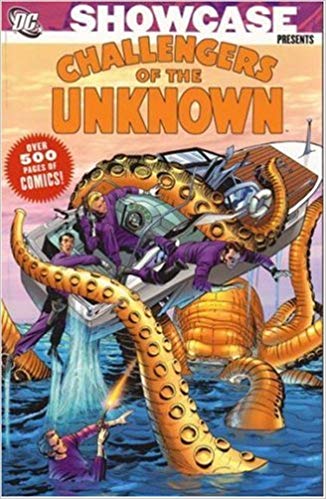
He also re-packaged for Showcase an original team concept kicking around in his head since he and Joe Simon had closed the innovative but unfortunate Mainline Comics. Blending explosive adventure with the precepts of mystery comics, Challengers of the Unknown became the template for the entire Silver Age superhero resurgence…

After years of working for others, Simon & Kirby had established their own publishing company, producing comics for a more sophisticated audience, only to find themselves in a sales downturn and awash in public hysteria generated by the aforementioned anti-comic pogrom of US Senator Estes Kefauver and psychologist Dr. Fredric Wertham.

Simon quit the business for advertising, but Kirby soldiered on, taking his skills and ideas to a number of safer, if less experimental, companies. Here his run of short fantastic suspense tales commences with ‘The All-Seeing Eye’ (possibly scripted by Dave Wood?) wherein a journalist responsible for many impossible scoops realises that the ancient artefact he employs is more dangerous than beneficial…

The issue ends with Ely’s rousing thriller ‘The Indestructible Man’ wherein a stuntman with innate invulnerability decides to get rich quick, no matter who gets hurt…

In #13, an amnesiac retraces his lost past by seeking out ‘Weapons of Destiny’ (perhaps Binder with Ely art), whilst Meskin’s ‘The Thing from the Skies’ initially proves a boon but ultimately the downfall for a murdering conman. A ghostly ‘Second Warning’ (Papp) saves a tourist when he visits battlefields of WWII, after which France E. Herron & Cardy’s ‘I Was a Prisoner of the Supernatural’ reveals how an actor escapes a deal with the devil before Herron & Kirby steal the show with a grippingly devious crime-caper in ‘The Face Behind the Mask’…

Tales of the Unexpected #14 starts with Meskin’s ‘The Forbidden Game’ as an embezzler plays fast and loose with a wagering wizard, and is followed by ‘Cry, Clown, Cry’ (Baily) which sees a baffled son ignore his father’s injunction not to follow the family tradition to be a gag-man…

Papp pictures the fate of a swindler who wants folk to believe he is ‘The Man Who Owned King Arthur’s Sword’ and Moldoff finishes up proceedings as a crook is haunted by ‘The Green Gorilla’ manifested by his misdeeds.

Kirby led off in #15, his ‘Three Wishes to Doom’ proving that even with a genie’s lamp crime does not pay, after which ‘The Sinister Cannon’ (Baily) employed by an insidious alien infiltrator proves far more than it appears. ‘The Rainbow Man’ (Roussos) is a scientific bandit who overestimates the efficacy of his camouflage discovery and ‘The City of Three Dooms’ – by Meskin – wraps up things with a mesmerising time-travel romp featuring Nazi submariners on a voyage to infinity…

There’s an inexplicable frisson in Kirby’s ‘The Magic Hammer’ which opens #16 as the King of Comics here relates how a prospector finds a mallet capable of creating storms and goes into the rainmaking business… until the original owner turns up…

That superb vignette is augmented by ‘I Was a Spy for Them’ (Meskin) as a canny physicist turns the tables on the star men who captured him, a crooked archaeologist gains unbeatable power from an ancient ring but becomes ‘The Exile from Earth’ (Dave Wood & Moldoff), and Moreira illustrates ‘The Interplanetary Line-Up’, wherein an actual Man from Mars gatecrashes a science fiction writer’s fancy dress party…

In #17 ‘Who is Mr. Ashtar?’ (Kirby) chillingly follows a hotel detective who just knows there’s something off about the new guest in Room 605, whilst ‘Beware the Thinking Cap’ (Ely) describes the rise and fall of a crook who finds the device which inspired all the geniuses of history. Baily illustrates how a lifer in jail uses a unique method of escape in ‘The Bullet Man’, and the issue ends on ‘The Impossible Voyage’ (Mooney) as a couple of alien pranksters take earth suckers for a ride on what only looks like a fairground attraction…

Mooney takes lead spot in #18 as ‘The Man Without a World’ rejects Earth only to learn that a life in space is no life at all, after which Meskin’s ‘The Riddle of the Glass Bubble’ threatens to end all life until a little kid finds an unlikely solution. Cardy opens ‘The Amazing Swap Shop’, where humans trade “junk” for impossibly useful gadgets before Kirby shows how a clever human saves us all by outwitting ‘The Man Who Collected Planets’.

By now thoroughly gripped in UFO fever, Tales of the Unexpected #19 began with ‘The Man from Two Worlds’ (Cardy) wherein nasty Neptunians attempt to abduct an Earth scientist by guile, whereas ‘D-Day on Planet Vulcan’ (Mooney) envisages embattled ETs begging our help to end a world-crushing crisis, after which a meteor turns a hapless technician into ‘The Human Lie Detector’ (Ely) and a dotty old eccentric surprises everybody by ending ‘The Menace of the Fireball’ (with art by Bob Brown).

This terrific tome concludes with issue #20 where ‘The Earth Gladiator’ (Cardy) struggles to save his life and prove Earth worthy of continued existence, an engineer scuppers ‘The Remarkable Mr. Multiplier’ (Ely) before his invention wrecks civilisation and Baily illustrates that not every alien incursion is malign or dangerous in ‘I Was Marooned on Planet Earth’

Moreira then brings the cosmic catalogue to a close with ‘You Stole Our Planet’ wherein gigantic space creatures arrive with a strong claim of prior ownership…

Although certainly dated and definitely formulaic, these complex yet uncomplicated suspenseful adventures are drenched in charm, gilded in ingenuity and still sparkle with innocent wit and wonder. Perhaps not to everyone’s taste nowadays, these fantastic exploits are nevertheless an all-ages buffet of fun, thrills and action no fan should miss.
© 1956, 1957, 1958, 2012 DC Comics. All Rights Reserved.

Knights of Sidonia volume 1


By Tsutomo Nihei, translated by Kumar Sivasubramanian (Vertical)
ISBN: 978-1-935654-80-3

As I’ve often said, these days nobody does hard comics science fiction like the Japanese – although admittedly our own 2000AD, certain French comics artisans and the inimitable Warren Ellis are keeping the flag flying ahead of much of even manga’s greatest masters in their own mostly-unacknowledged way…

In the tech-obsessed East, the tough, no-nonsense, nuts-and-bolts mystery and refined imagination of star flight have long been blended with more fanciful and romantic futuristic themes to captivate at least five generations since Osamu Tezuka first started the ball rolling in the 1950s, making space commonplace and conceptually comfortable for the Japanese.

We in the Western world have been simultaneously enraptured and frantically trying to catch up, ever since some – too few, alas – of these manga tales first began to be translated into English at the end of the 1980s.

One of the most talented and respected proponents of the genre is Tsutomu Nihei whose triumphs have ranged from wholly self-created graphic epics such the stunning cyberpunk thriller Blame!, its prequel NOiSE, and Biomega to impressive stints on major commercial properties such as comics iterations of video game Halo and miniseries Wolverine: Snikt! for Marvel.

Born in 1971 and working in the field since 1998, the author prefers to let his works speak for him. Shidonia no Kishi began in 2009, debuting in Kodansha’s Seinen title Bessatsu Shonen Magazine and running to 13 volumes on its conclusion in September 2015.

The premise is familiar yet evergreen. A millennium from now Earth is gone. In 3394 our solar system has been destroyed by unstoppable alien monsters and the survivors of humanity have scattered to the stars in vast self-contained generational vessels as much rock as rocket ship. The diaspora has sent colonies hurtling ever outward seeking escape and survival, whilst within them humans have slowly become something different…

The eponymous Knights of Sidonia are the young pilots gifted enough to pilot colossal humanoid fighter vessels that defend the survivors and scavenge interstellar resources for the ever-moving colony our story concerns…

The story begins with ‘Nagate Tanikaze’s Choice’ as an unexpected event occurs. Unknown to all the inhabitants of the hive-like colony ship, years ago, an old man took his infant grandson and vanished deep into the bowels of the vessel. Raised in utter isolation with only tapes, a flight simulator/VR trainer and stolen food, the boy grew into a tough, hardy and independent survivor.

When, after three years, Nagate Tanikaze finally accepts that the corpse in the chair is no longer his “gramps”, he regretfully heads up in search of food and is soon caught by the incredulous authorities. Starving and impossibly weak, he adamantly refuses to undergo the commonplace genetic procedure that will enable him to photosynthesise starlight. He might well be the only traditionally human being on Sidonia…

His captors-turned-benefactors accept his idiosyncrasies and welcome him into their austere, oddly passionless society, but some people seem to seethe with hostility at Tanikaze’s presence. He is assigned quarters at a dorm and welcomed by Ms. Hiyama, a motherly amalgam of human, bear and cyborg. Nagate spends his time acclimatising by aimlessly wandering the vast labyrinthine cocoon which has patterned itself on an idealised 20th century Japan, but trouble still finds him after he wanders into a female photosynthesis chamber and is beaten up by the outraged girls “feeding” inside…

In the higher echelons of the ship, passive panic is gripping the ship’s leaders. Long-range sensors have spotted a Gauna – one of the Brobdingnagian bio-horrors that invaded and destroyed Earth ten centuries past – and with grim fatality the Garde pilots are mobilised.

Tanikaze has been tested and found to be a superb pilot prospect. As the ship goes on alert, his actual training begins, converting his years on the simulator into hands-on experience…

‘Nagate Tanikaze’s Maiden Battle’ finds the trainee mecha-rider still experiencing some prejudice but making his first friend in pretty Izana Shinatose, a fellow Garde pilot who adopts the outsider, acting as his guide and social mentor. Izana is warm and welcoming so it’s not too long before Nagate accepts “her” odd situation as a third-gendered, asexual parthenogenetic hermaphrodite. “She” also seems to be mildly telepathic…

Testing on the newest simulator, the outcast astounds all his classmates by scoring far above the machine’s assessment parameters but the purely physical – and appallingly uncomfortable and embarrassing – aspects of wearing a working spacesuit and dealing with the psychological pressures of toiling in the limitless void still challenges Tanikaze’s resolve and mental resources.

And even training is deadly work. As two squads of Mecha extract ice from a passing asteroid the simple drill turns into a disaster when a Gauna ambushes the novices…

‘Eiko Yamano’s Starry Heavens’ recalls that cadet’s spurning of the students’ superstitious pre-flight ritual before returning to her present as the star-beast consumes her and adds her DNA to its metamorphic mass, simultaneously gravely damaging Tanikaze’s vessel. The telemetry from his ship indicates he’s near death…

Aboard Sidonia, their superiors can only write off the kids and begin readying their only effective weapon – a Heavy Mass Cannon that should push the nigh-unkillable free-floating carnivore far out of range…

The Sidonians are astonished when Nagate apparently regains consciousness and valiantly confronts the gigantic horror slowly assuming Yamano’s form. Incomprehensibly driving it back, he is dragged away by his comrades just as the huge projectile from the mass cannon devastatingly hits home…

‘Norio Kunato’s Fury’ finds the recovering Nagate plagued by ghastly dreams of Eiko’s death – and particularly her imagined transubstantiation into a Gauna. He should be dead but refuses even to give in to the pace of his own healing and soon drags himself on crutches back to lectures. When Izana sees him leaning on willowy Norio Kunato in moments of dizziness, the outraged asexual storms off in a huff…

Baffled Tanikaze only gets the chance to make amends at the Gravity Festival – an annual function that allows the barbarian boy opportunity to eat as much actual food as he can hold – but is distracted by the attentions of fellow pilot Hoshijiro Shizuka who has brought his wounded Mecha and battered body back to Sidonia after the Gauna ambush. However, when haughty Kunato insults and assaults Izana, Nagate goes crazy and jumps the elitist bigot. Their battle wrecks the fair, and the outcast learns that many of his fellow pilot candidates feel he is unworthy to ride the giant guardian mecha…

This first monochrome volume (also available in digital formats) concludes with ‘Mochikuni Akai’s Glory’ as the trainees continue their steep and brutal learning curve. The repelled Gauna is gradually, inexorably approaching Sidonia again. Moreover, it’s clear that not all the populace despise the new kid. As the first person to fight – let alone survive – a Gauna attack, Tanikaze is apparently held in high regard by the older Guardians.

When hot-shot pilot Akai invites Nagate and Izana to a private paradise of artificial seas and beaches, it is to reveal that he and his fellow officers have been tasked with deflecting the beast’s next attack. Although the party is enjoyable and the surroundings stunning, the cadets can’t help but feel they’re intruders at a Last Supper…

To Be Continued…

Like Robert Heinlein, Larry Niven and other masters of the art form, Tsutomu Nihei frequently works in a notional shared continuity (the monstrous Gauna first appeared in his earlier series Abara), but there’s no sense of having missed anything in this premier instalment of a wonderfully engrossing, gloriously engaging epic of Horatian heroism and Mankind’s Last Stand.

Compelling, subtle, spectacular and even funny, this is a yarn no adventure aficionados or sci-fi fanatics should miss.

This book is printed in the traditional Japanese right to left, back to front format.
© 2013 Tsutomu Nihei. All rights reserved.

The Silent Invasion: The Great Fear


By Michael Cherkas & Larry Hancock (NBM)
ISBN: 978-1-68112-206-9 (TPB)

During the vast expansion of opportunity and outpouring of innovation that graced comics during the 1980s, much of the “brain-rotting trash” or “silly kid’s stuff” stigma which had plagued the medium was finally dispelled. America started catching up to the rest of the world; acknowledging sequential narrative as an actual Art-Form, and their doors opened wide open for foreigners to make a few waves too…

One of the most critically acclaimed and just plain fun features of the period came from semi-Canadian outfit Renegade Press which set up shop in the USA and began publishing at the very start of the black & white comics bubble in 1984. They quickly established a reputation for excellence, with a strong line of creator-based properties and some genuinely remarkable series such as Ms. Tree, Journey: The Adventures of Wolverine MacAlistaire, Flaming Carrot, Normalman, and the compulsively backwards-looking Cold War/UFO/paranoia-driven The Silent Invasion.

That last was a stunningly stylish saga, bolting 1950s domestic terrors (invasion by Reds; invasion by aliens; invasion by new ideas…) onto Film Noir chic and employing 20-20 hindsight to produce a phenomenally fresh and enticing delight for the strangely similar Reagan era.

The series was eventually collected as four superbly oversized monochrome tomes (a whopping 298 x 2058 mm), re-presenting the lead story from the first dozen issues of The Silent Invasion wherein co-creators Michael Cherkas & Larry Hancock concocted a delightful confection combining all the coolest genre elements of classic cult sci-fi, horror, spy, conspiracy theory, crime, romance and even comedy yarns…

Now, after far too long a wait – and with America once again enduring internecine struggle amongst the citizenry, corruption (but no collusion!!), cover-ups at every level of government and the press under attack from the people and traditions it seeks to inform and safeguard – the series has been remastered, marginally revised and re-released in a more manageable paperback size (or fully adjustable eBook format) with the express intention of catching up and finally completing the tensely compelling epic. The Great Fear (gathering the moodily monochrome lead story from issues #7-12) is the second and, unless the Deep Government intervenes, we can anticipate two more…

The re-education process resumes with a heartfelt plea in the Introduction: ‘UFOs, Conspiracies, and the Deep State (There are 187 Aliens in Congress! Who did YOU vote for?)’ by Cherkas & Hancock…

The 1950s in American were a hugely iconic and paradoxical time. Incredible scientific and cultural advancements, great wealth and desperate, intoxicating optimism inexplicably arose amidst an atmosphere of immense social, cultural, racial, sexual and political repression with an increasingly paranoid populace seeing conspiracy and subversive attacks in every shadow and corner of the rest of the world.

Such an insular melting pot couldn’t help but be fertile soil for imaginative outsiders to craft truly incisive and evocative tales dripping with convoluted mystery and taut tension, especially when wedded to the nation’s fantastic – and then-ongoing – obsessions with rogue science, flying saucers, gangsterism and espionage…

They were also obsessed with hot babes and bust sizes, but more of that elsewhere…

Remember When?: In April 1952, famed Union City private eye Dick Mallet saw a strange light in the night sky. Next morning the cops found his empty, crashed car. A month later reporter Matt Sinkage was still getting grief from Frank Costello, his Editor on the Union City Sentinel. Matt wanted to expose “The Truth behind Flying Saucers” but was quickly becoming a laughing stock. He was also starting to think his foreign-sounding neighbour Ivan Kalashnikov was a Russian spy….

Sinkage was alienating his family and worrying his fiancée Peggy Black. All he could think about was that night six months back in Albany when he saw a UFO and impetuously chased after it: a crazy night everyone but him remembers…

Getting drunk, Matt broke into Ivan’s apartment where a quick glance revealed the foreigner and others in front of a huge, weird machine. It confirmed his suspicions that they were Atomic spies!

Days later Matt collided with Mr K’s pretty friend Gloria Amber, and asked her out to lunch. Things developed when Gloria begged him to save her from what she claimed were Red operatives. They subsequently claimed to be Federal agents…

Hiding out at his brother’s Walter‘s place, Matt was still seeing flying saucers everywhere and could not understand why everybody else thought they were just jets. Back in Union City, Frank was being pressured by FBI Agent Phil Housley: an old acquaintance who regularly forced him to suppress news items…

This time though, he wanted Sinkage. What no newsman knew was that Housley was also working for a shadowy agency calling itself The Council. What Housley didn’t know was that he was not their only operative…

Back in suburbia, Walter’s wife Katie – convinced Matt and his new floozy were up to no good – contacted the FBI. Fugitives Matt and Gloria were heading out in Walter’s car when Peggy showed up. She couldn’t understand why her man was with a flashy trollop even though Gloria had told Matt the Reds were after Kalashnikov’s memoirs and files. Although Matt knew Gloria was playing a double game, he agreed to go with to a remote town where a “contact” could protect them both…

Mr K called in his own heavies to hunt them, all equally unaware that the FBI had visited Katie and a net was closing around Sinkage and his mystery woman…

When the Council learn Sinkage was involved in the “Albany event” near-panic ensued. Matt meanwhile had succumbed to suspicion. Gloria kept vanishing and refused to acknowledge it: Later, helping Kalashnikov’s hoods Zanini and Koldst to abduct her and rough up Matt. When the FBI interviewed Walter and Katie about Matt, they let slip that they were the only Feds working the case, denying any other government officials were involved…

Katie spilled all she knew and the agents went into overdrive, marshalling all their resources and heading for sleepy Stubbinsville. As Housley’s team flew in, Matt pushed on, hitchhiking to a rendezvous with destiny. En route, he reunites with oddly-compliant Gloria, and they battled on together in a stolen car. With less than 100 miles to go, she fell ill but made him promise to get her there at all costs…

As the assorted pursuers converged, she directed Matt to a lonely wilderness region. The net closed around them as a fantastic and terrifying light-show ignited the dark skies. By the time Housley reached them Gloria had vanished and Sinkage was slumped in a coma. Days later, Matt was freed and all charges dropped. He was strangely content. Despite another blatant cover-up and no clue as to whom all the various parties hounding them really were, Sinkage knew what he had seen when Gloria vanished. Now he could only wait for her inevitable return…

Now it is three years later: time Sinkage has spent much of the time locked in an asylum. Recently released, he has moved to bucolic small town Rockhaven and taken up his old career as a journalist. It is September 1955…

In ‘No Secrets’ the older but no wiser outsider has tentatively established himself in the little town but his job sucks and life in the boarding house he shares with a remarkably hostile cast of characters is far from a comfortable fit. The journalism job at The Ranger pays a pittance and offers no satisfaction at all, but Sinkage earns extra cash writing fanciful fake news for spurious tabloid The Tattler.

His dissatisfied life edges over into crazy again after a proposed piece on cattle mutilations leads him to a quasi-religious space cult in his own backyard. The Sirian Utopia Foundation is the obsession and pet project of wealthy widow/local philanthropist Gladys Tanner. She devoutly believes the world is heading for imminent Armageddon and that her mentors and gurus are in contact with a benign cosmic council promising enlightenment and global paradise. And they can also reunite her with her departed husband…

The townsfolk are surprisingly defensive of her and her eccentric but harmless views…

They are a lot less tolerant of Sinkage when he decides to investigate after connecting her followers – who include a number of prominent Washington politicians – with a bunch of missing scientists and Housley suddenly turns up acting all buddy-buddy.

Unable to let go, Sinkage lapses into his old suspicions and starts snooping, prompting mounting aggression from the townsfolk, culminating in a beating after he “discovers” the extremely unconvincing fake flying saucer Tanner’s associates are building in her barn…

Convictions of a gullible old lady being conned are revised in ‘The Rockhaven Conspiracy’ after Tanner’s daughter Janet shares her own fears. For some reason, powerful Washington types are also applying pressure to the reporter’s boss and the Council’s top thug Brennan resurfaces, spouting his drivel about a commie conspiracy at the Tanner farm. He even thinks the long-gone Kalashnikov has returned…

When Sinkage attends a giant weekend conclave of the Sirian Foundation faithful – and almost the entire population of Rockville – he almost falls under the mesmerising oratory of spooky demagogue Jeffry Simpson the Third, but his resistance only leads to more prosaic means being employed to capture him and strap into the same alien mindwiping device he so vividly remembers… before being made to forget…

Apparently, it doesn’t work (or does it?) and in ‘Tarnished Dreams’ events spiral out of control as the ever-vigilant Feds suddenly swoop in just as Simpson boards a real saucer. The result is both explosive and inconclusive with Sinkage again sidelined, excluded and buried in official cover-ups…

At least now though, he sure of what’s really going on, and, even though he’s being driven out of Rockville, realises only he can oppose ‘A Real and Ever Present Danger’ of alien conquest. The first step is joining Housely Investigations back in Union City, even if it means moving back in with brother Walter and his despicable sister-in-law Katie…

By May 1958, Sinkage has become a phantom celebrity, a flying saucer freak and Ufologist frequently quoted by the media, but seldom seen, warning of invasion and stalking political rising star and Presidential hopeful Senator Harrison T. Callahan. In ‘Forces Beyond Our Control’ the hunt takes him to a crucial interview with a political aide who reveals the strange circumstances of Callahan’s meteoric rise and how a string of sudden fatal heart attacks underpins it all…

By 1959 Sinkage is an anonymous presence on television, stridently warning how aliens can seize minds and program brains, sitting dormant in the back brains of unsuspecting innocents, waiting for the order to take control. His campaign against Callahan continues unabated and soon develops into open warfare. Now the Senator decides to put an end to the harassment even as The Council re-enter the life of Phil Housley, declaring the alien problem a Soviet plot to destabilise America. Over Walter’s most strenuous objections Katie manoeuvres to get Sinkage back into the asylum and he disappears from their lives…

In August 1959, as Callahan announce his candidacy Sinkage makes his last move, determined to preserve ‘The Will of the People’ at the cost of his life if necessary…

To Be Continued…

Potently evocative, impeccably tailored and fabulously cool, The Silent Invasion remains a unique, boldly imagined and cunningly crafted adventure: one whose time has finally come. Rendered in a style then considered revolutionary and even today still spectacularly expressionistic, this classic epic is bizarre, Byzantine and compellingly bewildering, and has never been more relevant than now.

The Great Fear offers an unforgettable gateway to an eerily familiar yet comfortably exotic era of innocent joy and a million “top secrets” which no fan of fantastic thriller fiction should ignore and the best is still to come…
© 1987, 1988, 2019 Michael Cherkas & Larry Hancock. All rights reserved.

The Silent Invasion: The Great Fear will be published on May 15th 2019 and is available for pre-order now. Most NBM books are also available in digital formats. For more information and other great reads see http://www.nbmpub.com/

Time Beavers (First Comics Graphic Novel #2)


By Timothy Truman, with Mark Acres, John K. Snyder, Ken Bruzenak & Linda Lessmann (First Comics)
ISBN: 978-0-9154-1901-2 (PB Album)

Sometimes there’s a feeling in the air that leads to similar concepts “spontaneously” occurring in different places – Swamp Thing and Man-Thing always spring to mind – and sometimes it’s just a bunch of in-tune creators jumping rapidly onto a bandwagon. The Germans (and that includes me on my mother’s side) have a word for it, as they do for so many tricky concepts: “Zeitgeist”.

Whatever the thinking, the phenomenon is real and probably the only bad thing I can even imply about this superb long-lost gem of a book from the ever-excellent Tim Truman, aided by co-creator, Mark Acres, co-designer John K. Snyder, letterer Ken Bruzenak and colourist Linda Lessmann.

That the 1984 debut of Teenage Mutant Ninja Turtles in some part inspired this superb fantasy I have no doubt, but since it was months ahead of the deluge of cheap knock-offs that followed I suspect that creative appreciation rather than greedy speculation fuelled the tale. Moreover, as the tone and content more closely resemble the Bill Mantlo, Keith Giffen & Sal Buscema reimagining of throwaway character Rocket Racoon (who properly debuted in a form you’d recognise in The Incredible Hulk #271, May 1982 before Mike Mignola made him a seminal star in a quirky much-reprinted 4-issue miniseries), any charge of “cashing in” becomes largely irrelevant.

In a dark place beyond the universe the Great Dam of Time regulates the chronological structure of each and every dimension, maintained and defended by high-tech Beavers against sinister extra-cosmic Rats called the Radere. These scurrilous scalawags utilise vile magic and embrace Chaos in their wicked schemes…

Eternally at war since time began, the Rats have suddenly gained a deadly advantage over the Timeguard by removing three objects of power from the Dam itself, and fled to three separate eras on the key world known as Earth.

Now. as the Rat forces mass to finally destroy the critically-weakened dam, only grizzled Captain Slapper, old Doc, faithful Mac and raw recruit Shiner can be spared to follow the Radere to those locations and retrieve the objects before it’s too late…

Even though there are laughs aplenty, this deliciously dark fantasy far exceeds its broadly comedic roots, as the hairy heroes save young D’Artagnan and the Queen of France in 17th Century Paris, foil Abraham Lincoln‘s assassins at Gettysburg in 1863 and retrieve the Nagasaki Atom Bomb from Hitler‘s bunker in the hours before his suicide in 1945.

Despite cosmic catastrophe, sneaky plot-twists and insidious treachery, the Beavers naturally save the day (and years and centuries), but not without suffering tragedy and heartbreak…

Time Beavers is a grand old romp, with strong characterisation and sharp dialogue that elevate this gritty fantasy far beyond its “funny-animal” antecedents, practically into the realm of “Straight” science fiction, and it’s all captivatingly illustrated with Truman’s trademark graphic intensity. Still readily available, it’s a book that all fans of comics, science fiction and especially science fiction comics should know.
© 1985 First Comics, Inc. All Rights Reserved.

Aquablue & Aquablue: the Blue Planet


By Cailleteau & Vatine; translated by Randy & Jean-Marc Lofficier (Dark Horse)
ISBN: 978-1-87857-400-8 (TPB) and 1-87857-404-3 (TPB)

I’m tempted to file these little crackers under “unfinished business” as the slim translated French albums feature the first two instalments of a classy, stylish science fiction saga that sadly hit a reef before its English-language conclusion, despite being one of the most long-lived and impressive epics from a country that seems to specialize in successfully exporting edgy, clever comic fantasies.

In France, Thierry Cailleteau’s incisive sci fi anti-colonialism eco-thriller runs a full 14 (and counting) volumes since its debut in April 1988, with Olivier Vatine and his illustrative successors producing a wealth of stunning visual concepts and scenes which you’ve since unknowingly admired in movies such as Avatar…

Sadly, as far as I’m aware only the first two volumes are available in English – and only then as physical back-issues – but surely in our cosmopolitan, politically and environmentally sensitive present a full sequence isn’t too much to hope for: especially as many Euro-publishers have their own digital imprints?

Until then, let’s wish upon a watery star and look to these blue horizons…

In Aquablue, the Starliner Silver Star is lost due to a meteor strike and in the rush to the life pods a baby is left behind. Rescued by a robot, the boy is reared in space until, eight years later, he finds a planet. This world only has 3% landmass, but is inhabited by a primitive, amiable race of humanoids, and incredibly huge marine species.

Over ten years the boy grows to manhood as Tumu-Nao: a valued member of the tribe. He is even betrothed to the chief’s daughter, Mi-Nuee, and his fellows believe him blessed by their god, a gigantic whale-like creature called Uruk-Uru. Unfortunately, Nao’s idyllic life forever alters when an Earth survey ship lands and Terran Ethnologist Maurice Dupre discovers that the young man is Wilfred Morgenstern: lost heir to Earth’s greatest financial empire, the United Energy Consortium.

However, that Consortium has already enacted a shady deal to turn the planet they call Aquablue into a vast hyper-station. This will result in the watery globe becoming a gigantic ice-ball and they certainly don’t need a naive boss who has gone native queering their big score. Nao’s own aunt puts out a hit on the rediscovered heir, but nobody realises that his connection to the “gods” of Aquablue is real and shockingly powerful…


The Blue Planet then finds Nao returning to Earth not so much to claim his birthright as to safeguard his adopted homeworld from human incursion. While he is away, the Consortium has resorted to the same tactics European imperialists used as they absorbed indigenous Earth cultures: destroying them with free booze and cheap baubles…

Nao’s father-in-law organizes a resistance movement, fleeing with the entire tribe to the polar regions, but on Earth Nao/Wilfred is having trouble resisting the allure of technological civilisation, until Mi-Nuee, who had stowed away on a starship, rises like a gleaming message from Uruk-Uru out of the Ocean swell.

With the help of Dupre they return in time for the final battle against the Consortium forces that have hunted the natives into the frozen wastelands…

And that was that… but it doesn’t have to be…

Original creative team Thierry Cailleteau & Olivier Vatine first teamed to produce the outlandishly comedic Adventures of Fred and Bob but really hit their peak on these superb thrillers, based tellingly on the colonial outrages of Western Civilisation: especially in their treatment of Polynesian cultures. The series continued with Cira Toto and Stéphane “Siro” Brangier replacing Vatine from the fifth book, as the epic moved beyond the original storyline into captivating areas of conservation and space opera…

Although these slender pearls are worth a look just for the superb quality of art and narrative, I’m plugging them here in the greedy hope that with European material finally part of a global comics culture, somebody will finally pick up and complete the translation of this delicious adventure series. Cross your fingers…
© 1988, 1990 Guy Delcourt Productions. English translation © 1989, 1990 Dark Horse Comics. All Rights Reserved.

Showcase Presents Sea Devils volume 1


By Robert Kanigher, Bob Haney, France E. Herron, Hank P. Chapman, Russ Heath, Irv Novick, Joe Kubert, Gene Colan, Ross Andru & Mike Esposito, Jack Abel, Bruno Premiani, Sheldon Moldoff, Howard Purcell & various (DC Comics)
ISBN: 978-1-4012-3522-2

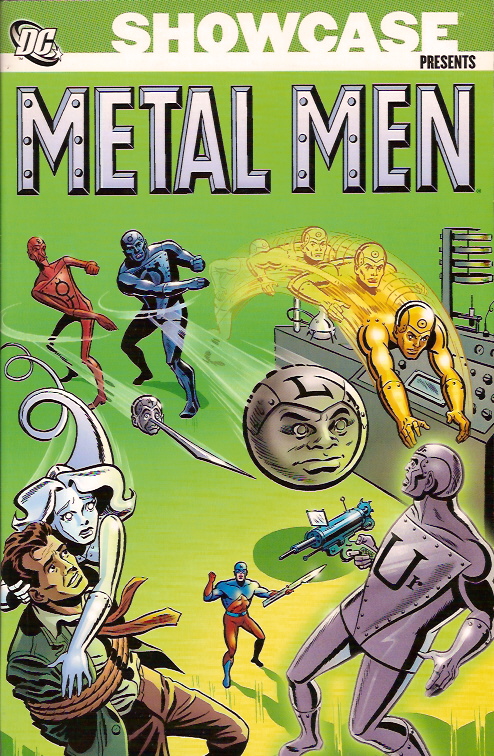
Robert Kanigher (1915-2002) was one of the most distinctive authorial voices in American comics, blending rugged realism with fantastic fantasy and outrageous imagination in his signature war comics, as well as for the wealth of horror stories, romance yarns, “straight” adventure, westerns and superhero titles such as Wonder Woman, Teen Titans, Hawkman, Metal Men, Flash, Batman (plus other genres far too numerous to cover here) at which he also excelled.

He sold his first stories and poetry in 1932, wrote for the theatre, film and radio, and joined the Fox Features “shop” at the beginning of the comicbook phenomenon where he created The Bouncer, Steel Sterling and The Web, whilst providing scripts for established features like Blue Beetle and the original Captain Marvel (who we all call “Shazam!” these days).

In 1945 he settled at All-American Comics as both writer and editor, staying on when the company amalgamated with National Comics to become the forerunner of today’s DC. He wrote the Golden Age Flash and Hawkman, created Black Canary and many sexily memorable villainesses such as Harlequin and (Rose and) the Thorn. This last temptress he redesigned during the relevancy era of the early 1970s into a schizophrenic crime-busting super-heroine who haunted the back of Superman’s Girlfriend Lois Lane – which Kanigher also scripted at the time.

When mystery-men faded at the end of the 1940s, Kanigher moved easily into other genres such as spy-thrillers, westerns and war stories. In 1952 he became chief writer and editor of the company’s small combat line: All-American War Stories, Star Spangled War Stories and Our Army at War.

He created Our Fighting Forces in 1954 and added G.I. Combat to his packed portfolio when Quality Comics sold their dwindling line of titles to National/DC in 1956.

In 1955 Kanigher devised historical adventure anthology The Brave and the Bold and its stalwart early stars Silent Knight, Golden Gladiator and Viking Prince whilst still scripting Wonder Woman, Johnny Thunder, Rex the Wonder Dog and a host of others.

In 1956, for Julius Schwartz he scripted ‘Mystery of the Human Thunderbolt’ – the first story of the Silver Age which introduced Barry Allen as the new Flash to the hero-hungry kids of the world.

Kanigher was a restlessly creative writer and frequently used his uncanny if formulaic action arenas as a testing ground for future series concepts. Among the many epochal war features he created were Sgt. Rock, Enemy Ace, The War that Time Forgot, The Haunted Tank and The Losers, but he always kept an eye on contemporary trends too.

When supernatural comics took over the industry in the late 1960s, he was a mainstay at House of Mystery, House of Secrets and Phantom Stranger and in 1975 created gritty human interest/crime feature Lady Cop. Fifteen years earlier he had caught a similar wave (Oh, ha ha, hee hee…) by cashing in on the popularity of TV show Sea Hunt.

His entry into the sudden sub-genre deluge of scuba-diver comics featured the magical contemporary adventure formula of a heroic quartet (Smart Guy, Tough Guy, Young Guy and A Girl) who would indulge in all manner of (undersea) escapades from logical to implausible, topical to fantastical. He dubbed his team The Sea Devils…

These classy yarns still haven’t made it into modern full-colour editions but they are magnificent examples of comics storytelling and if you have to read these lost treasures in mere monochrome, at least that’s better than nothing…

Re-presenting the turbulent, terrific try-out stories from Showcase #27-29 (July/August to November/December 1960) and Sea Devils #1-16 – cover-dated September/October 1961-March/April 1964 – this mammoth black-&-white paperback tome blends bizarre fantasy, sinister spy stories, shocking science fiction and two-fisted aquatic action with larger-than-life yet strictly human heroes who carved their own unique niche in comics history…

In almost every conceivable way, “try-out title” Showcase created the Silver Age of American comicbooks and is responsible for the multi-million-dollar industry and nascent art form we all enjoy today. The comicbook was a printed periodical Petri dish designed to launch new series and concepts with minimal commitment of publishing resources. If a new character sold well initially a regular series would follow. The process had been proved with Frogmen, Lois Lane, Challengers of the Unknown and many, many more.

The principle was a sound one which paid huge dividends. The Editors at National were apparently bombarded with readers’ suggestions for new titles and concepts and the only possible way to feasibly prove which would be popular was to offer test runs and assess fan – and most crucially sales – reactions.

Showcase #27 followed a particularly historic and fruitful run of successful non-superhero debuts which included Space Ranger, Adam Strange, and Rip Hunter…Time Master. At a time when costumed characters seemed to be ascendant but memories of genre implosions remained fresh, it seemed that the premier publication could do no wrong. Moreover, it wasn’t Kanigher and artist Russ Heath’s first dip in this particular pool.

Showcase #3 had launched war feature The Frogmen in an extended single tale following candidates for a US Underwater Demolitions Team in WWII as they perilously graduated from students to fully-fledged underwater warriors.

The feature, if not the actual characters, became a semi-regular strip in All-American Men of War #44 (April #1957) and other Kanigher-edited war comics: making Frogmen the first but certainly not the last graduate of the try-out system. Now, with tales of underwater action appearing in comics, books film and TV, the time was right for a civilian iteration to make some waves…

The drama here begins in ‘The Golden Monster’ (by Kanigher & Heath) as lonely skin-diver Dane Dorrance reminisces about his WWII frogman father – and the senior’s trusty buddies – before being saved from a sneaky shark by a mysterious golden-haired scuba-girl.

Judy Walton is an aspiring actress who, seeking to raise her Hollywood profile, has entered the same underwater treasure hunt Dane is engaged in, but as they join forces, they have no idea of the dangers awaiting them…

Locating the sunken galleon they’ve been hunting, both are trapped when seismic shifts and a gigantic octopus bury them inside the derelict. Happily, hulking third contestant Biff Bailey is on hand and his tremendous strength tips the scales and allows the trio to escape.

Now things take a typical Kanigher twist as the action switches from tense realistic drama to riotous fantasy with the explosive awakening of a colossal reptilian sea-monster who chases the divers until Judy’s little brother Nicky races in to distract the beast…

Temporarily safe, the relative strangers unite to destroy the thing – with the help of a handy floating mine left over from the war – before deciding to form a professional freelance diving team. They take their name from the proposed movie Judy wanted to audition for, becoming forever “The Sea Devils”…

In Showcase #28 Dane’s dad again offers his boy ‘The Prize Flippers’ he won for his war exploits, but Dane feels his entire team should be allowed to compete for them. Of course, each diver successively outdoes the rest, but in the end a spectacular stunt with a rampaging whale leaves the trophy in the hands of a most unlikely competitor…

A second story then sees the new team set up shop as “underwater trouble-shooters”, only to stumble into a mystery as pretty Mona Moray begs them to find her missing father. Professor Moray was lost when his rocket crashed into the ocean, but as the scuba stalwarts diligently search the crash site, they are ambushed by underwater aborigines and join the scientist in an uncanny ‘Undersea Prison’…

Only when their captors reveal themselves as invading aliens do the team finally pull together, escape the trap and bring the house down on the insidious aquatic horrors…

Showcase #29 also offered two briny tales, casting off with ‘The Last Dive of the Sea Devils’, wherein a recently-imprisoned dictator from Venus escapes to Earth and battles the astounded team to a standstill from his giant war-seahorse.

The blockbusting battle costs them their beloved vessel The Sea Witch before the crew make use of a handy leftover torpedo to end the interplanetary tyrant. Sea-born giants also abound in ‘Undersea Scavenger Hunt’, wherein the cash-strapped trouble-shooters compete in a flashy contest to win a new boat.

Incredible creatures and fantastic treasure traps are no real problem, but the actions of rival divers The Black Mantas almost cost our heroes their lives…

Everything worked out though, and nine months later Sea Devils #1 hit the stands with Kanigher & Heath leading the way. In ‘The Sea Devils vs. the Octopus Man’, our watery quartet are now stars of a monster movie, but when the lead beastie comes to lethal life and attacks them, all thoughts of fame and wealth sink without trace…

The second tale was scripted by the superbly inventive Bob Haney who riffed on Moby Dick‘s plot in a tale of how Vikings hunted a mythical orca with a magic harpoon before latter-day fanatical whaler Captain Shark mercilessly seeks out the ‘Secret of the Emerald Whale’ with the desperate Sea Devils dragged along for the ride…

Haney wrote both yarns in the next issue, beginning with ‘A Bottleful of Sea Devils’ as mad scientist Mr. Neptune uses a shrinking device to steal a US Navy weapon prototype. With the aquatic investigators hard on his flippered heels, the felon is soon caught whilst ‘Star of the Sea’ introduces brilliant performing seal Pappy who repeatedly saves the team before finding freedom and true love in the wild waters of the Atlantic…

Kanigher returned for #3’s ‘Underwater Crime Wave’ as the Devils clashed with a cunning modern Roman Emperor who derives incredible wealth from smuggling and traps the team in his undersea arena.

Judy then finds herself the only one immune to the allure of ‘The Ghost of the Deep’ as subsea siren Circe makes the boys her latest playthings and her human rival is compelled to pull out all the stops to save her friends…

Sea Devils # 4 led with ‘The Sea of Sorcery’ as the team investigate – but fail to debunk – incredible myths of a supposedly haunted region of ocean, after which Haney detailed how the squad travelled into the heart of South America to liberate a tribe of lost pre-Columbian Condor Indians from a tyrannical witch doctor whilst solving ‘The Secret of Volcano Lake!’

‘The Creature Who Stole the 7 Seas’ (Kanigher) opened issue #5, as a particularly dry period for the trouble-shooters ends after a crashing UFO disgorges a sea giant intent on transferring Earth’s oceans to his own arid world. Oddly for the times, here mutual cooperation and a smart counter-plan save the day for two panicked planets.

Veteran writer Hank P. Chapman joined the ever-expanding team with a smart yarn of submerged Mayan treasure and deadly traps to imperil the team as they solve the ‘Secret of the Plumed Serpent’, before Kanigher returned with a book-length thriller in #6 which sees the Devils seemingly ensorcelled by ancient parchments which depict them battling incredible menaces in centuries past.

Biff battles undersea knights for Queen Cleopatra, Judy saves Ulysses from the Sirens, Nicky rescues a teenaged mermaid from a monstrous fish-man and Dane clashes with ‘The Flame-Headed Watchman!’, but is wise enough to realise that the true threat comes from the mysterious stranger who has brought them such dire documents…

The switch to longer epics was a wise and productive move, followed up in #7 with ‘The Human Tidal Wave!’ as the heroes spectacularly battle an alien made of roaring water to stop a proposed invasion, whilst in #8 they strive to help a fish transformed into a grieving merman from the ‘Curse of Neptune’s Giant!’ This malignant horror’s mutative touch temporarily makes monsters of them all too, but in the end Sea Devil daring trumps eldritch cruelty…

More monster madness followed in #9’s ‘The Secret of the Coral Creature!’ as the team become paragliding US Naval medics to rescue an astronaut. That’s mere prelude to an oceanic atomic bomb test which blasts them to a sea beneath the sea which had imprisoned an ancient alien for eons of crushing solitude, and who had no intention of ever letting the air-breathers go…

A concatenation of crazy circumstances creates the manic madness of #10’s ‘4 Mysteries of the Sea!’ as godly King Neptune decrees that on this day every wild story of the sea will come true, just as the Sea Devils are competing in a “Deep Six Tall Tales” contest.

Soon the incredulous squad are battling pirates in an underwater ghost town, rescued from captivity by a giant octopus thanks to a friendly seal (Good old Pappy!), facing off against aliens of the Martian Canals Liars Club and saving Neptune himself from a depth-charge attack…

The hugely underrated Irv Novick took over as primary illustrator with #11, as the Sea Devils agree to test human underwater endurance limits in an ocean-floor habitat. Soon however, Dane is near breaking point, seeing a succession of monsters from the ‘Sea of Nightmares!’

Kanigher then relinquished the writing to fellow golden age alumnus France E. Herron who kicked off in rip-roaring form with a classy sci fi romp. Here Nicky’s growing feelings of inadequacy are quashed after he saves his comrades – and the world – from the ‘Threat of the Magnetic Menace!’

Always experimental and rightfully disrespectful of the fourth wall, editors Kanigher and George Kashdan turned issue #13 over to the fans for ‘The Secrets of 3 Sunken Ships’, as successive chapters of Herron’s script were illustrated by Joe Kubert, Gene Colan and Ross Andru & Mike Esposito for the audience to judge who was the best.

The artists all appear in the tale conducting interviews and “researching” our heroes as they tackle a reincarnated sea captain, travel to an ancient sea battle between Greece and Persia and meet the alien who kidnapped the crew of the Marie Celeste…

The gag continued in Sea Devils #14 as illustrator Novick came along for the ride as the amazing aquanauts try to end the catastrophic ‘War of the Underwater Giants’ This finds aging deities Neptune and Hercules battle for supremacy in Earth’s oceans.

Jack Abel was the artistic guest star in second story ‘Challenge of the Fish Champions!’, wherein our heroes enter a cash prize competition to buy scuba equipment for a junior diving club.

Unfortunately, crazy devious scientist Karpas also wants the loot and fields a team of his own technologically augmented minions. Before long, the human skin-divers are facing off against a sea lion, a manta ray, a squid and a merman. Nobody specified that contestants had to be human…

Novick got into the act again illustrating #15 as author Herron revealed Judy and Nicky’s relationship to the ‘Secret of the Sunken Sub!’ When inventor Professor Walton vanishes whilst testing his latest submersible, it’s only a matter of time before his children drag the rest of the Sea Devils to the bottom of every ocean to find him and his lost crew.

The uncanny trail takes them through shoals of monsters, astounding flora and into the lair of an incredible sea spider before the mission is successfully accomplished…

Things regained some semblance of narrative normality with the final issue in this compilation as Chapman contributed a brace of high adventure yarns beginning with ‘The Strange Reign of Queen Judy and King Biff’, superbly rendered by the wonderful Bruno Premiani & Sheldon Moldoff.

When a massive wave capsizes the Sea Witch, only Dane and Nicky seemingly survive, but the determined explorers persevere and eventually find their friends held as bewitched captives on the island of an immortal wizard. All they have to do is kidnap their ferociously resisting comrades, escape an army of angry guards and penetrate the island’s mystic defences a second time to restore everything to normal. No problem…

This eccentric and exciting voyage of discovery concludes with ‘Sentinel of the Golden Head’ – illustrated by the always impressive Howard Purcell & Moldoff – as the restored aquatic quartet stumble onto the lost island of Blisspotamia in time to witness a beautiful maiden trying to sacrifice herself to the sea gods.

By interfering, they incur the wrath of a legion of mythological horrors and have no choice but to defy the gods to free the terrified islanders from ignorance and tyranny…

These capacious black-&-white compendia are superb value and provide a vital service by bringing older, less flashy (but still astonishingly expensive in their original issues) tales to a readership which might otherwise be denied them. However, this is probably the only series which I can honestly say suffers in the slightest from the lack of colour.

Whilst the line-art story illustrations are actually improved by the loss of hue, the original covers – by Heath and Novick as supervised and inked by production ace Jack Adler – used all the clever technical print effects and smart ingenuity of the period to add a superb extra layer of depth to the underwater scenes which tragically cannot be appreciated in simple line and tone reproduction. Just go to any online cover browser site and you’ll see what I mean…

Nevertheless, the amazing art and astounding stories are as good as they ever were and Showcase Presents Sea Devils is stuffed with incredible ideas, strange situations and non-stop action. These underwater wonders are a superb slice of the engaging fantasy thrillers which were once the backbone of American comicbooks. Perhaps a little whacky in places, they are remarkably similar to many tongue-in-cheek, anarchic Saturday morning kids’ animation shows and will certainly provide jaded fiction fans with hours of unmatchable entertainment.…
© 1960, 1961, 1962, 1963, 1964, 2012 DC Comics. All Rights Reserved.

Voyage to the Deep


By Sam J. Glanzman. Paul S. Newman, Lionel Ziprin & various (It’s Alive!/IDW)
ISBN: 978-1-68405-450-3 (HB)

If you have any kind of vintage to you, you’ll have heard of Irwin Allen’s techno-fantasy Voyage to the Bottom of the Sea: as a movie or in its later television incarnation. The franchise was a huge global hit in the 1960’s and spawned lots of the usual spin-offs in games, toys and comicbooks.

You might not be aware that between the comics adaptation of the movie (in Four-Color # 1230, November 1961) and the 16-issue series based on the TV sensation (published between December 1964 and May 1969), another undersea phenomenon saved the world a few times, equally inspired by atomic age wonders of the briny depths and (arguably) that movie…

The details are revealed in Steve Bissette’s informative Introduction ‘The Proteus Prophecies (The Cold War SFusion of Voyage to the Deep)’: tracing the history of submersible vehicles, nuclear subs – in fact and fiction – and the richly-mined seam of subsea adventure in comics. A handy sidebar – ‘The Voyage of Voyage’ – then traces the efforts of director Irwin Allen as he brought Voyage to the Bottom of the Sea to screens large and small and thus created a comics sub-genre (sorry; couldn’t resist).

Once upon a time Dell Comics and Gold Key were the same publishing monolith, Western Print and Litho. As Whitman Publishing, they produced their own books and comics for decades through their Dell and Gold Key imprints, rivalling and often surpassing DC and Timely/Marvel at the height of their powers. Famously, they never capitulated to the wave of anti-comics hysteria which resulted in the crippling self-censorship of the 1950s.

Dell Comics never displayed a Comics Code Authority symbol on their covers. They never needed to: their canny blend of media and entertainment licensed titles were always produced with a family market in mind and the creative staff took their editorial stance from the mores of the filmic Hayes Code and its analogues in the burgeoning television industry.

Just like the big and little screen, the product enticed but never shocked and kept contentious social issues implicit instead of tacit. It was a case of “violence and murder are fine, but never titillate.”

Moreover, most of their adventure comics covers were high quality photos or paintings – adding a stunning degree of veracity and verisimilitude to even the most outlandish of concepts for us wide-eyed waifs in need of awesome entertainment. For decades, the company seemed the only first choice for a licensed comicbook, and to be honest, the results seldom disappointed.

They also employed some of the best artists in America as well as the wider world…

After far too many years as a secret darling of the comics cognoscenti, in his last years Sam J. Glanzman was finally awarded his proper station as one of American comics’ greatest and most remarkable creators – thanks in no small part to the diligent efforts of editor Drew Ford, (initially at publishing house Dover, and later his own It’s Alive! imprint) which revived groundbreaking graphic novel sequence A Sailor’s Story, astonishing semi-autobiographical series USS Stevens and other non-superhero classics and enshrined them on bookshelves across the world.

Apart from his time in the Navy, Glanzman drew and wrote comics from the 1940s until his death in 2017, most commonly in the classic genres – war, western, mystery, adventure and fantasy – where his raw, powerful and subtly engaging style and wry wit made his work irresistibly compelling to generations of readers

On titles such as Kona, Monarch of Monster Island, Combat, Jungle Tales of Tarzan, Hercules, The Haunted Tank, The Green Berets and cult classic The Private War of Willie Schultz, Glanzman always produced magnificently rousing yarns which fired the imagination and stirred the blood. That unceasing output always sold well and won him a legion of fans (most vocally amongst fellow artists), if not from the insular and over-vocal fan-press. Most of the above cited are also now or soon to be available in archival editions (mostly brilliantly cleaned-up and remastered by Now Read This‘ own Allan Harvey) and – if I live long enough – I’ll be urging you to get them too via reviews like this one…

One of Glanzman’s early jobs for Dell was the movie adaptation of Voyage to the Bottom of the Sea, so with his maritime experience and gritty style he must have been the only choice to limn the adventures of another fantastic super submarine: Proteus in Voyage to the Deep…

Scripted by Paul S. Newman and Lionel Ziprin, four fully-restored, mammoth issues of fantastic science fantasy begin with the eponymous ‘Voyage to the Deep’ as #1 introduces the next wave of submersible technology in the fluid form of Proteus: a twin-skinned atomic submarine that can alter its shape to counter the appalling pressure of the sea bottom.

Commanded by Admiral Jonathan Leigh, and skippered by Captain Duke Peters, the exploratory prototype is soon seconded into drastic action after an unseen Enemy inimical to all life tampers with the planet’s molten core and tips the planet off its axis. By attacking the Marianas Trench, the shift displaces all the world’s oceans, sparking colossal tsunamis to wipe out civilisation.

With humanity drowning and undiscovered monsters awakening, Proteus attempts to rectify the apocalyptic damage to the sea floor. They have only one chance, if only the crew can hold their nerve…

Remember I said Dell never acknowledged Comics Code Authority dictates? Be prepared for an astounding and compelling slice of doomsday fiction with a truly staggering body count…

With the battered Earth barely recovering from its close call, the second issue (May-July 1963) saw the doughty submariners facing ‘The Ice Menace’ as a follow-up attack finds humanity facing global extreme snowfalls. Dreading the prospect of a new ice age, Leigh’s super-sub heads to the North pole on a data-gathering mission and the maritime genius devises a way to reverse the Enemy’s geological sabotage and save mankind once more…

The threat had not ended and #3 (August-October 1963) reveals the Proteus being refitted just in time to hunt down ‘The Anti-Matter Threat’ hidden somewhere on Earth and slowly building to a critical mass…

The constant war of nerves concludes but did not end with the ‘Mysterious Mission’ in #4, as Proteus goes hunting for the Enemy technology that sparks a chain of underwater volcanoes that threaten to rip the world apart…

This epic hardcover or digital tome is bursting with extras: beginning with a rousing cover gallery of painted monster masterpieces by John McDermott and continuing with the extra strips that came as standard in the mainly-advert-free comics. These include context-contributing fact-features ‘Creatures of the Deep’, ‘The Great Flood’, ‘Fire and Water’, ‘Ice Ages’, ‘Arctic Creatures’, ‘Dangerous Waters’ and ‘Trial by Fire’ – all by Glanzman – and ‘The Never-Ending Hunt’ by Alex Toth & Mike Peppe.

One place that did sell ad-space was the back cover, and a gallery of those tantalisingly offer again the toys and prizes generations of British kids drooled over because they were exotic, bombastic and generally unreachable on pocket money that didn’t come in dollars and cents…

Wrapping up with a fond appreciation in ‘E Pluribus Unum’, an erudite Afterword by this volume’s cover artist Rufus Dayglo (who also adds a tentacle-bestrewn spot illustration here in the Kickstarter edition that you should pray is included in the mainstream edition!), as well as a welcome biographies section, this is a marvellously manic and sublimely seductive nostalgia wave any fan of fantastic fiction would be mad to miss.
Voyage to the Deep illustrations © the estate of Sam J. Glanzman. “The Proteus Prophecies” © 2018 Stephen R. Bissette. “E Pluribus Unum” © 2018 Rufus Dayglo. Voyage to the Deep All Rights Reserved.

Bloody Mary


By Garth Ennis, Carlos Ezquerra & various (Image)
ISBN: 978-1-63215-761-4

Let’s go back to a future that never happened… yet…

Fleetway veterans Garth Ennis and Carlos Ezquerra have a long association with British war comics and the apocalyptic visions of alternate lifestyle bible 2000AD, so combining those sensibilities in a near-future World War III adventure must have seemed a natural for the fledgling DC science fiction imprint Helix when they began publishing at the end of the last century.

Since the first 4-part miniseries spawned an almost immediate sequel, they must have been more or less correct, but as Helix folded in the space of a year, with its surviving projects being absorbed by sister/parent imprint Vertigo, this compilation comes to us via them and their championing of creator rights but actually courtesy of creator-owner outfit Image Comics.

Confused yet? Surely not?

In 1999, Europe went back to war: massive, bloody conventional war with the bankrupt and barmy US of A and it’s grovelling toady ally Great Britain, ostensibly over economic and religious differences, but actually because our creators needed a backdrop for the world-weary Mary to display her exceptional talent for slaughter in the signature arena of idiot Generals and venal politicians whose sole reason for existing seems to be to prune back the surplus of the current generation of decent folk.

My other screen is currently updating me on the escalating tariff clashes between the orange office of Trumplestiltskin and the EU, China and probably any country without a national golf course, but I’m sure that’s coincidence, not the late-running of a prediction from a comicbook Nostradamus or two…

Now imagine it’s 2012 again. Under the guise of a mission to secure a biological super-weapon, American commando Corporal Mary Malone – who affects the look of a very mean nun – and a crack team of expendables including her only friend “The Major” spectacularly and gratuitously battle a spectre from her gore-splattered past and the EU’s top psychotic hit-man. Carving a swathe of destruction through Europe’s few remaining landmarks, their mission is to secure the key to immortality (a parasitic organism dubbed the Blood Dragon), but, of course, their superiors have been less than candid in what it actually does or what it’s for and have only themselves to blame when Mary – and her opponents – go off-mission…

Violently engaging, sublimely cathartic and painfully accurate in far too many prognostications, this first tale (released in 1996) was followed by an equally engaging follow up.

Bloody Mary: Lady Liberty was issued a year later and sees an older, wiser Malone return to a devastated America. With the Major in tow she agrees to wrest New York City from the half-million religious maniacs who have captured it. The messiah du jour is Achilles Seagal: a bigoted, populist raving lunatic with the common touch, a unique manner of phrasing complex issues who knows just what to say to make people do what he wants…

Trenchant, savagely satirical, gripping and never less than totally thrilling, this slice of dark, edgy fun shows Ennis and the much-missed Ezquerra at their anarchic irreverent best, ably assisted by letterer Annie Parkhouse and colourists Matt Hollingsworth & Chris Chuckry , giving you an everyman view of all the hell-and-stupidity our leaders happily drag us ordinary mortals through far too often.

Grown-up comics at its very best and long overdue for its rightful place on your bookshelf or in your digital library.
© 2016 Garth Ennis & Carlos Ezquerra. All rights reserved.

Astro Boy volume 5

c
By Osamu Tezuka, translated by Frederik L. Schodt (Dark Horse Manga)
ISBN: 978-1-56971-680-9 (TPB)

From beginning his professional career in the late 1940s until his death in 1989, Osamu Tezuka generated an incomprehensible volume of quality work which transformed the world of manga and how it was perceived in his own country and, ultimately, across the globe. Devoted to Walt Disney’s creations, he performed similar sterling service with Japan’s fledgling animation industry.

The earliest stories were intended for children but right from the start Tezuka’s expansive fairy tale stylisations harboured more mature themes and held hidden pleasures for older readers and the legion of fans growing up with his manga masterpieces…

“The God of Comics” was born in Osaka Prefecture on November 3rd 1928, and as a child suffered from a severe illness. The doctor who cured him inspired the lad to study medicine, and although Osamu began drawing professionally whilst at university in 1946, he persevered with college and qualified as a medical practitioner too. Then, as he faced a career crossroads, his mother advised him to do the thing which made him happiest.

He never practiced as a healer but the world was gifted with such masterpieces as Kimba the White Lion, Buddha, Black Jack and so many other graphic narratives.

Working ceaselessly over decades, Tezuka and his creations inevitably matured, but he was always able to speak to the hearts and minds of young and old equally. His creations ranged from the childishly charming to the distinctly disturbing such as The Book of Human Insects.

Tezuka died on February 9th 1989, having produced more than 150,000 pages of timeless comics, created the Japanese anime industry and popularised uniquely Japanese graphic narrative which became a fixture of world culture.

This fifth monochrome digest volume (173 x 113 mm in the physical world and any size you like if you get the eBook edition) continues to present – in non-linear order – early exploits of his signature character, with the emphasis firmly on fantastic fun and family entertainment…

Tetsuwan Atomu (literally “Mighty Atom” but known universally as Astro Boy due to its dissemination around the world as an animated TV cartoon and one of post-war Japan’s better exports) is a spectacular, riotous, rollicking sci fi action-adventure starring a young boy who also happens to be one of the mightiest robots on Earth.

The series began in 1952 in Shōnen Kobunsha and ran until March 12th 1968 – although Tezuka often returned to add to the canon in later years. Over that period, Astro spawned the aforementioned global TV cartoon boom, starred in comicbook specials and featured in games, toys, collectibles, movies and the undying devotion of generations of ardent fans.

Tezuka frequently drew himself into his tales as a commentator, and in his later revisions and introductions often mentioned how he found the restrictions of Shōnen comics stifling; specifically, having to periodically pause a plot to placate the demands of his audience by providing a blockbusting fight every episode. That’s his prerogative: most of us avid aficionados have no complaints…

Tezuka and his production team were never as wedded to close continuity as fans are. They constantly revised both stories and artwork in later collections, so if you’re a purist you are just plain out of luck. Such tweaking and modifying is the reason this series seems to skip up and down the publishing chronology. The intent is to entertain at all times so stories aren’t treated as gospel and order is not immutable or inviolate.

It’s just comics, guys…

And in case you came in late, here’s a little background to set you up…

In a world where robots are ubiquitous and have won (limited) human rights, brilliant Dr. Tenma lost his son Tobio in a traffic accident. Grief-stricken, the tormented genius used his position as head of Japan’s Ministry of Science to build a replacement. The android his team created was one of the most ground-breaking constructs in history, and for a while Tenma was content.

However, as his mind re-stabilised, Tenma realised the unchanging humanoid was not Tobio and, with cruel clarity, summarily rejected the replacement. Ultimately, the savant removed the insult to his real boy by selling the robot to a shady dealer…

One day, independent researcher Professor Ochanomizu was in the audience at a robot circus and realised diminutive performer “Astro” was unlike the other acts – or indeed, any artificial being he had ever encountered. Convincing the circus owners to part with the little robot, the Prof closely studied the unique creation and realised just what a miracle had come into his hands…

Part of Ochanomizu’s socialization process for Astro included placing him in a family environment and having him attend school just like a real boy. As well as providing friends and admirers the familiar environment turned up another foil and occasional assistant in the bellicose form of Elementary School teacher Higeoyaji (AKA Mr. Mustachio)…

The wiry wonder’s astonishing exploits resume after the now traditional ‘A Note to Readers’ – explaining why one thing that hasn’t been altered is the depictions of various racial types in the stories.

‘Crucifix Island’ originally ran January through April, 1957 in Shōnen Magazine and begins with an explanation of why most robots are generally humanoid before concentrating on obsessive Doctor Tozawa who channelled his ancient ninja lineage to create an ultimate shape-changing mechanoid. He was interrupted and arrested before he could complete his masterpiece but that was then and this is now where our story properly begins…

Following a manic prison break, Tozawa and his new crooked cronies wash up on and take over a desolate island housing one hundred thousand robots operating the deepest and most sophisticated uranium mine on Earth. The merest by-product is a daily fortune in other precious ores and gems…

Meanwhile, at the Isle’s Robot School Astro is having problems with another young automaton. Pook is troubled because he’s incomplete: his “father” was arrested and imprisoned before he could make his boy perfect…

When Pook and Tozawa are reunited, the mad scientist ambushes Astro, harvesting his body for the parts needed to complete his dream robot. The troubled mechanoid finally gains the power to change shape…

Sadly, one thing that never changes is human greed and Tozawa’s fellow fugitives turn on him when he ignores their pleas to plunder the discarded mountain of gems. Inviting their army of criminal comrades to take over the island, they try to kill the now repentant technologist. With his breath fading, the Doctor repairs Astro to tackle the thieves, but nobody anticipated Pook’s reaction to gaining his full powers or how that would affect the multitude of lethal digging robots…

After a tremendous battle order is eventually restored but not everybody makes it out alive…

Running in Shōnen Magazine from February to April 1960, ‘Space Snow Leopard’ details how frosty precipitation across Earth steals energy from robots and machines. Seemingly unaffected, Astro is challenged by a space wizard and his six-legged killer feline Lupe, but barely escapes as they continue softening up the planet for an alien takeover.

On the run, Astro consults his school friends hoping organic humanity can prevail against the bizarre duo. Ultimately however it takes humans and robots working together and the invention of a giant amalgamated mecha comprised of many smaller automatons working in unison to save the world…

‘The Artificial Sun’ first ran between December 1959 and February 1960 and concludes this compilation in glorious style as a ship at sea reports a deadly floating fireball causing weather disruptions. Fearing the worst, the International Council of Police Organizations consult super-cop Sherlock Holmspun to tackle the crisis. His pride in in a swift breakthrough is soon scotched, however, when the council insist he take along some competent backup/additional firepower in the form of a robot codenamed Mighty Atom …

With the game afoot, the odd couple track down prime suspect Professor Hirata and his deadly monster, but will Holmspun’s prejudice jeopardise the mission… or will his dreadful secret shame leave them all unable to fight off the deadly fireball beast and the real culprit behind it?

Breathtaking pace, outrageous invention, slapstick comedy, heart-wrenching sentiment and frenetic action are the hallmarks of these captivating comics constructions: perfect examples of Tezuka’s uncanny storytelling gifts, which can still deliver a potent punch and instil wide-eyed wonder on a variety of intellectual levels.
Tetsuwan Atom by Osama Tezuka © 2002 by Tezuka Productions. All rights reserved. Astro Boy is a registered trademark of Tezuka Productions Co., Ltd., Tokyo Japan. Unedited translation © 2002 Frederik L. Schodt.