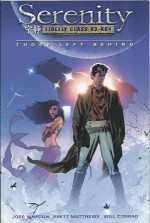
Serenity – Firefly Class 03-K64 volume 1: Those Left Behind


By Joss Whedon, Brett Matthews, Will Conrad & various (Dark Horse)
ISBN: 978-1-59307-449-4

For those far-too-few folks who actually saw it, Firefly remains one of the best Science Fiction TV shows ever created. It was cancelled after one season. Buy the box-set or seek it out from an on-demand, streaming media outlet as soon as you possibly can.

That crushed yet select fanbase were eventually reassured and delighted by the superb Serenity – one of the best science fiction movies ever released.

Rent it, buy it, watch it however you can.

You don’t really need to, but it will be fun and afterwards you’ll be even more properly primed to enjoy this delightful digest-sized full-colour paperback continuation which bridges the period between the show’s end and the film, offering further details and moments in the eventful lives of reluctant freedom fighter Malcolm Reynolds and his oddball crew of reprobates aboard an independent trader starship of the Firefly class.

Collecting the 3-issue miniseries, Serenity: Those Left Behind, this is the first volume of comic adventures starring the nomadic, semi-piratical outlaws, and if you aren’t au fait yet – did I mention the live action iterations are readily available and extremely entertaining? – here’s a little help.

After they used up Earth, humanity migrated to the stars and settled another star-system packed with hundreds of more or less hospitable planets and satellites. Now it’s the 26th century and mankind is living through the aftermath and reconstruction period of a punishing internecine conflict known – by the victors – as the Unification War.

This still-fresh, tender and, for far too many, unconcluded clash saw the Outer Colonies crushed after attempting to secede from the authoritarian Alliance of first-settled inner planets. Reynolds fought valiantly on the Rebel/losing side and now spends his days eking out a living on the fringes of an increasingly repressive and dangerous universe: a fiercely free agent skippering a small cargo vessel.

Hopefully that’s just shipping cargo and people from world to world and trying to avoid the ever-expanding Alliance’s representatives and security forces, but occasionally survival means bending the law a mite….

It’s hard, risky work: often illegal and frequently dangerous – especially as the outer regions are where the insane cannibal berserker savages dubbed Reavers restlessly prowl.

Life changed forever after Serenity gave passage to fugitive Alliance doctor Simon Tam: on the run after stealing his apparently psychic sister River from a top secret research project.

The Government spared no effort or expense to get her back, hounding the fugitives from pillar to post until Mal and his crew finally resolved to push back. After too many close shaves and at the cost of too many friends, Reynolds and Co finally uncovered the horrific secret the Alliance were so desperate to keep hidden and broadcast it to the entire ‘Verse…

Before that moment, however, for this yarn the unhappy wanderers are back at the daily grind of getting paid and not getting caught, as scripters Joss Whedon and Brett Matthews, illustrator Will Conrad, colourist Laura Martin and letterer Michael Heisler, open this stellar rollercoaster ride with the rovers indulging in a spot of bank robbery on a frontier world, only to stumble upon a much nastier gang of desperadoes with the same idea…

All too soon Malcolm’s party have surrendered the loot to their far-more-bloodthirsty rivals and are fleeing for their lives from the irate homesteaders to make another astounding hairsbreadth escape, but as the captain apologizes once again to long-term passenger Inara the Companion for the slow, agonizingly torturous and oft-diverted passage to her intended destination, they have no conception that more Alliance manhunters have just latched onto their trail…

The stalkers have devious plans which involve recruiting another deadly maniac Reynolds has made a lasting impression upon, but by then the oblivious crew of Serenity are already embroiled in another bad idea. Vile criminal fixer Badger has convinced them to go after millions in lost cash, left to rot amongst the uncounted dead and wrecked, vacuum-blasted ships lost in the cataclysmic and legendary Battle of Sturges…

And in a hidden bunker, the hunters of River Tam inspect the ship that maimed, mad Agent Dobson plans to use in killing Reynolds and Serenity and feel extremely confident that their prize will soon be back in their hands…

Voyage time aboard the Firefly passes as it usually does, with crew and passengers sniping, sparring or just plain fighting, but all too soon the ship eases into the horrific debris field and the amiable bandits-turned-grave-robbers are cautiously searching for the loot. At that moment Dobson launches his blistering attack and the Alliance hunters make their own move, surreptitiously boarding Serenity to capture River.

They know all about her incredibly lethal capabilities and think they’re ready for anything, but have severely underestimated the power of a brother’s love or engineer Kaylee’s devious ingenuity…

As that particular Alliance plan goes to crap, back amongst the dead men, Dobson and his cohorts are so obsessed over settling accounts with Reynolds they completely forget how dangerous his shambolic, cantankerous crew can be…

This power-packed good thing in a small package is supplemented with stunning cover-art portraits of the crew from John Cassaday, Joe Quesada, Tim Bradstreet, Brian Hitch, JG Jones, Jo Chen, Leinil Yu, Josh Middleton and Sean Phillips plus a wistful, funny Introduction from Nathan (the man Reynolds himself) Fillion and comes sporting a tone and sensibility that is pure Jonah Hex (back when the bounty-hunting gunfighter was as blackly funny, sardonic and socially critical as he was thrilling, scary and action-packed), delivering astoundingly terse dialogue and winning characterisation plus all the intoxicating bonhomie and sense of wonder any starstuck reader could want.

This is a book no lover of space opera shoot ’em ups can afford to miss.
Serenity © 2005, 2006 Universal Studios. Firefly™ and Serenity: Firefly Class 03-K64™ Twentieth Century Fox Film Corporation. All rights reserved.
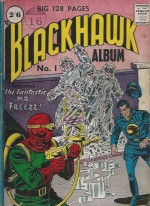
Blackhawk Album #1


By Dick Dillin, Chuck Cuidera, Jack Kirby, Sheldon Moldoff, George Roussos, Mort Meskin, Nick Cardy, Frank Frazetta, Bill Ely, Bob Brown & various (Strato Publications)
No ISBN:

Here’s another long-lost oddity of the eccentric and exotic British comics market that might be of passing interest to curio collectors and unrepentant comics nerds like me.

The early days of the American comicbook industry were awash with both opportunity and talent and those factors happily coincided with a vast population hungry for cheap entertainment.

The new medium of comicbooks had no acknowledged fans or collectors; only a large, transient market open to all varied aspects of yarn-spinning and tale-telling – a situation which publishers believed maintained right up to the middle of the 1960s. Thus, in 1940 even though America was loudly, proudly isolationist and more than a year away from any active inclusion in World War II, creators like Will Eisner and publishers like Everett M. (“Busy”) Arnold felt Americans were ready for a themed anthology title Military Comics.

Nobody was ready for Blackhawk.

Military #1 launched at the end of May 1941 (with an August cover-date) and included in its gritty, two-fisted line-up Death Patrol by Jack Cole, Miss America, Fred Guardineer’s Blue Tracer, X of the Underground, The Yankee Eagle, Q-Boat, Shot and Shell, Archie Atkins and Loops and Banks by “Bud Ernest” (actually aviation-nut and unsung comics genius Bob Powell), but none of these strips, not even Cole’s surreal and suicidal team of hell-bent fliers, had the instant cachet and sheer glamour appeal of Eisner and Powell’s “Foreign Legion of the Air” led by the charismatic Dark Knight of the airways known only as Blackhawk.

Chuck Cuidera, already famed for creating the original Blue Beetle for Fox, drew ‘the Origin of Blackhawk’ for the first issue, wherein a lone pilot fighting the Nazi invasion of Poland in 1939 was shot down by Nazi Ace Von Tepp; only to rise bloody and unbowed from his plane’s wreckage to form the World’s greatest team of airborne fighting men…

This mysterious paramilitary squadron of unbeatable fliers, dedicated to crushing injustice and smashing the Axis war-machine, battled on all fronts during the war and – once the embattled nations had notionally laid down their arms – stayed together to crush international crime, Communism and every threat to democracy from alien invaders to supernatural monsters, consequently becoming one of the true milestones of the US industry.

Eisner wrote the first four Blackhawk episodes before moving on and Cuidera stayed until issue #11 – although he triumphantly returned in later years. There were many melodramatic touches that made the Blackhawks so memorable in the eyes of a wide-eyed populace of thrill-hungry kids. There was the cool, black leather uniforms and peaked caps. The unique, outrageous – but authentic – Grumman F5F-1 Skyrocket planes they flew from their secret island base and of course their eerie battle-cry “Hawkaaaaa!”

But perhaps the oddest idiosyncrasy to modern readers was that they had their own song (would you be more comfortable if we started calling it an international anthem?) which Blackhawk, André, Stanislaus, Olaf, Chuck, Hendrickson and Chop-Chop would sing as they plummeted into battle. (To see the music and lyrics check out the Blackhawk Archives edition but just remember this catchy number was written for seven really tough leather-clad guys to sing while dodging bullets…

Quality adapted well to peacetime demands: superheroes Plastic Man and Doll Man lasted far longer than most of their Golden Age mystery man compatriots and rivals, whilst the rest of the company line turned to tough-guy crime, war, western, horror and racy comedy titles.

The Blackhawks soared to even greater heights, starring in their own movie serial in 1952. However the hostility of the marketplace to mature-targeted titles after the adoption of the self-censorious Comics Code was a clear sign of the times and as 1956 ended Arnold sold most of his comics properties to National Publishing Periodicals (now DC) and turned his attentions to becoming a general magazine publisher.

Most of the purchases were a huge boost to National’s portfolio, with titles such as GI Combat, Heart Throbs and Blackhawk lasting uninterrupted well into the 1970s (GI Combat survived until in 1987), whilst the unceasing draw and potential of characters such as Uncle Sam, the assorted Freedom Fighters costumed pantheon, Kid Eternity and Plastic Man have paid dividends ever since.

The “Black Knights” had also been a fixture of the British comics reprint industry since the early 1950s, with distributor-turned publisher Thorpe & Porter releasing 37 huge (68-page, whilst the US originals only boasted 36 pages) monochrome anthologies to entrance thrill-starved audiences under their Strato imprint.

This commodious British collection combines a flurry of tales featuring the Air Aces, balanced out by an assortment of mystery and science fiction tales from DC’s wide selection of weird adventure anthologies (primarily culled in this instance from September and October 1957) and kicks off with the contents of (US) Blackhawk #117 and ‘The Fantastic Mr. Freeze’ wherein the paramilitary aviators battle a chilling criminal maniac with a penchant for cold crimes before tackling smugglers masquerading as Vikings in ‘The Menace of the Dragon Boat’.

‘How Not to Enjoy a Vacation’ was seen in many places; a Public Service feature probably written by Jack Schiff and definitely illustrated by Rueben Moreira, followed by prose poser ‘I Was a Human Missile’, relating a technician’s account of when he was trapped during the test firing of a missile – and how he escaped – after which ‘The Seven Little Blackhawks’ become the targets of a ruthless mastermind exploiting their fame and reputations to plug his new movie…

Regrettably most records are lost so scripter-credits are not available (likely candidates include Ed “France” Herron, Arnold Drake, George Kashdan, Jack Miller, Bill Woolfolk, Jack Schiff and/or Dave Wood) but the art remained in the capable hands of veteran illustrators Dick Dillin & Chuck Cuidera: a team who meshed so seamlessly that they often traded roles with few any the wiser…

Moreover although broadly formulaic, the gritty cachet, exotic crime locales, Sci Fi underpinnings and international jurisdiction of the team always allowed great internal variety within the tales…

Here however the uniformed escapades pause as House of Mystery #67 (October 1957) offers the sorry saga of ‘The Wizard of Water’ – a scurvy conman who accidentally gets hold of King Neptune’s trident as drawn by Bill Ely – and, after an always-engaging ‘Science Says You’re Wrong’ page and text terror tale ‘The Mummy’s Revenge’, counts down ‘Five Days to Doom’ (illustrated by Sheldon Moldoff from House of Mystery #66, September 1957) wherein a printer discovers a seemingly-prophetic calendar and uses it to track down aliens planning to destroy Earth.

‘The Legend of the Golden Lion’ (HoM #67 again and illustrated by George Roussos) then described a Big Game Hunter’s confrontation with a leonine legend of biblical pedigree whilst from the same issue the ever-excellent Bob Brown depicted a weird science-tinged crime caper about ‘The Man Who Made Giants’ before the Blackhawks soared back into action battling ‘The Bandit with a Thousand Nets’ – yet another audacious costumed thief with a novel gimmick (from Blackhawk #118, October 1957).

That issue also provided ‘The Blackhawk Robinson Crusoes’ wherein the Pacific Ocean proved to be the real enemy when an accident marooned the Aviators as they hunted the nefarious pirate Sting Ray, followed by much-reprinted western classic ‘The Town Jesse James Couldn’t Rob’ limned by Frank Frazetta and itself a reprint from Jimmy Wakely #4.

Text feature ‘From Caveman to Classroom’ charted the history of map-making after which Blackhawk #118 continues to completion as ‘The Human Clay Pigeons’ found the entire squadron helpless targets of international assassin/spymaster the Sniper, leaving the rest of this collection to astound and amuse with more genre-specific tales such as the Roussos illustrated psychological crime thriller ‘Sinister Shadow’ from House of Mystery #66 Sept 1957.

Also in that issue is Jack Kirby’s eerie mystery of best friends turned rivals ‘The Thief of Thoughts’, Moldoff’s jungle trek chiller ‘The Bell that Tolled Danger’ and Mort Meskin & Roussos’ tragic supernatural romance ‘The Girl in the Iron Mask’.

Rounding out the collection are selections from House of Mystery #64 (July 1957) beginning with Nick Cardy’s irony-drenched riff on the curse of Midas wherein a criminal subjects himself to ‘The Golden Doom’ – pausing briefly for Jack Miller’s prose expose of mind-readers ‘A Clever Code’ (from HoM #66) and another Public Service ad with teen star Binky explaining ‘How to Make New Friends’ (Schiff & Bob Oksner) – before Bill Ely delivers a murderous revelation regarding ‘The Artist Who Painted Dreams’.

A brace of Henry Boltinoff gag pages starring ‘Professor Eureka’ and ‘Moolah the Mystic’ then segues into Bernard Baily’s macabre depiction of criminal obsession in ‘My Terrible Twin’ (HoM #64) to bring the fun to a close on a spooky high note.

These stories were produced – and reprinted here – at a pivotal moment in comics history: the last showing of broadly human-scaled action-heroes and two-fisted mystery-solvers in a marketplace increasingly filling up with gaudily clad wondermen and superwomen. The iconic blend of weary sophistication and glorious, juvenile bravado where a few good men with wits, firearms and an occasional trusty animal companion could overcome all odds was fading in the light of spectacular scenarios and ubiquitous alien encounters.

These are splendidly engaging tales that could beguile and amaze a whole new audience if only publishers would give them a chance. But whilst they won’t your best bet is to seek out books like this in specialist comic shops or online.

Go on; let your fingers do the hard work…

Despite there being no copyrights included in this tome, I think it’s safe to assume:
All material © 1957, 1958, 2015 DC Comics. All Rights Reserved.

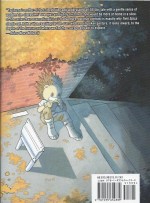
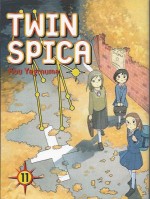
Twin Spica volume 11


By Kou Yaginuma (Vertical)
ISBN: 978-1-935654-33-9

Kou Yaginuma first captured the hearts and minds of star-struck generation with poignant short story 2015 Nen no Uchiage Hanabi (2015: Fireworks, published in Gekkan Comics Flapper, June 2000), before expanding the subject and themes into a major manga epic combining hard science and humanist fiction with lyrical mysticism and traditional tales of school-days and growing up.

Diminutive teenager Asumi Kamogawa always dreamed of going into space. From her earliest moments the solitary child gazed up at the heavens with imaginary friend Mr. Lion, especially gripped by the twinkling glow of Virgo and alluring binary star Spica.

An isolated, serious girl, she lived with her father, a common labourer who had once worked for the consortium which built the rockets for Japan’s Space Program.

When Asumi was one year old (just a few years from right now) the first Japanese manned launch ended in catastrophe after rocket-ship Shishigō (“The Lion”) exploded during its maiden flight: crashing to earth on the coastal city of Yuigahama. Hundreds were killed and many more injured, including Asumi’s mother.

Maimed and comatose, the matron took years to die. The shock crushed her grieving husband and utterly traumatised their infant daughter.

In response to the disaster, Japan set up an astronautics and space-sciences training facility where, after years of determined struggle, Asumi was accepted by the Tokyo National Space School. Slowly making friends like Shinnosuke Fuchuya (a classmate who had picked on her since their pre-school days back in Yuigahama), boisterous Kei Oumi, chilly, distant Marika Ukita and ultra-cool Shu Suzuki, Asumi inexorably moved closer to her unshakable dream of going to the stars.

Against all odds – she is small, shy, retiring, seems weak and is very poor – Asumi endures and always succeeds. She still talks with Mr. Lion, who is probably the ghost of an astronaut from the Shishigō…

Individual instalments in these compelling monochrome volumes are presented as “Missions”; methodically combining into an overarching mosaic detailing the subtle interconnectedness of generations of characters, all linked by the call of distant stars.

Volume 11 includes Missions 65-75, plus a brace of enchanting autobiographical vignettes from the author’s own stargazing teenage years in his Another Spica occasional series, and the story resumes with the hopeful, ebullient dynamic shattered forever…

The gang had always bickered and competed – as friends do – but when Shu was selected to go to America to train for an actual space-shot everybody was delighted for him. Now they must come to terms with the news that he is dead…

Mission: 65 details Shu’s too-brief time at the Space Development Consortium Space Center where intense training triggers a long-incubating hidden disease into a debilitating flare-up. When the doctors contact his estranged father – a political heavyweight in the Japanese government – a flashback reveals a link to another member of the ardent group of astronaut students…

When his little sister Sakura visits Suzuki in hospital, his final inspirational words are of the friends he made by following his own dreams…

Possibly the most moving section of the entire extended epic, Mission: 66 focuses on Shu’s memorial service and how his passing affects the rest of the gang of individualistic oddballs before things lurch back to the quest for space in Mission: 67.

Hurled again into the exhausting drudgery of classes and physical training, the kids bury themselves in effort as they process the fact that the best of them is gone, barely reacting to the news of Suzuki’s replacement on the proposed American space-shot. They are also unaware that Asauri News journalist Ichimura is getting closer to corroborating his suspicions: Marika is not a normal human and her “father” – publicity-shy life-sciences mogul Senri Ukita – has accomplished something at once astonishing and ethically shady following the death of his first daughter years ago…

Mission: 67 finds the driven reporter meeting with even-more obsessed freelancer Yamaji who claims to have proof that Marika is a clone, an unethical secret copy of Senri’s dead daughter…

At that very moment the subjects of their furtive enquiries are also meeting. Like Shu, Marika has fallen out with her controlling father, but he has requested a meeting to discuss the strange fact that her friend died of the same genetic malady which afflicts her and killed her… predecessor…

His arguments to dissuade her from her dream of the stars only make Marika more determined to succeed…

Mission: 69 finds the kids gamely pushing in as their third year of study, acutely aware that only a few will be allowed to start the fourth, whilst in the background Ichimura and Yamaji squabble. They may both want the truth, but it’s increasingly clear that it’s for vastly different reasons…

And in one quiet moment, the grieving gang gather and Marika shares all she knows about her own condition and how it corresponds to what killed Shu…

That night on a rooftop, sad, confused Asumi discusses the events with Mr. Lion as she prepares for the term’s last push. Her entire future depends on the efforts of the next few weeks…

In Mission: 70 Ichimura heads for Yuigahama to visit the family shrine of the Ukitas and, while pondering the ethics of his big story, dreams of the days when he and the other kids talked of going into space. He almost misses Senri’s annual visit to his daughter’s grave but his perseverance is rewarded by an off-the-cuff interview where he challenges the wealthy man’s arrogance in playing with nature and asks the crucial questions “why and for what purpose?”

With answers of a sort, Ichimura then meets Yamaji and makes a deal…

Mission: 71 finds Asumi, Kei, Marika and Fuchuya with the rest of the class heading out to a remote island for another terrifying burst of survival training, but when they arrive the assembled students learn this test is a comprehensive recapitulation of everything they covered in the last three years: a sudden death, make-or-break evaluation, not of knowledge, aptitude or endurance, but spirit…

The arduous ordeal and deep soul-searching continues in Mission: 72 with the latest wrinkle being the cutting of sleep rations to 2 hours per night and news that already some of the class have failed and gone home. Asumi is stoic as ever, fiery Kei uses her anger to push on and Marika is her implacable, impassive self, but in their moments of sleep-time the girls find comfort and solidarity sharing their dreams and aspirations again and realise with relief that they are true friends at last…

After one last punishing push the survivors are congratulated and get on a bus for home, but the tests are not over yet…

Mission: 73 finds Asumi abandoned in the wilderness with a nothing but an envelope of instructions and a punishing time limit to reach her destination. The packet says stop for nothing, not even other students in distress, and the route is punctuated with alarm buttons for quitters to signal for help and admit failure…

As Asumi doggedly storms on she is unaware that nearly-beaten Fuchuya is behind her, drawing strength from her example, but when the diminutive dreamer sees Kei passed out she doesn’t hesitate for a second. Even Fucchy’s screaming that she’ll be disqualified can’t stop her helping a friend…

Mission: 74 continues the impossible race with Asumi running on her own until she encounters the equally distraught Marika. Convinced they have both failed, they proceed on together…

The epic adventure pauses with Mission: 75 as the despondent class gather back at the Academy and Fuchuya – upset that his newly-discovered colour blindness will wash him out of the program if nothing else does – remembers his youth at the fireworks factory in Yuigahama.

When the official announcement comes that the island tests were deliberately impossible to pass and nobody should consider themselves out of the running until announcements come in January, the astounded kids separate for the holidays. However as they head home exhausted, cruel fate again intervenes as the train carrying one of our stars is buried in a landslip…

To Be Continued…

Rounding off this volume are two more wistfully autobiographical ‘Another Spica’ episodes, culled from author Yaginuma’s lovelorn youth. The first finds him recalling and graphically eulogizing a teacher who died too young but changed his life-path, whilst the second shares the unsuspected stresses of living and working in isolation and how inspiration to carry on can come from absolutely anywhere…

These magically moving marvels originally appeared in 2007-2008 as Futatsu no Supika 13 and 14 in the Seinen manga magazine Gekkan Comics Flapper, targeting male readers aged 18-30, but this ongoing, unfolding beguiling saga is perfect for any older kid with stars in their eyes…

Twin Spica ran from September 2001-August 2009: sixteen volumes tracing the trajectories of Asumi and friends from callow students to trained astronauts, and the series has spawned both anime and live action TV series.

This delightful saga has everything: plenty of hard science to back up the informed extrapolation, an engaging cast, mystery and frustrated passion, alienation, angst and true friendships; all welded seamlessly into a joyous coming-of-age drama with supernatural overtones, raucous humour and masses of sheer sentiment.

These books are printed in the Japanese right to left, back to front format.
© 2012 by Kou Yaginuma. Translation © 2012 Vertical, Inc. All rights reserved.

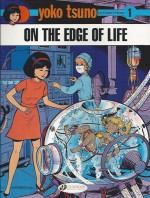
Yoko Tsuno volume 1: On the Edge of Life


By Roger Leloup (Cinebook)
ISBN: 978-1-905460-32-8

Yoko Tsuno began first began gracing the pages of Spirou in September 1970 and is still going strong. As detailed by Roger Leloup, the astounding, all-action, uncannily edgy, excessively accessible exploits of the slim, slight Japanese scientific-adventurer are amongst the most intoxicating and absorbing comics thrillers ever created.

Leloup’s brainchild is an expansively globe-girdling, space and time spanning multi-award winning series devised by the monumentally talented Belgian maestro after leaving his job as a studio assistant on Herge’s The Adventures of Tintin and striking out on his own.

Compellingly told, superbly imaginative but always solidly grounded in hyper-realistic settings boasting utterly authentic and unshakably believable technology and scientific principles, the illustrated epics were at the vanguard of a wave of strips featuring competent, clever and brave female protagonists which revolutionised Continental comics from the 1970s onwards and they are as timelessly engaging and potently empowering now as they ever were.

The very first stories ‘Hold-up en hi-fi’, ‘La belle et la bête’ and ‘Cap 351’ were brief introductory vignettes before the superbly capable Miss Tsuno and her always awestruck and overwhelmed male comrades Pol Paris and Vic Van Steen truly hit their stride with premier extended saga Le trio de l’étrange which began in the May 13th 1971 Spirou…

In the original European serialisations, adventures alternated between explosive escapades in exotic corners of the world and sinister deep space sagas with the secretive and disaster-plagued alien colonists from Vinea, but for these current English translations, the extraterrestrial endeavours have been more often than not sidelined in favour of realistically intriguing Earthly epics such as this one which began serialised life in 1976 as La frontière de la vie (Spirou #1979-1999) before becoming the seventh collected album a year later.

There have been 27 European albums to date, and Cinebook opted to open their string of English translations with this one; a skilfully suspenseful spooky mystery which opens in the fabulously restored mediaeval German city of Rothenburg.

Yoko is sightseeing as she walks to a meeting with new friend Ingrid Hallberg: one of Germany’s most promising young classical organists and a woman the troubleshooting trio saved from murder in the case of The Devil’s Organ.

The trip takes a dark turn when Yoko learns Ingrid is ill. The musician is suffering from a strange, inexplicable form of anaemia and her cousin Rudy believes the malady is not of natural origin. In fact, despite his qualifications as a biologist, the frantic young man claims Ingrid is the victim of a vampire…

He has constantly examined her since the illness began and discovered a bizarre wound and that a large percentage of Ingrid’s blood has been replaced with a synthetic substitute. The distraught, diligent researcher has also plotted the timing of the attacks and the next one is due that very night…

Plans laid, valiant Yoko patiently waits by the victim’s bedside, but is overcome by an unexplained lethargy and, but for a fluke chance, would have slept through the sight of a caped and gas-masked woman siphoning off Ingrid’s precious fluids and drip-feeding something else into her…

However, a concerned pet upsets the intruder’s invasion and a drowsy but roused Yoko gives frantic chase through the unlit streets of the ancient town. Not at her best, she soon fades and is distracted by peculiar historian and archivist Ernst Schiffers who shows her a strange sight: some hooligans have built a makeshift scientific laboratory in the crypts beneath the city…

But that is not the worst of it: when the town was meticulously rebuilt after the bombing raids of the last war something went wrong. As an astoundingly accurate scale model he constructed now proves, the restored Rothenburg has one house too many…

Before he can say more, however, a car pulls up and a gang of masked men try to grab Yoko…

Soon she is the quarry, doubling back over the torturous route she followed in pursuit of the vampire and is astonished to fund the gas-masked woman waiting. With urgent desperation the enigma begs Yoko to finish the transfusion into Ingrid or the “victim” will die…

Later Rudy confirms the solution is a breakthrough plasma substitute, perfectly attuned to Ingrid’s incredibly rare blood-group. As they cautiously administer it, Vic and Pol drive up in the dawn light. Together the adventurers retrace Yoko’s eventful night and track Schiffers to his house. Although the historian is gone – probably taken by the masked gang – his home conceals a massive model of the town and eagle-eyed Yoko spots a discrepancy which can only be a clue…

Most suspicious of all is the fact that the Hallberg family physician Doctor Schulz is the missing man’s neighbour and his dwelling is ground zero for the “extra” house…

Rudy cannot believe any wrongdoing of the doctor and shares the story of how the tragic GP lost his little girl Magda in one of the last air raids of the war. On being pushed however, Rudy admits that there was some oddity or mystery connected to the event. A little digging and the investigators uncover a strange fact: little Magda had the same rare blood type as Ingrid…

Assumptions formed and conclusions reached, the gang head straight to a local cemetery to check out a certain coffin even as back in town an impossible apparition appears to Rudy’s mother…

Soon the vampire has no choice but to reveal herself and an incredible tale unfolds. A family pact has kept two generations of Schulz’s working at the forefront of biological advancement. Magda has been kept in tenuous suspended animation between life and death since 1945 as her father and extended family sought a cure, but now with the project almost completed, they have been forced to share their secrets and discoveries with other scientists and either haste or greed has left the 30 year old infant in mortal peril…

Based in a lab under the city, they have resorted to stealing Ingrid’s healthy blood to sustain Magda as they carefully remove her from decades of life support but the project is inexplicably failing at the final stage. When the vampire convinces her colleagues to let Rudy and Yoko add their skills to the team-effort, the observant engineer instantly spots that the problem is sabotage from within the select group…

When the indomitable Yoko acts with her usual philanthropic recklessness, she too has a terrifying near-death experience before the generational tragedy reaches a happy conclusion…

As always the most potent asset of these breathtaking dramas is the astonishingly authentic, staggeringly detailed draughtsmanship and the terse, supremely understated storytelling, which superbly benefits from Leloup’s scrupulous research and meticulous attention to detail, honed through years of working on Tintin.

Every bit the fictive equal of James Bond, Modesty Blaise, Tintin or any other genre-busting super-star, Yoko Tsuno is a truly multi-faceted adventurer, equally at home in all manner of dramatic milieus and able to hold her own against all threats and menace on Earth or beyond …

This is another miraculously-paced, meticulously planned, tensely suspenseful escapade to appeal to any fan of blockbuster action fantasy or devilish sinister thriller.
Original edition © Dupuis, 1978, by Roger Leloup. All rights reserved. English translation 2007 © Cinebook Ltd.

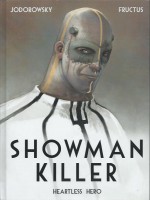
Showman Killer volume 1: Heartless Hero


By Alejandro Jodorowsky & Nicolas Fructus (Titan Comics)
ISBN 978-1-78276-139-6

Born in Tocopilla, Chile in 1929, Alejandro Jodorowsky Prullansky is a filmmaker, playwright, actor, author, world traveller, philosopher, spiritual guru and comics writer.

The amazing modern polymath is most widely known for such films as Fando y Lis, El Topo, The Holy Mountain, Sante Sangre, The Rainbow Thief, The Dance of Reality and others, and a vast and influential comics output, including Anibal 5 (created whilst living in Mexico), Le Lama blanc, Aliot, The Meta-Barons, Borgia, Madwoman of the Sacred Heart and so many more, created with some of South America and Europe’s greatest artists.

His decade-long collaboration with Moebius on the Tarot-inspired adventure The Incal (1981-1989) completely redefined and reinvented what comics could aspire to and achieve.

Most widely regarded for his violently surreal avant-garde films, loaded with highly-charged, inspired imagery – blending mysticism and what he terms “religious provocation” – and his spiritually-informed fantasy and science fiction comics tales, Jodorowsky is also fascinated by humanity’s inner realms and has devised his own doctrine of therapeutic healing: Psychomagic, Psychogenealogy and Initiatic massage.

He still remains fully engaged and active in all these creative areas to this day.

He has never stopped creating and most of his lifelong themes and obsessions are seamlessly wedded together in this first volume of a visceral and challenging new sci fi slaughter series which first surfaced in France in 2010 as Showman Killer: Un héros sans coeur.

This slim but sublime translated hardback tome sparkles with the macabre painted mastery of illustrator/animator Nicolas Fructus (Thorinth, Kadath, Arthur and the Minimoys) and opens with a ‘Prologue’ wherein creepy mercenary technologist Doctor Courcolain and his truly disturbing assistant Paleo-Dog Orlanda visit the prison planet Halkatrass in search of fresh sperm samples…

They don’t come fresher than Joe the Gut-Eater‘s; his vital juices callously and corruptly obtained whilst he’s being actively tortured to death. Before long the mad scientist is back in his secret asteroid lab, inseminating long-missing celebrity Lady Anonima. The regal brood surrogate has been in a vegetative state for months and isn’t even aware that the next nine will be her last…

Doctor Courcolain has had enough of serving the puissant, parsimonious Omnimonarch. The prospective and self-made “parent” has a grand scheme to create the universe’s greatest ultra-mercenary and thereafter squeeze vast sums out of the bloodthirsty tyrant when his relentless, totally emotionless killer “son” carries off the lion’s share of regal commissions…

Reared in robotic isolation, the baby is subject to psycho-surgery and biological cyber-augmentation as Courcolain carefully nurtures his perfect killer and, when it comes of age, despatches him to learn/steal all the secrets of the Aldeberan ninja Akka-Kun, a first mission which leaves his sinister scion with the power to shapeshift…

Dubbing his flamboyant creation Showman Killer, the vile physician debuts his creature at the Omnimonarch’s grand gladiatorial games on Planet Gold, where the greatest warriors in the universe convene to fight and die for the sovereign’s pleasure.

The mystery newcomer makes an unimaginable splash and after winning a vast reward for Courcolain affords his creator one last surprise. The so-brilliant doctor has not fully considered what might happen in the mind of perfect assassin reared without hope or affection and programmed to think all life worthless and money the most important thing in creation…

When the dust and bloody mist settles the mature and independent Showman Killer than places himself at the Omnimonarch’s service…

The story proper begins years later as the paragon of murderers awakes from another horrible dream. The royal assassin has grown bored – even of the vast wealth his gifts have earned him – and when an urgent call comes to save the Omnimonarch’s newborn heir and wife from marauding Nihilos he diligently sets off, but cockily allows himself to be distracted by a higher bid from the King of Ornisaurios.

Judging he can save the bird-lizards from invasion and still tackle the Nihilos in time, Showman Killer indulges himself in a welter of gory slaughter, blithely unaware that he has made a grave miscalculation…

At the Noumara Palace Hospital on Planet Arcane the ravaging perpetrators have been exposed as the spearhead of a well-organised insurrection rather than a ragtag band of raiding primitives.

A traitor high within the court has made a ruthless power-play, but the valiant sacrifice of the queen has foiled his Plan A. Now, with the heir missing Showman Killer at last arrives, and experiences the full grief and fury of the Omnimonarch with calm detachment. Despite his failure the assassin is still necessary to the ruler whose soul screams out for vengeance.

The hidden plotter is also content: the real threat to his usurpation is the heir and now the most infallible hunter in the universe will find the child for him…

After a long quest and an ocean of spilled blood, the gulled seeker locates the missing baby and the strange woman who safeguards him. He has seen her many times – in his dreams – and when she leaves the baby in his care and vanishes, the Killer sets out for home with the strangest sensations disturbing his placid attitude. Could it be emotion or perhaps some unguessed connection to the royal infant…?

To Be Continued…

Stark, baroque and chillingly brutal, this is beguiling mystery and rousing space opera at their most uncompromising: blending the familiar locales and trappings of galactic empires with the dark, foredoomed mood and mystique of classical samurai dramas and classic Film Noir.

A visual feast for all lovers of fantastic fiction and ferocious yet tragic antiheroes…
Showman Killer volumes 1, 2, 3, Jodorowsky-Fructus © Éditions Delacourt 2010-2012 Showman Killer volume 1 is available in selected shops now and available to pre-order for a December 29th 2015 internet release.

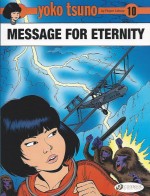
Yoko Tsuno volume 10: Message for Eternity


By Roger Leloup translated by Jerome Saincantin (Cinebook)
ISBN: 978-1-84918-251-5

The uncannily edgy yet excessively accessible European exploits of Japanese scientific adventurer Yoko Tsuno began first began gracing the pages of Spirou in September 1970 and are still going strong.

The explosive, eye-popping, expansively globe-girdling multi-award winning series was the brainchild of Roger Leloup, another hugely talented Belgian who worked as a studio assistant to Herge’s on The Adventures of Tintin before striking out on his own.

Compellingly told, superbly imaginative but always solidly grounded in hyper-realistic settings sporting utterly authentic and unshakably believable technology, these illustrated epics were at the vanguard of a wave of strips featuring competent, clever and brave female protagonists which revolutionised Continental comics from the last third of the 20th century onwards and are as potently empowering now as they ever were.

The initial Spirou stories ‘Hold-up en hi-fi’, ‘La belle et la bête’ and ‘Cap 351’ were short introductory vignettes before the superbly capable Miss Tsuno and her always awestruck and overwhelmed male comrades Pol and Vic truly hit their stride with premier extended saga Le trio de l’étrange which began serialisation with the May 13th 1971 issue.

That epic of extraterrestrial intrigue was the first of 27 European albums to date, and the on show here was first serialised in Spirou #1882-1905 (9th May-17 October 17th 1974) and released the following year as Message pour l’éternité. A skilfully suspenseful mystery thriller, it was chronologically the fifth album and reaches us as Cinebook’s tenth translated chronicle.

It all begins as ever-restless Yoko perfects her skills in a new hobby. Gliding high above Brittany she fortuitously sets down in a field near a vast telecommunications complex. Offered a tour of the space-probing facility she learns from one of the scientists of a fantastic “ghost message” recently picked up by satellites: a Morse code signal from a British plane lost in 1933. Moreover the signal is still being regularly broadcast…

When Yoko tries to arrange to have her glider picked up and sort out her own departure, a mysterious Englishman offers her a lift in his private helicopter. He has an ulterior motive: an employee of the company which insured the lost flight he is looking for someone with certain precise qualifications to trace the downed flight and recover a fortune in jewels from it. Her fee will be £20,000…

It transpires that his firm has known where the plane went down for some time, but geographical and logistic difficulties have prevented them from undertaking a recovery mission until now. Moreover, although they have now started the process, the petite engineer is physically superior to the candidates the company are currently working with…

Cautiously accepting the commission, Yoko starts planning but even before Pol and Vic can join her the following day, strange accidents and incidents begin to imperil her life…

The boys are understandably reluctant but that attitude turns to sheer frustration and terror after someone tries to shoot down Yoko as she practises in her glider. This only makes her more determined to complete the job at all costs.

Two weeks later the trio are heading to the daunting Swiss fortress the company uses as a base when another spectacular murder attempt almost ends their lives, but Yoko is undaunted. Not so Vic and Pol, especially after hearing that two of her fellow trainees have recently died in similar “accidents” in the mountains…

Carrying on regardless, she is introduced to the fantastic glider-&-launch system which will take her to the previously unattainable crash site and begins perfecting her landing technique in a fantastic training simulator.

Eventually more details are provided and the real story unfolds. The Handley-Page transport they are seeking was conveying diplomatic mail from Karachi to London in November 1933, but vanished in a storm over Afghanistan. Decades later a satellite somehow picked up a broken radio message stating it had landed… somewhere…

The businessman the trio call “Milord” identifies himself as Major Dundee – a spymaster from Britain’s Ministry of Defence – and explains how a shady American former U2 pilot approached the British government, claiming to have spotted the downed ship during a clandestine over-flight of Soviet territories.

He provided purloined photos showing the plane in the centre of a vast circular crater on the Russo-Chinese border, but subsequent reconnaissance flights revealed nothing in the hole and the decision was taken to make a physical assessment, even though the already inaccessible site was deep in hostile enemy territory…

Since then it has become clear that some unidentified agent or group is acting against the recovery project, probably intent on retrieving the ship’s mysterious but valuable cargo for a foreign power.

Events spiral out of control when a traitor in the training team attempts to kill Yoko and “Operation Albatross” is rushed to commencement before the unknown enemy can try again…

Within a day she is transported in a most fantastic and speedy manner around the world before her space-age glider prototype is secretly deployed over the enigmatic crater…

Narrowly avoiding patrolling Soviet jets, Yoko deftly manoeuvres into the mist-covered chasm and plunges into one of the most uncanny experiences of her life.

The old plane is certainly gone. The floor of the crater is strangely cracked and at the centre stands a strangely burned and blackened monolith, there are uncharacteristic animal bones everywhere and at one end of the vast cavity there is a primitive but large graveyard…

Whilst the astounded girl is exploring she is ambushed by her treacherous fellow trainee who has raced after her by conventional means and parachuted into the bizarre basin. However, his original plans have changed drastically since arrival and despite the machine gun he wields he needs Yoko’s help.

He’s already located the Handley-Page – somehow manually dragged under an unsuspected overhang in the crater – but is mortally afraid of what he describes as the “tiny people” infesting the terrifying impact bowl…

As the unlikely allies head towards the perfectly preserved plane, the truth about the terrifying homunculi is shockingly revealed and they encounter the last human survivor of downed Diplomatic Flight, discover to their supreme cost the uncanny and ultimately deadly atmospheric anomaly which has kept the plane a secret for decades and turned the crater into a vast geological radio set…

When the dust settles Yoko realises she is trapped in the subterranean anomaly. With all her escape plans rendered useless she must align herself with the bizarre sole survivor and his bestial, rebellious servants, but she also refuses to give up on the recovery mission.

Of course that doesn’t mean that she has to trust anything the old relic in the hole or Major Dundee has said. With that in mind she lays her own plans to settle matters…

As always the most potent asset of these breathtaking dramas is the astonishingly authentic and staggeringly detailed draughtsmanship and storytelling, which superbly benefits from Leloup’s diligent research and meticulous attention to detail, honed through years of working on Tintin.

With this sleekly beguiling tale Yoko proved that she was a truly multi-faceted adventurer, equally at home in all manner of dramatic milieus and able to hold her own against the likes of James Bond, Modesty Blaise, Tintin or any other genre-busting super-star: as triumphantly capable pitted against spies and crooks as alien invaders, weird science or unchecked force of nature…

This is a splendidly frenetic, tense thriller which will appeal to any fan of blockbuster action fantasy or devious espionage exploit.
Original edition © Dupuis, 1973, 1979 by Roger Leloup. All rights reserved. English translation 2015 © Cinebook Ltd.

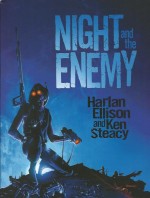
Night and the Enemy


By Harlan Ellison & Ken Steacy (Dover Comics & Graphic Novels)
ISBN: 978-0-486-79961-2

Win’s Christmas Gift Recommendation: Stunning Sci Fi Blockbuster Brilliance… 9/10

Harlan Ellison’s dark and chilling space war tales are always eminently readable.

This gloriously impressive re-issued volume gathers five of the best and most celebrated – all taken from the long-running but intermittent sequence of novellas and short-stories detailing Mankind’s extended intergalactic struggle against a race of star-spanning rivals – adapted in a variety of visual formats by air-brush wizard and aviation-addict Ken Steacy, together with a new prose framing-sequence from the author.

Humanity’s literary battle against the Kyben spanned ten generations and involved all manner of technologies up to and including time-travel. Probably the most famous of them is the award-winning Demon with a Glass Hand, adapted as both an episode of The Outer Limits TV show in 1964 and as one of the very best of the long-gone and much-lamented DC Graphic Novel series, but that’s a graphic extravaganza we’ve already covered elsewhere…

Right here, right now, this classy full-colour album-sized paperback resurrects a glorious artefact first released by Comico and Graphitti Designs in 1987, just as the market for English-language graphic novels was taking off, and piles on the goodies by adding a brace of fabulously informative and keenly reminiscent Introductions: ‘In these Pages, the War Still Wages’ from author Ellison and ‘…As We Go Forward, Into the Past!’ by astoundingly multi-talented adaptor Ken Steacy.

Closing down the show there’s more goodies: an eye-popping glimpse at Steacy’s visual virtuosity in the feature ‘Afterwords & Pictures’ revealing unpublished art, roughs, layouts and finished covers as well as working models and more, plus the original Afterwords ‘War Artist’ and ‘Whispers from the Telling Box’ by Steacy and Ellison respectively from the 1987 edition.

Following a specially created ‘Prologue’ by E & S, the pictorial panoply shifts seamlessly into the earliest tales in the epic conflict, beginning with the apocalyptic ‘Run for the Stars’, a traditional panels and balloons strip describing life and its imminent end on Deald’s World after the hordes of Kyba drop in, followed by ‘Life Hutch’, a grim survival tale combining blocks of text with large images in both lavish colour and stark monochrome highlighting a soldier-survivor’s battle against a malfunctioning robot…

‘The Untouchable Adolescents’ is a bright and breezy art job disguising a tragic and powerful parable of good intentions gone awry, whilst sardonic two-pager ‘Trojan Hearse’ rates just one powerful, lonely illustration for its cunning tale of invasion. ‘Sleeping Dogs’ is a moody epic which fittingly concludes the adaptations with the story of a force of liberating Earth men who trample all over a few aliens in their rush to defeat the Kyben and realise too late they’ve poked the wrong bear…

However fans will be delighted to find this volume also carries an original entry in the annals of the Earth-Kyba conflict with the prose and picture ‘The Few… The Proud’: at the time of this collection’s original release, Ellison’s first new story for the series in fifteen years…

This epic tome was a groundbreaking landmark and the time of its original release and remains an innovative and compelling treat for both old and new fans of the writer, lovers of seductively unconventional graphic narrative and of course comic readers in general.
Written by Harlan Ellison®. © 1987, 2015 The Kilimanjaro Corporation. All Rights Reserved. New material by Harlan Ellison®. © 2015 The Kilimanjaro Corporation. All Rights Reserved. Cover and illustrations © 1987, 2015 Ken Steacy. All Rights Reserved.

Night and the Enemy is available in comic shops and online around the world right now and can be pre-ordered online for a December 25th release in the UK.

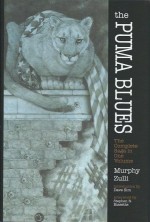
The Puma Blues: The Complete Saga in One Volume


By Stephen Murphy & Michael Zulli with Alan Moore and an Introduction by Dave Sim and Afterword by Stephen R. Bissette (Dover Comics & Graphic Novels)
ISBN: 978-0-846-79813-4

Win’s Christmas Gift Recommendation: Epic, Enthralling, Exciting… 10/10

During the 1980s the American comics scene experienced an astounding proliferation of new titles and companies following the birth of the Direct Sales Market. With publishers now able to firm-sale straight to specialised, dedicated-retail outlets rather than overprint and accept returned copies from general magazine vendors, the industry was able to risk and support less generic titles whilst authors, artists and publishers could experiment without losing their shirts.

The huge outpouring of fresh material deriving from the Direct Sales revolution resulted in a plethora of innovative titles and creators – and let’s be honest – a host of appalling, derivative, knocked-off, banged-out trash too. Happily I’m the boss of me and I choose to focus on the great stuff…

The period was an immensely fertile time for English-language comics-creators. Comics shops – run by people in touch with their customers and who actually read and loved at least some of what they sold – sprang up everywhere and host of new publishers began to experiment with format, genre and content, whilst eager readers celebrated the happy coincidence that everybody seemed to have a bit of extra money to play with.

Consequently the new kids were soon aggressively competing for the attention and cash of punters who had grown resigned to getting their sequential art jollies from DC, Marvel, Archie and/or Harvey Comics. European, Japanese and even Canadian material began creeping in and by 1983 a host of young companies such as WaRP Graphics, Pacific, Eclipse, Capital, Now, Comico, Dark Horse, First, Renegade and many others had established themselves and were making impressive inroads.

Most importantly, by avoiding traditional family-focussed sales points like newsstands, more mature material could be produced: not just increasingly violent or sexually explicit but also far more political and intellectually challenging too.

Subsequently, the “kid’s stuff” stigma afflicting comics largely dissipated and America began catching up to the rest of the world, at least partially acknowledging that comics might be a for-real art-form.

New talent, established stars and different takes on old forms all found a thriving forum and marketplace desperate for something a little different. Even tiny companies and foreign outfits had a fair shot at the big time and a lot of great material came – and, almost universally, as quickly went – without getting the attention or success they warranted.

One of the most critically acclaimed and enthralling features was published by the Moses of Independent creators, Dave Sim.

Sim had begun self-publishing Cerebus the Aardvark in 1977 and pretty much trail-blazed the entire phenomenon for the rest of us. Passionately, stridently non-“mainstream”, he soldiered on in complete control of every aspect of his creation and periodically began publishing other titles by creators who impressed him or he simply liked. Eventually, however, Sim ditched a coterie of fine and uniquely different books that were nurtured by his Aardvark-Vanaheim outfit, leaving them with his ex-wife’s new company Renegade and re-concentrated all his efforts on Cerebus once more.

And then in 1985 a couple of casual acquaintances showed Sim the opening instalment of something called The Puma Blues…

The full story – including how that strangely compelling, so-slowly and dreamily unfolding eco-fable became a helpless hostage and collateral casualty in the one-man publishing house’s lengthy battle with an international distributor determined to dictate how creators did business – is related in painful, sordid detail in Sim’s Introduction for this stunningly impressive archival edition – complete with his equally stunning pin-up of the series’ iconic signature invention…

This monolithic monochrome tome gathers and reprints every published issue of The Puma Blues comic (except the non-canonical Benefit Issue #21 which was rushed out in solidarity by incensed fellow creators to generate publicity, support and funds) before finally, after almost 25 years, reuniting writer Stephen Murphy and Michael Zulli to complete their story…

The aforementioned hostage was an eerily beautiful disturbingly pensive oddment which debuted as a black-&white title in June 1986; marrying then-escalating ecological concerns and tropes of science fictive paranoia with scrupulous soul-searching and the eternal quest for place in both family and the world…

The Puma Blues is a tale more about the Why and How of things rather than the usual What of plot and character, so this overview will be brief and short on detail: trust me, you’ll be grateful for my forbearance when you start reading the magnum opus yourself…

Accepting the premise that all Science Fiction – whenever it’s created – is always about Right Here, Right Now, the abiding undercurrent of The Puma Blues is an inexorable slide to tragic, unfixable, unwanted change.

Since the 1970s and proceeding ever more unchecked into the 21st century, nations and human society have been plagued with horrors and disasters exacerbated – if not actually caused – by a world-wide proliferation of lying, greedy, venal, demented and just plain stupid bosses and governments. You could call it retro-futurism now, but tomorrow – as seen from 1986 – at least in terms of society was for many a foredoomed and hopeless place.

Looking at my TV screen or out of a window, I’m not sure that Murphy & Zulli weren’t fundamentally right and doubling as prophets when they set their gentle epic fourteen years into the future…

2000 AD and government agent Gavia Immer (look it up, they’re being very clever) is monitoring changes to flora and fauna in the wilderness Reserve around Quabbin Reservoir, Massachusetts on behalf of the US military.

Still a beautiful, idyllic landscape dominated by ancient apex predators such as mountain lions, despite the perpetual acid rains, ozone layer breaches and the radioactive toxins left after White Supremacists nuked the Bronx, the harsh area monitored by the solitary researcher is the site of some radical changes…

Gavia’s job is not just clerical. His mission is to periodically test the fluctuating PH levels of the lake in between the state’s continual chemical readjustments of the body of water and, whenever he discovers a mutant species – whether “animute” or “biomute” – he has to utilise state-of-the-art technology to instantaneously ship the specimens to a US-Sino laboratory/Reserve somewhere in China.

That hasn’t prevented the hauntingly lovely flying mantas from proliferating and dominating the skies above his head, however…

Gavia’s only contact with the rest of humanity is his TV screen. It delivers reports, interviews and pep talks from his superiors and allows him to talk to his mother. That gives the solitary agent plenty of time to brood about his father’s death and their unresolved issues.

The fanatical film-maker has been gone four years now but Gavia is still drowning in unresolved conflicts, which is probably what prompts his mum to forward tapes of all the strange documentaries he neglected his wife and son to make…

Is Gavia imagining it or is he actually gradually divining some inner cosmic revelation from his dad’s tapes and theories? Their examination of recent historical events draw solid links between the declining state of the world and a (frankly baffling and seemingly implausible) connection to patterns of UFO sightings.

Surely though, his father’s clearly growing obsession with the strange “alien” creatures popularly known as “Greys” must only have his metaphorical way of searching for incontestable Truth?

Nonetheless they slowly begin to have a similar effect on the thinking of the equally soul-searching son…

There’s certainly plenty of room for new answers: the growing dominance of the flying mantas is clearly no longer a secret – as Gavia learns to his regret – after an old soldier and radical “neo-Audubon” named Jack invades the Preserve looking for proof of the flying former fish. Despite himself Gavia lets the affable old coot stay; a decision he soon has cause to regret…

And as animals old and new jostle and tussle to find their niche in the new world order, Gavia sinks further into his father’s videotaped philosophies until he has his revelation and takes off into the heart of America to find out how and why things are falling apart…

Proffering an increasingly strong but never strident message of environmental duty and responsibility, The Puma Blues outlined its arguments and questions as a staggeringly beautiful and compelling mystery play which ran for 23 formal issues, a Benefit special designated “Eat or Be Eaten” and a tantalisingly half-sized #24 before the exigencies of publishing made it extinct.

Before it was squeezed out of existence the saga was collected as two trade paperbacks – Watch That Man and Sense of Doubt – but this monumental tome finally completes the story and then offers a passionate defence and valiant elegiac testimony in ‘Acts of Faith: a Coda’ by devoted follower and occasional contributor Stephen R. Bissette and even finds room to reprint two items from the aforementioned Benefit Issue: a page from ‘Pause’ by Murphy, Zulli & Bissette plus the eerily erotic ‘Acts of Faith’ by Alan Moore, Bissette & Zulli exploring the mating habits of those sky-borne Birostris (look that up too, now I’m being clever…)

The long-delayed walk on the wild side finally concludes with the quasi-theosophical ‘Mobile’: the full contents of Puma Blues #24½ mini-comic by Murphy & Zulli.

Haunting, chilling, beguiling and intensely imposing, this is a massive accomplishment and enduring triumph in comics narrative.
© 2015 Stephen Murphy & Michael Zulli. Introduction by Dave Sim © 2015 to be reciprocally owned by both Stephen Murphy & Michael Zulli. Afterword © 2015 by Stephen R. Bissette. All rights reserve.

The Puma Blues is available in comic shops and online around the world now. It can be pre-ordered online for a December 25th release in the UK.

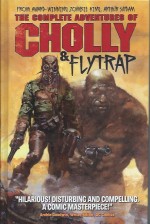
The Complete Adventures of Cholly & Flytrap


By Arthur Suydam with John Workman, Chris Eliopoulos & Annie Parkhouse (Titan Comics)
ISBN: 978-1-78276-767-1

Win’s Christmas Recommendation: Merry, Manic Mayhem… 8/10

Arthur Suydam comes from an impressive American dynasty of acclaimed artists harking back to the birth of the nation, but whereas they excelled in gallery painting and architecture, their polymath descendant has divided his time, talents and energies between sequential art and music.

Probably best known (unless you’ve seen him playing with Bruce Springsteen) today as a creator of stunning Zombie art, Suydam’s other signature graphic enterprise has been the perilously peripatetic and gorily satirical burlesques of an inseparable duo of legendarily post-apocalyptic weirdoes dubbed Cholly & Flytrap.

As noted in this lavish hardcover complete collection, the illustrator, author, designer, screenwriter and composer/musician has, since the 1960s, peddled his anarchically humorous, offbeat confections in such disparate venues as Heavy Metal, National Lampoon, Penthouse Comix and Epic Illustrated (where many of these brutally madcap little graphic novellas first appeared – specifically issues #8, 10, 13, 14 and 34); comicbooks like Tarzan, Conan, Batman, House of Mystery, Walking Dead and Marvel Zombies plus movie spin-offs Aliens and Predator.

He has also produced covers for novels including Max Allan Collins and Mickey Spillane’s collaborative Dead Street and Game-box art for Touch the Dead. Periodically the always-busy Suydam returns to his own uniquely skewed creative projects such as Mudwogs and the mirthfully militaristic muck-ups of his bombastically bloody buddies, teasingly releasing another snippet every so often…

Lavishly grotesque, wickedly wry and surreptitiously subversive, Cholly & Flytrap is a bold blend of dryly witty pastiches combining elements of Moebius’ Arzach, the sci-fi tinged cultural iconoclasm of Vaughn Bode and a surreal anti-war temperament as pioneered by EC Comics which imbues the constant and blackly comic ultra-violence with a hauntingly tragic and educative undertone.

Long ago the space-barge Exodus II crashed on an uncharted world. After untold ages the survivors have bred but never prospered, locked as they are in the constant struggle for survival. It’s not that the planet is particularly inhospitable… it’s just that the denizens – indigenous and not – adore war-making and love killing. Gosh, it’s so very much like Earth…

In the early 1970s Cholly began life as a bat-riding warrior: an inspiration (and eventually poster advert) for the animated Heavy Metal movie, but it was mysteriously transformed into a hot chick on a pterodactyl after acceptance (this sort of inexplicable conceptual metamorphosis happens a lot in film-land), leaving Suydam with the rights to a cool-looking visual and a lot of ideas…

Time passed, Marvel started a creator-owned, rights-friendly fantasy periodical in response to the success of Heavy Metal and that reinvented bat-riding, goggles-wearing avatar of conflict started popping up. Of course, he had evolved slightly whilst the chiropteran had become a colossal, dauntingly naked, bald fat Chinese man. Cholly still rode him like a seasoned Ace, though…

Augmented by a wealth of original art studies, sketches and finished paintings, the ‘Introduction by Max Weinstein’ offers contemporary background, history and critical expression before the exigent exploits (gathered in the order of the 2004-5 repackaged reprints from Image Comics) begin with ‘Chapter 0’ (plotted by Peter Koch) as the restless wanderers haul up at their favourite restaurant for a feed. Impatience, hunger, foreign food cooked by scurrilous talking bugs and honking big guns never make for a sedate evening…

This yarn is neatly stitched together with a later tale (originally entitled ‘A Little Love, a Little Hate!’ from 1981); a frenetic chase/duel between a foul-mouthed, flying-jacketed war-hawk and his slug-like arch-enemy, which showed Cholly’s streetwise cunning in spectacular, over-the-top, take-no-prisoners fashion.

That neatly segues into extended saga ‘The Rites of Spring‘ where Suydam expanded his cast and extemporized on the concept of mortals as organic war machines in a Horatian paean of Thermopylan courage on a world where combat is the natural order.

With Cholly and faithful, mute Flytrap stubbornly holding back a veritable horde of slug-troopers and colossal war-wagons, this is a smart and lusciously graphic feast of visual violence and sassy back-chat…

‘Flightus Interuptus’ follows; an airborne tussle (possibly started before the previous tale?) wherein the high-flying Cholly, sans his humanoid steed, harasses a massive mammary zeppelin-bomber in nothing more than a primitive tri-plane pulled and supported by a brace of the planet’s autonomous, levitating anti-gravity breasts – and no, that’s not a misprint…

Shot down in the throes of victory, the adaptable aviator finds a giant bat to ride (remember kids, recycling even of ideas and art is good for any planet). Sadly the noble beast doesn’t last long before ‘The End’ sees the unseated aviator tooling around the sky with a pair of those flying hooters strapped to his appreciative feet until he encounters a monolithic monster having a furious argument with his own outrageously outspoken boy-bits. Passions aroused and tempers flaring, Cholly is witness to a conflict resolution you simply don’t see every day…

Soldier and human(ish) steed are reunited for ‘Chapter 6’ (with additional text by Bob Burden) as Cholly and a couple of fellow warriors battle slug-troopers to secure a downed freighter’s supplies and end up falling into the oddest sort of hell…

‘The Adventures of Cholly and Flytrap Part II’ commence with their explorations of the scarily Eden-like valley and its buxom, welcoming inhabitants. It’s almost a relief when the Devil pops up to deal with them, but happily Flytrap has a counter to his Final Solution…

The remainder of the comics extravaganza is dedicated to a vast and sprawling pseudo-noir pastiche entitled ‘Center City’, set in a brooding metropolis indistinguishable from 1930 New York or Chicago… except for the aliens, robots, mutants and monsters…

Vile, crippled gang-boss Emiel Luvitz runs the rackets and makes most of his money from the citizens’ gambling on his prize-fighting operation. It helps that he also owns the undisputed “Champ” – slow-witted, gigantic, super-strong Stanley Yablowski – who has never lost a bout or let an opponent live…

Cholly & Flytrap don’t care, they’re only in town long enough to scrape up some ammunition and get drunk, but when The Champ and his minders invade the dive they are patronising, things go south pretty quick.

The hulking bully wants some fun but when he forces the silent Chinaman into an arm-wrestling contest – and loses – all hell breaks loose…

Watching the brief but ferocious struggle is rival mobster and fight-promoter One-Lunger who instantly sees a way to topple Big Wheel Luvitz. Killing Cholly and shanghaiing Flytrap, the callous thug drags the protesting mute all over the world, training and building up the heartbroken yet still-resisting, silent giant into a successful, popular mystery contender who can possibly beat the Champ…

Center City soon becomes a Shakespearian nightmare as Luvitz, seeing foes all around him, begins a paranoia-fuelled campaign of terror, killing or alienating everyone around him even as One-Lunger and his over-the-hill robotic trainer Pop prepare their captive combatant for the grudge match that will settle the fate of the maddened municipality.

What nobody realises yet is that Cholly isn’t actually dead. Slowly stalking the unwary mobsters, he’s anticipating some extreme violence to get his beloved bosom buddy back…

Smart, devious and utterly compelling, this is a splendidly hilarious, wickedly gratuitous OTT tale to make Wagner or Brecht sit up and take notes…

Supplementing the graphic wonderment is a ‘Cover Gallery’, a vast portfolio of monochrome sketches, working drawings and finished paintings, a studious and multi-generational essay on ‘The Suydam Legacy in New York’ plus a photo-packed, celebrity stuffed ‘Biography’ of the dauntingly gifted Arthur…

This is a sumptuous, exuberant and entrancingly daft slab of eye-candy that will astound and delight all canny fantasists.
Cholly and Flytrap ™ & © Arthur Suydam 2015. All Rights Reserved. All other art and trademarks are the property of their individual rights holders.

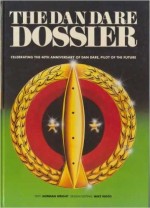
The Dan Dare Dossier


By Norman Wright, Mike Higgs & various (Hawk Books)
ISBN: 978-0-94824-812-2

Win’s Christmas Gift Recommendation: For everybody with Stars in their Eyes… 8/10

Launching on April 14th 1950 and running until 26th April 1969, Eagle was the most influential comic of post-war Britain, and possibly in our nation’s history.

It was the brainchild of a Southport vicar, the Reverend Marcus Morris, who was increasingly concerned about the detrimental effects of American comic-books on British children and wanted a good, solid, middle-class Christian antidote.

Seeking out like-minded creators he hoiked a dummy edition around British publishers for over a year with little success until he found an unlikely home at Hulton Press, a company that produced general interest magazines such as Lilliput and Picture Post.

The result was a huge hit which soon spawned age and gender-specific clones Swift, Robin and Girl which targeted the other key demographic sectors of the children’s market.

A huge number of soon-to-be prominent creative figures worked on the weekly, and although Dan Dare is deservedly revered as the star, many other strips were as popular at the time, and many even rivalled the lead in quality and entertainment value. Eagle‘s sensational pantheon – which included PC 49, Captain Pugwash, Jeff Arnold/Riders of the Range and the inimitable Harris Tweed – quickly became stars as well of radio series, books, toys, games and all other sorts of ancillary merchandising.

At its peak Eagle sold close to a million copies a week, but inevitably changing tastes and a game of “musical owners” killed the title. In 1960 Hulton sold out to Odhams, who became Longacre Press. A year later they were bought by The Daily Mirror Group who evolved into IPC. In cost-cutting exercises many later issues carried cheap Marvel Comics reprints rather than British originated material. It took time but those Yankee cultural Invaders won out in the end. With the April 26th 1969 issue Eagle was subsumed into Lion, eventually disappearing altogether. Successive generations have revived the title, but never the success.

There is precious little that I can say about Dan Dare that hasn’t been said before and better. What I will say is that everything you’ve heard is true. The vintage Dan Dare strips by Frank Hampson and his hand-picked team of dedicated artists are a high point in world, let alone British comics, ranking beside Tintin, Asterix, Tetsuwan Atomu, Lone Wolf & Cub and the best of Kirby, Adams, Toth, Noel Sickles, Milt Caniff, Elzie Segar and Carl Barks.

If you don’t like this stuff, there’s probably nothing any of us can do to change your mind, and all we can do is hope you never breed.

Accepting that there is a part of national culture which is Forever Dare, here’s a long overdue peek at an item which will delight all boys of a certain age which – despite its own vintage – is happily still readily available through internet vendors…

The colourful, magnificently oversized (333 x 242 mm), resolutely hard-backed Dan Dare Dossier was published in 1990 and offers everything any devotee could wish to know and see. It is absolutely packed with mouth-watering artwork and photos, tantalising examples of memorabilia, classic strips and even unseen/new material by a phalanx of the original creators.

Heavily illustrated throughout, it all begins with ‘The Rise of Dan Dare’, detailing the history of science fiction, development of comics – and especially Eagle – and offering a potted biography of Hampson, his team and Dan’s serried exploits.

Simultaneously those great big pages present unseen monochrome strip adventure ‘Dan & Donanza’ by the master himself, wherein our doughty heroes go haring across the solar system in pursuit of a fallen dictator who has turned the moon into a giant bomb…

Following that is an expansive itinerary of the major characters involved over the years in ‘Actors against a Solar Backdrop’ before ‘The Hardware File’ offers an eye-popping selection of plans, designs and extracted strip illustrations displaying the vast wealth of ships, kit and tech invented by the assembled strip-creators over the decades and paying especial attention to Space Transports and Dan and Digby’s venerable runabout Anastasia.

More bravura virtuosity is celebrated in ‘Aliens & Their Worlds’ as pertinent and beautiful clips and snippets highlight the amazing variety of extraterrestrial races and species.

Sharing a few pages with new black-&-white comedic strip ‘Digby – the Guinea Pig’ is a rundown of some of ‘The Artists’ who toiled collaboratively to produce the stunningly painted two pages per week (Hampson, Harold Johns, Eric Eden, Don Harley, Bruce Cornwell, Desmond Walduck, Frank Bellamy and Keith Watson); followed in turn by a fascinating trivia and memorabilia stuffed appreciation of the dauntless chaps’ five years on radio in ‘Dan Dare, Pilot of the Airwaves’…

Wisely taking a break from all that factual stuff, ‘Full Colour Adventure: Dan Dare in The Planulid’ reprints a rousing tale of a monstrous invasion of Earth (first seen in The Dan Dare Space Annual 1963) before the rousing envy-fest resumes with a grand examination of the breathtaking wealth of ‘Merchandise & Ephemera’ the strip generated.

On view is a procession of numerous ray guns and rocket pistols, games, puzzles, buttons, badges, stencil-kits, apparel, models, action-figures, home picture-film strips and projectors, walkie-talkies, all manner of books and print novelties and so much more…

Adjacent and in parallel with a full ‘Dan Dare Chronology’ is the immensely rare and sadly unappreciated Newspaper Strip ‘Mission to the Stars’ by William Patterson & Don Harley, which ran every Sunday in The People from April to October 1964, all capped off by the demise of the dream thanks to changing tastes and commercial mismanagement as detailed in ‘Changes – the Long Decline’…

Downhearted spirits are properly revived by another ‘Full Colour Adventure’ from The Dan Dare Space Annual 1963, specifically ‘The Planet of Shadows’ wherein our gallant lads uncover a lost civilisation on a new world after which ‘Dan Dare – to Date’ describes our hero’s 1977 resurrection in the pages of apocalyptic, dystopian 2000 AD. Reimagined as a bombastic rebel, the article tracks his slow rehabilitation and transition to the newly revived 1982 Eagle, before neatly segueing into a delightful reprint of one of those 80’s retro-exploits as ‘Dan Dare by Keith Watson’ depicts a hazardous mission by the Space Fleet stars to transport Earth’s radioactive waste stockpiles to the depths of space. It’s hard enough as is but things get particularly dicey when arch-nemesis The Mekon raises his giant green head…

Big, bold, beautiful and ruthlessly nostalgia-driven, this epic tome will utterly enchant veterans of the Baby-boomer years and sci fi fanatics in general, but it’s also packed with enough top flight comics material to beguile any kid or newcomer to our medium in search of a little simple, awestruck wonder…
This edition © 1990 Hawk Books Ltd. Dan Dare © 1990 Fleetway Publications.