
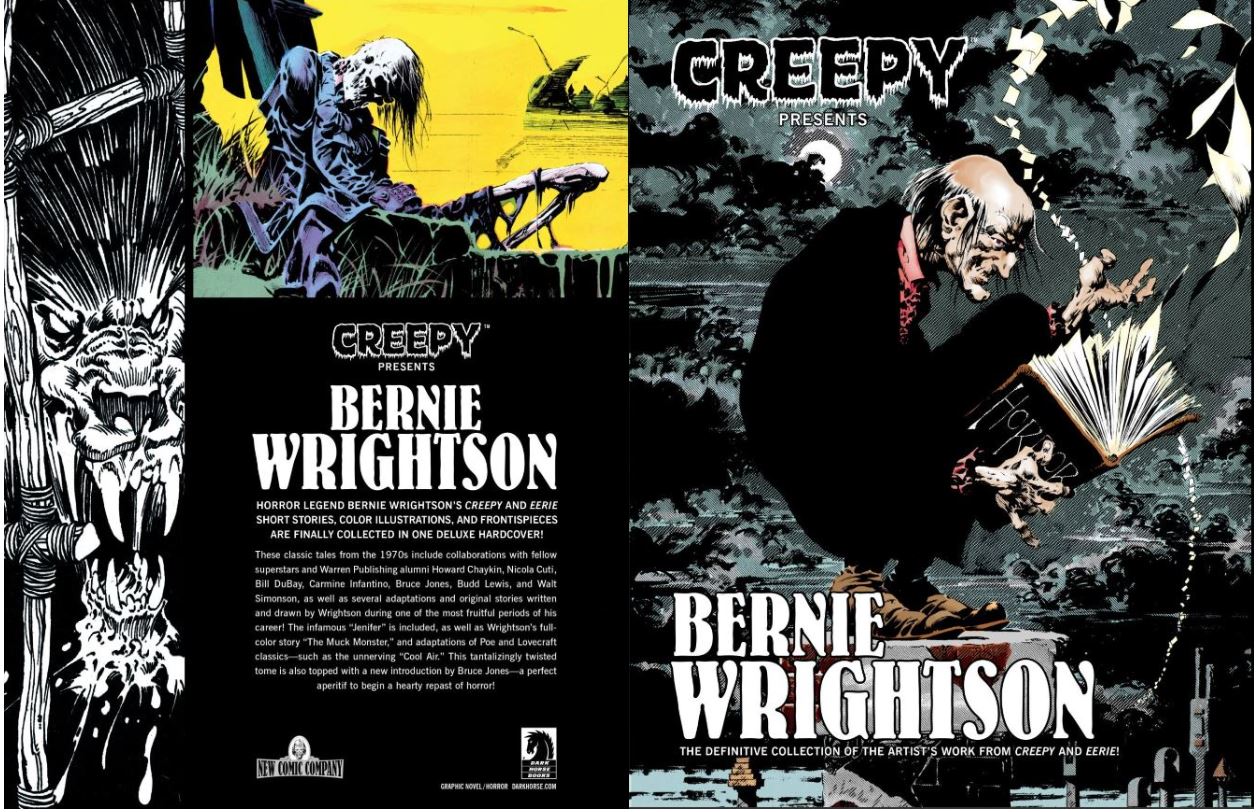
By Bernie Wrightson, with Bruce Jones, Howard Chaykin, Nicola Cuti, Bill Dubay, Budd Lewis, Carmine Infantino & various (Dark Horse Comics)
ISBN: 978-1-59582-809-5 (HB), 978-1-506753-21-8 ?(TPB), 978-1-62115-596-6 (Digital edition)
This book includes Discriminatory Content produced in less enlightened times.
Win’s Christmas Gift Recommendation: Masterfully Macabre Masterpiece… 9/10
Once upon a time the short complete story was the sole staple of the comic book profession, and the intent was to deliver to the reader as much variety and entertainment fulfilment as possible. Sadly, that particular discipline is all but lost to us today.
Towards the end of the turbulent 1960s, a lot of fresh talent was trying to break into the comics industry at a time when numerous publishers were experimenting with cheaper black & white magazines rather than four-colour comic books. Companies like Warren, Skywald and a minor host of imitators were hiring kids who then honed their craft in public – just like their forebears had to. A respectable number of those Young Turks – such as Bruce Jones, Mike Kaluta, Jeffrey Catherine Jones, Al Weiss & “Berni” Wrightson (a young man who soon became a living legend even in that prestigious cabal) – grew into major talents whilst crafting pastiches of the EC Comics they had loved as kids… and paved the way when the comics market again turned to shock, mystery and black comedy to sell funnybooks.
Bernard Albert Wrightson was born a few days before Halloween (October 27th) 1948 in Dundalk. Maryland. His artist training came via TV, reading comics and a correspondence course from the Famous Artists School, and his first professional publication was fan art, printed in Creepy #9 (June 1966). Around that time, he was toiling as an illustrator for The Baltimore Sun, and after meeting his EC idol Frank Frazetta at a convention gravitated to New York City.
Hooking up with the above-cited band of newcomers, and other hopefuls (like Al Milgrom & Walter Simonson), Wrightson started crafting short horror tales for National-DC, Marvel and other eager publishers. His first rank reputation was cemented for the co-creation (with writer Len Wein) of Swamp Thing.
Wrighton’s close and productive association with DC ended in 1974, as he left to work at Warren on more adult-oriented tales which allowed him to try different techniques: a bountiful period of experimentation that culminated with his joining Jeffrey Catherine Jones, Kaluta & Barry Windsor-Smith in expressive narrative arts collective The Studio. During this period, he also produced commercial commissions, film material and humorous strips for National Lampoon, whilst creating a series of astoundingly complex plates for his signature work: an illustrated rerelease of Mary Shelley’s novel Frankenstein. After that he illustrated posters, trading cards and graphic novels such as Creepshow, Cycle of the Werewolf and Freakshow (with Bruce Jones) as well as print collectibles, before returning to mainstream comic books. Notable successes included The Weird and Batman: The Cult with Jim Starlin, and Spider-Man: Hooky and The Hulk and the Thing: The Big Change as well as a number of Punisher miniseries and OGNs.
Wrightson died in 2017. At the time he was working with Steve Niles (30 Days of Night) on a new Frankenstein miniseries, and almost finished it. The ultimate professional to the last, Bernie made provision for another artist (Kelley Jones) to complete the job before passing. You should add Frankenstein Alive, Alive – The Complete Collection please link to October 29th 2019 to your must-read list if you haven’t seen it yet…
This stellar compendium gathers Wrightson’s monochrome, two-colour & full-colour offerings, stories, illustrations and frontispieces – from Creepy #9, 62-64, 66-71, 73, 75-77, 83, 86, 87, 95, 113 & 138 and Eerie #57, 58, 60-68, 70-72, 68 spanning 1966-1982. The uncanny yarns and portentous depictions appeared in black-&-white magazine anthologies Creepy and Eerie, and those Warren stories have been gathered into a spectacular oversized (284 x 218 mm) hardback compendium – part of a series of all-star artist compilations which also includes superstars Rich Corben, Alex Toth and Steve Ditko, or track down the entire Creepy archive from Dark Horse. You won’t regret it , fear-fun fan!
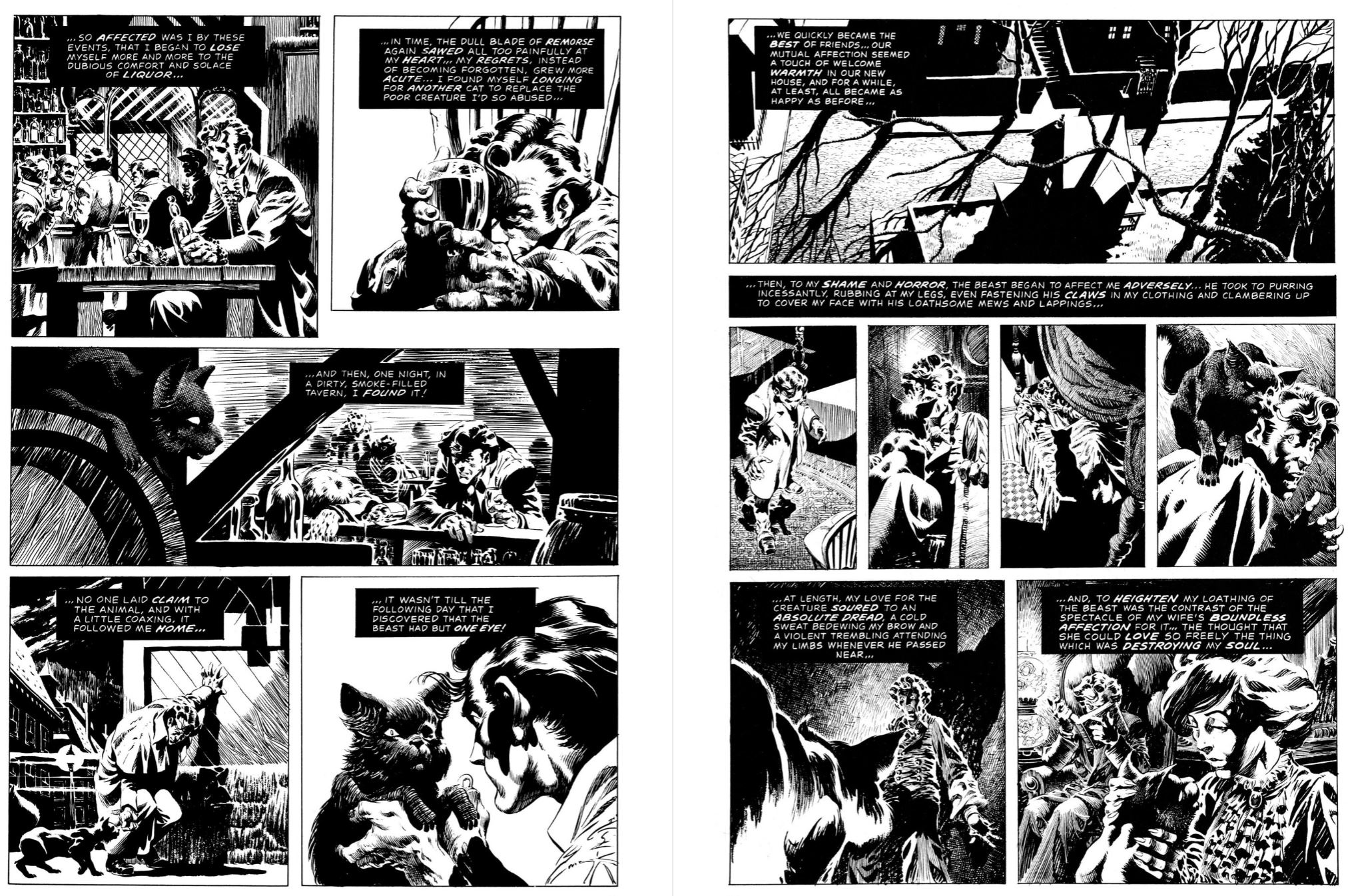
The terrors begin here with Wrightson’s short shockers from Creepy – but only after fellow raconteur and horror stylist Bruce Jones shares his memories of the great man and those early days in his evocative Foreword. Then dark visions commence with Wrightson’s gripping adaptation of ‘Edgar Allen Poe’s The Black Cat’ (Creepy #62) as a man slowly going mad enters into a deadly war of wills and nerve with his wife’s pet…
Moving from his signature linework into softly-alluring grey-marker tones for Bruce Jones’s ghastly tale of mutant madness and deviant sexual seduction, Wrightson delivers a potent shocker with the tale of ‘Jenifer’ in issue #63 before compounding the horrors of existential loneliness for his next doomed hero’s icy obsession with ‘Clarice’ (also scripted by Jones in #77). He inked Carmine Infantino on Jones’ ‘Country Pie’ in #83, a wry variation on both serial killer modernity and American Gothic sensibilities, after which Bill DuBay joins the unlikely artistic duo to expose an Edwardian-era Dime-novel hero in moving sentimental mystery ‘Dick Swift and his Electric Power Ring’ (Creepy #86).
Thematic shades of Ray Bradbury inform Nicola Cuti’s ‘A Martian Saga’ in #87, but the bleak dark humour is all Wrightson (as is the stylish pen-&-ink drawing), whereas Jones’ fable of ‘The Laughing Man’ from #95 – which sees a white hunter’s brutal deeds return to haunt him – manifests via stunning grey tones and manic shock that is pure poetic karma…
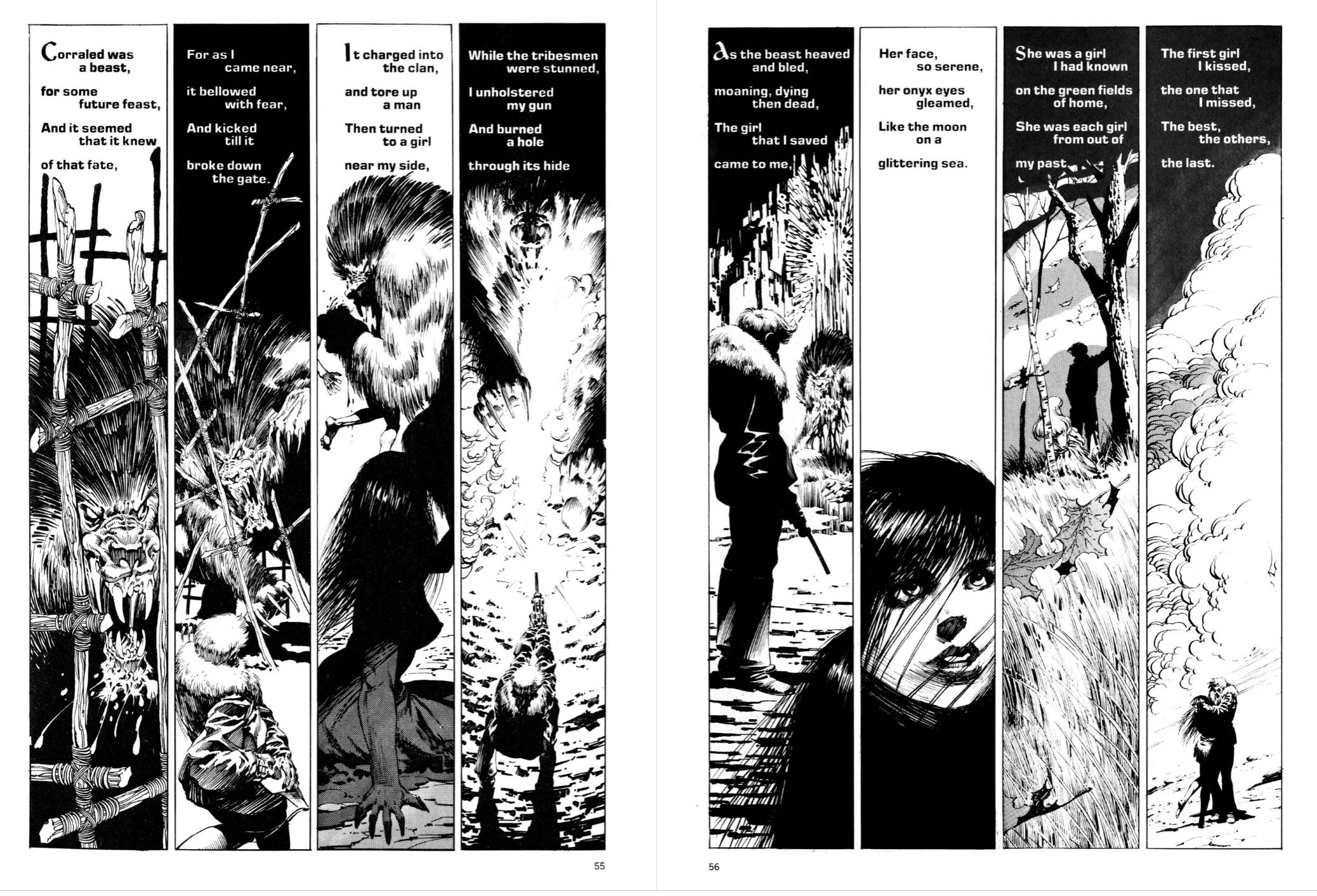
Bernie’s Eerie escapades are fewer but just as memorable and start with classic beast-hunting fervour as greedy chancer George Summers attempts to capture ‘The Pepper Lake Monster’. Written and drawn by Wrightson from Eerie #58, the stark, heroic chiaroscuro conceals a deliciously mordant and sardonic sting in the tale, after which DuBay details the terrors of children who see monsters in moodily grey-toned vignette ‘Nightfall’ (#60), and leads to Wrightson fulfilling a lifetime ambition in issue #62.
A huge fan of classical horror writers, the artist chillingly adapted H. P. Lovecraft’s ‘Cool Air’, detailing the uncanny fate of bizarre lodger Dr. Munoz who warmly befriends a young writer but cannot find a home cold enough to suit him. Budd Lewis, Wrightson & Howard Chaykin combined to craft a strange tale of ‘Reuben Youngblood: Private Eye!’ who finds himself trapped in a world of intrigue, zeppelins and Nazi vampires in a rambunctious romp entitled ‘Beware the Scarlet Combine’.
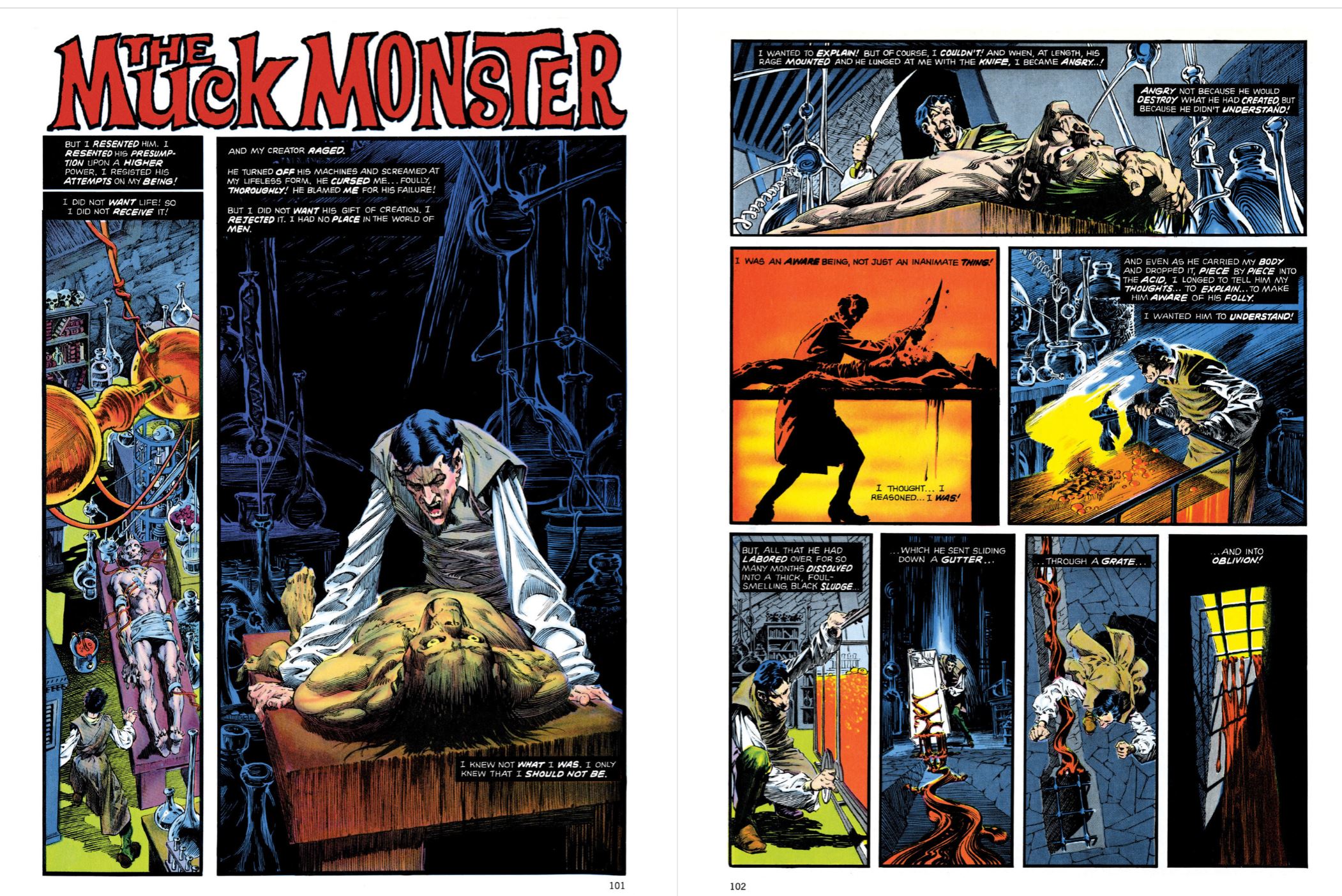
Although largely a monochrome magazine outfit, Warren occasionally sprang for full-painted colour and the all-Wrightson saga of ‘The Muck Monster’ in #68 gave the artist opportunity to flex his painterly muscles and revisit past glories in a tale of cometary catastrophe to complete the narrative section of our celebrations.
Happily, that’s not the end of the visual valuables, as a ‘Creepy and Eerie Frontispiece and Illustration Gallery’ delivers a selection of images (33 in total, including covers and back covers) designed to introduce the anthological treats of the magazines via narrators Uncle Creepy and Cousin Eerie. These allowed Wrightson’s sense of macabre humour full rein in panels, pages and other concoctions in assorted media and various degrees of seriousness.
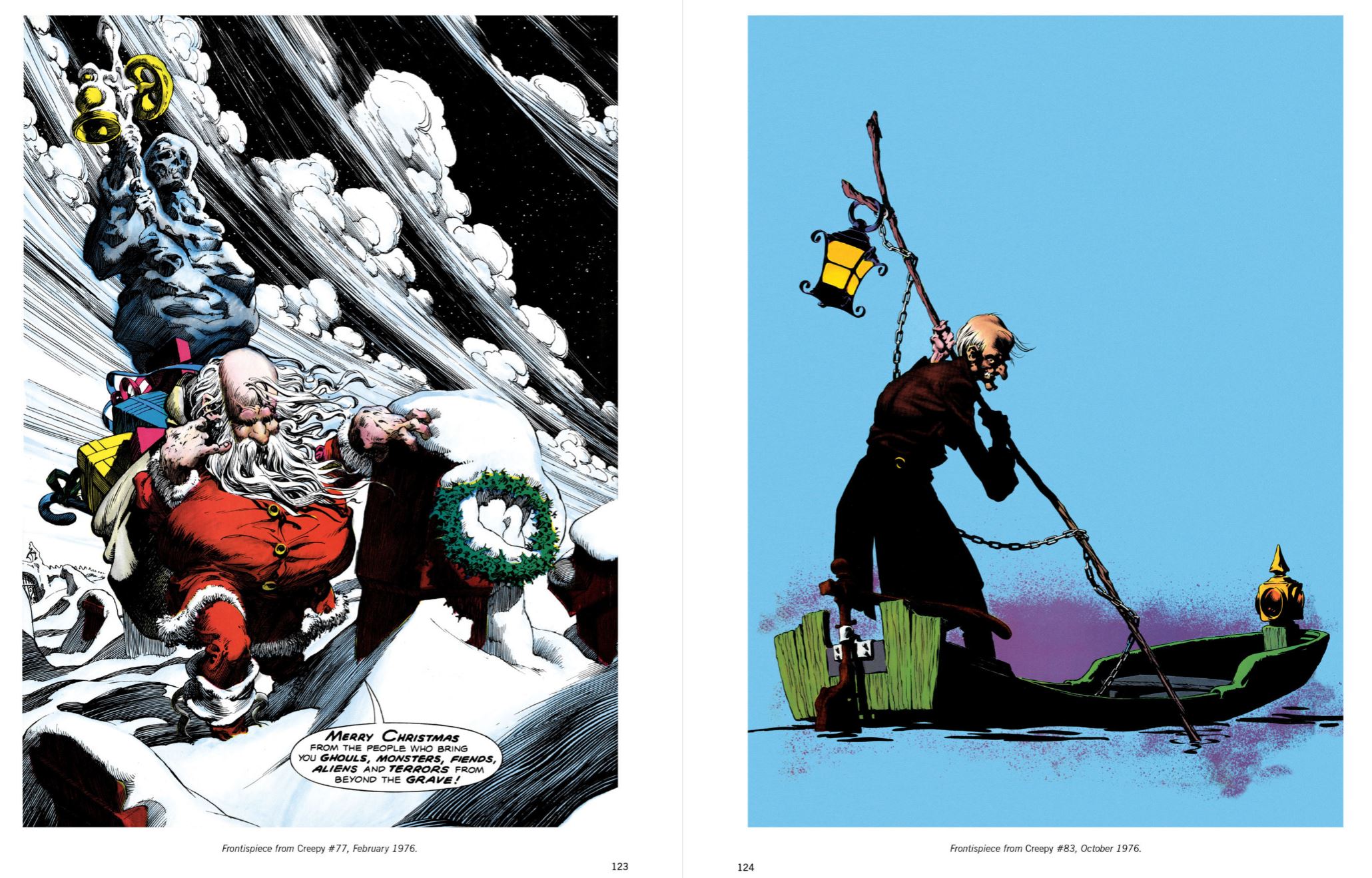
This voluminous volume has episodes which terrify, amaze, amuse and enthral: utter delights of fantasy fiction with lean, stripped down plots and a dark yet always playful wit which lets the art set the tone, push the emotions and tell the tale, from times when a story could end sadly as well as happily and only wonderment was on the agenda, hidden or otherwise.
These stories display a sharp wit and dark comedic energy which seems largely lacking these days, channelled through Wrightson’s astounding versatility and storytelling acumen: another cracking collection of his works not only superb in its own right but also a telling affirmation of the gifts of one of the art-form’s greatest stylists.
This is a book serious comics fans would happily kill, die or be lost in a devil-dimension for.
Creepy, the Creepy logo and all contents © 1966, 1974, 1975, 1976, 1977, 1978, 1979, 1982 2011 by New Comic Company. All rights reserved.