Zeppelin – Stories from the Warzone


By Pepe Moreno (Catalan Communications)
ISBN: 978-0-87416-021-5

Born in 1954, Spanish creator Pepe Moreno began his comics career illustrating for horror and adventure anthologies and children’s papers such as S.O.S., Pumby and Pulgarcito, Star and Bliz. He moved to America in 1977, working for Warren’s Creepy, Eerie 1984/1994 and Vampirella, as well as contributing to humour magazine National Lampoon before inevitably gravitating to Heavy Metal where the short, uncompromising post-punk sci-fi strips collected in this album caught the attention of Epic Illustrated editor Archie Goodwin.

The breakthrough strip Generation Zero led to the graphic novels Rebel, Joe’s Air Force and Gene Kong, but ever-restless, Moreno’s growing fascination with real-world technology led him first into animation (Tiger Sharks, Thunder Cats and Silver Hawks) and eventually into the formative field of computer-assisted illustration, resulting in a return to comics for the high-profile futuristic Batman thriller Digital Justice, one of the first comics sagas created completely on screen rather than on paper.

He then created an early CD-ROM thriller (Hellcab) in 1993, and these days spends most of his time working in high-end video games.

Crafted in the politically contentious yet conservative mid-Eighties when dystopian dreams of fallen empires abounded and post-apocalyptic survivalism was the prevailing zeitgeist, the short tales gathered here capture – in a beguiling burst of pop-art style and colour – a profusion of weird war tales that push man and imagination to ultimate limits… Following a Foreword from Moreno, the merciless wonderment begins with the eponymous ‘Zeppelin’ as two F-4 Phantom jets take off from an American aircraft carrier and encounter something far beyond a human capacity to understand, before being lost in time and accidentally triggering one of the most infamous disasters in recorded history…

‘La Mort en Rose’ focuses on a weary Tommy in the trenches of The Great War, when response to a new Boche poison gas utterly confounds and horrifies the German Generals who sanctioned it. Suffice to say those aged masters of war made sure it was never used again…

Back then we all thought that the next war would probably be the very last one, and that sentiment informs the last-ditch battles and eventually ironic defeat of the commander of ‘Bunker 6A’, whilst the stunning artistic experimentalism of ‘Kamikaze’ renders it the most memorable war-story in the collection despite its truly hackneyed “twist” ending…

‘The Fix’ follows a semi-delusional space ferry pilot back to a wasteland Earth and a reward that is neither just nor fit for heroes, and ‘Space Crusader’ reminds us that missionary zeal knows no limits when the pious warrior aboard Inquisitor II lands on the welcoming and innocently obliging planet of the hot naked chicks…

This slim, technicolor tome terminates with ‘Epus’ a dark contemporary battle-yarn that sees a dying GI in Vietnam somehow sucked back in time to challenge an ancient god of conflict for an answer to mankind’s martial madness…

Vivid pinball, poster and bubblegum hues blend with a stunning capacity to render machinery, monstrosity and ordnance to produce a wryly cynical paean to war-fever and programmed paranoia that will delight all fans of science fiction and blockbuster action.

Inexplicably out-of-print, this is plain-and-simple adult escapism no comics connoisseur could possible resist …
© 1986 Pepe Moreno. English language edition © 1986 Catalan Communications. All rights reserved.

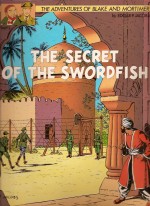
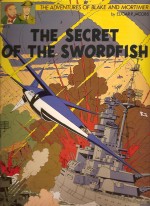
The Adventures of Blake and Mortimer – The Secret of the Swordfish: volumes 2 & 3 Mortimer’s Escape and SX-1 Counter-Attacks!


By Edgar P. Jacobs translated by Clarence E. Holland (Blake and Mortimer Editions)
ISBNs: 978-9-06737-005-9 & 978-9-06737-007-3

Belgian Edgard Félix Pierre Jacobs (March 30th 1904 – February 20th 1987) is rightly considered to be one of the founding fathers of the Continental comics industry. Although his output is relatively meagre compared to some of his contemporaries, the iconic series he worked on practically formed the backbone of the art-form in Europe, and his splendidly adroit yet roguish and thoroughly British adventurers Blake and Mortimer, created for the very first issue of Le Journal de Tintin in 1946, swiftly became an unmissable staple of post-war European kids’ life the way Dan Dare was in 1950s Britain.

Edgar P. Jacobs was born inBrussels, a precocious child who began feverishly drawing from an early age but was even more obsessed with music and the performing arts – especially opera. He attended a commercial school but loathed the idea of office work and instead avidly pursued the arts and drama on graduation in 1919.

A succession of odd jobs at opera-houses (including scene-painting, set decoration, and working as both an acting and singing extra) supplanted his private performance studies, and in 1929 Jacobs won an award from the Government for classical singing.

His proposed operatic career was thwarted by the Great Depression when the arts suffered massive cutbacks following the global stock market crash, and he was compelled to pick up whatever dramatic work was going, although this did include some singing and performing.

Jacobs switched to commercial illustration in 1940 with regular work in the magazine Bravo; as well as illustrating short stories and novels. He famously took over the syndicated Flash Gordon strip when the occupying German authorities banned Alex Raymond’s quintessentially All-American Hero and the publishers desperately needed someone to satisfactorily complete the saga.

Jacobs’ ‘Stormer Gordon’ lasted less than a month before being similarly embargoed by the Occupation forces, after which the man of many talents created his own epic science-fantasy feature in the legendary Le Rayon U, a milestone in both Belgian comics and science fiction adventure.

During this period Jacobs and Tintin creator Hergé got together, and whilst creating the weekly U Ray, the younger man began working on Tintin too, colouring the original black and white strips of The Shooting Star from the newspaper Le Soir for an upcoming album collection. By 1944 he was performing a similar role for Tintin in the Congo, Tintin in America, King Ottokar’s Sceptre and The Blue Lotus. By now Jacobs was also contributing to the drawing too, working on the extended epic The Seven Crystal Balls/Prisoners of the Sun.

After the war and liberation, publisher Raymond Leblanc convinced Hergé, Jacobs and a number of other comicstrip creatives to work for his proposed new venture. Founding publishing house Le Lombard, Leblanc also commissioned Le Journal de Tintin, an anthology comic with editions inBelgium,France andHolland edited by Herge, starring the intrepid boy reporter and a host of newer heroes.

Beside Hergé, Jacobs and writer Jacques van Melkebeke, the comic featured Paul Cuvelier’s ‘Corentin’ and Jacques Laudy’s ‘The Legend of the Four Aymon Brothers’. Laudy had been a friend of Jacobs’ since they worked together on Bravo, and the first instalment of the epic thriller serial ‘Le secret de l’Espadon’ starred a bluff, gruff British scientist and an English Military Intelligence officer (who was closely modelled on Laudy): Professor Philip Mortimer and Captain Francis Blake…

The initial storyline ran from issue #1 (26th September 1946 to September 8th 1949) and cemented Jacobs’ status as a star in his own right. In 1950, with the first 18 pages slightly redrawn, The Secret of the Swordfish became Le Lombard’s first album release with the concluding part published three years later. These volumes were reprinted nine more times between 1955 and 1982 with an additional single complete edition released in 1964.

In 1984 the story was reformatted and repackaged as three volumes with additional material – mostly covers from the weekly Tintin – added to the story as splash pages, and the first of these forms the basis for the English language book under discussion today.

Hergé and Jacobs purportedly suffered a split in 1947 when the former refused to grant the latter a by-line on new Tintin material, but since the two remained friends for life and Jacobs continued to produce Blake and Mortimer for the weekly comic, I think it’s fair to say that if such was the case it was a pretty minor spat. I rather suspect that The Secret of the Swordfish was simply taking up more and more of the diligent artist’s time and attention…

Although all the subsequent Blake and Mortimer sagas have been wonderfully retranslated and published by CineBook in recent years, this initial epic introductory adventure and its concluding two volumes remain frustratingly in the back-issue twilight zone, possibly due to their superficial embracing of the prevailing prejudices of the time.

By having the overarching enemies of mankind be a secret Asiatic “Yellow Peril” empire of evil, there’s some potential for offence – unless one actually reads the books and finds that any assumed racism is countered throughout by an equal amount of “good” ethnic people and “evil” white folk, so with no other version available I’m happily using these huge (312 x 232mm) 1986 iterations for this review.

And I’ll be reviewing those subsequent Cinebook tales by Jacobs and his successors in due course, but don’t wait for me… go out and get them all now!

Here and now, however, let’s recap Ruthless Pursuit, wherein a clandestine clique in the Himalayas launched a global Blitzkrieg at the command of Basam-Damdu, Emperor of Tibet. The warlord of a secret race of belligerent conquerors, whose arsenal of technological super-weapons were wielded by an army of the world’s wickedest rogues such as the diabolical Colonel Olrik dreamed of ruling the entire Earth and his sneak attack almost accomplished all his schemes in one fell swoop.

Happily however, English physicist Philip Mortimer and MI5 Captain Francis Blake were aware of the threat and were racing to finish the boffin’s radical new aircraft at a hidden British industrial complex. When the attack came the old friends swung into immediate action and narrowly escaped destruction in a devastating bomber raid…

The Golden Rocket launched just as Olrik’s bombers attacked and easily outdistanced the rapacious Empire forces, leaving ruined homes behind them as they flew into a hostile world now brutally controlled by Basam-Damdu…

Seeking to join British Middle East resistance forces, the fugitives’ flight ended prematurely and the Rocket crashed in the rocky wilds between Iran and of Afghanistan. Parachuting free, Blake and Mortimer survived a host of perils and escaped capture more than once as they slowly, inexorably made their way to the distant rendezvous, before meeting a British-trained native Sergeant Ahmed Nasir.

The loyal Indian had served with Blake during the last war and was delighted to see him again, but as the trio laboriously made their way to the target site, Olrik had already found it and captured their last hope…

Using commando tactics to infiltrate the enemy camp and stealing the villainous Colonel’s own Red-Wing super-jet, the heroes made their way towards a fall-back point but were again shot down – this time by friendly fire as rebels saw the stolen plane as an enemy target…

Surviving this crash too, the trio were ferried in relative safety by the apologetic tribesmen to the enemy-occupied town of Turbat and sheltered by a friendly Khan administrator. However the man’s servant, a spy of the Empire-appointed Wazir, recognised the Englishmen and Nasir realised too far late the danger they all faced…

Sending his loyal Sergeant away, Blake tried valiantly frantically to save Mortimer whilst a platoon of Empire soldiers rapidly mounted the stairs to their exposed room…

The frantic action begins in Mortimer’s Escape (alternatively titled The Fantastic Pursuit inside) with soldiers bursting into an empty chamber before being themselves attacked by the Khan. After a bloody firefight the Englishmen emerge from their cunning hiding place and flee Turbat, which has been seized by a furious spur-of-the-moment rebellion.

Unknown to the fugitives, the devious spy Bezendjas is hard on their heels and soon finds an opportunity to inform Olrik. With the city in flames and fighting in every street the callous colonel abandons his own troops to pursue Nasir, Blake and Mortimer into the wastes beyond the walls…

On stolen horses the heroes endure all the ferocious hardships of the desert but cannot outdistance Olrik’s staff-car. After days of relentless pursuit they reach the rocky coastline and almost stumble into another Empire patrol, and whilst ducking them Blake almost falls to his doom. Narrowly escaping death, the trio continue to climb steep escarpments and it is dusk before the Intelligence Officer realises that he has lost the precious plans and documents they have been carrying since they fled England…

Realising that somebody must reach the British resistance at their hidden Eastern base, the valiant comrades split up. Blake and Nasir continue onwards whilst Mortimer returns to the accident site. Finding the plans is a stroke of sheer good fortune, immediately countered by an ambush from Olrik’s troops.

Despite a Herculean last stand the scientist is at last taken prisoner but only after successfully hiding the lost plans…

Three weeks later Olrik is called to account in the exotic city-fortress ofLhasa. Basam-Damdu’s ruling council are unhappy with the Colonel’s lack of progress in breaking the captive scientist, and even more infuriated by a tidal-wave of sabotage and armed rebellion throughout their newly-conquered territories. Even Olrik’s own spies are warning him that his days as an agent of the Yellow Empire might be numbered…

Given two days to make Mortimer talk, the Colonel returns to his base inKarachijust as another rebel raid allows Nasir to infiltrate the Empire’s HQ. Blake is also abroad in the city, having joined British forces in the area.

With less than a day to act, the MI5 officer rendezvous with a British submarine and travels to a vast atomic powered secret installation under the Straits of Hormuz, where the Royal Navy are preparing for a massive counter-attack on the Empire. With raids liberating interned soldiers all the time, the ranks of scientists, technicians and soldiers are swelling daily…

Meanwhile, Nasir has begun a desperate plan to free Mortimer, who is still adamantly refusing to talk of the mysterious “Swordfish” Olrik’s agents continually hear rumours of…

Aware of his danger and the Sergeant’s efforts, Mortimer instead cunningly informs Nasir of the lost plans’ location, even as the impatient Emperor’s personal torturer arrives fromLhasa…

Always concerned with the greater good, Blake and a commando team secure the concealed plans and are met by Nasir who has been forced fromKarachiafter realising the spy Bezendjas has recognised him. It appears that time has run out for their scholarly comrade…

Mortimer, however, has taken fate into his own hands. When the sadistic Doctor Fo begins his interrogation, the Professor breaks free and escapes into fortress grounds during an earth-shattering storm. Trapped in a tower with only a handgun, he is determined to sell his life dearly, but is rescued by Blake and Nasir in a Navy Helicopter.

Using the storm for cover the heroes evade jet pursuit and an enemy naval sweep to link up with a British sub and escape into the night…

The saga concludes in SX1 Counter-Attacks: a tension-drenched race against time as

Blake, Mortimer and the last ofGreat Britain’s military forces prepare for a last ditch strike using the Professor’s greatest inventions to win freedom for the oppressed peoples of the world…

The story starts with a stunning reprise of past events (cunningly compiled from a succession of six full page illustrations which I assume were originally covers from the weekly Le Journal de Tintin), after which a daring commando raid frees a trainload of British prisoners. Brought to a fabulous subterranean secret base, the scientists and engineers discover an underground railway, factory and armaments facilities and even an atomic pile, all working furiously to complete the mysterious super-weapon dubbed “Swordfish”.

The liberated men all readily join the volunteers, blithely unaware that Olric is amongst them in a cunning disguise. Even as preparations for the Big Push rapidly produce results, a series of disastrous accidents soon lead to one inescapable conclusion: there is a saboteur in the citadel…

Eventually Olrik becomes overconfident and Mortimer exposes the infiltrator in a crafty trap, but after a fraught confrontation the Colonel escapes after almost causing a nuclear catastrophe. Fleeing across the seabed, the harried spy narrowly avoids capture by diver teams and even a hungry giant octopus…

The flight takes its toll upon Olrik and he barely reaches land alive. Luckily for him Bezendjas had been checking out that area of coastline and finds the rogue trapped in his stolen deep-sea diver suit. After a lengthy period the dazed desperado recovers and delivers his hard-won information. Soon all the region’s Imperial forces are converging on the British bastion…

As air and sea forces bombard the rocky island and sea floor citadel, Olrik dispatches crack troops to break in via a revealed land entrance resulting in a staggering battle in the depths of the Earth.

They were almost in time…

After months of desperate struggle, however, Mortimer and his liberated scientists have completed Swordfish: a hypersonic attack plane with uncanny manoeuvrability and appallingly destructive armaments.

Launched from beneath the sea, the sleek and sinister plane single-handedly wipes the Empire jets from the skies before sinking dozens of the attacking naval vessels. Ruthlessly piloting SX1 is Francis Blake; and even as he wreaks havoc upon the invading force he is joined by SX2 – a second unstoppable super-jet…

Soon the Yellow Empire is in full retreat and a squadron of Swordfish is completed. With the occupied planet in full revolt, it’s not long before Lhasa itself gets a taste of the flaming death it callously inflicted upon a peaceful, unsuspecting and now most vengeful world…

They were only just in time: the insane and malignant Emperor was mere moments away from launching a doomsday flight of missiles to every corner of the planet he so briefly owned…

Gripping and fantastic in the best tradition of pulp sci-fi and Boy’s Own Adventures, the exploits of Blake and Mortimer are the very epitome of True Brit grit and determination, always delivering grand old-fashioned Blood and Thunder thrills and spills in timeless fashion and with staggering visual verve and dash. Despite the high body count and dated milieu, any kid able to suspend modern mores and cultural disbelief (call it an alternative earth history if you want) will experience the adventure of their lives… and so will their children.
© 1986, 1987 Editions Blake & Mortimer. All rights reserved.

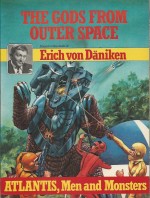
Gods from Outer Space: Atlantis, Men and Monsters


Inspired by the works of Erich von Däniken, freely interpreted by Alfred Górny, Arnold Mostowicz & Rosińskiego Bogusław Polch and translated from the German edition by Michael Heron (Methuen)
ISBNs: 0-416 87-160-7

Here in the West, Poland isn’t known for generating graphic novels or albums, although there has always been a thriving comics culture and many Polish creators have found fame in far-off lands. This pithy, quirky science fiction speculation is the second of four volumes to make a break across the borders and only then because of the notorious celebrity name attached to the project…

Once upon a time the ludicrous theories of Swiss author, convicted conman and fraudster Erich Anton Paul von Däniken captured the public imagination with his postulate that aliens had visited Earth in human prehistory and reshaped the destiny of our ancient ancestors.

Although mostly discredited these days, that tantalising kernel of an idea still persists in many places; and how different life might be if the imaginative and inventive writer had simply done what he should have with such a great notion and just made a cracking science fiction epic out of his “researches”…

Happily others have done just that and the result is a quirky yet enticing intergalactic generational saga that resulted in a mini-phenomenon in Poland which spread, despite all the restrictions of an embattled Cold War satellite-economy, through Germany and on to a number of other nations in at least a dozen different languages.

In 1977, publisher Alfred Górny, who generally specialised in sports and tourism, contacted his counterparts at West German non-fiction outfit Econ Verlag with a proposition for creating a new and mutually profitable cartoon album series.

Górny wanted to produce the series in Polandand had lined up the superb Grzegorz RosiÅ„ski to draw it. Unfortunately the artist quit before the job began, instead accepting the job of illustrating sci-fi barbarian series Thorgal for Jean Van Hamme in the prestigious French comic Tintin, after which the nation’s most prolific and popular comics artist, Jerzy Wróblewski, also stepped in before dropping out.

Górny and scripter Arnold Mostowicz settled for newcomer RosiÅ„skiego BogusÅ‚aw Polch – who would eventually win a measure of international renown for sci-fi/political/private eye thriller Funky Koval – to delineate the epic, meandering, saga of alien civil war, primeval strife and the birth and destruction of a primordial lost civilisation as well as the propagation of most of our world’s myths, legends and religions.

When finances and resources in the Warsaw Pact nation began to evaporate, Econ Verlag took on the international syndication responsibilities and the series took on a life of its own.

The result was eight original albums – LÄ…dowanie w Andach’ (Landing in the Andes), ‘Ludzie i potwory’ (Men and Monsters), ‘Walka o planetÄ™’ (The Struggle for the Planet), ‘Bunt Olbrzymów’ (Giants’ Mutiny); ‘ZagÅ‚ada Wielkiej Wyspy’ (Great Island’s Doom), ‘Planeta pod kontrolÄ…’ (The Planet under Control), ‘Tajemnica Piramidy’ (The Mystery of the Pyramid) and ‘Ostatni Rozkaz’ (the Last Command). The series was even rebound in two huge compilation volumes for Polish consumption: true collector’s items these days…

In 1978 British publisher Methuen Children’s Books (then also publishing Hergé’s Tintin) picked up the English language rights for the first four books and released them – complete with spurious fringe-science trimmings and photo-extras – to a largely unimpressed British public.

Now, with time having stripped away the ludicrous faux facts and messianic furore underpinning the tales, I’m reviewing what is actually a rather impressive, entertaining slice of speculative fiction dressed in a workmanlike yet enthralling no-nonsense art style that will delight fans of illustrated storytelling…

The adventure began millennia ago with Descent in the Andes, as a colossal flying saucer carrying hundreds of scientists from Delos in the Sagittarius Nebula establishes orbit above Earth. Mission leader Ais – the only woman in the vast complement of scientists and technicians – and her lieutenants Chat and Roub oversee the mission dictated by the Great Brain of Delos to find a new world for the race, since their home planet was on the verge of annihilation. The men are resolved to re-order the wild blue planet beneath them, using their incredible science to create a Delosian sub-species able to thrive on the alien world and propagate their perfect culture and civilisation. The plan is to seed this world and then great ship will depart, finding more suitable worlds and repeating the procedure…

As Earth and its life-forms are probed by the Delosians, tensions mount among the crew: Chat and Roub are increasingly at odds and soon after a ground-base is established, the latter foments mutiny and forcibly attempts to make Ais his bed-mate…

The colonists’ attempts to create a labour force by domesticating the smart apes soon falter as loneliness and native intoxicants begin to unravel the discipline of the superior beings and the lonely, over-worked crewmen descend into brawling and inter-species fraternisation…

When Ais steps down hard on the malcontents, Roub, who violently advocates abandoning the mission and taking over the welcoming world below, sees his chance to further undermine her. The crisis breaks when the fuel for the aerosondes – planetary transport shuttles – suddenly runs out. Chat kills a saboteur and denounces Roub, but before outright war erupts a startling message announces the arrival of a second vessel fromDelos…

Meanwhile supreme scientist Zan‘s experiments on the native females have concluded and his findings indicate that for the mission to succeed, he must directly reconfigure the ape-beings’ genetic make-up, a step Ais is reluctant to consider…

Whilst Ais and Chat supervised construction of a vast landing-field base in what we know as the Andes, Roub fomented open rebellion. The militant rocketed into space, intent on destroying the orbiting ship and forcing the Delosians to settle on Earth, with Ais in hot pursuit.

After a vicious battle she drove Roub off the vessel and followed him back to Earth where Chat tracked him to his final fate in the deadly beast-filled jungles…

Their troubles were far from over. The second expedition, under the command of Beroub, had set up operations on a far-distant continent, but the back-up colony suddenly fell prey to an unknown contagion and, as Ais and Zan rocketed off to investigate, they barely survived a cataclysmic volcanic eruption which completely eradicated the Nazca facility…

With the entire colony wiped out, Chat was trapped in space and Zan and Ais had no choice but to head for unknown peril on the far distant Atlantic continent…

Atlantis, Men and Monsters picks up the story as Ais, Zan and pilot Eness land at the troubled second base and soon discover the cause of the disease. Somebody has adulterated the chemical solution used by the Delosians to aid respiration in Earth’s inimical atmosphere, turning it into a slow-acting poison.

Suspicion immediately falls upon their head scientist Satham, who seems to be plagued with the same lust for domination that afflicted Roub.

Ais is utterly determined to carry out the edicts of the Great Brain and decides to act decisively – as soon as she has proof…

Taking charge of the recovering survivors, she orders Zan to begin his genetic manipulation of the vast island’s carnivorous primates, wedding their DNA to the civilised germ-plasm of the Delosians.

During this process Satham and his cronies disappear and Ais uncovers his plans: a plethora of hideous, savage hybrids designed for conflict. Satham was making an army of monsters…

Ensuring that Zan’s benign, intelligent humanoids are secured in a protective wildlife preserve, Ais and a small team then track the deranged renegade and discover a third Delosian star-saucer crashed in a desert. There is no sign of the crew, and much of the intergalactic juggernaut’s machinery has been removed…

Satham has constructed a huge secret complex beneath an inland sea and is far along in his plans to build force to dominate the world, but is not so far removed from rationality that he will kill the only species-compatible female on Earth. Capturing Ais, he shows off his abhorrent triumphs and urges her to join him, but underestimates her determination and dedication, as well as Zan’s ingenuity…

Engineering her escape from afar, the master technologist lays siege to the submerged fortress and devastatingly destroys the lake to reveal Satham’s citadel to the massed firepower ofDelos, before rescuing Ais.

Sathan brokers a tenuous truce, but almost immediately reneges and lures his enemies into a explosive booby-trap aboard the downed star-saucer…

Ais was ready for such a move however and, after narrowly escaping, leads an all-out attack on the exposed fortress of horror, recovering the imprisoned crew of the doomed third ship and activating a dormant volcano under Satham’s facility, although the rebel himself eludes capture.

Meanwhile, tragedy has struck Zan’s “children”. Placed in a protective garden, the genetically augmented humanoids initially seemed a great success, but after eating the fruit of one particular tree they erupted into manic, mindless violence. The gourd had somehow triggered a regression to their more aggressive forebears and a spontaneous wave of violence compelled them to savagely attack and kill each other… all but one male and female…

Increasingly convinced that this Blue Planet is steeped in some inescapable psychic evil, Ais and Zan resolve to carry on regardless of setbacks when Satham attacks with a legion of monstrous beasts he has constructed and grown. After a fierce and decisive battle above the surviving hominid prototypes, Ais’ forces are finally triumphant, having used blazing energy guns and the flaming jets of the Aerosondes to burn the winged, fanged and clawed demon-beasts into oblivion – a racial memory forever seared into the consciousness of the first man and woman of Earth…

With the danger temporarily abated, the Delosians rededicate themselves to forever protecting their manufactured progeny and making their new Blue World the last bastion of their culture and civilisation.

Of course, there are more terrible tests to face; especially since Satham’s body cannot be found…

There’s a bucket-load of plot and plenty of action packed into this colourful, oversized (292x219mm) 52 page tome, and the increasingly sleek, slick illustration from Polch is beguilingly seductive and something no traditional science fiction connoisseur could resist. Maybe it’s time to revisit this lost series and even go looking for a few more of those embargoed comics classics from the Land of the White Eagle…
© 1978 Econ Verlag GmbH, Dusseldorf. English translation © 1978 Methuen Children’s Books, Ltd.

Bad Girls


By Steve Vance, Jennifer Graves, Christine Norrie, J. Bone & Daniel Krall (DC comics)
ISBN: 978-1-4012-2359-5

Ever since English-language comics “grew up” and proclaimed they weren’t “just for kids anymore” the industry and art form has struggled to produce material that would appeal to young consumers and a general teen readership.

And Girls. We’ve never been able to keep enough girls reading comics – or even talking to us, if I’m brutally honest…

Haunted by a terrifying suspicion that the core buyers were a specific hooked generation who aged with the passing years and would die out without renewing or replenishing the buying base, mainstream companies have, since the 1990’s, frantically sought ways to make the medium as attractive to new and youthful buyers and potential fans.

Fighting a losing battle on format – it’s always going to be sequential pictures, whether on a screen or in some kind of book or pamphlet, requiring a basic ability to read – and never able to combat the vibrant, bells-and-whistles immediacy of TV, DVDs, streamed video or games consoles, comic producers, apparently distrusting the basic innate strengths of our medium, could only repeatedly attempt to appeal to young consumers’ other sensibilities and interests.

Leaving aside the obvious – and ancient – failed tactic of making comicbook iterations out of their perceived rival entertainments, the only other way to entice newbies into our playground has been to widen the genre divides and offer fresh or imported ideas, stories and art styles that (like manga) might appeal to people who don’t normally think of comics as entertainment.

Sadly most of those – good, bad or indifferent – went unread anyway, because they were only advertised in comics and retailed through dedicated in comicbook stores – infamous as impenetrable girl-free zones…

One such delightful lost experiment was released by DC as a 5-part miniseries in 2003. Author Steve Vance’s best comics work is child-accessible, with long and intensely enjoyable runs on the animation-inspired Adventures in the DC Universe and Simpsons Comics (among others) and in this witty blend of high school comedy and science fiction conspiracy movie, he and artist co-creator Jennifer Graves had a huge amount of sly fun producing what could still be a perfect Teen Movie in the manner of Heathers, Bring It On, Mean Girls, John Tucker Must Die or even Teen Wolf.

As a comicbook, however, it just never found the wide audience it deserved, so kudos to DC for reviving it as a graphic collection in 2009. After all, it’s never too late …

Almost every American kid endures the savage crucible of organised education, and the youthful attendees of San Narciso High are a pretty typical bunch. Even in a brand new institution opening for its very first day, there are the faceless majority and nerds and jocks and the popular ones: all part of the mythically perennial melting pot.

… And then there’s Lauren Case, a forthright, sensible young lady who has changed schools many, many times.

In ‘Girl Power’ she starts off well-enough, safely lost in the crowd, but before the first morning is over, an acrobatic and painful encounter with science geek Ronald Bogley leads to a face off with the community’s ultra-spoiled princesses Tiffany, Brittany, Destinee and Ashley.

Ms Case suffers the hallowed punishment of a crushing snub from the haughty Mean Girls whilst the Jock Squad – ever eager to impress the de facto rulers of the roost – treat poor Ronald to the traditional watery going-over in the restrooms. However a dunking in the oddly purple toilet water results, for just a split second, in the nerd gaining the strength to smash walls in his bare hands. Alert to all sorts of possibilities, Ronald fills a drinking bottle with the lavender lavatory liquid for testing in his lab…

Later in science class Lauren is partnered with Ronald and inadvertently blows up the lab, but at least she makes friend out of quick-thinking Simone who puts out the resultant conflagration.

At the end of a very trying first day Lauren offers a hand of peace and guiltily patronising friendship to the bespectacled geek – who is utterly smitten with her – when the Princess Pack turns up, intrigued that the new girl’s propensity for mischief and mayhem might make her eligible for their condescending attention. She might even, with a lot of hard work, become one of them…

Knowing anything they want is theirs by divine right, the girls drink the strange purple juice Ronald left and invite Lauren to join them at a club that night…

With their departure Ronald comes out of hiding and shows her his science project; lab mice Snowie and Doodles who are demonstrating increased vitality after drinking the purple potion he “discovered”…

Hating herself, Lauren joins the Popular People at Club Trystero and strikes up a conversation with Simone, but quickly drops her when the anointed ones show up. Soon she is lost in the swirl of drink, music and attentive, fawning, testosterone-fuelled boys but gets a severe unreality check when the spoiled ones abruptly begin demonstrating super-powers (Brittany – shape-shifting, Destinee – invisibility, Tiffany – flight and Ashley – super-strength), trashing the place with sublime indifference and their usual casual disregard to consequences.

Knowing that the insanely entitled girls will be more vile and malicious than ever, she tells Ronald, who reveals that after closely observing his beloved mice, he’s discovered that the liquid only imparts permanent abilities to females.

He then suggests that Lauren become a superhero to battle Tiffany and her terrible tarts, but naturally she hotly rejects his insane suggestion. Realising only he can now stop the bad girls, Ronald rushes to the toilets for more of the purple water only to find a repair crew fixing the damage he caused and the water there is fresh, clear and very, very, normal…

In ‘Party Girls’ (illustrated by Christine Norrie & J. Bone) the Petty, Pretty Things are going firmly off the rails, with stealing test answers and framing others for indiscretions – just because they can – quickly graduating to raiding ATMs, purloining booze and shop-lifting.

Meanwhile Ronald accidentally stumbles upon the true source of the purple power juice and begins more testing, unaware that a Federal investigation team is covertly examining the damaged washroom and other odd occurrences in San Narciso…

At an unsanctioned party the girls go wild, at last realising that their incredible abilities can make them… celebrities!

In her egomaniacal smugness Tiffany causes one boy severe injury but when the police arriveBrittanyturns into a cop and “escorts” her sinister sisters out of custody…

Narrowly escaping arrest herself, Lauren awakes the next morning feeling awful and gradually realises that she can read minds…

With her new cacophonous and distracting ability it doesn’t take long to discover that Ronald has dosed her with the mystery fluid, but ‘Mindfield’ offers temptation beyond endurance, as her power – once she gets the hang of it – makes Lauren’s life so much easier. Still a probationary member of Tiffany’s clique, she also becomes privy to the terrified intimate thoughts of Destinee, Ashley and Brittany, and what they really feel about themselves and their self-obsessed leader. Aware of how close to the dark side she has drifted, Lauren confides everything to Simone. Meanwhile Agents Osgood and Buckner are keenly watching the Bad Girls’ every move and when Destinee is caught shoplifting again a frantic chase results in the invisible girl’s death…

‘Girl, Intercepted’ (art by Norrie & Daniel Krall) opens at the funeral with Destinee, Ashley and Tiffany far more concerned about how they’re dressed than the fate of their departed… associate… uncaring of the rumours now circulating. Lauren decides to use her power to surreptitiously help her school mates and teachers – although for some reason she cannot read science teacher Mr. Heisenberg’s mind – but Ronald has his own problems: Snowie and Doodles have broken free of their cage and escaped…

At least that’s what Heisenberg wants the geeky kid to believe…

Events come to an unbelievable head after the girls finally discover Lauren’s sneaky secret power and throw her out of a skyscraper, before going on one final petulant rampage. In a torrent of frantic revelation the agents’ true aims are exposed, the origin of the power-potion disclosed, Heisenberg’s schemes are uncovered and a few more astounding surprises unleashed in ‘All Bad Things Must Come to an End’: a thrilling and cynically satisfying conclusion that will delight fun-loving readers and viewers alike.

This fabulous engaging tome also includes the gallery of spiffy covers by Darwyn Cooke and a Sketches section of Jennifer Graves’ production designs.

By the Way: DC are currently offering a swathe of games-based adaptations specifically aimed at their more mature consumers whilst simultaneously winding down the Cartoon Network comics division which has always produced superb introductory strip material for those pre-school and very young readers who must surely be the industry’s best hope for a new generation of potential life-long fans.

I’m Just Saying…
© 2003 Steve Vance and Jennifer Graves. All Rights Reserved. Cover, text and compilation © 2009 DC Comics. All Rights Reserved.

Judge Dredd: the Complete Case Files 01


By John Wagner, Pat Mills, Carlos Ezquerra, Ian Gibson, Mike McMahon, Brian Bolland & various (Rebellion)
ISBN: 978-1-90426-579-0

Britain’s last great comic icon could be described as a combination of the other two, combining the futuristic milieu and thrills of Dan Dare with the terrifying anarchy and irreverent absurdity of Dennis the Menace. He’s also well on the way to becoming the longest-lasting adventure character in our admittedly meagre comics stable, having been continually published every week since February 1977 when he first appeared in the second issue of science-fiction anthology 2000AD – and now that the Dandy’s slated for cancellation, veterans Korky the Cat and Desperate Dan might one day be overtaken in the comedy stakes too…

However with at least 52 2000AD strips a year, annuals, specials, a newspaper strip (in the Daily Star and later The Metro), the Judge Dredd Megazine, numerous reprinted classic comics collections and even two rather appalling DC Comics spin-off titles, that adds up to a phenomenal amount of material, most of which is still happily in print.

Bolland by his own admission was an uneconomically slow artist and much of his Dredd work appeared as weekly portions of large epics with other artists handling other episodes,

Judicial Briefing: Dredd and his dystopian ultra-metropolis of Mega-City One – originally it was to be a 21st century New York – were created by a very talented committee including Pat Mills, Kelvin Gosnell, Carlos Ezquerra, Mike McMahon and others, but with the major contribution coming from legendary writer John Wagner, who has written the largest portion of the canon under his own and several pseudonyms.

Joe Dredd is a fanatically dedicated Judge in the super-city, where hundreds of millions of citizens idle away their days in a world where robots are cheaper and more efficient than humans, and jobs are both beloved pastime and treasured commodity. Boredom has reached epidemic proportions and almost everybody is just one askance glance away mental meltdown. Judges are peacekeepers who maintain order at all costs: investigating, taking action and trying all crimes and disturbances to the hard-won equilibrium of the constantly boiling melting pot. Justice is always immediate…

Dredd’s world is a polluted and precarious Future (In)Tense with all the key analogues for successful science fiction (as ever a social looking-glass for the times it’s created in) situated and sharply attuned to a Cold War Consumer Civilisation. The planet is divided into political camps with post-nuclear holocaust America locked in a slow death-struggle with the Sov Judges of the old Eastern Communist blocs. The Eastern lawmen are militaristic, oppressive and totalitarian – and that’s by the US Judges’ standards – so just imagine what they’re actually like…

They are necessary fascists in a world permanently on the edge of catastrophe, and sadly, what far too many readers never realise is that the strip is a gigantic satirical black comedy with oodles of outrageous, vicarious cathartic action.

Such was not the case when the super-cop debuted in 2000AD Prog (that’s issue number to you) #2 (March 5th 1977), stuck at the back of the new weekly comic in a tale finally scripted after much intensive re-hashing by Peter Harris and illustrated by Mike McMahon & Carlos Ezquerra.

The blazing, humourless, no-nonsense (all that would happily come later) action yarn introduced the bike-riding Sentinel of Order in the tale of brutal bandit Whitey whose savage crime spree was ended with ferocious efficiency before the thug was sentenced to Devil’s Island – a high-rise artificial plateau surrounded by the City’s constant stream of lethal, never-ending, high-speed traffic…

In Prog 3 he investigated The New You in a cunning thriller by Kelvin Gosnell & McMahon wherein a crafty crook tried to escape justice by popping into his local face-changing shop, whilst #4 saw the first appearance of the outcast mutants in The Brotherhood of Darkness (Malcolm Shaw & McMahon) when the ghastly pariahs invaded the megalopolis in search of slaves.

The first hints of humour began in Prog 5’s Krong by Shaw & Ezquerra, with the introduction of Dredd’s Italian cleaner Maria, wherein deranged horror film fan and hologram salesman Kevin O’Neill – yes it’s an in-joke – unleashed a giant mechanical gorilla on the city. The issue was the first of many to cover-feature old Stone Face…

Frankenstein 2 pitted Dredd against an audacious medical mastermind hijacking citizens to keep his rich aging clients in fresh, young organs, after which #7 saw ruthless reprobate Ringo’s gang of muggers flaunting their criminality in the very shadow of The Statue of Judgement until Dredd lowered the boom on them…

Charles Herring & Massimo Belardinelli produced the Antique Car Heist in #8, which first indicated that the super-cop’s face was hideously disfigured, when the Judge tracked down a murderous thief who stole an ancient petrol-burning vehicle, after which co-creator John Wagner returned in Prog 9 to begin his staggering run of tales with Robots, illustrated by veteran British science fiction artist Ron Turner, which set the scene for an ambitious mini-saga in #10-17. The gripping vignette was set at the Robot of the Year Show, and revealed the callous cruelty indulged in by citizens upon their mechanical slaves as a by-product of a violent blackmail threat by a disabled maniac in a mechanical-super chair…

Those casual injustices paved the way for Robot Wars (alternately illustrated over the weeks by Ezquerra, Turner, McMahon & Ian Gibson) wherein carpenter-robot Call-Me-Kenneth experienced a mechanical mind meltdown and became a human-hating steel Spartacus, leading a bloody revolution against the fleshy oppressors. The slaughter was widespread and terrible before the Judges regained control, helped in no small part by loyal, lisping Vending droid Walter the Wobot, who became at the epic’s end Dredd’s second live-in comedy foil…

With order restored a sequence of self-contained stories firmed up the vision of the crazed city. In Prog 18 Wagner & McMahon introduced the menace of mind-bending Brainblooms cultivated by a little old lady career criminal, Gerry Finley-Day & John Cooper described the galvanising effect of the Muggers Moon on Mega-City 1’s criminal class whilst Dredd demonstrated the inadvisability of being an uncooperative witness…

Wagner & McMahon introduced Dredd’s bizarre paid informant Max Normal in #20, whose latest tip ended the profitable career of The Comic Pusher, Finley-Day & Turner turned in a workmanlike thriller as the super-cop tackled a seasoned killer with a deadly new weapon in The Solar Sniper and Wagner & Gibson showed the draconian steps Dredd was prepared to take to bring in mutant assassin Mr Buzzz.

Prog 23 launched into all-out ironic satire mode with Finley-Day & McMahon’s Smoker’s Crime when Dredd trailed a killer with a bad nicotine habit to a noxious City Smokatorium, after which Malcolm Shaw, McMahon & Ezquerra revealed the uncanny secret of The Wreath Murders in #24. The next issue began the feature’s long tradition of spoofing TV and media fashions when Wagner & Gibson concocted a lethal illegal game show in You Bet Your Life whilst #26 exposed the sordid illusory joys and dangers of the Dream Palace (McMahon) and #27-28 offered some crucial background on the Judges themselves when Dredd visited The Academy of Law (Wagner & Gibson) to give Cadet Judge Giant his final practical exam. Of course for Dredd there were no half measures or easy going and the novice barely survived his graduation…

With the concluding part in #28, Dredd moved to second spot in 2000AD (behind brutally jingoistic thriller Invasion) and the next issue saw Pat Mills & Gibson tackle robot racism as Klan-analogue The Neon Knights brutalised the reformed and broken artificial citizenry until the Juggernaut Judge crushed them.

Mills then offered tantalising hints on Dredd’s origins in The Return of Rico! (McMahon) when a bitter criminal resurfaced after twenty years on the penal colony of Titan, looking for vengeance upon the Judge who had sentenced him. From his earliest days as a fresh-faced rookie, Joe Dredd had no time for corrupt lawmen – even if one were his own clone-brother…

Whitey escaped from Devil’s Island (Finley-Day & Gibson) in Prog 31, thanks to a cobbled-together device that turned off weather control, but didn’t get far before Dredd sent him back, whilst the fully automated skyscraper resort Komputel (Robert Flynn & McMahon) became a multi-story murder factory that only the City’s greatest Judge could counter before Wagner (frequently using the pseudonym John Howard) took sole control for a series of  savage whacky escapades beginning with #33’s Walter’s Secret Job (Gibson) as the besotted droid was discovered moonlighting as a cabbie to buy pwesents for his beloved master.

McMahon and Gibson illustrated the two-part tale of Mutie the Pig: a flamboyant criminal who was also a bent Judge, and performed the same tag-team effort for The Troggies, a debased colony of ancient humans living under the city and preying on unwary citizens…

Something of a bogie man for wayward kids and exhausted parents, Dredd did himself no favours in Prog 38 when he burst in on Billy Jones (Gibson) and revealed a massive espionage plot utilising toys as surveillance tools, and tackled The Ape Gang in #39 (19th November 1977 and drawn by McMahon), seamlessly graduating to the lead spot whilst shutting down a turf war between augmented, educated, criminal anthropoids in the unruly district dubbed “the Jungle”…

The Mega-City 5000 was an illegal and murderously bloody street race the Judges were determined to shut down, but the gripping action-illustration of the Bill Ward drawn first chapter was sadly overshadowed by hyper-realist rising star Brian Bolland, who began his legendary association with Dredd by concluding the mini-epic in blistering, captivating style in Prog 41.

From out of nowhere in a bold change of pace, Dredd was then seconded to the Moon for a six-month tour of duty in #42 to oversee the rambunctious, nigh-lawless colony set up by the unified efforts of three US Mega-Cities there. The place was as bonkers as Mega-City One and a good deal less civilised – a true Final Frontier town…

The extended epic began with Luna-1 by Wagner & Gibson, with Dredd and stowaway Walter almost shot down en route in a mysterious missile attack and then targeted by a suicide bomb robot before they could even unpack.

‘Showdown on Luna-1’ introduced permanent Deputy-Marshal Judge Tex from Texas-City whose jaded, laissez-faire attitudes got a good shaking up as Dredd demonstrated he was one lawman who wasn’t gong to coast by for the duration of his term in office. Hitting the dusty mean streets, Dredd began to clean up the wild boys in his town by outdrawing a mechanical Robo-Slinger and uncovering another assassination ploy. It seemed that reclusive mega-billionaire Mr. Moonie had a problem with the latest law on his lunar turf…

Whilst dispensing aggravating administrative edicts like a frustrated Solomon, Dredd chafed to hit the streets and do some real work in #44’s McMahon-limned ‘Red Christmas’. An opportunity arose when arrogant axe-murderer Geek Gorgon abducted Walter and demanded a showdown he lived to regret, whilst ’22nd Century Futsie!’ (Gibson) saw Moonie Fabrications clerk Arthur Goodworthy crack under the strain of over-work and go on a destructive binge with Dredd compelled to protect the Future-shocked father’s family from Moonie’s over-zealous security goons.

The plotline at last concluded in Prog 46 with ‘Meet Mr. Moonie’ (Gibson) as Dredd and Walter confronted the manipulative manufacturer and uncovered his horrific secret. The feature moved to the prestigious middle spot with this episode, allowing the artists to really open up and exploit the colour centre-spread, none more so than Bolland as seen in #47’s Land Race as Dredd officiated over a frantic scramble by colonists to secure newly opened plots of habitable territory. Of course there’s always someone who doesn’t want to share…

Ian Gibson then illustrated 2-part drama ‘The Oxygen Desert’ in #48-49, wherein veteran moon-rat Wild Butch Carmody defeats Dredd using his superior knowledge of the airless wastes beyond the airtight domes. Broken, the Judge quits and slides into despondency but all is not as it seems…

Prog 50 saw the debut of single-page comedy supplement Walter the Wobot: Fwiend of Dwedd – but more of that later – whilst the long-suffering Justice found himself knee-boot-deep in an international interplanetary crisis when ‘The First Lunar Olympics’ (Bolland) against a rival lunar colony controlled by the Machiavellian Judges of the Sov-Cities bloc escalated into assassination and a murderous politically-fuelled land grab. The issue was settled in ostensibly civilised manner with strictly controlled ‘War Games’ yet there was still a grievously high body-count by the time the moon-dust settled… This vicious swipe at contemporary sport’s politicisation was and still is bloody, brutal and bitingly funny…

Bolland also illustrated the sardonic saga of ruthless bandits who were up for a lethal laugh in #52’s The Face-Change Crimes, using morphing tech to change their appearances and rob at will until Dredd beat them at their own game, before Wagner & Gibson crafted a four-part mini-epic (Progs 53-56) wherein motor fanatic Dave Paton’s cybernetic, child-like pride-and-joy blew a fuse and terrorised the domed territory, slaughtering humans and even infiltrating Dredd’s own quarters before the Judge finally stopped Elvis, The Killer Car.

Bolland stunningly limned the savagely mordant saga of a gang of killer bandits who hijacked the moon’s air before themselves falling foul of The Oxygen Board in #57, but only managed the first two pages of 58’s Full Earth Crimes leaving Mike McMahon to complete the tale of regularly occurring chaos in the streets whenever the Big Blue Marble dominated the black sky above…

It was a fine and frantic note to end on as with ‘Return to Mega-City’ Dredd rotated back Earthside and business as unusual. Readers were probably baffled as to why the returned cop utterly ignored a plethora of crime and misdemeanours, but Wagner & McMahon provided the logical and perfect answer in a brilliant, action-packed set-up for the madcap dramas to come.

This first Case Files chronicle nominally concludes with Wagner & McMahon’s Firebug from Prog 60 as the ultimate lawgiver dealt with a crazed arsonist literally setting the city ablaze and discovered a venal motive to the apparent madness, but there’s still a wealth of superb bonus material to enjoy before we end this initial outing.

Kicking off proceedings and illustrated by Ezquerra is the controversial First Dredd strip which was bounced from 2000AD #1 and vigorously reworked – a fascinating glimpse of what the series might have been, followed by the first Walter the Wobot: Fwiend of Dwedd stwips (sowwy – couldn’t wesist!) from 2000AD Progs 50-58.

Scripted by Joe Collins, these madcap comedy shorts were an antidote to the savage and brutal action strips in the comic and served to set the scene for Dredd’s later full-on satirical lampoonery.

Tap Dancer was illustrated by Ian Gibson and dealt with an embarrassing plumbing emergency whilst Shoot Pool! (Gibson) saw the Wobot again taking the Judge’s instructions far too literally…

Brian Bolland came aboard to give full rein to his own outrageous sense of the absurd with the 5-part tale of Walter’s Brother, a bizarre tale of evil twins, a cunning frame-up and mugging that inevitably resulted in us learning all we ever needed to know about the insipidly faithful and annoying rust-bucket. Dredd then had to rescue the plastic poltroon from becoming a prate of the airwaves in Radio Walter before the star-struck servant found his 15 seconds of fame as the winner of rigged quiz-show Masterbrain, and this big, big book concludes with a trio of Dredd covers from Progs 10, 44 and 59, courtesy of artists Ezquerra, Kev O’Neill and McMahon.

Always mesmerising and beautifully drawn, these short punchy stories starring Britain’s most successful and iconic modern comics character are the constantly evolving narrative bedrock from which all the later successes of the Mirthless Moral Myrmidon derive. More importantly, they timeless classics that no real comic fan can ignore – and just for a change something that you can easily get your hungry hands on. Even my local library has copies of this masterpiece of British literature and popular culture…

© 1977, 1978, 2006 Rebellion A/S. All rights reserved. Judge Dredd & 2000AD are ® &™ Rebellion A/S.

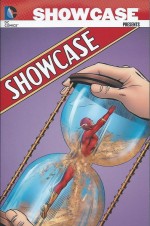
Showcase Presents Showcase volume 1


By various (DC Comics)
ISBN: 978-1-78116-364-1

This review is incredibly long. If you want to skip it and just buy the book – because it’s truly brilliant – then please do. I won’t mind and you won’t regret it at all…

In almost every conceivable way the “try-out title” Showcase created the Silver Age of American comicbooks and is responsible for the multi-million dollar industry and nascent art form we all enjoy today.

For many of us, the Silver Age is the ideal era and a still-calling Promised Land of fun and thrills. Varnished by nostalgia (because it’s the era when most of us caught this crazy childhood bug), the clean-cut, uncomplicated optimism of the late 1950s and early 1960s produced captivating heroes and compelling villains who were still far less terrifying than the Cold War baddies then troubling the grown-ups. The sheer talent and professionalism of the creators working in that too-briefly revitalised comics world resulted in triumph after triumph all of which brightened our young lives and still glow today with quality and achievement.

The principle was a sound one and graphically depicted in the very first issue: the Editors at National were apparently bombarded with readers’ suggestions for new titles and concepts and the only possible way to feasibly prove which would be popular was to offer test runs and assess the fans reactions…

This magnificent monochrome tome starts firmly ensconced in the age of genre thrillers and human adventurers, covering the first 21 issues from that historic series, spanning March/April 1956 to July/August 1959, and starts the ball rolling with the first and last appearances of Fireman Farrell in a proposed series dubbed Fire Fighters.

Following the aforementioned short ‘The Story Behind Showcase’ by Jack Schiff & Win Mortimer, the realistic dramas begin in ‘The School for Smoke-Eaters’ by Schiff and the superb John Prentice, which introduced trainee fireman Mike Farrell during the last days of his training and desperate to simultaneously live up to and escape his father’s fabulous record as a legendary “smoke-eater”.

The remaining stories, both scripted by Arnold Drake, dealt with the day-to-day drama of the job: first in ‘Fire under the Big Top’ wherein an unscrupulous showman ignored Farrell’s Fire Inspection findings with tragic consequences, then in ‘Fourth Alarm’ which mixed an industrial dispute over fireman’s pay, a crooked factory owner and a waterfront blaze captured on live TV in a blisteringly authentic tale of human heroism.

Showcase #2 featured Kings of the Wild: tales of animal bravery imaginatively related in three tales scripted by Robert Kanigher – who had thrived after the demise of superheroes with a range of fantastical genre adventures covering western, war, espionage and straight adventure. ‘Rider of the Winds’, stunningly illustrated by Joe Kubert, told the tale of a Native American lad and his relationship with his totem spirit Eagle, ‘Outcast Heroes’ (Ross Andru & Mike Esposito) related how an orphan boy’s loneliness ended once he befriended a runaway mutt who eventually saved the town’s kids from a flood and ‘Runaway Bear’, drawn by Russ Heath, used broad comedy to describe how an escaped circus bruin battled all the horrors of the wilderness to get back to his comfortable, safe life under the Big Top.

Issue #3 debuted Kanigher & Heath’s The Frogmen in an extended single tale following candidates for a US Underwater Demolitions Team as they moved from students to successful undersea warriors. Beginning with ‘The Making of a Frogman’ as the smallest diver is mocked and chided as a ‘Sardine’ by his fellows – especially the ones nicknamed ‘Shark’ and ‘Whale’ – but persevering and forging bonds until the trio were dumped into blazing Pacific action in ‘Flying Frogmen’, eventually learning the worth of teamwork and sacrifice by destroying a Japanese Sub base in ‘Silent War’…

The feature, if not the characters, became a semi-regular returning strip in All-American Men of War #44 (April #1957) and other Kanigher-edited war comics: making Frogmen the first but certainly not the last graduate of the try-out system. The next debut was to be the most successful but the cautious publishers took a long, long time to make it so…

No matter which way you look at it, the Silver Age of the American comic book began with The Flash. It’s an unjust but true fact that being first is not enough; it also helps to be best and people have to notice. The Shield beat Captain America to the news-stands by over a year yet the former is all but forgotten today.

The industry had never really stopped trying to revive the superhero genre when Showcase #4 was released in late summer of 1956, with such precursors as The Avenger (February-September 1955), Captain Flash (November 1954-July 1955), Marvel’s Human Torch, Sub-Mariner and the aforementioned Sentinel of Liberty (December 1953-October 1955) and even DC’s own Captain Comet (December 1953-October 1955) and Manhunter from Mars (November 1955 until the end of the 1960’s and almost the end of superheroes again!) still turning up in second-hand-stores and “Five-and-Dime” half-price bins. What made the new Fastest Man Alive stand out and stick was … well, everything!

Once the DC powers-that-be decided to try superheroes once more, they moved pretty fast themselves. Editor Julie Schwartz asked office partner and Golden-Age Flash scripter Robert Kanigher to recreate a speedster for the Space Age, aided and abetted by Carmine Infantino & Joe Kubert, who had also worked on the previous incarnation.

The new Flash was Barry Allen, a forensic scientist simultaneously struck by lightning and bathed in the exploding chemicals of his lab. Supercharged by the accident, Barry took his superhero identity from a comic book featuring his predecessor (a scientist named Jay Garrick who was exposed to the mutagenic fumes of “Hard Water”). Designing a sleek, streamlined bodysuit (courtesy of Infantino – a major talent who was rapidly approaching his artistic and creative pinnacle), Barry Allen became the point man for the spectacular revival of a genre and the entire industry.

‘Mystery of the Human Thunderbolt’ (scripted by Kanigher) and ‘The Man Who Broke the Time Barrier’ (written by the superb John Broome) are polished, coolly sophisticated short stories that introduce the comfortingly suburban superhero and firmly establish the broad parameters of his universe. Whether defeating bizarre criminal masterminds such as The Turtle or returning the criminal exile Mazdan to his own century, the new Flash was a protagonist of keen insight and sharp wits as well as overwhelming power. Nonetheless the concept was so controversial that despite phenomenal sales, rather than his own series the Fastest Man Alive was given a second Showcase tryout almost a year later…

Showcase #5 featured the last comics concept in years that didn’t actually develop into an ongoing series, but that’s certainly due to the changing fashions of the times and not the quality of the work that made up the three crime yarns comprising the cops-&-robbers anthology Manhunters. ‘The Greatest Villain of all Time’ by Jack Miller & Mort Meskin told how Hollywood screenwriter-turned-police detective Lt. Fowler was dogged by a madman who was playing for real all the fantastic bad guys the mystery author had once created, whilst in ‘The Two Faces of Mr. X’ (Miller, Curt Swan & Sy Barry) a male model was drafted by the FBI to replace a prominent mob-boss. Unfortunately it was the day before the gangster was scheduled for face-changing plastic surgery.‘The Human Eel’ (Miller & Bill Ely) pitted a cop unable to endure heights against an international high-tech rogue who thought he knew all the answers…

The next tryout was on far firmer fashion grounds and was the first feature to win two issues in a row.

The Challengers of the Unknown were a bridging concept. As the superhero genre was ever so cautiously being alpha-tested in 1956 here was a super-team – the first new group- entry of the still-to-be codified Silver Age – but with no uncanny abilities or masks, the most basic and utilitarian of costumes, and the most dubious of motives: Suicide by Mystery…

If you wanted to play editorially safe you could argue that were simply another para-military band of adventurers like the long running Blackhawks… but they weren’t.

A huge early hit – winning their own title before the Flash (March 1959) and just two months after Lois Lane (March 1958, although she had been a star in the comics universe since 1938 and even had TV, radio and movie recognition on her side), the Squad struck a chord that lasted for more than a decade before they finally died… only to rise again and yet again. The idea of them was stirring enough, but their initial execution made their success all but inevitable.

Jack Kirby was – and still is – the most important single influence in the history of American comicbooks. There are quite rightly millions of words written about what the man has done and meant, and you should read those if you are at all interested in our medium. I’m going to add a few words to that superabundance in this review of one of his best projects, which like so many others, he perfectly constructed before moving on, leaving highly competent but never as inspired talents to build upon.

When the comic industry suffered a collapse in the mid 1950’s, Kirby returned briefly to DC Comics where he worked on mystery tales and the Green Arrow back-up strip whilst creating the newspaper strip Sky Masters of the Space Force. He also re-packaged for Showcase an original super-team concept that had been kicking around in his head since he and long-time collaborator Joe Simon had closed the innovative but unfortunate Mainline Comics.

After years of working for others, Simon and Kirby had finally established their own publishing company, producing comics with a much more sophisticated audience in mind, only to find themselves in a sales downturn and awash in public hysteria generated by the anti-comic book pogrom of US Senator Estes Kefauver and the psychologist Dr. Frederic Wertham. Simon quit the business for advertising, but Kirby soldiered on, taking his skills and ideas to a number of safer, if less experimental, companies.

The Challengers of the Unknown were four extraordinary mortals; heroic adventurers and explorers brought together for a television show who walked away unscathed from a terrible plane crash. Already obviously what we now call “adrenaline junkies”, they decided that since they were all living on borrowed time, they would dedicate what remained of their lives to testing themselves and fate. They would risk their lives for Knowledge and, of course, Justice.

Showcase #6, dated January/February 1957 – which meant it came out in time for Christmas 1956 – introduced pilot Ace Morgan, wrestler Rocky Davis, daredevil acrobat Red Ryan and scholarly marine explorer “Prof” Haley in a no-nonsense short by Kirby, scripter Dave Wood and inkers Marvin Stein and Jack’s wife Roz, before devoting the rest of the issue to a spectacular epic with the doom-chasers hired by duplicitous magician Morelian to open an ancient container holding otherworldly secrets and powers in ‘The Secrets of the Sorcerer’s Box!’

This initial story roars along with all the tension and wonder of the B-movie thrillers it emulates, and Kirby’s awesome drawing resonates with power and dynamism as the heroes tackle ancient horrors such as ‘Dragon Seed!’, ‘The Freezing Sun!’ and ‘The Whirling Weaver!’

The fantasy magic continued in the sequel, a science fiction crisis caused when an alliance of Nazi technologies and American criminality unleashed a terrible robotic monster. Scripted by Kirby himself, ‘Ultivac is Loose!’ (Showcase #7, dated March/April 1957) introduced the beautiful and capable boffin Dr. June Robbins, who became the fifth Challenger at a time when most comic females had returned to a subsidiary status in that so-conservative era. As her computers predicted ‘A Challenger Must Die!’ the lads continued their hunt for the astonishing telepathic, sentient super-robot who inadvertently terrorised ‘The Fearful Millions’ but soon found their sympathies with the tragic artificial intelligence after ‘The Fateful Prediction!’ was fulfilled…

Showcase #8 (June 1957) again featured the Flash and led with another Kanigher tale. ‘The Secret of the Empty Box’, a perplexing but pedestrian mystery, saw Frank Giacoia debut as inker, but the real landmark was the John Broome thriller ‘The Coldest Man on Earth’.

With this yarn the author confirmed and consolidated the new phenomenon by introducing the first of a Rogues Gallery of outlandish super-villains. Unlike the almost forgotten Golden Age the new super-heroes would face predominantly costumed foes rather than thugs and spies. Bad guys would henceforth be as visually arresting and memorable as the champions of justice. Captain Cold would return time and again as the pre-eminent Flash Foe and Broome would go on to create every single member of Flash’s classic pantheon of super-villains.

The issue and this compilation also includes a filler reprint ‘The Race of Wheel and Keel’ by Gardner Fox, Gil Kane & Harry Lazarus, probably from Real Fact Comics and recounting the true story of how in 1858 a shipping magnate and stagecoach tycoon devised a contest to show which method of transportation was the fastest…

When Lois Lane – arguably the oldest supporting character/star in the Superman mythology if not DC universe – finally received her own shot at a solo title, it was very much on the terms of the times.

I must shamefacedly admit to a deep, nostalgic affection for her bright and breezy, fantastically fun adventures, but as a free-thinking, (nominally) adult liberal of the 21st century I’m simultaneously shocked nowadays at the jolly, patronising, patriarchally misogynistic attitudes underpinning too many of the stories.

Yes, I’m fully aware that the series was intended for young readers at a time when “dizzy dames” like Lucille Ball or Doris Day played to the popular American gestalt stereotype of Woman as jealous minx, silly goose, diffident wife and brood-hungry nester, but to ask kids to seriously accept that intelligent, courageous, ambitious, ethical and highly capable females would drop everything they’d worked hard for to lie, cheat, inveigle, manipulate and entrap a man just so that they could cook pot-roast and change super-diapers is just plain crazy and tantamount to child abuse.

I’m just saying…

Showcase #9 (cover-dated July/August 1957) featured Superman’s Girl Friend Lois Lane in three tales by Jerry Coleman, Ruben Moreira & Al Plastino and opened with the seminal yarn ‘The Girl in Superman’s Past’ wherein Lois first met red-headed hussy Lana Lang, childhood sweetheart of Superboy and a pushy conniving go-getter out to win Lois’ intended at all costs. Naturally Miss Lane invited Miss Lang to stay at her apartment and the grand rivalry was off and running…

‘The New Lois Lane’ aggravatingly saw Lois turn over a new leaf and stop attempting to uncover his secret identity just when Superman actually needed her to do so and the premier concludes with the concussion-induced day-dream ‘Mrs. Superman’ as Lois imagines a life of domestic super-bliss…

The next issue (September/October 1957) featured three more of the same, all illustrated by Wayne Boring & Stan Kaye, beginning with ‘The Jilting of Superman’ scripted by Otto Binder, wherein the Man of Tomorrow almost fell for an ancient ploy when Lois pretended to marry another man to make the alien oaf realise what she meant to him…

‘The Sightless Lois Lane’ by Coleman told how a nuclear accident temporarily blinded the journalist, but her unexpected recovery almost exposed Clark Kent‘s secret when he callously changed to Superman in front of the blind girl, after which Binder delightfully detailed the contents of ‘The Forbidden Box from Krypton’: a cache of devices dug up by a Smallville archaeologist originally packed by Jor-El and intended to aid the infant superbaby on Earth. Of course when Lois opened the chest all she saw was a way to become as powerful as the Man of Steel and soon became addicted to being a super-champion in her own right…

Superman’s Girlfriend Lois Lane launched into her own title scant months later, clearly exactly what the readers wanted…

Showcase #11 (November/December 1957) saw the Challengers return to combat an alien invasion on ‘The Day the Earth Blew Up’, with the unique realist Bruno Premiani inking a taut doomsday chiller that keeps readers on the edge of their seats even today, as whilst searching for missing Antarctic explorers the lads discovered an under-ice base where double-brained aliens were preparing to explosively alter the mass and gravity of Earth.

‘The Tyrans’, although intellectually superior, are no match for the indomitable human heroes and with their Plan A scotched, resort to brute force and ‘The Thing That Came out of the Sea’ even as Prof scuttles their aquatic ace in the hole with ‘One Minute to Doom’…

By the time of their last Showcase issue (#12, January/February 1958) they had already won their own title. ‘The Menace of the Ancient Vials’ was defused by the usual blend of daredevil heroics and ingenuity (with the wonderful inking of George Klein, not Wally Wood as credited here) as international spy and criminal Karnak stole a clutch of ancient chemical weapons which created giants and ‘The Fire Being!’, summoned ‘The Demon from the Depths’ and created ‘The Deadly Duplicates!’ before the pre-fantastic four were able to put their enemy down.

Flash zipped back in Showcase #13 (March/April 1958) in a brace of tales pencilled by Infantino and inked by Joe Giella. ‘Around the World in 80 Minutes’, written by Kanigher, followed the Scarlet Speedster as he tackled atomic blackmail in Paris, foiled kidnappers and rebuilt a pyramid in Egypt, dismantled an avalanche in Tibet and scuttled a pirate submarine in the Pacific whilst Broome’s ‘Master of the Elements’ introduced the outlandish chemical criminal Al Desmond who ravaged Central City as Mr. Element until the Flash outwitted him.

One final try-out issue – inked by Giacoia – cemented the Flash’s future: Showcase#14 (May/June 1958) opened with Kanigher’s eerie ‘Giants of the Time-World!’ as the Fastest Man Alive smashed dimensional barriers to rescue his girlfriend Iris West from uncanny cosmic colossi and stamped out an alien invasion plan, after which Al Desmond returned with an altered M.O. and new identity as Doctor Alchemy whose discovery of the mystic Philosopher’s Stone made him ‘The Man who Changed the Earth!’ This stunning yarn was a memorable and worthy effort to bow out on, but it would still be a nearly a year until the first issue of his own title finally hit the stands.

To reiterate: Showcase was a try-out comic designed to launch new series and concepts with minimal commitment of publishing resources. If a new character sold well initially a regular series would follow. The process had been proved with Frogmen, Lois Lane, Challengers of the Unknown and Flash and Editorial Director Irwin Donenfeld now urged his two Showcase editors to create science fiction heroes to capitalise on the twin zeitgeists of the Space Race and the popular fascination with movie monsters and aliens.

Jack Schiff came up with a “masked” crimefighter of the future who debuted in issues #15 and 16 whilst Julie Schwartz decided to concentrate on the now in the saga of a contemporary Earth explorer catapulted into the most uncharted territory yet imagined.

Showcase #15 (cover-dated September/October 1958) commenced without fanfare or origin the ongoing adventures of Space Ranger in ‘The Great Plutonium Plot’ plotted by Gardner Fox, scripted by pulp sci-fi veteran Edmond Hamilton and illustrated by Bob Brown.

The hero was in actuality Rick Starr, son of a wealthy interplanetary businessman who spent his free time battling evil and injustice with incredible gadgets and devices and the assistance of his shape-shifting alien pal Cryll and capable Girl Friday Myra Mason. When Jarko the Jovian space pirate began targeting only ships carrying the trans-uranic element, Rick suspected a hidden motive and donning his guise of the Space Ranger laid a cunning trap, which revealed a hidden mastermind and a deadly ancient device which endangered the entire solar system…

From his base in a hollow asteroid, Space Ranger ranged the universe and ‘The Robot Planet’ took him and his team to Sirius after discovering a diabolical device designed to rip Sol’s planets out of their orbits. At the end of his voyage Starr discovered a sublime civilisation reduced to cave-dwelling and a mighty computer intelligence intent on controlling the entire universe unless he could stop it…

Issue #16 opened with ‘The Secret of the Space Monster’ (plot by John Forte, scripted by Hamilton, illustrated by Brown) as Rick, Myra and Cryll investigated an impossible void creature and uncovered a band of alien revolutionaries testing novel super-weapons after which ‘The Riddle of the Lost Race’ (Fox, Hamilton & Brown) took the team on a whistle-stop tour of the Solar system in pursuit of a vicious criminal and the hidden treasures of a long-vanished civilisation.

A few months later Space Ranger was transported to science fiction anthology Tales of the Unexpected, beginning with issue #40 (August 1959) and holding the lead and cover spot for a six year run…

One of the most compelling stars of those halcyon days was an ordinary Earthman who regularly travelled to another world for spectacular adventures, armed with nothing more than a ray-gun, a jetpack and his own ingenuity. His name was Adam Strange, and like so many of that era’s triumphs, he was the brainchild of Julius Schwartz and his close team of creative stars.

Showcase #17 (cover-dated November-December 1958) proclaimed Adventures on Other Worlds, courtesy of Gardner Fox, Mike Sekowsky & Bernard Sachs, and told of an archaeologist who, whilst fleeing from enraged natives in Peru, jumped a 25 foot chasm only to be hit by a stray teleport beam from a planet orbiting Alpha Centauri. He materialised on another world filled with giant plants and monsters, and was rescued by a beautiful woman named Alanna who taught him her language via a cunning contrivance.

‘Secret of the Eternal City!’ revealed that Rann was a planet recovering from atomic war, and the beam was in fact a simple flare, one of many sent in an attempt to communicate with other races.

In the four years (speed of light, right? As You Know, Bob, Alpha Centauri is about 4.3 light-years from Sol) that the Zeta-Flare travelled through space, cosmic radiation converted it into a teleportation beam. Until the radiation drained from his body Strange was to be a very willing prisoner on a fantastic world of mystery, adventure and romance…

And an incredibly unlucky one apparently, as no sooner had Adam started acclimatising than an alien race named The Eternals invaded, seeking a mineral that would grant them immortality. Strange’s courage and sharp wits enabled him to defeat the invaders only to have the radiation finally fade, drawing him home before his adoring Alanna could administer a hero’s reward.

…And thus was established the principles of this beguiling series. Adam would intercept a Zeta-beam hoping for some time with his alien sweetheart, only to be confronted with a planet-menacing crisis.

The very next of these, ‘The Planet and the Pendulum’ saw him obtain the crimson-and-white spacesuit and weaponry that became his distinctive trademark in a tale of alien invaders, attacking a lost colony of Rannians on planetary neighbour Anthorann which also introduced the subplot of Rann’s warring city-states, all desperate to progress and all at different stages of recovery and development….

The next issue featured the self-explanatory ‘Invaders from the Atom Universe’ with sub-atomic marauders displacing the native races until Adam unravelled their nefarious plans and ‘The Dozen Dooms of Adam Strange’ wherein the hero had to outfox the dictator of Dys who planned to invade Alanna’s home-city Rannagar.

With this last story Sachs was replaced by Joe Giella as inker, although the former did ink Showcase #19’s stunning Gil Kane cover, (March/April 1959) which saw the unwieldy Adventures on Other Worlds title replaced with the eponymous logo Adam Strange.

‘Challenge of the Star-Hunter’ and ‘Mystery of the Mental Menace’ were classic puzzle tales wherein the Earthman had to outwit a shape-changing alien and an all-powerful energy-being, and after so doing Adam Strange took over the lead spot and cover of the anthology comic Mystery in Space with the August issue of that year.

Clearly on a creative high and riding a building wave, Showcase #20 (May/June 1959) introduced Rip Hunter… Time Master and his dauntless crew as ‘Prisoners of 100 Million BC’ (by Jack Miller & Ruben Moreira in a novel-length introductory escapade which saw the daredevil physicist, his engineer friend Jeff Smith, girlfriend Bonnie Baxter and her little brother Corky travel back to the Mesozoic era, unaware that they were carrying two criminal stowaways.

Once there the thugs hi-jacked the Time Sphere and held it hostage until the explorers helped them stock up with rare and precious minerals. Reduced to the status of castaways Rip and his team became ‘The Modern-Day Cavemen’ but when an erupting volcano caused ‘The Great Beast Stampede’ the chrononauts finally turned the tables on their abductors…

Miller was always careful to use the best research available but never afraid to blend historical fact with bold fantasy for Hunter’s escapades, and this volume concludes with an epic follow-up in ‘The Secret of the Lost Continent’ (Showcase #21, July/August, 1959, illustrated by Sekowsky & Joe Giella) wherein the Time Masters jumped progressively further back in time in search of Atlantis.

Starting with a dramatic meeting with Alexander the Great in 331BC, the explorers follow the trail back centuries to ‘The Forbidden Island’ of Aeaea in 700BC and uncover the secret of the witch Circe before finally reaching 14,000BC and ‘The Doomed Continent’ only to find the legendary pinnacle of early human achievement to be a colony of stranded extraterrestrial refugees…

Rip Hunter would appear twice more in Showcase before winning his own comic and the succeeding months would see the Silver Age kick into frantic High Gear with classic launches coming thick and fast…

These stories from a uniquely influential comicbook truly determined the course of the entire American strip culture and for that alone they should be cherished, but the fact they are still some of the most timeless, accessible and entertaining graphic adventures ever produced is a gift that should be celebrated by every fan and casual reader.

Buy this for yourself, get it for your friends and get a spare just because you can…

© 1956, 1957, 1958, 1959, 2012 DC Comics. All Rights Reserved.

Cartoon Network 2-in-1: Ben 10 Alien Force/The Secret Saturdays


By many and various
(DC Comics)
ISBN: 978-1-4012-2878-1

The links between kids’ animated features and comicbooks are long established and, I suspect, for young consumers, indistinguishable. After all, it’s just adventure entertainment in the end…

DC’s Cartoon Network imprint is arguably the last bastion of children’s comics in America and has produced some truly magical homespun material (such as Tiny Titans, Batman: Brave and the Bold or Billy Batson and the Magic of Shazam!) as well as stunning interpretations of such television landmarks as Scooby Doo, Powerpuff Girls, Dexter’s Laboratory and others.

This particular dynamic and fast-paced parcel of thrills gathers a brace of contemporary kids’ TV sensations in back-to-back exploits taken from monthly periodical Cartoon Network Action-Pack (issues # 26-42) and opens with the further adventures of a boy who becomes a one-man alien legion of extraterrestrial champions with the mere flick of a wrist…

Ben Tennyson was a plucky kid who could become ten different alien super-heroes by activating a fantastic device called the Omnitrix. At first the young boy clandestinely battled fantastic foes with his eccentric Grandpa Max and obnoxious cousin Gwen but by the time of these tales Ben is a teenager, having retired for a few years before again taking up the mantle of planetary protector.

He is also well on the way to becoming a global household name and has his own power-packed teen posse including Gwen, reformed super bad-boy Kevin Ethan Levin and romantic interest/techno-ninja Julie Yamamoto, all whilst struggling to master the far more powerful Ultimatrix device…

In short complete tales (following a handy guide to the cast and checklist of alien alternates which Ben can morph into) the reluctant hero, his hyper-charged avatars and BFFs tackle a continual stream of world-shaking threats and typical teen traumas beginning with ‘The New Order’ by Matt Wayne & Rob Haynes, wherein Kevin’s car is stolen.

The sweet ride is packed with advanced alien tech and only Gwen’s skill in manipulating “manna” or magic enables them to track it to old enemies the Forever Knights, servants of elitist primal race the Highbreed. Cue big, big fight…

Another fact-page, this time delivering the details on the Highbreed and their devoted servants the Forever Knights and insidiously cloaked infiltrators dubbed DNAliens is followed by ‘Bad Boy’ (Charlotte Fullerton, Mike Cavallaro & Mike DeCarlo) wherein Kevin seems to return to his evil ways by impersonating Ben. It’s all a ploy to fool DNAliens, but nobody thought to tell Gwen that…

‘A Blast from the Past’ (Fullerton & Min. S. Ku) sees a Space cop’s overeager son attempt to arrest Kevin only to accidentally uncover a very real hidden menace, whilst ‘A Brief Mystery of Time’ by the same creative team finds Ben stuck in a deadly time loop until sometimes ally Professor Paradox offers a few useful if unusual hints…

‘Double Trouble’ reintroduces Ben’s evil doppelganger Albedo, who has devised a perfect way to reactivate his own Omnitrix and finally replace the hero – or so he thinks – whilst in ‘Ship Shape’, a small gift from Ben to Julie causes big trouble after her alien mecha-pet suddenly goes wild and Ben’s planned ‘Lazy Day’ (Amy Wolfram & Ku) goes horribly wrong after Gwen reminds him of an appointment with a covert colony of DNAliens…

Robbie Busch, Cavallaro & DeCarlo then reveal a sweet trap for the young heroes at the local Ice Cream emporium, courtesy of a de-frocked Forever Knight who was their ‘Soda Jerk’, Jason Hall & Ku describe how ‘The Past is the Key to the Future’ when a long-dormant Highbreed doomsday bomb activates and Ben has to travel five years back in time to when he first became a hero to uncover the means of deactivating it – without being seen by his earlier self – before the Ben 10 bits conclude with Jake Black & Ku’s ‘Backcountry Battleground’ wherein a snowboarding holiday turns into a catastrophic confrontation when Ben, Gwen and Kevin unearth a DNAlien installation threatening all of Earth…

The second half of the bifurcated blockbuster is dedicated to a family of clandestine crypto-zoologists covertly discovering and protecting Earth’s hidden beasts of fact and fable against all threats and menaces as The Secret Saturdays.

“Doc” (don’t call him Solomon) and Drew Saturday are members of a hidden society called The Secret Scientists, dedicated to protecting the Earth from hidden threats both ancient and modern, unravelling mysteries, and saving lost and undiscovered species from human encroachment and exploitation.

When not in their hidden base and wildlife preserve they travel the globe with their precocious son Zak – who has an un explained psychic ability to connect with “cryptids” – and rescued creature-comrades gorilla-cat Fiskerton, genetically augmented dragon Komodo and pterosaur Zon, unravelling the unknown and battling hostile foes and forces.

Most notable among those are villainous TV crypto-zoologist V.V. Argost, beast-hunting mercenary Van Rook and Piecemeal, a dastardly and depraved culinary cove obsessed with and dedicated to eating the rarest creatures in the world…

The show was created by Jay Stephens and premiered in October 2008, framed very much in the mould of classic 1960s Hanna-Barbera adventure animations such as Jonny Quest and the Herculoids, beginning here with ‘The Cannibal Curse’ written and inked by Stephens with pencils by Scott Jeralds in which the family travel to Fiji to accept a ceremonial apology from the descendants of natives who ate Doc’s great, great, great grandfather, only to encounter Dakuwaqa, possibly a “living fossil” dunkleosteus but certainly not a genuine immortal shark god…? But they could be wrong…

Brandon Sawyer & Mike Manley take the clan to the Russian Steppes for ‘Crying Wolf!’ in search of Kalmakian snakes, but Zak and Fiskerton’s unconventional appearance soon has the natives screaming “Wawkalak!” However even though Fisk certainly isn’t the fabled Russian werewolf, the inevitable bandits hassling the town certainly have some uncanny creature in their thrall…

‘Way Past Bedtime’ (John Rozum, Jeralds & Manley) sees Zak, Fisk and Komodo try to escape their babysitter Abby Grey, only to be taken on a wild excursion to a lost sepulchre by the compulsive and tempestuous tomb-raider. In the crypt they encounter a fantastic watch-beast and the murderous Van Hook, looking for a lost artefact…

‘Sticks and Stones’ (Rozum, Will Sweeney & Manley) finds Zak, Fisk and Komodo trying to retrieve a replica artefact they’ve accidentally lost in the preserve beneath the Saturday base. Unfortunately Argost is also after it and he’s brought a pet peril of his own. To make things perfect, that’s when the storm and flash-floods hit…

By the same team, ‘The Storm that Shook Japan’ found the entire family investigating a devastated town with anthropoid ally Professor Mizuki. However the depredations of the tree-dwelling giant Lightning-Thunder-Birds are as nothing compared to the humans who have been wilfully clear-cutting their ancient forests, after which Komodo steals the spotlight in ‘Escape from Weird World’ when the canny dragon is stolen by Argost’s manservant Munya, only to orchestrate a mass breakout from his critter Colditz, whilst the entire reunited family encounter terror and cruel misunderstanding in Italy after an old shepherd dies and flocks begin disappearing. Only Doc’s uncanny perspicacity prevents a huge tragedy by unravelling the ancient mystery of the Guardian of ‘The Cave of the Cacus’…

The all-ages adventure ends on a rather gruesome and grisly note with Rozum, Jeralds & Manley’s ‘Meal Worms’ as the search for invisible skyfish in Mexico results in another nasty encounter with ghastly gourmand Piecemeal and the first sighting of a terrifying species of atmospheric jellyfish…

Despite being ostensibly aimed at TV kids, these mini-sagas are wonderful old-fashioned comics thrillers which no self-respecting fun-fan should miss: accessible, entertaining, well-rendered yarns for the broadest range of excitement-seeking readers, making this terrific tome a perfect, old fashioned delight. What more do you need to know?
™ and © 2010 Cartoon Network. Compilation © 2008, 2009 DC Comics. All Rights Reserved.
Arzach


By Moebius (Les Humanoides Associes)
No ISBN:

I’m breaking my own self-imposed rules today to present something just a little bit different and celebrate the talents of France’s most famous master of the comic arts.

Jean Henri Gaston Giraud was born in the suburbs of Paris on May 8th 1938 and raised by his grandparents after his mother and father divorced in 1941.

In 1955 he attended the Institut des Arts Appliqués where he became friends with Jean-Claude Mézières who, at 17 was already selling strips and illustrations to magazines such as Coeurs Valliants, Fripounet et Marisette and Spirou. Giraud apparently spent most of his time drawing cowboy comics and left after a year.

In 1956 he travelled to Mexico, staying with his mother for eight months, before returning to France and a full-time career drawing comics, mostly westerns such as Frank et Jeremie for Far West and King of the Buffalo, A Giant with the Hurons and others for Coeurs Valliants in a style based on French comics legend Joseph “Jijé” Gillain.

Giraud spent his National Service in Algeria in 1959-1960, where he worked on military service magazine 5/5 Forces Françaises and on returning to civilian life became Jijé’s assistant in 1961, working on the master’s long-running (1954-1977) Western epic Jerry Spring.

A year later, Giraud and Belgian writer Jean-Michel Charlier launched the serial ‘Fort Navajo’ in Pilote #210, and soon its disreputable, anti-hero lead character Lieutenant Blueberry became one of the most popular European strips of modern times. In 1963-1964, Giraud produced a number of strips for satire periodical Hara-Kiri and, keen to distinguish and separate the material from his serious day job, first coined his pen-name “Moebius”.

He didn’t use it again until 1975 when he joined Bernard Farkas, Jean-Pierre Dionnet and Philippe Druillet – all inspired science fiction fans – to become the founders of a revolution in narrative graphic arts as “Les Humanoides Associes”. Their groundbreaking adult fantasy magazine Métal Hurlant utterly enraptured the comics-buying public and Giraud again wanted to utilise a discreet creative persona for the lyrical, experimental, soul-searching material he was increasingly driven to produce: series such as The Airtight Garage, The Incal and the mystical, dreamy flights of sheer fantasy contained in Arzach

To further separate his creative twins, Giraud worked inks with a brush whilst the futurist Moebius rendered with pens…

Generally I review material produced or translated into English and indeed Arzach did make it into the language of Shakespeare, Keats, Byron and Alan Moore in the 1987 Epic Comics/Titan Books Moebius volume 2 – Arzach & Other Fantasy Stories, but to really appreciate the magics and majesty you should try and get hold of the 1976 hardback album or any other early iteration where the tales can be appreciated and enjoyed in splendid isolation and consideration.

Produced utterly without words, the four episodes depict the lonely contemplative flights of a solitary explorer – some say warrior – observing an incredible world and its inhabitants from the lofty perch of a flying lizard.

The first strip ‘Arzach’ finds the silent skyglider passing between the spires of an incredible city, peeking into enticing windows until an angry citizen confronts him. Dealing summarily with his enraged antagonist, the voyeur returns for his seductive reward and gets a big surprise…

In ‘Harzak’ the explorer mysteriously gains and swiftly loses a pack-pterodactyl to carnivorous plants. Woefully short on rations, he then encounters a colossal ape-like monster which reluctantly provides diversion, entertainment and eventually distraction for the cloud-voyager whilst in ‘Arzak’ a fusty old world technician motors across a blistering desert to a fantastic temple. Inside listless creatures mope dejectedly. Enduring physical assault, the sparks enters a bunker and sets about fixing things as, on a screen, the wind-rider paces in frustration, with his ungainly, featherless steed prone and unmoving. With the twist of a wrist a handy screwdriver sets the world to rights…

‘Harzakc’ opens with the lizard rider again spying on a beautiful undraped woman before flying off into a succession of increasingly bewildering and astoundingly spectacular alien scenes of…

Well, that’s for you to decide.

This work more than any other led to an outpouring of fanciful, lavish and enchanting fantasy creations from all over the world, inspiring movie, makers, writers and even comics creators as disparate and far-ranging as Stan Lee and Hayao Miyazaki. These apparently simplistic peregrinations are magnificent visual panoplies open to many interpretations, tapping into oneiric realms of the subconscious and woven with wry humour, but they are not stories in any traditional sense.

Think of them perhaps as staggeringly detailed goads to the imagination of the reader…

Moebius famously created these strips in reaction to his perceived predominance of American superhero comics and consciously stove to reinvigorate the genres and scenarios of the entire comics industry – with terrific results.

A sheer unadulterated dose of primal imaginary power and superlative skill and craft, Arzach is a tome that belongs on the bookshelf of every fan of the art of comics.

Jean Giraud and Moebius passed away on March 10th 2012.
Edition © Les Humanoides Associes 1976. Arzach © 2012 the estate of Jean Giraud. All rights reserved.

The Adventures of Blake and Mortimer: The Secret of the Swordfish volume 1 – Ruthless Pursuit


By Edgar P. Jacobs translated by Clarence E. Holland (Blake and Mortimer Editions)
ISBN: 978-9-06737-002-8

Belgian Edgard Félix Pierre Jacobs (March 30th 1904 – February 20th 1987) is considered one of the founding fathers of the Continental comics industry. Although his output is relatively meagre compared to some of his contemporaries, the iconic series he worked on practically formed the backbone of the art-form in Europe, and his splendidly adroit yet roguish and thoroughly British adventurers Blake and Mortimer, created for the very first issue of Le Journal de Tintin in 1946, swiftly became an unmissable staple of post-war European kids’ life the way Dan Dare would in Britain in the 1950s.

Edgar P. Jacobs was born in Brussels, a precocious child who began feverishly drawing from an early age but was even more obsessed with music and the performing arts – especially opera.

He attended a commercial school but, determined never to work in an office, pursued art and drama following graduation in 1919. A succession of odd jobs at opera-houses – scene-painting, set decoration, working as an acting and singing extra – supplanted his private performance studies, and in 1929 Jacobs won an award from the Government for classical singing.

His proposed career as an opera singer was thwarted by the Great Depression, however, as the arts took a nosedive following the global stock market crash.

Picking up whatever dramatic work was going, including singing and performing, Jacobs switched to commercial illustration in 1940. Regular work came from the magazine Bravo; as well as illustrating short stories and novels he famously took over the syndicated Flash Gordon strip, after the occupying German authorities banned Alex Raymond’s quintessentially All-American Hero and the publishers desperately sought someone to satisfactorily complete the saga.

Jacob’s ‘Stormer Gordon’ lasted less than a month before being similarly embargoed by the Nazis, after which the man of many talents created his own epic science-fantasy feature in the legendary Le Rayon U, a milestone in both Belgian comics and science fiction adventure.

The U Ray‘ was a huge hit in 1943 and scored big all over again a generation later when Jacobs reformatted the original “text-block and picture” material to incorporate speech balloons and ran the series again in the periodical Tintin with subsequent release as a trio of graphic albums in 1974.

I’ve read differing accounts of how Jacobs and Tintin creator Hergé got together – and why they parted ways professionally, if not socially – but as to the whys and wherefores of the split I frankly I don’t care. What is known is this: whilst creating the weekly U Ray, one of Jacob’s other jobs was scene-painting, and during the staging of a theatrical version of Tintin and the Cigars of the Pharaoh Hergé and Jacobs met and became friends. If the comics maestro was unaware of Jacob’s comic work before then he was certainly made aware of it soon after.

Thereafter, Jacobs began working on Tintin, colouring the original black and white strips of The Shooting Star from the newspaper Le Soir for an upcoming album collection. By 1944 he was performing a similar role for Tintin in the Congo, Tintin in America, King Ottokar’s Sceptre and The Blue Lotus. By now he was also contributing to the drawing too, working on the extended epic The Seven Crystal Balls/Prisoners of the Sun.

Jacob’s love of opera made it into the feature as Hergé – who loathed the stuff – teasingly created the bombastic Bianca Castafiore as a comedy foil and based a number of bit players (such as Jacobini in The Calculus Affair) on his long-suffering assistant.

After the war and liberation publisher Raymond Leblanc convinced Hergé, Jacobs and a number of other comics creatives to work for his new venture. Launching publishing house Le Lombard, he also commissioned Le Journal de Tintin, an anthology comic with editions in Belgium, France and Holland edited by Herge, starring the intrepid boy reporter and a host of newer heroes.

Beside Hergé, Jacobs and writer Jacques van Melkebeke, the comic featured Paul Cuvelier’s ‘Corentin’ and Jacques Laudy’s ‘The Legend of the Four Aymon Brothers’. Laudy had been a friend of Jacobs’ since they worked together on Bravo and the first instalment of the epic thriller serial ‘Le secret de l’Espadon’ starred a bluff, gruff British scientist and an English Military Intelligence officer (who was closely modelled on Laudy): Professor Philip Mortimer and Captain Francis Blake…

The initial storyline ran from issue #1 – 26th September 1946-8th September 1949 – and cemented Jacobs’ status as a star in his own right. In 1950, with the first 18 pages slightly redrawn, The Secret of the Swordfish became Le Lombard’s first album release with the concluding part published three years later. These volumes were reprinted nine more times between 1955 and 1982 with an additional single complete edition released in 1964.

In 1984 the story was reformatted and repackaged as three volumes with additional material – mostly covers from the weekly Tintin – added to the story as splash pages, and the first of these forms the basis for the English language book under discussion today.

Hergé and Jacobs purportedly suffered a split in 1947 when the former refused to grant the latter a by-line on new Tintin material, but since the two remained friends for life and Jacob’s continued to produce Blake and Mortimer for the weekly comic, I think it’s fair to say that if such was the case it was a pretty minor spat. I rather suspect that The Secret of the Swordfish was simply taking up more and more of the brilliant, diligent artist’s time and attention…

The U Ray also provided early visual inspiration for Blake, Mortimer and implacable nemesis Colonel Olrik, who bear a more than passing resemblance to the heroic Lord Calder, Norlandian boffin Marduk and viperous villain Dagon from that still lauded masterwork…

Although all the subsequent sagas have been wonderfully retranslated and published by CineBook in recent years, this initial epic introductory adventure and its concluding two volumes remain frustratingly in the back-issue twilight zone, probably due to its embracing of the prevailing prejudices of the time.

By having the overarching enemies of mankind be a secret Asiatic “Yellow Peril” empire of evil, there’s some potential for offence – unless one actually reads the text and finds that the assumed racism is countered throughout by an equal amount of “good” ethnic people and “evil” white folk, so with no other version available I’m happily using the huge (312 x 232mm) 1986 iteration for this review.

All the subsequent tales by Jacobs and his successors have been successfully released by Cinebook and, although I’ll be reviewing them in due course, don’t wait for me but go out and get them all now!

Here and now, however, the incredible journey begins with ‘Ruthless Pursuit’ as a secret army in the Himalayas prepares to launch a global Blitzkrieg on a world only slowly recovering from its second planetary war. The wicked Basam-Damdu, Emperor of Tibet, has assembled an arsenal of technological super-weapons and the world’s worst rogues such as the insidious Colonel Olrik in a bid to seize control of the entire Earth.

However a bold British-Asian spy has infiltrated the hidden fortress and surrenders his life to get off a warning message…

In England, physicist and engineer Philip Mortimer and MI5 Captain Francis Blake discuss the worsening situation at an industrial installation where the boffin’s radical new aircraft engine is being constructed. When the warning comes that the war begins that night, the old friends swing into immediate action…

As the super-bombers rain destruction down on all the world’s cities, Mortimer’s dedicated team prepares his own prototype, the Golden Rocket, for immediate launch, taking off just as Olrik’s bombers appear over the desolate complex. Despite heavy fire the Rocket easily outdistances the rapacious Empire forces, leaving ruined homes behind them as they fly into a hostile world now brutally controlled by Basam-Damdu…

Whilst seeking to join British Middle East resistance forces who have another prototype super-plane, teething troubles and combat damage create tense moments in the fugitives’ flight. When the Rocket is attacked by a flight of jets the test ship’s superior firepower enables it to fight free but only at the cost of more structural deterioration. Failing now, the Rocket goes down in the rocky wilds between Iran and of Afghanistan. Parachuting free of the doomed Rocket, Blake, Mortimer and the crew are machined gunned by pursuing Empire jets and only three men make it to the ground safely…

After days of struggle Blake, Mortimer and the indomitable Jim are cornered by Iranian troops who have joined Olrik’s forces. Sensing disaster, the Britons hide the plans to Mortimer’s super plane but one of the Iranians sees the furtive act. When no one is looking – even his superiors – Lieutenant Ismail hurriedly scoops up the document but misses one…

Under lock and key and awaiting Olrik’s arrival, the prisoners are accosted by Ismail, who sees an opportunity for personal advancement which the Englishmen turn to their own advantage. Denouncing him to his superiors, Blake instigates a savage fight between Ismail and his Captain. During the brief struggle Jim sacrifices himself, allowing Blake and Mortimer to escape with the recovered plans. Stealing a lorry, the desperate duo drive out into the dark desert night…

Followed by tanks into the mountain passes, the ingenious pair trap their pursuers in a ravine just as hill partisans attack. The Empire collaborators are wiped out and, after exchanging information with the freedom fighters, the Englishmen take one of the captured vehicles and head to a distant rendezvous with the second Rocket, but lack of fuel forces them to stop at a supply dump where they are quickly discovered.

By setting the dump ablaze the heroes escape again, but in the desert Olrik has arrived and found the sheet of notes left behind by Ismail. The cunning villain is instantly aware of what it means…

Fighting off aerial assaults from Empire jets and streaking for the mountains, Blake and Mortimer abandon their tank and are forced to travel on foot until they reach the meeting point where a British-trained native Sergeant Ahmed Nasir is waiting for them. The loyal Indian served with Blake during the last war and is delighted to see him again, but as the trio make their way to the target site they become aware that Olrik has already found it and captured their last hope…

Only temporarily disheartened, the trio use commando tactics to infiltrate Olrik’s camp, stealing not the heavily guarded prototype but the villainous Colonel’s own Red-Wing super-jet. Back on course to the British resistance forces, the seemingly-cursed trio are promptly shot down by friendly fire: rebels perceiving the stolen plane as just another enemy target…

Surviving this crash too, the trio are ferried in relative safety by the apologetic tribesmen to the enemy-occupied town of Turbat, but whilst there a spy of the Empire-appointed Wazir recognises Blake and Mortimer. When Nasir realises they are in trouble he dashes to the rescue but is too late to prevent Mortimer from being drugged.

Sending the loyal Sergeant on ahead, Blake tries frantically to revive his comrade as a platoon of Empire soldiers rapidly mount the stairs to their exposed upper room…

To Be Continued…

Gripping and fantastic in the best tradition of pulp sci-fi and Boy’s Own Adventures, Blake and Mortimer are the very epitome of True Brit grit and determination, always delivering grand old-fashioned Blood and Thunder thrills and spills in timeless fashion and with staggering visual verve and dash. Despite the high body count and dated milieu, any kid able to suspend modern mores and cultural disbelief (call it an alternative earth history if you want) will experience the adventure of their lives… and so will their children.
© 1986 Editions Blake & Mortimer. All rights reserved.

Bell’s Theorem volumes 1-3


By Matthias Schultheiss, translated by Tom Leighton & Bernd Metz (Catalan Communications)
ISBNs: 0-87416-037-5, 0-87416-062-6 and 0-87416-074-X

Although German, supreme sequential stylist Matthias Schultheiss, like so many other international comics creators, found widespread fame and success in France’s monumental bandes dessinées publishing culture.

Born in Nuremberg in 1946 the award-winning author and artist began his working life as an apprentice cabinet maker, before studying illustration at Hamburg’s Academy of Fine Arts. After graduation he freelanced in the commercial art field until 1981 when his graphic novel The Trucker began in the magazine Comics umgesetzt (the Comic Reader). After illustrating Charles Bukowski’s The Long Job, and Broken in the City, after which, in 1984, the artist self-penned the controversial Kalter Krieg (Cold War), which was “forbidden” by West Germany’s Federal Review Board and listed as a “harmful publication” due to perceived problems with its despondent political tone.

With The Trucker syndicating in Denmark, Schultheiss met with French publisher Albin Michel in 1985, producing shorts for the prestigious L’Écho des savanes. That same year he began the groundbreaking metaphysical thriller and philosophical tour de force Die Wahrheit über Shelby (The Truth about Shelby) under discussion here.

Three spectacular, challenging and uncompromising volumes Lebenslänglich, Die Verbindung and Der Kontakt (Lifetime, The Compound and The Contact) appeared between 1996-1988, to great international acclaim, and since then Schultheiss has produced a number of challenging, epic works for increasingly broader markets, including the triptych The Sharks of Lagos, The Track, Night Taxi, Talk Dirty amongst others.

In 1993 he produced the strikingly surreal superhero Propeller Man for Dark Horse Comics – to decidedly mixed American reception – after which he more or less abandoned comics for television writing, only returning in 2002 with The Puddle.

Since then he has produced Woman on the River for manga giant Kodansha, Travels with Bill, and Daddy, a controversial and pithy exploration of the Second Coming of Jesus…

Translated and released by Catalan Communications in the late 1980s, The Truth about Shelby became Bell’s Theorem and the three volumes were redubbed Lifer, The Connection and Contact, introducing a vicious, hard-as-nails career thug rechristened “Shalby” and following his inevitable path to destruction after he’s picked out by an incomprehensible universe to endure the cosmic vagaries of quantum mechanics in irresistible motion…

Just in case you were wondering: the new title comes from John Stewart Bell’s 1964 paper “On the Einstein Podolsky Rosen paradox”, in which the renowned Irish physicist addressed the objections cited by science giants Albert Einstein, Boris Podolsky and Nathan Rosen who didn’t fully accept the plausibility of a Theory of Quantum Mechanics.

Summed up in the statement “No physical theory of local hidden variables can ever reproduce all of the predictions of Quantum Mechanics”, Bell introduced the concept of Hidden Variable Theories to show how the old guard’s stipulations that the effects of Locality and Realism negated the possibility of quantum physics.

I’m sure I’ve got that all wrong, but suffice to say for the sake of the comic tale here, it means that all events are connected in ways we can’t necessarily perceive or understand…

Lifer introduces Shalby, a vicious criminal not long for this world. The other convicts are determined to kill him, but after the latest savage attack the callous thug finally accedes to the warden’s insistent offers and signs up for an experimental program in another jail. He doesn’t even care that much if the promised pardon for surviving the tests is real or not…

Deep in a desert complex under burning skies, Shalby is injected with drugs and strapped to a ghastly hi-tech torture chair. The first session reduces him to a bloody, leaking wreck and whilst recovering in the infirmary he is visited by another test-subject, sneaking in through an air-duct…

Even with half his face missing Frank seems to know what’s going on. The place is part of a top secret military project and the other prisoners have no chance of survival, but if Shalby can escape before he becomes too weak he can blow the whistle on the whole sordid mess…

With Frank’s aid Shalby kills one of doctors and makes his break; hopping a freight train and hitching rides to anywhere else. However the drugs in his system are still working: he’s feeling shaky and can’t stop bleeding. Luckily Frank gave him some pills and hypos to counteract the effects of the scientists’ experiments…

With cops hard on his tail, Shalby collapses and is rescued by a young doctor who hides him and tends to his many wounds. After two weeks the fugitive is fighting fit again and his saviour has also provided him with a car and money. Immune to gratitude, Shalby rapes her when she refuses to sleep with him before heading off into the night…

Determined to escape at all costs, Shalby heads north and buys passage to Canada on a smuggling plane, landing on a desolate stretch of seashore in Labrador, miles from anywhere…

The beach is strewn with maritime wrecks, debris and the skeletons of whales. Constantly far out to sea, Shalby’s only companions are more of the vast cetaceans, sporting in the cold uninviting waves.

However, his search for shelter only offers mystery as the brute discovers bizarre machines everywhere: peculiar contraptions of string and bone, sticks and scraps of metal…

When he falls into a pit he finds a mummified corpse wearing more of the impossible devices and headphones made from discarded tin-cans. The place is a bunker of sorts with science texts and esoteric notes scattered everywhere, but beggars can’t be choosers and Shalby repairs the roof and moves in.

The notes belong to Mark Amselstein, a physicist from Hamburg, who also left cash and a passport. The photo shows that Amselstein was a dead ringer for Shalby and his jottings describe an incredible experiment into insane connections in time and space. Moreover, whenever the whales appear, those tin headphones crackle with eerie, haunting sounds…

In all this time alone, Shalby has been unaware that there are hunters on his trail, but when he spots a plane circling above his beach the fugitive acts instantly, snatching up Amselstein’s papers, passport and whatever else he can carry, setting off inland just as winter hits the great wilderness.

Weeks later a weary, shaggy trapper walks into snowbound Montreal, rents a hotel room and emerges as Mark Amselstein, Ph. D. Buying as ticket to Hamburg and idly attempting to pick up a woman in the airport bar, the dapper doctor is abruptly accosted by two mysterious men…

Shalby, with the aid of an unsuspecting innocent bystander, savagely deals with the enigmatic agents and hurriedly boards his flight, but soon realises that he is experiencing horrifying, unimaginable hallucinations…

The Connection opens with Shalby recoiling from a dusty decaying spectre in a parka and goggles, who quickly resolves into a pretty fellow passenger. Shaken, he subsides into pensive speculation and when the plane lands quickly debarks and heads for Amselstein’s old address. Meanwhile in a sanatorium, the normally quiescent Paul begins to strain against his straitjacket. The attendants don’t understand why he keeps screaming “he’s here”…

Amselstein’s apartment is an empty hovel by the docks, deep in the infamous Red Light district of the Reeperbahn. However a clever clue leads the escaped convict to the missing physicist’s true base, an abandoned dredger deep in the ice-bound industrial wasteland of the Harbour.

His arrival has not gone unnoticed. One streetwalker in particular is keen to observe him, as are a number of furtive men haunting the area but utterly uninterested in the flesh on sale and for rent…

As Shalby investigates the old scow he finds more of the esoteric scrap-and-string constructions amidst the shambolic cabins but no immediate threat and, exhausted, dozes off.

Elsewhere his dogged followers are revealed as American spies, desperate to recover the missing scientist who was a vital part of their Star Wars Defence Initiative. At the highest level the decision is made: get Amselstein back, willing or otherwise…

Further exploring the deserted hulk, Shalby finds fresh food and more of the dead boffin’s notes. Baffled by concepts which impossibly stipulate that the universe is constantly created by the beings in it and that all times and places are one, the bewildered thug experiences all-consuming, full-sensory flashbacks and finds himself returned to the beach, playing underwater with cetaceans and on the dredger’s bridge all at once.

As the Americans search Amselstein’s deserted flat, far away the deranged Paul also experiences uncanny forces and as the spies find pointers to a harbour hideaway, the windows suddenly explode, killing one of them.

Bizarre things keep happening to Shalby. For a few terrifying moments the dredger is transported from its moorings to a shattering storm far out at sea, but more disturbingly the convict’s studies are making sense of a science that should be beyond him. The key passage seems to indicate that Amselstein had proved that he personally existed “on several levels without having any conscious knowledge of it” …

On a purely mundane level however, another mystery is solved when a skateboarding hooker comes aboard. She had been Amselstein’s girlfriend and has kept the galley stocked for his eventual return.

Ignoring his doubt and confusion and knowing the scientist intimately, she has no doubts as to his identity…

As Paul begins building his own string and stick machines, the Americans are closing in on Amselstein. When they finally corner their target they are utterly unprepared for the violent response of the supposedly sedentary scientist…

On the run again, Shalby cannot stop delving into Amselstein’s preposterous notes, even though his horrifying visions are occurring with greater frequency. Flashing back and forth across the world, swimming with whales, shifting in time, the episodes all leave him shocked and drained, giving the spies and their hired cronies an opportunity to corner him once more. Yet again however, his insatiable drive to be free saves Shalby and after seeking brief comfort with the still nameless prostitute, the rattled fugitive makes a crucial connection with an ever-present tramp who knows far more than he should…

With unexplained events such as uncontrolled levitation adding to his problems, Shalby is directed to visit the institutionalised Paul and learns how Amselstein’s attempts to pierce the curtain shrouding the walls of perception have done something to the myriad levels of Reality…

With illusions both men can see battering at the walls of the asylum, Paul warns Shalby that Amselstein is waiting for him in the bowels of the Earth…

The manic quest concludes in Contact as Paul unsurprisingly claims that Shalby is Amselstein and advises him that all the answers can be found on “the Black Tug”, but the baffled convict is more concerned by the Americans who are relentlessly pursuing him. Still, in every quiet moment Shalby is forced to dwell on the incredible, unbelievable things that keep happening. Could the ravings and rantings of madmen, bad men and dead men possibly be true?

Events are closing in and during a moment of chill resignation after his faithful, enigmatic hooker abandons him too, the distraught fugitive follows her to the Reeperbahn and, during a violent confrontation, kills her pimp. With vengeful whores, low-grade criminals, cops and the ever-present CIA operatives hot on their trail, Shalby and the girl flee back to the ice-locked harbour, dodging American snipers and police boats and even a helicopter.

The frantic scene is a recipe for blockbusting disaster and when Americans shoot the pilot, the German copter crashes into the convict’s vessel. Pushed beyond all endurance, the fugitive snatches up an axe and lets the old, primal Shalby loose on the aghast US spies…

Far away in the asylum, Paul passes away peacefully as Shalby finds his long-forgotten liberator Frank dying in the copter wreckage and at last accepts whatever is to come with stoic resignation.

Grabbing a bag of Amselstein’s things, the Quantum captive walks aimlessly across the icy scene of destruction and finds a colossal derelict submarine from the last war. Almost unthinking he climbs into the depths of the Black Tug and walks into an inconceivable, inescapable conclusion his entire life has been steering him towards…

Intense, complex, lyrical, contemplative yet still excessively violent and scarily sexually charged, this gripping, mind-bending fantasy keeps the tension honed from beginning to end while constantly pushing the conceptual envelope. It’s also astonishingly lovely to look at and long overdue for reissue – preferably in one extra-long, adults-only single serving…
© 1987-1989 Albin Michel, Paris. English language editions© 1987-1989 Catalan Communications. All rights reserved.