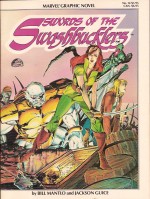
Swords of the Swashbucklers – Marvel Graphic Novel #14


By Bill Mantlo & Jackson Guice; lettered by Ken Bruzenak & coloured by Alfred Ramirez (Marvel)
ISBN: 0-87135-002-5

During the 1980s the American comics scene experienced a magical proliferation of new titles and companies following the creation of the Direct Sales Market. With publishers now able to firm-sale straight to retail outlets rather than overprint and accept returned copies from non-specialised shops, the industry was able to support less generic titles and creators were able to experiment without losing their shirts.

In response Marvel developed its own line of creator-owned properties during the height of the creative explosion, generating a number of supremely impressive, idiosyncratic series on better quality paper in a variety of formats under the watchful, canny eye of Editor Archie Goodwin. The delightfully disparate line was called Epic Comics and the results reshaped the industry.

One of their earliest hits was a sparkling, rambunctious science fantasy serial with a delightfully familiar core concept: Pirates in Space.

Swords of the Swashbucklers debuted in a premiere Marvel Graphic Novel before graduating to an on-going Epic series in March 1985; created by the much missed Bill Mantlo and ‘Jackson “Butch” Guice, whose collaborative efforts had made the latter days of the Marvel Micronauts comicbook such a vibrant joy (and there’s another series simply gasping for an Essential Edition, should the arcane gods of Trademark and Licensing ever get their acts together…)

The oversized process-colour format had been a great success for the company: a venue for a variety of “big stories” told on larger than normal pages (285 x 220mm rather than the now customary 258 x 168mm, similar to the standard European albums of the times) featuring not only proprietary characters such as Iron Man or the New Mutants, but also licensed assets like Conan, media tie-ins such as Who Framed Roger Rabbit? and creator-owned properties including Jim Starlin’s Dreadstar, Cholly and Flytrap and many more.

Although little more than a prelude for the series that followed this scintillating romp is still a compelling rollercoaster adventure in its own right which begins on the South Carolina coastline the morning after a terrific storm had battered those isolated dunes.

Thirteen year old Domino Blackthorne Drake, descendent of a genuine buccaneer queen, is happily beach-combing with her cat Cap’n Kidd when they find an incredible alien device uncovered by the gales.

Although clearly centuries old, the thing is still active and, as her distracted parents discuss their marital problems, the bold little girl gets too close and the artefact unleashes a torrent of impossible energy into the helpless lass…

As the authorities take over and place the now comatose waif and bizarre device into government quarantine, across the universe a solar-sailed marauder attacks a colossal slave ship of the rapacious Colonizer Empire. In command of the freebooter “Starshadow” is charismatic, ruthless half-breed Raader – the scourge of intergalactic civilisation…

A merciless conglomeration of greedy knaves and pitiless cutthroats, the Swashbucklers are still more welcome on many worlds than the resource-plundering, slave-taking Colonizers and, after freeing the captives (whilst keeping all their treasures and possessions) the Starshadow heads for safe-harbour on the hidden world Haven.

Here, amidst fair-weather friends and openly hostile rivals, the pirate princess clashes and carouses before awakening in her mother’s house – a citadel the mysterious “Earthling” Bonnie Blackthorne has maintained for over two hundred years…

When the pirates intercept a signal from a long-lost Colonizer probe coming from beyond the cosmic phenomena dubbed the Cloudwall, the race is on to secure the riches of the new world hidden there…

Daring the intergalactic unknown and expansion-obsessed Colonizer ships, the Starshadow arrives on the legendary planet Earth only hours ahead of the Imperial survey forces. The primitive human forces swiftly fall between attacks from both pirates and invading alien conquerors, whilst the somnolent Domino slumbers on.

When the Surveyors seize the sleeper and her family, the girl snaps awake, filled with irresistible, uncanny energies and routs the raiding party, but not before her mother and father are taken aboard the Imperial flagship, which retreats back beyond the Cloudwall to report a new world to conquer.

Rescued by Raader Domino discovers an impossible shared heritage with the alien privateer and determines to join her on the other side of the sky, both to rescue her parents and possibly save her own unsuspecting world…

Straightforward, fast-paced adventure in the grand manner, supplemented by a ‘Saga of the Swashbucklers’ additional feature, this is a fine fun book well worthy of rediscovery, preferably with the entirety of the comicbook run that followed in one deluxe collection.

Until then, though all these items are readily available through many internet retailers, so dig deep, me thrill-starved Hearties…
© 1984 Bill Mantlo & Jackson Guice. All rights reserved. Swords of the Swashbucklers is ™ Bill Mantlo & Jackson Guice.
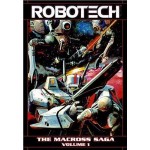

Robotech: the Macross Saga volume 1


By Jack Herman, Carl Macek, Mike Baron, Reggie Byers, Neil D. Vokes, Ken Steacy & various (WildStorm)
ISBN: 978-1-84023-713-9

Robotech was a minor comics/TV crossover phenomenon of the 1980s based on some rather deft remarketing of assorted Japanese fantasy exports. Whilst American TV company Harmony Gold was cobbling together and re-editing three separate weekly science fiction anime series (Super Dimension Fortress Macross, Super Dimension Cavalry Southern Cross and Genesis Climber MOSPEADA), US model-kit company Revell had begun selling Japanese mecha kits based on the aforementioned Fortress Macross, plus Super Dimension Century Orgus and Fang of the Sun Dougram as Robotech Defenders, complete with an all-new English language tie-in comic produced by DC Comics.

A copyright clash resulted in the DC title being killed two issues in, after which TV produced Carl Macek and Revell went into limited partnership on a Macross co-licensing deal which saw the three shows translated into an 85-episode generational saga wherein planet Earth was rocked by successive alien invasions decades apart and only saved from annihilation by a fortuitous spaceship crash which had allowed humans to master extraterrestrial Robotechnology.

The American TV hybrid and toy range naturally led to Role Playing Games, novels, an animated movie, art books and comicbooks which have been semi-continuously in print since 1984.

The premise evolved into The Macross SagaFirst Robotech War: a desperate conflict with giant Zentraedi warriors seeking to retrieve a crashed space craft; Robotech MastersSecond Robotech War wherein Earthlings battled a fresh wave of Zentraedi, come here to discover what happened to their lost fleet and Robotech MastersThird Robotech War, with enemies becoming allies to confront an even greater, mutual foe: the horrendous Invid, from whom the Robotech Masters had originally stolen the near-magical, cataclysmic, semi-spiritual power source Protoculture, reverentially worshipped as the Flower of Life and the motivating force behind all Robotechnology….

Comico produced separate titles set twenty years apart (Robotech Macross Saga, Robotech Masters and Robotech the New Generation) from 1984-1989, after which Eternity Comics, Academy Comics, Antarctic Press and WildStorm took up the perennial favourites in their turn.

At the height of the furore in 1986 and two years after the comic book triptych launched, Comico produced Robotech: the Graphic Novel, an original oversized 48 page European style graphic album plotted by Carl Macek which filled in the heretofore unknown backstory; telling the story of that fateful First Contact when a starship crashed onto the island of Macross.

It was scripted by Mike Baron, illustrated by Neil D. Vokes & Ken Steacy (with painted colour by Tom Vincent and lettering by Bob Pinaha) and the initial chapter of that revelatory tale provides the opening segment of this digest-sized, full-colour compilation which then re-presents the first six Macross Saga comicbooks in a handy catch-all edition for the next generation of Amerimanga or OEL (Original English Language) fans.

In ‘Genesis: Robotech’ far away on the other side of the universe a two kilometre long spacecraft is seeding desolate worlds with a unique plant. Unconventional and rebellious Philosopher-Scientist Zor is attempting to grow the energy-rich Flower of Life in soil not sanctioned by his Robotech Masters, over the protests of dutiful warrior-commander Dolza.

This allows the insidious and monstrous Invid to track them, fanatically attempting to wipe out the Zentraedis who had purloined their sacred bloom and daily desecrated its holy purpose…

Although temporarily driven off, the Invid fatally wound Zor and he dispatches the ship on a pre-programmed jaunt across the universe to a world only he knows of…

In two text reminiscences Bob Shreck and artist Neil Vokes describe the frantic efforts which resulted in the deal with the fledgling Comico and dictated rushing out the first issue ASAP (further demanding a new issue every fortnight until a stable print schedule could be established)…

All of which goes some way to pardoning the rather crude visuals on ‘Booby Trap’ as, a decade after that vessel crashed on Macross Island (instantly ending a percolating Third World War), the united Terran forces are preparing to activate their greatest weapon: the retooled, reconstructed ship as interplanetary dreadnought SDF-1 – Super Dimension Fortress.

Preparing for a shakedown flight and full test run ex-Admiral Gloval is not prepared for the shocking alien attack he has been dreading ever since the super-ship smashed to Earth…

In fact his first inkling of trouble is when the city-sized construct automatically fires its colossal main-gun, obliterating a squadron of unseen Zentraedi scout ships, just as teen exhibition-aviator Rick Hunter arrives on the Pacific Island to meet old mentor Roy Fokker. The invaders brutally respond and Gloval is compelled to take SDF-1 to battle stations and direct a desperate counterattack.

Caught up in the action Rick finds himself stuck in a Veritech fighter-plane he has no idea how to fly, dogfighting with giant invaders in incredible, mecha murder-machines…

With the Island and planet under brutal assault the illustration takes a huge step up in quality for the second issue as ‘Countdown’ finds the embattled Captain Gloval forced, under repeated sorties from the invaders, to move the sitting duck SDF-1 space whilst the civilians of Macross City suffer dreadfully under the Zentraedi bombardment.

Rick has made his first kill and panicked when his jet morphed into a giant robot, but has no time to panic as he saves civilians Minmei and her little brother Jason from death in the ruins…

Unfortunately the Fortress anti-gravity engines fail and humanity seems doomed until Gloval and his snarky Executive Officer Lisa Hayes gamble everything and switch to good, old-fashioned jet power…

Temporarily safe in low-Earth orbit, the SDF-1 is still an easy target for repeated alien assaults and the civilian population can only cower in deep shelters beneath Macross Island. With the SDF-1’s Veritechs easy prey for the Zentraedi, Gloval gambles again and activates the untested ‘Space Fold’ system. Instantly, a space warp deposits them safely in the orbit of Pluto, but brings with it a huge chunk of Macross, Pacific Ocean and Earth atmosphere…

Caught in mid-air over the city in the lad’s exhibition plane, Rick and Minmei are instantly stranded in hard vacuum but manage to crash into a previously unexplored section of the SDF-1 as the baffled engineers report to Gloval that the Fold Generators which saved and marooned them all months from home have inexplicably vanished…

Stranded in deep space, but temporarily beyond the reach of Zentraedi attack, the first order of business is rescuing the civilians trapped in the remnants of Macross Island. After long weeks the populace has been resettled within the vast ship and Macross City is being steadily incorporated into the vessel’s superstructure. ‘The Long Wait’ reveals how Rick and Minmei coped; isolated, alone and presumed dead until the constant rebuilding accidentally uncovers their unsuspected survival hutch…

As the SDF-1 proceeds slowly and cautiously back towards Earth, Gloval, Hayes and Fokker discuss reconfiguring the ship if necessary. The trouble is that nobody can predict what the ‘Transformation’ will mean to the masses of humanity now infesting every spare inch of the super-ship…

As they pass Saturn the decision is taken from their hands as the Zentraedi ambush the ship and the SDF-1 reconfigures into its gigantic robot warrior mode to fight off the cataclysmic alien ‘Blitzkrieg’…

Packed with fast-paced action and, I’m afraid, quite a bit of the twee, comedy-of-romantic-embarrassment soap opera beloved by the Japanese, this collection by Mike Baron, Jack Herman, Carl Macek, Reggie Byers, Dave Johnson, Mike Leeke Svea Stauch, Neil D. Vokes, Ken Steacy, Jeff Dee, Chris Kalnick, Phil Lasorda, Tom Poston, Rich Rankin and a host of colourists and letterers was groundbreaking for American comicbooks and opened the doors to a Manga invasion that reshaped the industry.

The stories also read winningly well, even after all these years and are easily accessible to older kids and young teens as well as all us picture-story junkies who never agreed to grow up…

Fun and adventure in the grand old space opera manner, it’s about time these 1980s epics were revisited by a more comics friendly readership.
© 2003 Harmony Gold, USA, Inc. All rights reserved. Previously published as Robotech: the Macross Saga #1-6 & Robotech: the Graphic Novel. © 1984-1986 Harmony Gold, USA, Inc and Tatsunoko Production Company, Ltd. Robotech®, Macross® and all associated names, logos and related indicia are trademarks of Harmony Gold USA, Inc.

Valerian and Laureline book 2: The Empire of a Thousand Planets


By J.-C. Méziéres & P. Christin, with colours by E. Tranlé and translated by Jerome Saincantin (Cinebook)
ISBN: 978-1-84918-087-0

Valérian is arguably the most influential comics science fiction series ever drawn – and yes, I am including both Buck Rogers and Flash Gordon in that expansive and undoubtedly contentious statement.

Although to a large extent those venerable strips defined the medium itself, anybody who has seen a Star Wars movie has seen some of Jean-Claude Méziéres & Pierre Christin’s brilliant imaginings which the filmic phenomenon has shamelessly plundered for decades: everything from the look of the Millennium Falcon to Leia‘s Slave Girl outfit -as this second volume powerfully proves in a stunning comparisons feature following after the magnificent adventure contained herein…

Simply put, more carbon-based lifeforms have experienced and marvelled at the uniquely innovative, grungy, lived-in tech realism and light-hearted swashbuckling rollercoaster romps of Méziéres & Christin than any other cartoon spacer ever imagined possible.

The groundbreaking series followed a Franco-Belgian mini-boom in fantasy fiction triggered by Jean-Claude Forest’s 1962 creation Barbarella. Valérian: Spatio-Temporal Agent launched in the November 9th, 1967 edition of Pilote (#420) and was an instant hit. In combination with Greg & Eddy Paape’s Luc Orient and Philippe Druillet’s Lone Sloane, Valérian‘s hot public reception led to the creation of dedicated adult graphic sci fi magazine Métal Hurlant in 1977.

Valérian and Laureline (as the series eventually became) is light-hearted, wildly imaginative time-travelling, space-warping fantasy (a bit like Dr. Who, but not really at all…), drenched in wry, satirical, humanist action and political commentary, starring, in the beginning, an affable, capable, unimaginative and by-the-book cop tasked with protecting the official universal chronology and counteracting paradoxes caused by casual time-travellers.

When Valérian travelled to 11th century France in the initial tale ‘Les Mauvais Rêves (‘Bad Dreams’) he was rescued from doom by a fiery, capable young woman named Laureline whom he brought back to the 28th century super-citadel and administrative wonderland of Galaxity, capital of the Terran Empire. The indomitable lass trained as a Spatio-Temporal operative and began accompanying him on his missions.

Every subsequent Valérian adventure until the 13th was first serialised weekly in Pilote until the conclusion of ‘The Rage of Hypsis’ after which the mind-boggling sagas were only published as all-new complete graphic novels, until the whole spectacular saga resolved and ended in 2010.

The Empire of a Thousand Planets originally ran in Pilote #520-541from October 23rd 1969 to March 19th 1970 and saw the veteran and rookie despatched to the fabled planet Syrte the Magnificent, capital of vast system-wide civilisation and a world in inexplicable and rapid technological and social decline.

The mission is one of threat-assessment: staying in their base time-period (October 2720) the pair are tasked with examining the first galactic civilisation ever discovered that has never experienced any human contact or contamination, but as usual, events don’t go according to plan…

Despite easily blending into a culture with a thousand sentient species, Valerian and Laureline soon find themselves plunged into intrigue and dire danger when the acquisitive girl buys an old watch in the market.

Nobody on Syrte knows what it is since all the creatures of this civilisation have an innate, infallible time-sense, but the gaudy bauble soon attracts the attention of one of the Enlightened – a sinister cult of masked mystics who have the ear of the Emperor and a stranglehold on all technologies….

The Enlightened are responsible for the stagnation within this once-vital interplanetary colossus and they quickly move to eradicate the Spatio-temporal agents. Narrowly escaping doom, the pair reluctantly experience the staggering natural wonders and perils of the wilds beyond the capital city before dutifully returning to retrieve their docked spaceship.

Soon however our dauntless duo are distracted and embroiled in a deadly rebellion fomented by the Commercial Traders Guild. Infiltrating the awesome palace of the puppet-Emperor and exploring the mysterious outer planets Valerian and Laureline discover a long-fomenting plot to destroy Earth – a world supposedly unknown to anyone in this Millennial Empire…

All-out war looms and the Enlightened’s incredible connection to post-Atomic disaster Earth is astonishingly revealed just as inter-stellar conflict erupts between rebels and Imperial forces, with our heroes forced to fully abandon their neutrality and take up arms to save two civilisations a universe apart yet inextricably linked…

Comfortingly, yet unjustly familiar, this spectacular space-opera is fun-filled, action-packed, visually breathtaking and mind-bogglingly ingenious.  Drenched in wide-eyed fantasy wonderment, science fiction adventures have never been better than this.

© Dargaud Paris, 1971 Christin, Méziéres & Tran-Lệ. All rights reserved. English translation © 2011 Cinebook Ltd.

Velveteen & Mandala


By Jiro Matsumoto (Vertical)
ISBN: 978-1-935654-30-8

Civilisation has radically changed. What we knew is no longer right or true, but disturbing remnants remain to baffle and terrify, as High School girl Velveteen and her decidedly off-key classmate and companion/enemy Mandala eke out an extreme existence on the banks of a river in post-Zombie-Apocalypse Tokyo.

Here, using an abandoned tank as their crash-pad, the girls while away the days and nights slaughtering roaming hordes of zombies – at least whenever they stop squabbling with each other.

From the very outset of this grim, sexy, gratuitous splatter-punk horror-show there is something decidedly “off” going on: a gory mystery beyond the usual “how did the world end this time?”

On the surface, Velveteen and Mandala (Becchin To Mandara in its original release in the periodical Manga Erotics f, between 2007-2009) is a Buffy-style monster-killing yarn beginning at ‘The Riverside’ with the pair awaking from dreams to realise and remember the hell they now inhabit whilst ‘Smoke on the Riverside’ reveals a few of the nastier ground-rules of their new lives and especially Velveteen’s propensity for arson and appetite for destruction…

‘Sukiyaki’ finds the girls on edge as food becomes an issue whilst the introduction of ‘The Super’ who monitors their rate of zombie dispatch leads to more information (but not necessarily any answers) in this enigmatic world, whilst ‘The Cellar’ amps up the uncertainty when Velveteen steals into her new boss’s ghastly man-cave inner sanctum.

In a medium where extreme violence is commonplace, Matsumoto increasingly uses unglamorised nudity and brusque vulgarity to unsettle and shock the reader but the flashback events of … ‘School Arcade, Underground Shelter’ – if true and not hallucination – indicate that this society this debased might not be worth saving from the undead…

In ‘Omen’ and ‘Good Omen (Whisper)’ the mysteries begins to unravel as B52 bombers dumps thousands more corpses by the Riverside, adding to the “to do” roster of the walking dead that the girls must deal with once darkness falls…

Throughout the story Matsumoto liberally injects cool artefacts of fashion, genre and pop-culture seemingly at random, but as the oppressive horrors get ever closer to ending our heroines in ‘Genocide’ and ‘Deep in the Dark’, a certain sense can be imagined, so that when the Super is removed and Velveteen is promoted to his position in ‘Parting’ the drama spirals into a hallucinogenic but perhaps utterly untrustworthy climax in ‘Mandala’s Big Farewell Party’ and ‘Nirvana’ before the revelations of ‘Flight’…

Deliberately obfuscatory and strictly aimed at over 18s, this dark, nasty and scatologically excessive tale graphically celebrates the differences between grotesque, flesh-eating dead-things and the constantly biologically mis-functioning still-living (although the zombie “Deadizens” are still capable of cognition, speech and rape…), all wrapped up in the culturally acceptable and traditional manner of one blowing the stuffings out of the other…

Young Jiro Matsumoto is probably best known in Japan for the dystopian speculative sci-fi revenge thriller Freesia, but here his controversial yet sublime narrative gifts are turned to a much more psychologically complex – and almost meta-fictional – layering of meaning upon revelation upon contention that indicates that if you have a strong enough stomach the very best is still to come…

© 2009 Jiro Matsumoto. All right reserved. Translation © 2011 Vertical, Inc.

Twin Spica volume 8


By Kou Yaginuma (Vertical)
ISBN: 978-1-935654-13-1

The hungry fascination, hopeful imagination and cocksure anticipation of space travel which was an integral component of post-World War II society is the driving narrative engine for this inspiring manga epic from Kou Yaginuma, who first began capturing hearts and minds with his poignant short story ‘2015 Nen no Uchiage Hanabi’ (‘2015: Fireworks’), published in Gekkan Comics Flapper magazine, June 2000).

The author happily expanded and enhanced the subject, themes and characters into a major narrative epic combining hard science and humanist fiction with lyrical mysticism and traditional tales of school-days and growing up.

To recap: diminutive teenager Asumi Kamogawa has always dreamed of going into space. From her earliest moments the lonely child gazed up at the stars with her imaginary friend Mr. Lion, especially at the twinkling glow of Virgo and the alluring binary star Spica. An isolated, serious girl, she lived with her father, a common labourer who once worked for the consortium which built the rockets for Japan’s Space Program.

In 2010, when Asumi was a year old, the first Japanese space-launch ended in utter catastrophe when rocket-ship Shishigō (“The Lion”), exploded: crashing to earth on the city of Yuigahama. Hundreds were killed and many more injured, including Asumi’s mother. Maimed and comatose, the matron took years to die. The shock crushed her grieving husband and utterly traumatised infant Asumi.

In response to the disaster, Japan set up an Astronautics and Space Sciences Acadamy. After years of struggle, in 2024 Asumi was accepted to the Tokyo National Space School and slowly began making real friends like Shinnosuke Fuchuya (who used to bully her as child in Yuigahama), jolly Kei Oumi, chilly Marika Ukita and spooky, ultra-cool style-icon and fashion victim Shu Suzuki. Every day Asumi moved closer to her unshakable dream of going to the stars.

Small, physically weak and very poor, Asumi endures and triumphs. She still talks with Mr. Lion… who might be the ghost of an astronaut who died on the Shishigō…

The individual stories are broken up into “Missions” and this particularly tender and thoughtful eighth volume begins with #39 as the still somewhat aloof Asumi undertakes a devout daily personal ritual – absorbing the wonder of the Heavens at the local Planetarium. Times are changing, however and the venerable old edifice is about to close forever, a victim of economic cuts and dwindling public interest…

Later she rejoins classmates Oumi and Ukita on the school roof for more stargazing. Excitement rises when they think they might have discovered a new supernova…

Mission: 40 concentrates on the rapidly approaching end of semester and exams. Oumi is ill and might not pass, whilst enigmatic Shu reveals yet another hidden talent after being given the shocking news that he is confidentially considered for participation in an American Shuttle mission. Meanwhile, Christmas is coming and Asumi is inexplicably growing closer to a shy and extremely diffident boy from the local orphanage, just when she can least afford distractions. With her workload and part-time job she hardly has time to think as it is…

Mission: 41 continues her concentration-busting whilst we learn some tragic secrets regarding the abusive home life of Mr. Perfect Shu Suzuki and the other girls begin to notice physical evidence of her “imaginary friend”. When the orphan boy reveals he is leaving Japan, Asumi has to make a choice between her current emotions and her life’s dream and it takes a dramatic intervention by rival and “frenemy” Fuchuya to set her straight on what she really needs in the truly heartbreaking Mission: 42…

The orphan boy’s history and astonishing secret is examined in #43 whilst #44 amps up the school pressure and the conflicted Fuchuya recalls an pivotal moment when his fireworks-maker grandfather sparked his own interest in the stars – and Asumi…

The offer to send a Japanese astronaut up with the US shuttle becomes public in Mission: 45 and a fierce competition for the single placement ensues counter-pointed by more agonising reminiscences from Shu and the main storyline concludes in #46 as the previously isolated Asumi realises her life is changing and she has friends she might soon lose…

The going is getting tougher and now that they are all nearing the end of their training, it becomes increasingly, painfully clear to the determined students that the bonds so painstakingly forged are on the verge of being severed. After only one more year, final selections will be made and most of the class will fail and vanish from each other’s lives. A countdown clock is ticking…

Also included here a couple of ancillary tales: ‘Giovanni’s Ticket’ returns to the early years following the Shishigō crash and explores Asumi and Fuchuya’s formative relationship whilst the poignant ‘Guide to Cherry Blossoms’ follows the path to love and examines roads not taken by Kasumi Suzuki (presumably Shu’s tragic other if the dates hidden in the art work are anything to go by) during the highly symbolic spring festival.

The book ends with a wistfully autobiographical ‘Another Spica’ vignette from author Yaginuma’s days as a part-time server on a soft-drink stand in a theme park; one more charming insight into creative minds and unrequited passions…

These deeply moving marvels originally appeared in 2005 as Futatsu no Supika 8 and 9 in the Seinen manga magazine Gekkan Comics Flapper, targeted at male readers aged 18-30, but this ongoing, unfolding beguiling saga is perfect for any older kid with stars in their eyes…

Twin Spica ran from September 2001-August 2009: sixteen volumes tracing the trajectories of Asumi and friends from callow students to competent astronauts and the series has spawned both anime and live action TV series.

This delightful serial has everything: plenty of hard science to back up the informed extrapolation, an engaging cast, mystery and frustrated passion, alienation, angst and true friendships; all welded seamlessly into a joyous coming-of-age drama with supernatural overtones and masses of sheer sentiment.

Hopefully rekindling the irresistible allure of the Final Frontier for the next generation (and the last ones too) Twin Spica is quite simply the best…

These books are printed in the Japanese right to left, back to front format.
© 2011 by Kou Yaginuma/MEDIA FACTORY Inc. Translation © 2011 Vertical, Inc. All Rights Reserved.

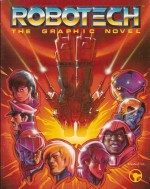
Robotech: the Graphic Novel


By Mike Baron, Neil D. Vokes, Ken Steacy & various (Comico)
ISBN: 978-0-93896-500-8

Robotech was a minor comics phenomenon of the 1980s based on some rather deft marketing of assorted Japanese fantasy exports. Whilst American TV company Harmony Gold was cobbling together and re-editing three separate weekly science fiction anime series (Super Dimension Fortress Macross, Super Dimension Cavalry Southern Cross and Genesis Climber MOSPEADA) US model-kit company Revell was selling Japanese mecha kits based on the aforementioned Fortress Macross, Super Dimension Century Orgus and Fang of the Sun Dougram as Robotech Defenders, complete with an all-new English language tie-in comic produced by DC Comics.

A copyright clash resulted in the DC title being killed after two issues after which TV produced Carl Macek and Revell went into limited partnership in a Macross co-licensing deal which saw three shows translated into an 85-episode generational saga wherein Earth was rocked by successive alien invasions decades apart and only saved from annihilation by a fortuitous spaceship crash which had allowed humans to master extraterrestrial Robotechnology.

The American TV hybrid and mecha toy range naturally led to Role Playing Games, novels, an animated movie, art books and comicbooks which have been semi-continuously in print since 1984.

The premise revolved into The Macross SagaFirst Robotech War a desperate conflict with giant Zentraedi warriors seeking to retrieve a crashed space craft; Robotech MastersSecond Robotech War wherein Terrans battled a fresh wave of Zentraedi, come to discover what happened to their lost fleet and Robotech Masters or Third Robotech War, with enemies becoming allies to confront an even greater foe: the horrendous Invid – from whom the Robotech Masters originally stole the near-magical, cataclysmic, semi-spiritual power source Protoculture, reverentially worshipped as the Flower of Life and the motivating force behind all Robotechnology….

Comico produced separate titles set twenty years apart (Robotech Macross Saga, Robotech Masters and Robotech the New Generation) from 1984-1989, after which Eternity Comics, Academy Comics, Antarctic Press and WildStorm took up the perennial favourites in their turn.

In 1986, at the height of the furore Comico produced an original oversized 48 page European album format graphic novel plotted by Carl Macek which filled in the heretofore unknown backstory; telling the story of that fateful First Contact when a starship crashed on the island of Macross. It was scripted by Mike Baron, illustrated by Neil D. Vokes & Ken Steacy (with painted colour by Tom Vincent and lettering by Bob Pinaha)…

In ‘Genesis: Robotech’ far away on the other side of the universe SDF-1, a two kilometre long spacecraft is seeding desolate worlds with a unique plant. Unconventional and rebellious Philosopher-Scientist Zor is attempting to grow the energy-rich Flower of Life in soil not sanctioned by his Robotech Masters, over the protests of dutiful warrior-commander Dolza.

This allows the insidious Invid to track them and attack, fanatically attempting to wipe out the Zentraedis who stole their sacred bloom and daily desecrate its holy purpose…

Although temporarily driven off, the Invid fatally wound Zor but not before he dispatches the ship on a pre-programmed jaunt across the universe to a world only he knows of…

On orders from the enraged Masters Dolza returns Zor’s body to the homeworld so any useful information can be extracted from his cells whilst Field Comander Breetai is ordered to take a fleet and follow SDF-1. If Zor has been seeding worlds in secret both the ship and its destination must be found…

It is 1999 on planet Earth and a third global conflict is about to erupt. Brush-wars, resource squabbles and border-skirmishes are occurring everywhere. In the sky above the Pacific fighter pilot Roy Fokker is engaged in another deadly dogfight with mercenary T.R. Edwards which once more ends inconclusively…

Returning to the aircraft-carrier Kenosha Roy meets Senator Russo, Admiral Hayes and his own Commander Gloval who have an intriguing plan to end the faux-war before it ends humanity…

Meanwhile in America a little boy named Rick Hunter is learning flying tricks with his grandfather that will one day save the world when the sky is set ablaze by a vast object. Destined to crash far out in the North Pacific, in its thunderous passing the “meteor” triggers storms and earthquakes, disrupts electronic communications and causes global panic…

All over Earth hostilities cease and a military task force led by Gloval and Fokker, with arch enemy Edwards representing the once-opposition, explore the downed SDF-1, which has crashed on a barren rock once used for atomic testing.

On board the humans discover wonder, horror and the potential to create a golden age on Earth, but unbeknownst to them Breetai’s pursuing force is closing in…

Although designed as an in-filling prequel this is a classy traditional sci-fi romp which happily stands on its own merits for new readers whilst providing added narrative value to any readers – or indeed viewers – familiar with the greater saga it introduces.

Fun and adventure in the grand old space opera manner and superbly easy on the eye, it’s about time these 1980s epics were revisited by a more comics friendly readership.
“Robotech” ™ Revell, Inc. © 1986 Harmony Gold, USA, Inc./Tatsunoko Production Company, Ltd. All rights reserved.

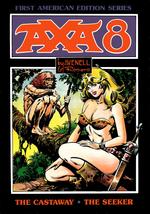
Axa Books 7 & 8


By Donne Avenell & Enrique Badia Romero (Ken Pierce Books)
Vol. 7 ISBN: 0-912277-29-7   Vol. 8 no ISBN: 0-912277-35-1

Tough ‘n’ sexy take-charge chicks were a comic strip standard by the time the Star Wars phenomenon reinvigorated interest in science fiction and the old standby of scantily-clad, curvy amazons in post-apocalyptic wonderlands never had greater sales-appeal than when Britain’s best-selling tabloid The Sun hired Enrique Badia Romero and Donne Avenell to produce a new fantasy strip for their already well-stacked cartoon section.

Romero’s career began in his native Spain in 1953, where he produced everything from westerns, sports, war stories and trading cards, mostly in conjunction with his brother Jorge Badía Romero, eventually forming his own publishing house. “Enric” began working for the higher-paying UK market in the 1960s on strips such as ‘Cathy and Wendy’, ‘Isometrics’ and ‘Cassius Clay’ before successfully assuming the drawing duties on the high-profile Modesty Blaise adventure-serial in 1970 (see Modesty Blaise: The Hell Makers and Modesty Blaise: The Green Eyed Monster), only leaving when this enticing new prospect appeared.

Axa ran in The Sun Monday to Saturday from 1978 to her abrupt cancellation in 1986 – a victim of political and editorial intrigue which saw the strip cancelled in the middle of a story – and other than the First American Edition series from strip historian Ken Pierce and a single colour album, has never been graced with a definitive collection. It should be noted also that at the time of these books she was still being published with great success and to popular acclaim.

In those days it often appeared that only place where truly affirmative female role-models appeared to be taken seriously were those aforementioned cartoon sections, but even there the likes of Modesty Blaise, Danielle, Scarth, Amanda and all the other capable ladies who walked all over the oppressor gender, both humorously and in straight adventure scenarios, lost clothes and shed undies repeatedly, continuously, frivolously and in the manner they always had…

Nobody complained (no one important or who was ever taken seriously): it was just tradition and the idiom of the medium… and besides, artists have always liked to draw bare-naked ladies as much as blokes liked to see them and it was even “educational” for the kiddies – who could buy any newspaper in any shop without interference even if they couldn’t get into cinemas to view Staying Alive, Octopussy or Return of the Jedi without an accompanying adult…

The eponymous heroine was raised in a stultifying, antiseptic and emotionless domed city: a bastion of technological advancement in a world destroyed by war, pollution and far worse. Chafing at the constricting life of the living dead, Axa broke free and, ancient sword in hand, chose to roam the shattered Earth in search of something real and rue and free…

The seventh superb chronicle opens with ‘Axa the Mobile’ as the restless explorer dragged her footsore lover Matt and devoted robot assistant Mark 10 (obtained in Axa volume 3) through yet another trackless wasteland created in the aftermath of the Great Contamination that decimated human civilisation a century before.

When her sharp hearing discerns the sound of a petrol engine Axa stumbles into an ongoing cold war between rival sects both determined to bring back the ultimate icon of lost modernity – the motor car.

After rescuing a beautiful girl from a crashed dune buggy the trio is drawn into a tense situation where the debased descendents of assembly line workers dubbed “The Mechanics” dream of creating their own vehicles, despite the scorn and outright oppression of the autocratic “Automators” who trace their own lineage and technical superiority to the engineers who once designed the cars…

Siding with the downtrodden Mechanics Axa attempts to help them steal blueprints and secrets from the Automators, leading inexorably to a death-duel in reconstructed Formula One race-cars against the technocrats’ greatest driver…

As reward for her assistance in uniting the warring tribes Axa is given a car of her own…

Fast-paced and action-packed, this yarn from 1983 gave writer Don Avenell a happy opportunity to exercise his satire muscles with some telling side-swipes at manufacturing and industrial relations issues then surfacing in Britain.

‘Axa the Unmasked’ returned to more usual business and a startling fresh departure as the new vehicle takes them to a maintain range where a hidden enclave of apparently pristine perfection housing isolated ideal human survivors have just been visited by beings from another world.

The beauty-worshipping men and women call themselves Morphos and their leader Viktor is extremely taken with the wandering warrior-woman; inviting the stranded party to stay as they await some sign of life from the downed and still star-craft.

Free-spirit Axa is too much for any one man and despite’s Matt’s presence and crushed silence presence responds to Viktor’s overtures. However the Morphos are concealing a ghastly secret only hinted at when mutant underclass “the Grots” attack the saucer-ship and steal the deadly power-pack which fuels the vehicle and keeping the only survivor alive…

With a catastrophic countdown ticking away and a sublime being expiring by degrees Axa must expose all lies and find some way to repair the situation and reconcile Grots and Morphos before the entire Earth suffers the cataclysmic consequences…

Axa 8 once again dispenses with text introductions and dashes straight into the graphic action of ‘Axa the Castaway’ as the glorious gladiatrix and faithful Matt are marooned on an island following a colossal storm, after their car finally dies due to lack of fuel and maintenance. With Mark 10 lost at sea, the unhappy couple soon discover they are in constant peril from the wildly mutated flora and fauna of the deceptively Eden-like islet, but when Axa is abducted by a feral human raised by the deadly paradise’s rock apes the boiling sexual undercurrent violently erupts. And then, so does the dormant volcano the entire island sits upon…

This spectacular and light-hearted pastiche of Tarzan, The Blue Lagoon and dozens of other back to nature fantasy classics neatly segues into the revelatory ‘Axa the Seeker’ wherein the adventurous couple, reunited with mechanical Mark on the mainland, discover a jungle factory producing pharmaceutical drugs and recreational narcotics that are being shipped all over the devastated planet.

When Axa is captured by the technologically advanced “Dispensers” she is dragged into a political struggle in a hidden super-city and learns that she has a shattering personal connection to the unscrupulous monsters who run the enterprise, consequently learning her own true history… where she actually came from and why her life and personality are so at odds with the all the worlds around her…

Once Axa ended Romero returned to the barnstorming Modesty Blaise strip (from September 1986) staying on until it ended with creator Peter O’Donnell’s retirement in 2001. Since then the artist has produced Modesty material for Scandinavia and a number of projects such as Durham Red for 2000AD.

These stirring tales of an unbreakable free spirit are superb examples of the uniquely British newspaper strip style: lavishly drawn, subversively written, expansive in scope and utterly enchanting in their basic simplicity – with lots of flashed flesh, emphatic action and sly, knowing humour. Eminently readable and re-readable (and there’s still that dwindling promise of a major motion picture) Axa is long overdue for a definitive collection. Here’s hoping there’s a bold publisher out there looking for the next big thing…
©1985-1986 Express Newspapers, Ltd.

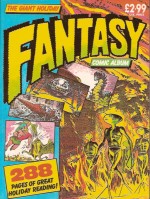
The Giant Holiday Fantasy Comic Album


By various, edited by Mike Higgs (Hawk Books)
ISBN 0-948248-06-8

Being almost universally anthology weeklies, British comics over the decades have generated a simply incomprehensible number of strips and characters in a variety of genres ranging from the astounding to the appalling. Every so often dedicated souls have attempted to celebrate this cartoon cornucopia by reprinting intriguing selections and in 1990 the splendid Hawk Books released this delightfully cheap and cheerful compendium that is still readily available for connoisseurs of the wild and wonderful British oeuvre…

As is so often the case creator credits are nonexistent and although I’ll hazard the odd guess now and then, a lot of these marvellous concoctions will have to remain annoyingly anonymous until someone more knowledgeable than me pipes up…

With little ado the monochrome madness began with a magically whacky superhero tale featuring supernatural warrior Thunderbolt Jaxon who promptly mopped up a gang of saboteurs in ‘The Flying Wreckers’.

Plucky lad Jack Jaxon could transform into the invincible mini-skirted muscleman because he wore the magic belt of Thor, and as comprehensively revealed in Steve Holland’s superb Bear Alley articles, the character was originally designed in 1949 by Britain’s publishing powerhouse Amalgamated Press as an export feature for Australian publisher Kenneth G. Murray after WWII. The strips were commissioned by Editor Edward Holmes and realised by writers TCH Pendower, Leonard Matthews, plus Holmes, with prolific artist Hugh McNeill the original illustrator. The export-only hero soon began appearing in UK comics Comet and Knockout with later stories limned by Geoff Campion, Robert Roger & Ian Kennedy.

Next here is a charming tale of ‘The Space Family Rollinson’ by Graham Coton: a series which ran in Knockout from 1953-1958 and was successfully syndicated in France. Your average Mum, Dad and four kids on a trek across the universe, here stopping to save the natives of Skandok from a hideous space spider and its interplanetary jelly-webs, after which a moodily engrossing adventure of outlandish Victorian escapologist Janus Stark finds the man with rubber bones thwarting a gang of kidnappers in a stirring extravaganza by Tom Tully & Francisco Solano López .

A stunning strip The Jungle Robot debuted in the first issue of Lion in 1952, created by E. George Cowan & Alan Philpott, before vanishing until 1957. On his return he became one of the most popular heroes of the British scene. Reprinted here from the early days after his comeback is ‘Robot Archie and the Mole Men’ illustrated, I suspect, by Ted Kearnon, pitting the amazing automaton and his hapless handlers Ted Ritchie and Ken Dale against a bunch of subterranean bandits plundering Paris in an incredible burrowing machine – a complete 14 week adventure delivered two pages at a time.

Next up is ‘The Men from the Stars’ a complete 60 page sci fi epic originally presented in AP’s digest Super Detective Library #14. In this grand old invasion romp, test pilot and “Special Agent in Space” Rod Collins endured the World’s first contact with a marauding and incomprehensible race of flying saucer people before spearheading Earth’s inevitable resistance and narrow victory, after which paranormal detective ‘Maxwell Hawke’ and plucky girl Friday Jill Adair investigated ‘The Ghost of Gallows Hill Manor’ – a creepy, condensed shocker probably drawn by a young Eric Bradbury.

Knocker White and Jinx Jenkins were ‘The Trouble-Seekers’; two-fisted construction workers who had to add giant monsters to the list of obstacles threatening to delay the completion of South American super city Futuria, after which action-man cover star of Smash! Simon Test narrowly survived ‘The Island of Peril’ in another moody masterpiece of all-ages action-adventure illustrated by Bradbury.

One of the most fondly remembered British strips of all time is the strikingly beautiful Steel Claw. From 1962 to 1973 Jesús Blasco and his small family studio thrilled the nation’s children, illustrating the breakneck adventures of scientist, adventurer, spy and even costumed superhero Louis Crandell. Created by novelist Ken Bulmer, the majority of the character’s exploits were scripted by Tom Tully.

Crandell was a bitter man, missing his right hand, which was replaced with a gadget-packed prosthetic. Moreover, whenever he received an electric shock he became invisible.

After going on a deranged rampage Crandell’s personality shifted and by the time of ‘The Return of the Claw’ (which first saw print in Valiant from 5th June 1971-22nd April 1972) the super-agent was a tired and broken emotional burn-out dragged out of retirement to foil an alien invasion wherein disembodied invaders the Lektrons possessed the bodies of children, turning them into demonic, energy-blasting monsters.

More than any other strip the Steel Claw was a barometer for British comics reading fashions. Starting out as a Quatermass style sci-fi cautionary tale the series mimicked the trends of the outer world, becoming in turn a Bond-like super-spy saga complete with outrageous gadgets, a masked mystery-man romp when Bat-mania gripped the nation, and eventually a Doomwatch era adventure drama combating eerie menaces and vicious criminals.

The thrills of the writing are engrossing enough, but the real star of this feature is the artwork. Blasco’s classicist drawing, his moody staging and the sheer beauty of his subjects make this an absolute pleasure to look at.

Over 90 pages long ‘The Return of the Claw’ alone is worth the price of admission – even with the terribly poor quality printing of this volume. Just imagine the impact when somebody finally completes the deluxe reprinting of this classic series begun in The Steel Claw: the Vanishing Man…

After the main course there’s a few short dessert items to end this feast of nostalgic fun, beginning with an engaging vintage alien invasion chiller ‘The Marching Trees’ after which the light-hearted ‘Toby’s Timepiece’ propels errant schoolboy Toby Todd into a mediaeval nightmare and an epic adventure with an extraterrestrial chrononaut before ‘Thunderbolt Jackson and the Golden Princess’ closes the memorable montage of comics wonderment in a simply splendid tale of Amazonian lost cities and rampaging dinosaurs.

This is a glorious lost treasure-trove for fans of British comics and lovers of all-ages fantasy, filled with danger, drama and delight illustrated by some of the most talented artists in the history of the medium. Track it down, buy it for the kids and then read it too. Most of all pray that somebody somewhere is actively working to preserve and collect these sparkling and resplendent slices of our fabulous graphic tradition in more robust and worthy editions.

Maybe we need a Project Gutenberg for comics…
© 1989 Fleetway Publications. All Rights Reserved.

Signal From Space


By Will Eisner with Andre LeBlanc (Kitchen Sink Press)
ISBN: 0-87816-014-0

Here’s another classy contemporary cartooning classic which although readily available in a number of formats is still seen best in first release. Ambitious and deliberately targeting an adult book-reading rather than comics audience, this initial collection of Will Eisner’s trenchant political thriller-cum-social commentary proves once more that sometimes the medium really is the message…

It is pretty much accepted today that Eisner was one of the pivotal creators who shaped the American comicbook industry, with most of his works more or less permanently in print – as they should be.

From 1936 to 1938 William Erwin Eisner worked as a jobbing cartoonist in the comics production hothouse known as the Eisner-Eiger Shop, creating strips for both domestic US and foreign markets. Using the pen-name Willis B. Rensie he created and drew opening instalments for a huge variety of characters ranging from funny animal to historical sagas,

Westerns, Detectives, aviation action thrillers… and superheroes – lots of superheroes …

In 1940 Everett “Busy” Arnold, head honcho of the superbly impressive Quality Comics outfit, invited Eisner to take on a new challenge. The Register-Tribune newspaper syndicate wanted a 16-page weekly comicbook insert for the Sunday editions and Eisner jumped at the opportunity, creating three series which would initially be handled by him before two of them were delegated to supremely talented assistants. Bob Powell inherited Mr. Mystic and distaff detective Lady Luck fell into the capable hands of Nick Cardy (then still Nicholas Viscardi) and later the inimitable Klaus Nordling.

Eisner kept the lead feature for his own and over the next twelve years The Spirit became the most impressive, innovative, imitated and talked-about strip in the business. However, by 1952 he had more or less abandoned it for more challenging and certainly more profitable commercial, instructional and educational strips, working extensively for the US military in manuals and magazines like P*S, the Preventative Maintenance Monthly and generally leaving comics books behind.

After too long away from his natural story-telling arena Eisner creatively returned to the ghettos of Brooklyn where he was born on March 6th 1906. After years spent inventing much of the visual semantics, semiotics and syllabary of the medium he dubbed “Sequential Art” in strips, comicbooks, newspaper premiums and instructional comics he capped that glittering career by inventing the mainstream graphic novel, bringing maturity, acceptability and public recognition to English language comics.

In 1978 a collection of four original short stories in strip form were released as a single book, A Contract With God and Other Tenement Stories. All the tales centred around 55 Dropsie Avenue, a 1930’s Bronx tenement, housing poor Jewish and immigrant families. It changed the American perception of cartoon strips forever. Eisner wrote and drew a further 20 further masterpieces opening the door for all other comics creators to escape the funnybook and anodyne strip ghettos of superheroes, funny animals, juvenilia and “family-friendly” entertainment. At one stroke comics grew up.

Eisner was constantly pushing the boundaries of his craft, honing his skills not just on the Spirit but with years of educational and promotional material. In A Contract With God he moved into unexplored territory with truly sophisticated, mature themes worthy of Steinbeck and F. Scott Fitzgerald, using pictorial fiction as documentary exploration of social experience.

One of the few genres where Eisner never really excelled was science fiction – and arguably he doesn’t in this tale either as, in Signal From Space, the big discovery is just a plot maguffin to explore politics, social interactions and greed – all premium Eisner meat…

The material in this collection was originally serialised in as eight 16 page episodes in Will Eisner’s Spirit Magazine as ‘Life On Another Planet’ from October 1978 to December 1980, rendered in toned black and white (a format adhered to and title revived in subsequent Kitchen Sink, DC and W.W. Norton collections). However for this luscious hardback the artist and long-time confederate Andre LeBlanc fully-painted the entire saga using evocative tones and hues to subtly enhanced the sinister, cynical proceedings.

One night lonely radio astronomer Mark Argano, based at a New Mexico observatory, picks up ‘The Signal’ a mathematical formula which originated from Barnard’s Star – proof positive of extraterrestrial intelligence…

One of his colleagues wants to inform the public immediately but Argano is adamant that they go slowly as he harbours schemes to somehow “cash in”. Unfortunately the other scientist he shares the secret with is a Soviet sleeper agent…

Almost immediately the first murder in a long and bloody succession is committed as various parties seek to use the incredible revelation to their own advantage. World-weary science advisor and maverick astrophysicist James Bludd is dispatched by the CIA to verify and control the situation, but he walks straight into a KGB ambush and narrowly escapes with his life…

There’s now a deadly Cold War race to control contact with the mysterious signallers and ‘The 1st Empire’ follows recovering addict Marco as he turns his life around and uses the now public sensation to create a personality cult dedicated to leaving Earth and joining the aliens. Whilst Marco’s Star People grab all the headlines ruthless plutocrat Mr. MacRedy uses his monolithic Multinational Corporation to manipulate Russia and America, intending to be the only one to ultimately capitalise on any mission to Barnard’s Star.

Since travel to far space is still impossible for humans MacRedy sanctions the unethical and illegal creation of a human/plant hybrid and starts looking for volunteers to experiment on in ‘A New Form of Life’ whilst Bludd accepts another undercover assignment – now more reluctant spy than dedicated scientist. Casualties moral, ethical and corporeal mount in ‘Pre-Launch’ whilst in distressed African nation Sidiami, a desperate despot declares his nation a colony of Barnard’s Star to avoid UN sanctions and having to pay back his national debt to Earthly banks…

Soon he’s offering a base to Multinational for their own launch site and sanctuary to those Star People anxious to emigrate…

In ‘Bludd’ the scientist and his sultry KGB counterpart find themselves odd-bedfellows and the Mafia get involved in the crisis – for both personal and pecuniary reasons – whilst in America MacRedy prepares to install his own President…

Now determined to take matters into his own hands and screw all governments and interests, Bludd is caught up in an unstoppable, uncontrollable maelstrom of events in ‘Abort’ and after the American President has a fatal accident in ‘The Big Hit’ MacRedy thinks he’s finally won, but is utterly unprepared for Bludd’s unpredictable masterstroke in ‘The Last Chapter’…

A Signal From Space is a dark and nasty espionage drama as well as a powerfully intriguing ethical parable: a Petrie dish for ethical dilemmas where Eisner masterfully manipulates his vast cast to display human foible and eventually a glimmer of aspirational virtue. This is a hugely underrated tale from a master of mature comics guaranteed to become an instant favourite. And it’s even better in this sumptuous oversized edition which is well worth every effort to hunt it down.

After all, Per Ardua ad Astra…
© 1978, 1979, 1980, 1983 Will Eisner.All rights reserved.

Showcase Presents Metal Men volume 2


By Robert Kanigher, Mike Sekowsky, Ross Andru, Mike Esposito & various (DC Comics)
ISBN: 978-1-4012-1559-0

The Metal Men first appeared in four consecutive issues of National/DC’s try-out title Showcase: legendarily created over a weekend by Kanigher – after an intended feature blew its press deadline – and rapidly rendered by the art-team of Ross Andru and Mike Esposito. This last-minute filler attracted a large readership’s eager attention and within months of their fourth and final adventure the gleaming gladiatorial gadgets were stars of their own title.

This second sterling black and white chronicle collects the solid gold stories from Metal Men #16-35 and the second of their nine team-up appearances in Brave and the Bold; in this case #66.

Brilliant young Einstein Will Magnus constructed a doomsday squad of self-regulating, intelligent automatons, governed by micro-supercomputers dubbed “Responsometers”.

These miracles of micro-engineering not only simulate – or perhaps create – thought processes and emotional character for the robots but constantly reprograms the base form – allowing them to change their shapes.

Magnus patterned his handmade heroes on pure metals, with Gold as leader of a tight knit team consisting of Iron, Lead, Mercury, Platinum and Tin warriors. Thanks to their responsometers, each robot specialised in physical changes based on its elemental properties but due to some quirk of programming the robots developed personality traits mimicking the metaphorical attributes of their base metal.

This compendium takes the high tech team through the best and worst of the 1960s “Camp Craze” and solidly into the bizarrely experimental phase that presaged the temporary decline of costumed heroes and rise of mystery and supernatural comics.

Metal Men #16 (October-November 1966) opens the proceedings as creative team Robert Kanigher, Ross Andru & Mike Esposito pulled out all the stops for the spectacularly whacky ‘Robots for Sale!’

Platinum or “Tina” always believed herself passionately in love with Magnus and his constant rebuffs regularly drove her crazy. Here his latest rejection made her so mad she fled into space and when the rest of the Metal Men chased her they all ended up reduced to doll size on a derelict planet where ravenous mechanical termites had almost destroyed the native wooden robots that lived there.

Issue #17 depicted Tina’s worst nightmare as Magnus and his motley metal crew investigated cosmic cobwebs which fell to Earth and the inventor was bewitched by a horrifying mechanical Black Widow in ‘I Married a Robot!’, whilst the team tackled a terrifying technological Tyrannosaur in #18’s ‘The Dinosaur Who Stayed for Dinner!’

‘The Man-Horse of Hades!’ featured a supernatural and mythic menace who had waited centuries for his true love to return before mistaking Tina for his missing “centaurette”, after which the Alloyed Avengers met Metamorpho, the Element Man in Brave and the Bold #66 (June-July 1966).

‘Wreck the Renegade Robots’ by Bob Haney & Mike Sekowsky saw the freakish hero turn to Doc Magnus to remedy his unwelcome elemental condition just as utterly mad scientist Kurt Borian resurfaced with his own Metal Men, extremely distressed that somebody else had patented the idea first.

Tragically, the only way to stop Borian’s rampage involved reversing Metamorpho’s cure…

‘Birthday Cake for a Cannibal Robot!’ featured a second appearance for Robert Kanigher’s craziest creation. Egg Fu was a colossal ovoid Chinese Communist robot determined to “Destloy Amelica” (I know, I know: different times OK?). The mechanical mastermind had first battled Wonder Woman, but resurfaced here to crush the West’s greatest artificial heroes with a giant automaton of his own, whilst ‘The Metal Men vs the Plastic Perils!’ played it all slightly more seriously in a guest-star stuffed romp (Batman, Robin, Wonder Woman and Flash) pitting the team against criminal genius Professor Bravo and his synthetic stalwarts Ethylene, Styrene, Polythene, Silicone and Methacrylate…

Soviet scientist Professor Snakelocks unleashed an unpredictable synthetic life-form against the heroes in #22’s ‘Attack of the Sizzler!’ before launching an invasion of America and, although they could handle hordes of mechanical Cossacks, they were completely outgunned when the sparkling synthezoid transformed Doc into a robot and the Metal Men into humans…

Issue #23 saw the robots restored but Doc still steel-shod as they faced ‘The Rage of the Lizard!’ – another sinister spy attacking the Free World – but before the inevitable end, Magnus too had regained his mortal form. Unfortunately Tina and Sizzler had become rivals for his attentions…

Metal Men #24 pitted the expanded team against a monstrous marauding inflatable alien in ‘The Balloon Man Hangs High!’ after which the ‘Return of Chemo…the Chemical Menace!’ saw tragedy strike as the Sizzler was destroyed and Doc grievously injured just before the toxic terror attacked. Mercifully the Shiny Sentinels proved equal to the task even without their mentor-inventor and it was back to regular zaniness for #26’s ‘Menace of the Metal Mods!’ wherein mechanical fashion icons went on a robbing rampage. ‘The Startling Origin of the Metal Men!’ rehashed their first mission as a modern Mongol Genghis Khan launched an anti-American assault.

‘You Can’t Trust a Robot!’ saw a fugitive gang-boss take control of the Metal Men’s spare bodies, resulting in a spectacular “evil-twin” battle between good and bad mechanoids, after which it was back into outer space to battle ‘The Robot Eater of Metalas 5!’ and his resource hungry masters – a staggeringly spectacular romp which marked an end for the Kanigher, Andru &Esposito team’s connection with the series.

Metal Men #30 (February-March 1968) featured the first of two fill-in issues by Otto Binder and Gil Kane – with Esposito hanging on to provide inks – after which a whole new and highly radical retooling was undertaken.

In ‘Terrors of the Forbidden Dimension!’ the Handmade Heroes were forced to travel to other realms in search of a cure when Magnus fell into a coma after a lab accident. No sooner did they defeat a host of hazards to fix him than he insulted them by building another team! Issue #31’s ‘The Amazing School for Robots!’ introduced Silver, Cobalt, Osmium, Gallium, Zinc and Iridium – although she preferred “Iridia”…

It was all barely manageable until disembodied alien intelligence Darzz the Dictator possessed the newcomers and civil war broke out…

By1968 superhero comics were in steep and rapid decline. Panicked publishers sought new ways to keep audiences as tastes changed and back then, the entire industry depended on newsstand sales, so if you weren’t popular, you died.

Editors Jack Miller and George Kashdan tapped veteran Mike Sekowsky to stop the metal fatigue and he had a radical solution: the same nuts and bolts overhaul he was simultaneously spearheading with Denny O’Neil on the de-powered Diana Prince: Wonder Woman.

The enchantingly eccentric art of Sekowsky had been a DC mainstay for decades and his unique take on the Justice League of America had cemented its overwhelming success. He had also scored big with Gold Key’s Man from Uncle and Tower Comics’ T.H.U.N.D.E.R. Agents and Fight The Enemy!

Now he was creatively stretching himself with a number of experimental, youth-targeted projects; tapping into the teen zeitgeist with the Easy Rider-like drama Jason’s Quest, new sci-fi project Manhunter 2070, the hopelessly moribund Amazon and eventually Supergirl.

Sekowsky began conservatively enough in #32 and Binder scripted ‘The Metal Women Blues!’ wherein Doc built counterparts and companions for his valiant crew with disastrous results, after which the new “relevancy” direction debuted in The New Hunted Metal Men #33 (August-September 1968).

Kanigher returned as scripter as Sekowsky & George Roussos crafted a darker paranoic tone for ‘Recipe to Kill a Robot!’ wherein the once celebrated team went on the run from humanity. The problems started when Doc increased their power exponentially, causing them to constantly endanger the very people they were trying to help and were compounded when their creator was injured and plunged into another coma.

Pilloried by an unforgiving public and only stopping briefly to defeat an invasion by voracious giant alien insects, the misunderstood mechanoids fled, finding sanctuary with Doc’s brother David – a high ranking military spook.

Issue #33 ‘Death Comes Calling!’ had them encounter a ghastly extraterrestrial force which murderously animated America’s shop manikins after Tina rejected its amorous advances. The carnage and highly visible collateral damage was exacerbated in #35 – the last tale in this masterful monochrome tome – and added to humanity’s collective woes when a vast and love-hungry Volcano Man joined the chase in ‘Danger… Doom Dummies!’

Kanigher’s masterful ability for dreaming up outlandish visual situations and bizarre emotive twists might have dropped out of vogue, but this simply opened the door for more evocative and viscerally emotive content more in keeping with the series’ now teen-aged audience and the best was still to come…

But that’s the stuff of another volume – and ASAP, please!

© 1965-1969, 2008 DC Comics. All Rights Reserved.