Captain Pugwash: A Pirate Story


By John Ryan (Frances Lincoln Children’s Books/Picture Puffin Story Books)
ISBN: 978-0140554533 (Puffin PB) 978-1-84507-821-8 (F Lincoln HB)
Ha-HA-HHARRRR! The time be here, Shipmaties! ‘Tis International Talk Like a Pirate Day again!

John Ryan was an artist and storyteller who straddled three distinct disciplines of graphic narrative, with equal qualitative if not financial success.

The son of a diplomat, Ryan was born in Edinburgh on March 4th 1921, served in Burma and India and – after attending the Regent Street Polytechnic (1946-48) – took a post as assistant Art Master at Harrow School from 1948 to 1955. It was during this time that he first began contributing strips to Fulton Press publications, for the company’s glossy distaff alternative Girl, but most especially in the pages of the legendary “boys’ paper” Eagle.

On April 14th 1950, Britain’s grey, postwar gloom was partially lifted by the premiere issue of a new comic that literally shone with light and colour. Avid children were understandably enraptured with the gloss and dazzle of Dan Dare, Pilot of the Future, a charismatic star-turn venerated to this day and by a host of cannily incorporated licensed features such as radio star turns P.C. 49 and Riders of the Range. Eagle was a tabloid-sized paper with full-colour inserts alternating with text and a range of various other comic features. Tabloid is a big page and one can get a lot of material onto each one. Ryan’s quirky, spiky style lent itself to the numerous spot illustrations required throughout the comic every week but he also offered little strip serials. Deep within, on the bottom third of a monochrome page was an 8-panel strip entitled Captain PugwashThe story of a Bad Buccaneer and the many Sticky Ends which nearly befell him

Pugwash, his harridan of a wife and the useless, lazy crew of the Black Pig ran (or more accurately capered and fell about) until issue #19 when the feature disappeared – sunk without trace! This was no real hardship for Ryan who had been writing & illustrating Harris Tweed – Extra Special Agent as a full-page (tabloid, remember – an average of 20 panels per page, per week!) from Eagle #16. (I really must reinvestigate the solidly stolid sleuth too sometime soon…) Tweed ran for three years as a full page until 1953 after which it dropped to a half-page strip and was carefully repositioned as a purely comedic venture.

In 1956 the indefatigable old sea-dog (I mean old Horatio Pugwash but it could so easily be applied to Ryan) made the jump to children’s picture books. The artist was an unceasing story-peddler with a big family, and somehow he also found time to be head cartoonist for The Catholic Herald – a side gig that lasted for 40 years.

A Pirate Story was first published by Bodley Head before switching to children’s publishing specialist Puffin for further editions and more adventures. It was the first foray of a vast (sorry, got away with myself there!) run of children’s books on a number of different subjects. Pugwash himself starred in 21 tomes; there were a dozen books based on the animated TV series Ark Stories, plus Sir Prancelot and a number of other creations. Ryan worked whenever he wanted to in the comics world and eventually the books and the strips began to cross-fertilise.

The primary Pugwash is traditional in format, with blocks of text and single illustrations to illuminate a particular moment. But by the publication of Pugwash the Smuggler (1982) entire sequences were lavishly painted comic strips, with as many as eight panels per page, and including word balloons. A fitting circularity to his careers and a nice treat for us old-fashioned comic drones.

After A Pirate Story was released in 1957 the BBC pounced on the property, commissioning Ryan to produce 5-minute episodes (86 in all from 1957 to 1968, all later reformatted in full colour and rebroadcast in 1976). In the budding 1950s arena of animated television cartoons, Ryan developed a new system for producing cheap, high quality animations to a tight deadline. He began with Pugwash, keeping the adventure milieu, but replaced the shrewish wife with a tried-and-true boy assistant. Tom the Cabin Boy is the only capable member of a crew which included such visual archetypes as Willy, Barnabas and Master Mate (fat, thin and tall – and all dim), instantly affirming to the rapt, young audience that grown-ups are fools and kids do, in fact, rule.
Ryan also drew a weekly Captain Pugwash strip for The Radio Times – lasting eight years – before going on to produce other animated series including Mary, Mungo and Midge, The Friendly Giant and the aforementioned Sir Prancelot. There were also adaptations of some of his many other children’s books. In 1997, an all-new CGI-based Pugwash animated TV series began. I don’t need to tell that we’re about due another go-round…

This first story sets the scene with a delightful clown’s romp as the so-very-motley crew of the Black Pig sail in search of buried treasure, only to fall into a cunning trap set by truly nasty Cut-Throat Jake. Luckily, Tom is as smart as his shipmates and Captain are not…

Ryan returned to pirate life in the 1980s, drawing three new Pugwash storybooks: The Secret of the San Fiasco, The Battle of Bunkum Bay & The Quest for the Golden Handshake, as well as thematic prequel Admiral Fatso Fitzpugwash, in which it’s revealed that the not-so-salty seadog had a medieval ancestor who became First Sea Lord, despite being terrified of water…

The 2008 edition of A Pirate Story (from Frances Lincoln Children’s Books) came with a free audio CD, and just in case I’ve tempted you beyond endurance here’s a full list (I think) of the good(ish) Captain’s exploits that you should make it your remaining life’s work to unearth: Captain Pugwash: A Pirate Story (1957), Pugwash Aloft (1960), Pugwash and the Ghost Ship (1962), Pugwash in the Pacific (1963), Pugwash and the Sea Monster (1976), Captain Pugwash and the Ruby (1976), Captain Pugwash and the Treasure Chest (1976), Captain Pugwash and the New Ship (1976), Captain Pugwash and the Elephant (1976), The Captain Pugwash Cartoon Book (1977), Pugwash and the Buried Treasure (1980), Pugwash the Smuggler (1982), Captain Pugwash and the Fancy Dress Party (1982), Captain Pugwash and the Mutiny (1982), Pugwash and the Wreckers (1984), Pugwash and the Midnight Feast (1984), The Battle of Bunkum Bay (1985), The Quest of the Golden Handshake (1985), The Secret of the San Fiasco (1985), Captain Pugwash and the Pigwig (1991) and Captain Pugwash and the Huge Reward (1991). All pearls beyond price and a true treasure of graphic excellence.

We don’t have that many multi-discipline successes in comics, so why don’t you go and find out why we should celebrate one who did it all, did it first and did it well? Your kids will thank you and if you’ve any life left in your old and weary soul, you will too

The quintessential pirate king appears to be generally out of print and long, long overdue for revival, so it might mean a bit of digging around to unearth copies but on this day and in the anniversary year of Eagle, surely a little effort and skulduggery is not beyond us?

© 1957, 2009 John Ryan and (presumably) the Estate of John Ryan. All rights reserved.

On this day in 1953, Paddy Brennan’s General Jumbo first appeared in The Beano, and one year later my old flatmate and artist par excellence Garry Leach was born. Both went away far too soon and are still so very much missed.

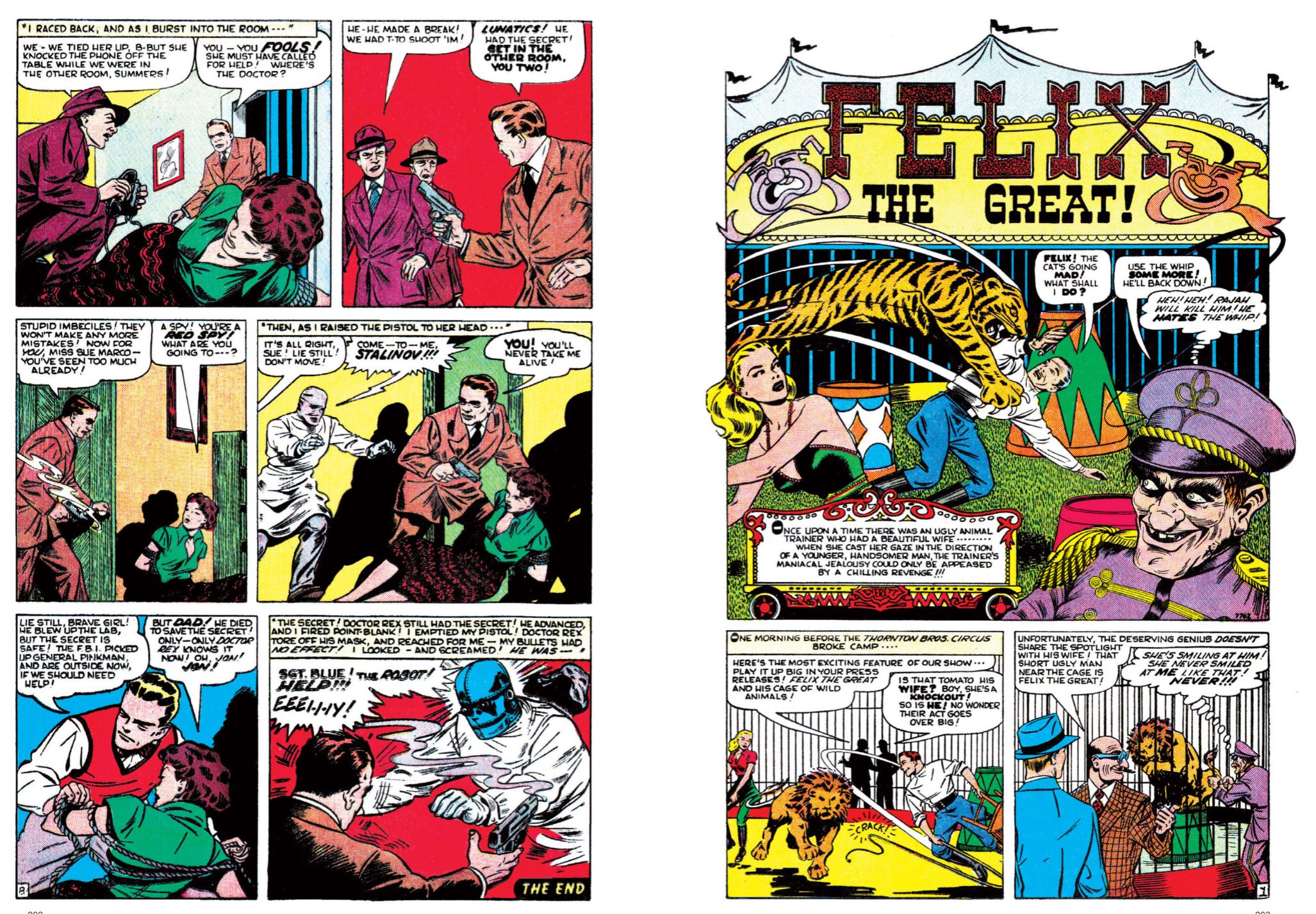
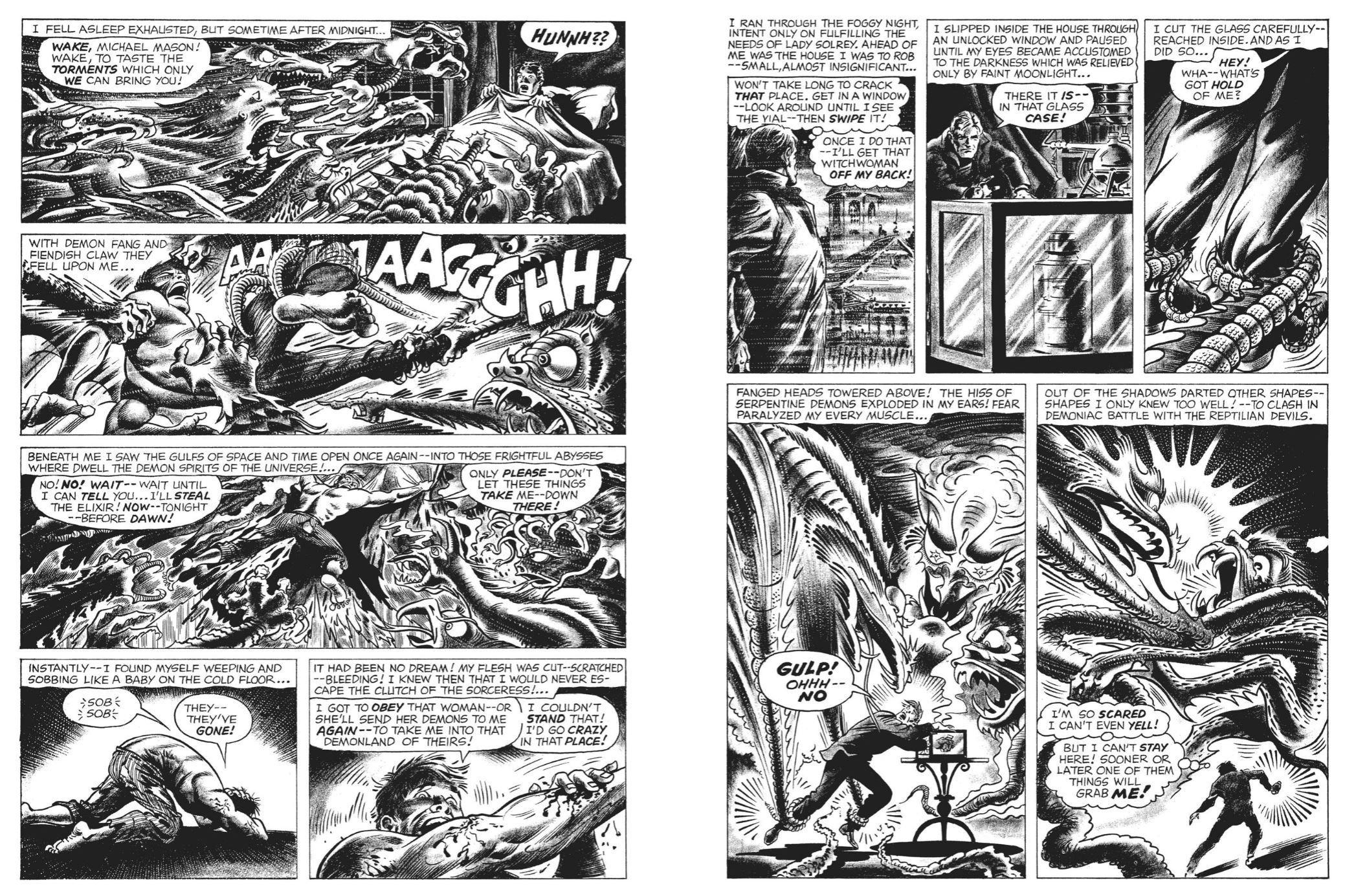
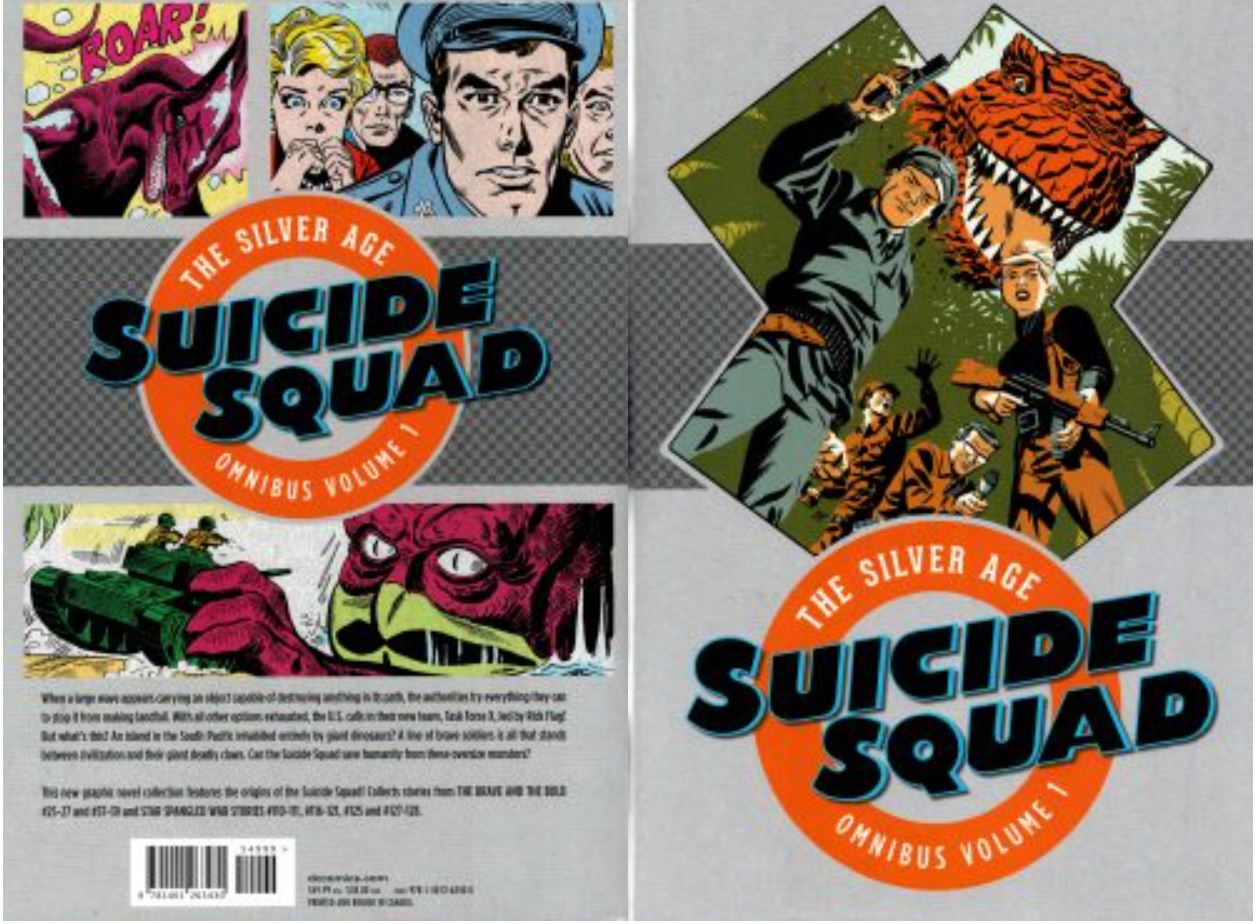
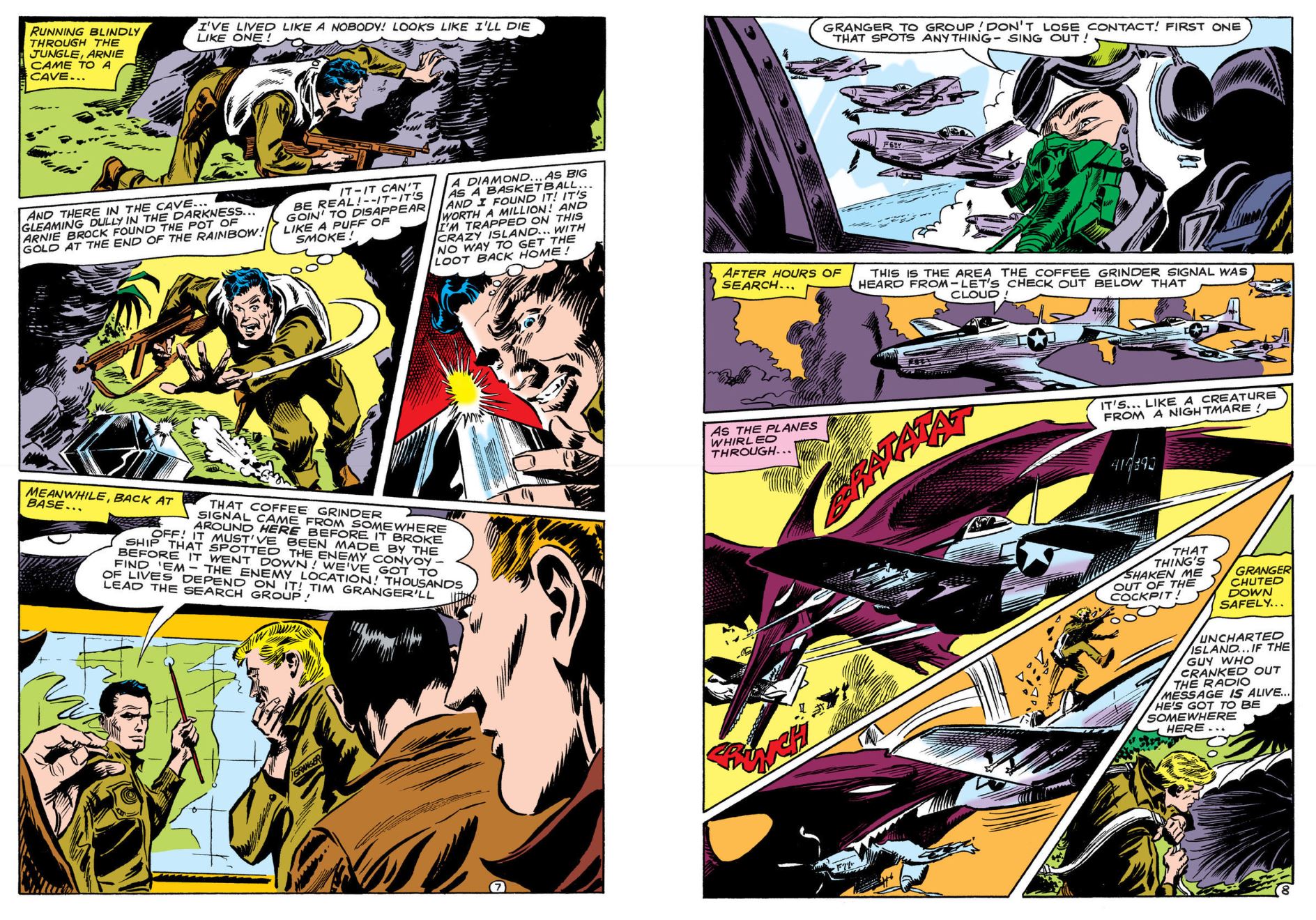
Showcase Presents Sea Devils volume 1


By Robert Kanigher, Bob Haney, France E. Herron, Hank P. Chapman, Russ Heath, Irv Novick, Joe Kubert, Gene Colan, Ross Andru & Mike Esposito, Jack Abel, Bruno Premiani, Sheldon Moldoff, Howard Purcel & various (DC Comics)
ISBN: 978-1-4012-3522-2

This book includes Discriminatory Content produced in less enlightened times.

Robert Kanigher (18th June 1915 – 7th May 2002) was one of the most distinctive authorial voices in US comics, blending rugged realism with fantastic fantasy and outrageous imagination in his signature war comics, as well as for the wealth of horror stories, romance yarns, “straight” adventure, westerns and superhero titles such as Wonder Woman, Teen Titans, Hawkman, Metal Men, Flash, Batman (plus other characters and genres far too numerous to cover here) at which he also excelled.

He sold his first stories and poetry in 1932, wrote for theatre, film and radio, and joined Fox Features’ “shop” at the beginning of the comic book phenomenon where he created The Bouncer, Steel Sterling and The Web, whilst providing scripts for established features like Blue Beetle and Captain Marvel (who we all call “Shazam!” these days). In 1945 he settled at All-American Comics as both writer & editor, staying put when the company amalgamated with National Comics to become the forerunner of today’s DC.

Bob wrote the Golden Age Flash and Hawkman, created Black Canary and many more sexily memorable villainesses such as Harlequin and (Rose and) the Thorn. This last temptress he redesigned in the early 1970s relevancy period: originating a schizophrenic crimebusting superheroine to haunt the back of Superman’s Girlfriend Lois Lane – which he also scripted at the time.

When mystery-men faded at the end of the 1940s, Kanigher moved easily into other genres like spy thrillers, westerns and war stories. In 1952 he became chief writer/editor of the company’s combat line: All-American War Stories, Star Spangled War Stories and Our Army at War. He launched Our Fighting Forces in 1954 and added G.I. Combat to his packed portfolio when Quality Comics sold their dwindling line of titles to National/DC in 1956. A year earlier, Kanigher had devised historical adventure anthology The Brave and the Bold and its stalwart stars Silent Knight, Golden Gladiator and Viking Prince whilst still scripting Wonder Woman, Johnny Thunder, Rex the Wonder Dog and a host of others.

In 1956, for Julius Schwartz he scripted ‘Mystery of the Human Thunderbolt’: the first story of the Silver Age, introducing new Flash Barry Allen to hero-hungry kids of the world.

Kanigher was restlessly creative, frequently using his uncanny if formulaic action arenas as a testing ground for future series concepts. Among the many epochal war features he created were Sgt. Rock, Enemy Ace, The War that Time Forgot, The Haunted Tank and The Losers. However, he always kept an eye on contemporary trends too. When supernatural comics took over the industry as the 1960s closed, he was a mainstay at House of Mystery, House of Secrets and Phantom Stranger. In 1975 he created gritty human interest crime feature Lady Cop. Fifteen years earlier he had caught a similar wave (Oh, ha ha, hee hee…) by cashing in on the popularity of TV show Sea Hunt. His entry into a sudden subgenre deluge of scuba-diver comics featured the traditional contemporary adventure formula of a heroic quartet (Smart Guy, Tough Guy, Young Guy and A Girl) to indulge in all manner of (undersea) escapades from logical to implausible, topical to fantastical. He dubbed his team The Sea Devils

These classy yarns still haven’t made it into modern full-colour editions but they are magnificent examples of comics storytelling, and if you have to read these lost treasures in mere monochrome, at least that’s better than nothing…

Re-presenting the turbulent, terrific try-out stories from Showcase #27-29 (July/August to November/December 1960) and Sea Devils #1-16 – spanning cover-dates September/October 1961 – March/April 1964 – this mammoth black-&-white paperback blends bizarre fantasy, sinister spy stories, shocking science fiction and two-fisted aquatic action with larger-than-life yet strictly human heroes who carved their own unique niche in comics history…

In almost every conceivable way, “try-out title” Showcase created the Silver Age of US comic books and is responsible for the multi-million-dollar industry and art form we all enjoy today. The comic book was a printed periodical Petri dish designed to launch new series and concepts with minimal commitment of publishing resources. If a new character sold well initially a regular series would follow. The process had been proved with Frogmen, Lois Lane, Challengers of the Unknown, The Flash, Green Lantern and many, many more. The principle was a sound one which paid huge dividends. Editors at National were apparently bombarded with readers’ suggestions for new titles and concepts and the only possible way to feasibly prove which would be popular was to offer test runs and assess fan – and most crucially sales – reactions.

Showcase #27 followed a particularly fruitful run of successful non-superhero debuts including Space Ranger, Adam Strange and Rip Hunter…Time Master. At a time when costumed characters seemed unstoppably ascendant, memories of genre implosions remained fresh, but it seemed the premiering publication could do no wrong. Moreover, it wasn’t Kanigher and illustrator Russ Heath’s first dip in this particular pool. Showcase #3 had launched war feature The Frogmen in an extended single tale following candidates for a WWII US Underwater Demolitions Team as they perilously graduated from students to fully-fledged underwater warriors. The feature, if not the actual characters, became a semi-regular strip in All-American Men of War #44 (April #1957) and other Kanigher-edited war comics: making Frogmen the first success of the try-out system. Now, with tales of underwater action appearing in comics, books, film and TV, the time was right for a civilian iteration to make some waves…

The drama here begins in Kanigher & Heath’s ‘The Golden Monster’ as lonely skin-diver Dane Dorrance reminisces about his WWII frogman father and that senior’s trusty buddies before being saved from a sneaky shark by a mysterious golden-haired scuba-girl. Judy Walton is an aspiring actress who, seeking to raise her Hollywood profile, has entered the same underwater treasure hunt Dane is engaged in, but as they join forces, they have no idea of the dangers awaiting them…

Locating the sunken galleon they’ve been hunting, both are trapped when seismic shifts and a gigantic octopus bury them inside the derelict. Happily, hulking third contestant Biff Bailey is on hand and his tremendous strength tips the scales and allows the trio to escape. Now things take a typical Kanigher twist as the action switches from tense realistic drama to riotous fantasy, with the explosive awakening of a colossal reptilian sea-monster who chases the divers until Judy’s little brother Nicky races in to distract the beast…

Temporarily safe, the relative strangers unite to destroy the thing – with the help of a handy floating mine left over from the war – before deciding to form a professional freelance diving team. They take their name from the proposed movie Judy wanted to audition for, becoming forever “The Sea Devils”. In Showcase #28 Dane’s dad again offers his boy ‘The Prize Flippers’ papa won for war exploits, but Dane feels his entire team should be allowed to compete for them. Of course, each diver successively outdoes the rest, but in the end a spectacular stunt with a rampaging whale leaves the trophy in the hands of a most unlikely competitor…

A second story sees the new team set up shop as “underwater trouble-shooters” and stumbling into a mystery as pretty Mona Moray begs them to find her missing dad. Professor Moray was lost when his rocket crashed into the ocean, but as our scuba stalwarts diligently search the crash site, they are ambushed by underwater aborigines and join the scientist in an uncanny ‘Undersea Prison’. Only when their captors reveal themselves as invading aliens do the team finally pull together, escape the trap and bring the house down on the insidious aquatic horrors.

Showcase #29 also offered a brace of briny tales, casting off with ‘The Last Dive of the Sea Devils’, wherein a recently-imprisoned dictator from Venus escapes to Earth and battles the astounded team to a standstill from his giant war-seahorse. The blockbusting bust-up costs them their beloved vessel The Sea Witch, before the crew make use of a handy leftover torpedo to end the interplanetary tyrant. Sea-born giants also abound in ‘Undersea Scavenger Hunt’ wherein the cash-strapped troubleshooters compete in a contest to win a new boat. Incredible creatures and fantastic treasure traps are no real problem, but the actions of rival divers The Black Mantas almost cost our heroes their lives…

Everything works out though, and nine months later Sea Devils #1 hit the stands with Kanigher & Heath leading the way. In ‘The Sea Devils vs. the Octopus Man’ our watery quartet are now stars of a monster movie, but when the lead beastie comes to lethal life and attacks them, all thoughts of fame and wealth sink without trace. The second tale was scripted by superbly inventive Bob Haney who riffed on Moby Dick’s plot in a tale of how Vikings hunted a mythical orca with a magic harpoon, before latter-day fanatical whaler Captain Shark mercilessly seeks out the ‘Secret of the Emerald Whale’ with our desperate Devils dragged along for the ride…

Haney wrote both yarns in the next issue, beginning with ‘A Bottleful of Sea Devils’ as mad scientist Mr. Neptune employs a shrinking device to steal a US Navy weapon prototype. With the aquatic investigators hard on his flippered heels, the felon is soon caught, after which ‘Star of the Sea’ introduces implausibly brilliant performing seal Pappy who repeatedly saves the sea squad before finding freedom and true love in the wild waters of the Atlantic. Kanigher returned for #3’s ‘Underwater Crime Wave’ as the Devils clashed with a modern Roman Emperor who derives incredible wealth from smuggling and traps the team in his undersea arena. Judy then finds herself the only one immune to the allure of ‘The Ghost of the Deep’ as subsea siren Circe makes the boys her latest playthings with her mortal rival compelled to pull out all the stops to save her friends…

Sea Devils #4 led with ‘The Sea of Sorcery’ as the team investigate – but fail to debunk – incredible myths of a supposedly haunted region of ocean, after which Haney details how the squad travel into the heart of South America to liberate a tribe of lost, pre-Columbian Condor Indians from a tyrannical witch doctor to solve ‘The Secret of Volcano Lake!’ Then ‘The Creature Who Stole the 7 Seas’ (Kanigher) opens SD #5 as a particularly dry period for the troubleshooters ends with a crashing UFO disgorging a sea giant intent on transferring Earth’s oceans to his own arid world. Oddly for the times, here mutual cooperation and a smart counter-plan save the day for two panicked planets.

Veteran writer Hank P. Chapman joined an ever-expanding team with a smart yarn of submerged Mayan treasure and deadly traps imperilling the team whilst solving the ‘Secret of the Plumed Serpent’, before Kanigher comes back with a book-length thriller for #6 and the Devils seemingly ensorcelled by ancient parchments which depict them battling incredible menaces in centuries past. Biff battles undersea knights for Queen Cleopatra, Judy saves Ulysses from Sirens, Nicky rescues a teenage mermaid from a monstrous fishman and Dane clashes with ‘The Flame-Headed Watchman!’, but is wise enough to realise the true threat comes from the mysterious stranger who has brought them such dire documents…

The switch to longer epics was wise and productive, followed up in #7 with ‘The Human Tidal Wave!’ as the heroes spectacularly battle an alien made of roaring water to stop a proposed invasion, whilst SD #8 sees them strive to help a fish transformed into a grieving merman by the ‘Curse of Neptune’s Giant!’ The malignant horror’s mutative touch briefly makes monsters of the heroes too, but ultimately Sea Devil daring trumps eldritch cruelty…

More monster madness followed in #9’s ‘The Secret of the Coral Creature!’ as the team become paragliding US Naval medics to rescue an astronaut. That’s mere prelude to the oceanic atomic bomb test which blasts them to a sea beneath the sea that imprisons an ancient alien for eons of crushing solitude, and who had no intention of ever letting the newly-arrived air-breathers go…

A concatenation of crazy circumstances creates the manic madness of #10’s ‘4 Mysteries of the Sea!’ as godly King Neptune decrees that on this day every wild story of the sea will come true, just as the Sea Devils are competing in a “Deep Six Tall Tales” contest. Soon the incredulous squad are battling pirates in an underwater ghost town, rescued from captivity by a giant octopus thanks to a friendly seal (Good old Pappy!), facing off against aliens of the Martian Canals Liars Club and saving Neptune himself from a depth-charge attack…

The hugely underrated Irv Novick took over as primary illustrator with #11, as the Devils agree to test human underwater endurance limits in an ocean-floor habitat. Soon, however, Dane is near breaking point, seeing a succession of monsters from the ‘Sea of Nightmares!’

Kanigher then relinquished writing to fellow golden age alumnus France E. Herron, who kicked off in rip-roaring form with a classy sci fi romp. Here Nicky’s growing feelings of inadequacy are quashed after he saves his comrades – and the world – from the ‘Threat of the Magnetic Menace!’

Always experimental and rightfully disrespectful of the fourth wall, editors Kanigher and George Kashdan turned issue #13 over to the fans for ‘The Secrets of 3 Sunken Ships’, as successive chapters of Herron’s script were illustrated by Joe Kubert (whose 99th birthday would be today if he was still with us), Gene Colan and Ross Andru & Mike Esposito for the audience to judge who was the best. The artists all appear in-world, conducting interviews and researching our heroes as they tackle a reincarnated sea captain, travel to an ancient sea battle between Greece and Persia and meet the alien who kidnapped the crew of the Marie Celeste! The gag continued in Sea Devils #14 as illustrator Novick comes along for the ride when the amazing aquanauts try to end the catastrophic ‘War of the Underwater Giants’ This finds aging deities Neptune and Hercules clashing for supremacy in Earth’s oceans.

Jack Abel was artistic substitute in supplementary yarn ‘Challenge of the Fish Champions!’, as our heroes enter a cash prize competition to buy scuba equipment for a junior diving club. Unfortunately, crazy devious scientist Karpas also wants the loot and so fields a team of his own technologically augmented minions. Before long, the human skindivers are facing off against a sea lion, a manta ray, a squid and a merman. Nobody specified contestants had to be human…

Novick got back into the act illustrating #15 as author Herron revealed Judy & Nicky’s relationship to the ‘Secret of the Sunken Sub!’ When inventor Professor Walton vanishes whilst testing his latest submersible, it’s only a matter of time before his children drag the rest of the Sea Devils to the bottom of every ocean to find him and his lost crew. The uncanny trail takes them through shoals of monsters, astounding flora and into the lair of an incredible sea spider before the mission is successfully accomplished…

Events regained a semblance of narrative normality with the final issue in this compilation with Chapman contributing two high adventure yarns beginning with ‘The Strange Reign of Queen Judy and King Biff’, superbly rendered by the wonderful Bruno Premiani & Sheldon Moldoff. When a massive wave capsizes the Sea Witch, only Dane & Nicky seemingly survive, but the determined explorers persevere, eventually finding their friends as bewitched captives on the island of an immortal wizard. All they have to do is kidnap their ferociously resisting comrades, escape an army of angry guards and penetrate the island’s mystic defences a second time to restore everything to normal. No problem…

This eccentric and exciting voyage of discovery concludes with ‘Sentinel of the Golden Head’ – illustrated by always impressive Howard Purcell & Moldoff – as the restored aquatic quartet stumble onto the lost island of Blisspotamia in time to witness a beautiful maiden trying to sacrifice herself to the sea gods. By interfering, they incur the wrath of a legion of mythological horrors and have no choice but to defy the gods to free the terrified islanders from ignorance and tyranny…

These capacious monochrome compendia were superb value and provided a vital service by bringing older, less flashy (but still astonishingly expensive in their original issues) tales to a readership which might otherwise be denied them. However, this is probably the only series which I can honestly say suffers in the slightest from the lack of colour. Whilst the line-art story illustrations are actually improved by the loss of hue, the original covers – by Heath & Novick as supervised and inked by production ace Jack Adler – used all the clever technical print effects and smart ingenuity of the period to add a superb extra layer of depth to the underwater scenes which tragically cannot be appreciated in simple line & tone reproduction. Just go to any online cover browser site and you’ll see what I mean…

Nevertheless, the amazing art and astounding stories are as good as they ever were and Showcase Presents Sea Devils is stuffed with incredible ideas, strange situations and non-stop action. These underwater wonders are a superb slice of the engaging fantasy thrillers which were once the backbone of US comic books. Perhaps a little whacky in places, they are remarkably similar to many tongue-in-cheek, anarchic Saturday morning kids’ animation shows and will certainly provide jaded fiction fans with hours of unmatchable entertainment. Let’s hope the editors of the DC Finest line are casting about for some rarer salvage to preserve…
© 1960, 1961, 1962, 1963, 1964, 2012 DC Comics. All Rights Reserved.

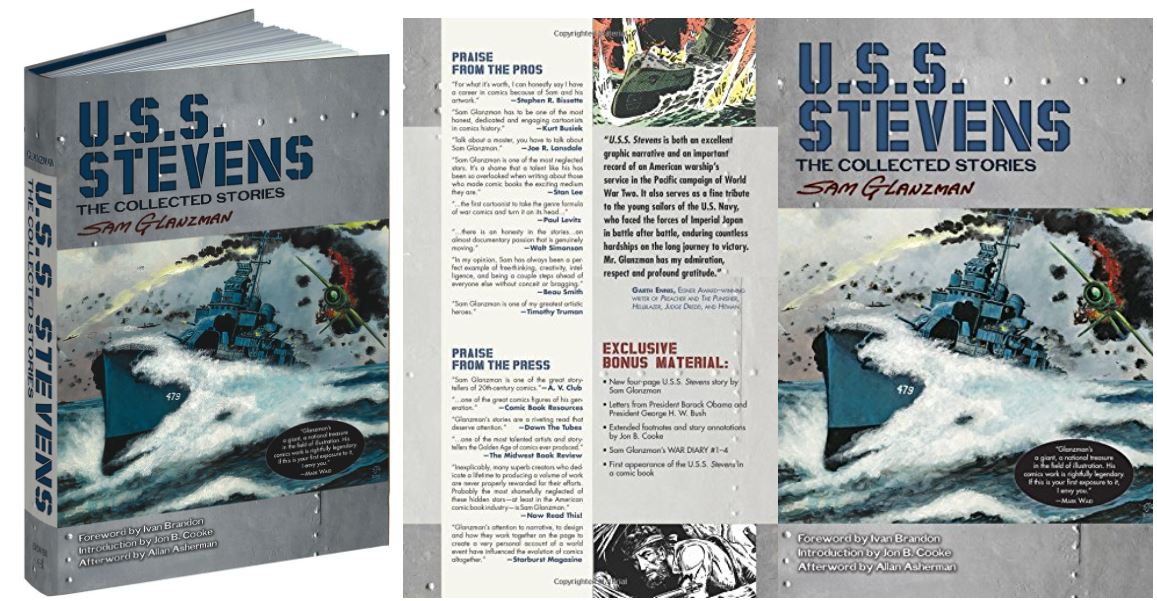
A Sailor’s Story


By Sam Glanzman (Dover Comics & Graphic Novels)
ISBN: 978-0-486-79812-7 (TPB/Digital edition)

This book includes Discriminatory Content included for dramatic effect.

Inexplicably, unfairly but inescapably, many truly superb creators who dedicate a lifetime to producing a volume of work are never properly rewarded for their efforts. Probably the most shamefully neglected of these hidden stars – at least in the American comic book industry – was Sam Glanzman (December 5th 1924 – July 12th 2017).

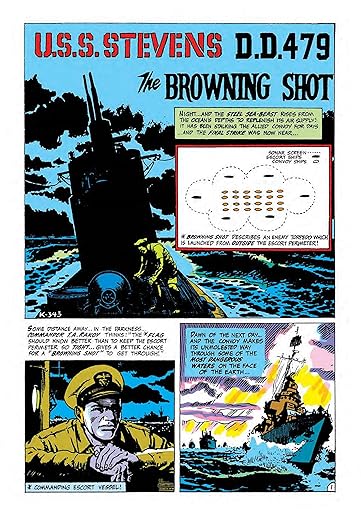
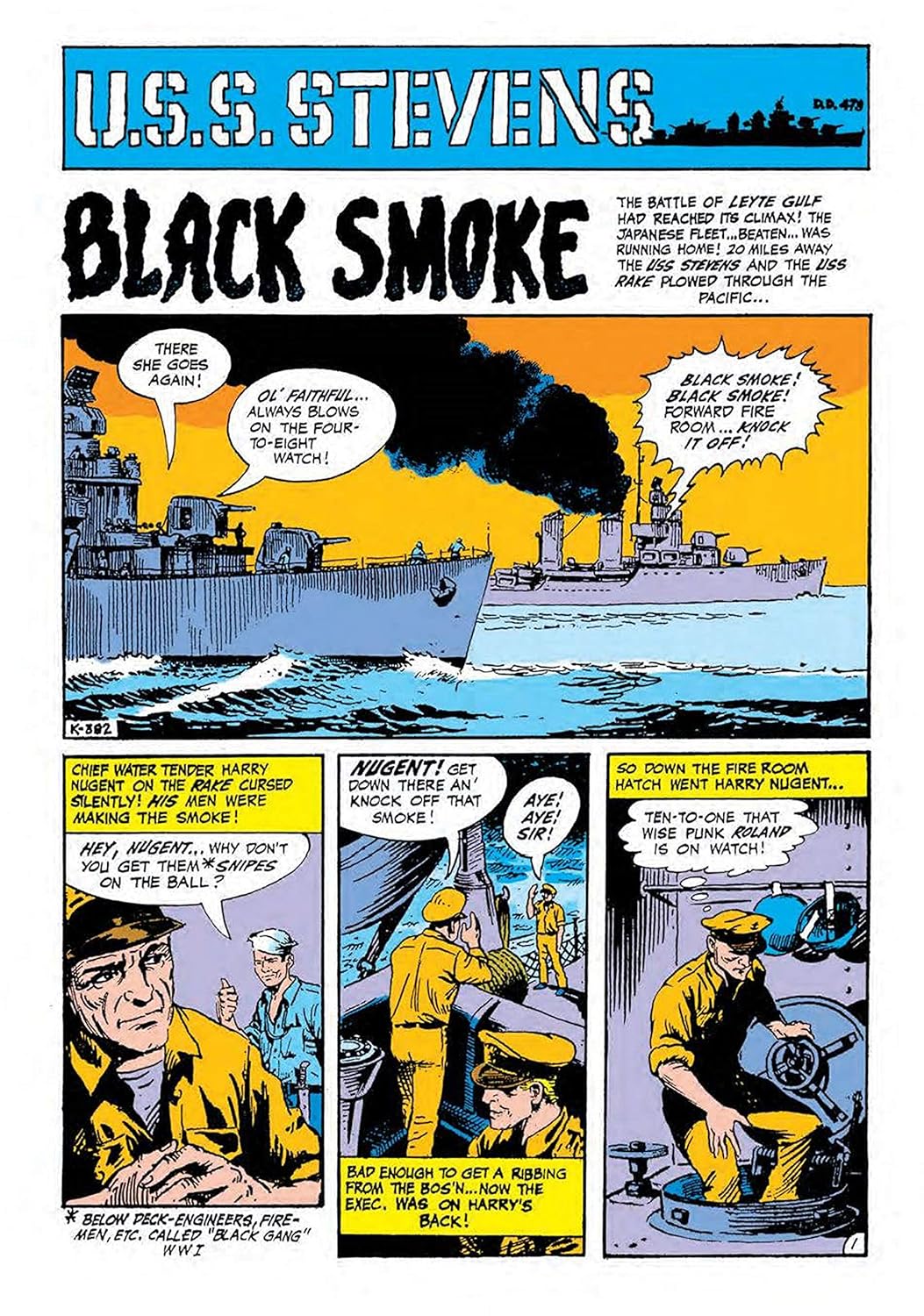
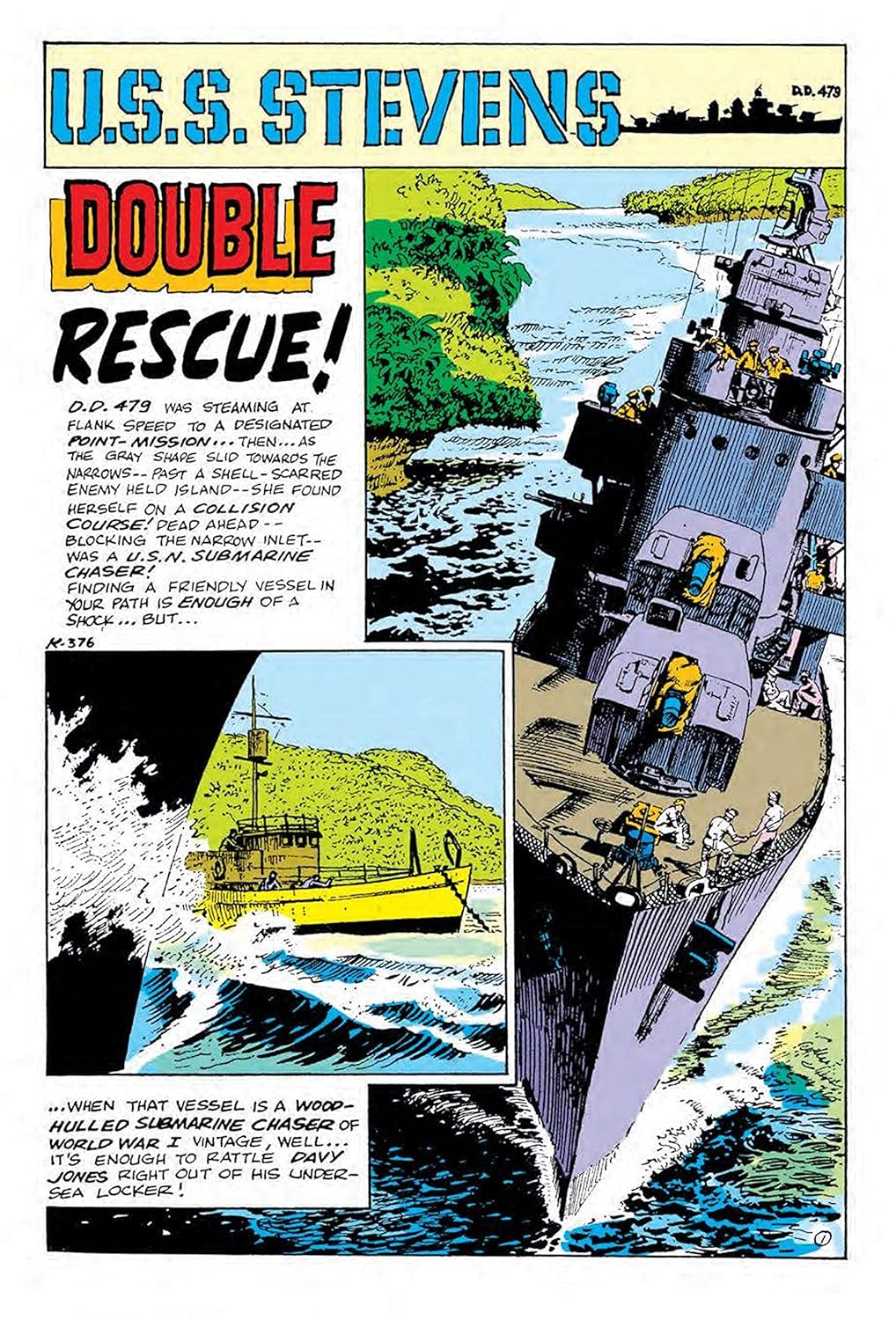
With his solid, uniquely informative and engagingly rough-hewn style, “SJG” worked since the 1940s on a variety of titles for a host of publishers, mostly genre material in war, mystery, fantasy and adventure anthologies, but also occasionally on serial characters such as Willy Schulz (The Private War of Willie Schultz), Hercules and Tarzan for Charlton; the astoundingly cool Kona, King of Monster Island for Dell, The Haunted Tank and most significantly for us here U.S.S. Stevens (DD 479) for DC. It is this last series of guardedly-autobiographical tales, derived from his tour of duty on that self-same US Navy Destroyer during WWII, that formed the basis of this superb compilation.

This criminally neglected talent quietly and resolutely generated comics magic for decades in his underplayed, effective and matter-of-fact manner and in 1987 was still improving, crafting superb narrative art without flash or dazzle, winning fans among the cognoscenti yet largely unnoticed or at least unlauded by mainstream fans when he produced a semi-autobiographical graphic novel that made many waves. Moreover, Marvel editor Larry Hama made the bold decision to publish Glanzman’s understated, unadorned, wryly elegiac account of his days as a young man aboard a Pacific Fleet Destroyer as part of the company’s Original Graphic Novel imprint…

A Sailor’s Story captivatingly related his experiences as a young man aboard the U.S.S. Stevens in a no-nonsense, highly entertaining manner, breaking fresh ground in the progress of the graphic novel as a medium for artistic expression. The book also reached a lot of buyers who wouldn’t be caught dead with a copy of Spider-Man or Conan

It was a high point in American sequential narrative and spawned a sequel volume – an unprecedented feat for the line at a time when superheroes and licensed properties monopolised the marketplace.

Glanzman was a natural storyteller, with the ability to make dry fact entrancing and everyday events compelling. With his raw, gritty drawing style and powerful sense of colour he wove memory into magic. His depiction of shipboard life is informative and authentic, and his decision to downplay action to concentrate on character is brave and tremendously effective. He also knows how to make a reader laugh and cry… and when.

A Sailor’s Story is a moving and obviously heartfelt paean to lost days: an impassioned tribute to lost friends and comrades; a war story that glorifies life, not death, by a creator who loved the experience and loves his art-form. When you read this superb book you will too.

Utterly devoid of unnecessary melodrama and conniving faux-angst, the history lesson starts as young Sam J. Glanzman enlists one year after Pearl Harbor – as soon as he turns 18. All the orphan leaves behind him in frigid upstate New York is a friendly farmer who promises to look after his devoted dog Beauty

What follows is a mesmerising succession of snippets and memories and observations; reminiscences pieced together into a mosaic of life afloat during wartime. Back then he learned to speak what amounted to a new language, played pranks and grew up in a pressure cooker. Along the way friends were made, and some enemies, but mostly just acquaintances: people doing the same things at the same time in the same place, but not necessarily for the same reasons and certainly with no dreams except having it all end…

Sam saw the world, the best and worst of life and survived the sailor’s greatest enemies: unseen, distant strangers trying to kill them all, mindless tedium and dire, soul-destroying repetitive routine. Eventually he found his niche – if never a decent place to sleep…

Through brief and terrifying clashes with the enemy, intimate associations and alliances aboard ship, intimate assignations ashore or on the frequent and increasingly bizarre and hilarious “Liberties” (those breaks from active duty us TV-reared landlubbers all mistakenly think of as “shore leave”), the author debunks a myth of the magic of the seas, only to recreate it, recast in terms any modern reader will instantly understand…

Eventually the war ends and long after that, so does the sailor’s service, with only the merest few of his unforgettable arsenal of memories shared…

The sheer overwhelming veracity of the episodes is utterly overwhelming. Raucously funny, ineffably sad – Beauty’s fate will break your heart or you’re not and never have been human – devoutly forgiving, patiently understanding and stunningly authentic.

This long longed-for complete edition (thank you, Dover Books!) also includes that sequel from 1989. Wind, Dreams and Dragons returned to the Pacific at the height of the war, with a specific theme in mind and, by clever use of narrative devices like Ship’s Travel Logs incorporated into the beguiling page designs, or diagrams and cutaways as part of the text, upped the emotional ante. Through astoundingly affecting intimate details (most trenchantly humorous) fondly recalled and seamlessly staged, Glanzman managed to instil an even more documentary atmosphere into his wonderfully human-scaled drama.

This is used to create a foreboding sense of dread as the crew encounter and learn to live with the then-unknown terror weapon of suicide-pilots who would become a household name to us: Kamikaze

Combining the folksy, informative charm of the first volume with the “hurry-up-and-wait” tensions of modern warfare, delivered in an increasingly bold and innovative graphic style, Wind, Dreams and Dragons is one of the best explorations of sea-combat ever produced, seen through the eyes of an ordinary seaman. It all compellingly communicates the terror, resolve and sheer disbelief that men on both sides could sacrifice so much. This is a fitting and evocative tribute from one who was there to all those who are no longer here…

As if those back-to-back blockbusters were not enough, this oversized (279 x 210mm), fully remastered tome comes with a flotilla of extras beginning with a Foreword by Max (World War Z) Brooks and Introduction from original editor Larry Hama.

Following the colourful comics comes a star-studded ‘Tributes’ section by Glanzman’s contemporaries: moving and frequently awe-struck commemorations, appreciations, shared memories and even art contributions from Alan Barnard, George Pratt, Beau Smith (who shares a personal sketch SJG created for him), Stephen R. Bissette, Chris Claremont, Carl Potts, Denny O’Neil, Kurt Busiek, Stan Lee, Paul Levitz, Joe R. Lansdale, Walter Simonson, Russ Heath, Joe Kubert, Steve Fears, Thomas Yeates, Timothy Truman, Will Franz and Mark Wheatley. There’s even a splendid photo parade entitled ‘Sam’s Scrapbook’ and a warm, impassioned ‘Afterword’ from Chuck Dixon.

Topping everything is a new 10-page hauntingly powerful monochrome USS Stevens yarn entitled ‘Even Dead Birds Have Wings’. Now all we have to do is get everyone to rediscover this lost gem.

Shockingly raw, painfully authentic, staggeringly beautiful, A Sailor’s Story is a magnificent work by one of the very best of “The Greatest Generation”: a sublimely insightful, affecting and rewarding graphic memoir every home, school and library should have.
Artwork and text © 2015 Sam Glanzman. All other material © 2015 its respective creators.

The Marquis of Anaon volume 3: The Providence


By Vehlmann & Bonhomme, coloured by Delf: translated by Mark Bence (Cinebook)
ISBN: 978-1-84918-277-5 (PB Album/Digital edition)

These books include Discriminatory Content included for dramatic effect.

In 1972 Fabien Vehlmann entered the world in Mont-de-Marsan. He was raised in Savoie, growing up to study business management before taking a job with a theatre group. His prodigious canon of pro comics work began in 1998 and soon earned him the soubriquet of “Goscinny of the 21st Century”.

In 1996, after entering a writing contest in Le Journal de Spirou, he caught the comics bug and two years later – with illustrative collaborator Denis Bodart – produced mordantly quirky, sophisticated portmanteau period crime comedy Green Manor. From there his triumphs grew to include – amongst many others – Célestin Speculoos for Circus, Nicotine Goudron for L’Écho des Savanes and a stint on major property Spirou and Fantasio

Scion of an artistic family, Matthieu Bonhomme received his degree in Applied Arts in 1992, before learning the comics trade working in the atelier of western & historical strip specialist Christian Rossi. Running from 2002-2008, Le Marquis d’Anaon was Bonhomme’s first regular series, after which he began writing as well as illustrating a variety of tales, from L’Age de Raison, Le Voyage d’Esteban, The Man Who Shot Lucky Luke and so much more.

Now, where were we? Imagine The X-Files set in Age of Enlightenment France (circa 1720), played as a solo piece by a young hero reluctantly growing into and accepting the role of crusading troubleshooter. With potent overtones of Jane Eyre, Wuthering Heights, The Fall of the House of Usher and similar gothic romances, it all began in 2001’s L’Isle de Brac: first of 5 albums (all available in English-language paperback and digital formats) tracing the development of a true champion against darkness and human venality.

Under-employed middle class scholar/pragmatic philosopher Jean-Baptiste Poulain is a merchant’s son, ardent disciple of Cartesian logic and former medical student. Well educated but impoverished, he accepted a post to tutor the son of the mysterious Baron of Brac. It was a career decision that shaped the rest of his life…

On the windswept, storm-battered and extremely isolated island off the Brittany Coast, Poulain experienced fear and outrage, superstition and suspicion before ultimately exposing the appalling secret the island overlord his serfs called “the Ogre”, bringing justice and finality to all concerned. In the aftermath, Poulain left but could never outrun the obnoxious title the islanders bestowed upon him in their Bretagne argot: Le Marquis d’Anaon – “the Marquis of Lost Souls”…

Two years later Poulain caught a supposedly demonic but actually faith-based serial killer (The Black Virgin) and in this third exploit tackles a new kind of horror that we have all become increasingly aware of…

It begins in Paris, where not so polite society bores a now notorious sage whilst making him a target of bumptious educated fools. At a soiree where Poulain more than holds his own against aristocratic snobs, he is approached by visiting celebrity the Countess of Almedía, who has a unique problem she needs to consult a truly learned man about…

Wishing to establish a salon of her own in Andalusia, the Contessa invites Poulain to relocate to Spain for a few months, sweetening the offer with extraordinarily generous remuneration. Despite speaking no Spanish, he is soon a passenger aboard ship, acquainting himself with fellow recruit and poet of renown Françoise de la Sange. Their safe passage is abruptly interrupted by a monstrous storm which “the Marquis” cannot help but revel in. As a consequence, he is the first to spot a derelict galleon tossed in the tumult…

When calm waters return, battered hulk La Providence lies before them and he eagerly joins a wary but greedy boarding party. The ship is a floating horror, filled with skeletons and scenes of carnage but according to the recovered Captain’s log, there are far fewer bodies than there should be for a vessel that left the Congo stuffed with ivory and exotic timber and commanded by an extremely entrepreneurial slaver.

Moreover, a lifeboat is also missing…

The Contessa’s dutiful captain decides he must tow the wreck to the nearest port – Bordeaux – but the unanticipated four day diversion quickly sours after a string of mysterious events disrupt shipboard routine and panic the crew. Poulain mentally retraces his steps and realises that what he saw aboard the Providence – already impossible for a rational man to accept – might not be the worst of the perils about to visit himself and his companions…

As men start disappearing, chaos mounts when the captain dies and is replaced by steadfast pragmatic Chief Erwan. Sinking the towed hulk does not end the deaths and by the time Poulain divines the true answer the ship has been diverted again for the nearest dry land… a proposition the Marqis of Lost Souls cannot allow to happen at any cost….

Accompanied by cleverly contrived faux broadsheet character precis ‘Gazette Of the year 1731 – CONCERNING SEVERAL illustrated& authentic tales of the MARQUIS OF ANAON’

This seagoing terror tale offers another tight, taut authentic compellingly script from Vehlmann, depicted via Bonhomme’s densely informative but never obtrusive illustrated realism delivering a moody, ingenious, utterly enthralling tale of modern horror, imbedded in an(other) era of superstition, class separation, burgeoning natural wonder, reason ascendant and crumbling belief. This is spooky enigma enhancing and testing a troubled, self-doubting quester who barely holds at bay the crippling notion that all his knowledge might be trumped one night by a non-rational ever lurking unknown…

The exploits of The Marquis of Anaon area minor mystery milestone well-deserving of a greater audience and one no thinking fear fan should miss.
Original edition © Dargaud Paris 2004 by Vehlmann & Bonhomme. All rights reserved. English translations © 2015 by Cinebook Ltd.