The Detection Club parts 1 & 2


By Jean Harambat, coloured by Jean-Jacques Rouger translated by Allison M. Charette (Europe Comics)
eISBN: 979-1-032809-95-2 (part 1), 979-1-032809-96-9 (part 2)

This book includes Discriminatory Content included for dramatic and literary effect.

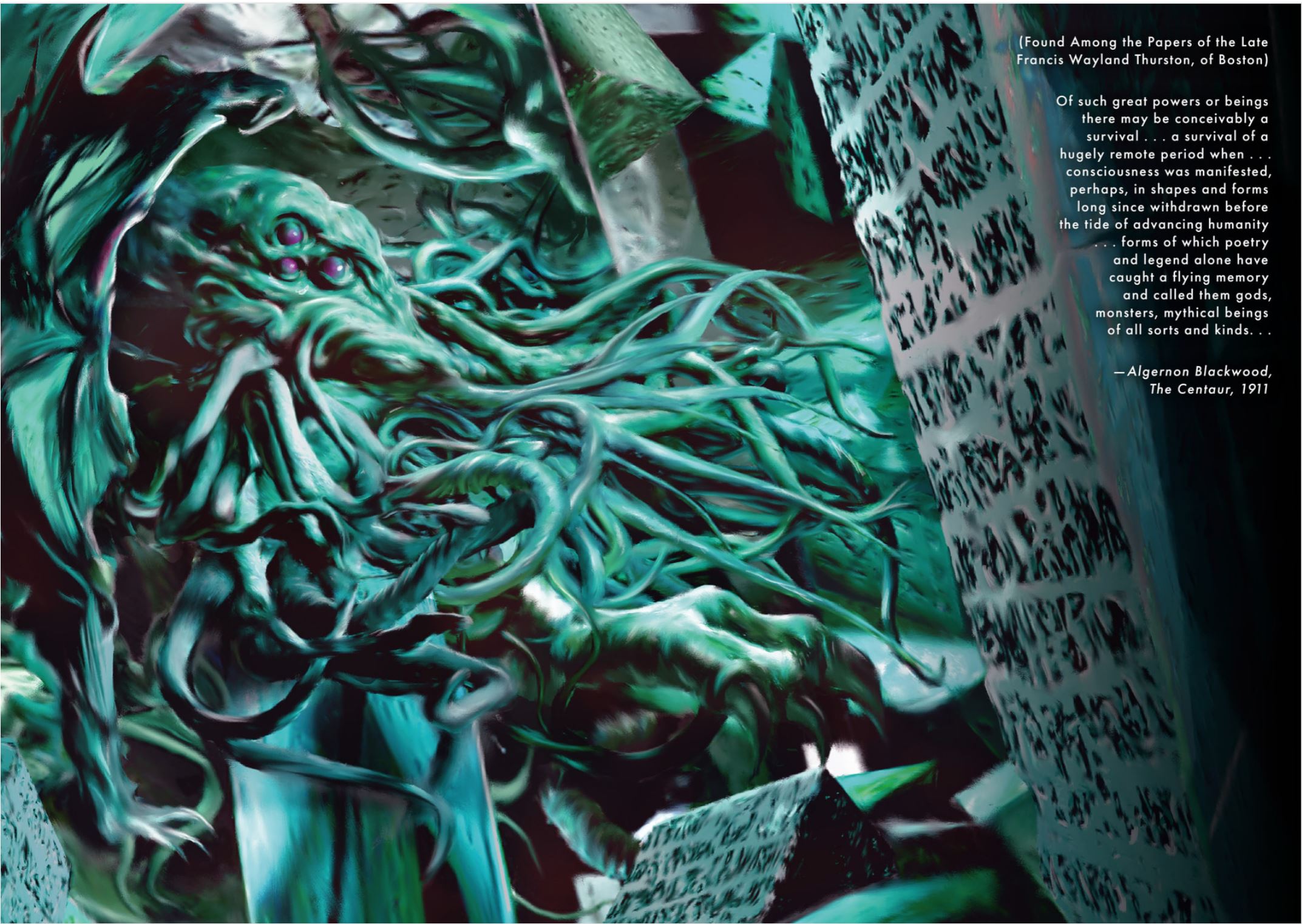
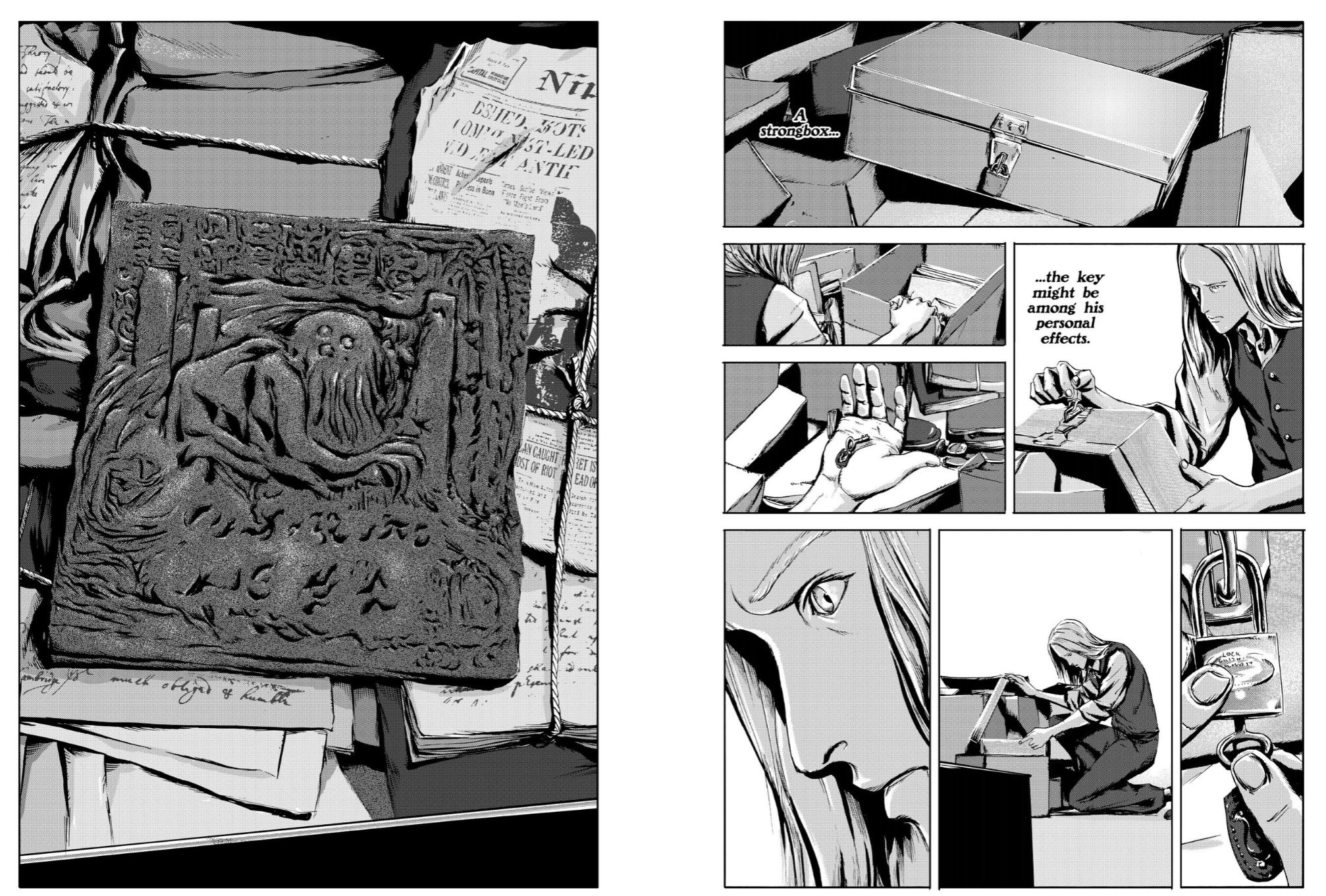
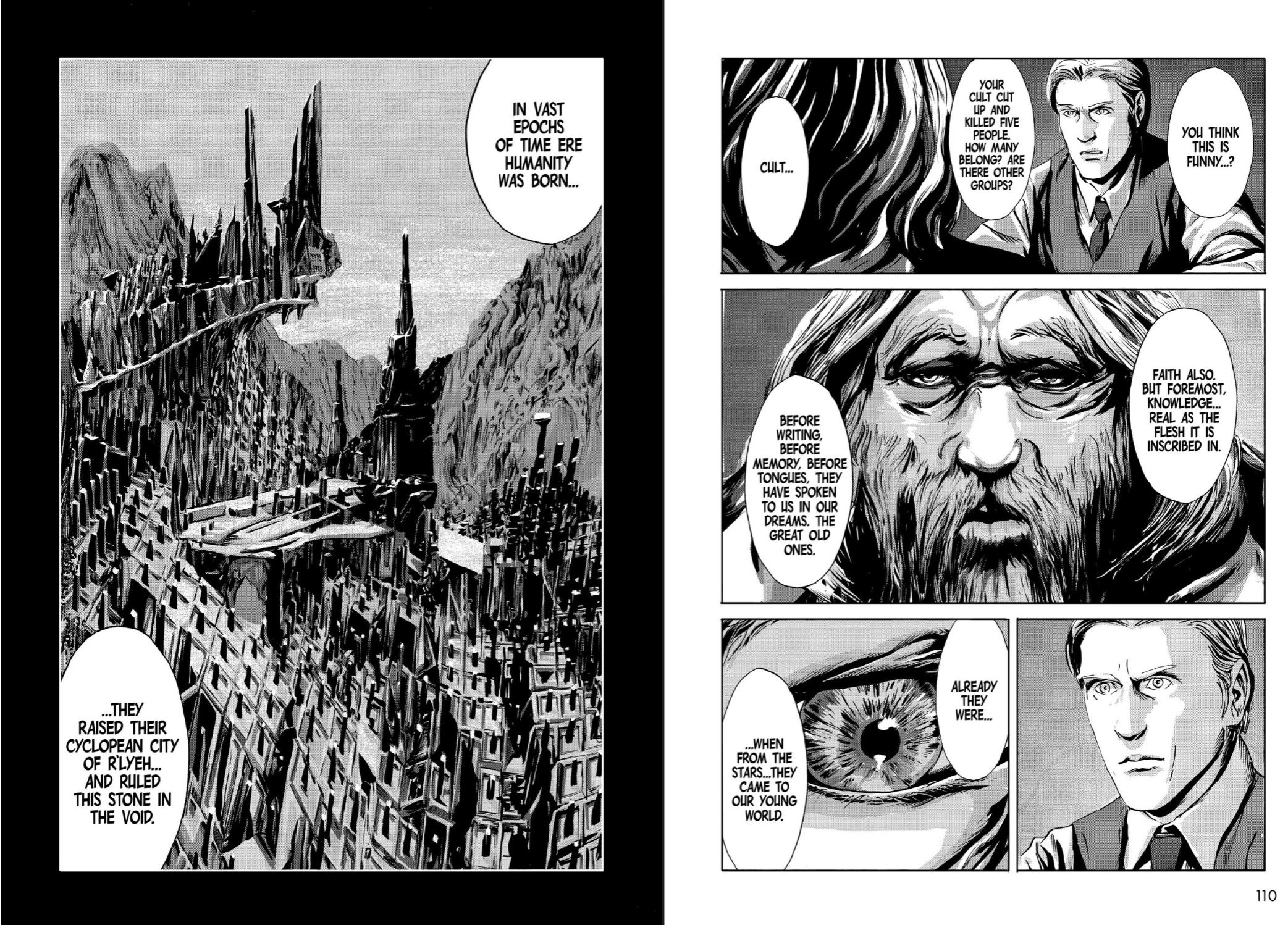
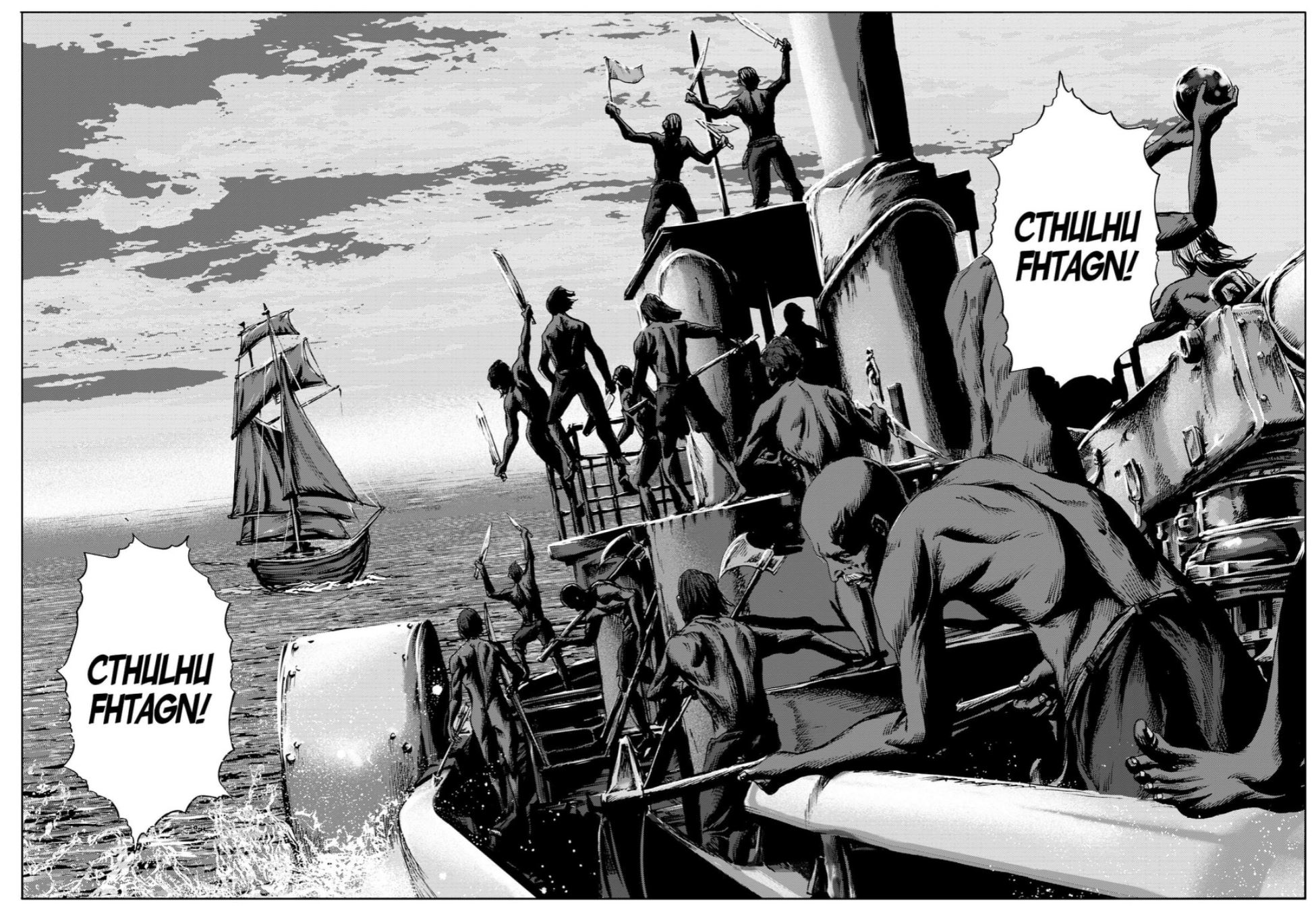
Apparently, everybody loves mystery to chew on. With that in mind, here’s a brace of superb cartoon conundrums from the continent, based on an unlikely but actual historical convocation.

As seen on Wikipedia, – The Detection Club was a literary society of British crime writers, founded in 1930, with the likes of G.K. Chesterton, Dorothy L. Sayers and Agatha Christie as early Presidents. In 1936, American émigré John Dickson Carr became the first non-Brit elected to the august body; and probably pretty snarky elitist gathering.

They did stuff, wrote stories, held events and upheld (Ronald) Knox’s Commandments which detailed the proper rules of mystery writing. The group is the basis of later media McGuffin’s such as Batman’s Mystery Analysts of Gotham City and every bunch of screen authors matched against evil geniuses everywhere…

I’m pretty sure the story here collected in two volumes by award-winning cartoonist, screenwriter, graphic novelist, historian, philosopher and journalist Jean Harambat (Les Invisibles, Ulysses, the Songs of Return, Operation Copperhead) is apocryphal, but you never know…

Originally released in 2019, our case du jour opens in a prologue, with the reciting of those Knox commandments and the confirmation of Mr. Dixon Carr at a slap-up feed at London hostelry Ye Olde Cheshire Cheese – a pub that doesn’t seem to mind the odd celebratory gunshot…

Present are President Chesterton, Dixon Carr, Christie, Sayers, Baroness Emma Orczy, Major A.E.W. Mason and Monsignor Ronald Knox himself, and – as the posh repast winds down – proceedings are somewhat disturbed by the arrival of a flying, talking robotic bird bearing a strange invitation…

Eccentric man of means Mr. Roderick Ghyll wishes the company of the sagacious society at his extraordinary domicile on April 1st. Briarcliff House is situated on a private island where Ghyll wishes to celebrate the future through his latest contrivance, therefore promising “challenges”, “enchantments” and “the renaissance of crime fiction”…

Chapter I opens with the scribes and scribblers approaching ‘An Island in Cornwall’ and still heatedly debating the motives of the mystery man. Ghyll greets them effusively before zooming off in a bizarre electric unicycle leaving them to make their way to his palatial manse: a gleaming tribute to sleek, tripped down modernism – if not actual futurism…

Apart from the domestic staff chef Alphonse, maid Madeline, implacable (not to say positively “inscrutable”) Asian manservant Fu, and stepdaughter Millicent, the only other human present is technical assistant Dr. Zumtod and Ghyll’s haughty beautiful wife Honoria. A future generation would call her a “trophy”…

The old plutocrat is a deeply unpleasant and smugly overbearing host who boasts of one more personage that the sharp-minded, brain-testing authors must meet. With smugness and great ceremony he introduces Eric: a mechanical man with more than human insight who can outwit any mortal and easily determine the culprit in any tale they might concoct…

Although challenged with the details of a string of classic novels – which Eric easily and correctly concludes with the name of the perpetrators – the writers remain insulted and unconvinced. Dixon Carr even oversteps the bounds of polite decency by probing the automaton in search of a pre-prepped dwarf or amputee and the display is halted for dinner where Ghyll continues to advocate a world filled with his “metal friends”…

The evening wears on with the usual social distractions balanced by heated argument on many topics sparked by Eric’s existence and the magnate’s pronunciations that art and literature must make way for a machine-run world. At last, the affair breaks up with the guests retiring to their assigned rooms in a state of high dudgeon…

That all ends in esteemed literary tradition, with screams and the writers breaking into Ghyll’s savagely disarrayed bedroom to discover electronic Eric inert in a chair and clear evidence of ‘The Billionaire Out the Window’. Far below, a dressing gown sinks beneath choppy waves and subsequent frantic searches result in no sign of their host…

Well-versed if not actually experienced in investigation, the writers set about interviewing the staff and then the residents. Zumtod then suggests the painfully obvious: turning Eric loose on the problem. The response is as rapid as the answer is shocking…

While waiting for the outer world to re-establish contact with the isolated isle, “Queen of Crime” Christie bonds with the presumed widow and probes the step-daughter, whilst Chesterton continues to scour the entire vicinity. He’s suspicious of everything – including whether there has been any crime at all – and rapidly unearths many unsuspected secrets even as each writer cleaves to their particular speciality, makes their own assessment and forms a personal hypothesis.

…And then a body washes ashore…

The Detection Club’s second volume begins with third chapter ‘Seven Amateur Detectives’ and an armada of late-arriving constabulary. Led by Inspector Widgeon they proceed to interview the drawing room sleuths. Mounting tensions, contrary theories and wounded pride quickly drive all concerned into fractious conflict, even as potential heir Millicent’s banished and outcast twin Watkyn re-emerges. Has he only returned because of his despised step-father’s demise or was he actually back just before it happened?

Events seemingly come to a head when Christie expounds her latest theory and provokes a minor hostage crisis until the villain is apprehended through unlikely team work. As the constabulary step in with the handcuffs however, new evidence emerges that sets the cogitators back on the murder-trail… until straightforward ratiocination leads one author to the only possible solution…

Wry, witty, and decidedly well-plotted, with smart characterisations and devastatingly sharp, catty dialogue (kudos to translator Allison M. Charette), this lively, lovely lark is also charmingly limned: a grand and glorious tribute to days gone by and superb stylists who tested our wits and expanded our entertainment horizons. This is a tale no whimsy-inclined crime fan can afford to miss.
© 2020 – DARGUAD – HARAMBAT. All rights reserved.

Today in 1911, Canuck-by-migration Ed Furness (Freelance, Commander Steel, “Canadian Whites publications” era) was born, followed by Dick Tracy collaborator Mike Curtis in 1953; Matt Feazell (Amazing Cynicalman) in 1955 and original Men in Black artist Sandy Carruthers arrived in 1962.

On this date we lost Chester Gould (Dick Tracy) in 1985 and Italian megastar artist Ferdinando Tacconi (Journey into Space and Jeff Hawke in Junior Express, Sciuscià, Susanna, Gli Aristocratici, Uomini senza gloria, L’uomo di Rangoon, Nick Raider, Dylan Dog) in 2006. Pioneering Filipino artist Tony DeZuñiga (Black Orchid, Outlaw, Jonah Hex, practically every character at DC & Marvel) died in 2012.

After 1269 weekly issues UK girls comic Mandy folded today in 1991. It had debuted on 21st January 1967.

Suicide Squad: The Silver Age


By Robert Kanigher, Howard Liss, Ross Andru & Mike Esposito, Gene Colan, Joe Kubert & various (DC Comics)
ISBN: 978-1-4012-6343-0 (HB/Digital edition) 978-1-4012-7516-7 (TPB)

This book includes Discriminatory Content produced in less enlightened times.

The War that Time Forgot was a strange series which saw paratroopers and tanks of the “Question Mark Patrol” dropped on Mystery Island from whence no American soldiers ever returned. Assorted crack GIs discovered why when the operation was suddenly overrun by pterosaurs, tyrannosaurs and worse. However, the combat-&-carnosaur creation was actually a spin-off of an earlier concept which hadn’t quite caught on with the comics-buying public. That wasn’t a problem for writer/editor Robert Kanigher: a man well-versed in judicious recycling and reinvention…

Back in 1955 he had devised and written anthology adventure comic The Brave and the Bold, which featured short complete tales starring a variety of period heroes in a format mirroring the era’s filmic fascination with historical dramas. Issue #1 led with Roman swords-&-sandals epic Golden Gladiator, medieval mystery-man The Silent Knight and Joe Kubert’ Viking Prince. Soon, the Gladiator was sidelined by the company’s iteration of Robin Hood, but the high adventure theme carried the title until the end of the decade when a burgeoning superhero revival saw B&B transform into a try-out vehicle in the manner of the astounding successful Showcase. Used to launch enterprising concepts and characters like Cave Carson, Strange Sports Stories, Hawkman and the epochal Justice League of America, the title began these test runs with #25 (August/September 1959) with the fate-tempting Suicide Squad – codenamed Task Force X by the US government to investigate uncanny mysteries and tackle unnatural threats.

The light-scary tales were all illustrated by Kanigher’s go-to team for fantastic fantasy (Ross Andru & Mike Esposito) who clearly revelled at the chance to cut loose and show what they could do outside the staid whimsy of Wonder Woman or gritty realism of the war titles they usually handled…

Following the February 1957 launch of Jack Kirby’s Challengers of the Unknown, landmark premiere The Brave and the Bold #25 was cover-dated September 1959 and on sale from 28th August 1959 (nearly two years before Fantastic Four #1 went on sale). The “novel-length” yarn introduced a quartet of highly trained but merely human specialists – air ace war hero Colonel Rick Flag, combat medic Karin Grace and big-brained boffins Hugh Evans and Jess Price – all officially convened as a unit whose purpose was to tackle threats beyond conventional comprehension, such as the interstellar phenomenon dubbed ‘The Three Waves of Doom!’ The quartet were built on a very shaky premise. All three men loved Karin. She only loved Rick (and who wouldn’t?), but agreed to conceal her inclinations and sublimate her passions so Hugh and Jess would stay on the team of scientific death-cheaters…

In their first published exploit, a cloud from outer space impacts Earth, creating a super-heated tsunami which threatens to broil America. With dashing derring-do, the patriotic troubleshooters quench the ambulatory heat wave only to have it spawn a colossal alien dragon emanating super-cold rays that could trigger a new ice age. The only solution is to banish the beast back into space on a handy rocket headed for the sun, but tragically, the ship has to be piloted…

Having heroically and categorically ended the invader, the team redeployed two months later as B&B #26 opened with immediate continuation ‘The Sun Curse’ seeing our stranded astronauts struggle – in scenes eerily prescient and reminiscent of the Apollo 13 crisis a decade later – to return the ship to Earth. Uncannily, the trip bathes them in radiation that causes them to shrink to insect size. Back on terra firma, but now imperilled by everything around them, the team nonetheless manage to scuttle a proposed attack by a hostile totalitarian nation before regaining their regular stature. A second, shorter follow-up tale finds the foursome enjoying downtime in Paris before the Metro is wrecked by an awakened dinosaur. Of course, our tough tourists are ready and able to stop the ‘Serpent in the Subway!’

In an entertainment era dominated by monsters and aliens, with superheroes only tentatively resurfacing, Task Force X were at the forefront of bombastic beastie-battles. Their third and final try-out issue found them facing evolutionary nightmare as a scientist vanishes and the region around his lab is suddenly besieged by gigantic insects and a colossal reptilian humanoid the team dubbed ‘The Creature of Ghost Lake!’ (December 1959/January 1960). They readily destroy the monster but never find the professor…

A rare misfire for those excitingly experimental days, the Suicide Squad vanished after the triple try-out, only to resurface months later for a second bite of the cherry. I’m sure it’s just coincidence, but Fantastic Four #1 went on sale on August 8th 1961, pipped again as The Brave and the Bold #37 (August/September 1961 and on sale from June 22nd) saw DC’s decidedly different quirky quartet resume operations with Karin displaying heretofore unsuspected psychic gifts and predicting an alien ‘Raid of the Dinosaurs!’

This pitted Task Force X against hyper-intelligent saurians whilst ‘Threat of the Giant Eye!’ focussed on the retrieval of a downed military plane and lost super-weapon. The mission brought the Squad to an island of mythological mien where a living monocular monolith hunted people…

For #38 (October/November 1961) the team tackled the ‘Master of the Dinosaurs’ – an alien using Pteranodons to hunt as Earthlings employed falcons – after which the fabulous four fell afoul of extradimensional would-be conquerors, yet still had enough presence of mind and determination to defeat the ‘Menace of the Mirage People!’

B&B #39 (December 1961/January 1962) called “time!” on Task Force X after ‘Prisoners of the Dinosaur Zoo!’ saw the team uncover an ancient extraterrestrial ark caching antediluvian flora and fauna, after which a ‘Rain of Fire!’ found them crushing a macabre criminal who had entombed many other crime-busters in liquid metal.

That was it for the Squad until 1986 when a new iteration of the concept was launched in the wake of Crisis on Infinite Earths.

Or was it? Superhero fans are notoriously clannish and insular so they might not have noticed how one creative powerhouse refused to take “no thanks” for an answer…

Robert Kanigher (1915-2002) was one of the most distinctive authorial voices in American comics, blending rugged realism with fantastic fantasy in signature war comics, westerns, horror stories, romance and superhero titles including Wonder Woman, Teen Titans, Metal Men, Batman and other genres too numerous to cite here. He scripted ‘Mystery of the Human Thunderbolt’, the very first story of the Silver Age, introducing Barry Allen AKA the second Flash to hero-hungry kids in 1956.

Kanigher sold his first stories and poetry in 1932 and wrote for the theatre, film and radio before joining the Fox Features shop where he created The Bouncer, Steel Sterling and The Web whilst also providing scripts for Blue Beetle and the original Captain Marvel. In 1945, he settled at All-American Comics as both writer and editor, staying on when the company amalgamated with National Comics to become the forerunner of today’s DC. He wrote the original Flash and Hawkman, created Black Canary and Dr. Pat, plus many memorable villainous femme fatales like Harlequin and Rose and Thorn. This last he reconstructed during the relevancy era of the early 1970s into a schizophrenic crimebusting female superhero.

Mystery-men faded away as the 1940s closed, and Kanigher easily switched to espionage, adventure, westerns and war stories, becoming in 1952 writer/editor of the company’s combat titles: All-American War Stories, Star Spangled War Stories and Our Army at War.

He created Our Fighting Forces in 1954 and added G.I. Combat to his burgeoning portfolio when Quality Comics sold their line of titles to DC in 1956, all the while helming/writing Wonder Woman, Johnny Thunder, Rex the Wonder Dog, Silent Knight, Sea Devils, Viking Prince and a host of others. Among his numerous game-changing war series were Sgt. Rock, Enemy Ace, Haunted Tank and The Losers as well as the visually addictive, irresistibly astonishing “Dogfaces & Dinosaurs” dramas sampled and filling out the back of this stunning collection. Kanigher was a restlessly creative writer and even used the uncanny but formulaic adventure arena of The War that Time Forgot as a personal proving ground for potential series concepts. The Flying Boots, G.I. Robot and many more teams and characters first appeared in the manic Pacific hellhole with wall-to-wall danger. Indisputably, the big beasts were the stars, but occasionally (extra)ordinary G.I .Joes made enough of an impression to secure return engagements, too.

The War that Time Forgot debuted in Star Spangled War Stories #90 (April-May 1960), running until #137 (May 1968). It skipped only three issues: #91, 93 & #126 (the last of which starred United States Marine Corps simian Sergeant Gorilla… go on. Look it up. I’m neither kidding nor being metaphorical…

Simply too good a concept to ignore, this seamless, shameless blend of Sir Arthur Conan Doyle’s Lost World and Edgar Rice Burroughs’ Caprona stories (known alternatively as the Caspak Trilogy or The Land That Time Forgot) provided everything baby-boomer boys could dream of: giant lizards, humongous insects, fantastic adventures and two-fisted heroes with lots of guns. The only thing mostly missing was cave-girls in fur bikinis…

In the summer of 1963, a fresh Suicide Squad debuted in Star Spangled War Stories #110 to investigate a ‘Tunnel of Terror’ into the lost land of giant monsters. This time though, a giant albino gorilla decided that us mammals should stick together…

The huge hairy beast was also the star of ‘Return of the Dinosaur Killer!’ in #111, as the unnamed Squad leader and a wily boffin (visually based on Kanigher’s office associate Julie Schwartz) struggled to survive on a reptile-ridden atoll. SSWS #116 (August/September 1964) depicted a duo of dedicated soldiers facing ice-bound beasts in ‘The Suicide Squad!’ – the big difference being that Morgan and Mace were more determined to kill each other than accomplish their mission…

‘Medal for a Dinosaur!’ (#117) bowed to the inevitable: introducing a (relatively) friendly and extremely cute baby pterodactyl to balance out Mace & Morgan’s barely suppressed animosity, after which ‘The Plane-Eater!’ in #118 saw the army odd couple adrift in the Pacific and in deep danger until the leather-winged little guy turned up once more…

The Suicide Squad were getting equal billing by the time of #119’s ‘Gun Duel on Dinosaur Hill!’ (February/March 1965), as yet another band of men-without-hope battled leathery horrors – and each other – to the death, before apparently unkillable Morgan & Mace returned with Dino, the flying ptero-tot, who found a new companion in handy hominid Caveboy before the entire unlikely ensemble struggled to survive against increasingly outlandish creatures in ‘The Tank Eater!’

SSWS #121 presented a diving drama when a UDT (Underwater Demolitions Team) frogman won his Suicide Squad rep as a formidable fighter and ‘The Killer of Dinosaur Alley!’ Increasingly now, G.I. hardware and ordnance trumped bulk, fang and claw and undisputed master of gritty fantasy art Joe Kubert added his pencil-&-brush magic to a tense, manic thriller featuring a returning G.I. Robot for battle bonanza ‘Titbit for a Tyrannosaurus!’ (#125, February/March 1965), after which Andru & Esposito covered another Suicide Squad sea-saga in #127’s ‘The Monster Who Sank a Navy!’ This eclectic collection tumultuously terminates in scripter Howard Liss and visual veteran Gene Colan’s masterfully crafted, moving human drama from #128, which was astoundingly improved by the inclusion of ravening reptiles in ‘The Million Dollar Medal!’

Throughout this calamitous compilation of dark dilemmas, light-hearted romps and battle blockbusters, the emphasis is always on foibles and fallibility, with human heroes unable to put aside grudges, swallow pride or forgive trespasses even amidst the strangest and most terrifying moments of their lives. This edgy humanity informs and elevates even the daftest of these wonderfully imaginative adventure yarns.

Classy, intense, insanely addictive and Just Plain Fun, the original Suicide Squad offers a kind of easy, no-commitment entertainment seldom seen these days and is a deliciously guilty pleasure for one and all. Surely, this is a movie we would all watch…
© 1959, 1960, 1961, 1962, 1963, 1964, 1965, 1966, 2016 DC Comics. All Rights Reserved.

This date in 1942 political cartoonist/children’s book illustrator Tony Auth was born, with Underground Commix creator Joel Beck (Lenny of Laredo) arriving one year later, and Michael T. Gilbert (Doc Stearn – Mr. Monster, Elric) joining the party in 1951. That same year, multitalented Rick Veitch (Swamp Thing, Army@Love, Can’t Get No, Bratpack, Abraxas and the Earthman, Miracleman) with Belgian craftsman Philippe Geluck (Le Chat) popping by in 1954; writer/editor Joey Cavalieri (Wonder Woman, Huntress, Bugs Bunny) in 1957 and artist Jon Bogdanove (Power Pack, Superman, Steel) born in 1958.

Colourist Paul Mounts was born in 1964; Spanish artist Angel (Star Wars, Titans, Flash) Unzueta in 1969 and colourist Beth Sotelo in 1974.

Robert Kaniger (Sgt Rock, Metal Men, Black Canary, G.I. Robot, The Private Diary of Mary Robin R.N., Sea Devils, Haunted Tank, The Losers, Lady Cop, Wonder Woman, Lois Lane, Batman, Atom & Hawkman, Iron Man and all the rest) was so great he is also listed as having died today in 2002 as well as yesterday!

Frank Robbins’ Johnny Hazard volume Two – the Newspaper Dailies 1945-1947


By Frank Robbins with an introduction by Daniel Herman (Hermes Press)
ISBN: 978-1-61345-017-8 (HB/Digital edition)

This book includes Discriminatory Content produced in less enlightened times.

Johnny Hazard was a newspaper strip created in the style and manner of Terry and the Pirates, but in many ways this steely-eyed hero most accurately resembles – and in fact predates – Milton Caniff’s second masterwork Steve Canyon.

Unbelievably, until 2011 this influential, impressively enthralling adventure strip had never been comprehensively collected in archival volumes – at least not in English or even America’s version of it – although selected highlights had appeared in magazines like Pioneer Comics, Dragon Lady Press Presents and the Pacific Comic Club.

Boston born, Franklin Robbins (9th September 1917 – 28th November 1994) was an artistic prodigy who shone from early on. At age nine he was awarded a scholarship to the Boston Museum of Fine Arts and at 15 moved to New York City to attend the National Academy of Design on a Rockefeller grant. Skilled, inventive and prolific as both painter and graphic artist, Robbins freelanced continually, even working with Edward Trumbull on the legendary murals for the NBC building and Radio City Music Hall. He created graphics for RKO Pictures, worked in advertising and magazine illustrations but never stopped painting, with work shown at the Whitney Museum of American Art, Metropolitan Museum of Art, The Corcoran Gallery of Art and Walker Art Gallery, although he found his perfect medium of expression when invited to take over a top comic strip…

Even whilst relentlessly creating a full seven days of newspaper strips, he exhibited work at the Whitney’s Annual show and, after ceasing his comics career, retired to Mexico to end his days with a brush in his hand.

The plain truth is that comics changed Robbins’ life. He was a brilliant natural cartoonist whose unique artistic and lettering styles lent themselves equally to adventure, comedy and superheroic tales, whilst his expansive raconteur’s nature made him one of the industry’s best writers over three generations.

He first found popular fame in 1939 after taking over aviation strip Scorchy Smith from Bert (The Sandman) Christman, when he quit isolationist America to fight with the Flying Tigers in China. Robbins thrived in the role, and created a Sunday page for the strip in 1940. This groundbreaking feature had been originated by John Terry before the astounding Noel Sickles replaced him: revolutionising Scorchy Smith and – with Milton Caniff – inventing a new impressionistic style of narrative art to reshape the way all comics were drawn and perceived.

Robbins remained until 1944 and was then offered high-profile Secret Agent X-9. Instead, he devised his own lantern-jawed, steely-eyed man of action. A tireless and prolific worker, even whilst producing the daily and Sunday Hazard (crafting separate but congruent storylines for each), Robbins continued freelancing as an illustrator for The Saturday Evening Post, Look, Life and other mainstream magazines. He also tried comic books for the first time when Johnny Hazard won his own title in 1948-1949, just as costumed superheroes began losing ground to ordinary he-men, mobsters and monsters…

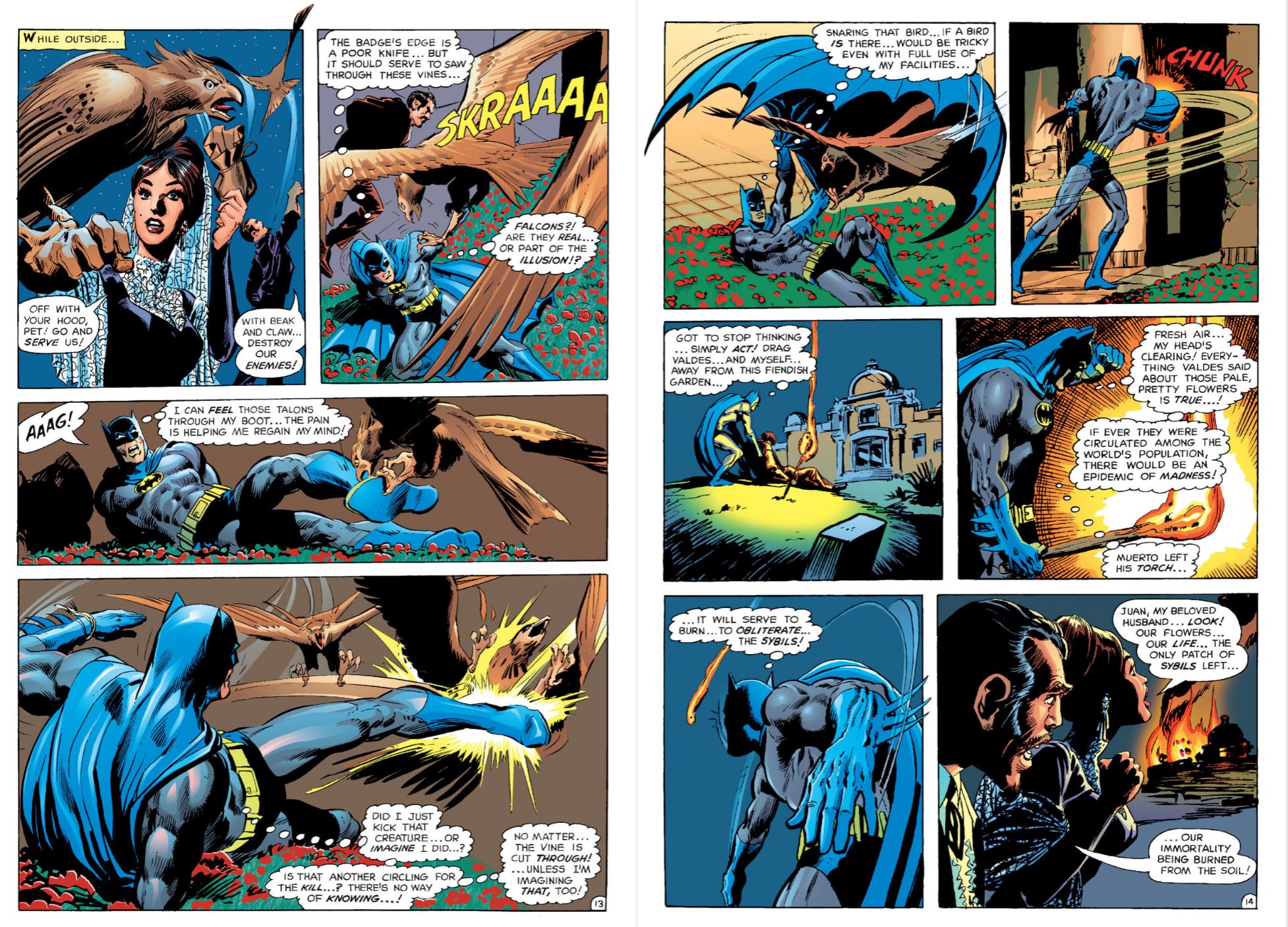
Robbins returned to funnybooks in 1968, quickly becoming a key contributor as both artist and writer on Superboy, The Flash and The Atom, as well as a regular contributor to humour mag Plop! and DC’s mystery, horror and war anthologies. He particularly shone on Batman, Batgirl and in Detective Comics where, with Neal Adams, he pulled the Caped Crusader out of the TV show-inspired silliness. They created Man-Bat together and Robbins followed Michael Kaluta as artist on The Shadow. Moving to Marvel in the 1970s, Robbins concentrated on drawing a variety of titles including Captain America, Daredevil, Ghost Rider, Morbius, The Man from Atlantis, Human Fly, Power Man and The Invaders – which he co-created with Roy Thomas.

When Johnny Hazard launched on Monday June 5th 1944, he was an aviator in the US Army Air Corps. When hostilities ceased, he briefly became a freelance charter pilot and spy before settling into the life of a globe-girdling, troubleshooting mystery-solver: a modern day Knight Errant. The strip folded in 1977: one more victim of diminishing panel-sizes and the move towards simplified, thrill-free, family-friendly gag-a-day graphic fodder to frame small-ads. In its time it was syndicated in nine different languages in thousands of newspapers across the world, and even scored a residency in 1950s British weekly Rocket.

This fabulous hardcover/digital series – reproduced from original King Features proofs – re-presents the definitive magnum opus in fitting form: a monochrome, landscape format archival collection. This second shot covers serialised daily thrills (spanning November 19th 1945 to August 16th 1947), to resurrect the Amazing Aviator in fans’ hearts and remind them of what we’ve all missed whilst hopefully finding a few new fervent followers.

Fully embracing noir sensibilities of the era but keeping things light, frothy, sexy and funny the globetrotting glee is preceded by Daniel Herman’s Introduction ‘A Look Back at Johnny Hazard before the preflight fun begins…

Previously we met coolly capable flyer Lt. Johnny Hazard who escaped from a German POW camp, broke into a Nazi airfield, stole a bomber and flew home. Liberated and ready-for-duty he met feisty, headstrong, utterly dedicated war photographer Brandy during an air raid and all kinds of sparks flew. A series of spectacular events constantly pushed them together and ultimately impassioned fury and disgust on both sides turned to something else amidst all the deadly missions and exploding ordnance.

The strip could not keep up with the fast-moving events after D-Day (the real world Allies invaded “Fortress Europa” the day after Johnny Hazard debuted) and third story arc ‘Sun Tan and General Mariwana’ – opening on September 11th 1944 – saw the hero’s squadron transferred to the Pacific Theatre of Operations to reinforce the battle against Japan. Brandy inveigled herself into the picture as newly promoted Captain Hazard and his crew undertook a top-secret mission couriering a Chinese resistance leader back to her people. Enigmatic, exotic, staggeringly beautiful and lethally dangerous Sun Tan was a magnet for trouble…

Foiling Japanese assassination plots while dodging Brandy’s jealous displeasure, Hazard faced baroque opponents like disfigured pilot Colonel Mariwana, Colonel Kiri, General Ishigaki and his glamorous French “assistant” Mademoiselle Touché but also found a stalwart new ally and wingman in Captain “The Admiral” Slocum: last in an unbroken line of valiant patriotic mariners, but reduced to defending his country in the skies since his debilitating sea sickness prevents him from serving afloat like a true warrior…

Across Iran, Japan, China, and the Himalayas, Hazard, Slocum and Brandy ducked death over and again and when official hostilities ended, encountered charismatic US underworld émigré, pool-addict and deal-maker Side-Pocket Sam. Debonair, charming and utterly amoral, he led Chinese bandits and vied with our heroes for possession of Japan’s failsafe game plan for World War III…

Now, in ‘Fancy Fluff’ (running from November 19th 1945 to June 15th 1946) finally and officially released from their country’s service, Hazard and Slocum barely have time to adjust to civilian life before desperate Fluff Randall recruits them to help find her missing brother. A former comrade of Hazard, “Bounce” Randall was wounded in action and shipped home, but soon disappeared. The last Fluff heard, despite a head injury that prevented him being a pilot, he was in French Guiana, flying private planes for mystery man “Dr. Fox”

Soon the brothers in arms are on the trail, securing passports, papers and a reconditioned army surplus plane which they cheerfully dub Fancy Fluff in honour of their sponsor and despite the suspicions of suddenly-arriving Brandy. Her latest assignment is investigating a wave of jailbreaks in the penal colonies of that very country and a lift would be nice…

Soon the quartet are far south and negotiating with clearly corrupt cops and customs officers, dodging murder attempts and investigating local saint/Good Samaritan Docteur Reynard. A dramatically delivered letter from brother Bounce begging them to leave does nothing to deter them and before long they have uncovered not only an underground railroad using air transport to spring savage escapees but also murderous drug dealers using terror, mesmerism and narcotics to enslave Fluff’s brother among so many other victims…

It’s as much luck as competence that saves the valiant Americans from death and disaster a dozen times over, but in the end Reynard, his leg breakers Elf and Beeg Ox and all those bribe-taking officials pay for their crimes. Bounce is wounded again but at last healed of his enslavement and debilitating head injuries. However the overall cost is high. Admiral is lost to the world of action after falling for Fluff and that sappily contagious condition almost ensnares Johnny and Brandy too. Thankfully, common sense and sheer bile on both sides brings them to their senses before it’s too late…

Each serial storyline is garnished and bookended by Robbins’ original art designs for advertising the strip and after a comforting close up of Hazard second saga ‘The Flying Freight Mystery’ (June 17th – November 2nd) sees “just friends” Johnny and Brandy heading back to the USA but stalled on take-off when Johnny is conned by deviously mysterious entrepreneur M. Côte’-Poche into delivering to neighbouring nation Estantio a cargo of “typewriters”…

In flight, when Brandy discovers diminutive stowaway Wild Bill Hiccup and that the load is automatic weapons, an aerial ambush by “sky rustlers” leads to a less-than-longed-for reunion with Side-Pocket Sam. He is embroiled in ongoing war with ruthless river pirate Captain Gore who wants the emeralds Sam regularly ships from a mine to the coast. The baroque blubbery buccaneer is obsessed with piratical mythology and alongside fellow plunderers Mistuh Dirk and voluptuous siren Lady Mist opened a bizarre rogues gallery of foes who bedevilled Hazard over the next thirty years.

With Hazard as his air force, Sam has the upper hand until Mist infiltrates his freighter as an shipwrecked innocent: a daunting (and hilarious) job of acting that fools everyone but Brandy and leads to a spectacular display of air versus sea power, a brutal final mano-a-mano duel in the jungle and a surprise twist ending…

Another Canyon pinup segues into a yarn spanning November 4th 1946 to January 18th 1947. Hazard and Brandy arrive in tropical dump Querrero to find her journalistic colleague and Bureau Chief “Timely” Malcolm awaiting the outcome of a clash between government troops and bandit-turned-rebel ‘Major Risk’. Brandy opts to go to the story and with Johnny reluctantly flying her in, arrives at the frontline to find rival reporter “Blitz” (AKA “Loose-Lip”) Martin actively making the story happen.

With natural advantages and no scruples Brandy vamps the Government general for intel before tricking Johnny into delivering her right into the rebels’ hands. Her sharp scheme goes terribly awry and before long she is a hostage and bargaining chip between the sides and needs actual rescuing for a change. Thankfully, Hazard and Martin are willing to try it even if the shiny soldiers are not…

Back in Querrero and hired by Timely Martin as a ferry pilot for his reporters, Hazard faces unlikely danger in penultimate yarn ‘The Stout Man’ (January 20th to March 29th 1947). Repairs and search for spare parts sees the ex-airman as a passenger on a flight to San Tomayo, but the departure is interrupted by rude, rowdy and very bulky Brit Mr. Am and late-arriving Blitz Martin.

Away at last, Johnny befriends fellow traveller and prestigious nuclear boffin Noble Caldwell until Am hijacks the plane and sends it into a death-spin and crash. However, as Am escapes with Caldwell using parachutes hidden under his coat, Hazard manages to crash land the plane. Lost, starving and dying of thirst, the survivors are accidentally saved when Am returns in a helicopter to clear up loose ends and stupidly lets Johnny get the drop on him…

A deadly impasse ensues with both sides holding out against attrition and deprivation, but the balance of power shifts after indigenous tribesmen arrive, pointing their deadly blowpipes indiscriminately at all the unwelcome intruders…

A Vava Lavoum pinup segues into closing yarn ‘Danger À La Carte’ (March 29th – August 16th 1947) as freshly-fired Hazard is stranded in San Ruiz, catching the attention of jewel thieves Gloves Diamond and Mellow as well as their criminal competitors Side-Pocket Sam and Lady Mist. Before long Hazard and Blitz are bemused, befuddled and bamboozled, buffeted between opposing nefarious forces and unable to understand how a gourmet café delivering meals by jet plane can possible be profitable…

Not knowing all the facts doesn’t stop Johnny hiring on as a pilot and becoming an unwittingly accomplice, transporting human contraband to the heart of Casablanca’s wicked underworld. When he seeks to rectify his mistake, the fur, fists, knives and bullets start to fly but in the end justice wins again…

Ending with more advertising pinups – Kitty Hawkes, Sabina Eden, Baroness Flame and Sequinthis is another fast-paced, sharp-tongued and utterly gung-ho roster of romps starring a charming, happy-go-lucky lout, insouciantly ruthless and ever ready to risk his own life and limb to help the little guy and distressed damsels.

Sharp, snappy and devilishly funny repartee in the style of movies like Howard Hawks’ His Girl Friday and Frank Capra’s It Happened One Night are a hallmark of these rapid fire yarns, some of the greatest comic strips in history, but that can present a few problems for modern readers. Contemporary attitudes to sexuality, gender and particularly race are far from what we find acceptable – or should even tolerate – today. We know better now – at least most of us do – but must accept and understand that hurtful and unjust as such terms are, they did exist and we’re doing history and our society a hugely dangerous disservice by ignoring, downplaying or worst of all self-censoring those terms and the attitudes that fed them.

In truth, Johnny Hazard was far less egregious than most: Robbins may have used visual shortcuts and slang but all characters were portrayed fairly and did not unnecessarily suffer from the worst propagandist nonsense used by the Allies to bolster a united war spirit and vilely resurrected by modern populists today.

All ethnicities are treated with the full dignity of different but equal cultures and depicted as competent comrades in arms, not ignorant primitives needing white men’s saving graces. However, arch comedian Robbins clearly couldn’t resist playing mischievous games with accents, names and speech patterns that would do Benny Hill, Hogan’s Heroes or Charlie Chan (the opposite of) proud, so if you don’t think you’re capable of remaining historically detached, best to forgo those delights that have transcended time…

To be continued…

These exotic all-action intrigues and romances perfectly capture the mood and magic of a distant yet incredibly familiar time; with cool heroes, hot dames and exceedingly intemperate baddies encountering exotic locales and stunning scenarios, all peppered with blistering tension, slyly mature humour and vivid, visceral excitement.

Johnny Hazard is a brilliant two-fisted thriller-strip too long forgotten, and this is your chance to remedy that.
© 2013 King Features Syndicate, Inc. ® Hearst Holdings Inc. All rights reserved.

Today in 1914 Aquaman creator Paul Norris was born, followed two years alter by George Tuska (Iron Man, Crime Does Not Pay), Belgian national treasure Victor Hubinon (Buck Danny, Redbeard) in 1924 and Marty Greim in 1942. In 1954 Kerry Gammill joined the party as did Brad W. Foster one year later and François Schuiten (Les Cités Obscures) in 1956, with John Paul Leon checking in in 1972.

Today in 1969 the last issue of the first iteration of Eagle was published.

U.S.S. Stevens – The Collected Stories


By Sam Glanzman (Dover Comics & Graphic Novels)
ISBN: 978-0-486-80158-2 (HB/Digital edition)kuno

This book includes Discriminatory Content produced for dramatic and comedic effect.

To the shame and detriment of the entire comics industry, for most of his career Sam Glanzman was one of the least-renowned creators in American comic books. Despite having one of the longest careers, most unique illustration styles and the respect of his creative peers, he just never got the public acclaim his work deserved. Thankfully that all changed in recent years and he lived long enough to enjoy the belated spotlight and bask in some well-deserved adulation.

Glanzman drew and wrote comics since the Golden Age, most commonly in classic genres ranging from war to mystery to fantasy, where his work was – as always – raw, powerful, subtly engaging and irresistibly compelling. On titles such as Kona, Monarch of Monster Island, Voyage to the Deep, Combat, Jungle Tales of Tarzan, Hercules, The Haunted Tank, The Green Berets, The Private War of Willie Schultz, and especially 1980s graphic novels A Sailor’s Story and Wind, Dreams and Dragons – which you should buy in a single volume from Dover – Glanzman produced magnificent action-adventure tales which fired the imagination and stirred the blood. His stuff always sold and at least won him a legion of fans amongst fellow artists, if not from the small, insular and over-vocal fan-press.

In later years, Glanzman worked with Tim Truman’s 4Winds outfit on high-profile projects like The Lone Ranger, Jonah Hex and barbarian fantasy Attu. Moreover, as the sublime work gathered here attests, he was also one of the earliest pioneers of graphic autobiography; translating personal WWII experiences as a sailor in the Pacific into one of the very best things to come out of DC’s 1970s war comics line.

U.S.S. Stevens, DD479 was a peripatetic filler-feature bobbing about between Our Army at War, Our Fighting Forces, G.I. Combat, Star Spangled War Stories and the other anthological battle books; quietly backing-up the cover-hogging, star-attraction glory-boys. It provided wry, witty, shocking, informative and immensely human vignettes of shipboard life, starring the fictionalised crew of the destroyer Glanzman had served on. It was, in most ways, a love story and tribute to the vessel which had been their only home and refuge under fire. In 4- or 5-page episodes, the auteur recaptured and shared a kind of comradeship we peace-timers can only imagine and, despite the pulse-pounding drama of the lead features, us fans all knew these little snippets were what really happened when the Boys went “over there”. Just like now…

A maritime epic to rank with Melville or Forester – and with stunning pictures too – every episode of this astounding unsung masterpiece is housed in one stunning hardback compilation (also available digitally for limp-wristed old coots like me) and if you love the medium of comics, or history, or just a damn fine tale well-told, you must have it.

That’s really all you need to know, but if you’re one of the regular crowd needful of more of my bombastic blather, a much fuller description follows.

As I’ve already stated, Glanzman belatedly enjoyed some well-earned attention, and this tome opens by sharing Presidential Letters from Barack Obama and George Herbert Walker Bush for his service and achievements. Then follows a Foreword from Ivan Brandon and a copious and informative Introduction by Jon B. Cooke detailing ‘A Sailor’s History: The Life and Art of Sam J. Glanzman’. Next comes a brace of prototypical treats; the initial comic book appearance of U.S.S. Stevens from Dell Comics’ Combat #16 (cover-dated April-June 1965) and the valiant vessel’s first cover spot from Combat #24, April 1967.

The first official U.S.S. Stevens, DD479 appeared after Glanzman approached Joe Kubert, who had recently become Group Editor for DC’s war titles. He commissioned ‘Frightened Boys… or Fighting Men’ (appearing in Our Army at War #218, April 1970), depicting a moment in 1942 as boredom and tension were replaced by frantic action when a suicide plane targeted the ship…

A semi-regular cast was introduced slowly throughout 1970; fictionalised incarnations of old shipmates including skipper Commander T. A. Rakov, who ominously pondered his Task Force’s dispersal, moments before a pot-luck attack known as ‘The Browning Shot’ (Our Fighting Forces #125, May/June) proved his fears justified…

Glanzman’s pocket-sized tales always delivered a mountain of information, mood and impact and ‘The Idiot!’ (OAaW#220, June) is one of his most effective, detailing in 4 mesmerising pages not only the variety of suicidal flying bombs the Allies faced, but also how appalled American sailors reacted to them. Sudden death was everywhere. ‘1-2-3’ (OFF #126, July/August) details how quick action and intuitive thinking saves the ship from a hidden gun emplacement whilst ‘Black Smoke’ (Our Army at War #222, from the same month) shows how a know-it-all engineer causes the sinking of the Stevens’ sister-ship by not believing an old salt’s frequent, frantic warnings. All aboard ship were regularly shaken by the variety of Japanese aircraft and skill of the pilots. ‘Dragonfly’ (OFF #127, September/October) shows exactly why, whilst an insightful glimpse of the enemy’s psychological other-ness is tragically, graphically depicted in the tale of ‘The Kunkō Warrior’ (OAaW #223, September).

A weird encounter with a wooden WWI vessel forces a ‘Double Rescue!’ (Star Spangled War Stories #153, October/November) before OFF #128’s (November/December) ‘How Many Fathoms?’ again counts the human cost of bravery with devastating, understated impact. ‘Buckethead’ (OAaW #225, November) then relates one swabbie’s unique reaction to constant bombardment before ‘Missing: 320 Men!’ (G.I. Combat #145, December 1970-January 1971) debuted Glanzman-avatar Jerry Boyle, who whiled away helpless moments during a shattering battle by sketching cartoons of his astonished shipmates.

‘Death of a Ship!’ (OAaW #227, January 1971) deals with classic war fodder as submarine and ship hunt each other in a deadly duel. A military maritime mystery was solved by Commander Rakov in ‘Cause and Cure!’ Our Army at War #230, March) whilst next issue (April 1971) posed a different conundrum as the ship lost all power and was stuck ‘In the Frying Pan!’

The vignettes were always less about warfare than its effect – immediate or cumulative – on ordinary guys. ‘Buck Taylor, You Can’t Fool Me!’ (OAaW #232) catalogues his increasingly aberrant behaviour but posits some less likely reasons, after which old school hero Bos’n Egloff saves the day during the worst typhoon of the war in ‘Cabbages and Kings’ (OFF #131, July/August) whilst ‘Kamikaze’ (OAa #235 August) boldly and provocatively tells a poignant life-story from the point of view of the pilot inside a flying bomb.

An informative peek at the crew of a torpedo launch station in ‘Hip Shot’ (G.I. Combat #150 October/November) segues seamlessly into the dangers of shore leave ‘In Tsingtao’ (OFF #134, November/December) whilst ‘XDD479’ (OAaW #238 November) reveals a lost landmark of military history. The real DD479 was one of three destroyers test-trialling ship-mounted spotter planes. This little gem explains why that experiment was dropped…

Buck bounces back in ‘Red Ribbon’ (G.I.C #151 December 1971-January 1972), sharing a personal coping mechanism for making shipboard chores less “exhilarating”, whilst ‘Vela Lavella’ (OAaW #240, January 1972) captures the claustrophobic horror of nighttime naval engagement before ‘Dreams’ (G.I.C #152 February/March) peeps inside various heads to see what the ship’s company would rather be doing. ‘Batmen’ (OAaW #241, February) uses a lecture on radar to recount one of the most astounding exploits of the war…

Every episode was packed with fascinating fact and detail, culled from the artist’s letters home and service-time sketchbooks, but those invaluable memento belligeri also served double duty as the basis for a secondary feature. The debut ‘Sam Glanzman’s War Diary’ appeared in Our Army at War #242 (March 1972): a compendium of pictorial snapshots sharing quieter moments, such as the first passage through the Panama Canal, sleeping arrangements or K.P. duties peeling spuds, and precedes an hilarious record of the freshmen sailors’ endurance of an ancient naval hazing tradition inflicted upon every “pollywog” crossing the equator for the first time in ‘Imperivm Neptivm Regis’ (OFF #136 (March/April 1972).

A second ‘Sam Glanzman’s War Diary’ (OAaW #244, April) reveals the mixed joys of ‘Liberty in the Philippines’ after which a suitably foreboding ‘Prelude’ (Weird War Tales #4 (March/April 1972) captures the passive-panicked tension of daily routine whilst a potentially morale-shattering close shave is shared during an all-too-infrequent ‘Mail Call!’ (G.I. Combat #155, April/May)…

A thoughtful man of keen empathy and insight, Glanzman often offered readers a look at the real victims. ‘What Do They Know About War?’ (OAaW #244, April) sees peasant islanders trying to eke out a living, only to discover far too many similarities between Occupiers and Liberators, whilst the next issue focussed on sailors’ jangling nerves and stomachs. ‘A Funny Thing Happened on the Way to the War!’ (#245, May) reveals what happened when DD479 was mistakenly declared destroyed and, thanks to an administrative iron curtain, found it impossible to refuel or take on food stores. Cartoonist Jerry Boyle resurfaced in a ‘Comic Strip’ (OFF #138, July/August) after which Glanzman produced one of the most powerful social statements in an era of tumultuous change.

Our Army at War #247 (July 1972) featured a tale based on decorated Pearl Harbor hero Doner Miller who saved lives, killed the enemy and won medals, but was not allowed to progress beyond the rank of shipboard domestic because of his skin. ‘Color Me Brave!’ was an excoriating attack on the U.S. Navy’s segregation policies and is as breathtaking and rousing now as it was then.

‘Ride the Baka’ (OAaW #248 August) revisits constant near-miss moments sparked by suicide pilots after which Glanzman shares broken sleep in ‘A Nightmare from the Beginning’ (OFF #139, September/October) whilst ‘Another Kunkō Warrior’ (OFF #140, November/December) sees marines taking an island and encountering warfare beyond their comprehension…

1973 began with a death-dipped nursery rhyme detailing ‘This is the Ship that War Built!’ (G.I.C #157 December 1972-January 1973) before ‘Buck Taylor’ (OFF #141 January/February) delivers an impromptu lecture on maritime military history. Glanzman struck an impassioned note for war-brides and lonely ships passing in the night with ‘The Islands Were Meant for Love!’ (Star Spangled War Stories #167 February). Terror turns to wonder when sailors encounter the ‘Portuguese Man of War’ (OAaW #256 August), a shore leave mugging is thwarted thanks to ‘Tailor-Mades’ (OFF #143 June/July) and letters home are necessarily self-censored in ‘The Sea is Calm… The Sky is Bright…’ (OAaW #257 June), but shipboard relationships remain complex and bewildering, as proved in ‘Who to Believe!’ (SSWS #171, July).

The strife of constant struggle comes to the fore in ‘The Kiyi’ (OAaW #258 July) and is seen from both sides when souvenir hunters try to take ‘The Thousand-Stitch-Belt’ (SSWS #172 August), but, as always, it’s noncombatants who truly pay the price, just like the native fishermen in ‘Accident…’ (OAaW #259, August). Even the quietest, happiest moments can turn instantly fatal as good-natured pilferers swiping fruit at a refuelling station discover in ‘King of the Hill’ (SSWS #174, October). An unlikely tale of a kamikaze who survives his final flight but not his final fate, ‘Today is Tomorrow’ (OAaW #261, October) precedes a strident, wordless plea for understanding in ‘Where…?’ (OAaW #262 November 1973) before our sombre mood is briefly lifted with a tale of selfishness and sacrifice in ‘Rocco’s Roost’ from OAaW #265, February 1974.

The following issue provided both a gentle ‘Sam Glanzman’s War Diary’ covering down-time in “The Islands” and a brutal tale of mentorship and torches passed seen in ‘The Sorcerer’s Apprentice’, after which a truly disturbing tale of what we now call gender identity and post-traumatic stress disorder is recounted in the tragedy of ‘Toro’ ( April/May Our Fighting Forces #148)…

‘Moonglow’ from OAaW #267 (April 1974) reveals how quickly placid contemplation can turn to blazing conflagration, whilst – after a chilling, evocative ‘Sam Glanzman’s War Diary’ (OAaW #269 June) – ‘Lucky… Save Me!’ (OAaW #275, December 1974) shows how memories of unconditional love can offset the cruellest of injuries. ‘Heads I Win, Tails You Lose!’ (OAaW #281, June 1975) explores how both friend and foe alike can be addicted to risk, after which the next issue’s ‘I Am Old Glory…’ sardonically transposes a thoughtful veneration with the actualities of combat before ‘A Glance into Glanzman’ by Allan Asherman (Our Army at War #284, September 1975) takes a look at the author’s creative process.

Then it’s back to those sketchbooks and another peep ‘Between the Pages’ (OAaW #293, June 1976) before ‘Not Granted!’ (OAaW #298, November 1976) discloses every seaman’s most fervent wish…

Stories were coming at greater intervals at this time and it was clear that – editorially at least – the company was moving on to fresher and more fantastical fields. Glanzman, however, had saved his best till last as a stomach-churning visual essay displayed the force of tension sustained over months in ‘…And Fear Crippled Andy Payne’ (Sgt. Rock #304, May 1977) before an elegy to bravery and stupidity asked ‘Why?’ in Sgt. Rock #308 (September 1977).

And that was it for nearly a decade. Glanzman – a consummate professional – moved on to other ventures. He was, however, constantly asked about U.S.S. Stevens and eventually returned to his spiritual stomping grounds in expanded tales of DD479: both in his graphic novel memoirs and comic strips. The latter appeared in anthological monochrome Marvel magazine Savage Tales (#6-8, spanning August-December 1986) under the umbrella title ‘Of War and Peace – Tales by Mas’.

First up was ‘The Trinity’ blending present with past to detail a shocking incident of a good man’s breaking point, whilst a lighter tone informed ‘In a Gentlemanly Way’, as Glanzman recalled different means by which officers and swabbies showed pride for their ships. ‘Rescued by Luck’ than concentrated on a saga of island survival for sailors whose ship had sunk. Next comes a hauntingly powerful black-&-white tale of then and now entitled ‘Even Dead Birds Have Wings’ (created for the Dover Edition of A Sailor’s Story from 2015), after which a chronologically adrift yarn (from Sgt. Rock Special #1, October 1992) evokes potently elegiac feelings, describing an uncanny act of gallantry under fire and the ultimate fate of old heroes in ‘Home of the Brave’

Some years ago, by popular – and editorial – demand, Glanzman returned to the U.S.S. Stevens for an old friend’s swan song series; providing new tales for each issue of DC’s anthological 6-issue miniseries Joe Kubert Presents (December 2012 – May 2013). More scattershot reminiscences than structured stories, ‘I REMEMBER: Dreams’ and ‘I REMEMBER: Squish Squash’ recapitulate unforgettable moments seen through eyes at the sunset end of life; recalling giant storms and lost friends, imagining how distant families endured war and absence and, as always, balancing funny memories with tragic, like that time when the stiff-necked new commander…

‘Snapshots’ continues the reverie, blending a veteran’s war stories with cherished times as a kid on the farm whilst ‘The Figurehead’ delves deeper into the character of Buck Taylor and his esoteric quest for seaborne nirvana…

Closing that last hurrah were ‘Back and Forth 1941-1944’ and ‘Back and Forth 1941-1945’: an encapsulating catalogue of war service as experienced by the creator, mixing facts, figures, memories and reactions to form a quiet tribute to all who served and all who never returned…

With the stories mostly told, ‘Afterword’ by Allan Asherman details those heady days when he worked in DC Editorial, and Glanzman would unfailingly light up the offices by delivering his latest strips, after which this monolithic milestone offers a vast and stunningly detailed appendix of ‘Story Annotations’ by Jon B. Cooke.

This is a magnificent collection of comic stories based on real life and what is more fitting than to end it with ‘U.S.S. Stevens DD479’ (coloured by Frank M. Cuonzo & lettered by Thomas Mauer): one final, lyrical farewell from Glanzman to his comrades and the ship which still holds his heart after all these years?

This is an extraordinary work. In unobtrusive little snippets, Glanzman challenged myths, prejudices and stereotypes – of morality, manhood, race, sexuality and gender – decades before anybody else in comics even thought to try. He also brought an aura of authenticity to war stories which has never been equalled: eschewing melodrama, faux heroism, trumped-up angst and eye-catching glory-hounding to instead depict how brothers-in-arms really felt and acted and suffered and died.

Shockingly funny, painfully realistic and visually captivating, U.S.S. Stevens is phenomenal and magnificent: a masterpiece by one of the very best of “The Greatest Generation”. I waited over 40 years for this and I couldn’t be happier that ten years later this is one comics classic that is still available to all: a sublimely insightful, affecting and rewarding graphic memoir every home, school and library should have and one every reader will return to over and over.
Artwork and text © 2015 Sam Glanzman. All other material © 2015 its respective creators.

Today in 1920. US Dennis the Menace originator Hank Ketcham was born as was Funky Winkerbean cartoonist Tom Batiuk in 1947, and comics horror god Stephen R. Bissette in 1955. In 1973 we mourned Blondie creator Chic Young.

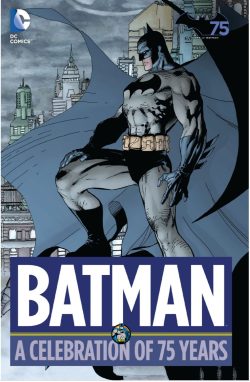
Dc Finest: Batman – The Case of the Chemical Syndicate


By Bob Kane, Bill Finger, Gardner F. Fox, Whitney Ellsworth, Sheldon Moldoff, Jerry Robinson, George Roussos & various (DC Comics)
ISBN: 978-1-79950-670-6 (TPB/Digital edition)

This book includes Discriminatory Content produced in less enlightened times.

Although already much reprinted, archived and curated, here’s another sound and stunning collection of the Gotham Guardian’s earliest exploits in original chronological order, forgoing glossy, high-definition paper and reproduction techniques in favour of a newsprint-adjacent feel and the same flat, bright-yet-muted colour palette which graced the originals. There’s no fuss, fiddle or Foreword, and the book steams straight into the meat of the matter with the accumulated first two years of material featuring the masked mystery-man, as well as all those stunning covers (by Kane, Robinson, Roussos, Fred Gurdineer, Creig Flessel, Jack Burnley, Fred Ray and The Strauss Engraving Company). These span Detective Comics #27-51; Batman #1-5; the Dynamic Duo’s endeavours in New York World’s Fair Comics 1940 and World’s Best Comics #1, cumulatively encompassing every groundbreaking escapade from May 1939 to May 1941.

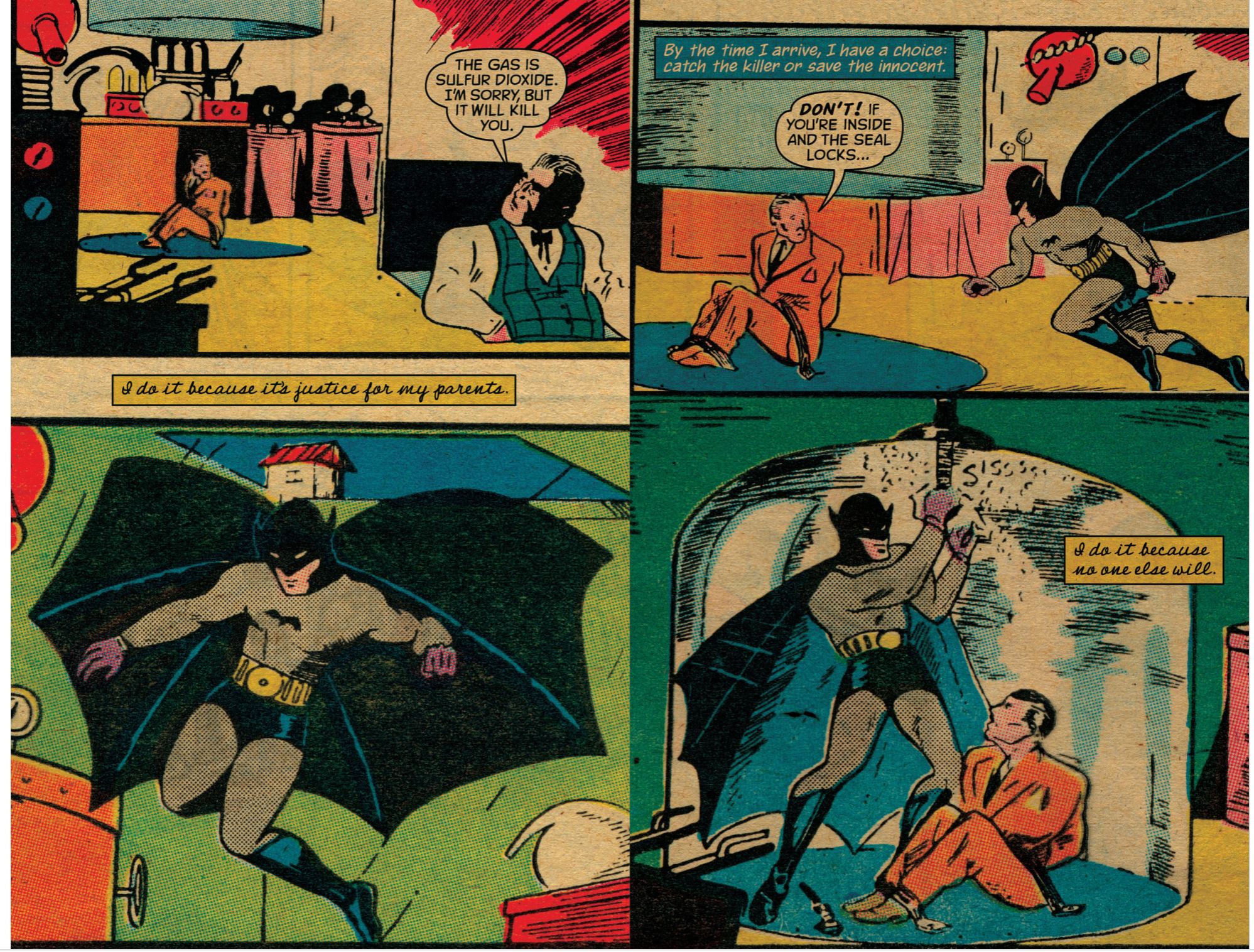
As Evri Fule Kno, Detective Comics #27 featured the Darknight Detective’s debut in the ‘Case of the Chemical Syndicate!’ by Bob Kane and as yet still anonymous close collaborator/co-originator Bill Finger. A spartan, understated yarn introduced dilettante playboy criminologist Bruce Wayne, drawn into a straightforward crime-caper as a cabal of industrialists were successively murdered. The killings stop when an eerie figure dubbed “The Bat-Man” intrudes on Police Commissioner Gordon’s stalled investigation to ruthlessly expose and deal with the hidden killer.

The following issue saw our fugitive vigilante return to crush ‘Frenchy Blake’s Jewel Gang’ before encountering his very first psychopathic killer/returning villain in Detective #29. Gardner Fox scripted these next few adventures beginning with ‘The Batman Meets Doctor Death’, in a deadly duel of wits with deranged, greedy general practitioner Karl Hellfern and his assorted instruments of murder: the most destructive and diabolical of which was sinister “Asiatic” manservant Jabah…

This is my cue to again remind all interested parties that these stories were created in far less tolerant times with numerous narrative shortcuts and institutionalised social certainties expressed in all media that most today will find offensive. If that’s a deal-breaker, please pass on this book… and most literature, pop songs and films created before the 1960s…

Confident of their new villain’s potential, Kane, Fox and inker Sheldon Mayer encored the mad medic for the next instalment and ‘The Return of Doctor Death’, before Fox & Finger co-scripted a 2-part shocker debuting the very first bat-plane, Bruce’s girlfriend Julie Madison and undead horror The Monk in expansive, globe-girdling spooky saga ‘Batman Versus the Vampire (part one)’. It all concluded in part two with an epic chase across Eastern Europe and spectacular climax in a monster-filled castle in #32.

DC #33 featured Fox & Kane’s ‘The Batman Wars Against the Dirigible of Doom’: a blockbusting disaster thriller which just casually slips in the secret origin of the grim avenger, as mere prelude to intoxicating air-pirate action, before Euro-trash dastard Duc D’Orterre finds his uncanny SCIENCE! and unsavoury appetites no match for the mighty Batman in ‘Peril in Paris’. Bill Finger returned as lead scripter in #35, pitting the Cowled Crusader against crazed cultists murdering everyone who had seen their sacred jewel in ‘The Case of the Ruby Idol’ … although the many deaths were actually caused by a far more prosaic villain. Inked by new kid Jerry Robinson, grotesque crime genius ‘Professor Hugo Strange’ debuted with his murderous manmade fog and lightning machine in #36, after which all-pervasive enemy agents lodged in ‘The Screaming House’ prove no match for a vengeful Masked Manhunter in #37.

Detective Comics #38 (April 1940) changed the landscape of comic books forever with the introduction of ‘Robin, The Boy Wonder’ as child trapeze artist Dick Grayson – whose parents are murdered before his eyes – thereafter joins Batman in a lifelong quest after bringing to justice mobster mad dog Boss Zucco

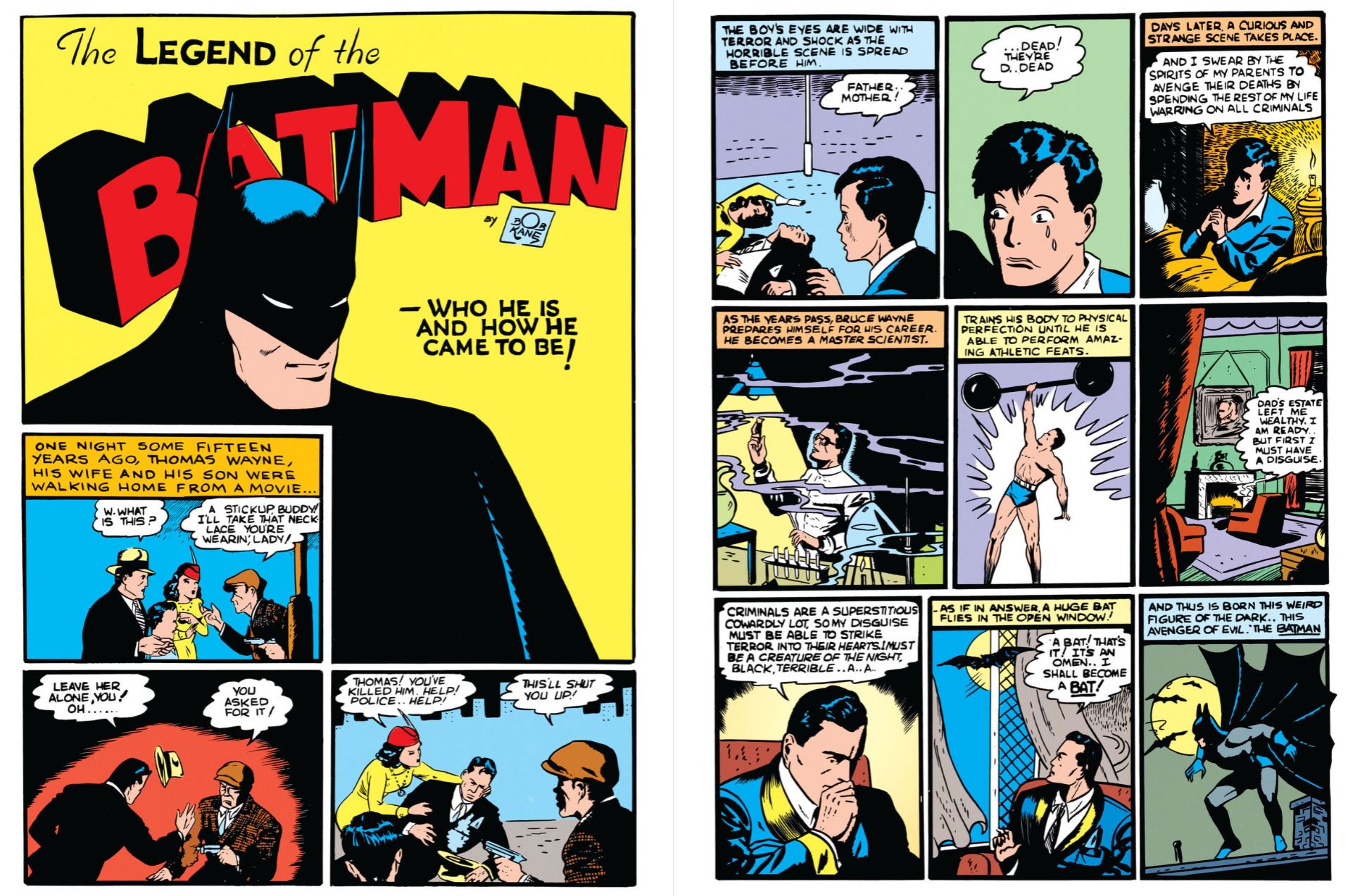
With the Flying Graysons’ killers captured, all-out action continued in #39 with Finger, Kane & Robinson’s ‘The Horde of the Green Dragon’ – “oriental” Tong killers in Chinatown – Batman #1 (Spring 1940) opened proceedings with a recycled origin culled from portions of Detective #33 & 34. ‘The Legend of the Batman – Who He Is and How He Came to Be!’ by Fox, Kane & Moldoff delivers in two perfect pages what is still the best ever origin of the character. ‘The Joker’ (Finger, Kane & Robinson – who also produced all the remaining tales in this astonishing premiere issue) then launches the greatest villain in DC’s pantheon via a macabre tale of extortion and wilful wanton murder.

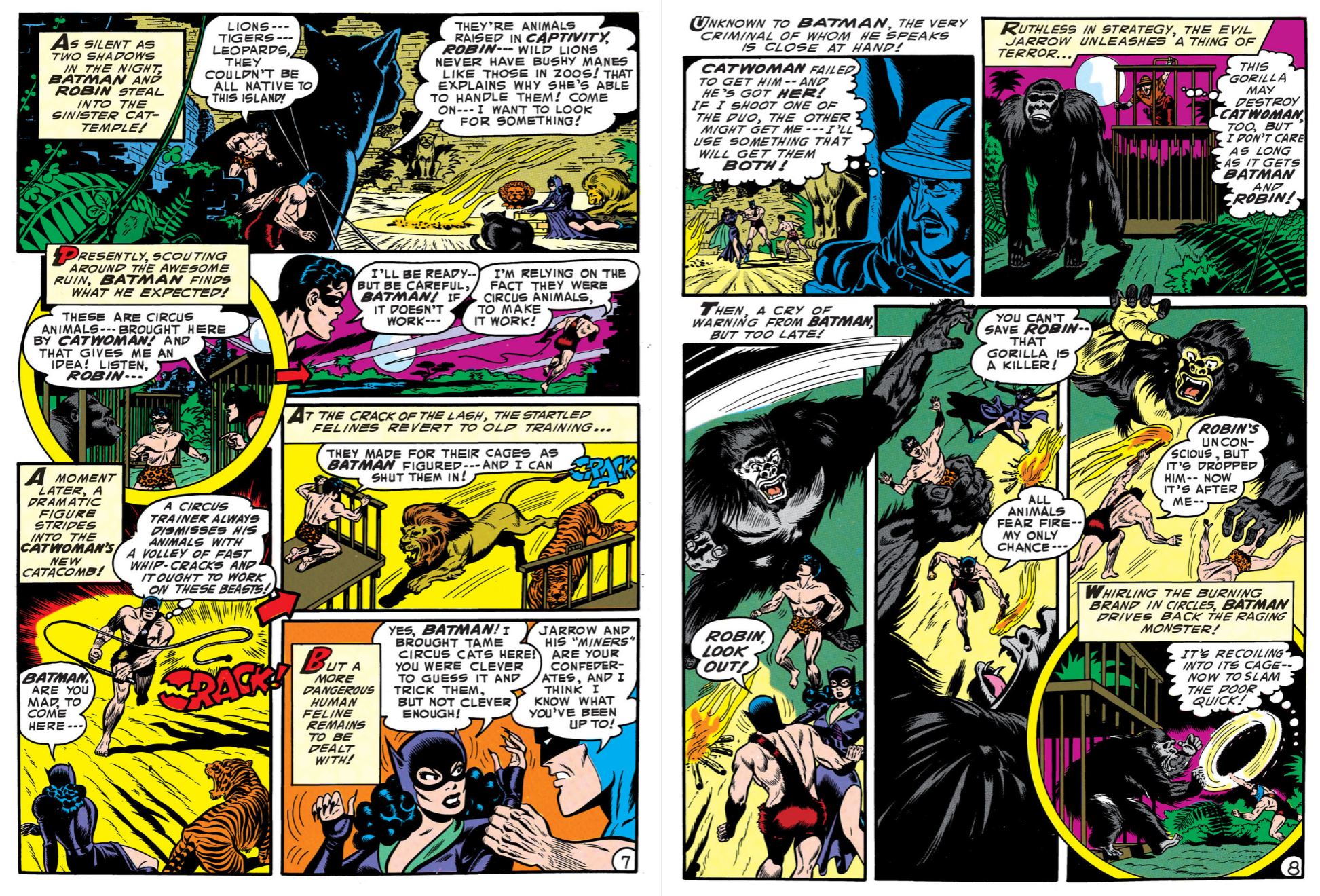
‘Professor Hugo Strange and the Monsters’ follows as an old adversary returns, unleashing laboratory-grown hyperthyroid horrors to rampage through the terrified city, before ‘The Cat’ – who later added the suffix “Woman” to her name to avoid any possible doubt or confusion – plies her felonious trade of jewel theft aboard the wrong cruise-liner, thereby falling foul for the first time of the dashing Dynamic Duo. Then comics end with the ‘The Joker Returns’ as the sinister clown breaks jail to resume his terrifying campaign of murder for fun and profit before “dying” in mortal combat with the Gotham Guardians. pulse pounding premier package fun folds with Whitney Elsworth’s text piece ‘Meet the Artist’ and a superb Kane pin-up (originally the back cover of that premier issue) of the Dynamic Duo.

Tense suspense and eerie evil is also on show in DC #40 as ‘The Murders of Clayface’ sees the Dynamic Duo solving a string of murders on a film set which almost sees Julie Madison the latest victim of a monstrous movie maniac…

Batman & Robin solve the baffling mystery of a kidnapped pupil in Detective #41’s ‘The Masked Menace of the Boys’ School’ before enjoying a busman’s holiday in ‘Batman and Robin Visit the 1940 New York World’s Fair’ as seen in the second New York World’s Fair Comics. Here Finger, Kane & Roussos follow the vacationing troubleshooters as they track down a maniac mastermind with a metal-dissolving ray, before Detective Comics #42 again finds our heroes ending another murderous maniac’s rampage in ‘The Case of the Prophetic Pictures!’

The heroes’ second solo outing produced another quartet of comics classics in Batman #2 (Summer 1940). It begins with ‘Joker Meets Cat-Woman’ (Finger, Kane, Robinson & new find George Roussos) wherein svelte thief, homicidal jester and a crime syndicate all tussle for the same treasure, with our Caped Crusaders caught in the middle. ‘Wolf, the Crime Master’ then offers a fascinating take on the classic tragedy of Jekyll & Hyde prior to an insidious and ingenious mystery in ‘The Case of the Clubfoot Murderers’. Ultimately Batman & Robin confront uncanny savages and ruthless showbiz promoters in poignant monster yarn ‘The Case of the Missing Link’.

By now an unparalleled hit, Batman stories never rested on their laurels. The creators always sought to expand their parameters, as Detective #43 saw our heroes clash with a corrupt mayor in #43’s ‘The Case of the City of Terror!’ before rather jumping the shark with #44’s nightmarish fantasy of giants and goblins ‘The Land Behind the Light!’, in advance of returning to bizarre baroque basics in #45’s horrific Joker jape ‘The Case of the Laughing Death!’ wherein the Harlequin of Hate undertakes a campaign of macabre murder against everyone who has ever defied or offended him…

Batman #3 (Fall 1940) has Finger, Kane, Robinson & Roussos rise to even greater heights, beginning with ‘The Strange Case of the Diabolical Puppet Master’: an eerie episode of uncanny mesmerism and infamous espionage…

A grisly scheme unfolds next as innocent citizens are mysteriously transformed into specimens of horror, and artworks destroyed by the spiteful commands of ‘The Ugliest Man in the World’ before ‘The Crime School for Boys!’ registers Robin, allowing infiltration of a gang who have a cruel and cunning recruitment plan for dead-end kids, whilst ‘The Batman vs. the Cat-Woman’ lastly reveals the larcenous lady in well over her head when she steals for – and from – the wrong people…

The issue also offered a worthy Special Feature from Ellsworth & Burnley as ‘The Batman Says’ presents an illustrated prose Law & Order pep-talk…

Plunging right into perilous procedures, Detective #46 (Kane, Robinson & Roussos) features the return of Batman’s most formidable fringe scientific adversary as our heroes must counteract the awesome effects of ‘Professor Strange’s Fear Dust’, after which #47 delivers drama on a more human scale by proving ‘Money Can’t Buy Happiness’. This action-packed homily of parental expectation and the folly of greed leads into Detective Comics #48, finding the lads defending America’s bullion reserves in ‘The Secret Cavern’, and is followed by Batman #4 (Winter 1941) which opens with a spiffy catch-all visual resume.

Then its all-out razzle-dazzle as the Gotham Guardians visit and vanquish ‘The Joker’s Crime Circus’, prior to pulling the plug on the piratical plundering of ‘Blackbeard’s Crew and the Yacht Society!’. Immediately after, ‘Public Enemy No.1’ tells a gangster fable in the manner of Jimmy Cagney’s Angels With Dirty Faces, before ‘Victory For the Dynamic Duo!’ involves the pair in the treacherous world of sports gambling.

Detective Comics #49 (March 1941), finds them confronting another old foe when ‘Clayface Walks Again!’ with the deranged actor resuming his passion for murder by re-attempting to kill Bruce Wayne’s old girlfriend Julie before World’s Best Comics #1 (Spring 1941 and destined to become World’s Finest Comics with its second issue) offers an eerie murder mystery concerning ‘The Witch and the Manuscript of Doom!’.

DC #50 pits Batman & Robin against acrobatic burglars in ‘The Case of the Three Devils’, whilst sordid human scaled wickedness informs #51’s ‘The Case of the Mystery Carnival!’: a mood-soaked crimebusting set-piece featuring fairly run-of-the mill thugs, but serving as a perfect palate-cleansers for big bold Batman #5 (Spring 1941). Once again, The Joker plays lead villain in ‘The Riddle of the Missing Card!’, before the heroes prove their versatility by solving a quixotic crime in Fairy Land via ‘Book of Enchantment’.

‘The Case of the Honest Crook!’ follows: one of the key stories of Batman’s early canon. When a mugger steals only $6 from a victim, leaving much more behind, his trail leads to a vicious gang who almost beat Robin to death. The vengeance-crazed Dark Knight goes on a rampage of terrible violence that still resonates in the character to this day. The last story from Batman #5 – ‘Crime does Not Pay’ – once again deals with kids going bad and their potential for redemption, and surely that’s what heroic mythmaking is all about?

Kane, Robinson and their compatriots created a visual iconography which carried Batman well beyond his allotted lifespan until later creators could re-invigorate the concept. They added a new dimension to children’s reading… and their work is still captivatingly accessible. Moreover, these early stories laced with Fingers’ mood-soaked macabre madness set the standard for comic superheroes. Whatever you like now, you owe it to these stories. Superman gave us the idea, but inspired and inspirational writers like Finger & Fox refined and defined the meta-structure of the costumed crime-fighter. Where the Man of Steel was as much Social Force and juvenile wish-fulfilment as hero, Batman and Robin did what we ordinary mortals wanted to do most: teach bad people the lessons they richly deserved…

These are tales of elemental power and joyful exuberance, brimming with deep mood and addictive action. Comic book heroics simply don’t come any better.
© 1939, 1940, 1941, 2025 DC Comics. All Rights Reserved.

Today in 1914 All American editor Ted Udall was born, but we had to wait until 1953 for Richard Bruning, 1956 for animator, director and funnybook renaissance man Bob Camp and 1958 for astounding letterer and sublime illustrator Kevin Nowlan as well as Archie Comics writer/editor Paul Castiglia in 1966.

In the meantime, UK weekly mainstay The Topper began its 37-year run today in 1953, thereby launching Davey Law’s Beryl the Peril unto an unsuspecting world.

Showcase Presents Weird War Tales volume 1


By Robert Kanigher, Bob Haney, Bill Finger, Sheldon Mayer, Jack Oleck, Len Wein, Marv Wolfman, Joe Kubert, Carmine Infantino, Dennis O’Neil, Russ Heath, Mort Drucker, Frank Thorne, Alex Toth, Reed Crandall, Sam Glanzman, John Severin, Howard Chaykin, Ed Davis, Frank Robbins, Nestor Redondo, George Evans, Alex Niño, Russ Heath, Neal Adams & various (DC Comics)
ISBN: 978-1-4012-3694-6 (TPB)

This book includes Discriminatory Content produced in less enlightened times.

American comics just idled along rather slowly until the invention of Superman provided a flamboyant new genre for heroes and subsequently unleashed a torrent of creative imitation and imaginative generation for a suddenly thriving, voracious new entertainment model.

Implacably vested in World War II, these gaudily-attired mystery men swept all before them until the troops came home, but as the decade closed more traditional themes and heroes began to resurface and eventually supplant the Fights ‘n’ Tights crowd.

As a new generation of kids started buying and collecting, many of the first fans who retained their four-colour habit increasingly sought more mature themes in their pictorial reading matter. The war years and post-war paranoia had irrevocably altered the psychological landscape of the readership and as a more world-weary, cynical young public came to see that all the fighting and dying hadn’t really changed anything. Their chosen forms of entertainment (film, theatre and prose as well as comics) increasingly reflected this.

To balance the return of Western, War, Crime and imminent Atomic Armageddon-fuelled Science Fiction, comics created new genres. Celebrity tie-ins, madcap escapist or teen-oriented comedy and anthropomorphic funny animal features sprang up, but gradually another of the cyclical revivals of spiritualism and a public fascination with the arcane led to a wave of impressive, evocative and shockingly addictive horror comics. There had been grisly, gory and supernatural stars before, including a pantheon of ghosts, monsters and wizards draped in superhero trappings but these had usually been victims of circumstance: The Unknown as a power source for super-heroics. Now focus shifted to ordinary mortals thrown into a world beyond their ken with the intention of unsettling, not vicariously empowering the reader.

If we’re keeping score this was also the period in which Joe Simon & Jack Kirby identified another “mature market” gap and filled it by inventing romance comics (Young Romance #1, September 1947) and they too saw the sales potential for spooky material, resulting in the seminal Black Magic (1950) and boldly obscure psychological drama anthology Strange World of Your Dreams (1952). The company which would become DC Comics bowed to the inevitable and launched a comparatively strait-laced anthology that nevertheless became one of their longest-running and most influential titles with The House of Mystery (cover-dated December 1951/January 1952).

After the hysterical censorship debate which led to witch-hunting Senate hearings in the early 1950s was curtailed by the industry adopting a castrating straitjacket of self-regulation, titles produced under the aegis of the Comics Code Authority were sanitised, anodyne affairs in terms of Shock and Gore, but the audience’s appetite for suspense was still high and in 1956 National introduced sister titles Tales of the Unexpected and House of Secrets. Stories were dialled back from uncanny spooky yarns to marvellously illustrated, rationalistic fantasy-adventure vehicles and – eventually – straight monster-busting Sci Fi tales which dominated the market into the 1960s. That’s when superheroes – which had gradually enjoyed their own visionary revival after Julius Schwartz reintroduced The Flash in Showcase #4 – finally overtook them.

Green Lantern, Hawkman, The Atom and a rapidly-expanding coterie of costumed cavorters generated a gaudy global bubble of masked mavens which forced previously staunchly uncompromising anthology suspense titles to become super-character books. When caped crusader craziness peaked and popped, superheroes began dropping like Kryptonite-gassed flies. However, nothing combats censorship better than falling profits and, at the end of the 1960s with the cape-and-cowl boom over and some of the industry’s most prestigious series circling the drain, the surviving publishers of the field agreed to revise the Comics Code, loosening their self-imposed restraints against crime and horror comics.

Nobody much cared about gangster titles but, as the liberalisation coincided with yet another bump in public interest concerning supernatural themes, the resurrection of scary stories was a foregone conclusion and obvious no-brainer.

Thus, with absolutely no fanfare at all, horror comics came back and quickly dominated the US market for more than half a decade. DC led the pack: converting House of Mystery and Tales of the Unexpected into supernatural suspense anthologies in 1968 and resurrecting House of Secrets a year later.

Such was not the case with war comics. Tales of ordinary guys in combat began with the industry itself and although mostly sidelined during the capes-&-cowls war years, quickly re-asserted themselves once the actual fighting stopped. National/DC were one of the last publishers to get in on the combat act, converting superhero/fantasy adventure anthology Star Spangled Comics into Star Spangled War Stories the same month it launched Our Army at War (both cover-dated August 1952). They repurposed All-American Comics into All-American Men of War a month later as a “police action” in Korea escalated.

DC grew the division slowly but steadily, launching Our Fighting Forces (#1, November 1954) – just as EC’s groundbreaking combat comics were vanishing – and in 1957 added GI Combat to their portfolio when Quality Comics got out of the funnybook business.

As the 1950s closed however, the two-fisted anthologies all began incorporating recurring characters such as Gunner and Sarge – and latterly Pooch – from Our Fighting Forces #45 on, (May 1959); Sgt Rock (Our Army at War #83 (June 1959) and The Haunted Tank (G.I. Combat #87, April/May 1961). Soon all DC war titles had a lead star or feature to hold the fickle readers’ attention. The drive to produce superior material never wavered however, hugely aided by the diligent and meticulous ministrations of writer/editor Robert Kanigher.

In America after the demise of EC Comics in the mid-1950’s and prior to the game-changing Blazing Combat, the only certain place to find controversial, challenging and entertaining American war comics was DC. In fact, even whilst Archie Goodwin’s stunning but tragically mis-marketed quartet of classics were waking up a new generation of readers in the 1960s, the home of Superman, Batman and Wonder Woman was a veritable cornucopia of gritty, intriguing, beautifully limned battle tales presenting armed combat on a variety of fronts and from many differing points of view.

Whilst the Vietnam War escalated, 1960s America increasingly endured a Homefront death-struggle pitting deeply-ingrained Establishment social attitudes against a youth-oriented generation with a radical new sensibility. In response, military-themed comic books from National Periodical Publishing, as it then was, became even more bold and innovative.

However, the sudden downturn in superheroes led to some serious rethinking, and although the war titles maintained and even built sales, they also beefed up the anthological elements.

Thus in 1971 a title combining supernatural horror stories with bombastic battle yarns in an anthological setting seemed a forgone conclusion and sure thing to both publishers and readers alike…

This epic monochrome tome collects the contents of Weird War Stories #1-21 (cover-dates September/October 1971 to January 1974), offering a broad blend of genre mash-ups for readers with a taste for the dark and uncanny to relish. The series launched in a 52-page format combining new material with modified reprints featuring a veritable Who’s Who of top flight creative talent – both seasoned veterans and stars in waiting.

WWS #1 saw Editor Joe Kubert writing and illustrating an eerie linking strand entitled ‘Let Me Tell You of the Things I’ve Seen’, wherein a lost GI meets the personification of Death (the title’s long-term narrator in various blood-stained uniforms) who has a few foxhole stories to share…

The Reaper begins with ‘Fort Which Did Not Return!’ (by Kanigher & Russ Heath, as first seen in GI Combat #86), detailing how a bomber continues its mission even after the crew bail out, following up with all-new ‘The Story behind the Cover’ wherein Kubert reveals how a shunned German soldier carried on his duties after death…

From Star Spangled War Stories #71 (July 1958) Bob Haney & Kubert disclosed ‘The End of the Sea Wolf!’, as a sadistic U-Boat captain is sunk by one of his own earlier victims, whilst SSWS #116 (August/September 1964) originally debuted France Herron & Irv Novick’s ‘Baker’s Dozen’, with a fresh-faced replacement to a super-superstitious platoon battling to prove he’s not their unlucky thirteenth man…

The issue ends with that lost GI realising just who has been telling tales in Kubert’s ‘You Must Go!’

The reprints in these early issues were all taken from a time when supernatural themes were proscribed by the Comics Code Authority, but even so they all held fast to an eerie aura of sinister uncertainty… the merest hint of the strange and uncanny to leaven the usual blood and thunder of battle books. In Weird War Tales #2, Kubert reprised his bridging vehicle as ‘Look… and Listen…’ sees a crashed Stuka pilot meeting a ghastly stranger at a battle-torn desert oasis before ‘Reef of No Return’ (Haney & Mort Drucker from Our Fighting Forces #43, March 1959) details a determined frogman’s most dangerous mission in advance of Kanigher & Frank Thorne’s new WWI silent saga ‘The Moon is the Murderer’ proving that overwhelming firepower isn’t everything…

Kubert’s ‘Behind the Cover’ features a prophetic dream and terrifying telegram, and ‘A Promise to Joe!’ (Kanigher & Novick, G.I. Combat #97 (December 1962-January 1963) sees a dead gunner seemingly save his friend from beyond the grave, after which the superb ‘Monsieur Gravedigger’ – by Jerry DeFuccio & legendary Reed Crandall – follows the follies of a sadistic Foreign Legionnaire who pushes his comrades too far. Cartoonist John Costanza delivers gag-packed ‘Military Madness’ and Kubert & Sam Glanzman offer a fact-packed ‘Sgt. Rock’s Battle Stations’ about ‘The Grenadier’ before Bill Finger, Ross Andru & Mike Esposito examine a young recruit’s rite of passage and development of ‘The Face of a Fighter’ (Our Fighting Forces #25, September 1957) before ‘Oasis’ concludes the sorry saga of that downed Aryan airman.

American Naval Aviators ditching at sea were the unwilling audience for Death’s stories as WWT #3 opens with Kubert’s ‘Listen…’ The roster starts with ‘Been Here Before!’ (Finger, Andru & Esposito, G.I. Combat #44 January 1957) as a soldier under fire turns his mind back to boyhood games to save the day, after which we see an aerial battle and parachute drop from the perspective of ‘The Cloud That Went to War!’ (Our Fighting Forces #17, January 1957) courtesy of Dave Wood, Andru & Esposito.

More Costanza comedy from ‘The Kreepy Korps!’ precedes an early tale by Len Wein & Marv Wolfman, ably illustrated by Heath as both cave tribes and modern soldiers battle to possess ‘The Pool’, before the artist’s earlier collaboration with Bob Haney reveals how ‘Combat Size!’ is all a matter of mental attitude in a tale from Our Army at War #66 (January 1958). After Glanzman’s ‘Battle Album’ explains ‘Flying Guns’, a finny friend helps a US submarine sink an aircraft carrier in Finger & Drucker’s ‘Pilot for a Sub!’ (OAaW #68, March 1958) and the issue ends as Kubert sends a ‘Lifeboat’ for those tragic aviators…

The fourth issue opens with Kubert’s final linking tale as a ‘Gypsy Girl’ and her family find wounded soldier Tony after his buddy runs off to get a medic. They kindly offer to pass the time with him, sharing stories like ‘Ghost Ship of Two Wars’ (Kanigher & Novick, All-American Men of War #81, September 1960) wherein an obsessed WWI pilot seemingly slips into 1944 while pursuing his unbeatable archenemy the Black Ace.

Kanigher & Gene Colan’s ‘Time Warp’ originally appeared as ‘The Dinosaur Who Ate Torpedoes!’ in SSWS #123 (October/November 1965 and part of the uniquely bizarre War That Time Forgot series), pitting US frogmen against colossal sea-going saurians, after which ‘The Unknown Sentinel’ (by author unknown & Mort Meskin from House of Mystery #55, October 1956) saves the lives of two soldiers lost on manoeuvres on America’s most famous battlefield.

Glanzman then offers one of his magnificently engaging autobiographical USS Stevens vignettes with all-new, elegiac ‘Prelude’ before Kubert wraps up his chilling drama as ‘I Know Them to be True’ sees medics arriving to find Tony a much-changed man, leaving Costanza to close things down with a laugh and some ‘Military Madness’.

Weird War Tales #5 opens with Haney & Alex Toth providing a book-end tale of ‘The Prisoner’ held by Nazis in Italy. Seeking a way out, he recalls tales of escape such as ‘The Toy Jet!’ (Haney & Heath, All-American Men of War#78, March/April 1960): a chilling psychological thriller about an interned pilot in North Korea. It’s followed by ‘Human Trigger’ (Herron, Andru & Esposito, Star Spangled War Stories #18, February 1954) which shows how a soldier lying on a mine deftly saves his own life…

Herron & Carmine Infantino then reveal how an US spy is forced to ‘Face a Firing Squad!’ (SSWS #14, November 1953) and Norman Maurer instructs with the history of ‘Medal of Honour: Corporal Gerry Kisters’ before Willi Franz & Heath detail the victory of a ‘Slave’ in Roman times and Haney & Toth offer final release in ‘This Is It!’

Issue #6 saw Weird War cut to a standard 36-page package and take a step into tomorrow with Haney & Toth’s battlefield test of ‘Robots’. Wolfman & Frank Thorne expanded the theme in ‘Pawns’ as humans and mechanoids finally decide who works for whom whilst ‘Goliath of the Western Front!’ (Herron, Andru & Esposito, SSWS #93 – October/November 1960) features a giant mechanical Nazi and American David who finally does for him, before Haney & Toth settle all debate with the conclusive ‘Robot Fightin’ Men’

Wolfman & Kubert provide thematic bookends for #7, beginning with ‘Out of Action’ and wounded GIs awaiting the worst by trading tales like William Woolfolk, Jerry Grandenetti & Joe Giella’s ‘Flying Blind’ (OAaW #12, July 1953) wherein a wounded pilot must trust someone else for the first time in his life if he wants to land his burning jet. Kanigher & Kubert’s ‘The 50-50 War!’ (A-AMW #41, January 1957) finds sporting rivals forced to help each other after both suffer injuries on an alpine mission, with Costanza adding more welcome levity through his ‘Military Hall of Fame’. ‘The Three GIs’ (Finger & Heath, SSWS #62, October 1957) riffs smartly on those monkeys who respectively can’t see, hear and speak and the Purple Heart yarns end with Wolfman & Kubert’s chilling ‘I Can’t See’

From WWT #8, editorial control switched to the Mystery division under Joe Orlando and with that reprints were shelved in favour of original material as publication frequency graduated from six times a year to monthly. This all-German-focused issue begins with a gruesome ‘Guide to No-Man’s Land’ (probably written by assistant editor E. Nelson Bridwell and illustrated by Tony DeZuñiga) before moving on to ‘The Avenging Grave’ (Kanigher & DeZuñiga) with SS officers learning too late the folly of desecrating the dead of WWI. Anonymously scripted ‘Thou Shalt Not Kill!’– with art by Steve Harper & Neal Adams – sees more gloating Nazis facing a vengeful golem. Kanigher & DeZuñiga return to reveal the fate of an arrogant 1916 air ace in the skies over No-Man’s Land in ‘Duel of the Dead’ before the artist’s ‘Epilogue’ wraps things up, whilst Weird War Tales #9 invites us to ‘Enter the Portals of War’ in an introduction drawn by Howard Chaykin, swiftly followed by a trio of Kanigher yarns illustrated by the cream of DC’s Filipino artists.

‘The Promise’ was limned by Alfredo P. Alcala, telling a tale in two eras as both Teutonic knights in 1242 and German tankers seven centuries later fail to cross frozen Lake Chud, whilst Gerry Talaoc renders the disastrous end of deathly, determined ‘Blood Brothers!’ during the American Civil War, and incomparable Alex Niño details ‘The Last Battle’ between East and West before Chaykin pops back to declare ‘Death, the Ultimate Winner’.

Sheldon Mayer & Toth open WWT #10 with a deliciously whimsical ghostly love story in ‘Who is Haunting the Haunted Chateau?’ before Raymond Marais & Quico Redondo change the tone as a Death-Camp commandant returns after the war to salvage ill-gotten gains from ‘The Room that Remembered’, whilst Wein & Walter Simonson – in the artist’s pro comics debut – reveal why invading Nazis shouldn’t abuse the town idiot, incurring the wrath of ‘Cyrano’s Army’

Always experimental, the creative team of Mayer, DeZuñiga, Alcala, Talaoc & Niño tried their hand at a time-twisting complete adventure for #11. Occurring on ‘October 30? over 99 years beginning in 1918, the tale compares the progress of an ambitious German General granted a wish for glory by a treacherous spirit of war, with three ghostly Americans determined to fix a long-standing mistake whatever the cost…

DeZuñiga draws the introduction to #12, featuring tales of ‘Egypt’ starting with Kanigher & Talaoc’s tale of an ancient warlord who learned to regret spitting on the ‘God of Vengeance’, whilst ‘Hand of Hell’ (Kanigher & DeZuñiga) sees Anubis similarly deal with one of Rommel’s least reputable, most sadistic deputies. Arnold Drake & Don Perlin then switch locales to Roman Britain where a centurion takes an accidental time-trip and ultimately overthrows the Druids in ‘The Warrior and the Witch-Doctors!’

Weird War Tales #13 opens with Oleck & Nestor Redondo’s ‘The Die-Hards’, with Nazis realising there are even worse killers than they haunting their latest conquered village, before Drake & Niño determine that ‘Old Samurai Never Die’ when a would-be shogun offends the patron spirit of Bushido. ‘Loser’s Luck’ – by Michael J. Pellowski, George Kashdan & DeZuñiga – details harsh choices facing the unfortunate winners of the next, last war…

Mayer, DeZuñiga & Alcala reunite in #14 to tell an eerie tale of doomed love and military injustice from the days before Pearl Harbor which begins with a ‘Dream of Disaster’, incorporates a deadly flight with a ‘Phantom for a Co-Pilot’ and marines who arrive ‘Too Late for the Death March!’ before finally meeting ‘The Ghost of McBride’s Woman’ and vindicating an unsung hero…

A little lad enamoured of war’s glory learns a lesson in WWT #15 when his dead grandfather takes him back to WWI to see how ‘…Ace King Just Flew in from Hell’ (Drake & Perlin) before Oleck & Talaoc reveal the doom of ‘The Survivor’ of a Viking raid which offends a sorceress, and Oleck & Alcala detail the shocking fate of a fanatical crusader who succumbs to ‘The Ultimate Weapon’ of a Saracen wise man. Drake & Alcala describe transplant science gone mad in #16’s ‘More Dead than Alive!’, whilst the first of a Niño double bill sees him delineate Oleck’s ‘The Conquerors’ who eradicate humanity – but not the things that predate on them – whilst Drake’s ‘Evil Eye’ sees a little boy inflict hell’s wrath on both Allies and Axis alike…

In #17, Kanigher & George Evans disclose how a dishonourable French Air Ace is punished by ‘Dead Man’s Hands’ before Pellowski, E. Nelson Bridwell & Ernie Chan reveal how a murdered soldier is avenged by ‘A Gun Named Marie!’ WWT #18 has Drake & DeZuñiga sketch the brief career of ‘Captain Dracula!’ as he marauds through (mostly) German forces in Sicily before Mayer & Talaoc return for the cautionary tale of a greedy German sergeant in France whose avarice makes him easy prey for the ‘Whim of a Phantom!’

Drake & Talaoc start #19 with the full-length story of an agent who infiltrates the Nazi terror weapon known as ‘The Platoon That Wouldn’t Die!’, and #20 reverts to short stories with Oleck & Perlin’s ‘Death Watch’ of a doomed coward who should have waited one more day before deserting, before Drake & Alcala’s period saga of a witchcraft vendetta ‘Operation: Voodoo!’ and their Battle of Britain chiller wherein a burned-out fighter pilot learns ‘Death is a Green Man’.

This blockbusting blend of military mayhem, magical melee and martial madness concludes with Weird War Tales #21 and ‘One Hour to Kill!’ by Drake & Frank Robbins, wherein an American soldier is ordered to go back in time to assassinate Leonardo Da Vinci and prevent the invention of automatic weapons. Mayer & Bernard Baily then detail just how a foul-up GI becomes an unstoppable hero ‘When Death Took a Hand’

Classily chilling, emotionally intense, superbly illustrated, insanely addictive and Just Plain Fun, this is a deliciously guilty pleasure that will astound and delight any lover of fantasy fiction and comics that work on plot invention rather than character compulsion.
© 1971, 1972, 1973, 2012 DC Comics. All Rights Reserved.

Today in 1937 Herman creator Jim Unger was born, whilst in 1967, pioneering Golden Age artist Homer Fleming (Craig Kennedy, The Whip, Chuck Dawson, Captain Jim of the Texas Rangers, Classics Illustrated) died.

Also in 1967, British weeklies Pow! and Mandy both launched, as did tabloid treasure The Beezer way back in 1956 today.

The Phantom – The Complete Series: The Gold Key Years volume 1


By Bill Harris & Bill Lignante with George Wilson (Hermes Press)
ISBN: 978-1-61345-005-5 (HB/Digital edition)

This book includes Discriminatory Content produced in less enlightened times.

In the 17th century a British sailor survived an attack by pirates, and, washing ashore in Africa, swore on the skull of his murdered father to dedicate his life and that of all his descendants to destroying all pirates and criminals. The Phantom fights crime and injustice from a base deep in the jungles of Bengali, and throughout Africa is known as the “Ghost Who Walks…

His unchanging appearance ad unswerving quest for justice have led to him being considered an immortal avenger by the credulous and the wicked. Down the decades one hero after another has fought and died in an unbroken line, and the latest wearer of the mask, indistinguishable from the first, continues the never-ending battle.

Lee Falk created the Jungle Avenger at the request of his syndicate employers who were already making history, public headway and loads of money with his first strip sensation Mandrake the Magician. Although technically not the first ever costumed hero in comics, The Phantom was the prototype paladin to wear a skintight bodystocking, and the first to have a mask with opaque eye-slits.

He debuted on February 17th 1936 in an extended sequence pitting him against a global confederation of pirates – the Singh Brotherhood. Falk wrote and drew the daily strip for the first two weeks before handing artist Ray Moore the illustration side. The Sunday feature began in May 1939. For such a successful, long-lived and influential series, in terms of compendia or graphic novel collections The Phantom has been very poorly served by the English language market. Various small companies have tried to collect the strips – one of the longest continually running adventure serials in publishing history – but in no systematic or chronological order and never with any sustained success.

However, even if it were only of historical value (or just printed for Australians, who have long been manic devotees of the implacable champion) surely “Kit Walker” is worthy of a definitive chronological compendium series?

Happily, his comic book adventures have fared slightly better – at least in recent times.

In the 1960’s King Features Syndicate dabbled with a newsstand line of their biggest stars – Flash Gordon, Mandrake, Popeye and The Phantom – but immediately prior to that, the Ghost Who Walks held a solo starring vehicle under the broad and effective aegis of veteran licensed properties publisher Gold Key Comics.

This superb chronological compendium gathers the first eight issues – cover-dates November 1962 through August 1964 – and, as explained in fan/scholar Ed Rhoades’ Introduction ‘The Phantom and the Silver Age’, offers newspaper strip tales originally illustrated by Wilson McCoy that were adapted by original scripter Bill Harris and redrawn in comic book format by Bill Lignante. The Phantom was no stranger to funnybooks, having appeared since the Golden Age in titles such as Feature Book and Harvey Hits, but only in straight strip reprints. His Gold Key exploits were tailored to a big page and a young readership. The fascinating history lesson is also augmented by pages of original artwork and ends much too soon for my elevated tastes, but if you’re a fan of pictorial adventure there’s plenty more to enjoy.

Each issue was fronted by a stunning painted cover by George Wilson and the excitement kicks off here with ‘The Game’ (The Phantom #1, November 1962) as the international man of mystery encounters Prince Ragon Gil, whose idea of fun is to pit abducted, bought or bribed strangers against ferocious beasts. When an interfering masked man closes down his warped games, the eastern potentate swears vengeance and kidnaps the hero’s fiancée Diana Palmer. His plan is to force the interloper to play his savage game, but it’s his last mistake…

That premiere issue concludes with a single-page recap of the legend of The Phantom before #2 (February 1963) resumes the wildwood wonderment with ‘The Rattle’ as an exploit from The Phantom’s ancestral past flares up again after tiny bird-riding barbarians start stealing from the local tribes. The current ghost must crack the casebooks of his forefathers and penetrate a most inhospitable region to get to the bottom of the mystery and bring peace back to the jungle…

A second story taps into contemporary Flying Saucer interest as our hero encounters aliens intent on conquest. Thankfully, the purple-clad subject of ‘The Test’ proves sufficient to change their inquiring extraterrestrial minds…

History’s greatest treasures are stored in ghost’s fabulous Skull Cave, and the first tale in #3 (May 1963) relates how a rescued white man glimpses ‘The Diamond Cup’ of Alexander the Great and accidentally triggers a greed-fuelled crusade by eager criminals and ambitious chancers before the Ghost Who Walks finally restores peace and order. Rounding out the issue, ‘The Crybaby’ finds frail village boy Cecil given a crash course in confidence and exercise by the enigmatic masked man. The experience is literally life-changing…

For #4 (August) disgraced, fraud-perpetrating witchmen strike back against The Phantom through their manufactured deity ‘Oogooru’, only to be shown what real sleight-of-hand and prestidigitation can achieve, after which ocean voyager Kit Walker solves the enigma of vile vanishing villains the ‘Goggle-Eye Pirates’

Two centuries previously, The Phantom established a police force dubbed The Jungle Patrol with himself as its titular but anonymous head. In #5 (October) those worthy stalwarts are almost outfoxed by a devious gang of bandits known as ‘The Swamp Rats’ – until the unseen Commander takes personal charge.

The big innovation of the issue is the premiere of a new episodic feature detailing ‘The Phantom’s Boyhood’, as a baby is born in the Skull Cave. Tracing the formative experiences of the current Phantom, the initial yarn follows little Kit from toddler to dawn of adolescence, when his parents regretfully decide it’s time to pack him off to private school in America…

The Phantom #6 (February 1964) leads with ‘The Lady from Nowhere’ as heiress Lydia Land is thrown from a plane and rescued by the masked manhunter. Soon he’s dogging her steps to track down which trusted associate was trying to silence her and steal her fortune…

A life-changing meeting shapes the destiny of the hero-to-be in ‘The Phantom’s Boyhood Part II – Diana’ as Kit falls for the girl next door and makes his mark amongst the cads and bullies of the civilised world.

The peaceful villages of the jungle are thrown into turmoil by the thieving depredations of ‘The Super Apes’ (#7, May) until the Jungle Patrol and The Phantom expose their shocking secret whilst ‘The Phantom’s Boyhood Part III – School’ finds the African émigré making his mark in the classroom, on the playing fields and in the newspapers…

The Phantom #8 (August) closes this initial outing with an epic extra-length tale of vengeance as the current Ghost Who Walks finally tracks down ‘The Belt’ and dispenses the Phantom’s justice to the villain who killed his father and stole it…

Straightforward, captivating rollicking action-adventure has always been the staple of The Phantom. If that sounds like a good time to you, this is a traditional nostalgia-fest you won’t want to miss…

The Phantom® © 1962-1964 and 2011 King Features Syndicate, Inc. ® Hearst Holdings, Inc. Reprinted with permission. All rights reserved.

Today in 1908 publishing Svengali and Marvel Comics godfather Martin Goodman was born. Graphic philosopher and storyteller supreme Raymond Briggs arrived today in 1934, as did artistic Mon o’ Mystery “Frank Quitely” in 1968. Sadly he was far too young to ever collaborate with the amazing Bill (Batman, Green Lantern, Wildcat, Robin, Joker, Catwoman, Batgirl, Bat-Mite, Ace, the Bat-Hound, Lana Lang, All Winners Squad) Finger, who passed away today in 1974.

Popeye Classics volume 1


By Bud Sagendorf, edited and designed by Craig Yoe (Yoe Books/IDW)
ISBN: 978-1-61377-557-8 (HB) eISBN: 978-1-62302-264-8

This book includes Discriminatory Content produced in less enlightened times.

There are few comic characters that have entered communal world consciousness, but a grizzled, bluff, uneducated, visually impaired old sailor with a speech impediment is possibly the most well-known of that select bunch.

Elzie Segar had been producing Thimble Theatre since December 19th 1919, but when he introduced a coarse, brusque “sailor man” into the saga of Ham Gravy and Castor Oyl on January 17th 1929, nobody suspected the giddy heights that walk-on would reach…

Happy birthday, Sailor Man!

In 1924 Segar created a second daily strip The 5:15: a surreal domestic comedy featuring weedy commuter and would-be inventor John Sappo and his formidable wife Myrtle which endured – in one form or another – as a topper/footer-feature accompanying the main Sunday page throughout the author’s career. It survived his untimely death, eventually becoming the trainee-playground of Popeye’s second great stylist Bud Sagendorf.

After Segar’s tragic, far too premature death in 1938, Doc Winner, Tom Sims, Ralph Stein and Bela Zambouly all worked on the strip even as animated features brought Popeye to the entire world. Sadly, none of them had the eccentric flair and raw inventiveness that had put Thimble Theatre at the forefront of cartoon entertainments. Nonetheless, the strip continues to this day, with new Sunday episodes written and drawn by R. K. Milholland, whilst daily episodes are reprints by that man Sagendorf.

Born in 1915, Forrest “Bud” Sagendorf was barely 17 when his sister – who worked in the Santa Monica art store where Segar bought his supplies – introduced the kid to the master. Segar became his teacher and employer as well as a father-figure and, in 1958, Sagendorf took over the strip and all merchandise design duties, becoming Popeye’s prime originator…

When Sagendorf took over, his loose, rangy style and breezy inspired scripts brought the strip back to the forefront of popularity. Bud made reading it cool and fun all over again. He wrote and drew Popeye in every graphic arena for 24 years. Sagendorf died in 1994 after which Underground cartoonist Bobby London took over.

Bud had been Segar’s assistant and apprentice, and from 1948 onwards he wrote and drew Popeye’s comic book adventures in a regular monthly title published by America’s king of licensed periodicals, Dell Comics. When Popeye first appeared, he was a rude, crude brawler: a gambling, cheating, uncivilised ne’er-do-well. He was soon exposed as the ultimate working class hero: raw and rough-hewn, practical, but with an innate, unshakable sense of what’s fair and what’s not, a joker who wanted kids to be themselves – but not necessarily Good – and someone who took no guff from anyone. Naturally, as his popularity grew, Popeye mellowed somewhat. He was still ready to defend the weak and had absolutely no pretensions or aspirations to rise above his fellows, but time and popularity eroded that power.

Such was not the case in Sagendorf’s comic book yarns…

Collected in their entirety in this beguiling full-colour hardback or digital edition are the first four 52-page quarterly funnybooks produced by the Young Master, spanning February/April 1948 to November 1948/January 1949.

These stunning, seemingly stream-of-consciousness stories are preceded by an effusively appreciative Introduction‘Society of Sagendorks’ – by inspired aficionado, historian and publisher Craig Yoe accompanied by a fabulous collation of candid photos and letters, plus strip proofs, original comicbook art and commissioned paintings, an Activity Book cover and greetings card designs contained in ‘A Bud Sagendorf Scrapbook’.

Popeye‘s fantastic first issue launched in February 1948 with no ads and duo-coloured (black & red) single page strips on the inside front and back covers. The initial instant episode finds mighty muscled, irrepressible “infink” Swee’ Pea enquiring ‘Were There Ever Any Pirates Around Here?’ before doing a bit of digging, after which full-coloured extended fun begins with ‘Shame on You! or Gentlemen Do Not Fight! or You’re a Ruffian, Sir!’

As everyone knows, the salty swab earns a lucrative living as an occasional prizefighter and here upcoming contender Kid Kabagge and his cunning manager Mr. Tillbox use a barrage of psychological tricks to put Popeye off his game. The key component is electing Olive Oyl President of the deeply bogus Anti-Fisticuff Society to convince her man to stop being a beastly ruffian and abandon violence. That only works until the fiery frail learns she’s been gulled…

Swee’ Pea then stars in ‘Map Back! Or Back Map!’ as sinister unprincipled villain Sam Snagg tattoos an invisible secret diagram onto the baby’s body(!) before falling foul of the boy’s garrulous guardian when trying to reclaim the kid and divine the location of Spinachovia’s hidden treasures. Wrapping up the full-length action is ‘Spinach Revolt’ as Popeye’s perfidious pater Poopdeck Pappy kicks up a fuss about constantly having to eat healthy food…

As the first Superman of comics, Popeye was not a comfortable hero to idolise. A brute who thought with his fists and had no respect for authority, he was uneducated, short-tempered, fickle (when hot tomatoes batted their eyelashes – or thereabouts – at him); an aggressive troublemaker, who wasn’t welcome in polite society… and wouldn’t want to be. Time changed Popeye and made him tamer but the shocking sense of unpredictability, danger and anarchy he initially provided was sorely missed… so in 1936 Segar brought it back again…

A memorable and riotous sequence of Dailies introduced ancient, antisocial crusty reprobate Poopdeck Pappy. The elder mariner was a hard-bitten, grumpy lout quite prepared – even happy – to cheat, steal or smack a woman around if she stepped out of line. He was Popeye’s prodigal dad and once the old goat was firmly established, Segar set Olive and her Sailor Man the Herculean task of “Civilizing Poppa”. Even at the time of this tale that’s still very much a work in progress…

Fed up with eating spinach, Pappy hides his meals and steals the wherewithal to secretly subsist on a diet of candy, cakes and sodas. He even inveigles the lad next door into being the mule in his scurrilous scheme, but cannot evade the digestive consequences of his actions…

The premiere outing ends with a brace of single pagers detailing how Swee’ Pea deals with persistent salesmen and a day’s fishing before issue #2 commences…

Master moocher Wellington J. Wimpy again has cause to declare ‘Sir! You are a cheapskate!’ before Swee’ Pea & Popeye are swept up in a controversial debate. In ‘That’s What I Yam! or ‘I Yam! I Yam’, the sailor believes his baby boy tough enough to wander around town unsupervised but has reasons to revise his opinion after the kid vanishes. Moreover, when he does resurface, the titanic tyke is subject to strange transformations and behaviours. It’s as if a class of trainee hypnotists have all been using the kid as a practise subject but forgot to bring him out of his trance afterward…

Pappy stars in ‘Easy Money’, with the greedy reprobate realising how much cash his sterling son earns for each boxing bout. Determined to get on the gravy train too, the oldster shaves off his beard and impersonates Popeye. By the time his boy catches wise, Pappy has conned Olive and Wimpy into his scheme and set up a punishing bout with a huge purse, so somebody is going to have to fight…

The issue ends with a two-tone short showing the hazards of bathing Swee’Pea and another full colour back cover gag as a bullying neighbour realises the folly of trying to spank Popeye’s boy…

Popeye #3 leads with an epic 32-page spooky maritime epic as the superstitious sailor reluctantly agrees to transport 250 “ghosk” traps to ghastly, radish – and phantom – infested ‘Ghost Island’: a cunning yarn of mystery and over-zealous imagination starring many cast regulars and preceded by a hilarious map of the route replacing the inside-front-cover gag…

Following up is an implausible account of Popeye apparently becoming a violent bully, beating up ordinary citizens in ‘Smash! or You Can Tell She’s My Girl, Because She’s Wearing Two Black Eyes!’ Happily, a doctor at the sailor’s trial is able to diagnose the incredible truth before things go too far, after which Swee’Pea indulges in too much sugar in the red & black bit and learns the manly way to play with dolls on the colour back cover…

The fourth and final inclusion in this outrageous, timelessly wonderful compilation begins with Wimpy up to his old tricks whilst Popeye hunts ducks, before another extended odyssey finds the Sailor Man and hangers-on Swee’Pea, Olive & Wimpy heading West on safari to capture a rare Ipomoea from sagebrush hellhole ‘Dead Valley’

It’s a grim wilderness Popeye has endured before: an arid inferno no sane man would want to revisit unless a scientist hired him to. Sadly, that’s not the opinion of local bandit boss Dead Valley Joe who assigns all his scurvy gang the task of dissuading or despatching the uppity easterners before they uncover the region’s incredible secret…

Back home again, Olive Oyl receives a surprise ‘Gift from Uncle Ben!’ Sadly, the strange flying beast called a Zoop prefers Swee’Pea’s company, and her warm generosity in donating the beast takes a hard knock when a stranger offers a million bucks for it…

One final brace of Swee’ Pea shorts then sees the wily kid orchestrate free baseball views for his pals before indulging in food politics to win over a stray cat and wrap up in amiable style these jolly, captivating cartoon capers.

There is more than one Popeye. If your first thought on hearing the name is an unintelligible, indomitable white-clad sailor always fighting a great big beardy bloke and mainlining tinned spinach, that’s okay: the animated features have a brilliance and energy of their own (even the later, watered-down anodyne TV versions have some merit) and they are indeed based on the grizzled, crusty, foul-mouthed, bulletproof, golden-hearted old swab who shambled his way into Thimble Theatre and wouldn’t leave. But they are really only the tip of an incredible iceberg of satire, slapstick, virtue, vice and mind-boggling adventure…

There is more than one Popeye. Most of them are pretty good, and some are truly excellent. This book is definitely one of the latter and if you love lunacy, laughter and rollicking adventure you must now read this.
Popeye Classics volume 1 © 2013 Gussoni-Yoe Studio, Inc. All Rights Reserved. Popeye © 2013 King Features Syndicate. ™ & © Heart Holdings Inc.

Today in 1851 pioneering US illustrator A/B. Frost (Br’er Rabbit) was born, and in 1877 Australian artist Cecilia May Gibbs (Gumnut Babies/Bush Babies/Bush Fairies, Bib and Bub, Snugglepot and Cuddlepie, Tiggy Touchwood).

In 1920 epic UK weekly comic Film Fun began with the first of its 2225 issues. Never appearing therein was erotic cartoonist Georges (Blanche Épiphanie) Pichard who was born in the same year.

One year later Cuban Spy vs Spy/Mad magazine mastermind Antonio Prohias was born. As was Spanish artist Alfonso Azpiri (Black Hawk [UK Tornado], Bethlehem Steele, Lorna) in 1947 and Ann Nocenti in 1957 and the astonishing Genndy Tartakovsky in 1970.

Sadly we lost Belgian Pascal Garray in 2017, a quiet star who worked for years largely unheralded on The Smurfs, and Benoît Brisefer/Steven Sterk/Benny Breakiron.

Gil Kane’s UNDERSEA Agent


By Gil Kane, Steve Skeates, Gardner Fox & various (IDW)
ISBN: 978-1-63140-444-3 (HB)

This book includes Discriminatory Content produced in less enlightened times.

Win’s Christmas Gift Recommendation: Outstanding Action Adventure Comics… 9/10
April 6th 2026 marks the centenary of Gil Kane’s birth. As we might all be dead or scavenging in ruins and rubble by then, here’s a little something I was planning on adding to a month of Kane creations then…

The 1960s was the era when all assorted facets of “cool-for-kids” finally started to coalesce into a comprehensive assault on our minds – and our parents’ pockets. TV, movies, comics, bubble-gum cards and toys all began concertedly feeding off each other, building a unified and combined fantasy-land no kid could resist. The history of Wally Wood’s legendary comics Camelot is convoluted, and once the mayfly-like lifetime of the Tower Comics line folded, not especially pretty: wrapped up in legal wrangling and lots of petty back-biting. None of that diminishes the fact that the far-too brief run of T.H.U.N.D.E.R. Agents was a benchmark of quality and sheer bravura fun for fans of both a still-reawakening superhero genre and the popular media’s spy-chic obsession.

In the early 1960s James Bond movie mania was going from strength to strength, with action and glamour utterly transforming the formerly understated espionage vehicle. The buzz was infectious and soon A Man like Flint and Matt Helm were carving out their own pieces of the action, even as the gogglebox shanghaied the entire trope with the irresistible Man from U.N.C.L.E. (which premiered in September 1964), bringing the genre into living rooms across the world.

Before long, wildly creative narrative art maverick Wood was approached by veteran MLJ/ Archie Comics editor Harry Shorten to create a line of characters for a new distribution-chain funded publishing outfit: Tower Comics. Woody called on some pals – coincidentally many of the biggest names in the industry – to produce material in a broad range of genres; as well as T.H.U.N.D.E.R. Agents, spun-off Dynamo & NoMan and adjunct title U.N.D.E.R.S.E.A. Agent, there was the magnificent war-comic Fight the Enemy and youth-oriented comedy Tippy Teen. Samm Schwartz and Dan DeCarlo handled the comedy book – which outlasted all the others – whilst Wood, Larry Ivie, Len Brown and others crafted landmark/benchmark tales for the industry’s top talents to illustrate in truly innovative style. It didn’t hurt that all Tower titles were in the beloved-but-rarely-seen 80-Page Giant format: there was a huge amount to read in every issue!

Tapping into the Swinging Sixties’ twin entertainment zeitgeists – subsea action and spy sagas – Tower supplemented their highly popular acronymic star-turn, The Higher United Nations Defense Enforcement Reserves (T.H.U.N.D.E.R. Agents) with a United Nations Department of Experiment and Research Systems Established at Atlantis: an aquatic narrative vehicle deploying U.N.D.E.R.S.E.A. Agent against crooks, aliens, monsters, enemy agents and the inimical forces of the environment they operated in.

Unlike its dry-land counterpart series, however, U.N.D.E.R.S.E.A. Agent began with their strong, solid stories (by D. J. Arneson, Steve Skeates & Don Segall) being illustrated in a traditional manner by industry veteran Ray Bailey – albeit with occasional stints from Mike Sekowsky, Joe Giella, Frank Giacoia, John Giunta, Frank Bolle, Manny Stallman & Sheldon Mayer.

According to this collection’s appreciative Foreword by Greg Goldstein and reiterated in Michael Uslan’s fact-filled Introduction, that old school stuff didn’t sit well with kids and in issue #3 Gil Kane moved over from T.H.U.N.D.E.R. Agents, coming aboard to inject his unique, hyper-energetic human dynamism to the watered-down project.

Just a personal aside here: Although I bow to no one in my admiration for Kane and applaud this superb hardback compilation of his UA contributions, I also adore that other stuff – especially Bailey’s workmanlike, Caniff-inspired renditions – and eagerly anticipate the day someone finally gathers the entirety of the 6-issue run in one commemorative tome…

This superb book, however – compiled in 2015 to celebrate the astounding transformation in Kane’s own artistic endeavours which sprang from his brief time at Tower – reprints the breakthrough material which led to his sudden maturation into a world-class Auteur.

At that distant time Kane was a top-rated illustrator but would soon become one of the pivotal players in the development of the US comics industry, and indeed the art form itself. Working as an artist and, after this, an increasingly more effective and influential one, he has drawn for many companies since the 1940s, stamping his unique style on superheroes, action, war, mystery, romance, movie adaptations and most importantly, perhaps, Westerns and Science-Fiction tales.

In the late 1950s he was one of editor Julius Schwartz’s key artists in regenerating the superhero. Yet by the mid-1960s, at the top of his profession, this relentlessly revolutionary and creative man felt so confined by the juvenile strictures of the industry that he dreamed of bold new ventures which would jettison the editorial and format bondage of comic books for new visions and media.

In U.N.D.E.R.S.E.A. Agent #3-6 (spanning June 1966 – March 1967) he was allowed to ink his own pencils for the first time in decades and encouraged to experiment with composition, form and layout – and write, too – and Kane discovered a graphic freedom which opened up the way he told stories and led directly to his independent masterpieces His Name is Savage and Blackmark

(His Name Is Savage was an adult-oriented black-&-white magazine about a cold and ruthless super-spy in the Bond/Helm/Flint mould; a precursor in tone, treatment and subject matter of many of today’s adventure titles. Blackmark not only ushered in the comic book age of Sword and Sorcery, but also became one of the first Graphic Novels. Technically, as the series was commissioned by fantasy publisher Ballantine as 8 volumes, it was also envisioned as America’s first comics Limited Series.)

So what have we here? Lieutenant Davy Jones is the U.N.D.E.R.S.E.A. Agent, a skilled diver who, whilst working at the international science lab Atlantis, had an accident which gave him magnetic powers that had to be controlled and contained by a hi-tech belt. His boss is affably brilliant boffin Professor Weston, and Jones had a young, impetuous apprentice seaman as sidekick. Skooby Doolittle joined him in tackling monsters, amok experiments and a remarkable number of crooks, mad masterminds and spies who thought pickings were easier under the waves…

Kane’s contributions commence with ‘The Will Warp’ – from UA #3 and written by Skeates – wherein our dashing heroes must contend with diabolical Dr. Malevolent who has perfected a ray to control minds. Soon the vile villain has taken over Atlantis, but has not reckoned on the speed of reaction and sheer determination of Jones & Doolittle…

Skeates also scripted Kane’s tale in #4 wherein Skooby has an unfortunate lab accident and is transformed into a colossal ravening reptilian. Amidst a storm of destruction and with his best friend now an actual danger to shipping, Davy is forced to extreme measures ‘To Save a Monster’

‘Born is a Warrior’ (#5, written by Kane’s long-time collaborator Gardner Fox) sees hero and partner go above and beyond in their efforts to overthrow an undersea invasion by aliens, before the astounding adventures conclude with a potent, extra-length tale of triumph and tragedy. ‘Doomsday in the Depths’ (#6, by Fox) finds Jones lost at sea and swept into a utopia beneath the sea floor. Trapped forever in the paradise of Antor, he finds solace in his one true love: the sumptuous scientist Elysse. Sadly, Davy is compelled to abandon the miracle city and girl of his dreams to save them all from a horrific monster. Although ultimately victorious, he cannot find his way back…

A glorious cascade of scintillating fantasy action; these yarns – accompanied by a cover gallery by Kane – hark back to a perfect time of primal, winningly uncomplicated action adventure. This is a book to astound and delight comics fans of any stripe or vintage. Is that you?
Gil Kane’s UNDERSEA Agent © 2015: UNDERSEA Agent © 2015 Radiant Assets LLC. All rights reserved.

Today in 1914 author and batman scripter David Vern Reed was born. Thirty years so was later Brazilian comics master Léo (AKA Luiz Eduardo de Oliveira). You can find them all over this blog if you look. In 1965 the amazing Kyle Baker joined us and ditto for him.

In 1969 landmark British girls’ comic Lady Penelope ended after 204 issues, and six years later we said farewell to national treasure John Millar Watt, renowned for the strip Pop, but also a wonderful crafter of stuff for Thriller Comics Library, Robin Hood Annual, girls’ weekly comic Princess and especially Look and Learn.

DC Finest Horror – The Devil’s Doorway


By Alex Toth, Gil Kane, Mike Friedrich, Gerry Conway, Sergio Aragonés, Dave Wood, Joe Orlando, Marv Wolfman, Len Wein, Steve Skeates, John Costanza, Otto Binder, D.J. Arneson, John Albano, Julius Schwartz, E. Nelson Bridwell, Joe Gill, Robert Kanigher, Jack Oleck, Cliff Rhodes, Bob Haney, George Kashdan, Jack Miller, Carl Wessler, Dennis O’Neil, Alan Riefe, Dave Kaler, Jack Phillips, Murray Boltinoff, Curt Swan, Jerry Grandenetti, Bill Draut, Werner Roth, Jack Sparling, Morris Waldinger, Tom Nicolosi, Bernard Baily, Jack Abel, George Roussos, Eddie Robbins, Wayne Howard, Stanley Pitt, Bruno Premiani, Dick Giordano, Dick Dillin, Murphy Anderson, Pat Boyette, Neal Adams, Nick Cardy, Mike Sekowsky, Sid Greene, Mike Roy, Mike Peppe, Don Heck, Wally Wood, Ralph Reese, George Tuska, Gray Morrow, John Celardo, Art Saaf, José Delbo, Vince Colletta, Frank Giacoia, Al Williamson & many & various (DC Comics)
ISBN: 978-1-79950-280-7 (TPB)

Sadly this masterful mystery megamix is not yet available digitally, but we live in hope…

This book includes Discriminatory Content produced in less enlightened times.

Win’s Christmas Gift Recommendation: Splendid Slice of Spectral Shock & Awe… 9/10
It’s the time for sweet indulgence, shocking over-eating and spooky stories, so let’s pay a visit to a much-neglected old favourite in a fresh new costume…

US comic books started slowly until the coming of superheroes unleashed a torrent of creative imitation and sparked a new genre. Implacably vested in World War II, the Overman swept all before him (and very occasionally her or it) until the troops came home and the more traditional genres resurfaced and eventually supplanted the Fights ‘n’ Tights crowd. Although new kids kept on buying, much of the previous generation of consumers also retained their four-colour habit but increasingly sought older themes in the reading matter. The war years altered global psychological landscapes and as a more world-weary, cynical young public came to see that all the fighting and dying hadn’t really changed anything, their chosen forms of entertainment (film and prose as well as comics) reflected this.

As well as Westerns, War and Crime comics, celebrity tie-ins, madcap escapist comedy and anthropomorphic funny animal features were immediately resurgent, but gradually another of the cyclical revivals of spiritualism and public fascination with all things occult, eldritch and arcane led to them being outshone and outsold by a wave of increasingly impressive, evocative and shocking horror comics.

There had been grisly, gory and supernatural stars before, including a pantheon of ghosts, monsters and wizards draped in mystery-man garb and trappings (The Spectre, Mr. Justice, Sgt. Spook, Frankenstein, The Heap, Sargon the Sorcerer, Zatara, Monako, Zambini the Miracle Man, Kardak the Mystic, Dr. Fate and dozens more), but these had been victims of circumstance: The Unknown as a “narrativium” power source for super-heroics.

Now the focus shifted to ordinary mortals thrown into a world beyond their ken with the intention of unsettling, not vicariously empowering, the reader. Almost every publisher jumped on the increasingly popular bandwagon, with B & I (which became magical one-man-band Richard E. Hughes’ American Comics Group) launching the first regularly published horror comic in the Autumn of 1948. Technically, though, Adventures Into the Unknown was actually pipped by Avon who had released an impressive single issue entitled Eerie in January 1947 before finally committing to a regular series in 1951. By this time, and following the filmic horror heyday of Universal Pictures’ fright films franchises, worthy comic book monolith Classics Illustrated had already long milked the literary end of the medium with adaptations of The Headless Horseman, Dr. Jekyll and Mr. Hyde (both 1943), The Hunchback of Notre Dame (1944) and Frankenstein (1945) among others.

If we’re keeping score, this was also the period in which Joe Simon & Jack Kirby identified another “mature market” gap by inventing the Romance comic (Young Romance #1, cover-dated September 1947) but they too saw sales potential in macabre mood material, resulting in seminal anthologies Black Magic (launched in 1950) and boldly obscure psychological drama vehicle Strange World of Your Dreams (1952). Around that time the staid cautious company that would become DC Comics bowed to the commercial inevitable and launched a comparatively straightlaced anthology that became one of their longest-running and most influential titles with the December 1951/January 1952 opening of The House of Mystery.

When the hysterical censorship scandal which led to witch-hunting hearings was at its height, the mobs with pitchforks furore was adroitly curtailed by the industry adopting a castrating straitjacket of self-regulatory rules. Horror titles produced under the aegis of the Comics Code Authority were sanitised, anodyne affairs in terms of Shock ‘n’ Gore.

However, since appetite for suspenseful short stories remained high, in 1956 National DC introduced sister title House of Secrets (a November/December cover-date). Plots were dialled back into superbly illustrated, rationalistic, fantasy-adventure vehicles which would dominate the market until the 1960s when superheroes (which began sneaking back in 1956 after Julius Schwartz reintroduced The Flash in Showcase #4), finally overtook them.

Green Lantern, Hawkman, The Atom and a slew of other costumed cavorters generated a gaudy global bubble of masked mavens which even forced the dedicated anthology suspense titles to transform into super-character split-books, with Martian Manhunter and Dial H for Hero monopolising House of Mystery whilst Mark Merlin – later Prince Ra-Man – sharing space with Eclipso in House of Secrets. When caped crusader craziness peaked and popped, HoS was one of the first casualties, folding with #80, the September/October 1966 issue.

However, nothing combats censorship better than falling profits and by the end of the 1960s the Silver Age superhero boom was over, with many titles gone and some of the industry’s most prestigious series circling the drain. This real-world Crisis prompted surviving publishers to loosen self-imposed restraints against crime and horror comics. Nobody much cared about gangster titles at that juncture, but liberalisation coincided with another bump in public interest for all things Worlds Beyond-ey, so resurrection of scary stories was a foregone conclusion and obvious no-brainer…

Even ultra-wholesome Archie Comics re-entered the field with a rather tasty line of Red Circle Chillers: a minor substrate they regularly return to with style and potency to this day.

Thus, with absolutely no fanfare at all House of Mystery #174 (cover dated May/June 1968), confirmed the downturn in superhero stories eveywhere as it hit newstands everywhere presenting a bold banner asking Do You Dare Enter The House of Mystery? Inside it reprinted admittedly excellent short fantastic thrillers originally seen in House of Secrets from those heady days when it was okay to scare kids…

It was a slow but unstoppable hit which just kept spreading…

This DC Finest collection gathers a year’s worth of scary stuff snapshotted from House of Secrets #81-85; House of Mystery #180-185; The Witching Hour #3-7; The Unexpected #113-117 and includes a short back-up yarn from Phantom Stranger volume 2 #5, which cumulatively filled dank evenings from May 1969-April 1970. It all starts – with absolutely no fanfare at all – in HoM #180…

Going from strength to strength, the fear flagship was increasingly drawing on DC’s major artistic resources. Astounding opener ‘Comes a Warrior’ is a chilling faux Sword & Sorcery classic written and drawn by da Vinci of Dynamism Gil Kane, and inked by incomparable Wally Wood, before they illustrate Mike Friedrich’s fourth-wall-demolishing ‘His Name is Cain Kane!’

A Sergio Aragonés gag page in the long-running ‘Cain’s Game Room’ roaming sequence then cleanses palates for Cliff Rhodes & Joe Orlando’s text-terror ‘Oscar Horns In!’ before Marv Wolfman & Bernie Wrightson proffer prophetic vignette ‘Scared to Life’. A double-page ‘Cain’s Game Room’ precedes an uncredited forensic history lesson drawn by Morris Waldinger and recycled as‘Cain’s True Case Files’ to close proceedings for that title. Meanwhile over in long-running, recently remodelled fantasy anthology The Unexpected, the former sci fi vehicle was retooling as a gritty, weird thriller venue with George Kashdan, Jack Sparling & Vince Colletta detailing ‘The Shriek of Vengeance’. Here, Golden Age troubleshooter Johnny Peril is accused of heinous crimes and then abducted by maniac justice dispenser The Executioner. His gladiatorial tests are no problem for an ordinary guy who’d been facing the incomprehensible unknown since Comics Cavalcade #19 (February 1947) and soon the true motive is exposed and the scheme crushed…

Dave Wood & recent Charlton Comics émigré Pat Boyette then glare into ‘The Eyes of Death’, revealing the fate of an actual criminal who gains the power to see iminent fatalities before Wood, Curt Swan & Mike Esposito ride ‘The Tunnel of Love Fear!’ to introduce potential host narrator Judge Gallows, discussing one of his stranger cases…

With Tales of the Unexpected #105 and House of Mystery #174, National/DC had gambled heavily that anthology horror material was back and wouldn’t call the wrath of the gods – and parents – down upon them. Now that they had a boutique mystery stable, they put lots of thought and effort into creating an all-new title to further exploit our morbid fascination with all thingies fearsome and spooky. They would also resurrect House of Secrets (cancelled in late 1969. Apparently in those heady days it was okay – and profitable – to scare the heck out of little kids if you also made them laugh.

Edited until #14 by Dick Giordano, The Witching Hour first struck with a February/March 1969 cover-date (actually on-sale from December 19th 1968). From the outset it was an extremely experimental and intriguing beast. Here however we begin with #3 (cover-dated July 1969). In this graphic grimoire, cool & creepy horror-hosts traditionally introducing the entertainments are replaced by three witches. Based as much on a common American misapprehension of Macbeth as the ancient concept of Maiden, Mother & Crone, this torrid trio constantly strove to outdo (and outgross) each other in telling of terror tales.

Crucially, Cynthia, Mildred & Mordred – as well as shy monster man-servant minion Egor – were designed by and initially delineated by master illustrator Alex Toth, making framing sequences between yarns as good as and frequently more enthralling than the stories they brazenly bracketed. Following intro ‘You Be Our Judge’ from Toth & Giordano, the graphic genius & Colletta illustrate Don Arneson’s medieval mood masterpiece ‘The Turn of the Wheel!’ before Alan Riefe & Sparling tell a decidedly different ghost-story in ‘The Death Watch’. Steve Skeates & Bernie Wrightson then debut a decidedly alterative fantasy hero in ‘…And in a Far-Off Land!’, followed by the first in a series of short prose vignettes: anonymous fright-comedy ‘Potion of Love’ and Mike Sekowsky & Giordano deliver the sisters’ farewell epilogue…

Back at House of Mystery #181, scripted by Otto Binder and drawn by quirkily capable Sparling, ‘Sir Greeley’s Revenge!’ offers a heart-warmingly genteel spook story, albeit jump-cut interrupted by new comedy featire Page 13 (from Aragonés) after which Wrightson’s first long tale is fantastical reincarnation saga ‘The Siren of Satan’ (scripted by Bob Kanigher) before we get to the next big thing – and an actual resurrection…

House of Secrets returned with #81 (August/September 1969) just as big sister HoM had done a year previously. Under a bold banner declaiming “There’s No Escape From… The House of Secrets”, Mike Friedrich, Jerry Grandenetti & George Roussos introduced a ramshackle, sentient old pile in ‘Don’t Move It!’, after which Bill Draut limned the introduction of bumbling caretaker Abel (with a guest-shot by his murderous older brother Cain) in eponymous intro set-up fable ‘House of Secrets’. A prose yarn by Gerry Conway ‘Burn this House!’ gave the portly porter a pause before he kicked off his storytelling career with Conway & Sparling’s‘Aaron Philip’s Photo Finish!’ before the inaugural issue is put to bed with a Draut limned ‘Epilogue’

The Unexpected #114 led with Kashdan, Ed Robbins & Colletta’s ‘Johnny Peril – My Self… My Enemy!’ as a modern day alchemist unleashes a lifeforce-stealing golem on the doughty P.I., after Dave Wood & Art Saaf premier a new host regaling readers with ‘Tales of the Mad, Mod Witch’ and opening with a warning about magic fountains and poorly aimed coins in ‘The Well of Second Chances’. Thematically on safe ground, we switch to Witching Hour #4 as Toth renders a ‘Witching Hour Welcome Wagon’ after which Conway scripts spectral saga ‘A Matter of Conscience’ for Sparling & George Roussos. Anonymous prose piece ‘If You Have Ghosts?’ then segues into smashing yarn ‘Disaster in a Jar’ (Riefe & Boyette) before Conway turns in period witchfinder thriller ‘A Fistful of Fire’ for José Delbo – a vastly underrated artist who was on the best form of his career at this time.

Toth’s Weird Sisters close out that issue as we move on to HoM #182 which opens with one of the most impressive tales of the entire decade. Jack Oleck’s take on the old cursed mirror plot is elevated to high art with his script for ‘The Devil’s Doorway’ illustrated by incredible Alex Toth. Marv Wolfman & Wayne Howard follow with ‘Cain’s True Case Files: Grave Results!’, and an expose of the Barbadian sugar trade, after which an Aragonés Game Room break leads to nightmarish Gothic revenge tale ‘The Hound of Night!’ from Kanigher & Grandenetti. HoS #82 was a largely Conway scripted affair with Draut drawing both ‘Welcome to the House of Secrets’ and ‘Epilogue’, whilst cinema shocker ‘Realer Than Real’ was illustrated by Werner Roth & Vince Colletta. Prose poser ‘His Last Resting Place!’ leads to Wolfman & Giordano’s short sci fi saga ‘Sudden Madness’ prior to Conway & Sparling regaling us with salutary tale of murder and revenge ‘The Little Old Winemaker’. Finally, as realised by Dick Dillin & Neal Adams ‘The One and Only, Fully-Guaranteed, Super-Permanent, 100%’ presents a darkly comedic eerily unsettling tale of domestic bliss and how to get it…

Carl Wessler & Ed Robbins open Unexpected #115 with Blitz- survivor Maude Waltham unwisely accessing the ‘Diary of a Madman’ and being drawn into a world she could not comprehend or cope with, after which Dave Wood, Swan & Jack Abel reveal how an opportunistic showman appropriates an old abndined house and discovers ‘Abrakadabra – You’re Dead!’ A classic plot gets a sixties makeover as ‘The Day Nobody Died!’ (by Wood as D.W. Holz, Werner Roth & Frank Giacoia) details the repercussions of a wise man unwisely caging the angel of death…

In Witching Hour #5 the sisters are at their most outrageously, eerily hilarious introducing an anonymous yarn lavishly embellished by Wrightson – a nifty nautical nightmare of loneliness and ‘The Sole Survivor!’, before text-teaser ‘The Non-Believer! and Boyette’s stunning, clownish creep-feature ‘A Guy Can Die Laughing!’ set the scene for Steve Skeates, Stanley Pitt & Giordano’s dating dilemma ‘The Computer Game’ I think this was one of the first to explore that now-hoary plot, and it neatly anticipates Toth’s sign off for the witches and added single-page black-comedy bonus ‘My! How You’ve Grown!’ from Sid Greene…

For #183, Joe Orlando offers Cain introductory chuckle ‘Welcome to the House of Mystery’ before, in collaboration with Oleck, Grandenetti reveals the misery of ‘The Haunting!’ Following more mirth in Cain’s Game Room (by John Albano) and vintage Bernard Baily ‘Odds and Ends from Cain’s Cellar’, ‘Curse of the Blankenship’s’ and ‘Superstitions About Spiders’, Wolfman & Wrightson contribute ‘Cain’s True Case Files: The Dead Can Kill!’ A bonanza of Aragonés comprising a comedic horroscope on Page 13 and two pages of Cain’s Game Room precedes a canny teaming of Kanigher with Grandenetti & Wally Wood that results in the truly bizarre ‘Secret of the Whale’s Vengeance’

After Draut & Giordano’s ‘Welcome to the House of Secrets’ piece, superstar Toth made his modern HoS debut with Wolfman-written fantasy ‘The Stuff That Dreams are Made Of’, before Mikes Royer & Peppe visualise sinister love-story ‘Bigger Than a Breadbox’, bookended by anonymous text teaser ‘Once Upon a Time in Mystery Book…’ Wrapping up, Conway & Draut revive gothic menace for chilling fable ‘The House of Endless Years’.

Modernity is briefly embraced in Unexpected #116 as thanks to Dave Wood & Art Saaf, The Mad Mod Witch escorts a group of strangers on an ‘Express Train to Nowhere!’ after which author unknown & Boyette describe a doomed Dutch peddlar’s brush with legend and ‘Steps to Disaster’, before Murphy Anderson picks out apparel ‘Mad to Order’ as Wrightson details the problems wrapped up in a ‘Ball of String!’ ‘Ashes to Ashes, Dustin to Dust?’ then closes the issue with a spectral tale of love & death from Murray “Al Case” Boltinoff & Sid Greene…

Sekowsky & Giordano limn Dave Kaler’s take on the sinister sisters’ intro for Witching Hour #6, after which far darker horror debuts as ‘A Face in the Crowd!’ (Conway, Mike Roy & Mike Peppe), wherein a Nazi war-criminal and concentration camp survivor meet in an American street. Wolfman & Delbo depict a tale of neighbourly intolerance in ‘The Doll Man!’ and ‘Treasure Hunt’ (Skeates, John Celardo & Giordano) shows why greed isn’t always good. Also included were Conway’s prose tale ‘Train to Doom’, ‘Mad Menace’ – a ½-page gag strip by John Costanza – and ‘Distortion!’: another Greene-limned one-pager.

HoM #184 features the triumphant return of Oleck & Toth for captivating Egyptian tomb raider epic ‘Turner’s Treasure’ before cartoon pauses for Page 13 (a diploma fron Aragonés & Orlando) and Orlando gag ‘The Fly’ deftly segues into epic barbarian blockbuster ‘The Eyes of the Basilisk!’ by Bridwell, Gil Kane & Wally Wood…

Closing with more Albano Cain’s Game Room giggles, next comes info short ‘The Devil’s Footprints!’ by Kanigher, Swan & Nick Cardy from The Phantom Stranger #5 (cover-dated January/February 1970) before in House of Secrets #84, Conway & Draut maintain the light-hearted bracketing of stories prior to properly beginning with ‘If I Had but World Enough and Time’ (Wein, Dillin & Peppe): a cautionary tale about too much TV. Tensions grow with Wolfman & Greene’s warning against wagering in ‘Double or Nothing!’ and Skeates, Sparling & Abel’s utterly manic parable of greed ‘The Unbelievable! The Unexplained!’, before Wein & Sparling mess with our dreams in ‘If I Should Die before I Wake…’

Johnny Peril leads in Unexpected #117, as Kashdan & Greene reveal how he becomes the patsy for a clan seeking to avoid a hereditary curse in ‘Midnight Summons the Executioner!’, after which Case, Grandenetti & Draut see a woman trick fate by accepting ‘Hands of Death’ whilst Wessler & Tuska detail the downfall of a money-mad beast in ‘The House that Hate Built!’ Wessler & Bruno Premiani then detail the uncanny ‘Death of the Man Who Never Lived!’ in a spy yarn unlike any other…

In Witching Hour #7, Toth & Mike Friedrich show spectacular form for the intro and bridging sequences, whilst Draut is compulsively effective in prison manhunt saga ‘The Big Break!’, with scripter Skeates also writing modern-art murder-mystery ‘The Captive!’ for Roussos. Friedrich & Abel advise a most individual baby to ‘Look Homeward, Angelo!’, whilst text piece ‘Who Believes Ouija?’ and Jack Miller & Michael Wm. Kaluta’s Gothically delicious ‘Trick or Treat’ round out the sinister sights in this issue. Then, House of Mystery #185 sees Cain take a more active role in all-Grandenetti yarn ‘Boom!’, with Albano, Aragones & Orlando Page13 and Cain’s Game Room, prior to Wayne Howard illustrating the sinister ‘Voice from the Dead!’ Following more Orlando Game-iness prolific Charlton scribe Joe Gill debuts with ‘The Beautiful Beast’: a lost world romance perfectly pictured by EC alumnus Al Williamson.

This monolitic montage of macabre mirth and scary sagas ceases with House of Secrets #85. Here, Cain & Abel acrimoniously open, after which Wein & Don Heck disclose what can happen to ‘People Who Live in Glass Houses…’ whilst graphic legend Ralph Reese limns Wein’s daftly ironic ‘Reggie Rabbit, Heathcliffe Hog, Archibald Aardvark, J. Benson Baboon and Bertram the Dancing Frog’, ere John Costanza contributes comedy page ‘House of Wacks’ and Conway, Kane & Adams herald the upcoming age of slickly seductive barbarian fantasy with gloriously vivid and vital ‘Second Chance’.

With iconic covers from Neal Adams, Jack Adler, Toth, Sekowsky, Cardy and Gray Morrow this (hopefully first of many) moody mystery compilations is a perfect accompaniment to dark nights in, and one you can depend on to astound and amaze in equal amounts.
© 2025 DC Comics. All Rights Reserved.

Today – or maybe even tonight – in 1939 underground cartoonist Frank Stack was born. His blasphemous antics have made us laugh for decades. Why not check out The New Adventures of Jesus: The Second Coming.

In 2011 today UK icon Mick Anglo died. He’s all over this blog if you want to see something very special but I’d advise scoping out one of his unique Annual creations, such as Batman Story Book Annual 1967 (with Robin the Boy Wonder).