
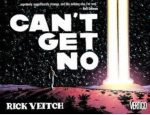
By Rick Veitch (Sun Comics/Vertigo)
ISBN: 978-1-4012-1059-5 (TPB Vertigo),
ISBN: 978-1-7241-3814-9 (TPB/Digital edition Sun Comics remastered second edition)
Born on May 7th 1951, Rick Veitch is a criminally undervalued creator who has lived through post-war(s) America’s many chimeric social revolutions. He has a poet’s sensibilities and a disaffected Flower-Child’s perspectives informing a powerful creative consciousness – and conscience. Can’t Get No is a landmark experiment in both form and content which deserves careful and repeated examination.
The shockwaves from the terrorist atrocity of September 11th 2001 changed the world and in our own small insulated corner, generated a number of graphic narrative responses of varying quality, not to mention deep emotional honesty. Rick Veitch’s 2006 Can’t Get No was as powerful and heartfelt as any, and benefited greatly from the little time and distance that bestowed perspective on raw emotional reactions.
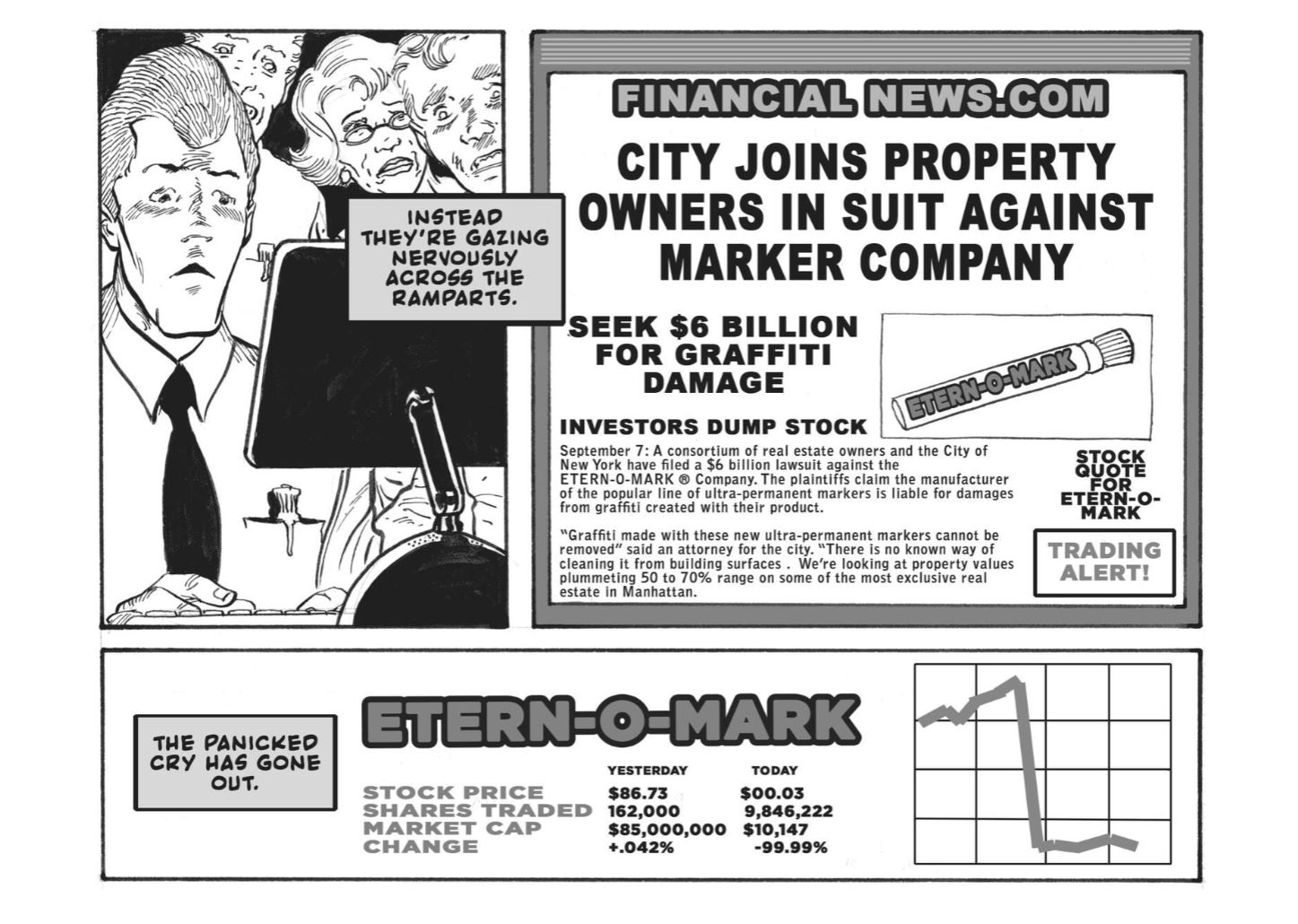
Chad Roe‘s company sold the world’s most permanent and indelible marker pen, the Eter-No-Mark. Everyone involved in selling them was flying high, but then the lawsuits hit all at once. A cheap, utterly irremovable felt-pen is a godsend to street-artists and becomes the most virulent of vandalistic weapons to property owners with nice clean tempting walls…
As his universe collapsed on him, Chad went on a bender, picked up two hippie-artist-chicks in a bar and woke up a human scribble-board, covered literally from head to toe in swirling, organic, totally permanent designs.
Even then he tried so very hard to bounce back. A walking abstract artwork, he was ostracized by mockery, and unable to conceal his obvious “otherness”, and neither self-help philosophies, drugs, or alcohol could make him feel normal anymore. Defeated, reviled and eventually crushed in spirit, he was trapped in a downward spiral. Then Chad met the pen-wielding girls again and found solace and uncomplicated joy in the artist’s world of sex, booze and dope.
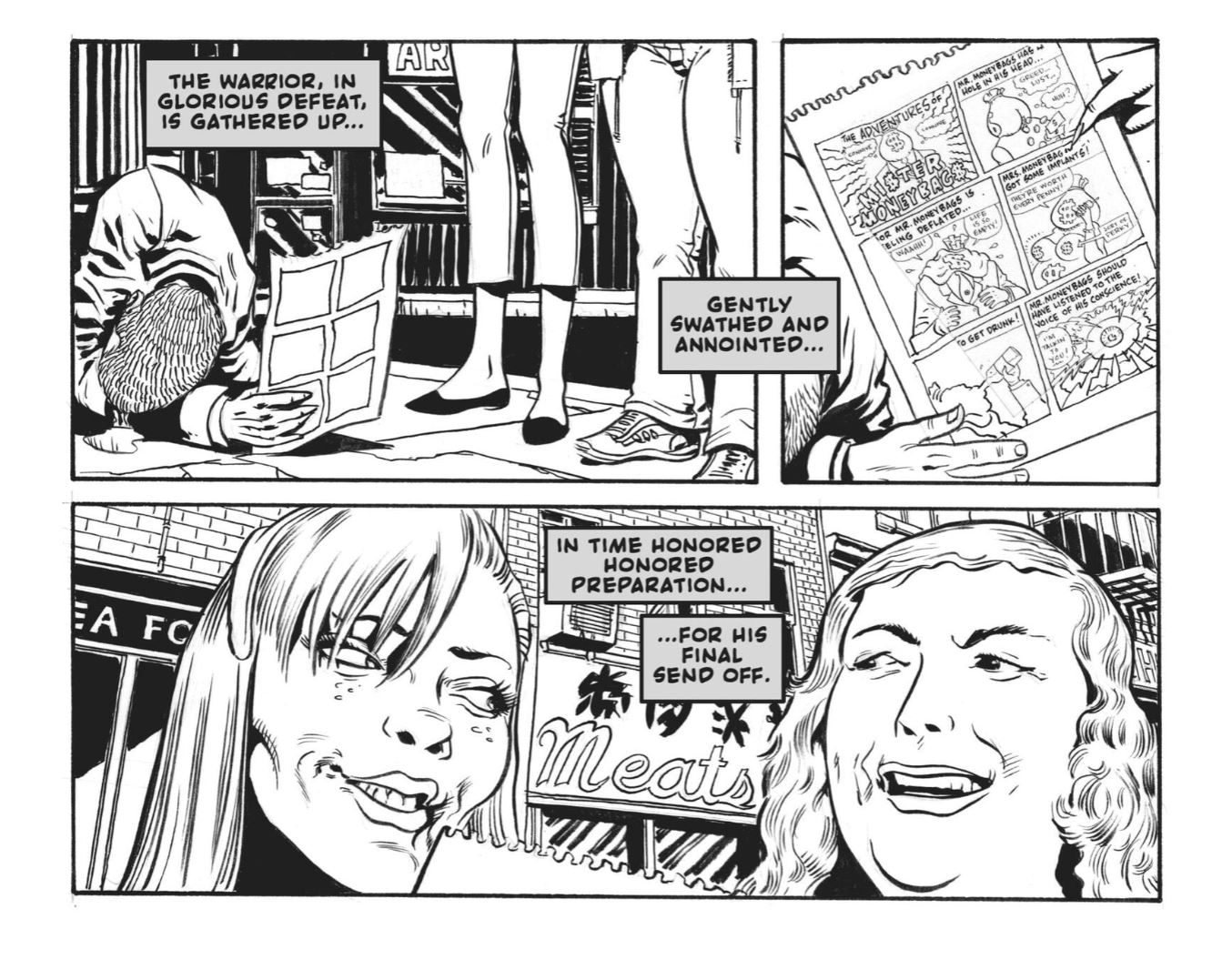
Lost to “normal” society, Chad took a road-trip with the women, but they hadn’t even left the city before they were all arrested. This was morning on September 11th and as the girls violently resisted the cops, an airplane flew overhead, straight towards the centre of Manhattan…
With no-one looking at him, just another part of the shocked crowd, Chad watched for an eternity, and then – no longer anything but another stunned mortal – drove away with an Arab family in their mobile home…
And thus began a psychedelic, introspective argosy through US philosophy, symbolism and meta-physicality. With this one act of terrorism forever changing the nation, Chad is forced on a journey of discovery to find an America that is newborn both inside and out. His travels take him through vistas of predictable cruelty and unexpected tolerance, through places both eerily symbolic and terrifyingly plebeian, but by the end of this post-modern Pilgrim’s Progress, both he and the world have adapted, accommodated and accepted.
Black & white in landscape format, and eschewing dialogue and personal monologues for ambient text (no word balloons or descriptive captions, just the words that the characters encounter such as signs, newspapers, faxes etc.) this graphic narrative screams out its great differences to usual comic strip fare, but the truly magical innovation is the “text-track”: a continual fluid, peroration of poetic statements that supply an evocative counterpoint to the visual component.
Satirical, cynical and strident with lyricism deployed for examination and introspection, and perhaps occasionally over-florid, but nonetheless moving and heartfelt free verse and epigrams do not make this an easy read or a simple entertainment. They do make it a piece of work every serious consumer of graphic narrative should experience… before it’s too late for all of us.
© 2006, 2019 Rick Veitch. All Rights Reserved.
Today in 1900, Alley Oop originator V.T. Hamlin was born, followed in 1905 Puerta Rico by Golden Age cover maestro Alex Schomburg, whilst in 1957, Classics Illustrated mainstay Henry C. Kiefer died. Franz Frazetta hung on until today in 2010 at which time he was 82 years old.
This date in 1943, Jack Sparling began his newspaper strip Clare Voyant, and in 2004 Jeff Smith apparently drew the final page of Bone.