Silent Invasion volume 2: Red Shadows


By Michael Cherkas & Larry Hancock (NBM)
ISBN: 978-0-91834-850-0

During the vast expansion of opportunity and outpouring of innovation that graced comics during the 1980s, much of the “brain-rotting trash” or “silly kid’s stuff” stigma which had plagued the medium was finally dispelled. America started catching up to the rest of the world; acknowledging sequential narrative as an actual Art-Form, and their doors opened wide open for foreigners to make a few waves too…

One of the most critically acclaimed and just plain fun features of the period came from semi-Canadian outfit Renegade Press which set up shop in the USA and began publishing at the very start of the black & white comics bubble in 1984. They quickly established a reputation for excellence, with a strong line of creator-based properties and some genuinely remarkable series such as Ms. Tree, Journey: the Adventures of Wolverine MacAlistaire, Normalman, Flaming Carrot and the compulsively backwards-looking Cold War/UFO/paranoia-driven The Silent Invasion.

That last was a stunningly stylish saga, bolting 1950s domestic terrors (invasion by Reds; invasion by aliens; invasion by new ideas…) onto Film Noir chic and employing 20-20 hindsight to produce a phenomenally fresh and enticing delight for the strangely similar Reagan era.

I firmly believe that in this business nothing good stays lost, but I’m fed up waiting for it to be rediscovered so I’m continuing to revisit my battered old copies of the original album compilations as no one has tried to revive it yet. At least they’re all still readily available if I successfully brainwash you…

This second superbly oversized monochrome tome – a whopping 298 x 2058 mm – gathers the lead story from issues #4-6, with co-creators Michael Cherkas & Larry Hancock piling on the paranoiac pressure in a delightful confection combining all the coolest genre elements of classic sci-fi, horror, spy, conspiracy theory, crime, romance and even comedy yarns…

The 1950s in American were a hugely iconic and paradoxical time. Incredible scientific and cultural advancements and great wealth inexplicably arose amidst an atmosphere of immense social, racial, sexual, intellectual and political repression with an increasingly insular populace seeing avaricious plots and subversive attacks in every shadow and corner of the rest of the world.

Such a melting pot couldn’t help but be fertile soil for imaginative outsiders to craft truly incisive and evocative tales dripping with convoluted mystery and taut tension, especially when wedded to the nation’s frenzied obsessions with gangsterism, rogue science, flying saucers and espionage…

Last Time: In April 1952, famed Union City private eye Dick Mallet saw a strange light in the night sky. Next morning the cops found his empty, crashed car. A month later reporter Matt Sinkage was still getting grief from Frank Costello, his Editor on the Union City Sentinel. Matt wanted to expose “The Truth behind Flying Saucers” but was quickly becoming a laughing stock. He was also starting to think his foreign-sounding neighbour Ivan Kalashnikov was a Russian spy….

Sinkage was alienating his family and worrying his fiancée Peggy Black. All he could think about was that night six months back in Albany when he saw a UFO and impetuously chased after it: a crazy night everyone but him remembers…

Getting drunk, Matt broke into Ivan’s apartment where a quick glance revealed the foreigner and others in front of a huge, weird machine. It confirmed his suspicions that they were Atomic spies!

Days later Matt collided with Mr K’s pretty friend Gloria Amber, and asked her out to lunch. Things developed when Gloria begged him to save her from what she claimed were Red operatives. They subsequently claimed to be Federal agents…

Hiding out at his brother’s Walter‘s place, Matt was still seeing flying saucers everywhere and could not understand why everybody else thought they were just jets. Back in Union City, Frank was being pressured by FBI Agent Phil Housley: an old acquaintance who regularly forced him to suppress news items…

This time though, he wanted Sinkage. What no newsman knew was that Housley was also working for a shadowy agency calling itself the Council. What Housley didn’t know was that he was not their only operative in this matter…

Back in suburbia, Walter’s wife Katie – convinced Matt and his new floozy were up to no good – had contacted the FBI…

Fugitives Matt and Gloria were heading out in Walter’s car when Peggy showed up. She couldn’t understand why her man was with a flashy trollop even though Gloria had told Matt the Reds were after Kalashnikov’s memoirs and files. Although Matt knew Gloria was playing double game, he agreed to go with to a remote town where a “contact” could protect them both…

Mr K meanwhile had called in his own heavies to hunt the couple. All were unaware that the FBI had visited Katie and a net was closing around Sinkage and the mystery woman…

As the Council discussed their Sinkage problem and heard Housley’s reports, they learned the reporter was involved in the “Albany event” and near-panic ensued. Matt meanwhile had succumbed to suspicion. Gloria kept vanishing and refused to acknowledge it. Later, she helped Kalashnikov’s hoods Zanini and Koldst abduct her and rough up Matt. After that the FBI interviewed Walter and Katie about Matt, and let slip that they were the only Feds working the case, denying any other government officials were involved…

Katie spilled all she knew and the agents went into overdrive, marshalling all their forces and heading for sleepy Stubbinsville. Matt meanwhile had called the only guy he still trusted. Fellow researcher Dan Maloney warned him of the confusing profusion of agents all claiming to be working for the government, before sharing the same info with Costello…

As Housley’s team flew in, Matt decided to push on, hitchhiking to a rendezvous with destiny. En route he reunited with the oddly-compliant Gloria, and they battled on to Stubbinsville in a stolen car. With less than 100 miles to go she fell ill but made him promise to get her there at all costs…

As the assorted pursuers converged, she directed Matt to a lonely wilderness region. The net closed around them as a fantastic and terrifying light-show ignited the dark skies. By the time Housley reached them Gloria had vanished and Sinkage was slumped in a coma…

Days later, Matt was freed and all charges dropped. He was strangely content. Despite another blatant cover-up and no clue as to whom all the various parties hounding them really were, Sinkage knew what he had seen when Gloria vanished. Now he could only wait for her inevitable return…

Preceded by Max Allan Collins’ expansive Introduction ‘Dick Tracy, Tintin and Serious Comics’, this titanic tale resumes with ‘Chapter One: A Pink Slip for a Pink’. It’s June 1952 and Matt Sinkage is tormented by nightmares of lights in the sky, Housley hunting him and Gloria beseeching him to join her kind…

His life has gone rapidly downhill. Stories of his being a “Commie” are everywhere, the FBI shadows his every move and the oppressive tension is becoming overwhelming. When he gets a phone call from long-missing Dick Mallet, Matt arranges to meet the PI, consequently noticing sister-in-law Katie is always listening and has become very chummy with his ominously ever-present FBI surveillance detail…

First, though, Matt has to get the last of his belongings: the “Red” smear has allowed his landlord to terminate his lease. Aided by faithful fiancée Peggy and ever-friendly custodian Mr. Schneider, Sinkage collects his things and has an uncomfortable meeting with Kalashnikov. Almost in passing Matt notices that he now has a different team of Feds dogging him.

When he finally meets Mallet, the detective shows him an incredible set of photos: interior and exteriors shots of the flying saucers taken by the aliens…

At the Sentinel, Dan Maloney has made progress investigating Kalashnikov and Gloria but wants to finish his research before sharing. Sinkage has bigger problems though, his fellow workers have sent him Coventry and the paper’s owner wants the “Commie” fired. Costello is fighting back though. He suspects Housley is behind the smear tactics targeting Matt.

Staying with Walter and Katie isn’t helping his mental state. As visions of the Albany event haunt him, Matt’s life takes another plunge as he finds Mallet murdered. Housley is there but frankly admits he knows Sinkage is innocent and (probably) the patsy of a cunning contrived frame-up. That doesn’t stop him trying to pump Matt for further information – just as his Council bosses ordered him to…

When Matt is finally fired and Maloney is killed in a freak accident he knows is murder-by-aliens, Sinkage feels the walls closing in and makes a run for it…

‘Chapter Two: Identity Crisis’ opens one night in July 1952 with Matt holed up in Maloney’s old hunting shack. He’s been utterly alone for weeks but is still seeing flying saucers in the night skies. He’s also reliving past events, helplessly mixing memories of Gloria with other moments. He’s so confused that when Peggy suddenly turns up he mistakes her for his missing blonde mystery-woman…

Peggy visits him every night, offering food and company. She seems so different, warm and vivacious, but is always gone when he blearily wakes up in the morning.

Back in Union City, Housley and his secretary Meredith Monroe are going over the facts and reach a disturbing conclusion. Somebody on Phil’s team has their own agenda. He fears it’s his own boss – and Council stooge – Buzz Brennan but can’t find reasons to ignore their orders. Both his official employers and the secret ones want Sinkage found at all costs…

In the wilderness Matt is starting to crack. Anonymously buying a gun from a local store he travels back to the city for Dan’s funeral and sees Housley and Brennan clash with Costello. He then sneaks back to his old building and breaks into Kalashnikov’s apartment. He finds a cache of files and as he reads them experiences a horrifying flashback: he’s strapped into some sort of brainwashing machine in a spaceship…

Matt is roused from the memories by Ivan’s return and bolts, leaving the scattered files behind. He then visits Peggy’s house where her mother’s hostile reception confirms a suspicion that has been growing in his mind…

His intended is waiting in the truck he borrowed, and as they furtively drive out to the country Matt drops his bombshell. He believes he’s an alien consciousness improperly overlaid on a human mind and he knows Peggy is too: the same one he used to know as Gloria Amber…

‘Chapter Three: What We Really Know about Flying Saucers’ pushes the drama into overdrive as Peggy frantically tries to dissuade Matt. He is adamant and, as Peggy storms off, Matt goes to Costello. They compare notes, unaware that the Council is mobilising all its covert assets in Housley’s FBI team to get Sinkage at all costs…

It might have worked had not Matt surprised everybody by turning himself in and sharing what he saw in Kalashnikov’s files with Housley and Meredith. Sadly, as he’s being taken to a safe-house Zanini and Koldst kidnap Sinkage and drag him back to Ivan… and Peggy!

By the time Housley realises what’s occurred and rushed to the apartment, it’s too late. The files are gone, but no one can determine whether they were cleared out by the foreigners or simply lost in the fire set by the Council’s inside man…

Matt has a different story. He survived the conflagration by rushing to the roof where he saw a saucer pick up one of his abductors, coldly leaving the rest to perish. It was a story he stuck to, even after he was committed…

To Be Continued…

Potently evocative, impeccably tailored and fabulously cool, The Silent Invasion remains a unique, boldly imagined and cunningly crafted adventure. Rendered in a style then considered revolutionary and even today still spectacularly expressionistic, this is a classic epic long-overdue for a modern revival: an unforgettable gateway to an eerily familiar yet comfortably exotic era of innocent joy and a million “top secrets” which no fan of fantastic thriller fiction should ignore.
© 1988 Michael Cherkas & Larry Hancock. Introduction © 1988 Max Allan Collins. All rights reserved.
Clifton volume 2: The Laughing Thief


By De Groot & Turk, translated by Luke Spear (Cinebook)
ISBN: 978-1-905460-07-4

For some inexplicable reason most of Europe’s comics cognoscenti – most especially the French and Belgians – seem fascinated with us Brits. Maybe it’s our shared heritage of Empires lost and cultures in transition? An earlier age would have claimed it’s simply a case of “Know your Enemy”…

Whether we look at Anglo air ace Biggles, indomitable adventurers Blake and Mortimer, the Machiavellian machinations of Green Manor or even the further travails of Long John Silver, the serried stalwarts of our Scepter’d Isles cut a dashing swathe through the pages of the Continent’s assorted magazines and albums.

And then there’s Clifton…

Originally devised by child-friendly strip genius Raymond Macherot (Chaminou, Les croquillards, Chlorophylle, Sibylline) for iconic Tintin Magazine, the doughty True Brit troubleshooter first appeared in December 1959. After three albums worth of material – compiled and released between 1959 and 1960 – Macherot left Tintin for arch-rival Spirou and his eccentric comedy crime-fighter sadly floundered until Tintin brought him back at the height of the Swinging London scene, courtesy of Jo-El Azaza & Greg (Michel Régnier).

These strips were subsequently collected as Les lutins diaboliques in French and De duivelse dwergen for Dutch-speakers in 1969.

Then it was back into retirement until the early 1970s when writer Bob De Groot and illustrator Philippe “Turk” Liegeois revived Clifton for the long haul, producing ten tales of which this – Le voleur qui rit – Clifton from 1973 – was their second collaboration.

Thereafter, from 1984 on, artist Bernard Dumont – AKA Bédu – limned De Groot’s scripts before eventually assuming the writing chores as well, until the series ended in 1995. In keeping with its rather haphazard nature and typically undying nature, the Clifton experience resumed once again in 2003, crafted by De Groot and Michel Rodrigue in four further adventures; a grand total of 25 to date.

The setup is deliciously simple: pompous and irascible Colonel Sir Harold Wilberforce Clifton, ex-RAF, former Metropolitan police Constabulary and recently retired from MI5, has a great deal of difficulty dealing with being put out to pasture in rural Puddington. He thus takes every opportunity to get back in the saddle, occasionally assisting the Government or needy individuals as an amateur sleuth.

Sadly for Clifton – as with that other much-underappreciated national treasure Captain Mainwaring in Dad’s Army – he is too keenly aware that he is usually the only truly competent man in a world full of blithering idiots…

In this second translated album – first seen in 2005 – the Gentleman Detective is embroiled in not one but two uncanny incidences, beginning with eponymous epic ‘The Laughing Thief’ wherein the still much-missed lawman rather forcefully inserts himself into a current case baffling Scotland Yard.

London is being wracked by devilishly clever crimes executed with infallible precision by a crack crew of blaggers, but the profits of each caper seem far below what such expert criminals should be bothering with. Moreover, each perfectly executed heist is preceded by a telephone warning from a braying braggart with the most annoying and distinctive laugh imaginable…

The crooks are incredibly bold and arrogant. Even after Clifton intervenes in the second robbery, the scoundrels easily outwit him, leave the dapper sleuth unconscious with dozens of other peculiarly proud and strangely supportive victims…

Moreover, although police “higher-ups” welcome Clifton’s help, officer-in-charge Lieutenant Hardfeeling doesn’t want the show-stealer around and is doing all he can to impede the Colonel’s investigations, despite the protests of his senior colleagues and the bobbies on the beat…

Nevertheless, persistence is its own reward, and when Clifton finally deduces the true reasons for the publicity-seeking crime-spree the resultant confrontation is both spectacularly satisfying and hilariously rewarding…

Being British and an ex-spy, Clifton has hung on to the odd gadget or two, such as an amazingly tricked out umbrella which plays a major part in this volume’s second tale ‘The Mystery of the Running Voice’. A suspenseful spooky yarn, it begins when the unhappy retiree meets old comrade Donald McDonald Muckyduck, who appears to have worn out every vestige of verve and is on the verge of a nervous breakdown…

Close consultation reveals that the former police Inspector is being haunted by a robber ghost; one that has already claimed six victims. However upon viewing the crime scene photos Clifton gains an inkling into how the trick is done and temporarily moves to bucolic village Flatfish-on-Apron, setting himself up as bait for a diabolical genius with a penchant for clever gimmicks…

Visually spoofing Swinging Sixties London and staidly stuffy English Manners with wicked effect, these gentle thrillers are big on laughs but also pack a lot of consequence-free action into their eclectic mix. Delightfully surreal, instantly accessible and doused with daft slapstick à la Jacques Tati and intrigue like Margaret Rutherford as Miss Marple, this brace of romps rattle along in the grand old tradition of Will Hay, Terry-Thomas and Alistair Sim – or Wallace and Gromit if you’re a callow yoof – offering readers a splendid treat and loads of timeless laughs.
Original edition © 1973 Le Lombard (Dargaud-Lombard S. A.) 1988 by De Groot & Turk. English translation © 2005 Cinebook Ltd.

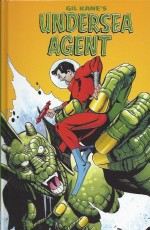
Gil Kane’s UNDERSEA Agent


By Gil Kane, Steve Skeates, Gardner Fox & various (IDW)
ISBN: 978-1-63140-444-3

The 1960s was the era when all the assorted facets of “cool-for-kids” finally started to coalesce into a comprehensive assault on our minds and our parents’ pockets. TV, movies, comics, bubble-gum cards and toys all began concertedly feeding off each other, building a unified and combined fantasy-land no kid could resist.

The history of Wally Wood’s legendary comics Camelot is convoluted, and once the mayfly-like lifetime of the Tower Comics line folded, not especially pretty: wrapped up in legal wrangling and lots of petty back-biting. None of that, however, diminishes the fact that the far-too brief run of T.H.U.N.D.E.R. Agents was a benchmark of quality and sheer bravura fun for fans of both the still-reawakening superhero genre and the popular media’s spy-chic obsession.

In the early 1960s James Bond movie mania was going from strength to strength, with action and glamour utterly transforming the formerly understated espionage vehicle. The buzz was infectious: soon A Man like Flint and Matt Helm were carving out their own piece of the action, even as television shanghaied the entire trope with the irresistible Man from U.N.C.L.E. (which premiered in September 1964), bringing the genre into living rooms across the world.

Before long, wildly creative cartooning maverick Wood was approached by veteran MLJ/Archie Comics editor Harry Shorten to create a line of characters for a new distribution-chain funded publishing outfit – Tower Comics.

Woody called on some of the biggest names in the industry to produce material in the broad range of genres requested (as well as T.H.U.N.D.E.R. Agents, its spin-offs Dynamo and NoMan and associate title U.N.D.E.R.S.E.A. Agent, there was the magnificent war-comic Fight the Enemy and youth-oriented comedy Tippy Teen).

Samm Schwartz and Dan DeCarlo handled the comedy book – which outlasted all the others – whilst Wood, Larry Ivie, Len Brown and more crafted landmark and benchmark tales for the industry’s top talents to illustrate in truly innovative style. It didn’t hurt that all Tower titles were in the beloved-but-rarely-seen 80 Page Giant format: there was a huge amount to read in every issue!

Tapping into the Swinging Sixties’ twin entertainment zeitgeists – sub-sea adventure and spy sagas – Tower supplemented their highly popular acronymic star-turn, The Higher United Nations Defense Enforcement Reserves (T.H.U.N.D.E.R. Agents) with a United Nations Department of Experiment and Research Systems Established at Atlantis: an aquatic vehicle employing U.N.D.E.R.S.E.A. Agent against crooks, aliens, monsters, enemy agents and the inimical forces of the environment they operated in.

Unlike the dry-land series, however, U.N.D.E.R.S.E.A. Agent began with their strong, solid stories (by D. J. Arneson, Steve Skeates and Don Segall) being illustrated in a traditional manner by industry veteran Ray Bailey – plus occasional stints from Mike Sekowsky, Joe Giella, Frank Giacoia, John Giunta, Frank Bolle, Manny Stallman and Sheldon Mayer.

According to this collection’s appreciative Foreword by Greg Goldstein and reiterated in Michael Uslan’s fact-filled Introduction, that old school stuff didn’t sit well with the kids and in issue #3 Gil Kane moved over from T.H.U.N.D.E.R. Agents  and came aboard to inject his unique, hyper-energetic human dynamism to the watered-down project.

Just a personal aside here: Although I bow to no one in my admiration for Kane and applaud this superb hardback compilation of his U.N.D.E.R.S.E.A. Agent contributions, I also adore the other stuff – especially Bailey’s workmanlike, Caniff-inspired renditions – and eagerly anticipate the day someone finally gathers the entirety of the six-issue run in one commemorative tome…

This superb book however – compiled to celebrate the astounding transformation in Kane’s own artistic endeavours which sprang from his brief time at Tower – reprints the breakthrough material which led to his sudden maturation into a world-class Auteur.

Kane was then a top-rated illustrator but would soon become one of the pivotal players in the development of the American comics industry, and indeed the art form itself. Working as an artist and, after this, an increasingly more effective and influential one, he has drawn for many companies since the 1940s, on superheroes, action, war, mystery, romance, movie adaptations and most importantly perhaps, Westerns and Science-Fiction tales.

In the late 1950s he was one of editor Julius Schwartz’s key artists in regenerating the superhero. Yet by the mid 1960s, at the top of his profession, this relentlessly revolutionary and creative man felt so confined by the juvenile strictures of the industry that he dreamed of bold new ventures which would jettison the editorial and format bondage of comicbooks for new visions and media.

In U.N.D.E.R.S.E.A. Agent #3-6 (spanning June 1966 to March 1967) he was allowed to ink his own pencils for the first time in decades and encouraged to experiment with form, composition and layout – and write too – and Kane discovered a graphic freedom which opened up the way he told stories and led directly to his independent masterpieces His Name is Savage and Blackmark…

(His Name Is Savage was an adult-oriented black-&-white magazine about a cold and ruthless super-spy in the Bond/Helm/Flint mould; a precursor in tone, treatment and subject matter of many of today’s adventure titles. Blackmark not only ushered in the comic book age of Sword and Sorcery, but also became one of the first Graphic Novels. Technically, as the series was commissioned by fantasy publisher Ballantine as eight volumes, it was also envisioned as America’s first comics Limited Series.)

So what have we here? Lieutenant Davy Jones is the U.N.D.E.R.S.E.A. Agent, a skilled diver who, whilst working at the international science lab Atlantis, had an accident which gave him magnetic powers that had to be controlled and contained by a hi-tech belt. His boss was affably brilliant boffin Professor Weston and Jones had a young, impetuous apprentice seaman as sidekick.

Skooby Doolittle joined him in tackling monsters, amok experiments and a remarkable number of crooks, mad masterminds and spies who thought pickings were easier under the sea…

Kane’s contributions commence with ‘The Will Warp’ – from UA #3 and written by Skeates – wherein our dashing heroes have to contend with the diabolical Dr. Malevolent who has perfected a ray that controls minds. Soon the vile villain has taken over Atlantis but has not reckoned on the speed of reaction and sheer determination of Jones and Doolittle…

Skeates also scripted Kane’s tale in #4 wherein Skooby has an unfortunate lab accident and is transformed into a colossal ravening reptilian. Amidst a storm of destruction and with his best friend now an actual danger to shipping, Davy is forced to extreme measures ‘To Save a Monster’…

‘Born is a Warrior’ (#5 and written by Kane’s long-time collaborator Gardner Fox) sees hero and partner go above and beyond in their efforts to overthrow an undersea invasion by aliens, before the astounding adventures conclude with a potent, extra-length tale of triumph and tragedy.

‘Doomsday in the Depths’ (#6, by Fox) finds Jones lost at sea and swept into a utopia beneath the sea floor. Trapped forever in the paradise of Antor, he finds solace in his one true love: the sumptuous scientist Elysse. Sadly, Davy is forced to abandon the miracle city and girl of his dreams to save them all from a horrific monster. Although ultimately victorious, he cannot find his way back…

A glorious cascade of scintillating fantasy action; these yarns – accompanied by a cover gallery by Kane – hark back to a perfect time of primal and winningly uncomplicated action adventure. This is a book to astound and delight comics fans of any stripe or vintage.
Gil Kane’s UNDERSEA Agent © 2015: UNDERSEA Agent © 2015 Radiant Assets LLC. All rights reserved.

Yoko Tsuno volume 4: Daughter of the Wind


By Roger Leloup translated by Jerome Saincantin (Cinebook)
ISBN: 978-1-905460-94-6

Yoko Tsuno began first began gracing the pages of Spirou in September 1970 and is still going strong. As detailed by Roger Leloup, the astounding, all-action, uncannily edgy, excessively accessible exploits of the slim, slight Japanese scientific-adventurer are amongst the most intoxicating, absorbing and broad-ranging comics thrillers ever created.

Leloup’s brainchild is an expansively globe-girdling, space-&-time spanning series devised by the monumentally talented Belgian maestro after leaving his job as a studio assistant on Herge’s The Adventures of Tintin to strike out on his own.

Compellingly told, superbly imaginative but always solidly grounded in hyper-realistic settings which boast utterly authentic and unshakably believable technology and scientific principles, these illustrated epics were at the vanguard of a wave of strips featuring competent, clever and brave female protagonists which revolutionised Continental comics from the 1970s onwards.

Happily they are as timelessly engaging and potently empowering now as they ever were.

The very first stories ‘Hold-up en hi-fi’, ‘La belle et la bête’ and ‘Cap 351’ were brief introductory – and possibly beta-testing – vignettes before the superbly capable Miss Tsuno and her always awestruck and overwhelmed male comrades Pol Paris and Vic Van Steen properly hit their stride with premier extended saga Le trio de l’étrange which began in 1971 with the May 13th edition of Spirou…

In the original European serialisations, Yoko’s adventures alternated between explosive escapades in exotic corners of the world and sinister deep-space sagas with the secretive and disaster-plagued alien colonists from Vinea, but for these current English translations, the extraterrestrial endeavours have been more often than not sidelined in favour of realistically intriguing Earthly exploits.

There have been 27 European albums to date and this one was first serialised in Spirou #2081-2100 (2nd March to July 13th 1978) before emerging the following year as exotically enthralling album La Fille du vent. A sublimely understated espionage epic with solid hard-science sci fi overtones, it was chronologically the ninth album, yet due the quirks of publishing reached us Brits as Cinebook’s fourth translated tome, offering readers a long-awaited glimpse into the history of the ultra-efficient oriental enigma…

The stupendous saga opens with Yoko calming Vic and Pol as their passenger flight makes its daunting landing at Hong Kong’s Kai-Tak Airport. They have taken a rushed flight because Yoko has received a worrying communiqué about her father, sent by the eminent Chen Wu Cheng…

On arrival they are picked-up by a joint team of Chinese and Japanese intelligence operatives sharing a unique problem. Seiki Tsuno is a brilliant scientist; a geophysicist who has been working for decades to find a way to counter the horrific typhoons which regularly devastate coastal regions across the Pacific. He recently succeeded, but only after first discovering exactly how to create the catastrophic whirlwinds…

Now Yoko’s hosts inform her that her father’s financial backer Ito Kazuki has conspired with elements of the Japanese government and greedy business interests to steal the research with the intention of using the typhoon-making process as a weapon to restore Japan to its days of military glory and pre-eminence.

The elder Tsuno and Kazuki are now at war and the storms they make are wrecking the climate of the entire region. In their desperation these national agencies want Yoko to talk to her father and make him stop before it’s too late. Moreover, with all Kazuki’s resources in play, they need her to approach her dad secretly so as not to alert the enemy millionaire to the mission…

Thus this long, circuitous trip from the coast of China to Yoko’s family home, which eventually concludes with her being parachuted in from a high-altitude seaplane at night. Over strident objections from Vic and Pol, the “Daughter of the Wind” has accepted the mission, but it’s not until she’s actually plunging towards the giant statue of the Buddha and temple above her family home that Yoko act on the suspicions she’s been harbouring.

Disabling her electronic tracker, Yoko shifts orientation and lands far from her specified target site. Almost immediately her caution pays dividends as she spots armed masked men waiting around the area where she was supposed to land. Doffing her gear she quietly heads for the temple where a monk helps her avoid the faux ninjas and reach her father’s house.

There she is joyously reunited with aged Aoki: a former Imperial pilot who joined the household as a gardener and practically raised Yoko whilst her parents conducted their own, more important, adult affairs…

He reveals the truth: there is war between Kazuki and her father, but the millionaire plans to trap and use her as a bargaining chip over Seiki and ultimately achieve total control of Japan…

As Yoko radios Pol and Vic the ninjas strike and only familiarity with her father’s inventions allow her and Aoki to escape, aided by the sudden explosive appearance of her European friends. A hectic and explosive seaborne chase ensues but after Kazuki throws one of his typhoons at them Yoko and her friends are caught and taken by submarine to the mad millionaire’s near-sacrilegious undersea base whilst old Aoki is left clinging to a buoy…

Kazuki seems like a reasonable man and offers Yoko a position with his organisation – which she naturally declines – but does concede to run his TV and telecommunications equipment as he moves to his momentous endgame…

Whilst Yoko tells her incarcerated pals of her lonely neglected childhood and the tragic story of failed Kamikaze Aoki and how he came to live with her grandfather, Seiki Tsuno – who has picked up the aging gardener from the buoy – moves towards his final showdown with Kazuki: a very public duel between the madman’s typhoon-maker and his own whirlwind eradication process.

The researcher is confident of his invention’s efficacy but never expected Kazuki to cheat…

Yoko isn’t surprised at her captor’s double-dealing and when the would-be warlord is distracted by his recently created waterspout growing completely beyond his control, leads Pol and Vic in a daring escape back to her dad who has only one appalling solution to the rapidly-expanding super-storm…

Sadly it involves two pilots simultaneously flying into the typhoon with a massive explosive device and has only a remote chance of working…

Building to a thundering climax and truly tragic conclusion, this potent large-scale human drama showed both a softer side and more mature aspect of our star, confirming she was a truly multi-faceted adventurer, at home in all manner of scenarios and easily able to hold her own against the likes of James Bond, Modesty Blaise, Tintin or other genre-busting super-stars: as triumphantly capable facing spies and madmen as alien invaders, weird science or unchecked forces of nature…

As always the most effective asset in these breathtaking tales is the astonishingly authentic and staggeringly detailed draughtsmanship and storytelling, which superbly benefits from Leloup’s diligent research and meticulous attention to detail, honed through years of working on Tintin.

This is a magnificently wide-screen thriller, tense, complex and evocative, which will appeal to any fan of blockbuster action fantasy or devious derring-do.
Original edition © Dupuis, 1979 by Roger Leloup. All rights reserved. English translation 2009 © Cinebook Ltd.

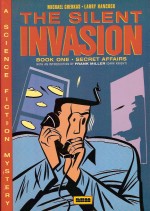
Silent Invasion Book One: Secret Affairs


By Michael Cherkas & Larry Hancock (NBM)
ISBN: 978-0-91834-850-0

The 1980s were an immensely fertile time for English-language comics-creators. In America a fresh wave of creativity had started with the birth of dedicated comics shops and, as innovation-geared specialist retailers sprung up all over the country, operated by fans for fans, new publishers began to experiment with format and content, whilst eager readers celebrated the happy coincidence that everybody seemed to have a bit of extra cash to play with.

Consequently those new publishers were soon aggressively competing for the attention and cash of punters who had grown resigned to getting their on-going picture stories from DC, Marvel, Archie and/or Harvey Comics. European and Japanese material began creeping in and by 1983 a host of young companies such as WaRP Graphics, Pacific, Eclipse, Capital, Now, Comico, Dark Horse, First and many others had established themselves and were making impressive inroads.

New talent, established stars and fresh ideas all found a thriving forum to try something a little different both in terms of content and format. Even shoestring companies and foreign outfits had a fair shot at the big time and a much great material came – and, almost universally, just as quickly went – without getting the attention or success they warranted.

By avoiding the traditional family sales points such as newsstands, more mature material could be produced: not just increasingly violent and with nudity but also far more political and intellectually challenging too.

Moreover, much of the “brain-rotting trash” or “silly kid’s stuff” stigma had finally dissipated and America was catching up to the rest of the world in acknowledging sequential narrative as a for-real, actual Art-Form, so the door was wide open for gosh-darned foreigners to make a few waves too…

One of the most critically acclaimed and just plain fun features came from semi-Canadian outfit Renegade Press which, spun out by a torturous and litigious process from Dave Sim’s Canadian Aardvark-Vanaheim enterprise, set up shop in the USA and began publishing at the very start of the black and white comics bubble in 1984. Renegade quickly established a reputation for excellence, picking up a surprisingly strong line of creator-based properties and some genuinely remarkable and impressive series such as Ms. Tree, Journey: The Adventures of Wolverine MacAlistaire, Normalman, Flaming Carrot, the first iteration of Al Davison’s stunning Spiral Cage and compulsive, stylish Cold War, flying-saucer paranoia-driven series The Silent Invasion amongst others.

That last was a stunningly stylish saga, bolting 1950s homeland terrors (invasion by Reds; invasion by aliens; invasion by new ideas…) onto Film Noir chic and employing 20-20 hindsight to produce a truly fresh and enticing concept in the Reagan-era Eighties. I firmly believe that in this business nothing good stays lost, but now I’m fed up waiting for it to be rediscovered so I’m going to review my battered old copies as no one has tried to revive it yet. At least they’re still available…

This first superbly oversized monochrome tome – a whopping 298 x 2058 mm – gathers the lead story from the first three issues of The Silent Invasion with co-creators Michael Cherkas & Larry Hancock concocting a delightful confection combining all the coolest genre elements of classic sci-fi, horror, spy, conspiracy theory, crime, romance and even comedy yarns…

The 1950s in American were a hugely iconic and paradoxical time. Incredible scientific and cultural advancements and great wealth inexplicably arose amidst an atmosphere of immense social, cultural, racial, sexual and political repression with an increasingly paranoid populace seeing conspiracy and subversive attacks in every shadow and corner of the rest of the world.

Such an insular melting pot couldn’t help but be fertile soil for imaginative outsiders to craft truly incisive and evocative tales dripping with convoluted mystery and taut tension, especially when wedded to the nation’s fantastic – and then-ongoing – obsessions with rogue science, flying saucers, gangsterism and espionage…

They were also obsessed with hot babes and bust sizes, but more of that elsewhere…

Preceded by a terse and still topical Introduction from Frank Miller, this towering collection from 1988 kicks off with ‘Chapter One: Atomic Spies’ in a dark desert landscape 22 miles outside Union City in April 1952.

Private eye Dick Mallet sees a strange light in the skies and in the morning the cops find his crashed car. There’s no sign of the infamous and distinguished Dick…

A month later reporter Matt Sinkage is still unhappy with his piece on “The Truth Behind Flying Saucers” but his muttering and musing is interrupted by a hot blonde banging on the door of his foreign-sounding neighbour Ivan Kalashnikov.

Arriving at his desk on the Sentinel, Sinkage can’t believe the audacity of the Air Force’s official line about “marsh gas” and starts screaming at his Editor Frank Costello who just bawls him out – again – and sends him off to cover real news…

Instead Sinkage heads out to the site of the latest sighting and starts interviewing local yokels. That night fiancée Peggy cooks him a meal but his mind is elsewhere, on that night six months back in Albany when he saw a UFO and impetuously chased after it: a night everyone but him remembers…

Later, in a bar, Matt continues badgering Frank until the booze gets to him. Eventually Sinkage slinks back to his apartment. Ivan’s door is open and a quick glance reveals the foreigner and others in front of a huge, weird machine and Matt realises they must be Reds! Atomic spies!

Before the reporter can react, Kalashnikov pulls a really strange gun and shoots. Next morning Sinkage awakes with another sore head and fuzzy memory…

Days later Matt again collides with Mr K’s pretty friend Gloria Amber, but fails to get another look at his neighbour’s place. Undeterred, he resorts to asking her out to lunch and somehow provokes the old guy into taking a sudden trip out of town. Things get even stranger when Gloria comes running to him, being chased by what she claims are Red agents…

Spiriting her away, Matt doesn’t hear the pursuers accosting his landlord, claming to be Federal Men…

‘Chapter Two: Secrets and Insidious Machinations’ finds the fugitives deep in the suburbs with Matt’s sedate brother Walter. The reporter is still seeing flying saucers and can’t understand why everybody else thinks they’re just jets, whilst back in Union City Frank is getting a grilling from FBI Agent Housley.

They’re old acquaintances: the G Man regularly pops by to suppress one news item or another…

This time though they want the vanished Sinkage and are not happy that Costello has no idea of the gadfly’s current location. Back in suburbia, things are none too comfortable either. Stuck-up sister-in-law Katie is convinced Matt and his new floozy are up to no good and wants them out. At least she doesn’t know the FBI are scouring the city for them. Enigmatic Gloria, however, is more concerned that Sinkage is sleepwalking and having strange nightmares… just like Kalashnikov feared he might…

Matt and Gloria are just heading out in Walter’s borrowed car when Peggy pops by. She can’t understand why her man is with a flashy trollop and pointedly won’t talk to her. Gloria has told Matt the real Reds are after Kalashnikov’s memoirs and convinced him to drive her to a quiet town in the desert where a “contact” will protect them both. Mr K meanwhile has called in his own heavies to chase the couple, unaware that the FBI have visited Walter and Katie. A net is closing around Sinkage and the mystery woman he implicitly trusts… but really shouldn’t.…

The tension mounts in this volume’s concluding ‘Chapter Three: The Stubbinsville Connection’ as a mysterious Council of shadowy men gather to discuss the Sinkage problem. As Housley’s report continues, it become clear the reporter was also involved in the Albany event and near-panic ensues…

In a cheap motel Matt’s suspicions are back. Gloria vanished from their room for a while during the night and hasn’t mentioned it…

They’re confirmed a little later when she helps Kalashnikov’s hoods Zanini and Koldst abduct her and rough him up. Bach at Walter’s house the FBI turn up to interview them about Matt. They claim they’re the only Feds working on the case and no other government officials have been there before them…

Katie has had enough and spills all she knows. The agents instantly go into overdrive and organise all their forces to head for sleepy, remote Stubbinsville. Matt meanwhile has recovered and called the only guy he still trusts, his researcher Dan Maloney. That worthy warns him of the confusing profusion of agents all claiming to be working for the government, before sharing the same info with Frank Costello…

As Housley’s team fly in, Matt has decided to go on, hitchhiking to the rendezvous with a quirkily affable farmer who happily joins him in “pranking” the cops who have just arrested Zanini, Koldst and Gloria…

Reunited with his oddly-compliant mystery amour, Matt hurtles on to Stubbinsville in a stolen car but with less than 100 miles to go Gloria falls ill. She makes him promise to get her there at all costs…

As the assorted pursuers converge, she directs Matt to a lonely wilderness area, but the forces of law and order have spotted them and follow. As the net closes a fantastic and terrifying light show ignites the dark skies. By the time Housley reaches the specified target area, all he finds is a comatose Sinkage.

As days pass, Matt finds himself free with all charges dropped, but he’s oddly content. Despite another blatant cover-up and no clue as to who all the various parties hounding him actually were, he knows what he knows and wonders when Gloria will be back…

To Be Continued…

Potently evocative, impeccably unique and fabulously cool, The Silent Invasion is a boldly imagined and cunningly crafted adventure long-overdue for a modern revival: an unforgettable gateway to an eerily familiar yet comfortably exotic era of innocent joy and a million “top secrets” which no fan of fantastic thriller fiction should ignore.
© 1988 Michael Cherkas & Larry Hancock. Introduction © 1988 Frank Miller. All rights reserved.

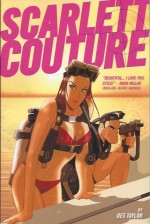
Scarlett Couture


By Des Taylor (Titan Comics)
ISBN: 978-1-78276-062-7

During the early 1960s the world went crazy for suave and stylish superspies like James Bond, Napoleon Solo & Ilya Kuryakin, Matt Helm and Derek Flint. They even accepted – to a lesser degree – such distaff operatives as Modesty Blaise, Honey West and April Dancer (The Girl from U.N.C.L.E.).

Now with our multimedia-mad world again embracing the astonishing entertainment value of espionage extravaganzas there’s a healthy new crop of shadowy spooks, urbane operatives and ferocious femmes fatale vying for our attention but none more sleekly eye-catching than this late entry from triple-threat creator Des Taylor…

Simple, straightforward and as on-target as a sinister sniper sortie, this eye-catching yarn deftly blends the ultra-glamorous worlds of high fashion and movie blockbuster spy-craft; with this initial compilation collecting first 4-issue foray ‘Project Stardust’.

As is so often the case, the drama begins with a beautiful woman being tortured by a maniac…

She is no ordinary victim, however, but one of a number of high profile supermodels from the Chase Couture Agency, abducted during gigs in Las Vegas. The story is soon top of the news all over the world, but all those fervid journalists would be even more strident if they knew the truth.

The celebrated cheesecake-and-clothes club is actually a highly specialised CIA front dating back decades to when luscious Chase Carver created “The Showroom” for “The Company”: building a bevy of beautiful, glamorous patriotic honey-traps extensively trained to get information from powerful but ultimately fallible and predictable men…

Now the project is a very visible (quasi) legitimate concern, Chase is the indomitable matriarch of a fashion empire and her daughter Scarlett is the business’ extremely formidable Chief of Security. Some of the most accomplished girls on their books are still proper spies though…

Scarlett is a girl with a past. As a teenager she was kidnapped herself: held for more than a week until rescued by some very special agents who then became her teachers in a number of unique disciplines and skill-sets. Now they also work for mommy dearest…

Tonight the daughter is hot on the trail of her missing employees and has tracked them to a warehouse in Brooklyn, but as she breaches the seedy building all her suspicions are confirmed as a lethal trap closes around her…

The over-zealous gunmen are no match for Scarlett or her support team, but the nasty surprise the crazy torturer left on one of the captive girls almost ends the investigation before it’s begun…

And as the ultra-rich masterminds behind the scheme confer it becomes clear what the stakes are in a truly high risk game: one that has a shocking connection to the Couture family line…

When a third SC model is found executed in her own New York apartment Scarlett and her handler at Covert Investigations Group back-trace her to Vegas too, and attentions switch to Sin City “businessman” Dante Ramon just as the rest of the world’s focus is on the US Secretary of Defense’s visit to the city…

And that’s only the opening gambit in this rollicking, rollercoaster romp set solidly in the style of the Roger Moore/Pierce Brosnan Bond extravaganzas, involving shady pasts, sinister cabals, crazy radical terror groups, Machiavellian Get-Super-Rich-Quick villains, sunken planes, Nazi-bio-weapons and a proper sting in the tale; all the tried-and-true tropes of sexy spy thrillers from Charlie’s Angels via Emma Peel to La Femme Nikita…

Delivered in a superbly enticing animation-based illustrative style, this deceptively enticing spicy package also includes Special Bonus material such as ‘Dossiers & Mission Log’ offering profiles on ‘Scarlett Eva Carver’, her mega-mysterious mum ‘Chase Elizabeth Carver’, tutors/sidekicks ‘Spencer Kelly’ and ‘Trent Wayland’ as well as crusty curmudgeon/NYC cop dad ‘Lt. Jack Andrew Gillis’.

Adding to the attractions are a mocked-up photo-cover of ‘Hot Profile Magazine: The Chase Couture Collection Issue’, ‘Somebody Call Security’ a faux fashion-mag interview with Scarlett and a plus-sized ‘Gallery section’ featuring covers, photos (of actual model Viktoria Dobos – the visual inspiration for her), sketches, promo artwork, unused cover art and a selection of book covers from a proposed run of novels entitled ‘Scarlett Couture Pulp Designs’

Glitzy, fast-paced, inviting and superbly seductive, this is an action-packed asset to secure the undying attention of every red-blooded armchair operative.

Scarlett Couture will return in…
Scarlett Couture is ™ and © 2015 Des Taylor.

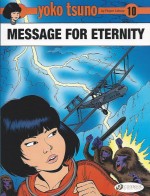
Yoko Tsuno volume 10: Message for Eternity


By Roger Leloup translated by Jerome Saincantin (Cinebook)
ISBN: 978-1-84918-251-5

The uncannily edgy yet excessively accessible European exploits of Japanese scientific adventurer Yoko Tsuno began first began gracing the pages of Spirou in September 1970 and are still going strong.

The explosive, eye-popping, expansively globe-girdling multi-award winning series was the brainchild of Roger Leloup, another hugely talented Belgian who worked as a studio assistant to Herge’s on The Adventures of Tintin before striking out on his own.

Compellingly told, superbly imaginative but always solidly grounded in hyper-realistic settings sporting utterly authentic and unshakably believable technology, these illustrated epics were at the vanguard of a wave of strips featuring competent, clever and brave female protagonists which revolutionised Continental comics from the last third of the 20th century onwards and are as potently empowering now as they ever were.

The initial Spirou stories ‘Hold-up en hi-fi’, ‘La belle et la bête’ and ‘Cap 351’ were short introductory vignettes before the superbly capable Miss Tsuno and her always awestruck and overwhelmed male comrades Pol and Vic truly hit their stride with premier extended saga Le trio de l’étrange which began serialisation with the May 13th 1971 issue.

That epic of extraterrestrial intrigue was the first of 27 European albums to date, and the on show here was first serialised in Spirou #1882-1905 (9th May-17 October 17th 1974) and released the following year as Message pour l’éternité. A skilfully suspenseful mystery thriller, it was chronologically the fifth album and reaches us as Cinebook’s tenth translated chronicle.

It all begins as ever-restless Yoko perfects her skills in a new hobby. Gliding high above Brittany she fortuitously sets down in a field near a vast telecommunications complex. Offered a tour of the space-probing facility she learns from one of the scientists of a fantastic “ghost message” recently picked up by satellites: a Morse code signal from a British plane lost in 1933. Moreover the signal is still being regularly broadcast…

When Yoko tries to arrange to have her glider picked up and sort out her own departure, a mysterious Englishman offers her a lift in his private helicopter. He has an ulterior motive: an employee of the company which insured the lost flight he is looking for someone with certain precise qualifications to trace the downed flight and recover a fortune in jewels from it. Her fee will be £20,000…

It transpires that his firm has known where the plane went down for some time, but geographical and logistic difficulties have prevented them from undertaking a recovery mission until now. Moreover, although they have now started the process, the petite engineer is physically superior to the candidates the company are currently working with…

Cautiously accepting the commission, Yoko starts planning but even before Pol and Vic can join her the following day, strange accidents and incidents begin to imperil her life…

The boys are understandably reluctant but that attitude turns to sheer frustration and terror after someone tries to shoot down Yoko as she practises in her glider. This only makes her more determined to complete the job at all costs.

Two weeks later the trio are heading to the daunting Swiss fortress the company uses as a base when another spectacular murder attempt almost ends their lives, but Yoko is undaunted. Not so Vic and Pol, especially after hearing that two of her fellow trainees have recently died in similar “accidents” in the mountains…

Carrying on regardless, she is introduced to the fantastic glider-&-launch system which will take her to the previously unattainable crash site and begins perfecting her landing technique in a fantastic training simulator.

Eventually more details are provided and the real story unfolds. The Handley-Page transport they are seeking was conveying diplomatic mail from Karachi to London in November 1933, but vanished in a storm over Afghanistan. Decades later a satellite somehow picked up a broken radio message stating it had landed… somewhere…

The businessman the trio call “Milord” identifies himself as Major Dundee – a spymaster from Britain’s Ministry of Defence – and explains how a shady American former U2 pilot approached the British government, claiming to have spotted the downed ship during a clandestine over-flight of Soviet territories.

He provided purloined photos showing the plane in the centre of a vast circular crater on the Russo-Chinese border, but subsequent reconnaissance flights revealed nothing in the hole and the decision was taken to make a physical assessment, even though the already inaccessible site was deep in hostile enemy territory…

Since then it has become clear that some unidentified agent or group is acting against the recovery project, probably intent on retrieving the ship’s mysterious but valuable cargo for a foreign power.

Events spiral out of control when a traitor in the training team attempts to kill Yoko and “Operation Albatross” is rushed to commencement before the unknown enemy can try again…

Within a day she is transported in a most fantastic and speedy manner around the world before her space-age glider prototype is secretly deployed over the enigmatic crater…

Narrowly avoiding patrolling Soviet jets, Yoko deftly manoeuvres into the mist-covered chasm and plunges into one of the most uncanny experiences of her life.

The old plane is certainly gone. The floor of the crater is strangely cracked and at the centre stands a strangely burned and blackened monolith, there are uncharacteristic animal bones everywhere and at one end of the vast cavity there is a primitive but large graveyard…

Whilst the astounded girl is exploring she is ambushed by her treacherous fellow trainee who has raced after her by conventional means and parachuted into the bizarre basin. However, his original plans have changed drastically since arrival and despite the machine gun he wields he needs Yoko’s help.

He’s already located the Handley-Page – somehow manually dragged under an unsuspected overhang in the crater – but is mortally afraid of what he describes as the “tiny people” infesting the terrifying impact bowl…

As the unlikely allies head towards the perfectly preserved plane, the truth about the terrifying homunculi is shockingly revealed and they encounter the last human survivor of downed Diplomatic Flight, discover to their supreme cost the uncanny and ultimately deadly atmospheric anomaly which has kept the plane a secret for decades and turned the crater into a vast geological radio set…

When the dust settles Yoko realises she is trapped in the subterranean anomaly. With all her escape plans rendered useless she must align herself with the bizarre sole survivor and his bestial, rebellious servants, but she also refuses to give up on the recovery mission.

Of course that doesn’t mean that she has to trust anything the old relic in the hole or Major Dundee has said. With that in mind she lays her own plans to settle matters…

As always the most potent asset of these breathtaking dramas is the astonishingly authentic and staggeringly detailed draughtsmanship and storytelling, which superbly benefits from Leloup’s diligent research and meticulous attention to detail, honed through years of working on Tintin.

With this sleekly beguiling tale Yoko proved that she was a truly multi-faceted adventurer, equally at home in all manner of dramatic milieus and able to hold her own against the likes of James Bond, Modesty Blaise, Tintin or any other genre-busting super-star: as triumphantly capable pitted against spies and crooks as alien invaders, weird science or unchecked force of nature…

This is a splendidly frenetic, tense thriller which will appeal to any fan of blockbuster action fantasy or devious espionage exploit.
Original edition © Dupuis, 1973, 1979 by Roger Leloup. All rights reserved. English translation 2015 © Cinebook Ltd.

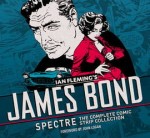
Ian Fleming’s James Bond: Spectre – the Complete Comic Strip Collection


By Henry Gammidge, Jim Lawrence, John McLusky & Yaroslav Horak (Titan Books)
ISBN: 987-1-78565-155-7

Win’s Christmas Gift Recommendation: A Truly Traditional Licence to Thrill… 9/10

There are sadly few British newspaper strips that can rival the influence and impact of the classic daily and Sunday “funnies” from America, especially in the field of adventure fiction. The 1930’s and 1940’s were particularly rich in popular, not to say iconic, creations and you’d be hard-pressed to come up with household names to rival Popeye, Dick Tracy or Flash Gordon, let alone Blondie, Li’l Abner, Little Orphan Annie or Popeye – and yes, I know I said him twice, but Elzie Segar’s Thimble Theatre was funny as well as thrilling, constantly innovative, and really, really good.

What can you recall for simple popularity let alone longevity or quality in Britain? Rupert Bear? Absolutely. Giles? Technically, yes. Nipper? Jane? Garth? I’d hope so, but I doubt it. The Empire didn’t quite get it until it wasn’t an empire any more. There were certainly many wonderful strips being produced: well-written and beautifully drawn, but that stubborn British reserve just didn’t seem to be in the business of creating household names.

Until the 1950’s…

Something happened in the Britain of the New Elizabethans – and I’m not going to waste any space here discussing it. It just did. Now we’re moving on.

In a new spirit that seemed to crave excitement and accept the previously disregarded, comics got carried along on the wave. Eagle, Lion, the regenerated Beano and girls’ comics in general all shifted into visually receptive high gear and so did newspapers.

Those facts and the canny repackaging of some classy classics which tie in to current Bond Blockbuster SPECTRE – just in time for the Christmas presents rush – means I can happily go on about one of British strip cartooning’s greatest triumphs as Titan Books release a splendidly lavish and sturdy oversized (294 x 277 mm) monochrome compilation of all the canonical adaptations of Fleming’s novels featuring the SPecial Executive for Counter-intelligence, Terrorism, Revenge and Extortion…

The first 007 novel – Casino Royale – was published in 1953 and diligently serialised in the Daily Express beginning in 1958, beginning a run of book adaptations (by Anthony Hern, Henry Gammidge, Peter O’Donnell and Kingsley Amis) before eventually Jim Lawrence, a jobbing writer who had scripted the aforementioned Buck Rogers, came aboard with The Man With the Golden Gun to complete the transfer of the Fleming canon to comics format, thereafter staying to create all new adventures, which he did until the strip’s demise in 1983.

The art was always of the highest standard. John McLusky provided the gripping illustrations until 1966 and the conclusion of You Only Live Twice. Although perhaps lacking in flash or verve, the workmanlike clarity and solidly rugged drive of his drawing easily handled an immense variety of locales, technical set-ups and sheer immensity of cast members, whilst accomplishing the then-novel conceit of advancing a plot and ending each episode on a cliff-hanging “hook” every day.

He was succeeded by Yaroslav Horak, who like Lawrence debuted on Man With the Golden Gun, bringing a looser, edgier style to proceedings, at once more cinematic and with a closer attention to camera angle and frenzied action which seemed to typify the high-octane, all-action 1960’s.

Horak illustrated 26 complete adventures until 1977 when The Daily Express ceased carrying Bond and the then-running case suddenly switched to The Sunday Express (from January 30th until conclusion on May 22nd).

None of which is relevant for this stand-alone edition which commences with fond memories and keen insights in the Introduction ‘The Threat of Spectre’ by playwright, film producer and current 007 screenwriter John Logan…

The strip ‘Thunderball’ (11th December 1961-10th February 1962) adapted the ninth novel and proved to be both calamitous and controversial at the time of publication. The plot involves the theft of nuclear bombs by millionaire treasure hunter Emilio Largo, fronting an unsuspected terrorist group called SPECTRE …

Inexplicably for the paper, the tale was censored and curtailed at the direct demand of the Daily Express‘ owner Lord Beaverbrook. Five days worth of strips were excised (and for the full story you’ll need to read the book or track down Titan’s 2007 paperback album edition which provided an ancillary text feature detailing what was cut).

Nevertheless, what remains by Henry Gammidge & McLusky is still pretty engrossing comics-fare and at least some effort was made to wrap up the storyline before the strip ended.

It was then dropped for almost a year before Bond triumphantly returned with an adaptation of eleventh novel On Her Majesty’s Secret Service…

Here however there’s latitude to print the strip adaptation in proper chronological order so next up is ‘The Spy Who Loved Me’ (which appeared from 18th December 1967 to 3rd October 1968).

The action goes into overdrive as the ongoing strip saga reaches the point where Fleming’s last work is adapted, promptly to be followed by all-new adventures. The story is also generously fleshed out (Fleming’s novel was written from the viewpoint of damsel in distress Vivienne Michel and Bond doesn’t show up until the last third of the text).

What we have here is a complex and intriguingly taut battle of wits as Bond and Vivienne combat a duo of deadly arsonists and hitmen with the super-agent’s foray against the revived SPECTRE mob in Canada providing a tense battle of wits and suitably gratuitous just deserts all around…

Arguably the two best novels were then adapted back-to-back. After the falling out with the Express‘ owner, the Bond strip was absent from the paper’s pages from February 1962 until June 1964. The gap was explained as Bond’s year-long search for arch villain Ernst Blofeld…

On Her Majesty’s Secret Service – by Gammidge & McLusky – ran from 29th June 1964 to 17th May 1965) and depicted how the hunter finally discovered his worst enemy and his own ideal woman in a coolly suspenseful and blistering action-drenched extravaganza set primarily in the Swiss Alps. Closely adhering to Fleming’s script – as did the George Lazenby film version – it all ends with the wedding day murder of Bond’s bride Tracy (Draco) di Vicenzo, an atypically downbeat conclusion that directly led into ‘You Only Live Twice’ (18th May 1965 – 8th June 1966, by Gammidge & McLusky) wherein the shattered hero degenerates to the point of almost being fired by M until despatched to Japan on a milk-run to assassinate Dr Guntram Shatterhand and realises his target is actually despised monster and wife-killer Blofeld…

These stories are a must for not only aficionados of 007 but for all thriller fans; stunning examples of terse, gripping adventure uncluttered by superficial razzamatazz, jam-packed with adventure, sex, intrigue and sudden death and starring the world’s greatest clandestine operative who never rests in his vital mission to keep us all free, safe, shaken, stirred and thoroughly entertained.

Get back to basics and remember that classic style is never out of fashion in this, the Greatest Bond Film You’ll Ever Read…
Thunderball © Ian Fleming Publications Ltd/Express Newspapers Ltd 1961. The Spy Who Loved Me © Ian Fleming Publications Ltd/Express Newspapers Ltd 1962. On Her Majesty’s Secret Service © Ian Fleming Publications Ltd/Express Newspapers Ltd 1963. You Only Live Twice © Ian Fleming Publications Ltd/Express Newspapers Ltd 1964. James Bond and 007 are â„¢ of Danjaq LLC used under licence by Ian Fleming Publications Ltd. All Rights Reserved.

Secret Warriors volume 5: Night


By Jonathan Hickman, Mirko Colac, Alessandro Vitti, David Marquez & various (Marvel)
ISBN: 978-0-7851-4803-6

In his “Infinity-formula” extended career, Marvel’s immortal secret agent Nick Fury fought in every war since WWII, worked for the CIA and ran numerous iterations of superspy agency S.H.I.E.L.D.; generally finding over and again that nobody could be trusted – not to stay clean and decent – in a world of temptation.

Worse yet, even the best of men could be forced to whatever was necessary given the right motivation…

Too many times the spooks “on our side” became as debased as the bad guys in a world where covert agencies were continually exposed as manipulative, out-of-control tools of subversion, oppression and ambition.

The taste of betrayal and those seeds of doubt and mistrust never went away, and following a succession of global crises – including a superhero Civil War and the rise of a certified maniac to the second most powerful position in America – Fury was ousted as S.H.I.E.L.D. director.

His immediate successor Tony Stark proved to be a huge – if well-meaning – mistake, and after an alien invasion by Skrulls the entire organisation was mothballed. He was replaced by the dynamic Norman Osborn and his cultishly loyal H.A.M.M.E.R. outfit. It was a case of giving a rabid fox the keys to the henhouse…

As America’s Director of National Security, the former Green Goblin instituted a draconian “Dark Reign” of oppressive, aggressive policies which turned the USA into a paranoid tinderbox.

The nation’s Top Fed was specifically tasked with curbing the unchecked power and threat of a burgeoning metahuman community, but he was also covertly directing a cabal of the world’s greatest criminals and conquerors; intent on divvying up the planet between them. The repercussions of Osborn’s rise (and inevitable fall) were felt throughout and featured in many series and collections throughout the entire fictive universe.

His brief rule also drastically shook up the entrenched secret empires of the planet and his defeat destabilised many previously unassailable clandestine Powers and States…

Fury, a man driven by duty, fuelled by suspicion and powered by a serum which kept him vital far beyond his years, didn’t go away. He just went deep undercover and continued doing what he’d always done – saving the world, one battle at a time. From this unassailable, unsuspected vantage point, free of the shackles of politically motivated oversight, Fury picked his battles and slowly gathered assets and resources he had personally vetted or constructed…

The indomitable freedom fighter had always known that to do the job properly he needed his own trustworthy forces and no constraints. To this end he had spent decades secretly sourcing and stockpiling his own formidable, unimpeachable army. Decades in charge of S.H.I.E.L.D. had provided him with mountains of data on metahumans. From these he had compiled “Caterpillar Files” covering many unknown, unexploited and, most importantly, untainted potential operatives who might one day metamorphose into true assets…

His first move was to assemble a crack squad of super-human agents. Team White initially comprised Yo Yo Rodriguez AKA Slingshot, neophyte mystic Sebastian Druid, Jerry “Stonewall” Sledge, J.T. “Hellfire” James, instinctive leader Daisy Johnson – codenamed Quake – and the terrifyingly volatile Alexander: a 12-year old boy with incredible power.

The child Phobos was destined to become a true god and personification of Fear itself but until then his daily-growing divine gifts were Fury’s to use… if he dared…

In the aftermath of the wave of crises the old soldier had come across a truly shocking piece of intel: for most of his career, S.H.I.E.L.D. had been no more than a deeply submerged and ring-fenced Hydra experiment.

All Fury’s world-saving triumphs had been nothing more than acceptable short-term losses for a secret society which claims to reach back to ancient Egypt, secretly steering the world for millennia.

However since Osborn and the Skrull invasion had shaken things up, the old war-dog now had an honest chance of wiping out his perfidious many-headed, faceless foe forever…

Hydra had been badly damaged by the crisis, and as the dust settled Baron Wolfgang von Strucker sought to capitalise on the chaos to regenerate the cult in his own image, seizing all fallow assets, technology and even experienced agents abandoned by friends and enemies alike…

To this end, Strucker co-opted breakaway factions of Hydra and convened a new hierarchy of deadly lieutenants loyal to him alone. However even with Viper, Madame Hydra, Kraken, Silver Samurai, The Hive and mystically resurrected mutant ninja The Gorgon on board, the prospect of wedding super-science and corporate rapaciousness with ancient magic and millennial covert cabals was a risky ploy…

Their rabid rapid expansion also gave Fury an opportunity to place one of his own deep within the organisation…

To further bolster his own relatively meagre forces, Fury reached out to selected old S.H.I.E.L.D. comrades and especially his former second-in-command Dum-Dum Dugan who had gathered up the most trustworthy agents and veterans into a private security agency – the Howling Commandos Private Military Company. Warriors to the last, they were all looking for one last good war and a proper way to die…

Some of them got their wish when the good guys launched a daring raid and stole three of the mothballed colossal flying fortress warships dubbed Helicarriers, laying the groundwork for an imminent, unavoidable and very public shooting war…

Fury’s counterattack failed spectacularly and in the resultant chaos that followed things only got worse…

Now Hydra has once more splintered into factions again leaving Strucker embroiled in a globe-spanning vendetta with Soviet-founded subversive organisation Leviathan. Moreover, their once-covert conflict has escalated into a monstrously damaging and destructively public shooting war resulting in thousands of collateral civilian casualties all over Earth…

Written throughout by Jonathan Hickman, this fifth complex and intriguing espionage epic collects Secret Warriors #20-24 (November 2010-March 2011) and opens with the eponymous 3-parter ‘Night’ and ‘How Did Things Ever Come to This?’ (art by Mirko Colak and Alessandro Vitti) wherein Fury briefs his diminished White team – Hellfire, Stonewall, Slingshot, Daisy, Phobos and human teleporter Eden Fesi – about the growing crisis and tells them how they’re going to stop it.

Once the squad’s preparations to raid and eradicate Hydra’s key base are finalised, the traitor in Fury’s handpicked team takes the first opportunity to pass on the plans to the always-one-step-ahead opposition…

Infiltrating the supposedly unsuspecting Gehenna Base in ‘This is How it was Always Going To Be’ Team White find a veritable army of hostiles led by Gorgon, Strucker and Madame Hydra waiting for them, but still manage to plant a devastating “mountain-breaker” bomb before beginning a frantic retreat. In the melee Fury and Phobos are separated from the rest.

Confronted by Gorgon, the boy-god tricks his grizzled human mentor into leaving before turning to duel the Gorgon. After a shattering battle with enchanted swords Alex dies heroically, enigmatically stating “this is how it’s supposed to be”…

The tragedy concludes with ‘I Gave Everything I Had’ as the mountain-breaker – aided by Daisy’s quake powers – detonates and Fury pragmatically drives his protégés to a secret rendezvous where his back-up escape plan is waiting.

The old warrior then selects one of the squad to join him in a rearguard action and, as they hold back the Hydra hordes, makes it plain that he’s aware of the greedy treachery which caused this debacle and Phobos’ death.

Only Fury rejoins the rest of Team White as they make their hairsbreadth escape…

In the aftermath, Strucker fumes, his frustration at fever pitch and his power further diminished by the desertion of The Gorgon and Madame Hydra. He is not expecting his faithful subordinate Kraken to try to kill him…

Illustrated by Alessandro Vitti, ‘Rebirth’ offers an elucidatory flashback which clarifies the mechanics of the team’s lucky escape. Six months previously Fury had very publicly kicked junior sorcerer Sebastian Druid out, declaring him a liability.

It was another ruse and ‘There Is No Out’ reveals how the portly mage was subsequently hot-housed by cyborg SHIELD agent John Garrett whose draconian training program turned the sad sack into a lethally capable operative in complete control of his eldritch abilities.

As a graduation test Garrett had Druid assassinate one of the Leviathan leaders and make it appear as if Hydra was behind the killing…

The Beginning of The End commences with ‘Wheels Within Wheels Part One’ (art by David Marquez & Vitti) as another strand of Fury’s Byzantine scheme seemingly falls apart. A year ago and unknown to all, he had activated another, completely covert Caterpillar team of super-agents, led by his own son Mikel.

Now ‘I Did My Best’ reveals how that entire squad falls in battle against Hydra rebel Hive and a shell-shocked, heartbroken and utterly beaten Nick Fury surrenders himself to Kraken and his Hydra host…

To Be Concluded…

This excellent exercise in tense suspense and Machiavellian manipulation also includes a stunning ‘Cover gallery’ by Jim Cheung and Paul Renaud to supplement the bleak, engagingly cynical, convoluted, over-the-top action and dazzling cloak-and-dagger conflicts: employing enough intrigue to bamboozle even the most ardent espionage aficionado, with the added bonus that far less knowledge of Marvel continuity is necessary to fully appreciate this particularly intense and engaging effort to the full.
© 2010, 2011 Marvel Characters, Inc. All rights reserved.

Black Widow: Kiss or Kill


By Duane Swierczynski, Joe Aherne, Manuel Garcia, Brian Ching, Lorenzo Ruggiero, Bit & various (Marvel)
ISBN: 978-0-7851-4701-5

The Black Widow started life as a svelte and sultry honey-trap Russian agent during Marvel’s early “Commie-busting” days. Natalia Romanova was subsequently redesigned as a super villain, falling for an assortment of Yankee superheroes – including Hawkeye and Daredevil – defecting and finally becoming an agent of SHIELD, freelance do-gooder and occasional leader of the Avengers.

Throughout her career she has been considered efficient, competent, deadly dangerous and somehow cursed to bring doom and disaster to her paramours. As her backstory evolved, it was revealed that she had undergone experimental Soviet procedures which had enhanced her physical capabilities and lengthened her lifespan, as well as assorted psychological processes which had messed up her mind and memories…

Always a fan favourite, the Widow only really hit the big time after featuring in the Iron Man, Captain America and Avengers movies, but for us unregenerate comics-addicts her print escapades have always offered a cool, sinister frisson of delight.

This particular caper compilation (reprinting Black Widow volume 4 #6-8 spanning November 2010 to January 2011) was the second and final story arc of a short-lived series and includes a riotous team up tale from the Iron Man: Kiss & Kill 1-shot (August 2010).

The espionage elitism opens with the eponymous 3-chapter ‘Kiss or Kill’ by writer Duane Swierczynski, illustrated by Manuel Garcia, Lorenzo Ruggiero, Bit and colourist Jim Charalapidis, as idealistic young journalist and recently bereaved son Nick Crane finds himself the target of two mega-hot, ultra lethal female super-spies in Houston’s club district.

Both of them say they want to save him but each seems far more intent on ending Nick’s life, and in between mercilessly fighting each other and hurtling across the city in a stampede of violent destruction both have demanded that he name his privileged source…

Nick is inclined to believe the blonde called Fatale. After all, he has a surveillance tape of the redhead – the Black Widow – with his father moments before he died…

After his senator dad was found with his brains all over a wall, Nick started digging and uncovered a pattern: a beautiful woman implicated in the deaths of numerous key political figures around the world…

After a staggering battle across the city Natalia is the notional victor but isn’t ready when Nick turns a gun on her. She still goes easy on him and he wakes up some time later in Roanoke, Virginia utterly baffled. She explains she’s on the trail of an organisation devoted to political assassination using a double of her to commit their high profile crimes but the angry young man clearly doesn’t believe her.

Further argument is curtailed by the sudden arrival of an extremely competent Rendition Team who remove them both to a secret US base in Poland. After a terrifying interval the Widow starts thinking that her extreme scheme to get the name out of Nick might be working but that all goes to hell when a third force blasts in and re-abducts them.

Realising that her government liaison is playing for more than one side, the Widow blasts her way out, dragging Nick with her, and soon they are on the run with only her rapidly dwindling and increasingly untrustworthy freelance contacts to protect them.

The escape has however almost convinced Nick to trust her with his source but that moment passes when the latest iteration of Crimson Dynamo and illusion-caster Fantasma derail the train they’re on…

Another explosive confrontation is suddenly cut short when Fatale arrives but rather than assassination she has an alliance in mind. The mysterious mastermind behind the killings and framing the Widow has stopped paying the killer blonde and thus needs to be taught a lesson about honouring commitments…

Now armed with Nick’s contact’s details they go after the enigmatic “Sadko” but the shady operator seems to be one step ahead of them as usual.

But only “seems”…

To Be Continued…

Rounding out this espionage extravaganza ‘Iron Widow’, written by Joe Aherne with art by Brian Ching and colourist Michael Atiyeh from Iron Man: Kiss & Kill, sees the Russian émigré give Avenging inventor Tony Stark a crash course in spycraft after a very special suit of Iron Man armour is stolen.

Fully schooled, the billionaire succeeds too well in locating his missing mech but falls into a terrifying trap set by sinister Sunset Bain and becomes a literal time-bomb pointed at the origin of The Avengers. Luckily Black Widow is on hand to prove skill, ingenuity and guts always trump mere overwhelming power…

A fast and furious, pell-mell, helter-skelter rollercoaster of high-octane intrigue and action, Kiss or Kill also includes a captivating collation of covers-&-variants by Daniel Acuña, J. Scott Campbell, Brian Stelfreeze, Ching & Chris Sotomayor and Stephane Perger, making this such a superb example of genre-blending Costumed Drama that you’d be thoroughly suspect and subject to scrutiny for neglecting it.
© 2010, 2011 Marvel Characters, Inc. All rights reserved.