Thunderbirds – the Comic Collection


By Alan Fennell, Scott Goodall, Frank Bellamy, John Cooper, Eric Eden, Graham Bleathman & various (Egmont)
ISBN: 978-1-4052-6836-3

Win’s Christmas Gift Recommendation: 10/10 because it just is.

Stand By For Frothing!
Growing up in 1960’s England was the best of all possible worlds for a comic lover. As well as US imports you were treated to some frankly incredible weekly publications, and market bookstalls sold second-hand comics for at least a third of their cover price. We also had some of the greatest artists in the world working on some of the best licensed properties around. A perfect example is the TV – primarily Gerry Anderson – anthology comic TV Century 21.

For British kids of a certain vintage – it varies from eighty to four and three quarters – the Anderson experience is a large and critical component of the DNA of childhood. The TV episodes, toys, bubblegum cards, movies and especially the comic strips all irresistibly evoke and re-manifest the thrill and fevered anticipation of juvenile ecstasy in the millions of kids who enjoyed the weekly rush of mind-boggling, mouth-watering adventure – even decades after the initial hit.

Thus this latest glossy compilation, collecting some of the greatest strips in comics history is probably going to leave a lot of people gurgling in delight as they revisit or – if they’re incredibly lucky – see for the first time a spectacular panorama of futuristic fantasy thrills, spills and chills.

TV Century 21 (the unwieldy “Century” was eventually dropped) was patterned after a newspaper – albeit from 100 years into the future – and this shared conceit carried avid readers into a multimedia wonderland as television and comics fed off each other.

The incredible illustrated adventures were often supplemented with colour stills taken from the shows and photos also graced all text features and fillers which added to the unity of one of the industry’s first “Shared Universe” products. Even the BBC’s TV “tomorrows” were represented in a full-colour strip starring The Daleks.

The first issue launched on January 23rd 1965, instantly capturing the hearts and minds of millions of children and further proving to British comics editors the unfailingly profitable relationship between TV shows and healthy sales.

Filled with high quality art and features, printed in gleaming photogravure, TV21 featured such strips as Fireball XL5, Supercar and Stingray as well as a strange series about a posh future lady spy and her burglar chauffeur.

In an attempt to be topical, the allegorically Soviet and terribly totalitarian state of Bereznik was used in many strips, acting as an overarching, continuity-providing bad guy. Behind numerous plots and outrages, the TomorrowTerrorState constantly schemed against the World Government (for which read “The West”) in an eerily advanced Cold War espionage scenario which augmented the aliens, aquatic civilizations, common crooks and cataclysmic disasters that threatened the general well-being of the populace.

Although Thunderbirds did not premiere on TV until September of that year (with Frank Bellamy’s incredible strip joining the comic’s line-up in January 1966 with #52) Lady Penelope and Parker (subtitled as and promising “Elegance, Charm and Deadly Danger”) had been running since issue #1.

The aristocratic super-spy was promoted to her own spin-off, top-class photogravure publication in January 1966 – just as Anderson’s newest creations launched into super-marionated life: their comics exploits becoming the big draw in the already unmissable TV21.

All that is further explained in an expansive ‘Introduction’ before the procession of weekly wonderment – two staggeringly intoxicating pages every seven days! – begins in this massive (290 pages, 297x222mm) full-colour luxury hardback.

It all begins with the thirteenth adventure, which ran from #141-146 (30th September to November 4th 1967, scripted by Scott Goodall and illustrated by Frank Bellamy) and details how an avaricious madman intends splitting Persia in two with ‘The Earthquake Maker’.

The unforgettable alien invader story ‘Visitor from Space’ (#147-154) follows, with one of the most memorable monsters in comics history stealing the show on every page, after which ‘The Antarctic Menace’ (6th January-17th February 1968, #155 to 161) begins a brand new year with the same tried and true thrills as the Tracy boys are called in to save the day after the Australia-Antarctica highway is sabotaged!

‘Brains is Dead’ (#162-169, running until 13th April) features the skulduggery of the sinister Hood in a deadly game of industrial espionage, after which artist Graham Bleathman provides a captivating glimpse at those longed-for technical details with double-page cutaway spreads and single page strip sequences ‘Thunderbird 1 Technical Data’, ‘Launch Sequence: Thunderbird 1’, ‘Launch Sequence: Thunderbird 2’ and ‘Thunderbird 2 Technical Data’.

The suspenseful strip stories resume with ‘The Space Cannon’ (Goodall & Bellamy, from TV21 #170-172 April 20th to May 4th 1968) as the team have to stop a continually firing neutron cannon that’s crashed into the Thames, whilst follow-up yarn ‘The Olympic Plot’ by Howard Elson & Bellamy (#173-178) finds the great games – held in the crater of Vesuvius – disrupted not only by a lake of fire but also a madman digging up a pirate treasure hidden since the 17th century…

TV21 #184-187 (27th July-17th August 1968) offered ‘Devil’s Crag’ (Goodall & Bellamy) and saw International Rescue save a lost schoolboy; a spectacular visual extravaganza that belies its deceptively simple plot, after which ‘The Eiffel Tower Demolition’ (#188-191) goes dreadfully wrong and Scott and Virgil find themselves endangered by thieves and saboteurs…

Bleathman returns with more pictorial top secrets in ‘Specifications of Thunderbird 3’, ‘Launch Sequence: Thunderbird 3’, ‘Launch Sequence: Thunderbird 4’ and ‘Specifications of Thunderbird 4’ after which Goodall & Bellamy expose ‘The Nuclear Threat’ (TV21 #192-196, 21st September-19th October 1968) of an out-of-control drone ferrying atomic weapons to their intended deep sea dumping ground, whilst the ‘Hawaiian Lobster Menace’ (#197-202) outrageously reveals a plot to turn tasty crustacean treats into explosive anti-personnel weapons…

‘The Time Machine’ (December 7th 1968 to January 11th 1969) used by Jeff and Scott Tracy malfunctioned in a most unfortunate manner, whilst from #209-217 a more domestic disaster saw ‘The Zoo Ship’ which foundered off Tracy Island lead to crewmen trapped aboard ship and savage beasts loose on shore with our harried heroes trying to save lives whilst keeping their secrets safe from the ever insidious Hood…

Bleathman has more artistic innovations to display in ‘Specifications of Thunderbird 5’, ‘The Construction of Thunderbird 5′, ‘This is Tracy Island’ and ‘Tracy Island’ giving us all the detail and data we desire before ‘City of Doom’ (Goodall as “Spencer Howard” & Bellamy from #218-226, 22nd March to May 17th) finds a top secret, ultra-futuristic Andean science metropolis endangered by a wild nuclear reaction…

Scripted by Goodall or (perhaps John W. Jennison?), ‘Chain Reaction’ ran in TV21 and TV Tornado #227-234, May 24th-12th July 2069) wherein the Tracy team had to stop an out of control 50,000-ton space freighter from impacting in the middle of San Francisco – and that’s just the start of an epic calamity which threatened to destroy the entire Pacific Rim…

There’s a big jump here to October 1968 for ‘The Big Bang’ by Geoff Cowan & John Cooper, possibly explained by the fact that once Bellamy left the strip, his cruelly underrated replacement rendered the strip in black and white. When Fleetway revived the Anderson franchise in the early 1990s the comics featured artwork from TV21 supplemented with new original material from another generation of fans and creators, but as Thunderbirds was far and away the biggest hit, some of Cooper’s strips were reprinted with the artist at last getting the chance to colour his efforts.

Thus this, his second original yarn from TV21 & Joe 90 #5-8 (25th October-15th November 1969), involving smuggled diamonds and a boy trapped on a building both sinking and about to explode…

The endeavours of the Tracy clan then conclude with ‘The Mini Moon’ (Richard O’Neill & Cooper (TV21 & Joe 90 #22-28, 21st February to April 4th 1970) as a roving planetoid menaces Earth and Brains, Alan and Gordon have to blow it up while it’s still far enough away to pose no extinction-level threat…

Happily there’s still plenty for fans to enjoy as, after Bleathman’s revelatory ‘The Secrets of FAB 1’ and Creighton-Ward Stately Home’, the adventures of Lady Penelope and her invaluable manservant Parker begin with ‘Mr. Steelman’ by Alan Fennell & Eric Eden. Originally seen in TV Century 21 #1-11, January 23rd to April 3rd 1965, this is a complex thriller involving espionage and a deadly robot, after which Bellamy handles ‘The Isle of Arran Riddle’ (#35-43, September 18th to November 13th 1965) wherein the Honourable Lady Creighton-Ward attempts to solve an ancient puzzle and inherit a fabulous ruby.

Eden returned for ‘The Vanishing Ray’ (#44-51) as the stately spy was mysteriously sent a torch that turned objects transparent, unaware that the wicked Hood was hot on its trail.

The deadly games end with ‘The Enemy Spy’, illustrated by the legendary Frank Hampson from the July 1965 Lady Penelope Summer Extra, wherein an idle glance at the TV news sets Her Ladyship on the trail of Bereznik’s top assassin…

But of course the real treasure is the phenomenal and unparalleled work of Frank Bellamy, whose fantastic design, drawing and painted colour (which holds up rather well here, despite the limitations of modern print technology to accommodate the subtleties of the photogravure process) steals the show – and usually one’s breath away!

The work of Bellamy and his successors are a cherished highpoint of British comic-making. Crisp, imaginative writing, great characters and some of the very best science-fiction art of all time make this a must-have book for just about anybody with a sense of adventure and love of comics. It doesn’t get better than this.
Thunderbirds ™ and © ITC Entertainment Group Limited 1964, 1999, 2013. Licensed by ITV Ventures Limited. All rights reserved.
Buffy the Vampire Slayer: Pale Reflections


By Andi Watson, Doug Petrie, Cliff Richards & Joe Pimentel (Dark Horse/Titan Books)
ISBN: 978-1-84023-236-6

Having conquered television, Buffy the Vampire Slayer began a similar crusade with the far harder to please comicbook audiences. Launched in 1998 and offering smart, sassy tales to accompany the funny, action-packed and mega-cool onscreen entertainment, the series began in an original graphic novel (Buffy the Vampire Slayer: the Dust Waltz) before debuting in a monthly series.

She quickly became a major draw for publisher Dark Horse – whose line of licensed comicbook successes included Star Wars, Indiana Jones, Aliens and Predator – and her exploits were substantially supplemented by a profusion of short stories in the company’s showcase anthology Dark Horse Presents and other venues.

Scripted primarily by Andi Watson, this particular UK Titan Books edition – with depiction and delineation from Cliff Richards & Joe Pimentel – features stories set during TV Season 3 and re-presents issues #17-19 (January through March 2000), as well as a delicious and timely morsel first seen in Dark Horse Presents #141, March 1999.

Check your facts here: Buffy Summers was a gormless charm-free cheerleaderValley Girl until the night when she inexplicably turned into a hyper-strong, impossibly durable monster-killer.

After being stalked by a creepy old coot from a secret society of Watchers she discovered that she was the most recent recipient of a millennial mystic curse which transformed mortal maids into living death-machines to all things undead arcane or uncanny: a Slayer.

Moving with her mom to typical California hamlet Sunnydale, Buffy then learned her new hometown was located on the edge of an eldritch gateway known to the unhallowed as The Hellmouth.

Enrolling at Sunnydale High Buffy made some friends and, schooled by new Watcher Rupert Giles, conducted a never-ending war on devils, demons and every shade of predatory supernatural species inexorably drawn to the area…

This slim supernal compilation at last concludes ‘Bad Blood’ – an extended storyline which pitted the daring, darling “Scooby Gang” against ambitious, narcissistic psycho-killer vampire Selke and her new breed of modified demonic thralls.

When vain Selke’s face was ruined in battle she naturally sought out a plastic surgeon. Dr. Flitter took up her cause, restoring and improving the vampire with the promise of immortality as his oft-postponed reward.

However, since scientific procedures didn’t work, he resorted to magic and his researches found a way to turn vampire blood into a super-steroid for Selke and her chosen brood. Now she and her newly-minted children of the night hunt not only humans for food, but other vampires to provide the raw ingredients of the Bad Blood serum…

Despite a rather full dance card, however, Selke cannot forget what Buffy did and is increasingly obsessed with making the Slayer suffer…

Selke’s über-vamps are also making much mischief, and Buffy and recently restored undead lover Angel are finding them almost impossible to destroy…

As a nocturnal civil war breaks out between Selke’s squad and the town’s “normal” vampires, Selke urges Flitter to use the blood to make a Slayer antipersonnel weapon – a sorcerous clone designed to hunt down and slaughter the original…

The saga picks up in ‘Your Cheatin’ Heart’ as Willow, Cordelia, Oz, Xander and Buffy are forced to join in school-type activities by building a float for an upcoming parade. Angel, meanwhile, has captured one of Selke’s new ‘Roid Rage Vamps and started obtaining answers in a manner most un-heroic…

On the midnight streets, Buffy is ambushed by her mystic clone and, after a blistering battle, loses. Elsewhere Selke, unaware that a new faction has sabotaged her modified blood supply, gorges herself on the foul brew…

After disposing of Buffy’s body down a handy manhole, the doppelganger attempts to infiltrate the Scooby Gang, but although she has the Slayer’s memories, her attitudes are seriously skewed. For instance, her knowledge of fashion rivals Cordie’s…

Tensions rise in ‘She’s No Lady’ as the clone starts to degrade. Born of Bad Blood, she casts no reflection and can’t see her face, but once she notices the flesh of her shoulder coming off she heads straight back to Doc Flitter…

The cosmetic alchemist has already discovered that someone has adulterated his buckets of blood and Selke is completely out of control when the clone arrives, leaking from many lesions.

None of them are aware that under Sunnydale Buffy is slowly recuperating, assisted by a shambling earlier prototype previously discarded by Flitter.

As Angel sneaks in and destroys the reservoir of augmented blood, the raging, oblivious Selke orders the duplicate to fetch Buffy’s body and prove she’s dead…

The gory carnival of chaos concludes in ‘Old Friend’ as the clone confronts the Slayer and her earlier incarnation in the sewers, whilst above ground Willow and Giles examine “Buffy’s” blood on a discarded parade costume and uncover the awful truth…

When Selke sees the decimation wrought by Angel, she goes berserk, body rapidly mutating into monstrosity, just as the long-awaited procession begins through Sunnydale. Her depredations are interrupted by the battered but victorious Buffy who spectacularly destroys Selke and ends the Bad Blood menace forever.

However in the shadows, deadly demon lovers Spike and Drusilla fade from sight, taking their new toy Dr. Flitter with them…

Supplemented by the usual wealth of photos and covers by Jeff Matsuda, John Sibal, Randy Green & Andy Owens, this chronicle also includes ‘Killing Time’ – a short adventure by Doug Petrie, Richards and Pimentel wherein three sulky Goth girls manifest chronal ravager Ragginor and the Slayer has to defeat the demon before all time ends…

Here is another superbly accessible magical fight-fest – even for those unfamiliar with the vast backstory: a creepy chronicle of short stirring sagas as easily enjoyed by the most callow neophyte as by any dedicated devotee.
Buffy the Vampire Slayer ™ & © 2000 Twentieth Century Fox Film Corporation. All rights reserved.

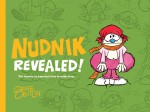
Nudnik Revealed!


By Gene Deitch (Fantagraphics Books)
ISBN: 978-1-60699-651-5

Kim Deitch has been one of the leading lights of America’s Comix Underground since its earliest days. He probably got his artistic acumen, narrative know-how and skewed raconteur’s view from his dad…

Eugene Merril “Gene” Deitch was born in 1924 and began his astounding career as a graphic designer and art director before eventually moving into animation. Over a 65-year career working as producer, scripter, artist, designer and Director for UPA/Columbia Pictures, MGM, Terrytoons/20th Century Fox, King Features and Paramount Pictures, he created cartoons for both movie audiences and television consumption.

In 1961 his cartoon feature of Jules Feiffer’s Munro won the Oscar® for Animated Short Film, and he numbers Tom Terrific, Tom and Jerry, Popeye and Krazy Kat amongst his other major successes. Deitch directed Alice of Wonderland in Paris, adapted the animated feature of Maurice Sendak’s Where the Wild Things Are and is credited with the first ever Tolkien film adaptation with The Hobbit in 1966.

Gene Deitch has resided in Prague for decades where he established a long and fruitful working relationship with Krátký Film s.r.o. studios. This partnership led, in 1964-1965, to a uniquely personal and brilliant run of movie cartoon shorts starring the latest in a shabby yet unbroken line of good-natured, ingenuously bumbling, impoverished cinematic victims of cruel circumstance.

The very first Nudnik cartoon garnered Deitch another Academy Award® nomination and led to the commission of 11 more shorts starring the luckless loafer, conceived and mapped out by Deitch to be constructed by his Iron Curtain cousins …and delivered just as the American tradition of preceding main movie blockbusters with brief cartoons was ending….

Now with those lost classics restored and collected on a commemorative DVD, Deitch has also compiled a glorious oversized (310 x 236mm) full-colour hardback compendium detailing the history and genesis of Nudnik as an accompaniment.

Dedicated to and enamoured of the hallowed concept of the lonely loser, Deitch famously got the idea for his favourite creation after a piece of office machinery tried to kill him. From there the concept of a down-and-out hobo who was a magnet for ever-increasing disaster just seemed to gel…  

Liberally illustrated throughout with original art and documents scrupulous hoarded by Deitch, the disclosures begin in the introductory ‘Here’s Nudnik’ after which the physical genesis of the character is revealed in ‘Nudnik, Master of Failure’…

In ‘What’s a Nudnik?’, Deitch traces the development of his ultimate baggy-pants clown, revealing his personal empathy with his creation, after which ‘The Nudnik Plot’ examines the narrative thrust of the two brief series.

Historical antecedents, poster art and some of the merchandising intended to supplement the character launch all contribute to the story of ‘The Nudnik Look’ before the real meat of this tome begins with Production Scrapbook – Capturing Ideas on Paper’.

This vast collection of utterly fascinating development sketches, preparatory roughs, scene layout drawings, models sheets, animation tests, character designs, episode models, gags, pictorial story snippets and even a complete 1967 “flip-book” adventure (‘The Cut Finger Fumble’ produced for the Montreal World’s Fair) plus more merchandise prototypes all show just how much work goes into making animation.

Then Film Setups – Some actual camera setups, cels, and backgrounds’ reproduces many actual finished scenes from the cartoons whilst Gags – Nudnik gag sketches, some of which were produced as 30-second “blackout” gag films’ reprints whole raw story sequences which show just how similar cartons and comics strips truly are.

At the time, Deitch was still learning how to work with his Czech team and thus his visual instructions were often excessively detailed.

The next section fills out the book with a magical treat for fans and students of the medium: three complete production storyboards, exactly as the actual animators received them and which they used to turn Deitch’s script, ideas and drawings into six minutes of slapstick action and outré sound effects.

The actual tales are all 18 to 20 pages of nine frames each, ‘Home Sweet Nudnik’ (episode 7), ‘Welcome Nudnik’ (episode 3) and ‘Good Neighbor Nudnik’ (episode 11), and work perfectly as comics even as they reveal the secret of animation magic…

This terrific tome then closes with additional features ‘To Russia With Love’ featuring a modern performer celebrating the cartoon clown’s shtick, a salutary example of the unwanted influence of Studio bosses in ‘Peeing in the Soup’ and a warm plug for that aforementioned DVD collection in ‘Nudnik Lives Again’…

Long regarded as a lost masterpiece of the art form, Nudnik Revealed! is a wonderful visual memoir which offers stunning insights into the history of cartoon creation and the mind of a brilliantly imaginative creative force.

Nudnik Revealed! is © 2013 Fantagraphics Books Inc. All contents © 2013 Gene Deitch. All rights reserved.

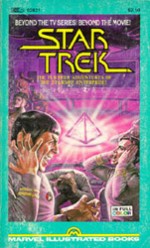
Star Trek: the Further Adventures of the Starship Enterprise – Marvel Illustrated Books


By Alan Brennert, Martin Pasko, Tom DeFalco, Luke McDonnell, Joe Brozowski, Mike Nasser, Tom Palmer & Klaus Janson (Marvel/)
ISBN: 0-939766-00-0

The stellar Star Trek brand and franchise might not have actually reached any new worlds, yet it certainly has permeated every civilisation here on Earth, with daily live-action and animated screen appearances appearing somewhere on the planet and comics iterations generated in a host of countries long lying fallow and unseen.

If only somebody could sort out the legal and logistical hassles so we could see again those stunning UK strips which appeared in Joe 90, TV21, TV Comic and Valiant from such fabulous creators as Angus Allan, Harry Lindfield, Mike Noble, Alan Willow, Ron Turner, Jim Baikie, Harold Johns, Carlos Pino, Vicente Alcázar, John Stokes and others, I might die a happy, nostalgia-drowned boy…

In the meantime however, here’s a little-seen lost artefact and another early glimpse at how our industry gradually became mainstream literature or “graphic novels”: a pulse-pounding paperback package for action fans, fantasy freaks and movie-lovers alike.

After a few abortive attempts in the 1960s to storm the shelves of bookstores and libraries, Marvel made a concerted and comprehensive effort to get their wares into more socially acceptable formats and, as the 1970s closed, purpose-built paperback collections and a string of new prose tales tailored to feed into their burgeoning brand began to emerge as the company continued its crusade to break into regular, real-world bookshops.

The company’s careful reformatting of their own classic comics adventures were generally excellent; a superb series of primers and a perfect new venue to introduce fresh readers to their unique worlds. In addition, by judicious partnerships with major film and TV properties, they expanded the market share for their little books in real shops and stores.

In this particular case the fact that the mighty Star Trek franchise’s comicbook requirements were being serviced by a stridently ascendant Marvel (after years with the commercial diffident Western/Gold Key Comics) made for an ideal repackaging opportunity…

The Further Adventures were all set in the days after Star Trek: the Motion Picture (which rebooted the long-dormant phenomenon and allowed Marvel to produce a vastly underrated 18-issue series) and recounted new exploits of the starship Enterprise and older, wiser, re-united Federation voyagers James T. Kirk, Spock, Dr. Leonard McCoy, Hikaru Sulu, Montgomery Scott, Nyota Uhura and Pavel Chekov.

This full-colour delight reformatted three of very best comicbook episodes and begins with ‘Eclipse of Reason’ by Alan Brennert, Martin Pasko, Luke McDonnell & Tom Palmer (originally seen in issue #12, March 1981) wherein the comrades are reunited with former Yeoman Janice Rand.

She has since married Kadan of Phaeton, an alien being composed of pure thought and volunteered for a one-way trip with him and an equally disembodied crew beyond the energy barrier that seals off our galaxy from the rest of the universe. However as in the TV episode “Where No Man has Gone Before”, collision with the barrier produces terrifying psionic anomalies and the exploratory starship U.S.S. Icarus turns back, its conceptual crew driven mad and determined to return home at all costs.

With the anti-matter powered ship on a collision course with the densely populated planet, Kirk, Spock and Rand must overcome extraordinary perils to save an entire world and a unique, extraordinary love…

Pasko, Joe Brozowski & Palmer collaborated on ‘Like a Woman Scorned’ (from previous issue #11, February 1981) wherein the Enterprise was despatched to evacuate a cult leader from a radiation-drenched colony world and Scotty was unhappily reunited with bitter old flame Andrea Manning – and her charismatic guru Carl Wentworth.

Even as the reluctant evacuee began exerting an uncanny persuasion and fomenting actual rebellion aboard ship, the downhearted engineer and his beloved ship began to suffer impossible attacks from creatures out of dark fairytales, leaving Kirk, Spock and Dr. McCoy to divine the incredible secret to the inimical invasion…

Last included is the marvellously twisted ‘Tomorrow or Yesterday’ (Tom DeFalco, Mike Nasser & Klaus Janson from #7 October 1980) wherein a landing crew beams down to doomed world Andrea IV to rescue the indigenous primitives from a devastating radiation cloud only to find the natives welcoming, aware of the danger but strangely unworried.

To make matters worse the encroaching Rad-storm has made return to the enterprise all but impossible.

In the great square the mystery deepens as destruction looms, when Kirk, Spock and McCoy observe the natives praying to statues of the Saviours destined to save them all: perfect likeness of the Federation Officers sculpted 24,000 years previously…

With time running out, the desperate heroes find themselves trapped amongst blithely unworried masses, all patiently waiting for the prophesied messiahs to save them – just as they have already done…

Smart, effective and lovingly executed, these classic yarns are long overdue for a compilation re-release (as far as I’m aware the stories from this comics series were only ever available in this paperback and as part of a CD-Rom package), and Trekkies, Trekkers and comics aficionados alike should rowdily unite to agitate until some publisher gets the message…
© 1980, 1981 Paramount Picture Corporation. All rights reserved. At that time Star Trek was ™ Paramount Picture Corporation.

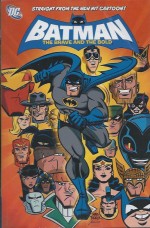
Batman: the Brave and the Bold volume 1


By Matt Wayne, J. Torres, Andy Suriano, Phil Moy, Carlo Barberi, Dan Davis & Terry Beatty (DC Comics)
ISBN: 978-1-4012-2878-1

The Brave and the Bold began in 1955 as an anthology adventure comic featuring short complete tales about a variety of period heroes: a format which mirrored that era’s filmic fascination with historical dramas. Devised and written by Bob Kanigher, issue #1 led with Roman epic Golden Gladiator, medieval mystery-man The Silent Knight and Joe Kubert’s now legendary Viking Prince. Soon the Gladiator was increasingly alternated with Robin Hood, but the adventure theme carried the title until the end of the decade when the burgeoning costumed character revival saw B&B transform into a try-out vehicle like Showcase.

Used to premiere concepts and characters such as Task Force X: the Suicide Squad, Cave Carson, Hawkman and Strange Sports Stories and the epochal Justice League of America, the comic soldiered on until issue #50 when it provided another innovative new direction which once again truly caught the public’s imagination.

That issue paired two superheroes – Green Arrow & Martian Manhunter – in a one-off team-up, as did succeeding ones: Aquaman and Hawkman in #51, WWII Battle Stars Sgt Rock, Captain Cloud, Mme. Marie & the Haunted Tank in #52 and Atom & Flash in #53. The next team-up, Robin, Aqualad & Kid Flash, evolved into the Teen Titans and after Metal Men/the Atom and Flash/Martian Manhunter appeared a new hero; Metamorpho, the Element Man debuted in #57-58.

From then it was back to the extremely popular superhero pairings with #59, and although no one realised it at the time, this particular conjunction, Batman with Green Lantern, would be particularly significant….

After a return engagement for the Teen Titans, two issues spotlighting Earth-2 champions Starman & Black Canary and Wonder Woman with Supergirl, an indication of things to come came when Batman duelled hero/villain Eclipso in #64: an acknowledgement of the brewing TV-induced mania mere months away.

Within two issues, following Flash/Doom Patrol and Metamorpho/Metal Men, Brave and the Bold #67 saw the Caped Crusader take de facto control of the title and the lion’s share of the team-ups. With the exception of #72-73 (Spectre/the Flash and Aquaman/Atom) the comic was henceforth a place where Batman invited the rest of company’s heroic pantheon to come and play…

Decades later the Batman Animated TV series masterminded by Bruce Timm and Paul Dini in the 1990s revolutionised the Dark Knight and subsequently led to some of the absolute best comicbook adventures in his seventy-year publishing history with the creation of the spin-off print title.

With constant funnybook iterations and tie-ins to a succession of TV cartoon series, Batman has remained popular and a sublime introducer of kids to the magical world of the printed page.

The most recent incarnation was Batman: the Brave and the Bold, which gloriously teamed up the all-ages small-screen Dark Knight with a torrent and profusion of DC’s other heroic creations, and once again the show was supplemented by a cool kid’s comicbook full of fun, verve and swashbuckling dash, cunningly crafted to appeal as much to the parents and grandparents as those fresh-faced neophyte kids…

This stellar premier collection re-presents the first 6 issues in a hip and trendy, immensely entertaining package suitable for newcomers, fans and aficionados of all ages and, although not necessary to the reader’s enjoyment, a passing familiarity with the TV episodes will enhance the overall experience (and they’re pretty good too)…

Following the format of the TV show, each tale opens with a brief vignette adventure before telling a longer tale. Issue #1 has the Caped Crimebuster and Aquaman putting paid to robotic rogue Carapax. This fed into main feature ‘The Panic of the Composite Creature’ (by Matt Wayne, Andy Suriano & Dan Davis) wherein Batman and the pulchritudinous Power Girl saved London from Lex Luthor‘s latest monster-making mechanism.

Phil Moy then illustrates Superman and the Gotham Guardian mopping up the terrible Toyman before ‘The Attack of the Virtual Villains’ finds the Bat and Blue Beetle in El Paso battling evil Artificial Intellect The Thinker in a compelling computer-game world…

After an introductory battle between Wonder Woman, Dark Knight and telepathic tyrant Dr. Psycho‘s zombie villains, ‘President Batman!’ (Wayne, Suriano & Davis) sees the Great Detective substitute for the Commander-in-Chief with Green Arrow as bodyguard when body-swapping mastermind Ultra-Humanite attempts to seize control of the nation. Then, in the full-length ‘Menace of the Time Thief!’ Aquaman and his bat-eared chum prevent well-intentioned Dr. Cyber from catastrophically rewriting history, following a magical and too brief prologue wherein sorcerer Felix Faust is foiled by a baby Batman and the glorious pushy terrible toddlers Sugar and Spike…

J. Torres, Carlo Barberi & Terry Beatty stepped in for both the chilling vignette wherein the nefarious Key was caught by Batman and a Haunted Tank whilst ‘The Case of the Fractured Fairy Tale’ began when the awesome Queen of Fables started stealing children for her Enchanted Forest and the Caped Crusader needed the help of both Billy Batson and his adult alter ego Captain Marvel…

This first compilation concludes with a preliminary clash between Hourman and Batman against the crafty Calculator, after which ‘Charge of the Army Eternal!’ (Torres, Suriano & Davis) finds the villainous General Immortus at the mercy of his own army of time-lost warriors and bandits and desperately seeking the help of the Gotham Gangbuster and ghostly Guardian Kid Eternity.

Although greatly outnumbered, the Kid’s ability to summon past heroes such as The Vigilante, Shining Knight, Viking Prince and G.I. Robot proves invaluable, especially once the General inevitably betrays his rescuers…

This fabulously fun rollercoaster ride also includes informative ‘Secret Bat Files’ on Luthor, Power Girl, Thinker, Blue Beetle, Ultra-Humanite, Green Arrow, Dr. Cyber, Aquaman, Queen of Fables, Captain Marvel, General Immortus and Kid Eternity, and the package is topped off with a spiffy cover gallery courtesy of James Tucker, Scott Jeralds & Hi-Fi.

DC’s Cartoon Network imprint is arguably the last bastion of all-ages children’s comics in Americaand has produced some truly magical homespun material (such as Tiny Titans or Billy Batson and the Magic of Shazam!) as well as stunning interpretations of such television landmarks as Scooby Doo, Powerpuff Girls, Ben 10, Dexter’s Laboratory and others.

The links between kids’ animated features and comicbooks are long established and, I suspect, for young consumers, indistinguishable. After all, it’s just adventure entertainment in the end…

Despite being ostensibly aimed at TV viewing kids, these mini-sagas are also wonderful, traditional comics thrillers no self-respecting fun-fan should miss: accessible, entertaining, well-rendered yarns for the broadest range of excitement-seeking readers, making this terrific tome a perfect, old fashioned delight. What more do you need to know?
© 2009 DC Comics. Compilation © 2008, 2009 DC Comics. All Rights Reserved.

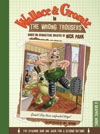
Wallace & Gromit in The Wrong Trousers – A Hardback Graphic Novel


By Nick Park, illustrated by Bill Kerwin (Egmont)
ISBN: 978-1-4052-5238-6

Here’s another superb cartoon adaptation of the world’s most animated British heroes. Hard though it is to believe, Wigan’s Finest have been delighting us for over twenty years and this delightful commemorative edition celebrates the fact, adding major mirth and mild menace to the malleable mix in a follow-up edition to last year’s science fiction fantasy Wallace & Gromit in A Grand Day Out.

In fact this magical comic strip adaptation is only coming full circle. Nick Park originally created the ingenious, quintessentially English cheese-loving duo as an art school graphic novel, before the lure of movement and sound diverted the concept into the world of animation and the olfactory, morphic joys of Plasticine.

Bill Kerwin’s moody watercolours aptly capture the pecuniary peril and muted menace of the dauntless duo as they struggle to make ends meet and poor Gromit is summarily ousted from his home to make room for a penguin lodger.

The felonious fowl then proceeds to steal Wallace’s filial affections and even appropriates the wonder dog’s birthday present from his cheese-loving master. What possible use could a penguin have for a pair of robotic techno-trousers?

Gromit must discover the reasons behind the actions of the ruthless, flightless sea-bird before Wallace is lost forever in this spellbinding rollercoaster romp, which perfectly captures the slapstick madness and utter glee of the original film. Lovingly rendered, perfectly timed, the skilful blend of low comedy and whimsy is every bit as effective on paper as on screen and this book is going to make a lot of kids – of all ages – deliriously happy.

Is it ever too soon to start recommending what to buy for Christmas? If not then consider this an essential “must have” – and don’t forget the first utterly excellent excursion A Grand Day Out while you’re about it and completists might also want to track down the 2004 Wallace & Gromit: The Whippet Vanishes. More Crackers, Gromit?!
© and ™ 2010 Aardman Animations Ltd. All rights reserved.

Rod Serling’s The Twilight Zone: Walking Distance


Adapted by Mark Kneece & Dove McHargue (Bloomsbury)
ISBN: 978-0-7475-8787-3

The Twilight Zone was an anthology television show created by the incredibly talented Rod Serling which ran for five seasons between 1959 and 1964. It served to introduce real science fiction, fantasy and modern horror themes to adult audiences who had thus far only experienced escapist, gung-ho space operas such as Flash Gordon and Tom Corbett: Space Cadet.

Serling’s show and the rivals and spin-offs which followed such as The Outer Limits and Night Gallery proved that such themes had both literary value and commercial potential during the turbulent “Space Age” of the 1960’s, and Twilight Zone in particular, thanks to Serling’s progressive views even addressed many social evils of the day.

There were 156 episodes of the first series – over half written by Serling – with such luminaries as Richard Matheson, George Clayton Johnson, Reginald Rose, Charles Beaumont, Earl Hamner Jr., Ray Bradbury, Damon Knight, Harlan Ellison, Lewis Padgett, Jerome Bixby and even Ambrose Bierce, also contributing episodes or tales for adaptation. It was revived twice (in 1985-1989 and 2002; a further 109 episodes) and the various incarnations ran continually in syndication from 1959-2003). Without the Twilight Zone and Rod Serling, it’s doubtful that shows like Star Trek would ever have been made…

Now Mark Kneece (see the superb Trailers, which he produced with Julie Collins-Rousseau), in conjunction with the Savannah College of Art and Design, has adapted some of those landmark early episodes as graphic novels published by Walker Books for Young Readers in America and available in the UK through Bloomsbury.

Martin Sloan is driving his expensive car. A 39 year-old ad exec at the top of his game, he is rich, busy and slowly dying inside. When his car crashes he finds himself near an old fashioned small-town just like the one he grew up in. Exactly like it. In fact, there’s a young boy over yonder who looks the spitting image of…

Illustrated with understated efficiency by Dove McHargue, a tutor at the Savannah college, ‘Walking Distance’ is a melancholic assault on the Rat-Race of Sixties America, an elegy to simpler, happier times and Serling’s most personal – almost autobiographical – story. This is a powerful shot at the relentless American Dream of success at all costs, with just the right amount of tension and terror to spice up the fable whilst keeping the message poignant and welcoming.

As Sloan confronts his past and reshapes his future, in this wonderfully enticing tale it’s easy to see and painful to admit that even though the warnings were clear fifty years ago (the episode was the fifth to air, a Halloween treat which debuted on October 30th 1959) the lesson still needs learning today.

Serling was a comics fan from his earliest days, particularly of the EC tales that shook America in the days before the Comics Code: a fact obvious to anybody who has read those challenging masterpieces and watched his magnificent continuation of them in television. This adaptation of his work is both a fitting tribute and an excellent introduction to a world of graphic narrative a little further out and deeper in than the costumed mainstream, and one any older child can – and should – happily experience.

Text © 2008 the Rod Serling Trust. Illustrations © 2008 by Design Press, a division of Savannah College of Art and Design, Inc. All Rights Reserved.

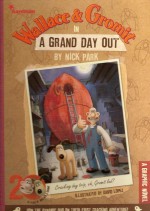
Wallace & Gromit in A Grand Day Out – hardback graphic novel


By Nick Park, illustrated by David Lopez (Egmont)
ISBN: 978-1-4052-4532-6

Hard though it is to believe, Wallace and Gromit have been delighting us for twenty years and this delightful commemorative edition celebrates the fact in fine style by coming full circle. According to Nick Park’s informative Foreword the ingenious, quintessentially English cheese-loving duo were originally conceived as an art school graphic novel, before the Plasticene lure of movement and sound diverted the concept to the world of animation.

David Lopez sensitively adapts with a soft, water-coloured grace the classic tale of an ingenious man and his dog on an epic hunt for cheese that leads them to the moon and a unique confrontation with the dreamy robot that guards its edible treasures.

Lovingly rendered, perfectly timed, the skilful blend of low comedy and whimsy is just as memorable in two dimensions as four, and this book is going to make a lot of kids – of all ages – wonderfully happy.

Is it ever too soon to start recommending what to buy for Christmas? If not then consider this a “must have”…

© and ™ Aardman Animations Ltd. 2009

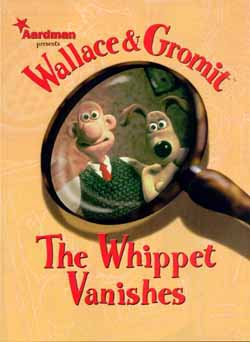
Wallace and Gromit: The Whippet Vanishes

Wallace and Grommit: The Whippet Vanishes 

By Simon Furman, Ian Rimmer and Jimmy Hansen (Titan Books)
ISBN: 1-84023-498-9

There are lots of comics and graphic novels that derive from movie and television sources, and for whatever reason, most of them just do not cut it. This is a noteworthy exception.

This publication, dedicated to the further adventures of Northern boffin Wallace and the incomparable best-of-breed working dog Gromit, sees them take on the role of amateur Pet Detectives in a helter-skelter romp to track down a mysterious pet-napper.

All their trademark insanity and high energy action abounds as they deal with snow drifts and missing garden Gnomes and add another eccentric evil genius to their catalogue of arch-villains.

Great fun for all ages and I’d like to offer my particular congratulations for captivating art and colour from Jimmy Hansen and John Burns. Puppets have never been drawn so well.

© 2004 Aardman Animations. All Rights Reserved.

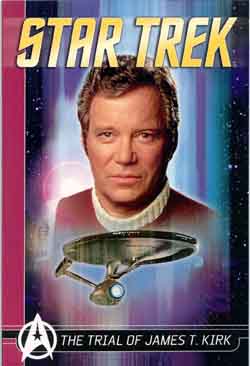
Star Trek: The Trial of James T. Kirk

Star Trek: The Trial of James T. Kirk

By Peter David, James W. Fry & Gordon Purcell

(Titan Books) ISBN 1-94576- 315-7

This edition of Titan’s Star Trek series of graphic novels collects issues #7-12 of the DC comics series from the 1990s. Here the creators try for tense rather than action packed, with a tale of political intrigue as a coalition of alien races (the Klingons and an uncomfortably Iranian-esque fundamentalist species called Nasguls) attempt to have Captain Kirk thrown into prison.

Things come to a head when the price on the Captain’s head leads the universe’s greatest bounty-hunter to attempt his capture — almost destroying the Enterprise in the process. Kirk voluntarily surrenders himself to end the constant disruption and naturally pulls a stunt that turns all those stacked tables against his foes. This stuff is pure classic Trek. The fans loved it then and will now. It’s also a very good example of how to do a licensed property in comic form and readers and wannabe creators should buy and take note.

™ & © 2006 CBS Studios Inc. All Rights Reserved.