
The Desert Peach volume 6: Marriage & Mayhem


By Donna Barr (Aeon)
ISBN: 1-883847-07-9

The Desert Peach is the supremely self-assured and eminently efficient gay brother of the legendary German soldier hailed as “the Desert Fox”. Set in World War II Africa and effortlessly combining hilarity, absurdity, profound sensitivity and glittering spontaneity, the stories describe the trials and tribulations of Oberst Manfred Pfirsich Marie Rommel; a dutiful if unwilling cog in the German War Machine, yet one determined to remain a civilised gentleman under the most adverse and unkind conditions.

However, although as formidable as his beloved elder sibling, the gracious and genteel Peach is a man who loathes causing harm or giving offence and thus spends his service commanding the dregs of the military in the ghastly misshapes of the 469th Halftrack, Gravedigging & Support Unit of the Afrika Korps, daily endeavouring to remain stylish, elegant, civil and gracious to the assorted waifs, wastrels and warriors on both sides of the unfortunate global conflict.

It’s a thankless, endless task: the 469th houses the worst the Wehrmacht has ever conscripted, from malingerers and malcontents to useless wounded, shiftless conmen, screw-ups and outright maniacs.

Pfirsich unilaterally applies the same decorous courtesies to the sundry natives inhabiting the area and the rather tiresome British and Anzac forces – not all of whom are party to a clandestine non-aggression pact Pfirsich has agreed with his opposite numbers in the amassed Allied Forces. In fact the only people to truly annoy the peace-loving Peach are boors, bigots, bullies and card-carrying Blackshirts…

The romantic fool is also passionately in love with and engaged to Rosen Kavalier: handsome Aryan warrior and wildly manly Luftwaffe Ace…

Arguably the real star of these fabulous frothy epics is the Peach’s long-suffering, unkempt, crafty, ill-mannered, bilious and lazily scrofulous orderly Udo Schmidt, a man of many secrets whose one redeeming virtue is his uncompromising loyalty and devotion to the only decent man and tolerable officer in the entire German army.

This tragically rare sixth softcover collection reprints issues #16, 17 and 19 (#18 being a reproduction of the innovative Musical Program which accompanied the stage show: to see that check out The Desert Peach Webcomic or http://www.desert-peach.com/comic/DP18.pdf) and starts with an enchanting comic introduction from the captivatingly clever Mike Kazaleh before ‘Flight of the Phoenix’ opens the comedic assault. Even though ill-bred rogue Udo’s impending wedding to Tuareg princess Falila has been apparently side-lined, a spoil of that outrageous betrothal – a magnificent Arabian war-mare named Phoenix – is still causing trouble for Pfirsich, who is her nominal owner.

The steed is wild and utterly untrained, constantly causing trouble for the decidedly neat and tidy Peach and especially Sergeant Mögen and Lieutenant Hecht, who are responsible for her care…

When scattered tribesmen convene a colossal horse-fair on the camp’s doorstep, the problems magnify exponentially: not only was Phoenix stolen, but she comes from legendarily purebred lines and unless the Peach can arrange an honourable and fitting stud for her it might result in a native uprising…

Now all he has to do is select the right one out of the hundreds of willing stallions and touchy, eager Arab owners, but as usual the soldiery have the own ideas on the perfect partner, all filtered through personal prejudices and ideological bigotry…

So when Udo attempts to settle the quandary one dark night by taking Phoenix to his own preferred favourite, all hell naturally breaks loose as the skittish steed rampages through camp before making her own choice… When the valiant Rosen and sundry soldiers try to catch her, Udo then ends up trapped between the ever-so-keen equine bride and her equally impatient suitors, and taken for a ride he’ll never forget…

As a consequence of the riot Udo is held responsible for the accidental gelding of a stallion and as an outlander faces death or worse – until somebody suggests that if he were actually married to his desert princess he’d be a tribesman and allowed to buy his way out of trouble…

This is followed by ‘Culture Shock’ as fanatical political officer Winzig works himself into a tizzy about the upcoming miscegenation nuptials and reveals a long-hidden shameful secret: he is a musical prodigy whose piano playing could make Devils weep and Angel dance with delight. Most appalling of all is his facility for jazz – a form of music the Nazis have declared “sub-human”…

His secret out, Winzig is easily cajoled by Pfirsich into playing at the up-coming wedding, but other problems are surfacing. The rumours that Udo is Jewish are circulating again (they’re all true but were scotched by the Desert Peach in book 5: Belief Systems) but when the coordinating commanders of both Tuareg and German parties are trying to sort out the form of service, the panicking and reluctant groom sees a get-out-of-jail-free card – whatever ceremony is performed, it won’t be binding…

Udo had been griping and trying to weasel his way out of his impending, unwanted but necessarily pragmatic wedding from the start. The swarthy little scoundrel wanted sex not commitment, and now only the threat of agonising dismemberment is making Schmidt nee Isador Gülphstein  honour his word and live up to his responsibilities…

That is of course until the poor shmuck catches sight of Falila in all her wedding finery…

After a chaotic, joyous and hilarious wedding and reception in the local bordello everything seems to have worked out until the bride’s father hears a certain tale that his new son-in-law is a Hebrew…

Using humour to devastating effect, the author manipulates the crisis to make a few telling points about religion and prejudice and, with order restored, this volume then concludes with the utterly manic and earthily scatological ‘Self-Propelled Target’ as some of the weary and jaded grave-digging unit play with wrong cadaver and both Winzig and Pfirsich accidentally ingest organic matter from a rotting – and exploding – corpse. With Pfirsich revoltingly hors-de-combat the men of the469th declare open war on the hated political martinet they call the “Human Swastika”…

With the Peach incontinent and incommunicado the battle of nerves and dogma rapidly escalates to terrifying heights and when the recuperating Peach almost loses his life in one of the malicious pranks, Udo at last steps in to settle things with disastrous and disgusting consequences…

Treading in the same the same anti-war trench as Three Kings, Hogan’s Heroes, Oh, What a Lovely War! and Catch 22, these Desert Peach adventures are always bawdy, raucous, satirical, authentically madcap and immensely engaging; this time though they’re also painfully romantic, revoltingly near-the-knuckle and intoxicatingly subversive.

These gloriously baroque yarns were some of the very best comics of the 1990s and still pack a shattering comedic kick, liberally leavened with situational jocularity, accent humour and lots of footnoted Deutsche cuss-words for the kids to learn. Moreover, with this volume the potential of the minor supporting characters is at last fully realised with The Peach often relegated to a minor or supervisory role.

This captivating excursion is also capped off with many magical extras: hilarious marginal illustrations and more cut-out paper-dolls and extra outfits for you to admire and play with: this time featuring the wardrobe of Udo and the log-suffering Winzig.

The Desert Peach ran for 32 intermittent issues via a number of publishers and was subsequently collected as eight graphic novel collections (1988-2005). A prose novel, Bread and Swans, a musical, and an invitational collection by other artists entitled Ersatz Peach were also created during the strip’s heyday. A larger compendium, Seven Peaches, collected issues #1-7 and Pfirsich’s further exploits continue as part of the Modern Tales webcomics collective…

Illustrated in Barr’s fluidly seductive wood-cut and loose-line style, this book is another must-have item for lovers of wit, slapstick, high drama and belly-laughs and grown-up comics in general. All the collections are pretty hard to find these days but if you have a Kindle, Robot Comics have started releasing individual comicbook issues, and for anybody with internet access and mature tastes as mentioned above there’s always The Desert Peach webcomic to fall back on…
© 1992-1994 Donna Barr. Introduction © 1994 Mike Kazaleh. All rights reserved. The Desert Peach is ™ Donna Barr.
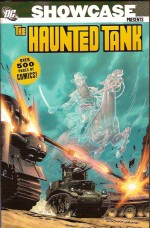
Showcase Presents the Haunted Tank Volume 1


By Robert Kanigher, Russ Heath, Irv Novick, Joe Kubert & various (DC Comics)
ISBN: 978-1-4012-0789-8

Robert Kanigher (1915-2002) was one of the most distinctive authorial voices in American comics, blending rugged realism with fantastic fantasy in his signature war comics, horror stories and superhero titles such as Wonder Woman, Teen Titans, Hawkman, Metal Men, Batman and others genres too numerous to cover here. He scripted ‘Mystery of the Human Thunderbolt’ – the first story of the Silver Age which introduced Barry Allen as the new Flash to the hero-hungry kids of the world in 1956.

Kanigher sold his first stories and poetry in 1932, wrote for the theatre, film and radio, and joined the Fox Features shop where he created The Bouncer, Steel Sterling and The Web, whilst providing scripts for Blue Beetle and the original Captain Marvel.

In 1945 he settled at All-American Comics as both writer and editor, staying on when the company amalgamated with National Comics to become the forerunner of today’s DC. He wrote Flash and Hawkman, created Black Canary and Lady Cop, and many memorable villainesses such as Harlequin and Rose and the Thorn. This last temptress he redesigned during the relevancy era of the early 1970s into a schizophrenic crime-busting super-heroine who haunted the back of Superman’s Girlfriend Lois Lane, which Kanigher also scripted.

When mystery-men faded out at the end of the 1940s, Kanigher moved into westerns and war stories, becoming in 1952 writer/editor of the company’s combat titles: All-American War Stories, Star Spangled War Stories and Our Army at War. He created Our Fighting Forces in 1954 and added G.I. Combat to his burgeoning portfolio when Quality Comics sold their line of titles to DC in 1956, all the while working on Wonder Woman, Johnny Thunder, Rex the Wonder Dog, Silent Knight, Sea Devils, Viking Prince and a host of others.

Kanigher was a restlessly creative writer and frequently used his uncanny but formulaic adventure arenas as a testing ground for future series concepts. Among the many epochal war features he created were Sgt. Rock, Enemy Ace, The War that Time Forgot and The Losers as well as the irresistibly compelling “combat ghost stories” collected here in this stunning and economical monochrome war-journal.

This terrific first monochrome tome re-presents the early blockbusting exploits of boyhood friends Jeb Stuart Smith, Arch Asher, Slim Stryker and Rick Rawlins from G.I. Combat #87-119 (April/May 1961- August/September 1966) and also includes guest-star postings from The Brave and the Bold #52 (February/March 1964) and Our Army at War #155 (June 1965) beginning with ‘Introducing – the Haunted Tank’, illustrated by the sublime Russ Heath.

In this introductory tale the now-adult pals are all assigned to the same M-3 Stuart Light Tank, named for the legendary Confederate Army General who was a genius of cavalry combat – and during a patrol somehow destroy an enemy Panzer even though they are all knocked unconscious.

Narrated by Jeb as he mans the Commander’s spotter-position (head and torso sticking out of the top hatch and completely exposed to enemy fire whilst driver Slim, gunner Rick and loader Arch remain inside) he recounts how a ghostly voice seems to offer advice and prescient, if veiled, warnings, all while enduring the jibes of fellow soldiers who drive bigger, tougher war machines…

Eventually the little tank proves its worth and Jeb wonders if he imagined it all due to shock and his injuries, but in #88 ‘Haunted Tank vs. the Ghost Tank’, Jeb was actually seeing and conversing with his phantom namesake as he and the boys solved the completely logical mystery of an enemy battle-wagon which seemed to disappear at will.

‘Tank With Wings’ in G.I. Combat #89 was illustrated by Irv Novick and described how the old General’s impossible prophecy came chillingly true when the M-3 shot down a fighter plane whilst hanging from a parachute, after which Heath returned to limn a staggering clash against German ‘Tank Raiders’ who had stolen their haunted home on treads.

Throughout the early days Jeb’s comrades continually argued about what to do with him. Nobody believed in the ghost and they all doubted his sanity, but ever since he began to see the spirit soldier Stuart Smith had become a tactical genius and his “gifts” were keeping them all alive against incredible odds. In #91’s ‘The Tank and the Turtle’ a chance encounter with a plucky terrapin led to brutal clashes with strafing aircraft, hidden anti-tank guns and a booby-trapped village whilst ‘The Tank of Doom’ (illustrated by Jerry Grandenetti) saw the snow-bound tank-jockeys witness true heroism and learn that flesh, not steel, won wars…

In #93 Heath depicted a ‘No-Return Mission’ which depleted American tank forces until the Ghostly General took a hand and guided his mortal protégé through a veritable barrage of traps and ambushes, after which ‘The Haunted Tank vs. the Killer Tank’ began to widen the General’s role as the phantom protector agonised over intel he was not allowed to share with his Earthly namesake during a combined push to find a Nazi terror-weapon.

This time it was the young sergeant who had to provide his own answers…

The rest of the crew were near breaking point and ready to hand Jeb over to the medics in #95’s ‘The Ghost of the Haunted Tank’ but when Slim took over he too began to see and hear the General in the blistering heat of battle…

In ‘The Lonesome Tank’ Jeb was back in the hot-seat and scoffing at the other tank commanders’ reliance on lucky talismans, until the General seemingly abandoned him and he was pushed to the brink of desperation, whilst in G.I. Combat #97 ‘The Decoy Tank’ proved that a brave man made his own luck after a Nazi infiltrator took the entire crew hostage.

‘Trap of Dragon’s Teeth’ allowed the Ghostly Guardian to teach Jeb a useful lesson in trusting one’s own senses, not weapons and machinery, in combat, after which issue #99 saw the legendary Joe Kubert begin a stint on the series in the book-length thriller ‘Battle of the Thirsty Tanks’ with the Stuart labouring under desert conditions which reduced both German and American forces to thirsty wrecks as they struggled to capture a tantalising oasis.

‘Return of the Ghost Tank’ in #100 found the lads back in Europe as the crew revealed that their fathers had all been tank jockeys in WWI who had disappeared in action. Shock followed shock when they realised their sires had all been part of the same crew and reality was further stretched when the M-3 began to retrace the last mission of their missing fathers…

Any doubts about whether the General was real or imagined were finally laid to rest in #101’s ‘The Haunted Tank vs. Attila’s Battle Tiger’ illustrated by Jack Abel, as the evil spirit of the barbarian became patron to a German Panzer and began a campaign to destroy both the living and dead Jeb Stuarts, after which Kubert returned for ‘Battle Window’, a brilliant tale of old soldiers where a broken-down nonagenarian French warrior was given one final chance to serve his country as the American tank blithely drove into a perfect ambush…

A particularly arcane prognostication in #103 drove Jeb crazy until ‘Rabbit Punch for a Tiger’ showed him how improvisation could work like magic in a host of hostile situations whilst ‘Blind Man’s Radar’ helped the crew complete a dead man’s mission after picking up a sightless survivor of an Allied attack.

In the mid-1960s before the Batman TV show led to rampant “Bat-mania” The Brave and the Bold was a comicbook that featured team-ups of assorted DC stars and #52 (February-March 1964) grouped Tankman Stuart with Sgt. Rock and Lt. Cloud as the 3 Battle Stars in ‘Suicide Mission! Save Him or Kill Him!’ by Kanigher & Kubert. In this superb thriller the armoured cavalry, infantry and Air Force heroes combined forces to escort and safeguard a vital Allied agent, who had been sealed into a cruel and all-encompassing iron suit. Fast-paced, action-packed and utterly outrageous, the chase across occupied France resulted in one of the best battle blockbusters of the era.

Back in G.I. Combat #105 the ‘Time-Bomb Tank!’ began seconds after the B&B yarn as the Haunted Tank received information that Sgt. Rock’s Easy Company were under attack and dashed to the rescue. However circumstances soon caused the M-3 to become a mobile Marie Celeste…

The ‘Two-Sided War’ saw Jeb promoted to Lieutenant and suffer apparent hallucinations where he and his crew were trapped in the Civil War after which #107’s ‘The Ghost Pipers!’ found the tank aiding the last survivor of a Scottish battalion in an attack that spanned two wars, before again teaming up with Rock in ‘The Wounded Won’t Wait’ as Rick, Arch and Slim were injured and the Easy Co. topkick rode shotgun on the brutal ride back to base…

Issue #109 ‘Battle of the Tank Graveyard’ downplayed the supernatural overtones for a more straightforward clash in a deadly mountain pass whilst ‘Choose Your War’ found the Confederate General chafing at his role assisting “Union” cavalry until circumstances again seemed to place the modern soldiers in a historical setting and the two Jeb Stuarts worked out their differences.

In #111’s ‘Death Trap’ the Armoured Cavalry crew was again working with Easy Company – in the desert this time, as continuity was never a big concern for Kanigher – but when the M-3 was captured by the enemy, Jeb and the boys had a bloody taste of infantry fighting before taking it back.

‘No Stripes for Me’ is actually a Sgt. Rock tale from Our Army at War #155 (June 1965) with the Haunted Tank in support as a battle-hungry General’s son continually refused the commendations and promotions his valiant actions deserved, no matter what the cost to men or morale…

Rock and Jeb stayed together for G.I. Combat #112’s struggle against the Luftwaffe ‘Ghost Ace!’ who was Attila the Hun’s latest mortal avatar in a blistering supernatural shocker that once more forced the Phantom General to take a spectral hand in the battle against evil, after which ‘Tank Fight in Death Town!’ saw the war follow the M-3 crew back into a much-needed leave. Luckily Rock and Easy Co. were around to provide vigorous fire-support…

After nearly four years in the saddle scripter Kanigher decided to revamp the backstory of the crew and issue #114 (October/November 1965) featured the Russ Heath illustrated ‘Battle Origin of the Haunted Tank’ with the General revealing that he had been assigned to watch over the M-3’s boys by Alexander the Great.

In the afterlife all great military commanders sponsored mortal combatants but he had refused to pick anybody and was stuck looking after “Damned Yankees”. Happily the courage and mettle of the boys under fire had changed many of his opinions after watching their first battle in the deserts of North Africa…

Heath also drew the team-up in #115 where Jeb was reunited with Navajo fighter-pilot Johnny Cloud as ‘Medal for Mayhem’ pitted both spiritually-sponsored warriors (Cloud regularly saw a mounted Indian Brave dubbed Big-Brother-in-the Sky galloping across the heavens during his missions) against overwhelming odds and forced to trade places in the air and on the ground, after which Novick illustrated the sequel when Cloud and Stuart helped proud Greek soldier Leonidas fulfil his final mission in the stirring ‘Battle Cry of a Dead Man!’

‘Tank in the Icebox’ in #117 was another Heath martial masterpiece wherein an incredible mystery was solved and a weapon that turned the desert into a frozen hell was destroyed before Novick took the controls for the last two tales in this volume, beginning with ‘My Buddy… My Enemy’ as a bigoted Slim learned tragically too late that not all Japanese soldiers were monsters and #119 again asked difficult questions when Jeb and the crew had to escort an American deserter to his execution with German forces attempting to kill them all before they got there in ‘Target for a Firing Squad!’

An added attraction for art fans and battle buffs are the breathtaking covers by Heath, Kubert and Grandenetti, many of them further enhanced through the stunning tonal values added by DC’s brilliant chief of production Jack Adler.

These spectacular tales cover the Haunted Tank through the blazing gung-ho early years to a time when America began to question the very nature and necessity of war (Vietnam was just beginning to really hurt the home-front in 1966) and combat comics started to address the issue in a most impressive and sensitive manner. They combine spooky chills with combat thrills but always offer a powerful human message that has never dated and may well rank amongst the very best war stories ever produced.
© 1961-1966, 2006 DC Comics, Inc. All Rights Reserved.

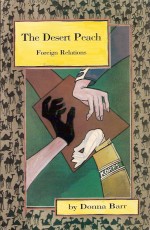
The Desert Peach book 3: Foreign Relations


By Donna Barr (Aeon)
ISBN: 1-883847-04-4

The Desert Peach is the supremely self-assured and eminently accomplished gay brother of the legendary “Desert Fox” and one of the most perfectly realised characters in comics.

Set in World War II Africa and effortlessly combining hilarity, absurdity, profound sensitivity and glittering spontaneity, the stories describe the daily grind of Oberst Manfred Pfirsich Marie Rommel; a dutiful if unwilling cog in the German War Machine and his efforts to remain a perfect gentleman under the most adverse and unkind conditions.

As formidable as his beloved elder sibling Field Marshal Erwin Rommel, the gracious and genteel Peach is a man of breeding who loathes causing harm or giving offence and thus spends his dry and dusty days commanding the ever-so-motley crew of the 469th Halftrack, Gravedigging & Support Unit of the Afrika Korps, trying to remain stylish, elegant, civil and gracious to the men under his command, the enemy forces opposite him and all the unfortunate natives whose countries both Allied and Axis powers are currently running riot within.

It’s a lot of work: the 469th houses the worst dregs of the Wehrmacht, from malingerers and malcontents to useless wounded, sharpers, screw-ups and outright maniacs.

Pfirsich applies the same genteel courtesies and rule of well-manicured thumb to the sundry indigenes populating the area surrounding the camp and the rather tiresome British – not all of whom are party to a clandestine non-aggression pact Pfirsich has agreed with his opposite number in the opposing British Forces.

The romantic fool is passionately in love with and engaged to Rosen Kavalier: handsome Aryan warrior and outrageously manly Luftwaffe Ace: in fact the only people the Peach really has no time for are boors, bigots and card-carrying Blackshirts…

Arguably the real star of these fabulous frothy epics is the Peach’s long-suffering, unkempt, crafty, ill-mannered, bilious and lazily scrofulous orderly Udo Schmidt, a man of many secrets and non-existent morals whose one redeeming virtue is his uncompromising loyalty and devotion to the only decent man and tolerable officer in the entire German army.

This hard to find but supremely superb third monochrome compendium reprints issues #7-9 and includes an all-new tale too.

Battle commences with ‘The Spoiled Fruit’ as the mild mannered and utterly urbane Peach is accidentally dosed with shell-shocked veteran Corporal Doberman‘s anti-psychotic medication. The ghastly experimental brew acts like Angel Dust on the sweet lad and turns Pfirsich into a raging warmongering lunatic, who goes on a three day battle-jag, dragging the 469th with by sheer rampaging willpower and almost winning the desert war single-handed… until the drugs stop working.

Even more embarrassing than the death and bloodshed he caused and certainly more painful than the bullet wound in his posterior is brother Erwin awarding him a medal…

This is followed by international adventure and intrigue in ‘Dressing Down’ as an old-fashioned army concert-party leads to one of the most ludicrous espionage missions of the war.

In an attempt to raise morale Udo organises a show where he and a few other ranks dress up in drag. Although a little unhappy at the sordid and distasteful turn of events, Pfirsich lets it go but is horrified when an intelligence officer from his brother’s staff claims that Udo-as-a girl looks just like Hannah Mardi, a German agent currently missing in England.

She and her sister were the only hope of recovering the stolen plans for Rommel’s latest tank but for such a mission to succeed Hannah should be accompanied by her usual partner. What a happy coincidence that Pfirsich looks so much like the equally absent “Portia Sophi”: the Peach could pass for her with almost no make-up at all…

Arriving at the last known address of the missing spies in London, the terrified and mutinously reluctant Pfirsich and Udo are horrified to discover something very peculiar is going on in the agents’ old lodgings and things become surreal, hilarious and quite, quite tricky when the Peach realises that the landlady’s son Willie is the same delightful boy who befriended him in those carefree days before the war..

The reprints end with ‘Scourge of Love’ as the ever-horny Udo unwittingly turns a bargaining session for fresh rations with Tuareg traders into an accidentally proposal to the Chieftain’s beautiful daughter Falila.

He thought he was getting a “quickie” from a easy trollop but too soon Udo realises he was not only betrothed to the proud princess of a people who have turned avenging insults into an art-form and spectator blood-sport, but that to prove himself worthy he would have to steal a herd of camels from the Arabs’ greatest and most ancient enemies.

With a tribal revolt threatening to interfere with the smooth course of the war, Udo’s tenderest and most cherished organs at risk and, most importantly, the honour and happiness of a lady at stake, the Desert Peach has no choice but to step in and settle matters in his own uniquely sensitive and refined manner…

The new epilogue ‘Home is Where…’ is set in the Peach’s declining years, wherein Pfirsich and his adult son Mani play host to a reunion of the 469th few survivors: a bittersweet vignette which delights and fearfully foreshadows tragedies yet to come. This moving vignette also appears in Book 4 Baby Games.

Referencing the same vast story potential as Sgt. Bilko, Hogan’s Heroes, Oh, What a Lovely War! and Catch 22, as well as such tangential films as Priscilla, Queen of the Desert and The Birdcage, the Desert Peach is bawdy, raucous, clever, authentically madcap and immensely engaging.

These fabulously weird war stories were some of the very best comics of the 1990s and still pack the comedic kick of a floral-scented howitzer, liberally leavened with situational jocularity, accent humour and lots of footnoted Deutsche cuss-words for the kids to learn.

Pfirsich’s further exploits continue as part of the Modern Tales webcomics collective…

Illustrated in Barr’s fluidly seductive wood-cut and loose-line style, this book is a must-have for any history-loving, war-hating lover of wit, slapstick, romance and belly-laughs. All the Desert Peach books are pretty hard to find these days but if you have a Kindle, Robot Comics have just begun to release individual comicbook issues for anybody who can make their way around Das Ferslugginer Internetten …
© 1990-1994 Donna Barr. All rights reserved. The Desert Peach is ™ Donna Barr.

The Desert Peach book 5: Belief Systems


By Donna Barr (Aeon)
ISBN: 1-883847-07-9

The Desert Peach is the supremely self-assured and eminently capable gay brother of the legendary German soldier hailed as “the Desert Fox” and one of the most perfectly realised characters in comics.

Set in World War II Africa and effortlessly combining hilarity, absurdity, profound sensitivity and glittering spontaneity, the stories describe the daily grind of Oberst Manfred Pfirsich Marie Rommel; a dutiful if unwilling cog in the German War Machine and his efforts to remain a civilised gentleman under the most adverse and unkind conditions.

However, although as formidable as his beloved elder sibling Field Marshal Erwin Rommel, the gracious and genteel Peach is a man who loathes causing harm or giving offence and thus spends his dry and dusty days with the ever-so-motley crew of the 469th Halftrack, Gravedigging & Support Unit of the Afrika Korps, trying to remain stylish, elegant, civil and gracious to the men under his command and the enemy forces around him.

It’s a lot of work: the 469th houses the worst dregs of the Wehrmacht, from malingerers and malcontents to useless wounded, sharpers, screw-ups and outright maniacs.

Pfirsich unilaterally applies the same decorous courtesies to the sundry natives inhabiting the area and the rather tiresome British – not all of whom are party to a clandestine non-aggression pact Pfirsich has agreed with his opposite numbers in the amassed Allied Forces. The only people the Peach really has no time for are boors, bigots, bullies and card-carrying Blackshirts…

The romantic fool is also passionately in love with and engaged to Rosen Kavalier: handsome Aryan warrior and wildly manly Luftwaffe Ace…

Arguably the real star of these fabulous frothy epics is the Peach’s long-suffering, unkempt, crafty, ill-mannered, bilious and lazily scrofulous orderly Udo Schmidt, a man of many secrets whose one redeeming virtue is his uncompromising loyalty and devotion to the only decent man and tolerable officer in the entire German army.

This tragically rare fifth softcover collection reprints issues #13-15 and starts with an enchanting comic introduction from the captivatingly clever Roberta Gregory after which the sagacious star yields focus to the tragically bewildered Doberman in ‘Nobody’ wherein the pitifully shell-shocked Corporal finally blows himself up with his pet landmine and is evacuated home.

Dobi unexpectedly returns some time later with tales of his nightmarish detour to the hidden Jewish concentration camps where all the undesirables are being dealt with: systematically and efficiently eradicating Jews and other “sub-humans”…

Pfirsich is appalled and refuses to believe the stories: surely no sane human beings could perpetrate such atrocities? Udo however, has also heard stories of how Hitler and his hierarchy are dealing with Jews and shares them with his commander. In a rage the Peach rushes off to tell his brother, knowing the Field Marshal can do something about it.

The noble Desert Fox also explodes in fury and determines to return to Berlin to stop the program. His plan is simple – since Hitler is a good man and cannot possibly know of these atrocities, all Erwin has to do is inform Adolf and the Fuhrer will put a stop to the horrors…

Pfirsich, knowing Hitler’s hierarchy far better than that, is faced with an impossible choice: allow his brother to sign his own death warrant or withdraw the allegations and become complicit in genocide…

This bleakly chilling and tortured black comedy is followed by ‘Surprise, Surprise’ with Udo griping and trying to weasel his way out of his impending, unwanted but necessarily pragmatic wedding to Bedouin princess Falila. The swarthy little scoundrel wants sex not commitment, but as Pfirsich urges his subordinate to honour his word and live up to his responsibilities another secret slips out.

Udo Schmidt used to have another name: the only card-carry Nazi Party member in the entire 469th was born Isador Gülphstein…

“Udo” is the scion of a venerable line of soldiers who have served the Fatherland and the long-suffering son of a proud German Jewish veteran of the Great War who changed the family name so that his sons could join the army too… whether they wanted to or not.

Now, with The Peach fully aware of the fate Jews are facing, how can he risk Schmidt’s secret getting out? Moreover how can he risk antagonising the desert tribes or disappointing the clearly addled girl who wants to marry Udo? After all, fanatic camp political officer Kjars Winzig already suspects something isn’t – or rather is – Kosher about Udo…

The troubles only really begin when eavesdropping boyfriend Rosen Kavalier takes charge and offers a drastic and outrageous solution…

This darker-than-usual volume concludes with ‘The Triangle Trade’ (from a suggestion by cartoonist Steve Gallacci) as The Peach encounters by-the-book soldier Oberst Quark, herding a supply column directly towards an Allied tank unit.

Keen to avoid any bloodshed Pfirsich intercepts the column and lends the commander his spotter plane, determined to keep the Germans out of trouble whilst their war-mongering commander is safely up in the air.

Deprived of glorious battle Quark conceives a subtle vengeance and transfers the two biggest troublemakers in his command to the 469th.

Sadly the younger Rommel has never encountered the average fighting man and sorely overestimates his ability to control the greedy, vicious and cunningly duplicitous thugs Leutnants Hecht and Horowitz…

With the camp quickly dissolving into a hotbed of criminality and black marketeering harsh measures are called and this time even Rosen has met his match. Seizing the nettle Pfirsich is forced to fall back upon his own unique strengths to solve this thorny dilemma effectively and with unmistakable style…

Fabulously following the same anti-war path as Sgt. Bilko, Hogan’s Heroes, Oh, What a Lovely War! and Catch 22, as well as such tangential films as Priscilla, Queen of the Desert and The Birdcage, these Desert Peach adventures are always bawdy, raucous, clever, authentically madcap and immensely engaging.

These gloriously baroque yarns were some of the very best comics of the 1990s and still pack the comedic kick of a silken howitzer or chartreuse flamethrower, liberally leavened with situational jocularity, accent humour and lots of footnoted Deutsche cuss-words for the kids to learn. Moreover, with this volume the dark bitter edges and cold iron underlying these fabulous characters and their horrific, doomed situation become ever more poignant and powerful.

The Desert Peach ran for 32 intermittent issues via a number of publishers and was subsequently collected as eight graphic novel collections (1988-2005). A prose novel, Bread and Swans, a musical and an invitational collection by other artists entitled Ersatz Peach were also created during the strip’s heyday. A larger compendium, Seven Peaches, collected issues #1-7 and Pfirsich’s further exploits continue as part of the Modern Tales webcomics collective…

Illustrated in Barr’s fluidly seductive wood-cut and loose-line style, this book is a must-have for any lover of wit, slapstick, high drama and belly-laughs and grown-up comics in general. All the collections are pretty hard to find these days but if you have a Kindle, Robot Comics have started releasing individual comicbook issues for anybody with internet access and mature tastes…
© 1991-1994 Donna Barr. Introduction © 1994 Roberta Gregory. All rights reserved. The Desert Peach is ™ Donna Barr.
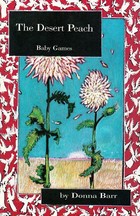
The Desert Peach volume 4: Baby Games


By Donna Barr (Mu Press/Aeon Pubs)
ISBN: 1-883847-05-2

Donna Barr is one of the comic world’s most singular graphic raconteurs. She always constructs impeccable, fully realised worldscapes to house her stories and tells them with a style and voice that are definitely one-of-a-kind. Her most perfect creations are the Half-Horse Stinz Löwhard, and The Desert Peach, perfectly self-assured and eminently capable gay brother of the legendary “Desert Fox” and the scintillating star of this effervescent assemblage of sly, dry wit, raucous drollery and way out military madness.

Set in World War II Africa and effortlessly combining hilarity, absurdity, profound sensitivity and glittering spontaneity, the stories describe the daily grind of Oberst Manfred Pfirsich Marie Rommel; a dutiful if unwilling cog in the German War Machine.

However, although as capable as his beloved elder sibling Field Marshal Erwin Rommel, the gracious and genteel Peach is a man who loathes causing harm or giving offence and thus spends his dry and dusty days with the ever-so-motley crew of the 469th Halftrack, Gravedigging & Support Unit of the Afrika Korps, trying to remain stylish, elegant and non-threatening to the men under his command and the enemy forces around him.

The only people he really dislikes are boors, bigots and card-carrying Blackshirts…

He applies the same genteel courtesies to the sundry natives inhabiting the area and the rather tiresome British – not all of whom are party to a clandestine non-aggression pact Pfirsich has agreed with his opposite numbers in the amassed Allied Forces…

The romantic fool is also passionately in love with and engaged to Rosen Kavalier: handsome Aryan warrior and wildly manly Luftwaffe Ace…

The Desert Peach ran for 32 intermittent issues via a number of publishers and was subsequently collected as eight graphic novel collections (1988-2005). A prose novel, Bread and Swans, a musical and an invitational collection by other artists entitled Ersatz Peach were also created during the strip’s heyday. A larger compendium, Seven Peaches, collects issues #1-7 and Pfirsich’s further exploits continue as part of the Modern Tales webcomics collective…

Arguably the real star of these fabulous frothy epics is the Peach’s long-suffering, unkempt, crafty, ill-mannered, bilious and lazily scrofulous orderly Udo Schmidt, a man of many secrets whose one redeeming virtue is his uncompromising loyalty and devotion to the only decent man and tolerable officer in the entire German army.

This terrifyingly scarce fourth softcover collection reprints issues #10-12, and starts the ball rolling with ‘Two-Timers’ wherein the fiercely protective Pfirsich infiltrates the British positions as history’s least believable English Officer to ferret out a spy targeting his brother Erwin.

Of course to carry off the mission somebody has to be prominently visible in the German camp as the ever-so-unmissable and wickedly froufrou Desert Peach. Ein step vorwarts, (or else…) patriotic he-man and self-appointed Nazi political officer Leutnant Kjars Winzig…

Meanwhile, as the entire 469th kvetch over the Leutnant’s unlikely and unhappy performance, Pfirsich’s impossible imposture is going inconceivably well until he confronts the undercover agent over drinks in the NAAFI. Although the bold Boche succeeds in reasoning with the master-spy, a couple of Anzac non-coms (who hate Poms as much as Krauts) are not fooled, leading to a spectacular chase and frantically thrilling conclusion…

That hilarious comedy of terrors was quickly topped by a superbly delightful and trenchantly wicked adult farce in ‘Straight and Narrow’ wherein Udo, disgusted with the mockery his effeminate boss engenders amongst other German units, determines to get his boss laid by a woman – specifically the very willing and professional ladies of local bordello “The Cedars”.

Aiding and abetting this appalling scheme is Pfirsich’s one true love, wild man Luftwaffe pilot and airborne inamorata Rosen Kavalier. Even with the more than willing demimondaine Babette in on the scheme and exerting all her professional wiles it takes a chemical “additive” to finally get the ball rolling…

Of course the entire vile scheme ends badly and the Peach, crushed, disgusted and humiliated storms off. Soon after however, Babette realises that she’s now eating for two…

The reprinted material ends here with the inevitable conclusion in ‘Menschenkind – Child of the World’ as nine months after that epic night Pfirsich – still distant with his staff and boyfriend – drives away the unrepentant Ace. Kavalier storms off and visits The Cedars again, discovering a fascinating piece of news…

Although the Peach refuses to listen to his true love, cunning Udo, in on the secret, inveigles his boss into returning to his place of shame, where after another farcical misapprehension of events the Peach is finally introduced to his newborn son…

But of course even this joy is tempered by incredible problems…

To augment and complete this fabulous triptych of torrid tales there’s a new epilogue ‘Home is Where…’ set in the Peach’s declining years, wherein Pfirsich and his adult son Mani play host to a reunion of the 469th few survivors: a bittersweet vignette which delights and fearfully foreshadows tragedies yet to come…

Referencing the same vast story potential as Sgt. Bilko, Hogan’s Heroes, Oh, What a Lovely War! and Catch 22, as well as such tangential films as Priscilla, Queen of the Desert and The Birdcage, the Desert Peach is bawdy, raucous, clever, authentically madcap and immensely engaging. These fabulous combat fruit cocktails were some of the very best comics of the 1990s and still pack the comedic kick of an embroidered landmine, liberally leavened with situational jocularity, accent humour and lots of footnoted Deutsche cuss-words for the kids to learn. Moreover, with this volume the dark bitter edges and cold iron underlying these fabulous characters and their horrific, doomed situation become increasingly apparent.

Illustrated in Barr’s fluidly seductive wood-cut and loose-line style, this book is a must-have for any history-loving, war-hating lover of wit, slapstick, high drama and belly-laughs. All the Desert Peach books are pretty hard to find these days but if you have a Kindle, Robot Comics have just begun to release individual comicbook issues for anybody who can get the hang of all this verfluchte technical tsuris…
© 1991-1994 Donna Barr. All rights reserved. The Desert Peach is ™ Donna Barr.
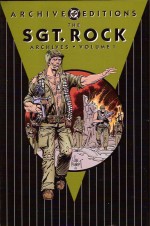
Sgt. Rock Archive Edition Volume 1


By Robert Kanigher, Joe Kubert, Bob Haney, Ross Andru & various (DC Comics)
ISBN: 978-1-56389-841-9
Sgt Rock and the “combat-happy Joes” of Easy Company are one of the great and enduring creations of the American comic-book industry. The gritty meta-realism of Robert Kanigher’s ordinary guys in life-or-death situations captured the imaginations of generations of readers, young and old. So pervasive is this icon of comicbook combat, that it’s hard to grasp that Rock is not an immortal industry prototype like Superman, Batman and Wonder Woman – with us since the earliest moments of the industry – but is in fact a late addition to and child of the Silver Age of Comics.

This gloriously gritty, full-colour premier collection musters all pertinent material in the evolution of the immortal “topkick” from the early salvo of battle blockbusters from Our Army at War #83-96 (including the tentative first steps in the character’s evolution from G.I. Combat #68 and Our Army at War #81-82), a period spanning the dog-days of 1958 to the summer of 1960, wherein the entire field of American comics was just beginning a staggering revolution in style, theme and quality.

Following a fascinating reminiscence from co-creator and living legend Joe Kubert (and this inaugural battle-book also includes detailed creator profiles), the pictorial action commences with a stunning Jerry Grandenetti cover – the first of many in this impressive tome – from G.I. Combat #68 (cover-dated January 1959), and a simple, unassuming filler story by Robert Kanigher & Joe Kubert, of an anonymous boxer who wasn’t particularly skilled but simply refused to be beaten. When ‘The Rock!’ enlisted in the US Army, however, that same Horatian quality attained mythic proportions as he held back an overwhelming Nazi attack by sheer grit and determination, remaining bloody but unbowed on a field littered with dead and broken men. Although no more than another straight “ordinary guy finds his heroic niche” yarn for the anthology mill that was war comics of the era, something in this tale – other than the superbly taut script and stunning illustration – caught the attention of both the public and the editors…

Christened “Rocky”, the character returned as a sergeant in the April Our Army at War (#81, April 1959) again facing overwhelmingly superior German forces as ‘The Rock of Easy Co.!’ in a brief but telling vignette by Bob Haney, Ross Andru & Mike Esposito before finally winning an actual persona as Sgt. Rock in the next issue, in the Mort Drucker illustrated ‘Hold Up Easy!’: another harsh and declarative mini-epic from Kanigher which saw everyman hard-luck heroes Easy Company delayed and then saved by callow replacements who eventually came good in the life-changing crucible of combat…

Our Army at War #83 (June 1959) saw the true launch of the ordinary hero in ‘The Rock and the Wall!’ (Kanigher & Kubert): wherein a tough-love, battlefield tutor shepherded his men to competence and survival amidst the constant perils of war. Here he met a rival for his men’s admiration in the equally impressive warrior Joe Wall…

Irv Novick illustrated ‘Laughter on Snakehead Hill!’ as the embattled dog-faces of Easy fought to take a heavily fortified citadel and OAAW #85 introduced the first continuing and marginally less-disposable cast member in the Kubert limned ‘Ice Cream Soldier!’ wherein Rock assuaged a fearful replacement’s jangled nerves with tales of another hopeless “green apple” who grew into his job.

This ploy of incorporating brief past-action episodes into a baptism of fire scenario would play over and over again and never got old…

Following a magnificent cover by master of realism Russ Heath, Haney returned in #86 to script ‘Tank 711’ for Kubert as the terse top-kick educated another newbie in combat etiquette. Kanigher returned to describe the taking of “No-Return-Hill” and the initiation of four more raw recruits in ‘Calling Easy Co.!’ after which Grandenetti illustrated a brace of tales in #88 and 89; ‘The Hard Way’ in which Rock suffered a shocking crisis of confidence and ‘No Shot from Easy!’ wherein the indomitable sergeant was forced to give his toughest ever order…

Issue#90 is classic Kubert from start to finish as ‘Three Stripes Hill!’ revealed the story of how Rock won his stripes after which the traditionally anthological Our Army at War offered three complete Sgt. Rock stories in #91, beginning with ‘No Answer From Sarge!’ as the NCO risked everything to drag a recruit out of a crippling funk, ‘Old Soldiers Never Run!’ where he had to weigh an old man’s pride against Easy’s continued existence, and the Haney scripted tragic fable of a sole-surviving Scottish soldier in ‘The Silent Piper!’

Issue #92 saw Kanigher and Kubert tackle battlefield superstitions in ‘Luck of Easy!’, ‘Deliver One Air Field!’ introduced Zack Nolan, a son of privilege who had to learn teamwork the hard way and #94’s ‘Target… Easy Company’ pitted the company against a German General determined to eradicate the high-profile heroes.

OAAW #95 debuted the charismatic and ambitious Bulldozer Nichols who wanted Rock’s rank and position in ‘Battle of the Stripes!’, but grew to become the second most-recognisable character of the entire series and this premier deluxe edition closes its preliminary campaign with ‘Last Stand for Easy!’ which saw the still in-charge top-kick compelled to relinquish his lead-from-the-front position when a by-the-book officer deems him too valuable to waste on a battlefield…

Robert Kanigher at his worst was a declarative, heavy-handed and formulaic writer, but when writing his best stuff – as he does here – an imaginative, evocative, iconoclastic and heart-rending observer of the warrior’s way and the unchanging condition of the dedicated and so very human ordinary foot-slogging G.I.

With superb combat covers from Grandenetti, Kubert or Heath fronting each episode, this titanic tome is a visually intoxicating compendium and brilliant tonic for any jaded fan looking for something more substantial than simple flash and dazzle.
A perfect example of true Shock and Awe; these are stories every fan should know.
© 1959, 1960, 2002 DC Comics. All Rights Reserved.

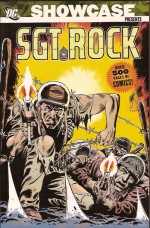
Showcase Presents Sgt. Rock volume 1


By Robert Kanigher, Joe Kubert, Bob Haney, Ross Andru & various (DC Comics)
ISBN: 978-1-4012-1713-6

Sgt Rock and the “combat-happy Joes” of Easy Company are one of the great and enduring creations of the American comic-book industry. The gritty meta-realism of Robert Kanigher’s ordinary guys in life-or-death situations captured the imaginations of generations of readers, young and old. So pervasive is this icon of comicbook combat, that’s it’s hard to grasp that Rock is not an immortal industry prototype like Superman, Batman and Wonder Woman – with us since the earliest moments of the industry – but is in fact a late addition to and child of the Silver Age of Comics.

This initial compendium collects in stunning black and white the tentative first steps in the character’s evolution from G.I. Combat #68 and Our Army at War #81-82 to the first full barrage of battle blockbusters from OAAW #83-117, covering January 1959 to April 1962, a period wherein all American comics were undergoing a staggering revolution in style, theme and quality.

Behind the stunning Jerry Grandenetti cover (the first of many in this impressive tome) from G.I. Combat #68, January 1959, lurks a quiet, unassuming story (by Kanigher & Joe Kubert) of an anonymous boxer who wasn’t particularly skilled but simply refused to be beaten. When ‘The Rock!’ enlisted in the US Army, however, that same Horatian quality attained mythic proportions as he held back an overwhelming Nazi attack by sheer grit and determination, remaining bloody but unbowed on a field littered with dead and broken men.

Dubbed “Rocky” the character returned as a sergeant in the April Our Army at War (#81) again facing superior German forces as ‘The Rock of Easy Co.!’ in a brief but telling vignette by Bob Haney, Ross Andru & Mike Esposito and finally won a personal identity as Sgt. Rock next issue, in the Mort Drucker illustrated ‘Hold Up Easy!’: another harsh and declarative mini-epic from Kanigher which saw hard-luck heroes Easy Company delayed and then saved by callow replacements who eventually came good…

Our Army at War #83 (June 1959) saw the true launch of the immortal everyman hero in ‘The Rock and the Wall!’ by Kanigher & Kubert: a tough-love, battlefield tutor shepherding his men to competence and survival amidst the constant perils of war. Here he met a rival for his men’s admiration in the equally impressive Joe Wall…

Irv Novick illustrated ‘Laughter on Snakehead Hill!’ as the embattled dog-faces of Easy fought to take a heavily fortified citadel whilst OAAW #85 introduced the first continuing cast member in the Kubert limned ‘Ice Cream Soldier!’ as Rock assuaged a fearful replacement’s jangled nerves with tales of another hopeless “green apple” who grew into his job.

This ploy of incorporating brief past-action episodes into a baptism of fire scenario would play over and over again and never got old…

Haney returned in #86 to script ‘Tank 711’ for Kubert as the terse top-kick educated another newbie in combat etiquette. Kanigher returned to describe the taking of “No-Return-Hill” and the initiation of four more raw recruits in ‘Calling Easy Co.!’ after which Grandenetti illustrated a brace of tales in #88 and 89; ‘The Hard Way’ in which Rock suffered a shocking crisis of confidence and ‘No Shot from Easy!’ wherein the indomitable sergeant was forced to give his toughest ever order…

Issue#90 holds classic Kubert as ‘Three Stripes Hill!’ revealed the story of how Rock won his stripes and the traditionally anthological Our Army at War offered three complete Sgt. Rock stories in #91, beginning with ‘No Answer From Sarge!’ as the NCO risked everything to drag a recruit out of a crippling funk, ‘Old Soldiers Never Run!’ where he had to weigh an old man’s pride against Easy’s continued existence, and the Haney scripted tragic fable of a sole-surviving Scottish soldier in ‘The Silent Piper!’

Issue #92 saw Kanigher and Kubert tackle battlefield superstitions in ‘Luck of Easy!’, ‘Deliver One Airfield!’ introduced Zack Nolan, a son of privilege who had to learn teamwork the hard way and #94’s ‘Target… Easy Company’ pitted the company against a German General determined to eradicate the high-profile heroes.

OAAW #95 debuted the charismatic and ambitious Bulldozer Nichols who wanted Rock’s rank and position in ‘Battle of the Stripes!’, after which ‘Last Stand for Easy!’ saw the still in-charge top-kick compelled to relinquish his lead-from-the-front position and ‘What Makes a Sergeant Run?’ found him again sharing his war wisdom with the young and the hapless.

Haney penned ‘Soldiers Never Die!’ in #98 with Rock forced to overcome his team’s trauma at losing a beloved comrade whilst Kanigher described ‘Easy’s Hardest Battle!’ in #99 as the weary warrior recalled a number of instances which all qualified, before once more triumphing over insurmountable odds.

The Stalwart Sergeant risked everything to save a broken replacement in #100’s ‘No Exit For Easy!’ and repeated the task in ‘End of Easy!’ when a parachute drop went tragically awry, before #102’s ‘The Big Star!’ saw the consequences of depending on a young man utterly unsuited for combat…

‘Easy’s Had It!’ in #103 was another Haney contribution, exploring what happened when Rock was wounded and the company had to fight without their guiding light and lucky talisman, after which Kanigher assumed full script duties beginning with #104 and ‘A New Kind of War!’ with the grizzled vet totally outgunned by a valiant nurse who refused to retreat and never surrendered.

‘TNT Birthday!’ in #105 had Rock worried about the underage kid who had somehow got past all the instructors to join Easy under terrifying fire and ‘Meet Lt. Rock!’ (illustrated by Novick) saw the inveterate non-com forcibly promoted until he managed to undo the horrify prospect and #107’s ‘Doom Over Easy!’ again saw the savvy soldiers afflicted by crippling superstition.

The superb Russ Heath drew his first Rock strip in OAAW #108: ‘The Unknown Sergeant!’ found the Combat-Happy Joes passing through a French village with a statue of a WWI Yank “doughboy” bearing an uncanny resemblance to their own indomitable leader – provoking some very uncomfortable historical hallucinations – whilst Kubert’s return in #109’s ‘Roll Call of Heroes!’ signalled a dose of grim reality when Rock recalled his own deadly baptism of fire and lost comrades, after which a green Lieutenant almost caused mutiny and murder until he learned the rules of Combat Arithmetic in ‘That’s An Order!’

‘What’s the Price of a Dogtag?’ was painfully answered in the occupied streets and on seemingly deserted beaches in #111 whilst ‘Battle Shadow!’ focused on the burgeoning supporting cast in a blistering explosive extravaganza and African American soldier Jackie Johnson took centre stage (in a bold early example of comicbook affirmative action) for a memorable last-stand moment in ‘Eyes of a Blind Gunner’ in #113 (December 1961).

The incessant toll of lost comrades hit hard in ‘Killer Sergeant!’, whilst the civilian survivors and partisans who comprised ‘Rock’s Battle Family!’ helped him survive the worst the war could throw at him and featured a cameo from French Resistance star Mademoiselle Marie, but the ragged warrior was all alone when he answered #116’s ‘S.O.S. Sgt. Rock!’ to save lost comrade Ice Cream Soldier…

This inaugural battle-book concludes with a dramatic tale of three hopelessly square pegs who finally found their deep, round holes in #117’s traumatic saga of ‘The Snafu Squad!’

Robert Kanigher at his worst was a declarative, heavy-handed and formulaic writer, but when writing his best stuff – as he does here – an imaginative, evocative, iconoclastic and heart-rending reporter and observer of the warrior’s way and the unchanging condition of the dedicated and so very human ordinary foot-slogging G.I.

With superb combat covers from Kubert, Grandenetti, and Heath fronting each episode this battle-book is a visually perfect compendium and is a lost delight for any jaded comics fan looking for something more than flash and dazzle.

A perfect example of true Shock and Awe; these are stories every fan should see.
© 1959, 1960, 1961, 1962, 2007 DC Comics. All Rights Reserved.

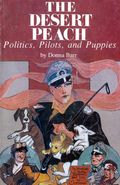
The Desert Peach – Politics, Pilots and Puppies


By Donna Barr (Mu Press)
No ISBN, ASIN: B0006DK6PA

Donna Barr is one of the comic world’s most singular graphic raconteurs. She always constructs impeccable, fully realised worldscapes to house her stories and tells them with a style and voice that are definitely one-of-a-kind. Her most perfect creations are Stinz Löwhard, the Half-Horse and The Desert Peach, the outrageously “out”, homosexual brother of legendary Ideal German soldier “the Desert Fox” and the star of this effervescent assemblage of sly, dry wit, raucous drollery and way out military madness.

Set in World War II Africa and effortlessly combining hilarity, absurdity, profound sensitivity and glittering spontaneity, the stories describe the daily grind of Oberst Manfred Pfirsich Marie Rommel; a dutiful if unwilling part of the German invasion force of 1940-1943. However, although as capable as elder sibling Field Marshal Erwin Rommel, the gracious and convivial Peach was a man who loathed harming anybody physically or emotionally and thus spent his days with the ever-so-motley crew of the 469th Halftrack, Gravedigging & Support Unit of the Afrika Korps, trying to remain stylish, elegant and non-threatening to the men under his command.

He applies the same genteel courtesies to the sundry natives inhabiting the area and the rather tiresome British – not all of whom are party to a clandestine non-aggression pact Pfirsich has in place with his opposite numbers in the amassed Allied Forces…

The romantic fool is also wildly in love with and engaged to Rosen Kavalier: handsome Aryan warrior and manly Luftwaffe ace…

The Desert Peach ran for 32 intermittent issues via a number of publishers and subsequently collected as eight graphic novel collections between 1988-2005. A prose novel – Bread and Swans – and a musical and an invitational collection by other artists entitled Ersatz Peach were also created during the strip’s heyday. A larger compendium, Seven Peaches, collects issues #1-7 and Pfirsich’s further exploits continue as part of the Modern Tales webcomics collective…

Perhaps the real star of these fabulous comedy epics is the Peach’s long-suffering, unkempt, crafty, ill-mannered, bilious and lazily scrofulous orderly Udo Schmidt, whose one redeeming virtue is his uncompromising loyalty and devotion to the only decent officer in the entire army.

This criminally rare second softcover collection reprints issues #4-6, opening with ‘Is There a Nazi in the House?‘ wherein maniacally patriotic, self-appointed political officer Leutnant Kjars Winzig is once more trying to get Udo – or indeed anybody in the mangy collection of rejects comprising the 469th – to read his beloved Führer’s bible of hate Mein Kampf…

Pfirsich steps in before calamity and carnage breaks out but the entire camp is thrown into an even greater tizzy when official notice arrives that a party from Berlin is en route to inspect the Battalion and meet all the devout, card-carrying members of the Nazi Party. It doesn’t take a genius to work out that the vile inner-circle elite are looking for a way to embarrass the Peach’s brother: the Fox is an outspoken and vociferous critic of Hitler’s vile crew of toadies and backstabbers…

It seems the Nazi bigwigs have planned well; Pfirsich can’t find a single Party member in the entire camp… even the fanatical Winzig wasn’t dedicated enough to spring for the membership dues…

Last minute salvation comes from a most unlikely source as the least likely individual in Africa admits his shameful secret and impresses the jodhpurred pants off the visiting dignitaries… it appears he joined the Nazi Party in its earliest hours when recruiters were buying beer for anybody who would listen…

This hilarious comedy of errors is followed by the supremely delightful, action-packed ‘Flight of Fancy’ wherein Pfirsich’s personal pilot Von Drachenberg gets in big trouble for secretly re-arming our hero’s peach-coloured reconnaissance plane – the junior Rommel doesn’t approve of guns…

Nevertheless he concedes they have their uses when the plane is involved in a uniquely absurd and breathtaking aerial dogfight with a less than sporting Englishman in a Spitfire. Of course, he far less happy about having to refit the machinegun in mid-flight, thousands of feet above the desert with British bullets whistling about his well-formed pearl-bedecked ears…

Luckily the Peach’s beloved fiancé Rosen Kavalier is also prowling the war-torn skies and this magnificently clever yarn still has plenty of controversy and surprises in store…

‘A Day Like any Other’ concludes the comicbook reprints with a powerfully intriguing moral dilemma for the German misfits when a British sniper takes up lethal residence and begins shooting Pfirsich’s men in disdainful contravention of the non-aggression agreement. Soon the 469th are starting to remember that they are – ostensibly, at least – soldiers with a duty to kill Germany’s enemies and this unwelcome situation is further exacerbated by the arrival of abrasive, militant new medical officer Oberstabsartzt Viktor Eddsel, dumped with the Battalion of Battlefield Embarrassments because he is a specialist in the banned “Jewish science” of psychiatry…

The procession of baroque, bizarre characters and incomprehensible relationships he observes in his first few hours has Eddsel reaching for extra case-history notebooks and good, stiff drinks before the urbane Oberst Rommel takes him tellingly to task…

Also included in this enchanting monochrome compendium is a spectacular new adventure ‘Outfoxed’ relating some character-building episodes in the life of Perfect Warrior Erwin Rommel; such as the momentous day he taught his very young son Manfred how to ride a horse, jump off the high-diving board and dismantle a motorcycle.

Of course, it might have better for all concerned if all these lessons hadn’t been specifically against his beloved Frau Rommel’s orders and objections…

This captivating compendium is completed by another cut-out paper-doll page starring Pfirsich’s airborne inamorata Rosen Kavalier and his assorted uniforms…

Referencing the same vast story potential as Sgt. Bilko, Hogan’s Heroes, Oh, What a Lovely War! and Catch 22, the Desert Peach is bawdy, raucous, clever, authentically madcap and immensely engaging. These fabulous combat fruit cocktails were some of the very best comics of the 1990s and still pack the comedic kick of an embroidered landmine, liberally leavened with situational jocularity, accent humour and lots of footnoted Deutsche cuss-words for the kids to learn.

Illustrated in Barr’s fluidly seductive wood-cut and loose-line style, this book is a must-have for any history-loving, war-hating fun seeker. All the Desert Peach books are pretty hard to find these days but if you have a Kindle, Robot Comics have just begun to release individual comicbook issues for anybody who can get the hang of all this verdammte  science stuff…
© 1990-1991, 1992 Donna Barr. Introduction © 1992 D. Daniel Pinkwater. All rights reserved.

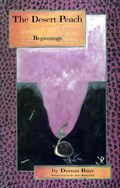
The Desert Peach Collection book 1: Beginnings


By Donna Barr (Mu-Aeon/Atlantic Books)
Aeon no ISBN, Atlantic ISBN: 978-1-88384-713-5

In Acknowledgement of the upcoming Comics in Conflict event at the Imperial War Museum this weekend – see our Noticeboard for details – I’m going to be reviewing a few intriguing and hopefully pertinent classics beginning with this criminally neglected comics gem…

Donna Barr is one of the comic world’s most unique talents. She has constructed a fully realised fantasyscape to house her stories and tells them with a style and voice that are definitely one-of-a-kind.

Her most well known creations are Stinz Löwhard, the Half-Horse and the star of this particular volume, Pfirsich Rommel the outrageously out, homosexual brother of the legendary perfect German soldier dubbed “The Desert Fox”.

The stories are set in World War II Africa and effortlessly combine hilarity, surreality profound sensitivity and glittering spontaneity.

Oberst Manfred Pfirsich Marie Rommel, like his Field Marshal brother Erwin, was part of the German invasion force in from 1940-1943. However, although as capable as his elder sibling, the gracious and convivial Desert Peach was a man who loathed harming anybody physically or emotionally and thus spent his days with the ever-so-motley crew of the 469th Halftrack, Gravedigging & Support Unit of the Afrika Korps. trying to remain stylish, elegant and non-threatening to the men under his command, the natives and the rather trying British – not all of whom were party to the clandestine non-aggression pact he had made with his opposite numbers in the amassed Allied Forces…

Pfirsich was also wildly in love with Rosen Kavalier: manly Luftwaffe ace and the Peach’s fiancé…

The Desert Peach ran for 32 intermittent issues from a number of publishers and was subsequently collected as eight graphic novel collections between 1988-2005, with a prose novel – Bread and Swans, a musical and an invitational collection by other artists entitled Ersatz Peach. A larger compendium, Seven Peaches, collects issues #1-7 and Pfirsich’s further exploits continue as part of the Modern Tales webcomics collective…

However, this hard-to-find first softcover collection reprints issues #1-3, opening with ‘Who is This Man?‘ as Pfirsich inspects his tiresomely peculiar band of maverick military men (the 469th is where the real army transfers its problem cases) prior to losing a map crucial to the German army’s advance. Not that the Peach is particularly upset over the military ramifications… he just doesn’t want to get his beloved brother into trouble…

And of course that’s the very moment Erwin pops over for a visit…

The real star of these fabulous comedy epics is the Peach’s long-suffering, unkempt, crafty, ill-mannered, bilious and lazily scrofulous orderly Udo Schmidt, whose one redeeming virtue is his uncompromising loyalty and devotion to the only decent officer in the army. As the broad and cunning farce unfolds the lost map leads inevitably to a confrontation with a bunch of British soldiers unaware of the unofficial truce, who then make the inexcusable gaffe of opening fire on Pfirsich and his desperately distressed subordinates.

Big mistake…

This first captivating excursion is capped off with a magical extra: cut-out paper-dolls of Pfirsich’s personal pilot von Drachenberg (whose plane is not, Not, NOT painted Pink, but actually a delightful shade of Peach) and his assorted uniform clothes…

In #2 after a gloriously experimental fourth-wall busting scratchboard sequence the military merriment continues unabated in ‘The Bar Fight’ as the urbane and generally peaceable Peach is provoked beyond all human endurance by a homosexual-hating Russian at the enlisted men’s unsanctioned watering hole…

Barr herself is ex-military and a devoted researcher in love with the often paradoxical minutiae of the martial life, so her scripts are rife with daft but true facts and circumstances, all utilised to enhance her brilliant tales, such as the knowledge that anti-communist Don Cossacks were allies of the Wehrmacht. One such, ultra-macho Semyon Bryonovich Givsonov, learns here to his temporary regret and eternal gratitude that some “fancy-boys” have a temper when pushed too far…

This spectacular boozy, bottle-busting battle yarn is followed by an utterly off-the-wall and indescribable exploit which nevertheless hangs together perfectly as Pfirsich commandeers Brother Erwin’s search for Allied submarines off the African coast to teach the Desert Fox the finer points of surfing in ‘A Day at the Beach’.

It doesn’t start too well but things quickly shape up once the work-shy Udo accidentally captures an American soldier from Hawaii who is convinced to give the gathered troops a few tips…

One note of warning for the usually squeamish hetero male readership: bathing suits were not standard issue for German soldiers during WWII so if exposed – but historically accurate – military buttockry is apt to unsettle, you might want to turn these pages carefully – although bluff old straight me personally found the Peach’s non-regulation swimsuit of svelte diaphanous pink (sorry, peach) ruffles a far more distracting notion…

Barr’s work is distinctive and honest but not to everybody’s taste, which is a shame as she has lots to say and a truly wondrous way of saying it.

Referencing the same vast story potential as Sgt. Bilko, Hogan’s Heroes, Oh, What a Lovely War! and even a little bit of Catch 22, the Desert Peach is bawdy, raucous, clever, authentically madcap and immensely engaging. These first tentative tastes of the fruits of combat were some of the very best comic tales of the 1980s and 1990s and still pack the comedic punch of a chartreuse howitzer, liberally leavened with situational jocularity, accent humour and lots of footnoted Deutsche cuss-words for the kids to learn.

Illustrated in Barr’s fluidly seductive wood-cut and loose-line style this book is a must-have for any history-loving, war-hating fun seeker and comes with an added attraction.

‘Ratzen’, scripted and drawn by Chuck Melville, is a clever vignette in which the assorted vermin of the 469th fall out over the definition of what is and isn’t a pet…

Beginnings and the 1998 reissue are pretty scarce these days but if you have a Kindle Robot Comics have just begun to release the individual comicbook issues for anybody who can get the hang of all this verfluchte new technology…
© 1988-1989, 1995 Donna Barr. Introduction © 1995 D. Aviva Rothschild. “Ratzen” © 1995 Chuck Melville. All rights reserved.

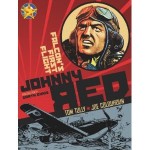
Johnny Red: Falcon’s First Flight


By Tom Tulley & Joe Colquhoun (Titan Books)
ISBN: 978-1-84856-033-8

In acknowledgement of the upcoming Comics in Conflict event at the Imperial War Museum this weekend – see our Noticeboard for details – I’m reviewing another captivating combat classic.

Britons have been enamoured of fighting aviators since the earliest days of popular fiction, but wonderful and thrilling as Biggles, Paddy Payne, I Flew with Braddock or Battler Britton might have been, the true hellish horror of war in the air didn’t really hit home for comics readers until strip veterans Tom Tully and Joe Colquhoun began crafting the epic career of a troublesome working class maverick pilot kicked out of the RAF at our time of greatest need, only to carve a bloody legend for himself in the blistering skies of the Eastern Front.

Johnny Red debuted in January 1977, in #100 of the increasingly radical war comic Battle Picture Weekly and Valiant, swiftly becoming a firm fixture for the next 500-odd issues, before finally calling it a day in 1987. Even then the strip continued as a reprint feature in Best of Battle until Fleetway stopped publishing comics.

Falcon’s First Flight collects chapters 1-37 of the long-running aerial epic in a lavish monochrome hardcover which also features an effusive introduction from starry-eyed fan Garth Ennis and a fascinating historical essay from Jeremy Briggs. Genesis of a Hero provides some intriguing perspective as well as revealing the incredible story of the pilot who was the real life inspiration for Johnny Red.

The racing breakneck action (utterly unavoidable since almost all Battle instalments were between three and four pages long) opens on September 1941 as young Liverpool oik Johnny Redburn helplessly watches Stukas and Junkas strafe and bomb the merchant ship he’s working on. The Empire Cape is part of a relief convoy en route to Murmansk with supplies for Britain’s hard-pressed Russian allies.

Scared and helpless Redburn recalls the incident which got him cashiered from RAF training (originally striking an officer but later retconned into accidentally killing an instructor) and banned from flying. He doesn’t miss the snobs and stupid rules but Johnny was a natural flier and is still hungry for the skies…

Unable to provide fighter escorts or aircraft carriers, the Navy at this time outfitted some freighters with a catapult-launched plane. The Cape has one of these insane contraptions: a single Hurricane which would be launched into enemy-filled skies with a few hours’ fuel and a pilot expected to do whatever he could until German bullets or the seas claimed him. Convoy ships had no landing facility and if the flier survived the dogfights he was expected to ditch in the sea or crash…

When the aviator is killed on the way to launch Johnny takes his place and against all odds shoots down enough attackers to allow the crew of the Cape to successfully abandon ship. Now he faces a unique dilemma. He is an illegal pilot in a stolen plane he can’t land. Having no faith in British military justice or the cold cruel waters below Redburn decides to try for the Russian mainland and a proper landing field…

Typically though, it’s a case of out of the frying pan and into the freezer as lethal weather conditions close in. Miraculously escaping fog, storm and ice he lands in a hidden base only to be mistaken for a German by the starving and desperate air fighters of the 5th Soviet Air Brigade… the “Falcons”.

These are patriotic but damned men, ordered to resist to the last in creaky biplanes against the overwhelming forces of the Luftwaffe. As the embattled communists close on Johnny the Germans attack and a unique bond of comradeship is formed as his skill and modern Hurricane wreaks havoc amongst the complacent Nazis.

With nowhere else to go Johnny joins the squadron of the doomed, galvanising them into a competent unit of rule-breaking, triumphant aerial killers risking everything to save their beleaguered homeland.

Ill-supplied and written off by their own leaders the Soviet airmen are convinced by “Johnny Red” to steal whatever food, replacements and weapons they need from their own retreating forces, quickly becoming a cohesive and credible threat to the once unstoppable Germans.

The warrior’s spectacular revival causes its own problems. Johnny is hiding from all contact with the British, convinced that only jail or the gallows awaits him, whilst beyond the close brotherhood of his fellow Falcons, successive Soviet military bureaucrats such as demented political officer Major Alexie Kraskin – a martinet who loves executing his own troops if they won’t obey suicidal orders – or cowardly, carpet-bagging Comrade Colonel Grigor Yaraslov, politically appointed to lead the resurgent squadron, all seem far too eager to get rid of the humiliatingly competent foreign interloper…

In sortie after sortie Johnny Red tackles privation, exhaustion and the enmity of his superiors whilst clearing Russian skies of fascist predators, but as this first volume closes he faces his greatest challenges.

With the Falcons posted to the frozen hell of Leningrad during the worst part of the German siege Johnny is increasingly plagued by the recurring effects of an old head-wound causing sporadic fits of blindness whilst a kill-crazy psychopathic replacement to the Falcons is determined to murder the Englishman, for stopping the strafing of Germans after they have surrendered…

These gritty, evocative tales are packed with historical detail, breathtaking passion and a staggering aura of authenticity. The classic theme of a misfit making good under incredible adversity has never been better depicted and Tom (Kelly’s Eye, Steel Claw, Roy of the Rovers, Raven on the Wing, Harlem Heroes, Mean Arena) Tully’s visceral scripts are perfectly realised by miracle worker Joe Colquhoun. The artist quit writing and drawing Roy of the Rovers to perfect his mastery of aviation war-stories on the long-running but more traditional Paddy Payne in Lion (from 1959 until the feature folded) before co-creating Johnny Red in late 1976. He illustrated 100 episodes before moving on to his greatest work Charley’s War.

This premiere collection is a grand moment in the transition of comics from boy’s own bravado in a Toff’s World to mature, mercurial yet moving adventures starring ordinary working class heroes. Johnny Red was at the forefront of this invasion of extraordinary commoners during a war that almost abolished the class system forever.

However, whatever your dogma or preferred arena of struggle, there’s no question that these magnificent war-stories are among the Few: the cream of British comics well worth your avid time and attention.

Johnny Red © 2010 Egmont UK Ltd. All Rights Reserved. Introduction © 2010 Garth Ennis. Genesis of a Hero © 2010 Jeremy Briggs.