Tex Arcana


By John Findley (Catalan Communications)
ISBN: 0-87416-036-7

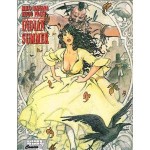
One of the best comedy/horror westerns (not, admittedly, a vast field of creative endeavour) of the last fifty years, Findley’s quirky masterpiece of gory, saucy, tongue-in-cheek eccentricity delves into the same rich vein (oh, what a card am I!) as Polanski’s Dance of the Vampires (1967 retitled The Fearless Vampire Killers) and the so-bad-it’s-good Captain Kronus (a rare Brian Clemens turkey from 1974) as well as the immortal Mel Brook’s gem Blazing Saddles in this sagebrush saga of the little town of Hangman’s Corners and the extraordinary things that keep happening there.

Narrated in venerable EC style by the Old Claim-Jumper this slightly abridged volume from 1987 collects the strip which ran in Heavy Metal magazine between March 1981 to 1986 and recounts how a vampire in the thrall of demons attacks the town and how they are all saved by the mysterious lone rider known as Tex Arcana – although most of the work is done by his eerie and ethereal paramour “the Woman in White”. Also included is the short mystery ‘The Amazin’ Case o’ th’ Disappearin’ Chickens’ in which two unprepossessing and ineffectual demons Sweaz and Herp solve the perplexing riddle of why the territory’s biggest chicken rancher loses five head of prime fowl at every full moon…

Findley’s writing is deliciously wacky, full of mock-heroic hyperbole, as he diddles with the icons of the genre whilst his astoundingly rendered fine-line-and-hatching style of drawing – meticulous to the point of mania – is completely mesmerising. This guy can really move a pencil and he doesn’t know how to take short-cuts!

Even after the series was dropped from Heavy Metal Findley kept on working and the eerie epic continues to this day online (http://www.texarcana.com/). In 2006 BookSurge published a 282 page compilation (Tex Arcana: a Saga of the Old West, ISBN: 978-1-41964-632-4) which collected everything to date, but I’ve gone with this 72 page, oversized edition because the reproduction on the new edition is reportedly not everything it could be, and also because I haven’t got hold of a copy of the new book yet. When I do I’ll report back to you…

A little spooky, a lot funny, incredibly realized: whichever version you plump for, doesn’t this sound like your kind of thing..?

© 1987 John Findley and Catalan Communications. All Rights Reserved.

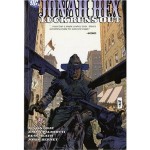
Showcase Presents Jonah Hex volume 1


By John Albano, Michael Fleisher, Tony DeZuñiga, & various (DC Comics)
ISBN13: 978-1-4012-1817-1

The Western is an odd genre that can almost be sub-divided into two discrete halves: the sparkly, shiny version that dominated kids’ books, comics and television for decades, best typified by Zane Grey stories and heroes such as Roy Rogers and Gene Autry – and the other stuff.

That sort of cowboy tale, grimy, gritty, excessively dark, was done best for years by Europeans in such strips as Jean-Michel Charlier’s Lieutenant Blueberry or Bonelli and Galleppini’s Tex Willer which made their way into US culture through the films of Sam Peckinpah and Sergio Leone. Jonah Hex is the latter sort.

DC (or National Periodicals as it then as) had run a stable (sorry!) of clean-cut gun-slingers since the collapse of the super-hero genre in 1949, with such dashing – and highly readable – luminaries as Johnny Thunder, The Trigger Twins, Nighthawk, Matt Savage and dozens of others in a marketplace that seemed limitless in its voracious hunger for chaps in chaps; but all things end, and by the early sixties the sagebrush brigade had dwindled to a few venerable properties.

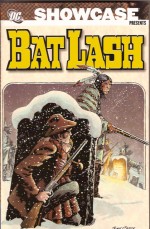
As the 1960s closed, the thematic changes in the cinematic Cowboy filtered through to a comics industry suffering its second super-hero retreat in twenty years. Although a critical success, the light-hearted Western series Bat Lash couldn’t garner a solid following, but DC, desperate for a genre that readers would warm to, retrenched and revived an old title, gambling once again on heroes who were no longer simply boy scouts with six-guns.

All-Star Western #1 was released with an August/September 1970 cover date, filled with Pow-Wow Smith reprints, becoming an all-new anthology with its second bi-monthly issue. The magazine was allocated a large number of creative all-stars, including Robert Kanigher, Neal Adams, Gray Morrow, Al Williamson, Gil Kane, Angelo Torres, and Dick Giordano, working on such strips as Outlaw!, Billy the Kid and the cult sleeper hit El Diablo, which combined shoot-’em-up shenanigans with supernatural chills, in deference to the real hit genre-type that saved comics in those dark days.

But it wasn’t until issue #10 and the introduction of a disfigured and irascible bounty hunter created by writer John Albano and Tony DeZuniga that the company found its greatest and most enduring Western warrior. This superb collection of the early appearances of Jonah Hex has been around for a few years, with no apparent sign of a sequel yet, so consider this a heartfelt attempt to generate a few sales and lots of interest… But before we even get to the meat of the review let’s look at the back of this wonderfully economical black and white gun-fest where some of those abortive experimental series have been included at no added expense.

Outlaw was created by Kanigher and DeZuniga, a generation gap drama wherein Texas Ranger Sam Wilson was forced to hunt down his troubled and wayward son Rick. Over four stylish chapters – ‘Death Draw’, ‘Death Deals the Cards!’ (#3, illustrated by Gil Kane), ‘No Coffin for a Killer’ and the trenchant finale ‘Hangman Never Loses’ (#5, drawn by Jim Aparo), the eternal struggles of Good and Evil, Old and New were effectively played out, all strongly influenced by Clint Eastwood Spaghetti Westerns.

The series was replaced by one of the best and definitely the most radical interpretation of Billy the Kid ever seen in comics; a sardonic, tragic vengeance-saga that began with the hunt for the killer of Billy’s father and developed into a poignant eulogy for the passing of an era. Billy’s quest (‘Billy the Kid… Killer’, Bullet for a Gambler’ and ‘The Scavenger’ all by Albano and DeZuniga) ran in issues #6-8. The book closes with a classic spooky Western tale from issue #7: ‘The Night of the Snake’ was written by Gil Kane and Denny O’Neil, and strikingly illustrated by Kane and DeZuniga, clearly showing each creator’s love for the genre…

As good as those lost gems are, the real star of this tome is the very model of the modern anti-hero, Jonah Hex, who first appeared in All-Star Comics #10, a coarse and callous bounty hunter clad in a battered Confederate Grey tunic and hat, half his face lost to some hideous past injury; a brutal thug little better than the scum he hunted – and certainly a man to avoid. ‘Welcome to Paradise’ by Albano and DeZuniga introduced the character and his world in a powerful action thriller, with a subtle sting of sentimentality that anyone who has seen the classic western “Shane” cannot fail to appreciate.

From the first set-up Albano was constantly hinting at the tortured depths hidden behind Hex’s hellishly scarred visage and deadly proficiency. In ‘The Hundred Dollar Deal’ (#11) the human killing machine encountered a wholesome young couple who weren’t what they seemed and the scripts took on an even darker tone from #12. The comic had been re-titled Weird Western Tales (aligning it with the company’s highly successful horror/mystery books and ‘Promise to a Princess’ combined charm and tragedy in the tale of a little Pawnee girl and the White Man’s insatiable greed and devilish ingenuity.

From the very start the series sought to redress some of the most unpalatable motifs of old style cowboy literature and any fan of films like Soldier Blue and Little Big Man or Dee Brown’s iconoclastic book Bury My Heart at Wounded Knee will feel a grim sense of vicarious satisfaction and redress at most of the stories here. There’s also a huge degree of world-weary cynicism that wasn’t to be found in other comics until well past the Watergate Scandal, when America as whole lost its social and political innocence…

Issue #13 ‘The Killer’s Last Wish!’ again touched the heartstrings in the tale of a lovable old man and his greedy, impatient son, with Hex the unlikely arbiter of final justice. ‘Killers Die Alone!’ is an vicious tear jerker of a tale as Hex’s only friend dies to save him the vengeance of killers who blame the bounty hunter for their brother’s death, whilst ‘Grasshopper Courage’(#16 – Hex didn’t appear in #15) shows a shrewd grasp of human nature as Hex and an inept young sheriff track a gang of stagecoach robbers.

‘The Hangin’ Woman’ in #17 is a classy thriller wherein Hex runs afoul of a sadistic harridan who rules her hometown with hemp and hot lead, whilst ‘The Hoax’ finds him embroiled in a gold-rush scam that as usual ends bloody. With this tale the length of the stories, always growing, finally reached the stage where they pushed everything else out of the comic for the first time. Before too long the situation would become permanent. ‘Demon on my Trail’ in #19 dealt with kidnapping and racism, whilst ‘Blood Brothers’ (written by Arnold Drake) again addressed Indian injustice as Hex was hired by the US Cavalry to hunt down a woman stolen by a charismatic “redskin”.

Albano returned for ‘The Gunfighter’, as an injured Hex at last hinted about his veiled past while tracking a gang of killers, but it was new writer Michael Fleisher (assisted at first by Russell Carley) who would reveal Hex’s secrets beginning with Weird Western Tales #22’s ‘Showdown at Hard Times’. A chance meeting in a stagecoach put a cabal of ex-Confederate soldiers on the trail of their ex-comrade for some unrevealed betrayal that inevitably ended in a six-gun bloodbath, and introduced a returning nemesis for the grizzled gunslinger.

More was revealed in ‘The Point Pyrrhus Massacre!’ as another gang of Southern malcontents attempted to assassinate President Ulysses Grant, with Hex crossing their gun-sights for good measure. Issue #24 was illustrated by Noly Panaligan, and ‘The Point Pyrrhus Aftermath!’ found a severely wounded Hex a sitting duck for every gunman hot to make his reputation, depending for his life on the actions of a down-and-out actor…

‘Showdown with the Dangling Man’ looked at shady land deals and greedy businessmen with a typically jaundiced eye – and grisly imagination – whilst train-robbers were the bad-guys in the superb ‘Face-Off with the Gallagher Boys!’ illustrated by the inimitable Doug Wildey. Issue #27, by Fleisher and Panaligan featured ‘The Meadow Springs Crusade’ as the bounty hunter was hired to protect suffragettes agitating for women’s rights in oh-so-liberal Kansas, ‘Stagecoach to Oblivion’ (drawn by George Moliterni) saw him performing the same service for a gold-shipping company.

Hex’s past was finally revealed in #29’s ‘Breakout at Fort Charlotte’, a two-part extravaganza that gorily concluded with ‘The Trial’ (illustrated by Moliterni), as a battalion of Confederate veterans passed judgement on the man they believed to be the worst traitor in the history of the South.

‘Gunfight at Wolverine’ is a powerful variation on the legend of “Doc Holliday” and the Hex portion of the book concludes with a two-part adventure from Weird Western Tales #32 and 33, drawn by the great Jose Luis Garcia Lopez. ‘Bigfoot’s War’ and ‘Day of the Tomahawk’ is a compelling tale of intrigue, honour and double-cross as the bounty-hunter is again hired to rescue a white girl from those incorrigible “injuns” – and as usual hasn’t been told the full story…

Jonah Hex is the most unique and original character in cowboy comics, darkly comedic, rousing, chilling and cathartically satisfying. It’s a Western for those who despise the form whilst being the perfect modern interpretation of a great storytelling tradition. No matter what your reading preference, this is a collection you don’t want to miss.

© 1966, 1967, 1968, 1969, 2008 DC Comics. All Rights Reserved.

Los Tejanos

Los Tejanos

By Jack Jackson

(Fantagraphics Books)  No ISBN

Known as ‘Jaxon’ in his underground comix days, Jack Jackson’s infectious fascination with the history of Texas was seeping through into all his work even from those early days. Portions of Los Tejanos appeared as the comic books Recuerden el Alamo and Tejano Exile (published by Last Gasp) in the mid 1970s, which the author fleshed out for this early prototype of the Graphic Novel.

Drawn in a captivating, etching-like, cross-hatched style that simply screams ‘true story,’ Los Tejanos provides an absolute wealth of information, social texture and sheer entertainment. It tells the story of Juan Nepomuceno Seguin, a “Texian” of Mexican birth who sided with the rebels fighting for independence. Before becoming part of the United States of America, Texas was briefly a nation unto itself, having won its freedom from a Mexican empire that was bloated, corrupt and in decline. How Seguin turned his back on one culture, only to be eventually betrayed by the other during that period when Hispanic and Anglo-Saxon cultures battled for hegemony in continental America seems to echo even now with relevance. That battle still isn’t over.

The eventual fate of Juan N Seguin makes for powerful reading, rich in fact, well-paced as narrative, and even delivering the occasional solid horse-laugh. But the true measure of a history book, and this most wonderful tome is certainly that, is how the material impacts on the contemporary. Here it also succeeds. The issues were germane in 1840, they were just as much so in 1982, and they still are now.

Why this epic isn’t required reading for every US history or sociology course I’ll never understand.

©1982 Jack Jackson. All Rights Reserved.

Jonah Hex: Face Full of Violence

Jonah Hex: Face Full of Violence 

By Jimmy Palmiotti, Justin Gray & Luke Ross

(DC Comics) ISBN 1-84576-408-0

For a very long time westerns were an integral part of every comic publisher’s stable, and then they fell from favour. In the 1970s DC Comics published a grim, sardonic anti-western anti-hero with a ruined face who mirrored the dark turn that film cowboys had taken. Then the comic book West all but disappeared again.

There’s often a relationship between moving pictures and drawn ones, and I’m sure that the style and success of such shows as Deadwood has convinced the powers that be at DC that the time is once again right for Jonah Hex.

Lucky for us then that the creators involved have done such a bang-up job of updating him. What was once one of the best comics DC published, is almost as good in this incarnation — and looks like getting better with every issue. Electing to buck the modern trend for continued stories, the first six tales collected here are short, punchy, complete adventures displaying the character of the man and the true barbarity of the world he inhabits. With titles such as A Cemetery without Crosses, Bullets of Silver, Cross of Gold, The Slaughter at Two Pines, Chako Must Die, Christmas with the Outlaws and The Plague of Salvation owing more to Sam Pekinpah than Zane Gray, these splendid stories are worthy addition to a great tradition — and just the sort of thing to get more people reading comics.

© 2006 DC Comics. All Rights Reserved.

Comanche Moon

Comanche Moon

By Jack Jackson

(Rip Off Press Inc./Last Gasp)  ISBN 0-89620-079-5

One of the earliest Graphic Novels, Comanche Moon was originally published as the comic books White Comanche, Red Raider and Blood on the Moon during the 1970s by Last Gasp, a regular packager of work by underground cartoonists such as Jackson. This reworked and augmented edition appeared in 1979. So far as I know it’s not currently in print, although it really should be.

The book follows the astounding life of Cynthia Ann Parker and her son Quanah and the course of their lives among Texas Comanches and her own – white – people. Whilst the Parkers are eking out a living on the Southern Plains of Texas in 1836, their homestead is attacked by a Comanche raiding party and little Cynthia Ann and her younger brother are carried off. Separated from him she is raised as a squaw, eventually marrying a sub-chief and birthing a son. The folksy, matter of fact story-telling reinforces the powerful truth of this documentary of the final downfall of the Plains Indians under the relentless expansionist pressure of the new Americans.

Quanah grew to be the last chief of the Comanches and as the old ways died he was responsible for all the meagre concessions his people managed to gain from the unstoppable white men. He was a Judge, a Sheriff, a huckster for Teddy Roosevelt and died a loved and respected political figure among both the Comanches and the settlers.

My dry précis does nothing to capture the hypnotic skill of Jackson in making this history come alive. Comanche Moon reads as easily as the best type of fiction but never strays from the heartbreaking truth that underpins it. Jack Jackson’s work is powerful, charming, thoroughly authentic, astoundingly well-researched and totally captivating. If only all history books could be his good.

©1979 Jack Jackson. All Rights Reserved.