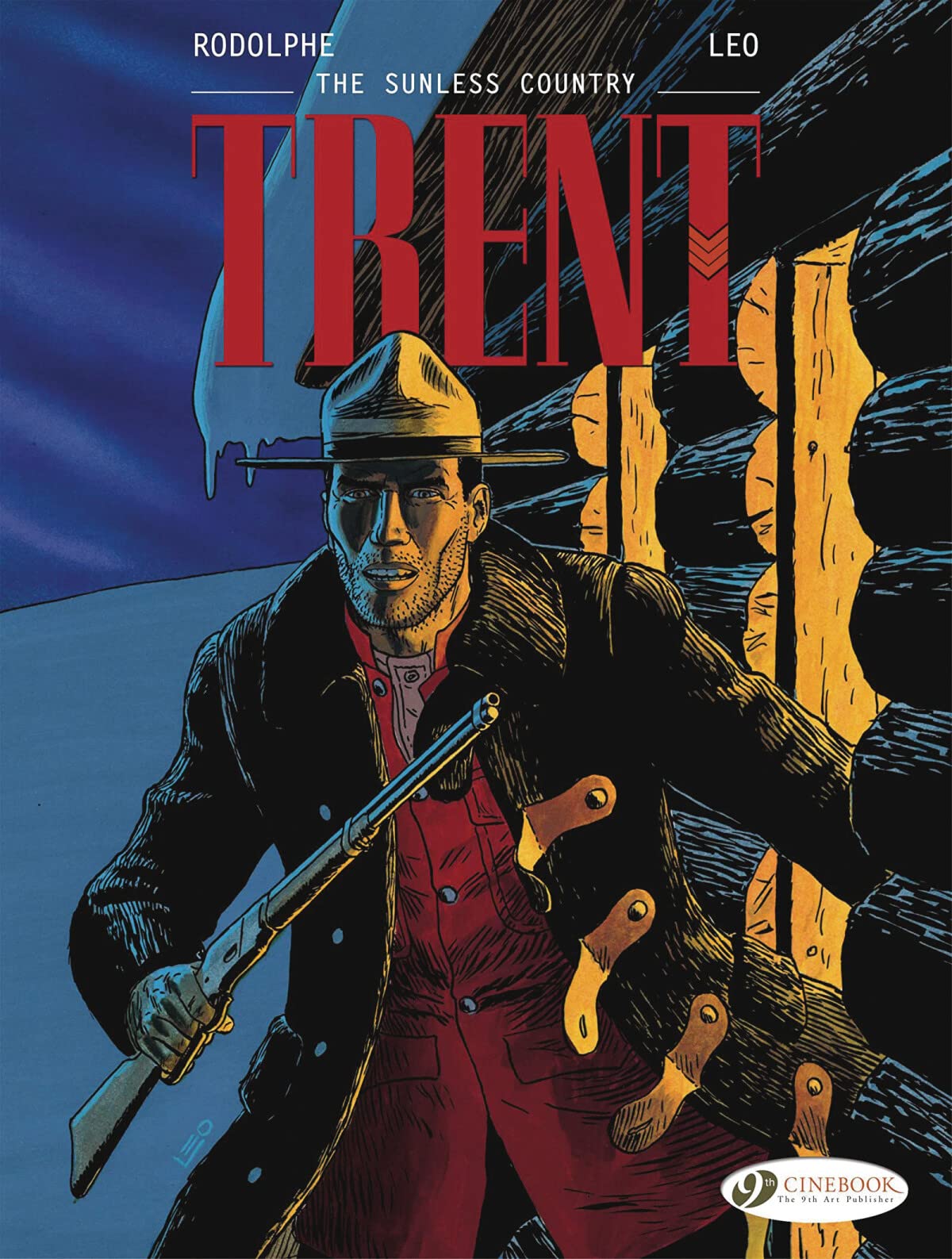
Trent volume 6: The Sunless Country


By Rodolphe & Léo, coloured by Marie-Paule Alluard, translated by Jerome Saincantin (Cinebook)
ISBN: 978-1-84918-396-3 (Album PB/Digital edition)

Continental audiences adore the mythologised American experience, both in Big Sky Wild Westerns and later eras of crime dramas. They also have a profound historical connection to the northernmost parts of the New World, generating many great graphic extravaganzas…

Born in Rio de Janeiro on December 13th 1944, “Léo” is artist/storyteller Luiz Eduardo de Oliveira Filho. After attaining a degree in mechanical engineering from Puerto Alegre in 1968, he was a government employee for three years until forced to flee the country because of his political views.

Whilst military dictators ran Brazil, he lived in Chile and Argentina before illegally returning to his homeland in 1974. He worked as a designer and graphic artist in Sao Paulo whilst creating his first comics art for O Bicho magazine, and in 1981 migrated to Paris to pursue a career in Bande Dessinée. He found work with Pilote and L’Echo des Savanes as well as more advertising and graphic design jobs, until the big break came and Jean-Claude Forest (Bébé Cyanure, Charlot, Barbarella) invited him to draw stories for Okapi.

This led to regular illustration work for Bayard Presse and, in 1988, Léo began an association with scripter/scenarist Rodolphe D. Jacquette – AKA Rodolphe. The prolific, celebrated writing partner had been a giant of comics since the 1970s: a Literature graduate who left teaching and running libraries to create poetry, criticism, novels, biographies, children’s stories and music journalism.

On meeting Jacques Lob in 1975, Jacquette expanded his portfolio: writing for many artists in magazines ranging from Pilote and Circus to à Suivre and Métal Hurlant. Amongst his most successful endeavours are Raffini (with Ferrandez) and L’Autre Monde (with Florence Magnin), but his triumphs in all genres and age ranges are far too numerous to list here.

In 1991 “Rodolph” began working with Léo on a period adventure of the “far north” starring a duty-driven loner. Taciturn, introspective, bleakly philosophical and pitilessly driven, Royal Canadian Mounted Police sergeant Philip Trent premiered in L’Homme Mort, forging a lonely path through the 19th century Dominion. He starred in eight moving, hard-bitten, love-benighted, beautifully realised albums until 2000, with the creative collaboration sparking later fantasy classics Kenya, Centaurus and Porte de Brazenac

Cast very much in the pattern perfected by Jack London and John Buchan, Trent is a man of few words, deep thoughts and unyielding principles who gets the job done whilst stifling the emotional turmoil boiling within him: the very embodiment of “still waters running deep”…

Le Pays sans soleil was the 6th saga, debuting in 1998, offering an arduous, chillingly bleak examination of family and duty with the Mountie going slowly mad amidst the extremes of human existence. Posted to the arctic circle where night lasts for weeks, he’s been left behind by fellow officers Charlie and Vaughan, as they conduct an inspection of the region.

Manning the outpost – a simple log cabin and ever-expanding graveyard – Trent whiles away the relentless, timeless, unending gloom of interminable hours by keeping his journal and wondering when his own sanity will sunder. If he hadn’t been blessed with canine company (he’s called “Dog”) the peacekeeper would be completely crazy by now…

Darkness and unyielding environment call to him like a siren, and as he continually returns to the latest grave – occupied by RCMP officer Sergeant James McBruce – Trent again wonders if he can hold out until daylight or his colleagues come back…

Whenever he feels most embattled Trent recalls the last visit with Agnes when – after years of second-guessing, procrastination and prevarication – he finally declared his love for the widow… and she accepted his proposal of marriage.

Years previously, he had saved Agnes St. Yves – but not her beloved brother – and was given a clear invitation from her: one he never acted upon. Eventually, Philip made a his decision and travelled across the country with marriage in mind, only to learn she had stopped waiting and wed someone else.

More time elapsed and they met again when her husband was killed during an horrific murder spree. The ball was again in Philip’s court and once more he fumbled it through timidity, indecision and inaction. He retreated into duty, using work to evade commitment and the risk of rejection…

His dreamlike reverie is suddenly shattered when Dog hears an intruder. In the icy darkness outside Trent finds a dying native whose last words reveal someone else is lost in the wastes, slowly expiring in an igloo…

Fired by duty and threat to life, Mountie and mutt brave the ebony vastness and eventually find the frozen bolthole. At first glance, they’re too late: only the body of a native woman is there. Dog, however keeps worrying the corpse, and Trent finds it is wrapped around a still living baby. A white baby…

Wracked by mystery and with no proper food for the infant, Trent improvises from his cobbled-together stores before setting out to walk back to civilisation with the orphan but his trek due south towards the sun and warmth soon becomes complicated. Dogging his tracks is an enigmatic stranger, maintaining a steady pace yet never stopping. At the moment Trent first sees a sunrise, the stalker strikes, using that moment of joyous release to swoop in and steal the child.

The kidnapper correctly assessed that the weary officer could not catch him, but completely misjudged how Dog would react to a threat to his “family”…

One mystery is solved and an even greater one – fraught with misapprehension and mistake – then unfolds as the baby snatcher – white journalist James Dunwood – explains that the child is his daughter Mary Little Moon and the woman in the igloo must have been his wife Four Rivers

As they trek south, Dunwood explains how both had been abducted from the camp of Cree chief Old Storm. After a reporting assignment turned personal, James had relinquished his career for love. He joined the First Nations tribe, but his romantic idyl was shattered when white trader Duncan started selling booze to the Indians and fomented war when Old Storm intervened.

In retaliation, Duncan and his renegades abducted Four Rivers and her newborn, heading north with Dunwood in pursuit. He never quite caught up as they pushed ever deeper into polar regions… and now his beloved was gone.

James couldn’t be more wrong, and as his tragic tale closes, Trent is left holding the baby. He is determined to make things right for Mary Little Moon – and this time, there’s a modicum of happy news to ameliorate the horrors and injustice the Mountie usually wades through in pursuit of justice…

Moreover, as he unravels the morass of confusion and solves the crimes, Philip bonds with the child. Worst of all, upon returning her to the proper guardians, he meets someone who makes him briefly forget all about Agnes…

Another beguilingly introspective voyage of internal discovery, where environment and locale are as much lead characters as hero and villain, The Sunless Country delivers action, endeavour, suspense and poignant drama in a compelling epic to delight all fans of widescreen cinematic entertainment.
Original edition © Dargaud Editeur Paris 1998 by Rodolphe & Leo. All rights reserved. English translation © 2017 Cinebook Ltd.
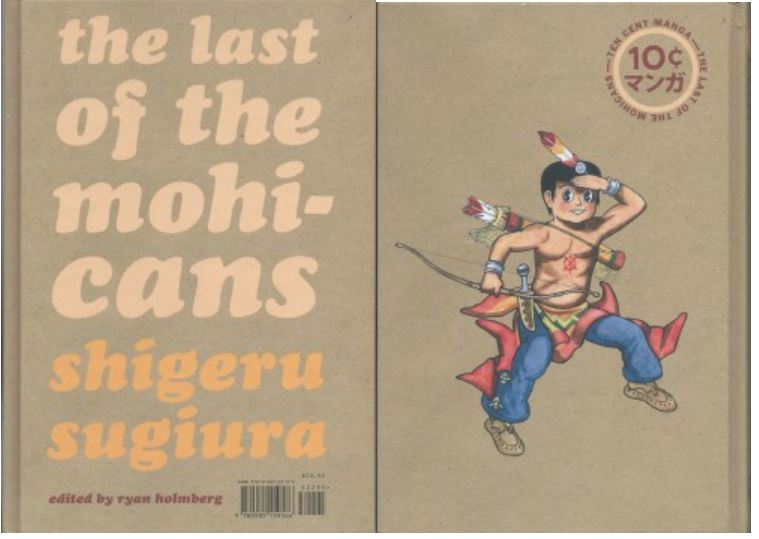
Last of the Mohicans: Ten-Cent Manga Series volume 1


Freely adapted from the novel by James Fenimore Cooper by Shigeru Sugiura, edited & translated by Ryan Holmberg (PictureBox)
ISBN: 978-0-985195-6-6 (HB)

Those of us in the know tend to believe that Japanese comics began with Osamu Tezuka in the years following the end of World War II – and indeed in most ways that assessment is reasonable.

However, as the superbly informative article bolstering this superb tome attests, a thriving manga business has operated in Japan since the 1930s, and one of its greatest proponents was artist and author Shigeru Sugiura.

This superb monochrome hardback volume (sadly no digital delight yet) re-presents one of his greatest triumphs as the initial volume in a proposed series of “Ten-Cent Manga” collections. Translated and edited by Ryan Holmberg, it highlights lost works displaying not simply indigenous Japanese virtuosity but also the influence of cross-cultural contact and pollination with other countries.

In erudite, lavishly illustrated essay and appreciation ‘Shigeru Sugiura and his Mohicans’ he describes in fascinating and forensic detail the origins of the project, state of play in Japan pre-and-post WWII. The absorbing life and career of an artist who began as a jobbing strip cartoonist only to elevate himself to the status of Psychedelic, Surrealist Pop Art icon is one that is utterly addictive to fans of American movies and comic books.

The treatise is fully supported by documentary excerpts from the 1950s magazines and strips. Sugiura scrupulously “homaged” and swiped from: Jesse Marsh’s Tarzan, Alex Toth’s Johnny Thunder, and particularly Fred Ray’s Tomahawk. These were most commonplace amongst a wealth of graphic treasures synthesised and transformed into something fresh, vibrant and, most crucially, relevant to the entertainment-starved kids of occupied Japan.

Also included is an article by the artist himself, written in 1988 describing his life-long passion for and debt of influence to American cinema – most especially ‘Silent Movies’

However, although scholarly and revelatory, the text portions of this singular treat pale beside the sheer exuberant energy and B-movie bravura of James Fenimore Cooper’s text…

Shigeru Sugiura (1908-2000) studied painting before becoming an art assistant to comics pioneer Suihō Tagawa (AKA Nakatarō Takamizawa). By 1933, the student was creating his own strips for the gags and Boys’ Own Adventure style comics that proliferated prior to the war.

He returned to the industry when hostilities ended, producing more of the same, but now influenced far more by the ubiquitous comic books of the occupying G.I.s than the silent Westerns and baggy-pants comedies he had voraciously consumed in his youth.

Shigeru Sugiura blended comedy/action stories for children and achieved great success throughout the 1950s, based on well-known characters such as ninja Sasuke Sarutobi or adapted Chinese classics like Journey to the West, furthermore including modern themes like wrestling, science fiction and even movie sensation Gojira/Godzilla to his fun-filled weekly pages in a most prolific and influential career.

…And Westerns; he did lots of rootin’ tootin’ shoot ’em up cowboy stories…

Sugiura (very) loosely adapted Last of the Mohicans in 1953 (when it was already a very familiar tale to Japanese readers) for Omoshiro Manga Bunko – a line of books presenting world classics of literature in comics form – albeit not exactly any form recognisable to literary purists…

He retired in 1958 but returned in 1970, reworking old stories and creating new pieces from the fresh perspective of a fine artist, not a mere mangaka earning a precarious living.

In 1973 he was already refining and releasing his classic tales for paperback reprints when he was approached by publisher Shobunsha to update another. The 1953 Mohicans became their latest re-released tale, slyly reworked as a wry pastiche and kick-starting Sugiura’s second career as a darling of the newborn adult manga market…

One word of warning: This is not your teacher’s Last of the Mohicans, any more than The Shining resembles Stephen King’s actual novel or the way South Pacific could be logically derived from James Michener’s Tales of the South Pacific – or how anything Alan Moore wrote could be found in films like From Hell or League of Extraordinary Gentlemen

Sugiura’s updated 1973-74 iteration forms the majority of this chronicle: a fast-paced riot of non-stop adventure, greed, pride, tragedy and whacky humour wherein both heroic frontiersman Leatherstocking and noble savage Chingachgook are re-imagined as bold young lads in bad times, their desperate quest punctuated with weirdly clashing moments of slapstick, creative anachronism, cross-cultural in-jokes and plain outright peculiarity…

It all works impossibly well, beginning with the introduction of Hawkeye, ‘La Carabine Kid’: a young but doughty colonial scout and spy for the British.

The Empire is at war with the French for possession of the New World, with the Kid and his companions suffering many reverses at the brutal hands of the Mingos – a tribe allied to France. They were also responsible for reducing the mighty Mohicans to two survivors: Chief Chinga and his son Uncas.

The plot thickens when the Mingo Chief and his manic son Magua threaten to abduct Cora and Alice – daughters of British Colonel Munro – in an attempt to force the veteran soldier to surrender his command East Fort to the French. After a savage assault, Hawkeye, the Mohicans and dashing Major Duncan decide to escort the girls to the safety of Fort Henry, with the hostiles close behind…

En route they pick up itinerant preacher Father Gamut, before fighting their way on through wilderness and repeated Mingo attacks, always one step ahead of ‘Magua’s Pursuit’.

The struggle is not one-sided. The wily fugitives contrive to blow up a French fort and even link with a war party of Delas who subsequently reduce the ravening Mingos to scattered remnants – but not before the pursuers carry off ‘The Abducted Sisters’

The scene is set for the heroes to rescue the girls and end Magua’s threat forever – but the showdown is costly with a high price to pay in ‘The Sad Ending’

Sheer graphic escapism, spectacular storytelling and a truly different view of a time-honoured masterpiece make this an unmissable treat for all lovers of world comics.

This book is printed in ‘read-from-back-to-front’ manga format.
© 2013 the Estate of Shigeru Sugiura. Translation and essay © 2013 Ryan Holmberg. All rights reserved.

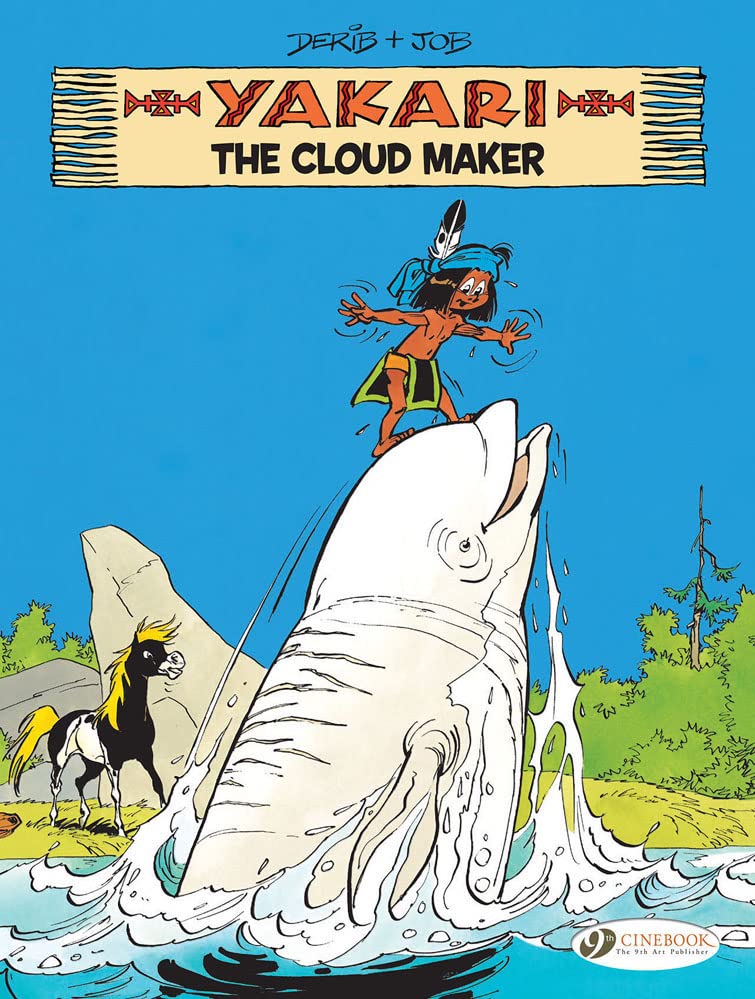
Yakari volume 20: The Cloud Maker


By Derib & Job, coloured by Dominique and translated by Jerome Saincantin (Cinebook)
ISBN: 978-1-80044-074-6 (Album PB/Digital edition)

In 1964 children’s magazine Le Crapaud à lunettes was founded by Swiss journalist André Jobin, who then wrote for it under the pseudonym Job. Three years later he hired fellow French-Swiss artist Claude de Ribaupierre AKA “Derib”. The illustrator had launched his own career as an assistant at Studio Peyo (home of Les Schtroumpfs): working on The Smurfs strips for venerable weekly Le Journal de Spirou.

Thereafter, together they created the splendid Adventures of the Owl Pythagore before striking pure comics gold a few years later with their next collaboration. Derib – equally au fait with enticing, comically dynamic “Marcinelle” cartoon style yarns and devastatingly compelling meta-realistic action illustrated action epics – went on to become one of the Continent’s most prolific and revered creators. It’s a crime that groundbreaking strips such as Buddy Longway, Celui-qui-est-nà-deux-fois, Jo (first comic to deal with AIDS), Pour toi, Sandra and La Grande Saga Indienne) haven’t been translated into English yet, but we still patiently wait in hope and anticipation…

Over the decades, much of Derib’s stunning works have featured his beloved Western themes: magnificent geographical backdrops and epic landscapes. Yakari is considered by fans and critics to be the strip which led him to his deserved mega-stardom.

Debuting in 1969, it traces the eventful, nomadic life of a young Oglala Lakota boy on the Great Plains – according to this tale, in the vicinity of the Great Lakes Basin. The stories are set sometime after the introduction of horses by the Conquistadores, but before the coming of modern Europeans.

The series – which also generated two separate animated TV series and a movie – is up to 42 albums thus far: a testament to its evergreen vitality and brilliance of its creators, even though originator Job moved on and Frenchman Joris Chamblain took on the writing in 2016.

Overflowing with gentle whimsy and heady compassion, little Yakari enjoys a largely bucolic existence: at one with nature and generally free from privation or strife. For the sake of our delectation, however, the ever-changing seasons are punctuated with the odd crisis, generally resolved without fuss, fame or fanfare by a little lad who is smart and brave – and can, thanks to a boon of his totem guide the Great Eagle, converse with all animals…

In 1995, Le souffleur de nuages was the 21st European album, but – as always with the best books – the content and set-up are both stunningly simple and sublimely accessible, affording new readers total enjoyment with a minimum of familiarity or foreknowledge required…

Here and now it is painfully topical as Yakari’s wandering people are stranded as springtime rains inundate the entire region. When the downpour finally stops, the land is devasted by flooding and the little wonder and his valiant pony decide to check on all their animal pals. Happily, Little Thunder is an excellent swimmer…

They don’t go far before meeting beaver patriarch Thousand-Mouths, whose frantic efforts to rally the clan for a major repair job to the lodge and dams is being hampered by bone idle slacker Wooden Bed. Just like any teenager, he just wants to sleep…

Water is everywhere, and the landscape is a sea broken by tiny islands. The prairie dog colony are marooned on one, waiting until it all recedes so they can clear out their great burrow. They are also nervously contemplating the ominously cloud-filled sky…

Pressing on, the horse and his boy reach a flooded forest and find raccoon Black Mask and his kin fractiously sharing a tree with grumpy owl. Nobody is happy, but all are resigned to waiting out the weather…

That night, back in camp and very much appreciating being warm and dry, Yakari has one of his special, prophetic dreams. It shows him more rains washing away his tipi (tent) until it is washed up onto a big white cloud…

Happily, morning brings better news. The waters have clearly receded, but – still perplexed by his vision – Yakari rides Little Thunder back along yesterday’s route just to check. Everywhere, industrious animals are clearing up and making good, and with so much to see and beasts to check on, the pair are far from home when the sun sets.

Bedding down under a large rock, they are later awakened by an odd cry coming from the river. Closer examination in the morning reveals the disturbance came from a pond linked to the swiftly flowing waters. Oddly, a small cloud is escaping from the turbulence. When Yakari dives in for a closer look, he is abruptly raised up into the air by a giant white fish surfacing under him!

The incredible snow-white monster turns out to be a chatty and gregarious beast calling itself a “white whale”. The curious Beluga had travelled along the swollen river from the “Great Water” Yakari had seen when travelling with spirit creature Nanabozho. Soon they are all trading life stories…

The boy names his new chum Peeleepee because of the cry it constantly utters, and discovers that despite living in the ocean, the newcomer needs air to live, water to support his weight and makes clouds from the top of his head…

In a remarkably short time they are all great friends and have learned lots of each other’s worlds. The boy and the beluga even trade tricks and acrobatic games, but the idyl is rudely shattered when a passing toad points out that, while they’ve been romping, the waters have further evaporated. The great white wonder is now trapped in an isolated pond far from the river it needs to live or get home by…

Snotty but smart, the amphibian then suggests a possible solution, but it takes all of Yakari’s friends working together, sheer luck, applied physics and the boy’s considerable negotiating skills to ensure the safety of the stranded newcomer before this ending turns out happy…

Yakari is one of the most unfailingly absorbing all-ages strips ever conceived and should be in every home, right beside Tintin, Uncle Scrooge, Asterix and The Moomins. It’s never too late to start reading something wonderful, so why not get back to nature as soon as you can?
Original edition © Derib + Job – Editions du Lombard (Dargaud – Lombard s. a.) – 2000. All rights reserved. English translation 2022 © Cinebook Ltd.

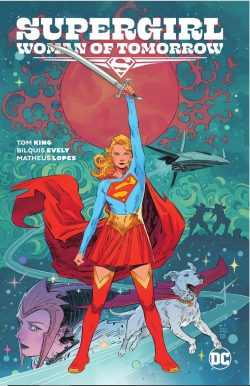
Supergirl: Woman of Tomorrow


By Tom King, Bilquis Evely, Matheus Lopes, Clayton Cowles & various (DC Comics)
ISBN: 978-1-7795-1568-1 (TPB/Digital edition)

As a rule, superhero comics don’t generally do whimsically thrilling anymore. They especially don’t do short or self-contained. Modern narrative momentum concentrates on continuous extended spectacle, major devastation and relentless terror and trauma. It also helps if you’ve come back from the dead once or twice and wear combat thongs and thigh boots…

Although there’s nothing intrinsically wrong with that – other than a certain inappropriateness in striving to adjust wedgies during a life-or-death struggle – sometimes the palate just craves a different flavour…

Once upon a time, angsty in-continuity cataclysm was the rule, not the exception, but ever since DC readmitted all its past epochs into one vastly welcoming expansion multiverse via the Dark Night: Death Metal, Future State and Infinite Frontier mega-events, a spirit of joyous experimentation has resulted in some truly memorable storytelling.

This decidedly backward-looking modern fable harks back to simpler days of clearly defined plots, solid, imaginative characterisation and suspensefully dramatic adventure, by way of an almost alternative take on redoubtable Kara Zor-El, late of Krypton’s Argo City and another illegal alien immigrant on Earth.

Supergirl first gained popularity as a back-up feature in Action Comics: a tag-along (and trademark protection device) to her more illustrious cousin. After years of faithful service, in 1985 she was killed as a sales gimmick in the groundbreaking Crisis on Infinite Earths. Since then, a number of characters have used the name – but none with the class or durability of the original.

This latest incarnation cunningly references much of the original’s trappings, but combines stellar whimsy, dark modern attitudes and an edgier twist, as befits today’s readership. Written by Tom King (Mister Miracle, The Vision, The Sheriff of Babylon, Omega Men, Strange Adventures, Batman) and delightfully illustrated by Brazilian artist Bilquis Evely (Wonder Woman, The Dreaming, Detective Comics, Shaft: a Complicated Man) in a deliriously addictive, retro-futurist pulp style, it examines the concepts of justice and power of reputation through the wide eyes of a worshipful child who is both outraged orphan and lonely sidekick/secret weapon in waiting…

After a few intriguing concept-tweaking test-runs, the first true Girl of Steel debuted as a future star of the ever-expanding Superman pocket universe in Action Comics #252 (cover-dated May 1959). Superman’s cousin had been born on a city-sized fragment of Krypton, hurled intact into space when the planet exploded. Eventually, Argo turned to Kryptonite like the rest of the detonated world’s debris, and Kara’s dying parents, observing Earth through their viewer scopes, sent their daughter to safety even as they apparently perished.

Crashlanding, she immediately and fortuitously met the Metropolis Marvel, who created a cover-identity: hiding “Linda Lee in an orphanage in bucolic Midvale so that she could adjust to and learn about her new world whilst mastering her powers in secrecy and safety.

…And isolation. At no stage did anyone consider moving the recent orphaned newcomer in with her only surviving family. Kara reached her maturity without the closeness Clark Kent’s human parents provided …although she was eventually adopted by Earth couple Fred and Edna to become Linda Lee Danvers

Supergirl experienced her own secret double life in the rear of Action Comics: gradually moving from Superman’s covert secret weapon to an independent star turn, and from minor player to acclaimed public celebrity. From the back of the book to the front of the house is always a reason to celebrate, right?

For decades, DC couldn’t make up their minds over Supergirl. I’ve actually lost count of the number of different versions to have cropped up over the years, and never been able to shake a queasy feeling that above all else she’s a concept that was cynically shifted from being a way to get girls to reading comic books to one calculated to ease young male readers over the bumpy patch between sporadic chin-hair outbreaks, voice-breaking and that nervous period of hiding things under your mattress where your mum never, never ever looks…

Her popularity waxed and waned until her attention-grabbing death during Crisis on Infinite Earths. However, in the aftermath – once John Byrne had successfully rebooted the Man of Steel and negated her existence along with all other elements of doomed Krypton – non-Kryptonian iterations began to appear: each accumulating a legion of steadfast fans. Ultimately, early in the 21st century, DC’s Powers-That-Be decided the real Girl of Steel should come back… sort of…

The New 52 company-wide reboot recast her as an angry, obnoxious distrustful teen fresh from Argo, before the 2016 DC: Rebirth event unwrote most of those changes: bringing back much of that original origin material whilst aligning the comic book iteration with the popular TV series broadcast from October 2015 to November 2021. Then under the aegis of the Infinite Frontier revolution, King, Evely, colourist Mat Lopes & letterer Clayton Cowles crafted 8-issue limited series Supergirl: Woman of Tomorrow (cover-dated August 2021-April 2022).

This focussed on a major moment in the hero’s life and how it changed everything…

King was inspired by Charles Portis’ 1968 novel True Grit – and both movie adaptations – to cast Supergirl as mentor to a vengeance-obsessed child: tracing how a united quest/journey reshaped both of them. Employing the latitude afforded by IF’s umbrella premise, he incorporated iconic characters and trappings from various iterations of Kara’s many super-lives. The result is pure magic, made real by Bilquis and her visual collaborators.

Wordy and wondrous, colours and calligraphy are key components of this space opera, which opens with youthful narrator Ruthye Marye Knoll disclosing how she first met an alien voyager after merciless bandit Krem of the Yellow Hills butchered her father…

Intent on rightful retribution, little Ruthye tracks the killer to a tavern in ‘Men, Women, and Dogs’, encountering a violent drunken woman from another world. Supergirl was on this unnamed backwater red sun world with frivolous intent: it was her 21st birthday and she wanted to get really, really drunk…

Things go bad when Supergirl tries to help her get justice. The intergalactic warrior seriously underestimates Krem, and nearly dies when he puts three arrows through her chest, before apparently killing her dog Krypto and stealing her spaceship…

Barely alive, Kara agrees to let Ruthye help her hunt Krem down: travelling so very slowly by commercial starship and encountering the full annoying range of sentient lifeforms – and a deadly space dragon – in ‘Wounded, Stranded, and Impotent’, before finally reaching a region of space where yellow suns can recharge her…

Stranded on tourist trap Coronn for weeks, they jointly expose appalling racist atrocity in ‘Modest, Calm, and Quiet’ and learn the quarry has joined Barbond’s Brigands: a marauding fleet of space plunderers who become Supergirl’s greatest concern after their latest raid exterminates an entire species in ‘Restraint, Endurance, and Passion’.

Repeated close encounters with them result in furious frustration as Krem has mastered a mystic banishment spell that deposits his pursuers all over the cosmos. Slowly, steadily, Supergirl and Ruthye close in, with the latter honing her skills in eager anticipation of bloody revenge, despite anything Kara can say to dissuade her. Repeatedly fighting a succession of colossal lizard beasts, and enduring a slow painful death and resurrection, does nothing to help their moods either in ‘The Lake, the Trees, and the Monsters’

Finally – reinforced by magical superhorse Comet – the seekers capture Krem and spectacularly engage the brigands in ‘Home Family, and Refuge’ and ‘Hope, Help, and Compassion.’, but the outcome is shockingly unexpected …and tragic.

Final chapter ‘Ruthye, Supergirl, and Krem of the Yellow Hills’ delivers major emotional and conceptual payoffs as antagonists and protagonists take their vendetta to its foregone conclusion. The vengeful child fulfils her quest, but learns some adult truths…

Supplemented by a covers-&-variants gallery by Evely, Lopes, Gary Frank & Alex Sinclair, Lee Weeks, David Mack, Rose Besch, Amy Reeder, Steve Rude, Nicola Scott & Annette Kwok and Janaina Medeiros, this book includes a stunning swathe of character and costume designs, to augment a tale profoundly and consciously mythic in scope and execution.

The apparent maiming and deaths of beloved characters – and animals at that! – and epic transitions and evolutions of the twin leads are potently and evocatively depicted against a universe of inspirational wonders and casual horrors, allowing us to see how heroes are forged, and the device of using a childlike Boswell to define Supergirl’s humanity is both compelling and revelatory.

A cosmic odyssey in the grandly poetic idiom of Jack Vance and Samuel R. Delaney, realised via retro-futuristic visuals reminiscent of Roy G. Krenkel, Jack Katz and Michael William Kaluta, Supergirl: Woman of Tomorrow is a mesmerising mix of space opera and superhero drama exploring the mechanics of myths and power of storytelling on a multitude of levels.

It’s also a sublime rollercoaster ride of vivid, cathartic joy for old fans and newcomers alike: one every fantasy and adventure lover must see.
© 2022 DC Comics. All Rights Reserved.

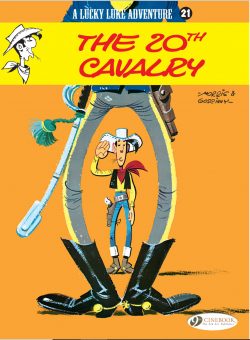
Lucky Luke volume 21 The 20th Cavalry


By Morris & Goscinny, translated by Jerome Saincantin (Cinebook)
ISBN: 978-1-84918-016-0 (PB Album/Digital edition)

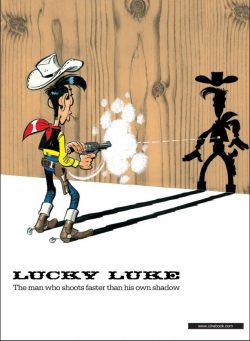
Doughty, dashing and dependable cowboy “good guy” Lucky Luke is a rangy, implacably even-tempered do-gooder able to “draw faster than his own shadow”. He amiably ambles around the mythic Old West, having light-hearted adventures on his petulant and somewhat sarcastic wonder-horse Jolly Jumper.

The taciturn trailblazer regularly interacts with historical and legendary figures as well as even odder fictional folk in tales drawn from key themes of classic cowboy films – as well as some uniquely European notions, and interpretations…

Over decades, his exploits have made him one of the top-ranking comic characters in the world, generating upwards of 85 individual albums (excluding the many spin-off series) with sales totalling in excess of 300 million in 30 languages thus far. That renown has led to a mountain of merchandise, aforementioned tie-in series like Kid Lucky and Ran-Tan-Plan), plus toys, computer games, animated cartoons, a plethora of TV shows and live-action movies and even commemorative exhibitions.

No theme park yet, but you never know…

The brainchild of Belgian animator, illustrator and cartoonist Maurice de Bévère (“Morris”) and first officially seen in Le Journal de Spirou’s seasonal Annual L’Almanach Spirou 1947, Luke sprang to laconic life in 1946, before inevitably ambling into his first weekly adventure ‘Arizona 1880’ on December 7th 1946.

Working solo until 1955, Morris produced nine albums of affectionate sagebrush spoofery before teaming with old pal and fellow trans-American tourist Rene Goscinny. When Rene became his regular wordsmith, Luke attained dizzying, legendary, heights starting with Des rails sur la Prairie (Rails on the Prairie) which began serialisation on August 25th 1955. In 1967, the six-gun straight-shooter switched sides, joining Goscinny’s own magazine Pilote for La Diligence (The Stagecoach).

Goscinny co-created 45 albums with Morris before his untimely death, whereupon Morris soldiered on both singly and with other collaborators. He died in 2001, having drawn fully 70 adventures, plus numerous sidebar sagebrush sagas crafted with Achdé, Laurent Gerra, Benacquista & Pennac, Xavier Fauche, Jean Léturgie, Jacques Pessis and more, all taking their own shot at the venerable vigilante…

Lucky Luke has history in Britain too, having first pseudonymously amused and enthralled young readers during the late 1950s, syndicated to weekly anthology Film Fun. He later rode back into comics-town in 1967 for comedy paper Giggle, using nom de plume Buck Bingo.

Morris & Goscinny’s 18th coproduction, Le Vingtième (or Le 20ème) de cavalerie was originally serialised in Le Journal de Spirou #1356-1377 before becoming the 27th album release in 1965. It’s a wickedly barbed spoof of Hollywood’s output (especially John Ford’s Cavalry Trilogy) in regard to Western soldiering and its often decidedly one-sided view of the US’s Indian wars. If you’re a fan of those flicks, you’ll see caricatures of plenty of favourite stars such as Randolph Scott and Victor McClaglen…

The plot is one you’ll know – by cultural osmosis – if not actual repeated viewings as, deep in Wyoming territory, Chief Yellow Dog’s recent treaty signing with representatives has led to confusion, hostility and potential bloodshed. The stated commitments involved white settlers passing through unmolested in return for not killing all the buffalo, but that’s suddenly stopped happening, leaving Fort Cheyenne’s garrison and particularly commander Colonel McStraggle in dire straits and quite a quandary…

With settlers prevented from crossing Indian land, tensions are mounting and in Washington DC the movers and shakers once again request the aid of a seasoned, unbiased and seemingly infallible troubleshooter…

By-the-book warrior Colonel McStraggle is proud of his achievements with the 20th Cavalry regiment, but is also a stickler for protocol and the “Army way”. He is not keen on the new “scout” foisted upon him, but is even less happy with the appalling progress of his son Grover – a lowly trooper who must prove his worthiness on a daily – if not hourly – basis with dear old dad micromanaging every moment…

Along with a typically quotidian cast including savvy Chinese laundryman Ming Foo, a fanatical old Irish sergeant and a Greek chorus of complaining soldiers who have seen it all before, more unusual if temporary occupants of Fort Cheyenne include stranded and obnoxious hat maker Jeremiah Bowler

Tempers are simmering everywhere, but the biggest problem Lucky can see is that somebody is supplying the Indians with guns and booze. When he visits the angry natives and meets proudly villainous deserter Derek Flood, our hero realises that just stopping the renegade won’t end the crisis. The old leader is even being pushed into war by his own braves and fellow/rival chiefs Crazy Coyote of the Sioux and Sick Eagle of the Arapaho.

The real problem is that – apart from McStraggle and Yellow Dog – everyone apparently wants a fight and won’t back down until they get one…

When the two leaders finally agree to parley, the ceremony is sabotaged and the Chief arrested over Lucky’s protests.

Now it’s time for the time-honoured siege of the fort, and desperate ride for reinforcements and horrendous slaughter unless Luke can change the script in time…

A deliciously wry and loving homage to classical western cinema, The 20th Cavalry revels in its classic set-piece slapstick and witty wordplay: poking gentle fun at the fundamental components of the genre and successfully blending tradition with action to deliver a major victory for fun…

Here is another wildly entertaining all-ages confection by unparalleled comics masters, affording an enticing glimpse into a unique genre for today’s readers who might well have missed the romantic allure of an all-pervasive Wild West that never was…
© Dargaud Editeur Paris 1971 by Goscinny & Morris. © Lucky Comics. English translation © 2009 Cinebook Ltd.

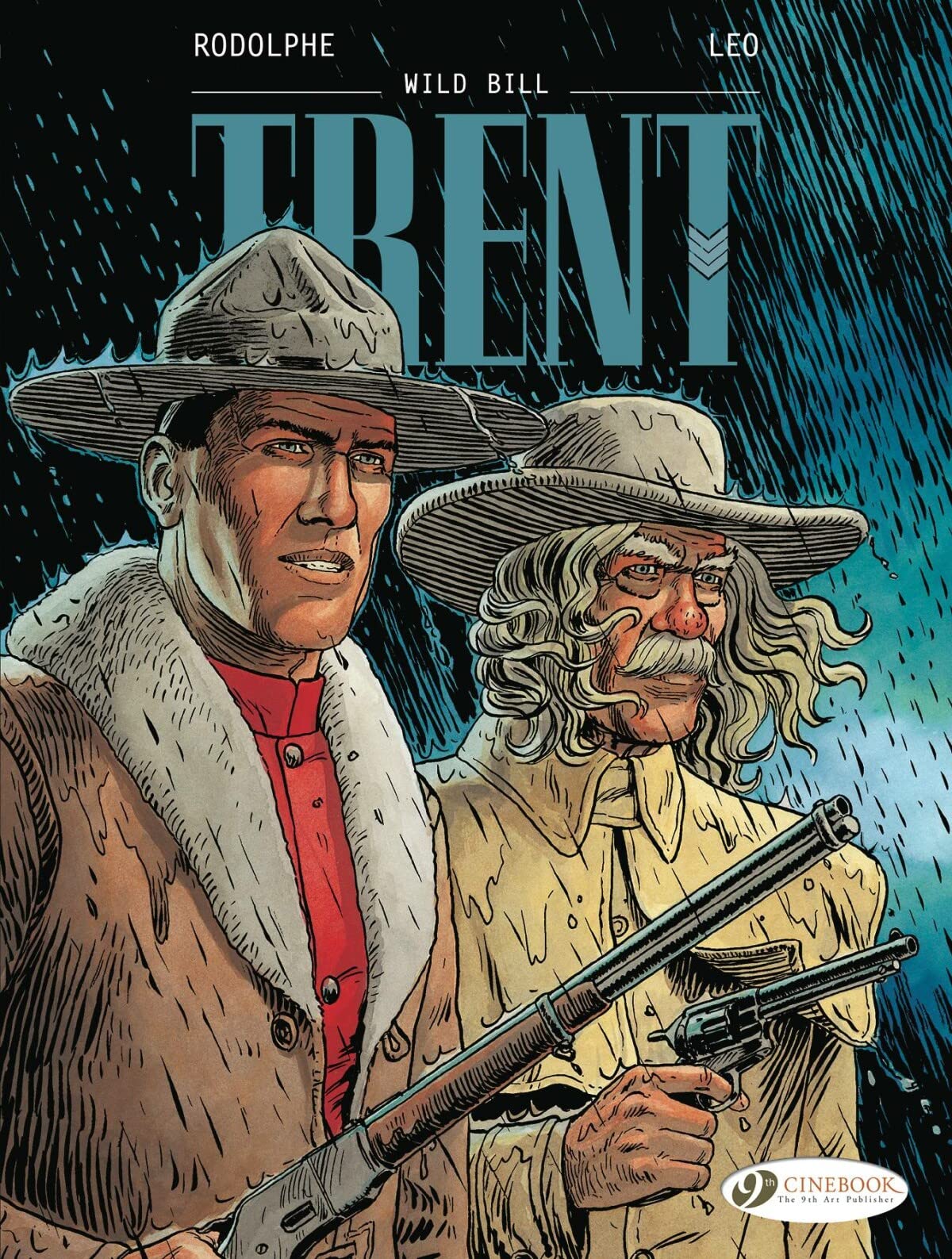
Trent volume 5: Wild Bill


By Rodolphe & Léo, coloured by Marie-Paule Alluard, translated by Jerome Saincantin (Cinebook)
ISBN: 978-1-84918-395-6 (Album PB/Digital edition)

Continental audiences adore the mythologised American experience, whether in Big Sky Wild Westerns or later eras of crime-riddled, gangster-fuelled dramas. They also have a vested historical interest in the northernmost parts of the New World, and it has resulted in some pretty cool graphic extravaganzas if comics are your entertainment drug of choice…

Born in Rio de Janeiro on December 13th 1944, “Léo” is Brazilian artist and storyteller Luiz Eduardo de Oliveira Filho. After attaining a degree in mechanical engineering from Puerto Alegre in 1968, he was a government employee for three years, until forced to flee the country because of his political views.

While a military dictatorship ran Brazil, he lived in Chile and Argentina before illegally returning to his homeland in 1974. He worked as a designer and graphic artist in Sao Paulo whilst creating his first comics art for O Bicho magazine, and in 1981 migrated to Paris to pursue a career in Bande Dessinée. He found work with Pilote and L’Echo des Savanes as well as more advertising and graphics fare, until a big break came when Jean-Claude Forest invited him to draw stories for Okapi.

This led to regular illustration work for Bayard Presse, and in 1988 Léo began his association with scripter/scenarist Rodolphe D. Jacquette – AKA Rodolphe. The prolific, celebrated writing partner had been a giant of comics since the 1970s: a Literature graduate who left teaching and running libraries to create poetry, criticism, novels, biographies, children’s stories and music journalism.

After meeting Jacques Lob in 1975, Jacquette expanded his portfolio: writing for many strip artists in magazines ranging from Pilote and Circus to à Suivre and Métal Hurlant. Amongst his most successful endeavours are Raffini (with author Ferrandez) and L’Autre Monde (with Florence Magnin), but his triumphs in all genres and age ranges are too numerous to list here.

In 1991 “Rodolph” began working with Léo on a period adventure of the “far north”. Taciturn, introspective, bleakly philosophical and pitilessly driven, Royal Canadian Mounted Police sergeant Philip Trent premiered in L’Homme Mort, forging a lonely path through the 19th century Dominion. He starred in eight tempestuous, hard-bitten, love-benighted albums between then and 2000 and the creative collaboration sparked later fantasy classic Kenya and its spin-offs Centaurus and Porte de Brazenac.

Cast very much in the classic mould perfected by Jack London and John Buchan, Trent is a man of few words, deep thoughts and unyielding principles who gets the job done whilst stifling the emotional turmoil boiling deep within him: the very embodiment of the phrase “still waters run deep”…

As Wild Bill, this fifth saga comes from 1996, offering a much lighter and more playful yarn that also sees genuine progress in the extended, diffident path to love of the stoic Mountie and his always unobtainable objet d’amour

Years previously, during an arduous criminal pursuit, he had met and saved Agnes St. Yves – but tragically not her beloved brother – and was given a clear invitation from her: one that he never acted upon. Eventually, he made a heartfelt decision and travelled all the way to Providence with marriage in mind, only to learn that Agnes had stopped waiting and wed someone else.

More time elapsed and they met again when her husband was killed during an horrific murder spree at isolated railway outpost White Pass. The ball was again in Trent’s court and once more he fumbled it through timidity, indecision and inaction: retreating into duty and using work as an excuse to evade commitment and the risk of rejection…

That situation changes in this cheeky cheery episode which begins with the recurrent dream of aging but still deadly gunfighter Wild Bill Turkey – a ridiculous soubriquet the legendary shootist adopted as part of his self-manufactured but well-earned reputation as a gunslinger par excellence.

In his sunset years, Bill is feted and celebrated everywhere but cannot escape recurring visions of a glory-hungry man in black gunning him down…

The oldster is boisterously enjoying his fame in Kildare, Alberta when Sergeant Trent rides in, escorting a prisoner to Winnipeg. The local police chief, a slack and dissolute man who’d rather carouse than work, suggests Trent himself lock up his charge in the town cells, rather than interrupt hard-earned drinking time.

Despite the obvious benefits of celebrity, Bill is preparing to retire: loudly proclaiming to all and sundry in the saloon that he’s engaged to be imminently married and standing free drinks for all. When Trent frustratedly heads for the police station, his duties are further disrupted by a stranger who offers him a truly phenomenal amount of money to let the young armed robber go free…

After kicking the tempter out, Trent spends an uncomfortable night pondering why someone prisoner Arthur Caldwell claims not to know has so boldly attempted to circumvent justice and the law, and departs at first light. It’s not just duty that drives him, though: Trent recently received a letter from Agnes who wants to see him. It came from Winnipeg…

Their dreary trek is interrupted by bad weather and as the heavens open, Mountie and miscreant take shelter in a dilapidated building in the middle of nowhere. That’s when the stranger and a half dozen hired guns besiege them.

Happily, Wild Bill’s fiancée Clementine is also waiting in Winnipeg and the gunman is riding the same trail there. He swiftly drives off the assailants and shares the bushwacked travellers’ refuge until the rains end…

With the same destination before them, all three travel together and gunslinger and lawman discover they have much in common. The old man is in utter earnest about hanging up his guns and settling down, but cannot shed the premonition that he will perish at the hands of the Man in Black before his new life can begin…

Meanwhile, far away in the lap of luxury, a powerful man takes further steps to ensure a huge embarrassment and potential threat to his plans never reaches civilisation…

All schemes and plans converge on and culminate in the township of Tootney, where a hired assassin (dressed in black) awaits someone he’s longed to duel for years. Fate seems to have marked the aging legend’s cards, and all his pep talks to Trent about love and second chances seem hollow when Wild Bill lies dying in the dust, but there’s a major surprise in store for the outraged and bereft Mountie and redemption of sorts for young Caldwell after the survivors get to their destination…

Most importantly, however, Trent meets Agnes and their stumbling, fumbling relationship enjoys a major step forward…

Another beguilingly introspective voyage of internal discovery, where environment and locales are as much lead characters as hero and villain, Wild Bill delivers action, conspiracy, suspense and poignant romantic drama in a compelling, light-hearted concoction which will delight any fan of widescreen cinematic crime fiction or charming western romance.
Original edition © Dargaud Editeur Paris 1996 by Rodolphe & Leo. All rights reserved. English translation © 2017 Cinebook Ltd.
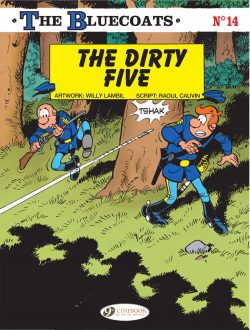
Bluecoats: The Dirty Five


By Willy Lambil & Raoul Cauvin, translated by Jerome Saincantin (Cinebook)
ISBN: 978-1-80044-004-3 (Album PB/Digital edition)

Devised by Louis “Salvé” Salvérius & Raoul Cauvin – who scripted the first 64 volumes until retirement in 2020 – Les Tuniques Bleues (or Dutch co-incarnation De Blauwbloezen) debuted at the end of the 1960s: created to replace Lucky Luke when that laconic maverick defected from weekly anthology Le Journal de Spirou to rival publication Pilote.

From its first sallies, the substitute strip swiftly became hugely popular: one of the most popular bande dessinée series in Europe. In case you were wondering, it is now scribed by Jose-Luis Munuera and the BeKa writing partnership…

Salvé was a cartoonist of the Gallic big-foot/big-nose humour school, and after his sudden death in 1972, successor Willy “Lambil” Lambillotte gradually adopted a more realistic – but still overtly comedic – tone and manner. Lambil is Belgian, born in 1936 and, after studying Fine Art in college, joined publishing giant Dupuis in 1952 as a letterer.

Born in 1938, scripter Cauvin was also Belgian and – before entering Dupuis’ animation department in 1960 – studied Lithography. He soon discovered his true calling was comedy and began a glittering, prolific writing career at Le Journal de Spirou.

In addition, he scripted dozens of long-running, award winning series including Cédric, Les Femmes en Blanc and Agent 212: more than 240 separate albums. Les Tuniques Bleues alone has over 15 million copies of its 66 (and counting) album sequence. Cauvin died on August 19th 2021, but his vast legacy of barbed laughter remains.

Here, designated The Bluecoats, our long-suffering protagonists are Sergeant Cornelius Chesterfield and Corporal Blutch; worthy, honest fools in the manner of Laurel & Hardy: hapless, ill-starred US cavalrymen defending America during the War Between the States.

The original format offered single-page gags set around an Indian-plagued Wild West fort, but from second volume Du Nord au Sud the sad-sack soldiers were situated back East, fighting in the American Civil War.

All subsequent adventures – despite often ranging far beyond the traditional environs of the sundered USA and taking in a lot of genuine and thoroughly researched history – are set within the timeframe of the Secession conflict.

Blutch is your run-of-the-mill, whinging little-man-in-the street: work-shy, mouthy, devious and ferociously critical of the army and its inept orchestrators and commanders. Ducking, diving, deserting whenever he can, he’s you or me – except at his core he’s smart, principled and even heroic… if no easier option is available.

Chesterfield is a big, burly professional fighting man; a proud career soldier of the 22nd Cavalry who passionately believes in patriotism and the esprit-de-corps of the Military. He is brave, never shirking his duty and hungry to be a medal-wearing hero. He also loves his cynical little troll of a pal. They quarrel like a married couple, fight like brothers but simply cannot agree on the point and purpose of the horrendous war they are trapped in: a situation that once more stretches their friendship to breaking point in this cunningly conceived instalment.

Coloured by Vittorio Leonardo, Les cinq salopards was originally serialised in Le Journal de Spirou (#2357-2368) before collection into another mega-selling album in 1984: the 33rd European release. In 2020 it was Cinebook’s 14th translated Bluecoats volume.

The Dirty Five offers a lighter touch and more adventuresome fare with the underlying horror salved by a farce-driven mission that degenerates into ridiculously surreal black comedy.

As is so often the case, the Union forces are stalemated with no advance possible. Even the 22nd Cavalry – still under the ruthless leadership of utterly deranged, apparently invulnerable Gentleman maniac Captain Stark – are helpless; reduced after countless pointless assaults to a force of three: Stark himself, Sergeant Chesterfield and poor treacherous Blutch…

With no end in sight and the infantrymen stuck in dugouts, dodging enemy artillery fire, boredom and idiotic orders, the ordinary foot soldiers are infuriatingly idle, forcing the commandeering general into a frenzy of inspiration…

What’s needed is one last push and if they have no cavalry, then volunteers must be found to repopulate the 22nd. Thus, the eager sergeant and appalled corporal are sent out amongst the civilian population to recruit a force of daring horsemen to turn the tide…

The mission has brought the pals to the edge of murder. They are at odds from the start, with the Sergeant proudly keen to recruit new warriors and convinced they will all be happy to die for their country, whilst Blutch is determined not to be the cause of more pointless deaths and maimings…

By the time they leave nearby Frogtown, they are at each other’s throats, mostly thanks to Blutch having frittered away the bribe fund of recruiting cash and “losing” all the enlistment papers signed by the suckers Chesterfield bamboozled with flowery speeches and cheap booze…

The mission is a complete fiasco but takes a decidedly dark turn when they meet a prison guard escorting a group of criminals to their executions. Chesterfield believes it’s the perfect solution to their problem and soon the still-squabbling squaddies are touring Greenbush State Prison looking for a few bad men…

There are plenty, but the job is no done deal. The first convict – a deserter – chooses to stay and be hanged than go back to serve under Stark…

In the end only, five doomed men ostensibly sign up to serve their country, but it soon becomes clear they might not be completely sincere. That’s not Chesterfield’s concern. He knows he’s done his duty once the felons are delivered to the General.

Blutch has more nuanced worries. Apart from the sheer insanity of letting loose – and even arming – religious serial killer Reverend Osgood, obsessive horse thief/cannibal Shorty Fink, karate killer Yang and the murderously psychopathic duo of blind knife thrower Rupert and his lethal human targeting system Abel there’s the purely practical problems of getting the killer quintet back to the front lines: a mammoth task that takes all the soldiers’ individual ingenuity and ultimately unity and teamwork to accomplish.

Of course, once the Bluecoats complete their mission and the Five officially join the 22nd, the real problems begin, not just for the Northern regiments but also for the Confederate forces so defiantly opposing them…

Combining searing satire with stunning slapstick, The Dirty Five mordantly manipulates the traditions of war stories to manifest a beguiling message about the sheer stupidity of war and crushing cruelty of obsessions equally effective in deprogramming younger, less world-weary audiences and even us old lags who have seen it all.

These stories weaponise humour, making occasional moments of shocking verity doubly powerful and hard-hitting. Funny, thrilling, beautifully realised and eminently readable, Bluecoats is the best kind of war-story and Western appealing to the best, not worst, of the human spirit.
© Dupuis 1984 by Lambil & Cauvin. All rights reserved. English translation © 2020 Cinebook Ltd.

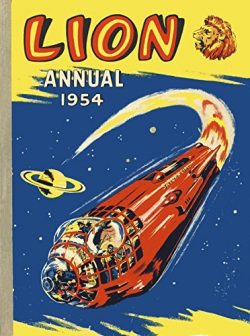
Lion Annual 1954


By Frank S. Pepper, Ron Forbes, Edwin Dale, Ted Cowan, Vernon Crick, & many & various (Amalgamated Press)
No ISBN: Digital edition

The 1950s ushered in a revolution in British comics. With wartime restrictions on printing and paper lifted, a steady stream of new titles emerged from many companies and when The Eagle launched from the Hulton Press in April 1950, the very idea of what weeklies could be altered forever. That kind of oversized prestige package with photogravure colour was exorbitantly expensive however, and when London-based publishing powerhouse Amalgamated Press retaliated with their own equivalent, it was an understandably more economical affair.

I’m assuming they only waited so long before the first issue of Lion launched (cover-dated February 23rd 1952) to see if their flashy rival periodical was going to last. Lion – just like The Eagle – was a mix of prose stories, features and comic strips and even offered its own cover-featured space-farer in Captain Condor – Space Ship Pilot.

Initially edited by Reg Eves, the title ran for 1156 weekly issues until 18th May 1974 when it merged with sister-title Valiant. Along the way, in the approved manner of British comics which subsumed weaker-selling titles to keep popular strips going, Lion absorbed Sun (in 1959) and Champion (1966) before going on to swallow The Eagle in April 1969 before merging with Thunder in 1971. In its capacity as one of the country’s most popular and enduring adventure comics, the last vestiges of Lion finally vanished in 1976 when Valiant was amalgamated with Battle Picture Weekly.

Despite its demise in the mid-70s, there were 30 Lion Annuals between 1953 and 1982, all targeting the lucrative Christmas market, combining a broad variety of original strips with topical and historical prose adventures; sports, science and general interest features; short humour strips and – increasingly in the 1970s – reformatted reprints from IPC/Fleetway’s vast back catalogue.

That’s certainly not the case with this particular item. Forward-dated 1954, but actually published in late 1953, it’s the first counterstrike from AP in the war to own Christmas: a delicious – but occasionally ethno-socially and culturally dated and dubious – dose of traditional comics entertainment. Big on variety, sturdily produced in a starkly potent monochrome, it offers a wide mixed bag of treats to beguile boisterous boys in a rapidly-changing world. What’s especially satisfying is that, current sensibilities notwithstanding, this volume has been digitised and can be bought and read electronically by kids of all vintages today…

I’m sure I don’t need to remind you that these entertainments were produced in good faith with the best of intentions by creators in a culture and at a time very different from ours. Very frequently attitudes and expressions are employed which we now find a little upsetting, but this book is actually one of the better examples of racial, gender and cultural tolerance. Still, even so…

The cornucopia of prose, puzzles, strips and features (all illustrated by artists as photography was too expensive) opens with a rather disturbing but truly lovely painted frontispiece ‘The Redskin Accepts the Challenge’ before a contents page promises astounding wonders to come.

We then rocket into adventure in the future where freedom fighter Captain Condor – by Frank S. Pepper and probably illustrated by original artist Ron Forbes – continues his war against despots running the solar system by solving ‘The Mystery of the Vanished Space-Ship!’ Edwin Dale then provides a prose thriller starring troubleshooter Mr. X, who discovers ‘The Tree that Stopped a Rebellion’ as he traverses the fabled African Veldt…

Presumably scripted by Ted Cowan & illustrated by Barry (R. G. Thomas) Nelson, ‘Sandy Dean’s Prize Guy’ is a comic strip wherein the schoolboy paragon and his chums deal with cheating classmates sabotaging and stealing effigies built to celebrate Guy Fawkes Night. It’s followed by Nigel Dawn’s prose thriller ‘Too Smart for the Atom Spy!’ wherein a schoolboy pigeon fancier foils a cunning espionage plot, after which we segue into a historical action strip credited to George Forrest (Cowan again).

‘The Slaves who Saved the Emperor’ follows two recently escaped British warriors who foil an imperial Roman assassination and is counterbalanced by Tom Stirling’s (E. L. Rosman) humorous text tale ‘Only a Press-Button Champ!’ This sees inventor’s nephew Jingo Jones stir up tons of trouble using his “Invisibliser” to save himself from a bully. Sadly, it also gives his headmaster and a boxing promoter the idea that the skinny runt is a fighting marvel…

‘The Weird Ways of Witch-Doctors Beat the Bush-Rangers’ (possibly by John Donnelly Jr.) shares amazing “facts” about jobbing mages in the post-war world after which John Barnes -AKA Peter O’Donnell – tells prose tale of ‘Chalu the Elephant Boy’ who clears his beloved four-legged co-worker Tooska when the big beast is framed as a murderous rogue animal…

Rex King (A.W. Henderson) delivers comic strip cowboy thrills as cavalry scout exposes a traitor and battles ‘Peril on the Tomahawk Trail’ before ‘Wiz and Lofty – Rescuers of the Kidnapped King’ (by E.L. Rosman as Victor Norman) delivers text thrills and spills as the globetrotting speed merchants stumble into a deadly plot to usurp a kingdom…

Harry Hollinson D.F.C. details and depicts some soon to be commonplace future wonders in speculative feature ‘Scientists Land on the Moon’ after which we pop back to WWII where Edward R. Home-Gall (AKA Edwin Dale) reveals in cartoon form how ‘The Lone Commandos’ scupper hidden Nazi artillery and save British soldiers in ‘Operation Gunfire’ before Vernon Crick shows in prose that ‘Rust’s the Boy for Stunts’: a rousing tale of motorcycle mayhem and skulduggery at a circus’ Wall of Death ride…

A pictorial ‘World-Wide Quiz’ tests your general knowledge before Peter O’Donnell – as Derek Knight – delivers a chilling prose vignette of Arctic endeavour as ‘Tulak Hunts the Polar Terror’, saving lost scientists, capturing murderous outlaws and stalking a killer bear…

A sea strip by A. W. Henderson as Roy Leighton sees schooner skipper Don Watson save pearl divers and solve ‘The Secret of Ju-Ju Island’ whilst Michael Fox’s prose story ‘Mike Merlin – Master of Magic’ details the greatest trick of a schoolboy conjuror before we meet one of British comics’ most enduring stars.

Robot Archie began life as ‘The Jungle Robot’ and his comic strip (by E. George Cowan & Ted/Jim Kearon) reveals how the mechanical marvel becomes the ‘Pal o’ the Pigmies’ before another prose piece by R. G. Thomas sees a western trader and his Native American pal stave off bandits and a hidden tribe of renegades in ‘Rod and the Red Arrow Raiders’

A ‘Picture Parade of Facts from Near and Far’ precedes a text thriller by Hedley Scott (AKA Hedley O’Mant) wherein ‘The Schoolboy Treasure Hunters’ do a bit of digging and uncover presumed pirate gold with a far more modern and sinister provenance, before John Fordice (Colin Robertson) employs the comic strip form to catch ‘The Smash-and-Grab Speedster’, courtesy of consulting crimebuster Brett Marlowe, Detective as he explores the contemporary sporting phenomenon of motorcycle speedway…

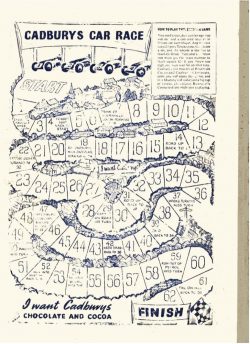
Donald Dane’s prose yarn ‘Kurdo of the Strong Arm’ details the fascinating, action-packed saga of a Viking teenager – from ancient Scotland – stranded in North America hundreds of years before Columbus and leads to all those puzzle answers and final cartoon fact file ‘Fishy Tales – But They’re True!’ before a House Ad for weekly Lion – “The King of Picture Story Papers!’ brings us to the back cover and a sponsored treat: early infotainment treat ‘Cadbury’s Car Race puzzle’.

Sadly, many of the creators remain unknown and uncredited, especially the exceptional artists whose efforts adorn the prose stories, but this remains a solid box of delights for any “bloke of a certain age” seeking to recapture his so-happily uncomplicated youth. It also has the added advantage of being far less likely than other (usually unsavoury) endeavours which, although designed to rekindle the dead past, generally lead to divorce…

Before I go, let’s thank Steve Holland at Bear Alley (link please) and all the other dedicated diligent bods researching and excavating the names and other facts for everyone like me to cite and pretend we’re so clever…

A true taste of days gone by, this is a chance for the curious to test bygone tomes and times and I thoroughly recommend it to your house…
© 1955 the Amalgamated Press and latterly IPC. All rights reserved.

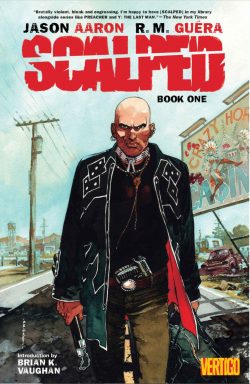
Scalped Book One Deluxe Edition (Indian Country and Casino Boogie)


By Jason Aaron & R.M. Guéra (DC Comics/Vertigo)
ISBN: 978-1-4012-5091-1 (HB/Digital edition)

The Western is a tricky genre to pin down: all at once infinitely re-inventible, compellingly human and shockingly mythic. The genre also enjoys a chameleonic gift for subsuming the unique memes and tropes of other forms of story-making and pitting them against each other.

There are horror westerns, space westerns, comedy westerns and – because time and location aren’t key to our definition – especially crime stories that can be fully acknowledged as being pure Cowboys and Indians…

These revelations have always been best explored in the relatively recent phenomenon of “grim & gritty” comics. Initially the preserve of Good-Guys-In-Tights savagely slaughtering really bad folk instead of arresting them, now the tarnished grime of über-realism can be seen where it belongs – in tales of darkly desperate people facing their greatest challenges.

You don’t need a history degree to know that Native Americans have had a pretty crap time since Europeans colonized their country. However, in recent decades lip-service and guilt have been turned into some minor concessions to the most disadvantaged ethnicity in the USA, and contemporary Federal mandates allowing gambling on officially designated Indian Lands have meant a cash bonanza for various tribes on reservations throughout the country. The Indians are getting rich.

Well, some of them are…

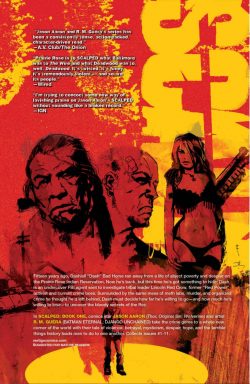
Disenchanted son of a 1970s Native American activist, Dashiell Bad Horse ran away from the desolate squalor of the Prairie Rose Indian Reservation as soon as he turned fifteen. Now he’s back and although there’s a snazzy new casino operating, “the Rez” is still a hell-hole: a sordid Demilitarized Zone where his people subsist in crushing poverty, still prey to every self-destructive social toxin money or favours can buy or bestow.

Reluctantly Dash takes a job with the Sheriff’s department, but he knows he’s actually just another leg-breaker for current Tribal Leader and fully-installed crime boss Lincoln Red Crow. Still, whilst wiping out rival drug and booze gangs for his brooding boss, he’s slowly growing closer to the all-powerful Indian Godfather…

The job even provides a number of tantalising, too-tempting fringe benefits, which facilitate Bad Horse finally getting to really know the former rebel who was once his mother’s closest ally in the all-but-forgotten freedom movement of the 1970s.

That’s good. After all, that’s why the FBI planted him there in the first place…

As concocted by writer Jason Aaron and potently limned by R.M. Guéra, this slow-boiling saga is seedy, violent, overtly sexual and ferociously compelling: a darkly brutal, modern-day Western Noir.

The oddly familiar yet fiercely exotic locale and painfully unchanging foibles of people on the edge make this tale an instant classic and the increasingly impressive writing of Jason Aaron kicks into compellingly high gear in the second half (originally issues #6-11 and then the Casino Boogie collection) of the dark and nasty crime series.

The Prairie Rose Indian Reservation is a desolate forgotten hellhole run by gangsters and housing nothing but broken people. The biggest boss is Lincoln Red Crow, former Indian Rights activist who runs all the rackets from his own casino. Everybody else thinks it’s a community venture and they’re all going to be rich.

Dashiel Bad Horse was always trouble, and escaped as soon as he could. He was the son of Red Crow’s fellow militant Gina, but since he came back and started working as a sheriff and leg-breaker for the big boss, events have started to turn against the crimelord.

Gina is the last real rebel, and Red Crow is as just as much an oppressor as the White Man ever was. How would the fallen rebel react if she knew that her son is working for both of the forces she sees as destroying her people? It’s a good thing no one knows Dash Bad Horse is an undercover FBI agent. But is it still a secret?

Moving beyond gripping Noir drama with the introduction of a shaman called Catcher, the saga moves into even more convoluted plots and schemes as Red Crow’s plans near fruition. The Big Boss stands to win or lose everything at this critical juncture, but is Catcher just another booze-raddled Indian or does he really see Visions? Can Red Crow really accept the White’s way of Sex, Power and Money, or is he as tied to his roots as even the poorest, dumbest dirt-grubber on the Rez?

Complex, atmospheric and disturbingly graphic in execution, this is a thriller with a powerful social message underpinning the action and drama, and goes from strength to strength. This is one of the best adult comic series produced in the last thirty years and one you should see for yourselves.

Augmenting the experience is a broad selection of promo images, covers and cover sketches by Jock and Jason Aaron’s full script for issue #1.

Scalped Book 1 is a brutal warning shot in an uncompromising thriller hitting hard, hitting often and hitting home. Best of all, it’s just the opening salvo in an epic sequence of compulsive confrontations and unwrapped mysteries so why not hold on to your hat and jump right in?
© 2007 Jason Aaron & Rajko Miloševi?. All Rights Reserved.

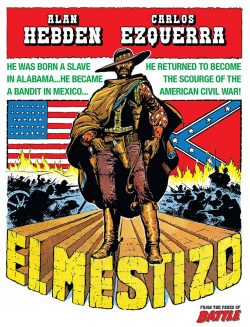
El Mestizo


By Alan Hebden & Carlos Ezquerra (Rebellion Studios)
ISBN: 978-1-78108-657-5 (HB/Digital edition)

Carlos Sanchez Ezquerra was born in Aragon on November 12th 1947. Growing up in Ibdes, in the Province of Zaragoza, he began his career illustrating war stories and westerns for Spain’s large but poorly-paying indigenous comics industry. In 1973 he got a British agent (Barry Coker: a former sub-editor on Super Detective Library who formed Bardon Press Features with Spanish artist Jorge Macabich): joining a growing army of European and South American illustrators providing content for British weeklies, Specials and Annuals.

Like so many superbly talented newcomers, Ezquerra initially worked on Girls’ Periodicals  – like Valentine and Mirabelle – and more cowboys for Pocket Western Library as well as assorted adventure strips for DC Thomson’s The Wizard. The work proved so regular that the Ezquerras upped sticks and migrated to Croydon…

In 1974, Pat Mills & John Wagner tapped him to work on IPCs new Battle Picture Weekly, where he drew (Gerry Finley-Day’s) Rat Pack, and later, Major Eazy scripted by Alan Hebden. Three years later he was asked to design a new character called Judge Dredd for a proposed science fiction anthology. Due to creative disputes, Carlos left the project and went back to Battle to draw instead a gritty western entitled El Mestizo

As we all know, Carlos did return to 2000AD, illustrating Dredd, dozens of spin-offs such as Al’s Baby, Strontium Dog (1978), Fiends of the Eastern Front (1980), adaptations of Harry Harrison’s Stainless Steel Rat and key Dredd storylines such as the epic Apocalypse War and Necropolis.

Soon after, Ezquerra was “discovered” by America…

El Mestizo debuted amidst a plethora of British-based war features and didn’t last long – June 4th to September 17th 1977 – with author Alan Hebden giving you his take on why in a concise Introduction before the action begins.

Born in Bristol in 1950, Hebden is a second generation comics scripter, having followed his dad into the profession. The lad began his career writing Commando Picture Library stories for DC Thomson – and he still does – and also contributed to the company’s adventure titles Hornet and Victor.

For Fleetway he co-created Major Eazy, and scripted Rat Pack for Battle; The Angry Planet for Tornado; Comrade Bronski, The Fifth Horseman and The Tower King for Eagle; Holocaust and Mind Wars for Starlord and – for 2000 ADM.A.C.H. One, Mean Team, Death Planet, Meltdown Man, Future Shocks, amongst many others.

Heavily leaning on Sergio Leone “spaghetti westerns”, the first starkly monochrome Mestizo episode – of 16 – introduces a half-black, half-Mexican bounty-hunting gunfighter who offers his formidable services to both the Union and Confederate sides in the early days of the War between the States.

Proficient with blades, pistols, long guns and a deadly bola, El Mestizo plays both sides while hunting truly evil men, whether they be Southern raiders, rogue Northern marauders, treacherous Indian scouts, army deserters from both sides organised by a crazy, vengeful femme fatale, or even a demented physician seeking to end the war by releasing plague in Washington DC.

Along the way, the mercenary even finds time to pay off a few old scores from his days as a starved and beaten plantation slave…

Sadly, the feature was always a fish out of water and was killed off before it could truly develop, but the artwork is staggeringly powerful and the stories deliver the kind of cathartic punch that never gets old.

This stunning package is another nostalgia-triumph from Battle, collecting a truly seminal experience, and hopefully forging a new, untrodden path for fans of grittily compelling fare and sampling a typically quirky British comics experience.

This gem is one of the most memorable and enjoyable exploits in British comics: acerbic, action-packed and potently rendered: another superb example of what British and European sensibilities do best. Try it and see…
© 1977 & 2018 Rebellion Publishing IP Ltd. All Rights Reserved.