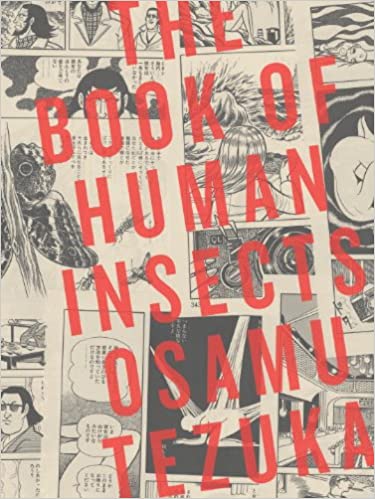
The Book of Human Insects


By Osamu Tezuka translated by Mari Morimoto (Vertical)
ISBN: 978-1-935654-20-9 (HB) 978-1935654773 (PB)

Win’s Christmas Gift Recommendation: An Ideal Chiller to Disturb these Dark and Lonely Nights… 9/10

There aren’t many Names in comics. Lots of creators; multi-disciplined or single focussed, who have contributed to the body of the art form, but we don’t have many Global Presences whose contributions have affected generations of readers and aspirants all over the World, like a Mozart or Michelangelo or Shakespeare. There’s just Hergé and Jack Kirby and Osamu Tezuka.

Tezuka was born in Osaka Prefecture on November 3rd 1928 and, as a child, suffered from a severe illness which made his arms swell. The doctor who cured him inspired the boy to study medicine, and although Osamu began his professional drawing career while still at university, he persevered with his studies and qualified as a doctor too. As he faced a career crossroads, his mother advised him to do the thing that made him happiest…

Tezuka never practiced as a healer but the world was gifted with such classic cartoon masterpieces as Tetsuwan Atomu (Astro-boy), Kimba the White Lion, Buddha, Adolf and literally hundreds of other graphic narratives. Along the way, Tezuka incidentally pioneered, if not actually created, the Japanese anime industry.

Able to speak to the hearts and minds of children and adults equally, his works range from the childishly charming to the unsettling – and even terrifying. In 1970-1971 he produced the stark and moody psycho-thriller Ningen Konchuuki for Akita Shonen’s Play Comic, detailing the inexorable rise of a truly different kind of monster for the burgeoning audiences who were growing up and demanding more mature manga fare.

This superb monochrome 364-page hardback/trade paperback and digital delight opens with ‘Spring Cicada’ as failed and broken designer Ryotaro Mizuno ponders the incredible success of golden girl Toshiko Tomura; a bright young thing who has just scooped a major literary prize for her first novel.

Across town, a broken-down derelict also toasts her success whilst in a lonely garret a girl hangs from the end of a noose…

Mizuno confronts Toshiko in her moment of triumph, telling her failed author Kageri Usuba has committed suicide. Their tense exchange is observed by muck-raking journalist Aokusa…

Convinced he’s on to something, the reporter perseveres and discovers Toshiko is a modern renaissance woman: emerging from obscurity to become a celebrated actress while still in her teens, she graduated to directing before becoming an award-winning designer. Abruptly she metamorphosed again, writing the stunning novel The Book of Human Insects. Still in her twenties, there seems to be nothing the angelic girl cannot do…

Further enquiry leads the obsessed newsman to her desolate rural home where the uncanny genius presents an entirely different, almost wanton aspect. Moreover, she keeps there a very creepy waxwork of her dead mother…

Toshiko catches the professional voyeur and agrees to an interview, but before that meeting Aokusa is accosted by shambling drop-out Hyoroku Hachisuka, a once-prominent stage-director who imparts the true story of Toshiko’s resplendent rise to fame and fortune.

Once, the universally approved-of, wholesome girl was a small, timid creature who inveigled her way into his theatre company. Once there, she attached herself like a lamprey to the star, learning her ways and mannerisms. A perfect mimic, Toshiko not only acquired the actress’s skills but also seemed to suck out her talent and inspiration. When the former star quit, Toshiko replaced her…

She performed that same slow consumption with the entire company and then turned her attentions to the director…

Moreover, the seemingly helpless waif was utterly amoral, using sex, slander and perhaps even murder to achieve her ends, which were always short-term: she had no goals or life ambitions, but merely flitted from victim to victim like a wasp seeking its next meal…

Ignoring the warning, Aosuka persists, discovering promising writer Usuba once had a room-mate named Toshiko whom she accused of plagiarising her novel…

Intriguingly, the lonely writer’s recent suicide occurred in extremely suspicious circumstances…

During a TV interview, Toshiko accidentally meets Mizuno again. Revealed as one of her earliest victims, can he possibly be the only man she ever loved?

In ‘Leafhopper’ Aosuka uncovers another of Toshiko’s secrets when he meets for the first and last time her shady associate Arikawa – a murderous anarchist who cleans ups the lovely mimic’s potential embarrassments – just as she tries to renew her relationship with the bitter and far wiser Mizuno.

Toshiko also meets war criminal and right-wing “businessman” Sesson Kabuto who immediately discerns her true nature and keeps a fascinated but wary professional distance from her…

Toshiko operates almost instinctively and according to immediate desire, but she has a terrifying capacity to clean up any potentially damaging loose-ends. After seducing Arikawa she spectacularly removes him during a political assassination and uses the affair to promote her next book…

Meanwhile Mizuno spirals further into despondency until he meets a prostitute who looks like Toshiko and finally finds redeeming true love – of a sort…

Toshiko almost overreaches her abilities when she is arrested by South Korean security forces in ‘Longhorn Beetle’ but is rescued and forced into marriage by a man every inch her ruthless, remorseless equal. This propels her to even more inspired acts of perversion and survival – which consequentially endanger the wellbeing of everybody in Japan – before ‘Katydid’ brings the unique drama to a shocking, bloody, poignant and utterly unexpected conclusion…

Murder-mystery, Greek Tragedy, trenchant melodrama, serial-killer horror story and much more, this supremely adult tale has hardly dated at all since its release and offers a chilling image of those hidden invisible predators who have supplanted vampires, witches and werewolves in the dark corners of our communal consciousness.

The beautiful maiden as lure and amoral predator possibly began with this truly disturbing tale and the story is one which will stay with readers long after the final page is turned…

“God of Manga” Osamu Tezuka died in 1989 but with ever more of his copious canon being released in English there’s plenty of brilliant material for all ages, intellects and inclinations to admire and adore, so why not start right here, right now.

Accept no imitations…
© 2011 by Tezuka Productions. Translation © 2011 by Mari Morimoto and Vertical, Inc. All rights reserved.

The James Bond Omnibus 005


By Jim Lawrence & Yaroslav Horak (Titan Books)
ISBN: 987-0-85768-590-2 (PB)

Win’s Christmas Gift Recommendation: Still the Most Traditional Licence to Thrill… 9/10

I’ve just heard that one of the true cartooning greats has passed away. Yaroslav Horak (12th June 1927 – 24th November 2020) was a conics star in Australia for years before taking over James Bond in 1966: a unique stylist and gifted writer and painter too. For a full biography and appreciation, check out the wonderful downthetubes.net. You should be doing that anyway if you’re a lover of comics and related media.

As my own farewell and thanks, here’s an old review of one of the best examples of Horak’s work, still readily accessible through online vendors. Your actions will be well rewarded…

There are very few British newspaper strips to challenge the influence and impact of classic daily and Sunday “funnies” from America, especially in the field of adventure fiction. The 1930’s and 1940’s were particularly rich in popular, not to say iconic, creations. You would be hard-pressed to come up with home-grown household names to rival Popeye, Dick Tracy, Buck Rogers, The Phantom, Mandrake the Magician, Flash Gordon or Steve Canyon, let alone Terry and the Pirates or the likes of Little Lulu, Blondie, Li’l Abner, Little Orphan Annie or Popeye – and yes, I know I cited him twice, but Elzie Segars’s Thimble Theatre was funny as well as thrilling, constantly innovative, and really, really good.

What can you recall for simple popularity let alone longevity or quality in Britain? Rupert Bear? Absolutely. Giles? Technically, yes. Nipper? Jane? The Perishers? Garth?

I hope so, but doubt it.

The Empire didn’t quite get it until it wasn’t an empire any more. There were certainly very many wonderful strips being produced: well-written and beautifully drawn, but that stubborn British reserve just didn’t seem to be in the business of creating household names… until the 1950’s.

Something happened in ‘fifties Britain – but I’m not going to waste any space here discussing it. It just did.

In a new spirit that seemed to crave excitement and accept the previously disregarded, comics (as well as all entertainment media from radio to novels) got carried along on the wave. Eagle, the regenerated Dandy and Beano, girls’ comics in general: all shifted into creative high gear, and so did newspapers. And that means that I can go on about a graphic collection with proven crossover appeal for a change.

The first 007 novel Casino Royale was published in 1953 and subsequently serialised in the Daily Express from 1958, beginning a run of paperback book adaptations scripted by Anthony Hern, Henry Gammidge, Peter O’Donnell and Kingsley Amis before Jim Lawrence, a jobbing writer for American features (who previously scripted the aforementioned Buck Rogers) came aboard with The Man With The Golden Gun to complete the transfer of the Fleming canon to strip format, thereafter being invited to create new adventures, which he did until the strip’s ultimate demise in 1983 – all apparently thanks to the striking effects of his artistic collaborator.

The art on the feature was always of the highest standard. Initially John McLusky provided illustration until 1966’s conclusion of You Only Live Twice and, although perhaps lacking in verve, the workmanlike clarity of his drawing easily coped with the astonishing variety of locales, technical set-ups and sheer immensity of cast members, whilst serving the then-novel conceit of advancing a plot and ending each episode on a cliff-hanging “hook” every day.

He was succeeded by Yaroslav Horak, who also debuted on …Golden Gun with a looser, edgier style; at once more cinematic and with a closer attention to camera angle and frenzied action that seemed to typify the high-octane 1960’s.

Horak was born in Manchuria in 1927, of Russian/Czech descent and the family relocated to Australia before WWII. Artistic from the start, Horak worked as a portraitist and magazine illustrator before moving into the nation’s vibrant comics industry in 1947. Following years of success and even some controversy from high-minded busybodies, the writer/artist moved over to newspaper strips in the 1950’s before emigrating to England in 1962. Even after landing the 007 gig he maintained links “Downunder”, carrying on with ‘Mike Steel – Desert Rider’ for Women’s Day until 1969. His pre-Bond UK output includes a selection of War and Battle Picture Library stories, and serial strips for DC Thomson’s The Victor and The Hornet.

In 1975, he returned to Australia, continuing the super-spy’s exploits while crafting homegrown features such as Cop Shop and Andea. We’ll not see his like again…

Titan books have re-assembled the heady brew of adventure, sex, intrigue and death into a series of addictively accessible monochrome Omnibus editions and this fifth compilation finds the creators on top form as they reveal how the world’s greatest agent never rests in his mission to keep us all free, safe and highly entertained…

The James Bond Omnibus gathers the series’ frantic derring-do and dark, deadly diplomacy in fabulous monochrome editions and this one commences with ‘Till Death Do Us Part’, which first ran in the Daily Express from July 7th to October 14th 1975. Solidly traditional 007 fodder, it found Bond assigned to kidnap/rescue Arda Petrich, comely daughter of a foreign asset, and keep vital intelligence out of the hands of the KGB.

This pacy thriller is most notable more for the inevitable introduction of the eccentric gadgets which had become an increasingly crucial component of the filmic iteration than for the actual adventure, but there are still racy thrills and icy chills aplenty on view.

Hard on the heels of that is brief but enthralling encounter ‘The Torch-Time Affair’ (October 15th 1975 – January 15th1976), wherein the hunt for a record of all Soviet subversion in Latin America leads to bodies on the beach, a mountain of lies and deceit, breathtaking chases on roads and through jungles, plus an astonishingly intriguing detective mystery as Bond and female “Double-O” operative Susie Kew must save the girl, get the goods and end the villain.

But, which one…?

‘Hot-Shot’ (January 16th – June 1st) finds the unflappable agent assisting Palestinian freedom fighter Fatima Khalid as she seeks to restore her people’s reputation for airline atrocities actually committed by enigmatic Eblis terrorists. Their cooperative efforts uncover a sinister Indian billionaire behind the attacks before Bond recognises an old enemy at the heart of it all… Dr. No!

In ‘Nightbird’ (2nd June – 4th November) sporadic attacks by what appear to be alien invaders draw Bond into a diabolical scheme by a cinematic genius and criminal master of disguise apparently in search of military and political secrets and weapons of mass destruction. However, a far more venal motive is the root cause of the sinister schemes and reign of terror…

Despite surreal trappings, ‘Ape of Diamonds’ (November 5th 1976 – January 22nd 1977) is another lethally cunning spy exploit as a deadly maniac uses a colossal and murderous gorilla to terrorise London and kidnap an Arab banker, leading Bond to a financial wild man determined to simultaneously destroy Britain’s economic prosperity and steal the Crown Jewels. Happily for the kingdom, Machiavellian Rameses had completely underestimated the ruthless determination of James Bond…

‘When the Wizard Awakes’ finds bad guys employing supernatural chicanery, when the body of a Hungarian spy – dead for two decades – walks out of his tomb to instigate a reign of terror that eventually involves S.P.E.C.T.R.E., the Mafia and the KGB until the British Agent unravels the underlying plot…

In 1977 the Daily Express ceased publication of the Bond feature and the tale was published only in the Sunday Express(from January 30th -May 22nd 1977). Later adventures had no UK distribution at all, only appearing in overseas editions. This state of affairs continued until 1981 when another British newspaper – the Daily Star – revived his career. Presumably, we’ll deal with those cases in another volume.

The first of those “lost” stories are included here, however, beginning with ‘Sea Dragon’, produced for European syndication: a maritime adventure with geo-political overtones wherein crazed billionairess and scurrilous proponent of “women’s liberation” Big Mama Magda Mather tried to corner the World Oil market using sex, murder and a deadly artificial sea serpent.

In ‘Death Wing’ Bond is needed to solve the mystery of a new and deadly super-weapon employed by the Mafia for both smuggling contraband and assassination. Despite a somewhat laborious story set-up, once the tale hits its stride, the explosive end sequence is superb as the undercover agent becomes a flying human bomb aimed at the heart of New York City. His escape and subsequent retaliation against eccentric hit-man Mr. Wing is an indisputable series highpoint.

This astounding dossier of espionage exploits ends with ‘The Xanadu Connection’ (1978) as the daring high-tech rescue of undercover agent Heidi Franz from East Germany inexorably leads Bond down a perilous path of danger and double-cross.

When Bond is tasked with safeguarding the wife of a British asset leading resistance forces in Russian Turkestan, the mission inevitably leads 007 to the Sino-Soviet hotspot where he is embroiled in a three-sided war between KGB occupation forces, indigenous Tartar rebels and their ancestral enemies of the Mongol militias led by insidious, ambitious spymaster Kubla Khan.

Deep in enemy territory with adversaries all around him, Bond is hardly surprised to discover that the real threat might be from his friends and not his foes…

Fast, furious action, masses of moody menace, sharply clever dialogue and a wealth of exotic locales and ladies make this an unmissable adjunct to the Bond mythos and a collection no fan can do without. After all, nobody does it better…
© 1975, 1977, 1977, 1978, 2013 Ian Fleming Publications Ltd/ Express Newspapers Ltd. All rights reserved.

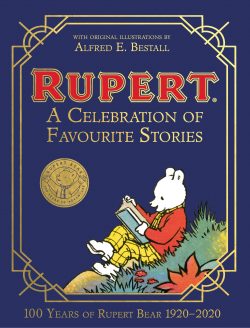
Rupert: A Celebration of Favourite Stories – 100 Years of Rupert Bear 1920-2020


By Alfred E. Bestall & various (Egmont)
ISBN: 978-1-4052-9800-1 (HB)

Win’s Christmas Gift Recommendation: Evergreen Seasonal Tradition with Universal Appeal… 10/10

We’ve all simultaneously stared death in the face and tried to celebrate a wealth of what should have been joyous anniversaries this year. With no snarky comment or obtuse political swipe to hand, I’ve opted to review here a genuine cultural icon of our Island Nation, and one I think we can all agree we’d be happy to find overseeing our future health and wealth…

As I’ve interminably stated recently, this year celebrates many, many comics anniversaries. For Britain, the biggest of those is probably this one.

Long before television took him, hirsute national treasure Rupert Bear was part of our society’s very fabric and never more so than at Christmas when gloriously rendered and painted, comfortingly sturdy rainbow-hued Annuals found their way into innumerable stockings and the sticky hands of astounded, mesmerised children.

Our ursine über-star was created by English artist and illustrator Mary Tourtel (1874-1948) and debuted in the Daily Express on November 8th 1920; the beguiling vanguard and secret weapon of a pitched circulation battle with rival papers the Daily Mirror and Daily Mail. Both papers had cartoon characters for kiddies – Teddy Tail in the Mail and the soon-to-be legendary Pip, Squeak and Wilfred in the Mirror.

Tourtel’s daily serial of the Little Lost Bear initially ran for 36 monochrome instalments and triggered a phenomenon which remains in full force to this day, albeit largely due to the diligent efforts of her successor Alfred Edmeades Bestall, MBE (14th December 1892 – 15th January 1986), who wrote and illustrated the rapidly eponymous Rupert Bear from 1935 to 1965. Bestall was responsible for the magnificently reassuring Christmas Annuals which began with the 1936 edition, and in truth crystalised the curious little nipper’s existence into the quintessence of middle-class English pluck and gentility.

The artist who originally spearheaded the Express cartoon counterattack was already an established major player on the illustration scene – and fortuitously married to the paper’s News Editor Herbert Tourtel, who had been ordered by the owners to come up with a rival feature…

The unnamed little bear was illustrated by Mary and initially co-captioned by Herbert, appearing as a pair of cartoon panels everyday day with a passage of text underneath. The bonny bruin was originally cast as a brown bear until the Express sought to cut costs and inking expenses, resulting in the iconic white pallor we all know and love today.

Soon, though, early developmental “bedding-in” was accomplished and the engaging scenario was fully entrenched in the hearts and minds of readers. Young Rupert lives with extremely understanding parents in idyllically rural Nutwood village: an enticing microcosm and exemplar of everything wonderful and utopian about British life. The place is populated by anthropomorphic animals and humans living together but also overlaps a lot of very strange and unworldly places full of mythical creatures and legendary folk. Naturally, pluck, good friends and a benevolent adult always help our hero win through no matter what uncanny situation he finds himself in…

A huge hit, Mary’s Rupert quickly expanded into a range of short illustrated novels; 46 by my count from the early 1920s to 1936, with a further run of 18 licensed and perpetually published by Woolworth’s after that.

Tourtel’s bear was very much a product of his times and social class: smart, inquisitive, adventurous, helpful yet intrinsically privileged and therefore always labouring under a veiled threat of having his cosy world and possessions taken away by the wicked and undeserving.

Heretical as it might sound, like the unexpurgated fairy tales of Hans Christian Anderson or the Brothers Grimm, Tourtel’s Rupert yarns all have a darker edge and often a worrisome undercurrent, with mysterious forces casually, even capriciously targeting our innocent star – and especially so after Herbert Tourtel died and Mary worked on alone.

This glorious tome however – reworked and skilfully re-edited to accommodate modern sensibilities – is a modified re-release of a 2007 compilation celebrating the quiet genius of Tourtel’s successor: the man most people still living think of when Rupert comes to mind…

Alfred Edmeades “Fred” Bestall, MBE, was born in Mandalay on December 14th 1892, to Methodist missionaries stationed in Burma. He and his sister were despatched back to England when he was five, ultimately rejoined by their parents in 1910. Schooled in Colwyn Bay, he won a scholarship to Birmingham Central School of Art and later attended the LCC Central School of Art and Crafts in Camden. His studies were interrupted by the Great War where he served as an army transport driver in Flanders, before concluding his courses at Camden and setting up as an illustrator.

He worked for Amalgamated Press crafting paintings and drawings for The Tatler and Punch and was hired to illustrate Enid Blyton’s books.

At the top of his game Bestall was picked to replace Tourtel on Rupert. Despite never having seen the strip and with only 5 weeks’ lead-in time, he wrote and drew his first exploit – ‘Rupert, Algy and the Smugglers’ which began on June 28th1935 while designing and filling the first Annual. For inspiration, he channelled his memories of rural North Wales and the regions around Snowdonia, while adhering to the Daily Express Children’s Editor’s sole instruction – “no evil characters, fairies or magic”.

Clearly, no problem…

Preceded by an Illustrator’s Note courtesy of current Rupert creator Stuart Trotter, a Foreword from profoundly English raconteur and Teddy Bear Museum curator Gyles Brandreth and effusive, intimate reminiscences in an Introduction by Bestall’s goddaughter Caroline Bott, this magical hardback tome is also graced with a gallery of lavish double-page spread Endpapers, plus a stunning selection of previously unseen pencil works and designs from Bestall’s own Sketch books, affording a fascinating glimpse at how the master worked.

The main course is eight (textually modified) classic tales in the traditional and oh-so-welcoming format – 4 illustrations per page, each accompanied by a rhyming couplet and brief passage of descriptive text.

They are cunningly interspersed with breathtaking cover images from 1944, 1969, 1963, 1949, 1956 and 1966 annuals plus a selection of puzzles Bestall crafted over the decades to create a guaranteed debilitating nostalgic wave in the old and fresh wonder in the young.

The stories themselves are presented in a random order and are terrifying in that, veteran reader though I am, I cannot detect any change or improvement in style. The writer/artist started perfect and remained that way for his entire tenure…

First here is ‘Rupert and The Tiny Flute’ from Rupert in More Adventures Annual 1944, which sees the bear stumble upon a minute musical instrument that seem to create disasters when played, leading the little chap into contention with the Imps of Spring as they seek to trigger the long-delayed Spring and facilitate a new growing season…

Following a stunning endpaper spread (‘Autumn Elf and the Imps in the Pine Trees’ from 1957’s inside front covers), Rupert Annual 1969 offers ‘Rupert and Raggety’ wherein a tremendous storm buffets Nutwood village, toppling a mighty tree and displacing a rather unpleasant troll made of roots. The surly tyke is most unpleasant to all, until Rupert finds him a new home…

Serene endpapers painting ‘Little Chinese Islands’ precedes observational puzzle ‘Rupert and the Bs’ and ‘Rupert and the Mare’s Nest’ (both from More Rupert Adventures Annual 1952) as the word-loving little bear hunts a hoary old metaphor and is fantastically introduced to the hidden realm of Earth’s feathered folk and their incredible monarch. Appropriately, the originating Annual’s Endpaper image ‘King of Birds’ beguilingly follows…

Maze puzzle ‘Rupert’s Short Cut’ (Rupert in More Adventures Annual 1944) leads into ‘Rupert and the Lost Cuckoo’from 1963’s edition, wherein strange events lead to all Nutwood’s artificial birds vanishing – everything from the Squire’s weathercock to the little wooden token in Mummy Bear’s cuckoo clock. Dedicated detective Rupert is soon on the trail and uncovers the incredible cause and solution in double-quick time…

Aquatic Elves in ‘Hovercraft’ culled from the 1968 Endpapers lead into a rather dramatic escapade as the bear and his pal Sailor Sam save a baby elephant from a flash flood in ‘Rupert’s Rainy Adventure’ (Rupert in More Adventures Annual 1944), after which Santa Clause and his trusty operative the Toy Scout seek to acquire the bear’s latest bugbear: a homemade soft toy accidentally filled with magic stuffing, originally seen in the 1949 book as ‘Rupert and Ninky’…

Moodily magnificent endpaper image ‘The Frog Chorus’ (1958) is followed by seasonal treat ‘Rupert’s Christmas Tree’(More Adventures of Rupert Annual 1947) in which the bear’s quest for the perfect yule adornment leads to uncanny events, a hidden forest and far more than he bargained for…

Bringing the joy and wonder to a close, observational brainteaser ‘Tigerlily’s Party’ from Rupert in More Adventures Annual 1944 leads to ‘Rupert and Jack Frost’ from The Rupert Book Annual 1948, with a reunion of the bear and the ice sprite, leading to a parade of flying Snowmen, a trip to the Frozen Kingdom and a singular award for the brave little wanderer…

Beautifully realised, superbly engaging fantasies such as these are never out of style and this fabulous tome should be yours, if only as means of introducing the next generation to a truly perfect world of wonder and imagination.
Rupert Bear ™ & © Express Newspapers and DreamWorks Distribution Limited. All rights reserved.

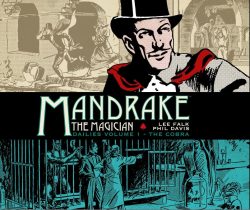
Mandrake the Magician: Dailies volume 1 – The Cobra


By Lee Falk & Phil Davis (Titan Books)
ISBN: 978-1178276-690-2 (HB)

Win’s Christmas Gift Recommendation: A Masterpiece of Vintage Mystery and Imagination… 9/10

Considered by many as the first superhero, Mandrake the Magician debuted as a daily newspaper strip on 11th June 1934. An instant hit, it was soon supplemented by a full-colour Sunday companion page which launched on February 3rd 1935.

Creator Lee Falk had actually sold the strip to King Features Syndicate years earlier as a 19-year old college student, but asked the monolithic company to let him finish his studies before dedicating himself to the strip full time. With his schooling done, the 23-year old master raconteur settled in to begin his life’s work: entertaining millions with his astounding tales.

Falk – who also created the first costumed superhero in the moodily magnificent form of The Phantom – spawned an actual comicbook subgenre with his first creation. Most publishers of the Golden Age boasted at least one (and usually many more) nattily attired wonder wizards amongst their gaudily-garbed pantheons; all roaming the world making miracles and crushing injustice with varying degrees of stage legerdemain or actually sorcery.

Characters such Mr. Mystic, Ibis the Invincible, Sargon the Sorcerer, and an assortment of “…the Magician” such as Zanzibar, Zatara, Kardak and so many, many more all borrowed heavily and shamelessly from the uncanny exploits of the elegant, enigmatic man of mystery who graced the pages of the world’s newspapers and magazines.

In the Antipodes, Mandrake was a suave stalwart regular of the Australian Women’s Weekly and also became a cherished icon of adventure in the UK, Italy and Scandinavia.

Over the years he has been a star of radio, movie chapter-serials, a theatrical play, television and animation (as part of the cartoon series Defenders of the Earth). With that has come the usual merchandising bonanza of games, toys (including magic trick kits), books, comics and more…

Falk worked on Mandrake and “The Ghost who Walks” until his death in 1999 (even on his deathbed he was laying out one last story), but also found a few quiet moments to become a renowned playwright, theatre producer and impresario, as well as an inveterate world-traveller.

A man of many talents, Falk actually drew the first few weeks himself before uniting with sublimely polished cartoonist Phil Davis whose sleekly understated renditions took the daily strip – especially the expansive full-page Sunday offerings collected in a sister volume – to unparalleled heights of sophistication. His steady, assured realism was the perfect tool to render the Magician’s mounting catalogue of spectacular miracles.

Those in the know are well aware that Mandrake was educated at the fabled College of Magic in Tibet, thereafter becoming a suave globe-trotting troubleshooter, always accompanied by his faithful African friend Lothar and beautiful companion (eventually, in 1997, bride) Princess Narda of Cockaigne, co-operatively solving crimes and fighting evil.

Those days, however, are still to come as a wealth of fact-filled features begins here with college Classics Professor Bob Griffin vividly recalling ‘From Fan to Friend: My Memories of Lee Falk’. Mathematics lecturer and comics historian Rick Norwood then traces comic book sorcerers and sources in ‘Mandrake Gestures Hypnotically’ before the comics section of this luxury monochrome landscape hardback (also available digitally, but impossible to gift wrap) opens on the hero’s first case.

A classy twist on contemporary crime dramas and pulp fiction, ‘The Cobra’ (June 11th – November 24th 1934) sees the eponymous criminal mastermind menace the family of US ambassador Vandergriff until a dapper haunting figure and his gigantic African companion insert themselves into the affair. Initially mistrusted, Mandrake and Lothar guide the embattled diplomat through a globe-girdling vendetta against a human fiend with mystic powers and a loyal terrorist cult. Employing their own miracles, wonders and ruthless common sense, the heroes defeat every scheme leading to a ferocious final clash in the orient and the seeming destruction of the wicked evil wizard.

At their ease in Alexandria, Mandrake and Lothar are targeted by criminal mastermind ‘The Hawk’ (November 26th 1934 – February 23rd 1935) and meets distrait socialite Narda of Cockaigne, who employs her every wile to seduce and destroy them. Thwarting every plot, Mandrake eventually learns her actions are dictated by a monstrous stalker who is blackmailing Narda’s brother Prince Sigrid. With his true enemy revealed, the Magician sets implacably to work to settle the villain’s affairs for good…

With a sense of further entanglements to come, the wanderers leave Narda and eventually fetch up in the Carpathians, encountering a lonely embattled woman tormented by crazed Professor Sorcin and ‘The Monster of Tanov Pass’(February 25th – June 15th 1935). This time, there’s a fearsomely rational explanation for all the terror and tribulations…

Mandrake and Lothar meet weary policeman Inspector Duffy and clash with a brilliant mimic and master thief in Arabia where ‘Saki, the Clay Camel’ (June 17th – November 2nd 1935) drives the occupying British authorities to distraction. An offer of mystic assistance brings danger, excitement and a surprise reunion with Narda before the crook and his army of desperate criminals are defeated…

Heading north to frozen climes, the magician and the strongman encounter persecuted Lora, saving her from her own unscrupulous and cash-crazed family and ‘The Werewolf’ (November 4th 1935 – February 29th 1936) before this first volume concludes with ‘The Return of the Clay Camel’ March 2nd – July 18th 1936): a rip-roaring romp showing off Falk’s deft gift for comedy…

It begins with our heroes curing a raging sportsman of the urge to hunt and expands into a baffling mystery as the long vacationing Sir Oswald returns home to England only to discover someone has been perfectly impersonating him for months…

Devolving into a cunning robbery and comedy of mistaken identity, Mandrake and the false faced Saki test wits and determination, but even with the distraction of an impending marriage being hijacked too, its certain that the canny conjuror is going to come out on top…

Closing with ‘The Phil Davis Mandrake the Magician Complete Daily Checklist 1934-1965’ this thrilling tome offers exotic locales, thrilling action, bold belly laughs, spooky chills and sheer elegance in equal measure. Master taleteller Falk instinctively knew from the start that the secret of success was strong – and crucially recurring – villains to test and challenge his heroes and made Mandrake an unmissable treat for every daily strip addict. These stories have lost none of their impact and only need you reading them to concoct a perfect cure for the 21st century blues.
Mandrake the Magician © 2016 King Features Syndicate. All Rights Reserved. All other material © 2016 the respective authors or owners.

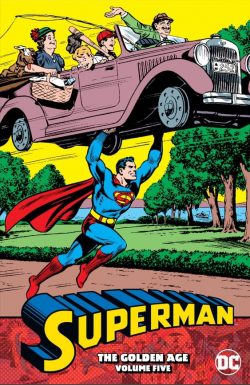
Superman: The Golden Age Volume Five


By Jerry Siegel & Joe Shuster, John Sikela, Leo Nowak, Ed Dobrotka, George Roussos, Sam Citron & various (DC Comics)
ISBN: 978-1-4012-8797-9 (TPB)

Win’s Christmas Gift Recommendation: Vital Vintage Superhero Fun and Fantasy… 9/10

The American comicbook industry – if it existed at all by now – would have been an utterly unrecognisable thing without The Man of Tomorrow. His unprecedented invention and adoption by a desperate and joy-starved generation gave birth to an entire genre if not an actual art form.

Imitation is the most honest compliment and can be profitable too. Superman triggered an inconceivable army of imitators and variations and, within three years of his Summer 1938 debut, the intoxicating blend of action and social wish-fulfilment which hallmarked the early Action Ace had grown to encompass cops-and-robbers crime-busting, socially reforming dramas, science fiction, fantasy, and whimsical comedy. Once the war in Europe and the East finally involved America, to that list was added patriotic relevance for a host of gods, heroes and monsters – all dedicated to profit through exuberant, eye-popping excess and vigorous dashing derring-do.

In comicbook terms at least, Superman was master of the world. He had already utterly changed the shape of the fledgling industry by the time of these tales. There was a successful newspaper strip, foreign and overseas syndication and the Fleischer studio was producing some of the most expensive – and best – animated cartoons ever conceived.

Thankfully the quality of the source material was increasing with every four-colour release, and the energy and enthusiasm of Jerry Siegel & Joe Shuster had infected the burgeoning studio that grew around them to cope with the relentless demand.

This latest addition to the splendid Golden Age/Silver Age strand of DC reprint compendia presents more of an epochal run of raw, unpolished but viscerally vibrant stories by Siegel, Shuster and the sterling crew of their “Superman Studio”. This stalwart band collaboratively set the nascent comics world on fire with crude, rough, uncontrollable wish-fulfilling, cathartically exuberant exploits of a righteous and superior man dealing out summary justice equally to social malcontents, exploitative capitalists, thugs and ne’er-do-wells, and captured the imagination of a generation.

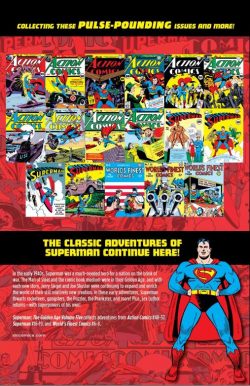
This fifth remastered paperback collection (also available digitally) of the Action Ace’s early exploits – reprinted in the order they first appeared – covers the turbulent, times spanning May 1942 to February 1943: encompassing escapades from Action Comics #48-57, Superman #16-19 and his solo-adventures from World’s Finest Comics #6-8 (an oversized anthology title where he shared whimsical cover-stardom with Batman and Robin).

As always, every comic appearance is preceded by the original cover illustration depicting Superman trouncing scurrilous Axis War-mongers and reminding readers what we were all fighting for – captivating graphic masterpieces from Fred Ray, Jack Burnley and John Sikela – whilst each tale is credited to prolific co-originator Siegel.

I sometimes think – like many others I know – that superhero comics were never more apt or effective than when they were whole-heartedly combating global fascism with explosive, improbable excitement courtesy of a myriad of mysterious, masked marvel men.

All the most evocatively visceral moments of the genre seem to come when gaudy gladiators soundly thrashed – and I hope you’ll please forgive the offensive contemporary colloquialism – “Nips and Nazis”. However, even in those long-ago dark days, comics creators were wise enough to offset their tales of espionage and imminent invasion with a barrage of home-grown threats and gentler or even more whimsical four-colour fare…

Jerry Siegel was producing some of the best stories of his career, showing the Action Ace in all his morale-boosting glory; thrashing thugs, spies and masters of bad science whilst America kicked the Axis fascists in the pants…

Co-creator Joe Shuster, although plagued by punishing deadlines for the Superman newspaper strip and his rapidly failing eyesight, was still fully involved in the process, overseeing the stories and drawing character faces whenever possible, but as the months passed the talent pool of the “Superman Studio” increasingly took the lead in the comicbooks as the demands of the media superstar grew and grew. Thus, most of the stories in this volume were drawn by John Sikela with occasional support from others…

The magic begins with ‘The Merchant of Murder!’ from Action Comics #48 wherein the hero topples an insidious gang of killers led by The Top who uses wartime restrictions to sell used cars with deadly faults and defects until reporter Lois Lane and her soft-spoken leg man get involved…

Sikela flew solo on all of Superman #16, beginning with ‘The World’s Meanest Man’ as the Caped Kryptonian crushes a mobster attempting to plunder a social program giving deprived slum-kids a holiday in the countryside, before moving on to battle an astrologer prepared to murder his clients to prove his predictions in ‘Terror from the Stars’.

‘The Case of the Runaway Skyscrapers’ pits the Metropolis Marvel against Mister Sinister, a trans-dimensional tyrant who makes buildings vanish, after which the power-packed perilous periodical concluded with a deeply satisfying and classic campaign against organised crime as Superman crushes the ‘Racket on Delivery’.

Action Comics #49 introduced The Puzzler – a despicable, deadly and obsessive criminal maniac who hated losing and never played fair in ‘The Wizard of Chance’ (inked by Ed Dobrotka).

The debut of Superman propelled National Comics to the forefront of their fledgling industry and in 1939 the company collaborated with the organisers of the New York World’s Fair: producing two commemorative comic books celebrating the event. The Man of Tomorrow prominently featured on the appropriately titled New York World’s Fair Comics beside such four-colour stars as Zatara, Gingersnap, The Sandman and Batman and Robin. The spectacular card-cover 96-page anthologies were a huge hit and convinced National’s owner and editors that such an over-sized package of their pantheon of characters, with Superman and Batman prominently featured, would be a worthwhile proposition.

The bountiful format was retained for a wholly company-owned quarterly which retailed for the then-hefty price of 15¢. Launching as World’s Best Comics #1 (Spring 1941), the book transformed into World’s Finest Comics from #2, beginning a stellar 45-year run which only ended as part of the massive decluttering exercise that was Crisis on Infinite Earths.

From WFC #6 (Summer 1942), Siegel, Leo Nowak & Sikela’s ‘The Man of Steel vs. the Man of Metal’ pits our hero and newsboy Jimmy Olsen against Metalo: a mad scientist whose discoveries make him every inch Superman’s physical match…

Back in Action Comics #50, Clark Kent and Lois are despatched to Florida to scope out sporting skulduggery in ‘Play Ball!’– a light-hearted baseball tale illustrated by Nowak & Ed Dobrotka before Superman #17 offers a quartet of tales beginning with ‘Man or Superman?’ (pencilled by Shuster with Sikela inking), wherein Lois first begins putting together snippets of evidence and at last sensing that klutzy Clark might be hiding a Super-secret, even as the subject of her research tangles with sinister saboteur The Talon.

Following that, ‘The Human Bomb’ (art by Nowak) sees a criminal hypnotist transform innocent citizens into walking landmines until the tireless Action Ace scotches his wicked racket.

Sikela handled the last two tales in the issue beginning with ‘Muscles for Sale!’, in which Superman’s Fortress of Solitudeand Trophy Room debut and the Man of Steel battles another mad mesmerist turning ordinary citizens into dangerously overconfident louts, bullies and thieves, whilst ‘When Titans Clash!‘ depicts a frantic and spectacular duel of wits and incredible super-strength after Luthor regains the mystic Power Stone to become Superman’s physical – but never intellectual – master …

Action Comics #51 introduces the canny faux-madness of practical-joking homicidal bandit The Prankster in the rollercoaster romp in Sikela’s ‘The Case of the Crimeless Crimes’ and the next issue features the ‘The Emperor of America!’, wherein an invading army are welcomed with open arms by all Americans except the indignantly suspicious Man of Steel who single-handedly liberates the nation in a blistering, rousing call-to-arms classic…

As the war progressed the raw passion and sly wit of Siegel’s stories and the rip-roaring energy of Shuster and his team were galvanised by the parlous state of the planet and Superman got even became better and more flamboyant to deal with it all. His startling abilities and take-charge, can-do attitude won the hearts of the public at home and he was embraced as a patriotic tonic for the troops across the war-torn world.

The rise was meteoric, inexorable and unprecedented. He was the indisputable star of Action and World’s Finest Comics plus his own dedicated title, whilst a daily newspaper strip (begun on 16th January 1939, with a separate Sunday strip following from 5th November of that year) garnered millions of new fans globally. A thrice-weekly radio serial had been running since February 12th 1940 and, with a movie cartoon series, games, toys, apparel and a growing international media presence, Superman was swiftly becoming the entire Earth’s hero…

Although the gaudy burlesque of evil aliens, marauding monsters and slick super-villains still lay years ahead of our hero, thrilling tales of villainy, criminality, corruption and disaster were just as engrossing and spoke powerfully of the tenor of the times, and are all dealt with in a direct and captivating manner by our relentlessly entertaining champion in summarily swift and decisive fashion.

No “To Be Continueds” here!

A perfect example of the done-in-one tale is Siegel, Nowak & Sikela’s ‘The Eight Doomed Men’ from World’s Finest Comics #7: a tale involving a coterie of ruthless millionaires targeted for murder because of the wicked past deeds of their privileged college fraternity. This enthralling crime mystery is suitably spiced up with flamboyant high-tech weaponry that pushes the Man of Tomorrow to his limits…

Superman #18 (September/October 1942) then offers a quartet of stunning sagas, leading with Sikela’s ‘The Conquest of a City’ wherein Nazi infiltrators use a civil defence drill to infiltrate the National Guard and conquer Metropolis in the Fuehrer’s name… until Superman spearheads the counter-attack…

Nowak’s ‘The Heat Horror’ posits an artificial asteroid threatening to burn the city to ashes until the Metropolis Marvel defeats Lex Luthor, the manic mastermind who initially aimed it at Earth.

‘The Man with the Cane’ offers a grand, old-fashioned and highly entertaining espionage murder mystery for Dobrotka & Sikela to illustrate after which Superman takes on his first fully costumed super-villain when ‘The Snake’ perpetrates a string of murders during construction of a river tunnel in a moody Nowak-drawn masterpiece.

Sikela is inked by George Roussos on fantastic thriller ‘The Man Who put Out the Sun!’ from Action Comics #53, wherein bird-themed bandit Night-Owl uses “black light” technology and ruthless gangsters to plunder at will until the Man of Steel takes charge, whilst in #54, ‘The Pirate of Pleasure Island!’ (Sikela) follows the foredoomed career of upstanding citizen Stanley Finchcomb, a seemingly civilised descendent of ruthless buccaneers who succumbs to madness and becomes a modern day merciless marine marauder. Or perhaps he truly is possessed by the merciless spirit of his ancestor Captain Ironfist in this enchanting supernatural thriller…?

A classic (and much reprinted) fantasy shocker opened Superman #19. ‘The Case of the Funny Papers Crimes’ (Sikela & Dobrotka) sees bizarre desperado Funnyface bring the larger-than-life villains of the Daily Planet’s comics page to terrifying life in a grab for loot and power, after which ‘Superman’s Amazing Adventure’ (Nowak) finds the Man of Steel battling incredible creatures in an incredible extra-dimensional realm – but all is not as it seems…

Some of the city’s most vicious criminals are commanded to kill a stray dog by the infamous Mr. Z in ‘The Canine and the Crooks’ (Nowak) and it takes all of Clark and Lois’ deductive skills to ascertain why before ‘Superman, Matinee Idol’breaks the fourth wall for readers as the reporters visit a movie house to see a Superman cartoon in a shameless yet exceedingly inventive and thrilling “infomercial” plug for the Fleischer Brothers cartoons then currently astounding movie-goers; all lovingly rendered by Shuster and inked by Sikela…

This latest leaf through times gone by continues with a witty and whimsical Li’l Abner spoof illustrated by Sikela & Dobrotka. ‘A Goof named Tiny Rufe’ focuses on desperate cartoonist Slapstick Sam who co-opts, plagiarises and ruins the simple lives of a couple of naïve hillbillies to fill his idea-empty panels and pages… until Superman intercedes to give the hicks their lives back and the devious dauber the drubbing he so richly deserves……

World’s Finest #8 (Winter, 1942-1943) next exposed ‘Talent Unlimited’ (Sam Criton & Sikela) as Superman tracks down a missing heiress who had abandoned wealth for a stage career and poor but honest theatrical friends. Unfortunately, even though she didn’t want her money, other people did…

A brace of episodes from Action Comics brings this gleaming Golden Age visit to a close, starting with ‘Design for Doom!’ from #56. Illustrated by Sikela, it pits the Caped Kryptonian against a deranged architect who creates global city-wrecking catastrophes simply to prove the superiority of his own creations.

Superman was pitifully short on returning villains in the early days so #57’s return of the Prankster as ‘Crime’s Comedy King’ made a welcome addition to his meagre Rogues Gallery, especially as the Macabre Madcap seems here to have turned over a new philanthropic leaf. Of course, there’s malevolence and a big con job at the heart of his transformation…

As fresh, thrilling and compelling now as they ever were, these endlessly re-readable epics are perfectly presented in these glorious paperback collections where the graphic magic defined what being a Super Hero means, with every tale dictating the basic iconography of the genre for all others to follow.

These Golden Age tales are priceless enjoyment at absurdly affordable prices and in a durable, comfortingly approachable format. What dedicated comics fan could possibly resist them?
© 1942, 1943, 2020 DC Comics. All Rights Reserved.

Gahan Wilson Sunday Comics


By Gahan Wilson (Fantagraphics Books)
ISBN: 978-1-60699-612-6 (HB)

Win’s Christmas Gift Recommendation: One Last Hard-Earned Laugh in the Face of the Toughest Holiday Season in Living Memory… 9/10

Born on February 18th 1930 and dying a year ago today, Gahan Allen Wilson was an illustrator, cartoonist, essayist and author who always had his eyes and heart set on the future. According to Gary Groth’s Afterword in this sublime collection, he and grew up reading comic strips as much as fantasy fiction.

It always showed.

The mordantly macabre, acerbically wry and surreal draughtsman tickled funnybones and twanged nerves with his darkly dry graphic confections from the 1960s; contributing superb spoofs, sparklingly horrific and satirically suspenseful drawings and strips and panels as a celebrated regular contributor in such major magazines as Playboy, Collier’s, The New Yorker and others. He also wrote science fiction for Again Dangerous Visions, The Magazine of Fantasy & Science Fiction, The Twilight Zone Magazine and Realms of Fantasy as well as contributing criticism, book and film reviews for them all.

In an extremely broad and long career he wore dozens of creative hats, even embracing the modern digital universe by creating – with Byron Preiss – his own supernatural computer game, Gahan Wilson’s the Ultimate Haunted House.

When National Lampoon first began its devastatingly satirical (geez, do modern folk even recognize satire anymore?) all-out attack on the American Dream, Wilson was invited to contribute a regular strip to their comics section. His sublimely semi-autobiographical, darkly hilarious paean to lost childhood ran from 1972 and until 1981 and was collected as Nuts, another superb compilation from this publisher that you should own and share.

Few people – me included – knew that during that period he also, apparently more for fun and relaxation than profit, produced his own syndicated Sunday strip feature. For two years – beginning on March 3rd 1974 – Gahan Wilson Sunday Comics appeared in a small cross-section of newspapers from Boston to Los Angeles and, as with all his work, it bucked a trend.

At a time when most cartoonists were seeking a daily continuity strip, building a readership and eking jokes out with sensible parsimony, Wilson let himself go hog-wild, generating a half-dozen or so single-shot gags every Sabbath, blending his signature weird, wild monsters, uncanny aliens and unsavoury scenes with straight family humour, animal crackers, topical themes and cynically socio-politically astute observations.

Looking at them here it’s clear to me that his intent was to have fun and make himself laugh as much or even more than his readership; capturing those moments when an idea or notion gave him pause to giggle whilst going about his day job…

I’m not going to waste time describing the cartoons: there are too many and despite being a fascinating snapshot of life in the 1970s they’re almost all still outrageously funny in the way and manner that Gary Larson’s Far Side was a scant six years later.

I will say that even whilst generating a storm of humorous, apparently unconnected one-offs, consummate professional Wilson couldn’t restrain himself and eventually the jokes achieved an underlying shape and tone with recurring motifs (clocks, beasts, wallpaper, etc), guest appearances by “The Kid” (from Nuts) and features-within-the-feature such as The Creep and Future Funnies…

Collected in a gloriously expansive (176 pages, 309x162mm) full-colour, landscape hardback, as well as in digital formats, this complete re-presentation of a lost cartooning classic offers a freewheeling, absurdist, esoterically banal, intensely, trenchantly funny slice of nostalgia. These fabulous joke page compendiums range from satire to slapstick to agonising irony and again prove Wilson to be one of the world’s greatest visual humourists.

This is a book no fan of fun should miss and, with Christmas oppressively bearing down on us, could be a crucial solution to the perennial “what to get him/her/them/they” question…
All comic strips © 2013 Gahan Wilson. This Edition © Fantagraphics Books, Inc. All rights reserved.

The Complete Calvin and Hobbes

By Bill Watterson (Andrews McMeel)
ISBN: 978-0-74074-847-9 (HB boxed set) 978-1-44943-325-3 (PB boxed set)

Win’s Christmas Gift Recommendation: The Absolute Epiphany of Joyous Delight… 10/10

Almost any event big or small is best experienced through the eyes of a child – and better yet if he’s a fictional waif controlled by the whimsical sensibilities of a comic strip genius like Bill Watterson.

Calvin is the child in us all; Hobbes is the sardonic unleashed beast of our Aspirations; no, wait… Calvin is this little boy, an only child with a big imagination and a stuffed tiger that has become his common sense and moral sounding board…

No; Calvin is just a lonely little boy and Hobbes talks only to him. That’s all you need or want.

An immediate best-selling strip and perennial award-winning critical hit running from November 18th 1985 through December 31st 1995, Calvin and Hobbes came and went like a bright, soft comet and we’re all the poorer for its passing. In the decade of its existence, the strip redefined depictions of the “Eyes of Wonder” which children possess, and made us mere adults laugh, and so often cry too. Its influence shaped a generation of up-and-coming cartoonists and comicbook creators.

We all wanted a childhood like that pesky kid’s; bullies, weird teachers, obnoxious little girls and all. At least we can – and still do – revisit…

The Daily and Sundays appeared in more than 2,400 newspapers all over the planet and – from 2010 – reruns have featured in over 50 countries. There were 18 unmissable collections (selling well in excess of 45,000,000 copies thus far), including the fabulous complete boxed set edition in both soft and hard cover formats I’m plugging today. Yes, it’s a comparatively expensive item but I gloat over my hardback set almost every day and cannot count the number of times I’ve dipped into it over the years.

Unlike most of his fellows, Watterson shunned the spotlight and the merchandising Babylon that generally follows a comic strip mega-hit. He dedicated all his spirit and energies into producing one of the greatest testaments to childhood and the twin and inevitably converging worlds of fantasy and reality anywhere in fiction. All comics purists need to know is that the creator cites unique sole-auteur strips Pogo, Krazy Kat and Peanuts as his major influences and all mysteries are solved…

Calvin is a hyper-active little boy growing up in a suburban middle-American Everytown. There’s a city nearby, with museums and such, and a little bit of wooded wilderness at the bottom of the garden. The kid is smart, academically uninspired and utterly happy in his own world. He’s you and me. His best friend and companion is stuffed tiger Hobbes, who – as I might have already mentioned – may or may not be actually alive. He’s certainly far smarter and more ethically evolved than his owner…

And that’s all the help you’re getting. If you know the strip you already love it, and if you don’t you won’t appreciate my destroying the joys of discovery. This is beautiful, charming, clever, intoxicating and addictive tale-telling, blending awe, bliss and laughter, socially responsible and wildly funny.

After a miraculous decade, at the top of his game Watterson retired the strip and himself, and though I bitterly resent it, and miss it still, I suppose it’s best to go out on a peak rather than fade away by degrees. I certainly respect and admire his dedication and principles.

I cannot imagine any strip fan – or indeed, parent – living life without Calvin and Hobbes. Imaginative, dazzling, unforgettably captivating, these are some of the best cartoons ever crafted. You should have them in your house.

Usually I plug a specific item – and I am here too – but today’s lesson is really a big thank you and heartfelt recommendation for an iconic strip and its brilliant creator.

I normally shy away from excessively priced items too, but in this case (not a pun, no matter how much I want it to be) the expense is worth the outlay. This is a set of books to summon up glorious childhood memories, meant to be read lying on the floor with kids and pets and snacks all jostling for the best vantage point.

The entire Calvin and Hobbes canon is still fully available in solo volumes and so is this aforementioned wrist-cracking box set, but not, sadly, in a digital edition yet. You can, however, enjoy digital dollops of this graphic milestone if so inclined by going to gocomics.com/calvinandhobbes. They are also available online through the Andrews McMeel Uclick platform, so there’s no reason for you not to make this brilliant example of our art form a permanent part of your life. And you’ll thank me for it, too…
© 1989, 2005, 2012 Universal Press Syndicate. All rights reserved.

Conan the Barbarian Epic Collection volume 1: The Coming of Conan 1970-1972


By Roy Thomas & Barry Windsor-Smith, with John Jakes, Gil Kane & various (Marvel)
ISBN: 978-1-3029-2555-0 (TPB)

Win’s Christmas Gift Recommendation: Because We Believe in Blockbusters… 9/10

During the 1970’s the American comic book industry opened up after more than 15 years of cautious and calcified publishing practises that had come about as a reaction to the censorious oversight of the self- inflicted Comics Code Authority. This body was created to keep the publishers’ product wholesome after the industry suffered their very own McCarthy-style Witch-hunt during the 1950s.

One of the first genres revisited was Horror/Mystery comics and from that sprang pulp masterpiece Conan the Cimmerian, via a little tale in anthology Chamber of Darkness #4, whose hero bore no little thematic resemblance to the Barbarian. It was written by Roy Thomas and drawn by Barry (now Windsor-) Smith, a recent Marvel find, and one who was gradually breaking out of the company’s all-encompassing Jack Kirby house-style.

Despite some early teething problems – including being cancelled and reinstated in the same month – the comic book adventures of Robert E. Howard’s brawny warrior soon became as big a success as the revived prose paperbacks which had heralded a world flowering in tales of fantasy and the supernatural.

After decades away, the brawny brute recently returned to the Aegis of Marvel. Subtitled “the Original Marvel Years” (due to the character’s sojourn with other publishers and intellectual properties rights holders), this bombastic tome of groundbreaking action fantasy yarns re-presents the contents of Conan the Barbarian #1-13 plus that trailblazing short story, cumulatively spanning April 1970 to January 1972.

Digitally remastered and available as a trade paperback or digital formats, these absorbing arcane adventures sparked a revolution in comics and a franchising empire in my youth, and are certainly good enough to do so once again.

The drama begins most fittingly with a classic map of ‘The Hyborean Age of Conan’ plus an accompanying quote I’m sure every devoted acolyte already knows by heart…

Set in modern America, ‘The Sword and the Sorcerers’ primes the pump with the tale of a successful writer who foolishly decides to kill off his most beloved character Starr the Slayer: a barbarian so beloved that he has taken on a life of his own and is determined to do whatever is necessary to keep it…

After that we are catapulted back in time approximately 12,000 years into a forgotten age of wonders as writer Thomas broadly follows Howard’s life path for young Conan, beginning with the still teenaged hero’s meeting with a clairvoyant wizard who predicts his regal destiny (‘The Coming of Conan’ inked by Dan Adkins), through brief but brutal enslavement in ‘The Lair of the Beastmen’ (inked by Sal Buscema), before experiencing a minor Ragnarok in ‘The Twilight of the Grim Grey God!’

An aura of lyrical cynicism grows to balance the wealth of mystical menaces and brooding horror as the wandering youth becomes a professional thief and judge of human foibles in ‘The Tower of the Elephant’. Conan’s softer side is revealed in issue #5 after meeting the bewitching ‘Zukala’s Daughter’ (inked by Frank Giacoia) and liberating a wizard-plagued town. Buscema returned for ‘Devil Wings over Shadizar’, wherein the warrior tackles a welter of antediluvian terrors and both Adkins & Sal B applied their pens and brushes to expose ‘The Lurker Within’ – based on Howard’s magnificent The God in the Bowl – after which tomb-raider Conan crushes zombies and dinosaurs in ‘The Keepers of the Crypt’ (inked by Tom Palmer and Tom Sutton)

Thomas’s avowed plan was to closely follow Conan’s literarily-established career from all-but boyhood to his eventual crowning as King of Aquilonia, adding to and adapting the prose works of Howard and his posthumous collaborators on the way. This agenda led to some of the best, freshest comics of the decade. The results of Barry (not-yet-Windsor-) Smith’s search for his own graphic style led to unanimous acclaim and many awards for the creative duo.

By issue #9 the character had taken the comics world by storm and any threat of cancelation was long gone. ‘The Garden of Fear’ – adapted by Thomas & Smith, with inks by Sal B from Howard’s short story – features a spectacular battle with a primordial survivor in a lost valley before the wanderer returns to big city life, and learns too late to ‘Beware the Wrath of Anu!’

This god-slaying bout is mere prelude to another classic Howard adaptation, ‘Rogues in the House’: an early masterpiece of action and intrigue benefitting from a temporary doubling in page count.

‘Dweller in the Dark’ is an all-original yarn of monsters and maidens, notable because artist Smith inked his own pencils, and indications of his detailed fine-line illustrative style can be seen for the first time. An added bonus in that issue was a short back-up yarn by Thomas & Gil Kane with “Diverse Hands” called in to ink ‘The Blood of the Dragon!’ which tells of a very different Hyborian hero getting what he deserves…

Fantasy author John Jakes plotted the final tale in this initial outing as ‘Web of the Spider-God’ offers a sardonic tale of the desert with the surly Cimmerian battling thirst, tyranny pompous priests and a big, big bug in a riotous romp finished off by Thomas, Smith & Buscema.

Adding value to the treasury is a vast bonus section which includes pencilled cover art (used and unused), Thomas’ original script breakdowns annotated by the artist, extracts from Marvelmania (the company’s in-house fanzine), unused illustrations, house ads and Marvel bulletin items, cover roughs, concepts and finished art by Marie Severin & Gil Kane, John Jakes’ plot synopsis and many pages of original art from the tales collected herein.

Also on show are cover galleries of the Marvel Books reprint paperback line and the Conan Classic comics series – all by Windsor-Smith – plus even before-&-after alterations demanded by the Comics Code Authority on the still contentious and controversial title.

These re-mastered epics are a superb way to enjoy some of American comics’ most influential and enjoyable blockbuster moments. They should have a place on your bookshelf.
© 2020 Conan Properties International, LLC (“CPI”).

The Definitive Charley’s War volume 1: Boy Soldier


By Pat Mills & Joe Colquhoun & various (Rebellion)
ISBN: 978-1-78108-619-3 (TPB)

Win’s Christmas Gift Recommendation: Because Some Things Must Never Be Forgotten… 10/10

When Pat Mills & Joe Colquhoun began their tale of an impressionable lad who joins up just in time to fight in the disastrous Somme campaign, I suspect they had, as usual, the best of authorial intentions but no real idea that this time they were creating comics history. The landmark feature was originally published in British war anthology Battle (AKA Battle Picture Weekly, Battle Action, etc.). A surprise hit, the serial proper launched in issue #200, running from January 1979 until October of 1986.

It recounted, usually in heartrending and harrowing detail and with astounding passion for a Boys’ Periodical, the life of an East-End kid who lies about his age to enlist with the British Army reinforcements setting out to fight the Hun in 1916.

The stunning strip contingent contained within this superb trade paperback and digital edition – 86 weekly episodes in all, spanning January 6th 1979-25 October 1980 – form one of the most powerful and influential characterisations of the oh-so-ironic “war to end all wars”. The lovingly researched, lavishly limned and staggeringly authentic saga touches upon many diverse aspects of the conflict and even the effects on the Home Front, all delivered with a devastatingly understated dry sense of horror and cruel injustice, frequently leavened with gallows humour as trenchant as that legendarily “enjoyed” by the poor trench-bound “Tommies” of the time.

This magnificent (mostly) monochrome mega-compilation opens with a 4-page instalment (for much of the middle run the series came in 3-page episodes) ‘Charley’s War – the Story of a Soldier in World War One’, following 16-year-old London Bus Company worker Charley Bourne as he eagerly enlists and so-quickly graduates to the unending, enduring horrors of the muddy, blood-soaked battlefield of The Somme.

Military life was notoriously hard and unremittingly dull… except for those brief bursts of manic aggression and strategic stupidity which ended so many lives. Closely following the recorded course of the war, Mills & Colquhoun put young Charley in the Westshire Regiment and show a rapidly changing cast being constantly whittled away by various modes of combat attrition.

The weekly hellscapes showed lesser-known, far from glorious sides of the conflict that readers in the 1970s and 1980s had never seen in any other war comic. Each strip was cunningly punctuated and elucidated by the telling narrative device of the simple lad’s letters to his family in “Blighty” and also cleverly utilised reproductions of cartoons and postcards from the period.

With Boer War veteran Ole Bill Tozer as his mentor, Charley narrowly survives shelling, mudslides, digging details, gas attacks, the trench cat, snipers, the callous stupidity of his own commanding officers – although there are examples of good officers too – and the far too often insane absurdity of a modern soldier’s life.

Slowly but irrevocably the callow, naïve boy became a solid, dependable warrior – albeit one with a nose for trouble and a blessed gift for lucky escapes.

When Tozer leads a party across No-Man’s Land to capture prisoners for interrogation new pal Ginger sustains a frankly hilarious wound in his nether regions. As a result, however, and despite the sortie establishing the inadvisability of an attack, the Allied generals continue their plans for a “Big Push”. Thus, Charlie is confronted with an agonising moral dilemma when he catches a comrade trying to wound himself and get sent home before the balloon goes up.

This time, grim fate intervenes before the boy soldier can make a terrible choice…

The unit’s troubles increase exponentially when arrogant, ruthless aristocrat Lieutenant Snell arrives; constantly undermining if not actively sabotaging every effort by sympathetic officer Lieutenant Thomas to make the riffraff cannon fodder’s lives tolerable. The self-serving toff takes a personal dislike to Charley after the lad drops the huge picnic hamper belonging to the rich twat in the trench mud…

On July 1st 1916 The Battle of the Somme began and, like so many other unfortunates, Charley and his comrades are ordered “over the top”: expected to walk steadily into the mortars and machine gun fire of the entrenched German defenders. Thomas, unable to stand the stupidity, cracks and commands them to charge at a run. It saves his squad but lands his men in a fully-manned German dug-out…

After ferocious fighting the lads gain a brief respite but the retreating Huns have left insidious booby-traps to entice and destroy them. Many beloved characters die before Charley, Ginger and poor shell-shocked Lonely are finally captured by “the Boche”.

As they await their fate, the traumatised veteran of 1914 reveals to Ginger and Charley the horrific events of the previous Christmas and why he so wants to die. Moreover, the sole cause of that appalling atrocity was the same Snell who now commands their own unit…

Through Charley’s dumb luck they escape, only to blunder into a gas attack and British Cavalry. The mounted men gallop off to meet stiff German resistance (resulting in some of the most baroque and disturbing scenes ever depicted in kids’ comics) whilst Bourne and the lads. are miraculously reunited with their comrades.

The combat carnage has not ceased however. Waiting for the order to attack, Lt. Thomas and his hard-pressed men are suddenly subjected to a terrific barrage. With horror the officer realises they are being shelled by their own big guns and dispatches a runner to Snell who has a functioning line to Allied HQ.

The role of messenger was the most dangerous in the army but, with no other means of communication except written orders and requests, failure to get through was never acceptable. By the time Charley volunteers a dozen men have failed. With British shells still butchering British troops, Bourne is determined to pushing his luck as the “Thirteenth Runner”…

As previously stated, Charley’s War closely follows key events of the war, using them as a road map or skeleton to hang specific incidents upon, but this was not the strip’s only innovation. The highly detailed research concentrated more on characters than the fighting – although there was still plenty of heartrending action – and declared to the readership (which at the time of original publication were categorically assumed to be boys between ages 9-13) that “our side” could be as monstrous as the “bad guys”.

Mills also fully exercised his own political and creative agendas on the series and was constantly amazed at what he got away with and what seeming trivialities his editors pulled him up on (more fully expanded upon in the author’s informative ‘Strip Commentary’ which concludes this edition)…

With the Thirteenth Runner storyline, likable everyman Charley Bourne slowly began his descent from fresh-faced innocent to weary, battle-scarred veteran as the war reached beyond the cataclysmic opening moves of the Somme Campaign and into the conflict’s most bloody events.

Frantically making his way to the rear positions, Charley successfully passes the fallen twelve runners but only encounters more officer arrogance and Professional Soldier stupidity before the battle ends. Snell refuses to even read the message until he has finished his tea…

Helpless before the aristocrat’s indifference Charley angrily returns to the Front. Finding everybody apparently dead, he snaps: reduced to a killing rage he is only dragged back to normal when Ginger, Smith Seventy and the Sarge emerge from a shattered support trench.

The lad’s joy is short-lived. Thomas is arrested for showing cowardice in the face of the enemy, and with him gone Snell now commands the unit of despised disposable commoners…

Removed to the Rear to have their wounds treated, Charley and his chums meet Weeper Watkins. The former ventriloquist cries permanently. His eyes have been ruined by exposure to poison gas but he is still considered fit for duty. All too soon they fall foul of sadistic military policeman Sergeant Bacon who has earned his nickname as “the Beast” over and over again…

With a chance to blow off steam – such as a hilarious volunteer Concert Party show – Charley and Weeper are soon in the Beast’s bad books. However, his first attempt to beat and break Bourne goes badly awry when a couple of rowdy Australian soldiers join the fray and utterly humiliate the Red Cap.

Bullies are notoriously patient and Bacon’s turn comes at last when Lt. Thomas is found guilty. Charley and Weeper refuse to be part of the firing squad which executes him and are punished by a military tribunal, leaving them at the Beast’s non-existent mercy. Enduring savage battlefield punishments which include a uniquely cruel form of crucifixion, their suffering only ends when the base is strafed by German aircraft…

With sentence served and Bacon gone, Charley is soon back in the trenches, just in time for the introduction of Tank Warfare to change the world forever.

A fascinating aspect of the battle is highlighted here as the strip concentrates heavily upon the German reaction to the military innovation. The Central Powers considered the tank an atrocity weapon in just the same way modern soldiers do chemical and biological ones.

In the build-up to the Big Push, Charley is singled out by a new replacement. Unctuous Oliver Crawleigh is a cowardly spiv and petty criminal, but he’s also married to Charley’s sister Dolly. The chancer ignobly attaches himself to the young veteran like a leech, offering to pay Charley to either protect him or wound him some minor way which will get “Oiley” safely back to Britain…

The next day the Empire’s new landships make their terrifying debut with army infantry in close support and the effect on the Germans is astounding. In a ferociously gripping extended sequence, Mills & Colquhoun take the readers inside the hellish iron leviathans as outraged Huns devote their manic utmost efforts into eradicating the titanic terrors.

The carnage is unspeakable but before long Charley, Oiley and Smith Seventy are inside one of the lumbering behemoths, reluctantly replacing the dead crew of clearly deranged tank man Wild Eyes as the modern-day Captain Ahab drags them along for the ride: seeking a madman’s redemption for the loss of his comrades, the slaughter of a town and destruction of a church…

In the quiet of the weary aftermath, Oiley deliberately puts his foot under a tank to “get a Blighty” (a wound sufficiently serous to be sent home to England) and attempts to bribe Charley into silence. The disgusted, exhausted teenager responds in typically cathartic manner…

During this lull in the fighting, events on the German side see despised commoner and Eastern Front veteran Colonel Zeiss spurn his aristocratic Junker colleagues’ outdated notions before devising a new kind of Total Warfare to punish the British for their use of mechanised murder machines…

Charley meanwhile is wounded and his comrades celebrate the fact that he will soon be home safely. Naturally, things are never that simple and the callous indifference of the British army’s medical contingent – especially the notorious “Doctor No”, who never lets a man escape his duty – means that any soldier still able to pull a trigger is sent back into battle.

Bourne returns to the trenches just in time to meet the first wave of Zeiss’ merciless “Judgement Troops”, who storm the British lines, slaughtering everyone – including German soldiers who get in the way – in a savage, no-holds-barred assault, whose “Blitzkrieg tactics” overwhelm everything in their path.

Charley and his mates experience fresh horrors: battlefield executions, new and experimental forms of poison gas, flamethrowers, strafing by steel javelins and brutal, uncompromising hand-to-hand combat in their own overrun trenches before the bloody battle peters out indecisively…

Zeiss is subsequently cashiered by his own appalled superiors, but knows that one day his concepts of Blitzkrieg and Total War will become the norm…

Exhausted, battle-weary Charley is again injured, losing his identification in the process and returned eventually to England as a shell-shocked temporary amnesiac. His mother undergoes slow torture as she receives telegrams declaring her son, missing, dead, found wounded and lost again…

Mills & Colquhoun now begin a masterful sequence that breaks all the rules of war comic fiction; switching the emphasis to the Home Front where Charley’s family are mourning his apparent death and working in the war industries, just as the German Zeppelin raids on British cities are beginning.

Mills’ acerbic social criticism makes powerful use of history as the recovering hero experiences the trials of submarine warfare, when the troop ship carrying him and Bill Tozer back to Blighty is torpedoed…

When their perilous North Sea odyssey at last brings Charley back to Silvertown in London’s West Ham, it is in the wake of a catastrophic disaster in which 50 tons of TNT detonate at a munitions factory, killing more than 70 workers and injuring a further 400…

No longer comfortable around civilians and with no stomach for the jingoistic nonsense of the stay-at-homes or the covert criminal endeavours of boastful “war-hero” (and secret looter) Oiley, Charley hangs out in pubs with the Sarge and thereby reconnects with old soak and Crimean War survivor Blind Bob…

London is a city under constant threat, not just from greedy munitions magnates who care more for profit than the safety of their workers or even the victory of their homeland, but also increasingly common aerial bombing raids which provoke mindless panic and destruction at the very heart of the British Empire.

Focus here divides as Charley’s days are contrasted with the zealous mission of devoted family man Kapitan Heinrich von Bergmann who leads his squadron of Zeppelins in a carefully calculated night sortie against the hated English…

When Blind Bill is evicted from his rooms, Charley invites him to stay with the Bournes and the beggar’s incredible hearing (coupled with the area’s quaint air-raid listening devices) provides enough warning to seal Bergmann’s doom, but not before the airman has rained tons of explosive death on the capital…

During the bombing Charley discovers his mum is still toiling in the local munitions works. The exploitative owner has decided not to sound his air raid evacuation alarm as he has his profits and contracts to consider. Charley is not happy and dashes to get her out…

This stunning collection ends with a sharp jab at the dubious practices of British recruitment officers (who got bonuses for very volunteer they signed up) as Charley stops his extremely little brother Wilf from making the same mistake he did, and teaches the unscrupulous recruiter a much-deserved lesson

To Be Continued…

Charley’s War is a highpoint in the narrative examination of the Great War through any artistic medium and exists as shining example of how good “Children’s Comics” can be. It is also one of the most powerful pieces of fiction ever produced for readers of any age.

I know of no anti-war story that is as gripping, as engaging and as engrossing, no strip that so successfully transcends its mass-market, popular culture roots to become a landmark of fictive brilliance. We can only thank our lucky stars that no Hollywood hack has made it a blockbuster which would inescapably undercut the tangibility of the “heroes” whilst debasing the message. There is nothing quite like it and you are diminished by not reading it.

Included in this volume are a full cover gallery and restored colour sections (reproduced in monochrome for earlier collections but vibrantly hued here to vivid effect) and writer Mills’ wonderfully informative chapter notes and commentary on the episodes. Not just a great war comic, Charley’s War is a highpoint in the narrative examination of the Great War through any artistic medium. I won’t belabour plot, script or even the riveting authentic artistic depictions. I won’t praise the wonderful quality. I simply state if you read this you will get it, and if you don’t, you won’t.

Let’s all make ensure that it’s NOT all over by Christmas!
© 1979, 1980, 1981, 1982, 1983, 1984, 1985 & 2018 Rebellion Publishing Ltd. All rights reserved. Charley’s War is â„¢ & © Rebellion Publishing Ltd. All rights reserved.

Jack Kirby’s OMAC: One Man Army Corps


By Jack Kirby with D. Bruce Berry, Mike Royer & various (DC)
ISBN: 978-1-4012-1790-7 (HB) 978-1-4012-4042-4 (TPB)

Win’s Christmas Gift Recommendation: A Terrifying Timeless Blockbuster… 9/10

There’s a magnificent abundance of Jack Kirby collections around these days – ‘though still not everything, so I’ve still got reason to carp. This slim hardback, trade paperback or digital collection re-presents possibly his boldest and most heartfelt creation after the comics landmark that was his Fourth World Cycle.

Famed for his larger than life characters and gigantic, cosmic imaginings, “King” Kirby was an astute, spiritual man who had lived through poverty, gangsterism, the Depression and World War II. He had seen Post-War optimism, Cold War paranoia, political cynicism and the birth and death of peace-seeking counter-cultures. He always looked to the future and he knew human nature intimately. In OMAC: One Man Army Corps, he let his darkest assumptions and prognostications have free rein, and his “World That’s Coming” was far too close to the World we’re frantically trying to escape now…

In 1974, with his newest creations inexplicably tanking at DC, Kirby tentatively considered a return to Marvel, but – ever the consummate professional – he scrupulously carried out every detail of his draconian DC contract. When The Demon was cancelled, the King needed to find another title to maintain his Herculean commitments (Jack was legally obliged to deliver 15 completed pages of art and story per week!) and returned to an idea he had shelved in 1968.

That was to re-interpret Captain America into a possible future where all Kirby’s direst prognostications and fears could be made manifest. In 1974 he revisited those worries and produced a nightmare scenario that demanded not a hero but a warrior.

Dubbing his Day-After-Tomorrow dystopia “The World That’s Coming”, Kirby let his mind run free – and scared – to birth a frighteningly close appreciation of our now, where science and wealth have outstripped compassion and reason, and humanity teeters on the brink of self-inflicted global destruction.

OMAC #1 launched in September-October 1974, introducing the Global Peace Agency, a world-wide Doomwatch police force who manufactured a super-soldier to crisis-manage the constant threats to a species with hair-trigger fingers on nuclear stockpiles, chemical weapons of mass destruction and made-to-measure biological horrors.

Base human nature was the true threat behind this series, and that was first demonstrated by decent young man Buddy Blank who, whilst working at Pseudo-People Inc., discovers that the euphemistically entitled Build-A-Friend division hides a far darker secret than merely pliant girls that come in kit-form. (I think we even have those now, too…)

Luckily Buddy has been singled out by the GPA’s resident genius Professor Myron Forest for eternal linkage to sentient satellite Brother Eye. His atoms shifted and reconstructed, Buddy is rebuilt until he becomes a living God of War, and the new-born human weapon easily destroys his ruthless employers before their murderous plans can be fully realised. ‘Buddy Blank and Brother Eye’ was followed by a truly prophetic tale, wherein impossibly wealthy criminal Mister Bigpurchases an entire city simply to assassinate Professor Forest in ‘The Era of the Super-Rich!’

Kirby’s tried and trusted approach was always to pepper high concepts throughout blazing action, and #3 was the most spectacular yet. OMAC fought ‘One Hundred Thousand Foes!’ to get to murderous Marshal Kafka; terrorist leader of a Rogue-State with a private army, WMDs and a solid belief that the United Nations can’t touch him. Sound familiar…?

That incredible clash carries on and concludes in #4’s ‘Busting of a Conqueror!’ With #5, Kirby moved on to other new crimes for a new world. The definition of a criminal tends to blur when you can buy anything – even justice – but rich old people cherry-picking young men and women for brain-implantation is (hopefully) always going to be a no-no. Still, you can sell or plunder specific organs even now…

Busting the ‘New Bodies for Old!!  racket took two issues, and after the One-Man-Army-Corps smashed ‘The Body Bank!’ he embarked on his final adventure. Ecological disaster and water shortage is the theme of the last tale, but as our hero trudges across a dry and desolate lake bottom amidst the dead and dying marine life he is horrified to discover the disaster to be the work of one man. ‘The Ocean Stealers!’ (#7) introduces Doctor Skuba, a scientific madman who mastered the very atomic manipulation techniques that had turned feeble Buddy Blank into an unstoppable war machine.

Joe Kubert drew the cover to OMAC #8 ‘Human Genius Vs Thinking Machine’; an epic episode seeing Brother Eye apparently destroyed as Skuba and Buddy Blank die together in an incredible explosion.

But that final panel is a hasty, last-minute addition by unknown editorial hands, for the saga never actually finished. Kirby, his contract completed, had promptly returned to Marvel and new challenges such as Black Panther, Captain America, 2001, Devil Dinosaur, Machine Man and especially The Eternals.

Hormone treatments, Virtual Reality, medical computers, satellite surveillance, genetic tampering and all the other hard-science predictions in OMAC pale into insignificance against Kirby’s terrifyingly accurate social observations in this bombastic and tragically incomplete masterpiece.

OMAC is Jack Kirby’s Edwin Drood, an unfinished symphony of such power and prophecy that it informs not just the entire modern DC universe and inspires ever more incisive and intriguing tales from the King’s artistic inheritors but still presages more truly scary developments in our own mundane and inescapable reality…

As always in these wondrously economical collections it should be noted that the book is also stuffed with un-inked Kirby pencilled pages and roughs, and Mark Evanier’s fascinating, informative introduction is a fact-fan’s delight. Crucially, as ever, Kirby’s words and pictures are an unparalleled, hearts-and-minds grabbing delight no comics  lover could resist.

Jack Kirby is unique and uncompromising. If you’re not a fan or simply not prepared to see for yourself what all the fuss has been about then no words of mine will change your mind. That doesn’t alter the fact that Kirby’s work from 1937 to his death in 1994 shaped the entire American comics scene, affected the lives of billions of readers and thousands of creators in all areas of artistic endeavour around the world for generations and still wins new fans and apostles every day, from the young and naive to the most cerebral of intellectuals. His work is instantly accessible, irresistibly visceral, deceptively deep whilst being simultaneously mythic and human: and just plain Great.
© 1974, 1975, 2009 DC Comics. All Rights Reserved.