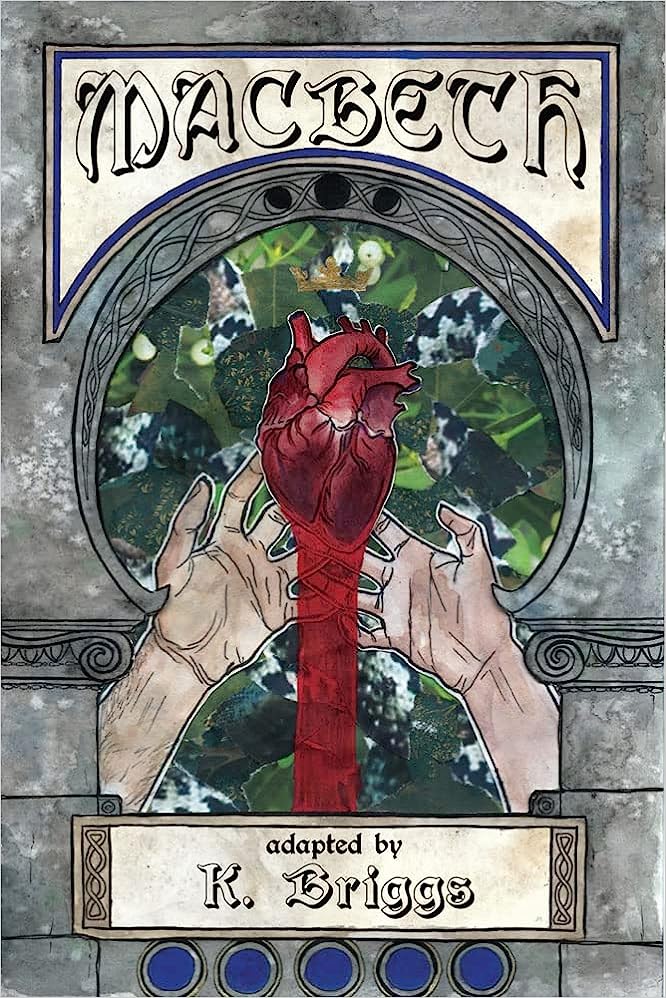
(The Tragedie of) Macbeth


By William Shakespeare, adapted by K. Briggs (Avery Hill Publishing)
ISBN: 978-1-910395-73-8 (HB)

Depending on how you liken it, William Shakespeare may be one of the most prolific comic scripters in the business. His mighty works have been staged and adapted as graphic narratives for decades in every language you might consider, and frequently allow contemporary artistic collaborators opportunity to be bold, experimental and vibrantly daring.

This is certainly the case with the lovingly crafted vision of American illustrator, performer and educator K. Briggs (Resistance, The New Chapter Tarot) who opts for colour-blind and gender-balanced casting to recount a visually striking and vivid interpretation which makes Scotland itself a player in the mix. Combining the full text with an abundance of mixed media including collage, paints, markers and pure linework, in a procession of nature-informed, magically-motif-ed page designs referencing ancient charts and maps, Illuminated manuscripts, tapestries, Tarot iconography, medical grimoires, nigh-abstract mood-enhancing tableaux and found historical artworks. These function as a moving backdrop to the actors unfolding the tale before your eyes.

What you already know: valiant general Macbeth meets three witches after saving the kingdom of his liege lord Duncan, and comes away with the notion that he will be King instead. Egged on by greed, ambition and his wife, the Thane of Cawdor personally kills the King whilst the monarch graces them with a visit. The red trail includes framing the guards and heirs and then progressively removing all threats to his reign.

However, both he and his Lady cannot escape their own consciences and the witches’ prophecy leads to delusion, disaster, derangement and death, but never glory…

As far as we can tell, Macbeth was first performed in 1606, written for Shakespeare’s patron King James I of England/VI of Scotland. It is an epic tragedy of ill-starred political ambition, the psychological costs of guilt, the consequences of betrayal and inevitability of tyranny, all wrapped up in veneer of supernatural horror.

The story is one of the greatest in world literature, but also a studied hatchet job, with the Bard shamelessly currying favour by ignoring facts and bigging up James’ distant ancestor and antecedent Macduff. The text first appeared in print in the Folio of 1623, but there have been plenty of editions since then.

The immortal story has frequently made it into comics form. If you’re one of the precious few people unfamiliar with the tale in its intended format (firstly, shame on you and secondly, go watch it right now; there are many excellent filmed versions in every possible language), this imaginatively welcoming rendition is extremely enthralling and powerful…

Moreover, the plot lends itself to many eras and milieux. You may even have already enjoyed it in epics as varied as Joe MacBeth (UK 1951), Throne of Blood (Japan 1957), Teenage Gang Debs (USA 1966), Men of Respect (USA 1991), and Mandaar (India 2021), amongst so many more interpretations – or even thematically as Blackadder Season 1…

Maybe you have seen it all before, but this is better….

Or if you will permit, “By the pricking of my thumbs, Something Wicked your way comes…”
© K. Briggs, 2023. All rights reserved.

Macbeth will be published on 23rd July 2023 and is available for pre-order now.

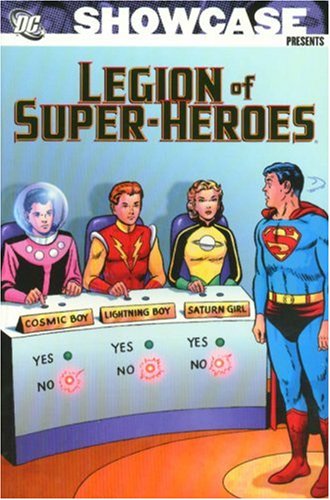
Showcase Presents Legion of Super-Heroes volume 1


By Otto Binder, Jerry Siegel, Robert Bernstein, Edmond Hamilton, Al Plastino, Curt Swan, John Forte, Jim Mooney, & various (DC Comics)
ISBN: 978-1- 4012-1382-4 (TPB)

Once upon a time in the far future, super-powered kids from many alien civilisations took inspiration from the greatest legend of all time and banded together as a club of heroes. One day those Children of Tomorrow came back in time and invited that legend to join them…

Thus, began the vast and epic saga of the Legion of Super-Heroes, as first envisioned by writer Otto Binder & artist Al Plastino when the many-handed mob of juvenile universe-savers debuted in Adventure Comics #247 (April 1958), just as the revived superhero genre was gathering an inexorable head of steam in America. Happy 65th Anniversary, team!

Since that time the fortunes and popularity of the Legion have perpetually waxed and waned, with their future history tweaked and rebooted, retconned and overwritten again and again to comply with editorial diktat and popular whim.

This glorious, far-and-wide ranging collection assembles the preliminary appearances of the valiant Tomorrow People, tracking their progress towards and attainment of their own feature. It re-presents in stunning monochrome all pertinent tales from Adventure Comics #247, 267, 282, 290, 293, 300-321, Action Comics #267, 276, 287, 289, Superboy #86, 89, 98, Superman #147, Superman Annual #4 and Superman’s Pal Jimmy Olsen #72 and 76.

As already stated, the many-handed mob of youthful worlds-savers debuted in Adventure #247, dreamed up for a Superboy tale wherein three mysterious kids invite the Boy of Steel to the 30th century. He is being vetted to join a team of metahuman champions unanimously inspired by his historic career. Binder & Plastino’s throwaway concept inflamed public imagination and after a slew of further appearances throughout Superman Family titles, the LSH eventually took over Superboy’s lead spot in Adventure: thereafter enjoying their own far-flung, quirky escapades, with the Kid Kryptonian reduced to “one of the in-crowd”…

However here the excitement was still gradually building as the kids returned for an encore 18 months later, Adventure #267 (December 1959) saw Jerry Siegel & George Papp make the Boy of Steel ‘Prisoner of the Super-Heroes!’ when the teen wonders attacked and incarcerated Superboy of Steel because of a misunderstood ancient historical record…

The following summer Supergirl met the Legion in Action Comics #267 (Siegel & Jim Mooney, August 1960) as Lightning Lad, Saturn Girl and Cosmic Boy secretly travelled to “modern day” America to invite the Maid of Might onto the team, in a repetition of their offer to Superboy 15 years previously (in nit-picking fact they claimed to be the children of the original team – a fact glossed over and forgotten these days. Don’t time-travel stories make your head hurt?).

Due to a dubious technicality, young and eager Kara Zor-El failed her initiation at the hands of ‘The Three Super-Heroes’ and was asked to reapply later – but at least we got to meet a few more Legionnaires, including Chameleon Boy, Invisible Kid and Colossal Boy.

With the editors still cautiously testing the waters, it was Superboy #86 (January 1961) before the ‘The Army of Living Kryptonite Men!’ by Siegel & Papp turned the LSH into a last-minute Deus ex Machina to save the Smallville Sentinel from juvenile delinquent Lex Luthor’s most insidious assault. Two months later, in Adventure #282, Binder & Papp introduced Star Boy as a romantic rival for the Krypton Kid in ‘Lana Lang and the Legion of Super-Heroes!’

Action Comics #276 (May 1961) debuted Supergirl’s Three Super Girl-Friends’ (Siegel & Mooney) which finally saw her crack the plasti-glass ceiling and join the team, sponsored by Saturn Girl, Phantom Girl and Triplicate Girl. We also met for the first time Bouncing Boy, Shrinking Violet, Sun Boy and potential bad-boy love-interest Brainiac 5 (well at least his distant ancestor Brainiac was a very bad boy…)

Next comes pivotal 2-part tale ‘Superboy’s Big Brother’ (by Robert Bernstein & Papp from Superboy #89 and June 1961) in which an amnesiac, super-powered space traveller crashes in Smallville, speaking Kryptonese and carrying star-maps written by the Boy of Steel’s long-dead father…

Jubilant, baffled and suspicious in equal amounts, Superboy eventually, tragically discovers The Secret of Mon-El’ by accidentally exposing the stranger to a lingering, inexorable death, before providing critical life-support by depositing the dying alien in the Phantom Zone until a cure can be found…

Sporting an August 1961 cover-date, Superman #147 unleashed ‘The Legion of Super-Villains’ (Siegel, Curt Swan & Sheldon Moldoff): a stand-out thriller featuring Luthor and an evil adult Legion coming far too close to destroying the Action Ace until the temporal cavalry arrives…

In Adventure #290 (November), Bernstein & Papp seemingly gave Sun Boy a starring role in ‘The Secret of the Seventh Super-Hero!’ – a clever tale of redemption and second chances, which is followed in #293 (February 1962) by a gripping thriller from Siegel, Swan & George Klein. The Legion of Super-Traitors’ sees the future heroes turn evil, prompting Saturn Girl to recruit a Legion of Super-Pets – comprising Krypto, Streaky the Super Cat, Beppo, the monkey from Krypton and magical Super-horse Comet to save the world…

‘Supergirl’s Greatest Challenge!’ (Siegel & Mooney, Action #287 April) sees her visit the Legion (quibblers be warned: for some reason it was mis-determined as the 21st century in here) to save future Earth from invasion). She also meets a telepathic descendent of her cat Streaky. His name is Whizzy (I could have omitted that fact but chose not to – once more for smug, comedic effect and in sympathy with all humans-with-cats everywhere)…

Action #289 featured ‘Superman’s Super-Courtship!’ wherein the Girl of Steel scours the universe to locate an ideal mate for her cousin. One highly possible candidate is adult Saturn Woman, but her husband Lightning Man objects…

Perhaps charming at the time, although modern sensibilities might quail at the conclusion that his perfect match is a doppelganger of Kara herself… albeit – and thankfully – a bit older…

By the release of Superboy #98 (July 1962), the decision had been made. The buying public wanted more Legion stories and after ‘The Boy With Ultra-Powers’ by Siegel, Swan & Klein introduces an enigmatic lad with greater powers than the Boy of Steel, focus shifted to Adventure Comics #300 (cover dated September 1962) where the super-squad finally landed their own gig; even occasionally taking an alternating cover-spot from still top-featured Superboy.

Tales of the Legion of Super-Heroes opened its stellar run with Siegel, John Forte & Plastino’s ‘The Face Behind the Lead Mask!’; a fast-paced premier pitting Superboy and the 30th century champions against an unbeatable foe until Mon-El, long-trapped in the Phantom Zone, temporarily escapes a millennium of confinement to save the day…

In those halcyon days humour was as important as action, imagination and drama, so many early exploits were light-hearted – if a little  moralistic. Issue #301 offered hope and role model to fat kids everywhere with ‘The Secret Origin of Bouncing Boy!’ by regular creative team Siegel & Forte. This yarn formalised a process of open auditions – providing devoted fans with loads of truly bizarre and memorable applicants over the years – whilst allowing the rebounding human rotunda to give a salutary pep talk and inspirational recount of heroism persevering over adversity.

Adventure #302 featured ‘Sun Boy’s Lost Power!’, as the golden boy is forced to resign until fortune and boldness restore his abilities, whilst ‘The Fantastic Spy!’ in #303 provides a tense tale of espionage and possible betrayal by new member Matter-Eater Lad.

The readership was stunned by the events of #304 when Saturn Girl engineers ‘The Stolen Super-Powers!’ to make herself a one-woman Legion. Of course, it was for the best possible reasons, but still doesn’t prevent the shocking murder of Lightning Lad…

With cosy complacency utterly destroyed, #305 further shook everything up with ‘The Secret of the Mystery Legionnaire!’ who turns out to be the long-suffering Mon-El finally cured and freed from his Phantom Zone prison.

Normally I’d try to be more obscure about story details – after all my intention is to get new people reading old comics, but these “spoiler” revelations are key to further understanding here and you all know these characters are still around, don’t you?

Pulp science fiction writer Edmond Hamilton took over the major scripting role with #306, and introducing ‘The Legion of Substitute Heroes!’ (quirkily, perfectly illustrated by John Forte). This is a group of rejected applicants who selflessly band together to clandestinely assist the champions who spurned them, after which transmuting orphan Element Lad joins the major team. He seeks vengeance on space pirates who had wiped out his entire species in ‘The Secret Power of the Mystery Super-Hero!’ before #308 seemingly sees ‘The Return of Lightning Lad!’

Actual Spoiler Warning: skip to the next paragraph NOW!!! if you don’t want to know it’s actually his similarly empowered sister who – once unmasked and unmanned – takes her brother’s place as Lightning Lass

‘The Legion of Super-Monsters!’ is a straightforward clash with embittered applicant Jungle King who takes rejection far too personally and gathers a deadly clutch of space beasts to wreak havoc and vengeance, whilst #310’s ‘The Doom of the Super-Heroes!’: a frantic battle for survival against an impossible foe.

Adventure #311 opens ‘The War Between the Substitute Heroes and the Legionnaires!’ with a cease-and-desist order from the A-Team that turns into secret salvation as the plucky, stubborn outcasts carry on regardless under the very noses of the blithely oblivious LSH…

The next issue (September 1963) features the ‘The Super-Sacrifice of the Legionnaires!’ and inevitable resurrection of Lightning Lad – but only after the harrowing sacrifice of one devoted team-member, after which Superman’s Pal Jimmy Olsen #72 (October, by Siegel, Swan & Klein) visits ‘The World of Doomed Olsens!’ Depicting an intriguing enigma as the cub-reporter is confronted by materialisations of his most memorable metamorphoses, it’s all just a prank by those naughty Legion scamps – but one with a serious purpose behind the jolly japery…

Adventure #313’s ‘The Condemned Legionnaires!’ (Hamilton, Swan, Klein & Forte) affords Supergirl a starring role after the sinister Satan Girl infects the team with a deadly plague, forcing them all into perpetual quarantine, before ‘The Super-Villains of All Ages!’ (art by Forte) reveals how a manic mastermind steals a Legion Time-Bubble to recruit the greatest monsters and malcontents of history – Nero, Hitler and John Dillinger – as his irresistible army of crime.

Why he’s surprised when they double-cross him and possess Superboy, Mon-El and Ultra Boy is beyond me , but happily, the lesser legionnaires still prove more a match for the brain-switched rogues. Then ‘The Legionnaires Super-Contest!’ in #315 finally sees the Substitute Heroes go public, for which the primary team offer to allow one of them to join the big boys. Which one? That’s the contest part…

Issue #316’s ‘The Renegade Super-Hero!’ outs one trusted teammate as a career criminal who then goes on the run, but there’s more to the tale than at first appears, after which the heroes confront The Menace of Dream Girl!’: a ravishing clairvoyant who beguiles her way into the Legion for her own obscure, arcane reasons. In her knowing way she presages the coming of deadly foe The Time Trapper and even finds time to convert electrically redundant sister of recently-resurrected Lightning Lad into gravity-warping Light Lass.

Adventure #318 sees The Mutiny of the Legionnaires!’ as Sun Boy succumbs to battle fatigue and became a draconian Captain Bligh during an extended rescue mission, whilst in Superman’s Pal Jimmy Olsen #76 (April 1964) Siegel & Forte describe Elastic Lad Jimmy and his Legion Romances!’ wherein the plucky journo is inveigled into the future and finds himself inexplicably irresistible to the costumed champions of Tomorrow. It isn’t his primitive charm, though…

Hamilton & Forte began a strong run of grittier tales from #319 on, beginning with ‘The Legion’s Suicide Squad!’ as the Science Police ask the team to destroy, at all costs, a monolithic space fortress, whilst #320 debuts daring new character in Dev-Em, a forgotten survivor of Superman’s dead homeworld who was little more than a petty thug when Superboy first defeated him. Now in ‘The Revenge of the Knave From Krypton!’ ( Siegel, Forte, Papp, Moldoff & Plastino), the rapscallion returns as either a reformed undercover cop or the greatest traitor in history…

The story portion of this titanic tome concludes with Adventure Comics #321 and Hamilton, Forte & Plastino’s ‘The Code of the Legion!’, revealing the team’s underlying Articles of Procedure during a dire espionage flap, simultaneously testing one Legionnaire to the limits of his honour and ingenuity and actually ending another’s service forever.

Perhaps. Sort of…

An appropriate extra from Superman Annual #4, follows: featuring a 2-page informational guide and pictorial check-list illustrated by Swan & Klein which was amended and supplemented in Adventure #316 with additional pages of stunning micro-pin-ups, all faithfully included here. This fabulously innocent and imaginative chronicle also includes every cover the team starred on: mostly the work of honorary Legionnaire Curt Swan and inkers George Klein, Stan Kaye & Sheldon Moldoff.

The Legion is undoubtedly one of the most beloved and bewildering creations in American comic book history and largely responsible for the growth of the groundswell movement that became Comics Fandom. Moreover, these sparkling, simplistic and devastatingly addictive stories as much as the legendary Julie Schwartz Justice League fired up the interest and imaginations of a generation of young readers and built the industry we all know today.

These naive, silly, joyous, stirring and utterly compelling yarns are precious and fun beyond any ability to explain – even if we old lags gently mock them to ourselves and one another. If you love comics and haven’t read this stuff, you are the poorer for it and need to enrich your future life as soon as possible.
© 1958-1964, 2007 DC Comics. All Rights Reserved.

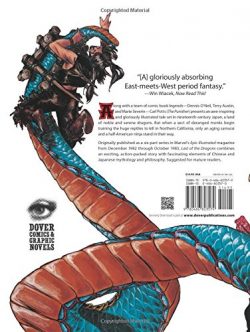
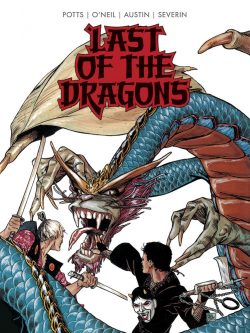
Last of the Dragons


By Carl Potts, Denny O’Neil, Terry Austin, Marie Severin & various (Dover Comics & Graphic Novels)
ISBN: 978-0-486-80357-9 (TPB/Digital edition)

The creative renaissance in comics during the 1980s resulted in some utterly wonderful stand-alone sagas which shone briefly and brightly – within what was still a largely niche industry – before passing from view as the business and art form battled spiralling costs, declining readerships and the perverse and pervasive attitude in the wider world that comic books were a ghetto and the natural province of mutants, morons and farm animals (I’m paraphrasing).

Unlike today, way back then the majority of grown-ups considered superheroes adolescent power fantasies or idle wish-fulfilment for the uneducated or disenfranchised, so an entertainment industry perceived as largely made up of men in tights hitting each other got very little notice in the wider world of popular fiction.

That all changed with the rise of comics’ Direct Sales Market. With its carefully targeted approach to selling, specialist vendors in dedicated emporia had leeway to allow frustrated creators to cut loose and experiment with other genres – and even formats.

All the innovation back then led inexorably to today’s high-end, thoroughly respectable graphic novel market which – with suitable and fitting circularity – is now gathering and re-circulating many breakthrough tales from those times, and not as poorly distributed serials but in satisfyingly complete stand-alone proper books.

Marvel was the unassailable front-runner in purveying pamphlet fiction back then, outselling all rivals and monopolising the lucrative licensed properties market (like Star Wars and Indiana Jones) which had once been the preserve of the Whitman/Dell/Gold Key colossus. This boosted a zeitgeist which proved that for open-minded readers, superheroes were not the only fruit…

As the Direct Sales market hit an early peak, Marvel unleashed its own rights-friendly creator-owned fantasy periodical in response to overwhelming success amongst older readers of Heavy Metal magazine. Lush, slick and lavish, HM had even brought a new, music-&- literature based audience to graphic narratives…

That response was Epic Illustrated: an anthological magazine offering stunning art and an anything-goes attitude – unhindered by the censorious Comics Code Authority – which saw everything from adaptations of Moorcock’s Elric and Harlan Ellison novellas to ‘The Last Galactus Story’, the debuts of comic book stars-in-the-making like Vanth Dreadstar and Cholly and Flytrap, plus numerous close-ended sagas which would become forerunners of today’s graphic novel industry.

These serialised yarns of finite duration included Rick Veitch’s Abraxas and the Earthman, Claremont & Bolton’s Marada the She-Wolf and a fabulously enchanting East-meets-West period fantasy entitled Last of the Dragons

The fable was conceived by then-newcomer Carl Potts, who plotted and pencilled a globe-trotting drama for Denny O’Neil to script, before inker Terry Austin and colourist Marie Severin finished the art for Jim Novak to inscribe with a flourish of typographical verve.

The stylish opus ran intermittently in Epic Illustrated #15 through #20 (October 1982 to the end of 1983) and was collected in 1988 as a Marvel Graphic Novel under the Epic Comics aegis in the expansively extravagant, oversized European Album format: a square, high-gloss package which delivered so much more bang-per-buck than a standard comic.

Thankfully Dover retained those generous visual proportions for their glorious 2016 edition which begins with ‘The Sundering’: opening in grudgingly-changing feudal Japan of the late 19th century where aged master swordsman Masanobu peacefully meditates in the wilderness…

His Zen-like calm and solemn contemplation are callously shattered by a callow, arrogantly aggressive warrior who rudely attacks a beautiful dragon basking nearby in the sun. These magnificent reptiles are gentle, noble creatures, but the foolish samurai is hungry for glory and soon takes his bloody trophy…

After the arrogant victor has left, Masonobu meets Ho-Kan, a priestly caretaker of Dragons. The youth is overcome with horror and misery at such brutal sacrilege, but worse is to come. When the tearful cleric heads back to his temple home, he stumbles upon a corrupt faction of his brother monks covertly conditioning young forest Wyrms; shockingly brutalising them to deny their true natures and kill on (human) command…

‘The Vision’ sees traumatised Ho-Kan returned to the temple too late: ambitious, reactionary monk Shonin has returned from a journey to the outer world gripped by an appalling revelation. He has divined that the quiescent Dragons must be used to preserve Japan from outside influence – especially the insidious changes threatened by the encroaching white man’s world. In fact he has already been training the creatures to be his shock-troops…

When the elders object, Shonin’s zealots slaughter all the protesting monks before embarking for the barbarous wilds of America where they will breed and train an army of killer lizards in the lap of and under the very noses of the enemy. Ho-Kan is one of precious few of the pious to escape the butchery and vows to stop the madness somehow…

A meditative vision shows him Takashi: a half-breed boy whose Christian sailor father abandoned him. The juvenile outcast was eventually adopted by the Iga ninja clan and became a great fighter. Somehow he holds the key to defeating Shonin…

‘The Departure’ sees Ho-Kan hire the Iga to stop the corrupted monks but, when he tries to enlist Masanobu, Shonin’s acolytes capture him. Under torture all is revealed, and the debauched clerics trick the sword-master into fighting the ninjas for them. After despatching all but Takashi, the monks “invite” Masanobu to join them in the West. The elderly swordsman has no idea the saurian beasts he guards are hopelessly degraded monsters now.

‘The Arrival’ sees the monks and their hidden cargo sailing for California, unaware that an enigmatic “half-breed” has enlisted on a ship closely following. Sole surviving Iga ninja Takashi is bound in his duty and hungry for vengeance. He will not be denied…

When the priests disembark on a remote bay on the American coast their plan to slaughter the sailors and Masanobu goes badly awry after a baby dragon escapes. In the ensuing melee the aged warrior realises the true state of play and flees into the forests.

The First Nation tribes of the Californian forests are helpless before the martial arts and war-dragons of Shonin, until – in ‘The Meeting’ – they meet vengeful Takashi hot on the dragon-lords’ trail. After proving his prowess in combat by defeating the indigenous fighters, he joins with the braves, stalking the monks until they encounter Masanobu who is also determined to end this dishonourable travesty once and for all…

All of which results in a tumultuous and breathtakingly spectacular climax in ‘The Decision’ as the disparate factions collide, clashing one last time to forever decide the fate of a nation, the nature of a species and the future of heroes…

Rounding out this superb resurrection is a splendid and informative treasure trove of extra features comprising creator biographies, sample script pages, art breakdowns layouts, pencilled pages, promo art and portfolio illustrations and an effulgent, fondly reminiscent, informative Afterword from Potts – then embroiled in the laborious process of transferring Last of the Dragons from page to screen…

In its small way, this sublimely engaging pioneering prototype martial arts fantasy did much to popularise and normalise the Japanese cultural idiom at a time of great tumult and transition in the comics business but more important than that, it still reads superbly well today.

This is a magically compelling tale for fantasy fans and mature readers: an utterly delightful cross-genre romp to entice newcomers and comics neophytes whilst simultaneously beguiling dedicated connoisseurs and aficionados renewing an old acquaintance.
© 1982, 1988, 2015 Carl Potts. All rights reserved.

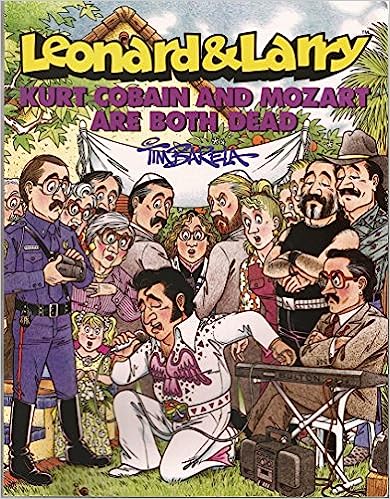
Kurt Cobain & Mozart Are Both Dead – A Leonard & Larry Collection


By Tim Barela (Palliard Press)
ISBN: 978-1-88456-804-6 (Album PB)

We live in an era where Pride events are world-wide and commonplace: where acceptance of LGBTQIA+ citizens is a given… at least in all the civilised countries where dog-whistle politicians, populist “hard men” totalitarian dictators (I’m laughing at a private dirty joke right now) and sundry organised religions are kept in their generally law-abiding places by their hunger for profitable acceptance and desperation to stay tax-exempt, scandal-free, rich and powerful.

There’s still too many places where it’s not so good to be Gay but at least Queer themes and scenes are no longer universally illegal and can be ubiquitously seen in entertainment media of all types and age ranges and even on the streets of most cities. For all the injustices and oppressions, we’ve still come a long, long way and it’s and simply No Big Deal anymore. Let’s affirm that victory and all work harder to keep it that way…

Such was not always the case and, to be honest, the other team (with religions proudly egging them on and backing them up) are fighting hard and dirty to reclaim all the intolerant high ground they’ve lost thus far.

Incredibly, all that change and counteraction has happened within the span of living memory (mine, in this case). For English-language comics, the shift from simple illicit pornography to homosexual inclusion in all drama, comedy, adventure and other genres started as late as the 1970s and matured in the 1980s – despite resistance from most western governments – thanks to the efforts of editors like Robert Triptow and Andy Mangels and cartoonists like Howard Cruse, Vaughn Bod?, Gerard P. Donelan, Roberta Gregory, Touko Valio Laaksonen/“Tom of Finland” and Tim Barela.

A native of Los Angeles, Barela was born in 1954, and became a fundamentalist Christian in High School. He loved motorbikes and had dreams of becoming a cartoonist. He was also a gay kid struggling to come to terms with what was still judged illegal, wilfully mind-altering psychosis and perversion – if not actual genetic deviancy – and an appalling sin by his theological peers and close family…

In 1976, Barela began an untitled comic strip about working in a bike shop for Cycle News. Some characters then reappeared in later efforts Just Puttin (Biker, 1977-1978); Short Strokes (Cycle World, 1977-1979); Hard Tale (Choppers, 1978-1979) plus The Adventures of Rickie Racer, and cooking strip (!) The Puttin Gourmet… America’s Favorite Low-Life Epicurean in Biker Lifestyle and FTW News.

In 1980, the cartoonist unsuccessfully pitched a domestic (or “family”) strip called Ozone to LGBT news periodical The Advocate. Among its proposed quotidian cast were literal and metaphorical straight man Rodger and openly gay Leonard Goldman… who had a “roommate” named Larry Evans

Gay Comix was an irregularly published anthology, edited at that time by Underground star Robert Triptow (Strip AIDs U.S.A.; Class Photo). He advised Barela to ditch the restrictive newspaper strip format in favour of longer complete episodes, and printed the first of these in Gay Comix #5 in 1984. The remodelled new feature was a huge success, included in many successive issues and became the solo star of Gay Comix Special #1 in 1992.

Leonard & Larry also showed up in prestigious benefit comic Strip AIDs U.S.A. before triumphantly relocating to The Advocate in 1988, and – from 1990 – to its rival publication Frontiers. The lads even moved into live drama in 1994: adapted by Theatre Rhinoceros of San Francisco as part of stage show Out of the Inkwell.

In the 1990s their episodic exploits were gathered in a quartet of wonderfully oversized (220 x 280 mm) monochrome albums which gained a modicum of international stardom and glittering prizes. This compendium was the second compiled by Palliard Press between 1993 and 2003, following Domesticity Isn’t Pretty and paving the way for Excerpts from the Ring Cycle in Royal Albert Hall and How Real Men Do It.

Triptow provides sly and witty Foreword ‘Discovering the World of Leonard & Larry’ before a copious, detailed and lengthy Introduction reintroduces the huge byzantinely interwoven cast in tasty bite-sized Gordian knots (sorry, the classical and literary allusions peppering the comics are eerily infectious…).

‘The Cast of Characters – So Far’ re-briefs us on star couple Leonard Goldman and Larry Evans, ‘Larry’s Relatives’, ‘Leonard Relatives’, ‘The In-Laws’ and ‘Friends and Acquaintances’ which prominently features the dream manifestations – or is it the actual ghosts? – of composers Peter Ilyich Tchaikovsky and his bitter frenemy Johannes Brahms…

This family saga is primarily a comedic comedy of manners, played out against social prejudices and grudging popular gradual acceptances, but it also has shocking moments of drama and tension and whole bunches of heartwarming sentiment set in and around West Hollywood.

The extensive and extended Leonard & Larry clan comprise the former’s formidable unaccepting mother Esther – who still ambushes him with blind dates and nice Jewish girls – and the latter’s ex-wife Sharon and their sons Richard and David.

Teenaged Richard recently knocked up and wed equally school-aged Debbie, and promptly made Leonard & Larry unwilling grandparents years (decades even!) before they were ready. The oldsters adore baby Lauren – who is two when this book starts – but will soon relive all that aging trauma when Debbie announces the kid will soon be an older sister…

Maternal grandparents Phil and Barbra Dunbarton are ultra conservative and stridently Christian, and spend a lot of time fretting over Debbie and Lauren’s souls and social standing. They’re particularly concerned over role models and what horrors she’s being exposed to whenever the gay grandpas babysit…

David Evans is as Queer as his dad, and works in Larry’s leather/fetish boutique store on Melrose Avenue. That iconic venue provides plenty of quick, easy laughs and even some edgy moments thanks to local developer/predatory expansionist Lillian Lynch who wants the store at any cost. It’s also the starting point for the many other couples in Leonard & Larry’s eccentric orbit.

Their friends and clients enjoy even larger roles this time around whilst cunningly presenting other perspectives on LA life and the ever-evolving scene. Flamboyant former aerospace engineer Frank Freeman lives with acclaimed concert pianist Bob Mendez and has an obsessive yen for uniforms, which comes in handy when Bob is targeted by a sex-crazed celebrity stalker. It’s no use at all though, when she kidnaps them at gunpoint and demands Bob satisfies her every desire…

Larry’s other employee is Jim Buchanan, whose alarming dating history suddenly picks up when he meets a genuine cowboy at one of L & L’s parties. Merle Oberon is a newly “out” Texan trucker who adds romance and stability to Jim’s lonely life. Sadly, that’s only until Merle is discovered by Hollywood and pressured by agents, manager and co-star to go right back “in” again if he really wants to be a movie megastar…

Jim, by the way, is the original and main focus of the overly-critical dead composers’ puckish visits…

Among the highlights this time are the cast’s participation on the “March on Washington” in April 1993 in support of Gay Rights, Larry’s jury duty and the introduction of a draconian Judge who is also a major purchaser of the Melrose’ stores most imaginative BDSM under-apparel, jury service, and Jim and Merle’s fraught but fun foray to Texas to get the blessing of the cowboy’s fundamentalist parents…

The opposing sides/families in the “lifestyle vs sin” debate meet often and outrageously and there’s even a couple of ceremonies (this is long before same sex weddings were legal) to confirm that the heart wants what the heart wants.

Terrifyingly there’s also a second episode of “queer-bashing” (David being the first in the previous volume) that results in Larry’s death.

Thankfully his trip to heaven is pleasant and his prompt return to the mortal coil proves “God Loves Gays” and provides sublimely satisfying satirical laughs whilst scoring major points… When he revives it’s to meet his new – and so very, very ugly – grandson… and thus life goes on…

As well as featuring a multi-generational cast, Leonard & Larry is a strip that progresses in real time, with characters all aging and developing accordingly. The strips are not and never have been about sex – except in that the subject is a constant generator of hilarious jokes and outrageously embarrassing situations. Deftly skewering hypocrisy and rebuking ignorance with dry wit and great drawing, episodes cover various couples’ home and work lives, constant parties, physical deterioration, social gaffes, rows, family revelations, holidays and even events like earthquakes and fanciful prognostications. Tchaikovsky and Brahms are also regular visitants and serve to keep the proceedings wry, sarcastic and surreal…

Leonard & Larry is a traditionally domestic marital sitcom/soap opera with Lucille Ball & Desi Arnaz – or more aptly, Dick Van Dyke & Mary Tyler Moore – replaced by a hulking bearded “bear” with biker, cowboy and leather fetishes and a stylishly moustachioed, no-nonsense fashion photographer. Taken in total, it’s a love story about growing old together, but not gracefully or with any dignity…

Populated by adorable, appetising fully fleshed out characters, Leonard & Larry is about finding and then being yourself: an irresistible slice of gentle whimsy to nourish the spirit and beguile the jaded.

If you feel like taking a Walk on the Mild Side now this tome is still at large through internet vendors. So why don’t you?
Kurt Cobain & Mozart Are Both Dead © 1993 Palliard Press. All artwork and strips © 1996 Tim Barela. Introduction © 1996 Robert Triptow. All rights reserved.

After decades of waiting, the entire ensemble is available again courtesy of Rattling Good Yarns Press. Sublimely hefty hardback uber-compilation Finally! The Complete Leonard & Larry Collection was released in 2021, reprinting the entire saga – including rare as hens’ teats last book How Real Men Do It (978-1955826051). It’s a little smaller in page dimensions (216 x280mm) and far harder to lift, but it’s Out there if you want it…

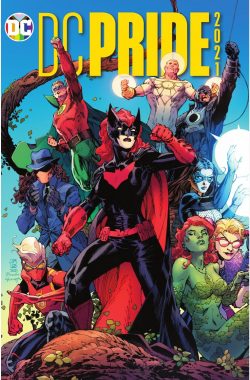
DC Pride 2021


By Vita Ayala, Sina Grace, Sam Johns, Danny Lore, Nicole Maines, Steve Orlando, Andrea Shea, Mariko Tamika, James Tynion IV, Andrew Wheeler, Stephen Byrne, Elena Casagrande, Klaus Janson, Nic Klein, Trung Le Nguyen, Amancay Nahuelpan, Slylar Patridge, Amy Reeder, Ro Stein & Ted Brandt, Lisa Sterle, Rachael Stott, Luciano Vecchio & various (DC Comics)
ISBN: 978-1-88456-804-6 (HB/Digital edition)

Since the 1960s and the birth of the Civil Rights Movement, comics have always been at the forefront of the battle for equality. Maybe more so in terms of racial issues at the start and not so much on gender disparity or sexual complexity, but now most print and screen superheroes work towards greater diversity and inclusion. The most noticeable strides and breakthroughs have come from industry leaders DC and Marvel, but maybe it’s just that more is expected of them…

In 2021, the former celebrated accumulated personal freedoms by collecting one-shot DC Pride #1 and select material from similarly-themed specials New Years Evil #1, Mysteries of Love in Space #1 and Young Monsters in Love #1 (cumulatively spanning 2018-2021), celebrating the infinite variety of interpersonal relationships focusing on LGBTQIA+ characters in the DC catalogue as interpreted by creators equally all-embracing.

The compilation – variously lettered by Aditya Bidikar, Josh Reed, Arian Maher, Becca Carey, Steve Wands, Tom Napolitano and Dave Sharpe – opens with a fulsome Foreword from Out & Proud bestselling author and comics scribe Mark Andreyko before we plunge into assorted antics…

James Tynion IV & Trung Le Nguyen begin the festivities with ‘The Wrong Side of the Looking Glass’ as Batwoman Kate Kane confronts memories of her twin sister/deranged arch nemesis Alice and how her enforced solitude after Beth Kane seemingly died may have affected her own life path, after which John Constantine meets magician Extraño in a pub and starts chatting. Gregorio de la Vega was officially DC’s first openly gay super-character, debuting in weekly megaseries Millennium #2 (January 1988) and latterly as a member of The New Guardians. For ‘Time in a Bottle’ creators Steve Orlando & Stephen Byrne pit him in a tall tale contest co-starring Midnighter and featuring queer Nazi vampire cultist Count Berlin

Vita Ayala, Skylar Patridge and colourist José Villarrubia then set lesbian cop Renee Montoya and her alter ego The Question on the trail of a missing politician in ‘Try the Girl’ whilst Mariko Tamaki, Amy Reeder & Marissa Louise have Harley Quinn & Poison Ivy spectacularly and near-lethally address their unique relationship problems in ‘Another Word for a Truck to Move Your Furniture’.

After being in the closet since the 1930s, original Green Lantern Alan Scott shares the story of his first love with openly out son Todd AKA Obsidian. As related by Sam Johns, Klaus Janson & colourist Dave McCaig, ‘He’s the Light of My Life!’ is a sweet romantic interlude balanced by ‘Clothes Makeup Gift’ – by Danny Lore, Lisa Sterle & Enrica Angiolini – a female wherein future Flash multitasks prepping for a date with a new girlfriend and taking down a Mirror Master knockoff Reflek

The Flash connection continues with reformed Rogue Pied Piper foiling and then mentoring social activist outlaw Drummer Boy in wry caper ‘Be Gay, Do Crime’ by Sina Grace, Ro Stein & Ted Brandt before DCTV superhero Dreamer makes their comic book debut in ‘Date Night’, courtesy of Nicole Maines, Rachael Stott and Angiolini.

Arch villains Monsieur Mallah and The Brain prove to gay cop Maggie Sawyer that love truly comes in all forms in Orlando & Nic Klein’s moving confrontation ‘Visibility’ after which Lobo’s troubled, long-abandoned daughter Crush learns some hard truths from the wrong role model in ‘Crushed’ by Andrea Shea and Amancay Nahuelpan Trish Mulvihill…

Harley Quinn offers her particular seasonal felicitations to Renee Montoya and Gotham City in Ayala, Elena Casagrande & Jordie Bellaire’s rendition of ‘Little Christmas Tree’ prior to a host of gay heroes attending a Pride March and forming a team of their own to battle Eclipso in ‘Love Life’ by Andrew Wheeler, Luciano Vecchio & Rez Lokus.

The combination of Aqualad Jackson Hyde, Aerie, Wink, Apollo & Midnighter, Bunker, Tasmanian Devil, The Ray, Shining Knight, Steel/Natasha Irons, Sylvan Ortega, Tremor, Traci 13, Extraño, Batwoman and Crush proved unbeatable and led to them proudly declaring themselves Justice League Queer

This award-winning collection also comes with a cover gallery including 17 variant covers for DC titles during Pride Month and featuring many other out stars, crafted by David Talaski, Brittney Williams, Kevin Wada, Kris Anka, Nick Robles, Sophie Campbell, Travis Moore & Alejandro Sánchez, Jen Bartel, Paulina Ganucheau, Stephen Byrne and Yoshi Yoshitani and closes with a screen-loaded fact feature.

‘DCTV: The Pride Profiles’ offers brief interviews, and Q-&-As of LGBTQ characters in The CW shows – including Batwoman/Ryan Wilder (played by Javicia Leslie), Dreamer (Nicole Maines), White Canary/Sara Lance (Caity Lotz), John Constantine (Matt Ryan), Thunder (Nafessa Williams) and Negative Man (Matt Bomer).

Forthright, fun, thrilling and fabulous, feel free to find and feast on these comics and stories.
© 2018, 2019, 2021, 2022 DC Comics. All Rights Reserved.
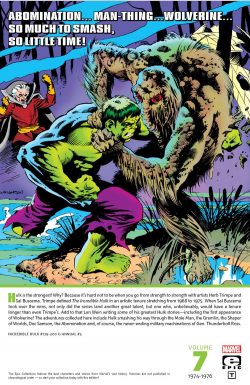
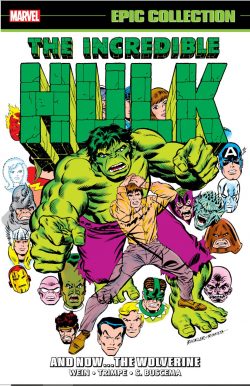
Incredible Hulk Epic Collection volume 7: And Now… The Wolverine (1974-1976)


By Len Wein, Chris Claremont, Herb Trimpe, Sal Buscema & various (MARVEL)
ISBN: 978-1302933609 (TPB/Digital edition)

Bruce Banner was a military scientist caught in a gamma bomb detonation of his own devising. As a result of ongoing mutation, stress and other factors caused him to transform into a giant green monster of unstoppable strength and fury.

After an initially troubled few years, the irradiated idol finally found his size-700 feet and a format that worked, becoming one of young Marvel’s most popular features. After his first solo-title folded, Hulk shambled around the slowly-coalescing Marvel Universe as guest star and/or villain of the moment, until a new home was found for him in “split-book” Tales to Astonish: sharing space with fellow misunderstood misanthrope Namor the Sub-Mariner, who proved an ideal thematic companion from his induction in #70.

As the 1970s tumultuously unfolded, the Jade Juggernaut settled into a comfortable – if excessively, spectacularly destructive – niche. A globe-trotting, monster-mashing plot formula saw Banner hiding and seeking cures for his gamma-curse, alternately aided or hunted by prospective father-in-law US General Thaddeus “Thunderbolt” Ross and his daughter – the afflicted scientist’s unobtainable inamorata – Betty, with a non-stop procession of guest-star heroes and villains providing the battles du jour.

Herb Trimpe made the Hulk his own, displaying a gift for explosive action and unparalleled facility for drawing technology – especially honking great military ordnance and vehicles. Beginning with Roy Thomas, a string of skilful scripters effectively played the Jekyll & Hyde card for maximum angst – and ironic impact – as the monster became a ubiquitous foundational pillar of Marvel’s pantheon. You were nobody in the MU until you fought the Hulk…

This compulsive compendium revisits Incredible Hulk #179-200 and Annual #5 (cover-dates September 1974 to June 1976), heralding big changes. it opens without preamble as the Gamma Goliath returns to Earth after a cosmic collision with Adam Warlock on Counter Earth. Soon, the artistic reins would pass to another illustrator inextricably associated with the Jade Juggernaut, whilst writer Len Wein continued to insert fresh ideas and characters, redefining the man-monster for the modern age…

Incredible Hulk #179 signalled a long-overdue thematic reboot as Wein signed on as writer and editor with strong ideas on how to put some dramatic impact back into the feature. Illustrated by Trimpe & Jack Abel, ‘Re-enter: The Missing Link!’ sees the Hulk lose patience during his return rocket-ship trip: bursting out of his borrowed vessel just as America’s military defences start shooting at it.

Crashing to earth in the mining district of Appalachia, he reverts to befuddled Bruce Banner, and is kindly cared for by the dirt-poor Bradford family. They have a habit of taking in strays and have already welcomed a strange, huge yet gentle being they’ve christened Lincoln.

As time passes Banner recognises his fellow lodger as a former Hulk foe known as the Missing Link. The colossal brute is neither evil nor violent (unless provoked) but is lethally radioactive, and the fugitive physicist faces the dilemma of having to break up a perfect happy family before they all die slowly and horribly.

Link, of course, refuses to cooperate or go quietly…

Next comes the second most momentous story in Hulk history which starts with ‘And the Wind Howls… Wendigo!(#180, October 1974,). Here the Green Giant gallivants across the Canadian Border and encounters a witch attempting to cure her brother of a curse which has transformed him into a rampaging cannibalistic monster. Unfortunately, that cure means Hulk must become a Wendigo in his stead…

It is while the Great Green and Weird White monsters are tearing into each other that mutant megastar Wolverine first appears – in the very last panel – leading into the savage fist, fang and claw fest that follows.

‘And Now… The Wolverine!captivatingly concludes the saga as the Maple nation’s top-secret super-agent is unleashed upon both the Emerald Goliath and the mystical man-eating Wendigo in an action-stuffed romp teeming with triumph, tragedy and lots of slashing and hitting. The rest is history…

Back south of the border, Major Glenn Talbot – after being captured and tortured by (Soviet-era) Russians – has been reunited with his wife and family and is eagerly expecting a meeting with President Gerald Ford. With Trimpe taking sole charge of the art chores, ‘Between Hammer and Anvil! finds the ever-isolated Hulk meeting and forever losing a true friend in compassionate welcoming hobo Crackerjack Jackson.

The action portion of the tale centres on two escaped convicts who despise each other but are forced to endure togetherness because of an alien chain which shackles them together. Whilst it imparts overwhelming physical power and endurance it means they are tied together forever. It’s not nearly enough, however, to stop a fighting-mad, heartbroken Hulk…

Restlessly roaming, the broken behemoth stumbles into a return match with voltaic vampire and life-stealer ZZZAX in ‘Fury at 50,000 Volts!, promptly wrecking a new life Banner surreptitiously starts carving out for himself in Chicago…

‘Shadow on the Land!finds the wandering man-mountain battling shadily insubstantial extraterrestrial invader Warlord Kaa – a revival from the company’s pre-superhero monsters & aliens anthology era – who foolishly takes possession of the Hulk’s shadow and thinks himself untouchable and indestructible…

Their close encounter leads to Banner’s capture by Hulkbuster Base commander Colonel Armbruster just in time for the US President’s visit and a shocking ‘Deathknell!as the truth about Banner’s romantic rival (and Betty’s new husband) Glenn Talbot is exposed when the so-trustworthy Major attempts to assassinate the Commander-in-Chief.

During the attendant death and chaos, Hulk busts out and General Ross regains his shattered credibility by recapturing the man-beast. Sadly, Soviet infiltration of the base is rife and a hidden traitor dons experimental super-armour to continue the deadly attacks in ‘The Day of the Devastator!This time, when the Jade Juggernaut smashes their common foe, the American army are suitably grateful…

Sometime later, S.H.I.E.L.D. intelligence gatherers discover the real Talbot is still a prisoner in Siberia and that Hulkbuster Base’s current problems have all been caused by a vindictive Soviet mutant genius they’ve all battled before…

With Joe Staton joining the team as inker, ‘There’s a Gremlin in the Works!(IH #187) sees the return of the sinister spawn of the man-monster’s very first foe The Gargoyle. The son is a vicious and ambitious juvenile mastermind with vast resources and secret plans far beyond merely serving the Soviet state, and is holding Talbot at his polar fortress Bitterfrost

He is fully prepared and eagerly anticipating Ross and S.H.I.E.L.D. agent Clay Quartermain’s clandestine rescue bid, but all the cyborg super-soldiers and giant mutant monster dogs in the world are not enough when stowaway Banner joins the mission subsequently gets scared and goes full green…

The freakish fiend’s personality-altering technology is exposed in ‘Mind Over Mayhem!, but as the stalwart heroes desperately flee the base with Talbot’s comatose body, Hulk seemingly dies in the citadel’s explosive death-throes. Nothing is further from the truth and #189 sees the monster battle The Mole Man to secure a miracle-remedy for a sightless little Russian girl in ‘None Are So Blind…!

Veteran Hulk illustrator Marie Severin inks Trimpe on ‘The Man Who Came Down on a Rainbow!as alien philanthropist Glorian whisks the solitary colossus to a veritable promised land in the stars, only to have the idyll shattered by invading Toad Men hungry for the secret power fuelling the personalised paradise…

Despite murdering Glorian, ‘The Triumph of the Toad!(Trimpe & Staton) is short-lived and catastrophically self-destructive when the enraged Hulk and cosmically puissant Shaper of Worlds extract a measure of justice for their fallen friend…

Unwillingly banished back to Earth, the Green Giant lands in Scotland and gets between feuding hotheads with violently opposing attitudes to ‘The Lurker beneath Loch Fear!, after which Banner makes his way home way to America where Ross and Quartermain have recruited a famous psychologist to fix the catatonic Talbot…

‘The Doctor’s Name is… Samson!finds formerly gamma-powered psychiatrist Leonard Samson falling victim to another scientific fustercluck. Accidentally resurrected as a lime-tressed superstrong superhero, he is still unable to cure his current patient. For that he needs Banner, but when the wish comes true, the savant just isn’t tough enough to hold onto him…

After almost a decade pencilling the strip, Trimpe moved on to other things and Incredible Hulk #194 saw Sal Buscema take over in ‘The Day of the Locust!(with Wein & Staton still doing what they did best).

Lost in the American heartland, the Hulk stumbles upon young lovers pursued by an overly possessive dad determined to end the affair. However, this angry, overreaching tiger-parent is a former X-Men adversary who can enlarge insects to immense size, so the kids are more than grateful for the assistance of a Jolly Green Cupid. With Samson and the US Army one step behind, the meandering man-monster then befriends a small boy running away from home in ‘Warfare in Wonderland!

Eager for any advantage, Ross tricks gamma-powered maniac The Abomination into attacking the Hulk but is unprepared for the green gladiators teaming up rather than tussling again in #196’s ‘The Abomination Proclamation!

Typically, the villain’s innate viciousness soon alienates his temporary ally and, after triumphing in another spectacular battle, Hulk blasts off on a runaway rocket and is apparently atomised when it blows up…

To Be Continued?

You bet and right away as #197 (by Wein, Buscema & Joe Staton) reveals that the detonation merely left Hulk unconscious in the Florida Everglades, where the invidious Collector has made his latest lair and gleefully gathers up a trio of terrors. The phenomena fanatic is on a monster kick and – having scooped up Banner and a mute young man who is in actuality undead transmorph The Glob – feels he secured the perfect set as ‘…And Man-Thing Makes Three!.

However, the immortal maniac has grossly underestimated the deeply-buried humanity of his living trinkets and inevitably faces a mass-escape and loss of all his living exhibits after sparking ‘The Shangri-La Syndrome!

Behind a Jack Kirby cover, Hulk Annual #5 (November 1976) was the first all-new King-Size compendium since 1968 and featured a massive monster-mash, reviving a half dozen iconic threats and menaces from the company’s pre-superhero phase. Written by Chris Claremont, with art by Sal B & Jack Abel, ‘And Six Shall Crush the Hulk!offers little in the way of plot but mountains of monumental action as a procession of resurrected relics and reprobates attack one after another. It begins with ‘Where There’s Smoke, There’s Diablo!, ‘And Taboo Shall Triumph!before ‘It Is Groot, the Monster from Planet X!!who weighs in. Outnumbered but undaunted, Hulk fights on in ‘For I am Goom!!whilst ‘Beware the Blip!piles on the pressure until an evil mastermind in the shadows is revealed as grudge-bearing Defenders foe Xemnu in ‘A Titan Shall Slay Him!Even exhausted, the Hulk is too much for the spiteful schemer, whom I’m sure you recall was called “The Living Hulk” on his 1960 debut in Journey Into Mystery #62…

Back in monthly mag and building up to a spectacular anniversary, Incredible Hulk #199 finds ambivalent frenemies Leonard DocSamson and General Ross employing all of America’s most advanced assets in ‘…And SHIELD Shall Follow!(Wein, Sal B & Staton) to capture the critically necessary Green Gargantuan, but in the end it’s the headshrinker’s sheer guts and determination which win the day, allowing a big anniversary issue #200 resolution as Hulk is reduced to infinitesimal size and injected into amnesiac Glenn Talbots battered brain. There he battles materialised memories and a cruel sentient tumour as ‘An Intruder in the Mind!

The struggle to restore the mind of Banner’s rival for Betty Ross-Talbots undying affections is not without complications, however, and at the moment of his greatest triumph and sacrifice, Hulk suffers a major setback and begins uncontrollably shrinking beyond the ability of Samson and his team to reach or rescue him…

Now it’s To Be Hulk-inued…

This catastrophically cathartic tome is rounded out with the cover to Giant-Size Hulk #1, the covers and some interior pages from Hulk-themed Marvel Treasury Edition #5, crafted by John Romita, Marie Severin and Trimpe, as well as the last’s double page pin-up of Hulk foes from that tabloid-sized graphic treat, as well as house ads, #1 and a gallery of original art pages by Trimpe and Buscema. Also included is Sal’s 1960s try-out art page, doubling as a FOOM caption competition, and the corresponding winning entry from Russ Nicholson. John Romita’s first design sketches for Wolverine precede more house ads as well as covers and frontispieces by John Byrne & Abel and Trimpe from later Hulk/Wolverine reprint collections and closes with unused covers by Ed Hannigan and Trimpe.

The Incredible Hulk is one of the most well-known comic characters on Earth, and these stories, as much as the movies, cartoons, TV shows, games, toys and action figures are the reason why. For an uncomplicated, earnestly vicarious experience of Might actually being Right, you can’t do better, so why not Go Green – even if it’s only in your own delirious head?
© 2022 MARVEL.

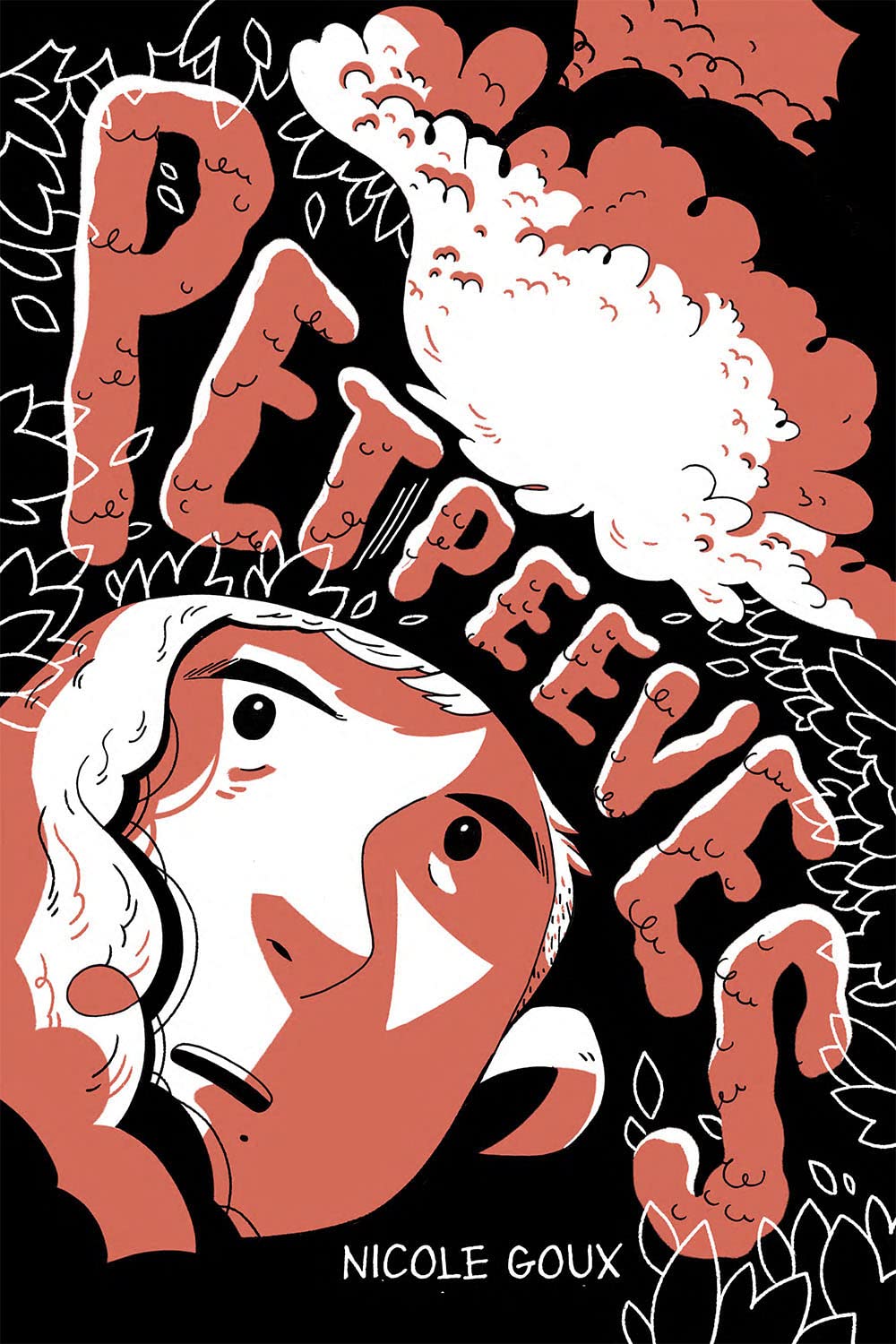
Pet Peeves


By Nicole Goux (Avery Hill Publishing)
ISBN: 978-1-910395-72-1 (PB)

Since college, Bobbie has just coasted. Saddled with massive debt, she lives with her lifelong friend and co Ohio U alumnus Clara. She pays her – far less than fair – share of the rent by tending bar in crappy booze-&-music dive The Pig’s Knuckles: beguiled by a lack of professional impetus, and the (constantly never-materialising) promise of a performance slot, someday. There’s late starts and free drinks to offset being harassed by the frat-boy clientele. At least there’s no pressure and plenty of time to work on her songs and it keeps her away from Clara’s ghastly cat Poptart and obnoxious new girlfriend…

Just getting by is bad enough, with manager Richard always stalling her and customers being jerks, but it all gets too much when her ex Carlos comes in with his new trophy trollop and deliberately tries to spoil Bobbie’s day. In response all she can do is drink on the job.

Too smashed to drive – or even hold her keys – Bobbie staggers home and is adopted by the ugliest dog she has ever seen…

She wakes up at home after the strangest dreams, with the mutt happily ensconced and already making trouble.

She calls him Barkley, and he’s an instant wedge between her and Clara, creating utter chaos and revolting messes, tormenting Poptart and somehow taking up so much time that Bobbie even stops writing music. At least he cares about her and always helps alleviate the drudgery and misery of her life…

What Bobbie doesn’t see is how that life is spiralling: slowly changing into something even more petty and desperate…

Eschewing her regular digital process, Eisner-award nominee Nicole Goux (for illustrating DC’s Shadow of the Batgirl) goes old-school and back to pen &-ink basics in Pet Peeves. Unleashing her own narrative notions in a boldly experimental, creepily compelling, itchily abrasive yet understated urban horror story trading marauding monsters for animosity, angst, disappointment and despair, the author presents here a youthful cast who aren’t shallow morons and slasher-fodder in a beastly fable where the protagonist is the victim and the secondary characters slowly turn on each other in a most engaging and appetising way because of an unwelcome new addition to the group…

Deploying imaginative page layouts reminiscent of Ditko’s Mr A and Avenging World, Goux (Forest Hills Bootleg Society, Everyone is Tulip, F*ck Off Squad at Silver Sprocket Bicycle Club) delivers a charming edgy fable about surrendering your dreams that conceals a wicked and chilling shock ending to die for…
© Nicole Goux, 2023. All rights reserved.

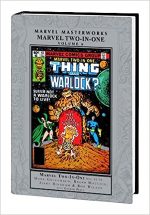
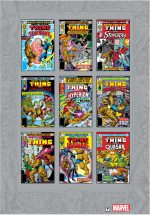
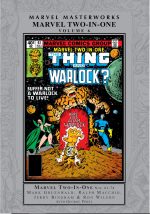
Marvel Two-In-One Masterworks volume 6


By Mark Gruenwald, Ralph Macchio, Jerry Bingham, Ron Wilson, George Pérez, Michael Netzer, Frank Springer, Gene Day, Pablo Marcos, Chic Stone & various (MARVEL)
ISBN: 978-1-3029-3293-0 (HB/Digital edition)

Above all else, Marvel has always been about team-ups. The concept of team-up books – an established star pairing, or battling (often both) with less well-selling company characters – was not new when Marvel awarded their most popular hero the same deal DC had with Batman in The Brave and the Bold. Although confident in their new title, they wisely left options open by allocating an occasional substitute lead in The Human Torch.

In those distant days, editors were acutely conscious of potential over-exposure – and since superheroes were actually in a decline, they may well have been right.

Nevertheless, after the runaway success of Spider-Mans guest vehicle Marvel Team-Up, the House of Ideas carried on the trend with a series starring bashful, blue-eyed Ben Grimm – the Fantastic Fours most popular star. They began with a brace of test runs in Marvel Feature #11-12 before awarding him his own team-up title, with this sixth stirring selection gathering the contents of Marvel Two-In-One #61-74, covering March 1980-April 1981.

Preceded by a comprehensive and informative reverie in Ralph Macchio’s Introduction, the action resumes with the title continuing to rectify its greatest flaw. The innate problem with team-up tales was always a lack of continuity – something Marvel always prided itself upon. Writer/editor Marv Wolfman had sought to address this during his tenure through the simple expedient of having stories link-up through evolving, overarching plots which took Ben from place to place and from guest to guest. The trick was perfected in the vast-scaled, supremely convoluted saga known as The Project Pegasus Saga – as featured in the previous volume.

A stellar epic began in #61 with ‘The Coming of Her!’ (by Mark Gruenwald, Jerry Bingham & Gene Day) as time-travelling space god/31st century Guardian of the Galaxy Starhawk became embroiled in the birth of a female counterpart to artificial superman Adam Warlock.

The distaff genetic paragon awoke fully empowered and instantly began searching for her predecessor, dragging Ben Grimm’s girlfriend Alicia Masters and mind goddess Moondragon across the solar system, arriving where issue #62 observed ‘The Taking of Counter-Earth!’

Hot on their heels, The Thing and Starhawk catch Her just as the women encounter a severely wounded High Evolutionary, and discover the world so carefully built and casually discarded by that self-created science god has been stolen…

United in mystery, the strange grouping follow the planet’s trail out of the galaxy and uncover the incredible perpetrators but Her’s desperate quest to secure her predestined, purpose-grown mate ends in tragedy when she learns ‘Suffer Not a Warlock to Live!’

Clearly on a roll and dedicated to exploiting Marvel Two-in-One’s unofficial role as a clean-up vehicle for settling unresolved plotlines from cancelled series, Gruenwald & Macchio then dived into ‘The Serpent Crown Affair” in #64.

‘From the Depths’ (illustrated by Pérez & Day) sees sub-sea superhero Stingray approach FF boffin Reed Richards in search of a cure for humans who had been mutated into water-breathers by Sub-Mariner foe Doctor Hydro: a plotline begun in 1973 and left unresolved since the demise of the Atlantean prince’s own title.

Richards’ enquiries soon found the transformation had been caused by The Inhumans’ Terrigen Mist, but when he had Ben ferry the mermen’s leader Dr. Croft and Stingray to a meeting, the trip was cut short by a crisis on an off-shore oil rig, thanks to an ambush by a coalition of snake-themed villains.

The ‘Serpents from the Sea’ (art by Bingham & Day) were attempting to salvage dread mystic artefact the Serpent Crown, and would brook no interference, but luckily the Inhumans had sent out their seagoing stalwart Triton to meet the Thing…

Meanwhile, alternate-Earth “Femizon” Thundra had been seeking the men responsible for tricking her into attacking Project Pegasus but had fallen under the spell of sinister superman Hyperion – a pawn of corrupt oil conglomerate Roxxon. At that time, their CEO Hugh Jones possessed – or had been possessed by – the heinous helm…

With the situation escalating, Ben had no choice but to call in an expert and before long The Scarlet Witch joins the battle: her previous experience with the relic enabling the heroes to thwart the multi-dimensional threat of ‘A Congress of Crowns!’ (Pérez & Day) and a devastating incursion by diabolical primordial serpent god Set

With Armageddon averted, Ben diverted to Pegasus to drop off the now-neutered crown in #67 and found old ally Bill Foster had been diagnosed with terminal radiation sickness due to his battle with atomic foundling Nuklo. Thundra, seduced by promises of being returned to her own reality, wises up in time to abscond from Roxxon in ‘Passport to Oblivion!’ (Gruenwald, Macchio, Ron Wilson, Day & friends), but hasn’t calculated on being hunted by Hyperion. Although outmatched, her frantic struggle does attract the chivalrous attentions of Ben and superhero-neophyte Quasar

Marvel T-I-O #68 shifted gears with The Thing meeting former X-Man The Angel as they stumble into – and smash out of – a mechanise murder-world in ‘Discos and Dungeons!’ (art by Wilson & Day), after which ‘Homecoming!’ finds Ben contending with the time-lost Guardians of the Galaxy whilst striving to prevent the end of everything. The proximate cause is millennial man Vance Astro who risks all of reality to stop his younger self ever going into space…

Issue #70 offered a mystery guest team-up for ‘A Moving Experience’ (Gruenwald, Macchio, Mike Nasser/Netzer & Day) as Ben is again mercilessly pranked by old frenemies The Yancy Street Gang, and ambushed by genuine old foes when he helps Alicia move into new digs. Then, the so-long frustrated Hydromen finally get ‘The Cure!’ (Wilson & Day) after Ben and Reed travel to the Inhuman city of Attilan.

Sadly, a cure for the effects of Terrigen is also a perfect anti-Inhuman weapon, and when the process is stolen by a trio of freaks, the trail leads to a brutal clash with a deadly Inhuman renegade wielding ‘The Might of Maelstrom’ (Gruenwald, Macchio, Wilson & Chic Stone). The pariah is intent on eradicating every other member of his hidden race and just won’t stop until he’s done…

In Marvel Two-In-One #73, Macchio, Wilson & Stone tie up loose ends from the Pegasus epic as Ben and Quasar pursue Roxxon across dimensions to another Earth where the rapacious plunderers have enslaved a primitive population and begun sending their pillaged oil back here via a ‘Pipeline Through Infinity’ (#74), whilst Gruenwald, Frank Springer & Stone celebrate the festive season with ‘A Christmas Peril!’ as Ben and the Puppet Master are drawn into the Yuletide celebrations of brain-damaged, childlike, immensely powerful Modred the Mystic

Fiercely tied to the minutia of Marvel continuity, these stories from Marvel’s Middle Period are certainly of variable quality, but whereas some might feel rushed and ill-considered they are balanced by some superb adventure romps still as captivating today as they ever were.

Bolstered by house ads and original art and covers by Bingham, Day & Pérez; with biographies for the legion of creators contained herein. Most fans of Costumed Dramas will find little to complain about and there’s lots of fun to be found for young and old readers.
© 2021 MARVEL.

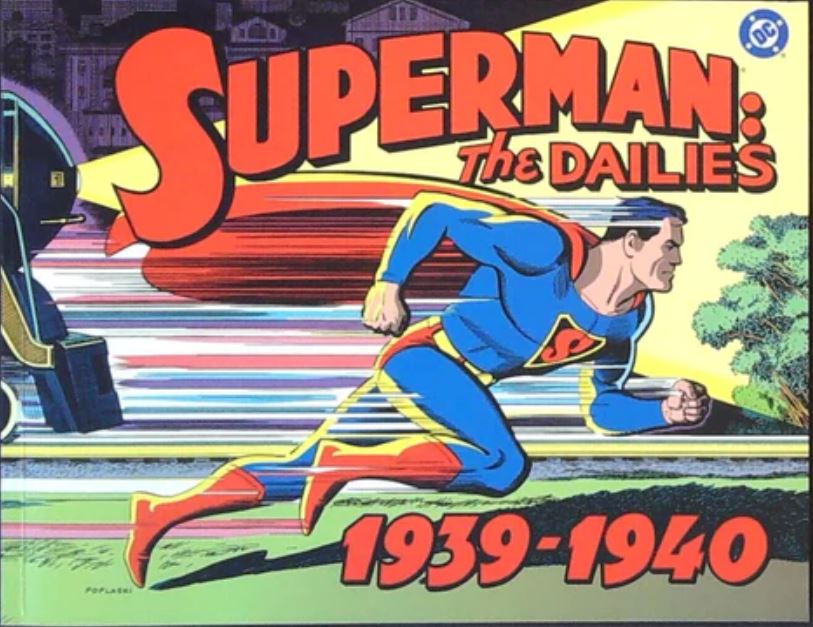
Superman: The Dailies 1939-1940


By Jerry Siegel & Joe Shuster with Paul Cassidy (DC/Kitchen Sink Press)
ISBN: 978-1-56389-460-2 (TPB)

It’s indisputable that the American comic book industry – if it existed at all – would have been an utterly unrecognisable thing without Superman. Jerry Siegel & Joe Shuster’s unprecedented invention was rapturously adopted by a desperate and joy-starved generation, quite literally giving birth to a genre if not an actual art form.

Within three years of his 1938 debut, the intoxicating blend of breakneck, breathtaking action and wish-fulfilment that epitomised the early Man of Tomorrow spawned an impossible army of imitators. The original’s antics and variations grew to encompass cops-and-robbers crime-busting, socially reforming dramas, science fiction fantasies, and whimsical comedy. Once the war in Europe and the East ensnared America, patriotic relevance for a host of gods, heroes and monsters exploded: all dedicated to exuberant, eye-popping excess and vigorous dashing derring-do.

In comic book terms Superman was master of the world. Moreover, whilst transforming the shape of the fledgling funnybook industry, the Metropolis Marvel relentlessly expanded into all areas of the entertainment media. Although we all think of the Cleveland boys’ iconic invention as the epitome and acme of comicbook creation, the truth is that very soon after his debut in Action Comics #1, the Man of Steel became a fictional multimedia monolith in the same league as Popeye, Tarzan, Sherlock Holmes and Mickey Mouse.

We parochial and possessive comics fans too often regard our purest, most powerful icons in purely graphic narrative terms, but the likes of Batman, Spider-Man, The Avengers and their hyperkinetic kind long ago outgrew four-colour origins and are now fully mythologized media creatures instantly recognisable globally across all platforms and age ranges…

Far more people have seen or heard an actor as Superman than have ever read his comic books. The globally syndicated newspaper strips alone reached untold millions, and by the time his 20th anniversary rolled around, Superman was a thrice-weekly radio serial regular and starred in an astounding animated cartoon series, two films, on TV and a prose novel by George Lowther.

He was a perennial sure-fire success for toy, game, puzzle and apparel manufacturers and had just ended that first smash live-action television presence. In his future were three more shows (Superboy, Lois & Clark and Smallville), a stage musical, a string of blockbuster movie franchises and an almost seamless succession of games, bubble gum cards and TV cartoons beginning with The New Adventures of Superman in 1966 and continuing ever since. Even his super-dog Krypto got in on the small-screen act…

Although pretty much a spent force these days, for the majority of the last century the newspaper comic strip was the Holy Grail that all American cartoonists and graphic narrative storytellers hungered for. Syndicated across the country – and often the planet – it was seen by millions, if not billions, of readers and generally accepted as a more mature and sophisticated form of literature than comic books. It also paid better.

And rightly so: some of the most enduring and entertaining characters and concepts of all time were created to lure readers from one particular paper to another and many of them grew to be part of a global culture.

Mutt and Jeff, Flash Gordon, Dick Tracy, Buck Rogers, Charlie Brown and so many more escaped their humble tawdry newsprint origins to become meta-real: existing in the minds of earthlings from Albuquerque to Zanzibar. Most of them still do…

However it was considered something of a risky double-edged sword when a comicbook character became so popular that it swam against the tide (after all, weren’t the funny-books invented just to reprint the strips in cheap accessible form?) to become a genuinely mass-entertainment syndicated serial strip.

Superman was the first comic book star to make that leap – six months after exploding out of Action Comics – with only a few ever successfully following. Wonder Woman, Batman (eventually) and teen icon Archie Andrews made the jump in the 1940s with only a handful like Spider-Man, Howard the Duck and Conan the Barbarian doing so since.

The Superman daily newspaper strip launched on 16th January 1939, and was eventually supplemented by a full-colour Sunday page from November 5th of that so momentous year. Originally crafted by Siegel & Shuster – whose primary focus switched immediately from comic books to the more prestigious and lucrative tabloid iteration – and their hand-picked studio (including Paul Cassidy, Leo Nowak, Dennis Neville, John Sikela, Ed Dobrotka, Paul J. Lauretta & Wayne Boring), the mammoth grind soon required the additional talents of Jack Burnley and even co-writers like Whitney Ellsworth, Jack Schiff & Alvin Schwartz.

This superb collection from 1999 – long overdue for re-release, especially in this anniversary year! – opens with an Introduction by James Vance, declaring ‘A Job for Superman’ before effusively recapping the overnight sensation conception, reviewing his antecedents and regaling us with the acts of his creators (and assistants like Cassidy).

Then we see the first 10 tales (nine and a half actually) of the primal powerhouse in all-action monochrome. Wisely and boldly, the first serial – ‘Superman Comes to Earth’ (16th – 28th January 1939) only depicts the Man of Tomorrow on the last of the 12 daily episodes. Instead, Siegel & Shuster took readers to doomed planet Krypton for the first time and revealed how desperate scientist Jor-L and wife Lora were thwarted in their attempts to save the population from their own indifference and ignorance and compelled in desperation to save their newborn son by sending him away in a prototype test rocket aimed at planet Earth. Almost as an afterthought, the last strip reveals how the infant was found, adopted, raised and now operates in secret as vigilante do-gooder Superman…

Whether in pamphlet or local periodical, these tales of the modern Hercules exploded into the consciousness of the world. No one had ever seen a fictionalised hero throw all the rules of physics away and burst into unstoppable, improbable action on every page and panel. In fact, editors and publishers’ greatest concern was that the implausible antics would turn off audiences. Clearly, they could not have been more wrong…

That’s only one reason why the indomitable champion confronted problems and issues every reader was familiar with. Second adventure ‘War on Crime’ (30th January – 18th February) combined social activism and civic corruption as the mighty Man of Tomorrow begins his crusading career by rescuing ten men trapped in a vault. In fact he only saves eight and realises that he needs to be in a place where information can reach him instantly. Thus Clark Kent applies for a job at The Daily Star and stumbles into a deadly case of graft, gangsterism and high-level corruption ferreted out by dynamic reporter Lois Lane. After Superman cleans up the racketeers, the shy unassuming new guy confirms his position by scooping Lois to the first interview with the mysterious costumed vigilante…

A boxing drama follows as the Man of Steel saves a derelict from suicide and uncovers a tragic case of match-fixing and shattered dreams. ‘The Comeback of Larry Trent’ (20th February – 18th March) begins with Superman masquerading as the supposedly finished former heavyweight champion in a whirlwind tour of spectacular bouts, whilst training and rehabilitating the stumblebum to reclaim his title personally in the big championship match. Of course, the Action Ace is on hand when Trent’s crooked manager tries to dope him a second time…

Lois begins her own rise to stardom when she’s relegated to the lonely hearts and lovelorn section, turning up a sinister case of a blackmailed husband entrapped by ‘Jewel Smugglers’ (20th March – April 1st) victimising refugees fleeing war in Europe. Naturally, Superman is lurking in the shadows, ready to handle any necessary roughness required…

A string of fatalities on a construction site takes the hero into the sordid depths of capitalism in ‘Skyscraper of Death’ (3rd – 29th April) as he tackles a saboteur and exposes a ruthless businessman happy to kill innocent workers to destroy a rival, after which ‘The Most Deadly Weapon’ (1st May – 10th June) reflects the tone of the times in a chilling tale of espionage and realpolitik. When Kent interviews Professor Runyan about his deadly new poison gas, the chemist is kidnapped and murdered by spies from a foreign nation. In hot pursuit, Kent discovers the plot was instigated by an arms dealer profiteering from an ongoing civil war and calls in his other – true – self to recover (and ultimately destroy) the formula, punish the perpetrators and even spectacularly force both sides to make peace…

Early episodes never stinted on action and increasingly ingenious ways of displaying Superman’s miraculous abilities. The plan was to simply establish the set-up of an Alien Wonder among us, masquerading as an extremely puny human at a “great metropolitan newspaper” when not crushing evil as his flamboyant alter-ego. These stories are all about constant action and escalating spectacle, displaying the incredible power of a bombastic, heroic man of the people…

Heralding longer stories and more evocative plots, Siegel returned to social crusading for ‘Superman and the Runaway’ (12th June – 22nd July), as the Man of Steel recues orphan Frankie Dennis from imminent destruction and discovers a tale of shocking corruption and abuse at the State Orphanage the boy would rather die than return to. Realising this is no job for Superman, Kent enlists Lois and Frankie to expose monstrous, murderous Superintendent Lyman, but severely underestimates the grafter’s ruthlessness…

Romance taints the air next as ‘Royal Deathplot’ (24th July – 11th November) finds Superman foiling a plan to literally torpedo the diplomatic mission of visiting dignitaries King Boru and Princess Tania of Rangoria. His epic and breathtaking sea battle against a submarine is only the tip of an iceberg of trouble as Superman – and even briefly Kent – find favour in the eyes of the princess, even as elements in the royals’ own embassage continually seek their destruction. Far from impressed, but hot on a scoop, Lois sticks close and plays fifth wheel and rival to super-smitten Tania until the Man of Steel can foil the plot, crush the sinister mad scientist behind it and stabilise the political situation at home and abroad…

Historians might be interested to know that during this yarn, the use of art assistant Cassidy became markedly more noticeable. Other than handling character faces himself, Shuster was happy for the other artists to express themselves in how Siegel’s scripts were interpreted…

Major events were in store both for the hero and the whole of humanity and ‘Underworld Politics’ (13th November – 16th December) signalled the closing of a chapter. Simple cathartic super-deeds would soon take a back seat to grander designs, but only after the tale of how Superman – and especially Lois – destroyed the seemingly impregnable party machine of crooked political boss Mike Hennessey. That well-connected unworthy thought he could terrorise and even murder a crusading new District Attorney, but he was so very wrong…

After his fall Lois thought she had the front page sewed up, but didn’t figure on World War being declared in Europe…

This initial volume of pioneering paper perils begins a saga of sabotage and ‘Unnatural Disasters’ (18th December 1939 – January 6th 1940) as a mysterious gang blow up a dam and then poison the reservoir. Moments too late in each instance, all Superman can do is save what lives he can and determine to avenge the dead…

To Be Continued…

Offering timeless wonders and mesmerising excitement for lovers of action and fantasy, the early Superman is beyond compare. If you love the era or just crave simpler stories from less angst-wracked times, these yarns are perfect comics reading, and this a book you simply must see.
Superman: The Dailies volume 1 copublished by DC Comics and Kitchen Sink Press. Covers, introduction and all related names, characters and elements are ™ & © DC Comics 1998, 1999. All Rights Reserved.
Spinning


By Tillie Walden (SelfMadeHero)
ISBN: 978-1-62672-772-4 (HB/Digital edition)

Transitions are important. In fact, they are literally life changing. Here’s another one captured and shared by the amazing Tillie Walden…

We usually attribute wisdom and maturity in the creative arts to having lived a bit of life and getting some emotional grit in our wheels and sand in our faces, but that’s not the case for Texas-raised Tillie, whose incredible canon includes I Love this Part, On a Sunbeam, Are You Listening? and Clementine, not to mention award-winning debut graphic novel The End of Summer and the revelatory biography we’re discussing here today.

If you’re a completist, you’ll also want her picture book My Parents Won’t Stop Talking (created with Emma Hunsinger) and even her Cosmic Slumber Tarot set.

You don’t need a mask to have an origin story, and it’s a rare person – or perhaps indicative of self-deception or mental illness – who never ponders who they are or how they got to right here, right now. It’s a process that’s infinitely rewarding for creators and their readers. Spinning is a perfect example of an extremely talented person taking a basic human drive, exploiting it and turning it into magic. It’s a very personal origin story, which may have great relevance and meaning for many seeing it – and it’s got costumes too…

As previously stated, Walden has created a bunch of books and they mostly have little bios that say that she’s from Austin, Texas, as if that’s some kind of warning or character reference. Later ones say that she lives in Vermont with her wife and two cats and teaches at the Center for Cartoon Studies. So how did that happen?

Intimate and revelatory, some of the story is here: concentrating on her middle school years, back when she was a competitive ice skater.

There’s something worrisome and uncomfortable about the kind of family that allows – or worse, pushes – a child into a punishing regime of intense training in pursuit of sporting (or any other kind of excellence with a monetary benefit attached). I’ve heard all the arguments for and frankly, I don’t care. I was in a choir from age 5 to the end of secondary school, and I know just when it stopped being fun and became a burden…

Tillie back then was a kid who had to get up hours before school, travelling mostly on her own to isolated rinks and push relentlessly just to be one of the few seeking to excel at figure and synchronised skating. There were countless hours of sleep deficit, cruelly screaming or smotheringly solicitous coaches, equally exhausted and brittle girls just as reluctant to be there and always perishing cold. And that’s only how each day started.

… And then the family abruptly upped sticks from New Jersey to resettle in Austin, Texas…

The next few years are revisited with punishing candour and beguiling charm, employing the conceit of specific moves in a skating program as indicators/chapter headings. We open with ‘Waltz Jump’, covering her East Coast life and cross-country transition to a whole new world as soon as 5th grade classes ended…

‘Scratch Spin’ sees scorching August heat as the new kid meets teammates and/or rivals Michaela, Jennifer, Rosalind, Dasha and Little Dasha: as Tillie quickly learns that nothing she knew before applies here. At least coach Caitlin seems supportive and not another screaming harpy…

To supplement the misery, boost her grades and ostensibly offset bullying, Tillie is enrolled in a private girls’ school and sent for private cello lessons, proving her parents knew nothing about girls or school. Even skating has changed. Now she must attend two different rinks at separate times of day, constantly test to qualify and of course, endure more new friends… and otherwise.

Although Carly, Trinity, Sarah and the rest are all nice enough, it somehow only reinforces Tillie’s feelings of isolation and discomfort…

‘Flip Jump’ features first crushes, new bestie Lindsay, scary moments with adored brother John and a creepy old guy, with Miss Walden triumphantly rejoining the traveling competition circuit, and ‘Axel’ celebrates her turning 12 and become bogged down in all the complex social interactions she just doesn’t understand but which increasingly obsess her class and teammates. There’s also a bitterly regretted missed chance to confront the bully who made her life hell for a year…

Increasingly aware that skating is now a chore not a choice, Tillie begins to ‘Spiral’ after a near fatal accident she refuses to tell anyone about, but which has lasting repercussions. There’s a life changing moment when she realises how much she enjoys drawing and how good she is at it, and a far happier discovery: classmate Rae likes her every bit as much as Tillie likes her – and in just the same way.

‘Spread Eagle’ sees that critical first love brutally end when her girlfriend’s parents find out and take preventative action: something Tillie would have far preferred to the understanding talk her own mother forces upon her, and which leads to the skater coming out to anyone who cares to listen…

As art grows to consume her, skating declines as an interest but paradoxically boosts her ability to win. Nevertheless, a crisis inevitably approaches and ‘Counter’ focuses on her at age 16, simultaneously seeking to bolster her skate ranking and planning on leaving Texas as soon as possible. SATs loomed large on everyone’s horizon and Tillie has to endure extra tutoring despite having no intention of going to college. The arrangement almost makes her another crime statistic, but the real result of her narrow escape is realisation that her entire life is all about being tested and narrowly passing or surviving…

Floating days go by in a non-involved haze, before she eventually wakes up and takes charge. ‘Lutz’ addresses all her biggest challenges coming at once, yet another near-death experience, a life-altering unburdening and a decision at last made, leading into the liberating whirl of ‘Twizzle’ to free herself from twelve years a slave to other people’s wishes and the beginning of her own life…

That’s further addressed in the biographical Author’s Note that closes this magnificent and moving memoir. I said earlier that this was a part of Tillie Walden’s story: for more – as much as she’s willing to share – you’ll need to read her other books, both the biographical and fully fictional ones. Get them, read them, tell a friend.
© 2017 Tillie Walden. All rights reserved.