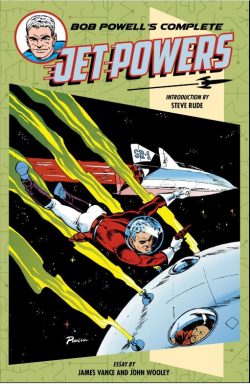
Bob Powell’s Complete Jet Powers


By Bob Powell with James Vance, John Wooley, Steve Rude & various (Kitchen Sink Books/Dark Horse)
ISBN: 978-1-61655-764-5 (HB) eISBN:978-1-63008-646-6

Like every art form, comics can be readily divided into masterpieces and populist pap, but that damning assessment necessarily comes with a bunch of exclusions and codicils.

Periodical publications, like pop songs, movies and the entirety of television’s output (barring schools programming and I’m not sure about them, anymore), are designed to sell stuff to masses of consumers.

As such, the product must reflect the target and society at a specific moment in time and perforce quickly adapt and change with every variation in taste or fashion. Although very much an artefact of its time, I consider the Buzzcocks single “Ever Fallen in Love (With Someone You Shouldn’t’ve)” to be the perfect pop song, but I’m not going to waste time trying to convince anybody of the fact.

For me, and perhaps only for me, it just is.

The situation is most especially true of comics – especially those created before the medium gained any kind of popular credibility: primarily deemed by their creators and publishers as a means of parting youngsters from cash. The fact that so many have been found to possess redeeming literary and artistic merit or social worth is simply post hoc rationalisation.

Creators striving for better, doing the very best they could because of their inner artistic drives, were being rewarded with just as meagre a financial reward as the shmoes just phoning it in for the paycheck…

That sad state of affairs in periodical publication wasn’t helped by the fact that most editors thought they knew what the readership wanted – safe, prurient gratification – and usually they were right.

Even so, from such swamps gems occasionally emerged…

A certain kind of two-fisted, brawny science fiction has always been part-&-parcel of the comics experience, and retrospectives – no matter how impressive – generally come with some worrisome cultural baggage. However, ways can be found to accommodate crystallised or outdated attitudes, especially when reading from a suitably detached historical perspective and even more so for many when the art is crafted by a master storyteller like Bob Powell.

After all, even though change is gradually coming now, it’s not that big a jump from fictionalised 1950s futures to the filmic metropolises of today where tech-bolstered (and usually white) Adonises with godlike power paternalistically save us all from something unimaginable, or our own folly, whilst winning over some initially unresponsive piece of feminine exotica…

I truly adore all comics in all genres from all eras, but sometimes the “guilty pleasure” alarm on my conscience just redlines every so often and I can’t stop it. Repeat after me, it’s not real. It’s not real, it’s never been real…

As businessmen, editors and publishers “knew” what hormonal kids wanted to see and they gave it to them. It’s no different today. Peruse any comic-shop shelf or cover listings site and see how many fully-clad, small-breasted females you can spot and how many hunky heroes pack teeny-weeny pistols…

No more prevaricating. Let’s talk about Bob…

Born in 1916 in Buffalo, New York, Stanley Robert Pawlowski studied at the Pratt Institute in Manhattan before joining one of the earliest comics-packaging outfits: the Eisner-Iger Shop.

He was a solid and dependable staple of American comicbooks’ Golden Age, illustrating many key features. He drew original Jungle Queen Sheena in Jumbo Comics plus other Jungle Girl features and Spirit of ’76 for Harvey’s Pocket Comics.

Powell handled assorted material for Timely titles such as Captain America in All-Winners Comics, Tough Kid Comics and sundry genre material like Gale Allen and the Women’s Space Battalion for anthologies like Planet Comics,Mystery Men Comics and Wonder Comics.

Relatively recently he was revealed to have co-scripted/created Blackhawk as well as drawing Loops and Banks in Military Comics and so many more now near-forgotten strips: all under a variety of English-sounding pseudonyms, since, white or not, the tone of those times was unforgiving for creative people of minority origins…

Eventually the artist settled on S. Bob Powell and had his name legally changed. Probably his most well-remembered and highly regarded tour of duty was on Mr. Mystic in Will Eisner’s legendary national newspaper insert The Spirit Section. After serving in World War II, Bob came home and quit to set up his own studio. Eisner never forgave him…

Powell – with assistants Howard Nostrand, Martin Epp and George Siefringer – quickly established a solid reputation for quality, versatility and reliability. They supplied a huge variety of material for Fawcett (Vic Torry & His Flying Saucer,Hot Rod Comics, Lash Larue); Harvey Comics (Man in Black, Adventures in 3-D and True 3-D) and Street & Smith’s Shadow Comics.

Powell was particularly prolific in numerous titles for Magazine Enterprises (ME), including TV tie-in Bobby Benson’s B-Bar-B Riders, Red Hawk in Straight Arrow; a short but bombastic turn with quasi-superhero Strong Man and timely sci fi frolic Jet Powers.

A master of the human form and caricature, Powell easily turned his hand to a vast range of genre staples – War, Western, Science Fiction, Crime, Comedy and Horror material – and consequently rendered, as a by-product, some of the best and most glamorous “Good Girl art” of the era, both in comics and in premiums/strip packages for business clients.

In the 1960s, he pencilled the infamous Mars Attacks cards, illustrated Bessie Little’s Teena-a-Go-Go and the Bat Masterson newspaper strip. He ended his days drawing Daredevil, the Human Torch and Giant-Man for Marvel.

This captivating hardback compilation and electrifying eBook edition gathers all the Jet Powers appearances – some possibly written by ubiquitous jobbing scripter Gardner Fox. ME publications employed a truly Byzantine method of numbering their comicbooks, but this title is little easier than most. All Jet issues were actually part of expansive umbrella anthology vehicle A-1 comics. Jet #1 was also A-1 #30 January 1951 – cover-splashed as Jet Powers and Space Ace – whilst #2-4 were A-1 #32, #35 and #39.

It makes no real difference to your enjoyment of what’s to come but satisfies my pedantic and didactic side…

This splendid tome includes a biography ‘Bob Powell (1916-1967)’, an effusive Introduction by Steve Rude and an erudite essay – ‘My First Encounter with the Two-Fisted Brainiac Jet Powers’– by John Wooley.

Jet Powers began as a classic holdover of a pristine pulp Sci Fi concept: the scientific everyman who solves all problems with razor-sharp intellect and a something he’s just handily cobbled together. Powers was actually a cut well-above the crowd of valiantly brilliant space-jockey boffins whizzing about the funnybook cosmos in the early 1950s: a cerebral genius, true, but one who nevertheless solidly stuck to the action-adventure side of the equation, and one who was ultimately mutated by world events and political frenzy into a man unrecognisable to his earlier antecedents.

We first meet “The Master of Atoms and Molecules” in Jet #1 1951 – cover-splashed as Jet Powers and Space Ace. ‘Captain of Science!’ introduces a solitary researcher roused to action after America is wracked by shattering earthquakes. It doesn’t take him long to confirm the events are being triggered by an evil enemy somewhere in Southern Asia…

Rocketing to the sinister citadel and armed with his trusty antigravity gun, Powers finds and foils the diabolical schemes of Mr Sinn while deeply upsetting the loyalties and affections of the madman’s sultry catspaw Su Shan…

The villain tries again in ‘The Man in the Moon!’, with meteors raining down on earth directed by his satellite fortress, but is again thwarted by the Man of Science after which a marauding intelligent alien bug ravages Earth, with only Jet capable of foiling ‘The Thing from the Meteor’…

In Jet #2 (April-June), Powers tackles an invasion from the future in ‘The Three-Million-Year-Old Men!’; Su Shan is abducted by mad scientist Marlon Stone and requires rescue from deadly beasts in ‘The House of Horror!’ after which background radiation from atomic tests grant intelligence, autonomy and megalomania to a pile of scrap who allies with Mr Sinn and propagates ‘The Metal Monsters!’ it needs to conquer Earth. Calling Jet Powers…

The tech terrors continue in Jet #3, beginning with a radioactive space cloud that cuts off sunlight. Thankfully Powers has a bold plan to destroy the The Dust Doom!’ Shockingly for the era, he does not completely succeed and the series veers into post-apocalyptic dystopia…

As Earth recovers, deranged Professor Mikla unleashes biological atrocities via ‘The Devil’s Machine’, until Powers stops him. Barely pausing for breath Jet then jousts with Martians and Venusians to fend off ‘The Interplanetary War!’

Still feeling the effects of the doom-laden space dust, Earth endures ‘The Rain of Terror!’ in #4 as a cashiered general makes a bid for global domination and Jet spearheads a libertarian resistance, after which the industry trend for genre anthology sees Powers narrate the salutary tale of ‘The First Man in History Who Could Not Die!’.

Back in action for the last time as a science warrior, Jet then defeats ‘The Fleets of Fear!’ as war is rekindled by a Martian tyrant-in-waiting…

With no fanfare or warning the hero metamorphosed to follow a developing trend for anti-communist war stories, fuelled by the escalating Korean conflict. Jet morphed into The American Air Forces and, numbering maintained – #5/A-1 #45 in this instance – introduced visually identical ‘Army Air Ace Jet Powers’. Army Air Force Captain Johnny Powers is a fighter pilot from a family of fliers operating in Korea, but apparently afflicted with psychological inhibitions rendering him useless in combat. Not for long…

After a turbulent publishing year, issue #6/A-1 #54 opened 1952 in bombastic gung-ho style as Powers laments the noble, necessary sacrifice of a comrade on ‘MiG Alley Patrol’, after which #7(A-1 #58) introduces exotic fantasy as Powers and wingman Kenneth Loomis clash with murderous Red murderess Kali Soo in an ancient temple blasphemously converted into a commie fortress in ‘Whom the Gods Destroy!’

By the time of #8 (A-1 #65) comic book propaganda was in full swing as ‘Secret of the Tunnel’ lavishly adds torture, whipping and women in chains to the material Yankee kids could read. Despite being a jet ace, Powers spent a lot of time surviving crashes and battling on terra firma. After this fortuitous landing, he saves a slave girl and falls into a cavern full of North Korean ordnance he knows just how to ignite…

More of the same comes as 1952 closes as #9 (A-1 #69) finds him rescuing a downed buddy and narrowly dodging hundreds of ‘Bayonets Dipped in Blood!’, before 1953 opens with – and ends his service – in #12 (A-1 #91) with an actual aerial exploit as the fighter pilot downs a couple of MiGs, and narrowly avoids the typical Commie skulduggery of ‘The Death Trap’.

With the artistic action ended, this compelling compendium concludes with an incisive appreciation of the multi-talented hero courtesy of essay ‘The Jet Age’ by James Vance and John Wooley.

Despite my quibbles and cavils – and some genuine concerns about racial and gender holdover subtext of material produced 70 years ago – this book celebrates one of the mostly beautifully rendered characters in pictorial fiction and is a true tribute to the astounding talents of Bob Powell and his team. If you love perfect comic storytelling (of its time), but transcending fashion or trendiness, this is a treasure just waiting to be rediscovered.

Bob Powell’s Complete Jet Powers compilation © 2015 Kitchen, Lind and Associates LLC. Introduction © 2015 Steve Rude. “My First Encounter with the Two-Fisted Brainiac Jet Powers” © 2015 John Wooley. “The Jet Age” essay © 2015 James Vance and John Wooley. All rights reserved.
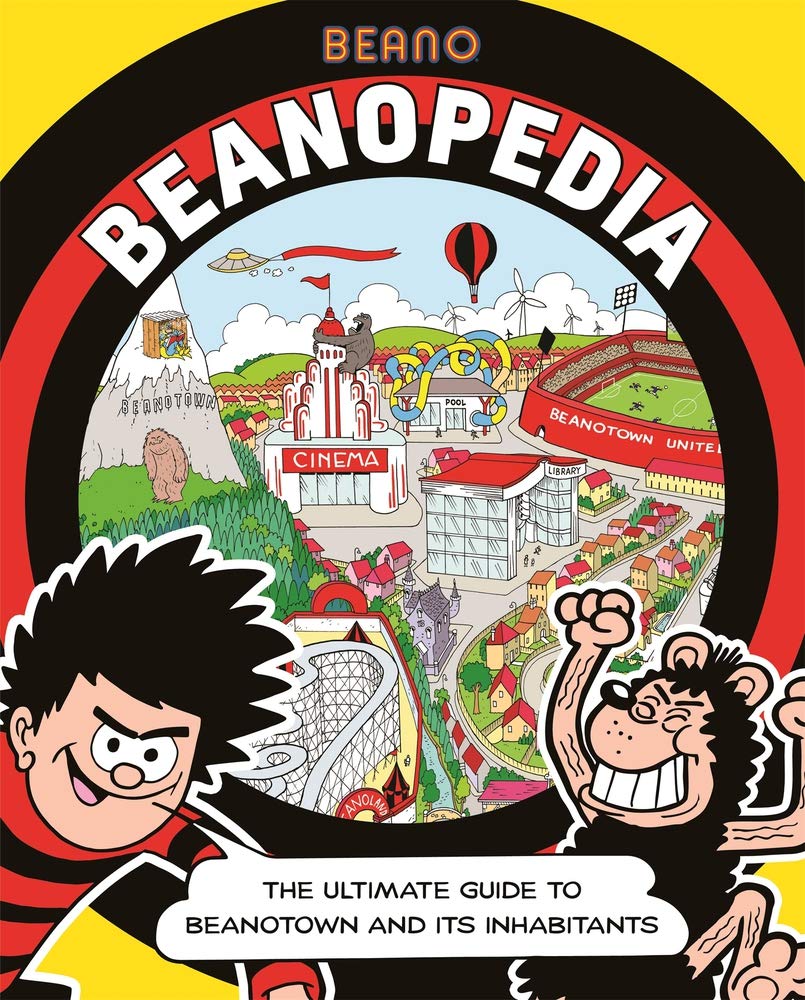
Beano: Beanopedia


By Rachel Elliot, Hannah Baldwin, Rob Ward & various (Studio Press Books/D.C. Thomson)
ISBN: 978-1-7874-1-705-2 (HB)

Premiering on December 4th 1937, The Dandy broke the mould of traditional British comics’ antecedents by using word balloons and captions rather than narrative blocks of text under the sequential picture frames. A huge success, it was followed eight months later by The Beano – which launched on July 30th 1938. Together they utterly revolutionised the way children’s publications looked and, most importantly, how they were read.

Over the decades the “terrible twins” spawned a bevy of unforgettable and beloved household names who delighted countless avid and devoted readers, and the unmissable end of year celebrations were graced with bumper bonanzas of the comics’ weekly stars in extended stories in magnificent hardback annuals.

As WWII progressed, rationing of paper and ink forced the “children’s papers” into an alternating fortnightly schedule: on September 6th 1941, only The Dandy was published. A week later just The Beano appeared. The rascally rapscallions only returned to normal weekly editions on 30th July 1949. Although The Dandy closed up in 2012, The Beano has soldiered on, amusing generations of glad gigglers and fuelling a minor industry in TV adaptations, toys, games, food, apparel, “how to” books and so much more.

August 28, 2019 saw the landmark 4,000th issue and it’s still going strong. That’s a lot of years and countless pranks, japes, dodges, menacings and all, so last year this cheery tome was released: a vibrant dossier of pertinent info on the current status and occupants of kids’ comedy Ground Zero…

Aimed at the younger end of the market and offering all the facts and pictures any devotee could dream of, this slight-but-detailed tour around Beanotown offers tips and hints, insiders’ insights and intimate introductions to all the funny folk living there.

The indispensable hardback guide opens with a welcoming ‘Visitors’ Guide’ hosted by Dennis the Menace and cunning canine collaborator Gnasher, detailing the top nine points of civic pride and interest, backed up by vivid advice on ‘How to get here (and how to leave)’, ‘Weird ways to travel’, ‘How to completely escape’ and ‘How to find your way around’…

A major portion of this guide features the lowdown on the town’s most notable inhabitants rendered as brief text, fact files, descriptive key quotes and a game. Of course, the first subjects are ‘The Menace Family’: Dennis, baby sister Bea, parents, Gran, pets and pesky archenemies, all supplemented by ‘Dennis’ Most Impressive Pranks’ and (cousin) ‘Minnie’s Most Magnificent Minxes’.

Minnie the Minx then similarly introduces her lot in ‘The Makepeace Family’, before a broad barrage of pages covers ‘The Bash Street Kids’ individually and collectively, with sections on the war-weary staff, ‘The Bash Street Pups’, the history of ‘Bash Street School’ and its ancestor institution ‘Horrible Hall’ and tips on ‘How to rule Bash Street School’…

Posh, privileged foes of all fun ‘The Brown Family’ are examined next from sneaky Walter to his greedy, ambitious parents Wilbur and Muriel, after which shorter files give us the facts on lesser stars ‘Peter “Pieface” Shepard’, sporty ‘JJ’, ‘Billy Whizz’, ‘Betty and the Yeti’ and wheelchair wonder/girl gadget-boffin ‘Rubidium von Screwtop (Rubi)’.

Secret philanthropist and truly-decent rich kid ‘Lord Snooty’ has survived relatively unscathed since the comic’s earliest days and his profile neatly segues into the home set-up of Roger the Dodger in ‘The Dawson Family’ files and the kids’ garage band ‘The Dinmakers’, after which (relatively) recent arrivals ‘Dangerous Dan’ and ‘Tricky Dicky’ precede a large section on ‘Eric Wimp (Bananaman)’ which includes a rundown on ‘Bananaman’s Fiendish Foes’.

Unlucky lad ‘Calamity James’ is followed by the Numskulls ‘Lurking Unseen’ lead to a self-help section detailing ‘How to be a Top Beanotown Resident’ and sharing ‘Beanotown Friendship’ rituals, leading to a rundown of ‘Beanotown’s History’, ‘Where to Go’, ‘What to Do’ and graphic lectures on ‘Sport and Leisure’ with a few helpful scenes to visit, after which‘Wildlife’ sets a thrilling agenda and ‘Baby Minder’ suggests individuals every parent should have on speed dial…

Moving on to the end of our tour, ‘Beanotown’s Secrets’ lists unmissable sites you might have overlooked while ‘Perfect Pranks’ suggest some anarchic homework for later, rounded up lists of ‘Where Not to Go for Help’ and ‘Where to Go for Help’.

And because it’s not a proper day out without one, this lovely tome concludes with a ‘Beanotown Quiz’ immediately followed by the ‘Answers’…

Slick, sleek, jolly and amazingly compelling, this is a perfect delight to bolster any kid’s introduction or re-submersion in a truly British icon.
A Beano Studios Product © D.C. Thomson Ltd 2020

“The Beano” ® © and associated characters ™© D.C. Thomson & Co., Ltd 2007. All Rights Reserved.

Bosnian Flat Dog


By Max Andersson & Lars Sjunnesson (Fantagraphics Books)
ISBN: 978-1-56097-740-7 (PB)

Very much in the far-too-large category of “why is this out of print and not available digitally?”, here’s a bizarre treat from long ago that you can still find with luck and persistence. And you should…

This manic lost gem is a startling and powerful excursion into the “collective unconsciousness of the Balkans” which resulted in a surprisingly compelling and funny tale from two of Sweden’s finest comic makers. It first emerged appeared in Death & Candy #2-4 before being remastered for this deliciously dark and daft tome which broke loose in 2006. Ostensibly, this is the account of a journey by the creators to Slovenia and an alternative cartoonists convention that spirals inescapably into a manic road-movie quest.

Just after they decide to reimburse an old friend for a story they had “borrowed” for their latest comic creation, an out-of-control ice cream truck begins shooting at them. After miraculously surviving, they discover amongst the debris an engraved grenade shell with the word “Sarajevo” on it. Taking this as sign that they must do the right thing, they resolutely embark on a Kafka-esque trip to the troubled Balkans. Along the way they encounter zombies, mummies, war atrocities and a man who has a refrigerator in his car containing the corpse of Marshal Tito (look him up if you have to and, in your next life, stay awake in history class).

Not to mention that rare breed of hound: The Bosnian Flat Dog…

More treatise than adventure, and savagely underpinned by the appalling realities of the Sarajevo crisis at its worst, this thought-provoking psycho-comedy has compelling pictures, dark whimsy and enough fourth-wall contravention to supply the reader with much metaphysical and social meat to digest long after they’ve finished reading. As surreal as it seems, though, there is still a distressing amount of truth still to be found amid the icons of the fantasy world. This is a damned compelling book if you want a read that will wake you up and not lull you to sleep.
© 2006 Max Andersson & Lars Sjunnesson. All rights reserved.

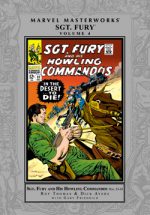
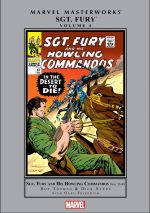
Sgt. Fury and his Howling Commandos Marvel Masterworks volume 4


By Roy Thomas, Gary Friedrich, Dick Ayers, John Tartaglione & various (Marvel)
ISBN: 978-0-7851-5959-9 (HB)

Sgt. Fury and his Howling Commandos began as an improbable, decidedly over-the-top, rowdy and raucous WWII combat comics series similar in tone to later ensemble action movies such as The Magnificent Seven, The Wild Bunchand The Dirty Dozen. The surly squad of sorry reprobates premiered in May 1963; one of three action teams concocted by creative men-on-fire Jack Kirby & Stan Lee to secure fledgling Marvel’s growing position as the comics publisher to watch.

Two years later Fury’s post-war self was retooled as Nick Fury, Agent of S.H.I.E.L.D., beginning with Strange Tales #135, August 1965) when TV espionage shows such as The Man from U.N.C.L.E. or Mission: Impossible and the James Bond film franchise became global sensations.

Sgt. Fury started out as a pure Kirby creation. As with all his various combat comics and tales, The King made everything look harsh and real and appalling: people and places grimy, tired, battered yet indomitable. The artist had served in some of the bloodiest battles of the war and never forgot the horrific, heroic things he saw (and more graphically expressed in his efforts during the 1950s genre boom at numerous publishers). However, even at kid-friendly, Comics Code-sanitised Marvel, those experiences couldn’t help but seep through onto his powerfully gripping pages.

Kirby was – sadly – far too valuable a resource to squander on a simple war comic and was quickly moved on, leaving redoubtable fellow veteran Dick Ayers to illuminate later stories, which he did for almost the entire original run of the series (95 issues plus Annuals) until its transition with #121 (July 1974) to a reprint title. This version carried on until its ultimate demise in December 1981, with #167.

Former serviceman Lee remained as scripter until he too was pulled away by the developing Marvel phenomenon, after which a succession of youthful, next-generation writers took over, beginning with Roy Thomas who provides welcome background and informative anecdotes in his Introduction, after which this fourth ferocious hardback and eBook compendium re-presents Sgt. Fury and his Howling Commandos #33-43; spanning August 1966 to June 1967).

Crafted by regulars Thomas, Ayers and inker John Tartaglione, the action opens with ‘The Grandeur that was Greece…’as the squad are despatched to aid partisan and freedom fighters keep Greek treasures and historical artefacts out of Nazi hands. Unfortunately, it’s an elaborate trap that leaves many good men dead and the unit captured with only Fury free to save them…

Bloodied but unbowed, Fury then reviews his barnstorming early life and ‘The Origin of the Howlers!’ before #35 sees him infiltrate the heart of Nazi darkness to stage a ‘Berlin Breakout!’ of the captive Commandos, with the assistance arch rival Sgt. Bull McGiveney and old comrade Eric Koenig: an anti-fascist German with plenty of reasons to fight the Reich…

With the mission deemed a qualified success, ‘My Brother, My Enemy!’ sees Koenig join the squad, replacing a Howler who didn’t return intact. His first official outing takes the team to neutral Switzerland to intercept a Nazi strategist en route to Italy, burdened with the secret that their fanatical target was once his dearest childhood friend…

Issue #37 takes the squad to North Africa in search of charismatic Nazi rabble-rouser The Desert Hawk inciting attacks on British forces. The fiend’s capture reveals a shocking surprise when the warriors find themselves ‘In the Desert… to Die’…

Wounded in escaping Berlin, one Howler has been recuperating in Hollywood. His recovery would be greatly aided if a certain doctor could be extracted from occupied Scandinavian island Danton. That and the title ‘This One’s for Dino!’ is all you need to know, after which #39’s ‘Into the Fortress of… Fear!’ focuses on action as the Howlers are despatched to invades a highly-fortified base and destroy a new super-weapon. The site is commanded by steel-fisted fanatic Colonel Klaue, but even he is no match for the Howlers…

After a far from lengthy recovery period, Dino returns in time to cheer on our heroes as they save a French Resistance leader in ‘…That France Might be Free!’, before Klaue returns, leading the Commandos’ arch enemies the Blitzkrieg Squad. The mission also involves an unlikely spy inside the Allied ranks base who pays the ultimate price for the ‘Blitzkrieg in Britain!’

It isn’t named as such, but Post Traumatic Stress Disorder grips a Howler in ‘Three Were A.W.O.L.!’, which saw the first script contributions of future scribe Gary Friedrich. When a veteran hero absconds, Fury goes after him, leaving his squad in the unwelcome charge of Bull McGiveney in a demolitions mission deep inside occupied Europe. When the absentees return, it’s only just in time to save them all…

The unlikely escapades pause here with a return trip to North Africa and a brush with Rommel, as ‘Scourge of the Sahara!’ (By Thomas, Friedrich, Ayers & Tartaglione) finds the weary warriors in pursuit of a protype super-tank that could reverse the Desert Fox’s failing fortunes…

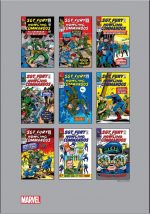
Adding lustre to these military milestones, this volume also includes a selection of readers’ designs for the Howlers’ unique unit arm patch (Shoulder Sleeve Insignia for all you army buffs), and a gallery of original art covers and pages by Ayers & Tartaglione.

Whereas close rival DC increasingly abandoned the Death or Glory bombast at this time in favour of humanistic, practically anti-war explorations of combat and soldiering, Marvel’s take always favoured action-entertainment and fantasy over soul-searching for ultimate truths. On that level at least, these epics are stunningly effective and galvanically powerful exhibitions of the genre. Just don’t use them for history homework.
© 2017 Marvel Characters Inc. All rights reserved.

Couch Tag


By Jesse Reklaw (Fantagraphics Books)
ISBN: 978-1-60699-676-8

In modern trend for graphic novels combining autobiography with a touch of therapy as they recount the lives of their authors is well established now, but once such “tragicomics” were a scarce but inviting commodity. Immensely appealing and frequently painfully unforgettable, they prove our medium fully capable of tackling the most contentious issues. One of the most moving and impressive came from veteran Indie cartoonist and mini comics self-publisher Jessie (Dreamtoons; Ten Thousand Things to Do; Lovf: An Illustrated Vision Quest of a Man Losing His Mind) Reklaw: who’s generated unmissable thought-provoking strips and stories since 1995 when he was working towards his doctorate in Artificial Intelligence.

Born in Berkley, California in 1971, he grew up in Sacramento before attending UC Santa Cruz and Yale, and his earliest publications – just like most of his modern output – delved into the phenomena and imagery of dreams. The experimental Concave Up led to syndicated weekly strip dream-diary Slow Wave, which uses readers’ contributions as the basis of the episodes. It ran from 1995 to 2012 in both printed periodicals and as a webcomic and is sorely missed.

His graphic autobiography is just as beguiling: a life reduced to brief vignettes serially grouped into 5 innocuous-seeming chapters which, through cleverly layered and carefully tailored reminiscences, describe Recklaw’s strangely unconventional (if not actually dysfunctional) family and personal struggle for stability.

Primarily crafted in monochrome wash, the history sessions begin with ‘Thirteen Cats of My Childhood‘ – which older readers will recognises from Houghton Mifflin’s Best American Comics 2006, where it was also published – wherein succinct and ferociously functional recollections of a succession of ill-starred family pets serves as a splendid and powerfully effective narrative conceit to introduce the far from ordinary Walker clan.

By following the brief lives of ‘Black Star’, ‘Frosty’, ‘The Triplets’, ‘Mischief’, ‘Figgy Pudding’, ‘Gene’, ‘Survivor’,‘Tiger’, ‘Boots’ and ‘Harry’, we see a family of decidedly alternative outlook whilst also relating the rules of the furniture-based children’s game which gives this book its title.

‘A Note About Names Part One’ follows, revealing more about the sensibilities of the author’s parents, after which ‘Toys I Loved’ continues the amazingly instructive anecdotes about formative influences, as games and playthings act as keys to memory in increasingly unsettling, discordant and disturbing tales beginning in infancy with cuddly toy ‘Ruff-Ruff’ and skipping through a childhood dotted with sibling rivalries and sporadic best-friendships.

Jess, Sis, Mom and “Daddy Bill” are all defined courtesy of ‘The Mask’, ‘Me’s’, ‘Blankie’, ‘Sprinkler’, ‘Play-Doh’, ‘Stretch Armstrong’, ‘Six-Million-Dollar Man’, ‘The Hulk’, ‘Firecrackers’, ‘Green Cup’, ‘Diecast Robots’, ‘Drawers’, ‘Comic Books’, ‘Action Figures’, ‘Dirt Pile’, ‘Doll House’ and ‘Barbies’, before the life-changing advent of ‘Dungeons & Dragons’…

‘The Fred Robinson Story’ details the potentially obsessive nature of teenage pranks with Jess and like-minded buddy Brendan – over a number of years – bombarding a complete stranger with a barrage of creative celebration; turning a random name in a phone book into the recipient of odd gifts and star of music and handmade comic books in ‘The Box’.

The lads develop their musical tendencies in ‘Los Angeles’ and penchant for creative vandalism in ‘Batsigns’, before returning to their lengthy cartooning crusade in ‘Fred Robinson X-ing’: relating how the prank publishing campaign mushroomed and Brendan’s girlfriend Kristin changes the status quo, after which Jess gets a ‘Letter from Norway’ and‘Better Fred’ reveals how things eventually ended…

‘The Stacked Deck’ recounts educational episodes and memorable moments resulting from the entire extended family’s passion for card games and tendency towards compulsive behaviour, as seen in ‘War’, ‘Go Fish’, ‘Spades’, ‘Pinochle’,‘Crazy Eights’, ‘Speed’, ‘Poker’, ’31’, ‘Rummy’, ‘Solitaire’, ‘Spite & Malice’ and ‘Ascension’…

Final chapter ‘Lessoned’ is delivered in a succession of distressed colour-segments: raw and disturbing pages of evocative collage and experimental narrative dealing out a unique tarot set of A-to-Z insights and disclosures, beginning with ‘Adults’, ‘Birth’ and ‘the Crash’.

Ranging between early days and contemporary times, the alphabetical summary and keen self-diagnosis continues with ‘Disease’, ‘Earache’, ‘Family’, ‘Gifted’, ‘Humor’ and ‘Invulnerability’, turning a corner towards understanding with ‘Joint’, ‘Kiersey Test’, ‘Legal Guardian’, ‘Melancholic’, ‘Number’ and ‘Obsession’.

After cleverly addressing the revelations of the author’s bipolar mood disorder and explosive determination to take control of his life by rejecting sickness and weakness, ‘Phlegmatic’, ‘Question’, ‘Role-Playing’, ‘Sanguine’, ‘Tests’ and ‘Unconscious’ carry the account to a new normal with ‘the Vandal’, ‘Walker’, ‘X-Mas’, ‘Yesterday’ and ‘Zero’.

Bleak yet uplifting, nostalgic and distressing, harsh and blackly funny, Couch Tag is a devastatingly moving account of coping with adverse heredity, sexual deviancy, social nonconformity and familial discord which I suspect could only be told in comics.

This is not a book everyone can like, but it’s definitely a story to resonate with anyone who has felt alone, odd or different.

And surely that’s all of us at some time…
© 2013 Jesse Reklaw. This edition © 2013 Fantagraphics Books, Inc. All rights reserved.

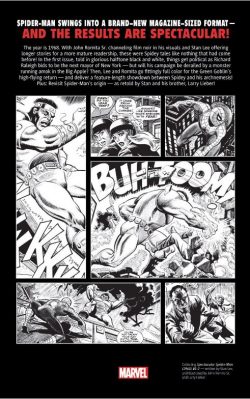
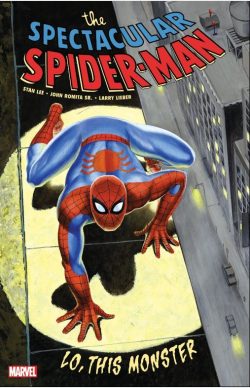
The Spectacular Spider-Man: Lo, This Monster


By Stan Lee, Larry Lieber, John Romita Sr., Jim Mooney, Bill Everett & various (Marvel)
ISBN: 978-1-3029-2064-7 (TPB)

The Amazing Spider-Man was always a character and concept which matured with – or perhaps just slightly ahead – of its fan-base. That thought might well have contributed to a rare Marvel misstep during the 1960s as the House of Ideas increasingly challenged the dominance of DC; finally collected here in its own nostalgia-soaked trade paperback and digital tome for your delight and delectation…

After a shaky start, the Wondrous Wallcrawler quickly became a sensational “must-see” with kids of all ages. Before long, the quirky, charming, thrillingly action-packed comics drama would become the model for an entire generation of younger heroes impatiently elbowing aside the (relatively) staid thirty-something mystery-men of previous publications and hallowed tradition.

You know the story: Peter Parker was a smart-but-alienated teenager bitten by a radioactive spider during a high school science trip. Discovering he’d developed astonishing arachnid abilities – which he augmented with his own natural chemistry, physics and engineering genius – the Parker did what any lonely, geeky nerd would do with such newfound prowess: he tried to cash in for girls, fame and money.

Crafting a costume to hide his identity in case he made a fool of himself, Parker became a minor media celebrity – and a criminally self-important one. To his eternal regret, when a thief fled past him one night, he didn’t lift a finger to stop him, only to find when he returned home that his beloved guardian uncle Ben Parker had been murdered.

Crazed and vengeful, Peter hunted the assailant who’d made doting Aunt May a widow and killed the only father he had ever known. When, to his horror, he discovered it was the self-same felon he had neglected to stop, and that irresponsibility had resulted in the death of the man who raised him, the traumatised boy swore to forevermore use his powers to help others…

Since that night, the Wondrous Wallcrawler has tirelessly battled miscreants, monsters and madmen, with a fickle, ungrateful public generally baying for his blood even as he saves them.

Already the darlings of college campuses and media intelligentsia, the Amazing Arachnid’s rise increased pace as the Swinging Sixties closed, with Peter and his ever-expanding cast of comrades well on the way to being household names. Stan Lee’s scripts were completely in tune with the times – as perceived by most kids’ parents at least – and an increasing use of soap opera plots kept older readers glued to the series even if the bombastic battle sequences didn’t.

In 1968, the company finally broke free of a restrictive distribution deal and exponentially expanded. All these factors combined to prompt a foray into the world of oversized mainstream magazines (as successfully developed by James Warren with Eerie, Creepy and Vampirella) which could be higher priced and produced without restrictive oversight from The Comics Code Authority. The result was the quarterly Spectacular Spider-Man #1-2 (July-November 1968): a genuinely wonder-filled thrill for 9-year-old me, but clearly not the mainstream mass of Marvel Mavens…

Re-presented here are both issues, material from the unpublished third and a variety of background supplements, beginning with that first bombastic booklet.

Following a painted cover – Marvel’s first – by John Romita (senior) and illustrator Harry Rosenbaum, the main feature of Spectacular Spider-Man #1 was ‘Lo, This Monster!’ by Lee, John Romita (senior) & Jim Mooney: an extended, political thriller with charismatic reformer Richard Raleigh tirelessly campaigning to become Mayor, but targeted and hunted by a brutish titan seemingly determined to keep the old political machine in place at all costs…

Rendered in moody wash tones, the drama soon disclosed a sinister plotter directing the monster’s campaign of terror… but his identity was the last one Spidey expected to expose…

Also included in the magazine and here was a retelling of the hallowed origin tale as described above. ‘In the Beginning…’ is crafted by Lee, with brother Larry Lieber’s pencils elevated by inks-&-tones from the legendary Bill Everett. Rounding out the experience is a tantalising ‘Next issue’ ad which neatly segues into an all-Romita painted cover and the magazine experiment’s premature the conclusion…

Three months later The Spectacular Spider-Man #2 came out. It was radically different from its predecessor. To offset disappointing sales, Marvel had swiftly switched to a smaller size and added comic book colour. It also sported a Comics Code symbol.

A proposed third issue which would have debuted the Prowler never appeared. It was to be the last attempt to secure ostensibly older-reader shelf-space until the mid-1970s. At least the story in #2 was top-rate…

Following monochrome recap ‘The Spider-Man Saga’ Lee, Romita & Mooney dealt with months of foreshadowing in the monthly comic book series by finally revealing how Norman Osborn had shaken off selective amnesia and returned to full-on super-villainy in ‘The Goblin Lives!’

Steeped in his former madness and remembering Peter Parker was Spider-Man, Osborn plays cat and mouse with his foe, threatening all the hero’s loved ones until a climactic closing battle utilising hallucinogenic weapons again erases the Green Goblin personality… for the moment…

A full colour teaser for never-seen #3’s “The Mystery of the TV Terror!” leads off the extra features, followed by a Dean White version of #2’s cover which fronted 2012’s Marvel Masterworks: The Amazing Spider-Man vol 7 and house ads from various 1968 Marvel comics for Spectacular Spider-Man #1 & 2.

Also included are Romita’s original pencils for the covers of both, with the painted end-products by Harry Rosenbaum and Romita respectively and a 1988 text feature from Marvel Visions #29 detailing ‘The Greatest Comics Never Seen’, and offering sketches and unused pages of the antihero we know as The Prowler (who was legendarily invented by schoolboy John Romita Jr.).

This book is Marvel and Spider-Man at their peak. If you fancy a taste of something simultaneously tried-&-true and spectacularly radical, this might be the book for you.
© 2019 MARVEL

The Steel Claw: Invisible Man


By Ken Bulmer & Jesús Blasco (Rebellion)
ISBN: 978-1-78108-906-4 (TPB)

One of the most fondly-remembered British strips of all time is the startlingly beautiful Steel Claw. From 1962 to 1973the stunningly gifted Jesús Blasco and his small studio of family members thrilled the nation’s children, illustrating the angst-filled adventures of scientist, adventurer, secret agent and even costumed superhero Louis Crandell.

The majority of the character’s career was scripted by comic veteran Tom Tully, but initially follows the premise of HG Wells’ original unseen adversary as prolific science fiction novelist Ken Bulmer devises a modern spin on the Invisible Man…

Another stunning salvo of baby boomer nostalgia from Rebellion’s Treasury of British Comics strand, this first collection is available in paperback and digital editions. The Steel Claw: Invisible Man gathers material from timeless weekly anthology Valiant, spanning 6th October 1962 to 21st September 1963 and stories from the Valiant Annual 1965 and 1966.

Following an Introduction from Paul Grist, the tense drama begins with our eventual hero debuting as a rather surly assistant to the venerable Professor Barringer, working to create a germ-destroying ray.

Crandell is an embittered man, possibly due to having lost his right hand in a lab accident. After his recovery and itsreplacement with a steel prosthetic he is back at work when the prof’s device explodes. Crandell receives a monumental electric shock and is bathed in radiation from the ray-device which, rather than killing him, renders him totally transparent. Although he doesn’t stay unseen forever, this bodily mutation is permanent. Electric shocks cause all but his metal hand to disappear.

Kids of all ages, do not try this at home!

Whether venal at heart or temporarily deranged, Crandell goes on a rampage of terror against society and destruction of property throughout Britain which culminates in an attempt to blow up New York City before he finally coming to his senses. Throughout Crandell’s outrages, Barringer is in guilt-fuelled pursuit, determined to save or stop his former friend…

The second adventure channels another classic (The Strange Case of Dr Jekyll and Mr Hyde), intriguingly pitting the Claw against his therapist, who – in an attempt to treat him – is also traumatically exposed to Barringer’s ray. Instead of permanent invisibility, Dr. Deutz develops the ability to transform himself into a bestial ape-man who malevolently turns to crime and frames Crandell for a series of spectacular robberies and rampages.

On the run and innocent for once, Crandell is saved by the intervention of Barringer’s niece Terry Gray. After weeks of beast-triggered catastrophe and panic in the streets, the Steel Claw is vindicated and proved a hero… of sorts…

Bulmer’s next tale changes location to the Bahamas as our star shifts from outlaw to hero. While recuperating on an inventor-friends yacht, Crandell is accidentally embroiled in a modern-day pirate’s attempt to hijack an undersea super-weapon system…

After would-be bullion bandit Sharkey and his nefarious gang steal the device and use it to capture a submarine, their convoluted scheme to rob an ocean liner falters when a steel fisted ghost starts picking them off one by one…

More than any other comics character, the Steel Claw was a barometer for reading fashions. Starting out as a Quatermass style science fiction cautionary tale, the strip mimicked the trends of the greater world, becoming a James Bond-style super-spy strip with Crandall eventually tricked out with outrageous gadgets, and latterly, a masked and costumed super-doer when TV-show-triggered “Batmania” gripped the nation and the world. When that bubble burst, he resorted to becoming a freelance adventurer, combating eerie menaces and vicious criminals. Before we head too far down that path however, his contributions to Valiant Annuals 1965 and 1966 (released Autumn 1964 and 1965 respectively) afford rather more constrained thrills and chills as Crandell defeats a gang using an electricity-supressing gadget to rob a blacked-out London and one year later aid the Metropolitan police force corral a bunch of apparently invisible bandits dubbed the Phantom Raiders…

The thrills of the writing are engrossing enough, but the real star of this feature is the artwork. Blasco’s captivating classicist drawing, his moody staging and the sheer beauty of his subjects make this an absolute pleasure to look at. Buy it for the kids and read it too; this is a glorious book, and brace yourself for even better yet to come …
© 1962, 1963, 1965, 1966 & 2021 Rebellion Publishing IP Ltd. All Rights Reserved.

The Last Lonely Saturday


By Jordan Crane (Fantagraphics Books)
ISBN: 978-1-56097-743-8 (HB)

Award-winning Jordan Crane is a child of the 1970s and first garnered notice in comics circles with his 1996 anthology NON: an experimental vehicle very much in the manner of Art Spiegelman’s Raw and latterly quarterly anthology Uptight.

Working far too slowly for my greedy appetites, he’s also released a trio of graphic novels to date, Col-Dee, children’s adventure The Clouds Above and this one – his first and most moving.

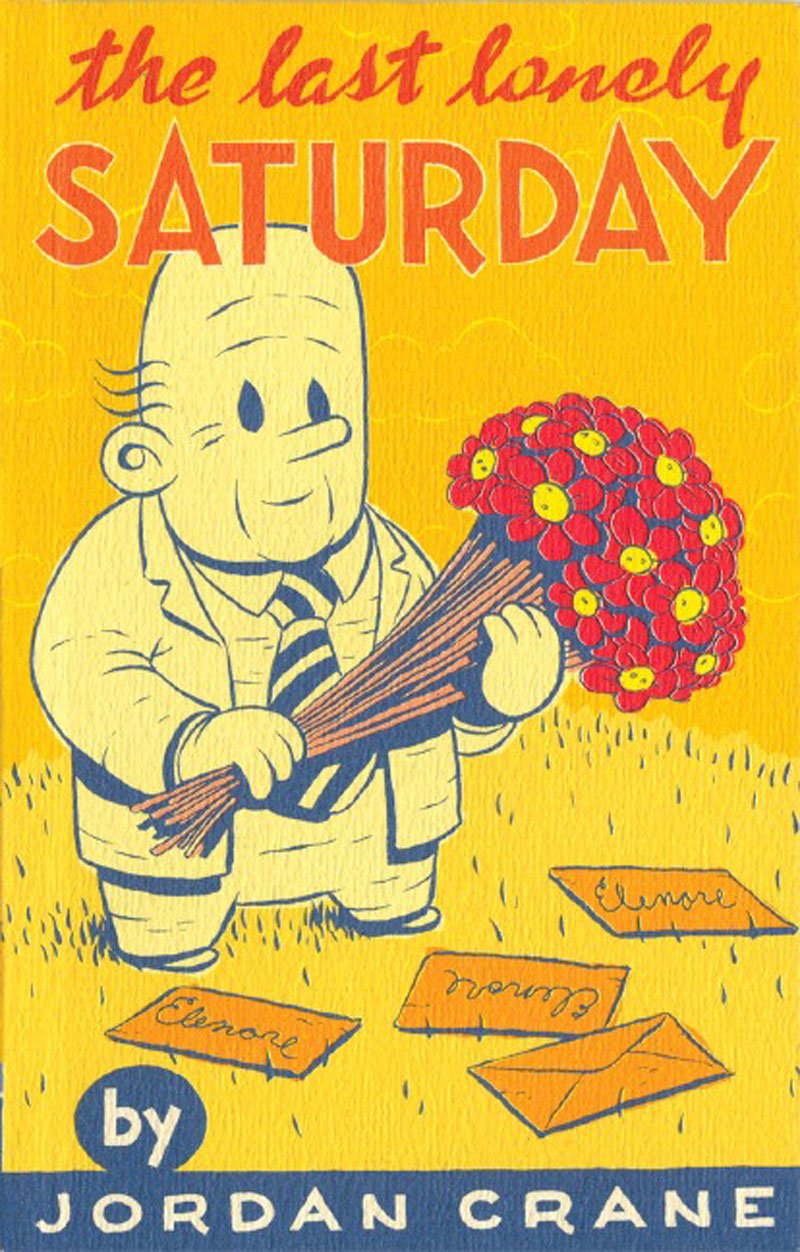
Available in both hardcover and digital editions, The Last Lonely Saturday is crafted in a strange blend of vivid-yet-muted reds and yellows and comedically lugubrious cartoon style. Delivered in two panels per page, it recounts – almost exclusively without dialogue – one quiet day in August when a lonely widower once again diligently makes his way to the florist’s, the cemetery and inevitably the grave of his beloved Elenore.

It’s a ritual he’s enacted for many years, indulging in bittersweet memories as he clings to life while yearning to be reunited with his truly beloved. However, as the endless duty unfolds, events take an oblique turn and melancholy whimsy becomes something more as we’re reminded that it’s not just the living who feel the pangs of loss or yearn for reunion…

Smart, charming, witty and devilishly wry, this is a lost delight that proves the deceptive potency of comics and enduring power of love.
© 2000 Jordan Crane. All rights reserved.

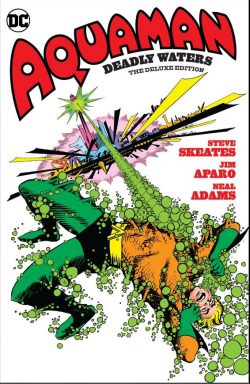
Aquaman: Deadly Waters – The Deluxe Edition


By Steve Skeates, Jim Aparo, Neal Adams, Nick Cardy & various (DC Comics)
ISBN: 978-1779502940 (HB)

Aquaman is one of a handful of costumed champions to survive the superhero collapse at the end of the Golden Age. For most of that time he was a rather nondescript and genial guy who – when not rescuing fish and people from sub-sea disasters – solved maritime crimes and mysteries.

The Sea King was created by Mort Weisinger & Paul Norris, debuting in More Fun Comics #73 (November 1941) in the wake of and in response to Timely Comics’ antihero Namor the Sub-Mariner. Strictly a second stringer for most of his career, Aquaman nevertheless continued on beyond many stronger features; illustrated by Norris, Louis Cazaneuve, Charles Paris, and latterly Ramona Fradon who drew almost every adventure from 1951 to 1961.

When Showcase #4 rekindled the public’s taste for costumed crimefighters with the advent of a new Flash in 1956, National/DC updated its small band of superhero survivors, especially Green Arrow and Aquaman.

As the sixties opened, Aquaman was appearing as a back-up feature in Detective and World’s Finest Comics. Following a team up with Hawkman in Brave and the Bold # 51 and a try-out run in Showcase #30-33, Aquaman made his big leap. After two decades of continuous nautical service, the marine marvel finally got his own comic book (cover-dated January/February 1962).

Now with his own title and soon to be featured in groundbreaking must-see cartoon show the Superman/Aquaman Hour of Adventure, our Finned Fury seemed destined for super-stardom, but despite increasingly bold and innovative tales presented with stunning art, his title was cancelled just after the decade closed. Towards the end, outrageously outlandish crime and sci fi yarns gave way to grittily hard-edged epics steered by revolutionary editor Dick Giordano and hot new talents Steve Skeates & Jim Aparo that might arguably be the first sallies of comic books’ landmark socially conscious “relevancy” period…

This compelling compilation – collecting Aquaman volume 1 #49-56 (February 1970 to April 1971) – is available in hardback and digital formats, offering potent dramas that changed perceptions of the amiable aquatic avenger forever as well as concluding his first foray as solo headliner…

Way back in Aquaman #18, (December 1964 and not included here) the marine marvel met extradimensional princess Mera, who became ‘The Wife of Aquaman’ in one of the first superhero weddings of the Silver Age. Talk about instant responsibilities…

A few years later new scripter Steve Skeates and equally fresh-faced illustrator Jim Aparo began an epic extended tale wherein the Sea Lord abandoned all regal responsibilities to hunt for his beloved after she was abducted from his very arms.

After rescuing Mera (in an extended epic collected in a previous volume) Aquaman moved back to Atlantis just in time to become embroiled in one of the earliest incidences of righteous eco-advocacy in American comics. Issue #49 stylishly blends a trip to Alaska, industrial waste dumping, greedy factory owners and an old ally acting as judge, jury and executioner while blowing up chemical plants in terse, potent thriller ‘As the Seas Die’.

With Aquaman and young partner Aqualad reeling from indecision over genuinely momentous issues, the tone abruptly switches for #50 as ‘Can This Be Death?’ sees Aparo stretch his creative muscles and enter the realms of psychodelia when the sea king is ambushed by aliens and banished to an incomprehensible otherworld.

The plot is ostensibly triggered by vengeful archenemy Ocean Master, but Skeates provides plenty of twists and surprises for Neal Adams to cover in his back-up slot ‘Deadman Rides Again!’

A complex braided crossover unfolds over the next three issues with Aquaman surviving bizarre threats and incomprehensible rituals in his exile realm, while the ghost of Boston Brand acts invisibly and intangibly to save the Sea King and prevent an alien invasion plot.

‘The Big Pull’ in #51 sees Aquaman assisted by a mute, nameless companion as he searches for a way home, whilst ‘The World Cannot Wait for a Deadman’ finds the spirit flitting between dimensions with shapeshifting enigma Tatsinda, before the parallel plots converge and complete in #52’s ‘The Traders Trap’ – with Aquaman accidentally abandoning his faithful companion to slavers and returning to face fresh hellion Black Manta before ‘Never Underestimate a Deadman’ sees the extraterrestrial invaders sent packing by the ghost and his new pal…

An element of wry satire underpins ‘Is California Sinking? in #53, as agents of O.G.R.E. dupe a wealthy conservative to buy a nuke and bomb Atlantis in the deranged conviction that his actions will prevent the Golden State from being submerged by tectonic forces. This all happens – and fails – without Aquaman’s interference since he’s still dealing with Black Manta…

It’s back to the surface and a return outing for the gangster who orchestrated Mera’s kidnap in #54 as ‘Crime Wave!’ in a chilling psychodrama which sees ordinary citizens engulfed in mind-controlled malevolence after being “killed” by “Thanatos”. Strangely, a brush with humanity’s death-urge doesn’t do much to stop Aquaman…

Seeking to clear up a loose end, Aquaman seeks to liberate his former otherworldly companion in #55’s ‘Return of the Alien!’ but gets a big shock when he confronts the slavers after which short sharp salutary vignette ‘Computer Trap!’ offers a never-untimely parable warning of the perils of mechanisation, dangers of conformity and benefits of youthful rebellion.

Despite producing some of the most avant-garde, intriguing, exciting and simply beautiful adventures of Aquaman’s entire career, Skeates & Aparo signed off with the next issue, more victims of the industry shift from Super Hero to supernatural themes. Aquaman #56 saw the series cancelled but the creators went out with a typically multi-layered bang as ‘The Creature that Devoured Detroit!’ saw the Sea King battling a mammoth unstoppable fungal bloom inundating Motor City, thanks to perpetual sunlight caused by a satellite designed by a vigilante to cut crime by abolishing night and shadows…

The madcap, trenchant and action-packed yarn is counterbalanced by a short Aquagirl yarn warning of ‘The Cave of Death!’

Augmented by a brace of Skeates-scribed ‘The Story Behind the Story’ text pages from Aquaman #52 and #54; creator biographies and a truly stunning gallery of eye-catching experimental covers by Nick Cardy, this collection is a treasure of lost wonders, worthy of far more attention than they’ve received. Time to balance those scales, adventure fans…
© 1970, 1971, 2020 DC Comics. All Rights Reserved.

Coma


By Zara Slattery (Myriad Editions)
ISBN: 978-1-912408-66-5 (PB) eISBN: 978-1-912408-78-8

Since the pandemic struck, everyone’s notion of what terror looks and feels like has fundamentally changed. That has never been more apparent than in recent medical dramas and attains even more horrific poignancy when the story being told is true.

That’s certainly the case in this astounding autobiographical inner excursion from cartoonist, illustrator and educator Zara Slattery, who barely survived an inexplicable and escalating medical crisis in 2013 that forever changed her life and those of her husband and children.

As she battled for her life in the Intensive Care Unit of Brighton hospital – spending 15 days in a coma and months after in recovery – her overwhelmed man Dan and their kids began recording events in diaries. This was at the suggestion of the nurse in charge, whose own medical notes append the saga: written in ICU to update the critical patient of what was occurring for when – or if – she woke up…

All those disparate records were used by Slattery to craft an interlocking narrative of how life went on around her and act as a grounding touchstone for the other portions of this book. These sections are wildly delirious and hallucinogenic trials experienced by the comatose artist who recalls ceaseless, terrifying, guilt-&-shame flavoured trials and phantasms, possibly triggered by exterior events unconsciously absorbed as she lay dying…

Broken into day chapters spanning ‘Wednesday 22nd May’ to ‘Saturday 8th June’, the intimate excursion details how as Zara slowly succumbs to agonising infection; how Dan adapts to being a sole parent to children too smart to fool for long, and how a host of friends and relatives desperately rally round to wait out the crisis, retreating into comforting routine, platitudes and endless hope…

It’s easy – and painfully correct – to declare that a graphic narrative this intensely personal attains universal poignancy in these days of plague, but even if the last two years never happened, Coma would still be an incredible blend of prosaic everyday coping, paean to nurturing support and horrific hell-bound rollercoaster ride.

Its interweaving of matter-of-fact necessities with the blistering shock of comatose fever dreams powerfully unpicks cruel modern myths – such as any ailment can be defeated if the “victim” fights hard enough, or notions of “unfair” or “undeserved” illness – and focuses attention on where it belongs: on patients, suffering friends and despondent family helplessly watching from the side-lines and indomitable medical professionals prove themselves the world’s real heroes.

Mesmerising, compelling and potently understated, this pictorial memoir is unlike any graphic novel you’ve ever seen, but you know the cure for that, right?
© Zara Slattery 2021. All rights reserved.

Coma is schedule for release on May 13th 2021 and is available for pre-order now.