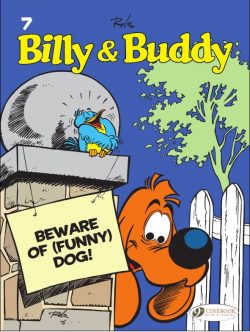
Billy & Buddy volume 7: Beware of (Funny) Dog!


By Roba, translated by Jerome Saincantin (Cinebook)
ISBN: 978-1-84918-457-1 (Album PB)

Known as Boule et Bill in Europe (at least in the French speaking bits, that is; the Dutch and Flemish call them Bollie en Billie or perhaps Bas et Boef if readers first glimpsed them in legendary weekly Sjors), this evergreen, immensely popular cartoon saga of a dog and his boy debuted in the Christmas 1959 edition of Le Journal de Spirou.

The perennial family fan-favourite resulted from Belgian writer-artist Jean Roba (Spirou et Fantasio, La Ribambelle) putting his head together with Maurice Rosy: the magazine’s Artistic Director and Ideas Man who had also ghosted art and/or scripts on Jerry Spring, Tif et Tondu, Bobo and Attila during a decades-long, astoundingly productive career at the legendary periodical.

Intended as a European answer to Charles Schulz’s Peanuts, Boule et Bill quickly went its own way, developing a unique style and personality and becoming Rosa’s main occupation for the next 45 years. He had launched the feature as a mini-récit (a 32-page, half-sized freebie insert) in the December 24th 1959 Spirou.

Like Dennis the Menace in The Beano, the strip was a huge hit from the start and for 25 years held the coveted and prestigious back-cover spot. Older Brits might recognise the art as some early episodes – retitled It’s a Dog’s Life – ran in Fleetway’s legendary weekly Valiant from 1961 to 1965…

A cornerstone of European life, the strip generated a live-action movie, animated TV series, computer games, permanent art exhibitions, sculptures and even postage stamps. Like some select immortal Belgian comics stars, Bollie en Billie were awarded a commemorative plaque and have a street named after them in Brussels….

Large format album editions began immediately, totalling 21 volumes throughout the 1960s and 1970s. These were completely redesigned and re-released in the 1980s, supplemented by a range of early-reader books for toddlers. Collections are available in 14 languages, selling well in excess of 25 million copies of the 40 albums to date.

Roba crafted more than a thousand pages of gag-strips in a beguiling, idealised domestic comedy setting, all about a little lad and his exceedingly smart Cocker Spaniel, before eventually surrendering the art chores to his long-term assistant Laurent Verron in 2003.

The successor subsequently took over the scripting too, upon Roba’s death in 2006.

As Billy and Buddy, the strip returned to British eyes in enticing Cinebook compilations from 2009 onwards: introducing to 21st century readers an endearingly bucolic late 20th century, sitcom-styled nuclear family set-up consisting of one bemused, long-suffering and short-tempered dad, a warmly compassionate but painfully flighty mum, a smart, mischievous son and a genius dog who has a penchant for finding bones, puddles and trouble.

Originally released in 1974, Attention chien marrant! was the 15th European collection, comfortingly resuming in the approved manner and further exploring the evergreen relationship of a dog and his boy (and tortoise) for our delight and delectation. Available in paperback and digital editions and delivered as a series of stand-alone rapid-fire, single-page gags with titles like Cleaned Out’, Bad Mood’ and Schoolyard Blues’, Beware of (Funny) Dog! Is packed with visual puns, quips and jolly “dad-joke” jests: affirming the socialisation and behaviour of little Billy is measured by carefree romps with four-footed friend Buddy.

Buddy is the perfect pet for an imaginative and playful boy, although the manipulative mutt is overly fond of purloined food, buried bones (ownership frequently to be determined) and ferociously protective of boy, pet Tortoise and his ball.

The pesky pooch also cannot understand why everyone wants to constantly plunge him into foul-tasting soapy water, but it’s just a sacrifice he’s prepared to make to be with Billy…

Buddy also has a fondly platonic relationship with tortoise Caroline (this autumnal collection finds her largely absent through hibernation pressures) and a suspicious knack for clearing off whenever Dad has one of his explosive emotional meltdowns over the cost of canine treats, repair bills or the Boss’ latest impositions.

The inseparable duo interact with pals, play pranks, encounter other unique pets, dodge baths, hunt and hoard bones, rummage in bins, misunderstand adults, cause accidents and cost money; with both kid and mutt equally adept at all of the above.

This time, the capacity for chaos is heightened by vacation frolics involving mountains and fondue – wanna guess where the family are? – but there’s also plenty of domestic distress involving burglars, dog licenses and the onset of Christmas snows to foster a fond feeling of lost golden days…

Roba was a master of this cartoon artform. The strips are genially paced, filled with wry wit and potent sentiment: enchantingly funny episodes running the gamut from heart-warming to hilarious, silly to surreal and thrilling to just plain daft: a charming tribute to and lasting argument for a child for every pet and vice versa. This is a supremely engaging family-oriented compendium of cool and clever comics no one keen on introducing youngsters to the medium should be without.
Original edition © Dupuis 1974 by Roba © Studio Boule & Bill 2019. English translation © 2019 Cinebook Ltd.

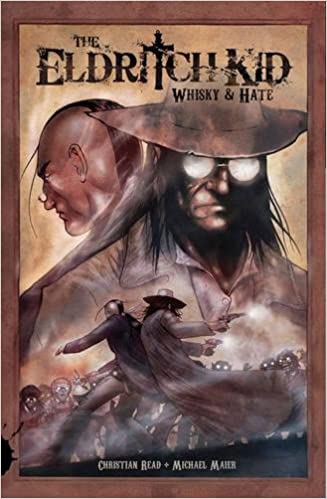
The Eldritch Kid volume 1: Whisky and Hate


By Christian Read & Michael Maier (Gestalt Publishing)
ISBN: 978-0-980782-35-6 (TPB)

Felt like a scary western today. Here’s one…

There was a time, not so very long ago, when all of popular fiction was bloated and engorged with tales of Cowboys and Indians.

As always happens with such periodic populist phenomena – such as the Swinging Sixties’ Super-Spy Boom, the Vampire Boyfriend or recent Misunderstood Teens vs Corrupt Adult Dystopias trends – there was a goodly amount of momentary merit, lots of utter dross and a few spectacular gems.

Most importantly, once such surges peter out there’s also always a small cadre of frustrated devotees who mourn the passing and, resolve to do something to venerate or even revive their lost and faded favourite fad…

After World War II, the American family entertainment market – for which read comics, radio and the rapidly burgeoning television industry – were comprehensively enamoured of clear-cut, simplistic sensibilities and easy, escapist solutions offered by Tales of the Old West: at that time already a firmly established standby of paperback publishing, movie serials and low-budget feature films.

I’ve often ruminated on how and why, simultaneously, the dark, bleakly nigh-nihilistic and left-leaning Film Noir genre quietly blossomed alongside that wholesome rip-snorting range-&-rodeo revolution, seemingly only for a cynical minority of entertainment intellectuals who somehow knew that the returned veterans still hadn’t found a Land Fit for Heroes… but perhaps that’s a thought for another time and a different review.

Even though comics had encompassed Western heroes from the get-go (there were cowboy strips in the premier issues of both Action Comics and Marvel Comics), the post-war boom years saw a vast outpouring of titles with gun-toting heroes ousting the rapidly-dwindling supply of costumed Mystery Men. True to formula, most of these pioneers ranged from transiently mediocre to outright appalling…

Despite minor re-flowerings in the early 1970s and mid-1990s, Western strips have largely vanished from funny book pages: apparently unable to command enough mainstream support to survive the crushing competition of garish wonder-men and furiously seductive futures.

Europe and Britain also embraced the Sagebrush zeitgeist, producing some extremely impressive work, before France, Belgium and Italy made the genre emphatically their own by the end of the 1960s. They still make the best straight Western strips in the world for an avid audience still possessing an appetite for them…

Fantasy and Horror stories, on the other hand, have never really gone away and this superb entertaining entry from Australian graphic raconteurs Christian Read & Michael Maier superbly blends time-honoured tropes of the wild west with sinister sorcerous sensibilities to create a bewitching alternate reality where dark bloody deeds are matched by dire demonic forces and the decent guys called upon to combat them have to dabble in the diabolical too…

Following the tantalising Introduction ‘Our shadow goes where we go’ from author K. J. Bishop, the full-colour mystic mayhem begins with the recollections of an Oxford-educated shaman detailing his life following his return to the land of his birth.

Spring 1877 and the great Indian Wars are over. Custer is dead but so is Crazy Horse. The Whites are greedily covering the entire country and an erudite, educated man with the wrong skin tones is reduced to playing scout for a bunch of barely literate morons wagon-trekking across the plains to California. They need him but regard their supremely capable guide with suspicion, disdain and barely-disguised disgust…

One particular incident of second-guessing his decisions involves a detour around a stony butte that simply reeks of bad magic. Accusing him of leading them into an ambush and other dishonourable deeds, the lazy, work-shy Christians drive him to ignore his instincts and better judgement and reluctantly check out the pinnacle personally…

Wicasa Waken, outcast Shaman of the Oglala Lakota, Ten Shoes Dancing of the mighty Sioux and lately graduated Master of Arts and Literature, Oxford, England (1875), always knew devil magic when he smelled it, but – since his teachers taught him to treasure human life – he remained faithful to their training and climbs a mountain into hell…

At the top he encounters five-headed snakes and zombies and a strange white man they were taking their time killing…

Losing their lands to the pale invaders has soured many of his people and allowed a growth of bad spirits and corrupted medicine like the long-fled Bloody Knife to control many points on the map, but the man these horrors are torturing jangle the shaman’s mystic senses in way nothing ever has before.

Piling in, he starts killing monsters and the “victim” – once freed – eagerly joins in; his accursed guns making short work of the ravening Heyokas. Soon they’re all dispatched and Ten Shoes Dancing – after exorcising and sanitising the spiritually defiled butte – realises he has made the rather prickly acquaintance of a modern Western Legend…

The pioneering settlers are ecstatic to have celebrated dime novel hero The Eldritch Kid join their party and, whilst still treating his rescuer like a barely housebroken monkey, fête the grim gunslinger like a messiah. It’s hard for even the most enlightened man to watch a surly, taciturn, creepy freak basking in hero-worship, hot vittles and wanton female attention…

It’s not just this becoming-nation America that is awash with blood and wickedness. The entire world is swamped with boggles, spectres and worse, but since the War Between the States, the Kid has achieved a certain notoriety for dealing harshly and permanently with all things supernatural and predatory.

Nevertheless, he’s a mean, mercenary bastard and a tough man to like for the philosophically inclined, poetry-loving Ten Shoes… until the wagons arrive at a thriving prairie town the shaman knows wasn’t there a month previously.

Opting to investigate the bustling hamlet together, the mismatched heroes are soon fighting for their lives against an army of hungry ghosts and the Lakotan learns that although his personal patron god Lord Hnaska is grossly offended by the crawling things that hunger for human morsels, he is more worried by the cold, dark deity who sponsors his avatar’s gun-toting partner in peril…

A loveless alliance is forged in that ghastly spirit-trap and, as the wagon train proceeds towards California, the kid finally opens up enough to share the history that made him the most feared gunhawk in the West.

The story began in 1865 at Camp Elmira, New Jersey where Confederate prisoners were held. The detention centre was a hellhole even by human standards, but when a ravenous demon began taking inmates, one of the terrified, beaten, sitting duck captives was offered a deal by an invading ancient northern god. This grim King of Death was unhappy with the beasts and night things increasingly infesting the Earth and offered a trade: power for service…

After a suitably painful and gory “offering” the prisoner was given just enough of a supernatural advantage to kill the monsters – human and otherwise – and escape. He’s been doing his Lord’s work ever since…

At trail’s end the settlers naturally bilk the generally good-natured Ten Shoes who chalks it up to experience. However, his new associate still has many secrets unshared and exacts his own brand of instant karma.

…And thus is born another legend of the Wildest West Ever…

Bleak, moody, spectacularly action-packed and cathartic, Whisky & Hate is a smart, blackly funny yarn that will astound lovers of genre fiction and witty mash-ups.

The Western has long been a part of world culture and perhaps that fact has relegated the genre in too many minds to the status of a passé fascination of a bygone generation. If so, this fresh, hypnotically beguiling look at an overexposed idiom proves there’s still meat to chew on those old bones, and cow-punching aficionados, fear-fans, lovers of nostalgia-tainted comics and seekers of the wild and new alike can be assured this range-riding rollercoaster of thrills and macabre mystery proves that excitement and terror still lurk in those hills and over that horizon…

Black hats, white hats, alternate worlds, haunts and horrors, stunning visuals and macabre twists – what more could you possibly ask for?

Apparently, a sequel, so I’ll be getting to that too in the fullness of time…
© 2011 Christian Read, Michael Maier & Gestalt Publishing Pty Ltd. All rights reserved.

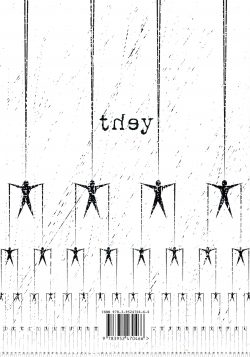
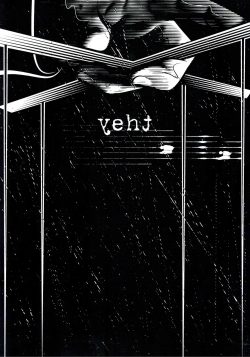
yeht: they


By Anonymous Busch & Michael A. Reed
ISBN: 978-3-9524704-6-6 (PB)

It’s been a fraught few years just recently, and if I’ve learned anything from them, it’s that anxiety is habit-forming. With that in mind here’s a fascinatingly compiled dossier offering a glimpse at how the world really runs, cunningly disguised as a science fiction thriller…

Crafted with subversive passion and loads of alternative data by Anonymous Busch with superb rendering in stark monochrome and oodles graphic aplomb by the clearly-pseudonymous Michael A Reed (who’s a dab hand with both typography and cruel caricature), there’s probably a wealth of covert meaning behind this ripping yarn of a dedicated journalist pulled into a cascade of fox-&-hound events just “20 minutes into the future”…

Young, but an old-school rebel at heart, Melissa “Missy” Anthrop is facing the end of her career before it starts because she won’t get the implants everybody else welcomes. Things suddenly change when a mystery phone and credit card wind up in her hands, ordering her to investigate certain events and people…

Soon she’s enmired in the network of 1-percenters, Faith leaders, politicians and celebrities who really run the world, escaping from faceless thugs and saving harvested children in a frantic dash to expose all the secrets. Especially, and most notably, who sent her the phone and card in the first place?

Whimsical, waspish, drenched in paranoia and riffing on every conspiracy theory doing the rounds, this is either a delightful and engaging adventure spoof, or a real deal exposé I’m too rich, complacent and evil to spot.

Maybe it’s best that you read it yourself – while you still can – and make your own mind up?
© 2017 Anonymous Busch & Michael A. Reed. All rights reserved.

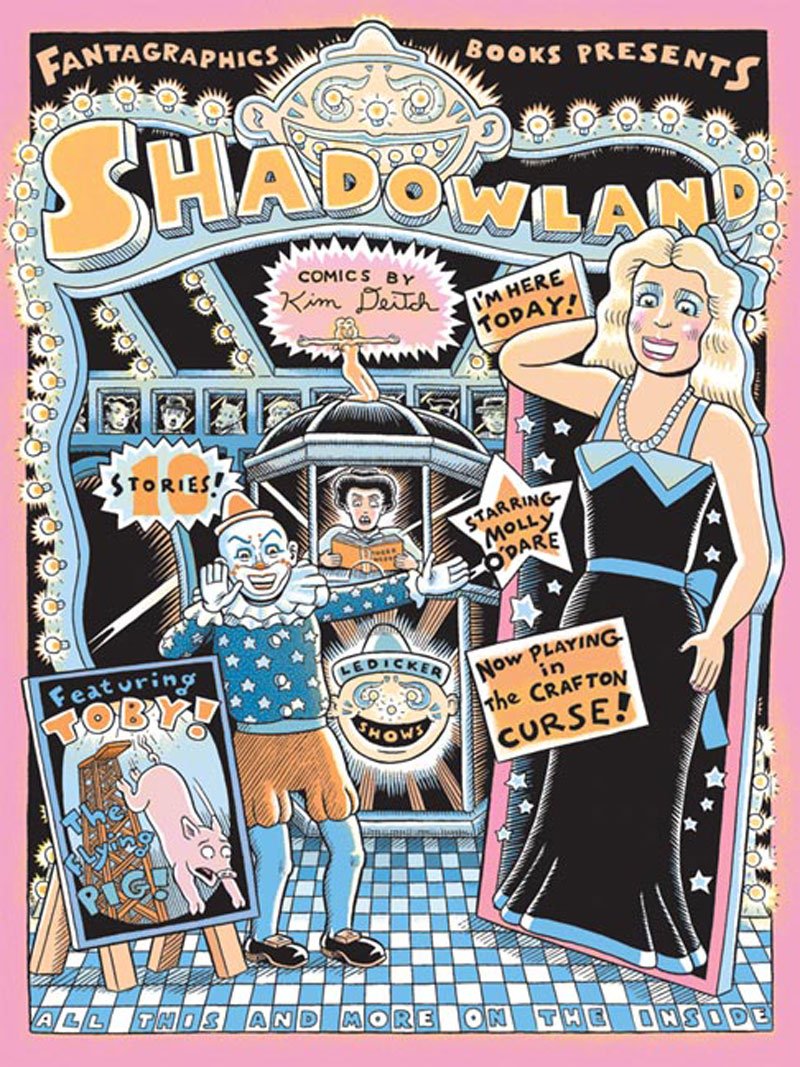
Shadowland


By Kim Deitch (Fantagraphics Books)
ISBN 978-1-56097-771-1 (PB)

Roll, up! Roll, up!

Kim Deitch has been one of the leading lights of America’s Comix Underground since its earliest days, although as with Harvey Pekar and American Splendor, it was only relatively late on that he has won wider acclaim: in his case for 2002’s Boulevard of Broken Dreams and 2010’s The Search for Smilin’ Ed. For much of his cartooning career he has crafted occasional short stories about a down-at-heel carnival and the shabby, eccentric no-hopers that have populated it through-out the 150 years. Shadowland – available in paperback or digital formats – was the first complete collection, and also features a splendid colour gallery of supplemental artwork.

Combining science-fiction, conspiracy theory, urban history and legend, show-biz razzmatazz, Film Noir and an outrageously honed sense of the absurd, Deitch weaves an irresistible spell that charms, thrills and disturbs whilst his meticulous black and white drawing holds the reader in a deceptively fluffy grip.

Dripping authentic loving nostalgia and oozing the sleazy appreciation everyone secretly harbours for trashy entertainments, the story of clown and Carny Al Ledicker Jr. as he shambles his way through the sleaziest parts of the 20th century in this wonderful compendium and critique of the “Americana Way” is a truly unmissable, fabulously guilty pleasure. Fill yer boots, folks!
Text, art & characters © 2006 Kim Deitch. All rights reserved.

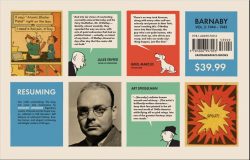
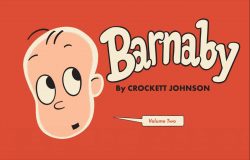
Barnaby volume 2


By Crockett Johnson (Fantagraphics Books)
ISBN: 978-1-60699-709-3 (HB)

This is one of those rare books worthy of two reviews. So, if you’re in a hurry…

Buy Barnaby now – it’s one of the five best comic strips of all time and this superb hardcover compilation has lots of fascinating extras. If you harbour any yearnings for the lost joys of childish wonder and the suspicious glee in catching out adults trying to pull a fast one, you would be crazy to miss this book…

However, if you’re still here and need a little more time to decide…

Today’s newspapers have precious few continuity drama or adventure strips. Indeed, if a paper has any strips – as opposed to single panel editorial cartoons – chances are they will be of the episodic variety typified by Jim Davis’ Garfield or Scott Adams’ Dilbert.

You might describe these as single-idea pieces with a set-up, delivery and punch-line, all rendered in a sparse, pared-down-to-basics drawing style. In that they’re nothing new and there’s nothing wrong any of that ilk on their own terms.

Narrative impetus comes from the unchanging characters themselves, and a building of gag-upon-gag in extended themes. The advantage to newspapers is obvious. If you like a strip it encourages you to buy the paper. If you miss a day or two, you can return fresh at any time having, in real terms, missed nothing.

Such was not always the case, especially in America. Once upon a time the daily “funnies” – comedic or otherwise – were crucial circulation builders and preservers, with lush, lavish and magnificently rendered fantasies or romances rubbing shoulders with thrilling, moody masterpieces of crime, war, sci-fi and everyday melodrama. Even the legion of humour strips actively strived to maintain an avid, devoted following.

And eventually there was Barnaby, which in so many ways bridged the gap between then and now.

On April 20th 1942, with America at war for the second time in 25 years, the liberal New York tabloid PM began running a new, sweet little kids’ strip which was also the most whimsically addicting, socially seditious and ferociously smart satire since the creation of Al Capp’s Li’l Abner – another utter innocent left to the mercy of venal and scurrilous worldly influences…

The outlandish 4-panel daily, by Crockett Johnson, was the product of a perfectionist who didn’t particularly care for comics, but who – according to celebrated strip historian Ron Goulart – just wanted steady employment…

David Johnson Leisk (October 20th 1906-July 11th 1975) was an ardent socialist, passionate anti-fascist, gifted artisan and brilliant designer who spent much of his working life as a commercial artist, Editor and Art Director. Born in New York City and raised in the outer wilds of Queens when it was still semi-rural – very near the slag heaps which would eventually house two New York World’s Fairs in Flushing Meadows – “Dave” studied art at Cooper Union (for the Advancement of Science and Art) and New York University before leaving early to support his widowed mother. This entailed embarking upon a hand-to-mouth career drawing and constructing department-store advertising.

He supplemented his income with occasional cartoons to magazines such as Collier’s before becoming an Art Editor at magazine publisher McGraw-Hill. He also began producing a moderately successful, “silent” strip called The Little Man with the Eyes.

Johnson had divorced his first wife in 1939 and moved out of the city to Connecticut, sharing an ocean-side home with student (and eventual bride) Ruth Krauss, always looking to create that steady something when, almost by accident, he devised a masterpiece of comics narrative. However, if his friend Charles Martin hadn’t seen a prototype Barnaby half-page lying around the house, the series might never have existed…

Happily, Martin hijacked the sample and parlayed it into a regular feature in prestigious highbrow leftist tabloid PM simply by showing the scrap to the paper’s Comics Editor Hannah Baker. Among her other finds was a strip by a cartoonist dubbed Dr. Seuss which would run contiguously in the same publication. Despite Johnson’s initial reticence, within a year Barnaby had become the new darling of the intelligentsia…

Soon there were book collections, talk of a Radio show (in 1946 it was adapted as a stage play), a quarterly magazine and rave reviews in Time, Newsweek and Life. The small but rabid fan-base ranged from politicians and the smart set such as President and First Lady Roosevelt, Vice-President Henry Wallace, Rockwell Kent, William Rose Benet and Lois Untermeyer to cool celebrities such as Duke Ellington, Dorothy Parker, W. C. Fields and even legendary New York Mayor Fiorello La Guardia. Of course, the last two might only have been checking the paper because the undisputed, unsavoury star of the strip was a scurrilous if fanciful amalgam of them both…

Not since George Herriman’s Krazy Kat had a piece of popular culture so infiltrated the halls of the mighty, whilst largely passing way over the heads of the masses and without troubling the Funnies sections of big circulation papers. Over its 10-year run (April 1942 to February 1952), Barnaby was only syndicated to 64 papers nationally, with a combined circulation of just over five and a half million, but it kept Crockett (a childhood nickname) and Ruth in relative comfort whilst America’s Great and Good constantly agitated on the kid’s behalf.

What more do you need to know?

One dark night a little boy wishes for a Fairy Godmother and something strange and disreputable falls in through his window…

Barnaby Baxter is a smart, ingenuous, scrupulously honest and rather literal pre-schooler (4 years old to you) and his ardent wish is to be an Air Raid Warden like his dad. Instead, he is “adopted” by a short, portly, pompous, mildly unsavoury and wholly discreditable windbag with pink pixie wings.

Jackeen J. O’Malley, card carrying-member of the Elves, Gnomes, Leprechauns and Little Men’s Chowder and Marching Society – although he hasn’t paid his dues in years – unceremoniously installs himself as the lad’s Fairy Godfather. A lazier, more self-aggrandizing, mooching old glutton and probable soak (he certainly frequents taverns but only ever raids the Baxter’s icebox, pantry and humidor, never their drinks cabinet…) could not be found anywhere.

Due more to intransigence than evidence – there’s always plenty of physical proof, debris and fallout whenever O’Malley has been around – Barnaby’s mum and dad adamantly refuse to believe in the insalubrious sprite, whose continued presence hopelessly complicates the sweet boy’s life.

The poor doting parents’ abiding fear is that Barnaby is afflicted with Too Much Imagination…

At the end of the first volume O’Malley implausibly – and almost overnight – became an unseen and reclusive public Man of the Hour, preposterously translating that cachet into a political career by accidentally becoming a patsy for a vast and corrupt political machine. In even more unlikely circumstances O’Malley is then elected to Congress – which somehow doesn’t seem so fantastic any more…

This strand gave staunchly socialist cynic Johnson ample opportunity to ferociously lampoon the electoral system, the pundits and even the public. As usual Barnaby’s parents had to perpetually put down their boy: assertively assuring him that the O’Malley the grown-ups had elected was not a fat little man with pink wings…

Despite looking like a fraud – he’s almost never seen using his magic and always has one of Dad’s stolen panatela cigars as a substitute wand – J. J. O’Malley is the real deal: he’s just incredibly lazy, greedy, arrogant and inept. He does sort of grant Barnaby’s wishes though… but never in ways that might be wished for…

Once O’Malley has his foot in the door – or rather through the bedroom window – a succession of bizarre characters start sporadically turning up to baffle and bewilder Barnaby and Jane Shultz, the sensible little girl next door.

Even the boy’ new dog Gorgon is a remarkable oddity. The pooch can talk – but never when adults are around, and only then with such overwhelming dullness that everybody listening wishes him as mute as every other mutt…

The mythical oddballs and irregulars include timid ghost Gus, Atlas the Giant (a 2-foot tall, pint-sized colossus who is not that impressive until he gets out his slide-rule to demonstrate that he was, in truth, a mental Giant) and LauncelotMcSnoyd, an invisible Leprechaun and O’Malley’s personal gadfly: always offering harsh, ribald home truths and counterpoints to the Godfather’s self-laudatory pronouncements…

Johnson continually expanded his gently bizarre cast of gremlins, ogres, ghosts, policemen, Bankers, crooks, financiers and stranger personages – all of whom can see O’Malley – but the unyieldingly faithful little lad’s parents are always too busy and too certain the Fairy Godfather and all his ilk are unhealthy, unwanted, juvenile fabrications.

This second stupendous collection – available as a landscape hardback and in digital formats – opens with a hearty appreciation from Jules Feiffer in the Foreword before cartoonist, biographer and historian R. C. Harvey provides a critical appraisal in ‘Barnaby and the Power of Imagination’. The captivating yarn-spinning commences next, taking us from January 1st 1944 to December 31st 1945.

There’s even more elucidatory content at the back after all those magic-filled pictures too, as education scholar and Professor of English Philip Nel provides a fact-filled, scene-setting, picture-packed ‘Afterword: O’Malley Takes Flight’and Max Lerner’s 1943 PM promo feature ‘Barnaby’s Progress’ is reprinted in full.

Nel also supplies strip-by-strip commentary and background in ‘The Elves, Leprechauns, Gnomes, and Little Men’s Chowder & Marching Society: A Handy Pocket Guide’…

However, what we all love is comics so let’s jump right in as the obese elf gets caught up in exhibiting his miniscule expertise in ‘The Manly Art of Self-Defense’ (running from 28th December 1943 to 19th January 1944), and follows Mr. Baxter’s purchase of a few items of exercise equipment.

Always with an eye to a fast buck, O’Malley organises a prize fight between poor gentle Gus and the obstreperous Brooklyn Leprechaun, all whilst delaying his long overdue return to the Capitol. The godfather is expert in delay and obfuscation but eventually, in a concatenation of curious circumstances, the Congressman buckles under pressure from both his human and fairy-folk constituents to push through a new hydroelectric project – in actuality two vastly different ones – and wings off to begin the process of funding ‘The O’Malley Dam’ (20th January – 22nd April)…

As the political bandwagon gets rolling, further hindered by Mr. Baxter and Barnaby visiting the Congressman’s never-occupied office in Washington DC, the flighty, easily distracted O’Malley takes it upon himself to inscribe the natural history of his people in ‘Pixie Anthropology’ (24th April-18th May), even as, back home, the Big Fight gets nearer and poor Gus continues to wilt under his punishing training regimen…

‘Mr. O’Malley, Efficiency Expert’ (19th May to 8th June), sees the Fairy Fool step in when overwork and worry laid Mr. Baxter low. The factory manager is pilloried by concerns over production targets, but whilst he is remanded to his sickbed, the flying figment busily “fixes” the crisis for him…

During that riotous sequence another oddball was introduced in the diminutive form of Gridley the Salamander: a “Fire Pixey” who can’t raise a spark, even if copiously supplied with matches and gasoline…

The under-worked winged windbag is a master of manipulation and ‘O’Malley and the Buried Treasure’ (9th June – 7thSeptember) has the airborne oaf inveigling invitations for the Baxters to the beachside cottage owned by Jane’s aunt. Once there, it isn’t long before avaricious imagination and a couple of old coins spawn a rabid goldrush amongst the adults who really should know better. This extended vacation also sees the first appearance of moisture-averse sovereign of the seas Davy Jones…

Whilst the Congressman busily avoids work, his seat vanishes during boundary reorganisation, but – ever-undaunted – the pixilated political animal soldiers on, outrageously campaigning in the then-ongoing Presidential Election throughout the cruelly hilarious ‘O’Malley for Dewey’ (8th September – 8th November 1944)…

Newspaper strips always celebrated seasonal events and, after the wry satire of the race for power, whacky whimsy is highlighted with the advent of ‘Cousin Myles O’Malley’ (9th – 24th November). The puny Puritan pixie had come over on the Mayflower and is still trying to catch a turkey for his very first Thanksgiving Dinner. Naturally his take-charge, thoroughly modern relative is a huge (dis)advantage to his ongoing quest…

With Christmas fast approaching, an injudicious expression from Ma Baxter regarding a fur wrap sets Barnaby and his Fairy guardian on the trail of the fabled and fabulous, ferocious ermine beast and debuts ‘The O’Malley Fur Trading Post’(25th November 1944 to 27th January 1945).

Although legendary and mythical gnomish huntsman J. P. Orion fails to deliver, an unlucky band of fur thieves fall into the hunters’ traps and discover their latest haul missing. Before long, poor Mr. Baxter is looking at the chilling prospect of jail time for receiving stolen property…

With the global conflict clearly drawing to a close, Johnson threw himself into the debate of what the post-War world would be like. In a swingeing attack on the financial system and the greedy gullibility of professional money men, Barnaby – and most especially his conniving godfather – almost shatter the American commercial world in a cunning fable entitled ‘J.J. O’Malley, Wizard of Wall Street’ (29th January – 26th May)…

With America still reeling, the ever-unfolding hilarity offers an arcane twist as Mr. Baxter suffers more than the usual degree of personal humiliation and confusion when he takes Barnaby, Gorgon and Jane for a short walk and loses them in the littlest woods in America.

They have of course been led astray by O’Malley who accidentally dumps them on ‘Emmylou Schwartz, Licensed Witchcraft Practitioner’ (28th May – 3rd July). She has been in a very bad mood ever since the Salem Witch Trials…

As a result of this latest unhappy encounter and a shameful incident with a black cat, the dogmatic dog is hexed and becomes ‘Tongue-Tied Gorgon’ (4th – 10th July)… not that most people could ever tell…

When Barnaby’s Aunt Minerva writes a bestseller, O’Malley feels constrained to guide her budding career in ‘Belles Lettres’ (11th July – 17th August). The obnoxious elf is a little less keen when he discovers it’s only a cookbook, but perks up when it leads to Minerva being offered a newspaper column. Being an expert in this field too, O’Malley continues his behind-the-scenes support amidst ‘The Fourth Estate’ (18th August – 8th September), renewing his old acquaintance with impishly literal Printers Devil Shrdlu…

Immune to O’Malley’s best efforts, Minerva remains a success and is soon looking for her own place. In ‘Real Estate’(10th September -10th October), Barnaby is helpless to prevent poor Gus being used by the godfather as a ghostly goad to convince a spiritualism-obsessed landlady to let to his aunt rather than a brace of conmen…

A perfect indication of the wry humour that peppered the feature can be seen in ‘Party Invitations’ – which ran from 11thto 20th October – as O’Malley attempts to supersede the usual turkey-and-fixin’s feast with a fashionable venison banquet – even though he can’t catch a deer and won’t be cooking it once it’s been butchered…

Congruent with that is the introduction of erudite aborigine ‘Howard the Sigahstaw Indian‘ (22nd October – 23rdNovember) – who was just as inept in the hunting traditions of his forefathers – after which the festive preparations continue with ‘O’Malley’s Christmas List’ (24th November – 15th December) wherein the always-generous godfather discovers the miracle of store credit and goes gift shopping for everybody.

Never one to concentrate for long, he is briefly distracted by a guessing competition in ‘Bean-Counting’ (8th – 15thDecember): the prize of a home movie camera being the ideal gift for young Barnaby before this parade of monochrome cartoon marvels concludes with the dryly hilarious saga of ‘The Hangue Dogfood Telephone Quiz Program’ (17thDecember 1945-1st January 1946) wherein Gorgon’s reluctant answers to an advertising promotion again threaten to hurl the entire American business world into chaos…

Intellectually raucous, riotously, sublimely surreal and adorably absurd, the untrammelled, razor-sharp whimsy of the strip is instantly captivating, and the laconic charm of the writing is well-nigh irresistible, but the lasting legacy of this ground-breaking strip is the clean sparse line-work that reduces images to almost technical drawings, unwavering line-weights and solid swathes of black that define space and depth by practically eliminating it, without ever obscuring the fluid warmth and humanity of the characters. Almost every modern strip cartoon follows the principles laid down here by a man who purportedly disliked the medium…

The major difference between then and now should also be noted, however.

Johnson despised doing shoddy work, or short-changing his audience. On average, each of his daily encounters – always self-contained – built on the previous episode without needing to re-reference it, and contained three to four times as much text as its contemporaries. It’s a sign of the author’s ability that the extra wordage was never unnecessary, and often uniquely readable, blending storybook clarity, the snappy pace of “Screwball” comedy films and the contemporary rhythms and idiom of authors such as Damon Runyan and Dashiel Hammett.

He managed this miracle by typesetting the dialogue and pasting up the strips himself – primarily in Futura Medium Italic but with effective forays into other fonts for dramatic and comedic effect.

No sticky-beaked educational vigilante could claim Barnaby harmed children’s reading abilities by confusing the tykes with non-standard letter-forms (a charge levelled at comics as late as the turn of this century), and his efforts also allowed him to maintain an easy, elegant, effective balance of black and white, making the deliciously diagrammatic art light, airy and implausibly fresh and accessible.

During 1946-1947, Johnson surrendered the strip to friends as he pursued a career illustrating children’s books such as Constance J. Foster’s This Rich World: The Story of Money, but eventually he returned, crafting more magic until he retired Barnaby in 1952 to concentrate on books.

When Ruth graduated, she became a successful children’s writer and they collaborated on four tomes, The Carrot Seed (1945), How to Make an Earthquake, Is This You? and The Happy Egg, but these days Crockett Johnson is best known for his seven “Harold” books which began in 1955 with the captivating Harold and the Purple Crayon.

During a global war with heroes and villains aplenty, where no comic page could top the daily headlines for thrills, drama and heartbreak, this feature was an absolute panacea to the horrors without ever ignoring or escaping them. The entire glorious confection that is Barnaby is all about our relationship with imagination. This is not a strip about childhood fantasy. The theme here, beloved by both parents and children alike, is that grown-ups don’t listen to kids enough, and that they certainly don’t know everything.

For far too long Barnaby was a lost masterpiece. It is influential, ground-breaking and a shining classic of the form. You are all the poorer for not knowing it, and should move mountains to change that situation. I’m not kidding.

Liberally illustrated throughout with sketches, roughs, photos and advertising materials as well as Credits, Thank Yous and a brief biography of Johnson, this big hardback book of joy is a an indispensable addition to all bookshelves and collections – most especially yours…
Barnaby vol. 2 and all Barnaby images © 2014 the Estate of Ruth Krauss. Supplemental material © 2014 its respective creators and owners.

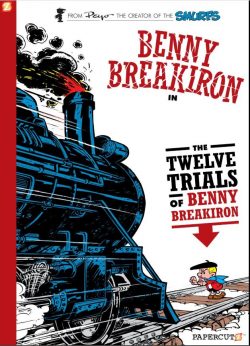
Benny Breakiron volume 3: The Twelve Trials of Benny Breakiron


By Peyo, with Yvan Delporte & Walthéry, translated by Joe Johnson (Papercutz/NBM)
ISBN: 978-1-59707-492-6 (HB Album)

Pierre Culliford was born in Belgium in 1928 to a family of British origin living in the Schaerbeek district of Brussels. An admirer of the works of Hergé and American comics licensed to Le Journal de Mickey, Robinson and Hurrah!, he developed his own artistic skills but the war and family bereavement forced him to forgo further education and find work.

After time spent toiling as a cinema projectionist, in 1945 Culliford joined C.B.A. animation studios, where he met André Franquin, Morris and Eddy Paape. When the studio closed, he briefly studied at the Brussels Academy of Fine Arts before moving full-time into graphic advertising. In his spare time, he began submitting comic strips to the burgeoning post-war comics publishers.

His first sale was in April 1946: Pied-Tendre, a tale of American Indians in Riquet, the comics supplement to the daily L’Occident newspaper. Further sales to other venues followed and in 1952 his knight Johan found a permanent spot in Le Journal de Spirou. Retitled Johan et Pirlout, the strip prospered and in 1958 introduced a strange bunch of blue woodland gnomes to the tale. They were called Les Schtroumpfs.

Culliford – by now using nom de plume Peyo – would gradually turn those adorable little mites (known to us and most of the world as The Smurfs) into an all-encompassing global empire, but before being sucked onto that relentless treadmill, he still found time to create a few other noteworthy strips such as the titanic tyke on view here today.

In 1960, Benoît Brisefer – AKA Benedict Ironbreaker and/or (in Dutch) Steven Sterk – debuted in Le Journal de Spirou #1183 (December 1960). With a few slyly added tips of the hat to Siegel & Shuster’s Superman, the wryly bucolic adventures celebrated a small boy with superhuman strength living in a generally quiet and unassuming little Belgian town.

Quiet, well-mannered, gentle and a little lonely, Benny just happens to be the mightiest boy on Earth; able to crush steel in his tiny hands, leap huge distances and run faster than a racing car. He is also generally immune to all physical harm, but his fatal and rather ubiquitous weakness is that all his strength deserts him whenever he catches a cold…

Benny never tries to conceal his abilities but somehow no adults ever catch on. They generally think he’s telling fibs or boasting, and whenever he tries to prove he can bend steel in his hands, the unlucky lad gets another case of the galloping sniffles…

Most kids avoid him. It’s hard to make friends or play games when a minor kick can pop a football like a balloon and a shrug can topple trees…

Well-past-it Brits of my age and vintage might remember the character from weekly comics in the 1960’s. As Tammy Tuff – The Strongest Boy on Earth – and later as Benny Breakiron and Steven Strong – our beret-wearing champion appeared in Giggle and other periodicals from 1967 onwards.

With Peyo’s little blue cash-cows taking up ever larger amounts of his concentration and time, other members of his studio assumed greater responsibilities for Benoît as the years passed. Willy Maltaite (“Will”), Gos, Yvan Delporte, François Walthéry and Albert Blesteau all pitched in and Jean Roba created many eye-catching Spirou covers, but by 1978 the demands of the Smurfs were all-consuming and all the studio’s other strips were retired.

You can’t keep a good super-junior down, though, and after Peyo’s death in 1992, his son Thierry Culliford and cartoonist Pascal Garray revived the strip, adding six more volumes to the eight generated by Peyo and his team between 1960 and 1978.

Thanks to the efforts of US publisher Papercutz, the first four of those gloriously genteel and outrageously engaging power fantasies are available to English-language readers – both as robust full-colour hardbacks and as all-purpose eBooks – and this third exploit begins in the sedate city of Vivejoie-la-Grande, where the kid goes about his solitary life, doing good deeds in secret and being as good a boy as he can….

During the annual fair, his elderly friend Monsieur Dussiflard meets an old chum from their days in a jazz band. In the course of catching up, they learn that another mutual pal has become emir of an Arabian kingdom. Long ago, he gave the members of the band a charter granting them rights to a piece of desert… one that is now worth billions in oil revenues…

Back then, the comrades thought it hilarious to scrupulously divide the precious paper into nine parts, but none of them ever threw way their scrap…

As the adults chat and Benny listens, dark deeds are underway. Dussiflard’s home is burgled, triggering a frantic race around the world, with our heroes one step behind a cunning mastermind who will baulk at nothing to secure the entire document and the riches it promises…

All over the globe, Little Benny performs a succession of incredible feats – each one completely missed by Dussiflard and his beleaguered Jazz men – to stymie the malevolent schemer, before arriving home to deal the villain his just desserts…

Fast-paced, wry and sporting a fine eye for the dafter side of super-heroics, this is another fabulously winning fantasy about childhood validation and agency, providing a wealth of action, thrills and chortles for lovers of incredible adventure and comics excellence.
© Peyoâ„¢ 2013 – licensed through Lafig Belgium. English translation © 2013 by Papercutz. All rights reserved.

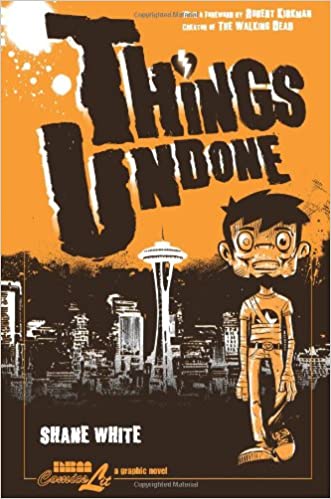
Things Undone


By Shane White (NBM/ComicsLit)
ISBN: 978-1-56163-563-4 (PB)

The sheer variety of themes and species in contemporary cartooning can be quite breathtaking to an old coot who grew up with the restricted comics fare of a baby-boomer in Britain – and I wouldn’t have it any other way. These days I can peruse a graphic novel on any subject in any style and incorporating any number of converging genres – and this compelling gem comes pretty close to defying categorisation.

Things Undone is a little bit romance, a little bit alternative biography, a little bit punk and a whole lot of terrific. Young Rick Watts is an artist and world-weary peon in the art-consuming field of video games graphics. He’s just moved to Seattle for a new job, but nothing’s really changed, and relationship-wise things aren’t going so great either. Long-distance never works so he dragged his girl-friend clear across the country, and his 7-year hitch with her couldn’t have ended more badly…

When you can’t catch a break and the new life proves no better than the old one, what can a guy do? And it’s only a matter of time before somebody notices that Rick is a zombie, what with him leaving decaying extremities and eyeballs and such like all over the place. Maybe he should just get a gun and do the job right…?

This sharp and bittersweet examination of modern life is funny and poignant, using the populist imagery of the walking dead as an effective metaphor for modern life, but it’s the amazingly comforting art and production (the book is printed in black, white and shocking orange, in a kind of raucous skate-punk cartoon style) that underpins this tale, making the tragic comedic, and making confusion the means of exploring the mundane horrors of urban living.

Clever, witty and one of the most sensitive funny/sad, real/imaginary stories you’ll ever read. Track this down and change your life…
© 2009 Studiowhite LLC.

Black Jack volume 1


By Osamu Tezuka, translated by Camelia Nieh (Vertical)
ISBN: 978-1934287-27-9 (Tankōbon PB)

There aren’t many Names in comics. Lots of creators; multi-disciplined or single focussed, who have contributed to the body of the art form, but we don’t have many Global Presences whose contribution have affected generations of readers and aspirants all over the World, like a Mozart or Michelangelo or Shakespeare. There’s just Hergé and Jack Kirby and Osamu Tezuka.

Tezuka was born in Qsaka Prefecture on 3rd November 1928, and as a child suffered a severe illness that made his arms swell. The doctor who cured him inspired him to study medicine, and although Osamu began his professional drawing career while at university, he persevered with his studies and qualified as a doctor too. As he faced a career crossroads, his mother advised him to do the thing that made him happiest. He never practiced as a healer but the world was gifted with such classic cartoon masterpieces as Tetsuwan Atomu (Astro-boy), Kimba the White Lion, Buddha, Adolf and literally hundreds of other graphic narratives. Along the way Tezuka incidentally pioneered, if not created, the Japanese anime industry…

Able to speak to the hearts and minds of children and adults equally, Tezuka’s work ranges from the charming to the disturbing and even terrifying. In 1973 he turned his storyteller’s heart to the realm of medicine and created Burakku Jakku, a lone wolf surgeon living outside society’s boundaries and rules: a scarred and seemingly heartless mercenary working miracles for the right price but also a deeply human wounded soul who makes surgical magic from behind icy walls of cool indifference and casual hostility – think Silas Marner before the moppet turns up or Ebenezer Scrooge before bedtime; except Black Jack never, ever gets soft and cuddly.

These translated, collected adventures – available paperback and digital formats – begin with the frankly startling ‘Is There a Doctor?’, wherein the joyriding son of the richest man in the world is critically injured. The boy’s ruthless father forces Black Jack to perform a full body transplant on an unwilling victim… but the super-surgeon still manages to turn the tables on the vile plutocrat…

Each story is self-contained over about 20 pages, and the second – ‘The First Storm of Spring’ – tells the eerie, poignant tale of a young girl whose corneal transplant has gone strangely awry. Can the handsome boy she keeps seeing possibly be the ghostly original owner of the eye, and if so, what was he truly like?

With ‘Teratoid Cystoma’ the series solidly enters into fantasy territory whilst ramping up the medical authenticity. Tezuka chose to draw in a highly stylised, “Big-foot” manner (he was the acknowledged inventor of the Manga Big-Eyes artistic device) but with increasing dependence on surgical and anatomical veracity, his innate ability to render anatomy and organs realistically truly came to the fore.

A teratonous cystoma occurs when twins are conceived but one of the embryos fails to cohere. Undifferentiated portions of one twin, a limb or organ grows within and nourished by the other. As the surviving twin matures, the enclosed “spare parts” start to distend the body, appearing like a cyst or growth.

For the sake of narrative – and possibly to just plain freak you out – in this story a famous personage wishing total discretion requires the Ronin Doctor to remove a huge growth from her. Many Japanese have a frankly unhealthy prejudice against physical imperfection – for more search “the Hibakusha” – and this case is a much about stigma and position as wellbeing…

The mystery patient’s problem is exacerbated because whenever other surgeons have tried to operate, they have been debilitated by a telepathic assault from the growth. Overcoming incredible resistance, Black Jack succeeds, removing a fully-formed brain and nervous system. Ignoring the disgust of the patient and doctors, he then builds an artificial body for the stunted, sentient remnants; and calls her Pinoko.

‘The Face Sore’ combines Japanese legends of the Jinmenso (intelligent, garrulous tumours) with cases of disfiguring carbuncles and rashes to produce a very scary modern horror story – and by modern, I mean lacking a happy ending…

Pinoko, looking like a little girl (whether she’s a year old or eighteen is a running gag throughout the series) has meanwhile become Black Jack’s secretary/major domo and gadfly. In ‘Sometimes Like Pearls’, she opens a unique parcel addressed to him which leads to some invaluable back-story as the solitary surgeon travels to see his great teacher and learns one final lesson…

‘Confluence’ provides a little twisted romance as the medical maverick loses out on a chance at love when undertaking a radical procedure to save a young woman from uterine cancer, whilst in ‘The Painting is Dead!’ an artist caught in a nuclear test endures a full brain transplant just to be able to finish his painting condemning atomic warmongers.

‘Star, Magnitude Six’ exposes the pompous venality and arrant cronyism, not to mention entrenched stupidity, of hospitals’ hierarchical hegemonies in a tale satisfyingly reminiscent of Steve Ditko’s H series and J series of polemical objectivist parables before the ruthless outlaw surgeon meets his female counterpart in the bittersweet ‘Black Queen.’

‘U-18 Knew’ moves us into pure science fiction territory when the unlicensed doctor is hired by an American medical facility to operate on a vast medical computer that has achieved true sentience, leading to some telling questions about who – and what – defines “humanity.”

An annoying sidebar I feel compelled to add here: For many years broad, purely visual racial stereotypes were common “shorthand” in Japanese comics – and ours, and everybody else’s. They crop up here, but please remember that even at the time this story originated from, this was in no way a charged image; Tezuka’s depictions of native Japanese were just as broad and expressionistic. A simple reading of the text should dispel any notions of racism: but if you can’t get past these decades-old images, just put the book down. Don’t buy it. It’s your loss.

A heartrendingly powerful tale of determination sees a young polio victim almost fail a sponsored walk until an enigmatic stranger with a scarred face bullies, abuses and provokes him to finish. It also provides more clues to Black Jack’s past in ‘The Legs of an Ant’ before this first collection concludes with ‘Two Loves’ as a van driver deprives the greatest sushi artist in the world of his arm and his dreams when he runs him over. The lengths to which the driver goes to make amends are truly staggering… but sometimes Fate just seems to hate some people…

One thing should always be remembered when reading these stories: despite all the scientific detail, all the frighteningly accurate terminology and trappings. Black Jack isn’t medical fiction; it is an exploration of morality with medicine raised to the level of magic… or perhaps duelling.

This is a saga of personal combat, with the lone gunfighter battling hugely oppressive counter-forces (the Law, the System, himself) to win just one more victory: medicine as mythology, battles of a prescribing Ronin with a Gladstone bag.

Elements of rationalism, science-fiction, kitchen sink drama, spiritualism and even the supernatural appear in this saga of Japanese Magical Realism to rival the works of Carlos Fuentes and Gabriel García Márquez. Mostly though, these are highly addictive tales of heroism; ones that that will stay with you forever.
© 2008 by Tezuka Productions. Translation © 2008 by Camelia Nieh and Vertical, Inc. All Rights Reserved.

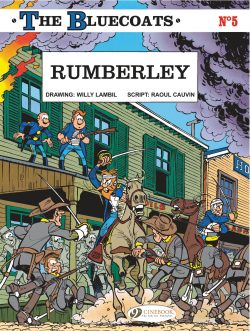
The Bluecoats volute 5: Rumberley


By Willy Lambil & Raoul Cauvin, translated by Erica Jeffrey (Cinebook)
ISBN: 978-1-84918-108-2 (Album PB)

The myths and legends of the cinematic American West have fascinated Europeans virtually since the actual days of stagecoaches and gunslingers. Hergé and Moebius were passionate devotees and the wealth of stand-out Continental comics series ranges from Italy’s Tex Willer to such Franco-Belgian classics as Blueberry and tangential all-ages classics such as Yakari. Even colonial dramas such as Pioneers of the New World and Milo Manara & Hugo Pratt’s Indian Summer fit the broad-brimmed bill.

As devised by Louis “Salvé” Salvérius & Raoul Cauvin – who has scripted the first 64 best-selling volumes until his retirement in 2020 – Les Tuniques Bleues (The Bluecoats) debuted at the end of the 1960s, specifically created to replace Lucky Luke when the laconic maverick defected from weekly anthology Le Journal de Spirou to rival publication Pilote.

The substitute swiftly became one of the most popular bande dessinée series in Europe.

Salvé was a cartoonist of the Gallic big-foot/big-nose humour school, and when he died suddenly in 1972 his replacement, Willy “Lambil” Lambillotte slowly introduced a more realistic – but still overtly comedic – illustrative tone and manner. Lambil is Belgian, born in 1936 and, after studying Fine Art in college, joined publishing giant Dupuis in 1952 as a letterer.

Born in 1938, scripter Cauvin is also Belgian and before entering Dupuis’ animation department in 1960 studied Lithography. He soon discovered his true calling – comedy writing – and began a glittering and prolific career at Spirou. In addition to Bluecoats he scripted dozens of long-running, award winning series including Cédric, Les Femmes en Blanc and Agent 212: more than 240 separate albums. The Bluecoats alone has sold more than 15 million copies of its 65 (and counting) album sequence.

Our sorry, long-suffering protagonists are Sergeant Cornelius Chesterfield and Corporal Blutch; a pair of worthy fools in the manner of Laurel & Hardy: hapless, ill-starred US cavalrymen posted to the wild frontier and various key points of fabled America during the War Between the States.

The original format featured single-page gags set around an Indian-plagued Wild West fort, but from the second volume Du Nord au Sud, the sad-sack soldiers went back East to fight in the American Civil War (a tale was rewritten as 18thalbum Blue retro to describe how the chumps were drafted during the war). Every subsequent adventure, although often ranging far beyond America and taking in a lot of thoroughly researched history, is set within the timeframe of the Secession conflict.

Blutch is your run-of-the-mill, whinging little-man-in-the street: work-shy, mouthy, devious and especially critical of the army and its inept commanders. Ducking, diving, even deserting whenever he can, he’s you or me – except sometimes he’s quite smart and heroic if no other (easier) option is available.

Chesterfield is a big burly professional fighting man; a career soldier who has passionately bought into all the patriotism and esprit-de-corps of the Military. He is brave, never shirks his duty and wants to be a hero. He also loves his cynical little troll of a pal. They quarrel like a married couple, fight like brothers and simply cannot agree on the point and purpose of the horrendous war they are trapped in…

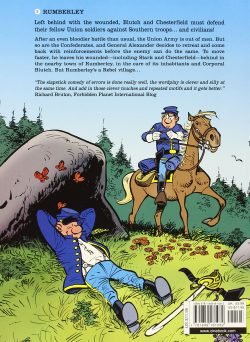
Rumberley was the fifth translated Cinebook album (chronologically the 15th European volume) and a far darker affair than usual. After a horrific battle, Union and Confederate forces are spent and exhausted, although the Blues have advanced far into the South as a result of the sustained slaughter. However, with dwindling food and little ammunition, the Generals opt to fall back and re-supply with fresh troops and munitions. The only problem is what to do with the wounded. After all, bringing them back to safety would only slow down the rearward advance. Then one bright, over-privileged spark has the notion of just billeting the unusable Union soldiers on the nearest – albeit enemy – town…

Amongst the dead and dying are grievously injured Chesterfield and war-crazy Captain Stark. Even Blutch is there, but his leg wound might be minor, self-inflicted or possibly utterly bogus…

Their reception by the women, children, aged and infirm of Rumberley is hostile to say the least, but the Union dregs have no place else to go and no strength left to leave anyway. Forcibly appropriating the livery stable as a field hospital, Blutch and Chesterfield aid the exhausted doctors and surgeons as best they can, but the simmering tensions and occasional assaults by the townsfolk indicates there is real trouble brewing and this kettle is about to boil over very soon…

And then the townsfolk start drifting away. Rumours spread that a Confederate force is approaching Rumberley. The doctors try to move their charges out, and Blutch finds himself in the uncanny position of staying behind as rearguard when Chesterfield decides to buy them time to get away…

When it comes, the battle is a bizarre affair. The Rebels are fit but have little ammunition so the Bluecoats give a good accounting of themselves, but are almost done for when Stark unexpectedly leads a life-saving cavalry charge of the Union wounded to save them. During the insane clash, town buildings are set afire and the citizens of Rumberley rush back to save their home and possessions.

And then something strange happens: the killing stops and Blues, Greys and civilians work together to save rather than destroy…

This is a hugely amusing anti-war saga targeting younger, less world-weary audiences. Historically authentic, and always in good taste despite an uncompromising portrayal of violence, the attitudes expressed by our down-to-earth pair never make battle anything but arrant folly and, like the hilarious yet insanely tragic war-memoirs of Spike Milligan, these are comedic tales whose very humour makes the occasional moments of shocking verity doubly powerful and hard-hitting.

Funny, thrilling, beautifully realised and eminently readable, Bluecoats is the sort of war-story and Western which appeals to the best, not worst, of the human spirit.
© Dupuis 1979 by Lambil & Cauvin. English translation © 2011 Cinebook Ltd. All rights reserved.

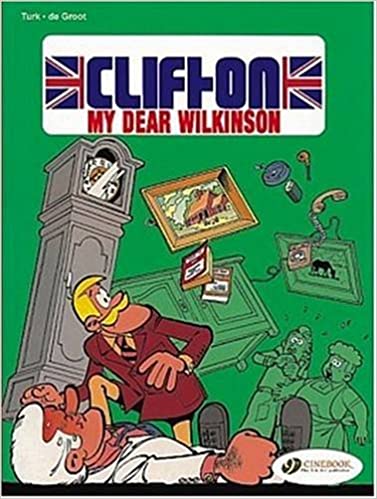
Clifton volume 1: My Dear Wilkinson


By De Groot & Turk translated by Luke Spear (Cinebook)
ISBN: 978-1-905469-06-9 (Album PB)

For some inexplicable reason most of Europe’s comics cognoscenti – especially the French and Belgians – are fascinated with us Brits. Gosh, I wonder if that’s still the case…?

Whether it’s Anglo air ace Biggles, indomitable adventurers Blake and Mortimer, the Machiavellian machinations of Green Manor or even the further travails of Long John Silver, or the amassed amateur sleuths of the Detection Club, the serried stalwarts of our Scepter’d Isles have cut a dashing swathe through the pages of the Continent’s assorted magazines and albums.

And then there’s Clifton…

Originally devised by child-friendly strip genius Raymond Macherot (Chaminou, Les croquillards, Chlorophylle, Sibylline) for Le Journal de Tintin, the doughty troubleshooter first appeared in December 1959.

After three albums worth of short strip material – compiled and released between 1959 and 1960 – Macherot left the magazine to join arch-rival Le Journal de Spirou and the eccentric comedy crime-fighter floundered until Tintin revived and repurposed him at the height of the Swinging London scene courtesy of Jo-El Azaza & Greg. These strips were subsequently collected as Les lutins diaboliques in French and De duivelse dwergen for Dutch-speakers in 1969.

He was furloughed again until the mid-1970s when writer Bob De Groot and illustrator Philippe “Turk” Liegeois revived Clifton for the long haul, producing ten tales of which this –Ce cher Wilkinson: Clifton from 1978 – was the fifth.

From 1984 onward artist Bernard Dumont AKA Bédu limned De Groot’s scripts before eventually assuming the writing chores too until the series folded in 1995. In keeping with its rather haphazard but Diehard nature, Clifton resurfaced again in 2003, crafted by De Groot and Michel Rodrigue in four further adventures; a grand total of 26 to date.

The setup is deliciously simple: pompous and irascible Colonel Sir Harold Wilberforce Clifton, ex-RAF and recently retired from MI5, has a great deal of difficulty accommodating being put out to pasture in rural Puddington. He thus takes every opportunity to get back in the saddle, occasionally assisting the Government or needy individuals as a gentleman troubleshooter.

Sadly, for Clifton – as with that other much-underappreciated national treasure Captain Mainwaring in Dad’s Army – he is keenly aware that he is usually the only truly competent man in a world full of blithering idiots…

In this initial translated adventure first seen in 2005 – and at last available in digital formats – the forceful personality is seething at home one night, reading ghost stories when a sequence of odd events culminates in both he and his nationally celebrated cook and housekeeper Miss Partridge witnessing plates of food and glasses of wine flying about and crashing to the floor.

Fortifying themselves with the remaining sherry, the staunch duo repair to their separate beds unaware that a very live presence has been spying on them and playing pranks…

The next day finds the perplexed sleuth at the town library, scanning the stacks for reports of similar phenomena and tediously regaled by one of the whippersnapper counter-staff who just happens to be an amateur and closet psychokinetic: demonstrably and smugly able to move small objects with the power of his mind…

With proof of a rather more rational explanation for recent events and an appropriate reference tome, Clifton bones up and is soon made annoyingly aware of stage performer the Great Wilkinson who is reputedly the world’s greatest exponent of the art of psychokinesis.

A quick jaunt to London in the old red sports car soon sees the former spy getting along famously with a diminutive performer who happily agrees to come down to Puddington and recce the Colonel’s troubled home. To be perfectly frank, the smiling showman is far more interested in meeting celebrated chef Miss Partridge…

A pleasant afternoon is interrupted by old associate Chief Inspector John Haig of Scotland Yard who is drowning in an uncanny mystery and desperately needful of a second opinion from MI5’s most self-congratulatory alumnus. Giant safes are going missing, seemingly plucked from buildings as if by mighty, invisible hands…

Thus proceeds a wickedly fast-paced romp with a genuine mystery tale at its comedic core. Clifton and Co fumble their way past roguish red herrings and through a labyrinthine maze of clues to the lair of a canny criminal mastermind with what seems the perfect MO. However, long before justice triumphs, the tinderbox temper of the suave sleuth is repeatedly triggered by clodhopping cops, obnoxious officials, short-fused chefs, imbecilic bystanders and a succession of young fools and old clowns all getting in the way and utterly spoiling the thrill of the chase…

Delightfully surreal, utterly accessible and doused with daft slapstick in the manner of Jacques Tati or our own Carry Onfilms (sans the saucy “slap ‘n’ tickle” stuff), this light-action epic rattles along in the grand old tradition of Will Hay, Terry-Thomas and Alistair Sim – or Wallace and Gromit and Mr Bean if you’re a callow yoof – offering readers a splendid treat and loads of timeless laughs.
Original edition © 1978 Le Lombard (Dargaud-Lombard S. A.) 1988 by De Groot & Turk. English translation © 2005 Cinebook Ltd.