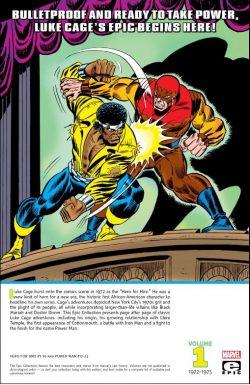
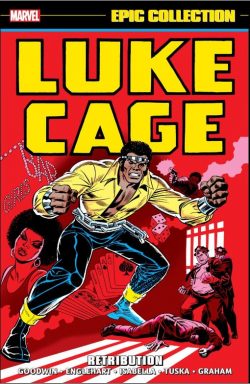
Luke Cage Epic Collection volume 1 1972-1975: Retribution


By Archie Goodwin, Steve Englehart, Tony Isabella, Len Wein, Gerry Conway, Billy Graham, George Tuska, Ron Wilson & various (Marvel)
ISBN: 978-1302928315 (TPB)

In 1968 the consciousness-raising sporting demonstration of Black Power at the Olympic Games politicised a generation of youngsters. By this time a few comics companies had already made tentative efforts to address what were national and socio-political iniquities, but issues of race and ethnicity took a long time to filter through to still-impressionable young minds avidly absorbing knowledge and attitudes via four-colour pages that couldn’t even approximate the skin tones of African-Americans.

As with television, breakthroughs were small, incremental and too often reduced to a cold-war of daringly liberal “firsts.” Excluding a few characters in Jungle comic-books of the 1940s and 1950, Marvel clearly led the field with a black soldier in Sgt. Fury’s Howling Commandos team – the historically impossible Gabe Jones who debuted in #1, May 1963. So unlikely a character was ol’ Gabe that he was re-coloured Caucasian at the printers, who clearly didn’t realise his ethnicity, but knew he couldn’t be un-white.

He was followed by actual negro superheroes Black Panther in Fantastic Four #52 (July 1966), and the Falcon in Captain America #117 (September 1969).

America’s first black hero to helm in his own title had come (and gone largely unnoticed) in a little remembered or regarded title from Dell Comics. Debuting in December 1965 and created by artist Tony Tallarico and scripter D.J. Arneson, Lobo was a gunslinger in the old west, battling injustice just like any cowboy hero would.

Arguably a greater breakthrough was Joe Robertson, City Editor of the Daily Bugle; an erudite, brave and proudly ordinary mortal distinguished by his sterling character, not costume or skin tone. He first appeared in Amazing Spider-Man # 51 (August 1967), proving in every panel that the world wouldn’t end if black folk and white folk occupied the same spaces…

This big change slowly grew out of raised social awareness during a terrible time in American history; yes, even worse than today’s festering social wound, as typified by cops under pressure providing no answer to seemingly constant Black Lives Matter events. Those tragedies occur in the UK too, so we have nothing to be smug about either. We’ve had race riots since the Sixties which left simmering scars that only comedians and openly racist politicians dare to talk about. Things today in don’t seem all that different, except the bile and growing taste for violence is turned towards European accents, or health workers as well as brown skins…

As the 1960s became a new decade, more positive and inclusive incidences of ethnic characters appeared in the USA, with DC finally getting an African-America hero in John Stewart (Green Lantern #87 December 1971/January 1972) – although his designation as a replacement Green Lantern might be construed as more conciliatory and insulting than revolutionary.

The first DC hero with his own title was Black Lightning. He didn’t debut until April 1977, although Jack Kirby had introduced Vykin in Forever People #1 and the Black Racer in New Gods #3 (March and July 1971) and Shilo Norman as Scott Free‘s apprentice (and eventual successor) in Mister Miracle #15 (August 1973).

As usual, it took a bold man and changing economics to really promote change. With declining comics sales at a time of rising Black Consciousness, cash – if not cashing in – was probably the trigger for “the Next Step.”

Contemporary “Blaxsploitation” cinema and novels had fired up commercial interests throughout America, and in that atmosphere of outlandish dialogue, daft outfits and barely concealed – if justified – outrage, an angry black man with a shady past and apparently dubious morals must have felt like a sure-fire hit to Marvel’s bosses.

Luke Cage, Hero for Hire launched in the summer of 1972. A year later, Black Panther finally got his own series in Jungle Action #5 and Blade: Vampire Hunter debuted in Tomb of Dracula #10.

This stunning trade paperback/digital compendium collects the first 23 issues of the breakthrough series: including the moment the series was thematically adjusted to become Luke Cage Power Man and cumulatively spanning June 1972 to February 1975.

The saga begins with Lucas, a hard-case inmate at brutal Seagate Prison. Like all convicts he says he was framed and his uncompromising attitude makes mortal enemies of savage, racist guards Rackham and Quirt, whilst not endearing him to the rest of the prison population such as genuinely bad guys Shades and Comanche either…

‘Out of Hell… A Hero!’ was written by Archie Goodwin and illustrated by George Tuska & Billy Graham – with some initial assistance from Roy Thomas and John Romita Senior – and sees a new warden arrive promising to change the hell-hole into a proper, correctly administered correctional facility. Prison doctor Noah Burstein convinces Lucas to participate in a radical experiment in exchange for a parole hearing, having heard the desperate con’s tale of woe…

Lucas had grown up in Harlem, a tough kid who had managed to stay honest even when his best friend Willis Stryker had not. They remained friends even though they walked different paths – until a woman came between them. To be rid of his romantic rival Stryker planted drugs and had Lucas shipped off to jail. While he was there his girl Reva, who had never given up on him, was killed when she got in way of bullets meant for up-and-coming gangster Stryker…

With nothing to lose Lucas undergoes Burstein’s process – an experiment in cell-regeneration – but Rackham sabotages it, hoping to kill the con before he can expose the illegal treatment of convicts. The equipment goes haywire and something incredible occurs. Lucas – panicked and somehow super-strong – punches his way out of the lab and the through the prison walls, only to be killed in hail of gunfire. His body plunges over a cliff and is never recovered…

Months later, a vagrant prowls the streets of New York City and stumbles into a robbery. Almost casually he downs the felon and accepts a reward from the grateful victim. He also has a bright idea. Strong, bullet-proof, street-wise and honest, Lucas will hide in plain sight while planning his revenge on Stryker. Since his only skill is fighting, he becomes a private paladin… a Hero for Hire…

Making allowances for the colourful, often ludicrous dialogue necessitated by the Comics Code’s sanitising of “street-talking Jive” this is probably the grittiest origin tale of the classic Marvel years, and the tense action continues in ‘Vengeance is Mine!’ as the man now calling himself Luke Cage stalks his target.

Stryker has risen quickly, now controlling a vast portion of the drug trade as the deadly Diamondback, and Cage has a big surprise in store when beautiful physician Claire Temple comes to his aid after a calamitous struggle. Thinking him fatally shot, her surprise is dwarfed by his own when Cage meets her boss.

Seeking to expiate his sins, Noah Burstein runs a rehab clinic on the sordid streets of Times Square, but his efforts have drawn the attention of Diamondback, who doesn’t like someone trying to fix his paying customers…

Burstein apparently does not recognise Cage, and even though faced with eventual exposure and return to prison, the Hero for Hire offers to help the hard-pressed medics. Setting up an office above a movie house on 42nd Street, Cage meets a lad who will be his greatest friend: D.W. Griffith: nerd, film freak and plucky white sidekick. However, before Cage can settle in, Diamondback strikes and the age-old game of blood and honour plays out the way it always does…

Issue #3 introduces Cage’s first returning villain in ‘Mark of the Mace!’ as Burstein – for his own undisclosed reasons – decides to keep Cage’s secret, and disgraced soldier Gideon Mace launches a terror attack on Manhattan. With his dying breath, one of the mad Colonel’s troops hires Cage to stop the attack, which he does in explosive fashion…

Inker Billy Graham graduated to full art chores for ‘Cry Fear… Cry Phantom!’ in #4, as a deranged, deformed maniac carries out random assaults in Times Square. Or is there perhaps another motive behind the crazed attacks?

Steve Englehart took over as scripter and Tuska returned to pencil ‘Don’t Mess with Black Mariah!’ in the next issue: a sordid tale of organised scavengers which debuts unscrupulous reporter Phil Fox: an unsavoury sneak with greedy pockets and a nose for scandal…

The private detective motif proved a brilliant stratagem in generating stories for a character perceived as a reluctant champion at best and outright antihero by nature. It allowed Cage to maintain an outsider’s edginess, but also meant danger and adventure literally walked through his shabby door every issue.

Such was the case with ‘Knights and White Satin’ (Englehart, Gerry Conway, Graham & Paul Reinman) as the swanky, ultra-rich Forsythe sisters hire Cage to bodyguard their dying father from a would-be murderer too impatient to wait the week it will take for the old man to die from a terminal illness.

This more-or less straight mystery yarn (if you discount a madman and killer robots) is followed by ‘Jingle Bombs’ – a strikingly different Christmas tale from Englehart, Tuska & Graham, before Cage properly enters the Marvel Universe in ‘Crescendo!’ after he is hired by Doctor Doom to retrieve rogue androids that had absconded from Latveria. They are

hiding as black men among the shifting masses of Harlem and the Iron Dictator needs someone who can work in the unfamiliar environment. Naturally, Cage accomplishes his mission, only to have Doom stiff him for the fee. Big mistake…

‘Where Angels Fear to Tread!’ (#9) finds the enraged Hero for Hire borrowing a vehicle from the Fantastic Four to play Repo Man in Doom’s own castle, just in time to get caught in the middle of a grudge match between the tyrant and alien invader the Faceless One.

It’s back to street-level basics in ‘The Lucky… and the Dead!’ as Cage takes on a gambling syndicate led by the schizophrenic Señor Suerte, who could double his luck by becoming murderous Señor Muerte (that’s Mr. Luck and Mr. Death to you): a 2-part thriller complete with rigged games and death-traps that climaxes in the startling ‘Where There’s Life…!’ as relentless Phil Fox finally uncovers Cage’s secret…

Issue #12 featured the first of many battles against alchemical villain ‘Chemistro!’, after which Graham handled full art duties with ‘The Claws of Lionfang’ – a killer using big cats to destroy his enemies – before Cage tackles hyperthyroid lawyer Big Ben Donovan in ‘Retribution!’ as the tangled threads of his murky past slowly become a noose around his neck…

‘Retribution: Part II!’ finds Graham and Tony Isabella sharing the writer’s role as many disparate elements converge to expose Cage. The crisis is exacerbated by Quirt kidnapping Luke’s girlfriend, and Seagate escapees Comanche and Shades stalking him whilst the New York cops hunt him.

The last thing the Hero for Hire needs is a new super-foe, but that’s just what he gets in #16’s ‘Shake Hands with Stiletto!’(Isabella, Graham & Frank McLaughlin): a dramatic finale which literally brings the house down and clears up most of the old business.

A partial re-branding of America’s premier black crimebuster began in issue #17. The mercenary aspect was downplayed (at least on covers) as Luke Cage, Power Man – by Len Wein, Tuska & Graham – got another new start during a tumultuous team-up in ‘Rich Man: Iron Man… Power Man: Thief!’

Here the still “For Hire” hero is commissioned to test Tony Stark‘s security by stealing his latest invention. Sadly, neither Stark nor his alter ego Iron Man know anything about it and the result is another classic hero-on-hero duel…

Vince Colletta signed on as inker with #18’s ‘Havoc on the High Iron!’, as Cage takes on a murderous high-tech Steeplejack before the next two issues offer the still-wanted fugitive hero a tantalising chance to clear his name.

‘Call Him… Cottonmouth!’ introduced a crime lord with inside information of the frame-up perpetrated by Willis Stryker. Tragically, that hope of a new clean life is snatched away after all Cage’s explosive, two-fisted efforts in the Isabella scripted follow-up ‘How Like a Serpent’s Tooth…’

Isabella, Wein, Ron Wilson & Colletta collaborated on ‘The Killer with My Name!’ with Cage attacked by old Avengers villain Power Man, who understandably wants his nom de guerre back. He changes his mind upon waking up from the resultant bombastic battle that ensues…

Psychotic archenemy Stiletto returned with his equally high-tech balmy brother Discus in ‘The Broadway Mayhem of 1974’ (Isabella, Wilson & Colletta), subsequently revealing a startling connection to Cage’s origins…

All this constant carnage and non-stop tension had sent sometime-romantic interest Claire Temple scurrying for points distant, and as this collection concludes with LCPM #23, Cage and D.W. go looking for her, promptly fetching up in a fascistic planned-community run by old foe and deranged military terrorist Gideon Mace in ‘Welcome to Security City’(inked by Dave Hunt).

Adding extra value to this sterling selection are a Marvel Bulletins page promo from 1972; unused cover art by Graham, pre-edited, corrected and just plain toned-down pages (LCHFH was one of the most potentially controversial and thus most scrupulously edited books in Marvel’s stable at the time); a House ad from 1974 and Dave Cockrum & John Romita’s Cage entry from the 1975 Mighty Marvel Calendar (March, in case you were wondering). Also on view are original art and covers by Graham, Gil Kane & Mike Esposito (#17 and 20), plus a editorial apology from Steve Englehart over language used in #8 which has been modified for later reprintings… Now you’re intrigued, right?

Arguably a little dated now – me, Genndy Tartakovsky and others in the know prefer the term “retro” – these tales were instrumental in breaking down a major barrier in the complacent, intolerant, WASP-flavoured American comics landscape and their quality and power if not their initial impact remains undiminished to this day. These are tales well worth your time and money.
© 2021 MARVEL.
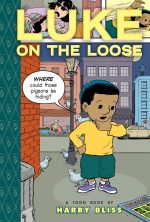
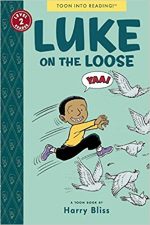
Luke on the Loose


By Harry Bliss, coloured by Françoise Mouly & Zeynep Memecan (Toon Books/Raw Junior)
ISBN: 978-1-935179-05-4 (HB) 978-1-935179-36-8 (PB)

Here’s a sublimely enticing yarn for early readers and older instructors possibly bored with wholesomely anodyne little tots.

Award-winning creator Harry Bliss was reared on a diet of Will Elder’s Mad Magazine cartoons and, after surviving to adulthood, started selling his own manic doodles and covers to the prestigious periodical the New Yorker. He’s also illustrated many fine and fabulous children’s books such as Sharon Creech’s A Fine, Fine School, Doreen Cronin’s Diary of… series – a Worm, a Fly and a Spider et al – as well as Which Would You Rather Be? by William Steig and the marvellously stirring Louise, the Adventures of a Chicken by Kate DiCamillo. Luke… was his first comic book, but you’d never know it.

Opening with a handy all-ages-accessible map of the City That Never Sleeps (just remember “the Bronx is up and the Battery’s down”), Luke on the Loose introduces a little lad with a lot of energy and a dangerous amount of single-minded determination, whose inquisitive focus and blind concentration leads him into a great big New York Adventure…

Whilst being taken for a walk with his father in Central Park, little Luke’s attention is captured by a flock of pigeons. Slipping out of his distracted dad’s grasp, the eager beaver chases after the birds and just keeps on going…

Even running as fast as he can – which is pretty darn quick – the boy can’t catch his cooing quarry, but his phenomenal progress through the urban arboreal esplanade causes a wave of commotion leaving people, pooches and sundry other passers-by windswept and reeling…

Also reeling is Luke’s Mum once Dad telephones her…

Caught in the moment of complete absorption Luke hurtles onward, out of the park, across the bridge and into the wilds of Brooklyn, vaulting moms with strollers, hurtling over kerbside diners and young lovers and crashing through a queue at an ice-cream stand. Unable to escape the determined pursuit, the flurried flock heads up and, thanks to a handy fire-escape, so does Luke…

Raucous, riotous and riveting, infinitely re-readable and packed with overlapping gags in layers of beguiling pictorial detail, Luke on the Loose is superbly engaging, thrill-a-minute and hilariously exciting: the kind of fun tale boisterous little boys will adore in that so-brief window every day between full-speed rushing about and total snoring shut-down…

Little girls will love it too, but probably take time to savour it before also rocketing about like hyper-active meteors …

Art Spiegelman and Françoise Mouly set up Toon Books/Raw Junior as an imprint of legendary alternative comics magazine, to produce high-quality comics stories in premium formats to suit pre-schoolers and beginning readers and form the first steps of a life enriched by strips and reading. Their superbly superior comic tales come in 3 educational standards (Level 1: First Comic for Brand New Readers, Level 2: Easy-to-Read for Emerging Readers and Level 3: Chapter Books for Advanced Beginners) and the company enhances publications with on-line supplements.

TOON-BOOKS.com offers follow ups like interactive audio-versions (read by the authors), a choice of languages and a “cartoon maker” facility allowing readers to make their own adventures about the characters they have just met in the printed editions. Most books also include tips for parents and teachers on ‘How to Read Comics with Kids’ – and you know how much that’s worth these days…
© 2009, 2020 Raw Junior, LLC. All rights reserved.

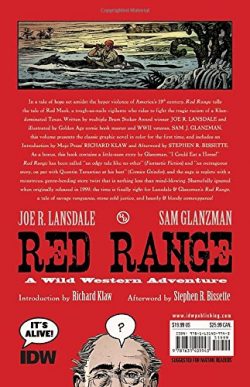
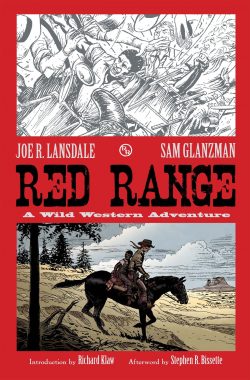
Red Range: A Wild West Adventure


By Joe R. Lansdale, Sam Glanzman & various (It’s Alive!/IDW)
ISBN: 978-1-63140-994-3 (HB)

Once upon a time, not that very long ago, nearly all of popular fiction was obsessed with tales of Cowboys and Indians. As always happens with such periodic popular phenomena – for example the Swinging Sixties’ Superspy and Batmania booms or the recent trend for Vampire and/or Werewolf Boyfriends – there was a tremendous amount of momentary merit, lots of utter dross and a few irrefutable gems that would affect public tastes from then on.

Most importantly, once such surges have petered out, there’s generally a small cadre of frustrated devotees who mourn its passing and, on growing up, resolve to do something to venerate or even revive their lost and faded favourite fad…

Following World War II, the American family entertainment market – for which read comics, radio and the nascent but burgeoning television industry – became comprehensively enamoured of the clear-cut, simplistic sensibilities and easy, escapist solutions offered by the antiseptic anodyne branch of Tales of the Old West; already a firmly established favourite of paperback fiction, movie serials and feature films.

I’ve often pondered on how almost simultaneously a dark, bleak, nigh-nihilistic and oddly left-leaning Film Noir genre quietly blossomed alongside that wholesome revolution, seemingly for the cynical minority of entertainment intellectuals who somehow knew that returned veterans still hadn’t found a Land Fit for Heroes… but that’s a thought for another time and a different review.

Even though comic books embraced six-gun heroes from the very start – there were cowboy crusaders in the premier issues of both Action Comics and Marvel Comics – the post-war years saw a vast outpouring of anthology titles with new gun-slinging idols to replace the rapidly-dwindling supply of costumed Mystery Men, and true to formula, most of these pioneers ranged from transiently mediocre to outright appalling. And they were all white.

With every comics publisher turning hopeful eyes westward, it was natural that most of the historical figures would quickly find a home and of course facts counted little, as was always the case with cowboy literature…

Despite minor re-flowerings in the early 1970s and mid-1990s, for the longest time cowboy comics largely vanished from graphic pages: seemingly unable to command enough mainstream commercial support to survive the crushing competition of garish wonder-men and the furiously seductive future-scapes.

Europe and Britain heartily embraced the Sagebrush zeitgeist, producing some pretty impressive work, with France and Italy eventually making the genre their own by the end of the 1960s. They still make the best straight Western strips in the world…

Happily, however, an American revolution in comics retailing and print technologies at the end of the 20th century allowed fans to create and disseminate relatively inexpensive comic books of their own and – happier still – many of those fans are incredibly talented creators in other genres. A particularly impressive case in point is this captivating lost treasure originally published by independent, creator-led outfit Mojo Press.

The brainchild of Richard Klaw (publisher, reviewer, essayist, writer, historian and self-confessed geek maven), the little outfit published amazing and groundbreaking horror, fantasy, science fiction and Western graphic novels – plus some prose books – between 1994 and their much-lamented demise in 1999.

As revealed in Klaw’s informative Introduction ‘When Old is New and New Old‘, Red Range was probably their most controversial release: an uncompromising adventure tale and deftly-disguised (a tad too much so, apparently) attack on contemporary racism and institutionalised bigotry, astoundingly couched as an ultra-violent cowboy revenge yarn.

Originally published in stark monochrome in 1999, Joe E. Lansdale & Sam Glanzman’s amazing unfinished odyssey was remastered and adapted to full-colour (courtesy of Jorge Blanco & Jok and letterer Douglas Potter) and given a new lease of life in this sublime hardcover/digital edition, just as America’s worst President seemed set to return the nation to those days of implicit supremacism, casual segregation and wealth-based Jim Crow laws…

A Word of Warning: if your sensibilities and senses are liable to freak out at profoundly yet historically accurate scenes of violence or repeated use of the “N” word as used by drawn representations of murdering racist bastards in white sheets, don’t buy this book. Actually, do buy it; just don’t whine that you weren’t warned…

Texas in the late 19th century: a band of Klansmen brutally torture a black family who have the temerity to buy land and plant crops. The ignorant butchers’ repugnant fun is mercilessly interrupted when a masked negro vigilante known as TheRed Mask attacks, killing many and driving off their leader Batiste.

The unlikely avenger is too late to save the parents, but takes their son Turon under his wing. As they ride to his hideout, the lone rider confides in his youthful new companion. Caleb Range‘s story is appallingly similar to the boy’s own tragedy. It’s probably one repeated hundreds of times every day in America since the Black Man was first emancipated…

Back in town, Batiste recruits a specialist tracker and plenty more white men eager to teach “coloureds” their rightful place. Hunting down Red Mask, the bigot again underestimates his quarry’s determination and facility with weapons…

Angry, frustrated and humiliated, Batiste gathers yet more men and sets out to end his nemesis forever. Relentless pursuit leads into the desert wastes and straight out of any semblance of rationality as Caleb and Turon survive one more cataclysmic battle before falling into a lost world of ancient tribes and ravenous dinosaurs, with Batiste and his few surviving killers hard on their heels…

In this place however, it’s the so-superior white men who are seen as less than human by the indigenous inhabitants: nothing more than prey and provender. Regrettably, they hold pretty much the same opinion regarding Caleb and Turon, who quickly discover they might not just be lost in space but also time…

To Be Continued…

Vivid, shocking, staggeringly exciting, ferociously uncompromising and often outrageously, laugh-out-loud funny, Red Range has both message and moral, but never for a moment lets that stand in the way of telling a great story.

Adding value and enlightenment, this opening chapter in an extended saga is augmented by ‘Beneath the Valley of the Klan Busters: (A Sort of) Afterword by Stephen R. Bissette’ which offers historical and social context to the proceedings and inside gen on creators Lansdale & Glanzman, as well as a potted history of the role of black people in western movies from 1920s star-turn Bill Pickett to Jamie Foxx in Django Unchained.

The bonus goodies continue with a silent monochrome masterpiece of action and bleak, black humour. ‘I Could Eat a Horse!’ was first seen in Wild West Show (1996) with the artist displaying a firm grip of both killer slapstick and grim irony as Cowboy, Indian and other beasts go in search of a meal, before Bissette rides us into the sunset with an erudite and fascinating trip down memory lane for “Pop Culture Cowpokes and Carnosaurs” with ‘A Brief History of Cowboys & Dinosaurs’…

These fresh looks at an overexposed idiom prove there’s still meat to found on those old bones, and cow-punching aficionados, fans of nostalgia-tainted comics and seekers of the wild and new alike can all be assured that there’s a selection of range-riding rollercoaster thrills and moody mysteries still lurking in those hills and on that horizon…
Red Range: A Wild West Adventure © 1999-2017 Joe R. Lansdale. “I Could Eat a Horse” © 2017 Sam Glanzman. “When Old is New and New Old” © 2017 Richard Klaw. “Beneath the Valley of the Klan Busters” and “A Brief History of Cowboys & Dinosaurs” © 2017 Stephen R. Bissette. All rights reserved.

Al Qaeda’s Super Secret Weapon


By Mohammad al-Mohamed Muhammad, Youssef Fakish & various (Northwest Press)
ISBN: 378-1-9387202-9-1 (PB)

Let’s get one thing straight here. This is a satirical spoof, ok?

A jape, a jest: witty sequential pictorial banter with pointed points to make on sexual, religious and geopolitical politics. If you’re feeling unnecessarily singled out, I’m fat, bald, old, disabled and white: feel free to have a go back, on citing whatever misperceived grounds you feel you’re entitled to, but do not believe for one moment you’ve been singled out for exclusion or special attention…

Crafted during the heady and contentious era of “Don’t Ask, Don’t Tell” – way back when what you did with your bits (whenever a deadly foe wasn’t trying to blow them away, at least) somehow affected your ability to kill people on command – Al Qaeda’s Super Secret Weapon hilariously goes sufficiently too far in extrapolation.

In their hidden caves, the vile masterminds of the subversive enemy realise the American military is critically vulnerable to seduction by dedicated martyrs willing to give their all, and rapidly trains up 16 super-hunky guys to destroy all those agents of the Great Satan from within…

Beautifully realized, packed with glamour, action, proper jokes and a fair slice of sentiment, this is a definitely demented but brilliant Carry On movie plot taken to fabulous extremes that will leave you helpless with laughter.

Oh, there’s also EXPLICIT GAY SEX, all over this book – available in paperback and digital formats – so don’t read it if you’re likely to be offended by that, rather than the killing, explosions, nuclear armageddon and all-denominational blasphemy.

Adding to the fun are a set of paper dolls and costumes to play with, pin-ups and it even comes with a free ‘Trans-Denominational, Pre-Emptive Fatwa’ too, signed off by globally-renowned Pastor Brett Pirkle, so you know you can sleep safe in your bed… or anyone else’s…

Sing along now, “it’s the End of the World as we know it, and I feel f…”
© 2013 David J. Zelman. All rights reserved.

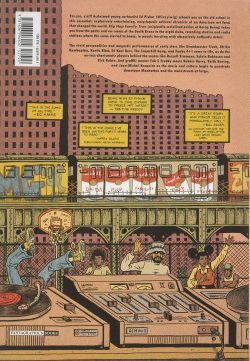
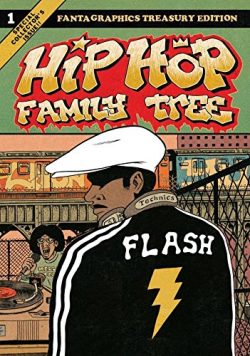
Hip Hop Family Tree Book 1: 1970s-1981


By Ed Piskor (Fantagraphics)
ISBN: 978-1-60699-690-4 (PB)

Comics is an all-encompassing narrative medium and – even after 40-plus years in the game – I’m still amazed and delighted at innovative ways creators find to use the simple combination of words and pictures in sequence to produce new and intoxicating ways of conveying information, tone, style and especially passion to their audience.

A particularly brilliant case in point was this compulsive compilation of strips and extras from self-confessed Hip Hop Nerd and cyber geek Ed Piskor (author of the astonishing Hacker graphic novel Wizzywig) which originally appeared in serial form on the website Boing Boing.

In astounding detail and with a positively astounding attention to the art styles of the period, Piskor detailed the rise of the rhyme-and-rhythm musical art form (whilst paying close attention to the almost symbiotic growth of graffiti and street art) with wit, charm and astonishing clarity.

Charting the slow demise of the disco and punk status quo by intimately following fledgling stars and transcendent personalities of the era, ‘Straight Out of the Gutter’ begins mid-1970s with South Bronx block parties and live music jams of such pioneers as DJ Kool Herc, Grandmaster Flash, Grandwizard Theodore and Afrika Bambaataa.

The new music is mired in the maze of inescapable gang culture but as early word-of-mouth success leads to first rare vinyl pressings and the advent of the next generation, the inevitable interest of visionaries and converts leads to the circling of commercial sharks…

The technical and stylistic innovations, the musical battles, physical feuds, and management races by truly unsavoury characters to secure the first landmark history-making successes are all encyclopaedically yet engaging revealed through the lives – and, so often, early deaths – of almost-stars and later household names such as Furious 4-plus-1, Kurtis Blow, The Sugarhill Gang, the Furious Five, and those three kids who became Run-DMC.

The story follows and connects a bewildering number of key and crucial personalities – with a wealth of star-struck music biz cameos – and ends with Hip Hop on the very edge of global domination following the breakout single Rapture (from new wave icons and dedicated devotees Blondie) as well as the landmark TV documentary by Hugh Downs and Steve Fox on national current affairs TV show 20/20 which brought the new music culture into the homes of unsuspecting middle America…

To Be Continued…

Produced in the tone and style of those halcyon, grimily urban times and manufactured to look just like an old Marvel Treasury Edition (an oversized – 334x234mm – reprint format from the 1970s which offered classic tales on huge and mouth-wateringly enticing pulp-paper pages), this compelling confection (available in very large paperback and variably-proportioned digital formats) – also includes a copious and erudite ‘Bibliography’, ‘Discography’ and ‘Funky Index’, an Afterword: the Hip Hop/Comic Book Connection (with additional art by Tom Scioli) and a fun-filled Author Bio.

Moreover, there’s also a blistering collection of ‘Pin Ups and Burners’ with spectacular images from guest illustrators including The Beastie Boys by Jeffrey Brown, Afrika Bambaataa by Jim Mahfood; Fat Boys by Scioli; Grandmaster Flash and the Furious Five by Ben Marra; Vanilla Ice by Jim Rugg; Run-DMC by Dan Zettwoch; Eric B. and Rakim by John Porcellino; Salt-n-Pepa by Nate Powell; KRS-One by Brandon Graham & Snoop Dogg by Farel Dalrymple, to get your pulses racing, if not your toes tapping…

Cool, informative and irresistible, Hip Hop Family Tree is wild, fun and deliciously addictive: sparking a revolution and sub-genre in comics creation. This is what cultural cross-pollination is all about and you should dive in right now…
This edition © 2013 Fantagraphics Books. All Hip Hop comic strips by Ed Piskor © 2013 Ed Piskor. Pin ups and other material © 2013 their respective artists. All rights reserved.

And the People Stayed Home


By Kitty O’Meara, Stefano Di Christofaro & Paul Pereda (Tra Publishing)
ISBN: 978-1-73476-178-8 (HB)

I’m briefly interrupting our scheduled February program to share this with you – although if you’re aware of that internet thingy, you might have already seen some iterations on your home screens…

Everyone has a coping mechanism for these trying times, and for explaining how the world has changed to those less able to grasp the situation. Former teacher and chaplain Kitty O’Meara wrote a poem about the effects of quarantine and, thanks to global digital interconnectivity, it reached out and touched a chord with people in lockdown all over the planet.

The poem was adapted and reinterpreted by folks via their own artistic inclinations and has physically materialised as this sturdily comforting, oversized (345 x 244mm) hardback or digital book for children – one of a positive wave of such primers intended to help kids grasp what’s going on. They’re pretty calming for those of us over 8 too…

Illustrated by Stefano Di Christofaro & Paul Pereda in a welcoming open and colourful style, this paean to acceptance, resilience and hope is a gentle advocation of better tomorrows with an inclusive, deeply ecological subtext: one we can – and should – all enjoy.

Supplementing the contemplative message is a brief interview ‘Talking with Author Kitty O’Meara’, which says all it needs to about the inspired caring person who kicked this off , but what really shines through everything here is the certain and welcome knowledge that it will all work out in the end…
© Tra Publishing. Poem text © 2020 Kitty O’Meara. All rights reserved.

A Valentine for Charlie Brown


By Charles M. Schulz (Fantagraphics Books)
ISBN: 978-1-60699- (HB)

Peanuts is unequivocally the most important comics strip in the history of graphic narrative. It is also the most broadly accepted, since – after the characters made the jump to television – the little nippers become an integral part of the American mass cultural experience.

Charles M. Schulz crafted his moodily hilarious, hysterically introspective, shockingly philosophical epic for 50 years, publishing 17,897 strips from October 2nd 1950 to February 13th 2000. He died from the complications of cancer the day before his last strip was published…

At its height, the strip ran in 2,600 newspapers in 75 countries, translated into 21 languages. Many of those venues are still running perpetual reprints, as they have ever since his departure. Attendant book collections, a merchandising mountain and TV spin-offs made the publicity-shy artist a billionaire. That profitable sideline – one Schulz devoted barely any time to over the decades – is where this little gem originates from…

Peanuts – a title Schulz loathed, but one the syndicate forced upon him – changed the way comics strips were received and perceived by showing that cartoon comedy could have edges and nuance as well as pratfalls and punchlines.

The usual focus of the feature (we just can’t call him “star” or “hero”) is everyman loser Charlie Brown who, with high-maintenance, fanciful mutt Snoopy, endures a bombastic and mercurial supporting cast who hang out doing kid things in a most introspective, self-absorbed manner.

The daily gags centred on playing (pranks, sports, musical instruments), teasing each other, making ill-informed observations and occasionally acting a bit too much like grown-ups. The consistently expanding cast also includes mean girl Violet, child prodigy Schroeder, “world’s greatest fussbudget” Lucy Van Pelt, her other-worldly baby brother Linus and dirt-magnet “Pig-Pen”: each with a signature twist to the overall mirth quotient and sufficiently fleshed out and personified to generate jokes and sequences around their own foibles. As a whole, the kids tackled every aspect of human existence in a charming and witty manner, acting as cartoon therapists and graphic philosophical guides to the world that watched them.

Charlie Brown is settled into his existential angst and resigned to his role as eternal loser as if singled out by a gleeful Fate. It’s a set-up that remains timelessly funny and infinitely enduring…

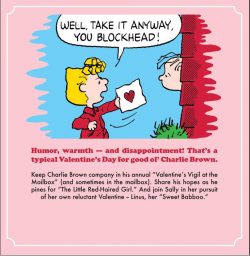
Available in a child-friendly hardback and the usual digital formats, A Valentine for Charlie Brown offers a trio of extended vintage sequences revolving around further crushing the spirit of the saddest, yet most optimistic kid on Earth. All he wants is someone to love, but for many of us, it’s not that easy to find the one – or even anyone…

The tales are told in a series of monochrome panels (generally four to a page) and we open with ‘Valentine’s Vigil at the Mailbox’ as the perpetually anxious and responsibility-burdened Charlie anticipates a card or maybe more at this time of romantic intensity. Sadly, the mail is not an ally and most post goes to the hairy pal who truly does dote on him…

Of course, there’s always Linus to share thoughts with, sister Sally to show him up and Lucy to be… well Lucy…

Not that Van Pelt has much joy with her own chosen inamorata. Schroeder loves music and would do anything to be alone with his passion…

A new year brings fresh hope as Charlie discovers ‘The Little Red-Haired Girl’, but even after burdening all his pals with his aspirations and disappointments, our gallant would-be swain painfully realises the course of true love never yadda, yadda, yadda…

Wrapping up the melancholy mirth is delicious change of pace ‘My Sweet Babboo’ which sees Sally set her cap for Linus with terrifying determination: an all-points pursuit to delight jaded older souls and simultaneously chill the heart of anybody with pet bunnies..

Sally and Linus take centre stage in this outrageous and inventive sequence but there’s still plenty of time for Charlie and the others to suffer their usual hang-ups, between marvelling at the dogged determination on show…

Timeless and evergreen, Charlie Brown’s existentialist travail and amorous aspirations have been delighting readers seemingly forever and clearly will not be stopping or superseded anytime soon. If you haven’t joined this club yet, why not sign up now?
A Valentine for Charlie Brown © 2015 Peanuts Worldwide, LLC. All rights reserved.

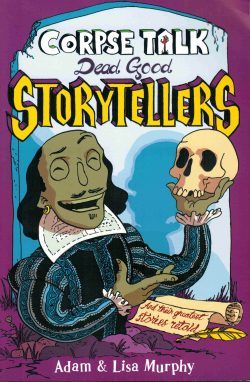
Corpse Talk: Dead Good Storytellers


By Adam & Lisa Murphy (David Fickling Books)
ISBN: ISBN: 978-1-78845-125-3 (PB)

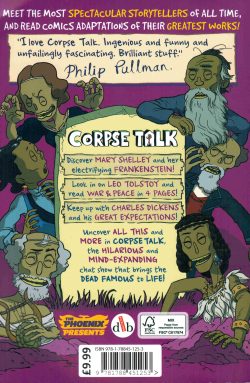
The educational power of comic strips has been long understood and acknowledged: if you can make the material memorably enjoyable, there is nothing that can’t be better taught with pictures. The obverse is also true: comics can make any topic or subject come alive… or at least – as here – outrageously, informatively undead…

The fabulous and effective conceit in Corpse Talk is that your scribbling, cartooning host Adam Murphy (ably abetted off-camera by Lisa Murphy) tracks down (or rather digs up) famous personages from the past: all serially exhumed for a chatty, cheeky This Was Your Life talk-show interview that – in Reithian terms – simultaneously “elucidates, educates and entertains”. It also often grosses one out, which is no bad thing for either a kids’ comic or a learning experience…

Another splendid album release culled from the annals of The Phoenix, this authorially-themed collection is dedicated to not-so-private audiences with a succession of legendary and/or unsung wordsmiths, in what would almost certainly not be their own words…

Catching up in order of date of demise, these candid cartoon conferences begin by digging the dirt with ‘Enheduanna: Priestess-Poet 23rd century BCE’, who has a claim to inventing poetry with her religion themed anthems in ancient Sumeria. As always, each balmy biography is accompanied by a side-feature examining a key aspect or artefact of their lives such as here with ‘Inanna and the Mountain’ (The Corpse Talk version) illustrating the power and short temper of the primal goddess…

Moving on in time – and perhaps into fiction rather than fact – comes an intimate investigation into the truth behind Greek epic poet ‘Homer’ (8th century BCE – possibly) supplemented by a vivid and truncated Corpse Talk version of ‘The Odyssey’ which could get you a passing grade if schools and exams weren’t another thing of the past…

Astounding female and unconventional Mandarin’s daughter ‘Li Qingzhao – Lyric Poet 1084-1155’ discusses her fortunate career in the Song Dynasty: accompanied by her translated, illustrated ode ‘Like a Dream’, after which a Sufi poet spanning 1207-1273 takes centre stage.

‘Jalaluddin Rumi’ details his transformation from acerbic scholar to impassioned love poet and is backed up by his illustrated poem ‘The Guest House’ before we head into more familiar territory with Medieval poet ‘Geoffrey Chaucer – 1343-1400’ who relates the tale of his times, backed up by the pertinent facts of ‘The Canterbury Tales’ plus a Corpse Talk adaptation of ‘The Pardoner’s Tale’…

Playwright ‘William Shakespeare – 1564-1616’ tells it like it was, accompanied by the (fun) version of ‘Macbeth’ after which we go gothic by chatting with Romantic Poet ‘John Keats – 1795-1821’ and get acquainted with ‘La Belle Dame Sans Merci’ and double down with dark fantasy courtesy of Gothic Novelist ‘Mary Shelley – 1797-1851’ who candidly discloses how and why her groundbreaking novel came about, supplemented by a cartoon adaptation of ‘Frankenstein’.

Sticking with Gothic Novels, the life of ‘Charlotte Brontë – 1816-1865’ is explored, with definitive classic ‘Jayne Eyre’enjoying a Corpse Talk make-over, after which ‘Charles Dickens 1812-1870’ reviews his amazing career and endures a comics interpretation of ‘Great Expectations’, whilst Adventure Novelist ‘Alexandre Dumas – 1802-1870’ details how the son of French plantation slaves rose to pre-eminence in the literary world, accompanied by a rousing rendition of ‘The Count of Monte Cristo’…

Epic Novelist and spiritual questor ‘Count Leo Nikolayevich Tolstoy – 1828-1910’ comes under the necroscope next, with a serviceable truncation of ‘War and Peace’ in his wake, before horrorist ‘Bram Stoker – 1847-1912’ tells his life-story while the Murphys deftly adapt his undying masterpiece ‘Dracula’ and Crime Writer ‘Sir Arthur Conan Doyle – 1859-1930’ examines his serried career and influences, with Sherlock Holmes short story ‘The Speckled Band’ leading us to final interviewee Children’s Author ‘Beatrix Potter – 1866-1943’; describing a life well-lived, and a splendid legacy, backed up a fresh take on the tale of ‘Peter Rabbit’.

…And just when you think it’s all over, up pops an extra item: a cracking adaptation of ‘All the World’s a Stage…’ from Shakespeare’s ‘As You Like It’, rounding out the fun and whimsy before ushering all and sundry back to their biers and sepulchres for now.

Clever, cheeky, outrageously funny and formidably factual throughout, Corpse Talk unyieldingly tackles history’s more tendentious moments whilst personalising the great, the grim, the good and especially the greatly entertaining for coming generations.

It is also a fabulously fun read no parent or kid could possibly resist. Don’t take my word for it though, just read and enjoy…
Text and illustrations © Adam & Lisa Murphy 2021. All rights reserved.

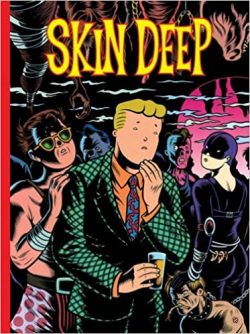
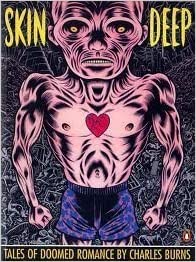
Skin Deep


By Charles Burns (Fantagraphics Books/Penguin)
ISBN: 978-1-60699-167-1 (PB, Fantagraphics) 978-0-14016-543-2 (UK Penguin)

I’s nearly St. Valentine’s day, and the time for extreme efforts for little discernible reward, so here’s a classic treatise on love and affection, inexplicably unattainable in the its native English language. Worth the hunt though…

Charles Burns is a creative force with his roots firmly placed in 1950s kids’ culture (B-movies, cartoons, EC comics and especially Mad Magazine) and talented fingers in many areas of the creative media. As an illustrator, graphic designer, photographer, film-maker and especially cartoonist, his slick, precise methodology tells stories and evokes responses from a place that is dark, skewed, beautiful and overwhelmingly nostalgic.

His comics work blends horror, true romance and Film Noir sensibilities with sensationalistic fascination for the grotesque and absurdist; all delivered in a slick, meticulous, heavy linear style reminiscent of woodcut prints; with huge swathes of solid black, like darkness and light suspended and perfectly balanced in a Cold War on every page.

This gigantic softcover (297mm high x 224mm wide) was the third in a series collecting all the artist’s work prior to the landmark publication of the incredible Black Hole, with the three interlinked – or rather perhaps, overlapping – stories here all originating between 1988 to1992. They were slightly revised after debuting in his Big Baby weekly strip and – in the case of ‘A Marriage Made in Hell’ – the legendary Raw Magazine. All in their own manner examine the theme of love in the modern world.

Leading off is ‘Dog-Boy’, the simple tale of a young man who has a cut-rate heart transplant and finds himself increasingly taking on the characteristics of the canine who provided his new ticker. Just because he acts a little differently, does this mean that there is no girl out there for him? This tale formed the basis of a 1991 MTV serial for the Liquid Television TV programme…

This leads to the outrageously funny and deeply unsettling ‘Burn Again’ wherein reformed televangelist Bliss Blister once more falls under the influence of his huckster father, as well as his own wife, who use him to con the religiously gullible. Unfortunately, what only Bliss knows is that God – in the form of a hideous, diabolical extraterrestrial Cyclops – is coming to end mankind’s self-inflicted woes…

The book ends with the aforementioned and intensely disturbing story-within-a-story ‘A Marriage Made in Hell’. When horny new bride Lydia finally marries her war-hero husband she regretfully discovers that he won’t consummate their union. Just what is the fantastic secret of battle-scarred veteran John Dough, and how does Lydia cope with the incredible situation she finds herself trapped in?

As well as these staggeringly dry, wry and funny tales there is also a selection from the Burns sketchbook, a look at some of those altered story-pages and a brief commentary from the artist himself.

This volume is also available as a hardback edition and was previously released as a Penguin book in 1992. You stand more chance of finding that these days, but if you’re intrigued and can read almost any European tongue, this stuff can be yours in the twinkling of a search engine. Funny old world, isn’t it?
© 1988-1992 Charles Burns. All Rights Reserved.

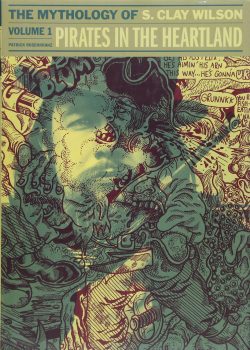
The Mythology of S. Clay Wilson: volume 1: Pirates in the Heartland


By S. Clay Wilson, edited by Patrick Rosenkranz (Fantagraphics Books)
ISBN: 978-1-60699-747-5 (HB)

Once more, I’m altering the fixed schedules to note the passing of a giant. Everybody’s losing loved one in far greater numbers than we can really afford or cope with, but this one is even more poignant and powerful: the death of one of the most vital and vigorous cartoonists we’ve ever been privileged to enjoy. Here’s a parental warning to prove it…

This book is filled with dark, violent sexual imagery and outrageous situations intended to make adults laugh and think. If that hasn’t clued you in, please be warned that this book contains images of nudity, extreme violence, sexual intimacy and excess – both hetero- and homosexual – and language commonly used in the privacy of the bedroom, drunken street brawls and school playgrounds whenever adults aren’t present.

If the thought of all that offends you, read no further and don’t buy the book. The rest of us will just enjoy some of the most groundbreaking cartoon experiences ever created without you.

Steve Clay Wilson was a pioneering light of America’s transformative Underground Commix movement: an uncompromising, controversial, in-your-face pioneer of the counterculture, constantly challenging attitudes and sensitivities whilst telling the kind of cartoon tales he wanted – or perhaps had – to.

Something of a contradiction to those who knew him, charming, charismatic Wilson lived life to the full and took his art seriously.

And what art! Stark, complex, shocking, incredibly detailed tableaux jumping with modern Rabelaisian content: mesmerising scenes packed with intense multi-layered busyness, crammed with outrageous, iconic characters in constant surging motion – mostly combative and hilariously violent.

The manly, hedonistic exuberance of frantic fighters rejoicing in the wild freedom as exemplified by bikers, cowboys, pirates, bull dykes and devils, augmented by other violent ne’er-do-wells, grotesques, human-scaled beasts and things which could be drawn but never described…

His work seethed and abounded with excess: monsters, mutilations, booze and drug-fuelled romps populated with priapic plunderers and ravening beasts, dangerous and disturbed women and always, always unsettling scenes of society’s biggest taboos – sex and personal freedom.

All Americans already worshipped violence; Wilson just pushed the visuals for that sacrament as far as he could into surreal parody. Everybody who knew Wilson adored him, but around him they were usually a little nervous and stepped lightly…

The modern successor to Pieter Bruegel and Hieronymus Bosch moved on to other artistic arenas when the Underground movement foundered, but he never toned down his visions. In 2008 he suffered massive brain damage in mysterious circumstances and underwent full-time palliative care ever since. He died aged 79, on Sunday February 7th 2021.

This intimate and informative oversize (286 x 202mm) hardcover biography and graphic overview – also available in digital formats – is compiled from previous writings and extensive interviews with the people he grew up with and who shared his eventful life.

Moreover, each telling anecdote and reminiscence is augmented with photos, paintings, illustrated letters and private or previously-unpublished artworks, and each chapter offers a wealth of gloriously outrageous strips: comprising all of his published comics work from the heady days of America’s counterculture explosion in 1968 to its virtual demise in 1976.

It opens with a warm, picture-packed, fact-filled Introduction by college pal and flatmate John Gary Brown before the hagiography of horrors begins with ‘Wilson’s Childhood’.

Described by Robert Crumb as “the strongest, most original artist of my generation” Steven Clay Wilson grew up in down-home Lincoln, Nebraska, thriving on a diet of EC comics (especially Piracy), post-war prosperity and Great Plains sensibilities. His early life was filled with good family, cool pets, cycling, school and drawing.

Lots of drawing (much of it impressively included in the first chapter) takes us out of High School and into college, but before that unfolds there’s a gory welter of early triumphs in the black and white comics section which includes such classics as ‘Shorts in the Bowl’ (from Gothic Blimp Works #1), ‘River City Shoot-Out’ from the second issue and ‘No Loot for You, Captain Namrooth’ from Gothic Blimp Works #6, all circa 1969, followed by a ‘Goodtimes Front Cover’for May 1st 1970.

The entirety – 26 images – of the mega-successful arts project which became ‘S. Clay Wilson Portfolio Comix’ leads into the strip ‘Afterwards’ (Hydrogen Bomb Funnies, 1970) and the tableaux ‘It’s a Thrill to Kill’ from Thrilling Murder Comics, 1971 and ‘The 137th Dream of Lester Gass’ (Illuminations, 1971).

A productive strip period begins with ‘Insect Paranoia’ (Insect Fear #1),‘Insect Angst’ (#2, both 1970) and ‘Insomnia Angst’ (#3, 1972), followed by ‘Boogie Boogie Horror Yarn’ (Laugh in the Dark, 1971) and closes with ‘Whip Tip Tales’and ‘Soft Core Porn Yarn’ from San Francisco Comic Book issues #1 and #3 in 1970.

Wilson’s turbulent brush with art school and academia at the University of Nebraska is detailed in ‘Higher Education’ as is his understandably less than glorious military service and adoption of the drop-out life style, topped off by more manic strips and panels (he called them “Deep Scenes”) beginning with ‘The Hog Ridin’ Fools’ (Zap Comix #2, 1968 and featuring a very early appearance of Wilson’s signature character the Checkered Demon). That issue also supplies ‘Just as you said Madge… He’s Shitting’ and ‘Head First’, whilst from the third comes ‘Captain Pissgums and His Pervert Pirates’, ‘Gilded Moments’, ‘Captain Edwards St. Miguel Tilden Bradshaw and his crew come to Grips with bloodthirsty foe pirates’, ‘Come Fix’ and ‘Arnie, my bra ain’t on’.

Wilson drew at a phenomenal rate and Zap Comix #4 1969 unleashed ‘A Ball in the Bung Hole’, an untitled phantasmagorical double-spread, ‘Leather Tits’ and the debut of his occasional lewd lead ‘Star-Eyed Stella’. Zap #5 (1970) barely contained ‘Lester Gass the Midnight Misogynist’, ‘Ruby the Dyke Meets Weedman’ and ‘Snake Snatch Tale’.

At the end of 1966 Wilson relocated to ‘Lawrence, Kansas’: a burgeoning Midwestern oasis of countercultural thought and self-expression, and a useful place to concentrate creative energies before his inevitable move to the West Coast. This chapter is abutted by another wave of glorious filth and ferocity, comprising non-biblical epic ‘The Felching Vampires Meet the Holy Virgin Mary’ (Felch Cumics, 1975), adult fairy tale ‘Puducchio’ from Pork (1974), which also offers a quartet of single-frame gags, after which Bent (1971) provides Deep Scene ‘Dwarf Snuffing Station #103’, ‘Pendants’; a return engagement for ‘Star-Eyed Stella’ and ‘Nail Tales’.

Declaring “Art is Therapy”, Wilson always saw its creation as a collaborative process: one which demanded a response. On reaching the golden lands of ‘The Barbary Coast’ his artistic jams with the likes of Crumb – who claims the flatlander inspired him to completely release all his artistic inhibitions – and creative compadrés like Spain Rodriguez, Rick Griffin, Robert Williams and Victor Moscoso, made them royalty in the San Francisco heart of the revolution.

That star-studded, astounding period and how it began to fade makes up the last revelatory chapter in this initial volume (of three) and concludes with one last selection of colour and monochrome masterpieces including eye-popping ‘Deranged doctors perform operational experiments on mutated patients under the antiseptic incandescent gaze of the Big Daddy Devil Doctor’ from Arcade #3, 1975; illustrations for William Burroughs’ seminal short story ‘Fun City in Badan’ (Arcade #4), ‘The Corpse Gobblin’ Ogre of Columbite Mountain’(Arcade #5), ‘Monster Bride’ (Arcade #6) and ‘Vampire Lust’ (Arcade #7, 1976).

Also on show are multi-hued strip ‘Last Foe’ (Apple Pie July 1975), the cover from Zap Comix #3, front-&-back covers from S. Clay Wilson Portfolio Comix, Bent and Pork; ‘It’s a treat to blast away the flat foot’s feet’ from Tales of Sex and Death #1 (1971), 8-page, in-record minicomic insert ‘The Saga of Yukon Pete’ from the vinyl platter of the same name by Son of Pete and the Muffdivers, wrapping up in fine style with the infernally euphoric ‘Surfsup’ strip from Tales from the Tube #1, 1972.

Scholarly yet surprisingly engaging, this superb collation, contrived and shepherded by Patrick Rosenkranz, offers an amazingly and unforgettable close-up view of one of the most important cartoonists in American history. This is a book no serious lover of the art form or devotee of grown-up comics can afford to miss.
The Mythology of S. Clay Wilson volume one: Pirates in the Heartland © 2014 Fantagraphics Books. All comics and images by S. Clay Wilson © 2014 S. Clay Wilson. All biographical text © 2014 Patrick Rosenkranz. All other material © 2014 its respective creators and owners. All rights reserved.