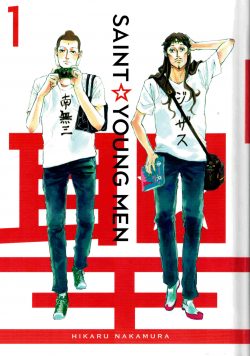
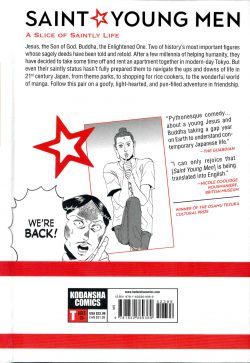
Saint Young Men volume 01


By Hikaru Nakamura, translated by Alethea & Athena Nibley (Kodansha)
ISBN: 978-1-63236-936-9 (HB)

Win’s Christmas Gift Recommendation: ‘Tis the Season to be Thoughtful… 9/10

Here’s a divine treat and global sensation with a lot of timely punch and just a touch of wild eclecticism to boost its appeal, all neatly released in English just in time to make your day and make you think…

Born in April 1984 in Shizoku Prefecture, Japan, Hikaru Nakamura is one of the world’s most successful manga creators, thanks mostly to her thought-provoking yet inviting conceptions such as Arakawa Under the Bridge and the bizarrely engaging buddy-comedy under review today.

In September 2006 Seinto Oniisan began as an occasional gag feature in Morning 2 magazine where, due to its rapturous reception, it grew into an unmissable regular narrative strip that remains to this day. The divine comedy has filled 17 tankōbon collections plus all the usual mass-media iterations that follow such popularity: a brace of anime DVDs and films, a live-action series and much more.

In this premiere stunning and sturdy hardback English compilation (or its ethereal digital equivalent), more extensive detail and context can be found in the effusive Foreword Hikaru Nakamura’s Saint Young Men Power’ by Nicole Coolidge Rousmaniere (who curated a Japanese Exhibition at the British Museum in which Saint Young Men played a major role). Whilst this aids overall comprehension, the book also graciously provides a comprehensive set of Translation Notes for each chapter episode, offering cultural comparison points, theological points of interest and even general notes on modern life in the East.

It sounds like the opening of a joke – and, in fact, it is – but the narrative premise is simple: one day after a particularly arduous millennial turnover, Jesus Christ and Guatama Buddha opt to take a break from Paradise/Nirvana/the Great Beyond and indulge in a kind of gap year experience by re-manifesting as two young guys in Tokyo: living as anonymous mortals; chasing rent, getting picked on, playing with fashions and new technologies and just generally being human. What could possibly go wrong?

The trials begin in ‘Buddha’s Day Off’ as the impoverished pair settle into their tawdry dwelling and ardently discuss the unexpected ways other people respond to them, after which they try adjusting to culture shock but endure even stranger reactions and responses on overcrowded trains and subways in ‘Most Holy Travels’…

Man-Toys, gadgets and fashions are perennial fascinations for the pair – their near-infinite logo T-shirt collection often acts as a barometer and commentary for what’s about to occur – but it’s hard to leave their pasts behind and the pair as often visit shrines and churches as theme parks. Sometimes – such as in ‘Another Paradise’ – it’s hard to tell them apart. Moreover, although earthbound, their transcendental natures still adversely affect everything around them, leading to unearthly surprises when they become overfocussed on mundane delights such as shopping in ‘Debut Performance’…

‘Oh My Hobby’ finds the holy goofs seeking further homogeneity as Buddha tries screen printing to round out his days whilst Jesus further pursues his dream of being a comedian whilst attempting to curtail his unhappy tendency to make miracles if his concentrates too hard or laughs too much…

Cooling down and discussing their slow assimilation leads to more confusion in ‘Summer Jam at the Community Center’when their oblique mutterings convince a mobbed-up eavesdropper that he’s stumbled into two Yakuza princes trying to get out of “The Life”, after which ‘Buddha and Jesus’s “Can I Do It?”’ reveals how their escalating heavenly energies compel the pair into staying home and trying new pastimes such as drawing manga and throwing pottery…

There’s another innocently bewildering clash with celebrity, commercialism and gangsterism when the inquisitive waifs attend a ‘Sacred Fall Festival’ before Christmas (in its thoroughly formulated Japan-ised form, and celebrated here by a partial conversion to full-colour for their generally monochrome exploits) intersects with an unfortunate ‘Holy Birthday’for Jesus.

That debacle leads to dabbling with disguises to attend the ‘New Year’s Self-Worship’ ceremony, segueing into a nasty brush with human frailty and disease in ‘Hospital Fever’.

Manly vanity rears its inevitable head when Buddha rashly responds to accusations of becoming a ‘Portly Prince?!’, but it’s his scatty roommate who makes an unlikely public scene by losing concentration in ‘The Park Nearest Heaven’. This leads to a necessary but unwise ‘Pilgrimage’ to the shopping mall before these initial devotions conclude with a catastrophic bout of tonsorial ablutions and accidental miracle-making for the ‘Thrice Stranded Bath Drinker’…

It’s true to say that in fiction, there are precious few original ideas whereas tone and treatment are everything. Whilst not a new notion, the concept of divine beings popping back to Earth is one that has plenty of antecedents but also infinite appeal and permutations, and here at least, there’s been a vast amount of research undertaken to confirm canonical veracity and deep thinking to keep the jokes fresh and outcomes original.

Charming, funny, brash and subtly challenging, Saint Young Men is a delightful peek into other realms that will leave you hungry for further scriptures and might even lead to a lifelong conversion…
© 2008 Hikaru Nakamura. English translation © 2009 Hikaru Nakamura. All rights reserved.

Available in in both paperback and digital formats, this book is printed in ‘read-from-back-to-front’ manga format.
Saint Young Men volume 01will be released on December 19th 2019 and is available for pre-order now.

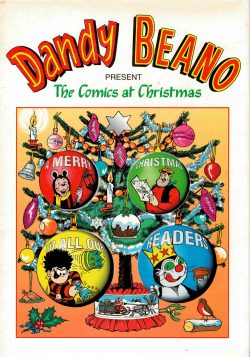
Dandy and Beano: The Comics at Christmas


By many and various (D.D. Thomson & Co, Ltd.)
ISBN: 978-0-85116-636-0 (HB)

Win’s Christmas Gift Recommendation: Evergreen Seasonal Traditions Celebrated and Ideal Last-Minute Gifts… 10/10

DC Thompson’s publications have always played a big part in Britain’s Christmas festivities, so let’s revel in the Good Old Days of comics and look at what their publications have offered to celebrate the season via a lovingly curated accumulation of Scotland’s greatest cartoon stars and artisans…

Released in 1997 as part of the DC Thomson’s Sixtieth Anniversary celebrations for their children’s periodicals division – which has more than any other shaped the psyche of generations of kids – this splendidly oversized (297 x 206mm) and exceedingly jolly 144 page hardback compilation justifiably glories in the incredible wealth of ebullient creativity that paraded through the flimsy colourful pages of The Beano and The Dandy during the days and weeks of December from 1937 to the end of the century.

Admittedly the book needed some careful editing and paste-up additions whilst editorially explaining for younger or more socially evolved readers the subtle changes in attitude that have occurred over more than half a century, to tone down or expurgate a few of the more egregious terms that wouldn’t sit well with 21st century sensibilities, but otherwise this is a superb cartoon commemoration of a time and state of mind that means so much to us all.

It’s also an exquisitely evergreen tribute to cartoon storytelling at its best…

The shape and structure of British kids’ cartoon reading owes a huge debt to writer/editor Robert Duncan Low (1895-1980) who was probably DC Thomson’s greatest creative find. Low began at the publishing monolith as a journalist, rising to the post of Managing Editor of Children’s Publications where he conceived and launched (between 1921 and 1933) the company’s “Big Five” story-papers for boys. Those rip-roaring illustrated prose periodicals comprised Adventure, The Rover, The Wizard, The Skipper and The Hotspur.

In 1936 his next brilliant idea was The Fun Section: an 8-page pull-out supplement for Scottish national newspaper The Sunday Post consisting of comic strips. The illustrated accessory premiered on 8th March and from the very outset The Broons and Oor Wullie – both rendered by the incomparable Dudley Watkinswere its unchallenged stars…

In December 1937, Low launched the DC Thomson’s first weekly pictorial comic. The Dandy was followed by The Beano in 1938 and early-reading title The Magic Comic a year after that.

War-time paper shortages and rationing sadly curtailed this strip periodical revolution, and it was 1953 before the next wave of cartoon caper picture-papers. To supplement Beano and Dandy, the ball started rolling again with The Topper, closely followed by a host of new titles such as Beezer and Sparky to augment the expanding post-war line.

Every kid who grew up reading comics has their own personal nostalgia-filled nirvana, and DC Thomson have always sagely left that choice to us whilst striving to keep all eras alive with the carefully-tooled collectors’ albums like this one.

These have all the appeal and panache of coffee-table art books; gathering material from nearly eight decades of publishing – including oodles of original art reproductions – but rather than just tantalising and frustrating incomplete extracts, here the reader gets complete stories starring immortal characters from comics and Christmas Annuals past…

Until it folded and was reborn as a digital publication on 4th December 2012, The Dandy was the third-longest running comic in the world (behind Italy’s Il Giornalino – launched in 1924 – and America’s Detective Comics in March 1937). Premiering on December 4th 1937, it broke the mould of traditional British predecessors by using word balloons and captions rather than narrative blocks of text under the sequential picture frames.

A monster success, it was followed eight months later by The Beano – which launched on July 30th 1938 – and together they completely revolutionised the way children’s publications looked and, most importantly, how they were read.

Over the decades the “terrible twins” spawned a bevy of unforgettable and beloved household names who delighted generations of avid and devoted readers, and end of year celebrations were blessed with extraordinary efforts in the weeklies as well as bumper bonanzas of the comics’ stars breathtakingly glamorous hardback annuals.

As WWII progressed rationing of paper and ink forced the “children’s papers” into an alternating fortnightly schedule: on September 6th 1941, only The Dandy was published. A week later just The Beano appeared. They only returned to normal weekly editions on 30th July 1949, and during the conflict the Annuals alternated years too.

This superb celebration of Celtic creativity is packed literally cover-to-cover with brilliant strips. The fun starts on the inside front with a riotous party scene featuring all the assorted favourites, illustrated by indisputable key man Dudley D. Watkins, followed by Korky the Cat frontispiece (by James Crichton?), and bombastic title page with western superman Desperate Dan standing in for Santa.

An introductory spread follows, re-presenting a manic Davey Law Dennis the Menace Christmas episode from the 1960s, as well as a quartet of Beano Christmas cards from the same decade, presaging a host of seasonally-themed comic strip offerings beginning with Dandy‘s Dirty Dick (by Eric Roberts) and guest star stuffed ‘Xmas Shopping with Biffo the Bear’ (probably David Sutherland) and Minnie the Minx (Jim Petrie) impatiently ransacking the house for her prezzies from the 1960s.

This book offers a selection of Christmas week front pages, beginning with The Beano #169, (cover-dated December 20th1941) featuring Reg Carter’s obstreperous ostrich Big Eggo getting well-deserved revenge via Xmas lights during a blackout, after which Colonel Crackpot’s Circus by Malcolm Judge and Sutherland’s Bash Street Kids frolic as a prelude to robot schoolboy Brassneck (by Bill Holroyd) demonstrating the meaning of the season in a savvy spin on A Christmas Carol…

Robert Nixon – or maybe Ron Spencer – detail how Indian scamp Little Plum gets a tree for the tribe whilst Ken Reid’s wild west rogue Bing-Bang Benny scores a free dinner from his worst enemies, before the triumphs of Roger the Dodgerare encapsulated in a multifarious montage of strips by Ken Reid, Barrie Appleby, Gordon Bell and others.

Dudley D. Watkins illuminates Desperate Dan’s attempts to enjoy a white Christmas and Davey Law details similar catastrophic capers for Dennis the Menace before Watkins reveals how the upper class live in a party favour from Beanostarring Lord Snooty and his Pals, after which ‘Jimmy and his Grockle’ – a kind of Doberman dragon – reap the reward for wrecking other folks’ presents. Illustrated by James Clark, the feature stems from Dandy in 1938, recycled from prose “Boys Paper” The Rover (where it was “Jimmy Johnson’s Grockle” in 1932).

Holroyd’s The Tricks of Screwy Driver (a junior handyman inventor of variable efficacy – especially in the holiday season) gives way to a Biffo front cover strip (from Beano #649; December 25th 1954) before the Bash Street Kids destroy the school concert and 1940s feudal adventurer Danny Longlegs (Watkins) delays his voyage East to share the Yule festival with an embattled knight.

A montage of Beano B-stars including Sammy Shrinko, Have-a-go-Joe, Little Nell and Peter Pell, The Magic Lollipops, Maxi’s Taxis and Rip Van Wink compliments a triptych of ’40’s Dandy strips Freddy the Fearless Fly (Allan Morley), Hair Oil Hal (by John Brown) and Sam Fair’s Meddlesome Matty to ease us into a section concentrating on gluttony and the big blowout as seen in Eric Robert’s hospital ward feast Ginger’s Super Jeep, Basil Blackaller’s Hairy Dan‘s saga of a stolen plum pudding and The McTickles (Vic Neill) salutary tale of an escaped Haggis.

A classic Korky the Cat Christmas yarn segues neatly into a Ken Reid fantasy romp starring Ali Ha-Ha and the 40 Thieves, after which The Smasher (Hugh Morren?) fights for his right to party as prelude to a look at a wartime classic.

Sam Fair was in always excoriating top form with the superbly manic Addie and Hermy – slapstick assaults on Adolf Hitler and Hermann Wilhelm Göring/Goering – and the selection here helped counter Home Front austerity by punfully positing how bad the German High Command were having it…

Football mad Ball Boy (Judge) and a vintage Desperate Dan strip lead to more Watkins wonderment in a double-length revel in Lord Snooty castle (and no, the topper-wearing posh boy was never the pattern for a certain over-privileged Tory lounging lizard!!! It’s just an uncannily creepy coincidence cum laude and example of life imitating art), before Colonel Crackpot’s Circus stages an encore and Billy Whizz (Malcolm Judge) finds time to attend many nosh-ups in one short day…

Odd couple Big Head and Thick Head (Reid again) work far too hard for their places at the youth club bash whereas the ever-ravenous Three Bears (Bob McGrath) literally fall into a festive feast but eternal loser Calamity James (Tom Paterson) loses out yet again, unlike Law’s Corporal Clott who manages to become a hero to his comrades by getting rid of Grinch-like Colonel Grumbly…

A 1940’s Biffo extravaganza starring the entire Beano cast takes us neatly into a rousing comedy romp starring wonderful Eric Roberts’ immortal rascal-conman Winker Watson, who saves his chums from being stuck at school over the holidays in a full-length fable…

What’s Christmas without loot? A host of comics stars weigh in on presents in a section that begins with the cover of The Dandy #358 (December 20th 1947) as Korky’s greed is aptly rewarded, before John Sherwood’s dreamer Les Pretend(He’s Round the Bend!) wakes up frustrated, Dennis the Menace turns unwanted gifts into offensive weapons and – from December 1950 – Hugh McNeil’s Pansy Potter, the Strongman’s Daughter gives Santa Claus an uncomfortable helping hand…

From 1987, Appleby’s unlovable infants Cuddles and Dimples wreck another Christmas before Desperate Dawg (by George Martin from 1973) uses canine ingenuity to pimp that legendary sleigh whilst Roger the Dodger outsmarts himself but still comes up trumps in the gift department.

Lassie-like wonder dog Black Bob was popular enough to support his own book series in the 1950s (illustrated by Jack Prout) and here traditionally rendered Black Bob the Dandy Wonder Christmas dog sees the hairy paragon raise the flagging spirits of a ward full of ailing bairns before Charles Grigg’s Prince Whoopee (Your Pal from the Palace and a strip that could be revived instantly for today’s more cynical, satire-saturated market) learns the downside of childish pranks, after which a tantalising photo feature on assorted Beano and Dandy figurines leads to a montage of ancient robot romps starring with Tin-Can Tommy, the Clockwork Boy (by the Dinelli Brothers and Sam Fair), featuring the mechanical misfit as well as his brother Babe and tin cat Clanky.

An extended Xmas excursion for Minnie the Minx and vintage larks with Keyhole Kate (Allan Morley), Gordon Bell’s Pup’s Parade starring the Bash Street Dogs and George Martin’s Sunny Boy – in Santa’s Grotto – bring us to another brilliant cover spread: this one for The Dandy #204, from December 27th 1941, with Korky losing out after trying to outsmart Santa…

A rare prose yuletide yarn starring sagacious moggy Sooty Solomon shares space with a Christmas comic caper concerning Raggy Muffin the Dandy Dog, after which Pleasant Presents presents a gaggle of want’s lists from the comics characters before the animal antics resume with doses of doggerel clipped from annual feature Korky’s Christmas Greeting and a lengthy yarn starring Gnasher and his pal Dennis the Menace.

Stocking stuffing and tree trimming occupy Roger the Dodger and Tom, Dick and Sally (Dave Jenner?) but Roy Nixon’s Ivy the Terrible is all about the packages before focus shifts to excerpts from other times of year beginning with Prince Whoopee’s bath day, Billy Whizz on ‘Shoesday’ and the April Fool’s Day cover for The Dandy #70, from 1939.

Following on ‘Sports Day’ is celebrated on the cover of Beano #465 (June 16th 1951) and Desperate Dan turns April 1stinto April dooms day before similarly wrecking Easter, Pancake Day and Bonfire Night in a mini marathon of smashing strips.

Equally tough and disastrously well-meaning, Pansy Potter in Wonderland makes herself persona non grata with fairy tale folk after which Lord Snooty and his Pals’ good deed results in a catastrophic ‘Biff-day’ and Dennis the Menace discover the joy of graffiti on ‘“Mark-it” day’.

The section concludes with a Big Eggo Beano cover (#321; November 1st 1947) on a windy day, allowing pint-sized dreamer Wonder Boy to aspire to Santa’s job whilst Billy Whizz gets a job in the old boy’s grotto and Bully Beef and Chips (Jimmy Hughes) inevitably clash at a party before Watkins delights in depicting Jimmy and his Magic Patch as the lad with a ticket to anywhere stumbles into a north pole plot to burgle Saint Nick.

Desperate Dan’s plans to play Santa are sabotaged by his niece and nephew before Sandy Calder’s acrobatic schoolboy avenger Billy the Cat stalks and brings to justice a thief who steals all the silver from Burnham Academy… and still gets back in time for the school Xmas party.

George Martin’s school master Jammy Mr. Sammy uses his phenomenal luck to deal with pranksters and thugs before Winker Watson fosters a festive feud between his teachers and a local police training college; Nixon’s Grandpa gets Gnomework at a local grotto and Ron Spencer’s bonny bouncing bandit Babyface Finlayson gets locked up to get stuffed, even as The Jocks and the Geordies go to war over sharing an Xmas party, courtesy of the unique Jimmy Hughes.

Hurtling towards the Eighth Day of Christmas, the last strips here focus on a Ha-Ha-Happy New Year! with a classic Korky confrontation, a harsh Hogmanay hash-up starring Corporal Clott and a frankly disturbing exploit of animal excess and conspicuous consumption from 1940s Bamboo Town as limned by Charlie Gordon.

Disaster-prone Dirty Dick shows Eric Roberts at his inspired best in a cautionary tale about resolutions first seen in 1963, allowing the Bash Street Kids and Grandpa to have the cacophonous last words in a brace of action-packed slapstick strips redolent of years more fun to come…

Sadly, none of the writers are named and precious few of the artists in this collection, but, as always, I’ve offered a best guess as to whom we should thank, and of course I would be so very happy if anybody could confirm or deny my suppositions. A marvel of nostalgia and timeless comics wonder, the true magic of this collection is the brilliant art and stories by a host of talents that have literally made Britons who they are today, and bravo to DC Thomson for letting them out to run amok once again.

This sturdy celebration of the company’s children’s periodicals division rightly revels in the incredible wealth of ebullient creativity that paraded through their back catalogue: jam-packed with some of the best written and most impressively drawn strips ever conceived: superbly timeless examples of cartoon storytelling at its best…
© D.C. Thomson & Co., Ltd. 1997. All rights reserved.

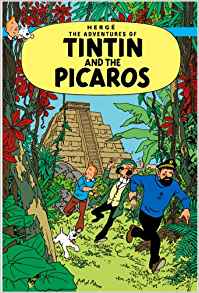
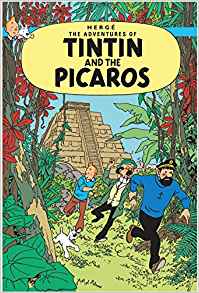
Tintin and the Picaros


By Hergé and Studios Hergé, translated by Leslie Lonsdale-Cooper & Michael Turner (Egmont)
ISBN: 978-1-40520-823-9 (HB) 978-1-405206-35-8 (Album PB)

Win’s Christmas Gift Recommendation: A Great British Tradition of Belgian Origin. Gotta Get ‘Em All… 10/10

Georges Prosper Remi, AKA Hergé, created an eternal masterpiece of graphic literature with his tales of a plucky boy reporter and entourage of iconic associates. Singly, and later with assistants including Edgar P. Jacobs, Bob de Moor, Roger Leloup and other supreme stylists of the Hergé Studio, he created 23 timeless yarns (initially serialised in instalments for a variety of newspaper periodicals) which have since grown beyond their pop culture roots to attain the status of High Art and international cultural icons.

On leaving school in 1925, Remi began working for conservative Catholic newspaper Le Vingtiéme Siécle where he fell under the influence of its Svengali-esque editor Abbot Norbert Wallez. A devoted boy scout, one year later the artist was producing his first strip series – The Adventures of Totor – for the monthly Boy Scouts of Belgium magazine. By 1928 Remi was also in charge of producing the contents of the Le Vingtiéme Siécle weekly children’s supplement Le Petit Vingtiéme.

While he was illustrating The Adventures of Flup, Nénesse, Poussette and Cochonette – written by the staff sports reporter – Wallez required his compliant creative cash-cow to concoct a new and contemporary adventure series. Perhaps a young reporter who roamed the world, doing good whilst displaying solid Catholic values and virtues?

The rest is history…

Some of that history is quite dark: During the Nazi Occupation of Belgium, Le Vingtiéme Siécle was closed down and Hergé was compelled to move his supremely popular strip to daily newspaper Le Soir (Brussels’ most prominent French-language periodical, and thus appropriated and controlled by the Nazis).

He diligently toiled on for the duration, but following Belgium’s liberation was accused of collaboration and even of being a Nazi sympathiser. It took the intervention of Belgian Resistance war hero Raymond Leblanc to dispel the cloud over Hergé, which he did by simply vouching for the cartoonist through words and deeds.

Leblanc provided cash to create a new magazine – Le Journal de Tintin – which he published and managed. The anthology comic swiftly achieved a huge weekly circulation, allowing Remi and his studio team to remaster past tales: excising material dictated by the Fascist invaders to ideologically shade the wartime adventures. The post-war modernising exercises also improved and updated the great tales, just in time for Tintin to become a global phenomenon, both in books and as an early star of animated TV adventure.

With the war over and his reputation restored, Hergé entered the most successful period of his artistic career. He had mastered his storytelling craft, possessed a dedicated audience eager for his every effort and was finally able to say exactly what he wanted in his work, free from fear or censure, if not his personal demons and declining health…

The greatest sign of this was not substantially in the comics tales – although Hergé continued to tinker with the form of his efforts – but rather in how long the gaps were between new exploits. The previous romp had finished serialisation in 1967 and was collected as an album in 1968. It was eight years before Tintin et les Picaros was simultaneously serialised in Belgium and France in Tintin-l’Hebdoptmiste magazine (from 16th September 1975 to April 13th 1976) but at least the inevitable book collection came out almost immediately upon completion in 1976.

Tintin and the Picaros is in all ways the concluding adventure, as many old characters and locales from previous tales make one final appearance. A partial sequel to The Broken Ear it finds Bianca Castafiore implausibly arrested for spying in Central American republic San Theodoros with Tintin, Haddock and Calculus eventually lured to her rescue.

Insidious Colonel Sponsz – last seen in The Calculus Affair – is the Bordurian Military Advisor to the Government of usurper General Tapioca, and has used his position to exact revenge on the intrepid band who humiliated him in his own land. When the Tintin and company escape into the jungles during a murder attempt they soon link up with their old comrade Alcazar, who now leads a band of Picaro guerrillas dedicated to restoring him to power.

South American revolutions were all the rage in the 1970s – even Woody Allen made one the subject of a movie – and Hergé’s cast had been involved with this one on and off since 1935. With the welcome return of anthropologist Doctor Ridgewell and the hysterical Arumbayas, and even an improbable action role (of sorts) for obnoxious insurance salesman and comedy foil Jolyon Wagg, the doughty band bring about the final downfall of Tapioca in a thrilling and bloodless coup during Carnival time, thanks to a hilarious comedy maguffin (initially targeting dipsomaniac Haddock) that turns out to be a brilliant piece of narrative misdirection by the author.

Sly, subtle, thrilling and warmly comforting, this tale was generally slated when first released but with the perspective of intervening decades can be seen as a most fitting place to end the Adventures of Tintin… but only until you pick up another volume and read them again – as you indubitably will.
Tintin and the Picaros: artwork © 1976 by Editions Casterman, Paris & Tournai. Text © 1976 Egmont UK Limited. All rights reserved.

Sabrina the Teenage Witch


By Kelly Thompson, Veronica Fish, Andy Fish, Jack Morelli & various (Archie Comic Publications)
ISBN: 978-1-68255-805-8 (TPB)

Win’s Christmas Gift Recommendation: Merry Magical Mirth and Mayhem… 9/10

Sabrina the Teen-Age Witch debuted in Archie’s Mad House #22 (October 1962), created by George Gladir & Dan DeCarlo as a throwaway character in the gag anthology which was simply one more venue for comics’ undisputed kings of kids’ comedy. She soon proved popular enough to become a regular in the ever-burgeoning cast surrounding the core stars Archie Andrews, Betty Cooper, Veronica Lodge and Jughead Jones.

By 1969 the junior conjurer had grown popular enough to win her own animated Filmation TV series (just like Archie and Josie and the Pussycats), concomitantly graduating to a lead feature in Archie’s TV Laugh Out before finally winning her own title in 1971.

The first volume ran 77 issues from 1971 to 1983 and, when a hugely successful live action TV series launched in 1996, an adapted comicbook iteration followed in 1997. That version folded in 1999 after a further 32 issues.

A third volume – simply entitled Sabrina – was based on TV show Sabrina the Animated Series. This ran for 37 issues from 2000 to 2002 before a back-to-basics reboot saw the comicbook revert to Sabrina the Teenage Witch with #38.

A creature of seemingly infinite variation and variety, the mystic maid continued in this vein until 2004 and issue #57 wherein, capitalising on the global popularity of Japanese comics amongst primarily female readers, the company boldly switched format and transformed the series into a manga-style high school comedy-romance in the classic Shōjo manner.

A more recent version abandoned whimsy altogether and depicted Sabrina as a vile and seductive force of evil (for which see Chilling Adventures of Sabrina).

The link between comics and screen are constantly self-reinforcing, carefully blending elements of all the previous print and TV versions in to whatever comes next. That’s certainly happened again now, as the recent TV renaissance of Riverdale has sparked a fresh, edgier small-screen debut (also entitled Chilling Adventures of Sabrina) and another comic book revision for the mystic Miss Spellman…

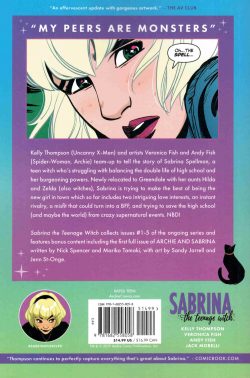
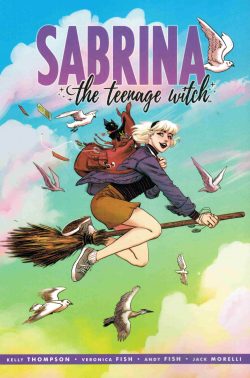
Collecting in trade paperback and digital formats issues #1-5 of the 2019 iteration of Sabrina the Teenage Witch, plus a special preview bonus comic team up, this vivid and engaging reinterpretation by Kelly Thompson, Veronica Fish, Andy Fish, and letterer Jack Morelli finds anxious Sabrina Spellman moving to the happy hamlet of Greendale, just a forest’s distance from Riverdale.

No one likes to be the new kid in High School, but Sabrina has a lot to be worried about. A half-human witch, she’s been abruptly bundled off to the boonies by her formidable arcane aunts Zelda and Hilda for reasons she can’t understand and just knows something big and scary is lurking around her…

Having rapidly-developing sorcerous abilities doesn’t stop her making an instant enemy in apex Mean Girl Radka and a true connection with hapless victim/new bestie Jessa Chiang …or falling foul of the sports coach and the principal on her first day.

Still, there’s also lots of romantic potential in cute scholarly Harvey Kinkle and motorbike-riding bad boy Ren Ransom. The rivals are soon making life even more confusing and frustrating for Sabrina as she strives to solve the enigma of why she’s been banished to this old, witch-haunted town.

However, the main problem to settling in seems to be non-educational. A pervasive aura of menace around the woods at the edge of town soon turns into a horde of mythological monsters all bent on dragging her off or enacting the young sorceress’ doom. The worst of it is that thanks to her gifts, Sabrina soon learns that the marauding horrors are all apparently built by magic and science from the bodies of her friends and classmates…

As the perils increase exponentially, the puissant aunts also fall prey to the mysterious force behind the eldritch events, and before long it’s only Sabrina and her talking cat Salem left to deal with the threat that’s wiped out the most powerful witches of the era…

Packed with wit and both sorts of charm, this is a fast-paced, clever and vastly amusing teen comedy thriller that also offers a wealth of bonus material, beginning with an Introduction by author Kelly Thompson (Jem and The Holograms;A-Force; Captain Marvel & The Carol Corps; Heart In A Box; The Girl Who Would Be King), a fulsome Character Sketch Gallery from Veronica Fish (Spider-Woman; Silk; Archie; Pirates of Mars) and a vast and wonderful variant cover Gallery by Fish, Stephanie Buscema, Adam Hughes, Victor Ibanez, Sandra Lanz, Paulina Ganucheau, Jenn St-Onge, Audrey Mok and Gary Erskine.

Wrapping up the thrills and chills with a tantalising teaser, this unmissable treat concludes with a bonus comic yarn as Nick Spencer, Sandy Jarrell, Matt Helms & letterer Jack Morelli introduce Archie and Sabrina: an engrossing team-up wherein the Riverdale Romeo and Teenage Witch begin a romantic tryst by tricking all their friends and the boy’s previous paramours – Betty, Veronica and Cheryl Blossom – into completely the wrong idea about who’s doing what to who…

That’s all slated to unfold and conclude in a graphic novel in 2020…

Epic, enticing and always enchanting, the adventures of Sabrina the Teenage Witch are always sheer timeless delight that no true fan will ever grow out of…
© 1962-1972, 2017 Archie Comic Publications, Inc. All rights reserved.

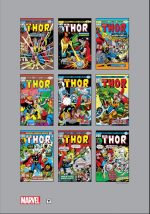
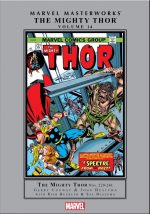
Thor Marvel Masterworks volume 14


By Gerry Conway, Roy Thomas, Bill Mantlo, John Buscema, Rich Buckler, Sal Buscema & various (Marvel)
ISBN: 978-0-7851-9188-9 (HB)

Win’s Christmas Gift Recommendation: Eternal Escapism at its best… 8/10

Whilst the ever-expanding Marvel Universe had grown ever-more interconnected as it matured through its first decade, with characters literally tripping over each other in New York City, the Asgardian heritage of Thor and the soaring imagination of Jack Kirby had most often drawn the Thunder God away from mortal realms into stunning, unique landscapes and scenarios.

However, by the time of this power-packed compendium, the King was long gone and was in fact readying himself to return to the House of (mostly his) Ideas, and only echoes of his groundbreaking presence remained. John Buscema had visually made the Thunder God his own, whilst a succession of scripters struggled to recapture the epic scope of Kirby’s vision and Stan Lee’s off-kilter but comfortingly compelling faux-Shakespearean verbiage…

Once upon a time, disabled doctor Donald Blake took a vacation in Norway only to stumble into an alien invasion. Trapped in a cave, he found an ancient walking stick which, when struck against the ground, turned him into the Norse God of Thunder! Within moments he was defending the weak and smiting the wicked.

Months swiftly passed with the Lord of Storms tackling rapacious extraterrestrials, Commie dictators, costumed crazies and cheap thugs, but these soon gave way to a vast kaleidoscope of fantastic worlds and incredible, mythic menaces, usually tackled with an ever-changing cast of stalwart immortal warriors at his side…

Just prior to these monthly episodes from Thor #229-241 (November 1974 to November 1975, plus a bonus tale from Marvel Premiere # 26 – and all available in hardcover and digital formats), the Thunder God and his cosmic companions had become a quarrelsome, self-doubting band of fantasy spacemen generally roving the outer limits of the Marvel Universe, only occasionally touching base with Earth and Asgard, but that editorial policy had changed as more and more adventures began – and ended – in the troubled lands of Midgard…

With these sagas scripter Gerry Conway ended his long association with the Asgardians – fondly covered in his Introduction ‘Looking Backward 2015-1974 (with Apologies to Edward Bellamy)’ – and a brief period of instability but never a drop in quality ensued before a new regular scribe could begin…

“Homaging” Kirby, penciller Rich Buckler and veteran inker Chic Stone depicted the godly prince safely back on Earth and facing a new kind of terror in Thor #229 as ‘Where Darkness Dwells, Dwell I!’ sees fellow Avenger Hercules uncover an uncanny string of suicides amongst the mortals of Manhattan. After consulting the Storm Lord and his recently returned lover Sif, the Prince of Power is ambushed by a shadowy figure and himself succumbs to dark despondency…

Plucked from psychological catatonia by Iron Man and the recuperating Asgardian Krista, severely shaken Hercules recovers enough to lead Thor deep beneath the city to jointly confront and conquer a horrific lord of fear in #230’s climactic ‘The Sky Above… the Pits Below!’ (inked by Joe Sinnott).

Of greater moment is the revelation in hallowed Asgard that almighty Odin is mysteriously missing…

John Buscema returned in #231, inked by Dick Giordano to limn ‘A Spectre from the Past!’, wherein Thor learns that former true love Jane Foster is dying, another victim of the recently defeated fear lord. Whilst doting current paramour Sif fruitlessly returns to Asgard seeking a cure, the grieving Thunderer is momentarily distracted when Hercules is attacked by an unbelievably powerful anthropoidal throwback. Disembodied spirit Armak the First Man has somehow possessed the body of an unwary séance attendee and now runs savagely amok in the streets…

Since gaining his liberty Galactus’ herald Firelord had been aimlessly travelling the globe. Lured by Asgardian magic he now becomes wicked Loki‘s vassal in ‘Lo, the Raging Battle!’…

Heartsick Thor, meanwhile, will not leave Jane’s hospital bedside, prompting Sif and Hercules to travel alone to the ends of the universe to retrieve the mystic and fabled Runestaff of Kamo Tharnn. No sooner do they depart than the ensorcelled Firelord attacks and whilst incensed, impatient Thor is knocking sense back into him, his evil half-brother leads an Asgardian army in a sneak attack on America…

With ‘Midgard Aflame’ (Buscema & Stone) Thor furiously leads the human resistance and learns for the first time that his father is missing. Odin’s faithful vizier reveals that the All-Father has deliberately divested himself of his memory and chosen to reside somewhere on Earth as a hapless mortal, the better to learn humility…

With humanity preparing to unleash their atomic arsenal against the occupying Asgardians, the invasion suddenly ends with a savage duel between Thor and Loki in ‘O, Bitter Victory!’ (Buscema & Sinnott) after which the Thunderer returns to Jane’s side, unaware that he is being stalked by a merciless old enemy.

Simultaneously but far, far away Sif and Hercules have clashed with he ‘Who Lurks Beyond the Labyrinth!’ and secured a remedy for Thor’s mortal beloved…

Thor #236 opens as the Thunder God revels in furious combat with the Absorbing Man. Unknown to the blockbusting battlers, at that very moment Sif is expressing her own love for her wayward prince by using the Runestaff to fix Jane in ‘One Life to Give!’

…And somewhere in California, an imposing old man called Orrin ponders his strangely selective amnesia and wonders how he can possibly possess such incredible strength and vitality…

With battle concluded, Thor hastens back to Jane and finds her completely cured. His joy is short-lived however, as he realises that Sif is gone, seemingly forever…

Issue #237 finds reunited lovers Don Blake and Jane Foster cautiously getting reacquainted and pondering Sif’s incredible sacrifice when a horde of Asgardian Trolls led by ‘Ulik Unchained’ calamitously attack New York. Before long they have made off with the recently restored Jane under cover of the blockbusting melee that inevitably ensues…

Conway concluded his contributions with Thor #238 as the Thunderer capitulates to his hostage-taking foe and is taken below the worlds of Earth and Asgard on the ‘Night of the Troll!’

Ulik wants to overthrow his king Geirrodur and is confident his hold over his mighty arch foe will accomplish the act for him, but is utterly unprepared for the new martial spirit which now enfuses his formerly frail mortal hostage…

…And in California old man Orrin decides to use his power to help the poor, quickly arousing the ire of big business, brutal strike-breakers and the local authorities…

Writer/Editor Roy Thomas and artist Sal Buscema join Sinnott in Thor #239 as the Thunder God brutally ends his association with the trolls even as in California Orrin’s rabble-rousing civil unrest is cut short when a colossal pyramid containing Egyptian gods erupts from the ground in ‘Time-Quake!’

Thor knows nothing of the latest upheaval. He has returned to distant Asgard, uncovering a mysterious force draining his people of their power and vitality. Warned by duplicitous seer Mimir, the anguished godling rushes back to Earth to clash with the puissant Horus ‘When the Gods Make War!’ (Thomas, Bill Mantlo, Sal Buscema & Klaus Janson).

The depleted Egyptian pantheon have desperate need of an All-Father and have conditioned Odin/Orrin to believe that he is their long-lost patron Atum-Re…

Go-getting, proactively take-charge Jane is already waiting in California when Thor arrives and she is present when the elder deity devastatingly assaults his astounded son. Happily, her cool head prevails and soon the warring deities are talking. An uneasy alliance forms and the truth comes out. Horus, Isis and Osiris are in an apocalyptic battle with vile Death God Seth and need the power of a supreme over-god to assure a victory for the forces of Life. Sadly, that energy is being siphoned from Asgard…

The cosmic conflict concludes in #241 as ‘The Death-Ship Sails the Stars!’ (Mantlo, John Buscema & Sinnott) with the ghastly Seth and his demonic servants ultimately repulsed and Jane again playing a major role: even triumphally shaking Odin out of his compliant, mind-wiped state…

Also included here is a contemporaneous solo tale of Hercules, taken from Marvel Premiere #26 (November 1975), setting up his forthcoming role in new team title The Champions. Crafted by Mantlo, George Tuska & Vince Colletta – and sporting a new Kirby cover – ‘The Game of Raging Gods’ finds the legendary hero relocated to California on the college lecture circuit and targeted by old enemies Typhon the Titan and witch woman Cylla…

Also adding lustre are the cover to all-reprint Giant-Size Thor #1, and original art covers by Gil Kane, Al Milgrom & John Romita and Kirby & Frank Giacoia.

The tales gathered here may lack the sheer punch and verve of the early years but fans of ferocious Fights ‘n’ Tights fantasy will find this tome still stuffed with intrigue and action, magnificently rendered by artists who, whilst not possessing Kirby’s vaulting visionary passion, were every inch his equal in craft and dedication, making this a definite and decidedly economical must-read for all fans of the character and the genre.
© 1974, 1975, 2017 Marvel Characters, Inc. All rights reserved.

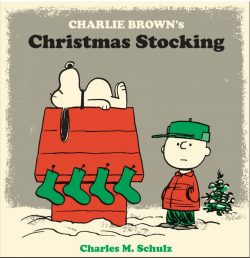
Charlie Brown’s Christmas Stocking


By Charles M. Schulz (Fantagraphics Books)
ISBN: 978-1-60699-624-9 (HB)

Win’s Christmas Gift Recommendation: Lost Treasures for the Nubbin-Sized Nostalgiacs… 9/10

Peanuts is unequivocally the most important comics strip in the history of graphic narrative. It is also the most deeply personal, especially as, since the characters made the jump to television with the airing on December 9th 1965 of A Charlie Brown Christmas, the little nippers have become an integral part of the American Yule experience.

Cartoonist Charles M. Schulz crafted his moodily hilarious, hysterically introspective, shockingly philosophical epic for fifty years. He published 17,897 strips from October 2nd 1950 to February 13th 2000 and died from the complications of cancer the day before his last strip was published…

At its height, the strip ran in 2,600 newspapers in 75 countries, translated into 21 languages. Many of those venues are still running perpetual reprints, as they have ever since his departure. Attendant book collections, a merchandising mountain and television spin-offs made the publicity-shy artist a billionaire. That profitable sideline – one Schulz devoted barely any time to over the decades – is where this little gem originates from…

Peanuts – a title Schulz loathed, but one the syndicate forced upon him – changed the way comics strips were received and perceived by showing that cartoon comedy could have edges and nuance as well as pratfalls and punchlines.

The usual focus of the feature (we just can’t call him “star” or “hero”) is everyman loser Charlie Brown who, with high-maintenance, fanciful mutt Snoopy endures a bombastic and mercurial supporting cast who hang out doing kid things in a most introspective, self-absorbed manner.

The daily gags centre on playing (pranks, sports, musical instruments), teasing each other, making ill-informed observations and occasionally acting a bit too much like grown-ups. The cast also includes mean girl Violet, infant prodigy Schroeder, “world’s greatest fussbudget” Lucy Van Pelt , her other-worldly baby brother Linus and dirt-magnet “Pig-Pen”: each with a signature twist to the overall mirth quotient and sufficiently fleshed out and personified to generate jokes and sequences around their own foibles.

Charlie Brown is settled into his existential angst and resigned to his role as eternal loser: singled out by fate. It’s a set-up that was timelessly funny and infinitely enduring…

Available in a child-friendly hardback and digital formats, Charlie Brown’s Christmas Stocking re-presents two rare and seasonally-appropriate Peanuts offerings that will delight fans whilst offering a largely counter-capitalist spin to this time of year.

In 1962 Happiness is a Warm Puppy – a book of original Peanuts material – hit the national Best-Seller lists and stayed there for a year, prompting the author to create another. However, “Sparky” Schulz was a deeply religious man and was very concerned about reminding his readers of the true meaning of Christmas, not just developing another revenue stream.

When the opportunity arose, Schulz jumped at the chance to craft a mini-book premium that would be given away with the December 1963 issue of Good Housekeeping.

In the strips, Schulz always considered guileless innocent Linus as his spiritual spokesperson (we’d probably say “avatar” today), and in the booklet the blanket-lover leads the kids in examining the season and their unquestioned practise of leaving out their woollen loot-catchers with disarming candour and wry wit. The tale is told in a series of full-page, flat-colour illustrations balanced by a simple text block: the usual format for kids’ picture books.

The remainder of this archival treasure is a similarly-themed project from 1968: three years after the monster-hit TV special which had be retransmitted every December since its debut.

Here ‘The Christmas Story’ is also printed at one panel (with word balloons) per page, but when it was first seen in the December 1968 Woman’s Day magazine, the characters copped not only the cover but four full pages of the interior in a proper, respectable, prestigious comics section.

Overtly spiritual in tone, this tale sees Linus reading the nativity story from the Gospel of St. Luke to Snoopy, who then endures a baffling and thought-provoking alternate view of the season from arch bread-head Lucy…

Supplementing the well-meaning whimsy are informative background articles About “Charlie Brown’s Christmas Stocking”, About “The Christmas Story” and About the Author, adding historical context to the cartoon wonderment: a rare masterpiece of thoughtful comedy gold demonstrating Schulz’s spellbinding graphic mastery that how his kids have become part of the fabric of billions of lives.
Charlie Brown’s Christmas Stocking © 1963, 1968, 2013 Peanuts Worldwide, LLC. All rights reserved.

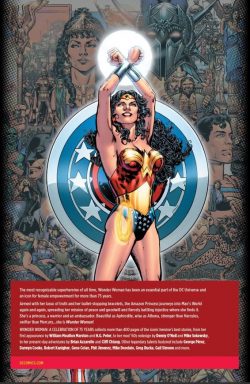
Wonder Woman: A Celebration of 75 Years


By William Moulton Marston & Harry G. Peter, Robert Kanigher, Dennis O’Neil, Roy Thomas, Greg Potter, George Pérez, William Messner-Loebs, Eric Luke, Phil Jimenez, Greg Rucka, Darwyn Cooke, Brian Azzarello, Gail Simone, Amy Chu, Ross Andru & Mike Esposito, Mike Sekowsky, Don Heck, Gene Colan, Jill Thompson, Mike Deodato Jr., Yanick Paquette, Matt Clark, Drew Johnson, J. Bone, Cliff Chiang, Ethan Van Sciver, Bernard Chang & various (DC Comics)
ISBN: 978-1-4012-6512-0 (HB)

Win’s Christmas Gift Recommendation: Wonderful Fun for All… 9/10

Without doubt Wonder Woman is the very acme of female icons. Since her launch in 1941 she has permeated every aspect of global consciousness and become not only a paradigm of comics’ very fabric but also a symbol to all women everywhere. In whatever era you choose, the Amazing Amazon epitomises the eternal balance between Brains and Brawn and, over those decades, has become one of that rarefied pantheon of literary creations to achieve meta-reality.

The Princess of Paradise Island originally debuted as a special feature in All Star Comics #8, conceived by psychologist and polygraph pioneer William Moulton Marston and illustrated by Harry G. Peter, in a calculated attempt to offer girls a positive and forceful role model and, on forward-thinking Editor M.C. Gaines’ part, to sell more funnybooks to girls.

She immediately catapulted into her own series and the cover-spot of new anthology title Sensation Comics one month later. An instant hit, Wonder Woman won her own eponymous supplemental title a few months later, cover-dated summer 1942. That set up enabled the Star-Spangled Siren to weather the vicissitudes of the notoriously transient comicbook marketplace and survive the end of the Golden Age of costumed heroes beside Superman, Batman and a few lucky hangers-on who inhabited the backs of their titles.

This stunning compilation – part of a dedicated series introducing and exploiting the historical and cultural pedigree of venerable DC icons – is available in hardback and digital formats, offering a sequence of sublime snapshots detailing how Diana of the Amazons has evolved and thrived in worlds and times where women were generally regarded as second class, second rate and painfully functional or strictly ornamental.

Collecting material from All-Star Comics #8, Sensation Comics #1, Wonder Woman volume 1 #7, 28, 99, 107, 179, 204, 288, Wonder Woman volume 2 #1, 64, 93, 142, 177, 195, 600, Wonder Woman volume 3 #0, Justice League: New Frontier Special #1, Sensation Comics Featuring Wonder Woman #1 and 7 whilst cumulatively covering July 1940 to November 2012, these groundbreaking appearances are preceded by a brief critical analyses of significant stages in her development, beginning with Part I: The Amazon 1941-1957 which details the events and thinking which led to her creation and early blockbusting dominance of Man’s Boy’s World…

‘Introducing Wonder Woman/(Wonder Woman Comes to America)’ come from All-Star Comics #8, (December 1941) and Sensation Comics #1 (January 1942) respectively, revealing how, once upon a time on a hidden island of immortal super-women, American aviator Steve Trevor of US Army Intelligence crashes to Earth. Near death, he is nursed back to health by young, impressionable Princess Diana.

Fearful of her besotted child’s growing obsession with the creature from a long-forgotten and madly violent world, Diana’s mother Queen Hippolyte reveals the hidden history of the Amazons: how they were seduced and betrayed by men but rescued by the goddess Aphrodite on condition that they forever isolate themselves from the mortal world and devote their eternal lives to becoming ideal, perfect creatures.

However, when Trevor explains the perfidious spy plot which accidentally brought him to the Island enclave and with the planet in crisis, goddesses Athena and Aphrodite instruct the Queen to send an Amazon back with the American to fight for global freedom and liberty. Hippolyte declares an open contest to find the best candidate and, despite being forbidden to compete, young closeted, cosseted Diana clandestinely overcomes all other candidates to become their emissary.

Accepting the will of the gods, the worried mother outfits Diana in the guise of Wonder Woman and sends her out to Man’s World armed with an arsenal of super-scientific and magical weapons…

The Perfect Princess gained her own series and cover-spot in new anthology title Sensation Comics a month later, with the story continuing where the introduction had left off. ‘Wonder Woman Comes to America’ sees the eager immigrant returning the recuperating Trevor to the modern World before trouncing a gang of bank robbers and briefly falling in with a show business swindler.

The major innovation was her buying the identity of lovelorn Army nurse Diana Prince, elegantly allowing the Amazon to be close to Steve whilst enabling the heartsick medic to join her fiancé in South America….

Even with all that going on, there was still room for Wonder Woman and Captain Trevor to bust up a spy ring attempting to use poison gas on a Draft induction centre. Typically, Steve breaks his leg and ends up in hospital again, where “Nurse Prince” could look after him…

The new Diana gained a position with Army Intelligence as secretary to General Darnell, further ensuring she would always be able to watch over her beloved. She little suspected that, although the painfully shallow Steve only had eyes for the dazzling Amazon superwoman, the General had fallen for the mousy but supremely competent Lieutenant Prince…

As previously mentioned, the Amazing Amazon was a huge and ever-growing hit, quickly gaining her own eponymous title in late Spring of that year (cover-dated Summer 1942). The comic frequently innovated with full-length stories, and ‘America’s Wonder Women of Tomorrow’ (Wonder Woman volume 1 #7, Winter 1943) offers an optimistic view of the future in an extract of a fantastic fantasy tale wherein America in 3000AD is revealed as a true paradise.

Ruled by a very familiar female President, the nation enjoys a miracle supplement which has extended longevity to such an extent that Steve, Etta Candy and all Diana’s friends are still thriving. Sadly, some old throwbacks still yearn for the days when women were subservient to males, meaning there is still work for the Amazing Amazon to do…

The wry but wholesome sex war sees Steve going undercover with the rebel forces uncovering a startling threat…

As the Golden Age drew to a close and superheroes began to wane, Wonder Woman #28 (April 1948) debuted ‘Villainy Incorporated!’ in an epic-length tale of revenge wherein eight of her greatest enemies – Queen Clea, Hypnota, Byrna Brilyant – the Blue Snowman, Giganta, Doctor Poison, Eviless, Zara – Priestess of the Crimson Flame and The Cheetah – escape from Amazonian mindbending gulag Transformation Island where they are being rehabilitated and unite to ensure her destruction…

Whilst costumed colleagues foundered, Wonder Woman soldiered on well into the Silver Age, benefitting from constant revisionism under the canny auspices of Robert Kanigher, Ross Andru & Mike Esposito, who re-energised her for the Silver Age renaissance and beyond: a troubled period encapsulated in the briefing notes for Part II: The Princess 1958-1986…

Using the pen-name Charles Moulton, Marston had scripted all Diana’s adventures until his death in 1947, whereupon Kanigher took over the writer’s role. H. G. Peter soldiered on with his unique artistic contribution until he passed away in 1958. Wonder Woman #97, in April of that year, was his last hurrah and the end of an era.

With the exception of DC’s Trinity (plus a few innocuous back-up features such as Green Arrow and Aquaman), superheroes all but vanished at the end of the 1940s and early 1950s, replaced by mostly mortal champions in a deluge of anthologised genre titles. Everything changed again after Showcase #4 rekindled the public’s interest in costumed crimebusters with a new iteration of The Flash in 1956.

From that moment the fanciful floodgates opened wide once more, and whilst re-inventing Golden Age Greats such as Green Lantern, Atom and Hawkman, National/DC gradually updated all those venerable veteran survivors who had weathered the backlash. None more so than the ever-resilient Wonder Woman …

As writer and editor Kanigher had always tweaked or reinvented much of the original mythos, tinkering with her origins and unleashing Diana on an unsuspecting world in a fanciful blend of girlish whimsy, rampant sexism, strange romance, alien invasion, monster-mashing and utterly surreal (some would say-stream-of-consciousness) storytelling. This was at a time when all DC’s newly revived, revised or reinvented costumed champions were getting together and teaming up at the drop of a hat – as indeed was the Princess of Power in Justice League of America. However, within the pages of her own title a timeless, isolated fantasy universe was carrying on much as it always had.

Wonder Woman volume 1 #99 (July 1958) heralded a new start and the introduction of the Hellenic Heroine’s newly revitalised covert cover: Air Force Intelligence Lieutenant Diana Prince, launching a decade of tales with Steve Trevor perpetually attempting to uncover her identity and make the most powerful woman on Earth his blushing bride, whilst the flashily bespectacled glorified secretary stood exasperated and ignored beside him…

‘Top Secret’ sees Steve trying to trick Diana into marriage – something the creep tried a lot back then – by rigging a bet with her. Of course, the infinitely patient Princess outsmarts him yet again…

Although not included here WW #105 had introduced Wonder Girl: revealing how centuries ago the gods and goddesses of Olympus bestowed unique powers on the daughter of Queen Hippolyta and how even as a mere teenager the indomitable Diana had brought the Amazons to Paradise Island.

Continuity – let alone consistency and rationality – were never as important to Kanigher as a strong story or breathtaking visuals and that eclectic odyssey – although a great yarn – simply annoyed the heck out of a lot of fans… but not as much as the junior Amazon would in years to come…

The teen queen kept popping up and here Wonder Woman – Amazon Teen-Ager!’ (from Wonder Woman #107, July1959) sees the youngster wallowing in a new, largely unwanted romantic interest as mer-boy Ronno perpetually gets in the way of her quest to win herself a superhero costume…

As the 1960s progressed Wonder Woman was looking tired and increasingly out of step with the rest of National/DC’s gradually gelling – and ultimately cohesively shared – continuity but, by the decade’s close, a radical overhaul of Diana Prince was on the cards.

In 1968 superhero comics were once again in decline and publishers were looking for ways to stay profitable – or even just in business – as audience tastes and American society evolved. Back then, with the entire industry dependent on newsstand sales, if you weren’t popular, you died. Handing over the hoary, venerable and increasingly moribund title to Editor Jack Miller and Mike Sekowsky, the bosses sat back and waited for their eventual failure, and prepared to cancel the only female superhero in the marketplace…

Sekowsky’s unique visualisation of the Justice League of America had contributed to the title’s overwhelming success, and at this time he was stretching himself with a number of experimental projects, focussed on the teen and youth-markets.

Tapping into the teen zeitgeist with the Easy Rider styled drama Jason’s Quest proved ultimately unsuccessful, but with the Metal Men and the hopelessly hidebound Wonder Woman, he had much greater impact. Sekowsky would ultimately work the same magic with Supergirl in Adventure Comics (another epic and intriguing run of tales long overdue for compilation).

With relatively untried scripter Denny O’Neil on board for the first four tales, #179 heralded huge changes as ‘Wonder Woman’s Last Battle’ (December 1968, with Dick Giordano inking) saw the immortal Amazons of Paradise Island forced to abandon our dimensional plane. They took with them all their magic – including all Diana’s astounding gadgets and weapons such as the Invisible Plane and Golden Lasso – and ultimately even her mighty superpowers. Despite all that, her love for Steve compelled her to remain on Earth.

Effectively becoming her own secret identity of Diana Prince, the now-mortal champion resolved to fight injustice as a human would…

Sekowsky’s root and branch overhaul offered a whole new kind of Wonder Woman (and can be seen in a magical quartet of collections entitled Diana Prince: Wonder Woman) but, as always, fashion ruled and in a few years, without any fanfare or warning, everything that had happened since Wonder Woman lost her powers was unwritten.

Her mythical origins were revised and re-established as she abruptly returned to a world of immortals, gods, mythical monster and super-villains. There was even a new nemesis: an African/Greek/American half-sister named Nubia who debuted in ‘The Second Life of the Original Wonder Woman’ (Wonder Woman 204, February 1973, by Kanigher, Don Heck & Vince Colletta) which delivers the murder of Diana’s martial arts mentor I Ching as a prelude to Diana being restored to her former glory by the now returned and restored Amazons on Paradise Island…

Such an abrupt reversal had tongues wagging and heads spinning in fan circles. Had the series offended some shady “higher-ups” who didn’t want controversy or a shake-up of the status quo?

Probably not.

Sales were never great even on the Sekowsky run and the most logical reason is probably Television. The Amazon had been optioned as a series since the days of the Batman TV show in 1967, and by this time (1973) production work had begun on the original 1974 pilot featuring Cathy Lee Crosby. An abrupt return to the character most viewers would be familiar with from their own childhoods seems perfectly logical to me…

By the time Linda Carter made the concept work in 1975, Wonder Woman was once again “Stronger than Hercules, swifter than Mercury and more beautiful than Aphrodite”…

Eventually however – after the TV-inspired sales boost ended with the show’s cancellation – the comic slumped into another decline, leading to another revamp.

Notionally celebrating the beginning of her fifth decade of continuous publication, Wonder Woman #288, (February 1982) saw Roy Thomas. Gene Colan & Romeo Tanghal take over the Amazon, rededicating her to fighting for Love, Peace, Justice and Liberty in ‘Swan Song!’

The story features the creation by war god Mars of new female villain Silver Swan – transformed from an ugly, spiteful ballerina into a radiant, spiteful flying harridan – whilst the biggest visible change was replacing the stylised eagle on Diana’s bustier with a double “W”, signifying her allegiance to women’s action group The Wonder Woman Foundation…

The Silver Age had utterly revolutionised a flagging medium, bringing a modicum of sophistication to the returning sub-genre of masked mystery men. However, after decades of cosy wonderment, Crisis on Infinite Earths transformed the entire interconnected DC Universe and led to the creation of a fully reimagined Wonder Woman with a different history – and even character – as discussed and then displayed in Part III: The Ambassador 1986-2010…

Wonder Woman volume 2 #1 debuted with a February 1987 cover-date. Crafted by Greg Potter, George Pérez & Bruce Patterson, ‘The Princess and the Power’ reveals how Amazons are actually the reincarnated souls of women murdered by men in primordial times. Given potent new form by the female Hellenic gods, they thrived in a segregated city of aloof and indomitable women until war god Ares orchestrates their downfall via his demigod dupe Herakles.

Abused, subjugated and despondent, the Amazons are rescued by their patron goddesses in return for eternal penance in isolation on hidden the island of Themyscira.

Into that paradise Diana is born: another murdered soul, imbued with life in an infant body made from clay. She will excel in every endeavour and become the Wonder Woman…

After relocating to the outer world, Diana becomes an inspirational figure and global hero whilst constantly trying to integrate and understand the madness of “Patriarch’s World”…

In ‘The Heart of the City’ (Wonder Woman #64, July 1992) Bill Messner-Loebs, Jill Thompson & Denis Rodier focus on that dilemma as Diana attempts to recover a kidnapped child used as leverage by gangsters while saving a weary, outraged righteous cop from confusing vengeance with justice…

That struggle for understanding – and sales – led to the Princess losing her right to the role of Wonder Woman after losing a duel with fellow Amazon Artemis. The aftermath seen here reveals how a brutal, hard-line replacement Wonder Woman, takes over her ambassadorial role in Patriarch’s World in ‘Violent Beginnings’ (Wonder Woman #93, January 1995 by Messner-Loebs & Mike Deodato Jr.) with her defeated but undaunted predecessor keeping watchful eyes on the brutal warrior in her clothes…

These years are categorised by a constant search for relevance and new direction, and in ‘The Bearing of the Soul’(Wonder Woman #142 March 1999 by Eric Luke, Yanick Paquette, Matt Clark, Bob McCloud & Doug Hazlewood) the Amazon, supplemented with incredible alien technology, declares herself a global peacekeeper, dashing to flashpoints and conflict zones to end wars and save lives, irrespective of political objection…

From three years later, ‘Paradise Found’ (#177, 2002, by Phil Jimenez & Andy Lanning) sees another course change as Themyscira is rebuilt following a war between gods and offered to the outer world as an exemplar of Paradise on Earth and the oldest and youngest of its sometimes-united nations…

The often-hilarious downsides of ‘The Mission’ (WW #195, 2003) are then explored by Greg Rucka, Drew Johnson & Ray Snyder and reiterated in a wry out-of-world vignette by Darwyn Cooke & J. Bone which teams the Diana of 1962 with equally-pioneering female crimefighter Black Canary. ‘The Mother of the Movement’ (Justice League: New Frontier Special #1, 2008) sees the occasional sister-act confront a magazine owner and aspiring nightclub impresario over the way he makes his staff dress up as rabbits. Moreover, history fans, one of those indentured luscious lepines is an undercover reporter…

Many such minor tweaks in her continuity and adjustments to the continuity accommodated different creators’ tenures until 2011, when DC rebooted their entire comics line again and Wonder Woman once more underwent a drastic, fan-infuriating root-and-branch refit as represented here in Part IV: The Warrior 2012-2014

Possibly to mitigate the fallout, DC okayed a number of fall-back options such as the beguiling collected package under review today…

After a full year of myth-busting stories, ‘Lair of the Minotaur’ was the subject of Wonder Woman volume 4 #0, (November 2012) wherein Brian Azzarello & Cliff Chiang puckishly explored a different history as a teenaged Princess Diana underwent trials and training and fell under the sway of a sinister god…

As an iconic figure – and to address the big changes cited above – a number of guest creators were invited to celebrate their take on the Amazon in an out-of-continuity series. From Sensation Comics Featuring Wonder Woman #1, (2014) Gail Simone & Ethan Van Scriver’s ‘Gothamazon’ deliciously details how a mythologically militaristic Wonder Woman uncompromisingly and permanently cleans up Batman’s benighted home when the Gotham Guardians are taken out of play, whilst in Sensation Comics Featuring Wonder Woman #7, Amy Chu & Bernard Chang go out-of-world (and into ours?) to celebrate the inspirational nature of the concept of Wonder Woman.

‘Rescue Angel’ sees soldiers pinned down in Afghanistan and saved by Lt. Angel Santiago. The wounded woman warrior then claims her outstanding actions under fire are the result of a vision from her favourite and most-beloved comic book character…

This magical and magnificent commemoration is also packed with eye-catching covers, from the stories but also from unfeatured tales, by the likes of H.G. Peter, Irwin Hasen & Bernard Sachs, Mike Sekowsky, Dick Giordano, Don Heck, Gene Colan, George Pérez, Brian Bolland, Mike Deodato Jr., Adam Hughes, Cliff Chiang, Ethan Van Sciver, Shane Davis & Michelle Delecki, Ivan Reis & Oclair Albert, Nicola Scott and Francis Manapul.

Wonder Woman is a primal figure of comic fiction and global symbol, and looks set to remain one. This compilation might not be all of her best material but it is a solid representation of what gave her such fame and would grace any fan’s collection.
© 1941, 1942, 1943, 1948, 1958, 1959, 1968, 1973, 1982, 1987, 1992, 1995, 1999, 2002, 2003, 2008, 2010, 2012, 2014, 2016 DC Comics. All Rights Reserved.

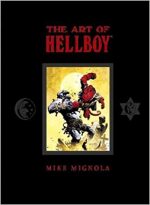
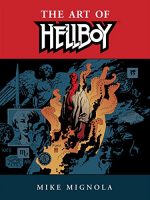
The Art of Hellboy


By Mike Mignola (Dark Horse Books)
ISBN: 978-1-56971-910-7(HB) 978-1-59307-089-2(TPB) eISBN 978-1-62115-749-6

Win’s Christmas Gift Recommendation: Indulge Yourself in the Art of Terror… 9/10

Hellboy is a creature of vast depth and innate mystery; a demonic child summoned to Earth by Nazi occultists at the end of World War II. Intercepted and rescued by allied troops, the infernal infant was reared by Allied parapsychologist Professor Trevor “Broom” Bruttenholm. After years of devoted intervention, education and warm human interaction, in 1952 Hellboy began destroying unnatural threats and supernatural monsters as lead agent for the Bureau for Paranormal Research and Defense.

As the decades of his career unfold, Hellboy gleans snatches of his origins, learning he is an pit-born creature of dark portent: born an infernal messiah, somehow destined to destroy the world and bring back ancient powers of evil. It is a fate he despises and utterly rejects…

Above all, Hellboy is one of those rare tragic, doomed heroes who somehow fits into every conceivable niche and genre, and that’s a tribute to the narrative and illustrative gifts of creator Mike Mignola (and his many collaborators) and – as this book and editor Scott Allie’s Introduction reveals – a diabolical amount of sheer hard work…

This magnificent oversized (229 x 310 mm) hardback or paperback (also available in digital formats) reproduces a wealth of comics pages and covers, roughs and sketches, beginning with the very first rendering of the proto-wonder.

A treasure trove of Mignola’s pencil designs and ink renderings trace the concept’s development, and are accompanied by the author/artists own recollections, augmented by early comics pages (published and not) and covers (ditto) as well as thumbnail layouts in a variety of media and finished original art pages; all offering the kind of working secrets all wannabe artists never tire of seeing…

Also revelatory are the inclusions from Mignola’s sketchbooks, affording us a far more precious insight into his narrative process…

As well as the creative secrets, this fabulous tome includes many promo pieces, finished but unused pages as well as designs and premium images, and crossover art featuring other folks’ characters such as Batman, The Spirit and Ghost plus out-industry artwork (such as Christmas cards).

Baroque, grandiose, eye-catching and unforgettably powerful, the images in this bombastic book combine as a timeless treat for friends and fiends who love the dark and revere the verve, imagination and, longevity of the greatest Outsider Hero of All: a supernatural thriller no comics fan should be without.

And we’re well past due for a second volume too…
The Art of Hellboy™ © 1991, 1992, 1993, 1994, 1993, 1996, 1997, 1998, 1999, 2000, 2001, 2002, 2003 Mike Mignola. All rights reserved.


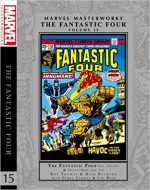
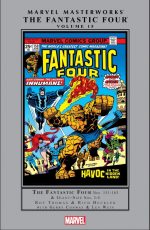
Fantastic Four Marvel Masterworks volume 15


By Roy Thomas, Gerry Conway, Len Wein, Tony Isabella, Marv Wolfman, Chris Claremont, Rich Buckler, Bob Brown, Dick Ayers, John Buscema, Joe Sinnott & various (Marvel)
ISBN: 978-0-7851-6625-2 (HB)

Win’s Christmas Gift Recommendation: Frantic Festive Fireworks… 8/10

Monolithic modern Marvel truly began with the adventures of a small super-team who were as much squabbling family as coolly capable costumed champions. Everything the company produces now is due to the quirky quartet and the groundbreaking, inspired efforts of Stan Lee and Jack Kirby…

This full-colour compendium – available in hardcover and digital editions – collects Fantastic Four #151-163 and Giant-Size Fantastic Four #3-4: collectively spanning November 1974 to October 1975 with Stan Lee long gone from the prestigious title but with his co-creator still very much in evidence through a new generation of artists mimicking his visual verve and punch.

What You Should Already Know: maverick scientist Reed Richards, his fiancé Sue Storm, their close friend Ben Grimmand Sue’s teenaged tag-along little brother Johnny miraculously survived an ill-starred private space-shot after cosmic rays penetrated their stolen ship’s inadequate shielding. As they crashed back to Earth the uncanny radiation mutated them all in unimaginable ways…

Richards’ body became astoundingly elastic, Sue gained the power to turn invisible and project forcefields whilst Johnny could turn into living flame and tragic Ben devolved into a shambling, rocky freak. They agreed to use their abilities to benefit mankind and thus was born the Fantastic Four.

Following an effusive and fact-filled Introduction from writer editor Roy Thomas the dramatic tensions resume withGiant-Size Fantastic Four #3 courtesy of plotter Gerry Conway, scripter Marv Wolfman and illustrators Rich Buckler & Joe Sinnott. The extra-special quarterly magazine was devoted to offering epic thrills, herein revealing ‘Where Lurks Death …Ride the Four Horsemen!’ as cosmic aliens arrive, intent on scourging the Earth.

Forewarned after the team stumble across the first horror in ‘…There Shall Come Pestilence’, the harried heroes split up with Inhuman stand-in for Sue Richards Medusa and Johnny striving against international madness in ‘…And War Shall Take the Land!’ whilst Reed and Ben strive to conquer the personification of Famine in ‘…And the Children Shall Hunger!’, before all reuniting to wrap up the final invader in‘…All in the Valley of Death!’

Crafted by Conway, Buckler & Sinnott, FF #151 then begins revealing the truth about a mysterious Femizon who had been stalking the Thing. ‘Thundra and Lightning!’ introduces the male-dominated alternate Future Earth dubbed Machus and its brutal despot Mahkizmo, the Nuclear Man, who explosively invades the Baxter Building in search of a mate to dominate and a new world to conquer…

Inked by Jim Mooney, #152 exposes ‘A World of Madness Made!’ as the team are held captive in the testosterone-saturated side-dimension whilst Medusa seemingly flees, but actually seeks reinforcements from the diametrically-opposed Femizon future alternity, resulting in two universes crashing together in the concluding ‘Worlds in Collision!’ by Tony Isabella, Buckler & Sinnott.

Rapidly reworked by Len Wein, Fantastic Four #154 features ‘The Man in the Mystery Mask!’ – a recycled partial reprint from Strange Tales #127 in which Stan Lee, Dick Ayers & Paul Reinman pitted Ben and Johnny against ‘The Mystery Villain!’.

Here, however, Bob Brown, Frank Giacoia & Mike Esposito find that Reed’s early lesson in leadership has been hijacked by another old friend with explosive and annoying results…

Meanwhile over in Giant-Size Fantastic Four #4 Wein, Chris Claremont, John Buscema, Chic Stone & Sinnott unite to introduce ‘Madrox the Multiple Man’: a young mutant who grew up on an isolated farm unaware of the incredible power he possessed.

When his parents pass away, the kid is inexplicably drawn to New York City, but the mysterious hi-tech suit he wears to contain his condition malfunctions and the boy devolves into a mobile fission device that can endlessly, lethally replicate itself…

Thankfully the FF are aided by mutant Moses Charles Xavier who dutifully takes young Jamie under his wing…

A minor classic follows from Fantastic Four #155-157 as the long dormant Silver Surfer resurfaces in ‘Battle Royal!’(by Wein, Buckler & Sinnott), apparently now a murderous and willing thrall of Doctor Doom.

The dictator can command the Stellar Skyrider because he holds the alien’s lover Shalla Bal – threatening to take her in marriage – but as seen in ‘Middle Game!’ (with Roy Thomas joining as co-writer and Editor) the Surfer cannot kill and merely delivers the defeated FF as prisoners to the Devil Doctor’s citadel.

However, there are schemes within schemes unfolding and Doom is playing a waiting game whilst he covertly siphons the Skyrider’s Power Cosmic to fuel a deadly Doomsman mechanoid…

With Thomas in full authorial control ‘And Now… the Endgame Cometh!’ sees the heroes fight back to conquer the Lethal Latverian, all blithely unaware that the entire charade has been a crafty confection of malign and manipulative demon Mephisto…

The furore is followed by another nostalgia-tinged 2-part epic beginning with FF #158’s ‘Invasion from the 5th (Count it, 5th!) Dimension’ – by Thomas, Buckler & Sinnott – wherein one of the Torch’s earliest solo scourges returns to occupy the homeland of the Inhumans.

Extra-dimensional dictator Xemu opens his campaign of vengeance by dispatching mutant Quicksilver to lure his sister-in-law Medusa back to Attilan. The intention is to force defiant King Black Bolt to utilise his doomsday sonic power on the invader’s behalf, for which the conqueror needs the silent king’s beloved as a bargaining chip.

However, when the FF accompany her into the obvious trap, they bring a hidden ally who unobtrusively turns the tables on Xemu, unleashing ‘Havoc in the Hidden Land!‘ coincidentally and at long last reuniting the First Family of comic book fiction…

This formidable high-tension Fights ‘n’ Tights tome terminates in pan-dimensional panic which ensues when a multiversal conflict is cunningly concocted by a hidden mastermind orchestrating Armageddon for a trio of dimensionally-adjacent planets in ‘In One World… and Out the Other!’

Devised by Thomas, J. Buscema & Stone, the first chapter sees shapeshifting Reed Richards sell his patents to a vast corporation, even as in the streets his counterpart from another universe is kidnapped by barbarian warlord Arkon the Magnificent. That abduction is investigated by a very Grimm Thing who has uncomfortable suspicions about what’s occurring…

With Buckler & Sinnott assuming the delineation, ‘All the World Wars at Once!’ expands the saga as Johnny Storm visits the recently liberated 5th Dimension Earth to discover it under assault by androids from yet another slightly different one…

As the Thing teams up with his other-earth counterpart to quell a dinosaur invasion, “our” world is assaulted by an army from the 5th dimension led by the Human Torch. With each realm believing itself provoked by trans-terrestrial aggressors, the divided team only knows one thing: each invading force is using weaponry invented by Richards…

The crisis peaks in ‘The Shape of Things to Come!’ as the mastermind is exposed and the scheme to annihilate three worlds come close to fruition, necessitating a voyage to a cosmic nexus point and a devastating battle with yet another twisted alternate-reality hero to save three worlds in a spectacular and poignant ‘Finale!’ in #163.

This power-packed package also includes the covers to all-reprint Giant-Sized Fantastic Four #5 and 6; the original unused cover for GSFF #5 (which became FF #158-159); house ads and the all-new material from The Fabulous Fantastic Four Marvel Treasury Edition (#2, December 1975).

This bombastic oversized tabloid edition featured a bevy of classic yarns and is represented here by front-&-back cover art from John Romita, a frontispiece by Marie Severin, a Stan Lee Introduction, the contents page and a double-page pin-up of the team and supporting cast by John Buscema & Giacoia.

Although Kirby had taken the unmatched imagination and questing sense of wonder with him on his departure, the sheer range of beloved characters and concepts he had created with Lee carried the series for years afterwards. So once writers who shared the originators’ sensibilities were crafting the stories a mini-renaissance began…

Although the “World’s Greatest Comics Magazine” didn’t quite return to the stratospheric heights of yore, this period offers fans a tantalising taste of the glory days. These honest and extremely capable efforts are probably most welcome to dedicated superhero fans and continuity freaks like me, but will still thrill and enthral the generous and forgiving casual browser looking for an undemanding slice of graphic narrative excitement.
© 1974, 1975, 2017 Marvel Characters, Inc. All rights reserved.

The Graphic Canon volume 2: From “Kubla Khan” to the Brontë Sisters to The Picture of Dorian Gray


By many and various, edited by Russ Kick (Seven Stories)
ISBN: 978-1-60980-378-0 (TPB)

Win’s Christmas Gift Recommendation: A “Worthy” Present That’s Actually a Joy to Receive and Devour… 10/10

Once upon a time in the English-speaking world, nobody clever, educated or in any way grown-up liked comics. Now we’re an accredited really and truly art form and spectacular books like this can be appreciated…

The Graphic Canon is an astounding literary and art project instigated by legendary editor, publisher, anthologist and modern Renaissance Man Russ Kick, which endeavours to interpret the world’s great books through the eyes of masters of crusading sequential narrative in an eye-opening synthesis of modes and styles.

The project is divided into three periods, roughly equating with the birth of literature and its evolution up to the rise of the modern novel. Debut volume From the Epic of Gilgamesh to Shakespeare to Dangerous Liaisons covers literature from ancient times to the end of the 1700s in stories and poetry, and this sequel edition takes us up to the end of the 19thcentury and the rise of mass-market fiction and (nigh) universal literacy…

Much of the material for the project has been taken from already extant or ongoing projects: as editor Russ Kick explains in his Introduction, it was the realisation that so many creative individuals were attempting to publish their own graphic responses to global heritage literature that led him to initiate this mammoth project in the first place…

Rather than simply converting the stories, the artists involved have enjoyed the freedom to respond to texts in their own way, producing graphics – narrative or otherwise, monochrome or something else, sequential or not – to accompany, augment or even offset the words before them and the result is simply staggering…

Make no mistake: this is not a simple bowdlerising “prose to strip” exercise like generations of Classics Illustratedcomics, and you won’t pass any tests on the basis of what you see here. Moreover, these images will make you want to re-read the texts you know and hunger for the ones you haven’t got around to yet. You will of a certainty marvel at the infinite variety of the artistic responses the canonical works inspired.

Available in mammoth paperback and digital formats, each piece here is preceded by an informative commentary page by Kick, and the wonderment is presaged by a barrage of micro-comic ‘Three Panel Reviews’ by Lisa Brown (specifically Charles Dickens’ A Tale of Two Cities; Gustav Flaubert’s Madame Bovary; Louisa May Alcott’s Little Women and Nathaniel Hawthorne’s The Scarlet Letter) before Alice Duke sets the ball properly rolling with a stunning painted interpretation of Samuel Taylor Coleridge’s ‘Kubla Khan’.

National treasure Hunt Emerson has already wonderfully and hilariously adapted the poet’s Rime of the Ancient Mariner and here loans ‘Part the Second’ to this tome wherein the foolish sailor realises why he shouldn’t have shot that damn sea bird…

Straight text-&-picture juxtapositions by Aidan Koch of William Blake’s ‘Auguries of Innocence’, lead to a formal and most mannerly adaption in ‘A Selection from Jane Austen’s Pride and Prejudice: Chapter 2’ by Huxley King with designer Terrence King, after which George Gordon, Lord Byron reminds us ‘She Walks in Beauty’, courtesy of David Lasky.

The period poesy corner continues and briefly concludes with Percy Bysshe Shelley and ‘Ozymandias’ as interpreted by Anthony Ventura, William Wordsworth’s ‘I Wandered Lonely as a Cloud’ via a futuristic vision from PMurphy before enjoying another Hunt Emerson gem re-examining John Keats’ ‘O Solitude’…

The novel makes its first appearance here with a gothic classic as Jason Cobley & Declan Shalvey precis a key moment from Mary Shelley’s ‘Frankenstein’ after which, a selection of Fairy Tales begins with text-heavy original extracts from ‘The Valiant Little Tailor’, ‘Hansel and Gretel’ and ‘Little Snow White’ by the Brothers Grimm, all deliriously illuminated by S. Clay Wilson.

The Grimm kids’ stuff then translates to comic strip form as Shawn Cheng adapts ‘How Six Made Good in the World’before Neil Cohn pictorializes Keats’ ‘La Belle Dame Sans Merci’ and William Blake’s own words and images are combined to bring to life ‘Jerusalem: The Emancipation of the Giant Albion’.

‘The Confessions of Nat Turner’ is a contemporary account of a southern slave rising as narrated, prior to his execution, by Turner himself to lawyer Thomas R. Gray, adapted by controversial artist John Pierard, whilst Lance Tooks devilishly tackles a lost classic by Mary Shelley in ‘The Mortal Immortal’ before another tranche of Fairy Tales commences with more original text limned by S. Clay Wilson.

Here Hans Christian Andersen is represented by ‘The Emperor’s New Clothes’, ‘The Nightingale’ and ‘The Little Match Girl’ after which Ellen Lindner presents ‘Rondeau (Jenny Kiss’d Me)’ as first conciev’d and craft’d by James Henry Leigh Hunt.

Hysterical history cartoonist Kevin Dixon concocts a beautifully bonkers snippet from Dickens’ ‘Oliver Twist’, a delightful prelude to a dose of Victorian nonsense as seen in Hunt Emerson’s depiction of Edward Lear’s ‘The Jumblies‘ and Sanya Glisic’s bombastic treatment of a selection from Heinrich Hoffman’s moralizing cautionary tales collection Der Struwwelpeter: specifically ‘Struwwelpeter: the Story of Shock-Headed Peter’, ‘The Story of the Inky Book’ ‘The Story of the Man that went out Shooting’ and ‘The Story of Little Suck-A-Thumb’.

Literary giant Edgar Allen Poe is celebrated in a haunting Poe Montage by Gris Grimly and fuller adaptations such as‘The Raven’ by Yien Yap as well as original text extracts from ‘The Tell-Tale Heart’, ‘The Raven’, ‘The Bells’, ‘The Pit and the Pendulum’ and ‘The Masque of the Red Death’ – all grotesquely illustrated by Maxon Crumb – before we switch themes and tone for Elizabeth Watasin to open a Brontë section with stylish interpretation of Charlotte’s ‘Jane Eyre’, whilst Tim Fish adapts Emily’s ‘Wuthering Heights’, after which Ali J in one image encapsulates Hawthorne’s ‘The Scarlet Letter’ and Matt Kish offers a post-futurist and quite disturbing vision of Herman Melville’s ‘Moby-Dick’…

John Porcellino offers a compelling and effective cartoon analogue of Henry David Thoreau’s ‘Walden’ after which Walt Whitman is addressed through two vastly different depiction of ‘Leaves of Grass’: one by Tara Seibel’s and Dave Morice’s cheeky ‘Leaves of Grass: The Adventures of Walt Whitman’.

Tinges of literary modernism coincide with John Pierard’s hallucinatory adaptation of Fitz Hugh Ludlow’s ‘The Hasheesh Eater’ after which Michael Keller & Nicolle Rager Fuller lavishly and magnificently illuminate and interpret Chapter 4 from Charles Darwin’s ‘On the Origin of Species’ (or if you’re a pedant like me On the Origin of Species by Means of Natural Selection, or the Preservation of Favoured Races in the Struggle for Life) and Seth Tobocman re-delivers former slave, equal rights advocate and freedom fighter Frederick Douglass’ thoughts on the Nature of Power from ‘The Message from Mount Misery’.

More exploration of social justice issues comes via Tara Seibel’s lengthy treatment of portions of Victor Hugo’s ‘Les Misérables’, before Dame Darcy leads off a brace of entries celebrating Emily Dickinson with ‘Because I Could Not Stop for Death’. Diana Evans then responds visually to ‘I Taste a Liquor Never Brewed’, before Corinne Mucha adapts Gustave Flaubert’s Letter to George Sand ‘Dear Master’ and Darcy returns to delineate a wild interpretation of Lewis Carroll’s ‘Alice’s Adventures in Wonderland and Through the Looking Glass’ and Eran Cantrell compellingly details his monstrous epic ‘Jabberwocky’.

Such is the impact of Carroll (AKA Charles Lutwidge Dodgson) – on artists and creators, if not the entire wider world – that a host of submissions led to the ‘Alice Gallery’ that follows, with inclusions by Alice and Mad Bill Carman, Kim Deitch, John Coulthart, May Ann Licudine, Andrea Femerstrand, Olga Lopata, Natalie Shau, Emerson Tung, Peter Kuper, John Ottinger, David W. Tripp, Christopher Panzer, Jasmine Becket-Griffith and Molly Kiely: all letting their imaginations run wild and proving the infinite power of a good book…

Another one such is Fyodor Dostoevsky’s ‘Crime and Punishment’, starkly and paranoically envisioned here by Kako, before Molly Keilly delivers details from Leopold von Sacher-Masoch’s long-forbidden classic ‘Venus in Furs’ and Arthur Rimbaud’s pioneering drama ‘The Drunken Boat’ is adapted by Julian Peters…

Shifting to more sedate climes and themes, Megan Kelso deliciously delves into George Elliot’s ‘Middlemarch’ before Carroll pops up again, thanks to Mahendra Singh’s treatment of The Hunting of the Snark in ‘Fit the Second: The Bellman’s Speech’, before Ellen Lindner channels Leo Tolstoy with stylish extracts from ‘Anna Karenina’ whilst J. Ben Moss offers a key moment from Mark Twain’s ‘Adventures of Huckleberry Finn’…

Laurence Gane & Piero impressively summarize Friedrich Nietzsche’s ‘Thus Spake Zarathustra’ in a sequence of short, sharp graphic lectures after which we enter the first moments of modernity with the accent on suspense and terror as Danusia Schejbal & Andrzej Klimowski open Robert Louis Stevenson’s ‘The Strange Case of Dr. Jekyll and Mr. Hyde’, whilst Sandy Jimenez effectively and chillingly recounts Ambrose Bierce’s ‘An Occurrence at Owl Creek Bridge’ before John Coulthart epically and experimentally ends our literary excursions by uniquely adapting Oscar Wilde’s ‘The Picture of Dorian Gray’.

Wrapping up the elucidatory experience are background, context and suggestions in ‘Further Reading’ from Jordyn Ostroff, regarding all the works contained herein, a full list of ‘Contributors’, details of ‘Credits and Permissions’ and an ‘Index to Volume 2’.

Although no replacement for actually reading as much of the source material as you can find, this astonishing agglomeration of visual interpretations is a magnificent achievement and one every fan of the comics medium should see: a staggering blend of imperishable thoughts and words wedded to and springing from sublimely experimental pictures.

This type of venture is just what our art form needs to grow beyond our largely self-imposed ghetto, and anything done this well with so much heart and joy simply has to be rewarded.
© 2012 Russ Kick. All work © individual owners and copyright holders and used with permission. All rights reserved.