Kabul Disco Book 2: How I Managed Not to Become Addicted to Opium in Afghanistan


By Nicolas Wild, translated by Karyn Mencarelli (Life Drawn/Humanoids Inc.)
ISBN: 978-1-59465-469-5 (TPB)

Fiction and reality frequently blur, but stories – True, mostly True, totally True or Officially Confirmed by a Government Official and therefore Utterly Suspect – told in comics form somehow always acquire an instant edge of veracity and patina of authenticity that is hard to dispute or refute.

Kabul Disco is a splendid case-in-point: an example of sophisticated yet simple Euro-cartooning designed to charm and challenge in equal amounts, and a superb addition to trans-Continental publisher Humanoids’ Down-to-Earth, Real-World graphic novel imprint Life Drawn.

How I Managed Not to Become Addicted to Opium in Afghanistan is the second fabulous monochrome travel memoir further detailing the experiences of French writer/artist Nicholas Wild whose quest for regular employment took a wide-eyed political innocent to Afghanistan in 2005…

Remember This: there’s always a war going on somewhere. That’s just the way it is. The enemy are always monsters so our side – there’s no leeway to not take sides anymore – are always justified in what they do. Heaven forfend if you slip up and start thinking of rivals, adversaries, opponents or even those who simply disagree with you as no more than people – with or without grievances or differing opinions…

In January 2005, Wild was in Paris; gripped by ennui and lack of inspiration and only mildly galvanised by lack of money and imminent homelessness. Responding to an online ad he applied to a Communications Agency looking for a comics artist and was astounded to find himself accepted for a short commission. The job was overseas and his culture shock in adapting to a weird job in a wild place involved joining somewhat sketchy and rather dubious NGO (Non-Governmental Organisation) Zendagui Media as they worked to bring the war-torn region into the arena of modern nations.

Although the security situation was tense, trouble seems to only strike elsewhere and eventually Nick assimilates: befriending ordinary Afghanis, shopping, visiting Shiite mosques, eating in restaurants and even sightseeing. Ultimately, the artist was more concerned about the kind of people he was working for rather than the evil all-pervasive Al Qaeda and Taliban terrorists apparently infesting the country…

All too soon the job was done and Wild had to go home…

Wilde’s adjustment to the primitive conditions and his superb gift for wry commentary afforded the reader a brilliant example of the complex made simple and, after many astounding, heart-warming, ridiculous and often frightening moments, the artist realised his five months were over and it was time to leave, both physically and emotionally…

As Book Two begins, the artist is back in civilisation and chafing. Following his ‘Incomprehensible Summary of Book 1’ – offering a roundup of European history and contemporary experience – ‘Part Three: The War on Opium that Never Took Place’ finds the cartoonist back in Kabul… which he now thinks of as “Home”.

Back at Zendagui Media new hire Angele Lamborghini briefs the team on their next project: weaning the populace away from the only resource they have that anybody wants to buy. The American Embassy wants to end the commercial dependency on opium and needs the team to create a campaign to win minds if not hearts of ordinary folk…

That goes about as well as you’d expect, but in the process of research Wild does meet some fascinating people, visits more beautiful places, hears some scary stories and attends a few more parties…

And then it’s time for national elections…

Packed with quirky interactions and subtly inserting a little history and context into his revelations, Wild and his equally bemused and bewildered associates live from day to day until eventually ‘Part Four: Kabul Burning’ sees events overtake the First-worlders in their little enclave as Afghani deaths at government hands spark brutal riots…

The race to a fortified safehouse is simultaneously terrifying and farcical but the potential consequences are no joking matter…

And so it goes, with fond reveries and razor-sharp observations peppering Wild’s irresistible account of an ordinary job in extraordinary times and a magical place: with idiocy and contradiction piling up but progress somehow being made until it’s time to go home – or at least back to Europe – once more…

But is it really for good?

Rendered in beguiling black and white, Kabul Disco is warm, funny, distressingly informative and unobtrusively polemical: a wittily readable, non-discriminating reverie that informs and charms with surprising effect: the perfect response to the idiocy of war and dangers of corporate imperialism as well as a sublime tribute to the potent indomitability of human nature.
© 2018, Humanoids Inc., Los Angeles (USA). All rights reserved. First published in France as Kabul Disco Tome 2: Comment je ne suis pas devenu opiomane en Afghanistan © 2008 La Boîte à Bulles & Nicholas Wild. All rights reserved.

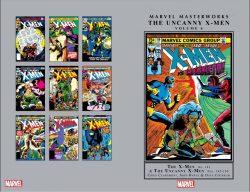
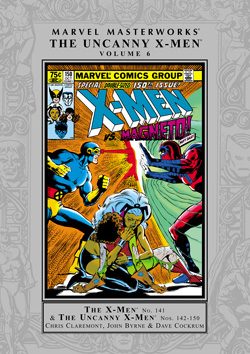
Uncanny X-Men Marvel Masterworks volume 6


By Chris Claremont, John Byrne, Brent Anderson, Bob McLeod, Dave Cockrum, Terry Austin, & various (Marvel)
ISBN: 978-0-7851-3013-0 (HB)

In the autumn of 1963, The X-Men #1 introduced Scott (Cyclops) Summers, Bobby (Iceman) Drake, Warren (Angel) Worthington, Jean (Marvel Girl) Grey and Hank (The Beast) McCoy: very special students of Professor Charles Xavier.

The teacher was a wheelchair-bound telepath dedicated to brokering peace and integration between the masses of humanity and the emergent off-shoot race of mutants dubbed Homo superior; considered by many who knew him as a living saint.

After nearly eight years of eccentrically spectacular adventures the mutant misfits virtually disappeared at the beginning of 1970 during another periodic downturn in superhero comics sales. Just like in the closing years of the 1940s, mystery men faded away as supernatural mysteries and traditional genre themes once more dominated the world’s entertainment fields…

Although the title was revived at the end of the year as a cheap reprint vehicle, the missing mutants were reduced to guest-stars and bit-players throughout the Marvel universe and the Beast was refashioned as a monster fit for the global uptick in scary stories until Len Wein & Dave Cockrum revived and reordered the Mutant mystique with a brand-new team in Giant Size X-Men #1 in 1975.

To old foes-turned-friends Banshee and Sunfire was added one-shot Hulk hunter Wolverine, and all-original creations Kurt Wagner, a demonic German teleporter codenamed Nightcrawler, African weather “goddess” Ororo Monroe AKA Storm, Russian farmboy Peter Rasputin, who transformed at will into a living steel Colossus and bitter, disillusioned Apache superman John Proudstar who was cajoled into joining the makeshift squad as Thunderbird.

The revision was an instantaneous and unstoppable hit, with Wein’s editorial assistant Chris Claremont writing the series from the second story onwards. The Uncanny X-Men reclaimed their own comicbook with #94 and it quickly became the company’s most popular – and high quality – title.

Cockrum was succeeded by John Byrne and as the team roster shifted and changed the series rose to even greater heights, culminating in the landmark Dark Phoenix storyline which saw the death of arguably the book’s most beloved and imaginative character.

In the aftermath team leader Cyclops left but the epic cosmic saga also seemed to fracture the epochal working relationship of Claremont and Byrne. Within months of publication they went their separate ways: Claremont staying with the mutants whilst Byrne moved on to establish his own reputation as a writer on series such as Alpha Flight, Incredible Hulk and especially his revolutionised and freshly-groundbreaking Fantastic Four…

This sixth superb compilation (available in luxurious hardcover, trade paperback and eBook editions) is perfect for newbies, neophytes and even old lags nervous about reading such splendid yarns on fragile but extremely valuable newsprint paper.

Gathering Uncanny X-Men #141-150 – spanning January to October 1981 – the action opens without preamble or hesitation as an evocative and extended subplot opens which would dictate the shape of mutant history for years to come. ‘Days of Future Past’ depicts an imminently approaching dystopian apocalypse wherein almost all mutants, paranormals and superheroes have been eradicated by Federally-controlled Sentinel robots.

The mechanoids rule over a shattered world on the edge of utter annihilation. New York is a charnel pit with most surviving superhumans kept in concentration camps and only a precious few free to fight a losing war of resistance.

Middle-aged Kitty Pryde is the lynchpin of a desperate plan to unmake history. With the aid of telepath named Rachel(eventually to escape that time-line and become the new Phoenix) Pryde swaps consciousness with her younger self in a last-ditch attempt to prevent the pivotal event which created the bleak, black tomorrow where all her remaining friends and comrades are being pitilessly exterminated one by resolute one…

‘Mind Out of Time’ sees the mature Pryde in our era, inhabiting her own 13-year-old body and leading her disbelieving team-mates on a frantic mission to foil the assassination of US senator David Kelly on prime-time TV by a sinister new iteration of the Brotherhood of Evil Mutants – super-powered terrorists determined to make a very public example of the human politician attacking the cause of Mutant Rights…

Fast-paced, action-packed, spectacularly multi-layered, bitterly tragic and agonisingly inconclusive – as all such time-travel tales should be – this cunning, compact yarn is indubitably one of the best individual tales of the Claremont/Byrne era and set the mood, tone and agenda for the next two decades of mutant mayhem…

With the timeline restored and tragedy averted, things slow down at the X-Mansion as John Byrne left for pastures new. His swan song in #143 was a bombastic romp which finds lonely, homesick Kitty home alone at Christmas… except for a lone N’garai ‘Demon’ determined to eat her. Her solo trial decimates the X-Men citadel and proves once and for all that she has what it takes…

The changing of the guard in X-Men #144 was marked by ‘Even in Death…’, scripted by Claremont and illustrated by Brent Anderson & Joseph Rubenstein wherein heartbroken Scott Summers (who quit the team after the death of Jean Grey AKA the Phoenix) fetches up in coastal village Shark Bay and joins the crew of Aleytys Forester‘s fishing boat.

Trouble is never far from the man called Cyclops, however, and when she introduces him to her dad, the hero must draw upon all his inner reserves – and uncomprehending help of the macabre swamp guardian Man-Thing – to repel the crushing, soul-consuming assaults of pernicious petty devil D’spayre…

Dave Cockrum returned to the team he co-created in #145, joining Claremont & Rubinstein in an extended clash of cultures as ‘Kidnapped!’ sees the team targeted by Doctor Doom thanks to the machinations of deranged assassin Arcade. With half of the team – Storm, Colossus, Angel, Wolverine and Nightcrawler – invading the Diabolical Dictator’s castle, a substitute-squad consisting of Iceman, Polaris, Banshee and Havoc are despatched to the maniac’s mechanised ‘Murderworld!’ to rescue a kidnapped coterie of innocent family and friends…

Sadly, in the interim Doom has triumphed over the invaders to his castle, but his act of entrapping claustrophobe Ororo has backfired, triggering a ‘Rogue Storm!’ that might erase the USA from the globe…

Issue #148 opens with Scott and Aletys shipwrecked on a mysterious island holding the remnants of a lost civilisation but the main event is a trip to Manhattan for Kitty, accompanied by Storm, Spider-Woman Jessica Drew and Dazzler Alison Blair. That’s a good thing as wandering mutant empath Caliban calamitously attempts to abduct the child in ‘Cry, Mutant!’ by Claremont, Cockrum & Rubinstein…

A major menace resurfaces in #149 to threaten Scott and Aletys, but the X-Men are too busy dealing with resurrected demi-god Garokk and an erupting volcano in ‘And the Dead Shall Bury the Living!’ before all the varied plots combine and coalesce in anniversary issue #150 (October 1981).

Extended epic ‘I, Magneto…’ sees the merciless, malevolent master of magnetism threaten all humanity. with Xavier’s team helpless to stop him… until a critical moment triggers an emotional crisis and awakening of his long-suppressed humanity…

These are some of the greatest X-stories Marvel ever published; entertaining, groundbreaking and painfully intoxicating, offering an invaluable grounding in contemporary fights ‘n’ tights fiction no fan or casual reader can afford to ignore.
© 1980, 1981, 2013 Marvel Characters, Inc. All rights reserved.

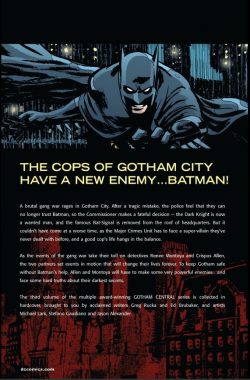
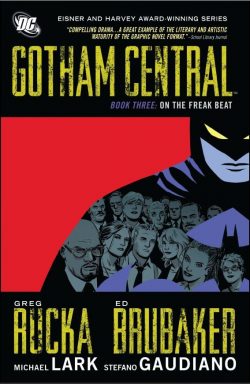
Gotham Central Book 3: On the Freak Beat


By Greg Rucka, Ed Brubaker, Michael Lark, Stephen Gaudiano, Jason Alexander & various (DC Comics)
ISBN: 978-1-4012-2754-8 (HB) 978-1-4012-3232-0 (TPB)

One of the great joys of long-lasting, legendary comics characters is their potential for innovation and reinterpretation. There always seems to be another facet or corner to develop. Such a case was Gotham Central, wherein contemporary television sensibilities cannily combined with the deadly drudgery of the long-suffering boys in blue in the world’s most famous four-colour city.

Owing as much to shows such as Homicide: Life on the Streets and Law & Order as it did to the baroque continuity of Batman, the series mixed gritty, authentic police action with a soft-underbelly peek at what the merely mortal guardians and peacekeepers had to put up with in a world of psychotic clowns, flying aliens and scumbag hairballs who just won’t stay dead.

This compilation – available in hardback, soft cover and eBook editions – collects Gotham Central #23-31 (spanning November 2004-July 2005) and opens with a handy double-page feature re-introducing the hardworking stiffs of First Shift, Second Shift and the Police Support Team of the ‘Gotham City Police Department, Major Crimes Unit’ before the dramas start to unfold.

Gotham City is a bad place to be a cop – even a crooked one. If you’re a straight arrow it’s even worse because then both sides of the street want you dead. When Detectives Crispus Allen and Renee Montoya turn their attention to corrupt Crime Scene Investigator Jim Corrigan it sets them both on a path steeped in tragedy and loss… and bloody betrayal. ‘Corrigan’(originally published in issues #23-24) is by regular team Greg Rucka, Michael Lark & Stephen Gaudiano.

The same team bring us ‘Lights Out’ (issue #25) as, in the aftermath of the War Games debacle and resultant bloodbath (see Batman: War Drums; War Games: Outbreak, Tides, Endgame and War Crimes), new police commissioner Akins severs all official ties to the Batman and has the Bat-Signal removed from Police Headquarters roof.

Ed Brubaker & Jason Alexander take us ‘On the Freak Beat’ (#26-27) as Detectives Marcus Driver and (secretly psychic) Josie MacDonald investigate the murder of a televangelist. Despite all the leads and evidence pointing to Catwoman as the killer, their dedicated efforts take them into a sordid world of hypocrisy, S&M, lies and real estate chicanery before the truth comes out and the real culprit is brought to justice…

“Keystone Cops” (issues #28-31) is another superb blend of the procedural and the outlandish as beat cop Andy Kelly is horrifically mutated by a super-criminal’s booby-trap whilst rescuing kids from a fire. Montoya and Allen must cross jurisdictional boundaries and moral landmarks to obtain the assistance of deranged Flash villain Doctor Alchemy if there’s any hope of curing their comrade…

With the most chilling exploration of a super-villain’s motivation in many a year and a generous tip of the hat to The Silence of the Lambs, this is a moody masterpiece with an unsuspected kick in the tail. Rucka writes and Gaudiano graduates from inks to pencils with the embellishment falling to the capable Kano & Gary Amaro to conclude this stunning deep dive into urban atrocity in unforgettable style.
© 2004, 2005, 2010 DC Comics. All Rights Reserved.

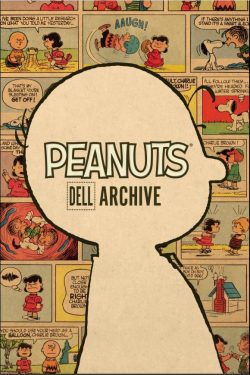
Peanuts Dell Archive


By Charles M. Schulz, Jim Sasseville, Dale Hale, Tony Pocrnick & various (KaBOOM!)
ISBN: 978-1-68415-255-1 (HB) eISBN: 978-1-64144-117-9

Peanuts is unequivocally the most important comics strip in the history of graphic narrative. It is also the most deeply personal. Cartoonist Charles Monroe “Sparky” (forever dubbed thus by an uncle who saw young Charlie reading Billy DeBeck’s strip Barney Google: that hero’s horse was called “Spark Plug”). Schulz crafted his moodily hilarious, hysterically introspective, shockingly philosophical epic for half a century, producing 17,897 strips from October 2nd 1950 to February 13th 2000. He died, from the complications of cancer, the day before his last strip was published…

At its height, the strip ran in 2,600 newspapers in 75 countries, translated into 21 languages. Many of those venues are still running perpetual reprints, and have ever since his departure. Attendant book collections, a merchandising mountain and television spin-offs made the publicity-shy artist a billionaire.

In case you came in late – and from Mars – our focus (we just can’t call him “star” or “hero”) is everyman loser Charlie Brown who, with increasingly high-maintenance, fanciful mutt Snoopy, is at odds with a bombastic and mercurial supporting cast hanging out doing kid things with disturbingly mature psychological overtones…

The gags and tales centre on play, pranks, sports, playing musical instruments, teasing each other, making baffled observations about the incomprehensible world and occasionally acting a bit too much like grown-ups. The ferocious unpredictability and wilfulness of seasonal weather often impacts on these peewee performers, too…

You won’t find many adults in the mix – which includes Mean Girl (let’s call her “forthright”) Violet, prodigy Schroeder, “world’s greatest fussbudget” Lucy, her strange baby brother Linus and dirt-magnet “Pig-Pen” all adding signature twists to the mirth – because this is essentially a kids’ world.

Charlie Brown has settled into existential angst and is resigned to his role as eternal loser: singled out by fate and the relentless diabolical wilfulness of Lucy who sharpens her spiteful verve on everyone around her. Her preferred target is always the round-headed kid though: mocking his attempts to fly a kite, kicking away his football and perpetually reminding him face-to-face how rubbish he is…

The Sunday page debuted on January 6th 1952; a standard half-page slot offering more measured fare than the daily. Both thwarted ambition and explosive frustration became part of the strip’s signature denouements and these weekend wonders gave Sparky room to be at his most visually imaginative, whimsical and weird…

By that time, rapid-fire raucous slapstick gags were riding side-by-side with surreal, edgy, psychologically barbed introspection, crushing judgements and deep ruminations in a world where kids – and certain animals – were the only actors. The relationships were increasingly deep, complex and absorbing…

None of that is really the point. Peanuts – a title Schulz loathed, and one the syndicate forced upon him – changed the way comics strips were received and perceived by showing that cartoon comedy could have edges and nuance as well as pratfalls and punchlines. It also became a multimedia merchandising bonanza for Schulz and the United Features Syndicate, generating toys, games, books, TV shows, apparel and even comic books. These days there’s even an educational institution, The Charles M. Schulz Museum and Research Center, from which a goodly portion of the archival contributions in this wonderful hardback/digital compilation originate…

Just how and why the comic book versions differ from the strip is explored with incisive and analytical vigour in Derrick Bang’s (of CMS M&RC) Introduction ‘Peanuts in Comic Books’ revealing how, in the early 1950s, reprints in St. John and, later, Dell Comics titles such as Tip Top Comics and United Comics gradually gave way to original back-up material in Fritzi Ritz, Nancy and others.

Very little of it was by Schulz – although he did contribute lots of covers – but rather were ghosted by hand-picked associates like Jim Sasseville, who ably aped “Sparky” Schulz and kept the little cast in character and on message in strips in Fritzi Ritz, Nancy, Tip Top, Nancy and Sluggo,

Sasseville wrote and drew all of the Peanuts try-out issue (Four Color #878, February 1958). Schulz contributed heavily to the second FC Peanuts (#969; February 1959) with Dale Hale and Tony Pocrnick handling subsequent back-up tales and third Four Color tester #1015 (August/October 1959).

The fourth became Peanuts #4: a title that ran for 13 issues, ending in July 1962. By then Dell staff artists and writers were generating the stories and the overall quality was nothing to brag about… although Schulz was drawing the covers, at least.

In terms of calibre and standards, the 75 comic tales here – beginning with the very first by Schulz from Nancy #146, September 1957 to the anonymous last – are all quite enjoyable and some are truly exceptional: such as ‘The Mani-Cure’(Tip Top #211, November 1957/January 1958 by Sasseville) or Dale Hale’s untitled treatise on keeping secrets from Tip Top #217 (May/July 1959).

Admittedly, true fans might have trouble with later yarns as the kids face an amok robot or dare the terrors of an old haunted house, but in the main this collection is a splendid peek at a little known cranny of the franchise and there is the joy of all those lost gems from Sparky to carry the day…

And where else are you going to see the kids in stories you haven’t read yet… you Blockhead!?
Peanuts Dell Archive all contents unless otherwise specified © 2005 Peanuts Worldwide, LLC. All rights reserved.

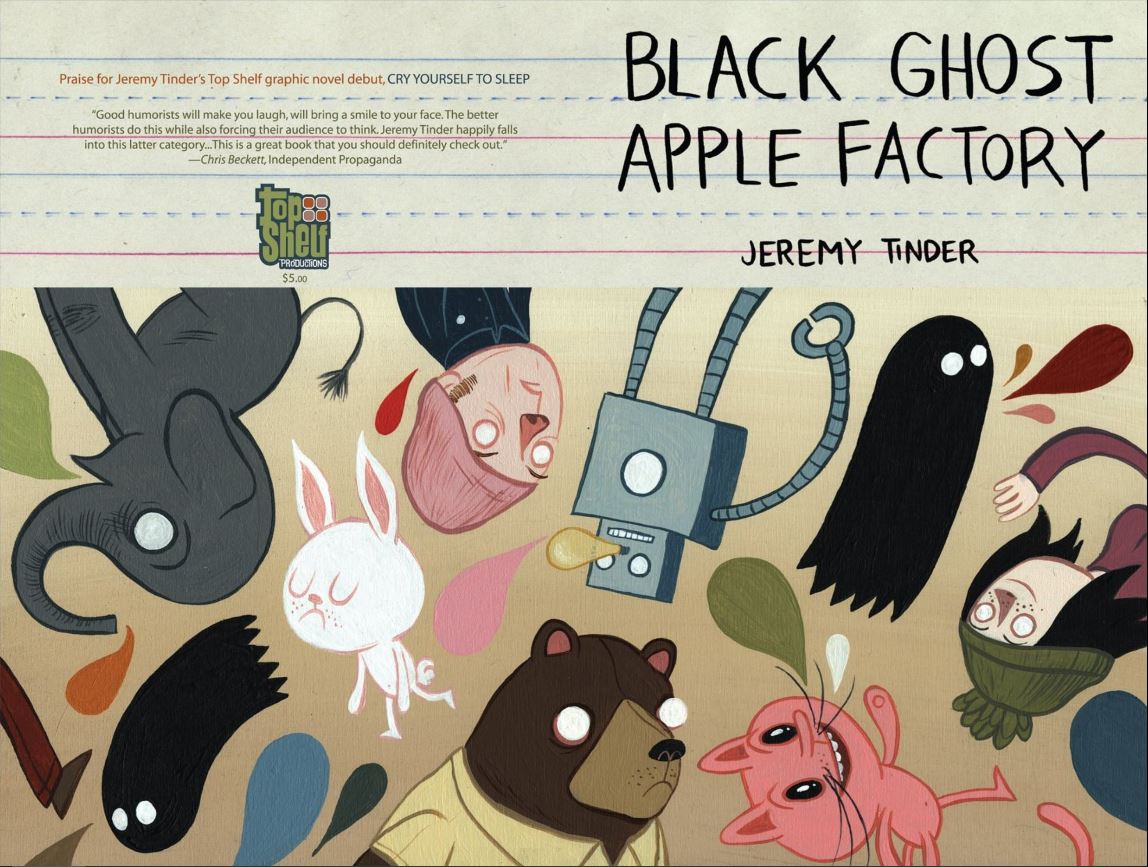
Black Ghost Apple Factory


By Jeremy Tinder (DC Comics)
No ISBN: ASIN: B001KNX2AQ

It a multimedia world – and decade without rules or restraint – so creative folk can liberate themselves from pigeonholes and escape categorisation with ease nowadays.

A perfect case-in-point is sculptor, designer, painter, toy designer, illustrator and educator Jeremy Tinder who also writes and draws some of the most intriguing comics you’ll ever see. Even if you don’t read his wonderful graphic novel Cry Yourself to Sleep or the collected minicomics re-presented in this captivating digital anthology, you can attend some of his classes at the School of Art Institute of Chicago, Marwen Foundation, The Evanston Art Center or the Hyde Park Art Center. He’s based in Chicago but also finds time to contribute to comics collective Trubble Club and the installation/performance group Paintallica.

As previously mentioned, Black Ghost Apple Factory is an anthological collection of small strips; created between 2004 and 2006, drafted in stark monochrome and examining a number of topics with surreal wit, deft empathy and captivating honesty. You’ll laugh, you’ll cry, you’ll gasp and scratch your head…

It all kicks off with 2006’s eponymous ‘Black Ghost Apple Factory’ as a lovestruck spirit ponders the wonders of love and infatuation before settling down to hard days work making fruit, after which we learn that automata are just as bad as guys in ‘Robots Don’t Say “I Love You”’ from 2004.

Making creepy stalking and introspection adorable, funny and vulnerable ‘It’s Spring, and Jeremy Tinder is Secretly in Love with You…’ – meanders into wild territory as ‘Grizzly – or How I Spent my Spring Break’ (both from 2006) details an unusual ursine encounter in Wisconsin that changed his life…

A post-modern bunny fed up with pointless hedonism then admits ‘I’m So Tired’ (2006) and a kitty filled with Joie de vivre is shattered by a visit to the vet and confrontation with his soon-to-be ex-girlfriend in ‘Today is the First Day of the Rest of My Life, and I’m So Happy’…

Like the closing vignette, that one was from 2005, and ‘1, 2, 3, 4’ examines another doomed interspecies affair and tragic farewell in a typically understated and abstract manner…

Smart, intriguingly intense and emotionally mischievous, these tales explore relationships, relaxation and working life in wickedly different ways that will delight anyone in search of a different take on their comics entertainments.
Black Ghost Apple Factory © 2006 Jeremy Tinder. All rights reserved.

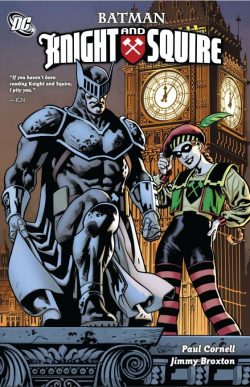
Batman: Knight and Squire


By Paul Cornell & Jimmy Broxton with Staz Johnson (DC Comics)
ISBN: 978-1-4012-3071-5 (TPB)

British Dynamic Duo Knight and Squire first appeared in the cheerfully anodyne, all-ages 1950s – specifically in a throwaway story from Batman #62 (December 1950/January 1951) – as ‘The Batman of England!’

Earl Percy Sheldrake and his son Cyril returned a few years later as part of seminal assemblage ‘The Batmen of All Nations!’ (Detective Comics #215 January 1955): a tale retrieved from the ranks of funnybook limbo in recent times and included in Batman: Black Casebook, with sequel ‘The Club of Heroes’ appearing in World’s Finest Comics #89, July-August 1957. That one’s most recently reprinted in Batman & Superman in World’s Finest Comics: The Silver Age volume 1.

The bold Brits had languished in virtual obscurity for decades before fully entering modern continuity as part of Grant Morrison’s build-up to the Death of Batman and Batman Incorporated retro-fittings of the ever-ongoing legend of the Dark Knight dynasty…

They floated around the brave New World for a while with guest shots in places like Morrison’s JLA reboot and Battle For the Cowl before finally getting their own 6-issue miniseries (December 2010 – May 2011), courtesy of scripter Paul Cornell and artist Jimmy Broxton (with some layout assistance from Staz Johnson).

In all honesty, they rather bit the hand that fed them by producing a far-from-serious but captivating quirky and quintessentially English frolicsome fantasy masterpiece.

It all begins, as most things boldly British do, down the pub. However, The Time in a Bottle is no ordinary boozer, but in fact the favourite hostelry for the United Kingdom’s entire superhuman community: the worthy and the wicked…

Hero and villain alike can kick back here, taking a load off and enjoying a mellow moment’s peace thanks to a pre-agreed truce on utterly neutral ground, all mystically enforced by magics and wards dating back to the time of Merlin…

As the half-dozen chapters of ‘For Six’ open, it’s the regular first Thursday of the month – and that’s an in-joke for Britain’s comics creator community – and the inn is abuzz with costumed crusaders and crazies, all manically determined to have a good time.

Cyril Sheldrake, current Earl of Wordenshire and second hero to wear the helm and mantle of The Knight, sends his trusty sidekick Beryl Hutchinson – AKA The Squire – to head off a potential problem as established exotics Salt of the Earth, The Milkman, Coalface, The Professional Scotsman and the Black and White Minstrels all tease nervous newcomer The Shrike.

The aristocratic avenger would do it himself but he’s all tied up chatting with Jarvis Poker, the British Joker…

The place is packed tonight in honour of visiting yank celebrity Wildcat, and a host of strange, outrageous and even deadly patrons all bustle about as Beryl natters with the formerly cocky kid who’s also getting a bit of grief because he hasn’t quite decided if he’s a hero or villain yet…

She’s giving him a potted history of the place when the customary bar fight breaks out, and things take an unconventionally dark turn as an actual attempted murder occurs. It would appear that two of these new gritty modern heroes have conspired to circumvent Merlin’s pacifying protections…

Each original issue was supplemented with a hilarious text page which here act as chapter breaks, so after ‘What You Missed If You’re A Non-Brit’ (a glossary of national terms, traits, terminology and concepts adorned with delightful faux small ads), the tale continues as Beryl and Cyril spend a little down-time in rural Wordenshire where the local civilians tackle the insidious threat of The Organ Grinder and his Monkey so as not to bother the off-duty Defenders.

However, the pair do rouse themselves to scotch the far more sinister schemes of inter-dimensional invader Major Morris and the deadly Morris Men…

That’s supplemented by the far-from-serious text feature ‘What Morris Men are Like’…

The saga then kicks into top gear with the third instalment as Britain’s Council for Organised Research announces its latest breakthrough. C.O.R.’s obsessively romantic Yorkist Professor Merryweather had no idea that her DNA-reclamation project would lead to a constitutional crisis after she reconstituted Richard III, but it seems history and Shakespeare hadn’t slandered the Plantagenet at all. The wicked monarch is soon fomenting rebellion, using his benefactor’s technology to resurrect equally troublesome tyrants Edward I, Charles I, William II and the ever-appalling King John… even giving them very modern superpowers…

Of course, Knight, Squire and her now besotted not-boyfriend Shrike are at the vanguard of the British (heroic) Legion mustered to fight for Queen and Country and repel the concerted criminal uprising…

Following a history lesson on ‘Cabbages and Kings’, Beryl invites the Shrike back to the Castle for tea, teasing and some secret origins, but things go typically wrong when Cyril’s high-tech armour rebels, going rogue and attacking them all.

The text piece deals with ‘Butlers and Batmen’ before it all goes very dark after lovable celebrity rogue Jarvis Poker gets some very bad news from his doctor and a terrifying follow-up visit from the real Joker.

The Camp Criminal is desperately concerned about his national legacy but Gotham City’s Harlequin of Hate is just keen on increasing his ghastly – and frankly already astronomical – body-count. First on the list is that annoying Shrike kid, but the American psycho-killer has big, bold, bizarre plans to make the UK a completely good-guy-free zone…

Broken up with a two-part ‘The Knight and Squire Character List’, it all culminates and climaxes with a spectacular and breathtaking showdown after the malevolent Mountebank of Mirth goes on a horrendously imaginative hero-killing spree that decimates the Costumed Champions of Albion: a campaign so shocking that even Britain’s bad-guys end up helping to catch the crazed culprit…

Rewarding us all for putting up with decades of “Gor, blimey guv’nor” nonsense in American comics whilst simultaneously paying the Yanks back for all those badly researched foggy, cobbled-rooftops-of-London five minutes from Stonehenge stories which littered every aspect of our image in the USA, this witty, self-deprecating, action-packed and deucedly dashing outing perfectly encapsulates all the truly daft things we noble Scions of Empire Commonwealth love and cherish about ourselves.

Stuffed with surreal, outrageous humour, double entendres, quirky characters, catchphrases and the comedy accents beloved by us Brits – Oh, I say, Innit Blud? – and rife with astonishingly cheeky pokes at our frankly indefensible cultural quirks and foibles, this is the perfect book for anyone who loves grand adventure in the inimitable manner of Benny Hill, Monty Python, Carry On Films and the Beano.

Also included are covers and variants from Yanick Paquette & Michel Lacombe and Billy Tucci & HiFi, plus a wealth of working art, character designs and sketches by Jimmy Broxton and an unpublished spoof cover in tribute to the immortal Jarvis Poker…

Whether you opt for the paperback or digital edition, Buy This Book. It’s really rather good. Oh, go on, do: you know you want to…
© 2011, DC Comics. All Rights Reserved.

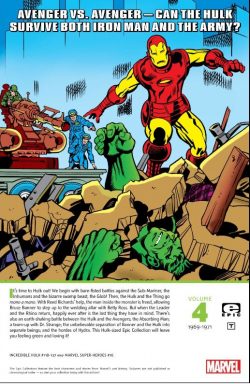
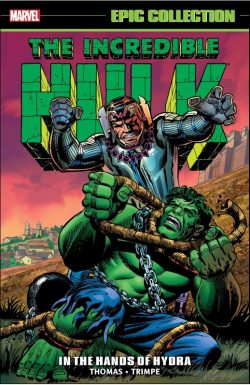
Incredible Hulk Epic Collection volume 4 1969-1971: In the Hands of Hydra


By Roy Thomas, Stan Lee, Gary Friedrich, Herb Trimpe, Sal Buscema & various (Marvel)
ISBN: 978-1-3029-1558-2 (TPB)

Bruce Banner was a military scientist who was caught in a gamma bomb blast. As a result of ongoing mutation, stress and other factors can cause him to transform into a giant green monster of unstoppable strength and fury.

After an initially troubled few years the gamma-irradiated gargantuan finally found his size 700 feet and a format that worked, becoming one of young Marvel’s most popular features. After his first solo-title folded, The Hulk shambled around the slowly-coalescing Marvel Universe as guest star and/or villain du jour until a new home was found for him in “split-book” Tales to Astonish where he shared space with fellow misunderstood misanthrope Namor the Sub-Mariner, who proved an ideal thematic companion from his induction in #70.

Writer Stan Lee was gradually distancing himself from the creative chair as he became Marvel’s publisher, as this ferocious fourth trade paperback (and eBook) volume covers Incredible Hulk #118-137 (spanning August 1969-March 1971) and also includes a crucial sidebar yarn from September 1968’s Marvel Super-Heroes #16 and opens with a fan-favourite clash that always enticed fight fans…

Incredible Hulk #118 (August 1969) depicts a duplicitous courtier at the Sub-Mariner’s sunken citadel orchestrating ‘A Clash of Titans’ (as related by Lee & Trimpe) after which the Green Goliath stumbles into a South American country secretly conquered by and ‘At the Mercy of… Maximus the Mad’: a 2-part tale that concludes with the Roy Thomas scripted ‘On the Side of… the Evil Inhumans!’

This all-out action extravaganza sees the Hulk also fighting the Costa Salvador army, the ubiquitous moustachioed rebels, General Ross‘ specialist US army forces and even a giant hypnotic robot before giving way to a moodier menace as Ol’ Greenskin returns to North America, and in the South the man-monster learns ‘Within the Swamp, There Stirs… a Glob!’

Designed as tribute in equal parts to Theodore Sturgeon’s “It” and Hillman Comics character The Heap – who slopped his way through the back of Airboy Comics in the early 1950s – this muck-encrusted monstrosity predates both DC’s Swamp Thing and Marvel’s own Man-Thing in a tale of woeful tragedy and unrequited love.

When the remains of a long-dead escaped convict are accidentally irradiated they take on a shambling semblance of life. Surely, it’s just bad luck that Betty and the Hulk are in its misanthropic path?

As the 1970s opened the Incredible Hulk had settled into a comfortable – if always spectacularly destructive – niche. The globe-trotting formula saw tragic Bruce Banner hiding and seeking cures for his gamma-transformative curse, alternately aided or hunted by prospective father-in-law US General “Thunderbolt” Ross and a variety of guest-star heroes and villains.

Trimpe had made the character his own, displaying a penchant for explosive action and an unparalleled facility for drawing technology – especially honking great ordnance and vehicles. Scripter Roy Thomas – unofficial custodian of Marvel’s burgeoning shared-universe continuity – played the afflicted Jekyll/Hyde card for maximum angst and ironic heartbreak even as he continually injected the Jade Juggernaut into the lives of other stalwarts of Marvel’s growing pantheon…

Now Incredible Hulk #122, hotly touts ‘The Hulk’s Last Fight!’ as the Fantastic Four advertise a cure for Banner’s condition, and the fraught physicist makes his way North from Florida, with the police and army hunting him every step of the way. His quest only falters at the very last moment thanks to a clerical error…

What should have been a quiet transition and resolution instead results in a shattering clash between the Hulk and FF, but eventually the beast is subdued and the cure attempted in concluding episode ‘No More the Monster!’

Sadly, even now that Banner has complete control of his inner demon, he learns that you don’t always get what you want – especially when evil gamma-super-genius the Leader involves himself in the plan.

Seemingly cured of the curse of the Hulk, Banner finally marries his troubled sweetheart Betty Ross, but ‘The Rhino Says No!’ and the subsequent set-to (rather heavily finished and inked by Sal Buscema) returns him to the tragic status quo of hunted, haunted antihero perpetually on the run…

Trimpe again took up the inker’s brush for the bludgeoning battle in #125 ‘And Now, the Absorbing Man!’ after which Doctor Stephen Strange guest-stars in trans-dimensional duel with the malign Undying Ones.

‘…Where Stalks the Night-Crawler!’ is a spooky, all-action tidying-up exercise closing a saga from the good Doctor’s own cancelled title – and one which inevitably led to the formation of outsider super-team The Defenders.

In ‘Mogol!’ (#127) the child-like, eternally-lonely Hulk is transported to the Mole Man‘s subterranean realm where he thinks he’s finally found a friend, only to endure bitter disappointment once more. His subsequent subterranean loss-fuelled rampage threatens to destroy California when he starts ripping his way surface-ward via the San Andreas Fault. And the American authorities are compelled to call in the Big Guns.

‘And in this Corner… The Avengers!’ (#128) sees the assembled champions seeking a solution to the problem, but they can’t hold the Jade Juggernaut long, instead only leading him to more trouble when ‘Again, The Glob!’ attacks. The embattled Hulk has no idea old foe The Leader is behind the swampy assault…

Incredible Hulk #130 then sees Banner totally separate himself from the Hulk in ‘If I Kill You… I Die’, but the scientifically-implausible division has potentially disastrous consequences for Los Angeles, if not the world, and only Iron Man can help when ‘A Titan Stalks the Tenements!’

This powerful tale introduced black ghetto kid and occasional confidante Jim Wilson, made doubly memorable by the inking wizardry of legendary John Severin who signed on for a 3-issue stint that would eventually turn into a long-term commitment.

In #132, the Hulk is ‘In the Hands of Hydra!’ – although not for long and to their eternal regret. His casually explosive escape leaves him stranded in Mediterranean totalitarian state Morvania: an unwilling freedom fighter against despicable dictator Draxon on the ‘Day of Thunder… Night of Death!’

Sal Buscema returned as inker for the conclusion of the tale as ‘Among us Walks… the Golem!’ from Incredible Hulk#134 sees revolution liberate Morvania with the Green Giant as the most unlikely symbol of freedom ever…

One of the strangest Marvel team-ups ever occurred in ‘Descent into the Time-Storm!’ as Kang the Conqueror dispatches the Hulk to the dog-days of World War I to prevent the Avengers’ ancestors from being born, only to fall foul of the enigmatic masked aviator known as the Phantom Eagle.

Concluding this smashing show – and apparently as the result of a Gerry Conway suggestion – Moby Dick (among other cross-media classics) was then pilfered and adapted for ‘Klattu! The Behemoth from Beyond Space!’ and ‘The Stars, Mine Enemy!’ (this last inked by Mike Esposito) wherein a vengeance-crazed starship captain pursues the Brobdingnagian alien beast that had long-ago maimed him, consequently press-ganging the Hulk in the process and pitting him against old foe the Abomination.

Did I say it was all over? Not so, as the bonus section starts with Trimpe’s cover to all-reprint Hulk Annual #3 and follows up with the debut tale of ‘The Phantom Eagle’ by Friedrich & Trimpe as seen in Marvel Super-Heroes #16 (September 1968).

It’s March 1917 and barnstorming aviator Karl Kaufman chafes at his inability to enlist in the US Army Air Corps. America is not in the Great War yet, but everyone knows it’s coming, and Karl’s best friend cannot understand his pal’s reticence. Despite a crash-created infirmity, Rex Griffin signed up immediately but doesn’t realise that Karl can’t be an Allied air warrior until he has smuggled his German parents out of the Fatherland and beyond the reach of reprisals…

All too suddenly the war comes to Karl, as, while testing his new super-plane, he encounters a gigantic Fokker-carrying zeppelin over Long Island Sound, and realizes the Kaiser has launched a pre-emptive invasion of America…

Mobilising his meagre resources and masked as a Phantom Eagle, Karl takes to the skies, but his sortie, although successful, will cost him dearly…

Adding even more lustre and appeal to this tome are Marie Severin’s colour-guide to #119’s cover, original artwork by Trimpe, House ads and Trimpe’s Marvel Artist Self-Portrait.

The Hulk is one of the most well-known comic characters on Earth, and these stories, as much as the movies, TV shows and action figures, are the reason why. For an uncomplicated, honestly vicarious experience of Might actually being Right, you can’t do better than these yarns, so why not Go Green?
© 2019 MARVEL.

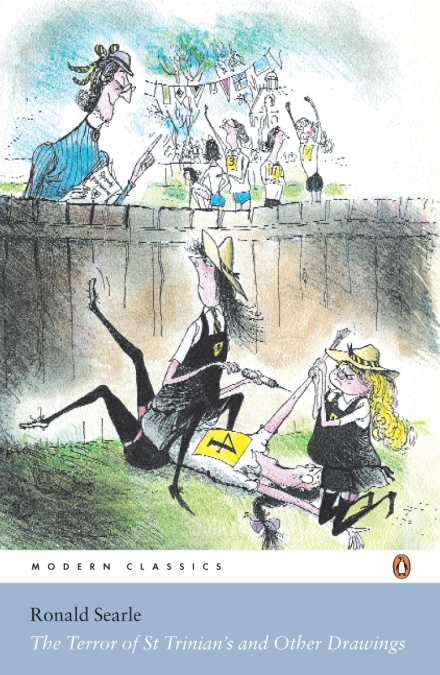
The Terror of St Trinian’s and Other Drawings


By Ronald Searle with Geoffrey Willans, Timothy Shy & others (Penguin Modern Classics)
ISBN: 978-0-141-91285-1 (PB)

Britain has a fantastic and enviable history and tradition of excellence in the arts of graphic narrative and cartooning. Whether telling a complete story or simply making a point; much of the modern world’s most innovative, inspirational and trenchantly acerbic drawing has come from British pens powered by British hearts and minds.

If you’re quietly humming Rule Britannia or Jerusalem right now, and or heavy breathing and fingering a flag, pack it in. This is not the tone we want. I’m just stating a few facts.

3 March 1920 Ronald William Fordham Searle was one of a very gifted few (in modern times I’d number Ken Reid, Leo Baxendale, Murray Ball and Hunt Emerson among them) who can actually draw funny lines. No matter how little or how much they need to say, they can imbue the merest blot or scratch of ink with character, intent and wicked, wicked will.

Born in Cambridge on March 3rd 1920, Searle studied at Cambridge School of Art before enlisting in the Royal Engineers when WWII broke out. When he was captured by the Japanese in 1942 he ended up in the infamous Changi Prison. The second St Trinian‘s cartoon was drawn in that hell-hole in 1944 and it survived – along with his incredible war sketches – to see print once peace broke out. Searle was a worker on the Siam-Burma Railroad (a story for another time and place) and risked his life daily both by making pictures and by keeping them.

He became a jobbing freelance cartoonist when he got home, acerbically detailing British life. Perhaps that why he moved to France in 1961 and became a globe-girdling citizen of the wider world.

By the 1980s he was established – everywhere but here – as not only a cartoonist and satirist but as a film-maker, sculptor, designer, travel-writer and creator of fascinating reportage. This man was a capital “A” Artist in the manner of Picasso or Hockney, and Scarfe and Steadman notwithstanding, he was the last great British commentator to use cartooning and caricature as weapons of social change in the caustic manner of his heroes Hogarth, Gillray, Rowlandson, Cruikshank and the rest.

This volume includes selections from assorted previous collections and includes political illustration, social commentary, arcane mordant whimsy and some of the most surreal, sardonic and grotesque funny pictures of the 20th century.

I won’t spend too much time on his other achievements as his work should be seen and his thoughts and opinions should be understood in his chosen language: Art. At least, he still has enough fans to fill the internet with all the information you could need, so go search-engining after you read this if you wish.

Why his creations are so under-appreciated I do not know. Why this book is out of print: Ditto. That he will remain a relative unknown despite the clutch of movies about his St Trinian’s girls… Not if I can help it.

Anyone who considers themselves a devotee of the arts of graphic narrative should know of Searle’s work, even if not necessarily love – although how could you not? Just be aware of the tremendous debt we all owe to his vision, dedication and gifts.

This compilation traces the rise of his star following his POW years. Post-war, his mordantly funny cartoons appeared in venues such as Punch, Lilliput and The Sunday Express, and in hugely successful collections like Hurrah for St. Trinian’s!, The Female Approach, Back to the Slaughterhouse, The St. Trinian’s Story, Which Way Did He Go?,Pardong m’sieur, In Perspective and The Non Sexist Dictionary.

Searle’s work has influenced an uncountable number of other cartoonists too. His unique visualisation and darkly comic satirical cynicism in the St. Trinian’s drawings as well as his utterly captivating vision of boarding school life as embodied in the classically grotesque Nigel Molesworth quartet: influencing generations of children and adults, and even playing its part in shaping our modern national character and language.

And have I mentioned yet that his drawings are really, really funny?

This superb collection of monochrome cartoons samples choice cuts from a number of his book collections, all delivered with stunning absurdist candour and the peculiarly tragic passive panic and understated warmth that only Searle could instil with his seemingly wild yet clearly-considered linework.

Fronted by an impassioned Introduction from fan and proper grown up journalist/columnist Nicholas Lezard, this paperback and digital collection offers a sweet taste of dark design in haunting and hilarious images culled from a number of sources, opening (un)naturally with macabre treats from St Trinian’s: blending the comforting traditional bonhomie of a girl’s boarding school with the accoutrements of a sex dungeon, the atavists of a charnel house and the fragrant atmosphere of The Somme two days after all the shooting stopped…

Having proved that for some crime Does pay, focus shifts to Merry England, etc., where class, toil, occupations, hobbies, and the ardours of life are ferociously scrutinised before diverting into mirthful metaphysics with a damning disembodied judge dubbed The Hand of Authority…

Mare satirical body-blows from Souls in Torment lead delightfully to a montage of misspelled madcap moments of terror-tinged nostalgia as Molesworth extracts snippets of sheer genius from the books he co-created with Geoffrey Willans for Punch and which were subsequently released to enormous success as Down With Skool!, How to be Topp!, Whizz For Atomms! and Back in the Jug Agane.

As I said, Searle was a devotee of satirist William Hogarth and in 1956 adapted the old master’s series of condemnatory cartoons (painted in 1732-34 and released as staggeringly popular engraved prints in 1735) to modern usage and characterisation. Included here in its entirety to conclude our fun, The Rake’s Progress follows the rise and fall of a number of contemporary figures – The Athlete, The Girlfriend, The Soldier, The Poet, The Trade Union Leader, The Actor, The Painter (he based this one on himself), The Don (an English academic, not an American gangster but such confusion is easy to understand), The Dramatic Critic, The Doctor, The MP, The Clergyman, The Novelist, The Humourist, The Master of Foxhounds and The Great Lover – with all the excoriating venom and wit you’d expect from a master of people watching…

Brilliant, Brilliant, Brilliant stuff! See for yourself, whatever side of the battle lines you cower behind…
© 1948, 1951, 1952, 1953, 1954, 1955, 1956, 1959 by Ronald Searle.

This selection © Ronald Searle 2000, 2006. Introduction © Nicholas Lezard, 2000. All rights reserved.

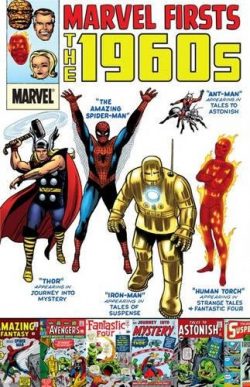
Marvel Firsts: The 1960s


By Stan Lee, Jack Kirby, Steve Ditko, Larry Lieber, Roy Thomas, Gary Friedrich, Arnold Drake, Steve Parkhouse, Don Heck, Bill Everett, Dick Ayers, Gene Colan, John Buscema, George Tuska & various (Marvel)
ISBN: 978-0-7851-5864-6 (TPB)

For most fans, the Marvel Age of Comics began with Fantastic Four #1 at the tail end of 1961, but the company itself cites Marvel Comics #1 from 1939, when the outfit was called Timely as the big natal event. That means this year is their 80th anniversary and has been celebrated in a number of big-ticket compilations.

This hefty trade paperback (or digital edition if you prefer) from 2011 isn’t one of them, but is a superb compilation of the decade which made the House of Ideas a global force and household name. It collects the first story of each character’s own series (not necessarily the same as a debut appearance) and highlights key moments through material taken from Rawhide Kid #17, Amazing Adventures #1, Fantastic Four #1, Tales to Astonish #27, 51 & 70, Incredible Hulk #1, Amazing Fantasy #15, Journey into Mystery #83, Strange Tales #101, 110 & 135, Two-Gun Kid #60, Tales of Suspense #39, 49 & 59, Sgt. Fury and his Howling Commandoes #1, The Avengers #1, X-Men #1, Daredevil #1, Ghost Rider #1, Marvel Super-Heroes #12, 19-20, Captain Savage #1 and Silver Surfer #1, all collectively covering August 1960 to May 1969 and incorporating a staggering and vast gallery of covers from the other titles that came and went with such breathtaking rapidity in those days.

As stated, the company-that-became-Marvel was still going – albeit in dire straits – when Stan Lee, Jack Kirby, Steve Ditko and a select band of others started their revolution in comics, and these tales offer unmatched insights into how that all happened by re-presenting official first appearances…

Opening in January 1960 with a selection of 16 genre covers ranging from Battle #70 to Love Romances #87 to Patsy Walker #89, the first inklings of what’s to come are seen in Rawhide Kid #17, by Lee, Kirby and inker Dick Ayers.

The Kid was one of Atlas’ older icons, having starred in his own title since 1955. A stock sagebrush centurion clad in buckskins, he was one of the first casualties when Atlas’ distribution crisis forced the company to cut back to 16 titles in the autumn of 1957.

With westerns huge on TV and youthful rebellion a hot topic in 1960, Lee & Kirby conceived a brand-new six-gun stalwart – a teenager in fact – and launched him in the summer of the year, economically continuing the numbering of his cancelled predecessor.

It’s important to remember that these yarns aren’t trying to be gritty or authentic: they’re accessing the vast miasmic morass of wholesome, homogenised Hollywood mythmaking that generations of consumer preferred to learning the grim everyday toil, travail and terror of the real Old West, so sit back, reset your moral compass to “fair enough” and revel in simplistic Black Hats versus White Hats, with all the dynamic bombast and bravura Kirby & inker Dick Ayers could muster…

It all begins with adopted teen Johnny Bart teaching all and sundry in a cow-town named Rawhide to ‘Beware! The Rawhide Kid’ after his retired Texas Ranger Uncle Ben is gunned down by fame-hungry cheat Hawk Brown. After very publicly exercising his right to vengeance, the naive kid flees Rawhide before he can explain, resigned to living as an outlaw forevermore…

His reputation is further enhanced when he routs a masked gang robbing the ‘Stagecoach to Shotgun Gap!‘ after which Don Heck delivers one of his slickly authentic western tales as a veteran gunslinger devises a way to end his own fearsome career ‘With Gun in Hand!’

The issue closes with by Lee, Kirby & Ayers revealing how another tragic misunderstanding confirms Johnny Bart’s destiny ‘When the Rawhide Kid Turned… Outlaw!’

Following a trio of romantic comedy covers – My Girl Pearl #7, Teen-Age Romance #77 and Life with Millie #8 – we turn to the company’s splendidly addictive men-vs-monsters anthology titles wherein Amazing Adventures #1 (cover-dated June 1961) begins a cautious experiment by launching a low-key – un-costumed – paranormal mystically empowered investigator for a short run of pre-superhero escapades.

‘I Am the Fantastic Dr. Droom!’ by Lee & Kirby with Ditko inking finds a seemingly sedate American drawn to Tibet to be trained in ancient mysteries before returning home as an occult consultant after which, the cover for Linda Carter, Student Nurse #1 takes us to the big moment when everything changed…

Fantastic Four #1 (November 1961) introduces a brave new world in the eponymous ‘The Fantastic Four’ as maverick scientist Reed Richards summon his fiancé Sue Storm, their pilot pal Ben Grimm and Sue’s teenaged brother Johnnybefore heading off on their first mission. In a flashback we discover that they are driven survivors of a private space-shot that went horribly wrong when Cosmic Rays penetrated their ship’s inadequate shielding. On crashing back to Earth, they found they’d all been hideously mutated into outlandish freaks.

Richards’ body became elastic, Sue gained the power to turn invisible, Johnny Storm could turn into living flame and tragic Ben turned into a shambling, rocky freak. Shaken but unbowed they vow to dedicate their new abilities to benefiting mankind. Crafted by Lee & Kirby with inks by George Klein & Christopher Rule, the drama intensified with ‘The Fantastic Four meet the Mole Man’ as they foil a plan by another outcast who controls monsters and slave humanoids from far beneath the Earth. This summation of the admittedly mediocre plot cannot do justice to the engrossing wonder of that breakthrough issue – we really have no grasp today of just how different in tone, how shocking it all was.

Next comes Ditko’s cover to Amazing Adult Fantasy #7, preceding a throwaway vignette from another of the company’s anthological monster mags. Taken from Tales to Astonish #27 (January 1962) a 7-page short introduces Dr Henry Pym, a maverick scientist who discovers a shrinking potion and discovers peril, wonder and a kind of companionship amongst the lowliest creatures on Earth and under it…

This engaging piece of fluff – which owed more than a little to the movie The Incredible Shrinking Man – was plotted by Lee, scripted by his brother Larry Lieber and stunningly illustrated by Kirby & Ayers.

The Incredible Hulk smashed right into his own bi-monthly comic and, after some classic romps by Young Marvel’s finest creators, crashed right out again. After 6 issues the series was cancelled and Lee retrenched, making the Gruff Green Giant a perennial guest-star in other Marvel titles until such time as they could restart the drama in their new “Split-Book” format in Tales to Astonish where Ant/Giant-Man was rapidly proving to be a character who had outlived his time.

Cover-dated May 1962, that first issue observes puny atomic scientist Bruce Banner, sequestered on a secret military base in the American desert and perpetually bullied by bombastic commander General “Thunderbolt” Ross as the clock counts down to the world’s first Gamma Bomb test. Besotted by Ross’s daughter Betty, Banner endures the General’s constant jibes as the timer ticks on and tension increases.

At the final moment Banner sees a teenager lollygagging at Ground Zero and frantically rushes to the site to drag the boy away. Unknown to everyone, the assistant he’s entrusted to delay the countdown has an agenda of his own…

Rick Jones is a wayward but good-hearted kid. After initial resistance he lets himself be pushed into a safety trench, but just as Banner prepares to join him The Bomb detonates…

Somehow surviving the blast, Banner and the boy are secured by soldiers, but that evening as the sun sets the scientist undergoes a monstrous transformation. He grows larger; his skin turns a stony grey…

In 6 simple pages that’s how it all starts, and no matter what any number of TV or movie reworkings or comicbook retcons and psycho-babble re-evaluations would have you believe that’s still the best and most primal take on the origin. A good man, an unobtainable girl, a foolish kid, an unknown enemy and the horrible power of destructive science unchecked…

Written by Lee, drawn by Kirby with inking by Paul Reinman, ‘The Coming of the Hulk’ barrels along as the man-monster and Jones are then kidnapped by Banner’s Soviet counterpart the Gargoyle for a rousing round of espionage and Commie-busting…

Crafting extremely well-received monster and mystery tales for and with Stan Lee, Ditko had been rewarded with his own title. Amazing Adventures/Amazing Adult Fantasy featured a subtler brand of yarn than Rampaging Aliens and Furry Underpants Monsters and the ilk which, though individually entertaining, had been slowly losing traction in the world of comics ever since National/DC had successfully reintroduced costumed heroes.

Lee & Kirby had responded with Fantastic Four and the ahead-of-his-time Incredible Hulk, but there was no indication of the renaissance to come when the cover of officially just-cancelled Amazing Fantasy #15 (August 1962) highlighted a brand new and rather eerie adventure character.

The wonderment came and went in 11 captivating pages: ‘Spider-Man!’ telling the parable of Peter Parker, a smart but alienated kid bitten by a radioactive spider on a high school science trip. Discovering he has developed arachnid abilities – which he augments with his own natural engineering genius – Parker does what any lonely, geeky nerd would do when given such a gift… he tries to cash in for girls, fame and money.

Creating a costume to hide his identity in case he makes a fool of himself, he becomes a minor celebrity – and a vain, self-important one. To his eternal regret, when a thief flees past, he doesn’t lift a finger to stop him, only to find when he returns home that his Uncle Ben has been murdered.

Crazy for vengeance, Parker stalks the assailant who made his beloved Aunt May a widow and killed the only father he had ever known, to find that it is the felon he couldn’t be bothered with. Since his irresponsibility led to the death of the man who raised him, the boy swears to always use his powers to help others…

It wasn’t a new story, but the setting was one familiar to every kid reading it and the artwork was downright spooky. This wasn’t the gleaming high-tech world of moon-rockets, giant aliens and flying cars – this stuff could happen to anybody…

The tragic last-ditch tale struck a chord with the reading public and by Christmas a new comicbook superstar was ready to launch in his own title, with Ditko eager to show what he could do with his first returning character since the demise of Charlton action hero Captain Atom…

The Mighty Thor was the comic series in which Jack Kirby’s restless fascination with all things Cosmic was honed and refined through his dazzling graphics and captivating concepts. The King’s examination of space-age mythology began in modest fantasy title Journey into Mystery where – in the summer of 1962 – a tried-and-true comicbook concept (feeble mortal transformed into god-like hero) was revived by the fledgling Marvel Comics to add a Superman analogue to their growing roster of costumed adventurers. JiM #83(August 1962), saw a bold costumed warrior jostling aside the regular fare of monsters, robots and sinister scientists in a brash, vivid explosion of verve and vigour.

The initial exploit follows crippled American doctor Donald Blake who takes a vacation in Norway only to encounter the vanguard of an alien invasion. Fleeing, he is trapped in a cave where he finds an old, gnarled walking stick. When in his frustration he smashes the stick into a huge boulder obstructing his escape, his puny frame is transformed into the Norse God of Thunder Mighty Thor!

Plotted by Lee, scripted by Lieber and illustrated by Kirby & inker Joe Sinnott (at this juncture a full illustrator, Sinnott would become Kirby’s primary inker for most of his Marvel career), ‘The Stone Men of Saturn’ is pure early Marvel: bombastic, fast-paced, gloriously illogical and captivatingly action-packed. The hugely under-appreciated Art Simek was the letterer and logo designer.

It was clear that they were were making it up as they went along – not in itself a bad thing – and all that infectious enthusiasm shows…

Amazing Fantasy #15 came out the same month as Journey into Mystery #83 and a month later Tales to Astonish #35 – the first to feature Henry Pym as the Astonishing Ant-Man in costumed capers appeared. In this volume you’ll find the cover to TtA #35 to mark that occasion…

Hot on the heels of the runaway success of Fantastic Four, Stan & Jack spun the most colourful and youngest member of the team into his own series, hoping to recapture the glory of the 1940s when the original Human Torch was one of the company’s “Big Three” superstars.

Within a year, the magic-&-monsters anthology title Strange Tales became home for the hot-headed hero: in #101, Johnny Storm started his ancillary solo career in the eponymous exploit ‘The Human Torch’.

Scripted by Lieber (over a plot by brother Stan) and sublimely illustrated by Kirby & Ayers, here the plucky lad investigates sabotage at a new seaside amusement park and promptly discovers Commie-conniving thanks to a Red spy called the Destroyer. Kirby would pencil the first few adventures before moving on, after which Ayers would assume control of the series’ look for most of its run although The King would generate some of the best covers of his Marvel career throughout the Torch’s Strange Tales tenure.

An odd inconsistency – or, more likely, tension – and drama-inducing gimmick did crop up here. Although public figures in the FF, Johnny and sister Sue live part-time in Long Island hamlet Glenville where, despite the townsfolk being fully aware of her as the glamorous and heroic Invisible Girl, they seem oblivious to the fact that her baby brother is the equally famous Torch. Many daft-but-ingenious pages of Johnny protecting his secret identity would ensue before the situation was brilliantly resolved…

Despite the runway success of its new superheroes, Marvel was still offering a range of genres such as westerns. August 1962 saw the retooling of another Atlas property as Two-Gun Kid #60 (cover-dated November) introduces Eastern lawyer Matt Hawk who moved to barbarous and unruly Tombstone, Texas in ‘The Beginning of the Two-Gun Kid’ by Lee, Kirby & Ayers. After merciless and relentless bullying, the tenderfoot is mentored by aged gunslinger Ben Dancer and transforms into a powerful, ultrafast deadly accurate shootist…

When Ben is driven out of town by a pack of thugs working for land baron Clem Carter, Hawk adopts a masked identity to see that justice is done…

Don Heck limned stand-alone tale ‘The Outcast’ revealing the naked ambition of a Navajo warrior before Hawk returns to complete his origin story in ‘I Hate the Two-Gun Kid!’ Here, romantic interest Nancy Carter falls foul of a scheme by her stepbrother to defraud her and frame the new hero in town…

More striking covers – Modelling with Millie #21 and Amazing Spider-Man #1 – precede the debut of the next Marvel milestone in Tales of Suspense #39 (March 1963 and on the newsstands for Christmas 1962).

Created in the aftermath of the Cuban Missile Crisis and at a time when “Red-baiting” and “Commie-bashing” were national obsessions in the U.S., the emergence of a brilliant new Thomas Edison employing Yankee ingenuity and invention to safeguard the World was an inevitable proposition. Combining the cherished belief that (US) technology could solve every problem with universal imagery of noble knights battling evil and the proposition became certainty. Of course, kids thought it great fun and very, very cool…

Scripted by Lieber (over Lee’s plot) and illustrated by the criminally unappreciated Don Heck, ‘Iron Man is Born’, see electronics wizard Tony Stark field testing his latest invention in Viet Nam when he is wounded by a landmine. Captured by Viet Cong commander Wong-Chu, he is given a grim ultimatum. Create weapons for the Reds and a doctor will remove from his chest the shrapnel that will kill him within seven days. If not…

Knowing Commies can’t be trusted, Stark and aged Professor Yinsen – another captive scientist – build a mobile iron lung (remember this was years before heart transplants and pace-makers) to keep his heart beating, equipping it with all the weapons their ingenuity and resources can secretly build. Naturally they succeed, defeating Wong-Chu, but not without tragic sacrifice…

Next was a new genre title, once again given a fresh treatment by Lee, Kirby & Ayers. Sgt. Fury and his Howling Commandos (May 1963) was an improbable, over-the-top WWII combat comics series similar in tone to later ensemble action movies such as The Magnificent Seven, The Wild Bunch and The Dirty Dozen. The surly squad of sorry reprobates were the first of three teams concocted by men-on-fire Kirby & Lee to secure fledgling Marvel’s growing position as the publisher to watch.

Sgt. Fury started out as a pure Kirby creation. As with all his various war comics, The King made everything look harsh and real and appalling: the people and places are all grimy and tired, battered yet indomitable.

The artist had served in some of the worst battles of the war and never forgot the horrific and heroic things he saw – and more graphically expressed in his efforts during the 1950s genre boom at a number of different companies. However, even at kid-friendly, Comics Code-sanitised Marvel, those experiences perpetually leaked through onto his powerfully gripping pages.

The saga began with blistering premier ‘Sgt. Fury, and his Howling Commandoes’ (that’s how they spellled it in the storrie-title – altho knot ennyware else): a rip-snorting yarn bursting with full-page panels interrupted by ‘Meet the Howling Commandos’ – a double-page spread spotlighting the seven members of First Attack Squad; Able Company. This comprised Fury himself, former circus strongman/Corporal “Dum-Dum” Dugan and privates Robert “Rebel” Ralston (a Kentucky jockey), college student Jonathan “Junior” Juniper, jazz trumpeter Gabriel Jones, mechanic Izzy Cohen and glamorous movie heartthrob Dino Manelli.

Controversially – even in the 1960s – this battle Rat Pack was an integrated unit with Jewish and black members as well as Catholics, Southern Baptists and New York white guys all merrily serving together. The Howling Commandos pushed envelopes and busted taboos from the very start…

The first mission was a non-stop riot pitting ‘Seven Against the Nazis!’ and putting the squad through their unique paces: a ragged band of indomitable warriors taking on hordes of square-necked Nazis to save D-Day and rescue a French resistance fighter carrying vital plans of the invasion.

A low-key introduction served for the next debut as something different debuted at the back of Strange Tales #110.

When the budding House of Ideas introduced a warrior wizard to their burgeoning pantheon in the summer of 1963 it was a bold and curious move. Bizarre adventures and menacing monsters were still incredibly popular but mention of magic or the supernatural – especially vampires, werewolves and their eldritch ilk – were severely proscribed by a censorship panel which dictated almost all aspects of story content.

At this time – almost a decade after an anti-comics public campaign led to Senate hearings – all comics were ferociously monitored and adjudicated by the draconian Comics Code Authority. Even though some of the small company’s strongest sellers were still mystery mags, their underlying themes and premises were almost universally mad science and alien wonders, not necromantic or thaumaturgic horrors.

That might explain Lee’s unobtrusive introduction of Steve Ditko’s mystic defender: an exotic, twilit troubleshooter inhabiting the shadowy outer fringes of rational, civilised society in one of those aforementioned monster titles.

Tales of Suspense #41 (May 1963) saw newcomer Iron Man battle crazed technological wizard Doctor Strange, and with the name successfully and legally in copyrightable print, preparations began for a truly different kind of ongoing hero.

The company had recently published a quasi-mystic precursor in balding, trench-coated Doctor Droom (who was later rechristened – or is that re-paganed? – Dr. Druid) and when Stephen Strange scored big, the prototype would be subsequently retro-written into Marvel continuity as an alternative candidate and precursor for the ultimate role of Sorcerer Supreme…

Thus, without any preamble, our first meeting with the man of mystery comes courtesy of a quiet little chiller which has never been surpassed for sheer mood and imagination. Lee & Ditko’s ‘Doctor Strange Master of Black Magic!’ in Strange Tales #110 (July 1963) saw a terrified man troubled by his dreams approach an exceptional consultant in his search of a cure…

That perfect 5-page fright-fest introduces whole new realms and features deceit, desperation, double-dealing and the introduction of both a mysterious and aged oriental mentor and devilish dream demon Nightmare in an unforgettable yarn that might well be Ditko’s finest moment…

After a period of meteoric expansion, by mid-1963 the ever-expanding Marvel Universe was finally ready to emulate the successful DC concept that cemented the legitimacy of the Silver Age of American comics – the concept of putting a bunch of all-star eggs in one basket which had made the Justice League of America such a winner and inspired the moribund Atlas outfit to try superheroes again…

Nearly 18 months after Fantastic Four #1, the fledgling House of Ideas had a viable stable of leading men (but only sidekick women) so Lee & Kirby assembled a handful of them and moulded them into a force for justice and soaring sales…

Seldom has it ever been done with such style and sheer exuberance. Cover dated September 1963, The Avengers #1 kicks off with ‘The Coming of the Avengers’: one of the cannier origin tales in comics. Instead of starting at a zero point and acting as if the reader knew nothing, Stan & Jack (plus inker Dick Ayers) assumed readers had at least a passing familiarity with Marvel’s other titles and wasted very little time or energy on introductions.

In Asgard, God of Mischief Loki is imprisoned on a dank isle, hungry for vengeance on his half-brother Thor. Observing Earth, the wicked Asgardian espies monstrous, misunderstood Hulk and mystically engineers a situation wherein the man-brute seemingly goes on a rampage, simply to trick the Thunder God into battling the brute.

When the Hulk’s sidekick Rick Jones radios the FF for assistance, devious Loki diverts the transmission and smugly awaits the outcome of his trickery Sadly, Iron Man, Ant-Man and the Wasp also pick up the redirected SOS. As the heroes converge in the American Southwest to search for the Jade Giant, they soon realize that something is oddly amiss…

This terse, epic, compelling and wide-ranging yarn (New York, New Mexico, Detroit and Asgard in 22 pages) is Lee & Kirby at their bombastic best, but that same month they also premiered another super squad that was the hero team’s polar opposite…

X-Men #1 introduced gloomy, serious Scott “Slim” Summers (Cyclops), ebullient Bobby Drake AKA Iceman, wealthy golden boy Warren Worthington III codenamed Angel, and erudite, brutish genius Henry McCoy as The Beast.

These teens were very special students of Professor Charles Xavier, a wheelchair-bound telepath dedicated to brokering peace and achieving integration between the sprawling masses of humanity and Homo Superior: an emergent off-shoot race of mutants with incredible extra abilities.

Scripted by Lee ‘X-Men’ opens with the boisterous students welcoming newest classmate Jean Grey (promptly dubbed Marvel Girl) – a beautiful young woman possessing the ability to move objects with her mind.

Whilst Xavier is explaining the team goals and mission in life, actual Evil Mutant Magneto is single-handedly taking over American missile-base Cape Citadel. A seemingly unbeatable threat, the master of magnetism is nonetheless valiantly driven off by the young heroes on their first outing in under 15 minutes…

It doesn’t sound like much, but the gritty, dynamic power of Kirby’s art, solidly inked by veteran Paul Reinman, imparted a raw aggressive energy to the tale which carried the bi-monthly book irresistibly forward.

As Henry Pym matured from Ant-Man to Giant-Man, he took on a crimefighting partner in Janet Van Dyne – The Wasp. Although she almost never got a chance to solo star, with Tales to Astonish #52 (January 1964) Jan was granted a back-up series where she narrated horror stories like this one. Crafted by Lee, Lieber & Roussos ‘Somewhere Waits a Wobbow!’is a standard cautionary tale of fate and justice catching up to a crooked ne’er-do-well and is followed here by a similar new position for an alien first introduced in Fantastic Four #13. By the same team and in the same month, Tales of the Watcher launched in Tales of Suspense #49 as the omnipotent intergalactic voyeur relates ‘The Saga of the Sneepers!’ as a predatory extraterrestrial race observes Earth and makes plans to conquer humanity…

As the evolved Atlas Comics grew in popularity, it gradually supplanted its broad variety of genre titles with more and more superheroes. The recovering powerhouse was still hampered by a crippling distribution deal that limited the company to 16 titles per month (which would restrict their output until 1968), so each new untried book would have to fill the revenue-generating slot (however small) of an existing title.

Moreover, as the costumed characters were selling, each new similarly-themed title would limit the breadth of the monster, western, war, humour or girls’ comics that had been the outfit’s recent bread and butter. It was putting a lot of eggs in one basket, and superheroes had failed twice before for Marvel.

So Daredevil, the Man Without Fear (April 1964) might have seemed a risky venture. Yes, the artist was one of the industry’s most talented veterans, but not to the young kids who were the audience. Most importantly, he wasn’t Kirby or Ditko… ‘The Origin of Daredevil’ recounts how young Matthew Murdock grew up in the slums, raised by his father Battling Jack Murdock, a second-rate prize-fighter. Determined that the boy will be something, the father extracts a solemn promise from his son that he will never fight. Mocked by other kids who sarcastically dub him “Daredevil”, Matt abides by his vow, but secretly trains his body to physical perfection.

One day he saves a blind man from being hit by a speeding truck, only to be struck in the face by its radioactive cargo. His sight is burned away forever but his other senses are super-humanly enhanced and he gains a sixth: “radar-sense”. He tells no-one, not even his dad.

The senior Murdock is in dire straits. As his career declined, he signed with The Fixer, knowing full well what the corrupt promoter expected from his fighters. Yet Jack’s star started to shine again and his downward spiral reversed itself. Unaware that he was being set up, Murdock got a shot at the Big Time, but when ordered to take a dive, refused. Winning was the proudest moment of his life. When his bullet-riddled corpse was found, the cops had suspicions but no proof…

Heartbroken Matt graduated college with a law degree and set up in business with his room-mate Franklin “Foggy” Nelson. They hired a lovely young secretary named Karen Page and, with his life on track, young Matt now had time to solve his father’s murder…

His promise stopped him from fighting but what if he became somebody else?

Scripted by Lee and moodily illustrated by the legendary Bill Everett (with assistance from Ditko) this is a rather nonsensical yet visually compelling yarn that just goes through the motions, barely hinting at the magic yet to come.

A cover gallery highlighting Marvel Tales Annual #1, Tales to Astonish #60 and photo mag Monsters to Laugh With#1 then leads to the return of Captain America in his own series.

After his resurrection in Avengers #4, the golden Age Cap grew in popularity and was quickly awarded his own solo feature, sharing Tales of Suspense with Iron Man. Sparsely scripted by Lee with the staggeringly perfect team of Kirby & Chic Stone illustrating, ‘Captain America’ is one phenomenal fight scene as an army of thugs invades Avengers Mansion because “only the one without superpowers” is at home. They soon learn the folly of athat misapprehension…

Veteran war-hero Nick Fury was reimagined in Fantastic Four #21 (December 1963) as a grizzled, world-weary and cunning CIA Colonel at the periphery of really big events in a fast-changing world. Fury’s latter-day self then emerged as a big-name star once espionage yarns went global in the wake of popular TV sensations like The Man from U.N.C.L.E.The elder iteration was given a second series beginning in Strange Tales #135 (cover-dated August 1965). Nick Fury, Agent of S.H.I.E.L.D. combined Cold War tensions with sinister schemes of World Conquest by a subversive, all-encompassing, hidden enemy organisation. The unfolding saga came with captivating Kirby-designed super-science gadgetry…

Kirby’s genius for graphic wizardry and gift for dramatic staging mixed with Stan Lee’s manic melodrama to create a tough and tense series which the writers and artists who followed turned into a non-stop riot of action and suspense…

The main event starts with ST #135 as the Human Torch lead feature is summarily replaced by ‘Nick Fury, Agent of S.H.I.E.L.D.‘- which back then stood for Supreme Headquarters International Espionage Law-enforcement Division…

In the rocket-paced first episode, Fury is asked to volunteer for the most dangerous job in the world: leading a new counter-intelligence agency dedicated to stopping secretive subversive super-science organisation Hydra. With assassins dogging his every move, the Take-Charge Guy with the Can-Do Attitude quickly proves he is ‘The Man for the Job!’ in a potent 12-page thriller by Lee, Kirby & Ayers.

Originally devised by Bill Everett in 1939, Prince Namor, the Sub-Mariner is the offspring of a water-breathing Atlantean princess and an American polar explorer: a hybrid being of immense strength, highly resistant to physical harm, able to fly and exist above and below the waves. Namor technically predates Marvel/Atlas/Timely Comics.

He first caught the public’s attention as part of the fire vs. water headlining team in Marvel Comics #1 (October 1939 andMarvel Mystery Comics from the second issue onward), sharing honours and top billing with the original Human Torch, but he had originally been seen (albeit in a truncated black and white version) in Motion Picture Funnies: a weekly promotional giveaway handed out to moviegoers earlier in the year.

Rapidly emerging as one of the company’s biggest draws, Namor gained his own title at the end of 1940 (cover-dated Spring 1941) and was one of the last super-characters to go at the end of the first heroic age. In 1954, when Atlas briefly revived its “Big Three” (the Torch and Captain America being the other two) costumed characters, Everett returned for an extended run of superb fantasy tales, but even so the time wasn’t right and the title sunk again.

When Lee & Kirby started reinventing comicbooks in 1961 they revived the all-but forgotten awesome amphibian as a troubled, semi-amnesiac, and decidedly more regal, grandiose anti-hero in Fantastic Four #4. The returnee despised humanity; embittered at the loss of his sub-sea kingdom (seemingly destroyed by American atomic testing) whilst simultaneously besotted with Sue Storm.

Namor knocked around the budding Marvel universe for a few years, squabbling with other assorted heroes such as the Hulk, Avengers and X-Men, before securing his own series as one half of Tales to Astonish. Marvel’s “split-books” had been devised as a way to promote their burgeoning stable of stars whilst labouring under a highly restrictive distribution deal limiting the number of titles, they could release each month. In 1968 the company ended this commitment and expanded exponentially.

After spectacularly battling Daredevil in the Scarlet Swashbuckler’s 7th issue, Tales to Astonish #70 heralded ‘The Start of the Quest!’ as Lee, Gene Colan (in the pseudonymous guise of Adam Austin) & Vince Colletta set the Sub-Mariner to storming an Atlantis under martial law ordered by his usurping Warlord Krang. The effort is for naught and the returning hero is rejected by his own people. Callously imprisoned, the troubled Prince is freed by his oft-neglected and ignored paramour Lady Dorma, compelling him to begin a mystical quest to find the lost Trident of King Neptune which only the rightful ruler of Atlantis can hold…

More covers follow – Monsters Unlimited #1, Patsy Walker’s Fashion Parade #1, reprint anthologies Marvel Collectors’ Items Classics #1, Fantasy Masterpieces #1, Marvel Tales #3, King Size Special Marvel Super-Heroes #1 and Thor #126 (a first issue as Journey into Mystery was sensibly retitled) before a new masked-&- costumed western hero debuted in Ghost Rider #1 (December 1966). ‘The Origin of the Ghost Rider’ by Gary Friedrich, Roy Thomas, Ayers & Colletta revealed how Eastern teacher Carter Slade is shot by fake Indians and brought back from the brink of death by real ones. Saved by recently-orphaned Jamie Jacobs, Slade is healed by shaman Flaming Star who trains him in combat and gives him gifts which enable him to perform tricks of stage magic (such as night time invisibility, image projection and bodily discorporation).

Creating a glowing costume, Slade goes after the plundering white men impersonating native tribes – and who killed Jamie’s parents – as a spectral avenging spirit: “He who rides the Night Winds”…

Older fans – or their parents – might possibly recognise this hero as the western legend created by Ray Krank & Dick Ayers for Tim Holt #11 (Magazine Enterprises, 1949) and later immortalised by Frank Frazetta. They are stunningly, litigiously similar and Marvel made good use of the original’s reputation and recently voided copyright ownership…

The same holds true for their next superhero addition, who crops up following another cover gallery featuring Not Brand Echh #1 and animated cartoon tie-in one-shot America’s Best (TV) Comics #1.

After years as an also-ran/up-and-comer, by 1968 Marvel Comics was in the ascendant. Their sales were catching up with industry leaders National/DC Comics and Gold Key, and they finally secured a new distribution deal that would allow them to expand their list of titles exponentially. Once the stars of “twin-books” Tales of Suspense, Tales to Astonish and Strange Tales all got their own titles, the House of Ideas just kept on going.

One dead-cert idea was a hero named after the company – and one with a huge amount of paopular cachet and nostalgic pedigree as well. After the DC/Fawcett court case of the 1940s-1950s, the name Captain Marvel disappeared from the newsstands, but in In 1967 – during the superhero boom and camp craze generated by the Batman TV show, publisher MLF secured rights to the name and produced a number of giant-sized comics featuring an intelligent robot who could divide his body into segments and shoot lasers from his eyes.

Quirky, charming and devised by the legendary Carl (Human Torch) Burgos who had recently worked for Marvel, the feature nevertheless could not attract a large following. Upon its demise, the name was quickly snapped up by the resurgent Marvel Comics Group.

Marvel Super-Heroes was a brand-new title: it had been giant-sized reprint comic book Fantasy Masterpieces, combining monster and mystery tales with Golden Age Timely classics. With #12, it added an all-new lead experimental section for characters without homes such as Medusa and Black Knight when not debuting new concepts like Guardians of the Galaxy, Phantom Eagle (not for some reason included in this volume) – and, to start the ball rolling, an troubled alien spy sent to Earth from the Kree Galaxy. He held a Captain’s rank and his name was Mar-Vell.

Crafted by Lee, Colan & Giacoia, the initial MS-H 15 page-instalment ‘The Coming of Captain Marvel!: Phase One!!’devolved directly from Fantastic Four #64-65 wherein the quartet defeated a super-advanced Sentry robot from a mythical alien race, only to be attacked by a high official of those long-lost extraterrestrials in their very next issue!

After defeating Ronan the Accuser, the FF heard no more from the far-from-extinct Kree, but the millennia-old empire was once again interested in Earth. Dispatching a surveillance mission, the Kree wanted to know everything about us. Unfortunately, the agent they chose was a man of conscience; whilst his commanding officer Colonel Yon-Rogg was a ruthless rival for the love of the ship’s medical officer Una.

No sooner has the good captain made a tentative planet-fall and clashed with the US military from the local missile base than the first instalment ends…

Although cover-dated January 1968, Capt. Savage and his Leatherneck Raiders #1 was released in November of the previous year, and promoted a supporting character from Sgt. Fury and His Howling Commandos to lead status and the Pacific Theatre of War in WWII. Crafted by Friedrich, Ayers & Syd Shores ‘The Last Banzai!’ sees US submarine commander Simon Savage placed at the head of a squad of elite (multicultural/multi-ethnic) marines to clear the way for the imminent Allied landing on the fortified atoll of Tarawa. It’s a dirty job but…

The aforementioned expansion is celebrated in the covers for Groovy #1, Captain America #100, Incredible Hulk#102, Iron Man and The Sub-Mariner #1, Iron Man #1, Sub-Mariner #1, Captain Marvel #1, Doctor Strange #169, Nick Fury, Agent of S.H.I.E.L.D. #1 and Spectacular Spider-Man #1 and cemented by the first full solo tale of one the company’s breakthrough stars.

Although pretty much a last-minute addition to Fantastic Four #48-50’s ‘Galactus Trilogy’, Jack Kirby’s scintillating creation the Silver Surfer quickly became a watchword for depth and subtext in the Marvel Universe and one Stan Lee kept as his own personal toy for many years.

Tasked with finding planets for space god Galactus to consume and, despite the best efforts of intergalactic voyeur Uatu the Watcher, one day the Surfer discovers Earth, where the latent nobility of humanity reawakens his own suppressed morality; causing the shining scout to rebel against his master and help the FF save the world. In retaliation, Galactus imprisons his one-time herald on Earth, making him the ultimate outsider on a planet remarkably ungrateful for his sacrifice.

The Galactus Saga was a creative highlight from a period where the Lee/Kirby partnership was utterly on fire. The tale has all the power and grandeur of a true epic and has never been surpassed for drama, thrills and sheer entertainment. It’s not included here: for that treat you’ll need to see a Fantastic Four Epic Collection or many other Marvel collections…

In May 1968, after frequent guest-shots and even a solo adventure in the back of Fantastic Four Annual #5, the Surfer finally got his own (initially double-length) title at long last.

‘The Origin of the Silver Surfer!’ is illustrated by John Buscema & Joe Sinnott, with the drama opening on a prolonged flashback sequence of the outcast’s forays on Earth and repeated examples of crass humanity’s brutal callousness and unthinking hostility, detailing how Norrin Radd, discontented soul from an alien paradise Zenn-La, became the gleaming herald of a planetary scourge.

Radd had constantly chafed against a civilisation in comfortable, sybaritic stagnation, but when Galactus shattered their vaunted million years of progress in a fleeting moment, the dissident without hesitation offered himself as a sacrifice to save the world from the Devourer’s hunger.

Converted into an indestructible, gleaming human meteor, Radd agreed to scour the galaxies looking for uninhabited worlds rich in the energies Galactus needs to survive, thus saving planets with life on them from destruction. He didn’t always find them in time…

The stories in this series were highly acclaimed – if not really commercially successful – both for Buscema’s agonised, emphatic and lush artwork as well as Lee’s deeply spiritual and philosophical scripts. The tone was accusatory; with the isolated alien’s travails and social observations creating a metaphoric status akin to a Christ-figure for an audience that was maturing and rebelling against America’s creaking and unsavoury status quo.

The company had early learned the value of reprinting their past glories; both to update new readers and to cheaply monopolise sales points and here a gallery blends ongoing titles such as newly retitled Captain Savage and his Battlefield Raiders #5 and adult-oriented Pussycat #1 with double-sized classics compilations Tales of Asgard #1 and The Mighty Marvel Western #1 before Marvel Super-Heroes #19 (March 1969 and on the stands in December 1968) saw Tarzan analogue Ka-Zar in his first solo story ‘My Father, My Enemy!’ courtesy of  Arnold Drake, Steve Parkhouse, George Tuska & Sid Greene,

Beginning as a barbarian wild man in a lost sub-polar realm of swamp-men and dinosaurs, Ka-Zar eventually evolved into one of Marvel’s more complex – and exceedingly mutable – characters. Wealthy heir to one of Britain’s oldest noble families, his best friend is a sabre-tooth tiger, his wife is feisty jungle warrior/zoologist Shanna the She-Devil and his brother is a homicidal super-scientific bandit. He is one of Marvel/Timely’s oldest heroes (pulp hero predated Martin Goodman’s first foray into comics and strip incarnation Kazar the Great was in Marvel Comics #1, right beside The Human Torch, Sub-Mariner and The Angel…

Lord Kevin Plunder was perpetually torn between the clean life-or-death simplicity of the jungle and the bewildering constant compromises of modern civilisation as he guest-starred in titles as varied as X-Men, Daredevil and Amazing Spider-Man.

As this enjoyable, under-appreciated tale unfolds many of the modern hero’s inconsistencies and conflicts are squared as the aristocratic outsider leaves his British castle for the Antediluvian Savage Land to investigate claims that his dead father was a scientific devil intent on using his discovery of anti-metal for evil…

Tragically, his warped brother Parnival is ruthlessly determined to hide the truth for his own vile ends…

A wild excursion to Antarctica, featuring the discovery and the modern incarnation Dinosaurs, lost cities, spectacular locations, mystery and all-out action: it doesn’t get better than this…

Ending the astounding adventures is a tale taken from February 1969 as the industry began experiencing a downturn in superhero sales and the rise of other genres.

Co-written and pencilled by Lieber with Thomas, Giacoia & Vince Colletta, This Man… This Demon!’ was the last solo try-out from Marvel Super-Heroes (#20, cover-dated May) before it became an all-reprint vehicle, which restated Dr. Victor von Doctor‘s origins and revealed his tragic, doomed relationship with a gypsy girl named Valeria. That relationship is then exploited by demon alchemist Diablo who claims to need an ally but actually wants a new slave. The terrifying monarch of Latveria deals with the charlatan in typically effective style…

Marvel continued expanding for the remainder of the decade, but not with superheroes, as a final clutch of covers – Mad About Millie #1, Chili #1, My Love #1, Tower of Shadows #1, Chamber of Darkness #1, Our Love Story #1, Marvel’s Greatest Comics #22, Homer, the Happy Ghost #1, Peter the Little Pest #1, a revived Kid Colt Outlaw(#140), Ringo Kid #1 and Where Monsters Dwell #1 – highlights the publisher’s return to genre themes after which a brief bonus section reveals Stan Lee’s original synopsis for Fantastic Four #1 and a brace of contemporary house ads from the early moments of the decade…

The 1960s was the turning point in the history of American comic books: the moment when a populist industry became a true art form. These are the tales that sparked that renaissance and remain some of the best stories and art you will ever experience. Nuff Said?
© 2017 Marvel Characters, Inc. All rights reserved.

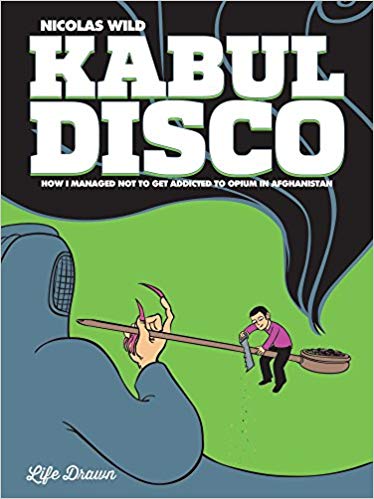
Asterix Omnibus volume 11: Asterix and the Actress, Asterix and the Class Act, Asterix and the Falling Sky


By Uderzo, translated by Anthea Bell & Derek Hockridge (Orion Childrens’ Books)
ISBNs: 978-0-75289-156-9 (HB Album) 978-1-44400-426-7 (PB Album)

A son of Italian immigrants, Alberto Aleandro Uderzo was born on April 25th 1927 in Fismes, on the Marn. Showing great artistic flair as a child reading Mickey Mouse in Le Pétit Parisien, the lad dreamed of becoming an aircraft mechanic one day.

After becoming a French citizen at age seven, Uderzo found employment at 13, apprenticed to the Paris Publishing Society where he learned design, typography, calligraphy and photo retouching. When WWII broke out, Albert spent time with farming relatives in Brittany and joined his father’s furniture-making business.

Brittany beguiled and fascinated Uderzo: when a location for Asterix’s idyllic village was being mooted, the region was the only choice.

During the post-war rebuilding of France, Uderzo returned to Paris and became a successful artist in the country’s revitalised and burgeoning comics industry. His first published work – a pastiche of Aesop’s Fables – appeared in Junior, and in 1945 he was introduced to industry giant Edmond-François Calvo (whose own comics masterpiece The Beast is Dead is still long overdue for a new edition and, if you follow current events, sorely needed as a timely warning shot in these frighteningly familiar-feeling times…).

Indefatigable Uderzo’s subsequent creations included indomitable eccentric Clopinard, Belloy, l’Invulnérable, Prince Rollin and Arys Buck. He illustrated Em-Ré-Vil’s novel Flamberge, worked in animation, and as a journalist and illustrator for France Dimanche. He created vertical comic strip Le Crime ne Paie pas for France-Soir and in 1950, even illustrated a few episodes of the franchised European version of Fawcett’s Captain Marvel Jr. for Bravo!

An inveterate traveller, the prodigy met Rene Goscinny in 1951. Soon fast friends, they decided to work together at the new Paris office of Belgian publishing giant World Press. Their first collaboration was in November of that year; a feature piece on savoir vivre (how to live right, or perhaps gracious living) for women’s weekly Bonnes Soirée, after which an avalanche of splendid strips and serials poured forth from their fevered brows.

Jehan Pistolet and Luc Junior were created for La Libre Junior before they devised a wry western with a native hero who eventually evolved into the delightfully infamous Oumpah-Pah. In 1955, with the formation of Édifrance/Édipresse, Uderzo drew Bill Blanchart for La Libre Junior, replaced Christian Godard on Benjamin et Benjamine and, in 1957, added Charlier’s Clairette to his bulging portfolio.

The following year he made his debut in Le Journal de Tintin, as Oumpah-Pah finally found a permanent home and rapturous audience. In his quieter moments, Uderzo also drew Poussin et Poussif, La Famille Moutonet and La Famille Cokalane.

When Pilote launched in 1959, Uderzo was a major creative force for the new magazine, collaborating with Charlier onTanguy et Laverdure whilst producing with Goscinny a little something called Astérix le gaulois…

Despite Asterix being a massive hit from the start, Uderzo continued working on Les Aventures de Tanguy et Laverdure, but once the first Roman romp was compiled and collected as hit album Astérix le gaulois in 1961, it became clear that the series would demand most of his time – especially as the incredible Goscinny seemed to never require rest or run out of ideas.

By 1967 the strip occupied all Uderzo’s time and attention, so in 1974 the partners formed Idéfix Studios to fully exploit their inimitable creation. When Goscinny passed away three years later, Uderzo had to be convinced to continue the adventures as writer and artist, producing a further ten volumes until 2010 when he retired.

After nearly 15 years as a weekly comic strip subsequently collected into albums, in 1974 the 21st tale (Asterix and Caesar’s Gift) was the first to be published as a complete original book before being serialised. Thereafter, each new release was a long-anticipated, eagerly-awaited treat for the strip’s millions of fans…

According to UNESCO’s Index Translationum, Uderzo is the 10th most-often translated French-language author in the world and the third most-translated French language comics author – right after his old mate René Goscinny and grand master Hergé.

Global sales will soon top 380 million copies of the 38 canonical Asterix books, making his joint creators – and their successors Jean-Yves Ferri and Didier Conrad – France’s best-selling international authors.

One of the most popular comics features on Earth, the collected chronicles of Asterix the Gaul have been translated into more than 100 languages since his debut, with a wealth of animated and live-action movies, TV series, assorted games, toys, merchandise and even a theme park outside Paris (Parc Astérix, naturellement)…

Like all the best stories the premise works on more than one level: read it as an action-packed comedic saga of sneaky and bullying baddies coming a cropper if you want or as a punfully sly and witty satire for older, wiser heads. We Brits are further blessed by the brilliantly light touch of master translators Anthea Bell & Derek Hockridge who played no small part in making the indomitable little Gaul so very palatable to English tongues.

More than half of the canon is set on Uderzo’s beloved Brittany coast, where – circa 50 B.C. – a small village of cantankerous, proudly defiant warriors and their families resist every effort of the mighty Roman Empire to complete the conquest of Gaul. The land has been divided by the conquerors into compliant provinces Celtica, Aquitania and Amorica, but the very tip of the last cited just refuses to be pacified…

The remaining epics occur in various locales throughout the Ancient World, with the Garrulous Gallic Gentlemen visiting every fantastic land and corner of the myriad civilisations that proliferated in that fabled era…

When the heroes are playing at home, the Romans, unable to defeat the last bastion of Gallic insouciance, futilely resort to a policy of absolute containment. Thus, the little seaside hamlet is permanently hemmed in by the heavily fortified garrisons of Laudanum, Compendium, Totorum and Aquarium.

The Gauls couldn’t care less: daily defying the world’s greatest military machine simply by going about their everyday affairs, protected by the magic potion of resident druid Getafix and the shrewd wits of the diminutive dynamo and his simplistic, supercharged best friend Obelix…

Firmly established as a global brand and premium French export by the mid-1960s, Asterix continued to grow in quality as Goscinny & Uderzo toiled ever onward, crafting further fabulous sagas; building a stunning legacy of graphic excellence and storytelling gold. Moreover, following the civil unrest and nigh-revolution in French society following the Paris riots of 1968, the tales took on an increasingly acerbic tang of trenchant satire and pithy socio-political commentary…

By the time of the first tale in this omnibus edition was released Goscinny had been gone for almost a quarter of a century and Uderzo had found his own authorial voice, whilst keeping the immortal characters rock steady in their natures…

Uderzo’s seventh session as sole auteur was Astèrix et Latraviata: released in 2001 as the 30th volume of the ever-unfolding saga. The English language version was released that same year as Asterix and the Actress.

The revelatory epic opens with romance in the air as Obelix and his lifelong pal return to the village, laden down with boars and more battered keepsakes of the ongoing contretemps with the woefully-outmatched Romans.

They amiably amble into a huge surprise party. The heroes coincidentally share the same birthday and their garrulous Gaulish friends have arranged the event to commemorate the occasion. Even their respective mothers have come down for a visit from fashionable regional capital Condatum…

Soon a feast is in full swing but after handing over their spectacular gifts (culled from the parents’ fashionable souvenir shop) – a fabulous jewelled sword for Asterix and an equally splendid Roman helmet for Obelix to add to his huge collection – the mothers begin a battle of their own with their sons.

Fed up with waiting for their hardworking husbands to arrive from the Big City, the impatient matrons start in on the birthday boys with lectures about settling down and providing some grandchildren…

Overruling Asterix and Obelix’s complaints, the insistent Sarsaparilla and Vanilla conduct acutely embarrassing interviews with the village’s contingent of eligible females and their potential mothers-in-law. They even organise a formal dance to show off their sons’ matrimonial potential, but the matchmaking is a succession of fiascos since the oafish louts just don’t want to play ball…

Fathers Astronomix and Obeliscoidix are now long overdue. Unknown to all, they have been arrested by Prefect Bogus Genius. The wily official has a problem which needs some clever and extremely delicate handling…

Already in custody is dipsomaniac former legionary Tremensdelirious (from Asterix and Caesar’s Gift), who sold the aforementioned sword and helmet to the Gaulish souvenir traders. Sadly, the items’ true owner is Caesar’s greatest enemy Pompey and incontrovertible proof positive that the usurping former tribune is back in Europe. The items must be quietly recovered before Rome realises…

Well aware of the ferocious reputation of the sons of his Gaulish captives, the Prefect enacts a devious scheme suggested by his spies. Mighty Obelix turns to jelly whenever he sees the beautiful Panacea (another village émigré now living in Condatum with her husband Tragicomix – as first seen in Asterix the Legionary) so the devilish plotter has hired the Empire’s greatest actress Latraviata to impersonate her and steal back the incriminating evidence…

As the despondent dads tire of waiting for rescue by their doughty boys and strike a deal with their cellmate Tremensdelirious, Decurion Fastandfurius is pretending to be a merchant escorting “Panacea” back to her home village. Apparently, the poor thing has a very selective case of amnesia…

In that certain Gaulish village on the coast of Armorica the actress is readily accepted with only Getafix in the least suspicious. Soon, her fawning attention to besotted Obelix wins her the helmet but Asterix is not so easily wooed. That changes when a spat with his now-jealous bosom buddy results in a mighty blow to the head which deprives him of his usually superior wits…

If not for overprotective mother Vanilla the plot would have succeeded then and there, but she stops the ingénue making off with the sword and calls in Getafix to cure her addled son. Unfortunately, the magic potion has a bizarre effect on the little zombie and Asterix goes wild, acting like an animal and scrapping with Obelix before hurtling out to sea like a torpedo…

He regains his senses on a rock in the middle of nowhere just as a massive storm erupts about him and only survives due to the intervention of old frenemies The Pirates and a particularly accommodating dolphin…

In the meantime, Latraviata and Fastandfurius have secretly secured the sword and started back for Condatum. Still unaware of their true nature, freshly reconciled Asterix and Obelix – who are heading in the same direction to find out what has delayed their dads – cadge a lift on the infiltrators’ cart.

Elsewhere, other agents are coming into play. A certain spy has already informed Caesar of trouble brewing and the real Panacea, having seen Astronomix and Obeliscoidix’s wrecked shop, has rushed off with Tragicomix to warn the village…

As our heroes head for the city, they are baffled to see Romans so busy fighting each other that they don’t even notice their usual nemeses, and everything comes to a startling head when Panacea apparently meets herself on the road…

After explanations, apologies and a surprising change of heart on behalf of one of the conspirators, Asterix and Obelix dash on to Condatum to rescue their fathers, only to stride straight into a major melee as Caesar and Pompey’s forces furiously clash…

Of course, it all works out in the end and cartoon dog-lovers everywhere will rejoice in the last moment arrival of the missing wonder mutt Dogmatix…and the introduction of his new “wife” and family. Apparently, some heroes cansuccessfully combine romance and duty…

Packed with outrageous action, good-natured joshing, cleverly applied raucous family humour, bombastic spectacle and a torrent of punishing puns to astound and bemuse youngsters of all ages, this rollicking affirmation of life’s eternal verities further confirmed Uderzo’s reputation as a storyteller whilst his stunning illustrative ability affords glimpses of sheer magic to lovers of cartoon art.

Diminutive, doughty daredevil Asterix is one of the Ninth Art’s greatest achievements, and by the mid-1960s had become a global brand and premium French export. He continued to grow in quality as Goscinny & Uderzo toiled ever onward, crafting further fabulous sagas; building a stunning legacy of graphic excellence and storytelling gold. As such prominent and ever-ascending stars, their presence was often requested in other places, as varied as fashion magazine Elle, global icon National Geographic and even a part of Paris’ 1992 Olympic Bid…

In 2013 new yarn Asterix and the Picts opened a fresh chapter in the annals as Jean-Yves Ferri & Didier Conrad began a much-anticipated continuation of the franchise. Before that, however, Uderzo was convinced to gather and – in many instances – artistically re-master some of the historical oddments and pictorial asides which had incrementally accrued over the glory-filled decades: features by the perfect partners which just didn’t fit into major album arcs, tales done for Specials, guest publications and commercial projects starring the indomitable Gaul. To cap off the new-old package Albert crafted an all-original vignette from that halcyon world of immortal heroes…

This intriguing compilation first appeared in France as Astérix et la rentrée gauloise in 1993 – and a decade later in English – gathering those long-forgotten side-pieces and spin-off material starring the Gallant Gauls and frequently their minor-celebrity creators too.

Following an expansive and explanatory ‘French Publisher’s Note’ – and the traditional background maps and cast list – a press conference from Chief Vitalstatistix leads directly into the eponymous ‘Asterix and the Class Act’ (originally seen in Pilote #363 October 6th, 1966) wherein the first day of school finds the little legend and his big buddy sadly miscast as truant inspectors and kid catchers for headmaster Getafix…

Each little gem is preceded by an introductory explanatory piece, and following the hard facts comes ‘The Birth of Asterix’. Taken from October 1994’s Le Journal exceptionnel d’Astérix, the tale is set ‘In the Year 35 BC (Before Caesar)’ and finds a certain village in high dudgeon as two young women go into labour. Their distraught husbands soon find a way to distract themselves – and everybody else – with a mass punch-up that quickly becomes the hamlet’s preferred means of airing issues and passing the time…

‘In 50 BC’ comes from May 1977 and re-presents newspaper-style strips produced at the request of an American publisher hoping to break the European stalwarts in the USA. The endeavour inevitably stalled but the panels – introducing and reprising the unique world of the Gallic goliaths – wound up being published in National Geographic.

Apparently Uderzo loves chickens and, especially for the original August 2003 release, he concocted the tale of ‘Chanticleerix the Gaulish Cockerel’, detailing the struggle between the village’s ruling rooster and a marauding Roman Eagle. It sounds pretty one-sided, but faithful mutt Dogmatix knows where the magic portion is kept…

Pilote #424 (7th December 1967) was full of Seasonal festive fun so ‘For Gaul Lang Syne’ saw Obelix attempting to use druidic mistletoe to snaffle a kiss from beautiful Panacea. He soon comes to regret the notion…

‘Mini, Midi, Maxi’ was produced for fashion magazine Elle (#1337 2nd August 1971) but the discussion of ancient Gaulish couture soon devolves into the kind of scraps you’d expect, after which ‘Asterix As You Have Never Seen Him Before…’ (Pilote #527, 11th December 1969) displays Uderzo’s practised visual versatility as our heroes are realised in various popular art styles from gritty superhero to Flash Gordon, a Charles Schulz pastiche and even as an underground psychedelic trip…

Approached to contribute a strip to Paris’ bid, the partners produced ‘The Lutetia Olympics’ which was later published in Jours de France #1660 (25th October 1986) and depicts how Caesar’s attempts to scotch a similar attempt to hold the great games in Gaul fails because of a certain doughty duo, whilst ‘Springtime in Gaul’ (from Pilote #334, 17th March 1966) is an early all-Albert affair wherein our heroes help the mystic herald of changing seasons give pernicious winter the boot…

‘The Mascot’ originated in first digest-sized Super Pocket Pilote (#1, 13th June 1968), revealing how the constantly-thrashed Romans decide to acquire a lucky animal totem, but chose the wrong-est dog in the world to confiscate, after which ‘Latinomania’ (crafted in March 1973 and re-mastered for the first Astérix et la rentrée gauloise in 1993) takes a sly poke at the fragile mutability of language.

‘The Authors Take the Stage’ describes how usually-invisible creators became characters in their own work and ‘The Obelix Family Tree’ collects a continuing panel strip which began in Pilote #172 (7th February 1963) and ran until #186, wherein Mssrs. Goscinny & Uderzo encounter a modern day Gaulish giant and track his ancestors back through history.

Everything ends with ‘How Do They Think It All Up?’ (Pilote #157, 25th October 1962) as two cartoonists in a café experience ‘The Birth of an Idea’…

Adding extra lustre to an already stellar canon, these quirky sidebars and secret views thankfully collect just a few more precious gags and wry capers to augment if not complete the long and glorious career of two of France’s greatest heroes – both the real ones and their fictive masterpieces. Not to be missed…

Uderzo’s controversial eighth solo outing (originally entitled Le Ciel lui tombe sur la tête) was released in 2005 as the 31st volume of the ever-unfolding saga. The English language edition was released that same year as Asterix and the Falling Sky. Apart from unlikely thematic content and quicker pacing, the critics’ main problem seemed to stem from a sleeker, slicker, less busy style of illustration – almost a classical animation look – but that’s actually the point of the tale. The entire book is a self-admitted tribute to the Walt Disney cartoons of the artist’s formative years, as well as a sneakily good-natured critique of modern comics as then typified by American superheroes and Japanese manga…

The contentious iconoclasm opens with the doughty little Gaul and affable pal Obelix in the midst of a relaxing boar hunt when they notice that their quarry has frozen into petrified solidity.

Perplexed, they head back through the eerily silent forest to the village, only to discover that all their friends have been similarly stupefied and rendered rigidly inert…

Somehow faithful canine companion Dogmatix and aged Getafix have some life in them, but only when Obelix admits to giving the pooch the occasional tipple of Magic Potion does Asterix deduce that it’s because they all have the potent brew currently flowing though their systems…

With one mystery solved they debate how to cure everybody else and all the woodland creatures – especially the wild boars – but are soon distracted by the arrival of an immense golden sphere floating above and eclipsing the village…

Out of if drifts a strange but friendly creature who introduces himself as “Toon” from the distant star Tadsilweny (it’s an anagram, but don’t expect any help from me), accompanied by a mightily powered being in a tight-fitting blue-and-red costume with a cape. Toon calls him Superclone…

The mighty minion casually insults Obelix and promptly learns that he’s not completely invulnerable, but otherwise the visitors are generally benevolent. The paralysis plague is an accidental effect of Toon’s vessel, but a quick adjustment by the strange visitor soon brings the surroundings back to frenetic life.

That’s when the trouble really starts as the villagers – and especially Chief Vitalstatistix – see the giant globe floating overhead as a portent that at long last the sky is falling…

After another good-spirited, strenuously physical debate, things calm down and Toon explains he’s come from the Galactic Council to confiscate an earthly super-weapon and prevent it falling into the hands of belligerent alien conquerors the Nagmas (that’s another anagram) and there’s nothing the baffled Earthlings can do about it…

At the Roman camp of Compendium Centurion Polyanthus is especially baffled and quite angry. His men have already had a painful encounter with Superclone but the commander refuses to believe their wild stories about floating balls and strangers even weirder than the Gauls, but he’s soon forced to change his mind when a gigantic metal totem pole lands in a blaze of flame right in his courtyard.

Out of it flies an incredible, bizarre, insectoid, oriental-seeming warrior demanding the whereabouts of a powerful wonder-weapon. Extremely cowed and slightly charred, Polyanthus tells him about the Magic Potion the Gauls always use to make his life miserable…

The Nagma immediately hurries off and encounters Obelix, but the rotund terrestrial is immune to all the invader’s armaments and martial arts attacks. He responds by demonstrating with devastating efficacy how Gauls fight…

After zapping Dogmatix, the Nagma retreats. When Obelix dashes back to the village it follows. No sooner has Toon cured the wonder mutt than the colossal Nagma robot-ship arrives, forcing the friendly alien to fly off and intercept it in his golden globe…

The Nagma tries to trade high-tech ordnance for the Gauls’ “secret weapon” but Asterix is having none of it, instead treating the invader to a dose of potion-infused punishment.

Stalemated, the Nagma then unleashes an army of automatons dubbed Cyberats and Toon responds by deploying a legion of Superclones. The battle is short and pointless and a truce finds both visitors deciding to share the weapon…

Vitalstatistix is outraged but Getafix is surprisingly sanguine, opting to let both Toon and Nagma sample the heady brew for themselves. The effects are not what the visitors could have hoped for and the enraged alien oriental unleashes more Cyberats in a sneak attack.

Responding quickly, Asterix and Obelix have two Superclones fly them up to the marauding robots, dealing with them in time-honoured Gaulish fashion.

The distraction has unfortunately allowed the Nagma to kidnap Getafix and Toon returns to his globe-ship to engage his robotic foe in a deadly game of brinksmanship whilst a Superclone liberates the incensed Druid. None too soon, furious, frustrated Nagma decides enough is enough and blasts off, determined never to come back to this crazy planet…

Down below Polyanthus has taken advantage of the chaos and confusion to rally his legions for a surprise attack, arriving just as the Gauls are enjoying a victory feast with their new alien ally. The assault goes extremely badly for the Romans, particularly after a delayed effect of the potion transforms affable Toon into something monstrous and uncanny…

Eventually all ends well and, thanks to technological wizardry, all the earthly participants are returned to their safely uncomplicated lives, once again oblivious to the dangers and wonders of a greater universe…

Fast, funny, stuffed with action and hilarious, tongue-in-cheek hi-jinks, this is a joyous rocket-paced rollercoaster for lovers of laughs and all open-minded devotees of comics. This still-controversial award-winning (Eagle 2006 winner for Best European Comic) yarn only confirmed Uderzo’s reputation as a storyteller willing to take risks and change things up, whilst his stunning ability to pace a tale was never better demonstrated. Asterix and the Falling Sky proves that the potion-powered paragons of Gallic Pride will never lose their potent punch.

If you still haven’t experienced the sublime example of graphic élan that is Asterix, it’s never too late…
© 2001, 2003, 2005 Les Éditions Albert René, Goscinny-Uderzo. English translation: © 2001, 2003, 2005 Les Éditions Albert René, Goscinny/Uderzo. All rights reserved.