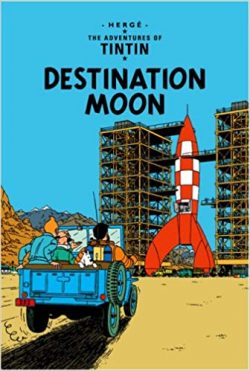
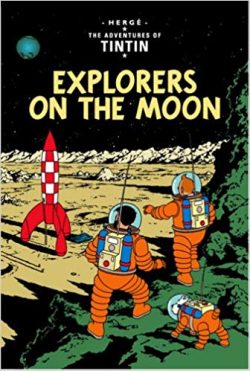

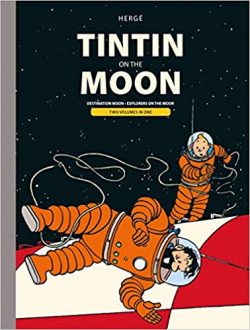
Adventures of Tintin: Destination Moon and Explorers on the Moon


By Hergé, Bob De Moors and others, translated by Leslie Lonsdale-Cooper & Michael Turner (Egmont UK)
ISBN: 978-1-40520-815-4 (HB Destination) 978-1-40520-627-3 (TPB Destination)
ISBN: 978-1-40520-816-1 (HB Explorers) 978-1-40520-628-0 (TPB Explorers)
As Tintin’s Moon Adventure (Magnet/Methuen) ISBN: 978-0-41696-710-4 (TPB)
Forthcoming – Tintin on the Moon (Egmont) ISBN: 978-1405295901 (HB)

Georges Prosper Remi, known all over the world as Hergé, created an incontrovertible masterpiece of graphic literature with his tales of a plucky boy reporter and his entourage of iconic associates.

Singly, and later with assistants including Edgar P. Jacobs, Bob de Moor and other supreme stylists of the select Hergé Studio, he created 23 splendid volumes (originally produced in brief instalments for a variety of periodicals) that have grown beyond their popular culture roots and attained the status of High Art.

On leaving school in 1925, he worked for the conservative Catholic newspaper Le Vingtiéme Siécle where he fell under the influence of its Svengali-esque editor Abbot Norbert Wallez. A devoted boy-scout, a year later Remi produced his first strip series The Adventures of Totor for monthly Boy Scouts of Belgium magazine, and by 1928 was in charge of producing the contents of the newspaper’s weekly children’s supplement Le Petit Vingtiéme.

He was illustrating The Adventures of Flup, Nénesse, Poussette and Cochonette, written by the staff sports reporter when Wallez asked Remi to create a new adventure series. Perhaps a young reporter who roamed the world, doing good whilst displaying solid Catholic values and virtues?

The rest is history…

Some of that history is quite dark: During the Nazi Occupation of Belgium, Le Vingtiéme Siécle was closed down and Hergé was compelled to move his popular strip to daily newspaper Le Soir (Brussels’ most prominent French-language periodical, and thus appropriated and controlled by the Nazis).

He diligently toiled on for the duration, but following Belgium’s liberation was accused of collaboration and even being a Nazi sympathiser. It took the intervention of Belgian Resistance war-hero Raymond Leblanc to dispel the cloud over Hergé, which he did by simply vouching for the cartoonist and by providing cash to create a new magazine – Le Journal de Tintin – which Leblanc published and managed. The anthology comic swiftly achieved a weekly circulation in the hundreds of thousands and allowed the artist and his team to remaster past tales: excising material dictated by and unwillingly added to ideologically shade the war time adventures as well as generally improving and updating great tales that were about to become a global phenomenon.

With World War II over and his reputation restored, Hergé entered the most successful period of his artistic career. He had mastered his storytelling craft, possessed a dedicated audience eager for his every effort and was finally able to say exactly what he wanted in his work, free from fear or censure.

In 1949 he returned to unfinished yarn Tintin au pays de l’or noir; abandoned when the Nazis invaded Belgium. The story had been commissioned by Le Vingtiéme Siécle, running from 28th September 1939 until 8th May 1940 when the paper was closed down. Set on the eve of a European war, the plot revolved around Tintin hunting seditionists and saboteurs sabotaging oil supplies in the Middle East. Before being convinced to update and complete the tale as Land of Black Gold, Hergé briefly toyed with the notion of taking his cast into space…

Collected albums Objectif Lune and On a marché sur la Lune were huge hits after the initial serialisation in Le Journal de Tintin from 30th March 1950 to 7th September 1950 and – after what must have been an intolerable wait for readers – from 29th October 1952 to 29th December 1953.

The tale was produced after discussions between Hergé and his friends Bernard Heuvelmans (scientist, author and father of pseudo-science Cryptozoology) and Jacques Van Melkebeke (AKA George Jacquet: strip scripter, painter, journalist and a frequent if unacknowledged contributor to the Tintin canon). The sci fi epic that became a 2-volume masterpiece first made the leap to English in 1959.

On a personal note: I first read Destination Moon in 1964, in a huge hardcover album edition (as they all were in the 1960s) and was blown completely away. I’m happy to say that except for the smaller pages – and there’s never a substitute for “Big-ness” – this taut thriller and its magnificent, mind-boggling sequel are still in a class of their own in the annals of science fiction comic strips…

Moreover, during the 1980s the entire tale was (repeatedly) released in a combined tome as Tintin’s Moon Adventure: an utterly inescapable piece of publishing common sense that is finally being repeated this summer in a new hardback album from Methuen…

Our tale begins with our indomitable boy reporter and Captain Haddock returning to ancestral pile Marlinspike Hall only to discover that brilliant but “difficult” savant Professor Cuthbert Calculus has disappeared. When an enigmatic telegram arrives, the puzzled pair are off once again to Syldavia (as seen in King Ottokar’s Sceptre) and a rendezvous with the missing boffin…

Although suspicious, Tintin soon finds that the secrecy is for sound reasons. In Syldavia, Calculus and an international team of researchers and technologists are completing a grand project to put a man on the Moon! In a turbulent race against time and amidst a huge and all-encompassing security clampdown, the scheme nears completion, but Tintin and Haddock’s arrival coincides with a worrying increase in espionage activity.

An enemy nation or agency is determined to steal the secrets of Calculus’s groundbreaking atomic motor at any cost, and it takes all Tintin’s ingenuity to keep ahead of the villains. The arrival of detectives Thompson and Thomson adds nothing to the aura of anxiety but their bumbling investigations and Calculus’ brief bout of concussion-induced amnesia do provide some of the funniest moments in comics history…

As devious incidents and occurrences of sabotage increase in intensity and frequency, it becomes clear that there may be a traitor inside the project itself, but at last the moment arrives and Tintin, Haddock, Calculus, technologist Dr. Frank Wolff – and Snowy – blast off for the Moon!

Cold, clinical and superbly underplayed, Destination Moon is completely unlike the flash-and-dazzle razzamatazz of British and American tales from that period – or since. It is as if the burgeoning Cold War mentality of the era has infected even Tintin’s bright clean world. Once again, the pressure of work and Hergé’s troubled private life resulted in a breakdown and a hiatus in the strip – but this time some of that darkness transferred to the material – although it only seems to have added to the overall effect of claustrophobia and paranoia. Even the comedy set-pieces are more manic and explosive: This is possibly the most mature of all Tintin’s exploits…

Presumably to offset the pressures of creation to weekly deadlines, the master founded Studio Hergé on 6th April 1950: a public company to produce the adventures of Tintin as well other features, with Bob De Moor enthroned as chief apprentice.

He became a vital component of Tintin’s gradual domination of the book market, frequently despatched on visual fact-finding missions. De Moor revised the backgrounds of The Black Island for a British edition, and repeated the task for the definitive 1971 release of Land of Black Gold. An invaluable and permanent addition to the production team, De Moor supervised while filling in backgrounds and, most notably, rendering the unforgettable eerie and magnificent Lunar landscapes that feature here.

If the first book is an exercise in tension and suspense, Explorers on the Moon is sheer bravura spectacle. En route to Luna the explorers discover that the idiot detectives have accidentally stowed away, and along with Captain Haddock’s illicit whisky and the effects of freefall, provide brilliant comedy routines to balance the eerie isolation and dramatic dangers of the journey.

Against all odds the lunanauts land and make astounding scientific discoveries, but must cut short their adventures due to the imminent threat of suffocation caused by the introduction of the extra passengers on the fantastic atomic moon rocket…

Moreover, lurking in the shadows, there is still the very real threat of a murderous traitor to be dealt with…

This so-modern yarn is a high point in the series, blending heroism and drama with genuine moments of irresistible emotion and side-splitting comedy. The absolute best of the bunch in my humble opinion, and still one of the most realistic and accurately depicted space comics ever produced. If you only ever read one Hergé saga it simply must be this translunar Adventure of Tintin.
Destination Moon: artwork © 1953, 1959, 1981 Editions Casterman, Paris & Tournai. Text © 1959 Egmont UK Limited. All Rights Reserved. Explorers on the Moon: artwork © 1954, 1959, 1982 Editions Casterman, Paris & Tournai. Text © 1959 Egmont UK Limited. All Rights Reserved.

A new combined compilation – Tintin on the Moon – will be released on June 27th 2019 and is available for pre-order now
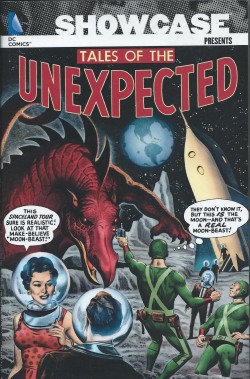
Showcase Presents Tales of the Unexpected volume 1


By Otto Binder, France E. Herron, Jack Miller, Dave Wood, Bernard Baily, Bob Brown, Nick Cardy, Bill Ely, Bill Draut, Jack Kirby, Mort Meskin, Sheldon Moldoff, Jim Mooney, Ruben Moreira, George Papp, John Prentice, George Roussos, Leonard Starr & various (DC Comics)
ISBN: 978-1-4012-3520-8

American comicbooks started rather slowly until the invention of superheroes unleashed a torrent of creative imitation and established a new entertainment genre. Implacably vested in World War Two, the Overman swept all before him (occasionally her or it) until the troops came home and the more traditional themes and heroes resurfaced and eventually supplanted the Fights ‘n’ Tights crowd.

Whilst a new generation of kids began buying and collecting, many of the first fans also retained their four-colour habit but increasingly sought older themes in the reading matter. The war years had irrevocably altered the psychological landscape of the readership, and as a more world-weary, cynical young public came to see that all the fighting and dying hadn’t really changed anything, their chosen forms of entertainment (film and prose as well as comics) increasingly reflected this.

As well as Western, War and Crime comics, celebrity tie-ins, madcap escapist comedy and anthropomorphic funny animal features were immediately resurgent, but gradually another of those cyclical revivals of spiritualism and a public fascination with the arcane led to a wave of impressive, evocative and shockingly addictive horror comics.

There had been grisly, gory and supernatural stars before, including a pantheon of ghosts, monsters and wizards draped in mystery-man garb and trappings (the Spectre, Mr. Justice, Frankenstein, The Heap, Zatara, Dr. Fate and dozens of others), but these had been victims of circumstance: The Unknown as a power source for super-heroics. Now the focus shifted to ordinary mortals thrown into a world beyond their ken with the intention of unsettling, not vicariously empowering, the reader.

Almost every publisher jumped on an increasingly popular bandwagon, with B & I (which became magical one-man-band Richard E. Hughes’ American Comics Group) launching the first regularly published horror comic in the Autumn of 1948. Technically speaking, however, Adventures Into the Unknown was pipped at the post by Avon who had released an impressive single issue entitled Eerie in January 1947; later reviving the title by launching a regular series in 1951. All the meanwhile, parents’ favourite Classics Illustrated had long been milking the literary end of the genre with adaptations of the Headless Horseman, Dr. Jekyll and Mr. Hyde (both 1943), The Hunchback of Notre Dame (1944) and Frankenstein (1945) among others.

As long as we’re keeping score, this was also the period in which Joe Simon & Jack Kirby identified another “mature market” gap and invented Romance comics (Young Romance #1, September 1947) but they too saw the sales potential for spooky material, resulting in the seminal Black Magic (1950) and boldly obscure psychological drama anthology Strange World of Your Dreams (1952).

The wholesome family company that would become DC Comics bowed to the inevitable and launched a comparatively straight-laced anthology that nevertheless became one of their longest-running and most influential titles with the December 1951/January 1952 launch of The House of Mystery. Its success led to a raft of such creature-filled fantasy compendiums in the years that followed such as Sensation Mystery, My Greatest Adventure, House of Secrets and, in 1956 – during a boom in B-Movie science fiction thrillers – Tales of the Unexpected…

A hysterical censorship scandal which led to witch-hunting hearings (check out Senate Subcommittee on Juvenile Delinquency, April-June 1954 on your search engine of choice) was derailed by the industry adopting a castrating straitjacket of draconian self-regulatory rules. Horror titles produced under the aegis and emblem of the Comics Code Authority were sanitised and anodyne affairs in terms of Shock and Gore, even though the market’s appetite for suspense and the uncanny was still high. Stories were dialled back into marvellously illustrated, rationalistic, fantasy-adventure vehicles which dominated until the 1960s when super-heroes (which had begun to creep back after Julius Schwartz reintroduced the Flash in Showcase #4, 1956) finally overtook them.

This mammoth monochrome compilation (still tragically unavailable in colour or in digital editions) offers a stunning voyage to the fantastic outer limits of 1950s imagination, collecting the first 20 issues of the charmingly enthralling anthology – produced under the watchful eyes of the Comics Code Authority – which spans cover dates February/March 1956 to December 1957 and starts with a quartet of intriguing, beautifully rendered pocket thrillers.

Sadly for me and you, records are spotty and many of the authors remain unsung (although possible candidates include Dave Wood, Bill Finger, Ed Herron, Joe Samachson, George Kashdan, Jack Miller and Otto Binder and I’ll just guess whenever I’m more than half-certain) but the pictorial pioneers at least can be deservedly celebrated…

Behind a captivating cover by Bill Ely, Tales of the Unexpected #1 opens our uncanny excursions with ‘The Out-of-The-World Club’, drawn by the astoundingly precise John Prentice, detailing the unearthly secret of a night-spot offering truly original groovy sounds, whilst ‘The Dream Lamp’, limned by Leonard Starr, takes a bucolic glance at a device which seems able to perform impossible feats.

Jack Miller, Howard Purcell & Charles Paris then ironically reveal ‘The Secret of Cell Sixteen’ which fools yet one more prisoner in the Bastille, after which the debut issue ends with a bleak alien invasion fable in ‘The Cartoon that Came to Life’ by Otto Binder & Bill Ely.

Issue #2 offered the uncredited conundrum of ‘The Magic Hats of M’sieu La Farge’ (art by Ruben Moreira) involving ordinary folk impelled to perform extraordinary feats when wearing the titfers of famous dead folk, whilst ‘The Fastest Man Alive’ (drawn by Bill Draut & Mort Meskin) discloses how an obsessive rivalry brings destruction upon a man forever relegated to second best behind his exceptional greatest friend…

‘The Record of Doom’ (Ely art) apparently drives listeners to suicide until a canny cop uncovers the truth, but ‘The Gorilla who Saved the World’ (Starr) is as incredible and alien as you’d expect in a tale of sharp sci-fi suspense…

Issue #3 opened with Purcell’s ‘The Highway to Tomorrow’ wherein a motorway through Native American sacred lands almost results in a new uprising, after which Meskin’s ‘The Man Nobody Could See’ revisits the old plot of an invisible criminal. ‘I Lost My Past’ (art by Mort Drucker) recounts an implausibly complex scheme to cure an amnesiac before ‘The Man with 100 Wigs’ (Miller & Prentice), provides a genuinely compelling mystery about a petty thief who steals a sorcerer’s chest filled with hairpieces that impart bizarre powers to the wearer…

The mix of cop stories, aliens and the arcane acts clearly struck a popular chord as, with Tales of the Unexpected #4, the comic was promoted to monthly. ‘Seven Steps to the Unknown’ (Ely) continued the eclectic winning formula through a perilous puzzle regarding a group of complete strangers inexplicably linked and targeted for murder, whilst ‘The Day I Broke All Records’ – illustrated by Sheldon Moldoff – follows a top athlete who gains something “extra” after finding an elixir once favoured by unbeatable Roman gladiator Apulius…

Then a murderer is brought to justice after becoming obsessed with ‘The Flowers of Sorcery’ (Starr) whilst ‘The House Where Dreams Come True’ (Prentice) offers a far kinder tale of human generosity to melt the heart of the most jaded reader.

In #5 ‘The Man Who Laughed at Locks’ (Moreira) discloses the inevitable fate of a cheat when rival inventors clash; ‘I Was Bewitched for a Day’ (Ely) reveals how easily domestic reality can be overturned, and Moldoff portrays the bewilderment of an Art Investigator faced with ‘The Living Paintings’ before Miller & Prentice again triumph with the tale of an actor literally possessed by his role in ‘The Second Life of Geoffrey Hawkes’…

TotU #6 opens with ‘The Telecast from the Future’ (drawn by George Papp) wherein a technician foolishly convinces himself that his gear hasn’t really opened a peephole into tomorrow, whilst Ely’s ‘Dial M for Magic’ focusses on a prestidigitator’s club that auditions an amazing applicant who doesn’t just do “tricks”…

‘The Forbidden Flowers’ (Moldoff) then exposes a killer who thinks himself safe, after which Moreira’s ‘The Girl in the Bottle’ leads an unsuspecting oceanographer into fantastic peril… and another incredible criminal scam.

Golden Age great Bernard Baily joins the rotating art crew with #7 as ‘The Pen that Never Lied’ visits a number of people, dispensing justice through unvarnished truth, after which ‘Beware, I Can Read your Mind!’ (Moldoff) depicts a telepath discovering the overwhelming cost of his gift.

When a miner finds a talking talisman, it promises anything except ‘The Forbidden Wish’ (George Roussos). Tragically it was the only thing the weak-minded man wanted…

The issue closes with the art debut of the astounding Nick Cardy who lovingly detailed the fate of a murderous thug who refused to listen to the sage advice of ‘The Face in the Clock!’

Tales of the Unexpected #8 opens with fantastic fantasy as ‘The Man Who Stole a Genie’ (Meskin) slowly succumbs to greed and mania, whilst ‘The Secret of the Elephant’s Tusk’ (Ely art) follows the trail of death resulting after a poacher kills a sacred pachyderm. Roussos’ ‘The Four Seeds of Destiny’ chillingly reveals the doom that comes to a TV reporter who stole relics from a Pharaoh’s tomb before ‘The Camera that Could Rob’ (Starr) proves that, even for a thief with an unbeatable gimmick, mistreating a cat never ends well…

In issue #9 ‘The Amazing Cube’ (possibly scripted by George Kashdan and definitely limned by Baily) sees an unscrupulous gambler falling foul of his own handmade dice, whilst a killer conman gets his comeuppance courtesy of ‘The Carbon Copy Man’ (Papp). ‘The Day Nobody Died’ by Roussos is a classic of moody mystery wherein a doctor pursues a dark stranger and regrets catching him, after which a little lad saves the world from alien invasion and know-it-all adults in Starr’s ‘The Man Who Ate Fire’.

The tone of the time was gradually turning and oppressive occultism was slowly succumbing to the Space Age lure of weird science as TotU #10 proved with ‘The Strangest Show on Earth’ (art by Jim Mooney) wherein a bankrupt showman stumbles over a Martian circus. Sadly, the bizarre performers had their own agenda to adhere to…

‘The Phantom Mariner’ (Moldoff) follows an obsessed sea captain to his inescapable fate, before a scientist faces a deadly dilemma after creating ‘The Duplicate Man’ (Ely) and Meskin reveals how an antique collector’s compulsion endangers his life in ‘I Was Slave to the Wizard’s Lamp’…

A criminal inventor pays the ultimate price for his venality in the Baily-limned ‘Who Am I?’ which opened Tales of the Unexpected #11, whilst ‘I Was a Man from the Future’ (Cardy) sees an American mountaineer stumble through a time-warp into adventure and romance in 15th century France and ‘The Ghost of Hollywood’ (Ely) confounds a special effects designer determined to debunk it.

Starr then closed out the issue with ‘The Man Who Hated Green’, as an artist embarks on an extraordinary campaign of terror…

Issue #12 began with Cardy’s tale of a quartet of escaped convicts terrorising three little old ladies and subsequently cursed by ‘The Four Threads of Doom’, after which ‘The Witch’s Statues’ (Meskin) proves to be more scurrilous scam than sinister sorcery.

Following a downturn in the industry, Jack Kirby briefly returned to National/DC at this time: producing a mini-bonanza of mystery tales and drawing Green Arrow, all whilst preparing his newspaper strip Sky Masters of the Space Force.

He also re-packaged for Showcase an original team concept kicking around in his head since he and Joe Simon had closed the innovative but unfortunate Mainline Comics. Blending explosive adventure with the precepts of mystery comics, Challengers of the Unknown became the template for the entire Silver Age superhero resurgence…

After years of working for others, Simon & Kirby had established their own publishing company, producing comics for a more sophisticated audience, only to find themselves in a sales downturn and awash in public hysteria generated by the aforementioned anti-comic pogrom of US Senator Estes Kefauver and psychologist Dr. Fredric Wertham.

Simon quit the business for advertising, but Kirby soldiered on, taking his skills and ideas to a number of safer, if less experimental, companies. Here his run of short fantastic suspense tales commences with ‘The All-Seeing Eye’ (possibly scripted by Dave Wood?) wherein a journalist responsible for many impossible scoops realises that the ancient artefact he employs is more dangerous than beneficial…

The issue ends with Ely’s rousing thriller ‘The Indestructible Man’ wherein a stuntman with innate invulnerability decides to get rich quick, no matter who gets hurt…

In #13, an amnesiac retraces his lost past by seeking out ‘Weapons of Destiny’ (perhaps Binder with Ely art), whilst Meskin’s ‘The Thing from the Skies’ initially proves a boon but ultimately the downfall for a murdering conman. A ghostly ‘Second Warning’ (Papp) saves a tourist when he visits battlefields of WWII, after which France E. Herron & Cardy’s ‘I Was a Prisoner of the Supernatural’ reveals how an actor escapes a deal with the devil before Herron & Kirby steal the show with a grippingly devious crime-caper in ‘The Face Behind the Mask’…

Tales of the Unexpected #14 starts with Meskin’s ‘The Forbidden Game’ as an embezzler plays fast and loose with a wagering wizard, and is followed by ‘Cry, Clown, Cry’ (Baily) which sees a baffled son ignore his father’s injunction not to follow the family tradition to be a gag-man…

Papp pictures the fate of a swindler who wants folk to believe he is ‘The Man Who Owned King Arthur’s Sword’ and Moldoff finishes up proceedings as a crook is haunted by ‘The Green Gorilla’ manifested by his misdeeds.

Kirby led off in #15, his ‘Three Wishes to Doom’ proving that even with a genie’s lamp crime does not pay, after which ‘The Sinister Cannon’ (Baily) employed by an insidious alien infiltrator proves far more than it appears. ‘The Rainbow Man’ (Roussos) is a scientific bandit who overestimates the efficacy of his camouflage discovery and ‘The City of Three Dooms’ – by Meskin – wraps up things with a mesmerising time-travel romp featuring Nazi submariners on a voyage to infinity…

There’s an inexplicable frisson in Kirby’s ‘The Magic Hammer’ which opens #16 as the King of Comics here relates how a prospector finds a mallet capable of creating storms and goes into the rainmaking business… until the original owner turns up…

That superb vignette is augmented by ‘I Was a Spy for Them’ (Meskin) as a canny physicist turns the tables on the star men who captured him, a crooked archaeologist gains unbeatable power from an ancient ring but becomes ‘The Exile from Earth’ (Dave Wood & Moldoff), and Moreira illustrates ‘The Interplanetary Line-Up’, wherein an actual Man from Mars gatecrashes a science fiction writer’s fancy dress party…

In #17 ‘Who is Mr. Ashtar?’ (Kirby) chillingly follows a hotel detective who just knows there’s something off about the new guest in Room 605, whilst ‘Beware the Thinking Cap’ (Ely) describes the rise and fall of a crook who finds the device which inspired all the geniuses of history. Baily illustrates how a lifer in jail uses a unique method of escape in ‘The Bullet Man’, and the issue ends on ‘The Impossible Voyage’ (Mooney) as a couple of alien pranksters take earth suckers for a ride on what only looks like a fairground attraction…

Mooney takes lead spot in #18 as ‘The Man Without a World’ rejects Earth only to learn that a life in space is no life at all, after which Meskin’s ‘The Riddle of the Glass Bubble’ threatens to end all life until a little kid finds an unlikely solution. Cardy opens ‘The Amazing Swap Shop’, where humans trade “junk” for impossibly useful gadgets before Kirby shows how a clever human saves us all by outwitting ‘The Man Who Collected Planets’.

By now thoroughly gripped in UFO fever, Tales of the Unexpected #19 began with ‘The Man from Two Worlds’ (Cardy) wherein nasty Neptunians attempt to abduct an Earth scientist by guile, whereas ‘D-Day on Planet Vulcan’ (Mooney) envisages embattled ETs begging our help to end a world-crushing crisis, after which a meteor turns a hapless technician into ‘The Human Lie Detector’ (Ely) and a dotty old eccentric surprises everybody by ending ‘The Menace of the Fireball’ (with art by Bob Brown).

This terrific tome concludes with issue #20 where ‘The Earth Gladiator’ (Cardy) struggles to save his life and prove Earth worthy of continued existence, an engineer scuppers ‘The Remarkable Mr. Multiplier’ (Ely) before his invention wrecks civilisation and Baily illustrates that not every alien incursion is malign or dangerous in ‘I Was Marooned on Planet Earth’

Moreira then brings the cosmic catalogue to a close with ‘You Stole Our Planet’ wherein gigantic space creatures arrive with a strong claim of prior ownership…

Although certainly dated and definitely formulaic, these complex yet uncomplicated suspenseful adventures are drenched in charm, gilded in ingenuity and still sparkle with innocent wit and wonder. Perhaps not to everyone’s taste nowadays, these fantastic exploits are nevertheless an all-ages buffet of fun, thrills and action no fan should miss.
© 1956, 1957, 1958, 2012 DC Comics. All Rights Reserved.

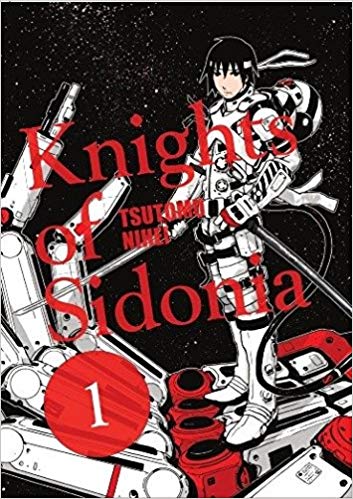
Knights of Sidonia volume 1


By Tsutomo Nihei, translated by Kumar Sivasubramanian (Vertical)
ISBN: 978-1-935654-80-3

As I’ve often said, these days nobody does hard comics science fiction like the Japanese – although admittedly our own 2000AD, certain French comics artisans and the inimitable Warren Ellis are keeping the flag flying ahead of much of even manga’s greatest masters in their own mostly-unacknowledged way…

In the tech-obsessed East, the tough, no-nonsense, nuts-and-bolts mystery and refined imagination of star flight have long been blended with more fanciful and romantic futuristic themes to captivate at least five generations since Osamu Tezuka first started the ball rolling in the 1950s, making space commonplace and conceptually comfortable for the Japanese.

We in the Western world have been simultaneously enraptured and frantically trying to catch up, ever since some – too few, alas – of these manga tales first began to be translated into English at the end of the 1980s.

One of the most talented and respected proponents of the genre is Tsutomu Nihei whose triumphs have ranged from wholly self-created graphic epics such the stunning cyberpunk thriller Blame!, its prequel NOiSE, and Biomega to impressive stints on major commercial properties such as comics iterations of video game Halo and miniseries Wolverine: Snikt! for Marvel.

Born in 1971 and working in the field since 1998, the author prefers to let his works speak for him. Shidonia no Kishi began in 2009, debuting in Kodansha’s Seinen title Bessatsu Shonen Magazine and running to 13 volumes on its conclusion in September 2015.

The premise is familiar yet evergreen. A millennium from now Earth is gone. In 3394 our solar system has been destroyed by unstoppable alien monsters and the survivors of humanity have scattered to the stars in vast self-contained generational vessels as much rock as rocket ship. The diaspora has sent colonies hurtling ever outward seeking escape and survival, whilst within them humans have slowly become something different…

The eponymous Knights of Sidonia are the young pilots gifted enough to pilot colossal humanoid fighter vessels that defend the survivors and scavenge interstellar resources for the ever-moving colony our story concerns…

The story begins with ‘Nagate Tanikaze’s Choice’ as an unexpected event occurs. Unknown to all the inhabitants of the hive-like colony ship, years ago, an old man took his infant grandson and vanished deep into the bowels of the vessel. Raised in utter isolation with only tapes, a flight simulator/VR trainer and stolen food, the boy grew into a tough, hardy and independent survivor.

When, after three years, Nagate Tanikaze finally accepts that the corpse in the chair is no longer his “gramps”, he regretfully heads up in search of food and is soon caught by the incredulous authorities. Starving and impossibly weak, he adamantly refuses to undergo the commonplace genetic procedure that will enable him to photosynthesise starlight. He might well be the only traditionally human being on Sidonia…

His captors-turned-benefactors accept his idiosyncrasies and welcome him into their austere, oddly passionless society, but some people seem to seethe with hostility at Tanikaze’s presence. He is assigned quarters at a dorm and welcomed by Ms. Hiyama, a motherly amalgam of human, bear and cyborg. Nagate spends his time acclimatising by aimlessly wandering the vast labyrinthine cocoon which has patterned itself on an idealised 20th century Japan, but trouble still finds him after he wanders into a female photosynthesis chamber and is beaten up by the outraged girls “feeding” inside…

In the higher echelons of the ship, passive panic is gripping the ship’s leaders. Long-range sensors have spotted a Gauna – one of the Brobdingnagian bio-horrors that invaded and destroyed Earth ten centuries past – and with grim fatality the Garde pilots are mobilised.

Tanikaze has been tested and found to be a superb pilot prospect. As the ship goes on alert, his actual training begins, converting his years on the simulator into hands-on experience…

‘Nagate Tanikaze’s Maiden Battle’ finds the trainee mecha-rider still experiencing some prejudice but making his first friend in pretty Izana Shinatose, a fellow Garde pilot who adopts the outsider, acting as his guide and social mentor. Izana is warm and welcoming so it’s not too long before Nagate accepts “her” odd situation as a third-gendered, asexual parthenogenetic hermaphrodite. “She” also seems to be mildly telepathic…

Testing on the newest simulator, the outcast astounds all his classmates by scoring far above the machine’s assessment parameters but the purely physical – and appallingly uncomfortable and embarrassing – aspects of wearing a working spacesuit and dealing with the psychological pressures of toiling in the limitless void still challenges Tanikaze’s resolve and mental resources.

And even training is deadly work. As two squads of Mecha extract ice from a passing asteroid the simple drill turns into a disaster when a Gauna ambushes the novices…

‘Eiko Yamano’s Starry Heavens’ recalls that cadet’s spurning of the students’ superstitious pre-flight ritual before returning to her present as the star-beast consumes her and adds her DNA to its metamorphic mass, simultaneously gravely damaging Tanikaze’s vessel. The telemetry from his ship indicates he’s near death…

Aboard Sidonia, their superiors can only write off the kids and begin readying their only effective weapon – a Heavy Mass Cannon that should push the nigh-unkillable free-floating carnivore far out of range…

The Sidonians are astonished when Nagate apparently regains consciousness and valiantly confronts the gigantic horror slowly assuming Yamano’s form. Incomprehensibly driving it back, he is dragged away by his comrades just as the huge projectile from the mass cannon devastatingly hits home…

‘Norio Kunato’s Fury’ finds the recovering Nagate plagued by ghastly dreams of Eiko’s death – and particularly her imagined transubstantiation into a Gauna. He should be dead but refuses even to give in to the pace of his own healing and soon drags himself on crutches back to lectures. When Izana sees him leaning on willowy Norio Kunato in moments of dizziness, the outraged asexual storms off in a huff…

Baffled Tanikaze only gets the chance to make amends at the Gravity Festival – an annual function that allows the barbarian boy opportunity to eat as much actual food as he can hold – but is distracted by the attentions of fellow pilot Hoshijiro Shizuka who has brought his wounded Mecha and battered body back to Sidonia after the Gauna ambush. However, when haughty Kunato insults and assaults Izana, Nagate goes crazy and jumps the elitist bigot. Their battle wrecks the fair, and the outcast learns that many of his fellow pilot candidates feel he is unworthy to ride the giant guardian mecha…

This first monochrome volume (also available in digital formats) concludes with ‘Mochikuni Akai’s Glory’ as the trainees continue their steep and brutal learning curve. The repelled Gauna is gradually, inexorably approaching Sidonia again. Moreover, it’s clear that not all the populace despise the new kid. As the first person to fight – let alone survive – a Gauna attack, Tanikaze is apparently held in high regard by the older Guardians.

When hot-shot pilot Akai invites Nagate and Izana to a private paradise of artificial seas and beaches, it is to reveal that he and his fellow officers have been tasked with deflecting the beast’s next attack. Although the party is enjoyable and the surroundings stunning, the cadets can’t help but feel they’re intruders at a Last Supper…

To Be Continued…

Like Robert Heinlein, Larry Niven and other masters of the art form, Tsutomu Nihei frequently works in a notional shared continuity (the monstrous Gauna first appeared in his earlier series Abara), but there’s no sense of having missed anything in this premier instalment of a wonderfully engrossing, gloriously engaging epic of Horatian heroism and Mankind’s Last Stand.

Compelling, subtle, spectacular and even funny, this is a yarn no adventure aficionados or sci-fi fanatics should miss.

This book is printed in the traditional Japanese right to left, back to front format.
© 2013 Tsutomu Nihei. All rights reserved.

The Silent Invasion: The Great Fear


By Michael Cherkas & Larry Hancock (NBM)
ISBN: 978-1-68112-206-9 (TPB)

During the vast expansion of opportunity and outpouring of innovation that graced comics during the 1980s, much of the “brain-rotting trash” or “silly kid’s stuff” stigma which had plagued the medium was finally dispelled. America started catching up to the rest of the world; acknowledging sequential narrative as an actual Art-Form, and their doors opened wide open for foreigners to make a few waves too…

One of the most critically acclaimed and just plain fun features of the period came from semi-Canadian outfit Renegade Press which set up shop in the USA and began publishing at the very start of the black & white comics bubble in 1984. They quickly established a reputation for excellence, with a strong line of creator-based properties and some genuinely remarkable series such as Ms. Tree, Journey: The Adventures of Wolverine MacAlistaire, Flaming Carrot, Normalman, and the compulsively backwards-looking Cold War/UFO/paranoia-driven The Silent Invasion.

That last was a stunningly stylish saga, bolting 1950s domestic terrors (invasion by Reds; invasion by aliens; invasion by new ideas…) onto Film Noir chic and employing 20-20 hindsight to produce a phenomenally fresh and enticing delight for the strangely similar Reagan era.

The series was eventually collected as four superbly oversized monochrome tomes (a whopping 298 x 2058 mm), re-presenting the lead story from the first dozen issues of The Silent Invasion wherein co-creators Michael Cherkas & Larry Hancock concocted a delightful confection combining all the coolest genre elements of classic cult sci-fi, horror, spy, conspiracy theory, crime, romance and even comedy yarns…

Now, after far too long a wait – and with America once again enduring internecine struggle amongst the citizenry, corruption (but no collusion!!), cover-ups at every level of government and the press under attack from the people and traditions it seeks to inform and safeguard – the series has been remastered, marginally revised and re-released in a more manageable paperback size (or fully adjustable eBook format) with the express intention of catching up and finally completing the tensely compelling epic. The Great Fear (gathering the moodily monochrome lead story from issues #7-12) is the second and, unless the Deep Government intervenes, we can anticipate two more…

The re-education process resumes with a heartfelt plea in the Introduction: ‘UFOs, Conspiracies, and the Deep State (There are 187 Aliens in Congress! Who did YOU vote for?)’ by Cherkas & Hancock…

The 1950s in American were a hugely iconic and paradoxical time. Incredible scientific and cultural advancements, great wealth and desperate, intoxicating optimism inexplicably arose amidst an atmosphere of immense social, cultural, racial, sexual and political repression with an increasingly paranoid populace seeing conspiracy and subversive attacks in every shadow and corner of the rest of the world.

Such an insular melting pot couldn’t help but be fertile soil for imaginative outsiders to craft truly incisive and evocative tales dripping with convoluted mystery and taut tension, especially when wedded to the nation’s fantastic – and then-ongoing – obsessions with rogue science, flying saucers, gangsterism and espionage…

They were also obsessed with hot babes and bust sizes, but more of that elsewhere…

Remember When?: In April 1952, famed Union City private eye Dick Mallet saw a strange light in the night sky. Next morning the cops found his empty, crashed car. A month later reporter Matt Sinkage was still getting grief from Frank Costello, his Editor on the Union City Sentinel. Matt wanted to expose “The Truth behind Flying Saucers” but was quickly becoming a laughing stock. He was also starting to think his foreign-sounding neighbour Ivan Kalashnikov was a Russian spy….

Sinkage was alienating his family and worrying his fiancée Peggy Black. All he could think about was that night six months back in Albany when he saw a UFO and impetuously chased after it: a crazy night everyone but him remembers…

Getting drunk, Matt broke into Ivan’s apartment where a quick glance revealed the foreigner and others in front of a huge, weird machine. It confirmed his suspicions that they were Atomic spies!

Days later Matt collided with Mr K’s pretty friend Gloria Amber, and asked her out to lunch. Things developed when Gloria begged him to save her from what she claimed were Red operatives. They subsequently claimed to be Federal agents…

Hiding out at his brother’s Walter‘s place, Matt was still seeing flying saucers everywhere and could not understand why everybody else thought they were just jets. Back in Union City, Frank was being pressured by FBI Agent Phil Housley: an old acquaintance who regularly forced him to suppress news items…

This time though, he wanted Sinkage. What no newsman knew was that Housley was also working for a shadowy agency calling itself The Council. What Housley didn’t know was that he was not their only operative…

Back in suburbia, Walter’s wife Katie – convinced Matt and his new floozy were up to no good – contacted the FBI. Fugitives Matt and Gloria were heading out in Walter’s car when Peggy showed up. She couldn’t understand why her man was with a flashy trollop even though Gloria had told Matt the Reds were after Kalashnikov’s memoirs and files. Although Matt knew Gloria was playing a double game, he agreed to go with to a remote town where a “contact” could protect them both…

Mr K called in his own heavies to hunt them, all equally unaware that the FBI had visited Katie and a net was closing around Sinkage and his mystery woman…

When the Council learn Sinkage was involved in the “Albany event” near-panic ensued. Matt meanwhile had succumbed to suspicion. Gloria kept vanishing and refused to acknowledge it: Later, helping Kalashnikov’s hoods Zanini and Koldst to abduct her and rough up Matt. When the FBI interviewed Walter and Katie about Matt, they let slip that they were the only Feds working the case, denying any other government officials were involved…

Katie spilled all she knew and the agents went into overdrive, marshalling all their resources and heading for sleepy Stubbinsville. As Housley’s team flew in, Matt pushed on, hitchhiking to a rendezvous with destiny. En route, he reunites with oddly-compliant Gloria, and they battled on together in a stolen car. With less than 100 miles to go, she fell ill but made him promise to get her there at all costs…

As the assorted pursuers converged, she directed Matt to a lonely wilderness region. The net closed around them as a fantastic and terrifying light-show ignited the dark skies. By the time Housley reached them Gloria had vanished and Sinkage was slumped in a coma. Days later, Matt was freed and all charges dropped. He was strangely content. Despite another blatant cover-up and no clue as to whom all the various parties hounding them really were, Sinkage knew what he had seen when Gloria vanished. Now he could only wait for her inevitable return…

Now it is three years later: time Sinkage has spent much of the time locked in an asylum. Recently released, he has moved to bucolic small town Rockhaven and taken up his old career as a journalist. It is September 1955…

In ‘No Secrets’ the older but no wiser outsider has tentatively established himself in the little town but his job sucks and life in the boarding house he shares with a remarkably hostile cast of characters is far from a comfortable fit. The journalism job at The Ranger pays a pittance and offers no satisfaction at all, but Sinkage earns extra cash writing fanciful fake news for spurious tabloid The Tattler.

His dissatisfied life edges over into crazy again after a proposed piece on cattle mutilations leads him to a quasi-religious space cult in his own backyard. The Sirian Utopia Foundation is the obsession and pet project of wealthy widow/local philanthropist Gladys Tanner. She devoutly believes the world is heading for imminent Armageddon and that her mentors and gurus are in contact with a benign cosmic council promising enlightenment and global paradise. And they can also reunite her with her departed husband…

The townsfolk are surprisingly defensive of her and her eccentric but harmless views…

They are a lot less tolerant of Sinkage when he decides to investigate after connecting her followers – who include a number of prominent Washington politicians – with a bunch of missing scientists and Housley suddenly turns up acting all buddy-buddy.

Unable to let go, Sinkage lapses into his old suspicions and starts snooping, prompting mounting aggression from the townsfolk, culminating in a beating after he “discovers” the extremely unconvincing fake flying saucer Tanner’s associates are building in her barn…

Convictions of a gullible old lady being conned are revised in ‘The Rockhaven Conspiracy’ after Tanner’s daughter Janet shares her own fears. For some reason, powerful Washington types are also applying pressure to the reporter’s boss and the Council’s top thug Brennan resurfaces, spouting his drivel about a commie conspiracy at the Tanner farm. He even thinks the long-gone Kalashnikov has returned…

When Sinkage attends a giant weekend conclave of the Sirian Foundation faithful – and almost the entire population of Rockville – he almost falls under the mesmerising oratory of spooky demagogue Jeffry Simpson the Third, but his resistance only leads to more prosaic means being employed to capture him and strap into the same alien mindwiping device he so vividly remembers… before being made to forget…

Apparently, it doesn’t work (or does it?) and in ‘Tarnished Dreams’ events spiral out of control as the ever-vigilant Feds suddenly swoop in just as Simpson boards a real saucer. The result is both explosive and inconclusive with Sinkage again sidelined, excluded and buried in official cover-ups…

At least now though, he sure of what’s really going on, and, even though he’s being driven out of Rockville, realises only he can oppose ‘A Real and Ever Present Danger’ of alien conquest. The first step is joining Housely Investigations back in Union City, even if it means moving back in with brother Walter and his despicable sister-in-law Katie…

By May 1958, Sinkage has become a phantom celebrity, a flying saucer freak and Ufologist frequently quoted by the media, but seldom seen, warning of invasion and stalking political rising star and Presidential hopeful Senator Harrison T. Callahan. In ‘Forces Beyond Our Control’ the hunt takes him to a crucial interview with a political aide who reveals the strange circumstances of Callahan’s meteoric rise and how a string of sudden fatal heart attacks underpins it all…

By 1959 Sinkage is an anonymous presence on television, stridently warning how aliens can seize minds and program brains, sitting dormant in the back brains of unsuspecting innocents, waiting for the order to take control. His campaign against Callahan continues unabated and soon develops into open warfare. Now the Senator decides to put an end to the harassment even as The Council re-enter the life of Phil Housley, declaring the alien problem a Soviet plot to destabilise America. Over Walter’s most strenuous objections Katie manoeuvres to get Sinkage back into the asylum and he disappears from their lives…

In August 1959, as Callahan announce his candidacy Sinkage makes his last move, determined to preserve ‘The Will of the People’ at the cost of his life if necessary…

To Be Continued…

Potently evocative, impeccably tailored and fabulously cool, The Silent Invasion remains a unique, boldly imagined and cunningly crafted adventure: one whose time has finally come. Rendered in a style then considered revolutionary and even today still spectacularly expressionistic, this classic epic is bizarre, Byzantine and compellingly bewildering, and has never been more relevant than now.

The Great Fear offers an unforgettable gateway to an eerily familiar yet comfortably exotic era of innocent joy and a million “top secrets” which no fan of fantastic thriller fiction should ignore and the best is still to come…
© 1987, 1988, 2019 Michael Cherkas & Larry Hancock. All rights reserved.

The Silent Invasion: The Great Fear will be published on May 15th 2019 and is available for pre-order now. Most NBM books are also available in digital formats. For more information and other great reads see http://www.nbmpub.com/

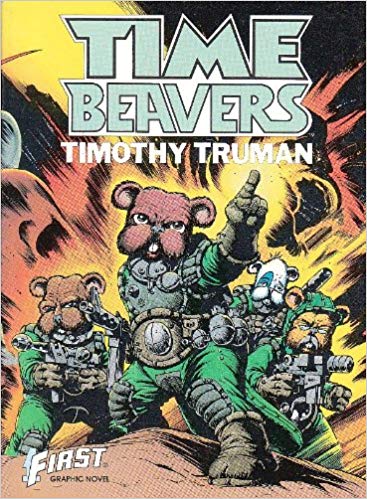
Time Beavers (First Comics Graphic Novel #2)


By Timothy Truman, with Mark Acres, John K. Snyder, Ken Bruzenak & Linda Lessmann (First Comics)
ISBN: 978-0-9154-1901-2 (PB Album)

Sometimes there’s a feeling in the air that leads to similar concepts “spontaneously” occurring in different places – Swamp Thing and Man-Thing always spring to mind – and sometimes it’s just a bunch of in-tune creators jumping rapidly onto a bandwagon. The Germans (and that includes me on my mother’s side) have a word for it, as they do for so many tricky concepts: “Zeitgeist”.

Whatever the thinking, the phenomenon is real and probably the only bad thing I can even imply about this superb long-lost gem of a book from the ever-excellent Tim Truman, aided by co-creator, Mark Acres, co-designer John K. Snyder, letterer Ken Bruzenak and colourist Linda Lessmann.

That the 1984 debut of Teenage Mutant Ninja Turtles in some part inspired this superb fantasy I have no doubt, but since it was months ahead of the deluge of cheap knock-offs that followed I suspect that creative appreciation rather than greedy speculation fuelled the tale. Moreover, as the tone and content more closely resemble the Bill Mantlo, Keith Giffen & Sal Buscema reimagining of throwaway character Rocket Racoon (who properly debuted in a form you’d recognise in The Incredible Hulk #271, May 1982 before Mike Mignola made him a seminal star in a quirky much-reprinted 4-issue miniseries), any charge of “cashing in” becomes largely irrelevant.

In a dark place beyond the universe the Great Dam of Time regulates the chronological structure of each and every dimension, maintained and defended by high-tech Beavers against sinister extra-cosmic Rats called the Radere. These scurrilous scalawags utilise vile magic and embrace Chaos in their wicked schemes…

Eternally at war since time began, the Rats have suddenly gained a deadly advantage over the Timeguard by removing three objects of power from the Dam itself, and fled to three separate eras on the key world known as Earth.

Now. as the Rat forces mass to finally destroy the critically-weakened dam, only grizzled Captain Slapper, old Doc, faithful Mac and raw recruit Shiner can be spared to follow the Radere to those locations and retrieve the objects before it’s too late…

Even though there are laughs aplenty, this deliciously dark fantasy far exceeds its broadly comedic roots, as the hairy heroes save young D’Artagnan and the Queen of France in 17th Century Paris, foil Abraham Lincoln‘s assassins at Gettysburg in 1863 and retrieve the Nagasaki Atom Bomb from Hitler‘s bunker in the hours before his suicide in 1945.

Despite cosmic catastrophe, sneaky plot-twists and insidious treachery, the Beavers naturally save the day (and years and centuries), but not without suffering tragedy and heartbreak…

Time Beavers is a grand old romp, with strong characterisation and sharp dialogue that elevate this gritty fantasy far beyond its “funny-animal” antecedents, practically into the realm of “Straight” science fiction, and it’s all captivatingly illustrated with Truman’s trademark graphic intensity. Still readily available, it’s a book that all fans of comics, science fiction and especially science fiction comics should know.
© 1985 First Comics, Inc. All Rights Reserved.

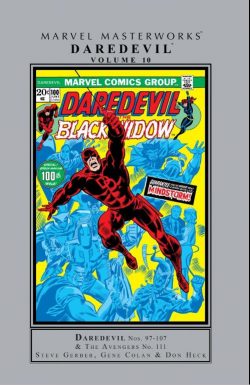
Daredevil Marvel Masterworks volume 10


By Gerry Conway, Steve Gerber, Chris Claremont, Steve Englehart, Gene Colan, Don Heck, Sam Kweskin, Rich Buckler, Jim Starlin, Bob Brown & various (Marvel)
ISBN: 978-0-7851-9917-5 (HB)

Matt Murdock is a blind lawyer whose remaining senses hyper-compensate, making him an astonishing acrobat, formidable fighter and a living lie-detector. Very much a second-string hero for most of his early years, Daredevil was nonetheless a striking and popular one, due in large part to the captivatingly humanistic art of Gene Colan. He fought gangsters, a variety of super-villains and even the occasional monster or alien invasion. He quipped and wise-cracked his way through life and life-threatening combat, utterly unlike the grim, moody, quasi-religious metaphor he latterly became.

After spending years in a disastrous on-again, off-again relationship with his secretary Karen Page, Murdock took up with former client and Russian émigré Natasha Romanoff, the infamous and notorious spy dubbed The Black Widow.

She was railroaded and framed for murder and prosecuted by Matt’s best friend and law partner Foggy Nelson before the blind legal eagle cleared her. Subsequently leaving New York with her for the wild wacky and West Coast, Matt joined prestigious law firm Broderick & Sloan but adventure, disaster and intrigue seemed capable of finding the Sightless Swashbuckler anywhere…

In these tales from the pivotal era of relevancy, social awareness and increasing political polarisation, the Man Without Fear was also growing into the judicial conscience of a generation…

This dynamic collection (available in sturdy hardback and handy digital formats) re-presents Daredevil #97-107, covering March 1973-January 1974 and also includes Avengers #111, wherein twin storylines converged and concluded.

The Marvel Magic recommences following an overview from commentator, biographer and documentarian Jon B. Cooke whose Introduction ‘Look Back in Angar’ adds crucial context to the rapid turnover of creative staff at this juncture.

With DD and the Widow firmly ensconced in San Francisco, Steve Gerber took over scripting with DD #97 (from Conway’s plots and illustrated by Gene Colan & inker Ernie Chan/Chua) for ‘He Who Saves’ as a street acrobat suffers a calamitous accident and is subsequently mutated by sinister hidden forces into proto-godling the Dark Messiah.

The already unstoppable Agent of Change is joined by three equally awesome Disciples of Doom in #98’s on the streets in ‘Let There be… Death!’, but even though physically overmatched, the heroic couple’s psychological warfare proves fatally effective in ending the crisis, if not ferreting out the real villains…

Daredevil and the Black Widow #99 featured ‘The Mark of Hawkeye!’ by now-autonomous Gerber, with Sam Kweskin & Syd Shores providing the pictures, which finds Natasha Romanoff’s old boyfriend turning up determined to reclaim her…

The caveman tactics lead to the Archer’s sound and well-deserved thrashing and result in a quick jump into Avengers #111. Crafted by Steve Englehart, Don Heck & Mike Esposito, ‘With Two Beside Them!’ sees the West Coast vigilantes join a ragtag and much-depleted team of heroes to rescue a number of X-Men and Avengers enslaved by the malevolent Magneto.

Dumped by Natasha and returning alone to the City by the Bay and for his anniversary issue, Daredevil agonisingly relives his origins and danger-drenched life in ‘Mind Storm!’ (Gerber, Colan & John Tartaglione) just as a savage and embittered psionic terrorist launched a series of mind-mangling assaults on the populace, culminating one month later in a shattering showdown between the blind hero and Angar the Screamer as well as a shaky reconciliation with the Widow in ‘Vengeance in the Sky with Diamonds!’, illustrated by Rich Buckler & Frank Giacoia.

Scripted by Chris Claremont, and limned by Syd Shores & Frank Giacoia ‘Stilt-Man Stalks the City’ finds Hornhead hunting psychedelic assassin Angar, which accidentally brings him into conflict with a merciless and similarly displaced old foe. The skyscraping scoundrel has kidnapped the daughter of an inventor in order to extort enhanced weaponry out of the traumatised tinkerer but isn’t expecting interference from his oldest adversary or his utterly ruthless Russian paramour….

No sooner have DD and the Widow ended the miscreant’s rampage than #103 sees a team-up with Spider-Man as a merciless cyborg attacks the odd couple while they pose for roving photojournalist Peter Parker in ‘…Then Came Ramrod!’ by new regular team Gerber, Heck & Sal Trapani.

The barely-human brute is after files in Murdock’s safe and hints of a hidden master, but ultimately his blockbusting strength is of little use against the far faster veteran heroes…

Even as the distracted Murdock realises that his own boss is sabotaging the attorney’s cases, the mystery manipulator is hiring warped mercenary Sergei Kravinoff to make Daredevil ‘Prey of the Hunter!’

Matt’s priorities change when Kraven abducts Natasha, and even after the hero rescues her, the Hunter explosively returns to defeat them both, throwing the swashbuckler to his death…

Daredevil #105 sees the Widow brutally avenging her man’s murder, but Murdock is far from dead, having being teleported from the jaws of doom by a ‘Menace from the Moons of Saturn!’ (inked by Don Perlin)…

In a short sequence pencilled by Jim Starlin, earthborn Priestess of Titan Moondragon is introduced, revealing how she has been dispatched to Earth to counter the schemes of death-worshipping proto-god Thanos. She also inadvertently discloses how she has allied with a respected man of power and authority, providing him with a variety of augmented agents such as Dark Messiah, Ramrod and Angar…

Gerber, Heck & Trapani bring the expansive extended epic closer to culmination as the manipulator is unmasked in ‘Life Be Not Proud!’… but not before the wily plotter redeploys all his past minions, shoots his misguided ally Moondragon, usurps a Titanian ultimate weapon and unleashes a life-leeching horror dubbed Terrex upon the world.

With all Earth endangered, DD, the Widow and guest-star Captain Marvel are forced to pull out all the stops to defeat the threat, and only then after a last-minute defection by the worst of their enemies and a desperate ‘Blind Man’s Bluff!’ courtesy of Gerber, Bob Brown & Sal Buscema.

This supremely enticing volume also offers extra treats: the promotional cover for #100, and John Romita & Michael Esposito’s original art for the cover of issues #105. As the social upheaval of this period receded, the impressively earnest material was replaced by fabulous fantasy tales which strongly suggested the true potential of Daredevil was in reach. These beautifully illustrated yarns may still occasionally jar with their heartfelt stridency and sometimes dated attitudes, but the narrative energy and sheer exuberant excitement of such classic adventures are graphic joys no action fan will care to miss. And the next volume heads even further into uncharted territory…
© 1973, 1974, 2016 Marvel Characters, Inc. All rights reserved.

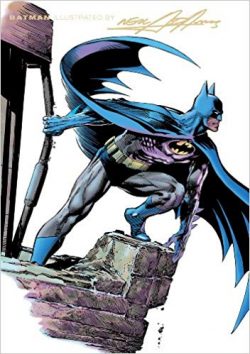
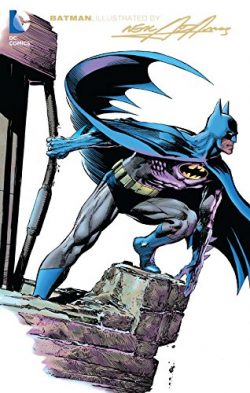
Batman: Illustrated by Neal Adams volume 3


By Neal Adams with Dennis O’Neil, Frank Robbins, Len Wein, Dick Giordano & various (DC Comics)
ISBN: 978-1-4012-4075-2 (TPB)

It’s Batman’s anniversary year. What are you reading?

As the 1960s began Neal Adams was a young illustrator who had worked in advertising and ghosted some newspaper strips whilst trying to break into comics. Whilst pursuing a career in advertising and “real art” he did a few comics pages for Archie Comics and subsequently became one of the youngest artists to co-create and illustrate major licensed newspaper strip Ben Casey (based on a popular TV medical drama series).

That comics fascination never faded, however, and Adams drifted back to National/DC, doing a few covers as inker or penciller before eventually finding himself at the vanguard of a revolution in pictorial storytelling…

He made such a mark that DC recently chose to reprint every piece of work Adams ever did for them into a series of commemorative collections. This is the last of three superb tomes (available in a variety of formats including last minute delivery eBook) starring the “Darknight Detective” as he was dubbed back then, and featuring every cover, story and issue in original publication order.

This particular package celebrates the covers and pertinent contents of Batman #232, 234-241, 243-246, 251, 255, Batman Annual #14, Batman Black & White # 4, The Brave and the Bold #99, Detective Comics #412-422, 439, 600, Heroes Against Hunger, Limited Collectors’ Edition C-25, C-51, C-59, Robin #1, Saga of Ra’s Al Ghul #4, World’s Finest Comics # 211, 244-246, 258; cumulatively embracing June 1971 to September 1996.

Following Adams’ liberally illustrated Foreword and key collaborator Denny O’Neil’s recollections describing their work process in his Introduction, the comics gold begins.

Throughout this period Adams remained one of the industry’s top cover artists, generating a stunning succession of mesmerising images on most Bat-related titles (and plenty of other comics). Those are listed here in chronological release order…

Behind a macabre eye catcher, Batman #232 (June 1971) took the hero to new heights as former kidnap victim Talia returns and we learn more of her as O’Neil & Adams – with inking as usual from Dick Giordano – introduce her father: immortal eco-terrorist Râ’s Al GhÅ«l.

A whirlwind adventure which became one of the signature highpoints of the entire Batman canon, ‘Daughter of the Demon’ is a timeless globe-girdling mystery yarn drawing the increasingly grim hero from Gotham’s concrete canyons to the Himalayas in search of hostages Robin and Talia, purportedly captured by forces inimical to both Batman and the mysterious figure who claims to be working in secret to save the world…

Ra’s was a contemporary, more acceptable visual embodiment of the classic inscrutable ultimate foreign devil (as typified in a less forgiving age as the “Yellow Peril” or Dr. Fu Manchu). This kind of alien archetype permeates popular fiction and is still an astonishingly powerful villain-symbol, although the character’s Arabian origins – neutral at the time – seem to uncomfortably embody a different kind of ethnic bogeyman in today’s post 9/11, ISIS-infested world.

The concept of a villain who has the best interests of the planet at heart is not a new one, but Ra’s Al Ghul, whose avowed intent is to reduce teeming humanity to viable levels and save the world from our poison, hit a chord in the 1970s – a period where ecological issues first came to the attention of the young. It was a rare kid who didn’t find a note of sense in what “the Demon’s Head” planned. The spectacular tale ended with a shocking pronouncement of what Ra’s intended for Gotham’s Guardian…

The chilling covers for Detective Comics #412 and 413 (this was the peak of the revival in supernatural comics, after all), leads to Batman #234 which featured the stellar return of one of the hero’s most tragic foes.

As comics became increasingly more anodyne in the 1950s, psychologically warped, physically actualised schizophrenic Two-Face was quietly retired from Batman’s roster of rogues, but with ‘Half an Evil’ (O’Neil, Adams & Giordano), he resurfaced at the forefront of grimmer, grittier stories.

When a string of bizarre and brutal robberies afflicts the city, the baffled Batman has to use all his ingenuity to discern the reasoning and discover the identity of a ruthless hidden mastermind in time to thwart a diabolical scheme…

Covers for Detective #414-417 Batman #235-236 lead into another much-reprinted classic. ‘Night of the Reaper!’ – by the usual suspect from Batman #237 – is one of the most revered tales of the era: a harrowing Halloween epic which finds Robin working with his old mentor to solve a string of barbarous killings, only to uncover a pitifully deranged perpetrator as much sinned-against as sinner…

The fronts for Detective# 418-422, The Brave and the Bold #99, Batman #238-241 and World’s Finest Comics # 211 bring us to Batman #243 (August) as the long-brewing war between Batman and Ra’s Al Ghul reaches Def Con 3: a single extended saga taken out of normal DC continuity and depicting the final confrontation between two opposing ideals.

Not included here are the non-Adams episodes from Batman #240 and 242 (although they are available in many other collections). In them, the Darknight Detective abandoned his civilian identity by faking Bruce Wayne’s death and gathered a small team of specialist allies – comprising criminal alternate-identity Matches Malone, scientific advisor Dr. Harris Blaine and Ra’s’ top assassin Ling – suborned to the side of the angels by his own superstitious code of honour and sworn to destroy the Demon forever.

O’Neil, Adams & Giordano reunited for Batman #243 which sees the team – plus latecomer Molly Post – invade the Demon’s Swiss citadel moments after their intended target dies. Nobody suspects the ageless villain’s resources include ‘The Lazarus Pit’ which can revive the dead…

The fateful finale came in #244, wherein ‘The Demon Lives Again!’ Sadly, despite all his supernal gifts and forces, Ra’s cannot escape the climactic vengeance of his implacable foe in dream-team O’Neil, Adams & Giordano’s compulsive climax. With the job done, a short addendum in #245 resolves ‘The Bruce Wayne Murder Case!’, restoring the billionaire to his rightful place in Gotham’s social whirl…

The all-Adams cover to Batman #246 (October 1972) leads to another graphic landmark. ‘The Joker’s Five-Way Revenge’ comes from Batman #251 (September 1973 by Dennis O’Neil & Neal Adams) and finally ended forever the zany, “camp” taint of the TV show by re-branding the characters and returning to the original 1930s concept of a grim and driven Dark Avenger chasing an insane avatar of pure evil.

Such a hero needs truly deadly villains and – by reinstating the psychotically unpredictable Killer Clown who scared the short pants off readers in the Golden Age – this single-issue yarn set the bar very, very high. A true milestone that utterly redefined the Joker for the modern age: the story sees the Mirthful Maniac stalking his old gang, determined to eradicate them all with the hard-pressed Gotham Guardian desperately playing catch-up. As the crooks die in all manner of Byzantine and bizarre ways, Batman realises his arch-foe has gone irrevocably off the deep end….

Terrifying and beautiful, for many fans this is the definitive Batman/Joker story, but signalled Adam’s graduation to other jobs and away from regular bat-missions. Before that departure, however, the cover to Detective #439 (February/March 1974) and one last thriller awaited.

Scripted by Len Wein and inked by Giordano, ‘Moon of the Wolf’ from Batman #255 (March/April 1974) pits the ultimate human hero against a tragic former sportsman mutated into a truly supernatural lupine killer and enslaved by old enemy Professor Milo…

From Limited Collectors’ Edition C-25 comes a pin-up before a rare example of the artist’s commercial comics work appears. Adams produced art for a series of comics adventures starring various Marvel and DC heroes – as well as screen icons such as Star Trek and Planet of the Apes – for Power Records’ line of Book and Records sets. These offered a vinyl recording of a story accompanied by a fully illustrated comic tale. The Batman offerings began with ‘Trumping the Joker’ in Stacked Cards (PR-27, 1975 and written & illustrated by Adams) was followed a year later, by PR-30 (Adams, Frank Robbins and Giordano) wherein ‘Robin Meets Man-Bat’. The all-ages tales are accompanied by a house ad for the DC stars available in Power Records’ unique packages.

Still a huge draw as a cover artist, between 1977-1996 Adams generated Bat-related frontages for World’s Finest Comics # 244-246 & 258, Limited Collectors’ Edition C-51 (a wraparound reprinting the “Bride of the Demon” saga) and C-59 (‘Batman’s Strangest Cases’), the Heroes Against Hunger benefit comic, a pin-up in Detective Comics #600, covers for Saga of Ra’s Al Ghul #4 (another wraparound), Batman Annual #14, and pin-ups for Robin #1 and Batman Black & White # 4.

The history of Batman is inescapably linked to and shaped by Neal Adams’ efforts, and captivating secrets of creation are revealed in the stunning Neal Adams Sketchbook section (featuring comic art, ads, storyboards and conceptualisations for a Batman amusement park) which closes this compelling and irresistible tome (still readily available in trade paperback and digital editions).

With the game-changing classics in this volume, Batman finally returned to the commercial and critical top flight he had enjoyed in the 1940s reviving and expanding upon his original conception as a remorseless, relentless avenger of injustice. The next few years would see the hero rise to unparalleled heights of quality so stay tuned: the very best is just around the corner… that dark, dark corner…
© 1971, 1972, 1973, 1974, 1975, 1976, 1977, 1978, 1979, 1986, 1988, 1989, 1990, 1991, 2005, 2015 DC Comics. All Rights Reserved.

Krazy & Ignatz 1941-1942: “A Ragout of Raspberries”


By George Herriman, edited by Bill Blackbeard (Fantagraphics Books
ISBN: 978-1-56097-887-9

In a field positively brimming with magnificent and eternally evergreen achievements, the strip Krazy Kat is – for most cartoon cognoscenti – the pinnacle of pictorial narrative innovation; a singular and hugely influential body of work which shaped the early days of the comics industry and elevated itself to the level of a treasure of world literature.

Krazy and Ignatz, as it is dubbed in these gloriously addictive commemorative tomes from Fantagraphics, is a creation which must be appreciated on its own terms. Over the decades the strip developed a unique language – simultaneously visual and verbal – whilst exploring the immeasurable variety of human experience, foibles and peccadilloes with unfaltering warmth and understanding… and without ever offending anybody. Baffled millions, perhaps, but offended… no.

It did go over the heads and around the hearts of far more than a few, but Krazy Kat was never a strip for dull, slow or unimaginative people: those who simply won’t or can’t appreciate the complex, multi-layered verbal and cartoon whimsy, absurdist philosophy or seamless blending of sardonic slapstick with arcane joshing. It is still the closest thing to pure poesy that narrative art has ever produced.

Herriman was already a successful cartoonist and journalist in 1913 when a cat and mouse who had been noodling about at the edges of his outrageous domestic comedy strip The Dingbat Family/The Family Upstairs graduated to their own feature. Mildly intoxicating and gently scene-stealing, Krazy Kat subsequently debuted in William Randolph Hearst’s New York Evening Journal on Oct 28th 1913 and – largely by dint of the publishing magnate’s enrapt adoration and overpowering direct influence and interference – gradually and inexorably spread throughout his vast stable of papers.

Although Hearst and a host of the period’s artistic and literary intelligentsia (such as Frank Capra, e.e. Cummings, Willem de Kooning, H.L. Mencken and Jack Kerouac) all adored the strip, many local and regional editors did not; taking every potentially career-ending opportunity to drop it from the populace-beguiling comics section.

Eventually the feature found its true home and sanctuary in the Arts and Drama section of Hearst’s papers. Protected there by the publisher’s doctrinaire patronage and enhanced with the cachet of enticing colour, Kat & Ko. flourished unharmed by editorial interference or fleeting fashion, running generally unmolested until Herriman’s death in April 1944.

The saga’s basic premise is simple: Krazy is an effeminate, dreamy, sensitive and romantic feline, hopelessly in love with Ignatz Mouse; a venal everyman, rude, crude, brutal, mendacious and thoroughly scurrilous.

Ignatz is a truly, proudly unreconstructed male and early forerunner of the men’s rights movement: drinking, stealing, fighting, conniving, constantly neglecting his wife and innumerable children and always responding to Krazy’s genteel advances by clobbering the Kat with a well-aimed brick. These he obtains singly or in bulk from noted local brick-maker Kolin Kelly.

Moreover, by the time of these tales it’s not even a response, except perhaps a conditioned one: the mouse spends all his time, energy and ingenuity in heaving missiles at the mild moggy’s bonce. He can’t help himself, and Krazy’s day is bleak and unfulfilled if the hoped-for assault doesn’t happen, but at least in this volume, the brick is supplemented by other projectiles for the sake of variety…

The smitten kitten always misidentifies (or does he?) these gritty gifts as tokens of equally recondite affection showered upon him in the manner of Cupid’s fabled arrows…

The final crucial element completing an anthropomorphic eternal triangle is lawman Offissa Bull Pupp: completely besotted with Krazy, professionally aware of the Mouse’s true nature, yet hamstrung by his own amorous timidity and sense of honour from permanently removing his devilish rival for the foolish feline’s affections. Krazy is, of course, blithely oblivious to the perennially “Friend-Zoned” Pupp’s dolorous dilemma…

Secondarily populating the ever-mutable stage are a stunning supporting cast of inspired bit players such as terrifying deliverer of unplanned babies Joe Stork; unsavoury huckster Don Kiyoti, hobo Bum Bill Bee, social climbing busybody Pauline Parrot, portal-packing Door Mouse, self-aggrandizing Walter Cephus Austridge, inscrutable, barely intelligible Chinese mallard Mock Duck, dozy Joe Turtil and the increasingly ubiquitous sagacious fowl Mrs. Kwakk Wakk, plus a host of other audacious animal crackers all equally capable of stealing the limelight and even supporting their own features.

The exotic, quixotic episodes occur in and around the Painted Desert environs of Coconino (patterned on the artist’s vacation retreat in Coconino County, Arizona) where surreal playfulness and the fluid ambiguity of the flora and landscape are perhaps the most important member of the cast.

The strips themselves are a masterful mélange of unique experimental art, cunningly designed, wildly expressionistic and strongly referencing Navajo art forms whilst graphically utilising sheer unbridled imagination and delightfully evocative lettering and language. This last is particularly effective in these later tales: alliterative, phonetically and even onomatopoeically joyous with a compelling musical force and delicious whimsy (“…stomms an’ momsooms, gales an’ tie fooms…” or “octo pusses an’ pinkwins”).

Yet for all that high-fallutin’ intellectualism, these comic adventures are poetic, satirical, timely, timeless, bittersweet, self-referential, fourth-wall bending, eerily idiosyncratic, astonishingly hilarious escapades encompassing every aspect of humour from painfully punning shaggy dog stories to riotous, violent slapstick. Kids of any age will delight in them as much as any pompous old git like me and you…

Sometimes Herriman even eschewed his mystical mumblings and arcane argots for the simply sublime grace of a supremely entertaining silent gag in the manner of his beloved Keystone Cops…

There’s been a wealth of Krazy Kat collections since the late 1970s when the strip was first rediscovered by a better-educated, open-minded and far more accepting generation. This delirious tome covers all the strips from 1937-1938 in a comfortably hefty (231 x 305 mm) softcover edition – and is also available as a madly mystical digital edition.

Preceded by candid photos, original art and examples of some of Herriman’s personalised gifts and commissions (hand-coloured artworks featuring the cast and settings), the splendid pictorial carnival is bolstered by Jeet Heer’s superb analysis of the unique voice of the strip as cited above. This comes in his erudite Introduction ‘Kat Got Your Tongue: Where George Herriman’s Language Came From‘ after which the jocularity resumes with January 15th 1941 – with the hues provided by professional separators rather than Herriman.

Within this jubilant journal of passions thwarted, the torrid triangular drama plays out as winningly as ever, but with emphasis shifting more to the varied minor cast members. The usual parade of hucksters and conmen return, but the eternally triangular clashes and confusions – although still a constant – are not the satisfying punchlines they used to be, but rather provide a comforting continuity as the world subtly changes and the Second World War begins to slowly shade the strip and affect the characters…

As well as his semi-permanent incarcerations, Ignatz endures numerous forms of exile and social confinement, but with Krazy aiding and abetting, these sanctions seldom result in a reduction of cerebral contusions and the plague of travelling conjurors, unemployed magicians and shady clairvoyants still make life hard for the hard-pressed constabulary and the gullible fools they target…

As always, the mouse’s continual search for his ammunition of choice leads to many brick-based acquisition and delivery gags but has widened his scope to encompass munition of materials other than clay and shapes more aerodynamic and enticing than bulky rectangles. Perhaps because of Herriman’s own vintage, many characters share a greater appreciation of infirmity and loss of focus, reflected in the reduction of Krazy to a bit player in many of the strips.

Pupp suffers from double vision on occasion and repeatedly tests labour-saving new policing appliances – such as stilts and periscopes – while Colin Kelly moves away from artisanal brick-baking to conveyor-belt mass production. Ignatz tries to bolster his fading energies through unlikely herbal additives – such as spinach – and the entire township (including buildings) suffer protracted bouts of polka-dottedness after the arrival of a dalmatian “koach kanine”. Joe Stork starts using robot planes to deliver his dread bundles of natal joy and responsibility, Ignatz’s much abused wife Magnesia starts her long-delayed resistance and emancipation, and everybody in town can’t seem to get enough sleep…

The ever-changing skies remain a source of wonder and bewilderment with oddly-shaped stellar phenomena abounding, and the Prof from Coconino’s Museum of Palaeontology, Archaeology and Such unearths primeval precursors to our cartoon cast, while modern times are acknowledged through myriad permutations and adaptations to Ignatz’s home-from-home the county jail.

Aged busybody Mrs Kwakk Wakk expands her role of wise old crone and sarcastic Greek Chorus; upping her status from bit-player to full-on supporting cast. She has a mean and spiteful beak on her too, whilst laconic vagabond Bum Bill Bee shares his regal origins (a whole bunch of them, in fact) with the hoi polloi in town…

The town barber stokes the flames of passion and reshapes the grizzled heads of many ardent swains seeking to curry the favours of vivacious, exotic new schoolteacher Miss Mimi who is, as everybody is painfully aware, French…

A different form of double vision taxes the Kat’s composure in doses of mirror madness and episodes of powdered katnip overindulgence offer a nosy edge of conspiracy to proceedings, but doesn’t too much curtail Krazy’s efforts in horticulture, nourishing korn and other useful vegetable crops…

The tone of the strips subtly changes from October 1941 with the introduction of Pupp’s mechanised Listening Post. Spying was always a major interest for all citizens, as was stargazing and gossip. Now however, with war clouds forming in the real world, an edge of gloomy but absurdist satire could be detected in many strips, such as when Kelly cuts off the mouse’s brick supply due to clay – like paper, rubber and gasoline – being officially afforded new status as a Military Priority Material…

There’s a marked increasing in winking around town, although those in the know codify the practice as “nictating” and some citizens – such as the pelicans and Mr. Kenga Roo – are subjected to increased stop-&-search indignities too: what with them being born to conceal bricks and brick-tossers…

At least, the traditional fishing, water sports, driving and parlous and participatory state of the burgeoning local theatre scene remain hot topics too…

And, welcomingly as ever, there is still a solid dependence on the strange landscapes and eccentric flora (including a mass ingress of elephants, snakes and worms) for humorous inspiration, while all manner of weather and terrain play a large part in inducing anxiety, bewilderment and hilarity.

This penultimate collection is again supplied with an erudite and instructional ‘Ignatz Mouse Debaffler Page’, providing pertinent facts, snippets of contextual history and necessary notes for the young and potentially perplexed.

Herriman’s epochal classic is a stupendous and joyous monument to gleeful whimsy: in all the arenas of Art and Literature there has never been anything like these strips which have inspired comics creators and auteurs in fields as disparate as prose fiction, film, dance, animation and music, whilst fulfilling its basic function: engendering delight and delectation in generations of wonder-starved fans.

If, however, you are one of Them and not Us, or if you actually haven’t experienced the gleeful graphic assault on the sensorium, mental equilibrium and emotional lexicon carefully thrown together by George Herriman from the dawn of the 20th century until the dog days of World War II, this astounding compendium is a most accessible way to do so.
© 2008, 2015 Fantagraphics Books. All rights reserved.

Swamp Thing: The Bronze Age Volume One


By Len Wein & Bernie Wrightson, Nestor Redondo; with Michael Wm. Kaluta & various (DC Comics)
ISBN: 978-1-4012-8440-4 (TPB)

The first fan-sensation of the modern age – now officially enshrined as the Bronze Age – of American comicbooks – Swamp Thing has powerful popular fiction antecedents and in 1972 was seemingly a concept whose time had come again. Prime evidence was the fact that Marvel were also working on a man-into-mucky, muddy mess character at the very same time.

Both Swampy and the Man-Thing were thematic revisions of Theodore Sturgeon’s classic novella It and bore strong resemblances to an immensely popular Hillman Comics character dubbed The Heap. He/it slurped through the back of Airboy Comics (née Air Fighters Comics) from1943. My fan-boy radar suspects Roy Thomas’ marsh-monster the Glob (debuting in Incredible Hulk #121 from November 1969 and promptly returning in #129, June 1970) either inspired both DC and Marvel’s creative teams, or was part of that same zeitgeist. It should also be remembered that Skywald (a very minor player with big aspirations) released a black-&-white magazine in their Warren Comics knock-off line entitled The Heap in the Autumn of 1971.

For whatever reason, by the end of the 1960s superhero comics had started another steep sales decline, once again succumbing to a genre boom and horror/mystery resurgence: a sea-change augmented by a swift rewriting of the specific terms of the Comics Code Authority. At DC, With EC veteran Joe Orlando as editor, House of Mystery and sister title House of Secrets returned to short story anthology formats and gothic mystery scenarios, taking a lead from such TV successes as Twilight Zone and Rod Serling’s Night Gallery.

Referencing the sardonic narrator/storyteller format of EC horror titles, Orlando created Cain and Abel to shepherd readers through brief, sting-in-the-tail yarns produced by the best creators, new and old, that the company could hire. Artists Neal Adams, Mike Kaluta, and especially Bernie Wrightson produced their best work for these titles, and the vast range of successors the horror boom generated at DC.

The twelfth anthology issue of the resurrected House of Secrets cemented the genre into place as the industry leader. There writer Len Wein & Wrightson produced a throwaway gothic thriller set at the turn of the 19th century, wherein gentleman scientist Alex Olsen is murdered by his best friend and his body dumped in a swamp. Years later, his beloved bride – now the unsuspecting wife of the murderer – is stalked by a shambling, disgusting beast that seems to be composed of mud and muck…

This epic trade paperback and digital compilation gathers material from House of Secrets #92, and the contents of Swamp Thing #1-13 (cumulatively covering June/July 1971 to November/December 1974) and perfectly encapsulates the changing face and taste of the times, opening here with that so-pivotal gothic vignette…

‘Swamp Thing’ cover-featured in HoS #92 (June-July 1971), and struck an immediate chord with the buying public. The issue was the best-selling DC comic of that month, and reader response was fervent and persistent.

By all accounts, the only reason there wasn’t an immediate sequel or spin-off was that the creative team didn’t want to produce one. Eventually however, bowing to interminable pressure, and with the sensible idea of transplanting the concept to contemporary America, the first issue of Swamp Thing appeared on newsstands in the Spring of 1972. It was an unqualified hit and an instant classic.

Wein and Wrightson produced ten issues together, crafting an extended, multi-chaptered tale of justice/vengeance and a quest for answers that was at once philosophically typical of the time and a prototype for the story-arc and mini-series formats that dominate today’s comics production. They also used each issue/chapter to pay tribute to a specific sub-genre of timeless horror story whilst advancing the major plot…

Here, the saga resumes with a fresh origin as ‘Dark Genesis’ finds Alec and Linda Holland deep in the Louisiana Bayou, working on a bio-restorative formula that will revolutionise global farming. Working in isolation, they are protected by Secret Service agent Matt Cable, when representatives of an organisation called the Conclave demand that they sell their research to them – or else.

Obviously, the patriotic pair refuse, and the die is cast. The lab is bombed and Linda dies instantly but Alec, showered with his own formula and blazing like a torch, hurtles to a watery grave in the swamp. He does not die…

Transformed by the formula (and remember, please, that this is prior to Alan Moore’s landmark re-imagining of the character) Holland is transformed into a gigantic man-shaped monster, immensely strong, unable to speak, and seemingly composed of living plant matter. Holland’s brain still functions however, and he vacillates between finding his wife’s killers and curing his own monstrous condition. Cable, misinterpreting the evidence, also wants revenge, but he thinks that the monster is the cause of death of his two charges…

Over the next nine issues, Swamp Thing travelled the world, encountering the darkest outbreaks of classic supernature and the insatiable greed of human monsters.

The first was black sorcerer Anton Arcane and his artificial homunculi The Un-Men (eventually the grotesque stars of their own Vertigo series), in ‘The Man Who Wanted Forever.’ The wizard transported Holland to his Balkan castle and sought to mystically trade places with the stupendous swamp beast. The temptation proved too great, but when the restored scientist realised the cost, he violently recanted…

The next issue introduced Abigail Arcane and her tragic Frankenstein-influenced father ‘The Patchwork Man’ in a classic case of monster misunderstanding, which results in her joining free agent Cable in stalking the mossy misanthrope. As Holland makes his torturous way back to the USA, hunters and hunted are waylaid and encounter a Scottish werewolf in ‘Monster on the Moors!’ before at last returning to America and finding ‘The Last of the Ravenwind Witches!’ as well as even more mob-handed human intolerance…

In the wilds of Vermont, he encounters Paradise on Earth, courtesy of an old clockmaker but when the idyll is turned into ‘A Clockwork Horror’ by the voracious Conclave, his torment is transformed into sheer rage, leading to one of the most evocative and revered team-ups of the 1970s.

Swamp Thing #7’s ‘Night of the Bat’ featured the final showdown with the remorseless robber-barons of The Conclave in their Gotham City HQ: a landmark collaboration with the resurgent Batman, himself finally recovering from the hyper-exploitation of the “Campy” TV show era.

Wrightson’s rendering of the superhero through the lens of a horror artist inspired a whole generation of aspiring comics professionals and firmly set the Caped Crusader to rest, replaced with a grim and moody Dark Knight.

Somewhat at a loss after the end of his quest (Swamp Thing came out bi-monthly, so the tale had taken well over a year to tell – unprecedented at a time when most comics still had two or more complete stories per issue), the Moss Monster shambled aimlessly through America’s hinterlands encountering a Lovecraftian horror in the New England town of Perdition. ‘The Lurker in Tunnel 13!’ After dealing with eldritch cancer god M’Naagalah, Holland (as well as Abigail and Cable) were drawn into a US military cover-up involving a marooned and benevolent alien in ‘The Stalker from Beyond!’ which benefitted from supplemental inking by Michael Kaluta before the classic run concluded with #10’s ‘The Man Who Would Not Die!’: a tale of ghostly retribution amidst the graves of unquiet plantation slaves with unliving atrocity Anton Arcane making his first of many demonic returns…

The issue was plotted by Wrightson and marked his swansong on the title: the next chapter in the Swamp Thing saga was still dictated by Wein but the miraculously gifted hands of Nestor Redondo: possible the only artist who could have matched the visual intensity of the feature’s visual originator.

Nestor Redondo was born in 1928 at Candon, Ilocas Sur in the American Territory of the Philippines. Like so many others he was influenced by US comic-strips such as Tarzan, Superman, Buck Rogers and Flash Gordon which were immensely popular in the entertainment-starved Pacific Archipelago.

Drawing from an early age Nestor emulated his brother Virgilio – who already worked as a comics artist for the cheap magazines of the young country. The Philippines became a commonwealth in 1935, and achieved full-independence from the USA in 1946, but maintained close cultural links to America.

His parents pushed him into architecture but within a year Nestor had returned to comics. A superb artist, he far outshone Virgilio – and everybody else – in the cottage industry. His brother switched to writing and the brothers teamed up to produce some of the best strips the Islands had ever seen, the most notable and best regarded being Mars Ravelo’s ‘Darna’.

Capable of astounding quality at an incredible rate of speed, by the early 1950s Nestor was drawing for many comics simultaneously. Titles such as Pilipino Komiks, Tagalog Klasiks, Hiwaga Komiks and Espesial Komiks were fortnightly and he usually worked on two or three series simultaneously, pencils and inks. He also produced many of the covers.

In 1953 he crafted an adaptation of MGM film Quo Vadis for Ace Publications’ Tagalong Klasiks #91-92. Written by Clodualdo Del Mundo, it was serialized to promote the movie in country, but MGM were so impressed by the art-job they offered 24-year old Nestor a US job and residency. He declined, thinking himself too young to leave home yet.

If you’re interested, you can see the surviving artwork by Googling “Nestor Redondo’s Quo Vadis”, and you should because it’s frankly incredible.

Ace was the country’s biggest comics publisher, but by the early 1960s they were in dire financial straits. In 1963 Nestor, Tony Caravana, Alfredo Alcala, Jim Fernandez, Amado Castrillo and brother Virgilio set up their own company CRAF Publications, Inc., but the times were against them (and publishers everywhere). About this time, America came calling again, but in the form of DC and Marvel Comics. By 1972, US based Tony DeZuñiga had introduced a wave of Filipino artists to US editors, and Nestor produced short horror tales for House of Mystery, House of Secrets, Phantom Stranger, Secrets of Sinister House, Witching Hour, The Unexpected, Weird War Tales, fill-ins for Marvel’s Man-Thing, an astonishingly beautiful run on Rima the Jungle Girl (a loose adaptation of W H Hudson’s seminal 1904 novel Green Mansions) before being tapped to take over as illustrator on Swamp Thing. He also worked on Lois Lane and Tarzan and in 1973 produced adaptations including Dracula and Dr. Jekyll and Mr. Hyde for Vincent Fago’s Pendulum Press Illustrated Classics: later reprinted as Marvel Classics Comics.

In later years he moved to Marvel where he inked and eventually fully illustrated Savage Sword of Conan.

During that DC period he was tapped to draw an adaptation of King Arthur which DC killed before it was completed (once again some pages survive and the internet is your friend if you want to see them) and illustrated issue C-36 of the tabloid sized Limited Collectors’ Edition: The Bible. (please link)

Sporting a Luis Dominguez cover, Swamp Thing #11 was cover-dated July/August 1974 and sees the monster back at last in his Bayou home, with Cable and Abigail close on his root-riddled heels. When mutant beasts and ‘The Conqueror Worms!’ attack his human pursuers, Holland rushes to the rescue and the relationship between hunters and prey alters forever…

The carnivorous Worms have suborned crazed survivalist Professor Zachary Nail and taken captives and when their secret plans are exposed war breaks out for possession of Earth…

In the aftermath, Swamp Thing is sucked into an arcane time-loop locked on constantly-killed and perpetually-resurrecting Milo Mobius …until Holland finds a way to break the circle of ‘The Eternity Man’

This initial collection then concludes with Cable, Abigail and new recruit Bolt instigating ‘The Leviathan Conspiracy’ to liberate the Federally imprisoned Swamp Thing and put him beyond the reach of government scientists forever…

A genuine landmark of the art form, these stories are also superb examples of old-fashioned comics wonderment, from a less cynical and sophisticated age, but with a passion and intensity that cannot be matched. And, ooh, that artwork…

If you love comics you must have his buried treasure.
© 1971, 1972, 1973, 1974, 2018 DC Comics. All Rights Reserved.

Omnibus 6: Asterix in Switzerland, The Mansions of the Gods, Asterix & the Laurel Wreath


By Goscinny & Uderzo, translated by Anthea Bell & Derek Hockridge (Orion Books)
ISBN: 978-1-44400-489-2 (HB), 978-1-44400-491-5 (PB)

One of the most-read comics strips in the world, the collected chronicles of Asterix the Gaul have been translated into more than 100 languages since his debut in 1959, with animated and live-action movies, TV series, assorted games, toys and even a theme park outside Paris (Parc Astérix, unsurprisingly…) all stemming from his glorious exploits.

More than 325 million copies of 34 Asterix books have sold worldwide, making his joint creators France’s bestselling international authors.

The doughty, potion-powered paragon of Gallic Insouciance was created by two grandmasters of comics: René Goscinny & Albert Uderzo. Although their inspirational collaborations ended with the death of the prolific scripter in 1977, the creative wonderment continued until relatively recently from Uderzo, assistants and ultimately his successors – albeit at a slightly reduced rate.

The wonderment works on multiple levels: ostensibly, younger readers revel in action-packed, lavishly illustrated comedic romps wherein sneaky, bullying baddies get their just deserts, whilst we more worldly readers enthuse over the dry, pun-filled, sly satire, especially as enhanced for English speakers by the brilliantly light touch of translators Anthea Bell & Derek Hockridge, who played no small part in making the indomitable Gaul and his gallant companions so palatable to the Anglo-Saxon world.

(Moi, I still rejoice in a perfectly produced “Paf!” to the phizzog as much as any painfully potent procession of puns or sardonic satirical sideswipe…)

The stories were set on Uderzo’s beloved Brittany coast, where a small village of warriors and their families resisted every effort of the Roman Empire to complete the conquest of Gaul, or alternately, anywhere in the Ancient World, circa 50 BCE, as the Gallic Gentlemen wandered the multifarious provinces of the Empire and even beyond its generally-secure borders…

When the heroes were playing at home, the Romans, unable to defeat this last bastion of Gallic insouciance, resorted to a policy of containment. Thus, the little seaside hamlet is permanently hemmed in by the heavily fortified garrisons of Totorum, Aquarium, Laudanum and Compendium.

The Gauls don’t care: they daily defy the world’s greatest military machine simply by going about their everyday affairs, protected by the magic potion of resident druid Getafix and the shrewd wits of the diminutive dynamo and his simplistic, supercharged best friend…

Firmly established as a global brand and premium French export by the mid-1960s, Asterix the Gaul continued to grow in quality as Goscinny & Uderzo toiled ever onward, crafting further fabulous sagas; building a stunning legacy of graphic excellence and storytelling gold. Moreover, following the civil unrest and nigh-revolution in French society following the Paris riots of 1968, the tales began to increasingly show signs of trenchant satire and more directed social commentary…

As Astérix chez les Helvètes was the 16th serialised saga, originally running in Pilote #557-578 throughout 1970 and first translated into English as Asterix in Switzerland in 1973. It opens with the attempted murder of Roman official Quaestor Vexatius Sinusitus; dispatched to Gaul to audit the corrupt, embezzling and utterly decadent Governor Varius Flavus.

The poisoning only fails due to the efforts of Getafix, but to keep the Roman alive – and further thwart Flavus – the sage needs a rare flower which only grows in the mountains of neighbouring country Helvetia (and that’s Switzerland, mein kinder). Always keen for a road trip, Asterix and Obelix quickly volunteer to fetch the fabled “silver star” or Edelweiss …

With Sinusitus sheltered in the village of the indomitable Gauls, Flavus’ only hope is to stop the happy voyagers. To that end he sends his most unscrupulous man to warn the equally repugnant and devious Curius Odus, Governor of Helvetia, to stop the Gauls at all costs…

Asterix and Obelix cannily avoid Roman sabotage plots, beat up many, many thugs and bullies, whilst marvelling at the quirkiness of their newfound Helvetian friends, with their mania for cleanliness, passion for melted cheese, yodelling, tidy, solicitous brand of medical treatments, cultured beverages, cultivated villages, lakes and banks and their fruit-based archery training programs for the young…

Although a far darker tale than most previous escapades, all the familiar gentle spoofing of national characteristics, cartoon action and hilarious lampoonery is incorporated into this splendid and beautifully rendered yarn. The search for the silver-star is, of course ultimately successful, despite an entire battalion of troops racing up a mountain after them, with a stunning alpine climax and an exceptionally different kind of ending…


Translated that same year was Le Domaine des Dieux (from Pilote #591-612, in 1971) wherein Caesar, determined to eradicate the last remnant of Gaulish resistance, tries to win by social planning and cultural imperialism. To that end he plans to cut down the great forest which surrounds the village and build a new town of lavish Roman apartments in the stylish, modern Roman manner: The Mansions of the Gods…

Whiz kid architect Squaronthehypotenus leads the project, but his immigrant army of slave labourers soon founders when boar-loving Obelix strenuously objects to having his favourite hunting preserve torn down and paved over…

However, the massed might of Rome is insurmountable, and eventually many mighty oaks are felled. To counter this Getafix simply grows instant new ones whilst Asterix shares his magic potion with the increasingly fed up slaves…

This stalemate is only overcome when the wily Gauls seemingly surrender and allow the “Mansions of the Gods” to be built and stocked with middle-class colonists from Rome. After a rapid bump in trade as the villagers become tourist-trappers, the complacent property developers make their greatest mistake and rent an apartment to the Gaul’s uniquely gifted bard Cacofonix, leading to a rapid exodus of tenants and an inevitable and breathtaking final clash with the garrison of Aquarium, who had moved into the luxurious vacant apartments…

Drenched in trenchant observation of and jibes at the industrial relations conflicts, the then runaway speculation in new developments in France and the inexorable growth of “planning blight” (still painfully relevant today anywhere in the industrialised world), this tremendously effective satire is packed with gags and action and displays artist Uderzo’s sublime gift for caricature and parody – especially in the wonderful spoofs of real estate advertising campaigns…


Also debuting in Pilote, Les Lauriers de César came from issues #621-642, in 1971 and was given the fabulous Bell/Hockridge treatment in 1974 to become Asterix and the Laurel Wreath. It begins in Rome where Asterix and Obelix are arguing…

During a visit to Chief Vitalstatistix‘s wealthy, snobbish and city-dwelling brother-in-law Homeopathix, the crusty old warrior gets too drunk and boasts that he can get something which all the merchant’s money cannot buy – a stew seasoned with Caesar’s fabled wreath of office.

Sober now and in dire danger of eternal embarrassment as well as the unflinching approbation of his sharp-tongued wife Impedimenta, the Chief has no option but to allow his two best men – the larger of whom had drunkenly egged him on at the family gathering and then volunteered to fetch the leafy headpiece – to travel to the heart of Caesar’s power and attempt the impossible…

At least Asterix knows it’s impossible; Obelix is quite happy to storm the Imperial Palace and just grab the wreath…

Luckily, reason prevails and the wily little warrior determines their only chance is infiltration, to which end Asterix sells them both as slaves. Unfortunately, they are bought by the wrong Roman. Osseus Humerus is an innocuous Patrician with a troublesome family, but as Asterix tries every trick to get their unsuspecting owner to return them to the Slave Auctioneer, he only endears himself even more to his very satisfied customer. So much so in fact, that Humerus entrusts them with a message to be delivered to Caesar himself.

Jealous major-domo Goldendelicius then accuses them of planning assassination and the heroes are locked in the dungeons – leaving them complete access to the entire palace…

Before long, the indomitable duo are wreaking havoc in the Imperial Court and playing hob with the usually predictable proceedings in the Arena of the Circus Maximus.

Seemingly untouchable, but no nearer the Laurel Wreath, the despondent Gauls finally seize their chance when they encounter again the recently promoted Goldendelicius. Rewarded by Caesar, the major-domo now holds a position of great responsibility: holder of the triumphal floral arrangement at Caesar’s next public engagement…

Sharp and deeply intriguing, this comedy of errors is spectacularly illustrated by Uderzo at the very top of his game, whilst Goscinny’s dry, wry script seamlessly rockets from slapstick set-piece to penetrating observational comedy and magnificently engaging adventure, with our unlikely heroes inevitably, happily victorious in every instance. Just as it should be…

Asterix epics are always packed with captivating historical titbits, soupcons of healthy cynicism, singularly surreal situations and amazingly addictive but generally consequence-free action, illustrated in a magically enticing manner. These are perfect comics that everyone should read over and over again.
© 1970, 1972-3 Goscinny/Uderzo. Revised English translation © 2004 Hachette. All rights reserved.