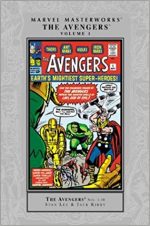
Amazing Spider-Man Masterworks volume 7


By Stan Lee, John Romita, Larry Lieber, Don Heck, Jim Mooney & various (Marvel)
ISBN: 978-0-7851-1637-0 (HB)                    978-0-7851-5935-3 (TPB)

Amazing Spider-Man was always a comicbook that matured with – or perhaps just slightly ahead – of its fan-base.

This seventh superbly scintillating full-colour compilation of chronological webspinning wonderment sees the World’s Most Misunderstood Hero through another rocky period of transformation as the second great era of Amazing Arachnid artists moved inevitably to a close. Although the elder John Romita would remain closely connected to the Wall-Crawler’s adventures for a little time yet, these tales would be amongst his last long run as lead illustrator on the series.

After a shaky start The Amazing Spider-Man quickly became a popular sensation with kids of all ages. Before too long the quirky, charming, thrillingly action-packed comics soap-opera would become the model for an entire generation of younger heroes impatiently elbowing aside the staid, (relatively) old thirty-something mystery-men of previous publications and hallowed tradition.

You know the story: Peter Parker was a smart-but-alienated kid bitten by a radioactive spider during a school science trip. Discovering he’d developed astonishing arachnid abilities – which he augmented with his own natural chemistry, physics and engineering genius – the kid did what any lonely, geeky nerd would do with such newfound prowess: he tried to cash in for girls, fame and money.

Making a costume to hide his identity in case he made a fool of himself, Parker became a minor media celebrity – and a criminally self-important one. To his eternal regret, when a thief fled past him one night he didn’t lift a finger to stop him, only to find when he returned home that his guardian uncle Ben Parker had been murdered.

Crazed and vengeful, Peter hunted the assailant who’d made his beloved Aunt May a widow and killed the only father he had ever known, discovering, to his horror, that it was the self-same felon he had neglected to stop. His irresponsibility had resulted in the death of the man who raised him, and the traumatised boy swore to forevermore use his powers to help others…

Since that night, the Wondrous Wallcrawler tirelessly battled miscreants, monsters and madmen, with a fickle, ungrateful public usually baying for his blood even as he perpetually saves them…

The rise and rise of the Amazing Arachnid increased pace as the Swinging Sixties drew to a close and, by the time of the tales collected herein (re-presenting Amazing Spider-Man #62-67, Annual #5 and oversized mainstream magazine experiment Spectacular Spider-Man #1-2, all originally released between July and December 1968), Peter and his ever-expanding cast of comrades were on the way to being household names as well as the darlings of college campuses and the media intelligentsia.

Stan Lee’s scripts were completely in tune with the times – as seen by most kids’ parents at least – and the increasing use of soap opera plots kept older readers glued to the series even if the bombastic battle sequences didn’t.

Thematically, there’s still a large percentage of old-fashioned crime and gangsterism and an increasing use of mystery plots. Dependence on costumed super-foes as antagonists was finely balanced with the usual suspect-pool of thugs, hoods and mob-bosses, but these were not the individual gangs of the Ditko days. Now Organised Crime and Mafia analogue The Maggia were the big criminal-cultural touchstone as comics caught up with modern movies and headlines.

First however from July 1968 comes Spectacular Spider-Man #1 by Lee, John Romita & Jim Mooney: an extended political thriller with charismatic reformer Richard Raleigh ferociously campaigning to become Mayor thus targeted and hunted by a brutish monster seemingly determined to keep the old political machine in place at all costs…

Rendered in moody wash tones, the drama soon disclosed a sinister plotter behind the campaign of terror… but his identity was the last one Spidey expected to expose…

Also included in the magazine and here was a retelling of the hallowed origin tale – ‘In the Beginning…’ by Lee, with Larry Lieber pencils and inks-&-tones added by the great Bill Everett.

Back in the four-colour world Amazing Spider-Man #62 demanded ‘Make Way for …Medusa!’: Lee, Romita, Don Heck & Mike Esposito/DeMeo supplied a fresh change-of-pace yarn as the wallcrawler stumbles into combat with the formidable Inhuman due to the machinations of a Madison Avenue ad man, after which ‘Wings in the Night!’ in #63 saw the original elderly Vulture return to crush his usurper Blackie Drago, and then take on Spidey for dessert.

The awesome aerial angst concluded with ‘The Vultures Prey’ which led to another art-change (with the sumptuous heavy line-work of Jim Mooney briefly replacing the workmanlike Heck & Esposito) in #65 as Spider-Man was arrested and had to engineer ‘The Impossible Escape!’ from a Manhattan prison, foiling a mass jailbreak along the way.

A psychotic special-effects mastermind returns seeking loot and vengeance in #66’s ‘The Madness of Mysterio!’ (Romita, Heck & DeMeo) as the master of FX illusion engineered his most outlandish stunt, whilst in the background the amnesiac Norman Osborn slowly began to regain his memory.

Although the wallcrawler is subjected to a hugely bizarre form of mind-bending it nevertheless results in an all-out action-packed brawl (rendered by Romita & Mooney) entitled ‘To Squash a Spider!’. Perhaps more interestingly, this yarn introduced Randy Robertson, college student son of the Daily Bugle’s city editor and one of the first young black regular roles in Silver Age comics. Lee and his staff were increasingly making a stand on Civil Rights issues at this time of unrest and Marvel would blaze a trail for African American characters in their titles. There would also be a growth of student and college issues during a period when American campuses were coming under intense media scrutiny…

The Amazing Arachnid’s magazine experiment then concludes with The Spectacular Spider-Man #2 (November 1968). To offset disappointing sales, Marvel had switched to a smaller size and added colour, but it was to be the last attempt to secure older-reader shelf-space until the early 1970s. At least the story was top-rate…

Following monochrome recap ‘The Spider-Man Saga’ Lee, Romita & Mooney dealt with months of foreshadowing by finally revealing how Norman Osborn shook off his selective amnesia and returned to full-on super-villainy in ‘The Goblin Lives!’

Steeped in his former madness and remembering Peter Parker was Spider-Man, Osborn plays cat and mouse with his foe, threatening all the hero’s loved ones until a climactic battle utilising hallucinogenic weapons again erases the Goblin personality… for the moment…

This volume closes with Amazing Spider-Man Annual #5 by Lee and his brother Larry Lieber (with inking from Esposito – still in his clandestine “Mickey DeMeo” guise) and clears up a huge mystery in the webspinner’s life by revealing the secret behind the deaths of ‘The Parents of Peter Parker!’.

Played as an exotic spy-thriller the tale took Spider-Man to the Algerian Casbah and a confrontation with the Red Skull. Nit-pickers and continuity-mavens will no doubt be relieved to hear that the villain was in fact retconned later and designated as the second Soviet master-villain who featured in the Captain America revival of 1953-1954, and not the Nazi original that Lee and Co had clearly forgotten was in “suspended animation” throughout that decade when writing this otherwise perfect action romp and heartstring-tugging melodrama…

That annual also provided a nifty Daily Bugle cast pin-up, a speculative sports feature displaying the advantages of Spider powers, a NYC street-map of the various locations where the Spidey saga unfolded plus a spoof section displaying how the Wallcrawler would look if published by Disney/Gold Key, DC or Archie Comics, or drawn by Al “Li’l Abner” Capp, Chester “Dick Tracy” Gould and Charles “Peanuts” Schulz.

It all wraps up with ‘Here We Go A-Plotting!’: a comedic glimpse at work in the Marvel Bullpen, uncredited but unmistakably drawn by the marvellous Marie Severin…

Blending cultural authenticity with stunning narrative art, and making a dramatic virtue of the awkwardness, confusion and sense of powerlessness that most of the readership experienced daily, resulted in an irresistibly intoxicating read, delivered in addictive soap-opera instalments, but none of that would be relevant if the stories weren’t so compellingly entertaining.

This book is Marvel and Spider-Man at their peak. Wish you were here?
© 1968, 2012 Marvel Characters, Inc. All rights reserved.

Rocket Raccoon: Tales from Half-World


By Bill Mantlo, Mike Mignola, Al Gordon, Milgrom & various (Marvel)
No ISBN:

You can’t have failed to notice that the second Guardians of the Galaxy movie has thundered into theatres this season, so in a spirit of mirror-image opportunism I’ll be shuffling in short reviews of some of the many tie-in books the House of Ideas has kindly dashed out to celebrate the filmic franchise in the hope of making a few more readers out of viewers…

Tales from Half-World came out in 2013 (and is still readily available in both printed and digital formats) and provides a cheap and cheerful way to see the militant mystery mammal’s first scene-stealing starring role.

Rocket Raccoon was a throwaway character who first appeared in backup serial ‘The Sword in the Star’ in Marvel Preview#7 in 1976. In 1982, his originator Bill Mantlo brought him into the mainstream Marvel Universe with a guest-star role in Incredible Hulk #271 (May). Like the Punisher and Wolverine in previous years, the hairy iconoclast then simply refused to go away quietly…

A few years the furry force of nature popped up again in a new-fangled format for comicbooks: a miniseries…

The 4-issue Rocket Raccoon Limited Series was cover-dated May to August 1985 and crafted by Mantlo, then neophyte penciller Mike Mignola, and inkers Al Gordon & Al Milgrom and presented a bizarre and baroque sci-fi fantasy blending the charm of Pogo with the biting social satire of One Flew Over the Cuckoo’s Nest (and vice versa): all whilst ostensibly describing a battle between Good and Evil in a sector of space crazy even by funnybook standards.

Rocket was one of many sentient and dedicated talking animals in the impenetrable, inescapable Keystone Quadrant: a Ranger in charge of keeping the peace in a troubled atmosphere where robots and anamorphic beasties went about their ordained task. That was caring for the distinctly odd and carefree humans known as The Loonies on their idyllic, sybaritic planet Halfworld.

Sadly, the critters were too much like their human charges.

When a brutal shooting war between voracious apex toymakers Judson Jakes and Lord Dyvyne leads to Rocket’s girlfriend Lylla Otter being kidnapped, the entire planet goes crazy wild, or perhaps more appropriately… ‘Animal Crackers’…

In rescuing her, Rocket and faithful deputy Wal Rus have to contend with a murderous army of mechanised Killer Clowns, face an horrific, all-consuming bio-weapon at ‘The Masque of the Red Breath’, and even team up with arch-foe and disreputable mercenary bunny Blackjack O’Hare in ‘The Book of Revelations!’ before finally uncovering the horrendous truth behind the mad society they so unquestioningly defend…

The final chapter shakes everything up as ‘The Age of Enlightenment’ sees the shocking end of The Loonies, allowing the Raccoon and his surviving companions to escape the confines of the eternally segregated Keystone Quadrant into the greater universe beyond…

This razor-sharp, spectacular slice of riotous star-roving action is a non-stop feast of tense suspense, surreal fun and blockbuster action: well-tailored, on-target and certain to turn curious movie-goers into fans of the comics incarnation.
© 2013 Marvel Characters Inc. All rights reserved.

Tarzan and the Lost Tribes (The Complete Burne Hogarth Comic Strip Library volume 4)


By Burne Hogarth & Rob Thompson (Titan Books)
ISBN: 978-1-78116-320-7

The 1930 and 1940s was an era of astounding pictorial periodical adventure. In the years before television, newspaper strips (and later comicbooks) were the only visually-based home entertainment for millions of citizens young and old and consequently shaped the culture of many nations.

Relatively few strips attained near-universal approval and acclaim. Flash Gordon, Terry and the Pirates and Prince Valiant were in that rarefied pantheon but arguably the most famous was Tarzan.

The full-blown dramatic adventure serial started on January 7th 1929 with Buck Rogers and Tarzan debuting that day. Both were adaptations of pre-existing prose properties and their influence changed the shape of the medium forever.

The 1930s saw an explosion of similar fare, launched with astounding rapidity and success. Not just strips but actual genres were created in that decade, still impacting on today’s comic-books and, in truth, all our popular fiction forms.

In terms of sheer quality of art, the adaptations of Edgar Rice Burroughs’ immensely successful novels starring jungle-bred John Clayton, Lord Greystoke by Canadian commercial artist Harold “Hal” Foster were unsurpassed, and the strip soon became a firm favourite of the masses, supplementing movies, books, a radio show and ubiquitous advertising appearances.

As detailed in previous volumes of this superb oversized (330 x 254 mm), full-colour hardback series, Foster initially quit the strip at the end of a 10-week adaptation of first novel Tarzan of the Apes and was replaced by Rex Maxon. At the insistent urging of Edgar Rice Burroughs, Foster returned when the black-&-white daily expanded to include a lush, full colour Sunday page featuring original adventures.

Maxon was left to capably handle the weekday book adaptations, and Foster crafted the epic and lavish Sunday page until 1936 (233 consecutive weeks). He then left again, for good: moving to King Features Syndicate and his own landmark weekend masterpiece Prince Valiant in the Days of King Arthur – which debuted in February 1937.

Once the four-month backlog of material he had built up was gone, Foster was succeeded by a precociously brilliant 25-year old artist named Burne Hogarth: a graphic visionary whose superb anatomical skill, cinematic design flair and compelling page composition revolutionised the entire field of action/adventure narrative illustration. The galvanic modern dynamism of the idealised human figure in today’s comicbooks can be directly attributed to Hogarth’s pioneering drawing and, in later years, educational efforts.

Burroughs cannily used the increasingly popular comic strip to cross-market his own prose efforts with great effect.

This third titanic tome begins with the spectacularly illustrated ‘Jusko on Hogarth: An Education in Form and Movement’ with the fantasy artist harking back to his childhood comics experiences and influences after which the astounding action and adventure recommence. At this time, Hogarth was sharing the scripting chores veteran collaborator Rob Thompson, having only recently returned to the feature after a dispute with the owners. He had moved to the Robert Hall Syndicate for whom he produced seminal adventure classic Drago and then United Features where he created comedy strip Miracle Jones. During that time away from Tarzan, Hogarth – with Silas Rhodes – also opened the Cartoonists and Illustrators School which later evolved into the School of Visual Arts.

‘Tarzan and N’Ani’ (episodes #875-896; 14th December to 1948 to 9th May 1948) offers more raw drama as Tarzan visits old friend Pangola only to find the chief dead and his Wakamba tribesmen under the thumb of apparent spirit warriors and their White Queen.

A little spirited resistance and dedicated investigation by the ape-Man soon reveals crooked circus performers exploiting and enslaving the natives but before he can confront the villains they take his wife Jane hostage.

N’Ani’s big mistake is thinking her captive is a weak and feeble civilised woman…

With the bad guys and their trained big cats dealt with the excitement briefly subsides, but all too soon the Jungle Lord is tricked into boarding a scientist’s reconditioned atomic submarine and whisked away against his will to uncanny uncharted regions in the year-long epic ‘Tarzan on the Island of Mua-Ao’ (pages #897-947 running from 16th May 1948 to 1st May 1949).

After some Nemo-like subsea escapades Tarzan and his unwelcome companions fetch up on a Polynesian mini lost continent only to be captured by the scientifically advanced but morally barbarous Lahtian people. Their slave-owning totalitarian kingdom is ripe for revolution and after our hero and worthy warriors Soros and Timaru escape from the gladiatorial arena they go about arranging one.

Of course, that first necessitates traversing the savage jungle hinterlands, surviving its ubiquitous feline predators and making peace with the dominant Ornag-Rimba and Thalian tribes…

A minor complication occurs when local witchdoctor Totama feels threatened and repeatedly attempts to assassinate Tarzan but the Ape-Man counters every plot and foray in his own unstinting and decisive manner…

Eventually, however, Tarzan has his coalition in place and leads an unstoppable assault against the Lahtians which inevitably leads to a regime-change and his return to Africa…

This titanic hardback tome concludes with a macabre yarn and a radical overhaul of the strip. During ‘Tarzan and the Ononoes’ (#948-972) which ran from May 8th to 23rd October 1949, the traditional full-page vertical format was controversially switched to episodes printed in a landscape format, which allowed a certain liberalisation of layouts but inexplicably made the pages seem cramped and claustrophobic…

Narratively the tone is full-on fantasy as Tarzan swears to dying explorer Philip Ransome that he will rescue his lost daughter from the mysterious creatures holding her beyond the impassable Ashangola Mountains.

That mission brings him into conflict with the Waloks – a tribe of intelligent missing-link anthropoids – and their bitter enemies, a race of depraved monsters called Ononoes. These carnivorous horrors are giant heads with arms but no legs or torsos who have a penchant for human sacrifice. Their next victim is to be an outworlder girl named Barbara Ransome…

Grim, grotesque and genuinely scarey, Tarzan’s struggle against the rotund terrors is a high point of the strip and promises even greater thrills in the forthcoming final collection.

To Be Concluded…

Tarzan is a fictive creation who has attained an immortal reality in a number of different creative arenas, but none offer the breathtaking visceral immediacy of Burne Hogarth’s comic strips.

These vivid visual masterworks are all coiled-spring tension or vital, violent explosive motion, stretching, running, fighting: a surging rush of power and glory. It’s a dream come true that these majestic exploits are back in print for ours and future generations of dedicated fantasists to enjoy.
Trademarks Tarzan® and Edgar Rice Burroughs® owned by Edgar Rice Burroughs, Inc. and Used by Permission. Copyright © 2017 Edgar Rice Burroughs, Inc. All Rights Reserved.

The Shadow 1941: Hitler’s Astrologer


By Dennis O’Neil, Michael William Kaluta, Russ Heath & various (Dynamite Entertainment)
ISBN: 978-1-60690-429-9

In the early 1930s, The Shadow gave thrill-starved Americans their measured doses of extraordinary excitement via cheaply produced pulp periodical novels, and over the mood-drenched airwaves through his own radio show.

“Pulps” were published in every style and genre in their hundreds every month, ranging from the truly excellent to the pitifully dire, but for exotic or esoteric adventure-lovers there were two stars who outshone all others. The Superman of his day was Doc Savage, whilst the premier dark, relentless creature of the night dispensing terrifying grim justice was the putative hero featured here.

Radio series Detective Story Hour – based on stand-alone yarns from the Street & Smith publication Detective Story Magazine – used a spooky-toned narrator (variously Orson Welles, James LaCurto or Frank Readick Jr.) to introduce each tale. He was dubbed “the Shadow” and from the very start on July 31st 1930, he was more popular than the stories he related.

The Shadow evolved into a proactive hero solving instead of narrating mysteries and, on April 1st 1931, began starring in his own printed adventures, written by the astonishingly prolific Walter Gibson under house pseudonym Maxwell Grant. On September 26th 1937 the radio show officially became The Shadow with the eerie motto “Who knows what evil lurks in the hearts of Men? The Shadow knows!” ringing out unforgettably over the nation’s airwaves.

Over the next eighteen years 325 novels were published, usually at the rate of two a month. The uncanny crusader spawned comicbooks, seven movies, a newspaper strip and all the merchandising paraphernalia you’d expect of a smash-hit superstar brand.

The pulp series officially ended in 1949 although Gibson and others added to the canon during the 1960s when a pulp/fantasy revival gripped the world, generating reprinted classic yarns and a run of new stories as paperback novels.

In graphic terms The Shadow was a major player. His national newspaper strip – by Vernon Greene – launched on June 17th 1940 and when comicbooks really took off the Man of Mystery had his own four-colour title; running from March 1940 to September 1949.

Archie Comics published a controversial contemporary reworking in 1964-1965 under their Radio/Mighty Comics imprint, by Robert Bernstein, Jerry Siegel, John Rosenberger and Paul Reinman. In 1973 DC acquired the rights to produce a captivating, brief and definitive series of classic comic sagas unlike any other superhero title then on the stands.

DC periodically revived the venerable vigilante. After the runaway success of Crisis on Infinite Earths, The Dark Knight Returns and Watchman, Howard Chaykin was allowed to utterly overhaul the vintage feature for an audience at last acknowledged as grown-up enough to handle more sophisticated fare.

This led to further, adult-oriented iterations and one cracking outing from Marvel before Dark Horse assumed the license of the quintessential grim avenger for the latter half of the 1990s and beyond.

Dynamite Entertainment secured the option in 2011 and, whilst reissuing much of those other publishers’ earlier efforts, began a series of new monthly Shadow comics.

A year after Howard Chaykin and DC catapulted The Shadow into the grim ‘n’ grungy contemporary arena the dream-team that had first returned him to comic-book prominence reunited for a larger-than-life grand romp, ably abetted by the inking skills of master artist Russ Heath.

Denny O’Neil and Michael Kaluta had produced a stand-out series of adventures in the early 1970s (collected as The Private Files of the Shadow), set in the mad scientist/spy/gangster-ridden ‘thirties, and when they reunited to produce a Marvel Graphic novel expectations were high. As it turned out, in many ways that complex and devious yarn was the final chapter in that astounding graphic procession. In 2013 Dynamite re-released Hitler’s Astrologer with the entire affair re-mastered by Mike Kelleher, finally doing justice to the colouring of Mark Chiarello, Nick Jainschigg and John Wellington – as well as letterer Phil Felix – which had nor fared well under the production processes of the time…

On Easter Sunday 1941 a beautiful woman is pursued through the teeming crowds of Times Square theatre-goers by sinister thugs until rescued in the nick of time by agents of The Shadow.

She is Gretchen Baur, personally despatched to America by Josef Goebbels to gather astrological data for the Reich’s Ministry of Propaganda. However, now the confused fräulein cannot understand why agents of her own government have tried to abduct her…

The Shadow reveals that she is an unwitting pawn in a deadly battle for supremacy within the Nazi Party that revolves around her father, Der Führer’s personal astrologer…

And thus begins a tense and intricate conspiracy thriller that ranges from the bloody streets of New York through the killer skies of Europe to the very steps of Hitler’s palace in Berlin as a desperate plan to subvert the course of the war comes up hard against a twisted, thwarted love and a decades-long hunt for vengeance.

Deliciously and suitably Wagnerian in style, this action-packed mystery drama exudes period charm; nobody has ever realised The Shadow and his cohorts as well as Kaluta, whilst Russ Heath’s sleek inks add weight and volume to the cataclysmic proceedings.

This sinister saga of the man in the black slouch hat with the girasol ring is another superb addition to the annals of the original Dark Knight, and one no one addicted to action and mystery should miss.
The Shadow ® & © 2013 Advance Magazine Publishers Inc. d/b/a Conde Nast. All Rights Reserved.

THRRP!


By Leo Baxendale (Knockabout Comics)
ISBN: 978-0-86166-051-3

Whilst tapping away at my keyboard, I’ve just heard on the radio (I’m real old school, me) that the irrepressible, irreplaceable Leo Baxendale passed away earlier this week. Thus, I’m postponing today’s posting to re-run this old saw. The book is still readily available and if you haven’t seen it you bloody well should.

Leo Baxendale was educated at Preston Catholic College, served in the RAF and was born on 27th October 1930, in Whittle-le-Woods, Lancashire – but not in that order. His first paid artistic efforts were drawing ads and cartoons for The Lancashire Evening Post but his life and the entire British comics scene changed in 1952 when he began freelancing for DC Thomson’s star weekly The Beano.

Leo took over moribund Lord Snooty and his Pals and created anarchically surreal strips Little Plum, Minnie the Minx, The Three Bears and When the Bell Rings – which metamorphosed into the legendary, lurgie-packed Bash Street Kids thereby altering the realities of millions of readers.

Baxendale also contributed heavily to the creation of The Beezer in 1956, after editorial and financial disputes, moved to the London-based Harmsworth conglomerate Odhams/Fleetway/IPC in 1962.

South of the border his humorous creations included Grimly Feendish, Sweeny Toddler, General Nitt and his Barmy Army, Bad Penny and a whole host of other sparkling oiks, yobs and weirdoes who made the “Power Comics” era such a joy to behold.

During the 1970s and 80s he foisted Willy the Kid on the world and created his own publishing imprint – Reaper Books. He also sued DCT for rights to his innovative inky inventions: a seven-year struggle that was eventually settled out of court.

Other notable graphic landmarks include his biography A Very Funny Business: 40 Years of Comics and I Love You, Baby Basil in The Guardian.

Leo was a one-of-a-kind, hugely influential and much-imitated master of pictorial comedy and noxious gross-out escapades whose work deeply affected (some would say warped) generations of British and Commonwealth kids. We’ll not see his like again.

I’ll return to him with a more considered appreciation later in the year, but for now why don’t you think about picking up THRRP!?

Released in 1987 this oversized (292 x 206 mm) softcover monochrome tome is something of a lost classic: a gloriously grotesque, pantomimic splurt-fest of broken winds, oozy organs, drippy bits and broad, basic belly-laughs which depends less on narrative convention than on warped-yet-timeless juvenile invention and forward progression to revel in the most lunatic slapstick ever to grace the music-hall or comic page.

Whilst not as groundbreaking as Plum, Minnie, or The Bash Street Kids nor as subversive as Wham, Smash and Pow creations such as Eagle Eye, Junior Spy, The Swots and the Blots or The Tiddlers, or indeed, as outlandish as George’s Germs or Sam’s Spook, nevertheless our premiering pulsating protagonist Spotty Dick and the stomach-churning, utterly repulsive inhabitants of Planet Urf unforgettably cavort through a cartoon-mire of silent adventures – like mimes made of mucus – in a manner no snotty, grotty school-kid of any age could resist.

An absolute treat from the absolute master of British tomfoolery. Let’s get this back in print now.
© 1987 Leo Baxendale. All rights reserved.

Valerian and Laureline volume 14: The Living Weapons


By Méziéres &Christin, with colours by Evelyn Tranlé; translated by Jerome Saincantin (Cinebook)
ISBN: 978-1-84918-319-2

Valérian is possibly the most influential science fiction series ever drawn – and yes, I am including both Buck Rogers and Flash Gordon in that undoubtedly contentious statement. Although to a large extent those venerable newspaper strips formed the medium itself, anybody who has seen a Star Wars movie has seen some of Jean-Claude Méziéres & Pierre Christin’s brilliant imaginings which the filmic phenomenon has shamelessly plundered for decades: everything from the look of the Millennium Falcon to Leia‘s Slave Girl outfit…

Simply put, more carbon-based lifeforms have experienced and marvelled at the uniquely innovative, grungy, lived-in tech realism and light-hearted swashbuckling of Méziéres & Christin’s creation than any other cartoon spacer ever imagined. Now with a big budget movie of their own in the imminent offing, that surely unjust situation might finally be addressed and rectified…

Valérian: Spatio-Temporal Agent debuted in weekly Pilote #420 (November 9th 1967) and was an instant smash-hit. The feature was soon retitled Valérian and Laureline as his feisty distaff sidekick rapidly developed into an equal partner and scene-stealing star through a string of fabulously fantastical, winningly sly and light-hearted time-travelling, space-warping romps.

Packed with cunningly satirical humanist action, challenging philosophy and astute political commentary, the mind-bending yarns struck a chord with the public and especially other creators who have been swiping, “homaging” and riffing off the series ever since.

Initially Valerian was an affably capable yet ploddingly by-the-book space cop tasked with protecting the official universal chronology (at least as it affected humankind) by counteracting and correcting paradoxes caused by incautious time-travellers.

When he travelled to 11th century France in debut tale Les Mauvais Rêves (Bad Dreams), he was rescued from doom by a tempestuously formidable young woman named Laureline whom he had no choice but to bring back with him to Galaxity: the 28th century super-citadel and administrative capital of the vast Terran Empire.

The indomitable female firebrand crash-trained as a Galaxity operative and accompanied him on subsequent missions – a beguiling succession of breezy, space-warping, social conscience-building epics. This so-sophisticated series always had room to propound a satirical, liberal ideology and agenda (best summed up as “why can’t we all just get along?”), constantly launching telling fusillades of commentary-by-example to underpin an astounding cascade of visually appealing, visionary space operas.

When first conceived every Valérian adventure started life as a serial in Pilote before being collected in album editions, but with this adventure from 1988, the publishing world shifted gears. This subtly harder-edged saga was debuted as an all-new, complete graphic novel with magazine serialisation relegated to minor and secondary function.

The switch in dissemination affected all popular characters in French comics and almost spelled the end of periodical publication on the continent…

One clarifying note: in the canon, “Hypsis” is counted as the twelfth tale, due to the collected albums being numbered from The City of Shifting Waters: the second actual story but the first to be compiled in book form. When Bad Dreams was finally released as a European album in 1983, it was given the number #0.

In recent episodes, the time-bending immensity of Galaxity was eradicated from reality and our Spatio-Temporal Agents – along with a few trusted allies – were stranded on contemporary (late 20th century) Earth…

Now Les Armes Vivantes (the 14th Cinebook translation, first released Continentally in 1990) sees Valerian and Laureline forced to use their last assets – a damaged astroship, some leftover alien gadgets and their own training – to eke out a perilous existence as intergalactic, trans-temporal mercenaries.

Despite the misbehaviour of a few fractious inter-dimensional circuits in the much-travelled ship, tour celestial voyagers are en route to distant and disreputable planet Blopik where Valerian has agreed to hand-deliver some livestock-improvement supplies.

Moralist Laureline is deeply suspicious of the way her man is behaving: it’s as if he’s doing something he knows she will disapprove of…

After a pretty hairy landing, she explores the burned-out pest-hole on her own and makes the acquaintance of a trio of unique individuals: intergalactic performers stranded in their worst nightmare – a world without theatres and an absentee manager…

Before long they are all travelling together. The showbiz trio – malodorous metamorphic artiste Britibrit from Chab, indestructible rock-eater Doum A’goum and the indescribable Yfysania are looking for a venue to play and an appreciative audience to admire them, whilst taciturn Valerian is simply seeking the proposed purchaser of the wares in his case.

Laureline is, by now, frankly baffled. The centaurs who inhabit Blopik only understand and appreciate one thing – combat – and the planet’s cindered state is due to them setting fire to everything during the annual war between rival tribes. She can’t imagine what such folk would want with farming gear. For that matter, she also can’t imagine why Valerian keeps arguing with whatever he has in his travel-case…

Eventually, however, the alien Argonauts all reach a grassy plain to be met by a bombastic centaur general. By “met”, I actually mean attacked without warning, but the astounding abilities of the performers soon gives pause to the hooved hellions and warlord Rompf agrees to parlay. He’s a centaur with a Homeric dream and Shakespearean leanings as well as the proposed purchaser of the bio-weapon in Valerian’s case. The thing has come direct from Katubian arms dealers and Laureline is appalled that Val has sunk so low and been devious enough to keep her out of the loop…

Rompf has declared War on War. He wants to unify the tribes of Blopik by beating them all into submission and needs the flame-spitting, foul-mouthed Schniafer couriered here by the shamefaced former Spatio-Temporal peacekeeper. However, now that he’s seen what the offworld clowns can do, Rompf wants them too…

The various vaudevillians are not averse to the idea, but pride demands they put on a show too… and they even have ideas how Laureline can be part of the fun.

…And that gives Valerian a chance to redeem himself too…

This charming caper allowed writer Christin and artist Méziéres’ to reposition their tumultuous team in a new and rapidly evolving narrative universe and again ends with our heroes stranded on present-day Earth, with no idea what the future – any future – may hold.

Smart, subtle, complex and hilarious, the antics of Valerian and Laureline mix outrageous satire with blistering action, stirring the mix with wry humour to forge one of the most thrilling sci fi strips ever seen. If you’re not an addict yet, jump aboard now and be ready to impress all your friends with your perspicacity when the film comes out.
© Dargaud Paris, 1988 Christin, Méziéres & Tranlệ. All rights reserved. English translation © 2016 Cinebook Ltd.

Yakari volume 14: Lords of the Plains


By Derib & Job, coloured by Dominique, translated by Jerome Saincantin (Cinebook)
ISBN: 978-1-84918-318-5

Children’s magazine Le Crapaud à lunettes was founded in 1964 by Swiss journalist André Jobin who then wrote for it under the pseudonym Job. Three years later he hired fellow French-Swiss artist Claude de Ribaupierre who chose the working name “Derib”. The illustrator had launched his own career as an assistant at Studio Peyo (home of Les Schtroumpfs), working on Smurfs strips for venerable weekly Spirou. Together they created the splendid Adventures of the Owl Pythagore before striking pure comics gold a few years later with their next collaboration.

Debuting in 1969, Yakari detailed the life of a young Oglala Lakota boy on the Great Plains; sometime after the introduction of horses by the Conquistadores but before the coming of the modern White Man. This year the 39th album was released: a testament to the strip’s evergreen vitality and the brilliance of its creators.

Overflowing with gentle whimsy and heady compassion, Yakari enjoys a largely bucolic existence; at one with nature and generally free from strife. For the sake of our delectation, however, the ever-changing seasons are punctuated with the odd crisis, generally resolved without fuss, fame or fanfare by a little lad who is smart, brave… and can converse with all animals…

Derib – equally at home with enticing, comically dynamic “Marcinelle” cartoon style yarns and devastatingly compelling meta-realistic action illustrated action epics – went on to become one of the Continent’s most prolific and revered creators. It’s a crime that such groundbreaking strips as Celui-qui-est-né-deux-fois, Jo (the first comic ever published dealing with AIDS), Pour toi, Sandra and La Grande Saga Indienne) haven’t been translated into English yet, but we still patiently wait in hope and anticipation…

Many of Derib’s stunning works over the decades feature his cherished Western themes; magnificent geographical backdrops and epic landscapes. Yakari is considered by fans and critics to be the strip which first led him to deserved mega-stardom.

Originally released in 1987, Yakari et les seigneurs des plaines was the 13th European album (and Cinebook’s 14th translated tome), but – as always – the content is both stunningly simple and effectively timeless; offering total enjoyment for a minimum of familiarity or foreknowledge…

This tale, however, has a necessarily dark edge as it deals with how the Sioux subsist and how their staple diet feels about it…

Th drama begins with a crucial tradition as the braves hunt buffalo and culminates with doughty Bare Blade killing a beast with a single merciful blow. As the squaws prepare the carcases – utilising every scrap of them – judiciously taken by the men, the aged chief reminds the gathered tribe of the bad old days when their foolish ancestors wastefully slaughtered far more animals than they needed or could use.

Now thanks to their pact with Great Spirit Wacondah, enlightened modern men have learned to respect the buffalo and only take what is needful…

Awed by the history lesson, little Yakari heads for bed and has another of his special dreams. In it he speaks with the gracious spirit of the cow whose skin he sleeps on every night since the day she died and he was born…

Next morning, still gripped by all things to do with the ponderous lords of the plains, Yakari heads his steed Little Thunder into the heart of the endless herd and makes a few new friends. He is astounded to discover the big beasts bear his kind no resentment and accept the role every creature plays in the life of the world…

Happily consorting with the thousands of blockbusting bovines, Yakari learns sage wisdom from the old bulls and wary lookouts, and even frolics with the sprightly calves as they learn to butt heads in the approved manner, before noticing one heavily pregnant cow lagging behind. Herd master Boulder Brow tells the lad that she will soon leave the morass and give birth somewhere quiet and isolated.

Sadly, an old diseased wolf is keenly aware of the fact and hungrily bides his time…

As the afternoon ends, Yakari heads home and sees the new mother and latest addition to the herd. Stopping to pay his respects, he spots an opportunistic predator making his move and instinctively intervenes with a well-aimed rock. Upon realising that mother and child are too weak to catch up with the ever-proceeding herd, the boy resolves to stay with them, lighting a guard fire to keep the still-stalking wolf at bay…

Eventually the hungry canine can wait no longer but his bold dash only leads to a seared tail and a determination to make boy, buffalo and baby pay for his pain and indignation…

As dawn breaks Yakari sees the herd has gone. As he heads home, mother and child follow their vastly extended family, unaware that the lone wolf has found the local pack and, by lying to them, created a vengeful army ready to avenge grievous insults and feast on deserving victims. The deciding argument was that the human cub was planning to wipe out all the wolves…

The sinister scheme might well have worked had not alert Little Thunder spotted the amassed pack and warned Yakari. Instantly understanding what has happened the little boy turns back towards the buffalo stragglers and arrives just in time to set the record straight with the rather reasonable pack and teach the rogue wolf a lesson…

Exotically enticing, entertainingly educational, compellingly dramatic and joyously inventive, this is a tale which allows Derib full rein to display his astounding artistic ability in a glorious graphic tour de force which captures the scale, power and majesty of the hard-headed hairy nomads. This yarn also shows Job’s big-hearted affection for the period and culture: another visually stunning, seductively smart and happily heart-warming saga to delight young and old alike.

Yakari is one of the most unfailingly absorbing all-ages strip every conceived and should be in every home, right beside Tintin, Uncle Scrooge, Asterix and the Moomins.
Original edition © Le Lombard (Dargaud- Lombard S. A.) 2000 Derib + Job. English translation 2016 © Cinebook Ltd.

Captain America Masterworks volume 1


By Stan Lee, Jack Kirby, Dick Ayers, George Tuska, John Romita Sr. & various (Marvel)
ISBN: 978-0-7851-1176-X (HB)                   978-0-7851-4298-0 (TBP)

During the natal years of Marvel Comics in the early 1960’s Stan Lee and Jack Kirby opted to mimic the game-plan which had paid off so successfully for National/DC Comics, albeit with mixed results.

From 1956 to 1960, Julie Schwartz had scored incredible, industry-altering hits by re-inventing the company’s Golden Age greats, so it seemed sensible to try and revive the characters that had dominated Timely/Atlas in those halcyon days two decades previously.

A new Human Torch had premiered as part of the revolutionary Fantastic Four, and in the fourth issue of that title the Sub-Mariner resurfaced after a twenty-year amnesiac hiatus (everyone concerned had apparently forgotten the first abortive attempt to revive an “Atlas” superhero line in the mid-1950s).

The Torch was promptly given his own solo lead-feature in Strange Tales (from issue #101 on) and in #114 the flaming teen fought a larcenous acrobat pretending to be Captain America.

With reader-reaction strong, the real McCoy was promptly decanted in Avengers #4 and, after a captivating and centre-stage hogging run in that title, won his own series as half of a “split-book” with fellow Avenger and patriotic barnstormer Iron Man.

Gathered in this star-spangled celebration – available in hardcover, trade paperback and digital editions – are the stunning all-action adventures from Tales of Suspense #59-81 (cover-dates November 1964 to September 1966), which following the customary retrospective Introduction by author/Editor Stan Lee beginning with the eponymously initial outing ‘Captain America’.

Illustrated by the staggeringly perfect team of Jack Kirby & Chic Stone, the plot is non-existent, but what you do get is a phenomenal fight tale as an army of thugs invades Avengers Mansion because “only the one without superpowers” is at home. They soon learn the folly of that misapprehension…

The next issue held more of the same, as ‘The Army of Assassins Strikes!’ on behalf of evil arch enemy Zemo before ‘The Strength of the Sumo!’ proves insufficient after Cap invades Viet Nam to rescue a lost US airman. The Star-Spangled Swashbuckler then took on an entire prison to thwart a ‘Break-out in Cell Block 10!’…

After these gloriously simplistic romps the series took an abrupt turn and began telling tales set in World War II. ‘The Origin of Captain America’, by Lee, Kirby & Frank Ray (AKA Giacoia) recounts how frail physical wreck Steve Rogers is selected to be the guinea pig for an experimental super-soldier serum, only to have the scientist responsible die in his arms, cut down by a Nazi bullet.

Now forever unique, he is given the task of becoming the fighting symbol and guardian of America, based as a regular soldier in a boot camp. It was there he is accidentally unmasked by Camp Mascot Bucky Barnes, who then blackmails the hero into making the kid his sidekick.

The next issue (Tales of Suspense #64) kicked off a string of spectacular episodic thrillers adapted from Golden Age classics as the heroes defeat Nazi spies Sando and Omar in ‘Among Us, Wreckers Dwell!’ and Chic Stone returned – as did Cap’s greatest foe – for the next tale ‘The Red Skull Strikes!’

‘The Fantastic Origin of the Red Skull!’ found the series swinging into high gear – and original material – as sub-plots and characterisation were added to the all-out action and spectacle.

‘Lest Tyranny Triumph!’ and ‘The Sentinel and the Spy!’ (both inked by Giacoia) combined espionage and mad science with a plot to murder the head of Allied Command, and the heroic American duo stayed in England for moody gothic suspense shocker ‘Midnight in Greymoor Castle!’ (with art by Dick Ayers over Kirby’s layouts – which in case you ever wondered are very simple pencils that break down the story elements on a page).

The second chapter ‘If This be Treason!’ had Golden Age and Buck Rogers newspaper strip artist George Tuska perform the same function before the final part (and last wartime adventure) revealed ‘When You Lie Down with Dogs…!’ – the result is fantastic entertainment. Joe Sinnott inked that rousing conclusion to this frantic tale of traitors, madmen and terror-weapons.

It was back to the present for ToS #72 where Lee, Kirby & Tuska revealed that Cap had been telling war stories to his fellow Avengers for the last nine months. The reverie then triggered a long dormant memory as ‘The Sleeper Shall Awake!’ began a classic catastrophe romp with a Nazi super-robot activating twenty years after Germany’s defeat to exact a world-shattering vengeance.

Continuing in ‘Where Walks the Sleeper!’ and concluding in ‘The Final Sleep!’, this masterpiece of tense suspense perfectly demonstrates the indomitable nature of the perfect American hero.

Dick Ayers returned with John Tartaglione inking ’30 Minutes to Live!’ which introduced both Gallic mercenary Batroc the Leaper and a mysterious girl who would eventually become Cap’s long-term girl-friend: S.H.I.E.L.D. agent Sharon Carter.

The taut 2-part countdown to disaster ends with ‘The Gladiator, The Girl and the Glory’, illustrated by John Romita: the first tale which had no artistic input from Kirby, although he did lay out the next issue (TOS #77) for Romita & Giacoia. ‘If a Hostage Should Die!’ again returned to WWII and hinted at both a lost romance and tragedy to come.

‘Them!’ saw Kirby return to full pencils and Giacoia to a regular inking spot as the Sentinel of liberty teamed with Nick Fury in the first of many missions as a (more-or-less) Agent of S.H.I.E.L.D. It was followed by ‘The Red Skull Lives!’ as his arch nemesis escapes from the grave to menace the Free World again. He is initially aided by the subversive technology group AIM, but promptly steals their ultimate weapon in ‘He Who Holds the Cosmic Cube!’ (inked by Don Heck) and sets himself up as Emperor of Earth before his grip on omnipotence finally falters in ‘The Red Skull Supreme!’ (Giacoia inks).

This volume then concludes with mouth-watering extras in the form of original Kirby cover art and creator biographies.

These are tales of dauntless courage and unmatchable adventure, fast paced and superbly illustrated, which rightly returned Captain America to the heights his Golden Age compatriots the Human Torch and the Sub-Mariner never regained. They are pure escapist magic. Unmissable reading for the eternally young at heart.
© 1964, 1965, 1966, 2016 Marvel Characters, Inc. All rights reserved.

Suicide Squad: The Silver Age


By Robert Kanigher, Howard Liss, Ross Andru & Mike Esposito, Gene Colan, Joe Kubert & various (DC Comics)
ISBN: 978-1-4012-6343-0

The War that Time Forgot was a strange series which saw paratroopers and tanks of the “Question Mark Patrol” dropped on Mystery Island from whence no American soldiers ever returned. Assorted crack GIs discovered why when the operation was suddenly overrun by pterosaurs, tyrannosaurs and worse…

However, the combat-&-carnosaur creation was actually a spin-off of an earlier concept which hadn’t quite caught on with the comics-buying public. That wasn’t a problem for Writer/Editor Kanigher: a man well-versed in judicious recycling and reinvention…

Back in 1955 he had devised and written anthology adventure comic The Brave and the Bold which featured short complete tales starring a variety of period heroes: a format mirroring that era’s filmic fascination with historical dramas.

Issue #1 led with Roman swords-&-sandals epic Golden Gladiator, medieval mystery-man The Silent Knight and Joe Kubert’s Viking Prince. Soon the Gladiator was side-lined by the company’s iteration of Robin Hood, but the high adventure theme carried the title until the end of the decade when the burgeoning superhero revival saw B&B transform into a try-out vehicle in the manner of the astounding successful Showcase.

Used to launch enterprising concepts and characters such as Cave Carson, Strange Sports Stories, Hawkman and the epochal Justice League of America, the title began its run of beta-tests in issue #25 (August/September 1959) with the fate-tempting Suicide Squad – code-named Task Force X by the US government to investigate uncanny mysteries and tackle unnatural threats.

The scary tales were all illustrated by Kanigher’s go-to team for fantastic fantasy Ross Andru & Mike Esposito and they clearly revelled at the chance to cut loose and show what they could do outside the staid whimsy of Wonder Woman and gritty realism of the war titles they usually handled…

The Brave and the Bold #25 introduced a quartet of merely human specialists – air ace war hero Colonel Rick Flag, combat medic Karin Grace and big-brained boffins Hugh Evans and Jess Price – all officially convened into a unit whose purpose was to tackle threats beyond conventional comprehension such as the interstellar phenomenon dubbed ‘The Three Waves of Doom!’

The quartet were built on a very shaky premise. All three men loved Karin. She only loved Rick but agreed to conceal her inclinations and sublimate her passions so Hugh and Jess would stay on the team of scientific death-cheaters…

In their first published exploit a cloud from outer space impacted Earth and created a super-heated tsunami which threated to broil America. With dashing derring-do, the trouble-shooters quenched the ambulatory heat wave only to have it spawn a colossal alien dragon emanating super-cold rays that could trigger a new ice age…

The only solution was to banish the beast back into space on a handy rocket headed for the sun, but sadly the ship need to be piloted…

Having heroically ended the invader, the team were back two months later as B&B #26 opened with an immediate continuation. ‘The Sun Curse’ saw our stranded astronauts struggling (in scenes eerily prescient and reminiscent of the Apollo 13 crisis a decade later) to return their ship to Earth. Uncannily, however, the trip bathes them in radiations which causes them to shrink to insect size…

Back on terra firma but now imperilled by everything around them, the team nonetheless manages to scuttle a proposed attack by a hostile totalitarian nation before regaining their regular stature…

A second, shorter tale then finds the quartet enjoying some downtime in Paris before the Metro is wrecked by an awakened dinosaur. Of course, the tourists are ready and able to stop the ‘Serpent in the Subway!’

In an entertainment era still dominated by monsters and aliens, with superheroes still only tentatively resurfacing, Task Force X were at the forefront of beastie-battles and their third and final try-out issue found them facing an evolutionary nightmare as a scientist vanished and the region around his lab was suddenly besieged by gigantic insects as well as a colossal reptilian humanoid the team dubbed ‘The Creature of Ghost Lake!’ (December 1959/January 1960). They destroyed the monster but never found the professor…

A rare failure for those excitingly experimental days, the Suicide Squad vanished after that triple try-out run, only to resurface months later for a second bite of the cherry…

The Brave and the Bold #37 (August/September 1961) opened with Karin displaying heretofore unsuspected psychic gifts and predicting an alien ‘Raid of the Dinosaurs!’ which pitted the team against hyper-intelligent saurian whilst ‘Threat of the Giant Eye!’ focussed on the retrieval of a downed military plane and lost super-weapon. The hunt took the Squad to an island of mythological mien where a living monocular monolith hunted people…

In #38 (October/November 1961) the team tackled the ‘Master of the Dinosaurs’ – an alien using Pteranodons to hunt like an Earthling would use falcons – after which the fabulous four fell afoul of extra-dimensional would-be conquerors but still had enough presence of mind and determination to defeat the ‘Menace of the Mirage People!’

B&B #39 (December 1961/January 1962) called “time” on Task Force X after ‘Prisoners of the Dinosaur Zoo!’ saw the team uncover an ancient extraterrestrial ark caching antediluvian flora and fauna and ‘Rain of Fire!’ found them crushing a macabre criminal entombing crime-busters in liquid metal. That was it for the Squad until 1986 when a new iteration of the concept was launched in the wake of Crisis on Infinite Earths.

Or was it? Superhero fans are notoriously clannish and insular so they might not have noticed how one creative powerhouse refused to take “no thanks” for an answer…

Robert Kanigher (1915-2002) was one of the most distinctive authorial voices in American comics, blending rugged realism with fantastic fantasy in his signature war comics, horror stories, superhero titles such as Wonder Woman, Lois Lane, Teen Titans, Hawkman, Metal Men, Batman and other genres too numerous to cover here. He also scripted ‘Mystery of the Human Thunderbolt’ – the very first story of the Silver Age – which introduced Barry Allen AKA the Flash to the hero-hungry kids of the World in 1956.

Kanigher sold his first stories and poetry in 1932 and wrote for the theatre, film and radio before joining the Fox Features shop where he created The Bouncer, Steel Sterling and The Web, whilst providing scripts for Blue Beetle and the original Captain Marvel.

In 1945, he settled at All-American Comics as both writer and editor, staying on when the company amalgamated with National Comics to become the forerunner of today’s DC. He wrote Flash and Hawkman, created Black Canary and Lady Cop, plus memorable villainous femme fatales Harlequin and Rose and Thorn. This last he reconstructed, during the relevancy era of the early 1970s, into a schizophrenic crime-busting female super-hero.

When mystery-men faded out at the end of the 1940s, Kanigher moved into espionage, adventure, westerns and war stories, becoming in 1952 writer/editor of the company’s combat titles: All-American War Stories, Star Spangled War Stories and Our Amy at War.

He created Our Fighting Forces in 1954 and added G.I. Combat to his burgeoning portfolio when Quality Comics sold their line of titles to DC in 1956, all the while working on Wonder Woman, Johnny Thunder, Rex the Wonder Dog, Silent Knight, Sea Devils, Viking Prince and a host of others.

Among his many epochal war series were Sgt. Rock, Enemy Ace, the Haunted Tank and The Losers as well as the visually addictive, irresistibly astonishing “Dogfaces and Dinosaurs” dramas sampled in the back of this stunning hardback collection…

Kanigher was a restlessly creative writer and even used the uncanny but formulaic adventure arena of The War that Time Forgot as a personal try-out venue for his many series concepts. The Flying Boots, G.I. Robot and many other teams and characters first appeared in the lush Pacific hellhole with wall-to-wall danger. Indisputably the big beasts were the stars, but occasionally (extra)ordinary G.I .Joes made enough of an impression to secure return engagements, too…

The War that Time Forgot debuted in Star Spangled War Stories #90 (April-May 1960) and ran until #137 (May 1968) skipping only three issues: #91, 93 and #126 (the last of which starred the United States Marine Corps simian Sergeant Gorilla – look it up: I’m neither kidding nor being metaphorical…).

Simply too good a concept to leave alone, this seamless, shameless blend of Sir Arthur Conan Doyle’s Lost World and Edgar Rice Burroughs’ Caprona stories (known alternatively as the Caspak Trilogy or “the Land That Time Forgot”) provided everything baby-boomer boys could dream of: giant lizards, humongous insects, fantastic adventures and two-fisted heroes with lots of guns…

In the summer of 1963, a fresh Suicide Squad debuted in Star Spangled War Stories #110 to investigate a ‘Tunnel of Terror’ into the lost land of giant monsters: this time though, a giant albino gorilla decided that mammals should stick together…

The huge hairy beast was also the star of ‘Return of the Dinosaur Killer!’ in #111 as the unnamed Squad leader and a wily boffin (visually based on Kanigher’s office associate Julie Schwartz) struggled to survive on the tropically reptilian atoll…

In SSWS #116 (August/September 1964) a duo of dedicated soldiers faced ice-bound beasts in ‘The Suicide Squad!’ – the big difference being that Morgan and Mace were more determined to kill each other than accomplish their mission…

‘Medal for a Dinosaur!’ in #117 bowed to the inevitable and introduced a (relatively) friendly and extremely cute baby pterodactyl to balance out Mace and Morgan’s barely suppressed animosity, after which ‘The Plane-Eater!’ in #118 found the army odd couple adrift in the Pacific and in deep danger until the little leather-winged guy turned up once more…

The Suicide Squad were getting equal billing by the time of #119’s ‘Gun Duel on Dinosaur Hill!’ (February/March 1965) as yet another group of men-without-hope battled reptilian horrors and each other to the death, after which the un-killable Morgan and Mace returned with Dino, the flying baby dinosaur, who found a new companion in handy hominid Caveboy before the whole unlikely ensemble struggled to survive against increasingly outlandish creatures in ‘The Tank Eater!’…

Issue #121 presented a diving drama when a UDT frogman won his Suicide Squad rep as a formidable fighter and ‘The Killer of Dinosaur Alley!’ Increasingly now, G.I. hardware and ordnance began to gain the upper hand over bulk, fang and claw…

Undisputed master of gritty fantasy art Joe Kubert added his pencil-and-brush magic to a tense and manic thriller featuring the return of the G.I. Robot in stunning battle bonanza ‘Titbit for a Tyrannosaurus!’ in #125 (February/March 1965), after which Andru & Esposito covered another Suicide Squad sea-saga in #127: ‘The Monster Who Sank a Navy!’

This eclectic collection then tumultuously terminates as scripter Howard Liss and visual veteran Gene Colan craft a masterfully moving human drama from issue #128 which was astoundingly improved by the inclusion of ravening reptiles in ‘The Million Dollar Medal!’ and the last tale in this volume).

Throughout this calamitous compilation of dark dilemmas, light-hearted romps and spectacular battle blockbusters the emphasis is always on foibles and fallibility; with human heroes unable to put aside long-held grudges, swallow pride or forgive trespasses even amidst the strangest and most terrifying moments of their lives, and this edgy humanity informs and elevates even the daftest of these wonderfully imaginative adventure yarns.

Classy, intense, insanely addictive and Just Plain Fun, the original Suicide Squad offers a kind of easy, no-commitment entertainment seldom seen these days and is a deliciously guilty pleasure for one and all…
© 1959, 1960, 1961, 1962, 1963, 1964, 1965, 1966, 2016 DC Comics. All Rights Reserved.
If You Weren’t a Hedgehog… If I Weren’t a Hemophiliac…


By Andrew Weldon (Andrews McMeel)
ISBN: 978-0-7407-7971-8

Chocolate might be fattening but there’s no conclusive data one way or the other on scoping out hilarious cartoons. Ergo… with all those anti-social sweeties swamping the house during the holiday, why not hedge your bets and balance calorific over-indulgence with a little light reading?

I love cartoons. Not animated films, but short, visual (although most often text-enhanced) stylised drawings which tell a story or potently and pithily express a mood or tone. Most people do. That’s why many historians and sociologists use them as barometers of a defined time or era.

For nearly 200 years gag-panels and cartoon strips were a universal medium to disseminate wit, satire, mirth, criticism and cultural exchange. Sadly, after centuries of pre-eminence and ferocious power, these days the cartoon has been all but erased from printed newspapers – as indeed the physical publications themselves have dwindled in shops and on shelves.

However, thanks to the same internet which is killing print media, many graphic gagsters and drawing dramatists have enjoyed resurgence in an arena that doesn’t begrudge the space necessary to deliver a cartoon in all its fulsome glory…

Humorous cartoons remain an unmissable daily joy to a vast, frequently global readership whose requirements are quite different from those of hard-core, dedicated comic fans, or even that ever-growing base of intrigued browsers just starting to dip their toes in the sequential narrative pool.

Even those stuck-up, sticky-beak holdouts proudly boasting they have “never read a comic” certainly enjoy strips or panels: a golden bounty of brief amusement demanding no commitment other than a moment’s close attention. Truth be told, it’s probably in our genes…

And because that’s the contrary nature of things, those gags now get collected in spiffy collections (and also in eBook editions) like this mean, mirth-filled monochrome paperback to enjoy over and over again…

The Dutch reputedly discovered Australia in the 17th century (although as the wonderful Sir Terry Pratchett pointedly pointed out, the indigenous natives had been doing so on a daily basis for thousands of years prior to the white chaps sailing up), before Captain Cook famously stuck a flag in the place and drew some maps in 1770.

Now it’s a place of amazing contradictions and boasts a sense of humour uniquely its own.

A prime example of that can be seen in this collection of gags from the observationally adrift and slightly warped Andrew Weldon, who sagely abandoned the disciplined world of architecture in Melbourne to apply his astute, irreverent imagination to scrawling wickedly barbed graphic questions and comments on whatever catches his attention for venues as widespread as various greetings cards as well as in The Sydney Morning Herald, The Age, The Australian, The Big Issue, Tango, The New Yorker, The Spectator and Private Eye.

Diversifying into children’s books, Weldon has written and illustrated The Kid with The Amazing Head and Clever Trevor’s Stupendous Inventions, and this book and his other gag compendium – I’m Sorry Little Man, I Thought You Were a Hand Puppet – were published in Britain by Allen & Unwin.

If You Weren’t a Hedgehog… If I Weren’t a Hemophiliac… first surfaced in 2009 but is still fresh, strange and engagingly twisted enough to have you clutching your sides in approved cartoon manner…

The 232 deranged doodles explore not just the peculiarly inclusive arena of looking for love in all the wrong places but also includes fervent peeks and prognostications on perils of growing old disgracefully, the foibles of fashion and dieting, tattoo troubles and – because it’s Australia – observations of criminal conduct and the consumption of alcohol…

There are many mind-bending interactions with telephones, technological innovations and examinations to Tung Shui and other oral aids, visits to the horrific inner world of children and animals and a great line in ads for stuff that should exist but mercifully doesn’t yet…

You can gain new appreciation for the contributions to society of teachers, cops, doctors housewives – of either gender – and soldiers, experience a different view of drugs, bugs, music and goldfish, reconsider the pros and cons of beards, work and sport and learn far more than you’ll ever need to about genetic engineering…

Bringing up babies plays hard and heavy here, as does the satirical side of toilet paper, pets, tax claims and Christmas. And then there’s sex, religion, disease and death…

Outrageous, outspoken and uproarious, this is a tome to tickle the funny-bone and giggle glands of anyone prepared to plunge down under and view the world from a southern prospect…
© 2009 Andrew Weldon. All rights reserved.