Batman: Illustrated by Neal Adams volume 1


By Neal Adams with Bob Haney, Leo Dorfman, Cary Bates & various (DDC Comics)
ISBN: 978-1-4012-0041-1 (HC):                   978-1-4012-3537-6 (PB)

As the 1960s began Neal Adams was a young illustrator who had worked in advertising and ghosted some newspaper strips whilst trying to break into comics. Whilst pursuing a career in advertising and “real art” he did a few comics pages for Archie Comics and subsequently became one of the youngest artists to co-create and illustrate a major licensed newspaper strip – Ben Casey (based on a popular TV medical drama series).

That comics fascination never faded however, and Adams drifted back to National/DC doing a few covers as inker of penciller and eventually found himself at the vanguard of a revolution in pictorial storytelling…

He made such a mark that DC chose to reprint every piece of work Adams ever did for them into a series of commemorative collections. Batman: Illustrated by Neal Adams is the first of three superb tomes (available in  variety of formats) featuring the “Darknight Detective” – as he was dubbed back then – and featuring every cover, story and issue in original publication order.

‘From Me to You: An Introduction’ gives you the history of his early achievements in his own words, after which the covers of Detective Comics #370 (December 1967, inking Carmine Infantino) and the all-Adams Brave and the Bold #75 (January 1968), Detective #372 (February), B&B #76 (February/March), Batman #200 and World’s Finest Comics #174 (both March) all serve as a timely taster for the artist’s first full-length narrative…

The iconoclastic penciller first started truly turning heads and making waves with a couple of enthralling Cape & Cowl capers beginning with World’s Finest Comics #175 (April 1968) and ‘The Superman-Batman Revenge Squads!’

Scripted by Leo Dorfman and inked by Dick Giordano, the story detailed how an annual – and friendly – battle of wits between the crime-busters is infiltrated by alien and Earthly criminal groups intent on killing their foes whilst they are off-guard…

WFC #176 (June) then featured a beguiling enigma in ‘The Superman-Batman Split!’ – written by fellow newcomer Cary Bates. Ostensibly just another alien mystery yarn, this twisty little gem has a surprise ending for all and guest stars Robin, Jimmy Olsen, Supergirl and Batgirl, with Adams’ hyper-dynamic realism lending an aura of solid credibility to even the most fanciful situations.

It also ushered in an era of gritty veracity to replace previously anodyne and frequently frivolous Costumed Dramas…

More Dynamite Covers follow: Batman #203 (July/August) leads to Brave & Bold #79 (August/September) and heralded Adams’ assumption of the interior art chores for a groundbreaking run that rewrote the rulebook for strip illustration…

‘The Track of the Hook’ – written by Bob Haney and inked Giordano – paired the Gotham Guardian with justice-obsessed ghost Deadman: formerly trapeze artist Boston Brand who was hunting his own killer, and whose earthy, human tragedy elevated the series’ costume theatrics into deeper, more mature realms of drama and action.

The stories aged ten years overnight and instantly became every discerning fan’s favourite read.

Covers for World’s Finest Comics #178-180 (spanning September through November) segue sweetly into Brave and the Bold #80 (October/November 1968) with ‘And Hellgrammite is his Name’ finding Batman and the Creeper clashing with an infallible, insect-themed super-hitman again courtesy of Haney, Adams & Giordano.

B&B #81 saw the Flash aid the Caped Crusader against an unbeatable thug in ‘But Bork Can Hurt You!’ (inked by Giordano & Vince Colletta) after which Aquaman became ‘The Sleepwalker from the Sea’ in an eerie tale of mind-control and sibling rivalry.

Interwoven through those thrillers are the covers for World’s Finest #182 (February 1969, inking Curt Swan’s pencils), #183 (March, inking over Infantino), Batman #210 and Detective #385 (both March and all Adams).

B&B # 83 took a radical turn (and is the only story herein without a cover since that one was limned by Irv Novick) as the Teen Titans try to save Bruce Wayne‘s latest foster-son from his own inner demons in ‘Punish Not my Evil Son!’ (Haney & Giordano as ever on board) but the next team-up was one that got many fans in a real tizzy in 1969.

Before that though you can enjoy the fabulous frontage for World’s Finest #185 (June 1969) after which ‘The Angel, the Rock and the Cowl’ recounts a World War II exploit where Batman and Sgt. Rock of Easy Company hunt Nazi gold together, only closing the case 25 years later.

Try to ignore the kvetching about relative ages and which Earth we’re on: you should really focus on the fact that this is a startlingly gripping tale of great intensity, beautifully realised, and one which has been criminally discounted for decades as “non-canonical”.

Detective Comics #389 (July), World’s Finest #186 (August and pencilled by Infantino) precede Brave and the Bold #85. Behind a stunning cover is arguably the best of an incredible run of action adventures…

‘The Senator’s Been Shot!’ reunites Batman and Green Arrow in a superb multi-layered thriller of politics, corruption and cast-iron integrity, with Bruce Wayne being appointed as a stand-in for a law-maker whilst the Emerald Archer receives a radical make-over that turned him into the fiery liberal gadfly champion of the relevancy generation and still informs his character today, both in funnybooks and on TV screens…

Wrapping up this initial artistic extravaganza are the covers for Detective Comics #391 and 392, (September and October 1969) completing a delirious run of comics masterpieces no ardent art lover or fanatical Fights ‘n’ Tights aficionado can do without.
© 1967, 1968, 1969, 2003 DC Comics. All Rights Reserved.

Marvels


By Kurt Busiek & Alex Ross (Marvel)
ISBN: 978-0-7851-4286-7 (TPB)       978-0-7851-1388-1(HC)

Every so often something comes along in mainstream comics which irrevocably alters the landscape of the art-form, if not the business. After each such event the medium is never quite the same again. One such work was 4-issue Prestige Format Limited Series Marvels by jobbing scripter Kurt Busiek and then just-breaking illustrative artist Alex Ross.

I’m usually quite reticent in suggesting people read stuff I know damn well they’ve probably already seen, but apparently every day is somebody’s first, and even certified bona fide unmissables get shuffled into touch and forgotten…

… And just for clarity’s sake my copy is the 1994 Deluxe, Signed and Numbered Limited Hardcover edition produced under license by Graphitti Designs (pretty spiffy with, I gather, a few little extras not included in other editions) whereas here I’m looking at a rather more recent digital re-issue.

Of course, these are far from the only versions available…

This tale is all about history and human perspective and follows the working life of photo-journalist Phil Sheldon, whose career closely parallels the dawn of the heroic era; when science, magic, courage and overwhelming super-nature give birth to an Age of Marvels…

The saga opens with Alex Ross’ brief, preliminary retelling of the origin of the Golden Age Human Torch as first seen in Marvels #0 before the story proper opens in ‘A Time of Marvels’.

In 1939 a gaggle of ambitious young newspapermen are discussing the War in Europe. Brash up-and-comer J. Jonah Jameson is trying to dissuade his shutterbug pal Phil from heading overseas, claiming there’s plenty of news to snap in New York…

Unconvinced, Sheldon heads to his next assignment: a press conference with scientific crackpot Professor Phineas T. Horton. The photographer’s head is filled with thoughts of journalistic fame and glory on distant battlefields and he almost misses the moment Horton unveils his artificial man: a creature that bursts into flame like a Human Torch…

From that moment on Sheldon’s life transforms forever. His love-hate fascination with the fantastic miracles which rapidly, unceasingly follow in the inflammatory inhumanoid’s fiery wake is used to trace the history of superhumanity and monstrous menace which comprises the entire canon of what we know as the Marvel Universe….

Soon the android is accepted as a bona fide hero, frequently battling aquatic invader Sub-Mariner like elemental gods in the skies above the city whilst seemingly-human vigilante supermen like The Angel constantly ignore the law and daily diminish Phil’s confidence and self-worth.

It’s as if by their well-meaning actions these creatures are showing that mere men are obsolete and insignificant…

The photographer’s feelings of ineffectuality and inadequacy having crushed his spirit, Phil turns down the War Correspondent assignment and descends into a funk. He even splits up with fiancée Doris Jaquet. After all, what kind of man brings children into a world with such inhuman horrors in it?

Nevertheless Sheldon cannot stop following the exploits of the singular human phenomenons he’s dubbed “Marvels”…

It all changes with the arrival of patriotic icon Captain America. With the Land of Liberty in World War II at long last, many once-terrifying titans have become the nation’s allies and secret weapons, turning their awesome power against the Axis foe and winning the fickle approval of a grateful public.

However, some were always less dutiful than others and when the tempestuous Sub-Mariner again battles the Torch, Prince Namor of Atlantis petulantly unleashes a tidal wave against New York. Phil is critically injured snapping the event…

Even after the loss of an eye, Phil’s newfound belief in the Marvels doesn’t waver and he rededicates himself to his job and Doris; happily going to Europe where his pictures of America’s superhuman Invaders crushing the Nazi threat become part of the fabric of history…

The second chapter jumps to the 1960s where Sheldon, wife Doris and daughters Jenny and Beth are – like most New Yorkers – at the epicentre of another outbreak of meta-humanity… a second Age of Marvels…

Two new bands of costumed heroes are operating openly: A Fantastic Foursome comprising famous scientist Reed Richards, test pilot Ben Grimm plus Sue and Johnny Storm. Another anonymous team who hide their identities call themselves the Avengers. There are also numerous independent costumed characters streaking across the skies and hogging the headlines, which Jonah Jameson – now owner/publisher of the newspaper he once wrote for – is none too happy about. After all, he has never trusted masks and is violently opposed to this new crop of masked mystery-men…

Phil is still an in-demand freelancer, but has had a novel idea and signs a deal for a book of his photos just as the first flush of popular fancy begins to wane and the increasing anxiety about humanoid mutants begins to choke and terrify the man in the street…

When the mysterious X-Men are spotted, Sheldon is caught up in a spontaneous anti-mutant race-riot: appalled to find himself throwing bricks with the rest of a deranged mob. He’s even close enough to hear their leader dismissively claim “They’re not worth it”…

Shocked and dazed, Sheldon goes home to his nice, normal family but the incident won’t leave him, even as he throws himself into his work and his book. He worries that his daughters seem to idolise Marvels. “Normal” people seemed bizarrely conflicted, dazzled and besotted by the celebrity status of the likes of Reed Richards and Sue Storm as they prepared for their upcoming wedding, yet prowl the streets in vigilante packs lest some ghastly “Homo Superior” abomination show its disgusting face…

Events come to a head when Phil finds his own children harbouring a mutant in the cellar. During WWII Phil photographed the liberation of Auschwitz and – looking into the huge deformed orbs of “Maggie” – he sees what he saw in the eyes of those pitiful survivors.

His basic humanity wins out and Phil lets her stay, but he can’t help dreading what friends and neighbours might do if they find such a creature mere yards from their own precious families…

The hysteria keeps on growing and the showbiz glitz of the Richards/Storm wedding is almost immediately overshadowed by the catastrophic launch of anthropologist Bolivar Trask‘s Sentinels. At first the mutant-hunting robots seem like humanity’s boon but when they override their programming and attempt to take over Earth, it is the despised and dreaded mutants who save mankind.

Naturally, the man in the street knows nothing of this and all Phil sees is more panicked mobs rioting and destroying their own homes…

In fear for his family he rushes back to Doris and the girls, only to find that Maggie has vanished: the unlovely little child had realised how much her presence had endangered her benefactors. They never see her again…

The third chapter focuses on the global trauma of ‘Judgement Day’ as the shine truly starts coming off the apple. Even though crises come thick and fast and are as quickly dealt with, vapid, venal humanity becomes jaded with the ever-expanding costumed community and once-revered heroes are plagued by scandal after scandal.

Exhausted, disappointed and dejected, Phil shelves his book project, but fate takes a hand when the skies catch fire and an incredible shiny alien on a sky-borne surfboard announces the end of life on Earth…

Planet-devouring Galactus seems unstoppable and the valiant, rapidly-responding Fantastic Four are humiliatingly defeated. Phil, along with the rest of the world, embraces the end and wearily walks home to be with his loved ones, repeatedly encountering humanity at its best and nauseating, petty, defeated worst.

However, with the last-minute assistance of the Silver Surfer – who betrays his puissant master and endures an horrific fate – Richards saves the world, but within days is accused of faking the entire episode. Sheldon, disgusted with his fellow men, explodes in moral revulsion…

Some time later, Phil’s photo-book is finally released in concluding instalment ‘The Day She Died’. Now an avowed and passionate proponent of masked heroes, humanity’s hair-trigger ambivalence and institutionalised rushes to judgement constantly aggravate Sheldon even as he meets the public and signs countless copies of “Marvels”.

The average American’s ungrateful, ingracious attitudes rankle particularly since the mighty Avengers are currently lost in another galaxy defending Earth from collateral destruction in a war between rival galactic empires – the Kree and the Skrulls – but the most constant bugbear is old associate Jameson’s obsessive pillorying of Spider-Man.

Phil particularly despises a grovelling, ethically-deprived young freelance photographer named Peter Parker who constantly curries favour with the Daily Bugle’s boss by selling pictures that deliberately make the wallcrawler look bad…

Phil’s book brings a measure of success, and when the aging photographer hires young Marcia Hardesty as a PA/assistant whilst he works on a follow-up, he finds a passionate kindred spirit.

Still, everywhere Sheldon looks costumed champions are being harried, harassed and hunted by two-faced citizens and corrupt demagogues, although even he has to admit some of the newer heroes are hard to like…

Ex-Russian spy Black Widow is being tried for murder, protesting students are wounded by a Stark Industries super-armoured thug and in Times Square a guy with a shady past is touting himself as a Hero for Hire…

When respected Police Captain George Stacy is killed during a battle between Spider-Man and Doctor Octopus, Jameson is frantic to pin the death on the webspinner but hero-worshipping Phil digs deeper. He interviews many witnesses, including the murderously malign, multi-limed loon himself, and consequently strikes up a friendship with Stacy’s daughter Gwen, a truly sublime young lady who is inexplicably dating that unscrupulous weasel Parker…

One evening, hoping for another innocuous chat with the vivacious lass, Phil sees her being abducted by the Green Goblin and, desperately giving chase, watches as his vaunted hero Spider-Man utterly fails to save her from death. Her murder doesn’t even rate a headline; that’s saved for industrialist Norman Osborn who is found mysteriously slain that same night…

Gutted, worn out and somehow betrayed, Sheldon chucks it all in, but seeing that Marcia still has the fire in her belly and wonder in her eyes, leaves her his camera and his mission…

Although this titanic tale traces the history of Marvel continuity, the sensitive and evocative journey of Phil Sheldon is crafted in such a way that no knowledge of the mythology is necessary to follow the plot; and would indeed be a hindrance to sharing the feelings of an ordinary man in extraordinary times.

One of Marvel’s – and indeed the genre’s – greatest.

But you probably already know that and if you don’t what are you waiting for…?
© 1994, 2010 Marvel Characters, Inc. All rights reserved.

Doug Wildey’s Rio: The Complete Saga


By Doug Wildey (IDW)
ISBN: 978-1-61377-210-2                  eISBN: 978- 1-62302-476-5

There have been a lot of Western comics over the years created by Americans and other nations. Most were banged out as commercial fodder to feed fashion during periods when more mainstream media celebrated a periodic re-emergence of the genre. Rio is most definitely not one of those.

Working at his own pace for his own pleasure over many long years and virtually isolated from the mainstream comics world, the late Doug Wildey – famed animator (Johnny Quest) and comic strip artist (his Outlaw Kid strips for Marvel were a rare high-point during the 1950’s Western boom following the rise of TV ownership in the USA) – produced an iconic and elegiac immortal character.

After a meandering trail of appearances at Eclipse, Comico and Marvel, the wanderer most recently settled at IDW for this glorious collection: far more a serious art book than simply collection of wondrous comics storytelling.

Almost the entirety of this stupendous compendium is shot from Wildey’s immaculate multi-media original art with corrections, amendments and every instance and evidence of the creator’s interaction with the page left for aficionados to enjoy. No flattening bowdlerisation of the print process here: Think of it as a gallery visit in your own hands…

The content is all Wildey’s published stories, one entire unpublished tale and a final almost-complete saga the artist was working on when he died. As he was a rather mercurial cove Wildey skipped about a story, wrapping up pages as the whim took him, so the missing parts are there in spirit too: as roughs, sketches, pencils or script and layout designs. It’s a fascinating glimpse of a born raconteur and relentless perfectionist plying his trade…

Also included are dozens of sketches, pin-ups and other associated images all given weight and context through a loving appreciation by Mark Evanier in his Introduction. What more can a fan want?

Well, obviously, a damned fine read…

An old gunfighter and badman in the heydays of the Wild West, Rio is rangy loner wandering the country just ahead of creeping civilisation, trying to live the rest of his life as best he can as the end draws near.

The saga began as a serial in the early 1980s in Eclipse Monthly, during the early days of American Comics’ Direct Market revolution before being collected into an album-sized compilation and assorted reprints since.

In ‘The Hide Butchers’ the iconically world-weary “tall rider” is engrossed on a tricky and dangerous mission. Offered a full pardon by President Ulysses S. Grant in return for stopping the decimation of the Buffalo herds by “Sporting Specials”, Rio is in Wyoming Territory vainly attempts to reason with the Railway boss Dorsey.

These train excursions, wherein customers could slaughter the animals from the comfort of their seats, nearly wiped out the Buffalo, and consequently almost starved the Indians who lived off them to their own extinction.

Deemed a threat to profits, the loner is promptly framed for murder by the bigwig’s hirelings – the Grady Parrish gang – and must hunt down a small army of gunmen before he can know any real peace…

That hunt begins in ‘Satan’s Doorstep’ wherein the trail leads into Apache country and a doomed clash with a cavalry troop led by a glory-obsessed fool who thinks he’s the next Napoleon Bonaparte…

Sole survivor of that desert confrontation, Rio picks up his quarry’s trail in Endsville, Wyoming and quickly crosses the border to an enslaved Mexican town turned into a ‘Robber’s Roost’ by the bandits he’s chasing.

To pass the time the sadistic brutes play a murderous hunting game with the citizens, however when Rio is captured he finds a way to turn the tables against them…

Wildey was a master storyteller and a Western Historian of some note. His art graced many galleries and museums, but his greatest achievements can be seen here, where his artistry brings that lost and fabled world briefly back to vibrant life, in spirit as well as look.

Wildey switched over to colour in his own unique style and a more luscious and painterly colour palette, transferring his iconic lone rider from the wilderness to the very borders of the creeping Civilisation he so patently abhorred in a sequel to his original tale of ‘Mr. Howard’s Son’…

Now finally pardoned by President Grant, Rio is invited to become sheriff of Limestone City, a burgeoning metropolis less than 100 miles from Kansas City yet somehow a town with no crime! Whilst considering the offer, he finds old friends already living there; two of the most infamous outlaws in history who – with their families – are living quietly as respectable, if incognito, citizens of the progressive paradise.

However, after a botched kidnapping and speculative bank raid exposes the retired outlaws, human nature and petty spite quickly lead to disastrous chaos and a spiral of bloody tragedy which the new lawman is ill-equipped and much disinclined to help with…

Next up is ‘Hot Lead for Johnny Hardluck’ as Rio meets a young Dutch kid hardened by exploitative mine work who has chanced upon a fortune. After winning a huge diamond at poker the boy heads for San Francisco, unaware that the sore loser has hire a pack of thieves to restore the stone at all costs…

Happily, Rio is working as stagecoach guard on the route the kid follows but even after the fireworks are over, the danger and bloodshed isn’t…

Another brush with famous gunmen informs ‘Red Dust in Tombstone’ as Rio meets up with Doc Holliday and his pals the Earp brothers. Trouble is brewing in town and tensions are high but Wildey smartly shows us a telling side of all concerned that movies have not…

Wrapping the narratives up with the tantalising promise of what might have been, ‘Reprisal’ is an unfinished masterpiece of cowboy lore as the lone rider saunters into a brewing crisis on the border. Bandits are raiding ranches but when the wanderer uncovers a scam with soldiers selling gunpowder to the outlaws the situation quickly escalates into savage tragedy…

The wagon train of wonders closes with an epic visual treat as ‘Doug Wildey’s Rio Gallery’ re-presents covers, evocative colour illustrations, sketches and model sheets to delight every fan of the genre or just great illustration.

Gripping, authentic, and satisfyingly mythic, these tales from a master of his subject and his craft are some of the best westerns America has ever produced and some of the most sublime sequential art every set to paper.
© 2012 Ellen Wildey. All Rights Reserved. Introduction © 2012 Mark Evanier.

Cedric volume 5


By Laudec & Cauvin with colours by Leonardo; translated by Jerome Saincantin (Cinebook)
ISBN: 978-1-84918-253-9

Raoul Cauvin is one of Europe’s most successful comics scripters. Born in Antoing, Belgium in 1938, by 1960 he was working in the animation department of publishing giant Dupuis after studying the print production technique of Lithography.

Happily, he quickly discovered his true calling was writing funny stories and began a glittering, prolific career at Spirou.

While there he concocted (with Salvérius) the astoundingly successful Comedy-Western Bluecoats plus as dozens of other long-running, award-winning series such as Sammy, Les Femmes en Blanc, Boulouloum et Guiliguili, Cupidon, Pauvre Lampil and Agent 212: cumulatively shifting more than 240 separate albums.

Bluecoats alone has achieved sales well north of 15 million copies thus far…

His collaborator on this superbly sharp and witty kid-friendly family strip Cédric is Italian born, Belgium-raised Tony de Luca, who studied electro-mechanics and toiled as an industrial draughtsman until he could make his own break into bandes dessinée.

Following a few fanzine efforts in the late 1970s, Laudec landed soap-style series Les Contes de Curé-la-Fl’ûte at Spirou in 1979. He built that into a brace of extended war-time serials (L’an 40 in 1983 and Marché Noir et Bottes à Clous in 1985) whilst working his way around many of the comic’s other regular strips.

In 1987, he united with Cauvin on the first Cédric shorts and from then on it was all child’s play…

We have Dennis the Menace (the Americans have their own too but he’s not the same) whilst the French-speaking world has Cédric: an adorable, lovesick rapscallion with a heart of gold and an irresistible penchant for mischief.

Collected albums (29 so far) of variable-length strips – ranging from a ½ page to half a dozen – began appearing in 1989 and are always amongst the most popular and best-selling in Europe, as is the animated TV show spun off from the strip.

…A little Word to the Wise: this is not a strip afraid to suspend the yoks in favour of a little suspense or near-heartbreak. Cedric is almost-fatally smitten with Chen: a Chinese girl newly arrived in his class yet so very far out of his league, leading to frequent and painful confrontations and miscommunications.

Whilst the advice given by his lonely widowed grandpa is seldom of any practical use it can pick open scabs from the elder’s long, happy but now concluded marriage which will reduce any normal human to tears…

This fifth Cinebook translation – from 2015 although first continentally released in 1994 as Cédric 7: Pépé se mouille – opens with ‘Democratic Debate‘ as election fever sweeps the classroom after Miss Nelly tells her kids to choose a Representative for the school council. Of course, passions soon run high and dirty tricks start to replace reasoned argument…

‘A Fertile Imagination’ and an Oscar-winning performance allow the little rascal to skate on a very bad report card before the kid proves a very ‘Difficult Patient’ after coming off his board. At least that is until Chen comes to visit and sees him sans trousers…

‘Snowed In…’ explores how simple snowball fights can escalate into something quite earthshattering whilst ‘Make it Look Real…’ extends the ice-capades when the kids “borrow” Grandpa’s clothes for a snowman…

Cedric finds himself ‘In Hot Water’ when he can’t stop interfering in Chen’s first swimming lesson and still causing grief by ‘Dyeing With Laughter’ when Grandpa decides to get rid of his grey hair, after which ‘It’s a Fare Cop…’ sees Cedric and best bud Christian try to avoid a scouting hike by hitchhiking…

Christian’s umbrella almost causes a riot on a wet school morning, leaving Cedric ‘Fuming in the Rain…’ before Grandpa delights in a little family revenge when the young master gets a ‘Slick Cut…’ from the hairdresser, but still comes to the rescue when ‘The Apple of Their Eye…’ goes missing…

The old geezer’s dreams of skateboard glory come closer to fruition after a series of unfortunate circumstance result in a ‘Slam Dunk…’ in the park.

When a relative has her beloved pet stuffed, Cedric gets strange ideas about Grandpa in ‘Straw Man…’ after which a calamitous contretemps ensues after Chen becomes the latest victim of Cedric’s bullying ‘Cousin From Hell…’

Yolanda – AKA Yeti – is spoiled, nasty and just a bit racist, but ultimately no match for the quick-thinking, razor-tongued Chinese girl of Cedric’s dreams, after which a ‘Stormy Night…’ leads to sleeplessness and unnecessary inundation before father and son endure the ‘Exposed Nerve!’ of a joint dental check-up…

The mirthful moments wrap up with a smart salvo of telling sentiment when neglected Grandpa wants to share a trip down ‘Memory Lane…‘ with his descendants and a box of faded photographs…

Sharp, rapid-paced, warmly witty yet unafraid to explore isolation or loss, the exploits of this painfully keen, beguilingly besotted rapscallion are a charming example of how all little boys are just the same and infinitely unique. Cedric is a superb family strip perfect for youngsters of every vintage…

© Dupuis 1994 by Cauvin & Laudec. All rights reserved. English translation © 2015 Cinebook Ltd.

Captain America Epic Collection volume 2: The Coming of… the Falcon


By Stan Lee, Roy Thomas, Jack Kirby, Jim Steranko, Gene Colan, John Romita Sr., John Buscema, Tom Sutton, Marie Severin & various (Marvel)
ISBN: 978-1-3029-0007-6

During the Marvel Renaissance of the early 1960’s Stan Lee and Jack Kirby tried the same tactic that had worked so tellingly for DC Comics, but with mixed results. Julie Schwartz had scored an incredible success with his revised versions of the company’s Golden Age greats, so it seemed natural to try and revive the characters that had dominated Timely/Atlas in those halcyon days.

A new Human Torch had premiered as part of the revolutionary Fantastic Four, and in the fourth issue of that title the Sub-Mariner resurfaced after a twenty-year amnesiac hiatus (everyone concerned had apparently forgotten the first abortive attempt to revive an “Atlas” superhero line in the mid-1950s).

The Torch was promptly given his own solo feature in Strange Tales from issue #101 on and in #114 the flaming teen fought an acrobat pretending to be Captain America. With reader-reaction strong, the real thing promptly resurfaced in Avengers #4 and, after a captivating and centre-stage hogging run in that title, was granted his own series as half of the “split-book” Tales of Suspense with #59 (cover-dated November 1964).

This resoundingly resolute full-colour Epic Collection gather the last few issues of that run – ToS #97-99 – and the freshly re-titled Captain America #100-#119 spanning January 1968 to November 1968 and also includes a contemporaneous brace of Star-Spangled Spoofs from Not Brand Echh #3 and 12 to lighten the fervently patriotic load.

As this volume opens the Sentinel of Liberty has just retired from superhero service and revealed his secret identity to the world only to jump straight back into the saddle with S.H.I.E.L.D. for #97’s ‘And So It Begins…’: a four-part tale that spectacularly concludes in issue #100, with which number Tales of Suspense became simply Captain America. Guest starring the Black Panther, it tells of the return of long-dead Baron Zemo and an orbiting Death Ray. Scripted by Lee and bombastically drawn by King Kirby, ‘The Claws of the Panther!’ was inked by both Joe Sinnott and the great Syd Shores, who became regular embellisher with ‘The Man Who Lived Twice!’, whilst that premier hundredth first issue (how weird is that?) used the extra page length to retell Cap’s origin before climactically closing the superb thriller with ‘This Monster Unmasked!’

Marvel’s inexorable rise to dominance of the American comicbook industry really took hold in 1968 when a number of their characters finally got their own titles. Prior to that and due to a highly restrictive distribution deal the company was tied to a limit of 16 publications per month.

To circumvent this limitation, Marvel developed split-books with two series per publication, such as Tales of Suspense where original star Iron Man was joined by Cap. When the division came Shellhead started afresh with a First Issue, but Cap retained the numbering of the original title; thus premiering at #100.

Captain America#101-102 saw the return of fascist revenant Red Skull and another awesome Nazi revenge-weapon in ‘When Wakes the Sleeper!’ and ‘The Sleeper Strikes!’ as our hero and his support crew Agent 13 and Nick Fury hunt a murderous mechanoid capable of ghosting through solid Earth and blowing up the planet.

Although the immediate threat was quashed the instigator was still at large and #103 saw ‘The Weakest Link!’ as a budding romance with S.H.I.E.L.D. Agent 13 (finally revealed after two years as Sharon Carter) interrupted by the nefarious Red Skull.

The über-fascist’s new scheme of nuclear blackmail extended to a second issue, wherein his band of war-criminal assassins, The Exiles, tested Cap nigh to destruction on the hidden isle where he became the ‘Slave of the Skull!’

That issue and the following super-villain team-up wherein Living Laser and the Swordsman united with another old Cap foe to attack ‘In the Name of Batroc!’ featured the loose flowing inking of Dan Adkins whilst Frank Giacoia embellished the spies-and-evil-doppelgangers romp ‘Cap goes Wild!’ in issue #106, before Shores returned in #107 for the sinister ‘If the Past Be Not Dead…’: an action-packed psycho-thriller introducing malevolent, mind-bending psychiatrist Doctor Faustus.

The Star-Spangled Avenger was rescuing Agent 13 again in breakneck thriller ‘The Snares of the Trapster!’ before Captain America #109 (January 1970) redefined his origin with ‘The Hero That Was!’: a spectacular wrap-up to Kirby’s run on the Sentinel of Liberty – at least for the moment…

Comics phenomenon and one-man sensation Jim Steranko then took over the art chores with #110, for a brief stint that became everybody’s favourite Cap epic for decades to come. After a swift and brutal skirmish with the Incredible Hulk, Rick Jones became the patriotic paladin’s new sidekick in ‘No Longer Alone!’, just in time for the pair to tackle the iconically lascivious Madame Hydra and her obedient hordes in #111’s ‘Tomorrow You Live, Tonight I Die!’ – both inked by Joe Sinnott in a landmark saga that galvanised a generation of would-be comics artists.

Seemingly killed at the issue’s close, the next month saw a bombastic account of Captain America’s career by fill-in superstars Kirby and George Tuska, before Lee, Steranko and Tom Palmer concluded the Hydra epic with ‘The Strange Death of Captain America’ in #113.

A period of artistic instability then kicked off with John Romita the Elder illustrating a tense spy-caper inked by Sal Buscema. ‘The Man Behind the Mask!‘ in CA #114 was merely prologue to an extended war against the Red Skull. Issue #115 – ‘Now Begins the Nightmare!’ – was drawn by John Buscema and inked by his brother Sal, wherein the arch-villain uses the reality-warping Cosmic Cube to switch bodies with the shield-slinger, whilst ‘Far Worse than Death!’ followed Cap’s frantic attempts to escape his own friends and allies. This issue saw the start of Gene Colan’s impressive run on the character, here accompanied by the smooth inks of Joe Sinnott.

The third instalment returned him to the Isle – and clutches – of the Exiles in a tale that introduced Marvel’s second black superhero. ‘The Coming of … the Falcon!’ was a terse, taut build-up to issue #118 with the neophyte hero taking centre-stage in ‘The Falcon Fights On!’ before all the ducks fall neatly into place for a spectacular finale in ‘Now Falls the Skull!’ in #119.

Supplementing and counterpointing the drama are two daft doses of period silliness from spoof comic Not Brand Echh. First up, Lee, Roy Thomas & Tom Sutton describe ‘The Honest-to-Irving, True-Blue Top Secret Original Origin of Charlie America!’ (#3, October 1967) before the irrepressible Marie Severin delves into ‘Charlie America’s Family Album!’ (#12 February 1969).

Also on offer are a selection of Kirby’s and Colan’s original art pages and covers, rejected covers, unseen pencil and colour roughs by Romita (from stories in this volume) and a gallery of classic Kirby and Steranko covers modified by painters Dean White and Richard Isanove, originally seen on assorted Marvel Masterworks editions…

These are tales of dauntless courage and unmatchable adventure, fast-paced and superbly illustrated, which rightly returned Captain America to the heights that his Golden Age compatriots the Human Torch and the Sub-Mariner never regained. They are pure escapist magic. Glorious treats for the eternally young at heart, these are episodes of sheer visual dynamite that cannot be slighted and should not be missed.
© 1968, 1969, 2016 Marvel Characters, Inc. All rights reserved.

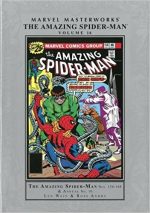
Amazing Spider-Man Masterworks volume 8


By Stan Lee, John Romita, John Buscema, Ross Andru, Jim Mooney, Bill Everett & various (Marvel)
ISBN: 978-0-7851-2074-2) (HB)                   978-0-7851-8807-0 (TPB)

This eighth astounding full-colour compilation of webspinning wonderment again follows the World’s Most Misunderstood Hero through deadly dangers and romantic rollercoasters as the second great era of Amazing Arachnid artists moved inevitably to a close. Although the elder John Romita would remain closely connected to Spider-Man’s adventures for some time yet, these tales would be amongst his last long run as lead illustrator on the series.

After a shaky start – suffering cancellation before his first issue – The Amazing Spider-Man quickly became a popular sensation with kids of all ages. Before long the quirky, charming, thrillingly action-packed comics soap-opera became the model for an entire generation of younger heroes impatiently elbowing aside the staid, (relatively) old thirty-something mystery-men of previous publications and hallowed tradition.

Peter Parker was a smart-but-alienated kid bitten by a radioactive spider during a school science trip. Discovering astonishing arachnid abilities – which he augmented with his own natural chemistry, physics and engineering genius – the kid did what any lonely, geeky nerd would do with such newfound prowess: he tried to cash in for girls, fame and money.

Making a costume to hide his identity in case he made a fool of himself, Parker became a minor media celebrity – and a criminally self-important one. To his eternal regret, when a thief fled past him one night he didn’t lift a finger to stop him, only to find when he returned home that his guardian uncle Ben Parker had been murdered.

Crazed and vengeful, Peter hunted the assailant who’d made his beloved Aunt May a widow and killed the only father he had ever known, discovering, to his horror, that it was the self-same felon he had neglected to stop. His irresponsibility had resulted in the death of the man who raised him, and the traumatised boy swore to forevermore use his powers to help others…

Since that night, the Wondrous Wallcrawler has tirelessly battled miscreants, monsters and madmen, with a fickle, ungrateful public usually baying for his blood even as he perpetually saves them…

The rise and rise of the Amazing Arachnid accelerated as the Swinging Sixties drew to a close and, by the time of the tales collected herein (Amazing Spider-Man#68-77 originally released between January-October 1969, plus an obscure thriller from Marvel Super-Heroes #14), Peter and his ever-expanding cast of comrades were on the way to being household names as well as the darlings of college campuses and the media intelligentsia.

Stan Lee’s scripts were completely in tune with the times – as observed by most kids’ parents at least – and the increasing use of soap opera plots kept older readers glued to the series even if the bombastic battle sequences didn’t.

Thematically, gangsterism dominated (probably due to the contemporary buzz caused by Mario Puzo’s novel The Godfather) and an increasing use of mystery plots balanced a dependence on costumed super-foes as antagonists: all finely balanced with the usual suspect-pool of thugs, hoods and mob-bosses, but these were not the individual gangs of the Ditko days.

Now Organised Crime and Mafia analogue The Maggia were the big criminal-cultural touchstone as comics caught up with modern movies and headlines.

Issue #68 (by Lee, Romita & Jim Mooney) started a lengthy saga featuring the pursuit of an ancient stone tablet by various nefarious forces, beginning with The Kingpin who exploited a topical moment of student dissent to foment a ‘Crisis on the Campus!’

When a seemingly inevitable riot erupted, the Big Bad tried to swipe the artefact, leaving a few teenagers we’re all too familiar with looking very guilty…

Meanwhile Peter Parker, already struggling with debt, a perpetually at-Death’s-Door Aunt May, relationship grief with girlfriend Gwen Stacy and no time to study, was accused of not being involved enough by his fellow students…

During this period scripter Lee increasingly tapped into the student unrest of the times in various Marvel titles and ‘Mission: Crush the Kingpin!’ further tightened the screws as the student unrest exploded into violence whilst the corpulent crime czar incriminated Spider-Man in the tablet’s theft.

Hounded and harried in ‘Spider-Man Wanted!’ the web warrior nevertheless managed to defeat the Kingpin only to (briefly) believe himself a killer after he attacked personal gadfly J. Jonah Jameson in a fit of rage; causing an apparent heart attack in the obsessive, hero-hating publisher.

At his lowest ebb, and now stuck with the tablet, Parker is attacked by sometime-Avenger Quicksilver in ‘The Speedster and the Spider!’ (#71), before John Buscema signs on as layout-man in ‘Rocked by the Shocker!’

No sooner does Spider-Man leave the stone tablet with Gwen’s dad – former Police Chief Stacy – than the vibrating villain attacks, pinching the petrified artefact and precipitating a frantic underworld civil war. The Maggia dispatch brutal over-sized enforcer Man-Mountain Marko to retrieve it at all costs in ‘The Web Closes!’ (Lee, Buscema, Romita & Mooney) as upstart lawyer Caesar Cicero makes his long-anticipated move to depose aged Don of Dons Silvermane…

However, the frail, elderly crime-lord knows the true secret – if not the methodology – of the tablet. To that end, he abducts biologist Curt Connors and his family to reconstruct the formula hidden on the stone and bring him ultimate victory.

Unfortunately, nobody but Spider-Man knows Connors is also the lethal Lizard and that the slightest stress might unleash the reptilian monster within to once more threaten all humanity. ‘If this be Bedlam!’ (Romita & Mooney) leads directly into ‘Death Without Warning!’ as the decrypted power of the tablet causes a cataclysmic battle that seemingly destroys one warring faction forever, decimating the mobs, but also freeing a far more deadly threat…

Amazing Spider-Man #76 sees John Buscema become full penciller with ‘The Lizard Lives!’ whilst concluding chapter ‘In the Blaze of Battle!’ witnesses the webspinner trying to defeat, cure and keep the tragic secret of his friend Connors, all whilst preventing guest-starring Human Torch Johnny Storm exterminating the marauding rogue reptile forever…

Closing this comics compendium is a one-off yarn from Marvel Super-Heroes #14 (May 1968). ‘The Reprehensible Riddle of the… The Sorcerer!’ actually debuted a year previously in the try-out title and reads to me like an inventory tale rushed out to fill a deadline gap or printed just before its “use-by” date expired. Nonetheless, as crafted by Lee, Ross Andru & Bill Everett, it offers a different spin on the wallcrawler as an enigmatic psychic targets Spider-Man, using psionic strikes and voodoo tricks to draw the hero to New Orleans and a death duel with a synthetic, science-tinged homunculus…

Spider-Man became a permanent unmissable part of many teenagers’ lives at this time and did so by living a life as close to theirs as social mores and the Comics Code would allow. Blending cultural authenticity with glorious narrative art, and making a dramatic virtue of the awkwardness, confusion and sense of powerlessness most of the readership experienced daily, resulted in an irresistibly intoxicating read, delivered in addictive soap-opera slices, but none of that would be relevant if the stories weren’t so compellingly entertaining.

This book is Marvel and Spider-Man at their peak. Why not see why…?
© 1968, 2012 Marvel Characters, Inc. All rights reserved.

Billy and Buddy volume 5: Clowning Around


By Verron, Veys, Corbeyran, Chric & Cucuel; coloured by Anne-Marie Ducasse and translated by Jerome Saincantin (Cinebook)
ISBN: 978-1-84918-200-3

Known as Boule et Bill in Europe (at least in the French speaking bits, that is; the Dutch and Flemish call them Bollie en Billie), this evergreen, immensely popular cartoon saga of a dog and his boy debuted in the Christmas 1959 edition of Spirou.

The perennial fan-favourite resulted from Belgian writer-artist Jean Roba (Spirou et Fantasio, La Ribambelle) putting his head together with Maurice Rosy – the magazine’s Artistic Director and Ideas Man who had also ghosted art and/or scripts on Jerry Spring, Tif et Tondu, Bobo and Attila during a decades-long, astoundingly productive career at the legendary periodical.

Intended as a European answer to Charles Schulz’s Peanuts, Boule et Bill quickly went its own way and developed a unique style and personality, becoming Rosa’s main occupation for the next 45 years.

Roba launched Boule et Bill as a mini-récit (a 32-page, half-sized freebie insert) in the December 24th 1959 Spirou. Like Dennis the Menace in The Beano, the strip was a big hit from the start and for 25 years held the coveted and prestigious back-cover spot. Older British fans might also recognise the art as early episodes – (coincidentally) retitled It’s a Dog’s Life – ran in Fleetway’s legendary anthology weekly Valiant from 1961 to 1965…

A cornerstone of European life, the strip generated a live-action movie, animated TV series, computer games, permanent art exhibitions, sculptures and even postage stamps. Like some select immortal Belgian comics stars, Bollie en Billie have been awarded a commemorative plaque and have a street named after them in Brussels….

Large format album editions began immediately, totalling 21 volumes throughout the 1960s and 1970s. These were completely redesigned and re-released in the 1980s, supplemented by a range of early-reader books for toddlers. Collections are available in 14 languages, selling in excess of 25 million copies of the 32 albums to date.

Roba crafted more than a thousand pages of gag-strips in a beguiling, idealised domestic comedy setting, all about a little lad and his exceedingly smart Cocker Spaniel before eventually surrendering the art chores to his long-term assistant Laurent Verron in 2003.

The successor subsequently took over the scripting too, upon Roba’s death in 2006. This edition is the first Cinebook translation to feature the series as crafted by “Veron” and his team of gag-writers Veys, Corbeyran, Chric & Cucuel

As Billy and Buddy, the strip returned to British eyes in enticing Cinebook compilations from 2009 onwards: introducing to 21st century readers an endearingly bucolic late 20th century, sitcom-styled nuclear family set-up consisting of one bemused, long-suffering and short-tempered dad, a warmly compassionate but painfully flighty mum, a smart, mischievous son and a genius dog who has a penchant for finding bones, puddles and trouble…

Originally released in 2003, Quel cirque! was the 29th European collection, and the first completed by Verron and his team, but it admirably continues in the approved manner: further exploring the timeless and evergreen relationship of a dog and his boy (and tortoise) for our delight and delectation. There are a few more mod-cons and a bigger role for girls such as skipping sharpie Juliet but, in essence, nothing has changed…

Delivered as a series of stand-alone rapid-fire gags, quips and jests, the socialisation and behaviour of little Billy is measured by carefree romps with four-footed friend Buddy: indulging in spats with pals, dodging baths, hunting and hoarding bones, outwitting butchers, putting cats and school friends in their place, misunderstanding adults, causing accidents and costing money; with both kid and mutt equally adept at all of the above.

Buddy is the perfect pet for an imaginative and playful boy, although the manipulative mutt is overly fond of purloined food and ferociously protective of boy and bones and his ball.

The pesky pooch also cannot understand why everyone wants to constantly plunge him into foul-tasting soapy water, but it’s just a sacrifice he’s prepared to make to be with Billy…

Buddy also has a fondly platonic relationship with tortoise Caroline (although this autumnal and winter-themed compilation finds her again largely absent through hibernation pressures) and a suspicious knack for clearing off whenever Dad has one of his explosive emotional meltdowns over the cost of canine treats, repair bills or the Boss’ latest impositions.

As well as shorter skirts and more modern toys the majority of this tome involves even more successful raids against the family fridge and local butchers’ shops, a marked improvement in successful bath attempts and the rather foolish addition of a doggy door. Sentimental burglars regularly fall for the dog’s cunning wiles and mum persists in trying to civilise her man, her son and that mutt, and of course enemy neighbour Madame Stick and her evil cat Corporal are always on hand to provide effective opposition…

One big revelation is that Buddy understands sign language – although how he learned is a shock – and when romance is in the air both boy and dog are similarly smitten and we discover that tortoises are not immune to the barbs of jealousy…

Despite the master’s passing his legacy is in safe hands. The strips remain genially paced and filled with wry wit and potent sentiment: enchantingly funny episodes which run the gamut from heart-warming to hilarious, silly to surreal and thrilling to just plain daft: a charming tribute to and lasting argument for a child for every pet and vice versa.

This is another supremely engaging family-oriented compendium of cool and clever comics no one keen on introducing youngsters to the medium should be without.
Original edition © Studio Boule & Bill 2003 by Verron in the style of Roba. English translation © 2014 Cinebook Ltd.

The Drops of God volume 1


By Tadashi Agi & Shu Okimoto translated by Kate Robinson (Vertical)
ISBN: 978-1-935654-27-8

Every so often a graphic novel jumps the ghetto walls and makes a splash in the wider world and this intriguing manga monolith is the latest: eschewing the usual icebreakers of horror, sci fi or blood-soaked action to target the lofty and insular world of the high-end vintner trade and the obsessive fascination of oenophilia (I’m chucking in a bunch of technical terms all enticingly explained in the book, but you can cheat and use your search engine of choice).

Created by brother and sister thriller-writing team Shin & Yuko Kibayashi (Kindaichi’s Case Files, GetBackers) under their nom de crime Tadashi Agi and sensitively illustrated by Shu Okimoto, Kami no Shizuku debuted in 2004 in Kondansha’s Morning with book compilations beginning a year later.

The siblings are also two of the most influential wine connoisseurs in the world and their expertise and passion shine through every page of this monolithic manga tome which took the wine world by storm and won the Gourmand and Cookbook Award in 2009 – presumably a first for any work of fiction, let alone graphic novel. It was described by Decanter Magazine as “arguably the most influential wine publication in the past 20 years.”

Of course, all I care about is comics, but even on my terms this is a thoroughly entertaining, immaculately realised soap/thriller drama that would make fans of Jackie Collins or Dick Francis rethink their allegiances.

The tale stars follows prodigal son Shizuku Kanzaki; raised from birth to follow his father’s obsession only to rebel and seek his own path until tragedy and circumstance pull him back to his destiny, …

The first eighteen chapters of the delectable saga are contained in this first English translation, beginning with ‘The Scent of a Hundred Flowers’: introducing apprentice Sommelier Miyabi Shinohara who almost shames her wine-bar/restaurant employers in front of a prominent – but boorish – wine snob until a dashing young man saves the day with a bit of daredevil decanting…

It transpires that the lad is a small cog in a vast beer-making concern and has never tasted wine: a shocking admission since Shizuku is the son of global superstar of wine criticism Yutaka Kanzaki…

It seems old man Kanzaki had great hopes and aspirations for his son, training the boy from birth in flavours, odour detection and discrimination like a vintner version of Doc Savage, but the boy rebelled and rejected his father’s passion.

The situation changes when Shizuku is informed of his sire’s death and a unique will…

‘A Prayer to the Fruitful Earth’ reveals the elder Kanzaki had a vast and valuable private collection of stellar vintages and has left them, his house and a fortune to his wayward son under a bizarre condition.

The heir must indulge in a duel with dark prince of wine-tasters – and inheritor of Kanzaki’s mantle as greatest critic in Japan – Issei Tomine in a dozen blind tastings of the greatest vintages in the collection – the “Twelve Apostles” – as well as the mysterious thirteenth bottle known only as “the Drops of God”. To the one who most closely agrees with the master’s own description goes everything…

At first Shizuku doesn’t care, but the arrogance of Tomine and a burning desire to understand the father who pushed him to such extraordinary lengths moves the orphan to an alliance with Miss Shinohara. Her crash-course in the history, lore and philosophy of the wine industry and craft in ‘The Profound and Subtle Queen’ as well as his first ever actual taste of the magical elixir precipitates a major transformation in the lad…

For reasons even he doesn’t understand, the neophyte decides to accept the challenge of the Drops of God in ‘Over the Bed Wafts an Aroma of Awakening’. Thus begins his education, inestimably assisted by his incredible sense of smell, expanded palate and physical skills he never even knew he possessed, all courtesy of his early training.

In episodes with such evocative titles as ‘The God of Burgundy’, ‘A Maiden Fleeing through Strawberry Fields’, ‘Tasting in the Park’ and ‘Cradling God’s Blessing in Both Hands’, what follows is a dazzling display of hard fact and the theosophical fervour of the grape-grower’s art, seamlessly blended with a canny melodrama of rivalry, redemption and (perhaps) burgeoning young love as Shizuku discovers the obsessive power of his father’s life.

With surprising intensity the cast expands as the story unfolds: the nigh-mystical nature of wine is seen to mend fences, restore lost lovers and even diagnose illness in ‘Draining the Glass of Reunion’, ‘A Maiden Smiling in the Strawberry Fields’, ‘The Sweet Dessert of Parting’ and ‘The Ones Who Watch Over’.

Even Shizuku’s career alters as he transfers from sales to the Beer company’s small and struggling wine division where he finds that even all he has learned is not enough after falling foul of snobbery and bigotry in ‘At All the Battles’ Start’, ‘A Lovely Cruel Flower’, ‘Tough Love for a Saucy Lolita’, ‘The Mystery Man of the Wine Division’ and ‘Merry-Go-Round’…

Meanwhile Tomine has begun to stack the odds in his favour by introducing a seductive secret agent into the lives of Shizuku and Miss Shinohara during ‘A Fantastico Night’, wherein some nasty facts about the true character of the Prince of wine-critics is exposed…

As much religion and philosophy as science and art, the cachet and inherent excitement of the wine trade transfers readily and effectively in this tale to make for a superbly readable tale for older readers.

The Japanese excel at making superb comics which simultaneously entertain and educate (check out economics textbook Japan Inc. by Shotaru Ishinomori to see what I mean) and the powerful, evocative imagery used to capture the sensorial effect of wine on the tongue and myriad fragrances in the nostrils is staggeringly effective – a brilliant use of the disciplines as only comics can muster them.

This is an astoundingly compelling comics-read and might well be the perfect gift for all those people you thought you couldn’t buy a graphic novel for…

This black and white book is printed in the traditional ‘read-from-back-to-front’ manga format – even if you pick it up as a digital edition.
© 2011 Tadashi Agi/Shu Okimoto. All rights reserved.

Lucky Luke volume 11: Western Circus


By Morris & Goscinny, translated by Frederick W Nolan (Cinebook)
ISBN: 978-1-905460-55-7

Lucky Luke is a rangy, good-natured, lightning-fast cowboy who roams the fabulously mythic Old West, having light-hearted adventures with his sarcastic horse Jolly Jumper whilst interacting with a host of historical and legendary figures.

His continuing exploits over seventy years have made him one of the best-selling comic characters in Europe (68 individual adventures totalling more than 300 million albums in 30 languages thus far), with the usual spin-off toys, computer games, animated cartoons and a plethora of TV shows and live-action movies.

Lucky was created in 1946 by Belgian animator, illustrator and cartoonist Maurice de Bévère (“Morris”) and first seen in the 1947 Annual (L’Almanach Spirou 1947) of Le Journal de Spirou, before launching into his first weekly adventure ‘Arizona 1880’ on December 7th 1946.

Working solo until 1955, Morris produced nine albums of affectionate sagebrush spoofery before teaming with old pal and fellow trans-American tourist Rene Goscinny, who became the regular wordsmith as Luke attained the dizzying heights of legend, commencing with ‘Des rails sur la Prairie’ (Rails on the Prairie), which began serialisation in Spirou on August 25th 1955.

In 1967, the six-gun straight-shooter switched sides, transferring to Goscinny’s own magazine Pilote with ‘La Diligence’ (The Stagecoach). Goscinny created 45 albums with Morris before his untimely death, from whence Morris soldiered on both singly and with fresh collaborators.

Morris died in 2001 having drawn fully 70 adventures, plus some spin-off sagas crafted with Achdé, Laurent Gerra, Benacquista & Pennac, Xavier Fauche, Jean Léturgie, Jacques Pessis and others, all taking their own shot at the venerable vigilante…

Lucky Luke first amused British readers during the late 1950s, syndicated to weekly anthology Film Fun and again in 1967 in Giggle, where he used the nom de plume Buck Bingo.

In all these venues – as well as the numerous attempts to follow the English-language successes of Tintin and Asterix albums – Luke sported a trademark cigarette hanging insouciantly from his lip. However, in 1983 Morris – no doubt amidst both pained howls and muted mutterings of “political correctness gone mad” – deftly substituted a piece of straw for the much-travelled dog-end, which garnered him an official tip of the hat from the World Health Organization.

The most recent and successful attempt to bring Lucky Luke to our shores and shelves comes from Cinebook (who have rightly restored the foul weed to his lips on the interior pages, if not the covers…), and it’s clearly no big deal for today’s readership as we’re well past sixty translated books and still going strong.

Lucky Luke – Western Circus was the 25th collaboration – and now available both in English on paper and as an e-book – first published in Europe in 1970. The story is a classic range rider spoof of B-Movie westerns, with the laconic wanderer in fine form as he helps the (outlandishly) needy and deals with an iconic baddie in a most unique manner…

It all begins as our hero flees an Indian war party until saved by a most unlikely benefactor: soused circus impresario Captain Erasmus Mulligan (a deft tribute to the legendary W.C. Fields) and his pal Andy – a rather threadbare and motheaten Indian Elephant…

Soon Luke is helping fix a broken wagon and enjoying a free show courtesy of the far-travelled Western Circus; a talented band a bit past their best, who all came west to avoid clashing with insufferable showman P.T. Barnum…

The genial gunman’s private viewing is suddenly interrupted by an attack from the still-incensed braves of Chief Lame Bull, but Luke – and Andy – soon convince the raging warriors to watch the performance instead. Further violence is then forestalled by the arrival of a cavalry troop who escort the entertainers to Fort Coyote, a thriving township controlled by skeevy entrepreneur Corduroy “Diamond Tooth” Zilch.

The circus hits town just as the ambitious Zilch is promoting his annual Grand Rodeo, and when the populace seem more enthralled by even these tatty newcomers rather than Zilch’s old familiar festival, the big man decides The Show must not go on…

Before long his increasingly insidious antics devolve into utter farce and even a small-scale Indian war, and Luke and Jolly are compelled to slap on the greasepaint and join in with motley…

A deliriously rambunctious romp, Western Circus offers fast-paced, seductive slapstick and dry wit in copious amounts for another merry caper in the tradition of Destry Rides Again and Blazing Saddles. Superbly crafted by comics masters, it provides a wonderful introduction to a unique genre for today’s readers who might well have missed the romantic allure of an all-pervasive Wild West that never was…
© Dargaud Editeur Paris 1970 by Goscinny & Morris. © Lucky Comics.

Guardians of the Galaxy Prelude


By Dan Abnett & Andy Lanning, Mike Friedrich, Bill Mantlo, Stan Lee, Larry Lieber, Steve Englehart, Wellinton Alves, Daniel Govar, Andrea Di Vito, Jim Starlin, Sal Buscema, Steve Gan, Bob McLeod & various (Marvel)
ISBN: 978-0-7851-5410-5

With another Marvel Filmic Fantasy premiering around the world, here’s a timely trade paperback collection to augment the cinematic exposure and cater to movie fans wanting to follow up with a comics experience.

Comprising a big bunch of reprints and digital material designed to supplement the first movie release, this compilation contains Marvel’s Guardians of the Galaxy Prelude #1-2, Marvel’s Guardians of the Galaxy Infinite Comic #1 and Guardians of the Galaxy #0.1, plus debut or early appearances of Drax, Gamora, Rocket Raccoon, Groot and Star-Lord as first seen in Iron Man #55, Strange Tales #181, Incredible Hulk #271, Tales to Astonish #13 and Marvel Preview #4.

Thanks to all that fabulous, futuristic technology, you can even look at this treasure chest of thrills on screen too through its digital iteration if you prefer…

The sky-high high jinks kick off with a glimpse at the frankly horrific childhoods of Gamora and Nebula with big daddy Thanos, by Dan Abnett, Andy Lanning, Wellinton Alves & Manny Clark: set just before the first film begins (the clue’s in the name as it comes from Marvel’s Guardians of the Galaxy Prelude #1), after which # 2 provides a similarly candid review of Rocket and Groot as their quest for cash draws them into a questionably legal repo job for a criminal big shot…

Next up is Marvel’s Guardians of the Galaxy Infinite Comic #1 by Abnett & Lanning, storyboarder Daniel Govar and artist Andrea Di Vito: a screen-based adventure, rather uncomfortably reformatted for the printed page. Here Taneleer Tivan, The Collector commissions Gamora with the retrieval of a certain Orb…

Of course, all these plot strands get knotted together in the movie…

The classic appearances kick off with Iron Man#55 (February 1973), scripted by Mike Friedrich and illustrated by Jim Starlin & Mike Esposito. ‘Beware The … Blood Brothers!’ introduces Drax the Destroyer, an incredibly powerful alien… or so he seems at first glance.

Trapped by another extraterrestrial newcomer – Thanos – under the desert, Drax is rescued by the Armoured Avenger, but it’s merely a prelude to the main story which appeared in Captain Marvel #25-33, a saga to be savoured elsewhere…

Gamora was first seen in Strange Tales #181 (August 1975), as Avatar of Life Adam Warlock made his way across the cosmos, battling the depredations of the Universal Church of Truth and his own evil future self The Magus. Technically it was her second, but in this yarn she got a name and speaking part…

‘1000 Clowns!’ – by Starlin and Al Milgrom – saw the accursed hero trapped in an insidious psychic prison even as in the notionally real world, a green-skinned gamin was slowly eradicating his tormentors. She was about to free the golden saviour, when Warlock escaped under his own steam. If he’d known that Gamora was actually working for his cosmic nemesis Thanos, he might not have bothered…

Rocket Raccoon was a minor character who first appeared in backup serial ‘The Sword in the Star’. His actual debut was in Marvel Preview #7 in 1976 but in 1982, writer Bill Mantlo brought him into the mainstream of the Marvel Universe with a choice starring role in Incredible Hulk #271 (May 1982).

Like Wolverine and the Punisher years before, the foul-mouthed, fuzzy faced iconoclast then simply refused to go away quietly…

Illustrated by Sal Buscema, ‘Now Somewhere in the Black Holes of Sirius Major There Lived a Young Boy Name of… Rocket Raccoon!’ find Earth’s jade juggernaut stranded on an alien world where sentient animals used super-scientific gadgetry to battle robot clowns. They do this to preserve the security of humans who seem incapable of caring for themselves. When Green-skin arrives, a simmering civil war is just breaking out…

With the Hulk safely removed from the combat zone, Rocket faded from view for a few years before returning in a new-fangled format for comicbooks: a miniseries…

More sidereal shenanigans surface in an absolute classic of the gloriously whacky “Kirby Kritter” genre, predating the birth of the Marvel Age. Crafted by Stan Lee, Larry Lieber, Jack Kirby & Dick Ayers, ‘I Challenged Groot! The Monster from Planet X’ (Tales to Astonish #13, November/December 1960) reveals how a studious biologist saves humanity from a rapacious walking tree intent on stealing Earth cities and shipping them back to his distant world. The tree titan might have started life as a disposable notion, but he too grew into a larger role over the unfolding decades…

Notional leading man Star-Lord premiered in monochrome mature-reader magazine Marvel Preview # 4 (January 1976), appearing thrice more – in #11, 14 and 15 – during the height of the Star Wars-inspired Science Fiction explosion of the late 1970s and 1980s.

Years previously a warrior prince of an interstellar empire was shot down over Colorado and had a brief fling with solitary Earther Meredith Quill. Despite his desire to remain in idyllic isolation, duty called the starman back to the battle and he left, leaving behind an unborn son and a unique weapon…

A decade later, the troubled boy saw his mother assassinated by alien lizard men. Peter Jason Quill vengefully slew the creatures with Meredith’s shotgun, before his home was explosively destroyed by a flying saucer.

The orphan awoke in hospital, his only possession a “toy” ray-gun his mother had hidden from him his entire life. He became obsessed with the stars – astronomy and astrology – and overcame all odds to become a part of America’s budding space program… but he made no friends and plenty of enemies on the way…

Years later his destiny found him, as the half-breed scion was elevated by the divinity dubbed the “Master of the Sun”, becoming Star-Lord. Rejecting both Earth and his missing father, Peter chose freedom, the pursuit of justice and the expanse of the cosmos…

From such disparate strands movie gold can be made, but never forget that the originating material is pretty damned good too and will deliver a tempting tray of treats that should have most curious fans scurrying for back-issue boxes, bookshop shelves or online emporia…
© 1960, 1973, 1975, 1976, 1982, 2014 Marvel Characters, Inc. All rights reserved.