Merry Christmas, Boys and Girls!

In keeping with my self-imposed Holiday tradition here’s another selection of British Annuals selected not just for nostalgia’s sake but because it’s my house and my rules…

After decades when only American comics and memorabilia were considered collectable or worthy, the growing resurgence of interest in home-grown material means there’s lots more of this stuff available and if you’re lucky enough to stumble across a vintage volume, I hope my words can convince you to take a punt and step out of your comfort zone.

Topping my Xmas wish-list would be further collections from those fans and publishers who have begun to rescue this magical material from print limbo in (affordable) new collections…

Great writing and art is rotting in boxes and attics or the archives of publishing houses, when it needs to be back in the hands of readers once again. As the tastes of the reading public have never been broader and since a selective sampling of our popular heritage will always appeal to some part of the mass consumer base, let’s all continue rewarding publishers for their efforts and prove that there’s money to be made from these glorious examples of our communal childhood.

Whizzer and Chips Annual 1979

By various (Fleetway)
SBN: 85037-478-2                  ASIN: B000IZ3DO2

British comics were always anthological. Even the few titles which notionally featured a solo lead like Doctor Who Weekly/Monthly or Hulk Comic carried a preponderance of ancillary series and serials. Most – whether Adventure or Humour, Pre-School or Juvenile and most importantly Boys or Girls – worked on the premise that variety was the spice of life and offered as many different characters and premises as they could cram into the page count.

That was never more ably demonstrated than in Fleetway/IPC’s ingenious comedy vehicle Whizzer and Chips which launched in October 1969 and ran – absorbing other flagging or failing kids’ humour titles – such as Knockout!, Krazy, Whoopee! and Scouse Mouse – until its own subsuming into valiant and venerable survivor Buster in October 1990, when the decline of mass-market children’s periodical publication really began to be felt.

Edited by Bob Paynter and lavishly packed with gag-features in IPC’s continual battle to steal market-share from DC Thomson’s unassailable Beano and Dandy, the first W&T appeared on Saturday 11th (dated the 18th; the off-sale date by when retailers had to have returned unsold copies for a refund/discount on the next issue), it’s innovative boast being “two comics for only sixpence” …and that’s in old money…

Chips was designed as a 16-page pull-out insert in the middle of Whizzer and the illusion was further fostered by the conceit that the graphic ranks of the “Whizz-kids” were deadly rivals of the “Chip-ites” eternally in their midst…

The comic was a splendid success, not because of the schizo-gimmick but because it was slickly professional and contained top-flight material by the company’s best comedy artists and writers; although arguably a toning down of the irreverent anarchy which predominated in earlier 1960s titles like Wham! and Pow! might have made parents a little happier to buy it too…

For a far more detailed discourse – on this and a host of other British comics – you should check out Lew Stringer’s glorious blog Blimey!… He’d also be able to tell you far more about the individual creators than I ever will, but as usual I’m going to have a bash anyway and apologize in advance for my inevitable errors and omissions.

As a hit weekly Whizzer and Chips naturally had end-of-year annuals from the earliest opportunity and this one (released at the end of 1978) was the ninth of 24, offering a wide range of old and new characters – just as you’d expect and want.

Behind that tantalising Mike Lacey cover the manic madness and mayhem begins with a delicious ‘Super Store Super Game’ (bring your own counters and dice, kids!) whilst ‘Lazy Bones’ (Colin Whittock) reveals how indolent young Bennie Bones attempts to skive off household chores again but only earned more work, after which Lacey’s ‘Sid’s Snake’ found serpentine Slippy getting into a tight spot he couldn’t slide out of.

Cliff Brown had the franchise for producing cartoon games and puzzles and begins here with the “mazing” ‘Jailbreak!’ before ‘The Magic of Films’ (Dave Jenner?) found the possessor of an enchanted tome using a manifested action hero to beat a bully before ‘Sweet Tooth’ (Trevor Metcalfe) outwitted another rampaging brute after his sugary treats. Always tardy ‘Slowcoach’ then found the perfect excuse for missing school registration…

Cover-star ‘Sid’s Snake’ – or rather his human co-conspirator – was the leader of the Whizz-Kids faction. He would organise infiltrations and “raids” onto Chips pages when not getting into tight spots or showing off to worms as in this second one-page outing, whilst the ‘Happy Families’ (by Dick Millington) spent most of their time sparring and causing domestic disasters, unlike Tom Williams’ underage ‘Tiny Tycoon’ who here transforms a little funfair into a big deal skate rink before Leo Baxendale’s pugnacious nipper ‘Champ’ turns his competitive drive to mastering the pogo stick with agonising consequences for all…

‘Super Store!’ by Bob Hill was the magical multi-storey emporium where anything could be bought, such as ghosts to stock a haunted house whilst – continuing the strangely trippy tone – ‘The Drips’ (Michael T Green perhaps?) were sentient water droplets playing mind-games with a baffled homeowner and ‘Beat Your Neighbour’ (a survivor of the merger with Knockout) revealed the depths competing families would sink to in order to be the best – in this case in making their home safe…

Uppity little madam ‘Toffee Nose’ made life hell for poor old dad when she found the garden too grubby, after which ‘Sid’s Snake’ resurfaces to show off his pugilistic skills; no doubt to provoke boy boxer ‘Shiner’ – also by Lacey – who leads off the Chips section of this book by once again disappointing his mum and copping a black eye without fighting anybody…

‘Footsie the Clown’ began as a colour strip by Leo Baxendale on the back page of Wham! and was revived here in monochrome, still being weird at the circus (by an artist I don’t recognise). Next comes Mike Brown’s bombastic ‘Super Dad’ quashing more time-wasting kids’ pranks before hard-luck lad ‘Loser’ adds his own unique spin to Shakespeare and Norman Mansbridge’s ‘Fuss Pot’ shows the proper way to shovel snow…

Cliff Brown’s ‘Treasure Island Maze!’ segues into another – cosmetically cushioned – clash for ‘Shiner’ and farmyard frenzy for ‘Footsie the Clown’ and his faithless companion Wuff the Wonder Dog whilst Reg Parlett’s rival gangs ‘Smarty’s Toffs & Tatty’s Toughs’ again fought a class war that left everyone bedraggled, beaten and in need of a break…

Following Cliff Brown’s brow-knitting puzzle ‘Two Old Grannies are in Trouble’ a TV commercial director soon regrets asking the opinion of one little girl in ‘Here’s Fuss Pot – the fussiest girl of the lot!’ after which ‘Pete’s Pockets’ disgorge a wish-granting genie as ‘Lib an’ Archie and their Magic Piano’ accidentally solve a skiers’ dilemma and ‘Loser’ wins after destroying a panting and uncovering a lost masterpiece…

‘Sammy Shrink – He’s the Smallest lad in the World’ – and one of IPC’s most well-travelled, having compactly fitted into Wham!, Pow!, Smash! and Knockout before squeezing into Whizzer and Chips.

Here Jenner portrays the mighty mite at his most pranksome before ‘Theo’s Thinking Cap’ saves the (wedding) day by finding a missing ring and ‘Belle Tent – She’s Funtastic’ proves girls can be just as destructive as boys and shouldn’t be let anywhere near a cricket pitch…

‘Shiner’ keeps his eyes un-pummelled by using his wits against a big bully before ‘Don’t Times Change!’ offers sharp comparisons of past and present parental peccadilloes whilst ‘Pete’s Pockets’ open again and suck the poor twit into a mad melee with a magician he didn’t know he had after which the landlord of ‘Harry’s Haunted House’ (Parlett) fails again to evict his ghostly tenant…

‘Shiner’s Scrap Book’ offers boxing spot-gags by Brocker and ‘Wear ’em Out Wilf’ (Mansbridge) shows the wee wrecker proving the flimsiness of pianos before ‘Little Mo Peep’ causes chaos during a seaside excursion, ‘The Toffs and the Toughs’ (Parlett) compare the relative merits of castles and tents and ‘Sammy Shrink’ (by Terry Bave and wife/scripter Sheila) reacts badly to the news that his sweetie ration is being cut…

Parlett’s ‘Belle Tent – She’s Funtastic’ finds the unladylike lass causing catastrophe at a country house after which ‘Smarty’s Toffs & Tatty’s Toughs’ resort to all-out retail war at an antiques fair and the Baves put ‘Sammy Shrink’ through icy hell at the skating rink whilst ‘Loser’ sees the dark side of scouting for badges.

A belligerent bee cause ‘Footsie the Clown’ to lose his sense of humour, ‘Theo’s Thinking Cap’ helps a kid get into an air-show and ‘Pete’s Pockets’ unleash a dragon at the cinema before ‘Sammy Shrink’ has fun with snow and none with ice cream whilst ‘Shiner’ proves the superiority of British boxing to the kung fu of a new (Korean) bully in town and ‘Beat Your Neighbour’ reveals the danger of high-impact competitive gardening before Baxendale’s ‘Champ’ tries karate… with smashing results…

There’s more eerie insanity when ‘The Drips’ decide to practice their practical jokes inside gumboots and umbrellas and the assorted gags of ‘Sid’s Snake Smiles’ give way to vintage hi-jinks as ‘Jumbo and Jet!’ sees a boy and his elephant attempt to lay crazy paving.

A new boomerang soon makes ‘Champ’ the most unpopular kid at the funfair and the ‘Beat Your Neighbour’ dads clash over whose son can get smartest quickest even as animal crackers in a ‘Vet Set’ neatly lead to a final dose of ‘Sid’s Snake’ silliness with the reptile deciding to emulate the action of a space-hopper…

The weekly comic usually sported an adventure serial to balance the mirth and here ‘Whizz Wheels’ – with art from Ron Turner – details another exploit of bicycle prodigy Tommy Wheels who stood up to a bullying newcomer in town and accidentally exposed a vast bike theft ring.

It’s back to the funny stuff as ‘Rotten Egghead – He’s Just Got to Win!’ find the inventive poor sport building a tank to win a snowball fight whilst the ‘Happy Families’ fall out over television programmes and ‘Tiny Tycoon’ finds a fortune marketing animal skateboards and artificial goalkeepers.

‘Lazy Bones’ learns that looking up his ancestors is conducive to a quiet nap and the ‘Beat Your Neighbour’ regulars take up fishing with the usual bellicose results after which Wham!‘s veteran cave-boy ‘Glugg – He’s First in Everything’ have a few problems with his breakfast egg before ‘Sweet -Tooth’ needs heavy machinery to retrieve his latest batch of stolen treats…

Brown offers one more diversionary puzzle in ‘Two Astro-Twits are trying to get to the Moon!’ and the ‘Super Store!’ vends a cut-price golf course to deflate the town swells and snobs before this years festival of fun concludes with a last ‘Lazy Bones’ lesson as his visit to a Free School soon has him begging to get back to his own humdrum class…

Weirdly timeless amusements and evergreen cartoon magic make this tome a terrific treat for youngsters as well as the nostalgia-besotted oldsters like me: this is well worth a second read and an absolute delight if you’re seeing it for the first time…
© IPC Magazines Ltd. 1978

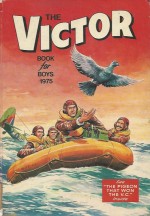
Victor Book for Boys 1975
By many and various (DC Thomson)
Retroactively awarded ISBN: 978-0-85116-077-1

If you grew up British anytime after 1960 and read comics you probably cast your eye occasionally – if not indeed fanatically – over DC Thompson’s venerable standby The Victor.

The Dundee based publisher has long been a mainstay of British popular reading and arguably the most influential force in our comics industry. Its strong editorial stance and savvy creativity has been responsible for a huge number of household names over the decades, through newspapers, magazines, books and especially its comics and prose-heavy “story-papers” for Girls and Boys.

That last category – comprising Adventure, Rover, Wizard, Skipper and Hotspur – pretty much-faded out at the end of the 1950s when the readership voted overwhelming with their pocket money in favour of primarily strip-based entertainments…

Cover-dated 25th January The Victor premiered in 1961 as a (mostly) comic strip package, running for 1657 weekly issues until finally folding in November 1992. Absorbing in its time fellow publications Wizard, Hotspur, Scoop, Buddy, Champ and Warlord, it was very much the company’s flagship title for action tales and as such had its own immensely popular run of Christmas Annuals.

The Victor Book for Boys began in 1964 and resulted in thirty stout and stunning hardcover editions over the years. As with the comic iteration the content was based on classic “Boys Own” adventure material encompassing fantasy, war, science fiction, sports stories, period drama and everything in between.

This particular edition opens with historical fact feature ‘The Age of the Ironclad’ and follows up with war comic strip ‘The Pigeon That Won the V.C.’, detailing how avian messenger Winkie was responsible for the rescue of four downed airmen in 1942; pressing on with perennial favourite ‘The Tough of the Track’ illustrated by Peter Sutherland.

Alf Tupper ranked high amongst the company’s grittily realistic pantheon of ordinary stars: a perpetually grimy, soot-stained, incorrigibly working class true sportsman who ran for pride and honour, not gain or prestige.

Here he has a nasty clash with rich, spoiled running rival Nigel Fenton who tries to hit Alf with his sports-car even as his equally vile father is attempting to fix a traction engine competition. When Alf allies with Colonel Fenton‘s most feared opponent, sparks fly, steam explodes and both generations of bad men learn a much deserved lesson…

This is followed by another exploit of the magnificent ‘Morgyn the Mighty’. The “strongest man in the world” first appeared in The Rover in 1928 in prose form, transferred to The Beano in 1938 (drawn by Dudley Watkins) and, after visiting the reborn comics version of Rover, rocked up in The Victor in 1963.

Here the wandering, loincloth-clad wonder man (drawn by Ted Kearnon, perhaps) is in the Himalayas and uncovers the secret of the legendary Yetis, after which ‘The Ruffies and the Tuffies’ (by George Martin and recycled from The Beezer where they were The Hillies and the Billies) comedically continue their frantic feuding before another WWII yarn depicts a plucky Home Guard hero using ‘The Drainpipe Destroyer’ (the formidable Northover Projector) to quash a burglary by Black Marketeers.

Following a general knowledge ‘Quick Quiz’, ‘The Jalopy with a Jinx’ reveals how a young man uses a vintage car to foil a modern jailbreak before ‘Killer Kennedy R.N.’ triumphantly trades his motor torpedo boat for a German bomber after being captured at sea and Queen’s Messenger Peter Hazard runs into a little trouble in modern Afghanistan and has to recover precious papers and treasures before completing his ‘Escape from the Red Assassin’…

‘Night run to Fort Luton’ offers a prose yarn about a motorbike despatch rider in WWII Britain, followed up by sports feature ‘Goal!’, a fact-file on rescue procedures entitled ‘Guardians of the Mountains’ and comedy capers from Michael Barratt in a reprint of ‘Tall Tales from Toad-in-the-Hole’: a Topper revival/reprint featuring a little village cut off from progress since the time of Cromwell and poorly adjusting to modern developments such as the unfortunate bill-poster of this episode…

‘Splashdown to Danger!’ finds a modern British salvage vessel on site when a space capsule plunges into the ocean and quickly embroiled in a sinister scheme by leftover Nazi rocket scientists before ‘The Sea Shall Not Have Them!’ describes contemporary air-sea rescue procedures.

Next up is an example of fabulously engaging, long running comedy adventure ‘The Hammer Man’ superbly illustrated by Richard Terry “Ted” Rawlings. Set in the 15th century the strip detailed the rise of blacksmith Chell Puddock whose services to King Henry V saw the commoner elevated to the knighthood as the most peculiar noble of all time…

Here it’s 1415 and he’s still a commoner on the battlefields of France, but his valiant deeds make him many noble friends as he unhorses a rogue English knight, single-handedly breaches the stubbornly impregnable castle of St. Pol and defeats the terrifying Wolf of Picardy in single combat…

Another light-hearted comedy drama was ‘Fred Kay’s Crazy Railroad’ (art by Josep Marti) which described the exploits of a determined British transport sergeant and his crew of misfits and rejects who constructed a makeshift transport line in Burma in 1944. This time his immediate problem is a load of unstable dynamite a pushy American Colonel wants anywhere but where he is…

‘Gorgeous Gus’ (by Bert Vandeput?) was English aristocrat the Earl of Boote who owned and played for First Division Redburn Rovers. When the team travelled to Buenos Aires for an international fixture, Sportivo’s scurrilous director tricks Gus into a polo match and dislocates his shoulder, thinking that it will keep the Rover’s star player out of the game.

Devious Don Juan has no concept of True Brit grit…

Prose skit ‘Chipper’s Time Machine’ reveals why you should never buy a time/space engine from the back of a market stall and ‘Sports Quiz’ tests your knowledge on a wide variety of subjects before Rawlings turns in a typically robust and rambunctious job dramatising the incredible career of Nova Scotian Negro William Hall V.C. who was born the ‘Son of a Slave’ in 1827 and became one of the Royal Navy’s greatest heroes…

‘The Ruffies and the Tuffies’ then briefly suspend hostilities to appear on a TV show whilst ‘It’s a Funny Old World!’ offers crazy clipping of strange –but-true events before ‘The Flying Cowboy’ joins the British Royal Flying Corps in 1916 to show the Boche how things are done back home on the range…

‘Tall Tales from Toad-in-the-Hole’ sees an aged dotard experience the terrors of modern heating before our learning experience kicks in again with optical shenanigans in ‘Your Eyes Tell you Lies!’ whilst ‘Build a Battle Gun’ offers patterns and instructions for the budding model-maker.

The strip action wraps up with a tale of ‘Kenny Carter’s Kayo Kids’ as the dedicated boxing coach takes under his wing a brace of constantly battling troubled twins who only want to fight each other before the tome steams to close with another spread detailing more amazing vessels from ‘The Age of the Ironclad’.

Divorcing the sheer variety of content and entertainment quality of this book from simple nostalgia may be a healthy exercise but it’s almost impossible. I’m perfectly happy to luxuriously wallow in the potent emotions this annual still stirs. It’s a fabulous thrill-packed read from a magical time and turning those stiffened two-colour pages is always an unmatchable Christmas experience… happily one still relatively easy to find these days.

You should try it…
© DC Thomson & Co., Ltd., 1974.

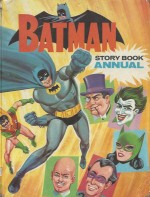
Batman Storybook Annual

By various and Mick Anglo (World Distributors)
No ISBN

Before American publishers began exporting directly into the UK in 1959 our exposure to their unique brand of fantasy came from licensed reprints. British publishers/printers like Len Miller, Alan Class and others purchased material from the USA – and occasionally Canada – to fill 68-page monochrome anthologies – many of which recycled those same stories for decades.

Less common were the flimsy, strangely coloured pamphlets reprinting the same stuff, produced by Australian outfit K. G. Murray and exported and distributed here in a rather sporadic manner. They also produced sturdily substantial Christmas Annuals which had a huge impact on my earliest years (I strongly suspect my adoration of black-&-white artwork stems from seeing supreme stylists like Curt Swan, Carmine Infantino, Gil Kane and Murphy Anderson uncluttered by cheap, flat colour).

The first Batman Annual came out in 1960, but in the heyday of “Batmania” two separate publishers were releasing hardback Holiday Editions. This delightful oddment comes from just after Batmania ruled the Earth, thanks to the power of the Adam West/Burt Ward Batman TV show. Another publisher had the rights to reprint the current crop of DC comic strips – which bore only superficial resemblance to the TV iteration anyway – but World Distributors secured a license to publish prose books directly based on the screen escapades…

British comics have always fed heavily on other media and as the popularity of television burgeoned during the 1960s – especially children’s shows and cartoons – those shows increasingly became a staple source for the Seasonal Annual market. There would be a profusion of stories and strips targeting not simply readers but young viewers and more and more often the stars would be American not British…

After three seasons (perhaps two and a half would be closer) the overwhelmingly successful Batman TV show ended in March, 1968. It had clocked up 120 episodes and a movie since the US premiere on January 12th, 1966 and triggered a global furore for all things zany and mystery-mannish.

At this time DC, Dell/Gold Key, Marvel and Charlton all had limited overseas licenses – usually in dedicated black-&-white anthologies. Another factor to consider was the traditions of the UK market. American comics had been primarily picture-strip based since the 1930s, but British weeklies had been providing Boy’s and Girl’s “papers” that were prose-based for all that time and longer.

DC Thompson persevered with illustrated text periodicals until well into the 1960s and every British company continued to shave costs by padding comics and annuals with text stories and features well into the 1970s.

Seasonal annuals provided a vital sales peak of the publishing year and a guaranteed promotional push (see Alan Clark’s superb The Children’s Annual for further details). Any comic worth its salt needed a glossy hardback on the shelves over the Christmas period, but they didn’t have to be picture-packed…

Not yet, at least. In future years various outfits would publish DC and Marvel Annuals: mostly full colour reprint strip extravaganzas with a little UK-originated material, but in the 1960s the prose tradition was still worth pursuing – especially if another company had the licences to publish strips but had neglected to secure rights to storybooks and text tales…

Thus this peculiar and delightful novelty: a comfortingly sturdy 96 page parcel of bold illustrations, games, puzzles and prose stories featuring the Dauntless Dynamic Duo in exceedingly British, goggle-box inspired tales of skulduggery and derring-do, flavoured with the OTT wackiness of the TV show at its madcap height.

This was the last of four; released in 1969 by Manchester-based World Distributors. The company was formed by Sidney, John and Alfred Pemberton after WWII and their main business was licensed Annuals; usually released in Autumn for the Christmas trade and ranging over the decades from Doctor Who to Star Trek to Tarzan, as well as choice selections of comics properties like Fantastic Four, Superman and The Phantom. They became World International Ltd in 1981 but changing market conditions put them out of business by the end of the decade.

This entire package – like most of their 1960s offerings – was produced in the cheap and quirky mix of monochrome, dual-hued and weirdly full-coloured pages which made the Christmas books such a bizarrely beloved treat. As for the writers and artists of the material your guess is, sadly, as good as or better than mine, but it was certainly generated by the wonderful Mick Anglo’s publishing/packaging company Gower Studios and therefore offered a delightfully eclectic mix of material far more in keeping with the traditionally perceived interests of British boys than the suited-&-booted masked madness which usually followed in the Caped Crusader’s scalloped wake.

The madcap all-ages mayhem opens with ‘The Archer Hits the Target’ wherein the Caped Crusader escapes an bizarre bowman’s death-trap through a liberal application of “batdope” after which the ‘The Riddler Riddles’ provide a page-full of wicked brainteasers. ‘The Joker Laughs Last’ but still fails in pulling off a million-dollar bank raid and we take a quick break by enjoying some arcane natural history facts in featurette ‘How Odd!’

An invasion of animated umbrellas presages ‘The Penguin’s Biggest Flap’ but once he’s properly thumped a brace of divertissements begins with more gags in ‘The Caped Crusader’s Conundrums’ and ends with speed records quiz ‘Fast, Faster, Fastest’ after which the Gotham Gangbusters scupper a modern buccaneer and leave ‘No Plunder for the Pirate’…

A fact-file on ‘Queer Birds’ then leads into gripping board-game ‘Catch the Joker’ (still got those counters and dice?) whilst a sartorially superior super-crook meets his match when ‘Batman Buttonholes the Gent’ after which the not-so-Dark Knight offers a lecture on natural gimmicks and animal adaptations in ‘Crime Fighters, Please Note’.

‘Bus Ride – by Water’ is a photo-feature on hovercraft and ‘Know your Sports’ tests your knowledge on games before the Bird Bandit bounces back in ‘A Parry for the Penguin’, kidnapping Commissioner Gordon and Chief O’Hara before a second seductive board-game pits the Caped Crimebusters against the Fowl Felon and Mountebank of Mirth who are ‘Cruising for a Bruising’…

‘No Safety in Numbers’ examines conspiracies from Guy Fawkes to the German plot to kill Hitler via the betrayal of Jesse James, whilst ‘Sharpen your Mind’ provides another batch of riddles before we charge back into action as Batman rescues Bruce Wayne‘s Aunt Harriet from a medieval-themed malcontent in ‘A Bleak Outlook for the Black Knight’…

‘A Joke Isn’t a Joke’ offers another board-game and language-skills are tested in ‘Every Kind of Bat’ and crossword ‘Words Up and Down’ before a deadly card-based cad hits town and ‘Batman Outshines the Ace’ after which another photo-spread details the job of divers in ‘Splash! It’s the Police’ and the underwater theme concludes with ‘The Penguin’s Fishy Facts’…

‘Wiping the Smile from the Smiler’s Face’ finds Batman battling a bomb-planting maniac after which general knowledge is assessed in ‘Battle of Wits’ and the Dynamic Duo become ‘Big Game for the Catwoman’ (and her sultry Cat-Girls!) before we all suffer the corny pangs of wit from ‘The Joker Jokes’…

This quirky fun-fest then concludes on a high note (A-flat, I suspect) as ‘The Minstrel Plays it Hot’ but still falters before the keen wits and fast fists of Batman and Robin…

Odd and truly daft, this titanic tome is probably only of interest to comics completists and incurable nostalgics, but I’ll bet there are more of us than anybody suspects out there and what’s wrong with a little sentiment-soaked reminiscing anyway?
© MCMLXIX by National Periodical Publications Inc. All rights reserved throughout the world.

The Ghost Stories of M. R. James


By M. R. James, illustrated by Rosalind Caldecott, selected & edited by Michael Cox (Tiger Books International)
ISBN: 978-1-85501-141-0

These days, thanks to cinema, television and latterly the internet, our deepest emotions are mostly prodded and provoked by creators through sound and most especially by visuals, but for the longest time artists got into our heads through words and pictures, letting our own imaginations do all the damage…

A truly Great British tradition is the Christmas Ghost Story and the art form – at least in its literary iteration – has never been better expressed than in the cool, dry, chillingly understated tales of scholar and cleric M. R. James.

A series of BBC TV adaptations appeared sporadically from the late 1960s onwards, thoroughly warping the unformed minds of a generation of kids like me and Mark Gatiss who, in fact, revived the tradition in 2013 with his dramatisation of The Tractate Middoth on December 25th 2013 with A Ghost Story for Christmas…

There are naturally plenty of compilations of the macabre master’s creepy canon – although as far as I’m aware, no complete collection yet – but a treasured favourite of mine, incorporating the majority of his most infamous spellbinders, is this copiously illustrated commemorative hardback from 1986 which also offers a series of superb, atmosphere-evoking yet sublimely understated pencil drawings from Rosalind Caldecott for each eerie episode.

So successful were M. R. James’ painfully small canon of stories that he has been given the honour of defining a genre. The “Jamesian” style revolves around and usually includes a familiar if bucolic setting such as an English hamlet, manorial estate or seaside town, ancient European edifices like an abbey or university library where quiet, naive bookish types finds antiquarian books or ancient artefacts and arouse the ire of something far better left dead and forgotten…

In this scholarly tome – befitting a man as well known for his educational, scholastic and ecumenical achievements as his horrorist hobby – the timeless terror tales are preceded by an epic and entrancing biography of Montague Rhodes James OM, MA, FBA (1862-1936) who, when not disturbing the dreams of a nation and empire, was a medieval researcher and latterly Provost of King’s College Cambridge and Eton College.

His life and works are here traced with meticulous precision in a photo-packed, illustration-augmented ‘Introduction by Michael Cox’ before begins a cavalcade of subdued, understated, ferociously evocative tales wherein comfortable elements of the ordinary and safely commonplace are over and again suddenly compromised by the relentless howling unknown…

The prose pilgrimage begins with ‘Canon Alberic’s Scrap-Book’ (first published in National Review, March 1895) as a student and collector of scriptural antiquities describes the close call he had when offered an illicit mediaeval manuscript volume. He had no qualms about purchasing the relic until he saw what was hidden at the back…

This is followed by the classic ‘Lost Hearts’ (debuting in Pall Mall Magazine, December 1895 and adapted into a TV masterpiece by Robin Chapman for the BBC’s Christmas top-slot in 1973) which describes how young orphan Stephen is adopted by his elderly cousin at a remote mansion. His extremely distant benefactor is obsessed with immortality but the truly disturbing problem is the frequent peripheral glimpses of a gypsy girl and Italian boy with holes in their chests…

A far more sedate yet equally sinister situation unfolds when a university museum curator acquires a rare artwork in ‘The Mezzotint’ (from Ghost Stories of an Antiquary, 1904). The local scene depicted seemingly changes whenever people look away and elements of the subtly shifting picture bear ghastly echoes of a local atrocity from years past…

From that same landmark anthology volume comes ‘The Ash-Tree’ which relates how the inheritor of an ancient and much-cursed country estate discovers to his horror the Things which have caused so much misery over the centuries and where they’ve been hiding, whilst a church historian staying at a Danish inn uncovers true terror through the uncanny appearances and disappearances of both his sometime neighbours and even room ‘Number 13’ (GSoaA, 1904) itself…

A deservedly legendary and infamous tale from GSoaA, 1904, ‘“Oh, Whistle, and I’ll Come to You, My Lad”’ is one of James’ most celebrated chillers which, as adapted by Jonathan Miller in 1968, set the tone and format for the BBC’s seasonal horror-offerings for decades to come.

The original prose piece concerns a stuffy, solitary academic who discovers an old whistle whilst poking about in a ruin once occupied by the Knights Templar. He then unleashes something incomprehensible and malign after he blows on it…

‘The Tractate Middoth’ (More Ghost Stories, 1911) details how a college librarian is sucked into a protracted family legal dispute over a lost book being sought by both the living and the dead whilst ‘The Stalls of Barchester Cathedral’ (Contemporary Review, 1910) reveals how when the old Archdeacon dies in mysterious circumstances his successor becomes beguiled with – or is that stalked by? – a certain set of carved seats in the Cathedral…

A local scandal and subsequent court case finds the Squire accused of murdering a young girl he had been dallying with in ‘Martin’s Close’ (More Ghost Stories, 1911), but events take a strange turn after the prosecution enter into evidence the victim’s ghostly testimony, before ‘Mr Humphreys and his Inheritance’ (MGS, 1911) explains how a beneficiary’s windfall comes with a few unpleasant strings attached: specifically, a maze and Folly Temple which form part of his new estate and operate in a most bizarre and predatory fashion…

James preferred to distance himself and generally his story-narrators from the actual arcane action and this is seldom better seen than in the relatively lengthy and convoluted tale of ‘The Residence at Whitminster’ (A Thin Ghost, 1919) wherein the new modern rector at an ancient ecclesiastical home idly delves into the death of two children in 1730 and uncovers generations of tragedy locked in a simple old chest, unleashes unquiet spirits in the manse and lets loose demonic insects…

Another scholar investigating past parlous events informs ‘A Neighbour’s Landmark’ (The Eton Chronic, May 1925) wherein a visit to a friend’s country seat uncovers the reasons ancient woodland Betton Wood was dug up and ploughed over. However the eerie ghostly screams that used to emanate from it can still rattle the unwary…

‘A View From a Hill’ (The London Mercury, May 1925) then recounts how a historian on holiday visits a chum and borrows some very odd old binoculars. With them he rambles to a local beauty spot and sees something impossible and out of joint: an ancient tower and gibbet which are no longer situated on notorious local landmark Gallows Hill. …And then he sees through those ancient lenses impossible people moving with deadly purpose…

Minor classic ‘A Warning to the Curious’ was written after the Great War (The London Mercury, August 1925) and is one of James’ most bleak, chilling and hope-abandoned offerings. It tells of Paxton, an antiquarian/archaeologist on holiday in a Suffolk coastal resort who happens upon an important relic…

Unable to resist the lure of the long-lost Saxon Crown of Anglia – one of three fabled to protect the nation from invasion – he disinters and takes the artefact but is subsequently and relentlessly stalked by its sinister supernatural sentinel.

By the time Paxton unburdens himself to our narrator it is almost too late and, although he is convinced to restore the Crown to its resting place, his sin can be expiated only by occult judgement…

This sublimely supernal feast of fear and uneasy elucidation concludes with the disquieting and quasi-autobiographical ‘A Vignette’ which first appeared in The London Mercury in November 1936. It discloses how, on a quiet day in a typically idyllic English Country Garden, a sensitive young boy saw something he could not explain and felt somehow compelled to draw closer rather than run away…

This erudite edition also includes full ‘Publication Details’ of where and when the terror tales originated and where they were subsequently collected, whilst ‘Notes to the Introduction’ provide timely background to the storyteller’s eclectic life and everything ends with a tantalising ‘Select Bibliography’ to get your own antiquarian juices flowing…

Calmly disquieting, approachably uneasy and superbly scary, these are stories every fear fan should know and, whether through this illustrated item or any later collection, you must read these tales.
Copyright this edition © 1986 Nicholas Enterprises Limited. This edition published 1991 All rights reserved.

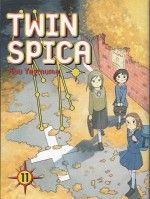
Twin Spica volume 11


By Kou Yaginuma (Vertical)
ISBN: 978-1-935654-33-9

Kou Yaginuma first captured the hearts and minds of star-struck generation with poignant short story 2015 Nen no Uchiage Hanabi (2015: Fireworks, published in Gekkan Comics Flapper, June 2000), before expanding the subject and themes into a major manga epic combining hard science and humanist fiction with lyrical mysticism and traditional tales of school-days and growing up.

Diminutive teenager Asumi Kamogawa always dreamed of going into space. From her earliest moments the solitary child gazed up at the heavens with imaginary friend Mr. Lion, especially gripped by the twinkling glow of Virgo and alluring binary star Spica.

An isolated, serious girl, she lived with her father, a common labourer who had once worked for the consortium which built the rockets for Japan’s Space Program.

When Asumi was one year old (just a few years from right now) the first Japanese manned launch ended in catastrophe after rocket-ship Shishigō (“The Lion”) exploded during its maiden flight: crashing to earth on the coastal city of Yuigahama. Hundreds were killed and many more injured, including Asumi’s mother.

Maimed and comatose, the matron took years to die. The shock crushed her grieving husband and utterly traumatised their infant daughter.

In response to the disaster, Japan set up an astronautics and space-sciences training facility where, after years of determined struggle, Asumi was accepted by the Tokyo National Space School. Slowly making friends like Shinnosuke Fuchuya (a classmate who had picked on her since their pre-school days back in Yuigahama), boisterous Kei Oumi, chilly, distant Marika Ukita and ultra-cool Shu Suzuki, Asumi inexorably moved closer to her unshakable dream of going to the stars.

Against all odds – she is small, shy, retiring, seems weak and is very poor – Asumi endures and always succeeds. She still talks with Mr. Lion, who is probably the ghost of an astronaut from the Shishigō…

Individual instalments in these compelling monochrome volumes are presented as “Missions”; methodically combining into an overarching mosaic detailing the subtle interconnectedness of generations of characters, all linked by the call of distant stars.

Volume 11 includes Missions 65-75, plus a brace of enchanting autobiographical vignettes from the author’s own stargazing teenage years in his Another Spica occasional series, and the story resumes with the hopeful, ebullient dynamic shattered forever…

The gang had always bickered and competed – as friends do – but when Shu was selected to go to America to train for an actual space-shot everybody was delighted for him. Now they must come to terms with the news that he is dead…

Mission: 65 details Shu’s too-brief time at the Space Development Consortium Space Center where intense training triggers a long-incubating hidden disease into a debilitating flare-up. When the doctors contact his estranged father – a political heavyweight in the Japanese government – a flashback reveals a link to another member of the ardent group of astronaut students…

When his little sister Sakura visits Suzuki in hospital, his final inspirational words are of the friends he made by following his own dreams…

Possibly the most moving section of the entire extended epic, Mission: 66 focuses on Shu’s memorial service and how his passing affects the rest of the gang of individualistic oddballs before things lurch back to the quest for space in Mission: 67.

Hurled again into the exhausting drudgery of classes and physical training, the kids bury themselves in effort as they process the fact that the best of them is gone, barely reacting to the news of Suzuki’s replacement on the proposed American space-shot. They are also unaware that Asauri News journalist Ichimura is getting closer to corroborating his suspicions: Marika is not a normal human and her “father” – publicity-shy life-sciences mogul Senri Ukita – has accomplished something at once astonishing and ethically shady following the death of his first daughter years ago…

Mission: 67 finds the driven reporter meeting with even-more obsessed freelancer Yamaji who claims to have proof that Marika is a clone, an unethical secret copy of Senri’s dead daughter…

At that very moment the subjects of their furtive enquiries are also meeting. Like Shu, Marika has fallen out with her controlling father, but he has requested a meeting to discuss the strange fact that her friend died of the same genetic malady which afflicts her and killed her… predecessor…

His arguments to dissuade her from her dream of the stars only make Marika more determined to succeed…

Mission: 69 finds the kids gamely pushing in as their third year of study, acutely aware that only a few will be allowed to start the fourth, whilst in the background Ichimura and Yamaji squabble. They may both want the truth, but it’s increasingly clear that it’s for vastly different reasons…

And in one quiet moment, the grieving gang gather and Marika shares all she knows about her own condition and how it corresponds to what killed Shu…

That night on a rooftop, sad, confused Asumi discusses the events with Mr. Lion as she prepares for the term’s last push. Her entire future depends on the efforts of the next few weeks…

In Mission: 70 Ichimura heads for Yuigahama to visit the family shrine of the Ukitas and, while pondering the ethics of his big story, dreams of the days when he and the other kids talked of going into space. He almost misses Senri’s annual visit to his daughter’s grave but his perseverance is rewarded by an off-the-cuff interview where he challenges the wealthy man’s arrogance in playing with nature and asks the crucial questions “why and for what purpose?”

With answers of a sort, Ichimura then meets Yamaji and makes a deal…

Mission: 71 finds Asumi, Kei, Marika and Fuchuya with the rest of the class heading out to a remote island for another terrifying burst of survival training, but when they arrive the assembled students learn this test is a comprehensive recapitulation of everything they covered in the last three years: a sudden death, make-or-break evaluation, not of knowledge, aptitude or endurance, but spirit…

The arduous ordeal and deep soul-searching continues in Mission: 72 with the latest wrinkle being the cutting of sleep rations to 2 hours per night and news that already some of the class have failed and gone home. Asumi is stoic as ever, fiery Kei uses her anger to push on and Marika is her implacable, impassive self, but in their moments of sleep-time the girls find comfort and solidarity sharing their dreams and aspirations again and realise with relief that they are true friends at last…

After one last punishing push the survivors are congratulated and get on a bus for home, but the tests are not over yet…

Mission: 73 finds Asumi abandoned in the wilderness with a nothing but an envelope of instructions and a punishing time limit to reach her destination. The packet says stop for nothing, not even other students in distress, and the route is punctuated with alarm buttons for quitters to signal for help and admit failure…

As Asumi doggedly storms on she is unaware that nearly-beaten Fuchuya is behind her, drawing strength from her example, but when the diminutive dreamer sees Kei passed out she doesn’t hesitate for a second. Even Fucchy’s screaming that she’ll be disqualified can’t stop her helping a friend…

Mission: 74 continues the impossible race with Asumi running on her own until she encounters the equally distraught Marika. Convinced they have both failed, they proceed on together…

The epic adventure pauses with Mission: 75 as the despondent class gather back at the Academy and Fuchuya – upset that his newly-discovered colour blindness will wash him out of the program if nothing else does – remembers his youth at the fireworks factory in Yuigahama.

When the official announcement comes that the island tests were deliberately impossible to pass and nobody should consider themselves out of the running until announcements come in January, the astounded kids separate for the holidays. However as they head home exhausted, cruel fate again intervenes as the train carrying one of our stars is buried in a landslip…

To Be Continued…

Rounding off this volume are two more wistfully autobiographical ‘Another Spica’ episodes, culled from author Yaginuma’s lovelorn youth. The first finds him recalling and graphically eulogizing a teacher who died too young but changed his life-path, whilst the second shares the unsuspected stresses of living and working in isolation and how inspiration to carry on can come from absolutely anywhere…

These magically moving marvels originally appeared in 2007-2008 as Futatsu no Supika 13 and 14 in the Seinen manga magazine Gekkan Comics Flapper, targeting male readers aged 18-30, but this ongoing, unfolding beguiling saga is perfect for any older kid with stars in their eyes…

Twin Spica ran from September 2001-August 2009: sixteen volumes tracing the trajectories of Asumi and friends from callow students to trained astronauts, and the series has spawned both anime and live action TV series.

This delightful saga has everything: plenty of hard science to back up the informed extrapolation, an engaging cast, mystery and frustrated passion, alienation, angst and true friendships; all welded seamlessly into a joyous coming-of-age drama with supernatural overtones, raucous humour and masses of sheer sentiment.

These books are printed in the Japanese right to left, back to front format.
© 2012 by Kou Yaginuma. Translation © 2012 Vertical, Inc. All rights reserved.

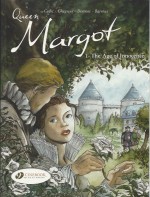
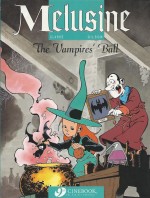
Queen Margot volume 1: The Age of Innocence


By Olivier Cadic, François Gheysens & Juliette Derenne, coloured by Sophie Barroux and translated by Luke Spears (Cinebook)
ISBN: 978-1-90546-010-6

Although not so well known in Britain as his other novels, on the Continent Alexandre Dumas père’s historical romance La Reine Margot is an extremely popular and well-regarded fictionalisation of the life of Marguerite de Valois.

This unlucky historical figure was the daughter of Henry VII of France and infamously diabolical arch-plotter Catherine de Medici and spent most of her early life as a bargaining chip in assorted convoluted dynastic power-games.

We don’t see a lot of proper historical romance in English-language comics; which is a shame as the stylish intrigue, earthy humour, elegant violence and brooding suspense (just think Game of Thrones without the excessive sex and violence… or dragons) of this one would certainly attract legions of fans in other sectors of artistic endeavour.

This substantial yet enchanting treatment of the events and uncorroborated legends of the girl who eventually became the wife of Henri IV, Queen Consort of France twice-over and the most powerful, influential and infamous woman in Europe is well worth a look-see, especially as most of what we know about her comes first-hand.

Queen Margot related the events of the times and her life – in exquisite, penetrating detail – through an infamous series of memoirs published posthumously in 1628…

Co-scripted by publisher, politician, computer entrepreneur, historian and statesman Olivier Cadic and François Gheysens, illustrated with intensely evocative passion and potently authentic lyricism by Juliette Derenne (Les Oubliés, Le 22e jour de la Lune) and enlightened through the graceful colours of Sophie Barroux; the first chapter appeared in 2006 as La Reine Margot: Le Duc de Guise and opens here with a spiffy gate-fold cover offering a potted history and run-down of the major players before the intrigue unfolds…

In August 1569, sixteen year old Margot and her Lady-in-waiting/governess Madame Mirandole arrive at castle of Plessis-lez-Tours. In the ongoing wars between Papists and Huguenots, Margot’s ailing brother Charles might be King of Catholic France, but her other brother Henri, Duke of Anjou is the darling of the court: a veritable Adonis and glorious war-hero smiting the Protestant foe. Anjou is also a sibling she adores and worships like a schoolgirl…

What little brotherly love there was stood no chance against a sea of popular feeling and cruel, envious unstable, hypochondriac Charles is determined to see it end and all Henri’s growing power and inherent glamour with it. Naturally, his dynastically-obsessed mother has plans to fix everything, but they never extend to showing her practically worthless daughter the slightest hint of kindness or approval.

Although young, Margot (who prefers the familiar name “Marguerite”) knows well that she’s nothing more than a disposable piece in a grand game, but briefly forgets her inevitable fate as Henri bedazzles the Court with his tales of martial triumph. Later he shares his own ambitions and misgivings with her. He dreads jealous, inept Charles taking the role of military commander for his own, and does not want to be married off to the Arch-Duchess of Austria…

Marguerite has problems of her own: Henri’s most trusted lieutenant; the appalling Lord Du Guast, tries to force himself upon her whilst making the most disgusting suggestions and veiled accusations before she can escape…

Worst of all, her mother – steeped in five generations of Machiavellian Medici manipulation and inspired by the bizarre prognostications of her personal seer Ruggieri – has begun setting her plans for the potentially invaluable, royally connected daughter.

Margot can do nothing against her mother’s wishes but, with the aid of drugged wine, she repays Du Guast’s affront with a public humiliation she will come to regret…

Everything changes when charismatic Henri, Duke of Guise and hero of the Siege of Poitiers arrives. He and Marguerite were childhood friends and now that they are both grown, their mutual attraction is clear to all. Instantly, his family sense a chance to advance themselves through a love match and quick marriage…

The kids themselves are only dimly aware of alliances. They want each other and even an entire gossiping, constantly watching Court is not enough to deter them…

As the war progresses into slow and depressing attrition, Anjou doggedly pursues victory and awaits his inevitable ousting, whilst Du Guast lays his plans to destroy and possess Marguerite.

News of her dalliance with Guise is of great worth to him and even though Catherine has organised a tentative betrothal to the Catholic king of Portugal, the vile seducer has ways and means of spoiling the proposed match. He’s even inadvertently aided by Marguerite herself, who tries many stratagems to disrupt the regal deal…

The constant in-fighting and subterfuge turns Anjou against his sister and when “proof” of her affair with Guise reaches Catherine the old queen moves swiftly.

Marguerite is compelled to capitulate to save Guise from Charles’ insane wrath and grimly faces the prospect of never seeing him again: cushioned in despised luxury and once more the pliable prize and powerless pawn in a game she cannot escape, avoid or win…

To Be Continued…

Colourful, intoxicating and powerfully compelling, The Age of Innocence is a beguiling view of eternal passions and human intrigue to delight the hardest of hearts and the most finicky of comics aficionados.
Original edition © 2006 Cinebook Ltd/Cadic – Gheysens. All rights reserved. English translation 2006 © Cinebook Ltd.

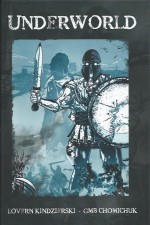
Underworld


By Lovern Kindzierski & GMB Chomichuk (Renegade Arts Canmore Ltd)
ISBN: 978-1-98782-502-2

Win’s Christmas Recommendation: A Dark Delight to Savour Forever… 9/10

Ancient literary classics have always been a fertile source of inspiration for modern artists in all arenas of expression and the works of Homer have especially called out to creators of every stripe.

Comics have had their fair share of straight adaptations, lesser or greater oblique tributes and a host of imaginative reinterpretations of the proverbially blind bard’s timeless chronicles of heroism and futility, love and adversity, but Underworld adds fresh angles and even darker poetic edges to the saga of a man fighting fate and horror to return to his home…

A beguiling new foray from Winnipeg-based Lovern Kindzierski (Shame Trilogy, Agents of Law, Tarzan Le Monstre, Star Wars) and GMB Chomichuk (Infinitum, The Imagination Manifesto, Raygun Gothic, Cassie and Tonk), with seductively effective lettering by Ed Brisson, this compelling hardback is crafted in stark monotone and utilises graphic illustration and manipulated photographs to replay The Odyssey on two complementary and contrasting levels…

Following Mike Carey’s scholarly and passionate Foreword ‘The Hard Part is Coming Home Again’ the dark descent and arduous search begins as Hector Ashton breaks out of a psychiatric hospital. The golden scion of Winnipeg’s dominant political dynasty has gone badly astray. He has dabbled in corruption, excelled in drug-dealing and barely survived a catastrophic overdose.

Now he’s loose in the city: lost in the ferocious warrens of the Club District where every evil and depravity can be readily bought and where barely-human monsters abound. However, in his delusional state Hector is convinced that he is Ulysses, travelling from moment to foreordained moment in a hellish, interminable, gods-decreed voyage back to his son and long-suffering, abandoned wife Penelope, and bolstered in that armour of hallucination he is more than a match for most of the hazards that await him…

As he staggers from trial to travail to terrifying titan, it soon becomes clear that the dangers might not be mythical but they are very real.

The metropolis’s embedded drug-lords and shadowy movers-&-shakers begin arraying even deadlier forces to ensure a weak link in a chain of corruption never makes it to anyone who might listen to the eternal truths buried within his rambling quotes and perorations…

As much gritty noir-flavoured thriller as fantastic mythical escapade, Underworld overlays the classic poem’s thematic skeleton with a grimy modern visual skin of vice and violence which is chillingly authentic and masterfully evocative, but never forgets that at its core the story is about a fallen hero finding redemption through struggle…

Allegory, metaphor, delusion or vision-gift of cruel and callous gods; Hector’s odyssey is just as epic as his symbolic totem’s ever was; every bit as dangerous and, in the end, just as triumphantly well-earned…

Supported by an Afterword from the author tracing the long and winding road of Underworld‘s genesis, Creator Biographies and a wealth of sketches and designs, this is a vibrant artistic vision which deserves to be seen by the largest audience possible.
© Lovern Kindzierski, GMB Chomichuk and Renegade Arts Canmore Ltd.

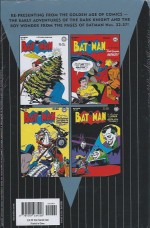
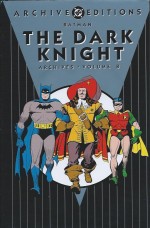
Batman: the Dark Knight Archives volume 7


By Bob Kane, Don Cameron, Bill Finger, Joe Samachson, Alvin Schwartz, Dick Sprang, Jerry Robinson, Ray Burnley & various (DC Comics)
ISBN: 978-1-4012-3744-8

Win’s Christmas Recommendation: Classically Traditional, Timelessly Wonderful… 9/10

Launching a year after Superman, “The Bat-Man” (and latterly Robin, the Boy Wonder) cemented DC/National Comics as the market frontrunner and conceptual leader of the burgeoning comicbook industry.

Having established the fantastic parameters of the metahuman with their Man of Tomorrow, the strictly mortal physical perfection and dashing derring-do of DC’s Dynamic Duo rapidly became the swashbuckling benchmark by which all other four-colour crimebusters were judged.

This eighth luxuriously lavish hardback Archive Edition volume covers another bevy of Batman adventures (#32-37 of his solo title, spanning December 1945/January 1946 through October/November 1946), with the Gotham Gangbusters resolutely returned to battling post-war perils and peacetime perfidies of danger, doom and criminality….

These Golden Age greats comprise many of the greatest tales in Batman’s decades-long canon, as lead writers Bill Finger and Don Cameron, supplemented by Joe Samachson, Alvin Schwartz and other – sadly unrecorded – scripters, pushed the boundaries of the medium.

On the visual side, graphic genius Dick Sprang superseded and surpassed freshly-returned originator Bob Kane (who had been drawing the Batman daily newspaper strip until its cancellation), making the feature utterly his own in all but name whilst keeping the Dauntless Double-act at the forefront of the legion of superhero stars, even as veteran contributor Jerry Robinson was reaching the peak of his illustrative powers and preparing to move on to other artistic endeavours…

The sheer creativity exhibited in these adventures proved the creators responsible for producing the bi-monthly adventures of the Dark Knight were hitting an artistic peak that few other superhero titles could match. Within scant years they would be one of the only games in town for Fights ‘n’ Tights fans…

Following a fascinatingly fact-filled and incisive Foreword from the inestimable Roy Thomas, the all-out action begins with Batman #32 and another malevolently marvellous exploit of The Joker whose ‘Racket-Rax Racket!’ (crafted by Cameron & Sprang) finds its felonious inspiration in college-student hazing and initiation stunts, after which Finger scripted ‘Dick Grayson, Boy Wonder!’ for that man Sprang, which reprises the jaunty junior partner’s origins and reveals how the lad earned the right to risk his life every night beside the mighty Batman in a blisteringly tense first case…

Light-hearted supplemental feature ‘The Adventures of Alfred’ provides thrills and laughs in equal measure as the dutiful butler reluctantly baby-sits a posh pooch and ends up ‘In the Soup’ after stumbling upon a gang of high society food smugglers (courtesy of Samachson & Robinson), before Cameron & Sprang spectacularly combine a smidgen of science fiction flair and a dash of historical conceit to the regular adventure mix when Professor Carter Nichols uses his hypnosis-powered time-travel trick to send Bruce and Dick to the court of Louis XIII to work with D’Artagnan and the Three Musketeers in ‘All for One, One for All!’

Issue #33 was the Christmas issue for 1945 – complete with seasonal cover by Sprang – but was otherwise an all-Win Mortimer art-fest; beginning with Finger’s ‘Crime on the Wing’ wherein the Penguin popped up and began a renewed campaign of crime with his trick umbrellas, just to prove to modern mobsters that he was still a force to be reckoned with after which anonymously-scripted thriller ‘The Looters!’ found the Dynamic Duo hunting a heartless pack of human hyenas led by the Jackal, raiding cities struck by disasters natural and not…

As if that wasn’t vile enough, the shameless exploiter was also trying to steal or sabotage the invention of a dedicated seismologist who thought he’d found a way to predict earthquakes until Batman and Robin rocked the Jackal’s world…

The issue ended with a similarly uncredited Holiday treat as ‘The Search for Santa Claus’ saw three broken old men redeemed by the season of goodwill.

After selflessly standing in for Saint Nick, an innocent man who’d spent 25 years in jail, an over-the-hill actor and a millionaire framed and certified insane by his unscrupulous heirs all found peace, contentment and justice after encountering those industriously bombastic elves Batman and Robin…

Three quarters of issue #34 was crafted by Finger & Sprang, beginning with ‘The Marathon of Menace!’ as an old man who’d dedicated his life to speed records organised a cross-country race across America with enough prize cash to interest crooks – and the ever-vigilant Gotham Gangbusters – after which an insufferable chatterbox deafeningly returned in ‘Ally Babble and the Four Tea Leaves!’; in which the chaos-causing manic maunderer consults a fortune teller and accidentally confounds a string of dastardly desperadoes…

Robinson then limned an anonymous but timely tale as ‘The Adventures of Alfred: Tired Tracks’ found the veteran valet stumbling upon a gang of opportunistic thieves before the issue ends with Finger & Sprang detailing ‘The Master Vs. the Pupil!’

Here the Batman tests his partner’s progress by becoming the quarry in a devious manhunt, but Robin’s early confidence and success take a nasty nosedive after an embarrassing gaffe which proves the danger of too much success…

Finger, Bob Kane & Ray Burnley crafted the lion’s share of Batman #35, beginning with the landmark ‘Nine Lives has the Catwoman!’ wherein the slinky thief finally emerged as the Dark Knight’s premier female foil.

Escaping prison and going on a wild crime spree, the feline felon convinces the world – and possibly the Caped Crusaders – that she cannot die, after which the equally auspicious and influential ‘Dinosaur Island!’ finds our heroes performing a sociology experiment in a robotic theme park, only to find the cavemen and giant beasts co-opted by a murderous enemy looking to become king of the criminal underworld by orchestrating their deaths…

An author unknown then scripted the whimsical exploits of ‘Dick Grayson, Author!’ (art by Kane & Burnley) as the young daredevil deems comicbook stories too unrealistic and is offered the opportunity to write some funnybook dramas which would benefit from actual crime-fighting experience. Of course, all that typing and plotting are harder than they look…

Kane & Burnley also illustrated all the Batman tales in #36, beginning with Alvin Schwartz’s ‘The Penguin’s Nest!’ wherein the podgy Bird of Ill-Omen started imperilling his new, successful – and legitimate – restaurant venture by committing minor misdemeanours just to get arrested. Unsure of what he’s up to, the Masked Manhunters spend an inordinate amount of time and energy keeping him out of jug until they finally glean his devious, million-dollar scheme…

When Hollywood’s top stuntman suffers a head injury on set and begins acting out his assorted past roles in the real world, the panicked studios call in Batman to be a ‘Stand-In for Danger!’ (Cameron, Kane & Burnley), whilst ‘The Adventures of Alfred: Elusive London Eddie!’ (with Robinson art) sees the mild-mannered manservant ferreting out a British scallywag gone to ground in Gotham after which the issue ends on a spectacular high with another terrific time-travel trip.

‘Sir Batman at King Arthur’s Court!’ – courtesy of Finger, Kane & Burnley – sees our compulsive chrononauts crisscrossing fabled Camelot and battling rogue wizards to verify the existence of the enigmatic Round Table legend dubbed Sir Hardi Le Noir…

This stunning and sturdy compilation closes with the all-Robinson, all anonymously scripted #37, beginning with ‘Calling Dr. Batman!’ wherein the wounded crimebuster is admitted to hospital and uncovers dark doings and radium robbery.

As if that wasn’t enough a very sharp nurse seems to have suspicions regarding the similarity of the masked celebrity’s wounds to those of a certain millionaire playboy…

Batman and Robin are back in Tinseltown to solve a dire dilemma as ‘Hollywood Hoax!’ has them hunting thieves and blackmailers who have swiped the master print of the latest certified celluloid smash, after which the dauntless derring-do ends with a magnificent clash of eternal adversaries when ‘The Joker Follows Suit!’

Fed up with failing in all his felonious forays, the Clown Prince of Crime decides that imitation is the sincerest form of theft and begins swiping the Dark Knights gimmicks, methods and gadgets; using them to profitably come to the aid of bandits in distress…

Accompanied as always by a full creator ‘Biographies’ section, this superb collection of comicbook classics is another magnificent rollercoaster ride back to an era of high drama and breathtaking excitement: a timeless, evergreen delight no addict of graphic action can ignore.
© 1945, 1946, 2012 DC Comics. All Rights Reserved.

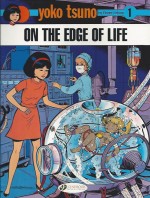
Yoko Tsuno volume 1: On the Edge of Life


By Roger Leloup (Cinebook)
ISBN: 978-1-905460-32-8

Yoko Tsuno began first began gracing the pages of Spirou in September 1970 and is still going strong. As detailed by Roger Leloup, the astounding, all-action, uncannily edgy, excessively accessible exploits of the slim, slight Japanese scientific-adventurer are amongst the most intoxicating and absorbing comics thrillers ever created.

Leloup’s brainchild is an expansively globe-girdling, space and time spanning multi-award winning series devised by the monumentally talented Belgian maestro after leaving his job as a studio assistant on Herge’s The Adventures of Tintin and striking out on his own.

Compellingly told, superbly imaginative but always solidly grounded in hyper-realistic settings boasting utterly authentic and unshakably believable technology and scientific principles, the illustrated epics were at the vanguard of a wave of strips featuring competent, clever and brave female protagonists which revolutionised Continental comics from the 1970s onwards and they are as timelessly engaging and potently empowering now as they ever were.

The very first stories ‘Hold-up en hi-fi’, ‘La belle et la bête’ and ‘Cap 351’ were brief introductory vignettes before the superbly capable Miss Tsuno and her always awestruck and overwhelmed male comrades Pol Paris and Vic Van Steen truly hit their stride with premier extended saga Le trio de l’étrange which began in the May 13th 1971 Spirou…

In the original European serialisations, adventures alternated between explosive escapades in exotic corners of the world and sinister deep space sagas with the secretive and disaster-plagued alien colonists from Vinea, but for these current English translations, the extraterrestrial endeavours have been more often than not sidelined in favour of realistically intriguing Earthly epics such as this one which began serialised life in 1976 as La frontière de la vie (Spirou #1979-1999) before becoming the seventh collected album a year later.

There have been 27 European albums to date, and Cinebook opted to open their string of English translations with this one; a skilfully suspenseful spooky mystery which opens in the fabulously restored mediaeval German city of Rothenburg.

Yoko is sightseeing as she walks to a meeting with new friend Ingrid Hallberg: one of Germany’s most promising young classical organists and a woman the troubleshooting trio saved from murder in the case of The Devil’s Organ.

The trip takes a dark turn when Yoko learns Ingrid is ill. The musician is suffering from a strange, inexplicable form of anaemia and her cousin Rudy believes the malady is not of natural origin. In fact, despite his qualifications as a biologist, the frantic young man claims Ingrid is the victim of a vampire…

He has constantly examined her since the illness began and discovered a bizarre wound and that a large percentage of Ingrid’s blood has been replaced with a synthetic substitute. The distraught, diligent researcher has also plotted the timing of the attacks and the next one is due that very night…

Plans laid, valiant Yoko patiently waits by the victim’s bedside, but is overcome by an unexplained lethargy and, but for a fluke chance, would have slept through the sight of a caped and gas-masked woman siphoning off Ingrid’s precious fluids and drip-feeding something else into her…

However, a concerned pet upsets the intruder’s invasion and a drowsy but roused Yoko gives frantic chase through the unlit streets of the ancient town. Not at her best, she soon fades and is distracted by peculiar historian and archivist Ernst Schiffers who shows her a strange sight: some hooligans have built a makeshift scientific laboratory in the crypts beneath the city…

But that is not the worst of it: when the town was meticulously rebuilt after the bombing raids of the last war something went wrong. As an astoundingly accurate scale model he constructed now proves, the restored Rothenburg has one house too many…

Before he can say more, however, a car pulls up and a gang of masked men try to grab Yoko…

Soon she is the quarry, doubling back over the torturous route she followed in pursuit of the vampire and is astonished to fund the gas-masked woman waiting. With urgent desperation the enigma begs Yoko to finish the transfusion into Ingrid or the “victim” will die…

Later Rudy confirms the solution is a breakthrough plasma substitute, perfectly attuned to Ingrid’s incredibly rare blood-group. As they cautiously administer it, Vic and Pol drive up in the dawn light. Together the adventurers retrace Yoko’s eventful night and track Schiffers to his house. Although the historian is gone – probably taken by the masked gang – his home conceals a massive model of the town and eagle-eyed Yoko spots a discrepancy which can only be a clue…

Most suspicious of all is the fact that the Hallberg family physician Doctor Schulz is the missing man’s neighbour and his dwelling is ground zero for the “extra” house…

Rudy cannot believe any wrongdoing of the doctor and shares the story of how the tragic GP lost his little girl Magda in one of the last air raids of the war. On being pushed however, Rudy admits that there was some oddity or mystery connected to the event. A little digging and the investigators uncover a strange fact: little Magda had the same rare blood type as Ingrid…

Assumptions formed and conclusions reached, the gang head straight to a local cemetery to check out a certain coffin even as back in town an impossible apparition appears to Rudy’s mother…

Soon the vampire has no choice but to reveal herself and an incredible tale unfolds. A family pact has kept two generations of Schulz’s working at the forefront of biological advancement. Magda has been kept in tenuous suspended animation between life and death since 1945 as her father and extended family sought a cure, but now with the project almost completed, they have been forced to share their secrets and discoveries with other scientists and either haste or greed has left the 30 year old infant in mortal peril…

Based in a lab under the city, they have resorted to stealing Ingrid’s healthy blood to sustain Magda as they carefully remove her from decades of life support but the project is inexplicably failing at the final stage. When the vampire convinces her colleagues to let Rudy and Yoko add their skills to the team-effort, the observant engineer instantly spots that the problem is sabotage from within the select group…

When the indomitable Yoko acts with her usual philanthropic recklessness, she too has a terrifying near-death experience before the generational tragedy reaches a happy conclusion…

As always the most potent asset of these breathtaking dramas is the astonishingly authentic, staggeringly detailed draughtsmanship and the terse, supremely understated storytelling, which superbly benefits from Leloup’s scrupulous research and meticulous attention to detail, honed through years of working on Tintin.

Every bit the fictive equal of James Bond, Modesty Blaise, Tintin or any other genre-busting super-star, Yoko Tsuno is a truly multi-faceted adventurer, equally at home in all manner of dramatic milieus and able to hold her own against all threats and menace on Earth or beyond …

This is another miraculously-paced, meticulously planned, tensely suspenseful escapade to appeal to any fan of blockbuster action fantasy or devilish sinister thriller.
Original edition © Dupuis, 1978, by Roger Leloup. All rights reserved. English translation 2007 © Cinebook Ltd.

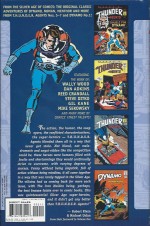
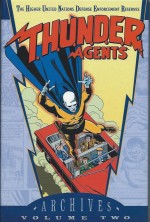
T.H.U.N.D.E.R. Agents Archives volume 2


By Wally Wood, Steve Ditko, Dan Adkins, John Giunta, Gil Kane, Reed Crandall, Mike Sekowsky, Steve Skeates & various (DC Comics)
ISBN: 978-1-56389-970-6

The history of Wally Wood’s immortal comics masterpiece is convoluted, and once the mayfly-like lifetime of the Tower Comics line folded, not especially pretty: wrapped up in legal wrangling and lots of petty back-biting. None of that, however, diminishes the fact that the far-too brief run of The Higher United Nations Defense Enforcement Reserves was a benchmark of quality and sheer bravura fun for fans of both the still-reawakening superhero genre and the popular media’s spy-chic obsession.

In the early 1960s the James Bond movie franchise was going from strength to strength, with action and glamour utterly transforming the formerly understated espionage vehicle. The buzz was infectious: soon A Man like Flint and Matt Helm were carving out their own piece of the action even as television shanghaied the entire bandwagon with the irresistible Man from U.N.C.L.E. (which premiered in September 1964), bringing the whole genre inescapably into living rooms across the world.

Before long wildly creative cartooning maverick Wally Wood was approached by veteran MLJ/Archie Comics editor Harry Shorten to create a line of characters for a new distribution-chain funded publishing outfit – Tower Comics. Woody called on some of the biggest names in the industry to produce material in the broad range of genres the company requested (as well as T.H.U.N.D.E.R. Agents and its spin-offs Undersea Agent, Dynamo and NoMan, there was the magnificent war-comic Fight the Enemy and the youth-comedy Tippy Teen).

Samm Schwartz and Dan DeCarlo handled the funny book – which outlasted all the others – whilst Wood, Larry Ivie, Len Brown, Bill Pearson, Steve Skeates, Dan Adkins, Russ Jones, Gil Kane and Ralph Reese all contributed scripts for themselves and the industry’s top talents to illustrate on the assorted adventure series.

With such a ravenous public appetite for super-spies and costumed heroes steadily rising in comic-book popularity the idea of blending the two concepts seems a no-brainer now, but those were far more conservative times, and when T.H.U.N.D.E.R. Agents #1 appeared with no fanfare or pre-publicity on newsstands in August 1965, thrill-hungry readers were blown away.

It didn’t hurt either that all Tower titles were in the beloved-but-rarely-seen 80 Page Giant format: there was a huge amount to read in every issue!

All that being said the tales would not be so adored by us baby-boomer fans if they hadn’t been so superbly crafted. As well as Wood, the art accompanying the compelling, far more mature stories was by some of the greatest talents in comics: Reed Crandall, Kane, George Tuska, Mike Sekowsky, Dick Ayers, Joe Orlando, Frank Giacoia, John Giunta, Steve Ditko and others.

This second lush and lustrous hardback compilation collects T.H.U.N.D.E.R. Agents #5-7 and the first blockbusting issue of spin-off title Dynamo – from June to August 1966 – with the superbly cool concept and characters going from strength to strength.

Following a positively passionate and insider-fact packed Foreword by Robert Klein and Michael Uslan, the stunning all-star action blast off like a rocket…

For those who came in late: When brilliant Professor Emil Jennings was attacked by the forces of the mysterious Warlord, the savant perished but UN troops salvaged some of his greatest inventions. These included a belt that increased the density of the wearer’s body until it becomes as hard as steel, a cloak of invisibility and a brain-amplifier helmet.

The prototypes were divided between several agents to create a unit of super-operatives to counter increasingly bold attacks of many global terror threats such as the aforementioned Warlord.

First chosen was affable, honest but far from brilliant file clerk Len Brown who was, to everyone’s surprise, assigned the belt and codename Dynamo. Contributing scripter Len Brown had no idea illustrator/editor Wood had puckishly changed the hero’s civilian name as a last-minute gag until the comic rolled off the presses…

T.H.U.N.D.E.R. Agent NoMan was once aged Dr. Anthony Dunn who chose to have his mind transferred into an android body and was then gifted with the invisibility cape. If his artificial body was destroyed Dunn’s consciousness could transfer to another android body. As long as he had a spare ready, he could never die…

John Janus seemed the perfect UN employee: a mental and physical marvel who easily passed all the tests necessary to wear the Jennings helmet. Sadly, he was also a deep cover mole for the Warlord, poised to betray T.H.U.N.D.E.R. at the earliest opportunity. All plans went awry once he donned the helmet and became Menthor. The device awakened his mind’s full potential, granting him telepathy, telekinesis and mind-reading powers, but it also drove all evil from his mind. When the Warlord attacked with a small army and a giant monster, Menthor was compelled by his own costume to defeat the assault. What a dilemma for a traitor to be in…

A fourth super-spy was added when Guy Gilbert of the crack Mission: Impossible style T.H.U.N.D.E.R. Squad was required to beta-test an experimental super-speed suit. The gung-ho hyper-fast Lightning was proud to do so, even if every use of the hyper-acceleration gimmick shortened his life-span…

T.H.U.N.D.E.R. Agents #5 again gloriously pandered to every kid’s dream as the nice guy with the power to smash was pinpointed as the weak link of the agency and subjected to a three-pronged attack by Warlord and his subterranean race in ‘Dynamo and the Golem’ by a sadly unrecorded writer with art from Crandall, Wood & Adkins. The stupendous underground duel with the monstrous mechanical was even augmented by guest walk-ons (a rare treat in the mid-1960s when most editors feared over-exposing their heroes) by other T.H.U.N.D.E.R. stars…

The modern master of a tribe of primordial men returned as ‘NoMan: In the Caverns of Demo’ (by Bill Pearson, Gil Kane, Wood & Tony Coleman) saw the invisible agent lured into a trap and temporarily lose his wonder cape. After a gloriously panoramic ‘Lightning Pin-up’ by Adkins, Steve Skeates, Mike Sekowsky & Frank Giacoia then reveal how a Nazi scientist blackmails a trusted engineer and wrecks new planes for the agency with his deadly “slow-down” dust in ‘Lightning: Return of Baron Von Kampf’…

The author of ‘Menthor vs. The Entrancer’ is unknown but the unmistakable John Giunta limns the dark tale of the mind master’s duel with a petty thief who steals a magic gem and almost conquers a country before the concluding ‘T.H.U.N.D.E.R. Agents: Double For Dynamo’ (Skeates, Wood, Adkins & Coleman) sees the entire team unite to tackle another plot by duplicate maker Mastermind to place his felonious android facsimiles in positions of power…

Issue #6 opened with ‘Dynamo and the Sinister Agents of the Red Star’ (author unknown, Wood & Adkins) as the sinister Sino-spymaster introduced a devastating judo expert who could use the human powerhouse’s strength against him. Len had to use his brain (for a change) to stop the brazen theft of America’s newest super-submarine…

Skeates, Sekowsky & Giacoia had fun with a teleporting criminal in ‘Lightning: The Origin of the Warp Wizard’ and shockingly let the villain win whilst in ‘T.H.U.N.D.E.R. vs. Demo’ – illustrated by Giunta, Wood & Adkins – the vile plotter ambushed NoMan and used his stolen cape to gather tons of cash and the other Jennings devices.

The arrogant thug’s big mistake was trusting his sultry sidekick Satana, who oddly bore a grudge for that time he abandoned her to T.H.U.N.D.E.R. and the cops…

‘Menthor: The Carnival of Death’ with art by Giunta & Carl Hubbell pitted the agent against a spy who was a natural telepath. Despite tremendous odds Janus foiled an insidious assassination attempt but lost his helmet in the process…

The best tale in this issue – and probably the entire book – is ‘NoMan: To Fight Alone’ by Skeates & Ditko wherein the immortal agent is the only one capable of defying anti-democratic demagogue Mr. Image who has the power to control any and all living beings in his vicinity. Of course, NoMan is only “living” is a strictly technical sense…

The final T.H.U.N.D.E.R. Agents inclusion is #7; a true landmark which opens with Dynamo in ‘Wanted: Leonard Brown, Code Name “Dynamo” Suspicion of Treason’ (illustrated by Wood, Adkins & Ralph Reese) with the hero on the run. Gullible Brown has been framed by the delectable Rusty (revealed as the svelte and sinister Iron Maiden; a vivacious villainess clad in figure-hugging steel who was the probable puberty trigger for an entire generation of boys…) but still manages – as much by charm and luck as skill or wit – to turn the tables and vindicate himself, after which a frantic showdown leaves Lightning possibly crippled for life after enduring ‘The Warp Wizard’s Revenge’ (Skeates, Sekowsky & Giacoia).

The years-long secret war against invaders from Earth’s core came closer to final resolution in ‘T.H.U.N.D.E.R. Agents: Subterranean Showdown’ – art by George Tuska – as a council of Warlords’ abduction of Dynamo leads to a shattering battle they ultimately fail to win, whilst, after a pulse-pounding Wood & Adkins ‘Iron Maiden: Pin-up’, NoMan suffers a psychological breakdown in ‘To Be or Not To Be’ by Pearson, Giunta & Sal Trapani.

Although Dr. Dunn is now a thing of plastic and wire, he is still susceptible to feminine allure and the unresolved dilemma almost costs him – and Earth – everything…

The issue ended with a tale which blew the mind of most kids reading it in the summer of 1966. ‘Menthor: A Matter of Life and Death’ written by Adkins, with art by Ditko & Wood was an utter shock to readers who had never seen a hero die before (we were so sheltered back then; cowboys and cops only ever shot guns out of owlhoots’ hands)…

When a super-agent is shanghaied to Subterraneana as bait for a trap, he does what any hero would do rather than betray his friends…

This cathartic fun-fest concludes with the contents of Dynamo #1 as the Tower’s top draw was the first hero to get his own solo title. It began with sheer sci fi spectacle as T.H.U.N.D.E.R. spots a staging post on Luna and sends Len on what might be a one-way trip (it’s three years before the Apollo moon shots, remember?) to scotch a potential invasion from space in ‘Menace From the Moon’ by Wood & Adkins.

That astounding blockbuster is followed by a deliciously wry romp as ‘A Day in the Life of Dynamo’ (Sekowsky & Giacoia) finds the invulnerable operative harried around the world from pillar to post in pursuit of the elusive Red Dragon, the wicked Warlords, rampaging giant robots… and a date with the boss’ assistant Alice…

Then Crandall, Wood & Adkins seemingly take Dynamo ‘Back to the Stone Age’: revealing the secret of Demo’s stock of cavemen and dinosaurs after the devilish villain breaks out of jail with Mastermind in tow, after which Ditko, Wood & Adkins craft another mini-masterpiece as ‘Dynamo Meets the Amazing Andor’.

Decades ago the so-very-patient Warlords stole a human baby and spent long years turning the waif into a biological superman devoid of sentiment or compassion. Sadly, when they finally unleashed their Andor on the surface civilisations, although they anticipated the dogged resistance of humanity and even the newly-constituted T.H.U.N.D.E.R., the subterranean geniuses hadn’t factored in their living weapon’s reaction to the first woman he had ever seen…

The tongue-in-cheek dramas wrap up with a bright breezy spoof as ‘Wonder Weed, Super Hero’ illustrated by Giunta, reveals how merely mortal – and mildly jealous – agent William “Weed” Wylie is tricked by a magician/enemy agent into thinking he has powers too. Of course Weed is gullible and avaricious but nobody’s fool…

With stories all shaded in favour of fast pace, sparse dialogue, explosive action and big visuals, T.H.U.N.D.E.R. Agents was decades ahead of its time and certainly informed everything in Fights ‘n’ Tights comics which came after it. These are truly timeless comic classics which improve with every reading, and there’s never been a better time to add these landmark superhero sagas to your collection of favourites.
© 1966 John Carbonaro. All rights reserved. This edition © 2003 DC Comics.

XIII volume 2: Where the Indian Walks


By William Vance & Jean Van Hamme, coloured by Petra (Cinebook)
ISBN: 978-1-84918-040-5

One of the most consistently entertaining and popular adventure serials in Europe, XIII was created by Jean Van Hamme (Wayne Shelton, Blake and Mortimer, Lady S.) and illustrator William Vance (Bruce J. Hawker, Marshal Blueberry, Ramiro).

Van Hamme was born in Brussels in 1939 and after academically pursuing business studies moved into journalism and marketing before selling his first graphic tale in 1968. He is one of the most prolific writers in comics.

Immediately clicking with the public, by 1976 he had also branched out into prose novels and screenwriting. His big break was the monumentally successful fantasy series Thorgal for Tintin magazine but he cemented his reputation with mass-market bestsellers Largo Winch and XIII as well as more cerebral fare such as Chninkel and Les maîtres de l’orge. In 2010 Van Hamme was listed as the second-best selling comics author in France, ranked right between the seemingly unassailable Hergé and Uderzo.

Born in 1935 in Anderlecht, William Vance is the bande dessinée nom de plume of William van Cutsem. After military service in 1955-1956 he studied art at the Académie Royale des Beaux-Arts and promptly became an illustrator of biographic features for Tintin in 1962. His persuasive illustrative style is a classical blend of meticulous realism, scrupulous detail and spectacular yet understated action.

In 1964 he began the maritime serial Howard Flynn (written by Yves Duval) before graduating to more popular genre work with western Ray Ringo and espionage thriller Bruno Brazil (scripted by “Greg”). Further success followed when he replaced Gérald Forton on science fiction classic Bob Morane in Femmes d’Aujourd’hui, (and latterly Pilote and Tintin).

Although working constantly – on serials and stand-alone stories – Vance’s most acclaimed work is his lengthy collaboration with fellow Belgian Van Hamme on this contemporary thriller based on Robert Ludlum’s novel The Bourne Identity…

XIII debuted in 1984, originally running in prestigious Spirou to great acclaim. A triad of albums were rushed out – simultaneously printed in French and Dutch editions – before the first year of serialisation ended.

The series was a monumental hit in Europe but has fared less well in its many attempts to make the translation jump to English, with Catalan Communications, Alias Comics and even Marvel all failing to maximise the potential of the gritty mystery thriller.

The epic conspiracy saga of unrelenting mood, mystery and mayhem began in The Day of the Black Sun when an old man came upon a body shot and near death on a windswept, rocky shore. The human flotsam was still alive despite being shot in the head, and when Abe‘s wife Sally examined the near-corpse she found a key sewn into his clothes and the Roman numerals for thirteen tattooed on his neck. Their remote hideaway offered little in the way of emergency services, but alcoholic, struck-off surgeon Martha was able to save the dying stranger…

As he recuperated a complication became apparent. The patient – a splendid physical specimen clearly no stranger to action or violence – had suffered massive, probably irreversible brain trauma, and although increasingly sound in body had completely lost his mind.

Language skills, muscle memories, even social and reflexive conditioning all remained, but every detail of his life-history was gone…

Abe and Sally named him “Alan” after their own dead son – but the intruder’s lost past explosively intruded when hitmen invaded the beach house with guns blazing. Alan reacted with terrifying skill, lethally retaliating, but too late to save anybody but himself and Martha…

In the aftermath he took a photo of himself and a young woman from one of the killers and, with Martha’s help, traced it to nearby Eastown. Desperate for answers and certain more killers were coming, the human question mark headed off to confront unimaginable danger and hopefully find the answers he craved.

The picture led to a local newspaper, and the attention of crooked cop Lieutenant Hemmings who recognised the amnesiac but said nothing…

The woman in the photo was Kim Rowland, a local widow who had recently gone missing. Alan’s key opened the door of her house. The place had been ransacked but a more thorough search utilising his forgotten talents turned up another key and a note warning someone named “Jake” that “The Mongoose” had found her and she was going to disappear…

He was then ambushed by the cop and newspaper editor Wayne. They called him “Shelton” and demanded the return of a large amount of money…

Alan/Jake/Shelton reasoned the new key fitted a safe-deposit box and bluffed the thugs into taking him to the biggest bank in town. The staff there also knew him as Shelton, but when Hemmings and Wayne examined the briefcase in Shelton’s box a booby trap went off. Instantly acting upon the unexpected distraction, the mystery man expertly escaped and eluded capture, holing up in a shabby hotel room, pondering again what kind of man he used to be…

Preferring motion to inactivity, he prepared to leave and stumbled into a mob of armed killers. In a blur of lethal action he escaped and ran into another group led by a man addressed as Colonel Amos. The chilling executive referred to his captive as “Thirteen” and claimed to have dealt with his predecessors XI and XII on something called the “Black Sun” case…

The Colonel very much wanted to know who Alan was, and offered some shocking titbits in return. The most sensational was film of the recent assassination of the American President which clearly showed the lone gunman to be none other than the aghast Thirteen…

Despite the amnesiac’s heartfelt conviction that he was no assassin, Amos accused him of working for a criminal mastermind. The Colonel wanted the boss but failed to take Alan’s forgotten instinctive abilities into account and was astounded when his prisoner leapt out of a fourth floor window…

The frantic fugitive headed for the only refuge he knew, but by the time he reached Martha’s beachside house trouble had beaten him there. More murderers awaited; led by a mild-seeming man Alan inexplicably knew was The Mongoose. The mastermind expressed surprise and admiration: he thought he’d killed Thirteen months ago…

Following an explosion of hyper-fast violence which left the henchmen dead and Mongoose vanished but vengeful, the mystery man regretfully hopped a freight train west towards the next stage in his quest for truth…

The bewildering journey resumes in Where the Indian Walks (originally collected in Europe as Là où va l’indien in 1984) as the enigma’s search for Kim Rowland brings him to a military base where her dead husband was once stationed. His enquiries provoke an unexpected response and it takes a whole platoon to subdue him after Alan instinctively resists arrest with horrific force. Soon he is being interrogated by General Ben Carrington and his sexily capable aide Lieutenant Jones.

They claim to be from the Joint Chiefs of Staff, know an awful lot about black ops units and – eventually – offer incontrovertibly proof that the memory-challenged prisoner is in fact the deceased Captain Steve Rowland and one of their select number…

Soon after, Carrington has Jones test the returned prodigal’s trained combat abilities and once Steve beats her is made a strange offer…

The military spooks drop him off in his – Rowland’s? – home town of Southberg and clandestinely return him to his rat’s nest of a family just in time for the vultures to begin circling the dying body of paralysed patriarch Matt Rowland. Steve’s wheelchair-bound dad still exerts an uncanny and malign grip over the town, the local farmers and his own grasping, ambitious relatives. The surprise reappearance of another potential heir really sets the cat among the pigeons…

The sheer hostility of the avaricious relatives isn’t his problem, however: before Steve Rowland left town for the army he pretty much made enemies of everybody in it and even the sheriff has happily harboured a grudge all these years…

One who hasn’t is storekeeper Old Joe who shows the amnesiac some home movies that give the obsessed Thirteen the most solid clue yet to his quarry…

So stunned by the possibilities is Alan/Steve that he’s completely unprepared for the brutal murder attempt which follows. Luckily the sheriff is on hand to stop it but when the bruised and battered truth-seeker arrives back at the family mansion, Colonel Amos is waiting, applying more pressure to find the mastermind behind the President’s assassination. This time however it’s Kim he wants to question… as soon as Steve finds her…

The Forgetting Man ignores all distractions; using the scant, amassed film and photo evidence to narrow down the location of a cabin by a lake “where the Indian walks”. It has to be where Kim is hiding…

That single-mindedness almost proves his undoing as the crippled patriarch is murdered and his recently returned son superbly framed for the killing…

With Thirteen again the subject of a furious manhunt, Carrington and Jones suddenly reappear and help him reach the cabin, but when he finally confronts Kim, the anguished amnesic receives the shock of his life… just before the posse bursts in…

To Be Continued…

XIII is one most compelling and convoluted mystery adventures ever conceived, with subsequent instalments constantly taking the questing Thirteen two steps forward, one step back as he encounters a world of pain and peril whilst tracking down the and cutting through an interminable web of past lives he seemingly led…

Fast-paced, clever and immensely inventive, XIII is a series no devotee of mystery and murder will want to miss.
Original edition © Dargaud Benelux (Dargaud-Lombard SA), 1984 by Van Hamme, Vance & Petra. All rights reserved. This edition published 2010 by Cinebook Ltd.

Melusine volume 3: The Vampires’ Ball


By Clarke (Frédéric Seron) & Gilson, coloured by Cerise and translated by Jerome Saincantin (Cinebook)
ISBN: 978-1-905460-69-4

Witches – especially cute and sassy teenage ones – have a long and distinguished pedigree in fiction and one of the most seductively engaging first appeared in venerable Belgian magazine Spirou in 1992.

Mélusine is actually a sprightly 119 years old and spends her days – and many nights – working as an au pair/general dogsbody to a most ungracious family of haunts and horrors inhabiting a vast monster-packed, ghost-afflicted chateau whilst diligently studying to perfect her craft at Witches’ School…

The long-lived much-loved feature is presented in every format from one-page gag strips to full-length comedy tales, all riffing wickedly on supernatural themes and detailing her rather fraught life, filled with the demands of the appallingly demanding master and mistress of the castle and even her large circle of exceedingly peculiar family and friends.

The strip was devised by writer François Gilson (Rebecca, Cactus Club, Garage Isidore) and cartoon humorist Frédéric Seron, AKA Clarke whose numerous features for all-ages Spirou and acerbic adult humour publication Fluide Glacial include Rebecca, Les Cambrioleurs, Durant les Travaux, l’Exposition Continue… and Le Miracle de la Vie.

Under the pseudonym Valda, Seron also created Les Babysitters and as Bluttwurst Les Enquêtes de l’Inspecteur Archibaldo Massicotti, Château Montrachet, Mister President and P.38 et Bas Nylo.

A former fashion illustrator and nephew of comics veteran Pierre Seron, Clarke is one of those insufferable guys who just draws non-stop and is unremittingly funny. He also doubles up as a creator of historical and genre pieces such as Cosa Nostra, Les Histoires de France, Luna Almaden and Nocturnes and apparently is free from the curse of having to sleep…

Collected editions began appearing annually or better from 1995, with the 24th published in 2015 and another due next year. Thus far five of those have transformed into English translations thanks to the fine folk at Cinebook.

Originally released on the Continent in 1996, Le bal des vampires was the second Mélusine album and sets the scene delightfully for newcomers as the majority of the content is comprised of one or two page gags starring the sassy sorceress who makes excessive play with fairy tale and horror film icons, conventions and themes.

When brittle, moody Melusine isn’t being bullied for her inept cleaning skills by the matriarchal ghost-duchess who runs the castle, ducking cat-eating monster Winston, dodging frisky vampire The Count or avoiding the unwelcome and often hostile attentions of horny peasants and over-zealous witch hunting priests, our saucy sorceress can usually be found practising her spells or consoling and coaching inept, un-improvable and lethally unskilled classmate Cancrelune.

This sorry enchantress-in-training is a sad case: her transformation spells go awfully awry, she can’t remember incantations and her broomstick-riding makes her a menace to herself, any unfortunate observers and even the terrain and buildings around her…

At least Mel’s boyfriend is a werewolf, so he only troubles her a couple of nights each month…

This turbulent tome features the regular procession of slick sight gags and pun-ishing pranks but also features a few longer jocular jaunts such as the fate of rather rude knight in armour, a brush with what probably isn’t a poltergeist in the Library and Mel’s unfortunate experience with daunting dowager Aunt Adrezelle‘s patented Elixir of Youth…

Wrapping up the barrage of ghostly gaffes, ghastly goofs and grisly goblin gaucheries is the sordid saga of the eternal elite at their most drunkenly degenerate as poor Melusine is not only expected to organise and cater ‘The Vampires’ Ball’ but has to stick around and handle the explosive clean-up for those especially intoxicated Nosferatus who tend to forget why the revelry has to die down before dawn…

Wry, sly, fast-paced and uproariously funny, this compendium of arcane antics is a great taste of the magic of European comics and a beguiling delight for all lovers of the cartoonist’s art. Read before bedtime and don’t eat any hairy sweets…

Original edition © Dupuis, 2000 by Clarke & Gilson. All rights reserved. English translation 2007 © Cinebook Ltd.