Showcase Presents Legion of Super-Heroes volume 2


By Otto Binder, Jerry Siegel, Edmond Hamilton, Jim Shooter, Curt Swan, John Forte & various (DC Comics)
ISBN: 978-1- 4012-1724-2

Once upon a time, in the far future, a band of super-powered kids from a multitude of worlds took inspiration from the greatest legend of all time and formed a club of heroes. One day those Children of Tomorrow came back in time and invited their inspiration to join them…

And thus began the vast and epic saga of the Legion of Super-Heroes, as first envisioned by writer Otto Binder and artist Al Plastino in early 1958, just as the revived comicbook genre of superheroes was gathering an inexorable head of steam. Since that time the fortunes and popularity of the Legion have perpetually waxed and waned, with their future history tweaked and rebooted, retconned and overwritten over and again to comply with editorial diktat and popular whim.

This splendid, charm-soaked, action packed second monochrome collection continues to re-present those early tales from the disparate Superman Family titles in chronological order: the sagas from their own feature spanning Adventure Comics #322-348, plus guest-shots from Superboy #117, 124-125 98 and pertinent portions of Superman Annual #4, covering July 1964 to September 1966.

From Adventure #322 the fun-filled futurism opens with ‘The Super-Tests of the Super-Pets’ by Edmond Hamilton, John Forte & Sheldon Moldoff, wherein the Legion’s mighty animal companions – Krypto, Streaky the Super Cat, Beppo, the monkey from Krypton and Comet the magical Super-horse – were left to guard Earth as the major players continued to pursue the elusive Time Trapper.

When Chameleon Boy’s pet Proty II applied to join the bestial bunch they gave him a series of extremely difficult qualification tasks…

‘The Eight Impossible Missions!‘ (#323 by Jerry Siegel, Forte & George Klein) found the incomprehensibly smart Proty setting the human Legionnaires a set of challenges to determine their next leader, after which the tone switched to deadly danger in ‘The Legion of Super-Outlaws!’ by Hamilton & Forte, as a mad scientist bearing a grudge manipulated a super-team from far distant Lallor into attacking the United Planets heroes…

Issue #325 revealed how ‘Lex Luthor Meets the Legion of Super-Heroes!’ (Siegel & Forte) in a cunning tale of deadly deception whilst a ‘Revolt of the Girl Legionnaires!’ (Siegel, Forte & Klein) found the female members attempting to eradicate their male comrades. Of course they didn’t mean it and a sinister mastermind was behind it all…

Superboy #117 (December 1964) featured a classy thriller wherein Chameleon Boy, Invisible Kid, Ultra Boy, Element Lad and Brainiac 5 seemingly travelled back 1000 years to attack the Boy of Steel in ‘Superboy and the Five Legion Traitors!’ (Siegel, Curt Swan & Klein) whilst over in Adventure #327 ‘The Lone Wolf Legionnaire!’ introduced Brin Londo; a troubled teen framed for appalling crimes who would one day become a valued member of the team in a clever thriller from Hamilton, Forte, Klein & Moldoff.

Jerry Siegel & Jim Mooney began an engaging run of tales in #328 beginning with ‘The Lad who Wrecked the Legion!’ as the insidious Command Kid joined the superhero squad in order to dismantle it from within.

Narrowly escaping that fate, the heroes had to confront the topsy-turvy threat of their own imperfect doppelgangers in #329’s ‘The Bizarro Legion!’ after which another nefarious juvenile infiltrated the LSH intending to destroy them all in ‘Secret of the Mystery Legionnaire!’. The dastardly plan proceeded without a hitch until the victorious Dynamo-Boy recruited the malevolent Lightning Lord, Cosmic King and Saturn Queen and fell victim to ‘The Triumph of the Legion of Super-Villains!’ in #331.

Rescued and restored, the good kids were back in Adventure #332 to face ‘The Super-Moby Dick of Space!’ (by Hamilton & Forte) wherein the recently resurrected Lightning Lad suffered crippling injuries and an imminent nervous breakdown…

‘The War Between Krypton and Earth!’ in #333, by Hamilton, Forte & Klein, had the time travelling heroes flung back into the World’s antediluvian past and split into internecine factions on opposite sides of a conflict forgotten by history, after which ‘The Unknown Legionnaire!’ (Hamilton, Forte & Moldoff) posed a perilous puzzle with an oppressed race’s future at stake…

The same creative team introduced deadly super-villain ‘Starfinger!’ in #335 who framed a luckless Legionnaire for his incredible crimes before ‘The True Identity of Starfinger!’ (inked by Klein) was revealed and the entire team focused on the real menace.

Superboy #124 (October 1965, by Otto Binder & George Papp) featured Lana Lang as ‘The Insect Queen of Smallville!’ who was rewarded with a shape-changing ring after rescuing a trapped alien. Naturally she used her new abilities to ferret out Clark Kent’s secrets…

Adventure #337 highlighted ‘The Weddings that Wrecked the Legion!’ by Hamilton, Forte & Moldoff as two couples resigned to marry. However, there was serious method in the seeming marital madness…

Long absent Bête Noir the Time Trapper at last returned in #338 when Siegel & Forte revealed ‘The Menace of the Sinister Super-Babies!’ with sultry Glorith of Baaldur using the Chronal Conqueror’s devices to turn everybody but Superboy and Brainiac 5 into mewling infants. When they turned the tables on the villains a new era dawned for the valiant Tomorrow Teens…

Superboy #125 (November 1965) signalled darker days ahead by introducing a legion reservist with a tragic secret in ‘The Sacrifice of Kid Psycho!’ by Binder & Papp, after which Hamilton, Forte & Moldoff told the bittersweet tale of disaffected and tormented Lallorian hero Beast Boy who turned against humanity in Adventure Comics #339’s ‘Hunters of the Super-Beasts!’

The slow death of whimsy and light-hearted escapades culminated in #340 when Brainiac 5’s latest invention went berserk, becoming ‘Computo the Conqueror!’ (Siegel, Swan & Klein): attacking humanity and even killing one of the superheroes before ‘The Weirdo Legionnaire!’ (inked by Moldoff) began the team’s fight-back and eventual glorious triumph.

‘The Legionnaire who Killed!’ (#342 by Hamilton, Swan, Moldoff & Klein) saw Star Boy forced to take a life and confronted with the harshest of consequences, whilst ‘The Evil Hand of the Luck Lords!’ by Hamilton, Swan & Klein saw the bold band of heroes invade the stronghold of a sinister cult which claimed to control chance and destiny.

The same creative team ramped up the tension in Adventure #344 with ‘The Super-Stalag of Space!’ wherein the Legion – as well as many other planetary champions – were incarcerated by malicious alien overlord Nardo; an epic thriller completed in #345 with ‘The Execution of Matter-Eater Lad!’

With Adventure #346 (July 1966) the dramatic revolution culminated in ‘One of us is a Traitor!’ as Jim Shooter, barely a teenager, sold script and layouts (finished and inked by veteran Sheldon Moldoff) for a spectacular Earth invasion yarn as the sinister Khunds attacked and the depleted Legion inducted four new members to bolster their strength. However, although Princess Projectra, Nemesis Kid, Ferro Lad and Karate Kid were all capable fighters it was soon apparent that one was an enemy agent…

With Earth all but conquered ‘The Traitor’s Triumph!’ (Shooter, Swan & Klein) seemed assured, but there was one last surprise to come in this spectacular debut yarn from one of the industry’s most innovative creators…

This splendid second compendium concludes with a tense thriller by Shooter & Papp from Adventure #348 as the secret origin of Sun Boy was revealed when radioactive rogue Dr. Regulus attempted to gain misplaced vengeance in ‘Target-21 Legionnaires!’

But wait! There’s more!

Before the end there’s an expanded illustrated pictorial check-list and informational guide to the entire team by Swan, Klein & Al Plastino, culled from Superman Annual #4, 1961, Adventure Comics #316 and #365 (January 1964 & February 1968, respectively).

The Legion is undoubtedly one of the most beloved and bewildering creations in comicbook history and largely responsible for the growth of the groundswell movement that became American Comics Fandom. Moreover, these sparkling, simplistic and devastatingly addictive stories as much as the legendary Julie Schwartz Justice League fired up the interest and imaginations of a generation of young readers and built the industry we all know today.

These naive, silly, joyous, stirring and utterly compelling yarns are precious and fun beyond any ability to explain – even if we old lags gently mock them to ourselves and one another. If you love comics and haven’t read this stuff, you are the poorer for it and need to enrich your future life as soon as possible.
© 1961, 1964, 1965, 1966, 2008 DC Comics. All Rights Reserved.
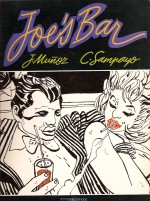
A Matter of Time


By Juan Gimenez (Catalan Communications)
ISBN: 978-0-87416-012-3, Del Rey edition (2005):  978-0-34548-314-0

Juan Antonio Giménez López was born in Mendoza, Argentina in 1943 and after studying industrial design attended the Academy of Fine Arts in Barcelona. Hugely influenced by Hugo Pratt and Francisco Solano López, Gimenez broke into the comics field with stories for Argentine magazines Record and Colomba before beginning his long association with European comics in such publications as Spain’s Zona 84, Comix International and 1994, France’s Metal Hurlant and Italy’s Lanciostory, L’Eternauta  and Skorpio, before gaining global fame with his scintillant Metabarons series produced in collaboration with Alejandro Jodorowsky.

His preferred metier is adult tales of science fiction and/or combat and Gimenez is an accredited expert on all things avionic or to do with war in the air.

In 1985 Catalan Communications collected a selection of time-travel related short stories (many of which had appeared in the American magazine Heavy Metal) usually known as the Time Paradox Tales into one glorious baroque and stunningly beautiful fantasy anthology with dark, sardonic and sublimely lyrical overtones of classic 2000AD Future Shocks or Twisted Times “sting-in-the-tale” stories…

Following a expansive and lavishly illustrated critique from Carlos Gimenez (no relation) the elegantly lush procession of exotic, eccentric eight-page excitements begins with ‘DIY’ wherein a father and son meddle with the wrong home-computer program and dad ends up a terrified touchline visitor at some of the most dangerous moments of all time and space, after which ‘Tridisex’ details the horrific fate of a couple of salacious chronal researchers who land in the right place at the right time but at the wrong size…

‘Express’ sees a dedicated time-assassin dispatched into the past to unwittingly murder himself whilst ‘Entropy’ details a tragic timeslip which causes the greatest combat aircraft of two eras to experience the closest of encounters.

‘8½’ explores the secret advantage of the fastest gunslinger of the Wild West and recounts the fate of the time-tourist who rooted for him whilst a tragic synchronicity-loop and incomprehensible paradox at last explains the great leap forward of an ancient civilisation in ‘Chronology’…

‘Residue’ takes the exercise in futility that is war to its inescapable conclusion in a lustrous four-page paean to technological advantage, bringing this magnificent artistic treat to a close on the darkest of downbeats…

Gritty, witty and ever so pretty, A Matter of Time is pure speculative gold: old-fashioned, cutting edge fantasy fun and entertainment with a satirical edge and its tongue firmly in its cheek. Perfume for the eyes so breathe deeply and jump aboard.
© 1982-1985 Juan Gimenez. English translation © 1985 Catalan Communications. All rights reserved.

Essential Marvel Two-In-One volume 1


By Jim Starlin, Roy Thomas, Steve Gerber, Gil Kane, Sal Buscema, Ron Wilson & various (Marvel)
ISBN: 978-0-7851-1729-2

Imagination isn’t everything. As Marvel slowly grew to a position of dominance in the wake of the losing their two most innovative and inspirational creators, they did so less by experimentation and more by expanding and exploiting proven concepts and properties.

The only real exception to this was the en masse creation of horror titles in response to the industry down-turn in super-hero sales – a move expedited by a rapid revision in the wordings of the increasingly ineffectual Comics Code Authority rules.

The concept of team-up books – an established star pairing, or battling – often both – with less well-selling company characters was not new when Marvel decided to award their most popular hero the lion’s share of this new title, but they wisely left their options open by allocating an occasional substitute lead in the Human Torch. In those long-lost days editors were acutely conscious of potential over-exposure – and since super-heroes were actually in a decline they may well have been right.

After the runaway success of Spider-Man’s Marvel Team-Up the House of Ideas carried on the trend with a series starring bashful, blue-eyed Ben Grimm – the Fantastic Four’s most iconic member – beginning with two test runs in Marvel Feature before graduating to its own somewhat over-elaborate title.

This economical, eclectic monochrome compendium gathers together the contents of Marvel Feature #11-12, Marvel Two-In-One #1-20, 22-25 and Annual #1, as well as Marvel Team-Up #47 and Fantastic Four Annual #11, covering the period September 1973 – March 1977.

It all kicked off with a perennial favourite pairing as the Thing once more clashed with the Hulk in ‘Cry: Monster! (by Len Wein, Jim Starlin and Joe Sinnott from Marvel Feature #11,  September 1973) wherein Kurrgo, Master of Planet X and the lethal Leader manipulated the blockbusting brutes into duking it out – ostensibly to settle a wager – but with both misshapen masterminds concealing hidden agendas…

That ever-inconclusive yet cataclysmic clash left Ben stranded in the Nevada desert where Mike Friedrich, Starlin & Sinnott promptly dropped him in the middle of the ongoing war against mad Titan Thanos as Iron Man helped the Thing crush monstrous alien invaders in ‘The Bite of the Blood Brothers!’ (#12, November 1973); another spectacular and painfully pretty all-action punch-up.

Still stuck in the desert when the dust settled Ben eventually trekked to an outpost of civilisation just in time to be diverted to Florida in Marvel Two-In-One #1 (January 1974) where Steve Gerber, Gil Kane & Sinnott magnificently revealed the ‘Vengeance of the Molecule Man!’ as Ben learned some horrifying home truths about what constituted being a monster battling with and beside the ghastly and grotesque anti-hero Man-Thing.

With the second issue Gerber cannily traded a superfluous supporting character from the Man-Thing series to add some much needed depth to the team-up title. ‘Manhunters from the Stars!’ pitted Ben, old enemy Sub-Mariner and the Aquatic Avenger’s powerful cousin Namorita against each other and aliens hunting the emotionally and intellectually retarded superboy Wundarr in another dynamically intoxicating tale illustrated by Kane & Sinnott. That case also left the Thing de facto guardian of the titanic teenaged tot…

Sal Buscema signed on as penciller with #3 as the Rocky Ranger joined the Man Without Fear ‘Inside Black Spectre!’, a crossover instalment of the extended epic then playing out in Daredevil #108-112 (this action-packed fight-fest occurring between the second and third chapters) after which ‘Doomsday 3014!’ (Gerber, Buscema & Frank Giacoia) found Ben and Captain America catapulted into the 31st century to save Earth from enslavement by the reptilian Brotherhood of Badoon, leaving Wundarr with Namorita for the foreseeable future…

The furious future-shocker concluded in MTIO #5 as the Guardians of the Galaxy climbed aboard the Freedom Rocket to help the time-lost heroes liberate New York before returning home. The overthrow of the aliens was completed by another set of ancient heroes in Defenders #26-29 (since collected in the superbly economical Essential Defenders volume 2).

Marvel Two-In-One #6 (November 1974) began a complex crossover tale with the aforementioned Defenders as Dr. Strange and the Thing encountered a cosmic event which began with a subway busker’s harmonica and led inexorably to a ‘Death-Song of Destiny!’ (Gerber, George Tuska & Mike Esposito) before Asgardian outcasts Enchantress and the Executioner attempted to seize control of unfolding events in #7’s ‘Name That Doom!’ (pencilled by Sal Buscema) only to be thwarted by Grimm and the valiant Valkyrie. There’s enough of an ending here for casual readers but fans and completists will want to hunt down Defenders #20 or the previously plugged Essential Defenders volume 2 for the full story…

Back here though issue #8 teamed the Thing and supernatural sensation Ghost Rider in a quirky and compelling Yuletide yarn for a ‘Silent Night… Deadly Night!’ (Gerber, Buscema & Esposito) as the audacious Miracle Man tried to usurp a very special birth in a stable…

Gerber moved on after plotting the Thor team-up ‘When a God goes Mad!’ for Chris Claremont to script and Herb Trimpe & Joe Giella to finish: a rather meagre effort with the Puppet Master and Radion the Atomic Man making a foredoomed power play, but issue #10 was a slice of inspired espionage action with Ben and the Black Widow battling suicidal terrorist Agamemnon who planned to detonate the planet’s biggest nuke in the blistering thriller ‘Is This the Way the World Ends?’ by Claremont, Bob Brown & Klaus Janson.

Marvel Two-In-One had quickly become a kind of clearing house for cancelled series and uncompleted storylines. Supernatural series The Golem had featured in Strange Tales #174, 176 and 177 (June-December 1974) before being summarily replaced mid-story by Adam Warlock and MTIO #11 provided plotter Roy Thomas, scripter Bill Mantlo and artists Brown & Jack Abel to offer some spectacular closure when ‘The Thing goes South’ resulted in stony bloke and animated statue finally crushing the insidious plot of demonic wizard Kaballa.

Young Ron Wilson began his lengthy association with the series and the Thing in #12 as Iron Man and Ben tackled out of control, mystically-empowered ancient Crusader Prester John in ‘The Stalker in the Sands!’; a blistering desert storm written by Mantlo and inked by Vince Colletta, after which Luke Cage, Power Man popped in to help stop a giant monster in ‘I Created Braggadoom!, the Mountain that Walked like a Man!’ – an old fashioned homage scripted by Roger Slifer & Len Wein, whilst Mantlo, Trimpe & John Tartaglione offered a spooky encounter with spectres and demons in #14’s ‘Ghost Town!’ a moody mission shared with The Son of Satan.

Mantlo, Arvell Jones & Dick Giordano brought on ‘The Return of the Living Eraser!’ a dimension-hopping invasion yarn which introduced Ben to Morbius, the Living Vampire after which a canny crossover epic began with the Thing and Ka-Zar plunging ‘Into the Savage Land!’ to dally with dinosaurs and defeat resource plunderers, after which the action switched to New York as Spider-Man joined the party in MTIO #17 to combat ‘This City… Afire!’ (Mantlo, Sal Buscema & Esposito) when mutated madman Basilisk transported an active volcano from Antarctica to the Hudson River with the cataclysmic conclusion following (from Marvel Team-Up #47) where Mantlo, Wilson & Dan Adkins finished off the epic and saved the day in fine style with ‘I Have to Fight the Basilisk!’

Another short-changed supernatural serial was finally sorted out in MTIO #18. ‘Dark, Dark Demon-Night!’ by Mantlo, Scott Edelman, Wilson, Jim Mooney & Adkins, found mystical watchdog The Scarecrow escape from its painted prison to foil a demonic invasion with the reluctant assistance of the Thing, after which Tigra the Were-Woman slinked into Ben’s life to vamp a favour and crush a sinister scheme by a rogue cat creature in ‘Claws of the Cougar!’ by Mantlo, Sal Buscema, & Don Heck.

That yarn segued directly into Fantastic Four Annual #11 which began a time-travelling sage with ‘And Now Then… the Invaders!’ by Roy Thomas, Big John Buscema & Sam Grainger, wherein Marvel’s First Family travelled back to 1942 to retrieve a cylinder of miracle-metal Vibranium which had begun to unwrite history after falling into Nazi hands.

En route they became embroiled in conflict with WWII super-team the Invaders which comprised early incarnations of Captain America, Sub-Mariner and the android Human Torch.

The time-busting task went well once the heroes finally united to assault the Nazi castle where the Vibranium was held, but after the quartet returned to their own repaired era, only Ben realised that the mission wasn’t completed yet…

The action continues in Marvel Two-In-One Annual #1 as, with the present unravelling around him, Ben returned to 1942 in ‘Their Name is Legion!’ by Thomas, Sal Buscema, Grainger, Tartaglione & George Roussos, to link up with Home Front Heroes The Liberty Legion (The Patriot, Thin Man, Red Raven, Jack Frost, Blue Diamond, Miss America and the Whizzer) and thwart Nazi raiders Skyshark and Master Man, Japanese agent Slicer and Atlantean traitor U-Man‘s invasion of America: a battle so big it spilled over and concluded in Marvel Two-In-One #20 (October 1976) in a shattering ‘Showdown at Sea!’ against diabolical Nazi scientist Brain Drain, courtesy of Thomas, Sal Buscema & Grainger.

MTIO #21 featured a team-up with Doc Savage but as Marvel no longer holds a license for that character, the story is excluded from this collection and the action resumes with #22’s two-part Thor pairing against the Egyptian God of Death in ‘Touch Not the Hand of Seth!’ (Mantlo, Wilson & Pablo Marcos); a fantastic cosmic extravaganza concluded with the assistance of Jim Shooter & Marie Severin in ‘Death on the Bridge to Heaven!’, after which Ben had a far more prosaic time with neophyte hero Black Goliath as a devastated downtown Los Angeles asked ‘Does Anyone Remember… the Hijacker?’ (by Mantlo, Shooter, Sal Buscema & Marcos).

This initial economical compendium ends on the cusp of a new era as the much delayed and postponed team-up with Iron Fist, the Living Weapon heralded the start of writer/editor Marv Wolfman’s impressive run on the title. ‘A Tale of Two Countries!’ illustrated by Wilson & Grainger, saw the Thing and the master martial artist shanghaied to the Far East as part of a Machiavellian plan to conquer the island kingdom of Kaiwann. Naturally they both strenuously objected…

These stories from Marvel’s Middle Period are of variable quality but nonetheless all are an honest attempt to entertain and exhibit a dedicated drive to please. Whilst artistically the work varies from adequate to quite superb, most fans of frantic Fights ‘n’ Tights genre would find little to complain about.

Although not really a book for casual or more maturely-oriented readers there’s lots of fun on hand and young readers will have a blast, so there’s no real reason not to add this tome to your straining superhero bookshelves…
© 1973, 1974, 1975, 1976, 1977, 2005 Marvel Characters, Inc. All Rights Reserved.

The Desert Peach volume 4: Baby Games


By Donna Barr (Mu Press/Aeon Pubs)
ISBN: 1-883847-05-2

Donna Barr is one of the comic world’s most singular graphic raconteurs. She always constructs impeccable, fully realised worldscapes to house her stories and tells them with a style and voice that are definitely one-of-a-kind. Her most perfect creations are the Half-Horse Stinz Löwhard, and The Desert Peach, perfectly self-assured and eminently capable gay brother of the legendary “Desert Fox” and the scintillating star of this effervescent assemblage of sly, dry wit, raucous drollery and way out military madness.

Set in World War II Africa and effortlessly combining hilarity, absurdity, profound sensitivity and glittering spontaneity, the stories describe the daily grind of Oberst Manfred Pfirsich Marie Rommel; a dutiful if unwilling cog in the German War Machine.

However, although as capable as his beloved elder sibling Field Marshal Erwin Rommel, the gracious and genteel Peach is a man who loathes causing harm or giving offence and thus spends his dry and dusty days with the ever-so-motley crew of the 469th Halftrack, Gravedigging & Support Unit of the Afrika Korps, trying to remain stylish, elegant and non-threatening to the men under his command and the enemy forces around him.

The only people he really dislikes are boors, bigots and card-carrying Blackshirts…

He applies the same genteel courtesies to the sundry natives inhabiting the area and the rather tiresome British – not all of whom are party to a clandestine non-aggression pact Pfirsich has agreed with his opposite numbers in the amassed Allied Forces…

The romantic fool is also passionately in love with and engaged to Rosen Kavalier: handsome Aryan warrior and wildly manly Luftwaffe Ace…

The Desert Peach ran for 32 intermittent issues via a number of publishers and was subsequently collected as eight graphic novel collections (1988-2005). A prose novel, Bread and Swans, a musical and an invitational collection by other artists entitled Ersatz Peach were also created during the strip’s heyday. A larger compendium, Seven Peaches, collects issues #1-7 and Pfirsich’s further exploits continue as part of the Modern Tales webcomics collective…

Arguably the real star of these fabulous frothy epics is the Peach’s long-suffering, unkempt, crafty, ill-mannered, bilious and lazily scrofulous orderly Udo Schmidt, a man of many secrets whose one redeeming virtue is his uncompromising loyalty and devotion to the only decent man and tolerable officer in the entire German army.

This terrifyingly scarce fourth softcover collection reprints issues #10-12, and starts the ball rolling with ‘Two-Timers’ wherein the fiercely protective Pfirsich infiltrates the British positions as history’s least believable English Officer to ferret out a spy targeting his brother Erwin.

Of course to carry off the mission somebody has to be prominently visible in the German camp as the ever-so-unmissable and wickedly froufrou Desert Peach. Ein step vorwarts, (or else…) patriotic he-man and self-appointed Nazi political officer Leutnant Kjars Winzig…

Meanwhile, as the entire 469th kvetch over the Leutnant’s unlikely and unhappy performance, Pfirsich’s impossible imposture is going inconceivably well until he confronts the undercover agent over drinks in the NAAFI. Although the bold Boche succeeds in reasoning with the master-spy, a couple of Anzac non-coms (who hate Poms as much as Krauts) are not fooled, leading to a spectacular chase and frantically thrilling conclusion…

That hilarious comedy of terrors was quickly topped by a superbly delightful and trenchantly wicked adult farce in ‘Straight and Narrow’ wherein Udo, disgusted with the mockery his effeminate boss engenders amongst other German units, determines to get his boss laid by a woman – specifically the very willing and professional ladies of local bordello “The Cedars”.

Aiding and abetting this appalling scheme is Pfirsich’s one true love, wild man Luftwaffe pilot and airborne inamorata Rosen Kavalier. Even with the more than willing demimondaine Babette in on the scheme and exerting all her professional wiles it takes a chemical “additive” to finally get the ball rolling…

Of course the entire vile scheme ends badly and the Peach, crushed, disgusted and humiliated storms off. Soon after however, Babette realises that she’s now eating for two…

The reprinted material ends here with the inevitable conclusion in ‘Menschenkind – Child of the World’ as nine months after that epic night Pfirsich – still distant with his staff and boyfriend – drives away the unrepentant Ace. Kavalier storms off and visits The Cedars again, discovering a fascinating piece of news…

Although the Peach refuses to listen to his true love, cunning Udo, in on the secret, inveigles his boss into returning to his place of shame, where after another farcical misapprehension of events the Peach is finally introduced to his newborn son…

But of course even this joy is tempered by incredible problems…

To augment and complete this fabulous triptych of torrid tales there’s a new epilogue ‘Home is Where…’ set in the Peach’s declining years, wherein Pfirsich and his adult son Mani play host to a reunion of the 469th few survivors: a bittersweet vignette which delights and fearfully foreshadows tragedies yet to come…

Referencing the same vast story potential as Sgt. Bilko, Hogan’s Heroes, Oh, What a Lovely War! and Catch 22, as well as such tangential films as Priscilla, Queen of the Desert and The Birdcage, the Desert Peach is bawdy, raucous, clever, authentically madcap and immensely engaging. These fabulous combat fruit cocktails were some of the very best comics of the 1990s and still pack the comedic kick of an embroidered landmine, liberally leavened with situational jocularity, accent humour and lots of footnoted Deutsche cuss-words for the kids to learn. Moreover, with this volume the dark bitter edges and cold iron underlying these fabulous characters and their horrific, doomed situation become increasingly apparent.

Illustrated in Barr’s fluidly seductive wood-cut and loose-line style, this book is a must-have for any history-loving, war-hating lover of wit, slapstick, high drama and belly-laughs. All the Desert Peach books are pretty hard to find these days but if you have a Kindle, Robot Comics have just begun to release individual comicbook issues for anybody who can get the hang of all this verfluchte technical tsuris…
© 1991-1994 Donna Barr. All rights reserved. The Desert Peach is ™ Donna Barr.

Hewligan’s Haircut


By Peter Milligan & Jamie Hewlett (Fleetway Publishing/Rebellion)
ISBN: 978-1-85386-246-5, Rebellion HC 978-1-90426-506-1, SC 978-1-90673-598-2

Since its inception in 1977 the weekly science fiction anthology comic 2000AD has been a cornucopia of thrills, chills, laughs and anarchic, mind-boggling wonderment as well as springboard for two generations of highly impressive creators.

Beside such “A-List” serial celebrities as Judge Dredd, Slaine, Rogue Trooper and their ilk, the quirky, quintessentially British phenomenon has played host to a vast selection of intriguing yarns with much less general appeal and far more discerning tastes.

Or, to put it bluntly, strips with as many foes as friends amongst the rabidly passionate audience.

Just one such was this outrageously tongue-in-cheek, fantastically surreal and absurdist love story from the era of Rave Parties and Acid Houses from Peter Milligan and Tank Girl co-creator Jamie Hewlett which originally ran in #700-711 of the Galaxy’s Greatest Comic, from 13th October to December 1st 1990.

The story is told in “Eight Partings”, commencing in black and white with the introduction of style-starved psychiatric patient Hewligan, about to be booted out of Five Seasons Mental Hospital.

In ‘Donald, Where’s Your Troosers?’ the hapless innocent spruces up his copious coiffure and accidentally carves a transcendental cosmic symbol into his bedraggled barnet. Suddenly everything that previously made no sense in his bemused and befuddled life instantly makes even less – but now it’s all in full, effulgent dayglo colour…

‘Under a Bridge with Dick and Harry’ finds the latest victim of “Don’t Care in the Community” undergoing even crazier visions and hallucinations than the ones which got him sectioned in the first place and also the subject of a bizarre police – and animated everyday objects – manhunt, until a wall tells him of a safe haven in ‘Don’t Put your Daughter on the Stage Mrs. Worthington’…

Giving Consensual Reality the old heave-ho, the tonsorial target meets the effervescent trans-dimensional gamin and pulchritudinous know-it-all Scarlett O’Gasometer, who offers companionship and the secret of what’s really going on. Still pursued by every cliché in British popular life the pair soon fall victim to a barrage of Art Attacks (Cubism and Warholian Pop) from unsanctioned Pirate Dimensions in ‘A Man , A Plan, Canal Panama’ but as Scarlet reveals the true nature of Everything and the pair leak into cult TV shows in ‘Oh Danny Boy Oh Danny Boy!’ Hewligan begins to understand why his entire life has been plagued with odd voices and images of giant stone heads…

The dashing due take a bus to Easter Island where ‘I Know a Fat Old Pleeceman’ finds them in a position to save all creation in ‘Roget’s Thesaurus’ before the sweet sorrowful monochrome parting of ‘The Psychedelic Experience’ wraps it all up with one last surprise…

Light, frothy, multi-layered with cultural time-bombs and snarky asides; this is a fun-filled, occasionally over-clever, but always magically rendered and intoxicatingly arch, quest-fable that no jaded Fantasy Fashionista or cultural gadabout could resist. However there’s not a tremendous amount of gore, smut or gratuitous violence but I suppose you can’t have everything…

This a gloriously silly piece of pure contemporary Albion perfectly captures a unique period in time and offers a pungent and memorable dose of New Age Nostalgia and there shouldn’t be any trouble finding this is tall, slim tale since it was re-released in a collectors hardback in 2003 and a paperback edition in 2010 by current 2000AD custodians Rebellion.

Coo! What larks…
© 1991 2000AD Books, A division of Fleetway Publications. © 2003, 2011 Rebellion A/S. All rights reserved.

Official Batman Annual 1985


By Gerry Conway, Don Kraar, Roy Thomas, Alan Moore, Jamie Delano, José Luis García-López, Alan Davis, Garry Leach & various (London Editions)
ISBN: 7235-6733-6

Generally I save the Christmas annuals for the nostalgia-drenched Festive Season but this is a little gem I recently re-examined and found to be an item which I had no illogical or purely emotional attachment to. It’s simply an extremely good-looking, thoroughly entertaining package which might be unknown to and of some interest to fans and collectors.

By the end of the 1970s the Superman and Batman Christmas books were a slim and slight shadow of their former bumper selves, but during the mid 1980s a new crop of editors and designers found a way to invigorate and add value to the tired tomes.

Now full-colour throughout but reduced to 64 pages this example stems from the days when I was just starting out in the business and a few of my more talented and famous colleagues and acquaintances on groundbreaking independent comic Warrior, star-studded 2000AD and at gradually expanding Marvel UK were offered a little side-work from Manchester-based London Editions Comics…

Behind the Bryan Talbot cover, ‘The Falcons Lair!’ written by Don Kraar and illustrated by Adrian Gonzales & Mike DeCarlo (originally seen in US comicbook Brave and the Bold #185, April 1982) opened proceedings with a boisterous action-romp teaming the Caped Crusader and Emerald Archer Green Arrow against the wiliest of criminal birds The Penguin, after which a brief prose piece by Jamie Delano lavishly illustrated by Alan & Damian Davis tantalisingly whetted the Fights ‘n’ Tights taste-buds with the wry and salutary tale of a foredoomed pickpocket ”Birdsong’ Mickey’s Day Out’…

The editors were equally canny in selecting the US reprints. ‘Last Laugh!’ first appeared in Batman #353 (November 1982): a dynamite stand alone tale pitting the Gotham Guardian against the archest of villains The Joker; a spectacular and audacious thriller by Gerry Conway magnificently illustrated by the incredibly talented and inexplicably underrated José Luis García-López.

Possibly one of the neatest and most impressive text tales in UK Annuals history ‘The Gun’ reunited Marvelman co-conspirators Alan Moore & Garry Leach (who painted the beguiling pictures which accompany the twisted trail of the weapon which killed Thomas and Martha Wayne) and the seasonal sensationalism concluded with ‘Where Walks a Snowman!’ (Batman #337, July 1981) wherein Gerry Conway& Roy Thomas recounted the horrific history of a chilling killer stalking Gotham in another lost art-masterpiece by García-López & Steve Mitchell.

Being a British Christmas book there’s even a traditional send-off with a brace of

‘Batman’s Puzzles’ pages comprising word games and “spot the difference” panels.

This impressive tome might well be of more interest to comics completists than chronic nostalgists like me, but such items often turn up in jumble sales and charity shops and are frequently well worth the price of admission

© 1984 DC Comics Inc. and London Editions Limited. All characters © 1984 DC Comics Inc.

Storm: The Deep World

By Don Lawrence & Saul Dunn (British European Associated Publishers)
No ISBN
Storm: The Last Fighter & Storm: The Pirates of Pandarve
By Don Lawrence & Martin Lodewijk (Titan Books)
ISBN: 978-0-90761-077-9 and 978-1-85286-083-7

Don Lawrence, one of our greatest comics artists, is rightly revered for his stunning painted artwork on the legendary British weekly strip The Trigan Empire – which was the only reason most kids read the venerable knowledge-dispensing illustrated weekly Look and Learn – but his last and greatest work is largely unknown in the country of his birth. Over the years a number of publishers have attempted to sell a mass-market English-language edition of the Dutch-published science fiction serial Storm with little success, leaving only truly dedicated fans to purchase beautiful but painfully expensive limited-edition, leather-bound, hardback deluxe collectors compendiums.

Nevertheless, to my knowledge three softcover albums were released in the 1980s and still turn up occasionally so it’s worth keeping your eyes open for a stunning fantasy treat…

The concept was first conceived by Martin Lodewijk/Vince Wernham and Laurence in 1976 as a vehicle for the character Commander Grek but declined by Dutch publisher Oberon. Reworked by science fiction author Philip Dunn (who scripted the initial episode using the pseudonym Saul Dunn) with time-lost Terran astronaut Storm as the lead, the series was far more welcome, resulting in nine albums between 1978-1982, scripted by Martin Lodewijk, Dick Matena, Kelvin Gosnell and Lawrence himself, all fondly designated as the Chronicles of Deep World.

The rejected Commander Grek tale was eventually reworked into the continuity as episode 0 and after the series was rebooted Lawrence & Lodewijk produced a further 17 tales – “The Chronicles of Pandarve” – until the artist tragically lost much of his sight and was forced to retire in 1995.

In 1987 Titan Books took up the challenge of popularising the saga – a massive hit in Germany and the Netherlands, with editions also published in French, Italian, Spanish, Portuguese, Polish, Danish, Finnish, Greek, Croatian, Serbian, Bosnian and Indonesian – but gave up after two volumes…

Storm continued throughout Europe and is still being published today with Dick Matena, Romano Molenaar & Jorg De Vos handling the art.

The first epic, The Deep World by Lawrence and Dunn, was translated and released by British European Associated Publisher in 1982 and told in stunning, luxurious, fully-painted detail the story of astronaut explorer Storm, despatched by United Nations scientists in the 21st century to fly through the mysterious Red Spot of Jupiter. Unfortunately the valiant spaceman is trapped in those cyclonic crimson winds and propelled uncounted millennia into the future.

Dazed, lost and baffled by the seeming disappearance of the Red Spot, Storm spends a year flying back to Earth and discovers a world utterly transformed. His home world has become an icy wasteland, a Snowball Earth, but his desperate investigations uncover even more incredible secrets.

The oceans are gone and civilisation – such as it is – has relocated to the ancient sea floors. As he slowly makes his way down the miles of craggy dry depths, Storm is attacked by bandits who steal his space suit and survival kit, despite his violent resistance. Now clad only in the furs of the attacker he killed, Storm follows and encounters a fantastic planet of incredible jungles and bizarre beasts ruled by barbarian warlord Ghast.

Despite looking like a primitive thug Ghast is no fool: he knows the wearer of the strange clothes must be a commodity of great value and imprisons the wanderer in his dungeons where Storm meets a red-haired beauty called Carrots (alternatively Redhair and Ember) who is part of a secret tribe of knowledge-hoarders opposed to Ghast’s rule.

When her fellows rescue Carrots they take Storm with them and their leader Kiley reveals startling familiarity with the Astronaut’s story and equipment…

Taken to the subterranean land of Tome and a lost sub-surface sea, Storm is unaware that Ghast has tracked them deep below the surface of the Deep World. When they encounter a fantastic survivor from the age of technology and learn the secret history of Earth, Ghast refuses to accept what he sees and triggers a catastrophic explosion and flood…

The Last Fighter (Lawrence & Lodewijk) took up the tale with Storm and Carrots – now permanently dubbed Ember – washed ashore in a mountainous region which was once the Bahamas, where they are captured by slavers in a travelling circus/gladiator show.

Even held by deadly living insectoid shackles the bellicose Storm is a constant problem and when he acts up too openly in front of paying customers he finds himself made one city’s champion in a contest to capture the Throne of the Gods.

If he rebels Ember will be fed to a giant monster…

Competing against a number of other champions, Storm must invade the “Palace of Death”, sit on “The Throne” and win “The Powers” for his city…

He complies and undertakes the lethal quest and discovers a huge, unexpected advantage: he is the only man alive who recognises the Palace as a crashed starship with all its deadly automatic defences activated and the throne as a captain’s command chair. Of course, that’s no real help when battling through the colossal booby-trapped corridors of the vast vessel to the off-switch, nor proof against the weapons of his rival champions or the schemes of the corrupt organisers of the contest…

After this Titan jumped immediately to the tenth tale, The Pirates of Pandarve, which saw an abrupt transition in the series as, after ages wandering the Deep World of Old Earth, Storm and Ember were suddenly catapulted into a universe of cosmic strangeness. Pandarve is a multiversal junction point where the laws of physics vary from moment to moment; a place of many worlds and planetoids with only localised gravity fields, circling an immense super-planet, all existing in a breathable atmosphere envelope instead of a special vacuum.

The pocket universe is ruled by power-mad dictator called Marduk, Theocrat of Pandarve – a man obsessed with temporal energy- whose long-range scanners detect an incredible chronal anomaly on Earth. Determined to possess the phenomenon at all costs, Marduk rips open the gateway of the multiverse and teleports Storm and the hapless collateral casualty Ember to Pandarve…

At that moment rebels attack the Theocrat’s citadel, disrupting the process and his targets materialise in space hundreds of miles above planet Pandave, shocked, terrified yet somehow still alive. Floating helplessly, the pair are rescued by an old man in a sailing boat hunting a space whale, but tragically when the monumental beast attacks Ember is lost…

When Storm and old man Rann reach his home asteroid they find a scene of devastation and the hunter’s daughter abducted by the bloodthirsty marauders of Vertiga Bas. The traumatised elder is saved from suicide by the time-lost Earthman and, believing Ember dead, they determine to pursue the pirates and rescue the stolen child.

Meanwhile, Ember has been picked up by Marduk’s men…

The searchers reach the outlaw habitat where Storm rescues Rann’s daughter in a truly unique manner, but soon falls foul of the Buccaneer city’s unique laws.

Condemned to the water-mines Storm’s last sight is of Ember, broadcast around the pocket universe as Marduk’s next bride…

The tragic hero has no idea that’s it’s all a ploy by the Theocrat to entrap the Anomaly…

In the mines Storm chafes under the trauma and pressure, his only friend the huge warrior called Nomad. With no real hope of success they begin to plan escape and revolution…

And that’s where, after a spectacular battle the magic, mayhem and majesty ends, with a freed Storm searching for his red-headed paramour in a scintillating, cliffhanging promise of more to come…

Those English-language hardback collectors editions were released way back in 2004, and now retail for astonishing amounts of money so surely it’s time for another go at a mass-market competitively priced run?

© 1982 Oberon bv – Haarlem – Netherlands – Don Lawrence/Philip Dunn.

© 1987 Oberon BV/Don Lawrence and Martin Lodewijk. UK edition © 1987 Titan Books, Ltd.

© 1987 Oberon BV/Don Lawrence and Martin Lodewijk. UK edition © 1989 Titan Books, Ltd.

Superman in Action Archive Edition volume 3


By Jerry Siegel, Joe Shuster & the Superman Studio (DC Comics)
ISBN: 1-56389-710-5

In this third tumultuous deluxe hardback collection of the Man of Tomorrow’s earliest groundbreaking monthly adventures, (reprinted from issues #37-52 of epochal anthology Action Comics and spanning June 1941 – September 1942), the never-ending battle for Truth, Justice and the American Way expanded to cover the struggle against Global Tyranny with the war that had been ripping apart the outer world finally spreading to isolationist America.

When these tales first saw print Superman was a bona fide but still fresh phenomenon who had utterly changed the shape of the fledgling comicbook industry. There was a popular newspaper strip, foreign and overseas syndication and the prestigious Fleischer studio was producing some of the most expensive – and best – animated cartoons ever produced.

Thankfully the quality of the source material was increasing with every four-colour release and the energy and enthusiasm of Shuster and Siegel (who was particularly on fire as scripter) had infected the burgeoning group of studio juniors who had been hired to cope with the relentless demand.

After a fulgent and informed Foreword by Producer, author, historian and fan Michael Uslan, the Never-ending Adventure resumed in Action Comics #37 and ‘Commissioner Kent’ (with art by Paul Cassidy): a return to tales of graft, crime and social injustice wherein the timid alter-ego of the Man of Steel was forced to run for the job of top cop in Metropolis, whilst #38 – illustrated by Leo Nowak & Ed Dobrotka – saw a mastermind exert ‘Radio Control’ on citizens and cops in a spectacular battle against a sinister hypnotist.

Horrific mad science was behind the spectacular thriller ‘The Radioactive Man’ (by Nowak and the shop) whilst Action #40 featured ‘The Billionaire’s Daughter’ (John Sikela) wherein the mighty Man of Tomorrow needed all his wits to set straight a spoiled debutante.

Stories of crime, corruption and social iniquity gradually gave way to more earth-shattering fare and with war in the news and clearly on the horizon, the tone and content of Superman’s adventures changed too: the scale and scope of the stunts became more important than the motive. The raw passion and sly wit still shone through in Siegel’s stories but as the world grew more dangerous the Metropolis Marvel simply grew mightier to cope with it all and Shuster and Co stretched and expanded the iconography in ways that all others would follow.

‘The Saboteur’ (Action Comics #41, October 1941) told a terse tale of a traitor motivated by greed rather than ideology, whilst ‘City in the Stratosphere’ in #42 (both illustrated by Sikela) revealed how a troubles-free secret paradise floating above Metropolis had been subverted by an old enemy, whilst ‘The Crashing Planes’ (illustrated by Nowak, from the December Action Comics) actually had Superman attacking Nazi paratroopers on the cover and found the Man of Steel smashing a plot to destroy a commercial airline.

Even though war was as yet undeclared, DC and many other publishers had struck their colours well before December 7th 1941. When the Japanese attack finally filtered through to the gaudy pages the patriotic indignation and desire for retribution would generate some of the very best art and stories the budding art-form would ever see.

Action #44 (drawn by Nowak) featured a frozen ‘Dawn Man’ who thawed out and went wild in the crime-ridden Metropolis, whilst the next issue saw ‘Superman’s Ark’ girdle the globe to repopulate a decrepit and nigh-derelict Zoo and Action #46 featured ‘The Devil’s Playground’ (Ed Dobrotka) wherein masked murderer The Domino stalked an amusement park wreaking havoc and instilling terror.

A blockbusting, no-holds-barred battle ensued in Action #47 (Sikela) when Lex Luthor gained incredible abilities after acquiring the incredible ‘Powerstone’, whilst #48 found the Man of Tomorrow toppling an insidious gang of killers in ‘The Adventure of the Merchant of Murder!’ before outwitting a despicable and deadly maniac dubbed ‘The Puzzler!’ in #49 (Dobrotka & Sikela).

Action Comics #50 saw Clark Kent and Lois Lane despatched to Florida to scope out Baseball skulduggery in a light-hearted tale illustrated by Nowak before ‘The Case of the Crimeless Crimes’ introduced the canny faux-madness of practical-joking bandit The Prankster (#51, by Dobrotka & Sikela, who also illustrated the last tale in this tome).

The glorious indulgence concludes with the ‘The Emperor of America!’ wherein an invading army were welcomed with open arms by all but the indignant and suspicious Action Ace who single-handedly liberated America in a blistering, rousing call-to-arms classic.

The raw passion and sly wit of Siegel’s stories and the rip-roaring energy of Shuster and his team were now galvanised by the parlous state of the world and Superman simply became better and more flamboyant to deal with it all. These Golden Age tales are timeless, priceless enjoyment. How can anyone possibly resist them?
© 1941, 1942, 2001 DC Comics. All Rights Reserved.
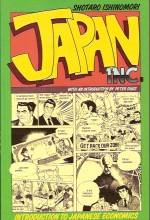
The Complete Crumb Comics volume 3: Starring Fritz the Cat


By Robert Crumb (Fantagraphics Books)
ISBN: 978-0-93019-375-1

Robert Crumb is a unique creative force in the world of cartooning with as many detractors as devotees. His uncompromising, excoriating, neurotic introspections, pictorial rants and invectives unceasingly picked away at societal scabs and peeked behind forbidden curtains for his own benefit, but he has always happily shared his unwholesome discoveries with anybody who takes the time to look…

In 1987 Fantagraphics Books began the nigh-impossible task of collating, collecting and publishing the chronological totality of the artist’s vast output and many of those engrossing compendia are now being reissued.

With the material in this third volume the isolated and secretive artist began to break into the wider world as his first great creation escaped from Crumb’s self-published minicomics and into regular paying venues…

Once again, if intemperate language, putative blasphemy, cartoon nudity, fetishism and comedic fornication are liable to upset you or those legally responsible for you, stop reading this review right here and don’t buy the book.

The son of a career soldier, Robert Dennis Crumb was born in Philadelphia in 1943 into a functionally broken family. He was one of five kids who all found different ways to escape their parents’ shattering problems and comics were always paramount amongst them.

As had his older brother Charles, Robert immersed himself in the strips and cartoons of the day; not simply reading but feverishly creating his own. Harvey Kurtzman, Carl Barks and John Stanley were particularly influential, but also newspaper artists like E.C. Segar, Gene Ahern, Rube Goldberg, Bud (Mutt and Jeff) Fisher, Billy (Barney Google), De Beck, George (Sad Sack) Baker and Sidney (The Gumps) Smith as well as illustrators like C.E. Brock and the wildly imaginative and surreal 1930’s Looney Tunes and Merrie Melodies animated shorts.

Defensive and introspective, young Robert pursued art and slavish self-control through religion with equal desperation. His early spiritual repression and flagrant, hubristic celibacy constantly warred with his body’s growing needs…

Escaping his stormy early life, he married young and began working in-house at the American Greeting Cards Company. He discovered like minds in the growing counterculture movement and discovered LSD. In 1967 Crumb relocated to California and became an early star of Underground Commix. As such he found plenty of willing hippie chicks to assuage his fevered mind and hormonal body whilst reinventing the very nature of cartooning with such creations as Mr. Natural, Devil Girl and the star of this particular show, the utterly amoral, unpredictable, almost human Fritz the Cat…

The rest is history…

From this point onwards the varied and exponentially impressive breadth of Crumb’s output becomes increasingly riddled with his often hard-to-embrace themes and declamatory, potentially offensive visual vocabulary as his strips grope towards the creator’s long-sought personal artistic apotheosis and this third volume covers material created and published between 1960-1966 as the self-tormented artist began to find a popular following in a strangely changing world.

The mercurial pictorial parade is preceded by another fascinating reminiscence from life-long friend Marty Pahls describing ‘The First Girl That Came Along’…

Crumb’s early artistic style was utterly transformed by the introduction of Rapidograph mapping pens and ‘Fritz the Cat, Ace Salesman’ (August 1964) has a raw, mesmerising scratchy linearity that belies the subversive sexual undercurrent of the piece, after which the feline philanderer went hard-core in ‘Fritz Comes on Strong’ (published in satire magazine Help! #22, January 1965). From the same issue ‘Harlem: a Sketchbook Report’ displayed the artist’s gift for visual reportage.

Fritz appeared in the silent and extremely trenchant bobbysoxer strip ‘Fred, the Teen-age Girl Pigeon’ (Help! #24, May 1965), whilst ‘Fritz Bugs Out’ (Cavalier, October 1964-February 1965) found the cat misbehaving in a Bohemian college setting before setting out on an extended hippie-style vision-quest whilst three dumb-show episodes of ‘The Silly Pigeons’ (November 1964-March 1965) perfectly display the creator’s hardwired slapstick roots.

‘Bulgaria: a Sketchbook Report’ (Help! #25, July 1965) saw the artist turn his probing pens on a Cold-War alien culture after which ‘Fritz the Cat, Special Agent for the CIA’ (March-May 1965) perfectly parodied the political scene and the planet’s fascination with suave super-spies. Next up are three more, increasingly surreal, snippets from ‘The Silly Pigeons’ (Spring 1965) and a swift swipe at the modern working woman in ‘Roberta’ (Spring 1965). Working in the production department of a vast greetings card company gave the insular Crumb access to new toys and new inspiration and he would return repeatedly to the white-collar world to for inspiration and pictorial spleen-venting…

‘Fritz the Cat, Magician’ (Summer 1965, and published in Promethean Enterprises #3, 1971) is a sweetly seductive puff-piece whilst the exigencies of earning a little extra cash clearly influenced the speculative pieces ‘Guitar Models of the Future’ (Yell #3, September 1965), Topps Promotional Booklet ‘The Road to Success’ (Fall 1965), ‘Illustrations for Nostalgia Enterprises’ (Fall 1965), ‘The Heap Years of the Auto’ (intended for Nostalgia Illustrated, Fall 1965) and ‘The Small Small Businessman’ (again intended for Nostalgia Illustrated, Fall 1965): all showing Crumb’s versatility, passion for the past and imagination.

‘Punchlines for Color Cards’ features the interior messages for the artworks amongst the large Colour Section which opens here with a spectacular succession of sketches designated ‘Letter to Marty Pahls’ (covering April 4th, June 3rd, October 30th 1960, May 28th and November 5th 1961), after which two ‘Cards to Mike Britt’ (December 1963-January 1964) are followed by the wonderful covers for ‘Fritz Bugs Out’ (February 1965), ‘Agent of the CIA’ (March 1965) and ‘Roberta’ (Spring 1965).

Swiftly following are the aforementioned ‘Selected Topps Monster Greetings Cards’ (Fall 1965) and general ‘Cards for American Greetings’ (1964-1966) which close the rainbow section. Back in black and white another ‘Card to Mike Britt’ precedes the ‘Cover for Fug #1’ (Fall 1965) and the untitled group sex-romp ‘Fritz the Cat’ intended for that debut Fug, before a copious collection of ‘Greetings Cards for American Greetings’ (1964-1966) and the ‘Cover for Gooseberry’ #2 (Fall 1965) complete this meander through the Master’s formative years.

If Crumb had been able to suppress his creative questing he could easily have settled for a lucrative career in any one of a number of graphic disciplines from illustrator to animator to jobbing comic book hack, but as this pivotal collection readily proves, the artist was haunted by the dream of something else – he just didn’t yet know what that was…

Crumb’s subtle mastery of his art-form and obsessive need to reveal his most hidden depths and every perceived defect – in himself and the world around him – has always been an unquenchable fire of challenging comedy and riotous rumination and this chronicle begins to show his growing awareness of where to look.

This superb series charting the perplexing pen-and-ink pilgrim’s progress is the perfect vehicle to introduce any (over 18) newcomers to the world of grown up comics. And if you need a way in yourself, seek out these books and the other fifteen as soon as conceivably possible…
Introduction © 1988 Marty Pahls. Greetings cards © 1964, 1965, 1966, 1967, 1988 American Greetings Corporation. Monster Greetings trading cards © 1965 Topps Bubble Gum, Inc. All other contents © 1964, 1965, 1968, 1969, 1970, 1971, 1974, 1988 Robert Crumb. All rights reserved.

Casey Ruggles: The Marchioness of Grofnek


By Warren Tufts (Western Winds Productions)
No ISBN

The newspaper strip Casey Ruggles – a Saga of the West used Western motifs and scenarios to tell a broad range of stories stretching from shoot-’em-up dramas to comedy yarns and even the occasional horror story.

The strip debuted in 1949, a centenary tribute to the California Gold Rush, and it’s ever-capable hero was a dynamic ex-cavalry sergeant and sometime US Marshal making his way to that promised land to find his fortune (this was the narrative engine of both features until 1950 where daily and Sunday strips divided into separate tales), meeting historical personages like Millard Fillmore, William Fargo, Jean Lafitte and Kit Carson in gripping two-fisted action-adventures.

Warren Tufts was a phenomenally talented illustrator and storyteller born too late. He is best remembered now – if at all – for creating two of the most beautiful western comics strips of all time: Ruggles and the elegiac, iconic Lance.

Sadly he began his career at a time when the glory days of newspaper syndicated strips were gradually giving way to the television age and ostensibly free family home entertainment. Had he been working scant years earlier in adventure’s Golden Age he would undoubtedly be a household name – at least in comics fans’ homes.

Born in Fresno, California on Christmas Day, 1925 Tufts was a superb, meticulous draughtsman with an uncanny grasp of character, a wicked sense of storytelling and a great ear for dialogue whose art was effective and grandiose in the representational manner, favourably compared to both Hal Foster’s Prince Valiant and the best of Alex Raymond.

On May 22nd 1949 he began Ruggles as a full-colour Sunday page and supplemented it with a black and white daily strip on September 19th of that year.

Tufts worked for the United Features Syndicate, owners of such popular strips as Fritzi Ritz and L’il Abner, and his lavish, expansive tales were crisply told and highly engaging, but – a compulsive perfectionist – he regularly worked 80-hour weeks at the drawing board and often missed deadlines. This led him to use many assistants such as Al Plastino, Rueben Moreira and Edmund Good. Established veterans Nick Cardy and Alex Toth also spent time working as “ghosts” on the series.

Due to a falling-out with his syndicate Tufts left his first wonderful western creation in 1954 and Al Carreño continued the feature until its demise in October 1955. The departure came when TV producers wanted to turn the strip into a weekly television show but apparently United Features baulked, suggesting the show would harm the popularity of the strip.

During a year spent creating the political satire feature ‘Lone Spaceman’ Tufts formed his own syndicate for his next and greatest project, Lance (probably the last great full page Sunday strip and another series crying out for a high-quality collection) before moving peripherally into comic-books, working extensively for West Coast outfit Dell/Gold Key, where he drew various westerns and cowboy TV show tie-ins like Wagon Train, Korak son of Tarzan, The Amazing Chan and the Chan Clan and a long run on the Pink Panther comic.

Eventually he quit drawing completely, working as an actor, voice-actor and eventually in animation on such shows as Challenge of the Super Friends.

Tufts had a lifelong passion for flying, even designing and building his own planes. In 1982 whilst piloting one, he crashed and was killed.

The Pacific Comics Club collected many “lost strip classics” at the start of the 1980s, including six volumes (to my knowledge) of Casey Ruggles adventures. This fourth stupendous black and white volume (approximately 15 inches x 10 inches) contains stories that highlighted Tufts’ splendid grasp or irony and love of comedy…

The first, however, is a stirring and chilling cowboy thriller featuring a legendary Western figure return of an old foe. ‘A Real Nice Guy’ originally ran from 5th January to 23rd February 1953, and found Ruggles and old scout Christopher “Kit” Carson heading towards Shasta City in a deadly snowstorm just as a devoted and loving wife murders the sheriff to free her murderous husband from the brand new Jail. As the blizzard hits hard the fugitives take refuge in a line-shack also sheltering Carson and Ruggles…

When the storm subsides the killers steal the heroes’ guns, horses, boots and even Carson’s trousers to combat the cold, leaving them to die as they flee. However the determined lawmen break free and track the pair through horrific polar conditions in a tense and deadly race to survive before the next lethal ice storm strikes…

The second adventure jumps from fraught life and dearth to something far more serious as ‘The Marchioness of Grofnek’ arrives in Shasta in all her resplendent, Eastern European glory, with an army of nobles, pots of cash and jewels and a burning desire to marry again…

This surreal and hilariously wry yarn ran from February 24th to 11th April and brilliantly depicted the true nature of friendship as Carson tried to get Ruggles hitched and the canny Marshall countered every ploy with one oh his own…

The final tale in this stupendous monochrome collection is a marvellous slapstick wheeze which completely ignores the titular hero to feature the further exploits of a returning “villain”.

Running from 13th April – 23rd May 1953, ‘The Highwaymen’ marked the reappearance of Old Ancient (a grizzled dime-store owlhoot and wicked parody of silver screen cowboy William Boyd whose super-sanitized Hopalong Cassidy wowed generations of movie and TV viewers who might perhaps have been better served by picking up a history book instead) who offered to help out destitute blacksmith Cyril by teaching him the finer points of hold-ups, stage robbing and banditry. Of course the mouthy old coot had no chance of making a success of his criminal crash-course but did provide some of the most side-splitting cock-ups ever seen on a comics page.

Equal parts Keystone Cops, Destry Rides Again, Buster Keaton’s Go West and Carry on Cowboy, this delightfully fast-paced and razor-barbed spoof perfectly closes this charming, twice-lost comicstrip treasure-trove…

Human intrigue and fallibility, bombastic action and a taste for the ludicrous reminiscent of John Ford or Raoul Walsh movies make Casey Ruggles the ideal western strip for the discerning modern audience. Westerns are a uniquely perfect vehicle for drama and comedy, and Casey Ruggles is one of the very best produced in America: easily a match for the generally superior European material like Tex or Lieutenant Blueberry.

Surely the beautiful clean-cut lines, chiaroscuric flourishes and sheer artistic imagination and veracity of Warren Tufts can never be truly out of vogue? These great tales are desperately deserving of a wider following, and at a time when so many great strips are finally being revisited, I’m praying some canny publisher knows another good thing when he sees it…
© 1949, 1950, 1953 United Features Syndicate, Inc. Collection © 1981 Western Winds Productions. All Rights Reserved.