The Agents


By Ben Dunn & Kevin Gunstone (AP Pocket Manga)
ISBN: 1-932453-64-4

After decades of homegrown comics product America finally began to grow aware of other country’s graphic treasures through of all things television, when in the late 1960s imported cartoons from Japan first began appearing as part of Saturday morning programming. With shows like Astroboy, Marine Boy, Speed Racer and others reshaping a nation’s most malleable minds, it wasn’t too long before Western anime lovers also branched out into the scrupulously stylised world of manga too…

By the 1980s translated works were increasingly dominating the US and world markets and devotees also found a burgeoning and impressive subgenre market of cross-cultural, fan-turned-pro material we now know as OEL (“Original English Language”) or Amerimanga.

Probably the most adept and successful of these new creators is Ben Dunn, who was born in Taiwan in 1964, where he was exposed early and often to the fabulous alternatives of the East, before returning to Kentucky and Texas. He founded his own publishing house Antarctic Press in 1984 during the first days of the black and white comics boom, and with both timing and raw talent on his side created a series of wonderful trans-Pacific series which combined the best of American and Japanese art style and storytelling philosophy.

Among his best known creations are Ninja High School and Warrior Nun Areala and Marvel tapped his expertise when they launched their own “Mangeverse” sub-imprint in 2000.

A man of diverse interests, Dunn also cites the fabulous Film and TV fantasy adventures of the Swinging Sixties as a major interest and influence, as can be seen in this pocket collection of a six-issue miniseries he produced with writer Kevin Gunstone for Image in 2004.

The Agents is set in an alternative future: a glorious and outrageous homage to Thunderbirds, Joe 90, Captain Scarlet, The Prisoner, Green Hornet, and such superspy stalwarts as Derek Flint, James Bond, John Steed & Emma Peel and Lady Penelope CreightonWard as well a dozens of lesser lights from that unforgettable age of heroes…

The action opens in ‘You Only Live Once’ as thirty years from now veteran agent Nigel Cord is called back to active service when the only super-villain to have ever outwitted him makes the world an incredible offer.

Three decades ago criminal mastermind Professor Daedalus nuked Washington DC and Moscow and took over Paraguay in the aftermath. With both global Super Powers reeling Great Britain stepped in to assume the role of World Policeman and civilisation has been in a spiral of escalating scientific terrorism ever since. Now the dying megalomaniac is offering his technological marvels in return for one last confrontation with his arch nemesis…

Meanwhile irreplaceable Boy Savant Mike 70 has gone missing and masked sidekick Haiku, without the fortifying influence of his mentor the Red Wasp is losing his edge in the unceasing battle to reclaim the streets of New York from gangsters and anarchists whilst spymaster Lady Pippa seems intent only on drinking herself to death and bedding the new recruits ‘On His Majesty’s Secret Agency’…

There are other factors in play such as the deadly C.A.B.A.L. assassin Kristal Veil and her increasingly erratic paymasters, whilst secretive crisis-management organisation the Tomahawks use advanced technology to fight disasters but do nothing to fix the political inconsistencies which cause them.

‘The Spy Who Saved Me’ finds Cord and Veil as guests of the dying Daedalus whilst the C.A.B.A.L. war among themselves and ‘Her Majesty’s Secret Agent’ reveals that the New World Order is riddled with moles and traitors…

With global Armageddon minutes away the action and intrigue accelerates to a fatal climax in ‘Thundercrack’ before ‘Our Man Cord’ finally saves the day – if not the status quo…

With all such nostalgic pastiches of bygone glories there’s an overwhelming temptation to tweak the source material for modern consumption – or perhaps just to show how clever we all are these days – but The Agents generally resists that urge, preferring to present a full-on, exuberant and magically honest appreciation of great times gone by.

Drawn in monochrome manga style but still genuinely Vista-Visioned and happily Super-Marionated, this lost delight might just be the best paean to lost days any wistful, thrill-starved baby-boomer could desire… and it’s even available as an ebook.

Story © Kevin Gunstone. Art © Ben Dunn. All rights reserved.

Richard Corben Complete Works volume 3: Rowlf/Underground


By Richard Corben and various (Catalan Communications)
ISBN: 978-0-87416-031-6

Richard Corben is one of America’s greatest living proponents of comic strip storytelling: springing, as so many have, from the tumultuous wave of independent counterculture commix of the 1960s and 1970s to become a major force in sequential narrative with an unmistakable style and vision. He is equally renowned for his mastery of the airbrush, captivatingly excessive anatomical stylisation and his delightfully wicked, darkly comedic horror, fantasy and science fiction tales.

Born in Anderson, Missouri in 1940, he graduated with a Fine Arts degree in 1965 and found work as an animator. At that time, the neutered comicbooks of the Comics-Code Authority era were just starting to lose disaffected, malcontented older fans to the hippy-trippy, freewheeling, anything goes publications of independent-minded creators across the continent who were increasingly making the kind of material Mummy and her lawyers wouldn’t approve of…

Shocking, rebellious, pharmacologically-enhanced sensibilities and unconventional lifestyles, acting on creative impulses honed by 1950s EC Comics, Carl Barks’ Duck tales and other classy early strips called out to young artists like Corben, who responded in kind, in a variety of small-press publications including Grim Wit, Slow Death, Skull, Fever Dreams and his own mag, Fantagor.

Often signing with his sardonic pseudonym “Gore”, Corben’s work increasingly began to appear in more professionally produced venues. As his style and skills developed he worked for Warren Publishing’s Eerie, Creepy, Vampirella, Comix International and graphically outrageous adult science fiction anthology 1984/1994. He also famously re-coloured a number of reprinted strips for the revival of Will Eisner’s the Spirit.

In 1975 Corben approached French fantasy phenomenon Métal Hurlant and became a fixture of its American iteration Heavy Metal. Soon he was producing stunning graphic escapades for a number of companies, making animated movies, painting film posters and producing record covers such as the multi-million-selling Meatloaf album Bat Out of Hell. He never stopped making comics but preferred his own independent projects with collaborators such as Harlan Ellison, Bruce Jones and Jan Strnad.

This regrettably out-of-print collection is the last of three collecting his early efforts and includes his longest and most ambitious tale of those learning years, but before that the appetite is whetted by the surreal black and white parable ‘When Dreams Collide’ (1970) wherein a repressed priest and a free-spirited flower-child share a bus ride and a daydream and ‘Bug’, a far nastier science fiction fantasy with a hidden message for anybody tempted to play house outside their species…

‘Rowlf’ was first crafted in 1971 and reworked in 1979 into the full-colour saga presented here. Ambitious and more emotionally multilayered, it follows the troubled life of Princess Maryara, whose only friend is her dog. Father wants to marry her off to a pompous royal jackass and to that end she is dragged off to the local wizard who has a fine line in transformation spells for reluctant things and people…

When technological demons invade and kidnap Maryara, faithful Rowlf defends her as best he can but is no match for their guns and tanks. However when the dog stumbles into one of the wizard’s spells the bizarre human/canine hybrid that results is a far more formidable proposition. One thing hasn’t changed though – Rowlf’s unfailing devotion to the lost princess. He will find her and face any threat to rescue her…

This impressive and touching 32 page yarn is followed by ‘Mangle, Robot Mangler’, a sexy, seditious monochrome parody of the classic comicbook hero, followed by an adaptation of H. P. Lovecraft’s eerie suspense thriller ‘The Rats in the Walls’: a grisly psychological terror-tale of fallen castles and inherited horrors.

This volume closes with a splendidly dark and seductive pastiche of the genre in ‘A Gothic Tale’, produced in collaboration with Tom Veitch, stuffed with nuns, covens, family secrets and shocking twists…

Violent, cathartically graphic and often blackly hilarious, Corben’s infamous signature-stylisation always includes oodles of nudity, extreme violence and impossibly proportioned male and female physiques – and there’s plenty of all that in here. However this volume also shows hints of the narrative maturity which helped reshape our art-form so the fact that so much of his canon is currently unavailable in English is an unbearable calamity. Not only are these early works long overdue for a definitive re-issue but all his rude, riotous, raucously ribald revels need to be re-released now…
© 1970-1987 Richard Corben. Collection © 1987 Catalan Communications. All rights reserved.

Celeb


By Charles Peattie, Mark Warren & Russell Taylor (Private Eye/Corgi)
ISBN: 0-552-13858-4

In terms of taste, as in so many other arenas, our modern world seems to be heading for Heck in a hand-basket, so  I thought I’d take the opportunity to cover a little lost gem of British cartooning delight that’s increasing re-relevant in these appalling days of fame campaigns and dodgy talent show democracy.

Celeb was a strip which ran in that evergreen gadfly Private Eye, beginning in May 1987, created by Mark Warren and the team of Charles Peattie and Russell Taylor (who were simultaneously crafting the abortive first iteration of greed-glorifying mini-classic Alex for Robert Maxwell’s short-lived London Daily News).

For years credited to the pseudonymous “Ligger”, the pithy and hilarious episodes followed the day to day life of Swinging Sixties survivor and disgracefully declining rock-legend Gary Bloke as he dealt with a changing world, thinning hair, parenthood and inexorable middle age.

These days with 24/7 reality shows, desperate celebrities enduring career-resuscitating humiliations in locked houses and jungle clearings and a host of other self-inflicted, double-edged B-list exposé freak-shows everywhere, the outrageous pronouncements and antics of Gary seem pretty tame but in the days before Ozzy Osbourne became more famous for parenting and not singing whilst footballers’ performance off the field took precedence over goals scored on it, the sozzled, crass, befuddled, and pitifully pompous cocky cockney-boy-made-good was the very epitome of affably acceptable, ego-bloated, publicity-seeking, self-aggrandizing, drug-fuelled idiocy.

Within this collection from 1991 the legendary “Man of the Peeple” distributes kernels of hard-won wisdom to the likes of Michael Parkinson, Terry Wogan, Clive James, Cilla Back, Ruby Wax, Barry Norman, Anne Diamond, Selena Scott, Michael Aspel and other interviewers of lesser longevity, tackles world poverty and the environment head-on (and eyes tight shut), learns how to cope with those new-fangled rock videos, adapts to the needs of his burgeoning family and, of course, consumes a phenomenal quantity of recreational pharmaceuticals…

Including a selection of interviews from the Sunday Times (October 1989), The Sun (Wednesday August 3rd 1988) and candid shots of Gary with Bob Geldof and George Michael at Live Aid, the collection concludes with the infamous days during which Gary was dead of an overdose and met both God and Elvis, plus the sordid truth behind his numerous brushes with the law, leading to his 18-month stretch At Her Majesty’s Pleasure and subsequent key role in a terrible prison riot for better conditions and macrobiotic food…

The heady cocktail of drink, sex, drugs, money, sport, music, adoration and always-forgiven crassness is perhaps the reason so many folks are seduced by celebrity. If you want to see another side to the fame-game and have a hearty laugh into the bargain Gary Bloke is your man…
© 1991 Peattie, Taylor & Warren. All Rights Reserved.

Jonah Hex: Luck Runs Out


By Justin Gray, Jimmy Palmiotti, Jordi Bernet, Russ Heath, Giuseppe Camuncoli John Higgins, Rafa Garres & others (DC Comics)
ISBN13: 978-1-84576-985-7

The Western is a genre that can be sub-divided into two discrete halves: the sparkly, rhinestoned clean-and-shiny version that dominated kids’ books, comics and television for decades, as best typified by heroes such as the Lone Ranger, Roy Rogers and Gene Autry – and the other stuff.

In the US that alternative grimy, gritty, excessively brutal and dark sort of cowboy tale was solely the territory of select R-rated movies but was for years the successful and popular province of European strips such as Jean-Michel Charlier’s Blueberry or Bonelli and Galleppini’s Tex Willer. Eventually the aesthetic seeped into US culture via the films of Sam Peckinpah and Sergio Leone.

Jonah Hex is the latter breed.

Arguably the most memorable American comicbook western character ever created, Hex is certainly the bleakest and most grippingly realised, as is the brutal and uncompromising world he inhabits. Remorseless and unstoppable with gun or knife, he hunts men for the price on their heads in the years following the War Between the States and the scars inside him are more shocking even than the ghastly ruin of his face.

Impressive, unique and controversial from his inception and early days in All-Star Western/Weird Western (see Showcase Presents Jonah Hex for those groundbreaking tales) the disreputable anti-hero’s various creative teams have always been confident enough to apply apparently incongruous fantasy concepts to this grittiest of protagonists.

Under the inspired guidance of current writers Justin Grey & Jimmy Palmiotti and the staggeringly talented assemblage of artists taking turns on the current incarnation of Jonah Hex the darkly ironic wit, sanguine view of morality and justice, breathtaking action and sheer Grand Guignol mayhem regularly generate some of the most accessible and enjoyable comics fiction available today.

In this collection, reprinting issues #25-30 of the latest comicbook series, six more stand alone tales display again how the ravaged, dissolute bounty hunter takes every idiocy and horror the world conceals and deals with it in his inimitable, surly and generally lethal manner.

Not confined to the usual chronological continuity this collection opens with ‘My Name is Nobody’ illustrated by that grandmaster of gritty realism, Russ Heath; jumping to the dying days of Hex’s life to recount an uncomfortable encounter with a capable young man also calling himself Hex before skipping back to the immediate post-Civil War era for the Giuseppe Camuncoli & Stefano Landini illustrated ‘Four Little Pigs: A Grindhouse Western’.

This brutal and disturbing tale of rural farming and serial killing is followed by the enchantingly mordant yet uplifting saga of ‘Starman’ by the magnificent Jordi Bernet, who depicts the uplifting account of how Hex saved a young immigrant boy who grew to be just as wily, deadly and infamous in his own unique profession: assassinating corrupt lawmen…

‘Townkiller’, illustrated by John Higgins with S. J. Hurst, sees the hired gun turn down a job too unspeakable even for him – and reveals the fate of the man who didn’t, before Rafa Garres moodily captures the horror of ‘Return to Devils Paw’ as Hex is forced by Pinkerton Agents to take them to stolen gold left behind after a clash between US Cavalry and nigh-supernatural Indian Braves (and don’t miss Jonah Hex: Only the Good Die Young for the original mini-masterpiece). Of course it all ends bloody…

Bernet returns to close this volume with the eponymous and blackly hilarious ‘Luck Runs Out’ as the West’s worst but most ruthless bandits foul up the perfect train-robbery. The unlucky part consists of waking up Hex after a week-long drunken binge…

Jonah Hex has always been billed as a “Western for people who don’t like Westerns” and, cliché aside, this has never been more true. One of the best strips currently coming out of America, this selection of compelling vignettes perfectly display the threads of black humour, tragic humanity and nihilistic cosmic indifference that runs through the extended epic history of DC’s Wild West.

Action-packed, gory, chilling, wickedly funny and cathartically satisfying, this really is a rare treat for those who despise the form: a perfect modern reinterpretation of a great storytelling tradition. No matter what your reading preference, this is an experience you can’t afford to miss.

© 2007-2008 DC Comics. All Rights Reserved.
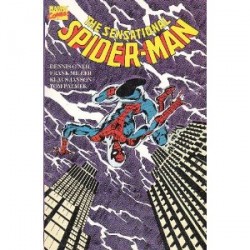
Essential Captain America volume 3


By Stan Lee, Gary Friedrich, Steve Englehart, Gene Colan, John Romita, Gil Kane, Sal Buscema & various (Marvel)
ISBN: 978-0-7851-2166-8

Created by Joe Simon & Jack Kirby in an era of frantic patriotic fervour, Captain America was a dynamic and highly visible response to the horrors of Nazism and the threat of Liberty’s loss. He faded during the post-war reconstruction and briefly reappeared after the Korean War – a harder, darker sentinel ferreting out monsters, subversives and the “commies” who lurked under every brave American kid’s bed. Then he vanished once more until the burgeoning Marvel Age resurrected him just in time for the turbulent, culturally divisive 1960s.

By the time of this third Essential chronicle, gathering issues #127-156 of his monthly comicbook and reprinting the covers to the first two Annuals, the Star-Spangled Avenger had become a uncomfortable symbol of a troubled, divided society, split along age lines and with many of the hero’s fans apparently rooting for the wrong side…

Nevertheless the action begins here with the Sentinel of Liberty still working for super-scientific government spy-agency S.H.I.E.L.D. (which back then stood for Supreme Headquarters International Espionage Law-enforcement Division) in ‘Who Calls Me Traitor?’ (#127, July 1970, by Stan Lee, Gene Colan & Wally Wood), which saw the veteran hero framed and manipulated by friend and foe alike in the search for a double agent in the ranks, after which the embittered avenger dropped out and decided to “discover America” – as so many kids were doing – on the back of a freewheeling motorcycle.

‘Mission: Stamp Out Satan’s Angels!’ (inked by Dick Ayers) saw him barely clear the city limits before encountering a nasty gang of bikers terrorising a small-town rock festival, after which his oldest enemy resurfaced to exact ‘The Vengeance of… the Red Skull’ as a by-product of attempting to begin a Middle East war.

Issue #130 found Cap ‘Up Against the Wall!’ as old foe Batroc the Leaper led Porcupine and Whirlwind in an fully paid-for ambush whilst the Sentinel of Liberty was busy defusing a college riot. The mysterious contractor then resorted to a far subtler tactic: launching a psychological assault in ‘Bucky Reborn!’

With the mystery villain revealed, the tragic true story behind the resurrected sidekick came out in ‘The Fearful Secret of Bucky Barnes!’ – a powerful, complex drama involving ruthless science brokers A.I.M., their murderous master Modok and even Doctor Doom.

Back in New York Advanced Idea Mechanics promptly returned in #133 as Modok attempted to stir racial unrest by sending a killer cyborg to create ‘Madness in the Slums!’ allowing Cap to reunite with his protégé The Falcon – whose name even began appearing in the title from the next issue.

Now a full-fledged partnership Captain America and the Falcon #134 found the pair battling ghetto gangsters in ‘They Call Him… Stone-Face!’, before the Avenger introduced his new main man to S.H.I.E.L.D. in the chilling ‘More Monster than Man!’ (inked by Tom Palmer) wherein a love-struck scientist turned himself into an awesome anthropoid to steal riches, only to end up in ‘The World Below’ (with the legendary Bill Everett applying his brilliant inks to Colan’s moody pencils) as a collateral casualty of the Mole Man’s battle with Cap.

With the Falcon coming to the rescue the Star-Spangled Avenger was on hand when his new partner opted ‘To Stalk the Spider-Man’ – a typical all-action Marvel misunderstanding that was forestalled just in time for Stone-Face to return in #138’s ‘It Happens in Harlem!’ as John Romita the elder returned to the art chores for the beginning of a lengthy and direction-changing saga…

For years Captain America had been the only expression of Steve Rogers’ life, but with this issue the man went undercover as a police officer to solve a series of disappearances and subsequently regained a personal life which would have long-term repercussions. After Spidey, Falcon and Cap trounced Stone-Face, the Red, White and Blue was subsumed by plain Rookie Blues in ‘The Badge and the Betrayal!’ as Steve found himself on a Manhattan beat as the latest raw recruit to be bawled out by veteran cop Sergeant Muldoon…

Meanwhile police officers were still disappearing and Rogers was getting into more fights on the beat than in costume… Issue #140 revealed the plot’s perpetrator ‘In the Grip of Gargoyle!’ as the tale took a frankly bizarre turn with moody urban mystery inexplicably becoming super-spy fantasy as the Grey Gargoyle stole a mega-explosive from S.H.I.E.L.D. in ‘The Unholy Alliance!’ (with Joe Sinnott inks).

Spectacular but painfully confusing until now, the epic was dumped on new writer Gary Friedrich to wrap up, beginning with ‘And in the End…’ (Captain America and the Falcon #142) wherein Cap, renewed love interest Sharon Carter, Falcon and Nick Fury attempted to save the world from the Gargoyle and ultimate explosive Element X…

All this time the Falcon, in his civilian identity of social worker Sam Wilson, had been trying to get friendly with “Black Power” activist Leila Taylor and, with the sci fi shenanigans over, a long-running subplot about racial tensions in Harlem boiled over…

‘Power to the People’ and ‘Burn, Whitey, Burn!’ (both from giant-sized #143 with Romita inking his own pencils) saw the riots finally erupt with Cap and Falcon caught in the middle, but copped out with the final chapter by taking a painfully parochial and patronising stance and revealing that the unrest amongst the ghetto underclass was instigated by a rabble-rousing super-villain in ‘Red Skull in the Morning… Cap Take Warning!’

Nevertheless Friedrich had made some telling and relevant points – and continued to do so in #144’s first story ‘Hydra Over All!’ (illustrated by Romita) with the creation of S.H.I.E.L.D.’s all-woman attack squad Femme Force One (stop squirming – at least they were trying to be egalitarian and inclusive…).

The issue also featured a solo back-up tale ‘The Falcon Fights Alone!’ (drawn by the great Gray Morrow) wherein the street vigilante got a new uniform and rededicated himself to tackling the real problems on his turf; drug-dealers and thugs endangering the weakest, poorest members of society…

Captain America and the Falcon #145 continued the hydra storyline with ‘Skyjacked’ (stunningly illustrated by Gil Kane & Romita) as the terrorists kidnapped Cap’s new team in mid-air, after which Sal Buscema began his long tenure on the series with ‘Mission: Destroy the Femme Force!’ and ‘Holocaust in the Halls of Hydra!’ (inked by John Verpoorten) wherein the devious dealings are uncovered before Falcon comes to the rescue of the severely embattled and outgunned heroes, culminating in the unmasking of the power behind the villainous throne in #147’s ‘And Behind the Hordes of Hydra…’ and a staggering battle royale in Las Vegas as the power behind the power reveals himself in Friedrich’s swansong ‘The Big Sleep!’

Gerry Conway assumed the writing chores for issues #149-152, an uncharacteristically uninspired run that began with ‘All the Colors… of Evil!’ (inked by Jim Mooney) wherein Gallic mercenary Batroc resurfaced, kidnapping ghetto kids for an unidentified client who turned out to be the alien Stranger (or at least his parallel universe incarnation) who intervened personally in ‘Mirror, Mirror…!’ (Verpoorten inks) but was still defeated far too easily.

‘Panic on Park Avenue’ (Buscema & Vince Colletta) pitted Cap against pale imitations of Cobra, Mr. Hyde and the Scorpion as Conway sought to retroactively include Captain America in his ambitious Mr. Kline Saga (for which see Essential Iron Man and Essential Daredevil volumes 4) climaxing with ‘Terror in the Night!’ (inked by Frank Giacoia) featuring  bombastic battles and new plot-complications for officer Steve Rogers and Sgt. Muldoon…

Captain America and the Falcon #153 heralded a renaissance and magical return to form for the Star-Spangled Avenger as writer Steve Englehart came aboard and hit the ground running with a landmark epic which rewrote Marvel history and captivated the die-hard fans simultaneously.

The wonderment began with ‘Captain America… Hero or Hoax?‘ (inked by Mooney) as Falcon, Sharon and Cap had an acrimonious confrontation with Nick Fury and decided to take a break from S.H.I.E.L.D.

Sam Wilson went back to Harlem whilst Steve and Sharon booked a holiday in the Bahamas, but it wasn’t long before the Falcon caught Captain America committing racist attacks in New York. Enraged, Falcon tracked him down but was easily beaten since the Sentinel of Liberty had somehow acquired super-strength and a resurrected Bucky Barnes…

In ‘The Falcon Fights Alone!’ (Verpoorten inks) the maniac impostors claimed to be “real” American heroes and revealed what they wanted – a confrontation with the lily-livered, pinko wannabe who had replaced and disgraced them. Even after torturing their captive they were frustrated in their plans until the faux Cap tricked the information out of the Avengers.

Battered and bruised, Falcon headed to the holiday refuge but was too late to prevent an ambush wherein Steve Rogers learned ‘The Incredible Origin of the Other Captain America!’ (Frank McLaughlin inks) – a brilliant piece of literary sleight-of-hand that tied up the Golden Age, fifties revival and Silver Age iterations of the character in a clear, simple, devilishly clever manner and led to an unbelievably affecting conclusion, which perfectly wraps up this glorious black and white compendium in the fabulously gratifying ‘Two into One Won’t Go!’

Any retrospective or historical re-reading is going to turn up a few cringe-worthy moments, but these tales of matchless courage and indomitable heroism are fast-paced, action-packed and illustrated by some of the greatest artists and storytellers American comics has ever produced. Captain America was finally discovering his proper place in a new era and would once more become unmissable, controversial comicbook reading, as we shall see when I get around to reviewing the next volume…

© 1970, 1971, 1972, 2006, 2010 Marvel Characters, Inc. All Rights Reserved.

The Futurians


By Dave Cockrum, with Ricardo Villagran & Paty (Marvel/Eternity)
ISBN: 0-939766-81-7 & 0-944735-00-2

Dave Cockrum was one of the last great classical stylists of the American comics industry; a supremely skilled draughtsman, proficient designer and uniquely imaginative yet whimsical storyteller who died far too young in 2006.

Born in 1943 in Oregon, he was raised an army brat, traveling all over America and found joy and companionship early on as part of the burgeoning fan community that developed during the Silver Age of Comicbooks.

A devoted science fiction reader and fan he was greatly influenced by the clean-lined, humanistic work of Wally Wood, Mac Raboy, Gil Kane, Joe Kubert and especially Murphy Anderson with whom Cockrum began his professional career as an art assistant and inker following military service in the navy during the Vietnam conflict.

After working with and then replacing Anderson on the freshly revived Legion of Super-Heroes strip in Superboy in 1973, Cockrum left for Marvel following a dispute over artwork ownership, bringing the same stylish flair and irrepressible imagination to the groundbreaking and landmark revamping of the moribund X-Men in 1975.

After co-creating the last true and enduring sensation of the 20th century, Cockrum moved on (and indeed, back) returning to the Merry Mutants for a second superb and innovative run from Uncanny X-Men #145- 164) before crafting this instantly intriguing, criminally underappreciated and tragically unfulfilled costumed fantasy very much in the manner of both the Legion and X-Men for the company’s new Marvel Graphic Novel format.

During the 1980s Marvel was an unassailable front-runner in the American comicbook business, outselling all its rivals and increasingly making inroads into the licensed properties market that once went automatically to the Whitman/Dell/Gold Key colossus. Far too much of their own superhero stable might have become cautious and moribund, but the company was eagerly expanding into other arenas and formats.

The company had moved quickly during the early days of the Direct Sales market and were soon market leader in the new field with a range of “big stories” told on larger sturdier, glossy white pages (285 x 220mm rather than the standard 258 x 168mm of the day’s standard comicbooks) emulating the long-established European Album.

The line had already featured not only proprietary characters in out-of-the-ordinary adventures (The Death of Captain Marvel and X-Men: God Loves Man Kills) but also in-continuity launches like The New Mutants, licensed assets like Elric: the Dreaming City and crucially creator-owned properties and concepts such as Super Boxers, Star Slammers and Dreadstar.

Let loose in a playground that clearly offered and delivered so much more bang-per-buck and peril-per-page, The Futurians synthesised and recapitulated with unbridled, enthusiastic abandon everything that Cockrum so obviously adored about swashbuckling comics adventures… liberally dosed with equal amounts of colourful escapism and dark, pragmatic common sense.

The story is cosmic in scope and chillingly effective in execution. In those long-gone days, actions seldom had truly far-reaching consequences but in The Futurians an entire superhero universe is constructed and the whole planet suffers accordingly. The death-toll was shocking for those innocent days but so logically apt…

In the far-distant world of Tomorrow a worn, spent planet Earth is still a place of war as humanity has developed into two species: the perfect men of terminus and the mutant “Inheritors” of Ghron. When the conflict escalated to the point where the Inheritors used the moon as a missile and literally destroyed the world the Science Generals of Terminus discovered that Ghron had taken an ultimate step – wrecking the sun itself and fleeing back into the planet’s past.

Unable to follow, the Last Men devised a desperate plan and, using the incredible sentient being who lived in our wounded star as a targeting method, sent packages of genetic material in scattershot fashion through Earth’s history: chromosomal “time-bombs” that would alter the nature of any mortals hit by the packets and create potential warriors to combat the Inheritors whenever and wherever they should materialise.

Not all the transformational bullets were on target, overshooting by millennia in some cases – but the majority strike the proper target: the 20th century. To make certain of their scheme the leader of the Last Men was reduced to bodiless intellect and dispatched to yesterday to act as shepherd, general and guide for the new champions.

The Time is Now: mysterious entrepreneur and technocrat Vandervecken has gathered a disparate group of individuals at the headquarters of Future Dynamics to participate in a grand – and extremely profitable – experiment. With the time-tossed aid of solar elemental Sunswift the eight men and women – all unsuspectingly primed by the mutagenic “time-bombs” – are transformed into incredibly powerful superhumans… and not a moment too soon as the Inheritors have also arrived and begun devastating the planet.

Animalistic Blackmayne, Terrayne the Earthmover, pocket-superman Avatar, aquatic metamorph Silkie, avian raptor Werehawk, insectoid Mosquito and phantasmal Silver Shadow join Sunswift and the tele-potent Vandervecken in defeating the initial assaults but not without terrible casualties – including New York City, utterly eradicated in a meteor bombardment…

In spectacular saves-the-day fashion the neophyte group finally overcome the temporal invaders and prepare themselves for further missions…

Which didn’t happen for quite a while since Cockrum then turned down a deal for a continued series with Marvel in favour of a too-good to-be-true and subsequently ill-starred alliance with new, independent publisher Lodestone Comics. That led to three issues (plus another that was never released) eventually all collected in an incredibly scarce, low-print run standard-format graphic novel from Eternity in 1987.


In that collection Cockrum, assisted as ever by his wife and colourist Paty and for the first time by inker Ricardo Villagran, explored the days after Doomsday beginning with ‘Aftermath’ wherein the world slowly adjusted to the destruction of Manhattan, a potential change in global climate and the psychic shock of what was to all intents and purposes an alien invasion. With fundamentalist groups claiming the wrath of their particular god, Cold War powers on nervous alert and a refugee crisis building on the East Coast, Sunswift set about repairing the atmospheric envelope whilst the rest of the team split up to tackle the rabble-rousing Thunderbolts and offer assistance to the survivors of New York.

Already at that monolithic Ground Zero are veteran superheroes Doctor Zeus, Hammerhand and affable mystic Jack O’Finagle, but there are also horrors lurking as monsters from deep within the Earth’s fractured mantle have begun hunting for tasty surface mortals in ‘The Burrowers From Beneath!’

Some metahumans and lots of mere mortals are missing so Avatar leads Silver Shadow, Mosquito and Terrayne after them and the AWOL Blackmane, resulting in a grisly and terrible showdown monster-mash deep within the ‘Web of Horror!’ that spills up and over onto the surface where the hard-pressed military bear the brunt of the battle…

Forced to retreat the Futurians regroup whilst Silkie discovers a new power which leads to a reassessment of their dire situation, the true origin of the giant horrors and a ratcheting up of tension when the army starts chucking nukes at the creatures which apparently feed on raw energy…

This glorious superhero fantasy saga resoundingly concludes as the heroes ‘Let the Fire Fall!’ but that was basically it for the Futurians. In recent years writer Clifford Meth has worked to bring the tale to Hollywood (with no news as of this writing) but if there’s any justice hopefully the renewed interest will at least lead to a proper and complete reissue of these cracking yarns in an appropriately grand deluxe edition…
The Futurians © 1983 David Cockrum. Volume 2 ™ and © 1987 David Cockrum. All rights reserved.

JLA volumes 11 & 12: Obsidian Age books 1 & 2


By Joe Kelly, Doug Mankhe, Tom Nguyen & various (DC Comics)
ISBNs: 978-1-84023-702-3 & 978-1-84023-709-2

When the World’s Greatest Superheroes and cornerstone of the Silver Age of Comics were relaunched in 1997 (see JLA: New World Order) the intrinsic quality actually lived up to the massive hype and made as many new fans as it won back old ones, but the glistening aura of “fresh and new” never lasts forever and by the time of these tales there had been numerous changes of creative team – usually a bad sign…

However Joe Kelly, Doug Mankhe and Tom Nguyen’s tenure proved to be a competent blend of steadying hands and boldly iconoclastic antics through which the JLA happily continued their tricky task of keeping excitement levels stoked for a fan-base cursed with a criminally short attention-span.

Kelly’s run on the series has some notable highs (and lows) and these two impressive editions collect the author’s boldest and most audacious adventure, an epic which spanned a year of publication and rewrote millennia of DC continuity.

Collecting issues # 66-71 and # 72-76 respectively, The Obsidian Age began in Book 1 with ‘The Destroyers Part 1’ wherein peculiar water-based events and phenomena indicated that Aquaman – believed killed in a catastrophe which eradicated Atlantis – was alive and trying to contact his JLA comrades. When the team are subsequently attacked by an ancient mystical warrior they get their first clue that it’s not “somewhere” but “somewhen”…

‘The Destroyers Part 2’ sees the team recovering from a second attack by the terrifying Tezumak and shaman Manitou Raven whose coordinated manipulations bring the heroes into the ruins of ‘Stillborn Atlantis’ and all-out combat with the deranged Ocean Master. When Tempest (the all grown-up Aqualad and now a magical adept himself) and a conclave of mystic heroes, including Zatanna, Faust and Doctors Occult and Fate, are called in to assess the deteriorating situation in the no-longer sunken city, the assembled champions of science and magic realise that something truly terrible is about to be unleashed….

Renewed assaults from the past indicate another global crisis and when the JLA discover a message from Aquaman they head back 3000 years to discover an unsuspected era of Atlantean domination. With Superman, Batman, Wonder Woman, Flash, Green Lantern, Martian Manhunter and Plastic Man gone, a stand-in team of heroes are left to guard the world but the ancient mastermind behind the menace has also prepared a contemporary trap for the substitute JLA…

‘New Blood’ (illustrated by Yvel Guichet & Mark Propst) features Zatanna and the Atom trying to stave off a concatenation of clearly unnatural natural disasters with the aid of Green Arrow, Captain Marvel, Firestorm, Jason Blood (with and without Etrigan the Demon), Hawkgirl, ex-villain and troubled soul Major Disaster, Nightwing and new find Faith (as well as a little help from the Justice Society of America) – a desperate scratch-team woefully overmatched and under-trained…

Meanwhile the strands of mystery are unravelled in ‘Revisionist History’ which finds the time-lost First Team in 1000BC where an above-the-waves Atlantis leads a coalition of nations and super-warriors in a campaign to conquer the known world by sword and sorcery. This unknown episode of human history contravenes all the records and clandestine reconnaissance by the JLA reveals an enchantress named Gamemnae is behind the scheme.

But her plans extend far beyond her own epoch and to that end she has kidnapped the 21st century water-breathing Atlanteans and enslaved their king Aquaman…

However Gamemnae’s own team is far from united: Manitou Raven and his bride Dawn are deeply troubled by the venality of their allies and the obvious nobility of the Justice Leaguers… Meanwhile back in the future the last story of Book 1 returns focus to the new team in ‘Transition’ (by Guichet & Propst again) as the planet is ravaged by geological catastrophes and Gamemnae’s millennial booby-trap activates, intent on conquering the world of tomorrow by suborning its meta-human and mystic defenders…

Ending on a stunning mystery cliffhanger this volume also includes a behind-the-scenes text feature on the formidable enemy team ‘The Ancients’ including a delightful assemblage of design sketches.


Obsidian Age Book 2 opens with a handy précis of previous events before launching into ‘History is Written By…’ (Kelly, Mahnke & Nguyen) wherein the JLA battles hopeless odds in ancient Atlantis whilst trying to liberate the enslaved water-breathing descendents, and in modern times ‘Last Call’ (Guichet & Propst) finds the alternative League faring badly against Gamemnae’s monstrous animated time-trap until a ghostly message from the past enables them to turn the tide…

‘Obsidian’ follows the final tragic battle between the JLA and The Ancients, revealing how Gamemnae’s future assaults began whilst Manitou finally succumbs to his conscience and changes sides. ‘Tragic Kingdom’ (by Mahnke, Guichet, Darryl Banks, Dietrich Smith and inkers Nguyen, Propst, Wayne Faucher & Sean Parsons) simultaneously provides the origin and final fall of the deadly Witch-Queen in a cataclysmic confrontation that bends times, breaks the barriers between life and death and costs one of the heroes everything…

The story-portion culminates in ‘Picking up the Pieces’ (with art from Lewis LaRosa & Al Milgrom)  as the JLA conclude a 3000 year quest to restore their fallen comrade and re-jig their roster in the aftermath of the epic adventure that has left them all changed…

This volume ends with an insightful and revealing ‘Afterword’ by Kelly.

The action of Obsidian Age takes place in the devastated aftermath of the DC Crossover Event “Our Worlds At War” wherein an alien doomsday device named Imperiex almost destroyed the planet – but there’s enough useful background and build-up in the chapters collected in both books to circumvent any possible confusion should that saga have passed you by…

Engaging, engrossing and especially entertaining this is a superior superhero slugfest that will appeal to a lot of readers who thought the Fights ‘n’ Tights genre beyond or beneath them…
© 2002, 2003 DC Comics. All Rights Reserved.
Buck Danny volume 2: The Secrets of the Black Sea


By Francis Bergése & Jacques de Douhet colours by Frédéric Bergése translated by Jerome Saincantin (Cinebooks)
ISBN: 987-1-84918-018-4

Here’s another of the latest translated versions of a favourite continental classic, courtesy of the fine people at Cinebooks; a publishing outfit dedicated to bringing the fabulous wealth and variety of European comics to we infamously resistant English-speaking graphic novel readers.

Buck Danny premiered in Spirou in January 1947 and continues soaring across the Wild Blue Yonder to this day. The strip describes the improbably long and historically significant career of the eponymous Navy pilot and his wing-men Sonny Tuckson and Jerry Tumbler. It is one of the world’s last aviation strips and a series which has always closely wedded itself to current affairs such as The Korean War, Bosnia and even Afghanistan.

The Naval Aviator was created by Georges Troisfontaines whilst he was director of the Belgian publisher World Press Agency. The series was initially depicted by Victor Hubinon before being handed to the multi-talented Jean-Michel Charlier, then working as a junior artist. When Charlier, with fellow creative legends Albert Uderzo and René Goscinny, formed the Édifrance Agency to promote the specialised communication benefits of comics strips, he continued to script Buck Danny and did so until his death.

From then on, his artistic collaborator Francis Bergése (who had replaced Hubinon in 1978) took complete charge of the adventures of the All-American Air Ace, occasionally working with other creators such as in this captivating political thriller scripted by Jacques de Douhet.

Like so many artists involved in stories about flight Francis Bergése (born in 1941) started young with both drawing and flying. He qualified as a pilot whilst still a teenager, enlisted in the French Army and was a reconnaissance flyer by his twenties. At age 23 he began selling strips to L’Étoile and JT Jeunes (1963-1966) after which he produced his first aviation strip Jacques Renne for Zorro. This was soon followed by Amigo, Ajax, Cap 7, Les 3 Cascadeurs, Les 3 A , Michel dans la Course and many others.

Bergése worked as a jobbing artist on comedies, pastiches and WWII strips until 1983 when he was offered the plum job of illustrating the venerable and globally syndicated Buck Danny. Bergése even found time in the 1990s to produce some tales for the European interpretation of Great British icon Biggles. He finally retired in 2008, passing on the reins to illustrator Fabrice Lamy and scripter Fred Zumbiehl.

Like all the Danny tales this second volume is astonishingly authentic: a suspenseful and compelling politically-charged adventure yarn originally published in 1994 as Buck Danny #45: Les secrets de la mer Noire and coloured by Frédéric Bergése) which blends mind-boggling detail and technical veracity with good old fashioned blockbuster derring-do.

It’s 1991 and in the dying days of the Soviet Empire a submarine incident leads the American Chief of Naval Operations to dispatch Buck into the newly open Russia of “Glasnost and Perestroika” to ascertain the true state and character of the old Cold War Foe. All but ordered to be a spy, Buck is further perturbed by his meeting with ambitious Senator Smight, the US dignitary who is supposed to be his contact and cover-story on the trip to heart of Communism.

Moreover, Buck is an old target of the KGB and knows that no matter what the official Party Line might be, a lot of Soviet Cold Warriors have long and unforgiving memories…

No sooner does he make landfall than his greatest fears are realised. Shanghaied to a top secret Russian Naval super-vessel Buck knows he’s living on borrowed time: but his death is apparently only a pleasant diversion for the KGB renegade in charge, whose ultimate plans involve turning back the clock and undoing all the reforms of the Gorbachev administration… and the key component to the scheme is a conveniently dead American spy in the wrong place at the right time…

Of course the ever-efficient US Navy swings into action, determined to rescue their pilot, clean up the mess and deny the Reds a political victory but there’s only so much Tumbler and Tuckson can do from the wrong side of the re-drawn Iron Curtain. Luckily Buck has some unsuspected friends amongst the renegades too…

Fast-paced, brimming with tension, packed with spectacular air and sea action and delivered like a top-class James Bond thriller, The Secrets of the Black Sea effortlessly plunges the reader into a delightfully dizzying riot of intrigue, mystery and suspense. This is a superb slice of old-fashioned razzle-dazzle that enthrals from the first page to the last panel and shows just why this brilliant strip has lasted for so long.

Suitable for older kids and boys of all ages, the Adventures of Buck Danny is one long and enchanting tour of duty no comics fan or armchair adrenaline-junkie can afford to miss. Chocks Away, me hearties…

© Dupuis, 1994 by Bergése& de Douhet. English translation © 2009 Cinebook Ltd. All Rights Reserved.

Y – The Last Man: volume 9 Motherland


By Brian K Vaughan, Pia Guerra Goran Sudžuka & José Marzán Jr. (Vertigo)
ISBN: 978-1-84576-358-9

When an apparent plague killed every male on Earth, only student Yorick Brown and his pet monkey Ampersand survived in a world instantly utterly all-girl. Even with a government super-agent and a geneticist escorting him across the unmanned American continent to a Californian bio-lab, all the boy could think of was re-uniting with his girlfriend Beth, trapped in Australia when the disaster struck.

With his rather reluctant companions secret agent 355 and Dr. Allison Mann – who were trying to solve the mystery of his continued existence – the romantically determined oaf trekked overland from Washington DC to California, getting ever closer to his fiancée… or so he thought. Each of his minders harboured dark secrets: Dr. Mann feared she might have actually caused the plague by giving birth to the world’s first parthenogenetic human clone and the lethally competent 355 had allegiances to organisations far-more far-reaching than the American government….

Also out to stake their claim and add to the general tension were renegade Israeli General Alter Tse’Elon and post-disaster cult called “Daughters of the Amazon” who wanted to make sure that there really were no more men left to mess up the planet. Other complications included Yorick’s occasionally insane sister, Hero, stalking him across the ultra-feminised, ravaged and now utterly dis-United States and the boy’s own desirability to the numerous frustrated and desperate women he encountered en route to Oz…

After four years and some incredible adventures Yorick (a so-so scholar but a proficient amateur magician and escapologist) and crew reached Australia only to discover Beth had already taken off on her own odyssey to Paris. During the hunt Dr. Mann discovered the truth: Yorick was alive because his pet Ampersand was immune and had insulated his owner via his habit of “sharing” his waste products if Yorick didn’t duck fast enough…

As this book, reprinting issues #49-54 of the award-winning comics series, opens with the eponymous four-chapter ‘Motherland’ (illustrated by Pia Guerra & José Marzán Jr.) Yorick and his guardians are following a trail to the true architect of the plague in Hong Kong, only to be captured by the cause of all the world’s woes – a deranged biologist cursed with genius, insanity and a deadly dose of maniacal misogynistic hubris.

Just before a breathtaking denouement wherein Yorick and Allison learn the incredible reasons for the plague, and Agent 355 and turncoat Australian spy Rose clash for the final time with the ninja who has been stalking them for years, the scene switches to France where Yorick’s sister Hero has successfully escorted the baby boys born in a hidden Space Sciences lab to relative safety… although General Tse’Elon is not a pursuer easily avoided or thwarted…

Even after the plague is demystified, the villain fully come-uppanced and the world on the verge of coming back from the brink of extinction there’s still stories to be told as seen in ‘The Obituarist’ (with art from Goran Sudžuka& José Marzán Jr.) wherein the murder of Yorick’s mother by Tse’Elon takes centre-stage in a divertissement which hints that the planet is already fixing itself and this penultimate volume concludes with ‘Tragicomic’ (Sudžuka& Marzán Jr. again) as the lunatic land of Hollywood begins its own comeback: making trash movies, spawning bad comicbooks and splintering into a host of territorial gang-wars…

The end was in sight and even with the series’ overarching plot engine seemingly exhausted there was still one last string of intrigue, suspense and surprise in store from writer Brian K. Vaughn. The last of Y the Last Man will prove to be the best yet but that’s an unmissable tale for another time…

© 2006, 2007 Brian K Vaughan & Pia Guerra. All Rights Reserved.

Little Ego


By Vittorio Giardino, translated by Jean-Jacques Surbeck (Catalan Communications)
ISBN: 978-1-56163-094-3

Born on Christmas Eve 1946, Italian electrician Vittorio Giardino changed careers at age 30 and began his true life’s work as one of the world’s most gifted graphic storytellers. Initially working for many European comics magazines, his first collection, Pax Romana, was released in 1978. There have been many more since.

Giardino has worked slowly but consistently on intriguing and complex characters such as detective Sam Pezzo, the cold-war hero Jonas Fink and diffident super-spy Max Fridman as well as general fiction tales, producing more than 35 albums to date.

In January 1984 Italian Popular Arts and nostalgic style magazine Glamour International featured an engaging ingénue in a sexually charged yet delightfully innocent homage to Winsor McKay’s immortal fantasy strip Little Nemo in Slumberland. Little Ego then graduated to in her own occasional series in Comic Art (July 1985 to November 1989) which was reprinted in this saucy little collection and Heavy Metal and Penthouse Comics.

As well as some of the most clean-lined and sublime narrative art produced in the last half century Giardino’s unique ability to inform and suggest with nuanced expression and gesture plus his scrupulous devotion to research and historical accuracy elevates his work far above the usual adults-only one-handed reading matter whilst his clearly heartfelt homage to a past master and lost age reveals a sly, dry sense of humour and deliciously whimsical bent. Whenever his frankly frustrated heroine dreams the world is full of wickedly animated flowers, an amorous crocodile in her bath, mischievously narcissistic mirror-images, persistent but extremely handy umbrellas and the double-edged problems of ultra efficient bust-enhancement creams.

As all the vignettes end with Ego wondering what her therapist will think, it’s clear that psychological “hot-button topics” played a big part in the strip’s make-up…

Eventually the two-page complete adventures gave way to longer and even continued escapades, beginning with an embarrassing public nudity dream – but one with a happy ending – followed by the introduction of dream companion Onis, whose bold and boisterous nature inevitably got her and Ego into lots of sticky scrapes and situations as they went on an extended dream-vacation through the labyrinths of erotic imagery and her suppressed subconscious…

With wing-walking, the exotic Middle-East, lost palaces, Bedouin encampments, Big City fashion houses, night clubs and the permanent promise of the enigmatic Green Sheik and his under-used and over zealous harem to tantalise and titillate Little Ego (and her readers) this is a book open-minded adults will yearn to own.

Lucky for one and all then that even though out of print this seductive slim tome is still readily available…
© 1989 Vittorio Giardino. English edition © 1989 Catalan Communications. All Rights Reserved.