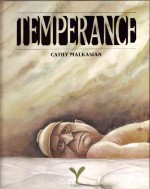
Temperance


By Cathy Malkasian (Fantagraphics Books)
ISBN: 978-1-60699-323-1

Stop me if you’ve heard this one: a charismatic leader drags an entire nation into a phony war, manipulating facts, twisting good people’s lives, destroying their innocence and fomenting an atmosphere of sustained paranoia and unthinking patriotism – if not jingoistic madness. Then he shuffles out of the picture and lets his successors deal with the mess he’s created: those remnants divided equally into well-meaning but clueless ditherers and now-fanatical disciples who think only they can run the show…

The land is in turmoil. Pa is raising a ruckus trying to get his monstrous ark built before the ruthless invaders begin the final attack. Eldest girl Peggy and little Minerva follow as he carves a wake of destructive energy through the landscape. Pa has galvanised the local villagers and they await his command to enter the fortress-city within the monolithic edifice, dubbed “Blessedbowl.”

When Pa begins once more to assault his oldest lass, only hapless Minerva and the trees are witness to the unleashed savagery. Suddenly, a young man rushes to Peg’s rescue, captivating forever the cowering Min. His name is Lester, but despite a terrific struggle the rescuer is no match for Pa’s maniacal vigour. The young man is left brain-damaged and maimed.

Pa bids Min see to Lester. The Doomsayer is lost in his preparations again. The Crisis has arrived…

Three decades pass. Min has married Lester and a thriving community exists within Blessedbowl, a permanent subsistence/siege economy built on paranoia: isolated and united by a common foe that has never been seen and is therefore utterly terrifying. Moses-like, Pa remained behind when the ark was sealed, to fight a rearguard action. Min is now his regent, efficiently running the closed ecology and economy, bolstered by the devoted attention of Lester, the amnesiac war-hero who lost so much when the invisible enemy launched their final assault…

Min controls the community through reports from the distant front and Lester guards the city within Blessedbowl’s hull. But now his befuddled memory is clearing, and Min, hopelessly in love with him, faces the threat that all that has been so slowly built may come crashing swiftly down…

And this is just the tip of the iceberg in a vast story that might just be the best thing I’ve read this year. Created during America’s longest-running war (9 years and counting…) this multilayered, incisive parable examines how families and countries can be twisted by love, fear and leaders’ lies yet still seemingly prosper. As much mystical generational fantasy as veiled allegory this enchanting story will open your eyes on so many levels. As events spiral beyond all control the astounding outcome, whilst utterly inevitable will also be a complete surprise… and just wait until you discover the identity of the eponymous narrator “Temperance”…

Mythical, mystical, metaphorical, lyrical, even poetic, here is a literal epic which blends Shakespearean passions with soft Orwellian terrors. King Lear and 1984 are grandparents to this subtly striking tale of freedoms and honour – personal and communal – surrendered to a comfortable, expedient slavery. Combining trenchant social commentary with spiritually uplifting observation, illustrated in the softest pencil tones – reminiscent of English World War II cartoons (particularly Pont and Bateman, but also the animations of Halas and Batchelor) this is joy to read, a delight to view and a privilege to own.

We must all do so …

© 2010 Cathy Malkasian. All right reserved.This edition © 2010 Fantagraphics Books, Inc.

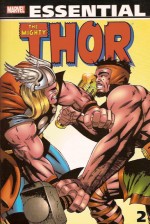
Essential Thor volume 2


By Stan Lee, Jack Kirby, & various (Marvel)
ISBN: 978-0-7851-3381-0

Even more than the Fantastic Four The Mighty Thor was the arena in which Jack Kirby’s creative brilliance blended with his questing exploration of an Infinite Imaginative Cosmos: dreaming, extrapolating and honing a dazzling new kind of storytelling graphics with soul-searching, mind-boggling concepts of Man’s place in the universe.

His unforgettable string of pantheons began in a modest little fantasy title called Journey into Mystery where, in the summer of 1962 a tried-and-true comicbook concept (feeble mortal transformed into God-like hero) was employed by the fledgling Marvel Comics to add a Superman analogue to their growing roster of costumed adventurers. This gloriously economical monochrome tome re-presents the end of that catch-all title as the Asgardian’s increasingly popular exploits saw the title become The Mighty Thor.

Gathered here are Journey into Mystery issues #113-125 plus the Annual for 1965, and without breaking stride, Thor #126-136 and the 1966 Annual, all in clean, crisp black and white for your delectation.

Lonely, crippled American doctor Donald Blake took a vacation in Norway only to encounter the vanguard of an alien invasion. Trapped in a cave, Blake found a gnarled old walking stick, which when struck against the ground turned him into the Norse God of Thunder!

Within moments he was defending the weak and smiting the wicked. As the months swiftly passed the rapacious extraterrestrials, Commie dictators, costumed crazies and cheap thugs gradually gave way to a vast panoply of fantastic worlds and incredible, mythic menaces. By issue #113, the magnificent warrior’s world of Asgard was a regular milieu for the hero’s adventures, and in ‘A World Gone Mad!’ by Stan Lee, Kirby and Chic Stone, the Thunderer, after saving the Shining Realm from invasion, once more defied his father Odin to romantically pursue the mortal nurse Jane Foster – a task made rather hazardous by the return of the petrifying villain Grey Gargoyle.

A long-running plot strand – almost interminably so – was the soap-opera tangle caused by Don Blake’s love for his nurse – a passion his alter ego shared. Sadly the Overlord of Asgard refused to allow his son to love a mortal, which acrimonious triangle provided many attempts to humanise and de-power Thor, already a hero few villains could cope with.

These issues also carried a spectacular back-up series. Tales of Asgard – Home of the mighty Norse Gods gave Kirby space to indulge his fascination with legends and allowed both complete vignettes and longer epics (in every sense of the word). Initially adapted myths, these little yarns grew into sagas unique to the Marvel universe where Kirby built his own cosmos and mythology, underpinning the company’s entire continuity. Here he revealed ‘The Boyhood of Loki!’, scripted as ever by Lee and inked by Vince Colletta, a pensive, brooding taste of the villain to be.

JiM # 114, began a two-part tale that introduced a new villain of the sort Kirby excelled at, a vicious thug who suddenly lucked into overwhelming power. ‘The Stronger I Am, The Sooner I Die!’(Lee, Kirby & Stone) saw Loki imbue hardened felon Crusher Creel with the power to duplicate the strength and attributes of anything he touched, but before he was treated to ‘The Vengeance of the Thunder God’ (inked by Frank Giacoia as the pseudonymous Frankie Ray) we’re indulged with another Tale of Asgard‘The Golden Apples.’ Issue #115’s mini-myth was ‘A Viper in our Midst!’ with young Loki clandestinely cementing relations with the sinister Storm Giants – sworn enemies of the Gods.

A longer saga began in #116, as Colletta settled in as the regular inker for both lead and second feature. ‘The Trial of the Gods’ revealed more of fabled Asgard as Thor and Loki underwent a Trial by Combat, with the god of mischief cheating at every step, whilst ‘Into the Blaze of Battle!’ found Balder the Brave protecting Jane Foster whilst her godly paramour travelled to war-torn Vietnam seeking proof of his step-brother’s infamy. These tales were supplemented by the stellar novellas ‘The Challenge!’ and ‘The Sword in the Scabbard!‘ which saw Asgardian cabin-fever develop into a quest to destroy a threat to the mystic Odinsword, which unsheathing would destroy the universe…

Journey into Mystery #118’s ‘To Kill a Thunder God!’ ramped up the otherworldly drama as Loki, attempting to cover his tracks, unleashed an ancient Asgardian WMD – the Destroyer. When it damaged the mystic hammer of Thor and nearly killed the hero in ‘The Day of the Destroyer!’, the God of Mischief was forced to save his step-brother or bear the brunt of Odin’s anger. Meanwhile in Tales of Asgard the Quest further unfolded in ‘The Crimson Hand!’ and ‘Gather, Warriors!’ as a band of hand-picked Argonauts joined Thor’s flying longship in a bold attempt to forestall Ragnarok.

With the Destroyer defeated and Loki temporarily thwarted Thor returned to America ‘With My Hammer in Hand…!’ only to clash once more with the awesome Absorbing Man. However before that bombastic battle there’s not only the next instalment of the Asgardian Argonauts who boldly ‘Set Sail!’ but also the admittedly superb digression of Journey into Mystery Annual #1, wherein the God of Thunder fell into the realm of the Greek Gods for the landmark heroic hullabaloo ‘When Titan’s Clash! Thor vs. Hercules!’ This incredible action-epic is augmented here by a beautiful double-page pin-up of downtown Asgard – a truly staggering piece of Kirby magic.

The attack of the Absorbing Man resumed with ‘The Power! The Passion! The Pride!’ and seemed set to see the end of Thor: a cliffhanger somewhat assuaged by ‘Maelstrom!’ wherein the Argonauts of Asgard epically encountered an uncanny storm… In JiM #122 ‘Where Mortals Fear to Tread!’ the triumphant Crusher Creel was shanghaied by Loki to attack Asgard and Odin himself, an incredible clash that led to a cataclysmic conclusion ‘While a Universe Trembles!’ Meanwhile ‘The Grim Specter of Mutiny!’ invoked by seditious Loki was quashed in time for valiant Balder to save the Argonauts from ‘The Jaws of the Dragon!’ in the increasingly spectacular Ragnarok Quest.

With the threat to ended Thor returned to Earth to defeat the Demon, a witchdoctor empowered by a magical Asgardian Norn Stone left behind after the Thunder God’s Vietnamese venture. Whilst he was away Hercules was dispatched to Earth on a reconnaissance mission for Zeus. ‘The Grandeur and the Glory!’ began another extended story-arc and all-out action extravaganza, which bounced the Thunderer from bruising battle to brutal defeat to ascendant triumph.

Issue #125 ‘When Meet the Immortals!’ was the last Journey into Mystery: with ‘Whom the Gods Would Destroy!’ the comic was re-titled The Mighty Thor and the drama escalated unabated, culminating with ‘The Hammer and the Holocaust!’ In short order Thor crushed the Demon, seemingly lost his beloved Jane to Hercules, was deprived of his powers and subsequently thrashed by the Grecian Prince of Power but still managed to save Asgard from an unscrupulous traitor who had usurped Odin’s mystic might.

Meanwhile in the Tales of Asgard instalments the Questers homed in on the cause of all their woes. ‘Closer Comes the Swarm’ pitted them against the flying trolls of Thryheim, and ‘The Queen Commands’ saw Loki captured until Thor answered ‘The Summons!’, promptly returning the Argonauts to Asgard to be shown ‘The Meaning of Ragnarok!’

In all honestly these mini-eddas were, although still magnificent in visual excitement, becoming rather rambling in plot, so the narrative reset was neither unexpected nor unwelcome…

Instead of ending, the grandiose saga actually grew in scope with Thor #128 as ‘The Power of Pluto!’ introduced another major foe. The Greek God of the Underworld had tricked Hercules into replacing him in his dread, dead domain, just as the recuperated Thunder God was looking for a rematch, whilst in Tales of Asgard Kirby pulled out all the creative stops to depict the ‘Aftermath!’ of Ragnarok: for many fans the first indication of what was to come in the King’s landmark Fourth World tales half a decade later…

‘The Verdict of Zeus!’ condemned Hercules to the underworld unless he could find a proxy to fight for him, whilst at the back of the comic the assembled Asgardians faced ‘The Hordes of Harokin’ as another multi-chaptered classic began, but for once the cosmic scope of the lead feature eclipsed the little odysseys as ‘Thunder in the Netherworld!’ saw Thor and Hercules carve a swathe of destruction through an unbelievably alien landscape – the beginning of a gradual side-lining of Earthly matters and mere crime-fighting. Thor and Kirby were increasingly expending their efforts in greater realms than ours…

‘The Fateful Change!’ saw the younger Thunder God trade places with the Geghiz Khan-like Harrokin, whilst in issue #136, Thor defeated the invasion plans of Rigellian Colonizer Tana Nile in ‘They Strike from Space!’, but it was merely prologue for a fantastic voyage to the depths of space and a unique universal threat, whilst “Harokin” faced a dire dilemma in ‘The Warlock’s Eye!’.

Thor #132 found the Thunderer laying down the law on ‘Rigel: Where Gods May Fear to Tread!’ whilst ‘The Dark Horse of Death!’ arrived in the Tales of Asgard segment looking for its next doomed rider… The following issue is a Kirby Classic, as ‘Behold… the Living Planet!’ introduced the malevolent Ego, sentient world and master of the living Bio-verse, a stunning visual tour de force that threw one High Concept after another at Thor, his new artificial pal Recorder and the reeling readership, whilst Harokin’s saga ended in one last ride to ‘Valhalla!’

The threat of invasion over, Thor returned to Earth to search for Jane, finding her with ‘The People Breeders!’ – a hidden enclave where the geneticist High Evolutionary was instantly evolving animals into men. His latest experiment had created a lupine future-nightmare ‘The Maddening Menace of the Super-Beast!’ so it’s just as well the Thunder God was on hand. ‘When Speaks the Dragon!’ and ‘The Fiery Breath of Fafnir!’ pitted Thor and his Warriors Three comrades Fandral, Hogun and Volstagg against a staggering reptilian monstrosity: a threat finally quashed in #136’s ‘There Shall Come a Miracle!’

The lead story in that issue is a turning point in the history of Thor. ‘To Become an Immortal!’ saw Odin transform Jane Foster into a Goddess and emigrate to Asgard, but her frail human mind could not cope with the wonders and perils of the Realm Eternal and she was mercifully restored to mortality and all but written out of the series. Lucky for the despondent Thunder God the beauteous Warrior-Maiden Sif was on hand…

With this story Thor’s closest link to Earth was neatly severed: from now on his many adventures on Midgard were as a tourist or beneficent guest, not a resident. Asgard and infinity were now his true home, a situation quickly proved by the bombastic clash that closes this volume. ‘If Asgard Falls…’ is set in the Gleaming City during the annual Tourney of Heroes (and comes from The Mighty Thor Annual #2, 1966): a martial spectacular of outlandish armours and exotic weaponry that turned decidedly serious when the deadly Destroyer was unleashed amidst the wildly warring warriors…

These transitional Thor tales show the development not only of one of Marvel’s fundamental continuity concepts but more importantly the creative evolution of the greatest imagination in comics. Set your commonsense on pause and simply wallow in the glorious imagery and power of these classic adventures for the true secret of what makes graphic narrative a unique experience.

© 1965, 1966, 1967, 2008 Marvel Characters, Inc. All Rights Reserved.

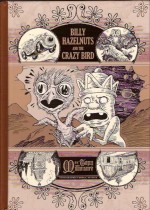
Billy Hazelnuts and the Crazy Bird


By Tony Millionaire (Fantagraphics Books)
ISBN: 978-1-56097-917-3

Cartoonists have more than their fair share of individuals with a unique perspective on the world. Elzie Segar, Ronald Searle, Charles Addams, George Herriman, Gerald Scarfe, Rick Geary, Steve Bell, Berke Breathed, Ralph Steadman, Bill Watterson, Matt Groening, Norman Dog, Gary Larson – the list is potentially endless. Perhaps it’s their power to create entire sculptured worlds coupled with the constant promise of vented spleen that so colours their work – whether they paint or draw.

Born Scott Richardson, Tony Millionaire clearly loves to draw and does it very, very well; seamlessly referencing classical art, the best of children’s books and an eclectic blend of pioneer draughtsmen like, George McManus, Rudolph Dirks, Cliff Sterrett, Frank Willard, Harold Gray as well as the aforementioned Segar and Herriman with European engravings from the “legitimate” side of the ink-slinging biz. He especially cites Johnny (Raggedy Ann and Andy) Gruelle and English illustrator Ernest H. Shepard (The Wind in the Willows, Winnie the Pooh) as formative influences.

As well as assorted children’s books and the fabulous Sock Monkey, Millionaire produces a powerfully bizarre weekly strip entitled Maakies which delineates the absurdly rude and surreal adventures of an Irish monkey called Uncle Gabby and his alcoholic nautical comrade Drinky Crow (see Drinky Crow’s Maakies Treasury for further details).

In 2007 he produced the acclaimed and award-winning Billy Hazelnuts, the salutary tale of a Golem built from garbage by oppressed, vengeful rats and mice. Originally a ghastly, fly-bedecked monstrosity Billy was rescued and redeemed by little girl scientist Becky who gave him Hazelnut eyes and a fresh-baked confectionary body, and they went through a series of uniquely fantastic adventures.

Now he’s back in another strident, striking, fantastical folktale voyage. Irascible, good-hearted, fiery-tempered and super-strong, Billy is adapting to life on Rimperton Farm but has a few philosophical problems with the natural world: notably everything in it is icky, oozy and wants to eat everything else in it.

After a titanic tussle with the farm cat and an owl, Billy reluctantly takes responsibility for a newly hatched owl chick – an ugly, vicious, violent baby brute that keeps consuming whole chunks of his baked body…

After consulting the confectionary conjuror and all-around wise man Rupert Punch, Billy resolves to return the chick to its lost mother, undertaking a hazardous and utterly surreal journey through Millionaire’s incredible signature land-, sea- and sky-scapes, with the malevolent and opportunistic farm cat “assisting”, but he’s got to hurry: the ungrateful baby bird has already eaten the back of his head and an entire arm…

Rendered in Millionaire’s captivating black and white line, this darkly frantic race against time is a charmingly belligerent fantasy yarn with the requisite happy ending that will appeal to kids on any age, full of action, wonder, imagination and good intent, clearly promising that the author will soon be the worthiest contemporary successor to Baum, Sendak, the Brothers Grimm and Lewis Carroll.

Brilliant, scary, poignant and lovely, make Billy Hazelnuts a part of your leisure-life now.

© 2010 Tony Millionaire. All Rights Reserved.

Batman: R.I.P. – the Deluxe Edition


By Grant Morrison, Tony S. Daniel, Sandu Florea, Lee Garbett & Trevor Scott (DC Comics/Titan Books)
ISBN: 978-1-84856-137-3

After a sustained and vicious campaign of brutal psychological warfare, the all-encompassing criminal hegemony calling itself the Black Glove has succeeded in destabilising the already dubious mental equilibrium of Batman. The Glove’s enigmatic, quixotic leader Dr. Hurt is on the verge of his greatest triumph…

Grant Morrison’s controversial, much-touted extended saga relating “the Death of Batman”, promised much and managed to leave many fans confused, angry and unsatisfied, but us older lags knew full well that whatever happened, however long it took, Bruce Wayne would be back and the dance would begin all over again. So let’s take a look at this culminatory saga on its isolated, intrinsic merits and not as part of the hysterical “Buy Me! Buy Me!” huckster-hype: a solitary book starring one of the industry’s most resilient stars.

I’m reviewing the rather lovely Deluxe British edition produced by Titan Books: a lavish oversized hardback that really feels like a special event and which collects the contents of Batman #676-683 plus the portentous prelude from DC Universe #0, and also includes an extensive cover gallery – including all the variants – and a sketch section by Morrison and artist Tony S. Daniel.

After the aforementioned prelude (by Morrison & Daniel), a confrontation and mutual warning for the Dark Knight and the Clown Prince, ‘Midnight in the House of Hurt’ (which begins Sandu Florea’s cracking contribution as inker) sees the villainous clan commence their end-game as distracted, exhausted, head-over-heels-in-love Batman is dragged through further tribulations. The criminal cabal invite the Joker to join their Black Glove, whilst in ‘Batman in the Underworld’ the hero’s greatest allies begin to suspect that he’s out of control: even Bruce Wayne is no longer sure…

The first inkling of a counterplan comes with a glimpse of Batman’s earliest cases – a time when the master strategist had time to plan for every possible contingency. With his closest confidante apparently dead a radical new Caped Crusader stalks Gotham – the outlandish Batman of ‘Zur En Arrh’. Death and Chaos rule on the streets in ‘Miracle on Crime Alley’ and the utterly unpredictable Clown makes his characteristically savage move in ‘The Thin White Duke of Death’…Naturally it’s not what anybody expected…

Let’s be clear here: at the time of the original comics publication, for the industry and fan-base the Death of Batman was already a done deal. With the mega-crossover event Final Crisis rumbling along like a gaudy juggernaut, everybody “knew” that Bruce Wayne was a goner and only waited to see how, so when ‘Hearts in Darkness’ finally appeared with a resplendent, resurgent, triumphant Batman vanquishing and vanishing, leaving a slew of unanswered questions, there were howls of protest.

However these are readers who were aware of a greater picture that involved the entire DCU. For the purposes of this collection though and any casual reader picking it up, there is a solid narrative conclusion which is marvelously supplemented by the two-issue postscript ‘Last Rites’ which follows.

Illustrated by Lee Garbett and Trevor Scott, ‘The Butler Did It‘ and ‘The Butler Did It Again’ focus on Alfred Pennyworth as he adapts to a life without Master Bruce and his driven alter-ego. Looking backwards and to the future these contemplative pieces pinpoint some key moments of Batman’s serried history whilst carefully planting those clues that would inform the adventures of his successor and even lay a trail of breadcrumbs that would lead to the return of Bruce Wayne…

With the addition of such fashionably despised elements as Bat-Mite and Black Casebook continuity (see Batman: the Black Casebook), as well as deferring/postponing the traditional last chapter explanation and wrap-up, Morrison caught a lot of flak for this tale, but in all honesty, with the value of distance and hindsight this whole thing actually works very well, indeed.

Pretty, enthralling beautiful and magnificently compulsive, this is a Bat-book well worth another look.

© 2008, 2009 DC Comics. All Rights Reserved.

Titan books, who published this edition, are responsible for a huge number of publications; their magazines and graphic novels range from British and World comics and strip classics to fantasy, science fiction, licensed product and DC/Vertigo material for all tastes. Their fabulous new website/blog should beopen for business as you read this. Why not check them out as soon as you’re done here?

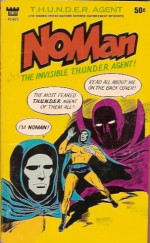
NoMan


By various (Tower Books)
ISBN: 42-672

I’ve often harped on about the mini-revolution in the “Camp-superhero” crazed 1960s that saw four-colour comicbook classics migrate briefly from flimsy pamphlet to the stiffened covers and relative respectability of the paperback bookshelves, and the nostalgic wonderments these mostly forgotten fancies still afford (to me at least), but here’s one that I picked up years later as a marginally mature grown man.

Although the double-sized colour comics T.H.U.N.D.E.R. Agents, its spin-offs Undersea Agent, Dynamo, NoMan and the magnificent war-comic Fight the Enemy were all distributed in Britain (but not, I think their youth-comedy title Tippy Teen) these monochrome, re-sized book editions, to the best of my knowledge, were not.

It doesn’t matter: to my delight, it seems that even today the format and not the glow of childhood days recalled is enough to spark that frisson of proprietary glee that apparently only comic fans (and Dinky Toy collectors) are preciously prone to.

Of course it doesn’t hurt when the material is as magnificent as this…

The history of Wally Wood’s immortal spies-in-tights masterpiece is convoluted, and once the mayfly-like lifetime of the Tower Comics line ended, not especially pretty: bogged down in legal wrangling and petty back-biting, but that doesn’t diminish the fact that the far-too brief careers of The Higher United Nations Defense Enforcement Reserves was a benchmark of quality and sheer bravura fun for fans of both the reawakening superhero genre and the 1960s spy-chic obsession.

In the early 1960s the Bond movie franchise went from strength to strength, with action and glamour utterly transforming the formerly understated espionage vehicle. The buzz was infectious: soon Men like Flint and Matt Helm were carving out their own piece of the action as television shanghaied the entire bandwagon with the irresistible Man From U.N.C.L.E. (beginning in September 1964), bringing the whole genre inescapably into living rooms across the world.

Creative maverick Wally Wood was approached by veteran MLJ/Archie Comics editor Harry Shorten to create a line of characters for a new distribution-chain funded publishing outfit – Tower Comics. Woody called on many of the industry’s biggest names to produce material for the broad range of genres the company envisioned: Samm Schwartz and Dan DeCarlo handled Tippy Teen – which outlasted all the others – whilst Wood, Larry Ivie, Len Brown, Bill Pearson, Steve Skeates, Dan Adkins, Russ Jones Gil Kane and Ralph Reese all contributed to the adventure series.

With a ravenous public appetite for super-spies and costumed heroes exponentially growing the idea of blending the two concepts seems a no-brainer now, but those were far more conservative times, so when T.H.U.N.D.E.R. Agents #1 appeared with no fanfare or pre-publicity on newsstands in August 1965 (with a cover off-sale date of November) thrill-hungry readers like little me were blown away. It didn’t hurt either that all Tower titles were in the beloved-but-rarely-seen 80 Page Giant format: there was a huge amount to read in every issue!

All that being said the tales would not be so revered if they hadn’t been so superbly crafted. As well as Wood, the art accompanying the compelling, rather more mature stories was by some of the greatest talents in the business: Reed Crandall, Gil Kane, George Tuska, Mike Sekowsky, Dick Ayers, Joe Orlando, Frank Giacoia, John Giunta, Steve Ditko and others.

This slim, seductive digest stars the UN Agency’s number two troubleshooter (after the iconic Dynamo) in four stirring spy thrillers featuring a winning combination of cloak-and-dagger danger, science fiction shocks and stirring super-heroics. Although UN commandos failed to save brilliant Professor Jennings from the mysterious Warlord, they rescued some of the scientist’s greatest inventions, including a belt that could increase the density of the wearer’s body, a brain-amplifier helmet and a cloak of invisibility.

These prototypes were divided between several agents, creating a unit of superior fighting men to counter the increasingly bold attacks of global terror threats such as the aforementioned Warlord.

Inexplicably, the origin tale ‘T.H.U.N.D.E.R. Agent NoMan’ which told how aged Dr. Anthony Dunn had his mind transferred into an artificial android body equipped with the invisibility cape is not included here, but the book’s back cover features a Wood pin-up “file page” which distils the powers and background into a handy recap. In those long-ago days kids didn’t much care for long-winded and endless reworkings of past detail: origins just weren’t as important as beating bad-guys….

Incredibly strong, swift and durable, NoMan had one final advantage: if his artificial body was destroyed his consciousness could transfer to another android body. As long as he had a spare ready, he could never die.

The action starts with ‘In the Warlord’s Power’ (by Bill Pearson, Dick Ayers, Joe Orlando and Wood) as the artificial agent has to defend an entire Missile Base from an assault by an army of Zombie-men, swiftly followed by ‘NoMan Faces the Threat of the Amazing Vibraman’ (Pearson, John Giunta, Wood & Tony Coleman) wherein the threat was far les esoteric but no less deadly: a freelance villain who used devastating sound weapons.

Next the Invisible Agent tackled a fiendish Mastermind equipped with his own android army in ‘The Synthetic Stand-Ins’ by Steve Skeates, Mike Sekowsky & Frank Giacoia, and the explosive adventures rush to a classy climax in ‘The Caverns of Demo’ (astoundingly illustrated by Gil Kane, Wood and Dan Adkins) wherein NoMan faced an entire island of Neanderthal Beast-Men controlled by an arch criminal who had stolen his cloak of invisibility! Sheer magic!

Supplemented by an exciting ‘NoMan in Action’ fact-feature this is a book that would have completely blown away pre-teen me and still has all the impact of a blockbuster bomb. These are truly timeless comic tales that improve with every reading and there’s precious few things you can say that about…
© 1966 Tower Comics, Inc. All rights reserved.

The Effluent Society


By Norman Thelwell (Magnum/Eyre Methuen)
ISBN: 0-417-01050-8

Norman Thelwell is still one of our most beloved cartoonists – even though he passed away in 2004. I was going to astound you with my encyclopedic knowledge here but frankly his work has always been its own best advocate, and if you need to know more about this brilliant creator you should crank up your search-engine of choice. I heartily recommend the official website as well as Steve Holland’s excellent Bear Alley resource.

Thelwell’s superbly gentle cartooning combined Bigfoot abstractions with a keen and accurate eye for background detail, not just on the riding and countryside themes that made him a household name, but on all the myriad subjects upon which he turned his canny eye. His compositions are an immaculate condensation of everything warm yet charged, resonant with being resolutely Post-War, Baby-Booming British without ever being parochial or provincial.

His work has international implications and scope, neatly achieving that by presenting us to the world for decades. There are 32 books of his work and every aficionado of humour – illustrated or otherwise – could do much worse than possess them all.

From 1950 when his gag-panel Chicko first began in the Eagle, and especially two years later with his first sale to Punch, he built a solid body of irresistible, seductive and always funny work. He appeared in innumerable magazines, comics and papers ranging from Men Only to Everybody’s Weekly. In 1957 his first collection of published cartoons Angels on Horseback was released and in 1961 he made the rare reverse trip by releasing a book of all-new cartoons that was subsequently serialised in the Sunday Express.

His dry, sly, cannily observed drawings were a huge success and other books followed to supplement his regular appearances in a variety of newspapers and magazines. Thus we have here his shrewd graphic ruminations on Tomorrow’s World: the then-budding Conservation Movement.

These strips, culled mostly from the venerable and equally-missed Punch, come from a time when Global Warming and Climate Change were unheard of and “Population Explosions” and “Pollution” were the media bugbears of choice – but for all that an era when many scientists were finally beginning to make themselves heard in a commercial and political arena that simply did not want to listen…

These cartoons range from the wonderfully silly to the painfully trenchant, created by a man who loved and valued the countryside, but Thelwell was also an observer who could spot cupidity and cant a mile off, so here no cows were sacred and all sides are similarly targeted…

Subdivided into Water, Water Everywhere, The Good Earth, A Breath of Fresh Air, Down in the Dumps, The Race for Space (that’s residences not rocket-ships), Animal Farm (food production), All Creatures Great and Small, Technical Hitch, The Grave New World and Let’s Protest, far too many of these gags are still devastatingly relevant today: which is as much a condemnation of Society’s truculent procrastination as the artist’s fantastic, funny foresight.

Clearly it’s not too late to stack down this manifesto of mirth, and perhaps somebody should be thinking about re-issuing this classy cracker…
© 1971 Norman Thelwell.

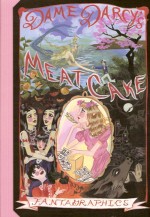
Dame Darcy’s Meat Cake


By Dame Darcy (Fantagraphics Books)
ISBN: 978-1-60699-346-0

Since 1993 Dame Darcy has been building a weird, wistful and Gothically girlish fantasy

universe in her oddly enchanting comicbook Meat Cake, as well as the occasional graphic novel and collection such as Frightful Fairytales, The Illustrated Jane Eyre, Dollerium, Comic Book Tattoo, Gasoline and others. Now an affordable black and white paperback reprinting the best moody marvels from the first eleven issues is available and keenly awaits your effulgent appreciation.

Darcy Megan Stanger is a prolific and restless artist, musician, animator, dollmaker, interior designer, fashion model, art teacher and reality TCV star – one of those ever-so-likable, infuriating do-it-alls modern society is increasingly populated by.

For some her darkly comic, magic-infested, mock-Victorian realm of slender, ethereal, hauntingly lovely gamins and ghastly side-show freaks might be a step too far. This is a stark place with no room for dull, fat people or the plain visaged…

Certainly this collection is best read in measured instalments, lest the girly-girl blend of Edwardian emo-fashion, Jazz-age make up, tragic love-stories, sinister childhoods, ghostly interventions, maids behaving badly and “fractured fairy-tale” moral instruction lose its power to affect, but the sensibilities of modern female characters thriving in a gloomy imaginative otherplace is one that is rich with entertainment potential especially when scripted with the deliciously scandalous wit of la Dama.

Although some few non-related snippets are included, the major portion of the book concerns the tribulations of a rather distinctive cast of self-absorbed, grotesque and genteel ladies of varied means and character. There’s shrinking violet Friend The Girl, the abrasive Richard Dirt, the constantly bickering conjoined twins Hindrance and Perfidia, seductive, bitchy mermaid Effluvia, Strega Pez, who communicates through a livid gash in her throat, the talkative crustacean Scampi the Shellfish, the utterly bonkers wise woman Granny, Igpay and undead, monstrous token male Wax Wolf, all living in a world at once similar and wondrously ancient and removed.

In sultry, sinister or just plain strange tales like ‘Laughing All the Way to the Bank’, ‘Shrimpboats is A-Comin”, ‘Employ Ahoy!’, ‘Bus-Ted’, ‘Hookie Lau Breakfast Special’, ‘The Hitch-Hiker’, ‘Grave Concerns’, ‘Happy Hi-Jinx’, ‘Lessons on the Principles of Magnetism’, ‘Honey’, ‘Dirty Rich’, ‘Demon Drink’, ‘Silver Lining’ and ‘Fruit Bat‘ the extended eccentric cast live their odd and abstracted lives for us whilst in longer fables such as ‘The Juicer and the Cake Walk’, ‘The Next Holy Virgin’, ‘For Whom the Bell Tolls’, ‘Stained Glass’, ‘The Ghost Filly’, ‘Sweet William and Lady Margaret’, ‘EZ Bake Coven’ and ‘Latch Key Kids Cookbook‘ Darcy demonstrates her love and tacit understanding of classical storytelling and particularly Gothic Romance fantasies.

Amidst the assorted unaligned graphical gags and oddments are such brief gems as ‘Ruby Rack! Ruby Rack!’, ‘The Wishing Star’, ‘Existence Forgets’, ‘Spontaneous Generation’, ‘Puppet Show’ (an homage to cartoon pioneer Gustave Verbeek), and an acerbic assemblage of actively skewed ‘Old Nursery Rhymes’ as well as some decidedly quirky autobiographical incidents like ‘Double Trouble or Freaky Friday’, ‘Paper Doll Fun!’, ‘Your Diary’, ‘My Patron’ and ‘Show Me My Hand’ but the absolute show-stealer is her baroque, wilfully whimsical satire-fest with Alan Moore who scripted the marvellously captivating ‘Hungry is the Heart’: a spectacular expose of the extraordinary life and times of turn of the century Society Maverick, Wild-Woman and Button Magnate Wellington Woolenboy AKA Jumbalor – “Damp String Woman”.

Macabre, hilarious and addictively odd, Meat Cake satisfies appetites you can’t believe you have. This is a book for girls that every comicbook guy really needs to see…

© 2010 Dame Darcy. All rights reserved.

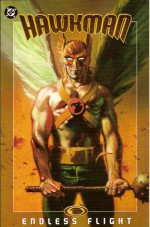
Hawkman Volume 1: Endless Flight


By Geoff Johns, James Robinson, Rags Morales & various (DC Comics)
ISBN13: 978-1-84023-714-6

Although perhaps one of DC’s most long-lived and certainly their most visually iconic character, the various iterations of Hawkman have always struggled to find enough of an audience to sustain a solo title. From his beginnings as the second feature in Flash Comics, Winged Wonder Carter Hall has struggled through assorted excellent but always short-lived reconfigurations. From ancient hero to the re-imagined Thanagarian space-cop and post-Crisis on Infinite Earths freedom fighter (both named Katar Hol – see Showcase presents Hawkman volumes 1-2 and Hawkworld respectively) to the seemingly desperate but highly readable bundling together of all the past versions into the reincarnating immortal berserker-warrior of today, without ever really making it to the big time. Where’s a big-time movie producer/fan when you need one?

Hawkman premiered as the second feature in Flash Comics #1 (January 1940), created by Gardner Fox and Dennis Neville, although the most celebrated artists to have drawn this Winged Wonder are Sheldon Moldoff and Joe Kubert, whilst a young Robert Kanigher was justly proud of his later run as writer.

Carter Hall was a playboy archaeologist until he uncovered a crystal knife that unlocked his memories. He realised that once he was Prince Khufu of ancient Egypt and that he and his lover Chay-Ara had been murdered by High Priest Hath-Set. Moreover with his returned memories came the knowledge that both lover and killer were also nearby and aware…

Using the restored knowledge of his past life Hall fashioned a costume and flying harness, becoming a crime-fighting phenomenon. Soon the equally reincarnated Shiera Sanders was fighting and flying beside him as Hawkgirl. Together these ancient “Mystery-Men” battled modern crime and tyranny with weapons of the past.

Fading away at the end of the Golden Age (Hawkman’s last appearance was in All Star Comics #57, 1951 as leader of the Justice Society of America) they were revived nine years later as Katar Hol and Shayera Thal of Thanagar by Julie Schwartz’s crack creative team Gardner Fox and Joe Kubert – a more space-aged interpretation which survived until 1985’s Crisis, and their long career, numerous revamps and retcons ended during the 1994 Zero Hour crisis.

When a new Hawkgirl was created as part of a revived Justice Society comicbook, older fans knew it was only a matter of time before the Pinioned Paladin rejoined her, which he did in the superb JSA: the Return of Hawkman.

Which is where Endless Flight takes off: reprinting issues #1-6 of the comicbook that spun-off from that epic extravaganza, plus the one-shot Hawkman Secret Files. The new series begins with the reborn, reunited heroes settling into a comfortably familiar setting as museum curators in the Louisiana City of St. Roch – a venue with as great story potential as it was during the Silver Age when Katar Hol had a similar job in Midway City.

The reconstituted Hawkman now has knowledge of all his past lives: many millennia when and where he and his princess fought evil together as bird-themed champions, dying over and over at the hands of an equally renewed Hath-Set. Most importantly, Kendra Saunders, the new Hawkgirl differs from all previous incarnations. This time Shiera was not born again, but possessed the body of a grand-niece when that tragic girl committed suicide. Although Carter Hall still loves his immortal inamorata his companion of a million battles is no longer quite so secure or sure of her feelings…

‘First Impressions’ by Geoff Johns, James Robinson, Rags Morales & Michael Bair drops the couple straight into a high-flying adventure as their oldest foe orchestrates an opening attack just as a new friend goes missing in India. ‘Into the Sky’ further explores new lives and ancient civilisations as the Hawks travel to the subcontinent in a leftover Thanagarian space-cruiser and encounter old enemies Shadow-Thief and Copperhead stealing artifacts from a lost – and trans-dimensional – city.

‘Lost in the Battlelands’ sees the Feathered Furies striving against ancient Vedic warriors to save enslaved, intelligent, six-limbed elephant men, an epic struggle that concludes in a savage war of liberation in ‘Beasts of Burden’.

Meanwhile back home in St. Roch, millionaire Kristopher Roderic is laying sinister long-term plans and a superlative archer is committing murders in the street…

‘Hidden Past and Hidden Future’, by Johns, Patrick Gleason & Christian Alamy, reveals Shadow-Thief’s connection to Roderick whilst retelling the ancient tragedy of Prince Khufu, his betrothed Chay-Ara and their betrayal by the Priest Hath-Set, before ‘Slings and Arrows’ (Johns, Robinson, Morales & Bair) finds Hawkman butting heads with old “Frenemy” Green Arrow, a cunning two-part thriller that features bad-guy bowman The Spider (fans of James Robinson’s superb Starman run will be delighted to see him again) attempting to frame the Emerald Archer and set up the Hawks to kill him…

Grim, gripping and often brutal, these opening tales of a noble savage taking back what once was his are some of the very best adventures of the Winged Wonders and hint at even greater things to come. A must-read for older fans of costumed melodramas, they are still a powerful, beautiful and compelling example of what great creators and fresh ideas can achieve with even the oldest raw material.

Don’t delay any longer. Hunt this book down now…

© 2002, 2003 DC Comics. All Rights Reserved.

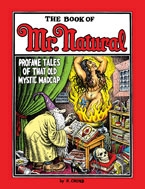
The Book of Mr. Natural (Profane Tales of that Old Mystic Madcap)


By Robert Crumb (Fantagraphics Books)
ISBN: 978-1-60699-352-1

Robert Crumb is a unique force in the world of comics and cartooning with as many foes as fans, but his idiosyncratic, unflinching, controversial but always enchanting work is impossible to ignore. This beautiful black and white hardback collects a varied and impressive selection of strips starring his most famous character produced between 1967 and 1995 and as always touches on the creator’s most intimate and disturbing idiosyncrasies regarding sex and women, both in the unsettling Abstract and the painful, side-splitting, lustful, painful and loving Concrete.

Therefore if harsh language, mild blasphemy, artfully grotesque cartoon nudity and comedic fornication are liable to upset you, stop reading this review and don’t buy the book.

For the rest of us; here’s a quick rundown of what’s in store…

Mr. Natural is a short, balding, bewhiskered, be-robed guru and engagingly vulgar huckster who began selling enlightenment and simple living in the May 5th 1967 issue of counter-culture paper Yarrowstalks. His assaults on the vapidity and venality of the modern world were reproduced and absorbed by an astoundingly broad variety of truth-seekers and laugh lovers who followed the succession of strips in an incomprehensible number of places.

The little wise guy had genuine insight and even greater powers, but peddled his wisdom for crass, material cash or other, less transferable favours. Obviously, and lucky for us all, he’s the only Holy Man or preacher ever to do such a reprehensible, unspiritual thing…

Of the twenty-seven tales gathered here, ranging from single-page strips to the epic 40 page ‘Mr. Natural and Devil Girl’ there are a number of classic yarns that seemingly everyone has seen or heard of but also one or two genuinely rare experiences -  particularly the wonderfully dense and informative ‘Origins of Mr. Natural’.

A less charitable reviewer might suspect that this book has been padded out with older material simply to give the legendary Devil Girl saga – originally serialised in Hup and never before collected into book form – a more accessible and commercially appetising home… and if so I applaud the move as that 1991 tale is one of the most wonderfully jolly and unsettling pieces of work Crumb has yet produced.

Flakey Foont was the foil of many of the earlier strips and a handy barometer of Everyman America. Over the decades the ex-disciple who was beguiled, reviled and defiled by “The Natch” eventually Turned Off, Tuned Out and Dropped back “In”, but found himself losing all self-control when confronted in his happily middle-class suburban family paradise by the returned Sage and the raw, lustful female animal that was both antithetical enemy and willing slave…

Other notable gems include Mr. Natural in Death Valley’, Mr. Natural Visits the City’, ‘It’s Workaday World’, Mr. Natural Goes to a Meeting of the Minds’, ‘Sunny Side Up’ ‘Om Sweet Om’, ‘Mr. Natural Stops Talking’, ‘A Girl in Hotpants, ‘The Girlfriend’ and the utterly perfect and fully zeitgeisted Mr. Natural’s 719th Meditation’, a plethora of revelation and confrontation that still provides merriment and queasy shock in equal proportion.

Crumb’s subtle mastery of his art-form and compulsive, uncompromising need to reveal his most hidden depths and perceived defects – in himself and the world around him – has always been a unquenchable wellspring of challenging comedy and riotous rumination. This magical, mystical tome is an ideal dipping book for occasional slices of his raucous wit and the perfect vehicle to introduce any (definitively over 18) newcomers of your acquaintance to the world of grown up comics.

© 1967, 1968, 1970, 1971, 1972, 1973, 1974, 1986, 1987, 1989, 1991, 1995, 2010 R. Crumb. All Rights Reserved. Edition © 2010 Fantagraphics Books, Inc.

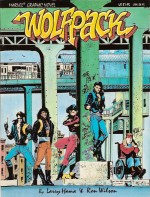
Wolfpack – A Marvel Graphic Novel


By Larry Hama, Ron Wilson, Whilce Portacio, Kyle Baker & others (Marvel)
ISBN: 0-87135-306-7

It’s been a long while since Marvel published an all-original graphic novel as opposed to a reprint collection, but not too long ago they were the market leader in the field with an entire range of “big stories” told on larger than normal pages (285 x 220mm rather than the now customary 258 x 168mm) featuring not only proprietary characters but also licensed assets like Conan and even creator-owned properties.

They also took chances on unusual and cross-genre tales such as this little oddity which falls squarely into the category of a successful “bold departure” which subsequently spawned its own twelve issue series.

Wolfpack (not to be confused with the later maverick band of costumed heroes that appeared in the Marvel crossover event House of M) is an intriguing meld of savage inner-city reportage and high fantasy Ninja conspiracy thriller set in the utterly alien streets of the South Bronx. It takes a two thousand year old, multi-generational battle between ultimate Good and Evil and sets its latest skirmish in a terrifying ghetto where hope and honour refuse to die. It would make a great Teen TV show today…

‘Rafael’ is a loner in trouble. The corridors of Horace Harding High School are every bit as dangerous as the mean streets outside, but the cocky young outsider has a secret. He’s been training with the school caretaker…

What Rafael Vega doesn’t know is that Mr. Mack is a man with a past and a plan. As a black sailor in post-war Japan he experienced intolerance and repression from his own (white) shipmates, but found acceptance from certain Japanese ancients who saw in him a chance to continue a battle that had already spanned two millennia.

The ancients trained him in all their fighting arts, requiring him to form a new “Pack” and confront an everlasting circle of wealth, power and wicked excess called “The Nine”: an ever-changing cycle of decadents who represented the forces of Evil in some indefinable Cosmic Balance.

Mack returned to New York and began his task, knowing this opposing force would find him wherever he went. Ghastly and blighted as it was, the South Bronx would have been far worse if not for the decades-long, beneficent watch of a silent guardian – but that’s all about to change…

Unknown to even his pupils, Mr. Mack had been clandestinely training kids in various fighting and philosophical arts for years, so when up-and-coming schoolboy gangster Lamarr targeted Raphael for death, Mack realised that it was time at last to introduce his young wolves to each other.

Now in ‘The Crucible’ Rafael discovers that some of his oldest associates were also singled out for a higher purpose by Mack and as he reassesses his new pack-mates, “Slag” Slagley, “Slippery Sam” Weltschmerz, wheelchair-bound “Wheels” Wolinski and even his own girlfriend Sharon, events turn ugly with startling rapidity. The new warriors organise none too soon as Lamarr graduates to attempted murder by destroying the store owned by Slippery Sam’s dad.

The Nine now make their move, recruiting Lamarr to their inner circle, but the wicked, Old-World Machiavellians have no idea how modern inner-city depravation can shape the nature of evil. As the death-toll mounts and the Pack strike back, events speed to a violent conclusion in ‘Transfiguration’ and The Nine realise that they might have made a terrible mistake with Lamarr…

Harsh and uncompromising, this introductory tale (I can’t shake the feeling this was originally scheduled as a three-part story-arc and “bumped” into a more high-profile graphic novel at the last moment) effortlessly compels with a dark mix of telling social drama, dark wit and superlative action-adventure that is far more hard-hitting than most comicbook tales even today.

The workmanlike Ron Wilson is probably nobody’s favourite artist, but he is a solid dependable illustrator with a good line in brooding brutes and inner city landscapes. Here, inked and augmented by such diverse budding stylists as Whilce Portacio and Kyle Baker his art takes on a moody realism that complements both the harsh environs of the plot and mystical martial arts elements with striking effect. The letters are provided by Joe Rosen and the somewhat hit-or miss colouring is by Petra Scotese, Max Scheele and Glynis Oliver.

Ugly, uncompromising, breathtakingly hard, this is the kind of book to show anybody who thinks that comics are all about men-in-tights and written for powerless sissy-boys…
© 1987 Marvel Entertainment Group. All Rights Reserved.