Diana Prince: Wonder Woman Vol. 4


By Denny O’Neil, Samuel R. Delaney, Bob Haney, Don Heck, Dick Giordano & Jim Aparo (DC Comics)
ISBN: 978-1-84856-156-4

In this concluding chronicle of the de-powered Wonder Woman (comprising issues #199-204 of her own comic plus her team-up with Batman from Brave and the Bold #105) the unique vision and quirky style of Mike Sekowsky is noticeably absent as sometime scripter Denny O’Neil returns for a by-the-numbers thriller illustrated by Marvel veteran Don Heck, with visual continuity assured by inker Dick Giordano.

‘Tribunal of Fear’ is a muddled, fashion-based crime thriller guest-starring private eye Jonny Double, and the concluding part (WW #200, by O’Neil and Giordano) sees the return of an old foe in ‘The Beauty Hater!’. Perhaps these tales should be best remembered for their covers, crafted by the illustrious Jeff Jones.

Catwoman contended with the mortal Amazon in #201’s ‘The Fist of Flame’ when Diana and her mentor I Ching journeyed to Tibet in pursuit of a fabulous, cursed gem which precipitated another extra-dimensional jaunt. Designed to introduce DC’s newest property, noted novelist Samuel R. Delaney joined Giordano for ‘Fangs of Fire’, a helter-skelter epic as Diana, Ching and Catwoman battled with and beside Fritz Leiber’s Fafhrd the Barbarian and the Gray Mouser (the soon-to-be stars of the brief but superb Sword of Sorcery licensed comic).

This wonderfully extravagant delight was followed by ‘Play Now… Die Later!’ (by Bob Haney and Jim Aparo, Brave and the Bold #105) as Diana joined Batman in Gotham City for a gritty, fast-paced thriller involving kidnappers and South American revolutionaries, before Delaney and Giordano took her into a fascinating new direction in the socially-aware Women’s Rights tale ‘The Grandee Caper’.

Comic fans love to gossip. When the next issue appeared it devoted the first twelve pages to undoing everything that had happened since Wonder Woman lost her powers in issue #179, before revising her mythical origin and returning her to her world of immortal Gods, Amazons and super-villains, with a new black nemesis, Nubia.

‘The Second Life of the Original Wonder Woman’ by Robert Kanigher, Heck and Giordano is not such a bad story, but its abrupt reversals had tongues wagging and heads spinning. Had the series offended some shady “higher-ups” who didn’t want controversy or a shake-up of the status quo?

I think not. Sales were never great on the title, and the most logical reason is probably Television.

The Amazon had been optioned as a series since the days of the Batman show in 1967, and by this time – 1973 – work had undoubtedly begun on the original 1974 pilot featuring Cathy Lee Crosby. An abrupt return to the character most viewers would be familiar with from their own childhoods seems perfectly logical to me… By the time Linda Carter made the concept live Wonder Woman was once again “Stronger than Hercules, swifter than Mercury and more beautiful than Aphrodite…”

Comics are an art-form dictated by markets, driven by sales and influenced by fashion. For a brief moment all these factors and a few gifted creators gelled to produce a compelling, engaging and utterly fabulous tranche of tales that are timelessly perfect and eternally fresh. And now you can read them whenever you feel the need simply by opening these pages…

© 1972, 1973, 2008 DC Comics. All Rights Reserved.

The Books of Magic


By Neil Gaiman, John Bolton, Scott |Hampton, Charles Vess & Paul Johnson (Vertigo)
ISBN13: 978-1-85286-470-5

Way back when Neil Gaiman was just making a name for himself at DC he was asked to consolidate and rationalise the role of magic in that expansive shared universe. Over the course of four Prestige Format editions a quartet of mystical champions (thereinafter known as “the Trenchcoat Brigade”) took a London schoolboy on a Cook’s Tour of Time, Space and Infinite Dimensions in preparation for his becoming the most powerful wizard of the 21st Century, and an overwhelming force for Light or Darkness.

Shy, bespectacled Timothy Hunter is an inoffensive lad unaware of his incredible potential for Good or Evil (and yes, I know who he looks like but this series came out eight years before anybody had ever heard of Hogwarts, so get over it). In an attempt to keep him righteous the self-appointed mystic guides provide him, and us, with a full tutorial in the history and state of play of The Art and its major practitioners and adepts. However, although the four guardians are not united in their plans and hopes for the boy, the “other side” certainly are. If Hunter cannot be turned to the Dark he has to die…

In Book one, ‘the Invisible Labyrinth’ painted by John Bolton, The Phantom Stranger shows Tim the history of magic with introductions to Lucifer, Atlantis, the Ancient Empires, Jason Blood and the boy Merlin, Zatara and Sargon the Sorcerer.

Scott Hampton illustrates the second chapter wherein John Constantine hosts a trip to ‘the Shadow World’ of the modern DCU, introducing the lad to contemporary players such as Deadman, Madame Xanadu, the Spectre, Doctor Fate, Baron Winter (of Night Force fame), Dr. Thirteen the Ghost-Breaker and Zatanna, who organises a trip to a mage’s bar where the likes of Tala Queen of Darkness and the diabolical Tannarak take matters into their own wicked hands.

Dr. Occult (created by Jerry Siegel and Joe Shuster years before Superman debuted) takes the boy on a journey to the outer lands and the Realms of Faerie, courtesy of Charles Vess in ‘the Land of Summer’s Twilight’: a beautiful, evocative segment that informs much of Timothy Hunter’s life in the Vertigo comicbook series and graphic collections that inevitably spun off from this saga. Cameos here include Warlord, Nightmaster, Amethyst and Gemworld, the Demon, Cain, Abel and the Sandman.

‘The Road to Nowhere’ is painted by Paul Johnson and concludes the peregrination as the ruthlessly fanatical Mister E takes the boy to the end of time, where he has his own plans for him. Beyond Darkseid and the climactic battles and crises of our time, past the Legion of Super Heroes, the end of Order and Chaos, to the moment Sandman’s siblings Destiny and Death switch off the dying universe, Tim sees how everything ends before returning to make his choice: Good or Evil, Magic or mundane?

Despite an “everything and the kitchen sink” tone this is still a cracking good yarn as well as a useful scorecard for all things supernatural, and which still has overwhelming relevance to today’s DC universe. It still stands a worthy primer for newcomers who need a little help with decades of back-story which cling to so many DC tales, even today.
© 1990, 1991, 2001 DC Comics. All Rights Reserved.
British Cartoonists Album


By various (Panther Books)
No ISBN:

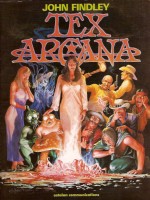
On the 1st April 1960 a bunch of jaded hacks and whackos who made their dubious living from drawing humorous skits and silly pictures of tough men and largely unclad women met in a pub called The Feathers in Tudor Street, London. From that inaugural drunken binge the British Cartoonists Club was formed. (Today they’re known as the Cartoonists Club of Great Britain).

In 1962 this loose agglomeration of the greatest gagsters, pen-men and brush-smiths in the Kingdom produced a wonderful over-sized book in conjunction with Anthony Gibbs & Phillips (subsequently released as a paperback in 1964) that highlighted the talents and achievements of the membership and consequently became one of my favourite books of cartooning ever.

Still available if you trawl that there interweb thing, The British Cartoonists Album is stuffed with examples of brilliant work, both dramatic and comedic from the last days of mass-market cartooning, when our profession was still big enough to differentiate between topical, editorial, sporting, caricature, juvenile (which means for young people, not what you’re thinking), illustrative, technical, sophisticated , saucy and probably a dozen other categories I’m not old enough to remember. The book also and acted not just as a proud example of Cartoon work but also as a professional portfolio for the club which always sought (and still does) ways to further and promote members careers.

With examples from 169 different creators including Bill Tidy, Scarfe, Low, Thelwell, David Langdon, Smythe, Ferrier, Dickens, Giles, Osbert Lancaster, Les Lilley, Roy Nixon, Gammidge, Maddocks, Trog, Sax, Steadman and a host of others, and including a mouth-watering selection of contemporary newspaper strips such Garth, The Perishers, Jane – Daughter of Jane, Romeo Brown, Andy Capp, Buck Ryan, The Flutters, The Larks, Barley Bottom, Colonel Pewter, Useless Eustace, Lindy, Flook, Paul Temple, Matt Marriott, Twick and For Better or Worse this is a lost treasure in desperate need of up-dating and re-release.

Perhaps it’s a little cruel to highlight such a wonderful book that many of you won’t ever see, but the material here and lost in the mouldering pages of thousands of papers and magazines is a vital part of our culture and heritage and their eventual loss is something we’ll all regret in the end, so I’m going to bang on about until someone – be it commercial publisher or heritage wallah does something about it.

Hell, get me an Arts Council grant and I’ll do it myself…
© 1962 Anthony Gibbs & Phillips. All rights reserved. The proprietary rights of all individual trademark and copyright holders is acknowledged throughout.

Captain Britain: Vol. 3 The Lion and the Spider


By various (Marvel/Panini UK)
ISBN13: 978-1-84653-401-0

In this third volume collecting the complete adventures of Marvel’s Greatest British super-hero we see the end of his initial run from Super Spider-Man & Captain Britain Weekly # 239-247, continue with the good Captain’s first American tour in Marvel Team-Up #65 and #66 and latterly begin reprinting the seminal fantasy strip he shared with the Black Knight in Hulk Comic Weekly. I fear that as with any decent British hero, the publishing history and back-story has to be as complicated as the Gordian Knot to satisfy our inherent sense of the absurd…

By the time of Super Spider-Man & Captain Britain Weekly # 239 the writing was on the wall. In the best tradition of British comics, a merger of two titles inevitably led to the eventual disappearance of the one after the “&”. Moreover it was clear that the US department responsible for these 6-7 page segments (Editors Larry Lieber and Danny Fingeroth, writer Jim Lawrence and art-team Ron Wilson, Pablo Marcos, Fred Kida and Mike Esposito) were devoting less and less creative enthusiasm – if not effort – to the dying feature.

‘Five Tickets to Terror’, ‘To Shrink in Fear!’, ‘…A Madman’s Whim!’ and Hell Island Climax!’ (# 239-242) detail how the Captain and a plane-load of travellers became the diminutive captives of a mutated madman on a tropical island, whilst the last saga from issues #243-247 ends the English adventures on a relative high-note in a deadly, extended duel with a super-assassin and assorted monsters beginning with ‘When Slaymaster Strikes!’, ‘Dogfight with Death!’, ‘While London Gapes in Horror!’, ‘Tunnels of Terror!’ and concluding with ‘The Devil and the Deep!’ The stories had become increasingly slap-dash, an uncomfortable blend of Marvel House Style and Fleetway generic drama, which couldn’t help but disappoint.

When the Captain reappeared it was in the comfortable style – and home – of the company’s greatest triumphs. ‘Introducing Captain Britain’ by the hero’s original scripter Chris Claremont, appeared in Marvel Team-Up #65, illustrated by John Byrne and Dave Hunt, and found Brian Braddock, on student transfer to New York the unsuspecting house-guest of Peter Parker, the Spectacular Spider-Man. Before long the heroes had met, fought and then teamed-up to defeat the flamboyant hit-man Arcade.

The original US tale concluded in #66 with ‘Murderworld’ and the entire story is reprinted here in full-colour. As a temptation for Marvel completists however, I should mention that when reprinted in Super Spider-Man & Captain Britain Weekly #248-253, the story was divided into six parts and the necessary extra four splash-pages (by Byrne & Hunt and Wilson & Esposito, it looks like) are included here in historically accurate monochrome.

And then the Lion of Albion disappeared on both sides of the pond until March 1979, when a new British weekly, Hulk Comic, debuted with an eclectic mix of Marvel reprints that veteran UK editor Dez Skinn felt better suited the British market. There were also a number of all-new strips featuring Marvel characters tailored, like the reprints, to appeal to UK kids. The Hulk was there because of his TV show, Nick Fury (by babe-in-arms Steve Dillon) – because we love spies here, and the all-original pulp/gangster thriller Night Raven was by David Lloyd, John Bolton and Steve Parkhouse. And then there was The Black Knight.

This last appeared in issues #1 and 3-30 (all of which are included in this volume) plus #42-55 and #57-63 when the comic folded (and for which we must await a fourth volume). The Black Knight was a sometime member of the super-team The Mighty Avengers but in this engrossing epic, costumed shenanigans are replaced by a classical fantasy saga set in modern Britain with Tolkien-esque or perhaps Alan Garner overtones and Arthurian/Celtic roots.

Dispatched on a mission by Merlin (sometimes Merlyn here) to the wilds of Cornwall the Knight and his winged horse Valinor must battle to save the Heart and Soul of England from Modred and a host of goblins and monsters with the aid of a broken amnesiac Captain Britain.

Delivered in three-page, black and white episodes by writer Parkhouse and John Stokes (joined from #6 by penciller Paul Neary) this fantastical pot-boiler captured the imagination of the readership, became the longest running original material strip in the comic (even The Hulk itself reverted to reprints by #28) and often stole the cover spot from the lead feature.

It’s still a captivating read, beautifully realized, and the only quibble I have is that the whole thing isn’t included here. If you’re wondering, the sword-and-sorcery action ends on a cliffhanger with our heroic Captain about to regain his long-lost memories…

With the inclusion of a few pages of fascinating character designs this third volume of the chronicles of Captain Britain is a mostly wonderful mixed bag of comic delights that will charm the nostalgic and perhaps kindle the interest of newer fans of the outlying regions of the Marvel Universe. And let’s hope the next volume’s not long in coming…

© 1977, 1978, 1979, 2009 Marvel Entertainment, Inc. and its subsidiaries, licensed by Marvel Characters, Inc. All Rights Reserved. (A UK EDITION FROM PANINI UK LTD)

Watchmen


By Alan Moore & Dave Gibbons (DC Comics)
ISBN13: 978-1-85286-024-0

I’m not going to review Watchmen: there’s already too much hype around because of the movie. But since that kind of media overkill can have a detrimental effect on a property I am going to tell you why – and even how – you should read the graphic novel.

Originally released as a twelve-part maxi-series from September 1986 to October 1987, the work was originally commissioned as a reworking of the Charlton Comics “Action Hero” line (Blue Beetle, The Question, Peacemaker, Nightshade, Thunderbolt and Captain Atom) and follows the events that develop after one of those characters is murdered on an Earth very like yet radically different from our own.

That’s all the plot you get from me.

Watchmen is the perfect example not only of the perfect superhero tale, liberated as it is from the commercial tyranny of periodical publishing, but also of just how the nature of graphic narrative, the seamless marriage of picture, word and symbol, fundamentally differs from all other art forms.

Comics as a business cannot allow valuable properties to wither or die. Their intrinsic value is not as vehicles for great stories but as a means of assuring sales. Superman, Robin Hood, Captain America (and Bucky), Leonidas of Sparta, Hal Jordan, Roland, Barry Allen: in the pantheon of heroic mythology who stayed dead and who got better (or worse yet, replaced)? The great themes of Life and Death, Courage and Responsibility, Duty, Sacrifice and Victory lose their worth if the hero has a guaranteed “get out of Valhalla free” card.

And I’m not saying that any film, TV show, radio play, novelisation or even musical of a graphic novel is necessarily less good than the original material – but they are never a substitute or successor to it. Beyond a basic, fundamental sharing of textual moments and characters they are different. And it works both ways: I don’t care who draws Casablanca or scripts House on the Borderland; the only way to appreciate a masterpiece is in the original form that its creators crafted. Everything else is well- intentioned homage or scurrilous cashing in no matter how much you enjoyed it, or indeed how well the adaptation worked on its own terms. Kubick’s The Shining is not Steven King’s, Romeo and Juliet is a play, not an extended pop-video, and not even a ballet; and South Pacific is a great musical but not the awesome novel written by James A. Michener.

How many of you who have read League of Extraordinary Gentlemen or V For Vendetta prefer or are even honestly satisfied by their filmic incarnations?

Watchmen uses its antecedents; it cherishes and celebrates them. It tells a tale with a beginning, a middle and a conclusive end, and tells it brilliantly. It neither deconstructs nor wields a revisionist machete to the core themes of super-heroic tradition. Crusading Legacies, Justice rendered by the individual not society, Costumes, Gadgets, even death-traps and masterminds are accepted on their own terms, not cynically mocked whilst being exploited.

The art by Dave Gibbons is superb and usually understated. At no moment is the reader unsure how to proceed, never does the drawing kidnap the attention, and at no time in this alternate world do we break the flow to wonder at what the intention was: whilst reading, that world is completely real.

Whatever your position on the film, positive or not, I beg you to read the book if you haven’t already. And I’ll even provide these handy “rules for reading Watchmen”:

1) Read the text pages: they’re important and there for a reason.

2) Look at each picture properly: what’s happening at the back, middle and sides of the panel are usually more important than what’s occurring in the foreground.

3) Pay attention: this is not a work to browse. Everything, EVERYTHING has been constructed to work as part of a perfectly completed whole. Nothing is irrelevant – not even the pirate comics stuff.

I’m writing this using my 1987, Graphitti Designs limited, slip-cased collected edition which has loads of extra features in the back but there are many versions available. Heck, even my local library has a couple of copies. There is no better superhero tale ever told. You owe it to yourself to see it in the manner it was made for.

© 1986, 1987 DC Comics. All Rights Reserved.

Tank Girl One (Remastered)


By Hewlett & Martin (Titan Books)
ISBN: 978-1-84576-757-0

It’s hard to believe that our recent past is so far away. Back in the wild and wacky 1980s when I was tea-boy on Warrior magazine (still one of the most influential independent comics ever produced) there was a frantic buzz of feverish creativity in the British comics scene wherein any young upstart could hit the big time.

Possibly the most upstarty of all were the art-students Jamie Hewlett and Alan Martin (and tangentially, Phillip Bond) who prowled the local convention circuit impressing the hell out of everybody with their photocopied fanzine Atomtan. At the back of issue #1 was a pin-up/ad for a dubious looking young lady with a big, BIG gun and her own armoured transport. And now it’s suddenly twenty-one years later…

Commissioned by Brett Ewins and Steve Dillon for their new venture Deadline; a pop-culture magazine with loads of cool comics strips, the absurdist tales of a feisty, well-armed chick roaming the wilds of a futuristic Australia with her Kangaroo boy-friend Booga caught the imagination of a large portion of the public. There was even a movie…

Titan Books, self-appointed guardian of The Best of British strip art, has remastered those old adventures and spin-offs for a six-volume chronological and complete compilation and this initial edition collects the first fifteen instalments (October 1988-February 1990) featuring such landmarks as the President’s colostomy bags, ‘Big Mouth Strikes Again’, ‘The Australian Job’, ‘The Preposterous Bollox of the Situation’ and loads of other bizarre thrills plus the now legendary ‘How to Draw Tank Girl the Jamie Way’ and even pin-ups and a cover gallery.

If you’ve never seen the anarchic, surreal, ultra-violent (in a funny way) and hip-culturally drenched peculiarity that was Tank Girl, bastard love child of 2000AD and Love and Rockets, you’ve missed a truly unique experience – and remember, she doesn’t care if you like her, just so long as you notice her.

TM & © 2009 Jamie Hewlett and Alan Martin. All rights reserved.

Teen Titans: Titans East


By Geoff Johns, Adam Beechen, Tony Daniel, Peter Snejbjerg, Al Barrionuevo, Chris Batista & various (DC Comics)
ISBN13: 978-1-84576-607-8

After the never-ending calamity of the DC Infinite Crisis event, the company re-set the time line of all their publications to begin One Year Later.  This enabled them to refit their characters as they saw fit, provide a jumping on point for new converts and also give themselves some narrative wiggle-room.

Following the first major story-arc after the One Year Later reboot (Titans Around the World: ISBN13: 978-1-84576-442-5) the Teen Titans soon settled back into the rather chaotic and fearfully muddled sub-plotlines of old. This volume, collecting issues #42-47, revives the Pre-Crisis on Infinite Earths concept of Titans East as a villainous teen counterpoint to the junior heroes, but only after a wonderfully engaging origin for the satanic side-kick, Blue Devil.

‘Devil-May-Care’ is by Geoff Johns and Peter Snejbjerg, with delicious colouring from Richard and Tanya Horie. Following directly on is the main event as Deathstroke the Terminator organizes Batgirl, Match (a Bizarro clone of Superboy), super-speedster Inertia, Kid Crusader, Sungirl, Red Hood (AKA Jason Todd), and former Teen Titans Risk, Bombshell, Riddler’s Daughter and Duella Dent (The Jokester’s Daughter) into his latest weapon.

Terminator’s daughter Rose (or Ravager to you) had finally shaken off her father’s influence and joined the forces of good, and even been instrumental in resurrecting her brother Jericho. Now their deranged and deadly dad wants them back and is prepared to do anything to achieve his aims.

This decidedly fan-specific saga is scripted by Johns and Adam Beechen, with art from Tony S. Daniel, Al Barrionuevo, Jonathan Glapion, Edwin Rosell and Bit, and although the epic is of very high quality if you’re au fait with the intricacies of the continuity it is perhaps a little involved for new readers.

The volume’s final tale ‘Of Clowns and Clones’, by Beechen, Chris Batista and Glapion is both epilogue to preceding events and a nominal introduction to the mega-crossover event Countdown to Final Crisis as the team gathers to investigate the murder of Duella Dent. The slaying by a Monitor is one of the key triggers for the whole saga and provides a lot of character insight for two of the major players, Donna Troy and Jason Todd. If you’ve followed the multiversal saga this vital chapter might otherwise have escaped your notice.

Steeped in both DC trivia and super-hero lore this is a great piece of work for the already-converted, but might be hard-going for casual or neophyte readers.

© 2007 DC Comics. © 2005, 2006 DC Comics. All Rights Reserved.

Kirby Five-Oh!: Celebrating Fifty Years of the King of Comics


Edited by John Morrow (TwoMorrows Publishing)
ISBN: 978-1-893905-89-6

A waggish pal gave me this recently on the occasion of my fiftieth birthday, and I must admit I couldn’t have asked for a better or more evocative gift, packed as it is with nostalgic milestones of my life that just happen to coincide with some of the greatest moments in the truly stellar career of the greatest creative force in American comics.

A colossal tabloid-sized soft-cover, it’s actually the fiftieth issue of that magnificent periodical The Jack Kirby Collector which has been celebrating the genius (a much-over used term, but one that actually applies here) of Jacob Kurtzberg, nee Kirby, the undisputed King of Comics.

If you’re not a fan or prepared to go see for yourself what all the fuss has been about then no words of mine will change your mind. That doesn’t alter the fact that Kirby’s work since 1939 shaped the entire American comics scene, affected the lives of billions of readers and thousands of creators in all areas of artistic endeavour around the world for generations and which is still, 15 years after his death, garnering new fans and apostles from the young and naive to the most cerebral of intellectuals. Jack’s immortal work is instantly accessible, irresistibly visceral, deceptively deep and simultaneously mythic and human.

This 168 page blockbuster compiles a number of categories and lists half-a-hundred landmarks in each: 50 Best Stories, Covers, Unused artworks, and Character Designs. These are supplemented by a 50 page Art Gallery (including a too brief colour section) and a formidable discussion section wherein fifty shining lights relate the impact Kirby has had on them.

Amongst these varied worthies are the likes of Bruce Timm, Jim Steranko, Jim Starlin, Steve Rude, Alex Ross, Walter Simonson, John Romita Jr. & Sr., Gail Simone, Alan Moore, Leo Ortolani, Qui Nguyen, Tom Scioli, Arlen Schumer, Brent Staples, Byron Roberts, Stefano Priarone, Geoff Grogan, Glen David Gold, Junot Diaz and a host of others from fields as diverse as fine art to heavy metal music.

Swamped with candid photographs and awash with scores of comic pages and sketches (mostly his seldom seen pencil art) this celebration of the Kirby magic is fascinating, revelatory and powerfully joyous and moving.

All characters and properties TM and © 2008 their respective copyright holders. All other work © 2008 the Jack Kirby Estate.

Showcase Presents Batman Volume 3


By Gardner Fox, John Broome, Sheldon Moldoff & various (DC Comics)
ISBN13: 978-1-4012-1719-8

After three seasons (perhaps two and a half would be closer) the Batman TV show ended in March, 1968. It had clocked up 120 episodes since the US premiere on January 12, 1966. The era ended but the series had had an undeniable effect on the world, the comics industry and most importantly on the characters and history of its four-colour inspiration. Most notable was a whole new super-heroine who became an integral part of the DC universe.

This astoundingly economical black and white compendium collects all the Batman and Robin yarns from Batman #189-201 and Detective Comics #359-375 (the back-up slot therein being delightfully filled at this time by the whimsically wonderful Elongated Man strip – which I really must get around to reviewing). The 33 stories here – written and illustrated by the cream of editor Julie Schwartz’s elite and extensive stable of creators – slowly evolved over the seventeen months covered here from an even mix of crime, science fiction, mystery, human interest and super-villain vehicles to a much narrower concentration of plot engines. As with the television version, costumes became king, and then became unwelcome….

It all begins with the comic-book premiere of that aforementioned new character. In ‘The Million Dollar Debut of Batgirl’ (Detective Comics #359, cover-dated January 1967) writer Gardner Fox and the art team supreme of Carmine Infantino and Sid Greene introduced Barbara Gordon, mousy librarian and daughter of the venerable Police Commissioner into the superhero limelight. By the time the third season began on September 14, 1967, she was well-established.

A different Batgirl, Betty Kane, niece of the 1950s Batwoman, was already a comics fixture but for reasons far too complex and irrelevant to mention was conveniently forgotten to make room for the new, empowered woman in the fresh tradition of Emma Peel, Honey West and the Girl From U.N.C.L.E. She was pretty hot too, which is always a plus for television…

Whereas she fought the Penguin on the small screen, her paper origin features the no less ludicrous but at least visually forbidding Killer Moth in a clever yarn that still stands up today.

An old foe not seen since the 1940s was revived for Batman #189 (February 1967). Demented psychology lecturer Jonathan Crane was obsessed by the emotion of fear and turned his expertise to criminal endeavours (in World’s Finest Comics #3 and Detective #73) before vanishing into obscurity. With ‘Fright of the Scarecrow’ he was back for (no) good, courtesy of Fox, Sheldon Moldoff and Joe Giella, as this tense psycho-drama elevated him to the top ranking of Bat-rogues. ‘The Case of the Abbreviated Batman’ (Detective #360) by the same team was an old-fashioned crime-caper with mobster Gunshy Barton pitting wits against the Gotham Guardians whilst the March Batman‘s full-length ‘The Penguin Takes a Flyer… Into the Future!’, scripted by John Broome, mixed super-villainy and faux science fiction motifs for an enjoyable if predictable fist-fest.

Editor Schwartz preferred to stick with mysteries and conundrums in Detective Comics and #361’s ‘The Dynamic Duo’s Double-Deathtrap!’ was one of Gardner Fox’s best examples, especially as it’s drawn by the incredibly over-stretched Infantino and Greene. The plot involved Cold War spies and a maker of theatrical paraphernalia; I shall reveal no more to keep you guessing when you read it. The next issue, by Fox, Moldoff and Giella, featured another eccentric scheme by the Riddler on ‘The Night Batman Destroyed Gotham City!’

Batman #191 featured two tales by Broome, Moldoff and Giella staring with ‘The Day Batman Sold Out!’, a “Hero Quits” teaser with a Babs Gordon cameo, whilst the faithful butler took centre-stage in the charming ‘Alfred’s Mystery Menu’. ‘The True-False Face of Batman’ however, (Detective #363, by Fox Infantino and Greene) was a full co-starring vehicle as the new girl was challenged to deduce Batman’s secret identity whilst tracking down the enigmatic Mr. Brains.

Fox scripted both ‘The Crystal Ball that Betrayed Batman!’ which featured an old enemy in a new guise and the Robin solo-story ‘Dick Grayson’s Secret Guardian!’ in Batman #192, for Moldoff and Giella who also handled his mystery-yarn ‘The Curious Case of the Crime-less Clues!’ in Detective #364, in which Riddler and a host of Bat-baddies again tested the brains and patience of the Dynamic Duo – or so it seemed….

Issue #365 featured ‘The House the Joker Built!’ by Broome, Moldoff and Giella which was nobody’s finest hour, but ‘The Blockbuster goes Bat-Mad!’, scripted by Fox for Batman #196, is a compensating delight, especially when accompanied by another “fair-play” mystery yarn starring The Mystery Analysts of Gotham City. ‘The Problem of the Proxy Paintings!’ is the kind of Batman tale I miss most these days: witty and urbane, a genuinely engaging puzzle without benefit of angst or histrionics.

‘The Round Robin Death Threats’ by Fox, Infantino and Greene was a tense thriller that stretched across two issues of Detective (#366 and #367 – an almost unheard of event in those reader-friendly days), a diabolical murder-plot that threatened to destroy Gotham’s worthiest citizens. The drama ended in high style with ‘Where There’s a Will… There’s a Slay!’ a chilling conclusion almost ruined by that awful title.

‘The Spark-Spangled See-Through Man!’ in Batman #195 introduced the radioactive villain Bag o’ Bones in a desperate attempt to get back to story-driven tales, though the ‘7 Wonder Crimes of Gotham City!’ (Detective #368) by the same creative team of Fox, Moldoff and Giella was a much more enjoyable taste of bygone times. Issue #196 led with a clever puzzler entitled ‘The Psychic Super-Sleuth!’ and finished well with another challenging mystery in ‘The Purloined Parchment Puzzle!’ (both by Fox, Moldoff and Giella) and Detective #369, illustrated by Infantino and Greene, somewhat reinforced boyhood prejudices about icky girls in the classy thriller ‘Batgirl Breaks Up the Dynamic Duo’ which segued directly into a classic confrontation in Batman #197 as ‘Catwoman sets Her Claws for Batman!’ by Fox, Frank Springer and Greene. This frankly daft tale is most fondly remembered for the classic cover of Batgirl and Catwoman (with Whip!!!) squaring off over Batman’s prone body – comic fans have a psychopathology all their very own…

Detective Comics #370 was by Broome, Moldoff and Giella, and related a superb thriller with roots in Bruce Wayne’s troubled youth. ‘The Nemesis from Batman’s Boyhood!’ was in many ways a precursor of later tales with an excellent premise and a soundly satisfying conclusion which proved that the needs of the TV shows were not exclusive or paramount. Gil Kane made his debut on the Dominoed Daredoll (did they really call her that? – yes they did, from page 2 onwards!) in #371’s ‘Batgirl’s Costumed Cut-ups’, a masterpiece of comic dynamism that Sid Greene could be proud of but Gardner Fox probably preferred to forget.

Batman #199’s ‘Peril of the Poison Rings’ and ‘Seven Steps to Save Face’ are much better examples of the clever plotting, memorable maguffins and rapid pace that Fox was capable of, ably interpreted by Moldoff and Giella, whilst John Broome’s ‘The Fearsome Foot-Fighters!’ weak title masked a classy burglary-yarn and the regular art team began adding mood and heavy shadow to their endeavours. This issue (Detective #370) was the first Bat-cover that legend-in-waiting Neal Adams pencilled and inked – a welcome taste of things to come…

Batman #200 (cover-dated March 196b) was written by wunderkind Mike Friedrich for Moldoff and Giella. ‘The Man Who Radiated Fear!’ featured the revitalised Scarecrow, and with the TV show dying the pre-emptive rehabilitation of the Caped Crusader began right here in a solid thriller with few laughs and lots of guest-stars.

Fox returned to top form in Detective #373, with art by Chic Stone and Greene in a tale which favoured drama over shtick in ‘Mr. Freeze’s Chilling Deathtrap!’, whilst Gil Kane returned to ramp up the tension in the brutal vengeance fable ‘Hunt for a Robin-Killer!’ (Detective #374) and Stone and Giella coped well with the extended cast of villains in Batman #201’s ‘Batman’s Gangland Guardians!’, a brilliant action-packed enigma wherein his greatest foes become bodyguards to a hero…

This volume ends with Detective #374 and Fox, Stone and Greene’s ‘The Frigid Finger of Fate’ a chilling race to catch a precognitive sniper, which more than any other story signaled the end of the Camp-Craze Caped Crimebuster and heralded the imminent return of a Dark Knight.

With this third collection from “the TV years” of Batman, concluding by the Spring of 1968, the global Bat-craze and larger popular fascination with super-heroes – and indeed the whole “Camp” trend – was beginning to die. In comics, that resulted in the resurgence of other genres, particularly Westerns and supernatural tales. With Batman it meant a renaissance of passion, terror and a life in the shadows.

Stay tuned: the best is yet to come…

© 1967, 1968, 2008 DC Comics. All Rights Reserved.

Daredevil: Yellow


By Jeph Loeb & Tim Sale (Marvel/Panini UK)
ISBN: 978-1-90415-912-5

Jeph Loeb and Tim Sale set their retrofitters’ sights squarely on Daredevil’s personal relationships for this light but engaging re-examination of the sightless superhero’s early career, the six-issue miniseries more or less paralleling and in-filling the gaps of the first five Man without Fear adventures as originally crafted by Stan Lee, Bill Everett, Joe Orlando, Vince Colletta and, nominally, Wally Wood. Those classics are readily available for your perusal and delectation in such sterling volumes as Essential Daredevil volume 1 (ISBN: 978-0-7851-1861-9) should you feel the need to contrast and compare…

Matt Murdock has just lost the love of his life and here uses the rather hackneyed device of writing letters to the departed as a means of coming to terms with his grief to review his career and friendships. It’s clever, pretty and effective but defuses a little too much tension and drama to be properly tragic or compelling.

Still and all, the dialogue is sharp, there are some intriguing modern insights into the glory days of Marvel, and there’s a wonderful gallery of silly villains such as The Owl, Electro, Killgrave, The Purple Man and a mercifully brisk cameo by the risibly malevolent Matador to keep the tale chugging along. (You have to wonder how any creator concocts such a potential nemesis: “DD has horns on his head so his ultimate villain should be…”).

Loeb and Sale have produced some masterful stories about the early years of comicbook icons but this falls too short of their capabilities. A good read but no classic, I fear…

© 2001, 2003 Marvel Entertainment, Inc. and its subsidiaries. All Rights Reserved. (A BRITISH EDITION BY PANINI UK LTD)