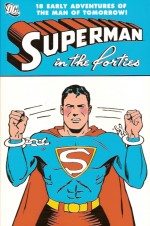
Superman in the Forties


By Jerry Siegel, Joe Shuster & the Superman studio (DC Comics)
ISBN: 978-1-4012-0457-0

Part of a series of trade paperbacks intended to define DC’s top heroes through the decades (the other being Batman, of course) these books always deliver a superb wallop of comicbook magic and a tantalising whiff of other, perhaps better, times.

Divided into sections partitioned by cover galleries this box of delights opens with the untitled initial episodes from Action Comics #1 and 2 (even though they’re technically ineligible, coming from June and July 1938) written and drawn by Jerry Siegel and Joe Shuster. With boundless enthusiasm the Man of Tomorrow exploded into action, saving an innocent condemned to the electric chair, teaching a wife-beater a salutary lesson, terrorising mobsters and teaching war profiteers to think again. It’s raw, unpolished and absolutely captivating stuff.

Swiftly following from Superman #58, (May-June 1949) is a beguiling teaser written by William Woolfolk and illustrated by Wayne Boring and Stan Kaye. ‘Lois Lane Loves Clark Kent!’ found the intrepid reporter seeing a psychiatrist because of her romantic obsession with the Man of Steel. His solution?

The quack tells her to switch her affections to her bewildered, harassed workmate! A rare treat follows as the seldom seen Superman prose story from Superman #1 (Summer 1939 and of course written by Siegel with accompanying art by Shuster) reappears for the first time in decades.

In 1948 the editors finally declassified the full and original ‘Origin of Superman’ written by Bill Finger with art from Boring and Kaye (Superman #53, cover-dated July-August) It was followed a year later and directly after in this volume by ‘Superman Returns to Krypton’ by Finger and Al Plastino wherein the Man of Steel breaks the time barrier to observe his lost homeworld at first hand. This little gem (from Superman #61, November-December, 1949) provided the comic-book explanation for Kryptonite – it was originally introduced on the radio show in 1943 then promptly forgotten – opening the door for a magical expansion of the character’s universe that still resonates with us today.

During the late 1940s Siegel & Shuster retrofitted their creation by creating Superboy (“the adventures of Superman when he was a boy”) for More Fun Comics #101 (January/February 1945). An instant hit, the youthful incarnation soon had the lead spot in Adventure Comics and won his own title in 1949.

From Superboy #5 (November-December, 1949) comes the charming tale of a runaway princess ironically entitled ‘Superboy Meets Supergirl’ by Woolfolk and the hugely talented John Sikela.

The second section is dedicated to the Man of Steel’s opponents beginning with ‘Superman Meets the Ultra-Humanite’ from Action Comics #14 (July, 1939) by Siegel, Shuster and Paul Cassidy. They also produced a much more memorable criminal scientist in Lex Luthor who debuted in an untitled tale from Action #23 (April, 1940). This landmark is followed by ‘The Terrible Toyman’ (Action #64, September, 1943) by Don Cameron, Ed Dobrotka and George Roussos.

In such socially conscious times once of Superman’s most persistent foes was a heartless swindler called Wilbur Wolfingham. ‘Journey into Ruin’ by Cameron, Ira Yarbrough and Stan Kaye (from Action #107, November #107) is a fine example of this type of tale and the hero’s unique response to it.

A different kind of whimsy was apparent when Lois Lane’s niece – a liar who could shame Baron Munchausen – returned with a new pal who could make her fantasies reality in ‘The Mxyztplk-Susie Alliance’ from Superman #40, May-June 1946, charmingly crafted by Cameron, Yarbrough and Kaye.

The American Way section begins with a genuine war-time classic. ‘America’s Secret Weapon’ from Superman #23, July-August 1943, by Cameron, Sam Citron and Sikela is a masterpiece of patriotic triumphalism, as is the excerpt from the Superman newspaper strip which reveals how the over-eager Man of Tomorrow accidentally fluffed his own army physical. These strips by Siegel, Shuster and Jack Burnley, originally ran from 16th – 19th February 1942,

Look Magazine commissioned a legendary special feature by the original creators for their 27th February 1943 issue. ‘How Superman Would End the War’ is a glorious piece of wish-fulfillment which still delights, and it’s followed by a less famous but equally affecting human interest yarn ‘The Superman Story’. Taken from World’s Finest Comics #37 (1947, by Finger, Boring and Kaye) it sees a pack of reporters trail Superman to see how the world views him.

The book ends with ‘Christmas Around the World’ as Superman becomes the modern Spirit of the Season in a magical Yule yarn by Cameron, Yarbrough and Kaye from Action #93 (February 1946).

With a selection of cover galleries, special features and extensive creator profiles this is a magnificent Primer to the greatest hero of a bygone Golden Age, but one who can still deliver laughter and tears, thrills and spills and sheer raw excitement. No real fan can ignore these tales…

© 1940-1939, 2005 DC Comics. All Rights Reserved.
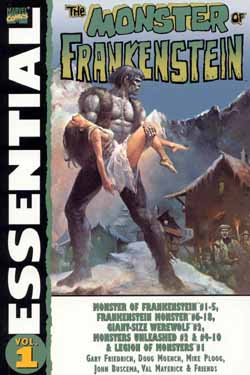
NEW, EXTENDED REVIEW Essential Monster of Frankenstein


By various (Marvel)
ISBN: 978-0-7851-1634-9

There’s a tremendous amount of value in these phone-book sized cheap’n’cheerful monochrome Essential editions. This particular collection reprints Marvel’s 1970’s interpretation of the Mary Shelly classic from a time when the censorious Comics Code Authority first loosened some of its strictures banning horror material from the pages of comics.

Much American comic art should only be seen in colour – that is after all how it was intended to be – but in this instance that moody black and white only serves to enhance the groundbreaking artwork of Mike Ploog. A young find who had worked with Will Eisner, Ploog illustrated Gary Friedrich’s pithy adaptation of the original novel before moving on to new ventures as the strip graduated to in-house originated material.

‘Mary Shelley’s Frankenstein!’ debuted with a January 1973 cover-date and introduced Robert Walton IV, great grandson of the sea-captain who had rescued scientist Victor Frankenstein from the polar Ice and was regaled with the incredible tale of “the Modern Prometheus”. Leading a band of rogues, cutthroats and sullen Inuit, Walton finds the fabled monster in 1898, interred in a block of ice, and brings it aboard his ice-breaker. He recounts the story to the fascinated cabin-boy unaware of the fear and discontent simmering below decks…

A bloody mutiny in a terrible storm opens the second issue as the burning ship founders. Meanwhile the flashbacked tale of the tragic Victor reaches the terrible moment when the monster demands a mate. The guilt-plagued scientist complies only to balk at the last and destroy his second creation. ‘Bride of the Monster!’ concludes with the creature’s fearsome vengeance on his creator paralleling the grim fate of the storm-tossed ship…

The Monster of Frankenstein #3, ‘The Monster’s Revenge!’ has the reawakened creature freed from its ice-tomb and hearing the continuation of his life-story from Walton’s lips as the last survivors struggle to find safety in the Arctic wastes. ‘Death of the Monster!’ (with inker John Verpoorten taking some of the deadline pressure off the hard-pressed Ploog) turns the tables as the monster reveals what happened after the polar showdown with its creator, which leads to a new beginning when Walton reveals that the Frankensteins were not all eradicated by the Monster’s campaign of vengeance. The blood-line continued…

A new direction began with issue #5 as ‘The Monster Walks Among Us!’. Making his way south the tragic creature arrived in a Scandinavian village in time to save a young woman from being burned at the stake on a blazing longboat, only to rediscover that when villagers pick up pitchforks and torches to go a-screamin’ and a-hollerin’ for blood, they usually have a good reason…

With issue #6 the comic-book renamed itself The Frankenstein Monster. The undying creature reached the village of Ingolstadt a century after it wreaked bloody vengeance on his creator’s loved ones. ‘…In Search of the Last Frankenstein!’ is a mini-classic of vintage horrors scripted as usual by Friedrich but plotted, pencilled and inked by Ploog who was reaching an early peak in his artistic career. It was also his last issue.

Ploog was followed by John Buscema and Bob Brown before Val Mayerik settled as regular artist and Friedrich gave way to Doug Moench, a writer once synonymous with Marvel’s horror line.

Issues #7, 8 and 9 bowed to the inevitable and pitted the Monster against Marvel’s top horror star (albeit 75-ish years prior to his contemporary adventures). Beginning with ‘The Fury of a Fiend!’, continuing in ‘My Name is… Dracula!’ and concluding with ‘The Vampire Killers!’, this is a classy tribute to the old Universal movies and then current Hammer Films in equal measure wherein the misunderstood misanthrope battled an undying evil for ungrateful humanity, consequently losing the power of speech; and becoming more monstrous in the process.

Produced by Friedrich, John Buscema and John Verpoorten these tales lacked the atmosphere of Ploog’s tenure, but the action was very much in the company’s house-style. With #10 (inked by Frank Giacoia and Mike Esposito) the creature finally found ‘The Last Frankenstein!’ much to his regret.

With number #11 (‘…And in the End…!?’ illustrated by Bob Brown & Vince Colletta) and #12’s ‘A Cold and Lasting Tomb’ by Doug Moench, Val Mayerik and Colletta) the Monster finished his historical adventures by falling into a glacial sea and froze into another block of ice only to be revived, Captain America-like, in modern times.

My only real quibble in a book that re-presents the entire 18-issue run of the comic, plus the crossover from Giant-Sized Werewolf #2 and all the strips from the adult-oriented horror magazines Legion of Monsters and Monsters Unleashed, is that a little more attention to publishing in chronological order might have made for a smoother read.

If you’re the type who prefers to experience his or her yarns in the proper sequence this is the stage where flipping to the back is necessary as the stories from those aforementioned Marvel magazines – which originally ran concurrently with the four-colour comic-book – can be found. Most of those adventures take place between pages 13 and 14 of The Frankenstein Monster #12!

Just reading the book however, the next thing you’ll find is a rather tame team-up/clash from Giant-Sized Werewolf #2 wherein ‘The Frankenstein Monster Meets Werewolf by Night’ (by Moench, Don Perlin and Colletta) collaterally quashing a band of run-of-the-mill West Coast Satanists in the process.

Issue #13 ‘All Pieces of Fear!’ (Moench, Mayerik and Jack Abel) shoe-horned the Monster into mid-1970s America in a tale heavy with irony as men acted like beasts and an obsessive father ignored his family whilst building his own abominations with the new science of cloning. With a hip young kid as a sidekick/spokesperson ‘Fury of the Night-Creature’ (with Dan Green inking) extended the saga by introducing I.C.O.N. (International Crime Organizations Nexus) yet another secret organisation intent on corporate conquest.

Issue #15 ‘Tactics of Death’ (with a young Klaus Janson on inks) briefly concluded the acronym agenda as the Monster and his companion Ralph mopped up the men in suits only to be shanghaied to Switzerland to meet the latest Last of the Frankensteins in ‘Code-name: Berserker!’ (with inks by Bob McLeod – who managed to handle the next issue too).

Veronica Frankenstein was still absorbed in the family business, but claims to be fixing her ancestors’ mistakes when those incorrigible I.C.O.N. bounders show up demanding her biological techniques in ‘A Phoenix Beserk!’. Beautifully inked by Mayerik and Dan Adkins, the last colour issue ended on a never-to-be completed cliffhanger (although scripter Bill Mantlo covered elements of the story in Iron Man a few years later) when the Monster and his new friend met ‘The Lady of the House’ – the utterly bonkers creature-crafter Victoria Von Frankenstein…

Perhaps the abrupt cancellation was a mercy-killing after all.

As I’ve laboriously stated above, the man-made monster also featured in a few mature reader magazines, beginning with Monsters Unleashed #2. ‘Frankenstein 1973’ (by Friedrich, Buscema and Syd Shores) relates how an obsessive young man found the Monster preserved as a carnival exhibit, but his jealous girlfriend revived it by trying to burn down the sideshow. The story continued in Monsters Unleashed #4 (by the same team and Golden-Age Great Win Mortimer). ‘The Classic Monster’ had a mad scientist actually put his brain in the monster’s skull but all was put right in #5’s ‘Once a Monster…’

Monsters Unleashed #6, by Moench and Mayerik, ‘…Always a Monster!’ wrapped up the introduction to today storyline with a good, old-fashioned Monster hunt, and lead directly to #7’s ‘A Tale of Two Monsters!’ a dark, socially relevant tale of the modern underclass, carried on in ‘Fever in the Freak House’ and concluded in #9’s ‘The Conscience of the Creature’.

The horror boom was fading by this time and Monsters Unleashed #10 was his last outing there, a superbly dark and sardonic Christmas offering complete with Elves, snow, terrorists and a Presidential assassination attempt. One final tale ‘The Monster and the Masque’ appeared in one-shot The Legion of Monsters, by Moench and Mayerik (whose painted wash-and-ink artwork for the magazine line was some of the best of his career) assisted here by Dan Adkins and Pablo Marcos. This bittersweet morality play saw the creature accidentally accepted at a fancy dress party which was ruined when a different sort of monster got carried away…

With additional pin-ups, cover illustrations and pertinent text pages from the Marvel Universe Handbook, this collection is great treat for fantasy and horror fans and should be a first choice for introducing civilians to the world of comics.
© 1973, 1974, 1975, 2004 Marvel Characters, Inc. All Rights Reserved.

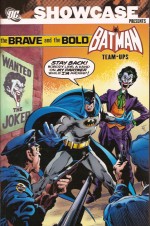
Showcase Presents Brave and the Bold Batman Team-ups Volume 3


By Bob Haney & Jim Aparo, with John Calnan (DC Comics)
ISBN13: 978-1-84856-117-5

With this third collection of Batman’s pairing with other luminaries of the DC universe (collecting in splendid black and white The Brave and the Bold issues #109-134) we find a creative team that had gelled into a perfect machine producing top-notch yarns aimed at the general readership – which would often annoy and appal the dedicated fans and continuity-obsessed reader.

Leading off is the superb supernatural thriller ‘Gotham Bay be my Grave!’ wherein the Caped Crusader and Jack Kirby’s then newest sensation the Demon battled an unquiet spirit determined to avenge his own execution after nearly a century, followed by a canny cold War adventure starring semi-regular Wildcat in his civilian guise as retired heavyweight boxing champion of the world. Although the veteran Justice Society hero was usually stationed on the alternate Earth 2 at this time no explanation was ever given for his presence on “our” planet. It used to drive the continuity-conscious fans utterly nuts!

Issue #111 boasted “the strangest team-up in history” as Batman joined forces with his greatest enemy, the Joker, for a brilliantly complex tale of cross and double cross in ‘Death has the Last Laugh!’ which may have lead to the Harlequin of Hate’s own short-run series a year later. With the next bimonthly issue B&B became a 100 Page Super Spectacular title: a much missed high-value experiment which offered an expanded page count of new material supplemented by classic reprints that turned many contemporary purchasers into avid fans of “the good old days”.

First to co-star in this new format was Kirby’s super escape artist Mister Miracle who joined the Gotham Guardian (himself regarded as the world’s greatest escapologist until the introduction of Jolly Jack’s Fourth World) in a tale of aliens and Ancient Egyptians entitled ‘The Impossible Escape!’ Issue #113 saw the return of the robotic Metal Men in a tense siege situation thriller ‘The 50-Story Killer!’ whilst Aquaman helped save the city from atomic annihilation in the gripping terrorist saga ‘Last Jet to Gotham in #114.

‘The Corpse that wouldn’t Die!’ was a different kind of drama as the Batman was declared brain-dead after an assault, and size-shifting superhero the Atom was forced to occupy his skull to complete the Caped Crusader’s “last case”. Needless to say the Gotham Gangbuster recovered in time for another continuity-crunching supernatural team-up with the Spectre in #116’s ‘Grasp of the Killer Cult’ before embarking on a ‘Nightmare Without End’ – a brilliant espionage thriller guest-starring the aging World War II legend Sgt. Rock and the survivors of Easy Company, a fitting end to the 100 page experiment.

The Brave and the Bold #118 returned to standard comic book format, if not content, as both Wildcat and the Joker joined Batman in the rugged fight game drama ‘May the Best Man Die!’. Sometime villain Man-Bat also had his own short-lived series and he impressively guested in #119’s exotic tale of despots and bounty-hunters ‘Bring Back Killer Krag’.

Possibly the most remarkable, if not uncomfortable, pairing in this volume occurred in B&B #120. Jack Kirby’s biggest hit at DC in the 1970s was Kamandi, Last Boy on Earth. Set in a post-disaster world where animals talked and hunted dumb human brutes, it proved the perfect vehicle for the King’s uncanny imagination, and ‘This Earth is Mine!’ saw Batman mystically sucked into that bestial dystopia to save a band of still-sentient human shamans in a tale more akin to the filmic “Planet of the Apes” quintet than anything found in comic-books.

The Metal Men bounced back in #121’s heist-on-rails thriller ‘The Doomsday Express’, an early advocacy of Native American rights with as much mayhem as message to it, and ‘The Hour of the Beast’ saw the Swamp Thing return to Gotham City to save it from a monstrous vegetable infestation. B&B #123 brought back Plastic Man and Metamorpho in ‘How to Make a Super-Hero’ as well as featuring a rare incidence of a returning villain: ruthless billionairess Ruby Ryder, once again playing her seductive mind-games with the pliable, gullible Elastic Ace.

Always looking for a solid narrative hook Haney spectacularly broke the fourth wall in ‘Small War of the Super Rifles’ when Batman and Sgt. Rock needed the help of artist Jim Aparo and editor Murray Boltinoff to stop a gang of ruthless terrorists. This is another one that drove some fans batty…

‘Streets of Poison’ in #125 was a solid drug-smuggler yarn with exotic locales and a lovely hostage for Batman and the Flash to deal with, and John Calnan stepped in to ink #126’s Aquaman team-up to solve the sinister mystery of ‘What Lurks Below Buoy 13?’

It was back to basics next issue as Wildcat returned to help quash a people-smuggling racket in the ‘Dead Man’s Quadrangle’ whilst #128’s ‘Death by the Ounce’ found the Caped Crusader recruiting Mister Miracle and Big Barda to help him rescue a kidnapped Shah and save a global peace treaty.

Ever keen to push the envelope, the next yarn was actually a jam-packed two-parter as #129’s ‘Claws of the Emperor Eagle’ pitting Batman, Green Arrow and the Atom against the Joker, Two-Face and a host of bandits in a race to possess a statue that had doomed every great conqueror in history. The epic, globe-trotting saga concluded with an ironic bang in ‘Death at Rainbow’s End.’

The last time Wonder Woman appeared (#105 if you recall) she was a merely mortal martial artist but in Brave and the Bold #131 she retuned in all her super-powered glory to help Batman fight Catwoman and ‘Take 7 Steps to… Wipe-Out!’

DC cautiously dipped its editorial toe in the Martial Arts craze and #132 found Richard Dragon, Kung Fu Fighter joining ‘Batman… Dragon Slayer??’, as Denny O’Neil succeeded editor Boltinoff in a rather forced and silly tale of dueling stylists and purloined historical treasures.

Normal service resumed when Deadman stepped in to deliver ‘Another Kind of Justice!’ to rum-runner Turk Bannion when his heir and murderer turns to a more modern form of smuggling. This book concludes with ‘Demolishment!’ from #134, wherein Green Lantern defects to the soviets, a la “the Manchurian Candidate” and Batman’s rescue attempt goes bad…

By taking his cues from news headlines, popular films and proven genre-sources Bob Haney continually produced gripping adventures that thrilled and enticed with no need for more than a cursory nod to an ever-more onerous continuity. Anybody could pick up an issue and be sucked into a world of wonder. Consequently these tales are just as fresh and welcoming today, their themes and premises are just as immediate now as then and Jim Aparo’s magnificent art is still as compelling and engrossing as it always was. This is a Bat-book literally everybody can enjoy.

© 1973-1977, 2008 DC Comics. All Rights Reserved.
Nephylym Book 1


By Rei Kusakabe (DrMaster Publications)
ISBN13:  978-1-59796-181-3

Shun Imai has a little problem. He’s a fairly average high-school boy but is a martyr to static electricity. Every time he touches metal there’s a painful flash and spark. It’s a very similar situation whenever he sees pretty classmate Sanari Kurosaki.

His life takes a big turn into weird territory when he discovers a tiny winged girl following him and a black slime oozing maniac attacking people. Valiantly going to the rescue he finds his static problem has a powerful effect on the berserker. The little pixie girl somehow aids him. She can’t speak but telepathically reveals her name is “Air”.

His life gets even crazier when his dream-girl Sanari reveals that he is an “Answerer” – just like she is. The little winged angels are Nephylym, and they seek out and bond with worthy warriors to combat the dark forces of bad emotions given destructive physical form as “Noir”. Shun is destined to be a secret hero…

And thus begins a rather charming, simple action-fantasy/schoolboy hero yarn that will delight newcomers to the genre. The progress of Shun as he discovers the hidden world of Answerers, meets his rival for Sanari’s affections (she, of course, only thinks of the boys as her friends), and has to save his oldest pal from the curse of Noir is pretty standard manga fare but delivered with great flair and comedic grace to counterpoint the terror and tragedy of the core premise.

Light, enchanting yet full of humour and wholesome action, this series is a solid work that should entice readers new to comics and especially youngsters just dipping their toes into the world of graphic narratives.

This black and white book is printed in the Japanese right-to-left format.

© 2007 Rei Kusakabe. English translation © 2008 DrMaster Publications. Inc. All Rights Reserved.

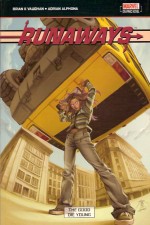
Runaways volume 3 The Good Die Young


By Brian K Vaughan, Adrian Alphona & Craig Yeung (Marvel)
ISBN: 978-1-905239-78-8

The third chapter (collecting volume 1, issues #13-18 of the Marvel comic-book series) in the saga of children on the run from their parents who have been revealed as an evil coalition of mutants, alien, sorcerers and super-criminals kicks the saga into high gear as the youngsters stop escaping and start attacking.

So for newcomers and by way of recap: Six L.A. rich kids with nothing in common except that their parents hang out together discover that those selfsame adults are, in fact, a league of super-villains intent on world conquest. Since no parent can be trusted anyway, the kids band together to use their own powers to bring them to justice. The adults have fingers in every pie, though. As the De Facto owners of Los Angeles it takes little more than a phone call to frame the Runaways for kidnapping each other and for a particularly grisly murder.

From their cool hide-out they rescue another boy with evil parents, only to fall foul of a timeless monster, and super-heroes Cloak and Dagger first hunt, (recruited by a bent cop in the pay of those ol’ evil parents) before teaming up with them. Unfortunately, the insidious adults mind-wipe the heroes as they go for reinforcements…

This volume contains a positive flurry of frantic activity, the kids discover the reason behind their parents’ villainous coalition, find a traitor in their midst, save the world and even clear the way for the sequel in the best manner of bubblegum drama. There’s even room for plenty of fighting and vast bunches of snogging, and a few A-List super-hero guest-stars too.

As a weary old man it’s so easy to be disparaging about a new (-ish) genre-form tailored to the young, hormonal, middle-class and socially advantaged, be it comic books, TV, clothes or music. Yet I’m fairly sure that my discomfort with a lot of modern material aimed at new young consumers is the old one: lacklustre creativity soaked in varnish and dipped in glitter is no substitute for quality storytelling. Even the most naïve newcomer knows “Shiny” is not the same as “Good”.

Soap operas are generally considered to be the ass-end of drama everywhere, yet can often transcend their base origins to produce outstanding quality, shattering depth and lasting worth. And more so in comics where we’ve had this very argument for decades over not just the content but even the very form of our medium. Perhaps I’m just getting tetchy waiting for it to happen.

All that being said there is a marked and consistent improvement in this book, (except with the art which I just can’t seem to warm to, competent though it clearly is) and the story does actually improve with re-reading – especially as this UK edition is printed in the regular trade paperback size and not the annoyingly cramped and cluttered digest format. Perhaps the thing simply needs a decent amount of breathing room to work.

For something that’s a distillation of so many hybrid strands that’s actually not such a bad thing. I’d advise you to read them and decide for yourselves.

© 2004, 2008 Marvel Characters Inc. All Rights Reserved. A BRITISH EDITION RELEASED BY PANINI UK LTD

Jenny Sparks: The Secret History of the Authority


By Mark Millar, John McCrea, James Hodgkins & Ian Hannin (WildStorm)
ISBN: 978-1-84023-310-0

Evolving from the comic-book Stormwatch, The Authority are a team of super-heroes who take their self-appointed duty to its only logical – if extreme – conclusion. As god-like super-beings they have eschewed the traditional societal role in favour of a pre-emptive strike policy, and a no-nonsense One-World paternalism, that allows them to tackle real problems such as hunger, pollution, genocides and corporate piracy as well as demented super-villains and alien invasions.

They have set themselves above the Machiavellian dances of world politics in a mission to save the entire planet, and naturally, that doesn’t endear them to the entrenched Interests of Government and Business.

When the team first formed the most intriguing member was easily the brittle, cynical English woman Jenny Sparks whose electrical powers were an expression of her metaphysical position as the incarnate “Spirit of the Twentieth Century”. This collection gathers the five issue miniseries that revealed her 100-year life (born at midnight, December 31st 1899…) but it’s less a secret origin and more a handy guide to the history of the alternate world that the Authority inhabit.

By flashing back to key moments with her fellow crusaders Swift, The Doctor, Apollo and the Midnighter, Jack Hawksmoor and The Engineer creators Miller and McCrea cleverly deliver subtle moments and insights into a feature mostly known for excess and spectacle.

This tale is a must-see for fans of the brand, but also a clever and entertaining fantasy adventure for lovers of good storytelling everywhere.

© 2000, 2001 WildStorm Productions. All Rights Reserved.

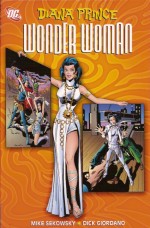
Diana Prince: Wonder Woman volume 3


By Mike Sekowsky, Dick Giordano & various (DC Comics)
ISBN: 978-1-84856-016-1

With this third collection of the brilliant mod avenger sequence of Wonder Woman Mike Sekowsky hit his creative peak, seamlessly blending whimsical comedy with barbaric fantasy, high adventure with high fashion and street credibility with the so, so “in vogue” supernatural. The quality came at a price though, as of the nine issues covered here (Wonder Woman #190-198) two and three quarters were reprints necessitated by missed deadlines. Comprehensively filling out the page count is the heroine’s team-up with Superman from World’s Finest Comics #204.

‘Detour’ (issue #190 and superbly inked by the great Dick Giordano) finds the capable ex-Amazon and her blind mentor I Ching crossing interdimensional divides to visit her mother Queen Hippolyta when a cosmic storm deposits them in a dark, feudal world. Captured by slavers they befriend a barbarian and join a revolution against the oppressive Empire of Chalandor, but the second part in #191 was only five pages (padded by reprints) before the epic concluded in #192 with an ‘Assault on Castle Skull’.

The heady brew of swords, armoured combat and fantastic flying machines was balanced by a powerful drama of very human scale in ‘Angela’ when a troubled mother came seeking justice for her daughter, poisoned by a spiked drink at a party. This topical tragedy was followed by an effective and engaging pastiche.

The Prisoner of Zenda (as interpreted by the splendid 1952 Richard Thorpe film rather than the book written by Anthony Hope in 1894) inspired #194’s ‘The Prisoner’, a wonderfully lavish piece of action-packed fluff that proved the sheer versatility of the Single White Female Crime-fighter concept.

Wonder Woman #195 was a mini-masterpiece of spooky thrills. ‘The House that Wasn’t’ found Diana and Ching carjacked by escaped convicts and taking shelter from a blizzard in a haunted Inn. This classic tale is enhanced by the lush, moody inking of the legendary Wally Wood.

The aforementioned team-up with the Man of Steel follows: a cautionary tale from the early days of the ecology movement. ‘Journey to the End of Hope’ (WF #204) is by Denny O’Neil, Dick Dillin and Joe Giella, and featured a computer from the future which begs the heroes to save an unidentified man destined to die in a campus riot – else the Earth will become a toxic ruin!

Issue #196’s ‘Target for Today?’ is the last inclusion in this book (#197 and 198 were both all-reprint editions and are only represented by their covers), a taut thriller wherein Diana becomes the bodyguard for a visiting monarch targeted for assassination…

The uniquely eccentric art of Mike Sekowsky had been a DC mainstay for decades, and he had also garnered kudos for The Man from Uncle, T.H.U.N.D.E.R. Agents and Fight The Enemy! His unique take on the Justice League of America had contributed to its overwhelming success, but with the stories collected here he was reaching the end of his tenure on the experimentally de-vitalised heroine.

Superhero comics were in decline and publishers were impatiently looking for fresh ways to stay in business as audience tastes changed. Back then, with the entire industry dependent on newsstand sales, if you weren’t popular, you died. Within six issues Wonder Woman would regain her magical powers and return to a world of Greek gods, aliens, and super-villains but that period of cool, hip, bravely human heroism and drama on an intimate scale stands out as a self-contained high-point of quality in a largely bland career.

At least there’s enough fab and gear frolics for one last volume. I can’t wait…

© 1970, 1971, 1972, 2008 DC Comics. All Rights Reserved.
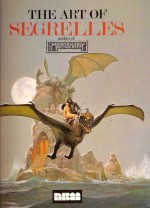
The Art of Segrelles


By Vicente Segrelles (NBM)
ISBN: 0-918348-39-0

Born in Barcelona in 1940 Vicente Segrelles Sacristán is the creator of one of the world’s most popular fantasy graphic novel series, as well as a renowned illustrator of magazines and book covers on three continents. His first comics album ‘El Mercenario’ (The Mercenary) was released in 1980, the tale of a knight fighting his way through a fantastic world of science and sorcery. Rendered in lush oil-paints, the tales blend visual realism and accuracy with fable, myth, historical weaponry, contemporary technology and classical science fiction themes. There have been twelve more since.

Hugely in demand for his painted covers since the 1970s, he has produced book covers for the works of such authors as H, Rider Haggard, Poul Anderson, Roger Zelazny, Alistair McLean, Desmond Bagley, G. F. Unger, Andre Norton, Joel Rosenberg, Charles DeLint, C.H. Guenter, Jason Dark, Terry Pratchett and a host of others. European readers may also know him as the cover artist of Italian Science Fiction magazine Urania.

This lavish oversized edition published in the late 1980s reproduces 32 of his very best covers ranging from his own Mercenary covers to paperback commissions from around the world, and includes a very brief note from the artist on his work method. Although sometimes considered a little static his vibrant, classical realism has inspired many modern narrative painters and this is a lovely book to dip into and admire.
© 1987 Vicente Segrelles, controlled by NORMA. All Rights Reserved. English Translation © 1987 NBM. All Rights Reserved.

Countdown Presents: The Search for Ray Palmer


By various (DC Comics)
ISBN13: 978-1-84576-868-3

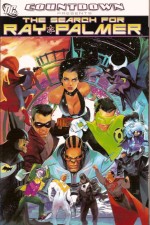
This review feels more like a shopping list than an inducement to share my experiences but if you persevere – with both my burblings and especially this slim tome published as a sidebar to the mega-crossover Countdown to Final Crisis – there’s fun to be had for the dedicated fan.

One of the major plot threads of the main event is that missing physicist/shrinking superhero Ray Palmer holds the answer to an unspecified Great Disaster looming in the future of the DC Universe. A select group of heroes led by a renegade Monitor (a kind of super-watchman assigned to invigilate one of the 52 universe of the multiverse) must search all the realities in hope of finding him before its too late…

A number of Countdown Presents: the Search for Ray Palmer one-shots were released during the weekly, year-long run of the parent series, set on the various 52 Earths (many in fact previously seen alternates or Elseworlds concepts, handily assimilated into the DCU for the occasion).

The first collected here is ‘Running Wild!’ by Ron Marz, Angel Unzueta and inkers Oliver Nome, Richard Friend, Saleem Crawford and Trevor Scott from CPtSFRP: WildStorm #1 wherein Donna Troy, Kyle (Green Lantern) Rayner, Jason (I used to be Robin, and dead) Todd and Bob the Monitor encounter various heroes and villains of the WildStorm Universe in an annoying series of disconnected vignettes that only make sense when read in conjunction with the relevant instalments of the weekly series.

Much more palatable is ‘The Jokester’s Last Laugh’ by Sean McKeever, Jamal Igle and Rob Hunter (from CPtSFRP: Crime Society #1) as the searchers – calling themselves the Challengers of the Unknown – arrive on the world where good is evil and the superheroes are villains. This chapter at least boasts a complete story that can be followed as does the next sinister stopover on an Earth where Batman became a vampire (as seen in Batman: Vampire – Tales of the Multiverse ISBN13: 978-1-84576-645-0).

‘Red Rain: Blood Lust’ by Peter Johnson, Matt Cherniss and Kelley Jones is a brief interlude that originally appeared in DC Infinite Halloween Special #1 and leads directly into CPtSFRP: Red Rain #1 which presented ‘Red Robin’ by Johnson, Jones, Eric Battle, Angel Unzueta, Derek Fridolfs, Vicente Cifuentes and Jonathan Glapion; a gory undead horror from which our protagonists barely escape.

Their next stop is the far more dignified but no less deadly world of Gotham by Gaslight (from the CPtSFRP one-shot of the same name). ‘Night of the Bat’ by Brian Augustyn, Greg Tocchini, Jesse Delperdang, Derek Fridolfs and Paul Neary, a good old-fashioned romp followed by the equally impressive ‘Red Son’ set on a world where that rocket from Krypton landed in the Soviet Union not Kansas. Alan Burnett, Travis Foreman and Lorenzo Ruggiero produced this high-octane cold war incident for CPtSFRP: Red Son #1.

The book, if not the story, ends with ‘Superwoman/Batwoman’ from the eponymous one-shot, a charming and rather peculiar tale from an Earth where the genders of everybody we’re familiar with are reversed. The strangeness comes courtesy of Justin Gray, Jimmy Palmiotti, Kalman Andrasofszky, Jeremy Haun, David Hahn, David Baldeón, Norm Rapmund, Álvaro López, Rick Ketcham and Steve Bird.

On the last page you’ll find that the challengers don’t succeed and that you’ll need Countdown to Final Crisis volume 3 to find out what happens next. As with all the tales here you’ll be reminded that the real story is going on elsewhere and that the confusions you’ve been experiencing were largely unnecessary. The transition from periodical publishing events to book collections is still a young science and every so often the formats simply don’t work together.

This time it would have been best to stick these exceedingly good one-shots into the appropriate places in regular compilations rather than have them stand as the bewildering mess they are here.

© 2007, 2008 DC Comics. All Rights Reserved.

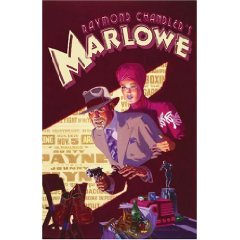
Raymond Chandler’s Marlowe: A Trilogy of Crime


Adapted by various (iBooks)
ISBN: 978-0-7434-7489-4

If you’re going to adapt classic, evocative crime stories into graphic narrative there really isn’t any better source material than Raymond Chandler. This follow-up to the graphic novel interpretation of Raymond Chandler’s Marlowe: The Little Sister (ISBN: 0-684-82933-9) was also packaged by comics visionary Byron Preiss and adapts three short tales from the master of hard-boiled fiction, rendered in a variety of unique and impressive styles.

Opening the show is ‘Goldfish’, first published in 1949, the writer’s ninth short story sale and preceding his first Marlowe novel by three years. Adapted by Tom DeHaven and lettered by Willie Schubert, it’s stylishly illustrated by British designer and artist Rian Hughes in muted colour tones that have only the merest hint of hue to them; the effect is powerfully evocative and atmospheric.

When ex-cop Kathy Horne sidles into the tough guy’s seedy office she brings a tale of lost pearls, an absconded convict and a huge reward just waiting to be claimed. Dragged far out of his comfort zone and sent up and down the Pacific Seaboard, the world-weary gumshoe is just steps ahead of the sadistic and casually murderous Carol Donovan and her gang of thugs in a superb thriller of double-cross and double-jeopardy.

Next up is ‘The Pencil’, scripted award-winning mystery novelist Jerome Charyn, brilliantly rendered by British comics legend David Lloyd in moody, dry-brush black and white, and lettered by long-term collaborator Elitta Fell. This was Chandler’s twenty-first – and final – Marlowe adventure, published in 1959, shortly after the author’s death. You might know it as Marlowe Takes on the Syndicate’, ‘Wrong Pigeon’ or even ‘Philip Marlowe’s Last Case’.

Hollywood 1955: Ikky Rossen was a bad man, a career gangster and mob leg-breaker. When he crossed his bosses he thought Marlowe could get him safely out of the City of Angels before The Organization’s East Coast Button Men could send him to Hell. Marlowe knew that these were people who should be avoided at all costs and only one thing is always true: everybody lies…

Closing the book and woefully misplaced is ‘Trouble is My Business’ by James Rose, Lee Moyer and Alfredo Alcala, with Schubert again filling the word balloons.

This weak tale of vengeful Harriet Huntress who intends to destroy two generations of wealthy socialites mixed up in the gambling rackets is from 1939: a rather tame and straightforward yarn in comparison to the other stories here, not to mention the landmark first full novel The Big Sleep, also published in that year. Moyer and Alcala do a solid job of illustrating the plot (although it’s a little pretty for my tastes) but the cynical edge that is the hallmark of this brilliant crime creation is muted if not actually extinguished here.

Despite a disappointing end this is a great book of crime comics that any fan will delight in, and the incredible Steranko cover alone is well worth the effort of tracking it down.
Adaptations and illustrations © 2003 Byron Preiss Visual Publications Inc. Original stories “Goldfish” and “Trouble is my Business” © 2003 Philip Marlowe BV (Estate of Raymond Chandler) All Rights Reserved. “The Pencil” © 1971 Helga Greene, Executrix, Estate of Raymond Chandler. All Rights Reserved.