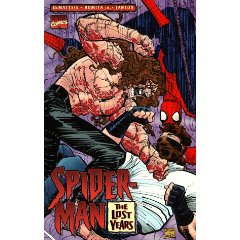
By J.M. DeMatteis, John Romita Jr. & Klaus Janson (Marvel)
ISBN: 978-0-78510-202-1
(UK Boxtree edition ISBN: 978-0-75220-359-1)
If you mention “the Clone Saga†to an older Spider-Man fan you’ll probably see a shudder of horror pass through the poor sap, although many will secretly profess to have liked parts of it.
For the uninitiated: Peter Parker was cloned by his old biology teacher Miles Warren AKA the Jackal; defeated his double in a grim identity-battle, only to discover years later that he was in fact the doppelganger and a grungy biker calling himself Ben Reilly was the true, non-artificial man.
Irrespective of how that saga played out, was retro-fitted, ignored, reworked and such-like, at the time this classy little book was released, that was the web-crawling state-of-play and that’s all the new reader needs to enjoy a cracking good read.
Collecting a mini-series that ran parallel to the saga unfolding in the four regular monthly comics, this is the tale of what happened to the character who lost that Parker-on-Parker battle, going on the road across America and ending up trapped in a crime war in distant Salt Lake City.
Dark and brooding, our hero-on-the-edge is embroiled in a drama of bloody betrayal made doubly deadly by Kaine: a flawed and degenerating Parker clone also created by the Jackal, now let loose with a deadly agenda of his own.
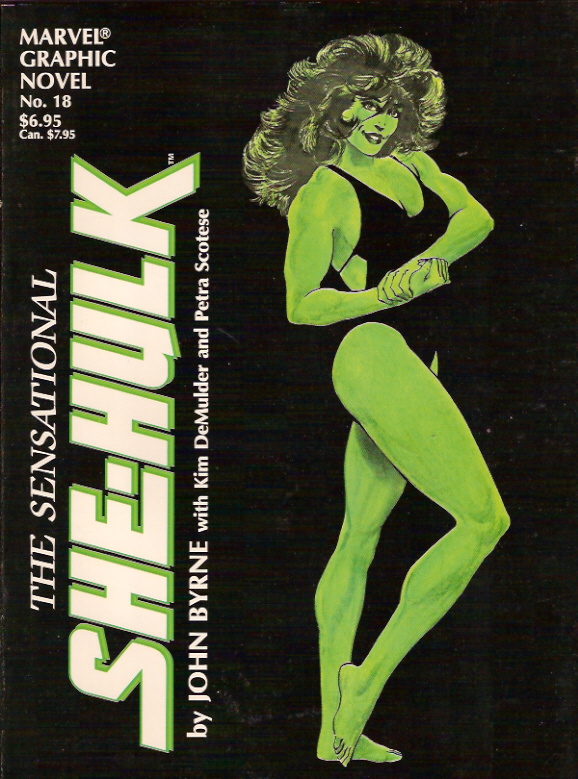
By John Byrne, Kim DeMulder & Petra Scotese (Marvel)
ISBN: 0- 87135-084-X
The story goes that in those faraway days when trademarks and copyrights were really important comic publishers were worried that rivals would be able to impinge on their sales by producing distaff versions of their characters. Thus Marvel rush-released Spider-Woman and She-Hulk so that nobody else could.
Whereas that seems rather hard to believe I must admit that the original 20-issue run of Bruce Banner’s tragic cousin Jennifer Walters was by no means the company’s finest moment. But time and deft handling by seasoned creators has since made her one of Marvel’s most readable properties, and that revolution started with this thoroughly enjoyable little tome from that “remake kid†John Byrne.
At the time of its creation the lady lawyer had joined the Fantastic Four and could change between her human and Gamma-ray enhanced forms at will, retaining her intellect in both forms, and all the fourth-world hi-jinks of her second series was yet to come…
Against the backdrop of a sentient cockroach invasion the story involves the shady higher-ups who oversee the high-tech espionage outfit S.H.I.E.L.D. ordering the abduction of the She-Hulk for unspecified “National Security†purposes. When tough but fair Nick Fury refuses to comply the mission goes ahead without him, leading to a major battle in the streets of New York and the eventual capture of not only our heroine but also a large number of passers-by.
Trapped aboard the flying helicarrier base, She-Hulk is subjected to numerous indignities and abuses whilst her boyfriend Wyatt Wingfoot and the other civilians are treated as hostages for her good behaviour. Unfortunately one of those ordinary mortals is a zombie vehicle for those cockroaches I mentioned earlier, and they want to drop the floating fortress on the city below as a declaration of war against humanity…
Although the glory-days of Marvel were undoubtedly the years of Lee, Kirby and Ditko, through to the Adams, Buscema, Englehart, Gerber, Steranko and Windsor Smith Second Wave, lots of superb material came out the latter years when the company transformed from inspirational small-business to corporate heavyweight. This is not said to demean or denigrate the many fine creators who worked on the tide of titles published after that heady period, but only to indicate that after that time a certain revolutionary spontaneity was markedly absent from the line.
It should also be remembered that this was not deliberate. Every creator does the best job he/she can: posterity and critical response is the only arbiter of what is a classic and what’s simply another issue. Even high sales don’t necessarily define a masterpiece – unless you’re a publisher…
Nevertheless every so often everybody involved in a particular publication seems to catch afire at the same time and magic still occurs.
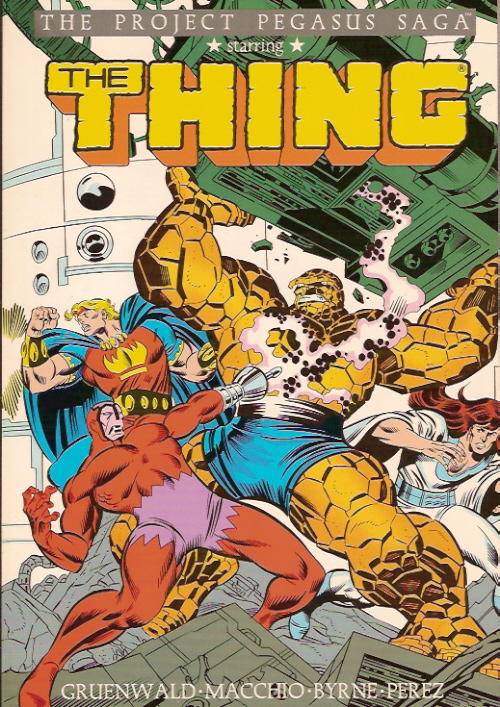
A great case in point is this self-contained mini-saga that first appeared in the pages of the Fantastic Four spin-off title Marvel Two-in-One which was used as a team-up vehicle, partnering the charismatic Thing with the cream of Marvel’s cast list over its hundred issue run and a handful of pretty impressive annuals.
Project Pegasus first appeared as a maguffin in issues #42 and 43, a federal research station dedicated to investigating alternative energy sources and a sensible place to dump super-powered baddies when you’ve finished trouncing them. Ten issues later writers Gruenwald and Macchio stretched their creative muscles with a six-issue epic (Marvel Two-in-One #53-58, 1979) that found the Thing back at Pegasus just as a sinister plan by a mysterious mastermind to eradicate the facility went into effect.
Trapped in the claustrophobic confines of the base Ben Grimm leads a motley team of heroes as they seek to recapture a number of escaped energy-based villains including Solarr, Klaw and Nuklo, fend off an invasion by super-powered lady wrestlers (I know what you’re thinking but trust me, it works) and prevent a living singularity from sucking the entire Project into infinity.
Most remarkably, the high-tension bombastic action rattles along without the appearance of any major stars – a daring move for a team-up title. Leading off with the solo(ish) debut of Quasar, swiftly followed by a reprogrammed Deathlok, a revamped Giant-Man (formerly Black Goliath), the extra-dimensional super-woman Thundra and Wundarr – an alien superboy who evolved into the pacifist hero The Aquarian in the final episode – these are not names that would have been considered sales-boosters, but their combination here truly proves the old adage about there being no bad characters…
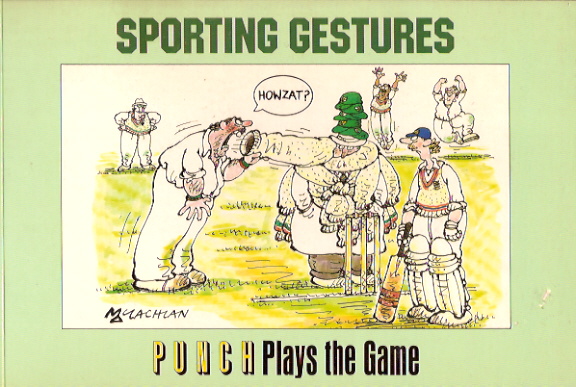
By various edited by William Hewison (Grafton Books)
ISBN: 978-0-24613-400-4
Here’s another little dip into the copious well of cartoon comedy from Britain’s greatest and most prestigious magazine of informed entertainment, this time themed to appeal to our nation’s dedicated sportsmen – whatever their passion.
Punch began in 1841; a magazine dedicated to satire and humour, and swiftly became a national – and international – institution. It ran more or less non-stop until 2002 before finally closing its jolly doors, and always featured sharp, witty writers such as W. M. Thackeray, P.G. Wodehouse, P.J. O’Rourke and Alan Coren among so very many others of their informed, acerbic stripe. Many of these writers’ efforts were illustrated by brilliant draughtsmen and artists. Punch became a social force, an astute historian and savage commentator: its contents could even influence governments.
The magazine probably invented, and if not certainly perfected, the gag and strip cartoon. The list of brilliant pen-men who graced its pages is something I won’t live long enough to relate. Name a cartoonist; if he or she were any good they will have been published in the pages of….
With such a wealth of material, it’s truly surprising how very few collections have been generated from its pages. The one under the glass here is from 1988, selected by Editor William Hewison and features a motley assortment of British gag-men attempting to explain through the medium of brush and pen mockery the Empire’s deeply ingrained obsession with “playing the gameâ€.
The gags range from familiar old friends to the arcane, surreal and outright weird, and whatever your position or disposition on the sporting life there’s beautifully rendered work here that will make you smile, chuckle, groan and even weep with laughter.
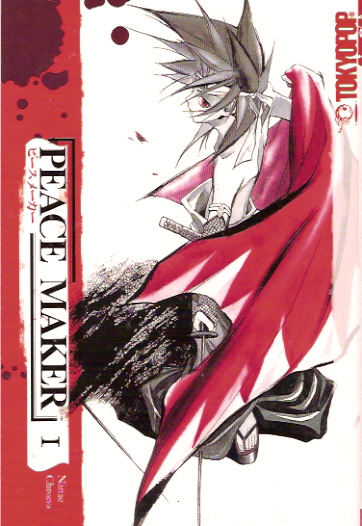
By Nanae Chrono (TokyoPop)
ISBN: 978-1-4278-0075-6
Fast-paced and quite manic, this superlative historical manga tells of Tetsunosuke and Tatsunosuke, two brothers who saw their parents murdered.
During the days of the Meiji Revolution their father was a diplomat dedicated to bring peaceful change, but Ichimura’s ways were not to everybody’s tastes and his family paid the price. The Revolution or “Renewal†was a series of events and incidents which altered the very nature of Japan in the later 19th century. It spans the end of the Tokugawa Shogunate or Edo period and the beginning of the Meiji Era. It saw the chaotic, irresistible modernization which followed the enforced breaking of Japan’s self-imposed Isolation by the American Commodore Matthew Perry and his “Black Ships†in 1854.
Ten years later Ichimura Tetsunosuke provokes a battle with a squad of warriors from the Shinsengumi, the unofficial, volunteer police force who have taken it upon themselves to restore order to Kyoto. Although only fifteen he desperately wants to emulate his brother Tatsunosuke, who has already joined this militia of brutal warriors. Both of them are driven to avenge their parents’ deaths.
As a member of the uncompromising Shinsengumi Tatsu has access to many secrets from the Revolution’s early days, and slowly he gets closer to solving the ten-year riddle surrounding the death of the man everybody called “the Peacemakerâ€. But awash in a sea of intrigue, espionage, violence and death it becomes increasingly hard to keep his own hands clean – and his impulsive brother is becoming ever more impatient and unmanageable…
Steeped in actual historical events this canny revenge thriller blends the beginnings of modern Japan with the death of the Samurai way of life, and even manages to weave a canny mystery and the frantic social slapstick of youthful heroes into a compulsive read that promises great things to come.
This book is printed in the ‘read-from-back-to-front’ manga format.
By Frank Thorne (Ken Pierce Books)
ISBN: 0-912277-31-9
Frank Thorne is one of the most individualistic talents in American comics. Born in 1930 he started his comics career drawing romances for Standard Comics alongside the legendary Alex Toth before graduating to the better paid Newspaper strips to illustrate the Perry Mason adaptation for King Features Syndicate. He went to Dell/Gold Key, where he drew Flash Gordon, Jungle Jim, The Green Hornet, and the seminal sci-fi classic Mighty Samson.
At DC he did some unforgettable work on Tomahawk and Son of Tomahawk before being hired by Roy Thomas at Marvel to illustrate his belated breakthrough strip Red Sonja, a fantastic fantasy strip that would shape the rest of his career.
Forever connected with feisty, earthy, highly sexualised women, in 1978 he created the outrageously bawdy (some call her vulgar) swordswoman Ghita of Alizarr for Warren’s adult science fantasy anthology 1984/1994 as well as such adult satirical strips as Moonshine McJugs for Playboy and Danger Rangerette for National Lampoon. He won the National Cartoonists Award for comic books in 1963, an Inkpot Award and a Playboy Editorial Award.
In 1984 he crafted this enchanting moody hard-science detective thriller for Heavy Metal, foregoing swords and sorcery for star-ships and ray-guns, but the sassy, compelling strong woman figure is still present in the darkly sexy police agent Lann. Fresh from a rejuvenation treatment that literally takes years off her she’s sent to the decadent Neon-Six to investigate the kidnapping of two girls – apparently the children of the most notorious gangster in the system. But as is always the case things are not what they seem…
With the frankly useless droid Glitch and her old partner and bed-mate Shard (who’s still awaiting his youth treatment) she negotiates a maze of lies and blaster-fire to uncover a dastardly plot that affects the entire system in this very adult, very entertaining romp reminiscent of both Barbarella and Blade Runner.
This slim oversized tome also includes a couple of photo-articles of the artist and his many lovely models plus a fascinating piece on the storyboarding of the (sadly never released) concept video. The accompanying sketches and notes provide a revealing glimpse of how a true original makes it all happen.
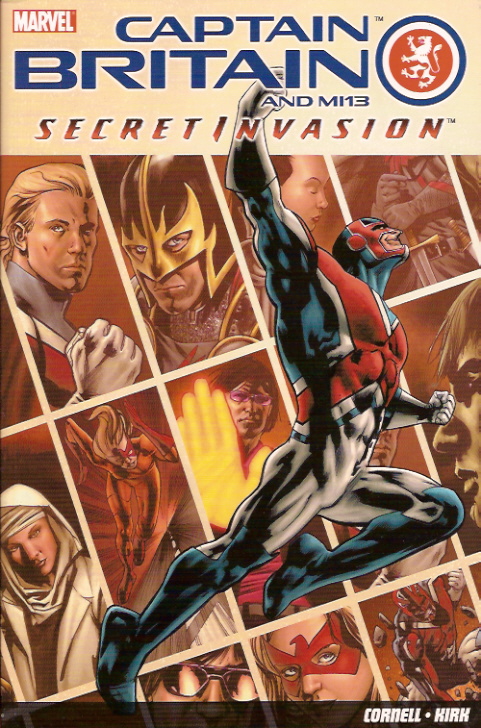
By Paul Cornell, Leonard Kirk, Jesse Delperdang & Scott Hanna (Marvel/Panini UK)
ISBN: 978-1-84653-407-2
Collecting issues #1-4 of the surprise hit comic, this rousing romp sees mutant super-spy Peter Wisdom helm a new team of British superheroes as part of a big company crossover from Marvel. Secret Invasion described the all-out attack of the insidious shape-changing Skrulls, whose long-term plan to infiltrate all strata of Earth society nearly resulted in the total subjugation of mankind.
The British front saw the aliens attack our Sceptr’d Isles in an attempt to control all Earth’s inherent magic, only to be held at bay by the Dunkirk spirit of Wisdom, Black Knight, Spitfire, John the renegade Skrull, newcomer (and female Muslim hero) Faiza Hussain and a revamped Captain Britain.
I could further outline the plot for you but as this is a lovely example of beguiling, back-to-the-wall, last stand super-heroics with the added advantage of being easily assimilated by even the most uninformed new reader, I’ll simply state that this is a grand adventure of evil aliens, valiant heroes, the Bulldog Breed and spectacular action on a fresh yet ancient magical canvas, which almost any devotee of graphic literature will adore.
Make it your personal quest to possess this gem…
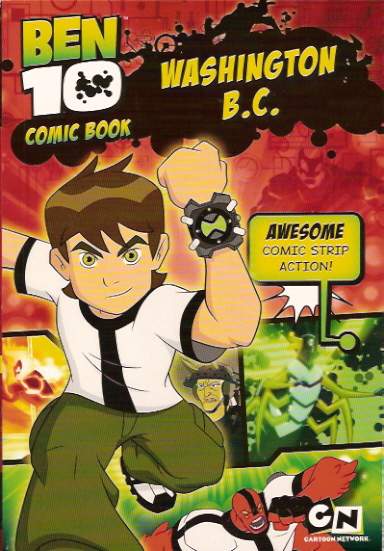
By Greg Klien & Thomas Pugsley (Egmont)
ISBN: 978-1-4052-4664-4
This second pocket album featuring the plucky kid who can become ten different alien super-heroes continues the all-ages excitement as Ben, his know-it-all cousin Gwen and their mildly eccentric Grandpa Max once more have to interrupt their vacation to defeat Evil and save the world! This time the threat comes from an actual mad scientist whose mind-bending mutant creations attack the supermarket the Tennyson’s are shopping in.
Dr. Animo’s transmodulator helmet can make primeval monsters out of modern animals and even ancient dinosaur bones but the destruction he’s wreaking in Washington DC isn’t the only thing on Ben’s mind… He’s too distracted trying to get the Golden Chase card to complete his set of Sumo Slammer cards!
Infectious fun and high-adventure mark this good old fashioned cartoon series based on the popular kids show created by “Man of Action†(the collective name for fun-think-tank Duncan Rouleau, Joe Casey, Joe Kelly and Steven T. Seagle) whose hit show bears a comfortingly similarity to two beloved strips from 1960s: Dial “H†for Hero and Ultra, the Multi-Alien.
This second graphic novel from Egmont is aimed at younger readers, and uses actual animation artwork to illustrate another cracking good yarn for kids of all ages. Get it for the young ‘uns and re-experience the good old days yourself.
Alien invasions are part-and-parcel of superhero fare and had therefore become rather devalued as a plot threat until this classy, back-to-basics, backs-to-the-wall thriller was concocted by the Superman creative army in 1992. DC had tried before in 1989 with Invasion!, but that effort, although well-thought and executed, was not happily received by fans and the core concept was further diluted by crossing-over into too many titles.
This stripped down version ran through the winter/spring issues of the Superman family of titles (namely Action Comics #674-675, Superman: the Man of Steel #9-10, Superman #65-66 and Adventures of Superman #488-489) and it keeps its pace and its focus by concentrating on a single master-villain and the deft internal continuity that was a hallmark of the Metropolis Marvel’s Post-Crisis incarnation.
The artificial proto-matter being known as Matrix had been wandering intergalactic space wearing Superman’s form when it (later “sheâ€) encountered the artificial battle-planet Warworld, where the Man of Steel had defeated Mongul (see Superman: Exile, ISBN: 978-1-56389-438-1) months previously. Reverting to her previous Supergirl form Matrix falls under the spell of Brainiac, the new master of Warworld, joining his other super slaves Maxima and Draaga. The Despot’s next destination is Earth…
As the lethal planet nears Earth Superman rallies the World’s heroes into two forces, one to defend our sacred soil from the invading extraterrestrial hordes and another to take the battle back to Braniac…
With guest-stars that include the New Gods, Justice League International, the Golden Guardian, Thorn, Captain Marvel, Gangbuster, Doctor Fate, Aquaman, Deathstroke, Valor (anybody remember him?), the Metal Men, Agent Liberty, Nightwing, Wonder Woman, the Will Payton Starman and a whole bunch of Green Lanterns the accent is on last-stand heroics and all-out action, but there’s still room for enough sub-plot drama to keep the tension tripwire tight.
Editor Mike Carlin squeezed the very best in good, old fashioned four-colour fun out of writers Dan Jurgens, Jerry Ordway, Louise Simonson and Roger Stern, whilst artists Jon Bogdanove, Tom Grummett, Dan Jurgens, Bob McLeod, Brett Breeding, Doug Hazlewood, Dennis Janke and Denis Rodier, not to mention letterers John Costanza, Albert DeGuzman, Bill Oakley and colourist Glenn Whitmore’s all stretched themselves beyond the call to deliver a cracking good old fashioned graphic blockbuster.
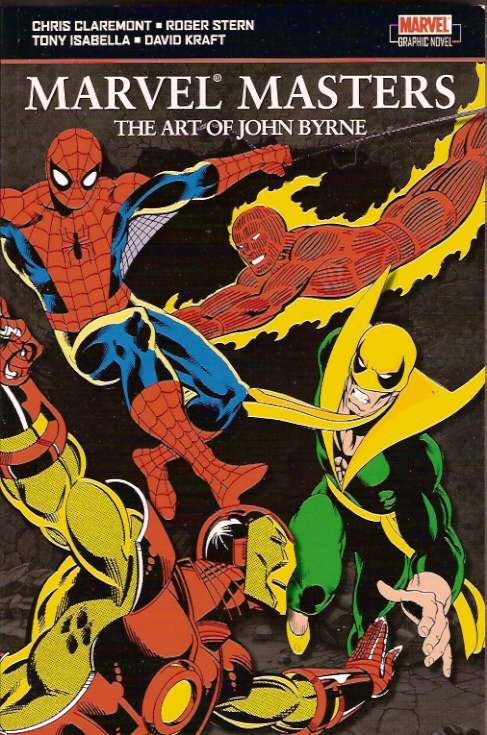
By various & John Byrne/Panini UK)
ISBN: 978-1-84653-400-3
John Byrne is one of the most prolific and creative talents in the American industry and has worked on every major character in both DC and Marvel’s pantheon as well as on creator owned properties. Since his professional debut as an artist at Skywald magazines (‘The Castle‘ in Nightmare #20, 1974) he subsequent worked for Nicola Cuti at Charlton Comics, where he produced Rog-2000 strips for E-Man, Wheelie and the Chopper Bunch, Space:1999, Emergency and the post-Apocalyptic classic Doomsday+1 before making the jump to Marvel. Along the way he developed a reputation for being difficult but always entertaining and a solid fan-favourite.
His first work for the House of Ideas opens this volume; a horror short plotted by Tony Isabella, scripted by David Kraft and inked by Rudy Nebres. ‘Dark Asylum‘ appeared in Giant-Sized Dracula # 5 (cover-dated June 1975) an inauspicious start as the Philippino’s heavy inking style utterly masked Byrne’s equally unique manner of drawing.
It’s not much better in the second tale printed herein, where the equally strong brush of veteran Al McWilliams defuses much of the penciller’s individuality. ‘Morning of the Mindstorm!’ is written by Chris Claremont, the last Iron Fist tale in Marvel Premiere (#25, October 1975) before the martial arts superhero graduated to his own title.
Regrettably none of those superb tales made it into this compendium, but a two-part tale from the artist’s stellar run on Marvel Team-Up (#61-62, September and October 1977) did. Pitting Spider-Man, the Human Torch and Ms. Marvel against the Super-Skrull ‘Not All Thy Power Can Save Thee!‘ and ‘All This and the QE2‘ is a solid action-thriller from scripter Claremont with inks by Dave Hunt.
Byrne’s place in comics history was secured by his incredible six year collaboration with Claremont on the X-Men. For most fans the high-point of this run was the “Dark Phoenix†multi-part epic. To acknowledge this, the concluding episode ‘The Fate of the Phoenix‘ (Uncanny X-Men #137, September, 1980, inked by Terry Austin) is included here, and even as a stand-alone tale, it still resonates with power, wonder and majesty.
The Byrne/Claremont partnership was experiencing some stress by 1981 and a parting of the ways was imminent. The artist undertook a short but magnificent run on the Star-Spangled Avenger (collected in its magical entirety as Captain America: War and Remembrance ISBN: 0-87135-657-0), and from that sequence comes the slyly witty ‘Cap for President‘ written by old-friend Roger Stern with inking by Joe Rubenstein.
In 1981 John Byrne achieved a private dream of relatively complete autonomy when he was assigned all the creative chores on Marvel’s flagship book. From November of that year comes his fifth issue as writer and artist. ‘Terror in a Tiny Town‘ is a 40 page epic to celebrate the twentieth anniversary of the Fantastic Four (#236, November, 1981) a classic confrontation with Doctor Doom and Puppet Master; still one of the very best non-Jack Kirby FF’s ever published.
Whilst working on X-Men, Byrne had created a team of Canadian super-heroes. When they were given their own series Byrne was again responsible for the total creative – if not editorial – output. ‘…And One Shall Surely Die‘ (Alpha Flight #12, July 1984) signalled the tragic, heroic end of the team’s leader (although no one dies forever in comics), another gripping extra-long extravaganza.
In 1985 Byrne drew Avengers Annual #14 (scripted by Stern and inked by Kyle Baker) as part of a major plot-line that guest-starred the Fantastic Four. ‘Fifth Column‘ featured a landmark change to the Marvel Universe and seemed to end the menace of the shape-shifting Skrulls forever…
Byrne took charge of The Incredible Hulk in 1986, trading Alpha Flight for the Jade Giant, but infamously clashed with the editor over story direction. Only six issues resulted before the creator left for DC and the revamping of Superman, but that half-dozen tales were fierce and gripping, promising a vast change that never came… From #319 comes ‘Member of the Wedding‘ (May 1986, with background inks from Keith Williams) wherein the fate-tossed Bruce Banner finally, Finally, FINALLY married his tragic sweetheart Betty Ross.
Byrne returned to Marvel in 1988, and revived She-Hulk – a character he had made a staple of the FF and a fan favourite. ‘Second Chance‘ (The Sensational She-Hulk volume 2, #1, May 1988) is a charming tip-of-the-hat to halcyon days featuring the Ringmaster and the Circus of Evil, written and drawn by Byrne with inks by Bob Wiacek. Displaying a touch for comedy, he turned this series into a surreal, fan-teasing example of fourth wall buffoonery, exploring the dafter corners of the Marvel Universe, but once again he fell afoul of what he felt was editorial interference.
Two years later he revolutionised one of Marvel’s earliest and greatest characters. Namor, the Sub-Mariner had been a chimerical hero/villain since Stan Lee and Jack Kirby had revived him in FF#4, but with ‘Purpose‘ (#1, April 1990) Byrne and inker Wiacek took firm hold of all the contradictions and blind alleys of the oldest of Marvel super-heroes and made him readable and compelling once again.
This volume ends with the last issue of Byrne’s last work for Marvel. Again editorial problems were the cited cause: when the excellent X-Men: the Hidden Years was arbitrarily cancelled with little or no warning Byrne severed all ties with Marvel. Crafted in homage to the Roy Thomas/Neal Adams/Tom Palmer run on the Merry Mutants the series filled in the gaps between the cancellation of the first series and the revival by Len Wein, Chris Claremont and Dave Cockrum in Giant-Sized X-Men #1.
From #22 (September 2001) comes ‘Friends and Enemies‘, the second of two parts – and as this book is already a huge 276 pages, surely a measly 22 more could have been found for the first half of the story? It finds Cyclops, Marvel Girl, Angel, Beast and Iceman battling the Mole Man whilst Professor X and guests Sub-Mariner and the FF defeat Magneto and the armies of Atlantis (a slick interweaving with the storyline of Fantastic Four #102-104). With inks by the legendary Tom Palmer this is a delightful taste of simpler times and proof that the entire series is well-worthy of its own collection someday soon. The book concludes with another sterling comprehensive career feature from comics historian Mike Conroy.
John Byrne, for all his curmudgeonly reputation, is a major creator and a cornerstone of the post-Kirby Marvel Universe. With such a huge back-catalogue of work to choose from this book succeeds in whetting the appetite, but a second volume really shouldn’t be too far behind…