Thor vs. Hulk


By Stan Lee, Jack Kirby, Roy Thomas, Steve Englehart,Bill Mantlo, Peter David, Erik Larsen, Jeph Loeb, Jeff Parker, Peter B. Gillis, Jim Shooter, Sal Buscema, M.C. Wyman, Angel Medina, Jorge Lucas, Ed McGuinness, Gabriel Hardman & Ron Wilson & various (Marvel)
ISBN: 978-0-7851-8515-4 (TPB/Digital edition)

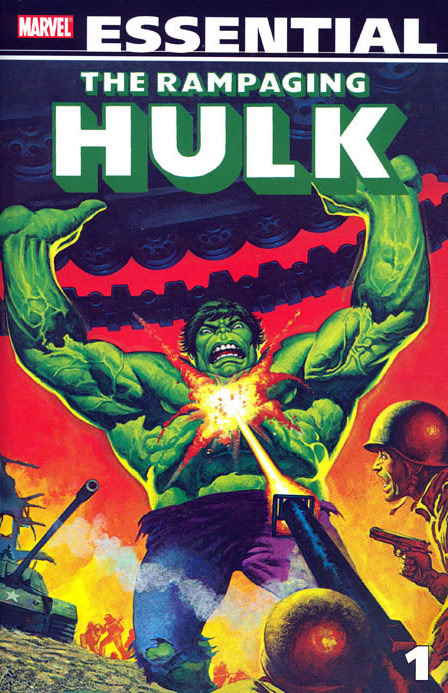
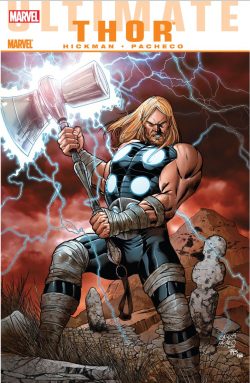
It bears repeating: on an inescapable primal level, comic books are all about one question; “who’s strongest/who would win if…?

The Incredible Hulk and Mighty Thor share their 60th anniversary this year, and whether in print, in animations or in blockbuster movies, that eternal question has been asked but never answered to anyone’s satisfaction whenever applied to the modern iteration of the age-old mythic war between gods and monsters.

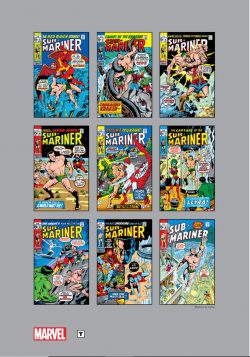
Packed with potent past clashes from the very start, this titanic tome opens with an erudite Introduction from former editor Ralph Macchio (no, the other one) outlining the concussive delights that follow. Contained herein are bouts and sagas first seen in Avengers #3; Journey into Mystery #112; Sub-Mariner #35; Defenders #10; Incredible Hulk #255, 440; Thor #385, 489; Incredible Hulk Annual 2001; Hulk (2008) #5-6, 26; and What If? #45, spanning cover-dates January 1964 – December 2010, but there’s no time for nonsense or niceties as the action opens at full throttle with Stan Lee, Jack Kirby & Paul Reinman revealing how in Avengers #3 ‘The Avengers Meet… Sub-Mariner!’

The previous issue saw latent animosities between Iron Man, Giant-Man, Wasp, and Thor lead to the aggressively volatile Hulk quitting the team in disgust. He returned as an outright villain in partnership with the vengeful prince of devastated Atlantis in a globe-trotting romp delivering high-energy thrills and one of the best battle scenes in comics history as the assorted titans clashed in abandoned World War II tunnels beneath the Rock of Gibraltar. Naturally, there was no clear winner when Thunderer and Gamma Goliath briefly battled…

The true birth of this particular grudge match came via a potent flashback in Journey into Mystery #112 (January 1965) which gave the readers what they had been clamouring for with ‘The Mighty Thor Battles the Incredible Hulk!’: a glorious gift to all those fans who perpetually asking the question “who’s stronger…?”

Possibly Kirby & Chic Stone’s finest artistic moment, it detailed a private duel between the two super-humans appearing off-camera during the free-for-all between The Avengers, Sub-Mariner and the Jade Juggernaut.

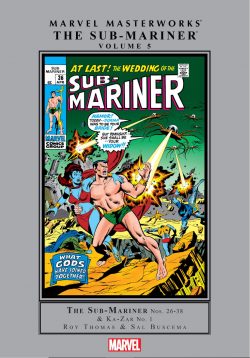
Jumping to a new decade, we see the solitary green gargantuan reconsidering his position on teamwork as a 2-part tale heralded the formation of a new supergroup. The Defenders’ story officially begins with Sub-Mariner #34-35 (February & March 1971: with only the latter included here).

The Prince of Atlantis was an early advocate of the ecology movement, and here (rather fractiously) recruited Hulk and The Silver Surfer to help him destroy an American nuclear weather-control station. Concluding in ‘Confrontation’ (by Roy Thomas, Sal Buscema & Jim Mooney) the misunderstood trio battled a despotic dictator’s forces, the US Army, UN defence forces and the mighty Avengers to prevent the malfunctioning station from accidentally vaporising half the planet, offering the emerald berserker another shot at that long-haired upstart who claimed to be the strongest one there is…

When the Defenders formed, their clandestine nature and line up (avowed antisocial menaces Sub-Mariner, Hulk, Valkyrie and enigmatic Doctor Strange) allowed mystic villains Loki and Dormammu to foment a war between the non-team and The Avengers that became a classic crossover event when that was a rare thing…

It lead to ‘Breakthrough! in Defenders #10 (November 1973) as Steve Englehart, Sal Buscema & Frank Bolle lavished many pages on epic standoff ‘The Incredible Hulk Vs. Thor’ before the inevitable joining together of warring camps in ‘United We Stand!’ That’s a great story you will need to seek out elsewhere as here we’re all about the bash… no trouble…

Courtesy of Bill Mantlo & Sal B, Incredible Hulk #255 (January 1980) detailed Thunder Under the East River!’ as reasons for the inescapable rumble become harder to manufacture. Here, the monster’s meanderings in New York and innate simmering belligerence are sufficient to spark off another blockbusting brouhaha while Thor #385 (November 1987) saw Jim Shooter provide a plot for Stan Lee to script, while Erik Larsen & Vince Colletta handled all the bellicose pictorial breakages in another city-set smash-up in ‘Be Thou God or Monster!’

After Image Comics’ debut compelled the Big Two (that would be DC and Marvel) to chase their deconstructivist, edgy style in the mid-1990s, radically reimagined Hulk and Thor bouts took on added grit and grimness. The changes were first seen in Thor #489’s ‘Hel and High Water’ (August 1995 by Thomas, M. C. Wyman & Mike DeCarlo) as a Hulk with Banner’s intellect rescued the Thunderer from beyond Death’s grasp, yet still ended up trading blows, whilst Incredible Hulk #440 (April 1996) featured Peter David, Angel Medina & Robin Riggs’ ‘The Big Bang’ as Thor strove against evil Future Hulk The Maestro with the world at stake and the lethal Leader pulling the strings…

Harking back to glory days, Incredible Hulk Annual 2001 (by Larsen, Jorge Lucas, Al Milgrom, Al Vey & Greg Adams) pastiched and homaged classic Kirby Kaos in ‘The Hammer Strikes’ as Thor drags the Jade Juggernaut across time and space in an extended clash but finds nowhere where their struggle will not create carnage and catastrophe…

Years passed and it transpired that green was not the only gamma wavelength to bear bitter fruit…

Cover-dated October & November 2008 and crafted by Jeph Loeb, Ed McGuinness, Mark Farmer & Dexter Vines, Hulk (volume 2) #5-6 detailed a no-holds barred battle between Thunder God and a ruthless Red Hulk (AKA General Thaddeus “Thunderbolt” Ross) in ‘Rolling Thunder’ before concluding with ‘Blood Red’ with the original Green Goliath and Avengers stepping in stop the carnage. Hulk #26 (December 2010, by Jeff Parker & Gabriel Hardman) then provides a notional rematch as prelude to cosmic shenanigans in ‘Scorched Earth Part II’…

Wrapping up the furious fisticuffs is an out of chronology tale from What If? #45 (June 1984) by Peter B. Gillis, Ron Wilson, Ian Akin & Brian Garvey, wherein Banner’s worst nightmare came true in ‘What If the Hulk Went Berserk?!’ Set in the early months after the Gamma bomb mutated the scientist, it thrillingly details the alternate Earth deaths of most of the budding Marvel Universe before Thor even arrives…

Adding to the beefy brilliance is a range of Classic Battles’ as depicted by Frenz & Milgrom (from Incredible Hulk #393), Arthur Adams & Laura Martin (Avengers Classic #3), Kirby, Reinman & Paul Mounts (Avengers Epic Collection #1) and John Romita Sr. & Richard Isanove (Avengers/Defenders War TPB), and cover sketches for (Red) Hulk #6 by Ed McGuinness.

Vivid, vibrant and valiantly irresistibly vicarious, these fabulous forays are primal yet perfect examples of superhero stories’ Prime Directive and deliver all the pictorial punch and panache any Fights ‘n’ Tights fiend could hope for.
© 2017 Marvel Characters, Inc. All rights reserved

The All-New Batman: The Brave and the Bold volume 2: Help Wanted


By Sholly Fisch, Rick Burchett, Dan Davis, Dario Brizuela, Ethen Beavers & various (DC Comics)
ISBN: 978-1-4012-3524-6 (TPB/Digital edition)

The Brave and the Bold premiered in 1955 as an anthology adventure comic featuring short complete tales about a variety of period heroes: a format reflecting the era’s filmic fascination with flamboyantly fanciful historical dramas. Devised and written by Bob Kanigher, #1 led with Roman epic Golden Gladiator, feudal mystery-man The Silent Knight and Joe Kubert’s Viking Prince. Soon the Gladiator was alternated with Robin Hood, but the adventure theme carried the title until the end of the decade when the burgeoning costumed character revival saw B&B transform into a try-out vehicle like Showcase.

Used to premiere concepts and characters such as Task Force X: The Suicide Squad, Cave Carson, Hawkman and Strange Sports Stories as well as the epochal Justice League of America, the comic soldiered on until issue #50 when it found another innovative new direction which once again caught the public’s imagination. That issue paired two super heroes – Green Arrow and Martian Manhunter – in a one-off team-up. It was followed by more of the same: Aquaman with Hawkman in #51, WWII “Battle Stars” Sgt. Rock, Mme. Marie, Captain Cloud & The Haunted Tank in #52 and The Atom & Flash in #53.

The next instant union – Robin, Aqualad and Kid Flash – evolved into The Teen Titans and after Metal Men/The Atom and FlashbMartian Manhunter appeared, a new hero debuted in #57-58: Metamorpho, the Element Man.

From then it was back to the increasingly popular power pairings with #59. Although no one realised it at the time, that particular conjunction – Batman with Green Lantern – would be particularly significant….

A return engagement for the Teen Titans, issues spotlighting Earth-Two stalwarts Starman and Black Canary and Earth-One’s Wonder Woman and Supergirl soon gave way to an indication of things to come when Batman returned to duel hero/villain Eclipso in #64: an early acknowledgement of the brewing TV-induced mania mere months away.

Within two issues (following Flash/Doom Patrol and Metamorpho/Metal Men), B&B #67 saw the Caped Crusader take de facto control of the title and a lion’s share of team-ups. With the late exception of #72 and 73 (Spectre/Flash and Aquaman/Atom), it was thereafter where the Gotham Gangbuster invited the rest of DC’s heroic pantheon to come and play…

Decades later, Batman: The Animated Series – masterminded by Bruce Timm and Paul Dini in the 1990s – revolutionised the Dark Knight and subsequently led to some of the absolute best comic book adventures in his 80-year publishing history. It also led to a spin-off print title…
With constant comics iterations and tie-ins to a succession of TV animation series, Batman has remained immensely popular and a sublime introducer of kids to the magical world of the printed page. One fun-filled incarnation was Batman: The Brave and the Bold, which gloriously celebrated the team-up in both its all-ages small-screen and comicbook spin-off.

Shamelessly and superbly plundering decades of continuity arcana in a profusion of alliances between the Dark Knight and DC’s lesser creations, the show was supplemented by a cool kid’s periodical full of fun, verve and swashbuckling dash, cunningly crafted to appeal as much to the parents and grandparents as those fresh-faced neophyte kids…

This stellar trade paperback and digital collection re-presents issues #7-12 of the second series – The All-New Batman: The Brave and the Bold – in an immensely entertaining all-ages ensemble suitable for newcomers, fans and aficionados of all ages originally seen between July and December 2011. Although absolutely unnecessary to the reader’s enjoyment, a passing familiarity with the TV episodes will enhance the overall experience as will knowledge of the bizarre minutiae of 1960s and 1970s DC lore…

Scripted throughout by Sholly Fisch, and following the TV format, each tale opens with a brief prequel adventure before telling a longer tale. TA-NB:TB&TB #7 opens with the Caped Crimebuster and aforementioned 1960s Teen Titans triumphing over the Time Trapper as prelude to main feature ‘‘Shadows & Light’. Illustrated by Rich Burchett & Dan Davis, it reveals Batman’s earliest days and a momentous meeting with Gotham’s original guardian. Golden Age Green Lantern Alan Scott wanted to see what the new kid could do offered a teaching experience beside his JSA colleagues…

Aquaman leads off in ‘Under the Sea!’ but soon he and the Dark Knight are on a quest to liberate accursed ghost Captain Fear: battling mythological sea perils and sinister super bandit Black Manta.

‘3:10 to Thanagar’ co-stars Hawkman and begins with them and The Atom defeating shapeshifter Byth, with the majority of the yarn detailing how transporting him back to interplanetary jail is derailed by an armada of evil allies trying – and failing – to break him free.

‘Help Wanted’ offers a delightful and truly heartwarming deviation from standard form as a professional henchman details the tribulations of the gig economy as tenures with Toyman, Clock King and Ocean Master end early, thanks to Superman, Green Arrow, Aquaman and others. What the reformed family man will never know is how his own wife, son and Batman colluded to redeem him…

With art from Dario Brizuela, ‘Out of Time’ finds the Caped Crusader, Geo-Force and Cave Carson unearth an ancient earthquake machine under Gotham, compelling Batman to head back to 1879 to destroy it before it starts eating bedrock. The case brings him into partnership with bounty hunter Jonah Hex and into contention with immortal maniac Ra’s Al Ghul before the day and all those tomorrows are saved…

Wrapping up this jaunty journal of joint ventures, ‘Trick or Treat’ – with art by Ethen Beavers – offers a Halloween appetiser as Batman and Zatanna investigate a break-in at the House of Mystery. After freeing Cain & Abel, the heroes track clues and deal with Doctor Destiny and Mr. Mxyzptlk before deducing the only possible culprit and getting dragged into a colossal clash of mystic heroes and villains…

Despite being ostensibly aimed at TV-addicted kids, these mini-sagas are also wonderful, traditional comics thrillers no self-respecting fun-fan should miss: accessible, well-rendered yarns for the broadest range of excitement-seeking readers. This is a fabulously full-on thrill-fest confirming the seamless link between animated features and comic books. After all, it’s just adventure entertainment in the end; really unmissable entertainment…

What more do you need to know?
© 2011, 2012 DC Comics. All Rights Reserved.

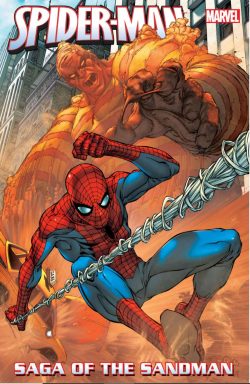
Amazing Spider-Man Epic Collection volume 6 – 1970-1972: The Death of Captain Stacy


By Stan Lee, Roy Thomas, Gil Kane, John Romita, John Buscema & various (Marvel)
ISBN: 978-1302929084 (TPB/Digital edition)

The Amazing Spider-Man was first seen in the middle of 1962, so expect more wallcrawling reviews over the coming months, and if any of us make it to the end I’m sure we’ll all be well-versed in Arachnid Lore with our book shelves (physical or digital) positively groaning with sublimely re-readable tales and tomes…

As an added bonus, this collection also represents the debut of a current Marvel Movie-verse monster masterwork. Oooh, scary…

The Amazing Spider-Man was always a comic that matured with – or perhaps just slightly ahead of – its fan-base. In this superbly scintillating compilation of chronologically corrected webspinning wonderment (in ponderous paperback or ephemeral eBook formats), the World’s Most Misunderstood Hero barely survives another rocky period of transformation as the second great era of Amazing Arachnid artists moved inevitably to a close. Although the elder John Romita would remain closely connected to the Wallcrawler’s adventures for some time yet, these tales would number amongst his last sustained run as lead illustrator.

After a rather nervous nativity The Amazing Spider-Man soon became a certified sensation with kids of all ages. Before too long the quirky, charming, thrillingly action-packed comics soap-opera would become the model for an entire generation of younger heroes impatiently elbowing aside the staid, (relatively) old thirty-something mystery-men of previous publications and hallowed tradition.

Smart-but-alienated Peter Parker was bitten by a radioactive spider during a school trip. Discovering strange superhuman abilities – which he augmented with his own natural chemistry, physics and engineering genius – the kid did what any lonely, geeky nerd would do with such newfound prowess: he tried to cash in for girls, fame and money.

Making a costume to hide his identity in case he made a fool of himself, Parker became a minor media celebrity – and a criminally self-important one. To his eternal regret, when a thief fled past him one night, he didn’t lift a finger to stop him. That self-serving arrogance cost him dearly, as when he returned home, he learned his guardian uncle Ben Parker had been murdered.

Crazed and vengeful, Peter hunted the assailant who’d made his beloved Aunt May a widow and killed the only father he had ever known, discovering to his horror that it was the self-same felon he had neglected to stop. His irresponsibility had resulted in the death of the man who raised him, and the traumatised boy swore to forevermore use his powers to help others…

Since that night, the wondrous wallcrawler tirelessly battled miscreants, misanthropes, monsters and madmen, with a fickle, ungrateful public usually baying for his blood even as he perpetually saves them…

Stan Lee’s scripts were in tune with the times – as understood by most kids’ parents at least – and the heavy dose of soap opera kept older readers glued to the series even if the bombastic battle sequences didn’t.

This sixth full-colour collection of chronologically congregated and curated early Amazing Arachnoid Epics sees the World’s Most Misunderstood Hero foreshadowing a major change in the tone and timbre of comics even while continuing the long climb to global stardom…

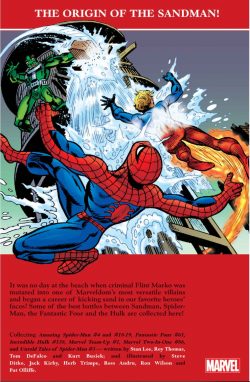
Re-presenting Amazing Spider-Man #86-104 (originally released between July 1970 and January 1972) these spider-sagas began the next stage in the hero’s evolution as Lee first surrendered the scripting privileges: here to his ordained understudy Roy Thomas. Lee would reclaim the role briefly but as with The Fantastic Four and Thor, it was time for new voices…

The drama begins with drastic transformation for a conflicted Cold War leftover as Lee’s ‘Beware… the Black Widow!’ gave John Romita (senior) and Jim Mooney leave to redesign and relaunch the Soviet super-spy. Looking for a fresh start, the sometime-Avenger stole the show in an enjoyable if highly formulaic misunderstanding/clash-of-heroes yarn with an ailing Spider-Man never really endangered. The entire episode was actually a promotion for the Widow’s own soon-to-debut solo series…

‘Unmasked at Last!’ found Parker convinced that his powers were fading forever and suffering from a raging fever. Delirious, Parker exposes his secret identity to all the guests at his girlfriend’s party but on recovering – from flu – acts to save his other life, using the kind of logic and subterfuge that only works in comics and sitcoms. Asking ex-villain Hobie (The Prowler) Brown for help, Parker subsequently convinces everybody that it was only a flu-induced aberration…

Spider-Man at this time became a permanent, unmissable part of youngsters’ lives and did so by living a life as close to theirs as social mores and the Comics Code would allow. Blending cultural authenticity with spectacular art, and making a dramatic virtue of the awkwardness, confusion and sense of powerlessness that most of the readership daily experienced, resulted in an irresistibly intoxicating read, delivered in addictive emotionally-intense instalments, but none of that would be relevant if the stories weren’t so compellingly entertaining.

The wonderment resumes in ‘The Arms of Doctor Octopus!’ with the many-tentacled terror escaping jail and capturing a jetliner full of Chinese diplomats. It all ends with explosive suddenness and apparent suicide after the wallcrawler intervenes, yet is promptly followed a month later by ‘Doc Ock Lives!’ This heralded a new era of visual dynamism as Gil Kane began a sporadic but memorable run as penciller, with Romita reverting to chief inker. Here Octopus rampages through town, causing carnage until Spider-Man again confronts him. The battle takes a lethal turn in ‘And Death Shall Come!’ wherein Parker’s attempts to stop him leads to the death of a beloved cast member…

With that tragic demise of a cast regular, the webslinger became a wanted fugitive. Already fanatical publisher J. Jonah Jameson began backing “Law and Order” election hopeful Sam Bullitt in a campaign ‘To Smash the Spider!’, unaware of the politician’s disreputable past and ultra-right-wing agenda, but the secret is exposed (by Bugle sub-editor Joe Robertson) in #92’s ‘When Iceman Attacks’…

The ambitious demagogue convinced the youngest X-Man that Spider-Man had kidnapped Parker’s paramour Gwen Stacy but the Wondrous Wallcrawler’s explosive battle against the mutant exposed the corrupt and explicitly racist Bullit in an all-out action extravaganza featuring some of the best fight-art of the decade by two of the industry’s greatest names.
Romita resumed pencilling with issue #93, which saw the return of an almost forgotten frenemy in ‘The Lady and… The Prowler!’. Hobie Brown was a reformed super-burglar but when he saw that the Amazing Arachnid was wanted, he too was all too ready to believe the media hype…

Amazing Spider-Man #94 (Lee, Romita & Sal Buscema) offered a fresh glimpse of the hero’s fabled origin as part of a dynamic dust-up with The Beetle ‘On Wings of Death!’, after which Peter headed for London to woo his estranged girlfriend Gwen, who had fled the manic violence of America after her father’s death.

Typically, ‘Trap for a Terrorist’ finds the city under threat from a gang of bombers, which apparently only Spider-Man can handle. Gwen returned home, never knowing Parker had come after her, and had to stay out of sight once the wallcrawler was seen in Westminster.

Everything was forgotten in the next issue when deeply disturbed and partially amnesiac industrialist Norman Osborn abruptly remembered he once had another more macabre persona. Restored and enraged he once again attacked Peter in #96’s ‘…And Now, the Goblin!’ by Lee, Kane & Romita.

Stan Lee had long wanted to address the contemporary drugs situation in Marvel’s stories but was forbidden by Comics Code Authority strictures. When the Nixon administration, in the form of the US Department of Health, Education and Welfare, approached him to tackle the issue, Lee devised the 3-part Green Goblin tale. When it was inevitably refused Code approval, the writer-editor went ahead and published it anyway…

Although the return of the madman who knew all Spider-Man’s secrets was the big fan-draw, the real meat of the tale was how Osborn’s son Harry – a perfectly average rich white kid and Peter Parker’s best friend – is drawn into a web of addiction, abuse and toxic overdose. Frank Giacoia began inking Kane with the second instalment, ‘In the Grip of the Goblin!’ as the elder Osborn runs riot, almost killing the webslinger and preparing for his final deadly assault, even as his son lies dying. The saga spectacularly concludes with ‘The Goblin’s Last Gasp!’ as, in the clinch, the villain’s deeply-buried paternal love proves his undoing and Parker’s salvation…

Amazing Spider-Man #99 portrays ‘A Day in the Life of…’: an all-action, social drama-tinged palate-cleanser with Peter and Gwen finally getting their love-life back on track, only marginally diverted by a prison breakout easily quelled by the Arachnid Avenger, whilst highlighting the growing scandal of prison conditions.

Celebrating a major anniversary, and heralding a dramatic change to the entire comics industry, an astonishing tales begins with ‘The Spider or the Man?’ (Lee, Kane & Giacoia) as, determined to retire and marry, Peter attempts to destroy his powers with an untested self-concocted serum. The result is a hallucinogenic trip wherein action ace Kane draws an all-out battle between Spidey and an army of old enemies, culminating in a waking nightmare when Parker regains consciousness and discovers he’s grown four additional arms…

With #101 Roy Thomas stepped in as scripter for ‘A Monster Called… Morbius!’, wherein the eight-limbed hero desperately seeks some way to reverse his condition. Fortuitously, he stumbles across a murderous costumed horror who drinks human blood. Making matters even worse is old foe The Lizard who suddenly turns up, determined to kill them both…

Amongst the many things banned by the Comics Code in 1954 were horror staples vampires and werewolves, but changing tastes and rising comics production costs of the early 1970s saw superhero titles dropping like flies in a blizzard. With interest in suspense and the supernatural growing, all comics publishers were pushing to re-establish horror comics again, and the covert introduction of a “Living Vampire” in superhero staple Spider-Man led to another challenge to the CCA; the eventually revision of the horror section of the Code and a resurgent rise of supernatural heroes and titles.

For one month Marvel also experimented with double-sized comicbooks (DC’s switch to 52-page issues lasted almost a year – August 1971-June 1972 cover-dates) and Amazing Spider-Man #102 featured an immense, 3-chapter blockbuster beginning with ‘Vampire at Large!’, wherein the octo-webspinner and anthropoid reptile join forces to hunt a science-spawned bloodsucker after discovering a factor in the vampire’s saliva could cure both part-time monsters’ respective conditions…

‘The Way it Began’ briefly diverges from the main narrative to present the tragic secret origin of Nobel Prize winning biologist Michael Morbius, and how be turned himself into a haunted night-horror, before kThe Curse and the Cure!’ brings the tale to a blistering conclusion and restores the status quo and requisite appendage-count.

Designed as another extra-length epic, ‘Walk the Savage Land!’ began in now conventionally paginated #103, but was sliced in half and finished as #104’s ‘The Beauty and the Brute’.

When The Daily Bugle suffers a financial crisis, bellicose publisher Jameson takes Parker and his extremely photogenic girlfriend Gwen on a monster-hunt to the Lost World under the Antarctic. The intention is to encounter dinosaurs and cavemen but the stunt goes awry, dragging in noble savage Ka-Zar, perfidious villain Kraven the Hunter and a terrifying giant alien baby dubbed Gog in a fabulous pastiche and homage to Willis O’Brien’s King Kong, delivered with love and pride from Thomas, Kane & Giacoia.

Although this romp ends the narrative on a rousing high, there still more to see, beginning with the Romita Sr. covers from all-reprint Amazing Spider-Man Annual‘s #7-8; contemporary house-ads and scads of un-inked Kane art pages. That’s supplemented by a bridging story-page by Kane & Mike Esposito from Marvel Tales #83; and a selection of covers from numerous other reprints of these stories: illustrated by Jim Calafiore, Glen Orbik, Steve Lightle, Nghia Lam & Jason Rodriguez, Al Rio & Thomas Velazquez, Romita Sr. Bruce Timm, Mike Wieringo, Tim Townsend, Sean Chen & Eric Cannon, but the true treat for comics historians are various versions of Kane’s original cover for #97 and the turning point of the drugs story. A far stronger and more explicit view of Harry’s addiction, both the colour rough and amended full cover art were rejected by the CCA.

Spider-Man became a permanent unmissable part of many teenagers’ lives at this time and did so by living a life as close to theirs as social mores and the Comics Code would allow. Blending cultural authenticity with glorious narrative art, and making a dramatic virtue of the awkwardness, confusion and sense of powerlessness most of the readership experienced daily, resulted in an irresistibly intoxicating read, delivered in addictive soap-opera slices, but none of that would be relevant if the stories weren’t so compellingly entertaining.

This book is Marvel and Spider-Man at their peak. Come see why.
© 2021 MARVEL

Captain America/Black Panther: Flags of Our Fathers


By Reginald Hudlin, Denys Cowan & various (Marvel)
ISBN: 978-0-7851-4401-4 (TPB/digital editions)

Everybody loves a solid sensibly sensational team-up and, if you’re a comicbook fan, “discovering” a slice of previously unrevealed secret history about your preferred fictive universe is an indescribable thrill. So, what better than if you can combine both guilty pleasures with enjoying a rollicking four-fisted action rollercoaster ride, well written and superbly rendered?

Just one such concatenation of good things in one basket is Captain America/Black Panther: Flags of Our Fathers by Reginald Hudlin & Denys Cowan. Comic continuity is especially fluid in this yarn, which was originally released as a 4-issue miniseries between June and September 2010. It depicts the secret and tumultuous first meeting between the patriotic symbols of two embattled nations and, thankfully, only nit-picking, uber fans-boys need quibble over which (of at least three) “first contacts” this riotous romp describes. The rest of us can simply hang on as a fabulous all-action clash unfolds before our very eyes…

The Black Panther rules over a fantastic African paradise which isolated itself from the rest of the world millennia ago. Blessed with unimaginable resources – both natural and not so much – the nation of Wakanda developed uninterrupted and unmolested by European imperialism into the most technologically advanced human nation on Earth.

The country has also never been conquered. The main reason for this is an unbroken line of divinely-sponsored warrior kings who safeguard the nation. The other is a certain miraculous super-mineral found nowhere else on Earth…

In contemporary times that chieftain is T’Challa: an unbeatable, feline-empowered, strategic genius who divides his time between ruling at home and serving abroad in superhero teams such as The Avengers, beside costumed champions such as Iron Man, Mr. Fantastic, Thor and Captain America…

However, long ago as World War II engulfed the world, another Black Panther – the grandfather of the one we know best – met a far younger and more impulsive Sentinel of Liberty…

With the first two chapters inked by Klaus Janson, the action kicks off in the middle of a furious as Gabe Jones – the only black guy in Sgt. Fury’s Howling Commandos – is just as startled as his white buddies to find a masked maniac dressed like an American flag pounding the crap out of the Nazis they’re being swamped by…

Although they initially think he’s a clown, the Howlers soon take to the naïve Star-Spangled Captain America. They have to, as the Top Brass think they complement each other and have ordered soldiers and superhero to work together from now on.

Meanwhile in Germany, Adolf Hitler orders his most elite warriors to invade a barely known African kingdom and secure supplies of a vibration-absorbing element crucial to the Wehrmacht’s development of V-weapons. Arch-supremacist Baron von Strucker and his cronies expect no trouble from the primitive, sub-human non-Aryans, but the malign Red Skull has reservations…

When the Allies get word of the expedition, they quickly send their top team to stop the Nazis, but they are too late. The fabled Wakandans have already despatched a German expeditionary force with the ruthless silent efficiency that has kept their homeland unconquered for thousands of years…

As a shocked Captain America surveys the bloody handiwork, he is challenged by a warrior in a sleek black outfit, looking like a human panther…

Soon his amazement increases exponentially. Although seemingly barbaric and uncivilised, the Wakandans are technologically more advanced than America, capable enough to capture Nick Fury and the Howling Commandos without a fight, and with a spy network that encompasses the world and has even gleaned his top secret civilian identity. Worst of all, the Black Panther kicks his butt when they inevitably clash…

Soon, however, the Americans are “guests” of the Wakandans, forced to watch as the next wave of Nazi conquerors attempt to overwhelm the nation. However, what nobody realises is that the Skull is in command now and the sacrifice of an entire tank division is part of his overall strategy to conquer the upstart Africans defying the might of the Third Reich…

Soon, the Howlers are on tricky ground: acting as unschooled diplomats and emissaries of their country and ideology. But Black Panther King Azzuri knows what they really want is a sample of precious, sacred Vibranium…

Until now Gabe has felt that he’s allied with the only non-racists in the US armed forces, but now Fury orders to get close to the Africans and secure some of the miracle metal at all costs. Stunned by the casual, unthinking racism of his superior and his white comrades, Gabe is torn by conflicting emotions. Especially as Azzuri has shown him great favour and a black-only promised land any “negro” living in America would die to live in…

The Nazis’ intent is also plain and the Skull’s true attack is not long in coming. As well as conventional troops and planes, the Nazis employ their own secret weapons – robotic war-suits and metahuman super-soldiers Master Man, Krieger Frau/Warrior Woman and merciless sadist Armless Tiger Man. They are assisted by a traitor from Wakanda’s own dissident region: the mercilessly savage, cruelly ambitious Man-Ape…

With issues #3 and 4 inked by Tom Palmer & Sandu Florea, the action roars into high gear as the offensive achieves its goal of penetrating Wakanda’s defences and even sees the king’s sons T’Chaka and S’Yan (both future Black Panthers) attacked in the palace by a murderous assassin before being saved by the deeply conflicted Gabe. From then on, it’s nothing but all-out war, picking up the pieces and adjusting to a new normal in a world that doesn’t know the meaning of the word…

Confronting head-on historical and contemporary issues of racism whilst telling a stunning tale of action and adventure is no mean feat, but Hudlin & Cowan pull it off with staggering success. Flags of Our Fathers brilliantly highlights two national symbols in conflict yet united in mutual benefit with style and wit, and still manages to tell a tale of breathtaking power and fun. Read it now and see for yourself.
© 2010, 2016 Marvel Characters, Inc. All rights reserved.

Klaws of the Panther


By Jonathan Mayberry, Shawn Moll, Gianluca Gugliotta, Walden Wong & Pepe Larraz (Marvel)
ISBN: 978-0-7851-5118-0 (TPB/Digital editions)

Debuting in Fantastic Four #52 (cover-dated July 1966) and hailed as the first black super hero character in American comics – and one of the first to carry his own series – the Black Panther‘s popularity and fortunes have waxed and waned since he boldly attacked the FF as part of an extended plan to gain vengeance on the murderer of his father.

Time passed and T’Challa, son of T’Chaka was revealed as an African monarch whose hidden kingdom was the only source of a vibration-absorbing alien metal upon which the country’s immense wealth was founded. Those mineral riches – derived from a fallen meteor which struck the continent in lost antiquity – had enabled him to turn his country into a technological wonderland. The tribal wealth had been guarded throughout history by a cat-like champion deriving physical advantages from secret ceremonies and a mysterious heart-shaped herb which ensured the generational dominance of the nation’s warrior Panther Cult.

In modern times the Vibranium mound made the country a target for increasing subversion and incursion and after an all-out attack by the forces of Doctor Doom, culminating in the Iron Dictator seizing control of Wakanda, T’Challa was forced to render all Vibranium on Earth inert, defeating the invader but leaving his own homeland broken and economically shattered.

During this cataclysmic clash T’Challa’s flighty, spoiled brat half-sister Shuri took on the mantle of the Black Panther and became the clan and country’s new champion whilst her predecessor struggled with the disaster he had deliberately caused…

This slim, unassuming but extremely engaging Costumed Drama collects pertinent portions of the portmanteau Age of Heroes #4 and the guest-star packed Klaws of the Panther 4-part fortnightly miniseries from 2010-2011 – following a very different princess from the filmic one you probably know – as she progress through the Marvel Universe, striving to outlive her wastrel reputation, serve her country and the world whilst – crucially – defeating the growing homicidal rage that increasingly burns within her…

The story starts with ‘Honor’ by Jonathan Mayberry, Shawn Moll & Walden Wong, wherein the latest Panther Champion brutally repels an invasion by soldiers of Advanced Idea Mechanics: simply the latest opportunist agency attempting to take over the decimated country of Wakanda.

With her brother and (X-Man and occasional goddess) Queen Storm absent, Shuri is also de facto ruler of the nation, but faces dissent from her own people, as embarrassing reports and photos of her days as a billionaire good-time girl are continually surfacing to stir popular antipathy to her and the Panther clan.

When opportunist G’Tuga of the outlawed White Gorilla sect challenges for the role of national champion, Shuri treats the ritual combat as a welcome relief from insurmountable, intangible problems; but has badly misjudged her opponent and the sentiment of the people…

The main event by Mayberry, Gianluca Gugliotta & Pepe Larraz opens with ‘Savage Tales’ as Shuri is lured to fantastic dinosaur preserve the Savage Land, hoping to purchase a supply of a metal-eating Vibranium isotope, but instead uncovers a deadly plot by AIM and sentient sound-wave Klaw.

The incredible fauna of the lost world has been enslaved by the Master of Sound – who years previously murdered Shuri and T’Challa’s father in an earlier attempt to seize ultimate power – and the villain has captured the region’s protector Ka-Zar whilst seeking to secure all Savage Land Vibranium for his nefarious schemes.

Klaw, however, only thought he had fully compensated for the interference of Shuri and Ka-Zar’s formidable spouse Shanna the She-Devil…

Driven by lust for vengeance, Shuri almost allows Klaw to destroy the entire Savage Land and only the timely intervention of mutant sister-in-law Storm prevents nuclear armageddon in ‘Sound and Fury’, after which the impulsive Panther seeks out Wolverine on the outlaw island Madripoor, looking for help with her out-of-control anger management issues. Once again, AIM attacks, attempting to steal the rogue state’s priceless stockpile of Savage Land Vibranium, but instead walks into a buzzsaw of angry retribution…

Shuri is about to extract information from a surviving AIM agent in time-honoured Wakandan manner when Klaw appears, hinting at a world-shattering plan called “The Scream” which will use mysterious device M.U.S.I.C. to totally remake the Earth…

After another furious fight, the new Panther gains the upper hand by using SLV dust, but squanders her hard-won advantage to save Wolverine from certain death…

Knowing the entire planet is at stake, Shuri accepts the necessity for major-league assistance in ‘Music of the Spheres’ but unfortunately the only one home at Avengers Tower is the relatively low-calibre Spider-Man. Reluctantly she takes the wisecracking half-wit on another raid on AIM and finally catches a break when one of Klaw’s AIM minions reveals the tragic secret of the horrific M.U.S.I.C device…

All this time, Black Panther has had a hidden ally in the form of tech specialist Flea, who has been providing intel from an orbiting spaceship. Now the full truth is revealed and the heroes find Klaw’s plans centre on an attack from space. The maniac intends to destroy humanity from an invulnerable station thousands of miles above the planet and nothing can broach the base’s incredible defences. Happily, Spider-Man and ex-Captain America Steve Rogers know the world’s greatest infiltration expert and soon ‘Enter the Black Widow’ finds Earth’s last hopes depending on an all-or-nothing assault by the icily calm Panther and the world’s deadliest spy.

Cue tragic sacrifice, deadly combat, spectacular denouement, reaffirmed dedication and a new start for the ferociously inspired and determined Black Panther…

Slight yet gloriously readable, this compelling thriller boasts an impressive cover gallery by Jae Lee, Michael Del Mundo and Stephanie Hans, plus an information-packed text feature on Shuri’s life-history, career and abilities to bring the completist reader up to full speed.

If you don’t despise reboots and re-treads on unswerving principle and are prepared to give something new(ish) a go, there’s tons of fun to be had in this infectious, fast-paced Fights ‘n’ Tights farrago, so go set your sights and hunt this down…
© 2010, 2011 Marvel Characters, Inc. All rights reserved.

Lois Lane: A Celebration of 75 Years.


By Jerry Seigel & Joe Shuster, Don Cameron, William Woolfolk, Whitney Ellsworth, Jerry Coleman, Robert Kanigher, Cary Bates, John Byrne, Jeph Loeb, Phil Jimenez, Katheryn Immonen, Greg Rucka, Grant Morrison, Ed Dobrotka, Sam Citron, Al Plastino, Wayne Boring, Curt Swan, Kurt Schaffenberger, Ed McGuiness, Matthew Clark, Renato Guedes, Frank Quitely & various (DC Comics)
ISBN: 978-1-4012-4703-4 (HB/digital)

The greatest romance in comics is undoubtedly the first one. Whether as humble Clark Kent or the magnificent Man of Steel, the eternal relationship between a feisty female reporter and Superman is the first and longest-lasting couple dynamic in comic books

When the Man of Steel debuted in Action Comics #1 (June 1938) he was instantly the centre of attention, but even then, the need for a solid supporting cast was understood and cleverly catered for. Glamorous daredevil journalist Lois Lane premiered right beside Kent – rival, companion and foil from the outset.

This stunning compilation – part of a dedicated series introducing and exploiting the comics pedigree of venerable DC icons – is still available in hardback and digital formats, even if DC have decided not to give her an 80-year update like so many of her near contemporaries, offering a sequence of snapshots detailing how the original “plucky news-hen” has evolved right beside the Man of Tomorow in that “never-ending battle”…

The groundbreaking appearances selected are preceded here by a brief critical analysis of the significant stages in Lois’ development, beginning with Part I 1938-1956: Girl Reporter…

Most early tales were untitled, but for everyone’s convenience have been given descriptive appellations by the editors. Thus, after describing the foundling’s escape from exploding Planet Krypton and explaining his astonishing powers in nine panels, with absolutely no preamble, the wonderment begins in ‘Superman, Champion of the Oppressed’ and ‘War in San Monte’ from Action Comics #1 & 2 (June and July 1938 by Jerry Seigel & Joe Shuster) as the costumed crusader – masquerading by day as a reporter – began averting numerous tragedies.

As well as saving an innocent woman from the electric chair and roughing up a wife-beater, the tireless crusader worked over racketeer Butch Matson – consequently saving his suave and fearless colleague from abduction and worse since she was attempting to vamp the thug at the time!

The mysterious Man of Steel made a big impression on her by then outing a lobbyist for the armaments industry who was bribing Senators on behalf of greedy munitions interests fomenting war in Europe…

The next breathtaking instalment sees the mercurial mystery-man travelling to the actual war-zone and spectacularly dampen down the hostilities already in progress, after which (in #6) canny chiseller Nick Williams attempts to monetise the hero – without asking first. ‘The Man Who Sold Superman’ (Action Comics #6 1938, by Seigel & Shuster) had Superman’s phony Manager even attempting to replace the real thing with a cheap, musclebound knock-off before learning a very painful lesson in business ethics…

In those turbulent times, the interpretation of our dogged data-fiend was far less derogatory than the post-war sneaky minx of the 1950s and 1960s. Lois might have been ambitious and life-threateningly precipitate, but it was always to advance her own career, help underdogs and put bad guys away, not trap a man into marriage. At his time, she was much more Nellie Bly than Zsa Zsa Gabor.

After proving a worthy rival and foil to Kent and his alter ego, Lois won her own solo feature beginning in Superman #28 (May/June 1944). Examples included here begin with ‘Lois Lane, Girl Reporter: The Bakery Counterfeiters’(Superman #29, July/August 1944, by Don Cameron, Ed Dobrotka & George Roussos), which finds her turning her demotion to the women’s cookery pages into another blockbusting scoop after uncovering a crafty money scam at a local patisserie…

In Superman #33 (March 1945), Whitney Ellsworth & Ed Dobrotka detailed how a typically cruel prank by male colleagues and cops turns into another front-page scoop as ‘Lois Lane, Girl Reporter: The Purloined Piggy Bank’ has her help a little kid and unmask big time jewel thieves before ‘Lois Lane, Girl Reporter: The Foiled Frame Up’ (Superman#34 May 1945 by Ellsworth, Sam Citron & Roussos) sees her ferret out political corruption by exposing grafters seeking to discredit Daily Planet Editor Perry White…

Originally seen in Superman #58 (May-June 1949), ‘Lois Lane Loves Clark Kent’ is by William Woolfolk, Wayne Boring & Stan Kaye: a beguiling teaser finding our “Girl Friday” (that’s a movie reference: look it up) consulting a psychiatrist because of her romantic obsession with the Man of Steel. The quack tells her to switch her affections to her bewildered, harassed workmate!

Part II 1957-1985: Superman’s Girl Friend takes us into the world of consumerist domesticity and when Lois Lane – the oldest supporting character/star in the Superman mythology if not the DC universe – finally received her own shot at a solo title, it was very much on the terms of the times.

When the Adventures of Superman television show launched in the autumn of 1952, it was an overnight sensation and National Periodicals began cautiously expanding their revitalised franchise with new characters and titles. First to win promotion to solo-star status was the Daily Planet’s impetuously capable if naïve “cub reporter”. His gloriously charming, light-hearted, escapades began in Superman’s Pal Jimmy Olsen #1 (September-October 1954): the first tie-in titan in the Caped Kryptonian’s ever-expanding entourage.

It took three years for cautious Editors to tentatively push the boat out again. In 1957, just as the Silver Age of Comics was getting going, try-out title Showcase followed up the launches of The Flash in #4 and Challengers of the Unknownin #6, delivered a brace of issues entitled Superman’s Girl Friend Lois Lane.

Soon after, the she had a series of her own. Technically it was her second, following her brief mid-1940s solo back-ups in Superman, but this time that caped guy was always hanging around…

In previous reviews I’ve banged on at length about the strange, patronising, parochial – and to some of us, potentially offensive – portrayals of kids and most especially women during this period, and although at least fairer and more affirmative instances were beginning to appear, the warnings still bear repeating. Don’t even dream of any characters of colour at this time, unless they look like contemporary cinematic sultans and sheiks…

At that time, Lois Lane was one of precious few titles with a female lead, and, in the context of today, one that gives many 21st century fans a few uncontrollable qualms of conscience. Within the confines of her series, the valiant, capable working woman careened crazily from man-hungry, unscrupulous bitch, through ditzy simpleton to indomitable and brilliant heroine – often all in the same issue.

The comic was clearly intended to appeal to the family demographic that made I Love Lucy a national phenomenon and Doris Day a saccharine saint, with many stories played for laughs in that same “father knows best” or  “gosh, aren’t women funny?” tone that appals me today – but not as much as the fact that I still love them to bits.

It honestly helps that they’re mostly sublimely illustrated by the wonderfully whimsical Kurt Schaffenberger.

During the 1950s and early 1960s in America, being different was a bad thing. Conformity was sacrosanct, even in comic books, and everybody and thing was meant to keep to its assigned and intended role. For the Superman family and cast, the tone of the times dictated a highly-strictured code of conduct and ironclad parameters: Daily Planet Editor Perry White was a stern, shouty elder statesman with a heart of gold, Cub Reporter Jimmy Olsen was a bravely impulsive unseasoned fool – with a heart of gold – and Plucky News-Hen (what does that even mean?) Lois was brash, nosy, impetuous, unscrupulous and relentless in her obsession to marry Superman, although she too was – deep down – also in possession of an Auric aorta.

Yet somehow, even with these mandates in place the talented writers and artists assigned to detail their wholesomely uncanny exploits managed to craft tales both beguiling and breathtakingly memorable: frequently as funny as they were exciting.

I must shamefacedly admit to a deep, nostalgic affection for her bright, breezy, fantastically fun adventures, but as a free-thinking, (notionally) adult liberal of the 21st century I’m simultaneously shocked nowadays at the jolly, condescending misogynistic attitudes underpinning too many of the stories.

Yes, I’m fully aware that the series was intended for young readers at a time when “dizzy dames” and matronly icons played to the popular American gestalt stereotype of Woman as jealous minx, silly goose, diffident wife and brood-hungry nester, but to ask kids to seriously accept that intelligent, courageous, ambitious, ethical and highly capable females would drop everything they’d worked hard for to lie, cheat, inveigle, manipulate and entrap a man just so that they could cook pot-roast and change super-diapers is just plain crazy and tantamount to child abuse.

I’m just saying…

Showcase #9 (cover-dated July/August 1957) featured Superman’s Girl Friend Lois Lane and opened with the seminal yarn ‘The Girl in Superman’s Past’ (by Jerry Coleman & Al Plastino) wherein Lois first meets red-headed hussy Lana Lang: childhood sweetheart of Superboy and a pushy conniving go-getter out to win Lois’ intended at any and all costs. Naturally Miss Lane invited Miss Lang to stay at her apartment and the grand rivalry was off and running…

Then ‘The New Lois Lane’ (Otto Binder, Ruben Moreira & Plastino) aggravatingly sees Lois turn over a new leaf and stop attempting to uncover his secret identity just when Superman actually needs her to do so…

Superman’s Girlfriend Lois Lane #1 (March/April #1958) then confirms all stereotypes in Binder & Schaffenberger’s ‘The Fattest Girl in Metropolis’: wherein a plant growth ray accidentally super-sizes our vain yet valiant reporter. Imagine her reaction when she finds out that Superman had deliberately expanded her dimensions… for good and solid reasons, of course…

In ‘The Kryptonite Girl’ (Superman’s Girlfriend, Lois Lane #16, April 1960), Siegel & Schaffenberger were responsible for another cruel lesson as Superman tries to cure Lois’ nosy impulses by tricking his own girlfriend into believing she has a radioactive death-stare. Of course, as all married couples know, this power develops naturally not long after the honeymoon… I love these stories, but sometime words just fail me…

As contrived by Leo Dorfman & Schaffenberger, a personality-altering head blow then causes Lois to try tricking her Man of Steel into matrimony in ‘The Romance of Superbaby and Baby Lois’ (#42, July 1963). Sadly, whilst conniving, she employs a stolen rejuvenation chemical which cause them to de-age below the age of legal consent…

Happily, the late 1960s, Feminism and the general raising of female consciousness rescued Lois from demented domesticity, and by the time of Superman’s Girlfriend, Lois Lane #106 (November 1970) she was a competent, combative, totally capable go-getting journalist every inch the better of her male rivals. It’s a shame more of those stories aren’t included in this collection.

However, ‘I Am Curious (Black)!’ by Robert Kanigher, Werner Roth & Vince Colletta showed the lengths she would go to get her story. Unable to truly grasp the nature of being African American, she borrows Kryptonian tech to become black for 24 hours, and realises how friends, acquaintances and even fellow liberals respond to different skins. She even asks Superman if he would marry her in her altered state…

Big changes and modifications were set in place for Part III 1986-1999: Lois and Clark.

When DC Comics decided to rationalise and reconstruct their continuity with Crisis on Infinite Earths, they used the event to regenerate their key properties. The biggest shake-up was Superman, and it’s hard to argue that the change was unnecessary. The old soldier was in a bit of a slump, but he’d weathered those before. So how could a root and branch overhaul be anything but a marketing ploy that would alienate real fans for a few fly-by-night chancers who would jump ship as soon as the next fad surfaced?

Superman’s titles were cancelled/suspended for three months, and boy, did that make the media sit-up and take notice – for the first time since the debut Christopher Reeve movie. But there was method in this corporate madness…

Man of Steel – written and drawn by John Byrne and inked by Dick Giordano – stripped away vast amounts of accumulated baggage and returned the hero to the far from omnipotent, edgy but good-hearted reformer Siegel & Shuster had originally envisioned. It was a huge and instant success, becoming the industry’s premiere ‘break-out’ hit, and from that overwhelming start Superman re-inhabited his suspended comic book homes with the addition of a third monthly title premiering the same month.

The miniseries presented six complete stories from key points in Superman’s career, reconstructed in the wake of the aforementioned Crisis. Man of Steel #1 revealed a startling new Krypton in its final moments before following the Last Son in his escape, through his Smallville years to his first recorded exploit and initial encounter with Lois.

Byrne was a controversial choice at the time, but he magnificently rekindled the exciting, visually compelling, contemporary and even socially aware slices of sheer exuberant, four-colour fantasy that was the original Superman, making it possible and fashionable to be a fan again, no matter your age or prejudice. Superman had always been great, but Byrne had once again made him thrilling and unmissable.

Included here is ‘The Story of the Century’ from Man of Steel #2 (October 1986) wherein fiery lead reporter Lois Lane puts all her efforts into getting the landmark exclusive first interview with Metropolis’ mystery superhero, only to be ultimately scooped by a nerdy, hick new hire named Kent…

We then skip to anniversary issue Action Comics #600 (May 1988) for an untitled segment courtesy of Byrne, Roger Stern, Schaffenberger, Jerry Ordway of a mammoth ensemble piece. Codified for easy access as “Lois Lane”, the tale depicts the jaded journalist – fresh from beating up and arresting a gang of thugs – rendezvous with rival Kent to discuss Superman’s possible romance with Wonder Woman…

As years passed, Lois and Clark grew beyond professionalism into a work romance, but the hero kept his other identity from her. That all changed after the Man of Tomorrow narrowly defeated mystic predator Silver Banshee and decided there would no more ‘Secrets in the Night’ between him and his beloved (Action Comics #662, February 1991, by Stern & Bob McLeod).

Having finally married her man (in 1996) Lois and Clark settled down into a life of hectic wedded bliss, but trouble was never far from the happy couple.

Created as part of the Girlfrenzy publishing event, ‘Lois Lane’ from one-shot Superman: Lois Lane #1 (June 1998 by Barbara Kesel, Amanda Conner & Jimmy Palmiotti) sees the relentless reporter heading to Canada to singlehandedly bust a child-snatch ring and illicit genetics-mutation lab…

In Part IV 2000-Present: Twenty-First Century Lois, the era of domesticity was marred by many external problems, such as Lex Luthor finagling himself into America’s presidency. ‘With This Ring’ (Superman #168, May 2001 from Jeph Loeb, Ed McGuiness & Cam Smith) details how Lois and Batman infiltrate the White House to steal the gimmick Bad PotUS has been using to keep the Man of Steel at bay, after which ‘She’s a Wonder’ (Wonder Woman #170 (July 2001, by Phil Jimenez, Joe Kelly & Andy Lanning) offers a pretty but relatively slow day-in-the-life tale.

Here Lois interviews the impossibly perfect Amazon cultural ambassador to Mans’s World – and potential romantic rival – providing readers with valuable insights into both.

Greg Rucka, Mathew Clark, & Renato Guedes & Nelson then craft ‘Battery: Part Five’ (Adventures of Superman #631, October 2004) as Lois’s devil-may-care luck finally runs out and the Caped Kryptonian arrives seconds too late after she becomes a sniper’s target.

Slipping back into comedy, ‘Patience-Centred Care’ comes from Superman 80-Page Giant 2010, where Katheryn Immonen & Tonci Zonjic show how even the Action Ace can’t cope with a bed-ridden wife who won’t let flu stop her nailing a story…

Part V 1957-1985: Imaginary Tales then takes a step sideways to highlight the many memorable out-of-continuity stories the Superman-Lois relationship has generated. ‘The Wife of Superman’ was part of an occasional series running in early issues of Superman’s Girlfriend, Lois Lane. Probably scripted by Seigel and definitely drawn by Schaffenberger, this third outing (from #23, February 1961), revisits a possible future wherein Lois is worn to a frazzle by two unmanageable super-toddlers and yearns for her old job at the Daily Planet…

From a period where Golden Age stories were assumed to have occurred on parallel world Earth-Two, ‘Superman Takes a Wife’ comes from 40th Anniversary issue Action Comics #484 (June 1978). Here Cary Bates, Curt Swan & Joe Giella detail how the original Man of Tomorrow became editor of the Metropolis Daily Star in the 1950s and married Lois. Thanks to villainous rogues Colonel Future and the Wizard who had discovered a way to make Superman forget his own existence, only she knew that her husband was once Earth’s greatest hero…

When I was a nipper, Superman had outlandish adventures and was a decent regular guy. His head could be replaced by a lion’s or an ant’s and he loved playing jokes on his friends. His exploits were routinely mind-boggling and he kept a quiet dignity about him. He only shouted to shatter concrete, and not to bully villains. He was quietly cool.

And in All Star Superman he was again. Grant Morrison & Frank Quitely produced a delightful evocation of those simpler, gentler times with a guided tour of the past redolent with classic mile-markers. Superman was the world’s boy scout, Lois was spending her days trying to prove Clark is the Man of Steel, Jimmy Olsen was a competent young reporter dating Lucy Lane and all of time and space knew they could always rely on the Man of Tomorrow.

As seen in All-Star Superman #2 and 3 (February and May 2006), ‘Superman’s Forbidden Room’ and ‘Sweet Dreams, Superwoman’ sees Lois takes centre stage as a plot to kill Superman forces the hero to acknowledge his feelings for her. The result is an astonishing trip to his Fortress of Solitude and a hyper-empowering birthday gift she will never forget… Wrapping up the recollections is an astounding Cover Gallery to accompany the works already seen in conjunction with the stories cited above, with covers by Shuster, Swan & Stan Kaye, Schaffenberger, Murphy Anderson, Byrne, Kerry Gammill & Brett Breeding, Leonard Kirk & Karl Story, Ed McGuiness & Cam Smith, Adam Hughes, Gene Ha, José Luis García-López, Quitely & Jamie Grant.

These extras comprise Superman #51 (March/April 1948) and Action Comics #137 (October 1949), both by Boring & Kaye; Superman’s Girlfriend, Lois Lane #1 (April 1958) by Swan & Kaye; issue #25 (May 1961) by Schaffenberger; #80 (January 1967) by Swan & Neal Adams and #111 (July 1971) by Giordano.

Later classics covers include Superman volume 2 #59 (September 1991) by Dan Jurgens & Brett Breeding; Superman: The Wedding Album and Beyond (1995) by Jurgens & Ordway; Superman volume 2 #157 (June 2000) by McGuiness & Smith; Superman Returns Prequel #4 (August 2006) by Hughes; Superman Confidential #2 (February 2007) by Tim Sale and Superman Unchained #1 (2013 variant cover) by José Luis García-López.

This monolithic testament to the most enduring love affair in comics is a guaranteed delight for fans of all ages and a perfect introductory time capsule for all readers of fantastic fiction.
© 1940, 1942, 1952, 1954, 1957, 1960, 1961, 1963, 1972, 1983, 1986, 1987, 1992, 1997, 2001, 2005, 2006, 2007, 2010, 2014, 2015 DC Comics. All Rights Reserved.

Showcase Presents Adam Strange


By Gardner Fox, Mike Sekowsky, Carmine Infantino & various (DC Comics)
ISBN: 978-1-4012-1313-8 (TPB)

Oooh, look! Married With Jetpacks. It’s a glimpse of true heaven…

For many, the Silver Age of comics is the ideal era. Varnished by nostalgia (because that’s when most of us caught this crazy graphic bug), the clean-cut, uncomplicated optimism of the late 1950s and early 1960s produced captivating heroes and villains who were still far less terrifying than the Cold War baddies which troubled the grown-ups. Boy. look how much things have changed today…

The sheer talent and professionalism of the creators working in that spectacularly vivid world resulted in triumph after triumph which brightened young lives and still glow today with quality and achievement.

One of the most compelling stars of those days was an ordinary Earthling who commuted to another world for spectacular adventures, armed with nothing more than a ray-gun, a jetpack and his own ingenuity. His name was Adam Strange, and like so many of that era’s triumphs he was the brainchild of Julius Schwartz and his close team of creative stars.

Showcase was a try-out comic designed to launch new series and concepts with minimal commitment of publishing resources. If a new character sold well initially, a regular series would follow. The process had already worked with great success. Frogmen, The Flash, Challengers of the Unknown and Lois Lane had all won their own new titles or feature spots in established books, and Editorial Director Irwin Donenfeld now wanted his two Showcase editors to create science fiction heroes to capitalise on the twin zeitgeists of the Space Race and current popular fascination with movie monsters and aliens.

Jack Schiff came up with the future crimefighter Space Ranger (premiering in issues #15-16) and Schwartz went to Gardner F. Fox, Mike Sekowsky & Bernard Sachs to craft the saga of a modern-day explorer in the most uncharted territory yet imagined.

Showcase #17 (cover-dated November/December 1958) launched ‘Adventures on Other Worlds’. It told of an archaeologist who, whilst fleeing from enraged villagers in Peru, jumps a 25 ft. chasm only to be hit by a stray teleport beam from a planet orbiting Alpha Centauri. He materialises in another world filled with giant plants and monsters, and is rescued by a beautiful woman named Alanna who teaches him her language.

‘Secret of the Eternal City!’ reveals that planet Rann is recovering from atomic war, and the beam was in fact a simple flare: one of many sent in an attempt to communicate with other races. In the four years since (speed of light, right? – Alpha Centauri is about 4.3 light years from Sol), the Zeta-Flare travelled through cosmic radiation, converting it into a teleportation beam. Until the radiation drains from his body Strange will be a very willing prisoner on a fantastic world.

And an incredibly unlucky one apparently, as no sooner has he started acclimatising than an alien race named The Eternals invade, seeking a mineral to grant them immortality. Adam’s courage and wits enable him to defeat the invaders only to have the radiation finally fade, drawing him home before the adoring Alanna can administer a hero’s reward. And thus was established the principles of a truly beguiling series. Adam would intercept a Zeta-beam hoping for some alone time with his alien sweetheart, only to be confronted with a planet-menacing crisis.

The very next of these, ‘The Planet and the Pendulum’ saw him obtain the crimson spacesuit and weaponry that became his trademarks in a tale of alien invaders also introducing the subplot of Rann’s rival city-states: all desperate to progress and all at different stages of recovery and development. This tale also appeared in Showcase #17.

The following issue featured the self-explanatory ‘Invaders from the Atom Universe’ and ‘The Dozen Dooms of Adam Strange’, wherein our hero must outwit the dictator of Dys who planned to invade Alanna’s city of Rannagar. With this story, Sachs was replaced by Joe Giella as inker, although he would return as soon as #19’s Gil Kane cover: the first to feature the title “Adam Strange” over the unwieldy “Adventures on Other Worlds”.

‘Challenge of the Star-Hunter’ and ‘Mystery of the Mental Menace’ are classic puzzle tales wherein Strange must outwit a shape-changing alien and an all-powerful energy-being. These were the last in Showcase (cover-dated March/April1959) as, with the August issue the former archaeologist took over the lead spot and cover of the anthological Mystery in Space.

As well as a new home, the series also found a new artist. Carmine Infantino, who had worked such magic with The Flash, applied his clean, classical line and superb design sense to create a starkly pristine, sleekly beautiful universe that was spellbinding in its cool but deeply humanistic manner, and genuinely thrilling in its imaginative wonders.

MIS #53 began an immaculate run of exotic high adventures with ‘Menace of the Robot Raiders!’ by Fox, Infantino & Sachs, followed in glorious succession by ‘Invaders of the Underground World’ and ‘The Beast from the Runaway World!’

With #56 Murphy Anderson became a semi-regular inker, and his precision brush-&-penwork made the art something of unparalleled beauty. ‘The Menace of the Super-Atom’ and ‘Mystery of the Giant Footprints’ are sheer visual poetry, but even Chariot in the Sky’, ‘The Duel of the Two Adam Stranges’ (MIS #58 and #59, inked by Giella) and ‘The Attack of the Tentacle World’, ‘Threat of the Tornado Tyrant’ and ‘Beast with the Sizzling Blue Eyes’ (MIS #60-62, inked by Sachs) were – and remain – light years ahead of the competition in terms of thrills, spectacle and imagination.

Anderson returned with #63, debuting more recurring foes who employed ‘The Weapon That Swallowed Men!’ before #64’s chilling ‘The Radio-active Menace!’ and, ‘The Mechanical Masters of Rann’ both afford splendid thrills to feed young readers’ every sense – especially that burgeoning sense of wonder.

The far-flung fantasy and cosmic romance continued with ‘Space Island of Peril’ by Fox, Infantino & Giella: a duel with an alien super-being planning to throw Rann into its suns, followed in #67 by the sly ‘Challenge of the Giant Fireflies’, with Adam’s adopted home menaced by thrill-seeking creatures who live on the surface of our sun.

Murphy Anderson returned as inker-in-residence with ‘The Fadeaway Doom’, wherein Rannian General Kaskor made a unique attempt to seize power by co-opting the Zeta Beam itself. ‘Menace of the Aqua-ray Weapon!’ had a race from Rann’s primeval past revive to take possession of their old world, whilst #70 saw ‘The Vengeance of the Dust Devil’threaten not just Rann, but also Earth…

Inked by Giella, ‘The Challenge of the Crystal Conquerors’ was a sharp game of bluff and double-bluff with the planet at stake, but #72 was a radical departure from the tried-&-true formula. ‘The Multiple Menace Weapon’ found Adam diverted to the year 101,961AD to save his Rannian descendants before dealing with the threat to his own time and place. This was followed by the action-packed mystery thriller ‘The Invisible Raiders of Rann!’

The puzzles continued with #74’s complex thriller ‘The Spaceman who Fought Himself!’ – inked by Anderson, and leading to Mystery in Space #75’s legendary team-up with the freshly-minted Justice League of America against despicable Kanjar Ro. ‘Planet That Came to a Standstill’ is indisputably one of the best tales of DC’s Silver Age and a key moment in the development of cross-series continuity.

After that 25-page extravaganza it was back to 14 pages for #76’s ‘Challenge of the Rival Starman!’ as Adam becomes involuntary tutor and stalking-horse for an alien hero. ‘Ray-Gun in the Sky!’ is an invasion mystery inviting readers to solve the puzzle before our hero does, whilst ‘Shadow People of the Eclipse’ pits the interplanetary activist against a bored alien thrill-seeker. In #79’s ‘The Metal Conqueror of Rann’ Adam fights a more personal battle to bring adored Alanna back from the brink of death, and ‘The Deadly Shadows of Adam Strange’ sees an old foe return to wreak a bizarre personal revenge on the Champion of Rann.

MIS #81 tested our hero to his limits as the lost dictator who caused Rann’s nuclear armageddon returns after a thousand years to threaten both of Adam’s home-planets in ‘The Cloud-Creature that Menaced Two Worlds’, whilst a terrestrial criminal’s scheme to conquer Earth is thwarted as a result of Adam stopping ‘World War on Earth and Rann!’.

Issue #83’s penultimate peril pits him against the desperate ‘Emotion Master of Space!’ and this volume concludes with the return of relentless Jakarta the Dust-Devil who shrugs off ‘The Powerless Weapons of Adam Strange!’…

For me, Adam Strange, more than any other character, epitomises the Silver Age of Comics. Witty, sophisticated, gloriously illustrated and fantastically imaginative, and always fighting beside him, bold, capable, intelligent, beautiful and – for the pre-pubescent oiks comprising the majority readership – unattainable Alanna. The happy-ever-after was always just in reach, but only after one last adventure…

These thrillers from a distant time still hold great appeal and power for the wide-eyed and far-seeing. This tome carries a universe of wonder and excitement: by far and away some of the best written and drawn science fiction comics ever produced. Whether for nostalgia’s sake, for your own entertainment or even to get your own impressionable ones properly indoctrinated, you really need to go on his voyage of discovery.
© 1958-1963, 2007 DC Comics. All Rights Reserved.

The Amazing Spider-Man: The Death of Gwen Stacy


By Stan Lee, Gerry Conway, Gil Kane, John Romita Sr., Frank Giacoia, Tony Mortellaro & various (DC Comics)
ISBN: 978-0-7851-1026-2 (TPB/Digital editions)

In fiction, the relationship of love and death is grimly inescapable and has produced some remarkable moments. If we’re thinking of the romance of the moment let’s not forget what happened to the actual St. Valentine…

In these days of an infinitude of fan-sites, publicity cycles and gleeful spoiler-mongers, it takes major effort to keep a shock-ending from the readership, but back in 1973 comics consumers had only word-of-mouth and the story itself. Thus, the eponymous stories in this compilation staggered everybody when they were first published…

The Amazing Spider-Man was always a comic book that matured with – or barely ahead – of its fan-base, and this curated collection of the World’s Most Misunderstood Hero features the tragic build-up and a life-altering failure: one that forever altered the tone and timbre of his existence even…

After a rather nervous nativity, the webslinger became a certified sensation with kids of all ages. Before long the quirky, charming, thrillingly action-packed comics soap-opera would become the model for an entire generation of younger heroes impatiently elbowing aside the staid, (relatively) old thirty-something mystery-men of previous publications and hallowed tradition.

Outcast, geeky high school kid Peter Parker was bitten by a radioactive spider and, after attempting to cash-in on the astonishing abilities he’d developed, suffered an irreconcilable personal tragedy. Due to the teenager’s arrogant neglect, his beloved guardian Uncle Ben was murdered. The traumatised boy determined henceforward to always use his powers to help those in dire need.

For years the brilliant young hero suffered privation and travail in his domestic situation, whilst his heroic alter ego endured public condemnation and mistrust as he valiantly battled all manner of threat and foe…

The isolated High School nerd grew up and went to college but despite having more friends, due to his guilt-fuelled double-life he struggled there too. His one glimmer of hope and joy came from finding true love with policeman’s daughter Gwen Stacy…

Re-presenting Amazing Spider-Man #96-98 and 121-131, this selection also includes prose essays ‘I Remember Gwen – An Introduction’ (by Ralph Macchio) and ‘An Afterword’ which segue into to a bittersweet ‘Epilogue’

Peter and his ever-expanding cast of comrades were practically household names and the darlings of college campuses and the media intelligentsia throughout America and the world. Stan Lee’s scripts tapped into the always-evolving zeitgeists of the times and the deft use of soap opera plots kept older readers glued to the series even if the bombastic battle sequences didn’t. And here a sharp reminder came – that in those days at least – funnybooks were not immune to tragedy…

The drama commences as Gwen, still reeling from the recent loss of her father, reunites with Peter after time in London getting her head together. Amazing Spider-Man #96 (May 1971) saw deeply disturbed and partially amnesiac industrialist Norman Osborn abruptly remember he once had another menacingly macabre persona and subsequently launch an attack on Peter in ‘…And Now, the Goblin!’ by Lee, Gil Kane & John Romita.

The author/editor had long wanted to address the contemporary drugs situation in his stories but was forbidden by Comics Code Authority strictures. When the US Department of Health, Education and Welfare approached him to tackle the issue, Lee crafted this tale. When it was denied Code approval, he went ahead and published it anyway…

Although the return of the madman who knew all Spider-Man’s secrets was the big fan-draw, the real meat of the tale was how Osborn’s son Harry – a perfectly normal rich white college kid (and Peter’s best friend) – could be drawn into a web of addiction, abuse and overdose…

Frank Giacoia began inking Kane for the second instalment –‘In the Grip of the Goblin!’ – as the elder Osborn ran riot, nearly killing the webslinger and preparing for a final deadly assault, even as his son lay dying, before the saga spectacularly concluded with ‘The Goblin’s Last Gasp!’ In the clinch, the villain’s deeply-buried paternal love proved his undoing and Parker’s salvation…

That seemed to be the end of it. Life went on, Peter and Gwen reconciled and grew even closer and villains came and went. A couple of years later, everything changed as the culmination of a decade of suspense and simmering intrigue boiled over on ‘The Night Gwen Stacy Died’ (#121, June 1973).

Here Gerry Conway, Kane, Romita & Tony Mortellaro delivered the initial instalment of a 2-part tale which stunned fans as Peter’s greatest efforts proved utterly insufficient to save his intended from the insane rage of a resurgent Green Goblin. Ultimate nemesis Norman Osborn had recovered lost memories of his evil alter ego after Harry fell back into drug abuse. Restored to his malign potency the elder Osborn kidnapped Spider-Man’s girlfriend to force a final confrontation…

The tragic episode leads inexorably to ‘The Goblin’s Last Stand!’ one issue later and a grim and gritty new direction…

Rounding out this slim compilation is that promised bonus. Originally seen in Webspinners: Tales of Spider-Man #1 (January 1999), ‘The Kiss’ is a lovely in-filling reminiscence from John Marc DeMatteis & John Romita, Sr. as a lost love is fondly recalled…

Happily, most romances don’t end in quite such distraught manner but sadness is a big part of the deal. Still, nothing ventured, no one gained…
© 2021 MARVEL.

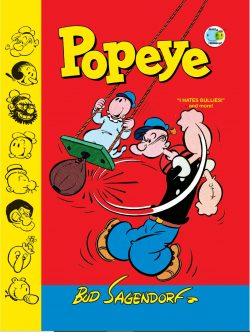
Popeye volume 1: Olive Oyl & Her Sweety (The E.C. Segar Popeye Sundays


By Elzie Crisler Segar with Sergio Ponchione, Cathy Malkasian & various(Fantagraphics Books)
ISBN: 978-1- 68396-462-9 (PB/digital edition)

Popeye popped up in the Thimble Theatre comic strip for January 17th 1929. The strip was an unassuming feature that debuted on 19th December 1919: one of many newspaper cartoon funnies to parody, burlesque and mimic the era’s silent  movies serials. Its more successful forebears included C.W. Kahles’ Hairbreadth Harry and Ed Wheelan’s Midget Movies / Minute Movies .

These all used a repertory company of characters to play out generic adventures firmly based on those expressive cinema antics. Thimble Theatre‘s cast included Nana and Cole Oyl, their gawky daughter Olive, diminutive-but-pushy son Castor, and Horace Hamgravy, Olive’s sappy, would-be beau.

The series ticked along for a decade, competent and unassuming, with Castor and Ham Gravy (as he became) tumbling through get-rich-quick schemes, fear-free adventures and simple gag situations until September 10th 1928, when explorer uncle Lubry Kent Oyl gave Castor a present from his latest exploration of Africa: a hand-reared Whiffle Hen – most fabulous of all birds. It was the start of something groundbreaking.

Whiffle Hens are troublesome, incredibly rare and possessed of fantastic powers, but after months of inspired hokum and slapsick shenanigans, Castor was resigned to Bernice – for that was the hen’s name – when a series of increasingly peculiar circumstances brought him into contention with the ruthless Mr. Fadewell, world’s greatest gambler and king of the gaming resort of ‘Dice Island’.

Bernice clearly affected writer/artist E.C. Segar, because his strip increasingly became a playground of frantic, compelling action and comedy during this period…

When Castor and Ham discovered that everybody wanted the Whiffle Hen because she could bestow infallible good luck, they sailed for Dice Island to win every penny from its lavish casinos. Sister Olive wanted to come along but the boys planned to leave her behind once their vessel was ready to sail. It was 16th January 1929…

The next day, in the 108th instalment of the saga, a bluff, irascible, ignorant, itinerant and exceeding ugly one-eyed old sailor was hired by the pair to man the boat they had rented, and the world was introduced to one of the most iconic and memorable characters ever conceived. By sheer, surly willpower, Popeye won the hearts and minds of readers: his no-nonsense, grumbling simplicity and dubious appeal enchanting the public until by the end of the tale, the walk-on had taken up full residency. He would eventually make the strip his own…

The Sailor Man even affably bulldozed his way onto the full-colour Sunday Pages which form the main course of this curated collection spanning 2nd March 1930 through February 28th  1932.

This paperback is the first of four that will contain the entire Segar Sunday canon and is designed to be stored in a forthcoming slipcase. Spiffy as that sounds, the wondrous stories are also available in digital editions if you want to think of ecology or mitigate age and muscle strain in your spinach-deprived muskles…

Since many papers only carried dailies or Sundays, not necessarily both, a system of differentiated storylines developed early in American publishing, and when Popeye finally made his belated appearance, he was already a fairly well-developed character.

Thus, Segar concentrated on more family-friendly gags – and eventually continued mini-sagas – and it was here that the Popeye/Olive Oyl modern romance began: a series of encounters full of bile, intransigence, repressed hostility, jealousy, mind games and passion which usually ended in raised voices and scintillating cartoon violence – and they are still as riotously funny now as then. Olive was well ahead of her time: the serendipitous stick insect knew her mind and always gave better than she got…

Preceding the vintage treats, this tome also offers some modern and very lovely laudatory comic strips in Sergio (DKW; Grotesque; Memorabilia) Ponchione’s ‘Have a Segar’ and Cathy (Percy Gloom; Eartha) Malkasian’s ‘Oomph – A Popeye Short’: each offering their unique interpretations of Segar’s now meta-real cast and how they changed the world…

When the wondrous weekly full-page instalments start we see Castor Oyl heading home at the heart of the Depression accompanied by Ham Gravy who is appalled to find a ghastly sailor man pitching woo at his (presumed) sweet patootie. When the rival suitors clash, it’s Olive who has the final word …and throws the last punch!

From there onwards, in done-in-one gag instalments an unlikely but enduring romance blossomed (withered, bloomed, withered some more, hit cold snaps and early harvests – you get the idea…) as Olive pursued her man and Popeye vacillated between ignoring her and moving mountains to impress her. As she always kept her options open, he spent a lot of time fighting off – literally – her other gentlemen callers…

A mercurial creature, the maiden miss Oyl spent a lot of her time trying to stop her beau’s battles – tricky, as he spent his time ashore as an extremely successful “sprize fighter” – but would batter mercilessly any floozy who cast cow eyes at the devil-may-care matelot…

In these early formative Sundays, we see how Castor becomes Popeye’s manager and how originally-philanthropic millionaire Mr. Kilph moves from eager backer to demented arch enemy, willing to pay any price to see Popeye pummelled. Opponents include husky two-fisted guys with names like Bearcat, Mr. Spar, Kid Sledge, Joe Barnacle, Kid Smack, Kid Jolt, The Bullet, Johnny Brawn, an actual giant dubbed Tinearo and even a trained gorilla (Kid Klutch), but none ever win and Kilph goes crazier and crazier…

Among many timeless supporting characters, mega moocher J. Wellington Wimpy debuts here as a lazy and corrupt ring referee in extended, trenchant and scathingly witty sequences about boxing. Rowdy, slapstick cartoon violence is at a premium – family values were different then – but Segar’s worldly, probing satire and Popeye’s beguiling (but relative) innocence and lack of experience keeps the entire affair in hilarious perspective whilst making him an unlikely and lovable waif, albeit one eternally at odds with cops and rich folk…

We see softer sides of the sailor-man as he repeatedly gives away multiple purses – and even houses – to widows and “orphinks”, and his rebellious core with numerous jail sentences self-commuted. Popeye always escapes, but – being scrupulously fair-minded – never fails to turn himself in when his latest escapade ends.

After a riot of fun, bonkers pugilism and mad love, this initial outing closes with the Sailor Man’s bold disclosure that the secret of his strength is spinach. Cue a riot at Rough-House‘s seedy diner…

Segar famously considered himself an inferior draughtsman – most of the world disagreed and still does – but his ability to weave a yarn was unquestioned, and grew to astounding and epic proportions in these strips.

Week after week he was creating the syllabary and graphic lexicon of a brand-new art-form: inventing narrative tricks and beats that generations of artists and writers would use in their own cartoon creations.

Popeye is fast approaching his centenary and well deserves his place as a world icon. How many comics characters are still enjoying new adventures 93 years after their first? These volumes are the perfect way to celebrate the genius and mastery of E.C. Segar and his brilliantly flawed superman. These are books that belong in every home and library.
This edition of Popeye Volume 1: Olive Oyl and Her Sweety is © 2021 Fantagraphics Books Inc. All Segar comics and drawings © 2021 King Features Syndicate. Inc./ ™Hearst Holdings, Inc. Strips provided by Bill Blackbeard and his San Francisco Academy of Comic Art, “Have a Segar!” © Sergio Ponchione. Translation © Jamie Richards. “Oomph” © Cathy Malkasian. All rights reserved.

Showcase Presents Hawkman volume 1


By Gardner F. Fox, Bob Haney, Joe Kubert, Gil Kane, Murphy Anderson, Howard Purcell, Carmine Infantino & various (DC Comics)
ISBN: 978-1-4012-1280-3 (TPB)

Not all passions are romantic: mine is to finally have all old comics forever available in curated editions. These astoundingly engaging Silver Age tales are another treat inexplicably unavailable in modern, full-colour editions, either physically or digitally.

On a timely note, however, this book does highlight one of the most effective and enduring romantic crime-busting, world-saving partnerships in comics…

With the superhero revival in full swing by 1961, Editorial genius Julius Schwartz turned to resurrecting one of DC’s most visually arresting and iconic Golden Age characters. Once again eschewing mysticism for science fiction (the original Hawkman was a reincarnated Egyptian prince murdered by a villainous priest), Schwartz picked scripter Gardner F. Fox – who created the Golden Age great – and artist Joe Kubert to construct a new hero for the Space Age.

This titanic tome is still readily available from online retailers and packs a big punch, gathering the works of the Winged Wonders from The Brave and the Bold #34-36, #42-44 and #51; The Atom #7; Mystery in Space #87-90 and Hawkman #1-11: cumulatively spanning February/March 1961 to December 1965/January 1966.

Katar Hol and his wife Shayera Thal are police officers on their own planet of Thanagar. They’ve travelled to Earth from the star system Polaris in pursuit of a spree-thief named Byth who assaulted a scientist and stole a drug bestowing the ability to change into anything. Thus the scene was set in ‘Creature of a Thousand Shapes’ which graced The Brave and the Bold #34 (cover-dated February/March 1961): a spectacular work of graphic magic, with the otherworldly nature of the premise rendered captivatingly human by the passionate, moody expressiveness of Kubert’s art. It is a minor masterpiece of comic storytelling, and still a darned good read.

The high-flying heroes returned in the next issue, now stationed on Earth to study Terran police methods. In ‘Menace of the Matter Master’ they defeat a plundering scientist who has discovered a means to control elements, before ‘Valley of Vanishing Men’ takes the strange visitors from another world to the Himalayas to discover the astounding and ironic secret of the Abominable Snowmen.

Last chance in the try-out session, B&B #36 then sees them defeat a modern day wizard in ‘Strange Spells of the Sorcerer’ and after, save Earth from another Ice Age whilst defeating ‘The Shadow Thief of Midway City’.

With the three-issue audition over, the publishers sat back and waited for the fan letters and sales figures… and something odd happened: fans were vocal and enthusiastic, but the huge sales figures just weren’t there. It was inexplicable. The quality of the work was plain to see on every page, but somehow not enough people had plunked down their dimes to justify an ongoing Hawkman series

A year later DC tried again. The Brave and the Bold #42 (June/July 1962) featured ‘The Menace of the Dragonfly Raiders’ and found Katar and Shayera returning to Thanagar just in time to encounter a bizarre band of alien thieves. Here was superhero action in a fabulous alien locale and the next issue maintained the exoticism – at least initially – before Hawkman and Hawkgirl returned to Midway City to defeat a threat to both worlds – ‘The Masked Marauders of Earth’.

One last B&B issue followed – #44, October-November 1962 – with two splendid short tales. ‘Earth’s Impossible Day’focused on Shayera’s desire to celebrate a holiday tradition of Thanagar whilst eerie doomsday thriller ‘The Men who Moved the World’ explored lost civilisations and the return of Earth’s original owners… and then the Hawks vanished again. It certainly looked like this time the magic had faltered.

That, however, was not the end of the saga. Convinced he was right, Schwartz retrenched. Enjoying some success with the new Atom title and mindful of the response when he had teamed the Flash and Green Lantern in the summer of 1962, the editor had writer Fox include the Winged Wonder in ‘The Case of the Cosmic Camera’ (The Atom #7, June/July 1963): an interplanetary thriller illustrated by Gil Kane and Murphy Anderson. This invasion rollercoaster ranged from the depths of space to Earth’s most distant past.

This new clean-limbed version clearly found fan-favour and in 1963 Hawkman returned! Again!

Mystery in Space had been the home of Adam Strange since issue #53 and with #87 (November 1963) Schwartz moved the Winged Wonders into a back-up slot; even granting them occasional cover-privileges. Still written by Fox, Kubert’s moody art had been superseded by the clean, graceful illustration of Anderson. ‘The Amazing Thefts of the I.Q. Gang!’ was followed a month later by ‘Topsy-Turvy Day in Midway City!’

With the management now on board, guest appearances to maximise profile were easier to find. Hawkman briefly returned to The Brave and the Bold with #51 (December 1963/ January 1964) to team with Aquaman and face the ‘Fury of the Exiled Creature!’

This quirky tale of monsters, magic and mayhem in sunken Atlantis was written by Bob Haney and illustrated by the criminally neglected Howard Purcell, and then it was back to Mystery in Space #89 and the ‘Super-Motorized Menace!’the month after that.

These were brief, engaging action pieces, before issue #90 offered a full length story teaming the Hawks and Adam Strange in a legendary End-of the-World(s) epic. ‘Planets in Peril!’ – illustrated by Carmine Infantino & Murphy Anderson – was the last Hawkman back-up. From the next month, and after three years of trying, Hawkman would soar in his own title.

Cover-dated April/May 1964, Hawkman #1 is a gem of an issue by Fox & Anderson. Two of the most visually arresting characters in comics, the Hawks had one of the most subtle and sophisticated relationships in the business. Like Sue and Ralph Dibney (Elongated Man and wife) Katar and Shayera are equal partners, and both couples were influenced by the Nick and Nora Charles characters of the Thin Man movies. Like those progenitors, the interplay of the Hols at home or at work is always rich in humour and warmth.

In ‘Rivalry of the Winged Wonders’, and whilst accommodatingly recapping their origins for newcomers, the couple decide to turn their latest case into a contest. Hawkgirl (eventually and more appropriately Hawkwoman) would use Thanagarian super-science to track and catch a band of thieves whilst Hawkman limited himself to Earth techniques and tools in solving the crime.

This charmingly witty yarn is balanced by action thriller ‘Master of the Sky Weapons’ as ancient Mayan warrior Chacthreatens the world with unearthed alien super weapons whilst the second issue featured the ‘Secret of the Sizzling Sparklers!’ – an action-packed thriller concerning trans-dimensional invaders – and closed with ‘Wings across Time’: a mystery revolving around the discovery of the flying harness of the legendary Icarus.

Another brain-teaser opened the third issue. Scientific bandits proved less of a menace than ‘The Fear that Haunted Hawkman’ whilst ordinary thugs and an extraordinary alien owl converged to make our heroes ‘Birds in a Gilded Cage’.

Issue #4 opened with a tale that would revolutionise DC comics. ‘The Girl who Split in Two!’ introduced Zatanna, daughter of a magician who had fought crime in the 1940s only to “mysteriously disappear”.

From the very first issue, and for over a decade, Zatarra was a hero in the Mandrake mould who fought evil in the pages of Action Comics. During the Silver Age, Gardner Fox had Zatarra’s young and equally gifted daughter search for the missing mage by teaming up with a selection of superheroes he was currently scripting (if you’re counting, these tales appeared in Hawkman #4, The Atom #19, Green Lantern #42, and in the Elongated Man back-up strip in Detective Comics #355. A very slick piece of backwriting latterly included the high-profile Caped Crusader via Detective #336 – ‘Batman’s Bewitched Nightmare’.

The saga concluded in Justice League of America #51 and ‘Z – As in Zatanna – and Zero Hour!’)…

This wide, long-running experiment in continuity proved that there was a dedicated fan-base out there with a voracious appetite for experimentation and relatively deep pockets. Most importantly, it finally signalled the end of the period where DC heroes largely lived and battled in self-imposed worlds of their own.

Back-up ‘The Machine that Magnetized Men!’ is another fine tale, as the Pinioned Paladins use reason and deduction to defeat thieves who are impossible to touch.

‘Steal, Shadow – Steal!’ in number #5 is the first full-length thriller, as the ruthless Shadow Thief returns seeking revenge, and believing that causing the next Ice Age is an acceptable consequence of his schemes. Issue #6 is another epic, and one that turned DC’s peculiar obsession with gorillas into a classic adventure.

‘World Where Evolution Ran Wild!’ draws our heroes to fabled Illoral, where a scientist’s explorations and interventions have stretched Natural Selection to un-natural limits. Bold, brash and daft in equal proportions, this is a fabulous romp and seeing again the cover where Hawkman struggles for his life against a winged gorilla makes the adult me realise those DC chaps might have known what they were doing with all those anthropoid covers!

By issue #7 (April-May 1965) the world was gripped in secret agent fever as the likes of James Bond, the Man from U.N.C.L.E., and a host of others sashayed across our TV screens. Comics were not immune, though spies had been a staple threat there for decades. Before Hawkman joined the gang however, he had to deal with the rather mediocre threat posed by ‘The Amazing Return of the I.Q. Gang!’

They were quickly returned to prison and the Hawks moved on to face the ‘Attack of the Crocodile-Men!’: a high-octane super-science thriller that introduced C.A.W. – the Criminal Alliance of the World…

Another supremely captivating cover adorned #8, as the Hawks fought an ancient Roman artificial intelligence built by the not-so mythical Vulcan himself in ‘Giant in the Golden Mask!’, before defeating an alien Harpy who’d been buried for half a million years in ‘Battle of the Bird-Man Bandits’.

Hawkman #9 saw The Atom as guest star when an old villain returned with a seemingly perfect revenge plan for full-length super-thriller ‘Master Trap of the Matter Master!’, after which #10 saw a playful Fox at his best in both ‘Hawkman Clips the Claws of C.A.W!’ – another espionage drama with a delicious subplot as the Winged Wonder aids a sexy CIA agent with a big secret of her own, before solving ‘The Magic Mirror Mystery’: a fair-play tale brainteaser with lots of high-flying action to balance the smart stuff.

This glorious first volume closes with another superb full-length epic as ‘The Shrike Strikes at Midnight!’ and our heroes trail a super-powered, winged bandit all over the world and on to the star system Mizar, in a gripping tale of crime, super-villainy, aliens, revolutions and even dinosaurs.

Hawkman grew to be one of the most iconic characters of the second superhero boom, not just for the superb art but also because of a brilliant, subtle writer with a huge imagination. These tales are comfortably familiar but somehow grippingly timeless. Yet comics are a funny business; circumstances, tastes and fashions often mean that wonderful works are missed and unappreciated. Don’t make the same mistake readers did in the 1960s. Whatever your age, read these astounding adventures and become a fan. It’s never too late.
© 1961-1966, 2007 DC Comics. All Rights Reserved.