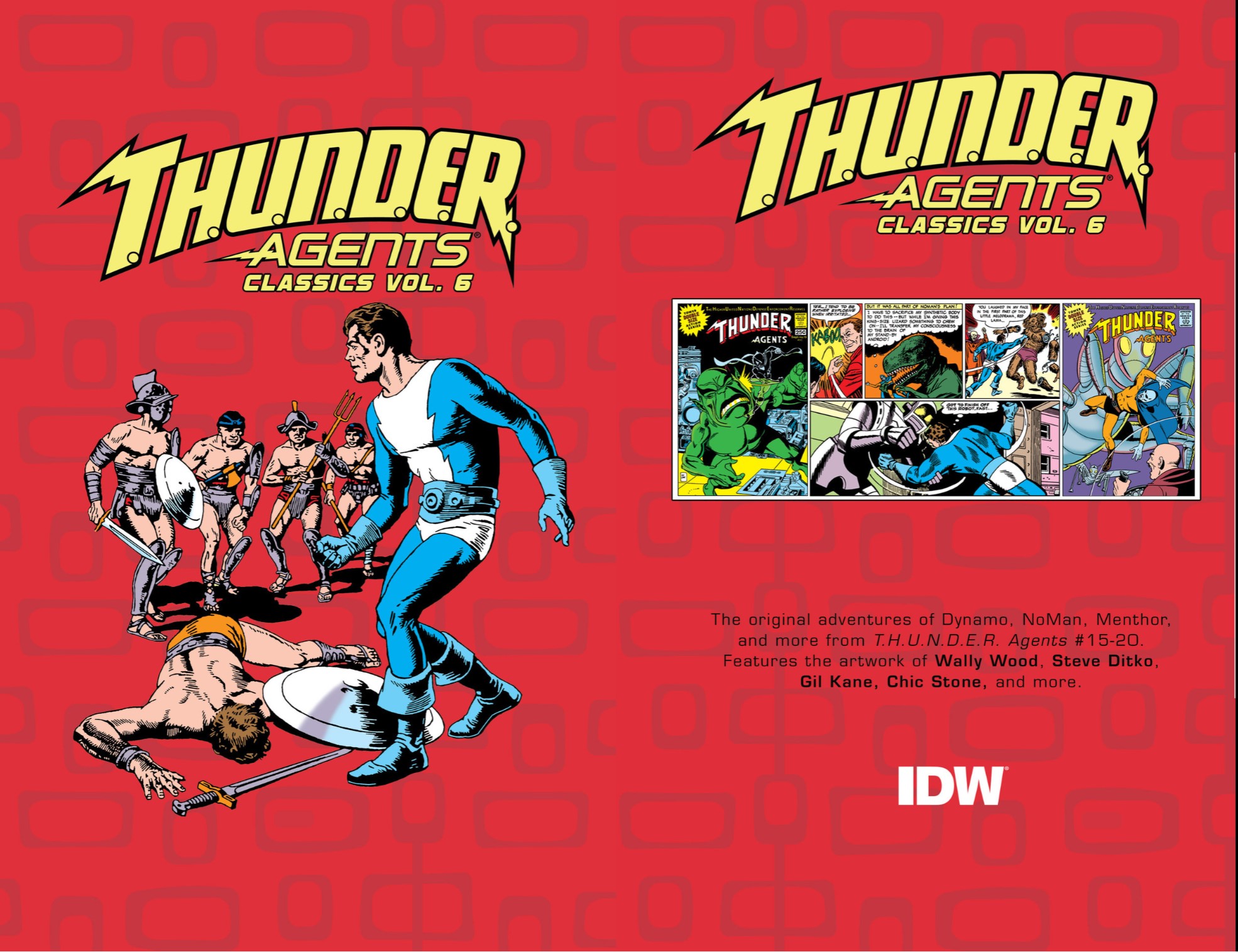
T.H.U.N.D.E.R. Agents Classics volume 6


By Wallace Wood, Steve Ditko, Steve Skeates, Gil Kane, Ralph Reese, Dan Adkins, George Tuska, Reed Crandall, John Giunta, Ogden Whitney, Chic Stone, Paul Reinman, Jack Abel & various (IDW)
ISBN: 978-1-63140-182-4 (HB) eISBN: 978-1-62302-879-4

This book includes Discriminatory Content produced in less enlightened times.

The meteoric lifespan and output of Tower Comics is one of the key creative moments in US comic book history. Bombastic, brilliant but brief, the era of The Higher United Nations Defense Enforcement Reserves was a benchmark of quality and sheer unadulterated fun for fans of both the then-still-reawakening superhero genre and the global spy-chic obsession of those distant times. Throughout the early 1960s, the Bond movie franchise was going from strength to strength, with blazing action and heady glamour totally transforming the formerly low-key, seedy and darkly patriotic espionage genre. The buzz was infectious: soon a Man Like Flint and Matt Helm were carving out their own piece of the action as TV shanghaied the entire bandwagon with the irresistible Man from U.N.C.L.E. (premiering September 1964), bringing the whole shtick into living rooms around the world.

Thus veteran Archie Comics editor Harry Shorten was commissioned to create a line of characters for a new distribution-chain funded publishing outfit: Tower Comics. He brought in creative maverick Wallace (he hated the contraction “Wally”) Wood, who called on many of the biggest names in the industry to craft material for the broad cross-section of genres the new company demanded; as well as T.H.U.N.D.E.R. Agents and spin-offs Undersea Agent, Dynamo and NoMan, there was a magnificent anthology war-comic Fight the Enemy and wholesome youth-comedy Tippy Teen.

Samm Schwartz & Dan DeCarlo handled the funny stuff – which outlasted everything else – whilst Wood, Larry Ivie, Len Brown, Bill Pearson, Steve Skeates, Dan Adkins, Russ Jones, Gil Kane, Ditko & Ralph Reese contributed scripts for themselves and the industry’s other top talents to illustrate on the adventure line. With a ravenous appetite for superspies and costumed heroes growing in comic book popularity and amongst the general public, the idea of blending the two concepts seemed inescapable…

T.H.U.N.D.E.R. Agents #1 appeared with no fanfare or pre-publicity on newsstands in August 1965. Beguilingly, all Tower titles were in the beloved-but-rarely-seen 80-Page Giant format, offering a huge amount of material in every issue. All that being said, these tales would not be so revered if they hadn’t also been so superbly crafted. As well as Wood, the art accompanying compelling, subtly more mature stories was by some of the greatest talents in comics: Reed Crandall, Gil Kane, George Tuska, Mike Sekowsky, Dick Ayers, Joe Orlando, Frank Giacoia, John Giunta, Ogden Whitney, Steve Ditko and more, as well as budding stars including Ralph Reese, Steve Skeates and Dan Adkins…

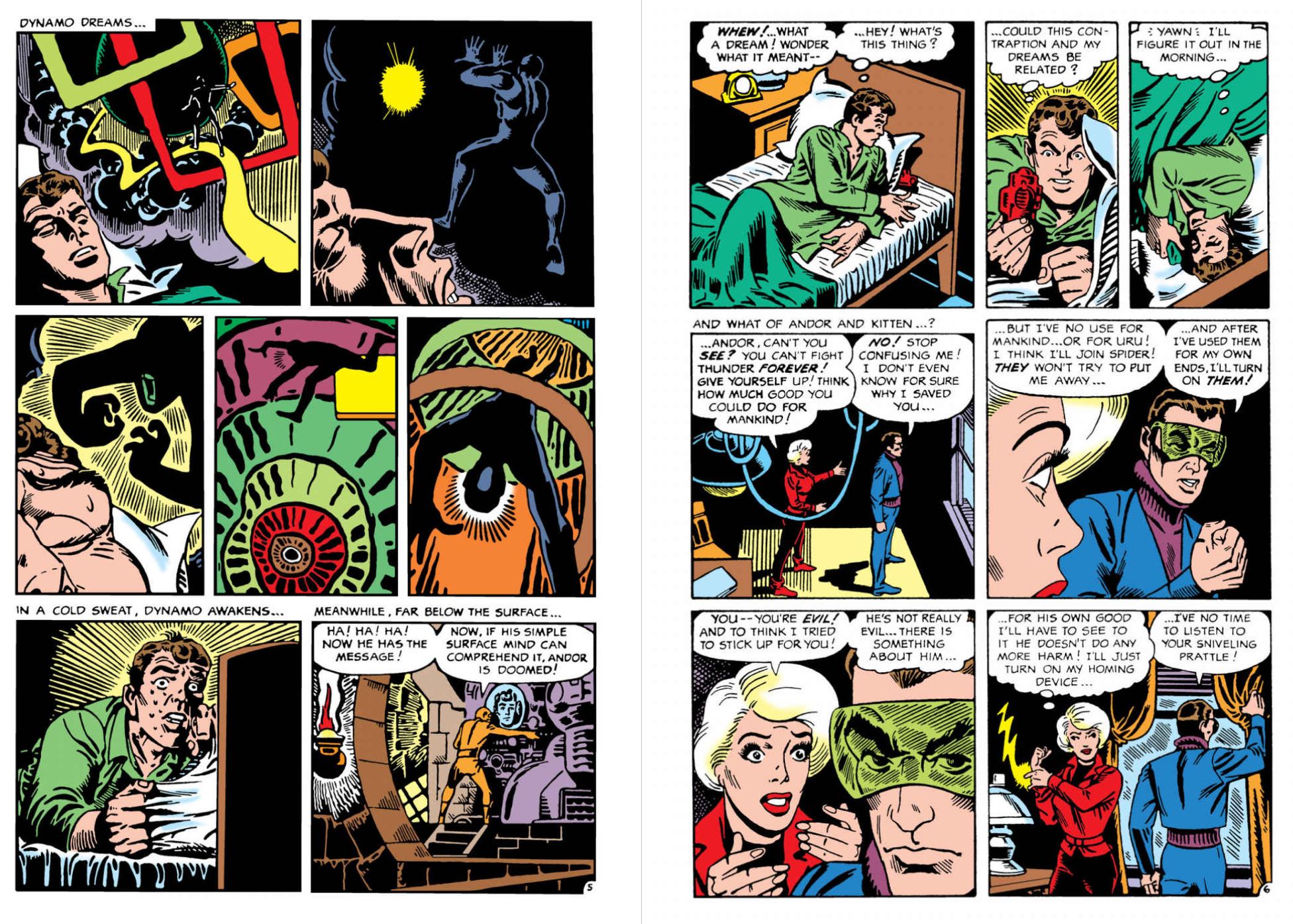
For those who came in late: When philanthropic benevolent super-genius Professor Emil Jennings perished in an assault by forces of the mysterious Warlord, late-arriving UN troops salvaged some of his greatest inventions. These included a belt that increased the density of the wearer’s body until it became as hard as steel; a cloak of invisibility and a brain-amplifier helmet. These uncopiable prototypes were divided between several agents: the basis of a unit of super-operatives to counter the increasingly bold attacks of multiple global terror threats such as the aforementioned Warlord. First chosen was affable, honest, but far from brilliant file clerk Len Brown. To the astonishment of everyone who knew him, he was assigned the belt and codename Dynamo.

T.H.U.N.D.E.R. Agent NoMan was previously decrepit Dr. Anthony Dunn who chose to have his mind transferred into an unaging android body and then gifted with the invisibility cape. If his artificial body was destroyed, Dunn’s consciousness could transfer to another android body. As long as he had a spare ready, he could never die. The helmet went to John Janus: a seemingly perfect UN employee and mental and physical marvel. He easily passed all tests necessary to wear the Jennings helmet. Sadly, he was also a double agent, the Warlord’s mole poised to betray T.H.U.N.D.E.R. at the earliest opportunity. All diabolical plans went awry once he donned the helmet and became Menthor since the device awakened his brain’s full potential, granting him telepathy, telekinesis and mindreading powers, but it also drove all evil from his mind. Such was the redemptive effect that Janus actually gave his life to save his comrades: an event which astounded readers at the time. In the wake of that tragedy, the Helmet vanished, passing through many hands but always escaping T.H.U.N.D.E.R.’s attempts to retrieve it.

Guy Gilbert was leader of crack Mission: Impossible-styled special forces commando unit T.H.U.N.D.E.R. Squad until asked to beta-test an experimental super-speed suit. As gung-ho, duty-obsessed Lightning, he proudly did so, even if every use of the hyper-acceleration gimmick shortened his life-span. As the concept and the niche universe expanded, other augmented agents appeared – like human jet Raven or subsea spin-off U.N.D.E.R.S.E.A. Agent (AKA Davy Jones of the United Nations Department of Experiment and Research Systems Established at Atlantis

This concluding compilation of classic costumed-spycraft re-presents the compelling contents of T.H.U.N.D.E.R. Agents#15-20 (cover-dates July 1967 to November 1969) – with the incomparably cool concept and characters going from strength to strength as a spirit of eccentric experimentation and raucous low comedy increasingly manifested in the wake of the defeat of the Warlord (actually exposed as only one of a subterranean race intent on world conquest) and rise of independent, lone wolf supervillains, sinister crime cabals such as SPIDER or international/political foes like China’s Red Star

As always the action opens with a Dynamo solo tale. ‘Collision Course!’ – by an unknown author and depicted by Wood – sees superhuman Andor resurface. A misunderstood modern Prometheus, he was abducted by the Warlords as a baby and spent decades being turned into a biological superman devoid of sentiment or compassion. However, they lost control of their living weapon once he met fellow mortals. Since their shattering defeat, the pitiful outsider’s attempts to rejoin mankind had been constantly thwarted and derailed. Here, following a clash with Dynamo and SPIDER, Andor is a blind (but still immensely powerful) Samson living as a hobo with a cunning grifter. Sadly. he’s again exploited by the underworld – in the form of ruthless criminal freelancer Iron Maiden – and precipitates another shattering duel with the super strong G-man as well as SPIDER’s own hyper-strong, enhanced operative Brutus Kanassus.

When the dust and rubble settles, Andor is gone again, but is now again a slave of Uru, the last surviving subterranean warlord…

Steve Skeates & Chic Stone then detail the next step in Lightning’s life. Dying because of the speed suit he volunteered to wear, Agent Gilbert is placed into cryostasis, but ‘While Our Hero Sleeps…!’ archfoe Warp Wizard wickedly swipes the body. He, however, utterly underestimates the skills and determination of Guy’s former T.H.U.N.D.E.R. Squad colleagues Dynamite AKA Daniel John Adkins, Katheryn “Kitten” Kane & William “Weed” Wylie to save him, before Bill Pearson & Ogden Whitney despatch NoMan’s scattershot free-floating consciousness on a ‘Starflight to the Assassin Planet!’ Here the invisible agent faces uncanny extraterrestrial terrors and saves earth from impending invasion…

Dynamo’s best efforts are not enough in ‘Hail to the Chief!’ (by an unknown author, Giunta, Wood & Adkins) wherein his commanding officer Sam Short mistakenly believes he’s being pensioned off. Obsessed with proving himself, “the Old Man” is captured by SPIDER and almost kills both of them before this day is saved. T.H.U.N.D.E.R. Agent Weed (a character Wood regarded as his “spirit animal”) closes the show with a delicious comedy thriller by author unknown and George Tuska.

When a big dumb thug is bitten by a radioactive mole and gains regulation theme-based excavation powers, his small, cunning pal decides ‘Dig We Must’ and has them become costumed crooks robbing from below ground. Their exploits utterly outfox the super-augmented T.H.U.N.D.E.R. Agents but wily Weed has the perfect plan to trap The Mole and Dapper Dan

Cover-dated October 1967, T.H.U.N.D.E.R. Agents #16 opens with a Dynamo mini-epic illustrated and possibly written by Steve Ditko at the peak of his creative powers and political paranoia. Here the mighty hero and missing frenemy Andor are both beset with a ‘Dream of Doom!’ sent by the last subterranean.

Emboldened by recapturing the Warlord’s living weapon, Uru modifies and heals Andor before unleashing him against humanity, but has again underestimated his tool’s strength of will, affinity for his own kind and all too human feeling for Agent Kitten…

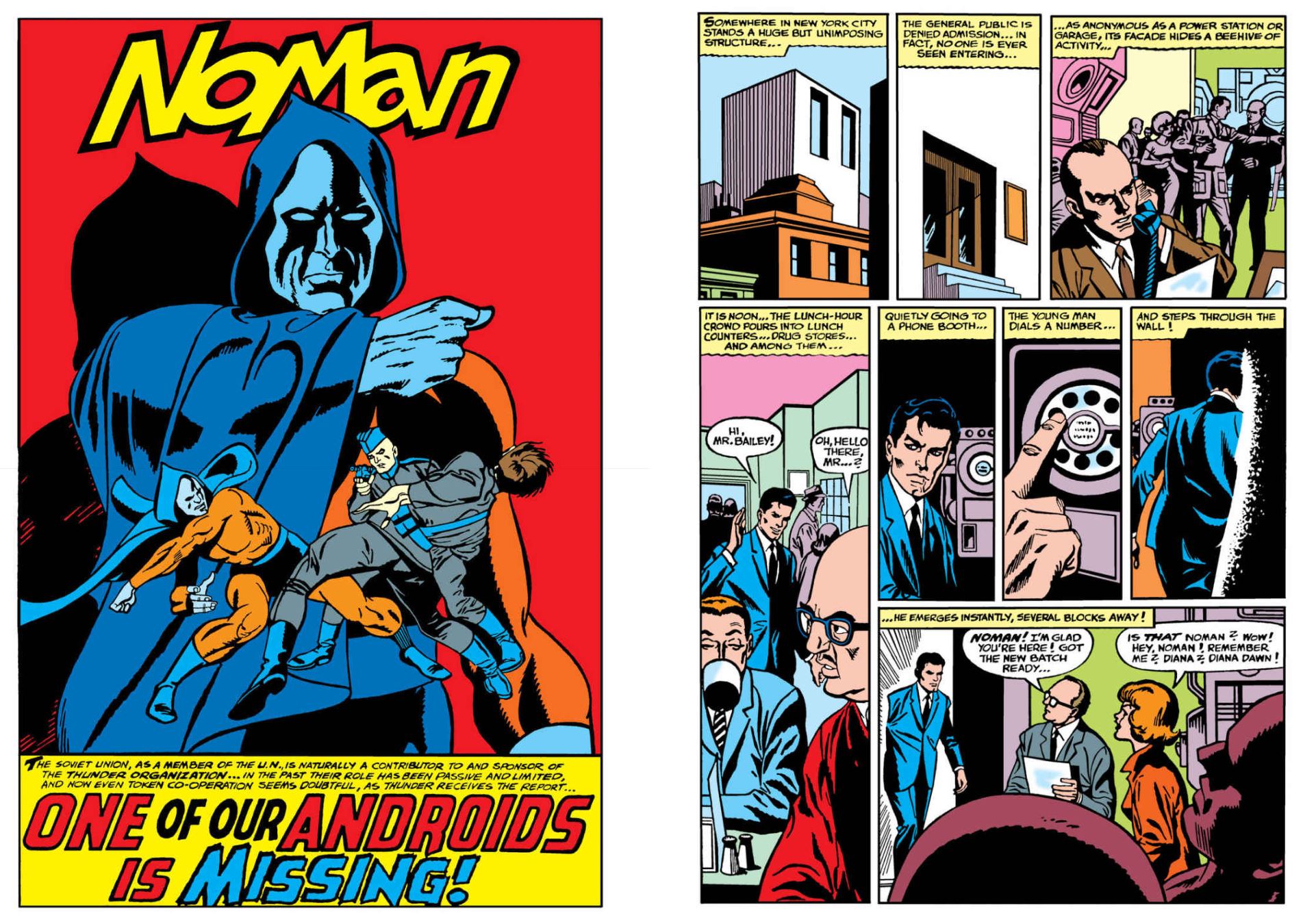
Fast paced and furiously violent, this is a classic example of astounding Ditko’s gift for combat staging as well as his signature graphic psychedelia in action. The era was intensely fruitful for artists as seen in a follow-up by Gil Kane & Jack Abel who limn another uncredited yarn as NoMan learns ‘One of Our Androids is Missing!’ Plunged into a frantic and convoluted global chase whilst again succumbing to psychological traumas triggered by being an undying ancient in a mobile plastic coffin, he soon recovers his emotionless equilibrium after fellow agent Linda Rogers uncovers a plot by the Red Chinese to steal one of his artificial carcases. They intend on turning it into a bomb with the sole purpose of tricking the Soviet Union into leaving the United Nations and blaming T.H.U.N.D.E.R. for the crime. It doesn’t work…
With Lightning notionally cured and declared fit for duty, Skeates & Stone amp up the superpower arms race as old enemy Professor Forkliff uses SPIDER resources to dope the speedster with super hallucinogens before unleashing his own enhanced speed freak – ‘The Whirligig!’ – to crush T.H.U.N.D.E.R. Sadly for them, Gilbert does everything – even recover from a bad trip – at top speed…

The entire Agents roster assembles for anonymously scripted Tuska tale ‘The End of the T.H.U.N.D.E.R. Agents?’ after SPIDER finds a way to negate all their advanced technology and entombs them all… until Weed, Kitten & Dynamite prove that a great plan and deathwish determination is all that’s really needed to send evil packing…

Dynamo closes the issue with a psychologically harrowing tale revealing how constant missions have burned him out. Enduring random descents into mindless fugue states, he is a hero lost to reality. Mature, disturbing, chilling and decades ahead of its time, ‘A Slight Case of Combat Fatigue’ comes courtesy of old soldier Wood and reset the tone as superheroes and spies began to pall in the public’s attention…

T.H.U.N.D.E.R. Agents #17 (December 1967) began with Dynamo in lighter mode as ‘Return of the Hyena!’ (by that mystery scribe, Wood & Reese) saw the husky but not highbrow hero repeatedly made a jackass by a cunning costumed criminal who indulged himself in a battle of wits with an enemy he deemed completely unarmed. Happily. Brawn and determination… and sneaky rogue Agent Weed… balanced the scales of justice enough to cage the beastly bandit, after which Whitney renders an uncredited modern monster mash wherein NoMan learns ‘The Locusts are Coming!!’ before saving embattled missile bases from marauding robotic raiders led by ambitious but unruly King Locust.

With readers tastes changing, Tuska took the weakest but wily-est Agent deep into genre territory for ‘Weed Out West!’ Scouting out SPIDER sightings in Antelope Haunch, Oklahoma, he finds shady doings at the local cowboy film shoot and soon embroils butch back-up Dynamo in uranium smuggling rings, murder plots and wedding plans before the entire T.H.U.N.D.E.R. Agents cadre unites the arch enemy foe in show-stopping closer ‘Put Them All Together, They Spell S.P.I.D.E.R.!’ (by anonymous & Stone). Here Dynamo leads the charge after an ordinary undercover mission exposes the cabal’s secret leaders (“The Council”) as a coalition comprising old enemies Demo, Dr. Sparta, Mastermind, Mayven and The Tarantula, led by the utterly unknown Spider Secretary General, just as the group turn on each other.

That debacle began when SPIDER recovered the all-powerful Menthor Helmet but could not peacefully decide on who should wear it and ended when the good guys explosively arrived to mop up the remains of the heated debate…

Nearly a year passed before #18 was published (cover-dated September 1968), but the contents were worth the wait. It began with another Ditko classic as ‘Dynamo and the Amazing Mr. Mek!’ saw the super-agent clash with a little nebbish suddenly granted uncanny power over machines and mechanisms. Sadly, he had no problem robbing banks but baulked when SPIDER abducted him to inflict massive global terror and death. Those unshakeable, ironclad scruples cost Mek his life and baffled his foes, but not as much as ‘The Sinister Schemes of Professor Reverse!’ (illustrated by Whitney) baffled and bamboozled NoMan when the bonkers boffin began regressing animals, humans and top military personnel into ancient ancestor iterations such as cavemen and tyrannosaurs…
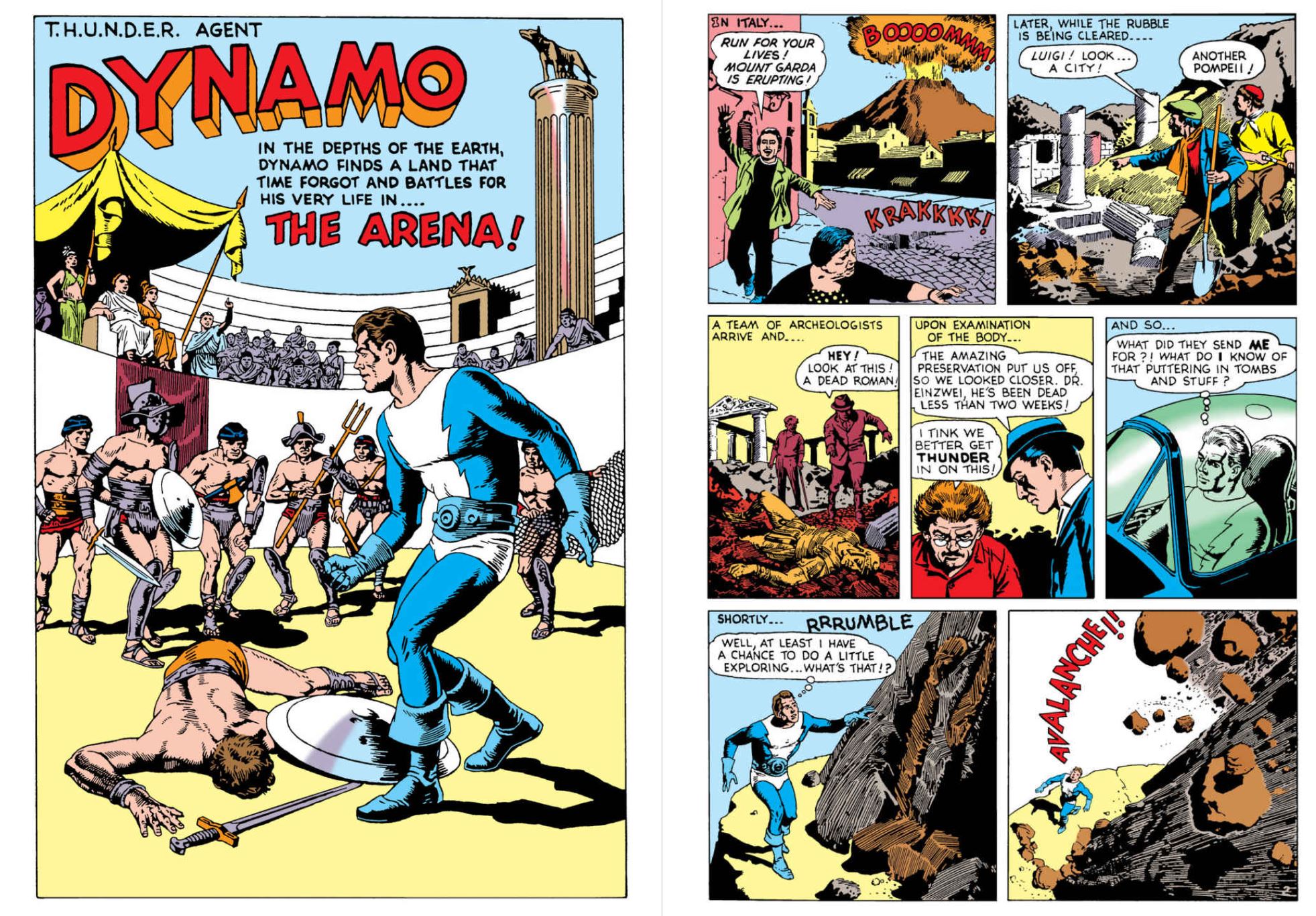
Next, thanks to an unknown writer and the astounding Reed Crandall, classical fantasy rendered in the classical manner finds Dynamo trapped in an Italian volcanic eruption to somehow awaken in ancient Rome. Experiencing firsthand the grandeur, glory and petty injustices, only a miracle saves him from ‘The Arena!’ and sees him returned to his proper place and station in time to solve ‘The Secret of the Abominable Snowman!’ Crafted by unknown & Stone, here hapless Len Bown must uncover how satellite and space-race launches are being sabotaged from Tibet. Close investigation beside saucy British spy Carnaby Mod soon uncovers a plot by “commie” robotics genius The Red Lama, but there are still mysteries of the upper slopes to unravel even when all the shooting and thumping stops…

The big spy bubble had burst by this point and the spin-off titles had all folded by the time T.H.U.N.D.E.R. Agents #19 (November 1968) was released. All art with no ads, it felt like a rapid using up and closing down exercise which began with the Wood pencilled, Ralph Reese written & inked ‘Half an Hour of Power!’ as SPIDER scientist Dr. Orgo unleashes an army of super androids – including perfect duplicates of all T.H.U.N.D.E.R. Agents and personnel – and poor Len goes on a rampage uncertain who to hit and who to save…

Feeling suspiciously like Dynamo inventory material, it’s followed by another rowdy riot as ‘Dynamo vs. The Ghost!’ (art by Paul Reinman) sees a traitor abscond with T.H.U.N.D.E.R.’s latest breakthrough: a belt enabling the wearer to phase molecules and pass through walls. So can Dynamo – in his own way – but it’s equipment misuse that ends the blockbusting chase that follows in horrific tragedy…

Reese scripts Dynamo’s clash with the ‘All-Girl Gang!’ for Tuska to illustrate, as sinister spymaster Satana operates a squad of female agents no ordinary man can handle. Of course, T.H.U.N.D.E.R. Agent Kitten Kane is an expert in disguise, infiltration and close combat too…

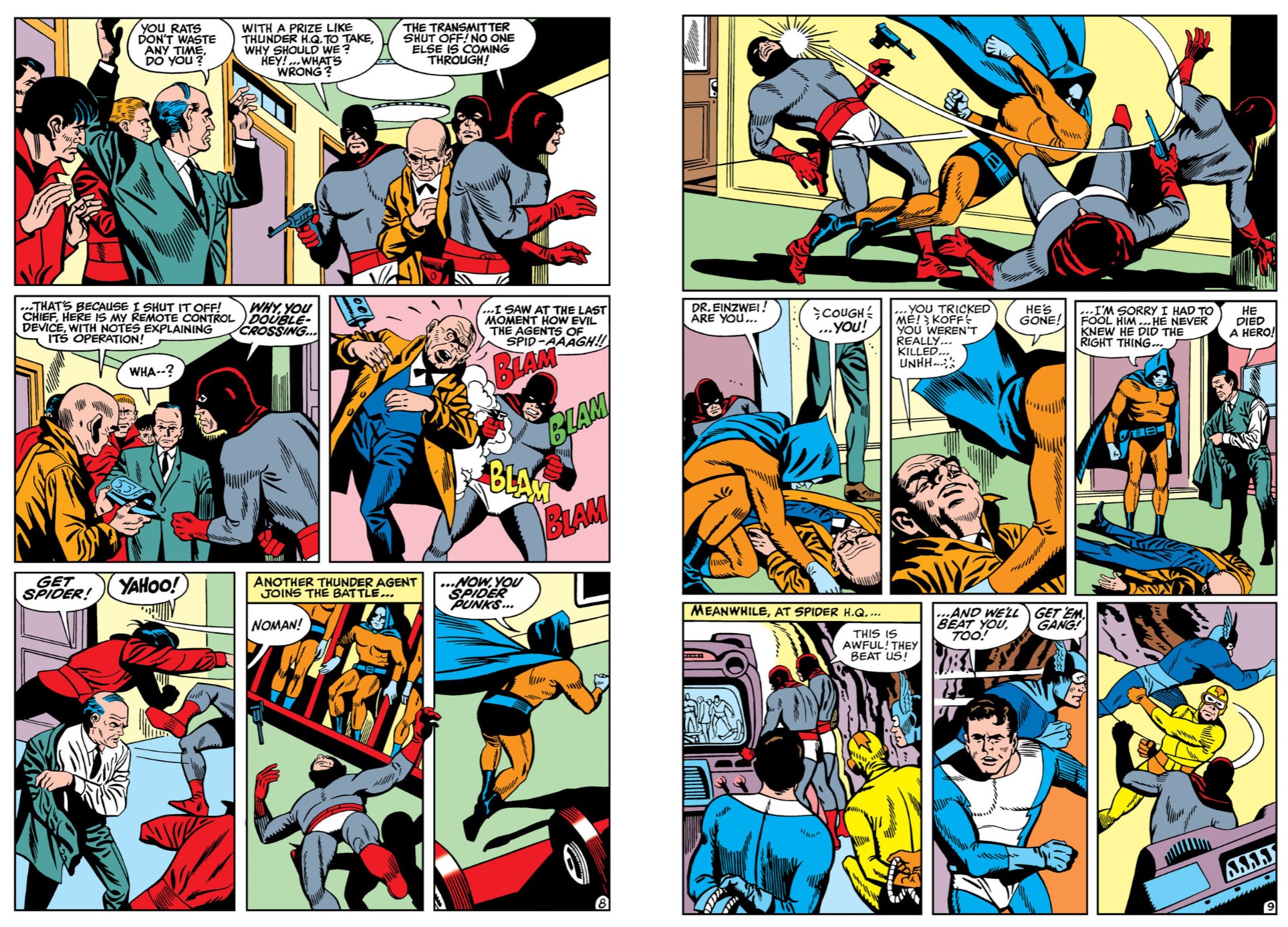
NoMan then confronts ‘A Matter of Transmitters’ (anonymous & Reinman) as SPIDER’s captive scientist Dr. Einzwei subverts T.H.U.N.D.E.R.’s teleport systems and captures all the super-agents as they innocently travel to work. Of course, NoMan has more than one body to report in with and the web soon untangles…
One year later, a final issue appeared. Cover-dated November 1969, T.H.U.N.D.E.R. Agents #20 pretty much signalled the end of spy fever and a dialling back of superheroic shenanigans. The issue was filled with reprint masterpieces but did offer an editorial in ‘Dear T.H.U.N.D.E.R. Fan’ by Wood & Adkins and new 4-page recap of the way it all began in ‘The Origin of T.H.U.N.D.E.R. Agent Dynamo’, drawn by Chic Stone, both of which are included here to sign off the first era of spies in spandex.

With covers by Wood, Kane, Ditko, Reese, Crandall & Stone, these stories all favour fast pace, wry wit, sparse dialogue, explosive action and breathtaking visuals. T.H.U.N.D.E.R. Agents was decades ahead of its time and informed everything in Fights ‘n’ Tights comics that came after it. These are truly timeless superhero comic classics which improve with every reading, so do yourself a favour and add these landmark super-sagas to your collection.
T.H.U.N.D.E.R. Agents Classics volume 6 © 2015 Radiant Assets, LLC. All rights reserved.

Today in 1927 master craftsman and inveterate storyteller Wallace Wood (EC Comics, Mad Magazine, T.H.U.N.D.E.R. Agents, Daredevil, Power Girl, Cannon, Sally Forth, The Wizard King, Witzend, Mars Attacks) was born, sharing the natal anniversary with Hi and Lois artist Chance Browne in 1948, scripter/artist Hilary Barta (Starslayer, Plastic Man) in 1957, artist Pat Olliffe (Untold Tales of Spider-Man, Spider-Girl, Captain Britain and MI:13) in 1965 and Italian illustrator Mirka Andolfo (Hex Wives, Wonder Woman, The Amazing World of Gumball, Ms. Marvel) in 1989.

This date in 1919 Billy DeBeck’s Barney Google and Snuffy Smith strip premiered, as did Sgt. George Baker’s Sad Sack in 1942 in the first issue of service magazine Yank – the Army Weekly.

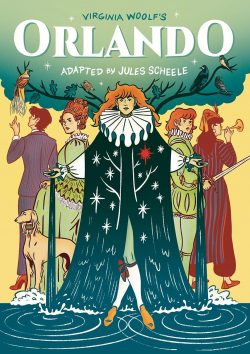
Virginia Woolf’s Orlando – Adapted by Jules Scheele (Orlando: A Graphic Novel Biography)


By Virginia Woolf, adapted by Jules Scheele with Garry Mac (Avery Hill)
ISBN: 978-1-917355-24-7 (TPB/Digital edition)

Some stories don’t translate well from prose to other narrative media, whilst others are simply made for it. In October 1928, author Virginia Woolf published a heavily-satirical appraisal of English literature down the ages. However, her fantasy epic was simultaneously a not-even-barely-veiled dramatised account of her ongoing, uproarious relationship with an equally notorious member of the British aristocracy…

Everyone in the know knew Orlando: A Biography detailed Woolf’s affair with British High Society’s supreme scandal-instigator… Vita Sackville-West. You can look all that history stuff up elsewhere or read the concise contextual precis that comes with this glorious, striking adaptation in the Foreword by Musician, Diarist and Modern Dandy Dickon Edwards…

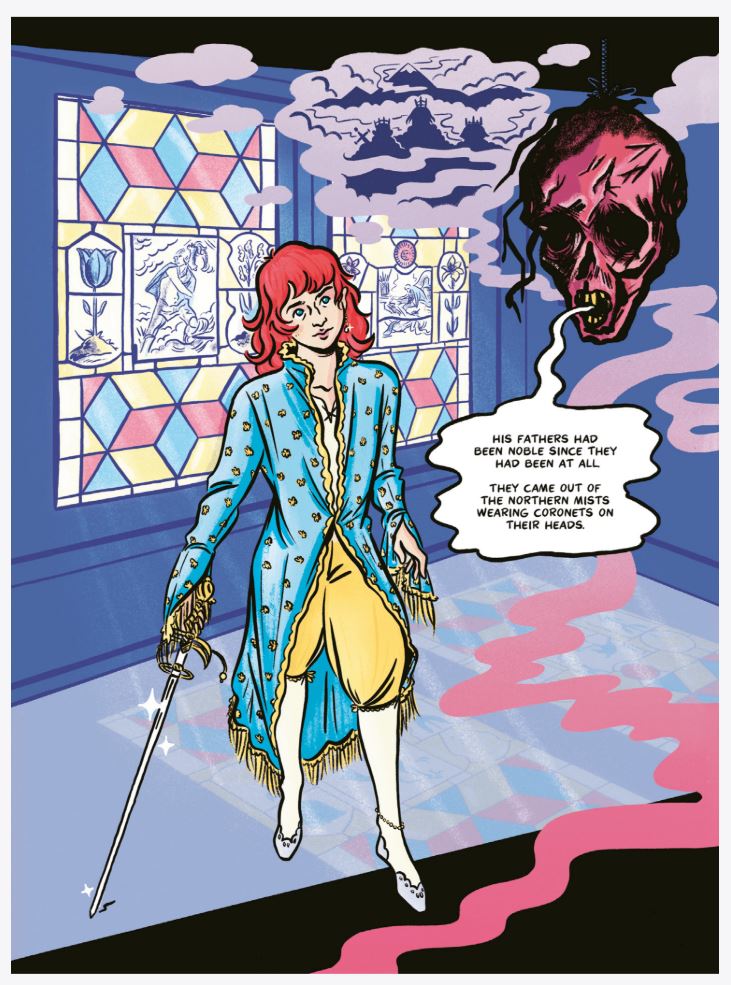
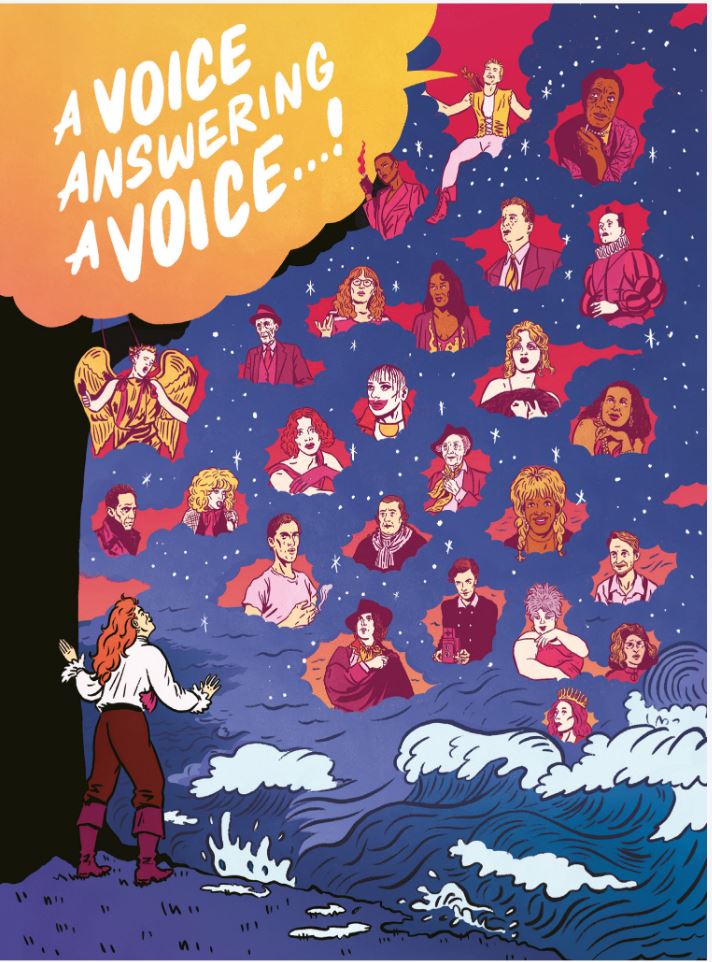
The original novel is smart, wry and a fabulous historical whimsy that has become a rallying point and clarion call for all matters Queer, Trans, and Proud, and here is even further enhanced by the fitting tactic of adding seductive pictures to form a sequential narrative…

The tale is simple yet compelling: a beautiful, young and so-innocent poet who is a contemporary (and eventually favourite) of Queen Elizabeth I does not age or die.

Enduring and surviving perilous royal favour, great wealth and privilege, personal beauty and vast creative gifts, the poet has many adventures – most of them amorous, but also involving espionage intrigues, great disasters and shady services to The Crown undertaken abroad – before settling in the beloved old family seat to spend the majority of time and effort writing a magnificent novel: The Oak Tree.

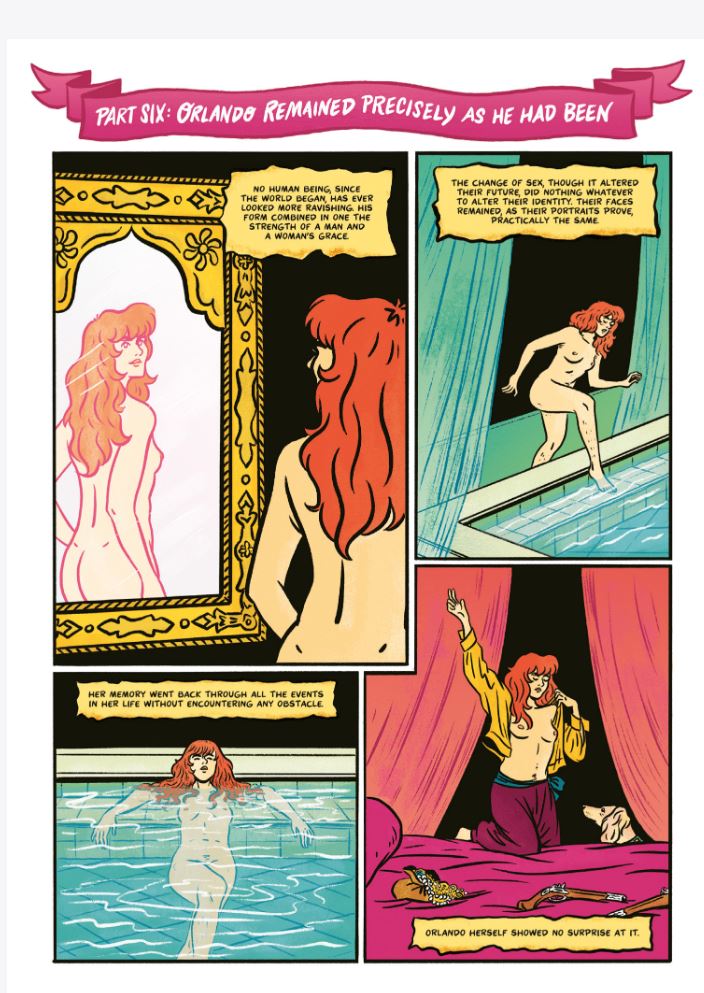
Over decades and centuries Orlando adapts and is transformed by love affairs, courtly adventures, travel and writing. At one point, possibly thanks to the ministrations of a Romani witch (the lore and reputation of “Gypsies” fascinated Vita and Virginia cheekily indulged her in these pages) or simply through benevolent evolution, Orlando becomes an equally enchanting and beguiling woman. She too is left largely untouched by the world – except for its arts and fashions – and continues a life of creative and romantic abundance peppered with affairs and dalliances spiked with memorable personal encounters into an unguessable, primarily creative future…

Preceded by a Dedication culled from Derek Jarman, director of the 1992 film adaptation, Jules Scheele’s necessarily arcanely abbreviated Orlando sidelines the book’s formal presentation for a free-flowing cascade of multi-level images and key incidents broken down into ‘Chapter One: Part One: Orlando as a Boy’ & ‘Part Two: Two Years Later…’; ‘Chapter Two: Part Three: Afflicted with a love of literature’ & ‘Part Four: Vanity Rebuked’; ‘Chapter Three Part Five: Some Kind of Miracle’ & ‘Part Six: Orlando Remained Precisely As He Had Been’; ‘Chapter Four, Part Seven: Life, and a lover’ & ‘Part Eight: The clothes that wear us’ with scenes including days at Court and elsewhere subdivided into ‘Whitehall’, ‘The Court of King James at Greenwich’, ‘The Poet’, ‘The Great Frost’, and ‘Time Passed…’ before the settled days and nights of ‘Life, a lover’ presage a reduction in betrayals and forced exiles as constant war with conformity gives way to creative fruition, personal power and security and the ponderous march of time via ‘Chapter Five, Part Nine: Beyond the shadow of a doubt, Female’ and ‘Chapter Six Part Ten: What, Then, is Life?’ prior to the pausing of passing years in ‘Part Eleven: A Single Self, A Real Self’

Glasgow-based illustrator Jules Scheele’s previous works have been for the educational and voluntary sectors, including the NHS, Scottish Government, UCL, University of Glasgow, LGBT Youth Scotland, Refugee Sanctuary Scotland, Edinburgh Arts Festival and others. His passion projects are fuelled by and stem from queer media, popular culture, and grass roots politics, and were previously seen via and expressed through DIY zine culture. With Dr. Meg-John Barker, Scheele has created numerous non-fiction graphic novels such as Queer: A Graphic History; Gender: A Graphic Guide and Sexuality: A Graphic Guide.
© Jules Scheele, 2026. All rights reserved.

OrlandoA Graphic Novel Biography will be published on June 18th 2026 and is available for pre-order now.

Today in 1934 Lee Falk’s magnificent epitome of wonder and superheroics Mandrake the Magician first appeared.

Today in 1949 British writer and oriental scholar Steve Moore (Rick Random, Laser Eraser & Pressbutton, Hulk, Doctor Who, Absalom Daak, Tales of Telguuth, Warrior, 2000 AD, Fortean Times) was born.

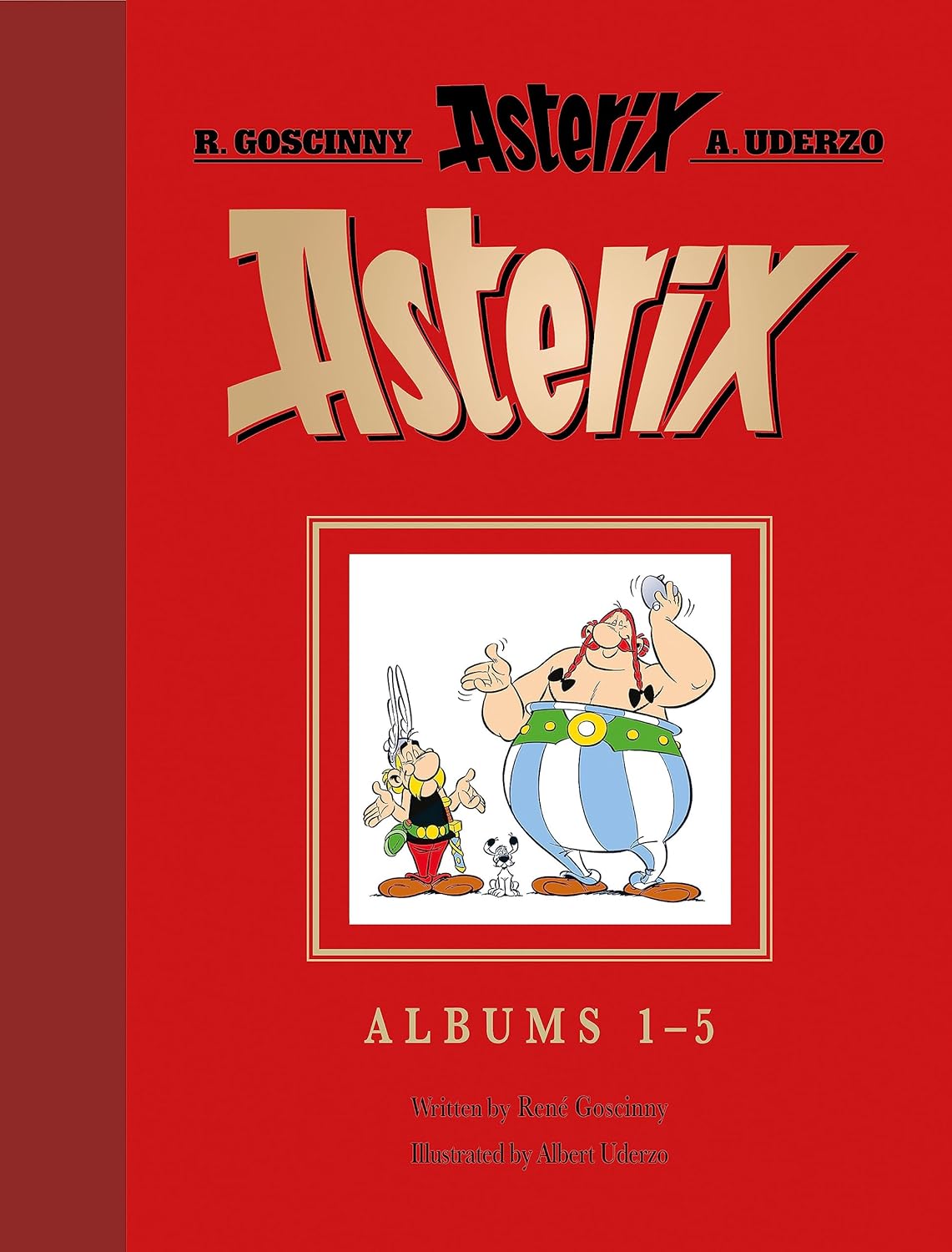
Asterix Gift Edition: Albums 1-5: Asterix the Gaul, Asterix and the Golden Sickle, Asterix and the Goths, Asterix the Gladiator, Asterix and the Banquet


By René Goscinny & Albert Uderzo. translated by Anthea Bell & Derek Hockridge (Sphere)
ISBN: 978-1-40872-831-4 (HB)

This book includes Discriminatory Content produced in less enlightened times. This book includes Discriminatory Content included for comedic effect.

Asterix the Gaul is probably France’s greatest literary export. The feisty, wily little warrior who fought the iniquities and viewed the myriad wonders of Julius Caesar’s Roman Empire with brains, bravery and (whenever necessary) a magical potion imbuing the imbiber with incredible strength, speed and vitality, is the go-to reference all we non-Gallic gallants resort to when we think of France.

The diminutive, doughty, daring darling was created at the close of the 1950s by two of our artform’s greatest masters, with his first official appearance being on October 29th in Pilote #1, even though he had actually debuted in a pre-release teaser – or “pilot” – weeks earlier. On this date in fact. Joyeux anniversaire, mon petit brave!

René Goscinny was arguably the most prolific – and remains one of the most read – writers of comic strips the world has ever known. Born in Paris in 1926, he grew up in Argentina where his father taught mathematics. From an early age René showed artistic promise. He studied fine arts and graduated in 1942. Three years later, while working as junior illustrator at an ad agency, his uncle invited him to stay in America, where he worked as a translator. After National Service in France, he returned to the States and settled in Brooklyn, pursuing an artistic career and becoming, in 1948, an assistant in a small studio which included Harvey Kurtzman, Will Elder, Jack Davis & John Severin, as well as European giants-in-waiting Joseph Gillain (Jijé) and Maurice de Bévère (Morris) with whom from 1955-1977 Goscinny produced 46 volumes of Lucky Luke.

Goscinny also met Georges Troisfontaines, head of World Press Agency, the company that provided comics for Le Journal de Spirou. After contributing scripts to Belles Histoires de l’Oncle Paul and Jerry Spring, Goscinny was promoted to head of World Press’ Paris office. Here he met his ultimate creative collaborator Albert Uderzo. In his spare time (!), René also created Sylvie and Alain et Christine with Martial Durand (“Martial”) and Fanfan et Polo, drawn by Dino Attanasio. In 1955, Goscinny, Uderzo, Charlier & Jean Hébrad formed independent syndicate Édifrance/Édipresse, creating magazines for business and general industry like Clairon for the factory union and Pistolin for a chocolate factory. With Uderzo, René spawned Bill Blanchart, Pistolet and Benjamin et Benjamine, whilst illustrating his own scripts for Le Capitaine Bibobu.

Under nom-de-plume Agostini, he wrote Le Petit Nicholas (drawn by Jean-Jacques Sempé), and in 1956 began an association with revolutionary periodical Le Journal de Tintin, writing for various illustrators including Attanasio (Signor Spagetti); Bob De Moor (Monsieur Tric); Maréchal (Prudence Petitpas); Berck (Strapontin); Globule le Martien and Alphonse with Tibet; as well as Modeste et Pompon for André Franquin, and with Uderzo the fabulously funny adventures of inimitable Indian brave Oumpah-Pah. Goscinny also wrote for magazines Paris-Flirt and Vaillant. In 1959, Édifrance/Édipresse launched Pilote and René went into overdrive. The first issue featured re-launched versions of Le Petit Nicolas, Jehan Pistolet/Jehan Soupolet, original serials Jacquot le Mousse and Tromblon et Bottaclou (drawn by Godard), plus a little something called Astérix le gaulois: incontrovertibly the greatest achievement of his partnership with Uderzo.

When Georges Dargaud bought Pilote in 1960, Goscinny became Editor-in-Chief, still making time to add new series Les Divagations de Monsieur Sait-Tout (with Martial); La Potachologie Illustré (Cabu); Les Dingodossiers (Gotlib) and La Forêt de Chênebeau (Mic Delinx). He also wrote frequently for television, but never stopped creating strips like Les Aventures du Calife Haroun el Poussah (for Record and illustrated by Swedish artist Jean Tabary). A minor success, it was re-tooled as Iznogoud when it transferred to Pilote. Goscinny died far too young, in November 1977.

Alberto Aleandro Uderzo was born on April 25th 1927, in Fismes on the Marne, a child of Italian immigrants. As a boy reading Mickey Mouse in Le Pétit Parisien, he showed artistic flair from an early age. Alberto became a French citizen at age seven and dreamed of being an aircraft mechanic, but at 13 became an apprentice of the Paris Publishing Society, learning design, typography, calligraphy and photo retouching. When WWII came, he spent time with farming relatives in Brittany, joining his father’s furniture-making business. Brittany beguiled Uderzo: when a location for Asterix’s idyllic village was being decided upon, the region was the only choice…

In France’s post-war rebuilding, Uderzo returned to Paris to become a successful illustrator in the country’s burgeoning comics industry. His first published work – a pastiche of Aesop’s Fables – appeared in Junior and, in 1945, he was introduced to industry giant Edmond- Françoise Calvo (The Beast is Dead). Young Uderzo’s subsequent creations included indomitable eccentric Clopinard, Belloy, l’Invulnérable, Prince Rollin and Arys Buck. He illustrated novels, worked in animation, as a journalist, as illustrator for France Dimanche and devised vertical comic strip ‘Le Crime ne Paie pas’ for France-Soir. In 1950, he drew a few episodes of the franchised European version of Fawcett’s Captain Marvel Jr. in Bravo!

Another inveterate traveller, he met Goscinny in 1951. Soon fast friends, they decided to work together at the new Paris office of Belgian Publishing giant World Press. Their first collaboration was in November of that year; a feature piece on savoir vivre (how to live right or “gracious living”) for women’s weekly Bonnes Soirée, after which an avalanche of strips and serials poured forth.

Jehan Pistolet and Luc Junior were devised for La Libre Junior and they produced a comedy Western starring a very Red (but not so American) Indian who evolved into Oumpah-Pah. In 1955, with the birth of Édifrance/Édipresse, Uderzo drew Bill Blanchart for La Libre Junior, replacing Christian Godard on Benjamin et Benjamine before, in 1957 adding Charlier’s Clairette to his bulging portfolio. The following year, he made his Tintin debut, as Oumpah-Pah finally found a home and rapturous audience. Uderzo also drew Poussin et Poussif, La Famille Moutonet and La Famille Cokalane. When Pilote launched in October 1959, Uderzo was its major creative force, limning Charlier’s Tanguy et Laverdure and a comedy historical strip about Romans…

Although Asterix was a massive hit from the start, Uderzo continued with Charlier on Michel Tanguy, (subsequently Les Aventures de Tanguy et Laverdure), but soon after that first comedy history was collected in a single volume as Astérix le gaulois in 1961, it was clear the series would demand most of his time – especially as the incredible Goscinny never seemed to require rest or run out of ideas (after the writer’s death, the publication rate of Asterix tales dropped from two per year to one volume every 3-to-5).

By 1967, Asterix occupied all Uderzo’s time and attention. In 1974 the partners formed Idéfix Studios to fully exploit their inimitable creation, and when Goscinny passed away three years later, Uderzo had to be convinced to continue the adventures as writer and artist. Happily, he gave in and produced a further 10 tomes before retiring in 2009. According to UNESCO’s Index Translationum, Uderzo is the 10th most-often translated French-language author in the world and 3rd most-translated French language comics author – right behind his old mate René and the grand master Hergé.

So what’s it all about?

Like all the best entertainments the premise works on two levels: as action-packed comedic romps of sneaky and bullying baddies coming a-cropper for younger readers and as pun-filled, sly and witty satire for older, wiser heads, transformed here by the brilliantly light touch of master translators Anthea Bell & Derek Hockridge (who played no small part in making the indomitable little Gaul so very palatable to the English tongue).

Originally seen in Pilote #1-38 (29th October 1959 – 4th July 1960, with the first page appearing a week earlier in a promotional issue #0 distributed from June 1st 1959), the story is set in the year 50 BC (never BCE!) on the outermost tip of Uderzo’s beloved Brittany coast. Here a small village of redoubtable warriors and their families frustrate every effort of the immense but not so irresistible Roman Empire to complete the conquest of Gaul.

Unable to defeat these Horatian hold-outs, the Empire resorts to a policy of containment, leaving the little seaside hamlet hemmed in by heavily fortified permanent garrisons – Totorum, Aquarium, Laudanum and Compendium. The Gauls don’t care: they daily defy the world’s greatest military machine by just going about their everyday affairs, protected by a magic potion provided by the resident druid and the shrewd wits of a rather diminutive dynamo and his simplistic best friend…

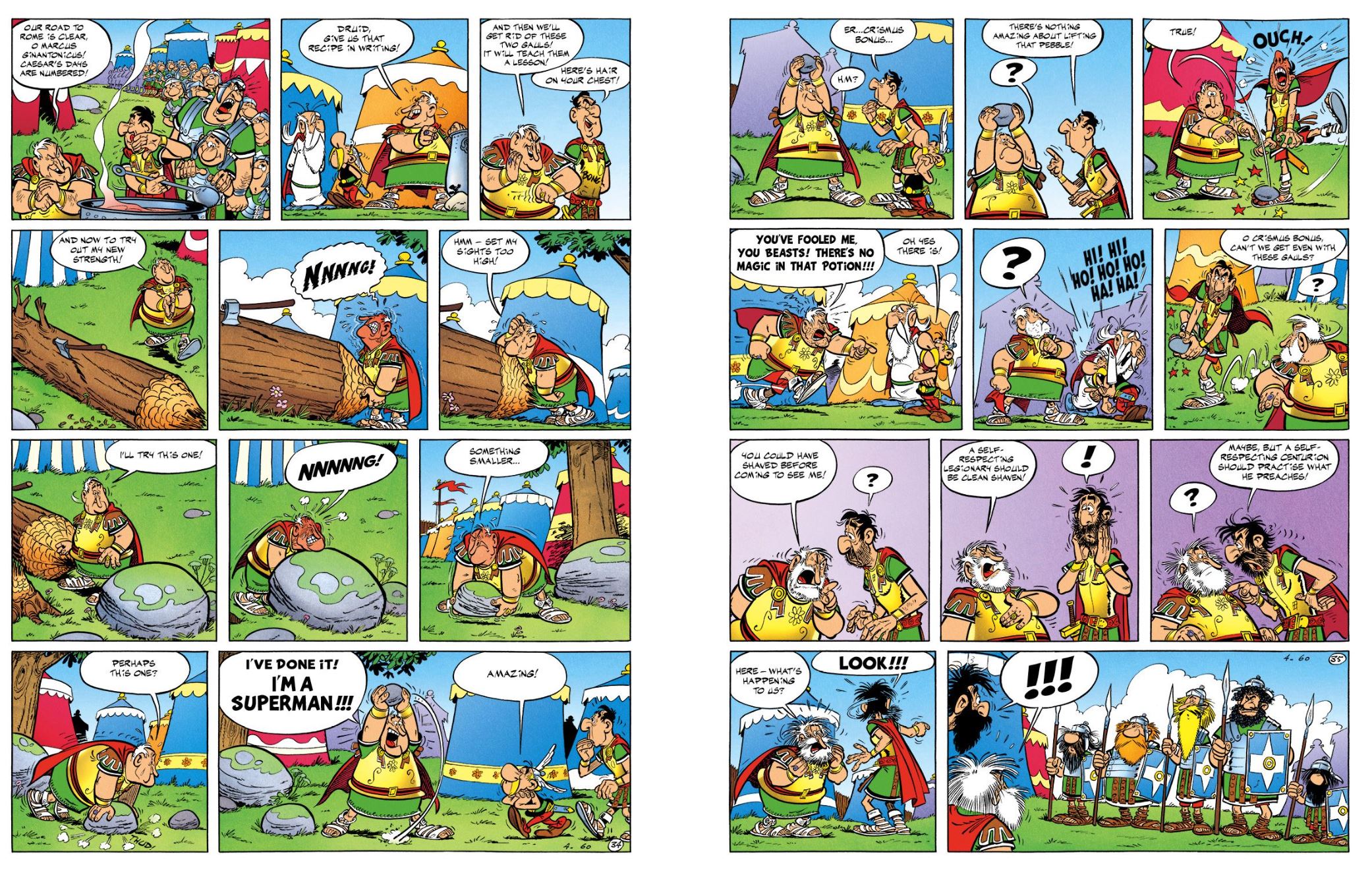
In Asterix the Gaul, this immaculate comedy-drama scenario is hilariously demonstrated when Centurion Crismus Bonus – fed up with his soldiers being casually beaten up by the fiercely free pre-Frenchmen – sends reluctant spy Caligula Minus to ferret out the secret of their incredible strength. The affable insurgents take the infiltrator in and, soon dosed up with potion, the perfidious Roman escapes with the answer – if not the formula itself…

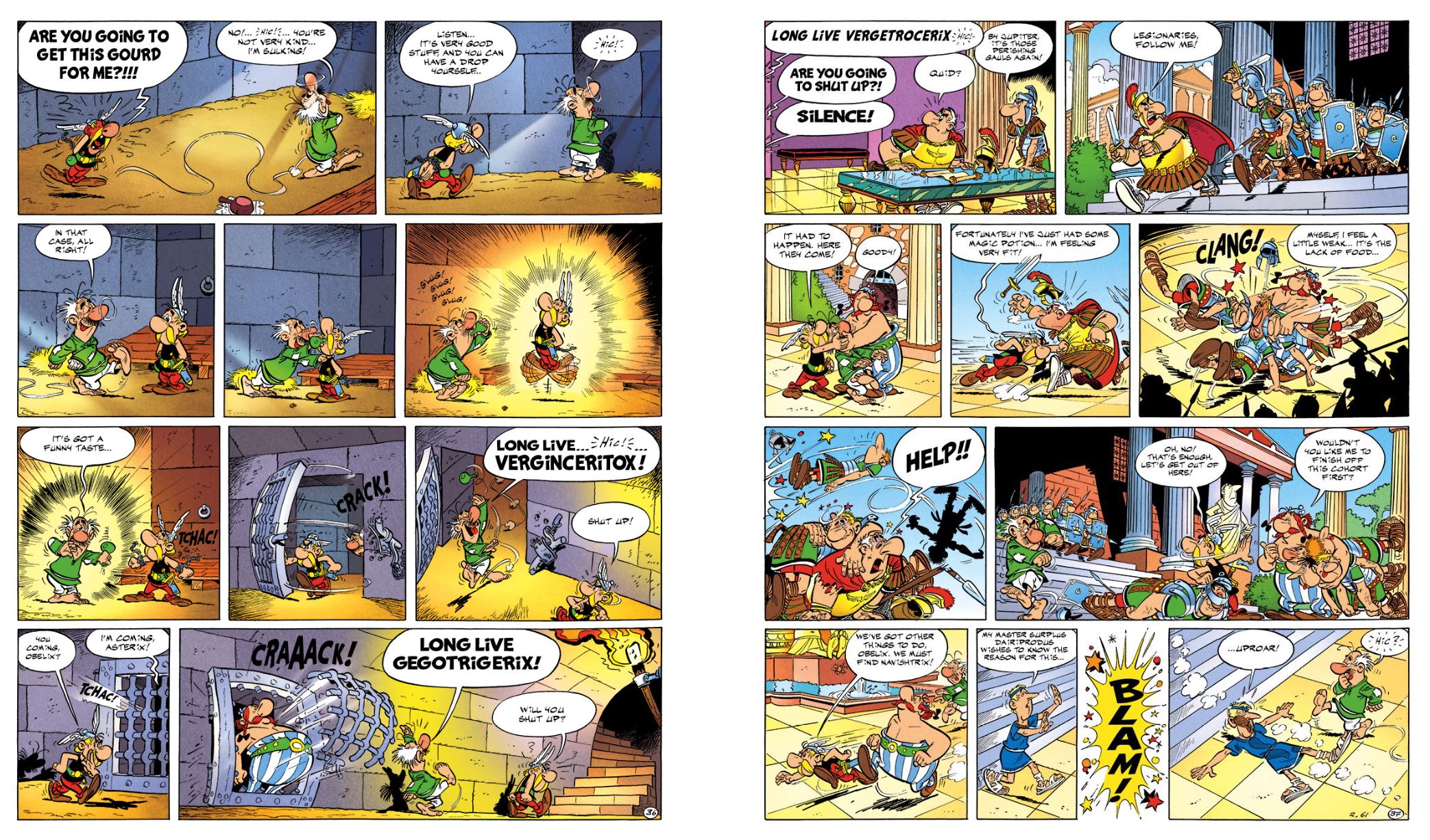
Soon after, wise, wily Druid Getafix is captured by the invaders and the village seems doomed, but crafty Asterix is on the case. Breaking into Compendium and resolved to teach the Romans a lesson, he drives them crazy for ages by resisting all efforts at bribery and coercion, until abruptly wizard and warrior seemingly capitulate. They make the Romans a magic potion – but not the one the rapacious oppressors were hoping for…

Although comparatively raw and unpolished, the good-natured, adventurous humour and sheer energy of the yarn barrels along, delivering barrages of puns, oodles of insane situations and loads of low-trauma slapstick action, all marvellously rendered in Uderzo’s seductively stylish bigfoot art-style. From the second saga on, the unique and expanding cast would encroach on events, especially the unique and expanded, show-stealing sidekick Obelix – who had fallen into a vat of potion as a baby – and became a genial, permanently superhuman, eternally hungry foil to our little wise guy…

Asterix and the Golden Sickle originally unfolded in Pilote #42-74, recounting disastrous consequences after Getafix loses his ceremonial precious metal blade just as the grand Annual Conference of Gaulish Druids is beginning. Since time is passing and no ordinary replacement will suffice to cut ingredients for magic potion, Asterix offers to go all the way to Lutetia (you can call it Paris if you want) to find another one.

Since Obelix has a cousin there – Metallurgix the Smith – he volunteers for the trip too and the punning pair are swiftly away, barely stopping to teach assorted bandits the errors of their pilfering ways, but still finding a little time to visit many roadside inns and taverns serving traditional roast boar. There is concurrently a crisis in Lutetia: a mysterious gang is stealing all the Golden Sickles and forcing prices up. The Druid community is deeply distressed and, more worrying still, master sickle-maker Metallurgix has gone missing too. When Asterix and Obelix investigate the dastardly doings in their own bombastic manner they discover a nefarious plot that seems to go all the way to the office of the local Roman Prefect…

The early creative experiment was quickly crystallizing into a supremely winning format of ongoing weekly episodes slowly building into complete readily divisible adventures. The next epic cemented the strip’s status as a popular icon of Gallic excellence.

Asterix and the Goths ran from 1962-1963 and followed a dangling plot-thread of the Druid Conference as Getafix, brand new sickle in hand, sets off for the Forest of the Carnutes to compete. However, on Gaul’s Eastern border savage Goths – fierce barbarians who remain unconquered despite the might of the Empire – have crossed into pacified Roman territory. These hairy louts are intent on capturing the mightiest Druid and turning his magic against the rule of Julius Caesar

Although non-Druids aren’t barred from the forest, Asterix & Obelix had accompanied Getafix to its edge, and as the Conference competition round ends in victory for him and his power-potion, the Goths strike, abducting the old boy in his moment of triumph. Alerted by fellow Druid Prefix, our heroic duo track the kidnappers, but are mistaken for Visigoths by Roman patrols, allowing the Goths to cross the border into Germania. Although Romans are no threat, they can be a time-wasting hindrance, so Asterix & Obelix disguise themselves as Romans to invade the Barbarian lands…

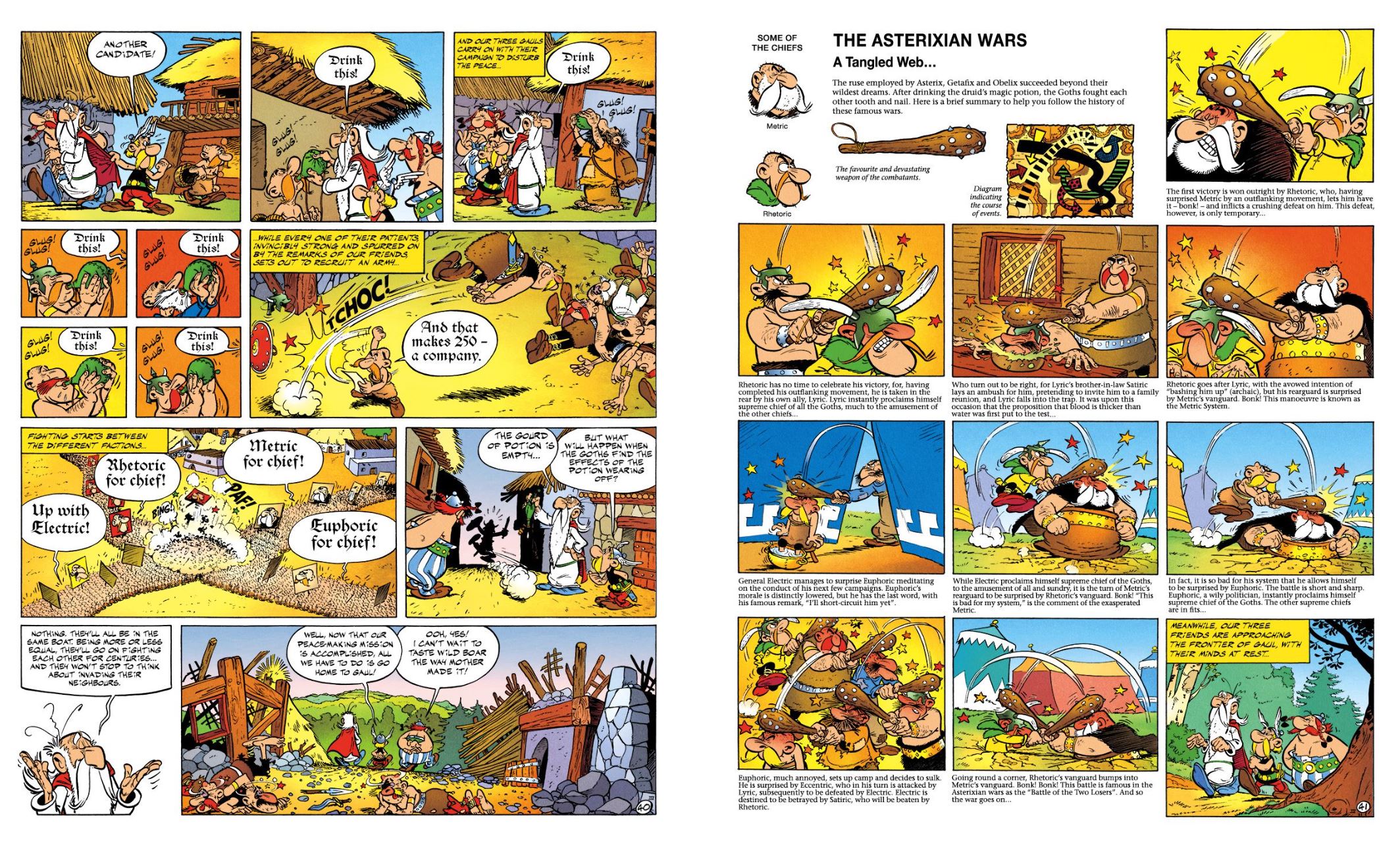
By now well-used to being held prisoner, Getafix is making himself a real nuisance to his bellicose captors and a genuine threat to the wellbeing of his long-suffering Goth-appointed translator. Thus when Asterix & Obelix are captured dressed as Goths, they concoct a cunning plan to end the ever-present threat of Gothic invasion – a scheme that continues successfully for almost two thousand years…

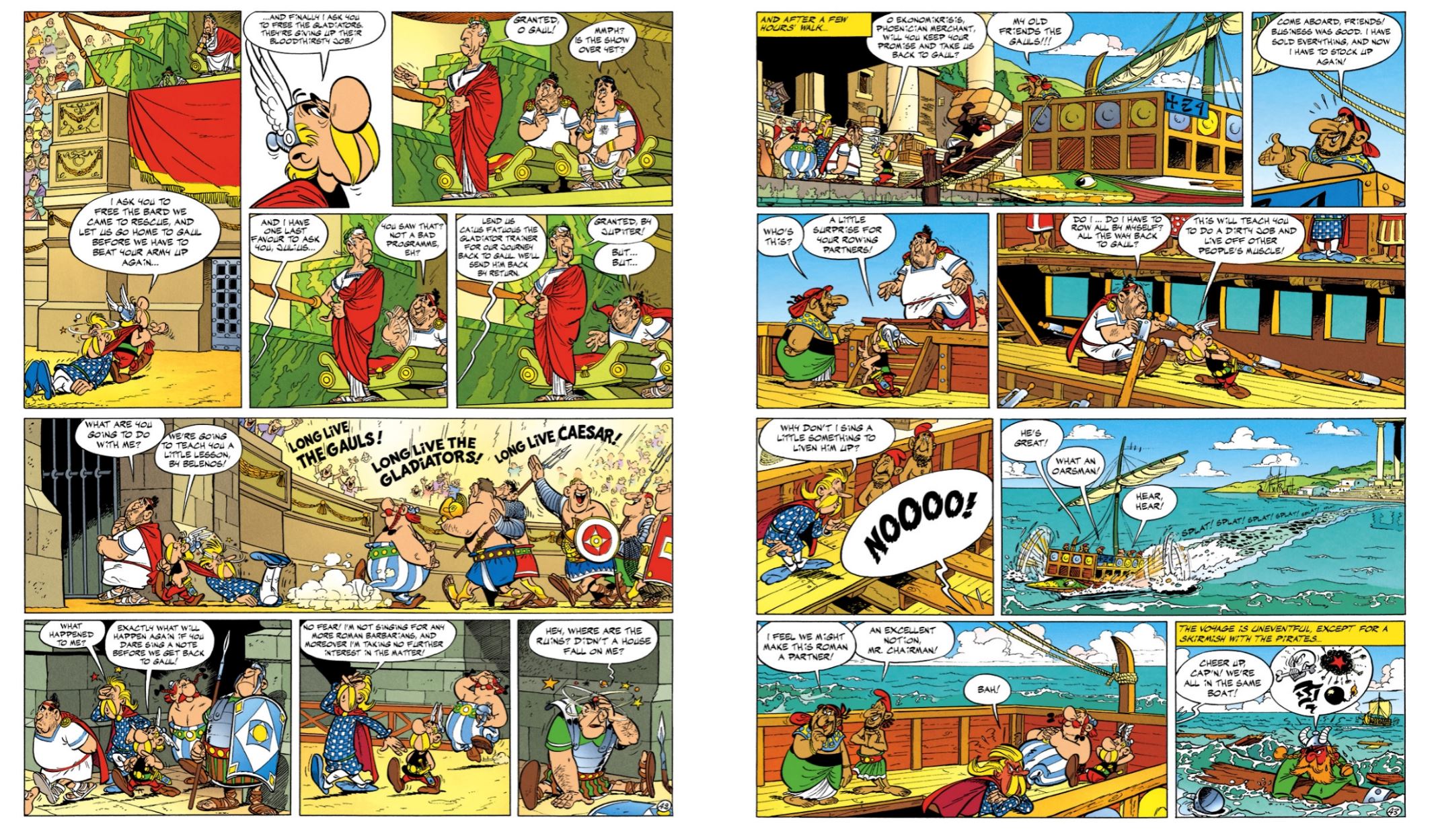
Asterix the Gladiator ran across Pilote #126 to 168 (1963) with the canny rebel and increasingly show-stealing pal despatched to the heart of the Roman Empire on an ill-conceived mission of mercy. When Prefect Odius Asparagus seeks to give Julius Caesar a unique gift, he decides upon one of the indomitable Gauls giving his occupying forces such a hard time. Thus, he has village Bard Cacofonix abducted and bundled off to Rome. Although in two minds about losing the raucous harpist, pride wins out and the villagers mount a rescue attempt, but after thrashing the Romans again they discover that their lost comrade is already en route for the Eternal City…

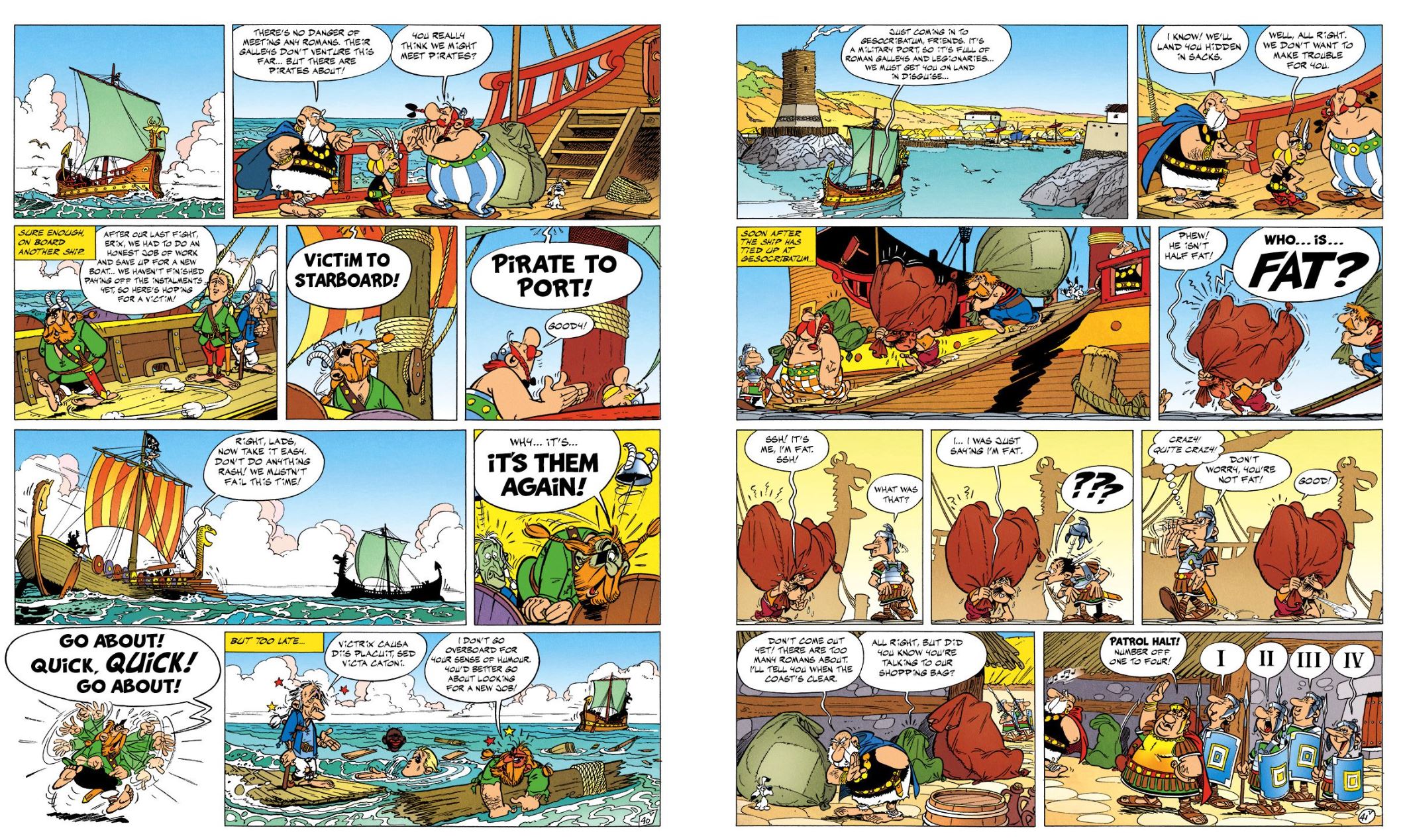
Assigned to retrieve the missing musician, Asterix & Obelix hitch a ride on a Phoenician galley operated under a bold new business plan by captain/general manager Ekonomikrisis. On the way to Italy the boys first encounter a band of pirates who would become frequent guest-stars and perennial gadflies. The pirates were a creative in-joke between the close-knit comics community: Barbe-Rouge/Redbeard was a buccaneering strip created by Charlier & Victor Hubinon also appearing in Pilote at the time.

As Asterix & Obelix make friends among the cosmopolitan Roman crowds, Caesar has already received his latest present. Underwhelmed by his new Bard, the Emperor re-gifts Cacofonix to the Circus Maximus, to be thrown to the lions just as his chief of Gladiators Caius Fatuous is “talent-spotting” two incredibly tough strangers who would make ideal arena fighters…

Since it’s the best way to get to Cacofonix, our heroes join the Imperial Gladiatorial school; promptly introducing a little Gallic intransigence to the tightly disciplined proceedings. When the great day arrives, the lions get the shock of their lives and the entertainment-starved citizens of Rome experience a show they will never forget…

As always, the good-natured, comedic situations and sheer finesse of the yarn rattles along, delivering barrages of puns, oodles of insane situations and loads of low-trauma slapstick action, marvellously rendered in Uderzo’s expansive, authentic and continually improving big-foot art-style.

Asterix and the Banquet comes from Pilote #172-213 (also 1963), inspired by the Tour de France cycle race. After being continually humiliated by the intractable Gauls coming and going as they please, Roman Inspector General Overanxius instigates a policy of exclusion, building a colossal wall around the little village, determined to shut them off from their country and the world. Modern world leaders might get a clue from this book, here – if they read books. Even books with pictures…

Incensed, Asterix bets the smug Prefect that Gauls can go as and wherever they please and to prove it invites the Romans to a magnificent feast where they can sample fresh culinary delights from various regions. Breaking out of the stockade and through the barricades, A & O gather produce from as far afield as Rotomagus (Rouen); Lutetia (Paris, where they also picked up a determined little mutt who would eventually become a star cast-member); Camaracum (Cambrai) and Durocortorum (Rheims), whilst easily evading or overcoming the assembled patrols and legions of man-hunting soldiers. However, the heroes don’t reckon on the corrupting power of the huge – and growing – bounty on their heads and some Gauls are apparently more greedy than patriotic…

Even with Asterix held captive and all the might of the Empire ranged against them, Gaulish honour is upheld and Overanxius, after some spectacular fights, chases and close calls, is made to eat his words (and a few choice Gallic morsels) in this delightful, bombastic and exceedingly clever celebration of pride and whimsy.

Astérix is one of the most popular comics in the world, translated into 111 languages, with a host of animated and live-action movies, games and even his own theme park (Parc Astérix, near Paris). Approaching 400 million copies of 41 Asterix books and spin-off volumes have been sold worldwide, making Goscinny & Uderzo France’s bestselling international authors. This is sublime, supremely enjoyable comics storytelling and you’d be as Crazy as the Romans not to increase those statistics by finally getting around to acquiring your own copies of this fabulous, frolicsome French Folly. This collection is a great way to enjoy that legacy of legends but be aware that – weighing over a kilo – you might want to top up on magic potion before picking it up…
© 1961-1965 Goscinny/Uderzo. Revised English translation © 2004 Hachette. All rights reserved.

Today in 1907, Disney animator/Gold Key artist & scripter George Waiss (Uncle Scrooge, Donald Duck, Junior Woodchucks, Looney Tunes, Porky Pig) was born, followed in 1919 by Argentinean Golden Age artist Arturo Cazeneuve (Seven Soldiers of Victory, Newsboy Legion, Blue Beetle).

Despite ushering in the age of Immortal Asterix this day in 1959, we lost cartoonist/writer/artist and creator of Millie the Model Ruth Atkinson in 1997 and pioneering strip cartoonist Martha B.MartyLinks (Emmy Lou, Bobby Sox) in 2008.

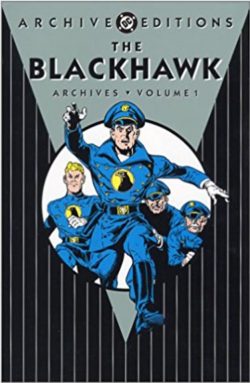
Blackhawk Archives volume 1


By Will Eisner, Dick French, William Woolfolk, Bob Powell, Chuck Cuidera, Reed Crandall & various (DC Comics)
ISBN: 978-1-56389-700-9 (HB)

This book includes Discriminatory Content produced in less enlightened times.

The early days of the US comic book industry were awash with both opportunity and talent, and these factors beneficially coincided with a vast population craving cheap entertainment. Comics had practically no fans or collectors; only a large marketplace open to all varied aspects of yarn-spinning and tale-telling. Thus, even though America loudly proclaimed its isolationism and remained more than six months away from active inclusion in World War II, creators like Will Eisner and publishers like Everett M. (known to all as “Busy”) Arnold felt Americans were ready for a themed anthology title such as Military Comics.

They were right; but Nobody was ready for Blackhawk.

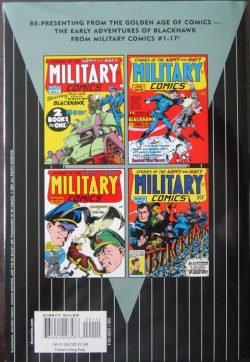
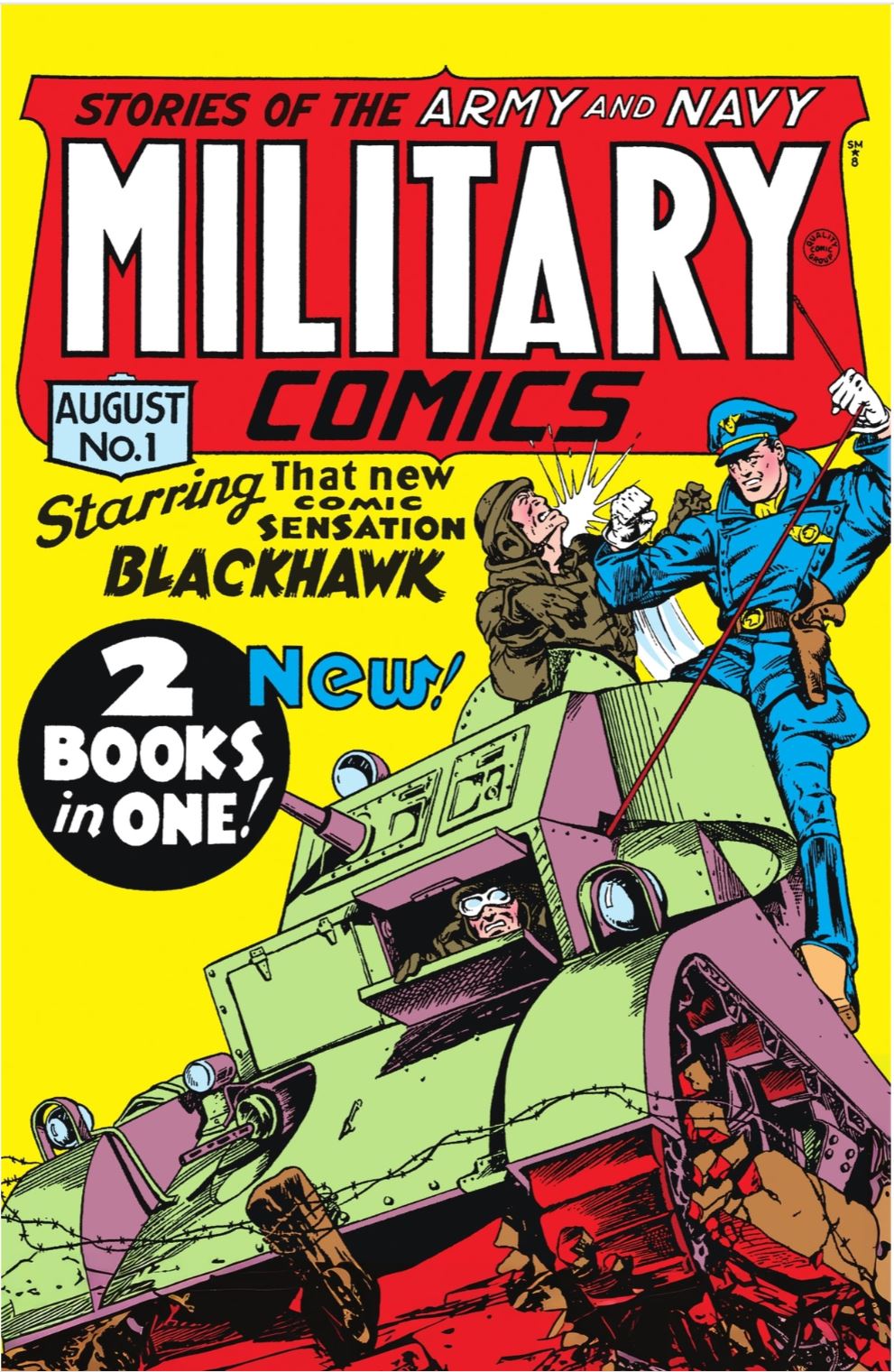
Military Comics #1 launched on May 30th 1941 (with an August off-sale/ cover-date) and included in its gritty, two-fisted line-up Death Patrol by Jack Cole; Elmer Wexler’s Miss America; Fred Guardineer’s Blue Tracer; X of the Underground; John Stewart & Bill Smith’s Yankee Eagle; Q-Boat; Klaus Nordling’s Shot and Shell; Archie Atkins and Loops and Banks by “Bud Ernest” (in actuality, aviation-nut and unsung comics genius Bob Powell), but none of the strips, not even Cole’s surreal and suicidal team of hell-bent fliers, had the instant cachet and sheer appeal of Chuck Cuidera, Eisner & Powell’s “Foreign Legion of the Air” led by a charismatic Dark Knight known only as Blackhawk.

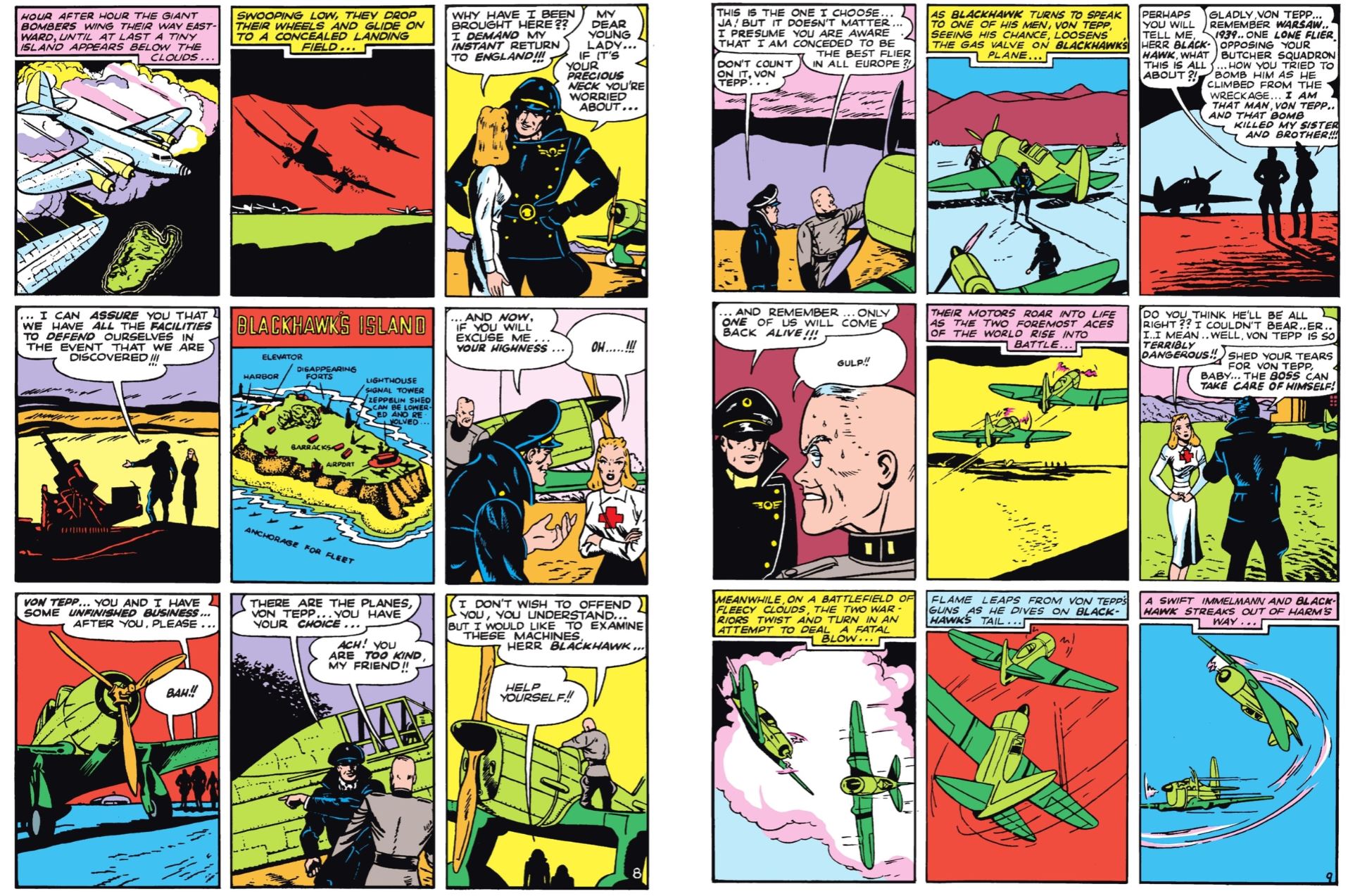
Cuidera – already famed for co-creating The Blue Beetle for Fox Publications – drew ‘The Origin of Blackhawk’ for the premiere issue, wherein a lone, magnificently skilled pilot fighting the Nazi invasion of Poland in 1939 is finally shot down by Nazi Ace Von Tepp. That sadistic killer then goes on to bomb a farmhouse sheltering the defeated pilot’s family. Rising from his plane’s wreckage, the distraught aviator vows vengeance…

Two years later, with the Nazis in control of most of Europe, Von Tepp’s unassailable position is threatened by a mysterious paramilitary squadron of unbeatable fliers, dedicated to crushing injustice and smashing the Axis war-machine…

Eisner wrote the first four Blackhawk episodes and Cuidera stayed aboard until issue #11 – although the artist would return in later years. Many of the stories were originally untitled but have been conveniently characterized with such stirring designations as issue #2’s ‘The Coward Dies Twice’, wherein the squadron – “the last free men of the conquered countries” – offer a deserter from a Spitfire Flight a chance to redeem himself. The easy mix of patriotism, adventure and slapstick was magnified by the inclusion of Chop-Chop in ‘The Doomed Squadron’: a comedy Chinaman extremely painful to see through modern eyes, but a stock type considered nearly as mandatory as a heroic leading man in those dark days… and sadly not just in comics, either…

Its scant comfort but at least this Asian man is a brave and formidable fighter both on the ground and in a plane… when not being used for cheap laughs…

‘Desert Death’ takes the team to Suez – for the first of many memorable Arabian adventures – as Nazi agitators attempt to foment revolution among the tribesmen in hopes that they will rise up and destroy the British. This tale is also notable for the introduction of a species of sexy siren beloved of Eisner and Quality Comics. She or similar seductresses of her ilk would populate the strip until DC bought the property in 1957. Also included here is also a secret map of Blackhawk Island, mysterious base of the ebon-clad freedom fighters.

With issue #5 Dick French assumed the writing role. ‘Scavengers of Doom’ is a biting tale of battlefield looters allied to a Nazi mastermind, united to set an inescapable trap for the heroic fliers. More importantly, French began providing distinct and discrete characters for the previously anonymous minor players. In MC #6 the rapidly gelling team joins a frantic hunt for a germ weapon the Gestapo are desperate to possess, resulting in spectacular alpine incident ‘The Vial of Death’, after which #7 (the first issue released after the US entered World War II although the stories had not yet caught up to reality) lands the lads on the Mongolian Steppe ranging on horseback to thwart ‘The Return of Genghis Khan’

The saga in #8 was a striking maritime romp wherein the warring powers battle to occupy an island freshly risen from the Atlantic depths. The newborn landmass is strategically equidistant between the USA, Britain and Festung Europa (that’s what the Nazis called the enslaved stronghold they had made of mainland Europe), and no opponent or even ally can be trusted with control of ‘The Sunken Island of Death’.

Although complete in itself, the yarn is also the first of an experimental, thematic 3-part saga that stretched the way comics stories were told. Things changed rapidly back then, and many marvellously melodramatic touches to make the Blackhawks so memorable in the eyes of a wide-eyed populace of thrill-hungry kids were trialled. There was the cool, black leather uniforms and creepy peaked caps. The unique – yet real – Grumman F5F-1 Skyrocket planes they flew from their secret island base and their eerie battle-cry “Hawkaaaaa!” but perhaps the oddest idiosyncrasy to modern readers was that they had their own song which André, Stanislaus, Olaf, Chuck, Hendrickson & Chop-Chop would sing as they plunged into battle. … And just to be informative and inclusive, the sheet-music and lyrics were published in this issue and are re-presented here. Just remember this is written for seven really tough guys to sing while dodging bullets and weaving between bursts of flak…

Military #9 led with ‘The Man in the Iron Mask’ as the unflappable team discover that a fallen comrade did not actually die in combat, but was hideously disfigured saving them, and is back and seeking redress, whilst the next issue’s tale – ‘Trapped in the Devil’s Oven’ – is another desert adventure focusing on the still primitive science of plastic surgery to restore said hero to full fighting trim.

MC #11 – Cuidera’s last on Blackhawk for some time – saw the squadron turn their attention to Japan, as reality at last caught up with publishing schedules. Intriguingly, ‘Fury in the Philippines’ starts quietly with the entire team calmly discussing carrying on against the Nazis or switching their attentions to the Pacific Theatre of Operations, until comedy relief Chop-Chop sways the debaters with an impassioned stand. Though inarguably an offensive stereotype visually, the Chinese warrior was often given the best lines and most memorable actions. A sneakily subversive attempt on the part of the creators (frequently from immigrant backgrounds and ethnic origins) to shake up those hide-bound societal prejudices, perhaps?

Notwithstanding, the resultant mission against the Japanese fleet is a cataclysmic Battle Royale, full of the kind of vicarious payback that demoralized Americans needed to see following Pearl Harbor…

‘The Curse of Xanukhara’ added fantasy elements to the gritty mix of blood & iron as the group’s hunt for a stolen codebook leads them to occupied Borneo and eventually the heart of Tokyo; a classy espionage thriller marking the start of a superlative run of thrillers illustrated by the incredible Reed Crandall. The artist’s realistic line and the graceful poise of his work, especially on exotic femmes fatale and trustworthy girls-next-door, made his pages absolute joys to behold. ‘Blackhawk vs. The Butcher’ (Military #13, November 1942) was written by new regular scripter Bill Woolfolk and returned the Blackhawks to Nazi territory as a fleeing Countess turns their attention to the most sadistic Gauleiter (Nazi regional leader in charge of a conquered territory) in the German Army.

What follows is a spectacular saga of justice and righteous vengeance, whilst ‘Tondeleyo’ reveals a different kind of thriller as an exotic siren uses her almost unholy allure to turn the entire team against each other. Such quasi-supernatural overtones held firm in the stirring ‘Men Who Never Came Back’ – when the team travel to India to foil a Japanese plot – in a portmanteau report narrated by three witches. Trouble, Terror and Mystery were eerily presaging the EC horror classics that would cement Crandall’s artistic reputation more than a decade later…

‘Blackhawk vs. the Fox’ pits the flight of heroes against a Nazi strategic wizard (a clear reference to the epic victories of Erwin Rommel) in the burning sands of Libya, and remains one of the most authentic battle yarns in the canon; and precedes this sublime hardback volume’s concluding sortie: a racy tale of vengeance and tragedy wherein Japanese traitor Yoshi uses her wiles to punish the military government of Nippon, with Blackhawk as her unwitting tool in ‘The Golden Bell of Soong-Toy!’

These stories were produced at a pivotal moment in both comics and world history, delivering the blend of weary sophistication and glorious, juvenile bravado that comprised the best movies of the time: Casablanca, Foreign Correspondent, Freedom Radio, Captain of the Clouds, The Day Will Dawn, The First of the Few, In Which We Serve and all the rest. That understated, overblown way of accepting duty and loss permeates these primal, rousing Blackhawks tales, confirming the miracles good men can do when needed; and are some of the Golden Age’s finest moments. In fact, these are some of the best comics stories of their time and I sincerely wish DC had proceeded with further collections, or will resume and complete their comics casebooks for the benefit of us all…

Hunt this down and so will you.
© 1941-1942, 2001 DC Comics. All Rights Reserved.

Today in 1916 unsung genius of line and mood Mort Meskin (Sheena, Queen of the Jungle, Vigilante, Wildcat, Starman, Johnny Quick, Black Terror, Boy’s Ranch, Captain 3-D, Golden Lad, Mark Merlin) was born, as was Italian artist Roberto Raviola AKA Magnus (Kriminal, Alan Ford) in 1939, US writers Mike W. Barr (Maze Agency, Batman, Camelot 3000, Star Trek) in 1952, Alan Brennert (Batman, Brave and the Bold, Batman: Holy Terror) in 1954 and Kevin Eastman (Teenage Mutant Ninja Turtles) in 1962.

On this date in 1993 we lost Little Lulu cartoonist “Marge” (Marjorie Henderson Buell) and in 1999, prolific comics scripter Paul S. Newman (Turok, Dr. Solar, Man of the Atom, Lone Ranger).

Today in 1985 Osamu Tezuka completed his landmark award-winning manga Adorufu ni Tsugu (Message to Adolf).

DC Finest: Superman – Time and Time Again


By Dan Jurgens, Jerry Ordway, Roger Stern, James D. Hudnall, Dave Hoover, Curt Swan, Bob McLeod, Kerry Gammill, Tom Grummett, Ed Hannigan, John Byrne, Brett Breeding, Dennis Janke, Art Thibert, Scott Hanna, José Marzan, Willie Blyberg & various (DC Comics)
ISBN: 978-1-79950-810-6 (TPB)

This book includes Discriminatory Content produced in less enlightened times.

In 1986, after almost 50 years, Superman was re-imagined after Crisis on Infinite Earths. Although controversial at the start, John Byrne’s reboot of the world’s first superhero was rapidly acknowledged as a solid hit and the collaborative teams who complemented and followed him maintained the high quality, ensuring continued success. Over following years a vast, interlocking saga unfolded across a spread of titles which has only sporadically – and far too infrequently – been collected into graphic compilations.

As part of the refit, many of his more miraculous abilities were discarded. Just like his earliest days, Superman was a far from omnipotent hero, more in touch with humanity because he wasn’t so very far above it. One thing that was abandoned was his casual ability to travel through time, and that was spectacularly addressed in a sequence of tales inside the greater unfolding story contained in this collection re-presenting the “Never-Ending Battle”. This time-twisting selection collectively transpires via cover-dates November 1990 through June 1991, gathering key intra-title storylines plus a couple of choice stand-alone solo stories from Action Comics #659-666, Adventures of Superman #472-479 and Superman #49-56, and a crossover component from Starman (volume 1 #28).

No sooner had the Byrne restart stripped away most of the accreted mythology and iconography that had grown around the Strange Visitor from Another World over five glorious decades, than successive teams employed a great deal of time and ingenuity putting much of it back, albeit in terms more accessible and agreeable to a cynical, well-informed audience far more sophisticated than their grandparents ever were.

One such was a notional tip of the hat to so many memorably madcap tales revolving around both an irritating 5th Dimensional Imp and the bizarrely mutagenic mineral from Krypton which peppered and perplexed the Silver Age Superman’s life. However, the story arc here also advanced two overarching plot threads that grew from the soap opera styled stories: the imminent demise of Lex Luthor due to self-inflicted Green K poisoning and a blossoming romance between Clark Kent and dynamic fellow journalist and friendly rival Lois Lane.

The compartmented saga opened in Superman volume 2, #49 with ‘Krisis of the Krimson Kryptonite: Part One’ by Jerry Ordway & Dennis Janke, wherein Luthor, following the death of his only “ blood heir” (Perry White Jr.), ponders mortality in a cemetery until a talking red rock bops him on the back of his big, bald head. The incensed billionaire quickly stifles his outrage as the scarlet stone resolves into cruelly devious trickster-sprite Mr. Mxyzptlk. Despite being currently preoccupied with another realm, the malign mischief-maker sees a chance to manufacture more mayhem in Metropolis with the “Red Kryptonite” he has magicked up, and promises Lex it will make Man of Steel and mortal multi-billionaire “physical equals”…

Lex activates the rock expecting to gain the powers of a god – and just possibly a new lease on his rapidly expiring life – and is furious to realise he is still just human. However, across town Superman, having defeated bionic bandit Barrage, is transporting the supervillain to metahuman penitentiary Stryker’s Island when his powers vanish and he plunges into vilely polluted Hobs Bay.

Luthor cries foul and is again visited by Mxyzptlk who pettishly teleports the drowning Action Ace to Lex’s penthouse office where the evil industrialist can see what the spell has actually wrought. After a brutal and strictly human-scaled tussle, a badly beaten, powerless Superman is ejected from Luthor’s HQ and staggers back to Kent’s home where he finds Lois waiting. The normally resolute reporter is badly shaken: Lois’ mother is dying from an apparently fatal illness and Luthor is somehow responsible…

In Adventures of Superman #472, Dan Jurgens & Art Thibert’s ‘Clark Kent… Man of Steel!’ picks up the pace with our simply human hero about to be slaughtered by lethal lummox Mammoth. Kal-El is undergoing tests into the cause of his malady conducted by scientific advisor/confidante Emil Hamilton, but when news of the giant thief’s robbery spree reaches him Superman dashes off to assist, equipped only with a hastily configured force field belt. It’s not nearly enough. In the end wits, raw nerve and a simple bluff save the day, but with no solution in sight the Metropolis Marvel must admit he needs superhuman assistance if he is to survive, but at least on the domestic front his new fragility brings him closer to Lois…

With Roger Stern, Dave Hoover & Scott Hanna in creative mode, the scene switches to Arizona where a recent acquaintance gets a phone call before ‘Krisis of the Krimson Kryptonite: Part Two/A: The End of a Legend?’ (Starman vol. 1 #28) sees Stellar Sentinel Will Payton flying to Metropolis for a top secret rendezvous. A sun in human form, Payton had re-energised the Kryptonian’s cells with solar power once before when Superman’s powers were drained, but this time the sun-bath has no effect and almost fries desperate Kal-El during the process. With crime spiking, Starman sticks around to keep the peace, using his shapeshifting powers to perfectly mimic the Man of Steel. He fools Luthor who, confronted by the somehow resurgent “Superman”, furiously throws the useless Red K at him…

With the mineral in Hamilton’s hands, stringent testing proves it is only red rock with no radioactive properties and Superman must think outside the box if he is to protect his city.

… And on Stryker’s Island, another old enemy is laying lethal plans to finally end the Man of Tomorrow…

Tension mounts in ‘Breakout!’ (Action Comics #659, Stern, Bob McLeod & Brett Breeding) as Superman resorts to high-tech battle armour when murderous science-maniac Thaddeus Killgrave frees the inmates and seizes control of Stryker’s, luring Starman-as-Superman into a deadly trap the neophyte hero cannot escape from. Meanwhile, in the highest corridors of financial power, Mxyzptlk personally briefs bewildered Luthor on what’s going on…

Brave but not stupid, Superman calls in back-up for his raid on the penitentiary. Whilst cloned champion Golden Guardian and street vigilante Crimebuster handle rank-&-file felons, the armoured Action Ace heads straight for Killgrave and a blistering confrontation which is only prelude to climactic concluding chapter ‘The Human Factor’.

Superman vol. 2, #50 was a giant special by Ordway & Janke with celebratory anniversary contributions from Byrne, Curt Swan, Kerry Gammill, Breeding & Jurgens, and opens with Clark unceremoniously ejected from Lexcorp Tower, only to stumble upon the billionaire’s personal physician Dr. Gretchen Kelly acting oddly…

Heading home, the powerless hero is saved from a mutant rat by Guardian and, after seeing Crimebuster thrashing street thugs, comes to a painful conclusion. Maybe Superman isn’t necessary any more. Maybe now he can have his own life and even ask Lois to marry him…

First though, there’s a unfinished business and a simple phone call to Luthor gets that ball rolling. Offering to trade the Red K for a story, Clark inadvertently causes Lex to break the terms of his pact with Mxyzptlk, thereby negating the whole power-sapping deal.

Ticked off, petulant and impatient to get back to mischief-making in another universe, the imp makes a personal appearance in monstrous form, but loads the battle in the fully restored Action Ace’s favour just to get out of his self-imposed arcane contract quickly… but not without an astounding amount of collateral damage to Metropolis…

With the crisis over, however, Superman has made a life changing decision. Following the red-tinged resumption of his super status, the Action Ace is joined by a brace of green guest stars in ‘Rings of Fire’ (Jurgens & Thibert in AoS #473). Even as Clark & Lois announce their engagement, Superman is fretting. Unable to tell his intended of his secret life, he is quickly distracted and drawn away when unconventional Green Lantern Guy Gardner hits town looking for missing mentor Hal Jordan. Earth’s “real GL” has been captured by a monolithic alien who has stolen his emerald energies to power a long-delayed return to the distant stars. Of course, implementing that departure will eradicate half of Wyoming…

Thwarting the scheme, freeing a mesmerised Army General and defeating the alien’s thralls Psi-phon & Dreadnaught, Superman and the GLs then craft a far less destructive solution for all parties involved…

In Action Comics #660, Stern, McLeod & Breeding detail the ‘Certain Death’ that ushers in the end of an era. For years Luthor has masqueraded as a billionaire philanthropist whilst dominating Metropolis, the world and the criminal Underworld. Few knew the unsavoury truth and the cunning villain kept Superman literally at arms-length by wearing a ring made from Green Kryptonite.

Previous and subsequent stories revealed Green K radiation had gradually poisoned Luthor, initially causing the loss of his hand and eventually fatally irradiating his entire body. Now as his power and vitality wane, Luthor – knowing that his pitiful condition must inevitably become public knowledge – puts a final desperate plan into operation. During a high profile publicity stunt attempting to set a new air-speed record, the manipulative mogul apparently commits suicide in a spectacular manner: an act of defiance which only marks the beginning of a stupendous 7-year long extended plotline to be seen and resolved elsewhere…

Here a measured preamble to the titular time-bending saga begins innocuously with Ordway & Dennis Janke’s introduction of ‘Mister Z!’ in Superman #51. When an apparent immortal arrives in town and dramatically adds the hero’s mind to his library of historical souls the magical marauder severely underestimates the champion’s strength of will. After dying in combat, he swears to return… Jurgens & Art Thibert then use Adventures of Superman #474 to reveal a life-changing moment in the life of highschooler Clark; an instant of irresponsibility once ended the life of a friend and saddled the hero-in-waiting with decades of crushing guilt. Now everything changes when he comes ‘Face to Face With Yesterday’

Laughs and thrills in equal measure follow the arrival of Plastic Man & Woozy Winks in Action #661, as Stern, McLeod & Breeding reveal how those valiant but nauseating nitwits enlist Jimmy Olsen, punch-drunk recent lottery millionaire Bibbo Bibbowski and even Superman to save the city from techno mobsters Intergang by ‘Stretching a Point!’

In Superman #52, Ordway, Kerry Gammill & Janke address mounting environmental concerns by reintroducing violent eco-maverick Toby Manning who assures us ‘The Name, Pardners, is Terra-Man…’ before ruthlessly and murderously exposing the true cause of mass toxic contamination and targeting the businesses attempting to whitewash it all…

Courtesy of Jurgens & Thibert, a big guest star bust up fills AoS #475 with ‘Sleaze Factor’ after Intergang’s “Ugly” Bruno Mannheim hires Dr Killgrave and toymaker Winslow Schott to restore and improve debauched theme park Happyland. Only after Superman investigates the increasing number of disappearing visitors does the truth of Apokolyptian terror haunting the park emerge…

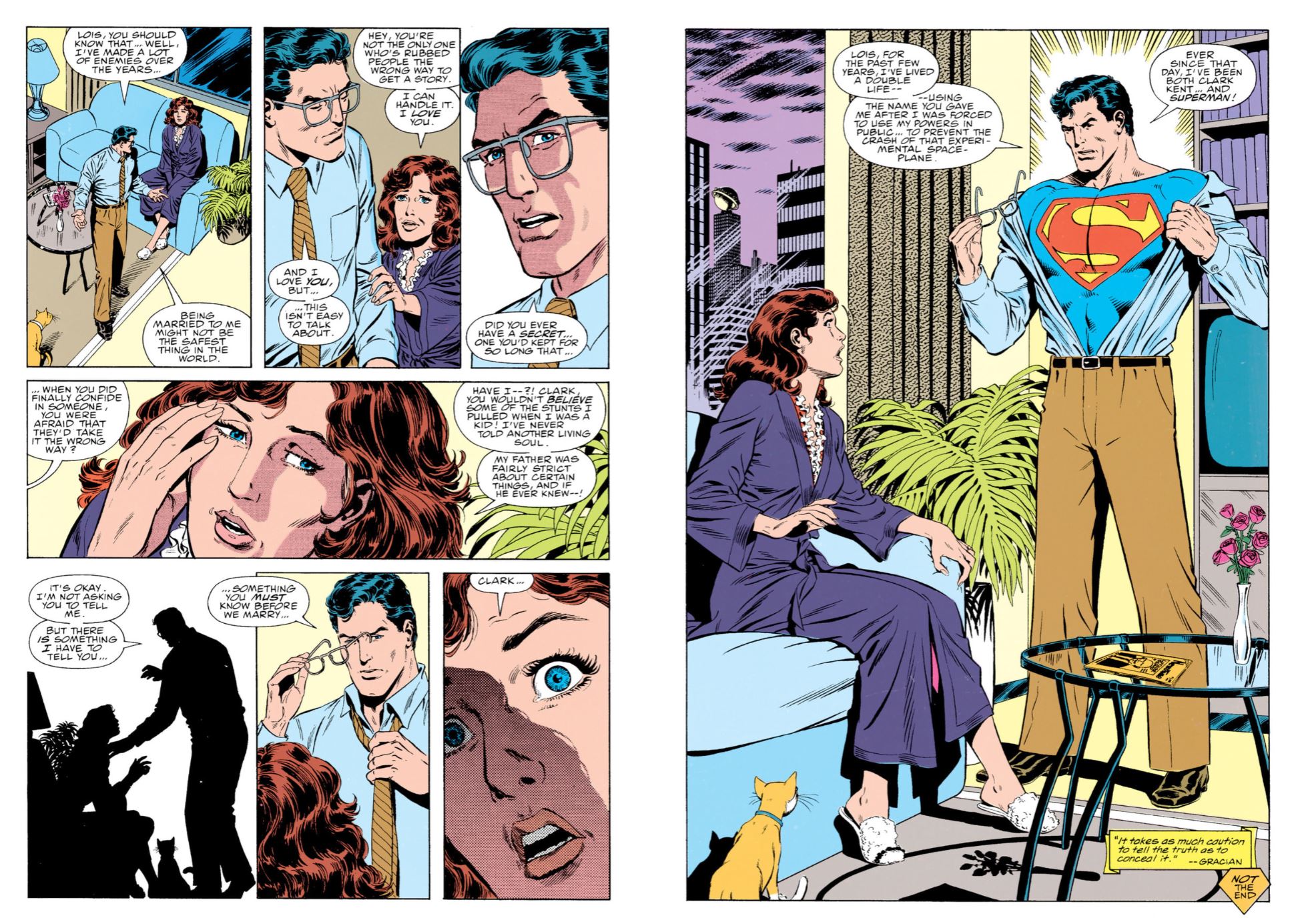
Over many years, Lois and Clark had grown beyond rivalry and distanced professionalism into true workplace romance, but always the hero kept his other identity from her. That all changed in Action Comics #662 (cover-dated February 1991 and by Stern & McLeod) as after the Man of Tomorrow narrowly defeated mystic predator Silver Banshee he decided that there would no more ‘Secrets in the Night’ ‘between him and his beloved…

With Lois still reeling from shock and sustained extended deception, Ordway & Janke used Superman #53 to question ‘Truth, Justice and the American Way’ as the Caped Kryptonian agrees to escort war criminal General Marlo of Qurac to his judicial come-uppance and consequently ferret out the US military traitors who supported him but now need him silenced…

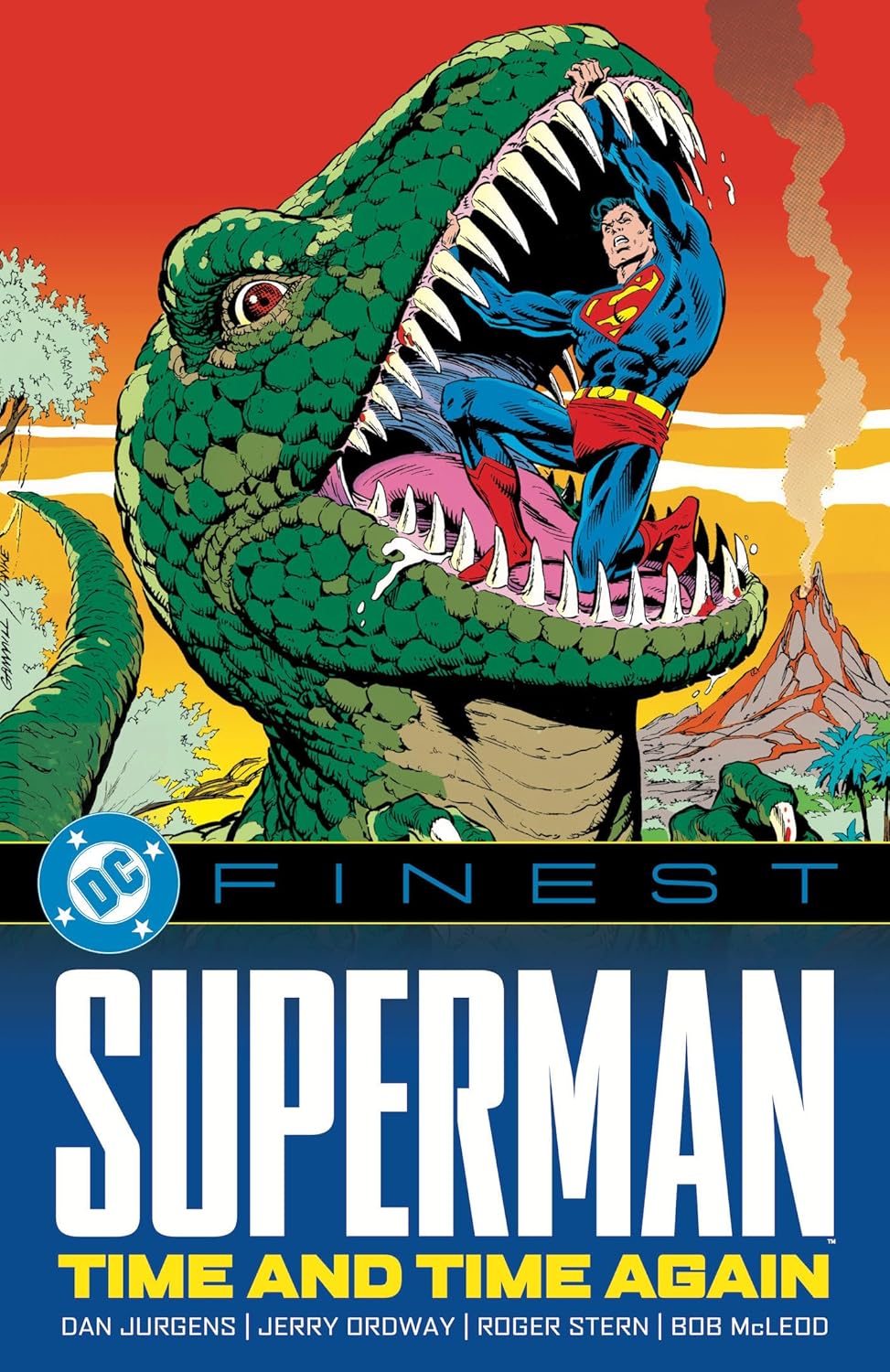
Finally after months of preparation the main event opened with the modern hero lost to Earth just as Lois needed him most. Formerly he had been able to navigate the chronal corridors with ease, but this new Man of Tomorrow was trapped in a cataclysmic and volatile temporal warp, bounced around from era to era with his abilities constantly diminishing and utterly unable to regain his home and loved ones. The eponymous, epoch-rending epic launched in Adventures of Superman #476 as Jurgens & Breeding’s ‘The Linear Man’ saw a rogue (self-appointed) protector of the Time Stream seek to forcibly return temporal refugee-turned superhero Booster Gold to the 25th century he originated from. When Superman intervenes, the battle sparks a tremendous explosion, causing Kal-El to careen through time whenever he’s caught in another explosion. Initially that’s forward into a disaster-triggered team-up with the teenaged Legion of Super-Heroes

Each “landing” leaves him in a significant period of Earth’s history, and when a fuel storage centre detonates Superman is blasted backwards arriving in Stern & McLeod’s ‘Lost in the ‘40s Tonight’ (Action #663). Temporarily blinded but stuck in a past he read deeply about, Superman seeks out WWII icons the Justice Society of America, precipitating a meeting with that era’s first mystery men before almighty wraith The Spectre transports him not home but to ‘The Warsaw Ghetto!’ Here he becomes a temporary saviour in a soon to be mythic battle saga by Ordway & Janke in Superman #54. Perversely ending that issue is an unconnected Newsboy Legion short by Karl Kesel wherein the cloned kids, Guardian and Dubbilex seek to save top secret Project Cadmus from the ‘Attack of the D.N.Alien’ and imminent nuclear doom…

Elsewhere in time, only gigantic explosions can launch Superman back into the time stream, and one such occurs in ‘Death Rekindled’ (AoS #477, Jurgens & Breeding) when a trip to the future introduces him to another, later iteration of the Legion needing help to destroy a monstrous Sun Eater. The cataclysmic detonation of that deadly duel deposits him ‘Many Long Years Ago’ (Action #664, Stern & McLeod) to end up a Jurassic castaway until a clash with similarly-marooned time thief Chronos propels him via smallish jumps into the Pleistocene and a chronologically adrift encounter with primordial alien race the H’v’ler’ni (AKA the Host). That tussle tosses him forward to ‘Camelot’ as the Dark Ages begin, battling valiantly but in vain beside eventual All-Star Squadron paladin and Seventh Soldier of Victory Sir Justin The Shining Knight (all-Ordway in Superman #55). That issue contains more Newsboy Legion antics from Kesel as ‘Blaze of Glory!’ sees the lads and “Kirby Kritter” Angry Charlie frustrate the plans of rogue geneticist Dabney Donovan and defer atomic armageddon…

In AoS #478, Jurgens & Breeding deposit Superman with another, later Legion of Super-Heroes to confront deranged, savagely murderous Daxamite Dev-Em (another escapee from the 20th century) in brutal blockbusting finale ‘Moon Rocked’ which resets the time-shenanigans and leads to Clark’s ultimate resolution and reunion with Lois in Action #665’s ‘Wake the Dead!’ by Stern, Tom Grummett & José Marzan, wherein that crucial catching up and calming down is ruined by voodoo villain Baron Sunday unleashing dead felons on the city…

A third and final Kesel Newsboy short ends Superman #56 with a poignant peek at ‘Charlie & Company’ at home, before which James Hudnall, Ed Hannigan & Willie Blyberg had begun one last continued saga. In ‘Red Glass Part One: Breaking Up’ the Action Ace encountered an eerie crystal on the Moon before returning to an Earth endangered by his increasing berserker rages. The catalogue of atrocities mounted in Adventures of Superman #479’s ‘Red Glass Part Two: Falling Apart’ before answers and restoration of the status quo concluded the crises (for now) in Action #666’s visually stunning but conceptually weak wrap-up ‘Red Glass Part Three: Picking Up the Pieces’

With covers by Ordway, Jurgens, Thibert, Hoover, Gammill, Breeding, Janke, Grummett, Andy Kubert & Glenn Whitmore, this strictly print-only package comprises a hugely enjoyable saga that is highly readable and cheerfully accessible for both returning and first time fans. Thrilling, funny, action-packed and exquisitely entertaining: what more could dedicated Fights ‘n’ Tights followers want?
© 1990, 1991, 2026 DC Comics. All Rights Reserved.

Born today in 1911, Golden Age letterer and colourist Pat Gordon made her husband Dick look even better on the page as Lora Sprang. She shared her natal day with For Better of For Worse cartoonist Lynn Johnston who arrived in 1947.

UK mega weekly Buster began its 40-year run today in 1960, closing in 2000 at which moment today Bringing Up Father ended the run begun by George McManus in 1913.

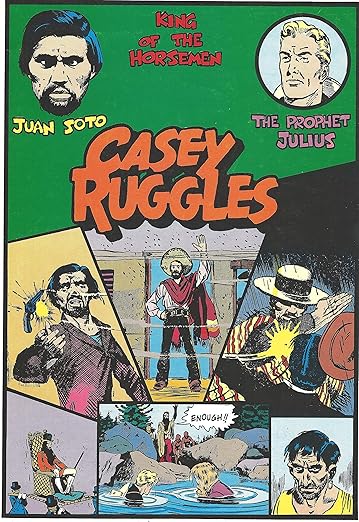
Casey Ruggles – A Saga of the West: King of the Horsemen/the Prophet Julius/Juan Soto (Daily Strips 1951)


By Warren Tufts & various (Western Winds Productions)
No ISBN

This book includes Discriminatory Content produced in less enlightened times.

The newspaper strip Casey Ruggles – A Saga of the West used that genre’s motifs and scenarios to tell a broad range of stories stretching from shoot-’em-up dramas to comedy yarns and even the occasional horror story. The titular hero was a dynamic ex-cavalry sergeant and sometime US Marshal as he made his way to California. He’d been doing that since 1849, hoping to find his fortune, but was frequently distracted and diverted by meeting historical personages like Millard Fillmore, William Fargo, Jean Lafitte and Kit Carson in gripping two-fisted action-adventures. This was the narrative engine of both features until 1950 whereupon daily and Sunday strips divided into separate tales.

Warren Tufts was a phenomenally talented illustrator and storyteller born too late. He is best remembered now – if at all and probably not in English-speaking countries – for creating two of the most beautiful western comics strips of all time: Ruggles and elegiac, iconic Lance.

Sadly, Tufts began his career at a time when the glory days of syndicated newspaper strips were gradually giving way to the television age of ostensibly free family home entertainment. Had he been working scant years earlier in adventure’s Golden Age he would undoubtedly be a household name – at least in comics fans’ homes.

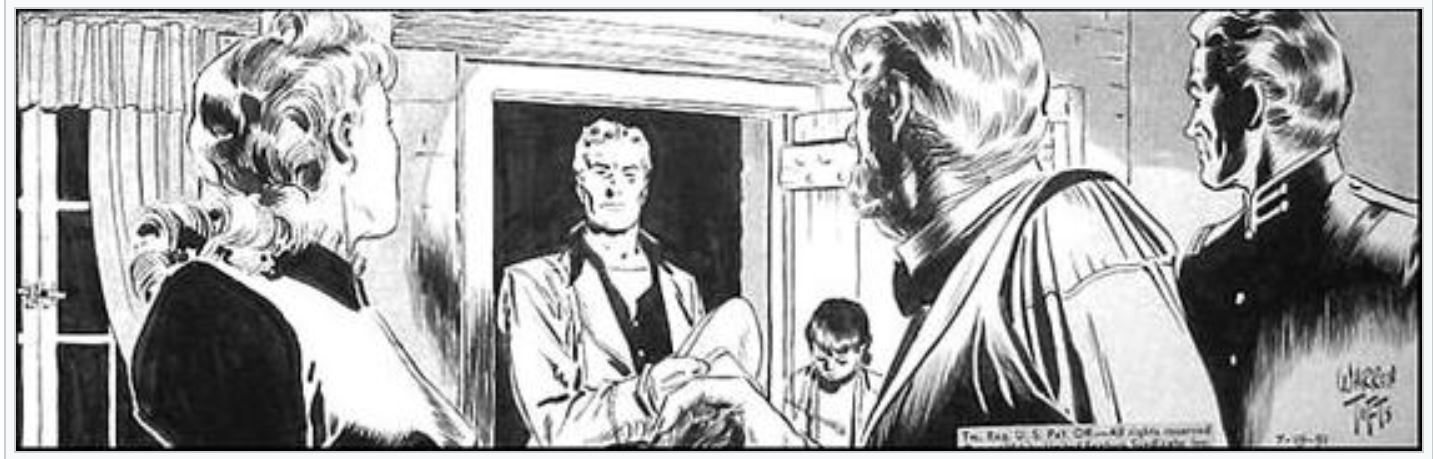
Born on Christmas Day, 1925. Tufts was a superbly meticulous draughtsman with an uncanny grasp of character and a great ear for dialogue. His art was effective and grandiose in the representational manner, favourably compared to both Hal Foster’s Prince Valiant and Alex Raymond. On May 22nd 1949 he began Ruggles as a full-colour Sunday page, and added to it with a black and white daily strip which began on September 19th of that year.

Tufts worked for United Features Syndicate, owners of such popular strips as Fritzi Ritz and L’il Abner, and his lavish, expansive tales were crisply told and highly engaging, but he was a compulsive perfectionist and regularly worked 80-hour weeks at the drawing board… and consequently often missed deadlines. This led him to use many assistants like Al Plastino, Rueben Moreira and Edmund Good. Established veterans Nick Cardy and Alex Toth also spent time working as “ghosts” on the series, with Cardy’s stint reproduced in this volume.

Due to a falling-out with his syndicate, Tufts left this wonderful western creation in 1954 and Al Carreño continued Ruggles until its demise in October 1955. The departure came when TV producers wanted to turn the strip into a weekly television show. Apparently UF baulked, suggesting the show would harm the popularity of the strip!?

Tufts formed his own syndicate for his next and greatest project, Lance (probably the last great full page Sunday strip and another series crying out for a high-quality collection) before moving peripherally into comic-books, working extensively for West Coast outfit Dell/Gold Key, drawing various westerns and TV show tie-ins like Wagon Train, Korak son of Tarzan, The Amazing Chan and the Chan Clan and a long run on the Pink Panther comic book. Eventually, he quit drawing completely, working as an actor, voice-actor and eventually in animation on such shows as Challenge of the Super Friends.

Tufts had a lifelong passion for flying, even building his own planes. In 1982 whilst piloting one he crashed and was killed.

Pacific Comics Club collected many “lost strip classics” at the start of the 1980s, including six volumes (to my knowledge) of Casey Ruggles adventures. This was the fourth stupendous monochrome volume (approximately 15 inches x 10 inches) and contains stories that highlight Tufts’ love of Western history, facility for comedy and innovative willingness to take chances in three tales from the strip’s third year.

The first is a traditional cowboy story featuring the clandestine return of an old foe. ‘King of the Horsemen’ originally ran 14th May to 23rd June 1951, and saw a mysterious “Sonoran” (in actuality Mexican bandit Joaquin Murietta) challenge all the miners in a gold town to test their riding skills against his own.

Bored and cash rich but not stupid, the gambling fools call in Marshal Ruggles to do the rough riding…

This is an engrossing, informative little gem, softly sardonic and luxuriating in the minutiae of the historical west and cowboy mythology. Art lovers will also have the joy of comparing two master realists as Tufts, ever-strapped to meet his punishing deadlines, surrendered the greater part of the tale (all the racing, chasing and action-stunting) to Cardy, keeping only the first and last weeks’ episodes for himself. This was probably to give himself a little leeway on the next adventure ‘The Prophet Julius’; a dark, clever yarn about a greedy flim-flam man and the eerie power he exerted on an isolated outpost.

Running from June 25th to August 11th 1951, the action begins with a shooting star crashing to earth, closely followed by a mesmerising soothsayer terrifying, coercing and ultimately hypnotising miners into handing over their wealth. With even Ruggles helpless, the township pull together to craft a solution no Hollywood hack has ever considered…

The six-gun thrills conclude here with another unsung innovation wherein Tufts adapted the documentary/Film Noir style prevalent in the B-Movie gangster films of the time to create a prototype graphic-novel police procedural that would do Rick Geary proud.

The predominantly Mexican Vasquez Gang terrorized the simple folk of rural California for nearly 15 years, with outlaws captured or killed only to be replaced by ever more bloodthirsty villains. ‘Juan Soto’ was one such and the pursuit of him was perfectly incorporated into a clever tale of organised man-hunting by Tufts. Soto was actually killed in a gunfight with Alameda County Sheriff Harry Morse. Here though the bandit’s increasingly obnoxious depredations draw Ruggles into a posse with five other lawmen who undertake a legendary trek through rugged country, ending in a fearsomely authentic, grimly chilling siege and showdown.

Human intrigue and fallibility, bombastic action and a taste for the bizarre reminiscent of the best John Ford or Raoul Walsh movies make Casey Ruggles the ideal western strip for the discerning modern audience. Westerns are a uniquely perfect vehicle for drama and comedy, and Casey Ruggles is one of the very best produced in America: easily a match for the usually superior European material like Tex Willer or Lieutenant Blueberry.

Surely the beautiful clean-cut lines, chiaroscuric flourishes and sheer artistic imagination and veracity of Warren Tufts can never be truly out of vogue? These great tales are desperately deserving of a wider following, and I’m still praying some canny publisher knows a good thing when he sees it…
© 1950, 1951 United Features Syndicate, Inc. Collection © Western Winds Productions. All Rights Reserved.

Yesterday in 1919 comic book scribe Robert Bernstein (Crime Does Not Pay, Superman, Superboy, Aquaman, Superman’s Girl Friend, Lois Lane, Superman’s Pal Jimmy Olsen, Psychoanalysis, Thor, Iron Man) was born, as was British illustrator and horrorist John Bolton (Marada, X-Men, Shame) in 1951; Brazilian Mike Deodato Jr. (Spider-Man, Dark Avengers, Wonder Woman) in 1963 and Great Briton Mark Buckingham (Fables, Spider-Man, Marvelman) in 1966.

On that date in 1994 we lost pioneering fan/journalist/historian and publisher Don Thompson, and master illustrator John Prentice (Young Romance, Fireman Farrell, Rip Kirby) in 1999.

Today in 1912, strip cartoonist Alfred Andriola (Kerry Drake) was born, followed in 1919 by both Harvey Comics artist Sid Couchey (Ritchie Rich, Little Lotta, Little Dot) and Saturday Evening Post cartoonist Irwin Caplan (Famous Last Words). In 1925 Carmine Infantino was born. Latterly, in 1957 a different world greeted German creator Walter Moers (Das kleine Arschloch) and in 1963 Michael Chabon (Amazing Adventures of Kavalier & Clay)

In 1959 on this date Frank Giacoia’s Johnny Reb and Billy Yank strip ended, whilst in 1992 Japanese collective CLAMP launched groundbreaking manga X. In 1962 US comics illustrator Victor Forsythe (Joe Jinx) died as did Spirou’s veteran art mainstay Pierre Seron (Les Petits hommes, Les Centaures, Les Petites Femmes) in 2017.

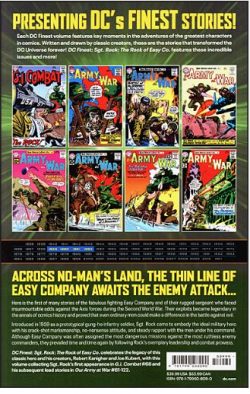
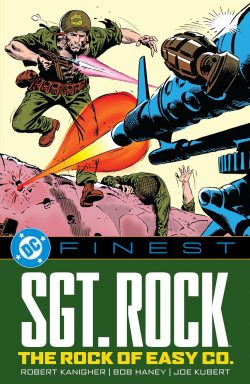
DC Finest: Sgt. Rock: The Rock of Easy Co.


By Robert Kanigher, Bob Haney, Joe Kubert, Ross Andru & Mike Esposito, Russ Heath, Jerry Grandenetti, Irv Novick, Mort Drucker, Jack Abel & various
ISBN: 978-1-79950-809-0 (TPB)

This book includes Discriminatory Content produced in less enlightened times.

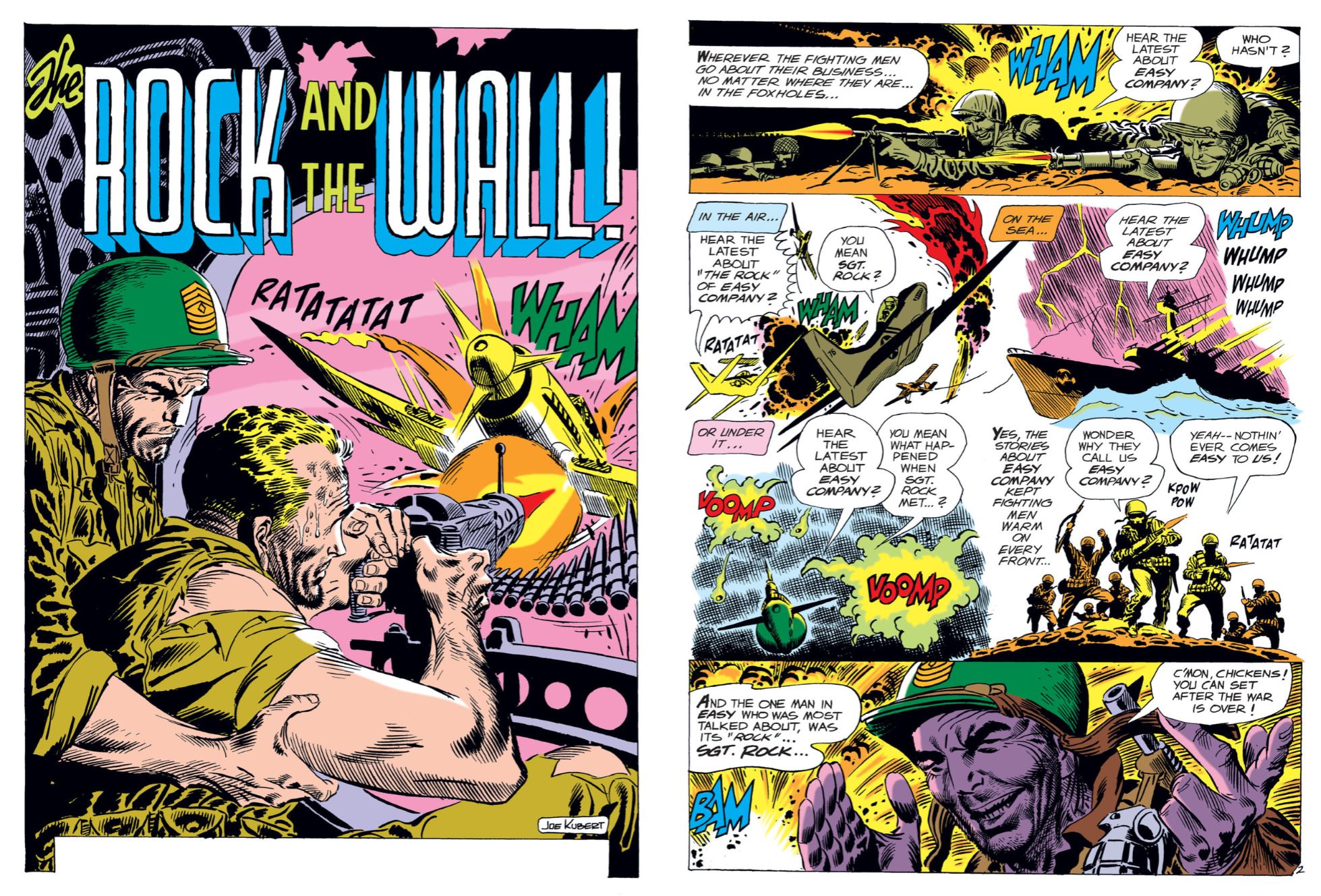
Sgt Rock and the “combat-happy Joes” of Easy Company are one of the great enduring creations of US comic books. The gritty metarealism of Robert Kanigher’s ordinary guys in life-&-death situations compellingly captured the imaginations of generations of readers, young and old, for decades. So pervasive is this icon of comics combat, that’s it’s hard to grasp that Rock is not an immortal industry prototype like Superman, Batman,Wonder Woman or the original Captain Marvel – with us since the earliest moments of the industry – but was, in fact, a rather late addition to and child of the Silver Age of Comics.

This trade paperback compendium collects the tentative first step and early days in the character’s evolution from G.I. Combat #68 and compiles his subsequent missions in Our Army At War #81-122, covering January 1959 through September 1962: a period wherein the American comic book market was undergoing a staggering revolution in style, theme and quality.

The majority of the stories come courtsey of Kanigher & Joe Kubert at their creative peak, occasionaly supplemented by some of the best artists in the business, and we open after a stunning Jerry Grandenetti cover (first of many) with G.I. Combat #68. There lurked a quiet, moodily unassuming fable of an anonymous boxer who wasn’t particularly skilled but simply refused to be beaten. When ‘The Rock!’ enlisted in the US Army, however, the same Horatian qualities attained mythic proportions as he held back an overwhelming Nazi attack by sheer grit and determination, remaining bloody but unbowed on a field littered with dead and broken men.

Dubbed “Rocky”, the character returned as a sergeant in the April Our Army at War (#81), again facing superior German forces as ‘The Rock of Easy Co.!’ in a brief but telling vignette from Bob Haney, Ross Andru & Mike Esposito before finally winning a personal and extremely individualistic identity as Sgt. Rock in the next issue. This was Haney’s Mort Drucker-illustrated ‘Hold Up Easy!’: another harsh and declarative mini-epic which saw hard-luck heroes Easy Company delayed and then saved by callow replacements who eventually came good…

Firmly entrenched now, Our Army at War #83 (June 1959) saw the true launch of the immortal everyman hero in Kanigher & Kubert’s ‘The Rock and the Wall!’, a tough-love, battlefield tutor shepherding his men to competence and survival amidst the constant perils of war. This time the grizzled nomcom meets a rival for his men’s admiration in the equally impressive Joe Wall

Irv Novick illustrated ‘Laughter on Snakehead Hill!’ as the embattled dogfaces of Easy fight to take a heavily-fortified citadel before OAAW #85 introduces the first continuing cast member in Kubert-limned ‘Ice Cream Soldier!’ Here Rock assuages a fearful replacement’s jangled nerves with tales of another hopeless “green apple” who grew into his job. This ploy of incorporating brief past-action episodes into a baptism of fire scenario would play over and over again, and never got old…

Haney returned in #86 to script ‘Tank 711’ for Kubert as the terse topkick educated another newbie in combat etiquette. Kanigher then described the taking of “No-Return-Hill” and the initiation of four more raw recruits in ‘Calling Easy Co.!’ after which Grandenetti illustrated a brace of tales in #88 and 89: ‘The Hard Way’, in which Rock suffers a shocking crisis of confidence and ‘No Shot from Easy!’ wherein the indomitable sergeant is forced to give his toughest ever order…

OAAW #90 offered classic Kubert as ‘3 Stripes Hill!’ revealed how Rock won his stripes, after which the traditionally anthological Our Army at War offered three complete Sgt. Rock sagas in #91, beginning with ‘No Answer From Sarge!’ as the NCO risks everything to drag a recruit out of a crippling funk; ‘Old Soldiers Never Run!’ where he must weigh an old man’s pride against Easy’s continued existence, and the Haney-scripted tragic fable of a sole-surviving Scottish soldier in ‘The Silent Piper!’

OAAW #92 saw Kanigher & Kubert tackle battlefield superstitions in ‘Luck of Easy!’, before ‘Deliver One Airfield!’ introduces Zack Nolan, a son of privilege who must learn teamwork the hard way whilst #94’s ‘Target… Easy Company’ pits the unit against a German General determined to eradicate the increasingly high-profile heroes. Issue #95 debuted charismatic, ambitious Bulldozer Nichols who wants Rock’s rank and position in ‘Battle of the Stripes!’, after which ‘Last Stand for Easy!’ sees our still-in-charge topkick compelled to relinquish his lead-from-the-front position, after which ‘What Makes a Sergeant Run?’ finds him again sharing his hard-earned war wisdom with the young and the hapless.

Haney penned ‘Soldiers Never Die!’ in #98, with Rock forced to overcome his team’s trauma at losing a beloved comrade, whilst Kanigher described ‘Easy’s Hardest Battle!’ in #99, with the weary warrior recalling instances which all qualified, before once more triumphing over insurmountable odds and adding one more clash to the list. The Stalwart Sergeant risked everything to save a broken replacement in #100’s ‘No Exit for Easy!’ and repeated the task in ‘End of Easy!’ as a parachute drop goes tragically awry, before #102’s ‘The Big Star!’ concedes the consequences of depending on a young man utterly unsuited for combat…

‘Easy’s Had It!’ in #103 was another Haney contribution, exploring what happens when Rock is wounded and the company has to fight without their guiding light and lucky talisman, after which Kanigher assumed regular scripting duties beginning with #104 and ‘A New Kind of War!’ portraying the grizzled vet totally outgunned by a valiant nurse who refuses to retreat and never surrenders. In #105 a ‘TNT Birthday!’ has Rock worried about the underage kid who somehow got past all the instructors to join Easy under terrifying fire, whilst ‘Meet Lt. Rock!’(illustrated by Novick) sees the resolutely dedicated noncom forcibly promoted… until he manages to undo the horrifying prospect, after which #107’s ‘Doom Over Easy!’ again sees the savvy soldiers in his care afflicted by crippling superstition…

Having already contributed a few covers, the superb Russ Heath drew his first Rock strip in OAAW #108 as ‘The Unknown Sergeant!’ sees the squad pass through a French village with a statue of a WWI Yank “doughboy” bearing an uncanny resemblance to their own indomitable leader, and provoking some very uncomfortable historical hallucinations before Kubert’s return in #109’s ‘Roll Call of Heroes!’ This signals a dose of grim reality as Rock recalls his own deadly baptism of fire and lost comrades, after which a green Lieutenant almost provokes mutiny and murder until he learns the rules of Combat Arithmetic in ‘That’s An Order!’

‘What’s the Price of a Dogtag?’ is painfully answered in the occupied streets and on seemingly deserted beaches in #111, before ‘Battle Shadow!’ focuses on the burgeoning supporting cast in a blisteringly explosive extravaganza heralding a bold move. Now African American soldier Jackie Johnson takes centre stage (in a remarkable early example of comic book affirmative action) for a memorable last-stand moment in ‘Eyes of a Blind Gunner’ (#113, cover-dated December 1961).

The incessant toll of lost comrades hits hard in ‘Killer Sergeant!’, whilst civilian survivors and partisans who comprise ‘Rock’s Battle Family!’ help him survive the worst the war can throw at him. This tale features a cameo from French Resistance star Mademoiselle Marie (as usually seen in Star- Spangled War Stories ) – before the ragged warrior finds himself all alone when answering #116’s ‘S.O.S. Sgt. Rock!’ to save lost comrade Ice Cream Soldier…

Next comes a dramatic tale of three hopelessly square pegs who finally find their deep, round holes in #117’s traumatic saga of ‘The Snafu Squad!’ before we see ‘The Tank vs. the Tin Soldier!’ – magnificently illustrated by Heath – wherein movie idol Randy Booth is mustered into Easy Company but spends all his snobbish energies trying to get out again. By the time he learns how to be a real soldier, his moment in the limelight has turned from cinematic melodrama to Greek tragedy…

The artist most closely associated with Rock is Joe Kubert, who illustrated #119’s memorable fable ‘A Bazooka for Babyface!’ wherein another kid who lied about his age makes it to the Front, but doesn’t fool the indomitable noncom. Of course, by the time the fighting dies down enough to send him back, the Babyface is a seasoned combat veteran…

Kubert superbly limned the majority of stories in this volume, such as #120’s ‘Battle Tags for Easy Co.!’, which deployed brief vignettes to illustrate how squad stalwarts Ice Cream Soldier, Bulldozer and Wild Man earned their nicknames, before showing the latest raw recruit why the Sarge was called Rock, after which ‘New Boy in Easy!’ (#121) introduces a chess-obsessed replacement who takes a lot of convincing that war is no hobby and men aren’t mere pawns…

This narrative device of incorporating brief past-action episodes into a baptism of fire scenario played over and over again in Sgt. Rock and never got old. Here it brings us to a natural pause as OAAW #122 reveals the ‘Battle of the Pyjama Commandoes!’, comprising more portmanteau tales as assorted Easy Joes recuperate in a field hospital… until Germans break through and the weary wounded must pick up their weapons again…

Robert Kanigher at his worst was a declarative, heavy-handed and formulaic writer, but when writing his best stuff – as he does here – remains an imaginative, evocative, iconoclastic and heart-rending reporter and observer of the warrior’s way and the unchanging condition of the dedicated and so very human ordinary foot-slogging G.I.

With superb and iconic combat covers from Kubert, Grandenetti, and Heath fronting each episode, this battle-bible is a visually perfect compendium and a certain delight for any jaded comics fan looking for something more than flash and dazzle. A perfect example of true Shock and Awe from an era when US soldiers were welcome almost everywhere; these are stories all comics fan and combat collector must see.
© 1960, 1961, 1962, 2026 DC Comics. All Rights Reserved.

Today in 1907 Belgian graphic god Georges Prosper Remi – “Hergé” was born. In 1915 George (Sad Sack) Baker arrived, as did comics scripter Maxine Fabe (DC genre anthologies, Lois Lane) in 1943, and Colombian inker Carlos Garzon (Star Wars) and Filipino illustrator Steve Gan (Star-Lord, Conan, Dracula, Skull the Slayer) in 1945, with Stephanie Williams popping by in 1988.

Today in 1949 Warren Tufts’ sublime western newspaper strip Casey Ruggles began, and in 1962 we lost Dixie Dugan co-creator John H. Striebel.

Garth: The Cloud of Balthus (volume 1)


By Frank Bellamy & Jim Edgar, with John Allard (Titan Books)
ISBN: 978-0-90761-034-2 (Album TPB)

This book includes Discriminatory Content produced in less enlightened times.

Frank Alfred Bellamy (21st May 1917 – 5th July 1976) is one of British Comics’ greatest comics artists. In the all-too-brief years of his career he produced magnificent, unforgettable visuals for Eagle, TV21, Radio Times (Doctor Who) before taking over The Daily Mirror newspaper strip Garth in 1971. He turned that long-running yet meandering and occasionally lacklustre strip into a magnificent masterpiece of unmissable adventure fantasy, with eye-popping, mind-blowing monochrome art other artists were proud to boast they swiped from. However, after only 17 stories, Bellamy died suddenly in 1976; and it’s absolutely criminal that his work isn’t in galleries, let alone in permanent collected book editions.

Bellamy was born in 1917 but didn’t begin comic strip work until 1953: the Monty Carstairs strip for Mickey Mouse Weekly. From there he moved on to Hulton Press and drew features starring Swiss Family Robinson, Robin Hood and King Arthur for Swift, the “junior companion” to Eagle. In 1957, he moved on to the star title, producing standout, innovative work on a variety of strips, beginning with a biography/hagiography of Winston Churchill. ‘The Happy Warrior’ was followed by ‘Montgomery of Alamein’, ‘The Shepherd King – the story of David’ and ‘The Travels of Marco Polo’, from which Bellamy was promptly pulled only a few months in. As Peter Jackson took over the back page historical adventure, Bellamy was on his way to the front cover and The Near Future.
When Hulton were bought by Odhams Press there soon manifested irreconcilable differences between Frank Hampson and the new management. Dan Dare’s creator left his superstar baby and Bellamy was tapped as replacement – although both Don Harley & Keith Watson were retained as Frank’s assistants. For a year Bellamy produced “The Pilot of the Future”: redesigning the entire look of the strip at management’s request, before joyfully stepping down to fulfil a lifetime’s ambition.

For his entire life Frank Bellamy had been fascinated – almost obsessed – with Africa. When asked if he would like to draw a big game hunter strip he didn’t think twice and Fraser of Africa debuted in August 1960, a single page per week in the prestigious full-colour centre section. Fraser of Africa was an artistic landmark and Bellamy’s techniques of line and hatching, in conjunction with sensitive, atmospheric colours, and even his staging and layout of pages, led to majestic Heros the Spartan and eventually the bravura creativity displayed in Thunderbirds and Captain Scarlet strips for TV21, before he opted for the strictures of monochrome and a single tier of 3-4 panels a day…

British Superman Garth first appeared in The Daily Mirror on Saturday, July 24th 1943, the creation of professional cartoonist Steve Dowling and BBC radio producer Gordon Boshell, at the behest of the editor who wanted an adventure strip to complement their other comic strip features: Buck Ryan, Belinda Blue Eyes, Just Jake and immortal, demi-immoral, morale-boosting Jane.

A blond giant and physical marvel with no memory of who he was, Garth washed up on an island shore and into the arms of a pretty girl… Gala. Nonetheless, he saved the entire populace from a brutal tyrant and a legend began. Boshell never had time to write the series, so Dowling – already producing successful family strip The Ruggles – scripted Garth until a new writer could be found. Don Freeman dumped the amnesia plot in ‘The Seven Ages of Garth’ (which ran from September 18th 1944 until January 20th 1946) by introducing imposing jack-of-all-sciences Professor Lumiere, whose subsequent psychological experiments regressed the burly hero back through some past lives.

In the next tale ‘The Saga of Garth’ (January 22nd 1946 – July 20th 1946) the origin was revealed. As an infant, “Garth” had been found floating in a coracle off the Shetlands and adopted by a kindly old couple. When full grown he became a Navy Captain until he was torpedoed off Tibet in 1943…

Freeman continued as writer until 1952 (‘Flight into the Future’ was his last tale), and was briefly replaced by script editor Hugh McClelland (who only wrote ‘Invasion From Space’) until Peter O’Donnell took over in February 1953 with ‘Warriors of Krull’. O’Donnell penned 28 adventures until resigning in 1966 to devote more time to his own strip: a little something called Modesty Blaise. His place was taken by Jim Edgar; a short-story writer who also scripted such prestigious newspaper strips as Matt Marriott, Wes Slade and Gun Law.

Dowling retired in 1968 and his long-time assistant John Allard took over the strip until a suitable permanent artist could be found. Allard completed ten complete tales until Frank Bellamy began a legendary run with the 13th instalment of ‘Sundance’ (which ran from 28th June to 1 October 11th 1971). Allard remained as background artist and assistant until Bellamy took full control during ‘The Orb of Trimandias’.

One thing Professor Lumiere had discovered and which gave this strip its distinctive appeal even before the fantastic artwork of Bellamy elevated it to dizzying heights of graphic brilliance, was Garth’s involuntary ability to travel through time and re-experience past and future lives. This simple concept lent the strip an unfailing potential for exotic storylines and fantastic exploits, pushing it beyond its humble beginning as a British response to Siegel & Shuster’s American phenomenon Superman.

The tales in this criminally out of print monochrome tome begin with the aforementioned ‘Sundance’ as mighty Garth is drawn back to 1876 to relive his life as an officer of George Custer’s 7th Cavalry on the eve of the Battle of the Little Big Horn.

The time-tossed titan has a brief but passionate love affair with Indian maiden Falling Leaf before dying valiantly for his beliefs and their love. It is an evocative, powerful tale that totally captures the bigotry, arrogance and futility of the White Man and the tragic demise of the Indian way of life…

Then eponymous epic ‘The Cloud of Balthus’ shows the potent but simple elegance of the narrative concept sustaining Garth. Whilst vacationing in the Caribbean our hero becomes embroiled in an espionage plot involving freelance super-spies and a US space station, but even that is mere prelude to fantastic adventure and deadly terrors when he and delectable, double-dealing companion Lee Wan are abruptly abducted by nebulous energy beings in a taut, tension-fraught thriller.

‘The Orb of Trimandias’ plunges Garth back in time to Venice of the Borgias, when/where he becomes again English Soldier-of-Fortune Lord Carthewan: a decent man battling an insane and all-powerful madman for the secret of a supernaturally potent holy relic. This gripping, exotic yarn is replete with flamboyant action, historical celebrities, sexy men and women and magnificently stirring locales. It’s a timeless treasure of adventure that has the added fillip of briefly reuniting Garth with his star-crossed true love, ethereal Space Goddess Astra.

This lovely volume (long overdue for re-issue – at least in digital form if no other way is possible) concludes with a high-octane gothic horror story.

‘The Wolfman of Ausensee’ sees Garth as a rather reluctant companion of movie starlet Gloria Delmar on a shoot at the forbidding Austrian schloss (that’s a big ugly castle to you) of a playboy whose family was once cursed by witches. Despite the title giving some of the game away, this is still a sharp and savvy spook-fest comparing well to the best Hammer Horror films that no doubt inspired it, and just gets better with each rereading.

Garth is the quintessential British Action Hero: strong, smart, fast and good-looking with a big heart and nose for trouble. His back-story granted him all of eternity and every genre to play in, and the magnificent art of Frank Bellamy also made his too-brief tenure a stellar one.

Comic-strips seldom get this good, and even though this book and its sequel are still relatively easy (if not cheap) to come by, it is still a crime and an utter mystery that all these wonderful tales have been out of print for so long.
© 1984 Mirror Group Newspapers. All rights reserved.

Garth: The Women of Galba (volume 2)


By Frank Bellamy & Jim Edgar (Titan Books)
ISBN: 978-0-90761-049-6 (Album TPB)

This book includes Discriminatory Content produced in less enlightened times.

A bold and daring blond giant and physical marvel, Garth was Britain’s answer to the blockbusting sensations of Superman, with the added advantage that the feature was officially aimed at adults rather than kids of all ages.

Originally released in 1985, this second Titan Books collection of Garth’s Frank Bellamy era spans 7th September 1972 to 25th October 1973 with the artist shown at the absolute peak of his powers, and opens with eerie chiller ‘The People of the Abyss’ wherein Garth and subsea explorer Ed Neilson are taken prisoner by staggeringly beautiful (what other kind are there?) naked women who drag their bathyscaphe to a city at the bottom of the Pacific. The undersea houris are at war with horrendous aquatic monstrosities and urgently need outside assistance, but even that incredible situation is merely prelude to a tragic love affair with Cold War implications…

Next up is eponymous space-opera romp ‘The Women of Galba’, wherein an alien tyrant learns to rue the day he abducted a giant Earthman to fight and die as a gladiator. Exotic locations, spectacular action and oodles more astonishingly beautiful females make this an unforgettable adventure for what the editors of the era still believed was a strip only grown men read…

‘Ghost Town’ is another western tale, and a very special one. When Garth, vacationing in Colorado, rides into abandoned mining outpost “Gopherville”, he is irresistibly drawn back to a past life as Marshal Tom Barratt who lived, loved and died when the town was a hotspot of vice and easily-purloined money. When Bellamy died suddenly in 1976 this tale – long acknowledged as his personal favourite – was rerun until Martin Asbury (who painted both Titan Book album covers here) was ready to take over the strip.

The final adventure re-presented here – ‘The Mask of Atacama’ – sees Garth & Lumiere in Mexico City. Whilst sleeping, the blonde colossus is visited by the spirit of Princess Atacama (also beautiful, of course) who escorts him through time to vanished Aztec city Tenochtitlan where, as the Sun God Axatl, Garth attempts to save their civilisation from the voraciously marauding Conquistadores of Hernán Cortés de Monroy y Pizarro Altamirano (as shortened for these brief 3-panel strip episodes to far more manageable Hernan Cortés)…

Tragically, neither Garth nor the Princess have reckoned on the jealousy of the Sun Priests and their High Priestess Tiahuaca

Adding extra value to this volume are a draft synopsis and actual scripts for ‘The Women of Galba’, all liberally illustrated.. There has never been a better comic adventure strip than Garth as drawn by Bellamy: a daily rip-roaring romp combining action, suspense, glamour, mystery and the uncanny in a seamless blend of graphic wonderment. In recent years, the comic strip colossus has fallen from memory as well as favour, but I’m still fervently praying that one day, Garth (and while I’m dreaming, Jeff Hawke too) will make the jump to curated complete archive editions. Go on, make on old man happy why don’t you? There’s certainly a grateful, appreciative and vast audience waiting…
© 1985 Mirror Group Newspapers/Syndication International. All Rights Reserved.

This day in 1915 Henry Sunday page illustrator Don Trachte was born, followed two years later by British legend Frank Bellamy (Fraser of Africa, Dan Dare, Garth, Heros the Spartan, Thunderbirds) and Mancunian émigré Lee Elias (Beyond Mars, Black Cat, Flash, Green Arrow, Eclipso, Luke Cage, Human Fly, Goblin, Rook) in 1920.

In 1943 French writer-artist Jean-Claude Fournier (Spirou and Fantasio, Bizu) was born as was writer/publisher Gary Reed (Sherlock Holmes, Deadworld, Saint Germaine, Baker Street, Caliber Comics) in 1956.

We lost pioneering Canadian cartoonist and animator Vital Achille Raoul Barré in 1932 and in 1977 gained a UK animal icon when Gnasher’s Tale (by David Sutherland) began, launching the manky mutt into his own Beano series detailing his life as a puppy before being adopted by Dennis the Menace

Amazing Mysteries: The Bill Everett Archives volume 1


By Bill Everett and others, edited and complied by Blake Bell (Fantagraphics Books)
ISBN: 978-1-60699-488-7 (HB/Digital edition)

This book includes Discriminatory Content produced in less enlightened times.

Thanks solely to modern technology and diligent research by dedicated fans, there is a sublime superabundance of collections featuring the works of too-long ignored founding fathers and lost masters of American comic books these days. A magnificent case in point is these curated chronicles (available in both print and digital formats) revisiting and yet barely touching upon the incredible gifts and achievements of one of the greatest draughtsmen and yarn-spinners our industry has ever seen.

You could save some time and trouble by simply buying them now rather than waste your valuable off-hours reading my preposterous blather and piffle, but since I’m keen to carp on anyway feel free to accompany me as I delineate just why these tomes need to join the books on your “Favourites” shelf.

The star under scrutiny here was a direct descendent and namesake of iconoclastic poet and artist William Blake. Bill was quite possibly the most technically accomplished artist in the US comic book industry and his tragic life and awe-inspiring body of work reveal how a man of privilege and astonishing pedigree was wracked by illness, addictive personality traits (especially alcoholism) and sheer bad luck, but nevertheless shaped an art-form. Bill Everett left twin legacies: an incredible body of superlative stories and art, and, more importantly, he redeemed many broken lives by becoming a dedicated mentor for Alcoholics Anonymous in his later years.

William Blake Everett was born in 1917 into a wealthy and prestigious New England family. Bright and precocious, he contracted tuberculosis at age twelve and was dispatched to arid Arizona to recuperate. This chain of events began a life-long affair with the cowboy lifestyle: a hard-drinking, chain-smoking, tall-tale-telling breed locked in a hard-to-win war against slow self-destruction.

All this and more is far better imparted in a scholarly, fact-filled, picture-packed Introduction by Blake Bell in Amazing Mysteries: The Bill Everett Archives volume 1. This covers the development of the medium in ‘The Golden Age of Comics’; the history of ‘Bill Everett the Man’ and how they came together in ‘Centaur + Funnies Inc. = Marvel Comics #1’. The essay also includes an astounding treasure trove of found images and original art, including samples from 1940s Sub-Mariner, 1960s Daredevil and 1970s Black Widow stories, amongst many others.

Accompanied by the covers (that’s the case for most of the titles that follow: Everett was fast and slick and knew just how to catch a punter’s eye) for Amazing Mystery Funnies vol. 1 #1, 2, 3a, 3b and vol. 2 #2 (August 1938 – February 1939, from Centaur) are a quartet of rousing but muddled interstellar exploits starring sci fi troubleshooter Skyrocket Steele. These are followed by a brace of anarchic outer space shenanigans starring futuristic wild boy Dirk the Demon culled from Amazing Mystery Funnies (vol. 1 #3a and vol. 2 #3; November 1938 & March 1939 respectively).

The undisputed star and big draw at Centaur was always Amazing-Man who was a Tibetan mystic-trained orphan, adventurer and do-gooder named John Aman. After many years of dangerous, painful study that young man was despatched back to civilisation to do good… for a relative given value of “good”…

Aman stole the show in monthly Amazing Mystery Comics (#5-8, spanning September -December 1939) as seen in the four breakneck thrillers re-presented here and opening with ‘Origin of Amazing-Man’ followed by an untitled sequel episode with the champion saving a lady rancher from sadistic criminals; ‘Amazing-Man Loose’ (after being framed for various crimes) and a concluding instalment wherein the nomadic hero abandons his quest to capture his evil arch rival ‘The Great Question’ and instead heads for recently invaded France to combat the scourge of Nazism…

As previously stated, Everett was passionately wedded to western themes and for Novelty Press’ Target Comics he devised an Arizona-set, rootin’ tootin’ cowboy crusader called Bull’s-Eye Bill. Taken from issues #1 & 2 (February & March 1940), ‘On the trail of Travis Trent’ and ‘The Escape of Travis Trent’ has our wholesome yet hard-bitten cowpoke battling the meanest, most determined owlhoot in the territory. Accompanying the strips is an Everett-illustrated prose piece attributed to “Gray Brown” entitled ‘Bullseye Bill Gets his Moniker’.

Thanks to his breakthrough Sub-Mariner sagas, Everett became inextricably linked to water-based action adventures and immensely popular, edgy heroes. That’s why Eastern Comics hired him to create human waterspout Bob Blake, Hydroman for their bimonthly anthology Reg’lar Fellers Heroic Comics.

Here – spanning issues #1-5 and August 1940 to March 1941- are five spectacular, eerily offbeat exploits, encompassing ‘The Origin of Hydroman’ and covering his patriotic mission to make America safe from subversion by “oriental invaders”, German saboteurs and assorted ne’er-do-wells, after which a Polar Paladin rears his frozen head. Sub-Zero Man debuted in Blue Bullet Comics vol. 1 #2 cover-dated July 1940. He was a Venusian scientist stranded on Earth who, through myriad bizarre circumstances, became a chilly champion of justice. Everett is only credited with the episode ‘The Power of Professor X’ (vol. 1 #5, October 1940) but also included here are the cover of vol. 1 #4 and spot illustrations for the prose stories ‘Sub-Zero’s Adventures on Earth’ and ‘Frozen Ice’ (from Blue Bullet Comics vol. 1 #2 and vol. 2 #3).

The Conqueror was another quickly forsaken Everett creation: a Red, White & Blue patriotic costumed champion debuting in August 1941’s Victory Comics #1. Daniel Lyons almost died in a plane crash but was saved by cosmic ray bombardment which granted him astounding mental and physical powers in ‘The Coming of the Conqueror’. He promptly moved to Europe to “rid the world of Adolf Hitler!” with Everett’s only other contribution being the cover of issue #2 (September 1941). Accompanied by a page of original artwork from Reg’lar Fellers Heroic Comics #12 (May 1941), The Music Master then details how dying violinist John Wallace was saved by mystic musical means and becomes a sonic-powered superman righting injustices and crushing evil…

Rounding out this initial cavalcade of forgotten wonders are a selection of covers, illustrations and yarns which can only be described as Miscellaneous (1938-1942). These comprise the cover to the 1938 Uncle Joe’s Funnies #1; procedural crime thriller ‘The C-20 Mystery’ (from Amazing Mystery Funnies vol. 2 #7, June 1939) and ‘The Story of the Red Cross’ from True Comics #2 (June 1938). The cover for 1941’s Dickie Dare #1 is followed by a range of potent images from text tales beginning with three pages for ‘Sheep’s Clothing’ (Funny Pages vol. 2 #11, November 1940); a potent pic for ‘Birth of a Robot Part 2’ (Target Comics vol. 1 #6, July 1940); two pages from ‘Death in a Box’ courtesy of Reg’lar Fellers Heroic Comics #5 (March 1941) and two from ‘Pirate’s Oil’ in RFHC #13 (July 1942), before the unpublished, unfinished 1940 covers for Challenge Comics #1 and Whirlwind Comics #1 bring the potent nostalgia to a close.
© 2011 Fantagraphics Books. Introduction © 2011 Blake Bell. All art © its respective owners and holders. All rights reserved.