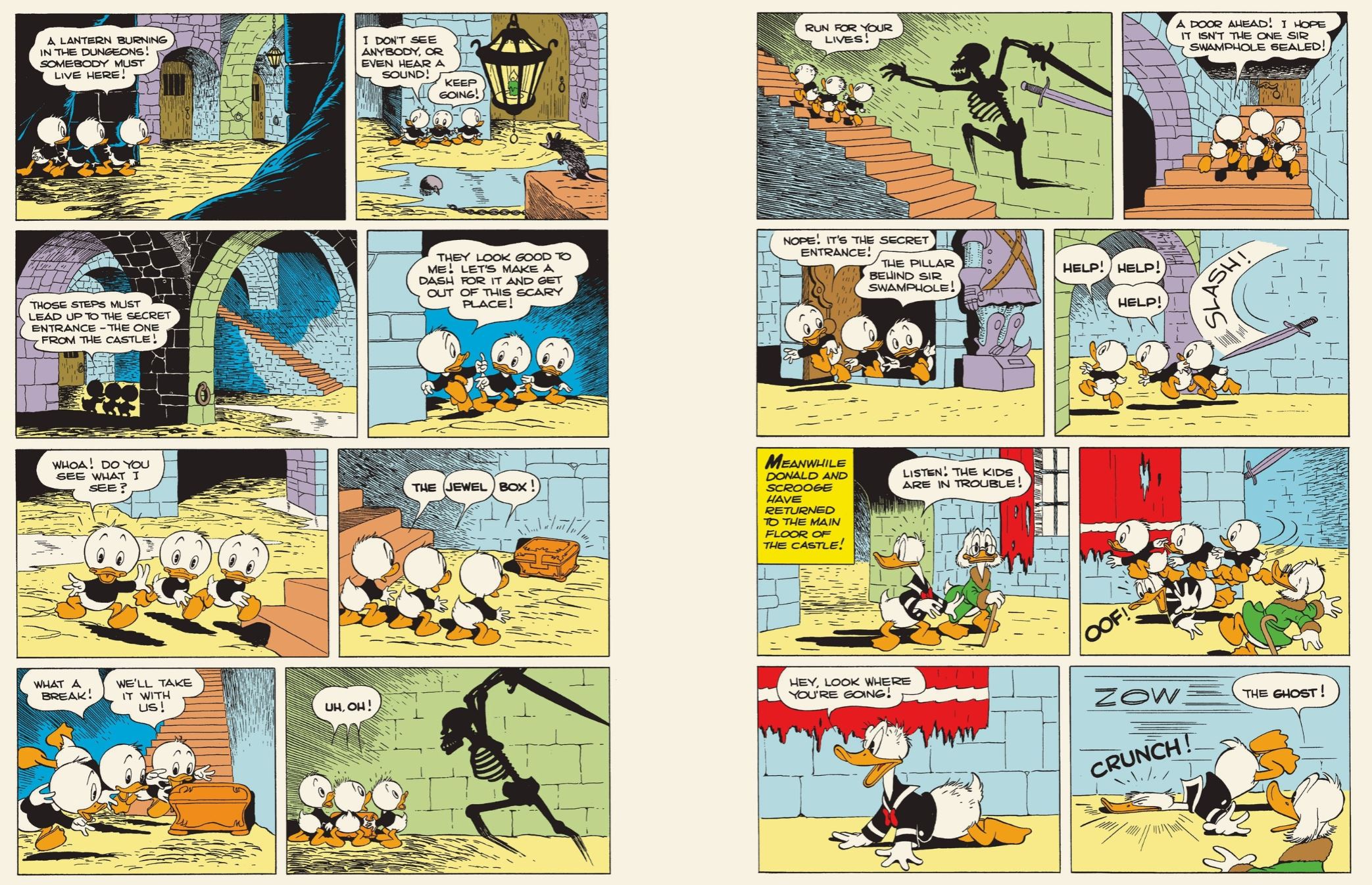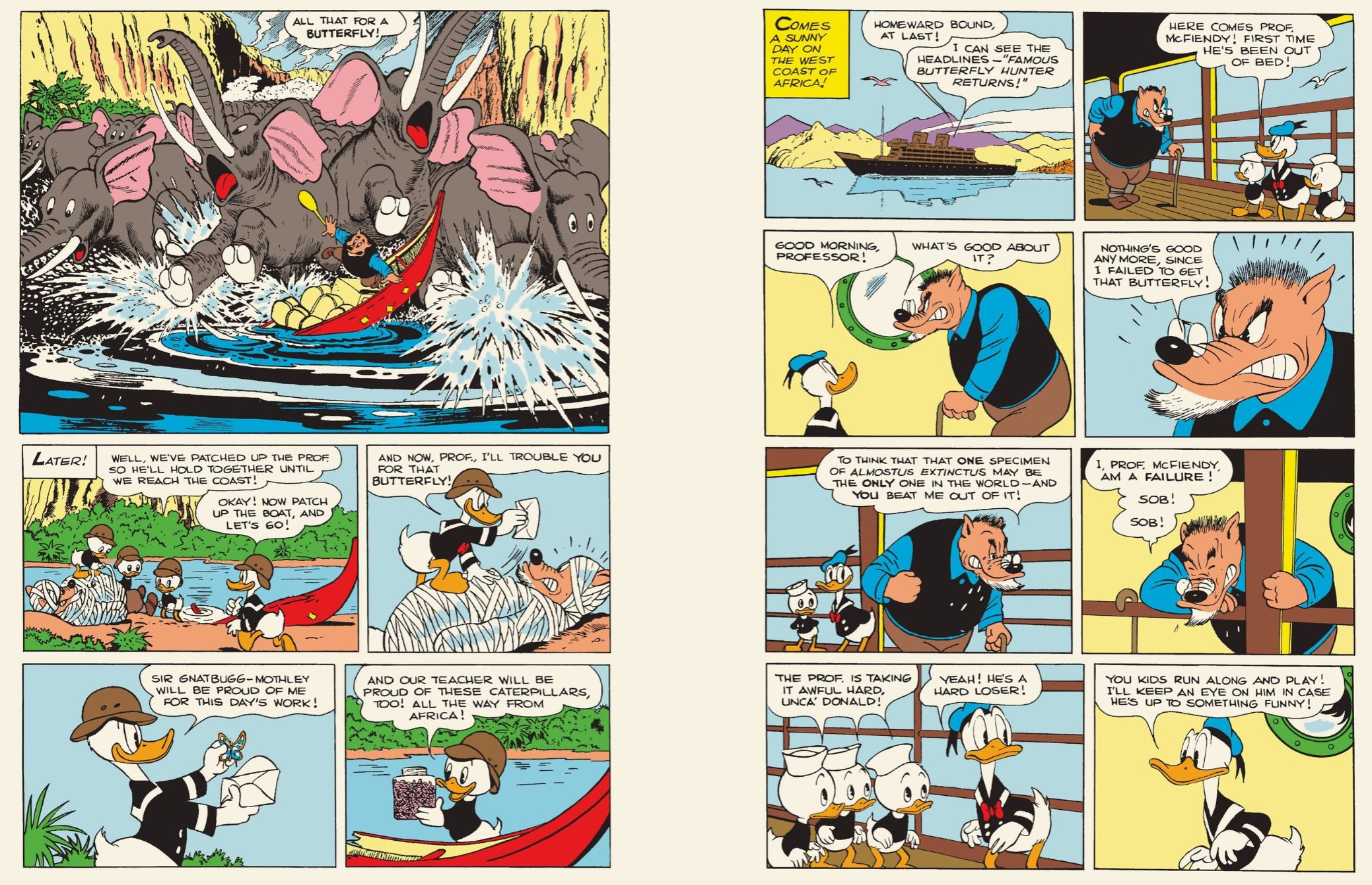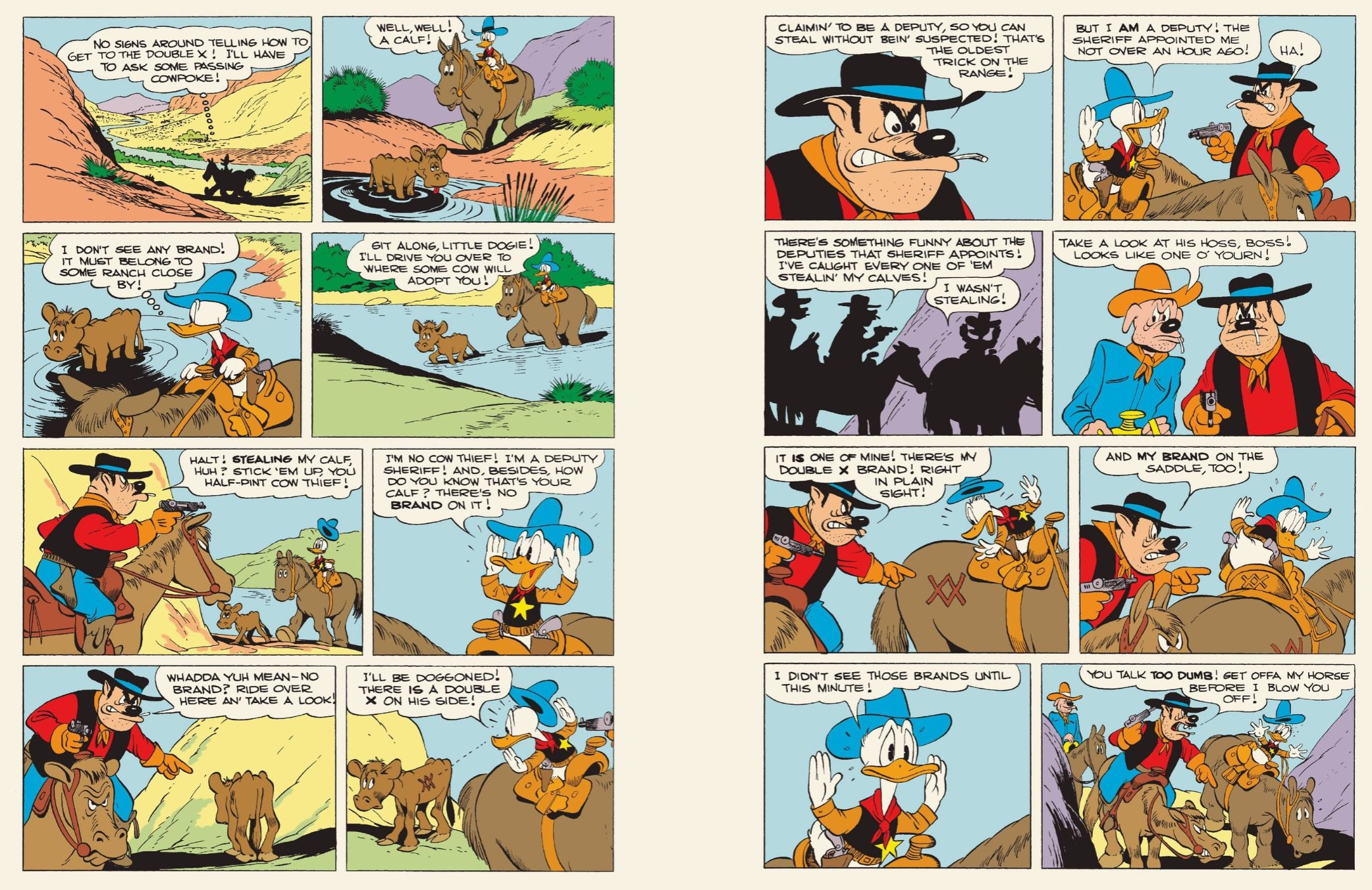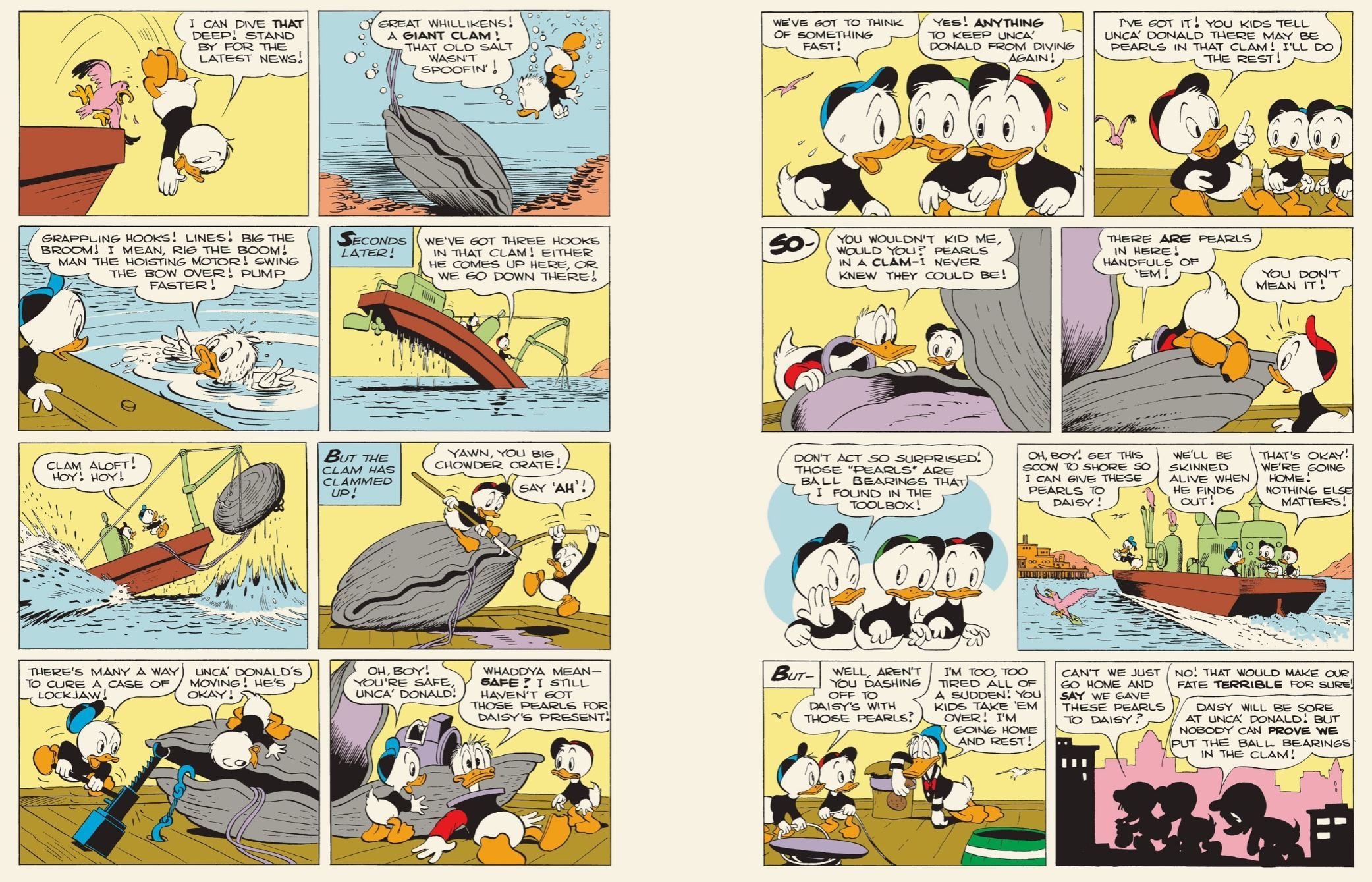
Chas Addams™ Half-Baked Cookbook: Culinary Cartoons for the Humorously Famished


By Charles Addams (Simon & Schuster)
ISBN: ?978-0-7432-6775-5 (PB) eISBN: 978-1-439-10386-9

This boos includes Discriminatory Content produced in less enlightened times. It also uses Discriminatory Content included for comedic and satirical effect.

Cartoonist Charles Samuel Addams (1912-1988) was a distant descendant of two American Presidents (John Adams & John Quincy Adams). He compounded that hereditary infamy by perpetually making his real life as extraordinary as his dark, mordantly funny drawings.

Born into a successful family in Westfield, New Jersey, the precocious, prankish, constantly drawing child was educated at the town High School, Colgate University, the University of Pennsylvania, and New York City’s Grand Central School of Art, and apparently spent the entire time producing cartoons and illustrations for a raft of institutional publications.

In 1932 he became a designer for True Detective magazine – “retouching photos of corpses” – and soon after started selling drawings to The New Yorker. In 1937, at the peak of popular fascination in cinematic and literary horror stories, he began a ghoulish if not outright macabre sequence of family portraits that ultimately became his signature creation. However, during WWII, he toned down the terror and served with the US Signal Corps Photographic Center, devising animated training films for the military.

Whether Addams artfully manufactured his biography to enhance his value to feature writers or was genuinely a warped and wickedly wacky individual is irrelevant, although it makes for great reading – especially the stuff about his wives – and, as always, the internet is eager to be your informative friend…

What is important is that in all the years he drew and painted those creepily sardonic, gruesome gags and illustrations for The New Yorker, Colliers, TV Guide and so many others, he managed to beguile and enthral his audience with a devilish mind and a soft, gentle approach that made him a household name long before television turned his characters into a hit and generated a juvenile craze for monsters and grotesques that lasts to this day. That eminence was only magnified once the big screen iterations debuted. And now we have streaming fun too. He would have loved the sheer terrifying inescapability of it all…

As he worked on unto death, Addams got even wackier: marrying his third wife in a pet cemetery, spending a fortune collecting weapons and torture devices – “for reference” – and inventing… recipes…

In a legendary career dedicated to being odd, the sudden swerve into crafting and compiling an actual cookbook garnished with macabre cartoon japery is a fabulous affirmation of all the unharnessed unpredictability man stood for, and one which constantly delivers treat after tasty treat…

The compendium commences with introduction ‘Café Styx’ from culinary author Allen S. Weiss, after which a bundle of gags – many starring Addams Family stalwarts – brings us to the secrets of making mouthwatering ‘Mushrooms Fester’. Always be sure when cooking this where you sourced your fungi from – and what you need them to do…

The pattern repeats throughout in chapters divided into ‘Platters’: soundly sinister laughs and gruesomely gustatory giggles peppered with rather tasty recipes. You can see for yourself the quality of the cartooning here so I’ll be brief for a change and simply menu the other olfactory and tongue-tangling taste-bombs included.

The next is utterly self-explanatory ‘Macaroni and Oysters’, ending the first course prior to commencing the ‘Second Platter’ – specifically ‘Black Puddings’ (Yanks call them “blood puddings” and they’re not wrong) and ‘Transparent Pie’ with ‘Boiled Salad of Fiddleheads’ (that’s newly sprouted ferns)…

Pausing for a delicious ‘Intermezzo’ of home-made (for who could sell them?) ‘Dandelion Beer’ and ‘Influenza Punch’ accompanied by ‘Stewed Pigeons’, ‘Potted Woodland Squirrel’ & ‘Fried Locusts’ sagaciously catered to with helpful ‘Hints for the Ill’, we eventually come to what all gastrophiles, gastronomes (and gastrophobes!) have been waiting for: the triumphant ‘Third Platter’ and subsequent ‘Digestifs’

Here the drawings are in their prime and perfectly piquant whilst consumers are advised on how to tackle ‘Hearts Stuffed for Valentine’s Day’ (with a most special Stuffing mix); ‘Ostrich Eggs’ and ‘Reindeer Rice Curry’. Of course, as with all comedy, acquiescence and acceptance in adversity might mean modern kitchen scullions might need to replace the odd ingredient for all these GENUINE early American recipes collected by Chas and Tee Addams over decades, but what really matters is that gradually older collections of the Addams oeuvre are being unearthed and this one’s truly scrumptious; or perhaps just an acquired taste…

For clarity and pure knowledge this volume closes with a full biography of the auteur and full list of ‘Credits’ for the recipes included.

Should you not be as familiar with his actual cartoons as with the big and small screen legacy Addams unleashed, you really owe it to yourself to see the uncensored brilliance of one of America’s greatest humourists. It’s very appetising and dead funny…

© 2005 by Tee and Charles Addams Foundation. All rights reserved.

Today was a biggie for Comics. In 1764, grand master and originator of mean drawing William Hogarth died. In 1931 Stan’s brother (the one who could write AND Draw) Larry Lieber was born. Among his many unsung triumphs was Rawhide Kid, co creating Iron Man and writing most of the stories in Mighty Marvel Masterworks: The Mighty Thor volume 1: The Vengeance of Loki.

In 1941 Belgian Bob De Groot was born. You really should read one of his many light adventure gems such as Clifton volume 5: Jade.

In 1970, two US strips launched today one was Mel Lazarus’ venerable Momma, and the other was by Gary Trudeau. Go see and worship some more with the fabulous Yuge! – 30 Years of Doonesbury on Trump.

Heritage Comics Presents Spellbound: Damian Darke & I Don’t Want To Be a Witch!


By Daniel McGachey & Lauren Knight, Georgia Standen Battle, Brian Lewis,
Du Feu & Francisco Cueto, Alan Hebden & Patrick Wright, Kek W. & Jaume Forns, &Vicente Alcazar, & various (Heritage Comics/DC Thomson & Co.)

ISBN: 978-1-91743641-0 (TPB/Digital edition)

This book includes Discriminatory Content produced in less enlightened times.

DC Thomson is probably the most influential comics publisher in British history. In the 1930s The Dandy and The Beano revolutionised children’s comedy comics, whilst newspaper strips Oor Wullie and The Broons (both created by writer/Editor R. D. Low and Dudley D. Watkins) have become a genetic marker for Scottishness. The company uniquely portrayed the occasional toff, decent British blokes and working-class heroes who grew from the prose-packed pages of Adventure, Rover, Wizard, Skipper, Hotspur and latterly “strip picture papers” like Victor and Warlord. They also cannily followed wider-world trends and capitalised – as much as any tasteful, all-ages publishing house could – on global interests that filtered down to juvenile consumers.

Their Girls Papers line especially shaped successive generations and, whenever cited, examples still evoke passionate memories. Don’t take my word for it either; just ask your mum or grandmother about Judy, Bunty, Diana, Mandy and the rest…

And that goes double for the spooky sagas in Spellbound

Kids have always delighted in scary stories but the 1970s horror bubble presented lots of problems for comics publishers. With parents and watch groups always readily on hand to complain or kick up a fuss, how to cater to a genuine demand without incurring another 1950s style comics panic was uppermost in every comic editor’s mind. The answer, obviously is with style, imagination and caution…

Predating Fleetway’s fantasy icon Misty by a couple of years, Spellbound – “the all-new mystery story paper for girls”- launched from DC Thompson’s haunted mansion on September 25th 1976.

Opening in plenty of time for Halloween, it ran for 69 issues before merging in January 1978 with generally-school-&-fashion-themed title Debbie. In its time Spellbound recounted horror-tinged fantasy tales along traditional lines, mixed with school scenarios and, as always, supplemented by text features, activities, and general interest snippets. Its true rewards and achievements rested in the roster of stellar creators associated with its solo strips and serials: artisans including Brian Lewis, Estaban Maroto, Edmond Ripoll, Enrique Badía Romero, Jésus Redondo, Adolfo Usero, Jordi Franch, Norman Lee and others for material including ‘When the Mummy Walks’, ‘The Secret of Silver Star’, ‘Supercats’, ‘The Haunting of Laura Lee’, ‘Peril on Paradise Island’ and more.

DCT is constantly looking for better ways to reach fresh audiences and recently moved into digital publishing of vintage and original new stories in a big way. Backing up their Commando war stories and Starblazer science fiction reprint projects comes this initially digital-only treat: a timely compilation of supernatural sagas is an ideal way to expand their Heritage Comics imprint (expect more reviews in coming months).

This blockbuster tome collects many magnificently understated macabre moments from the periodical, focussing at first on short stories narrated by Master of Mystery Damian Darke before closing with a complete serial from Spellbound #1-15. Throughout, the monochrome lore is littered with those aforementioned prose featurettes and the occasional full colour cover reproduction, and the entire fear fest is festooned with new stuff such as informative

opening letter to the readers ‘Spellbinding Tales…’

Then comes a new introductory spooky strip by Daniel McGachey & Lauren Knight, as wayward teens Gwen & MacKenzie – who really should know better – break into an old abandoned house and discover the world is not what they thought it was…

The cover of #46 (August 6th 1977) leads to our introduction to the Man of Mystery from Spellbound #1, as Damian Darke describes the events of a judicial ‘Spectre from the Flame’ returning to punish evildoers from beyond the grave in a superb chiller limned by Brian Lewis. Next, Jenny & Denise experience a ‘Journey into Fear’ (#19) when they are lost in a storm on the Yorkshire Dales and fetch up at an old edifice that is absolutely not the youth hostel they’re looking for…

That’s augmented with prose potted ghost story ‘Spellbound Special Feature: Poor Little Rich Boy’ from #4, before Lewis strikes again with ‘The Warning’ (#46) wherein hikers Joan & Babs meet a little girl who literally isn’t there (anymore…) whilst from Spellbound #2, “biker chick” Lindsay Gordon inadvertently survives a very close encounter with Cumbrian legend the ‘Ghost Rider’ before ‘Spellbound Special Feature: Get Friendly with Your Phantom’ (#12) textually tells of how to act if one gets too close to the dead-&-not-gone…

Haunted objects ‘The Preston Figurines’ (#36) move heaven and earth to be reunited when sold separately at an antique shop, after which – from #7 – Darke details how a mean miserly usurer gets his just deserts in the ‘Swamp of Evil’: a period piece neatly bookended by text tract ‘Spinning Spectres’ from #13.

Spectral salvation and revelatory redemption come when lost voyager Judy Rose survives a snowstorm thanks to ‘The Cavalier’s Cloak’ (#37) even as in #35 horse lover Kathy King is saved from certain swampy death by ‘The Ghost of Whitefire’ – a modern myth bolstered by prose historical pointers in #17’s ‘Spellbound Special Feature: Milady Greensleeves’

From Spellbound #21, ‘Mystery at Howlen Hall’ revisits classic gothic literature as a sister searches for a lost sibling at a creaky old manse and only finds madness and worse, whilst Lewis shines in a sentimental scare-fest involving a valiant dead puppy and an ‘Echo on the Wind’ (#4) prior to prose ‘Special Feature: Mr Nobody’ taking a peep at people who aren’t there…

Murder from beyond and a most unquiet landlady garnish a florid tale of perilous ‘Poison Ivy’ (#48), whilst Victorian vignette ‘The House of Palgrave’ (#3 by Lewis) explores a Cornish dwelling that is in no way welcoming to its owner’s new bride, all before auction-going flatmates Sue & Carol get more than they bargained for after buying ‘A Spoonful of Evil…’ (#43). This brings Darke’s delightful diatribes to a halt for the present, allowing a ‘Spellbound Special Feature: The Housemaid’s Revenge’ (#28) and the cover to #8 (November 13th 1976) to usher in a classic serial…

Illustrated by Norman Lee (When the Mummy Walks, The Shop at Shudder Corner, most Spellbound covers) ‘I Don’t Want to Be a Witch!’ is reprinted from Spellbound #1-15, and blends traditional outsider-at-boarding-school comedy drama with a hefty dose of wyrd warfare. However, here, 13-year-old Celia Winters perpetually foils the many schemes of her high witch aunt Armida who strives to make the teenager her vassal and mystic acolyte, but first must get her out of the infernal normal school she loves and away from all her friends at St. Ann’s…

For three action- and imagination-packed months, Celia, best pal Anne and pet Myna bird Merlin duck & dodge & dive, craftily utilising the hidden magic grotto on school grounds (“normal life” huh?) to foil Auntie’s every incredible ploy. Constant chaos and bewildered teachers cannot quell the madness, nor will her feline familiar Lucifer and spiteful tattle-tale mean girl Ruth Narkle hold back as they seek to squash Celia’s every effort to stay nice and normal. Eventually the escalating arcane pot boiler inevitably bubbles over…

‘I Don’t Want to Be a Witch!’ may have ended but is here revived in a creepy continuance by Georgia Standen Battle & Anna Morozova who introduce a fresh new generation to close this tome…

Rounding out the nostalgia chills is a final cover gallery – seven more scary front pages – accompanied by one last yarn: another illustrated prose poser from the first issue suitably entitled ‘Nightmare’

Short sharp stories of solidly spooky standing superbly rendered make this a horror fan’s delight and a welcome doorway into more inviting times. Why not climb aboard this coachload of chillers and see what used to make our spines shudder and shake?
© DC Thomson & Co., Ltd. 2019.

Today in 1922 Maurice Dodd was born. We love him for one of the world’s greatest comedy strips. So will you if you scope out The Perishers Spectacolour.

Glacial Period


By Nicolas de Crécy, translated by Joe Johnson (NBM ComicsLit/Louvre: Musée du Louvre Éditions)
ISBN: 978-1-56163-855-0 (Album HB/Digital edition) 978-1-56163-483-5 (TPB)

I’m feeling waggishly topical today. Mayhap I might be getting better…

In 2005 one of the greatest museums in the world began an intriguing ongoing project with the upstart art form of comics; inviting some of the world’s most accomplished masters of graphic narrative to create new works in response to the centuries of acquired treasures residing within the grand repository of arts, history and culture.

The tales are produced in close collaboration with the forward-looking (if not security-conscious) authorities of the Louvre, and always push the envelope of what can be accomplished by master craftsman inspired by their creative antecedents and forebears. These are no thinly-concealed catalogues of exhibition contents gift-wrapped in cartoon terms to gull potential visitors off their couches and into a stuffy edifice of public culture, but vibrant and challenging comics events calculated to make you think again about what creativity and history mean…

The first of those stellar tomes, originally released as Période glaciaire, is a deluxe, lavish, oversized (286 x 222mm) hardback edition by NBM – well worth nicking but perhaps best purchased – granting readers that rarest of things… a second bite of the cherry.

Born in Lyon in September 1966 into a large family of artistic overachievers, Nicolas de Crécy was, in 1987, part of the first graduating class of students from de l’école de Bande dessinée des Beaux-Arts d’Angoulême.

After working for Studios Disney at Montreuil, he published first album Foligatto in 1991. Since then he has produced more than thirty albums; both one-off books such as Journal d’un fantôme, Escales, Plaisir de myope and La Nuit du grand méchant loup and series/serials such as Léon la came, Monsieur Fruit and Salvatore.

He is justly considered a wünderkind of French comics and his unique take on the role of the Louvre was – typically – boldly off-kilter, ingeniously amusing and fantastically sardonic…

Thousands of years from now Earth is a frozen dustheap. Scrabbling through its barren remains one day comes a turbulent group of scientists and archaeologists. The humans are a tendentious bunch, constantly bickering and pontificating on what the civilisation they are obsessed with understanding was actually like. Most have their own theories and perhaps only look now for finds to validate their views. Far more open and philosophical are the tubby talking dogs who act as frontrunners; their hyper-keen noses sniffing out areas where potential finds are buried. Especially sensitive – in every meaning of the term – is Hulk.

The rotund canine rogue can feel the tension in the party and when he sleeps (as often as possible) he has strange dreams and visions of beautiful old things. When he and official expedition leader Juliette are briefly separated from the group by a storm, the ensuing calm reveals an ancient structure freshly uncovered. Soon the humans are all over the “temple” and making grand plans. Nevertheless, the irascible mutt knows this find is mere dross and rubbish…

Another angry discussion results in top historian Paul being left behind to research/catalogue the temple whilst the others press on to uncover the fabled lost metropolis buried somewhere in this desolate region…

Hulk isn’t fooled. He sees that imperious alpha male Gregor has designs on Juliette and is slowly isolating her from the others. After she ignores the canny canine’s warnings, Hulk wanders off into the cold night and next morning impatient Gregor convinces the party to go on without him. Alone and no longer distracted, Hulk’s incredible faculties detect a faint scent and he begins to dig down.

Before long he has broken into a stone vault filled with fascinating artefacts and, as ever following his nose, the mighty mutt discovers a mesmerising maze of corridors, revealing incredible facts about the lost civilisation. Under the cold light skies above, Juliette & Gregor clash over who is truly in charge and poor studious Joseph intervenes, suffering for his chivalry. Further interpersonal violence is only prevented when the treacherously unstable landscape shifts and from the icy crust an ancient structure begins to inexorably rise…

Hysterically elated, Gregor drags stunned archaeologists into the fabled metropolis and all are astounded by the images and artefacts they find. Soon, they’re frantically hypothesising, guessing and just plain spit-balling as they plunge deeper and deeper into a still shaky, shifting edifice. Entranced and intoxicated by the panoply of pictures and statues, the humans’ imaginations are running amok.

And, from outside, Esteban calls out to them: he has spotted another glistening building forcing its way out of the snows…

The treasure trove seems unending: a final repository of ancient magnificence that leads them ever inward as the monumental mausoleum inexorably pushes upwards into dying sunlight.

Elsewhere, deep below them, Hulk is making his own explorations and encounters something uncanny and bizarre. Before long he’s conversing with the oldest statues and objets d’art in the vaults of history. The relics know the Louvre is in tectonic death throes and need his help to save all the wonderful “living” treasures that have waited here for patient millennia…

Sharing with him the true stories, mistakes and triumphs of the past races of man, dog and anxious, animated exhibits unite in a desperate attempt to save their quintessentially timeless splendours from final obliteration…

Accompanied by a formidable and informative List of Works which feature most prominently in this captivating yarn, Glacial Period is a bemusing, wide-eyed, light-hearted epic as well as an utterly engrossing, darkly charming graphic discussion on the nature and value of art and our eternal ever-changing relationship with it. It is also an entrancing, witty literal shaggy dog story in comics form that reads superbly even if you wouldn’t be caught dead in a museum, French or otherwise.

Why not give it a go and see if your cool attitude thaws after all?
© 2005 Futuropolis/Musée du Louvre Éditions. English Edition © 2006 NBM.

Today in 1920 Archie Comics artist Bob Montanna was born, and in 1958 Earth reeled from the first appearance of the Smurfs as walk-on in a Johan and Peewit strip by Peyo in Le Journal de Spirou. We covered all that in The Smurfs Anthology volume 1.

Bunny vs Monkey Book 11: Intergalactic Monkey Business!


By Jamie Smart, with Sammy Borras, Paul Duffield & Armin Roshdi (David Fickling Books)
ISBN: 978-1-78845-327-1 (Digest HB) 978-1-78845-387-5 (Waterstones Exclusive Team Bunny Edition) 978-1-78845-388-2 (Waterstones Exclusive Team Monkey Edition)

Win’s Christmas Gift Recommendation: Because… Just Because… 10/10

Bunny vs Monkey has been the inspirationally bonkers breakout star of The Phoenix since the first issue in 2012: recounting a madcap vendetta gripping animal archenemies set amidst an idyllic arcadia, masquerading as more-or-less mundane but critically endangered English woodlands. Concocted with gleefully gusto – but increasingly with cerebral cosmic crescendo in mind – by cartoonist/comics artist/novelist Jamie Smart (Fish Head Steve!; Looshkin; Max and Chaffy, Flember, Find Chaffy), these trendsetting, mind-bending yarns have been wisely retooled as best-selling graphic albums available in remastered, double-length digest softcover and hardback editions such as this one. All the tail-biting tension and animal argy-bargy began yonks ago after an obnoxious little beast plopped down in after a disastrous British space shot. OR DID IT?

Crashlanding in Crinkle Woods – scant miles from his launch site – lab animal Monkey believed himself the rightful owner of a strange new world, despite every effort of genteel, contemplative, reasonably sensible forest resident Bunny to dissuade him. For all his patience, propriety and good breeding, the laid-back lepine could not contain or control the incorrigible idiot ape, who to this moment remains a rude, troublemaking, chaos-creating, noise-loving lout intent on building his perfect “Monkeyopia” and/or being a robot, with or without the aid of evil supergenius Skunky or tagalong useless “henches” Metal Steve and Action Beaver

Daily wonders and catastrophes were exacerbated by a broad band of unconventional Crinkle creatures, none more so than monochrome mad scientist Skunky, whose intellect and cavalier attitude to life presents as a propensity for building dangerous robots, bio-beasts and sundry other super-weapons. He is, at his core, a dangerously inquisitive thinker and tinkerer…

Here – with artistic fiddling about from design deputy Sammy Borras – the war of nerves and mega-ordnances resumes as if nothing cosmic or multiverse-changing had ever happened or any hint of a restart after a cosmic culmination. See, that’s what happens if you let books pile up and don’t read them immediately! Go check out Bunny vs Monkey: The Great Big Glitch! and then come back and we’ll talk some more…

Okay then, new day, new start, same old mega mecha meta nonsense as ‘Clouding Over’ sees a suspiciously low-lying cirrus formation starts dumping rain and then increasing more noisome and noxious substances on the woodsfolk in what appear to be targeted strikes. Could there possibly be some kind of intelligence behind the atmospheric attacks?

With propriety and good taste in full retreat, the sensorial assaults resume in ‘Guts n’ Butts!’ as Monkey and Skunky debate the appalling assets and proposed “improvements” to the weaponised flatulence engine dubbed Bungamungus with no consideration of those in its path prior to the simian unleashing his own worst nightmare. The giant ‘MonkeyBot 5000’ is supposed to make life hell for his fluffy white foe, but it appears Bunny can find plenty of uses for a mechanised personal organiser that can bench press trucks, topple buildings, file and colour co-ordinate…

Reality trembles all over again when Monkey’s ‘Mum and Dad’ pop by for a visit and nice bit of tea, but nature’s innocents Weenie and Pig Piggerton are too busy having adventures with ‘Frogs!’ and their mystical king to really notice, whereas ‘Lucky… The Unluckiest Red Panda in the World!!’ stumbles into unbridled chaos (as always) when Skunky & Monkey decide to go through the forgotten inventions bin…

Worried about declining productivity, the sinister science sinner uses his 3D printer to unleash a horde of ‘Fun-Size Skunkies’ who are anything but, before Bunny learns where all the wreckage, rubbish and remains go when the latest catastrophe has finished unfolding. Sadly, there are good reasons nobody wants to see ‘Binbag Sam’ carry out his nasty but necessary job…

Always seeking peace and serene contemplation, mysterious Le Fox has found a wilderness to dig in, but when Monkey comes by and discovers gold in ‘Them Thar Hills’ that’s another dead dream, and only a prelude to planet-shaking events when Skunky’s new signal array test coincides with Monkey’s latest eating challenge. ‘Message in a Butthole’ reveals how – after, inevitably – a monumental foofie erupts across the universe, the consequences will be appalling but not at all unexpected…

In a fabulous tribute to Chuck Jones cartoons ‘Monkey vs Ai’ sees the annoying ape test a bunch of inventions that should work “in theory”, before going back to stinky basics with a cheese cannon. Sadly, the anticipated Cheesepocalyse is derailed by ‘The Turning of the Pig’ as pacifistic Piggerton reaches a limit and shows the monkey miscreant just what it all feels like…

‘Buzzing Off’ finds Skunky testing ways to end the really annoying fly suit he built for his partner in chaos and then hiding along with everyone else in ‘Who’s Afraid of the Monkey’ when the simian simpleton gets really, really hungry. Eventually sated, the little sod resumes pranks and pestiferations with a giant robot in ‘Close Encounters of the Bird Kind’. Remember that olfactory beacon blasted across infinity? This is the moment something answers that unique call…

Suddenly, in ‘You Looking at Me?’ Crinkle Woods are alive with alien weirdoes, but it’s just Skunky messing about with quantum physics and nothing to do with Monkey, because he’s currently hurtling to the other side of the Universe, testing to destruction the super-high-tech toilets of the extraterrestrials who abducted him…

He can’t be blamed for the astonishing void discovered by Pig and Weenie prompting the chilling question ‘What Lies Inside… the Hole?!’ or sensible but naïve robot Metal E.V.E.’s attempts to balance out Lucky’s cosmic misfortunes in ‘What Luck Befalls’ or even Metal Steve’s crisis of confidence and inexplicable desire to ‘Destroy’ because Monkey is currently spreading his brand of chaos while ‘Hitching a Ride’ on the ship of judgemental civilisation eradicating superior being Grand Master Nexus

Meanwhile on Earth, Skunky discovers the missing co-miscreant has left his life unfulfilled and dissatisfied and switches to a copy to serve his unsuspected emotional needs. ‘Little Monkey’ is wild, bitey, uncommunicative, un-potty-trainable and disgusting… such an improvement on the original! Enjoying his fresh start the evil inventor unleashes ‘A Clever Endeavour’ in the compulsive form of a malign puzzle box that baffles and bamboozles everyone – except the mini monkey who might just be the smartest thing in the woods now…

Pig’s penchant for peculiar pets sees the adoption of Blue-bummed Bimblebug ‘Parpy’  but the critter’s 24-hour lifespan brings near-instant woe, This leads to the advent of colossal hermit savant Capybara 5000 whose answers to all the ‘Big Questions’ are surprisingly violent. That search for truths culminates in sage advice ‘Run!’ before calm returns with Pig exploring wild water rafting and Le Fox confronting increasingly sinister Little Monkey in ‘The Happiness of the Kitsune’

In another beleaguered solar system Monkey is slowly wearing down Nexus and his minions, before accidentally warping them all back to Earth to enjoy a spontaneous battle of ‘Rather Big Lasers’ with Skunky. When that eradicates the mastermind’s secret underground lair all Skunky can think of is ‘Revenge’. With Little Monkey in tow the genius goes ‘On the Hunt’ in a unique battleship, pursuing ‘Space Wars’ even as his hirsute former best-buddy seizes control of the Nexus craft and drives it into ‘A Hella Interstellar Yeller’

Marooned on a muddy morass world, Monkey establishes his dream of a dictatorship. Sadly, ‘Chutneyopia’ is right next to the equally barren planet Skunky crashed on and war is declared as the newcomer demands an apology that just won’t be forthcoming…

Moreover, when Skunky took off after Monkey, most of Crinkle Wood went with him and as Bunny ruminates on ‘The Intergalactic Adventures of Weenie and Cinnamon Bun Pig!’ plans are underway to terraform the barren planetoid into ‘A New Home’ unfortunately undertaken by ‘Even More Skunkies’

With the enemy busy converting Chutneyopia into his other, better dream of Monkeyopia, ‘A New Plan’ is needed, but the still active Grand Master finally concedes that its superior mentality and firepower are no match for the annoying Earth ape. With its minions in revolt and resolved to blow up Earth, there nothing left for Monkey to worry about ‘Apart from the Bomb’ that’s going to end his grotty mucky dream world…

What better time for a reconciliation with Skunky?

Back on Earth, other Crinkle Wood critters have briefly enjoyed their time of growth and limelight in ‘Not Bunny vs Monkey’ but the likes of Stan Stoat and Randolph Raccoon are helpless when the minions start blasting. As Monkeyopia becomes a vast spaceship, Skunky begins his ‘Race to Save the World’ with his secret weapon Little Monkey but the outcome is never certain and our heroes all decide they’re ‘Best Off Out of It’, leaving a monumental deus ex machina to sort everything out…

Wrapping up these sidereal shenanigans and cosmic bum gags are related activities offered under the aegis of the Phoenix Comics Club. Bring paper, pencils and you to a compact online course in all aspects of comic strip creation supervised by Jamie Smart & Armin Roshdi detailing ‘How to draw King Frog!’, ‘A Bungamungous!’, ‘Capybara 5000!’ and ‘An Alien!’ before closing with an extensive plug for the aforementioned Phoenix Comics Club website complete with instant access via a QR code, plus previews of other treats and wonders available in The Phoenix to wind down from all that cosmic furore…

Another book for your kids to explain to you, the zany zenith of absurdist adventure, Bunny vs Monkey is weird wit, brilliant invention, potent sentiment and superb cartooning all crammed into one eccentrically excellent package. These tails never fail to deliver jubilant joy for grown-ups of every vintage, even those who claim they only get it for their kids. Is that you?
Text and illustrations © Fumboo Ltd. 2025. All rights reserved.

Today in 1926 Joe Sinnott was born. His inking made Fantastic Four impeccable and unmissable, but if you fancy seeing his pencilling mastery you should see Mighty Thor Omnibus volume 1.

Back in 1954 UK preschool comic milestone Playhour began its 1700+ issue run.

Hellboy: Weird Tales


By Mike Mignola, Fabian Nicieza, John Cassaday, Eric Powell, Tom Sniegoski, Tommy Lee Edwards, Randy Stradley, Joe Casey, Sara Ryan, Ron Marz, J. H. Williams III, Jim Pascoe & Tom Fassbender, Will Pfeifer, John Arcudi, Matt Hollingsworth, Jill Thompson, Alex Maleev, Jason Pearson, Scott Morse, Akira Yoshida & Kia Asamiya, Doug Petrie, Bob Fingerman, Evan Dorkin, Andi Watson, Mark Ricketts, Kev Walker, Craig Thompson, Guy Davis, Stefano Raffaele, Ovi Nedelcu, Seung Kim, Steve Parkhouse, Steve Lieber, Jim Starlin, P. Craig Russell, Simeon Wilkins, Gene Colan, Roger Langridge, Eric Wright, Dave Stewart, Clem Robins & various (Dark Horse Books)
ISBN: 978-1-61655-510-8 (HB) eISBN: 978-1-63008-121-8 (digital) 978-1506733845 (2022 Omnibus TPB)

This book includes Discriminatory Content produced in less enlightened times. It also has Discriminatory Content included for comedic and satirical effect.

After the establishment of the comic book direct market system, there was a huge outburst of independent publishers in America and, as with all booms, a lot of them went bust. Some few, however, were more than flash-in-the-pans and grew to become major players in the new world order.

Arguably, the most successful was Dark Horse Comics who fully embraced the shocking new concept of creator ownership (amongst other radical ideas). This concept – and professional outlook and attitude – drew many big-name creators to the new company and in 1994 Frank Miller & John Byrne formally instituted sub-imprint Legend for those projects major creators wanted to produce their own way and at their own pace. Over the next four years the brand counted Mike Mignola, Art Adams, Mike Allred, Paul Chadwick, Dave Gibbons and Geof Darrow amongst its ranks; generating superbly entertaining and groundbreaking series and concepts. Unquestionably the most impressive, popular and long-lived was Mignola’s supernatural thriller Hellboy.

The hulking monster-hunter debuted in San Diego Comic-Con Comics #2 (August 1993) before formally launching in 4-issue miniseries Seed of Destruction (with Byrne scripting Mignola’s plot & art). Colourist Mark Chiarello added layers of mood with his understated hues. Once the fans saw what was on offer there was no going back…

What You Need to Know: on December 23rd 1944 American Patriotic Superhero Torch of Liberty and a squad of US Rangers intercepted and – almost – foiled a satanic ceremony predicted by Allied parapsychologist Professors Trevor Bruttenholm and Malcolm Frost. They were working in conjunction with influential medium Lady Cynthia Eden-Jones. Those stalwarts were waiting at a ruined church in East Bromwich, England when a demon baby with a huge stone right hand appeared in a fireball. The startled soldiers took the infernal yet seemingly innocent waif into custody.

Far, far further north, off the Scottish Coast on Tarmagant Island, a cabal of Nazi Sorcerers roundly berated ancient wizard Grigori Rasputin whose Project Ragna Rok ritual seemed to have failed. The Russian was unfazed. Events were unfolding as he wished…

Five decades later, the baby had grown into a mighty warrior engaging in a never-ending secret war: the world’s most successful paranormal investigator. Bruttenholm spent years lovingly raising the weird foundling whilst forming an organisation to destroy unnatural threats and supernatural monsters – The Bureau for Paranormal Research and Defense. “Hellboy” quickly became its lead agent.

As the decades of his career unfolded, Hellboy gleaned tantalising snatches of his origins, hints that he was an infernal creature of dark portent: born a demonic messiah, somehow destined to destroy the world and bring back ancient powers of evil. It is a fate he despises and utterly rejects, even though the universe keeps inexorably and relentlessly moving him towards it.

Hellboy earned the status of ‘actual legend’ in the comics world, starting as the particular vision of a single creator and, by judicious selection of assistants and deputies, cementing a solid take on the character in the hearts of the public. That’s just how it worked for Superman, Batman and Spider-Man (except for the whole “owning the fruits of your own labours” thing) and a big part of the same phenomenon was the eagerness of fellow creators to play in the same universe. Just how that and this collection came about is detailed in Editor Scott Allie’s Introduction preceding a blazing welter of strange and bizarre entertainment…

Originally an 8-part comics series wherein a star-studded cast of creators tell their own stories in their own varied styles under the watchful supervision of the big cheese himself in his unique infernal playground, Hellboy’s Weird Tales was gathered into a 2-volume set in 2004. This luxurious hardback and digital reissue originated in 2014, supplementing the original miniseries with back-up stories from Hellboy: The Wild Hunt #2-4.

Dramas that add to the canon nestle alongside bizarre and humorous vignettes that simply live for the moment and begin with ‘How Koschei Became Deathless’ crafted by Mignola, Guy Davis, Dave Stewart & Clem Robins. The filler from Hellboy: The Wild Hunt #2 & 3 details the valiant trials of a noble warrior and the bad bargain he made, after which a crafty man turns the tables on the world’s wickedest witch in ‘Baba Yaga’s Feast’ (H:TWH #4).

The mother of monsters returns in Fabian Nicieza & Stefano Raffaele’s ‘The Children of the Black Mound’ wherein a future soviet dictator has his own youthful, life-altering encounter with the queen of magic.

John Cassaday spoofs classic newspaper strips with rollicking pulp science hero in ‘Lobster Johnson: Action Detective Adventure’ after which Nazi-bashing nonsense, Eric Powell explores Hellboy’s childhood and early monster-mashing in ‘Midnight Cowboy’ whilst Tom Sniegoski & Ovi Nedelcu raise our spirits with an older ghostbuster failing to tackle a playful posse of spooks in ‘Haunted’

A classical doomed East/West war romance ghost tragedy is settled by Tommy Lee Edwards & Don Cameron in ‘A Love Story’, setting a scene for more Japanese myth busting in Randy Stradley & Seung Kim’s ‘Hot’ wherein the B.P.R.D. star clashes with an unhappy Tengu (water spirit) inhabiting a mountain hot spring…

Joe Casey & Steve Parkhouse celebrate the glory days of test pilots and the right stuff in ‘Flight Risk’ when Hellboy is involved in a competition to see who’s got the best jetpack, after which ‘Family Story’ (Sara Ryan & Steve Lieber) sees him acting as counsellor to the mum and dad of a rather diabolical kid, before we slip into all-out arcane action to retrieve a time bending artefact from a Guatemalan temple in ‘Shattered’ by Ron Marz & Jim Starlin.

A stakeout with an over-amorous fellow agent leads to unanticipated consequences in J. H. Williams III’s ‘Love is Scarier than Death’, whilst Will Pfeifer & P. Craig Russell’s dalliance with an undying theatre troupe traps our hellish hero in a ‘Command Performance’ and the entertainment motif continues in John Cassaday’s ‘Big-Top-Hell-Boy’ as the B.P.R.D. try to exorcise a mass-murderous circus in Germany before Hellboy and aquatic investigator Abe Sapien battle zombies in the ‘Theatre of the Dead’ courtesy of scripters Jim Pascoe & Tom Fassbender, as illustrated by Simeon Wilkins.

Thanks to John Arcudi & Roger Langridge, the undersea avenger sort of stars in comedic daydream ‘Abe Sapien: Star of the B.P.R.D.’, after which Jill Thompson takes ‘Fifteen Minutes’ to offer us the other side’s view of the eternal struggle, whilst Matt Hollingsworth & Alex Maleev show us the struggle against evil starts before we’re even legally alive in ‘Still Born’. Indomitable psychic Firestarter Liz Sherman acknowledges personal loss and the dreadful cost of the job in Jason Pearson’s ‘The Dread Within’ before Scott Morse conjures up a calmer moment for Hellboy in ‘Cool Your Head’ and Akira Yoshida & Kia Asamiya return us to ghost-riddled Japan for an unconventional duel with childish spirits in ‘Toy Soldier’

Bob Fingerman’s ‘Downtime’ pits the cream of the B.P.R.D. against the vexatious thing inhabiting the office vending machine, after which Doug Petrie & Gene Colan follow Liz and Abe on a typical ‘Friday’, even as artificial hero Roger the Homunculus foolishly seeks ‘Professional Help’ during a devious demonic assault (as recorded by Evan Dorkin). Andi Watson tackles Hellboy’s infernal heritage and possible future during a social function where he is – as always – the ‘Party Pooper’, after which team leader/psychologist Kate Corrigan endures an acrimonious reunion with her dead-but-still-dreadful mother in ‘Curse of the Haunted Dolly’ (Mark Ricketts & Eric Wright), whilst Kev Walker pits bodiless spirit Johann Krauss against a thing from outer space in ‘Long Distance Caller’.

The narrative portion of this stellar fear & fun fest rightly focuses on Hellboy himself as Craig Thompson takes the weird warrior on an extended tour of the underworld in ‘My Vacation in Hell’ and there’s still a wealth of wonder to enjoy with Mike Mignola’s Hellboy Weird Tales Gallery offering a selection of potent images by Cameron Stewart, Maleev, Dave Stevens with Dave Stewart, Steve Purcell, William Stout, Leinil Francis Yu, Phil Noto, Gary Fields with Michelle Madsen, J. H. Williams III, Rick Cortes with Anjin, Galen Showman with Michelle Madsen, Ben Templesmith, Frank Cho with Dave Stewart, Michael Wm. Kaluta, Lee Bermejo with Dave Stewart and Scott Morse.

Baroque, grandiose, scary, hilarious and even deeply moving, these vignettes alternate suspenseful slow-boil tension with explosive catharsis, and trenchant absurdity, proving Hellboy to be a fully rounded character who can mix apocalyptic revelation with astounding adventure to enthral horror addicts and action junkies alike or enthral jaded fun-lovers in search of a momentary chuckle. This is a classic compendium of dark delights you simply must have.

™ & © 2003, 2009, 2014 Mike Mignola. Weird Tales is ® Weird Tales, Ltd.

Today in 1932 Francis Burr Opper’s landmark strip And Her Name Was Maud ended. If only someone would release a definitive archive I certainly review it!

Also today, the amazing and astounding Otto Binder died in 1974. He wrote everything from Superman to Captain Marvel to Mighty Samson so go seek him out too for a grand old time…

The Complete Peanuts volume 1: 1950-1952


By Charles Schulz (Canongate Books/Fantagraphics Books)
ISBN: 978-1-56097-589-2 (Fantagraphics HB) 978-1-60699-763-5 (Fantagraphics TPB) 978-1-84767-031-1 (Canongate)

This book includes Discriminatory Content produced in less enlightened times.

Win’s Christmas Gift Recommendation: All that’s great about cartoon strips… 10/10

Peanuts is unequivocally the most important comics strip in the history of graphic narrative. It is also the most deeply personal. Today in 1950 it all began, and cartoonist Charles M Schulz went on crafting his moodily hilarious, hysterically introspective, shockingly surreal philosophical epic for half a century: 17,897 strips spanning October 2nd 1950 to February 13th 2000.

He died from complications of cancer the day before his last strip was printed.

At its height, Peanuts ran in 2,600 newspapers, in 21 languages and in 75 countries. Many of those venues still run it as perpetual reprints, and have ever since his death. During Schulz’s lifetime, book collections, a merchandising mountain and television spin-offs had made the publicity-shy doodler an actual billionaire at a time when that really meant something…

None of that matters. Peanuts – a title Schulz loathed, but one the syndicate forced upon him – changed the way comics strips were received and perceived: proving cartoon comedy could have edges and nuance and meaning as well as soon-forgotten pratfalls and punchlines.

Following a typically garrulous, charming and informative Introduction from fellow Minnesotan Garrison Keillor, this mammoth (218 x 33x 172 mm) landscape compendium offers the first two and a bit years. Here a prototypical, rather outgoing and jolly Charlie Brown and high-maintenance mutt Snoopy joined with bombastic Shermy and mercurial Patty in hanging out doing kid things.

These include playing, playing pranks, playing sports such as tennis, golf and baseball, playing musical instruments, teasing each other, making baffled observations and occasionally acting a bit too much like grown-ups. Fans of Bill Watterson’s Calvin and Hobbes will feel eerie familiarity with much of the hijinks and larks of these episodes.

As new characters Violet, infant prodigy Schroeder, and Lucy and her strange baby brother Linus were added to the mix, the boisterous rush of the series began to imperceptibly settle into a more contemplative pace. Charlie Brown began to adopt and embrace his eternal loser, singled-out-by-fate persona and the sheer diabolical wilfulness of Lucy began to sharpen itself on everyone around her…

The first Sunday page debuted on January 6th 1952; a standard half-page slot offering more measured fare than the daily. Both thwarted ambition and explosive frustration became part of the strip’s signature denouements…

By the end of 1952, all those the rapid-fire gags had evolved from raucous slapstick to surreal, edgy, psychologically barbed introspection, garnished by crushing judgements and deep rumination in a world where kids – and certain animals – were the only actors. The relationships, however, were increasingly deep, complex and absorbing even though “Sparky” Schulz never deviated from his core message: entertain…

David Michaelis then celebrates and deconstructs ‘The Life and Times of Charles M. Schulz’ after which Gary Groth & Rick Marschall conduct ‘An Interview with Charles M. Schulz’, rounding out our glimpse of the dolorous graphic genius with intimate revelations and reminiscences whilst a copious ‘Index’ offers instant access to favourite scenes you’d like to see again.

Readily available in hardcover, paperback and digital editions, this initial volume offers a rare example of a masterpiece in motion: comedy gold and social glue gradually metamorphosing in an epic of spellbinding graphic mastery which became part of the fabric of billions of lives, and which continues to do so long after its maker’s passing.

Happy ever afters, kids.
The Complete Peanuts: 1950-1952 (volume 1) © 2004 Peanuts Worldwide, LLC. Introduction © 2004 Garrison Keillor. “The Life and Times of Charles M. Schulz” © 2000 David Michaelis. “Interview with Charles M. Schulz” © 2004 Gary Groth and Richard Marschall. All other material copyright its respective owners. All rights reserved.

Today in 1909 Alex Raymond was born. You’ll know him best for stuff like Flash Gordon on the Planet Mongo volume 1: Sundays 1934-1937 (The Complete Flash Gordon Library. In 1916 Bob Powell, was born. He went on to do things like Bob Powell’s Complete Jet Powers.

Ramona Fradon was born in 1926, and Spirou stalwart Janry arrived in Belgium in 1957, whilst Maltese docu-comics journalist Joe Sacco was born in 1960. You can find dozens of books by the first two just by using a search box here, and I’ve almost summoned enough nerve to review Sacco’s Palestine despite – or because of – these febrile times…

Showcase Presents Sea Devils volume 1


By Robert Kanigher, Bob Haney, France E. Herron, Hank P. Chapman, Russ Heath, Irv Novick, Joe Kubert, Gene Colan, Ross Andru & Mike Esposito, Jack Abel, Bruno Premiani, Sheldon Moldoff, Howard Purcel & various (DC Comics)
ISBN: 978-1-4012-3522-2

This book includes Discriminatory Content produced in less enlightened times.

Robert Kanigher (18th June 1915 – 7th May 2002) was one of the most distinctive authorial voices in US comics, blending rugged realism with fantastic fantasy and outrageous imagination in his signature war comics, as well as for the wealth of horror stories, romance yarns, “straight” adventure, westerns and superhero titles such as Wonder Woman, Teen Titans, Hawkman, Metal Men, Flash, Batman (plus other characters and genres far too numerous to cover here) at which he also excelled.

He sold his first stories and poetry in 1932, wrote for theatre, film and radio, and joined Fox Features’ “shop” at the beginning of the comic book phenomenon where he created The Bouncer, Steel Sterling and The Web, whilst providing scripts for established features like Blue Beetle and Captain Marvel (who we all call “Shazam!” these days). In 1945 he settled at All-American Comics as both writer & editor, staying put when the company amalgamated with National Comics to become the forerunner of today’s DC.

Bob wrote the Golden Age Flash and Hawkman, created Black Canary and many more sexily memorable villainesses such as Harlequin and (Rose and) the Thorn. This last temptress he redesigned in the early 1970s relevancy period: originating a schizophrenic crimebusting superheroine to haunt the back of Superman’s Girlfriend Lois Lane – which he also scripted at the time.

When mystery-men faded at the end of the 1940s, Kanigher moved easily into other genres like spy thrillers, westerns and war stories. In 1952 he became chief writer/editor of the company’s combat line: All-American War Stories, Star Spangled War Stories and Our Army at War. He launched Our Fighting Forces in 1954 and added G.I. Combat to his packed portfolio when Quality Comics sold their dwindling line of titles to National/DC in 1956. A year earlier, Kanigher had devised historical adventure anthology The Brave and the Bold and its stalwart stars Silent Knight, Golden Gladiator and Viking Prince whilst still scripting Wonder Woman, Johnny Thunder, Rex the Wonder Dog and a host of others.

In 1956, for Julius Schwartz he scripted ‘Mystery of the Human Thunderbolt’: the first story of the Silver Age, introducing new Flash Barry Allen to hero-hungry kids of the world.

Kanigher was restlessly creative, frequently using his uncanny if formulaic action arenas as a testing ground for future series concepts. Among the many epochal war features he created were Sgt. Rock, Enemy Ace, The War that Time Forgot, The Haunted Tank and The Losers. However, he always kept an eye on contemporary trends too. When supernatural comics took over the industry as the 1960s closed, he was a mainstay at House of Mystery, House of Secrets and Phantom Stranger. In 1975 he created gritty human interest crime feature Lady Cop. Fifteen years earlier he had caught a similar wave (Oh, ha ha, hee hee…) by cashing in on the popularity of TV show Sea Hunt. His entry into a sudden subgenre deluge of scuba-diver comics featured the traditional contemporary adventure formula of a heroic quartet (Smart Guy, Tough Guy, Young Guy and A Girl) to indulge in all manner of (undersea) escapades from logical to implausible, topical to fantastical. He dubbed his team The Sea Devils

These classy yarns still haven’t made it into modern full-colour editions but they are magnificent examples of comics storytelling, and if you have to read these lost treasures in mere monochrome, at least that’s better than nothing…

Re-presenting the turbulent, terrific try-out stories from Showcase #27-29 (July/August to November/December 1960) and Sea Devils #1-16 – spanning cover-dates September/October 1961 – March/April 1964 – this mammoth black-&-white paperback blends bizarre fantasy, sinister spy stories, shocking science fiction and two-fisted aquatic action with larger-than-life yet strictly human heroes who carved their own unique niche in comics history…

In almost every conceivable way, “try-out title” Showcase created the Silver Age of US comic books and is responsible for the multi-million-dollar industry and art form we all enjoy today. The comic book was a printed periodical Petri dish designed to launch new series and concepts with minimal commitment of publishing resources. If a new character sold well initially a regular series would follow. The process had been proved with Frogmen, Lois Lane, Challengers of the Unknown, The Flash, Green Lantern and many, many more. The principle was a sound one which paid huge dividends. Editors at National were apparently bombarded with readers’ suggestions for new titles and concepts and the only possible way to feasibly prove which would be popular was to offer test runs and assess fan – and most crucially sales – reactions.

Showcase #27 followed a particularly fruitful run of successful non-superhero debuts including Space Ranger, Adam Strange and Rip Hunter…Time Master. At a time when costumed characters seemed unstoppably ascendant, memories of genre implosions remained fresh, but it seemed the premiering publication could do no wrong. Moreover, it wasn’t Kanigher and illustrator Russ Heath’s first dip in this particular pool. Showcase #3 had launched war feature The Frogmen in an extended single tale following candidates for a WWII US Underwater Demolitions Team as they perilously graduated from students to fully-fledged underwater warriors. The feature, if not the actual characters, became a semi-regular strip in All-American Men of War #44 (April #1957) and other Kanigher-edited war comics: making Frogmen the first success of the try-out system. Now, with tales of underwater action appearing in comics, books, film and TV, the time was right for a civilian iteration to make some waves…

The drama here begins in Kanigher & Heath’s ‘The Golden Monster’ as lonely skin-diver Dane Dorrance reminisces about his WWII frogman father and that senior’s trusty buddies before being saved from a sneaky shark by a mysterious golden-haired scuba-girl. Judy Walton is an aspiring actress who, seeking to raise her Hollywood profile, has entered the same underwater treasure hunt Dane is engaged in, but as they join forces, they have no idea of the dangers awaiting them…

Locating the sunken galleon they’ve been hunting, both are trapped when seismic shifts and a gigantic octopus bury them inside the derelict. Happily, hulking third contestant Biff Bailey is on hand and his tremendous strength tips the scales and allows the trio to escape. Now things take a typical Kanigher twist as the action switches from tense realistic drama to riotous fantasy, with the explosive awakening of a colossal reptilian sea-monster who chases the divers until Judy’s little brother Nicky races in to distract the beast…

Temporarily safe, the relative strangers unite to destroy the thing – with the help of a handy floating mine left over from the war – before deciding to form a professional freelance diving team. They take their name from the proposed movie Judy wanted to audition for, becoming forever “The Sea Devils”. In Showcase #28 Dane’s dad again offers his boy ‘The Prize Flippers’ papa won for war exploits, but Dane feels his entire team should be allowed to compete for them. Of course, each diver successively outdoes the rest, but in the end a spectacular stunt with a rampaging whale leaves the trophy in the hands of a most unlikely competitor…

A second story sees the new team set up shop as “underwater trouble-shooters” and stumbling into a mystery as pretty Mona Moray begs them to find her missing dad. Professor Moray was lost when his rocket crashed into the ocean, but as our scuba stalwarts diligently search the crash site, they are ambushed by underwater aborigines and join the scientist in an uncanny ‘Undersea Prison’. Only when their captors reveal themselves as invading aliens do the team finally pull together, escape the trap and bring the house down on the insidious aquatic horrors.

Showcase #29 also offered a brace of briny tales, casting off with ‘The Last Dive of the Sea Devils’, wherein a recently-imprisoned dictator from Venus escapes to Earth and battles the astounded team to a standstill from his giant war-seahorse. The blockbusting bust-up costs them their beloved vessel The Sea Witch, before the crew make use of a handy leftover torpedo to end the interplanetary tyrant. Sea-born giants also abound in ‘Undersea Scavenger Hunt’ wherein the cash-strapped troubleshooters compete in a contest to win a new boat. Incredible creatures and fantastic treasure traps are no real problem, but the actions of rival divers The Black Mantas almost cost our heroes their lives…

Everything works out though, and nine months later Sea Devils #1 hit the stands with Kanigher & Heath leading the way. In ‘The Sea Devils vs. the Octopus Man’ our watery quartet are now stars of a monster movie, but when the lead beastie comes to lethal life and attacks them, all thoughts of fame and wealth sink without trace. The second tale was scripted by superbly inventive Bob Haney who riffed on Moby Dick’s plot in a tale of how Vikings hunted a mythical orca with a magic harpoon, before latter-day fanatical whaler Captain Shark mercilessly seeks out the ‘Secret of the Emerald Whale’ with our desperate Devils dragged along for the ride…

Haney wrote both yarns in the next issue, beginning with ‘A Bottleful of Sea Devils’ as mad scientist Mr. Neptune employs a shrinking device to steal a US Navy weapon prototype. With the aquatic investigators hard on his flippered heels, the felon is soon caught, after which ‘Star of the Sea’ introduces implausibly brilliant performing seal Pappy who repeatedly saves the sea squad before finding freedom and true love in the wild waters of the Atlantic. Kanigher returned for #3’s ‘Underwater Crime Wave’ as the Devils clashed with a modern Roman Emperor who derives incredible wealth from smuggling and traps the team in his undersea arena. Judy then finds herself the only one immune to the allure of ‘The Ghost of the Deep’ as subsea siren Circe makes the boys her latest playthings with her mortal rival compelled to pull out all the stops to save her friends…

Sea Devils #4 led with ‘The Sea of Sorcery’ as the team investigate – but fail to debunk – incredible myths of a supposedly haunted region of ocean, after which Haney details how the squad travel into the heart of South America to liberate a tribe of lost, pre-Columbian Condor Indians from a tyrannical witch doctor to solve ‘The Secret of Volcano Lake!’ Then ‘The Creature Who Stole the 7 Seas’ (Kanigher) opens SD #5 as a particularly dry period for the troubleshooters ends with a crashing UFO disgorging a sea giant intent on transferring Earth’s oceans to his own arid world. Oddly for the times, here mutual cooperation and a smart counter-plan save the day for two panicked planets.

Veteran writer Hank P. Chapman joined an ever-expanding team with a smart yarn of submerged Mayan treasure and deadly traps imperilling the team whilst solving the ‘Secret of the Plumed Serpent’, before Kanigher comes back with a book-length thriller for #6 and the Devils seemingly ensorcelled by ancient parchments which depict them battling incredible menaces in centuries past. Biff battles undersea knights for Queen Cleopatra, Judy saves Ulysses from Sirens, Nicky rescues a teenage mermaid from a monstrous fishman and Dane clashes with ‘The Flame-Headed Watchman!’, but is wise enough to realise the true threat comes from the mysterious stranger who has brought them such dire documents…

The switch to longer epics was wise and productive, followed up in #7 with ‘The Human Tidal Wave!’ as the heroes spectacularly battle an alien made of roaring water to stop a proposed invasion, whilst SD #8 sees them strive to help a fish transformed into a grieving merman by the ‘Curse of Neptune’s Giant!’ The malignant horror’s mutative touch briefly makes monsters of the heroes too, but ultimately Sea Devil daring trumps eldritch cruelty…

More monster madness followed in #9’s ‘The Secret of the Coral Creature!’ as the team become paragliding US Naval medics to rescue an astronaut. That’s mere prelude to the oceanic atomic bomb test which blasts them to a sea beneath the sea that imprisons an ancient alien for eons of crushing solitude, and who had no intention of ever letting the newly-arrived air-breathers go…

A concatenation of crazy circumstances creates the manic madness of #10’s ‘4 Mysteries of the Sea!’ as godly King Neptune decrees that on this day every wild story of the sea will come true, just as the Sea Devils are competing in a “Deep Six Tall Tales” contest. Soon the incredulous squad are battling pirates in an underwater ghost town, rescued from captivity by a giant octopus thanks to a friendly seal (Good old Pappy!), facing off against aliens of the Martian Canals Liars Club and saving Neptune himself from a depth-charge attack…

The hugely underrated Irv Novick took over as primary illustrator with #11, as the Devils agree to test human underwater endurance limits in an ocean-floor habitat. Soon, however, Dane is near breaking point, seeing a succession of monsters from the ‘Sea of Nightmares!’

Kanigher then relinquished writing to fellow golden age alumnus France E. Herron, who kicked off in rip-roaring form with a classy sci fi romp. Here Nicky’s growing feelings of inadequacy are quashed after he saves his comrades – and the world – from the ‘Threat of the Magnetic Menace!’

Always experimental and rightfully disrespectful of the fourth wall, editors Kanigher and George Kashdan turned issue #13 over to the fans for ‘The Secrets of 3 Sunken Ships’, as successive chapters of Herron’s script were illustrated by Joe Kubert (whose 99th birthday would be today if he was still with us), Gene Colan and Ross Andru & Mike Esposito for the audience to judge who was the best. The artists all appear in-world, conducting interviews and researching our heroes as they tackle a reincarnated sea captain, travel to an ancient sea battle between Greece and Persia and meet the alien who kidnapped the crew of the Marie Celeste! The gag continued in Sea Devils #14 as illustrator Novick comes along for the ride when the amazing aquanauts try to end the catastrophic ‘War of the Underwater Giants’ This finds aging deities Neptune and Hercules clashing for supremacy in Earth’s oceans.

Jack Abel was artistic substitute in supplementary yarn ‘Challenge of the Fish Champions!’, as our heroes enter a cash prize competition to buy scuba equipment for a junior diving club. Unfortunately, crazy devious scientist Karpas also wants the loot and so fields a team of his own technologically augmented minions. Before long, the human skindivers are facing off against a sea lion, a manta ray, a squid and a merman. Nobody specified contestants had to be human…

Novick got back into the act illustrating #15 as author Herron revealed Judy & Nicky’s relationship to the ‘Secret of the Sunken Sub!’ When inventor Professor Walton vanishes whilst testing his latest submersible, it’s only a matter of time before his children drag the rest of the Sea Devils to the bottom of every ocean to find him and his lost crew. The uncanny trail takes them through shoals of monsters, astounding flora and into the lair of an incredible sea spider before the mission is successfully accomplished…

Events regained a semblance of narrative normality with the final issue in this compilation with Chapman contributing two high adventure yarns beginning with ‘The Strange Reign of Queen Judy and King Biff’, superbly rendered by the wonderful Bruno Premiani & Sheldon Moldoff. When a massive wave capsizes the Sea Witch, only Dane & Nicky seemingly survive, but the determined explorers persevere, eventually finding their friends as bewitched captives on the island of an immortal wizard. All they have to do is kidnap their ferociously resisting comrades, escape an army of angry guards and penetrate the island’s mystic defences a second time to restore everything to normal. No problem…

This eccentric and exciting voyage of discovery concludes with ‘Sentinel of the Golden Head’ – illustrated by always impressive Howard Purcell & Moldoff – as the restored aquatic quartet stumble onto the lost island of Blisspotamia in time to witness a beautiful maiden trying to sacrifice herself to the sea gods. By interfering, they incur the wrath of a legion of mythological horrors and have no choice but to defy the gods to free the terrified islanders from ignorance and tyranny…

These capacious monochrome compendia were superb value and provided a vital service by bringing older, less flashy (but still astonishingly expensive in their original issues) tales to a readership which might otherwise be denied them. However, this is probably the only series which I can honestly say suffers in the slightest from the lack of colour. Whilst the line-art story illustrations are actually improved by the loss of hue, the original covers – by Heath & Novick as supervised and inked by production ace Jack Adler – used all the clever technical print effects and smart ingenuity of the period to add a superb extra layer of depth to the underwater scenes which tragically cannot be appreciated in simple line & tone reproduction. Just go to any online cover browser site and you’ll see what I mean…

Nevertheless, the amazing art and astounding stories are as good as they ever were and Showcase Presents Sea Devils is stuffed with incredible ideas, strange situations and non-stop action. These underwater wonders are a superb slice of the engaging fantasy thrillers which were once the backbone of US comic books. Perhaps a little whacky in places, they are remarkably similar to many tongue-in-cheek, anarchic Saturday morning kids’ animation shows and will certainly provide jaded fiction fans with hours of unmatchable entertainment. Let’s hope the editors of the DC Finest line are casting about for some rarer salvage to preserve…
© 1960, 1961, 1962, 1963, 1964, 2012 DC Comics. All Rights Reserved.

The Complete Crumb Comics volumes 1 & 2: The Early Years of Bitter Struggle & Some More Early Years of Bitter Struggle


By Robert Crumb and Charles Crumb (Fantagraphics Books)
ISBN: 978-0-93019-343-0 (HB vol 1) 978-0-93019-362-8 (TPB vol 1)

ISBN: 978-0-93019-373-7(HB vol 2) 978-0-93019-362-1 (TPB vol 2)

These books employ Discriminatory Content for comedic and dramatic effect.

Immensely divisive but a key figure in the evolution of comics as an art form, Robert Crumb was born today 81 years ago. He is a unique creative force in the world of cartooning with as many detractors as devotees. His uncompromising, excoriating, neurotic introspections, pictorial rants and invectives unceasingly picked away at societal scabs and peeked behind forbidden curtains for his own benefit, but he has always happily shared his unwholesome discoveries with anybody who takes the time to look. Last time I looked, he’s still going strong…

In 1987 Fantagraphics Books began the nigh-impossible task of collating, collecting and publishing the chronological totality of the artist’s vast output. The earliest volumes have been constantly described as the least commercial and, as far as I know, remain out of print, but contrary as ever, I’m reviewing them anyway before the highly controversial but inarguably art-form enfant terrible/bête noir/shining hope finally puts down his pens forever. A noted critic of Donald Trump, he might well be hanging on just for the sheer satisfaction of outliving ol’ Taco-scabby paws…

The son of a career soldier, Robert Dennis Crumb was born in Philadelphia in 1943 into a functionally broken family. He was one of five kids who all found different ways to escape their parents’ shattering problems and comics were always paramount amongst them.

As had his older brother Charles, Robert immersed himself in strips and cartoons of the day; not simply reading but feverishly creating his own. Harvey Kurtzman, Carl Barks and John Stanley were particularly influential, but so were newspaper artists like E.C. Segar, Gene Ahern, Rube Goldberg, Bud (Mutt and Jeff) Fisher, Billy (Barney Google), De Beck, George (Sad Sack) Baker and Sidney (The Gumps) Smith, as well as illustrators like C.E. Brock and the wildly imaginative and surreal 1930’s Looney Tunes and Merrie Melodies animated shorts.

Defensive and introspective, young Robert pursued art and slavish self-control through religion with equal desperation. His early spiritual repression and flagrant, hubristic celibacy constantly warred with his body’s growing needs…

Escaping a stormy early life, he married young and began working in-house at the American Greeting Cards Company. He discovered like minds in the growing counterculture movement and discovered LSD. In 1967 Crumb relocated to California to become an early star of Underground Commix. As such he found plenty of willing hippie chicks to assuage his fevered mind and hormonal body whilst reinventing the very nature of cartooning with such creations as Mr. Natural, Fritz the Cat, Devil Girl and a host of others. The rest is history…

Those tortured formative years provide the meat of first volume The Early Years of Bitter Struggle, which, after ‘Right Up to the Edge’ – a comprehensive background history and introduction from lifelong confidante Marty Pahls – begins revealing the troubled master-in-waiting’s amazingly proficient childhood strips from self-published Foo #1-3 (a mini-comic project passionately produced by Robert and older brother Charles from September to November 1958).

Rendered in pencils, pens and whatever else was handy; inextricably wedded to those aforementioned funnybooks, strips and animated shorts cited above, the mirthful merry-go-round opens with ‘Report From the Brussels World’s Fair!’ and ‘My Encounter With Dracula!’: frantic, frenetic pastiches of the artists’ adored Mad magazine material, with Robert already using a graphic avatar of himself for narrative purposes. Closely following are the satirical ‘Clod of the Month Award’, ‘Khrushchev Visits U.S.!!’ and ‘Noah’s Ark’.

From 1959, ‘Treasure Island Days’ is a rambling gag-encrusted shaggy dog Russian Roulette experiment created by the lads each concocting a page and challenging the other to respond and continue the unending epic, after which ‘Cat Life’ followed family pet Fred’s fanciful antics from September 1959 to February 1960 before morphing (maybe “anthropomorphing”) into an early incarnation of Fritz the Cat in ‘Robin Hood’

That laconic stream of cartoon-consciousness resolved into raucous, increasingly edgy saga ‘Animal Town’ followed here by a very impressive pin-up ‘Fuzzy and Brombo’, before a central full-colour section provides a selection of spoof covers. Four ‘R. Crumb Almanac’ images – all actually parts of letters to Pahls – are complemented by three lovely ‘Arcade’ covers, swiftly followed by a return to narrative monochrome and ‘A Christmas Tale’ which saw Crumb’s confused and frustrated sexuality begin to assert itself in his still deceptively mild-mannered work.

A progression of 11 single-page strips produced between December 1960 – May 1961 precedes 3 separate returns to an increasingly mature and wanton ‘Animal Town’ – all slowly developing the beast who would become Crumb’s first star, until Fritz bows out in favour of ‘Mabel’ – a prototypical big and irresistible woman of the type Crumb would legendarily have trouble with – before  this initial volume concludes with another authorial starring role in the Jules Feiffer/Explainers-inspired ‘A Sad Comic Strip’ from March 1962.


Second volume Some More Early Years of Bitter Struggle continues the odyssey after another Pahls reminiscence – ‘The Best Location in the Nation…’ describes a swiftly maturing deeply unsatisfied Crumb’s jump from unhappy home to the unsatisfying world of work. ‘Little Billy Bean’ (April 1962) returns to the hapless, loveless nebbish of ‘A Sad Comic Strip’ whilst ‘Fun with Jim and Mabel’ revisits Crumb’s bulky, morally-challenged amazon prior to focus shifting to her diminutive and feeble companion ‘Jim’.

Next, an almost fully-realised ‘Fritz the Cat’ finally gets it on in a triptych of saucy soft-core escapades from R. Crumb’s self-generated Arcade mini-comic project. From this point on, the varied and exponentially impressive breadth of Crumb’s output becomes increasingly riddled with his frequently hard-to-embrace themes and declamatory, potentially offensive visual vocabulary as his strips grope towards a creator’s long-sought personal artistic apotheosis.

His most intimate and disturbing idiosyncrasies regarding sex, women, ethnicity, personal worth and self-expression all start to surface here…

Therefore, if intemperate language, putative blasphemy, cartoon nudity, fetishism and comedic fornication are liable to upset you or those legally responsible for you, stop reading this review right here and don’t seek out the book.

Working in the production department of a vast greetings card company gave the insular Crumb access to new toys and new inspiration as seen in the collection of ‘Roberta Smith, Office Girl’ gag strips from American Greetings Corporation Late News Bulletins (November 1963 – April 1964), followed here by another Fritz exploit enigmatically entitled ‘R. Crumb Comics and Stories’ which includes just a soupcon of raunchy cartoon incest, so keep the smelling salts handy…

A selection of beautiful sketchbook pages comes next and a full-colour soiree of faux covers: letters to Pahls and Mike Britt disguised as ‘Farb’ and ‘Note’ front images as well as a brace of Arcade covers and the portentously evocative front of R. Crumb’s Comics and Stories #1 from April 1964. The rest of this pivotal collection is given over to 30 more pages culled from the artist’s sketchbooks: a vast and varied compilation ably displaying Crumb’s incredible virtuosity and proving that if he had been able to suppress his creative questing Robert could easily have settled for a lucrative career in any one of a number of graphic disciplines from illustrator to animator to jobbing comic book hack.

Crumb’s subtle mastery of his art form and obsessive need to expose his most hidden depths and every perceived defect – in himself and the world around him – has always been an unquenchable fire of challenging comedy and riotous rumination, and these initial tomes are the secret to understanding the creative causes, if not the artistic affectations of this unique craftsman and auteur.

This superb series charting the perplexing pen-and-ink pilgrim’s progress was the perfect vehicle to introduce any (over 18) newcomers to the world of grown up comics. And if you need a way in yourself, seek out these books and the other fifteen as soon as conceivably possible. Or, just perhaps, Fantagraphics could unleash them all again and include digital editions for these artistic pearls of immeasurable price…
Report From the Brussels World’s Fair!, My Encounter With Dracula!, Clod of the Month Award, Khrushchev Visits U.S.!! & Noah’s Ark © 1980 Robert and Charles Crumb. Other art and stories © 1969, 1974, 1978, 1987, 1988 Robert Crumb. All rights reserved.

Showcase Presents Our Army At War


By Dave Wood, Robert Kanigher, David Khan, Hal Kantor, John Reed, France “Ed” Herron, William Woolfolk, John Reed, Art Wallace, Nat Barnett, Irv Novick, Carmine Infantino, Gene Colan, Bernie Krigstein, Frank Giacoia, Joe Giella, Bernard Sachs, Irwin Hasen, Bob Lander, Gil Kane, Ross Andru & Mike Esposito, Jerry Grandenetti, Bob Oksner, Mort Drucker, Sy Barry, Fred Ray, Eugene Hughes, Ray Burnley, Ray Schott & various (DC Comics)
ISBN: 978-1401229429 (TPB)

This book includes Discriminatory Content produced in less enlightened times.

In America following the demise of EC Comics in the mid-1950’s – and prior to Warren Publishing’s astounding Blazing Combat – the only certain place to find challenging, entertaining and often controversial American war comics was at DC. In fact, even as Archie Goodwin’s stunning yet tragically mis-marketed quartet of classics were waking up a generation, the home of Superman, Batman & Wonder Woman was also a cornucopia of gritty, intriguing, beautifully illustrated battle tales presenting combat on a variety of fronts and from many differing points of view. As the very public Vietnam War escalated, and secret wars in central America festered unseen, 1960s America increasingly endured a Home Front death-struggle pitting deeply-ingrained Establishment social attitudes against a youthful freedom-from-old-values-oriented generation with a radical new sensibility. In response, the military-themed comic books of DC (or rather National Periodical Publishing, as it then was) became ever bolder and more innovative…

That stellar and challenging creative period came to an end as all strip trends do, but some of the more impressive and popular features (Sgt. Rock, Haunted Tank, Unknown Soldier, The War That Time Forgot, The Losers, Enemy Ace) survived well into the second – post horror-boom – superhero revival as character not genre vehicles. Currently, English-language fans of war stories are grievously underserved in both print and digital formats, but this magnificent monochrome reprint compendium is still readily available. It collects Our Army At War #1-20, from August 1952 – March 1954. With war comics resurgent, it was a new anthology title that was on sale from June 11th 1952 which ran for 301 issues until March 1977, whereupon it was redesignated Sgt. Rock and soldiered on (sorry, couldn’t stop myself!) until #422 cover dated June 1988. The appeal of that style and genre has largely vanished from comic books but once, these were hugely popular casual entertainments for kids and others.

Pure anthology Our Army At War very much followed Harvey Kurtzman’s EC model for Two-Fisted Tales & Frontline Combat, primarily featuring the proud American fighting man on a variety of historical battlefronts including the Revolutionary War, War of 1812, Civil War, Spanish-American War, WWI and Korean War even whilst concentrating the majority of its creative firepower on WWII – in which the target readership’s fathers and older relatives had just fought.

Sans ado or preamble, OAAW #1 opens with ‘Last Performance!’ as Dave Wood, Frank Giacoia & Joe Giella reveal how former acrobats Eddie March & Bert Brown escape a deadly German ambush thanks to their old act and a little common sense, after which Kanigher, Irv Novick & Bernard Sachs take us to the Pacific theatre of war and explain – without dialogue – how an entrenched marine patrol only survive Japanese scare tactics by when they ‘Dig Your Foxhole Deep!’

Fanciful – if not outright whimsical – notions proliferated in this era and David Khan, Irwin Hasen & Bob Lander gleefully kick off the practise as a Kentucky mountain man (and a dog!) unused to combat boots provides invaluable pedal intel at the Kasserine Pass thanks to ‘Radar Feet!’ prior to Dave Wood, Gil Kane & Giella ending the issue with inter service rivalry in the Pacific as ‘SOS Seabees!’ sees US troops and navy engineers forced to cooperate to survive…

In issue #2, Kanigher returned his much-loved boxing-as-combat metaphor in ‘Champ!’ with Carmine Infantino & Giella limning a yarn of sporting rivals meeting again over gunsights and in foxholes, before Dave Wood, Bob Oksner & Sachs depicted a tense moment as a sentry spots what might be Germans disguised as GIs in ‘Second Best!’, after which a soldiers takes drastic action to ensure a little peace and quiet to finish ‘A Letter from Joe!’ (by Hal Kantor, Mort Drucker & Lander). The issue ends on Khan, Novick & Lander’s ‘Survival for Shorty!’ as a sensitive short-tempered pee-wee powerhouse strives to proves he’s as big a man as any of his team as they raid a Japanese stronghold…

Kanigher, Novick & Sachs open #3 with the war deep inside a US Marine’s head as he endures the pressure of another ‘Patrol!’ even as Wood, Kane & Lander offer ‘No Exit!’ for former stunt-bikers Skeets & Wally when the former’s combat-trauma traps them behind enemy lines with crucial knowledge of a forthcoming surprise attack…

Kantor & Eugene Hughes then prove superstitious Roy has no need of his lost ‘Lucky Charm!’, before Kantor, Drucker & Lander complete the issue with the tale of ‘Frightened Hero!’ Perry Walters whose tardiness made him a lifelong mouse… until he hit the D-Day beaches…

The contemporaneous Korean conflict led in OAAW #4 where Kanigher, Novick & Sachs reveal the lonely response – and fate – of the ‘Last Man!’ in a unit wiped out by the pitiless enemy after which Kantor & Bernie Krigstein introduce a soldier hoping to take it easy until his ‘Replacement!’ shows up, before Kantor, Ray Schott & Lander, explore the job similarities of a peacetime mailman once more carrying a ‘Special Delivery!’ through the mud and weather of the 38th Parallel. Kantor, Jerry Grandenetti & Giella then finish the forays with an ironically barbed close look at the ‘Soft Job!’ tank men face every day in modern warfare…

Staying in Korea, #5 opens with Kanigher, Novick & Sachs wryly exploring the perennial problem of keepsakes in ‘Battle Souvenir!’, whilst Kantor, Oksner & Lander cover the other regular misdemeanour of illicit underage enlistment as a seasoned officer must act quickly after finding out the age of new unit replacement ‘Baby Face!’. Combat engineers then get a moment in the spotlight – and mud – blowing a crucial bridge in ‘T.N.T. Bouquet!’  courtesy of John Reed, Gene Colan & Sy Barry, after which Khan & Hughes detail the rocky ride of an elite ‘Ranger!’ in a unit of ordinary dogface… until the shooting starts…

Variety overrules contemporaneity in #6 as Kanigher, Novick & Sachs head back to the American Civil War for ‘Battle Flag!’: the lyrical tale of a grandfather recalling what carrying that bloody banner as boy-soldier cost, and followed by a highly experimental yarn from Kantor, Grandenetti & Ray Burnley that’s tantamount to science fiction, wherein a ‘Killer Sub!’ meets its fate. Robert Bernstein & Hughes take us to Korea next as a GI foils a cunning booby trap and makes a mortal enemy determined to have the ‘Last Laugh!’ at any cost before Kahn, Colan & Giella close the issue with the charming tale of a US soldier and a music (and democracy!) loving Korean boy happy to help out as ‘Kid Private!’

Cover-dated February 1953 and on sale from December 10th 1952, OAAW #7 closed the first year with a mixed bag of yarns beginning with ‘Dive Bomber!’ by Kanigher, Grandenetti & Giella, wherein the novice team piloting a Curtiss Helldiver in a mass attack against the Japanese Navy are shot down and must survive all perils…

Kahn, Drucker, Lander then upgrade to Korea and trace the perilously peripatetic path of a US service pistol as narrated by ‘I, The Gun!’, prior to Reed, Colan & Lander detailing how lost puppy Tugger saves a doughboy patrol from murderous ‘Counterattack!’ before we close on alpine WWII combat as Wood, Colan & Giella’s ‘Mountain Trooper!’ learns a lesson about glamour jobs before returning to the good old infantry…

In #8, Kanigher & Novick’s ‘One Man Army!’ cogitates on being a cog in a massive war machine before single handedly conquering a communist Korean citadel, whilst Wood & Krigstein spectacularly play with the form in ‘Toy Soldier!’ – the short saga of an amazing inventor in the US trenches of the Great War. Reed & Colan then present ‘Rearguard!’ action as a lonely man holds off an unseen army and ponders his life before a brief cessation of hostilities as Wood, Grandenetti & Giella test argumentative sibling soldiers with roaring rapids, crucial supply deliveries and many, many murderous “commies” chasing then through the ‘Pusan Pocket!’

Opening #9, uncanny coincidence and the powers of a jinx concern the crew of US submarine Flying Fish after picking up a message in a bottle written by members of their WWI namesake. The eerie tale of the ‘Undersea Raider!’ (by Kahn, Colan & Giella) ends badly and portentously for all before segueing into Wood, Grandenetti & Sachs’ generational saga of US pilots whose glorious deaths in combat overwhelm the latest scion and compel Joey Rickard to become a ‘Runaway Hero’ by joining the infantry in Korea. However, destiny is a harsh mistress…

Bernstein & Hughes test out motor pool instruction theory when novice corporal Jim Terris goes off book to deliver crucial supplies by making a ‘Fatal Choice!’ after which Kahn & Krigstein imaginatively refocus the ‘Eyes of the Artillery’ when a fighter pilot is forced to become a specialist bomber in primitive crate to destroy a deadly North Korean supergun…

Kanigher & Krigstein lead in #10, with Signal Corps veterans Don & Steve adding to their already lethal workload as ‘Soldiers of the High Wire’ when their commanding officer sanctions a broadcast for the folks back home and they have to keep the civilians alive and recording despite attacks from jets, tanks and even Korean guerillas…

‘Deadlock!’ by Wood, Colan & Giella then details how a downed American pilot and his Nazi counterpart are trapped in a standoff on a sinking submarine, each anticipating rescue by their side as time runs out. Next, Kantor, Grandenetti & Giella reveal how ‘Chessmen of War’ decide the course of a battle when captured Red Chinese Major Tao plays a fateful game with his US interrogator, after which we close on Kahn & Krigstein depict the ultimate triumph of a ‘Fighting Mess Sergeant’ taken prisoner by North Koreans…

Our Army At War #11 opens in the sky where Kanigher, Novick & Sachs compare the attitudes of Kamikaze pilots and US swabbies shooting them down in ‘Scratch One Meatball!’, whilst Kahn, Colan & Giella stick with the last days of WWII – specifically Luzon island – for ‘Guerilla Fighters’, where a grizzled yank sergeant and a young Filipino recruit make things hot for the embattled occupiers. Kantor & Hughes stick to same war but head to Europe for a ‘Combat Report’ as embedded war correspondent (albeit for a company newspaper) Davey Brown gets fed up with evasions from GIs and makes his own news before Wood & Krigstein return to Korea and depict how an embarrassing present from home can change a ‘Soldier’s Luck!’

William Woolfolk, Grandenetti & Giella secure pole position in #12 as ‘Flying Blind’ sees a cynical solitary US Navy pilot learn to trust when he is injured in mid-air even as Kahn, Colan & Giella oversee the reuniting of a team of track & field sportsmen on a Pacific island infested with Japanese killers and forced to endure a ‘Death Relay’ to survive, before Reed, Colan & Sachs define the ‘End of the Line!’ for a publicity-seeking fool who always had to be first in peacetime and paid the price for it in battle-shattered Belgium. Kanigher & Novick pause the fighting for the moment in a tale of performance anxiety as a paratrooper frets over ‘The Big Drop!’ on the night before D-Day…

Woolfolk, Grandenetti & Giella again lead in OAAW #13 as the torch of mentor/guardian passes from one pilot to another above bomb-shattered Japan in moody yarn ‘Ghost Ace!’, after which Wood, Novick & Sachs describe how ‘Combat Fever!’ chills one hypochondriac GI as his unit establish a beachhead on the ferociously occupied Solomon Islands. Human frailty and pomposity are punctured in Kahn, Colan & Giella’s ‘Phantom Frogman’ as a Navy hero describes the mysterious undersea guardian angel actually responsible for all his feats and medals before the issues closes on ‘Minuteman of Saratoga!’ by Nat Barnett & Krigstein wherein cocky young Roger Holcomb eventually proves his worth to his elders in the proud militia…

The concentration on American servicemen ended in #14 as Woolfolk & Krigstein share the militarily profound and uplifting tale of a boy more steadfast than Napolean himself and known forever after as the ‘Drummer of Waterloo’, before Kahn, Colan & Giella return to quarrelsome GIs in a foxhole inadvertently capture Nazi bigwigs in ‘Double or Nothing!’ Woolfolk, Ross Andru & Mike Esposito then detail the casual heroism of a military doctor who goes all out to save his patients as a ‘Soldier Without Armor’, in advance of the same author – with Grandenetti & Giella – exposing one soldier’s phobia over heavy ordnance… and how he was cured by a ‘Killer Tank’

Kanigher, Novick & Sy Barry claimed the lead spot in #15 as ‘Thunder in the Skies’ exposed the pressures of night bombing raids over Germany as experienced by the waist gunner of a Flying Fortress, before Art Wallace, Colan & Sachs visit Italy as a history loving GI – one of the US divisions trying to kick out the Nazis – becomes an unwilling ‘Tourist with T.N.T.’ Reed, Colan & Giella then embrace 1918 and the Battle of Chateau Thierry as members of the 4th Marine Brigade take ‘A Sunday Walk’, into utter carnage before a ceasefire of sorts closes the issue with Reed, Grandenetti & Sachs’ ‘The Fifteen-Minute War’ – a brutal, barbaric fug-enshrouded 1942-set battle for Massacre Ridge on Attu in the Aleutians…

Obsessive hunger for vengeance grips hard in OAAW #16’s opener, ‘A Million-to-One Shot!’ as Kanigher, Novick & Giella detail how the lone survivor of a Japanese strafing attack on shipwrecked sailors turns into a quest spanning the entire Pacific war. Nat Barnett, Andru & Esposito cover a typically gung-ho ‘Battle of the Bugles!’ during the Spanish-American War’s attack on San Juan Hill, before Reed, Colan & Giella channel cyclic history for a 1940 ‘Last Stand!’ in the mountains of Greece with eerie echoes of 300 Spartans at Thermopylae. Ending on a lighter note, France “Ed” Herron, Andru & Esposito share the story of a street corner in liberated French city Metz that suddenly comes under Nazi attack with only a ‘Traffic Cop Soldier!’ to save the day…

Kanigher & Novick detail combat on skis to start #17, as ‘The White Death!’ follows an elite snow-skimming team ordered to take a key mountain pass untouchable by bomber raids, whilst Barnett, Colan & Giella draw the ‘Sword for a Statue’: revealing the strangest exploit of the War of 1812 and West Point’s mythology. Then, Wallace, Hughes & Giella recount an aspiring author’s ‘Battle Without Bullets!’ and unbelievable victory over his German captors, prior to Herron, Grandenetti & Sachs showing how a ‘Washed-Out Cadet!’ failure to make pilot officer is the Japanese’s loss after he finds his true killing calling…

Kahn, Colan & Giella open #18 in WWII as a Navy rescue helicopter pilot continually causes trouble in ‘The Duel’ by picking fights with Nazi infantry and even shipping and U-Boats, after which we head back to 1775 where ‘Frontier Fighter’ Mr. Wade casually and most effectively tramples all over the old-fashioned rules of combat held dear by his British employers and their French opponents in a frighteningly belligerent tale of early American exceptionalism from Barnett, Grandenetti & Sy Barry. Reed, Andru & Esposito then wittily address a fluke of combat as a simple corporal is rotated out before ever even seeing a Germen. Happily for him his ‘Delayed Action’ getting back to his lines more than makes up for his previous lack of stories to tell his kids. The issue closes with a more serious yarn from Woolfolk, Colan & Sachs as a sleep-deprived Pacific based Marine is constantly told to ‘Wake Up – And Fight!’

Penultimate inclusion OAAW #19 commences with Kanigher & Novick’s ‘The Big Ditch’ as a fighter pilot shot down by a Focke is picked by a Nazi crash boat and interrogated at a hidden rocket base before escaping and destroying it all. That remarkably low concept yarn is made up for by Woolfolk, Grandenetti & Giella’s ‘No Rank’ as damaged, isolated lone wolf Jack Randall learns the value and responsibilities of leadership, after which historical specialist/veteran Superman and Tomahawk illustrator Fred Ray delivers a potent paean to the Civil War with his Gettysburg-set ‘Stand-In Soldier’, after which Kahn, Colan & Giella play games as ‘G.I. Tarzan’ sees a former ape-man actor employ what he learned on set to flush out Japanese soldiers hiding in lush island jungles…

Closing this vintage veteran-fest, Our Army At War #20 (cover dated March 1954 and on sale from January 4th) sees Kanigher, Grandenetti & Sachs launch proceedings with the life story of USS Lion from the mustering of its crew to the Captain’s command to ‘Abandon Ship!’, whilst Joseph Daffron, Andru & Esposito more light-heartedly trace the fall and rise of a seemingly cursed B-25 bomber in ‘The Flying Crackerbox’. Herron & Frank Giacoia address the hostility and acrimony of defeated southern soldiers in ‘The Blue and the Gray’, and the epic war stories conclude for now with ‘T.N.T. Mail!’ by Woolfolk, Grandenetti & Giella wherein contented loner and voluntary outsider Charlet West at long last learns the value of comradeship during a colossal tank engagement…

With covers by Novick, Infantino, Giella, Giacoia, Kane, Colan, Krigstein & Grandenetti this compilation is technically excellent but suffers from many flaws caused by changing tastes and expanded consciousness. Bombastic, triumphalist and frequently overbearingly jingoistic, this mighty black-&-white treasure trove of combat classics also holds thoughtful, clever and even funny yarns of relatively ordinary guys in the worst times of their lives, making it a monument to a type and style (if not ideology) of storytelling we’re all the poorer without. Hopefully the publishers will wise up soon and begin restoring their like to the wide variety of genre sagas currently available in graphic collections…
© 1977, 1978, 1979, 1980, 2014 DC Comics. All Rights Reserved.

Ka-Zar Marvel Masterworks volume 2


By Mike Friedrich, Steve Gerber, Carol Seuling, Ross Andru, Don Heck, Dan Adkins, Jim Starlin, Marie Severin, Werner Roth, George Tuska, Paul Reinman, Mike Royer, Bob Brown, Sal Buscema, Gene Colan & various (Marvel)
ISBN: 978-1-3029-0966-6 (HB/Digital edition)

This book includes Discriminatory Content produced in less enlightened times.

There are quite a few comics anniversaries this year. Some of the most significant will be rightly celebrated, but a few are going to be unjustly ignored. As a feverish fanboy wedged firmly in the past, I’m again abusing my privileges and advising an encounter with something old, nigh forgotten but definitely worth a soupçon of your time and energies…

IT’S A JUNGLE OUT THERE! …and apparently everywhere else, too…

Retconned from a pulp hero and latterly comics B-Lister from the early days of Timely comics, primal white jungle god Ka-Zar most accurately stems from 1965 where he stole the show in a dinosaurs & mutants yarn in X-Men #10.

Beginning as a cheeky Tarzan tribute act relocated to a lost world in a realm of swamp-men and dinosaurs, Ka-Zar eventually evolved into one of Marvel’s more complex – if variable – characters. Fabulously wealthy heir to one of Britain’s oldest noble families, his bestest friend is “sabretooth tiger” Zabu and his wife is feisty environmental-crusader Shanna the She-Devil. His dad was apparently a mad scientist, his brother a homicidal super-scientific modern day pirate. Kevin Reginald, Lord Plunder is perpetually torn between the clean life-or-death simplicity of the wilds and bewildering constant compromises of modern civilisation.

The primordial paragon is arguably Marvel’s oldest star, having begun life as a prose star, boasting three issues of his own pulp magazine between October 1936 and June 1937. They were authored by Bob Byrd – a pseudonym for publisher Martin Goodman or one of his retinue of staff writers. Goodman latterly shoehorned him into his speculative venture: new-fangled comic book Marvel Comics #1 (October 1939), where he lurked alongside fellow pulp line graduate The Angel, Masked Raider, Human Torch and Sub-Mariner

In the sixties, when Ka-Zar reappeared he was all rowdy, reimagined and renovated by Jack Kirby for X-Men #10 (cover-dated March but actually on sale from January 5th), and it was clear the uncrowned Sovereign of the Savage Land was destined for bigger and better things. However, for years all we got was guest shots as a misunderstood foe du jour for Daredevil, Sub-Mariner, Spider-Man, and The Hulk.

In 1969 he got his shot as a lone wolf starring in Marvel Super-Heroes. Later that year – after Roy Thomas & Neal Adams used him so effectively in their X-Men run (issues #62-63) – Ka-Zar was awarded his own giant-sized title, reprinting most of his previous appearances. However, the reruns oddly bracketed all-new stories of Hercules and The Angel (the new one from X-Men not the costumed detective of the 1940s). That same month, his first solo series began in a split book entitled Astonishing Tales

Gathering material from Astonishing Tales #17-20, Shanna the She-Devil #1-5, Ka-Zar (volume 2) #1-5 and Daredevil #110-112, spanning cover-dates December 1972 through August 1974, this sequel compilation volume begins with reminiscences from Mike Friedrich and Carole Petersen-Sueling in two separate (but equal) Introductions.

Previously, Ka-Zar & Zabu’s idyllically brutal lives hunting dinosaurs and battling aliens, gods, wizards and lost civilisations in the Savage Land had been turned on its head with the arrival of apparently irresistible S.H.I.E.L.D. agent Barbra “Bobbi” Morse (who becomes costumed spy/Avenger Mockingbird many years from now) and aging biologist Dr. Wilma Calvin. Their quest for a Super-soldier formula dragged the wild man across continents to Florida and into conflict with Advanced Idea Mechanics (A.I.M.), the Man-Thing, super-mercenary Gemini and, on reaching New York City, drug lord dope peddler The Pusher…

Increasingly enamoured of Morse, Ka-Zar opts to give the modern world another go, but increasingly comes to despise the greed, the dirt, the greed, the callous brutality and the sheer greed of civilisation, especially after encountering the drug crisis first hand…

Culture clash conflict resumes with ‘Target: Ka-Zar!’ as crafted by Friedrich, Dan Adkins & Frank Chiaramonte for April 1973’s Astonishing Tales #17. Here, the Jungle Lord’s impatience and discontent are magnified when AIM again tries to snatch Calvin’s prototype serum, employing gunmen on the ground and ultimately super-mercenary Gemini to humiliatingly grab the formula from S.H.I.E.L.D.’s helicarrier and making Ka-Zar and Zabu look like idiots in the process…

Pride stung and mad as hell, the wild man follows Gemini to earth and falls into an ambush laid by his brother Parnival and backed up by his pet alien monster. Hired by AIM to secure the serum the Plunderer has the upper hand when ‘Gog Cometh!’ since the childlike colossus is lethally loyal and can teleport on command. He/it is also growing larger every minute…

The saga spirals out of control as Ka-Zar wins a rematch with Gemini but loses the serum sample to The Plunderer who heads for Manhattan whilst in Land’s End, England, another strand of the search for super-soldiers culminates with AIM scientist Professor Victor Conrad surviving a gun battle with S.H.I.E.L.D. agents by taking his own medicine…

Back in the USA, late-arriving Bobbi Morse and Zabu give the blonde barbarian a lift to Manhattan in time to channel the end of King Kong, as the ever-enlarging Gog runs amok with the local landmarks before confronting its destiny on top of the city’s tallest building, even as, far below, the strictly human clashes result in triumph for the forces of right and wonders of chemistry…

With the serum recovered and his honour upheld, the Noble Savage realises that – other than Bobbi – there is nothing about civilisation that please him, but as he ponders that and pines for the Savage Land, one last loose thread needs tying off as a new threat seizes control of AIM and seeks redress for past sins. Inked by Jack Abel, and with Jim Starlin stepping in to complete the episode begun by Adkins, AT #19 reveals ‘…And Men Shall Name Him… Victorius!’ as Conrad abducts agent Morse to obtain S.H.I.E.L.D.’s version of the formula that made him an unstoppable warrior. When Ka-Zar & Zabu track him down he rejects taking the serum himself and attacks the scientist, Gemini and brother Parnival in all his purely human might and main…

Marie Severin, Werner Roth & Frank Giacoia wrap up the run as Astonishing Tales # 20 (October 1973) depicts ‘The Final Battle!’ before Ka-Zar returns to his (un)natural environment and a new solo title, pausing only to crush his assembled foes turn down a job with Nick Fury and briefly regret losing Bobbi to the Big City….

Before that new beginning though, there’s a slight chronological sidestep to introduce a soon-to-be-crucial character who came and went with little fanfare a few months previously. As the costumed cohort craze subsided with the close of the Sixties, Stan Lee & Roy Thomas looked into creating a girl-friendly boutique of female stars written by women.

Opening shots in this act of liberation were Claws of the Cat by Linda Fite, Marie Severin & Wally Wood (who at least knew how to draw them) and Night Nurse by Jean Thomas & Win Mortimer. Both #1’s were cover-dated November 1972 and despite impressive creative teams none of these fascinating experiments lasted beyond a fifth issue, although a third shot was kept from limbo by some judicious teamwork. The caregiver vanished for decades and the feline fury mutated into Tigra, the Were-Woman in Giant-Size Creatures #1 (July 1974), and even though their experimental comrade stuck around, the general editorial position was upheld… “books starring chicks don’t sell…”

Contemporary jungle queen – possibly the last hurrah of an extremely popular genre subset in Fifties comic books – Shanna the She-Devil #1 was created by Carole Seuling, Steve Gerber & George Tuska, and on sale from 29th August with a December 1972 cover date.

Inked by Vince Colletta, Shanna the She-Devil #1 debuted in a touching and troubled tale, detailing how the gun-hating daughter of Africa-based American game warden Gerald O’Hara became a vet in Manhattan. Wrapped in a contemporary framing sequence, ‘Shanna the She-Devil!’ recalls her origin whilst stalking ruthless poachers ravaging a game preserve in modern-day Africa.

The clash and her capture prompt memories of how, decades previously, she had fled that verdant world of casual slaughter to save lives… and how a moment of casual atrocity by “fun-loving” American gun nuts in the zoo where she worked led to the death of all its big cats bar two panther cubs she saved and fled to Africa with…

Recreating herself as guardian of nature, rearing the kittens Ina & Biri and training her body to the peak of physical readiness and unarmed combat prowess, Shanna O’Hara became a legend to the local peoples, a trusted and valuable ally to game warden Patrick McShane and a nemesis to all interlopers endangering the balance of nature or disrupting its uncompromising harmony…

Two months later Sueling, Ross Andru & Colletta exposed ‘The Sahara Connection!’ as Shanna acquiesces to the desperate requests of S.H.I.E.L.D. agent Jakuna Singh and uses her gifts and cats to crush drug-peddling human traffickers El Montano and Abdullah after which ‘The Moon of the Fear-Bulls!’ finds her fighting the murderous thralls of a lost Minoan colony sacrificing entire African villages to their lost gods and current chief Phobotauros: a maniac with an unsavoury secret…

Gerber scripted Seuling’s plot for #4 as ‘Cry… Mandrill!’ introduced one of Marvel’s wildest mutants. Searching for her vanished father, Shanna inadvertently unravels a conquest plot to subjugate three emerging African nations by the ape-visaged maniac with the power to control women – except apparently Shanna… usurped and captured, Mandrill scores one minor victory by admitting Gerald O’Hara is his hostage…

The series abruptly folded with #5 cover-dated August 1973, but as we’ll see here later, the She-Devil carried on via judicious team-ups and eventually scored a continuance of solo sagas in matured-themed monochrome magazine Savage Tales.

Here and now, Gerber, Andru & Colletta reveal ‘Where Nekra Walks – Death Must Follow!’ as Jakuna Singh, S.H.I.E.L.D. and FBI agent Amos Duncan request Shanna’s participation in dismantling the still-active organisation of Mandrill’s enthralled women: a task necessitating a quick consult with mutant advisor Professor Charles Xavier

The trail then leads to barbarous ceremonies held by the villain’s top subordinate, a brutal superstrong mutant who stokes hatred to feed on the emotion and augment her powers. Directing all her loathing at Shanna makes Nekra physically unbeatable, but being angry all the time is no help if your opponent can stay calm and clear-headed…

Cover dated January 1974, Ka-Zar #1, (volume 2, and on sale from September 25th 1973) boasted the adventurer’s ‘Return to the Savage Land!’, courtesy of Friedrich, Paul Reinman & Mike Royer, and teasingly saw Shanna in a cameo as the victim du jour.

Being parachuted in by S.H.I.E.L.D. was the last modern convenience Kevin Plunder would stomach. Within minutes he was back battling behemoths in his furry underwear and announcing his return to all the primitive tribes, but Ka-Zar was blithely unaware that a new menace lurked. Evil necromancer Malgato, the Red Wizard sought power and control and used the Jungle Lord’s most despised enemy Maa-Gor the Man-Ape to carry out his schemes. These almost come together after a brief history of Ka-Zar’s kingdom, when a pteranosaur ambush leads to our stalwart hero being held for sacrifice beside a strikingly beautiful red-headed woman in a leopard-skin bikini…

Don Heck & Jack Abel limned the catastrophic conclusion and ‘The Fall of the Red Wizard!’ as faithful Zabu comes to the rescue, unleashing utter chaos, routing the wizard and latterly proving the mage and his mission were never what they seemed…

Issue #3 played out on the ‘Night of the Man-God!’ as Maa-Gor, humiliated again by the puny human, undertakes a trek to the mutagenic Region of Mists and gets boosted far up the evolutionary ladder. Transformed into a telepathic wonder, he still clings to his hatred of Ka-Zar and psychically connects to old X-Men villain El Tigre, drawing him to the Savage Land to trap his foe. The ambush succeeds, but only until Bobbi Morse shows up intent on settling unresolved issues. Battling the villains and stopping Man-God’s plans to despoil the wild sanctuary is a welcome break for both unhappy lovers but the battle carries over into #4, albeit broken here by a fabulous maps section entitled ‘Ka-Zar Presents The Savage Land’

Plotted by “Bullpen West”, written by Friedrich and illustrated by Heck & Royer, ‘Into the Shadows of Chaos!’ sees Ka-Zar and all his allies crushed as the Man-God broadcasts global threats of extinction, before distracting himself by resurrecting his dead Man-Ape kin to destroy his most despised foe. The issue concludes with a Royer pin-up of ‘Ka-Zar’s Lair!’ before Mike Esposito inks the epic downfall of the monster in #5’s ‘A Man-God Unleashed!’ wherein a desperate Jungle monarch – and Bobbi – trash the anthropoidal zombies and Maa-Gor falls victim to his own doubts…

Ka-Zar would soon experience a complete change of outlook and genre, but the saga of Shanna and Mandrill carried on in series scripted by Gerber. Here, an excerpt from Daredevil #109 and longer extract from Marvel Two-in-One #3, bring DD, Black Widow, The Thing and, briefly, Captain America into the ongoing war with a sinister terrorist group…

In DD #109 (by Gerber, Bob Brown & Heck), Foggy Nelson’s radical student sister Candace tells Matt Murdock of a plot by criminal gang Black Spectre to steal government printing plates. En route to stop the raid the Scarlet Swashbuckler is intercepted by The Beetle and this brutal interference allows the sinister plotters to abscond with the prize. Even as the exoskeleton-clad thugs break away in Manhattan, in San Francisco Natasha Romanova is attacked by Nekra, Priestess of Darkness, who tries to forcibly recruit her into Black Spectre.

After defeating the Beetle, DD meets Africa-based champion Shanna O’Hara, unaware the fiery American ex-pat is seeking bloody vengeance against enemies who have attacked Foggy, Natasha and the US economy… and murdered her father…

Marvel Two-in-One #3 (Gerber, Sal Buscema & Joe Sinnott) peeped ‘Inside Black Spectre!’ as destabilising attacks on prosperity and culture foment riot in the streets of the beleaguered nation. Following separate clue trails, Ben Grimm joins the Man Without Fear to invade the cabal’s aerial HQ, before they are improbably overcome soon after discovering the Black Widow has defected to the rebels…

Reprinted in full, DD #110 (Gerber, Gene Colan & Frank Chiaramonte) sees perfidious plot ‘Birthright!’ expose Black Spectre as an exclusively female-staffed group, personally led by pheromone-emitting male mutant Jerome Beechman AKA Mandrill. One of the earliest “Children of the Atom”, he endured years of appalling abuse and rejection until he met equally ostracised Nekra. Once they realised their combined power, they swore to make America pay…

Brown & Jim Mooney drew ‘Sword of the Samurai!’ in #111, with DD & Shanna attacked by a formidable Japanese warrior, even as the She-Devil discloses her tragic reasons for hunting Nekra and Mandrill. When she too is taken by Black Spectre – who want to dissect her to discover how she can resist Mandrill’s influence – DD is attacked again by an outrageously powerful sword-wielding Silver Samurai

Triumphing over impossible odds, the Man Without Fear infiltrates the cabal’s flying fortress in #112 to spectacularly conclude the insurrection in ‘Death of a Nation?’ (Colan & Frank Giacoia), which finds the mutant duo seemingly achieving their ultimate goal by desecrating the White House and temporarily taking (symbolic) control of America… But only until Shanna, freshly-liberated Natasha and the fighting mad Man Without Fear marshal their utmost resources…

With covers throughout by Adkins, John Romita, John Buscema, Gil Kane, Frank Brunner, Frank Giacoia, Jim Steranko, Joe Sinnott, Ron Wilson and Colan, this remarkably collegiate collection concludes with tantalising treats including house ads, cover sketches by Romita, original art by Brunner, Heck, Abel and Royer plus a truly copious creator biographies section…

Boldly bombastic if sometimes madly muddled, brilliantly escapist and crafted by some of the biggest and best in comics, these wild rides and riotous romps are timeless fun from the borderlands of Marvel’s endless universe: a fabulous excursion to forgotten worlds you’ll want to treasure forever…
© 2018 Marvel Characters, Inc. All rights reserved.