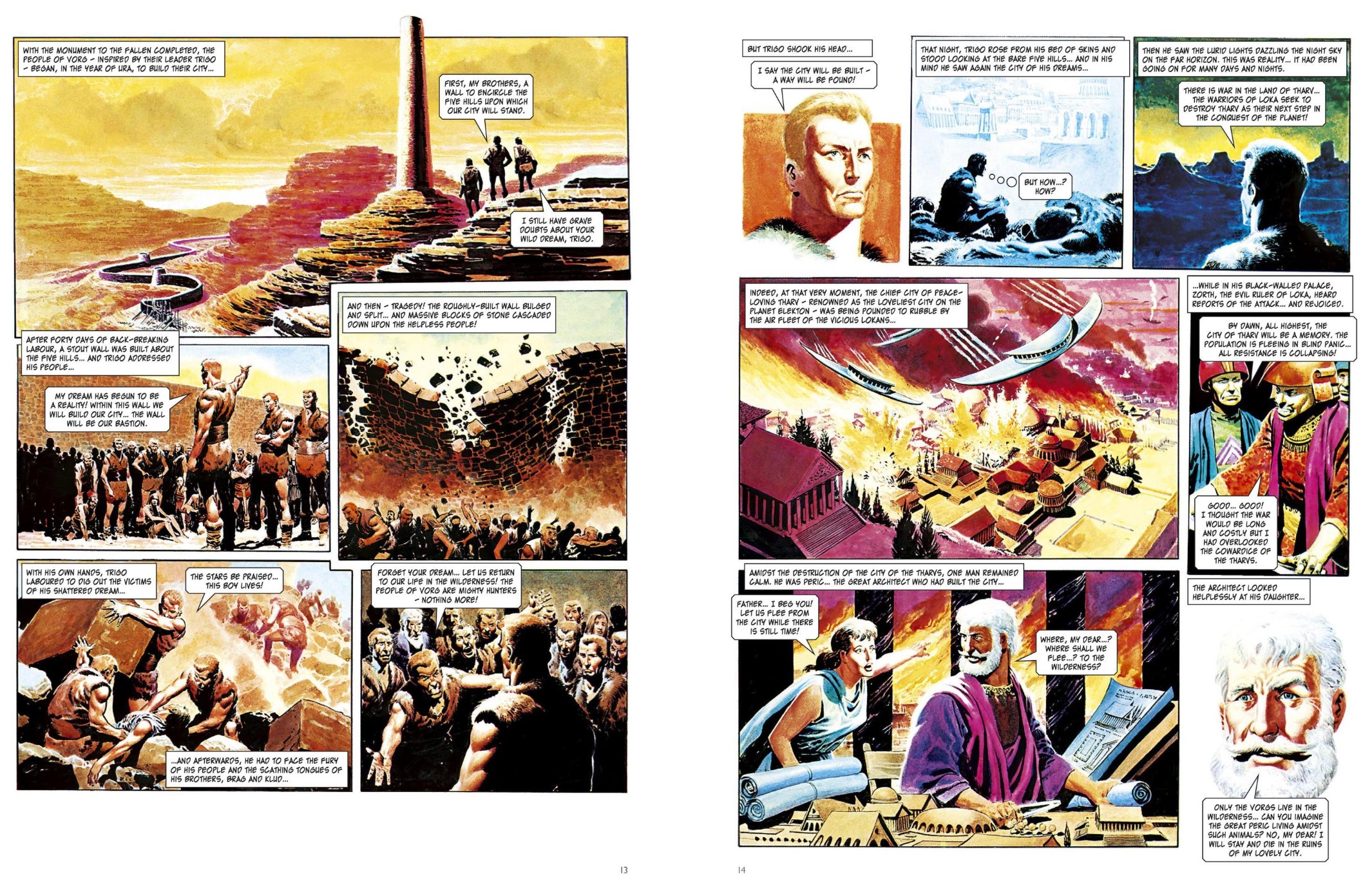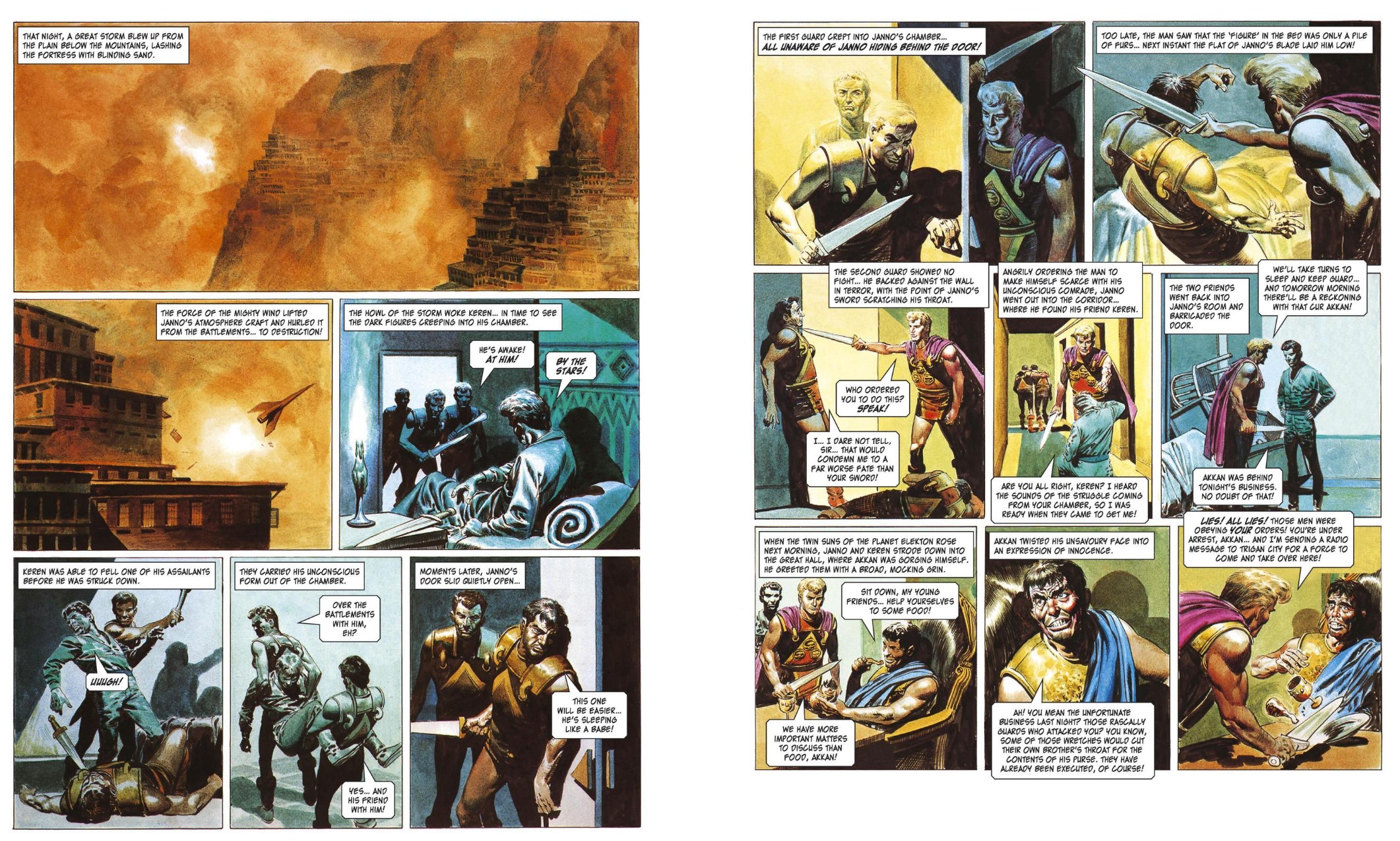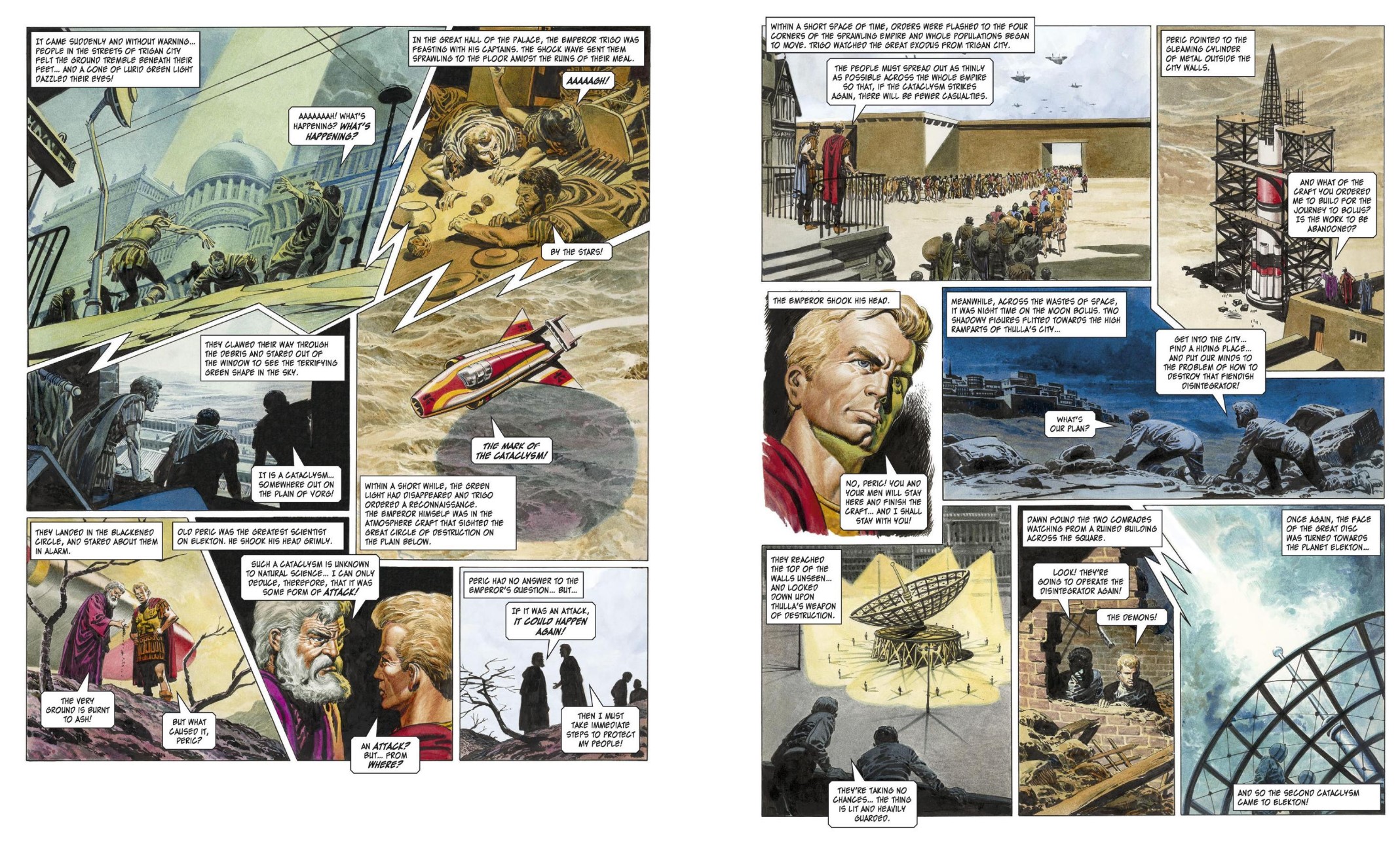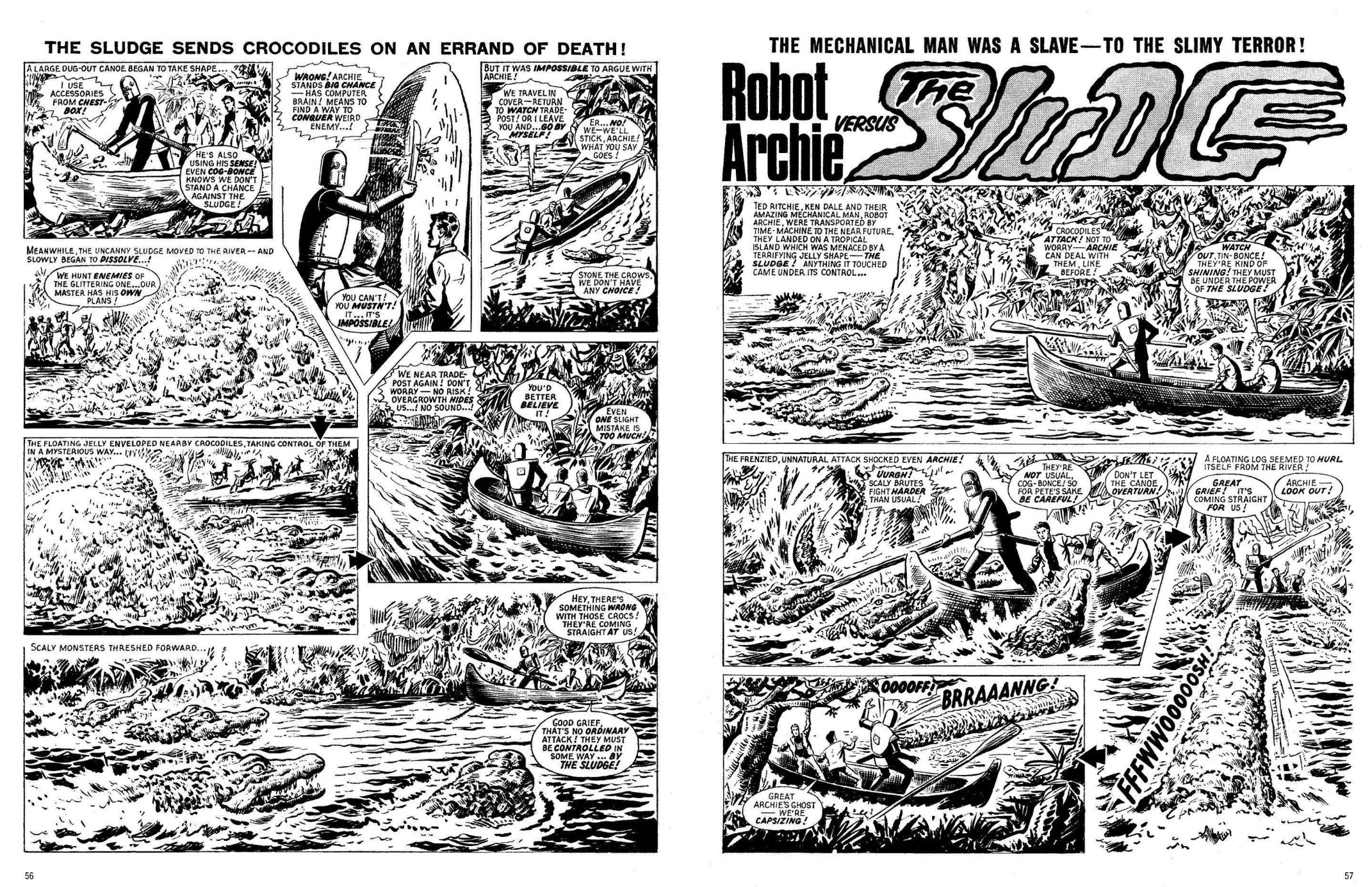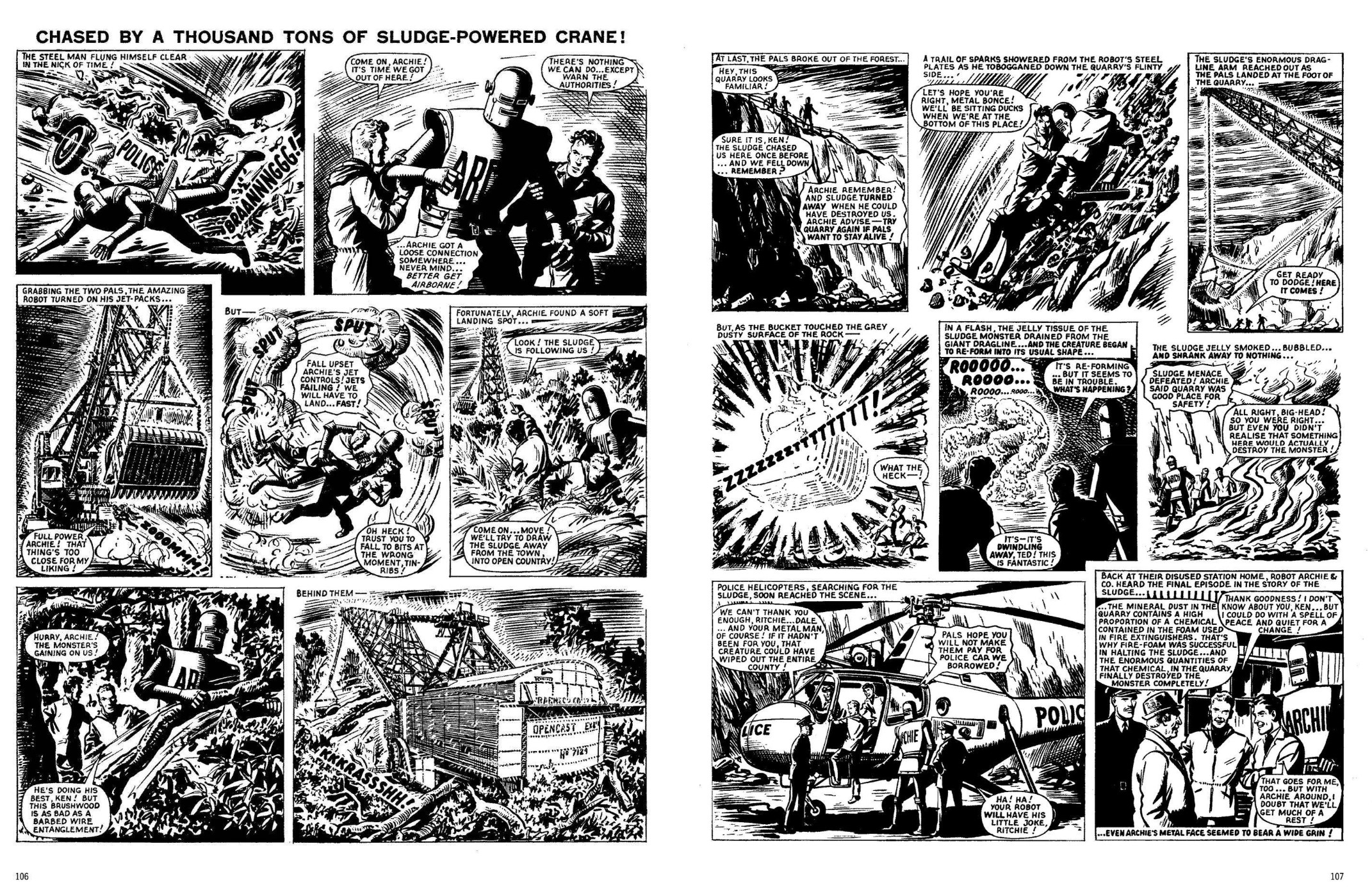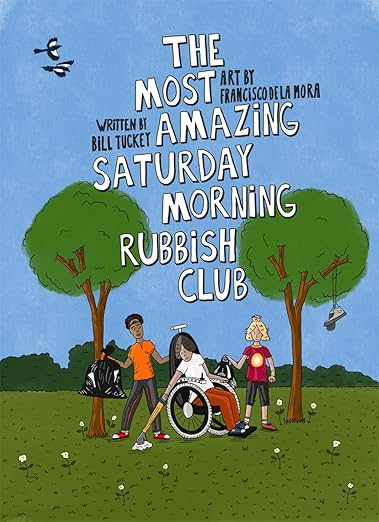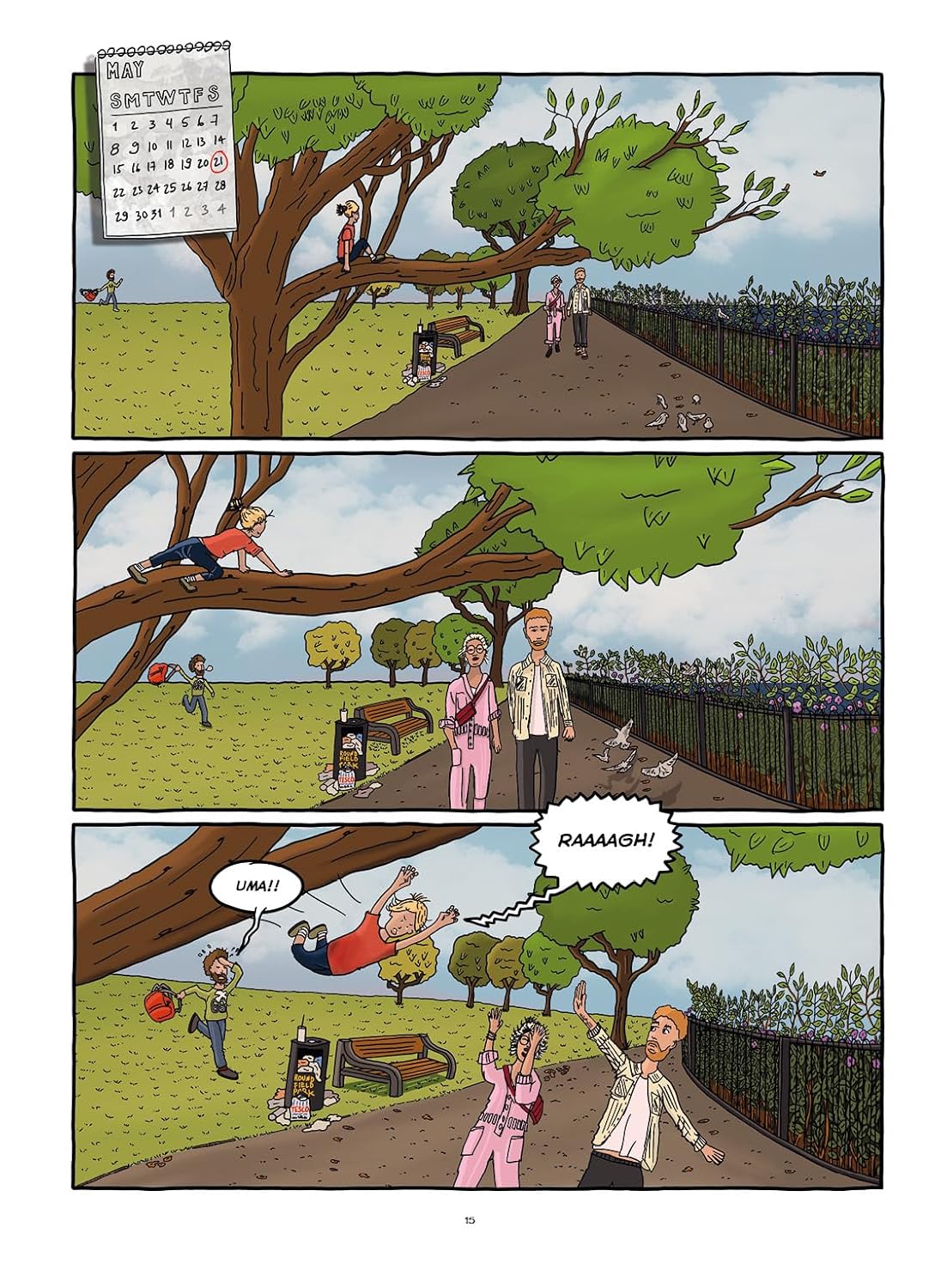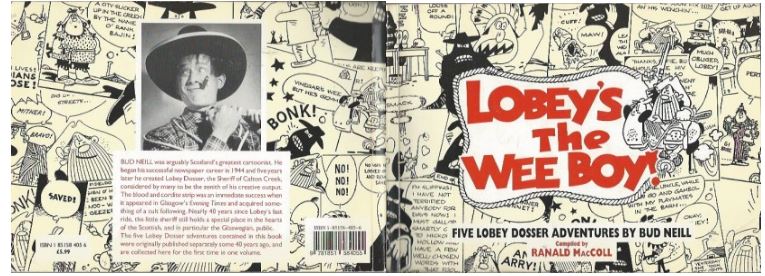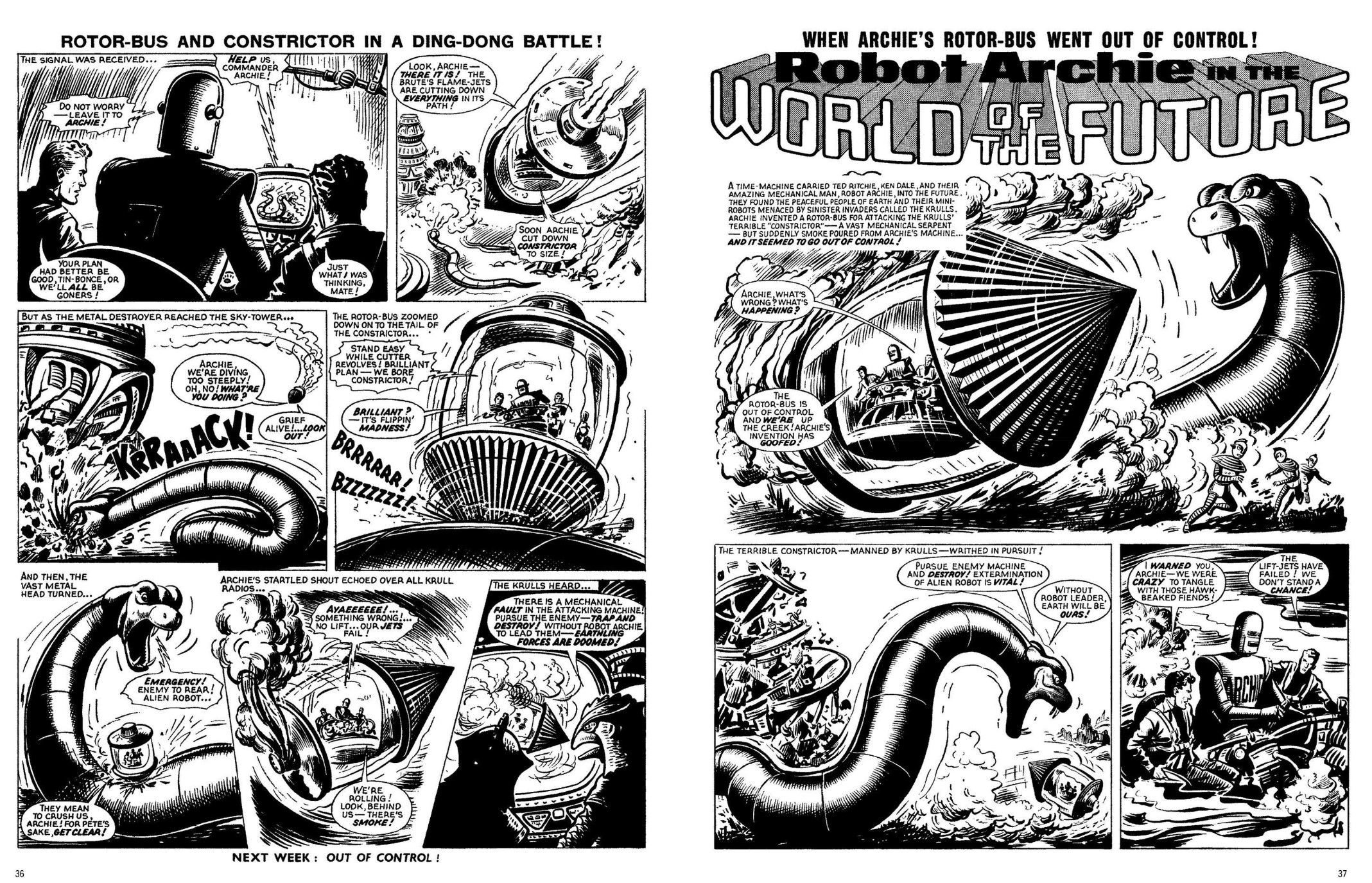
Robot Archie and the World of the Future


By E. George Cowan, Ernest “Ted” Kearon, Davis Harwood, with Garry Leach, Geoff Campion & various (Rebellion Studios)
ISBN: 978-1-83786-554-3 (HB/Digital edition), 978-1-83786-626-7 (Webshop HB)

This book includes Discriminatory Content produced in less enlightened times.

Win’s Christmas Gift Recommendation: Timeless Fantasy Masterpiece for Young and Old Alike… 9/10

British comics have always enjoyed an extended love affair with what can only be described as “unconventional” (for which feel free to substitute “weird” or “creepy”) heroes. So many stars and notional role models of our serials and strips have been outrageous or just plain “off”: self-righteous voyeur/vigilantes like Jason Hyde, sinister masterminds in the manner of The Dwarf or Black Max, arrogant former criminals like The Spider or outright racist overmen such as fearsome white ideologue Captain Hurricane

Joking aside, British comics are unlike any other kind: having to be seen to be believed and always enjoying – especially when “homaging” such uniquely American fare as costumed crimefighters – a touch of insouciant rebelliousness…

Until the 1980s, UK periodicals employed an anthological model, offering variety of genre, theme and character on a weekly (sometimes fortnightly) basis. Humour comics like The Beano were leavened by action-heroes like The Q-Bikes or General Jumbo whilst adventure papers like Smash, The Eagle, Hotspur or Valiant offered palate-cleansers The Cloak, Grimly Feendish, Mowser and sundry other titter-treats.

Prior to the advent of game changers Action, Misty and 2000AD, British comics seemingly fell into fairly ironclad categories. Back then, you had genial and/or fantastic preschool fantasy; licensed entertainment properties; action; adventure; war; school dramas; sports and straight comedy strands. Closer examination would confirm there was always a subversive merging, mixing undertone, especially in such antihero series as Dennis the Menace or our rather strained interpretation of superheroes. Just check out The Phantom Viking, Kelly’s Eye or early Steel Claw stories…

After post-war austerity, the 1950s ushered in revolution. With printing and paper restrictions gone, a steady stream of titles emerged from companies new and old, aimed at the many different levels of childish attainment from pre-school to young adult. When Hulton Press launched Eagle in April 1950, the very concept of what weeklies could be changed forever. That oversized prestige package with photogravure colour was exorbitantly expensive, however, and when venerable London-based publishing powerhouse Amalgamated Press retaliated, it was a far more economical affair. I’m assuming AP only waited so long before the first issue of Lion launched (cover-dated February 23rd 1952) to see if their flashy rival was going to last.

Just like Eagle, Lion mixed prose stories, features and comic strips. It even offered its own cover-featured space-farer in Captain Condor – Space Ship Pilot. Initially edited by Reg Eves, the title ran 1156 weekly issues until 18th May 1974 when it merged with sister-title Valiant. Along the way, in the tradition of Darwinian British publishing – which subsumed weaker-selling titles to keep popular strips going – in 1959 Lion absorbed Sun then Champion (1966) before swallowing Eagle in April 1969, before merging with Thunder in 1971. One of the country’s most popular and enduring adventure comics, the last vestiges of Lion only vanished in 1976 after Valiant’s amalgamation with Battle Picture Weekly.

Despite that demise, there were 30 Lion Annuals between 1953 & 1982, all benefitting from the UK’s lucrative Christmas market, combining a variety of original strips with topical and historical prose adventures; sports, science/general interest features; short humour strips and – increasingly from the 1970s – reformatted reprints from IPC/Fleetway’s back catalogue.

The Jungle Robot debuted in Lion’s first issue, created by incredibly prolific E. George Cowan (Ginger Nutt, The Spider, Saber, King of the Jungle, Smokeman/UFO Agent, Nick Jolly the Flying Highwayman, Paddy Payne, Girls’ Crystal Libraries) and drawn by Alan Philpott (The Deathless Men/V for Vengeance, Look-In, Klanky). It enthralled readers for a couple of months before abruptly vanishing with the August 9th issue.

Other than an appearance in the 1955 Lion Annual, that was it until January 19th 1957 when the mechanical marvel was revived and revised by Cowan & A. Forbes prior to veteran artist Ernest “Ted” Kearon (Spot the Clue with Zip Nolan, The Day the World Drowned, Steel Commando and DC Thomson’s Morgyn the Mighty). He signed on in 1958 and soldiered on for most of the next 17-ish years. This time the mighty mouthed mechanoid became one of the most popular and well-remembered heroes of the British scene, successfully syndicated all across Europe and around the world. Hopefully this second compilation of later material will be soon supplemented by earlier annals …

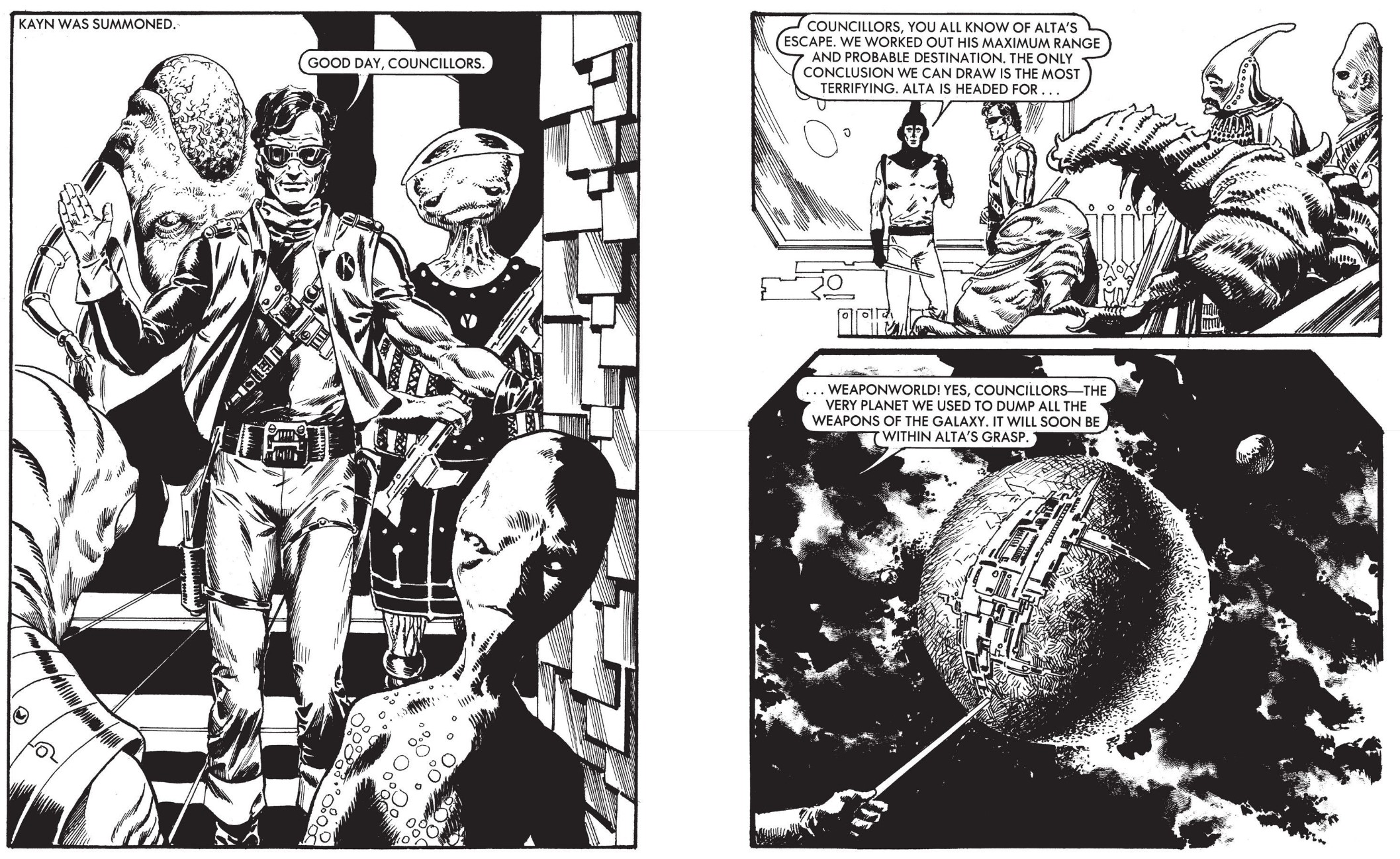
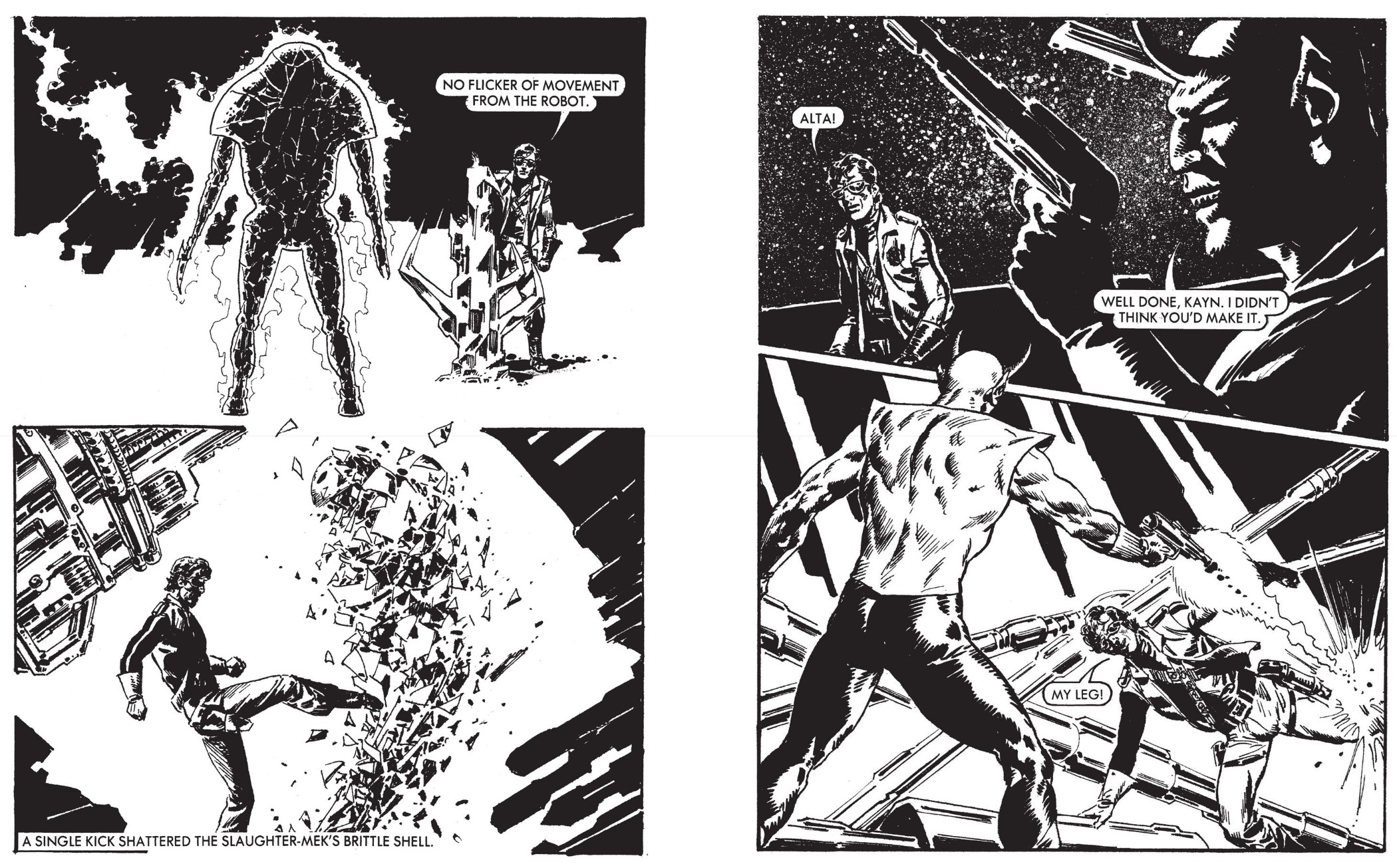
Reprinting stories from 18th January 1969 to 18th October 1969, plus yarns from Lion Annual 1971 and Lion Holiday Special 1980 these latterday adventures of explorer/ troubleshooters Ted Ritchie, Ken Dale and arrogant, smug, self-absorbed yet paternally benevolent super-robot Robot Archie resume and take an even more outrageous turn here.

The former Jungle Robot was for a very long time the greatest achievement of Ted’s inventor uncle Professor C. R. Ritchie. Partnered with him/it the lads battled monsters & aliens, foiled crooks and faced disasters. Then the Prof left them The Castle. This inhabitable two-storey faux chess piece could take them anywhere in history and even into the future… and inevitably the boastful ‘bot commandeers it and discovers the wonders and perils of all spacetime…

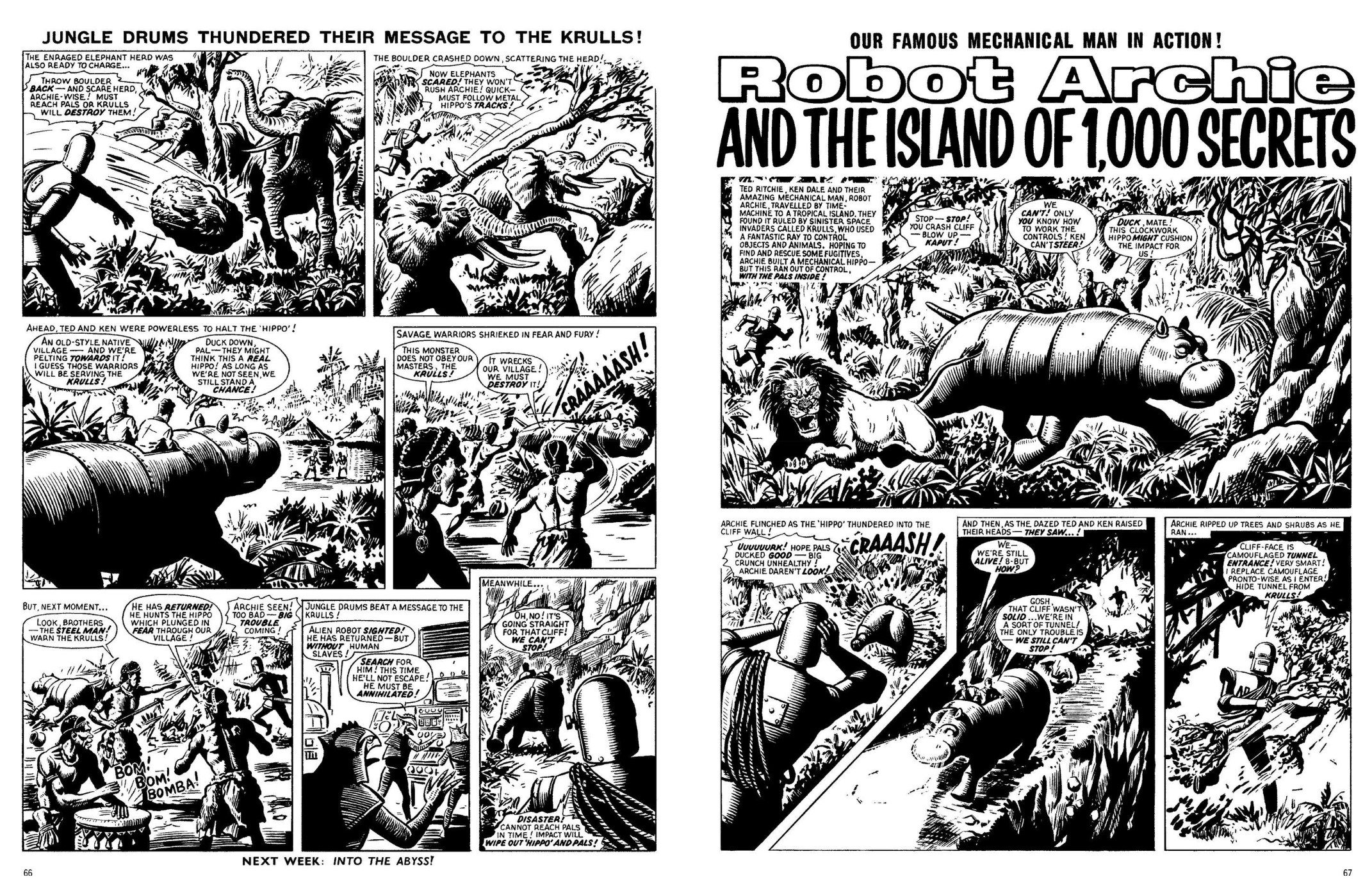
After joining a peasant’s revolt in the 14th century, and ending an alien invasion in the 21st, they fetched up fully lost and out of control in 18th century England to face Highwaymen and corrupt judges, pirates and more. Now at the mercy of raging chronal currents, the wanderers arrive thousands of years into Earth’s menacing tomorrows to find a paradise run by genetically pacifistic humans who look like wise children. This promised land is serviced by billions of mechanical servants but ‘Robot Archie in the World of the Future’ (by Cowan & Kearon for Lion 18th January to 26th April 1969) coincides with another extraterrestrial landgrab.

With barbarous conquerors the Krull resolved to possess and use up the world, it falls to Ted, Ken and especially super-general Archie to protect what humanity has become, retrain billions of robots into an army and repel the invaders. Of course, with no organised military or armaments, their arsenal of liberty must come from museums… as do the hands-on tactics the metal commander-in-chief inflicts on the aliens. These sorties have never been seen before and the Krull have no idea how to counter then…

After a ferocious struggle Earth is safe and free again, albeit forever changed, and the time trio take off on the hope of finding their home era again. The next landing initially seems to satisfy them – a lush island with recognisable architecture and normal looking people. Sadly, a series of unexplained events soon show otherwise…

Running from May 3rd to August 2nd, ‘Robot Archie and the Island of 1,000 Secrets’ pits the lads against ghostly phenomena, animated machinery, possessed animals and “hostile natives”, before a succession of hairsbreadth escapes expose the whole locale as a testing ground for some scurrilous aliens formerly beaten but now ready for a second round of malice and mayhem. Bombastic, bellicose Archie is more than happy to supply it…

After a protracted struggle that slips from mystery to sci fi fantasy, the intruders are defeated and humans liberated, with the restless nomads taking off again and landing in a pit of genuine horror…

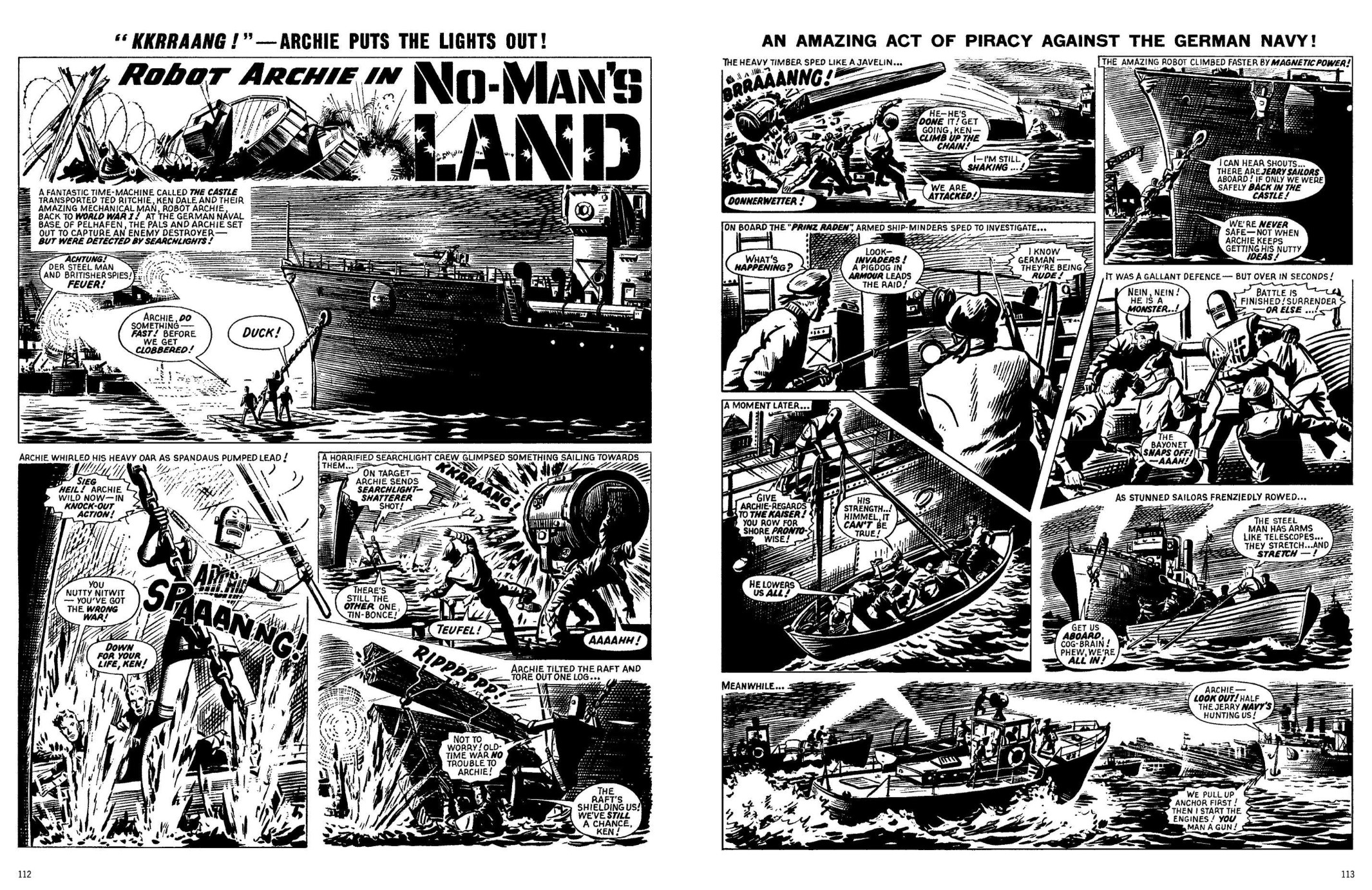
Concluding around that year’s Remembrance Sunday commemorations ‘Robot Archie in No-Man’s Land’ ran from 9th August – 18th November 1969 and dropped the pals in the middle of a mud-drenched clash for a few feet of trench. In the clash Archie was damaged and went berserk whilst ununiformed Ted and Ken are instantly assessed as spies and arrested. In an age of technological breakthroughs the Germans, after being pounded and petrified by “the Steel Man”, concentrate all their efforts on capturing it, leading to massive and cathartic comics Hun-bashing (with Archie excelling on land at sea and in the air) before finally rescuing his human companions, un-impounding the Time Castle and taking off for fresh pastures and fewer explosions…

To Be Continued…

With epic covers by Geoff Campion & Garry Leach, the ‘Extras’ section of this mighty monument to weird fun begins with a brace of short complete tales from Lion Annual 1971 Special 1969 and Lion Holiday Special 1980 respectively. ‘Robot Archie – The Steel Giant’ by Kearon and an uncredited author finds the time-tossed trio in ancient Rome just as a usurper awaits three gladiator/assassins he’s hired sight unseen to kill Caesar. He can’t miss them, one of them is a veritable colossus who always wears full armour…

The general is cautious however and sets them tasks to prove their merit, but while they are acing those, the real hitmen arrive. Whoops!

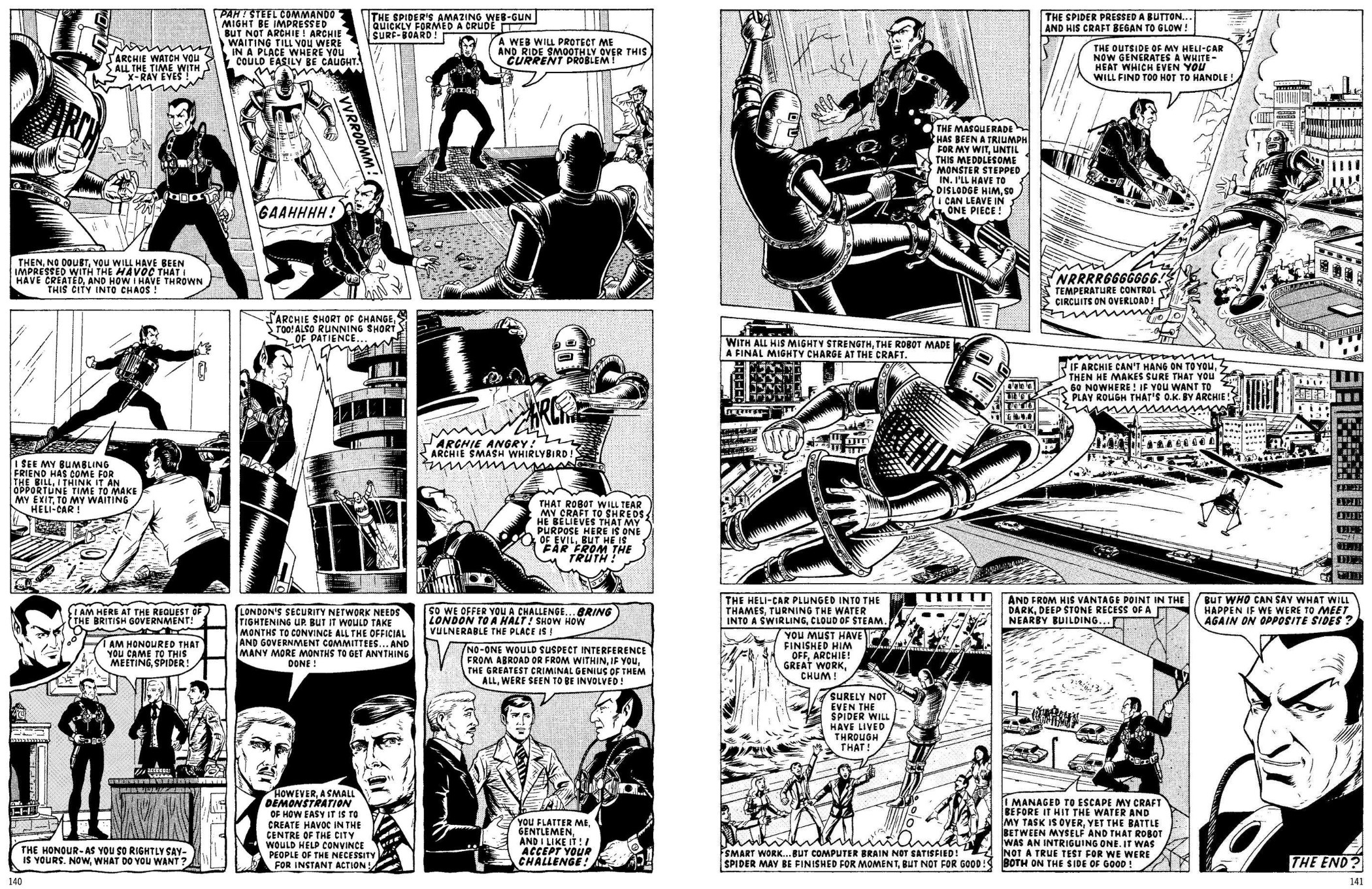
Only a decade later, and three years into Fleetways’ revolution of UK comics, Archie was long gone and a figure of fond nostalgia. Thus he was cheekily revived for a team/up clash with a fellow veteran. Delivered by an unknown writer and Dave Harwood, ‘Robot Archie vs the Spider’ gave everybody what they wanted as the icons tried to beat the stuffings out of each other in a two-part saga that delivered on action but promised a continuation that never came…

The memory storm concludes with a too-short Covers Gallery and biographies.

Now part of Rebellion Publishing’s line of British Comics Classics, Robot Archie is a landmark of UK fantasy long overdue for revival. I hope not much time passes before we see all the old stories back again…
© 1969, 1970. 1980 & 2025 Rebellion Publishing IP Ltd. All Rights Reserved.

Today in 1887, British cartoonist George William Wakefield was born. You’ve never heard of him but he delighted your great grandparents with his Laurel and Hardy comics. In 1947, Doug Murray was born, whom we probably know best for writing The ‘Nam.

Today in 1977 saw the last published episode of Li’l Abner and in 1997, master Archie artist Samm Schwartz prat-falled (pratfell?) his way offstage for the last time.

In 2003, Flash co-creator and Golden Age stalwart Harry Lampert died. You don’t have to follow Now Read This, but you really, REALLY should read the comics we’re plugging here.

Moomin volume Ten – The Complete Lars Jansson Comic Strip


By Lasse Lars Jansson (Drawn & Quarterly)
ISBN: 978-1-77046-202-1 (HB) eISBN: 978-1-77046-557-2

Win’s Christmas Gift Recommendation: the Personification of Good Will at Every Season… 9/10

Tove Jansson was one of the greatest literary innovators and narrative pioneers of the 20th century: equally adept at shaping words and images to create worlds of wonder. She was especially expressive with basic components like pen & ink, manipulating economical lines and patterns into sublime realms of fascination, whilst her dexterity made simple forms into incredibly expressive and potent symbols. So was her brother…

Tove Marika Jansson was born into an artistic, intellectual and rather bohemian Swedish family in Helsinki, Finland on August 9th 1914. Patriarch Viktor was a sculptor and mother Signe Hammarsten-Jansson a successful illustrator, graphic designer and commercial artist. Tove’s brothers Lars AKA “Lasse” and Per Olov became – respectively – an author and cartoonist, and an art photographer. The family and its close intellectual, eccentric circle of friends seems to have been cast rather than born, with a witty play or challenging sitcom as the piece they were all destined to inhabit. After extensive and intensive study (from 1930-1938 at the University College of Arts, Crafts and Design, Stockholm, Graphic School of the Finnish Academy of Fine Arts and L’Ecole d’Adrien Holy and L’Ecole des Beaux-Arts, Paris), she became a successful exhibiting artist through the troubled years of WWII.

Brilliantly creative across many fields, she published her first Moomins fable in 1945. Småtrollen och den stora översvämningen (The Little Trolls and the Great Flood – latterly and more euphoniously The Moomins and the Great Flood) was a whimsical epic of gentle, inclusive, accepting, understanding, bohemian misfit trolls and their strange friends…

The term “Moomin” came from maternal uncle Einar Hammarsten who tried to stop Tove pilfering food when she visited by warning that a Moomintroll guarded the kitchen, creeping up on trespassers and breathing cold air down their necks… you can check out our other reviews such as Christmas Comes to Moominvalley for how the critter made a mega franchise and proto-mythology. Here and now, let’s discuss how Lars got involved…

Exponentially more popular with each successive book, global fame loomed. In 1952 Finn Family Moomintroll/The Happy Moomins was translated into English to great acclaim, prompting British publishing giant Associated Press to commission a daily newspaper strip starring the seductively sweet & sensibly surreal creations. Jansson had no misgivings or prejudices about strip cartoons as she had already adapted Comet in Moominland for Swedish/Finnish paper Ny Tid.

Mumintrollet och jordens undergäng/Moomintrolls and the End of the World was hugely popular and she welcomed the chance to extend her eclectic family’s range. In 1953, The London Evening News began the first of 21 Moomin strip sagas which captivated readers of all ages. Tove Jansson’s involvement in the cartoon ended in 1959, a casualty of its own success and the punishing publication schedule. So great was the strain that she had already recruited brother Lars to help. He quietly took over, continuing the feature until its close in 1975. His tenure as sole creator officially began with the sixth collection in this series and reaches its penultimate volume here…

Liberated from cartooning pressures, Tove returned to painting, writing and other pursuits: generating plays, murals, public art, stage designs, costumes for dramas and ballets, a Moomin opera and 9 more Moomin-related picture-books and novels, as well as 13 books and short-story collections strictly for grown-ups. She died on June 27th 2001, with awards too numerous to mention, and her face on the national currency…

Lars Fredrik Jansson (October 8th 1926 – July 31st 2000) was almost as amazing as his sister. Born into that astounding overachieving clan 12 years after Tove, at 16 he started writing – and selling – his own novels (nine in all). He also taught himself English as there weren’t enough Swedish-language translations of books available for his voracious reading appetite. In 1956 at his sister’s request he began co-scripting the Moomin strip: injecting his own witty whimsicality to ‘Moomin Goes Wild West’. He had been Tove’s English language translator and sense-reader from the start, seamlessly converting her Swedish into text and balloons even the British could grasp. In 1959, when her contract with The London Evening News expired, Lars officially took over, having spent the interim period learning to draw and perfectly mimic his sister’s art style. He had done so in secret, assisted and tutored by their mother Signe Hammarsten-Jansson. From 1961 to strip’s end in 1974, Lars was sole steersman of trollish tabloid tails (I fear that could be much misconstrued these days…).

“Lasse” was a man of many parts. Other careers included aerial photographer, professional gold miner, writer and translator. He was basis and model for ultimate cool kid Snufkin and his Moomins exploits were subtly sharper than his sister’s version: far more closely in tune with the quirky British sense of humour. Nevertheless, his whimsically wry sense of wonder was every bit as compelling. In 1990, long after the original series, Lasse began a new career, working with Dennis Livson (designer of Finland’s acclaimed Moomin World theme park) as producers of anime series The Moomins and, with daughter Sophia Jansson in 1993, on new Moomin strips…

Moomintrolls are easy-going free spirits: polite modern bohemians untroubled by hidebound domestic mores but under Lars, increasingly diverted and distracted by societal pressures. Moominmama is warm, kindly tolerant and capable, if perhaps overly concerned with propriety and appearances, whilst her devoted spouse Moominpappa spends most of his time trying to rekindle his adventurous youth or dreaming of fantastic journeys. Doting, darling son Moomintroll is a meek, dreamy boy with a big imagination and confusing ambitions who adores – and so moons over – permanent houseguest the Snorkmaiden. That impressionable, flighty gamin prefers to play things slowly whilst awaiting somebody potentially better…

A wonderfully whimsy driven affair, this 10th and final monochrome moon melange delivers serial strip sagas #38 to 41, and commences with Lars still totally in charge as panic grips the sheltered valley-dwelling community. This is thanks to something supernally sinister and quite unknown pops by for the mass mess deemed ‘Moomin and the Vampire’

The parable on uncontrolled hysteria sees the dozy denizens driven mad by an assumed monster in their midst and begins following a normal day of big game hunting in the small Scandinavian valley. When rumour of an undead horror haunting the fir forests and charming cottages, the usual miscommunications and madnesses leave everyone in a tizzy, tracking or hiding from the unseen doom. All poor placid Moominmama sees is a tiny fuzzy flying creature in need of a feed and a place to rest, but it probably best not to share the secret of her new guest with all her excitable neighbours…

Up next and a swingeing assault on popular cultures comes ‘Moomin and the TV’, as the reclusive Moomins go shopping for anew sideboard and are pressured into purchasing a top of the line television set…

Despite initial resistance and treating the box as a giant wooded chest, eventually the family succumb to the shows and ads perpetually erupting from it, but that’s as nothing to the chaos caused as the friendly visits from everyone else in Moominvalley – even passing strangers! -threaten to overwhelm even Moominpapa’s legendary hospitality and deplete the mythic capacity of ‘Mama’s larder and pantry…

And my gosh, the rubbish they all watch!

A delicious poke at town planning, social crusaders, local politics and property developers follows as ‘The Underdeveloped Moomins’ finds the big white darlings helping a dedicated but unemployed and under-appreciated Assessor of Under-Developed Areas feel fulfilled. She knows her gifts, specialisms and training can readily bring these primitive, happy valley-folk into the top echelon of progressive go-getting modern citizens, and the Moomins are happy to help, no matter how miserable all these new-fangled ideas, gadgets and schemes make everyone…

The wonderment comes to a close with a whiff of prognostication and prophecy as winter draws on in ‘Moomin and Aunt Jane’. When glamourous but generally useless Romantic poet Wispy moves in next door, he accidentally and then intentionally beguiles flirtatious dreamer Snorkmaiden, just as a little old lady haunts the chilly community. Perpetually predicting frozen doom and deadly privation, she starts to snaffle any potentially useful kit – other people’s blankets, firewood, food, skis, stores. As young Moomin and the maiden again perform their standard jealousy dance, ‘Pappa finally listens to the busy biddy and is convinced the extremely cold end of days is coming. As he begins his own excessive doomsday-prepper precautions, Wispy and Snorkmaiden elope with Moomin in cold pursuit, and the crisis goes into overdrive as prim, officious Moomin Aunt Jane invites herself to stay. Not even faking deadly illness can deter this dowager do-gooding know-it-all and she has no time for silly biddies, puling poets, vacuous romance or any sort of nonsense..

Finishing the fabulous Finnish saga in a cloud of confusion with a domestic dramedy in the best Ealing Comedy traditions of anything with Dame Magaret Rutheford in it, this is the ideal end to a cartoon era…

This compilation again closes with a closer look at the creator in ‘Lars Jansson: Roll Up Your Sleeves and Get to Work’ courtesy of family biographer Juhani Tolvanen, extolling his many worthy attributes…

These are utterly, adorably barbed tales for the young, laced with that devastating observation and razor-sharp wit which enhances and elevates only the greatest kids’ stories into classics of literature. These tomes – both Tove & Lars’ – are an international treasure trove no fan of the medium – or carbon-based lifeform with even a hint of heart and soul – can afford to be without.
© 2015 Solo/Bulls, except “Lars Jansson: Roll Up Your Sleeves and Get to Work” © 2011/2015 Juhani Tolvanen. All rights reserved.

Today in 1921, Heart of Juliet Jones & Blondie artist Stan Drake was born. Why not treat yourself to a rarer delight such as Kelly Green volume 1: The Go-Between? In 1951, Bill Mantlo was born, and in 1964, Brant Parker & Johnny Hart’s Wizard of Id strip debuted. Three years later in France, Jean-Claude Mézières & Pierre Christin’s Valérian and Laureline began utterly revolutionising sci fi. In 1993 star penciller/ editor Ross Andru died. All of the above make multiple appears in Now Read This! so just go wild in that search box…

Heritage Comics Presents Spellbound: Damian Darke & I Don’t Want To Be a Witch!


By Daniel McGachey & Lauren Knight, Georgia Standen Battle, Brian Lewis,
Du Feu & Francisco Cueto, Alan Hebden & Patrick Wright, Kek W. & Jaume Forns, &Vicente Alcazar, & various (Heritage Comics/DC Thomson & Co.)

ISBN: 978-1-91743641-0 (TPB/Digital edition)

This book includes Discriminatory Content produced in less enlightened times.

DC Thomson is probably the most influential comics publisher in British history. In the 1930s The Dandy and The Beano revolutionised children’s comedy comics, whilst newspaper strips Oor Wullie and The Broons (both created by writer/Editor R. D. Low and Dudley D. Watkins) have become a genetic marker for Scottishness. The company uniquely portrayed the occasional toff, decent British blokes and working-class heroes who grew from the prose-packed pages of Adventure, Rover, Wizard, Skipper, Hotspur and latterly “strip picture papers” like Victor and Warlord. They also cannily followed wider-world trends and capitalised – as much as any tasteful, all-ages publishing house could – on global interests that filtered down to juvenile consumers.

Their Girls Papers line especially shaped successive generations and, whenever cited, examples still evoke passionate memories. Don’t take my word for it either; just ask your mum or grandmother about Judy, Bunty, Diana, Mandy and the rest…

And that goes double for the spooky sagas in Spellbound

Kids have always delighted in scary stories but the 1970s horror bubble presented lots of problems for comics publishers. With parents and watch groups always readily on hand to complain or kick up a fuss, how to cater to a genuine demand without incurring another 1950s style comics panic was uppermost in every comic editor’s mind. The answer, obviously is with style, imagination and caution…

Predating Fleetway’s fantasy icon Misty by a couple of years, Spellbound – “the all-new mystery story paper for girls”- launched from DC Thompson’s haunted mansion on September 25th 1976.

Opening in plenty of time for Halloween, it ran for 69 issues before merging in January 1978 with generally-school-&-fashion-themed title Debbie. In its time Spellbound recounted horror-tinged fantasy tales along traditional lines, mixed with school scenarios and, as always, supplemented by text features, activities, and general interest snippets. Its true rewards and achievements rested in the roster of stellar creators associated with its solo strips and serials: artisans including Brian Lewis, Estaban Maroto, Edmond Ripoll, Enrique Badía Romero, Jésus Redondo, Adolfo Usero, Jordi Franch, Norman Lee and others for material including ‘When the Mummy Walks’, ‘The Secret of Silver Star’, ‘Supercats’, ‘The Haunting of Laura Lee’, ‘Peril on Paradise Island’ and more.

DCT is constantly looking for better ways to reach fresh audiences and recently moved into digital publishing of vintage and original new stories in a big way. Backing up their Commando war stories and Starblazer science fiction reprint projects comes this initially digital-only treat: a timely compilation of supernatural sagas is an ideal way to expand their Heritage Comics imprint (expect more reviews in coming months).

This blockbuster tome collects many magnificently understated macabre moments from the periodical, focussing at first on short stories narrated by Master of Mystery Damian Darke before closing with a complete serial from Spellbound #1-15. Throughout, the monochrome lore is littered with those aforementioned prose featurettes and the occasional full colour cover reproduction, and the entire fear fest is festooned with new stuff such as informative

opening letter to the readers ‘Spellbinding Tales…’

Then comes a new introductory spooky strip by Daniel McGachey & Lauren Knight, as wayward teens Gwen & MacKenzie – who really should know better – break into an old abandoned house and discover the world is not what they thought it was…

The cover of #46 (August 6th 1977) leads to our introduction to the Man of Mystery from Spellbound #1, as Damian Darke describes the events of a judicial ‘Spectre from the Flame’ returning to punish evildoers from beyond the grave in a superb chiller limned by Brian Lewis. Next, Jenny & Denise experience a ‘Journey into Fear’ (#19) when they are lost in a storm on the Yorkshire Dales and fetch up at an old edifice that is absolutely not the youth hostel they’re looking for…

That’s augmented with prose potted ghost story ‘Spellbound Special Feature: Poor Little Rich Boy’ from #4, before Lewis strikes again with ‘The Warning’ (#46) wherein hikers Joan & Babs meet a little girl who literally isn’t there (anymore…) whilst from Spellbound #2, “biker chick” Lindsay Gordon inadvertently survives a very close encounter with Cumbrian legend the ‘Ghost Rider’ before ‘Spellbound Special Feature: Get Friendly with Your Phantom’ (#12) textually tells of how to act if one gets too close to the dead-&-not-gone…

Haunted objects ‘The Preston Figurines’ (#36) move heaven and earth to be reunited when sold separately at an antique shop, after which – from #7 – Darke details how a mean miserly usurer gets his just deserts in the ‘Swamp of Evil’: a period piece neatly bookended by text tract ‘Spinning Spectres’ from #13.

Spectral salvation and revelatory redemption come when lost voyager Judy Rose survives a snowstorm thanks to ‘The Cavalier’s Cloak’ (#37) even as in #35 horse lover Kathy King is saved from certain swampy death by ‘The Ghost of Whitefire’ – a modern myth bolstered by prose historical pointers in #17’s ‘Spellbound Special Feature: Milady Greensleeves’

From Spellbound #21, ‘Mystery at Howlen Hall’ revisits classic gothic literature as a sister searches for a lost sibling at a creaky old manse and only finds madness and worse, whilst Lewis shines in a sentimental scare-fest involving a valiant dead puppy and an ‘Echo on the Wind’ (#4) prior to prose ‘Special Feature: Mr Nobody’ taking a peep at people who aren’t there…

Murder from beyond and a most unquiet landlady garnish a florid tale of perilous ‘Poison Ivy’ (#48), whilst Victorian vignette ‘The House of Palgrave’ (#3 by Lewis) explores a Cornish dwelling that is in no way welcoming to its owner’s new bride, all before auction-going flatmates Sue & Carol get more than they bargained for after buying ‘A Spoonful of Evil…’ (#43). This brings Darke’s delightful diatribes to a halt for the present, allowing a ‘Spellbound Special Feature: The Housemaid’s Revenge’ (#28) and the cover to #8 (November 13th 1976) to usher in a classic serial…

Illustrated by Norman Lee (When the Mummy Walks, The Shop at Shudder Corner, most Spellbound covers) ‘I Don’t Want to Be a Witch!’ is reprinted from Spellbound #1-15, and blends traditional outsider-at-boarding-school comedy drama with a hefty dose of wyrd warfare. However, here, 13-year-old Celia Winters perpetually foils the many schemes of her high witch aunt Armida who strives to make the teenager her vassal and mystic acolyte, but first must get her out of the infernal normal school she loves and away from all her friends at St. Ann’s…

For three action- and imagination-packed months, Celia, best pal Anne and pet Myna bird Merlin duck & dodge & dive, craftily utilising the hidden magic grotto on school grounds (“normal life” huh?) to foil Auntie’s every incredible ploy. Constant chaos and bewildered teachers cannot quell the madness, nor will her feline familiar Lucifer and spiteful tattle-tale mean girl Ruth Narkle hold back as they seek to squash Celia’s every effort to stay nice and normal. Eventually the escalating arcane pot boiler inevitably bubbles over…

‘I Don’t Want to Be a Witch!’ may have ended but is here revived in a creepy continuance by Georgia Standen Battle & Anna Morozova who introduce a fresh new generation to close this tome…

Rounding out the nostalgia chills is a final cover gallery – seven more scary front pages – accompanied by one last yarn: another illustrated prose poser from the first issue suitably entitled ‘Nightmare’

Short sharp stories of solidly spooky standing superbly rendered make this a horror fan’s delight and a welcome doorway into more inviting times. Why not climb aboard this coachload of chillers and see what used to make our spines shudder and shake?
© DC Thomson & Co., Ltd. 2019.

Today in 1922 Maurice Dodd was born. We love him for one of the world’s greatest comedy strips. So will you if you scope out The Perishers Spectacolour.

Leo Baxendale’s Sweeny Toddler


By Leo Baxendale & others (Rebellion Studios)
ISBN: 978-1-78108-726-8 (HB/Digital edition)

This book includes Discriminatory Content produced in less enlightened times.

Win’s Christmas Gift Recommendation: Utterly Bonkers, Inspired Lunacy… 10/10

If you know British Comics, you know Leo Baxendale.

Long ago and still right now, Baxendale (27th October 1930 – 23rd April 2017) was the epitome of rebellious, youth-oriented artistic prodigies who, largely unsung but definitely much noticed, went about seditiously transforming British Comics: entertaining millions and inspiring uncounted numbers of those readers to become cartoonists too.

Joseph Leo Baxendale was educated at Preston Catholic College, served in the RAF and was born on 27th, October 1930, in Whittle-le-Woods, Lancashire – but not necessarily in that order. Like Spike Milligan and so many brilliant others, his response to privation, injustice, war and the post war era was being funny in an absurd way. If you’re quick, you can track down some of his stuff – of which far too little has been archivally published – and celebrate his 95th anniversary in an appropriate manner.

Baxendale’s first paid artistic efforts were drawing ads and cartoons for The Lancashire Evening Post but his life – and the entire British comics scene – changed in 1952 when he began freelancing for DC Thomson’s top weekly The Beano. He assumed creative control of moribund Lord Snooty and his Pals and originated anarchically surreal strips Little Plum, Minnie the Minx, The Three Bears and When the Bell Rings. That last strip then rapidly metamorphosed into legendary, lurgy-packed anarchic icon The Bash Street Kids, thereby altering the daily realities and lifetime sensibilities of millions of readers and generations of kids.

Baxendale also contributed heavily to the creation of comics tabloid The Beezer in 1956 but, following editorial and financial disputes with his editors, migrated in 1962 to London-based, Harmsworth-owned conglomerate Odhams/Fleetway/IPC. South of the border, his initial humorous creations included Grimly Feendish, General Nitt and his Barmy Army, Bad Penny and a horrid horde of similarly revoltingly, uncannily engaging oiks, yobs and weirdoes who cumulatively made the company’s “Power Comics” experiment such a joy to behold.

During the 1970s he devised more remarkable cartoon star turns which, whilst not perhaps as seditiously groundbreaking as Plum, Minnie, or The Bash Street Kids, nor as subversively enticing as Wham, Smash and Pow creations such as Eagle Eye, Junior Spy, The Swots and the Blots and The Tiddlers (or indeed, as garishly outlandish as George’s Germs or Sam’s Spook), remained part of the nation’s junior landscape for decades after.

The main body of his later creations appeared in mighty anthology Buster: features such as The Cave Kids, Big Chief Pow Wow, Clever Dick and Snooper. Baxendale latterly foisted Willy the Kid upon the world before creating his own publishing imprint Reaper Books.

He also sued DCT for rights to his innovative inky inventions: a 7-year struggle that was eventually settled out of court. Other notable graphic landmarks include pantomimic vision THRRP!, his biography A Very Funny Business: 40 Years of Comics and the strip I Love You, Baby Basil which ran in The Guardian during the early 1990s.

Signature stinker Sweeny Toddler debuted in Shiver and Shake in 1973, unsurprisingly surviving repeated mergers – with Whoopee! and Whizzer and Chips – before settling in at the seemingly unsinkable Buster.

This stunning hardback (and eBook) celebration – hopefully the first of many gathering the entire run and Baxendale’s IPC/Fleetway oeuvre – is another crucial addition to Rebellion’s ever-expanding Treasury of British Comics. It gathers the episodes from Shiver and Shake spanning March 10th 1973 to 5th October 1974, plus the first nappy-load from Whoopee!, from 23rd November 1974 until 7th June 1975.

The potent package is suitably accompanied by an appreciative, informative and responsible Introduction by his son Martin (who drew the Bad Boy’s adventures after Baxendale senior moved into publishing) and offers a magnificent exercise in manic misrule starring the absolute worst baby in the world… outside of a democratically elected government.

In a simple terrace house with the legend “Tremble wiv fear, Sweeny livs here” scrawled all over it, lives a spotty (occasionally be-stubbled) mono-fanged tyke who is disturbingly fast and strong with a physiognomy that can sour milk. He is precociously able to read – after a fashion – and that, coupled with a lethally low tolerance for boredom and obedience, means the nasty nipper always finds new and distressing ways to amuse himself at someone else’s expense…

With or without faithful dog and eager abettor Hairy Henry, Sweeny turns every pram ride into a pulse-pounding rollercoaster adventure for his poor benighted mum and grandad; every visit to park, shop or museum into a heart-stopping chase and every cuddlesome interlude with ill-advised adults into an exhausting episode in psychological and physical torture.

At least six strips re-presented here are not by Baxendale, but record-keeping is sadly incomplete. Chances are they’re drawn by Tom Paterson, who eventually took over the feature (or possibly Roy Nixon?) but they are all deliciously weird and wonderful: a blend of unbeatable whacky wordplay, explosive slapstick and bizarre situations, garnished by Baxendale’s unique and evocative sound effects: once read, never forgotten…

Briefly retitled Help! It’s Sweeny Toddler in experimental pages that feature second stories starring monstrous beasts living in the borders and margins of the panel dividers, later episodes never lost the eccentric impetus of the first, with the baby from hell, as ever, mugging old ladies, postmen, schoolboys and other unwary visitors; creating his own zoo, attempting to sneak into X films (maybe get granddad to explain those?) and totally tormenting anyone who treats him like a child…

As well as straight strips, this collection also offers ‘Sweeny Toddler’s Beat the Bully Guide’ and graphic game ‘Sweeny Toddler’s Fifty Frightful Faces!’, proving the vile versatility of the manky mite.

Leo Baxendale was one-of-a-kind: a hugely influential, much-imitated master of pictorial comedy and noxious gross-out escapades whose work deeply affected (some would say warped) generations of British and Commonwealth kids. We’ll not see his like again, but these astoundingly engrossing comedy classics are a perfect example of his resolutely British humorous sensibilities – absurdly anarchic, explosively whimsical, outrageously aggressive, crazily confrontational and gleefully grotesque – starring an unremittingly rebellious force of nature with no impulse control.

Sweeny Toddler says and does whatever he wants as soon as he thinks of it, albeit usually to his own detriment and great regret: a rare gift, usually only employed by madmen and foreign Presidents.

These cartoon capers are amongst the most memorable and re-readable exploits in all UK comics history: smart, eternal, existentially funny and immaculately rendered. This a treasure-trove of laughs that spans generations and must be in every family bookcase.
© 1973, 1974, 1975 & 2019 Rebellion Publishing Ltd. Sweeny Toddler is ™ & © Rebellion Publishing Ltd. All Rights Reserved.

Today in 1920 artistic icon Nicholas Vicardi AKA Nick Cardy was born. We last admired his mastery in DC Finest: Aquaman – The King of Atlantis.

In 1935 today, cartoon pioneer Sidney Smith died way too soon. You would already know that if you’d listened and looked up Sidney Smith’s The Gumps like we told you to last week.

In 1993 unsung legend Gaylord Dubois died. He wrote and edited dozens of key features, supplying thousands of stories to comics legends. We are particularly partial to Edgar Rice Burroughs’ Tarzan: The Jesse Marsh Years Omnibus volume two.

Misty featuring Moonchild & The Four Faces of Eve (volume 1)


By Pat Mills, Malcolm Shaw, John Armstrong, Brian Delaney, Shirley Bellwood & various (Rebellion)
ISBN: 978-1-78108-452-6 (album TPB/Digital edition)

Win’s Christmas Gift Recommendation: Spooky Treats for Every Stocking… 9/10

This book includes Discriminatory Content produced in less enlightened times.

Like most of my comics contemporaries I harbour a secret shame. Growing up, I was well aware of the weeklies produced for girls but would never admit to reading them.

My loss: I now know that they were packed with some great strips by astounding artists and writers, many of them personal favourites when they were drawing stalwart soldiers, evil aliens, marauding monsters or strange superheroes (all British superheroes were weird and off-kilter…).

I believe – in terms of quality and respect for the readership’s intelligence, experience and development – “girls’ periodicals” were far more in tune with the sensibilities of the target audience. I absolutely wish I’d paid more attention to Misty back then…

Thus, I’m overjoyed to re-recommend this superb first collection from what originating editor Pat Mills reveals in his Foreword was intended to be as iconoclastic and groundbreaking a publication as his previous creation.

You know the one: 2000 AD

Despite never living up to his expectations – for all the traditional self-sabotaging editorial reasons that have scuppered bold visions since the days of Caxton – Misty was nothing like any other comic in the British marketplace: a Girls’ Juvenile periodical addressing modern issues through a lens of urban horror, science fictional and historical mysteries couched in terms of tense suspenseful dramas. It was also one of the best drawn comics ever seen and featured stunningly beguiling covers by unsung legend Shirley Bellwood: a veteran illustrator who ought to be a household name because we’ve all admired her work in comics and books since the 1950s even if we’ve never been privileged to see her by-line…

Unlike most weeklies, Misty was created with specific themes in mind – fantasy, horror and mystery – and over its too-short existence introduced numerous self-contained features serialised like today’s graphic novels, rather than continuing adventures of star characters.

Although adulterated from Mill’s original design, the comic launched on February 4th 1978 and ran until January 1980 whereupon it merged with the division’s lead title Tammy, thus extending its lifeline until 1984. As was often the case, the brand also continued through Annuals and Specials, running from 1979 until 1986.

The first of a series working under the umbrella of The Treasury of British Comics, this compact monochrome softcover compilation offers two complete part-work novellas from the comic’s canon of nearly 70 strip sagas, starting with the gripping history of the Moonchild.

Written by Mills and illustrated by John Armstrong (Bella in Tammy; The Secret Gymnast in Bunty; Grange Hill), the eerie adventure was based on Stephen King’s Carrie, and ran as lead feature in issues #1-13. It traced the turbulent coming-of-age of abused and confused schoolgirl Rosemary Black: born into a family afflicted with an apparent curse. All women who bore a hereditary crescent birthmark on their foreheads were eventually consumed by psychokinetic powers…

Rosemary’s mother brutally and zealously tries to suppress her daughter’s burgeoning abilities but with sociopathic mean girls Norma, Dawn & Freda making her their constant target for bullying and humiliation, the force inside Rosemary keeps expressing itself in ever more violent manner. Moreover, when school physician Doctor Armstrong realises the truth about the girl so often sent to see him, he sees nothing but an opportunity to be exploited…

When Norma’s bullies embark on their most ambitious scheme to torture Rosemary, sheer disaster is barely averted after the Moonchild’s long missing grandmother suddenly appears with a shocking secret to share…

Following a handy hints feature – how to make a Witch’s Hat – The Four Faces of Eve carries on the chilling bewilderment.

Created by Malcolm Shaw (Misty’s editor and writer of dozens of strips in Britain and Europe) & Brian Delaney (Hart to Hart; Grange Hill; The Professionals) this marvel of malign medical malpractice ran in #20-31, tracing the seemingly paranoid path of Eve Marshall, recently discharged from hospital but still suffering partial amnesia. Despite returning to her home and high-powered scientist parents, Eve remains troubled, especially by horrifically vivid dreams of other girls who died painful, violent deaths…

Inconsolable and increasingly suspicious, Eve snoops around a house she doesn’t remember and discovers mounting evidence that the Marshalls are not her real parents. When the house is later burgled, the police forensics team uncover another impossible anomaly: Eve’s fingerprints match a thief who died months ago…

Scared and haunted by traumatic dreams, Eve runs away and hides in a circus, only to be tracked down and dragged back home by her faux parents. However, pieces are inexorably falling into place and she soon must face the appalling truth she has deduced about herself and the monsters she lives with…

Also including a fulsome tribute to ‘Shirley Bellwood – An Unsung Heroine of British Comics’, creator biographies and one final activity page (‘Misty Says… Be a Devil – and Here’s How’) this supremely engaging tome is a glorious celebration of a uniquely compelling phenomenon of British comics and one that has stood the test of time. Don’t miss this second chance to get in on something truly special and splendidly entertaining
Misty © Egmont UK Limited 1978. All rights reserved.

Today in 1955 René Goscinny & André Franquin debuted humour strip Modeste et Pompom in Le Journal de Tintin – a fact and feature that has still singularly not impressed any English-language comics publishers.

You Are Maggie Thatcher: A Dole-Playing Game


By Pat Mills & Hunt Emerson (Titan Books)
ISBN: 978-1-85286-011-0 (TPB)

This book includes Discriminatory Content produced in less enlightened times, and for comedic and satirical effect.

With the recent anniversary hagiographic whitewashing of “the Greatest Prime Minister we’ve ever had”, fond reminiscences of those truly grim times and policies by the still-privileged and renewed assaults on the poor and unwelcome in Britain, why don’t we proles also indulge in bit of comforting nostalgia for the good old days?

The most successful comic strips depend more on the right villain than any hero or combination of protagonists, so this quirky oddment was better placed than most for success. Created by British comics legends Pat Mills & Hunt Emerson at a time when our industry was at its most politically active, this strident, polemical satire put the proletarian boot in on the appalling tactics and philosophies of the third term Thatcher government with savagely hilarious art and stunningly biting writing.

Illo 1 here please


The concept is simple now but groundbreaking in 1987. The reader is to be Prime Minister Maggie who, by reading sections of the book and selecting a choice of action at the end of each chapter is directed to another page to experience the ramifications of that decision. The objective is to win another election (ah the wonderful irony!) and the method is to make only vote-winning decisions – hence the multiple-choice page-endings. The intention is not to win the game, obviously. What kind of monster are you?!

This powerful piece of graphic propaganda may have dated on some levels but the home truths are still as pertinent. Even as Maggie and her demented pack of lap-dogs wriggled and squirmed on Mills & Emerson’s pen-points, their legacy of personal gain was supplanting both personal and communal responsibility to become the new norm. More than ever, today’s Britain is their fault and this still readily available book reminds us of a struggle too few joined and a fight we should have won, but didn’t.

It’s still really, really funny too.
Text and concept © 1987 Pat Mills. Illustrations © 1987 Hunt Emerson. All Rights Reserved.

Today in 1969 anarchic weekly British treasure trove Whizzer and Chips began its three-decade rampage of fun. You could get a flavour of it all (mostly toffees, liniment, perished rubber and sweaty feet) by seeing Whizzer and Chips Annual 1979.

In 1973 cartoonist Walt Kelly finally had enough of our petulant crap and passed over. You can pay your respects at Pogo – The Complete Syndicated Comic Strips volume 3: Evidence to the Contrary

Bunny vs Monkey Book 11: Intergalactic Monkey Business!


By Jamie Smart, with Sammy Borras, Paul Duffield & Armin Roshdi (David Fickling Books)
ISBN: 978-1-78845-327-1 (Digest HB) 978-1-78845-387-5 (Waterstones Exclusive Team Bunny Edition) 978-1-78845-388-2 (Waterstones Exclusive Team Monkey Edition)

Win’s Christmas Gift Recommendation: Because… Just Because… 10/10

Bunny vs Monkey has been the inspirationally bonkers breakout star of The Phoenix since the first issue in 2012: recounting a madcap vendetta gripping animal archenemies set amidst an idyllic arcadia, masquerading as more-or-less mundane but critically endangered English woodlands. Concocted with gleefully gusto – but increasingly with cerebral cosmic crescendo in mind – by cartoonist/comics artist/novelist Jamie Smart (Fish Head Steve!; Looshkin; Max and Chaffy, Flember, Find Chaffy), these trendsetting, mind-bending yarns have been wisely retooled as best-selling graphic albums available in remastered, double-length digest softcover and hardback editions such as this one. All the tail-biting tension and animal argy-bargy began yonks ago after an obnoxious little beast plopped down in after a disastrous British space shot. OR DID IT?

Crashlanding in Crinkle Woods – scant miles from his launch site – lab animal Monkey believed himself the rightful owner of a strange new world, despite every effort of genteel, contemplative, reasonably sensible forest resident Bunny to dissuade him. For all his patience, propriety and good breeding, the laid-back lepine could not contain or control the incorrigible idiot ape, who to this moment remains a rude, troublemaking, chaos-creating, noise-loving lout intent on building his perfect “Monkeyopia” and/or being a robot, with or without the aid of evil supergenius Skunky or tagalong useless “henches” Metal Steve and Action Beaver

Daily wonders and catastrophes were exacerbated by a broad band of unconventional Crinkle creatures, none more so than monochrome mad scientist Skunky, whose intellect and cavalier attitude to life presents as a propensity for building dangerous robots, bio-beasts and sundry other super-weapons. He is, at his core, a dangerously inquisitive thinker and tinkerer…

Here – with artistic fiddling about from design deputy Sammy Borras – the war of nerves and mega-ordnances resumes as if nothing cosmic or multiverse-changing had ever happened or any hint of a restart after a cosmic culmination. See, that’s what happens if you let books pile up and don’t read them immediately! Go check out Bunny vs Monkey: The Great Big Glitch! and then come back and we’ll talk some more…
Okay then, new day, new start, same old mega mecha meta nonsense as ‘Clouding Over’ sees a suspiciously low-lying cirrus formation starts dumping rain and then increasing more noisome and noxious substances on the woodsfolk in what appear to be targeted strikes. Could there possibly be some kind of intelligence behind the atmospheric attacks?

With propriety and good taste in full retreat, the sensorial assaults resume in ‘Guts n’ Butts!’ as Monkey and Skunky debate the appalling assets and proposed “improvements” to the weaponised flatulence engine dubbed Bungamungus with no consideration of those in its path prior to the simian unleashing his own worst nightmare. The giant ‘MonkeyBot 5000’ is supposed to make life hell for his fluffy white foe, but it appears Bunny can find plenty of uses for a mechanised personal organiser that can bench press trucks, topple buildings, file and colour co-ordinate…

Reality trembles all over again when Monkey’s ‘Mum and Dad’ pop by for a visit and nice bit of tea, but nature’s innocents Weenie and Pig Piggerton are too busy having adventures with ‘Frogs!’ and their mystical king to really notice, whereas ‘Lucky… The Unluckiest Red Panda in the World!!’ stumbles into unbridled chaos (as always) when Skunky & Monkey decide to go through the forgotten inventions bin…

Worried about declining productivity, the sinister science sinner uses his 3D printer to unleash a horde of ‘Fun-Size Skunkies’ who are anything but, before Bunny learns where all the wreckage, rubbish and remains go when the latest catastrophe has finished unfolding. Sadly, there are good reasons nobody wants to see ‘Binbag Sam’ carry out his nasty but necessary job…

Always seeking peace and serene contemplation, mysterious Le Fox has found a wilderness to dig in, but when Monkey comes by and discovers gold in ‘Them Thar Hills’ that’s another dead dream, and only a prelude to planet-shaking events when Skunky’s new signal array test coincides with Monkey’s latest eating challenge. ‘Message in a Butthole’ reveals how – after, inevitably – a monumental foofie erupts across the universe, the consequences will be appalling but not at all unexpected…

In a fabulous tribute to Chuck Jones cartoons ‘Monkey vs Ai’ sees the annoying ape test a bunch of inventions that should work “in theory”, before going back to stinky basics with a cheese cannon. Sadly, the anticipated Cheesepocalyse is derailed by ‘The Turning of the Pig’ as pacifistic Piggerton reaches a limit and shows the monkey miscreant just what it all feels like…

‘Buzzing Off’ finds Skunky testing ways to end the really annoying fly suit he built for his partner in chaos and then hiding along with everyone else in ‘Who’s Afraid of the Monkey’ when the simian simpleton gets really, really hungry. Eventually sated, the little sod resumes pranks and pestiferations with a giant robot in ‘Close Encounters of the Bird Kind’. Remember that olfactory beacon blasted across infinity? This is the moment something answers that unique call…

Suddenly, in ‘You Looking at Me?’ Crinkle Woods are alive with alien weirdoes, but it’s just Skunky messing about with quantum physics and nothing to do with Monkey, because he’s currently hurtling to the other side of the Universe, testing to destruction the super-high-tech toilets of the extraterrestrials who abducted him…

He can’t be blamed for the astonishing void discovered by Pig and Weenie prompting the chilling question ‘What Lies Inside… the Hole?!’ or sensible but naïve robot Metal E.V.E.’s attempts to balance out Lucky’s cosmic misfortunes in ‘What Luck Befalls’ or even Metal Steve’s crisis of confidence and inexplicable desire to ‘Destroy’ because Monkey is currently spreading his brand of chaos while ‘Hitching a Ride’ on the ship of judgemental civilisation eradicating superior being Grand Master Nexus

Meanwhile on Earth, Skunky discovers the missing co-miscreant has left his life unfulfilled and dissatisfied and switches to a copy to serve his unsuspected emotional needs. ‘Little Monkey’ is wild, bitey, uncommunicative, un-potty-trainable and disgusting… such an improvement on the original! Enjoying his fresh start the evil inventor unleashes ‘A Clever Endeavour’ in the compulsive form of a malign puzzle box that baffles and bamboozles everyone – except the mini monkey who might just be the smartest thing in the woods now…

Pig’s penchant for peculiar pets sees the adoption of Blue-bummed Bimblebug ‘Parpy’  but the critter’s 24-hour lifespan brings near-instant woe, This leads to the advent of colossal hermit savant Capybara 5000 whose answers to all the ‘Big Questions’ are surprisingly violent. That search for truths culminates in sage advice ‘Run!’ before calm returns with Pig exploring wild water rafting and Le Fox confronting increasingly sinister Little Monkey in ‘The Happiness of the Kitsune’

In another beleaguered solar system Monkey is slowly wearing down Nexus and his minions, before accidentally warping them all back to Earth to enjoy a spontaneous battle of ‘Rather Big Lasers’ with Skunky. When that eradicates the mastermind’s secret underground lair all Skunky can think of is ‘Revenge’. With Little Monkey in tow the genius goes ‘On the Hunt’ in a unique battleship, pursuing ‘Space Wars’ even as his hirsute former best-buddy seizes control of the Nexus craft and drives it into ‘A Hella Interstellar Yeller’

Marooned on a muddy morass world, Monkey establishes his dream of a dictatorship. Sadly, ‘Chutneyopia’ is right next to the equally barren planet Skunky crashed on and war is declared as the newcomer demands an apology that just won’t be forthcoming…

Moreover, when Skunky took off after Monkey, most of Crinkle Wood went with him and as Bunny ruminates on ‘The Intergalactic Adventures of Weenie and Cinnamon Bun Pig!’ plans are underway to terraform the barren planetoid into ‘A New Home’ unfortunately undertaken by ‘Even More Skunkies’

With the enemy busy converting Chutneyopia into his other, better dream of Monkeyopia, ‘A New Plan’ is needed, but the still active Grand Master finally concedes that its superior mentality and firepower are no match for the annoying Earth ape. With its minions in revolt and resolved to blow up Earth, there nothing left for Monkey to worry about ‘Apart from the Bomb’ that’s going to end his grotty mucky dream world…

What better time for a reconciliation with Skunky?

Back on Earth, other Crinkle Wood critters have briefly enjoyed their time of growth and limelight in ‘Not Bunny vs Monkey’ but the likes of Stan Stoat and Randolph Raccoon are helpless when the minions start blasting. As Monkeyopia becomes a vast spaceship, Skunky begins his ‘Race to Save the World’ with his secret weapon Little Monkey but the outcome is never certain and our heroes all decide they’re ‘Best Off Out of It’, leaving a monumental deus ex machina to sort everything out…

Wrapping up these sidereal shenanigans and cosmic bum gags are related activities offered under the aegis of the Phoenix Comics Club. Bring paper, pencils and you to a compact online course in all aspects of comic strip creation supervised by Jamie Smart & Armin Roshdi detailing ‘How to draw King Frog!’, ‘A Bungamungous!’, ‘Capybara 5000!’ and ‘An Alien!’ before closing with an extensive plug for the aforementioned Phoenix Comics Club website complete with instant access via a QR code, plus previews of other treats and wonders available in The Phoenix to wind down from all that cosmic furore…

Another book for your kids to explain to you, the zany zenith of absurdist adventure, Bunny vs Monkey is weird wit, brilliant invention, potent sentiment and superb cartooning all crammed into one eccentrically excellent package. These tails never fail to deliver jubilant joy for grown-ups of every vintage, even those who claim they only get it for their kids. Is that you?
Text and illustrations © Fumboo Ltd. 2025. All rights reserved.

Today in 1926 Joe Sinnott was born. His inking made Fantastic Four impeccable and unmissable, but if you fancy seeing his pencilling mastery you should see Mighty Thor Omnibus volume 1.

Back in 1954 UK preschool comic milestone Playhour began its 1700+ issue run.

Adam Eterno book 2: Grunn the Grim


By E. George Cowan, Chris Lowder, Tom Tully, Francisco Solano López, John Catchpole, Eric Bradbury, with Jack Le Grand, Geoff Kemp, Tom Kerr & various (Rebellion)
ISBN: 978-1-83786-470-6 (TPB/Digital edition) 978-1-83786-480-5 (Exclusive edition)

This book includes Discriminatory Content produced in less enlightened times.

Win’s Christmas Gift Recommendation: History in the Unmaking… 9/10

British comics had a strange and extended love affair with what can only be described as “unconventional” (for which feel free to substitute “creepy”) heroes. So many of the stars and potential role models of our serials and strips were just plain “off”: self-righteous, moody voyeurs-turned vigilantes like Jason Hyde, sinister masterminds like The Dwarf, deranged geniuses like Eric Dolmann, so many reformed criminals like The Spider or just outright racist supermen like Captain Hurricane

… And don’t get me started on our legion of lethally anarchic comedy icons or that our most successful symbol of justice is the Eagle-bedecked jack-booted poster boy for a fascist state. Perhaps that explains why these days we can’t even imagine or envision what a proper leader looks like and keep on electing clowns, crooks and oblivious privileged simpletons…

All joking aside, British comics are unlike any other kind and simply have to be seen to be believed and enjoyed. One of the most revered stars of the medium has finally begun to be collected in archival editions, and perfectly encapsulates our odd relationship with heroism, villainy and particularly the murky grey area bridging them…

Until the 1980s, comics in the UK were based on an anthological model, offering variety of genre, theme and character on a weekly – or sometimes fortnightly – basis. Humorous periodicals like The Beano were leavened by thrillers like Billy the Cat or General Jumbo and adventure papers like Lion or Valiant always included gag strips such as The Nutts, Grimly Feendish, Mowser and a wealth of similar quick laugh treats. Thunder and Jet were amongst the last of this fading model. Fleetway particularly was shifting to themed anthologies like Shoot, Action and Battle, whilst venerable veterans like Lion, Valiant and Buster hung on and stayed fresh by absorbing failing titles.

Thunder ran for 22 weeks before being absorbed by a stronger title to become Lion & Thunder. The merger/acquisition brought Black Max, The Steel Commando, The Spooks of Saint Luke’s and Adam Eterno to the new combined roster. With Steel Commando, time travelling tramp Adam would survive and thrive, as the periodical later merged into Valiant & Lion (June 1974) until the ultimate end in 1976. He also appeared in numerous Annuals and Specials thereafter.

Eterno was initially devised by Thunder assistant editor Chris Lowder – AKA “Jack Adrian” – and editor Jack Le Grand, with top flight artist Tom Kerr (Monty Carstairs, Rip Kerrigan, Kelly’s Eye, Charlie Peace, Captain Hurricane, Steel Claw, Kraken, Mary-Jo, Tara King/The Avengers, Billy’s Boots) initially designing and visualising the frankly spooky antihero. He also drew the scene-setting first episode. The feature was scripted by equally adept and astoundingly prolific old hand Tom Tully (Roy of the Rovers, Heros the Spartan, Janus Stark, The Wild Wonders, Dan Dare, Johnny Red, The Leopard from Lime Street), who only finally left it in 1976. Kerr, Donne Avenell, Scott Goddall &Ted Cowan would also write subsequent adventures. In fact, Tully might have scripted some of the material in this collection including the first instalment here: a handy recap/catchup limned by Francisco Solano López (and his family studio) that swiftly shifts to a gripping tale of “Conquistadore” atrocity…

Thanks to spotty record keeping, like so much in life and comics, it’s all a big mystery…

Gathering episodes from weekly Lion & Thunder spanning March 20th through August 28th 1971, plus pertinent material from Lion & Thunder Holiday Special 1971 & 1972, the chronal calamities and dark doings resume following Chris Lowder’s informative flashback essay ‘A Writer’s Trip Through Time’.

What you need to know: Delivered in stark, moody monochrome, the saga tales of tragic immortal chronal castaway Adam Eterno began life in the 16th century. He was an ambitious apprentice and less than sterling moral character, indentured to alchemist Erasmus Hemlock. When Adam’s master perfected an immortality serum, the headstrong, impatient acolyte sampled the potion against the sage’s express command. This precipitated the ancient’s death and a fiery conflagration that gutted the house. Hemlock’s last act was to curse his faithless student to live forever and “wander the world through the labyrinths of time”. Surcease would come from a mortal blow struck by a weapon of gold…

The curse was truly effective and as centuries passed, Adam became a recluse: his never-changing appearance driving him away from superstitious mortals and perpetually denying him simple contact with humanity. He fought in all of Britain’s wars, but hard-earned combat comradeships always ended whenever a seemingly fatal blow or wound left him unharmed…

Everything changed and the second part of the alchemist’s curse came true in 1970 when the traumatised, barely sane 421-year-old tramp staggered into a bullion robbery. He was shot by the thieves who rapidly realised that their victim was invulnerable, and attempted to use him in a raid on the Bank of England. When that went sideways too, Adam was struck by a fully-gold-plated limousine of a speeding millionaire…

The impact would be fatal for any other being, but for Adam Eterno it was the beginning of redemption as the shock hurled him into the timestream to land over and again in different eras…

The drama continues in that opening recap as Adam drops out of the timestream and is immediately cut down and hurled into quicksand by rapacious Spaniard Don Morto and his pitiless mercenarios, seeking the Incas fabled City of Gold. Dragging himself out of the mire, soon Adam is sought out by an Inca shaman and undergoes outrageous trials (many involving bonds and weapons of gold!) to become their champion in defeating the merciless invaders and liberating hostage king Tazuma Capa

The resistance is long and bloody but ultimately triumphal after Eterno introduces and mass-produces a weapon from the future that turns the tables on the armour, powder and shot of the invaders…

The bittersweet victory – after all, the traveller already knows more invaders will follow and ultimately succeed – sees Adam returned to chronal limbo only to rematerialise for the first time in the far future: a totalitarian dictatorship policed by brutes and thugs in armour of gold led by a monstrous tyrant: Grunn the Grim. The extended war to liberate tomorrow ends successfully but with the wanderer again returned to falling through eras, with the first hints that the penitent troubleshooter is not randomly drawn to rising manifestations of evil and crossroad moments of menace…

The latest stopover is Dark Ages Eastern Europe where a struggle for the throne sees an evil yet trusted relative seeking to usurp Duke Ctharmis of Carathia, after abducting the prince and true heir. Now as a local wild-child terrorises the populace, and packs of (were?)wolves congregate everywhere, a tatty stranger arrives and starts making trouble. Nobody knows Adam has been recruited by local wizard Mageis to set destiny aright and end the schemes of wicked Baron Draxa, before being deposited in far more familiar territory: England during the Civil War…

Obsessive anti-royalist Captain Raker ravages the locality searching for Lord Benham and the funds he holds in the King’s name. His brutal acts draw the immortal man into the pointless conflict, despite persistent, prophetic visions of doom hampering the antihero… until a final face-to-face duel ends matters and catapults Adam into the New World and a new kind of wickedness. In 1920s New York City, money not power motivates mobster Rikki Delgano, but his tactics are just as cruel and just as ineffectual against an enemy who will not die…

The crook’s hash soon settled, Eterno next appears in the skies over London amidst a storm of ack-ack fire and Luftwaffe planes. Furious and fighting mad, the traveller captures a Nazi bomber and follows the raiders back to their base, delivering a deadly dose of “how do you like it?” before ghosting on to land in the wild west and exonerate unjustly accused drifter the Durango Kid when both are charged with stagecoach robbery. Dodging gunplay and lynchings, Apache tortures and worse, Adam deftly exposes the real bandit before moving on to save all of humanity…

Lost in the early years of the stone age over 35,000 years before his own birth, Eterno roams amidst mammoths, neanderthals and dawn men, but must battle beast men armed with ray guns to foil a plan by alien colonisers. They seek to eradicate emerging humankind and take the world for their own, but Adam is greatly aided by prescient sage Kathon-the-Wise, who seems to see all his past and future secrets… and bears a remarkable resemblance to so many other wizards and mages the nomad of the ages has met…

After a cataclysmic pitched battle, humanity is saved and the spacers defeated, but there’s no rest for the (gradually redeeming) wicked and Eterno lands in shark-filled waters just in time to become the latest target of pirate lord Blackbeard. On foiling that felon, the winds of time waft him to a Viking raid in Anglo-Saxon England where pitiless reiver Geflin One-Eye seems set on taking the kingdom, unless some brave soul can retrieve the fabled Gold Sword of Wulfric from the abbey where it lies and lead the counterattack. Obviously, Adam is not keen on getting that close to his metal nemesis but if the situation demands it…

Bombastic, blood-soaked, inspirational and creepier than you’d imagine possible or permissible in a kids’ comic. the exploits of Adam Eterno are dark delights impossible to put down, so it’s fortunate that there are two more longer complete yarns still to come here.

Taken from Lion & Thunder Holiday Special 1971, the first sadly uncredited yarn (as regards the writer at least) was illuminated by veteran comics illustrator John Catchpole. He was the first to draw Kelly’s Eye – in 1962 for Knock-Out – and limned The Shadow of the Snake & sequel serial Master of Menace between 1972-1974 in Lion where he was part of a rotating team crafting Adam Eterno. As well as Annuals material like Black Bedlam (1975) he inked Jack (Charlie Peace) Pamby on The Potters from Poole Street in Valiant (1976) and was also a book illustrator.

Here all that skill and aplomb is used to detail a moody Victorian mystery as the immortal nomad helps the last of the Calcott line locate a lost family fortune and avoid murder by a monster…

Wrapping up proceedings on a true high (and also lacking a writer credit) the 1972 Adam Eterno special tale was illustrated by the magnificent and prolific Eric Bradbury (1921-2001) began in 1949 in Knockout.

Frequently working with studio mate Mike Western, Bradbury drew strips like Our Ernie, Blossom, Lucky Logan, Buffalo Bill, No Hiding Place, The Black Crow and Biggles. He was an “in-demand” illustrator well into the 1990s, on landmark strips such as The Avenger, Cursitor Doom, Phantom Force 5, Maxwell Hawke, Joe Two Beans, Mytek the Mighty, Death Squad, Doomlord, Darkie’s Mob, Crazy Keller, Hook Jaw, The Sarge, Invasion 1984, Invasion (the unrelated 2000 AD strip), Mean Arena, The Fists of Jimmy Chang, The Dracula Files, Rogue Trooper, Future Shocks, Tharg the Mighty and much more…
All that imagination and experience are seen here, when Adam appears in ancient Atlantis: a dinosaur-infested paragon of human ingenuity and political depravity where a tyrannical queen and audacious space shot lead to the destruction of Earth’s first human civilisation…

Closing with biographies on the creators featured herein and ads for other British lost wonders Adam Eterno – Grunn the Grim is enthralling astonishment awaiting your gaze: a riotously rewarding rollercoaster ride to delight readers who like their protagonists dark and conflicted and their history in bite-sized bursts.
© 1971, 1972, & 2025 Rebellion Publishing IP Ltd. All Rights Reserved.

Today in 1952 the last weekly instalment of Will Eisner’s Spirit Comics Section was published, whilst in 1974 the final Shiver and Shake entertained diehard UK readers.

In 1994, comics and animation giant Doug Wildey went to the final roundup. Remembered for Tarzan, The Saint newspaper strip and Jonny Quest, he’d prefer you read his elegiac westerns like Doug Wildey’s Rio: The Complete Saga.

My Dad Fights Demons


By Bobby Joseph & Abbigayle Bircham (SelfMadeHero)
ISBN: 978-1-914224-34-8 (TPB)

This book includes Discriminatory Content included for dramatic and comedic effect.

Here’s a short, sweet and sarcastically sharp poke at modern culture’s transient nature, mayfly attention-spans and perennially parlous state, delivered in a delicious ribald and deceptively irreverent tone and stylee (not a typo). The deed is done by street-wizened South Londoner and incumbent Comics Laureate Bobby Joseph (Dazed and Confused, Vice, The Guardian, Skank Magazine, Scotland Yardie) and rising star Abbigayle Bircham (Soaring Penguin Press, The Rat Pack Collective).

Anarchic, subversive and definitely NOT for little kids – unless they live inside the heads of adult-seeming types – here is a potent close-up peep at little Londoner Rye who is navigating the already-too-much-to-bear life of a kid trying to find themselves in a world of constant confliction and change-made-for-profit. The often overwhelmed and undervalued young ’un is just about coping with being vegan, addicted to sprout flavoured vapes, embarrassed by mum and her man, unappreciated by peers and schoolmates and generally not digging life when another body blow lands…

Mum and her manly beau – overly eager for a little intimate alone time – suddenly spring the news that Rye’s biological dad is in town and will be exercising visitation rights for the weekend. That’s when Rye first learns that Mr. Mantriks is not actually deceased (as was previously believed) but is in fact a wizard – “greatest sorcerer in the world” – who has been defending reality from inside a hell dimension for most of Rye’s short life.
Such reunions are always a bit uncomfortable, but this one is more fraught than most as daddy (and his appalling goblin familiar “Gobby”) are criminally unaware of how life has moved on, and are fact only really here to retrieve a lost spell of catastrophically evil potential.

However, like all such odd couple yarns, there’s the promise of reconciliation and a happy ending in store, but only if the long-parted in loco parentis pair – and Rye! – can mend long-ignored fences, avoid waves of disembodied body-parts, the allure of parallel universes (and fried chicken shops), totally solve the mystery of the lost cantrip and foil the cunning convoluted schemes of demonic social influencers who shouldn’t be here and SHOULD know better…

Manic-paced and wildly imaginative, this yarn might be impenetrable to certain ossified sections of the readership were it not for the absolutely indispensable aide memoire ‘Gobby’s Guide to UK Slang!’ Moreover, once an ending is reached, you can learn a little of the how and why thanks to ‘Sketches and development work’ provided by the creators…
Text and images © 2025 Bobby Joseph and Abbigayle Bircham. All rights reserved.

Today in 1911, artist Charles Paris was born. Although he probably inked every great pre-Silver Superman & Batman story you’ve ever read, I’d recommend checking out DC Finest: Metamorpho – The Element Man for a wilder ride.

In 1922, unsung comics icon & secret weapon Roz Kirby entered the world, whilst six years later comic strip pioneer Richard Outcault left it. I’m sure you already know all about him, but just in case why not look at Buster Brown: Early Strips in Full Color?

The Legend of Lord Snooty and His Pals – 60 Years of Classic Cartoon Art


By Dudley D. Watkins, with Albert Holroyd, Roy Nixon, Ken Harrison & various (DC Thomson & Co)
ISBN: 978-0-85116-691-9 (tabloid HB)

This book includes Discriminatory Content produced in less enlightened times.

To commemorate Dudley D. Watkins death on August 20th 1969, I ordered some physical books rather than the digital editions I favour. In an ironic tribute to the great man and Grand British comedic traditions, said items failed to arrive on time for the scheduled tribute on that anniversary. So, here’s one of them that finally turned up and can now consequently be shared with you all. That’s egalitarianism, that is…

As an odd adjunct of being a nation perpetually embroiled in class struggle, Britain has found countless ways to apologize and humanise its blue-blooded oppressors. Here’s one of the most successful: a masterpiece of charming fraternity that undermines any anti-privilege message even as it delights and subverts. But which side is our star on, and does it even matter in the end?

Designed and mostly written by Watkins (1907-1969), and debuting in the very first issue of The Beano on 30th July 1938, the only decent posh boy this country ever produced is Marmaduke, Earl of Bunkerton: a bred-in-the-bone blue-blooded subversive and instinctive rebel anarchist… who could never decide which side of the class war and divide he and his ever-evolving pals were actually on.

Clad in Eton school uniform complete with top hat and umbrella, the little lord loathed the pointless tedium of his grand estate and constant pressure of his impending position and status. Thus, at every opportunity he bunked off, dodging pitiless and so-proper Aunt Matilda (who gradually mellowed into genteelly eccentric “Aunt Mat”) and the haughty, stiff-necked and smugly snobbish Bunkerton Castle staff to cavort and revel with the poor waifs from Ash Can Council School – thus dubbed “The Ash Can Alley kids”. Marmaduke even disguised himself as one of them to indulge in his wayward capers, and fully embraced and leaned into their barbed nickname for him – “Lord Snooty”.

Oh, what Larks!! It was like an Edwardian novel of swopped lives or The Prince and the Pauper played for laughs, with this lovable, amiable toff strongly on the side of the savvy proletariat. However, although he just wanted to have fun, there were always dangerous and unwelcome poor kids to fight in the insalubrious form of the bullies of the Gasworks Gang

The early days saw the kids mostly dodging onerous duties, tutorial tribulations and posh expectations – although everybody from every societal stratum seemed to have problems with the police force, which was depicted as officious, interfering, venal and spiteful – and usually cast as true villains…

‘The Legend of Lord Snooty and His Pals…’ opens our itinerary introducing the players and offering early exploits.

In those heady days before September 1939 (plentifully sampled here, albeit in lightly edited visual terms to cater for modern sensibilities) beginning with the very first episode, Snooty’s chums consisted of Rosie, Skinny Lizzie, Hairpin Huggins, Happy Hutton, Scrapper Smith, and Gertie the Goat, latterly joined by eternal devil-toddlers in romper suits Snitch & Snatch who arrived in Beano #18. Their amalgamated exploits included: dodging school; pinching grub; taunting the police; rushing about in goat-karts (not a misspelling!); playing cricket and football; circuses & wild animals; foiling burglars & bandits; huntin’, shootin’ and fishin’; ruining banquets and wearing the wrong clothes and enjoying/surviving the inventions of castle inventor Professor Screwtop (introduced in Beano #40, April 29th 1939). However, just as everywhere else, once World War II began, Snooty & Co were drafted…

Followed by selection of strips crafted prior to the declaration of hostilities, ‘The War Years’ delivers a potent and wildly weird sampling of how kids adapted to the crisis – albeit filtered through their adult creators’ sensibilities. After war broke out, the call for morale boosting triggered a wave of delirious and passionate fantasy yarns. As well as cops & robbers, featuring an ever-more officious police force, the anarchistic kids had countless pompous asses and ninnies of the officer classes plus Home Guards & Air Raid Wardens trying to push them around. These were almost more trouble than the nigh-infinite cadre of spies and saboteurs and the entire Nazi Wehrmacht who episodically get what they deserved in an escalating war of nerves and nonsense with the kids. As the conflict proceeded, Snooty and his pint-sized allies even made it to Hitler & Goering’s personal hit list: frequently embarrassing when not actually slapping around the Nasty Nazi nincompoops with no appreciable repercussions. This was wish-fulfilment kid power at its most delightful…

A big bunch of these strips make up a majority of this book and show Watkins at his most imaginative. A tireless and prolific illustrator equally adept at comedy, adventure, educational and drama storytelling, his style more than any other’s shaped the postwar look and form of Scottish publishing giant DC Thompson’s comics output.

He started life in Manchester and Nottingham as an artistic prodigy prior to entering Glasgow College of Art in 1924. Before long he was advised to get a job at expanding, Dundee-based DCT, where his 6-month trial illustrating prose boys’ paper stories led to comic strip specials and some original cartoon creations. Percy Vere and His Trying Tricks and Wandering Willie, The Wily Explorer made him the only contender for both lead strips in a bold new project conceived by Robert Duncan Low (1895-1980). Managing Editor of Children’s Publication and between 1921 and 1933, Low launched the company’s “Big Five” story papers for boys: Adventure, The Rover, The Wizard, The Skipper and The Hotspur. In 1936, he created the “Fun Section”: a landmark 8-page comic strip supplement for national newspaper The Sunday Post. This illustrated accessory – prototype and blueprint for every comic the company subsequently released – was launched on 8th March. From the outset The Broons and Oor Wullie were the uncontested headliners… and were both illustrated by Watkins. The other features included Chic Gordon’s Auchentogle, Allan Morley’s Nero and Zero, Nosey Parker and others. These pioneering comics laid the groundwork for the company’s next great leap. In December, 1937 Low launched DC Thomson’s first weekly all-picture strip comic, The Dandy; with The Beano Comic arriving in 1938…

Low’s irresistible secret weapon in all of these ventures was Watkins. The indefatigable cartoon stalwart drew the Fun Section signature strips The Broons and Oor Wullie from the outset and, without missing a beat, added Desperate Dan in The Dandy to his weekly workload. Seven months later, placidly outrageous social satire Lord Snooty became a big draw for freshly launched companion paper The Beano.

These war stories are interspersed with selections of colour “pic & text” stories taken from postwar annuals (‘1960s Beano Book Picture Book strip’ and ‘Beano Book 1956 Picture Book strip modified version’) somewhat chronologically undercutting the impact of Snooty’s next big adjustment. After the war, the feature was paused and retooled. Lord Snooty was dropped with #367 (30th October, 1948) and only returned in December 1950. However, #440 introduced a new supporting cast, partially comprised of past Beano stars in need of a fresh gig. This crowd included hulking Joe (initially star of Big Fat Joe who was cancelled in #35), Liz (ex-Swanky, Lanky Liz who ran from #336-368), Thomas (Doubting Thomas #90-174), Polly and her dog (originally Polly Wolly Doodle and Her Great Big Poodle, in #286-306) and Mary (Contrary Mary who graced Beano #1-97, and even had a side gig as Neddy the Cuddy in The People’s Journal), who all joined Marmaduke and inexplicably popular gremlins Snitch & Snatch. The scattering of strips from 1946 to the pause & revamp garnish informative feature ‘Out With the Old…’ which reviews strips of absorbed and failed solo stars Big Fat Joe, Doubting Thomas and Swanky Lanky Liz in their primes, and celebrates the debuts of later Snooty fill-in and replacement artists Albert Holroyd, Roy Nixon and Ken Harrison on the aristocratic anarchist trail. Then a section of ‘Fifties strips’ observe modernity and loss of empire in smart, witty strips about Christmas, prefab houses, public transport, April Fool’s stunts, homelessness, penury and death duties, rationing, recycling and animals, lots & lots of animals. Finally, ‘Sixties strips’ sees Watkins and his aides investigate increased prosperity, theft, fraud & mis-selling, shopping, the weather, Screwtop’s inventions, entertainment, proper food, etiquette and social mobility and the proper use of cannon fire…
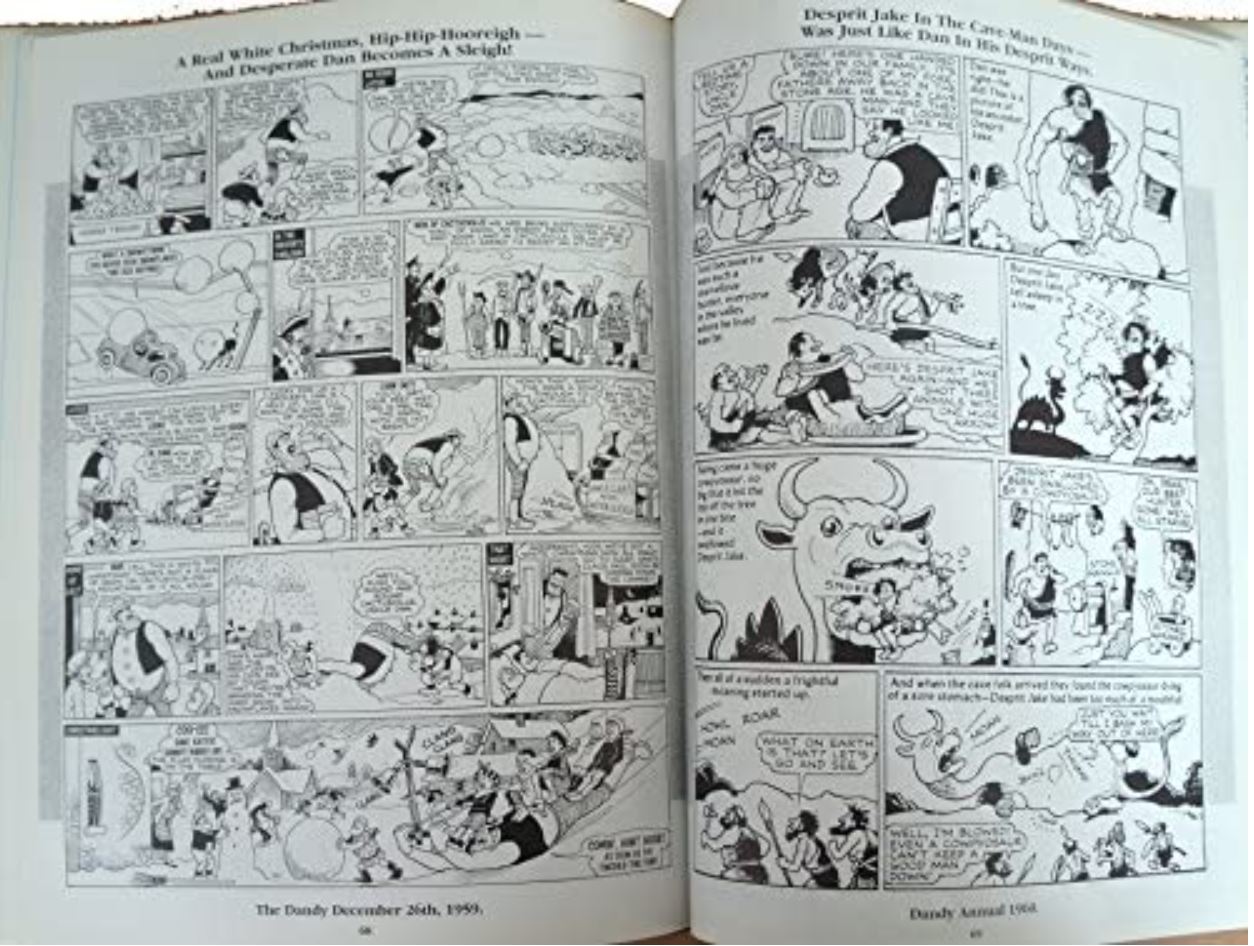
This titanic tome terminates in a wash of colour as Watkins highlights the twins in a strip from an unspecified annual before modern juvenile paragon of protest and advocate of anarchy Dennis the Menace gets in on the act, with strip ‘Me Too, Lord Dennis’ as the ferocious little lout tries out the old ermines and privileged attitude…
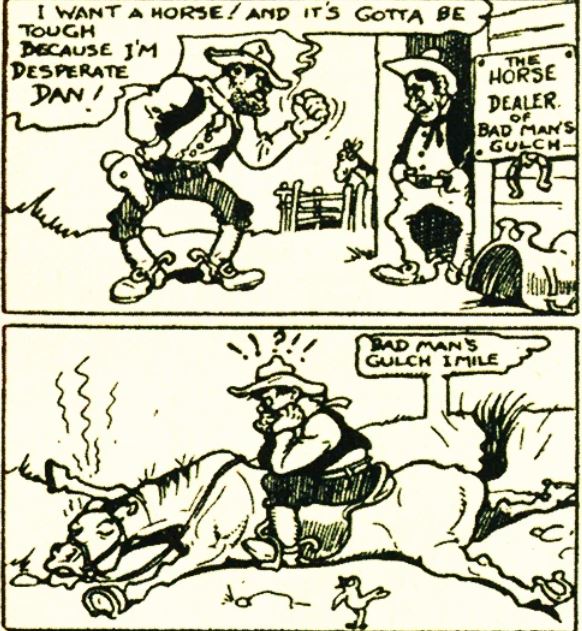
This stunning and luxurious hardback commemorative celebration is exuberantly joyous in tracing one of comics most bizarre and seditious stars and is a strong – almost overwhelming – argument for a bigger and more comprehensive curated collection. Conversely it’s also a huge cartoon chronicle stuffed with strips that will make you collapse in mirth. Probably both. At least you don’t have to pick a side but just buy a book…
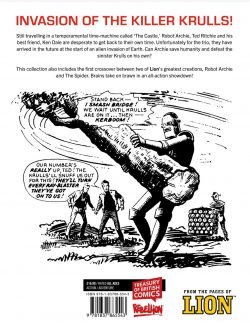
© D.C. Thomson & Co Ltd 1998.

On this day in 1960, Daredevil: Born Again illustrator David Mazzucchelli was born.

15 years after that Blankets author Craig Thompson also entered the world.