It Came!


By Dan Boultwood, Esq. (Titan Comics)
ISBN: 978-1-78276-005-4

Once upon a time “retro” only meant rockets, with all those thrilling chilling connotations of clunky spaceships, cardboard robots and men in Baco-foil suits shambling about and terrifying avid children who had stayed up late to watch B-movie sci-fi yarns on black-&-white TV sets.

Jeepers, I miss those days, and so, apparently, does multi-talented, forward-thinking nostalgeologist Dan Boultwood.

In 2013, his 4-issue miniseries offered a tantalising tribute to the fantastic fantasy movies which fuelled the imaginations of British Baby-Boomers: simultaneously recapturing the wide-eyed wonder of the period whilst adding layers of archly post-modern humour to the mix…

This stirring monochrome graphic-novelisation of a faux-classic effort from the rightly almost-forgotten Pinetree Studios outfit now allows modern film fans to experience (or revisit) the quirky delights which wowed their grandparents – and all from the comfort of their own homes – or even whilst out riding in a open-topped omnibus…

Packed to bursting with and supplemented by oodles of outrageous, hilarious, mood-setting ads for everything from Smoke & Choke’um Cigarettes to Johnny Foreigner Engine Oil, the story is a loving but irreverent paean of praise not only to those inspirational filmic marvels but also to the small repertory of actors and producers who made the late 1950s and early 1960s such a cornucopia of movie madness.

Like all such matinee marvels, the main feature here is preceded by a short trailer (for The Lost Valley of the Lost) which serves to introduce our cast, specifically He-Man Lead Dick Claymore as the sexist, pipe-chewing, tweed draped boffin Dr. Boy Brett and strident starlet Fanny Flaunders as his long-suffering, infinitely patient, glamorous-whilst-screaming assistant/secretary Doris Night.

The vintage supporting cast includes Bertrum Cumberbund, Spencer Lacey and Joan Fetlock, stalwart Pinetree thespians all…

It’s 1958 and in a beautiful bit of rural, ill-educated England a colossal robot rampages…

Two days later Dr. Brett from SpaceUniversity is treating working class ingénue Doris to a ride in his Morris Minor. He decides they should stop for a Ploughman’s Lunch in a strangely quiet and quaint village, blithely unaware that the reason it’s so still is because the aforementioned alien automaton has depopulated the shire…

Its subsequent surprise attempt to trap the tourists founders only when it stumbles into a cloying web of obfuscating, celebratory bunting…

After their spectacular close call the harried humans reach the next village over, but despite the boffin’s Old Boy Network connections, it’s the Devil’s own job to get the Ministry to mobilise the Military.

Nevertheless, Boy persists and soon a squad of veterans arrive to take control of the situation (a superb pastiche of the venerable icons of the “Carry-On” film franchise), only to vanish as the rapacious robot strikes again…

Undaunted, Boy drags Doris into more trouble and soon they find themselves aboard a vast Flying Saucer, uncovering the nature of the invaders’ appalling assault. The creepy, apparently unstoppable horrors are imprisoning salt-of-the-earth British citizens and somehow extracting their Stiff Upper Lips…

Following a necessary Intermission for the purchase and consumption of gin and fags, the cartoon/celluloid calamity continues as our hero – and the girl – escape and head for London to warn the authorities, but not before accidentally dropping a handy but unlucky army division on exercises right in the UFO’s marauding sights.

Dr. Brett arrives barely ahead of the indestructible, unbeatable Saucer and, as the World’s Smoggiest Capital burns and founders, he is compelled to stop running and turn his mighty, college-honed intellect to the task of destroying the threat to civilisation…

This collection is also augmented by the original full-colour covers, hysterical background “information pages” on and intimate photos of stars Claymore and Flaunders, blueprints and design sketches for the alien Grurk and Flying Saucer, a selection from the infamous It Came! Cigarette Cards and colour posters for other Pinetree Studio releases such as ‘My Reptilian Bride!’, ‘Rocket Into Space!’, ‘The Lost Valley of the Lost’ and ‘Myopic Moon Men from the Moon’…

More revelations are forthcoming in the ‘Metropolitan Police Incident Report on Mr. Claymore’s “eccentric” Drinking Habits’, and Director Boultwood’s photo-feature exposing his Special Effects magic in animating the Saucer for celluloid.

It Came! is a brilliant and sublime masterpiece of loving parody, perfectly executed and astoundingly effective. It is also the funniest – both visually and verbally – book I’ve read in years, blending slapstick with satire, outrageous ideas with infamous characterisations, and spit-taking puns, single entendres and innuendoes that would do Sid James, Charles Hawtrey or Kenneth Williams proud.

Miss it at your peril, Chaps (and Ladies too…).
It Came! ™ and © 2014 Dan Boultwood.

It Came! is published on March 11th.

Sock Monkey Treasury – A Tony Millionaire’s Sock Monkey Collection


By Tony Millionaire (Fantagraphics Books)
ISBN: 978-1-60699-696-6

It’s a fact sad but true that we can’t always be in the right place at the right time. No matter how scrupulous or diligent one might in the pursuit of a passion or hobby, things get missed. I, for example, missed the first comicbook releases of Dark Horse’s Sock Monkey by Tony Millionaire in 1998.

Sure, thanks to the miracles of back issue comic-shops I wasn’t deprived for long, but still, it was a close thing…

You, happily, don’t have any such worries, especially as Fantagraphics have just released a huge (286 x 203mm) and sumptuous 336 page hardback – 80 in full colour – collecting and commemorating all twelve uniquely dark and fanciful monochrome, multiple award-winning, all-ages adventures originally published as occasional miniseries between 1998 and 2007. Also included are the two colour hardcover storybooks Millionaire created in 2002 and 2004.

Tony Millionaire clearly loves to draw and does it very, very well; referencing classical art, timeless children’s book illustration and an eclectic mix of pioneering comic strip draughtsmen like George McManus, Rudolph Dirks, Cliff Sterrett, Frank Willard, Harold Gray, Elzie Segar and George Herriman: seamlessly blending their styles and sensibilities with European engravings masters from the “legitimate” side of the pictorial storytelling racket.

Born Scott Richardson, he especially cites Johnny (Raggedy Ann and Andy) Gruelle and English illustrator Ernest H. Shepard (The Wind in the Willows, Winnie the Pooh) as definitive formative influences.

With a variety of graphical strings to his bow such as his own coterie of books for children (particularly the superbly stirring Billy Hazelnuts series), animation and the brilliant if disturbing weekly strip Maakies – which describes the riotously vulgar and absurdly surreal adventures of an Irish monkey called Uncle Gabby and his fellow über-alcoholic and nautical adventurer Drinky Crow. They are abetted but never aided by a peculiarly twisted, off-kilter cast of reprobates, antagonists and confrontational well-wishers.

Those guys are the mirror universe equivalents of the stars of these sublime confections…

In a Victorian House – of variable shape and size – by the sea, an old Sock Monkey named Uncle Gabby has great adventures and ponders the working of a wonderful yet often scary world. His constant companion is a small cuddly-toy bird with button eyes called Mr. Crow, who doesn’t understand why he cannot fly and sometimes eases his sorrow with strong spirits.

Their guardian is a small girl named Ann-Louise, and many other creatures living and artificial share the imposing edifice…

The gloriously imaginative forays into the fantastic begin as the material monkey is chased through the house by marauding toy pirates in their brigantine. In his flight he espies a gleaming, glittering glass concoction hanging from the ceiling. Convinced something so beautiful must be the Promised Land he enlists his artificial avian pal to help him enter ‘Heaven’. However the pirates have not given up and the chaos soon escalates…

‘Borneo’ describes the pair’s discovery of a shrunken human head and subsequent heroic oceanic odyssey to return the decapitated talisman home. Of course, if they had thought to unseal the sewn-shut lips he could have told them they were going in the wrong direction…

The next tale is a macabre all-action thriller which begins when a lost bat gets stuck in the attic ‘Dollhouse’. Mr. Crow meanwhile is attempting to console the freshly widowed Mrs. Smalls in the cellar. Things go even more savagely awry when the faux crow and well-meaning matchmaker Uncle Gabby try to introduce the grieving mouse to the strapping, winged stranger, utterly unaware of his pedigree as a South American Rodent-Eating Bat…

Knick-knacks, trinkets and ornaments have been going missing in the next tale and Ann-Louise attributes the thefts to ‘The Trumbernick’ who lives in the Grandfather clock. Having mislaid his hipflask, Mr. Crow investigates and finds the horde of goodies, in truth purloined by a capricious Blue Jay.

Disillusioned by the death of a beloved myth and disheartened by the antics of a venal – and extremely violent – bird, they are subsequently stunned to see an actual Trumbernick return, righteously enraged at the blow to his spotless reputation…

In ‘The Hunters’, stuffed bird and Sock Monkey, inspired by a room full of trophies and stuffed beasts, decide to take up the sport of slaughter, only to find that their size, relative ineffectuality and squeamishness – not to mention the loquacity and affability of their intended prey – prove a great impediment to their ambitions…

Millionaire proves the immense power of his storytelling in ‘A Baby Bird’, as Uncle Gabby’s foolish meddling with a nest – after being specifically told not to – results in tragedy, and brutal self-immolating repercussions that would make King Lear quail…

The author abandoned his masterful pen-&-ink etching style for soft mutable charcoal rendering in ‘The Oceanic Society’, wherein excitable doll Inches unknowingly performs an act of accidental cruelty at the shore and invites the vengeance of many outraged sea creatures against the tot inhabitants of Ann-Louise’s house…

An innocent attempt by the little girl and Mr. Crow to find Uncle Gabby a romantic companion goes hideous wrong and results in monstrous ‘Heartbreak’ when they throw away his actual true love and replace her with a ghastly mechanical monkey horror. The bereft puppet can then only find surcease in escalating acts of hideous destruction…

In 2002 Millionaire took his characters into a whimsical watercolour wonderland with “a Populare Pictonovelette” hardback entitled ‘The Glass Doorknob’. The beguiling tale is included here a series of full-colour plates supplanted by blocks of text, describing how the house dwellers once saw an indoor rainbow beneath a doorknob and spent all summer trying to recreate the glorious spectacle by acquiring and aligning every other item of glass, crystal or pellucid material they could find or steal…

The return to stark, inky monochrome augurs the onset of the terrifying 4-part epic ‘The Inches Incident’ which begins off the coast of Cape Ann when grizzled mariner Oyster Joe discovers thieving stowaways plundering his sailing ship.

Amidst spectacular hunts for sea monsters the villains Uncle Gabby and Mr. Crow explain how their former friend Inches mysteriously shanghaied and dumped them at sea…

Their new ally returns them home, but upon arrival they discover that the doll has become Evil! Boldly braving the house they discover the poor creature has been possessed by an inconceivable horror which drives them off and provokes a fantastic sea voyage to find the devil’s only nemesis…

This staggering, bleakly charming compendium closes with an existential treat from 2004. ‘Uncle Gabby’, coloured by Jim Campbell, was another one-shot hardback – albeit in standard comics format – which offered a few revelatory indulgences on the puppet heroes’ poignant origins, all wrapped up in a baroque bestiary and imaginative travelogue as the Sock Monkey discloses his shocking ability to un-name things and thereby end their existences…

Visually intoxicating, astoundingly innovative and stunningly surreal, Sock Monkey yarns judiciously leaven wonder with heartbreak and gleeful innocence with sheer terror. Millionaire describes them as for “adults who love children’s stories” and these tall tales all offer enchanting pictorial vistas and skewed views of the art of storytelling that no fan of comics or fantasy could ever resist.
Sock Monkey Treasury © 2014 Tony Millionaire. This edition © 2014 Fantagraphics Books.

Starling


By Sage Stossel (Penguin/InkLit)
ISBN: 978-0-42526-631-1

Once upon a time only little boys (of any age from 3 to 90) liked superheroes.

That’s all different now.

Just like always, girls eventually steal boy’s stuff and break it or point out how stupid it is and ruin it or decorate and fancy it up so that it makes proper sense and is generally better, but it was still ours first though…

Let’s start again.

Sage Stossel is a children’s book author (On the Loose in Boston, On the Loose in Washington DC, We’re Off to Harvard Square), editorial cartoonist (Sage, Ink.) and Editor at The Atlantic, whose smart, wry, ostensibly innocuous efforts have also appeared in The Boston Globe, CNN Headline News, New York Times Week in Review and scads of other extremely prominent and worthily impressive places.

A native Bostonian, she majored in English and American Literature and Languages at Harvard where she permanently succumbed to the cartooning bug, producing student-life strip Jody for The Harvard Crimson. She was instrumental in creating The Atlantic‘s online iteration.

Starling is her first graphic novel and superbly takes a knowing sideswipe at the world’s newest fiction archetype, cleverly delving deep into the psyche of the kind of person who might actually fight crime if they had superpowers and how such a “career” might actually impact upon a sensible person.

Stossel also manages to tell a winning story about overcoming adversity, finding oneself and even having a shot at achieving true love, all lovingly ladled out in a savvy, self-deprecating, droll, artfully humorous manner…

Amy Sturgess has a secret. Up until now she’s only shared it all with her therapist, but balancing her job in the back-stabbing world of Marketing with the constant demands of the Vigilante Justice Association (who perpetually text her about occurring crimes she’s expected to foil immediately, no matter what she’s doing) is taking its toll.

At the Agency, a conniving male co-worker is actively stealing her work and sabotaging her career. Her cat-hoarder mom lives in a world of her own. Her brother Noah is a druggie lowlife – but at least he’s trying to get his life together, whilst her own (especially as regards dating) is a stalled and floundering disaster…

No wonder she relies so heavily on prescription meds and is plagued by bouts of crippling procrastination…

Things take a tortured upturn when her college sweetheart resurfaces. Russell is married to a wonderful woman (who actually becomes one of Amy’s best friends) but is clearly trying to rekindle those heady student passions with Amy and the situation soon begins to affect both sides of Amy’s work.

B-list costumed crusader Starling even begins to let certain offenders go: robbers stealing from banks who repossessed their homes, a homeless man trying to free his dog from the Animal Control impound…

A crisis point is reached when rival gangs begin a turf war and a modern Artwork is stolen. It doesn’t take much investigation to link Noah to both crimes, but when he disappears and Starling frantically hunts for him, she is incessantly stymied and interrupted by the hunky rogue and illicit gambling organiser Matt McRae.

The enigmatic hustler seems to have connected Amy to Starling and says he only wants to help, but he’s a crook.

A really, really good-looking, apparently unattached crook…

Amy isn’t Wonder Woman or Ms. Marvel. She’s just a well-intentioned young woman who found she was different and got pushed into a second (full time, secret and unpaid) career when she couldn’t even decide on how to make her first one work.

Now she has a really serious crime to solve, a brother to save, a romantic triangle to square and an unsuitable suitor to sort out…

Moe RomCom than Summer Blockbuster, Starling is a slow-paced, lovingly crafted, laconic, ironic and purely humorous tonic for lovers of the medium reared on adolescent wish-fulfilling, juvenile male power-fantasies who now yearn for something a little different, and even deliciously points out all the reasons why superheroes are dumb before wittily showing how that’s not necessarily bad and showing one way of making them better…
© 2013 Sage Stossel.

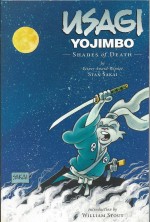
Usagi Yojimbo book 6: Circles


By Stan Sakai (Fantagraphics Books)
ISBN: 978-1-56097-146-0

Wandering rabbit bodyguard Miyamoto Usagi started life as a background character in Stan Sakai’s anthropomorphic comedy The Adventures of Nilson Groundthumper before indomitably carving his own unique path to graphic glory.

Creative mastermind Sakai was born in 1953 in Kyoto, Japan before the family moved to Hawaii two years later. On graduating from the University of Hawaii with a BA in Fine Arts, he pursued further studies at Pasadena’s Art Center College of Design in California and started in comics as a letterer, most famously for the inimitable Sergio Aragonés’ Groo the Wanderer.

Eventually the cartoonist within resurfaced: blending a passionate storytelling drive and abiding love of Japanese history and legend with a hearty interest in the filmic works of Akira Kurosawa and his peers, Sakai began crafting one of the most enticing and impressive fantasy sagas of all time.

And it’s still more educational, informative and authentic than any dozen Samurai sagas you can name…

The addictive period epic is set in a world of sentient animals (with a few unobtrusive human characters scattered about) but scrupulously mirrors the Feudal Edo Period of Japan – (roughly the 17th century AD by our reckoning); simultaneously referencing classic contemporary cultural icons from sources as varied as Zatoichi and Godzilla, whilst specifically recounting the life of a peripatetic Lord-less Samurai eking out as honourable a living as possible by selling his sword as a Yojimbo (bodyguard-for-hire).

As such, his destiny is to be perpetually drawn into a plethora of incredible situations.

He is a rabbit – brave, noble, sentimental, gentle, artistic, empathetic, long-suffering, conscientious and devoted to the tenets of Bushido – who simply cannot turn down any request for help or ignore the slightest evidence of injustice…

This superbly stirring sixth black-&-white blockbuster collects yarns from Fantagraphics’ Usagi Yojimbo comicbook volume 1, #25-31 plus an extra attraction from funny animal anthology Critters #50, offering a selection of complete adventures tantalisingly tinged with supernatural terror and drenched in wit, irony and pathos.

Following an adulatory Introduction from Jeff Smith, the restless Miyamoto encounters a Hannya (female demon) plaguing travellers whenever they try to cross ‘The Bridge’ after which ‘The Duel’ sees him targeted by a ruthless bookie.

The gambler’s professional duellist only needs one final big payday to safely retire with his beloved wife and child, but his disreputable boss is determined to fleece the locals no matter who has to die…

‘Yurei’ means ghost and, when a weeping woman’s spirit invades the Yojimbo’s dreams crying for justice, Usagi becomes an unwitting avenger whose presence provokes her murderer into making a huge and fatal mistake, after which ‘My Lord’s Daughter’ finds the Rabbit Ronin relating his greatest – battle against a horde of Obakemono (monsters) and demons to rescue a princess – in a wry fairy-tale tribute to the aforementioned Groo…

The remainder of this rousing compendium details a revelatory exploit wherein Usagi makes for his home village with thoughts of finally staying in one place. However when he meets again his childhood sweetheart Mariko a shocking secret regarding her soon changes everything.

‘Circles’ is divided into a succession of connected vignettes beginning with ‘Wind over the Tombstones’ as the homeward-bound hero discovers his former sensei Katsuichi – whom he believed dead – is very far from it…

Then in ‘Remembrances’, young Jotaro is abducted by the deadly Jei.

This veritable devil in human form believes himself a “Blade of the Gods” singled out by the Lords of Heaven to kill the wicked. The raving loon has been hunting Usagi ever since the Yojimbo defeated him – with the aid of a fortuitous or possibly divinely sent lightning bolt….

Now, in the little boy Jei senses a connection to his despise quarry and recruits a band of brigands to assist him in his schemes for revenge…

When the devil’s hired killers attack the village where Mariko’s husband Kenichi is headman, the strands of fate knit together as ‘Shroud Over the Mountain’ unites former friends and rivals in their desire to save the boy – who has already escaped and got into even more trouble…

The drama comes to an emotionally shattering climax in ‘Closing the Circle’ as the Rabbit Ronin learns at last the shocking truth about Jotaro and Mariko.

Arranging for his aging sensei to take on a new pupil he then wearily resumes his restless wanderings …

Triumph, tragedy, terrific action and terror all seamlessly flow together in this addictive epic, and Circles is still one the best collections in an unbroken run of classic graphic masterpieces.

Usagi Yojimbo has been in continuous publication since 1987, resulting in more than 30 graphic novel collections and books to date. The Legendary Lepus has guest-starred in many other comics and nearly had his own TV show – but there’s still time yet and fashions are ever fickle so hope endures…

As well as generating a horde of high-end collectibles, art prints, computer games, RPGs, a spin-off sci-fi series and lots of toys to promote popularity, Sakai and his creation have deservedly won numerous awards both within the Comics community and amongst the greater reading public.

Fast-paced yet lyrical, funny and scary, always moving, astoundingly visceral, ferociously thrilling and simply bursting with veracity and verve, Usagi Yojimbo is a work of cartoon genius: engaging and irresistible with a broad appeal that will delight devotees and make converts of the most hardened hater of anthropomorphic adventures.
Text and illustrations © 1992, 1993, 1994 Stan Sakai. Usagi Yojimbo is ® Stan Sakai. Book editions © 1994, 2006 Fantagraphics Books. All rights reserved.

Numbercruncher


By Simon Spurrier & P.J. Holden with Jordie Bellaire (Titan Comics)
ISBN: 978-1-78276-004-7

I’ve made a resolution to be more terse and concise in my reviews. Let’s see how long that lasts…

Sometimes a story just cries out to be told – especially if your tastes run to the sentimentally cynical, soppily savage or wide-eyed and jaded. If that’s you, Numbercruncher is just what you need to confirm all your suspicions about life whilst having a really good time.

The tale – by Simon Spurrier (Judge Dredd, X-Men: Legacy, Six-Gun Gorilla and others) & P.J. Holden (that man Dredd again, Rogue Trooper, Battlefields, Terminator/Robocop and more) – began as a creator-owned project in Judge Dredd Megazine before being expanded into a 4-issue miniseries from Titan Comics. Now it’s available as a splendid hardback packed with clever, controversial notions that will delight and astound lovers of metaphysical whimsy, romantic fantasy and unnecessarily extreme violence.

Like The Wizard of Oz and especially A Matter of Life and Death, this story is told on two separate levels of existence and differentiated by full-colour earthly sections and black-&-white views of the Afterlife. Unlike them, it’s a nasty and wittily vicious piece of work; just like handy geezer Bastard Zane, operative #494 employed by The Divine Calculator to enforce the Karmic Accountancy and keep souls circulating through the great cosmic all.

The Universe is just numbers and God is a mean, pedantic bean-counter, only concerned with the smooth running of his Grand Algorithm. Unfortunately, it all starts to fall apart when Zane is tasked by the weaselly Big Boss with stopping an in-love and dying young mathematician from gaming the system.

Genius Richard Thyme, in his final seconds of mortal life, has a Eureka moment and divines the true and exact nature of everything – and how to manipulate it…

Armed with such inspirational knowledge, Thyme’s soul arrives before the Writer in the Grand Ledger and wheedles another spin on the Karmic Wheel – Reincarnation.

Brilliant Richard had been utterly in love with a dippy hippy chick named Jessica Reed, and bargains for another chance at a life with her, and mean, petty-minded Divine Calculator gleefully accepts the proposition.

Thyme will be reborn, with all memories intact, but when this second life ends his soul will be employed by the Karmic Accountancy Agency as a collector just like Zane. The standard term of employment is for eternity – unless he can convince somebody to take his place. The indentured operatives call it “Recirculation”…

There is only one get-out: a “Zero-clause” which means that if Thyme can live a life completely and totally without sin, his contract is null and void. But who could possibly live a mortal life without the slightest transgression…?

Of course, The Accountant doesn’t play fair: stacking the deck so that reborn Richard is unable to even get near his lost love until it’s too late. However when Zane finally shows up in 2035AD, eagerly expecting to close the case-file and retire with Thyme taking his long-suffering place in The Register, the frustrated, cheated genius plays his own trump card.

He’d always expected to be short-changed and made his own Karmic deal. By selling his contract to another Accountancy operative, he had bought another life. And as the psychotically furious Bastard Zane soon sees, Thyme has pulled the trick over and over again. No matter how often Richard dies, he’s already being born again somewhere else…

With the mathematician’s sold-and-resold soul promised to practically every agent in the Afterlife, Zane’s only hope of retirement rests in killing the kid’s each and every reincarnation whilst simultaneously slaughtering all the Karmic operatives who have been suckered into a deal with the lovesick little sod…

And on Earth, despite perpetual setbacks, each brief existence inches Richard slowly closer to Jess. That should make his eventual capture inevitable – but even here the genius has an incredible Plan B in operation which even the Supreme Architect of the Cosmos didn’t see coming… one which could well undo the Algorithm underpinning Everything That Is…

Poignant, funny, outrageously gory, gloriously rude and wickedly clever, this is a ferociously upbeat and hilariously dark black comedy no insufferable incurable romantic could possibly resist.

Moreover, for all us dyed-in-the-wool comics freaks, there’s a host of background features included,

Interspersed between a gallery of covers and variants – plus unused iterations – and loads of original art, roughs and sketches, the ‘Author’s Note’ takes us behind the genesis of the tale, which is further expanded upon in ‘A Comic for Talking to God – an interview with Brian Truitt of USA Today’.

A discussion and explanation of Jordie Bellaire’s colouring process is the focus of ‘Working Flat-Out’ and ‘Birth Placement’ details the procedure for creating a cover, before the usual Creator’s Biographies ends things on a knowledgeable note.

Love, Death, Sex, more Death, Rebirth, lots of Death and Numbers: there’s your Meaning of Life right there…
™ & © 2013 Simon Spurrier & P.J. Holden. All rights reserved.

Numbercruncher is scheduled for release in January 2014.

The Beano Book 1974


By various (DC Thomson & Co., Ltd.)
Retroactively awarded ISBN: 978-0-85116-077-1

For many British readers – whether comics fans or not – fans, the Holiday Season can only mean The Beano Book, so I’ve once more highlighted another of the venerable, beloved tomes as particularly representative of the time of year.

Way back when, many annuals were produced in a wonderful “half-colour” which British publishers used to keep costs down. This was done by printing sections or “Signatures” of the books with only two plates, such as Cyan (Blue) and Magenta (Red) or Yellow and Black.

The sheer versatility and colour range provided was simply astounding. Even now this technique inescapably screams “Holiday Extras” for me and my aging contemporaries and none more than in this spectacular example which would have hit shop shelves in September of 1963.

As is so often the case, my knowledge of the creators involved is appallingly sub-standard, but I’ll hazard my usual wild guesses in the hope that someone with more substantial information will correct me when I err …

This anarchically rousing compilation kicks off with a double-page splash of ‘Peculiar Pets’ Picture Gallery’ (by Robert Nixon, I think) displaying a number of comics stars and their companion animals of choice, after which Minnie the Minx (Jim Petrie) and a few chums and latterly Biffo the Bear with human pal Buster (by David Sutherland) introduce this year’s annual before Ron Spencer’s Baby-Face Finlayson (“The Cutest Bandit in the West”) imagines life as a giant and not a pipsqueak…

“Fastest Boy on Earth” Billy Whizz (drawn superbly as ever by Malcolm Judge) then learns to respect the power of traffic signs – in his house – before the crafty campaigns of ‘The Nibblers’ (John Sherwood) wins them a grand Christmas nosh-up and sanctuary from the seasonal snows.

Back then The Beano still had the odd adventure strip and perhaps the greatest of these was boy superhero Billy the Cat. Sutherland next proves his astounding visual versatility in The Bash Street Kids where the pupils plump for pop and resist the calming charms of classical music – leading to a camera-shattering pinup of ugly mug Plug – before switching to action mode as the acrobatic champion – now teamed with his cousin as Billie the Cat and Katie – jointly recapture an escaped convict and preserve their secret identities from curious school chums in a splendid rollercoaster romp.

Petrie’s Minnie the Minx then painfully learns that she’s not cut out for pony riding, after which Nixon panoramically maps out ‘A Funny Look at “Beano-Town”‘ whilst Bob McGrath details the sub-zero antics of The Three Bears as they try to find fuel to heat their chilly cave.

Also ably illustrated by the tireless Sutherland, Biffo and Buster return as rivals clashing in a man-powered flight competition, after his Pin-up Pup! of Dennis the Menace’s perilous pooch Gnasher leads into a custard-coloured clash between his master and simpering swot Walter.

Spencer’s Little Plum experiences a mysterious clean-up whilst sleepwalking before Nixon’s Lord Snooty and his snowballing pals at Bunkerton Castle get some startling help from the estate’s star stag Angus even as elsewhere – and keeping up the Hibernian humour – Haggis hunters The McTickles (by Vic Neill?) fall foul of their canny shaggy prey…

Pup Parade starring the Bash Street Pups (Gordon Bell) finds the mini-mutts (eventually) enjoying an old dinosaur bone before a dedicated and extended niche chapter from Nixon. Here in an expansive section of his own, Roger the Dodger’s Special Mini-Book offers the rollicking tale of the ‘Disappearing Dodger’, a pin-up, his hilarious, historically inaccurate ‘Family Tree’, ‘A Dodger’s Outfit’, and an informative peek at ‘A Dodger’s Den’ before closing with the final pin-up ‘Dreaming of Dodges’…

Biffo’s back – and points south – endure a battering due to the bear’s interest in buttercups (Sutherland) before Nixon reveals how the obstreperous Grandpa still catastrophically refuses to act his age and The Nibblers (Sherwood) again overcome malicious moggy Whiskers to fill their bellies with purloined goodies.

The riddle of Billy Whizz’ footwear replacement is solved in a quick-fire yarn by Judge before Bell’s Pup Parade starring the Bash Street Pups tale discloses the secret of their unlikely alliance with a very big cat…

Heading out West, The Three Bears (McGrath) find – and lose – a mountain of gold, The McTickles lose a skirmish with the wily Stilt-legged McHaggises, and Baby-Face Finlayson rewrites a few favourite nursery rhymes before Teacher and even Head have another go at civilising the Bash Street Kids with music – appended with a stomach-churning pin-up of Cuthbert Cringeworthy in Teacher’s Pet’s Picture Gallery…

Ron Spencer stretches his artistic muscles providing ghastly genealogical ‘Fun with the Finlayson Family’ and illustrating how Little Plum gets into big trouble trying to recapture girlfriend Little Peach‘s pet parrot, before Billy the Cat and Katie swing back into action, turning on the town’s Christmas lights and tracking down a hold-up gang (Sutherland).

Another gloriously funny Lord Snooty strip from Robert Nixon segues into Minnie the Minx’s hilarious crush on an American boy-band – and older readers will cringe with mirth at Jim Petrie’s hilarious spoof of then-sensation Donny Osmond – before Nixon strikes back with a Grandpa yarn involving the old codger’s inability to stay clean…

Beano star Dennis the Menace was only slightly involved in the Annuals of this period as he had his own Christmas Bumper book to run riot in, but he closes this tumultuous tome with an funny educational strip that’s a thinly disguised advert for his solo venture before the merriment closes here with another superb dose of Nixon’s ‘Peculiar Pets’ Picture Gallery’ …

This is supremely entertaining book, and even without legendary contributors Dudley Watkins, Leo Baxendale and Ken Reid there’s still an abundance of satisfyingly madcap, infectious insanity. With so much merriment on offer I can’t believe this 40-year old book is still sprightlier and more entertaining than most of my surviving friends and relatives. If ever anything needed to be issued as commemorative collections it’s these fabulous DC Thomson annuals…

Divorcing the sheer quality of this brilliant book from nostalgia may be a healthy exercise – perhaps impossible, but I’m quite happy to luxuriously wallow in the potent emotions this annual still stirs. It’s a fabulous laugh-and-thrill-packed read from a magical time, and turning those stiffened two-colour pages is always an unmatchable Christmas experience, happily still relatively easy to find these days.
© 1973 DC Thomson & Co., Ltd.

Pow! Annual 1970


By various (Odhams Books)
ASIN: B003VUO2SC

This splendidly intriguing item is one of my favourite childhood delights: addictively captivating at the time and these days a fascinating indicator of the perceived tastes of Britain’s kids. Most importantly it’s still a surprisingly qualitative read with its blend of American adventure strips playing well with a selection of steadfastly English and wickedly surreal comedy material.

With Scotland’s DC Thomson steadily overtaking their London-based competitors throughout the 1960s, the sheer variety of material the southerners unleashed to compete offered incredible vistas in adventure material and – thanks especially to the defection of Leo Baxendale and Ken Reid to monolithic comics publishing giant Amalgamated Press (created by Alfred Harmsworth at the beginning of the twentieth century) – had finally found a wealth of anarchic comedy material to challenge the likes of the Bash Street Kids, Dennis the Menace, Minnie the Minx and their unruly ilk.

During that latter end of the period the Batman TV show sent the entire world superhero crazy and Amalgamated had almost finished absorbing all its rivals such as Eagle‘s Hulton Press to form Fleetway/Odhams/IPC.

Formerly the biggest player in children’s comics, Amalgamated had stayed at the forefront of sales by latching onto every fad: keeping their material contemporary, if not fresh. The all-consuming company had been reprinting the early successes of Marvel comics for a few years; feeding on the growing fashion for US style adventure which had largely supplanted the rather tired True Blue Brit style of Dan Dare or DC Thompson’s Wolf of Kabul.

“Power Comics” was a sub-brand used by Odhams to differentiate those periodicals which contained reprinted American superhero material from the company’s regular blend of sports, war, western adventure and gag comics – such as Buster, Lion or Tiger. During the Swinging Sixties these ubiquitous weeklies did much to popularise the budding Marvel characters and universe in this country, which was still poorly served by distribution of the actual American imports. Fantastic and its sister paper Terrific were notable for not reformatting or resizing the original artwork whilst in Wham!, Pow! or Smash!, an entire 24-page yarn could be resized and squeezed into 10 or 11 pages over two weeks…

Pow! launched with a cover date of January 31st 1967, combining home-grown funnies such as Mike Higgs’ The Cloak, Baxendale’s The Dolls of St Dominic’s, Reid’s Dare-a-Day Davy, Wee Willie Haggis: The Spy from Skye and many others, British originated thrillers such as Jack Magic and The Python and resized US strips Spider-Man and Nick Fury, Agent of S.H.I.E.L.D.

After 53 weekly issues the title merged with Wham!, that combination running until #86 when it was absorbed into Smash! Nevertheless, the title generated a number of annuals, even though, by 1969 when this annual was released, the trend generated by TV Batmania was dying.

Interest in superheroes and fantasy in general were on the wane and British weeklies were diversifying. Some switched back to war, sports and adventure stories whilst with comedy strips on the rise again, others became largely humour outlets.

This was one of the last Odhams Christmas compendia to feature imported Marvel material: from then on the Americans would handle their own Seasonal books rather than franchise out their classics to mingle with the Empire’s motley, anarchic rabble.

The content is eclectic and amazingly broad, beginning with a complete but compacted retelling of Sgt. Fury and His Howling Commandos #5 by Stan Lee & Jack Kirby from January 1964.

The full-colour WWII tale found the doughty warrior ‘At the Mercy of Baron Strucker’; beaten and humiliated in a duel with an Aryan nobleman. Soon filmed footage was used as a Nazi propaganda tool and Fury hero was a broken man – until one of his men realised the nonplussed noncom had fallen for the oldest trick in Hollywood’s playbook. The riotous rematch went rather better…

This was followed by a welter of gag strips beginning with an outing for Graham Allen’s The Nervs (revolting creatures that lived inside and piloted unlovely schoolboy Fatty) after which The Swots and the Blots (probably drawn by Mike Lacey) ushered in the economical 2-colour section with another Darwinian example of schoolboy Good vs. Evil and an unnamed substitute for Mike Higgs rendered the comedy caper The Cloak vs. Cloakwoman…

Next up is a short Marvel sci fi thriller as ‘Escape into Space!’ (from Tales of Suspense #42 June 1963 by Lee, Larry Lieber & Matt Fox) sees a convict escape to freedom into the void – or does he…? – before Wee Willie Haggis – the Spy from Skye scotches a plot to nobble Scotland’s prime (in)edible export and Percy’s Pets finds the obsessed animal enthusiast in deep water after getting hold of a hyena and crocodile…

Sgt. Fury and His Howling Commandos #5 provides a factual page devoted to ‘Weapons of War: Light Machine Guns of World War II’ to restart the full colour fun, which continues with another Swots and the Blots romp ‘n’ riot after which idiot espionage continues with The Cloak vs. Blubberman…

Back then to red-&-black for the not-resized Amazing Spider-Man #36 (May 1966, by Lee and Steve Ditko) as the Wallcrawler faces deranged super strong thief the Looter in ‘When Falls the Meteor!’

The magnificently strange comic villain Grimly Feendish then fails in another bid to get rich nefariously before tiny terror Sammy Shrink restarts a final segment of full-colour wonders with more boyish pranks, after which the reformatted ‘Death of a Hero’ (Fantastic Four #32, November 1964, by Lee, Kirby & Chic Stone) uncovers the secret of Sue and Johnny Storm‘s father: a convict who gains incredible power as the rampaging Invincible Man…

This is a strange and beloved book for me and these are all great little adventures, even though I suspect it’s more nostalgia for a brilliant childhood rather than any intrinsic merit. Feel perfectly free to track this down and contradict me if you like though…
© 1969 The Hamlyn Publishing Group Limited.

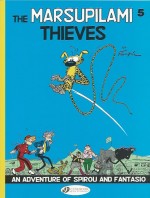
Spirou & Fantasio volume 4: Valley of the Exiles


By Tome & Janry, colour by Stephane De Becker & translated by Jerome Saincantin (Cinebook)
ISBN: 978-1-84918-157-0

For the majority of English-speaking comic fans Spirou might be Europe’s biggest secret. The phenomenally long-lived character is a rough contemporary – and shrewdly calculated commercial response – to Hergé’s iconic Tintin, whilst the comic he has headlined for decades is only beaten in sheer longevity and manic creativity by our own Beano.

Conceived in 1936 at Belgian Printing House Éditions Dupuis by boss-man Jean Dupuis, his proposed new magazine targeted juvenile audiences and launched on April 21st 1938; neatly bracketed in the UK by DC Thomson’s The Dandy (4th December 1937) and The Beano (July 30th 1938). In America a small comicbook publisher was preparing to release a new anthology entitled Action Comics…

Spirou was to be edited by 19 year-old Charles Dupuis and derived its name from the lead feature, which described the improbable adventures of a plucky Bellboy/lift operator employed at the glamorous Moustique Hotel (a sly reference to the publisher’s premier periodical Le Moustique).

Spirou the hero – whose name translates as both “squirrel” and “mischievous” in the Walloon language – was realised by French cartoonist François Robert Velter under his pen-name Rob-Vel for his Belgian bosses in response to the phenomenal success of Hergé’s carrot-topped boy reporter Tintin – a guaranteed money-spinning phenomenon for rival publisher Casterman.

The eponymous magazine launched with the plucky Bellboy (and his pet squirrel Spip) as the leads in an anthology weekly which bears his name to this day; featuring fast-paced, improbable cases which gradually evolved into astonishingly addictive high-flying surreal comedy dramas.

Spirou and his pals have reigned supreme in the magazine for most of its life, with a phalanx of truly impressive creators continuing Velter’s work – beginning with his wife Blanche “Davine” Dumoulin, who took over the strip when her husband enlisted in 1939. She was aided by Belgian artist Luc Lafnet until 1943 when Dupuis purchased all rights to the feature, after which comic-strip prodigy Joseph Gillain (“Jijé”) took over, introducing current co-star and foil Fantasio to the mix.

Somewhere along the way Spirou & Fantasio switched to journalism, becoming globe-trotting reporter and photographer, continuing their weekly exploits in unbroken four-colour glory. In 1946 Jijé’s assistant André Franquin assumed the creative reins, adding a phenomenally popular magic animal dubbed Marsupilami to the cast (first seen in Spirou et les héritiers in 1952 and now a solo-star of screen, plush toy store, console games and albums all his own), crafting increasingly fantastic tales until 1969.

Franquin was in turn succeeded by Jean-Claude Fournier who updated the feature over nine stirring adventures which tapped into the rebellious, relevant zeitgeist of the times with tales of environmental concern, nuclear energy, drug cartels and repressive regimes.

Even so, by the 1980s the boy Spirou seemed outdated and without direction; three different creative teams began alternating on the serial, until it was at last revitalised by the authors of the adventure under review here.

Philippe Vandevelde – writing as Tome – and artist Jean-Richard Geurts, best known to lovers of Bande dessinées as Janry, revisited, adapted and referenced the beloved Franquin era, reviving the feature’s fortunes and resulting in fourteen wonderful albums between 1984 and 1998. This one, from 1989 and originally entitled La vallée des bannis‘Valley of the Banished’ – was their ninth (and the 41st chronological collection of the evergreen adventurers).

Once their tenure concluded Tome & Janry’s departed and both Lewis Trondheim and the team of Jean-Davide Morvan & Jose-Luis Munuera took over, bringing the official album tally to fifty (there also are a bunch of specials, spin-offs and one-shots, official and otherwise) before in 2009 Fabien Vehlmann & Yoann (Yoann Chivard) were announced as the new “Keepers of the Flame”…

Valley of the Exiles! concludes the excellent two-part escapade (which began in Running Scared) with the roving reporters retracing the steps and uncovering the whereabouts of two explorers who had vanished in 1938 whilst attempting to climb a mountain and discover a legendary lost valley in the inscrutable, isolated Himalayan nation of Yurmaheesun-shan…

Since 1950 that tiny nation had been subject to repeated invasions by rival super-powers and was currently a hotbed of rebellion, insurgency and civil war, but Spirou and Fantasio were utterly determined to solve the ancient mystery.

Thus they linked up with renowned eccentric Dr. Placebo: world renowned authority on medical condition Spasmodia Maligna and a man convinced that the only cure for the condition – prolonged, sustained and life-threatening synchronous diaphragmatic flutters (hiccups to you and me) – is to be scared out of one’s wits.

He sponsored a “medical” mission to find the lost valley and thus the lads, Spip and five disparate, desperate perpetual hiccup-sufferers crept across the Nepalese border despite the most diligent attentions of military overlord Captain Yi.

That formidable martinet was tasked with keeping all foreigners – especially journalists – out of the occupied country as it underwent enforced pacification and re-education, but thanks to native translator Gorpah (a wily veteran guide who once proved invaluable to another red-headed reporter, his little white dog and a foul mouthed-sea captain!) the daring band were soon deep in-country.

Only minutes behind were Yi’s troops in tanks, armoured cars and attack helicopters – which naturally provided plenty of opportunities for the annoyingly obnoxious singultus flutterers to be satisfactorily terrified – but there was still little evidence of a breakthrough cure…

Just as the fugitives found their first clue as to the site of the lost valley they were taken captive by native rebels. With still no hiccup cure found the beleaguered explorers attempted a daring later escape, but even as they all piled into a lorry a monumental storm broke out…

When one of their pursuer’s vehicles plunged over a cliff, the valiant escapees formed a human chain to rescue the driver but Spirou and Fantasio were washed away and lost in the raging flash flood …

In The Valley of the Exiles! the story resumes with the battered, weary duo entombed deep within a Himalayan mountain. Slowly, blindly they grope their way towards a faint light and emerge through ancient, barbaric idol’s head into the very place they’ve been seeking…

Utterly enclosed by peaks the Valley is an idyllic paradise, but its very isolation has led to the development of a number of truly unique species of flora and fauna. There are colossal carnivorous water lily-pads, ferociously determined man-eating turtles, electric geckoes, the seductive Hammock Flytrap and many more bizarre and potentially lethal creatures.

The one that most imperils the lost boys however is the diminutive Manic Midgie – a mosquito-like bug that carries the disease “raging hostiliasis”. Not long after one bites Fantasio, poor Spirou realises that his best friend has become a homicidal maniac determined to kill him and everything else in range…

The deranged lad soon goes completely off the deep end, and only luck and a handy itching-powder boxing glove plant prevents the reporter’s gory demise…

Wounded, hunted by his best friend and perhaps the only human in the apparently inescapable enclosed wilderness, near-despondent Spirou and Spip begin to explore their incredible prison and find a rough shack: proof that at some time other humans had been there.

Further investigation reveals it to be the last resting place of the lost explorers Siegfried and Maginot. The mystery of the 1938 expedition is solved – even though Spirou has no way of filing this scoop!

More worryingly, Maginot’s copious notes on the creatures of the valley offer some grim hypotheses as to the nature of the nature in this fantastic hidden gorge: creatures inimical to both the body and mind of man. Plants that cast illusions, murderous mammals that mimic harmless life, bugs whose bite produces madness…

Crazed beyond imagining – and burbling hilarious, fourth-wall breaking nonsense – Fantasio is determinedly hunting his old friend and the frantic chase drives the limping hero deep into a hidden temple where he uncovers the secret of a fantastic lost civilisation of Backik: a race banished by Mongol conquerors /to this distant valley. The reluctant settlers lived just enough for the manic-midgies to bring their unlucky lives crashing down into doom and disaster…

As Spirou lurches through the eerie tombs of the fallen Backiks Fantasio ambushes him and is ready to finish off his former friend when a mysterious figure attacks…

Some time later Spirou awakens in the warming sunlight of the valley, with deranged Fantasio securely bound beside him. Resolved to escape this fantastic trap and get his crazy pal back to civilisation and medical assistance, our red-headed hero begins to explore his best options only to feel the terrifying sting of a mosquito…

Packed with oodles of action and a host of incredible surprises and revelations, Valley of the Exiles is a truly splendid escapade, with thrills, chills, spills, a mountain of choice comedy moments and eccentric, surreal mysteries to keep readers spellbound.

This refreshingly engaging, lightly-barbed, action-adventure is a breath of fresh air in a marketplace far too full of adults-only carnage, sordid cheesecake titillation, testosterone-fuelled breast-beating, teen-romance monsters and cloying barbarian fantasy. Easily accessible to readers of all ages and drawn with all the beguiling style and seductively enticing élan which makes Asterix, Lucky Luke, The Bluecoats and Iznogoud so compelling, this is another cracking read every bit as deserving of household name-hood as those series… yes, even that other red-headed kid with the white dog…
Original edition © Dupuis, 1989 by Tome & Janry. All rights reserved. English translation 2013 © Cinebook Ltd.

The Complete Crumb Comics volume 8: The Death of Fritz the Cat – New Edition


By R. Crumb & guests (Fantagraphics Books)
ISBN: 978-0-56097-076-7

This book contains really clever and outrageously dirty pictures, rude words, non-condemnatory drug references and allusions, apparent racism, definite sexism, godless questioning of authority and brilliantly illustrated, highly moving personal accounts and opinions. It also painfully displays a genius grappling with his inner demons in a most excruciatingly honest and uncomfortable manner.

If you – or those legally responsible for you – have a problem with that, please skip this review and don’t buy the book.

Really.

I mean it…

Robert Crumb is a truly unique creative force in comics and cartooning, with as many detractors as devotees. From the first moments of the rise of America’s counterculture, his uncompromising, forensically neurotic introspections, pictorial rants and invectives unceasingly picked away at societal scabs, measuring his own feelings and motives whilst ferociously ripping way civilisation’s concealing curtains for his own benefit. However, he always happily shared his unwholesome discoveries with anybody who would take the time to look…

In 1987 Fantagraphics Books began the Herculean task of collating, collecting and publishing the chronological totality of the artist’s vast output, and those critically important volumes are being currently reissued for another, more liberated generation.

The son of a career soldier, Robert Dennis Crumb was born in Philadelphia in 1943 into a dysfunctional, broken family. He was one of five kids who all found different ways to escape their parents’ highly volatile problems, and comic strips were paramount among them.

Like his older brother Charles, Robert immersed himself in the comics and cartoons of the day; not just reading but creating his own. Harvey Kurtzman, Carl Barks and John Stanley were particularly influential, but also comic strip legends such as E.C. Segar, Gene Ahern, Rube Goldberg, Bud (Mutt and Jeff) Fisher, Billy (Barney Google) De Beck, George (Sad Sack) Baker and Sidney (The Gumps) Smith, as well as classical illustrators like C.E. Brock and the wildly imaginative and surreal 1930’s Looney Tunes and Merrie Melodies animated shorts.

Defensive, introspective, frustrated, increasingly horny and always compulsively driven, young Robert pursued art and self-control through religion with equal desperation. His early spiritual repression and flagrant, hubristic celibacy warred with his body’s growing needs. …

To escape his stormy early life, he married young and began working in-house at the American Greeting Cards Company. He discovered like minds in the growing counterculture movement and discovered LSD. By 1967 Crumb had moved to California and became an early star of Underground Commix. As such he found plenty of willing hippie chicks to assuage his fevered mind and hormonal body whilst reinventing the very nature of cartooning with such creations as Mr. Natural, Fritz the Cat, Devil Girl and a host of others. He worked on in what was essentially a creative utopia throughout the early 1970’s but the alternative lifestyle of the Underground was already dying. Soon it would disappear: dissipated, disillusioned, dropped back “in” or demised.

A few dedicated publishers and artists stayed the course, evolving on a far more businesslike footing as Crumb carried on creating, splitting his time between personal material and commercial art projects whilst incessantly probing deeper into his turbulent inner world.

This eighth volume mostly covers – in chronological order – material created and published in 1971 (with the merest tantalising smidgen of stuff from 1972), when the perpetually self-tormented artist first began to experience creative dissatisfaction with his newfound status as alternative cultural icon: a period when the no-longer insular or isolated artist was at his most flamboyantly creative, generating a constant stream of new characters, gags, commercial art jobs, short strips and with longer material popping up seemingly everywhere.

It was also the moment when he began to realise the parasitic, exploitative nature of many of the hangers-on exploiting his work for profits which he never saw himself – particularly filmmaker Ralph Bakshi, whose phenomenally successful movie of Fritz the Cat prompted Crumb to kill the cunning kitty character off…

That and more are all faithfully reproduced in this compilation – which makes for another rather dry listing here, I’m afraid – but (as always) the pictorial material itself is both engrossing and astoundingly rewarding. But please don’t take my word for it: buy the book and see for yourselves…

After a passionate if meandering photo-packed Introduction from wife and collaborator Aline Kominsky-Crumb – whom he first met in 1971 – the stream of cartoon consciousness and literary freewheeling begins with the salutary tale of ‘Stinko the Clown in Stinko’s New Car’ from Hytone, rapidly followed by the strange romance of ‘Maryjane’ originally seen in Home Grown Funnies, which also provided the (now) racially controversial and unpalatable ‘Angelfood McDevilsfood in Backwater Blues’ – with that horrific homunculus The Snoid – and twisted “love” story of ‘Whiteman Meets Big Foot’…

The underground Commix scene was awash with artistic collaborations and a selection of jam sessions kicks off here with ‘Let’s Be Realistic’ from Hungry Chuck Biscuits wherein Crumb, Jay Lynch, Jay Kinney & Bruce Walthers surreally free-associated, whilst in Mom’s Homemade Comics Denis Kitchen, Don Glassford, Dale Kuipers, Jim Mitchell, Pete Poplaski, Wendel Pugh, Jay Lynch, Dave Dozier, Bruce Walthers & Dennis Brul joined forces with the bespectacled outsider to make some ‘Kumquat Jam’…

From ProJunior, ‘Perdido Part One’ and ‘ProJunior in Perdido Part Two’ saw the Dagwood-esque everyman experience the growth in social violence courtesy of Crumb and fellow legend S. Clay Wilson.

All on his own again Crumb captured the appalling nature of ‘Jumpin’ Jack Flash!’ (from Thrilling Murder) and crafted a lovely ‘Nostalgic Books catalog cover’ for their Summer/Fall 1971 issue, after which a tranche of material from Big Ass #2 (August 1971) starts with a paranoiac perusal of ‘The Truth!’, before another obnoxious jerk resurfaces to dominate sexy bird creatures in ‘Eggs Ackley in Eggs Escapes’ even as the intimately contemplative domestic explorations of  ‘A Gurl’ dissolve into the raucous, earthy humour of ‘Anal Antics’ to end the first black and white section of this challenging chronicle.

A vividly vivacious Color Section celebrates a wealth of covers, opening with ‘The Last Supplement to the Whole Earth Catalog’(March 1971), followed by ‘Home Grown Funnies’ and its angsty back cover strip ‘The Desperate Character Writhes Again!’. Moving on, ‘Big Ass #2’, ‘Mr. Natural #2’ – front and back covers – leads to ‘Bijou Funnies #6′ and the rainbows end on the sublimely subversive front for ‘The People’s Comics’.

A return to monochrome provides two more strips from Big Ass #2 beginning with the savagely ironic ‘A Word to you Feminist Women’ and the cruelly hilarious ‘Sally Blubberbutt’ after which the contents of Mr. Natural #2 (October 1971) unfold with ‘Mr. Natural “Does the Dishes”’, before ruminating and sharing more timeless wisdom with resident curious “Straight” Flakey Foont in ‘A Gurl in Hotpants’.

This leads to ‘Sittin’ Around the Kitchen Table’ and meeting ‘The Girlfriend’, after which two untitled Mr. Natural graphic perambulations result in a cult war with the adherents of the aforementioned Snoid and everything ends with the sage and his buddy The Big Baby being released from jail to go ‘On the Bum Again’…

From Bijou Funnies #6 comes another taste of ‘ProJunior’ as the poor shmuck seeks employment to keep his girlfriend quiet, whilst the jam feature ‘Hef’s Pad’ (by Crumb, Lynch & Skip Williamson) exposes the darker side of selling out for cash and fame…

A strip from Surfer Magazine vol. 12, #6 trenchantly heralds the advent of work from 1972 when ‘Salty Dog Sam “Goes Surfin’!”’, whilst the cover of Zap 7 (Spring issue) and the Nostalgia Press Book Service Catalog cover neatly segues into three superb landmark strips from The People’s Comics beginning with a deeply disturbing glimpse inside the befuddled head of the “Great Man” in ‘The Confessions of R. Crumb’.

That poignantly outrageous graphic outburst leads to a cruelly sardonic polemic in ‘The R. Crumb $uck$e$$ Story’ which merely serves as a sound narrative investment for the shockingly self-satisfied, liberating cartoon catharsis achieved by killing off his now-unwelcome signature character in ‘Fritz the Cat “Superstar”’…

If Crumb had been able to suppress his creative questing, he could easily have settled for a lucrative career in any one of a number of graphic disciplines from illustrator to animator to jobbing comic book hack, but as this pivotal collection readily proves, the artist was haunted by the dream of something else – he just didn’t yet know what that was…

Crumb’s subtle mastery of his art-form and obsessive need to reveal his every hidden depth and perceived defect – in himself and the world around him – has always resulted in an unquenchable fire of challenging comedy and untamed self-analysis, and this terrific tome shows him at last mastering – or at least usefully channelling – that creative energy for the benefit of us all.

This superb series charting the perplexing pen-and-ink pilgrim’s progress is the perfect vehicle to introduce any (over 18) newcomers to the world of grown up comics. And if you need a way in yourself, seek out this book and the other sixteen as soon as conceivably possible…

Let’s Be Realistic © 1971, 1992, 1997, 2013 Crumb, Jay Lynch, Jay Kinney, Bruce Walthers & R. Crumb. Kumquat Jam © 1971, 1992, 1997, 2013 Denis Kitchen, Don Glassford, Dale Kuipers, Jim Mitchell, Pete Poplaski, Wendel Pugh, Jay Lynch, Dave Dozier, Bruce Walthers, Dennis Brul & R. Crumb. All other material © 1971, 1972, 1992, 1997, 2013 Robert Crumb. All contributory art material and content © the respective creators/copyright holders. All rights reserved.

Sinemania!


By Sophie Cossette with Phil Liberbaum & Ryan Lalande (ECW Press)
ISBN: 978-1-77041-112-8

Win’s Christmas Gift Recommendation: Because you’re you… 8/10

Filmmaking was the pre-eminent art form of the 20th century, capable of marrying the aesthetic strictures of humanity’s unfailing urge to create with the common herd’s insatiable desire to be distracted with stories. Cinema always aspired to educate, elucidate and entertain, but so often merely pandered, titillated and, if moralists and cultural blamestormers are to be believed, corrupted.

It’s apparently still going strong in the post-literate, increasingly online 21st century…

Practically all people everywhere love “The Movies” and controversial Canadian adults-only cartoonist Sophie Cossette (Mendacity, scripted by Tamara Faith Berger), her husband Phil Liberbaum and their close friend Ryan Lalande are amongst the most avid and erudite of aficionados.

Being proper grown-ups, however, they can readily accept that only a certain kind of person could envision, steer, wrangle and accomplish such an immense collaborative concoction and – like most of us – revel in the rewarding, gossipy indulgence that comes from debating, deconstructing, deriding and just plain mocking such auteurs’ inescapable sexual foibles and indisputably embarrassing kinky quirks.

Thus, Sinemania! – a bawdily baroque collection of graphic skits, sketches, articles, reviews, recommendations, games, featurettes and interpretations of behaviours favoured by Tinseltown’s most infamous denizens past and present, delivered in outrageously addictive cartoon narratives very much in the iconoclastic vein of Kenneth Anger’s notorious Hollywood Babylon.

Of course, famously fair and scrupulously polite, the Canuck contingent don’t stint in turning their all-seeing eyes on the worst excesses of British, European and their own Dominion’s savants as well.

Moreover, the project – financially supported by the prestigious Canada Council for the Arts, Ontario Arts Council and the Canada Book Fund – is adamant that “this book is a work of satire. Names, characters, places and incidents either are the product of the author’s imagination or are used fictitiously, and any resemblance to actual persons – living or dead, (celebrity or extra, clothed or naked) – business establishments, events or locales is either satirical or entirely coincidental.”

So there.

Subtitled ‘A satirical exposé of the lives of the most outlandish movie directors! Welles, Hitchcock, Taratino, and more!’ the cartoon calumnies commence, after Opening Shots and Introductory Thoughts from the team, with a 2-part biography of ‘Mondo Tarantino’ before taking a few well-aimed shots at ‘Alfred Hitchcock – The Hitch Who Lusted Too Much’.

A series of comparative reviews separating each entry begins with Fritz Lang’s Scarlet Street (1954) analysed by Lalande and his 1953 Noir epic The Big Heat similarly examined by Liberbaum, after which ‘William Castle – the King of Gimmicks!’ tells of B-Movie excesses in excoriating fashion.

The Fearless Vampire Killers (1967) and Rosemary’s Baby (1968) undergo the Ryan & Phil treatment before Roman Polanski gets a metaphorical thrashing in ‘Polanski! In the Corner! Now!’, and judgement of Tod Browning’s The Unknown (1927, by Ryan) and Freaks (1932, Phil) segues into ‘Diary of a Surrealist Madman’ with the shocking low-down on Luis Buñuel…

R & P assess David Lynch’s Elephant Man (1980) and Blue Velvet (1986) as Sophie plays ‘Tim Burton’s Dice Game’ whilst ‘Orson Welles – It’s All True!’ examines a stellar fall in what could so easily have been his own words.

Elia Kazan’s A Streetcar Named Desire (1951) and Baby Doll (1956) precede the imaginary testimony of ‘Otto Preminger – The Man with the Iron Fist’ after which Stanley Kubrick’s The Killing (1956) and A Clockwork Orange get a solid thumbs up from the panel.

The antics of ‘Ken Russell – The Mad Hatter of British Cinema!’ are followed by Fargo (1996) and The Big Lebowski (1998) courtesy of The Coen Brothers via Phil & Ryan, and then there’s a sense of genuine outrage in Cossette’s dissection of ‘Russ Meyer – and the Immortal Mrs. Tease!’

Brian De Palma is represented by and lauded for Carrie (1976) and Carlito’s Way (1993), after which ‘Love at First Bark’ weighs the relative demerits of two directors dominated by the women in their lives in ‘Joseph von Sternberg vs. Guy Ritchie’ before Paul Thomas Anderson answers to Ryan & Phil for Boogie Nights (1997) and Magnolia (1999)…

‘Sam Peckinpah vs. Rainer Werner Fassbinder – Duel of the Hellraisers!’ is another comparison (sour) taste test, including ‘The Prolific Rainer Werner Fassbinder Kraut Paper Doll’ complete with fetish outfits for you to cut out and enjoy, followed by reviews of Robert Wise’s Born to Kill (1947) and I Want to Live! (1956) and Cossette’s astounding, mindboggling ‘Pier Paolo Pasolini – The Jeremiad of a Modern Martyr’ totally steals the show in a blistering graphic panorama.

Phil & Ryan then dissect Federico Fellini’s The White Sheik (1952) and La Strada (1954) before a glimpse at a scrapbook divulges ‘Fritz Lang: The Secret Behind the Door’ and Joseph H. Lewis’ Gun Crazy (1950) and The Big Combo (1955) lead to stylishly open warfare in ‘Woody Allen and Spike Lee – Woody Spikes Things Up at Cannes!’

The magnificent Billy Wilder fares well under Ryan & Phil’s scrutiny of Sunset Blvd. (1950) and Ace in the Hole (1951) whereas the reputation of Erich von Stroheim takes a bit of a bashing in Sophie’s ‘La Grande Delusion of Count von Stroheim’ and ‘Kenneth Anger’s Snakes and Ladders Game’ reveals even more of Hollywood’s seamier side.

The debased behaviour of Werner Herzog in ‘The Wild, Wild Adventures of a Shoe Eater!’ is balanced by reviews of Paul Verhoeven’s Turkish Delight (1973) and Showgirls (1995) before the industry somewhat eats itself in ‘Timothy Carey – And the Razzie Goes To…’

After Sidney Lumet’s The Pawnbroker (1964) and Dog Day Afternoon (1975), the unflinching artist takes a glimpse closer to home through the works of Bruce McDonald and others in ‘Blame Canada!’

No cinematic catalogue of shame could be complete without ‘Dennis Hopper: A Man Under the Influence’ and his impossible life and dreams wrap up the main feature here after one last Ryan & Phil fest, examining Lindsay Anderson’s unique contributions in This Sporting Life (1963) and If…(1968), but please wait: there’s more…

This grotesquely compelling trawl through tacky times and turgidly lowered tone still holds a few Short Stories to titillate and thrill, beginning with witty eulogies to John Waters and Buster Keaton in ‘Tacky Trashy’ and ‘Shattered Silent Dreams’ before offering up a ‘Requiem for a Real Femme Fatale’ in the form of troubled, doomed-from-the-get-go Barbara Payton.

A trenchant comparison of ‘Slashers vs. Blockbusters’ segues neatly into a nightmare trip with Paul Schrader in ‘Confessions of a Taxi Driver’ and the curtain finally falls with an examination of Donald Cammell’s infamous psycho-sexual “Swinging Sixties” drama in ‘The Performance that Achieved Madness!’

Savage satire, scandalous extrapolation and scurrilous cartoon reportage from people who certainly love their movies – if not the shallow, flawed, nasty and just barmy army of self-appointed geniuses who shot them – make this a book not everyone can enjoy, but for those adults who are sincerely seduced by Silver Screen gems and love their comics, this might well be the most enjoyable book of the year.

© 2013 Sophie Cossette. All rights reserved.
For further movie madness and even more sordid pictorial portraits check out http://sophiecossette.blogspot.ca/