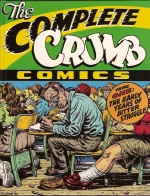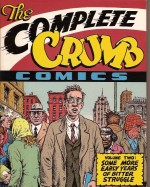
The Complete Crumb Comics volume 15: Featuring Mode O’Day and Her Pals


By Robert Crumb and others (Fantagraphics Books)
ISBN: 978-1-56097-413-0

Robert Crumb is a unique creative force in the world of comics and cartooning with as many foes as fans, but his idiosyncratic, unflinching, uncompromising, controversial and always bewitching work is impossible to ignore.

Therefore if intemperate language, putative blasphemy, artfully grotesque cartoon nudity, fetishism and comedic fornication are liable to upset you, stop reading this review and don’t buy the book. Stop reading now, check out an old, archived review instead or just come back tomorrow…

In 1987 Fantagraphics began the almost impossible task of collating, collecting and publishing the chronological totality of the artist’s output.

Son of a career soldier, Robert Dennis Crumb was born in Philadelphia in 1943 to a large and troubled family. After a tempestuous early life, he began working as an in-house art-drone at the American Greeting Cards Company and trading card giant Topps Publishing, married early and briefly before “dropping out” and joining the Counterculture movement, where he changed the nature of cartooning with such creations as Mr. Natural, Fritz the Cat, Devil Girl and a host of others.

Within a decade the explosively reactive underground movement was gone; dissipated, disillusioned, dropped back “in” or dead, with only a few notable independent and truly dedicated publishers staying the course. Always his own harshest critic and ever-searching for artistic perfection, in 1981 Crumb convinced Ron Turner of Last Gasp to publish a new anthology of underground/alternative/cutting edge commix in a new anthology.

Weirdo – with Crumb as editor and major contributor until 1983 when he handed over the editor’s role to his “discovery” Peter Bagge (who provides a fascinating introduction and overview for the tome under review here) – was, for many of us, the last bastion of a real gone world.

With the onus of deadlines and responsibility of magazine production removed Crumb resumed his quixotic search for artistic satisfaction…

Recently re-released, this 15th softcover volume (originally published in 2001) collects Crumb’s comic strips from Weirdo #9-15, assorted gags, private commissions, freelance illustration work, album covers and other pictorial ephemera plus strips from American Splendor and Zap Comix, covering the hedonistic, greed-soaked early 1980s which were such a painful anathema to someone of the Artist’s socialist/liberal leanings.

After Bagge’s aforementioned text recollections the graphic magic begins with the Crumb contributions in Weirdo #9 (Winter 1983-1984), a stunning and meticulous frontispiece, ‘Arline ‘n’ Bob and that Thing in the Back Bedroom’ – an autobiographical account of the “joys” of parenthood crafted in collaboration with second wife Aline Kominsky-Crumb plus the first snide and sardonic appearance of Reagan-era, appalling and avaricious anti-icon ‘Mode O’Day and Her Pals’ in a barbed observation of fame-hungry wannabes and the pathetic, empty gullibility of the nouveau-riche.

More of Mode (dabbling with the chic of being a benefactor and coffee-magnate of the so-troubled Nicaraguans) and nothing else appeared in Weirdo #10 in Summer 1984 whilst #11 featured a stark and salutary updating of an old favourite in ‘Goldilocks and the Three Bears’ and a magical selection of single panel cartoons declaring ‘Love’s Like That!’

Mode stalked and blagged her way into the good graces of an ugly plutocrat with her usual lack of success or happiness in #12, but Weirdo #13 (Summer 1985) was given over to Crumb’s stunning ‘Psychopathia Sexualis’ wherein the case histories of a number of “deviants” were brought to incredible grimy, sordid, evocative life as Crumb sampled the truly bizarre nature of humanity described by giant of psychology Richard Freiherr von KrafftEbing.

Issue #14 featured the far lighter and whimsically bombastic anti-pop (or is it simply anti-maximum decibels?) inquiry ‘Where Has It Gone, All the Beautiful Music of Our Grandparents?’ and the marvellously introspective yet light ‘Life Certainly Is Existential!’, whilst #15 opened with the surreal domesticity of ‘Comics from Other Planets Dept’, slipped comfortably into two pages of splendid ‘Gags’ and closed with a captivating ad parody.

The covers of Weirdo #9-15 (including a heartfelt ‘Parting Shot‘ at Ayn Rand), lead off the expansive central, full-colour section, which continues with record and book covers for The Klezmorim’s Streets of Gold, The Otis Brothers, Charles Bukowski’s Bring Me Your Love and There’s No Business Like Show Business, novel covers Texas Crude and The Monkey Wrench Gang; a Louis Bluie poster plus incidental illustrations and sticker art.

Back in black and white there’s a page of miscellaneous ads and illustrations from 1983, after which ‘Hypothetical Quandry’ (written by Harvey Pekar for his magnificent American Splendor on-going graphic autobiography: issue #9, if you’re keeping count) appears, showcasing Crumb’s far bolder and more liberated big-black-brush art style.

Crumb’s long creative association with author Charles Bukowski produced phenomenal results, and here, after a portrait of the writer and promotional art, follows a sequence of illustrations from Bring Me Your Love and There’s No Business Like Show Business, as well as Ken Weaver’s Texas Crude. More miscellaneous illustration art for Pepper & Stern Rare Books, The Magazine, Co-Education Quarterly and seven pages of vignettes and cameos from The Monkey Wrench Gang round out this section.

‘Constipated Chaos Consortium’ is a mind-bending jam-collaboration with fellow underground luminaries Spain Rodriguez, Bosirus Eerie, Victor Moscoso, S. Clay Wilson and Robert Williams and the first of three contributions to Zap #11 from 1985: the other two being ‘Jesus People USA’ (a hypothetical interview between a fundamentalist Christian reporter and ‘R. Crumb, Underground Pornographer and All-Around Lost Soul’) and the powerful and engaging biography of lost Blues legend (Charley) ‘Patton’.

This sublime – and key – transitional tome in the development of one of the art form’s greatest living proponents concludes with another section of miscellaneous illustrations including collaborations with wife and daughter Aline and Sophie and a poster with Dan O’Neill, Victor Moscoso and Bob Crabb.

As always this varied and impressive selection of Crumb’s craft is riddled with his often hard-to-embrace themes and emblematic declamatory and potentially offensive visual vocabulary: as always the work touches on the creator’s most intimate and disturbing idiosyncrasies regarding sex and women, both in the unsettling Abstract and the painful, side-splitting, lustful, painful and loving Concrete and, as always, the reader’s response can only be Love or Loathe…

Crumb’s subtle mastery of his art-form and obsessive need to reveal his most hidden depths and every perceived defect – in himself and the world around him – has always been a unquenchable wellspring of challenging comedy and riotous rumination. This superb series charting the perplexing pen-and-ink pilgrim’s progress is the perfect vehicle to introduce any (definitively over 18) newcomers of your acquaintance to the world of grown up comics. And if you need a way in yourself, snatch up this book and the other sixteen as soon as conceivably possible…

All material © 2011 R. Crumb and its respective owners or co-owners. All other material © 1978, 1979, 1981, 1982, 1983, 1984, 1985, 2001, 2011 R. Crumb. All rights reserved.

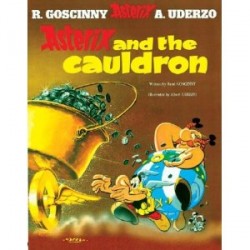
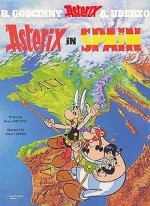
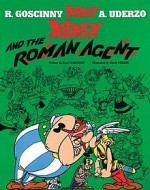
Asterix the Legionary, Asterix and The Chieftain’s Shield & Asterix at The Olympic Games


By Goscinny and Uderzo, translated by Anthea Bell & Derek Hockridge (Orion Books)
ISBNs: 978-0-7528-6621-5, 978-0-7528-6625-3 and 978-0-7528-6626-0

One of the most-read comics in the world, the chronicles of Asterix the Gaul have been translated into more than 100 languages; with animated and  live-action movies, TV series, assorted games and even a theme park (Parc Astérix, near Paris). More than 325 million copies of 34 Asterix books have sold worldwide, making Goscinny & Uderzo France’s bestselling international authors.

The diminutive, doughty hero was created in 1959 by two of the art-form’s greatest proponents, René Goscinny & Albert Uderzo; masters of the form at the peak of their creative powers. Although their perfect partnership ended in 1977 with the death of prolific scripter Goscinny, the creative wonderment still continues – albeit at a slightly reduced rate of rapidity as Uderzo continues to produce new works.

Like everything good, the premise works on multiple levels: ostensibly, younger readers enjoy the action-packed, lavishly illustrated comedic romps where sneaky, bullying baddies get their just deserts whilst more worldly readers enthuse over the dry, pun-filled, sly, witty satire, enhanced for English speakers by the brilliantly light touch of translators Anthea Bell & Derek Hockridge who played no small part in making the indomitable Gaul so palatable to the Anglo-Saxon world. (Personally I still thrill to a perfectly delivered punch in the bracket as much as a painfully swingeing string of bad puns and dry cutting jibes…)

Asterix the Gaul is a cunning underdog who resists the iniquities, experiences the absurdities and observes the myriad wonders of Julius Caesar’s Roman Empire with brains, bravery and a magic potion.

The stories were alternately set on the tip of Uderzo’s beloved Brittany coast, where a small village of redoubtable warriors and their families resisted every effort of the Roman Empire to complete their conquest of Gau,l and throughout the expansive Ancient World circa 50BC.

Unable to defeat this last bastion of Gallic insouciance the mostly victorious invaders resorted to a policy of containment. Thus the little seaside hamlet is permanently hemmed in by the heavily fortified garrisons of Totorum, Aquarium, Laudanum and Compendium.

The Gauls don’t care: they daily defy the world’s greatest military machine by just going about their everyday affairs, protected by the magic potion of resident druid Getafix and the shrewd wits of a rather diminutive dynamo and his simplistic best friend…

Firmly established as a global brand and premium French comics export by the mid-1960s, Asterix the Gaul continued to grow in quality as Goscinny & Uderzo toiled ever onward, crafting further fabulous sagas; building a stunning legacy of graphic excellence and storytelling gold.

In late 1966 they began Asterix the Legionary (running in Pilote #368-389), which was later adapted as half of the plot for the movie Asterix Vs Caesar (the other album incorporated into the animated epic being Asterix the Gladiator).

This clever romp introduced the destabilising concept of true romance to the doughty hero and his prodigious pal Obelix as, whilst boar hunting in the great forest around their still-unconquered village, they encountered the fabulously beautiful Panacea picking mushrooms.

The little darling had freshly returned to the village after years away in Condatum and the sheltered Obelix was instantly smitten. Dazed and confused by the only force that could ever affect him, the gentle giant was teased by Asterix and Getafix, but undaunted, Obelix began bringing the oblivious lass a succession of inappropriate presents.

However, when the befuddled buffoon found Panacea crying he dashingly volunteered to mend her woes. Tragically for him the problem was a boyfriend named Tragicomix, who had been pressed into military service with the Roman Army…

Where other men would take advantage of the hopeless situation, Obelix, afflicted with a True Crush, determined to make Panacea happy and rushed off to rescue her lost love. Ever faithful, Asterix and little Dogmatix accompany him to keep him out of trouble.

In Condatum they discovered that Tragicomic had already been shipped out to Africa where Caesar was battling fellow Roman Scipio in a clandestine Civil War and Asterix realised the only way to find Tragicomix was to enlist in the Roman Army…

In Basic Training they met a motley assortment of fellow recruits – all national stereotypes – allowing for a broad bombardment of gentle ethnic comedy and graphic accent humour. There was Neveratalos the Greek, Goths Allegoric and Hemispheric, Gastronomix from Belgium, Selectivemploymentax the Briton and poor Ptenisnet the Egyptian, who didn’t know the language and thought he was on a holiday package tour…

After lashings of their unique brand of anarchy disrupting regulation army life, Asterix, Obelix and crew shipped out to Africa. When they arrived the war was going badly for Caesar, but more importantly, Tragicomix was missing and believed captured by Scipio’s forces…

With magic potion in hand Asterix, Obelix and Dogmatix decided to take matters in hand…

A hilariously engaging yarn with delicious overtones of the iconic British comedy Carry On Sergeant, this is an action-packed farce big on laughs but with a bittersweet core that will tug at the heartstrings of young and old alike…

Asterix and the Chieftain’s Shield (originally entitled Le bouclier arverne) was the eleventh epic outing for the Greatest French Hero of Them All; debuting in Pilote #399 and running until #421 in 1967. it acted as a kind of tongue in cheek patriotic history lesson and began years before the usual setting of Asterix tales when Gaulish over-chief Vercingetorix surrendered to Caesar at the Battle of Alesia by throwing down his weapons and armour at the Conqueror’s feet.

Such was the shame of the defeated Gauls that the location of the clash was deliberately excised from their memories. Now, nobody remembers where Alesia was…

After the battle the accoutrements lay where they fell until a greedy Legionary stole the Great Shield, subsequently losing it in a game of dice. From there the legendary buckler passed through many scurrilous hands before fading into legend…

Jumping to “modern” times, in the village of indomitable Gauls Chief Vitalstatistix is terribly ill: a sedentary life of over-indulgence has ruined his liver and since Getafix’s druidic potions can’t help him, he has to go to the spa town of Aqua Calidae (Arverne) for a rest-cure and diet.

It isn’t all bad though since his forthright wife Impedimenta has to stay behind….

As a chief he needs an honour guard and Asterix, Obelix and Dogmatix are happy to accompany him, especially as the chief uses the journey to test all the inns and taverns en route. Once there though, the warriors’ robust consumption – and boisterous high jinks – appals all the dieting dignitaries and impatient patients so Asterix and Obelix are summarily kicked out of the Health Resort.

Footloose and fancy-free the boys tour the local countryside of Gergovia idly trying to find the lost site of Alesia until they encounter Roman envoy Noxius Vapus and his cohort. After indulging in their favourite sport of Roman-bashing the lads befriend local merchant Winesandspirix – a veteran of Alesia – while Noxius hightails it to Rome and tells Caesar the Gauls are revolting…

({      } this space provided for you to fill in your own joke)

Set on putting the Gauls in their place and reminding them who’s boss, Caesar determines to hold a Roman Triumph with the shield of Vercingetorix as the centrepiece.

He’s none to happy when he discovers it’s been missing for years…

And thus begins the second stage of this hilariously thrilling detective mystery as the Romans frantically hunt for the missing artefact and Asterix and Obelix set out to thwart them at every turn…

No prizes for guessing which faction succeeds and who scurries home in defeat and disgust in this marvellously slapstick saga with a delightfully daft twist ending…

Asterix at the Olympic Games first appeared weekly in Pilote #434-455, serialised in 1968 to coincide with and capitalise upon the Mexico City Games. The translated British album was released four years later, just before the 1972 Munich Olympiad.

The Romans of Aquarium garrison are in an ebullient mood. Their comrade Gluteus Maximus has been selected to represent Rome at the Greeks’ Great Games in Olympia. Centurion Gaius Veriambitius is happy too, because he knows if Gluteus wins they can both write their ticket in Rome…

It all starts to go horribly wrong when the Roman superman is bested and humiliated by Asterix and Obelix whilst training in the Great Forest. His confidence shattered, Gluteus returns to Aquarium and only regains a modicum of his old form when Veriambitius reminds him that the potion-fuelled Gauls won’t be at the Games…

Meanwhile the men of the village have decided to go to Olympia en masses and have a go themselves…

There follows a uproarious and nigh-scandalous sequence of events as the unbeatable Greeks try to placate their Roman overlords; the Latin competitors undergo the tortures of the arrogant damned to cheat, wheedle and somehow exclude the all-conquering Gauls whilst the basically honest and honourable Asterix devises a cunning yet fair way to beat the politically motivated, greed-inspired “sportsmen” and uphold the best traditions and ideals of the Olympic Games.

Guess who wins…

Spoofing package tours, obnoxious tourists, self-serving sports authorities and doping scandals in equal proportion, this sparkling escapade features some of Uderzo’s most inspired art as he recreates the grandeur and glory of the Ancient World whilst simultaneously graphically lampooning the haughty elites of the Sporting World, the Military and Politics. A genuine classic which should be given to every competitor at London 2012 and especially the organising committees…

Asterix volumes are always stuffed with captivating historical titbits, soupcons of healthy cynicism, singularly surreal action and splendidly addictive adventure, illustrated in a magically enticing manner. These are perfect comics that every one should read over and over again.
© 1967-1969 Goscinny/Uderzo. Revised English translation © 2004 Hachette. All rights reserved.

Willie and Joe: Back Home


By Bill Mauldin (Fantagraphics Books)
ISBN: 978-1-60699-351-4

Throughout World War II William Henry “Bill” Mauldin fought “Over There” with the United States Infantry whilst producing cartoons about the fighting men and for the fighting men. He told as much of the real nature of the war as his censors and common sense would allow and became an unwilling international celebrity as much because of his unshakable honesty as his incredible artistic talent.

He was in controvertibly one of the guys and American soldiers and civilians loved him for it. During his time in the service he produced cartoons for the folks back home and intimately effective, authentic and quirkily morale-boosting material for military publications 45th Division News, Yank and Stars and Stripes.

They mostly featured two slovenly “dogfaces” – a term he made his own and introduced to the world at large – giving a trenchant and acerbically enduring view of the war from the point of view of the poor sods ducking bullets in muddy foxholes and surviving shelling in the ruins of Europe.

Willie and Joe, to the dismay of much of the Army Establishment, gave an honest overview of America’s ground war. In 1945 a collection of his drawings, accompanied by a powerfully understated and heartfelt documentary essay, was published by Henry Holt and Co. Up Front was a sensation, telling the American public about the experiences of their sons, brothers, fathers and husbands in a way no historian would or did. A biography, Back Home, followed in 1947.

Willie even made the cover of Time magazine in 1945, when 23 year old Mauldin won his first Pulitzer Prize. Like so many other returning soldiers, however, Mauldin’s hard-won Better Tomorrow didn’t live up to its promise…

Mauldin’s anti-war, anti-Idiots-in-Charge, anti-bigot views never changed but found simply new targets at home. However, during the earliest days of the Cold War and despite being a bone fide War Hero, Mauldin’s politically strident cartoons fell ever more out of step with the New America: a place where political expediency allowed racists to resume repressing ethnic sections of the nation now that their blood and sweat were no longer needed to defeat the Axis; a nation where women were expected to surrender their war-time freedoms and independences and become again servants and baby machines, happy to cook suppers in return for the new labour-saving consumer goods America now needed to sell, sell, sell: a nation far too eager to forget the actual war and genuine soldiers in favour of massaged messages and conformist, inspirational paper or celluloid heroes.

The New America certainly didn’t want anybody rocking their shiny new boat…

When Sergeant Bill Mauldin mustered out in 1945 he was notionally on top of the world: celebrity hero, youngest Pulitzer Prize winner in history, with a lucrative 3-year syndicated newspaper contract and Hollywood clamouring for him.

Unfortunately, the artist was as dedicated to his ideals as to his art. As soon as he became aware of the iniquities of the post-war world he went after them, using his newspaper cartoon as a soapbox, Mauldin attacked in bitterly brilliant barrages the maltreatment and sidelining of actual soldiers (during the country’s entire involvement in WWII less than 10% of military men actually fought, or even left their home country) whilst rear-echelon brass seemed to increasingly reap the benefits and unearned glory of the peace.

The ordinary enlisted men and veterans were culture-shocked, traumatised, out of place and resented by the public who blamed them disproportionately for the shortages and “suffering” they had endured. Black and Japanese Americans were reduced to second class citizens and America’s erstwhile allies demonised, whilst everywhere politicians and demagogues were rewriting recent history for their own advantage… His fondest wish had been to kill the iconic dogfaces off on the final day of World War II, but Stars and Stripes vetoed it, and the demobbed survivors moved into a world that had changed incomprehensibly in their absence…

Always ready for a fight, Mauldin’s peacetime Willie and Joe became a noose around the syndicate’s neck as the cartoonist’s acerbic, polemical and decidedly non-anodyne observations perpetually highlighted the iniquities and stupidities inflicted on returning servicemen, attacked self-aggrandising politicians, advocated such socialist horrors as free speech, civil rights and unionisation, affordable public housing and universal medical care for everybody – no matter what their colour, gender or religion. He even declared war on the Ku Klux Klan, American Legion and red-baiting House UnAmerican Activities Commission: nobody was too big. When the Soviet Union and United Nations betrayed their own ideological principles Mauldin went after them too…

An honest broker he had tried to quit early, but the syndicate held him to his contract. Trapped in a situation that increasingly stifled his creative urges and muzzled his liberal/libertarian sensibilities, he refused to toe the line and his cartoons were incessantly altered and reworked. During six years of War service his cartoon had been censored three times; now the white paint and scissors were employed by rewrite boys almost daily…

The movie Up front – which Mauldin wanted to reflect the true experience of the war – languished unmade for six years until a sappy flimsy comedy bearing the name was released in 1951. The intended screenplay by Mauldin, John Lardner and Ring Lardner Jr., disappeared, deemed utterly unsuitable and unfilmable until much of its tone reappeared in Lardner Jr.’s 1970 screenplay M*A*S*H…

As the syndicate bled clients, mostly in segregationist states, and contemplated terminating his contract, Mauldin began simultaneously working for the New York Herald-Tribune and with a new liberal outlet changed his tactics in the Willie and Joe feature: becoming more subtle and less bombastic. He still picked up the best of enemies however, adding J. Edgar Hoover and the FBI to the roster of declaimers and decriers…

When his contract finally ended in 1948, neither side wanted to renew. Mauldin left the business to become a journalist, freelance writer and illustrator. He was a film actor for awhile (appearing in Red Badge of Courage with Audie Murphy among other movies), a war correspondent during the Korean Conflict and an unsuccessful candidate for Congress in 1956.

He only finally returned to newspaper cartooning in 1958 in a far different world and worked for the St. Louis Post-Dispatch before moving to the Chicago Sun-Times, winning another Pulitzer and a Reuben Award for his political cartoons

He retired in 1991 after a long, glittering and properly- appreciated career. He only drew Willie and Joe four times in that entire period (for an article on the “New Army” in Life magazine; for the funerals of “Soldier’s Generals” Omar Bradley and George C. Marshall and to eulogize Milton Caniff).

This magnificent hardback companion volume to Willie and Joe: the WWII Years covers the period of work from July 31st 1945 to 31st December 1948, supplemented by a brilliant biographical introduction from Todd DePastino: a superb black and white compendium collecting the bittersweet return of the forgotten heroes as they faced confusion, exclusion, contention and disillusion: but always with the edgy, stoic humour under fire that was Mauldin’s stock in trade.

Moreover it features some of the most powerful assaults on the appalling edifice of post-war America ever seen. The artist’s castigating observations on how a society treats returning soldiers are as pertinent now as they ever were; the pressures on families and children even more so; whilst his exposure of armchair strategists, politicians and businessmen seeking to exploit wars for gain and how quickly allies can become enemies are tragically more relevant than any rational person could wish.

Alternating trenchant cynicism, moral outrage, gallows humour, sanguine observation and uncomprehending betrayal, this cartoon chronicle is an astounding personal testament that shows the powers of cartoons to convey emotion if not sway opinion.

With Willie & Joe: the WWII Years, we have here a magnificent example of passion and creativity used as a weapon of social change and a work of art every citizen should be exposed to, because these are aspects of humanity that we seem unable to outgrow…

This edition © 2011 Fantagraphics Books. Cartoons © 2011 the Estate of William Mauldin. All right reserved.

Willie and Joe: the WWII Years


By Bill Mauldin, edited by Todd DePastino (Fantagraphics Books)
ISBN: 978-1-60699-439-9

During World War II a talented, ambitious young man named William Henry “Bill” Mauldin (29/10/1921 – 22/01/2003) fought “Over There” with the 45th Division of the United States Infantry as well as many other fine units of the army. He learned to hate war and love his brother soldiers – and the American fighting man loved him back. During his time in the service he produced civilian cartoons for the Oklahoma City Times and The Oklahoman, and intimately effective and authentic material for his Company periodical, 45th Division News, as well as Yank and Stars and Stripes; the US Armed Forces newspapers. Soon after, his cartoons were being reproduced in newspapers across Europe and America.

They mostly featured two slovenly “dogfaces” – a term he popularised – giving a trenchant and laconic view of the war from the muddied tip of the sharpest of Sharp Ends. Willie and Joe, much to the dismay of the brassbound, spit-and-polish military martinets and diplomatic doctrinaires, became the unshakable, everlasting image of the American soldier: continually revealed in all ways and manners the upper echelons of the army would prefer remained top secret.

Willie and Joe even became the subject of two films (Up Front -1951 and Back at the Front – 1952) whilst Willie made the cover of Time magazine in 1945, when 23 year old Mauldin won his first Pulitzer Prize.

In 1945 a collection of his drawings, accompanied by a powerfully understated and heartfelt documentary essay, was published by Henry Holt and Co. Up Front was a sensation, telling the American public about the experiences of their sons, brothers, fathers and husbands in a way no historian would or did. A biography, Back Home, followed in 1947.

Mauldin’s anti-war, anti-Idiots-in-Charge-of-War views became increasingly unpopular during the Cold War and despite being a War Hero Mauldin’s increasingly political cartoon work fell out of favour (those efforts are the subject of forthcoming companion volume Willie & Joe: Back Home).  Mauldin left the business to become a journalist and illustrator.

He was a film actor for awhile (appearing in Red Badge of Courage with Audie Murphy among other movies), a war correspondent during the Korean War and, after an unsuccessful campaign for Congress in 1956, finally returned to newspaper cartooning in 1958.

He retired in 1991 after a long, glittering and award-studded career. He only drew Willie and Joe four times in that entire period (for an article on the “New Army” in Life magazine; for the funerals of “Soldier’s Generals” Omar Bradley and George C. Marshall; and to eulogize Milton Caniff). His fondest wish had been to kill the iconic dogfaces off on the final day of World War II, but Stars and Stripes vetoed it.

The Willie and Joe cartoons and characters are some of the most enduring and honest symbols of all military history. Every Veterans Day in Peanuts from1969 to 1999, fellow veteran Charles Schulz had Snoopy turn up at Mauldin’s house to drink Root Beers and tell war stories with an old pal. When you read Sgt. Rock you’re looking at Mauldin’s legacy, and Archie Goodwin drafted the shabby professionals for a couple of classy guest-shots in Star-Spangled War Stories (see Showcase Presents the Unknown Soldier).

This immense mostly monochrome (with some some very rare colour and sepia items) softcover compendium – 704 pages, 229 x 178mm – collects all his known wartime cartoons originally released in two hardback editions in 2008, featuring not only the iconic dog-face duo, but also the drawings, illustrations, sketches and gags that led, over 8 years of army life, to their creation.

Mauldin produced most of his work for Regimental and Company newspapers whilst under fire: perfectly capturing the life and context of fellow soldiers – also under battlefield conditions – and gave a glimpse of that unique and bizarre existence to their families and civilians at large, despite constant military censorship and even face-to-face confrontations with Generals such as George Patton, who was perennially incensed at the image the cartoonist presented to the world. Fortunately Supreme Commander Eisenhower, if not a fan, knew the strategic and morale value of Mauldin’s Star Spangled Banter and Up Front feature with the indomitable everymen Willie and Joe…

This far removed in time, many of the pieces here might need historical context for modern readers and such is comprehensively provided by the notes section to the rear of the volume. Also included are unpublished pieces and pages, early cartoon works, and rare notes, drafts and sketches.

Most strips, composites and full-page gags, however are sublimely transparent in their message and meaning: lampooning entrenched stupidity and cupidity, administrative inefficiency and sheer military bloody-mindedness whilst highlighting the miraculous perseverance and unquenchable determination of the ordinary guys to get the job done while defending their only inalienable right – to gripe and goof off whenever the brass weren’t around… Moreover Mauldin never patronises the civilians or demonises the enemy: the German and Italians are usually in the same dismal boat are “Our Boys” and only the war and its brass-bound conductors are worthy of his inky ire…

Alternating trenchant cynicism, moral outrage, gallows humour, absurdist observation, shared miseries, staggering sentimentality and the total shock and awe of still being alive every morning, this cartoon catalogue of the Last Just War is a truly breathtaking collection that no fan, art-lover, historian or humanitarian can afford to miss.

…And it will make you cry and laugh out loud too.

With a fascinating biography of Mauldin that is as compelling as his art, the mordant wit and desperate camaraderie of his work is more important than ever in an age where increasingly cold and distant brass-hats and politicians send ever-more innocent lambs to further foreign fields for slaughter. With this volume and the aforementioned Willie & Joe: Back Home, we should finally be able to restore the man and his works to the forefront of graphic consciousness, because tragically, his message is never going to be out of date…

© 2011 the Estate of William Mauldin. All right reserved.

The Fat Ninja (GMC Collections Volume 1 #3)


By Gary Amaro, Kris Silver & various (Greater Mercury Comics)
No ISBN

The late 1980s were an incredibly fertile time for American comics-creators. It was as if an entire new industry had been born with the sudden expansion of the Direct Sales market and dedicated specialist retail outlets; new companies were experimenting with format and content and punters even had a bit of spare cash to play with.

Moreover much of the “kid’s stuff” stigma had finally abated and the country was catching up to the rest of the world in acknowledging that sequential narrative might just be a for-real and truly, actual art-form…

Consequently many starry-eyed kids and young start-up companies began competing for the attention and cash of punters who had grown accustomed – or resigned – to getting their sequential narratives from DC, Marvel, Archie and/or Harvey Comics. European and Japanese material had been creeping in and by 1983 a host of young companies such as WaRP Graphics, Pacific, Eclipse, Vortex, Capital, Now, Slave Labor, Comico, Dark Horse, First and many others had established themselves and were making impressive inroads.

New talent, established stars and fresh ideas all found a thriving forum to try something a little different both in terms of content and format. Even smaller companies had a fair shot at the big time and a lot of great material came – and too often, quickly went – without getting the attention or success it warranted. Often utterly superb and innovative material came from the same shoestring outfits generating the worst dreck imaginable and the only way to get in on the next big thing – or better yet – something actually good was to get out and try it…

It really helped if you worked in a comic shop and got first pick before the customers arrived too…

One of the least well-known yet most fun was an unassuming spoof series entitled Fat Ninja which came out of a prolific little outfit calling itself Greater Mercury Comics from August to December 1986. The serial never completed its initial storyline, but that didn’t stop the creators Kristoffer Silver and Gary Amaro collecting the saga thus far into a daft and nifty little trade paperback that still makes me laugh decades later…

Delightfully lampooning the 1980s oriental assassin craze; the ubiquitously dark and ponderous Frank Miller Daredevil (and Wolverine) comics so successfully mined by the Teenage Mutant Ninja Turtles and the groundbreaking economical graphic bravura of Dave Sim’s incredible Cerebus the Aardvark, this asinine adventure begins the unfinished epic of ‘The Galactic Refrigerator’ as a chunky, katana-wielding, preternaturally hungry silent warrior discovers to his mute horror that someone has unplugged the celestial artefact which provided the raw material for food across the universe.

Appalled and a bit peckish, the sturdy stalwart undertakes an unbelievably violent quest to restore balance and provisions to the world, encountering supernatural warriors Shadow and Flair in ‘Between Light and Darkness’ and follows them back to their immediate superior the Crimson Ninja in ‘Confrontations’. Fat Ninja then traces, via teleporting phone-booth, the reality bending culprit “Sir” to his extraordinary lair in ‘Master Evil’, from where the deadly dictator took the corpulent crusader on a quick tour of the cosmos and gave him a little philosophical testing before once more resorting to gratuitous violence in ‘Shadowplay’…

I fear we shall never learn ‘The Secret of the Hacksword’ since the series and this collection end there…

Raw, unrefined, even badly drawn in places Fat Ninja (with additional contributions from P.S. King, Emilio Soltero & Amy Amaro) is nevertheless carried along by its brash, and naively hilarious premise and decidedly likable portly protagonist, and the mere fact that I’m recommending it even though there’s no conclusion should give you some idea of just how amusing this lost oddment actually is.

A genuine original and well worth picking up if the fickle, ill-fed fates ever send a copy your way…
Fat Ninja © 19985-19986 Kristoffer A. Silver. This edition © 1990 Greater Mercury Comics. All rights reserved.

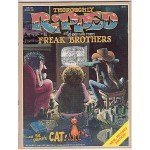
The Fabulous Furry Freak Brothers in “Grass Roots”

– a Knockabout Deluxe Edition

By Gilbert Shelton & Dave Sheridan (Knockabout Comics)
ISBN: 0-86166-015-3

Because you’re all decent, deity-fearing, upstanding citizens you’re probably utterly unaware of the extensive sub-culture which has grown up around the recreational abuse of narcotic pharmaceuticals – and so, of course, am I – but it must be said: those counter-culture chaps certainly know how to craft a comic tale.

The Fabulous Furry Freak Brothers shambled out of the Underground Commix counter-culture wave in 1968; initially appearing in Berkeley Print Mint’s Feds ‘n’ Heads, before creator Gilbert Shelton and a few friends founded their own San Francisco based Rip Off Press in 1969. This effective collective continued to maximise the madness as the hilarious antics of the “Freaks” (a contemporary term for lazy, dirty, drug-taking hippy folks) captured the imagination of the open-minded portions of America and the world.

In 1971 they published the first compilation: The Collected Adventures of the Fabulous Furry Freak Brothers – which has been in print all around the planet ever since – and soon assorted underground magazines and college papers were joined by the heady likes of Rip Off Comix, High Times and Playboy (and numerous foreign periodicals) in featuring the addictive adventures of Freewheelin’ Franklin, Phineas T. Freakears and Fat Freddy Freekowtski (and his cat): siblings in sybaritic self-indulgence.

Always written by Shelton and, from 1974 illustrated by Dave Sheridan (until his death in 1982) and Paul Mavrides; the disjointed strips (sorry; just could not resist) combined canny satirical cynicism, surreal situations, scatological sauciness and an astounding grasp of human nature in brilliantly comedic episodes that cannot fail to amuse anyone with a mature sense of humour.

All the strips have been collected in various formats (in Britain by the fabulous folks of Knockabout Comics) and have been happily absorbed by vast generations of fans – most of whom wouldn’t read any other comic.

Despite the hippy-dippy antecedents and stoner presentiments, Shelton is irrefutably a consummate professional. His ideas are always enchantingly fresh, the dialogue is permanently spot-on and his pacing perfect. The stories, whether half-page fillers, short vignettes or full blown sagas, start strong and relentlessly build to spectacular – and often wildly outrageous, hallucinogenic yet narrative-appropriate – climaxes.

And they’re so very, very funny.

Without Shelton and the Freaks the whole sub-genre of slacker/stoner movies, from Cheech and Chong‘s assorted escapades to Dude, Where’s My Car? and all the rest – good, bad or indifferent – wouldn’t exist. Whether or not that’s a good thing is up to you…

Freewheelin’ Franklin is the tough, street-savvy one who can pull the chicks best, Phineas T. Freakears is a wildly romantic, educated and dangerous (to himself) intellectual whilst Fat Freddy Freekowtski is us; weak-willed, greedy, not so smart, vastly put upon by an uncaring universe but oddly charming (you wish…)

One last point: despite the vast panoply of drugs imbibed, both real and invented, the Freaks don’t ever do heroin – which should tell you something…

‘Grass Roots’ has slowly been adapted into a “claymation” movie for as long as I can remember – and still not completed yet – but the tale it is based on has been a favourite for even longer (since first produced serially in 1976) and this luxurious full-colour hardback edition from 1984 is the very best way in which to enjoy it…

After a cartoon introduction from Shelton the intoxicating entertainment begins with a series of shorts strips ‘The Mellow Cab Man’, ‘Violence on the Bus’, an untitled culinary escapade, ‘Fat Freddy Demonstrates How to Use Rolling Papers’ and ‘Phineas and the Organic Mechanic’ after which the main event commences.

After being evicted again for not paying rent, the Freaks luck into a caretaking gig at a palatial “haunted” mansion where the hapless fools find a huge stash of cocaine. After selling most of it to legendary independent vendor Dealer McDope they have enough cash to buy a forty acre farm, pick up a bevy of hitchhiker babes and set up in the agricultural narcotics game. They also have an entire year’s supply of cocaine for personal use…

Their rural idyll suddenly turns painfully real when they blow all that coke (sorry: I’m just incorrigible, me) in two days and, stranded miles from the city, have no choice but to make the far-fetched farm pipe-dream work…

It’s hard, unrewarding labour, the friendly locals aren’t and without drugs the girls are finding the boys less and less appealing. As the joys of getting back to nature pall things temporarily turn around when they “discover gold” on the property and the farm turns into the lawless boomtown of Rush City overnight.

As picturesque Boondock County slowly succumbs to the imported blandishments of Sex and Drugs and Rock ‘n’ Roll, things seem to going great for the furry ones, but then the rains begin to fall on the desiccated, over-excavated soils of mining town.

It rains and rains and rains…

Anarchically sardonic and splendidly ludicrous, the madcap slapstick of the Freak Brothers is always an irresistible and joyously innocent tonic for the blues and these tales should be a compulsory experience for any fan of the comics medium. However, if you’re still worried about the content, which is definitely habit-forming, simply read but don’t inhale…
© 1984 Gilbert Shelton. All rights reserved.

Asterix and the Big Fight, Asterix in Britain and Asterix and the Normans


By René Goscinny & Albert Uderzo, translated by Anthea Bell & Derek Hockridge (Orion)
ISBNs: 978-0-7528-6616-1, 978-0-7528-6618-5 and 978-0-7528-6622-2

Asterix the Gaul is one of France’s most exciting and rewarding contributions to global culture: a cunning little champion of the underdog who resisted the iniquities, experienced the absurdities and observed the myriad wonders of Julius Caesar’s Roman Empire with brains, bravery and a magic potion which bestowed incredible strength, speed and vitality.

One of the most-read comics in the world, his chronicles have been translated into more than 100 languages; with 8 animated and 3 live-action movies, assorted games and even into his own theme park (Parc Astérix, near Paris). More than 325 million copies of 34 Asterix books have sold worldwide, making Goscinny & Uderzo France’s bestselling international authors.

The diminutive, doughty hero was created by two of the art-form’s greatest masters, René Goscinny & Albert Uderzo who were already masters of the form and at the peak of their creative powers. Although their perfect partnership ended in 1977 with the death of the terrifying prolific scripter Goscinny, the creative wonderment still continues – albeit at a slightly reduced rate of rapidity.

Asterix launched in 1959 in the very first issue of Pilote (with a teaser page appearing a week earlier in a promotional issue #0). The feature was a massive hit from the start. Initially Uderzo continued working with Charlier on Michel Tanguy, (Les Aventures de Tanguy et Laverdure), but soon after the first epic escapade was collected as Astérix le gaulois in 1961 it became clear that the series would demand most of his time – especially as the incredible Goscinny never seemed to require rest or run out of ideas (after the writer’s death the publication rate dropped from two books per year to one volume every three to five). By 1967 the strip occupied all Uderzo’s time and attention. In 1974 the partners formed Idéfix Studios to fully exploit their inimitable creation and when Goscinny passed away three years later Uderzo was convinced to continue the adventures as writer and artist, producing a further ten volumes since then.

Like all great literary classics the premise works on two levels: younger readers enjoy an action-packed, lavishly illustrated comedic romp of sneaky, bullying baddies getting their just deserts whilst wrinklier readers enthuse over the dry, pun-filled, sly and witty satire, enhanced for English speakers by the brilliantly light touch of master translators Anthea Bell & Derek Hockridge who played no small part in making the indomitable Gaul so palatable to the Anglo-Saxon world.

The stories were set on the tip of Uderzo’s beloved Brittany coast in the year 50BC, where a small village of redoubtable warriors and their families resisted all efforts of the Roman Empire to complete their conquest of Gaul. Unable to defeat these Horatian hold-outs, the Empire resorted to a policy of containment and the little seaside hamlet is perpetually hemmed in by the heavily fortified garrisons of Totorum, Aquarium, Laudanum and Compendium.

The Gauls don’t care: they daily defy the world’s greatest military machine by just going about their everyday affairs, protected by a magic potion provided by the resident druid and the shrewd wits of a rather diminutive dynamo and his simplistic best friend…

Asterix and the Big Fight first ran in Pilote #261-302 in 1964 (originally entitled Le Combat des chefs‘The Battle of the Chiefs’) and saw another Roman scheme to overwhelm the hirsute hold-outs when Totorum’s commander Centurion Nebulus Nimbus and his aide-de-camp Felonius Caucus tried to use an old Gaulish tradition to rid themselves of the rebels.

The Big Fight is a hand-to-hand duel between chiefs with the winner becoming ruler of the loser’s tribe. All the Romans have to do is find a puppet, have him defeat fat, old Vitalstatistix and their perennial problem goes away for good. Luckily just such a man is Cassius Ceramix: chief of Linoleum, a hulking brute and, most importantly, a keen lover of all things Roman…

Even such a cunning plan is doomed to failure whilst Vitalstatistix uses magic potion to increase his strength, but what if the Druid Getafix is taken out first?

When the Romans attempt to abduct the old mage, Obelix (who had fallen into a vat of potion as a baby and grew into a genial, permanently superhuman, eternally hungry goliath) accidentally bounces a large menhir off the druid’s bonce, causing amnesia and a touch of insanity…

Although not quite what was intended, the incapacitation of Getafix emboldens the plotters and the Gallo-Roman Ceramix’s challenge is quickly delivered and reluctantly accepted. With no magic potion, honour at stake and the entire village endangered, desperate measures are called for. Asterix and Obelix consult the unconventional (even for druids) Psychoanalytix – who specialises in mental disorders – and Vitalstatistix is forced to diet and begin hard physical training!

Unfortunately when Obelix shows Psychoanalytix how Getafix sustained his injury the net result is two crazy druids, who promptly begin a bizarre bout of magical one-upmanship. As the crucial combat begins and Vitalstatistix valiantly battles his hulking, traitorous nemesis, Getafix accidentally cures himself, which is lucky as the treacherous Nebulus Nimbus and Felonius Caucus have no intention of losing and have brought along their Legions to crush the potion-less Gauls, should Ceramix let them down…

Manic and deviously cutting in its jibes at the psychiatric profession, this wildly slapstick romp is genuinely laugh-a-minute and one of the very best Goscinny tales.

Following the established pattern, after a “home” adventure our heroes went globe-trotting in their next exploit – although not very far…

Asterix in Britain originated in 1965 (Pilote #307-334) and followed Caesar’s conquest of our quirky country. It was never a fair fight: Britons always stopped in the afternoon for a cup of hot water and a dash of milk and never at the weekend, so those were the only times the Romans attacked…

After the conquest, in Cantium (Kent) one village of embattled Britons were holding out against the invaders and they had sent Anticlimax to Gaul where his cousin Asterix had successfully resisted the Roman for absolutely ages. Always happy to oblige the Gauls whip up a barrel of magic potion and the wily warrior and Obelix accompany Anticlimax on the return trip. Unfortunately, during a brief brouhaha with a Roman galley in the channel, the invaders discover the mission and begin a massive hunt for the rebels and their precious cargo…

As the trio make their perilous way to the village in Cantium, the entire army of occupation is hard on their heels and it isn’t long before the barrel goes missing…

Simply stuffed with good natured jibes about British cooking, fog, the Tower of Londinium, warm beer, council estates, the still un-dug Channel tunnel, boozing, the Beatles (it was the swinging Sixties, after all), sport, fishing and our national beverage, this action-packed frenetic chase yarn is possibly the funniest of all the Asterix books… if you’re British and possess our rather unique sense of humour, don’tcha know…?

Asterix and the Normans debuted in Pilote #340-361 in 1966 and showed how Vikings (who would eventually colonise parts of France as Northmen or “Normans”) first encountered our heroic Gauls and learned some valuable lessons…

The action opens with Chief Vitalstatistix reluctantly taking charge of his spoiled teenaged nephew Justforkix, intending to make a man of the flashy brat from Lutetia (Paris). The country girls go for his style and modern music (spoofing Elvis Presley in the original and the Rolling Stones in the English translation) and the lad’s glib tongue even convinces the Bard Cacofonix that his “unique” musical talent would be properly appreciated in the big city…

Meanwhile a shipload of Vikings have fetched up on the beach, looking for the answer to a knotty question. Rough, tough and fierce, the Scandinavians have no concept of fear, but since that have heard that the emotion can make people fly they’re determined not to leave until they know all about experiencing terror…

They’ve met their match in the Gaulish villagers, but Justforkix is a different matter. The once-cool lad is a big ball of cowardy-custardness when confronted by the Normans, so the burly barbarians promptly snatch him, insisting he teach them all about that incomprehensible emotion…

Canny Asterix knows fighting the Normans is a waste of time but reasons the only way to get rid of them is to teach them what fear is like. If violence won’t work then what’s need is something truly horrible… but Cacofonix and his assorted musical instruments are already on their way to fame and fortune in Lutetia. If only Obelix and Dogmatix can find him and save the day…

Daft and delicious this superbly silly tale abounds with comedy combat and confusion; a perfect mix of gentle generational jibing and slaphappy slapstick with a twist ending to boot.

Outrageously fast-paced, funny and magnificently illustrated by a supreme artist at the very peak of his form, these historical high jinks cemented Asterix’s growing reputation as a world treasure and as these albums are available in a wealth of differing formats and editions – all readily available from a variety of retail and internet vendors or even your local charity shop – there’s no reason why should miss out on all the fun.

Be warned though, that if pure continuity matters only Orion, the current British publisher, has released the nearly 40 albums in chronological order – and are in the process of re-releasing the tales in Omnibus editions; three tales per tome.

Asterix is sublime comics storytelling and if you’re still not au fait with these Village People you must be as Crazy as the Romans ever were…
© 1964-1965 Goscinny/Uderzo. Revised English translation © 2004 Hachette. All rights reserved.

Rick O’Shay and Hipshot: The Great Sunday Pages


By Stan Lynde (Tempo Books)
ISBN: 0-448-12522-6

Once upon a time westerns were the most popular genre in American mass entertainment, with novels, magazines, films, radio shows, TV series, comicbooks and of course newspaper strips all devoted to “Men Doin’ What They Gotta Do”: Riding Ranges, Rounding up stuff, Gun-fighting and all the other timeless iconic cultural activities we all think we know…

Over the decades hundreds of western strips have graced the pages and increased the circulation of newspapers; from singing cowboy film-star Roy Rogers to Red Ryder, Casey Ruggles, the Lone Ranger, Lance and so many more. Even staid Britain got into the act with such lost masterpieces as Buffalo Bill, Matt Marriot and Wes Slade ranking highest amongst fans around the world…

With such a plethora of material concentrated in one genre it’s no surprise that different takes would inevitably develop. Thus alongside Stagecoach, The Ox-Bow Incident, High Noon, How the West Was Won, Soldier Blue or Unforgiven there blossomed less traditional fare such as Destry Rides Again, Cat Ballou, Butch Cassidy and the Sundance Kid, Evil Roy Slade or Blazing Saddles.

Falling straight into the same comedy western territory as The Sheriff of Fractured Jaw and Support Your Local Sheriff – but predating both – came one of the earliest and most successful modern gag-a-day continuity strips, blending iconic scenarios with memorable characters, playing out their daily antics against a spectacular backdrop of lavishly illustrated natural beauty.

Stan Lynde was born in Montana on 23rd September 1931, the son of a sheep farmer who grew up with a passion for comic strips. His first efforts appeared in the High School paper and after studying journalism at Montana State he served in the Navy from 1951-1955, where he created the strip Ty Foon for a Services magazine. After the Navy Lynde tried a succession of jobs and ended up in New York working for the Wall Street Journal.

Whilst there Lynde created Rick O’Shay which eventually found a home with the mighty Chicago Tribune Syndicate (home of Gasoline Alley, Terry and the Pirates and many others) launching as a Sunday page on April 27th 1958 and adding a daily black and white strip from 19th May that year.

Lynde produced the strip until 1977 when he left the Syndicate to produce another wonderful western Latigo (1979-1983). Tribune-News Syndicate owned Rick O’Shay outright and continued the feature with substitutes Marian Dern, Alfredo Alcala and Mel Keefer, but it just wasn’t the same and the strip was allowed to die in 1981.

Rick O’Shay took western conventions to sly and whimsical extremes as it followed the life of Rick, Deputy Marshal of the little town of Conniption. The series was set in the rugged Montana countryside where Lynde grew up and to which he returned as soon as the strip proved successful enough to support him.

Conniption was too small for a full Marshal and whatever order needs to be kept was easily handled by the easy-going Deputy Rick and his friend, grizzled veteran gunslinger Hipshot Percussion. Apart from drinking, fighting and gambling, the township’s most serious problem was criminally bad puns, personified in the likes of saloon owner Gaye Abandon, newspaper editor Clarion McCall, hotelier Auntie Climax, town drunk Mooch McHooch, gunsmith Cap’n Ball, banker Mort Gage, gambler Deuces Wilde and a feisty kid named Quyat Burp. The town’s spiritual needs were catered to by Reverend Jubal Lee and the local Indian tribe is led by Chief Horse’s Neck…

Eventually the dailies began spoofing contemporary events like the James Bond craze, pop music and TV shows but the Sunday episodes (such as the grand selection from 1972-1976 reprinted in this paperback sized, regrettably monochrome collection) retained their integrity and continued to spoof the Old West.

Bright and breezy slapstick rib-ticklers and laconic, tongue-in-cheek jokes involving drunks, card-games, guys joshing with each other, the malicious recalcitrance of horses and other inanimate objects plus the perennial duels of Hipshot as a succession of goofy young wannabes regularly called the old gun-hawk out to steal his rep played and replayed continuously; all set against the breathtaking geography of Montana’s “Big Sky Country”…

Lynde is still working in the western genre, producing the strip Grass Roots, new material for Swedish magazine Fantomen, assorted graphic novels and, since regaining the rights to Rick O’Shay for his own Cottonwood Publishing company, new works and chronological collections of this classic strip.

This nifty and delightful book from 1976 actually belonged to my wife until I took greedy full-possession of it: part of that glorious 1970s era of easily concealable paperback collections featuring classic strips like Peanuts, the Perishers, Mad, Broom Hilda, B.C., Wizard of Id and so many other magical ways to lose yourself whilst teachers droned on around you in interminable obliviousness.

Most of the books were even returned at the end of term, although some unscrupulous educators operated a “confiscation is forever” policy…

Fun and fulsome entertainment, this little gem won’t be easy to track down, but if giggles, guffaws and gunfights are your thing you’ll definitely want to round up the latest Rick O’Shay Cottonwood releases…
© 1972, 1973, 1974, 1975, 1976 The Chicago Tribune. All Rights Reserved.

The World of Pont

New, Revised Review

By Graham Laidler, with an introduction by Richard Ingrams (Nadder Books 1983)
ISBN: 0-90654-038-0

Graham Laidler was born in Jesmond, Newcastle upon Tyne-on July 4th 1908, son of a prominent painter and decorator. Educated at Newcastle Preparatory school and Glenalmond in Perthshire, he was 13 when his father died and the family relocated to Buckinghamshire. Always captivated by cartooning he channelled his artistic bent into more traditionally profitable avenues to support his widowed mother and trained as an architect at the London School of Architecture from 1926-1931.

Always dogged by ill-health Laidler moonlighted as a cartoonist and in 1930 began a long-running domestic comedy strip entitled The Twiffs for the Women’s Pictorial. In 1932 he was diagnosed with a tubercular kidney and advised to live in healthier climates than ours. In August of that year he sold his first cartoon to that prestigious bulwark of British publishing Punch.

He was so popular that editor E.V. Knox took the unprecedented step of putting him under exclusive contract. With financial security established and his unique arrangement with Punch in place Laidler travelled the world and drew funny pictures, mostly of The English both at home and abroad generating 400 magnificent, immortal cartoons until his death in 1940, aged 32.

A charmingly handsome and charismatically attractive young man, Laidler visited Germany, Austria, Italy, Switzerland, Norway, Sweden, America and many other places. He won his nickname and nom-de-plume in Rome during an incident with two “Vestal Virgin” travelling companions after which he was forevermore “Pontifex Maximus”…

His greatest gift was a surgical gift for observation of social and cultural minutiae: gleaning picaresque detail and broad attitude which translated through his gently humorous graphic commentaries into simultaneously incisive and gentle, baroque and subtle picture plays encapsulating the funniest of moments on every subject pertaining to the great Enigma of Being English in Public and Getting Away with It…

His work was collected into a number of books during his lifetime and since, and his influence as humorist and draughtsman can still be felt.

Although he excelled in the strip cartoon format Pont’s true fully mastery was in telling a complete story with a single perfect drawing. His cartoons exemplified the British to the world at large and to ourselves.

During World War II the Nazis, with typical sinister efficiency, used his drawings as the basis of their anti-British propaganda when they invaded Holland, further confirming to the world the belief that Germans Have No Sense of Humour.

As Pont, for eight too-brief years, Graham Laidler became an icon and global herald of English life and you would be doing yourself an immense favour in tracking down his work. If you like Ealing comedies, Alistair Sim and Margaret Rutherford, St Trinian’s and the Molesworth books or the works of Thelwell or Ronald Searle, you won’t regret the search.

Unbelievably, despite his woefully small output there still doesn’t seem to be a definitive collection of his work. One again I implore any potential publisher reading this to take the hint, but until then, for the rest of us there’s just the thrill of the hunt and the promised bounty in seeking out The British Character, The British at Home, The British Carry On, Most of us are Absurd, Pont and this magical compendium The World of Pont, which comprises the perfect primer by sampling the best of his drawn divinations from his themed Punch series’ ‘The British Observed’, ‘The British at War’, ‘Popular Misconceptions’, ‘The British Woman’ and last but certainly not least, ‘The British Man’.

If you love good drawing and sharp observational wit you’ll thank me. If you just want a damn good laugh, you’ll reward yourself with the assorted works of Pont.
© 1983, 2007 the estate of Graham Laidler.

Jak volume 15 (1983)


By Jak (Express Newspapers)
ISBN: 0-85079-133-2

The truly sad if not terrifying thing about rereading topical news cartoons this long after the fact is how distressingly familiar the subjects and hot topics still are.

For example this volume taken from 1983 features crass greed and duplicity amongst our financial elite, Prince Andrew starring in all the wrong sort of headlines, returning British soldiers, children easily subverting electronics systems designed to deny them access to things they shouldn’t see, all the wrong sorts of weather in the most inconvenient places, Sectarianism (Irish and otherwise), railways under-performing, overcharging and under the cosh, football violence and footballers peccadilloes (look it up if you must), Middle East madness, industrial action and business inaction, heat waves and water shortages, crises in Greece, controversies in definitions of rape, strangers making themselves at home in Buckingham Palace and a Tory Government that simply adored shooting off its collective mouth whilst simultaneously shooting itself in the foot…

This compendium even closes with looming public cynicism about an impending global sporting event…

Sometimes our industry is cruel and unjust. This collection of cartoons by Raymond Allen Jackson, who, as Jak, worked for thirty years as political cartoonist for London Evening Standard and its later incarnation The Standard – is one of many that celebrated his creativity, perspicacity and acumen as he drew pictures and scored points with and among the entire range of British Society.

His gags, produced daily to a punishing deadline as they had to be topical, were appreciated, if not feared, by toffs and plebs alike and were created with a degree of craft and diligence second to none. Even now, decades later, they are still shining examples of wit and talent… and they’re still bitingly funny too.

Artists like Jak who were commenting on contemporary events are poorly served by posterity. This particular volume (re-presenting a selection of single panel-gags from September 15th 1982 to August 12th 1983), like all of these books, was packaged and released for that year’s Christmas market, with the topics still fresh in people’s minds.

Decades later the drawing is still superb and despite perhaps the wry minutiae escaping a few the trenchant wit, dry jabs and outraged passion which informed these visual ripostes are still powerfully effective. And obviously human nature never changes and there’s nothing new under the sun…

It’s a terrible shame that the vast body of graphic excellence which topical cartoonists produce has such a tenuous shelf-life. Perhaps some forward looking educational institution with a mind to beefing up the modern history or social studies curricula might like to step in and take charge of the tragically untapped and superbly polished catalogue of all our yesterdays.

Clearly they’re all short of a bob or two these days and I’m pretty sure these cartoon gems could find a willing market eager to invest in a few good laughs…
© 1983 Express Newspapers Limited.