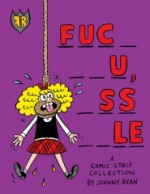
Fuc_ __u, _ss__le: Blecky Yuckerella volume 4


By Johnny Ryan (Fantagraphics Books)
ISBN: 978-1-60699-415-3

Johnny Ryan is a comedian who uses comics as his medium of expression. Whether in his own Angry Youth Comix, or the many commissions for such varied clients as Nickelodeon, Hustler, Mad, LA Weekly and elsewhere, his job and mission is to make laughter. Depending on your point of view he is either a filth-obsessed pervert smut-monger or a social iconoclast using the same tactics as Lenny Bruce or Bill Hicks to assault the worst and/or most hidebound aspects of society.

His wild, loose cartoon drawing style is deceptively engrossing, and his seeming pictorial Tourette’s Syndrome of strips and gags involving such grotesque signature characters as Boobs Pooter (world’s most disgusting stand-up comedian), Loady McGee and Sinus O’Gynus will, frankly, appal many readers, but as with most questions of censorship in a Free Society, they are completely at liberty neither to buy nor read the stuff.

Ryan dubs his stinging graphic assaults on American culture ‘misanthropic comics’ and one of the most effective has been Blecky Yuckeralla. Originally running weekly in The Portland Mercury and Vice Magazine from 2003 before switching to Ryan’s own on-line site the strip was based on traditional, anodyne comics features and referenced many other popular art forms. This fourth bi-annual collection collects the last 99 four-panel pages up to and including the final episode which ran on www.johnnyryan.com on 30th July 2010.

Blecky is an ugly, unsavoury, unsanitary and very stupid girl: a cunning reinterpretation of Ernie Bushmiller’s beloved Nancy strip, with plenty of comics, movies and media pastiches thrown in too. There’s Bucksley – a ghastly, grotesque Richie Rich-clone, nerdy “boyfriend” Wedgie, guardian Aunt Jiggles and a host of guest-victims for the shocking puns and fouls antics of the little girl from hell …or maybe it’s New Jersey.

Here you’ll find gross, vulgar and shocking gags about sex, defecation, farting, bodily functions, feminine hygiene, and even the ultimate modern whited sepulchers, TV, money, religion, politics, race and sexual abuse. There are no safe areas or taboo subjects. Blecky and Co are equally free with cute animals, presidents, film stars, assorted Holy Books and even 9-11…

Depending on who you are and your social outlook this final collection is as brilliant or as appalling as the previous three so if you’re prudish, sensitive or concerned about moral standards – don’t buy this book. There’s plenty of us who will…

© 2010 Johnny Ryan. All Rights Reserved.

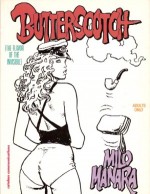
Butterscotch (The Flavour of the Invisible)


By Milo Manara, translated by Tom Leighton (Eurotica/NBM) or (Catalan Communications)
ISBN: 978-1-56163-109-4 NBM or 978-0-87416-047-5 Catalan

If the cover images haven’t already clued you in, for some folks the graphic novel under review here will be unacceptably dirty. If that’s you, please stop here and come back tomorrow when there will something you’ll approve of but which will surely offend somebody else.

I’m feeling all grown up and continental today, so here’s a long overdue review of a milder masterpiece by one of the world’s greatest graphic eroticists. Originally translated into English by Catalan in 1987 it was re-released in 2002 under NBM’s Eurotica imprint, but has since languished in that great big limbo-land of the inexplicably Out-of-Print…

Maurilio Manara (born September 12th 1945) is an intellectual, whimsical craftsman with a dazzling array of artistic skills ranging from architecture, product design, painting and of course an elegant, refined, clear-clean line style with pen and ink. He is best known for his wry and always controversial sexually explicit material – although that’s more an indicator of our comics market than any artistic obsession.

He studied painting and architecture before becoming a comic artist in 1969, beginning with the Fumetti Neri series Genius, worked on the magazine Terror and in 1971 began his adult career (see what I did there?) illustrating Francisco Rubino’s Jolanda de Almaviva. In 1975 his first major work, a reworking of the Chinese tales of the Monkey King, was released as Lo Scimmiotto (‘The Ape‘).

By the end of the seventies he was working for Franco-Belgian markets where he is still regarded as an A-list creator. It was while working for Charlie Mensuel, Pilote and L’Écho des savanes that he created his signature series HP and Giuseppe Bergman for A Suivre.

In 1986 he wrote and drew, in his inimitable blend of social satire, bawdy burlesque and saucy slapstick, the incredible tale of the ultimate voyeur’s dream in Il profumo dell’invisibile, translated here as ‘Butterscotch’ …

The star is a rather brilliant and incredibly innocent nerd-physicist who has invented a lotion which can bend light rays around anything smeared with it. He also has an unnerving and utterly sexless fascination with prima ballerina Beatrice D’Altavilla – which is a pity as she is a heartless, sadistic bitch and the biggest slut in creation.

Honey is Beatrice’s extremely liberated, licentious and hot-blooded associate (Beatrice don’t do “friends”) and when she discovers the naked, semi-invisible man in the dancer’s bedroom she feels it her duty to show the innocuous stalker what his dream girl is really like…

Sadly there are none so blind as those who will not see, especially if we can’t see them either, and her various attempts to open his invisible eyes lead to violence and a bizarre sexual co-dependence (what with Beatrice being far too virginal and perfect for that nasty, dirty stuff…)

As Honey perpetually and ever-more frantically attempts to prove the existence of her invisible man – whose cloaking lotion smells powerfully of Butterscotch – her already low position in the ballerina’s entourage plummets and the abuses intensify.

Finally however, as Honey grows increasingly closer to the omnipresent, unseen (but regularly felt) voyeur, she finally shows him Beatrice’s true nature, leading to a tempestuous climax nobody expected and some might not survive…

Couched in Manara’s beautifully rendered, lavish line-work this highly explicit and sexually charged tale casts fascinating light on what people can’t and won’t see around them. Absolutely for adults only, Butterscotch is a captivating exploration of love, obsession and misperception.

Raunchy, funny and extremely hard to find, this is a book desperately worthy of a new edition.
© 1987 Milo Manara. English Language edition © 1987 Catalan Communications. © 2002 NBM. All rights reserved.

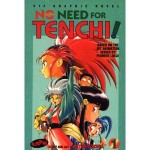
No Need For Tenchi! volume 1


By Hitoshi Okuda, translated by Fred Burke (Viz Graphic Novel)
ISBN: 978-1-56931-180-6

This bright and breezy adventure comedy is a rare reversal of the usual state of affairs in that the TV anime came first and the manga serial was a spin-off.

Tenchi Muyo! Ryo-Ohki debuted in 1992-1993 as a six-part TV cartoon series (termed an OVA or Original Video Animation in Japan) that proved so blisteringly popular that even before the original season concluded further specials and episodes were rushed into production. Over the next decade or so two more seasons appeared as well as spin-off shows and features (for a total of 98 episodes all told), plus games, toys, light novels and, of course, a comic book series. The translation most commonly accepted for the pun-soaked title is No Need For Tenchi but equally valid interpretations include Useless Tenchi, No Heaven and Earth and This Way Up.

The assorted hi-jinks of the TV show resulted in three overlapping but non-related continuities, with the Hitoshi Okuda manga serials stemming directly from the first season. Okuda eventually produced two comics sagas in this format: Tenchi Muyo! Ryo-oh-ki which began in 1994 and features in this volume under review and the follow-up Shin Tenchi Muyo! which I’ll get to one fine day…

The strip debuted in the December 16th 1994 Shōnen anthology (comics pitched at 10-18 year old males) Comic Dragon Jr. It ran until Jun 9th 2000, generating 12 collected volumes of classic laughs and thrills. The stories are generally regarded as non-canonical by fans of the various TV versions but of course we don’t care about that since the printed black and white tales are so much fun and so well illustrated…

This first volume collects the first seven issues of the pioneering Viz comicbook Tales of Tenchi, which did so much to popularise Manga in the English-speaking world, and opens with a thorough and fascinating recap of that first TV season – from which all the succeeding manic mirth and mayhem proceeds – before cracking on to bolder and better bewilderments starring the entire copious cast on all new adventures and exploits…

Tenchi Masaki is an ordinary boy living peacefully in the countryside with his father Nobuyuki and grandfather Katsuhito, until one day he breaks opens an ancient shrine and lets a demon out. The hell-fiend Ryoko tries to kill him but a magic “Lightning Eagle Sword” helps him escape. The demon follows him though, demanding the sword and things get really crazy when a spaceship arrives revealing Ryoko is in fact a disgraced alien pirate from the star-spanning Jurai Empire.

Starship Ryo-oh-ki is full of attractive, shameless, immensely powerful warrior-women including Princesses Ayeka, her little sister Sasami and supreme scientist Washu. This gaggle of violently disruptive visitors moves in with Tenchi and family, causing nothing but trouble and embarrassment, and soon the boy and his sword are being dragged all over the cosmos in the sentient Ryo-oh-ki (who, when not on duty, prefers the form of a cute rabbit/cat hybrid critter).

Ayeka and Sasami both harbour feelings for the hapless Tenchi but things get really complicated when grandfather Katsuhito is revealed to be Yosho, a noble Prince of the Jurai. It appears Tenchi and those darned space girls are all related…

Tales of Tenchi opened with ‘The Genius’ as the lad, currently studying Jurai warrior training under his grandfather’s diligent tutelage, falls foul of the alien princesses’ growing boredom, until Ryoko attacks again, precipitating a devastating battle that threatens to burn the entire landscape to ashes. But is the aggressor really the demon pirate?

In ‘Double Trouble’ the other Ryoko tries to take Tenchi’s sword – in actuality a puissant techno-artefact known as the Master Key – before being defeated by the original, but at the cost of shock-induced amnesia. ‘Under Observation’ depicts some outrageous and inadvisable potential cures for the distressed Ryoko as the refugees all decompress, but when the defeated doppelganger’s master Yakage arrives the entire extended family are threatened. The terrifying star-warrior challenges Tenchi to a duel…

Part 4 ‘Plunder’ is one colossal hi-energy clash as the boy valiantly demonstrates all he has learned to drive off the intruder, but only after the villain takes Ayeka hostage, demanding a rematch in 10 days time…

Intensifying his training in ‘Practice Makes Perfect’ Tenchi prepares for the upcoming battle whilst Ryoko pursues Yakage into space, unaware that super-scientist Washu has hidden herself aboard the pursing ship…

‘A Good Scolding’ reveals some intriguing history regarding the assorted super-girls whilst Tenchi trains for the final confrontation and the concluding chapter ‘Relationships’ brings the initial volume to a spectacular climax whilst still leaving a cliffhanger to pull you back in for the next addictive instalment…

Blending elements of Star Wars: A New Hope with classic Japanese genre favourites (fantasy, action, fighting, embarrassment, loss of conformity and hot chicks inexplicably drawn to nerdy boys), this sensational romp also includes a couple of comedy vignettes starring ‘The Cast of No Need For Tenchi’ in fourth-wall busting asides, to suitably top off a delightfully undemanding fun-fest which will satisfy not just manga maniacs but also any lover of fanciful frivolity and sci fi shenanigans.
© 1994 by Hitoshi Okuda/Kadokawa Shoten Publishing Co Ltd., Tokyo. NO NEED FOR TENCHI! is a trademark of Viz Communications Inc.

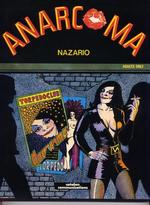
Anarcoma


By Nazario, translated by David H. Rosenthal (Catalan Communications)
No ISBN

Here’s another warning: this book is filled with graphic homosexual acts, full frontal nudity and coarse language: if that causes you any offence don’t buy this book and don’t read this review. The rest of us will manage without you.

You know what it’s like: sometimes you’re just in the mood for something challenging, different or just plain nasty and nothing better sums up that feeling than this startling pastiche of film noir chic transposed into the even grimmer, darker and nastier milieu of the gay-underworld of post-Franco Spain.

Francisco Franco Bahamonde was a right-wing general who ruled the country from 1947 until his death in 1975, “on behalf” of a puppet monarchy helpless to resist him. His repressive Christian-based attitudes held the country in an iron time-lock for decades as the rest of the world moved an around him. Vera Luque Nazario was an intellectual, college professor and cartoonist living under the fascist regime, but inspired by the freedom and exuberant graphic license displayed in American underground commix, especially the works of R. Crumb, Gilbert Shelton and possibly Spain Rodriguez.

In an oppressive state that openly advocated the “curing” of homosexuals, Nazario founded an artist’s collective or “contracultural group” in 1971 to produce home-grown underground commix (El Rollo Enmascarado, Paupérrimus, Catalina, Purita and others) often incurring the wrath of the Francoist censors and police. His work received far fairer treatment outside Spain, appearing in such groundbreaking mature magazines as It, Actuel, Oz, Gai Pied, and L’Echo des Savanes.

When Franco died the country opened up and there was a tumultuous cascade of artistic expression. Extremely strident adult material designed to shock began to appear in new magazines such as El Víbora, Cannibale and Frigidaire. After years of comics production multi-talented artist Nazario eventually moved into design and record cover production. In recent years he has concentrated on painting and his first prose novel was released in 2006.

Anarcoma began as strip in a porn magazine, but that quickly folded and the artist transferred the feature to El Víbora in 1979, reveling in homoerotic excess in a magazine with no censorial boundaries. It ran for years and this hardcover translation is but the first collection of many.

Symbols of freedom never came more outrageously formed that Anarcoma; a spectacularly endowed, star-struck transvestite private detective who hangs all-out in the notorious red-light district of Las Ramblas. A stunning blend of Humphrey Bogart and Lauren Bacall “she” works as prostitute and club entertainer while pursuing her dream of becoming a real gumshoe like the ones in the American movies she adores…

Life is complicated: ex-army buddy Humphrey is her current her boyfriend, but he won’t leave his wife and kids and Anarcoma’s hobby has won her no friends among both the cops and the criminal gangs run by the ruthless Captain Seahorse. Moreover there are even weirder and more dangerous folk around…

After a series of profound prose appreciations from Alberto Cardín and Ludolfo Paramio and a thoroughly absorbing cartoon cast-list, the ultra-explicit adventure begins…

The city is in turmoil: Professor Onliyu’s latest invention has been stolen. Nobody knows what it does but everybody wants it and Anarcoma thinks she has a lead…

The trail leads through all the sleaziest dives and dens, and implicates almost everybody at one time or another, but when the manic religious order The Black Count and his Knights of Saint Represent and feminist paramilitaries Metamorphosina and her One-Eyed Piranhas start their own conflicting campaigns for the missing machine, Anarcoma is distracted and almost loses her life to a mysterious sex-robot XM2.

Luckily her charms extend and affect even artificial he-men…

Outrageously brutal and sexually graphic, this devastatingly ironic genre mish-mash is audacious and bizarre, but unflinchingly witty as is probes the role of hero in society and eulogises the heady power of liberation.

Anarcoma was first released in 1980, but even by today’s laxer standards the incredibly violent and satirically, staggeringly baroque pastiche is a shocking, controversial piece of work. Raw, shocking and wickedly delightful; the perfect walk on the wild side for people with open minds and broad tastes.
© 1983 by Nazario. English edition © 1983 Catalan Communications. All Rights Reserved.

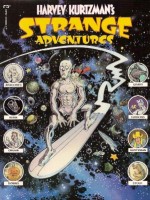
Harvey Kurtzman’s Strange Adventures


By Harvey Kurtzman & various (Epic Comics/A Byron Preiss Book)
ISBN: 0-87135-675-9

Creative cartoon genius Harvey Kurtzman is probably the most important cartoonist of the last half of the 20th century. His early triumphs in the fledgling field of comicbooks (Frontline Combat, Two-Fisted Tales and especially the groundbreaking Mad magazine) would be enough for most creators to lean back on but Kurtzman was a force in newspaper strips (See Flash Gordon Complete Daily Strips 1951-1953) and a restless innovator, a commentator and social explorer who kept on looking at folk and their doings and couldn’t stop creating.

He invented a whole new format when he converted the highly successful colour comicbook Mad into a black and white magazine, safely distancing the brilliant satirical publication from the fall-out caused by the 1950s comics witch-hunt which eventually killed all EC’s other titles.

He pursued comedy and social satire further with the magazines Trump, Humbug and Help!, all the while still creating challenging and powerfully effective funny strips such as Little Annie Fannie (for Playboy), The Jungle Book, Nutz, Goodman Beaver, Betsy and her Buddies and many more. He died far too soon in 1993.

This intriguing oddment from 1990 saw the Great Observer return to his comic roots by spoofing and lambasting strip characters, classic cinema and contemporary sentiments in a series of vignettes illustrated by some of the biggest names of the time.

After a captivating introduction from ex-student Art Spiegleman, a stunning pin-up from Moebius and an overview from project coordinator Byron Preiss, the fun begins with a typically upbeat cartoon appreciation from R.Crumb: ‘Ode to Harvey Kurtzman’ which was coloured by Eric Palma, after which the Harvey-fest begins in earnest…

‘Shmegeggi of the Cave Men’ visually revives the author’s legendary Goodman Beaver, dislocating him to that mythic antediluvian land of dim brutes, hot babes in fur bikinis and marauding dinosaurs to take a look at how little sexual politics has progressed in a million years – all exquisitely painted by cartoonist, movie artist and paleontological illustrator William Stout, after which Sergio Aragonés adds his inimitable mania to the stirring piratical shenanigans of the dashing ‘Captain Bleed’ (with striking hues supplied by his Groo accomplice Tom Luth).

Western parody ‘Drums Along the Shmohawk’ is an all Kurtzman affair as the scribe picks up his pens and felt-tips to describe how the sheriff and his stooge paid a little visit to the local tribe…

Cartoonist, fine artist and illustrator Tomas Bunk contributes a classically underground and exuberant job depicting ‘A Vampire Named Mel’ whilst arch-stylist Rick Geary helps update the most famous canine star in history with ‘Sassy, Come Home’.

Limey Living Legend Dave Gibbons utilises his too-seldom-seen gift for comedy by aiding and abetting in what we Brits term “a good kicking” to the superhero genre in the outrageous romp ‘The Silver Surfer’ and the cartoon buffoonery concludes with Kurtzman and long-time associate Sarah Downs smacking a good genre while it’s down and dirty in ‘Halloween, or the Legend of Creepy Hollow’.

But wait, there’s more…

This seductive oversized hardback also has an abundant section devoted to creator biographies supplemented with pages and pages of Kurtzman’s uniquely wonderful pencil rough script pages – almost like having the stories printed twice…

Fun, philosophical fantasy and fabulous famous, artist folk: what more do you need to know…
© 1990 by Byron Preiss Visual Publications Inc. Each strip © 1990 Harvey Kurtzman and the respective artist. All Rights Reserved.

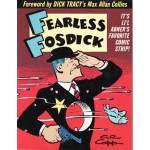
Fearless Fosdick


By Al Capp (Kitchen Sink Press)
ISBN: 978-0-87816-108-9

Al Capp’s Li’l Abner is rightly considered one of the greatest comic strips ever created, a devastatingly satirical, superbly illustrated, downright brilliant comedic masterwork which lampooned anything and everything America held dear and literally reshaped their popular culture. Generations of readers took Capp’s outrageous inventions and graphic invectives to their hearts. Many of the strips best lines and terms entered the language as did the role-reversing college bacchanal known as Sadie Hawkins Day and some fictional shticks even became licensed and therefore “real” – just Google “Shmoo” and “Kickapoo Joy-juice” to see what I mean…

Apart from the satirical and funny bits you can say pretty much the same about Chester Gould’s legendary lawman Dick Tracy – a landmark creation which has influenced all popular fiction, not simply comics. Baroque villains, outrageous crimes and fiendish death-traps have pollinated the work of numerous strips, shows and movies since then, but the indomitable Tracy’s studied use – and startlingly accurate predictions – of crime fighting technology and techniques gave the world a taste of cop thrillers, police procedurals and forensic mysteries such as CSI decades before our current fascination took hold.

In August 1942 Alfred Gerald Caplin, as he didn’t prefer to be known, took a studied potshot at the cartooning game, joyously biting the hand that fed him (grudgingly and far from enough) when he introduced a frantic, barbed parody of Tracy into Li’l Abner, Fearless Fosdick (as depicted by “Lester Gooch”) was a deadpan, compulsively honest, straight-laced cop who worked for a pittance in a corrupt, venal crime-plagued city, controlled by shifty, ungrateful authorities i.e. typical bosses. Fosdick slavishly followed the exact letter of the law, if not the spirit: always over-reacting, and often shooting litterbugs and Jay-walkers whilst letting bandits and murderers escape.

The extended gag began as a sly poke at strip cartoonists and syndicates whom Capp portrayed as slavering maniacs and befuddled psychotics manipulated by ruthless, shameless, rapacious exploiters. It became so popular on its own admittedly bizarre merits that Fosdick’s sporadic appearances quickly generated licensed toys and games, a TV puppet show and a phenomenally popular advertising deal for Wildroot Cream-Oil hair tonic.

The hard-hitting, obtuse he-man hero was the impulsive Abner’s “Ideel” and whenever the crime-crusher appeared as a strip within the strip the big goof aped his behaviour to outlandish degree. When Fosdick married as part of a bizarre plot Abner finally capitulated to devoted girlfriend Daisy Mae’s matrimonial aspirations and “married up” too, even though he didn’t really want to!

Fosdick made the jump to comicbooks; edited reprints of the strip appeared from Toby Press, a promotional comic – ‘Fearless Fosdick and the Case of the Red Feather’ – followed and in 1956 Simon and Shuster published Al Capp’s Fearless Fosdick: His Life and Deaths which forms the basis of the classy Kitchen Sink softcover under review here.

Prefaced with an absorbing and informative introduction by award-winning crime and comics writer Max Allan Collins – who took over Dick Tracy when Gould retired – this magical tome relates five of the very best felonious fiascos and forensic farces beginning with ‘Introducing: AnyFace!’ from 1947, wherein Abner is hired to protect cartoonist Lester Gooch as he crafts the tale of a crook with a plastic face.

The fiend is un-catchable since he can mimic anybody, constantly fooling Fosdick into shooting the wrong guy. Eventually the cop starts killing people preemptively – just in case – but in the “real” world as Abner gets more engrossed in the serial, Gooch, always bonkers as a bag of badgers (because only certified loons would create comics strips) is suddenly cured, casting the conclusion into desperate doubt! Confused? Good: that’s the point!

Next from 1950 comes ‘The Case of the Poisoned Beans’ in which madman Elmer Schlmpf randomly contaminates a tin of “Old Faithful”- the city’s most popular brand of beans. So popular are they that most shops and restaurants refuse to take them off sale and the populace won’t stop buying them. As no panic ensues and indifference rages Fosdick begins shooting citizens who won’t stop eating the beans. Better a safe, clean police bullet than a nasty case of poison…

‘Sidney the Crooked Parrot’ (1953) was once Fosdick’s faithful pet, but living with the obsessive do-gooder turned the bird into a vengeance-crazed criminal genius. Cunningly causing Fearless to lose his job, the bird then organises a campaign of terror, but even humiliated, derelict and starving the unswerving righteousness of the super-cop finds a way to triumph…

‘The Case of the Atom Bum’ (1951) saw the dapper detective helpless to halt the depredations of a radioactive hobo who robbed with impunity since the slightest wound could cause him to detonate like a human atom bomb. Forced to ignore and even – shudder!! – abet the ne’er-do-well, Fosdick was going even more insane with frustrated justice – and then he snapped…

This hysterical black and white collection concludes with the utterly surreal ‘Case of the Chippendale Chair’ from 1948, which begins only after certifiably cured and sane cartoonist Lester Gooch is kidnapped by thugs working for the syndicate who torture him until he is crazy enough to produce Fearless Fosdick once more…

Once more demented, Gooch sets to delivering a startling saga of murder, theft and general scofflawing to sate the nation’s desire for graphic gang-busting with a new mastermind ravaging the palaces of the rich. Who can possibly be behind such brilliant crimes? (The clue is in the title…) and as Fosdick ineptly yet unerringly closes in on the culprit the collateral casualties mount. Still, isn’t justice worth a few sacrifices?

Madcap and hilariously ultra-violent, these eccentric yarns are credited with inspiring Harvey Kurtzman to create Mad and clearly shaped decades of American comics comedy. Fosdick kept on turning up until 1972, leavening the hillbilly high-jinks, satire and social commentary with some healthy recreational slapstick slaughter, justifiable homicides and preemptive cold-case clean-up.

If you have a taste for over-the-top hilarity and stunning draftsmanship this is a book you absolutely must track down. Consider it a constabulary duty to be done…
Strip material © 1947, 1949, 1950, 1951, 1990 Capp Enterprises, Inc. Introduction © 1990 Max Allan Collins. Entire Contents © 1990 Kitchen Sink Press, Inc.

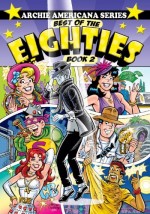
Archie American Series: Best of the Eighties volume 2


By Frank Doyle, George Gladir, Dan DeCarlo, Stan Goldberg & various (Archie Comics Publications)
ISBN: 978-1-879794-58-0

For most of us, when we say comicbooks people’s thoughts turn to buff men and women in garish tights hitting each other and lobbing trees or cars about, or stark, nihilistic crime, horror or science fiction sagas aimed an extremely mature and sophisticated readership of confirmed fans – and indeed that has been the prolific norm of late.

For many years however, other forms and genres have waxed and waned, but one that has held its ground over the years – although almost now completely transferred to television – is the teen-comedy genre begun by and synonymous with a carrot topped, homely (at first just plain ugly) kid named Archie Andrews.

MLJ were a small publisher who jumped wholeheartedly onto the superhero bandwagon following the debut of Superman. In November 1939 they launched Blue Ribbon Comics, promptly following with Top-Notch and Pep Comics. The content was the common blend of costumed heroes, two-fisted adventure strips and one-off gags. Pep made history with its lead feature The Shield, who was the industry’s first super-hero to be clad in the flag (see America’s First Patriotic Hero: The Shield).

Even while profiting from the Fights ‘N’ Tights crowd Maurice Coyne, Louis Silberkleit and John Goldwater (hence MLJ) spotted a gap in their blossoming market and in December 1941 the action strips were supplemented by a wholesome ordinary hero; an “average teen” who had ordinary adventures like the readers, but with the laughs, good times, romance and slapstick heavily emphasised.

Pep Comics #22 introduced a gap-toothed, freckle-faced, red-headed goof showing off to the pretty blonde next door. Taking his lead from the popular Andy Hardy movies starring Mickey Rooney, Goldwater developed the concept of a wholesome youthful everyman protagonist, tasking writer Vic Bloom and artist Bob Montana with the job of making it work. It all started with an innocuous six-page tale entitled ‘Archie’ which introduced boy-goofball Archie Andrews and pretty girl-next-door Betty Cooper. Archie’s unconventional best friend and confidante Jughead Jones also debuted in that first story as did the small-town utopia of Riverdale.

It was an instant hit and by the winter of 1942 had graduated to its own title. Archie Comics #1 was the company’s first non-anthology magazine and began the slow transformation of the entire company. With the introduction of rich, raven-haired Veronica Lodge, all the pieces were in play for the industry’s second Phenomenon (Superman being the first).

By May 1946 the kids had taken over, and the company renamed itself Archie Comics, retiring its heroic characters years before the end of the Golden Age and becoming to all intents and purposes a publisher of family comedies. Its success, like the Man of Steel’s, changed the content of every other publisher’s titles, and led to a multi-media industry including TV, movies, pop-songs and even a chain of restaurants.

Those costumed cut-ups have returned on occasion (see High Camp Superheroes), but the company now seems content to license them to DC whilst they concentrate on what they do uniquely best.

Archie is a good-hearted lad lacking common sense, Betty the pretty, sensible girl next door, with all that entails, who loves the ginger goof. Veronica Lodge is rich, exotic and glamorous and only settles for our boy if there’s nobody better around. She might actually love him too, though. Archie, of course, can’t decide who or what he wants…

This family-friendly eternal triangle has been the basis of seventy years of charming, raucous, gentle, frenetic, chiding and even heart-rending comedy encompassing everything from surreal wit to frantic slapstick, as the kids and an increasing cast of friends grew into an American institution. Adapting seamlessly to every trend and fad of the growing youth culture, the host of writers and artists who’ve crafted the stories over the decades have made the “everyteen” characters of mythical Riverdale a benchmark for youth and a visual barometer of growing up.

Archie’s unconventional best friend Jughead Jones is Mercutio to Archie’s Romeo, providing rationality and a reader’s voice, as well as being a powerful catalyst of events in his own right. That charming triangle (and annexe) has been the rock-solid foundation for decades of comics magic. Moreover the concept is eternally self-renewing…

Archie has thrived by constantly reinventing its core characters, seamlessly adapting to the changing world outside its bright, flimsy pages, shamelessly co-opting youth, pop culture and fashion trends into its infallible mix of slapstick and young romance.

Each and every social revolution has been painlessly assimilated into the mix (the company has managed to confront a number of social issues affecting the young in a manner both even-handed and tasteful over the years) and the constant addition of new characters such as African-American Chuck – who wants to be a cartoonist – his girlfriend Nancy, fashion-diva Ginger, Hispanic couple Frankie and Maria and a host of others such as spoiled home-wrecker-in-waiting Cheryl Blossom all contributed to a broad and refreshingly broad-minded scenario. In 2010 Archie jumped the final hurdle with Kevin Keller, an openly gay young man and a clear-headed advocate capably tackling and dismantling the last major taboo in mainstream kids comics.

This second 1980s compendium collects a few further gems from the Era of Excess: Big Hair, make-up for Men, synth-pop music, Fashion Victims and Fad madness all playing heavily to the crowd and playing very funnily indeed. After an introduction from Glenn Scarpelli, (son of comic artist Henry and himself a recovering child-star of an Eighties sit-com) the merriment commences with ‘Health Nuts’ (from Betty & Veronica #302, February 1981) by Frank Doyle, Dan DeCarlo & Rudy Lapick wherein spoiled Veronica pops into the new ultra-swish Health Club to be stylish, but receives a rather destabilising shock after which ‘A Zest for the West’ (Pep #374, June 1981, George Gladir, Stan Goldberg & Bill Yoshida) finds school principal Mr. Weatherbee railing in vain against the inexorable tide of cowboy fashions following America’s rediscovery of all things Country and Western…

Video games and especially Mall Games Arcades began seducing kids at this time and ‘Test Zest’ (Betty & Veronica #312, December 1981 by Gladir & Dan DeCarlo Jr.) found Archie ignoring both his dream-dates for the bleeping boxes. However, where Ronnie spits and pouts, Betty found a way to turn the situation to her advantage, whilst Jughead proved that old-fashioned cunning beats speed, coordination and practise every time in ‘Game Acclaim’ from Archie’s Pals ‘N’ Gals #162 (January 1983 by Gladir, Goldberg & Rudy Lapick).

Another modern mainstay just beginning to proliferate was computers and Mr. Weatherbee made a grave mistake in ‘Input and Output’ (Archie & Me #140, August 1983, Doyle, Dan DeCarlo & Jimmy DeCarlo) when he let that Andrews boy program the school’s first ever bit of kit…

Stories regularly spoofed popular movies, TV shows and bands and in ‘Scheme Scamp’ (Archie #327, January 1984, by Gladir & DeCarlo Jr.) our hero and scurvy rich-kid rival Reggie battled long and hard to secure an interview for the school paper with hot girl band “the Ga-Ga’s” (don’t make me feel even older by having to explain the pun…)

After ‘Krazy Knits’ a pin-up of the Boys of Riverdale modelling chunky sweaters by Dan Decarlo Jr., ‘Cable Caboodle’ (Archie’s Pals ‘N’ Gals #171, September 1984, Gladir & Goldberg) described the joys and pitfalls of the cable TV revolution, and the subsequent ‘A Flair for Wear’ from Everything’s Archie #116, March 1985 by Gladir & Goldberg, found occasional bubblegum pop-stars The Archies (remember the global hit “Sugar, Sugar” in 1969 – well that was technically them) making their first promotional video…

Still focusing on the music scene the Archies support King of Pop Jackie Maxon (think about it: he has sparkly clothes and weird pets) and end up trying to keep his diary out of the hands of sleazy reporters in ‘The Book’ (Archie’s TV Laugh-Out #100, April 1985, Gladir, Goldberg & Lapick) whilst ‘Fashion Frolic’ (Archie’s Pals ‘N’ Gals #176, July 1985, Gladir, Hy Eisman & Jon D’Agostino) saw Mr. Weatherbee trying to quell the outrageous clothes the kids in the cliques were wearing to class.

‘Dimrider’ (Archie’s TV Laugh-Out #102, August 1985) by Ed Berdej, Dan & James DeCarlo lambasted action blockbusters with chilling accuracy whilst ‘Delightful Dilemma’ (Archie Giant Series #550, August 1985 by Gladir, Dan DeCarlo Jr. & James DeCarlo) returned to the basics of Betty and Veronica duelling over their oblivious “Archie-kins”.

‘Rock ‘n’ Rassle’ from Everything’s Archie #120 (November 1985, Gladir, Goldberg & Sal Trapani) referenced the revitalised, ultra-glamourised “sport” of televised wrestling and Punk hit Riverdale High hard in ‘Out of the Ordinary’ (Archie #354, January 1988 by Nate Butler, Dan DeCarlo Jr. & Jim DeCarlo) when our feckless star fell for leather-studded bad-girl Tina, leading to a startling new look for the freckle-faced fool…

Movie madness once more inspired mockery and mirth in ‘Robo-Teen’ (Laugh #13, April 1989, Gladir, Rex Lindsey & D’Agostino) as Archie suffered a tragic ski-boarding mishap before ‘Shlock Rock’ (Everything’s Archie #143, June 1989 by Gladir, Goldberg & Lapick) wraps up the reminiscent drollery with a barbed satire on the budding MTV generation.

These are some of the most effective and impressive stories from that brutal, bizarre decade, and by always concentrating on fashions, fads, and the eternal divide between rebellious teens and fun-thwarting adults achieves a kind of timeless permanence. Then is still now, due in large part to the overwhelming power of good writing and brilliant art, which will always captivate any audience of any age.

This is gentle fun and charming nostalgic delight for all ages so what are you waiting for? It’s not like it costs “Loadsamoney!”

© 2010 Archie Comics Publications, Inc. All rights reserved.

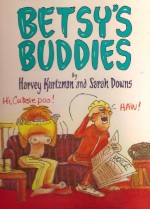
Betsy’s Buddies


By Harvey Kurtzman & Sarah Downs (Kitchen Sink Press)
ISBN: 0-87816-029-9

Harvey Kurtzman is probably the most important cartoonist of the last half of the 20th century. His triumphs in the fledgling field of comicbooks (Frontline Combat, Two-Fisted Tales, Mad) would be enough for most creators to lean back on but Kurtzman was an innovator, a commentator and a social explorer who kept on creating, kept on observing and with satire magazines such as the black and white magazine Mad (a highly successful format he invented), further inspirations Trump, Humbug and Help!, all the while still creating challenging and powerfully effective funny strips such as Little Annie Fannie (for Playboy), The Jungle Book, Nutz, Goodman Beaver and the strip on review here. He died far too soon in 1993.

This superb hardcover volume was collected by that much-missed champion of all things grand, esoteric and/or naughty in comics, Denis Kitchen through his Kitchen Sink Press outfit, and collects the racy, revelatory exploits of young Betsy, a fresh, if not so innocent student in the jaded halls of Academia and the Big City, a full-on, dedicated Sexual Revolutionary – at least by her own lights. Through one and two page exploits (all the colour strips were previously printed in Playboy whilst the black and white adventures have no single source or provenance I can find), this feisty femme – in a still mostly man’s world – endeavours to live her life by her own ready-made rules.

She’s got an apartment, a nudist roommate, a horny law-student boyfriend and enough savvy, modern sense not to tell anybody she’s shagging her English Lit Professor. Her classy, sophisticated, raucous riotous, hilariously true-to-life exploits and uniquely female viewpoint come in no small part from Sarah Downs, who was Kurtzman’s associate, assistant and co-writer in the 1980s, and a highly skilled colourist and teacher of cartooning at the School of Visual Arts.

As well as these delightful adult strips they also produced material for Europe together seen in such classy mature vehicles as L’Echo des Savannes and she also appeared in the Marvel Epic all-star anthology Harvey Kurtzman’s Strange Adventures (coming soon to a graphic novel review blog near you…)

Sharp, sassy, wickedly barbed and penetratingly insightful about the differences that draw men and women together Betsy’s Buddies is an utter delight and long overdue for a fresh edition and another close look…
© 1988 Harvey Kurtzman and Sarah Downs. Entire contents © 1988 Kitchen Sink Press. All rights reserved.

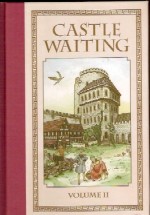
Castle Waiting Volume 2


By Linda Medley (Fantagraphics Books)
ISBN: 978-1-60699-405-4

What exactly happens after “Happy Ever After”?

Castle Waiting is a far too infrequent comicbook answer to that question, produced in lovely bursts of joyful creativity since 1996 by cartoonist and sometime self-publisher Linda Medley, set in a generically plentiful fairytale milieu encompassing everything from talking animals to medieval knights to fairies and giants all leavened with a dry sharp wit and commonsense modern sensibility.

After voyaging peripatetically from self-published to co-published and back in 2006 Medley settled at Fantagraphics who collected all the previous issues (one shot Castle Waiting: the Curse of Brambly Hedge, seven issues under her own Olio Press imprint, four more with Cartoon Books and a further five under her own steam) and began work on a further fifteen issues which comprise this wonderful, colossal, book shaped hardback. Although the series is again on hiatus I’m hopeful that soon there will be more magic to come.

Originally published in black and white at standard US comicbook proportions, Medley’s sturdy, open, woodcut-like art actually benefits from the slight reduction to book format. Her superb backgrounds and location establishing shots are made perfectly ponderous and wonderfully unyielding whilst her incredible facility with expressions is given full range of play and ideal conditions to work in.

As seen in the previous volume, the castle in question is a fantastic and mysterious edifice sitting on the edge of a tempestuous sea-facing cliff. Once it had Lords-and-Ladies and other grand occupants a-plenty, but when the Princess fell into a deep enchanted sleep and giant thorns and bushes enveloped the place it fell into abandoned disuse. It has since been occupied by a motley – and often anthropomorphic – crew and exists as a kind of affable commune-community centre, populated by good, hearty background characters who didn’t cause any fuss or trouble in those famous tales.

Medley’s stories are deft, clever and work because they focus on everyday life at the fringes of the “Big Stuff”, with characters such as old bearded nun Sister Peace; Patience, Prudence and Plenty, three elderly ladies in waiting who have seen it all, the tragically demented surgeon Doctor Fell, seven-foot tall, foundling dwarf blacksmith Henry/Loki, warrior-centaur Chess, assorted kitchen-staff like Mrs. Cully and her giant son Simon – who is not simple – and a host of others, permanent and passing through, all wrangled by stork-headed, self-appointed major domo Rackham. The venturesome “vermin” who inhabit the still-unexplored nooks and crannies are sprites, pixies, poltergeists and demons.

Convivial and conversational the narrative impetus is provided by Lady Jain who first came seeking refuge from an abusive husband. She moved in heavy with child and when he was eventually delivered the kid was not human. Everybody bides their own business here though…

The pace is deliciously slow, filled with situations rather than events that unfold at their own pace so by the opening of this volume Jain and her newborn Pindar are only just moving to better rooms in the Keep. She settles on the old counting house because of the memories it provokes (and as the book progresses we’ll see many secret snippets of her childhood…). As the days go by blacksmith Henry’s dwarf (they prefer the term “Hammerlings”) relatives Tolly and Uncle Dayne come by for a visit. They’re on a mysterious mission but are distracted: Tolly is pretty sure he knows what or who Pindar’s dad was…

The Hammerlings extend their stay to provide some remodeling work for Rackham and open unsuspected areas of the Castle to long-delayed scrutiny, with results both well and ill welcomed, and Jain reveals she has a magic trunk…

The horrifying secret of Doctor Fell is revealed and a preliminary restoration of his faculties, as is Jain’s romantic past and Henry’s connection to the little folk, before the cast are introduced to the unimaginable delights of nine-pin bowling and the volume meanders to a close with the portents indicating something big and nasty is coming…

Saucy, bold, enigmatic, gently funny, reassuringly romantic; brimming with human warmth and just the right edge of hidden danger Castle Waiting is a masterpiece of subtle ironic, perfectly paced storytelling that any kid over ten can and will adore. Moreover, if you’re long in the tooth or have been around the block a time or two, this fantastic place can’t help but look like home…

™ & © 2010 Linda Medley. Compilation © 2010 Fantagraphics Books. All rights reserved.

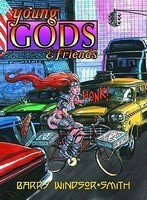
Young Gods & Friends


By Barry Windsor Smith (Fantagraphics Books)
ISBN: 978-1-56097-491-8

In keeping with the dolorous nature of this time of year I’m concentrating on a few missed opportunities in this period between the dubious joys of Christmas and the nervous anticipation of the New Year so here’s a graphic novel that in some way didn’t live up to all it could have been not because of the material itself but because of the kind of world we live in…

Barry Windsor Smith is a consummate creator whose work has moved millions and a principled artist who has always been poorly served by the mainstream publishing houses. Whether with his co-creation of Sword-and Sorcery comics via Conan the Barbarian or his later work-for-hire material for The Thing (Marvel Fanfare #15 – utterly hilarious), Machine Man, Iron Man, X-Men, Weapon X or the tremendously fun Archer & Armstrong/Valiant Comics work with Jim Shooter, his stunning visuals always entranced but never led to anything long-lived or substantial. And always the problem seemed to be a clash of business ethics versus creative freedom…

In 1995 Dark Horse, an outfit specialising in licensed and creator-owned properties, offered him the carte-blanche chance to do it his way in his own tabloid-sized anthology Barry Windsor-Smith: Storyteller. The magazine carried three features all written and drawn by the artist; The Paradoxman, The Freebooters and Young Gods. Although the work was simply stunning it appeared independent publishers were cut from the same cloth as the mainstream…

It’s not my business to comment on that: I’ve been both freelancer and publisher so I know there are at least two sides to everything (and you can hear Mr. Windsor Smith’s in this superb collection from Fantagraphics) but the series ended acrimoniously in 1997 after nine issues and the stories remained unfinished. This tome, the first of three, collected all the published material of each strip-strand and also includes the chapters still in progress at the time of the split, some new and reformatted material and other extras that fans and lovers of whimsical fiction would be crazy to miss.

But it is still incomplete and that’s a true shame…

Created as a light-hearted and wittily arch tribute to Jack Kirby’s majestic pantheon of cosmic comic deities Young Gods and Friends nominally stars foul-mouthed earthbound goddess Adastra, getting by as a pizza-delivery chick in New York City, but slowly builds and spreads into a mythico-graphic Waiting for Godot as we trace her past, discover warring pantheons that decided arranged weddings were better than Ragnaroks and meet the bold and heroic nuptualists who would do anything to avoid the arrangement: thus becoming delightfully diverted down a dozen different paths as a picture/story oh-so-slowly builds.

As I’ve mentioned the series came to an abrupt halt with the ninth episode, but there was a tenth ready and that is here, as well as material and fragments that would have been finished out the first dozen instalments as well as deleted scenes, fragments, outtakes and reworked snippets.

On a purely artistic level this collection and extrapolation is a sheer delight; with superb art, splendid writing and all sorts of added extras, but the story-consumer in me can’t help but yearn for what might have been and how much has been lost.

Beautiful wry, witty and completely enchanting – and tragically disappointing because of that

™ & © 2003 Barry Windsor Smith. All Rights Reserved.