The Last Days of American Crime


By Rick Remender & Greg Tocchini (Radical Books)
ISBN: 978-0-935417-06-4

Win’s Christmas Gift Recommendation: Perfect for thrillseekers needing to get that pulse pounding again…  8/10

If you’re in need of a sobering dose of deeply disturbing hyper-reality then I thoroughly recommend this brilliant, extremely adult, cross-genre thriller which posits a fascinating premise, starts the countdown clock ticking down and delivers a killer kick to finish the rollercoaster ride.

America is a mess and the government need to take drastic action if they want to keep control. Terrorism and crime are rampant but luckily the boffins have come up with a radical solution: the American Peace Initiative – a broadcast frequency that utterly suppresses the ability to knowingly break a law. Any law.

Taking the radical decision to make all lawbreaking impossible (which is the only logical flaw I can find: what politician is ever going to make bribery obsolete?), and fearing a social meltdown in the run-up to going live, the powers-that-be also set up a distraction in the form of a complete switch-over from a cash economy to universal electronic transfers – an unstealable digital currency.

From D-Day on citizens will top up pay-cards from charging machines which are tamper-proof and impossible to hack and from that day every transaction in the USA will be recorded and traceable and every illegal purchase – drugs, guns, illicit sex – impossible…

In the weeks before the big switchover there is a huge exodus for the borders of Canada and Mexico and a total breakdown of law and order in the country’s most degenerate areas, but generally everybody seems resigned to the schemes – even when the anti-lawbreaking API broadcast plan is leaked…

With the world about to change forever low-rent career criminal Graham Bricke spots a chance for the biggest score of his life. He’s working as a security guard in one of the banks that will house the new currency technology and has an unmissable opportunity to steal one of the charging machines before the system is locked down forever. Unfortunately because of the API broadcast he has to pull off the caper before it becomes impossible to even contemplate theft…

In a hurry and needing specialised help Bricke and his silent partner are forced to hire a crew of strangers, but as the days dwindle he realises that safecracker Kevin Cash and hacker Shelby Dupree are trouble: a murderous psychotic and crazed libidinous wild-child with daddy issues. If only he can work out which is which…

Moreover there are other distractions. Graham is being hunted by a manic gangbanger and his posse and there’s a good chance at least one of his team are planning a double-cross…

This is a fascinating idea carried out with dizzying style and astounding panache: smart, sexy, unbelievably violent and utterly compelling, combining all the brooding energy of The Wire, the unremitting tension of 24‘s first season and the off-centre charm of Reservoir Dogs. It has blockbuster movie written all over it – which is no surprise as Remender’s previous efforts include comicbooks, like All-New Atom , X-Men and Punisher, computer games Dead Space and Bulletstorm and the animated feature Titan A.E.

Cannily concocted by Rick Remender and stunningly executed in dazzling colour by Greg Tocchini, this economical paperback also includes an extensive sketch and design section, an interview with the author and a lavish cover gallery which includes variants from Alex Malleev, Jerome Opeña & Matt Wilson and Joel dos Reis Viegas.

Short. Sharp. Shocking. Let’s hope they can do it again…

© 2010 Rick Remender and Radical Publishing, Inc. All rights reserved.

Teen-Aged Dope Slaves and Reform School Girls


By Joe Simon, Jack Kirby, Harvey Kurtzman & various (Eclipse Books)
ISBN: 0-913035-79-3   ISBN-13: 978-0-913035-79-5

As the flamboyant escapist popularity of superheroes waned after World War II newer genres such as Romance and Horror came to the fore and older forms regained their audiences. Some, like Westerns and Funny Animal comics hardly changed at all but crime and detective tales were utterly radicalised by the temperament of the times.

Stark, uncompromising, cynically ironic novels and socially aware, mature-themed B-movies that would become categorised as Film Noir offered post-war society a bleakly antiheroic worldview that often hit too close to home and set fearful, repressive, middleclass parent groups and political ideologues howling for blood.

Naturally the new forms seeped into comics, transforming two-fisted gumshoe and Thud and Blunder cop strip-thrillers of yore into darkly beguiling and frightening tales of seductive dames, big pay-offs and glamorous thugs. Sensing imminent Armageddon, the moral junkyard dogs bayed even louder as they saw their precious children’s minds under seditious attack…

From that turbulent period a number of tales and titles garnered especial notoriety from the doomsmiths and particular celebration amongst us tragic, psychologically scarred comics-collecting victims, so in 1989 Eclipse Comics parceled together a bunch of the most salacious, shocking, sensationalistic, best written and drawn examples, produced by an impressive variety of superstars and anonymous unsung draftsmen purely in the interest of historical research…

Still readily available through internet suppliers at extremely reasonable prices, this cool chronicle opens with a handy and informative introduction from Eclipse publisher Dean Mullaney before the sordid spectacle begins with the outrageously trashy tale of Faith: a Bad-Girl-gone-Badder, who only just found redemption in the arms of her equally penitent-and-going-straight ideal man Jeff. There’s no record of who scripted ‘Reform School Girl!’ (1951) but the splendidly kinetic art comes from Louis Zansky.

There are no credits at all for ‘Trapped!’ (also from 1951, and can I detect hints of John Rosenberger or Paul Reinman?); the tale of High School kid Bill Jones, sucked into a spiral of failing grades, lost friends and rebellion against parents and adults after he tries a reefer in the boys toilets. Fear not, however: love, decency and understanding once more save the day.

Joe Simon and Jack Kirby ushered in the American age of mature comics, not only with their creation of the Romance genre but with challenging modern tales of real people in extraordinary situations, seen in their other magazines produced for the loose association of companies known as Prize/Crestwood/Pines. From Headline Comics #27 (1947) comes the stunning saga of Stella Mae Dickson… ‘The Bobby Sox Bandit Queen.’

Fictionalising true crime cases was tremendously popular at the time and of the assorted outfits that generated such material nobody did it better than S&K as this incredibly hard-punching saga shows with the tale of a young girl willingly drawn into a life of robbery and violence. Her ending was not so happy…

Next up is something of an oddity but still addictively enthralling for all that. ‘Lucky Fights it Through’ was published in 1949, a popular song adapted in 16 pages by Harvey Kurtzman (there’s even a sheet music section) as part of an educational comics project sponsored by Columbia University (as was Trapped!), a contemporary western saga about an ignorant cow-poke (don’t! It’s what they were called, not what they did) dealing with and explaining how to cope with Syphilis.

Crime Detector #5 (September 1954) provided two anonymous stories: ‘Gun Happy’ and the single pager which closes this volume. The former details the sad, brief life of juvenile delinquent Thomas Parker whose obsessive love of firearms took him into the army and Korea but who couldn’t stop the shooting once he returned.

He is followed by a second Simon & Kirby classic from Headline Comics #28. ‘I Worked For the Fence!’ outlines the sorry tale of show-girl Monica who found the lure of a smooth-tongued hustler and other people’s jewels too great to resist, before the major part of this tome relates the shocking fall and rise of a High School Jock dragged down by narcotic addiction until medical attention and the love of a devoted girl dragged him back from the edge…

The notorious ‘Teen-Aged Dope Slaves’ by Martin Bradley & Frank Edgington came from Harvey Comics Library #1 (April 1952) but was actually a resized reprint of a sequence from popular family newspaper strip Rex Morgan, M.D. Nonetheless, for all its strident preachiness, it remains a powerful, well-meaning drama that never forgets the cartoon doctor’s prime doctrine “First, Don’t be Boring.”

That aforementioned one-pager from Crime Detector closes the volume on a tantalising high note as Homicide Inspector Craig challenges the reader to solve the fair-play mystery of ‘The Deadly Needle’…

These black and white tales from a simpler a time about a society in meltdown are mild by modern standard of behaviour but the quality of art and writing make them far more than a mere historical curiosity. Teen-Aged Dope Slaves and Reform School Girls is a book well worth your time and attention, but please beware: such material can be habit-forming…
© 1989 Eclipse Enterprises, Inc. Individual strips are © 1947-1954 their respective creators/copyright holders.

Will Eisner Color Treasury


By Will Eisner, written by Catherine Yronwoode (Kitchen Sink Press)
ISBN: 0-87816-006-X

It is pretty much accepted today that Will Eisner was one of the key creative forces who shaped the American comic book industry, with most of his graphic works more or less permanently in print – as they should be. But as far as I know at least one of his milestones has generally escaped public attention.

From 1936 to 1938 Eisner worked as a jobbing cartoonist in the comics production firm known as the Eisner-Eiger Shop, creating strips to be published in both domestic US and foreign markets. Using the pen-name Willis B. Rensie he created and drew the opening instalments of a huge variety of characters ranging from funny animal to historical sagas,

Westerns, Detectives, aviation action thrillers… and superheroes – lots of superheroes …

In 1940 Everett “Busy” Arnold, head honcho of the superbly impressive Quality Comics outfit, invited Eisner to take on a new challenge. The Register-Tribune newspaper syndicate wanted a 16-page weekly comicbook insert to be given away with the Sunday editions. Eisner jumped at the opportunity, creating three strips which would initially be handled by him before two of them were handed off to his talented assistants. Bob Powell inherited Mr. Mystic and distaff detective Lady Luck fell into the capable hands of Nick Cardy (then still Nicholas Viscardi) and later the inimitable Klaus Nordling.

Eisner kept the lead strip for himself, and over the next twelve years The Spirit became the most impressive, innovative, imitated and talked-about strip in the business. In 1952 the venture folded and Eisner moved into commercial, instructional and educational strips, working extensively for the US military in manuals and magazines like P*S, the Preventative Maintenance Monthly, generally leaving comics books behind.

In the wake of “Batmania” and the 1960s superhero craze, Harvey Comics released two giant-sized reprints with a little material from the artist, which lead to underground editions and a slow revival of the Spirit’s fame and fortune via black and white newsstand reprint magazines. Initially Warren Publishing collected old stories, even adding colour sections with painted illumination from such contemporary luminaries as Rich Corben, but with #17 the title reverted to Kitchen Sink, who had produced the first two underground collections.

Eisner found himself re-enamored with graphic narrative and saw a willing audience eager for new works. From producing new Spirit covers for the magazine (something the original newspaper insert had never needed) he became increasingly inspired. American comics were evolving into an art-form and the restless creator finally saw a place for the kind of stories he had always wanted to tell.

He began crafting some of the most telling and impressive work the industry had ever seen: first in limited collector portfolios and eventually, in 1978, with the groundbreaking graphic novel A Contract With God.

If Jack Kirby is the American comicbook’s most influential artist, Will Eisner is undoubtedly its most venerated and exceptional storyteller. Contemporaries originating from strikingly similar Jewish backgrounds, each used comic arts to escape from their own tenements, achieving varying degrees of acclaim and success, and eventually settling upon a theme to colour all their later works. For Kirby it was the Cosmos, what Man would find there, and how humanity would transcend its origins in The Ultimate Outward Escape. Will Eisner went Home, went Back and went Inward.

This fictionalised series of tales about the Jewish immigrant experience led to a wonderful succession of challenging, controversial and breathtakingly human stories for adults which changed how comics were perceived in America… and all because the inquisitive perfectionist was asked to produce some new covers for old stories.

This glorious oversized hardback (still available through internet retailers) features two full Spirit adventures, fully re-coloured by the master (who was never particularly pleased with how his strips were originally limned), pencil sketches and a magnificent confection of those aforementioned covers – plus some really rare extras.

The eerie 1948 chiller ‘Lorelei of Odyssey Road’ leads off this tome followed by a barely seen science fiction Spirit story. ‘The Invader’ – produced in the 1970s as the result of a teaching gig Eisner had at Sheridan College in Canada.

Eisner created the first page in class to show students the fundamentals of comics creation, and after months of coaxing was convinced to complete the tale, which was published in an extremely limited edition as the Tabloid Press Spirit in 1973. The action and sly, counter-culture comedy is impressively compact and well coordinated: ‘The Invader’ comfortably fits 57 panels into its five pages whereas the old eight-page yarns used to average a mere 50 frames…

Following two gloriously lush wraparound Kitchen Sink covers (complete with a pencil rough) and the hilarious cover to underground anthology Snarf #3, the single page Warren pieces commence. Originally seen on issues #2 through 10 they have all been re-mastered by Eisner and are simply stunning.

After these come the fully-painted wraparounds (all magnificently presented as double-page spreads) that graced the Kitchen Sink Spirit issues #18,-24, #27-29 and #31 and then the rare 1977 Spirit Portfolio is reproduced in the same generous proportions: eleven stunning paintings encapsulating key moments in the masked detective’s astonishing career.

‘The Hideaway’, ‘The Scene of the Crime’, ‘The Women’, ‘The Duel’, ‘Dead End’, ‘The Convention’, ‘The Rescue’, ‘The Chase’, ‘The Capture’ and ‘The City’ plus the portfolio cover are followed by the contents of 1980’s ‘City: a Narrative Portfolio’ a series of evocative black line and sepia ghetto images with obverse blank verse and cameo images dealing with the eternal themes that shape man as a metropolitan dweller. Once more including the cover image, ‘The Spark’, ‘The City’, ‘Predators’, ‘Mugger’, ‘Family’ and ‘Life’ are powerfully moving and magically rendered one-frame stories that presage his growing use of the urban landscape as an integral character in his later works.

With a fascinating biography and commentary from historian and publisher Cat Yronwoode this book is a lavish treat for Eisner aficionados, but the treats still aren’t exhausted: there are also rare colour works and illustrations from Cosmos magazine and Esquire, plus poster art, unpublished Spirit paintings and a preview of his then forthcoming book Big City…

Will Eisner is rightly regarded as one of the greatest writers in American comics but it is too seldom that his incredible draughtsmanship and design sense get to grab the spotlight. This book is a joy no fan or art-lover can afford to be without.
© 1981 Will Eisner. All rights reserved.

The X Files


By Frank Spotnitz, Marv Wolfman, Doug Moench & Brian Denham (WildStorm)
ISBN: 978-1-4012-2527-8

The X Files took the world by storm when it launched in 1993, running for nine seasons, a total of 202 episodes, before ending in 2002. In addition it spawned two television spin-offs Millennium and The Lone Gunmen as well as two big screen movies in 1998 and 2008. Its blend of drama, cynicism, paranoia and open-eyed wonder struck a deep cultural chord, echoing popular disquiet about government double-dealing, the rise of conspiracy theories and a search for spirituality, mysticism and non-human intelligence. Many of the show’s key features became pervasive pop culture slogans. Moreover, it was usually utterly engrossing adventure storytelling.

Of course there was a slew of associated merchandise including a superb run of comics from trading card and sometime publisher Topps (41 issues plus a number #0 from January 1995 to September 1998, two annuals, three digest reprint editions and the 1997-1998 miniseries ‘Ground Zero’).

Fox Mulder is a burned out FBI whiz-kid who had himself assigned to the organizational sin-bin of the X Files division: unsolved cases involving unexplained and irrational aspects (themes returned to in recent years with the TV series’ Fringe and FlashForward). A brilliant scientist, he is obsessed with all aspects of the paranormal and particularly evidence of extraterrestrial life, but was dragged out into the real(ish) world by rationalist and cynic Dana Scully. Over the years they formed a co-dependent relationship and found trustworthy allies as they continued to prove that “the truth is out there.”

WildStorm picked up the comics franchise with this intriguing, engaging volume, collecting another #0 and a six issue run reprising the classic format of the feature when Mulder and Scully roamed America, solving mysteries and piecing together an incomprehensible puzzle.

Illustrated by Brian Denham with colour art by Kelsey Shannon & Carlos Badilla, the first cases unfold courtesy of screen writer Frank Spotnitz, who has the dynamic duo seeking a violent killer in the wilds of Indiana. Unfortunately this murderer seems to be a phantom force that can jump into bodies and make monsters out of the most innocent of citizens…

A different kind of possession phenomena then leads the investigators to Virginia, where government military contractors have developed the most sinister and cost-effective anti-personnel weapon imaginable…

Comics veteran and horror specialist Marv Wolfman scripts the next two-part saga as Mulder and Scully tackle a baffling case involving Chinese Tongs and an assassin who can apparently teleport. Elderly Chinese-Americans are being murdered, some almost simultaneously, by the same person. Forensics and DNA can’t be fooled, but if matter transportation is ruled out what else could possibly account for the rising death-toll?

Doug Moench, another comic creator with a long track record and impeccable pedigree contributes the final conundrum as the FBI’s least wanted are dispatched to the Badlands of South Dakota to track down a number of missing girls. Further investigation uncovers a likely serial killer, but deeper digging reveals that victims have actually been disappearing for hundreds of years. Can the Indian legends of subterranean predators “the Pale People” hold more truth than fancy…?

Moody, atmospheric and unrelentingly clever these stories blend mystery and imagination with tense drama and blistering action. Moreover, stripped of the over-arching, big-story continuity of the television series, these tales afford newcomers a perfect opportunity to revel in the magic of great, baggage-free entertainment.

If you want to believe in great comics, the proof is in here…

© 2009 Twentieth Century Fox Film Corporation. All Rights Reserved.

The Terrible Axe-Man of New Orleans


By Rick Geary (NBM/Comics Lit)
ISBN: 978-1-56163-581-8

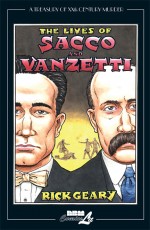
Master cartoon criminologist Rick Geary is back with another compelling escapade from his current series of graphic novel true-murder mystery reconstructions, combining a superlative talent for laconic prose, incisive observation and detailed pictorial extrapolation with his formidable fascination for the darker aspects of human history.

Geary’s forensic eye scours the last hundred years or so for his Treasury of XXth Century Murder series, and here scores a palpable if rather unpalatable hit with a relatively unknown (certainly to me) serial killer saga that would make an incredible film – if only the fiend had ever been caught!

In 1918 with the Great War moving into the inevitable End-game the iconic and legend-laden city of New Orleans endured a campaign of terror that lasted well over a year with far reaching repercussion felt clear across the United States.

As explained in the captivating capsule history that opens this lovely black and white hardcover thriller, New Orleans was founded by the French in 1717, lost to the Spanish in 1763, taken by Napoleon in 1802 and sold to the Americans a year later, making it one of the oldest and certainly the most eclectic, eccentric, artistic and elegant city in the USA.

By 1918 it was a huge, sprawling and vital hub of trade and commerce, peopled by a vast melting pot of immigrant populations. On the night of May 23rd an Italian couple who ran a grocery store were hacked to death by an intruder who broke into their home and attacked them with their own household axe. Over the next year and half a phantom killer would, under the horrifying glare of public scrutiny, kill six people, maim and mutilate another half dozen and hold the city virtual hostage with insane proclamations and demands. He – if it was indeed, a man – was often seen but never apprehended.

Geary is as meticulous and logical as ever, forensically dissecting the various attacks, examining the similarities and more importantly, the differences whilst dutifully pursing the key figures to their unlikely ends.

All the victims were grocers of Italian origin (leading to a supposed Mafia connection) except for the ones who were not, which possibly refuted the theory but equally suggested opportunistic copy-cat killers. A number of personal grievances among the victims led to many false arrests and even convictions, and the killer or killers left many survivors who all agreed on a general description but all subsequently identified different suspects. There’s even a broader than usual hint of supernatural overtones.

Occurring at the very birth of the Jazz Age this utterly compelling tale is jam-packed with intriguing snatches of historical minutiae, plus beautifully rendered maps and plans which bring the varied locations to moody life: yet another Geary production tailor-made for a Cluedo special edition!

The author  presents the facts and theories with chilling graphic precision, captivating clarity and devastating dry wit, and this enigma is every bit as compelling as his other homicidal forays: a perfect example of how graphic narrative can be so much more than simple fantasy entertainment. This merrily morbid series of murder masterpieces should be mandatory reading for all comic fans, mystery addicts and crime collectors.

© 2010 Rick Geary. All Rights Reserved.

100 Bullets: Six Feet Under the Gun


By Brian Azzarello & Eduardo Risso (Vertigo)
ISBN: 978-1-84023-662-0

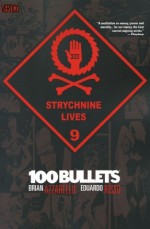
Beginning as one of the best crime-comics in decades, 100 Bullets imperceptibly grew into a terrifyingly imaginative conspiracy thriller of vast scope and intricate, intimate detail. With this sixth volume (collecting issues #37-42 of the stunningly adult comic book) creators Azzarello and Risso seemingly paused for breath and a succession of single episodes, exploring the inner workings of a deadly half-dozen cast-members, but as always there’s far, far more going on than you might think, and now that the series has concluded it’s clear that what happened here was of vital importance to what came next.

Pay attention! Every beautiful panel on every thrilling page might hold clues to the epic saga unfolding before your eyes.

Soon after Columbus landed in America, thirteen European crime-families migrated to the New World and carved up the continent in perpetuity between them. As the country grew civilised and a new nation was born the Trust embedded themselves in every aspect of it.

To prevent their own greed and ambition from destroying the sweetest deal in history the Families created an extraordinary police force to mediate and act when any Trust member acted against the unity and best interests of the whole. They were called the Minutemen and were always led by the kind of peacekeeper needed to keep them honest and actively cooperating – a man uniquely honest, dedicated, smart and remorseless.

Not too long ago though, The Trust leaders decided they no longer needed overseers and acted with characteristic ruthlessness to remove them. Betrayed Minutemen leader Agent Graves didn’t take his dismissal well and has been slowly enacting a plan to rectify that casual injustice. For years he has been appearing to various betrayed and defeated people as a “Court of Last Resort” offering answers, secrets, an untraceable handgun and 100 Bullets…

The sextet of character studies herein opens with ‘On Accidental Purpose’ as Dizzy Cordova pays a nostalgia-tainted visit to the friends and ghetto neighbourhood she so happily escaped from (in 100 Bullets: First Shot, Last Call) whilst Graves has a conversation with one-time Minuteman Shepherd – now sole facilitator for the Trust, before ‘Cole Burns Slow Hand’ sees the newly reactivated Minuteman settle accounts with the fiancé he abandoned once Graves came calling (100 Bullets: Split Second Chance), all set against the backdrop of a robbery/hostage situation gone painfully wrong.

Trust Heir Apparent Benito Medici experiences first hand a taste of the Old Ways and Good Old Days in the bloody ‘Ambition’s Audition’ whilst rogue agent and unstoppable Force of Nature Lono gets a visit from Shepherd, resulting in a situation even his barbarous methods can’t handle in ‘Night of the Payday’ and Graves himself features in ‘A Crash’ as overtures from the Families are rebuffed whilst a young couple’s brief dream of vast, unearned wealth falls foul of bad timing and their own consciences.

Wylie Times (100 Bullets: A Foregone Tomorrow) gets a visit from Agent Graves and a case, gun, bullets and dossier of his own in the final tale ‘Point Off the Edge’ – a tense thriller which reminds us that not all evil comes courtesy of secret criminal cabals whilst proving once more that even if it doesn’t Graves is always prepared to take advantage…

Even after this seeming break in the overarching narrative the unfolding saga remains astoundingly accessible and readable with the war against the Trust now openly declared and all participants anxiously choosing their side and crossing their fingers. Agent Graves has activated the final stage of his decades-long campaign and the endgame is approaching…

If there are still any entertainment-starved story fans – grown-up, paid-up, immured to harsh language and unshaken by rude, nude and very violent behaviour – who aren’t addicted to this compulsive classic yet, get out there and grab every one of these graphic novels at all costs! The best is still to come…

© 2002, 2003 Brian Azzarello, Eduardo Risso & DC Comics. All Rights Reserved.

100 Bullets volume 5: The Counterfifth Detective


By Brian Azzarello & Eduardo Risso (Vertigo)
ISBN: 978-1-84023-467-1

All societies have policemen and the kind of cop absolutely depends on the kind of society. When that society is utterly secret and consists of thirteen ruthless criminal dynasties that have covertly controlled America since Columbus landed, the kind of peacekeeper needed to keep them honest and actively cooperating has to be a man uniquely honest, smart and remorseless.

Such a man is Agent Graves…

Beginning as one of the best crime-comics in decades, 100 Bullets gradually, cunningly transformed itself into a startlingly imaginative conspiracy thriller of vast scope and intricate intimate detail. With this fifth volume (collecting issues #31-36 of the much missed adult comic book) close followers might assume they finally have a handle on what’s going on, and how the characters are shaping up but once more Azzarello and Risso have plenty of surprises to unleash and chairs to kick out from under us…

Milo Garrett is trouble: brooding, violent and always looking for a fight. That’s not the best résumé for a private investigator, but it gets Milo through the nights and through the week. However his soul-deadened life a takes a decidedly strange turn when he wakes up in a hospital bed with his face bandaged like a mummy. Being a tough guy doesn’t help much when you’re catapulted through a speeding car windscreen…

He has a visitor: a sleek old gentleman named Graves who offers him a briefcase with an untraceable gun, 100 bullets and a dossier on just how he got there. What Graves doesn’t offer is any answers…

Psychotically independent, ever-suspicious and always spoiling for another drink and another fight Garrett revisits the case he was working on. He was hired to recover a stolen painting, but when his client is murdered he knows he’s stepped into something big and dirty. Unable to let go he digs deeper and finds the ultra-rich Megan Dietrich (see 100 Bullets: First Shot, Last Call) up to her neck in something that clearly terrifies her: something that scares everybody connected to this case…

As the body-count mounts Graves’ reawakened “Minutemen” surface, and although Garrett doesn’t know it yet he is caught between a centuries-old criminal cabal and the squad of paramilitary peacekeepers they betrayed and (they believed) destroyed.

Events spiral as monstrously ambiguous hitman Lono stalks his next – unspecified – target and once Milo finally sees the mysterious painting which apparently reveals a hidden secret of the criminal Trust that runs America, the detective is pretty sure of the only way this mess can end…

Deeply unsettling yet spectacularly compelling this yarn turns the hardboiled gumshoe genre on its head as it weaves a unique web of intrigue that gradually built into a monolithic saga of institutional corruption and personal honour. The unfolding saga remains an astoundingly accessible and readable thriller as the mystery of the Trust is revealed and Agent Graves begins the final stage of a plan decades in the making: 100 Bullets promises that the best is already here, but even better is waiting…

Entertainment-starved story fans – grown-up, paid-up, immune to harsh language and unshaken by rude, nude and very violent behaviour – should make their way to their favourite purveyor of fine fiction immediately and get every one of these graphic novels – at all costs.

© 2002 Brian Azzarello, Eduardo Risso and DC Comics. All Rights Reserved.

The Files of Ms. Tree volume 3: The Mike Mist Case Book


By Max Collins, Terry Beatty & Gary Kato (Renegade Press)
ISBN: 0-840031-02-7

Despite being one of the most popular genres in literature and the fact that most fiction books are bought and read by women, Private Eye yarns are desperately short of female protagonists. Marry that with the observation that “gumshoe” comics are also as rare as hen’s teeth and it’s a wonder that a series such as Ms. Tree ever got off the drawing board.

The secret – as always – was quality.

The black widow of detective fiction first appeared in 1981 as a serial in the anthology comic Eclipse Magazine, produced by Max Allan Collins (crime novelist and new writer of the Dick Tracy strip) with young humour cartoonist Terry Beatty.

She soon won her own solo title, Ms. Tree’s Thrilling Detective Stories (later simply Ms. Tree), and although the marketplace was not friendly to such a radical concept the series ran for 50 issues, and 2 specials, from three publishers (Eclipse, Aardvark-Vanaheim and Renegade Press) before finally dying in 1989. She was promptly revived as a DC comic in 1990 for another 10 magnum-sized issues as Ms. Tree Quarterly/ Ms. Tree Special; three more blood-soaked, mayhem-packed, morally challenging years of pure magic.

Astonishingly, there are no contemporary collections of her exploits – despite Collins’ status as a prolific and best-selling author of both graphic novels (Road to Perdition, CSI and prose sequences featuring his crime-creations Nathan Heller, Quarry, Nolan, Mallory and a veritable pantheon of others).

In the first volume we briefly met Mike Tree, an archetypal detective who married his secretary and partner Mike (“nobody calls me Michelle… twice”) Friday, only to be murdered on their wedding night. The Widow Tree hunted down his killer, setting herself on a path of blood-soaked vengeance. En route she uncovered a vast web of corruption and made an eternal enemy of Mob boss Dominic Muerta: locking together forever in a bloody vendetta.

This third volume, released in 1986, diverged from the chronological retelling of her adventures to re-present a selection of one-shots and specials that co-starred another Collins/Beatty shamus, one originally intended for a far more impressionable audience that gore-hardened Comic-book fans.

The Mike Mist Minute Mysteries began as a part of a tabloid section entitled The Comics Page, which was syndicated for a year or so (1979-1980) in a dozen small newspapers, and latterly in Mystery Magazine. The strip featured a cool, smooth PI who, in 12 panels or less, introduced a crime, deduced a culprit and caught the felon, in neat fair-play duels with the reader. He was generally not aided by the self-fulfilling cop Lieutenant Dimm. The feature was rife with sly in-jokes for fans of detective fiction: whether prose, TV or filmic…

Some of these little gems were collected into a comic-book by Eclipse in 1981 and a selection of those works-in-progress form the opening chapter of this red-handed collection, beginning with the very first conundrum, ‘Death Takes a Powder’, swiftly followed by ‘The Butler Didn’t’, ‘You Only Die Once’, ‘Silence Isn’t Golden’, ‘No Laughing Murder’, ‘Crime Takes a Hike’, ‘Damsel in This Dress’, ‘Too Damp Bad’ and ‘Death Has an Eerie Ring.’

When Ms. Tree launched Mist became an occasional guest: an associate and friend who handled over-spill cases, and eventually scored his own back-up strip in the monthly comic. Inevitably this led to a number of official team-ups – “Mist-Tree Tales” (the liberal use of atrocious puns as concealed and/or offensive weapons was a signature and standard M.O. of all Mist-adventures…)

‘Murder at Mohawk’, from Ms. Tree #9 found accidentally sharing a resort hotel, just a blizzard traps an unsavory cast of characters into an unsolved robbery/murder thirty years old… By this time Gary Kato had joined the team as letterer, art assistant and sometime penciller. Thus Beatty’s art took on a seductively Steve Ditko-esque appearance, especially in such Mist’ back-up teasers as ‘The Long and the Short of Death’ and ‘See no Evil…’, whilst Collins added some autobiographical verity by making Mist a comicbook and record collector in ‘Wertham Was Right’ and ‘Four Color Phony’. After the seasonal ‘Claus for Alarm’, ‘Suitable for Framing’, ‘Snow Job’, ‘Disappearing Act’, ‘Woman in White’ and ‘Blood Will Tell’ our second full-length feature begins.

‘Death, Danger and Diamonds: Dear, Dead Darling’ is a high-octane, hard-bitten hot potato which saw Mist looking to avenge a murdered client (so many of his paying customers ended up dead it became a running gag in the strip. As Tree used to teasingly point out – at least with her cases it was usually the bad-guys who ended up on slabs…) To that end the pair masqueraded as husband and wife; playing bait for a seasoned killer in the concluding ‘Hawaiian Ice.’

‘Death, Danger and Diamonds’ was released as a 3D comic during the brief revival of the form in the mid 1980s. Ray Zone’s eye-popping “separations” expertise is absent from this 2D, black and white collection, but the addition of a four page 3D thriller ‘A Pair of Eyes’ serves to keep the theme in the frame…

There’s another batch of Mist-only Minute Mysteries before the final long-playing tale. ‘Railroaded’, ‘Shattered Alibi’, ‘Staged Suicide’, ‘Blind Suspicion’, ‘No Shot in the Dark’ (with Ms. Tree in attendance), ‘Lucky Number’, ‘Overdrawn Account’ and ‘Tag! You’re It…’ all display the requisite observational antics before ‘Music to Murder By’ finds Mist and Tree hunting a murderer through the heady halls of a vinyl record convention (although to be fair this was produced in the time before CDs, let alone those infernal I-Poddy contraptions…).

The much-abused “more-valuable-dead-than-alive-rock-musician” plot gets an early but quite superior outing in this gripping, stylish thriller which closes the charming, chilling collaboration between two of the sharpest, deadliest gumshoes in the biz.

Despite the tragic scenarios, ruthless characterisations and high body-count, this is yet another clever, scathingly funny casebook steeped in the lore of detective fiction, stuffed with added asides and extras for the cognoscenti. In fiction absolutely no one can be trusted and since you get the chance to match wits with both scumbags and sleuths, these tales are simply steeped in the truly magical gratification factor that allows the reader an even chance to mete out some vicarious justice…

Ms. Tree is the closest thing the American market has ever produced to challenge our own Empress of Adventure Modesty Blaise: how she can be left to languish in graphic obscurity is a greater mystery than any described in this compelling collection. Track down all her superb exploits and pray someone has the street smarts to bring her back for good…

© 1981, 1982, 1983, 1984, 1985, 1986 Max Allan Collins and Terry Beatty. All Rights Reserved.

Pink Flamingos Book 1: Bring Down the Night and Pink Flamingos Book 2: Maybe Next Time… Maybe Never


By John R. & Carol Q. Sansevere, illustrated by William Rieser (Octopus)
ISBN’s: 978-0-70643-186-5 and 978-0-70643-307-4

Let’s all pop back once or even twice more to the ever-so-now 1980s with these stylish, radically different and frankly peculiar experimental graphic novels that pretty much typified and encapsulated the dichotomies of the age of Big Hair and Brash Money, and layered them lavishly over a pastel-tinted attempt to glam up the old formulas that worked so well for the Famous Five, Nancy Drew and the Hardy Boys.

The Pink Flamingos are a close clique of fashionably attractive Palm Beach teens whose taste for glamour and adventure draw them into some pretty tricky situations. These Chic Chicks are Lana the model, Carla the singer, Amber the waitress/biker babe, Jackie the TV intern and Jody the spoiled rich one…

In volume 1: Bring Down the Night the quirky quintet first get together when a mutual friend commits suicide. As with everything in that swank locale, sophisticated, connected drug-dealer Joey De Silva is at the heart of the web of temptation, corruption and death and the feisty females decide that if the cops won’t touch him then they’ll take him down in their own unique way…

The in-your-face, unashamed hedonism and seductive shoulder-padded indolence continues in Maybe Next Time… Maybe Never as the Material Girls follow Carla to New York City and her big break in the music biz, but sadly, behind the glitz and glamour, drugs and depravity are never too far way… Meanwhile as romance rears its well-coiffed hunky head for one of the Flamingos, Poor Little Rich Girl Jody discovers that for some families money never could buy love…

Originally published by Shuster & Shuster in the US these books appear to be more fashion sketches and studies than straight comics narrative and the oddly removed, if not outright distant writing style looks uncomfortably like an actual recycled unsold pitch “bible” and shooting script for a proposed TV show (and believe me I’ve worked on far too many of those to mistake the feel) but even so the overall effect is not unpleasant or lacking in entertainment value when considered as graphic novels.

Rieser’s bold and vivid storyboard-based illustrations blends well with the faux-TV script narrative captions, and despite a rather static, lifestyle-mag, fashion shoot feel to the action, if you’re a fan of Miami Vice, 21 Jump Street, Dallas, Dukes of Hazzard or even early Neighbours there’s a nostalgic buzz to be gleaned from these rather wholesome adventures for Young Adults.
™ & © 1987, 1988 Angel Entertainment, Inc. All rights reserved.

100 Bullets: A Foregone Tomorrow


By Brian Azzarello & Eduardo Risso (Vertigo)
ISBN: 978-1-84023-466-0

From being one of the best crime-comics in decades 100 Bullets gradually, cunningly transformed into a startlingly imaginative conspiracy thriller, with this fourth volume (collecting issues #20-30 of the much missed adult comic book) finally seeing a disparate range of previously seen strangers revealed as vital components in a vast and intriguing cast.

The tension begins with ‘The Mimic’, a captivating multi-layered allegorical vignette which features a conversation on a park bench between the mysterious Mr. Shepherd and young Benito Medici disclose some pertinent facts and intriguing conjectures about the enigmatic Agent Graves and his old associates “the Minutemen”, all whilst the life or death drama of a street corner gangsta’s life plays out to a lethal inevitable conclusion around them.

In the two-part ‘Sell Fish & Out to Sea’ “High” Jack Daw, sometime bouncer, doped-out addict and one more lost soul is offered a way to change his life with the now inescapable consequences. When he is handed a gun and those eponymous bullets he revisits all the family and friends he had left; looking for the reason he’d fallen so low. Only when he finally ascertained who was really responsible for his fall did he start using that untraceable weapon and ammunition…

East Coast gaming capitol Atlantic City is the venue for ‘Red Prince Blues’ and sees the return of super-bitch Megan Dietrich (see 100 Bullets: First Shot, Last Call) and ice-cold Benito, both scions of the mysterious Trust, but busily conspiring for their own unscrupulous futures as inveterate gambler Hank tries to win one last pot…

With a dying wife the last thing he needed was to get into a poker game with young Medici, but everything goes into a terminal spin when Graves, Cole Burns and Dizzy Cordova hit town. This three part saga provides more useful clues about the thirteen families that rule America, and when the head of one of those Trust clans dies after a parley with Graves the stakes are raised to a level that no one can afford…

‘Mr. Branch & the Family Tree’ returns us to Paris and Dizzy’s old instructor who unwisely reveals the secret history of The Trust and The Minutemen in a saucily novel manner; a classy yarn that sees guest artists Paul Pope, Joe Jusko, Mark Chiarello, Jim Lee, Lee Bermejo, Dave Gibbons, Tim Bradstreet, Jordi Bernet, Frank Miller and J.G. Jones supplement the always superb Eduardo Risso with a series of narrative pin-ups identifying the major players in this increasingly convoluted, compelling chronicle.

Next comes possibly the best single tale of the entire run as Agent Graves encounters a geriatric baseball star whilst delivering another briefcase. This is no mere fading star however, but a man who once wed the most glamorous movie star of her generation, a tragic woman who had an affair with a President and – apparently – took her own life. The still grieving widower is also someone a younger but just as resolute Graves left a briefcase with in early 1963…

‘Idol Chatter’ is a conspiracy nut’s dream, blending legend, myth and history into a clever, witty and punishingly poignant tale, even though the mordant black humour is never too far away…

This edgy epistle ends with the three part ‘¡Contrabandolero!’ as lowlife El Paso gas-station attendant Wylie Times meets Dizzy and Mr. Shepard before getting sucked into a crazy criminal scam to smuggle contraband from Mexico into the USA. Unfortunately things quickly go south in Juárez when the “exporter” insists that the illicit entrepreneurs also provide an over-sexed, under-age girl with a ride back to the Land of the Free…

Wylie just might be another Minuteman waiting to be reactivated, but you wouldn’t know it from this calamitous comedy of errors and terrors…

Bleak drama gradually gave way to dark gallows humour and the major characters were slowly showing softer sides but this high-octane thriller had lost of its verve with this volume. The unfolding saga remains an astoundingly accessible and readable thriller as the mystery of the Trust is revealed and Agent Graves begins the final stage of a plan decades in the making: 100 Bullets promises that the best is already here, but even better is waiting…

Entertainment starved story fans – grown-up, paid-up, immune to harsh language and unshocked by rude, very violent behaviour – should make their way to their favourite purveyor of fine fiction immediately and get these graphic novels at all costs.

© 2001, 2002 Brian Azzarello, Eduardo Risso and DC Comics. All Rights Reserved.