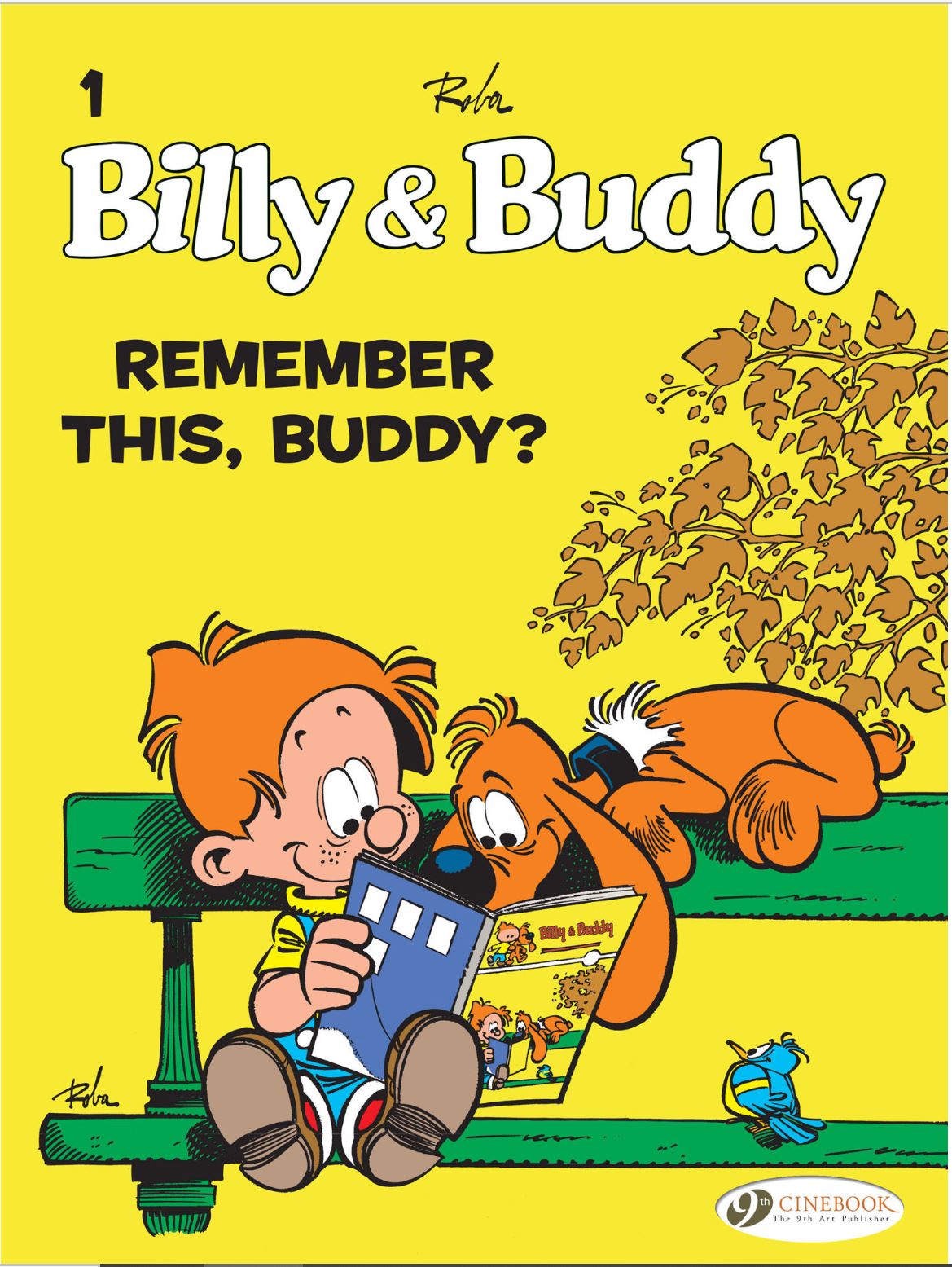
The Last Musketeer


By Jason, coloured by Hubert and translated by Kim Thompson (Fantagraphics Books)
ISBN: 978-1-56097-889-3 (TPB/Digital edition)

Jason is secretly John Arne Saeterrøy: born in Molde, Norway in 1965 and an overnight international cartoon superstar since 1995 when his first graphic novel Lomma full ay regn (Pocket Full of Rain) won that year’s Sproing Award (Norway’s biggest comics prize).

He won another Sproing in 2001 for the series Mjau Mjau and in 2002 turned almost exclusively to producing graphic novels. A global star among the cognoscenti, he has won many major awards.

Jason’s breadth of interest is wide and deep: comics, movies, music, high literature and pulp fiction all feature equally with no sense of hierarchy and his puckish mixing and matching of his inspirational sources always produces a picture-treatise well worth a reader’s time.

As always, this visual/verbal bon mot unfolds in his beguiling, sparse-dialogued, pantomimic progressions with enchantingly formal page layouts rendered in the familiar, minimalist evolution of Hergé’s Claire Ligne style: solid blacks, thick lines, settings of seductive simplicity augmented here by a beguiling palette of stark pastels and muted primary colours. This delicious caper is one of his best yarns ever and even spawned a prequel…

The Last Musketeer is an epic rife with his signature surrealism; populated with his quirkily quotidian cast of darkly comic anthropomorphic regulars, and downplaying his signature themes of relationships and loneliness to produce a wild action-adventure for a charmingly macabre cast of bestial movie archetypes and lost modern chumps to romp through.

With hues from much missed triple-threat Hubert, our brief full-colour thriller opens with a drunk in a Paris bar. He claims to be legendary musketeer Athos, still alive after four centuries. And he actually is.

The contemplative warrior dreams of past glories and inseparable old comrades but things aren’t the same anymore. However, as he muses on a bench, destructive balls of energy rain down on the city and Athos realises he is needed again and might just have one last adventure in him…

Despite failing to get the old gang back together, Athos persists in his quest and, after fighting a couple of green-skinned invaders, induces them to take him to their world. All too soon, he is making friends, battling the flamboyantly evil King of the Red Planet, helping a Princess of Mars foment an Earth-saving revolution and re-encountering an enemy from home he had long forgotten…

And we’re all still here so he must have triumphed in the end…

Outrageously merging the worlds of Alexander Dumas with Edgar Rice Burroughs, whilst gleefully borrowing Flash Gordon’s props and work ethic, The Last Musketeer is a superbly engaging pastiche that is pure nostalgia and pure Jason.

Jason is instantly addictive and a creator every serious fan of the art form should move to the top of the “Must-Have” list.
All characters, stories and artwork © 2007 Jason. All rights reserved.

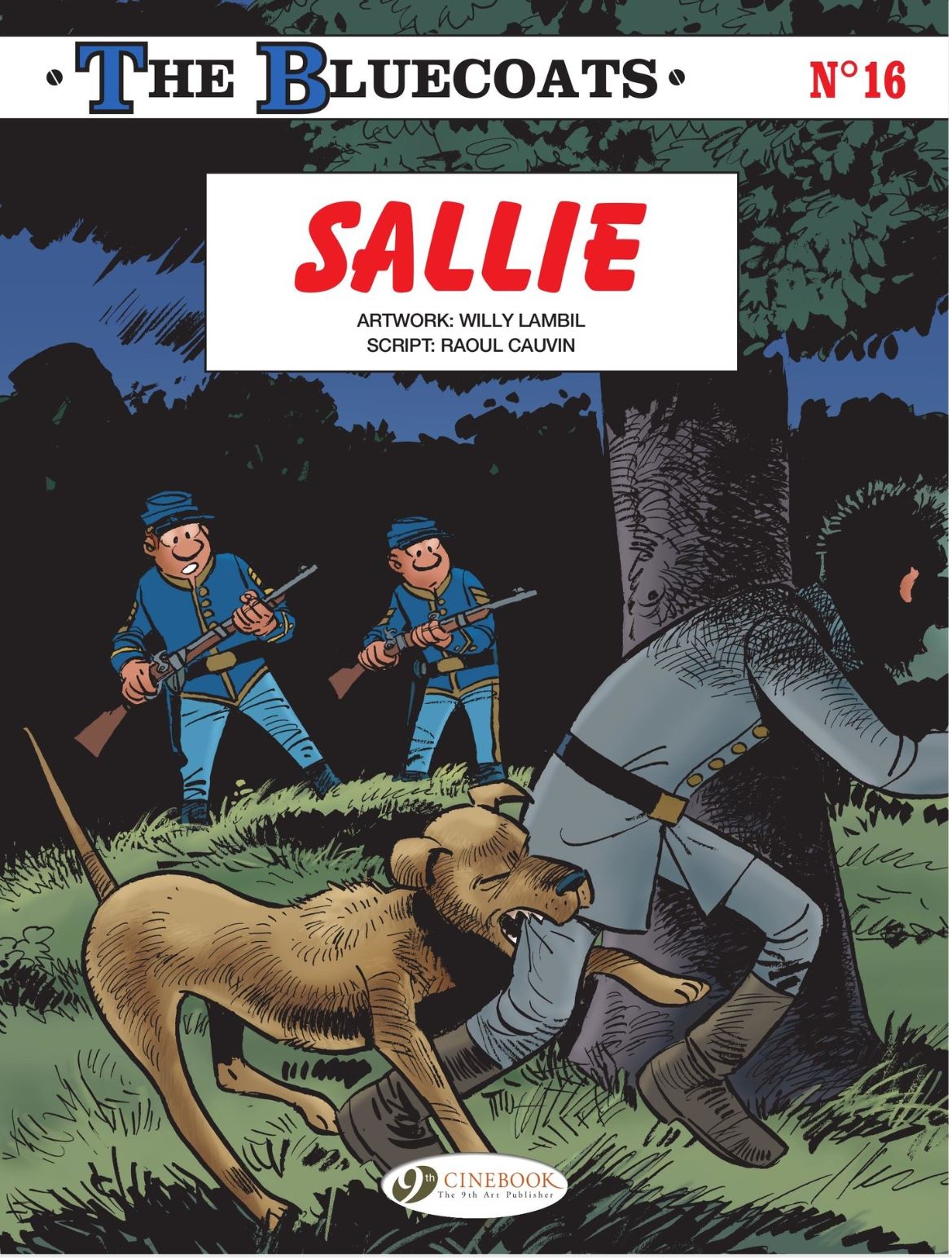
The Bluecoats volume 15: Bull Run


By Willy Lambil & Raoul Cauvin, translated by Jerome Saincantin (Cinebook)
ISBN: 978-1-80044-061-6 (Album PB/Digital edition)

Devised by Louis “Salvé” Salvérius & Raoul Cauvin – who scripted the first 64 volumes until retirement in 2020 – Les Tuniques Bleues (and/or Dutch-language iteration De Blauwbloezen) debuted at the end of the 1960s: created to supplant the irreplaceable Lucky Luke when that laconic maverick defected from weekly anthology Le Journal de Spirou to rival publication Pilote.

From its first sallies, the substitute strip swiftly became hugely popular: one of the most popular bande dessinée series in Europe. In case you were wondering, it is now scribed by Jose-Luis Munuera and the BeKa writing partnership and we’re up to 66 tomes…

Salvé was a cartoonist of the Gallic big-foot/big-nose humour school, and after his sudden death in 1972, successor Willy “Lambil” Lambillotte gradually adopted a more realistic – yet still overtly comedic – tone and manner. Lambil is Belgian, born in 1936 and, after studying Fine Art in college, joined publishing giant Dupuis in 1952 as a letterer.

Born in 1938, scripter Cauvin was also Belgian and – before entering Dupuis’ animation department in 1960 – studied Lithography. He soon discovered his true calling was comedy and began a glittering, prolific writing career at Le Journal de Spirou.

In addition, he scripted dozens of long-running, award winning series including Cédric, Les Femmes en Blanc and Agent 212: more than 240 separate albums. Les Tuniques Bleues sold alone has over 15 million copies… and counting. Cauvin died on August 19th 2021, but his vast legacy of barbed laughter remains.

Here, designated The Bluecoats, our long-suffering protagonists are Sergeant Cornelius Chesterfield and Corporal Blutch; worthy, honest fools in the manner of Laurel & Hardy: hapless, ill-starred US cavalrymen defending America during the War Between the States.

The original format offered single-page gags set around an Indian-plagued Wild West fort, but from second volume Du Nord au Sud, the sad-sack soldiers were situated back East, perpetually fighting in the American Civil War.

All subsequent adventures – despite often ranging far beyond the traditional environs of the sundered USA and taking in a lot of genuine and thoroughly researched history – are set within the timeframe of the Secession conflict.

Blutch is your run-of-the-mill, whinging little-man-in-the street: work-shy, mouthy, devious and ferociously critical of the army and its inept orchestrators and commanders. Ducking, diving, deserting whenever he can, he’s you or me – except at his core he’s smart, principled and even heroic… if no easier option is available.

Chesterfield is big and burly, a professional fighting man and proud career soldier of the 22nd Cavalry who passionately believes in patriotism and the esprit-de-corps of the Military. He is brave, never shirking his duty and hungry to be a medal-wearing hero. He also loves his cynical little troll of a pal. They quarrel like a married couple, fight like brothers but simply cannot agree on the point and purpose of the horrendous war they are trapped in: a situation that once more stretches their friendship to breaking point in this cunningly conceived instalment.

Coloured by Vittorio Leonardo, Les Tuniques Bleues – Bull Run was originally serialised in Le Journal de Spirou (#2558-2562) during 1987 and collected into another mega-selling album before the year was out. The 27th continental album, it was Cinebook’s 15th translated Bluecoats album.

Bull Run offers the creators’ trenchant and bitterly hilarious account of the infamous and calamitous first full clash between North and South, which took place on July 21st 1861, in Prince William County, Virginia. That was only 30 miles from national capital Washington DC, near the city of Manassas, from which the Confederates derived their own name for the debacle – the Battle of First Manassas.

A story within a story, it’s the account of what just happened as told by one who survived the debacle sharing confidences with a new recruit who can’t understand why nobody will speak of it…

Safely hidden away Blutch starts talking, telling how before any fighting began, President Lincoln’s generals gave the leader bad advice and pompous assurances, and a publicity campaign to recruit volunteers was badly administered. Moreover, the crisis fostered a festival atmosphere and civilians flocked to the proposed battleground to see the spectacle…

It was certainly impressive. The Union forces included not just American infantry, cavalry and artillery, but also many foreign contingents and brigades: Crimean Zouaves, Italian Garibaldians, Bavarians, Croats, Cossacks, Chinese and more. What a pity nobody drilled them in taking orders in English…

Still angry from being tricked into joining up, Blutch was already wary and could not bear to see the eagerness on the face of his glory-struck comrade Chesterfield. That’s why – when the call came from on high – he broke the habit of a lifetime and volunteered to join the proud few called on to serve drinks and refreshments to the spectators and upper ranks…

Already class divisions had appeared: the cavalry were expressly ordered not to speak to foot soldiers. That would prove catastrophically crucial as the battle unfolded and messages could not be passed…

Most telling of all, the Confederate forces were well-trained, well-disciplined and did not overconfidently consider the battle a foregone conclusion…

With carnage and confusion everywhere, Blutch’s deepest convictions are completely confirmed, and the jolly adventure becomes a complete rout, made all the worse for death-or-glory Chesterfield, who is ignominiously saved from capture or worse by his sneaky pal’s ungentlemanly behaviour and dirty tricks. That’s why the sergeant never talks about Bull Run…

Painfully cleaving to the bald facts of history, this episode is far darker than most, with the underlying horror leavened by a narrative distancing that allows ridiculously surreal black comedy and bitter satire to blossom constantly.

Combining pointedly seditious polemic with stunning slapstick, Bull Run mordantly manipulates the traditions of war stories to hammer home the point about the sheer stupidity of war and crushing cruelty of arrogant elitism. These yarns weaponise humour, making occasional moments of shocking verity doubly powerful and hard-hitting. Funny, thrilling, beautifully realised and eminently readable, Bluecoats is the best kind of war-story and Western: appealing to the best, not worst, of the human spirit.
© Dupuis 1987 by Lambil & Cauvin. All rights reserved. English translation © 2021 Cinebook Ltd.

The Left Bank Gang


By Jason, coloured by Hubert, translated by Kim Thompson (Fantagraphics Books)
ISBN: 978-1-56097-742-1 (TPB/Digital edition)

Jason is secretly John Arne Saeterrøy: born in Molde, Norway in 1965 and an overnight international cartoon superstar since 1995 when his first graphic novel Lomma full ay regn (Pocket Full of Rain) won that year’s Sproing Award (Norway’s biggest comics prize).

He won another Sproing in 2001 for the series Mjau Mjau and in 2002 turned almost exclusively to producing graphic novels. Now a global star among the cognoscenti he has won seven major awards from such disparate regions as France, Slovakia and the USA.

Now his latest novella is released, rife with his signature surreality: populated with cinematic, darkly comic anthropomorphs and featuring more bewitching ruminations on his favourite themes of relationships and loneliness, viewed as ever through a charmingly macabre cast of bestial movie archetypes and lost modern chumps.

In this full-colour tract – originally released in France as Hemingway – Jason sets his quirkily-informed imagination into literary overdrive: postulating what might have been at a moment of intense intellectual cross-pollination.

It’s Paris in the 1920s: émigrés F. Scott Fitzgerald, Ezra Pound, James Joyce and Ernest Hemingway are all struggling to make their marks on the world – and most especially on the other artistic Men and Women of Destiny congregated in the enclave of creative excellence that has grown up around the Latin Quarter. Wannabe cartoonists, their own meagre efforts seem paltry and trivial in comparison to the masterful comic books produced by Faulkner or Dostoyevsky, whilst true artists such as Jean-Paul Sartre and Man Ray all seem to have no trouble with their medium or message…

Worst of all, Scott thinks something is bothering Zelda: she might even be cheating on him…

The disaffected Young Turks are uniformly plagued by nightmares of the past and frustrated dreams of mediocre futures with everyday life relentlessly coming at them demanding vile money just to stay alive and keep on fruitlessly toiling.

… And then Hemingway says it: why not just rob a bank?

Blending literary pretention and modern creative mythology with the iconography and ironic bombast of Reservoir Dogs is a stroke of genius no one else could pull off. As always, this visual/verbal bon mot unfolds via Jason’s beguiling, sparse-dialogued, pantomimic progressions with enchantingly formal page layouts rendered in the familiar, minimalist evolution of Hergé’s Claire Ligne style; solid blacks, thick lines and settings of seductive simplicity augmented here by a stunning palette of stark pastels and muted primary colours.

Jason’s work always jumps directly into the reader’s brain and heart, always probing the nature of “human-ness” by using the beastly and unnatural to ask persistent and pertinent questions. Although the clever sight-gags are less prominent here his repertory company of “funny-animal” characters still uncannily depict the subtlest emotions with devastating effect, proving again just how good a cartoonist he is.

This wry mis-history lesson is strongly suggested for adults but makes us all to look at the world through wide-open childish eyes. Jason is instantly addictive and a creator every serious fan of the art form should move to the top of the Must-Have list.
All characters, stories and artwork © 2007 Editions de Tournon-Carabas/Jason. All rights reserved.

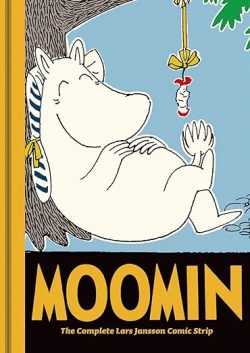
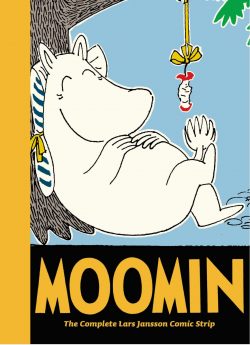
Moomin volume 7 – The Complete Lars Jansson Comic Strip


By Lars Jansson (Drawn & Quarterly)
ISBN: 978-1-77046-062-1 (HB) eISBN: 978-1-77046-554-1

Tove Jansson was one of the greatest literary innovators and narrative pioneers of the 20th century: equally adept at shaping words and images to create worlds of wonder. She was especially expressive with basic components like pen and ink, manipulating slim economical lines and patterns to realise sublime realms of fascination, whilst her dexterity made simple forms into incredibly expressive and potent symbols and, as this collection shows, so was her brother…

Tove Marika Jansson was born into an artistic, intellectual, basically bohemian Swedish family in Helsinki, Finland on August 9th 1914. Father Viktor was a sculptor and mother Signe Hammarsten-Jansson a successful illustrator, graphic designer and commercial artist. Tove’s brothers Lars – AKA “Lasse” – and Per Olov became respectively an author/cartoonist and art photographer. The family and its close intellectual, eccentric circle of friends seems to have been cast rather than born, with a witty play or challenging sitcom as the piece they were all destined to inhabit.

After extensive and intensive study (from 1930-1938 at the University College of Arts, Crafts and Design, Stockholm, the Graphic School of the Finnish Academy of Fine Arts and L’Ecole d’Adrien Holy and L’Ecole des Beaux-Arts, Paris), Tove became a successful exhibiting artist through the troubled period of the Second World War.

Brilliantly creative across many fields, she published the first fantastic Moomins adventure in 1945. Småtrollen och den stora översvämningen (The Little Trolls and the Great Flood or latterly and more euphoniously The Moomins and the Great Flood) was a whimsical epic of gentle, inclusive, accepting, understanding, bohemian misfit trolls and their strange friends…

A youthful over-achiever, from 1930 to 1953 Tove worked as an illustrator and cartoonist for Swedish satirical magazine Garm: achieving some measure of notoriety with an infamous political sketch lampooning the Appeasement policies of European leaders by depicting Hitler in nappies. She was also highly in-demand for many magazines and children’s books, and had started selling comic strips as early as 1929.

Moomintroll was her signature character. Literally.

The lumpy, big-eyed, gently adventurous romantic goof began life as a spindly sigil next to her name in her political works. She called him “Snork” and claimed she had designed him in a fit of pique as a child – the ugliest thing a precocious little girl could imagine – as a response to losing an argument with her brother about Immanuel Kant.

The term “Moomin” came from her maternal uncle Einar Hammarsten who attempted to stop her pilfering food when she visited, warning her that a Moomintroll guarded the kitchen, creeping up on trespassers and breathing cold air down their necks. Snork/Moomin filled out, became timidly nicer – if a little clingy and insecure – acting as a placid therapy-tool to counteract the grimness of the post-war world.

Initially The Moomins and the Great Flood made little impact, but Jansson persisted – as much for her own edification as any other reason – and in 1946 Kometjakten (Comet in Moominland) was published. Many commentators regard the terrifying tale a skilfully compelling allegory of Nuclear Armageddon. You should read it now… while you still can…

When it and third illustrated novel Trollkarlens hatt (1948, Finn Family Moomintroll or occasionally The Happy Moomins) were translated into English in 1952, their instant success prompted British publishing giant Associated Press to commission a newspaper strip about her seductively sweet and sensibly surreal creations.

Jansson had no misgivings or prejudices regarding strip cartoons and had already adapted Comet in Moominland for Swedish/Finnish paper Ny Tid. Mumintrollet och jordens undergäng Moomintrolls and the End of the World – was a popular feature, so she readily accepted the chance to extend her eclectic family across the world. In 1953, The London Evening News began the first of 21 Moomin strip serials to captivate readers of all ages.

Jansson’s involvement in the cartoon feature ended in 1959, a casualty of its own success and a punishing publication schedule. So great was the strain that towards the end she recruited brother Lars to help. He then took over, continuing the strip until 1975. His tenure as sole creator continues here…

Liberated from the strip’s pressures, Tove returned to painting, writing and other creative pursuits: making plays, murals, public art, stage designs, costumes for dramas and ballets, a Moomin opera and 9 more Moomin-related picture-books and novels, as well as 13 books and short-story collections strictly for grown-ups.

Tove Jansson died on June 27th 2001. Her awards are too numerous to mention, but just consider: how many modern artists get their faces on the national currency?

Lars Fredrik Jansson (October 8th 1926 – July 31st 2000) was just as amazing as his sister. Born into that astounding clan twelve years after Tove, at 16 he started writing – and selling – novels (nine in total). He also taught himself English because there weren’t enough Swedish-language translations of books available for his voracious reading appetite.

In 1956, he began co-scripting the Moomin newspaper strip at his sister’s request: injecting his own brand of witty whimsicality to ‘Moomin Goes Wild West’. He had been Tove’s translator from the start, seamlessly converting her Swedish text into English. When her contract with The London Evening News expired in 1959, Lars Jansson officially took over the feature, having spent the interim period learning to draw and perfectly mimic his sister’s cartooning style. He had done so in secret, with the assistance and tutelage of their mother Signe. From 1961 to the strip’s end in 1974, he was sole steersman of the newspaper iteration of trollish tails.

Lasse was a man of many parts: other careers including writer, translator, aerial photographer and professional gold miner. He was the basis and model for the cast’s cool kid Snufkin

Lars’ Moomins was subtly sharper than his sister’s version and he was far more in tune with the quirky British sense of humour, but his whimsy and wry sense of wonder was every bit as compelling. In 1990, long after the original series, he began a new career, working with Dennis Livson (designer of Finland’s acclaimed theme park Moomin World) as producers of Japanese anime series The Moomins and – in 1993 with daughter Sophia – on new Moomin strips…

Moomintrolls are easy-going free spirits: natural bohemians untroubled by hidebound domestic mores and most societal pressures. Moominmama is warm, kindly tolerant and capable but perhaps overly concerned with propriety and appearances, whilst devoted spouse Moominpappa spends most of his time trying to rekindle his adventurous youth or dreaming of fantastic exploits.

Their son Moomin is a meek, dreamy boy with confusing ambitions. He adores their permanent houseguest the Snorkmaiden – although that impressionable, flighty gamin much prefers to play things slowly whilst hoping for somebody potentially better to come along…

The seventh oversized (310 x 221 mm) monochrome hardback compilation gathers serial strip sagas #26-29, and opens with Lars firmly in charge and puckishly re-exploring human frailties and foibles via a sophisticate poke at the shifting political climate…

Craftily casting cats among pigeons, 26th escapade ‘Moomin the Colonist’ finds armchair adventurer Moominpappa resenting the advent of the annual hibernation and rashly listening to his bookish boy, who has been reading about colonisation…

Soon he has packed up the family and a few close friends and set out to conquer fresh fields and pastures new. With Mymble and Little My, Mrs Fillyjonk, her daughters and a cow in tow, the eager expansionists head off across the frozen land and don’t stop until they reach a tropical desert island where they start setting up a new civilisation combining the best of the old world with lots of fresh ideas on how society should be run…

Sadly, their neighbours from back home have sneakily copied the Moomin movement and before long the new continent is embroiled in a passive-aggressive, slyly competitive struggle for control, with scurrilous reprobate Stinky and his pals playing the bad guys behind the Palm Tree Curtain…

Following the mutual collapse of colonialism, outrageous satire gives way to wicked sarcasm as ‘Moomin and the Scouts’ recounts how energetic Mr Brisk’s passion for the outdoor life, badges and bossing children envelopes the instinctively sedentary Moomins and unleashes all kinds of disruptive chaos. With scouts running wild amongst the trees it just seems easier to join them rather than seek to beat them and let nature disrupt the movement from within…especially after Moomin starts hanging around with Miss Brisk’s Girl Guides and the generally dismissive Snorkmaiden feels oddly conflicted…

The perils of property and stain of status upsets the orderly life of the clan when Moominpappa unexpectedly comes into a major inheritance in ‘Moomin and the Farm’. Grievously afflicted by a terrible case of noblesse oblige, the family uproot themselves and retire to stately Gobble Manor to perpetuate the line of landed gentry on a modern working arable and pastoral estate.

Adapting to wealth and property is one thing and even accommodating the legion of ancestral ghosts is but another strand of Duty, but the effort of taking on and even perpetuating centuries of unearned privilege proves far too weighty a burden for all concerned… before the increasingly untenable situation typically corrects itself…

Back in their beloved house and rearranging furniture, a dropped chest disgorges an ancient map and triggers another wild dreamers’ quest in ‘Moomin and the Gold-fields’…

Unable to refuse adventure when it’s dangled in front of their exuberant noses, father and son are soon trekking the wilds and digging random holes thanks to the supremely unclear chart, and before long the entire valley is afflicted with gold rush fever.

With law, common decency and even good manners abandoned to greed as the sedate dell becomes a boisterous and sordid boom town, all Moominmama can do is maintain her dignity and wait for the madness to pass…

This deceptively barbed and edgy compilation closes with ‘Lars Jansson: Roll Up Your Sleeves and Get to Work’ by family biographer Juhani Tolvanen, extolling his many worthy attributes and more besides…

These are truly magical tales for the young, laced with the devastating observation and razor-sharp mature wit which enhances and elevates only the greatest kids’ stories into classics of literature. These volumes – both Tove and Lars’ – comprise an international treasure trove no fan of the medium – or carbon-based lifeform with even a hint of heart and soul – can afford to be without.
© 2012 Solo/Bulls except “Lars Jansson: Roll Up Your Sleeves and Get to Work” © 2011, 2012 Juhani Tolvanen. All rights reserved.
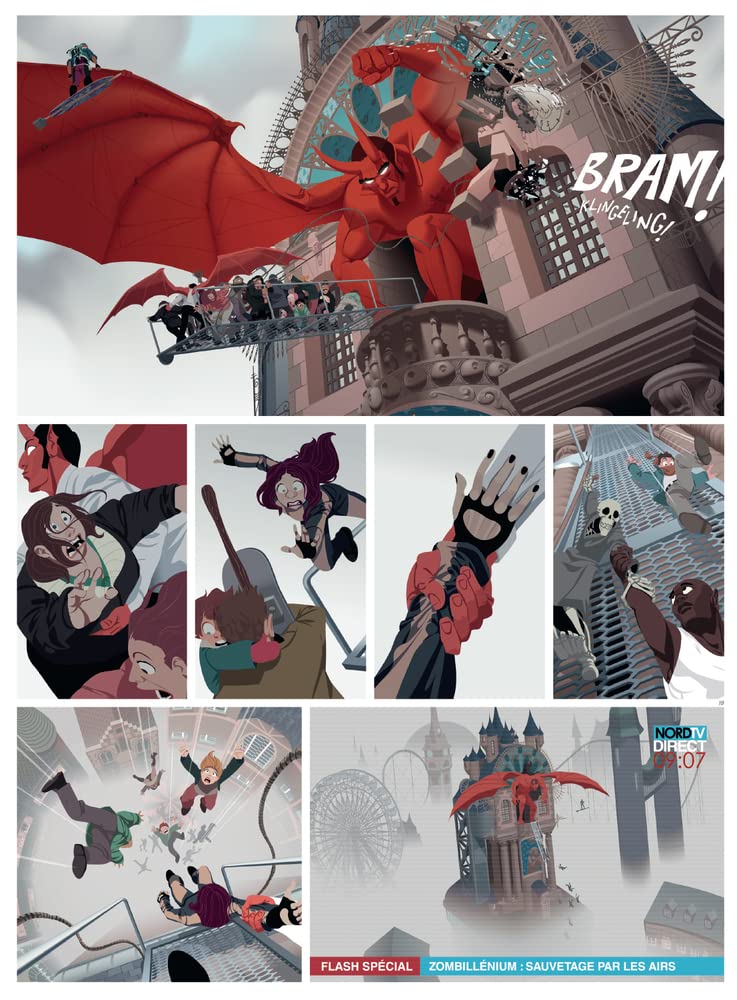
Hãsib & the Queen of Serpents – A Thousand and One Nights Tale


By David B (NBM)
ISBN: 978-1-68112-162-8 (HB/Digital edition)

David B. is a founder member of the groundbreaking strip artists conclave L’Association and has won numerous awards including the Alph’Art for comics excellence and European Cartoonist of the Year.

Born Pierre- Françoise “David” Beauchard on February 9th 1959, he began his comics career in 1985 after studying advertising at Paris’ Duperré School of Applied Arts. His seamless blending of Primitivism, visual metaphor, high and low cultural icons – as seen in such landmarks as Babel, Epileptic and Best of Enemies: A History of US and Middle East Relations utterly reinvigorated and rejuvenated the visual aspect of European sequential art.

This offering from NBM – available as an oversized (312 x 235 mm) full-colour hardback and digitally – takes us into primal storytelling country to examine the very nature of the process by referencing one of the most potent and primal story sources in human history.

One Thousand and One Nights (or more commonly The Arabian Nights) is an anonymous aggregation of folk stories from many cultures of the Middle Eastern Fertile Crescent. Its root material traces back to Arabic, Greek, Jewish, Persian, Turkish, South Asian, and West, Central and North African folklore. It was/they were first translated into English in 1706 as The Arabian Nights’ Entertainment, and has fired western and European imaginations ever since. The one constant throughout every iteration is the framing sequence wherein wily bride and imminent murder victim Scheherazade tells her new husband and supreme ruler Shahryar a story to postpone her own execution.

In this stunning graphic tour de force, rendered in vivid colours and sublimely reminiscent of oriental shadow-theatre puppet shows, that tenuous relationship sets the scene. If you’re old enough to remember – or wise enough to have discovered since – Oliver Postgate & Peter Firmin’s Noggin the Nog, think of that in full HD (with the imagination turned up to 11!).

Here and now – on the 422nd night – the captivating captive Scheherazade begins the tale of a sage named Daniel: a man who had not yet sired a son…

He roamed the world and lost almost everything before his wife finally fell pregnant. Due to the will of God, Daniel died before the birth but not before delivering a potent prophecy. His boy would be called Hasib Karim al-Din. Educated and adventurous, he would eventually inherit all that Daniel cherished: long pent away in a mysterious chest…

Hasib grew up to be an apprentice but – lazy and lacking ambition – fell in with a band of unscrupulous woodcutters. One day, after finding a golden hoard of honey in a deep cavern, the lumberjacks abandoned their comrade, leaving him to the tender mercies of a scorpion who lured him into the clutches of the fabulous and terrifying Serpent Queen.

Deep under the earth, Hasib feared for his life and soul but, in exchange for his own sorry life-story, the Queen began telling him a tale of a king of far-off Banu Isra’il

That saga leads into another and another and yet another (teeming with battles and journeys and princes and wanderers and monsters and wonderful creatures) and we are carried along on a sea of fable and incidence: an interwoven series of nested stories each concealing the next, like layers on an onion and every one peeled back to expose a new hero or fool.

This seemingly endless progression has a point and purpose, however, and just when the whimsical tension can be stretched no tighter, the tale-telling tide turns and each episode miraculously resolves! Thus we move small steps closer to Hasib and his long-deferred inheritance…

Or so says Scheherazade as she weaves her own spellbinding yarn…

Bold, vivid and graphically mesmerising, this enthralling progression of history, myth and imagination is a wry and loving examination of the act of telling stories.
© 2015-2016 Gallimard Jeunesse. © 2018 NBM for the English translation.

The Mercenary – The Definitive Editions volume 1 & 2


By Vicente Segrelles, translated by Mary McKee (NBM)
ISBN: 978-1-68112-124-6 (HB/Digital edition vol 1) ISBN: 978-1-68112-124-6 (HB/Digital edition vol 2)

Born in Barcelona in 1940, Vicente Segrelles Sacristán is a renowned illustrator of magazines and book covers on three continents and the creator of one of the world’s most popular graphic novel series. His first comics album El Mercenario (The Mercenary) was released in 1982: introducing an itinerant knight-for-hire fighting his way through a fantastic world of science and sorcery, usually on the back of a flying dragon.

Rendered initially in lush oil-paints (before graduating to creating art digitally from 1998 onwards), these epic tales blend visual realism and accuracy with fable, myth, historical weaponry, contemporary technology and classical science fiction themes. These fantastic scenes are screened through the visual lens of a trained architect and engineer. Fourteen albums were released between 1982-2003, most of them seen by English-language readers through the auspices of publisher NBM.

Hugely in demand for his painted covers since the 1970s, Segrelles has created book covers for the works of H. Rider Haggard, Poul Anderson, Roger Zelazny, Alistair McLean, G. F. Unger, Desmond Bagley, Andre Norton, Joel Rosenberg, Charles DeLint, C.H. Guenter, Jason Dark, Terry Pratchett and a host of others. European prose readers may also know him as the cover artist of Italian science fiction magazine Urania.

Volume 1 – The Cult of the Sacred Fire

Segrelles came to comics relatively late in his career and the reasons for that can be learned in a prodigious “behind-the-scenes” section at the back of this stunning remastered reissue.

Originally serialised in Spanish magazine Cimoc in 1980, El Mercenario was one of the earliest European series NBM published in English and to celebrate 40 years in business the company rereleased the series in fabulous oversized (314 x 236 mm) remastered hardcover albums to once more set the world alight. If you prefer, you could instead pick up a thoroughly modern digital edition.

What’s it about?: in the mediaeval world, a region of Central Asia lies all but undiscovered. The Land of Eternal Clouds is an isolate region where life has taken a different turn at the highest mountain levels. Here bat-like reptilian fliers – “dragons” – abound and humans have made them beasts of burden. This setting is the backdrop to introduce a nameless action hero and problem-solver who is engaged in this premier tome by the puissant potentate of one super-cumulus city-state to rescue his queen from vile abductors…

Riding a gigantic bat-winged lizard, the nameless Mercenary plucks the unfortunate lady from peril and defeats the dragon-riding guards who give chase… but only at great personal and financial cost.

Happily, the wary warrior has made contingency plans and – even after they go awry following a clash with a predatory beast – is smart enough to build a mechanical flyer to replace the ones he has lost to this ill-fated mission…

This initial yarn is actually a triptych of three interrelated vignettes, and the second begins once the hero-for-hire returns the comely bride to her rich but old and flabby husband. Safely re-ensconced in the lap of luxury, she repays her dutiful saviour for spurning her amorous attentions by accusing him of assaulting her…

Despite escaping to his hastily-constructed contraption, it is not enough to keep him airborne and slowly the sell-sword plunges into the swirling cloud mass from which no man has ever returned…

Crashing to earth, he finds a wholly undiscovered world, where an old sage with a handy potion soothes his wounds and allows him to breathe better in air that cloys and clogs his lungs like soup. The Mercenary soon returns the favour after the oldster shares his woes, revealing that the family have also suffered a recent kidnapping. This time a young woman has been taken by a mystery group demanding a strange  ransom: all the alcohol the village contains…

Soon, the tireless adventurer has broached the cage in which the latest abductee hangs above certain death, only to find himself also a captive. This time it’s inside a colossal and all-but-invisible floating city ruled by mysterious cloaked figures claiming to be the Cult of the Sacred Fire…

Before long the doughty champion has discerned the incredible – but rational – secret behind all the seemingly supernatural phenomena and set the city on a course of appalling destruction and personal vengeance using all the strength, training and raw ingenuity he’s blessed with…

Fascinating background and behind-the-scenes delights abound in ‘Meet Vicente Segrelles’, relating his life and career and breaking down his working methodology. That includes how this volume and The Mercenary series came into being, liberally augmented with a wealth of illustrations from the artist’s early days, discarded paintings and drawings and a wealth of detail-shots taken from the story that precedes it.

Volume 2: The Formula

The second volume of The Mercenary’s majestic exploits begins to build an internal continuity with the introduction of a recurring villain. Requiring an aerial escort to The Great Plain, Claust the alchemist hires our soldier of fortune as bodyguard. The savant is petty and obnoxious and utter discretion is expected and enforced…

The reason becomes clear after the perilous journey leads to a hidden monastery where the Great Master shames the celebrated sage in front of his hireling. Apparently, all Claust’s great scientific discoveries were actually purchased from the hidden citadel and his glittering reputation is an unearned sham. Moreover, the cult leader now knows what kind of tyrant the alchemist is and cuts him off from any new wonders…

Shamed and enraged, Claust attacks the Great Master, steals the sage society’s most prized formula and flees for his life…

Clearly an honourable man and complete patsy, The Mercenary is then hired by the aggrieved wise men and despatched to retrieve the formula, accompanied by the enclave’s top lawkeeper: mysterious metal-shod knight Nan-Tay

Instantly and instinctively over-competitive, the pursuers slowly bond as they stalk the fugitive carrying the most dangerous and deadly weapon in the world. Edging ever closer, they learn with horror why no one has ever exposed Claust before, and what fate the manic mage intended for his latest bodyguard…

Ambushed and overwhelmed, the hunters are eventually imprisoned in Claust’s keep whilst he rashly and too-rapidly combines the elements of the weapon he has stolen. He is unaware that Nan-Tay’s all-encompassing armour encloses an incredible secret and is utterly unprepared when the hunters break free. It’s only by sheerest chance that the alchemist escapes the cataclysm his theft and their liberation triggers…

Epic and enthralling, the adventure is augmented by a hefty, fact-&-picture-packed ‘Making of…’ feature, which opens with ‘Meet Vicente Segrelles’ before ‘Beginning the Hard Work’ shares character profiles and sumptuous preparatory paintings and story studies.

The creator’s thinking in devising distanced weaponry to be used by dragon-riders and its connections to WWI ordnance also features, as do sections on crossbow and armour designs, ancient artillery and the the role of gunpowder in The Mercenary’s world.

Although sometimes considered a little static, Segrelles’ vibrant, classical realism set a benchmark for illustrative narrative that has inspired generations of artists and millions of readers. This landmark series is a long overdue and welcome returnee to our bookshelves and seems certain to garner a whole new legion of fans and admirers.
© 2015 Vicente Segrelles. English Translation © 2017 NBM for the English Translation.

For more information and other great reads see http://www.nbmpub.com/

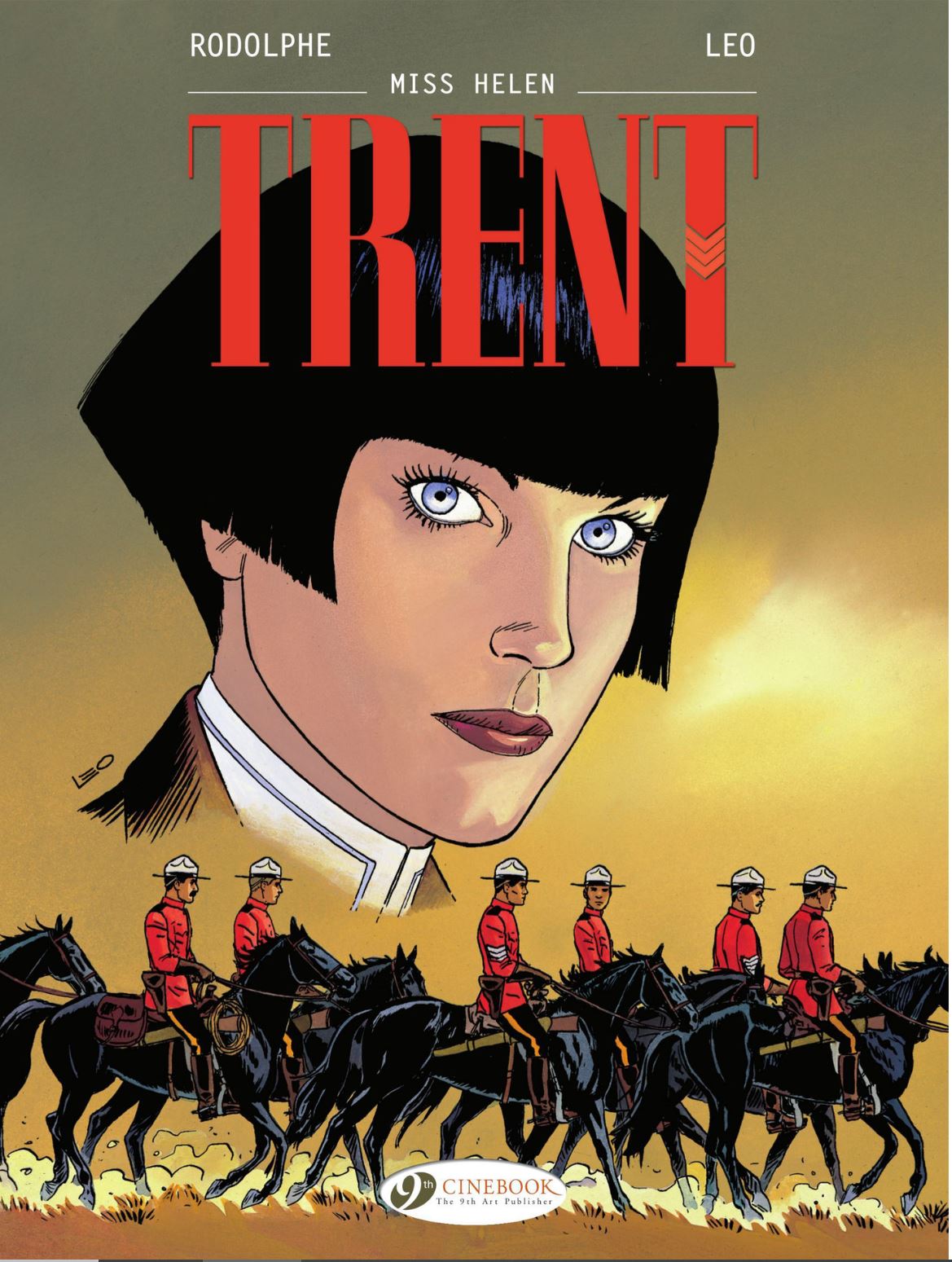
Trent volume 6: The Sunless Country


By Rodolphe & Léo, coloured by Marie-Paule Alluard, translated by Jerome Saincantin (Cinebook)
ISBN: 978-1-84918-396-3 (Album PB/Digital edition)

Continental audiences adore the mythologised American experience, both in Big Sky Wild Westerns and later eras of crime dramas. They also have a profound historical connection to the northernmost parts of the New World, generating many great graphic extravaganzas…

Born in Rio de Janeiro on December 13th 1944, “Léo” is artist/storyteller Luiz Eduardo de Oliveira Filho. After attaining a degree in mechanical engineering from Puerto Alegre in 1968, he was a government employee for three years until forced to flee the country because of his political views.

Whilst military dictators ran Brazil, he lived in Chile and Argentina before illegally returning to his homeland in 1974. He worked as a designer and graphic artist in Sao Paulo whilst creating his first comics art for O Bicho magazine, and in 1981 migrated to Paris to pursue a career in Bande Dessinée. He found work with Pilote and L’Echo des Savanes as well as more advertising and graphic design jobs, until the big break came and Jean-Claude Forest (Bébé Cyanure, Charlot, Barbarella) invited him to draw stories for Okapi.

This led to regular illustration work for Bayard Presse and, in 1988, Léo began an association with scripter/scenarist Rodolphe D. Jacquette – AKA Rodolphe. The prolific, celebrated writing partner had been a giant of comics since the 1970s: a Literature graduate who left teaching and running libraries to create poetry, criticism, novels, biographies, children’s stories and music journalism.

On meeting Jacques Lob in 1975, Jacquette expanded his portfolio: writing for many artists in magazines ranging from Pilote and Circus to à Suivre and Métal Hurlant. Amongst his most successful endeavours are Raffini (with Ferrandez) and L’Autre Monde (with Florence Magnin), but his triumphs in all genres and age ranges are far too numerous to list here.

In 1991 “Rodolph” began working with Léo on a period adventure of the “far north” starring a duty-driven loner. Taciturn, introspective, bleakly philosophical and pitilessly driven, Royal Canadian Mounted Police sergeant Philip Trent premiered in L’Homme Mort, forging a lonely path through the 19th century Dominion. He starred in eight moving, hard-bitten, love-benighted, beautifully realised albums until 2000, with the creative collaboration sparking later fantasy classics Kenya, Centaurus and Porte de Brazenac

Cast very much in the pattern perfected by Jack London and John Buchan, Trent is a man of few words, deep thoughts and unyielding principles who gets the job done whilst stifling the emotional turmoil boiling within him: the very embodiment of “still waters running deep”…

Le Pays sans soleil was the 6th saga, debuting in 1998, offering an arduous, chillingly bleak examination of family and duty with the Mountie going slowly mad amidst the extremes of human existence. Posted to the arctic circle where night lasts for weeks, he’s been left behind by fellow officers Charlie and Vaughan, as they conduct an inspection of the region.

Manning the outpost – a simple log cabin and ever-expanding graveyard – Trent whiles away the relentless, timeless, unending gloom of interminable hours by keeping his journal and wondering when his own sanity will sunder. If he hadn’t been blessed with canine company (he’s called “Dog”) the peacekeeper would be completely crazy by now…

Darkness and unyielding environment call to him like a siren, and as he continually returns to the latest grave – occupied by RCMP officer Sergeant James McBruce – Trent again wonders if he can hold out until daylight or his colleagues come back…

Whenever he feels most embattled Trent recalls the last visit with Agnes when – after years of second-guessing, procrastination and prevarication – he finally declared his love for the widow… and she accepted his proposal of marriage.

Years previously, he had saved Agnes St. Yves – but not her beloved brother – and was given a clear invitation from her: one he never acted upon. Eventually, Philip made a his decision and travelled across the country with marriage in mind, only to learn she had stopped waiting and wed someone else.

More time elapsed and they met again when her husband was killed during an horrific murder spree. The ball was again in Philip’s court and once more he fumbled it through timidity, indecision and inaction. He retreated into duty, using work to evade commitment and the risk of rejection…

His dreamlike reverie is suddenly shattered when Dog hears an intruder. In the icy darkness outside Trent finds a dying native whose last words reveal someone else is lost in the wastes, slowly expiring in an igloo…

Fired by duty and threat to life, Mountie and mutt brave the ebony vastness and eventually find the frozen bolthole. At first glance, they’re too late: only the body of a native woman is there. Dog, however keeps worrying the corpse, and Trent finds it is wrapped around a still living baby. A white baby…

Wracked by mystery and with no proper food for the infant, Trent improvises from his cobbled-together stores before setting out to walk back to civilisation with the orphan but his trek due south towards the sun and warmth soon becomes complicated. Dogging his tracks is an enigmatic stranger, maintaining a steady pace yet never stopping. At the moment Trent first sees a sunrise, the stalker strikes, using that moment of joyous release to swoop in and steal the child.

The kidnapper correctly assessed that the weary officer could not catch him, but completely misjudged how Dog would react to a threat to his “family”…

One mystery is solved and an even greater one – fraught with misapprehension and mistake – then unfolds as the baby snatcher – white journalist James Dunwood – explains that the child is his daughter Mary Little Moon and the woman in the igloo must have been his wife Four Rivers

As they trek south, Dunwood explains how both had been abducted from the camp of Cree chief Old Storm. After a reporting assignment turned personal, James had relinquished his career for love. He joined the First Nations tribe, but his romantic idyl was shattered when white trader Duncan started selling booze to the Indians and fomented war when Old Storm intervened.

In retaliation, Duncan and his renegades abducted Four Rivers and her newborn, heading north with Dunwood in pursuit. He never quite caught up as they pushed ever deeper into polar regions… and now his beloved was gone.

James couldn’t be more wrong, and as his tragic tale closes, Trent is left holding the baby. He is determined to make things right for Mary Little Moon – and this time, there’s a modicum of happy news to ameliorate the horrors and injustice the Mountie usually wades through in pursuit of justice…

Moreover, as he unravels the morass of confusion and solves the crimes, Philip bonds with the child. Worst of all, upon returning her to the proper guardians, he meets someone who makes him briefly forget all about Agnes…

Another beguilingly introspective voyage of internal discovery, where environment and locale are as much lead characters as hero and villain, The Sunless Country delivers action, endeavour, suspense and poignant drama in a compelling epic to delight all fans of widescreen cinematic entertainment.
Original edition © Dargaud Editeur Paris 1998 by Rodolphe & Leo. All rights reserved. English translation © 2017 Cinebook Ltd.

Beauty


By Hubert & Kerascoët, translated by Joe Johnson (NBM)
ISBN: 978-1-68112-315-8 (Album TPB) eISBN 978-1-56163-897-0 (Kindle), 978-1-56163-896-3 (Epub), 978-1-56163-895-6 (PDF)

French comics creator Hubert Boulard died suddenly on February 12th 2020. He is criminally unknown in the English-speaking world despite an astounding canon of wonderful work. Thanks to NBM, two more gems from his supremely enticing canon can now be added to your physical or digital bookshelf…

Technically this first fantastic, cunningly subversive fable is a re-release, having first crossed the linguistic divide way back in 2008, but its message has only increased in poignancy and potency since then…

Prior to establishing himself as mononymously revered “Hubert”, Boulard was born on January 21st 1971, in Brittany’s Saint-Renan. In 1994, on graduating from the École régionale des beaux-arts d’Angers, he began his comics career as an artist for such seasoned pros as Éric Ormond, Yoann, Éric Corberyan, Paul Gillon and more. Also highly regarded as a colourist, he morphed into a triple threat in 2002, and wrote strips for others.

He began with Legs de l’alchimiste – limned by Herve Tanquerelle – following with Yeaux Verts for long-term collaborator Zanzim and Miss Pas Touche (20th July 1922) illustrated with irrepressible panache by Kerascoët (married artistic collaborators Marie Pommepuy & Sébastien Cosset) and many others. Awards started piling up as he steered 14 separate series; many of them internationally renowned and celebrated, including Les Ogres-Dieux and Monsieur désire? An activist by nature, in 2013 he helmed and contributed to groundbreaking collective graphic tract Les Gens normaux, paroles lesbiennes gay bi trans: released to coincide with France’s national debate on legalizing same sex marriage and assuredly a factor in the measure becoming law…

His final book was with artist Zanzim: posthumously published in June 2020, and as yet unavailable in English. Peau d’homme is a comedy exploring gender and sexuality at the height of medieval European religious intolerance and social stratification, and I’m sure we’ll get that here in the fullness of time.

That era of “blood and iron” – and its fantasy potential – was frequently used by Hubert as a backdrop for his stories and here is utilised in a trenchant adult fairy tale revealing the cost of attraction and the dangers of wishing. Originally published in France between 2011 and 2014 in three volumes (Reine) Beauté is a deceptively witty and barbed parable following the many tribulations – and so few joys – of a homely peasant girl whose greatest wish is granted… and how it all lays low the mighty and destroys many kingdoms.

‘Wishes Granted’ introduces slow, unhappy Coddie: skivvy and household drudge in a rural mansion: teased by children and shunned by most adults. Her tedious, onerous duties include preparing all the fish the wealthy autocrats eat, so there’s also always something of an “atmosphere” around her. Despite being kind and gentle, it’s fair to say that she’s the kind of girl only her mother loves… although first son of the house Peter always pays attention every time he sneaks down to the kitchens for a stolen snack…

The scullion’s despondent misery seemingly ends when after years of leaving presents for the fairies, she accidentally frees one from a curse. Queen Mab is adamant about paying the debt incurred and casts a spell. Henceforth, although Coddie has not changed physically, all will see her as “the very idea of beauty in woman incarnate”…

The girl is too naive to realise that Mab has an agenda of her own or even to question exactly why the sprite was imprisoned in the first place, and trouble starts as soon as she reaches home. The women are astonished and envious and men who have ignored the drudge all her life now beg and plead and throw themselves at her: even attempting to kill each other to possess her. Even sweet pudgy Peter is enthralled…

When the male villagers form a mob to take her and the women try – and fail – to mar her loveliness, Coddie flees into the woods and is rescued/slash abducted by the Lord of the region. Young Otto locks her in his castle and makes her concubine. Coddie, unsurprisingly, doesn’t mind at all, even when he arbitrarily renames her “Beauty”…

Moreover, she can’t wait to make the villagers pay for how they treated her, both before and after her wish came true, and Mab reappears with a few suggestions…

Having driven Otto away with her demands for better and more opulent gifts and presents, Beauty pushes the manse itself into ruin and when a travelling artist tragically captures what he sees, the paintings and sketches catapulted her onto a global stage. As her image enflames the passions of lords and princes across the continent, knights start killing each other and regal overlord King Maxence of the Southern Kingdom and his top advisor/sister Princess Claudine intervene. Claudine immediately sees a strategic use for Beauty, but her scheme is thwarted when her brother falls uncontrollably under the commoner’s spell.

Second chapter ‘The Indecisive Queen’ details – with chilling echoes of Marie-Antoinette – how the kitchen girl inadvertently brings down two kingdoms as Max makes her his wife and mother of a child he cannot accept as his. Queen Beauty’s interference in state matters bankrupts the kingdom, decimates the nation’s cream of chivalry and drives the king into jealousy-fuelled madness and murder.

Moreover, the moment his great rival, archenemy and brother-in-law The Boar King of the Northern Kingdom claps eyes on Beauty, he too is seized by a mania to possess her and the resultant war destroys both nations…

Escaping with her un-ensorcelled and rather plain daughter Marine, Beauty resolves to have Mab revoke her wish in ‘Ordinary Mortals’ but the price the fairy demands is far too costly. Bonded to her child, Beauty is betrayed and sold to the Boar King: notional victor in the recent war. Allowing his wife Dagmar to know of his enslaved prizes seemed like a good idea, but soon the frenzy of possessing the fairy-touched treasure grips him and enrages his queen. Again death and death and destruction are the result – especially as Princess Claudine and Otto (now an unbeatable berserker knight) constantly harass and plague the victor’s occupying forces in advance of a full revolt and liberation…

Also a prisoner, Marine sets the final fall into motion by a simple demonstration of how to discern Coddie’s appearance under Beauty’s glamour, and the Boar King’s self-destructive behaviour escalates into overwhelming madness and inevitable catastrophe.

The child was born smart and when she learned to read, soon discovered the true history of Mab, albeit not soon enough to stop The Boar King again abducting mother and daughter (from his own citadel) and locking them way where only he could see them whilst letting the kingdoms doom and damn themselves…

Ultimately, Coddie and Marine break free and turn their attentions to stopping the true threat: fairies…

The blood-soaked saga ceases with a puckish ‘Epilogue’ set decades later, as some of those troublesome artworks of Beauty finally reach another almighty potentate in a distant land. He cannot believe or forget what he sees…

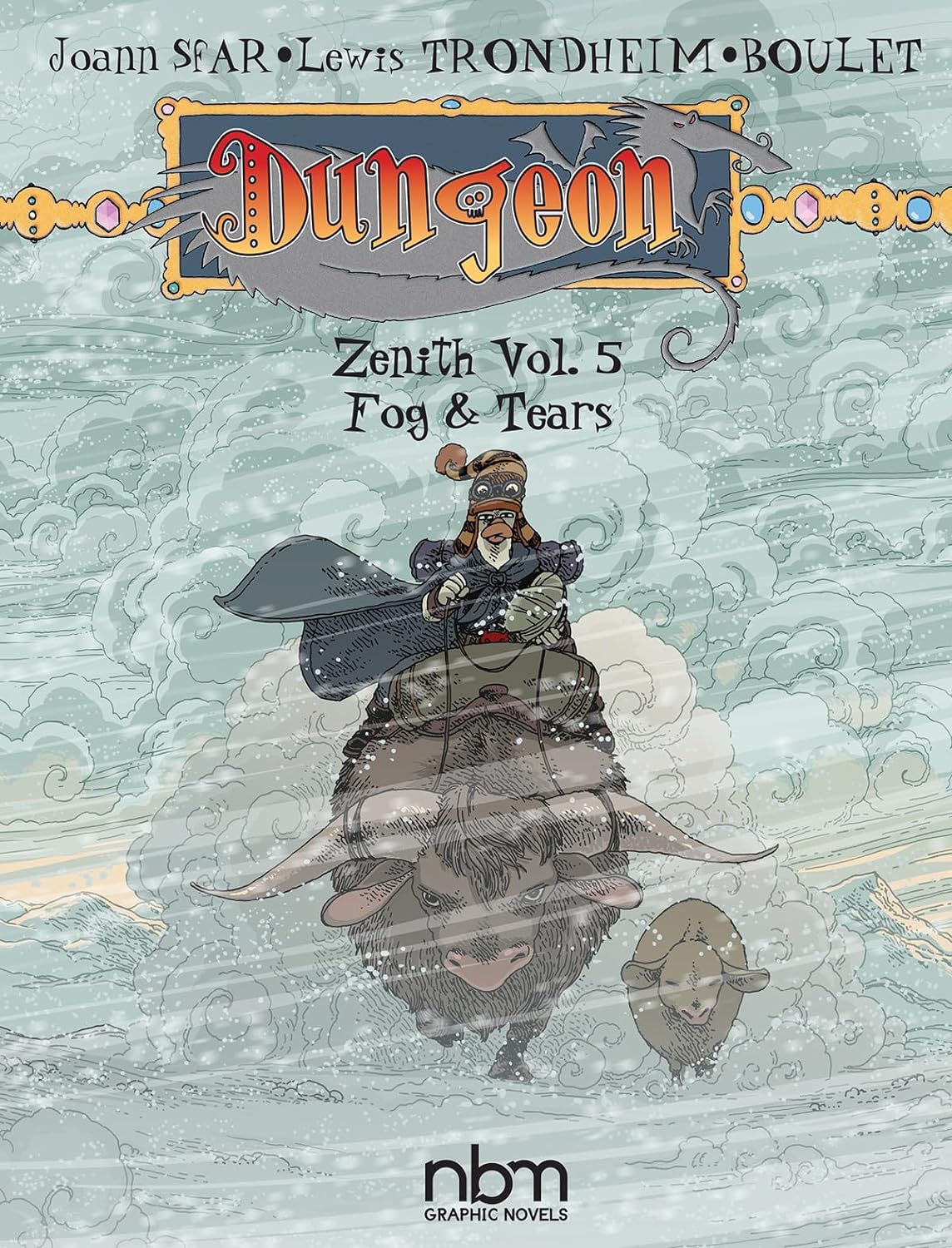
Smart, charmingly cynical and hugely engaging, the epic cautionary tale is sublimely realised by visual creators probably best known in the English-speaking world for Miss Don’t Touch Me and Joann Sfar & Lewis Trondheim’s Dungeon series. However, French phenomenon Kerascoët (joint pen name of married illustrators, comics & animation artists Marie Pommepuy & Sébastien Cosset) have generated a wealth of books for all ages including Malala’s Magic Pencil, I Walk with Vanessa, Beautiful Darkness, The Court Charade, I Forgive Alex, Paper Doll Artbook and more) to further delight the wide variety of grown-up readers everywhere.
Beauté © Dupuis, 2011-2013 by Hubert, Kerascoët. All rights reserved. © 2014 NBM For the English translation.

Beauty will be published on June 14th 2023 and is available for pre-order now.

For more information and other great reads please go to http://www.nbmpub.com/

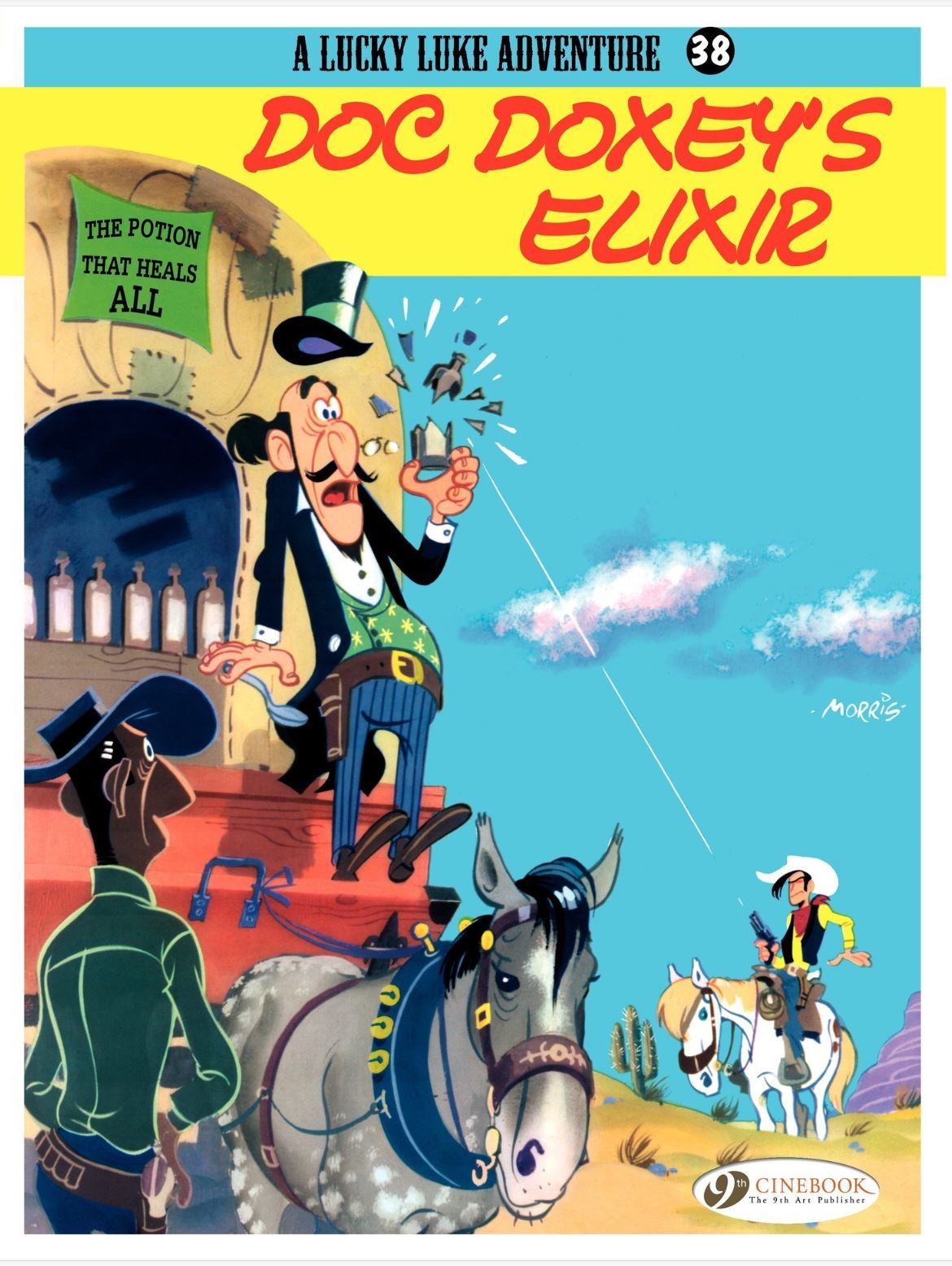
Lucky Luke volume 31 – Lucky Luke versus the Pinkertons


By Achdé, Daniel Pennac & Tonino Benacquista, in the style of Morris: coloured by Anne-Marie Ducasse, translated by Jerome Saincantin (Cinebook)
ISBN: 978-1-84918-098-6 (Album PB/Digital edition)

Doughty, dashing and dependable cowboy “good guy” Lucky Luke is a rangy, implacably even-tempered do-gooder able to “draw faster than his own shadow”. He amiably ambles around the mythic Old West, enjoying light-hearted adventures on his petulant and rather sarcastic wonder-horse Jolly Jumper.

Over nine decades, his exploits have made him one of the top-ranking comic characters in the world, generating upwards of 85 individual albums and many spin-off series, with sales thus far totalling in excess of 300 million in 30 languages. That renown has led to a mountain of merchandise, aforementioned tie-in series like Kid Lucky and Ran-Tan-Plan, plus toys, computer games, animated cartoons, a plethora of TV shows and live-action movies and even commemorative exhibitions. No theme park yet, but you never know…

Originally the brainchild of Belgian animator, illustrator and cartoonist Maurice de Bévère (“Morris”) and first officially seen in Le Journal de Spirous seasonal Annual L’Almanach Spirou 1947, Luke actually sprang to laconic life in mid-1946, before inevitably ambling into his first weekly adventure ‘Arizona 1880’ on December 7th 1946.

Working solo until 1955, Morris produced nine albums of affectionate sagebrush spoofery before teaming with old pal and fellow trans-American émigré Rene Goscinny. With Rene as his regular wordsmith, Luke attained dizzying, legendary, heights starting with Des rails sur la Prairie (Rails on the Prairie) which began serialisation on August 25th 1955. In 1967, the six-gun straight-shooter switched sides, joining Goscinny’s own magazine Pilote in La Diligence (The Stagecoach).

Goscinny co-created 45 albums with Morris before his untimely death, whereupon Morris soldiered on both singly and with other collaborators. He died in 2001, having drawn fully 70 adventures, plus numerous sidebar sagebrush sagas crafted with Achdé, Laurent Gerra, Benacquista & Pennac, Xavier Fauche, Jean Léturgie, Jacques Pessis and more, all taking their own shot at the venerable vigilante …as in this tale from 2010 which so neatly fits the week’s theme of “detective fiction”…

Lucky Luke has a long history in Britain, having first pseudonymously amused and enthralled young readers during the late 1950s, syndicated to weekly anthology Film Fun. He later rode back into comics-town in 1967 for comedy paper Giggle, using nom de plume Buck Bingo. And that’s not counting the many attempts to establish him as a book star beginning in 1972 with Brockhampton Press, and continuing with Knight Books, Hodder Dargaud UK, Ravette Books and Glo’Worm, until Cinebook finally and thankfully found the way in 2006.

The taciturn trailblazer regularly interacts with historical and legendary figures as well as even odder fictional folk in tales drawn from key themes of classic cowboy films – as well as some uniquely European notions, and interpretations. That’s used to sublime effect in Lucky Luke contre Pinkerton released as Cinebook’s 31st album in 2011, but only latterly added to the official continental cannon.

In France, it had graced Le Journal de Spirou #3779-3784 before being compiled and released as the 4th edition of sub-strand Les Aventures de Lucky Luke d’après Morris.

Since the Europeans take their comics seriously – especially the funny ones – they aren’t afraid to be bold or brave and this riotous romp cheekily plays with established chronology and even employs creative anachronism to carry an edged – if not actually barbed – pop at government oversight, the rise of a surveillance state and arguments pro and con concerning necessary evils and zealous protections versus plain old liberty and equality…

In America, Abraham Lincoln has just been elected President . The world is changing and modernity looms, but the nefarious Daltons think nothing of it until a train robbery goes hideously awry.

Instead of their usual duel with Lucky Luke they are ambushed and arrested by an army of detectives employed by iconoclastic, ambitious lawman Allan Pinkerton. The detective then begins a publicity campaign trumpeting that the day of the gifted amateur is done and that Lucky is passe and over the hill…

Untroubled by all the modern foolishness, Luke busies himself hunting a counterfeiting gang but thinks again when Pinkerton pips him to the post and abrasively tells him that from now on, there will be no room for amateurs…

Egotistically sharing his cutting edge crimefighting scheme, Pinkerton unveils modern incarceration, rapid communications, intelligence-led pre-emptive investigation, forensic methodology and ruthless methods of “interrogation” – and operates on the principle that everyone is guilty of something…

He’s compiling incriminating dossiers on everyone, with his legion of detectives building an (analogue) database holding all those dark secrets in one secure office.

Pinkerton’s authority comes from Lincoln, who has made the innovator his chief of security, unaware of the detective’s own vaulting ambition – which includes acting as an agent provocateur and manufacturing threats against PotUS. Lucky sticks to his guns and the old moral ways and battlelines are drawn…

Initially, everything seems to go the way of the moderniser, but his success proves his undoing when a sudden influx of arrests fills all the prisons and the Daltons are given early release to make room. With turmoil gripping the nation and Lincoln’s popularity plunging, Pinkerton seems unassailable until unrepentant recidivist Joe Dalton cherry picks modern ordnance and applies old fashioned predatory behaviour to beat Pinkerton at his own game.

The little monster is particularly impressed by that huge store of files and calculates how much most decent people will pay to keep their secrets unexposed…

Happily Lucky Luke also cherishes the old ways and is ready to set things right his way…

A wickedly wry exploration of the other side of the investigation game, Lucky Luke versus the Pinkertons blends fun and adventure with some salient views of where we’ve been and where we’re going in our ever more urgent quest for safety and security. Nevertheless, the yarn also revels in classic set-piece slapstick and witty wordplay: poking fun at the fundamental components of the genre and successfully embracing tradition with action in another wildly entertaining all-ages confection.
© Dargaud Editeur Paris 1971 by Goscinny & Morris. © Lucky Comics. English translation © 2009 Cinebook Ltd.

Babar the King


By Jean de Brunhoff (Egmont/Albatross)
ISBN: 978-702375-705-0 (HB) 978-1-4052-3819-9 (2008 Album PB) 978-1-94696-311-6 (2018 facsimile edition)

Since 1931 Babar the Elephant has charmed (and on occasion outraged and incensed) generations of readers. Jean de Brunhoff’s L’Histoire de Babar was first published in France and was an instant hit. The English language version was released in 1933, complete with introduction by A. A. Milne, bringing the forthright and capable elephantine hero across the channel and thence onwards across the Oceans to America and the Colonies.

Apparently, the tale was a bedtime story the author’s wife Cecile created for their own children. De Brunhoff co-opted, scripted and painted seven adventures before his death in 1937, two of them published posthumously. After World War II his son Laurent continued the franchise producing ten more adventures between 1946 and 1966. To date that’s at least another 37 books supplementing the original magnificent seven…

The tales in those tomes have in their time been controversial. Many critics have seen them as being pro-colonialism, and as products of a more robust time, they could never be regarded as anodyne or saccharine, but they are sweet, alluring and irresistibly captivating.

When baby Babar was growing up in the jungle, his mother was killed by white hunters. Terrified and sad the baby fled in panic, eventually coming to a very un-African provincial city. There he met a kind old lady who supported him as he adapted to city life. Babar moved into her very large house and was educated in modern, civilised ways. But still, occasionally, he felt homesick and missed his jungle home…

After a few years he encountered cousins Celeste and young Arthur and the Old Lady adopted and supported them too. Soon, though, their mothers come to fetch them and Babar returns with them to show the other elephants all the wonderful things he has learned and experienced. Buying a motor-car and filling it with clothes and presents he returns just in time, because the King of all the Elephants has eaten a bad mushroom and is dying…

Babar The King is the third volume, published in 1933 as Le Roi Babar. Here – after a long time travelling, voyaging and getting the perfect wife – a youthful vigorous forward-looking monarch and his bride Celeste start civilising and modernising the Kingdom of the Elephants. With them is that wonderfully helpful and dedicated Old Lady…

In a wave of rapid modernisation, the inspirational city of Celesteville is completed. It has broad streets, magnificent civic buildings, parks, gardens, theatres, ports and every amenity to delight and edify the populace. There is even a brand-new school, but that is not so popular with every citizen! Now every elephant has a job and vocation, but even such a paradise is capable of misfortune. They must all pull together when a great fire ravages the house of King Babar’s great friend and advisor Cornelius

Charming and seductive, this venerable yarn – and the others – can still set pulses racing. In a crowded market it’s grand to see books that are both fresh and yet comfortingly pedigreed. Political assumptions of adults are one thing, but the most valid truth is that these are magical books for the young, illustrated in a style that is fluid, humorously detailed and splendidly memorable. Even after 90 years they retain the power to enthral and captivate with a charm leavened by underlying realism that is still worthy of note.

In 2018, a facsimile edition was released (170 x 250 mm), but the Egmont edition is also readily available. As far as I know the stories are still not found digitally.
2008 Edition. All Rights Reserved.