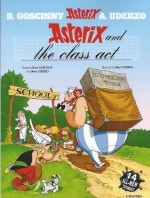
Asterix and the Class Act


By R. Goscinny & A. Uderzo, translated by Anthea Bell & Derek Hockridge (Orion)
ISBN: 978-0-7528-6640-6

One of the most-read comics strips in the world, Asterix the Gaul has been translated into over 100 languages. More than 325 million copies of the 35 canonical Asterix books have sold worldwide, making Goscinny & Uderzo France’s bestselling international authors.

The strip has spawned numerous animated and live-action movies, TV series, assorted toys, games, apparel and even been enshrined in its own tourist hotspot – Parc Astérix, near Paris.

The diminutive, doughty hero was created in 1959 by two of the Ninth Art’s greatest proponents, René Goscinny & Albert Uderzo: masters of cartoon narrative then at the peak of their creative powers.

Firmly established as a global brand and premium French export by the mid-1960s, Asterix continued to grow in quality as Goscinny & Uderzo toiled ever onward, crafting further fabulous sagas; building a stunning legacy of graphic excellence and storytelling gold. As such prominent and ever-rising stars their presence was often requested in other places, as varied as fashion magazine Elle, global icon National Geographic and even a part of Paris’ 1992 Olympic Bid…

Although the ancient Gaul was a massive hit from the start, Uderzo continued working on other strips, but as soon as the initial epic was collected as Astérix le gaulois in 1961 it became clear that the series would demand most of his time – especially as the astounding Goscinny never seemed to require rest or run out of ideas.

By 1967 Asterix occupied all Uderzo’s attention, and in 1974 the partners formed Idéfix Studios to fully exploit their creation. At the same time, after nearly 15 years as a weekly comic strip subsequently collected into compilations, the 21st tale (Asterix and Caesar’s Gift) was the first published as a complete original album before being serialised. Thereafter each new release was a long anticipated, eagerly awaited treat for the strip’s millions of fans…

With the sudden death of impossibly prolific scripter Goscinny in 1977, the creative wonderment continued with Uderzo – rather reluctantly – writing and drawing fresh adventures until his retirement in 2010.

In 2013 new yarn Asterix and the Picts opened a fresh chapter in the annals as Jean-Yves Ferri & Didier Conrad began a much-anticipated continuation of the franchise.

Before that, however, Uderzo was convinced to gather and – in many instances – artistically re-master some of the historical oddments and pictorial asides which had incrementally accrued over the glory-filled decades; features by the perfect partners which just didn’t fit into major album arcs, tales done for Specials, guest publications and commercial projects starring the indomitable Gaul. To cap off the new-old package Albert crafted an all-original vignette from that halcyon world of immortal heroes…

This intriguing compilation first appeared in France as Astérix et la rentrée gauloise in 1993 – and a decade later in English – gathering those long-forgotten side-pieces and spin-off material starring the Gallant Gauls and frequently their minor-celebrity creators too.

Following an expansive and explanatory ‘French Publisher’s Note’ – and the traditional background maps and cast list – a press conference from Chief Vitalstatistix leads directly into the eponymous ‘Asterix and the Class Act’ (from Pilote #363 October 6th 1966) wherein the first day of school finds the little legend and his big buddy sadly miscast as truant inspectors and kid catchers for head teacher Getafix…

Each little gem is preceded by an introductory piece, and following the hard facts comes ‘The Birth of Asterix’. First seen in October 1994’s Le Journal exceptionnel d’Astérix, the tale is set ‘In the Year 35 BC (Before Caesar)’ and finds a certain village in high dudgeon as two young women go into labour. Their distracted husbands soon find a way to distract themselves – and everybody else – with a mass punch-up that quickly becomes the hamlet’s preferred means of airing issues and passing the time…

‘In 50 BC’ comes from May 1977 and re-presents newspaper-style strips produced at the request of an American publisher hoping to break the European sensation in the USA. The endeavour inevitably stalled but the panels – introducing and reprising the unique world of the Gallic goliaths – wound up being published in National Geographic.

Apparently Uderzo loves chickens and, especially for the original August 2003 release, he concocted the tale of ‘Chanticleerix the Gaulish Cockerel’ detailing the struggle between the village’s chief clucker and a marauding Roman Eagle. It sounds pretty one-sided but faithful mutt Dogmatix knows where the magic portion is kept…

Pilote #424 (7th December 1967) was full of Seasonal festive fun so ‘For Gaul Lang Syne’ saw Obelix attempt to use druidic mistletoe to snaffle a kiss from beautiful Panacea. He soon came to regret the notion…

‘Mini, Midi, Maxi’ was produced for fashion magazine Elle (#1337 2nd August 1971) but the discussion of ancient Gaulish couture soon devolved into the kind of scraps you’d expect, after which ‘Asterix As You Have Never Seen Him Before…’ (Pilote #527, 11th December 1969) displays Uderzo’s practised visual versatility as our heroes are realised in various popular art styles from gritty superhero to Flash Gordon, a Charles Schulz pastiche and even as an underground psychedelic trip…

Approached to contribute a strip to Paris’ bid, the partners produced ‘The Lutetia Olympics’ which was later published in Jours de France #1660 (25th October 1986) and depicted how Caesar’s attempts to scotch a similar attempt to hold the great games in Gaul failed because of a certain doughty duo, whilst ‘Springtime in Gaul’ (from Pilote #334, 17th March 1966) was an early all-Albert affair wherein our heroes help the mystic herald of changing seasons give pernicious winter the boot…

‘The Mascot’ originated in the first digest-sized Super Pocket Pilote (#1, 13th June 1968) and revealed how the constantly thrashed Romans decided to get a lucky animal totem, but chose the wrong-est dog in the world to confiscate, after which ‘Latinomania’ (originally crafted in March 1973 and re-mastered for the first Astérix et la rentrée gauloise in 1993) took a sly poke at the fragile mutability of language.

‘The Authors Take the Stage’ describes how usually-invisible creators became characters in their own work and ‘The Obelix Family Tree’ collects a continuing panel strip which began in Pilote #172 (7th February 1963) and ran until #186 wherein Mssrs. Goscinny and Uderzo encounter a modern day Gaulish giant and track his ancestors back through history.

An at last everything ends with ‘How Do They Think It All Up?’ (Pilote #157, 25th October 1962) as two cartoonists in a café experience ‘The Birth of an Idea’…

Adding extra lustre to an already stellar canon, these quirky sidebars and secret views thankfully collect just a few more precious gags and wry capers to augment if not complete the long and glorious career of two of France’s greatest heroes – both the real ones and their fictive masterpieces. Not to be missed…
© 2003 Les Éditions Albert René/Goscinny-Uderzo. English translation: © 2003 Les Éditions Albert René/Goscinny-Uderzo. All rights reserved.

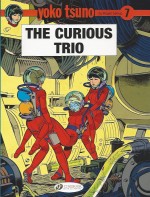
Yoko Tsuno volume 7: The Curious Trio


By Roger Leloup (Cinebook)
ISBN: 978-1-84918-127-3

The edgy yet uncannily accessible European exploits of Japanese scientific adventurer Yoko Tsuno began gracing the pages of Spirou from the September 24th issue in 1970 and are still going strong.

The mind-blowing, eye-popping, extremely expansive multi-award winning series was created by Belgian author, artist and novelist Roger Leloup who was born in 1933 and worked as one of Herge’s meticulous background assistants on the iconic Adventures of Tintin strip before striking out on his own.

Compellingly told, superbly imaginative yet always framed in hyper-realistic settings and sporting utterly authentic and unshakably believable technology, these illustrated epics were at the forefront of a wave of strips featuring competent, brave and immensely successful female protagonists which revolutionised European comics in the 1970s and 1980s and are as potently empowering now as they ever were.

The first Spirou stories ‘Hold-up en hi-fi’, ‘La belle et la bête’ and ‘Cap 351’ were all short introductory vignettes before Miss Tsuno truly hit her stride with premier epic Le trio de l’étrange which started serialisation with the May 13th 1971 issue.

Although the first of her 26 European albums, in English The Curious Trio was actually the 7th chronicle released by Cinebook and opens in a busy TV studio at midnight (back when actual humans pushed, pulled and focussed the clunky paraphernalia) where young Director Vic Van Steen loses his rag with best pal Pol Paris for falling asleep on his camera.

Later, still smarting from another fractious tiff, the pair walk home past a deserted construction site and espy what looks like a brilliant burglary…

The quietly flamboyant break-in is in fact a pre-arranged test by sleekly capable freelance Japanese electrical engineer Yoko Tsuno who has been hired by the owners of a major firm to test their new security. After apologising for nearly ruining her trial with their well-intentioned interference, the lads invite the enigmatic Yoko to join their film crew as sound engineer on a proposed outside shoot.

The job is to explore a range of flooded caves for a documentary and before the week is out the new friends are hauling equipment to a spectacular cavern ready to work out the technical details. No sooner do they begin however than something goes terribly wrong and the trio are dragged deep underground by the irresistible, swirling waters…

From here the remarkably realistic strip takes a huge leap into the uncanny as their subterranean submersion dumps them into a huge metal-shod vault where they are taken prisoner by blue-skinned humanoids.

The colossal complex is of incredible size and, as the captives are bundled into a fantastic vessel which runs on rails via magnetic levitation and driven even deeper underground, a handy translation helmet enables the only friendly-seeming stranger to explain.

Her name is Khany and her race, the Vineans, have been sleeping in the Earth for almost half a million years…

However since recently awakening internecine strife has entered the lives of the colonists as ambitious militaristic brute Karpan constantly manoeuvres to seize power from the vast electronic complex known as The Centre which regulates the lives of the colonists.

The humans’ first meeting with the blustering bully does not go well after he tries to beat Khany, and martial artist Yoko gives him a humiliating and well-deserved thrashing…

In his fury Karpan attempts to disintegrate them but is pulled away by security forces. As the newcomers resume their trip to the Centre he secretly follows their magnetocarrier, resolved to destroy them…

As they hurtle to unimaginable depths in the maglev ship, Khany introduces the humans to a stowaway – her young daughter Poky – and relates the astounding tale of the Vineans’ escape from planetary doom and two million light-year voyage to Earth. Accustomed to subterranean living, when they arrived they hollowed out a mountain and dug down even further.

Her history lesson is interrupted by Karpan’s murderous attack, which is only thwarted by Yoko’s quick thinking and her companions’ near-insane bravery…

Eventually, after another, far more subtle murder attempt, the badly damaged magnetocarrier reaches its destination and the astonished visitors are brought before a stupendous computer to plead their case and expose Karpan’s indiscretions.

The vast calculator dubbed The Centre controls every aspect of the colony’s life and will deliver judgement on the human invaders’ ultimate fate, but after mind-scanning Yoko its pronouncement is dire: the strangers are to be placed in eternal hibernation…

When Pol plays his long-hidden trump card and threatens to destroy the machine with a stolen disintegrator, diplomatic Khany proposes a solution; suggesting simply waiting until they can all confront the still-absent Karpan…

Yoko is still deeply suspicious and not convinced that Karpan is responsible for every attempt on their lives. Whilst she’s resting that “night”, Poky sneaks into her habitation chamber and takes her on an illicit tour of the underside and innards of the impossibly huge complex that verifies her suspicions with a ghastly revelation.

What they expose is a horrific threat not just to the Vineans – Karpan included – but to every human on the surface of Earth…

The eerie mystery then explodes into spectacular action and a third act finale worthy of a James Bond movie as Yoko’s duel with an incredible malign menace settles the fate of two species…

Absorbing, rocket-paced and blending tense suspense with bombastic thrills, spills and chills, this is a terrific introduction to a world of rationalist mystery and humanist imagination with one of the most unsung of all female action heroes and one you’ve waited far too long to meet…
Original edition © Dupuis, 1979 by Roger Leloup. All rights reserved. English translation 2012 © Cinebook Ltd.

Dungeon: Twilight – the Complete Set (Dragon Cemetery, Armageddon and The New Centurions)


By Joann Sfar & Lewis Trondheim, Kerascoet & Obion, translated by Joe Johnson (NBM)
ISBNs: 978-1-56163-460-6, 978-1-56163-477-4 & 978-1-56163-578-8

As cunningly crafted by prolific artisans Joann Sfar (Professeur Bell, Les olives noires, The Rabbi’s Cat) and Lewis Trondheim (La Mouche, Kaput and Zösky, Little Nothings) with assorted associates of their New Wave-ish collective of bande dessinée creators – most often seen under the aegis of independent publisher L’Association – the Donjon saga has generated more than thirty interlinked volumes since it launched in 1998 and has become a massive cult hit all over the world.

These slim, translated (and re-released-in-one-complete-3-book-package) tales form a mere sub-division of a vast, generational, eccentrically raucous and addictively wacky franchise which welds starkly adult whimsy to the weird worlds of fantasy fiction, and these Twilight tomes take the loony legion of horribly human anthropomorphic characters into territories even wilder than those seen in Dungeon Early Years, Parade, Zenith, Monstres and Twilight.

All wholly defined sub-series of a truly vast epic, these all offer time-separated glimpses of a fantastic magic castle on the magically unstable world of Terra Amata. Inhabitants of this weirdly surreal universe include every kind of talking beast and bug as well as monsters, demons, smart-alecs, wizards, politicians and stroppy women-folk. Whenever and wherever you look there’s always something happening and it’s usually quite odd…

The nominal star is a duck with a magic sword which enabled – and eventually compelled – him to channel and be possessed by dead heroes and monsters. By this declining period on a dying world former hero Herbert of Craftiwich has risen to the unassailable rank of Grand Khan – though he’s still not quite sure how – and the doddering but still puissant old guy is steeped in Total Evil…

Crafted entirely by Sfar & Trondheim, Volume 1: Dragon Cemetery is composed of two original French albums (Donjon Crepuscule: Le Cimetiere des Dragons and Le Volcan des Vaucanson) from 1999. At this time the globe has ceased to spin, with one half eternally seared by light whilst the obverse is frozen into chilled darkness. Life only thrives on the narrow band between the extremes but is as harsh and unforgiving as it ever was…

When a little talking bat is enticed to become the eyes of immortal blinded dragon and political exile The Dust King, the act prompts a cascade of events which will shake and shatter the dying world. The unchanging saurian is a mage of incredible power under perpetual house arrest on the orders of the Khan and, ravaged by ennui, has decided to die at last…

Although Dust King has decided to end it all he is still too mighty for simple suicide. He needs to journey to a special place and requires a little assistance…

He and the Khan were once great friends, but over intervening years the potentate has become increasingly wicked and isolated by a coterie of unctuous, ambitious hangers-on and would-be usurpers.

The dragon’s decision has been detected at the Black Fortress of Gehenna by one of those parasites and vile functionary Shiwomeez fiendishly facilitates the prisoner’s escape. The tedious journey is soon being scrupulously monitored by the malign major domo who despatches waves of military goons with orders to await an opportune moment to strike. The last unit also have instructions to eradicate the sundry soldiery. The plotter believes the old wizard is travelling to the legendary and mystically significant “Dragon’s Graveyard” and doesn’t want too many menials knowing its location…

The trek is more complex than the sneaky pursuers realise. The Dust King needs the assistance of elusive shaman Orlandoh to pass over and is keenly aware that he is being followed. When he catches a crazy red rabbit warrior named Marvin the Destroyer he acts with precipitate haste and almost ends a willing would-be ally…

The obnoxious newcomer – named for a mighty killer of ancient times – attaches himself to the expedition and is stunned to find he is travelling with an old warrior who once also went by the legendary name Marvin…

After finally finding Orlandoh, the Dust King’s necropolitan journey takes a strange diversion and before long the pilgrims are battling Shiwomeez’s murderous minions and a host of diminutive horrors known as Olfs in their colossal citadel of Poopooloo. At long last the trek ends and the original Marvin prepares to let everything go…

However, events take a bizarre turn after the schemer’s mystic meddling accidentally drags long-eared young Marvin and the bitty bat to the Black Fortress where the crimson crusader’s manic skill with a sword causes utter carnage…

Not only is the pitiful plotter unable to stop the intruder but Shiwomeez also disturbs the long-distant Grand Khan, calling him back to the mundane world… and the overlord seems to know everything…

Casually blasted back to the Dragon Cemetery, Marvin and the bat can only await further developments…

The Dust King’s demise isn’t going well and after awhile the blind antediluvian gives up attempting to expire. Deciding to find what has become of his odd acolytes, the testy titan stumbles across red rabbit Marvin dallying with some rather lascivious cat women.

The ancient mage has an announcement: seemingly emboldened by his brush with death he has decided to force a meeting with his old friend the Khan. All they have to do is retrace their wearisome path and fight their way through the legions of warriors determined to stop them…

The expedition results in a vast pile of exotic corpses but one fine day old Marvin and his former friend Herbert have their long-deferred conference. The Dust King pleads with the Grand Khan to renounce Evil and his ultimate power. Of course if he does Terra Amata will begin to rotate again and soon explode…

Naturally Herbert refuses and with no other option The Dust King tries to kill him. The cataclysmic clash ends inconclusively and Herbert, mentally displaced by one of the many monsters which periodically possess him, gives orders for the blind beast and his puny companions’ capture and execution…

Fleeing on giant war-bats into the nocturnal zone the trio soon arrive at the troubled military outpost of Craftiwich, built on a huge volcano. The site is an armoury operated by fanatical duck soldiers, ruled by the Grand Khan’s son Arch-duke Papsukal. It also houses Herbert’s ogre son Elyacin and his libidinous, troublesome daughter Duchess Zakutu. There’s no love lost between this father and these children…

Papsukal is developing firearms and explosive ordnance, and to make conservative warriors give up swordsmanship he’s ordered that all smiths are to be hunted down and destroyed…

Pretending to be an envoy from the Grand Khan, bunny Marvin tricks the military technicians into fitting him with the first fully functional suit of nitro-powered super armour…

His impersonation – and assignation with the sexually voracious but insecure Zakutu – come a cropper, however, when the Khan arrives at the head of an army and resumes his death duel with the Dust King…


Illustrated by Kerascoet, the saga resumes in Volume 2: Armageddon (containing the French albums Donjon Crepuscule: Armageddon and Les Dojo du Lagon from 2002 and 2005) with the fugitives hiding out in the village of the cat women. The Dust King had been terribly maimed in his struggle with the Khan but was still unable to die and had regained a terrible power which he anticipated would come in most useful when their pursuers finally caught up with them…

Packing the women off with Red Marvin as guardian, The Dust King stays to meet the deadly duck forces. The result is the end of the Khan’s army and ambitions but in the aftermath, as birdlike shaman Gilberto helps the dragon and his faithful little bat hunt down his missing limbs, the surface of Terra Amata detonates, fragmenting into thousands of tiny floating islands above a core of lava…

Jaunting from islet to islet the mystic duo eventually track down old Marvin’s missing parts before landing in the remnants of once-formidable Poopooloo. Here they encounter no Olfs but a far more deadly, invisible threat…

Pausing only to pillage a vast store of magic botanicals and thaumaturgic vegetable pharmaceuticals, the voyagers flee the hidden horrors but blunder into the free-floating Olf bastion of Boobooloo where they are condemned to death…

Whilst awaiting execution the emotionally repressed Dust King shares some of Gilberto’s plundered stash and in a traumatic daze relives the dogmatic days of dragon philosophy which lost him his family and the subsequent event which cost him his eyes…

When he comes to his senses again the Olf courtroom is a shredded, burning wreck and what few survivors remain are fleeing in terror. Gilberto too has swallowed too many drugs and is stricken with a debilitating parade of incredible new powers. One of them makes him a perfect predictor of every floating island’s path whilst another inflicts random, uncontrollable teleportation upon him…

Forced to escape by more prosaic means (at least by Terra Amata standards), old Marvin and his bat buddy find their way to Orlandoh and the drifting Hut of Spirits to await fate’s next move…

One day Red Marvin turns up and is promptly recruited as the Dust King and shamans of the Spirit Hut make plans to combat the remnants of the Grand Khan’s forces. Despatched on an infiltration to the rapidly approaching remnants of Craftiwich, the dry old lizard unexpectedly goes off the reservation and drags his bunny disciple to a passing islet inhabited by dragons. As the bunny makes eyes at a reptilian firebrand who subsequently swipes his super-armour, the elder Marvin is meeting a seductive sorceress who was once, so long ago, his wife…

The Dust King is desperate to amend the sacrilege which drove them apart and is astounded when he meets his grandchildren. The rabbit meanwhile has joined a school of dragons learning how to be true warriors. Sadly, he is having trouble being taken seriously by the colossal students, let alone their grizzled old tutors. It takes a few pointers from the crestfallen Dust King to make the mockers pay proper attention to his eager friend…

And once he’s got them listening, the saurian sage goes about dismantling the doctrinaire dragon religion which cost him his love, his children and his eyes before the heroes return to their shamanic mission in time to rescue Duchess Zakutu from a parched death.

However taking the faithless trollop back to the dragon isle proves a big – almost fatal – mistake for the besotted rabbit…


Volume 3: The New Centurions

The final volume starts with the world’s various exotic survivors eking out a perilous existence on isolated islands chaotically afloat hundreds of metres above a global sea of molten lava…

Again comprising two translated albums it all kicks off with ‘The New Centurions’ (formerly Donjon Crepuscule: Nouveaux Centurions from 2006 illustrated by the delightfully adroit Kerascoet). Herbert has lost much of his might and is being increasingly bullied by his advisors. Moreover his kids have also joined the ranks of those trying to remove him…

The Dragon students forge a tenuous association with the ducks of Craftiwich and are being fitted with flying armour as the vanguard of a new type of super-soldier ,but carmine lepine Marvin has started to chafe under the Machiavellian intrigues and back-biting which dominate life in the ruined court-in-exile of the Khan. Tasked with training assorted soldiery who still won’t take a rabbit-warrior seriously, yet keenly aware that the vultures are circling, boy Marvin knows that when the take-over attempt by Herbert’s double-dealing lieutenant Fayez begins, no one will be ready…

Inevitably that day comes and the usurpers are victorious, even though Herbert survives to regroup: however mammal Marvin and his mentor Marvin the dragon are fed up with the whole interminable push-and-shove of politics and promptly quit.

Sneaking away they go looking for some uncomplicated adventuring among the floating Islands in the Sky…

In ‘Revolutions’, with art by Obion, the nomadic duo become stranded on a giant chunk of land slowly rotating in a downward spiral. With their flying beast dead and Marvin’s armour lost to carnivorous grass the wanderers are forced to continually climb upwards just to stay in place. The alternative is a rapid and terminal plunge to the surging lava-lakes below…

Eventually they come across a group of bears and other unfortunate creatures endlessly hauling a gigantic villa and attendant gardens in a circle around the tiny world, keeping everything one step ahead of the rotational doom.

Why do the bedraggled and exhausted volunteers pull so determinedly? Is it for the eight hours of rest and sustenance in the paradisiacal arbours they are granted every third shift? Is it the favours of the willing women of tiny Lord Takmool‘s family? Or is the diminutive aristocrat simply the slyest snake-oil salesman and most duplicitous capitalist conman in the universe?

The Dust King is not so easily fooled but even he eventually joins the eager Marvin on the team – it is, after all, the only game in town. However this Garden of Eden supplies its own temptations and serpents and the darkly satiric allegory looks set to come to a bloody end until unexpected catastrophe strikes the entire island and a whole new world comes into being in the spectacular aftermath…

Surreal, earthy, sharp, poignant, hilarious and brilliantly outlandish, these wittily sophisticated fantasy comedies are subtly addictive to read whilst the vibrant, wildly eccentric cartooning is an absolute marvel of exuberant, graphic style. Definitely not for the young reader, Dungeon Twilight is the kind of near-the-knuckle, illicit and just plain smart read that older kids and adults of all ages will adore, but for a fuller comprehension – and even more insane fun – I strongly recommend buying all the attendant incarnations too.
© 1999, 2002, 2005, 2006, 2009 Delcourt Productions-Trondheim-Sfar-Kerascoet-Obion. English translation © 2006, 2010 NBM.

Lulu Anew


By Étienne Davodeau, translated by Joe Johnson (NBM/Comics Lit)
ISBN: 978-1-56163-972-4

In 2010 Bande Dessinée artist, writer and designer Étienne Davodeau completed a two-volume tale he’d started in 2008. Already popular, award-winning and extremely well-regarded for his reality-based and reportage style comics work, Lulu femme nue was something that was special even for him. Within a year the story had been made into a much lauded and celebrated film by Solveig Anspach.

Davodeau was born in 1965 and, whilst studying art at the University of Rennes, founded Psurde Studios with fellow comics creators Jean-Luc Simon and Marc “Joub” Le Grand. His first album – L’Homme qui aimait pas les arbres (The Man Who Did Not Like Trees) – was released in 1992.

He followed up with a string of thoughtful, passionate and beautifully rendered books such as The Initiates, Les Amis de Saltiel, Un monde si tranquille, Anticyclone, Les Mauvaises Gens: une histoire de militants.and Le Chien Qui Louches. Consequently he is now regarded as an integral part of the modern graphic auteur movement in French and Belgian comics.

NBM have translated and collected both volumes of the dreamily moody mystery into one stunning hardback edition and Lulu Anew is definitely going to be regarded as one of the very best graphic novels of the year – if not decade…

It all starts with a sort of wake as a number of friends gather to learn the answers to a small, personal but immensely upsetting event which has blighted their lives of late.

Xavier is the first to speak and relates what they all already know. Lulu, a frumpy 40-something with three kids and a very difficult husband, has been missing for weeks. She went off for yet another distressing job interview and never came back.

It wasn’t some ghastly crime or horrible abduction. Something simply happened when she was in the city and she called to say she wasn’t coming home for a while…

The sun goes down. The attendees calmly imbibe wine and eat snacks whilst a number of her friends and family share their independently gleaned snippets of the story of Lulu’s aberration: a moment of madness where she put everything aside – just for a little while – and what happened next…

Bizarre unsettling phone calls to the raucous family home precede a quiet revolution as Lulu, without any means of support, inexplicably goes walkabout along the magnificent French Coast, living hand-to-mouth and meeting the sorts of people she never had time to notice before. Through interactions with strangers she learns about herself and at last becomes a creature of decisions and choices rather than shapeless flotsam moved by the tides of events around her…

Related with seductive grace in captivating line-&-watercolours, the gently bewitching examination of Lulu’s life, her possible futures and the tragic consequences of the mad moment when she rejects them all unfolds with uncanny, compulsive visual magnetic force.

Told through and as seen by the people who think they know her, this isn’t some cosmic epic of grand events, it’s a small story writ large with every bump in the road an inescapable yet fascinating hazard. None of the so-very-human characters are one-sided or non-sympathetic – even alcoholic, often abusive husband Tanguy has his story and is given room to show it – and Lulu’s eventual hard-earned resolution is as natural and emotionally rewarding as the seemingly incomprehensible mid-life deviation which prompted it.

Slow, rapturous and addictively compelling, Lulu Anew is a paragon of subtlety and a glowing example of the forcefully deceptive potent power of comics storytelling.

Every so often a book jumps comics’ self-imposed ghetto walls of adolescent fantasies and rampaging melodrama to make a mark on the wider world, and this elegiac petit-epic will make that sort of splash. Why not dive in now before the rush starts?
© Futuropolis 2008, 2010. © NBM 2015 for the English translation.

Yakari and the Beavers


By Derib & Job, translated by Erica Jeffrey (Cinebook)
ISBN: 978-1-905460-09-0

Tales of untamed the American West have always fascinated fans in Europe, and none more so than the assorted French-speaking regions who also adore comics. Historically we Brits have also been big fans of sagebrush sagas and the plight of the “noble savage”…

In 1964, Franco-Swiss journalist André Jobin founded the children’s magazine Le Crapaud à lunettes and began writing stories for it under the pseudonym Job. In 1967 he hired fellow French-Swiss artist Claude de Ribaupierre, who had begun his career as an assistant at Studio Peyo (home of Les Schtroumpfs) where he worked on a number of Smurfs strips for venerable weekly Spirou.

As “Derib”, he co-created with Job The Adventures of the Owl Pythagore and two years later they struck pure gold with their next collaboration.

Launching in 1969, Yakari whimsically and enchantingly related the life of a young Sioux boy on the Great Plains; sometime between the introduction of horses by the Conquistadores and advent of the modern White Man. It’s a generally bucolic existence in tune with nature and free of strife, punctuated with the odd crisis generally resolved without fame or fanfare by the little lad who is smart, compassionate, brave… and can converse with all animals…

Derib, equally fluent and brilliant in both the enticing, comically dynamic “Marcinelle” cartoon style and a devastatingly compelling meta-realistic action illustration form, went on to become one of the Continent’s most prolific, celebrated and beloved creators through such groundbreaking strips as Celui-qui-est-né-deux-fois, Jo (the first comic on AIDS ever published), Pour toi, Sandra and La Grande Saga Indienne).

A large and significant proportion of his stunning works over the decades reverberate with Western themes and magnificent geographical backdrops and landscapes, and Yakari is considered by many to be the feature which catapulted him to mega-stardom.

Yakari chez les castors was the third collected European album, published in 1977 as the strip continued to grow in prominence and popularity. A year after this release the feature began running in Tintin, subsequently spawning two animated TV series (1983 and 2005), all the usual merchandising spin-offs and achieving monumental global sales of the 38 albums (in 17 languages) to date. The most recent, Yakari et la tueuse des mers was released in 2014.

In 2005 the first translated volume – Yakari and Great Eagle – was part of Cinebook’s opening salvo in converting British audiences to the joys and magic of Euro-comics and the English language assortment now numbers an even dozen, all still readily available for you and your family to enjoy.

Yakari and the Beavers begins in summer as the nomadic Sioux make camp at a confluence of rivers. The children are playing, testing their strength, speed and archery skills, but with burly Buffalo Seed winning most of the honours – and the fascinated attention of pretty Rainbow – soon physically less-developed Yakari slopes off to cavort with his faithful and forthright pony Little Thunder.

As the pair romp and swim in the river they come across a strange wooden construction ranging from bank to bank and unexpectedly arouse the ire of an excitable beaver named Thousand Mouths. He is the impatient and irascible foreman of a band of buck-toothed brethren, determined to finish the family home in record time, but his fellows are far less enthusiastic and when one – dubbed Linden Tree – spots the palomino it starts a stampede of rodents who would all rather ride horses than chew timber and move mud. While they’re all goofing around their boss is going ballistic and a wise old beaver is teaching a rapt Yakari everything he needs to know about dam-building…

After more idle days in the camp Yakari’s thoughts return to the beavers and soon he and Little Thunder are heading back to the dam. En route however they are distracted by an astonishing noise and follow it to discover extremely ambitious beaver Double-Tooth far from the river and attempting to chew down a colossal tree all alone…

The eager beaver soon confides his dreams of being a sculptor but their conversation is curtailed when a bad tempered grizzly bear wanders up and menaces little straggler Wild Rose.

With the ursine interloper clearly not amenable to reason Yakari drives the surly brute off with a rough-hewn jousting lance rapidly gnawed into shape by Double-Tooth’s flashing gnashers…

On escorting the kits back to the river Yakari is astounded to see the progress made in the wood-and-mud abode and is delighted to be asked to help. In actual fact most of the assistance comes from hard-pressed Little Thunder who reluctantly becomes the engine transporting trees and saplings from the woods to the river…

Returning late to camp Yakari is observed by Rainbow who desperately wants to know what her friend is up to. Next morning she invites herself along as they return to the Beaver Lodge and cannot understand why, in the midst of listening to the hairy toilers chattering, Yakari spurs his pony away and races away.

Mounted behind him she listens incredulously as the boy explains that little Linden Tree is missing and then makes him backtrack to the really important bit. Yakari understands and can talk to all birds and beasts…

Racing downriver the children are soon joined by Yakari’s totem animal sagacious Great Eagle who provides a telling clue to the lost beaver’s whereabouts. However after daring subterranean depths the little brave eventually finds his lost friend but is himself trapped. Happily the artistic skills of late-arriving Double-Tooth prove invaluable in devising a climbing device and soon everybody – even utterly bemused Rainbow – are all celebrating back at the Lodge.

With things back to normal the irrepressible frustrated artist corners Yakari for one last secret project and a few days later the busy beavers are all astounded to see Double-Tooth’s river-borne aesthetic magnum opus poled into the lee of the dam by the proud Yakari…

The exploits of the valiant little brave who can speak with animals and enjoys a unique place in an exotic world is a decades-long celebration of joyously gentle, moving and inexpressibly entertaining adventures honouring and eulogising an iconic culture with grace, wit, wonder and especially humour.

These gentle sagas are true landmarks of kids’ comics literature and Yakari is a series no fan of graphic entertainment should be without.
Original edition © 1977 Le Lombard/Dargaud by Derib + Job. English translation 2005 © Cinebook Ltd.

The Chronicles of Legion volume 3: Blood Brothers


By Fabien Nury, Mario Alberti, Zhang Xiaoyu & Tirso translated by Virgine Selavy (Titan Comics)
ISBN: 978-1-78276-095-5

The epic war between immortal sanguinite siblings rumbles on in the third translated volume of Fabien (Once Upon a Time in France, I Am Legion) Nury’s inspired reinvigoration of the Dracula legend, with Mario Alberti, Zhang Xiaoyu and Tirso Cons each illustrating a discrete epoch in the centuries-spanning and intertwined vendetta.

The accursed clash of wills began in 2011 as Les Chroniques de Legion: a generational saga which put a new spin on the monster-myth, and Blood Brothers further unravels a triptych of mysteries…

What You Need to Know: Vlad Tepes Dracula and his brother Radu possess the power to extend their lives beyond apparent death. Their consciousnesses are carried in their blood and by transferring the gory gruel to other creatures – human or not – they can possess and dominate any number of victims infinitely, carrying their minds and their motivations forever onward into infinity.

Both have lived for centuries and for all those interminable years they have despised each other…

In this tensely suspenseful third volume some hint of what caused their enhanced states of being and eternal enmity is at last revealed as their story continues to unfold across three very varied theatres of war and through very different aspects of their inhumanity…

The tale resumes in 1812 where Transylvanian snows conceal the many creatures which are Radu as they collectively await the next move of the Napoleonic deserters lured to this frozen wasteland by dreams of finding Dracula’s lost treasure.

The teller of those tales was Captain Armand Malachi who led his battle-hardened comrades Kholya, Stern, Hartmann and Feraud to the Wallachian Mountains before dying in battle against a band of Cossacks.

At least that’s the way they all saw it. Vlad, riding Malachi, found it expedient to fall down when “killed” but now, with his host form actually ceasing to function in the crippling cold, the eternal warrior is forced to transfer his accommodations to something more welcoming.

When he catches up to his former friends, however, their understandable reaction leads to more violence and in the end only poor Kholya remains of any real use…

Half a world away and back in 1521, Gabriella, Doña Del La Fuente, bearing a scarlet sigil which marks all the blood-possessed, stoically endures the vigorous dynastic intentions of future husband Hernan Torres. She had travelled to the New World to be his socially acceptable, church-sanctioned brood-mare but has become far more interested in the Conquistador’s mulatto bastard Martin.

Gabriella’s empire-building is not only imperilled by her treacherous body’s needs but also by the impossibly powerful and indefatigably hostile natives who all carry the taint and preternatural vitality of brother Radu…

When the Indians at last mount a full attack on the half-constructed Torres compound, the Europeans barely repel the assault and then only at the cost of the Doña’s faithful, steadfast and mystically augmented bodyguard Carlos whom she impetuously sacrifices to preserve Martin…

In the gory aftermath the bastard son realises what she is and what she’s done, but when they foolishly consummate their overwhelming passion, the constantly spying priests of the Inquisition make their own move. They are of course, no match for the powers of a Dracula…

Soon Hernan is gone too and Gabriella turns her attentions to making the New World her own. All that remains to bar her progress is the firmly embedded Radu…

In 1887 London is the centre of the world and formerly impoverished scoundrel Victor Douglas Thorpe relishes his return to it even as the latest embodiment of Dracula. The new Lord Cavendish soon takes his place amongst the aristocracy of the Athenaeum Club but cannot escape their haughty disapproval and even outright hostility.

No one knows why the immensely wealthy old oligarch settled his title and the largest fortune in the Empire upon such a blatant parvenu blackguard, but they all have their suspicions…

When Chief Superintendent Warren of Scotland Yard and solicitor Mr. Morris Webster attempt to extort the new Lord with a fabrication of supposition and innuendo they are unaware that they are challenging a sadistic absolute monarch carrying centuries of experience in removing threats to his security, but his summary treatment of them is as nothing to the way the next chancer is dealt with…

Soon afterwards the holder of Thorpe’s old gambling debts attempts to reassert his old hold on the former addict and foolishly uses Esther Harrington as leverage.

When he was human Thorpe had left her pregnant and penniless without a second thought but the new Lord Cavendish is more concerned about making a statement than any sum of money and before long the grimy streets of Whitechapel first run red with his all-encompassing vengeance and then explosively burn in a furious storm of purging flame.

Afterwards Cavendish cannot really explain why he let Esther live or why he set her up with a fortune and a new life in India…

And in the cold snows of a dark night gypsies gather around a campfire where an old man tells the story of two brothers who were held hostage by the Ottoman Sultan to keep their lordly father compliant.

The boys dealt with enforced captivity in different ways. Tough, rebellious Vlad bided his time and nursed his hatred whilst his softer, weaker sibling Radu quickly capitulated, becoming a favourite plaything of the Sultan.

One day an aged pilgrim came to court carrying a box with two scorpions in it and Vlad discovered the means to fulfil all his dreams, but at such an incredible, eternal cost…

To Be Concluded…

Bleak, thrilling and sumptuously sinister, this latest instalment is couched, as ever, in a luxurious oversized (211 x 282 mm) full-colour hardback: offering a superbly illustrated and beguiling told, intoxicating mosaic of macabre menace which is a stunning and ambitious treat for all fans of fang and fear…

Les Chroniques de Legion and all contents © Éditions Glénat 2012. Translated edition © Titan Comics, 2015

The Chronicles of Legion volume 3: Blood Brothers will be released on May 5th 2015 and is available for pre-order now.

Thorgal volume 2: The Three Elders of Aran/The Black Galley

By Rosiński & Van Hamme, translated by Luke Spear (Cinebook)

ISBN: 978-1-905460-31-1

One of the best and most celebrated adventure series of all time, Thorgal achieves the seemingly impossible by being able to both please critics and sell in vast quantities. The prototypical Game of Thrones debuted in iconic weekly Tintin in 1977 with album compilations beginning three years later.

A far-reaching and expansive generational saga, it has won a monolithic international following in fourteen languages and dozens of countries, generating numerous spin-off series and thus naturally offers a strong presence in the field of global gaming.

In story-terms, the series offers the best of all weird worlds with an ostensibly historical milieu of bold Viking adventure seamlessly incorporating science fiction elements, horrendous monsters, social satire, political intrigue, soap opera, Atlantean mystique and mythically mystical literary standbys such as gods, monsters and devils.

Created by Belgian writer Jean Van Hamme (Domino, XIII, Largo Winch, Blake and Mortimer) and Polish illustrator Grzegorz Rosiński (Kapitan Żbik, Pilot Śmigłowca, Hans, The Revenge of Count Skarbek), the feature grew unstoppably over decades with the creative duo completing 29 albums between 1980 and 2006 when Van Hamme moved on.

Thereafter the scripting duties fell to Yves Sente who has collaborated on a further five collections to date.

By the time Van Hamme departed the canon had grown to cover not only the life of the titular hero and his son Jolan but also other indomitable family members through a number of spin-off series (Kriss de Valnor, Louve, La Jeunesse de Thorgal) under the umbrella title Les Mondes de Thorgal – with all eventually winning their own sub-section series of solo albums.

In 1985 American publisher Donning released a superb series of oversized hardcover book translations but Thorgal never really found an English-speaking audience until Cinebook began its own iteration in 2007.

The original French series wanders back and forth through the hero’s life but here, following the childhood exploits seen in volume 1, the saga opens in the full bloom of young manhood for this second translated collection, comprising third and fourth albums (Les Trois Vieillards du pays d’Aran and La Galère Noire from 1981 and 1982 respectively) in one double-sized barbarian bonanza.

Thorgal Aegirsson was recovered as a baby from a ferocious storm and raised by Northern Viking chief Leif Haraldson. Nobody could possibly know that the fortunate foundling had survived a stellar incident which destroyed a starship full of super-scientific aliens. Growing to manhood, the stranger was eventually forced out of his adopted land by ambitious Gandalf the Mad who feared the young warrior threatened his own claim to the throne.

As a boy Thorgal had been inseparable from Gandalf’s daughter Aaricia and, as ‘The Three Elders of Aran’ opens, the now adult couple are travelling together through lush unexplored country, having recently eloped to escape her father’s lethal jealousy and obsessive terror of losing his throne…

They are startled by the sudden appearance of a strange little man named Jadawin who welcomes them to the beautiful land of Aran and invites them to a feast. The land might be glorious but the village is a pitiful hovel inhabited by people on the edge of extinction.

The lordly “Benevolent Ones” who extended the invitation dwell in the colossal Castle of the Bottomless Lake, but even before the couple can boat across Aaricia solves a tantalising Gordian puzzle and wins a glorious necklace.

That show of keen wit electrifies the populace who declare her their Chosen Queen and brutally mob Thorgal when he objects…

As the horrified Aaricia is bundled off the castle, her husband’s presumed corpse is dumped in the forest but later that night a lone warrior swims the uncrossable moat and scales the impenetrable keep to take back his true love.

Sneaking into the main hall Thorgal overhears Jadawin discussing the new queen with a trio of elderly sages. Now that they have a queen again the triumvirate are planning to invite princely suitors to compete for her and rule of Aran…

The lone invader has his own plans but when he finds Aaricia, she doesn’t recognise her man and calls her guards in genuine panic. Baffled, Thorgal barely escapes with his life and has no choice but to devise a plan B…

Some time later, ten princes arrive in Aran determined to win the beautiful queen (and her staggeringly valuable dowry) and are promptly presented with mystic challenges which soon winnow the field to brutish Karshan of Urizen, sly Volsung of Nichor and a masked bravo who turns out to be Thorgal…

The Elders seem rather unconcerned about the deception and allow all the finalists to continue. Before long the competitors have fetched up on Whirlpool Island where seductive sorceress the Key Guardian assesses their worth and warns Thorgal that all is not as it seems…

The final feat finds the questers tested with doom and monumental wealth, but as Thorgal travels to another time and place through a fantastical realm he at last discerns the truth about The Benevolent Ones and changes the rules to rescue his beloved and bring down a true kingdom of the damned…  

‘The Black Galley’ – opening sally in an epic continued tale known by fans as the Brek Zarith Saga – starts some time later with Thorgal and Aaricia enjoying the hard but gratifying life of simple peasants in a village of serfs. Thorgal is happy to be an industrious farm-worker, with solid dependable friends and a wife only weeks away from giving him his first child.

The idyllic life is far from perfect however since the headman’s teenage daughter Shaniah has developed an unhealthy fixation with the glamorous Viking and is determined to take him away from Aaricia…

When the girl acts up after a harvest feast the hero tries one last time to reason with her but their heated conference is interrupted by a man in manacles who steals Thorgal’s horse. Later, when knights of Shardar the Powerful, King of Brek Zarith come looking for an escaped prisoner, spurned, petulant Shaniah accuses Thorgal of aiding the fugitive…

Ignoring all his protests the warriors, led by seasoned veteran Jarl Ewing drag the vigorously resisting Viking to their distant galley and a painful interview with decadently effete Prince Veronar…

The promised inquisition results in Thorgal utterly humiliating the prince and killing the spiteful scion’s favourite murder-pet before boldly escaping. All too soon however the Jarl recaptures the Viking he has grown to admire and it takes all his energies to foil Veronar’s attempts to take bloody vengeance.

Unable to give any information on the whereabouts of fugitive rebel Galathorn, Thorgal is sentenced to join the other captives at the oars where his indomitable spirit makes even more enemies amongst the slave-masters and new friends of his fellow slaves…

Sometime later Ewing tries to recruit the Viking to his cause – taking the throne from Shardar – but the wily prince overhears and sentences both warriors to a painful death… As the sentence is being carried out the tribute-filled Black Galley is discovered by a small fleet of Viking drakkars (raiding ships) which give frantic chase. In the chaos Thorgal escapes and frees the oar slaves before dealing with Veronar…

The raiders are old friends. Thorgal is immediately recognised by hulking Jorund the Bull who embraces his lost comrade and informs him that as new king – since Gandalf has died – his banishment is ended and he is welcome to return home with the Northern Vikings.

Thorgal regretfully refuses. All he wants is to be with Aaricia and his coming child, spending peaceful days as a farmer.

Sadly when he reaches the village all that remains is ash, corpses and Jarl Ewing. The traitor had hired mercenaries and awaited Thorgal’s return, intending to use Aaricia as a hostage to ensure her husband’s cooperation. She chose death and drowned herself, refusing to be weapon aimed at her man’s heart…

The debacle sparked a disaster as the mercenaries went wild and pillaged the hamlet and now, the two warriors must end their ill-fated association with yet one more death…

It’s certainly no spoiler to remind you that Aaricia and Thorgal’s story doesn’t end here and that this is but one moment in the magnificently illustrated, astoundingly addictive and completely compelling epic.

The enchantingly wondrous world of Thorgal is every fantasy fan’s ideal dream of unending adventure. How can you possibly resist?

Original editions © Rosiński & Van Hamme 1981-1982 Les Editions du Lombard (Dargaud- Lombard). English translation © 2007 Cinebook Ltd.

IR$ volume 1: Taxing Trails


By Vranken & Desberg, coloured by Coquelicot and translated by Luke Spear (Cinebook)
ISBN: 978-1-905460-51-9

The most appetising thing about European comics (and manga too, although we only ever see the tip of that vast iceberg in English) is the sheer breadth of genres, styles and age ranges of material available.

The same used to be true of British and US comics but creeping colonisation by calcified fan-bases has slowly but surely eradicated many types of tale that might pique interest beyond the generalised ghettoes of superheroes, space opera, sexy horror and merchandised adaptations. Even crime and war comics are a rare exception these days.

Thus this quirky but exceedingly readable thriller with a tantalising twist is a welcome treat even if the Franco-Belgian original first saw print in 1999.

The unlikely champion of these sagas is a civil servant with a US government, who once upon a time started employing super-cool and infallibly effective agents to go after the type of tax dodger far beyond the reach of the law. These days, perhaps every country should have one…

Belgian writer Stephen Desberg is one of the bestselling comics author in France. He was born in Brussels in 1954, son of an American lawyer (who was the distribution agent for Metro-Goldwyn Mayer) and a French mother. Stephen began studying law at Université Libre de Bruxelles but dropped out to follow a winding path into the comics biz.

He began with plots and eventually scripts for Will (AKA Willy Maltaite) on Tif et Tondu in Spirou, growing into a reliable jobbing creator on established strips for younger readers before launching his own in the Stéphane Colman illustrated Billy the Cat (a funny animal strip, not the DC Thomson superhero series).

Thereafter came 421 with Eric Maltaite, Arkel (Marc Hardy), Jimmy Tousseul (with Daniel Desorgher) and many others. During the 1980s he gradually redirected his efforts to material for older readerships (see for example The Garden of Desire). In 1999 he created popular modern thriller IR$, and a year later added historical drama Le Scorpion to his catalogue of major hits.

Bernard Vranken was an award winning artist by the time he was fifteen and was working on Tintin a year later. Whilst studying architecture at Saint-Luc he took some comics courses by legendary illustrator Eddy Paape at St. Gilles and his true career-path was set. Vranken was crafting short stories for A Suivre when he met Desberg and in 1996 they collaborated for the first time on epic romance Le Sang Noir. Three years later they traded love for money and launched IR$

The premise is simple and delicious, and Cinebook’s premiere English edition in 2008 doubled your money by combining the first two albums – La voie fiscale and La stratégie Hagen – into one compelling compilation.

Taxing Trails opens with stylish American mystery man Larry B. Max calling his new favourite chat-line girl Gloria Paradise (Larry hates complications in his life) to kill some time before heading out.

A few days previously a Swiss banker had been rather ostentatiously splurging cash on a visit to California when he’d ended up as a freeway statistic. However his spending spree and sudden demise had raised a few red flags…

A right place, wrong time kind of guy, Larry was decisively ending a convenience store hold-up he’d stumbled into when he got a call and soon was working his way up a deadly chain of wealthy reprobates trying to track down who had issued the contract on the banker…

Before long Max has identified the former Luc Cretier as a minor banker but major blackmailer who pushed someone too hard and paid the price. That said, the person he was putting the squeeze to is of far more interest to the tax detective. Jewish-American Abraham Loewenstein is a rags-to-riches holocaust survivor who turned tragedy into a life of success and good works.

Larry however has seen something the rest of the world has not and his interview with the aged activist (as an author investigating the scandal of Jewish gold illegally held in Swiss Banks) puts him on another profitable track…

Those esteemed institutions had always found some legal chicanery to deny the claims of survivors and family-members who tried to attempted to retrieve their property but in recent years – due the efforts of people like Loewenstein – have seen frustrated victims beginning to win justice through court cases exposing bank practises.

Now Larry’s forensic investigation lead straight to those so-secretive Swiss Banks and a generations-long scandal regarding the illegal retention and redistribution of Jewish funds deposited whilst Hitler was rising to power.

Although the Nazis are long gone, their heritage of plunder remains in those Helvetic vaults and somehow enigmatic, untouchable multi-billionaire survivor of the Death Camps Moshe Geldhof is involved…

Larry knows he’s on to something when his car is sabotaged and less likely accidents – such as a girl on a motorcycle blasting him with a machinegun – start to complicate his investigation. Undaunted, he confronts Geldhof in a fancy New York restaurant and finds that hot lead is the first course on the menu…

After Abraham is murdered for knowing too much, a spectacular, breakneck car chase results in Max arresting Geldhof, but for once the infallible tax man has grossly underestimated the sheer power of money…

The story concludes in The Hagen Strategy as the scene shifts back to 1943 for the incredible truth about Moshe Geldhof as the indefatigable Max delves deeper into the history of the man who has the ear of governments, and especially of Israel.

In America the man himself seems to be “too big to fail” but his sudden liberation only pushes Larry to even greater efforts. That means heading to Bern and cultivating the attentions of Geldof’s ferociously Amazonian daughter Lenni whilst her dad is tangled in red tape…

No sooner has he broached the palatial fortress-like mansion, however, than the sinister patron turns up and the hunt is on, with a cadre of heavily armed killers at Max’s well-shod heels…

Larry has finally gleaned the true appalling secret of the contemporary Croesus and the truth is something his government can’t cover for him. Now he has only one possible ally in his all-or nothing-war against the money-man and places a call to Mossad…

Sleek, lean, almost Spartan in its lithe, muscular tribute to James Bond movies, IR$ is a splendidly effective, stylishly gritty thriller series that will delight fans of modern mayhem in all its literary and artistic forms.

Only death and taxes are inescapable, and Larry B. Max offers either or both in one suavely, economical package…
Original edition © 1977 Editions du Lombard (Le Lombard/Dargaud SA) 1999-2000 by Desberg &Vrancken + Job. English translation 2008 © Cinebook Ltd.

Yakari and the White Buffalo


By Derib & Job, translated by Erica Jeffrey (Cinebook)
ISBN: 978-1-90546-004-5

Western yarns have always captivated consumers in Europe, and none more so than the assorted French-speaking regions who also adore comics. Historically we Brits have also been big fans of sagebrush sagas and the plight of the “noble savage”…

In 1964, French-Swiss journalist André Jobin founded the children’s magazine Le Crapaud à lunettes and began writing stories for it under the pseudonym Job. In 1967 he hired fellow French-Swiss artist Claude de Ribaupierre, who had started out as an assistant at Studio Peyo, (home of Les Schtroumpfs) where the lad had worked on a number of Smurfs strips for venerable weekly Spirou.

As “Derib”, Claude co-created with Job The Adventures of the Owl Pythagore for Le Crapaud à lunettes and two years later they struck pure gold with their next collaboration.

Launching in 1969, Yakari whimsically and enchantingly related the life of a young Sioux boy on the Great Plains; sometime after the introduction of horses by the Conquistadores but long before the pillaging advent of the White Man to North America.

Derib, equally adept in both the enticing, comically dynamic “Marcinelle” big-foot cartoon style and devastatingly compelling meta-realistic action-rendering, went on to become one of the Continent’s most prolific, celebrated and beloved creators with such groundbreaking strips as Celui-qui-est-né-deux-fois, Jo (the first comic on AIDS ever published), Pour toi, Sandra and La Grande Saga Indienne).

A large proportion of his stunning works over the decades reverberate with western themes and magnificent geographical backdrops and landscapes – and Yakari is considered by many to be the feature that catapulted him to mega-stardom.

Yakari et le bison blanc was the second collected European album, published in 1976 as the strip continued rapidly rising to huge prominence and critical acclaim. In 1978 the feature began running in Tintin, subsequently spawning two animated TV series (1983 and 2005), all the usual merchandising spin-offs and achieving monumental global sales of the 38 albums (in 17 languages) to date.

The most recent, Yakari et la tueuse des mers was released in 2014.

In 2005 the first translated volume – Yakari and Great Eagle – was part of Cinebook’s opening salvo in converting British audiences to the joys and magic of Euro-comics – and is still readily available for you and your family to enjoy.

Yakari and the White Buffalo begins one cold day on the plains with the winter snows still heavy on the ground. With Spring delayed, animals and humans are all going hungry and when the boy and his pinto mount Little Thunder return to camp they find his father Bold Gaze has decreed they will move south in search of better prospects.

As the tribe progress across the prairie the buffalo that should form the major part of their diet are nowhere to be found…

Then one day scout Grey Wolf furiously rides in. He has seen the herd. Soon they will all be enjoying the nourishment of Great Spirit Wakonda‘s gift and that night the braves dance in honour of the moving mountains they will soon hunt.

Not permitted to join the men, Yakari wanders off with his pony and meets his totem spirit Great Eagle in a lush clearing. The noble bird warns him that the hunt will not go the way it should and the glum boy heads home with Little Thunder buckling under the weight of firewood the worried yet diligent lad has gathered…

Far away the braves are baffled and still without meat. The night sky is riven with terrifying lightning and a furious storm. Back at the main camp Yakari is scared and worried but soon soothed by elderly Quiet Rock. Eventually the boy sleeps and is once more visited by prophetic dreams. After tracking the buffalo over boiling sandy wastes and through a strange horn-like rock formation, the vision ends with Yakari leading the herd and a great white bull back to the people…

As his mother wakes him in the morning, elsewhere the braves have reached a great desert and, with no sign of the great herd, are forced to split into small scouting parties. With little to do Yakari and Little Thunder indulge in a race with boisterous older boy Buffalo Seed and gentle Rainbow. The chase takes them to the top of a hill where he sees the rocky prominence of his dream…

His friends cannot deter Yakari from riding right out into the vast empty plain in his quest and before long both boy and pony are suffering the harsh trials of scorching heat and burning thirst. Determined to go on, they are both near death when Great Eagle arrives and teaches them the secret of getting water out of the tall cacti around them.

Fortified and reinvigorated they push on into the sandy wastes and the next day are confronted by a towering wall of rock. Unable to climb the forbidding massif, Yakari discusses the problem with his pony and the wise steed suggests that every fence has an opening somewhere…

At last their patient search reveals a deliciously refreshing waterfall and a tunnel into a lush hidden oasis where the missing buffalo herd is grazing in total secrecy…

As they innocently approach the massive ruminants a young bull furiously attacks but his charge is intercepted by an immense white buffalo who then takes the intruders aside for a quiet discussion.

The wise beast explains the nature of the hidden pasture and listens with great care to the tale of woe that has left the Sioux starving. The white buffalo understands the role of all creatures in the grand scheme of life and was already preparing to lead the migration back to the plains when the boy arrived…

By the time horse and rider have led the herd to the spring plains the adult hunters have returned home, but the snowy bovine mountain sagely advises Yakari and Little Thunder to ride away before the braves can arrive to fulfil their role in the eternal cycle of life and death on the plains…

The saga of the valiant little brave who can speak with animals and enjoys a unique place in an exotic world is a decades-long celebration of joyously gentle, moving and inexpressibly entertaining adventures honouring and eulogising an iconic culture with grace, wit, wonder and especially humour. These tales are a masterpiece of kids’ comics literature and Yakari is a series no fan of graphic literature should be without.

Original edition © 1977 Le Lombard/Dargaud by Derib + Job. English translation 2005 © Cinebook Ltd.

In the Shadow of the Derricks: Lucky Luke volume 5


By Morris & Goscinny, translated by Luke Spear (Cinebook)
ISBN: 978-1-905460-17-5

Lucky Luke is a rangy, good-natured, lightning-fast quick-draw cowboy who roams the fabulously mythic Old West on his super-smart horse Jolly Jumper, having light-hearted adventures and interacting with a host of historical and legendary figures of the genre.

He’s probably the most popular Western star still active in the world today. His unbroken string of exploits over nearly seventy years has made him one of the best-selling comic characters in Europe (81 albums selling in excess of 300 million copies in 30 languages thus far), with spin-off toys, computer games, animated cartoons and even a plethora of TV shows and live-action movies.

He was created in 1946 by Belgian animator, illustrator and cartoonist Maurice de Bévère (“Morris”) for the 1947 Annual (L’Almanach Spirou 1947) of Le Journal de Spirou, before launching into his first weekly adventure ‘Arizona 1880’ on December 7th 1946.

Prior to that, Morris met future comics super-stars Franquin and Peyo while working at the CBA (Compagnie Belge d’Actualitiés) cartoon studio and contributing caricatures to weekly magazine Le Moustique.

Morris quickly became one of “la Bande des quatre” (The Gang of Four) which comprised creators Jijé, Will and Franquin: the leading proponents of the loose and free-wheeling artistic style known as the “Marcinelle School” which dominated Spirou in aesthetic contention with the “Ligne Claire” style used by Hergé, EP Jacobs and other artists in Tintin Magazine.

In 1948 said Gang (all but Will) visited America, meeting US creators and sightseeing. Morris stayed for six years, meeting fellow traveller René Goscinny, scoring some work from newly-formed EC sensation Mad and making copious notes and sketches of the swiftly vanishing Old West. That research resonates on every page of his life’s work.

Working solo until 1955, Morris produced another nine albums worth of affectionate sagebrush parody before teaming up with Goscinny, who became the regular wordsmith. Luke rapidly attained the dizzying heights of superstardom, commencing with ‘Des rails sur la Prairie’ (Rails on the Prairie), which began in Spirou on August 25th 1955.

In 1967 the six-gun straight-shooter switched teams, transferring to Goscinny’s own magazine Pilote with ‘La Diligence’ (The Stagecoach). Goscinny produced 45 albums with Morris before his death in 1977, after which Morris continued both singly and with fresh collaborators.

Morris died in 2001 having drawn fully 70 adventures, plus the spin-off adventures of Rantanplan (“dumbest dog in the West” and a charming spoof of cinema canine Rin-Tin-Tin), after which Achdé, Laurent Gerra, Benacquista & Pennac took over the franchise, producing another five tales to date.

Moreover, apart from the initial adventure, Lucky (to appropriate a quote applied to the thematically simpatico Alias Smith and Jones) “in all that time… never shot or killed anyone”…

Lucky Luke first appeared in Britain syndicated to weekly comic Film Fun and reappeared in 1967 in Giggle where he was renamed Buck Bingo. In all these venues – as well as the numerous attempts to follow the English-language successes of Tintin and Asterix albums from Brockhampton and Knight Books – Luke had a trademark cigarette hanging insouciantly from his lip, but in 1983 Morris, no doubt amidst both pained howls and muted mutterings of “political correctness gone mad”, substituted a piece of straw for the much-travelled dog-end, which garnered him an official tip of the hat from the World Health Organization.

The most successful attempt at bringing Lucky Luke to our shores and shelves is the most recent. Cinebook (who have rightly restored the foul weed to his lips on the interior pages if not the covers…) have translated 53 albums thus far. In the Shadow of the Derricks was the fifth, now available both on paper and as an e-book edition.

As À l’ombre des derricks, it was first published in 1962: the 18th European release and Goscinny’s ninth collaboration with Morris. It’s also one of the team’s many tales blending historical personages with their wandering hero’s action-comedy exploits and as such it’s a wry condemnation of the oil business both in terms of unchecked commercial adventurism and ecological impact and one of the earliest negative opinions of the trade in comics…

It all begins with a little history lesson on how a toxic contaminant farmers once hated and dreaded finding on their land rapidly became a treasured commodity able to turn rational souls into greed-crazed prospecting zombies, after pioneer Edwin Laurentine Drake (popularly known as Colonel Drake and notoriously renowned as the first man to drill for oil in America) set up shop in Titusville, Pennsylvania in 1857.

Two years later his invention of the “Oil Derrick” triggers the first oil rush in history and prospectors come from far and wide to cash in on the new bonanza mineral. Terrified of the inrush of ne’er-do-wells and chancers, the Titusville City Council quickly telegraph for the greatest cowboy lawman in the world to come protect them…

By the time Lucky Luke rides in, the little city is a fetid sinkhole of greed and corruption which looks and smells as bad as it acts. The dignitaries who summoned him are now as enamoured of “black gold” as any transient prospector and the Deputy Mayor’s last official duty is to give Luke his sheriff’s badge before joining the deranged digging fraternity.

The crowning indignity comes when a passing prospector stops him from lighting a cigarette. The oil fumes are so prevalent and pernicious that one match might eradicate the entire town!

Setting to work, Lucky heads for the saloon and is accosted by a gang of thugs. The brutish Bingle is intent on scaring the lawman off but has completely underestimated his opponent…

Hauling the defeated desperado to jail Luke meets the only man in town immune to oil-fever. Old Sam Jigs loathes what the evil muck has made of his town and is happy to watch Bingle while Lucky goes to inspect Colonel Drake’s installation, meeting also the celebrity’s ingenious engineer Billy Smith.

The Colonel takes the sheriff on a tour of various claims and working wells, imploring him to try and restore some order to the wild and wicked region. However all the current fighting, feuding and wildcatting is as nothing to the growing depredations of smooth, slick, oily Texan lawyer Barry Blunt whom Luke first encounters when he stops a lynching.

The legal weasel has a plan to own every well in America and knows enough lawful dodges to trick or force all the other prospectors out of business before they’ve even begun. This is a new kind of opponent for the straight-shooter, who normally holds the Law in great esteem…

Blunt is inexorably forcing the independents to leave or sell up to him; his legion of legal wrangles and small-print scams backed up by a gang of ruthless cutthroats. One such is Bingle, whom the shady shyster tries to spring from jail, only to find that his hulking heavy doesn’t want to leave. He’s already struck oil while digging an escape tunnel…

When prospectors who won’t sell or quit start experiencing devastating oil-fires and unemployed townsfolk sell themselves into virtual slavery in Barry’s growing enterprises it’s time for drastic action, and Luke resolves to start using the spirit rather the letter of the law…

Soon Barry is in jail on trumped up charges and the villain shows his true colours. Busting out and setting the entire region ablaze, Blunt proves himself a suicidal madman: if he can’t own the oil, nobody will…

After the final showdown Lucky and Jolly Jumper resign, heading back home extremely relieved that goofy old Texas doesn’t have to put up with idiot oil hunters…

Cleverly barbed, wickedly ironic and spectacularly cynical, this witty romp is another grand old hoot in the tradition of Destry Rides Again and Support Your Local Sheriff (perhaps Paint Your Wagon, Evil Roy Slade or Cat Ballou are more your style?), superbly executed by master storytellers as a wonderful introduction to a unique genre for today’s kids who might well have missed the romantic allure of an all-pervasive Wild West that never was…

And in case you’re worried, even though the interior art still has our hero chawin’ on that ol’ nicotine stick, trust me, there’s very little chance of anyone craving a quick snout, but quite a strong probability that they’ll be addicted to Lucky Luke Albums…

© Dargaud Editeur Paris 1971 by Goscinny & Morris. © Lucky Comics.
English translation © 2007 Cinebook Ltd.