Iznogoud Rockets to Stardom


By Goscinny and Tabary (Cinebook)
ISBN: 978-1-84918-092-4

For the greater part of his too-short lifetime (1926-1977), René Goscinny was one of the most prolific and most-read writers of comic strips the world has ever seen. He still is.

Among his most popular comic collaborations are Lucky Luke, Le Petit Nicolas and, of course, Asterix the Gaul, but there were so many others, such as the dazzling, dark deeds of a dastardly usurper whose dreams of diabolical skulduggery perpetually proved to be ultimately no more than castles in the sand…

In the wake of the Suez crisis, the French returned to the hotly contested deserts when Goscinny teamed with sublimely gifted Swedish émigré Jean Tabary (1930-2011) – who numbered Richard et Charlie, Grabadu et Gabaliouchtou, Totoche, Corinne et Jeannot and Valentin le Vagabond amongst his other hit strips – to detail the innocuous history of imbecilic Arabian (im)potentate Haroun el-Poussah.

However it was the strip’s villainous foil, power-hungry vizier Iznogoud who stole the show – possibly the conniving little blackguard’s only successful heist.

Les Aventures du Calife Haroun el Poussah was created for Record; the first episode appearing in the January 15th issue. 1962. A minor hit, it subsequently jumped ship to Pilote – a comics magazine created and edited by Goscinny – where it was artfully refashioned into a starring vehicle for the devious little ratbag who had increasingly been hogging all the laughs and limelight.

Like all great storytelling, Iznogoud works on two levels: for the youngsters it’s a comedic romp with adorably wicked baddies invariably hoisted on their own petards and coming a-cropper, whilst older, wiser heads can revel in pun-filled, witty satires and marvellously surreal episodic comic capers.

This same magic formula made its more famous cousin Asterix a monolithic global success and, just like the saga of the indomitable Gaul, the irresistibly addictive Arabian Nit was originally adapted into English by master translators Anthea Bell & Derek Hockridge who made those Roman Follies so very palatable to British tastes.

As always the deliciously malicious whimsy is heavily dosed with manic absurdity, cleverly contemporary cultural critiques and brilliantly delivered creative anachronisms which serve to keep the assorted escapades bizarrely fresh and hilariously inventive.

Insidious anti-hero Iznogoud is Grand Vizier to affable, easy-going Caliph of Ancient Baghdad Haroun Al Plassid, but the sneaky little toad has loftier ambitions, or as he is always declaiming “I want to be Caliph instead of the Caliph!”…

The retooled debuted in 1968, and quickly became a massive European hit, with 29 albums to date (carried on by Tabary’s children Stéphane, Muriel and Nicolas), his own solo comic, a computer game, animated film, TV cartoon show and even a live-action movie.

In 1977 after Goscinny’s death, Tabary began scripting his own sublimely stylish tales, switching to book-length complete adventures, rather than the compilations of short, punchy vignettes which typified the collaborations.

The fifth Dargaud collection (and the seventh volume published by Methuen in 1980), Des Astres pour Iznogoud, was originally released in 1969, and here it’s the eighth explosively outrageous Cinebook album, offering an astoundingly absurd quintet of short tales with the Vile Vizier on top form as he schemes to seize power from his sublimely oblivious Lord and Master.

The eternal struggle resumes with eponymously anachronistic Iznogoud Rockets to Stardom’, wherein the Vizier’s bumbling, strong-arm crony Wa’at Alahf is in the bazaar listening to a storyteller extolling the virtues of brilliant inventor Ahstroh Nautikhal. That clever old tinkerer has apparently built a machine which can travel to the stars…

After sharing the tale with his mean master, the big oaf is soon following the Vizier into the city as Iznogoud tracks down the rather insubordinate innovator. The little monster is delighted to hear that the machine works and even happier to find that Nautikhal has no way of bringing his towering rocket back to Earth…

Moreover the normally grudging Caliph is delighted at a thought of a trip to the edge of creation, but since he’s too lazy to walk to the rocket Iznogoud has to bring the five-storey high ship to the palace… by camel train…

And even after that mammoth feat of determined optimism the impatient villain still has to wrestle with the tricky and unpredictable black-powder propellant which never seems to ignite when it’s supposed to…

The pun-punctuated comedy of errors is followed by a sneaky dose of inspired iniquity entitled ‘Iznogoud’s Pupil’ as the Vizier conspires to become personal tutor to Prince B’oufaykhar, son of the incredible short-tempered and violent Sultan Pullmankar…

The scheme is wickedly simple: if he makes the prince miserable, the Sultan will destroy the Caliph and he can take over. Unfortunately the Vizier has never met a brat as spoiled as B’oufaykhar nor anybody who possessed a genie like the formidable and terrifying Djinn Rummih…

The broad slapstick gives way to mystic mayhem when far-travelled Klot Ed Krim of Tartary sells the infamous schemer an amulet that makes dreams come true. Sadly, the operating instructions for ‘The Tartar’s Talisman’ are rather specific and one can’t always dream about what one wants to, even if you eat the strangest things before bedtime…

On discovering an old law which states no Caliph may rule if he’s crazy, Iznogoud finds an assuredly infallible method to secure his ambitions in ‘My Hat!’. Getting hold of a magic hat which makes the wearer instantly insane is not a problem, but getting the Caliph to put it on is. In fact, as the dire deed is attempted at a birthday party it’s inevitable that the only one not to act like a mad hatter is happy-go-lucky Haroun Al Plassid…

The frantic antics conclude with a reality-warping riot as the Vile Vizier accidentally saves an ensorcelled wizard and is rewarded with a magic pencil. Whatever is rendered with the arcane implement will be forever banished to a desert island when the drawing is ripped up, and instantly Iznogoud begins capturing the Caliph’s likeness…

Sadly the upset usurper is no artist and his own ineptitude is Haroun’s greatest defence against ‘Dark Designs’ so there’s nothing for it but to get drawing lessons from the Caliphate’s greatest artist Tahbari al Tardi, a man far too eager and helpful for his own good…

Just such witty, fast-paced hi-jinks and craftily crafted comedy set pieces have made this addictive series a household name in France where “Iznogoud” is common term for a certain type of politician: over-ambitious, unscrupulous – and frequently insufficient in inches (or should that be centimetres?).

Desiring to become “Caliph in the Caliph’s place” is a popular condemnation in French, targeting those perceived as overly-ambitious and, since 1992 the Prix Iznogoud is awarded annually to “a personality who failed to take the Caliph’s place”.

Its nominees are chosen from prominent French figures who have endured spectacular failures in any one year and been given to the likes of Édouard Balladur (1995) and Nicolas Sarkozy (1999). The jury panel is headed by politician André Santini, who gave himself one after failing to become president of Île-de-France in regional elections in 2004.

When first released in Britain during the late 1970s and 1980s (and again in 1996 as a periodical comicbook) these tales made little impression, but certainly now this snappy, wonderfully beguiling strip has finally and deservedly found an appreciative audience among today’s more internationally aware, politically jaded comics-and-cartoon savvy Kids Of All Ages…

Original edition © Dargaud Editeur Paris, 1969 by Goscinny & Tabary. All rights reserved. This edition published 2011 by Cinebook Ltd.

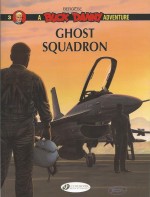
The Adventures of Buck Danny volume 3: Ghost Squadron


By Francis Bergése, colours by Frédéric Bergése translated by Jerome Saincantin (Cinebooks)
ISBN: 987-1-905460-85-4

Buck Danny premiered in Spirou in January 1947 and continues soaring across the Wild Blue Yonder to this day. The strip describes the improbably long yet historically significant career of the eponymous Navy pilot and his wing-men Sonny Tuckson and Jerry Tumbler. It is one of the world’s last aviation strips and a series which has always closely wedded itself to current affairs, from the Korean War to Afghanistan.

The US Naval Aviator was created by Georges Troisfontaines whilst he was director of Belgian publisher World Press Agency and initially depicted by Victor Hubinon before being handed to the multi-talented Jean-Michel Charlier, who was then working as a junior artist.

Charlier’s fascination with human-scale drama and rugged realism had been seen in such “true-war” strips as L’Agonie du Bismark (‘The Agony of the Bismark’– published in Spirou in 1946).

Charlier and René Goscinny were co-editors of Pistolin magazine from 1955 to 1958 and created Pilote in 1959. When they, with fellow creative legend Albert Uderzo, formed the Édifrance Agency to promote the specialised communication benefits of comic strips, he continued to script Buck Danny and did so until his death.

Thereafter his artistic collaborator Francis Bergése (who had replaced Hubinon in 1978) took complete charge of the adventures of the All-American Air Ace, on occasion working with other creators such as Jacques de Douhet.

Like so many artists involved in stories about flight, Bergése (born in 1941) started young with both drawing and flying. He qualified as a pilot whilst still a teenager, enlisted in the French Army and was a reconnaissance flyer by his twenties. Aged 23 he began selling strips to L’Étoile and JT Jeunes (1963-1966), after which he produced his first aviation strip Jacques Renne for Zorro. This was soon followed by Amigo, Ajax, Cap 7, Les 3 Cascadeurs, Les 3 A, Michel dans la Course and many more.

Bergése worked as a jobbing artist on comedies, pastiches and WWII strips until 1983 when he took the coveted job of illustrating the globally syndicated Buck Danny beginning with the 41st yarn ‘Apocalypse Mission’. He even found time in the 1990s to produce a few tales for the European interpretation of British icon Biggles before finally retiring in 2008, passing on the reins to illustrators Fabrice Lamy and Francis Winis and scripter Frédéric Zumbiehl.

Thus far the franchise has notched up 53 albums…

This third Cinebook volume is another astonishingly authentic yarn: a tense, rip-roaring and politically-charged contemporary war story originally published in 1996 as Buck Danny #46 (L’escadrille fantôme and coloured as ever by Frédéric Bergése), blending mind-boggling detail and technical veracity with good old fashioned blistering blockbuster derring-do.

It’s 1995 and, above Sarajevo, Tuckson and pioneer female fighter pilot Cindy McPherson are patrolling as part of the UN Protection Force. “UnProFor” is the West’s broad and criminally ineffectual coalition to stop the various factions in the region slaughtering each other.

The flight takes a dark turn when Cindy’s plane is hit by Serb rockets in contravention of the truce rules and incensed Tuckson peels off to open up with machine gun fire without obtaining the proper permissions.

Nursing Cindy’s burning plane back to their carrier in the Baltic, Sonny doesn’t care how much trouble he’s in, but rather than a Court Martial the impetuous lad’s punishment is rather unique…

Called to interview with the Admiral, the pilot expects at the very least to be thrown as food to the skipper’s vile dog O’Connor but instead meets the enigmatic Mr. Tenderman and is seconded to a top secret “Air Force/Navy Coordination” mission.

Buck meanwhile is part of an op to track down a strange radar echo in an area supposed to be neutral and empty…

After wishing Cindy a fond farewell and hinting at his big CIA secret posting, Sonny ships out by helicopter to land at Prevesa Airbase in Greece. Bewilderment is replaced with terror and rage once he unpacks and discovers O’Connor has stowed away in his kit…

Now stuck with the infernal, nastily nipping mutt, Sonny’s screams draw an old friend into his room: maverick test pilot and old partner in peril Slim Holden. The inveterate rule-breaker also has no idea what they’ve been roped into…

The next day the conundrum continues as they and a small group of other pilots with no idea of why they’re here or where they’re going are shipped to a secret base in the mountains. After the military’s usual “hurry up and wait” the wary fliers are greeted by a familiar face…

Buck is introduced as Colonel Y by the grimly competent General X who assigns each of the pilots a number from 1 to 16. All they know is that they have all committed serious breaches of military discipline which will be wiped from their records once the mission is over. Moreover, as long as they’re here they will only refer to each other by their code numbers…

Awaiting them are anonymous, unmarked F-16s without radios. They are to train in the jets in preparation for an unspecified single task under the strictest security conditions, until finally apprised of their specified purpose.

Days of exhausting preparation and pointless speculation are almost disrupted when an unidentified MiG-29 buzzes the base at extremely low altitude. Although Buck rapidly pursues, the quarry eludes him but the chase does reveal that their so-secret base is being covertly observed by a radar station on the Albanian border…

With no viable options Buck returns and the training continues at full pace. Inevitably the regimen results in a fatality. With the warning of more to come before the strafing and low-level bombing runs end, the practicing goes on and rumours mount over what the actual targets of their illicit ground-attack squadron might be…

Back at the official war zone, tensions mount when two US Navy F-18s are shot down over Bosnia – apparently by a flight of unidentified jets – whilst at the hidden base Buck’s security overflights still register radar tracks from an unknown source.

Buck and General X have no idea which of the many warring factions might be operating the MiGs or the mobile radar unit but have no choice except to proceed with their original plan. They might be far more concerned if they realised that one of the downed – official – combatants was Cindy McPherson…

With the situation worsening the word is given to go and the unofficial spectre squadron finally learn what they’re expected to do: take out the armoured concentrations and artillery emplacements relentlessly bombarding Sarajevo.

In the face of increasingly obvious NATO and UN impotence, it has been decided that the Pan-Serbian aggressors need to be taught a hard lesson about keeping their word regarding cease-fires…

The mission is unofficial, with no radio contact and disabled ejector seats. Moreover, they all have permission to respond in kind to any attack – even by American forces…

As the doomed Ghost Squadron roars across the Adriatic to their targets, the Navy mission to rescue or recover their downed reconnaissance pilots proceeds and an ever-vigilant AWACS plane picks up the inexplicable bogeys heading for Sarajevo.

Of course they reach the only conclusion possible…

When Major Tumbler and his Flight are despatched after the mystery jets an inconclusive dogfight leads him to suspect the nature and identities of some of his targets, but after breaking off hostilities the officially sanctioned Navy planes are ambushed by MiGs from a third faction…

Things look grim until NATO support arrives in the form of French Mirages and British Tornados. As the ghosts fly on to complete their punishment run, in the mad scramble behind them Tumbler tracks a MiG that has had enough and exposes a hidden Bosnian hangar housing a phantom flight of their own. Unfortunately they see him too and he is shot down…

The CIA covert mission has been a success and a massive catalyst. In the aftermath, planes from many of the surrounding nations are tearing up the skies and in the confusion Tumbler makes his way from his landing point into the MiG base to discover old enemy and maniac mercenary Lady X running the show. He also learns that a beloved comrade may well be a traitor in her pay but resolves to save his friend and let the chips fall where they may…

This is a stunning slice of old-fashioned razzle-dazzle that enthrals from the first page to the last panel and shows just why this brilliant series has lasted for so long. Complex politics, personal honour and dastardly schemes all seamlessly blend into a breakneck thriller suitable for older kids and “lads” of all ages.
© Dupuis, 1996 by Bergése. English translation © 2012 Cinebook Ltd. All rights reserved.

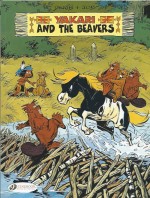
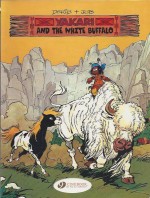
Yakari and Great Eagle


By Derib & Job, translated by Erica Jeffrey (Cinebook)
ISBN: 978-1-90546-004-5

Westerns of every sort have always captivated consumers in Europe and none more so than the assorted French-speaking sections who also read comics. Historically we Brits have also been big fans of sagebrush sagas and the plight of the “noble savage”…

In 1964, French-Swiss journalist André Jobin founded children’s magazine Le Crapaud à lunettes and began writing stories for it under the pseudonym Job. Three years later he hired a young fellow French-Swiss artist named Claude de Ribaupierre, who had begun his career as an assistant at Studio Peyo, (home of Les Schtroumpfs) where the promising lad had worked on a number of Smurfs strips for venerable weekly Spirou.

As “Derib”, Claude co-created with Job The Adventures of the Owl Pythagore for Le Crapaud à lunettes. Two years later they struck pure gleaming gold with their next collaboration.

Launching in 1969, Yakari told the compassionate, whimsical tale of a young Sioux boy on the Great Plains sometime after the introduction of horses by the Conquistadores but long before the pillaging advent of the White Man to North America.

Delib, equally adept in both the enticing, comically dynamic “Marcinelle” cartoon big-foot style and a devastatingly evocative meta-realistic mannerism, went on to become one of the Continent’s most prolific, celebrated, honoured and beloved artists – mostly of western-themed tales with astounding and magnificent geographical backdrops and landscapes – and Yakari is considered by many to be the feature that catapulted him to mega-stardom.

The eponymous first collected edition was released in 1973 and the strip rapidly rose to huge prominence. In 1978 it began running in Tintin, spawning two animated TV series (1983 and 2005), the usual merchandising spin-offs and monumental global sales of the 38 albums (in 17 languages) to date. The latest, Yakari et la tueuse des mers, was released in 2014.

In 2005 the translated first volume – Yakari et le grand aigle – was released by Cinebook as part of their opening salvo in converting British audiences to the joys and magic of Euro-comics and it’s still readily available for you and your family to enjoy.

Yakari and Great Eagle begins one quiet night on the plains whilst the little boy is deep in dreams. In that sunny world he is walking to meet his totem spirit who greets him with a grand flourish and presents him with huge feather that enables Yakari to soar like a bird. The rendezvous is tinged with joy and sadness as the big bird informs him that he will no longer come to him in dreams, but if the boy becomes as much like an eagle as possible they will meet again in the living world…

Awake and excited, Yakari rushes about the camp trying to decide what the riddle means. Hunt like a raptor? Wear a feather-filled war-bonnet? Every eager attempt leads to disappointment and embarrassment and sleepy loafer Eye-of Broth can’t even be bothered to wake up and share the benefit of his years of idle contemplation…

However when young friend Rainbow loses the puma cub she is carrying, Yakari gallantly dashes after it and only quick thinking saves them both from the baby’s furious mother…

The next day he asks his father Bold Gaze but the warriors are all too busy preparing to capture a new crop of wild horses. Sneaking off into the rocky desert with older boy Buffalo Seed to watch the roundup, Yakari wonderingly observes how nimble pinto Little Thunder easily avoids all the experienced wranglers’ traps.

When the adults herd the new intake back to the encampment, Yakari follows Little Thunder high into the rocky escarpments and frees the panicked pony from a rockslide that’s pinned a hind leg.

Great Eagle appears and for this selfless act awards the boy a feather, but when Yakari returns home his father takes it from him, admiring his imagination but explaining that only those who have accomplished great deeds – for which read grown-ups – have a right to wear one. Nothing the stern but loving parent can do will change the stubborn boy’s story that a talking eagle awarded him the singular honour…

Days pass and the despondent – featherless – lad wanders alone when he is suddenly engulfed in a stampede and trapped by a brushfire. Immediately Great Eagle is there, guiding him to safety and advising him that soon his father will return the feather to him. The lad is grateful but confused. How is he ever meant to become like his totem spirit? Moreover how will he ever find his way home from the strange region he finds himself in?

As the tribe searches for lost Yakari, the hungry lad has a close encounter with a bear and finds food by observing her cubs, falls into and subsequently escapes from a deep bear trap and narrowly escapes becoming supper for a lone wolf.

Eventually he finds a river and rides a makeshift canoe until he washes up on a shore where horses are drinking. Spotting Little Thunder, the boy tries to capture him but the tricks and tactics Yakari has seen working for his elders are useless against the wily horse.

The lad is utterly gobsmacked when Little Thunder refuses to be his captive but offers to be his friend…

With his new comrade it’s not long before Yakari comes riding proudly home out of the wilderness astride a pony no man can tame and justifiably reclaims his honour-feather… Thus begins the gloriously gentle and big-hearted saga of the valiant little brave who can speak with animals and enjoys a unique place in an exotic world: a forty year parade of joyous, easygoing and inexpressibly fun adventures honouring and eulogising an iconic culture with grace, wit, wonder and especially humour.

A true masterpiece of children’s comics literature, Yakari is a series no fan should be without and here is just the place to start…
Original edition © 1973 Le Lombard/Dargaud by Derib + Job. English translation 2005 © Cinebook Ltd.

How Obelix Fell into the Magic Potion When He Was a Little Boy


By R. Goscinny & A. Uderzo translated by Anthea Bell & Derek Hockridge (Hodder Children’s Books)
ISBN: 978-0-34065-148-3

Asterix the Gaul has, since its debut, grown to become one of the most-read comics series in the world, translated into more than 100 languages. The wily little hero, his gently bombastic bosom companion Obelix and an ever-expanding and unforgettable cast of bit players have also won hearts and minds through numerous animated and live-action movies, TV series, assorted toys, games and merchandising. They even inhabit their own theme park (Parc Astérix, near Paris).

More than 325 million copies of the 35 canonical Asterix books have sold worldwide over more than fifty years, making Goscinny & Uderzo France’s bestselling international authors.

One of their best and most charming collaborations isn’t a comic strip at all. Although it does star their greatest creation, How Obelix Fell into the Magic Potion When He Was a Little Boy began life as a magazine article penned by Goscinny for Pilote (#291 from 1965), with only a couple of spot-illustrations.

It languished unseen for years until 1989 when Uderzo converted and extended it into a superb, fully realised children’s picture book by crafting (with the assistance of colourist Thierry Mebarki and the design team of Crapule Productions) seven full page illustrations and six magnificent and subtly hilarious double-page spreads to augment the origin tale of the mightiest and mildest champion of ancient history.

Narrated by Asterix himself it is set when both he and his best pal were aged six and just learning how to be proper Gaulish warriors.

Obelix is fat, slow, simple and timid: a perfect target for the other boisterous boys. One day however, when the adults are all out bashing the Romans who are trying to conquer their indomitable, unconquerable village, Asterix convinces him to try a tiny taste of the Druid Getafix‘s magic potion: the one which enables a tiny outpost of rural rebels to resist the full might of the empire.

Sadly, after sneaking into the wise man’s spooky house, there’s a bit of an accident…

Endearing and witty, this delightful tale is packed with the same wry humour as the cartoon albums whilst Uderzo’s sleek and dynamic comic art is suitably replaced here by gorgeous, evocative watercolour plates that mesmerise, beguile and – where appropriate – deliciously amuse…

The diminutive, doughty hero was created in 1959 by two of the art-form’s greatest proponents, René Goscinny & Albert Uderzo: masters of strip narrative then at the peak of their creative powers. Although their perfect partnership ended in 1977 with the death of prolific scripter Goscinny, the creative wonderment continued with Uderzo writing and drawing the feature until his retirement in 2010.

His last work on the feature was this compilation of new and old material which was designed to signify and celebrate 50 glorious years of his co-creation before – in 2013 – Asterix and the Picts opened a fresh chapter in the annals as Jean-Yves Ferri & Didier Conrad began a much anticipated and dreaded continuation of the franchise.

A wonderful adjunct to the adventures of France’s Greatest Heroes and a brilliant introduction for younger readers to the world of comics, How Obelix Fell into the Magic Potion When He Was a Little Boy is a book every home should have.
© 1989, 2009 Éditions Albert René/Goscinny-Uderzo. English translation: © 1989 Éditions Albert René/Goscinny-Uderzo. All rights reserved.

World War X book 1: Helius


By Jerry Frissen, Peter Snejbjerg & Delphine Rieu, translated by Edward Gauvin (Titan Comics)
ISBN: 978-1-78276-112-9

European comics have long been a bastion of big concept, high octane science fiction comics and in recent years have also taken on many of the faster-paced, viscerally emotional spectacles typifying modern movie blockbusters. A splendid new example of that marriage of thought and action can be seen in the English-language translation of World War X: Helius.

Belgian born Jerry/Thierry Frissen generally hangs out in Los Angeles writing comicbooks for Europe (Meurtres, Tequila, Les Tikitis, Luuna) and America (Luche Libre, The Zombies That Ate the World) or designing cool toys, whilst Danish illustrator Peter Snejbjerg (Tarzan, Hypernauten, Den Skjulte Protokol) is now a bona fide star of the US comicbook industry with impressive stints on a broad variety of classics like Abe Sapien, The Mighty, Starman, The Light Brigade, Books of Magic and many more.

Here they mash-up a number of genre styles to relate an astounding secret history of the world – and usher in its likely end – in a fast and vast tale which reassuringly mines familiar plot territory and fantasy memes to craft an engaging and addictive Armageddon thriller.

It dawns on the moon on February 17th 2017 where a team of scientists from Ralph Milne Farley Lunar Base are cautiously retrieving an oddly inscribed box. It looks like a coffin and when an accident causes it to fall open death is indeed inside…

The release of the thing inside awakens a most unique individual in Oregon, whilst a covert military archaeological dig in Papua, New Guinea goes into overdrive at news of the moon colony suddenly going off air.

Adesh Khan has no time to worry; he’s still working on the box uncovered at the bottom of a deep pit in these fetid jungles. Translator Antoine has made a breakthrough and thinks the hieroglyphics covering the Sarcophagi are warnings. He strenuously advises that every box be buried again and forgotten…

The remarkable individual in Oregon calls himself Helius and, as his team of heavily-armed and well-equipped enforcers efficiently ferry him by jet to another black site in Florida, they brief him on things you and I would consider common knowledge…

Adesh is arguing with the American President but PotUS isn’t listening. Project IX promises inexhaustible energy for the planet and he’s thinking about his legacy…

In Portugal, on November 1st 1755 the city of Lisbon was devastated and thousands of lives lost in what history records as a monumental earthquake. It wasn’t, but the hideous travesty that actually destroyed the metropolis looks awfully like the thing that came out of the box on the moon…

In the Everglades Tara Austin receives a frantic message from her colleague and ex-husband Adesh to stop working and get out of the state immediately. He can’t say much more because that’s when he’s arrested.

As Tara realises the Sarcophagus her team’s been working on is opening and rocking the entire area, in nearby Jackson, Helius and his minders are being quizzed by a pushy reporter who asks the strangest questions. Dodging her, the squad head to the Everglades but the base there seems totally devoid of life…

Deep within Columbus Airforce Base, Mississippi Adesh is being interrogated. He is still being cagy about what he now thinks the scattered Sarcophagi might be and responds badly when Lt. Erica McLyman lets slip that all contact has been lost with the Everglades due to a huge earthquake…

It’s not long before Adesh busts out of his cell, sneaks off base and heads for Florida…

In France in the Year of Our Lord 1248, a terrible upheaval shattered Mont Granier, releasing a monstrous devil which slaughtered peasants and a troop of knights. One of the noble survivors was severely maimed. He looked a lot like Helius…

In Greenville, Florida a reporter named Jen bums a ride with Adesh as he closes in on the Everglades site. They’re a rather conspicuous couple. Everybody else is headed in the opposite direction, spurred on by terror and enforced evacuation by the army. His destination is a raging battlefield, but a news blackout prevents anybody from learning who the army are fighting…

On the periphery of the furious struggle Helius and his unit are slowly closing in…

Adesh is a prisoner again. Jen has him chained to a steering wheel as he cautiously negotiates the road to the battle. She’s also pumping him at gunpoint for information on Project IX and doesn’t seem surprised by anything he reveals about the collection of 4-billion-year-old boxes his team had found deposited deep in the Earth.

At that antediluvian time all nine oddly-inscribed high-energy artefacts were placed equidistantly, but passing eons, geological upheaval and continental drift gradually shifted them. The troubles only really began after he convinced international authorities to move them back into their original positions…

At Everglades Ground Zero the army are losing the war against a legion of zombies. Helius explains their true enemy is the horror called Kharis, not his meat puppets, and advises his loyal squad on how best to deal with the myriad assaults of the thing.

Not far away Jen hears its call and changes her mind about killing Adesh. She does, however, reveal just how far from human she actually is…

As they observe Helius metamorphically confront Kharis, Adesh wonders if he might be the only normal creature left in Florida. That idle thought resonates as Jen suddenly joins the fight, every inch as terrifying, warped and inhuman as the original combatants…

And on February 11th 2017, in Mont Granier, Lisbon, the Azores, New Guinea and Greenland the world shakes. Horrendous beasts awake, causing incalculable death and destruction, heralding the end of the world…

To be Continued…

Snappy, fast paced and planting plenty of plot seeds for future spectacle and revelation, World War X: Helius promises to be a rousing rollercoaster ride of thrills, chill and spills. Get this and stick around for the main event. It promises to be a blast…
World War X and all contents are © Snejbjerg/Frissen/Éditions du Lombard (Dargaud-Lombard S.A.) 2013.

World War X: Helius will be released on April 14th 2015 and is available for pre-order now.

Asterix & Obelix’s Birthday: The Golden Book


By R. Goscinny & A. Uderzo (Orion)
ISBN: 978-1-4440-0095-5

One of the most-read comics series in the world, the chronicles of Asterix the Gaul have been translated into more than 100 languages; with numerous animated and live-action movies, TV series, assorted toys and games and even their own tourist hotspot (Parc Astérix, near Paris). More than 325 million copies of the 35 canonical Asterix books have sold worldwide, making Goscinny & Uderzo France’s bestselling international authors.

The diminutive, doughty hero was created in 1959 by two of the art-form’s greatest proponents, René Goscinny & Albert Uderzo: masters of strip narrative then at the peak of their creative powers. Although their perfect partnership ended in 1977 with the death of prolific scripter Goscinny, the creative wonderment continued with Uderzo writing and drawing the feature until his retirement in 2010.

His last work on the feature was this compilation of new and old material which was designed to signify and celebrate 50 glorious years of his co-creation. In 2013 a new adventure – Asterix and the Picts – opened a fresh chapter in the annals as Jean-Yves Ferri & Didier Conrad began their much anticipated and dreaded continuation of the franchise.

Like everything great, the core premise of the immortal series works on multiple levels: ostensibly, younger readers enjoy the action-packed, lavishly illustrated comedic romps where conniving, bullying baddies always get their just deserts, whilst more worldly readers enthuse over the dry, pun-filled, slyly witty satire, enhanced for English speakers by the brilliantly light touch of translator Anthea Bell who played no small part in making the indomitable Gaul so palatable to the Anglo-Saxon world. Personally I still thrill to a perfectly delivered smack in the mush as much as a painfully swingeing string of bad puns and dry cutting jibes…

The eponymous hero is a smart, bold underdog who resists the iniquities, experiences the absurdities and observes the myriad wonders of Julius Caesar‘s Roman Empire with brains, bravery and a bit of magic potion. The stories were alternately set on the tip of Uderzo’s beloved Brittany coast, where a small village of redoubtable warriors and their families resisted every effort of the Roman Empire to complete their conquest of Gaul or throughout the expansive Ancient World circa 50 BC.

Unable to defeat this last bastion of Gallic insouciance, the mostly victorious invaders resorted to a policy of cautious containment. Thus the little seaside hamlet is permanently hemmed in by the heavily fortified garrisons of Totorum, Aquarium, Laudanum and Compendium.

The Gauls don’t care: they daily defy the world’s greatest military machine by just going about their everyday affairs, protected by the magic potion of resident druid Getafix and the shrewd wits of a rather diminutive dynamo and his weak-minded super-strong best friend…

Firmly established as a global brand and premium French export by the mid-1960s, Asterix continued to grow in quality as Goscinny & Uderzo toiled ever onward, crafting further fabulous sagas; building a stunning legacy of graphic excellence and storytelling gold.

René Goscinny was one of the most prolific – and remains one of the most-read – writers of strips the world has ever seen. A Parisian born in 1926, he was raised in Argentina where his father taught mathematics. From an early age the boy showed artistic promise. He studied fine arts, graduating in 1942, and while working as junior illustrator at an ad agency in 1945 was invited by an uncle to stay in the USA, where he found work as a translator.

After National Service in France Goscinny settled in Brooklyn and pursued a creative career, becoming in 1948 an art assistant for a little studio which included Harvey Kurtzman, Will Elder, Jack Davis and John Severin as well as a couple of European giants-in-waiting: Maurice de Bévère (“Morris”, with whom Rene produced Lucky Luke from 1955-1977) and Joseph Gillain (Jijé). He also met Georges Troisfontaines, head of the World Press Agency, the company that provided comics for the French magazine Spirou.

After contributing scripts to Belles Histoires de l’Oncle Paul and ‘Jerry Spring’ Goscinny was made head of World Press’ Paris office, where he first met his life-long creative partner Albert Uderzo (Jehan Sepoulet, Luc Junior) as well as creating Sylvie and Alain et Christine (with “Martial” – Martial Durand) and Fanfan et Polo (drawn by Dino Attanasio).

In 1955 Goscinny, Uderzo, Jean-Michel Charlier and Jean Hébrard formed the independent Édipress/Édifrance syndicate, generating magazines for general industry (Clairon for the factory union and Pistolin for a chocolate factory). Scripting for Uderzo he produced Bill Blanchart, Pistolet and Benjamin et Benjamine, whilst writing and illustrating Le Capitaine Bibobu.

Under the pen-name Agostini he wrote Le Petit Nicholas (drawn by Jean-Jacques Sempé) and in 1956 began an association with the revolutionary comics magazine Tintin, writing stories for many illustrators including Signor Spagetti (Dino Attanasio), Monsieur Tric (Bob De Moor), Prudence Petitpas (Maréchal), Globule le Martien and Alphonse (both by Tibet), Modeste et Pompon (for André Franquin), Strapontin (Berck) as well as Oumpah-Pah with Uderzo. He also scripted strips for the magazines Paris-Flirt and Vaillant.

In 1959 Édipress/Édifrance launched Pilote and Goscinny went into overdrive. The first issue starred his and Uderzo’s instant masterpiece Asterix the Gaul, debuted Jacquot le Mousse and Tromblon et Bottaclou (drawn by Godard) and also re-launched Le Petit Nicolas and Jehan Pistolet/Jehan Soupolet.

When Georges Dargaud bought Pilote in 1960, Goscinny became editor-in-Chief, but still found time to add new series Les Divagations de Monsieur Sait-Tout (Martial), La Potachologie Illustrée (Cabu), Les Dingodossiers (Gotlib) and La Forêt de Chênebeau (Mic Delinx).

He also wrote frequently for television. In his spare time he created a little strip entitled Les Aventures du Calife Haroun el Poussah for Record (first episode January 15th 1962) illustrated by Swedish-born Jean Tabary. A minor success, it was re-tooled as Iznogoud when it transferred to Pilote.

Goscinny died in November 1977.

In the post-war reconstruction of France, Albert Uderzo returned to Paris and became a successful artist in the country’s burgeoning comics industry. His first published work, a pastiche of Aesop’s Fables, appeared in Junior, and in 1945 he was introduced to industry giant Edmond-François Calvo (whose own masterpiece The Beast is Dead is long overdue for a new archival edition…).

Equally indefatigable, Uderzo’s subsequent creations included indomitable eccentric Clopinard, Belloy, l’Invulnérable, Prince Rollin and Arys Buck. He illustrated Em-Ré-Vil’s novel Flamberge, worked in animation, as a journalist and illustrator for France Dimanche, and created the vertical comicstrip ‘Le Crime ne Paie pas’ for France-Soir. In 1950 he even illustrated a few episodes of the franchised European version of Fawcett’s Captain Marvel Jr. for Bravo!

An inveterate traveller, the prodigy met Goscinny in 1951. Soon fast friends, they decided to work together at the new Paris office of Belgian Publishing giant World Press. Their first collaboration was in November of that year; a feature piece on savoir vivre (how to live right or gracious living) for women’s weekly Bonnes Soirée, after which an avalanche of splendid strips and serials poured forth.

Both Jehan Pistolet and Luc Junior were created for La Libre Junior and they invented a spoof western starring a Red Indian (ah, simpler, if more casually racist, times…) who evolved into the delightfully infamous Oumpah-Pah. In 1955 with the formation of Édifrance/Édipresse, Uderzo drew Bill Blanchart for La Libre Junior, replaced Christian Godard on Benjamin et Benjamine and in 1957 added Charlier’s Clairette to his portfolio.

The following year, he made his Tintin debut as Oumpah-Pah finally found a home and a rapturous, devoted audience. Uderzo also drew Poussin et Poussif, La Famille Moutonet and La Famille Cokalane.

When Pilote launched in 1959 Uderzo was a major creative force for the new magazine collaborating with Charlier on Les Aventures de Tanguy et Laverdure whilst working with Goscinny on a little something called Asterix…

Although the ancient Gaul was a massive hit from the start, Uderzo continued working on Tanguy et Laverdure, but as soon as epic was collected as Astérix le gaulois in 1961 it became clear that the series would demand most of his time – especially as the incredible Goscinny never seemed to require rest or run out of ideas.

By 1967 the strip occupied all Uderzo’s attention, and in 1974 the partners formed Idéfix Studios to fully exploit their inimitable creation. At the same time, after nearly 15 years as a weekly comic strip subsequently collected into compilations, 21st tale (Asterix and Caesar’s Gift) was the first to be published as a complete original album before being serialised. Thereafter each new release was a long anticipated, eagerly awaited treat for the strip’s millions of fans…

When Goscinny passed away three years later, Uderzo had to be coaxed and convinced to continue the sagas as writer and artist. He produced a further ten volumes until his retirement in 2010.

According to UNESCO’s Index Translationum, Uderzo is the tenth most-often translated French-language author in the world and the third most-translated French language comics author – right after his old mate René Goscinny and the grand master Hergé.

After the controversial reception to 2005’s Asterix and the Falling Sky, Uderzo’s 34th and last outing with his creations took four years to materialise and was once again not what was expected.

In the manner of a TV clip show or “roast”, the anniversary saga wove snippets and rarely seen ancillary material into a beguiling parade of gently surreal congratulation preceded by a Foreword from the doughty Gaul himself and a moving and laudatory recollection by Goscinny’s daughter Anne, after which the usual set-up pages lead into a strange scene…

It is the year 1 (or 0, depending on your grasp of arithmetic) AD. Fifty years after the heyday of the indomitable Gaulish resistance the regular characters are old but still as bellicose as ever. The world however is no longer a place of constant turmoil and adventure. Elderly Asterix has again dumped his horde of grandkids on aged uncle Obelix but both long for the days of having fun and bashing Romans.

Then as Uderzo physically injects himself into the tale the scene magically shifts, the heroes regain youth and vitality and in 50 BC the village is frantically getting ready for a big party. Asterix and Obelix were born on the same day and this year’s birthday party is going to be monumental…

As Vitalstatistix makes another speech Geriatrix‘s glamorous young wife interrupts with a prophetic clothes show allowing readers to see what Obelix would look like as a fashion plate in eleven coming eras. Her sole design for Asterix is just as radical…

When the big guy’s unrequitable (in fact, happily married and utterly unaware) love Panacea sends him a birthday missive, Obelix has to admit that he cannot read and Druid Getafix lends him an alphabet book he’s been working on. The intensive course of study does not end well…

Next follows a selection of birthday greetings from inept Egyptian architect Edifis and Redbeard‘s far from unsinkable pirates, after which a touch of character assassination from Geriatrix and introspection by Druid Psychoanalytix segues into an intriguing set of designs and sketches in the manner of Leonardo da Vinci and the first present: a text and prose book entitled ‘The Circumbendibus Travel Guide’ delineating many of the fascinating places the Gauls have visited (based on an article by Goscinny originally seen in Pilote #347 16th June 1966)…

Also included is vibrant infomercial ‘Put Your Travels on the Map’ hosted by Cacofonix which is followed by more creative anachronism in the form of parody record covers and a glimpse at the pan-European Imperiovision Song Contest (Bards Only) plus a little girlish table-talk as the village women express their hidden feelings and secret imaginings about the bombastic birthday boys, as well as who should marry them…

As young entrepreneur Squareonthehypotenus offers plans for a theme park dedicated to the wonderful warriors, his plans are eagerly embraced by the villagers and encourage Druid Valueaddedtax to invent new types of potion, whilst impresario Laurensolivius imagines a time of moving pictures and the great dramas the story of the villagers will inspire…

Finally a section on the great art which will one day be created because of Asterix and Obelix (augmented by faux reproductions of famous artworks by da Vinci, Rodin, Delacroix, Edvard Munch, Arcimboldo, Manet and David) before tension breaks out after Queen Cleopatra and Julius Caesar finally arrive for the party.

She might eternally be grateful to the Gauls but the Emperor bears grudges and takes the opportunity to have his apothecary Choleramorbus add a little something nasty to the amphora of wine he’s giving as a gift…

As ever, Roman duplicity is no match for Gaulish guile…

More a collection of themed gags than a singular saga and packed with posters and sly in-jokes this is a delicious addition – or perhaps perk – to the long and glorious career of two of France’s greatest heroes – both the real ones and their fictive masterworks.
© 2009 Les Éditions Albert René/Goscinny-Uderzo. English translation: © 2009 Les Éditions Albert René/Goscinny-Uderzo. All rights reserved.

Melusine volume 1: Hocus Pocus


By Clarke (Frédéric Seron) & Gilson, coloured by Cerise and translated by Erica Jeffrey (Cinebook)
ISBN: 978-1-905460-20-5

Teen witches have a long and distinguished pedigree in fiction and one of the most engaging of all first appeared in venerable Belgian magazine Spirou in 1992. Mélusine is actually a sprightly 119 years old and spends her days working as an au pair in a vast monster-packed chateau whilst studying to perfect her craft at Witches’ School…

The feature ranges from one-page gag strips on supernatural themes to short tales detailing her rather fraught life, the impossibly demanding master and mistress of the castle and her large circle of peculiar family and friends.

Collected editions began appearing in 1995, with the 18th published in 2010. Four of those have thus far made it into English translations thanks to the fine folk at Cinebook.

The strip was devised by writer François Gilson (Rebecca, Cactus Club, Garage Isidore) and top flight cartoon humorist Frédéric Seron, AKA Clarke whose numerous features for all-ages Spirou and the acerbic adult humour publication Fluide Glacial include Rebecca, Les Cambrioleurs, Durant les Travaux, l’Exposition Continue… and Le Miracle de la Vie.

Under the pseudonym Valda, Seron also created Les Babysitters and as Bluttwurst Les Enquêtes de l’Inspecteur Archibaldo Massicotti, Château Montrachet, Mister President and P.38 et Bas Nylo.

A former fashion illustrator and nephew of comics veteran Pierre Seron, Clarke is one of those insufferable guys who just draws non-stop and is sublimely funny. He also doubles up as a creator of historical and genre pieces such as Cosa Nostra, Les Histoires de France, Luna Almaden and Nocturnes and apparently is free from the curse of having to sleep…

Hocus Pocus was the seventh Mélusine album, originally released in 2000, and offers a fine place for newcomers to start as the majority of the content is one or two page gags which – like a young, hot Broom Hilda – make play with fairy tale and horror film conventions and themes.

When brittle, moody Melusine isn’t being bullied for her inept cleaning skills by the matriarchal ghost-duchess who runs the castle, or ducking cat-eating monster Winston and frisky vampire The Count, she’s avoiding the attentions of horny peasants, practising her spells or consoling dreadfully unskilled classmate Cancrelune. Her boyfriend is a werewolf so she only sees him a couple of nights a month…

Her days of toil are occasionally spiced up with and put in perspective by sports days such as blindfolded broom-flying contests and there’s always dowager Aunt Adrezelle who is eager and happy to share the wisdom of her so-many centuries…

After a splendid succession of quick-fire japes and jests, things take on a touch of continuity and even tension when scandalous cousin Melisande pops in for an extended visit.

Spurning the dark, dread and sinisterly sober side of the clan, Melisande became a Fairy Godmother; all sparkles, fairy-cakes, pink bunnies and love. She’s simplicity, sweetness and light itself in every aspect, so what’s not to loathe…?

No sooner does the twinkling twit start to grow on everybody however than she falls victim to one of The Count’s periodic bite-fests and slowly metamorphoses into a true witches’ witch: skin-tight black leather, batwings and ready for wicked transformations and sorcery duels at the drop of a pointed hat…

The situation comes to a head and the cauldron boils over in the eponymous extra-long episode ‘Hocus Pocus’ as Melusine and Melisande finally face off to decide which witch is worst…

Clever, wry, sly, fast-paced and uproariously funny, this compendium of arcane antics is a great taste of the magic of European comics and a beguiling delight for all lovers of the cartoonist’s art…

Original edition © Dupuis, 2000 by Clarke & Gilson. All rights reserved. English translation 2007 © Cinebook Ltd.


Spirou and Fantasio volume 7: The Rhinoceros’ Horn


By André Franquin, translated by Jerome Saincantin (Cinebook)
ISBN: 978-1-84918-224-9

Spirou (whose name translates as both “squirrel” and “mischievous” in the Walloon language) was created by French cartoonist François Robert Velter under the pen-name Rob-Vel for Belgian publisher Éditions Dupuis in response to the phenomenal success of Hergé’s Tintin for rival outfit Casterman.

The legendary title was launched on April 21st 1938 with a rival red-headed lad as the lead of an anthology weekly comic which bears his name to this day.

The character began life as a plucky bellboy/lift operator employed by the Moustique Hotel (a reference to publisher’s premier periodical Le Moustique) whose improbable adventures with his pet squirrel Spip eventually evolved into high-flying surreal comedy dramas.

Spirou and his associates have spearheaded the magazine for most of its life, with a phalanx of truly impressive creators carrying on Velter’s work, beginning with his wife Blanche “Davine” Dumoulin who took over the strip when her husband enlisted in 1939.

She was assisted by Belgian artist Luc Lafnet until 1943 when Dupuis purchased all rights to the feature, after which comic-strip prodigy Joseph Gillain (“Jijé”) took the helm.

In 1946 Jijé‘s assistant André Franquin assumed the reins, gradually sidelining the short, gag-like vignettes in favour of longer epic adventure serials, introducing a wide and engaging cast of regulars and eventually creating a phenomenally popular magic animal dubbed Marsupilami to the mix (first seen in Spirou et les héritiers in 1952 and now a spin-off star of screen, plush toy store, console games and albums all his own).

He crafted increasingly fantastic tales and absorbing Spirou sagas until he resigned in 1969.

He was succeeded by Jean-Claude Fournier who updated the feature over the course of nine stirring adventures which tapped into the rebellious, relevant zeitgeist of the times with tales of environmental concern, nuclear energy, drug cartels and repressive regimes.

By the 1980s the series seemed outdated and without direction: three different creative teams alternated on the feature, until it was at last revitalised by Philippe Vandevelde – writing as Tome – and artist Jean-Richard Geurts AKA Janry, who adapted, referenced and in many ways returned to the beloved Franquin era. Their sterling efforts consequently revived the floundering feature’s fortunes and resulted in fourteen wonderful albums between 1984 and 1998.

As the strip diversified into parallel strands (Spirou’s Childhood/Little Spirou and guest-creator specials A Spirou Story By…) the team on the main vehicle were succeeded by Jean-David Morvan & José-Luis Munuera, and in 2010 Yoann & Vehlmann took over the never-ending procession of amazing adventures…

Cinebook have been publishing Spirou & Fantasio’s exploits since October 2009, mainly translating Tome & Janry’s superb pastiche/homages of Franquin, but for the fifth episode (The Marsupilami Thieves), they reached all the way back to 1952 and the second appearance of the adorable wonder-beast by the great man himself.

With that brave experiment clearly having paid dividends they repeated the experiment here, but with times and taste having changed so radically felt the need to issue a heartfelt warning and carefully considered apologia regarding some content of The Rhinoceros’ Horn…

I’ll précis it here: it was sixty years ago and our attitudes to hunting, minorities and especially the modern obscenity of killing for ivory and horn have thankfully changed. Please read this book with that in mind. The publishers, of course, phrased it much better…

André Franquin was born in Etterbeek, Belgium on January 3rd 1924. Drawing from an early age, the lad only began formal art training at École Saint-Luc in 1943. When the war forced the school to close a year later, he found animation work at Compagnie Belge d’Animation in Brussels where he met Maurice de Bevere (Lucky Luke creator “Morris”), Pierre Culliford (Peyo, creator of The Smurfs) and Eddy Paape (Valhardi, Luc Orient).

In 1945 all but Peyo signed on with Dupuis, and Franquin began his career as a jobbing cartoonist and illustrator, producing covers for Le Moustique and scouting magazine Plein Jeu.

All during those early days Franquin and Morris were being tutored by Jijé who was the main illustrator at Spirou. He turned the youngsters and fellow neophyte Willy Maltaite AKA Will (Tif et Tondu, Isabelle, Le jardin des désirs) into a perfect creative bullpen known as the La bande des quatre or “Gang of Four” who revolutionised Belgian comics with their prolific and engaging “Marcinelle school” style of graphic storytelling.

Jijé handed Franquin all responsibilities for the flagship strip part-way through Spirou et la maison préfabriquée, (Spirou #427, June 20th 1946) and the lad ran with it for two decades, enlarging the scope and horizons until it became purely his own.

Almost every week fans would meet startling new characters such as comrade and rival Fantasio and crackpot inventor the Count of Champignac. Along the way Spirou and Fantasio became globe-trotting journalists, continuing their exploits in unbroken four-colour glory.

The heroes travelled to exotic places, uncovering crimes, revealing the fantastic and clashing with a coterie of exotic arch-enemies such as Zorglub and Zantafio. This particular tale saw the debut of one of the first strong, capable female characters in European comics; rival journalist Seccotine (renamed Cellophine for this translation).

In a splendid example of good practise, Franquin mentored his own band of apprentice cartoonists during the 1950s. These included Jean Roba (La Ribambelle, Boule et Bill), Jidéhem (Sophie, Starter, Gaston Lagaffe) and Greg (Bruno Brazil, Bernard Prince, Achille Talon, Zig et Puce), who all worked with him on Spirou et Fantasio.

In 1955 – around the time this story was collected into an album – contractual conflicts with Dupuis forced Franquin to sign up with rival outfit Casterman on Tintin. Here he collaborated with René Goscinny and old pal Peyo whilst creating the raucous gag strip Modeste et Pompon.

He soon patched things up with Dupuis and returned to Spirou, subsequently co-creating Gaston Lagaffe in 1957, but was obliged to carry on his Tintin work too…

From 1959 on, writer Greg and background artist Jidéhem assisted Franquin but by 1969 the artist had reached his Spirou limit and resigned, taking his mystic Marsupilami with him…

His later creations include fantasy series Isabelle, illustration sequence Monsters and bleak adult conceptual series Idées Noires, but his greatest creation – and one he retained all rights to on his departure – is Marsupilami.

Franquin, plagued in later life by bouts of depression, passed away on January 5th 1997 but his legacy remains, a vast body of work that reshaped the landscape of European comics.

The Rhinoceros’ Horn was originally serialised in two sequences in Spirou: #764-787 (Spirou et la Turbotraction) and #788-797(La corne de rhinocéros), spanning late 1952 and early 1953 before being united in hardback album La corne de rhinocéros in 1955.

The story begins with Spirou exulting over the success of Fantasio’s latest enterprise – personal helicopters worn as backpacks – but his pal is rather down in the dumps. He’s just been dressed down by his editor on The Mosquito and warned that the paper has hired a new reporter: a real go-getting hotshot…

Dejected and desperate Fantasio determines to revive his career by staging a publicity stunt: robbing the Good Bazaar Department Store…

As the rattled reporter draws up his plans and sends a warning to the store of his intentions, a colossal explosion shakes the town. Persons unknown have blown up the nearby Turbot car plant. With even more to prove now, Fantasio proceeds…

Dragged along for the ride to photograph the stunt, Spirou and Spip reluctantly join their pal in the hare-brained venture. Landing on the roof of the emporium courtesy of the petrol-powered “Fantacopters”, they deftly break in through the fire-door, Spirou recording everything with his gigantic flash camera.

Typically the lead-footed burglars make an appalling clatter and tremendous mess but no night-watchmen confront them. They’ve all been incapacitated and tied up by real robbers…

Hearing the villains approach, the lads take refuge in a wardrobe in the bedrooms department and discover an old acquaintance already there. Behring works for Turbot and was wounded in the explosion earlier. Moreover, he’s carrying blueprints for the company’s latest advancement and the burglars in the darkened store are actually bandits trying to finish him off to get them…

Handing the boys an envelope and begging them to get it to his employer Mr. Martin, the troubleshooter loses consciousness just as the nervous heroes are challenged by a shadowy figure demanding the precious prize. It’s not the bad guys however, but Fantasio’s new journalistic nemesis…

Cellophine is already streets ahead of them: she knows of the plot to steal Turbot’s revolutionary supercar. All she needs is the address Behring muttered to secure an interview with the in-hiding Martin and her next terrific scoop…

And that’s when the gun-toting bandits make their move, demanding blueprints and rendezvous address. Thankfully Spirou is still holding the camera and super-bright flashgun…

Hilariously and calamitously fleeing for their lives through the darkened store, the boys eventually make their escape via fantacopters from the top storey, allowing Cellophine to lock the bandits up on the roof before dragging Behring to safety.

The next morning the boys are in Whistleton but Martin has already fled. His note reveals nothing, but later a sinister stranger in a café advises them to surrender the blueprints and warns them not to join Martin in Bab-el-bled in North Africa.

Ignoring him and returning home, they encounter the distressingly persistent Cellophine and Spirou clues her in. Sadly the thugs have tracked them down and overhear the plans. When the boys catch a jet liner to Africa, the heavily disguised heavies are in the seats behind them…

They villains are on their tails all though the streets of Bab-el-bled, but a wig malfunction in the Souk warns Spirou they’re being followed and another hectic chase ensues.

Thinking they’ve at last shaken their pursuers our heroes go to Martin’s house only to learn he was ambushed by the bandits…

Happily the troubled Turbot exec escaped and fled further into North Africa. He’s rushing off to the M’saragba Animal Reservation but as the boys try to follow Cellophine appears and pips them to the last spot on the plane – stowed away in the baggage hold…

Forced to follow by train, it is eight days later when Fantasio and Spirou finally reach the Reserve and yet again – as the infinitely annoying Cellophine explains – they’ve just missed Martin. He was chased into the bush by the implacable bandits…

The youngsters go after him and, later that afternoon, find him just after the thugs do. Having shot Martin, the villains are smugly gloating when the sinister stranger from the café in Whistleton appears. He’s a cop and finally has enough evidence to arrest them for blowing up the factory…

They are all too late. The harassed entrepreneur has already got rid of his portion of the plans, giving them to a native friend to hide.

As Martin is carried to hospital, Spirou and Fantasio volunteer to retrieve the accursed documents but they have not reckoned on the quirky ingenuity of the chief of the Wakukus, the vastness of the reserve and the sheer bloody-mindedness of the local flora and fauna.

After days of unpleasant and painful adventures they finally locate the tribe and, following even more nerve-wracking moments convince the chief that they too are friends of Martin. That’s when the king delivers his bombshell.

Tasked with keeping safe the plans – now contained on a spool of microfilm – the wily Wakuku had his men capture a live rhino before drilling a hole in its horn and sealing the container within. He then released it back into the wild. He has no idea where it is now or even which of the 200 in the park it might be…

Determined to complete their mission, the lads spend months tracking and capturing the assorted beasts. The task becomes only slightly easier after they find a dipsomaniac white trader who sells them hunting gear and latterly, yellow paint so that they can tell the rhinos they’ve already checked from the ones so cunningly evading them…

It’s a backbreaking, heartbreaking and increasingly pointless task but only when their resolve crumbles and they brokenly give up and head for home do they find the prize in the very last place they looked…

Even the trip back is a tribulation, and eventually they collapse only to awake in a nice clean hospital with Martin and Cellophine offering to fill in the blanks on this baffling case…

Six weeks later the lads are recuperating at home when Behring shows up. He’s got a little reward for them from the grateful Turbot Company but, as usual, Cellophine is on hand to spoil it for Fantasio…

Stuffed with superb slapstick situations, riotous keystone kops chases and gallons of gags, this exuberant yarn is a true celebration of angst-free action, thrills and spills. Easily accessible to readers of all ages and drawn with all the beguiling style and seductively wholesome élan which makes Asterix, Lucky Luke, The Bluecoats and Iznogoud so compelling, this is another enduring comics treat from a long line of superb exploits, certain to be as much a household name as those series – and even that other kid with the white dog…
Original edition © Dupuis, 1955 by Franquin. All rights reserved. English translation 2014 © Cinebook Ltd.

Masked volume 1: Anomalies


By Serge Lehman, Stéphane Créty, Julien Hugonnard-Bert & Gaétan Georges translated by Edward Gauvin (Titan Comics)
ISBN: 978-1-78276-108-2

It’s a great time for comics science fiction, and here’s one of the best examples of the bande dessinée take on tomorrow’s worlds, courtesy of Titan Comics’ ever-expanding line of stellar European translations.

Serge Lehman is the main nom de plume of prolific and multi award-winning author Pascal Fréjean (F.A.U.S.T., Thomas Lestrange, Metropolis, The Chimera Brigade) whilst mercurial illustrator Stéphane Créty came relatively late to comics – via stints as archaeologist, warehouseman and storyboard artist – but has been making up for it ever since.

With Sylvain & Sandrine Cordurié he created – between 2003 and 2004 – Salem le Noire and followed up with Acriborea. He has since lent his considerable skills to graphic serials Les Fleaux d’Enharma, Hannibal Meriadec et les larmes d’Odin amongst others, replaced Guy Michel on Le Sang du Dragon and produced stellar work on assorted Star Wars titles for Dark Horse in America.

In 2011 he united with Lehman to craft a cunning and captivating chronicle set just a bit ahead of Now: a world getting progressively stranger day by day…

It all begins with a patrol of peacekeepers in the Caucasus, policing a flash-war between Russia and Georgia. When they come across a devastating robotic combat drone only Sergeant Frank Braffort and Gunner Melissa Taleb survive the staggering assault of the kill-machine. They have no idea how: twin beams of red light simply blazed down out of an empty sky to destroy it…

The event was recorded as “incident 41” and filed away in army reports to be forgotten. It wasn’t…

Now, years after being hung out to dry by his superior officers for the inexplicable debacle, Braffort is back in Greater Paris. It’s December 23rd in District One of the XIII Arrondissment and strange mechanical trinkets keep turning up on the streets to grow and die like metal flowers or plastic mayflies. The blasé natives have grown used to them and dismiss the little widgets as mere “anomalies”…

Young science student Raphaelle Braffort is mildly intrigued by the phenomenon but is more concerned by her recently returned brother’s inability to accept the changes that have occurred during his six-year absence.

Back in town for twenty-four hours and all he can focus on is anomalies, the pirate media broadcasts of the enigmatic Lightning Network and the colossal ghostly hologram of legendary masked serial killer Fantoma manifesting all over the city. What Frank should be worried about are real issues like the growing political unrest, riots, repression and the swiftly boiling-over vendetta between District One Mayor Michelle Caprice and domineering, overreaching Joel Beauregard, Special Prefect of Greater Paris…

A quiet night in is interrupted when old army buddy Victor “Rocket” Duroc pays a call and drags Frank to a job interview that will be to his advantage…

As they cruise across town in Rocket’s municipally-owned flying Renault, the former sergeant cannot believe how much has changed: street riots, anomalies, a flying skateboarder, robot giants in the Seine…

The meeting is with Beauregard himself, who has an awful lot of ex-military in his entourage for someone whose official job is modernising the city and turning it into a global capital. However, before they can get started, a terrifying new type of Anomaly savagely attacks the Special Prefect before suddenly and inexplicably turning “her” sights on Braffort…

Most disturbing of all, the assault and its brutal conclusion are broadcast live by the Lightning Network. When the dust and cogs settle Frank finally meets the big man and is offered a job on the already formidable security team, but Beauregard is holding something back and asks Braffort to meet him at a secret location later.

The ex-sergeant has no idea how closely he’s being monitored, nor the unique role he’s being groomed for, and spends the day visiting Melissa Taleb. She’s in jail for “visiting” their old commanding officer and rather physically explaining why he shouldn’t have blamed his tactical screw-up on the men who died because of it…

Later that evening Braffort arrives at a deserted building in Montmartre and is ushered into an incredible basement complex which was once the lair of super-criminal Fantoma. There Beauregard and his scientific advisor Cleo Villanova – an expert on the clearly evolving and escalating Anomalies – reveal how research into the mechanoid plague uncovered this fortress, the history of a previously unknown superhero active from 1925-1940 and an even more incredible secret: one that has been kept by every government since De Gaulle liberated the city in World War II…

The Anomalies stem from an incredibly old technological temple hidden beneath Paris, and the mysterious motivating force reacts whenever Braffort is near. It wants something from him and the ruthless politicos are going to find out what by feeding him to it…

Braffort’s transformation is sudden, explosive and astonishing, but as the reaction sets the sky afire and alerts other clandestine elements in an ancient struggle Beauregard cannot help but gloat…

To Be Continued…

Fast-paced, suspenseful, imaginative and utterly compelling, this stunning opening salvo is supplemented by faux news article ‘Metrology: All Things in (im)Moderation by Zoe Kader’ offering a potted history and technical overview of the Anomaly phenomenon complete with illustrations of the rapid evolution of the intruding artefacts.

Complex, challenging and supremely enticing, Masked promises to be an outstanding addition to the annals of unmissable French science fiction classics.
Masked and all contents © Guy Delcourt Productions 2012. Masqué volumes 1, 2, 3, 4, Lehman-Créty © Editions Delcourt -2012-2013.

Masked: Anomalies will be released on March 30th 2015 and is available for pre-order now.

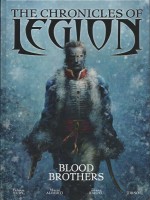
The Chronicles of Legion volume 2: The Spawn of Dracula


By Fabien Nury, Mario Alberti, Zhang Xiaoyu & Tirso translated by Virgine Selavy (Titan Comics)
ISBN: 978-1-78276-094-8

The epic war between immortal blood-drenched brothers continues in the second translated volume of Fabien (Once Upon a Time in France, I Am Legion) Nury’s inspired reinvigoration of the Dracula legend, with illustrators Mario Alberti, Zhang Xiaoyu and Tirso Cons each allocated a separate epoch of the centuries-spanning and intertwined vendetta.

The dread duel began in 2011 as Les Chroniques de Legion: a generational saga which put a new spin on the monster-myth, and The Spawn of Dracula further unravels a triptych of mysteries…

What You Need to Know: Vlad Tepes Dracula and his brother Radu possess the power to extend their lives beyond apparent death. Their consciousnesses are carried in their blood and by transferring the potent ichor to other living beings they can possess and dominate any number of victims infinitely.

Both have lived for centuries and for all that time they have hated each other…

Here the story expands in three theatres of war with their unceasing attempts to destroy each other centred in three separate eras, but rather than disparate clashes over time and space these duels are all part of an extended and never-ending campaign of terror with mere mortals their callously disposable tools, weapons and cannon fodder…

The opening act occurs in 1885 as gambling addict and thorough swine Victor Douglas Thorpe enters the palatial home of reclusive immensely wealthy aristocratic Lord Byron Cavendish. Should the upcoming interview go well the impoverished cad will soon be heir to the largest fortune in the Empire…

The conference goes exactly as the unseen benefactor intends. When the successful applicant returns to London, he bears a strange red mark and is no longer Victor Douglas Thorpe…

Centuries earlier in 1521, Gabriella, Doña Del La Fuente bore the same scarlet sigil as she was escorted through the green hell of the New World to a meeting with powerfully placed future husband Hernan Torres.

Guided by the conquistador’s enticingly masculine mulatto bastard Martin, the Doña’s party – rough soldier, cloying Spanish priests, avaricious self-important dignitaries and her loyal bodyguard Carlos – slowly make their way through the jungles until an uncanny sense warns of danger ahead.

Seconds later they are attacked by a horde of natives who seem immune to pain and mortal harm, fighting on even after holed by musket fire or even beheaded.

Moments before her body’s imminent demise Gabriella recognises her brother’s bloodmark on an attacker’s neck and, even as faithful, steadfast Carlos comes to her rescue, Vlad realises Radu has beaten her to this new continent and made himself at home.

Miles away, seeing through the dying eyes of his puppets, the other undying scion of Transylvania screams in fear and fury…

With daylight the much-diminished party struggles on towards Torres’ citadel and half-constructed cathedral with the bride-to-be increasingly succumbing to lust as she cares for her wounded and septic future son-in-law.

Once inside the Mission she is forced back into the role of diffident contract-bride, but Hernan Torres is no easy man to love. His thoughts are solely of preserving a legacy and creating a legitimate dynasty, and her bringing more grasping priests and fanatical Inquisitors to plague him has not endeared her to the Great Man.

Reduced to the status of closeted brood-mare, Gabriella has Carlos capture a huge eagle and, by allowing it to bite her, gains a mighty avian frame from which to view the world and survey her own inexorable rise to power…

As he slowly recovers Martin too falls under her spell, but this bewitching has nothing to do with her blood…

In late 19th century England an aristocrat’s estate burns in a vast and deliberate conflagration but the new Lord has no regrets and looks only forward, never back.

In 1812 a band of deserters from Napoleon’s army have reached Targovishte. Armand Malachie has led his faithful subordinates Kholya, Stern, Hartmann and Feraud to the Wallachian Mountains in search of the Lost Treasure of Vlad Dracula Tepes but the long-suffering peasants there quickly recognise who the dashing French Hussar is carrying inside him…

When an innkeeper passes on a message from Radu, arrogant Vlad disregards it but later engages in a pointless clash with a band of Cossacks which leads to the death of his mortal host…

As his men abandon his corpse to the snows, the embarrassed immortal summons his fading strength to reanimate the cadaver and follow in search of a new meat-home…

And in 1887 Victor Douglas Thorpe attends the funeral of his so-suddenly and suspiciously deceased benefactor and is accosted by the woman who carries his unborn child. Her entreaties go unacknowledged and, as he is driven away in his livered carriage, she bitterly damns him…

To Be Continued…

Unfolding in a luxurious oversized (211 x 282mm) full-colour hardback, superbly illustrated and beguiling told, this intoxicatingly absorbing jigsaw of terror and tragedy is a stunning and ambitious treat for all fans of fang and fear…
The Chronicles of Legion and all contents © Éditions Glénat 2011. Translated edition © Titan Comics, 2015