QU33R


By various; edited by Rob Kirby (Northwest Press)
ISBN: 978-1-93872-038-3 (HB) 978-1-93872-036-9 (TPB)

It’s long been an aphorism – if not cliché – that LGBTQ comics are the only place in the graphic narrative business to regularly portray real romance.

It’s still true: an artefact, I suppose, of a society which seems determined to demarcate and separate sex and love as two utterly different – and possibly even opposite – things. I’d like to think that here and now – in most places – we’ve outgrown the juvenile, judgemental, bad old days and can simply appreciate powerful, moving and funny comics about people of all sorts without any kind of preconception, but that battle’s still not completely won yet. Compendia such as this classic tome – available in hardback, paperback and digital editions – helped and continues to aid the fight…

In this superb anthology – with contributions from 33 Lesbian, Gay, Bisexual, Transgender and/or Queer (IE- questioning their sexual identity) craftspeople and creators – love stories are not all that’s on offer. The authors and artists cajoled and shepherded by Rob Kirby (Curbside Boys, The Books of Boy Trouble) have produced revelatory ponderings, satires, comics-reportage, pastiches, comedies, thrillers, horror stories and superhero adventures, as well as many superb pictorial narrative diaries and autobiographical pieces to complement the wild, heady romances inescapably on offer.

Oh, and (hold on while I switch to bold) there’s sex and swearing: rather a lot and sometimes a bit graphic, so if you’re liable to be upset by words and pictures of an adult nature (such as joyous, loving fornication between two people separated by age, wealth, social position and race who happily possess and constantly employ the same type of naughty bits on each other) then go away and read something else.

In fact, just go away.

It all begins with a Foreword by Justin Hall (No Straight Lines: Four Decades of Queer Comics, Glamazonia, True Travel Tales, Hard to Swallow) recapitulating just how far the industry and society have come since Mary Wing’s self-published Come Out Comix in 1973. That breakthrough opened doors for thousands of other non-hetero creators, and here editor Rob Kirby’s Introduction places this contemporary compendium of “Alt/Queer comics” in its contextual place leaving nothing for us to do except enjoy the ride…

It all begins with ‘Porno’ by Eric Orner, wherein the artist beguilingly relates key moments and situations from his past whilst ruminating upon his relationship with his dad, after which Annie Murphy’s ‘Mother’s Sisters’ offers similar family insights by searching through the pages of a faux-photo-album.

MariNaomi then beautifully explains how, if not why, ‘Three’s a Crowd’ for a date-shy lass, whilst Ed Luce’s dance hall days in a Death-Metal mosh pit are hilariously described in ‘Wuvable Oaf presents Kindness of Strangers’.

‘The Transformers – a True Story’ (by Dylan Edwards) is a moving, memorable account of growing up “different”; an oft-repeated experience recapitulated in Diane DiMassa’s girlish tale of young love ‘Born Qu33r’.

Always compelling and challenging, Justin Hall hits home hard here with ‘Seductive Summer’ and the doomed affair of two young men with very different causes for their feelings of attraction, isolation, alienation despair and doom. ‘Just Another Night in Carbon City’ (Jennifer Camper) then offers a grimly witty noir crime tale with not a Tough Guy in sight…

‘Sissy That Walk’ by Eric Kostiuk Williams incisively relates the fan reaction to RuPaul’s Drag Race show before a meaningful conversation occurs between two old friends in Kris Dresen’s ‘Chop Suey’ and Tyler Cohen presents us with one enigmatic possible tomorrow in ‘Flux’…

‘So Young, So Talented, So What?!’ is an engaging and often scary comic jam by Jennifer Camper & Michael Fahy, couched in the cautionary tale of a young artistic boy lost even before he reaches the Big City; followed by a triptych of Fahy’s narrative gallery images and strips entitled ‘Found’, ‘O’Hara Song’ and ‘Hazily Remembered Drag Queens’.

Edie Fake then plays coy and arch at the ‘Sex Club’, whilst José-Luis Olivares indulges in ‘Online Fantasy’ and Steve MacIsaac lets his mind wander back into thoughts of unpleasant school days in ‘Vacant Lots’, before wishful thinking and wistful hope poignantly meet in ‘For Fletch and Ruski, Spooner, and Calico’ by Rick Worley.

‘Life’s but a Walking Shadow’ (Christine Smith) silently scours the college scene with a couple of kids who haven’t found their way yet whilst ‘Political Will’ by Carlo Quispe reveals the inescapable highs and lows of the party scene

Do you remember Private Manning? The young soldier was an intelligence analyst in Iraq in 2009, releasing thousands of classified documents to the horrified world. The records were leaked via a hacker named Lamo and the then-transgender Bradley was communicating via electronic media. Here Andy Hartzell imaginatively and mesmerising illustrates those game-changing chat logs in ‘Manning/Lamo Project’ to create possibly the most engrossing piece in this wonderful book.

‘Toot Toot Heyyyyyyy Beep Beep’ by Carrie McNinch describes a first emotional connection and the fall of Skylab before Rob Kirby recounts his own dating dilemma in ‘Music for No Boyfriends’ and local London lad Sina Sparrow proves there’s no such thing as carefree love in ‘If You Want Me to I Will Be The One Who Is Always Good’…

Superheroes and wry humour inform Ivan Velez, Jr.’s ‘Oso Oro – the night I got my hero card…’ with the protagonist falling foul of the masked community’s precarious pecking order after which ‘Coming Out With the Bunksteads’ (by Arch-Bishop of Gay Comics Howard Cruse) hilariously turns venerable family strip Blondie on its head with a little coming-out confession, whilst author and “Officially Out” professional wrestler Terrance Griep relates ‘The Second Most Asked Question’ about his grappling career, with Rob Kirby supplying the excruciating visual details…

A different type of “tension and differences in the band” are disclosed in Craig Bostick’s ‘Guitar Bass Drums’before‘Burger Meister: a Story of Love and Loss’ by Amanda Verwey focuses on a tragic miscommunication and Comedy of desperate-dating Errors, before Nichole J. Georges describes just another date in the whimsically wonderful ‘Grief’.

David Kelly helpfully shares a few very sensible ‘Tips to a Teen-Age Me’ whilst Marian Runk offers some captivating memories and suggestions of her own in ‘This Winter, I Practiced Being Alone’…

‘Miss Sasha Velour’ (by Sasha Steinberg) then shows you don’t need to be armed to be Fabulous, and Jon Macy graphically examines his relationship with his heroes in a powerfully self-searching untitled graphic musing on Oscar Wilde, Frankenstein’s Monster, Djuna Barnes, Raymond Chandler and Charles Mingus before ‘Confession’ (L. Nichols) rounds off the comics cavalcade with a light-hearted affirmation about finding yourself…

Situated between pin-up Drag in 1969 (Sasha Steinberg), and untitled pieces from MariNaomi and L. Nichols – plus one last strip starring ‘School Girls’ by Camper – About the Creators then briefs you on the talented story-makers and where else to find their work whilst a copious Special Thanks section gratefully name-checks the contributors and the investors on KickStarter who paid to make the project happen, ending this glorious rainbow-hued book of bright ideas and colourful yarns on an exceedingly positive and life-affirming note.

QU33R remains a superb example of comics celebrating determination and difference: sensitive, evocative, romantic and humorously engaging “people stories” which any open-minded fan can’t help but adore. There’s not much fighting but plenty of punch, and in an ideal world this book would be readily available in every school and library for any confused kid in need of inspiration, comfort, understanding, encouragement and hope.
QU33R, the collection is © 2014 Rob Kirby. The individual art and writing contributions are © 2014 the original artists and writers. All rights reserved.

Bunny vs Monkey and the Human Invasion!


By Jaimie Smart, with Laura Bentley & Sammy Borras (David Fickling Books)
ISBN: 978-1-78845-195-6 (PB)

Way back in 2012, Oxford-based family publisher David Fickling Books launched a weekly comics anthology for girls and boys which harked back to the grand old days of British picture-story entertainment intent whilst embracing the full force of modernity in style and content.

Each issue offers humour, adventure, quizzes, puzzles and educational material: a joyous parade of cartoon fun and fantasy. Since its premiere, The Phoenix has gone from strength to strength, packed with splendid tales from amazing creators. This is a handily repackaged instant classic from one of the best…

Concocted with gleefully gentle mania by cartoonist, comics artist and novelist Jamie Smart (Fish Head Steve!; Looshkin; Flember), Bunny vs. Monkey has been a fixture from the very first issue: a madcap duel of animal arch rivals set amidst the idyllic arcadia of a more-or-less ordinary English Wood. Those trend-setting, mind-bending antics were rapidly retooled as graphic albums and are now available in remastered, double-length digest editions. In case you’re wondering, the fabulous fun found here originally inhabited volumes 3 & 4, then entitled The Stench and The Wobbles…

The tittering, tail-biting tension details the ongoing war of wits and wonder-weapons over another year in the country. The obnoxious simian co-star originally arrived after a disastrous space shot went awry. Having crash-landed in Crinkle Woods – a scant few miles from his blast-off site – Monkey believes himself rightful owner of a strange new world, despite the continual efforts of reasonable, sensible, contemplative Bunny. Despite patience, propriety and good breeding, the laid-back lepine is increasingly compelled to wearily admit that the incorrigible idiot ape is a rude, noise-loving, chaos-creating troublemaker…

Following a vivid gallery of stars, the month-by-month mayhem reports recommence with January as chilly snow blankets the ground. ‘Log Off!’ finds Bunny in need of firewood, but he should never have asked happily brain-battered, bewildered former stuntman Action Beaver to help gather it…

Blithering innocents Weenie Squirrel and Pig then take centre stage as the baking-addicted tree-rodent reveals he has an imaginary friend. The mocking fools have no idea ‘Lionel!’ is actually one of the ghastly Hyoomanz intent on demolishing the Wood to build something called a motorway…

Monkey’s greatest ally is ostracised outcast and hairy mad scientist Skunky – a brilliant inventor with a bombastic line in animal-themed atrocity weapons and a secret agenda of his own. His latest bovine-inspired stealth weapon – ‘Ca-Moo-Flarj!’ – promptly goes the way of most of his ghastly gimmicks, after which both furry factions catch gold fever in ‘The Quest for Blackbeard’s Treasure!’ Sadly, the old map stuffed in a tree trunk is of very recent vintage…

February opens with ‘T3-ddy!’ as Skunky’s colossally devastating robo-bear is suborned and defeated by its own innate need for a cuddle, after which Bunny discovers a vast cavern under his food store. At first, he thinks it’s just Skunky’s latest indiscretion, but even the evil mega-genius is surprised at the hideous thing ‘What Lies Beneath!’…

‘Casa Del Pig!’ sees woodland folk unite to make the porcine ingénue a home of his own, after which ‘Meet Randolph!’sees them all together to greet a visiting raccoon. The masked stranger claims to be the cousin of surly radical environmentalist (and keeper of ancient secrets) Fantastique Le Fox, and he can certainly handle himself in a crisis, as evidenced by the swift and efficient way he despatches Monkey and Skunky’s rampaging mechanical Helliphant…

March ushers in a not-so fragrant Spring as Skunky decides to weaponize his own natural defences, but ‘The Stench!’proves yet again that his intellect far outstrips common sense and any iota of self-restraint…

When an irrepressible yet lonely cyber-crocodile finds a message in a bottle, he unbends enough to ask Bunny for reading and writing lessons in ‘The Educating of Mister Metal Steve!’ Sadly, his eventual RSVP proves that core-programming is hard to escape…

A rare victory for Evil is revealed through the creation of a giant beached flounder in ‘Fishy Plops!’ before nature reasserts itself in ‘Bad Crowd!’, wherein the tantrum-throwing Monkey meets some heretofore unknown woods-dwellers who terrify even him…

The Skunk boffin finally goes too far in his quest for knowledge and accidentally invents Boomantium, capable of creating ‘The Biggest, Mostest Enormousest Explosion in the World!’ Nobody expected dim-witted Action to find a solution to the imminent cacophonous catastrophe, but as April opens ‘Billion Dollar Beaver!’ reveals that their crash-helmeted comrade is indestructible. He should therefore be considered another actual ultimate weapon… unless, of course, you’re just a short-sighted, imagination-limited primate with delusions of grandeur…

Over the months the Woods have become home to an increasingly impressive variety of non-native species and an unsavoury crisis of explosive proportions is barely averted when ‘The Kakapo Poo Kaboom!’ defeats the ever-encroaching “Humans” but not the combined efforts of Bunny and Skunky.

His evil dominance drastically declining, the appalling anthropoid is blackmailed by Pig and Weenie into being their ‘Monkey Butler!’, before May blossoms and ‘The Big Eye Am!’ sees a gigantic laser-firing orb crashing through the verdure, closely followed by its previous owner…

‘On the Road!’ finds the beastly boys trying to decide on how to stop the motorway builders when the meeting is disrupted by cute running-toy addict Hamster 3000. This allows Skunky and Le Fox to resume their own private negotiations, after which Monkey returns to his devious top form when subjecting the flora and fauna to the inundation of ‘The Purple!’

May becomes June during ‘The Weird, Weird Woods! (Part One and Two)’ as the animals invade the humans’ building-site shed. They are furiously repelled and pursued by the bizarre and terrified creatures within, but their first foray is soon forgotten when Bunny wakes up in proposed paradise ‘Bunnyopia!’, only to discover it is a monstrous and frightening sham…

Skunky’s perpetual and wanton splashing about in the gene-pool then results in terrifying travesty ‘Octo-Fox!’ and only Monkey’s arrant disregard for all rules and laws – including Nature’s – saves the day: one-upping the tentacled terror, after which ‘Weenie’s Big Adventure!’ gives the benign waif a day to remember after waking an oversleeping bear. A little later, however, a mind-swapping device in the wrong paws leads to a plague of chaotic ‘Brainache!’

With a seemingly quiet moment to spare, the animals consider the past and their futures in ‘Woodland Story!’, leading to Skunky’s new Clone-a-Tron generating ‘So Many Monkeys!’ that the dream of Monkeytopia seems a forgone conclusion…

Focus switches now on the pasts of our uncanny assortment of odd critters littering and loitering around the bucolic paradise as the Hyoomanz are now well underway in building that motorway through the sylvan glades and apparently unprotected parks…

Sadly, all the tail-biting tension does nothing to derail the ongoing but so-far-localised war of wits and wonder-weapons, and the already fraught atmosphere gets another unnecessary shot of adrenaline as ‘A New Challenger Appears’ in the fuzzy form of The Maniacal Badger, resolutely challenging Skunky for the title of top mad scientist, after which Monkey wrecks a playground but loses face once Bunny gets him to share a ‘See-Saw!’…

Skunky horrifies blithering innocents Weenie and Pig when his ‘Grav-O-Box’ sets the river running backwards, although when co-conspirator Monkey ruins the test flight of his Hot Air Balloon Jet Engines and propels them ‘Around the Woods in 80 Seconds’ the malcontents themselves are the only ones to suffer…

Sinking into over-indulgence, the simian stinker has to take drastic action after becoming a ‘Fat Monkey’ before stealing some building machinery from the Hyoomanz in ‘Monkey at Work’…

Skunky upsets the balance of nature – and value of custard – after creating aberrant lifeform ‘The Wobbles!’, after which every animal pulls together when a Hyooman wanders in and Bunny orders ‘Battle Stations’. Of course, Skunky stupidly makes things so much worse by splicing Science to Nature and releasing ‘The Vines’…

An annoying game of ‘Poink!’ drives everybody bonkers but welcome terror returns after the colossal ‘Monkeytron!’rampages through the trees, in time to greet rocket scientists searching for a test monkey they lost in the very first episode…

Pig’s origin is revealed in the cleverly obfuscatory (not!) ‘A Pig on the Range’ before Park Ranger Derek P. Brigstockehas a close encounter with a net and ‘A Bear Bum!’, whilst irrepressible yet lonely cyber-crocodile ‘The Incredible Metal Steve’ undergoes a ferocious metal-morphosis even as ‘Bunny Vs. Monkey!’ finds our notional stars getting back to bruising basics in their never-ending struggle…

After a troop of Hyooman cub scouts fail to ‘Catch That Bunny’, Pig and Squirrel dig up ‘Worms’ and take the slimy earth-movers fishing, but not in any way you’ve seen before… ‘Goodbye, Bunny’ then finds our pacifist protagonist plunging deep into the distant city in search of his origins, and Pig becomes a dragon-slaying knight in ‘Arise, Lord Wuffywuff!’

…And none too soon as it happens, since, with snow falling, the Maniacal Badger returns to worry the woodland folk with ‘The Thing!’ he’d stolen from the Hyoomanz Building Site, prompting a desperate search for natural leader Bunny: a trail taking them to a comfortable suburban hutch and ‘A Place Where You Belong’…

Reunited with the Crinkle Woods critters, Bunny finds a time machine and – by accidentally visiting ‘Once Upon a Time’– discovers the true secret of Skunky’s vast and evil intellect, courtesy of an extra-long extravaganza which segues straight into the formation of sadly deficient superhero team The Rather Good Squad in ‘Choose Your Side!’

With Christmas fast approaching, festivities are briefly disrupted by marauding ‘Snow Meanies’ before the Builders try secretly bulldozing the Woods. They are stopped by Monkey, gleefully brain-battered, bewildered former stuntman Action Beaver and ‘The Real Santa!’…

The madcap mayhem concludes with a portentous epilogue as ‘Door B’ opens to reveal the ultimate triumph of the ultimate villainous mastermind, but that’s…

To Be Continued…

Adding lustre and fun, this superb treat includes detailed instructions on ‘How to Draw Pig’ and ‘How to Draw Skunky’, so, as well as beguiling your littl’uns with stories, you can use this book to teach them a trade…

The absolute acme of absurdist adventure, Bunny Vs Monkey is halfway to becoming a British Institution of weird wit, brilliant invention and superb cartooning: an utterly irresistible joy for grown-ups of every vintage, even those who claim they only get it for their kids. Endlessly inventive, sublimely funny and outrageously addictive, this is the kind of comic parents beg kids to read to them. Why isn’t that you, yet?
Text and illustrations © Jamie Smart 2021. All rights reserved.

Bunny vs. Monkey and the Human Invasion! will be published on February 4th 2021, and is available for pre-order now.

The Amazing, Enlightening and Absolutely True Adventures of Katherine Whaley


By Kim Deitch (Fantagraphics Books)
ISBN: 978-1-60699-631-7 (HB)

Ever got a hankering for a certain flavour, and nothing seems to satiate it? Some people are like that with comics…

Kim Deitch has been one of most consistently effective stars of America’s Commix Underground for decades, although as with Harvey Pekar’s American Splendor, it’s only relatively recently that he’s won wider acclaim: primarily through interconnected prose-&- strip fantasies such as Boulevard of Broken Dreams, Shadowland, The Search for Smilin’ Ed and other multi-layered alternative history/faux biographies.

Much of his feverish output has been short stories about a down-at-heel carnival and the shabby, eccentric no-hopers who have populated it throughout the 150 years of its existence, the eerie aliens who have preserved its posterity and, of course, the immortal Waldo the Cat.

That saga organically grew into explorations of the minor characters they encountered and soon a great big narrative snowball started rolling…

In The Amazing, Enlightening and Absolutely True Adventures of Katherine Whaley (available in hardback or digital formats) we return to the increasingly formalised, craftily chronicled Deitch Universe, albeit tangentially, as the author focuses on other members of his inexhaustible cast, all the while tellingly revealing lost secrets of American history through a lens of scholarly examination and conspiracy theory woven through popular culture scenarios of the past.

Notionally picking up on a minor player last seen in Deitch’s Pictorama, the story here explores the incredible life of an unprepossessing little old lady, as disclosed in a letter left as part of a bequest…

The story-within-a-story begins in the grotty logging town of Lumberton, New York State. It is 1908, and demure Katherine Whaley, after failing as librarian and school teacher, takes a job playing piano in the brand-new movie theatre operated by old man Braunton. It’s just another way to deprive lumberjacks and dissolute townies of their hard-earned cash…

The early 20th century was a time of immense and radical social change and, after a brush with movie stardom – courtesy of a roving chapter-play Production Company – Katherine makes the acquaintance of the charismatic Charles Varnay and his super-intelligent dog Rousseau. The man’s esoteric and beguiling beliefs in the nigh-mystical powers of “Enlightenment” carry her off her on an odyssey of self-discovery…

Varnay sees her as the personification of that noble conceptual ideal and wants her to star in a movie serial that will spread his life-changing philosophy to the world’s masses. Naturally, much of her part as The Goddess of Enlightenment involves acting sans costume of any sort…

Covering the major cultural landmarks of the early century, from movie mania, the Jazz Age, Great War and Prohibition, Katherine’s account swings between dubious memoir to laudatory manifesto as her perceptions and opinions of the mysterious Varnay swing from philandering charlatan to messianic superman.

Whilst she might find it hard to accept that the philosopher possesses actual recordings of Jesus Christ delivering his teachings, undiluted by millennia of obfuscating organised religion, there is no doubt that Varnay has great power: after all he stopped her aging and may himself be more than 200 hundred years old…

The beauty of this tale is the complex detail with which it unfolds: the grace and wit with which Deitch overlays historical fact with brilliant fabrication. I’m certainly not going to spoil the sheer revelatory enchantment for you by giving anything away…

With this surreal historiography of the little-known peripheries of the birth of cinema, Deitch concocted another utterly unique and absorbing graphic treat – delivered in a lavish widescreen format – once again sharing the intoxicating joys of living in the past and dwelling in shared social memories.

Combining science-fiction, conspiracy theory, pop history, fact and legend, show-biz razzmatazz and the secret life of Beavers; displaying a highly developed sense of the absurdly meta-real, Dietch once more weaves an irresistible spell that charms, thrills and disturbs whilst his meticulous drawing holds the reader in a deceptively loose yet inescapable grip.

Follow the secret saga of the World According to Deitch and you too will succumb to the arcane allure of his ever-unfolding cartoon parade revealing the “Americana Way”. In Fact – or Fiction – you might already be there, but you’ll never know unless you look…
© 2013 Kim Deitch. This edition © 2013 Fantagraphics Books, Inc. All Rights Reserved.

Barnaby volume 2


By Crockett Johnson (Fantagraphics Books)
ISBN: 978-1-60699-709-3 (HB)

This is one of those rare books worthy of two reviews. So, if you’re in a hurry…

Buy Barnaby now – it’s one of the five best comic strips of all time and this superb hardcover compilation has lots of fascinating extras. If you harbour any yearnings for the lost joys of childish wonder and the suspicious glee in catching out adults trying to pull a fast one, you would be crazy to miss this book…

However, if you’re still here and need a little more time to decide…

Today’s newspapers have precious few continuity drama or adventure strips. Indeed, if a paper has any strips – as opposed to single panel editorial cartoons – chances are they will be of the episodic variety typified by Jim Davis’ Garfield or Scott Adams’ Dilbert.

You might describe these as single-idea pieces with a set-up, delivery and punch-line, all rendered in a sparse, pared-down-to-basics drawing style. In that they’re nothing new and there’s nothing wrong any of that ilk on their own terms.

Narrative impetus comes from the unchanging characters themselves, and a building of gag-upon-gag in extended themes. The advantage to newspapers is obvious. If you like a strip it encourages you to buy the paper. If you miss a day or two, you can return fresh at any time having, in real terms, missed nothing.

Such was not always the case, especially in America. Once upon a time the daily “funnies” – comedic or otherwise – were crucial circulation builders and preservers, with lush, lavish and magnificently rendered fantasies or romances rubbing shoulders with thrilling, moody masterpieces of crime, war, sci-fi and everyday melodrama. Even the legion of humour strips actively strived to maintain an avid, devoted following.

And eventually there was Barnaby, which in so many ways bridged the gap between then and now.

On April 20th 1942, with America at war for the second time in 25 years, the liberal New York tabloid PM began running a new, sweet little kids’ strip which was also the most whimsically addicting, socially seditious and ferociously smart satire since the creation of Al Capp’s Li’l Abner – another utter innocent left to the mercy of venal and scurrilous worldly influences…

The outlandish 4-panel daily, by Crockett Johnson, was the product of a perfectionist who didn’t particularly care for comics, but who – according to celebrated strip historian Ron Goulart – just wanted steady employment…

David Johnson Leisk (October 20th 1906-July 11th 1975) was an ardent socialist, passionate anti-fascist, gifted artisan and brilliant designer who spent much of his working life as a commercial artist, Editor and Art Director. Born in New York City and raised in the outer wilds of Queens when it was still semi-rural – very near the slag heaps which would eventually house two New York World’s Fairs in Flushing Meadows – “Dave” studied art at Cooper Union (for the Advancement of Science and Art) and New York University before leaving early to support his widowed mother. This entailed embarking upon a hand-to-mouth career drawing and constructing department-store advertising.

He supplemented his income with occasional cartoons to magazines such as Collier’s before becoming an Art Editor at magazine publisher McGraw-Hill. He also began producing a moderately successful, “silent” strip called The Little Man with the Eyes.

Johnson had divorced his first wife in 1939 and moved out of the city to Connecticut, sharing an ocean-side home with student (and eventual bride) Ruth Krauss, always looking to create that steady something when, almost by accident, he devised a masterpiece of comics narrative. However, if his friend Charles Martin hadn’t seen a prototype Barnaby half-page lying around the house, the series might never have existed…

Happily, Martin hijacked the sample and parlayed it into a regular feature in prestigious highbrow leftist tabloid PM simply by showing the scrap to the paper’s Comics Editor Hannah Baker. Among her other finds was a strip by a cartoonist dubbed Dr. Seuss which would run contiguously in the same publication. Despite Johnson’s initial reticence, within a year Barnaby had become the new darling of the intelligentsia…

Soon there were book collections, talk of a Radio show (in 1946 it was adapted as a stage play), a quarterly magazine and rave reviews in Time, Newsweek and Life. The small but rabid fan-base ranged from politicians and the smart set such as President and First Lady Roosevelt, Vice-President Henry Wallace, Rockwell Kent, William Rose Benet and Lois Untermeyer to cool celebrities such as Duke Ellington, Dorothy Parker, W. C. Fields and even legendary New York Mayor Fiorello La Guardia. Of course, the last two might only have been checking the paper because the undisputed, unsavoury star of the strip was a scurrilous if fanciful amalgam of them both…

Not since George Herriman’s Krazy Kat had a piece of popular culture so infiltrated the halls of the mighty, whilst largely passing way over the heads of the masses and without troubling the Funnies sections of big circulation papers. Over its 10-year run (April 1942 to February 1952), Barnaby was only syndicated to 64 papers nationally, with a combined circulation of just over five and a half million, but it kept Crockett (a childhood nickname) and Ruth in relative comfort whilst America’s Great and Good constantly agitated on the kid’s behalf.

What more do you need to know?

One dark night a little boy wishes for a Fairy Godmother and something strange and disreputable falls in through his window…

Barnaby Baxter is a smart, ingenuous, scrupulously honest and rather literal pre-schooler (4 years old to you) and his ardent wish is to be an Air Raid Warden like his dad. Instead, he is “adopted” by a short, portly, pompous, mildly unsavoury and wholly discreditable windbag with pink pixie wings.

Jackeen J. O’Malley, card carrying-member of the Elves, Gnomes, Leprechauns and Little Men’s Chowder and Marching Society – although he hasn’t paid his dues in years – unceremoniously installs himself as the lad’s Fairy Godfather. A lazier, more self-aggrandizing, mooching old glutton and probable soak (he certainly frequents taverns but only ever raids the Baxter’s icebox, pantry and humidor, never their drinks cabinet…) could not be found anywhere.

Due more to intransigence than evidence – there’s always plenty of physical proof, debris and fallout whenever O’Malley has been around – Barnaby’s mum and dad adamantly refuse to believe in the insalubrious sprite, whose continued presence hopelessly complicates the sweet boy’s life.

The poor doting parents’ abiding fear is that Barnaby is afflicted with Too Much Imagination…

At the end of the first volume O’Malley implausibly – and almost overnight – became an unseen and reclusive public Man of the Hour, preposterously translating that cachet into a political career by accidentally becoming a patsy for a vast and corrupt political machine. In even more unlikely circumstances O’Malley is then elected to Congress – which somehow doesn’t seem so fantastic any more…

This strand gave staunchly socialist cynic Johnson ample opportunity to ferociously lampoon the electoral system, the pundits and even the public. As usual Barnaby’s parents had to perpetually put down their boy: assertively assuring him that the O’Malley the grown-ups had elected was not a fat little man with pink wings…

Despite looking like a fraud – he’s almost never seen using his magic and always has one of Dad’s stolen panatela cigars as a substitute wand – J. J. O’Malley is the real deal: he’s just incredibly lazy, greedy, arrogant and inept. He does sort of grant Barnaby’s wishes though… but never in ways that might be wished for…

Once O’Malley has his foot in the door – or rather through the bedroom window – a succession of bizarre characters start sporadically turning up to baffle and bewilder Barnaby and Jane Shultz, the sensible little girl next door.

Even the boy’ new dog Gorgon is a remarkable oddity. The pooch can talk – but never when adults are around, and only then with such overwhelming dullness that everybody listening wishes him as mute as every other mutt…

The mythical oddballs and irregulars include timid ghost Gus, Atlas the Giant (a 2-foot tall, pint-sized colossus who is not that impressive until he gets out his slide-rule to demonstrate that he was, in truth, a mental Giant) and LauncelotMcSnoyd, an invisible Leprechaun and O’Malley’s personal gadfly: always offering harsh, ribald home truths and counterpoints to the Godfather’s self-laudatory pronouncements…

Johnson continually expanded his gently bizarre cast of gremlins, ogres, ghosts, policemen, Bankers, crooks, financiers and stranger personages – all of whom can see O’Malley – but the unyieldingly faithful little lad’s parents are always too busy and too certain the Fairy Godfather and all his ilk are unhealthy, unwanted, juvenile fabrications.

This second stupendous collection – available as a landscape hardback and in digital formats – opens with a hearty appreciation from Jules Feiffer in the Foreword before cartoonist, biographer and historian R. C. Harvey provides a critical appraisal in ‘Barnaby and the Power of Imagination’. The captivating yarn-spinning commences next, taking us from January 1st 1944 to December 31st 1945.

There’s even more elucidatory content at the back after all those magic-filled pictures too, as education scholar and Professor of English Philip Nel provides a fact-filled, scene-setting, picture-packed ‘Afterword: O’Malley Takes Flight’and Max Lerner’s 1943 PM promo feature ‘Barnaby’s Progress’ is reprinted in full.

Nel also supplies strip-by-strip commentary and background in ‘The Elves, Leprechauns, Gnomes, and Little Men’s Chowder & Marching Society: A Handy Pocket Guide’…

However, what we all love is comics so let’s jump right in as the obese elf gets caught up in exhibiting his miniscule expertise in ‘The Manly Art of Self-Defense’ (running from 28th December 1943 to 19th January 1944), and follows Mr. Baxter’s purchase of a few items of exercise equipment.

Always with an eye to a fast buck, O’Malley organises a prize fight between poor gentle Gus and the obstreperous Brooklyn Leprechaun, all whilst delaying his long overdue return to the Capitol. The godfather is expert in delay and obfuscation but eventually, in a concatenation of curious circumstances, the Congressman buckles under pressure from both his human and fairy-folk constituents to push through a new hydroelectric project – in actuality two vastly different ones – and wings off to begin the process of funding ‘The O’Malley Dam’ (20th January – 22nd April)…

As the political bandwagon gets rolling, further hindered by Mr. Baxter and Barnaby visiting the Congressman’s never-occupied office in Washington DC, the flighty, easily distracted O’Malley takes it upon himself to inscribe the natural history of his people in ‘Pixie Anthropology’ (24th April-18th May), even as, back home, the Big Fight gets nearer and poor Gus continues to wilt under his punishing training regimen…

‘Mr. O’Malley, Efficiency Expert’ (19th May to 8th June), sees the Fairy Fool step in when overwork and worry laid Mr. Baxter low. The factory manager is pilloried by concerns over production targets, but whilst he is remanded to his sickbed, the flying figment busily “fixes” the crisis for him…

During that riotous sequence another oddball was introduced in the diminutive form of Gridley the Salamander: a “Fire Pixey” who can’t raise a spark, even if copiously supplied with matches and gasoline…

The under-worked winged windbag is a master of manipulation and ‘O’Malley and the Buried Treasure’ (9th June – 7thSeptember) has the airborne oaf inveigling invitations for the Baxters to the beachside cottage owned by Jane’s aunt. Once there, it isn’t long before avaricious imagination and a couple of old coins spawn a rabid goldrush amongst the adults who really should know better. This extended vacation also sees the first appearance of moisture-averse sovereign of the seas Davy Jones…

Whilst the Congressman busily avoids work, his seat vanishes during boundary reorganisation, but – ever-undaunted – the pixilated political animal soldiers on, outrageously campaigning in the then-ongoing Presidential Election throughout the cruelly hilarious ‘O’Malley for Dewey’ (8th September – 8th November 1944)…

Newspaper strips always celebrated seasonal events and, after the wry satire of the race for power, whacky whimsy is highlighted with the advent of ‘Cousin Myles O’Malley’ (9th – 24th November). The puny Puritan pixie had come over on the Mayflower and is still trying to catch a turkey for his very first Thanksgiving Dinner. Naturally his take-charge, thoroughly modern relative is a huge (dis)advantage to his ongoing quest…

With Christmas fast approaching, an injudicious expression from Ma Baxter regarding a fur wrap sets Barnaby and his Fairy guardian on the trail of the fabled and fabulous, ferocious ermine beast and debuts ‘The O’Malley Fur Trading Post’(25th November 1944 to 27th January 1945).

Although legendary and mythical gnomish huntsman J. P. Orion fails to deliver, an unlucky band of fur thieves fall into the hunters’ traps and discover their latest haul missing. Before long, poor Mr. Baxter is looking at the chilling prospect of jail time for receiving stolen property…

With the global conflict clearly drawing to a close, Johnson threw himself into the debate of what the post-War world would be like. In a swingeing attack on the financial system and the greedy gullibility of professional money men, Barnaby – and most especially his conniving godfather – almost shatter the American commercial world in a cunning fable entitled ‘J.J. O’Malley, Wizard of Wall Street’ (29th January – 26th May)…

With America still reeling, the ever-unfolding hilarity offers an arcane twist as Mr. Baxter suffers more than the usual degree of personal humiliation and confusion when he takes Barnaby, Gorgon and Jane for a short walk and loses them in the littlest woods in America.

They have of course been led astray by O’Malley who accidentally dumps them on ‘Emmylou Schwartz, Licensed Witchcraft Practitioner’ (28th May – 3rd July). She has been in a very bad mood ever since the Salem Witch Trials…

As a result of this latest unhappy encounter and a shameful incident with a black cat, the dogmatic dog is hexed and becomes ‘Tongue-Tied Gorgon’ (4th – 10th July)… not that most people could ever tell…

When Barnaby’s Aunt Minerva writes a bestseller, O’Malley feels constrained to guide her budding career in ‘Belles Lettres’ (11th July – 17th August). The obnoxious elf is a little less keen when he discovers it’s only a cookbook, but perks up when it leads to Minerva being offered a newspaper column. Being an expert in this field too, O’Malley continues his behind-the-scenes support amidst ‘The Fourth Estate’ (18th August – 8th September), renewing his old acquaintance with impishly literal Printers Devil Shrdlu…

Immune to O’Malley’s best efforts, Minerva remains a success and is soon looking for her own place. In ‘Real Estate’(10th September -10th October), Barnaby is helpless to prevent poor Gus being used by the godfather as a ghostly goad to convince a spiritualism-obsessed landlady to let to his aunt rather than a brace of conmen…

A perfect indication of the wry humour that peppered the feature can be seen in ‘Party Invitations’ – which ran from 11thto 20th October – as O’Malley attempts to supersede the usual turkey-and-fixin’s feast with a fashionable venison banquet – even though he can’t catch a deer and won’t be cooking it once it’s been butchered…

Congruent with that is the introduction of erudite aborigine ‘Howard the Sigahstaw Indian‘ (22nd October – 23rdNovember) – who was just as inept in the hunting traditions of his forefathers – after which the festive preparations continue with ‘O’Malley’s Christmas List’ (24th November – 15th December) wherein the always-generous godfather discovers the miracle of store credit and goes gift shopping for everybody.

Never one to concentrate for long, he is briefly distracted by a guessing competition in ‘Bean-Counting’ (8th – 15thDecember): the prize of a home movie camera being the ideal gift for young Barnaby before this parade of monochrome cartoon marvels concludes with the dryly hilarious saga of ‘The Hangue Dogfood Telephone Quiz Program’ (17thDecember 1945-1st January 1946) wherein Gorgon’s reluctant answers to an advertising promotion again threaten to hurl the entire American business world into chaos…

Intellectually raucous, riotously, sublimely surreal and adorably absurd, the untrammelled, razor-sharp whimsy of the strip is instantly captivating, and the laconic charm of the writing is well-nigh irresistible, but the lasting legacy of this ground-breaking strip is the clean sparse line-work that reduces images to almost technical drawings, unwavering line-weights and solid swathes of black that define space and depth by practically eliminating it, without ever obscuring the fluid warmth and humanity of the characters. Almost every modern strip cartoon follows the principles laid down here by a man who purportedly disliked the medium…

The major difference between then and now should also be noted, however.

Johnson despised doing shoddy work, or short-changing his audience. On average, each of his daily encounters – always self-contained – built on the previous episode without needing to re-reference it, and contained three to four times as much text as its contemporaries. It’s a sign of the author’s ability that the extra wordage was never unnecessary, and often uniquely readable, blending storybook clarity, the snappy pace of “Screwball” comedy films and the contemporary rhythms and idiom of authors such as Damon Runyan and Dashiel Hammett.

He managed this miracle by typesetting the dialogue and pasting up the strips himself – primarily in Futura Medium Italic but with effective forays into other fonts for dramatic and comedic effect.

No sticky-beaked educational vigilante could claim Barnaby harmed children’s reading abilities by confusing the tykes with non-standard letter-forms (a charge levelled at comics as late as the turn of this century), and his efforts also allowed him to maintain an easy, elegant, effective balance of black and white, making the deliciously diagrammatic art light, airy and implausibly fresh and accessible.

During 1946-1947, Johnson surrendered the strip to friends as he pursued a career illustrating children’s books such as Constance J. Foster’s This Rich World: The Story of Money, but eventually he returned, crafting more magic until he retired Barnaby in 1952 to concentrate on books.

When Ruth graduated, she became a successful children’s writer and they collaborated on four tomes, The Carrot Seed (1945), How to Make an Earthquake, Is This You? and The Happy Egg, but these days Crockett Johnson is best known for his seven “Harold” books which began in 1955 with the captivating Harold and the Purple Crayon.

During a global war with heroes and villains aplenty, where no comic page could top the daily headlines for thrills, drama and heartbreak, this feature was an absolute panacea to the horrors without ever ignoring or escaping them. The entire glorious confection that is Barnaby is all about our relationship with imagination. This is not a strip about childhood fantasy. The theme here, beloved by both parents and children alike, is that grown-ups don’t listen to kids enough, and that they certainly don’t know everything.

For far too long Barnaby was a lost masterpiece. It is influential, ground-breaking and a shining classic of the form. You are all the poorer for not knowing it, and should move mountains to change that situation. I’m not kidding.

Liberally illustrated throughout with sketches, roughs, photos and advertising materials as well as Credits, Thank Yous and a brief biography of Johnson, this big hardback book of joy is a an indispensable addition to all bookshelves and collections – most especially yours…
Barnaby vol. 2 and all Barnaby images © 2014 the Estate of Ruth Krauss. Supplemental material © 2014 its respective creators and owners.

Spirit of Wonder


By Kenji Tsuruta, translated
ISBN: 978-1-56971-288-7 (Tankōbon PB)

Just re-read this and it’s still great…

Despite carrying all the trappings of a blistering science fiction comedy romp, acclaimed author/illustrator Kenji Tsuruta’s beguiling fantasy Spirit of Wonder is a sweet romantic comedy with genteel, anything is possible sentimental yearning as the driving force.

Set in a charming alternate time and place so like our own world, it follows the Byzantine trials and tribulations of feisty, beautiful tavern owner Miss China and her truly bizarre, indigent and obnoxious upstairs tenants – genuinely bonkers Professor Breckenridge and his gorgeous, hunky assistant Jim Floyd…

Creator Tsuruta (Emanon, Wandering Island) was born in 1961 and studied optical science, intending to pursue a career in photography before happily making the jump to narrative storytelling as manga artist, designer, book illustrator and anime creator.

A lifelong fan of “hard science” science fiction authors like Robert A. Heinlein and the comics of Tetsuya Chiba and Yukinobu (Saber Tiger) Hoshino, Tsuruta began selling his own works in 1986 after years of producing self-published dōjinshi whilst working as an assistant to established manga stars. His short fantasy serial Hiroku te suteki na uchÅ« ja nai ka (‘What a Big Wonderful Universe It Is’) was published in Kodansha’s Weekly Morning magazine and his path was set.

Soon after, he began this enticing, enchanting scientific romance of gently colliding worlds which ran in both Weekly Morning and monthly magazine Afternoon – between 1987 and 1996 – before making the smooth transition to animated features and an award-winning TV series.

This English edition comes courtesy of Dark Horse Comics who published the first few translated episodes as a 5-issue monochrome miniseries in 1995-6.

In a comfortable faux-Victorian milieu, the exotic immigrant Lady China runs the Ten-Kai Tavern in the sleepy yet cosmopolitan port-town of Bristol. The generally peaceful burg hardly ever-changes, but China’s life is one of constant struggle to make a comfortable living, especially as she rents her upstairs rooms to a couple of crackpot deadbeats who continually mess up the place with their idiotic contraptions and persistently fail to pay rent.

The older guy is truly annoying and doesn’t care about anything beyond his latest weird invention but his assistant is a rather sweet and delightful young man who has captured China’s fast-beating heart…

The wonderment begins on another belated rent day with ‘Miss China’s Ring or Doctor Breckenridge and the Amazing Ether Reflector mirror!’ wherein the frustrated landlady is again forced to employ her formidable martial arts skills to get the insufferable scholar’s attention – if not the long-delayed and constantly accruing cash payable.

It’s really not a good time: Breckenridge is entertaining potential investors in his latest creation which promises safe travel to the Moon…

The meeting does not end well and both landlady and tenant depart unsatisfied, whilst in another part of town, Jim – whose responsibilities include doing everything and somehow finding the money to pay for it – is picking up a vital component from pretty “florist” Lily (a girl with amazing connections able to procure anything wayward inventors might ever require).

Unfortunately, China sees the object of her desire spending what should be rent money on a very pretty flower girl and goes ballistic…

Floyd adores China too, but as a typical guy is utterly unable to tell her. He can, however, thanks to his mad mentor Breckenridge and some astounding discoveries left by his own vanished father – another technological miracle man – give her the moon.

Literally…

Jim gives China a ring as a birthday present but she is too furious to care. She wants rent not trinkets from a flighty gadabout. If only she could calm down enough, she would see that the gift is carved from actual moon rock, but beaten into a strategic retreat, Jim realises he needs to make a somewhat grander gesture…

Heartbroken, China falls asleep and is much calmer when she awakes. Bringing her troublesome tenants tea, she looks up into the sky and sees the message Jim has carved into the shining luminous lunar surface…

Stunned and troubled, she moves through the days in a dream. Even with the evidence above his head Breckenridge still can’t get anyone to bankroll him and is driven to unwise acts. Soon the entire world is imperilled by his etheric meddling and the moon is plummeting on a deadly collision course with Bristol.

Luckily, the uniquely physical and practical talents of Miss China are of some use in averting disaster if not setting things totally aright…

‘The Flight of Floyd’ opens with the Mad Professor oafishly seeking to make amends by giving China a flying broomstick, before concluding that he will never understand women. The lovelorn landlady simply wishes she could make Jim pay attention to her, superstitiously wishing upon a shooting star, but the object of her infatuation is preoccupied with completing his missing father’s gravity disrupter and with off-handed tactlessness explains that she’s doing it wrong…

Once again the cause of increasing China’s woes, the hapless Floyd decides to use his Gravitation Gate to make things right – by creating a permanent rain of meteors for the lovely landlady to wish upon, momentarily forgetting that whilst pretty in the evening sky, a bombardment of incandescent rock packs a bit of a punch when hitting terra firma…

The marvellous merriment concludes with ‘China Strikes Back parts 1 and 2, or Doctor Breckenridge and the Astounding Instantaneous Matter Transmitter!’, which finds times hard in Bristol as the town shivers under a blanket of snow, and cash-strapped, customer-starved Lady China is forced to get increasingly heavy with her free-loading lodgers. She is also taking out her bad moods on the townspeople and the few customers still frequenting the inn for food and drinks.

However, when she once again busts in the upstairs door in search of her overdue payments, she finds the Professor and Jim have vanished, taking all their ludicrous junk with them.

They haven’t gone far, however. In fact, they haven’t gone anywhere at all, but simply set up a system by which China’s entrances and exits teleport her to and from an empty set of duplicate rooms, leaving the unscrupulous tinkerers free to stay at the tavern without being bothered.

Sadly, they hadn’t bothered to soundproof the floors of the upper rooms or warn black market tech dealer Lily of their latest innovation and when China discovers the scam – in the most embarrassing manner possible – Jim is forced into a fury of improvisation before he’s able to make things right…

This enchanting blend of Steampunk and gleeful science whimsy is a sharp, wry and fantastically ingenious human drama, filled with gentle good humour and warmth, rendered with such astonishing sensitivity and imagination that the most outrageous scenes appear thoroughly rational, authentic and real – although sadly some people might focus far too much on the innocent, unconscious and completely casual nudity rather than the superb story and characterisations on display.

Filled with extra cover illustrations, pin-ups and an engaging interview with the creator, Spirit of Wonder is a treat for every open-hearted, big-minded romantic and one no fantasy fan should be denied. Let’s hope it will be back in circulation ASAP…
© 1996 Kenji Tsuruta. All rights reserved.

Hex Vet: The Flying Surgery


By Sam Davies (KaBOOM!)
ISBN: 978-1-68415-478-4 (PB) eISBN: 978-1-64144-617-4

When your animal companions fall ill, you know they need the help only a qualified veterinarian can offer, right? However, if said furry, feathered, finny or scaly housemate can turn people to stone, teleport or summon devils and imps, a far more specialised service is required. And staff at such vital animal alms houses need a lot of on-the-job training…

At Willows Whisper Veterinary Practice, Dr. Cornelia Talon (Head Veterinary Witch; high Society of Sorcerers. Hons.) and Nurse Ariel Chantsworth (Registered Veterinary Witch; Head of Administration) employ two promising prospects. Trainees Clarion Wellspring and Annette Artifice have all the dedication they need: now they’re just topping up on knowledge, and experience. And co-operation. They really need to learn to work together…

A superb all-ages feelgood fantasy with some effectively appropriate sharp edges, the saga of the zoological wonderland expands and grows substantially darker in tone when the monthly reorientation into a sky-based surgery – “the flying Creature clinic” with all its attendant extra workload – is hijacked by multiple emergencies. It’s all going fine until the local Wildlife Warlock Patrol leader rushes in with a severely abused Porcus Volitarus. It looks like magical smugglers have been overloading the poor flying pig, and after triaging the pooped porker, Dr. Talon rushes off with the Warlock to see how badly the local eldritch ecology has been damaged…

The students are left to run the dreadfully over-subscribed clinic with a painfully out-of-sorts and abrasive Nurse Chantsworth, but everything goes haywire after a suspicious stranger boards the building, determined to reclaim the cloud-trotter at any costs…

Compounding the pressure, the students are already distracted by overwhelming personal problems: Annette’s brother has apparently returned from prison, but no one has seen him, and Clarion is distraught that her aged granddad has been suffering abuse at the hands of someone she knows very well…

Meanwhile, deep in the woods, Dr. Talon and the Warlock are making disturbing discoveries…

Addressing issues of redemption, rehabilitation, wrong paths taken and elderly alienation, all while telling a potent tale of dedication and crisis resolution, Hex Vets: The Flying Surgery shows how reason and empathy can solve problems just as efficiently as fighting and confrontation, all while weaving a seductive web of fun and charm.

A celebrated web cartoonist, Sam Davies (Stutterhug) reaches even greater heights with her follow-up graphic novel which will delight youngsters and all us elderly-but-unbroken fantasy lovers out here.
© December 2019. Hex Vet, Inc. ™ & © 2018 Sam Davies. All rights reserved.

Richard Wagner’s The Ring of the Nibelung


Adapted by P. Craig Russell, translated by Patrick Mason, with Lovern Kindzierski & Galen Showman (Dark Horse)
ISBN: 978-1-61655-401-9 (HB) eISBN 978-1-63008-154-6

Win’s Christmas Gift Recommendation: Classical Comic Perfection! 10/10

P. Craig Russell began his illustrious career in comics during the early 1970s and came to fame early with a groundbreaking run on science fiction adventure series Killraven, Warrior of the Worlds. His fanciful, meticulous classicist style was derived from the great illustrators of Victorian and Edwardian heroic fantasy and was greatly at odds with the sausage-factory deadlines and sensibilities of the mainstream comicbook industry.

By the 1980s he had largely retired from the merciless daily grind, preferring to work on his own projects (mostly adapting operas and plays into sequential narratives) whilst undertaking occasional high-profile Special Projects for the majors – such as Dr. Strange Annual 1976 (totally reworked and re-released as the magnificent Dr. Strange: What Is It that Disturbs You, Stephen? in 1996) or Batman: Robin 3000.

As the industry grew up and a fantasy boom began, he returned to comics with Marvel Graphic Novel: Elric (1982), further adapting Michael Moorcock’s iconic sword-&-sorcery star in the magazine Epic Illustrated and elsewhere.

Russell’s stage-arts adaptations had begun appearing in 1978: firstly in groundbreaking independent Star*Reach specials Night Music and Parsifal and then, from 1984, at Eclipse Comics where the revived Night Music became an anthological series showcasing his earlier experimental adaptations: not just operatic dramas but also tales from Kipling’s Jungle Books and others.

As mainstream comics matured, his stylings could be seen in Vertigo titles such as The Sandman or Mike Mignola’s Hellboy titles. He never, however, abandoned his love of operatic drama. In 2003 Canadian publisher NBM began a prodigious program to collect all those music-based masterpieces into The P. Craig Russell Library of Opera Adaptations, but just before that, the artist took a couple of years (2000 and 2001) to complete a passion project. Originally released as a succession of linked miniseries – The Ring of the Nibelung: The Rhinegold #1-4, The Ring of the Nibelung: The Valkyrie#1-3, The Ring of the Nibelung: Siegfried #1-3 and The Ring of the Nibelung: Götterdämmerung #1-4, Russell and his regular collaborators Lovern Kindzierski adapted Richard Wagner’s masterpiece to comics. His wasn’t the first, but it’s most certainly the best.

Collected in a stunning hardback volume (also available digitally) the Teutonic saga is augmented by a Preface from music critic and scholar Michael Kennedy, an Introduction by comics star Matt (no relation)Wagner, and is followed by Russell’s fascinating, heavily-illustrated essay ‘What is an Adaptation?’ describing his thinking, creative process and philosophy in the crafting of this epic, offering an intimate peek into how the magic was made along with as a range of pencil, ink and/or fully-coloured sketches and art studies as well as the entire gallery of covers from the original comics.

The four operas Das Rheingold, Die Walküre, Siegfried and Götterdämmerung (or Twilight of the Gods if you’re less pompous or well-travelled than me) is a classic distillation of Germano-Norse myth and the classic poems collected as the Icelandic Eddas. Over 26 years the master of German music distilled them into a cycle of staggering power, which people either love or hate. Great tunes, too.

Doesn’t absolutely everybody love the brilliant animated tribute-come-distillation starring Bugs Bunny entitled ‘What’s Opera, Doc?’ They probably refer to it as ‘Kill the Wabbit!’, though.

Joking aside, the Ring Cycle is a true masterpiece of Western Culture and an immortal inspiration to purveyors of drama and historic fiction. In 1989 and 1990 long-time fans and comics superstars Roy Thomas (who had already integrated the plot into the canon of Marvel’s Mighty Thor) and Gil Kane produced a 4-part, prestige-format miniseries that adapted the events into comic strip form and it’s superbly impressive, but trust me Russell’s is in a league of its own.

Bold, bright, glittering and tightly adhering to the rhythms and staging of the theatre version – thanks to translator Patrick Mason’s deft contribution – it begins with the creation of the world

Alberich the Nibelung is a dwarf shunned by all, but still manages to outwit the three Rhine Maidens. Commanded to guard an accursed treasure horde t even the Gods cannot tame, the river nymphs reveal the secret to the glib intruder. Whoever casts The Rhinegold into a ring will have all the wealth and power of the world, but must forever forswear love and joy. Never having known either, greedy Alberich readily forsakes these joys and seizes the treasure even All-Father Voton feared to touch.

Meanwhile, wily Logé has convinced Voton to promise giants Fasolt and Fafnir anything they wish if they build the great castle Valhalla to house the world’s heroes. Assured that the trickster god can free him from his promise to the giants, the all-father and Preserver of Oaths accepts their price, but on completion the giants want Freia; goddess of the apples of immortality.

Bound by their Lord’s sworn oath the gods must surrender Freia, but malicious Logé suggests that Alberich’s stolen gold – now reshaped into a finger-ring – can be used by any other possessor without abandoning love. The brothers demand the world-conquering trinket as a replacement fee and no god can sway or deter them. The course is set to disaster!

Second miniseries The Valkyrie sees an earthly warrior who calls himself Woeful as the sole survivor of a blood-feud. Fleeing, he claims Right of Hospitality from a beautiful woman in a remote cottage. But when her husband Hunding returns, they discover that he belongs to the clan Woeful recently slaughtered so many of.

Secure for the night in the holy bond of Hospitality, Woeful realises he must fight for his life in the morning when the sacred truce expires. Without weapons, he thinks little of his chances until the woman reveals to him a magic sword embedded in the giant Ash tree that supports the house. Sadly, the gods have decreed there can be no happy ending to be won, only further sin and shame and the fall of Voton’s most beloved servant Brunhildé!

Sixteen years later, Siegfried is the child of an illicit union, raised by malicious, cunning Mime, a blacksmith who knows the secrets of the Nibelung. No loving parent, the smith wants the indomitable wild boy to kill the dragon Fafnir – who was once a giant – and steal the magical golden horde the monster so jealously guards.

But the young hero has his own heroic dreams and wishes to wake an otherworldly maiden who slumbers eternally behind a wall of fire!

Years of plotting and treachery and inescapable burden culminate in Götterdämmerung, as all the machinations, faithlessness and oath-breaking of the flawed divinities lead to ultimate destruction. Siegfried has won his beauteous Brunhildé from the flames but their happiness is not to be. False friends Hagen and Gunther drug him to steal his beloved, and betroth the befuddled hero to a woman he does not love. Final betrayal by a comrade whose father was Alberich leads to his death and the inevitable fall of all that is!

If you know the operas you know how much more remains to enjoy in this quartet of tales, and the scintillating passion and glowing beauty the art magnificently captures the grandeur and tragedy of it all. This primal epic is visual poetry and no fan should be without it.
© 2000, 2001, 2014 P. Craig Russell. All rights reserved.

Mandrake the Magician: Dailies volume 1 – The Cobra


By Lee Falk & Phil Davis (Titan Books)
ISBN: 978-1178276-690-2 (HB)

Win’s Christmas Gift Recommendation: A Masterpiece of Vintage Mystery and Imagination… 9/10

Considered by many as the first superhero, Mandrake the Magician debuted as a daily newspaper strip on 11th June 1934. An instant hit, it was soon supplemented by a full-colour Sunday companion page which launched on February 3rd 1935.

Creator Lee Falk had actually sold the strip to King Features Syndicate years earlier as a 19-year old college student, but asked the monolithic company to let him finish his studies before dedicating himself to the strip full time. With his schooling done, the 23-year old master raconteur settled in to begin his life’s work: entertaining millions with his astounding tales.

Falk – who also created the first costumed superhero in the moodily magnificent form of The Phantom – spawned an actual comicbook subgenre with his first creation. Most publishers of the Golden Age boasted at least one (and usually many more) nattily attired wonder wizards amongst their gaudily-garbed pantheons; all roaming the world making miracles and crushing injustice with varying degrees of stage legerdemain or actually sorcery.

Characters such Mr. Mystic, Ibis the Invincible, Sargon the Sorcerer, and an assortment of “…the Magician” such as Zanzibar, Zatara, Kardak and so many, many more all borrowed heavily and shamelessly from the uncanny exploits of the elegant, enigmatic man of mystery who graced the pages of the world’s newspapers and magazines.

In the Antipodes, Mandrake was a suave stalwart regular of the Australian Women’s Weekly and also became a cherished icon of adventure in the UK, Italy and Scandinavia.

Over the years he has been a star of radio, movie chapter-serials, a theatrical play, television and animation (as part of the cartoon series Defenders of the Earth). With that has come the usual merchandising bonanza of games, toys (including magic trick kits), books, comics and more…

Falk worked on Mandrake and “The Ghost who Walks” until his death in 1999 (even on his deathbed he was laying out one last story), but also found a few quiet moments to become a renowned playwright, theatre producer and impresario, as well as an inveterate world-traveller.

A man of many talents, Falk actually drew the first few weeks himself before uniting with sublimely polished cartoonist Phil Davis whose sleekly understated renditions took the daily strip – especially the expansive full-page Sunday offerings collected in a sister volume – to unparalleled heights of sophistication. His steady, assured realism was the perfect tool to render the Magician’s mounting catalogue of spectacular miracles.

Those in the know are well aware that Mandrake was educated at the fabled College of Magic in Tibet, thereafter becoming a suave globe-trotting troubleshooter, always accompanied by his faithful African friend Lothar and beautiful companion (eventually, in 1997, bride) Princess Narda of Cockaigne, co-operatively solving crimes and fighting evil.

Those days, however, are still to come as a wealth of fact-filled features begins here with college Classics Professor Bob Griffin vividly recalling ‘From Fan to Friend: My Memories of Lee Falk’. Mathematics lecturer and comics historian Rick Norwood then traces comic book sorcerers and sources in ‘Mandrake Gestures Hypnotically’ before the comics section of this luxury monochrome landscape hardback (also available digitally, but impossible to gift wrap) opens on the hero’s first case.

A classy twist on contemporary crime dramas and pulp fiction, ‘The Cobra’ (June 11th – November 24th 1934) sees the eponymous criminal mastermind menace the family of US ambassador Vandergriff until a dapper haunting figure and his gigantic African companion insert themselves into the affair. Initially mistrusted, Mandrake and Lothar guide the embattled diplomat through a globe-girdling vendetta against a human fiend with mystic powers and a loyal terrorist cult. Employing their own miracles, wonders and ruthless common sense, the heroes defeat every scheme leading to a ferocious final clash in the orient and the seeming destruction of the wicked evil wizard.

At their ease in Alexandria, Mandrake and Lothar are targeted by criminal mastermind ‘The Hawk’ (November 26th 1934 – February 23rd 1935) and meets distrait socialite Narda of Cockaigne, who employs her every wile to seduce and destroy them. Thwarting every plot, Mandrake eventually learns her actions are dictated by a monstrous stalker who is blackmailing Narda’s brother Prince Sigrid. With his true enemy revealed, the Magician sets implacably to work to settle the villain’s affairs for good…

With a sense of further entanglements to come, the wanderers leave Narda and eventually fetch up in the Carpathians, encountering a lonely embattled woman tormented by crazed Professor Sorcin and ‘The Monster of Tanov Pass’(February 25th – June 15th 1935). This time, there’s a fearsomely rational explanation for all the terror and tribulations…

Mandrake and Lothar meet weary policeman Inspector Duffy and clash with a brilliant mimic and master thief in Arabia where ‘Saki, the Clay Camel’ (June 17th – November 2nd 1935) drives the occupying British authorities to distraction. An offer of mystic assistance brings danger, excitement and a surprise reunion with Narda before the crook and his army of desperate criminals are defeated…

Heading north to frozen climes, the magician and the strongman encounter persecuted Lora, saving her from her own unscrupulous and cash-crazed family and ‘The Werewolf’ (November 4th 1935 – February 29th 1936) before this first volume concludes with ‘The Return of the Clay Camel’ March 2nd – July 18th 1936): a rip-roaring romp showing off Falk’s deft gift for comedy…

It begins with our heroes curing a raging sportsman of the urge to hunt and expands into a baffling mystery as the long vacationing Sir Oswald returns home to England only to discover someone has been perfectly impersonating him for months…

Devolving into a cunning robbery and comedy of mistaken identity, Mandrake and the false faced Saki test wits and determination, but even with the distraction of an impending marriage being hijacked too, its certain that the canny conjuror is going to come out on top…

Closing with ‘The Phil Davis Mandrake the Magician Complete Daily Checklist 1934-1965’ this thrilling tome offers exotic locales, thrilling action, bold belly laughs, spooky chills and sheer elegance in equal measure. Master taleteller Falk instinctively knew from the start that the secret of success was strong – and crucially recurring – villains to test and challenge his heroes and made Mandrake an unmissable treat for every daily strip addict. These stories have lost none of their impact and only need you reading them to concoct a perfect cure for the 21st century blues.
Mandrake the Magician © 2016 King Features Syndicate. All Rights Reserved. All other material © 2016 the respective authors or owners.

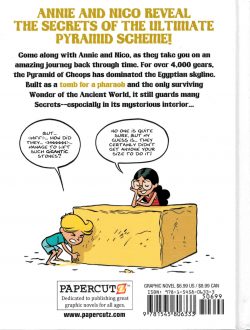
Lola’s Super Club: “My Dad is a Super Secret Agent”


By Christine Beigel & Pierre Foiullet, translated by Jeff Whitman (Papercutz)
ISBN: 978-1-5458-0563-3 (HB) 978-1-5458-0564-0 (TPB)

Win’s Christmas Gift Recommendation: Fantastic Fantasy Fun… 8/10

Once upon a time, stories designed to enthral and entertain young girls were a prolific staple of comics output. However, by the end of the 20th century the sector had all but faded from the English-speaking world, but enjoyed a splendid resurgence – particularly in America – as the graphic novel market expanded to its current prominence.

Based in New York, Papercutz are committed to publishing comics material for younger readers – especially girls – and combine licensed properties such as The Smurfs, Gumby and Nancy Drew with compelling new concepts such as The Wendy Project and intriguing European imports like Brina the Cat and Chloe. They’ve recently taken on the challenge of finally introducing Asterix to poor, culture-deprived New Worlders. I must check that out on your behalf of course…

An eagerly anticipated transatlantic transplant soon to be yours, Lola’s Super Club is the brainchild of prolific children’s novelist Christine Beigel & comics veteran Pierre Fouillet (co-creators of Le Chat Pelote: Adoptez Moi!) detailing the manically frenetic exploits of a little lass blessed with a superabundance of imagination.

Lola is able to animate her cat Hot Dog and selected favourite toys – such as the size-changing lizard Super James (in undies) – to accompany her on adventures across all Time and Space as the irrepressible Super-Lola…

This initial outing offers two complete adventures in one sleek volume (available in hardback, paperback and in digital editions) as Lola and her crew come to the rescue of her father Robert Darkhair (AKA superspy James Blond – an Agent so Top Secret, even he doesn’t know he’s licensed to thrill…) in eponymous romp ‘My Dad is a Super Secret Agent’.

To save him from arrogant Arch Fiend/shabby supervillain Max Imum, his sinister talking hounds Zero and Zero and his diabolical witch mother Mini Mum, Super Lola engages in a frantic chase from home in Friendly Falls, USA through sordid sewers and dank dungeons, into the stratosphere and through terrifying jungles, encountering and defeating or befriending skeletons, monsters, jungle men and pirates before she can declare her mission accomplished and her dad and missing mother reunited safely at home…

Further helter-skelter Imagineering ensues in second adventure ‘My Mom is Lost in Time’ after Lola and her gang – sorry, “Club” – are sucked into a TV show and end up battling bears at the frozen pole, fleeing dinosaurs in the Jurassic, and clashing with Egyptian crocodile god Sobek, while making history in all the wrong places…

However, with every stopover in significant moments the Super Club is getting closer to home and to Lola’s absent mum…

Fun, fast-paced and furiously inventive, these fanciful feasts combine imagination and discovery with a solidly positive message of family solidarity and free expression every child desperately needs to experience and absorb. Make sure this book is in your young’uns’ stocking this year and that the subtext becomes part of their life story, no matter how far-fetched or extraordinary…
© Christine Beigel + Pierre Fouillet, 2010. © Bang. Ediciones, 2011, 2013 All rights reserved. English translation and all other material © 2020 by Papercutz. All rights reserved.

Lola’s Super Club: “My Dad is a Super Secret Agent” is scheduled for release on December 8th 2020 and is available for pre-order in both print and digital editions.

Set to Sea

By Drew Weing (Fantagraphics Books)
ISBN: 978-1-60699-368-2 (HB) 978-1-60699-771-0 (TPB)

Win’s Christmas Gift Recommendation: Alluring, Tantalising, Refreshing and Totally Satisfying Escapism… 10/10

Graphic novels have been around long enough now that certain subdivisions have developed.

Many are superhero sagas stuffed with visual Sturm & Drang, others canny crime capers, haunting horror stories or quirky comedies. Age and/or taste targeting and other demographics apply too, with some books intended for mature readers whilst others are designed to appeal mostly to youngsters.

Happily, there are still those others which defy simple categorisation: the heartfelt results of earnest, talented creators letting themselves go where their unfettered imaginative minds take them. Sometimes they’re simply a good strong tale, beautifully told and universally appealing.

Such a craftsman is Drew Weing (The Creepy Files of Margo Maloo), who first came to notice in 2010 with this subversively mesmerising tale of maritime fortitude.

Available in deliciously handy, pocket-sized hardback and softcover editions as well as digitally, it’s a true marvel that this tale never found a mass audience so here I am plugging it again. If there’s any justice this time – when we’re all marooned in our own homes – it will finally make him a household name amongst lovers of tall tales and comic treasures.

This beguiling, irresistibly stirring salty saga follows an indigent poet and aspiring barfly with a taste for maritime verse whose lack of true inspiration is dramatically cured after he is press-ganged aboard a Hong-Kong clipper and forcibly learns the true life of a globe-girdling sailor man.

Initially resistant to a life afloat, a terrifying brush with death and battle against rapacious pirates opens the poet’s eye, forcing him to accept the only life he could ever truly enjoy.

As the years and a myriad of exotically different lands pass by he even manages, whilst traversing the world for joyous, raucous decades, to satisfy his artistic leanings into the bargain and finally discern where his heart truly lies…

Magically circular in structure and beautifully drawn in a worshipful blend of Elzie Segar, traditional woodcut prints with, I suspect, a touch of Jeff Smith’s Bon  and Tony Millionaire’s wonderful confections (see Drinky Crow’s Maakies Treasury or any other collection of this truly bizarre strip), this superbly rough ‘n’ tumble monochrome epic collects the impressive original online comic into a salty, panel-per-page paean to the value of true experience over romantic fantasy, while proving a telling examination of the role of the arts in our lives.

A true graphic odyssey which any lover of a dream-life must see, this eternally fresh yet solid entertainment is a genuine “must read”.

Captain’s Orders…
© 2014 Drew Weing. All rights reserved.